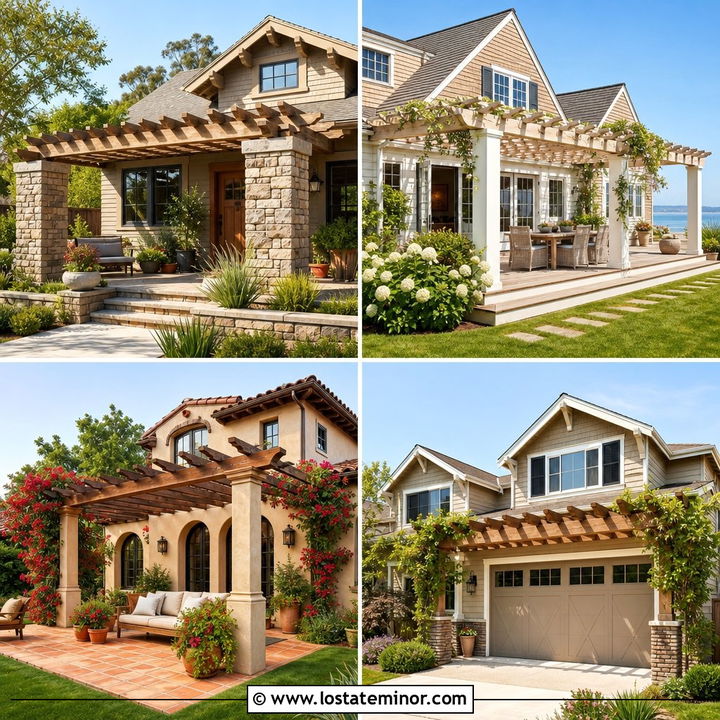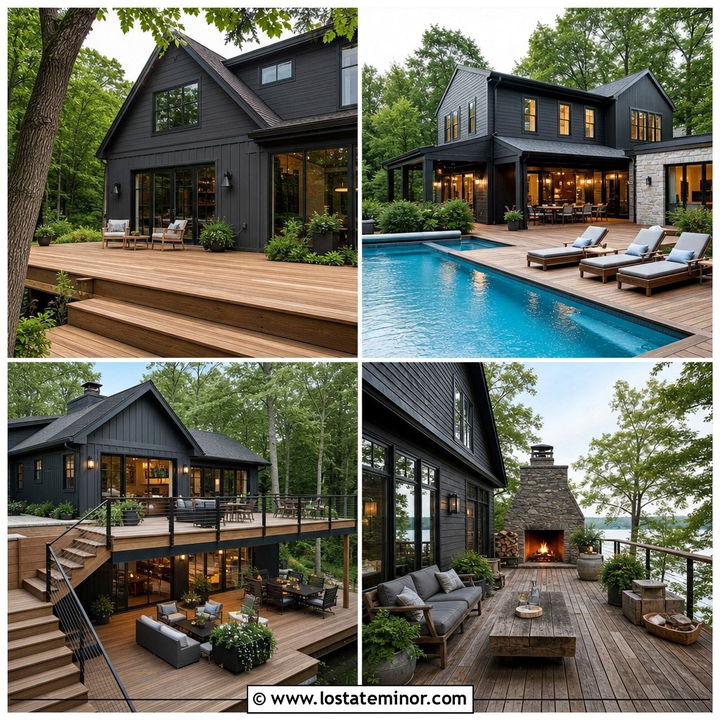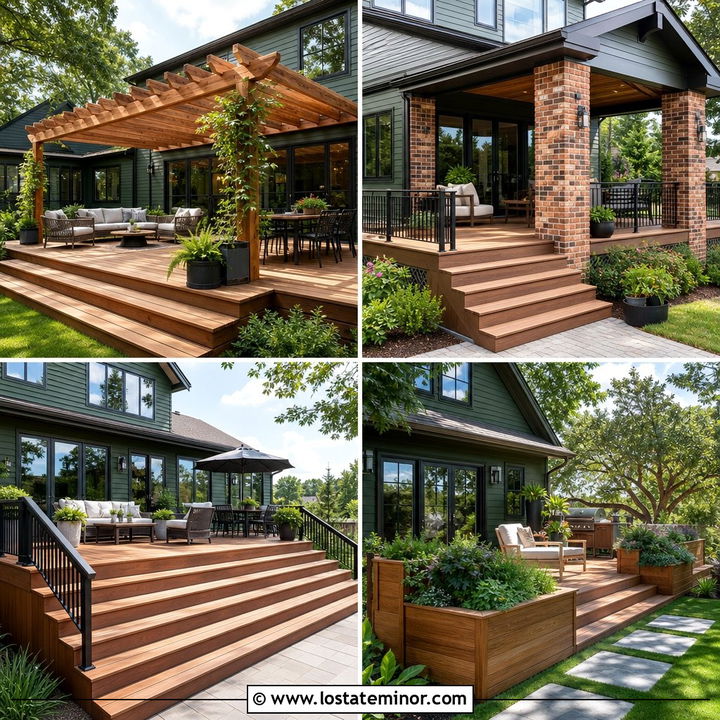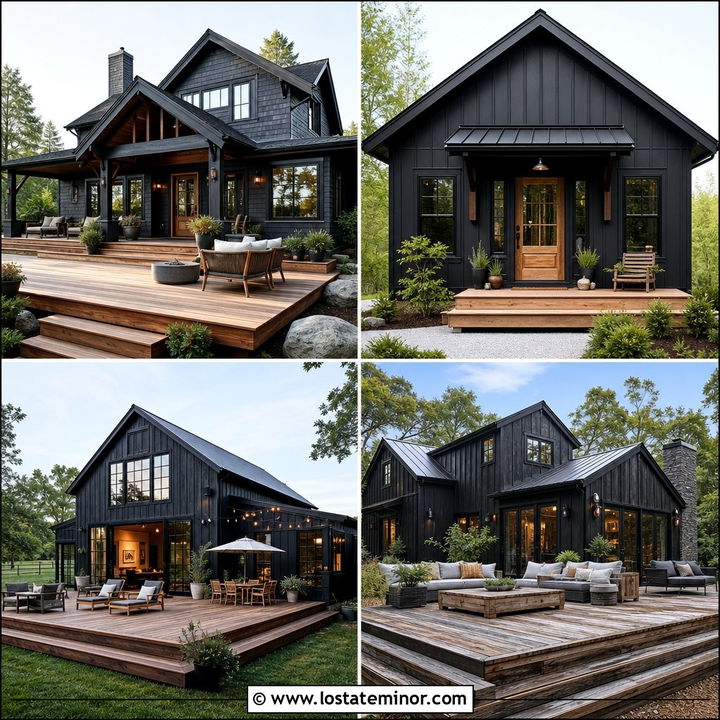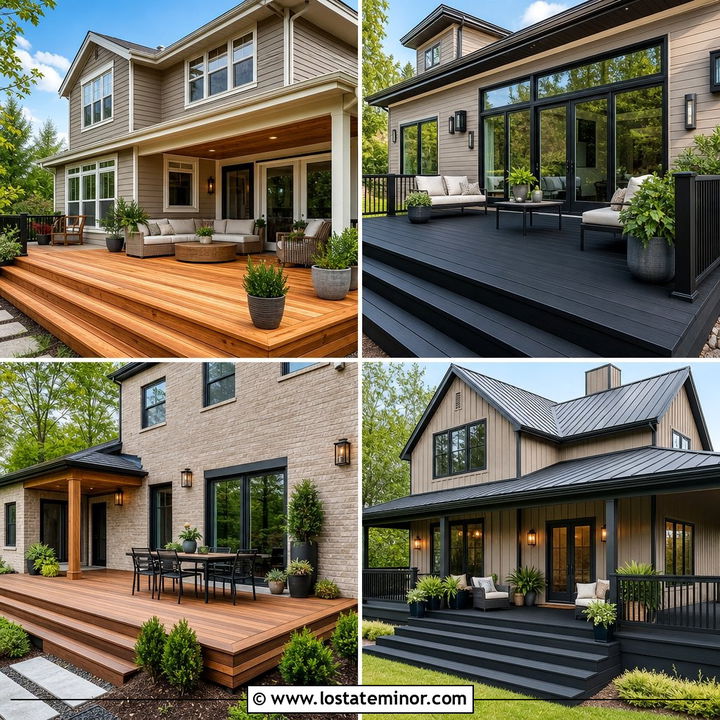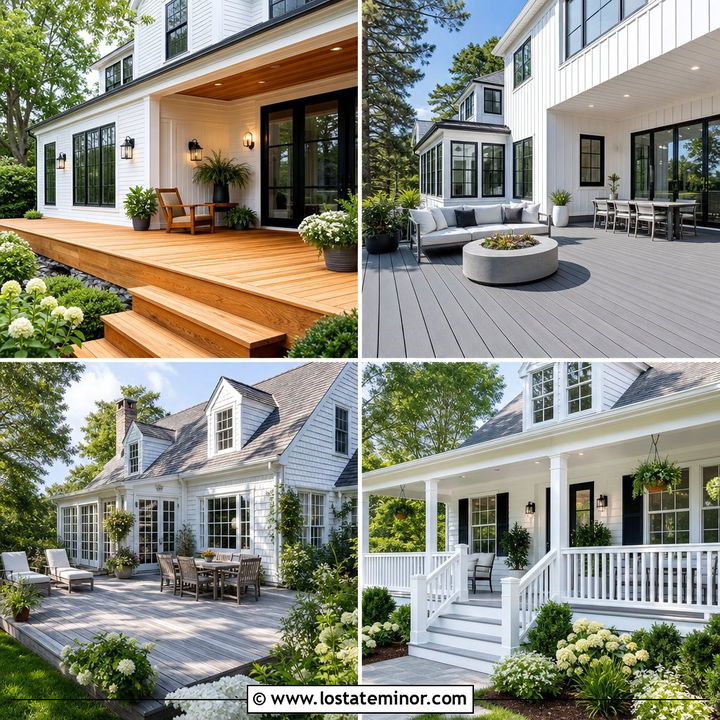
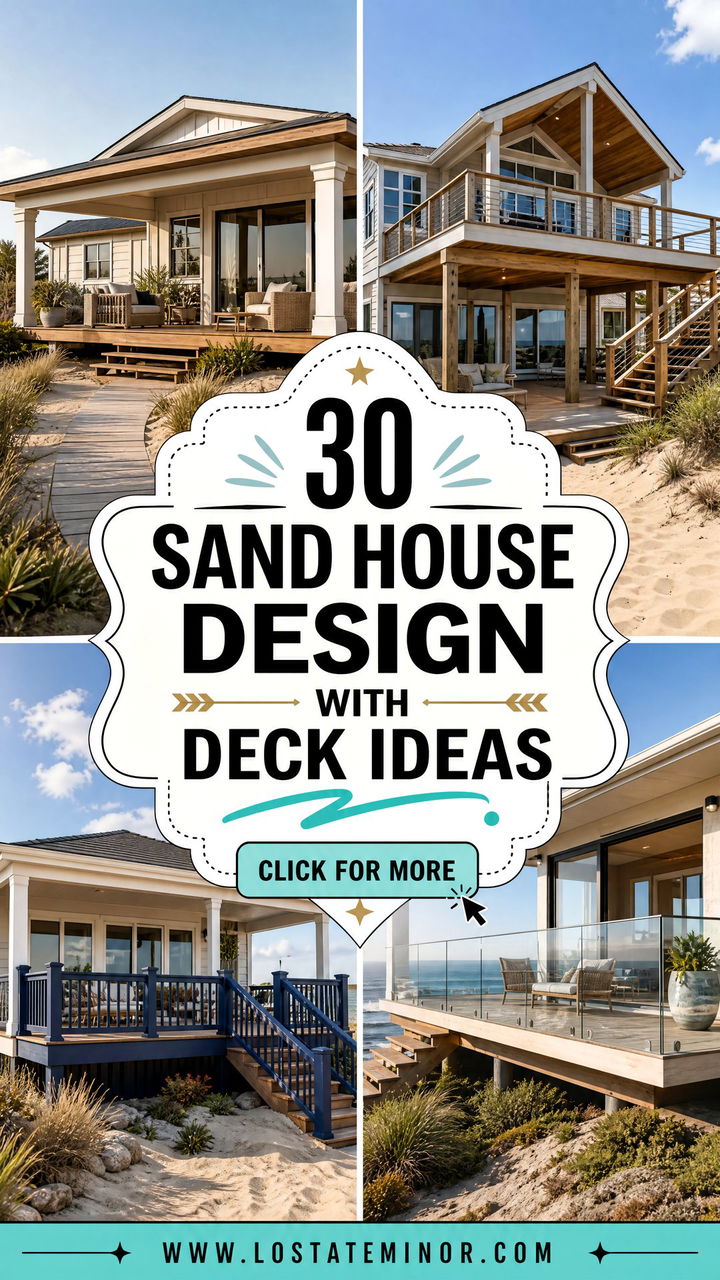
A sand-colored house creates a warm, grounded exterior that works beautifully with natural wood, crisp white, dark metal, stone, and coastal accents. Adding a well-planned deck makes that neutral facade even more inviting while expanding the home’s usable outdoor space. The key is to treat the siding, decking, railings, roof, doors, and landscaping as one complete design. Sand tones can suit everything from relaxed beach cottages to modern homes, Craftsman bungalows, ranch houses, and traditional colonials. They also provide enough warmth to soften contemporary materials without making the exterior feel dated. The complete looks below explore practical layouts, balanced color combinations, and varied architectural details. Use these 30 Sand House Design With Deck Ideas to plan a cohesive exterior with lasting curb appeal.
1. Sand House With Natural Cedar Deck
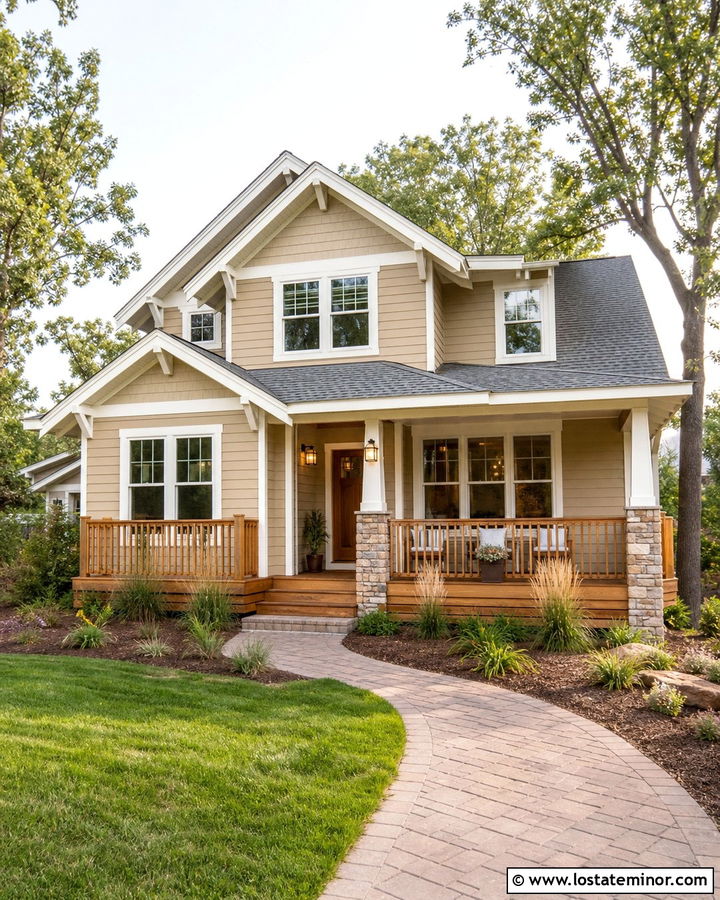
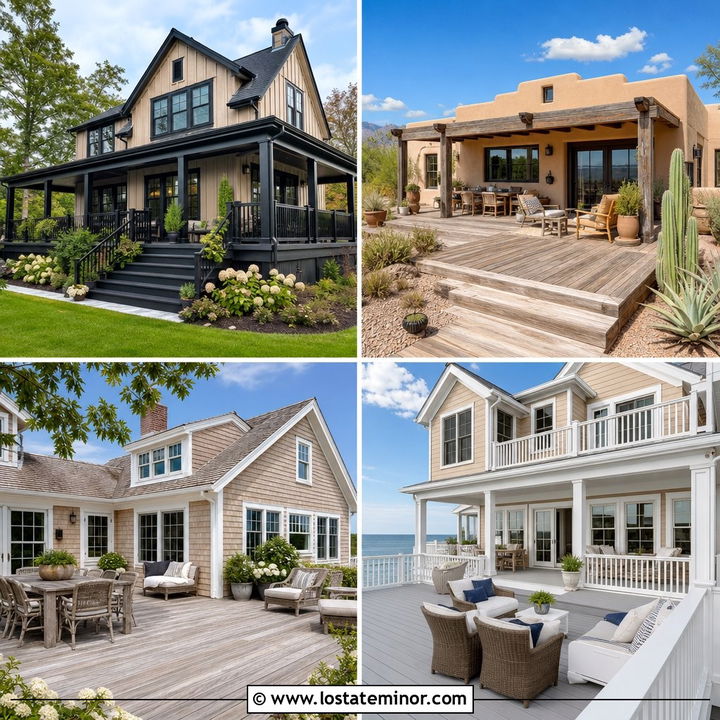
Natural cedar gives a sand-colored house an easy, organic appearance without creating too much contrast. Use warm sand siding with soft white trim, then let the cedar deck introduce richer honey and amber undertones. A medium-width deck across the front or side of the house provides room for seating while maintaining balanced proportions. Simple horizontal railings keep the wood visible and prevent the facade from looking busy. Add a medium brown front door, dark bronze lighting, and a weathered gray roof to complete the palette. Low ornamental grasses and rounded shrubs echo the exterior’s earthy colors. Apply a clear or lightly tinted protective finish to the cedar so its grain remains visible and the deck continues to complement the sand facade.
2. Sand House With White Railing Deck
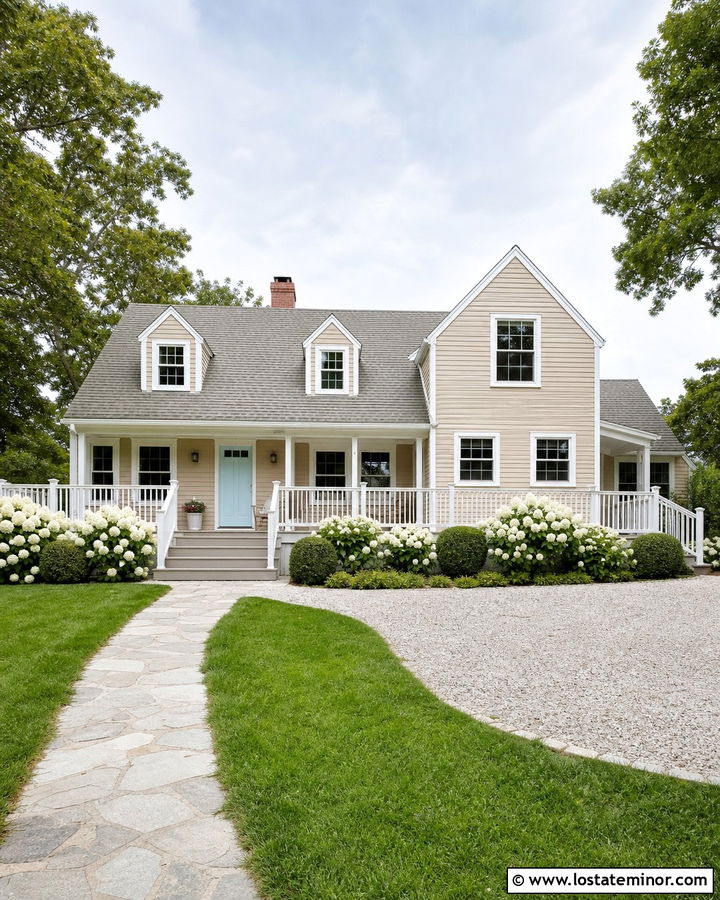
Crisp white deck railings create a clean outline around a warm sand house. This pairing works especially well on a Cape Cod, cottage, or traditional two-story exterior with white window trim and a pale gray roof. Choose sand-toned siding for the main body, white for posts and railings, and weathered wood or light taupe for the deck floor. Repeating white around the windows, roofline, and deck prevents the railing from looking disconnected. A muted blue front door can add a subtle coastal accent without dominating the neutral palette. Finish the yard with hydrangeas, green foundation shrubs, and a curved stone walkway. The overall effect feels bright and polished while remaining comfortable enough for everyday outdoor living.
3. Sand House With Black Railing Deck
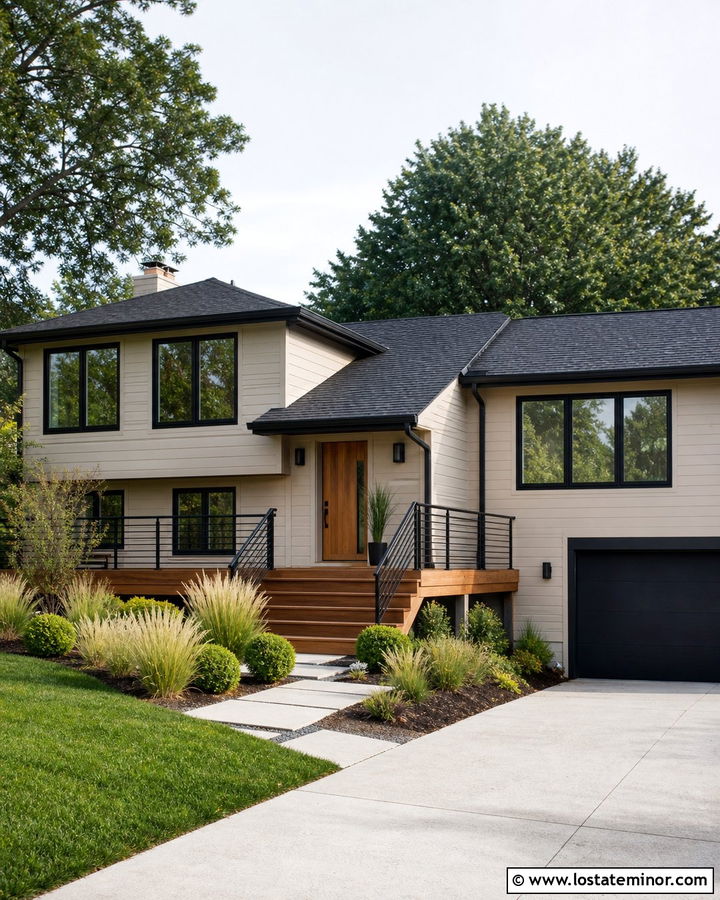
Would you like a sand exterior to look sharper and more contemporary? Black deck railings add strong definition while allowing the warm siding to remain the visual foundation. Pair sand-colored horizontal siding with black-framed windows, matte black lighting, and slim metal balusters. Medium brown decking softens the dark framework and keeps the outdoor area from feeling severe. This scheme is particularly effective on a split-level or updated ranch because the black lines help organize a wide facade. Include a natural wood front door and charcoal roof to connect the warm and cool colors. Structured boxwoods, ornamental grasses, and rectangular concrete pavers reinforce the clean design. Keep the deck furniture neutral so the architectural contrast remains clear.
4. Sand House With Wraparound Deck
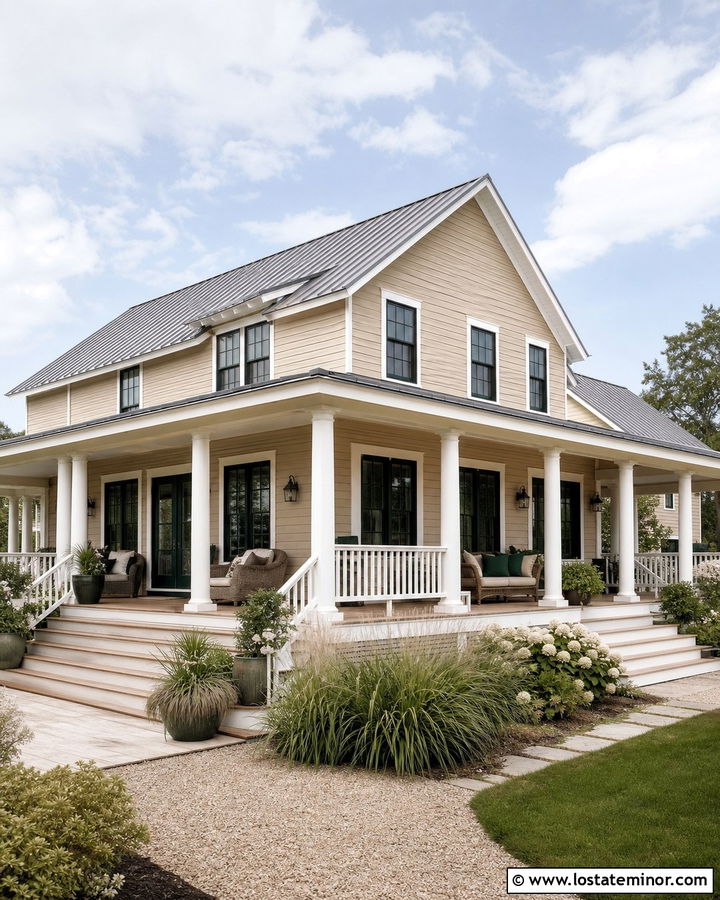
A wraparound deck can turn a sand-colored farmhouse or coastal home into a welcoming outdoor retreat. Carry the decking across the front and around one side, creating separate areas for dining, lounging, and entry. Warm sand siding works well with cream trim, white columns, and medium-toned wood deck boards. A standing-seam metal roof adds practical definition above the soft exterior palette. Use wider stairs near the front door to create a natural connection between the deck and lawn. Repeating planters, porch lights, and simple railings helps the long structure feel unified. For a relaxed finish, add deep green outdoor cushions and woven textures. The deck should follow the home’s existing roofline so it appears original rather than added later.
5. Sand House With Ground-Level Deck
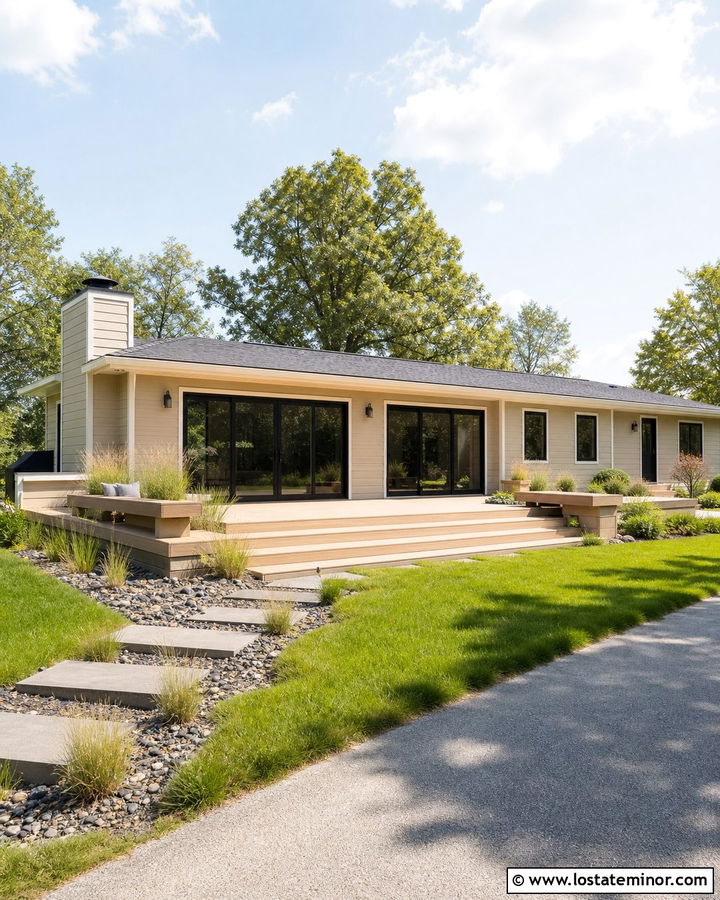
A low ground-level deck gives a single-story sand house a smooth transition into the yard. This approach works well for ranch homes, modern cottages, and properties where an elevated railing is unnecessary. Choose warm sand siding, creamy white trim, and light oak-toned composite boards to build a soft, continuous palette. Wide steps can run along one or two edges, making the platform feel open and easy to access. Frame the deck with gravel, low grasses, and neatly defined planting beds instead of tall foundation plants. Large sliding doors strengthen the indoor-outdoor connection, while black window frames add subtle contrast. Built-in benches along the perimeter provide seating without cluttering the view. The result feels spacious, casual, and naturally connected to the landscape.
6. Sand House With Raised Deck And Stone Base
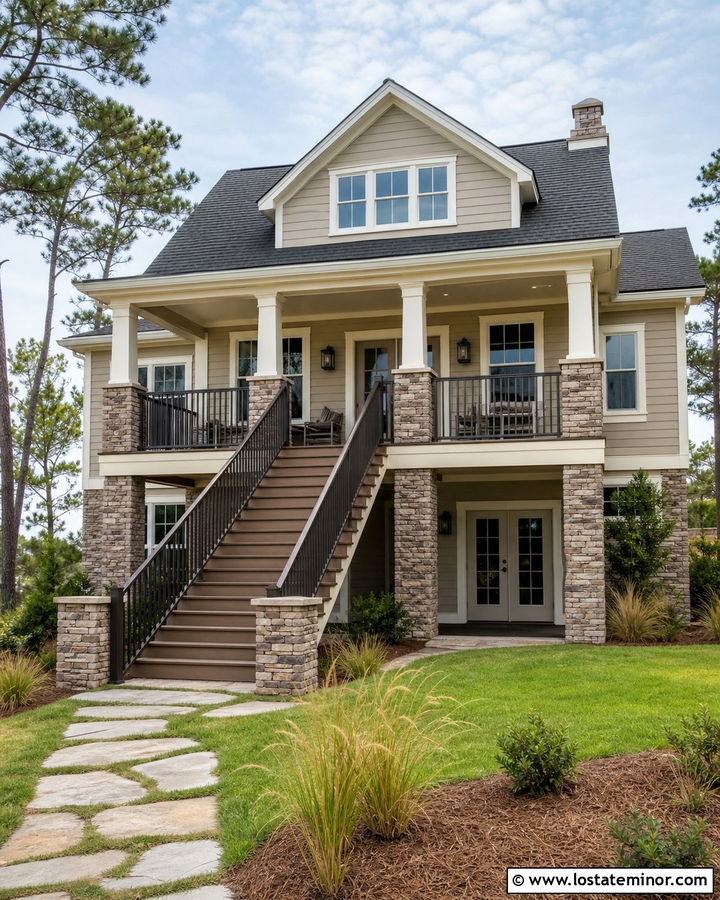
A raised deck needs enough visual weight to feel connected to the house beneath it. Cladding the lower supports with warm gray or beige stone creates a strong foundation for a sand-colored exterior. Use sand siding above, creamy trim around the windows, and chestnut deck boards for a layered earth-tone scheme. Stone-wrapped columns can support the deck corners, while dark bronze railings provide definition without looking overly bold. This design is useful for sloped lots, walkout basements, or elevated coastal homes. Add broad stairs that lead toward a lawn or lower patio, creating a practical circulation path. Repeating the foundation stone beside the garage or entry makes the material look intentional. Native grasses and small trees help the taller structure settle into its surroundings.
7. Sand House With Gray Composite Deck
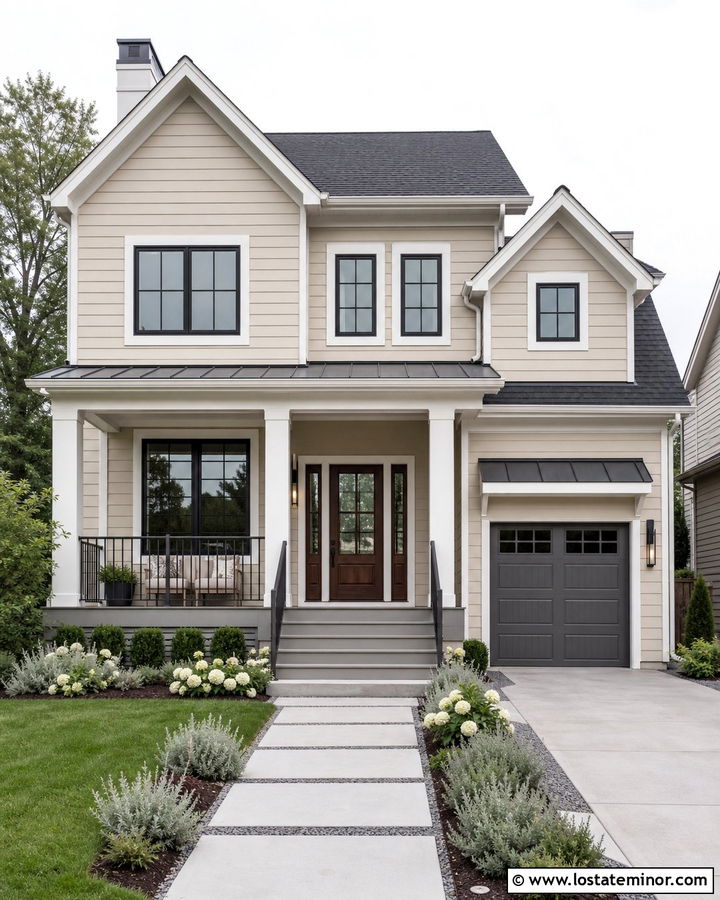
Cool gray decking gives warm sand siding a balanced, updated appearance. Select a midtone gray composite rather than a blue-gray shade, which may look disconnected from the beige exterior. White trim can brighten the windows and fascia, while charcoal railings connect the deck floor to a dark gray roof. This combination suits suburban colonials, transitional homes, and larger family houses where low-maintenance materials are a priority. Use the gray decking on both the main platform and stairs for a consistent look. A stained walnut front door introduces warmth between the sand and gray surfaces. Complete the exterior with silver-green plants, white flowers, and clean concrete edging. The restrained palette feels current but neutral enough to work through future landscaping and furniture updates.
8. Sand House With Dark Brown Deck
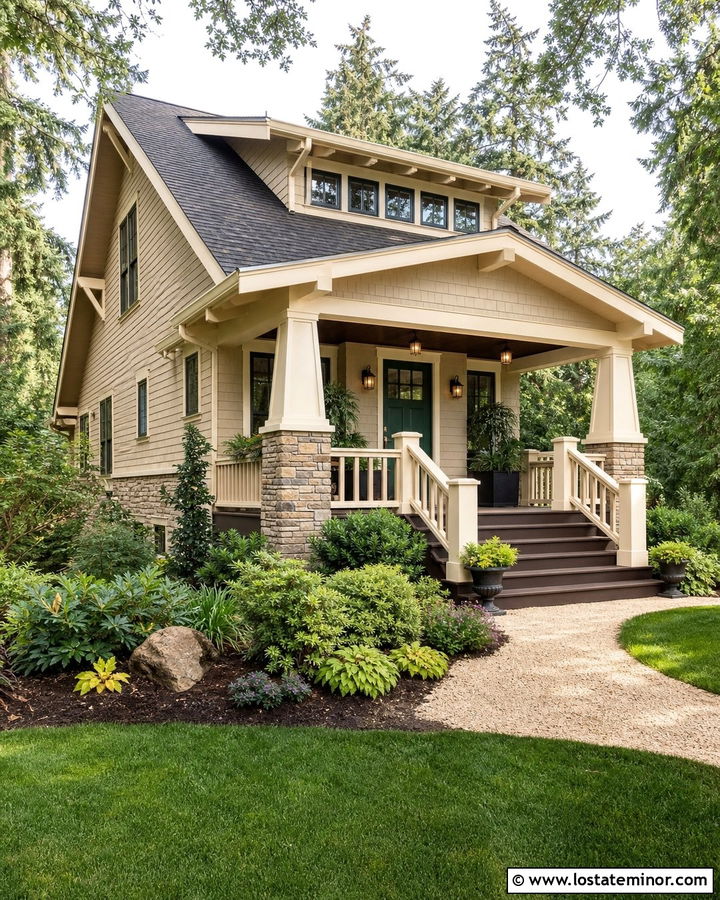
Dark brown decking creates a rich base beneath a light sand house. The contrast is strong, but it remains warmer and softer than a completely black deck. Use espresso or walnut-toned boards with matching stair treads, then choose cream railings to keep the structure from feeling heavy. This palette fits a Craftsman exterior with tapered columns, deep roof overhangs, and stone details. A forest green or dark bronze front door can deepen the natural color story. Keep the fascia and deck supports consistent with the railing or house trim for a finished appearance. Layer the landscaping with evergreen shrubs, red-toned foliage, and pale gravel. Because dark boards can become visually dominant, leave enough sand siding visible above and around the deck to maintain balance.
9. Sand House With Light Oak Deck
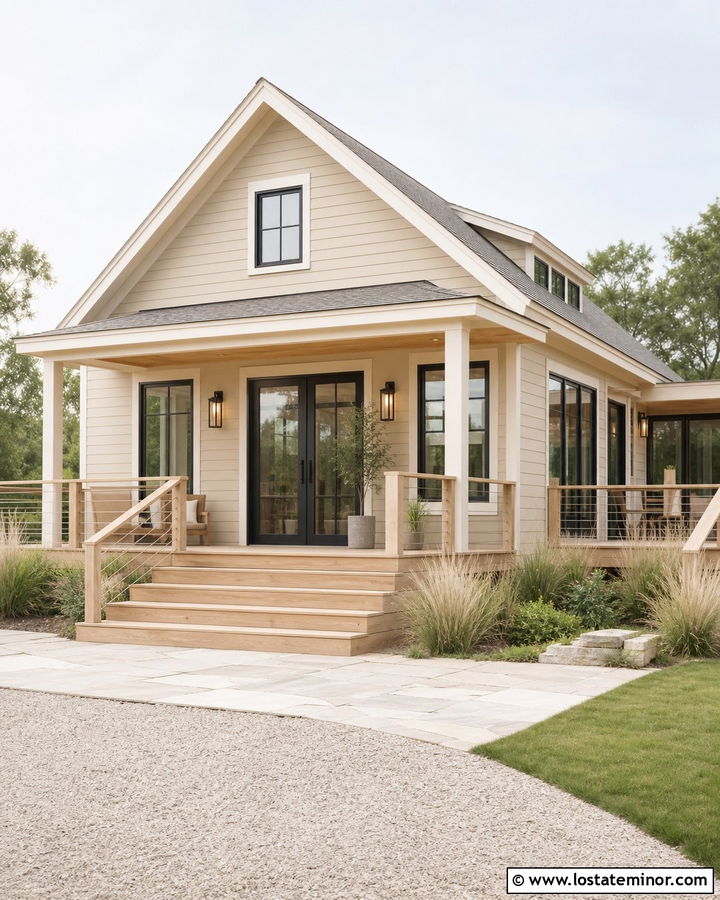
Light oak-colored decking creates an airy exterior when paired with soft sand siding. The colors sit close together, producing a calm, low-contrast look that is ideal for a Scandinavian-inspired home or simple modern cottage. Use warm white around the windows and roofline, then add pale wood deck boards and streamlined railings. Black-framed glass doors can provide just enough contrast to prevent the facade from appearing flat. Keep the deck shape rectangular and uncluttered, with one broad set of steps facing the yard. Light stone pavers and feathery grasses continue the natural palette beyond the platform. Choose outdoor furniture in ivory, taupe, and muted charcoal. This design relies on texture rather than dramatic color, so combine smooth siding, visible wood grain, and softly layered landscaping.
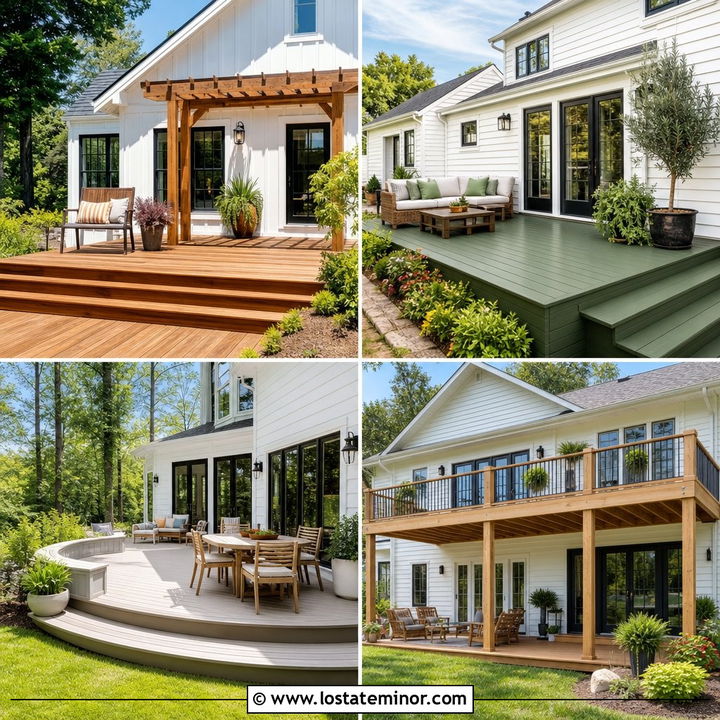
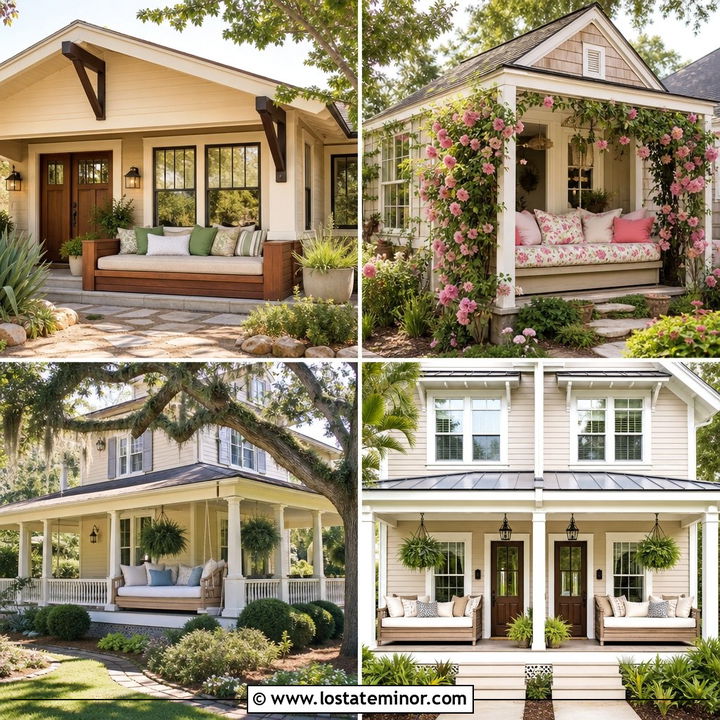
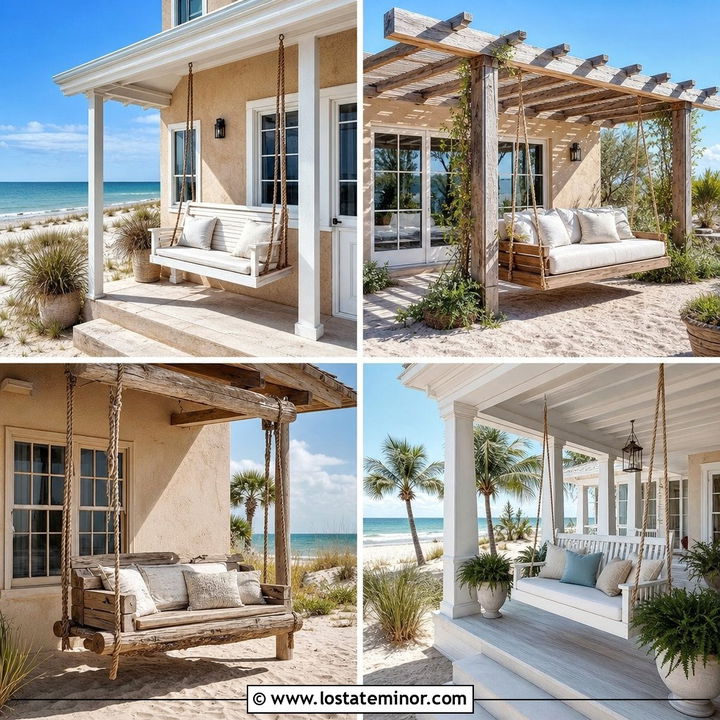
10. Sand House With Two-Level Deck
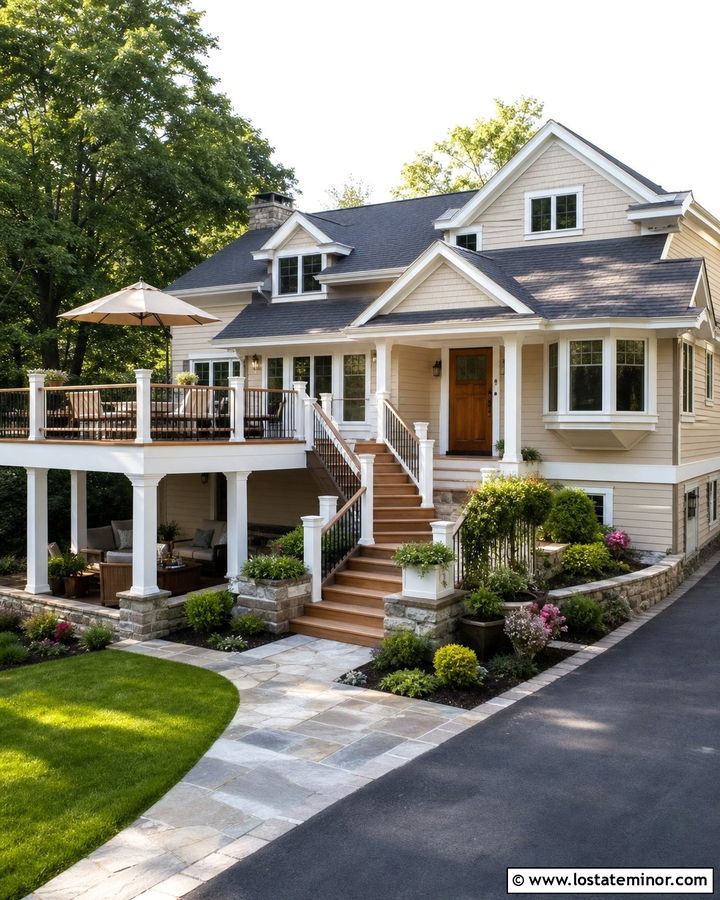
A two-level deck helps organize outdoor activities while adding dimension to a larger sand-colored house. Place a dining zone near the kitchen doors and a lower lounge area closer to the yard. Using one decking color across both levels keeps the structure visually connected. Warm cedar or medium brown composite works especially well with sand siding, white trim, and a charcoal roof. Match the railing posts to the trim, then introduce dark metal balusters for a lighter, more open appearance. Wide connecting steps can double as informal seating during gatherings. Add planters at the corners to soften the level changes without blocking circulation. The lower deck should align naturally with the landscape, while the upper platform should relate to the house’s windows and doors for a balanced elevation.
11. Sand House With Covered Deck
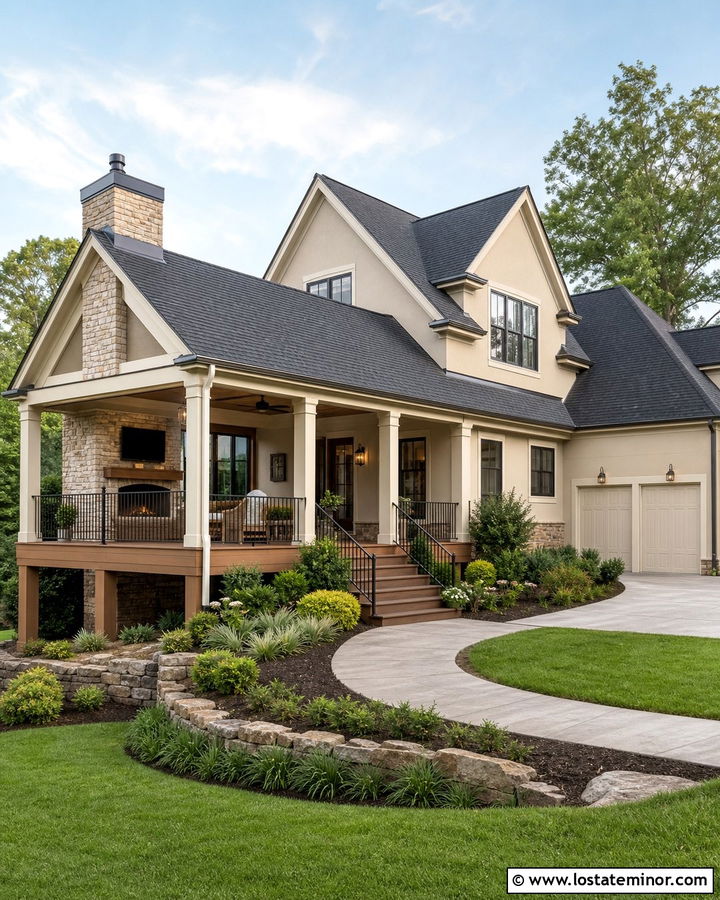
A covered deck makes a sand-colored house feel more substantial while protecting a portion of the outdoor space. Extend the existing roofline where possible, using cream-painted posts and a warm white ceiling to brighten the sheltered area. Sand siding, medium brown deck boards, and a charcoal shingle roof create a practical neutral combination. A stone fireplace or partial stone wall can add texture and anchor the seating zone. Keep the railing simple so the roof and columns remain the main architectural features. Recessed ceiling lights and dark bronze fixtures provide a polished finish without introducing unnecessary colors. Nearby landscaping should frame rather than hide the deck. Use layered shrubs, ornamental grasses, and a clear walkway connecting the covered space to the driveway or backyard.
12. Sand House With Pergola Deck
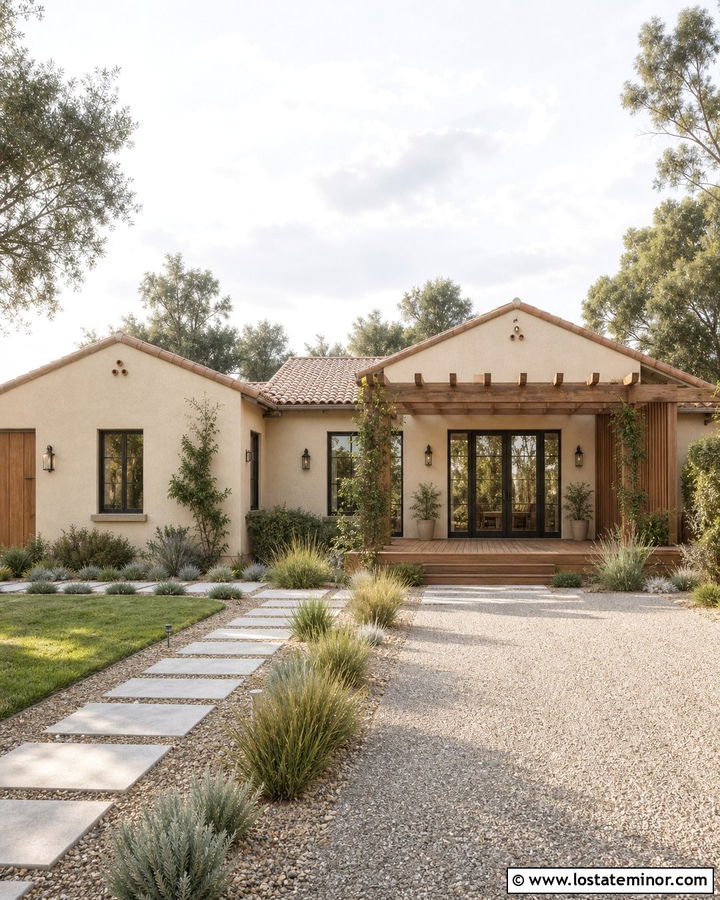
Filtered sunlight moving through a pergola can make a simple deck feel like a complete outdoor room. Pair a sand house with a natural cedar pergola and matching deck boards for a warm, unified appearance. Cream window trim and off-white fascia keep the exterior bright, while dark bronze hardware adds subtle definition. Position the pergola near wide patio doors so it feels connected to the main living area. Climbing greenery can soften the overhead structure, but avoid covering every beam if you want the wood color to remain visible. Include a defined dining area and enough open deck space for easy movement. Gravel borders, drought-tolerant plants, and rectangular stepping stones suit the earthy palette. This complete look works especially well on Mediterranean, transitional, and contemporary ranch homes.
13. Sand House With Screened Deck
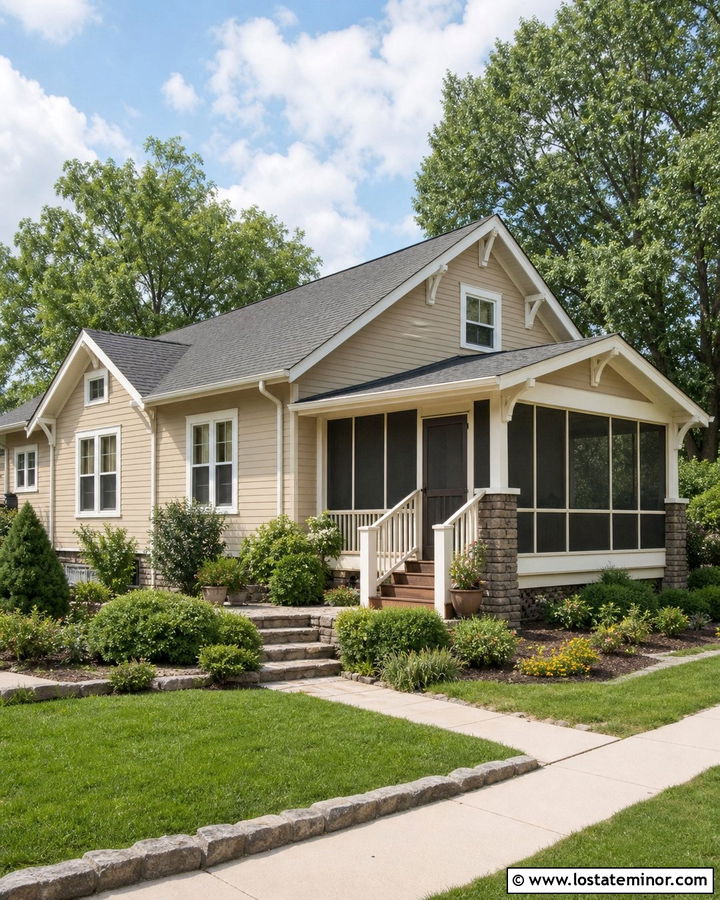
A screened deck provides outdoor comfort while maintaining the warm, approachable character of a sand exterior. Frame the enclosure in creamy white or a slightly deeper beige so it relates closely to the siding. Dark bronze screens reduce glare and visually connect to black or bronze window frames. Use medium brown decking under the screened area and continue it onto a small uncovered landing for a seamless transition. A simple gabled roof gives the enclosure architectural presence and improves the sense of height inside. This addition works well on a bungalow, cottage, or traditional suburban home. Add stone steps, low shrubs, and a direct path to the lawn. Keeping the roof, trim, and deck materials consistent with the main house helps the screened structure appear original and thoughtfully integrated.
14. Sand House With Coastal Blue Deck Accents
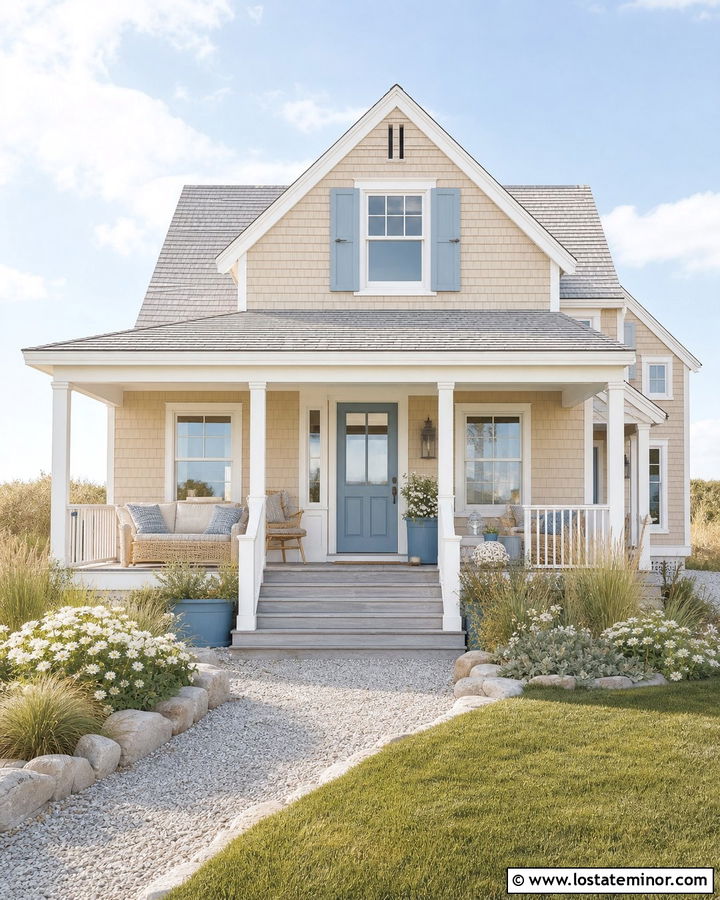
Soft coastal blue accents can give a sand house personality without overwhelming its natural color. Keep the deck floor in weathered gray or light brown, then use muted blue on the front door, outdoor cushions, planters, or selected railing details. White trim creates a clean transition between the sandy facade and cooler blue accents. This combination feels especially appropriate on a beach cottage with shingle siding, broad windows, and an airy front deck. Choose one blue family and repeat it sparingly instead of mixing several competing shades. Natural rope textures, pale wood furniture, and dune grasses can support the relaxed exterior. A light gray roof completes the palette. The finished home should feel inspired by the shoreline while remaining polished enough for a suburban or waterfront neighborhood.
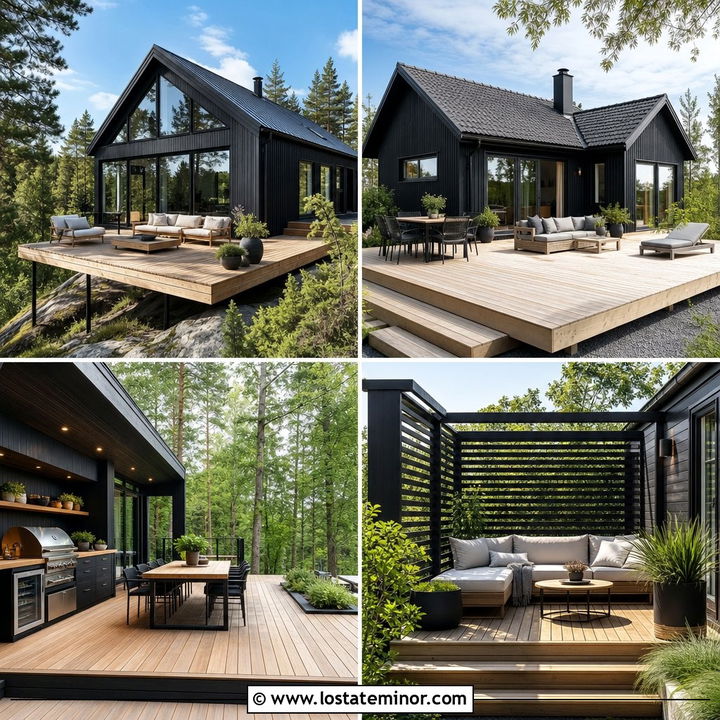
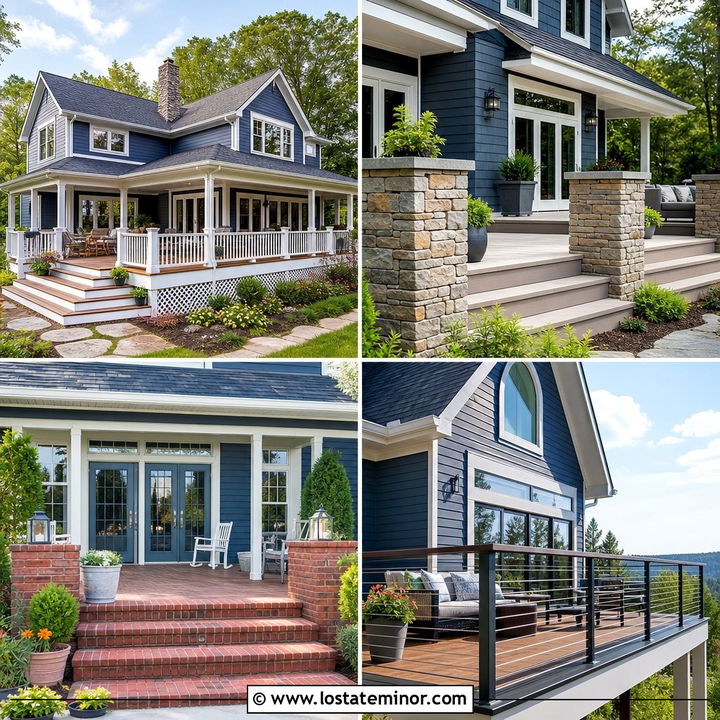
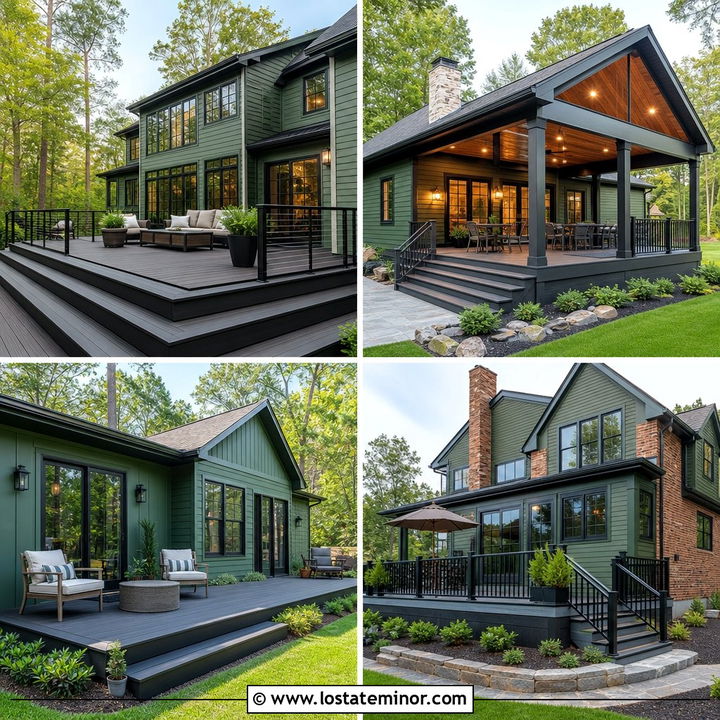
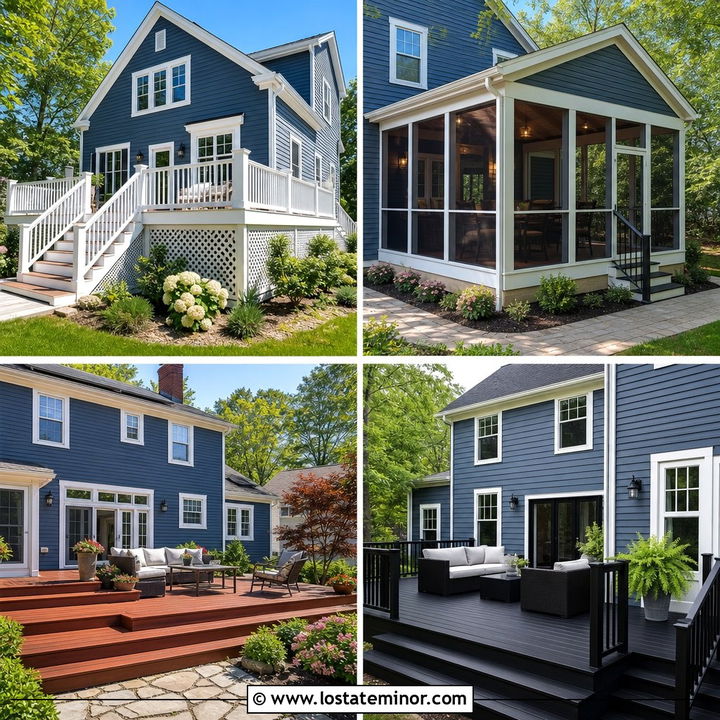
15. Sand House With Navy Deck Railings
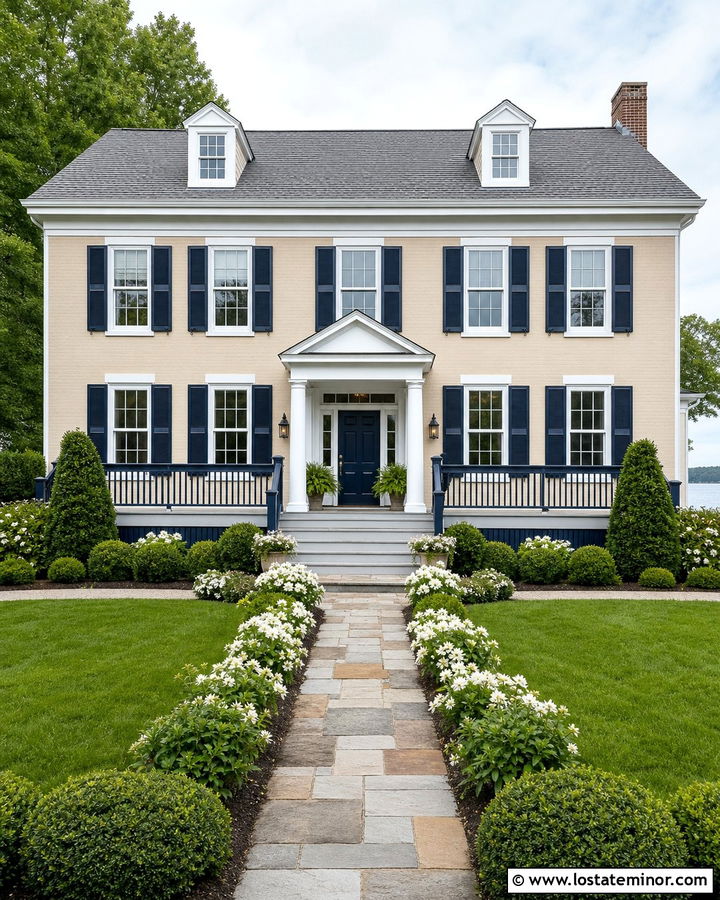
Navy deck railings offer a softer alternative to black while giving a sand exterior clear definition. Use deep navy on the railing posts and balusters, then repeat it on the front door or shutters. Warm sand siding and bright white trim keep the overall house light and balanced. A weathered gray deck floor bridges the warm body color and cool navy accents. This scheme suits a traditional coastal colonial, Cape Cod, or symmetrical cottage. Keep the railing profile simple so the color looks intentional rather than decorative. Brass or aged bronze lights can introduce a small amount of warmth near the entry. Finish with white flowering plants, clipped greenery, and a straight stone walkway. Navy works best when repeated in two or three visible locations across the complete facade.
16. Sand House With Green Deck Accents
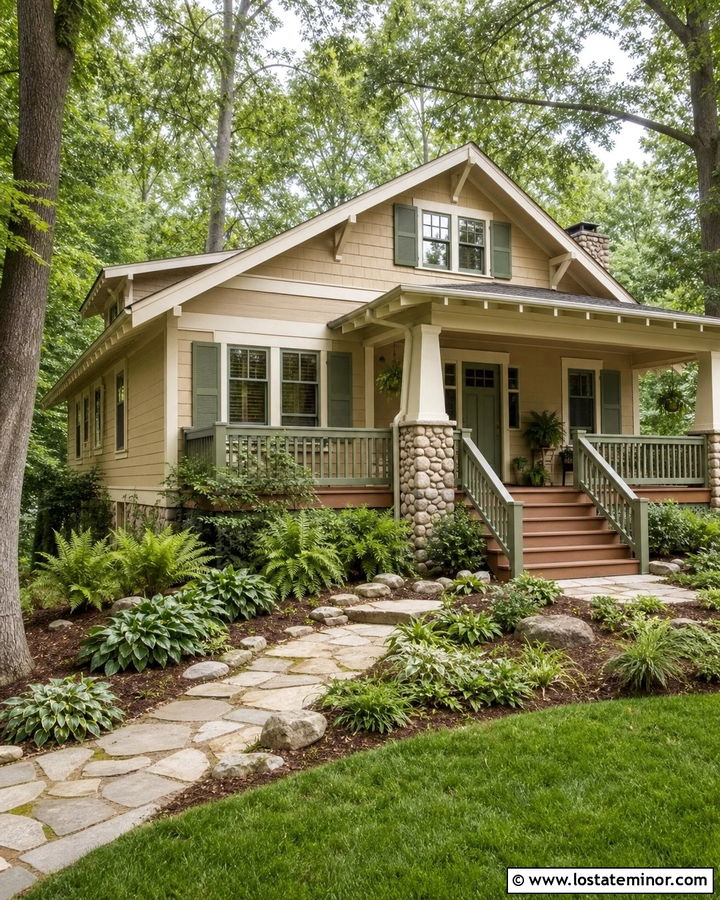
Muted green accents allow a sand-colored home to blend naturally with a leafy setting. Start with warm sand siding and cream trim, then use sage or olive green on the deck railing, front door, and selected shutters. Choose medium brown boards so the deck maintains an earthy foundation. This look works well on a Craftsman bungalow, wooded cottage, or rustic ranch with substantial roof overhangs. Stone column bases can connect the green and sand tones while adding useful texture. Avoid very bright green, which may compete with the neutral siding and surrounding plants. Instead, choose a grayed shade that changes gently in sunlight. Ferns, hostas, evergreen shrubs, and a flagstone path complete the landscape. The resulting exterior feels settled, comfortable, and closely tied to its environment.
17. Sand House With Terracotta Deck Accents
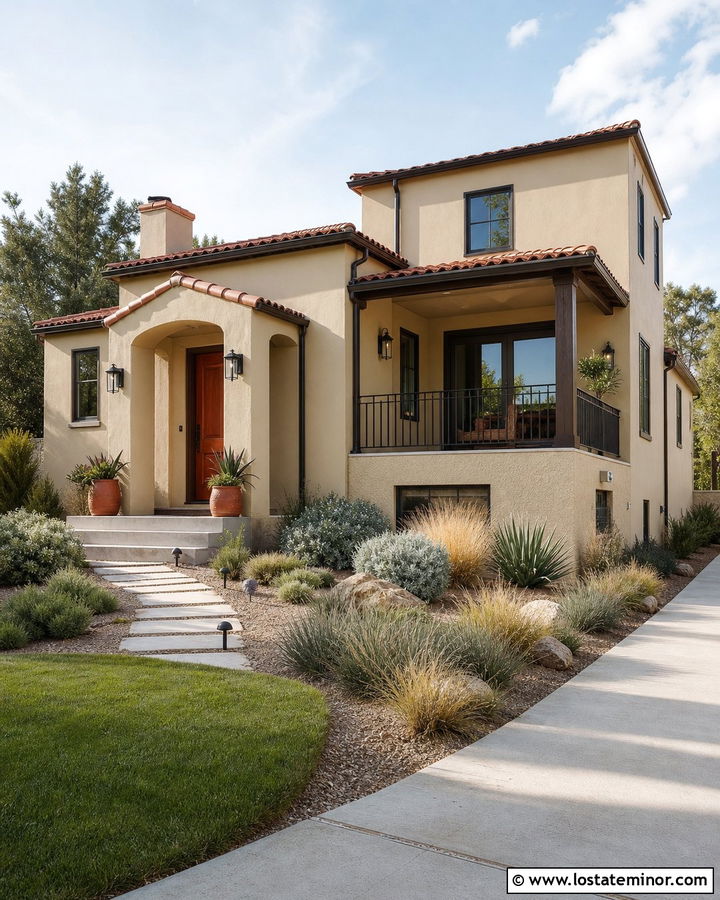
Terracotta accents bring sun-warmed character to a sand house without requiring a dramatic exterior color change. Use sand stucco or siding as the main surface, then introduce terracotta through planters, outdoor cushions, stair risers, or a warm clay-colored front door. A medium walnut deck supports those red-orange undertones while cream trim keeps the facade fresh. This complete scheme is a natural match for a Spanish-inspired, Southwestern, or Mediterranean home with a low roofline. Black metal railings and lanterns add crisp definition around the warm materials. Choose gravel beds, sculptural grasses, and drought-tolerant shrubs for a coordinated landscape. Use terracotta in controlled amounts across the deck rather than covering large structural surfaces. That approach keeps the sandy exterior calm while giving the outdoor area depth and personality.
18. Sand House With Whitewashed Wood Deck
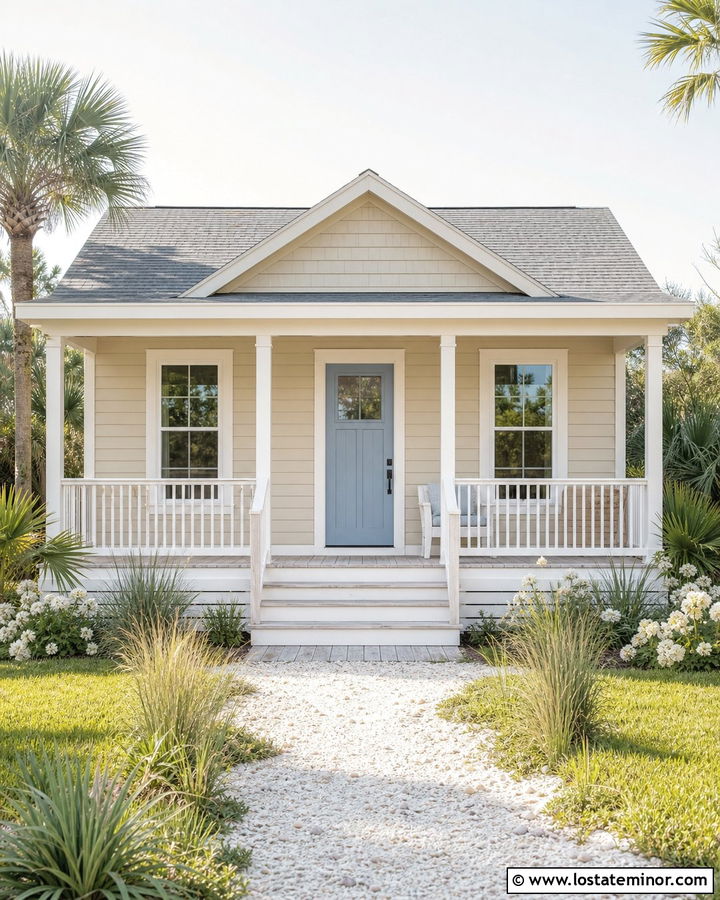
A whitewashed deck can give a sand-colored cottage a soft, sun-faded appearance. Select a translucent finish that allows some wood grain to show rather than using an opaque bright white coating. Pair the deck with light sand siding, creamy trim, and a pale gray roof for a gentle, low-contrast scheme. White railings and simple square posts will make the outdoor space feel open and clean. A dusty blue or muted green front door can supply a small focal point. This combination works particularly well for a beach bungalow or compact Cape Cod with a front-facing deck. Frame the house with dune grasses, white flowers, and a shell-toned gravel path. Regular cleaning and finish maintenance will help the pale deck preserve its fresh appearance in exposed outdoor conditions.
19. Sand House With Weathered Wood Deck
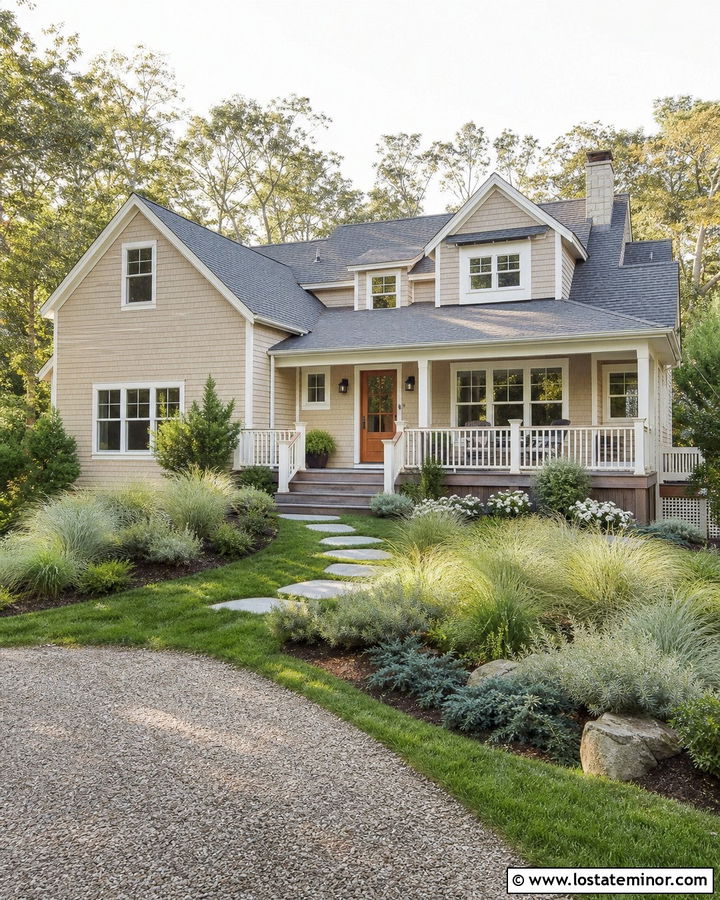
Weathered wood introduces gray-brown character that complements the understated warmth of sand siding. Use naturally aged boards or a weathered finish with visible tonal variation, then pair them with off-white railings and charcoal hardware. A medium gray roof helps connect the cooler areas of the deck to the main facade. This exterior works beautifully on a shingle cottage, coastal ranch, or casual farmhouse. Avoid adding too many additional wood colors, since the deck already provides noticeable texture. A natural oak front door can be slightly warmer, but it should remain within the overall neutral palette. Plant silver-green grasses, blue-green shrubs, and low white flowers around the platform. The final design feels relaxed and established rather than overly polished, making it suitable for natural coastal or wooded settings.
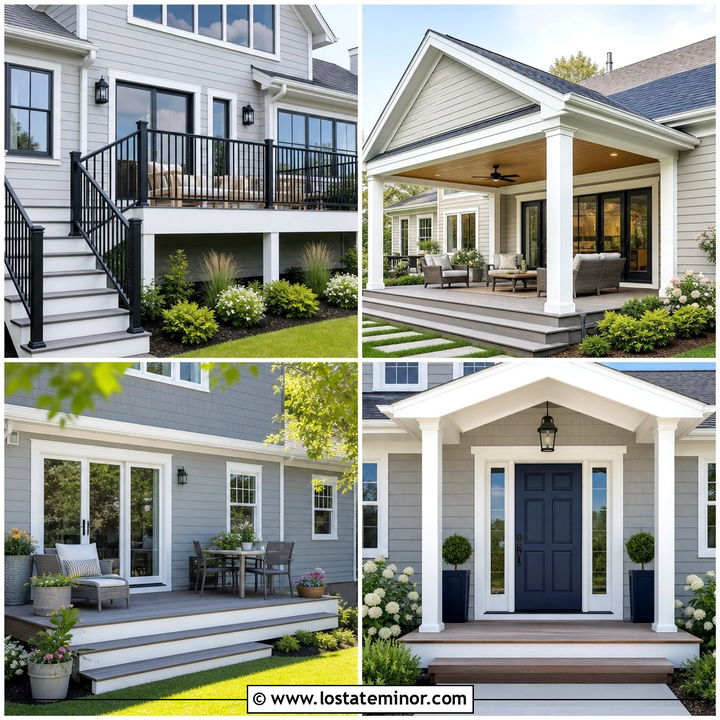
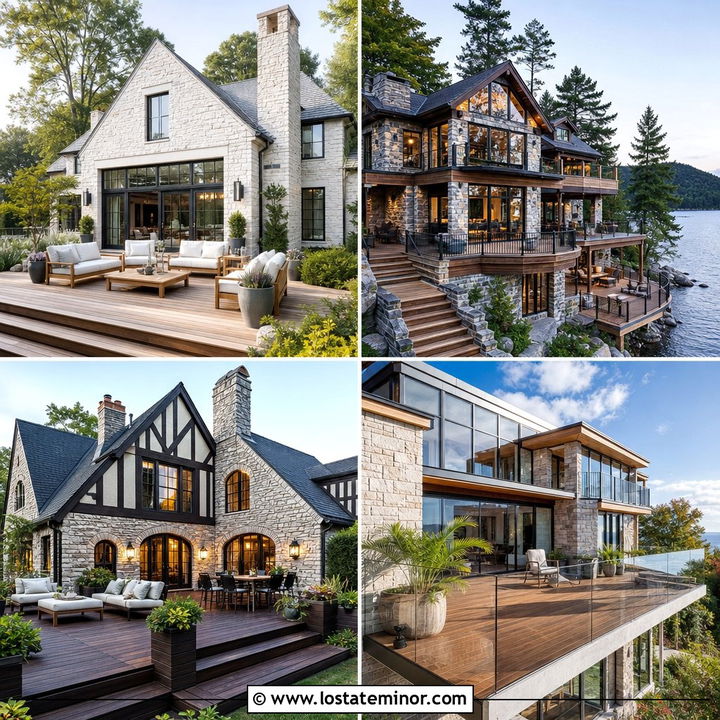
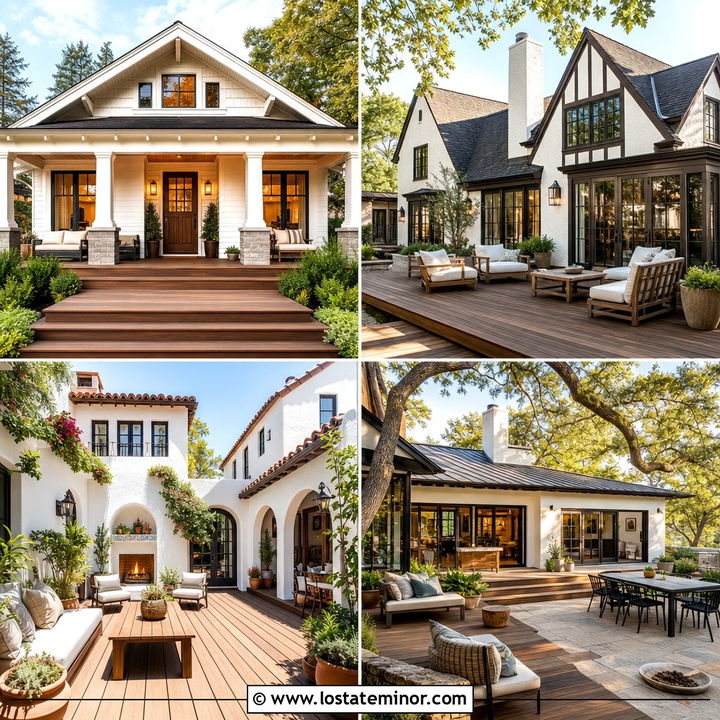
20. Sand House With Cable Railing Deck
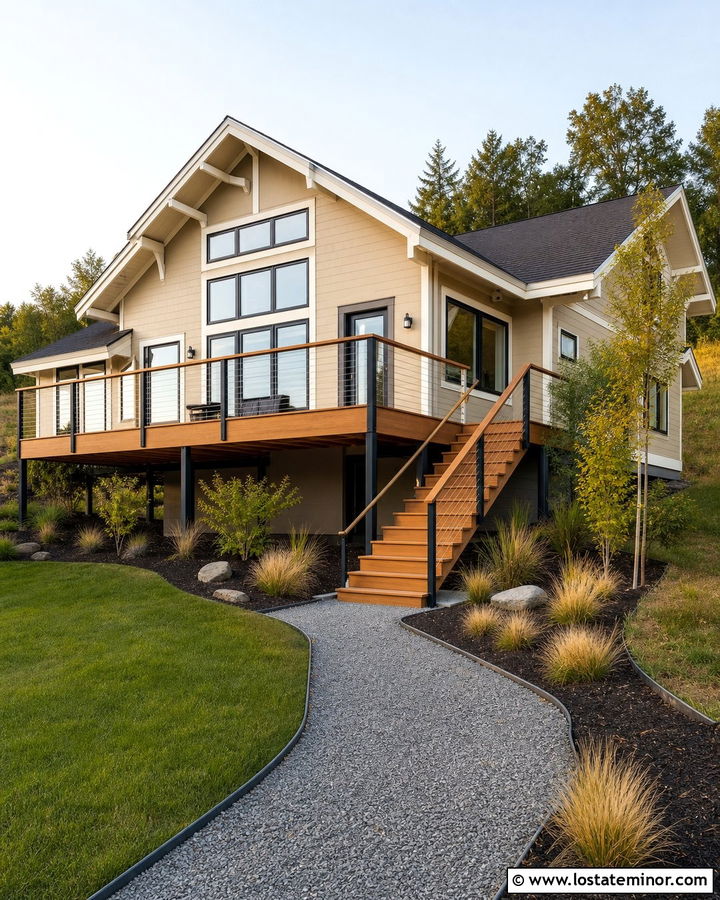
Cable railings bring a clean, open quality to a sand house while preserving views across the yard or surrounding landscape. Use warm sand siding with black-framed windows, then combine medium cedar decking with slim stainless steel cables and dark metal posts. The warm deck boards prevent the contemporary railing system from making the exterior feel cold. This design is especially effective on modern homes, elevated lake houses, and sloped properties where bulky railings would block the view. Keep the roofline simple and repeat the metal finish on exterior lights and door hardware. Broad stairs can connect the deck to a gravel path or lower lawn. Minimal landscaping with ornamental grasses and small trees supports the architecture. The completed scheme feels modern, practical, and visually light.
21. Sand House With Glass Railing Deck
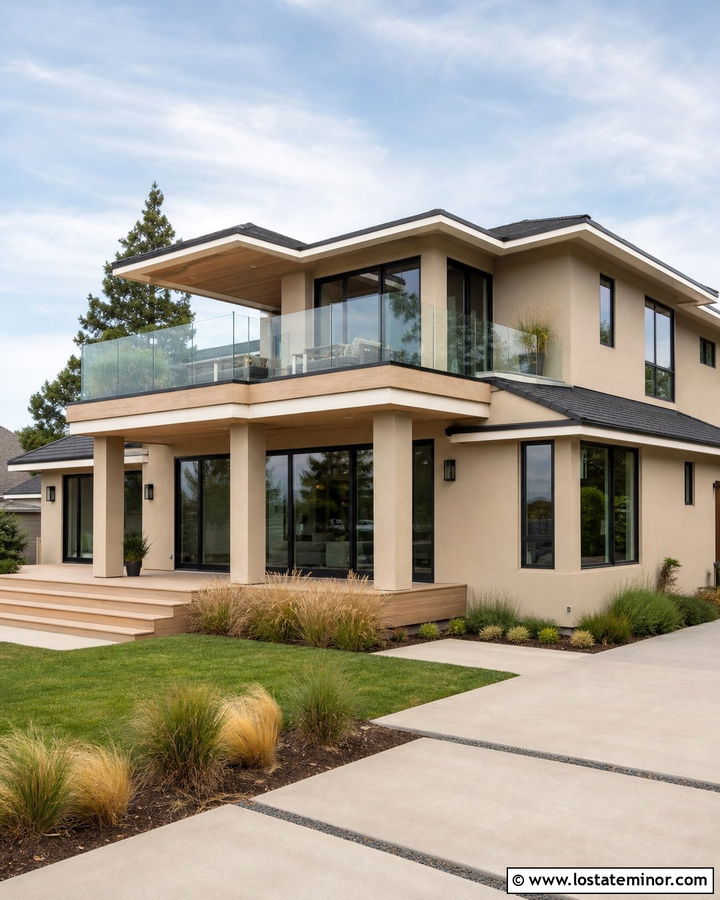
Glass railings allow a deck to feel almost invisible against a sand-colored modern house. Choose clear panels with narrow black or stainless steel framing, then use warm oak or light gray decking beneath them. The sand facade softens the reflective glass and creates a comfortable contrast with large black-framed windows. This setup works best on a contemporary waterfront home, hillside residence, or second-story deck where maintaining the view matters. Keep the trim limited and clean, using warm white around the roofline rather than adding decorative molding. A flat or low-slope charcoal roof reinforces the modern architecture. Use restrained landscaping with sculptural grasses, stone pavers, and a neatly defined lawn. Regularly spaced posts will provide structure without interrupting the open appearance of the complete exterior.
22. Sand House With Built-In Deck Seating
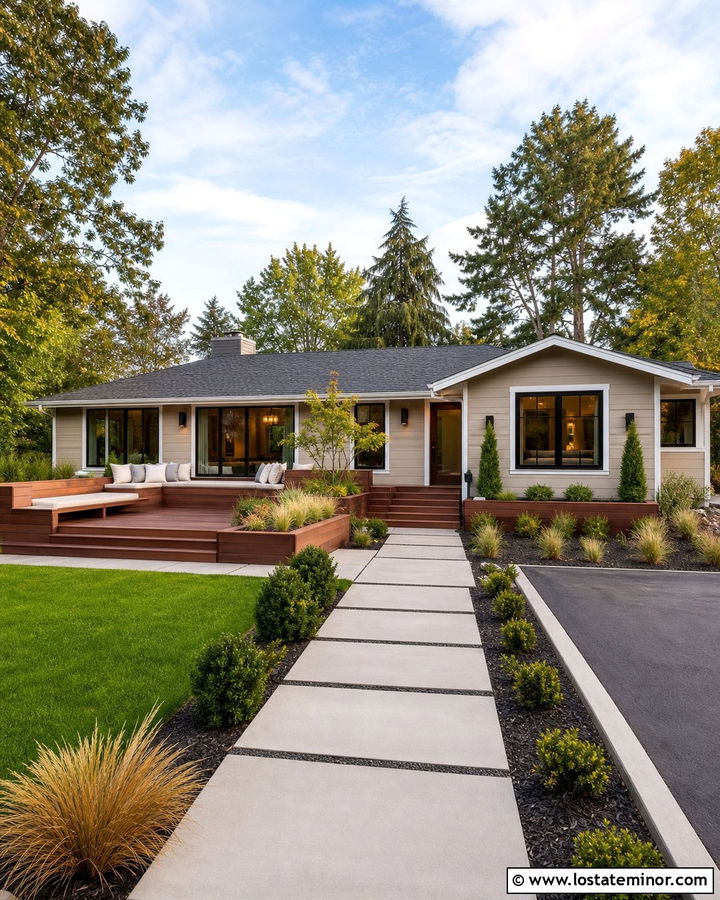
Built-in seating makes a sand house deck look organized while reducing the need for bulky outdoor furniture. Construct benches from the same medium-toned wood or composite used on the deck floor, then add cream or muted green cushions. Sand siding and white trim provide a soft backdrop, while black window frames and lighting bring definition. Place benches along the deck perimeter without blocking the main path between the door, stairs, and yard. Integrated planters at the ends can hold grasses or compact evergreen shrubs. This design suits a modern ranch, bungalow, or small cottage where every square foot needs to work efficiently. Keep the deck low and visually open if local requirements allow. Coordinated materials make the seating feel like an architectural feature rather than a separate accessory.
23. Sand House With Wide Deck Stairs
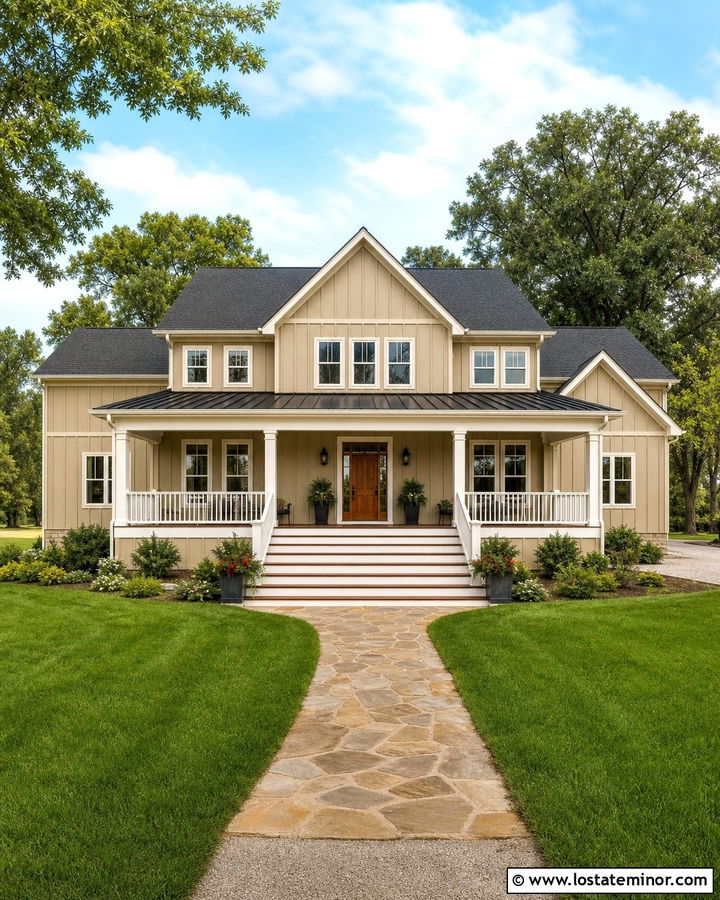
Wide deck stairs create a generous connection between a sand-colored house and its landscape. Instead of using one narrow staircase, extend the steps across much of the platform to make the deck feel open and approachable. Medium brown boards complement the sand siding, while white risers and railings relate to the window trim. This arrangement is ideal for a farmhouse, ranch, or family home with a broad backyard. Add low step lights for safer movement and a refined evening appearance. Planters at both ends can define the staircase without interrupting its width. Continue the central path into the lawn using stone or gravel in a similar warm tone. The deck, steps, facade, and walkway will then read as one complete transition from the house into the yard.
24. Sand House With Deck And Stone Fireplace
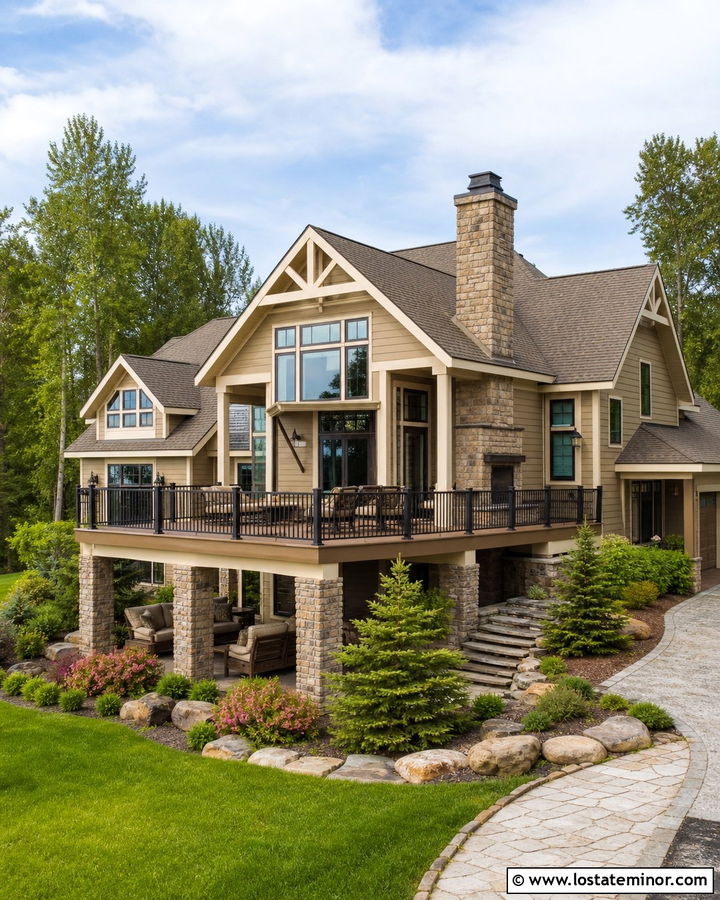
A stone fireplace can anchor a large deck and give a sand house stronger architectural character. Choose warm gray and beige stone that includes tones found in both the siding and deck boards. Position the fireplace at one end of a covered or partially covered deck so it defines the seating area without blocking doors or windows. Sand siding, cream trim, chestnut decking, and dark bronze railings create a rich but balanced palette. A gabled roof above the fireplace can improve proportion and make the feature feel integrated. Repeat the same stone at the foundation or entry columns to connect the deck with the main facade. Layered shrubs and a broad lawn will soften the hard materials. The result feels substantial, comfortable, and suitable for year-round curb appeal.
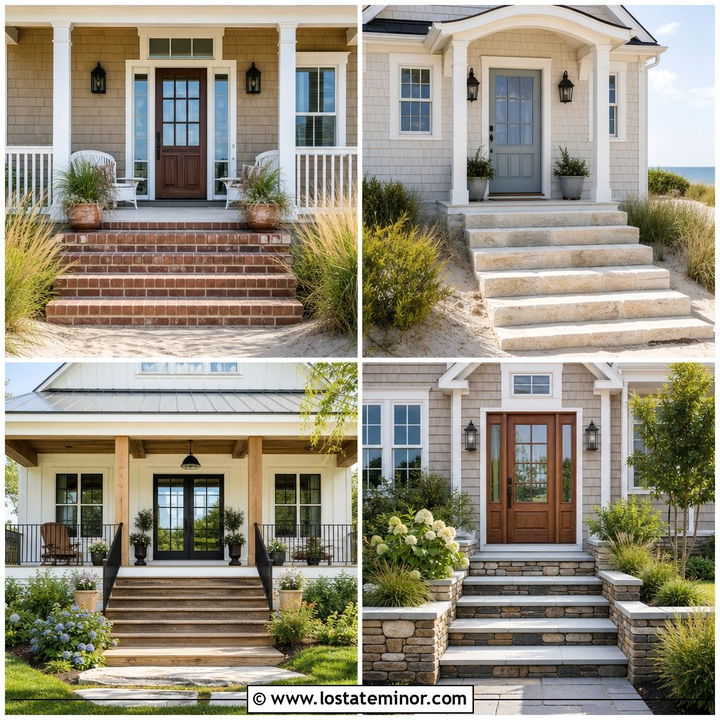
25. Sand House With Deck And Outdoor Kitchen
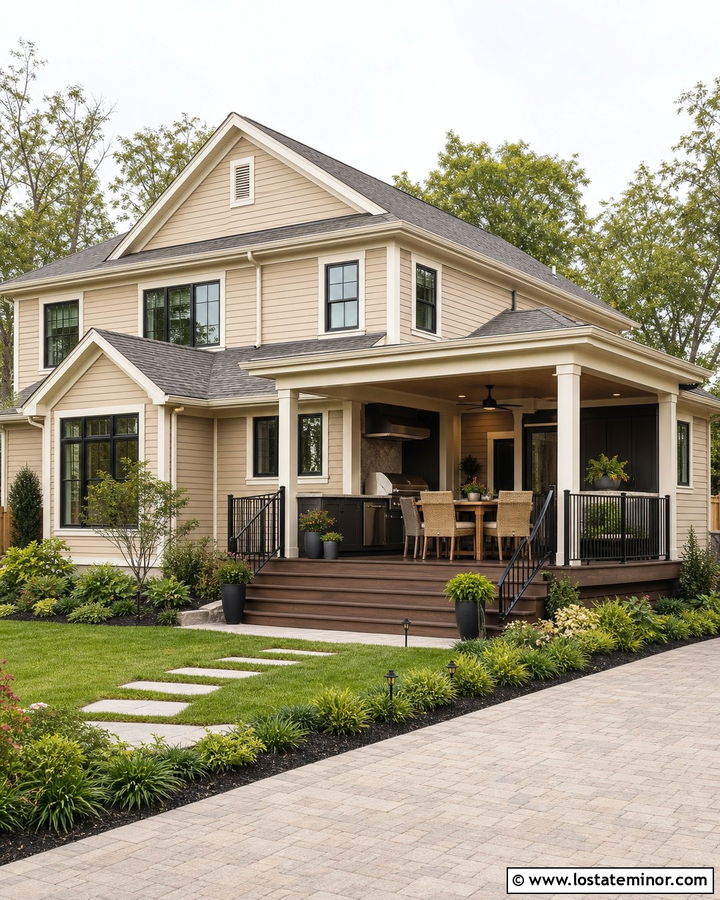
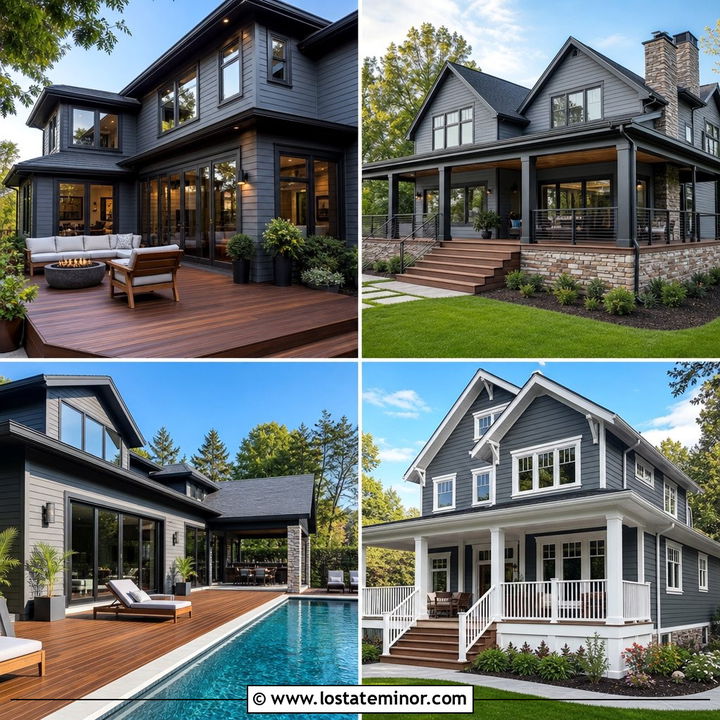
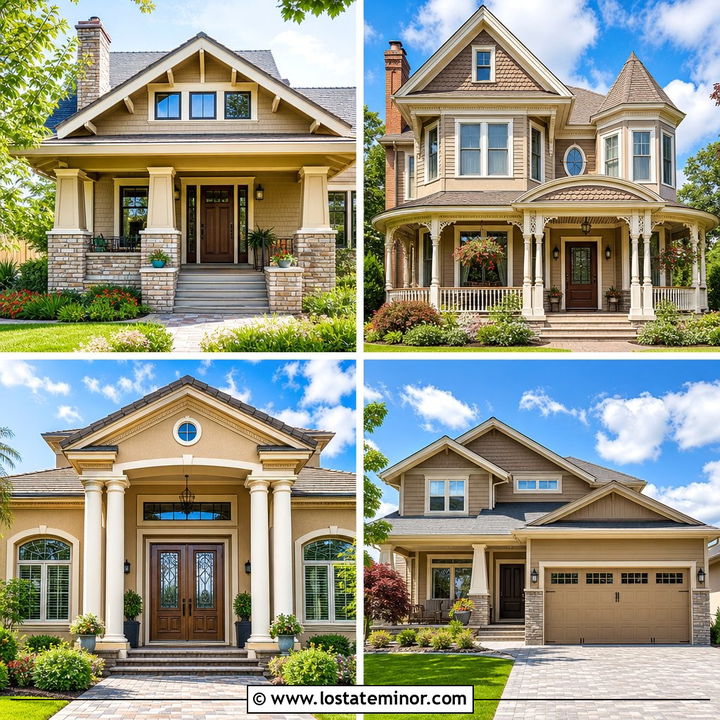
An outdoor kitchen turns the deck of a sand house into a functional extension of the interior. Place the cooking zone close to the kitchen door while preserving a clear walkway toward the stairs and seating area. Use warm sand siding with cream trim, then select medium brown composite decking and cabinets in muted charcoal. A stone or light concrete counter can repeat the home’s neutral tones without disappearing against the facade. Add a simple pergola or roof extension above the cooking area for stronger architectural definition. Black metal railings and appliances provide consistent contrast. Keep storage, seating, and planters visually streamlined so the deck does not feel crowded. The exterior will look most cohesive when the counter, foundation, roof, and deck materials share similar warm or charcoal undertones.
26. Sand House With Small Front Deck
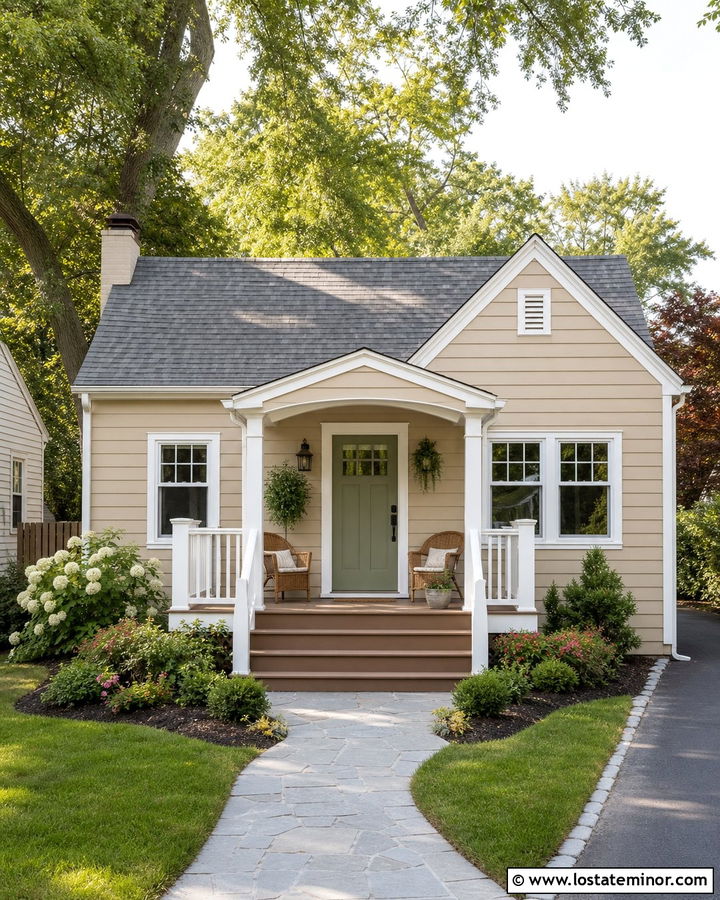
Even a compact sand house can gain useful outdoor space from a small front deck. Keep the platform proportionate to the facade and provide enough room for two chairs, a planter, and a clear route to the door. Light brown decking with white railings works well against warm sand siding and makes the entrance feel brighter. A muted blue, sage green, or natural wood door can become the central accent. This solution is ideal for a bungalow, cottage, or small ranch that lacks a traditional porch. Use one wide set of steps rather than a narrow staircase to create a more welcoming approach. Low shrubs and a direct walkway will keep the front elevation visible. Matching the deck trim to the window trim helps the addition look planned and permanent.
27. Sand House With Modern Floating Deck
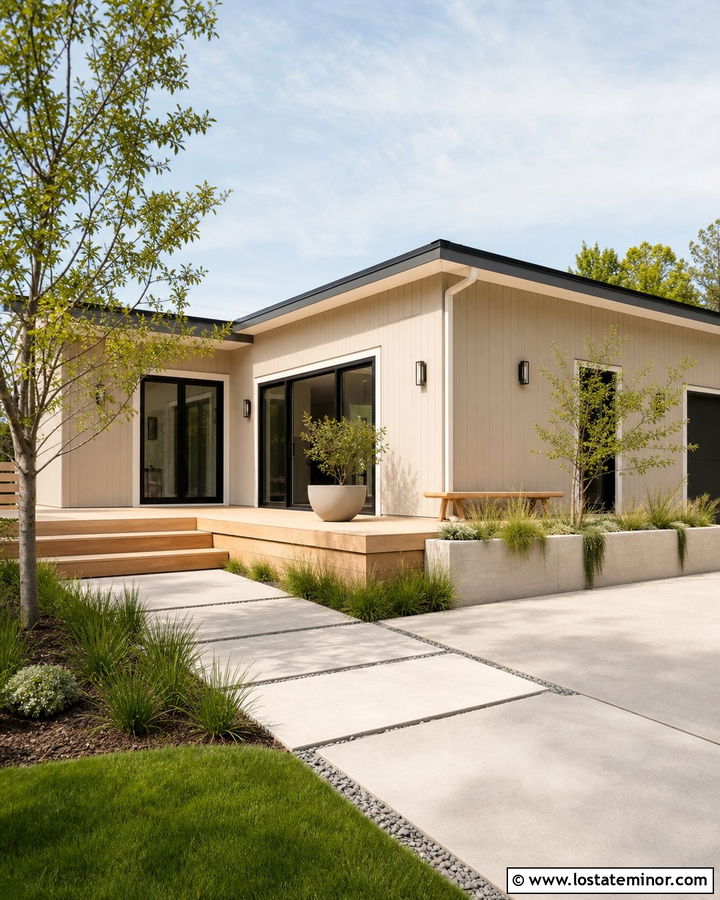
A floating deck gives a modern sand-colored house a clean outdoor platform without visually attaching a large structure to the facade. Position it directly beyond sliding glass doors, leaving a narrow gravel border between the deck and surrounding planting beds. Use pale oak-toned boards, sand stucco or vertical siding, warm white trim, and black-framed windows. The limited color palette creates a calm exterior with strong architectural lines. Keep the deck low, rectangular, and free from unnecessary railings where appropriate. A few built-in planters or a simple bench can define the edges. Large concrete pavers, ornamental grasses, and a small lawn reinforce the modern landscape. The deck should align with important window and door openings so the entire rear or side elevation feels carefully organized.
28. Sand House With Rustic Timber Deck
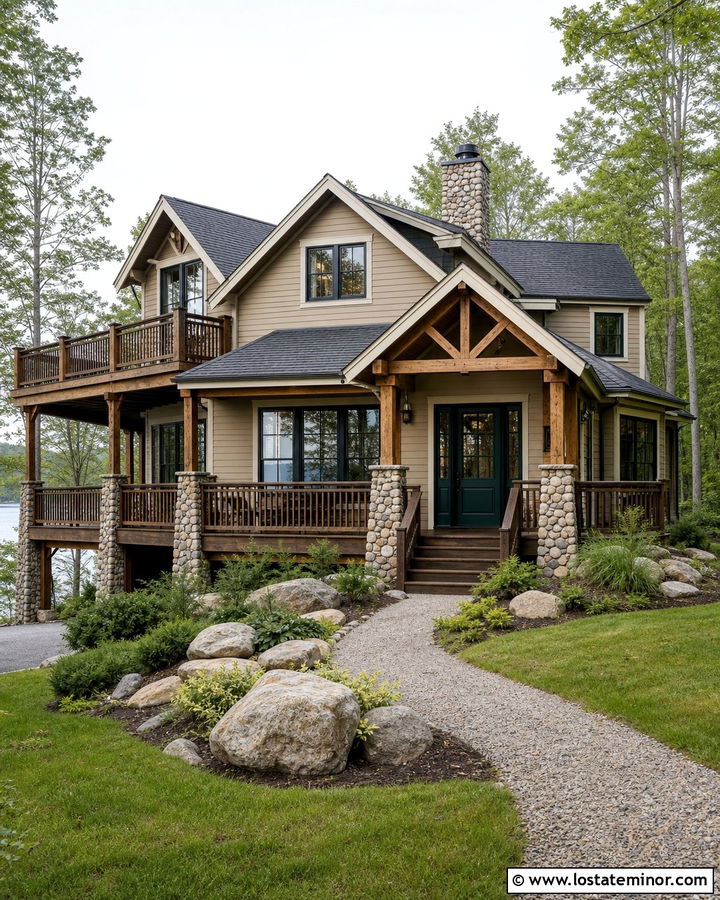
Heavy timber details give a sand house a sturdy, cabin-inspired appearance. Use exposed cedar or Douglas fir posts, substantial beams, and medium-dark deck boards against warm sand siding. Cream trim prevents the exterior from becoming too brown, while a deep charcoal roof adds contrast above. Stone column bases can support the timber and create a natural connection to the ground. This complete design works well for mountain homes, lake cottages, and rustic Craftsman houses. Keep the railings straightforward, using square wood balusters or dark metal inserts. A deep green front door can add another nature-inspired layer. Surround the deck with native shrubs, boulders, and a curved gravel path. Visible wood grain and carefully repeated materials are essential to making the robust structure look intentional.
29. Sand House With Farmhouse Deck
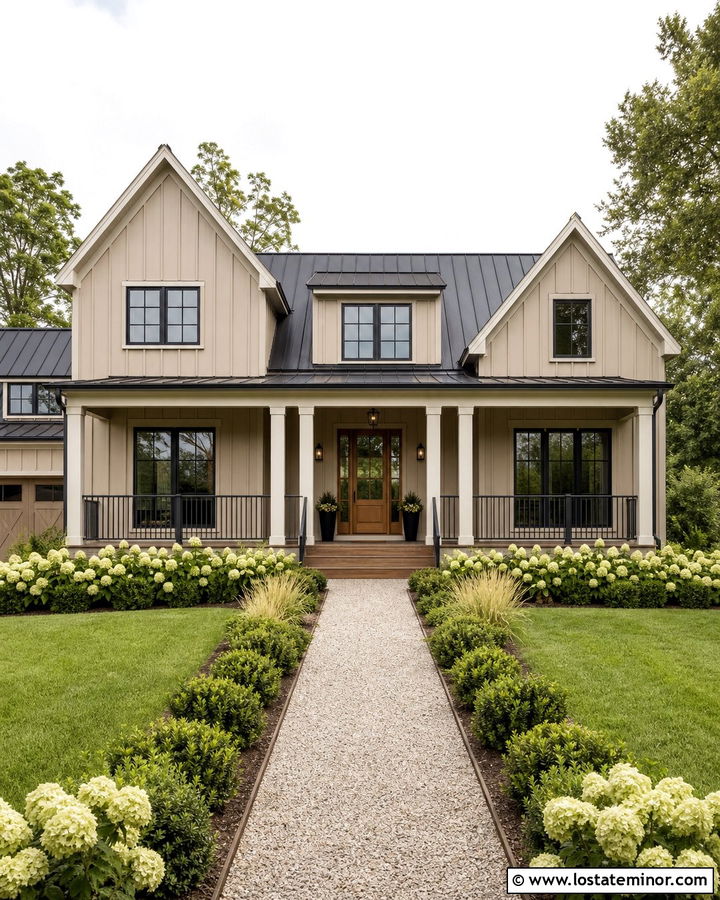
A farmhouse deck should feel open, useful, and closely connected to the entrance. Pair warm sand board-and-batten siding with creamy white trim, square columns, and medium brown deck boards. Black railings or simple black balusters can relate to window frames, barn-style lighting, and a dark metal roof. Extend the deck across the front or side of the house, leaving enough space for dining and casual seating. A natural wood front door adds warmth at the center of the composition. Use broad stairs and a straight gravel walkway to strengthen the welcoming approach. Hydrangeas, boxwoods, and ornamental grasses soften the strong horizontal and vertical lines. Keeping decorative details limited will allow the siding texture, roof shape, and deck proportions to define the farmhouse character.
30. Sand House With Contemporary Rooftop Deck
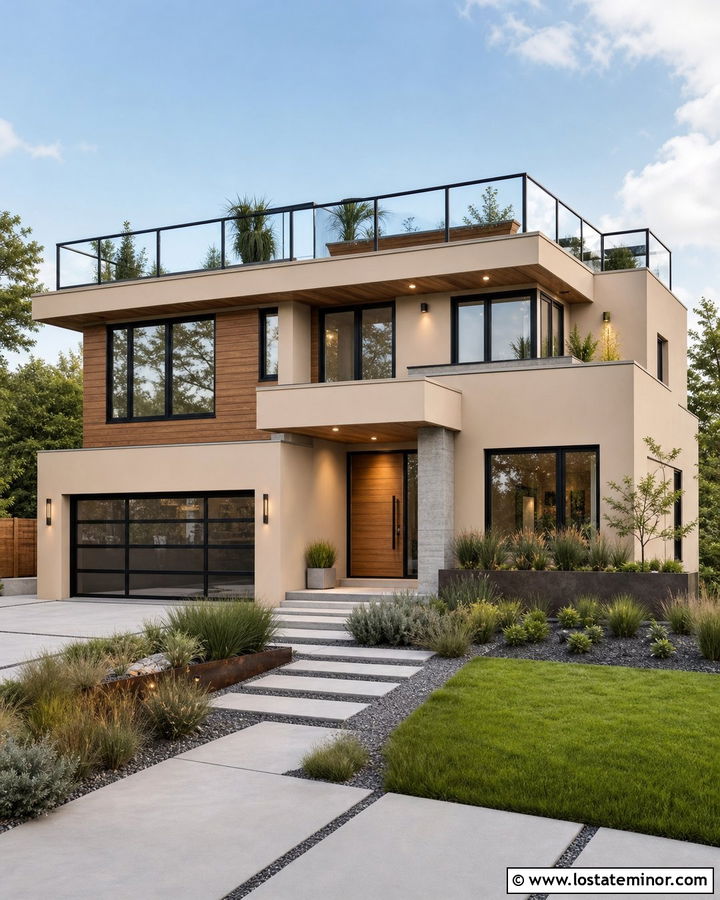
A rooftop deck can give a contemporary sand house valuable outdoor space while preserving a compact footprint. Use smooth sand-colored stucco, warm white soffits, black-framed windows, and horizontal cedar accents across the main facade. The rooftop deck should have clear glass or slim black railings that maintain the building’s clean profile. Light gray or pale wood decking will reduce visual heaviness at the upper level. Create access through a recessed stair tower or upper living space rather than adding an exposed exterior staircase to the front. Integrated planters can provide privacy without cluttering the roofline. At ground level, use concrete pavers, gravel, and architectural grasses. Repeating wood and black accents across both floors makes the elevated deck feel like a planned part of the complete house.
Conclusion:
A successful sand-colored exterior depends on more than choosing a warm neutral for the siding. The deck color, railing profile, roof, trim, doors, stonework, and landscaping should support one coordinated look. Natural cedar creates warmth, gray composite adds balance, and black or navy railings provide stronger definition. Covered decks, pergolas, built-in seating, wide stairs, and multiple levels can also improve how the outdoor space functions. Before finalizing materials, compare samples beside the house at different times of day and consider how they relate to permanent surfaces. Whether your home is coastal, traditional, rustic, or modern, these 30 Sand House Design With Deck Ideas offer flexible ways to create inviting outdoor living and cohesive curb appeal.

Related posts: