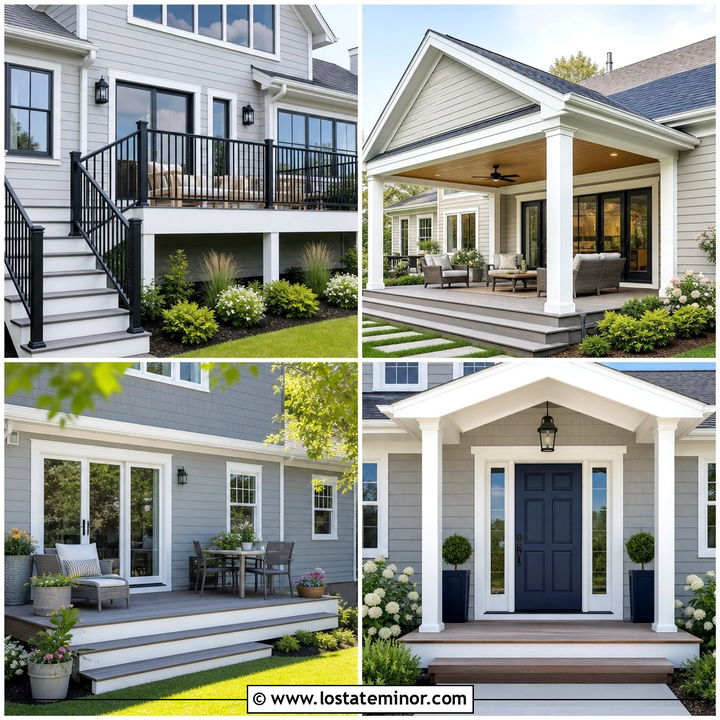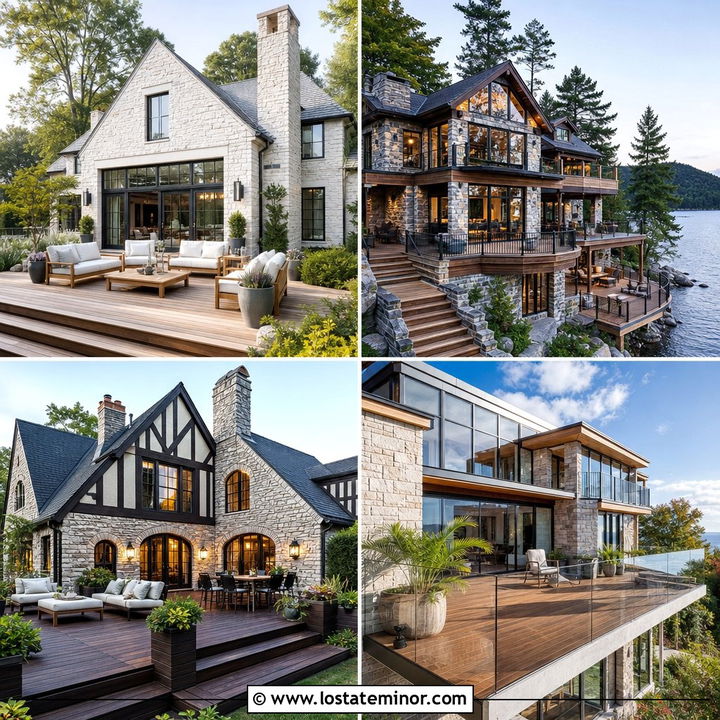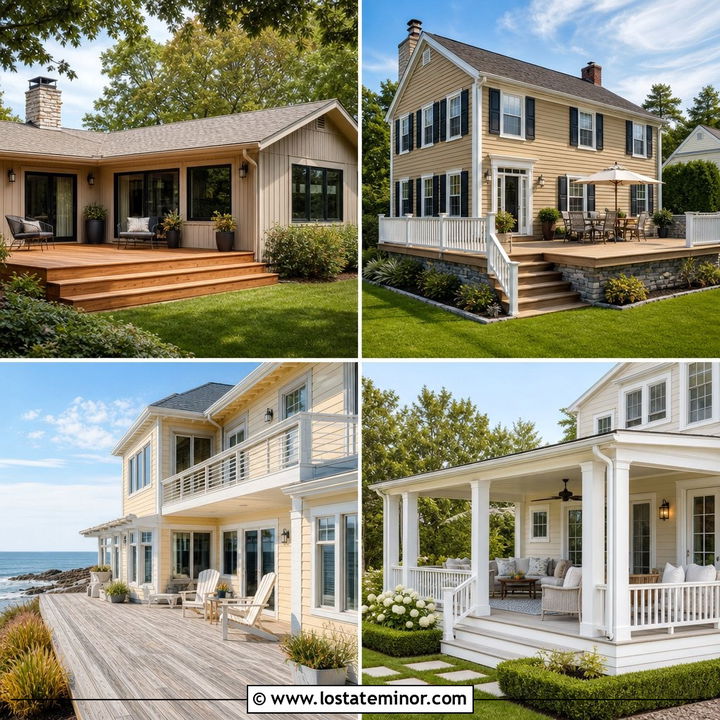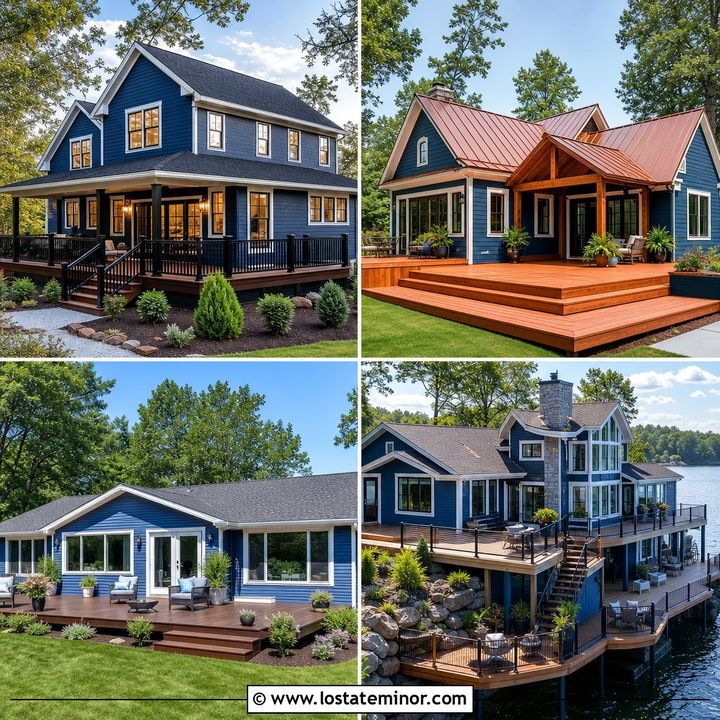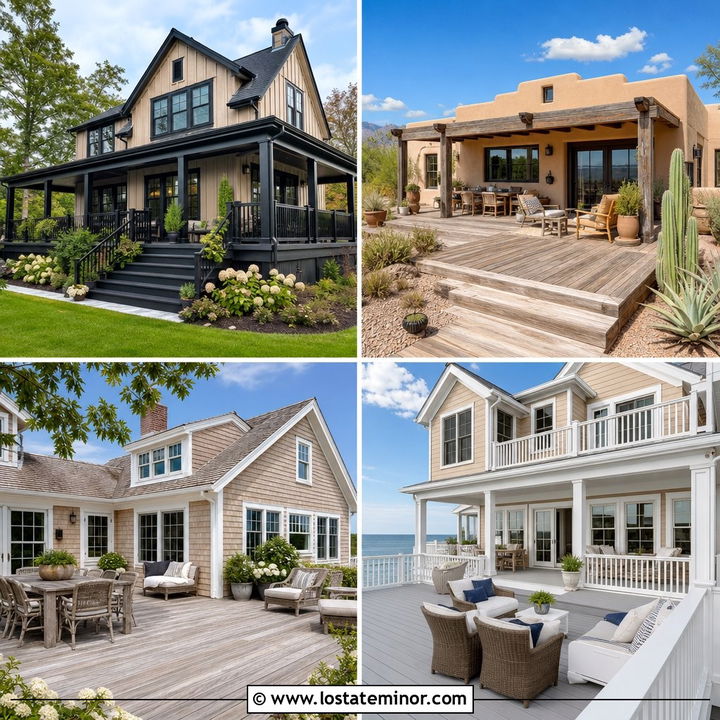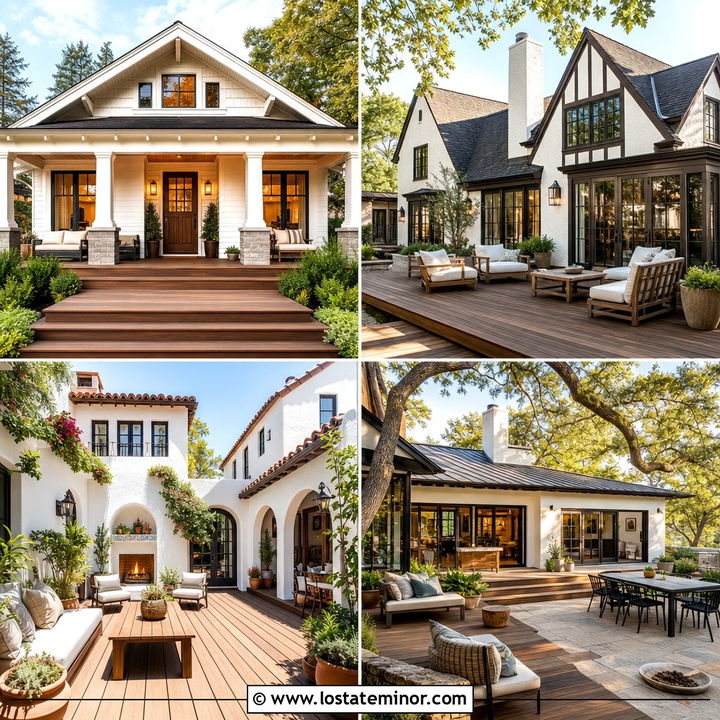
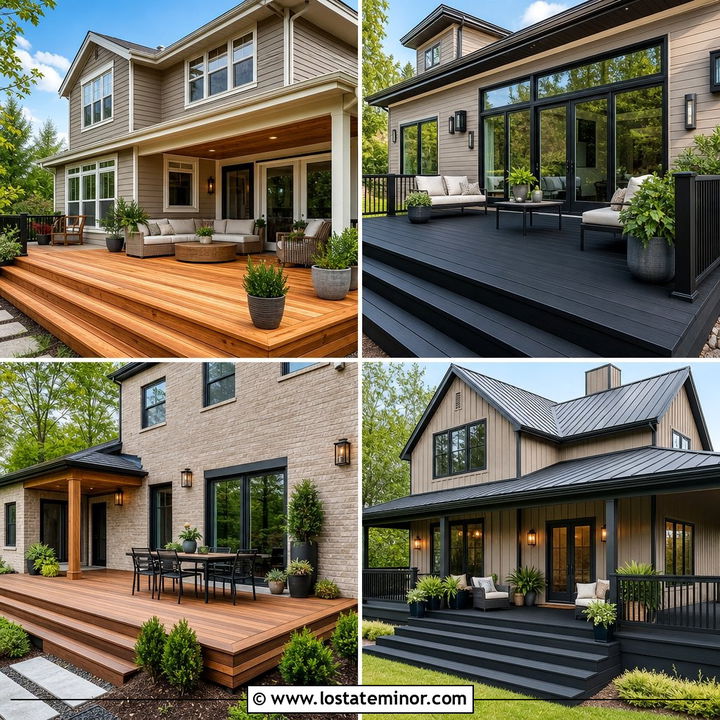
A black exterior creates a bold backdrop for outdoor living, especially when the deck is planned as part of the architecture rather than added as an afterthought. Warm cedar, pale oak, weathered gray composite, and rich hardwood can soften dark siding while black railings keep the overall design cohesive. Current exterior trends often pair black cladding with natural wood, stone, metal, and low-maintenance decking for greater warmth and visual depth. Wraparound and covered decks can also divide outdoor space into dining, lounging, and conversation zones. () Whether you prefer a modern farmhouse, compact ranch, woodland cabin, or contemporary home, these complete exterior schemes provide practical inspiration. Explore these 30 Black House Design With Deck Ideas.
1. Black Modern Farmhouse With Cedar Deck
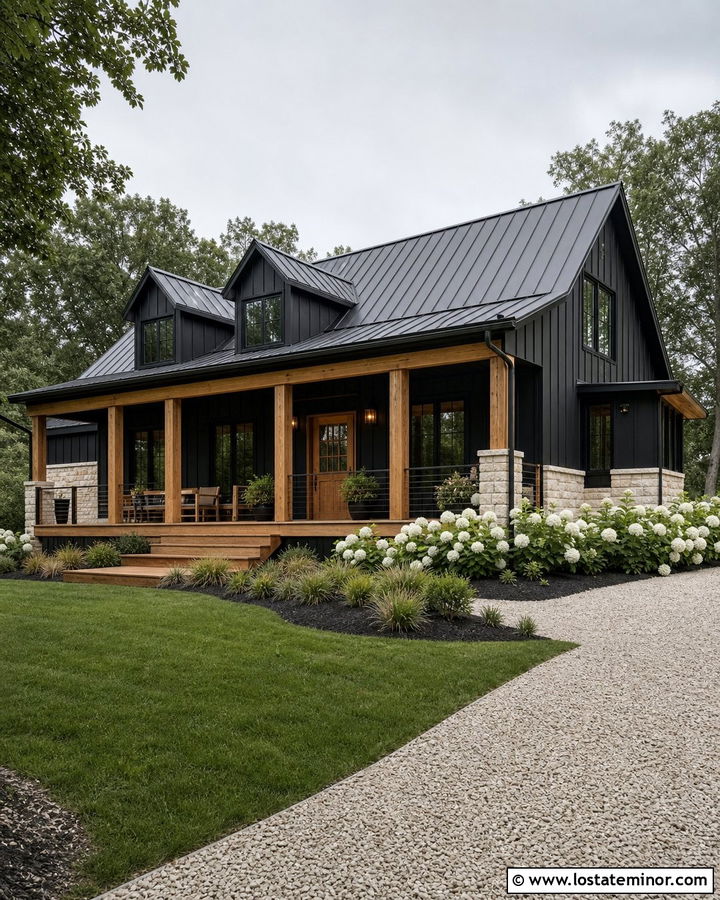
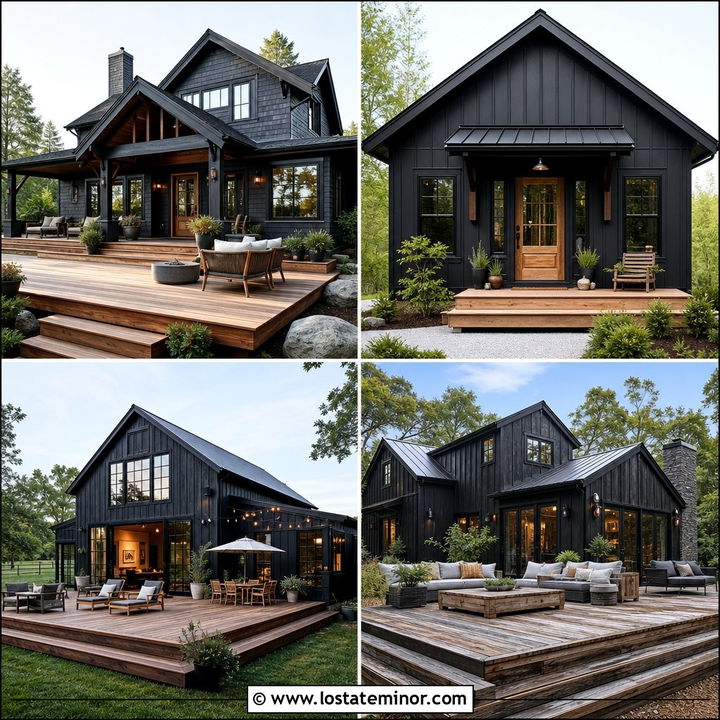
Black board-and-batten siding gives a modern farmhouse strong, simple lines, while a cedar deck adds the warmth needed to keep the exterior inviting. Continue the cedar onto porch columns, stair treads, and the front door so the deck feels connected to the architecture. Black metal railings preserve the clean color palette without hiding the natural wood grain. A charcoal standing-seam roof and black-framed windows make the farmhouse silhouette feel crisp and current. For balance, introduce pale limestone around the foundation or chimney. Soft ornamental grasses, white hydrangeas, and a wide gravel walkway can lighten the darker facade. This complete scheme works especially well on homes with steep gables, large windows, and generous outdoor entertaining areas.
2. Black Ranch House With Ground-Level Deck
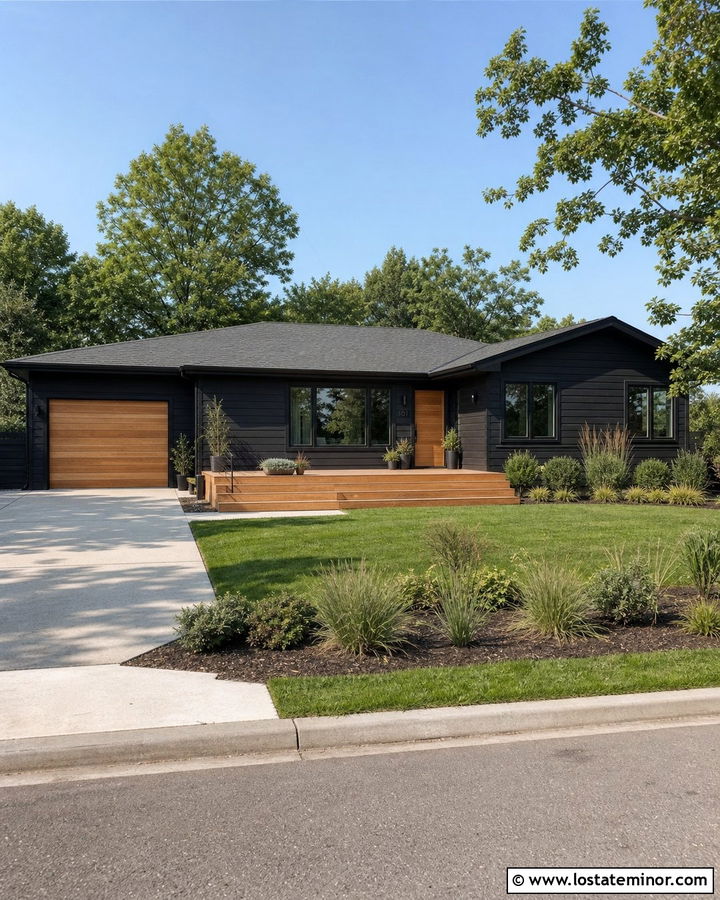
A low black ranch house looks wider and more welcoming when paired with a long ground-level deck. Choose honey-toned cedar or medium-brown composite boards to create clear contrast against the horizontal black siding. Broad deck steps can run along the yard-facing edge, removing the need for railings and making the transition to the lawn feel natural. A matching wood front door and garage door help distribute the deck color across the facade. Keep the roof medium gray instead of solid black to prevent the low roofline from appearing too heavy. Large planters, clipped shrubs, and layered native grasses add softness. This layout is practical for casual seating, outdoor dining, and easy movement between the house, deck, and backyard.
3. Black Craftsman House With Covered Deck
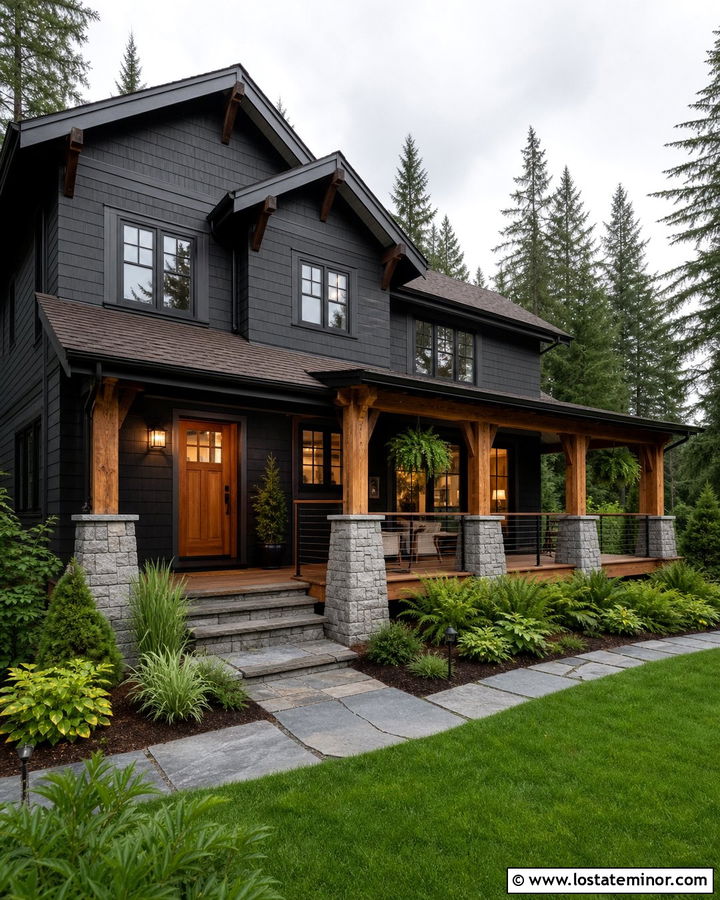
What makes a black Craftsman feel warm rather than imposing? A substantial covered deck with natural timber posts can provide the right balance. Use a soft black body color on lap siding, then add warm cedar under the roof, around the entry, and across the deck floor. Tapered stone column bases reinforce the Craftsman character and visually anchor the dark facade. Black cable railing offers safety while allowing the wood and masonry to remain prominent. A dark bronze roof, amber wood door, and cream outdoor cushions introduce subtle variation without weakening the scheme. Add ferns, hostas, and low evergreen shrubs around the deck. The result feels handcrafted, comfortable, and well suited to wooded or established suburban neighborhoods.
4. Black Colonial House With Two-Level Deck
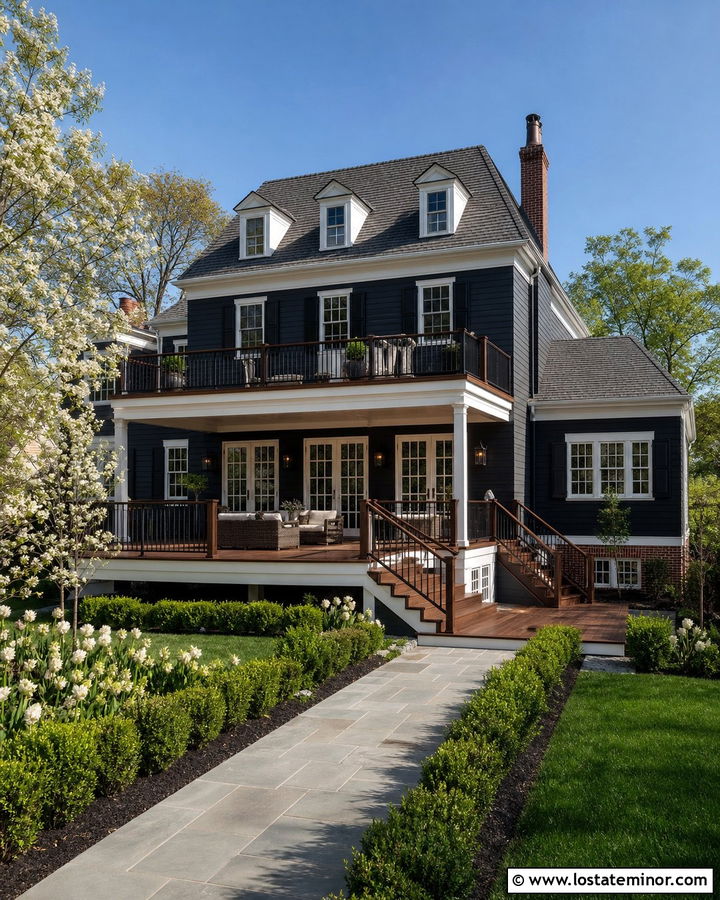
A traditional Colonial can support a dramatic black exterior when its symmetry remains visible. Paint the clapboard siding deep black, retain crisp white window trim, and install a two-level deck in a medium walnut finish. Align the upper deck with French doors and the lower platform with the backyard lawn. Slim black railings and evenly placed posts keep the structure orderly, reflecting the home’s balanced architecture. White deck fascia can echo the trim, although black fascia creates a more contemporary result. Include matching lantern-style lights near each door and use brick around the deck steps or foundation. Boxwood borders, flowering trees, and a straight stone path reinforce the formal character while the wood decking keeps the black-and-white palette from looking too rigid.
5. Black Cabin With Wraparound Deck
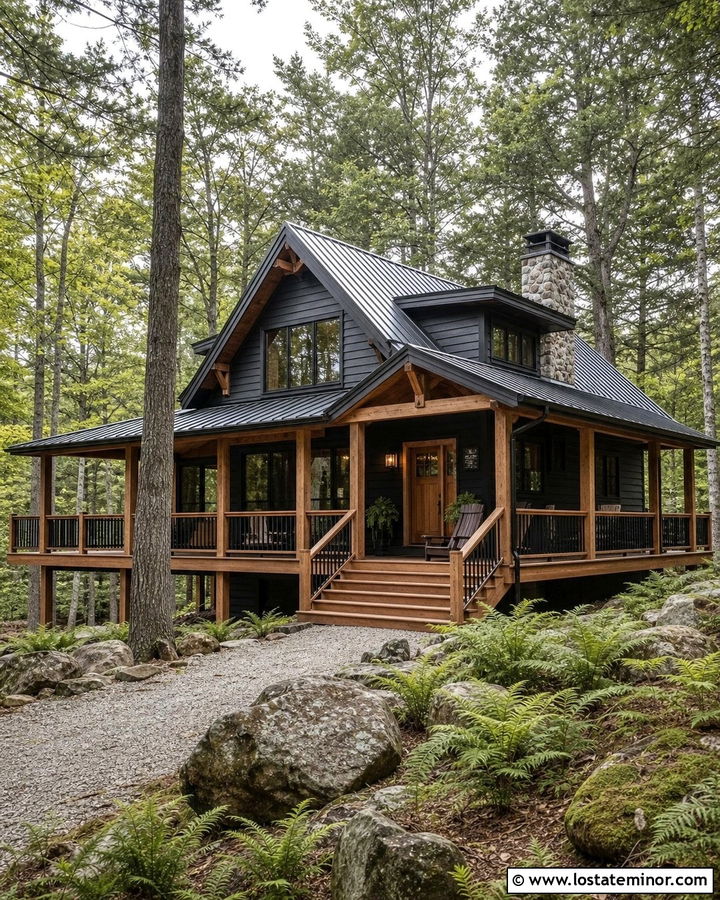
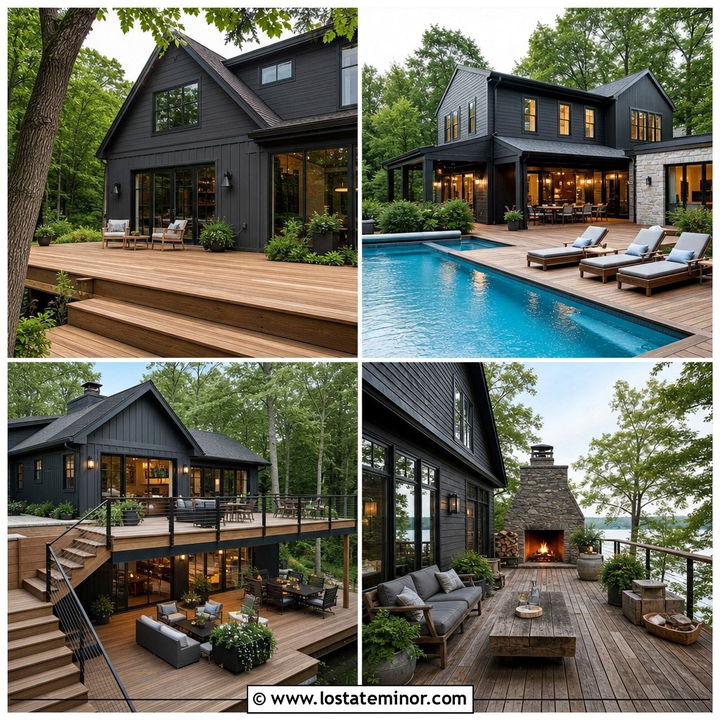
In a wooded setting, a black cabin can settle naturally into the landscape instead of competing with it. Wrap the house in matte black wood siding and add an expansive cedar deck across two or three sides. The warm boards stand out against the dark walls while creating separate places for dining, reading, and viewing the scenery. Use black metal balusters with thick cedar handrails for a sturdy, coordinated finish. A dark metal roof, exposed rafters, and a natural wood entry door strengthen the rustic-modern character. Keep furnishings simple and weather-resistant. Ferns, mossy boulders, pine trees, and a gravel approach can frame the exterior without making it feel overly landscaped. Wide steps should connect the deck comfortably to the surrounding land.
6. Black Contemporary House With Floating Deck
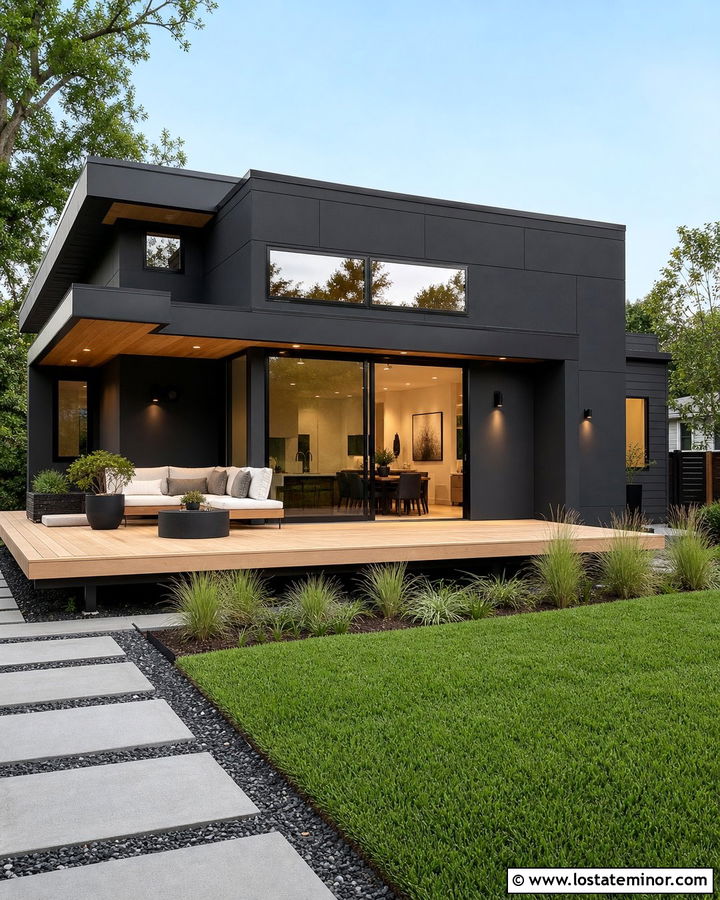
Clean geometry makes a floating deck a natural companion for a black contemporary home. Select smooth black fiber-cement panels or vertical siding for the exterior, then place a pale oak-toned platform just above the lawn. Hidden fasteners and narrow gaps will keep the deck surface visually streamlined. Large sliding glass doors can connect the interior living area to the platform, while a flat roof extension provides partial shade. Repeat the deck color on soffits or a recessed entry to create a unified material story. Concrete pavers, linear planting beds, and sculptural grasses reinforce the modern layout. Without bulky railing, the deck appears to hover beside the house. This approach works best where the platform can remain close to grade and open to the yard.
7. Black Cape Cod House With White Deck
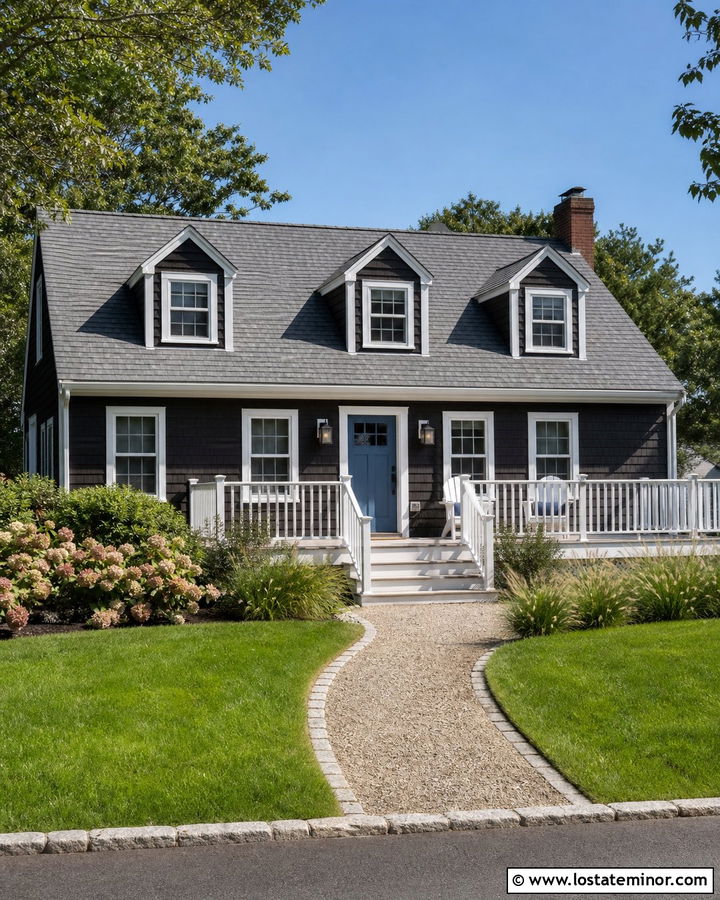
A black Cape Cod exterior feels fresh and graphic when paired with a clean white deck. Use near-black shingles or clapboard siding across the compact facade, then preserve white around the windows, dormers, deck railing, and fascia. The contrast highlights the home’s familiar proportions and prevents small architectural details from disappearing. Weathered gray deck boards can reduce maintenance concerns while supporting the coastal palette. Add a muted blue front door, black lanterns, and a medium-gray shingle roof for gentle color variation. Hydrangeas, beach grasses, and a curved gravel path complete the relaxed setting. Keep the deck railing simple and evenly spaced rather than ornate. This complete look combines traditional coastal character with a stronger, more updated exterior color scheme.
8. Black Split-Level House With Raised Deck
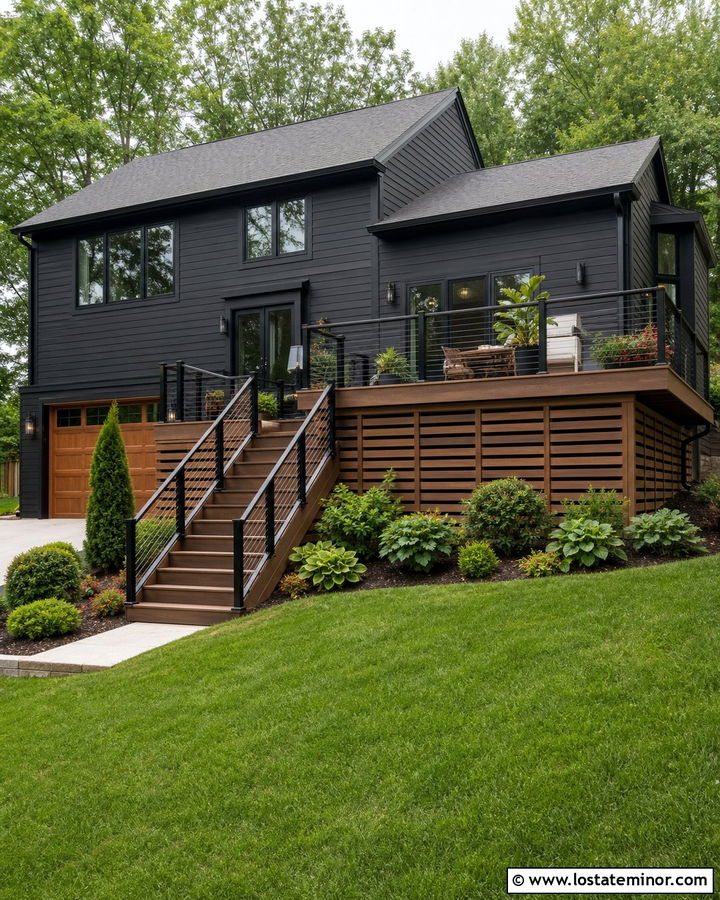
A raised deck can turn the uneven proportions of a split-level home into an intentional design feature. Cover the exterior with charcoal-black horizontal siding and build the deck from a warm brown composite that aligns with the upper living floor. Black posts, fascia, and cable railings help the supporting structure blend into the house. Enclose part of the space below with horizontal cedar slats, creating concealed storage while repeating the deck’s warmth. Wide stairs should descend toward a patio or lawn instead of ending abruptly. Add a cedar garage door, dark window frames, and a gray roof to complete the palette. Layered shrubs around the deck supports soften the height and help the addition feel integrated with both the building and the sloped yard.
9. Black Tudor House With Dark Wood Deck
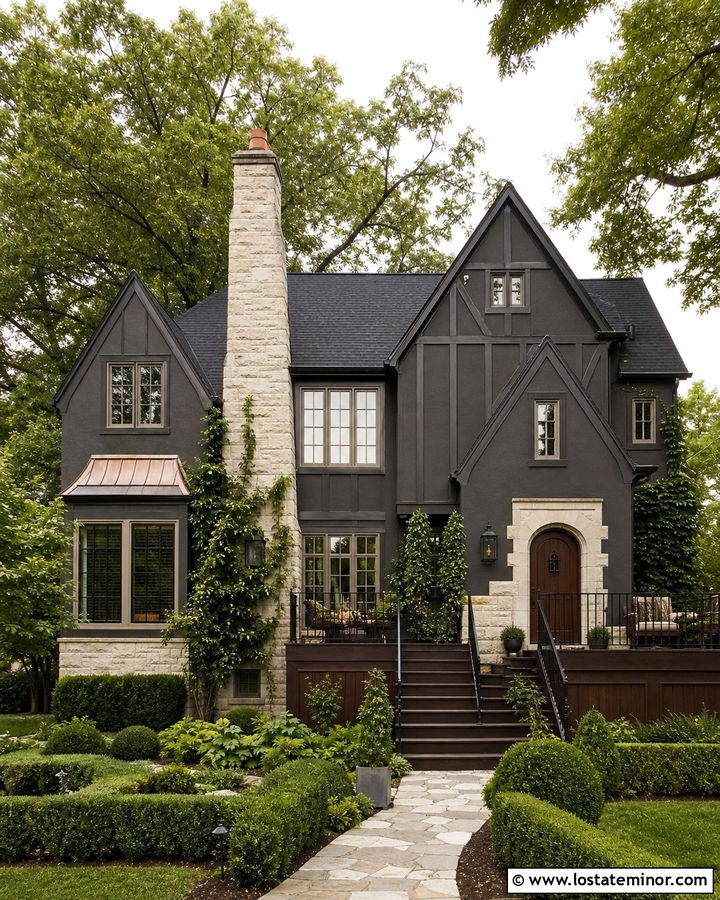
Black siding can modernize a Tudor-inspired home without erasing its distinctive rooflines and masonry. Use soft black stucco or painted brick between dark timber details, then introduce a dark walnut deck with broad stairs and sturdy square posts. Cream limestone around the foundation, chimney, or entry provides enough contrast to define the architecture. Instead of bright white trim, choose warm greige around the windows for a quieter transition. Black iron railing complements the Tudor detailing and allows the richly stained deck boards to remain visible. A bronze front door and aged brass lighting bring subtle warmth. Complete the setting with clipped hedges, climbing greenery, and a stone walkway. The deck should feel substantial, tailored, and connected to the home’s traditional materials.
10. Black Bungalow With Front Deck
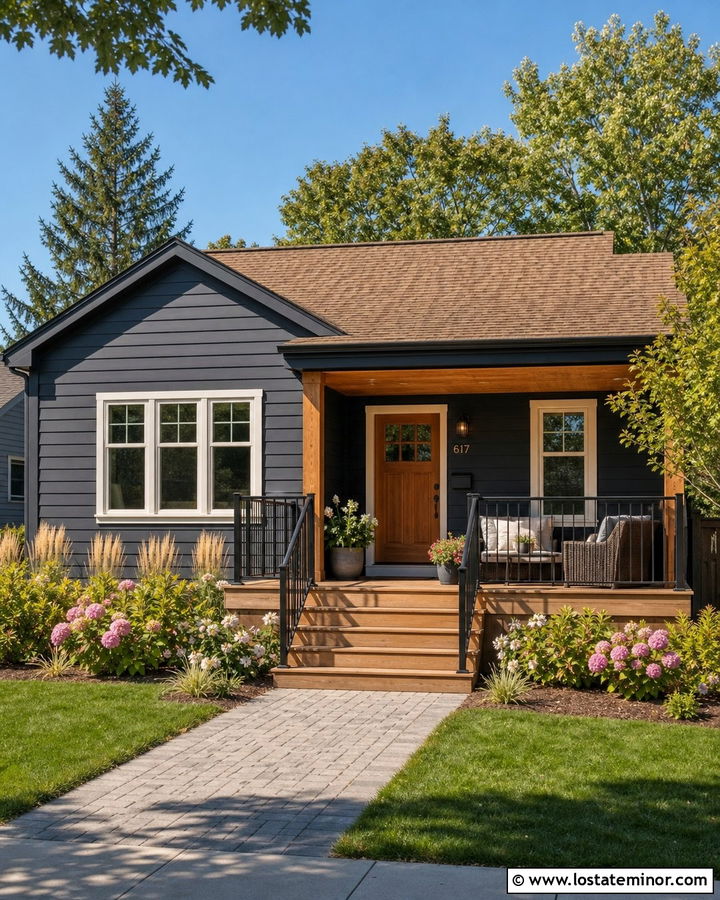
A front deck can give a small black bungalow valuable outdoor space and a more welcoming street presence. Choose black lap siding, cream window trim, and a low cedar platform that stretches across most of the facade. Broad steps centered on the front door create an easy approach, while simple black railing keeps the view open. Carry cedar onto the porch ceiling and front door to visually connect the horizontal deck with the covered entry. A medium-brown shingle roof softens the dark siding and suits the bungalow’s relaxed character. Use compact furniture so the deck does not feel crowded. Flowering shrubs, low grasses, and a short paver path can frame the structure. The result offers practical seating while making the modest home appear wider and better proportioned.
11. Black A-Frame House With Platform Deck
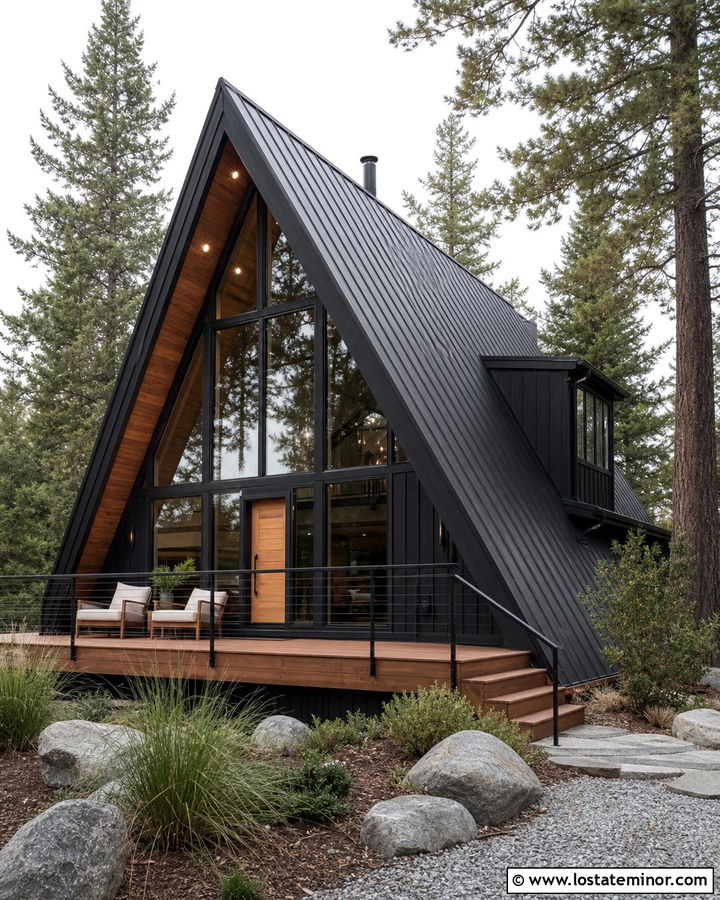
The sharp silhouette of an A-frame house becomes even more striking with black vertical cladding and a wide natural wood platform. Extend the deck beyond the glass-filled front elevation so the outdoor area feels like a continuation of the interior. Cedar, redwood, or a realistic wood-look composite will contrast beautifully with the dark triangular facade. Keep the railing minimal, using thin black cables or glass panels where elevation requires protection. Matching black roof panels can create one continuous shape from ridge to ground. Add a warm wood door, simple outdoor seating, and low pathway lighting. Native grasses, rocks, and tall evergreens maintain the informal setting. This design emphasizes views, indoor-outdoor movement, and the bold geometry that makes an A-frame memorable.
12. Black Lake House With Cable Railing Deck
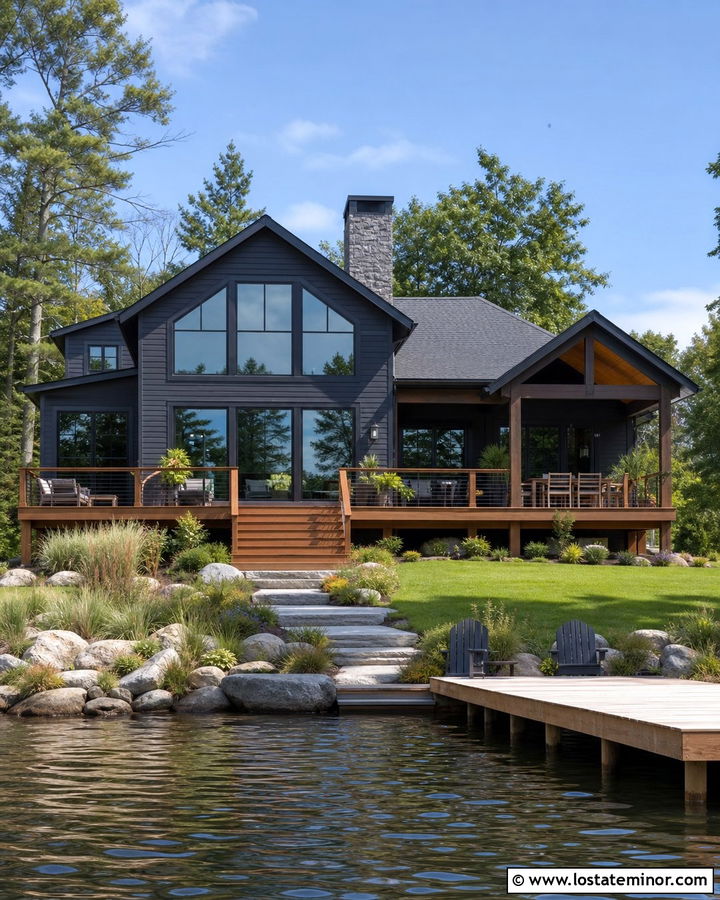
A lake house deck should preserve the view while still looking connected to the exterior. Finish the home in deep black siding and use medium-toned cedar boards across a broad waterside deck. Black cable railing nearly disappears from a distance, keeping the water and landscape visible. Large windows with black frames can reflect the surroundings and reinforce the modern palette. For shelter, extend a simple roof over the dining zone while leaving the lounge area open to sunlight. A stone chimney or foundation adds natural texture and helps ground the dark building. Use wide deck stairs leading toward a gravel path or dock. Restrained landscaping, including native grasses and low shrubs, ensures the complete black, wood, metal, and stone scheme remains the main visual focus.
13. Black Mountain House With Stone And Deck
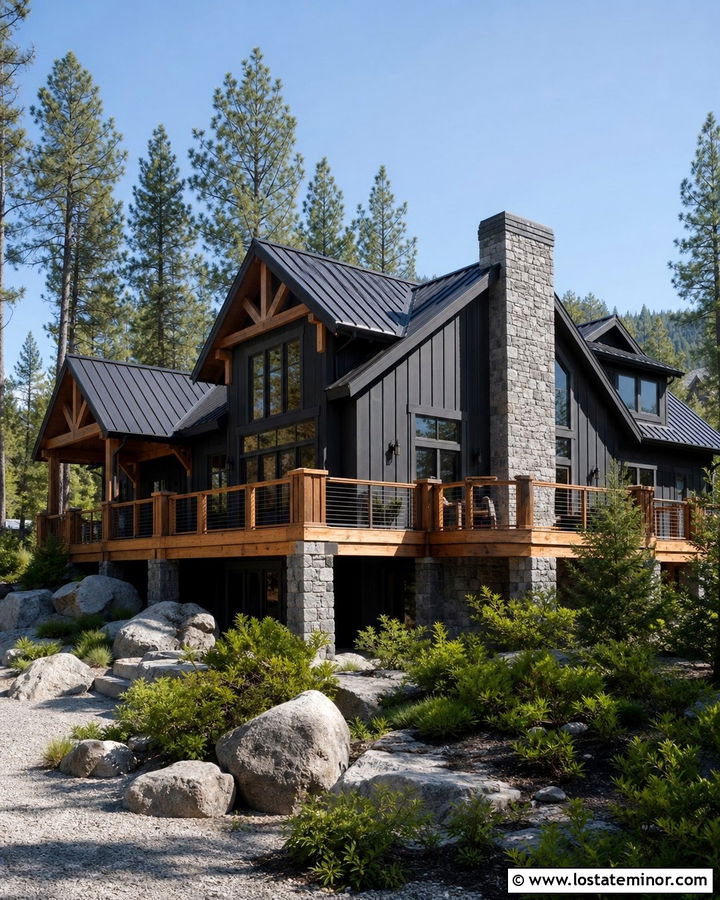
Stone can anchor a black mountain house while a warm deck connects it to the rugged surroundings. Choose charcoal-black board-and-batten siding for the upper walls and use gray fieldstone around the lower level, chimney, or entry. A substantial Douglas fir deck introduces amber tones that stand apart from both materials. Repeat the wood on exposed beams and roof soffits for a coordinated exterior. Heavy black railings or cables provide definition without competing with the scenery. A dark metal roof suits snowy, wooded settings and sharpens the roofline. Build broad stairs toward a stone path to make the elevated deck feel accessible. Evergreen plantings, native boulders, and gravel beds complete a durable landscape that looks appropriate beside the dramatic black facade.
14. Black Victorian House With Side Deck
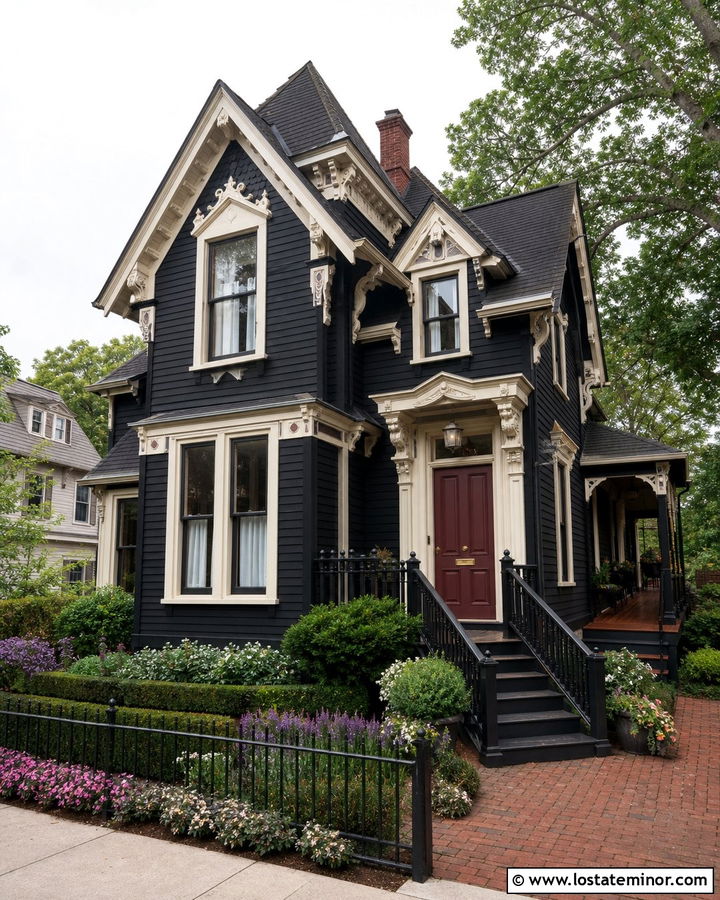
A black Victorian exterior can feel sophisticated when decorative details are simplified rather than hidden. Paint the main clapboard siding soft black, then use warm white on window trim, brackets, and selected porch details. Place a narrow side deck beside the kitchen or dining room, finishing it in rich mahogany or a similar composite tone. Slender black railings maintain the historic vertical rhythm while preventing the addition from becoming visually heavy. A muted burgundy front door and dark gray roof add depth without creating a busy palette. Repeat warm wood on a gate or small landing. Formal shrubs, flowering perennials, and a brick walkway can frame the house. The finished scheme respects Victorian character while adding a practical, less formal outdoor gathering area.
15. Black Scandinavian House With Pale Wood Deck
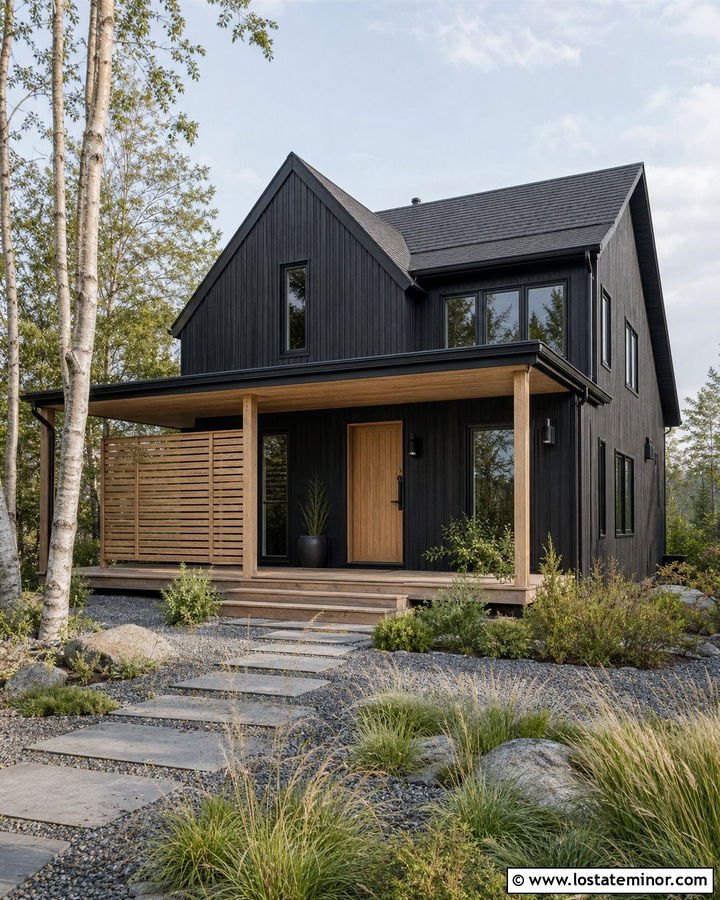
A Scandinavian-inspired black house relies on simple forms, natural textures, and a restrained palette. Cover the facade with narrow black vertical siding and pair it with a pale thermally modified wood deck. The lighter surface creates a crisp break from the exterior while retaining a calm, organic appearance. Use matching pale wood on the front door, soffits, and a small privacy screen. Black-framed windows, a steep charcoal roof, and minimal trim preserve the clean silhouette. Keep the deck broad and uncluttered, with built-in benches instead of heavy furniture. Gravel borders, meadow grasses, birch trees, and flat stepping stones suit the understated architecture. This whole-house design feels particularly successful where strong rooflines and large windows can become the main decorative features.
16. Black Stucco House With Ipe Deck
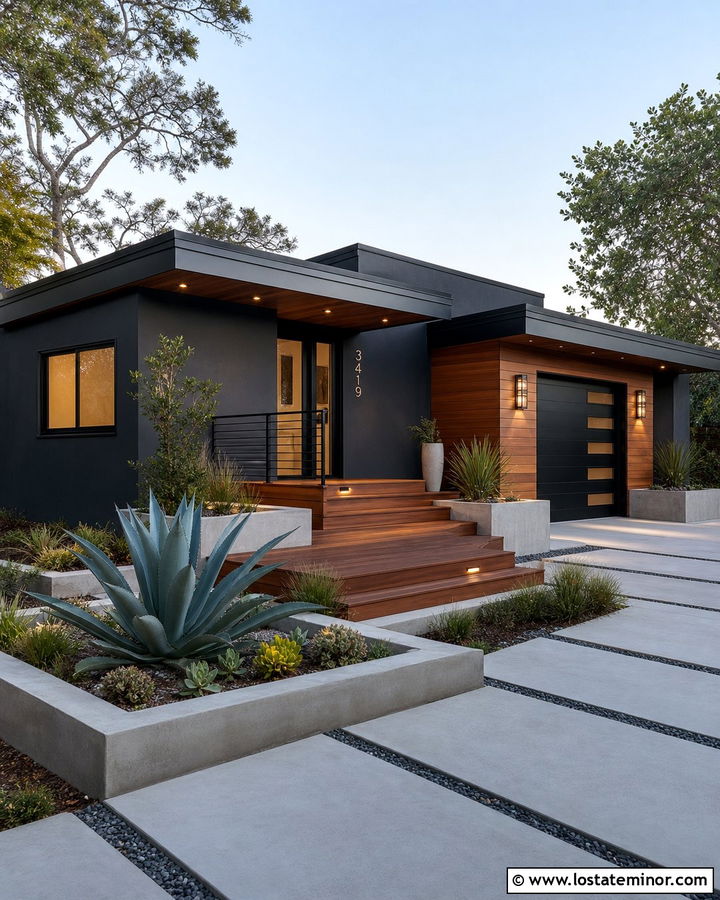
Smooth black stucco and richly colored ipe decking create a polished exterior with strong material contrast. This combination works especially well on a low contemporary house with deep roof overhangs and large glass doors. Use the hardwood across the main platform, steps, soffits, and an accent wall so it feels integral to the architecture. Black fascia and slim metal railings can frame the deck without interrupting the warm grain. Add pale concrete planters or limestone pavers to lighten the scheme around ground level. Drought-tolerant grasses, agave, and neatly shaped shrubs support the streamlined design. Because the stucco surface is visually quiet, the texture of the deck becomes more noticeable. The completed house feels modern, warm, and carefully balanced rather than stark.
17. Black Brick House With Composite Deck
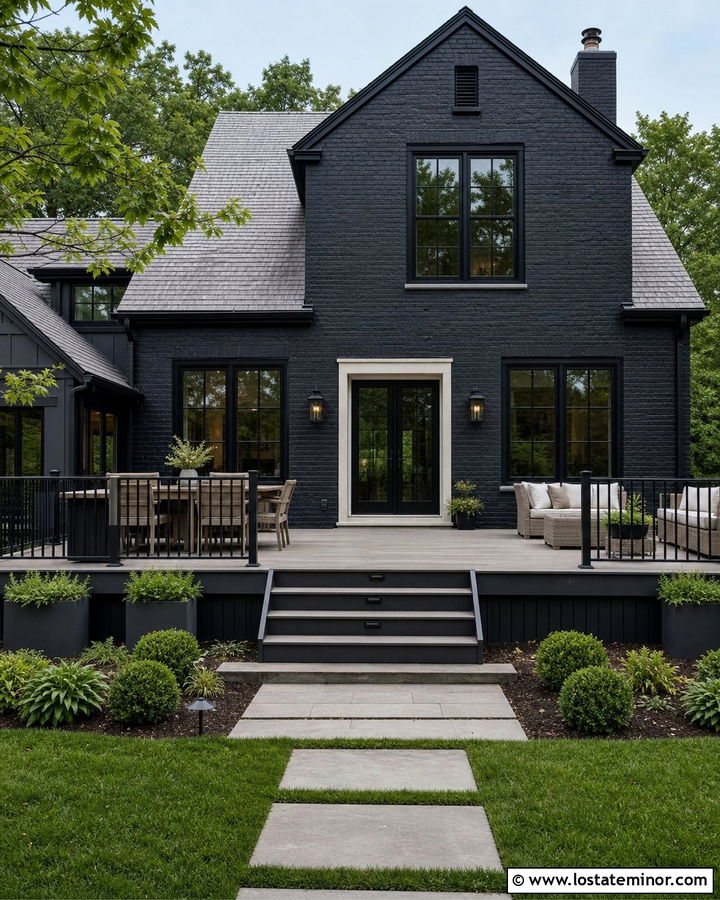
Painted black brick provides texture that keeps a monochromatic exterior from looking flat. Pair it with a light gray or weathered oak composite deck for a practical contrast that does not imitate the brick’s dark tone. Black railing and fascia can outline the structure, while natural wood furniture adds a softer layer. Use warm white around selected windows or doors if the facade needs more definition. A medium-gray roof will create separation above the black masonry. If the deck is raised, cover exposed supports with black skirting or horizontal wood slats. Concrete steps, rectangular planters, and structured shrubs complement the brick pattern. This scheme works for updated traditional homes, urban residences, and suburban houses where low-maintenance materials are preferred for frequently used outdoor areas.
18. Black Board And Batten House With Pergola Deck
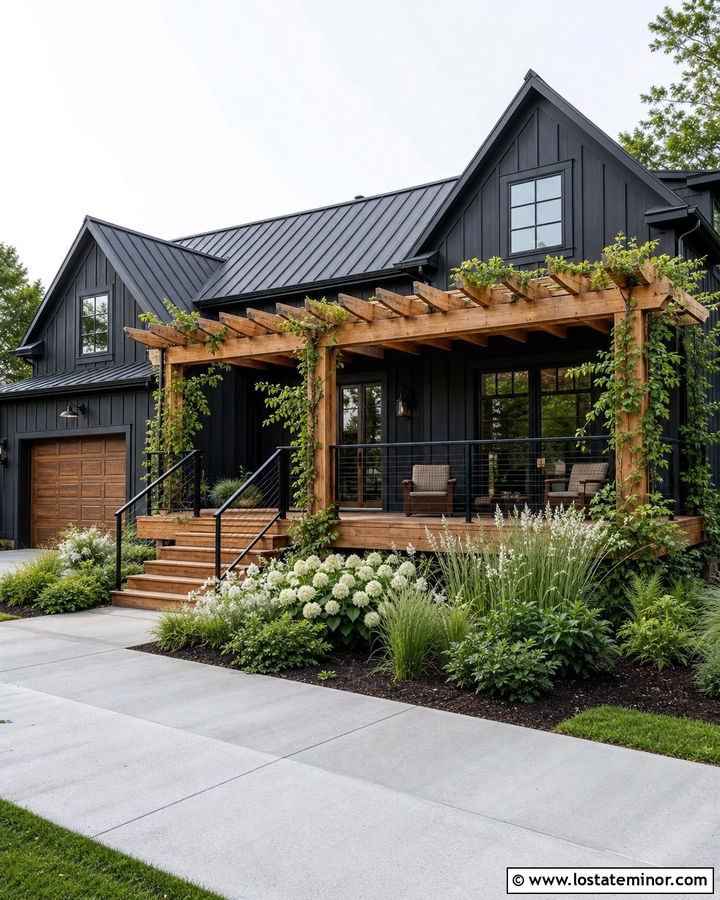
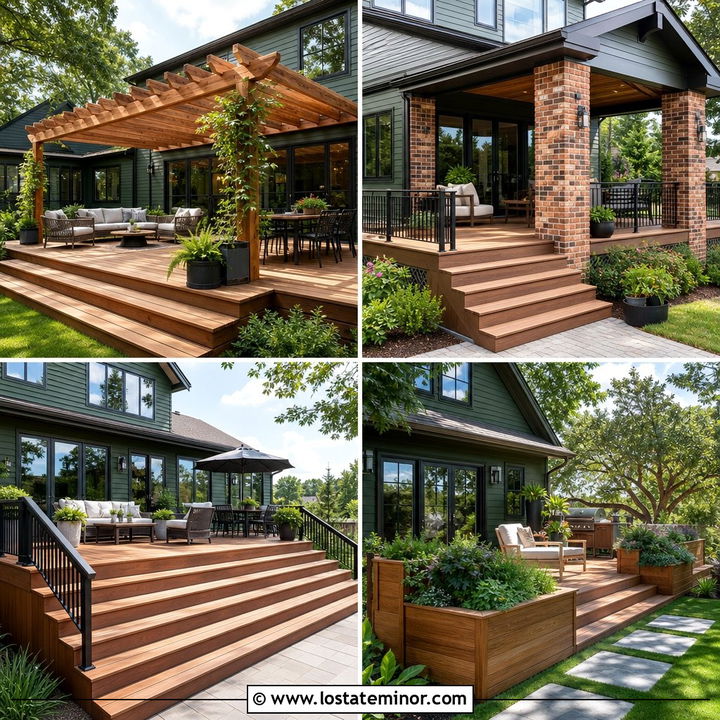
A pergola gives a deck stronger architectural presence, especially against tall black board-and-batten siding. Build the deck and pergola from natural cedar so the entire outdoor area reads as one warm feature against the dark facade. Keep the pergola beams simple and substantial, matching the scale of the vertical siding. Black metal railing, window frames, and lighting can tie the structure back to the house. A black standing-seam roof and natural wood garage door complete the modern farmhouse palette. Allow climbing greenery to soften one pergola post without covering the clean framework. Use layered grasses and white flowering plants around the deck. The finished exterior offers filtered shade, a defined dining area, and a balanced mix of black, wood, metal, and landscaping.
19. Black House With Rooftop Deck
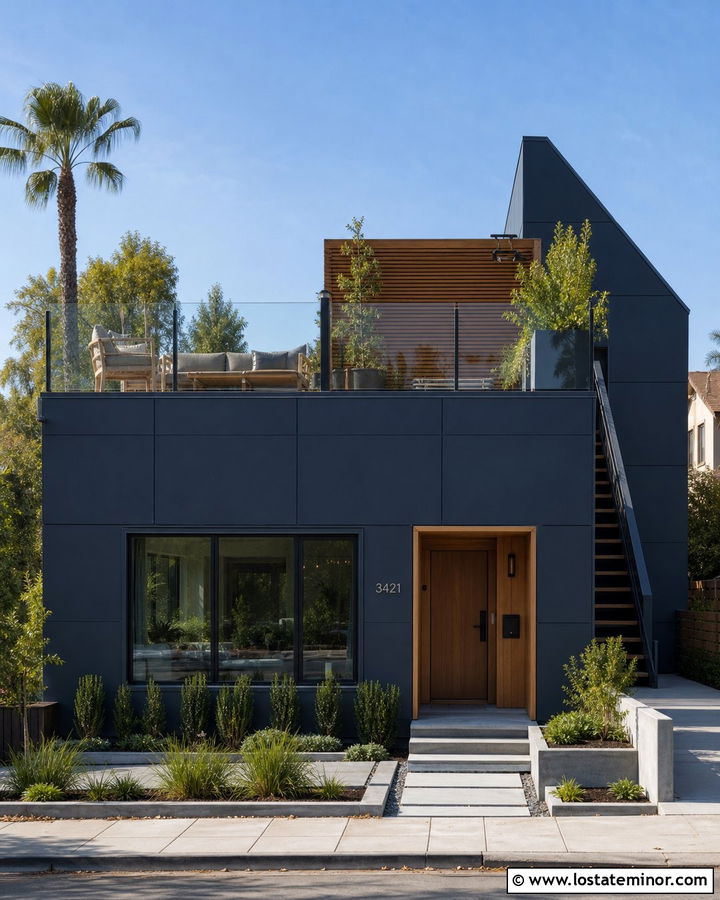
A rooftop deck can add usable outdoor space to a compact black contemporary home without enlarging its footprint. Use smooth matte-black panels or dark stucco across the facade, then finish the rooftop surface in pale gray composite boards. A glass railing keeps the roofline visually light, while a black metal frame around the stair enclosure maintains continuity. Incorporate a cedar privacy screen or pergola to introduce warmth and provide a protected seating zone. On the lower level, repeat cedar around the entry or garage door so the rooftop material does not feel isolated. Large windows, concrete pavers, and simple planting beds support the modern exterior. From street level, the deck should appear orderly and integrated rather than crowded with unrelated furniture or accessories.
20. Black House With Screened Deck
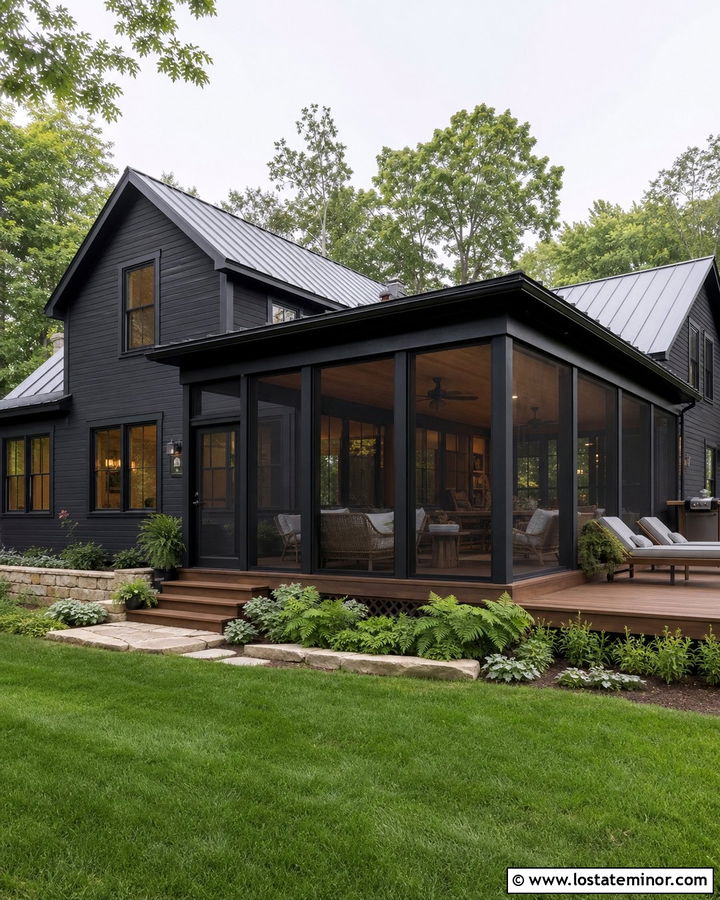
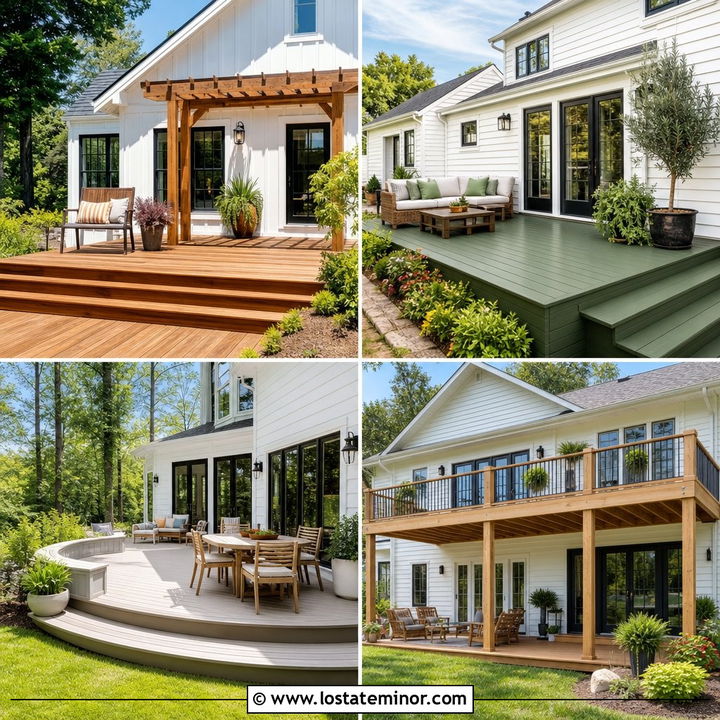
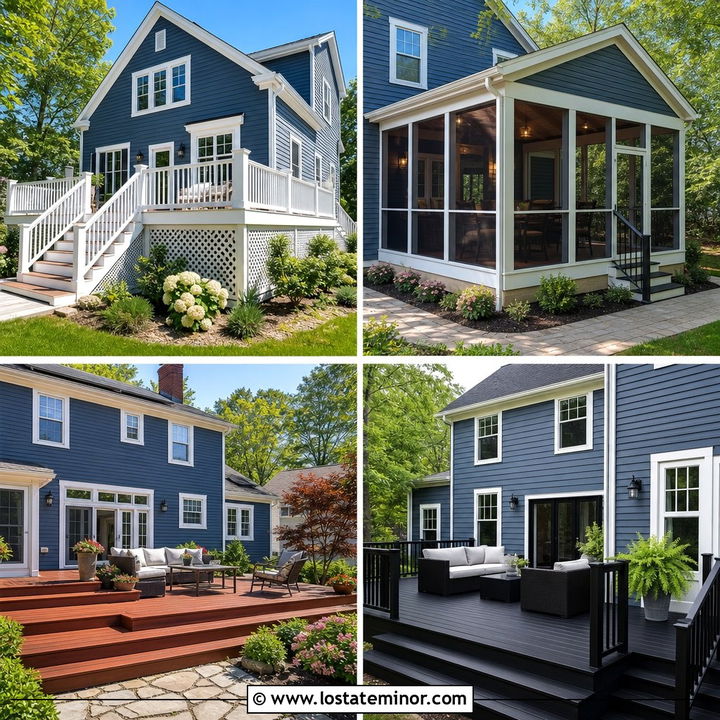
A screened deck creates a comfortable transition between indoor rooms and an open backyard. Paint the house and the screen enclosure the same deep black so the addition appears to belong to the original structure. Use medium-brown cedar or composite flooring to warm the interior of the deck and repeat that tone on the ceiling. Large black screen panels maintain visibility and create a clean grid across the rear facade. A gray metal roof can protect the space while providing subtle contrast above. Add an uncovered platform beside the screened section for grilling or enjoying direct sunlight. Stone steps, ferns, and shade-tolerant shrubs help connect both areas to the yard. This complete look is especially useful for Craftsman, cottage, and woodland home exteriors.
21. Black House With Pool Deck
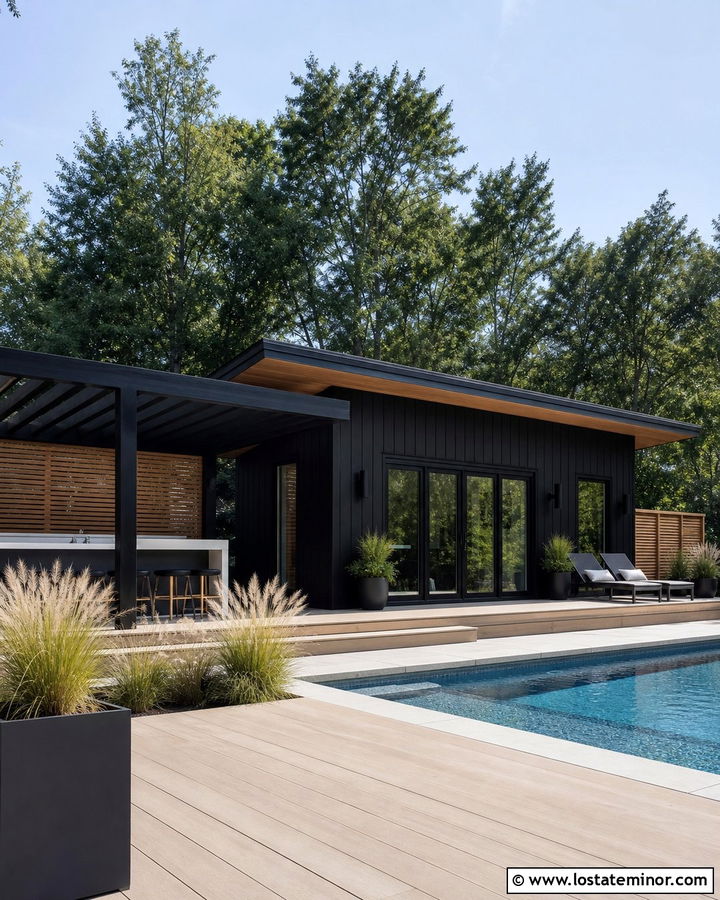
A black house can become a dramatic backdrop for a bright, resort-like pool area. Choose charcoal-black vertical siding and surround the pool with pale wood-look composite decking or light natural hardwood. The lighter deck surface separates the water from the dark facade and keeps the full scheme visually balanced. Use black-framed sliding doors and a matching black pergola to connect indoor and outdoor entertaining zones. Warm wood soffits or privacy panels prevent the exterior from feeling too severe. Add light stone around the pool edge and simple black planters filled with ornamental grasses. The deck should include clearly defined dining and lounging areas without blocking the house. This combination feels sleek and contemporary while retaining enough natural texture for a relaxed backyard atmosphere.
22. Black House With Corner Deck
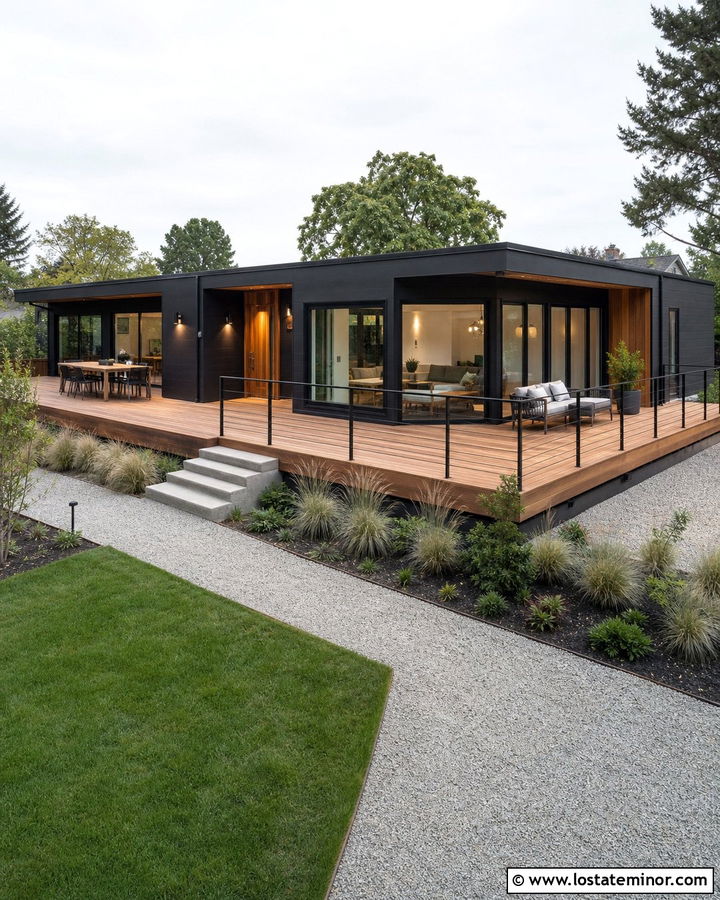
A corner deck can emphasize an L-shaped floor plan and create a protected outdoor room. Wrap warm cedar boards around two connected sides of a black contemporary or midcentury-inspired house. The building itself provides partial privacy and shelter, while large corner windows or sliding doors improve the connection to the interior. Use black steel railing only where necessary so the deck surface remains open. Cedar soffits, a matching front door, and narrow wood accent panels can distribute the deck color across the exterior. Add concrete steps that lead toward a lawn or gravel courtyard. Low shrubs and architectural grasses should follow the deck’s clean lines. This design works particularly well when one section is arranged for dining and the second becomes a quieter conversation or reading area.
23. Black House With Sunken Deck
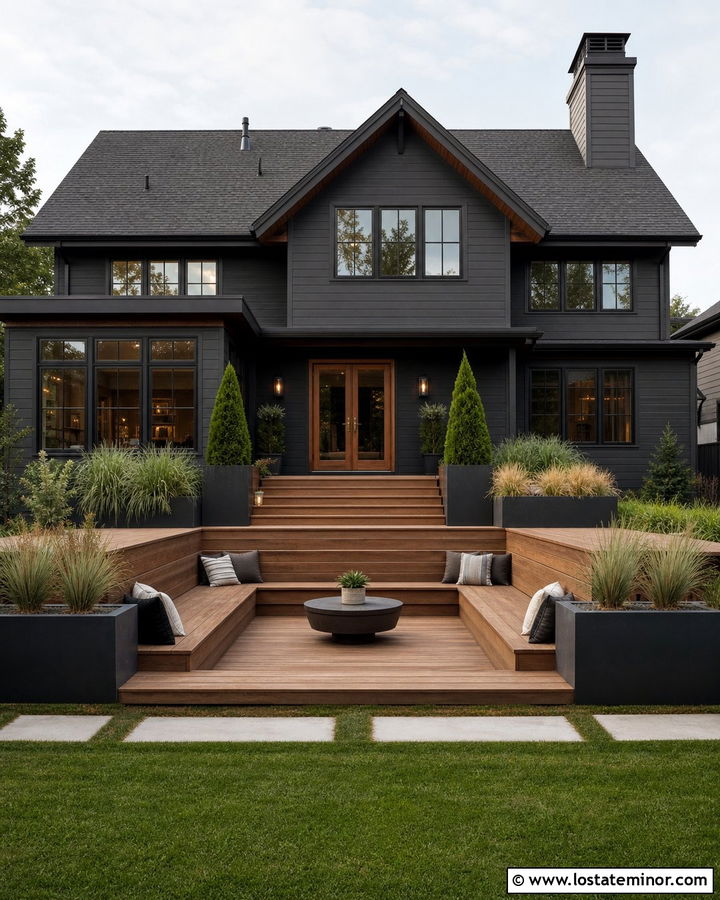
A sunken deck can create an intimate backyard space without placing a tall structure against the house. Finish the exterior in matte black lap siding and use warm brown deck boards around a slightly lowered conversation area. Broad platform steps should make the change in level easy to see and navigate. Built-in wood benches can define the seating zone, while black planter boxes connect it to the facade. Repeat the wood on the back door or roof soffit for a complete palette. A dark gray roof and black-framed windows keep the architecture cohesive. Surround the deck with soft grasses, compact evergreens, and a level lawn. The lowered center adds dimension to a simple rear elevation while maintaining an uncluttered, contemporary appearance.
24. Black House With Multilevel Deck
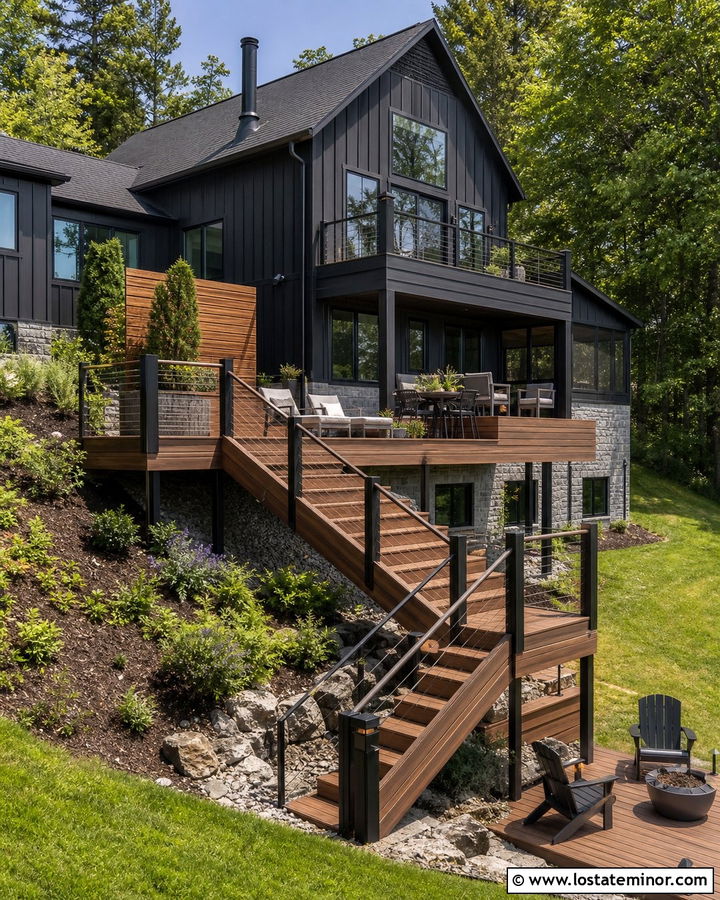
A multilevel deck is a smart match for a black house built on a sloping lot. Use one level near the main living area for dining and a lower platform for lounging or accessing the yard. Medium-brown composite decking introduces warmth, while black posts, railings, and fascia visually connect the entire structure to the siding. Position stairs along the house or at a natural transition point instead of letting them dominate the facade. Cedar privacy screens can conceal neighboring properties and repeat the deck color vertically. Add gray stone around the foundation to ground the dark exterior. Layered plantings around each level soften the structure and help it settle into the slope. Consistent materials are essential for keeping the larger deck from appearing fragmented.
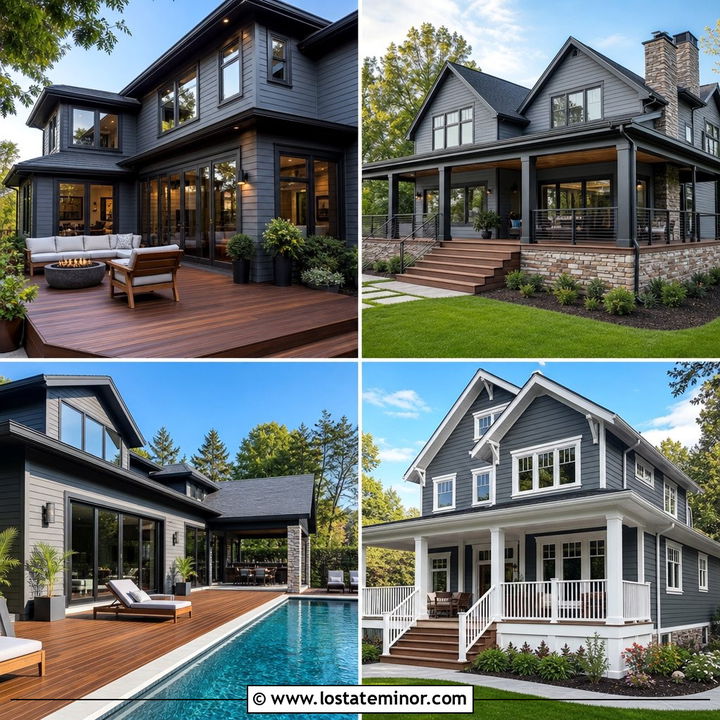
25. Black House With Deck And Outdoor Kitchen
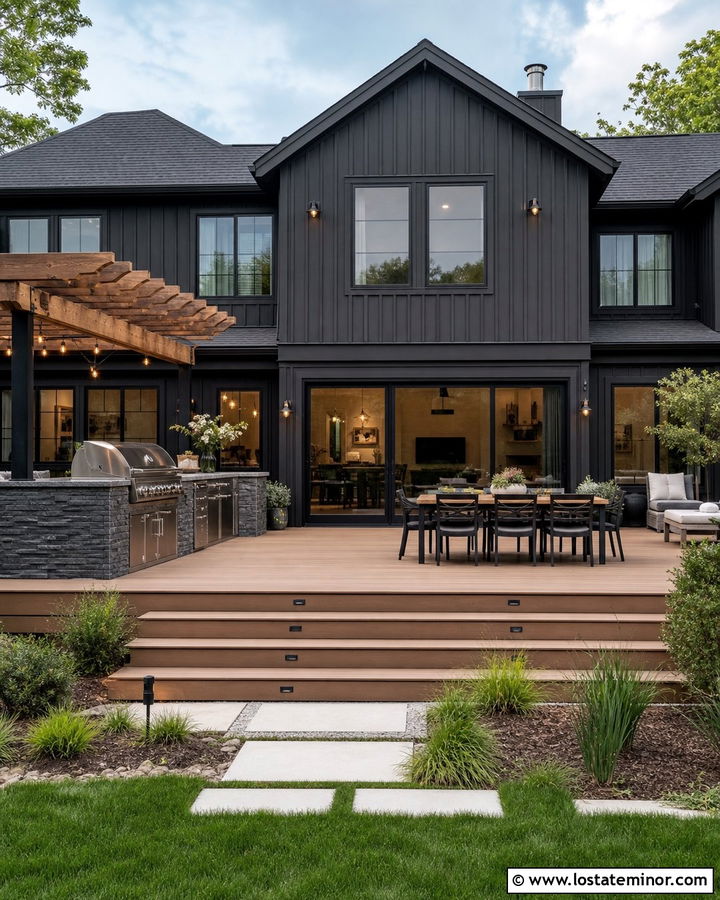
An outdoor kitchen can look like part of a black house when its finishes repeat the main exterior palette. Start with deep black board-and-batten or horizontal siding, then use light walnut composite decking to define the entertaining area. Build the kitchen base from charcoal stone or black brick and top it with a pale concrete counter. Stainless steel appliances add function without introducing an unrelated color. A cedar pergola or roof lining can warm the cooking area and connect it to the deck floor. Black-framed sliding doors make serving easier while maintaining the modern scheme. Place dining space nearby but outside the busiest cooking path. Low landscaping and wide deck steps can keep the entire black, wood, stone, and metal composition open and accessible.
26. Black House With Deck And Fireplace
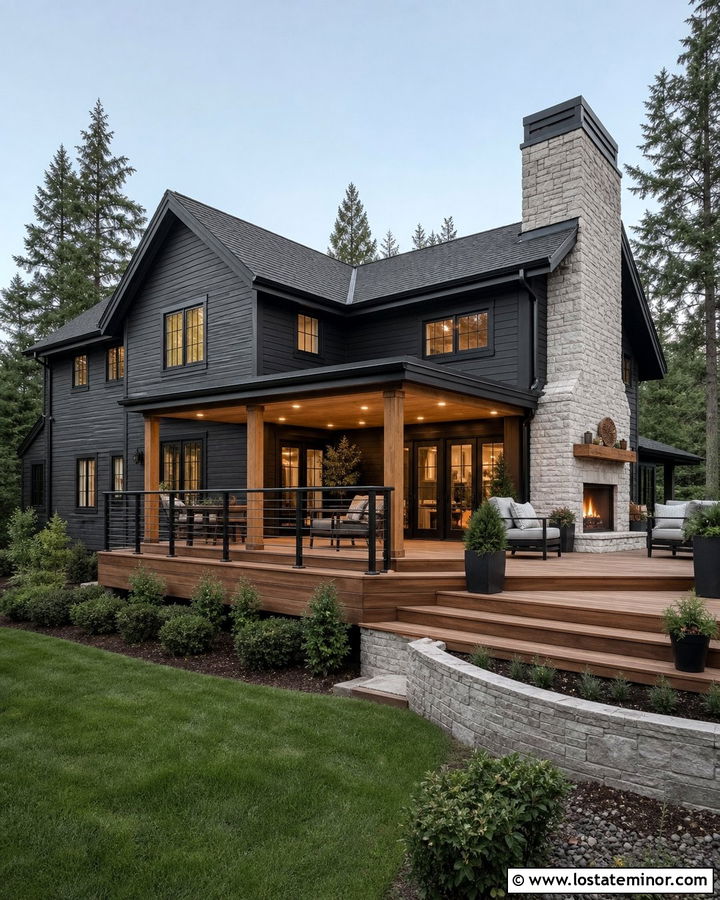
A deck fireplace can become the visual anchor of a black house exterior, particularly on a large backyard elevation. Use matte-black siding and build the fireplace from light gray stone to create a distinct focal point. Medium-toned cedar decking and a matching wood mantel add warmth between the dark wall and cool masonry. A covered section can shelter the fireplace and seating area, while the rest of the deck remains open. Choose black metal railing and dark-framed doors for continuity. Position the chimney so it aligns naturally with a gable or roof extension. Evergreen shrubs and simple planters can frame the deck without competing with the stone. The final scheme feels comfortable and substantial, with clear connections between the house, deck, fireplace, and landscape.
27. Black House With Glass Railing Deck
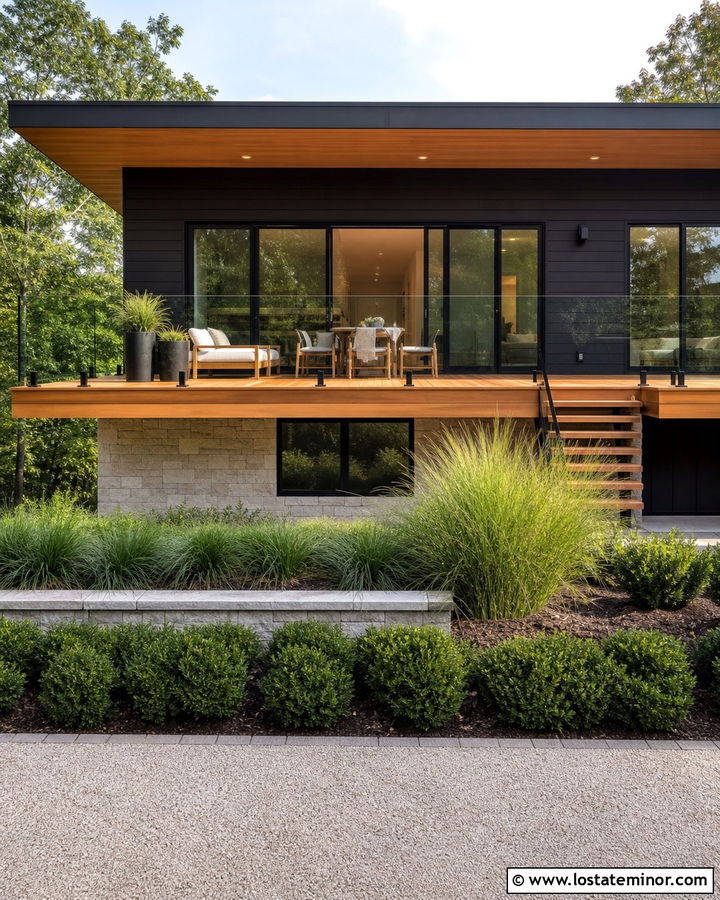
Glass railing allows a black exterior and contrasting deck surface to remain fully visible. Pair smooth black siding with honey-colored hardwood or warm oak composite boards on a raised contemporary deck. Frameless or minimally framed glass panels provide safety without adding another strong pattern to the facade. Use black metal posts where structural support is necessary, repeating the color of the windows and roof. Large sliding doors can open the interior directly onto the deck, while a wood-lined overhang provides shade. Add pale stone at ground level to balance the dark upper walls. Structured grasses and low hedges keep the landscape clean. This design is particularly effective for homes with scenic views, compact yards, or architecture that depends on uninterrupted horizontal lines.
28. Black House With Privacy Screen Deck
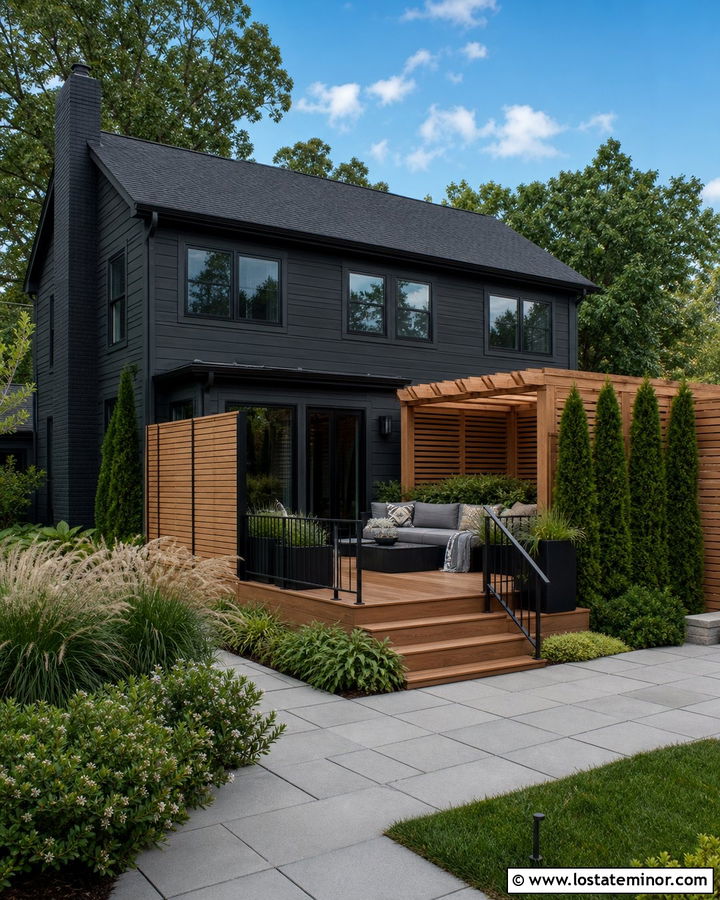
Close neighbors do not have to prevent a black house from enjoying an open, attractive deck. Install warm cedar privacy screens along one or two sides of a medium-brown deck, using horizontal or narrow vertical slats. Against black siding, the screen becomes a strong architectural feature rather than a basic barrier. Repeat cedar around the entry, garage, or soffits to make the feature feel intentional. Black railing and planters can outline the remaining open edges. Consider a partial pergola above the private seating area for greater definition. Keep the roof and windows dark, then add light concrete pavers near the stairs. Layered grasses and columnar evergreens can increase privacy while softening the screen and connecting the complete exterior design to the yard.
29. Black House With Small Backyard Deck
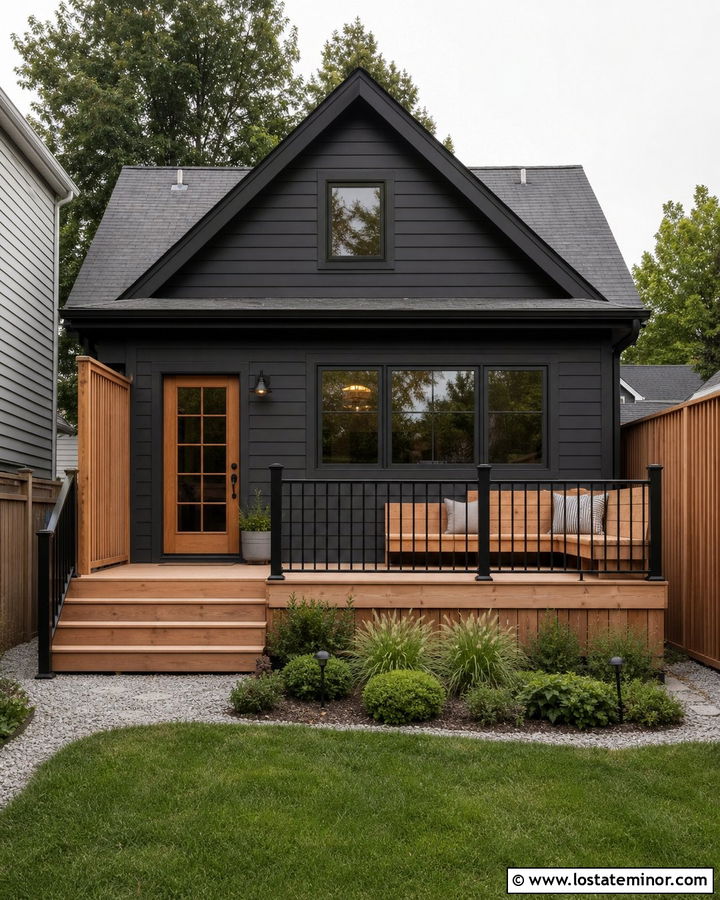
Even a compact black house can have a functional deck if the layout remains simple. Use soft black siding and install a small square or rectangular platform in pale cedar beside the main back door. Built-in benches along one edge provide seating without taking up space for bulky furniture. A short black railing can match the windows and exterior lighting, while broad steps make the deck feel connected to the lawn. Repeat cedar on the door or a narrow privacy panel so the platform does not appear detached from the facade. Choose a medium-gray roof and light gravel border for contrast. Compact shrubs, herbs, and ornamental grasses can frame the space. This scheme delivers useful outdoor living without overwhelming a bungalow, cottage, or narrow suburban backyard.
30. Black House With Wide Entertaining Deck
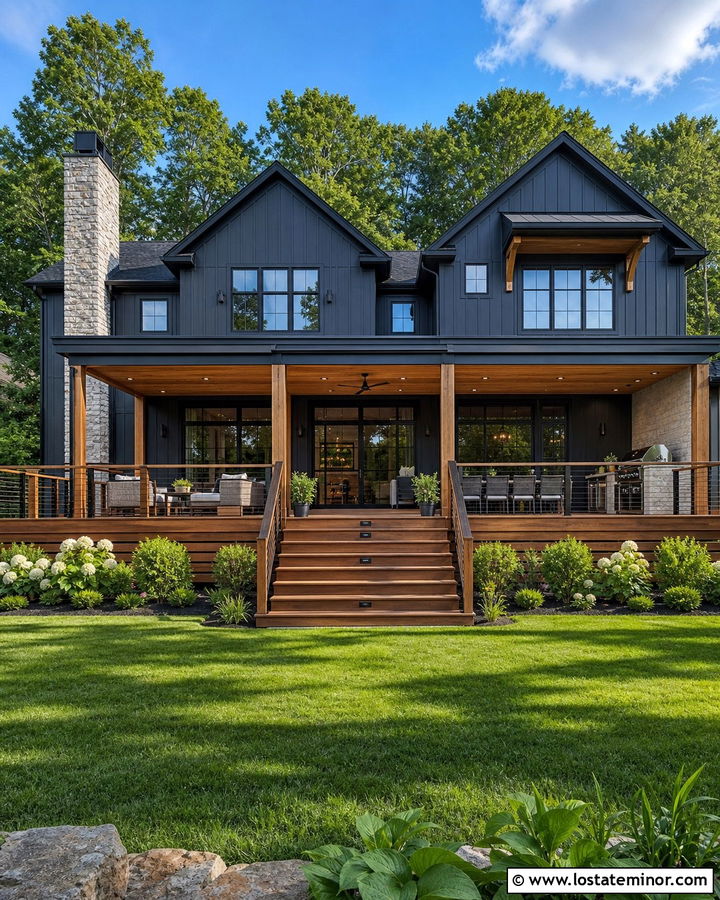
A wide entertaining deck can unify the rear facade of a large black home and support several outdoor activities. Finish the house in deep black vertical siding, then stretch a medium walnut deck across the dining room, kitchen, and living area. Divide the platform into cooking, dining, and lounge zones through furniture placement rather than multiple flooring materials. Black cable railing maintains continuity, while cedar posts and soffits add warmth overhead. Use broad stairs at the center to create a clear connection to the lawn. A light stone chimney or outdoor kitchen can provide a contrasting anchor. Large windows and sliding doors should follow a consistent rhythm across the facade. The result feels expansive, organized, and fully connected to the home’s architecture.
Conclusion:
The strongest black exteriors balance their dramatic siding with decks that contribute warmth, texture, and usable space. Cedar and richly colored hardwood create natural contrast, while gray or pale wood-look composite can deliver a cleaner contemporary finish. Black cable railing, matching fascia, and coordinated window frames help connect the deck to the house. Stone, brick, warm soffits, and thoughtful landscaping can then soften the overall composition. Before selecting materials, consider the home’s architecture, deck height, sun exposure, surrounding landscape, and desired maintenance level. These 30 Black House Design With Deck Ideas show how a deck can become an intentional part of the facade, producing a cohesive home that looks bold, comfortable, and welcoming.

Related posts: