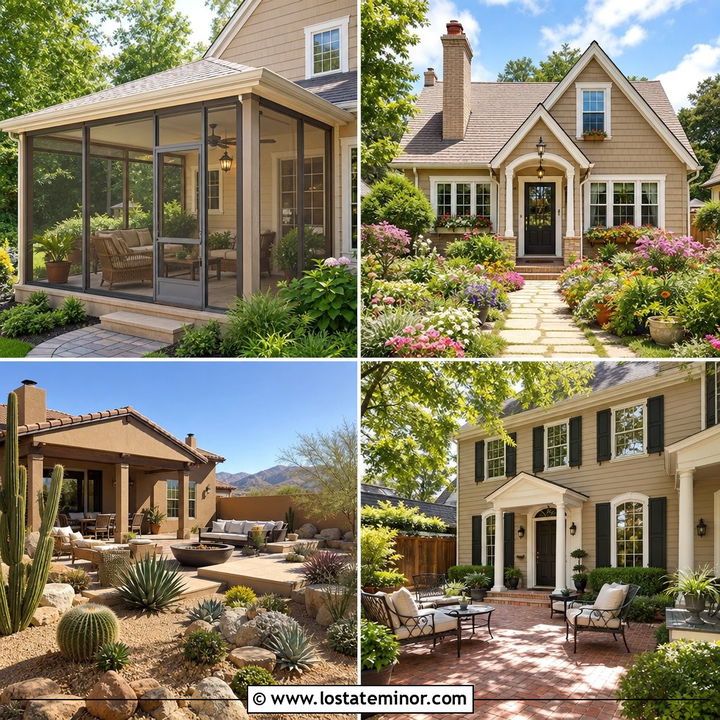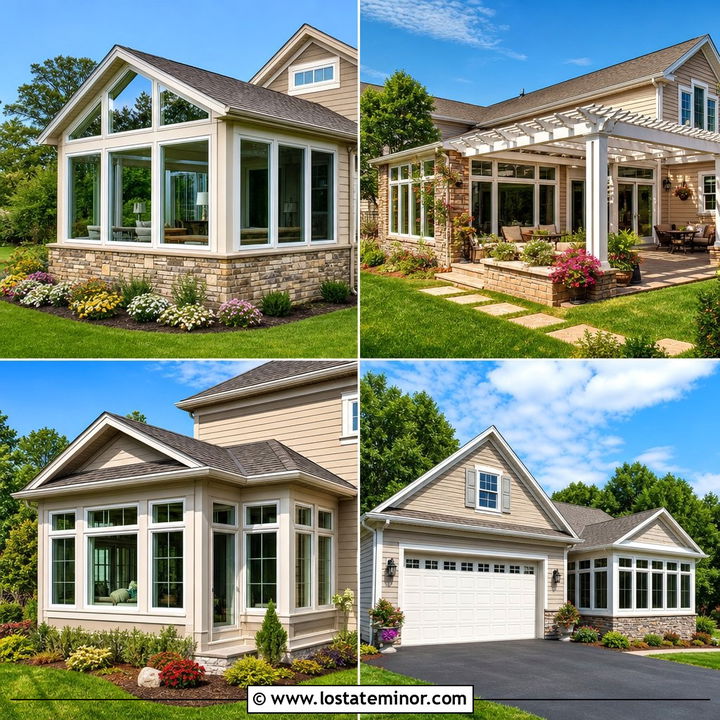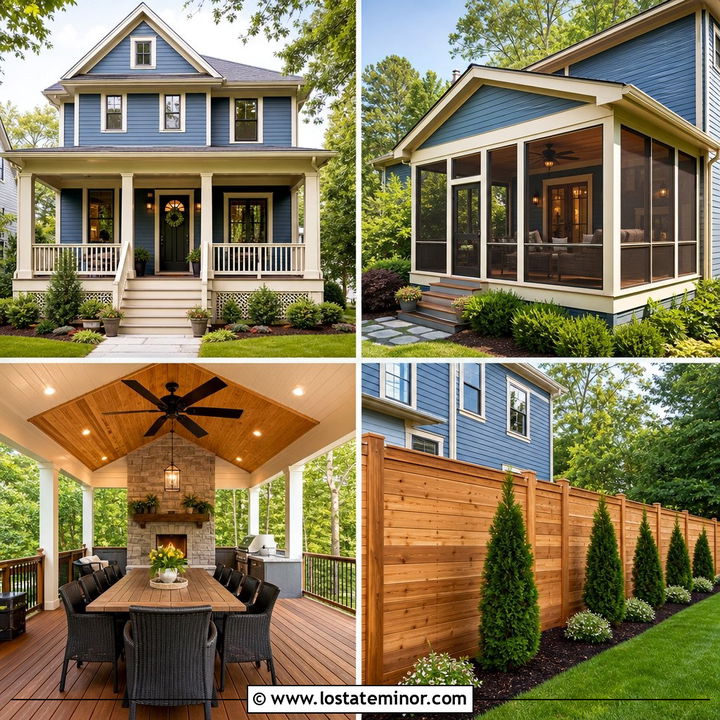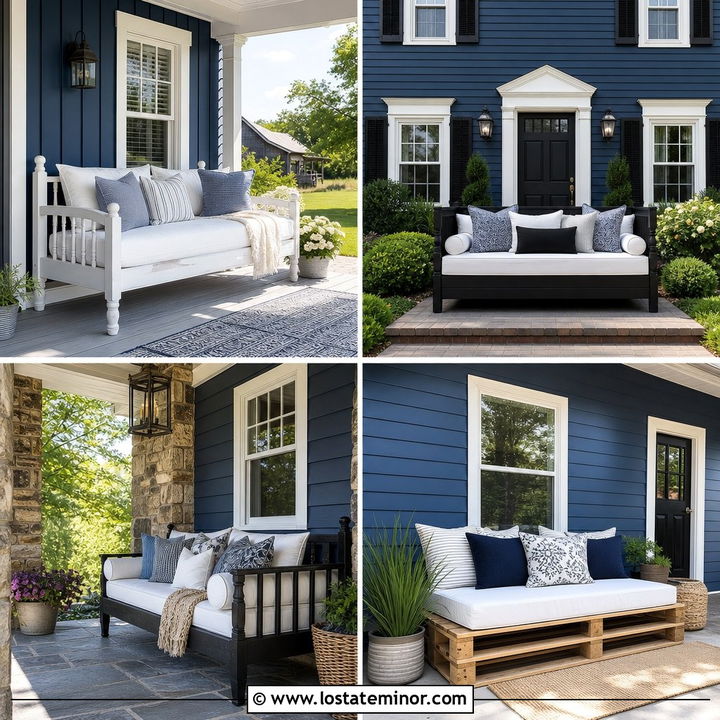
A warm sand exterior creates an easy connection between a home and its outdoor surroundings. The color feels softer than white, brighter than brown, and more natural than a cool gray. These 30 Sand House Design With Backyard Ideas explore complete exterior looks that combine sandy siding or stucco with patios, pools, pergolas, gardens, decks, and practical family spaces. You will also find coordinating trim, roofing, doors, stonework, fencing, and landscape materials. Some designs suit compact suburban lots, while others work well for coastal, desert, farmhouse, and modern homes. Each look balances color, texture, shade, and everyday function. Use the following 30 Sand House Design With Backyard Ideas to create a welcoming exterior that looks thoughtfully connected from the house to the yard.

1. Sand House With Covered Patio
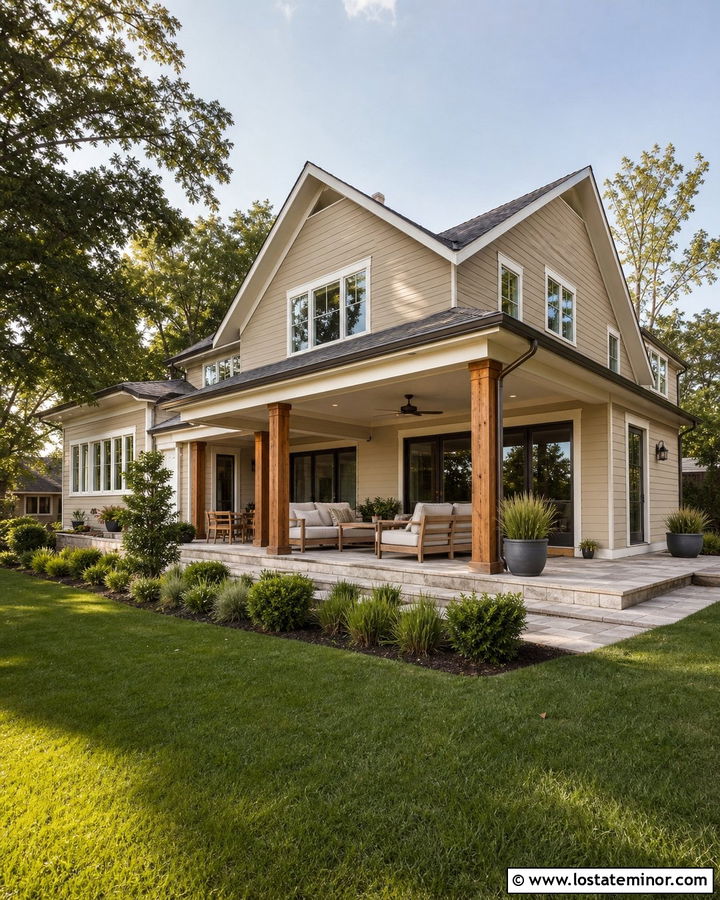
A covered patio gives a sand-colored house a comfortable outdoor room that can be used through changing weather. Choose warm sand stucco for the exterior and creamy white for the fascia, window trim, and patio ceiling. Natural cedar posts bring depth without making the palette feel heavy. Under the roof, large limestone pavers create a smooth transition from the house to the lawn. Add weather-resistant seating in oatmeal, olive green, and muted terracotta. A dark bronze sliding door and matching outdoor lights provide clean contrast. Keep the structure open on three sides so it feels bright and connected to the garden. Layer ornamental grasses and low flowering shrubs around the patio to soften its edges.
2. Sand House With Swimming Pool
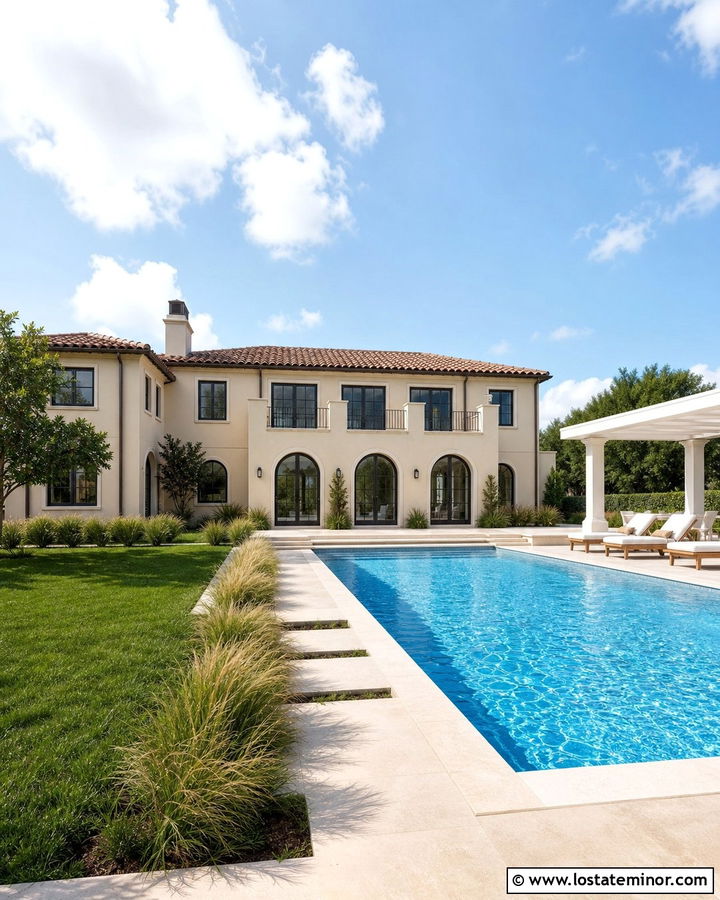
Imagine looking across clear blue water toward a warm sand stucco exterior. This pairing works because the neutral house allows the pool to become the visual centerpiece. Use crisp ivory trim, pale limestone coping, and bronze-framed windows for a refined scheme. A medium-brown tile roof can add warmth, while a flat-roofed modern home may look better with charcoal fascia. Continue the sand palette through a porcelain pool deck that resembles natural stone but offers a consistent surface. Position loungers beneath a simple white or cedar shade structure. Low hedges, ornamental grasses, and neatly spaced trees frame the pool without overwhelming it. Repeating the house color in planters and retaining walls helps the entire backyard feel coordinated.
3. Sand House With Wood Pergola
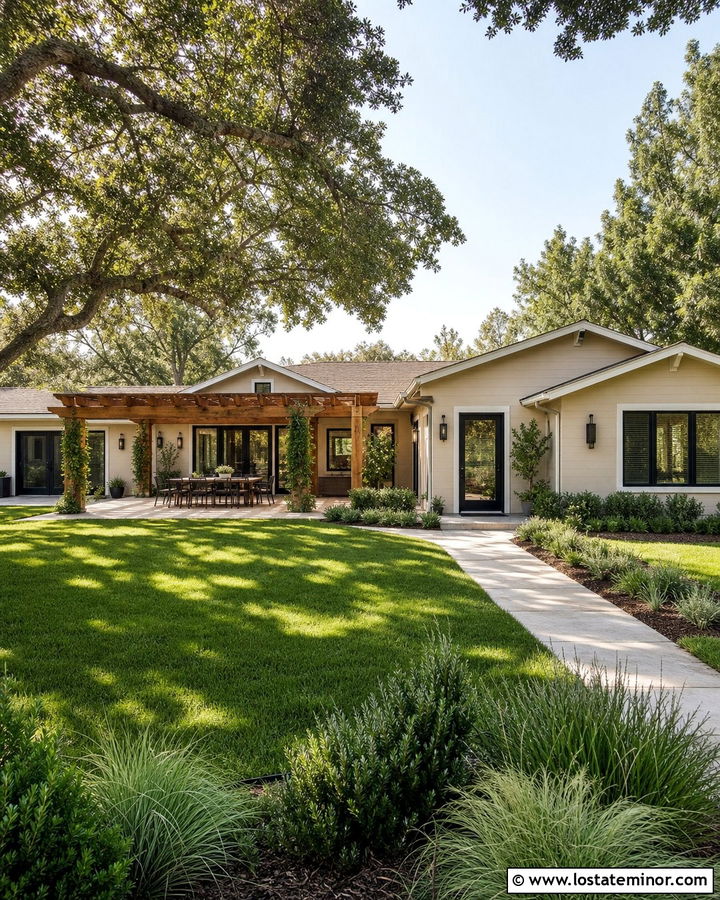
A wood pergola can make a simple sand house exterior feel richer and more architectural. Select a honey-toned cedar or lightly stained oak that stands out against soft sandy beige siding. The pergola can extend over a dining patio, outdoor kitchen, or quiet lounge area near the rear entrance. Use warm white trim and dark bronze window frames to balance the light and dark elements. Travertine or cream concrete pavers will continue the natural palette underfoot. For extra shade, add a retractable canvas canopy in ivory rather than a bright color that competes with the house. Climbing jasmine, grapevines, or another suitable local vine can soften the beams. Finish the backyard with structured planting beds and a clean lawn border.
4. Sand House With Outdoor Kitchen
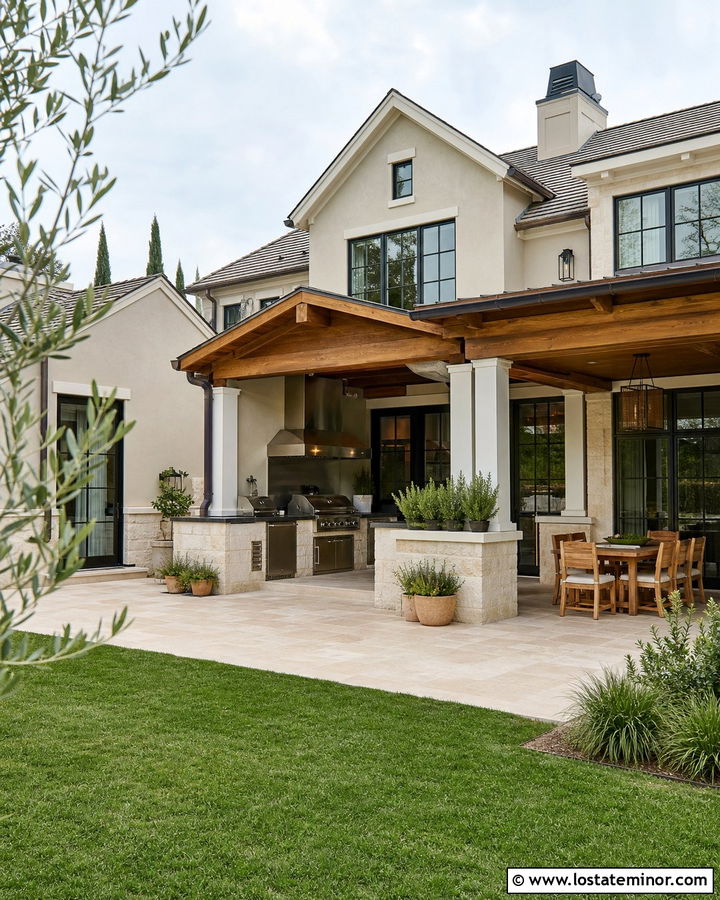
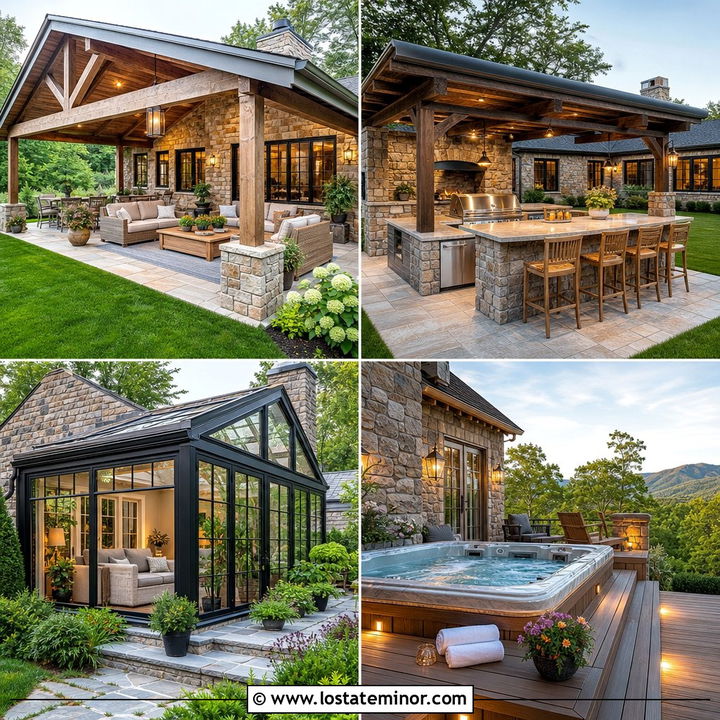
For homeowners who enjoy cooking outside, an outdoor kitchen can become the anchor of a sand house backyard. Build the base with sandy limestone or light taupe masonry that relates directly to the exterior color. Dark charcoal countertops provide contrast and are visually grounded beside stainless steel appliances. A cedar pergola or roof extension makes the cooking zone feel like part of the house rather than a separate installation. Continue cream pavers between the back door, grill, dining table, and lawn. Warm white trim keeps the exterior fresh, while black-framed doors add definition. Include task lighting, protected storage, and enough counter space for preparation. Nearby herbs in raised planters add useful greenery without cluttering the central entertaining area.
5. Sand House With Stone Patio
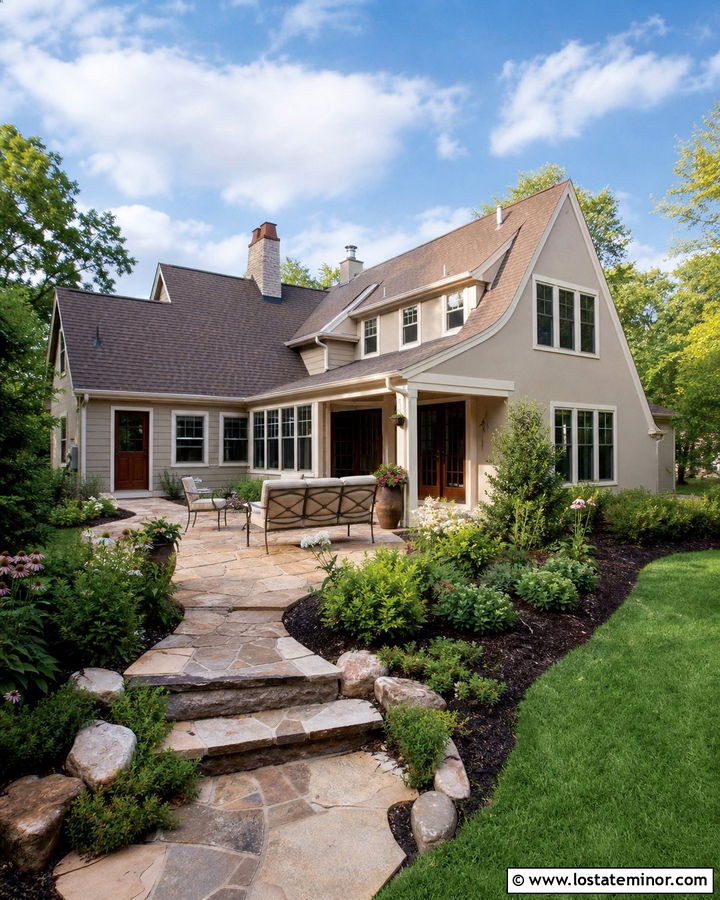
Natural stone strengthens the earthy character of a sand-colored exterior. Choose irregular flagstone in a mix of cream, tan, and subtle gray so the patio has variation without looking busy. A sand-painted brick or stucco house can be finished with off-white trim, walnut doors, and a medium brown roof. Keep the stonework level and visually open, then define the seating area with a large outdoor rug and low-profile furniture. A curved patio edge feels relaxed beside cottage or ranch architecture, while straight lines better complement a contemporary home. Fill the surrounding beds with layered shrubs, flowering perennials, and ornamental grasses. Repeating similar stone around steps or garden walls ties the backyard materials to the full house exterior.
6. Sand House With Raised Deck
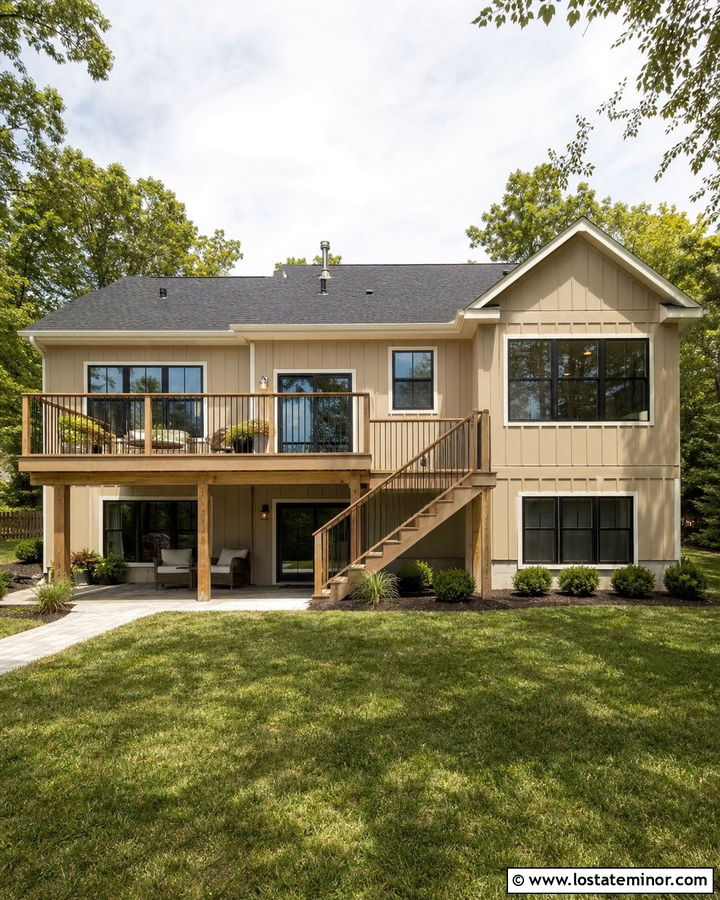
A raised deck is a practical solution when the back door sits above a sloped or uneven yard. Against sand-colored lap siding, medium cedar decking creates visible warmth while maintaining a natural appearance. Use creamy white railings for a traditional house or slim black metal rails for a cleaner, modern look. The deck should feel proportional to the rear elevation, with enough room for dining and casual seating without hiding the architecture. Wide stairs can create a welcoming connection to the lawn. Consider using the area below for dry storage, a shaded sitting space, or neatly screened utilities. Finish the scheme with a charcoal roof and matching window frames. Green shrubs along the deck base soften the structure and reduce its visual height.
7. Sand House With Fire Pit Patio
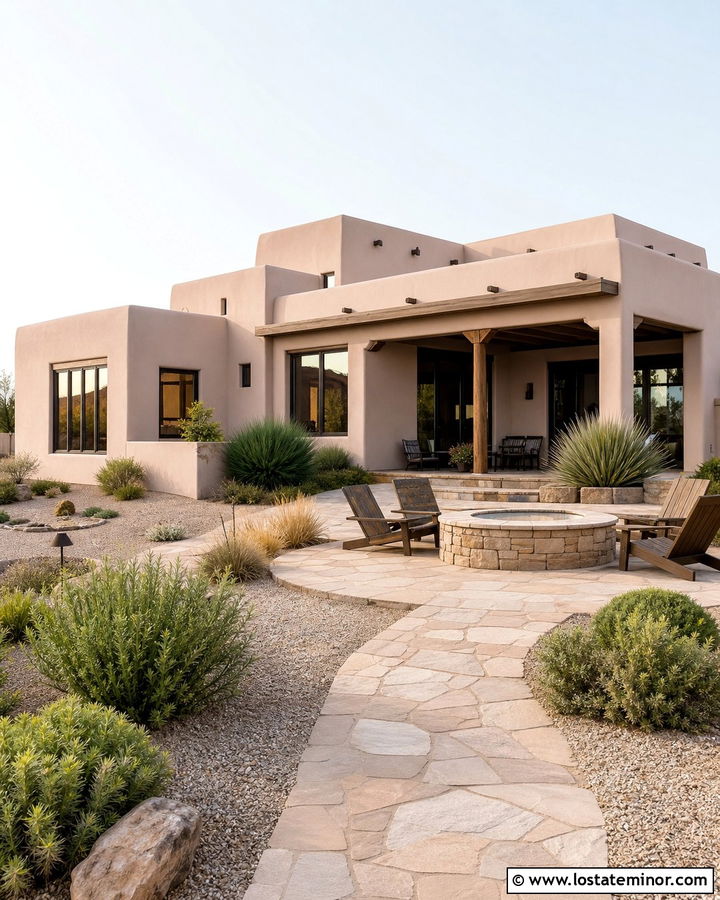
Cool evenings become more inviting when a fire pit is placed within a well-planned sand house backyard. Use pale gravel or cream concrete pavers to form a defined seating zone away from doors, overhangs, and low branches. A warm sand stucco exterior, white trim, and dark bronze windows provide a quiet background for the gathering space. Select a low stone fire pit in tan and charcoal tones that repeat colors found on the house. Curved seating encourages conversation, while individual lounge chairs allow more flexibility. A clear walkway should connect the patio to the back entrance. Surrounding grasses and low shrubs can create privacy without blocking the view of the home. Always follow local fire rules and recommended clearance requirements.
8. Sand House With Screened Porch
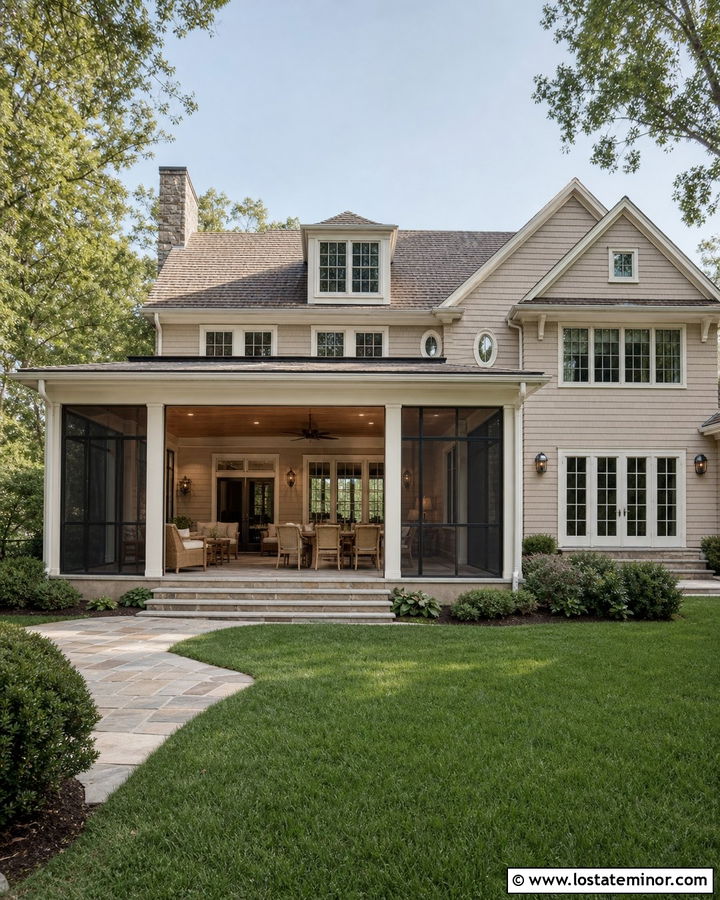
A screened porch extends the living space while offering shelter from insects and light rain. On a sand-colored craftsman or traditional house, use warm white columns, dark bronze screens, and a stained wood ceiling for a balanced exterior palette. Match the porch roof to the main roof so the addition looks original to the architecture. Wide screened openings maintain views of the yard and allow natural light to reach the interior. Place dining furniture near the kitchen door and reserve the outer end for relaxed seating. Cream porcelain tile or sealed concrete keeps the floor practical and bright. Outside the porch, simple foundation shrubs, stepping stones, and a level lawn create an uncluttered transition. The complete design should feel connected, airy, and comfortably shaded.
9. Sand House With Desert Backyard
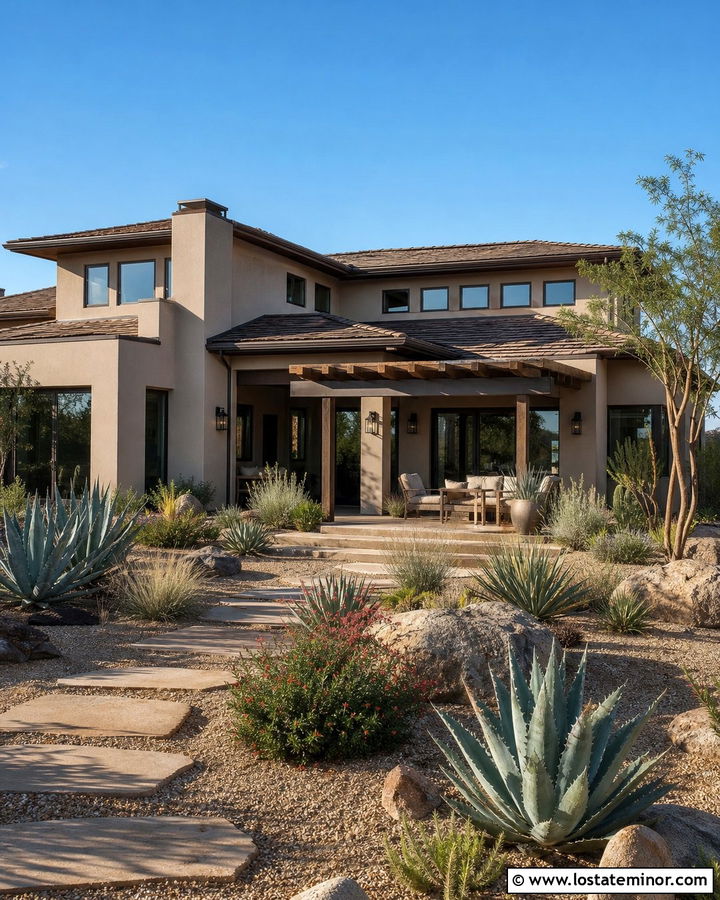
Dry-climate landscaping naturally complements a sand stucco house. Start with a warm beige exterior, deep bronze trim, and a clay or weathered brown roof. Replace a water-hungry lawn with decomposed granite, large sandstone stepping pads, and carefully spaced drought-tolerant plants suited to the local climate. Sculptural agaves, native grasses, flowering shrubs, and small desert trees can provide shape and seasonal color. Use rusted steel or dark stone edging to keep gravel out of pathways. A shaded patio with timber beams offers relief from strong sun while reinforcing the earthy palette. Keep plants away from walls where airflow is important. The resulting backyard feels intentional because the architecture, ground cover, and planting colors share the same natural desert character.
10. Sand House With Coastal Backyard
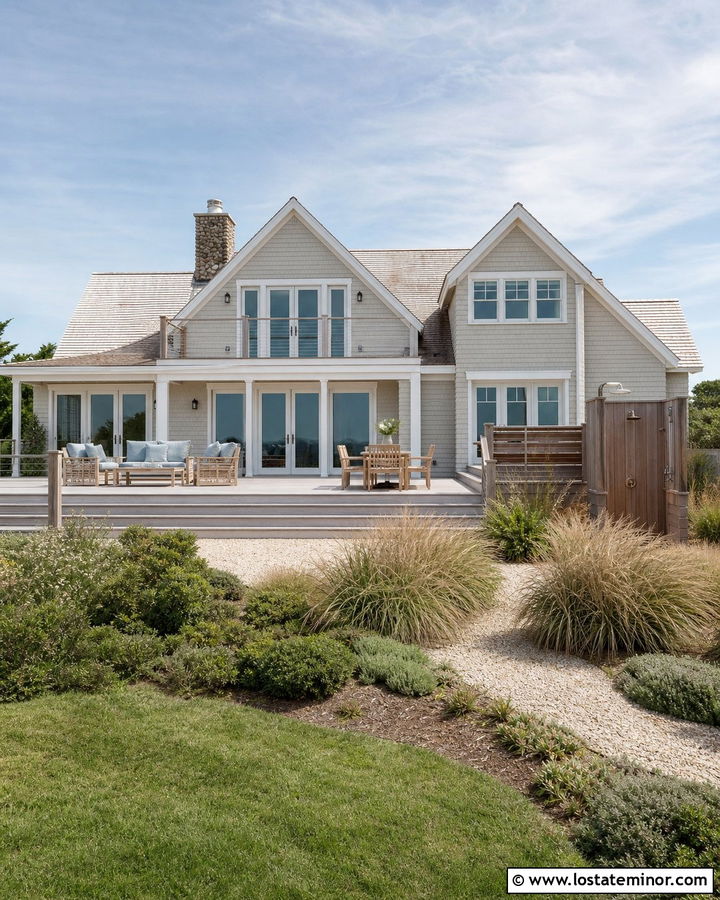
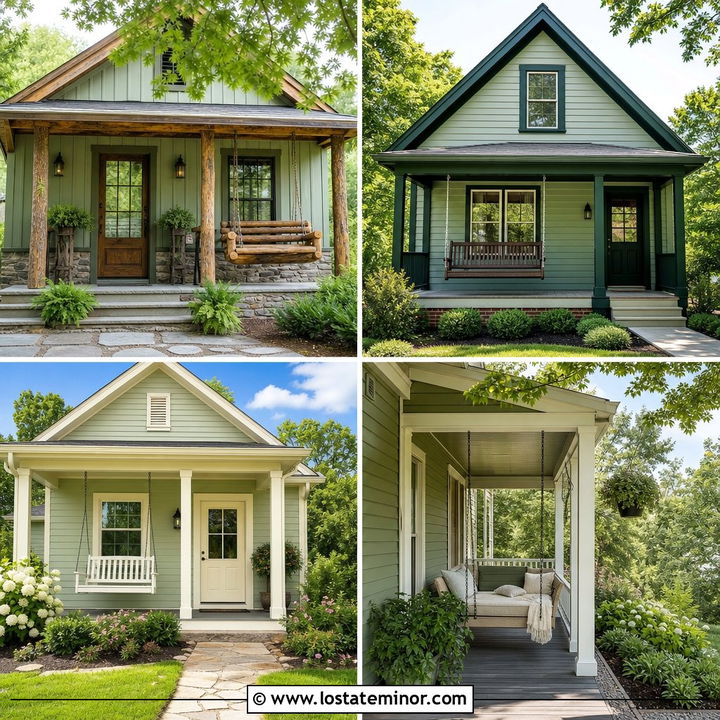
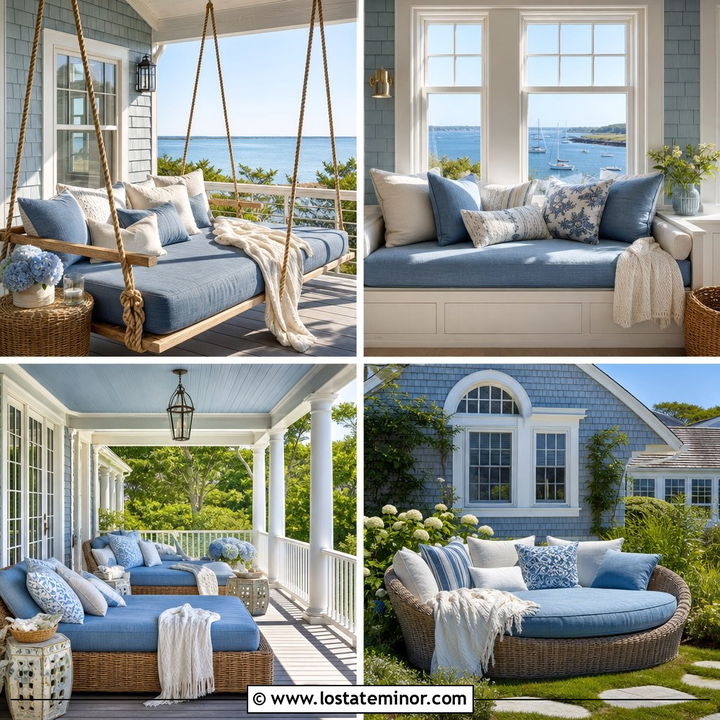
Soft sand siding feels especially appropriate in a relaxed coastal setting. Pair it with clean white trim, a pale gray roof, and weathered wood details for a light exterior scheme. A broad deck or paved terrace can lead toward a lawn framed by salt-tolerant grasses and low shrubs selected for the region. Use blue-gray cushions sparingly to echo water without turning the yard into a themed space. Stainless steel cable rails preserve open views and provide a contemporary contrast to traditional lap siding. Add an outdoor shower beside the house if it suits the property and local regulations. Gravel paths, teak furniture, and simple planters complete the look. Keep the planting loose and wind-friendly so the backyard feels natural rather than overly formal.
11. Sand House With Modern Concrete Patio
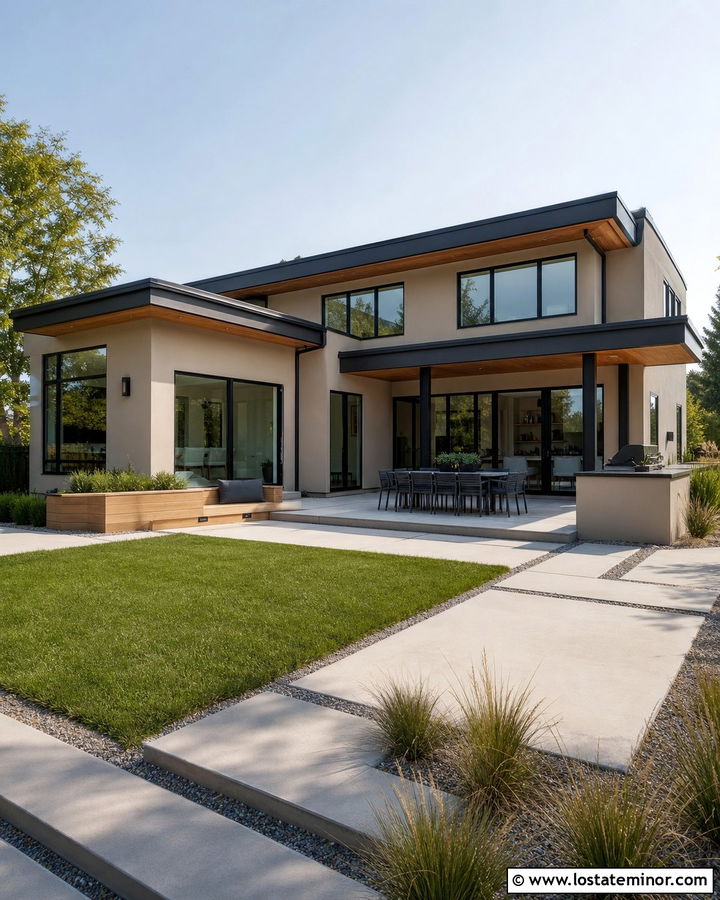
Clean geometry can give a sand house a distinctly modern presence. Choose sandy beige stucco, black window frames, and dark charcoal fascia to define the building’s lines. Large-format concrete slabs create an organized backyard surface, especially when separated by narrow strips of gravel or low ground cover. Extend one slab beneath a streamlined dining table and another beneath a built-in bench or lounge grouping. Warm wood on the soffit, door, or privacy screen prevents the neutral design from feeling stark. Keep the lawn rectangular and use simple masses of ornamental grasses rather than many small plant varieties. Conceal drainage and utilities whenever possible. The finished exterior should look calm and deliberate, with the soft sand color balancing the harder concrete and metal materials.
12. Sand House With Farmhouse Porch
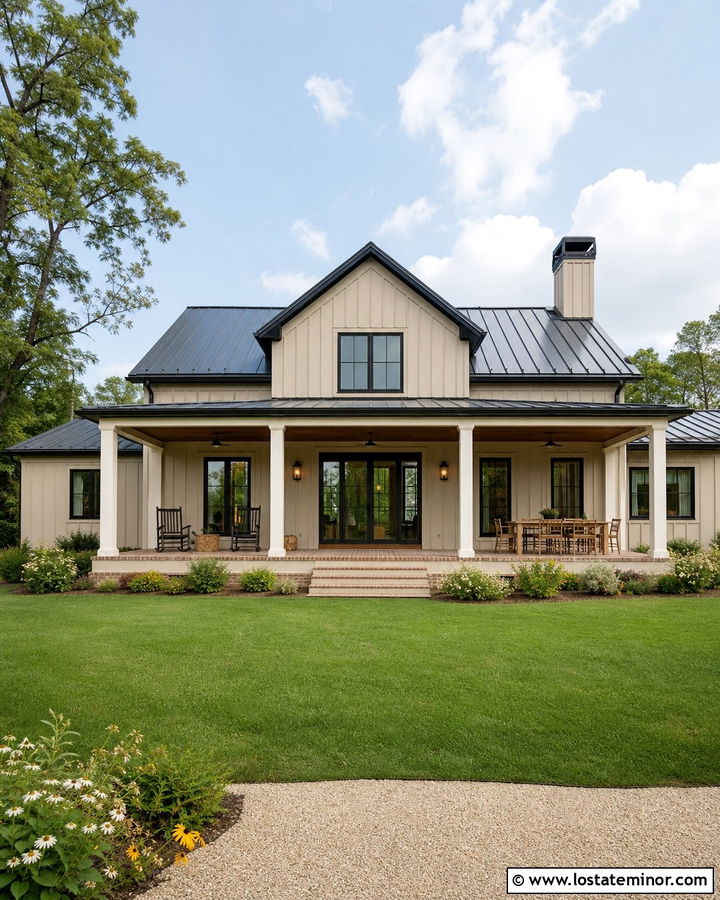
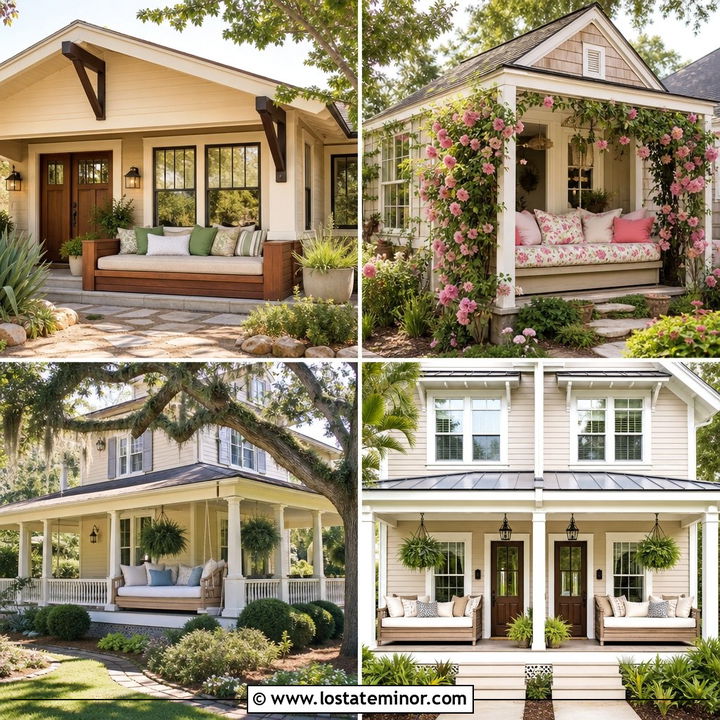
Could a sand exterior replace the usual white farmhouse palette? Warm sand board-and-batten siding offers a softer option while preserving the clean simplicity associated with farmhouse architecture. Use creamy white trim around windows, porch columns, and roof edges. A natural wood back door and matching porch ceiling introduce warmth, while black lights and window frames provide definition. Extend the porch across part of the rear elevation to shelter a dining table and rocking chairs. Brick or limestone flooring adds texture without clashing with the siding. Beyond the porch, keep the backyard open with a rectangular lawn, informal garden beds, and a simple gravel path. A dark gray metal roof completes the scheme and helps the pale body color remain visually grounded.
13. Sand House With Brick Patio
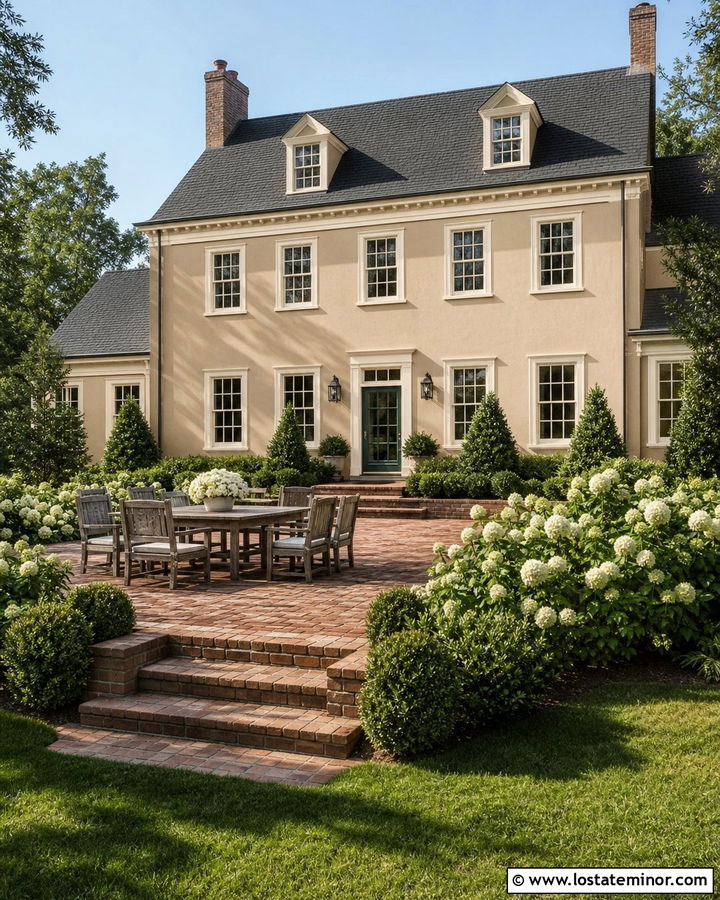
Brick brings lasting warmth to a sand house, particularly when its red undertones are muted rather than bright. Choose weathered clay brick in tan, brown, and dusty red for a patio that feels established. The house can feature soft sand siding, ivory trim, dark green doors, and a charcoal roof. Lay the brick in a running bond or herringbone pattern depending on the architectural style and desired detail. A compact dining set and a pair of lounge chairs may be enough for a smaller backyard. Use evergreen shrubs and cream-flowering plants to bridge the colors of the patio and exterior. Brick steps at the back door help the materials feel connected. Proper edging will keep the patio shape crisp as the surrounding garden matures.
14. Sand House With Black Trim
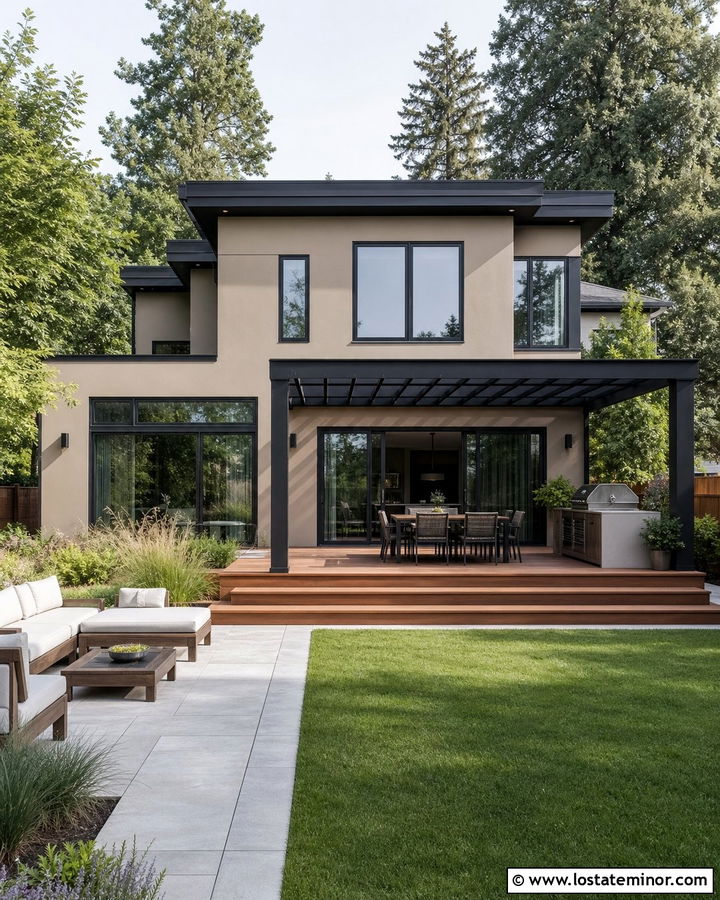
Strong black trim can transform a pale sand house into a sharper, more contemporary exterior. Use black around windows, sliding doors, roof fascia, and simple metal railings, but allow the sand body color to remain dominant. In the backyard, repeat black on a pergola frame, outdoor kitchen details, or streamlined furniture. Warm wood decking prevents the high-contrast palette from becoming too severe. Light limestone pavers can connect the deck to a lawn or garden path. Choose landscaping with broad green forms and a limited plant palette to match the clean architecture. If the home has a large rear elevation, break it up with vertical siding, a stone base, or a wood-paneled section. The result feels modern while retaining the welcoming quality of sandy beige.
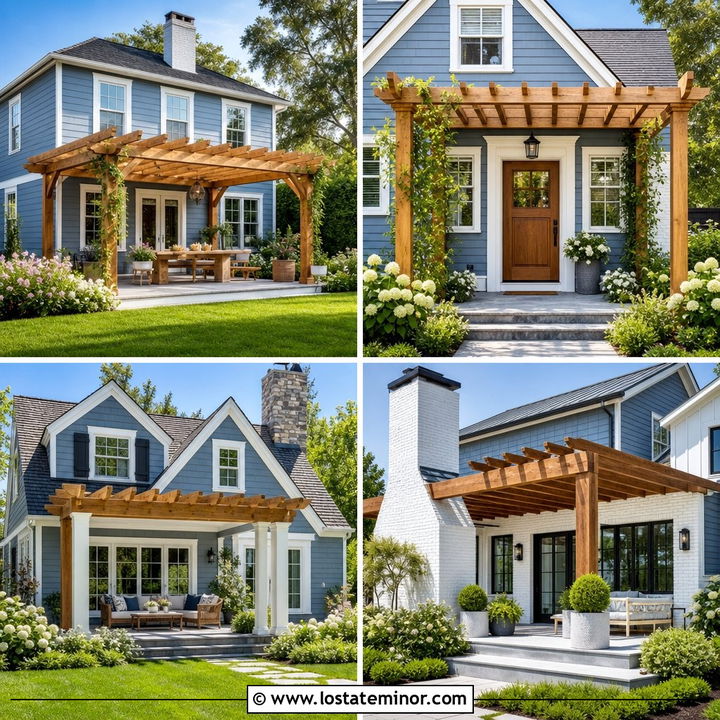
15. Sand House With White Trim
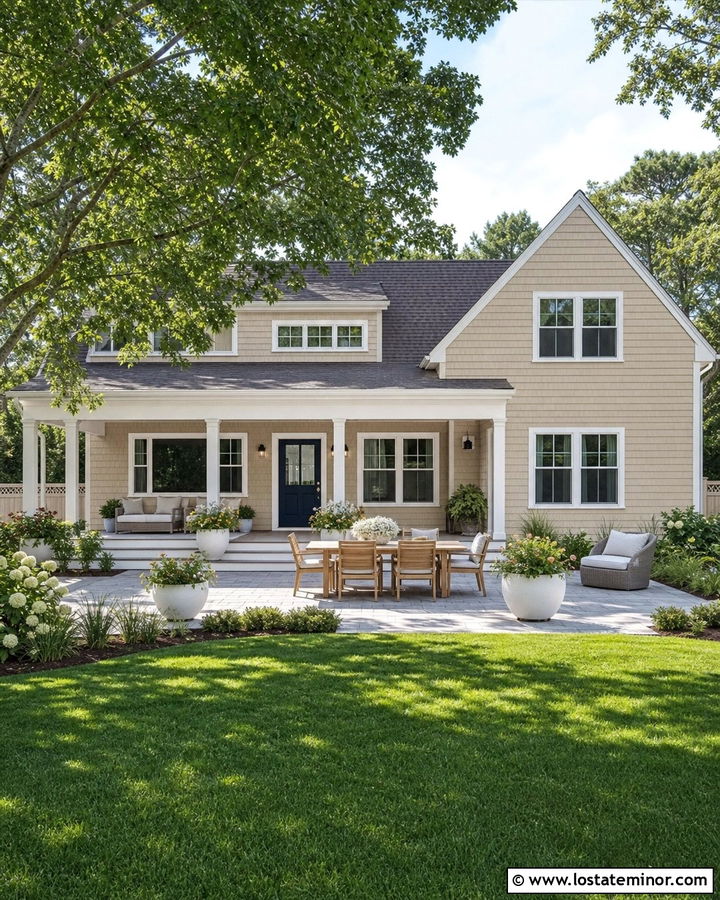
White trim is a reliable way to brighten a sand-colored house and clarify its architectural details. The contrast works particularly well on colonials, Cape Cod homes, cottages, and traditional suburban exteriors. Apply the sand color to the main siding and reserve warm white for corner boards, window casings, porch posts, and fascia. A navy or forest green back door can provide one controlled accent. In the backyard, use pale pavers, white planters, and natural teak furniture to continue the light palette. Keep garden beds full enough to soften the foundation but low enough to avoid covering windows. A neatly edged lawn and a direct path to the patio support the orderly design. Avoid overly cool white, which can make warm sand siding appear unexpectedly yellow.
16. Sand House With Natural Wood Doors
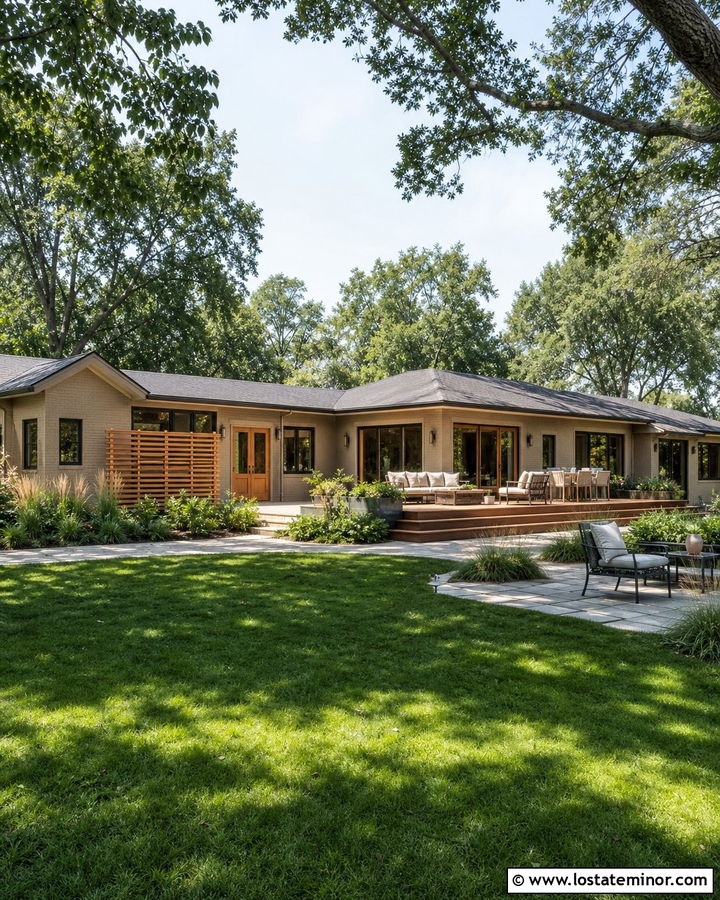
A natural wood door becomes an inviting focal point against a quiet sand exterior. Choose cedar, oak, mahogany, or another exterior-suitable wood with a clear protective finish that highlights its grain. Repeat the same tone on porch beams, deck boards, or a privacy screen so the door does not feel isolated. Cream trim and bronze window frames complement the combination without introducing too many colors. A limestone patio and soft green landscaping continue the organic look into the backyard. Position dining or lounge furniture where it does not block the door’s view from the yard. For a more cohesive rear elevation, keep additional doors and garage surfaces in the sand body color. This complete palette feels warm, approachable, and connected to the surrounding landscape.
17. Sand House With Small Backyard
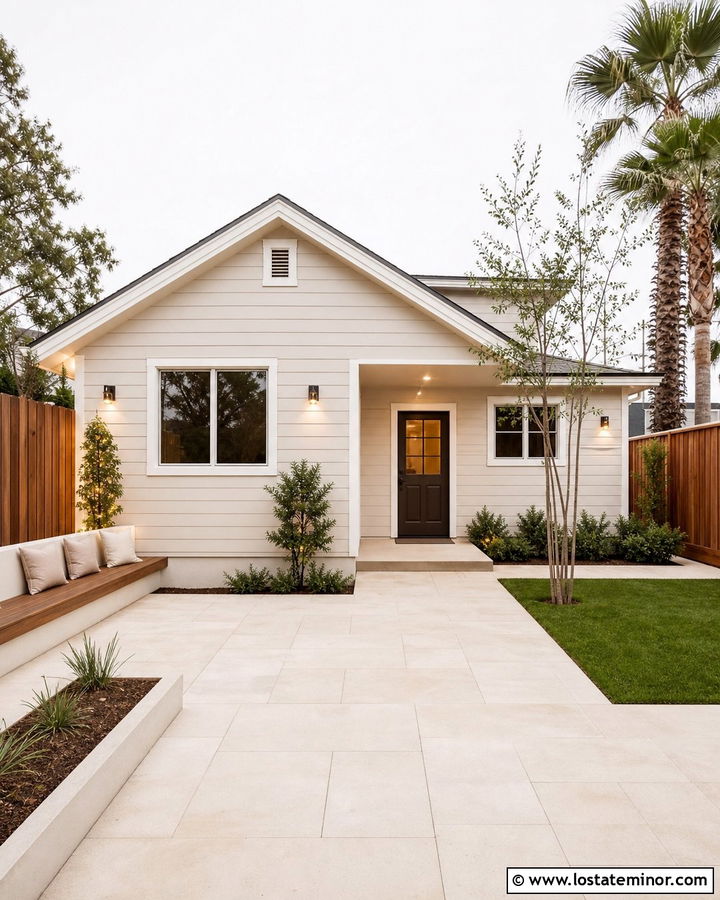
Limited space does not prevent a sand house backyard from feeling useful and attractive. Start by dividing the area into only two or three clear zones, such as a compact patio, a narrow planting bed, and a small lawn or gravel section. Sand-colored siding visually recedes, helping the yard feel open. Pair it with warm white trim and a dark bronze rear door. Use large pavers rather than many tiny materials, which can make the space look fragmented. Built-in seating against a fence saves room and reduces furniture clutter. Vertical planting, slim trees, and wall-mounted lights add function without occupying much ground. Choose one wood tone and one accent color for accessories. A simple, restrained layout will make the entire exterior appear larger and more organized.
18. Sand House With Sloped Backyard
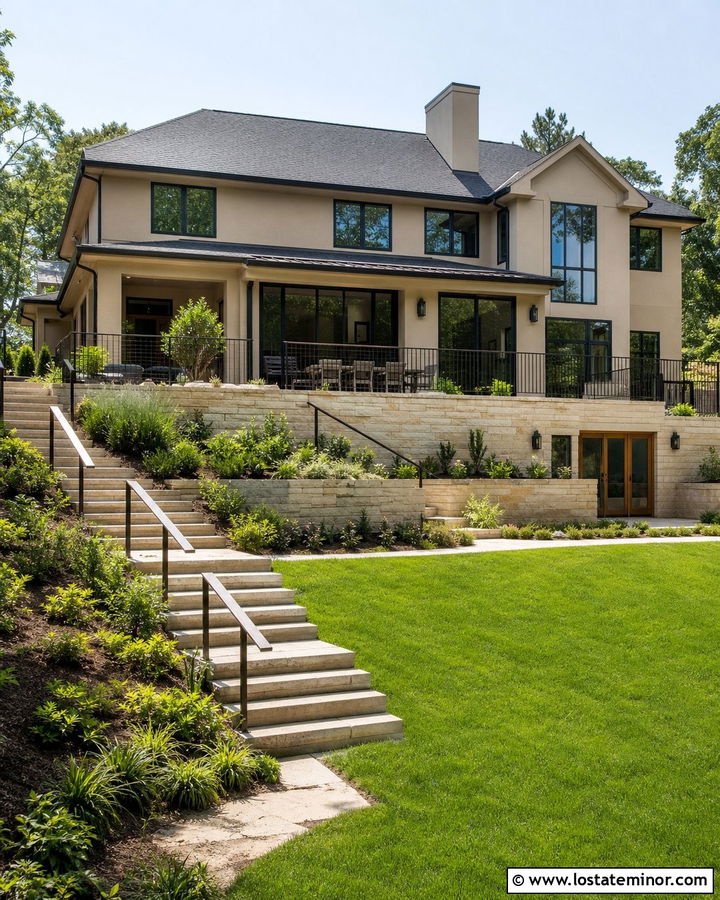
A sloped backyard can become an architectural advantage when the levels are planned around a sand-colored house. Near the building, create a stable upper terrace for dining and everyday access. Lower areas can hold a lawn, garden, or separate seating space. Retaining walls faced with warm limestone or tan concrete block will relate naturally to sand stucco or siding. Use broad steps and visible handrails to connect each level safely. Dark bronze trim and wood doors give the pale house definition, while a brown or charcoal roof grounds the upper silhouette. Plant slopes with locally appropriate ground cover and deep-rooted shrubs to reduce exposed soil. Repeating the same paving material on landings and patios keeps the layered backyard from looking visually complicated.
19. Sand House With Garden Path
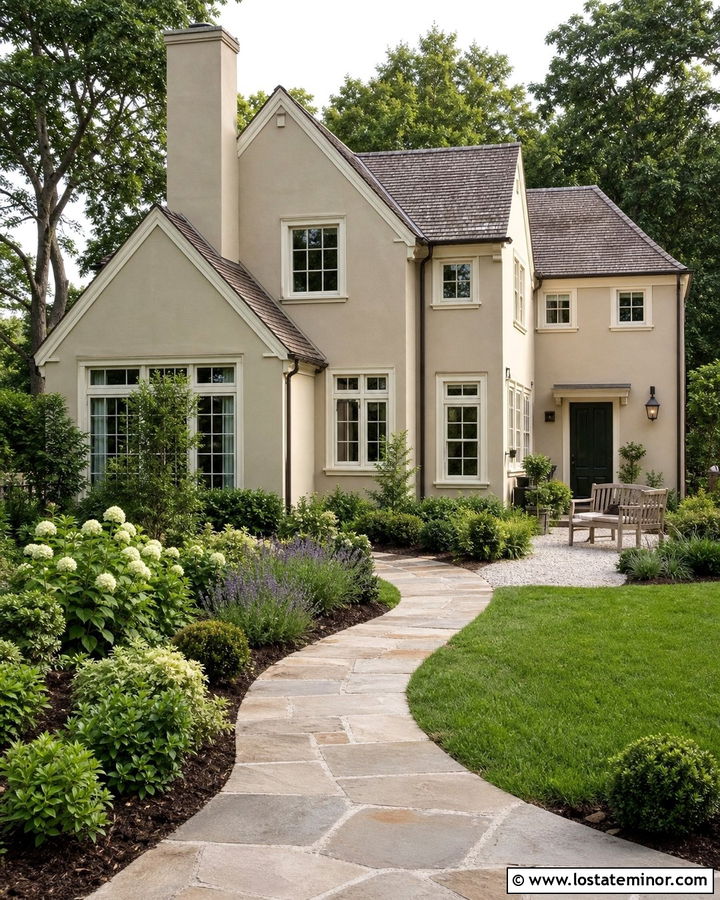
A winding garden path introduces gentle movement beside a warm sand house exterior. Use irregular limestone, compacted gravel, or large cream stepping stones that coordinate with the body color without matching it exactly. The path might begin at the patio, pass through flowering beds, and finish at a small bench or garden gate. White trim keeps the home bright, while a deep green door connects the architecture to the planting. Mix shrubs, grasses, and perennials in repeated groups so the garden feels full but organized. Curved beds suit cottages and casual ranch homes, while straight paths complement modern architecture. Include practical lighting along changes in grade. Viewed from the yard, the path should guide attention back toward the complete house rather than disappearing into unrelated landscaping.
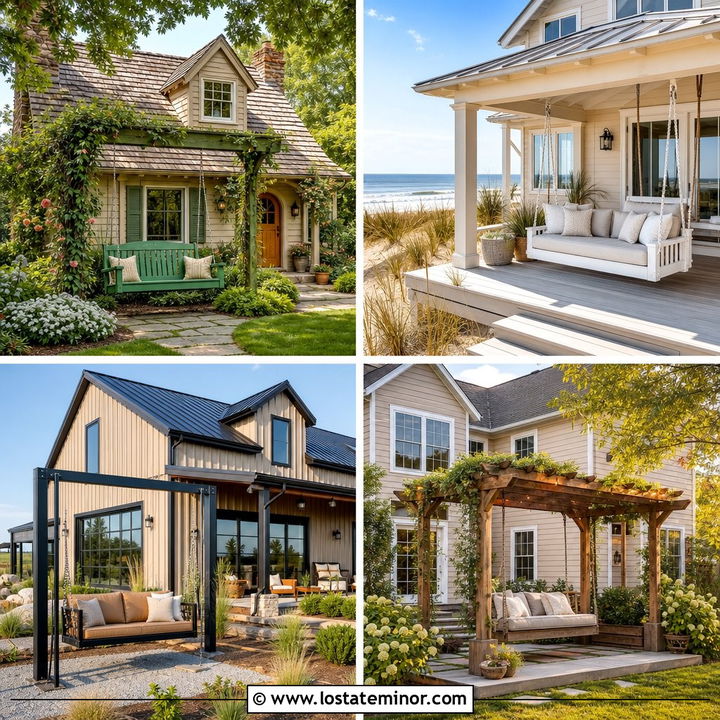
20. Sand House With Backyard Pavilion
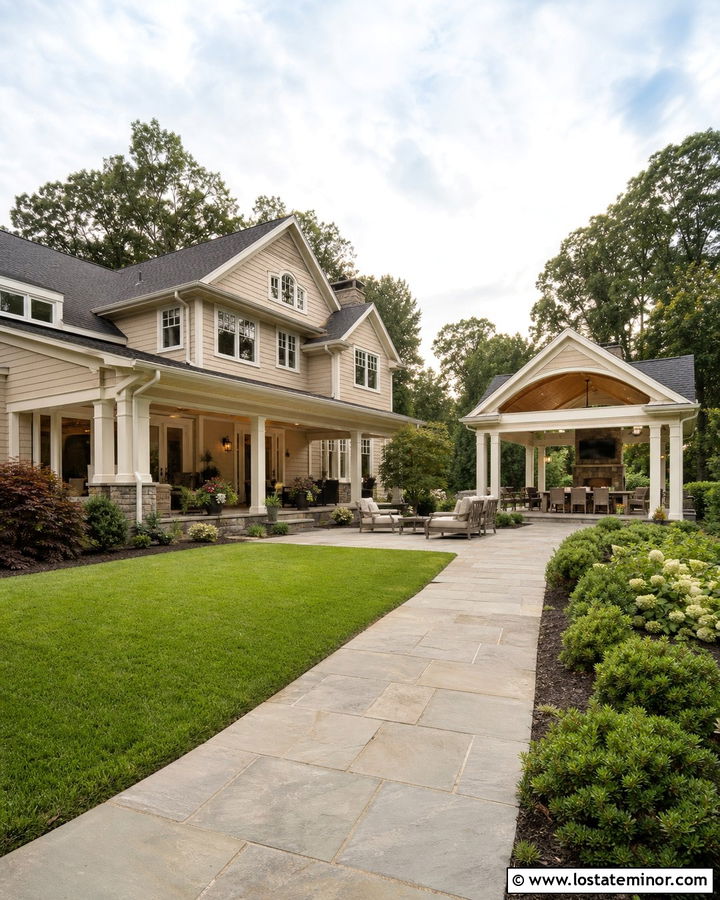
A detached pavilion can give a large backyard a strong destination beyond the main sand-colored house. Match its roof pitch, trim color, and key materials to the home so both structures belong to one design. For example, combine warm sand stucco, ivory trim, a charcoal roof, and cedar ceiling boards. The pavilion may contain a dining table, lounge furniture, or an outdoor kitchen depending on the available space. Connect it to the house with a generous stone walkway rather than a narrow strip of stepping stones. Trees and planting beds can frame the structure without hiding it. Maintain an open lawn between the buildings to preserve clear views. Repeated lighting, masonry, and wood tones will make the entire backyard composition feel intentional.
21. Sand House With Gravel Courtyard
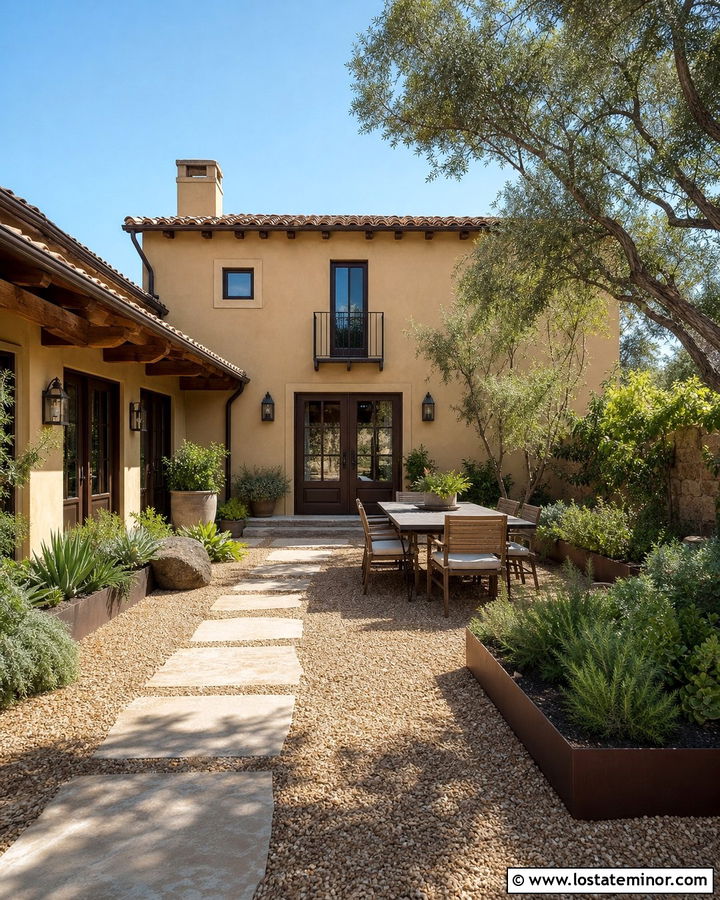
The subtle crunch of gravel can make a backyard courtyard feel relaxed and naturally textured. A sand stucco house provides the ideal backdrop, especially when paired with dark brown doors, cream trim, and simple timber beams. Choose compactable pea gravel or crushed stone in warm beige and gray tones. Define the courtyard with metal edging, masonry borders, or raised planting beds so loose material stays controlled. A central dining table, small shade tree, or large planter can create a focal point. Add broad stepping slabs along the most frequently traveled route for comfortable access. Mediterranean herbs and drought-tolerant shrubs suit the earthy character when appropriate for the climate. This affordable-looking simplicity can still feel polished when materials, boundaries, and furniture placement are carefully planned.
22. Sand House With Greenhouse Garden
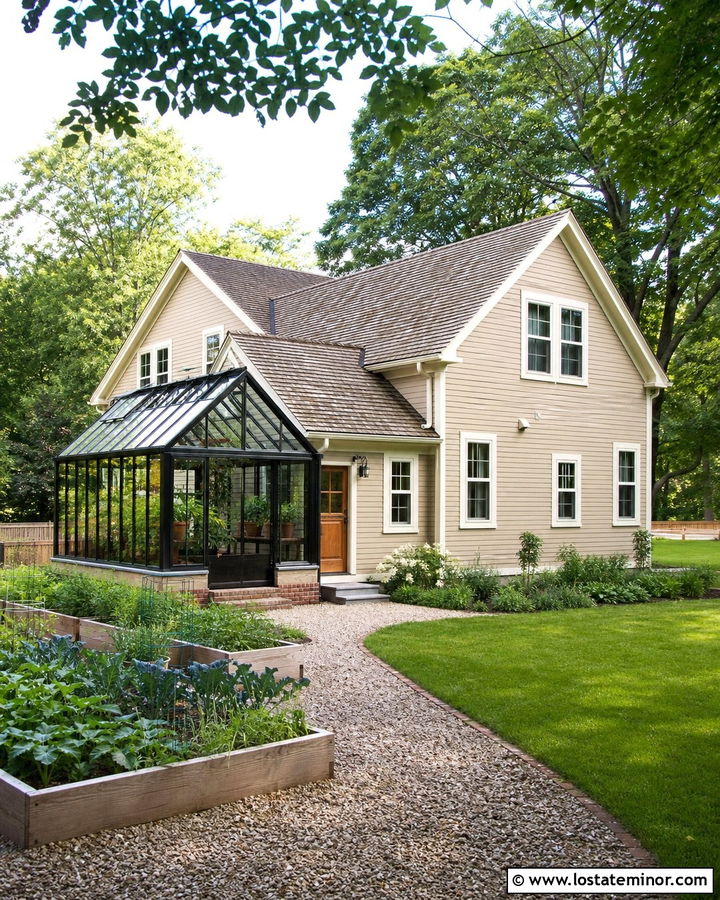
A compact greenhouse adds function and charm to the backyard of a sand-colored home. Choose a dark bronze, black, or natural wood frame that coordinates with the house windows and doors. Position the greenhouse where it receives suitable sunlight without dominating the view from the patio. Warm sand siding, ivory trim, and a weathered brown roof create a calm background for glass, plants, and garden beds. Connect the greenhouse to the house with a gravel path edged in brick or stone. Raised beds can repeat the wood tone used on the rear door or deck. Leave enough space for maintenance around every side. By aligning the structure with existing architectural lines, the greenhouse feels like a planned part of the property rather than an afterthought.
23. Sand House With Family Lawn
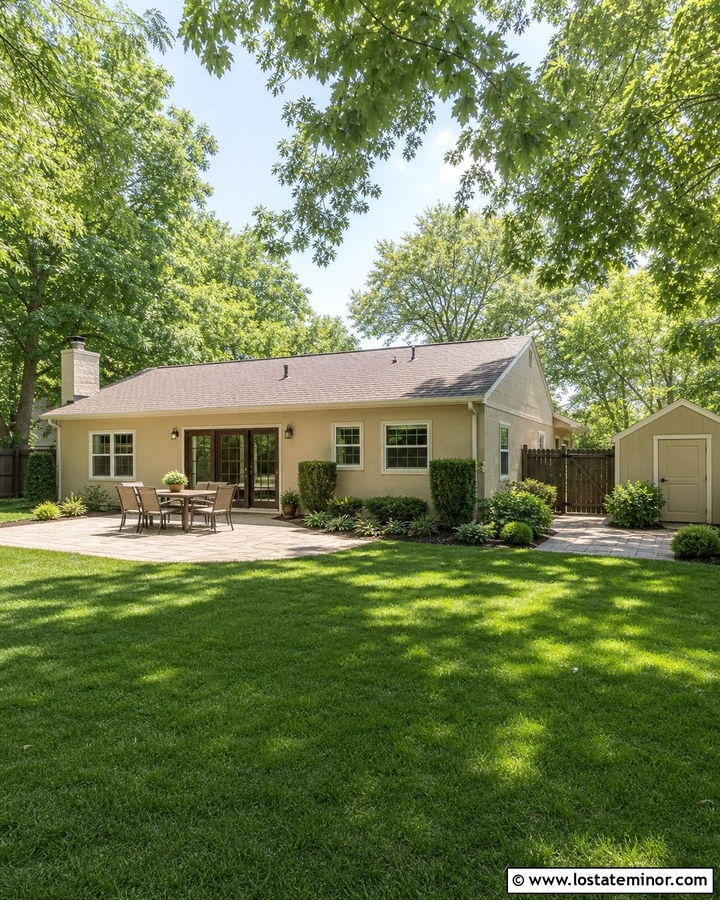
Sometimes the most useful backyard feature is a generous, uncomplicated lawn. A sand-colored house creates a warm neutral edge around the green space, allowing the yard to look bright and inviting. Place a paved patio near the back door for adult seating and dining, then keep the center open for flexible family activities. Warm white trim and a medium brown roof suit a traditional home, while black windows can modernize the same palette. Border the lawn with durable shrubs and a few shade trees rather than delicate plants that require constant protection. Provide a clear path from the side gate to the patio. Storage for outdoor equipment can be integrated into a sand-painted shed that matches the house, helping the full backyard remain tidy and visually consistent.
24. Sand House With Privacy Fence
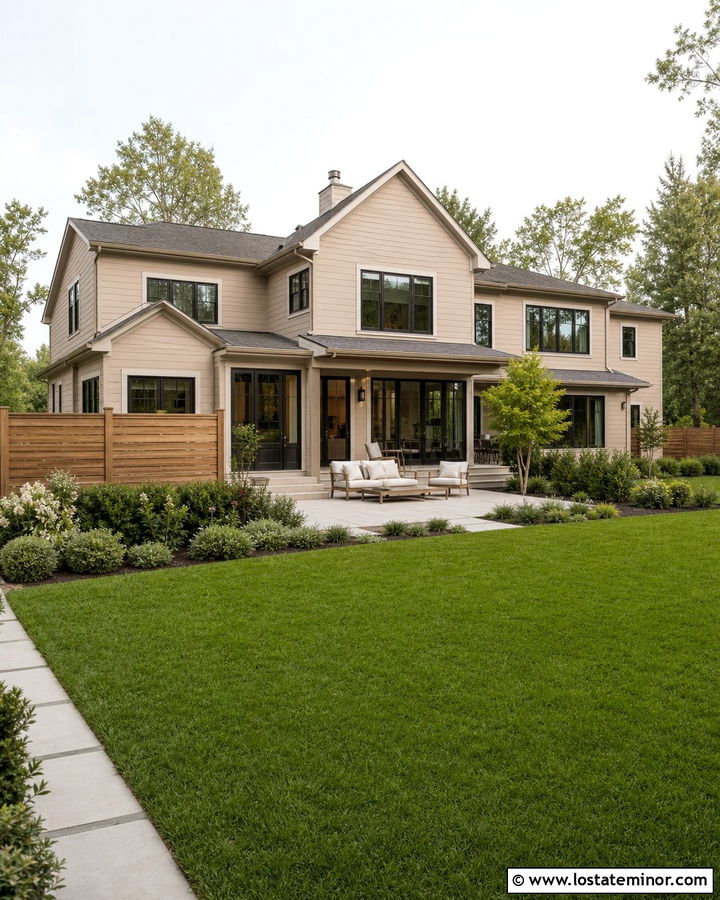
Privacy becomes part of the design when the fence color relates to the house exterior. Against sandy beige siding, a warm cedar fence creates a soft, natural boundary. For a more contemporary scheme, use a dark brown or charcoal horizontal fence and repeat that color on windows and outdoor lights. Keep the fence visually quiet by limiting decorative caps and contrasting hardware. Layer shrubs or small trees in front of it to soften long, uninterrupted sections. A cream paver patio and simple green lawn will keep the central yard bright. If local rules allow, a matching privacy screen can shield dining areas or mechanical equipment near the house. The best result frames the sand exterior without making the backyard feel boxed in or excessively dark.
25. Sand House With Hot Tub Deck
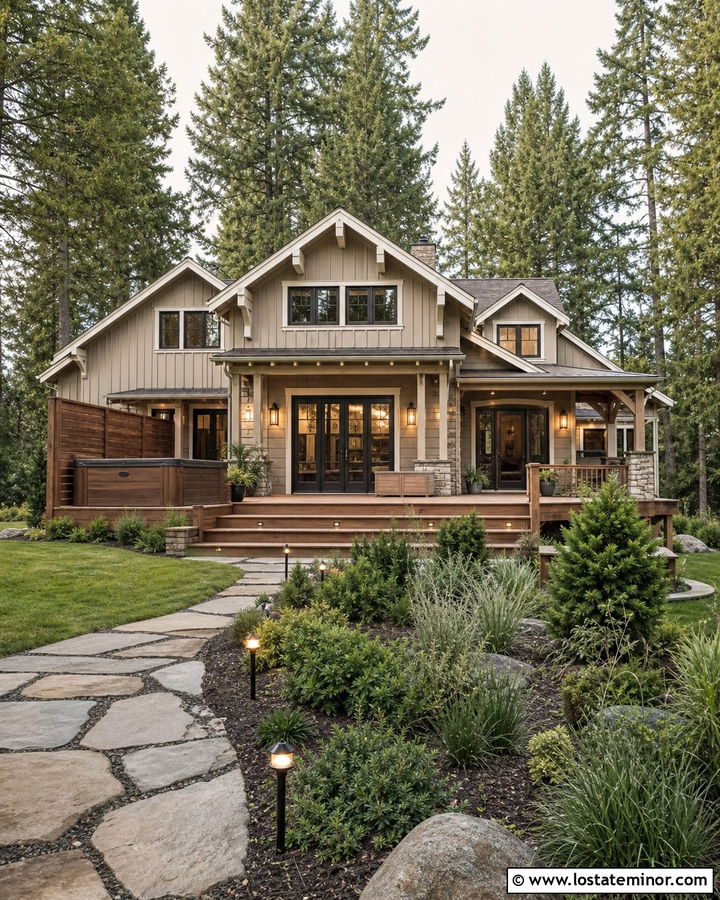
A hot tub can look integrated rather than added later when its platform relates to the full sand house exterior. Build the deck from medium cedar or composite boards in a realistic wood tone. Use a matching privacy screen on one or two sides while preserving views of the garden. Warm sand siding, cream trim, and bronze-framed doors create a comfortable backdrop. Position the tub near the house for convenient access, but maintain required service clearances and follow electrical and structural guidelines. Wide deck steps and low pathway lighting support safer movement. Add hooks, a storage bench, and weather-resistant planters to keep the area practical. Surrounding grasses or evergreen shrubs can soften the platform while leaving maintenance panels easy to reach.
26. Sand House With Covered Outdoor Dining
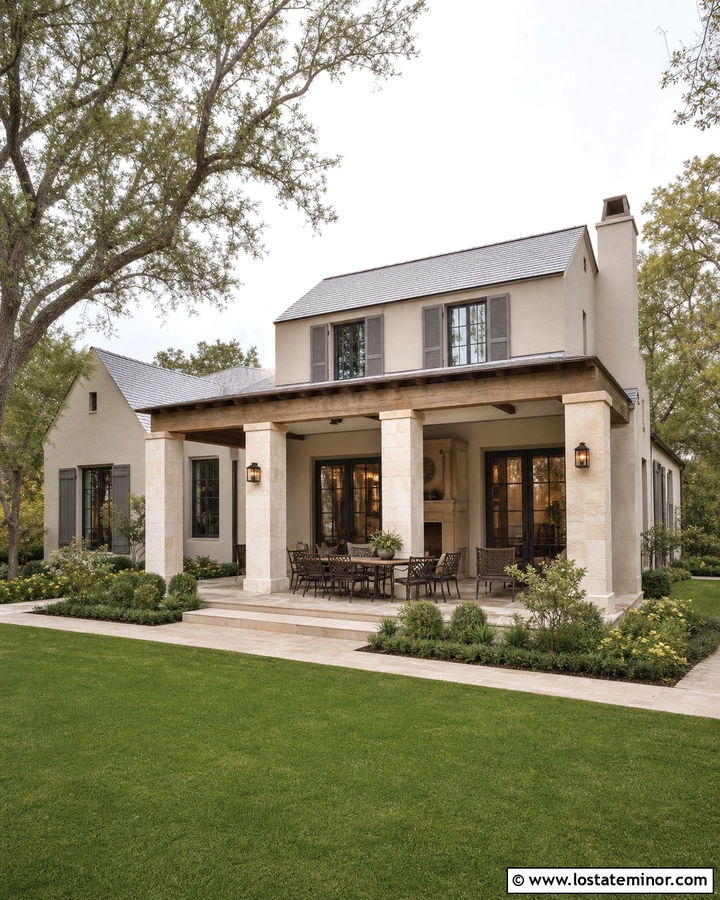
Outdoor meals feel more comfortable beneath a dedicated roof or extended overhang. On a sand house, support the dining cover with cedar posts, cream masonry columns, or slim dark metal framing chosen to match the architecture. Continue the main sand exterior color across the rear wall and use a lighter ceiling to reflect daylight. Large limestone pavers provide a level foundation for the table and connect naturally to the house palette. A dark bronze dining set introduces contrast without overwhelming the space. Position the area near the kitchen while maintaining a convenient route to the lawn. A ceiling fan, dimmable lighting, and outdoor curtains can increase comfort. Keep surrounding landscaping low so the complete rear elevation remains visible from across the backyard.
27. Sand House With Backyard Water Feature
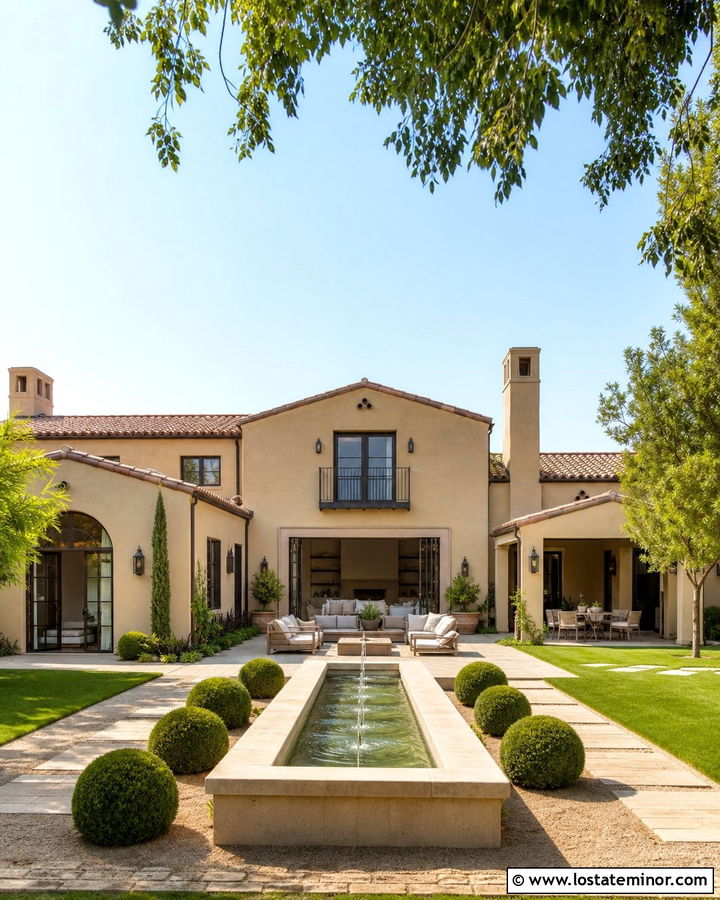
Gentle water movement can bring a calm focal point to a sand-colored house and garden. Select a simple rectangular fountain for a modern exterior or a low stone basin for a Mediterranean or cottage home. Materials should repeat the house palette, such as cream limestone, warm gray concrete, or tan masonry. Place the feature where it can be seen from the patio and interior windows without interrupting the main walking route. Sand stucco, ivory trim, a clay roof, and bronze details create a naturally layered backdrop. Use restrained planting around the water so cleaning and maintenance remain manageable. Gravel or stone paving can define the surrounding zone. The water feature should support the backyard’s overall composition rather than competing with the architecture.
28. Sand House With Tiered Gardens
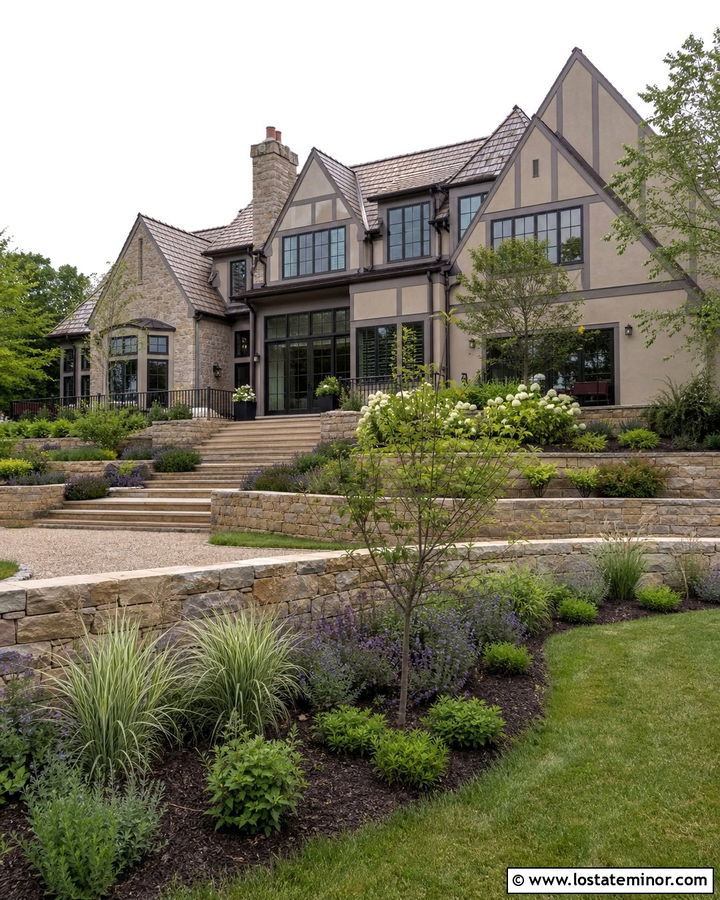
Layered garden beds can add depth to a wide or elevated sand house backyard. Begin with low planting near the patio, medium shrubs along the next level, and small trees toward the property edge. Warm sand siding remains visible behind the greenery, while cream trim and dark bronze windows define the rear facade. Construct terraces from tan stone, weathered brick, or smooth beige concrete that relates to the body color. Steps should align with doors and primary paths for a natural flow through the yard. Repeat several dependable plants instead of filling every level with unrelated varieties. A simple lawn or gravel area can provide visual rest between the terraces. This arrangement makes the home and landscape feel established, dimensional, and connected throughout the seasons.
29. Sand House With Rustic Backyard
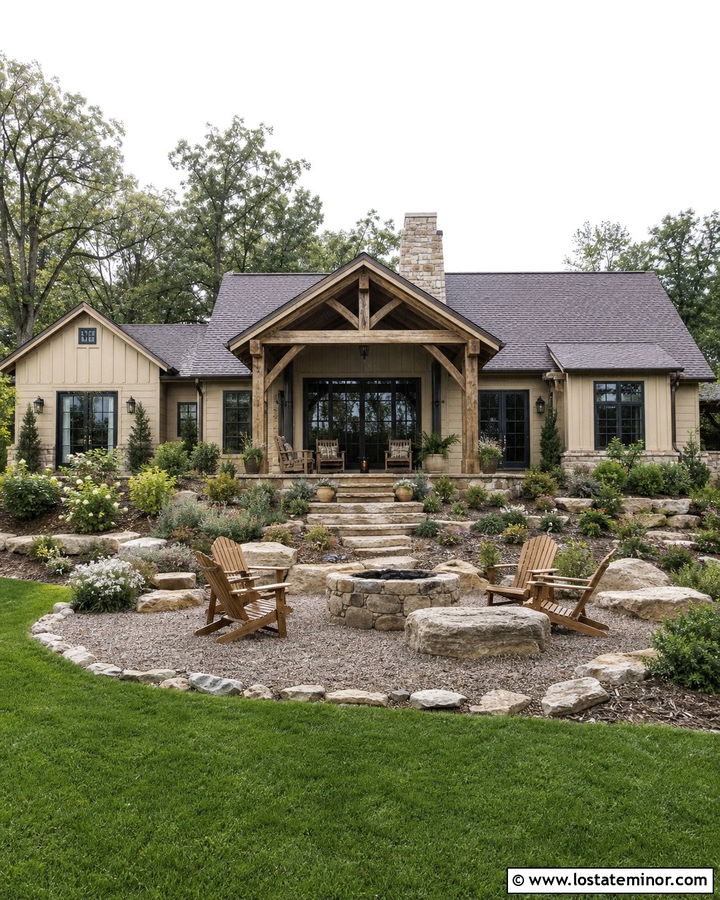
Weathered wood, natural stone, and informal planting bring rustic warmth to a sand house exterior. Choose soft sand-painted siding with cream trim and a deep brown roof. Add a rough-sawn timber porch, fieldstone patio, and simple wood furniture in complementary brown tones. Avoid making every element distressed; a few clean details will keep the backyard looking maintained rather than worn. Gravel pathways and native-looking garden beds can create an easy transition to the surrounding landscape. A stone fire pit or covered dining table may serve as the central gathering point. Dark metal lighting adds useful contrast. The complete design works best when the sand color stays light and quiet, allowing the richer textures of wood, stone, and planting to provide character.
30. Sand House With Luxury Backyard
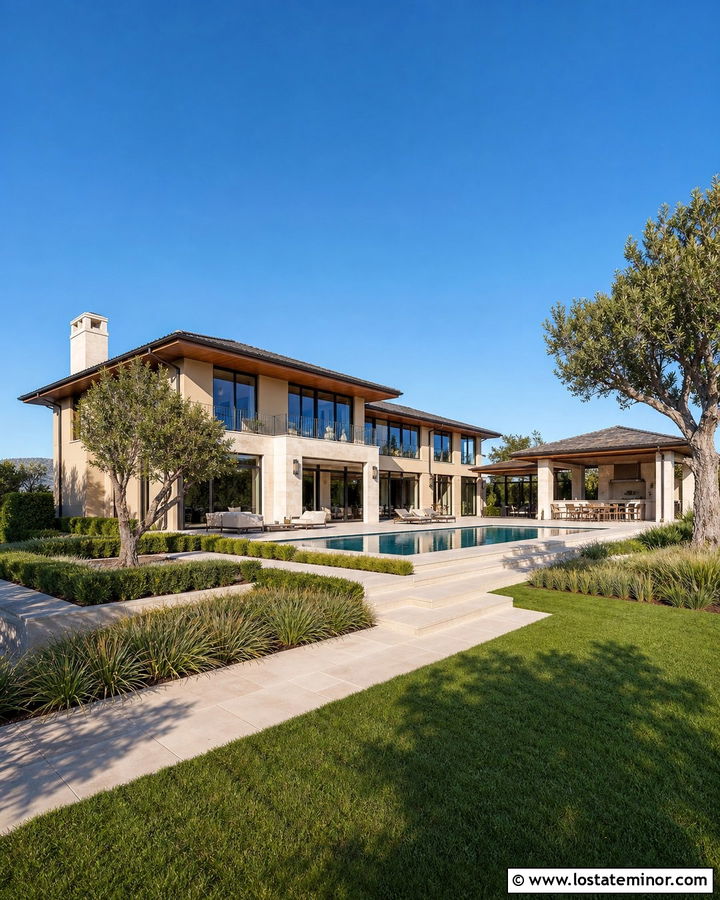
A luxury backyard depends more on coordination than on filling the space with expensive features. Begin with a refined sand stucco house accented by creamy limestone, bronze windows, and warm wood soffits. Organize the yard around a strong central view, such as a rectangular pool, covered lounge, or carefully framed garden. Use the same pale paving across the patio and pool deck to create visual continuity. An outdoor kitchen, fire feature, and dining pavilion should share consistent finishes rather than competing materials. Layer hedges, ornamental grasses, and sculptural trees to provide privacy and structure. Concealed storage and carefully placed lighting help the exterior remain uncluttered. Every element should reinforce the sand palette while supporting comfortable movement between the house and backyard.
Conclusion:
The best 30 Sand House Design With Backyard Ideas treat the home, outdoor rooms, and landscape as one connected composition. Warm sand siding or stucco can pair beautifully with white trim, dark bronze windows, natural wood, pale stone, brick, and layered greenery. Before choosing materials, consider the home’s architecture, available space, climate, maintenance needs, and the way your family uses the yard. Repeat a small group of colors and finishes to create consistency from the rear elevation to the property edge. Whether you prefer a pool, pergola, garden, deck, or simple lawn, a thoughtful plan will help your sand-colored house feel welcoming, balanced, and complete.

Related posts: