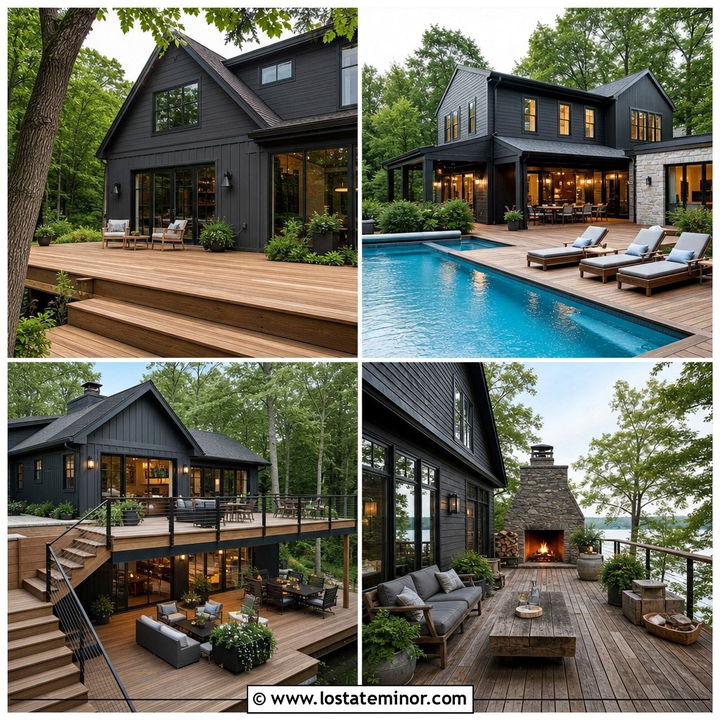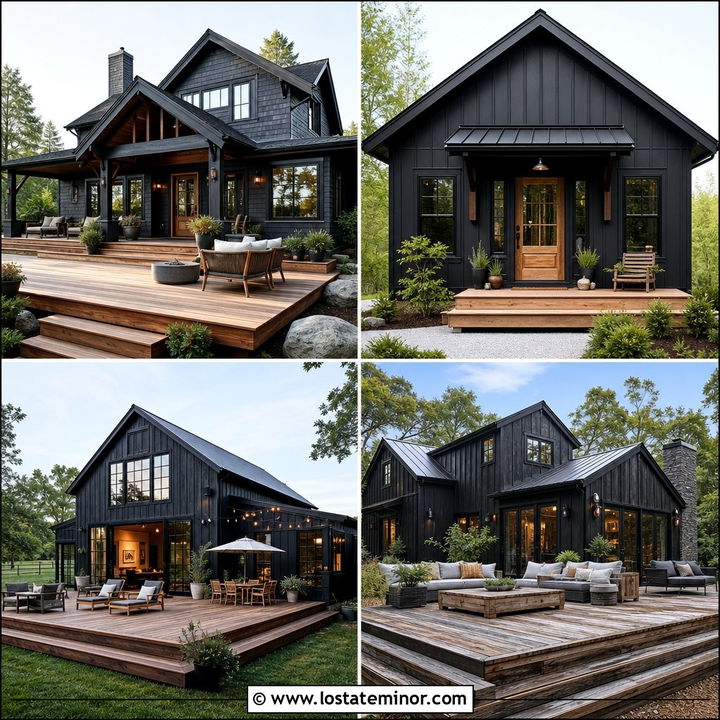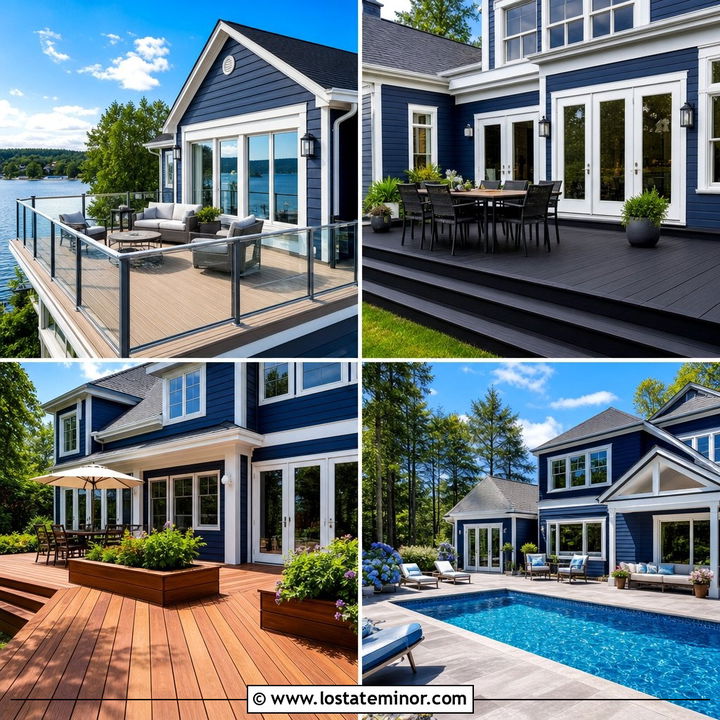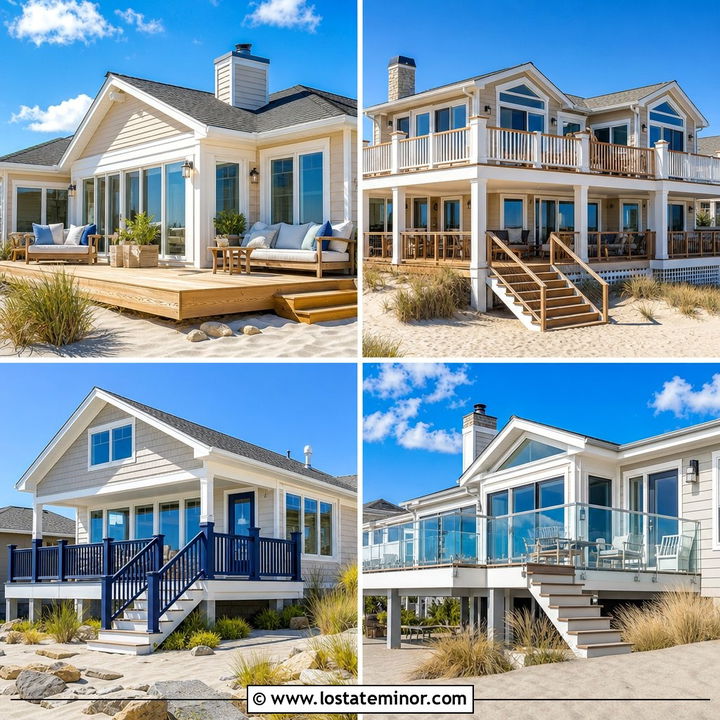
1. Hunter Green House With Natural Cedar Deck
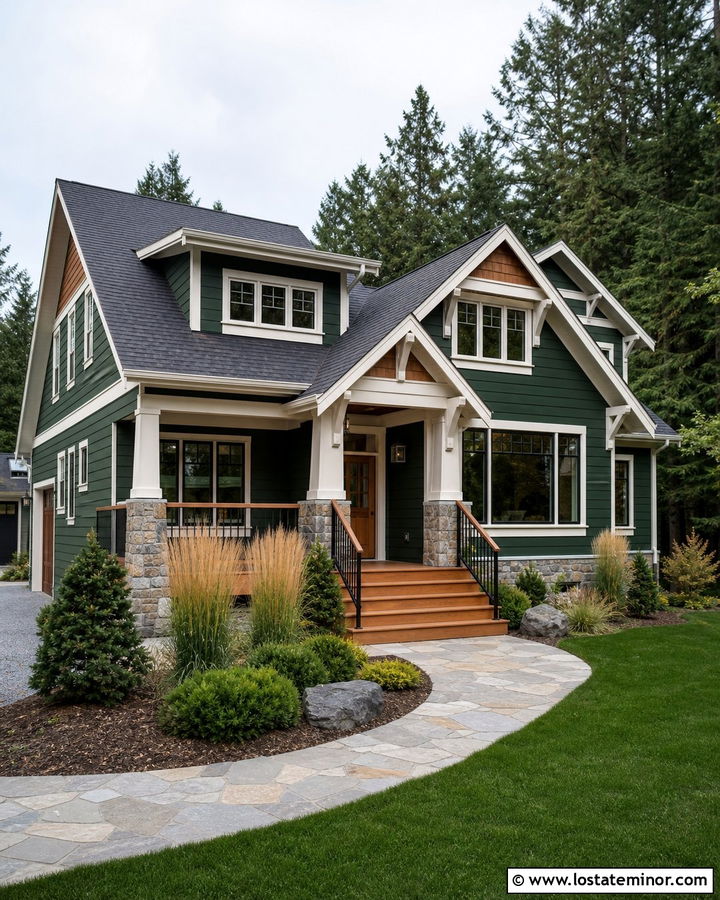
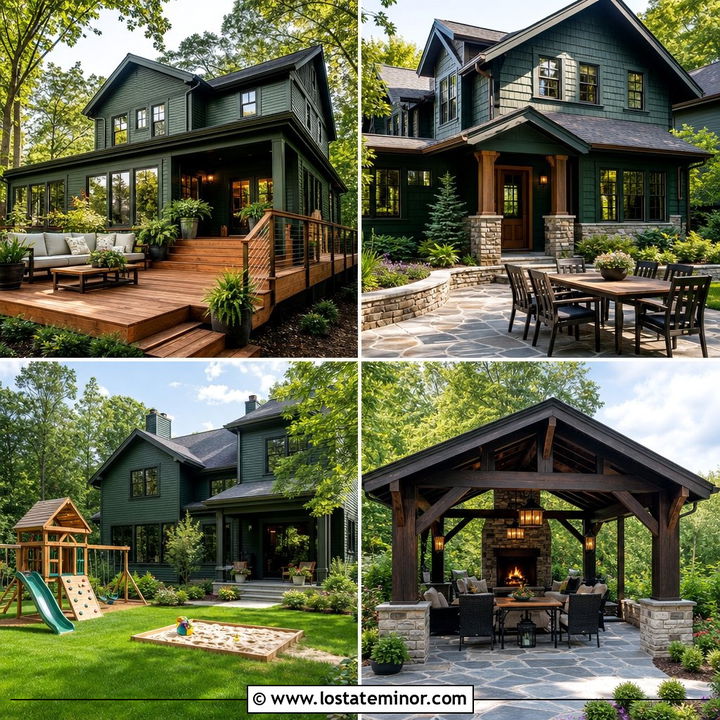
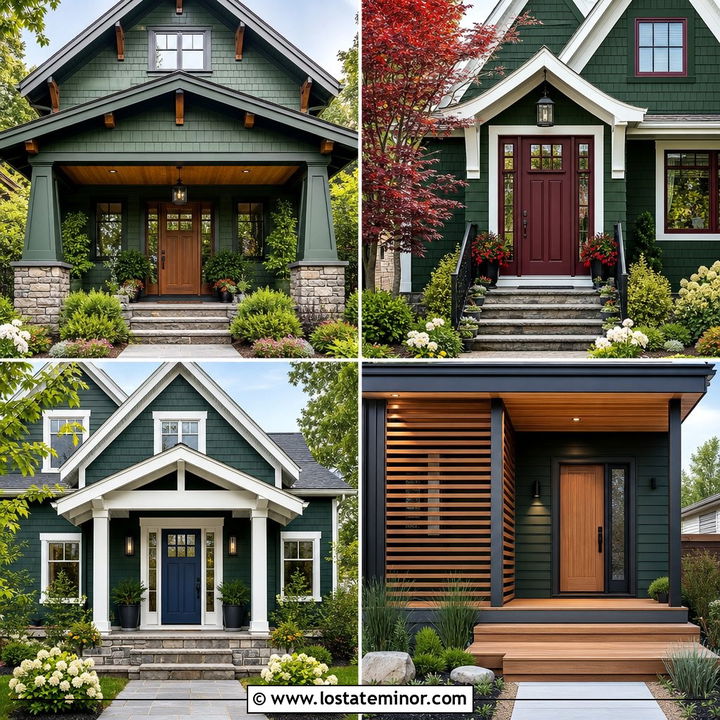
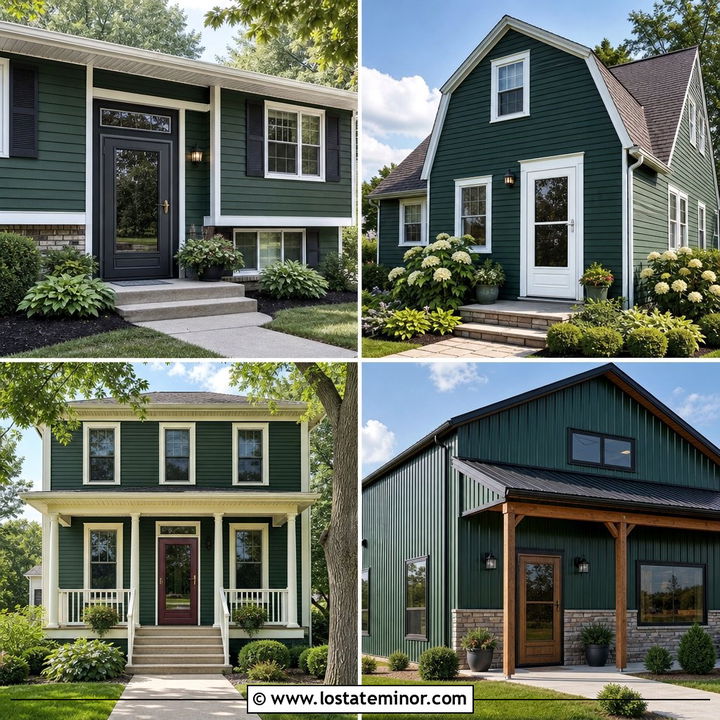
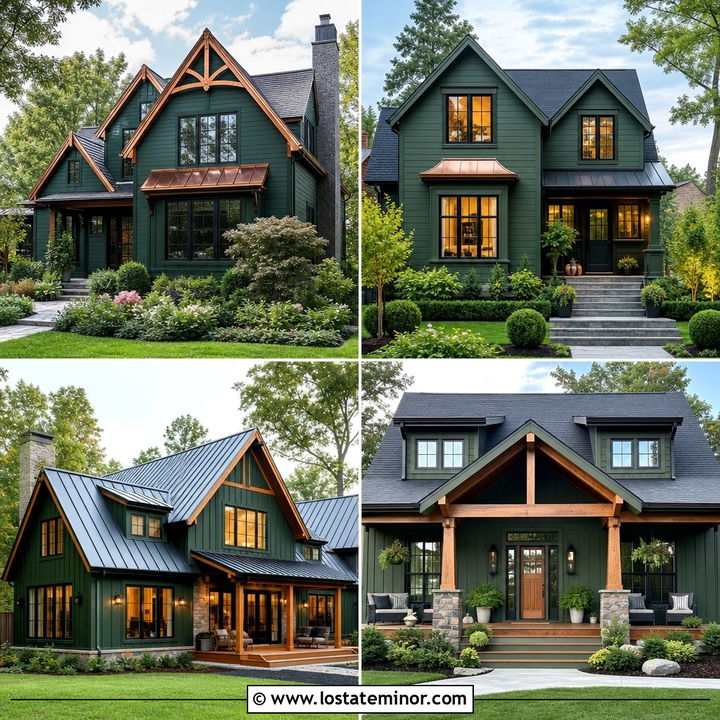
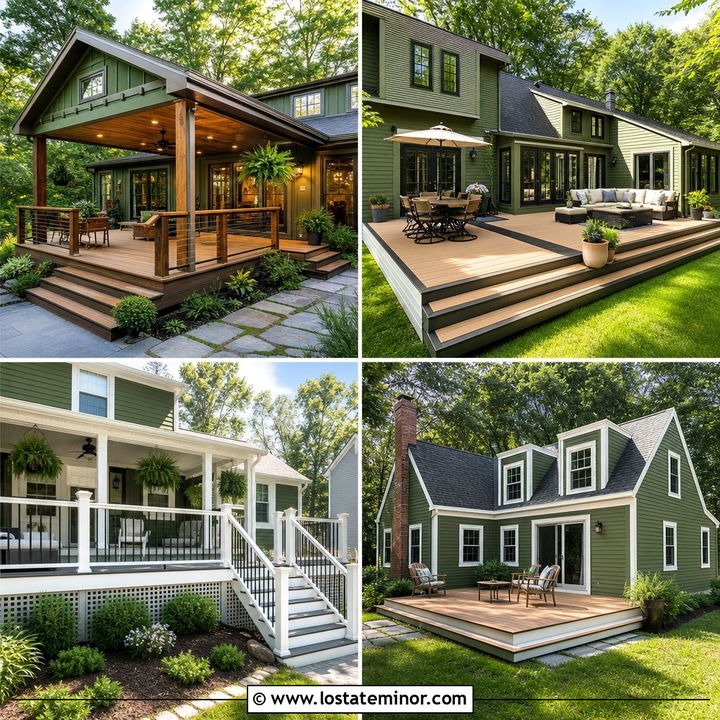
Natural cedar gives a hunter green house an inviting, woodsy character without making the exterior look overly rustic. Use hunter green on horizontal siding, then outline the windows, roofline, and porch columns with warm white trim. A clear or lightly tinted cedar deck creates enough contrast to remain visible against the dark facade. Carry the wood tone onto the front door, stair treads, and simple square rail caps for consistency. Black metal balusters add definition without hiding the wood. A medium charcoal roof keeps the upper portion neutral and balanced. Complete this Craftsman-style exterior with fieldstone around the foundation, broad deck stairs, evergreen shrubs, and ornamental grasses. The result feels natural, substantial, and carefully coordinated.
2. Hunter Green House With Brown Wraparound Deck
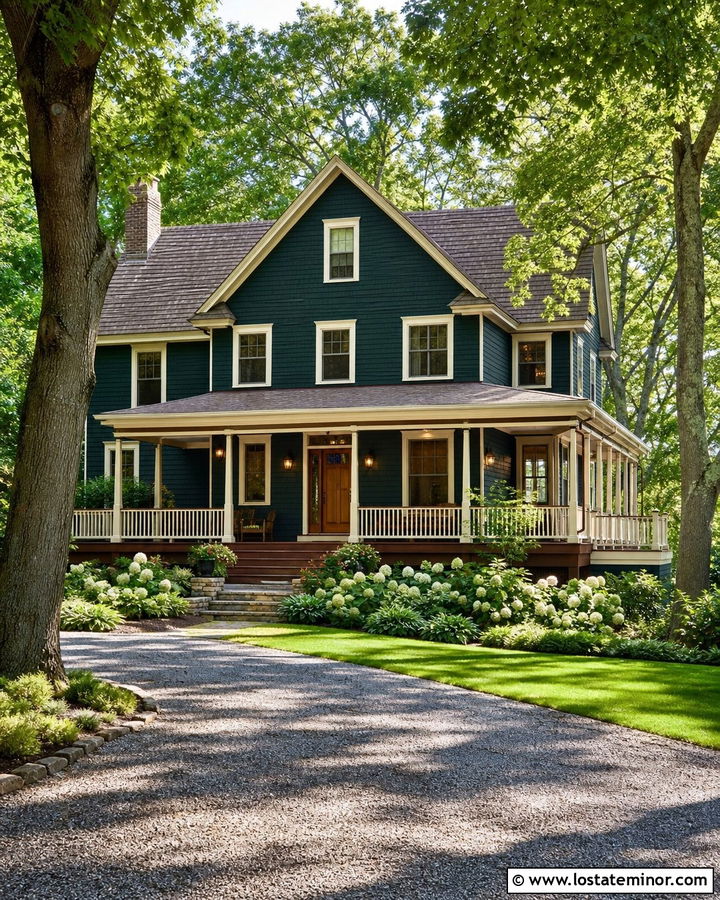
A deep brown wraparound deck creates a traditional transition between hunter green siding and a wooded yard. This combination works especially well on a farmhouse, country home, or large Cape Cod with several visible exterior elevations. Choose a chocolate brown deck stain with slightly warm undertones so it complements the green rather than appearing black. Soft cream trim around the windows and fascia keeps the scheme from becoming too dark. Add a warm wood front door, matching porch ceiling, and bronze exterior lights. White deck railings can brighten the design, while brown handrails repeat the floor color. Use stone steps, hydrangeas, and layered foundation shrubs to soften the deck’s long horizontal lines and give the entire house a welcoming appearance.
3. Hunter Green House With Light Oak Composite Deck
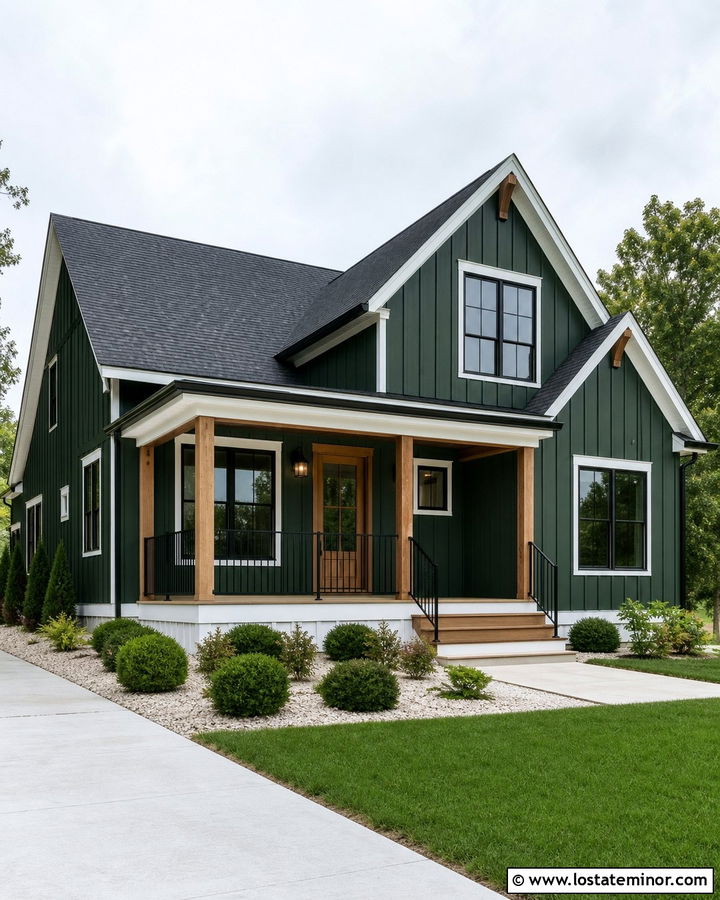
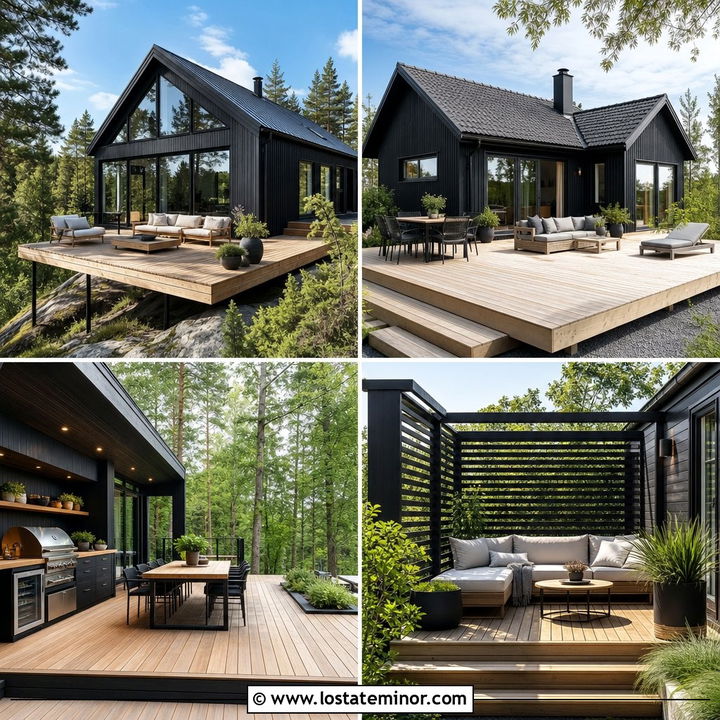
Could a dark green house still feel light and contemporary? Pairing hunter green siding with a pale oak composite deck makes that balance possible. The lighter deck boards introduce clean contrast while preserving the warmth expected from natural-looking wood. Use this combination on a modern farmhouse with vertical board-and-batten siding, simple white trim, and a steep charcoal roof. Black window frames and slim black deck balusters sharpen the architecture. A natural oak front door visually connects the facade to the deck without requiring an exact material match. Keep the deck design broad and uncomplicated, using wide stairs and hidden fasteners. Pale gravel beds, rounded shrubs, and a straight concrete walkway finish the exterior with a crisp, modern, and approachable look.
4. Hunter Green House With Charcoal Deck
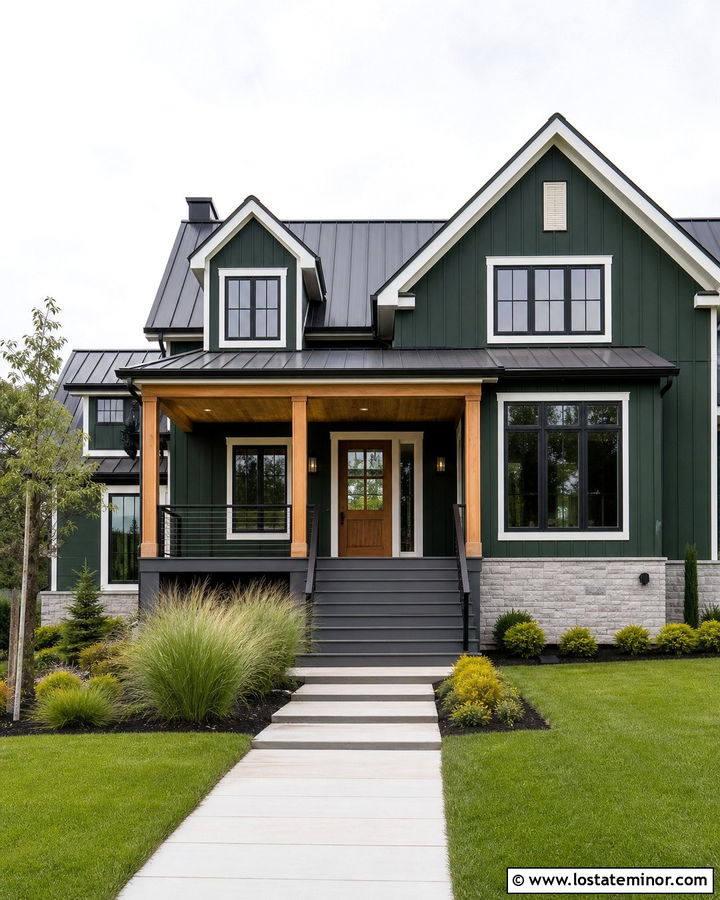
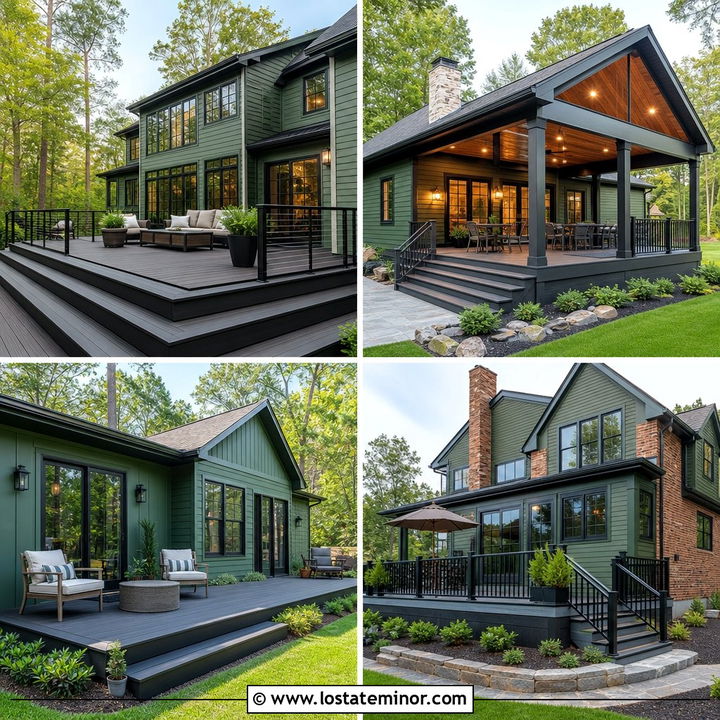
A charcoal deck gives hunter green siding a sophisticated tonal appearance. Because both colors are deep, include lighter architectural details to preserve definition. Warm white window trim, cream porch columns, and a light stone foundation prevent the exterior from looking flat. This scheme suits a contemporary home with clean rooflines, large windows, and a partially covered deck. Select charcoal composite boards with subtle variation rather than a completely solid black surface. Black cable railings can connect the deck to dark window frames and a charcoal metal roof. Introduce warmth through a cedar front door, wood porch ceiling, and tan outdoor planters. A neat lawn, geometric walkway, and low grasses will keep the full exterior balanced instead of visually heavy.
5. Hunter Green House With Black Deck Railings
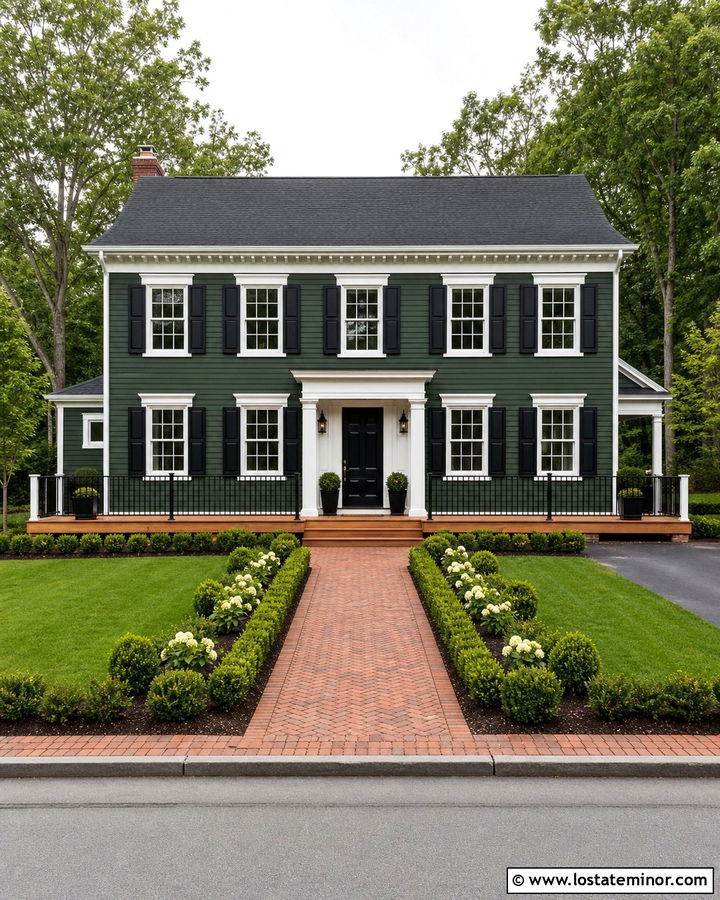
Black railings bring structure to a hunter green exterior while allowing the deck boards and landscaping to remain visible. For a classic Colonial house, paint the siding hunter green and use crisp white on the corner boards, window frames, columns, and cornice. Build the deck floor in medium cedar or warm brown, then frame it with narrow black aluminum balusters. A glossy black front door and matching shutters repeat the railing color across the facade. Choose a dark gray shingle roof rather than pure black to create a subtle transition overhead. Symmetrical shrubs, brick walkway borders, and matching planters reinforce the orderly architecture. The finished palette feels traditional from a distance but gains an updated, streamlined quality from the slim metal railing system.
6. Hunter Green House With Gray Deck
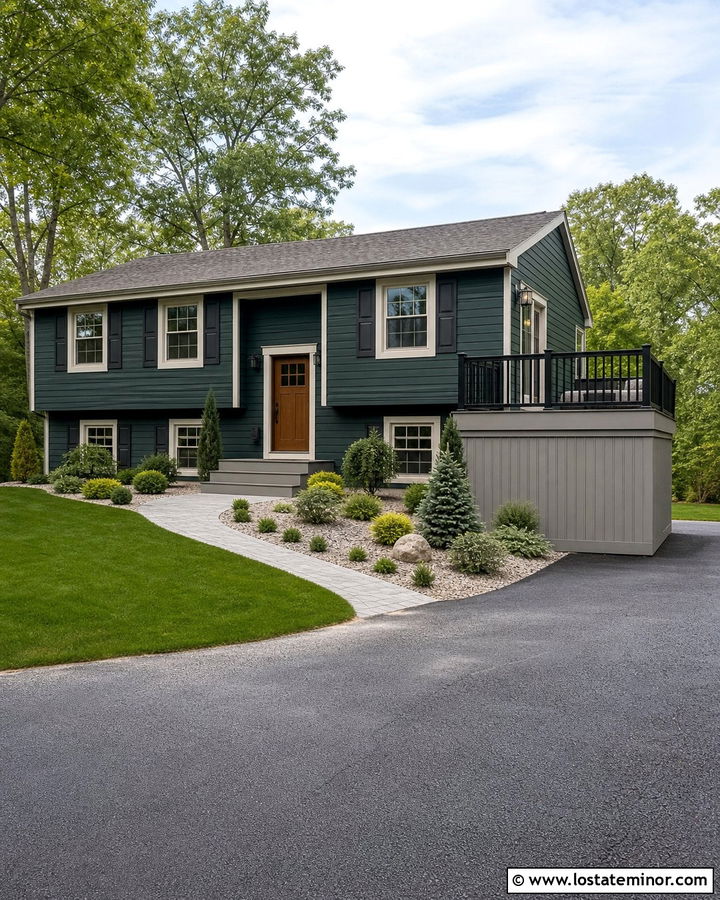
Medium gray decking provides a cool, understated partner for hunter green siding. It is particularly useful on a split-level house where a large deck could otherwise dominate the exterior. Choose gray boards with soft brown undertones to help bridge the green facade and natural landscaping. Use off-white trim around the windows and roof edges, then add charcoal shutters and a stained wood front door. A combination of solid gray deck skirting and black railings can make the lower level feel more finished. Repeat the deck color on concrete steps or foundation paint for a continuous look. Layered evergreens, pale stone mulch, and a curved walkway soften the strong horizontal architecture, giving the refreshed split-level a more intentional and cohesive curb-appeal scheme.
7. Hunter Green House With Redwood Deck
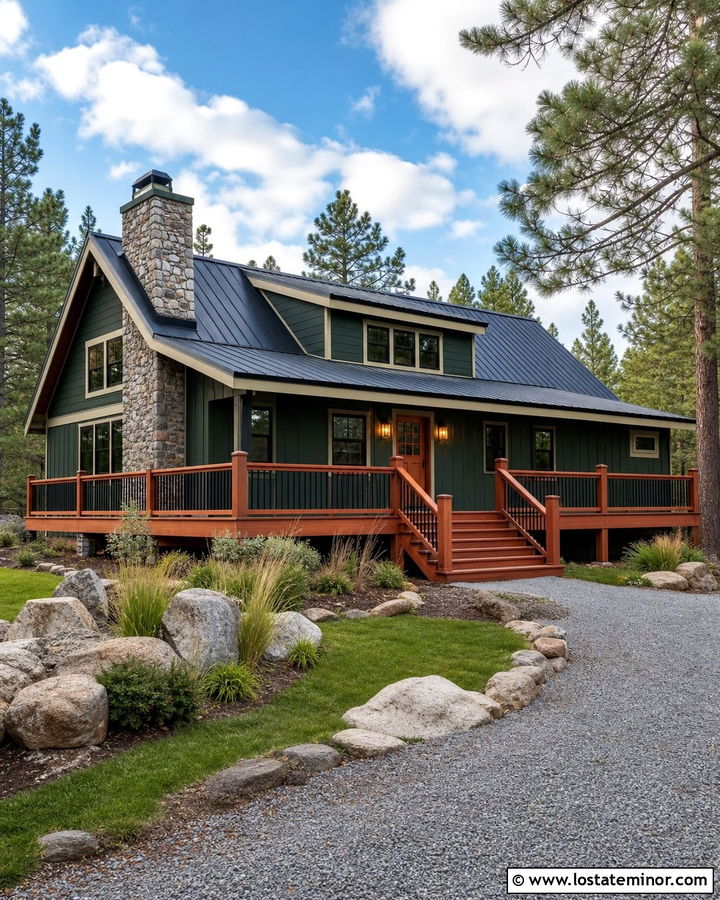
The warm red-brown color of redwood creates a bold but natural contrast with hunter green. This pairing is especially effective on a cabin, mountain home, or rustic contemporary house surrounded by mature trees. Keep the siding a true deep hunter green and use muted cream trim instead of bright white. Redwood decking can extend across the front facade and continue into substantial stairs with matching wood railings. Black balusters and a charcoal standing-seam roof introduce modern definition. Add a stone chimney or foundation in mixed gray and brown tones to connect the cool and warm parts of the palette. Native grasses, boulders, and an informal gravel path make the exterior feel settled into the landscape rather than decorated as a separate structure.
8. Hunter Green House With Mahogany Deck
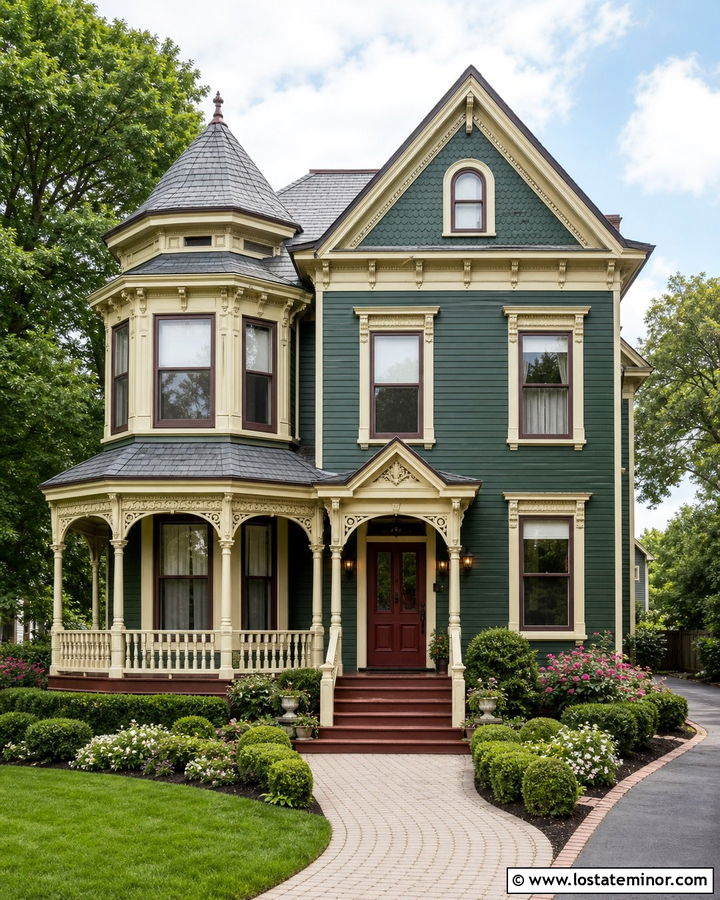
Rich mahogany decking can make a hunter green Victorian exterior feel elegant and historically inspired. The deck’s red-brown undertone stands out clearly against the dark green body color without becoming overly bright. Use creamy ivory on decorative trim, porch posts, brackets, and window surrounds. A burgundy front door can deepen the traditional palette, although black is a quieter alternative. Keep the deck floor and top rail in the same mahogany finish, then use ivory spindles to showcase the detailed porch construction. Dark bronze lights and hardware add warmth without competing with the wood. A slate-gray roof, curved walkway, clipped hedges, and flowering borders complete the full house design, balancing ornate architecture with a controlled, coordinated exterior color scheme.
9. Hunter Green House With White Deck
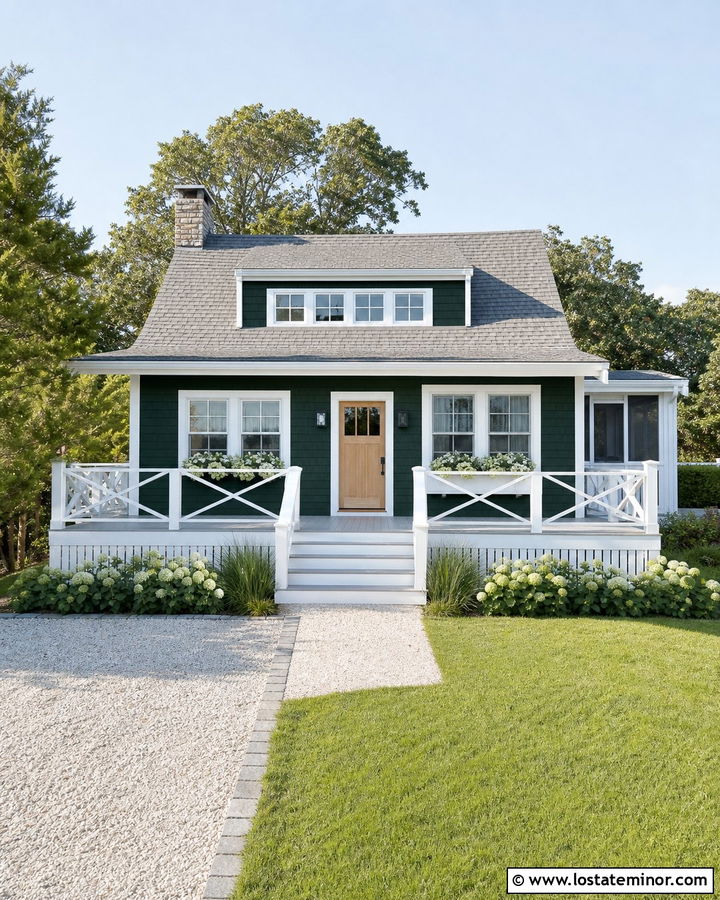
A white deck creates strong contrast against a hunter green house, giving the exterior a clean cottage or coastal character. Use white primarily on the railings, posts, stair risers, and deck skirting, while choosing pale gray or natural wood for the walking surface. This approach prevents the floor from appearing too bright within the landscape. Continue white around the windows, eaves, and porch columns so the deck feels connected to the architecture. A soft gray roof and light wood front door keep the palette relaxed. On a Cape Cod or coastal cottage, add simple cross-back rail details and window boxes. Blue-green grasses, hydrangeas, a shell-colored walkway, and low foundation plantings will soften the contrast and create a cheerful, balanced facade.
10. Hunter Green House With Tan Composite Deck
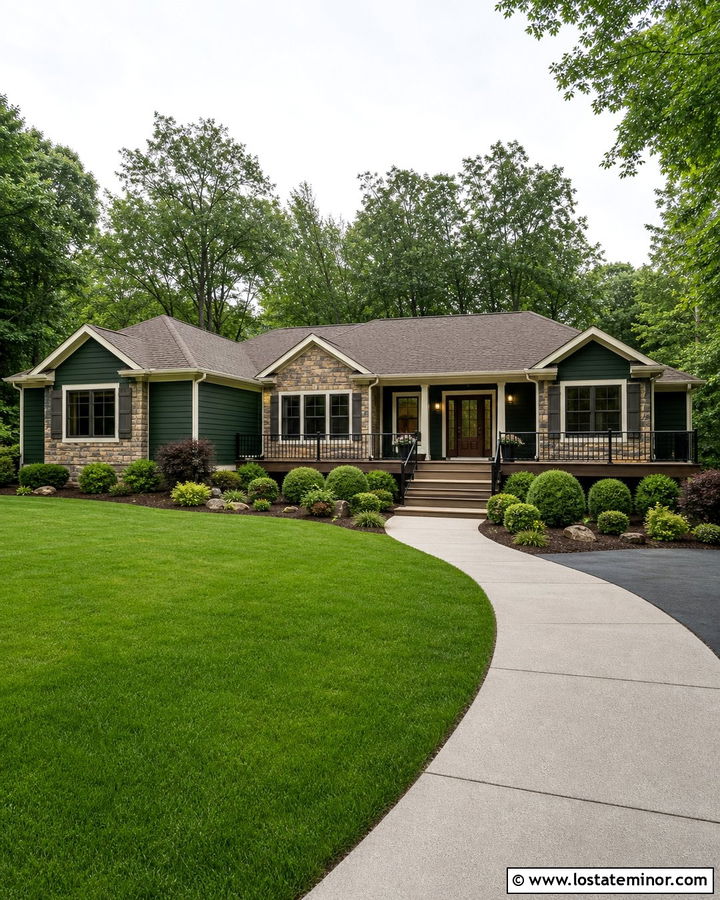
Tan composite decking brings gentle warmth to hunter green siding while keeping the overall palette quiet and practical. This pairing works beautifully on a broad ranch house because the lighter deck helps break up the long, dark facade. Paint the trim a warm cream and select a medium brown front door with simple glass panels. The deck can include tan boards, brown picture-frame edging, and black aluminum railings for a clean three-color arrangement. Add tan stone around the lower foundation or garage to repeat the deck tone on another part of the house. A brown-gray roof will tie everything together. Use wide deck stairs, low shrubs, and a gently curved path to emphasize the ranch home’s comfortable horizontal proportions and accessible layout.
11. Hunter Green House With Stone-Framed Deck
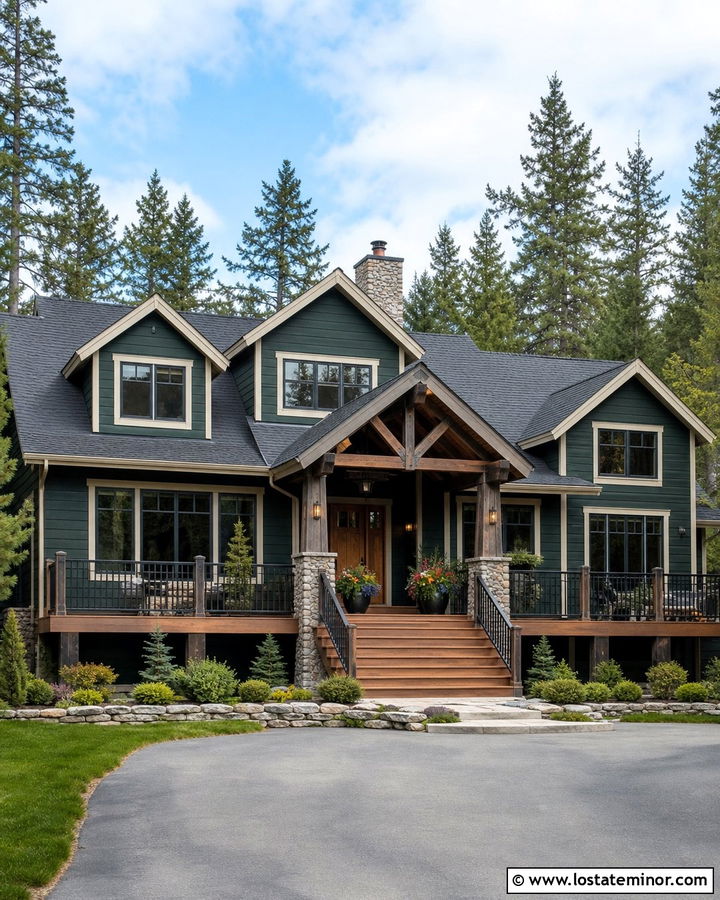
Stone supports can make a raised deck feel like a permanent part of a hunter green house rather than a later addition. Choose gray fieldstone with subtle tan and brown pieces, then use those colors to guide the remaining materials. Natural brown deck boards bring warmth, while black railings provide a crisp outline against the green siding. Apply soft ivory to the trim, columns, and fascia to highlight the architecture. This complete combination fits a Craftsman, lodge, or transitional home with broad roof overhangs. Repeat the stone around the foundation, front steps, or chimney for continuity. Deep deck stairs, large planters, layered evergreens, and a stone-edged walkway will visually anchor the structure and create a substantial, high-quality curb-appeal presentation.
12. Hunter Green House With Two-Tone Deck
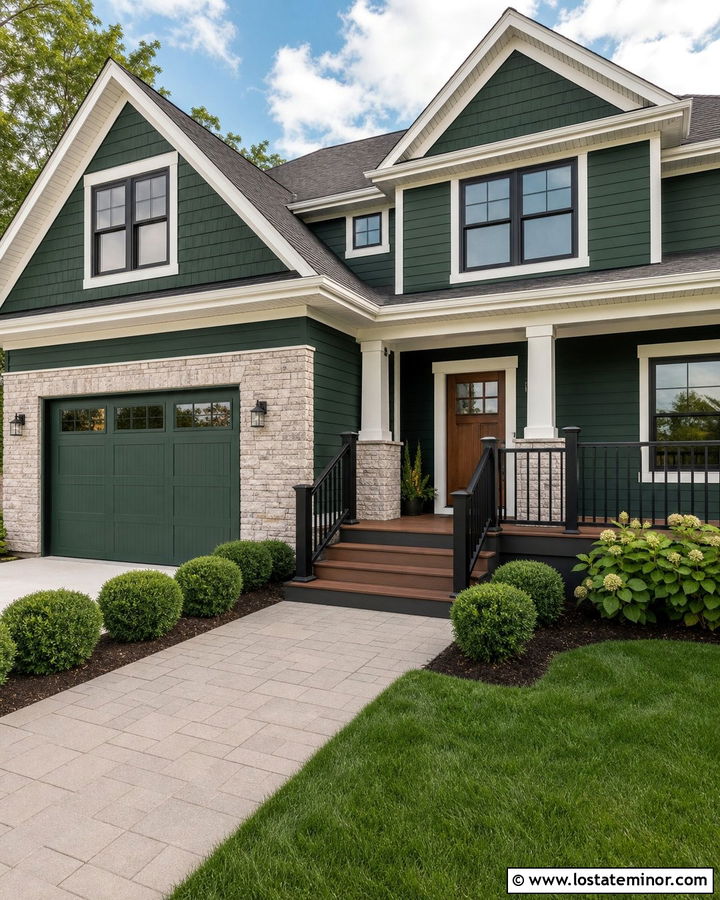
A two-tone deck adds detail without requiring complicated construction. Start with medium brown boards and add charcoal around the perimeter, stair edges, and railing caps. Against hunter green siding, the brown provides warmth while the charcoal connects to dark windows or roofing. Use warm white trim to separate these deep colors and clearly define the home’s lines. This palette is well suited to a transitional two-story house with a covered front deck and attached garage. Paint the garage door hunter green for a seamless facade, then use a natural wood front door as the main focal point. Black railings, pale stone accents, and symmetrical landscaping reinforce the coordinated look. Keep the deck pattern simple so the two colors appear architectural rather than busy.
13. Hunter Green House With Screened Deck
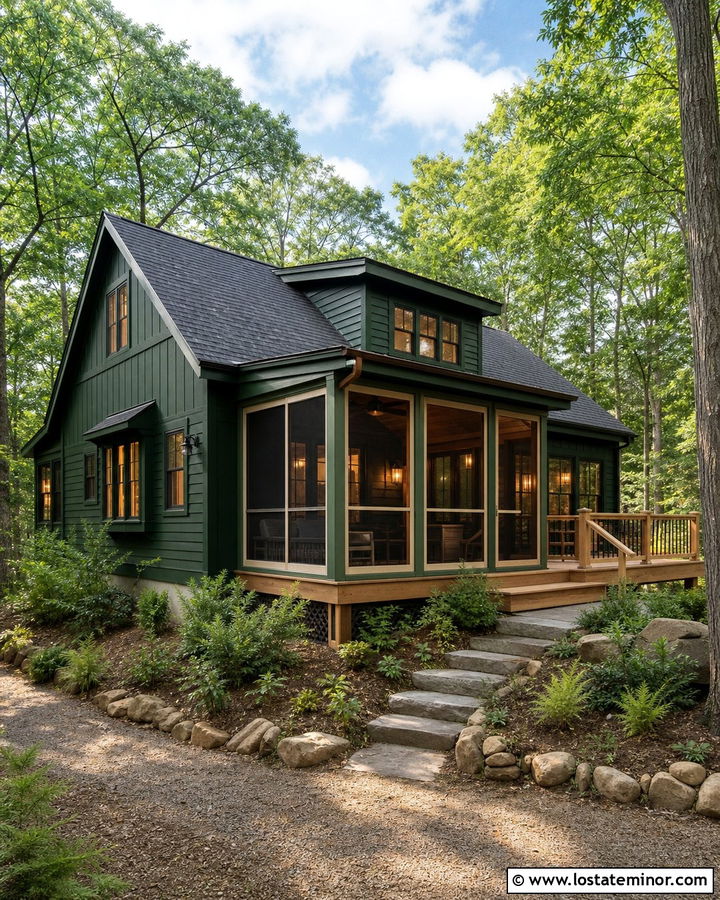
A screened deck can look heavy unless its colors are carefully balanced with the house. On a hunter green cottage or lake house, use matching green framing so the enclosure blends with the main siding. Cream trim around the screen panels will outline the structure and keep it from disappearing into the facade. Choose natural cedar floorboards, a cedar door, and a warm wood ceiling to make the screened area feel inviting. A charcoal roof and black screen material provide quiet background definition. Add an open deck landing beside the enclosure to create visual variety and improve the connection to the yard. Stone steps, native shrubs, and an informal gravel path complete a relaxed exterior that feels appropriate for wooded or waterfront surroundings.
14. Hunter Green House With Rooftop Deck
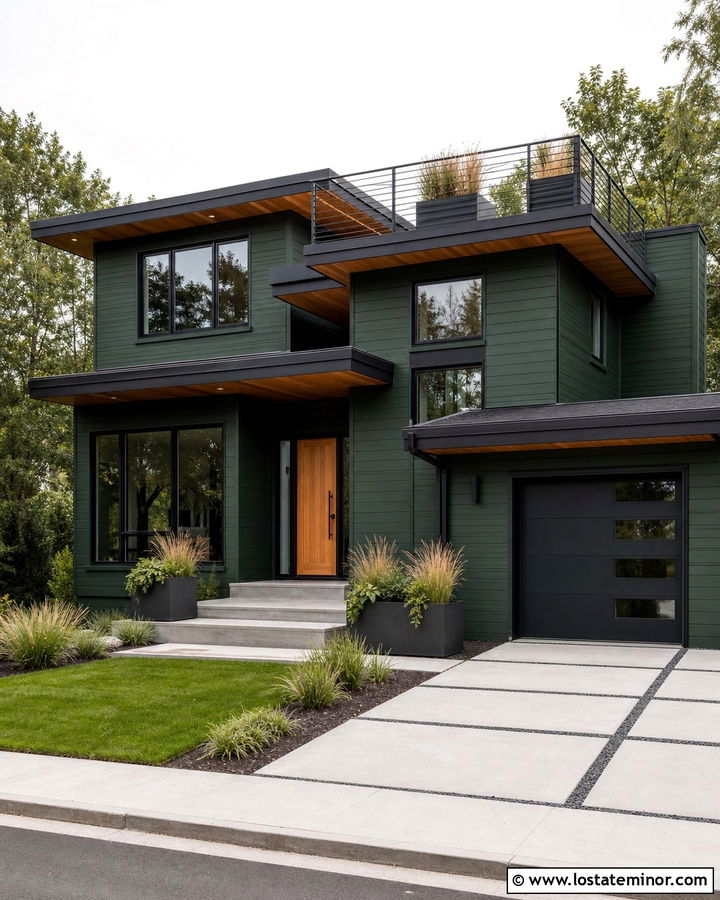
Hunter green can soften the sharp lines of a modern house with a rooftop deck. Apply the deep green to smooth siding or vertical panels, then use matte black around the windows, parapet, and roof-deck railing. Pale gray composite boards create a clean walking surface that contrasts with both dark colors. A natural wood front door and cedar soffits introduce enough warmth to keep the facade comfortable. Use a glass or slim metal railing so the rooftop structure does not overwhelm the architecture. The lower-level terrace can repeat the same gray boards for continuity. Geometric planters, ornamental grasses, concrete pavers, and a minimal lawn complement the streamlined house. The complete design feels bold, modern, and connected to its landscape.
15. Hunter Green House With Small Front Deck
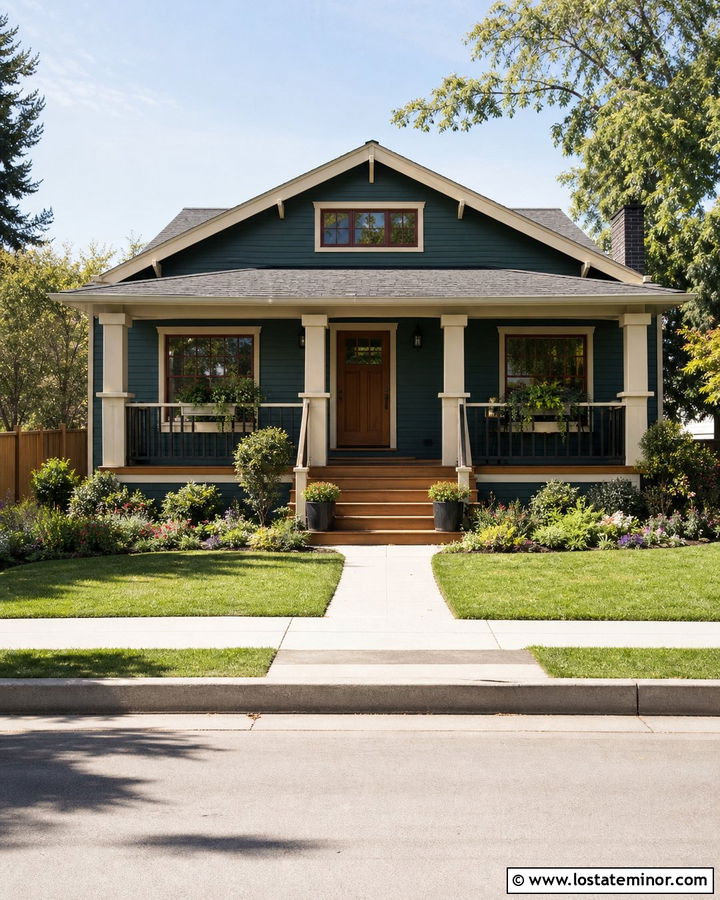
Even a compact front deck can transform a hunter green bungalow when it is treated as part of the entire facade. Use warm cedar boards for the deck and broad entry steps, then add square cream posts and black metal balusters. Paint the window trim, fascia, and exposed rafter tails the same cream for a consistent outline. A medium gray roof will remain neutral, while a stained wood door repeats the deck color at eye level. Keep the deck slightly wider than the entry to create space for two planters without crowding the walkway. Low foundation shrubs, colorful perennials, and a short brick or concrete path enhance the cozy proportions. This straightforward combination delivers noticeable curb appeal without requiring an oversized porch or elaborate construction.
16. Hunter Green House With Multi-Level Deck
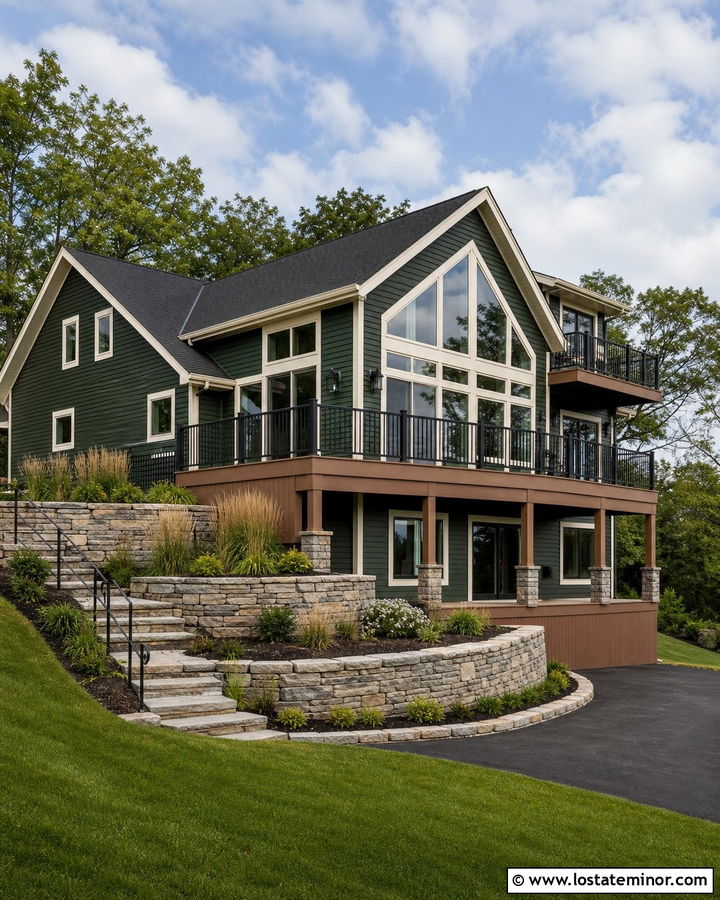
A multi-level deck needs a controlled color palette so its platforms, stairs, and railings do not overpower the home. Hunter green siding provides a strong backdrop, while medium brown composite boards make each level easy to distinguish. Use black railings throughout to create one continuous outline. Warm white trim around the windows and doors brightens the facade and separates the green from the dark railing. This approach works well on a contemporary hillside or split-level home with large rear-facing windows. Add matching brown deck skirting only where storage needs to be concealed, leaving other areas visually open. Stone retaining walls, tiered planting beds, and ornamental grasses can follow the deck levels, helping the structure transition naturally into the sloped yard.
17. Hunter Green House With Pool Deck
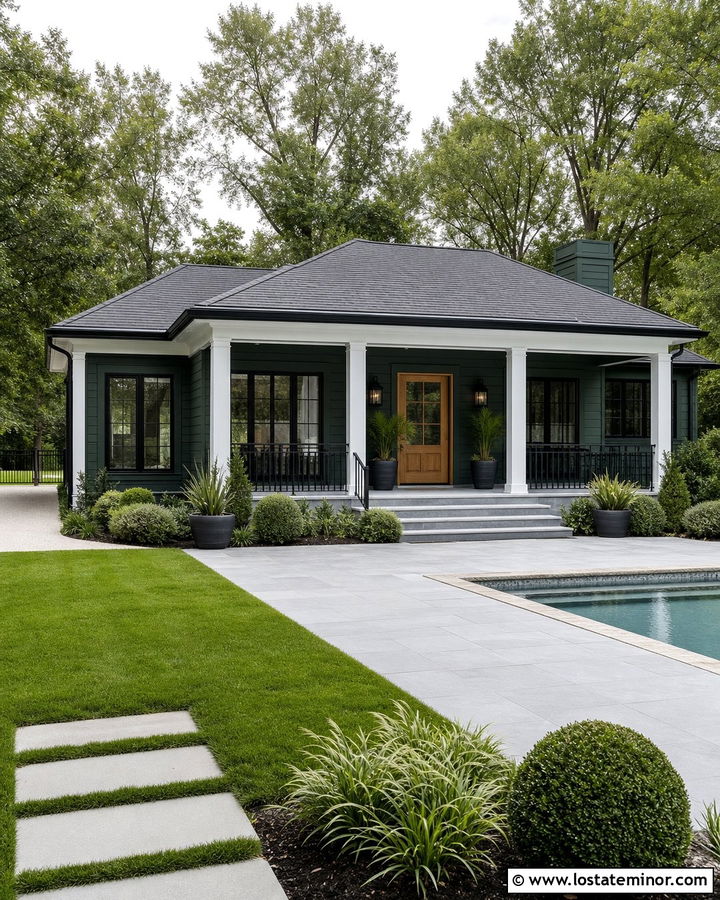
A hunter green house beside a pool can feel lush and sophisticated when the deck remains light and neutral. Choose pale gray composite boards or lightly toned wood that will stand apart from the dark siding. Use white trim, black window frames, and a charcoal roof to create a sharp but controlled exterior palette. A covered deck section with white columns gives the pool area architectural structure, while black railings connect it to the windows. Add a natural wood door or ceiling to prevent the scheme from feeling too cool. Large planters, clipped shrubs, ornamental grasses, and light stone coping complete the setting. From a wide yard view, the hunter green facade becomes a rich background for the bright deck and surrounding greenery.
18. Hunter Green House With Covered Lake Deck
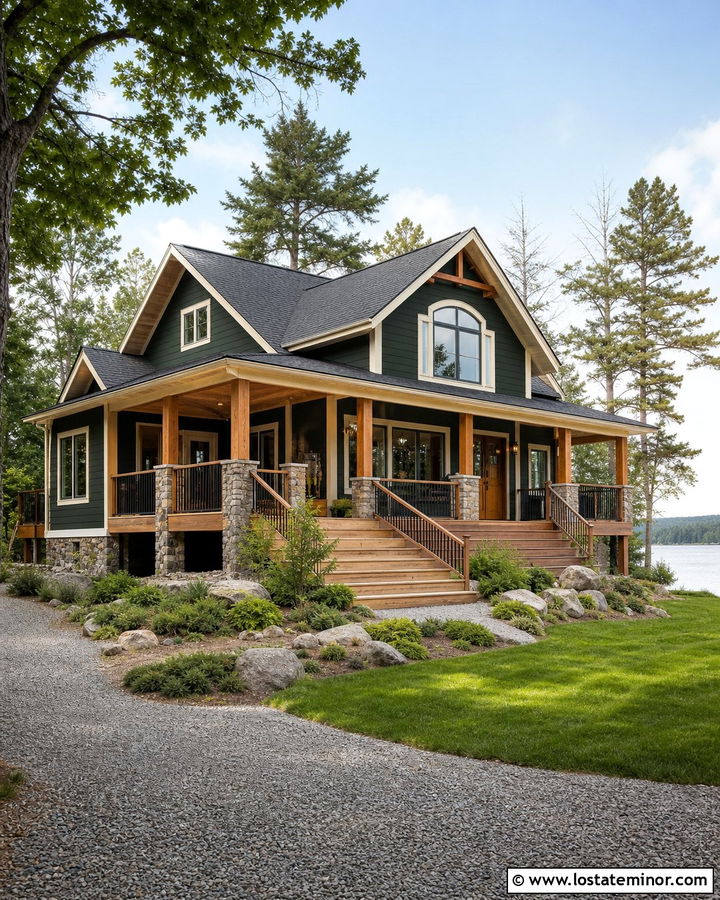
A covered deck helps a hunter green lake house feel connected to the view while providing strong architectural presence. Use deep green siding with warm cream trim and substantial timber posts. Natural cedar or medium brown decking complements the wooded setting and keeps the exterior from becoming too formal. Continue the wood onto the porch ceiling, rail caps, and front door. Black metal balusters preserve open sight lines while repeating dark window frames and a charcoal roof. A low stone foundation gives the house visual weight near the shoreline. Wide stairs, native groundcover, boulders, and a gravel path create a relaxed transition into the landscape. The finished exterior feels comfortable and durable without losing the refined contrast of the hunter green palette.
19. Hunter Green House With Cedar Pergola Deck
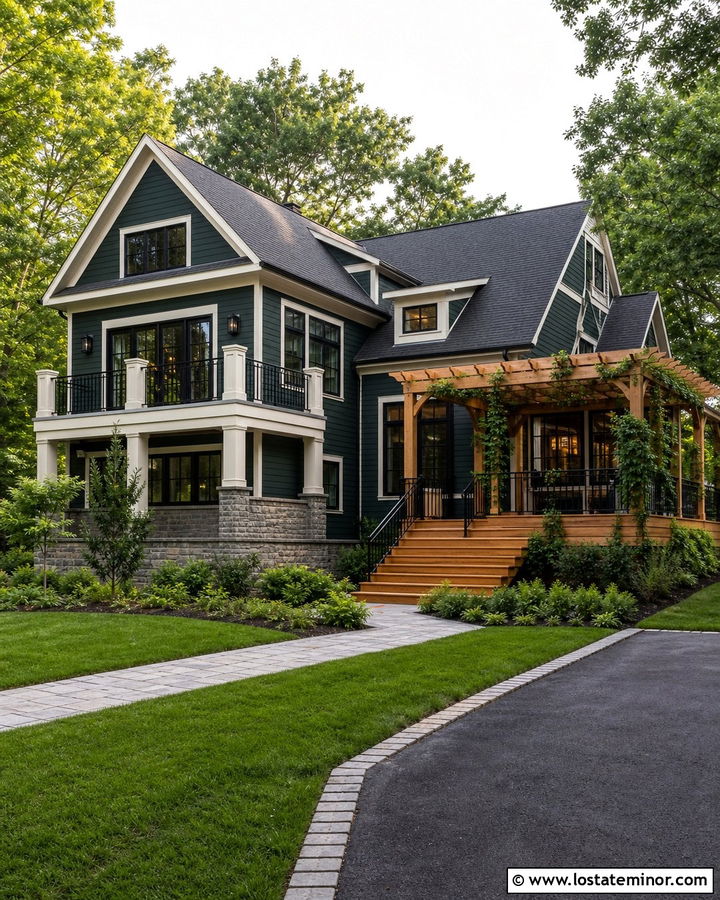
A cedar pergola introduces warmth, height, and rhythm to a hunter green exterior. On a modern Craftsman house, keep the siding dark green and use warm white trim around the windows and roofline. Build the deck and pergola from the same clear-finished cedar so they read as one feature. Black metal balusters and window frames provide a crisp outline without competing with the wood grain. A charcoal shingle roof and gray stone foundation add quieter neutral layers. Position the pergola near a set of glass doors to visually connect indoor and outdoor spaces. Broad deck stairs, climbing greenery, structured shrubs, and a paved walkway complete the facade. This full exterior scheme feels natural, architectural, and welcoming in both suburban and wooded settings.
20. Hunter Green House With Cable Railing Deck
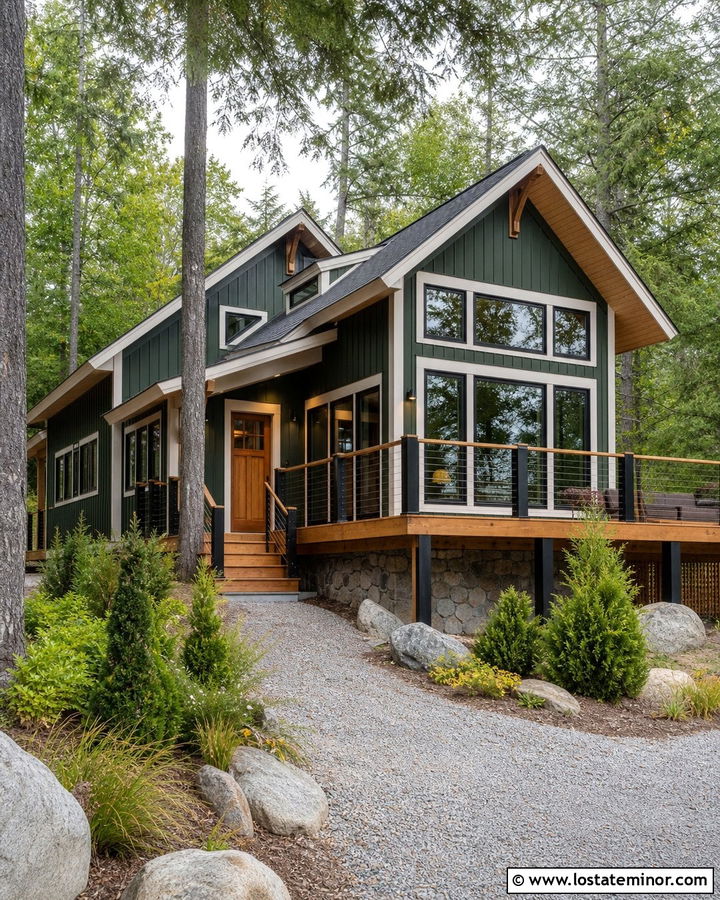
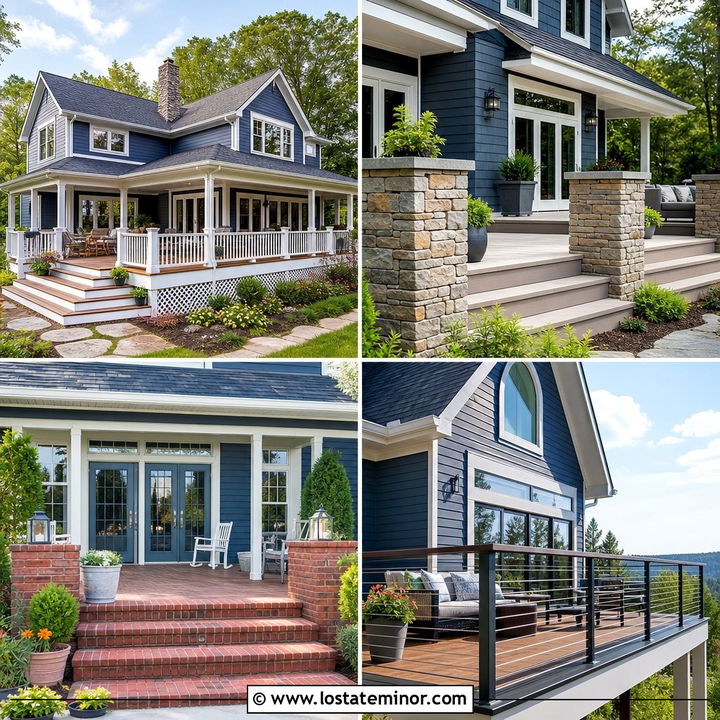
Cable railings give a hunter green home a lighter, more contemporary deck edge. Use them on a raised cedar deck where traditional balusters might conceal too much of the facade or surrounding yard. Black posts and stainless horizontal cables coordinate well with black-framed windows and a dark gray roof. Paint the siding hunter green, then add restrained warm white trim around the doors, corners, and fascia. A matching cedar front door will connect the upper facade to the deck surface. This combination suits a contemporary cabin or Northwest-inspired house with asymmetrical rooflines. Complete the setting with stone foundation walls, native grasses, evergreen shrubs, and a simple gravel walkway. The overall result blends modern detailing with warm, landscape-friendly materials.
21. Hunter Green House With Glass Railing Deck
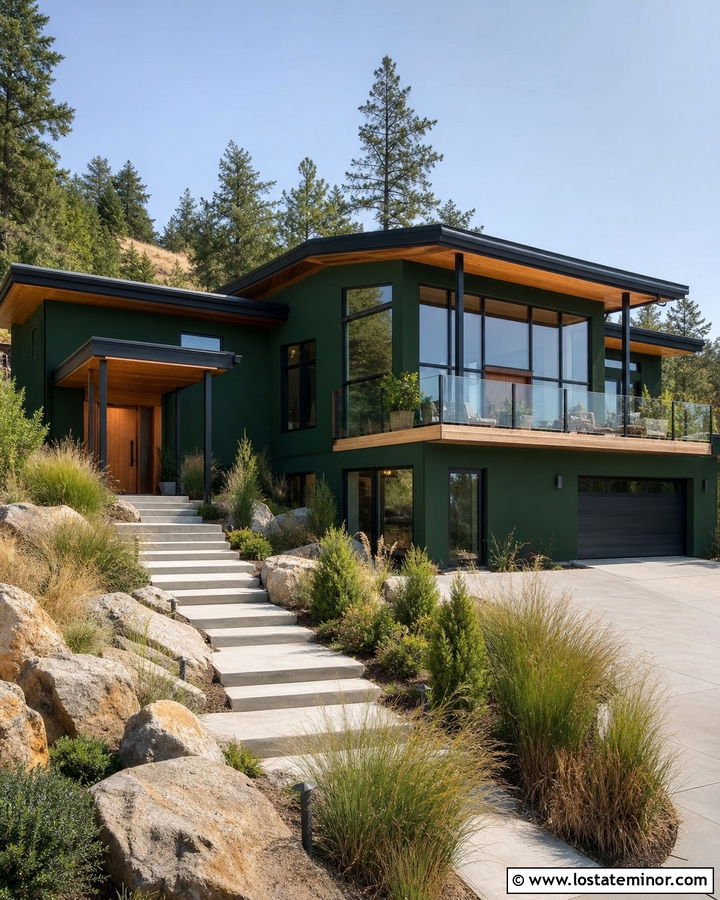
Glass railings allow a deck to feel almost invisible against a dramatic hunter green exterior. This option works well on a modern lakefront or hillside home where preserving an open view is important. Pair hunter green vertical siding with black window frames, slim black railing posts, and clear glass panels. Use pale natural wood or warm gray composite boards to lighten the lower portion of the facade. A flat or low-slope charcoal roof will support the modern appearance. Introduce cedar on the entrance door and soffits for a warmer layer. Simple concrete steps, sculptural grasses, large rocks, and low shrubs frame the architecture without blocking it. The finished house looks clean and expansive while the green exterior remains the dominant visual feature.
22. Hunter Green House With Brick Column Deck
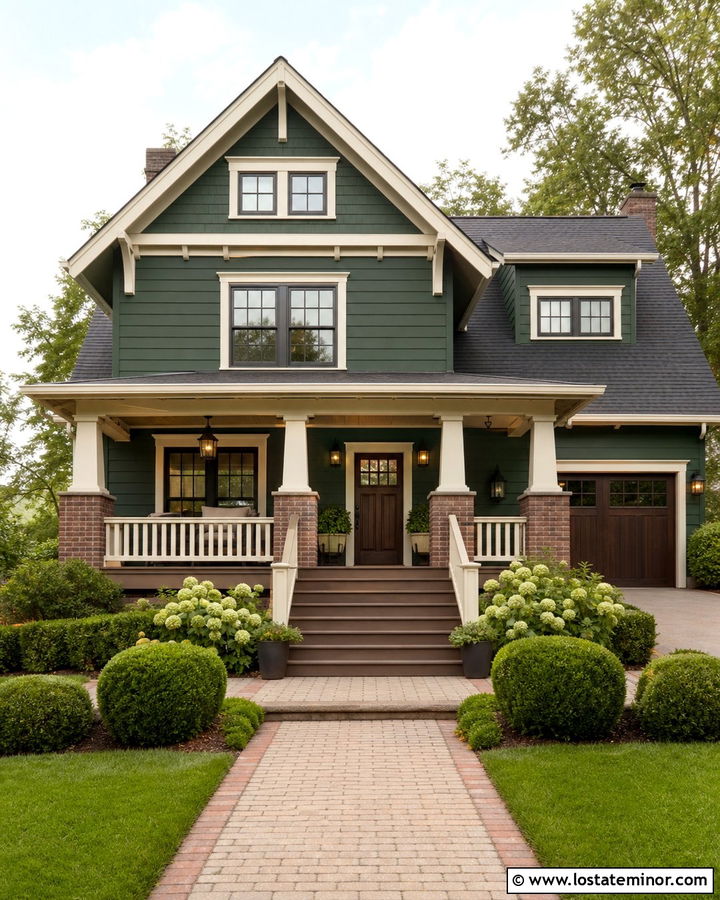
Brick columns create a grounded, traditional base for a hunter green house with an elevated front deck. Select weathered red-brown brick rather than bright orange brick so the masonry complements the deep siding. Medium brown deck boards can bridge the brick and green, while cream railings and trim brighten the facade. Add a dark wood front door, bronze lights, and a charcoal shingle roof for a cohesive Craftsman or traditional suburban palette. Repeat the brick along the walkway or foundation to make the deck supports feel intentional. Broad stairs with brick sidewalls create a substantial entrance. Boxwood, hydrangeas, and a neatly edged lawn soften the masonry and help the full exterior feel welcoming instead of formal or visually heavy.
23. Hunter Green House With Stone Column Deck
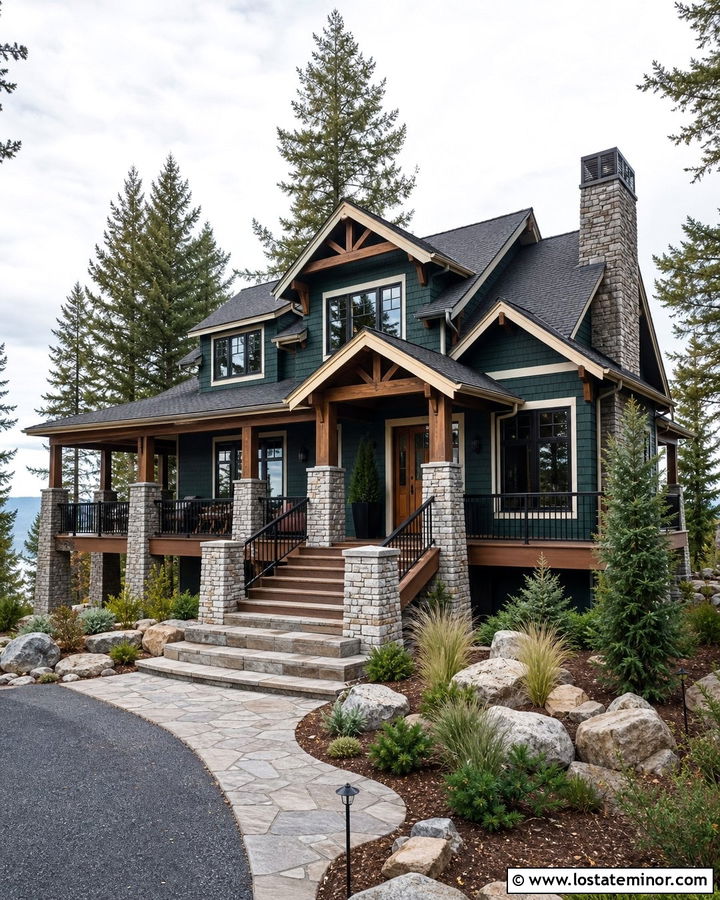
Gray stone columns provide a cooler, quieter foundation than brick and pair easily with hunter green siding. Use mixed gray stone with limited tan variation, then choose warm brown deck boards to keep the exterior from feeling cold. Cream trim, black-framed windows, and a natural wood door create a balanced four-color palette. This combination suits a substantial lodge, Craftsman, or mountain-style home with deep overhangs and visible timber details. Carry the stone onto the chimney and lower foundation for continuity. Black deck railings will add structure without interrupting the relationship between the green siding and masonry. Finish the curb view with wide stone steps, evergreen shrubs, ornamental grasses, and a gently curving walkway that follows the home’s broad architectural lines.
24. Hunter Green House With Wide Deck Stairs
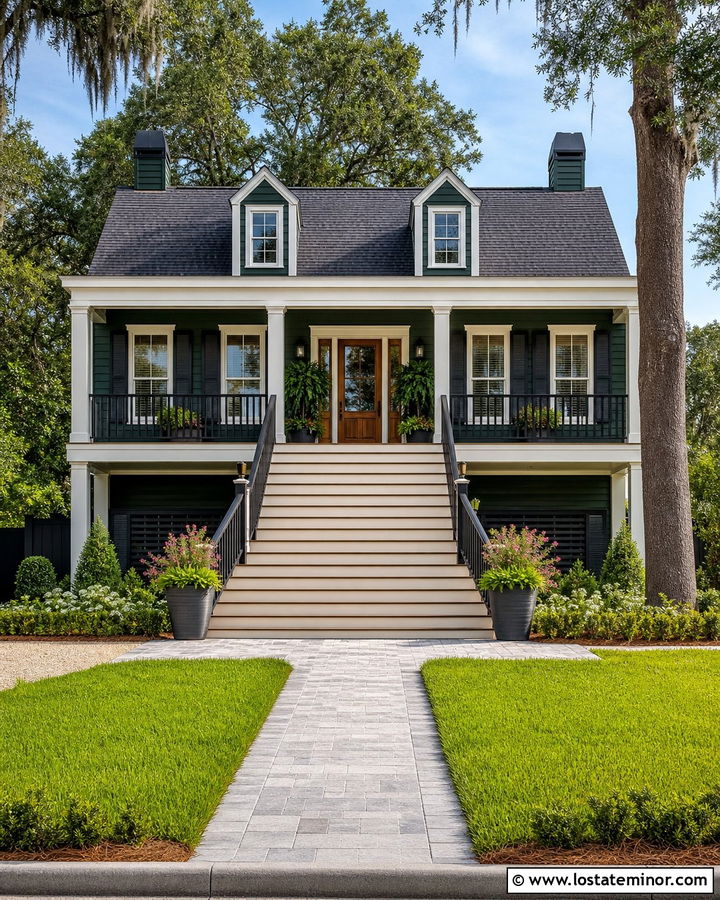
Wide deck stairs can make the entrance of a hunter green home appear more generous and approachable. Build the deck floor and stair treads in medium cedar, then use cream risers to connect them with the house trim. Black railings provide definition along the sides without making the stairway feel enclosed. On a raised ranch or farmhouse, paint the siding hunter green and repeat cream around the windows, roofline, and porch columns. A charcoal roof and natural wood door complete the palette. Extend the lowest step into a broad landing that meets a straight stone walkway. Large planters, low hedges, and layered flowering plants will frame the stairs without narrowing them, making the entire facade feel open, symmetrical, and thoughtfully planned.
25. Hunter Green House With Built-In Deck Planters
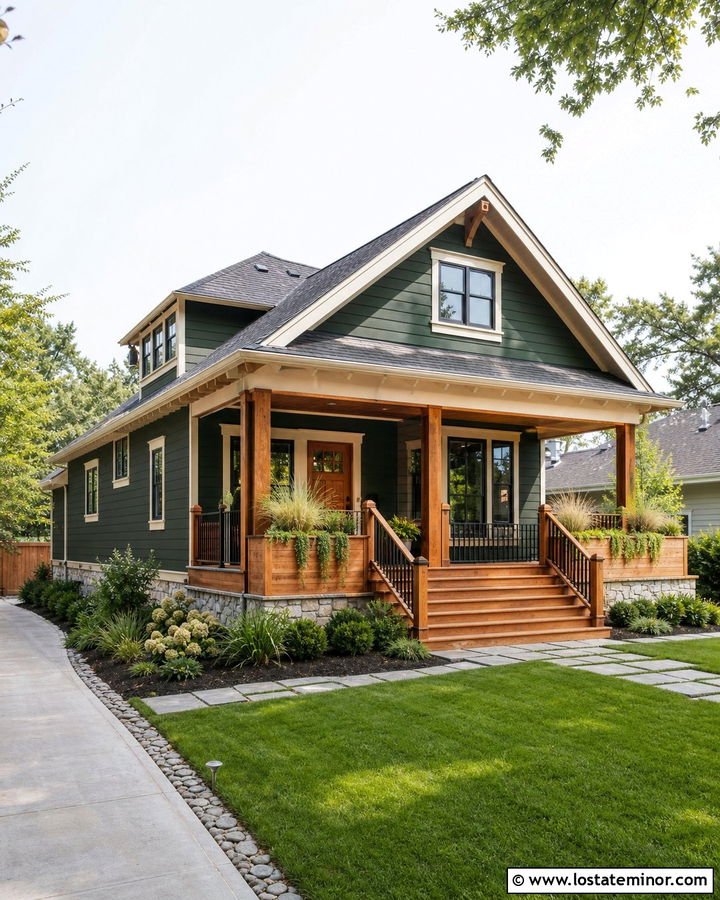
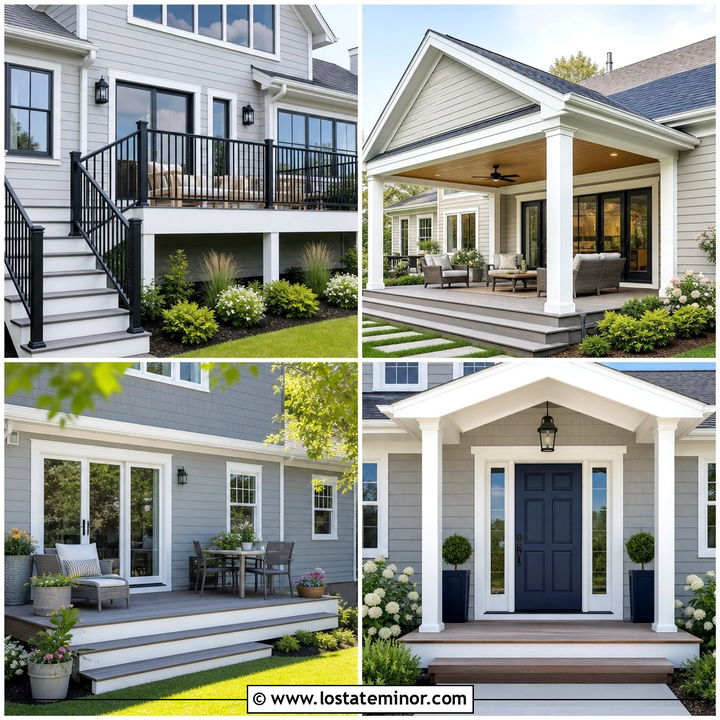
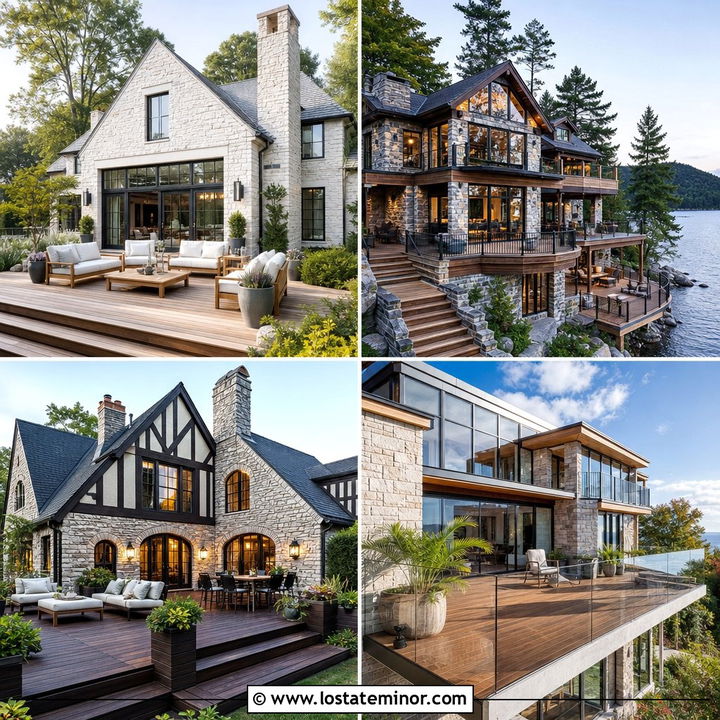
Built-in planters help a hunter green deck blend into the yard rather than ending with a hard architectural edge. Use natural cedar for the deck, stairs, and rectangular planter boxes. Against hunter green siding, the warm wood looks especially rich and creates a clear focal point. Add cream window trim, black metal balusters, and a charcoal roof for contrast. The planters can sit at stair corners or along open deck edges, filled with grasses, trailing greenery, and seasonal flowers. A Craftsman bungalow or contemporary cottage provides an ideal setting for this detail. Repeat cedar on the front door and porch ceiling. A stone walkway and layered foundation planting will complete the full-house design while keeping the deck visually integrated with the surrounding landscape.
26. Hunter Green House With Black Pergola Deck
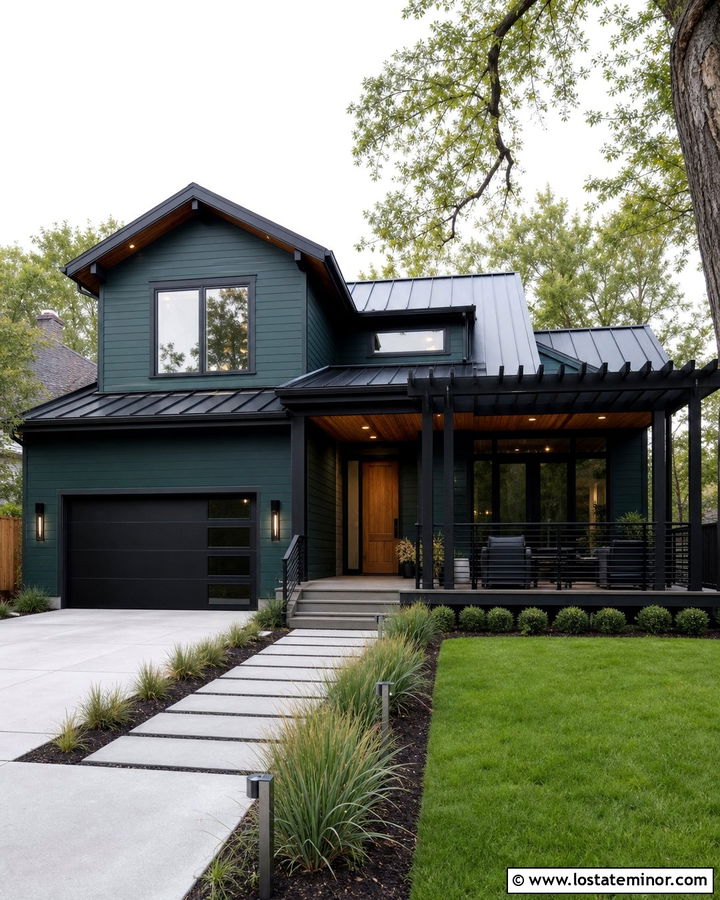
A black pergola gives a hunter green house a bold, graphic feature that works especially well with modern architecture. Keep the siding a deep hunter green and use black on the pergola, windows, deck railings, and garage door. Select warm gray deck boards to separate these dark elements and make the outdoor platform clearly visible. A cedar front door and matching soffits introduce natural warmth. Minimal off-white trim can be used only where architectural definition is necessary. Choose a charcoal standing-seam roof for a clean upper edge. Concrete pavers, narrow planting beds, ornamental grasses, and clipped shrubs reinforce the streamlined exterior. The complete scheme feels dramatic but controlled because every dark surface is balanced by wood, gray decking, and bright landscaping.
27. Hunter Green House With White Railing Deck
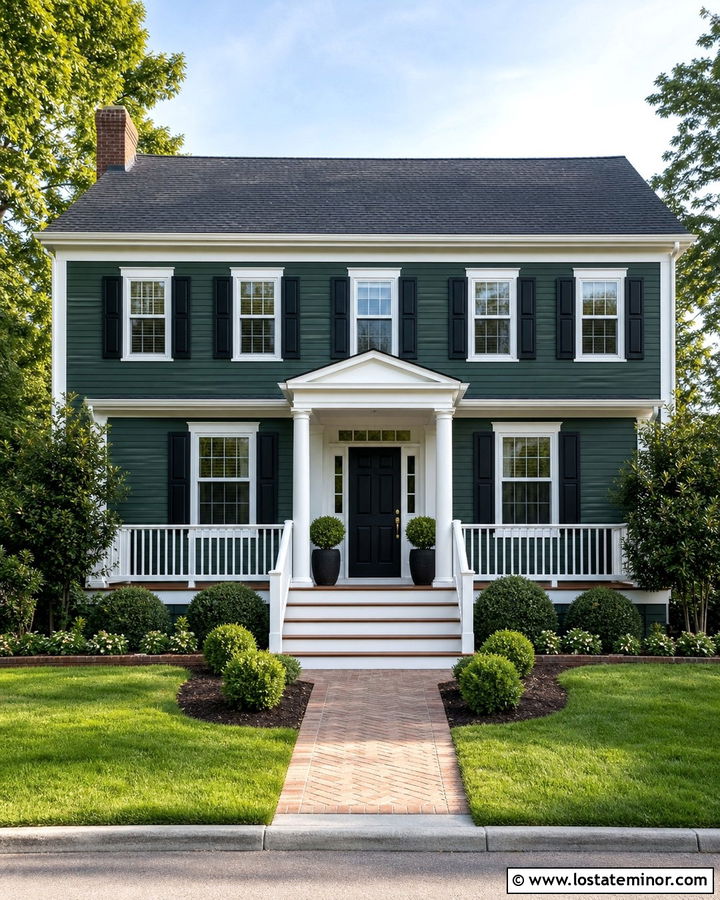
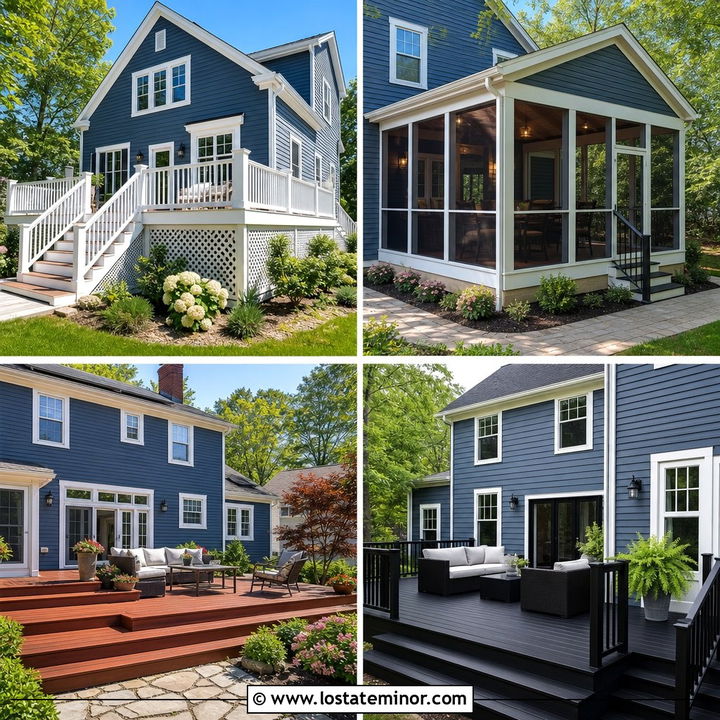
White deck railings create a crisp outline against hunter green siding and suit traditional homes with symmetrical architecture. On a two-story Colonial or Cape Cod, use white for the window trim, corner boards, columns, fascia, and deck railing. Medium brown deck boards provide necessary warmth between the green body and bright white details. Paint the front door black or use stained wood for a softer focal point. A dark gray roof and simple black shutters keep the upper facade balanced. Match the deck stair risers to the white railings while leaving the treads brown. Brick walkway edging, rounded foundation shrubs, and paired planters will support the home’s symmetry. The resulting exterior feels classic, polished, and easy to understand from the street.
28. Hunter Green House With Horizontal Wood Railing
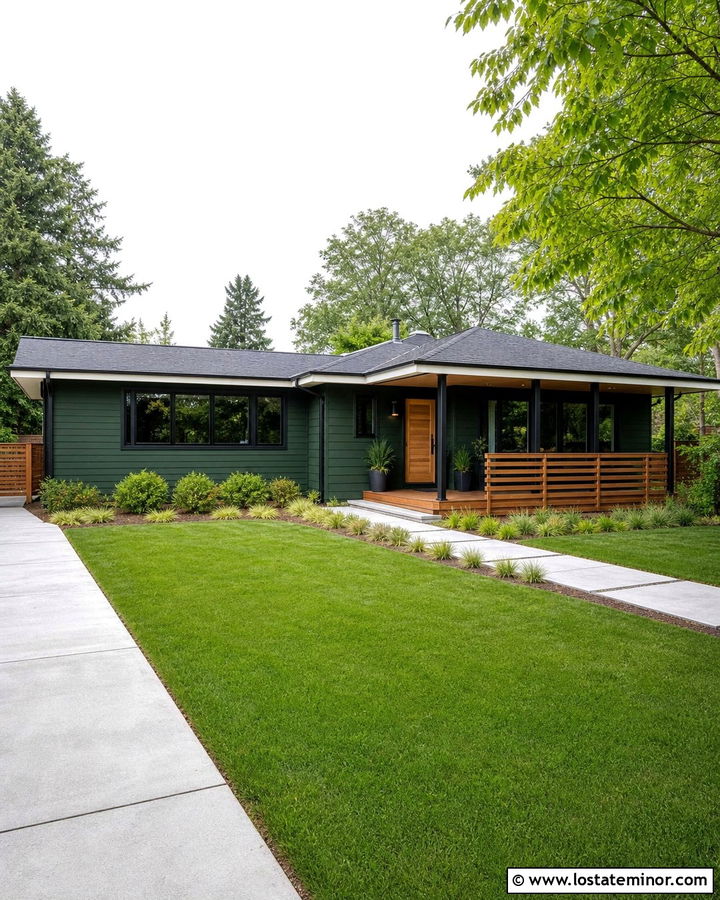
Horizontal wood railings can emphasize the width of a low ranch or contemporary bungalow. Use cedar boards and railing slats against hunter green siding, creating a warm natural band across the facade. Keep the wood finish light enough to remain clearly visible beside the dark green. Black posts, window frames, and exterior lights add modern structure. A warm white fascia and garage surround prevent the house from appearing too low or heavy. Choose a medium charcoal roof and a cedar front door that matches the railing. Low ornamental grasses, spreading shrubs, and a broad concrete walkway reinforce the horizontal design. With restrained materials and a simple deck layout, this complete exterior feels modern without becoming stark, complicated, or disconnected from its suburban surroundings.
29. Hunter Green House With Matching Green Deck Skirting
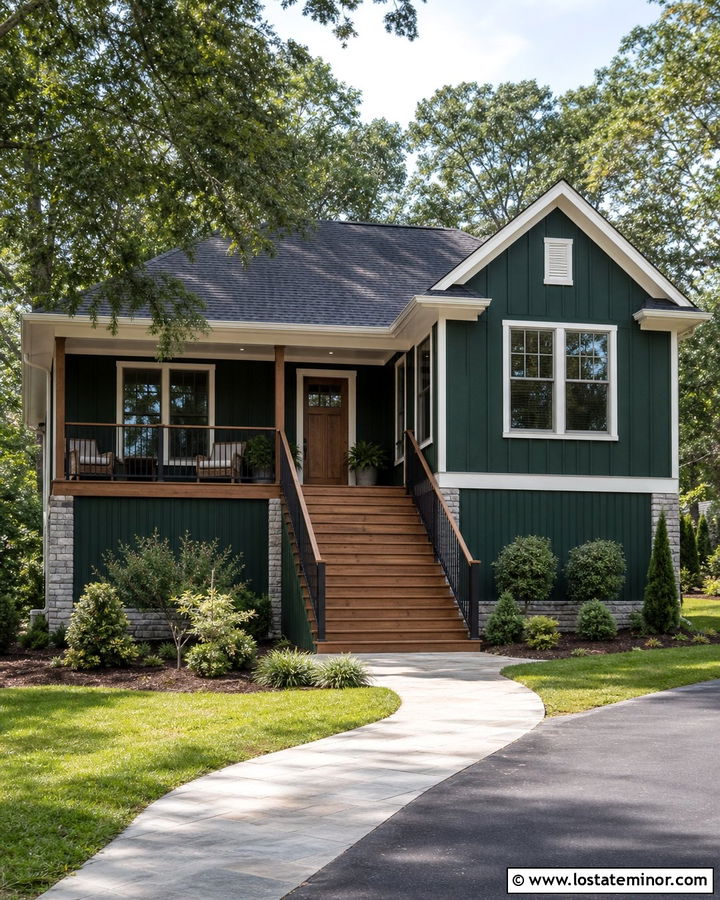
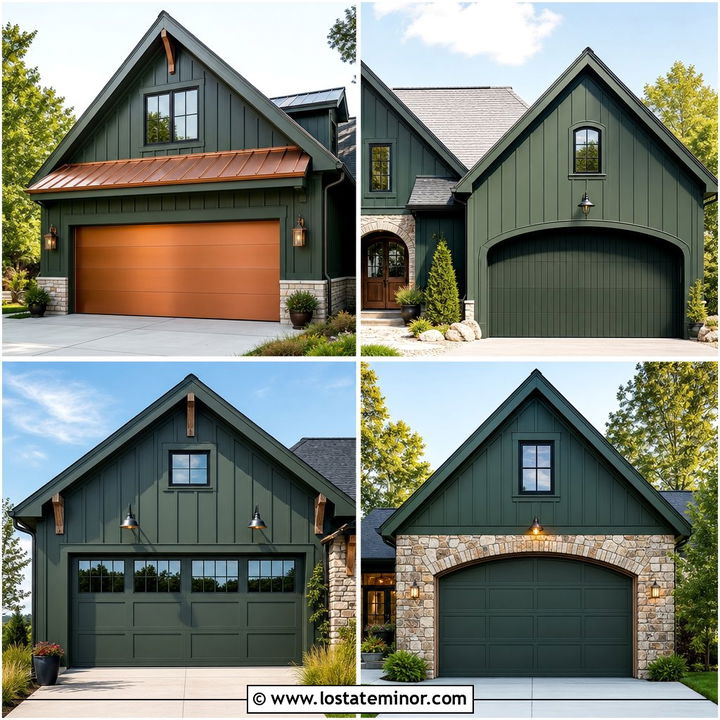
Matching the deck skirting to hunter green siding can make a raised deck feel integrated with the house. Use vertical green boards below the deck, then contrast them with natural cedar flooring and black metal railings. Leave small, evenly spaced gaps in the skirting for visual texture and ventilation. Warm white trim around the windows, doors, columns, and deck perimeter will prevent the large green surfaces from merging into one dark block. This design works well on a farmhouse, raised cottage, or split-level home. Add a wood front door, charcoal roof, and gray stone foundation accents. Layered shrubs in front of the skirting can soften its height, while broad stairs and a curving walkway create an inviting connection to the yard.
30. Hunter Green House With Pressure-Treated Wood Deck
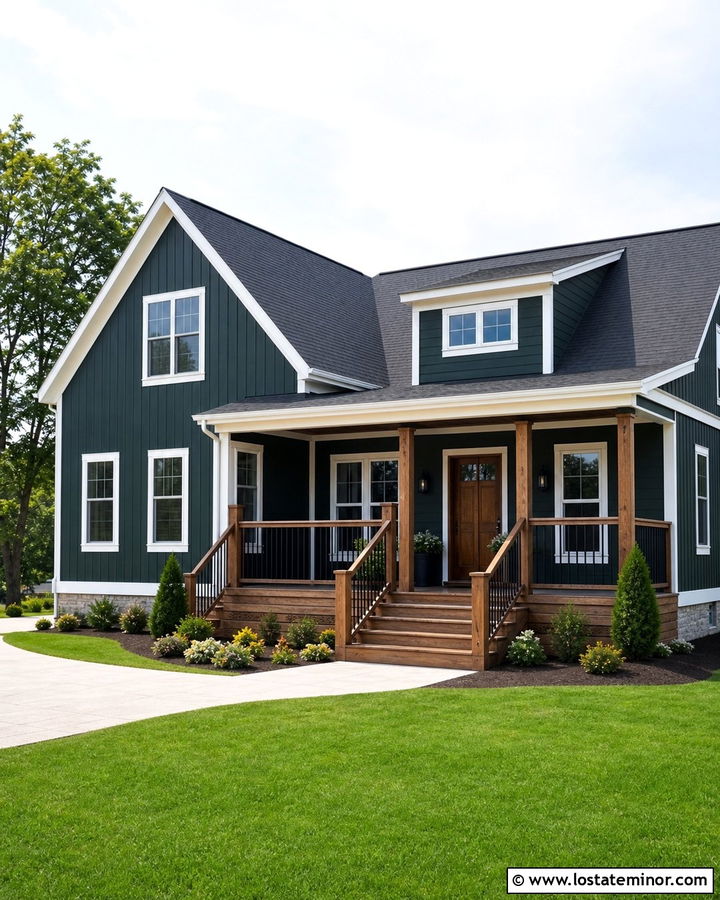
A straightforward pressure-treated wood deck can complement a hunter green house without requiring premium materials or complicated detailing. Allow the wood to dry properly, then finish it in a medium natural brown that highlights the grain and contrasts with the siding. Use simple black metal balusters, square wood posts, and broad stairs for a clean appearance. Warm white trim around the windows, fascia, and entry will brighten the full facade. A stained wood door and charcoal roof complete this practical palette. Keep the deck rectangular to control construction costs, but add visual interest through matching planters and neat stair lighting. Foundation shrubs, fresh mulch, and a defined walkway will help the affordable deck look like a deliberate part of the exterior.
Conclusion:
These 30 Hunter Green House Design With Deck Ideas show how one strong exterior color can support many architectural moods. Cedar and redwood create warm, nature-inspired combinations, while gray composite, black railings, and glass panels give hunter green a more modern direction. White trim produces clear definition, cream offers softer contrast, and stone or brick can visually anchor an elevated deck. Before selecting materials, view siding and deck samples together outside at different times of day. Consider the roof, windows, foundation, doors, and landscaping as parts of the same palette. A coordinated full-house approach will make the deck feel integrated, improve visual balance, and create more polished curb appeal from every angle.

Related posts: