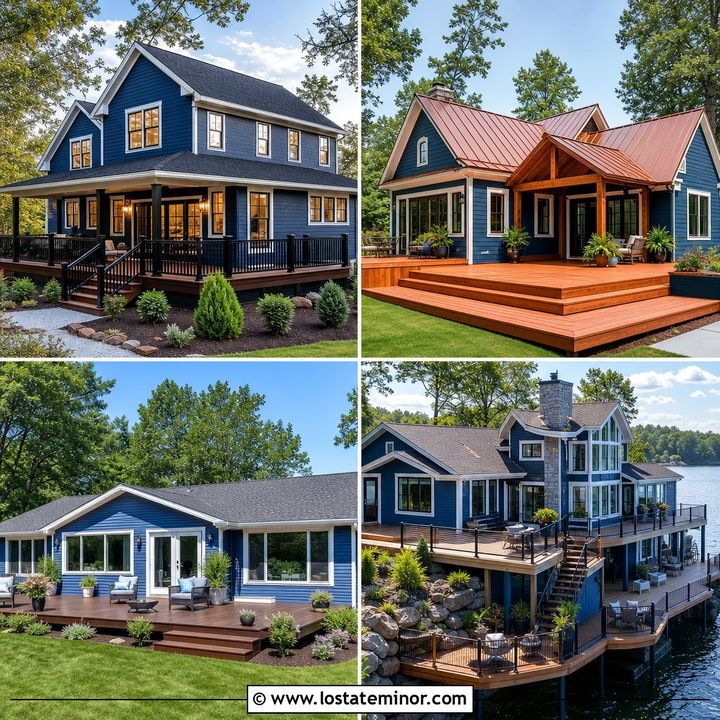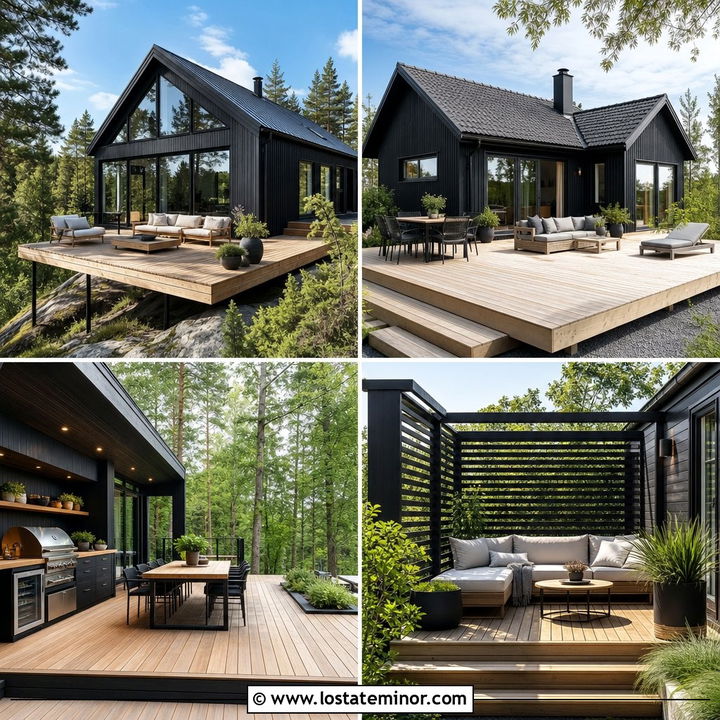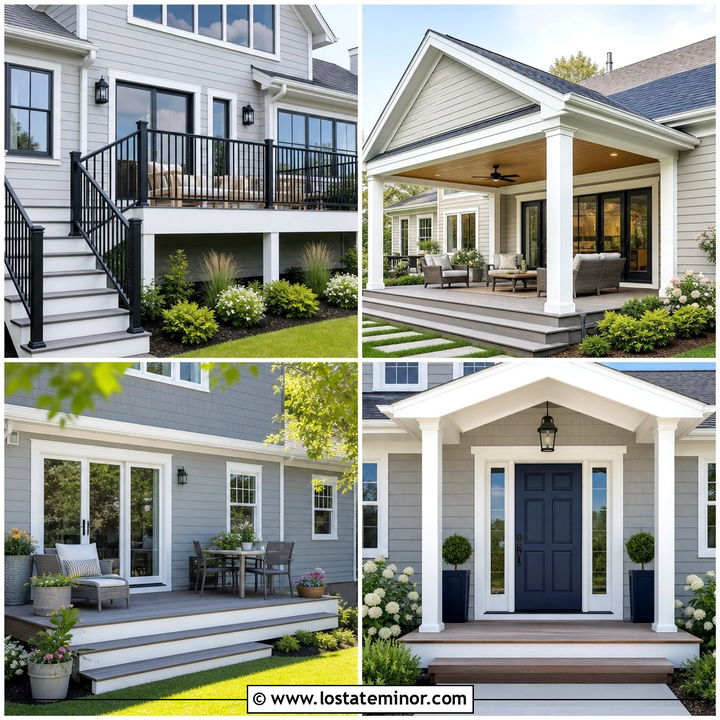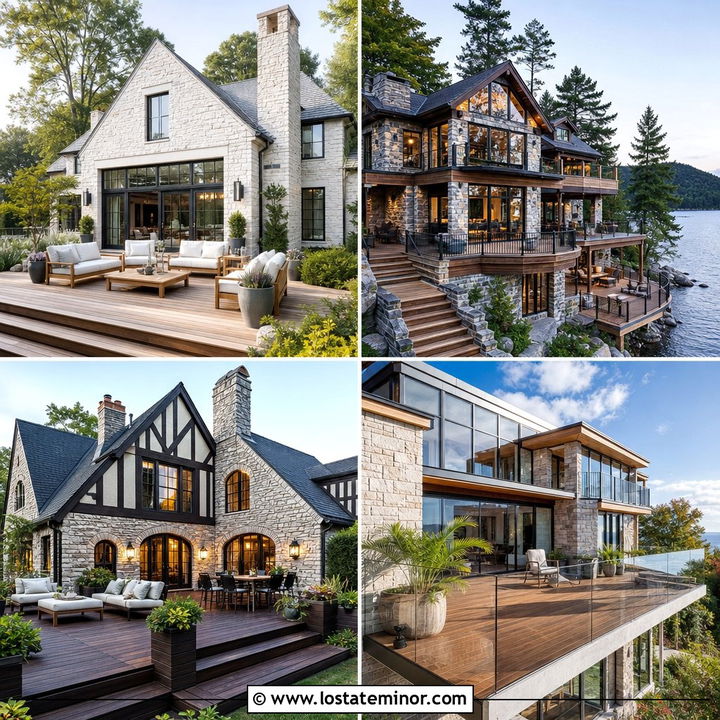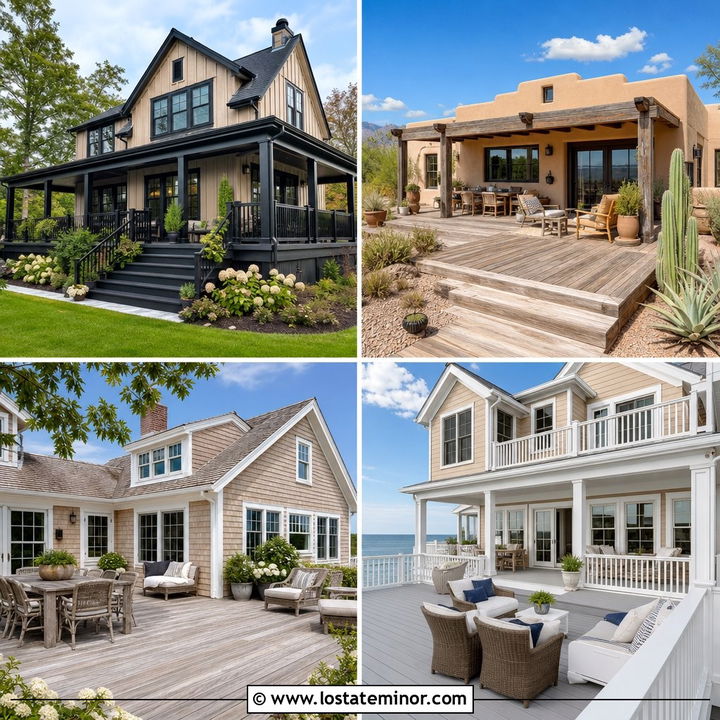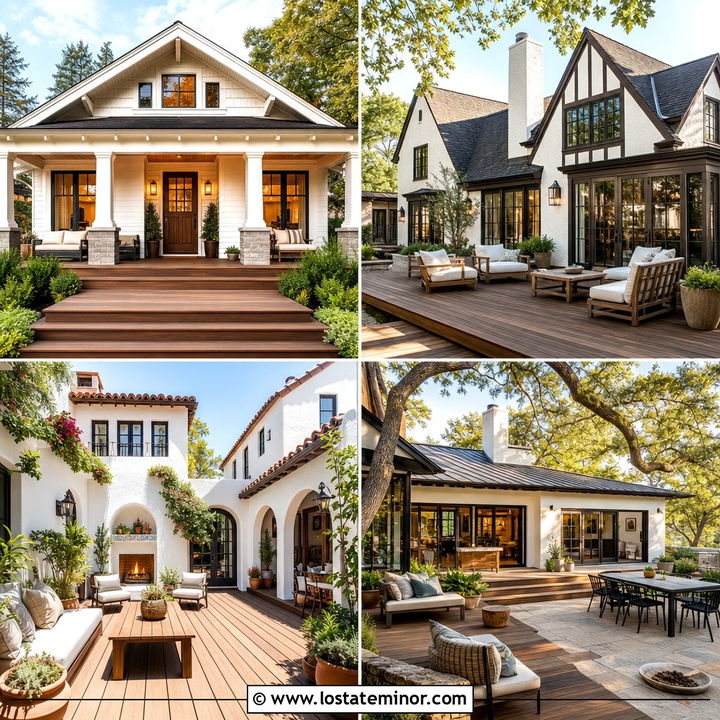
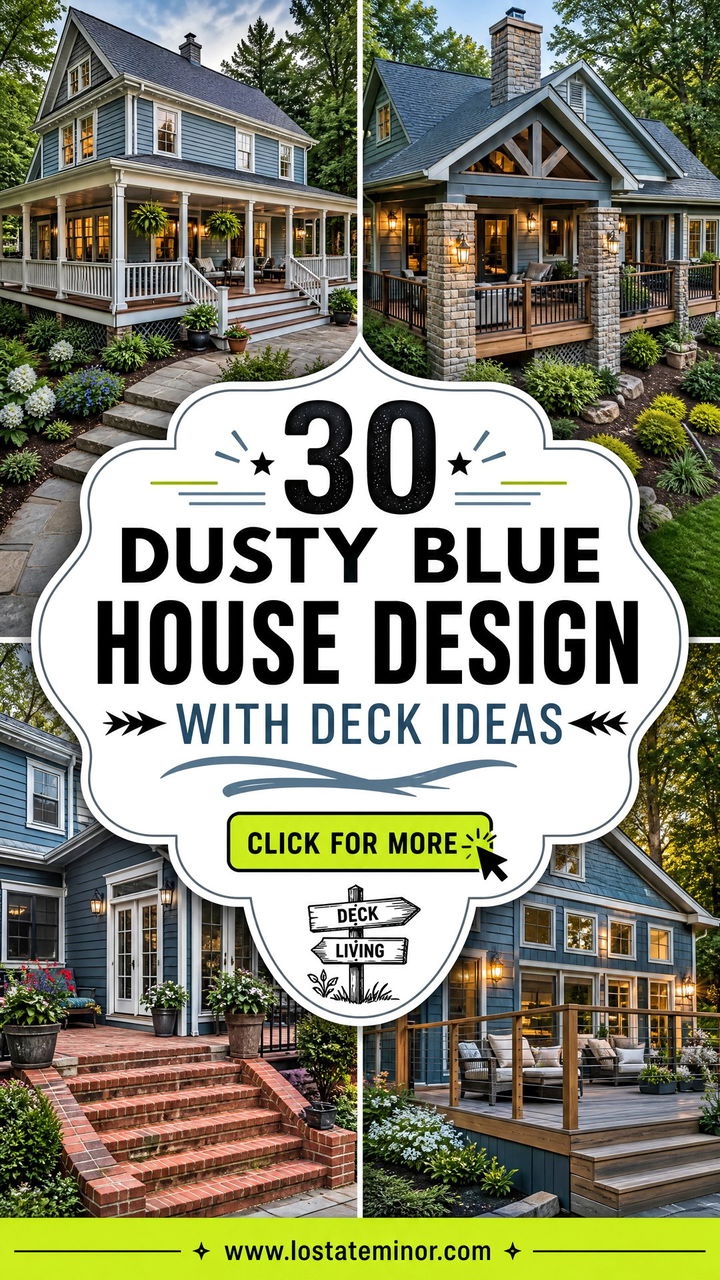
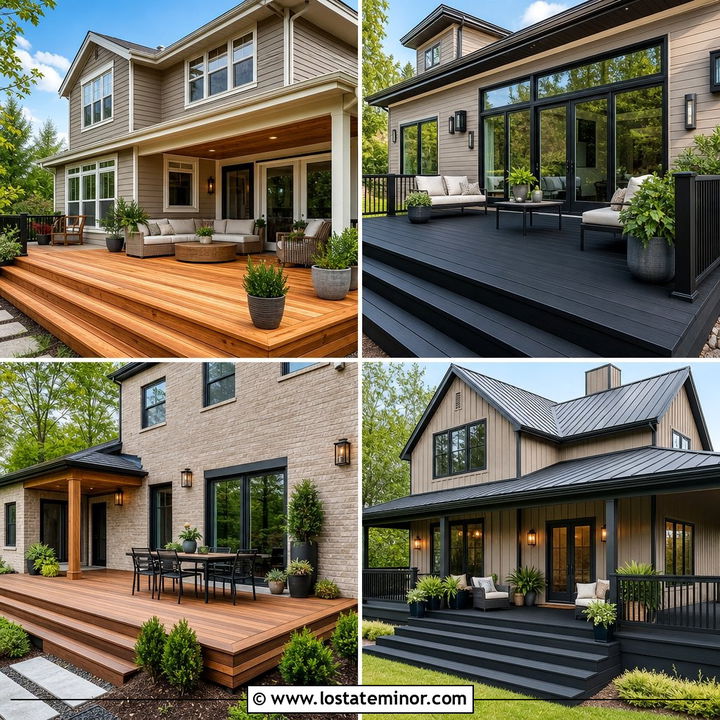
A dusty blue exterior brings a calm, welcoming character to almost any home, while the right deck adds warmth, contrast, and useful outdoor living space. These 30 Dusty Blue House Design With Deck Ideas explore complete exterior schemes rather than treating siding and decking as separate choices. You will find natural cedar, rich walnut, weathered gray, black composite, and light oak deck finishes paired with coordinated trim, doors, roofs, railings, and masonry. The collection also covers ranch homes, cottages, Craftsman houses, Colonials, modern builds, and coastal properties. Each design offers practical ways to balance dusty blue siding with existing materials and landscaping. Use these 30 Dusty Blue House Design With Deck Ideas to create a polished exterior that feels connected from the roofline to the yard.
1. Dusty Blue House With Natural Cedar Deck
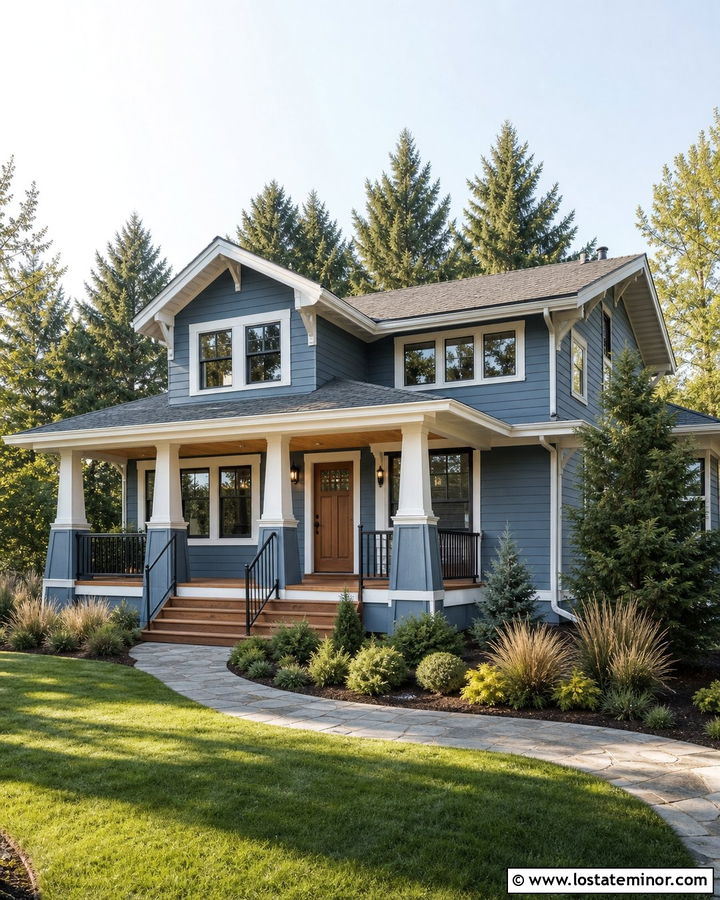
Natural cedar gives a dusty blue house the warmth it needs without overpowering the soft exterior color. Use muted blue-gray lap siding with creamy white trim to keep the facade light and approachable. A clear or lightly tinted cedar stain allows the deck’s golden grain to remain visible. Match the deck stairs, fascia, and posts for a clean design, then add simple black metal railings for definition. A medium-gray roof keeps the palette balanced, while a stained wood front door connects visually with the deck. This combination works especially well on a Craftsman home with deep eaves and tapered columns. Finish the yard with layered evergreens, ornamental grasses, and a gently curved stone walkway that complements the natural materials.
2. Dusty Blue House With White Deck
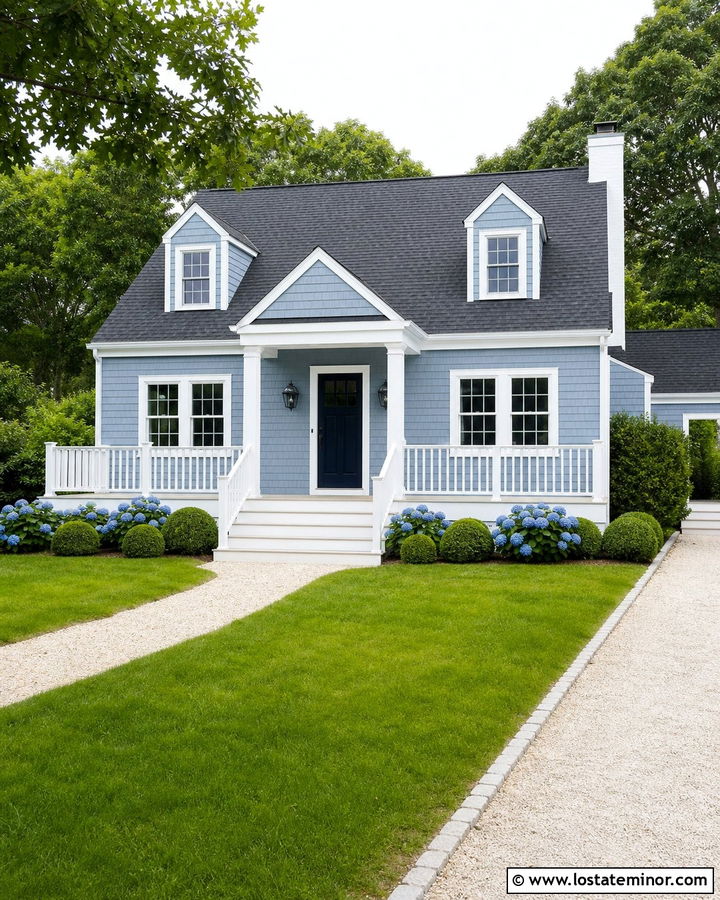
A bright white deck creates a crisp coastal look against dusty blue siding. This pairing is especially effective on a Cape Cod house with dormer windows, cedar-style shingles, and a simple symmetrical facade. Paint the deck railings, posts, stair risers, and fascia the same clean white used around the windows. Slightly warmer off-white deck boards can soften the contrast and make the outdoor space feel less stark. Add a navy front door and polished nickel lighting for a deeper blue accent. A charcoal architectural-shingle roof grounds the lighter colors overhead. Blue hydrangeas, clipped boxwoods, and a shell-colored gravel path complete the setting. The resulting exterior feels fresh and coordinated without relying on complicated decorative details.
3. Dusty Blue House With Weathered Gray Deck
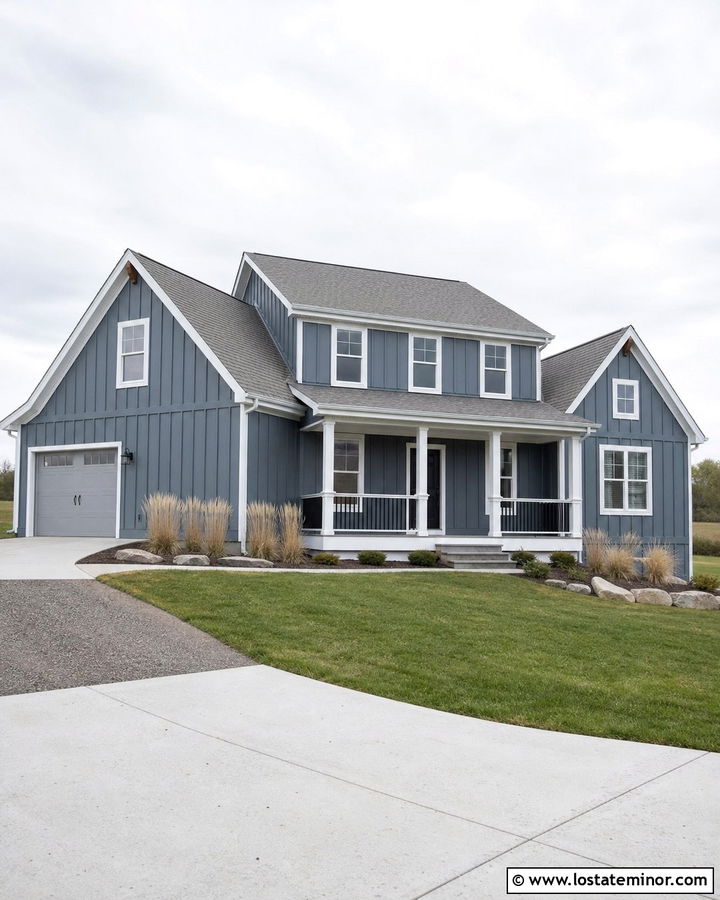
Weathered gray decking supports the cool undertones of a dusty blue house and creates a quiet, tone-on-tone palette. Choose medium dusty blue board-and-batten siding with soft white trim so the exterior still has visible depth. Gray composite boards are a practical choice for a large deck because their consistent coloring gives the surface a polished appearance. Use white railings to connect the deck with the window trim, or choose slim black balusters for stronger definition. A light gray roof and charcoal front door continue the layered neutral scheme. This combination suits a modern farmhouse with broad gables and simple windows. Warm landscape lighting, natural stone edging, and green foundation plants keep the blue-and-gray exterior from feeling overly cool.
4. Dusty Blue House With Dark Walnut Deck
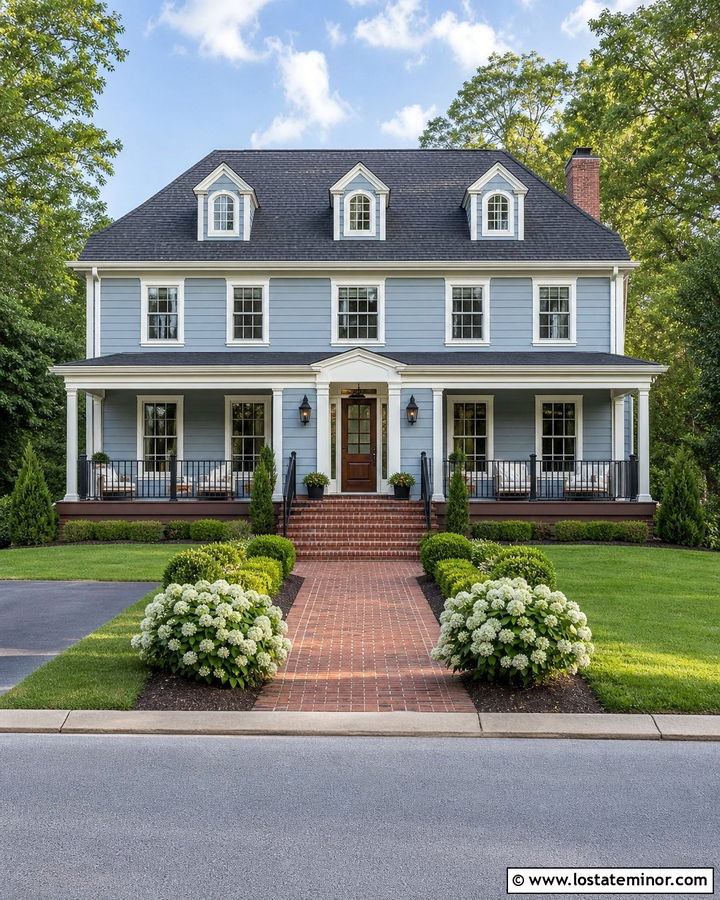
Rich walnut decking creates a strong visual foundation beneath a pale dusty blue exterior. The dark brown surface provides enough contrast to define the outdoor area while highlighting the softness of the siding. Use crisp ivory trim, a walnut-stained front door, and bronze exterior lights to repeat the deck’s warm tones around the facade. Black metal railings can modernize the combination without competing with the wood grain. On a two-story Colonial, keep the deck shape rectangular and balanced with the home’s symmetrical windows. A dark charcoal roof ties into the railings, while red brick steps can add another traditional material. Surround the deck with white flowering shrubs and deep green hedges to create a classic, established curb-appeal design.
5. Dusty Blue House With Black Composite Deck
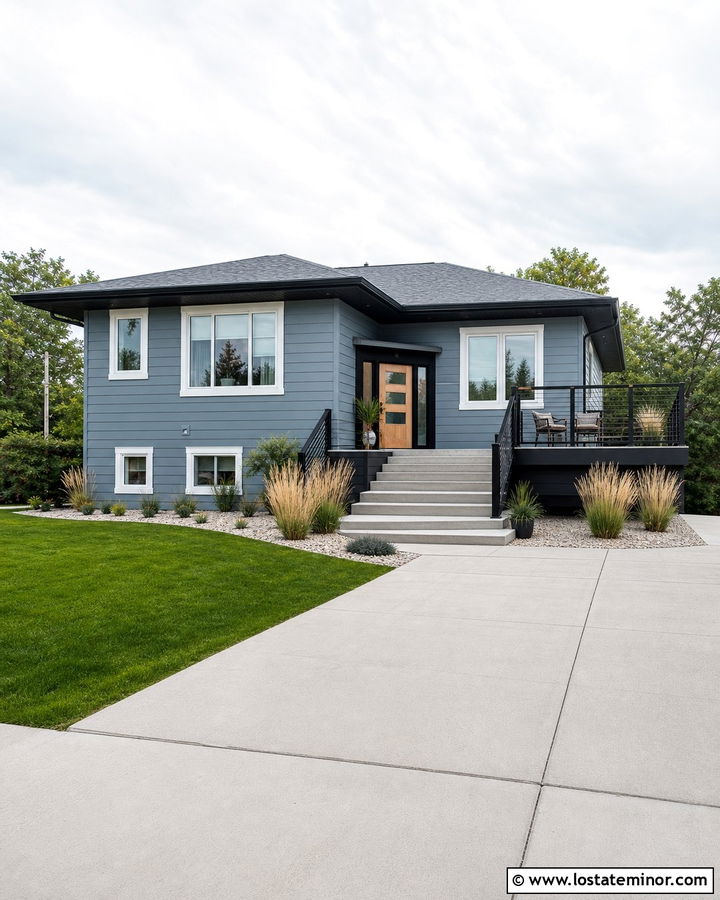
Can a dusty blue exterior work with a black deck without looking too dark? It can when the remaining elements are light and carefully balanced. Use a medium dusty blue on horizontal siding, bright white around the windows, and black composite boards on a low contemporary deck. Continue black on the fascia, cable railing, garage door, and modern exterior sconces. A warm wood front door prevents the palette from becoming cold or severe. This scheme works well on a split-level home because the dark deck visually anchors staggered rooflines and multiple elevations. Choose a medium-gray roof rather than solid black to soften the upper portion of the house. Pale gravel, ornamental grasses, and broad concrete steps complete the clean, modern curb appeal.
6. Dusty Blue House With Light Oak Deck
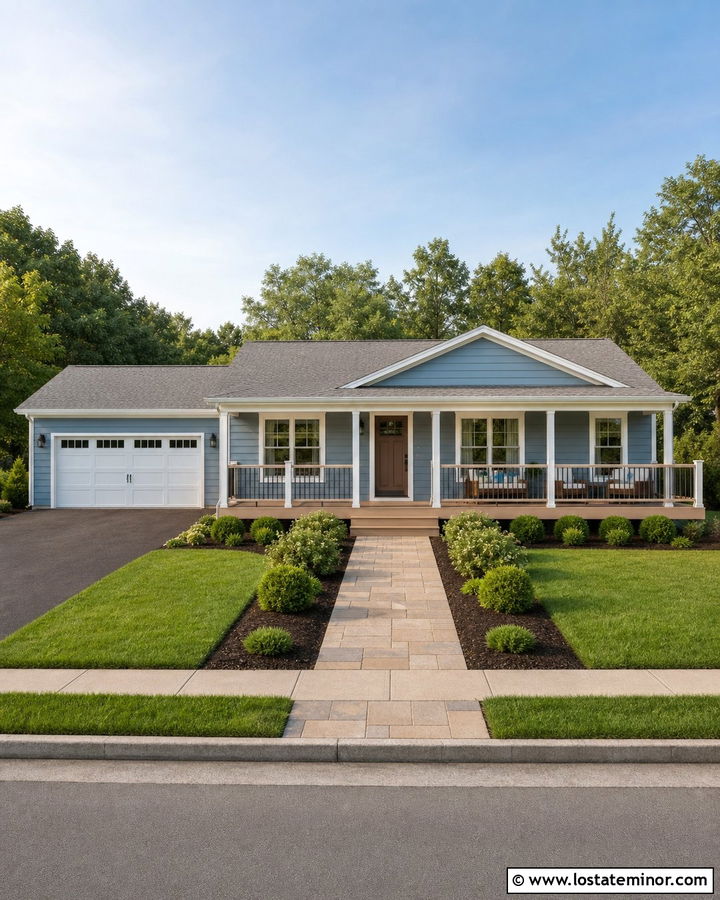
A light oak deck makes dusty blue siding appear airy, relaxed, and naturally welcoming. Select a soft blue-gray exterior with warm white trim rather than a brilliant white that could make the wood look yellow. Pale oak-colored composite boards offer the appearance of fresh wood while creating an even surface across a large entertaining deck. Use matching oak stair treads with white posts and slim bronze balusters. A medium brown front door can bridge the difference between the pale decking and darker roof. This combination suits a casual ranch house with wide windows and a low roofline. Add sandstone pavers, soft green shrubs, and a neatly edged lawn. The light materials visually expand the house and help a smaller facade feel more open.
7. Dusty Blue House With Wraparound Deck
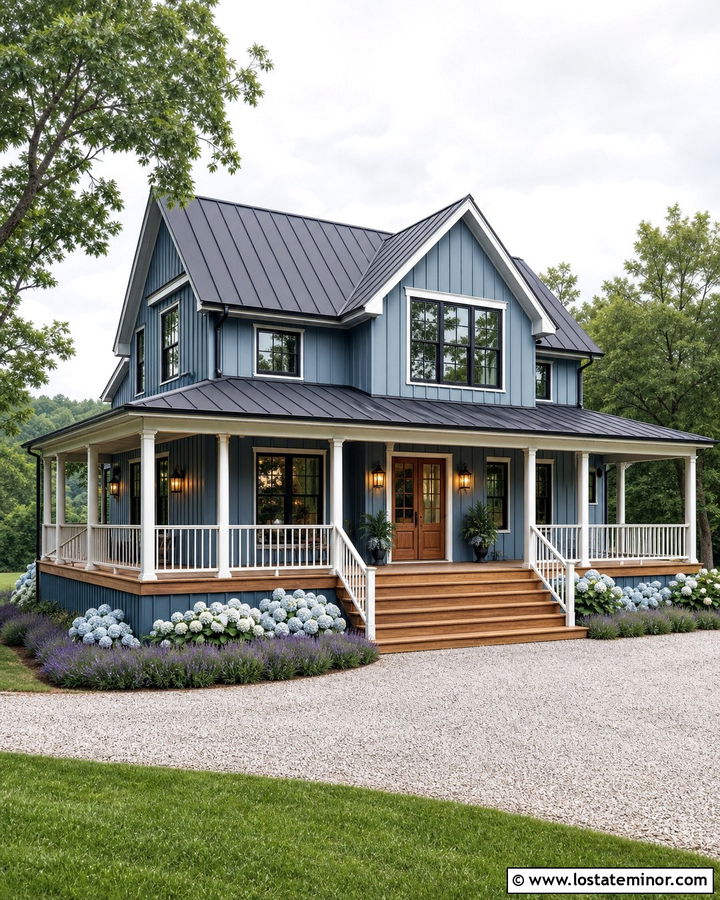
A wraparound deck can transform a simple dusty blue farmhouse into a complete outdoor living destination. Apply dusty blue board-and-batten siding to the entire house, then use warm cedar boards across the front and side deck areas. White square columns and railings create a clear connection with the window trim and roof fascia. Add a natural wood front door, black lanterns, and a charcoal standing-seam metal roof for balanced contrast. Keep the deck foundation enclosed with blue-painted vertical skirting so it feels integrated with the house. Wide stairs facing the yard make the structure more inviting. Hydrangeas, lavender, and low hedges soften the deck edges, while mature shade trees give the wide exterior a comfortable country setting.
8. Dusty Blue House With Covered Back Deck
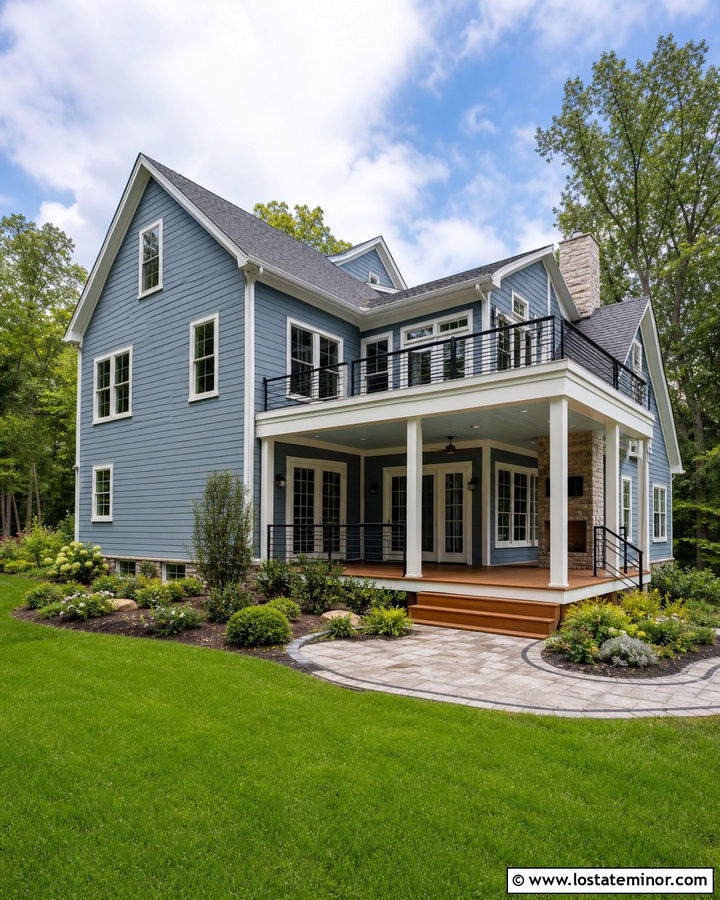
A covered deck should look like an architectural extension of the house rather than a later addition. Start with dusty blue lap siding and carry the home’s roof material over the deck at a matching pitch. Use warm brown deck boards, white structural posts, and black horizontal railings for a balanced palette. Paint the deck ceiling a very pale blue to gently echo the exterior while keeping the sheltered area bright. French doors with white frames create a strong indoor-outdoor connection. This arrangement fits a traditional two-story home with a medium-gray shingle roof and simple gables. Add a stone fireplace wall or stone column bases for texture. Layered landscaping around the stairs helps the large covered structure settle naturally into the backyard.
9. Dusty Blue House With Small Front Deck
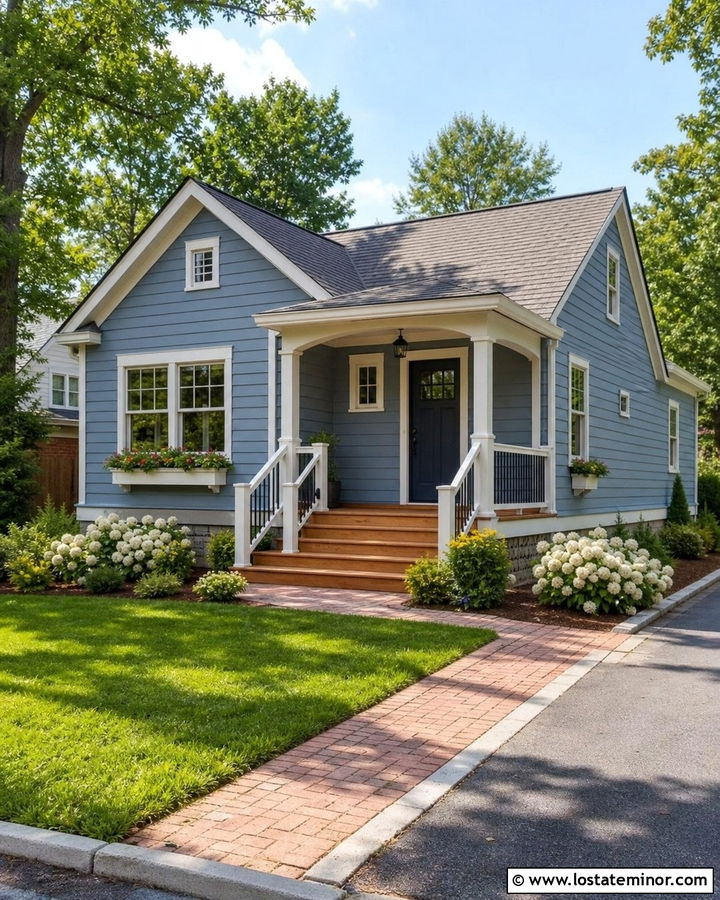
Even a compact front deck can give a dusty blue bungalow more presence from the street. Choose midtone dusty blue clapboard siding, creamy white trim, and a honey cedar deck that spans the entrance and one front window. Keep the railing low and simple so it does not hide the facade. Square white posts with black metal balusters provide definition without making the deck feel enclosed. Paint the front door deep navy or muted coral for a controlled focal point. A warm gray roof works well with both the blue siding and natural wood. Use broad deck steps to make the entrance appear larger. Window boxes, low flowering shrubs, and a straight brick walkway complete an approachable design suited to a modest home.
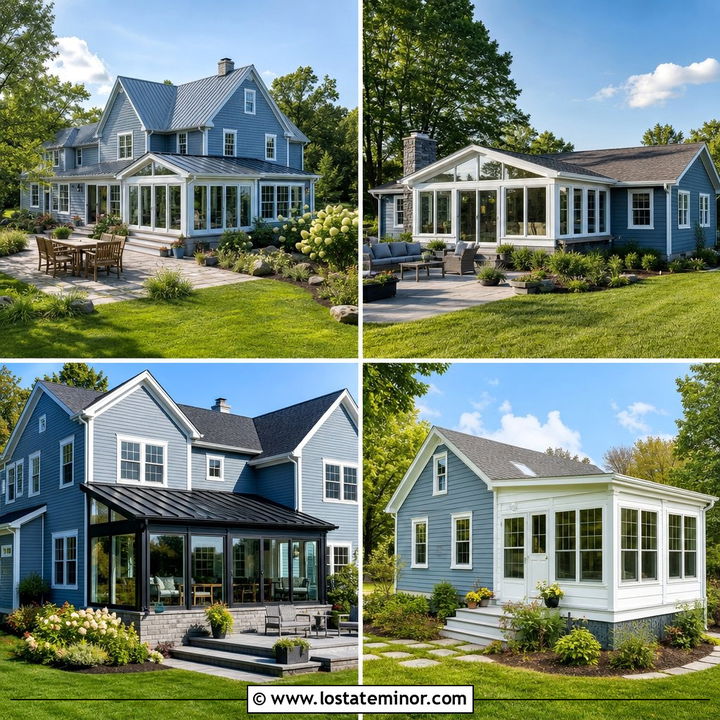
10. Dusty Blue House With Two-Level Deck
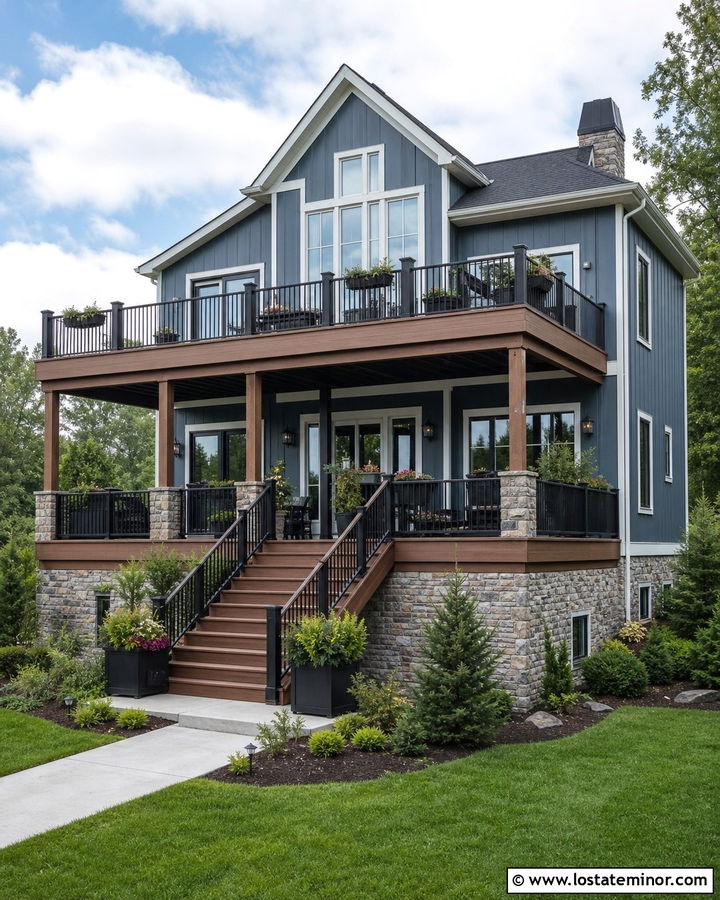
A two-level deck adds visual rhythm and separates outdoor activities without disconnecting them from the dusty blue exterior. Use medium brown composite boards on both levels to maintain consistency, then introduce black railings for a structured outline. The upper deck can connect to the kitchen or dining area, while the lower platform opens directly toward the lawn. Dusty blue vertical siding makes a tall contemporary house feel softer, and white trim keeps the upper facade from becoming heavy. Repeat the deck color on the front door or garage accents to create continuity around the property. A charcoal roof and stone foundation provide additional depth. Wide stairs between levels, integrated planters, and simple evergreen landscaping make the large structure feel organized and intentional.
11. Dusty Blue House With Stone Deck Columns
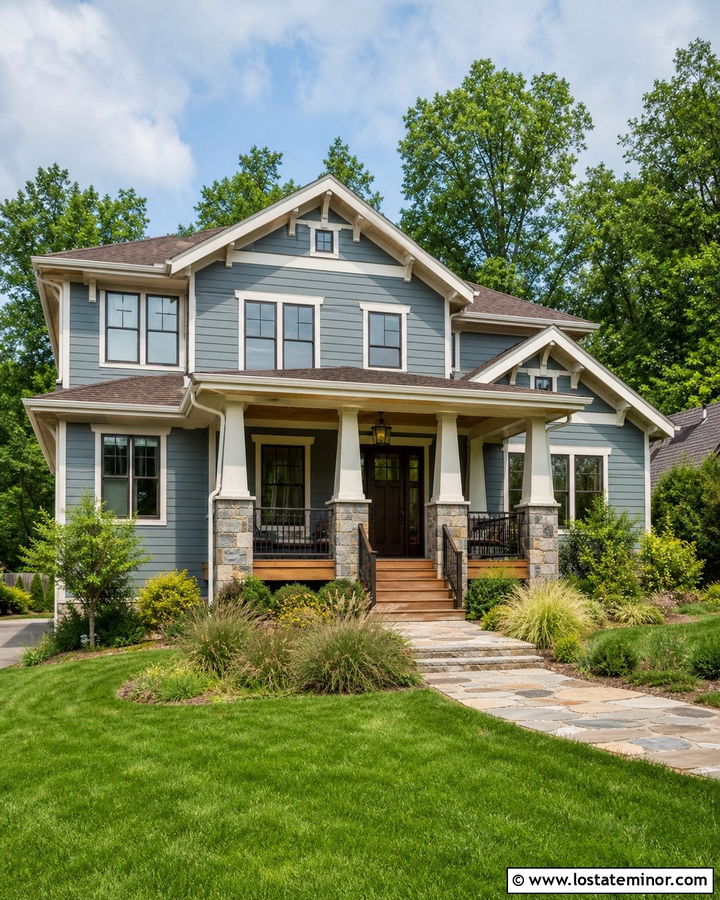
Stone deck columns provide weight and texture beneath a calm dusty blue exterior. This combination is ideal for a Craftsman house with deep roof overhangs, exposed brackets, and a prominent front deck. Choose a dusty blue with noticeable gray undertones, then pair it with warm cream trim and natural cedar deck boards. Use columns faced with mixed gray and tan stone so they connect the cool siding with the warm decking. Dark bronze railings and lighting add definition without the sharpness of solid black. A medium brown roof can reinforce the earthy side of the palette. Keep the stone limited to column bases and the foundation for a balanced result. Native grasses and layered shrubs help the substantial deck blend into the surrounding yard.
12. Dusty Blue House With Red Brick Deck Steps
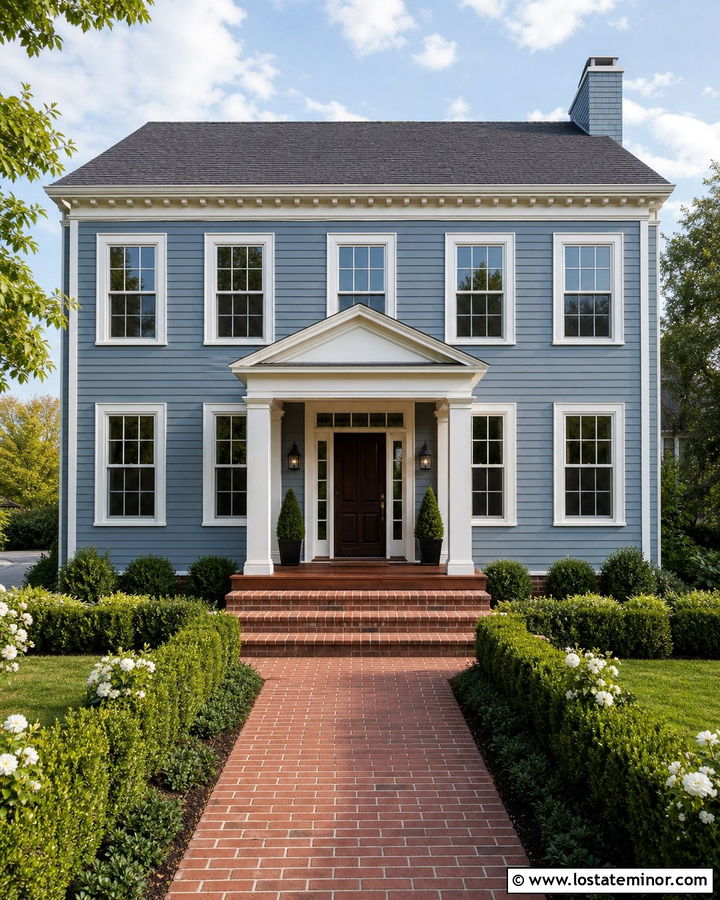
Existing red brick can look surprisingly polished beside dusty blue siding when its warmth is repeated thoughtfully. Paint the house a muted blue-gray and use soft ivory for the trim, columns, and window frames. Build the main deck with medium walnut boards, then use red brick for the stair risers or landing that connects it to the walkway. The warm decking creates a bridge between the cool house and rusty brick tones. Choose a dark brown front door and aged bronze lighting instead of introducing another strong color. This scheme complements a traditional Georgian or Colonial home with a symmetrical facade. A charcoal roof keeps the overall exterior grounded. Boxwood hedges and restrained white flowers reinforce the formal architecture without distracting from the materials.
13. Dusty Blue House With Cable Railing Deck
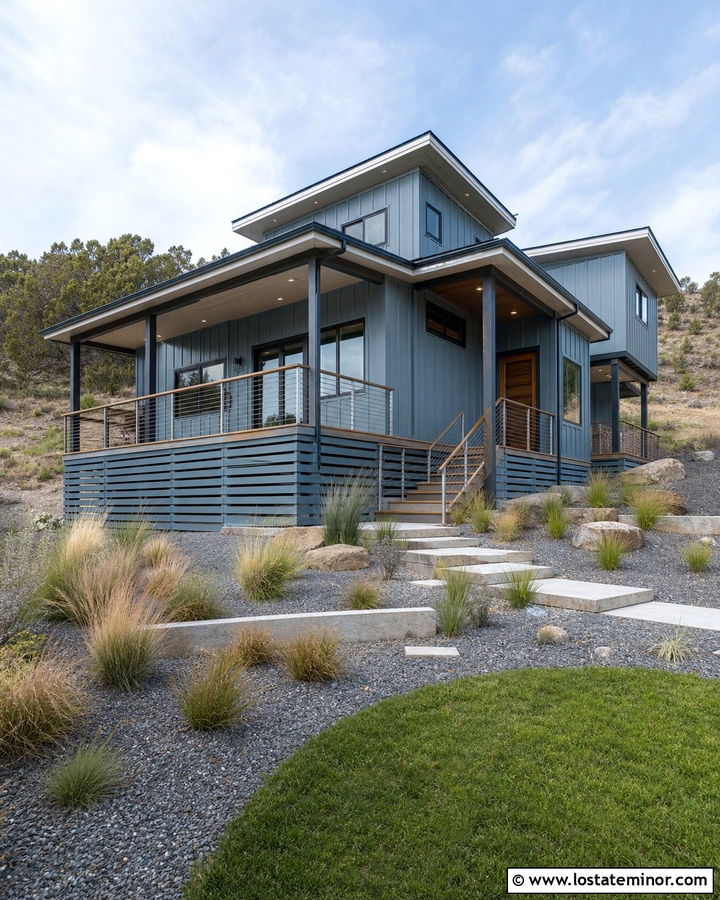
Slim cable railings give a dusty blue house a lighter, more contemporary profile. They work particularly well on an elevated deck where preserving views is important. Use blue-gray vertical siding, white window trim, and pale driftwood deck boards to create a cool, streamlined base. Black or stainless steel railing posts frame the cable system and connect with dark window sashes. A flat-panel natural wood front door introduces warmth and prevents the exterior from feeling industrial. This complete scheme suits a modern hillside home with broad windows and a low-pitched roof. Enclose the lower deck supports with dusty blue slatted skirting for a finished appearance. Gravel beds, native grasses, and clean concrete pavers complement the straightforward architecture and low-maintenance material palette.
14. Dusty Blue House With White Railing Deck
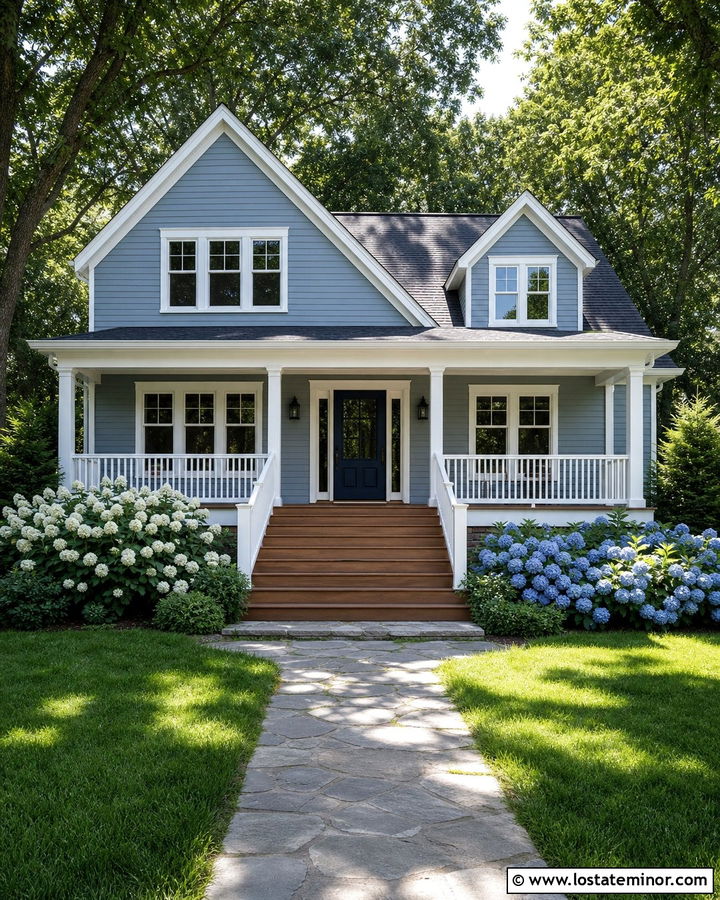
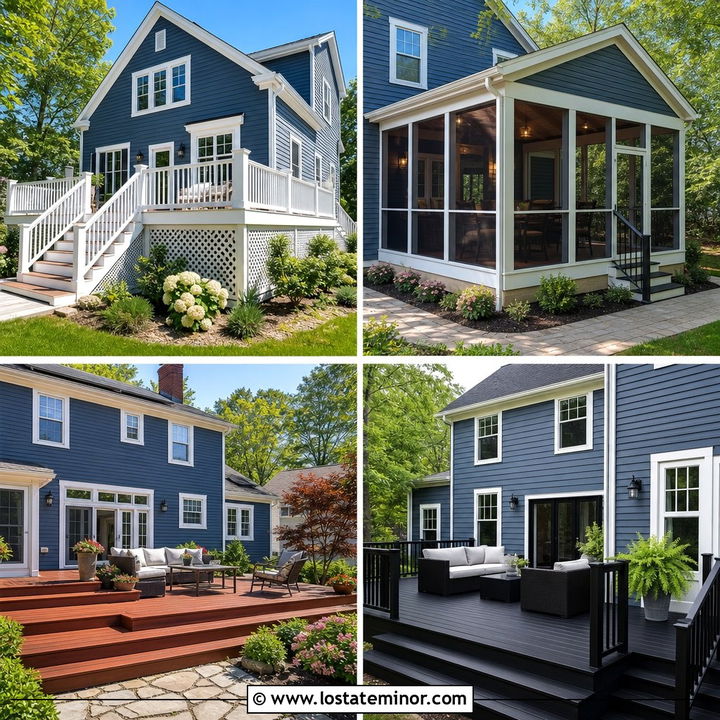
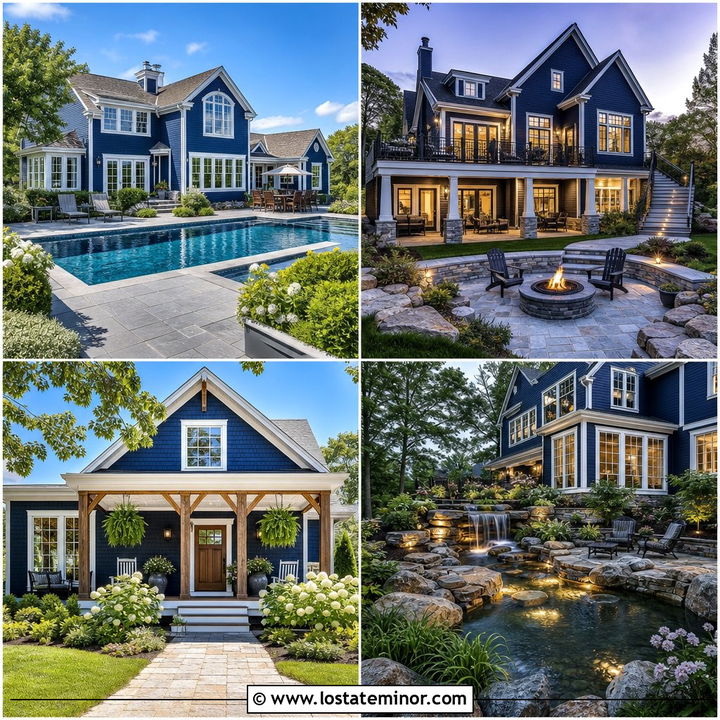
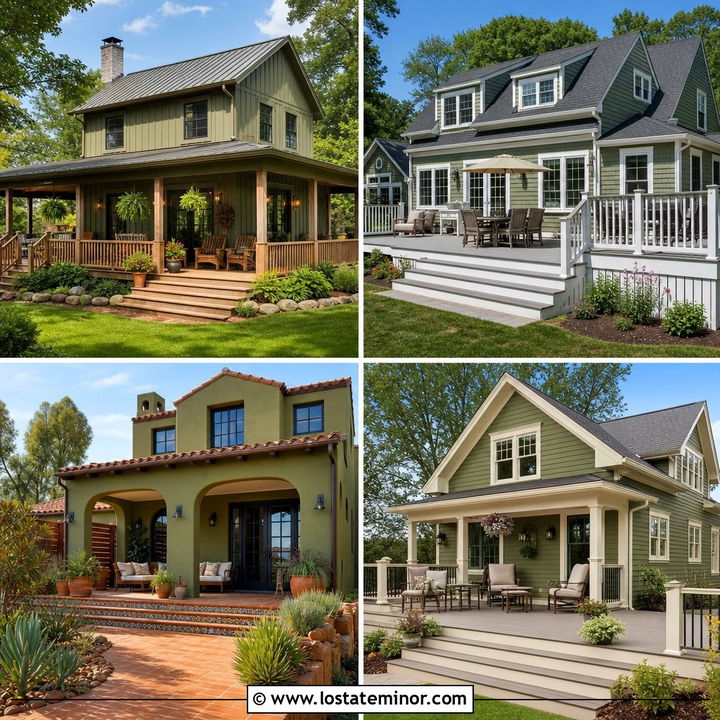
White deck railings create a familiar, welcoming frame around a dusty blue house. For a cohesive cottage exterior, repeat the railing color on window casings, corner boards, fascia, and porch columns. Choose medium cedar or teak-colored deck boards to introduce warmth beneath the pale railings. The contrast allows every part of the deck to remain visible while still connecting it to the home. A navy front door adds a deeper version of the siding color, and a soft charcoal roof completes the palette. This look works beautifully on a cottage with cross gables and divided-light windows. Keep the deck stairs broad and centered on the entrance. White roses, blue hydrangeas, and a narrow flagstone walkway extend the relaxed cottage character into the landscape.
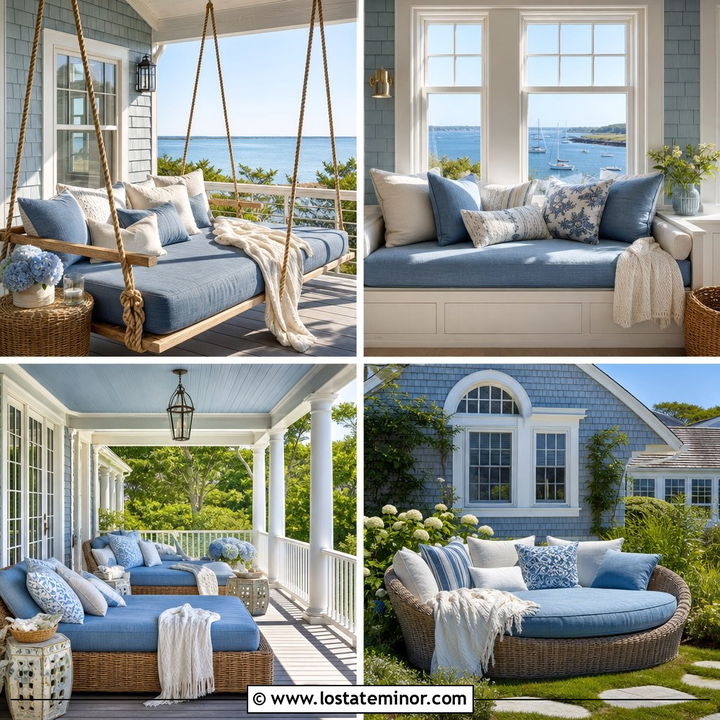
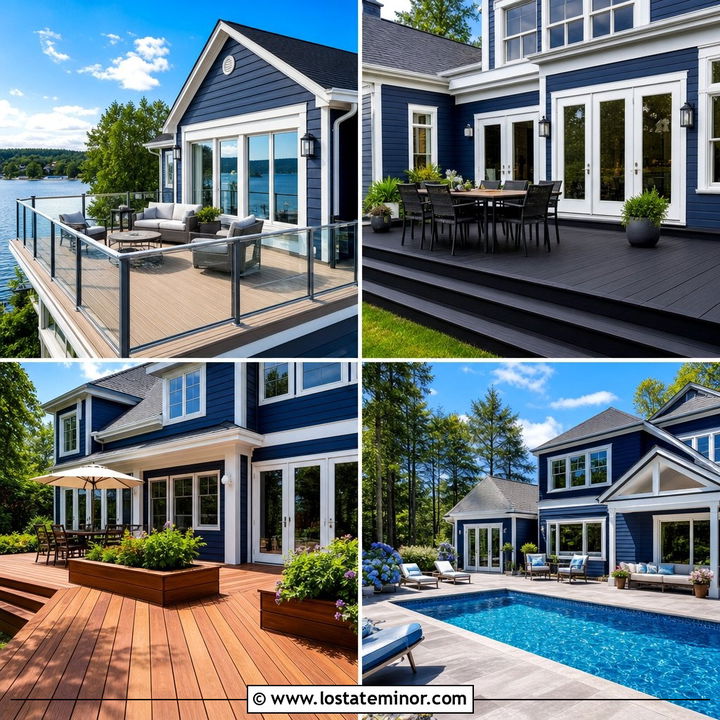
15. Dusty Blue House With Black Railing Deck
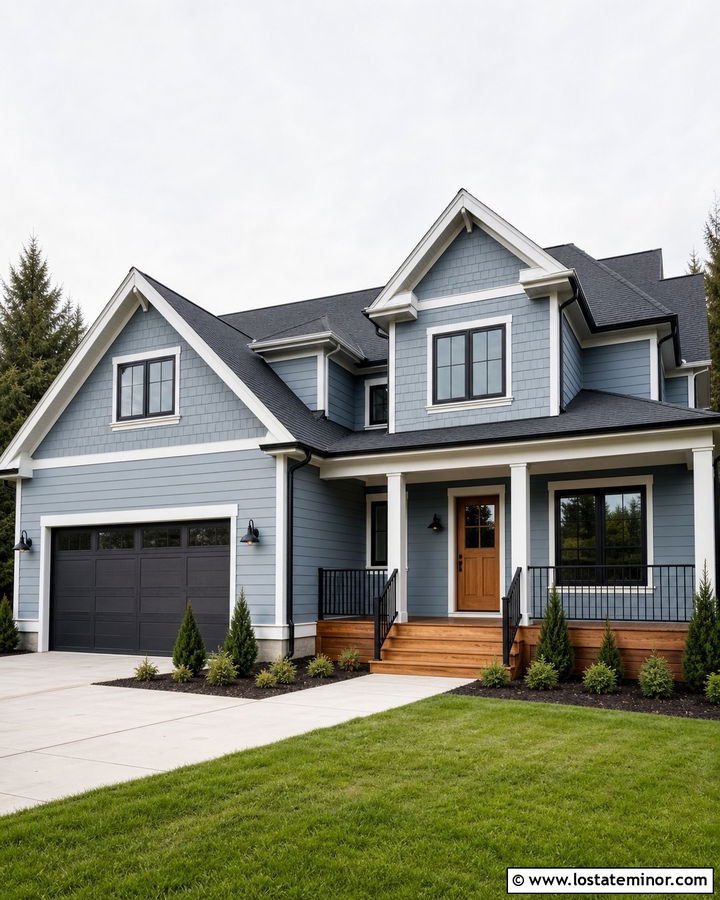
Black railings can sharpen a dusty blue exterior and make a traditional deck feel more current. Use a soft dusty blue body color with warm white trim, then select natural cedar deck boards for a clear contrast between cool and warm tones. Matte black balusters, post caps, gutters, and lighting create a consistent outline around the house. A black front door can work, but a medium wood door is often better when the facade needs added warmth. This palette suits a transitional home that combines traditional gables with larger modern windows. Choose a dark gray roof rather than a warm brown one to support the black details. Finish the curb appeal with rectangular planting beds, evergreen shrubs, and a simple concrete walkway edged with dark stone.
16. Dusty Blue House With Glass Railing Deck
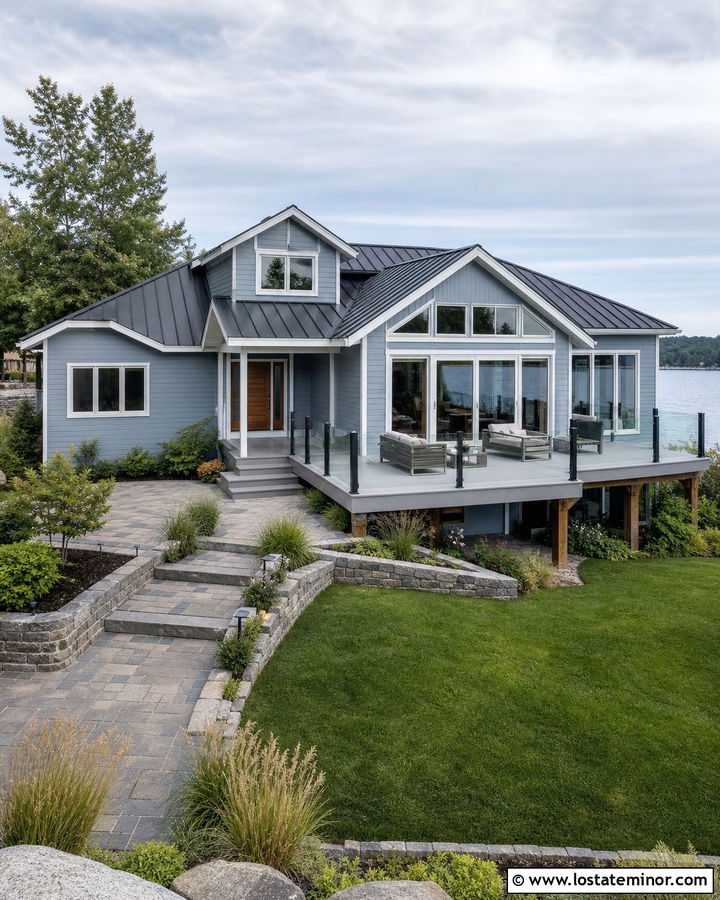
A glass railing deck keeps the architecture open and allows the dusty blue siding to remain the dominant color. This design is especially suitable for a lake house, coastal property, or elevated contemporary home with a scenic outlook. Pair muted dusty blue horizontal siding with pale gray composite deck boards and clear railing panels held by slim charcoal posts. Use white trim around large windows to brighten the facade, then add a natural teak front door for warmth. A standing-seam charcoal roof continues the clean exterior lines. Keep the deck shape broad and uncomplicated so the glass panels appear intentional. Stone retaining walls, ornamental grasses, and an open lawn frame the house without blocking sightlines. The result feels modern, calm, and connected to its setting.
17. Dusty Blue House With Pergola Deck
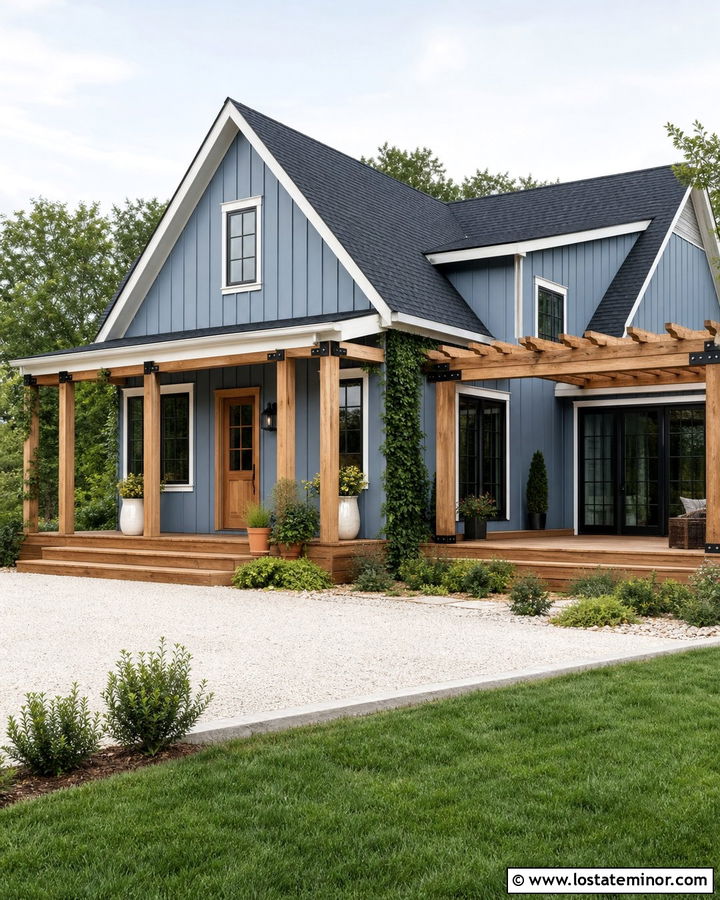
A wood pergola adds height and structure to a deck while balancing the cool character of dusty blue siding. Choose a soft blue-gray exterior with creamy white trim and a medium cedar deck. Build the pergola from matching cedar so the deck reads as one coordinated outdoor feature. Black steel brackets can add subtle definition and connect with dark window frames or exterior lights. On a modern farmhouse, position the pergola beside large glass doors to create a natural transition from the interior. Use a charcoal roof and a warm wood front door to complete the exterior scheme. Climbing greenery, potted shrubs, and pale gravel around the deck soften the straight lines. Keep the overhead structure open enough to preserve bright natural light.
18. Dusty Blue House With Screened Deck
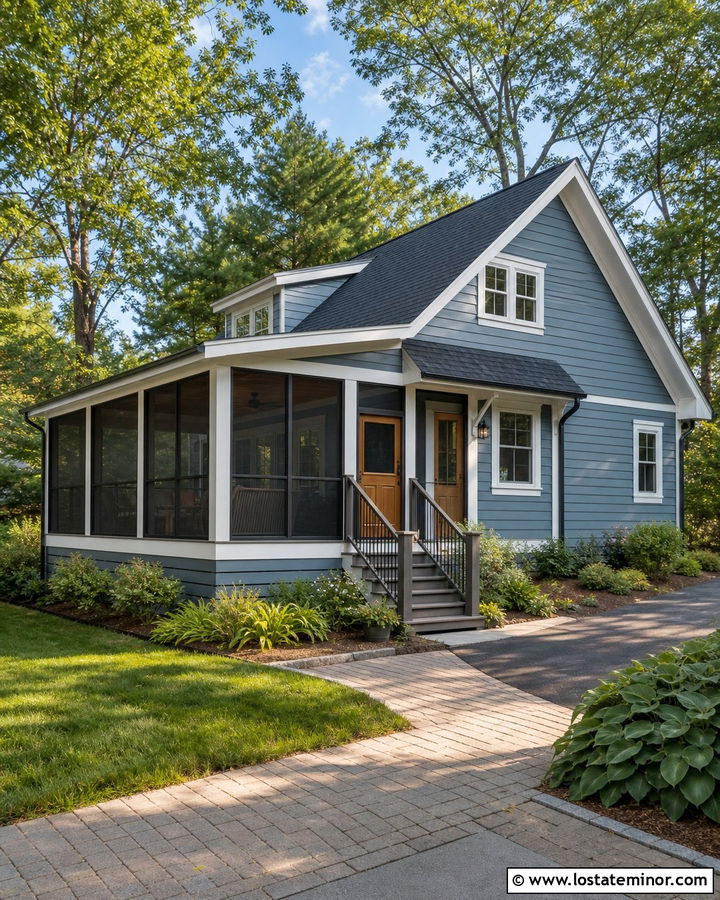
A screened deck gives a dusty blue home an enclosed outdoor room without sacrificing curb appeal. Treat the structure as part of the original architecture by matching its dusty blue lower walls, white trim, and roof pitch to the main house. Use warm gray deck boards inside and on the connecting stairs. Charcoal screen frames reduce glare and tie in with a dark gray shingle roof. A natural wood door adds a small but useful warm accent. This arrangement suits a suburban cottage or traditional ranch with a backyard-facing deck. Add blue-painted lattice or vertical slats below the floor to conceal supports. Foundation shrubs, a paver path, and shade-tolerant plants help the screened structure feel settled rather than oversized or visually disconnected.
19. Dusty Blue House With Rooftop Deck
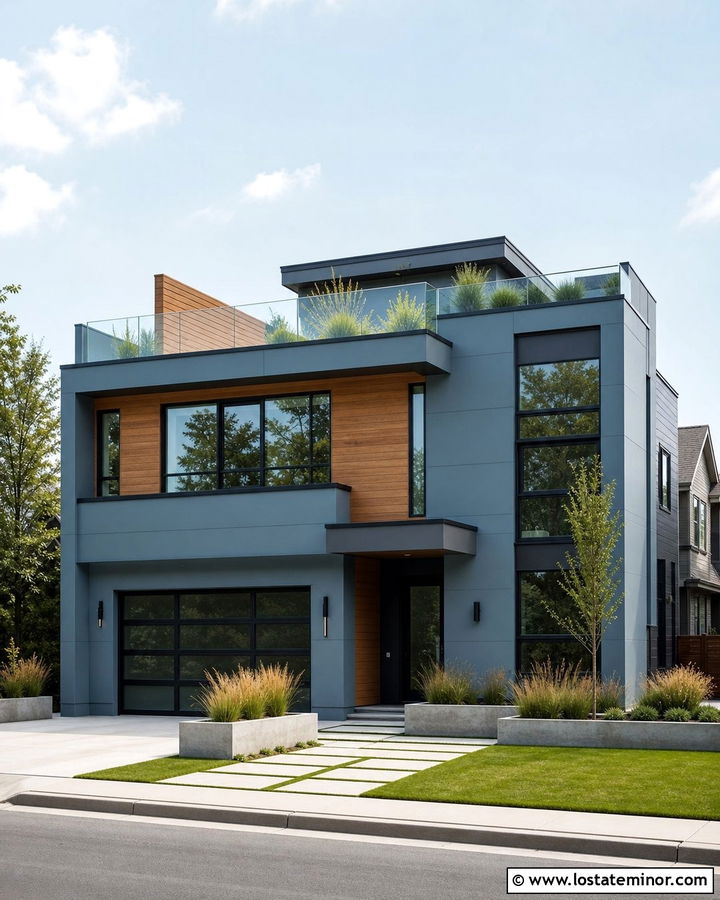
A rooftop deck can give a modern dusty blue house valuable outdoor space while strengthening its clean architectural lines. Use muted blue-gray fiber cement panels across the facade with charcoal trim and warm wood accent siding near the entrance. Finish the rooftop deck with pale gray composite boards and a simple glass railing that keeps the roofline visually open. A cedar privacy screen can echo the front door and soften the cooler exterior materials. Conceal the deck structure behind a low parapet painted dusty blue for a seamless transition. This palette works best on a boxy contemporary home with large black-framed windows. Structured grasses, concrete planters, and a geometric walkway continue the modern appearance at ground level without making the setting feel bare.
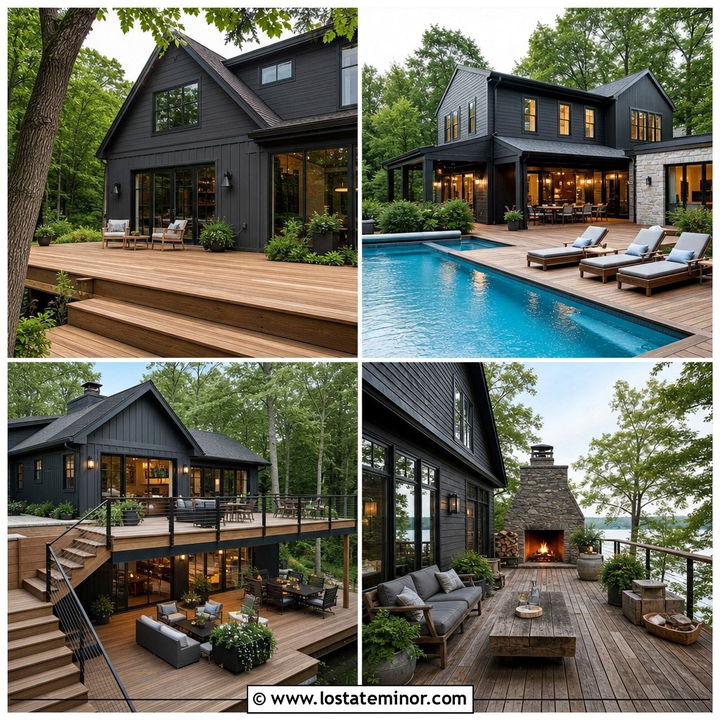
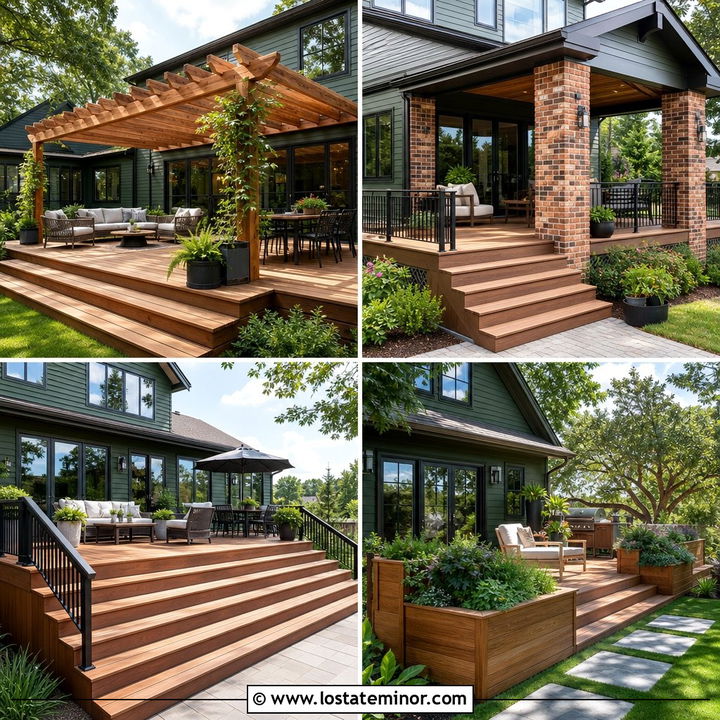
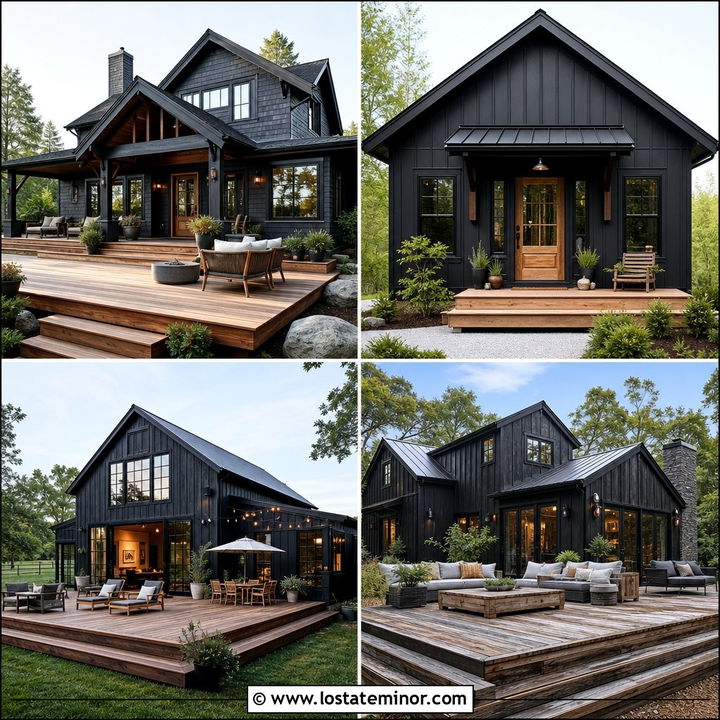
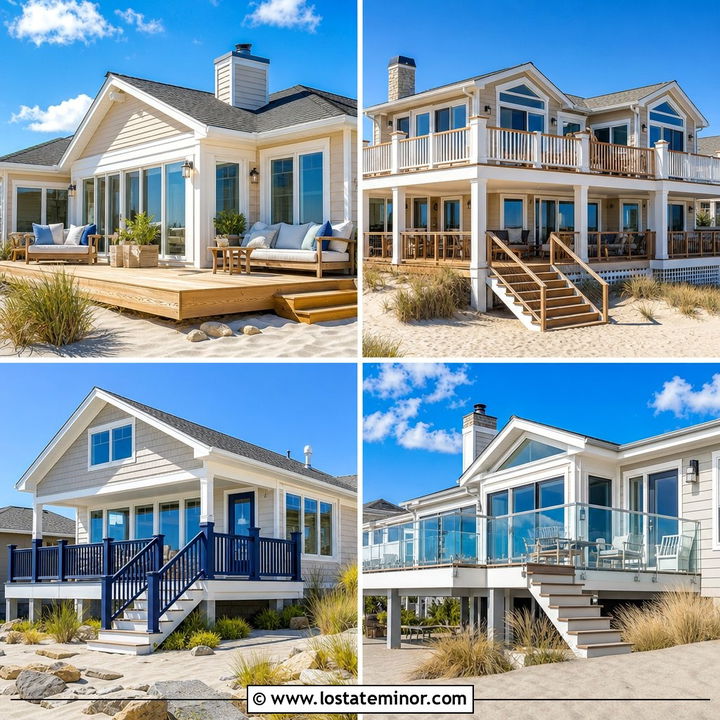
20. Dusty Blue House With Pool Deck
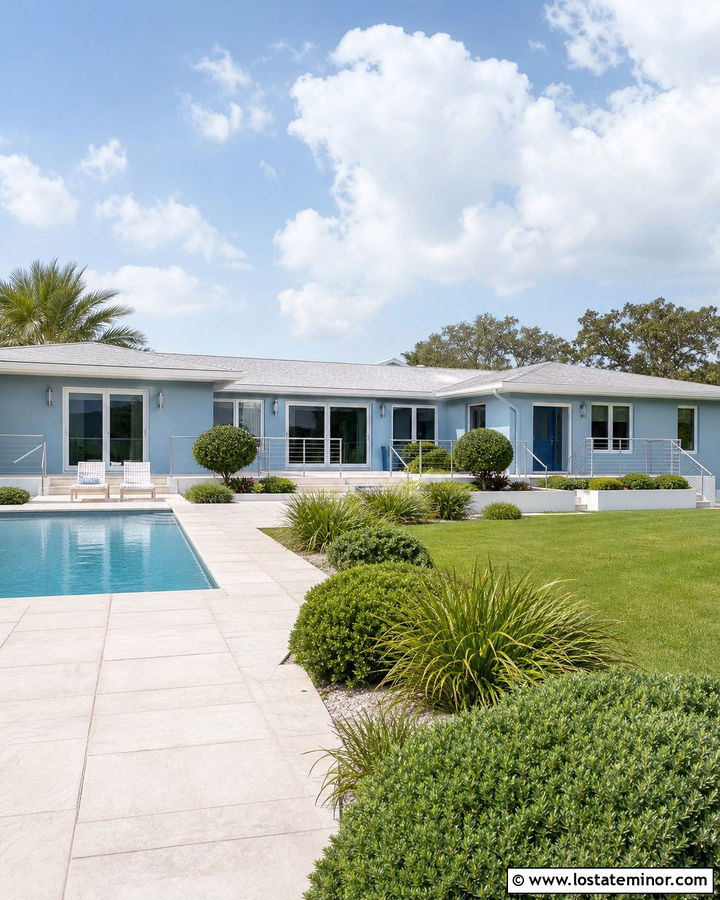
A dusty blue house beside a pool benefits from decking that feels light, clean, and connected to the surrounding landscape. Use soft dusty blue stucco or lap siding with bright white trim and a pale sand-colored composite deck. The warm neutral surface balances the cool blue exterior and complements light pool coping. Choose white or stainless steel railings where required, keeping sightlines open around the water. A deep teal door can add a richer coastal accent without clashing with the siding. This scheme fits a Florida ranch or relaxed coastal home with broad sliding doors and a low roof. Palm-like grasses, clipped shrubs, and large pale pavers create a fresh setting. Keep furniture colors neutral so the architecture remains the main visual feature.
21. Dusty Blue House With Farmhouse Deck
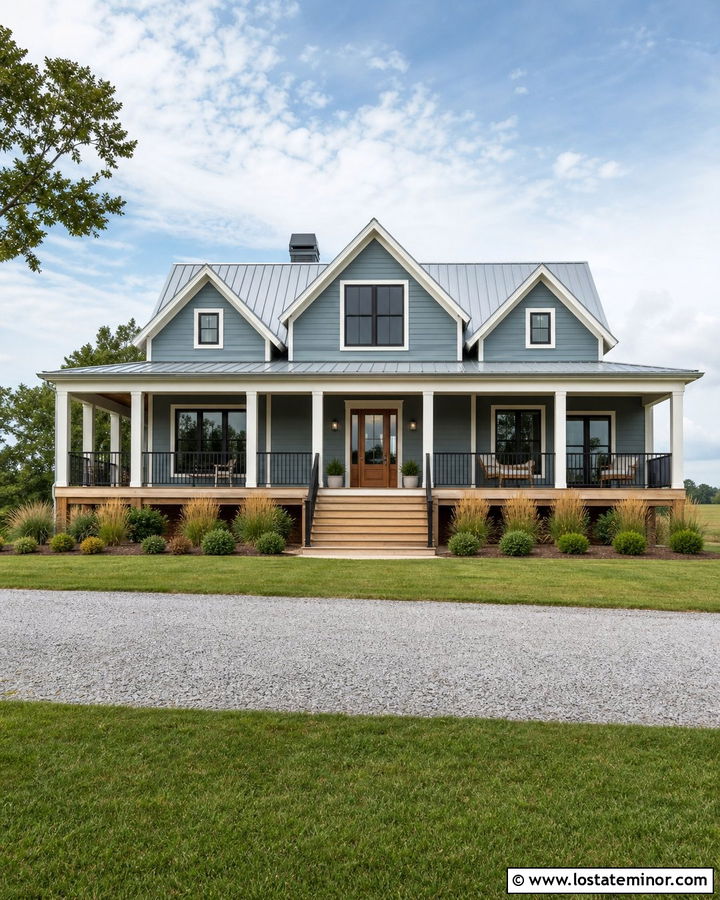
A farmhouse deck should feel generous and useful while still supporting the architecture’s simple lines. Cover the house in dusty blue board-and-batten siding and use warm white trim around black-framed windows. Wide natural pine or cedar deck boards bring an organic quality to the front elevation. Paint the square deck posts white, but use black metal railings to repeat the window color. A medium wood front door and galvanized metal roof complete the rural-inspired palette. Run the deck across most of the facade so it feels proportional to the long house. Broad central stairs create a welcoming entrance from the yard. Simple foundation shrubs, meadow grasses, and a gravel driveway preserve the relaxed setting while giving the full exterior a tidy, finished appearance.
22. Dusty Blue House With Craftsman Deck
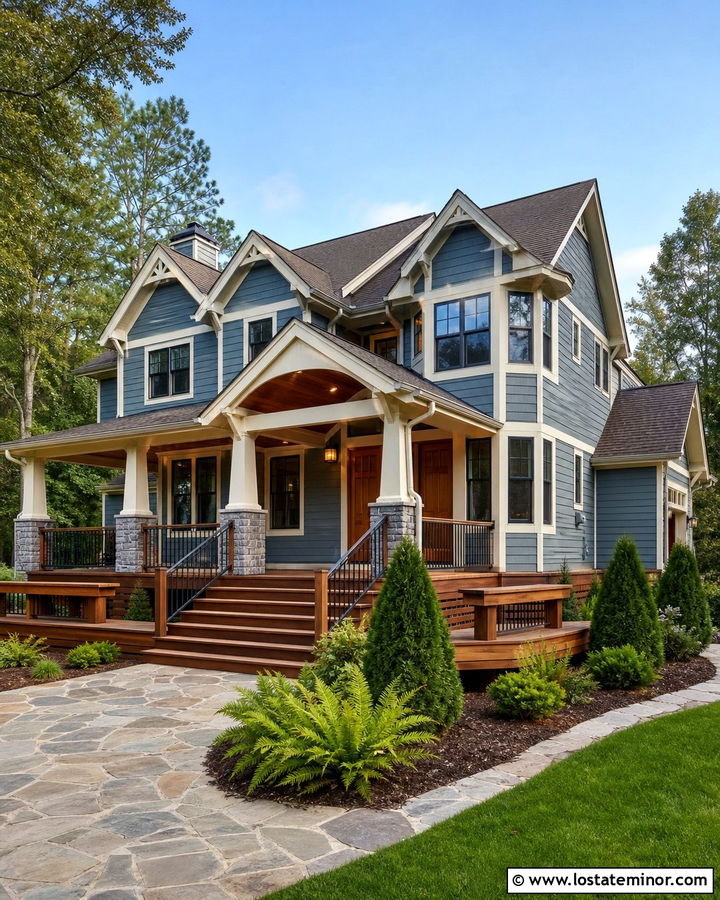
Craftsman architecture gives dusty blue siding plenty of opportunities for layered color and texture. Use muted blue lap siding on the main walls, blue-gray shingles in the gables, and creamy white trim around windows and beams. A rich cedar deck reinforces the home’s handcrafted character. Support the roof with tapered columns on gray stone bases, then use dark bronze balusters between sturdy wood railings. Select an earthy brown roof and a quarter-sawn oak front door to continue the warm accents. Built-in deck benches can follow the same cedar finish for a unified result. Surround the structure with ferns, evergreen shrubs, and a natural flagstone walkway. These materials make the entire facade feel grounded while allowing dusty blue to remain clearly visible.
23. Dusty Blue House With Colonial Deck
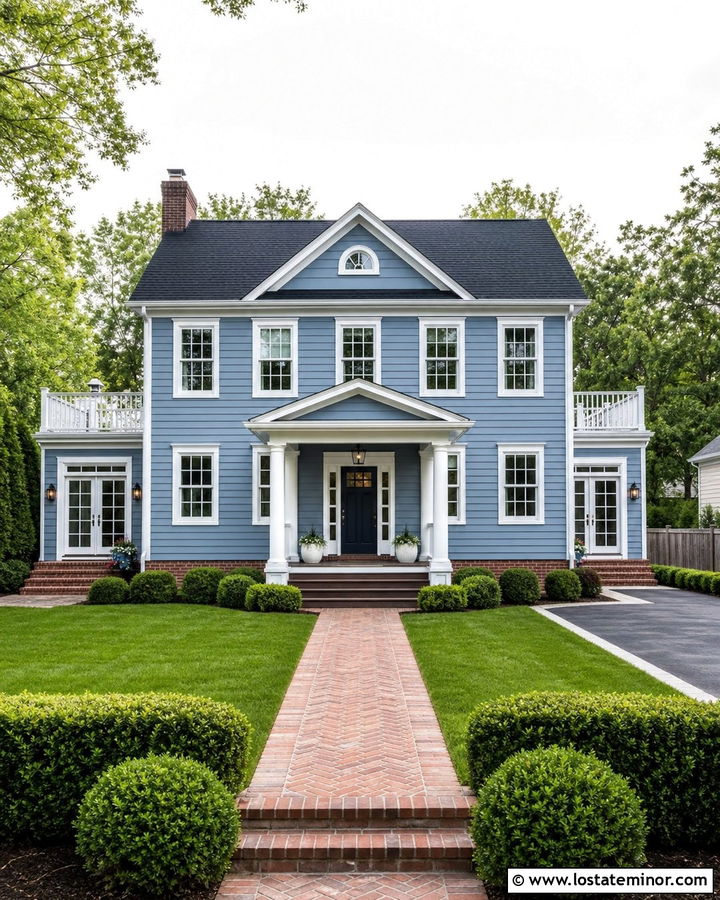
A restrained deck design complements the orderly facade of a dusty blue Colonial home. Paint the symmetrical two-story exterior a medium dusty blue and use crisp white on the window trim, corner boards, and classical entry surround. Choose dark walnut deck boards for a compact rear or side deck, then add traditional white railings with square balusters. A deep navy front door and charcoal roof reinforce the classic blue-and-white palette. Keep the deck centered on a set of French doors and align its stairs with the surrounding garden path. Red brick foundation details can provide a warm historic accent. Formal hedges, evenly spaced shrubs, and a straight brick walkway support the architecture and prevent the outdoor addition from appearing casual or out of place.
24. Dusty Blue House With Ranch Deck
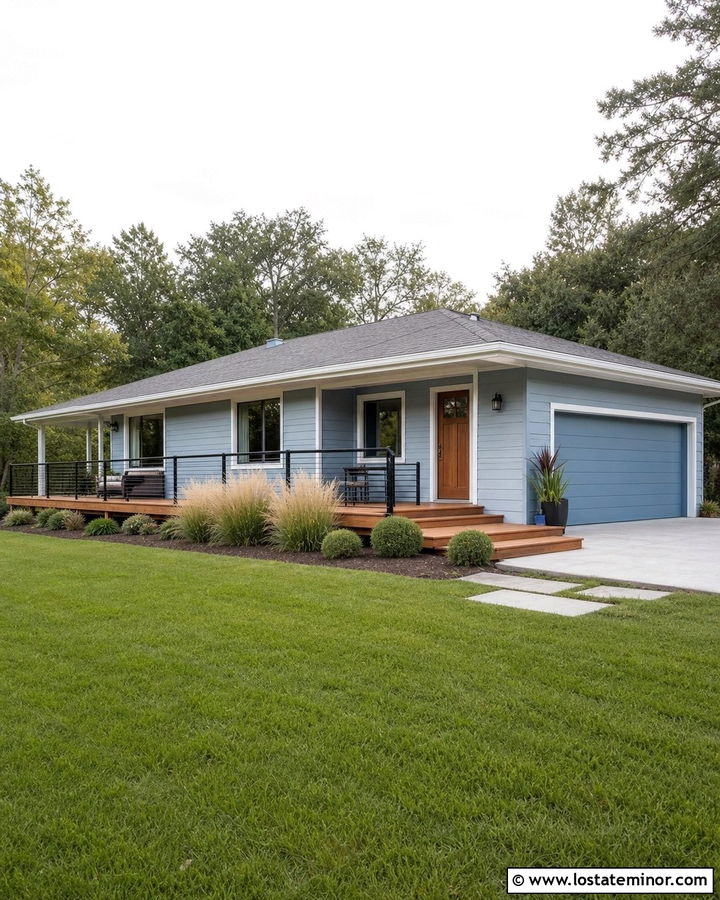
A long, low deck can visually expand a dusty blue ranch house and create a stronger connection with the yard. Use pale dusty blue horizontal siding with warm white trim and a medium-gray roof. Run honey-toned cedar boards across the front or back facade, keeping the deck close to ground level for easy access. Black horizontal railings can define raised sections without interrupting the home’s broad lines. Paint the garage door the same dusty blue as the siding to avoid dividing the facade. A walnut front door provides one concentrated warm accent. Low ornamental grasses, rounded shrubs, and large stepping stones complement the horizontal architecture. The finished exterior feels spacious, casual, and well suited to everyday outdoor living.
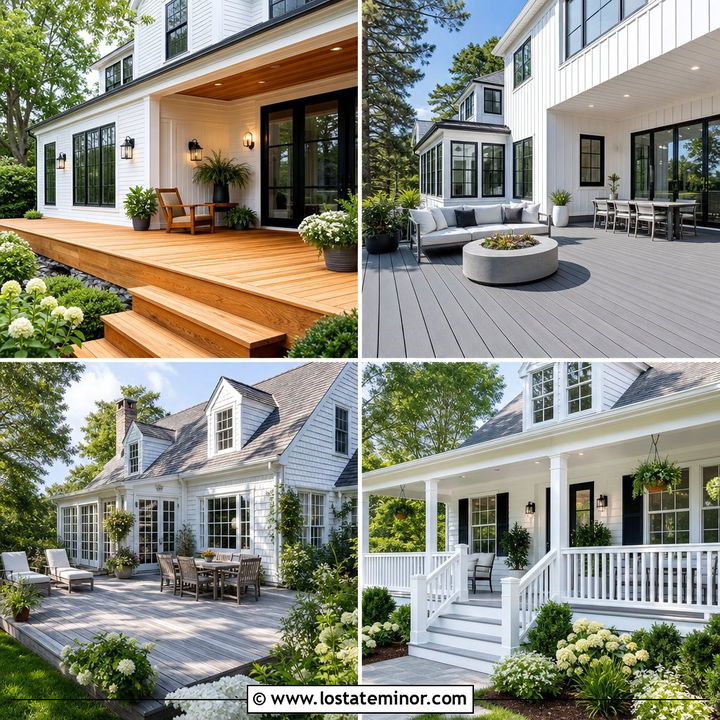
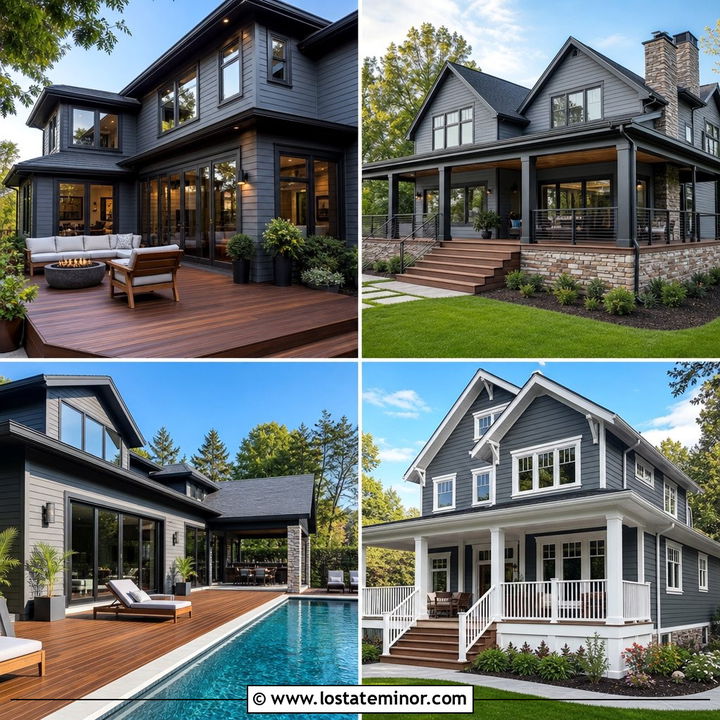
25. Dusty Blue House With Bungalow Deck
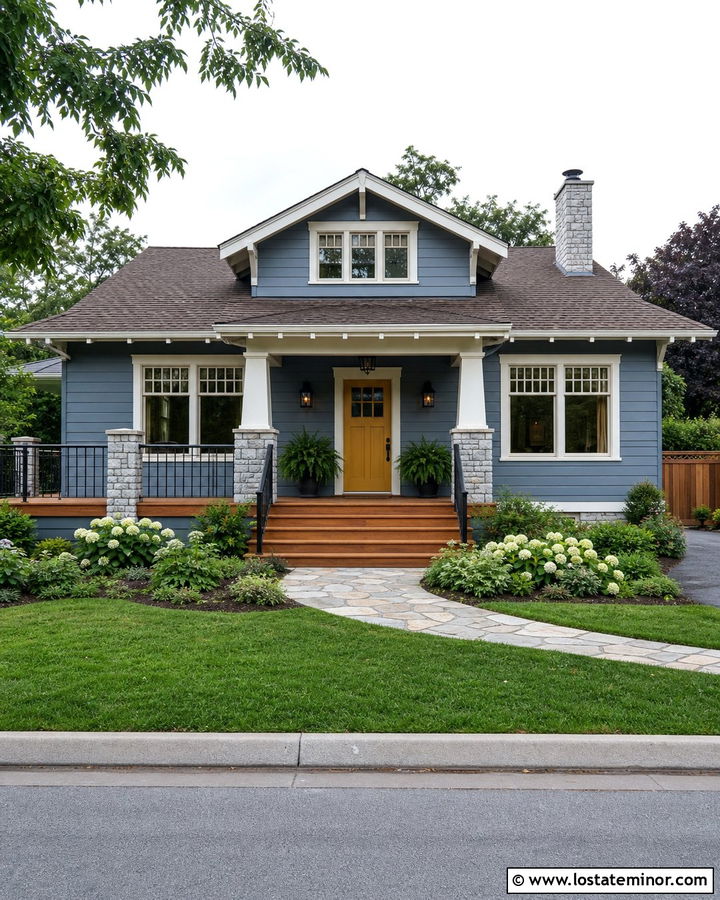
A front deck can highlight the welcoming proportions of a dusty blue bungalow. Choose a medium blue-gray exterior with creamy trim around the low roofline, wide windows, and exposed rafter tails. Use warm cedar deck boards and solid tapered columns resting on light gray stone bases. Dark bronze railings and lanterns add definition while preserving the home’s traditional character. Paint the front door a muted mustard yellow for a cheerful focal point, or use natural oak for a quieter finish. A medium brown roof connects with the wood and stone materials. Center the deck stairs on the entrance and make them wide enough to feel generous. Ferns, hydrangeas, and a curved stone path complete the comfortable, garden-focused curb appeal.
26. Dusty Blue House With Floating Deck
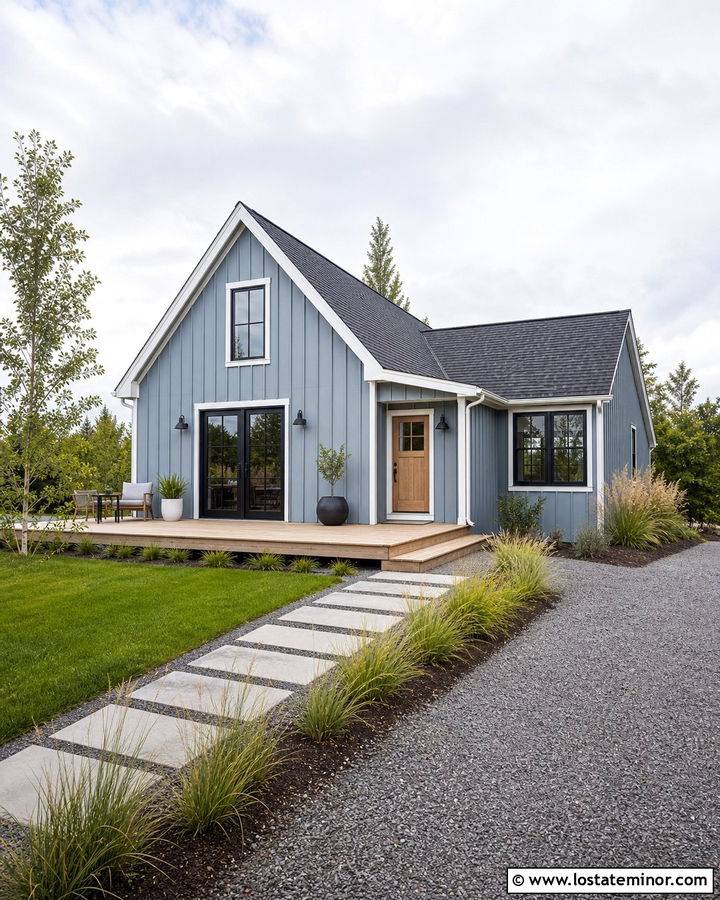
A floating deck is an effective choice when a full attached structure would overwhelm a smaller dusty blue house. Place a low platform near French doors or along the garden-facing side of the home. Use light oak-colored boards to contrast gently with dusty blue vertical siding and white trim. Keep the edges simple, without railings, when local height requirements allow. Black-framed doors, exterior lights, and planters provide enough definition around the pale wood. This layout suits a compact Scandinavian-inspired cottage with a steep roof and minimal ornament. Repeat the deck’s wood tone on the front door or a narrow section of accent siding. Fine gravel, stepping stones, ornamental grasses, and small trees frame the platform while maintaining an open, uncluttered outdoor setting.
27. Dusty Blue House With Curved Deck
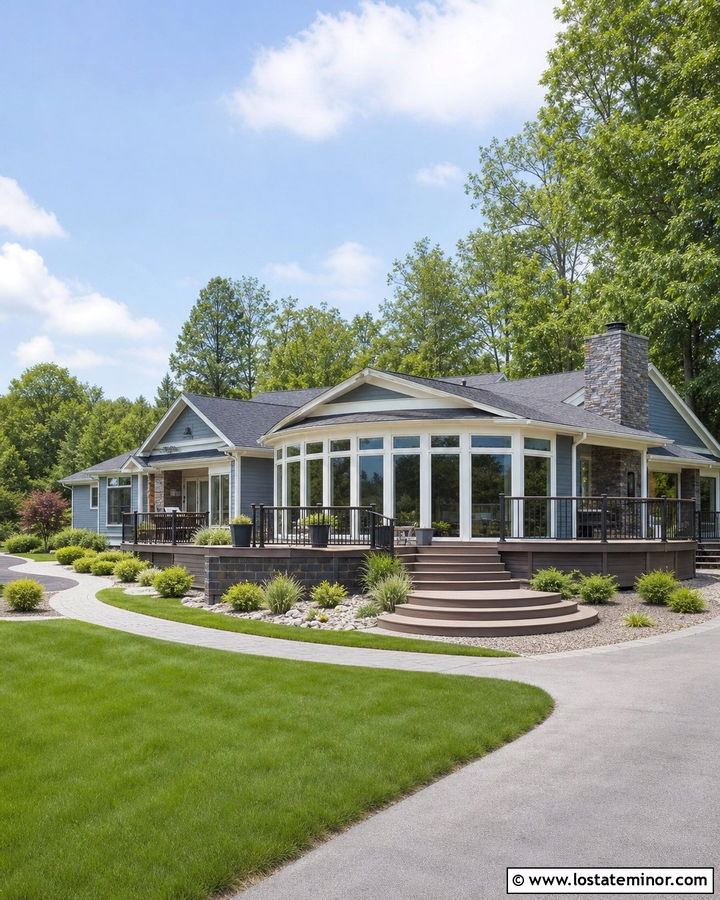
A curved deck softens angular architecture and creates a graceful transition between a dusty blue house and its landscape. Use a flexible composite product in a medium teak tone so the rounded edge feels warm and visually distinct from the blue-gray siding. White trim, dark bronze railings, and a charcoal roof balance the overall palette. Follow the curve with broad stairs leading toward a circular garden path or open lawn. This shape works particularly well on a contemporary ranch with a bowed window wall or a gently angled rear facade. Repeat the deck’s curve in planting beds filled with low shrubs and grasses. Avoid adding too many competing materials. The combination of dusty blue, warm decking, and flowing lines already provides enough character for a polished design.
28. Dusty Blue House With Corner Deck
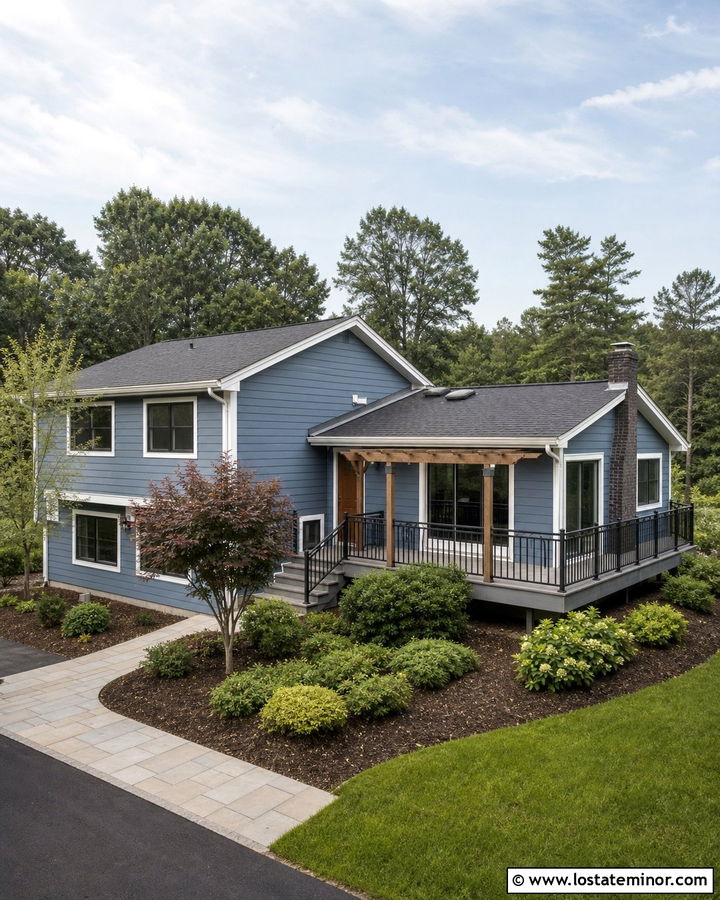
A corner deck can connect two sides of a dusty blue house and make an underused part of the property more functional. Wrap warm gray composite boards around the corner, linking a side entrance with rear glass doors. Use dusty blue lap siding, crisp white trim, and black aluminum railings to create a clear but balanced exterior palette. A small pergola over one section can provide architectural height without covering the entire platform. Choose a natural wood door to warm the transition between the gray deck and blue siding. This layout is especially useful on an L-shaped split-level or contemporary home. Layered shrubs, a paved walkway, and one well-positioned ornamental tree help frame the deck while preserving open access to the yard.
29. Dusty Blue House With Deck And Stone Fireplace
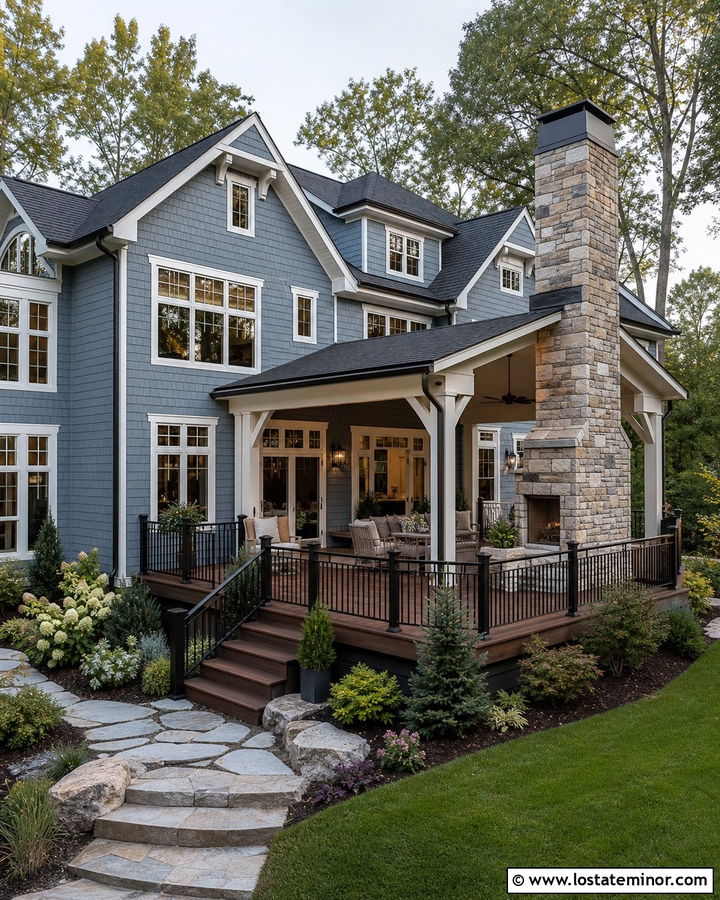
An outdoor stone fireplace turns a deck into a strong architectural feature, so its materials should connect with the whole dusty blue exterior. Use medium dusty blue siding with warm white trim and walnut-colored deck boards. Build the fireplace from a blend of gray, cream, and muted brown stone to bridge the cool house color and warm wood floor. Black railings, dark bronze lights, and a charcoal roof give the scheme a finished outline. Position the chimney where it balances the home’s roofline rather than blocking major windows. This design suits a large transitional home with a broad covered deck. Evergreen plantings and a natural stone path extend the fireplace material into the landscape, making the outdoor addition look established and intentional.
30. Dusty Blue House With Deck And Matching Garage
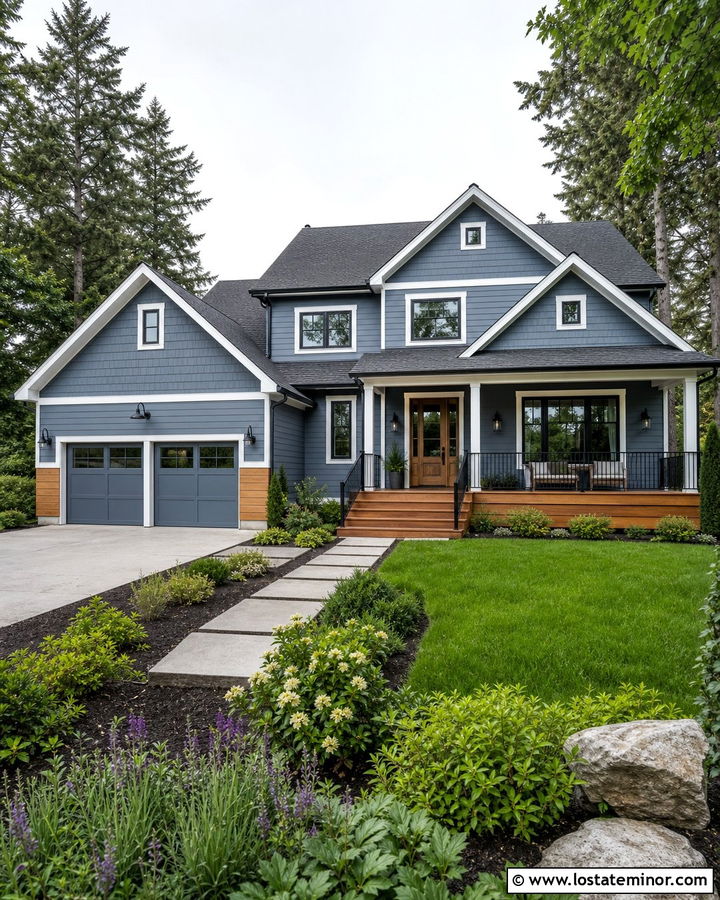
Coordinating the deck with the garage creates a complete exterior rather than a collection of unrelated updates. Paint the house and garage doors the same muted dusty blue, then use bright white trim to define windows, roof edges, and door panels. Choose warm cedar deck boards and repeat that wood tone on the front door and small garage accents. Black railings, handles, sconces, and gutters add consistent definition across the facade. This combination works well on a modern suburban home with an attached two-car garage and a deck positioned beside the main entrance. A charcoal roof supports the black details without dominating the blue. Finish with a clean concrete driveway, rectangular planting beds, and layered greenery that softens the wide garage elevation.
Conclusion:
The best 30 Dusty Blue House Design With Deck Ideas balance the softness of blue-gray siding with decking that adds warmth, structure, or subtle contrast. Cedar and walnut create a natural, welcoming exterior, while gray and black composite boards produce a cleaner contemporary finish. White railings support coastal and traditional homes, whereas cable, glass, and black metal systems suit updated architecture. Before choosing materials, compare the deck finish with the roof, trim, doors, masonry, and landscaping. View samples beside the house in direct sun and shade, since surrounding light affects the overall appearance. A carefully coordinated deck makes dusty blue siding feel intentional and turns the exterior into one complete, inviting design.

Related posts: