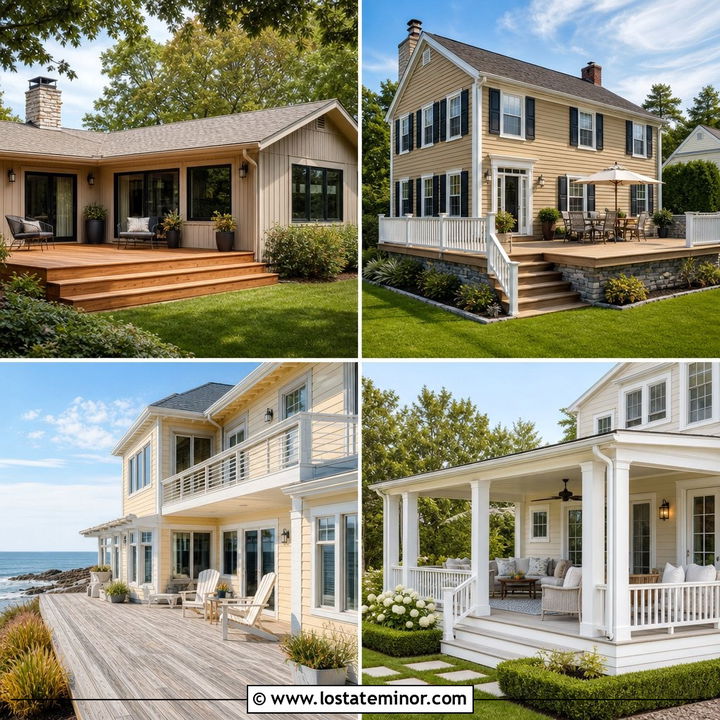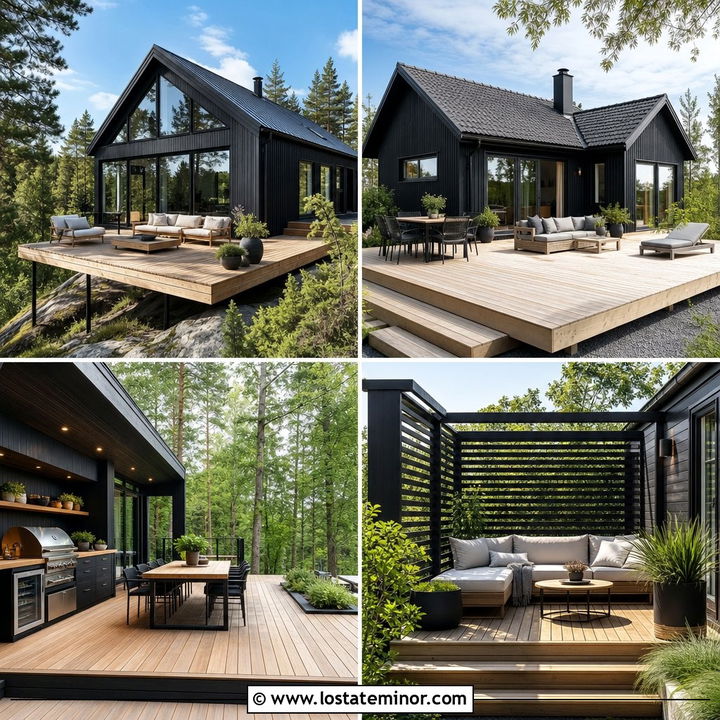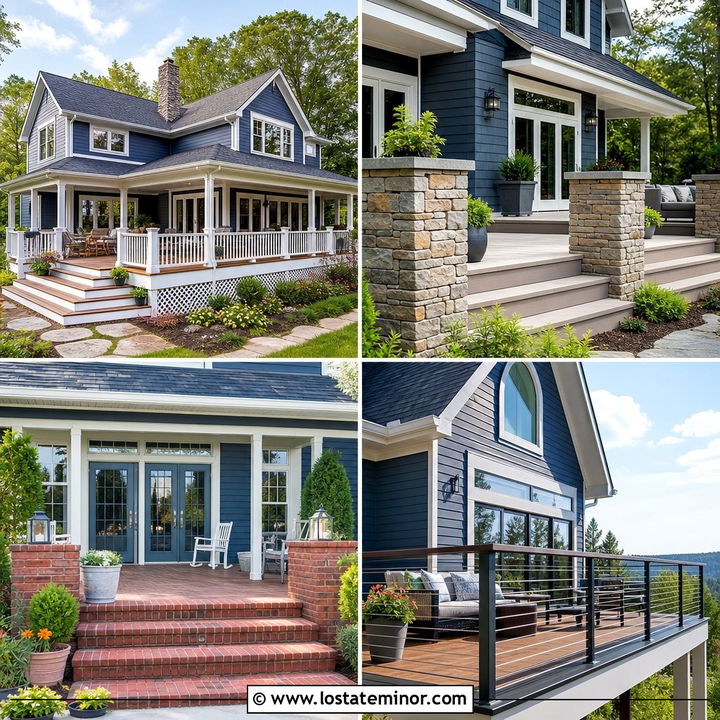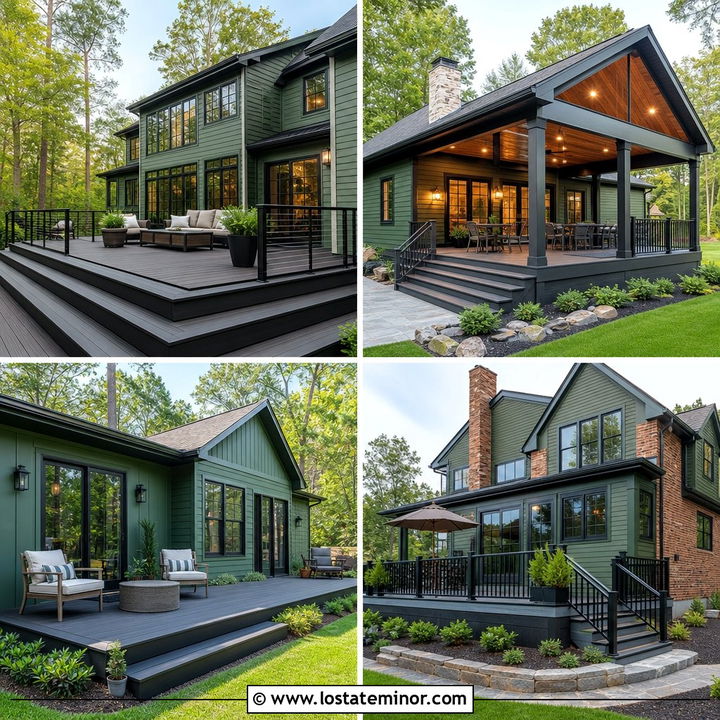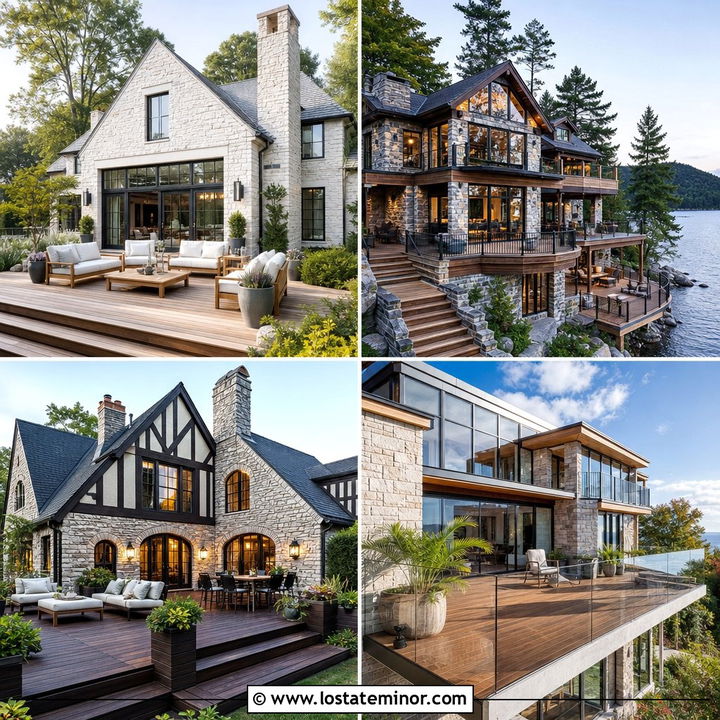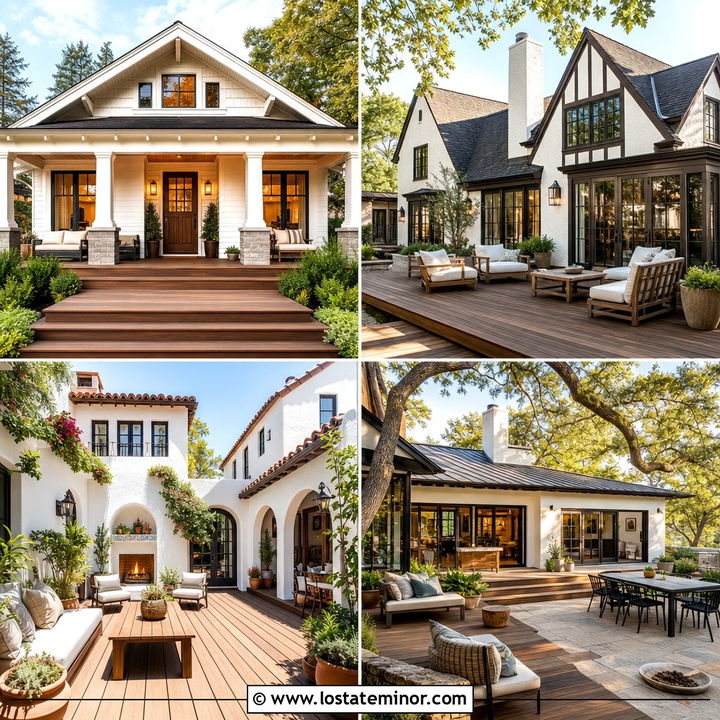
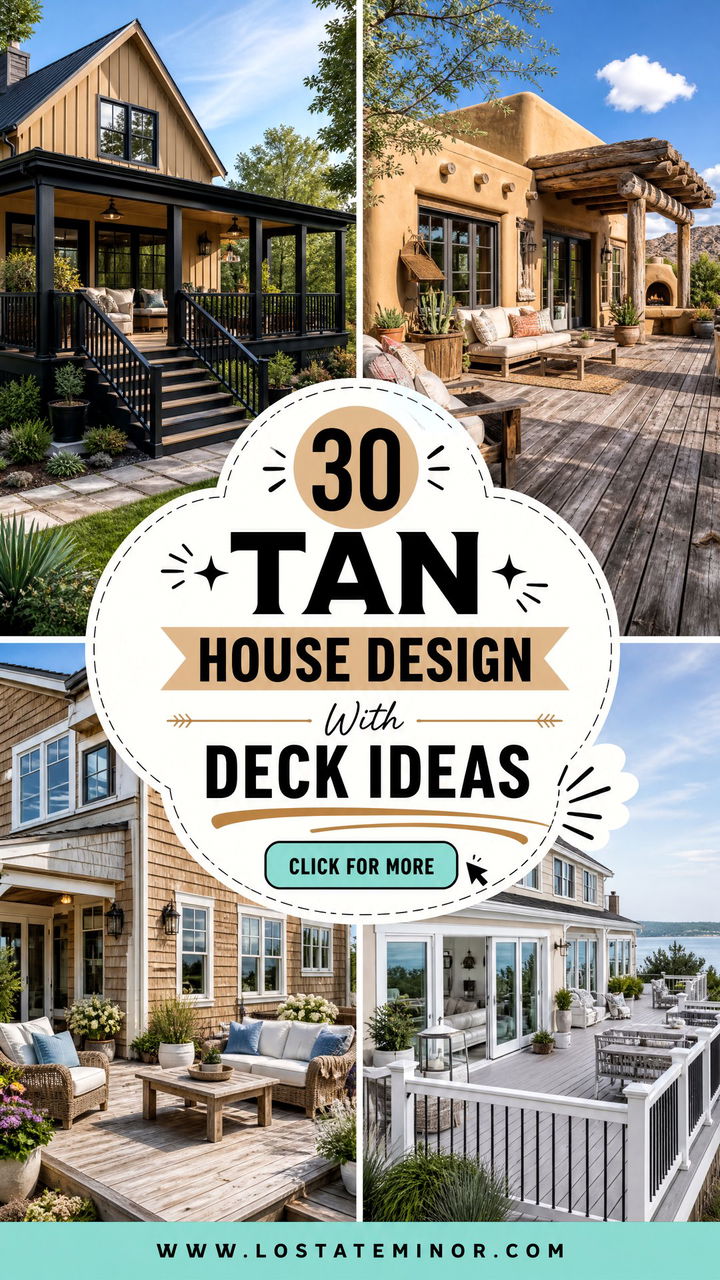
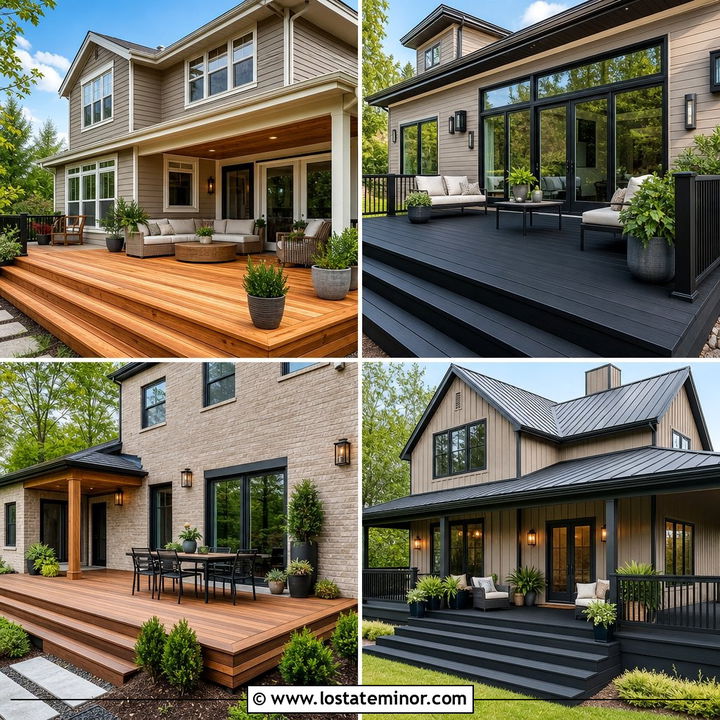
A tan exterior creates a warm, flexible backdrop for an inviting outdoor living space. The best 30 Tan House Design With Deck Ideas treat the siding, decking, trim, roof, doors, and landscaping as one complete composition. Natural cedar can make tan siding feel richer, while charcoal decking adds modern contrast. Cream railings create softness, and black metal details sharpen the entire facade. The right combination also depends on the architecture. A low ranch benefits from strong horizontal lines, while a Craftsman looks best with substantial posts and natural textures. From compact platforms to large wraparound layouts, these complete schemes offer practical inspiration for different homes, settings, and budgets. Explore these 30 Tan House Design With Deck Ideas to find a balanced look that fits your property.
1. Tan Ranch House With Cedar Deck
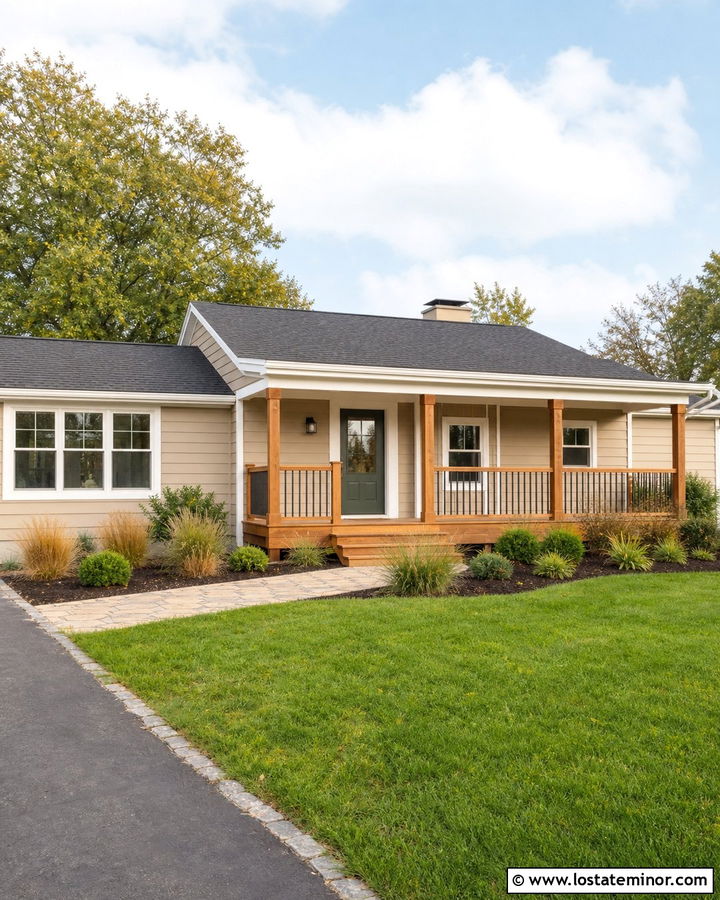
A honey-toned cedar deck brings natural warmth to a simple tan ranch house. Use a medium tan on the horizontal siding, crisp white around the windows, and dark bronze for the gutters and lighting. A low deck stretching across part of the front facade reinforces the ranch home’s long horizontal shape. Keep the railing simple with square cedar posts and slim black balusters. Broad steps facing the walkway will make the outdoor space feel open rather than boxed in. Finish the scheme with a charcoal architectural-shingle roof and a muted olive front door. Layer ornamental grasses, rounded shrubs, and pale gravel near the foundation. These natural colors prevent the tan and cedar combination from becoming overly yellow or visually flat.
2. Tan Craftsman House With Walnut Deck
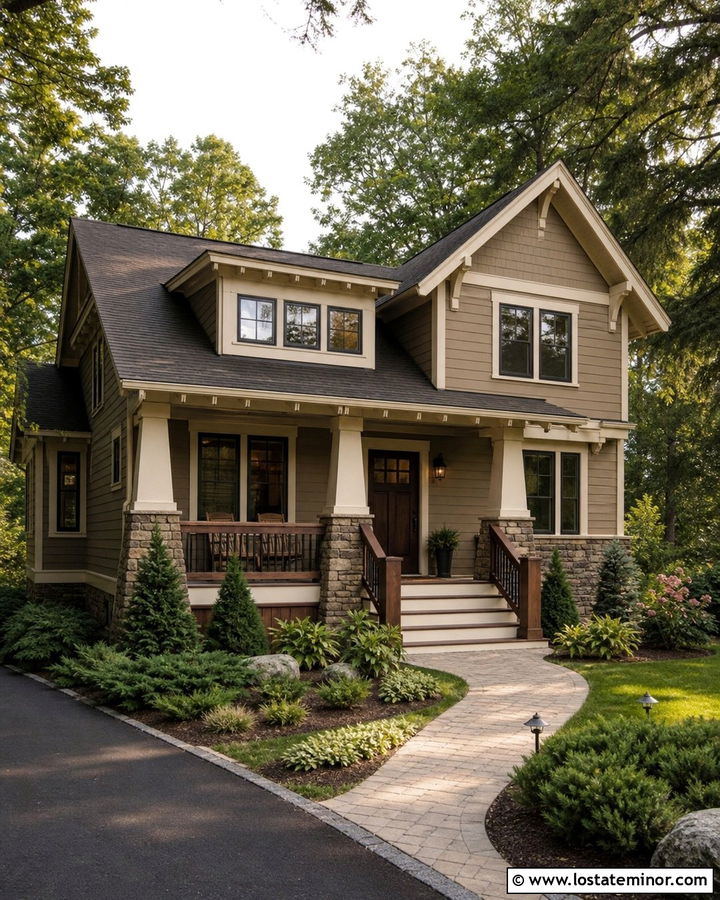
Rich walnut decking gives a tan Craftsman house the depth its detailed architecture needs. Choose warm tan lap siding with cream trim, then apply a deep walnut stain to the deck boards, stair treads, and substantial porch posts. Black metal balusters provide definition without hiding the wood grain. A dark brown front door, tapered stone columns, and an aged bronze porch light complete the earthy palette. Extend the deck slightly beyond the covered entry to create room for seating while preserving the home’s symmetrical facade. Use stone in mixed brown, gray, and sand tones so it connects the siding to the dark deck. Compact evergreens and deep green ground cover add contrast while keeping this complete exterior comfortable, traditional, and welcoming.
3. Tan Colonial House With Gray Composite Deck
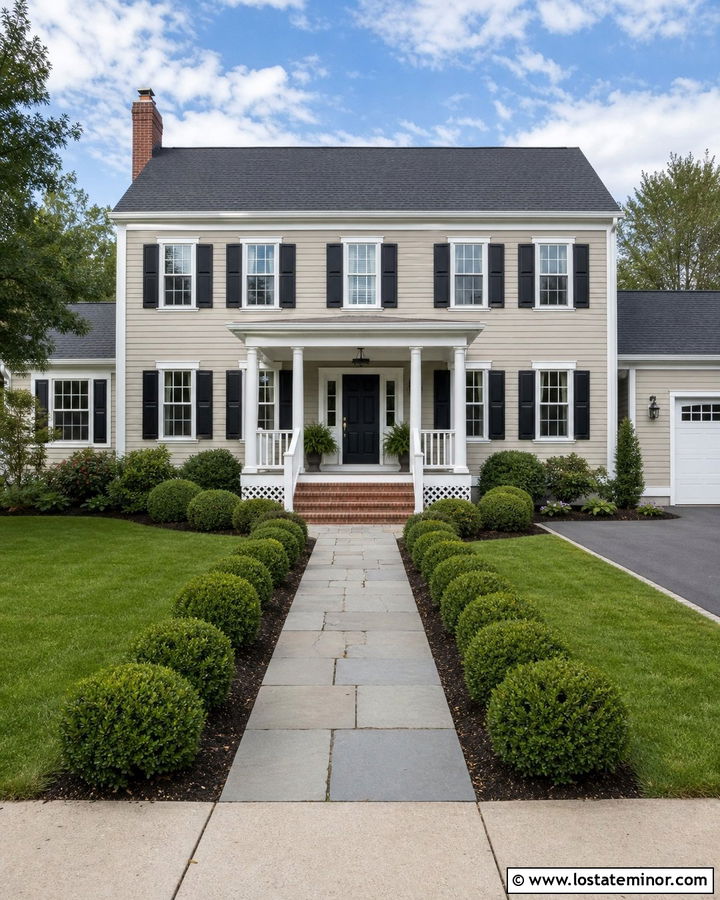
Could a gray deck work beside warm tan siding? On a Colonial house, it can look especially polished when the undertones are carefully coordinated. Select light mushroom tan for the clapboard siding and a medium warm gray composite for the deck. Avoid an icy blue-gray, which may feel disconnected from the exterior. White columns, railings, window trim, and cornices preserve the Colonial character. Add a glossy black front door and matching shutters to repeat the deck’s darker shadows. A symmetrical deck or raised front terrace will look more appropriate than an irregular platform. Red brick steps can introduce another traditional material. Formal boxwood borders, a straight paver walkway, and balanced foundation plantings finish the exterior with structure and timeless curb appeal.
4. Tan Modern Farmhouse With Black Deck
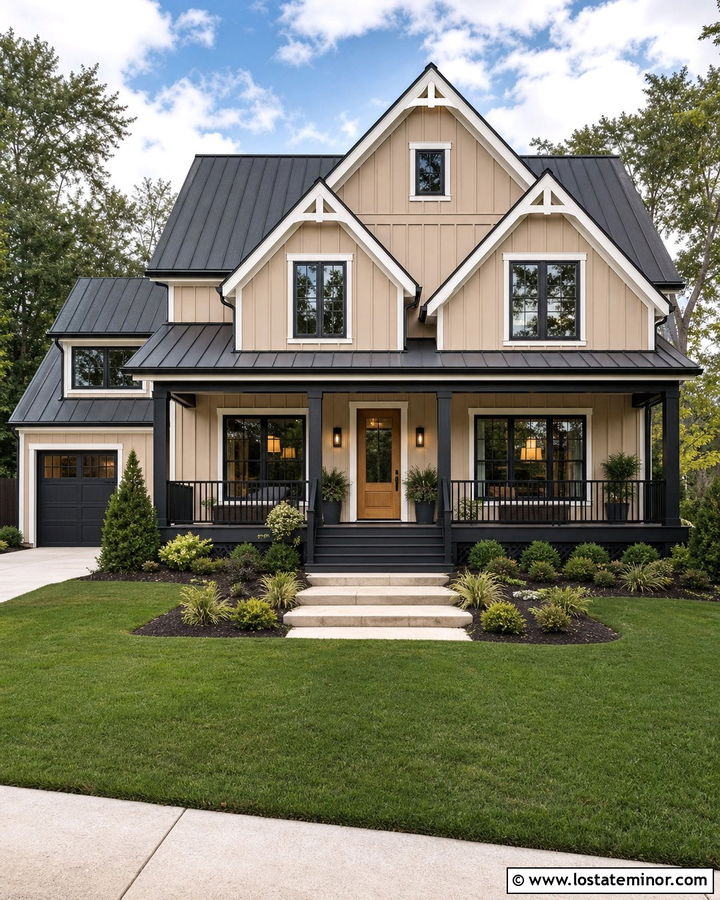
Black decking creates a bold foundation beneath a warm tan modern farmhouse. Cover the main facade in light tan board-and-batten siding, then use matte black for the deck boards, railings, window frames, and exterior lights. Warm white trim around the roofline keeps the contrasting palette from becoming too heavy. A natural oak front door and matching porch ceiling introduce enough organic color to soften the black surfaces. Run the deck across the entrance and one side of the house to form an outdoor sitting area with clean, rectangular lines. A dark charcoal metal roof will connect visually with the deck. Use pale concrete steps, clipped shrubs, and feathery grasses to create a neat transition between the strong architecture and the surrounding yard.
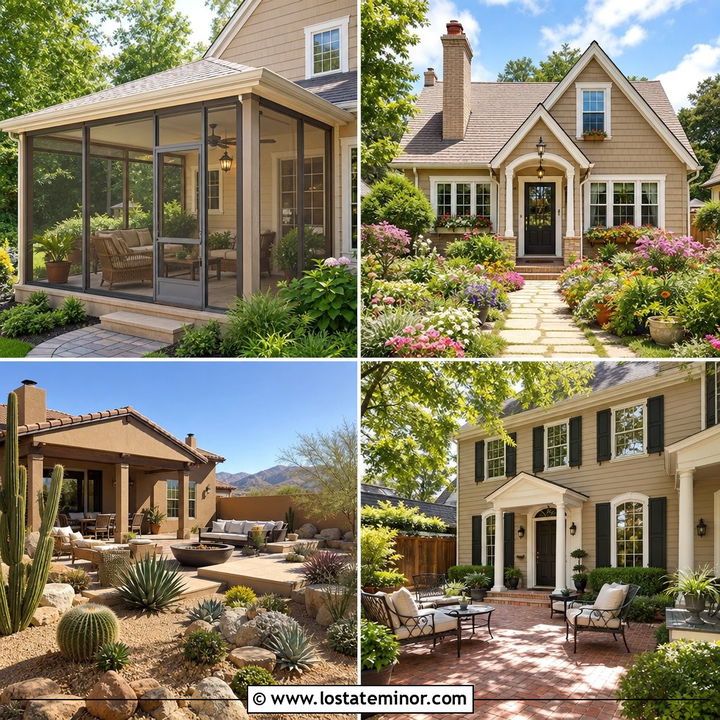
5. Tan Cape Cod House With White Deck Railing
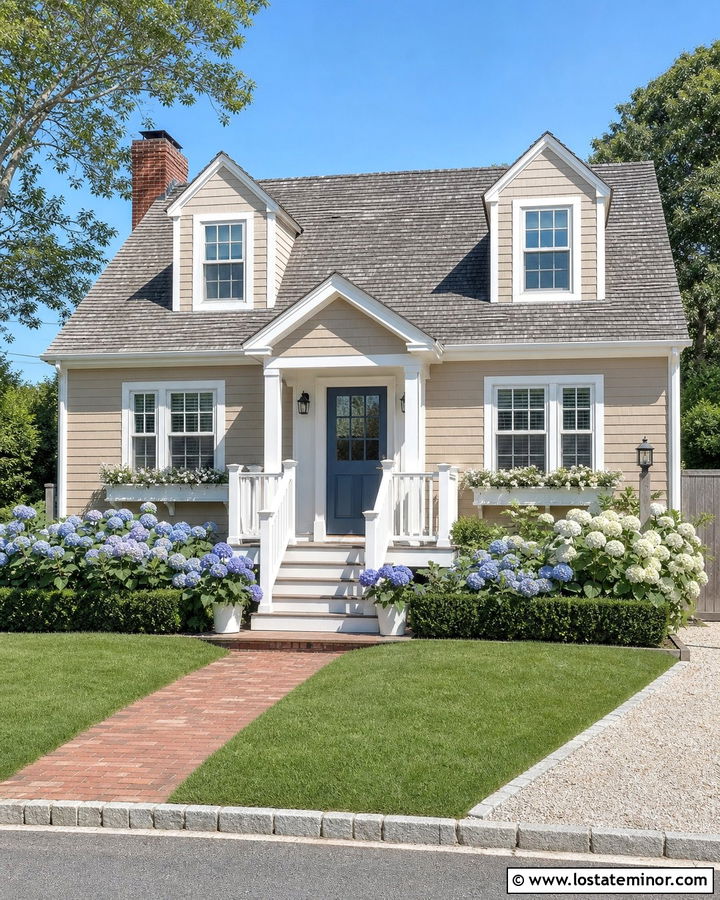
Picture a compact Cape Cod house with sandy tan shingles, a cedar deck, and bright white railings. This approachable combination emphasizes the home’s crisp trim and charming proportions. Stain the deck floor a medium driftwood brown, then paint the posts, stair risers, and railings soft white. The contrast outlines the outdoor space without competing with dormers or divided-light windows. A slate blue front door brings a subtle coastal note, while a weathered gray roof keeps the palette relaxed. Design the deck with centered steps leading directly toward a brick or stone walkway. Hydrangeas, low hedges, and soft green ground cover can frame the facade. The result feels fresh and traditional without relying on overly nautical decorations or intense blue accents.
6. Tan Split-Level House With Two-Tone Deck
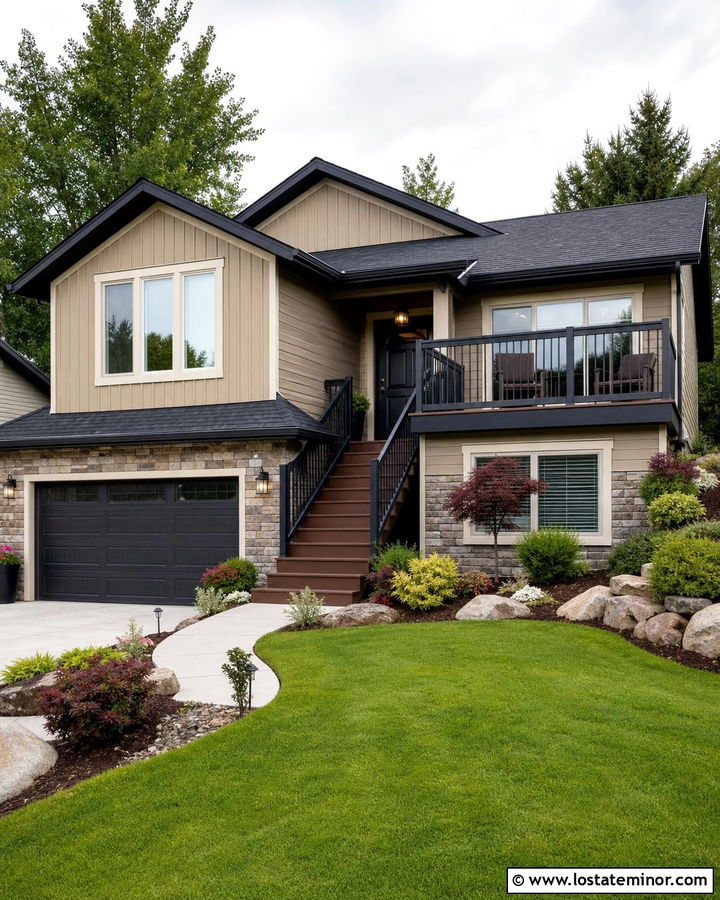
A two-tone deck can bring order and personality to the broad facade of a tan split-level house. Use warm beige-tan siding on the upper story and soft cream around the windows. Choose medium brown deck boards, then add charcoal railings and stair stringers for contrast. Repeating charcoal on the garage door, lights, and roof creates a connected exterior rather than a collection of unrelated finishes. Position the raised deck beside the main entrance, with wide stairs meeting the sloped front yard. Stone cladding around the lower level helps visually support the elevated structure. Keep the landscaping low near the deck so the railing remains visible. Layered shrubs, a curved walkway, and a small ornamental tree can soften the home’s strong horizontal shape.
7. Tan Bungalow With Redwood Deck
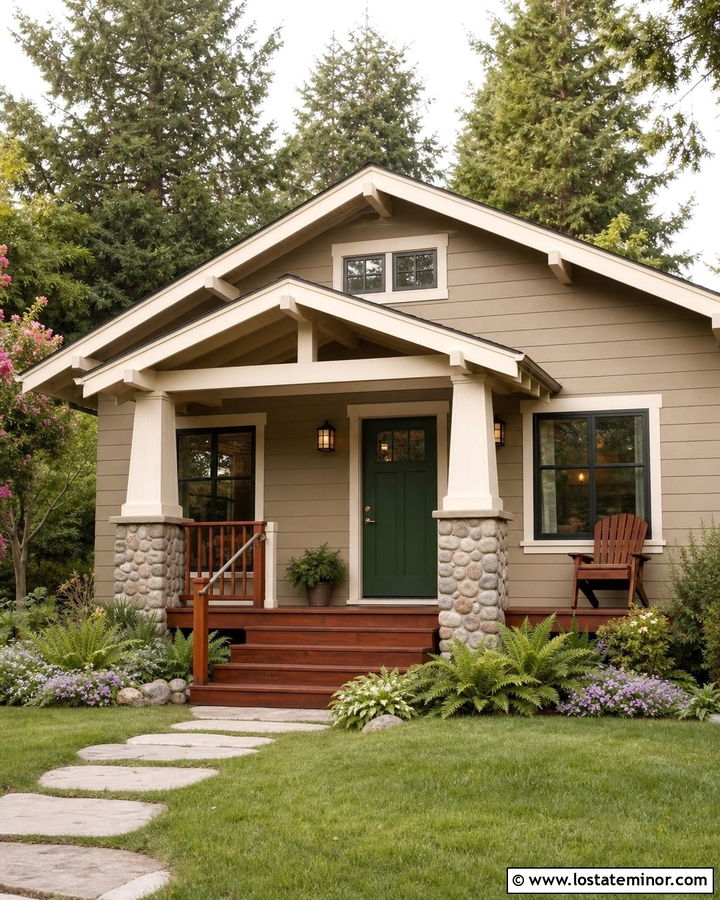
Redwood decking adds a warm, handcrafted quality to a tan bungalow. Start with muted khaki-tan siding and creamy ivory trim around the porch, eaves, and windows. A semitransparent redwood stain allows the grain to remain visible while giving the deck enough color to stand apart from the siding. Paint the front door deep forest green and repeat that shade on small gable details. Chunky square posts, exposed rafters, and low wood railings reinforce the bungalow’s cozy scale. If the deck is shallow, use broad front steps that can double as informal seating. River-rock foundation accents can bridge the redwood and tan surfaces. Ferns, flowering ground cover, and an informal stepping-stone path complete this natural, garden-friendly exterior scheme.
8. Tan Contemporary House With Floating Deck
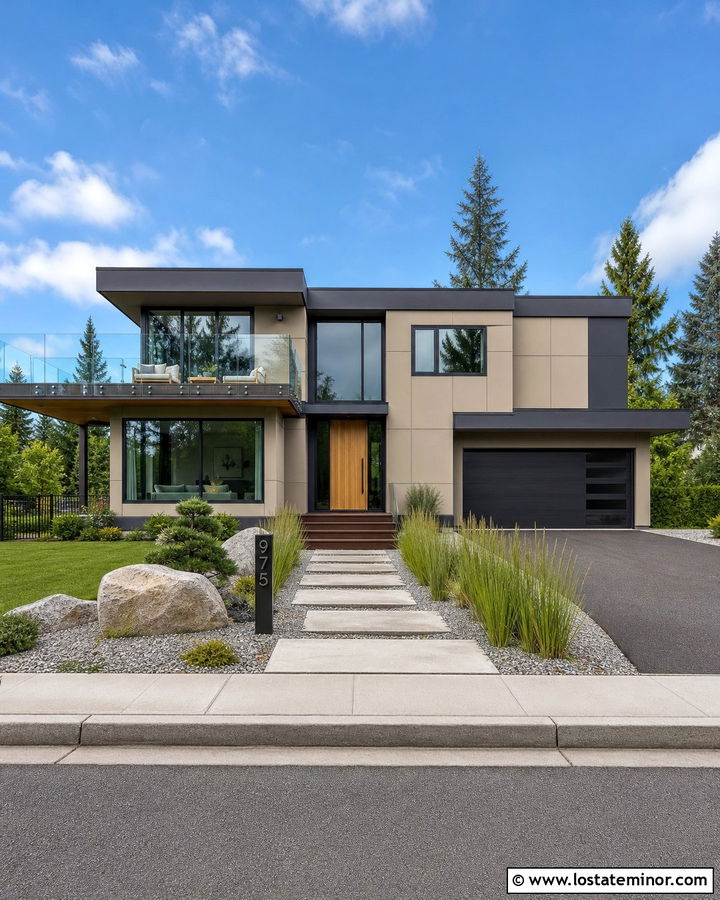
Clean lines turn a basic tan exterior into a refined contemporary composition. Select pale greige-tan stucco or smooth fiber-cement panels, then add a floating deck in dark teak brown. The platform should appear low and streamlined, with hidden fasteners and minimal visible framing. Frameless glass or slim black cable railings preserve open views of the house. Use black window frames, a flat charcoal roofline, and a vertical wood front door to balance the deck’s horizontal direction. Large concrete pavers can connect the driveway, entrance, and platform without adding visual clutter. Keep the landscaping architectural with upright grasses, compact evergreens, and a few sculptural boulders. This restrained palette makes the tan exterior feel intentional, current, and noticeably warmer than stark white.
9. Tan Mediterranean House With Terracotta Deck
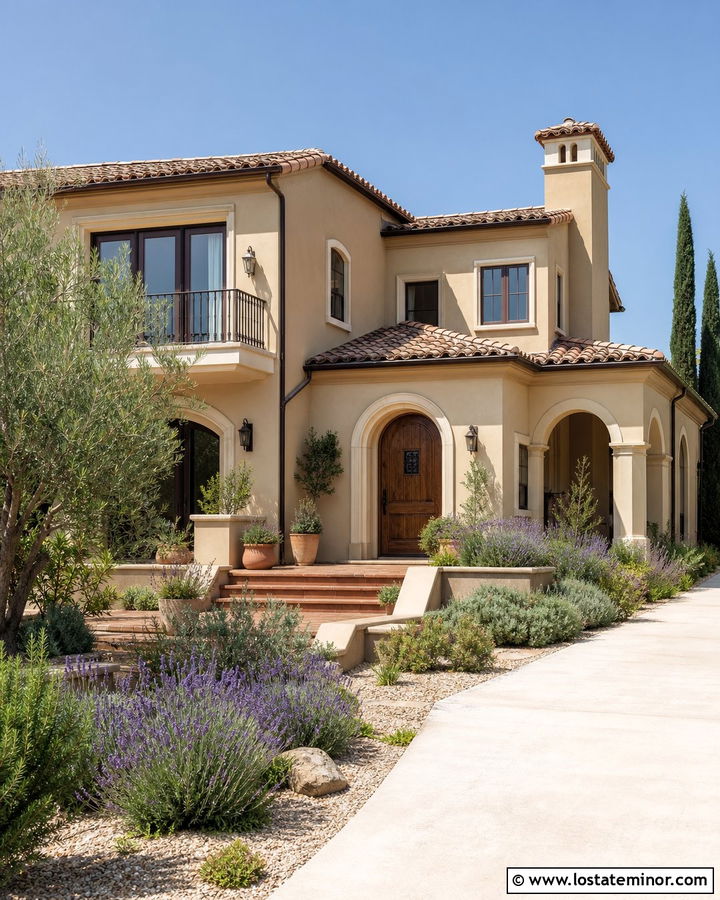
Sun-washed tan stucco pairs naturally with a terracotta-colored deck on a Mediterranean house. Instead of ordinary wood boards, consider terracotta-toned porcelain pavers installed over a suitable deck structure. The warm surface echoes a clay tile roof while remaining visually distinct from the lighter walls. Dark bronze railings, arched openings, and a stained wood front door bring depth to the facade. Use cream around windows and columns rather than brilliant white, which may look harsh against the earthy palette. A broad deck with low stucco walls can feel like an outdoor courtyard while remaining connected to the house. Add rosemary, lavender, ornamental grasses, and drought-tolerant shrubs. Pale gravel and irregular stone steps will complete the relaxed, warm-climate appearance.
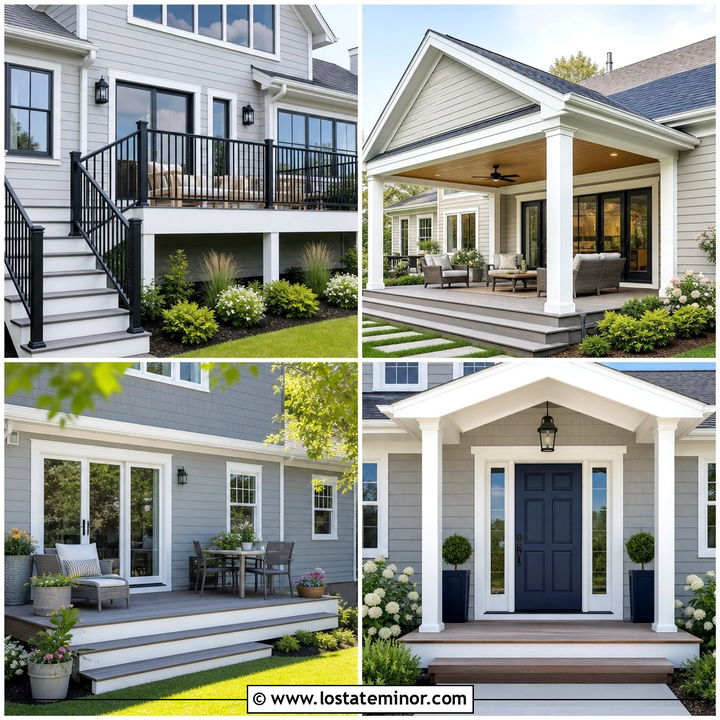
10. Tan Tudor House With Espresso Deck
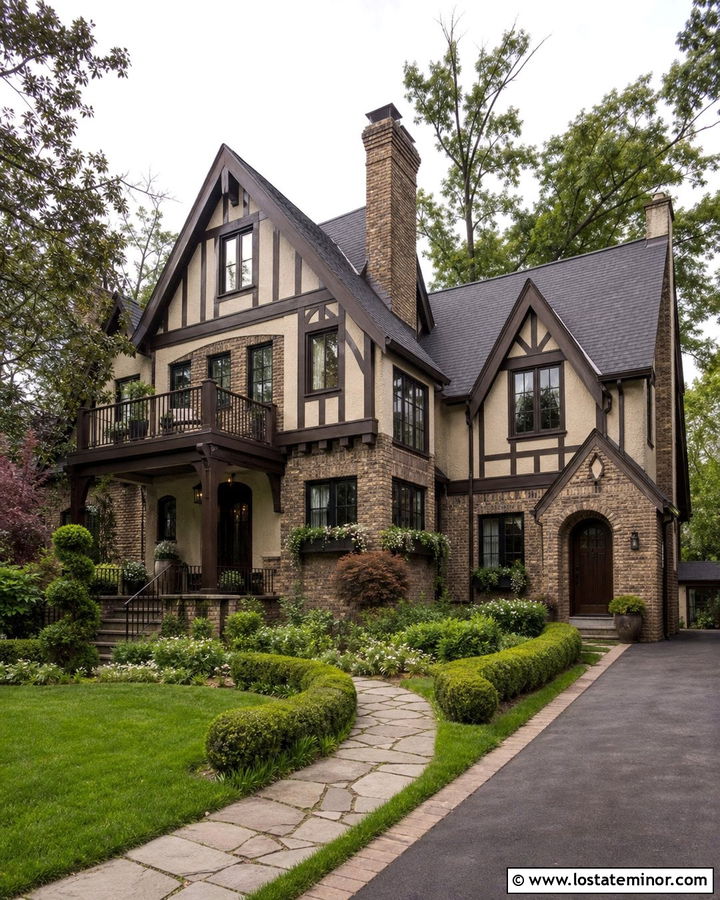
Deep espresso decking helps ground the steep rooflines and decorative details of a tan Tudor house. Use a muted taupe-tan on the stucco fields, creamy beige trim, and dark brown half-timbering. Continue the dark brown onto the deck floor, railing cap, steps, and front door for a consistent framework. Slim iron balusters prevent the wood elements from looking bulky. If the facade includes brick, choose a blend containing brown, charcoal, and subdued red rather than bright orange. A compact side-front deck tucked beneath a projecting gable will complement the architecture better than an oversized rectangular platform. Add clipped hedges, deep green shrubs, and an irregular flagstone path. This complete scheme feels historic and substantial while still supporting comfortable outdoor seating.
11. Tan Cottage House With Sage Green Deck
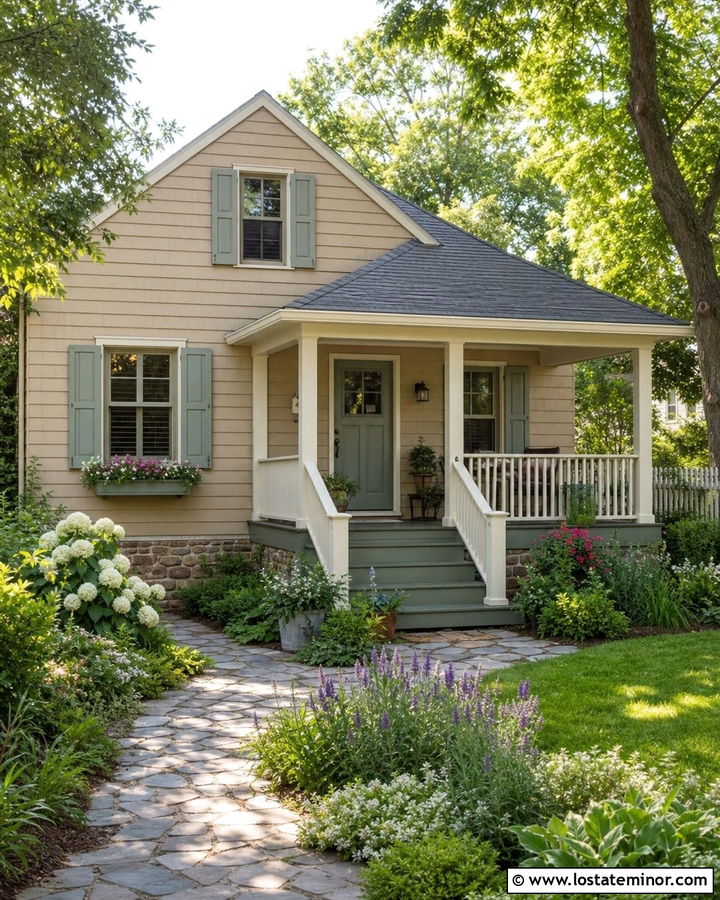
A sage green deck gives a tan cottage house a gentle connection to its garden. Choose soft biscuit-tan siding with warm white trim, then paint or stain the deck floor a muted gray-green. Use creamy white railings to maintain a light appearance, and repeat sage on the shutters or front door. A small deck with curved or flared steps will suit the informal cottage character better than rigid, oversized construction. Natural fieldstone around the foundation can add texture without making the palette busy. Frame the deck with flowering shrubs, herbs, and loose planting beds in white, lavender, and soft yellow. The green deck should read as an earthy neutral from the curb, allowing the house, garden, and outdoor living area to blend comfortably together.
12. Tan Prairie House With Ipe Deck
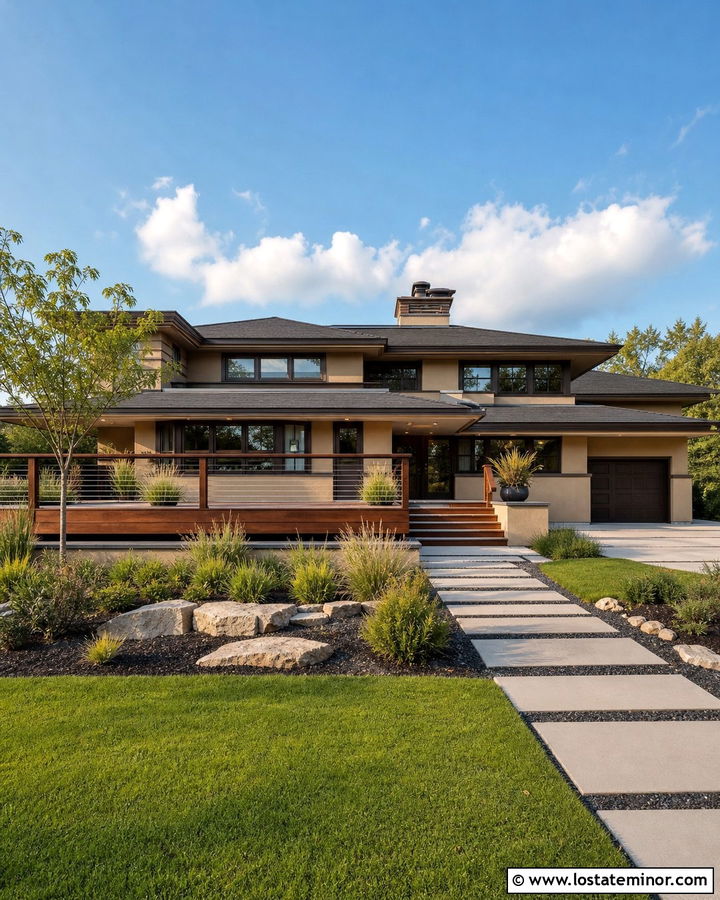
Long horizontal lines make an ipe deck a natural match for a tan Prairie-style house. Use medium sand-tan stucco or lap siding with deep bronze window frames and broad cream eaves. The ipe boards introduce a rich reddish-brown tone that gives the neutral exterior a clear focal point. Install the boards parallel to the facade to strengthen the home’s low, grounded proportions. Wide steps and low-profile cable railings keep the outdoor area visually open. A sheltered deck beneath an extended roof can also create a comfortable transition between indoor and outdoor spaces. Repeat the deck tone on the front door or soffits. Linear planting beds, low grasses, flat stone pavers, and a carefully positioned ornamental tree will complement the architecture without obscuring it.
13. Tan Victorian House With Cream Deck
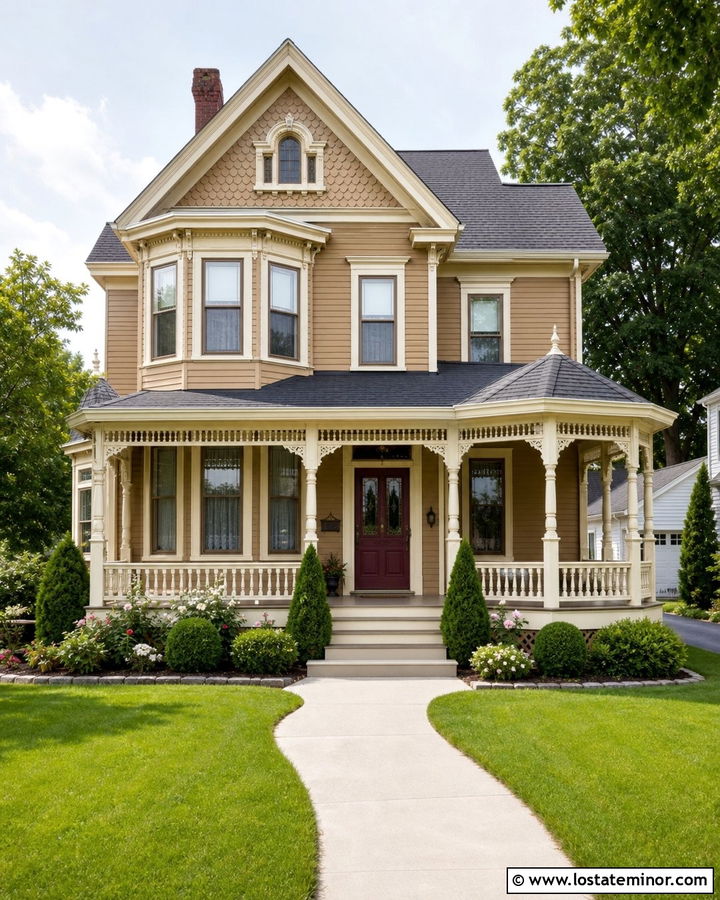
A cream-painted deck can brighten the ornate facade of a tan Victorian house without overwhelming its decorative trim. Apply a soft caramel tan to the siding and use warm cream on the railings, posts, brackets, stair risers, and window surrounds. Paint the deck floor a slightly deeper mushroom beige so foot traffic is less visible and the structure has a stable base. A muted burgundy front door adds period-friendly color, while charcoal roof shingles prevent the warm palette from becoming too sweet. Preserve distinctive features such as turned posts and patterned gable shingles, but limit the overall scheme to three or four colors. Neatly shaped shrubs, a curved walkway, and restrained flower beds will showcase the architecture while keeping the exterior inviting and organized.
14. Tan Southwestern House With Weathered Wood Deck
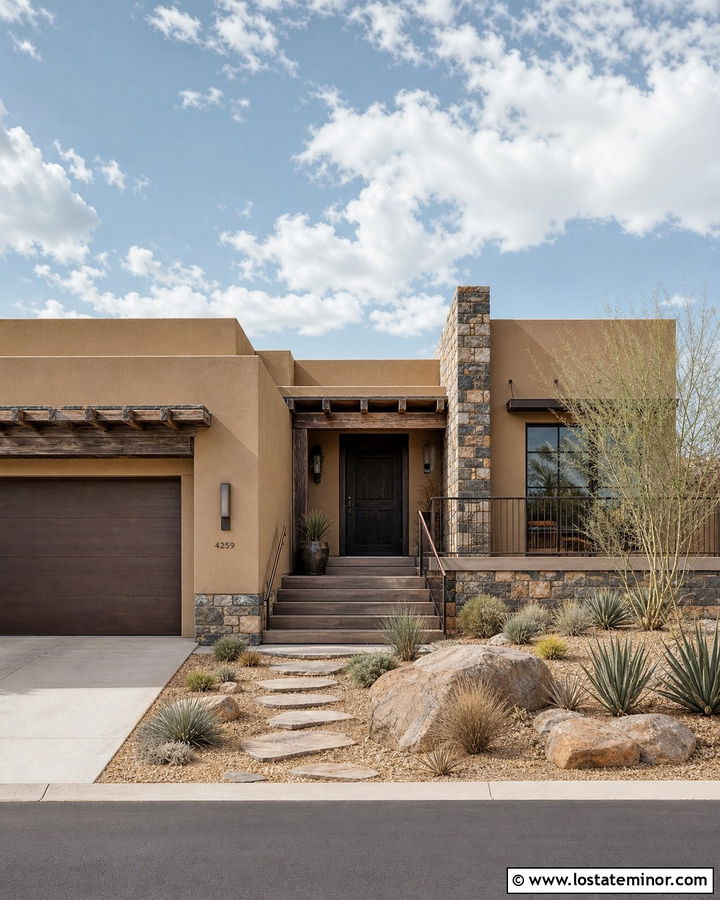
Weathered wood tones suit the rugged simplicity of a tan Southwestern house. Choose warm adobe tan for the stucco walls, then use gray-brown deck boards that resemble naturally aged timber. Dark bronze railings and a blackened wood front door provide definition against the pale facade. A low, uncovered platform with broad steps will look more integrated than an ornate raised deck. If shade is needed, add a simple wood pergola with substantial beams stained to match the door. Stone in rusty brown, sand, and charcoal tones can wrap the base of the house or deck supports. Complete the property with gravel, sculptural desert plants, native grasses, and large stepping stones. Bright daylight will emphasize the subtle contrast between smooth stucco and textured decking.
15. Tan Lake House With Blue-Gray Deck
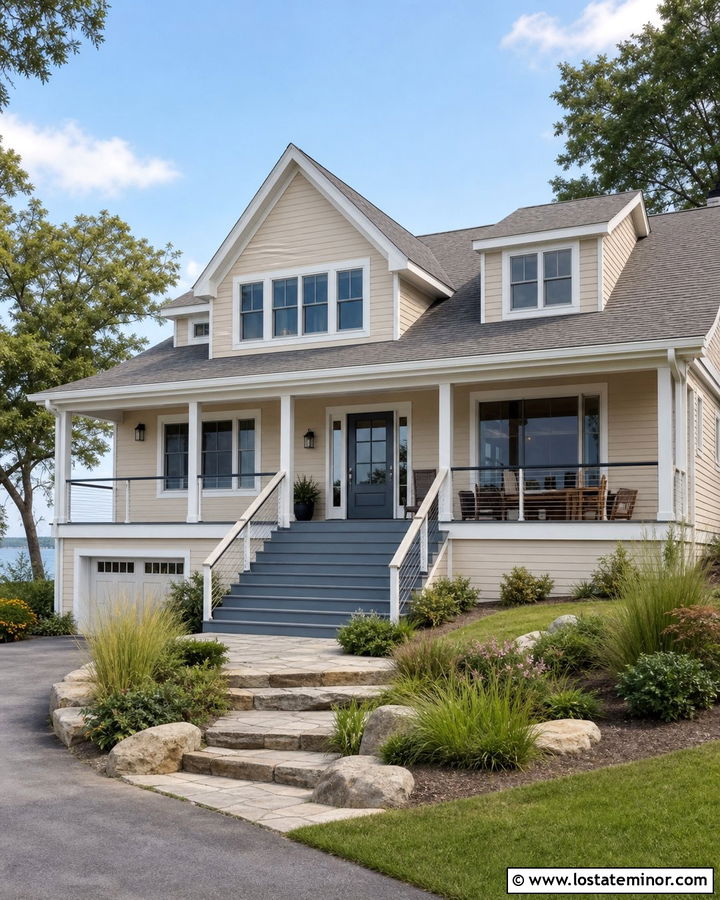
Cool blue-gray decking creates a calm contrast against the warm siding of a tan lake house. Select light dune tan for the exterior, soft white for the trim, and a medium blue-gray for the deck boards. Choose a gray with slight green or warm undertones so the combination does not appear cold. White railings and stainless cable infill will keep water views open while adding a clean finish. Repeat the deck color on the front door or upper shutters for balance. A broad deck wrapping around one corner can provide outdoor seating without hiding the complete facade. Natural stone steps, native grasses, and loosely arranged shrubs support the relaxed setting. A medium gray roof will connect the cooler deck color to the warmer house body.
16. Tan House With Raised Deck And Stone Piers
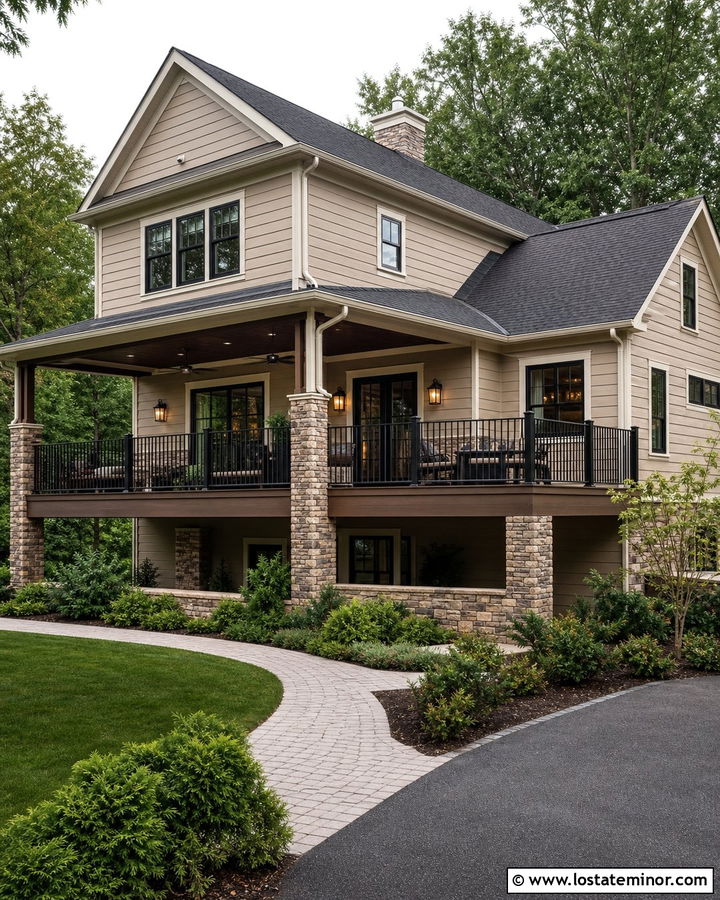
A raised deck needs a strong visual base, especially when attached to a two-story tan house. Wrap the supporting piers in ledgestone containing beige, brown, and soft gray, then use dark chestnut decking above. Warm tan siding and creamy trim will relate to the lighter stone, while black metal railings define the elevated edges. Consider enclosing part of the space beneath the deck with matching horizontal slats for a neat, finished appearance. Wide stairs with an intermediate landing can make the structure feel less imposing from the yard. Repeat the stone around the lower facade or entrance columns so it does not look added as an afterthought. Deep green shrubs and a paved path will soften the tall supports while preserving access below.
17. Tan House With Wraparound Cedar Deck
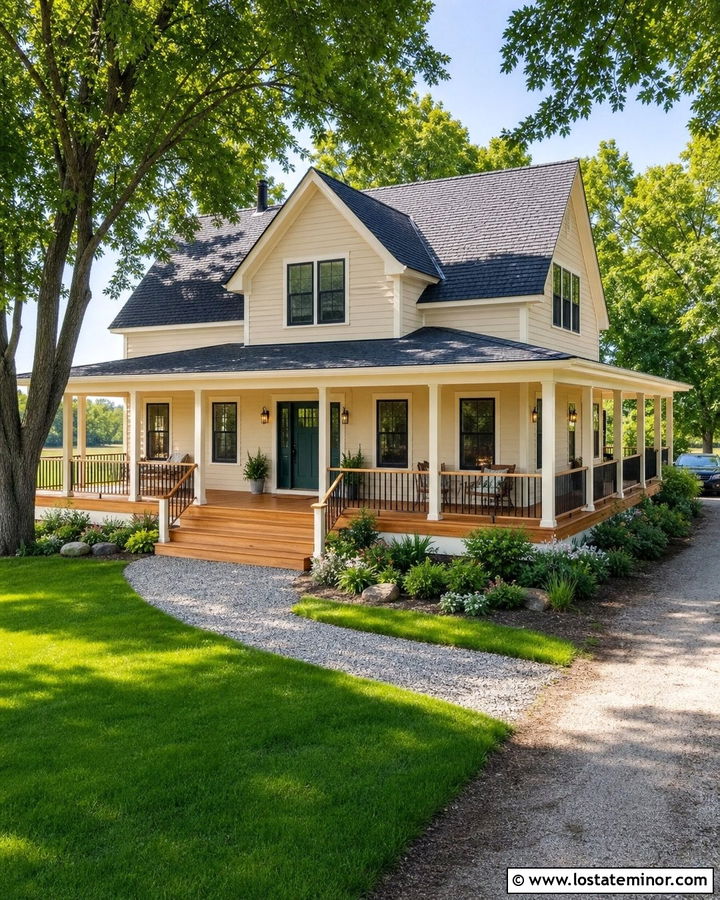
Few features feel as welcoming as a cedar deck wrapping around a warm tan house. This arrangement works well on a farmhouse, country home, or simple two-story residence with broad eaves. Use creamy tan siding, ivory trim, and natural cedar for the floor, posts, stair treads, and railing caps. Black balusters add contrast while keeping the long railing from becoming visually heavy. A muted black or deep green front door can anchor the entrance beneath the covered portion. Break the wraparound deck into clear zones for entry, seating, and dining rather than filling every side with furniture. A dark gray roof, gravel walkway, and informal foundation plantings will balance the warm wood. The finished exterior feels spacious, unified, and connected to the landscape.
18. Tan House With Multi-Level Brown Deck
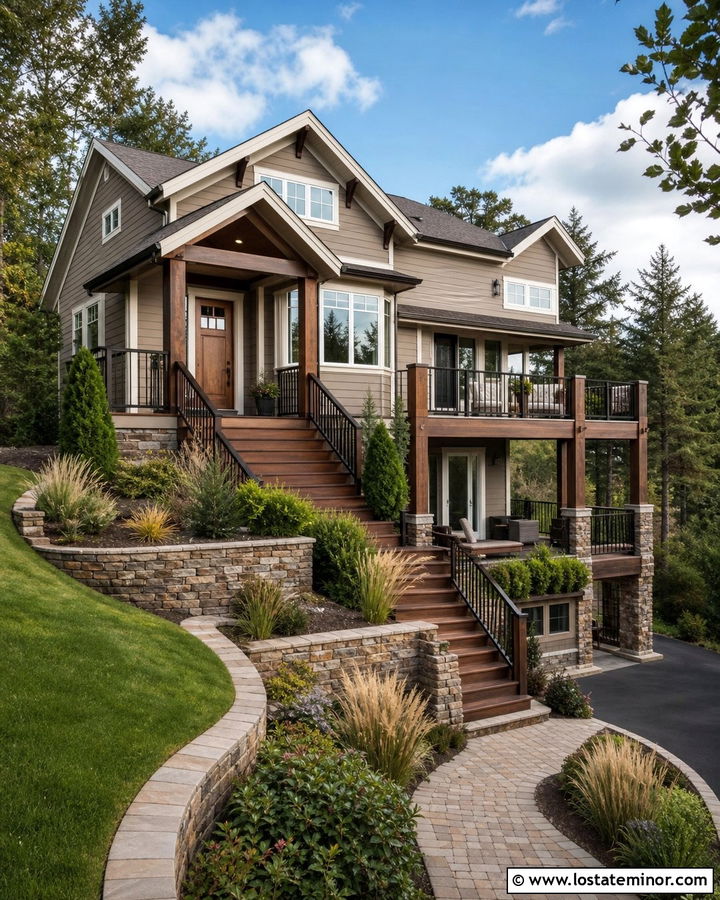
A multi-level deck can solve a sloped-yard challenge while giving a tan house a layered, custom appearance. Use medium beige-tan siding with white trim, then select two related brown tones for the deck. A lighter chestnut floor on the upper level and darker walnut borders or stairs will subtly define each zone. Keep the railing consistent in matte black so the structure remains cohesive. Connect the upper landing to a lower lounge platform using broad steps instead of one steep staircase. Stone retaining walls can echo the siding and support the transition into the yard. Repeat walnut on the front door and garage accents. Low grasses, spreading shrubs, and a curved paver path will soften the deck’s geometry without concealing its thoughtful tiered design.
19. Tan Brick House With Composite Deck
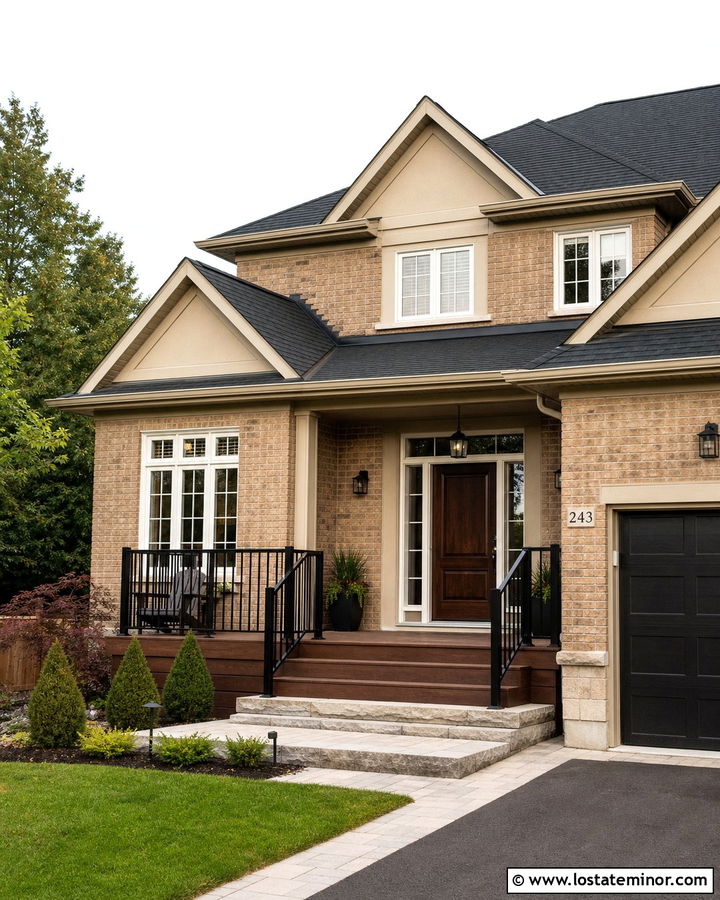
Tan brick offers built-in texture, so the deck should complement it without introducing too many competing colors. Choose a medium brown composite board with subtle variation, then use black aluminum railings and matching stair lights. Paint remaining siding or gable areas a soft sandy tan that closely relates to the brick. Warm white trim around windows and roof edges will brighten the facade, while a dark walnut front door connects visually with the decking. If the deck meets a brick wall, leave a clear visual break through proper trim detailing rather than trying to match every tan tone exactly. Add limestone steps or pale concrete pavers to lighten the ground plane. Simple evergreen landscaping will allow the brick and deck textures to remain the main attraction.
20. Tan Stucco House With Cable Rail Deck
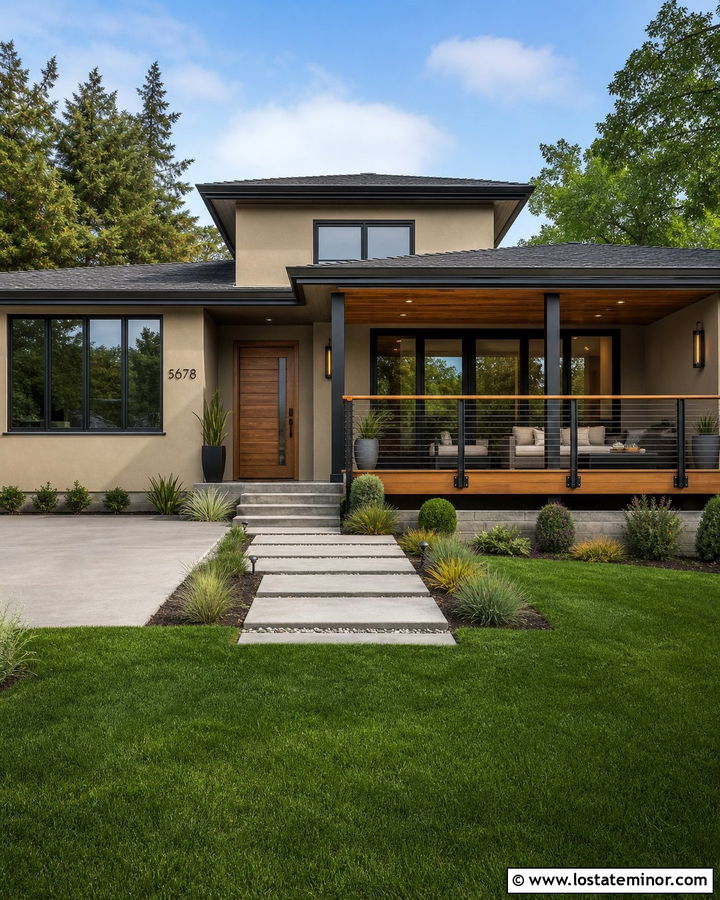
Slim cable railings give a tan stucco house a lighter, more contemporary deck. Start with warm putty-tan walls, dark bronze windows, and a flat or low-pitched charcoal roof. Use medium teak decking to add natural color without creating a harsh contrast. Black posts with horizontal stainless cables will define the platform while preserving an open view of the facade and yard. A wide sliding door can visually connect the indoor living area with the deck. Repeat the teak tone on the front entry door or a small section of vertical siding. Large concrete pavers, clipped grasses, and sculptural shrubs will reinforce the modern lines. Keep decorative details minimal so the smooth stucco, warm wood, and slender railing system receive equal visual attention.
21. Tan Board And Batten House With Dark Deck
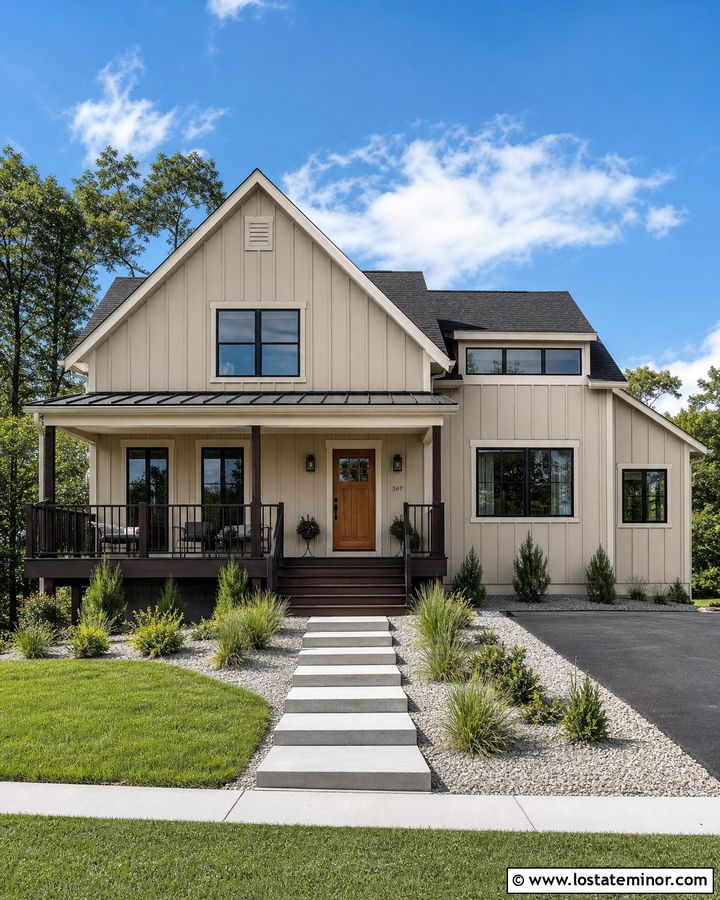
Vertical board-and-batten siding looks taller and more defined when paired with a dark horizontal deck. Paint the house a light oatmeal tan and the trim a creamy off-white. Choose deep coffee-brown deck boards with black railings, stair stringers, and exterior lights. This darker base will ground the vertical facade and create a clear outdoor living zone. A natural wood front door prevents the brown and black accents from feeling too severe. Consider a covered section with tan-painted columns and a stained wood ceiling to repeat all three main colors. A medium charcoal roof provides the final anchor. Use pale gravel, square concrete steps, evergreen shrubs, and airy ornamental grasses to create a clean landscape that complements the strong siding pattern.
22. Tan Shingle House With Driftwood Deck
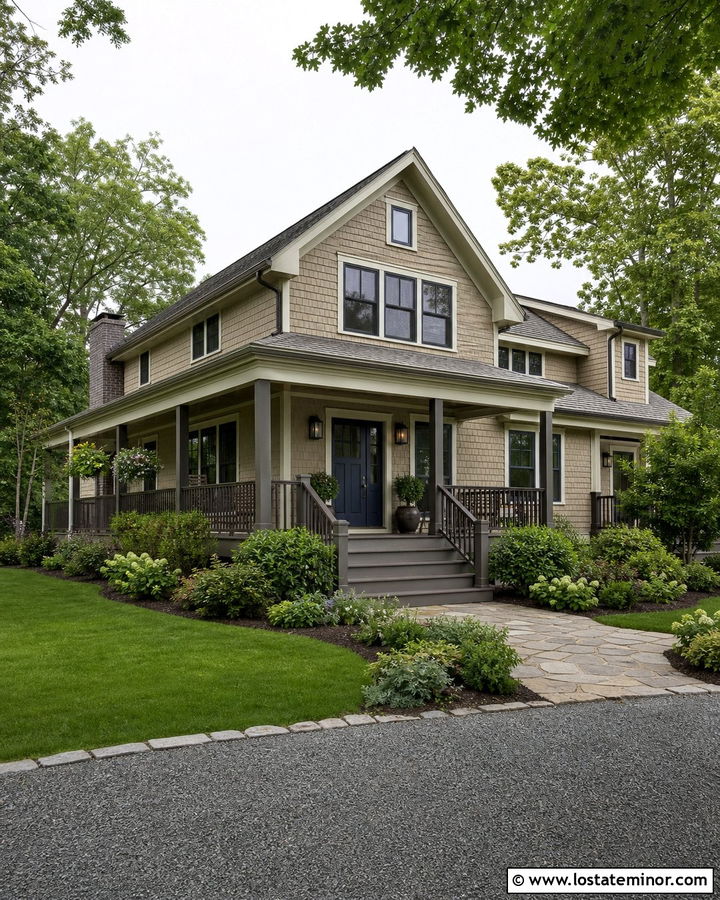
A driftwood-colored deck complements the soft texture of a tan shingle house. Choose weathered tan cedar shingles or fiber-cement shingles for the facade, then use gray-brown composite boards on the deck. Cream trim will highlight windows and rooflines without creating a sharp white outline. Add dark bronze railings and a muted navy front door for depth. A deck that wraps around a corner can emphasize the relaxed architecture while creating separate areas for sitting and outdoor dining. Keep posts simple and substantial rather than highly decorative. A weathered gray roof, stone walkway, and casually layered shrubs will reinforce the natural palette. The combination works especially well where mature trees create changing light across the shingles, decking, and surrounding garden.
23. Tan Lowcountry House With Screened Deck
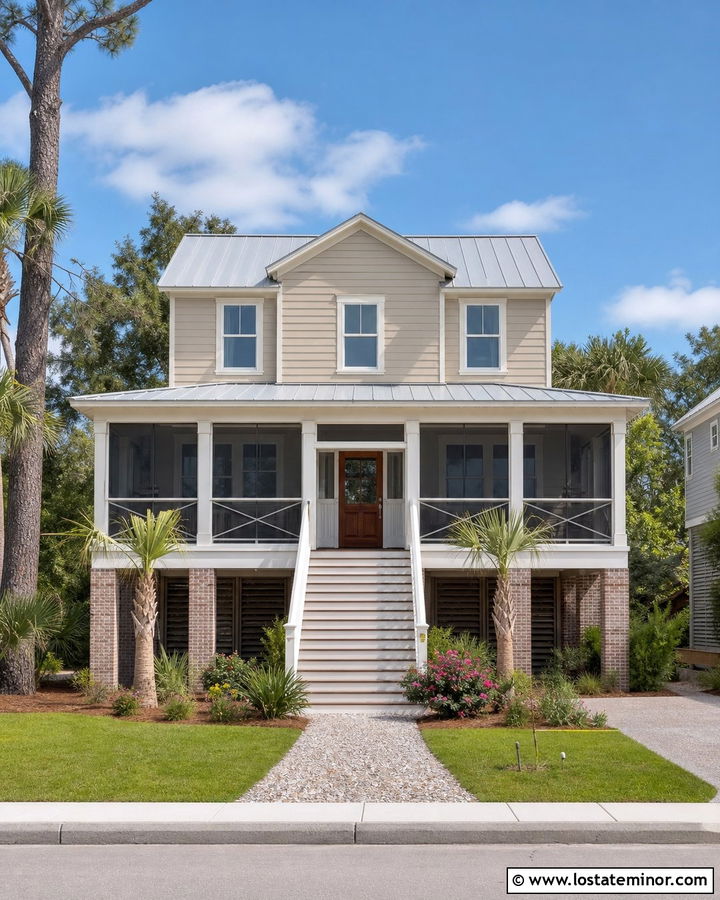
A screened deck can become an intentional architectural feature on a raised tan Lowcountry house. Use pale sandy tan siding with white trim, tall windows, and a light silver-gray metal roof. Paint the screened deck framing white so it feels connected to the columns and window surrounds. Medium brown decking will provide practical contrast beneath the light structure. Add black screen mesh, simple black lighting, and a warm mahogany front door to create definition. Position an open deck landing beside the screened area so the complete outdoor space remains visible from the curb. Brick or tabby-style piers can support the elevated facade. Palmettos, flowering shrubs, and a straight shell or gravel path will complete the airy, regional character.
24. Tan Mountain House With Timber Deck
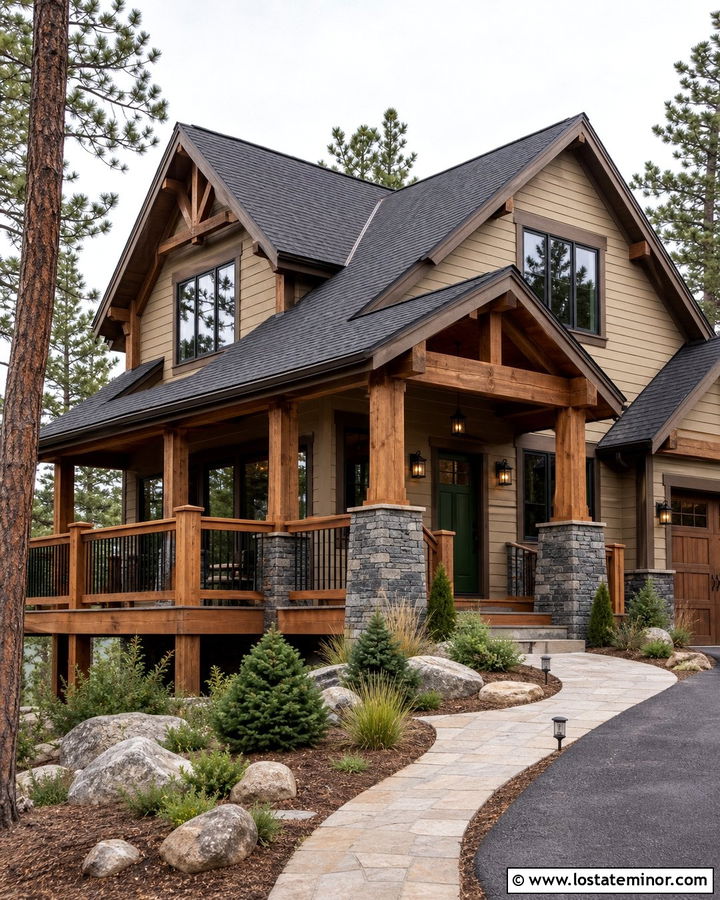
A timber deck gives a tan mountain house the substantial character needed to match a wooded setting. Select medium khaki-tan siding, deep brown trim, and charcoal stone across the lower facade. Use thick cedar or Douglas fir deck boards, beams, posts, and rail caps in a rich natural stain. Black metal balusters will provide security without interrupting the expansive woodwork. A steep charcoal roof and dark green front door help the house settle into its surroundings. Extend the deck around one visible corner to create an outdoor viewing area, and support it with stone-clad piers. Native grasses, evergreen shrubs, boulders, and a gently curving walkway will frame the house. The mixture of tan, timber, stone, and green feels cohesive rather than rustic for its own sake.
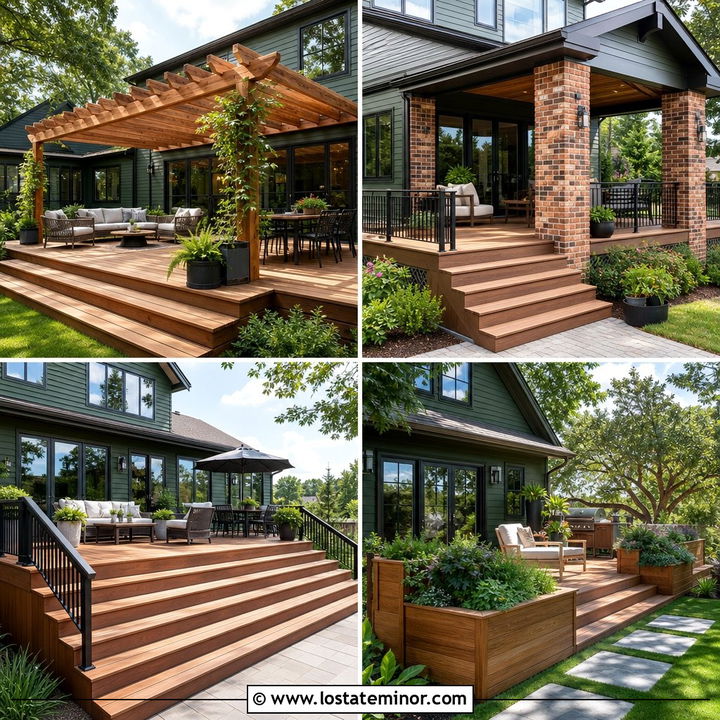
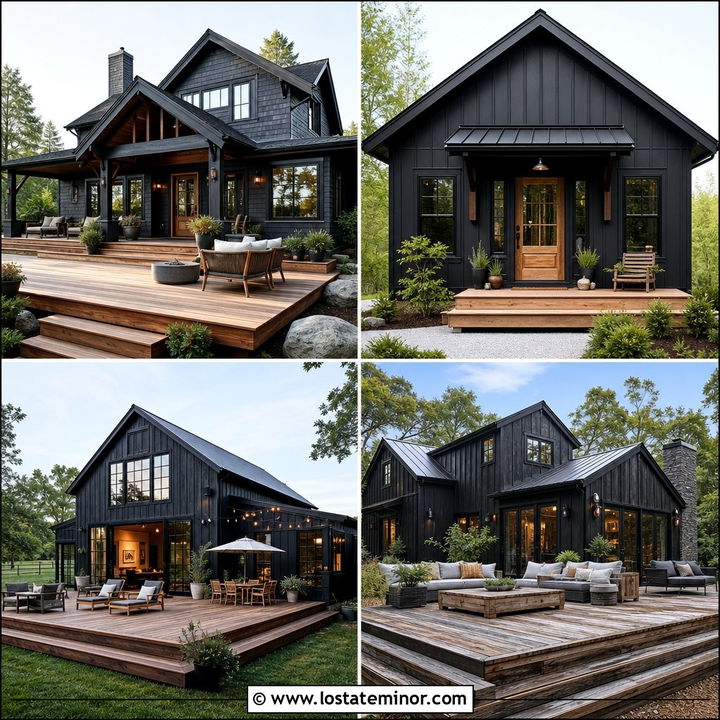
25. Tan Coastal House With White And Gray Deck
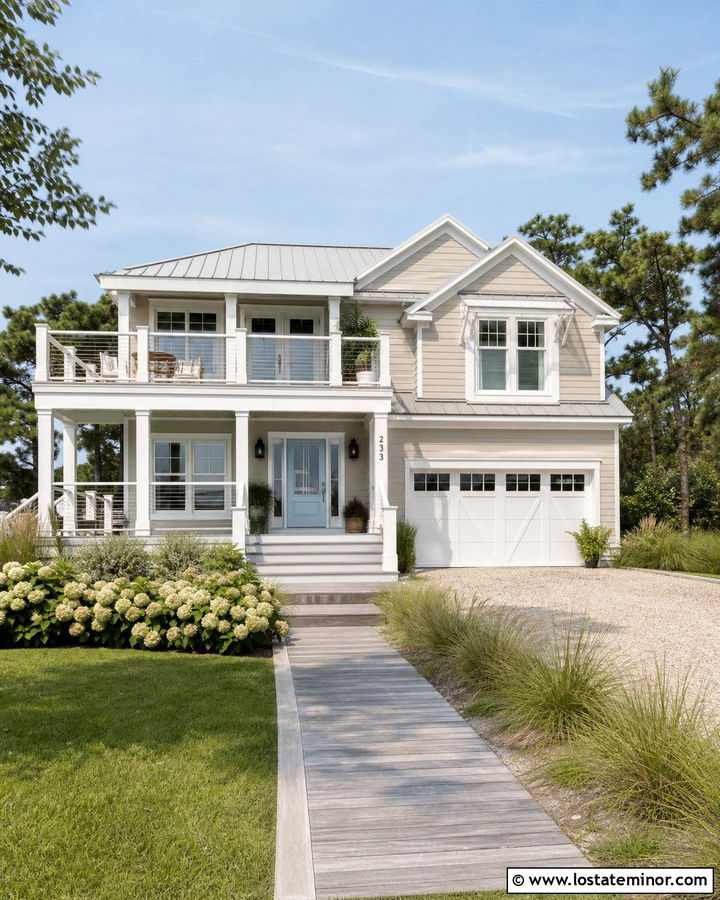
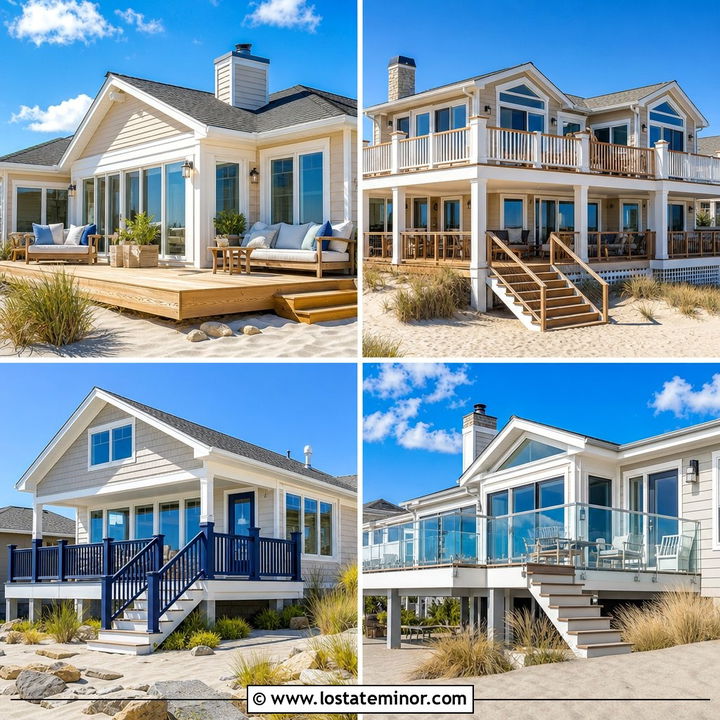
Tan does not need to look heavy on a coastal home. Use a pale beach-sand tan on the siding, bright but balanced white on the trim, and soft weathered gray on the deck floor. White railings keep the facade crisp, while thin stainless cables or narrow balusters preserve an open, breezy appearance. Paint the front door a muted sea-glass blue for a restrained accent. A light gray metal roof can repeat the deck color and reflect bright daylight. Design the deck with broad corner steps and an uncovered sitting area rather than bulky overhead structures. Add dune grasses, hydrangeas, light gravel, and a simple boardwalk-inspired path. Together, these details create a relaxed exterior that feels coastal without relying on obvious themed decorations.
26. Tan Midcentury House With Platform Deck
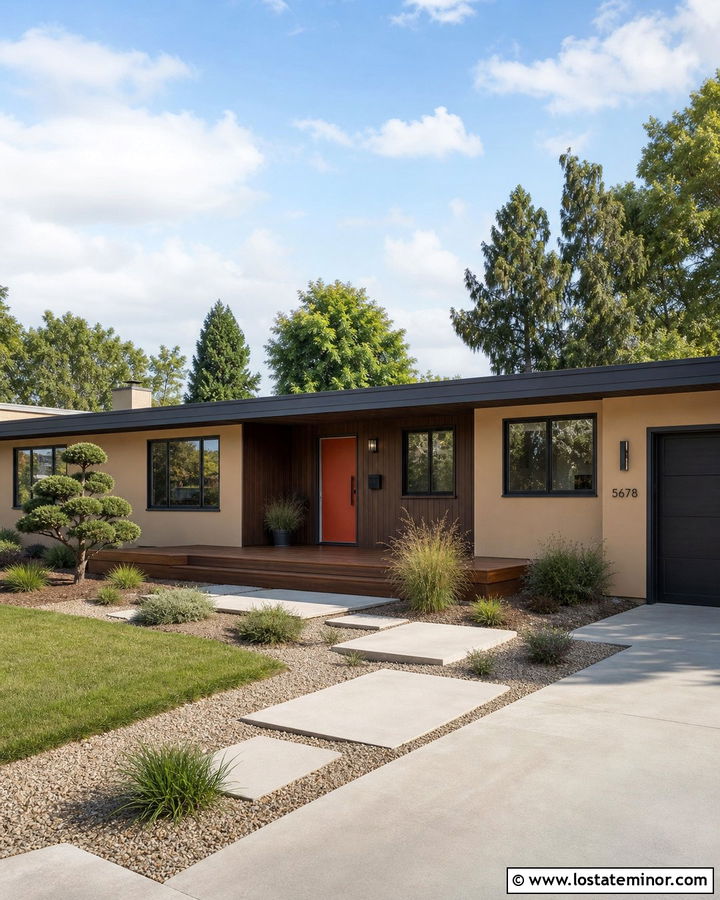
A low platform deck reinforces the clean horizontal geometry of a tan midcentury house. Choose a muted camel tan for the main siding and add a section of dark brown vertical wood near the entrance. Use warm teak-colored decking with no railing where site conditions safely allow, creating a smooth transition into the lawn. Black-framed windows, a charcoal fascia, and a mustard or burnt orange front door can bring period-inspired contrast. Keep the deck rectangular and align its edges with major windows or roof overhangs. Large concrete stepping pads and gravel planting beds will support the architecture’s simple lines. Finish with sculptural evergreens, ornamental grasses, and one carefully placed small tree. The complete facade should feel open, warm, and deliberately uncluttered.
27. Tan Traditional House With Pergola Deck
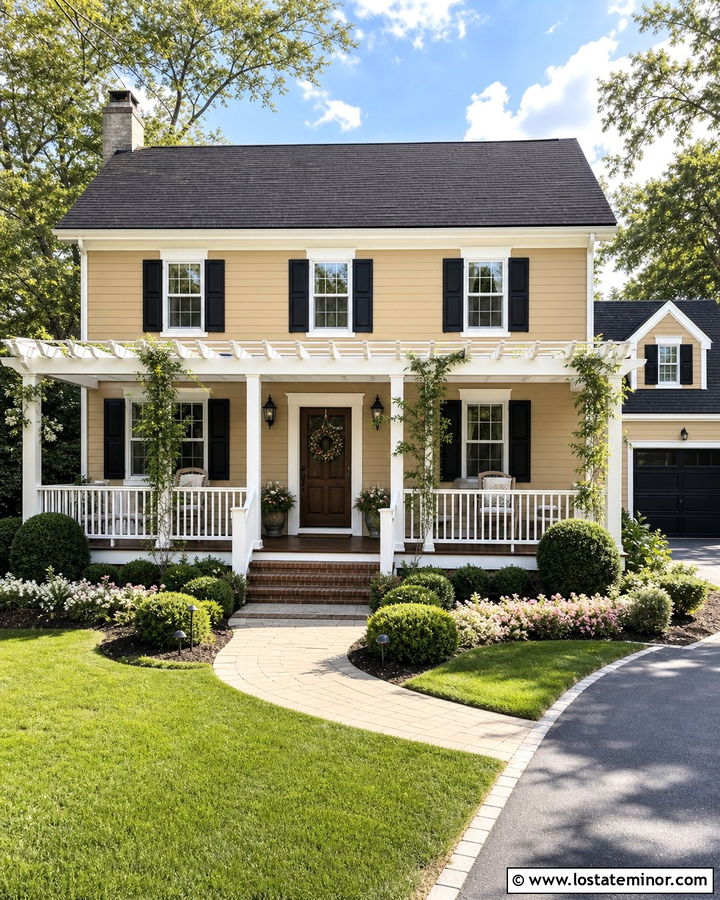
A pergola can make a deck feel like a permanent part of a tan traditional house. Paint the siding a soft golden tan and use creamy white for the trim, pergola posts, beams, and railings. Medium walnut deck boards provide enough contrast to define the floor without making the outdoor area feel dark. Repeat walnut on the front door, then use black for the shutters, lanterns, and small metal details. Align the pergola with the home’s windows and entrance so its posts look architecturally organized. Climbing greenery can soften the top beams, but avoid covering the complete structure. Brick steps, a curved walkway, layered boxwoods, and seasonal flowering plants will create a balanced transition from the formal facade to the comfortable deck.
28. Tan Duplex House With Divided Deck
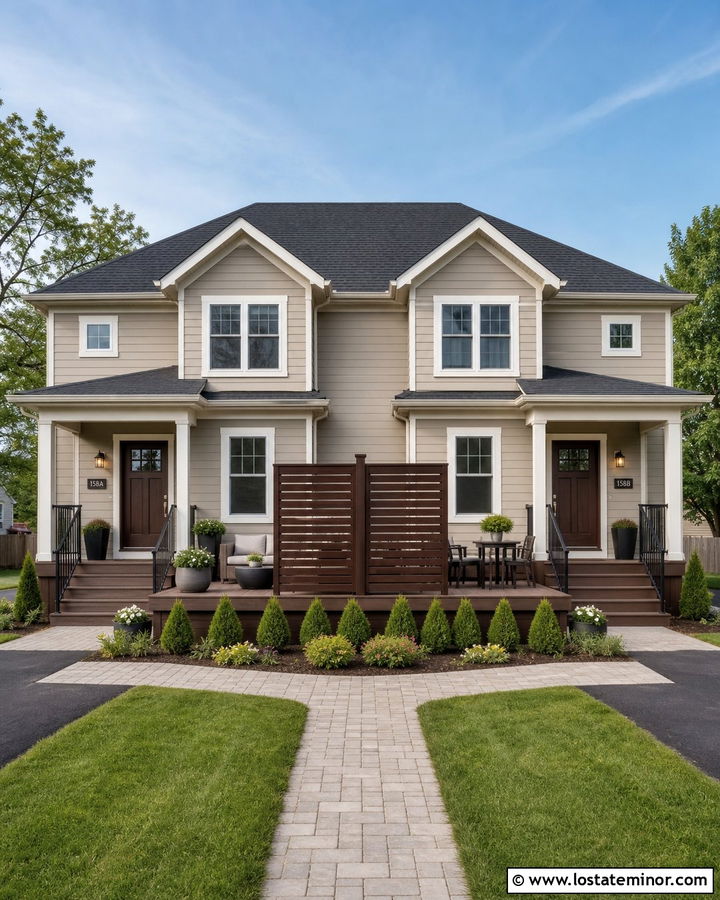
A thoughtfully divided deck can give a tan duplex privacy while maintaining a unified exterior. Use consistent light tan siding, warm white trim, and medium cedar-brown decking across both units. Separate the seating zones with a vertical wood privacy screen stained one shade darker than the floor. Repeat that darker brown on both front doors so the facade remains balanced. Black railings, lights, and house numbers can provide crisp definition. Keep the deck platform and stair design symmetrical unless the building’s architecture clearly favors an asymmetrical layout. Planters placed near the divider will soften it without blocking windows. A shared paver path, matching foundation shrubs, and a dark gray roof complete the property, giving each household personal outdoor space without making the building appear fragmented.
29. Tan Small House With Corner Deck
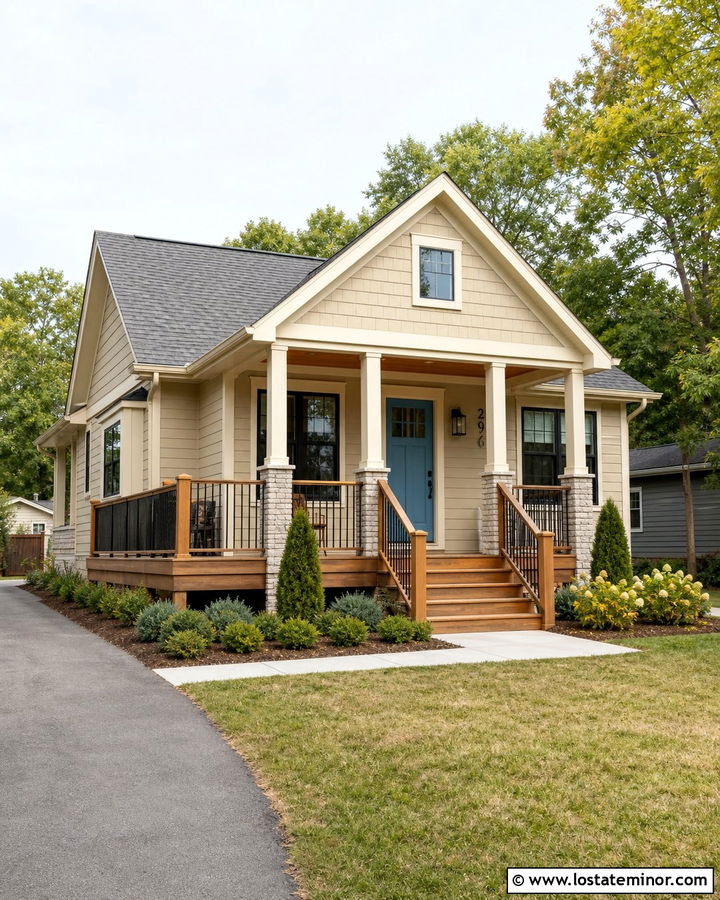
A corner deck can add useful outdoor space to a small tan house without overpowering its facade. Choose a light almond-tan body color with creamy trim to keep the structure visually open. Use medium cedar decking and simple black balusters for warmth and definition. Wrap the platform around the entrance corner, creating a small seating zone beside the front door while keeping the main steps easy to find. A compact gabled canopy can protect the entry without covering the entire deck. Paint the door dusty blue or muted green for a gentle focal point. Keep the roof medium gray and limit additional materials to one pale stone accent. Low shrubs, narrow planting beds, and a direct walkway will make the property feel larger, cleaner, and more welcoming.
30. Tan House With Accessible Ramp Deck
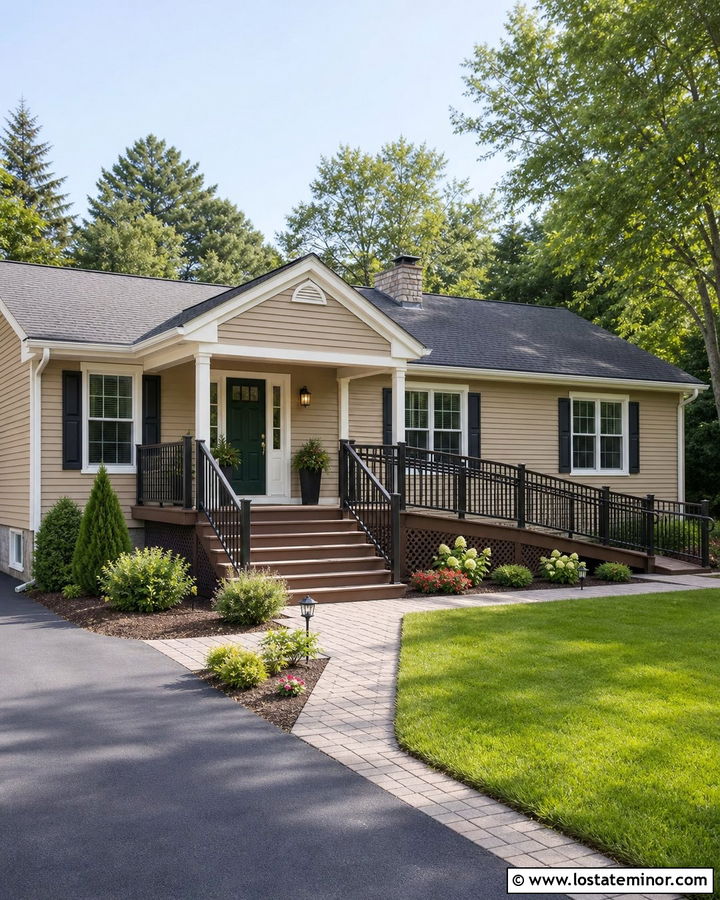
An accessible ramp deck can look fully integrated with a tan house when its materials repeat the main exterior palette. Use medium warm tan siding, cream trim, and chestnut-brown composite decking with a slip-resistant finish. Black metal railings will outline both the deck and ramp while keeping the structure visually consistent. Design the ramp with gentle turns and intermediate landings that follow the edge of the house rather than projecting abruptly into the yard. Wrap exposed framing with tan or brown fascia boards for a completed appearance. A deep green front door and charcoal roof add grounded accents. Use level paver paths, low-maintenance shrubs, and clear planting zones around the ramp. The final design feels attractive, practical, and connected to the home’s architecture.
Conclusion:
The strongest 30 Tan House Design With Deck Ideas use color, architecture, and materials to make the outdoor space feel original to the house. Cedar and walnut decking enhance tan’s natural warmth, while gray, black, and muted green offer controlled contrast. White railings can brighten traditional facades, and cable rails help contemporary homes feel open. Before choosing a finish, compare samples beside the siding, trim, roof, masonry, and landscaping in bright daylight. Also consider maintenance, surface temperature, local weather, and how the deck will be used. Whether you prefer a compact corner platform or a large multi-level structure, a coordinated palette will produce better curb appeal and a more comfortable exterior.

Related posts: