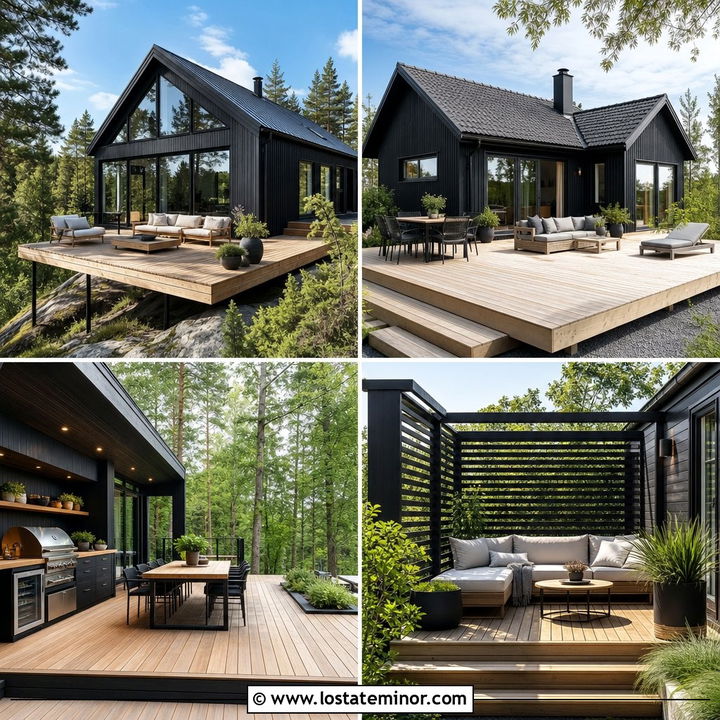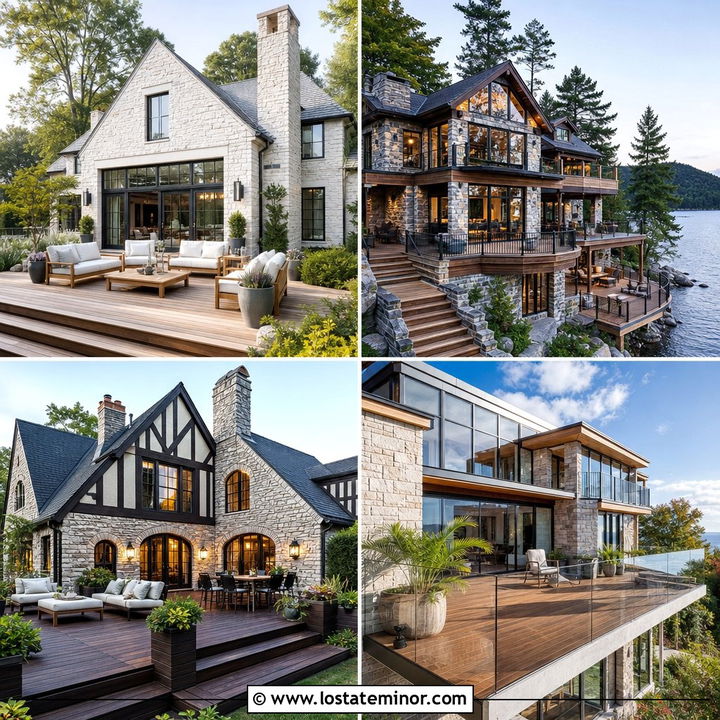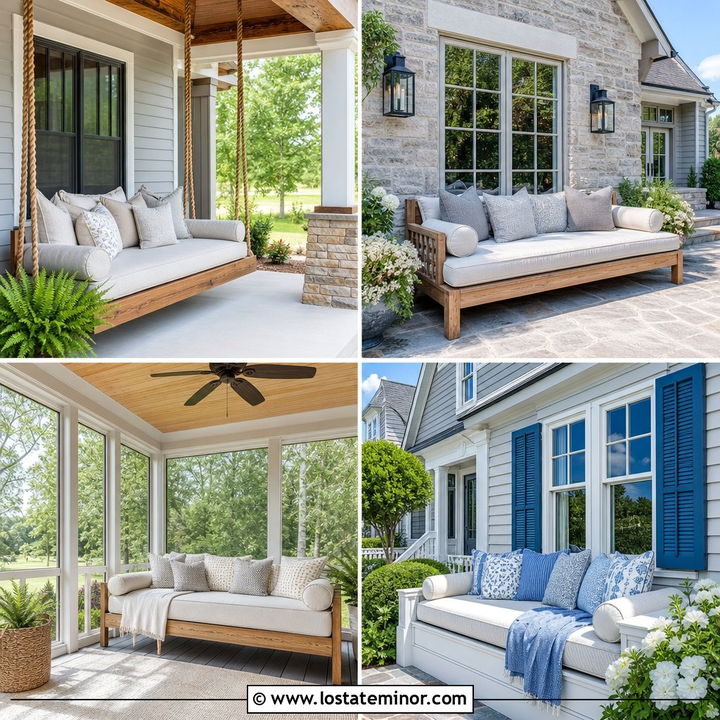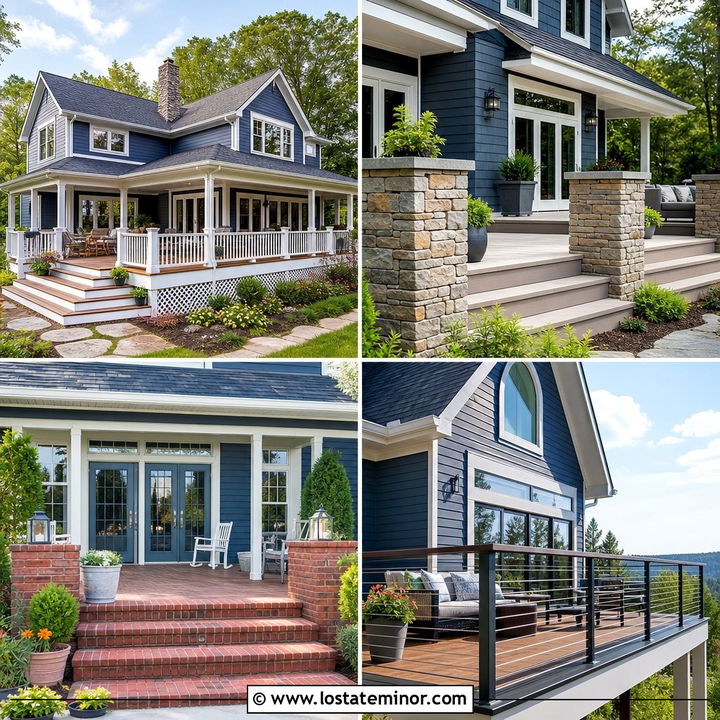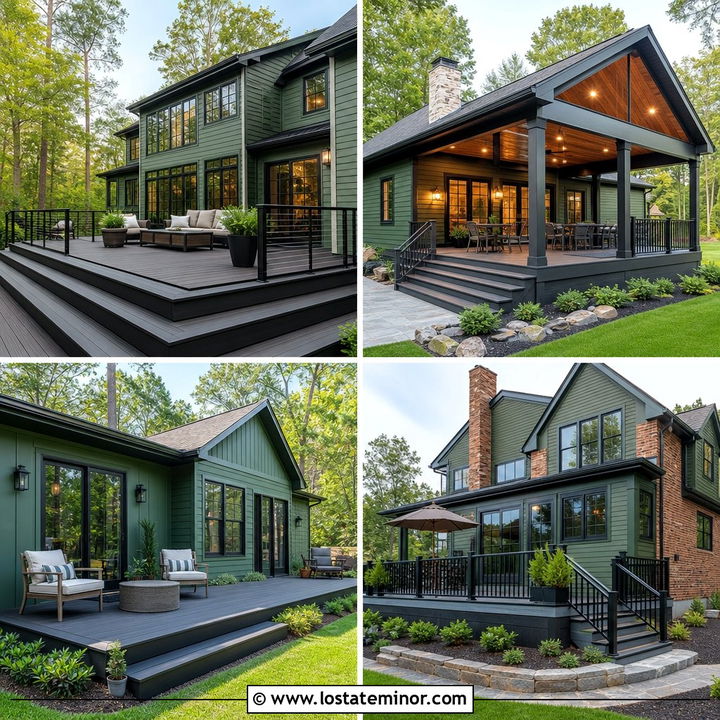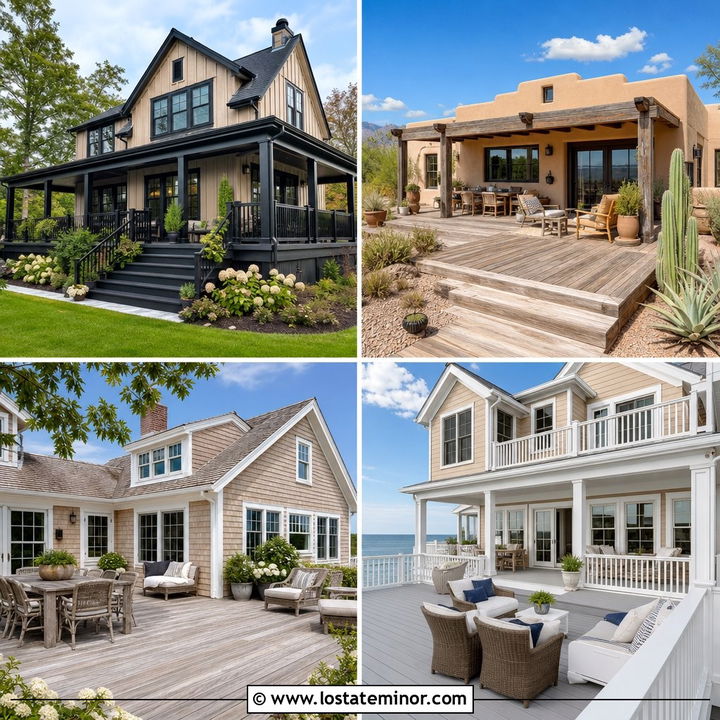
A pale gray exterior creates a flexible backdrop for natural wood, modern composite decking, crisp trim, and bold architectural accents. These 30 Light Grey House Design With Deck Ideas explore complete exterior combinations rather than treating the deck as an isolated feature. The best schemes identify the gray siding’s undertone, then use the deck to blend with it, create contrast, or connect it to the roof, trim, and masonry. () You will find welcoming cedar platforms, low-maintenance composite boards, covered outdoor spaces, and decks suited to different American home types. Each look also considers railings, doors, windows, landscaping, and exterior materials. Use these 30 Light Grey House Design With Deck Ideas to build a balanced plan for your entire facade.
1. Light Gray House With Natural Cedar Deck
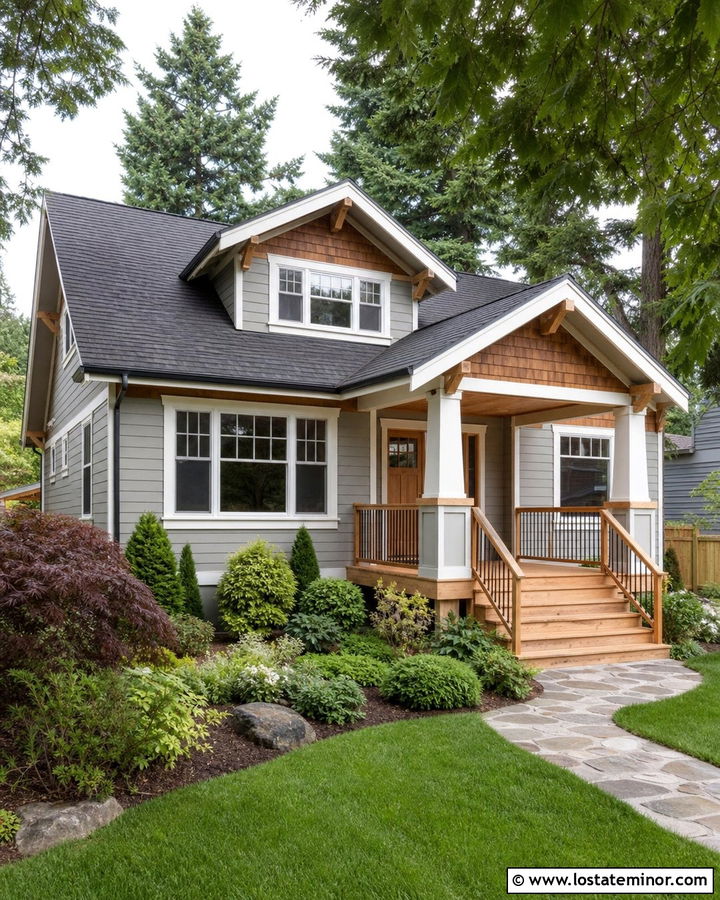
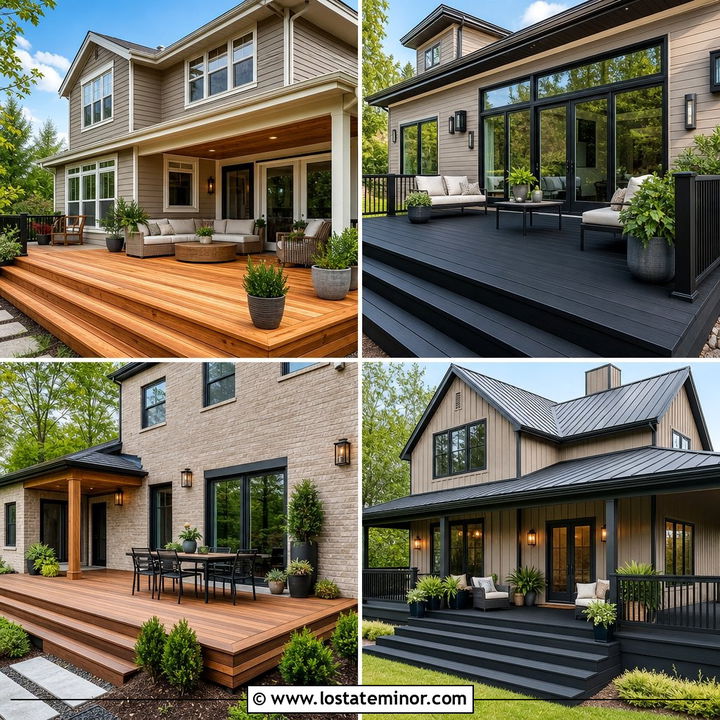
Natural cedar brings instant warmth to a cool light gray exterior. Choose clear or lightly stained cedar boards that preserve visible grain without introducing strong orange tones. Crisp white trim around the windows and roofline keeps the palette fresh, while a medium charcoal roof gives the home a solid visual anchor. Black metal balusters can add definition without hiding the wood. On a bungalow or compact craftsman, extend the deck across the front to create an inviting outdoor sitting area. Repeat cedar on the front door, porch ceiling, or planter boxes so the deck feels connected to the architecture. Soft green shrubs and an irregular stone walkway complete this comfortable, nature-inspired exterior without competing with the siding.
2. Light Gray House With Charcoal Composite Deck
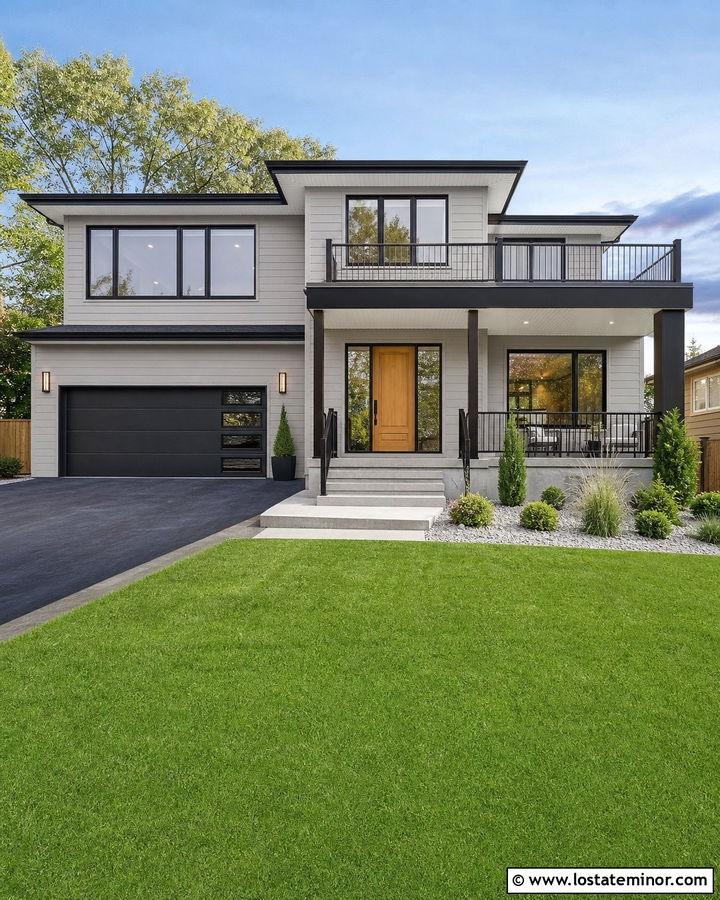
A charcoal composite deck creates clear contrast against pale gray siding and gives the exterior a streamlined, contemporary appearance. This pairing works especially well on a modern two-story home with black-framed windows, simple rooflines, and limited decorative trim. Keep the fascia and deck skirting charcoal to produce one clean base below the lighter house. For safety and visual continuity, use slim black aluminum railings or horizontal cable rails. A warm wood front door prevents the gray-and-black scheme from feeling too severe. Because dark decking can look visually heavy, balance it with broad steps, open lawn, and light gravel beds. The result is a polished exterior where the deck frames the home instead of blending into the facade.
3. Light Gray House With White Railing Deck
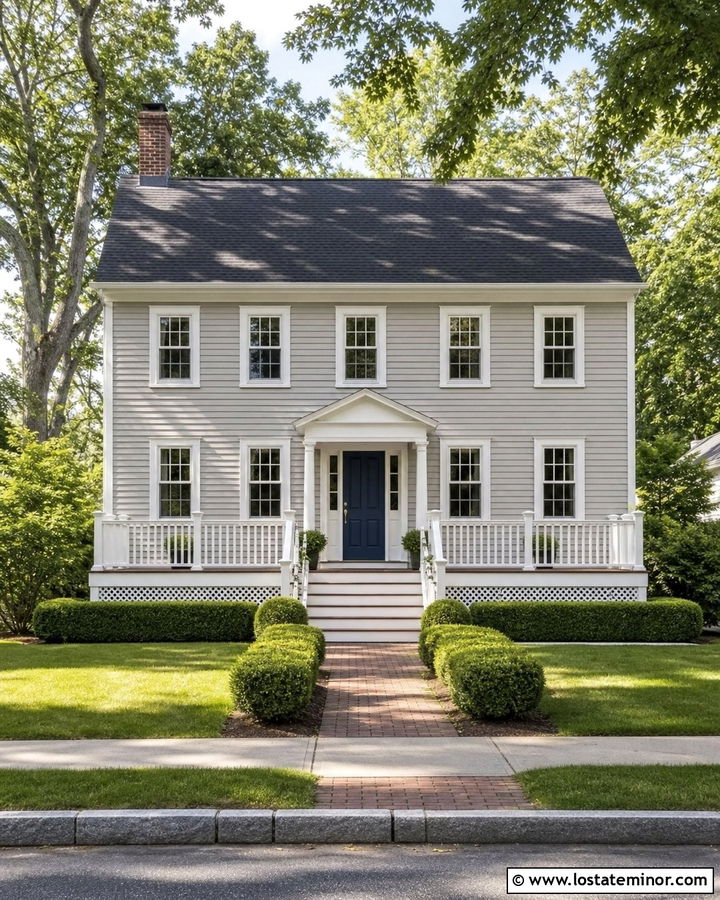
Nothing brightens a light gray exterior quite like a deck finished with clean white railings. The strong outline highlights stairs, corners, and seating areas while connecting naturally with white window trim and fascia. Use medium brown decking beneath the railing to add warmth and prevent the exterior from appearing overly pale. This combination suits Colonial, Cape Cod, and traditional suburban homes with symmetrical windows and straightforward rooflines. Keep the deck posts substantial enough to match the scale of the house. White lattice or vertical skirting can conceal the under-deck area while maintaining an airy look. Finish the scheme with a navy front door, brushed metal fixtures, and clipped foundation shrubs for classic curb appeal that feels neat but not overly formal.
4. Light Gray House With Black Metal Railing Deck
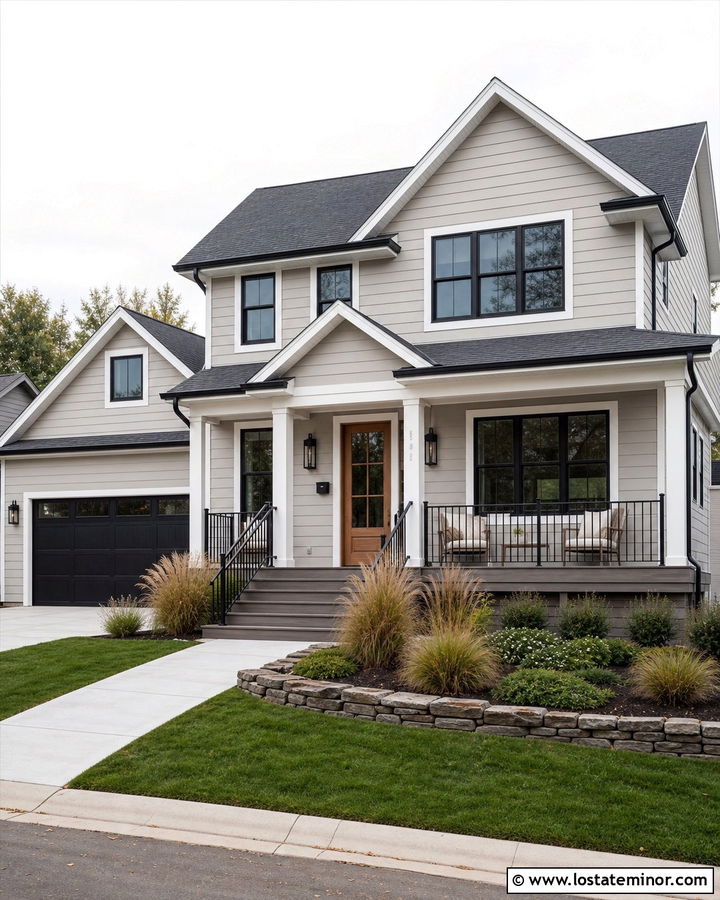
Slim black railings give a light gray house a sharper outline without requiring dramatic siding colors. Pair them with warm gray or medium walnut deck boards so the outdoor space connects both cool and warm exterior tones. Black window frames, gutters, and porch lights repeat the railing color across the facade, making every element appear intentional. This combination is especially effective on a transitional home with simple lap siding, wide windows, and a low-pitched roof. Keep the rail design open to preserve views from inside and avoid making a small deck feel enclosed. A stained oak front door softens the black details. Ornamental grasses, pale stone edging, and a straight concrete walkway support the exterior’s crisp, uncluttered character.
5. Light Gray House With Weathered Gray Deck
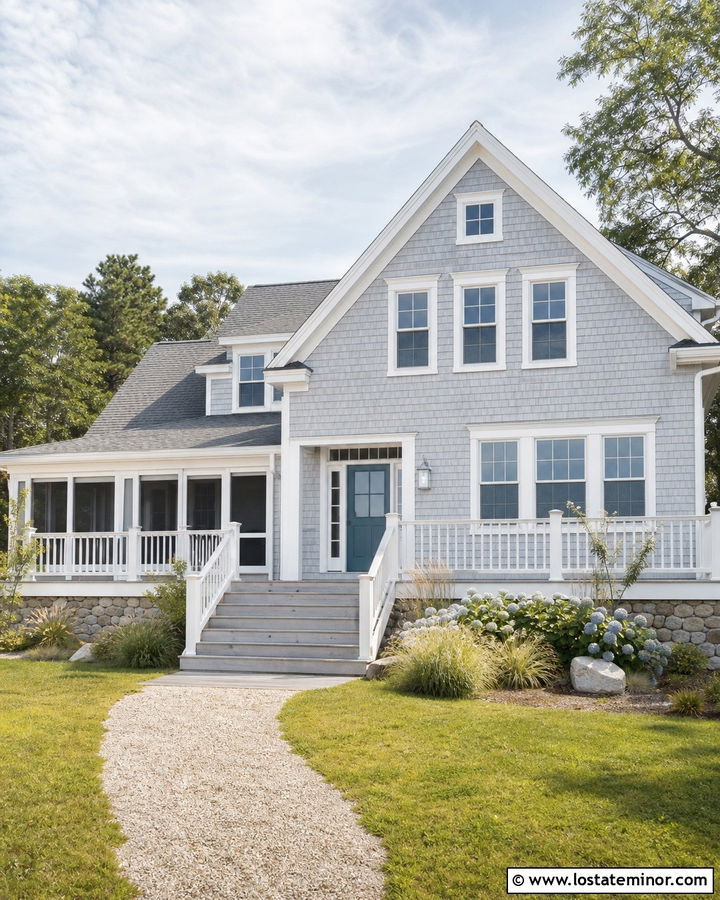
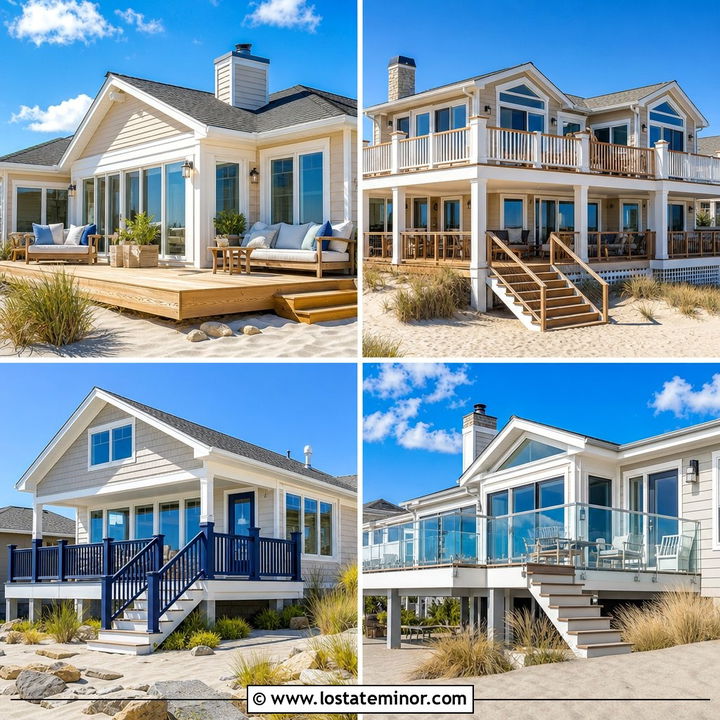
A weathered gray deck creates a quiet, tonal exterior that feels especially appropriate for coastal and lakeside homes. The key is choosing deck boards that are visibly deeper or warmer than the siding, rather than matching it exactly. Pair cool light gray shingles or lap siding with driftwood-toned decking, white railings, and a muted blue front door. A medium gray roof adds another level of contrast without disrupting the soft palette. Use natural textures, such as beach grass, light fieldstone, and weathered planters, to keep the exterior from looking flat. On a shingle-style cottage, wide deck steps can create an easy transition into the yard. The finished house feels relaxed, layered, and connected to its outdoor setting.
6. Light Gray House With Warm Brown Deck
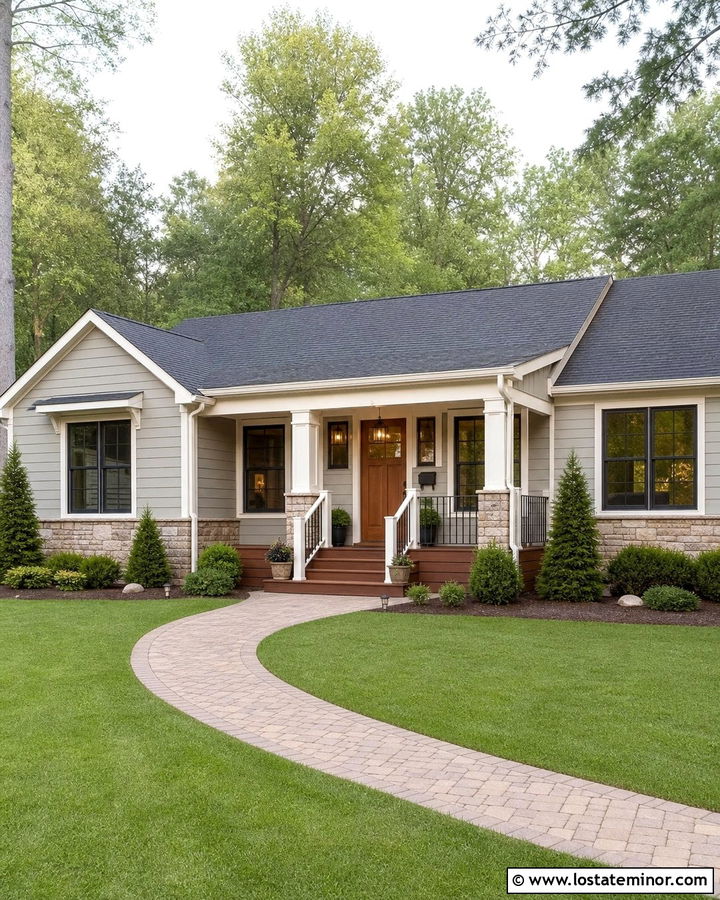
Could your pale gray exterior use a warmer, more welcoming foundation? A medium brown deck introduces earthy contrast while allowing the siding to remain light and understated. Choose a balanced brown with muted undertones instead of a strongly red or orange stain. White trim provides a clean separation between the gray walls and wood deck, while dark bronze lights and hardware reinforce the deck’s warmth. This scheme works beautifully on ranch houses, traditional homes, and wooded properties. Carry the stain onto stair treads, post caps, and the front door for consistency. Cream-colored stone around the foundation can bridge the warm deck and cool siding. Layered evergreen landscaping then frames the complete exterior with natural color throughout the year.
7. Light Gray House With Wraparound Deck
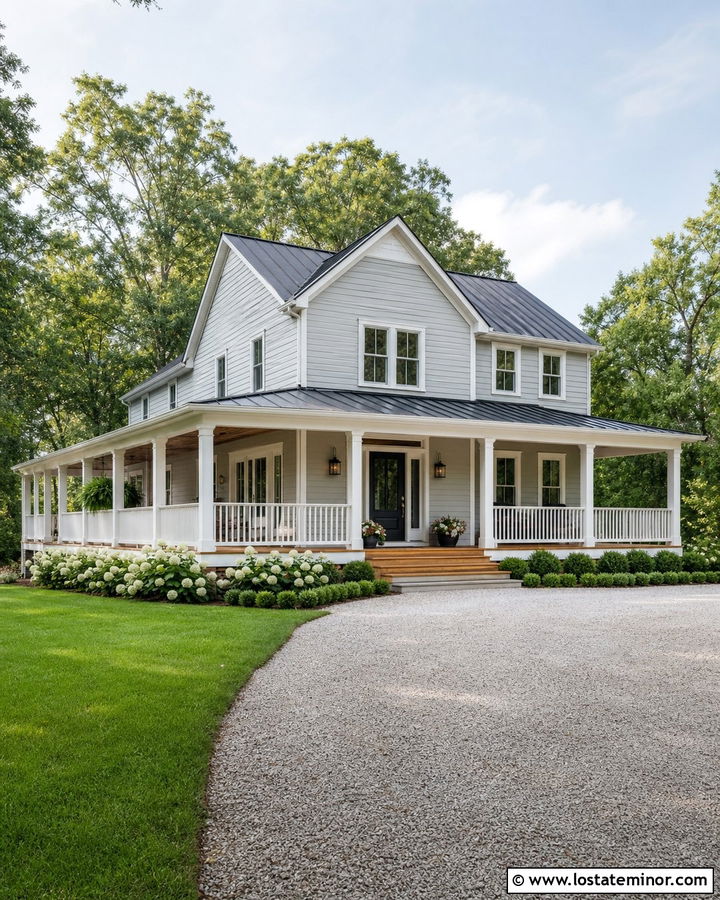
A wraparound deck can make a light gray farmhouse or country home feel more expansive and connected to the landscape. Use natural oak-toned or lightly weathered deck boards to soften the broad gray facade. White square posts and railings maintain a classic appearance, especially when they match the window trim and roof fascia. Define the entry with a black front door and larger overhead light rather than changing the deck material. Because the deck covers multiple sides, keep furniture zones simple and leave generous open pathways. A dark gray metal roof adds crisp contrast above the pale siding. Hydrangeas, low boxwoods, and a curved gravel drive help the long deck settle naturally into the yard without hiding its architectural lines.
8. Light Gray House With Two Level Deck
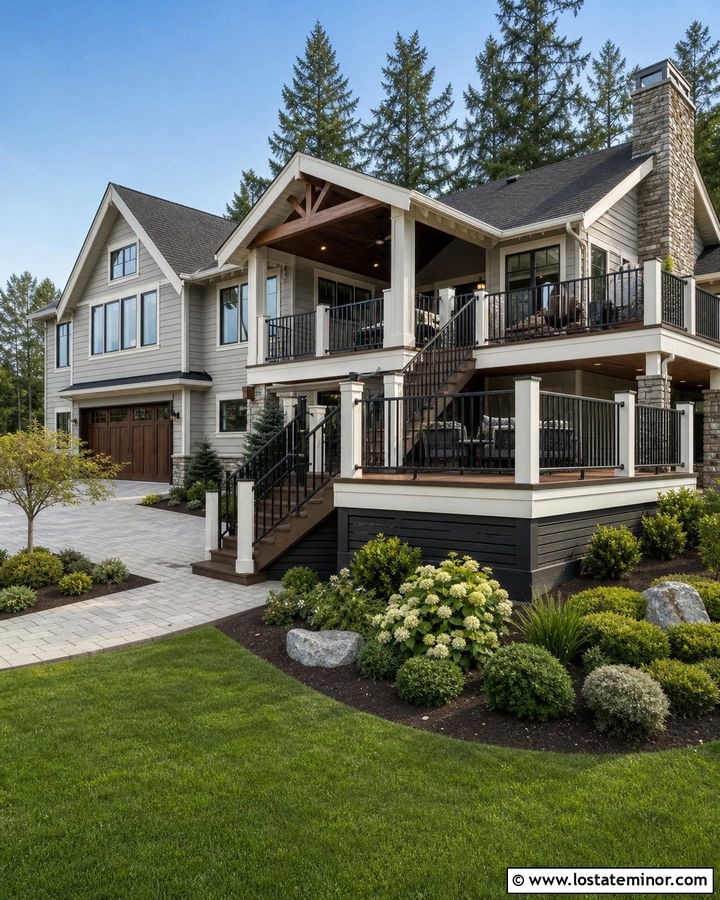
A two-level deck provides useful outdoor zones while breaking up the height of a larger light gray house. Use one consistent decking color, such as medium walnut composite, across both levels to avoid a busy exterior. White posts can connect the deck to pale window trim, while black balusters offer enough contrast to define each tier. Place the upper level near the main living area and let broad stairs lead to a lower dining or lounge platform. Dark gray skirting beneath the upper deck makes storage areas less noticeable. On a contemporary craftsman, repeat walnut wood on the garage door or entry canopy. Structured planting beds around the lower level help the layered deck appear integrated with the home rather than added afterward.
9. Light Gray House With Covered Deck
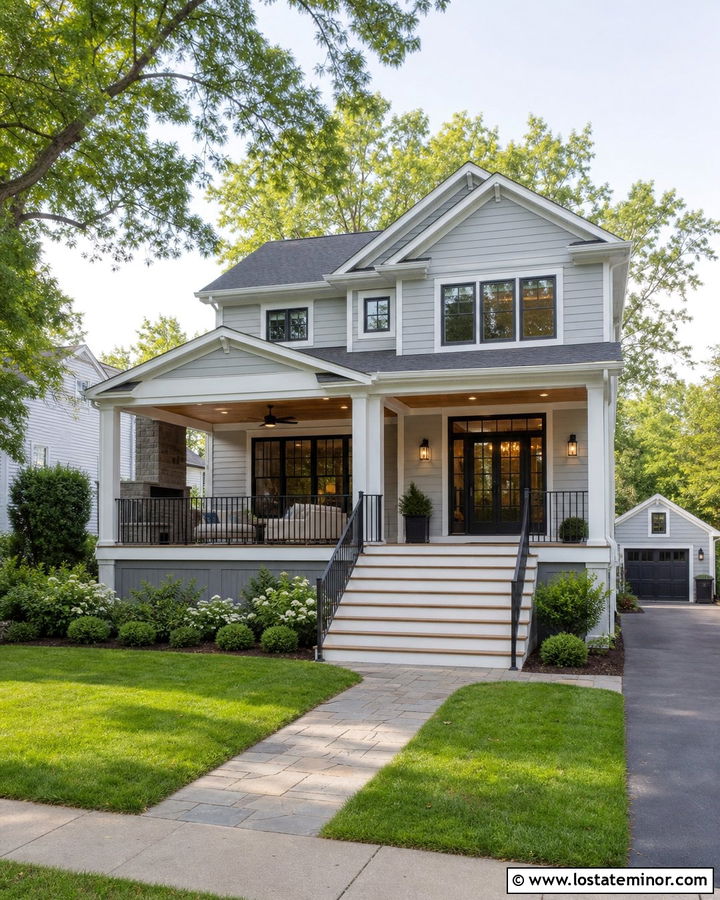
A covered deck gives a light gray exterior more architectural depth while providing shade and protection from changing weather. Match the new roof pitch and shingles to the main house so the addition looks original. Warm cedar decking and a cedar-lined ceiling bring richness to cool gray lap siding, while white columns keep the structure bright. Black-framed screens or railings can outline the space without overwhelming it. Include wide steps facing the lawn to create an open connection between the deck and yard. On a transitional suburban home, repeat the siding color on the deck’s gable for a seamless facade. Soft landscape lighting, layered shrubs, and a flagstone path complete a comfortable outdoor room that remains visually connected to the whole house.
10. Light Gray House With Screened Deck
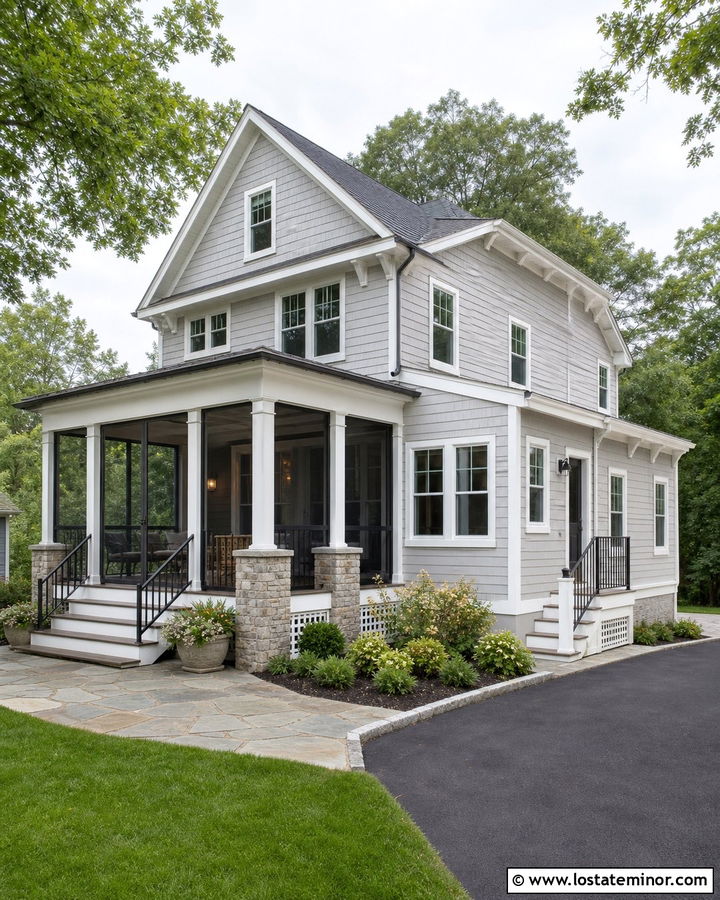
A screened deck can look light and graceful when its frame coordinates with the house trim. Pair soft gray siding with white structural posts, dark bronze screen panels, and warm taupe composite flooring. This balanced combination gives the enclosure definition while preventing it from resembling a dark box attached to the home. A matching gable roof helps the screened area blend into a craftsman or traditional exterior. Use a stone base around the posts to create a finished transition to the foundation. Continue the deck flooring onto a small uncovered landing for grilling or container gardening. From the curb, consistent roof shingles, window proportions, and trim colors make the screened deck feel like a natural extension of the architecture rather than a separate enclosure.
11. Light Gray House With Small Front Deck
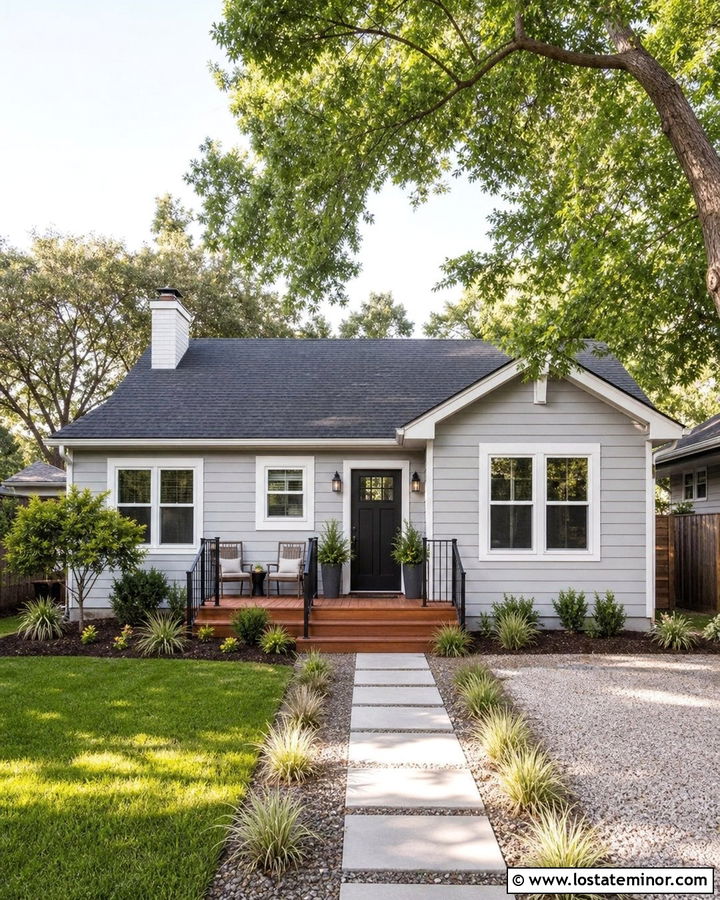
Even a narrow front deck can transform the entrance of a modest light gray home. Use warm cedar or honey-brown boards to distinguish the platform from a concrete walkway and pale siding. Simple black railings preserve an open view of the facade, while a black front door establishes a clear focal point. On a small ranch or cottage, extend the deck just far enough to hold two chairs and a planter without crowding the windows. Match the stair width to the front door area for a more generous approach. White trim and a medium charcoal roof keep the remaining palette uncomplicated. Low ornamental grasses and stepping stones soften the deck edges, producing an approachable entrance that feels useful, balanced, and intentionally designed.
12. Light Gray House With Elevated Deck
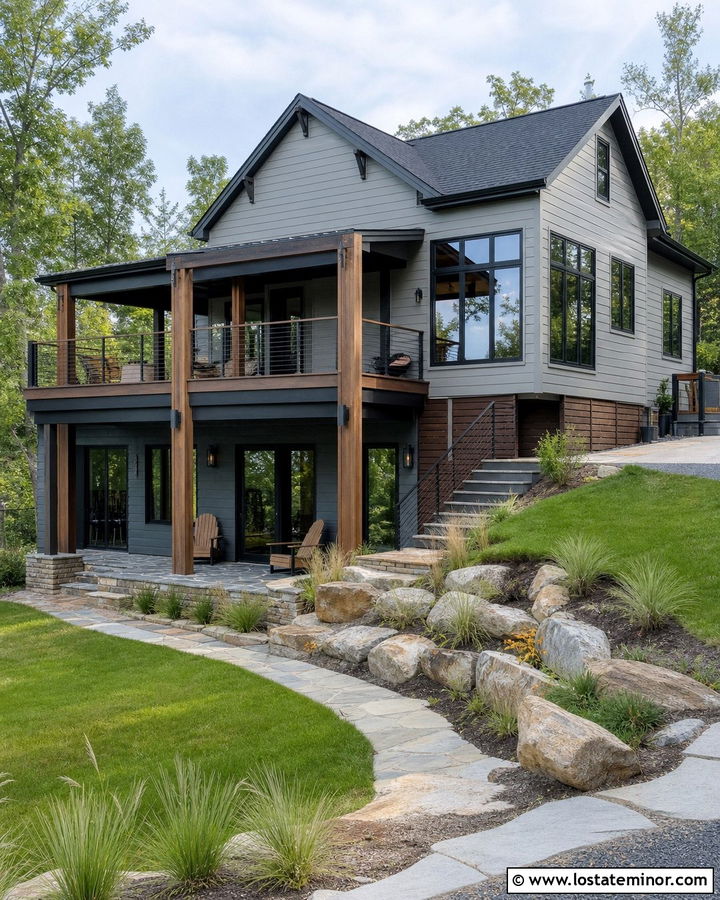
An elevated deck needs strong visual planning because its supports become a major part of the exterior. Against light gray siding, medium brown decking and matching wrapped posts provide warmth and make the structure appear substantial. Use black cable railings to preserve views and reduce the visual weight of the upper platform. Paint exposed beams and under-deck framing charcoal so they connect with the roof and window frames. The area below can become a paved patio, garden terrace, or sheltered seating zone. Horizontal wood skirting around storage areas keeps the base organized. On a sloped suburban lot, stone retaining walls and tiered planting beds can visually anchor the tall deck, helping it relate naturally to both the house and changing ground level.
13. Light Gray House With Ground Level Deck
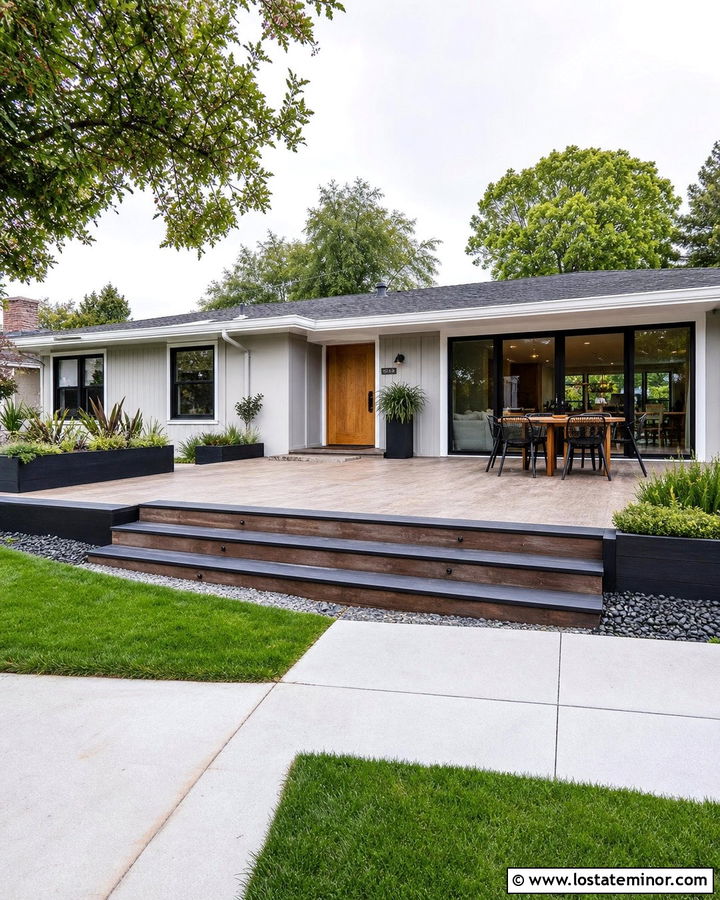
A ground-level deck produces a smooth transition from the house to the lawn and works well when railings are unnecessary. Pair a light gray ranch exterior with wide, weathered oak composite boards installed parallel to the facade. The long lines will emphasize the home’s width and create a calm, modern foundation. Frame the deck with a darker picture-board border for subtle definition. White trim, black-framed windows, and a natural wood door complete the understated palette. Broad steps can run along one full edge, making the platform feel open and accessible. Use gravel drainage strips, low shrubs, and raised planters to separate the decking from surrounding grass. The final look feels spacious, practical, and integrated with the single-story architecture.
14. Light Gray House With Deck And Pergola
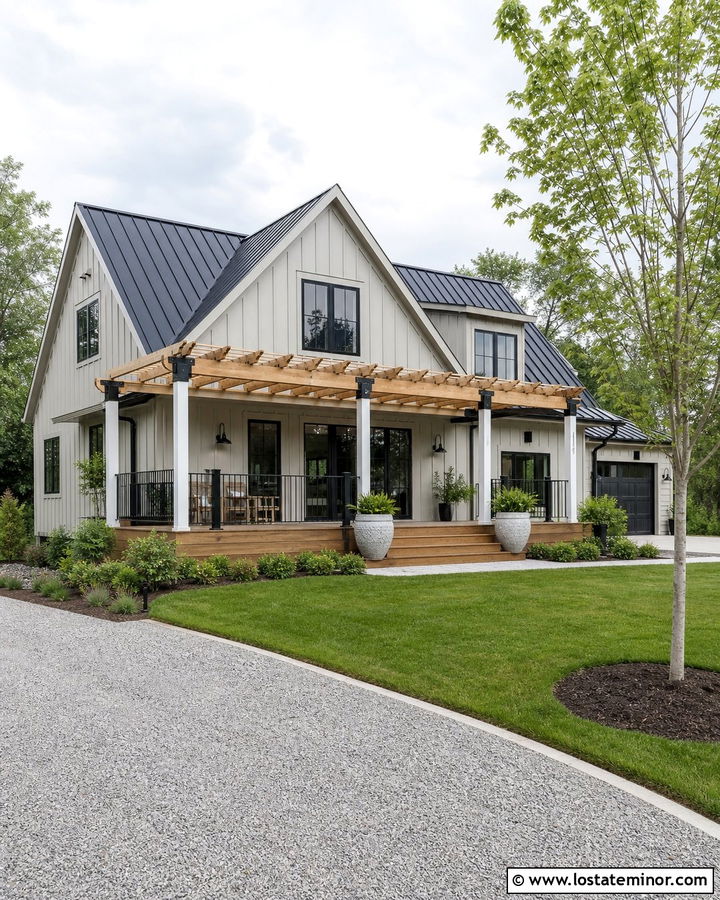
A pergola adds height and structure to a deck while giving a light gray exterior a stronger outdoor focal point. Choose cedar decking and matching cedar beams for warmth, then use black metal brackets to connect the wood with dark windows or roof details. The pergola should align with major doors and windows so it appears integrated into the elevation. On a modern farmhouse, white posts can link the structure to board-and-batten trim while leaving the overhead slats natural. Keep climbing plants limited so the architecture and siding remain visible. A gravel path, neat lawn, and large planters help frame the outdoor zone. This full scheme combines pale siding, natural texture, and graphic accents without making the facade feel overly decorated.
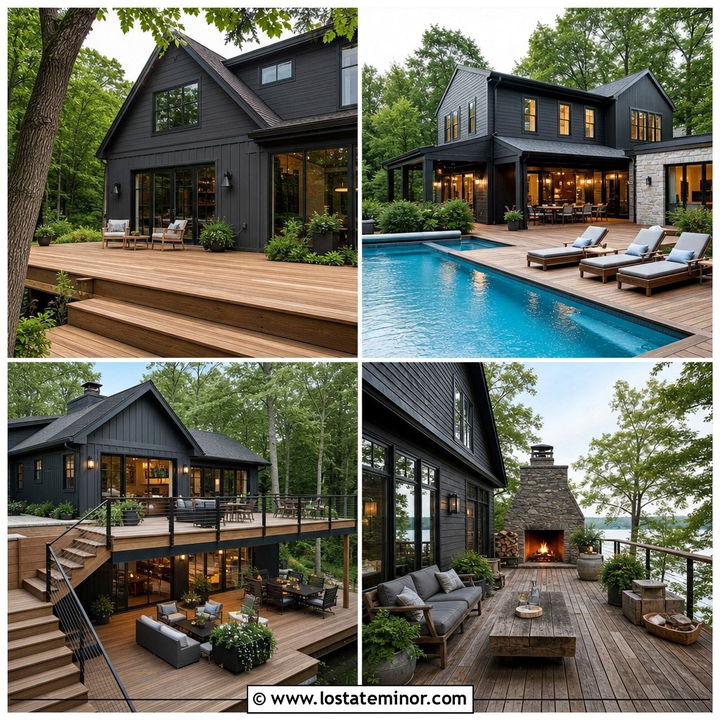
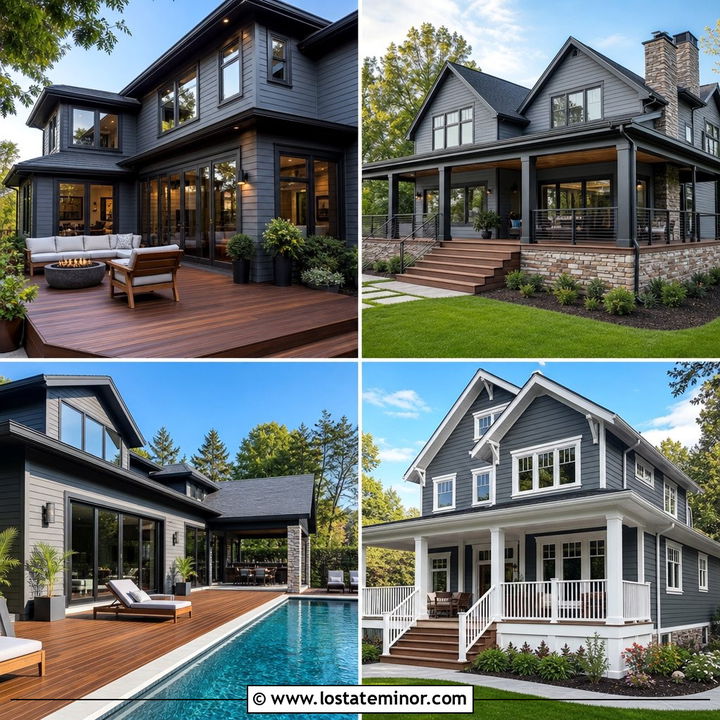
15. Light Gray House With Cable Railing Deck
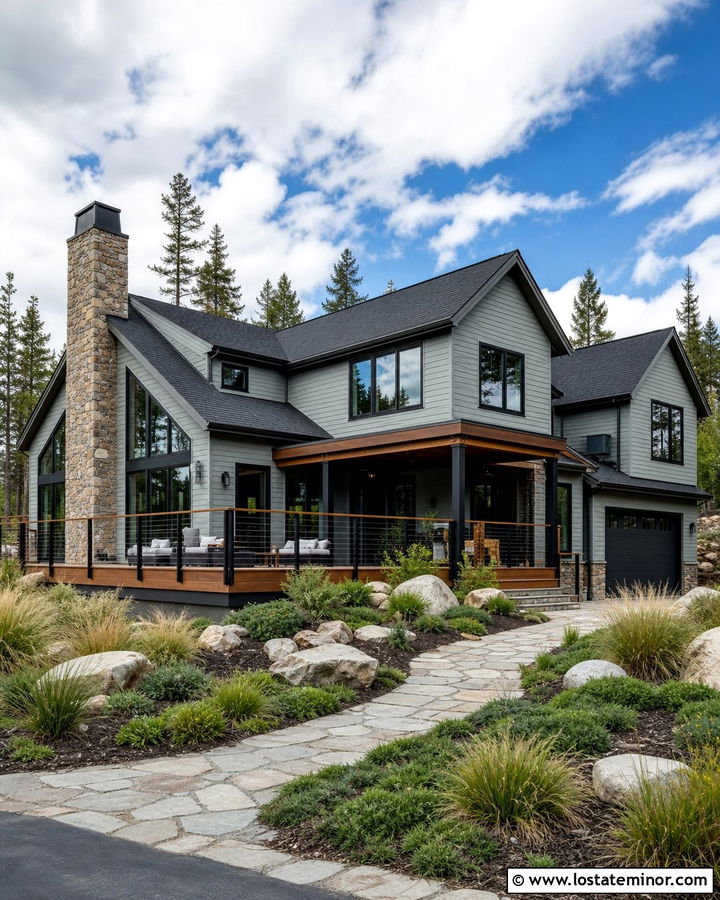
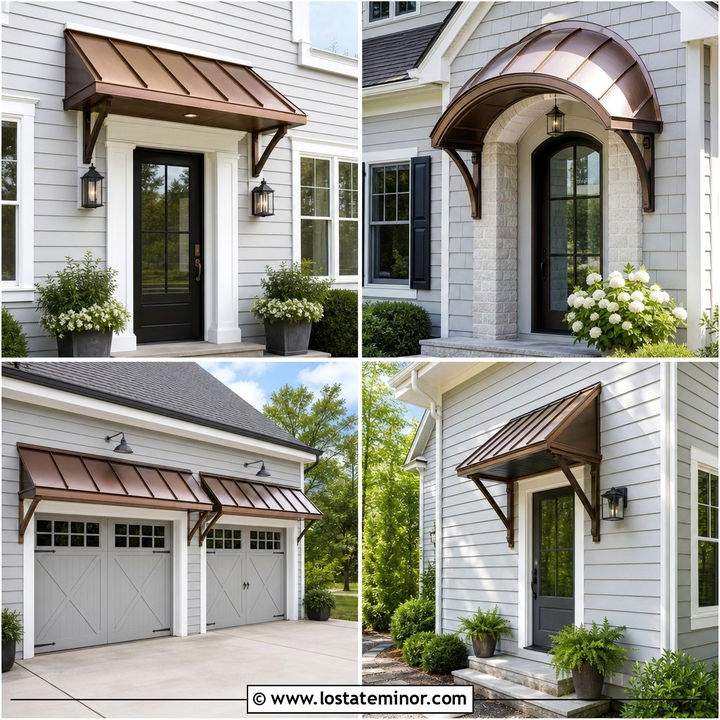
Cable railings are a smart choice when you want the deck to feel open and the complete house exterior to remain visible. Pair pale gray horizontal siding with medium teak-toned boards and matte black posts. The warm decking balances the cool siding, while the thin cables preserve clean sightlines around a modern or mountain-style home. Repeat black on window frames, gutters, and exterior lights to distribute the dark color evenly. A stone chimney or foundation adds rugged texture and visually supports the deck. Keep stair rails consistent with the main platform rather than switching materials. Native grasses, boulders, and a gently curving walkway can connect the house to its setting, creating a contemporary exterior that still feels comfortable and grounded.
16. Light Gray House With Deck And Stone Columns
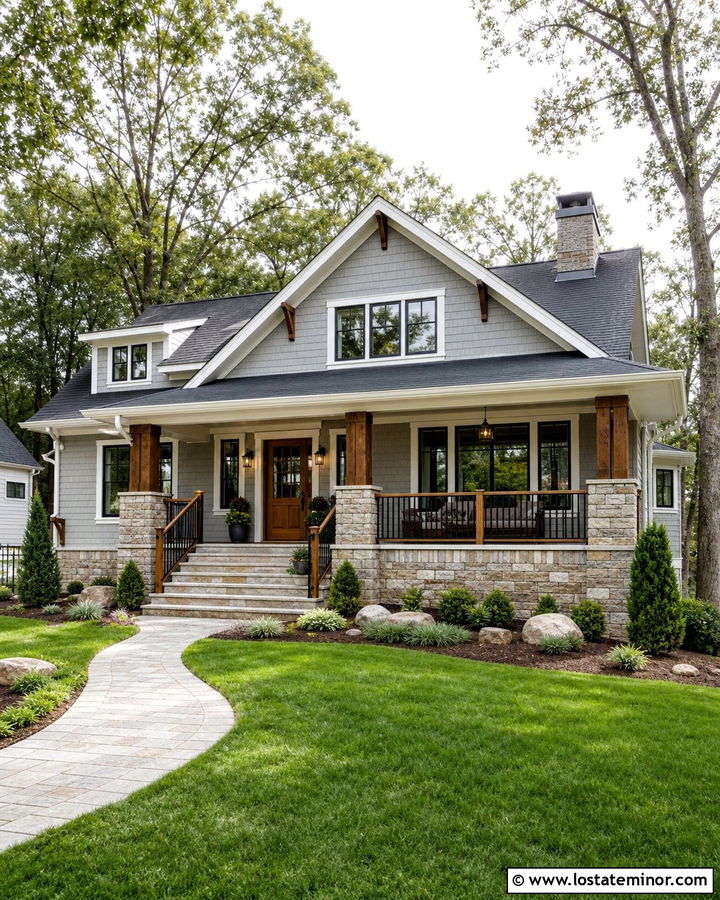
Stone columns can make a deck feel like a permanent architectural feature instead of a lightweight attachment. Select gray-beige fieldstone that relates to the light gray siding but introduces enough natural variation to remain visible. Set white or stained wood posts on top of the masonry bases, then use walnut deck boards and black balusters to complete the palette. The stone can continue along the foundation or around the entry for better visual continuity. This layered combination is particularly suited to craftsman and lodge-inspired homes with wide eaves. Keep the roof a deep charcoal and repeat walnut on the front door. Evergreen shrubs, natural stone steps, and warm exterior lighting reinforce the substantial, welcoming character of the complete exterior.
17. Light Gray House With Deck And Brick Accents
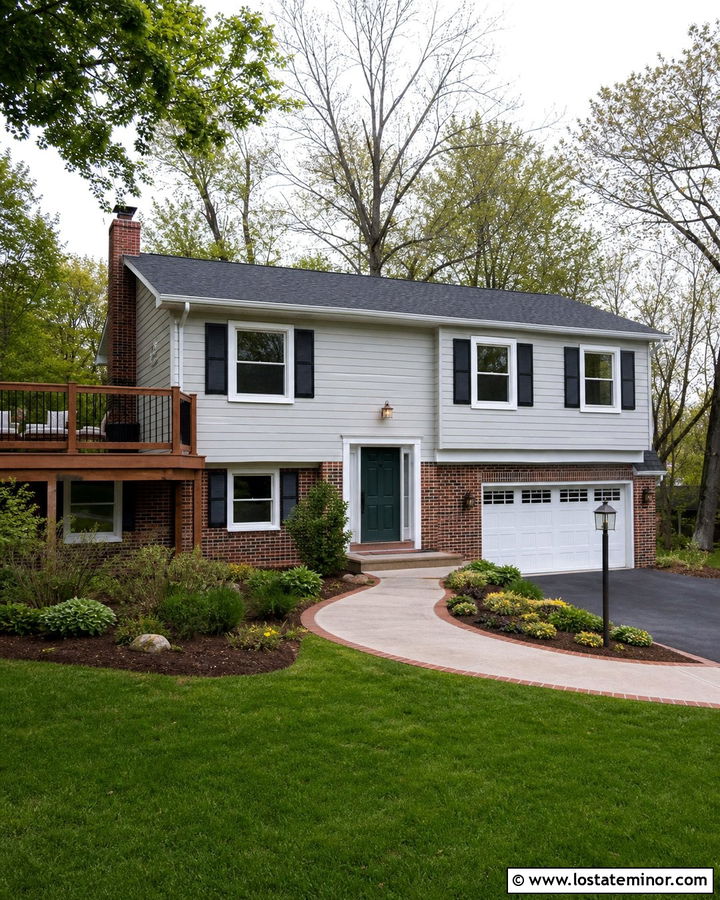
Existing brick can add warmth and history to a light gray house when the deck color respects its undertones. With traditional red-brown brick, choose medium brown decking that feels related but not identical. Crisp cream or soft white trim separates the gray siding from the masonry and keeps the facade from becoming dark. Use black railings to provide a neutral outline around the deck. On a split-level or Colonial home, repeat brick around the foundation, chimney, or stair landing so it looks intentionally distributed. A deep green front door introduces restrained color that complements both brick and gray. Curved planting beds, brick-edged paths, and mature shrubs soften the material transitions and give the updated exterior an established appearance.
18. Light Gray House With Deck And Black Front Door
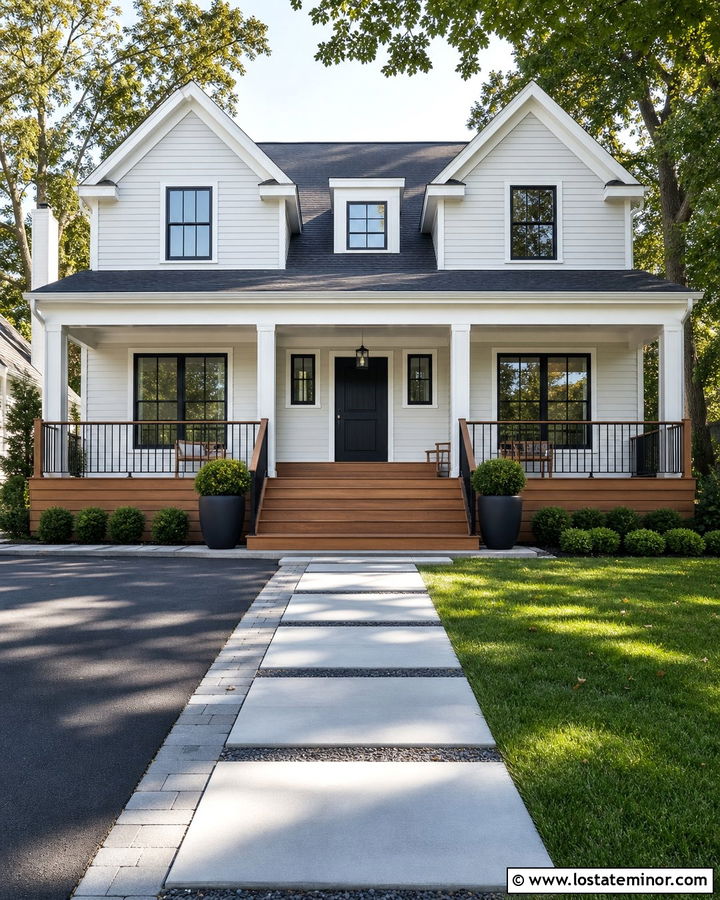
A black front door creates a strong center point within a light gray house and deck combination. Echo the door color through thin deck balusters, window frames, and porch lights, but keep large horizontal surfaces warmer. Natural cedar or medium oak deck boards prevent the exterior from becoming dominated by gray and black. White trim around the entry adds separation and makes the door easier to notice from the street. This palette suits transitional homes with symmetrical windows and uncomplicated siding. Use a broad deck stair aligned with the entrance to strengthen the visual approach. Simple concrete pavers, clipped shrubs, and dark planters finish the scene. Every element supports the entry while the warm deck keeps the overall exterior friendly and livable.
19. Light Gray House With Deck And Navy Front Door
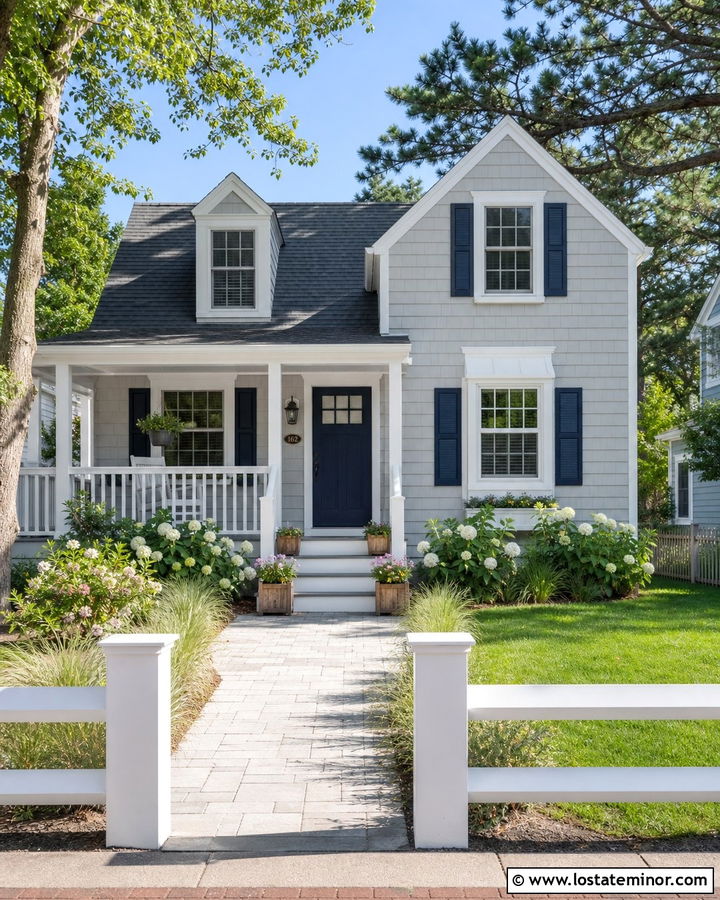
Navy provides softer contrast than black while still giving a light gray exterior a noticeable focal point. Pair the door with a weathered gray deck, white railings, and crisp white window trim for a classic coastal-influenced palette. Use a dark charcoal roof rather than blue roofing to prevent the scheme from becoming overly coordinated. On a Cape Cod or shingle-style cottage, navy shutters can repeat the door color on a limited number of front windows. Keep deck accessories neutral and allow natural wood planters to bring in warmth. Hydrangeas, ornamental grasses, and a pale stone walkway reinforce the fresh exterior. The finished home feels colorful enough to have personality, yet restrained enough to remain adaptable through future updates.
20. Light Gray House With Deck And Wood Front Door
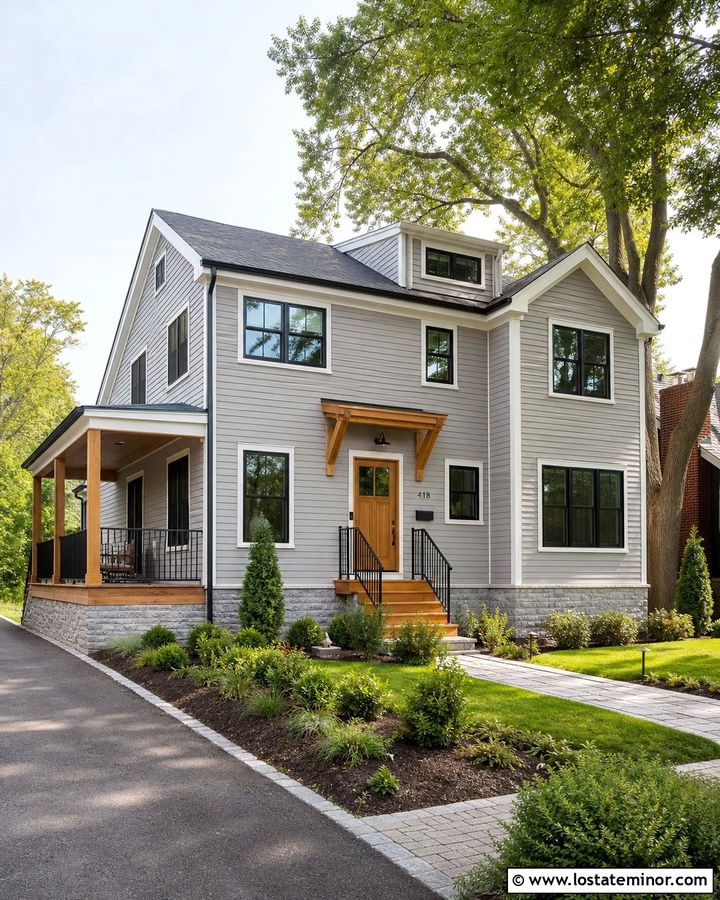
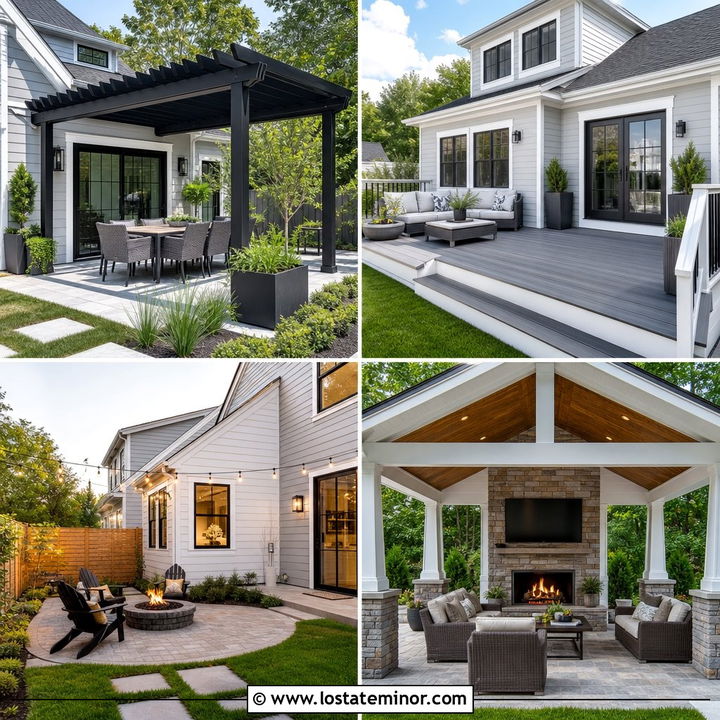
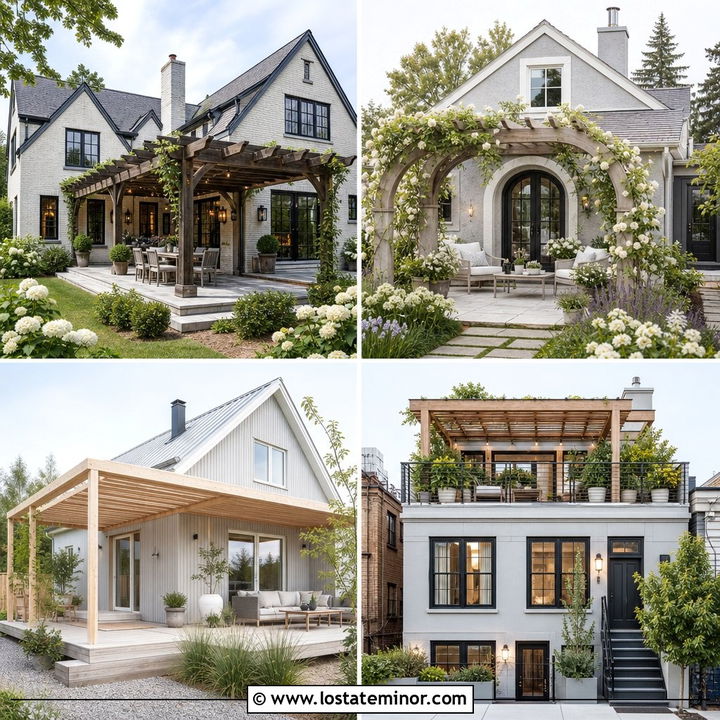
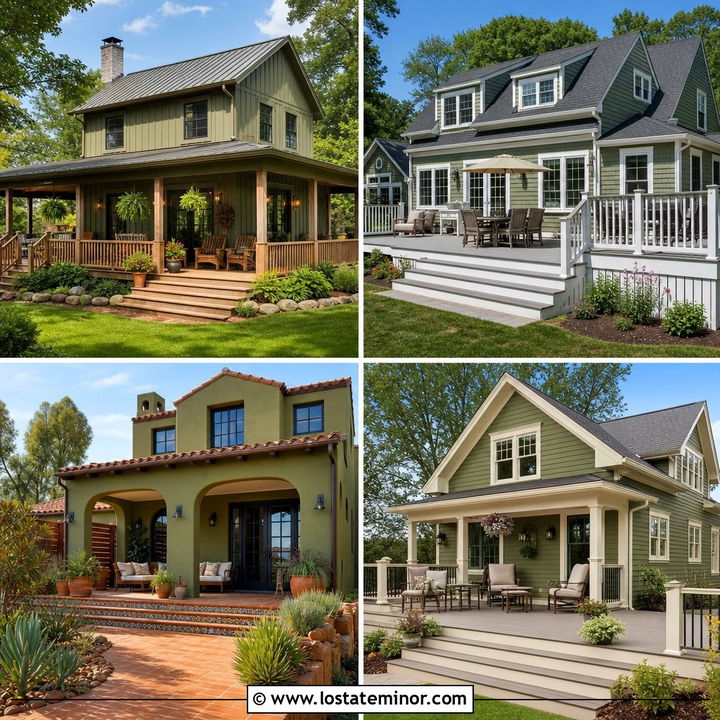
The rich grain of a wood front door can connect a light gray facade directly to its deck. Choose a door stain that closely relates to the decking, such as natural white oak, medium walnut, or muted cedar. Exact matching is unnecessary, but both woods should share a similar warm or cool undertone. Use white trim to create a clean boundary around the door and windows, then add black metal railings for definition. This combination works across farmhouse, craftsman, and contemporary architecture. A small wood canopy can reinforce the entry without overwhelming the pale siding. Complete the facade with gray stone, dark roof shingles, and simple green landscaping. The repeated wood tones make the entire exterior feel coordinated, warm, and thoughtfully layered.
21. Light Gray Board And Batten House With Deck
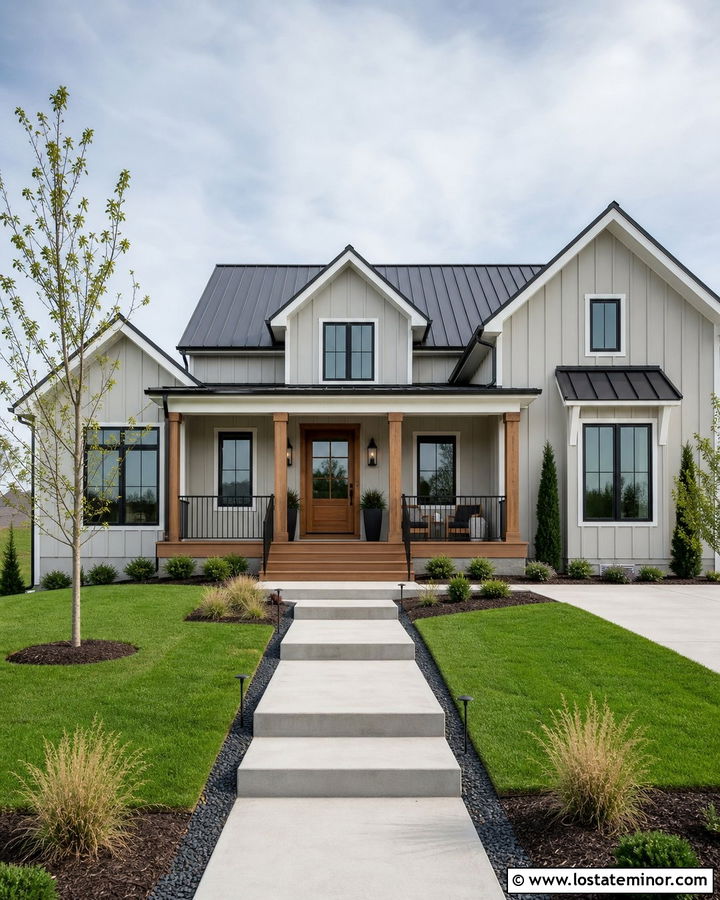
Vertical board-and-batten siding gives a light gray house noticeable texture, so the deck should support the architecture without adding unnecessary detail. Use wide medium-brown composite boards and simple black railings to create a stable horizontal base beneath the vertical siding. White fascia and window trim maintain definition, while a dark metal roof strengthens the modern farmhouse character. Repeat the deck color on the front door or garage door to spread warmth across the facade. Keep deck posts square and minimally decorated. Large concrete steps, structured foundation beds, and evenly spaced trees complement the clean geometry. This exterior feels modern but approachable because the pale gray walls, warm deck, and controlled black accents are distributed in balanced proportions.
22. Light Gray Lap Siding House With Deck
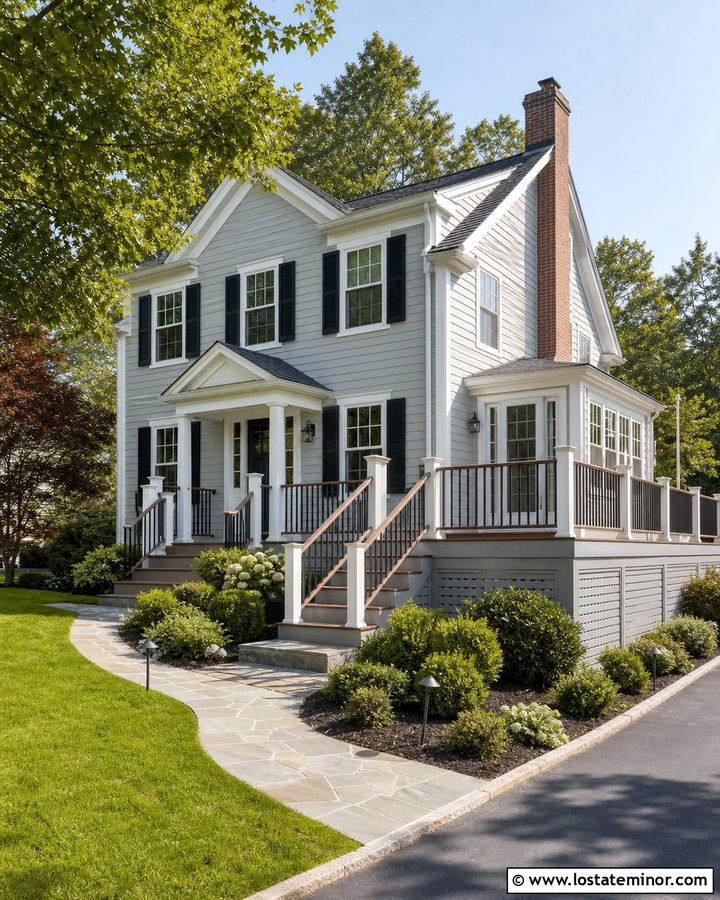
Traditional lap siding creates subtle horizontal shadow lines that pair naturally with a long deck. Select soft light gray siding, bright white trim, and warm driftwood-brown decking for a versatile suburban exterior. A two-tone railing with white posts and black balusters can bridge classic and updated details. On a two-story home, align the deck with sliding doors or grouped windows to make the outdoor area feel connected to the interior layout. Use matching gray skirting below the platform so the base recedes visually. A brick chimney or stone stair landing adds texture without interrupting the simple palette. Finish with layered shrubs, a clean lawn, and a curved walkway that directs attention toward the deck and main entrance.
23. Light Gray Shingle Siding House With Deck
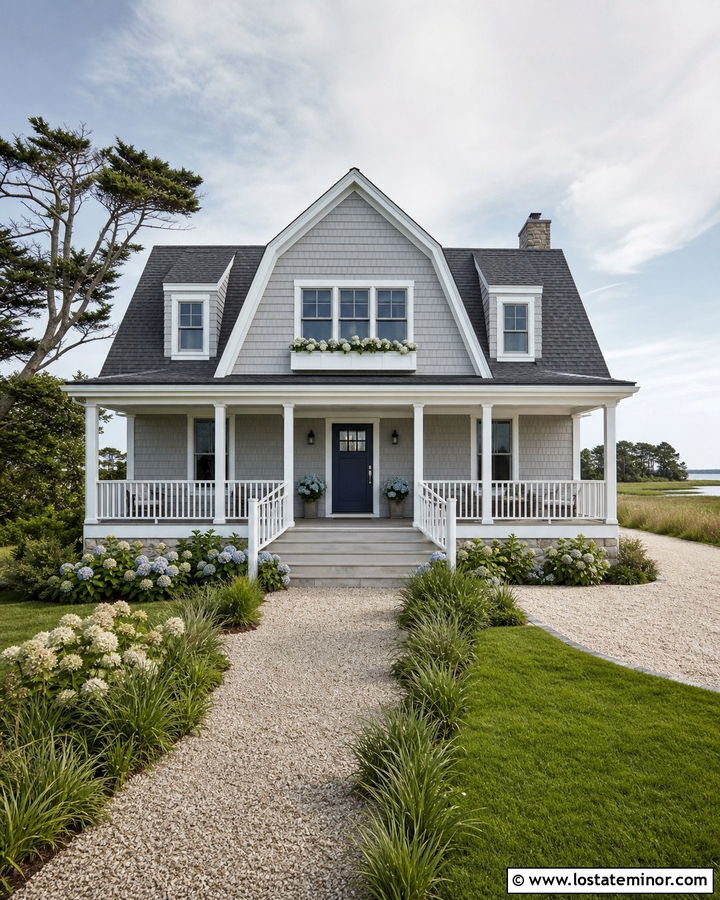
Light gray shingle siding gives a home a soft, textured appearance that works beautifully with weathered wood. Choose a pale driftwood deck with white railings to continue the coastal character, then add a muted navy door for controlled color. The deck boards should be slightly darker than the wall shingles so the two surfaces do not merge. On a cottage or gambrel-roof home, use broad white stair posts and simple square caps rather than ornate rails. A charcoal roof provides contrast at the top of the house. Sand-colored stone around the foundation adds another natural layer. Beach grass, hydrangeas, and an informal gravel path complete a breezy exterior that still looks appropriate in a typical suburban or lakeside neighborhood.
24. Light Gray Modern Farmhouse With Deck
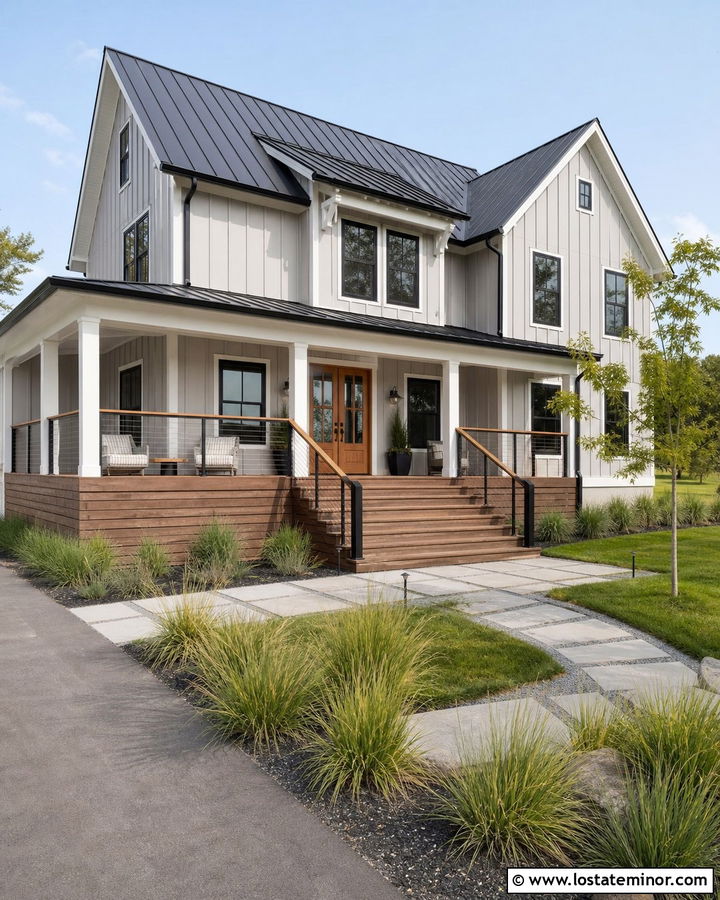
A light gray modern farmhouse benefits from a deck that adds warmth to its large, simple wall surfaces. Pair pale gray board-and-batten siding with natural cedar decking, black-framed windows, and a charcoal standing-seam roof. Keep the railing minimal, using black metal or cable infill between sturdy wood posts. White trim can outline the roof and corners without making the scheme feel overly stark. A natural wood double door should relate to the deck but may be a shade darker for emphasis. Extend the deck toward the driveway or garden with broad, uncomplicated steps. Structured grasses, young shade trees, and concrete pavers reinforce the clean rural-modern aesthetic. The finished facade feels crisp, practical, and connected to the landscape.
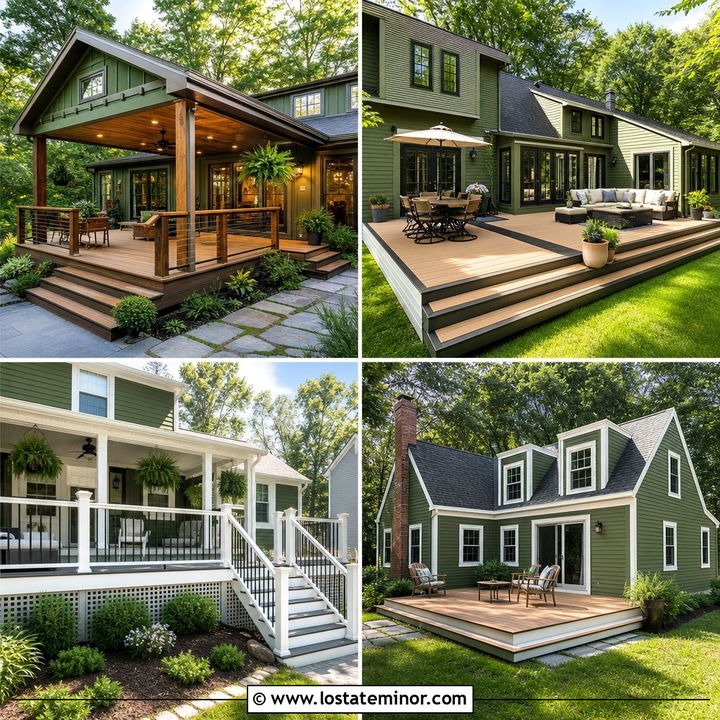
25. Light Gray Ranch House With Deck
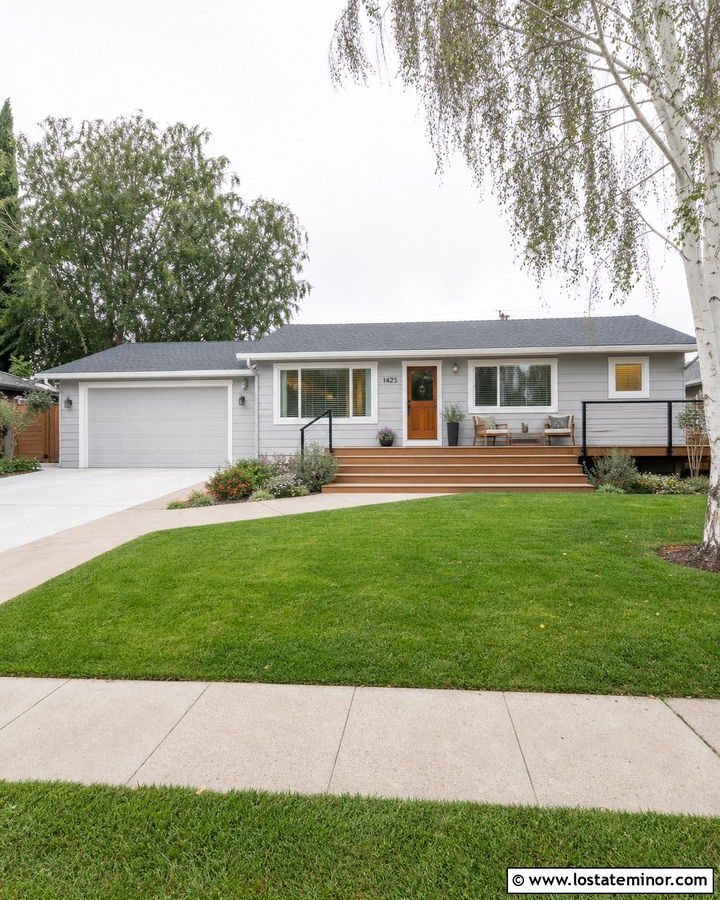
A long, low deck can visually expand a light gray ranch house and create a more useful connection to the front yard. Choose warm oak-toned composite boards to contrast with the pale horizontal siding. Use black metal railings only where needed, leaving open steps across the main approach to preserve the home’s low profile. White window trim and a dark gray roof maintain a familiar, balanced palette. A cedar front door gives the center of the facade additional warmth. If the garage is prominent, paint its door light gray so it blends with the walls rather than competing with the deck. Low foundation shrubs, ornamental trees, and a wide walkway complete the updated ranch exterior while respecting its simple midcentury proportions.
26. Light Gray Craftsman House With Deck
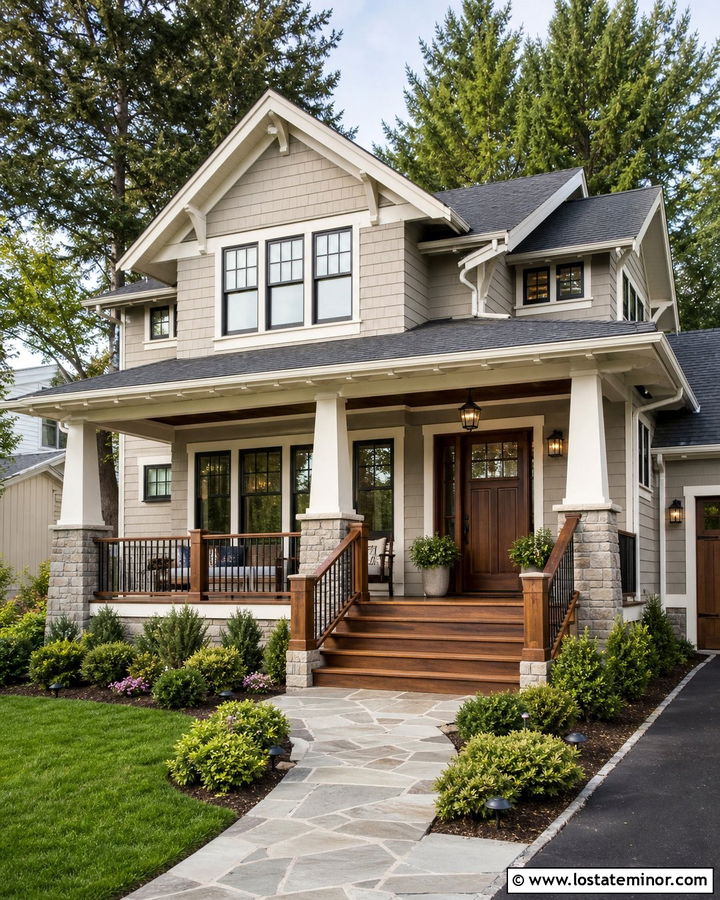
Craftsman architecture welcomes visible wood, stone, and substantial structural details. Start with warm light gray siding, creamy white trim, and a medium walnut deck. Build tapered porch columns on gray-beige stone bases, then add black balusters to sharpen the railing design. The front door can feature stained wood and divided glass that repeats the deck’s rich tone. Deep roof overhangs and dark shingles create strong shadow lines above the pale facade. Avoid overly delicate deck components because they may look out of scale beside craftsman columns and brackets. A natural stone walkway, layered evergreen beds, and low landscape walls strengthen the handcrafted appearance. Together, the materials create a grounded exterior with warmth, texture, and clear architectural hierarchy.
27. Light Gray Colonial House With Deck
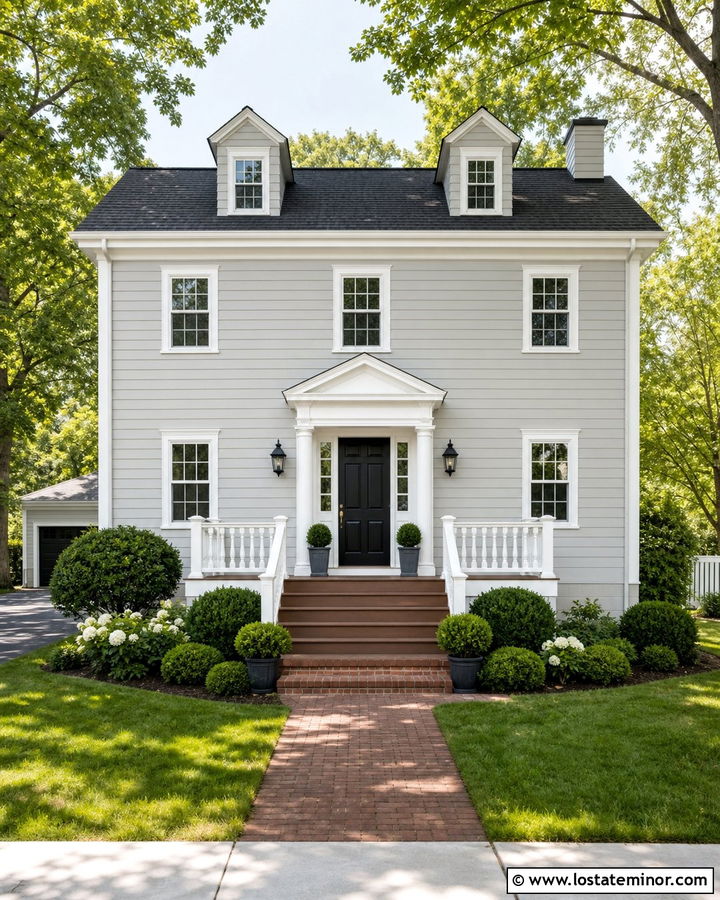
Symmetry is central to a Colonial exterior, so the deck should respect the front door and evenly spaced windows. Use light gray clapboard siding, white trim, and a warm medium-brown deck positioned as a balanced front platform or side extension. White railings preserve the traditional character, while simple black lanterns and a black door introduce clear contrast. Keep stair placement centered when the deck faces the street. If it wraps to one side, repeat matching shrubs or planters to maintain visual balance. A dark charcoal shingle roof grounds the pale upper facade. Brick steps or foundation accents can add warmth near the deck. The complete scheme updates the house without obscuring the orderly proportions that make Colonial architecture recognizable.
28. Light Gray Cape Cod House With Deck
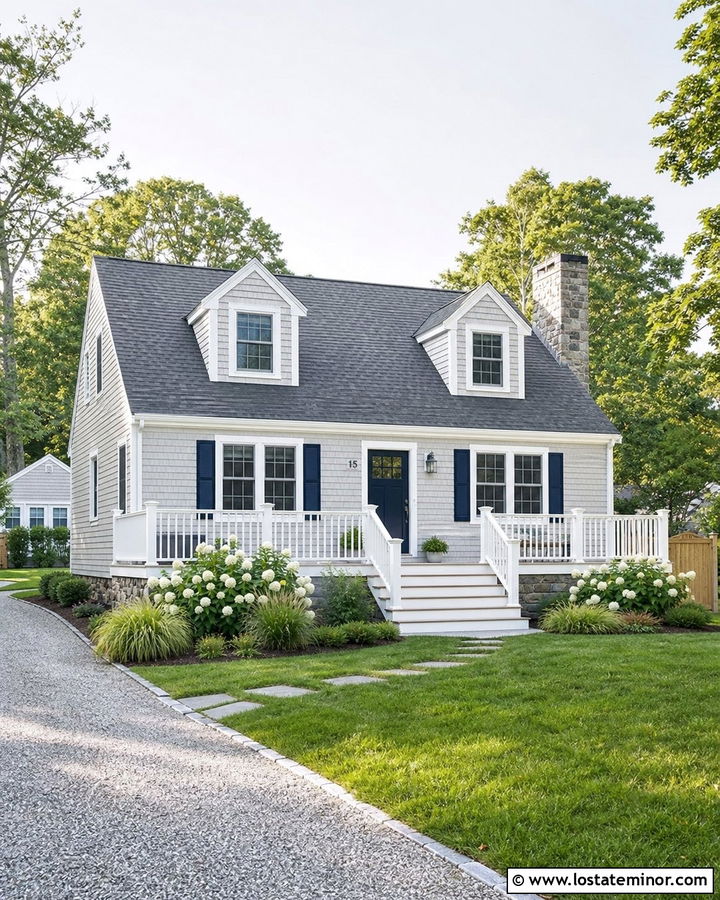
A compact Cape Cod house looks welcoming with a low deck that follows the simple width of its facade. Pair soft light gray shingles with crisp white trim, a charcoal roof, and weathered cedar deck boards. White railings can frame the platform, but leave the entrance steps broad and open to prevent the small home from feeling enclosed. Add a muted navy door and matching shutters for classic contrast. Dormer windows should remain the brightest elements near the roofline, helping draw the eye upward. Use pale stone around the deck base and informal planting beds filled with hydrangeas and grasses. This combination keeps the exterior light and traditional while giving the home a practical outdoor area that feels proportional to its modest scale.
29. Light Gray Split Level House With Deck
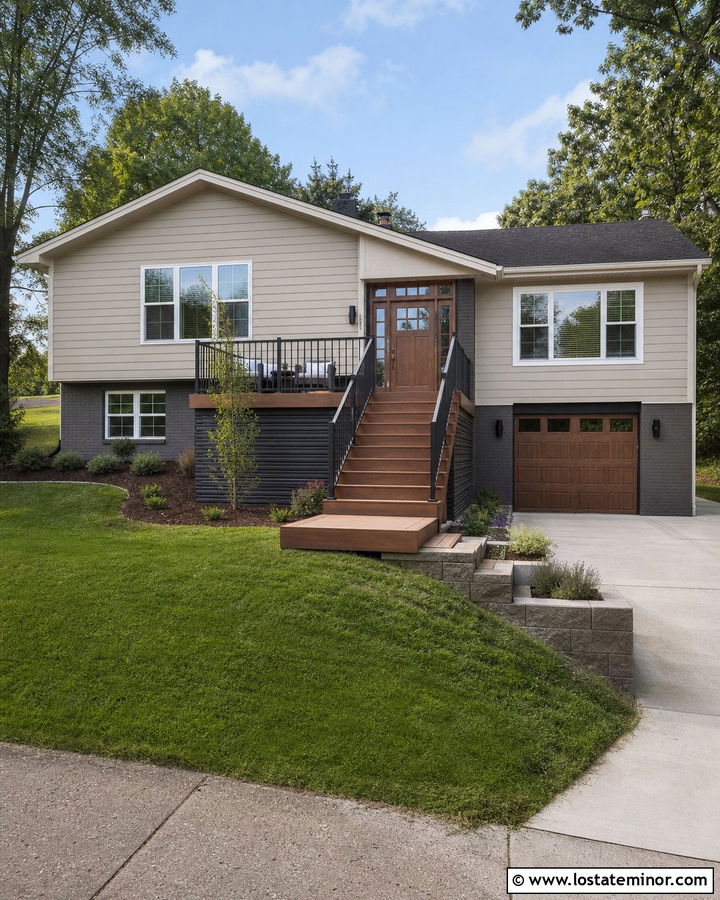
A well-positioned deck can unify the uneven rooflines and floor levels of a split-level house. Choose warm gray siding, walnut composite decking, and black metal railings for an updated transitional scheme. Align the upper deck with the primary living floor, then connect it to the yard with broad stairs and a lower landing. Charcoal skirting beneath the structure can conceal storage and reduce visual clutter. Repeat walnut on the front door or garage accents to keep the deck from appearing disconnected. White window trim brightens the facade, while a dark roof helps organize the varied roof sections. Tiered planting beds and a retaining wall can follow the site’s slope, making the multilevel exterior appear deliberate, balanced, and accessible.
30. Light Gray Modern House With Deck
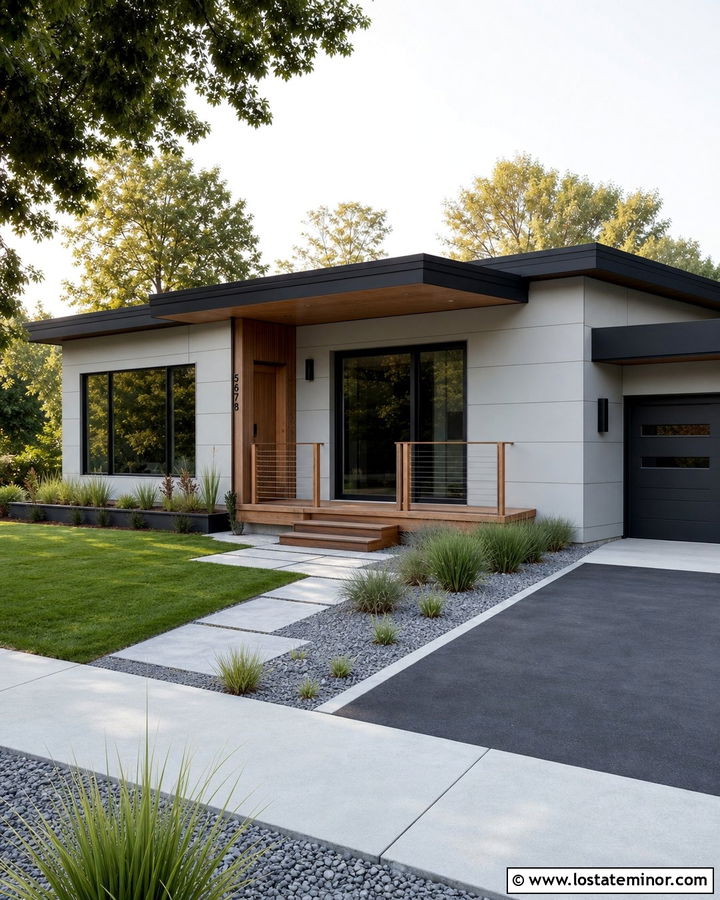
Clean geometry allows a light gray modern house to use a deck as an extension of its architecture. Pair smooth pale gray panels with medium-toned wood decking, black window frames, and a flat or low-slope charcoal roof. Continue the same wood vertically on a small section near the entrance to connect the deck with the facade. Use frameless glass or thin cable railings where safety requires a barrier, keeping sightlines as open as possible. Wide sliding doors can reinforce the indoor-outdoor relationship. Avoid decorative trim and let material changes provide visual interest. Linear planting beds, rectangular concrete pavers, ornamental grasses, and a simple gravel border complete the composition. The final exterior looks crisp and modern without losing the warmth needed for comfortable curb appeal.
Conclusion:
The most successful 30 Light Grey House Design With Deck Ideas treat siding, decking, trim, doors, railings, roofing, and landscaping as one coordinated composition. Start by identifying whether the gray exterior has cool, warm, or neutral undertones. Next, decide whether the deck should blend gently, add dark contrast, or bring natural warmth to the facade. Cedar and walnut tones create an inviting effect, while charcoal composite and black railings produce a cleaner modern edge. White railings suit traditional homes, and cable systems keep contemporary decks visually open. Always test exterior colors in direct sun and shade before committing. With thoughtful material repetition and balanced contrast, a light gray house can support a beautiful deck in nearly any architectural setting.

Related posts: