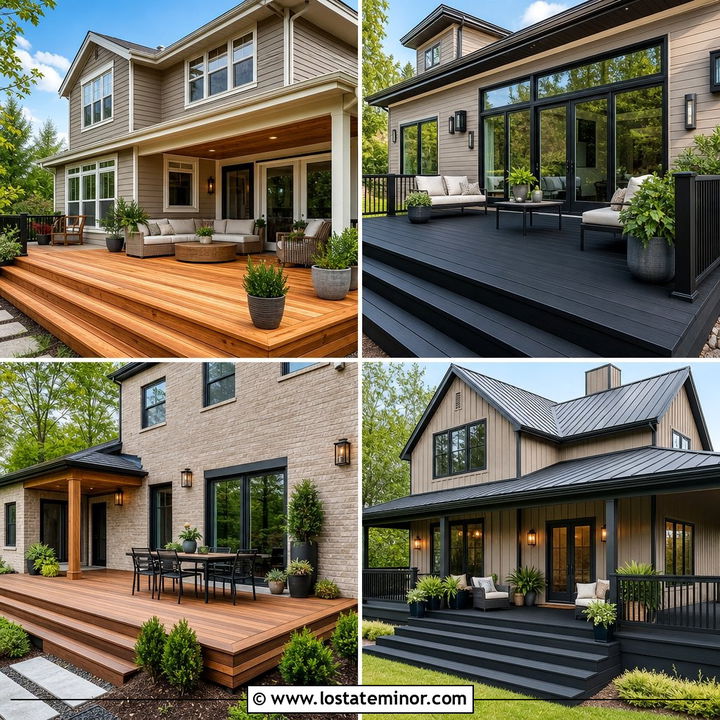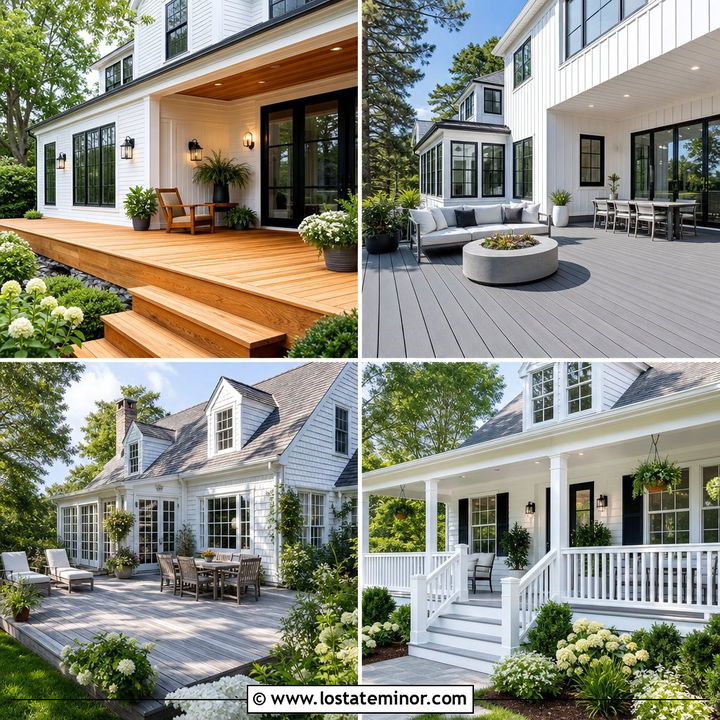
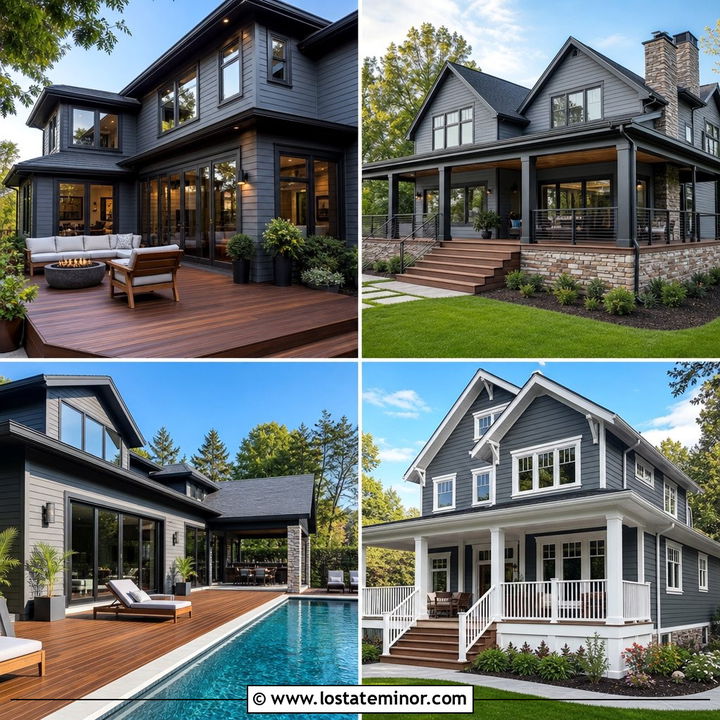
A charcoal gray exterior creates a strong, versatile backdrop for outdoor living. The right deck can soften the dark siding, sharpen its modern character, or connect the home with natural surroundings. Current exterior trends favor charcoal accents, organic stone, and warm wood textures, making this combination especially relevant for updated curb appeal. () The key is balancing the depth of the siding with deck boards, railings, trim, roofing, and landscaping that provide enough contrast. Light oak, cedar, walnut, weathered gray, and black composite decking can all work when their undertones relate to the complete facade. Below, you will find 30 Charcoal Grey House Design With Deck Ideas covering different architectural styles, materials, layouts, and budgets.

1. Charcoal Grey House With Cedar Deck
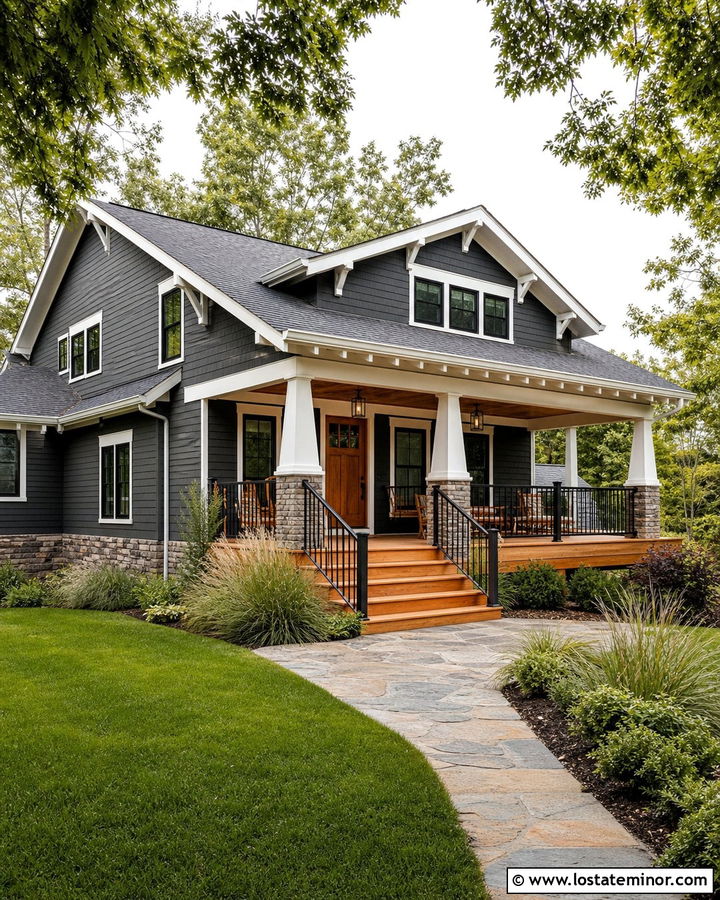
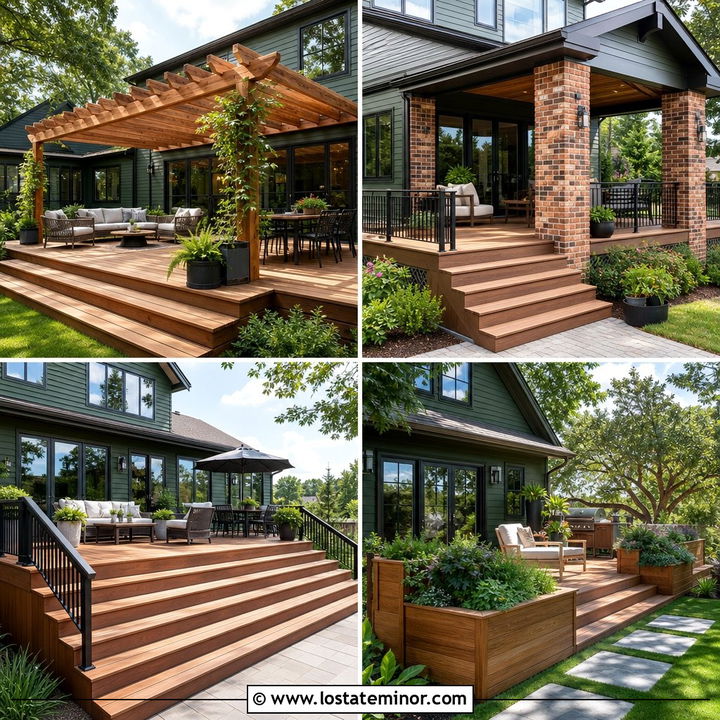
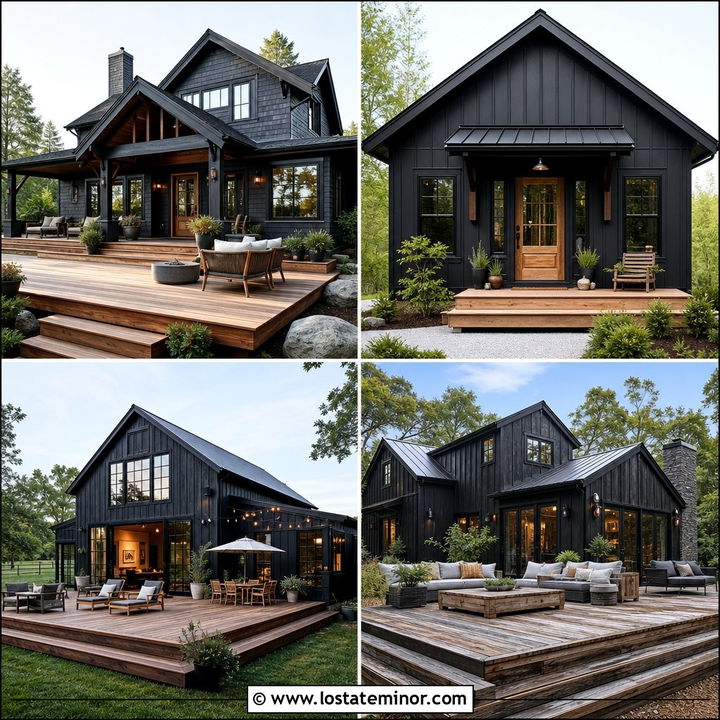
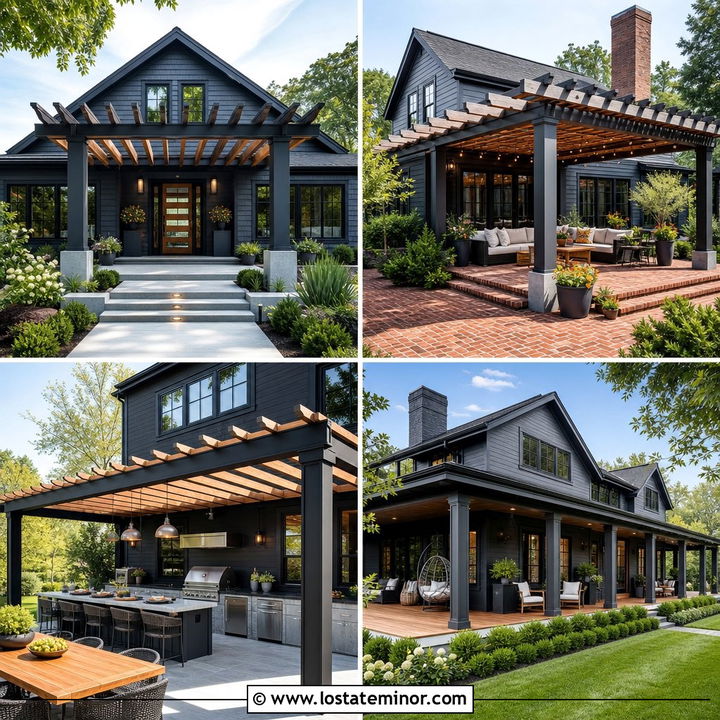
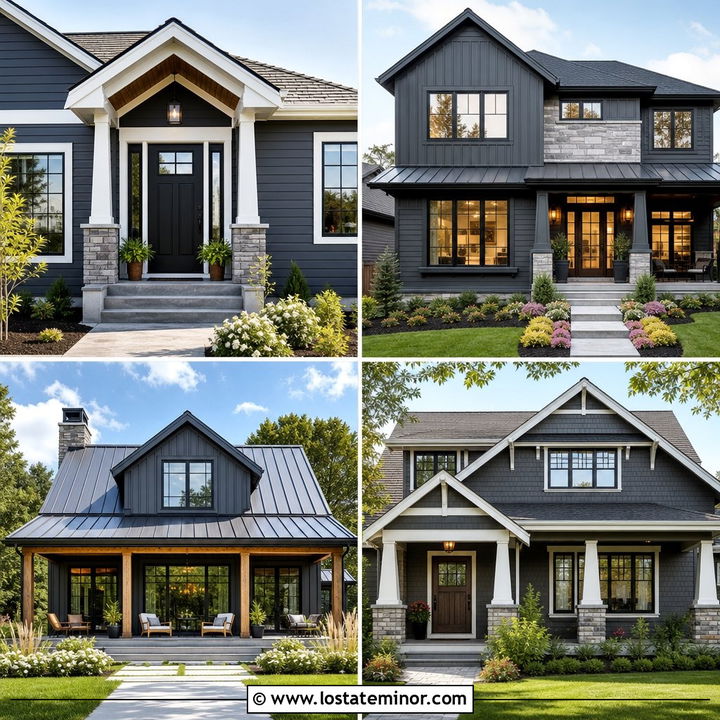
Warm cedar decking brings instant balance to a charcoal gray house. Its honey, amber, and soft red undertones keep the dark siding from feeling cold or severe. This pairing looks especially natural on a Craftsman home with wide roof overhangs, tapered porch columns, and stone along the foundation. Use warm white trim to outline the windows while preserving a softer contrast than bright white would create. Black metal railings add structure without hiding the cedar boards. A medium-gray roof connects the siding to the stonework, while a stained wood front door repeats the deck color. Finish the exterior with ornamental grasses, evergreen shrubs, and a broad flagstone walkway for an inviting, well-integrated curb appeal design.
2. Charcoal Grey House With Black Composite Deck
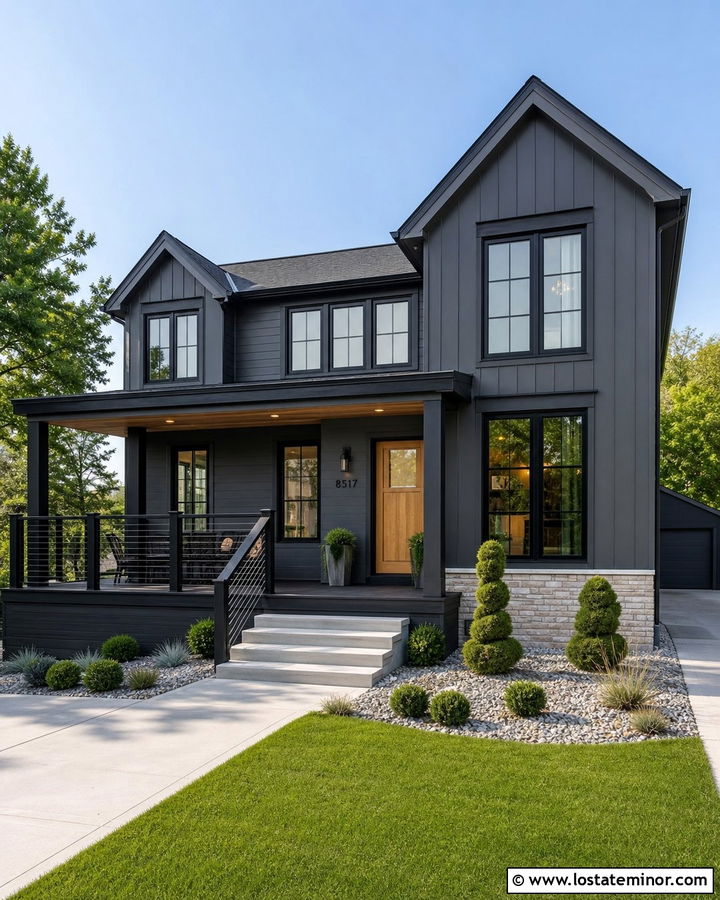
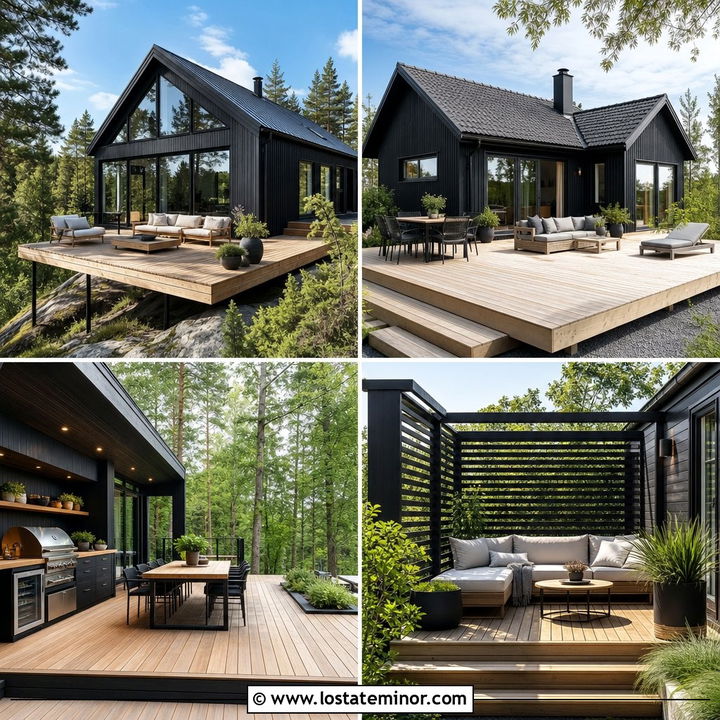
For a clean contemporary exterior, pair charcoal gray siding with a black composite deck. The closely related dark colors create a streamlined look that works well on modern homes with flat or low-pitched rooflines. Prevent the exterior from becoming visually heavy by adding warm white soffits, pale concrete steps, and large windows with slim black frames. A cable railing system keeps the deck open and allows the architecture to remain the focus. Consider using wider deck boards with a subtle wood-grain texture so the surface does not appear flat. Light gravel beds, sculptural shrubs, and a simple concrete walkway can brighten the surrounding landscape. A natural oak front door introduces one warm focal point without disrupting the restrained monochromatic palette.
3. Charcoal Grey House With White Deck Railing
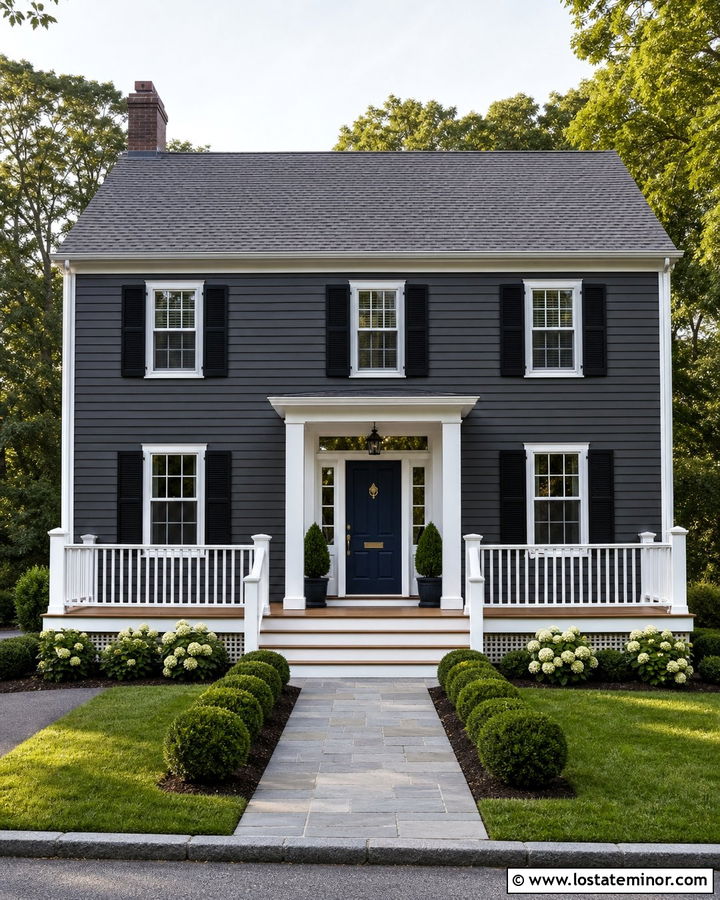
Crisp white deck railings can give a charcoal gray house a classic, welcoming appearance. This high-contrast combination works particularly well on Colonial and Cape Cod homes with symmetrical windows, traditional rooflines, and simple architectural details. Choose medium-brown or weathered oak deck boards so the transition between the dark house and white railing feels comfortable rather than abrupt. Carry the railing color onto the window trim, fascia, porch columns, and garage surround. A navy or muted red front door can add character without overwhelming the facade. If the deck sits across the front of the house, use evenly spaced balusters and broad stairs to reinforce symmetry. Hydrangeas, boxwoods, and a green lawn will soften the bold charcoal-and-white color scheme.
4. Charcoal Grey House With Natural Wood Deck
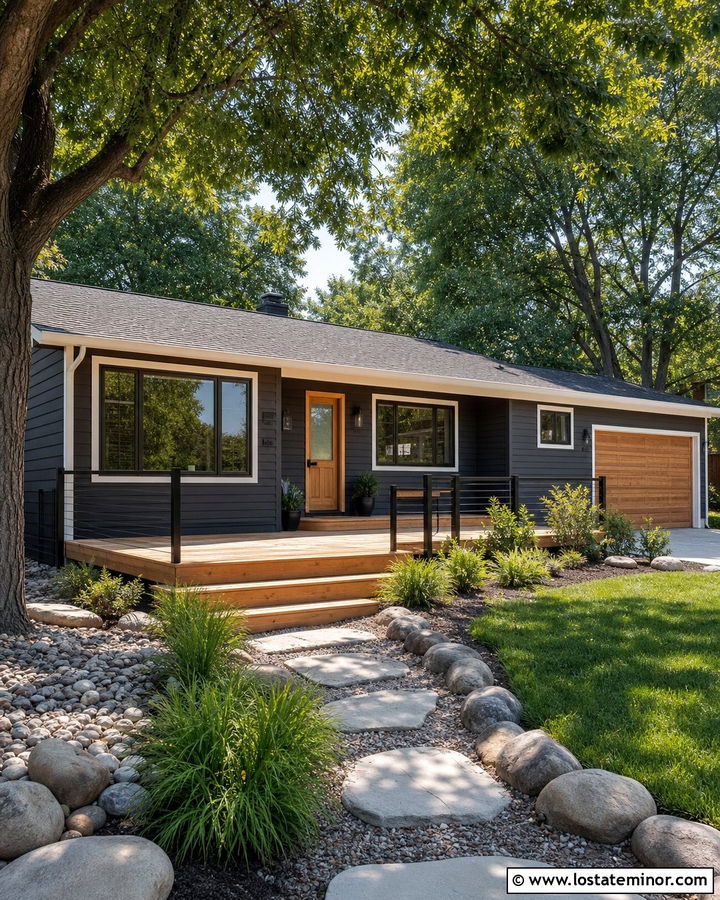
Natural wood offers an easy way to make charcoal gray siding feel more relaxed. A clear or lightly tinted finish preserves the visible grain, giving the home warmth and texture without adding another dominant color. This combination suits a simple ranch house with horizontal siding, a low roof, and a wide deck extending across the main living area. Match the deck with a natural wood front door or garage door to create repetition. Soft off-white trim will brighten the windows, while black railings can define the deck without competing with the lumber. Use pale river rock and low-maintenance native plants around the foundation. The finished exterior feels contemporary but comfortable, with enough organic detail to blend naturally into a suburban or wooded setting.
5. Charcoal Grey House With Wraparound Deck
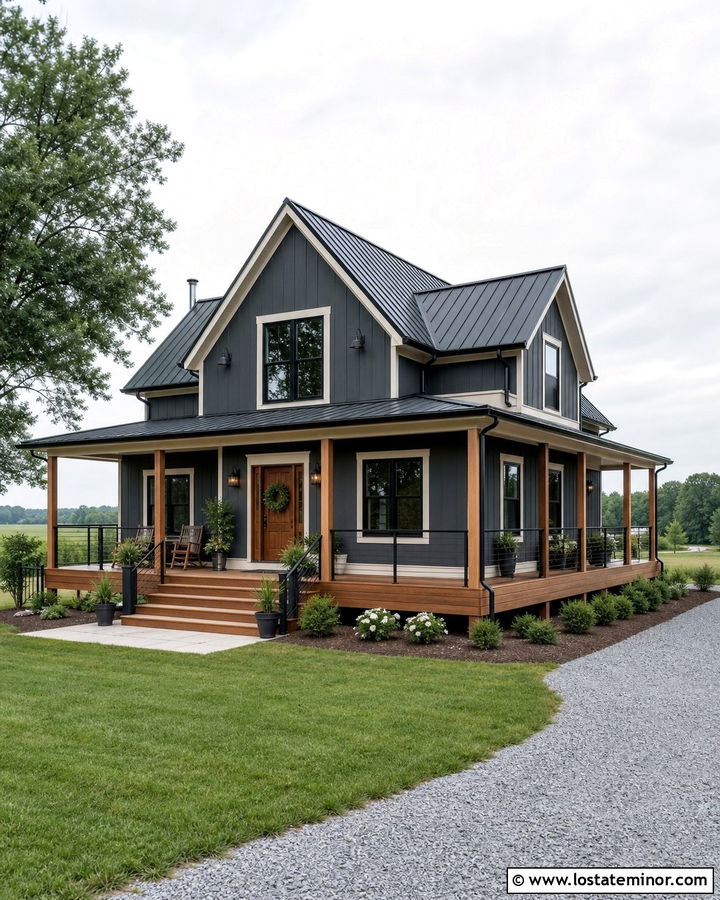
A wraparound deck can transform a charcoal gray house into a more connected indoor-outdoor retreat. This layout is especially effective on farmhouse-inspired homes, cottages, and country properties where the deck needs to serve several sides of the building. Choose medium cedar or warm brown boards to visually lighten the dark siding. Simple black railings preserve open views and repeat black window frames or exterior lighting. Cream trim around the doors and windows gives the facade a softer finish than stark white. Use wider stairs at the main entrance so the deck feels naturally connected to the yard. Rocking chairs, built-in benches, and restrained planters can define separate seating areas. A standing-seam roof completes the practical, updated rural character.
6. Charcoal Grey House With Raised Deck
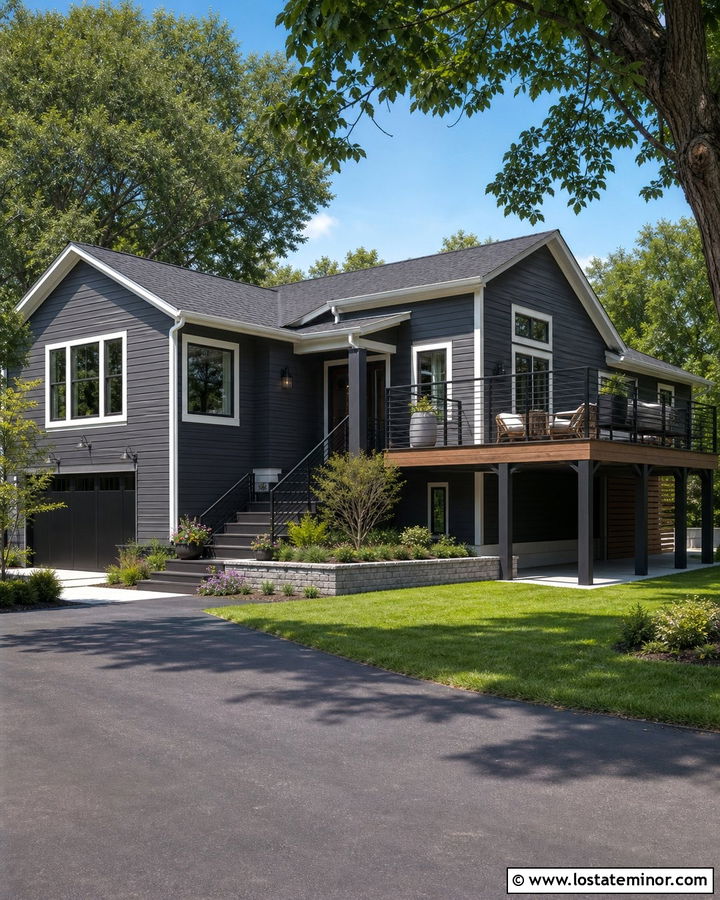
A raised deck should appear structurally connected to the house rather than attached as an afterthought. On a charcoal gray split-level or two-story home, medium walnut decking creates a strong but warm transition from the upper floor to the backyard. Paint or stain the supporting posts charcoal gray so they blend with the siding and visually reduce the deck’s height. Black metal railings keep the upper platform secure without adding bulky lines. Enclose the lower area with horizontal wood slats matching the deck boards, or leave part of it open for a shaded patio. Light concrete pavers beneath the structure brighten the ground level. Repeating the walnut tone on the front door and outdoor steps gives the entire exterior a planned, cohesive appearance.
7. Charcoal Grey House With Ground-Level Deck
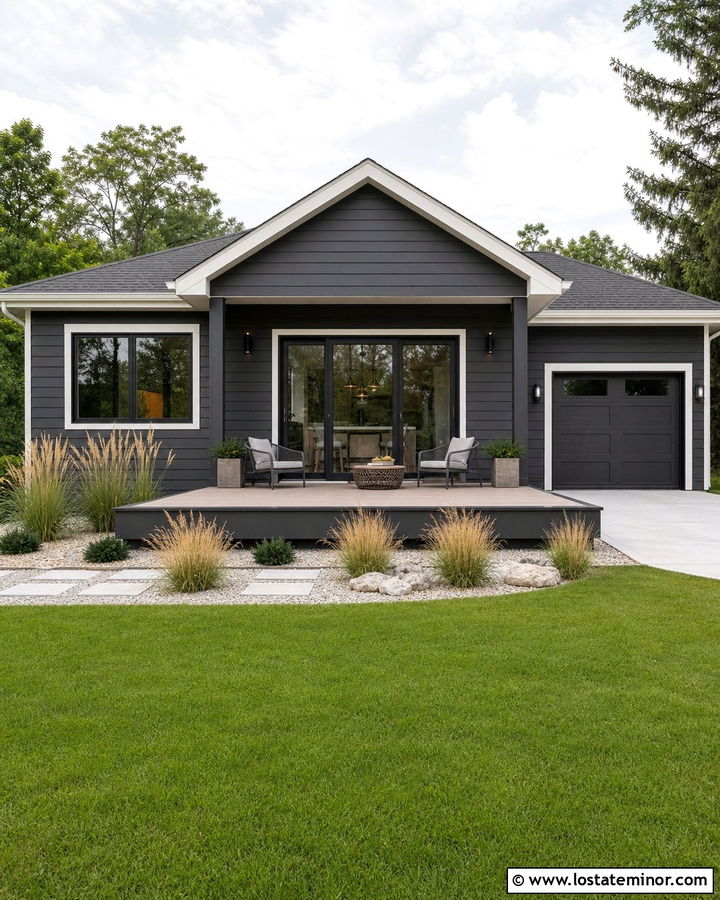
A ground-level deck produces a smooth, accessible connection between a charcoal gray home and its yard. It works particularly well with a single-story ranch, modern bungalow, or compact contemporary house. Use light weathered-oak composite boards to create visible contrast and reduce the visual weight of the exterior. A border of darker charcoal decking can frame the platform and relate it back to the siding. Because the deck sits close to the lawn, railings may not be necessary in every area, resulting in an open and spacious look. Large sliding doors with black frames can connect the indoor living room to the deck. Finish the scene with low grasses, stepping stones, and restrained outdoor furniture in cream, tan, and muted green.
8. Charcoal Grey House With Covered Deck
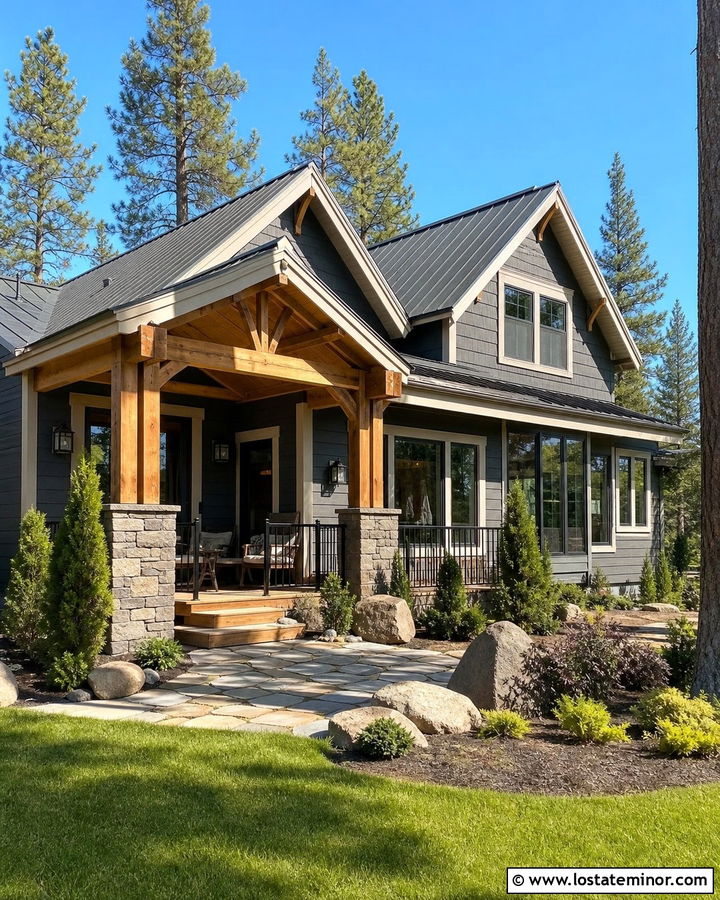
A covered deck extends the usefulness of an outdoor space while giving the facade more architectural depth. Against charcoal gray siding, a warm wood ceiling becomes a noticeable feature that can be enjoyed from inside and outside the home. Use medium-brown deck boards, substantial wood posts, and black metal railings for a balanced mix of materials. A charcoal standing-seam roof can connect the deck cover to the main house, while warm white fascia prevents the roofline from appearing too dark. Add stacked stone around the post bases to ground the structure. This complete scheme works beautifully on a Craftsman or mountain-inspired home. Recessed ceiling lights, simple seating, and large planters will create a practical space without making the covered deck feel crowded.
9. Charcoal Grey House With Gray Composite Deck
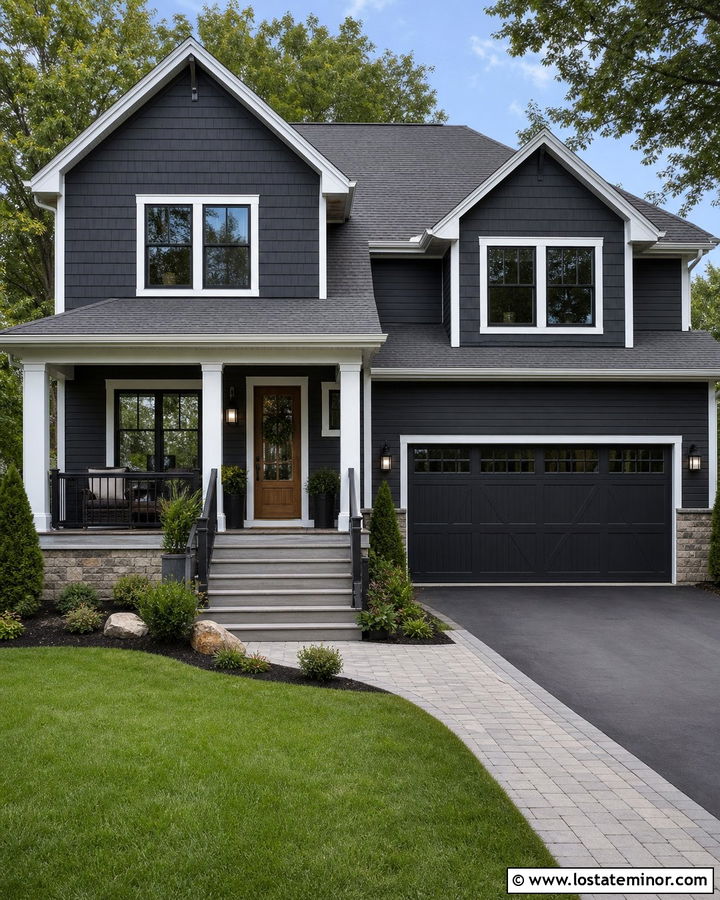
A gray composite deck creates a coordinated exterior with low visual contrast. To prevent the house and deck from blending into one large gray surface, select deck boards several shades lighter than the charcoal siding. A variegated finish with silver, taupe, or driftwood streaks adds depth and makes the material appear more natural. White trim can define the roofline and windows, while black railings provide a crisp boundary around the platform. This scheme is a strong fit for a suburban two-story home with straightforward architecture and a medium-gray roof. Introduce warmth through a cedar front door, wood planters, or stone containing beige undertones. The final look remains calm and cohesive without becoming overly monochromatic or lacking in personality.
10. Charcoal Grey House With Walnut Deck
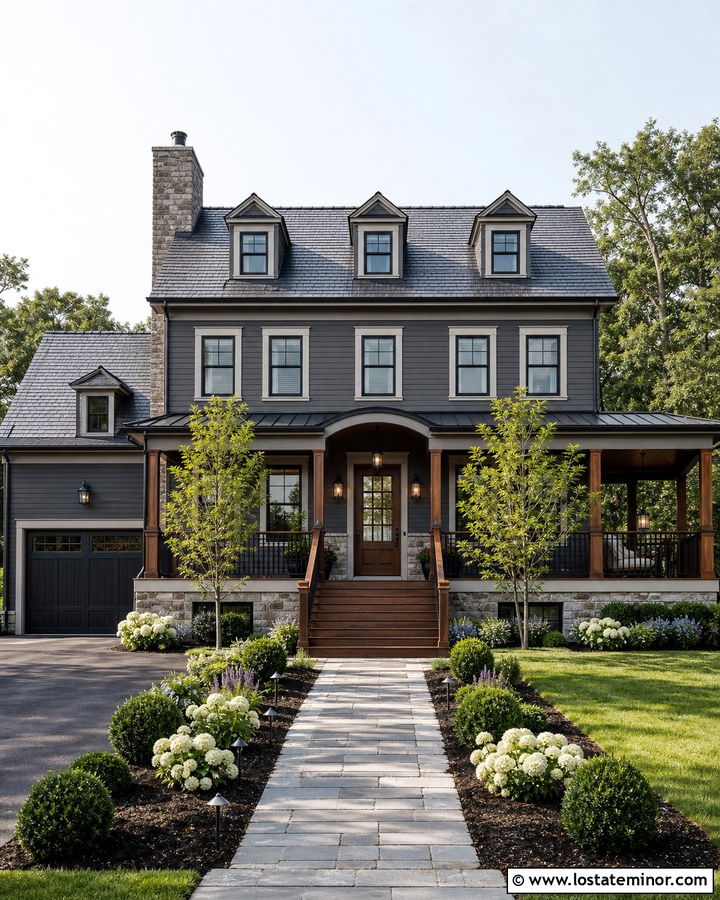
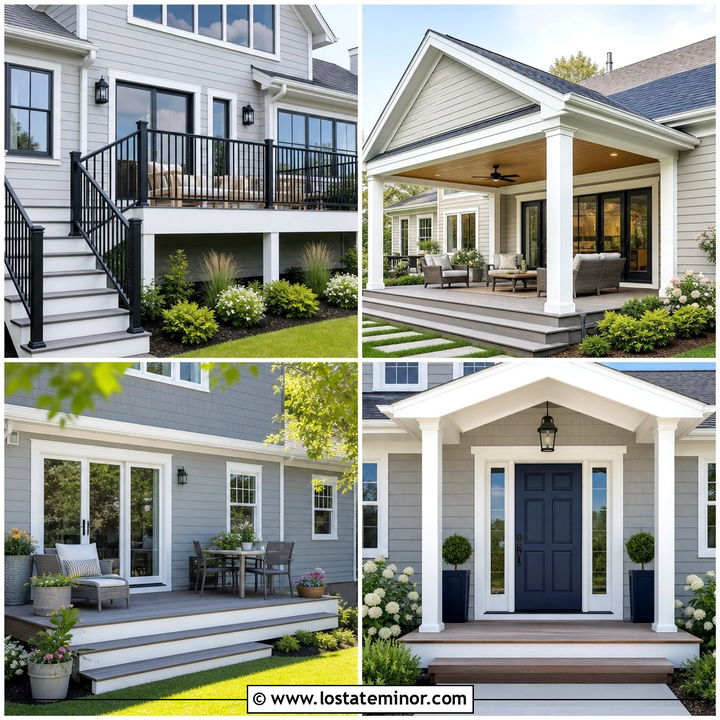
Rich walnut decking gives a charcoal gray exterior a refined, established appearance. The deep brown color has enough strength to stand beside dark siding while still providing warm contrast. This pairing is particularly attractive on a modern Colonial or transitional home with balanced windows and a defined entrance. Use cream trim instead of brilliant white to complement the walnut’s warm undertones. Black window frames, railings, and lighting can add a sharper contemporary edge. If the deck includes stairs, continue the walnut finish across the treads while using charcoal risers for a tailored two-tone effect. A dark gray roof will complete the upper facade. Layered shrubs, small trees, and warm stone pavers help connect the sophisticated exterior palette to the surrounding landscape.
11. Charcoal Grey House With Two-Tone Deck
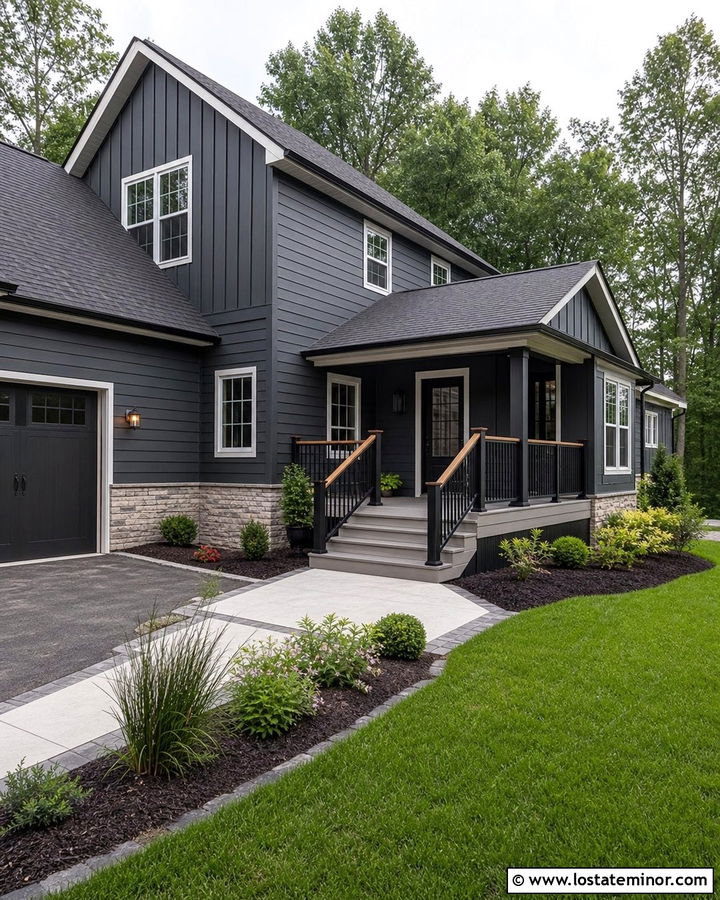
A two-tone deck can bridge several exterior colors while making the outdoor area look more custom. Pair light driftwood-gray deck boards with a charcoal border that matches the house siding. Use black posts and railings to sharpen the edges, then introduce natural wood on the handrail or built-in bench. This combination works well on a contemporary suburban home with mixed horizontal and vertical siding. White window trim can add brightness, but keep it narrow so it does not distract from the deck pattern. Consider repeating the light deck color in stone around the foundation or walkway. The darker picture-frame border clearly defines the platform and stairs. It can also make a simple rectangular deck feel more finished without requiring a complicated or expensive structural layout.
12. Charcoal Grey House With Red Cedar Deck
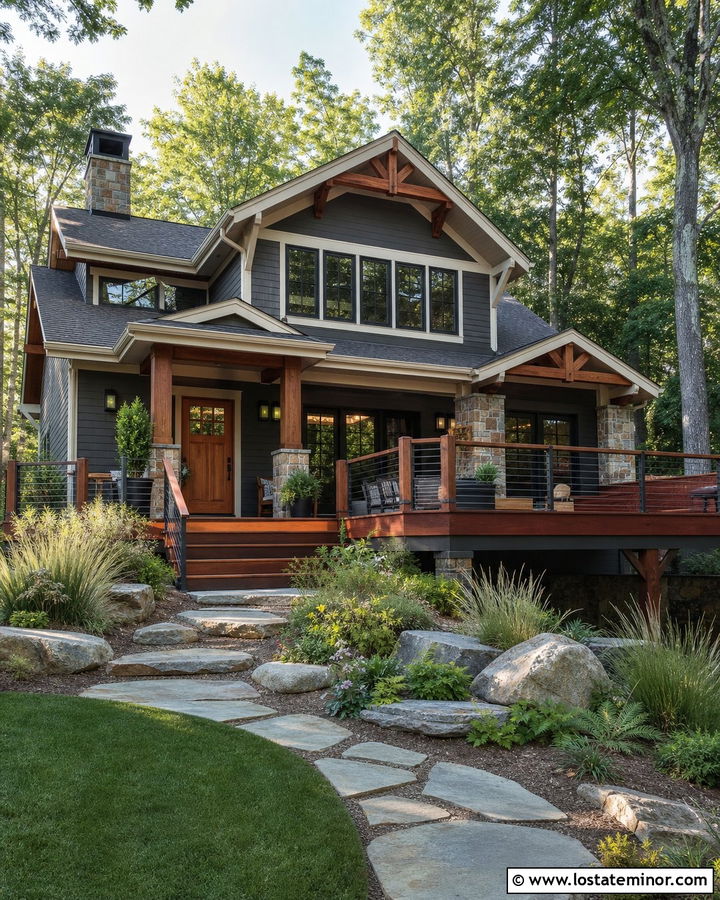
Red cedar decking provides a bolder, warmer contrast than pale natural wood. Its reddish-brown tones stand out against charcoal gray siding, making the deck a clear focal point. Use this pairing on a rustic contemporary home, woodland cabin, or Craftsman exterior with exposed beams and substantial rooflines. Keep the window trim soft white or muted cream to avoid introducing another dark color. Black cable railings will allow the cedar surface and surrounding landscape to remain visible. Stone accents containing gray, rust, and brown can connect the cool siding with the warm deck. A cedar front door or matching gable detail creates useful repetition. This exterior scheme looks especially grounded when surrounded by mature trees, native grasses, and an irregular flagstone path.
13. Charcoal Grey House With Light Oak Deck
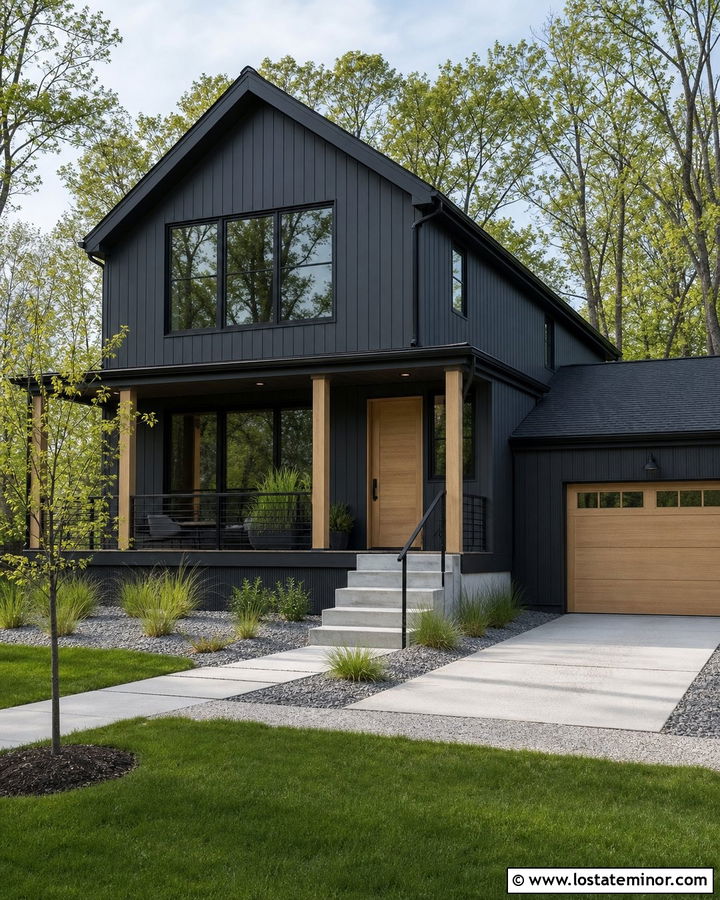
Light oak decking gives a charcoal gray home a fresh Scandinavian-inspired contrast without making the exterior feel stark. The pale golden boards work beautifully with clean rooflines, large windows, and simple vertical siding. Choose a natural matte finish rather than an orange-toned stain to preserve the oak’s quiet character. Slim black railings can relate to the windows, while warm white trim keeps the overall palette light and approachable. Continue the oak color on the front door, porch ceiling, or garage door for a unified design. Pale concrete steps and gravel beds will complement the deck without competing with it. This combination is ideal for homeowners who like modern architecture but still want the facade to feel warm, livable, and closely connected to natural materials.
14. Charcoal Grey House With Mahogany Deck
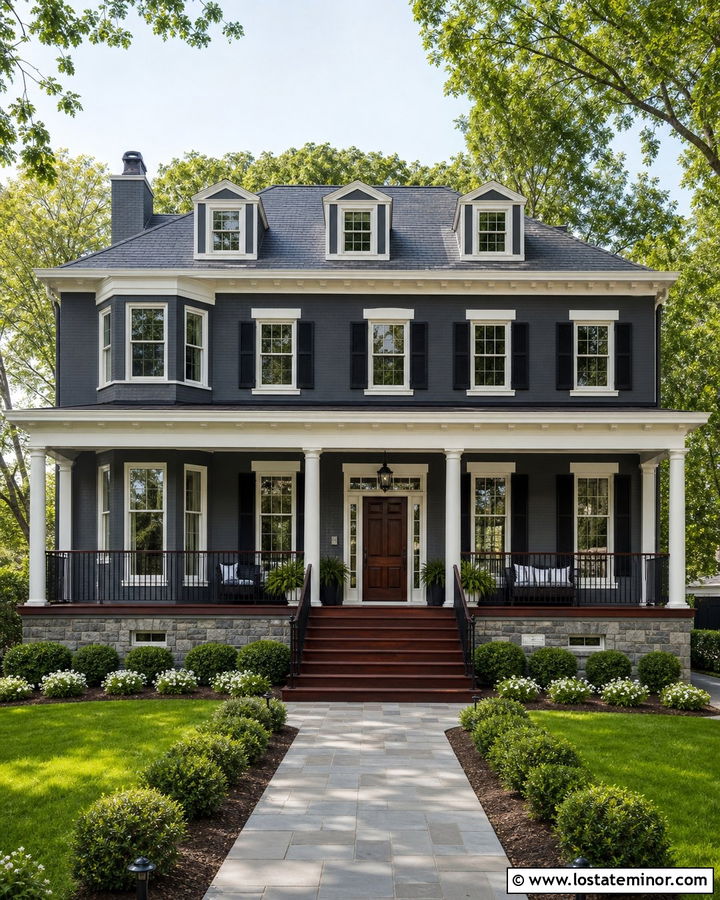
Mahogany decking creates a dramatic contrast with a charcoal gray exterior. Its deep reddish-brown color adds richness, making it a good match for traditional homes with formal proportions or transitional homes that combine classic and modern details. Use creamy white trim to soften the dark palette and highlight the windows. Black railings can frame the deck, although mahogany handrails will help the structure feel more coordinated. Repeat the deck color on the front door or shutters, but avoid using it on too many surfaces. Gray-brown stone around the foundation will connect the warm deck with the cool siding. A slate-colored roof, symmetrical shrubs, and a straight stone walkway can complete the polished exterior while keeping the mahogany deck as the main feature.
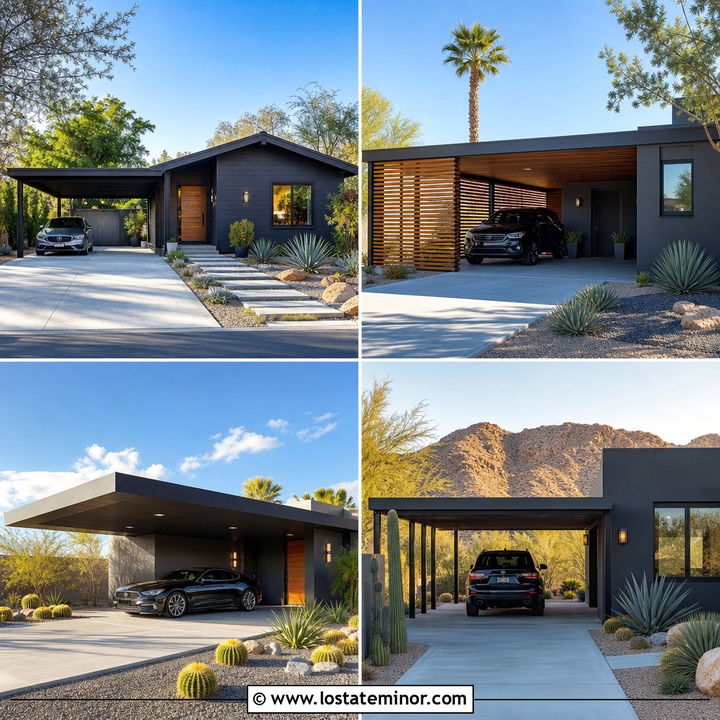
15. Charcoal Grey House With Weathered Wood Deck
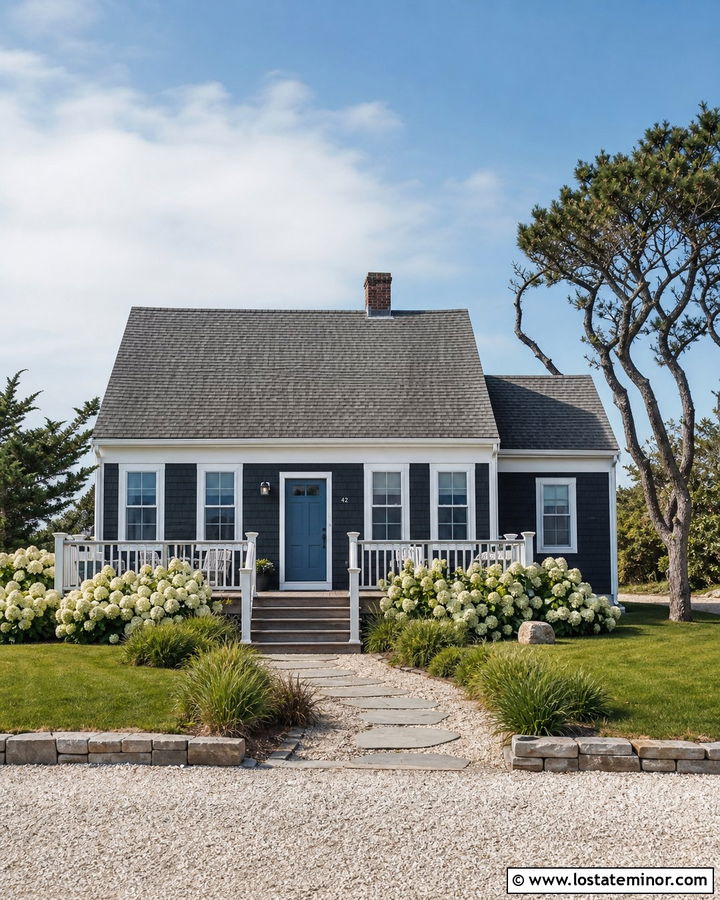
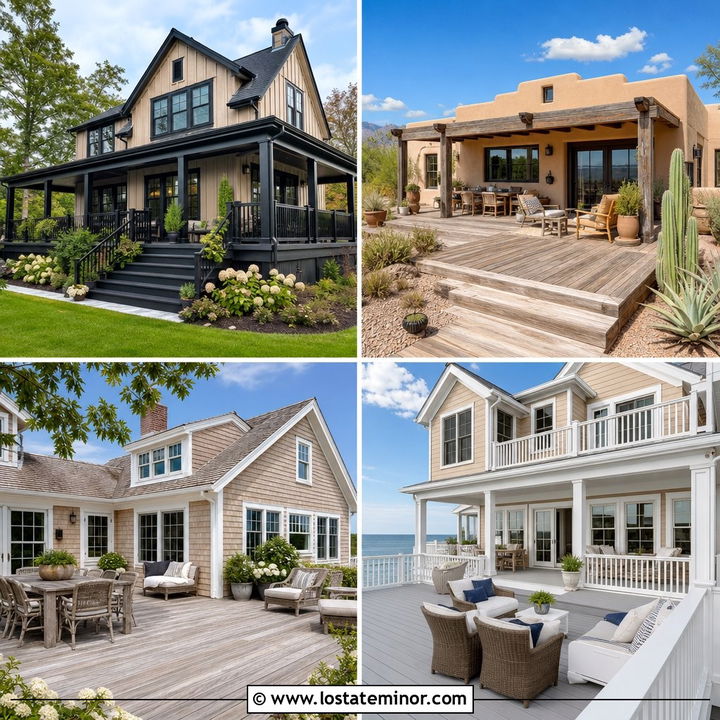
Weathered wood decking gives a charcoal gray house a softer, casual character. The faded brown and gray tones create a low-contrast transition that feels especially appropriate for coastal cottages, lake houses, and relaxed Cape Cod architecture. Pair the siding with white trim, a muted blue front door, and simple white or black deck railings. A cedar-shake or medium-gray roof can reinforce the natural, timeworn appearance. Choose boards with realistic color variation rather than a flat solid-gray finish. White hydrangeas, beach grasses, and a crushed-shell or pale gravel path will support the coastal palette. Even in a suburban neighborhood, this complete exterior look feels easygoing and established. It also accommodates changing wood tones as the deck naturally ages over time.
16. Charcoal Grey House With Black Cable Railing Deck
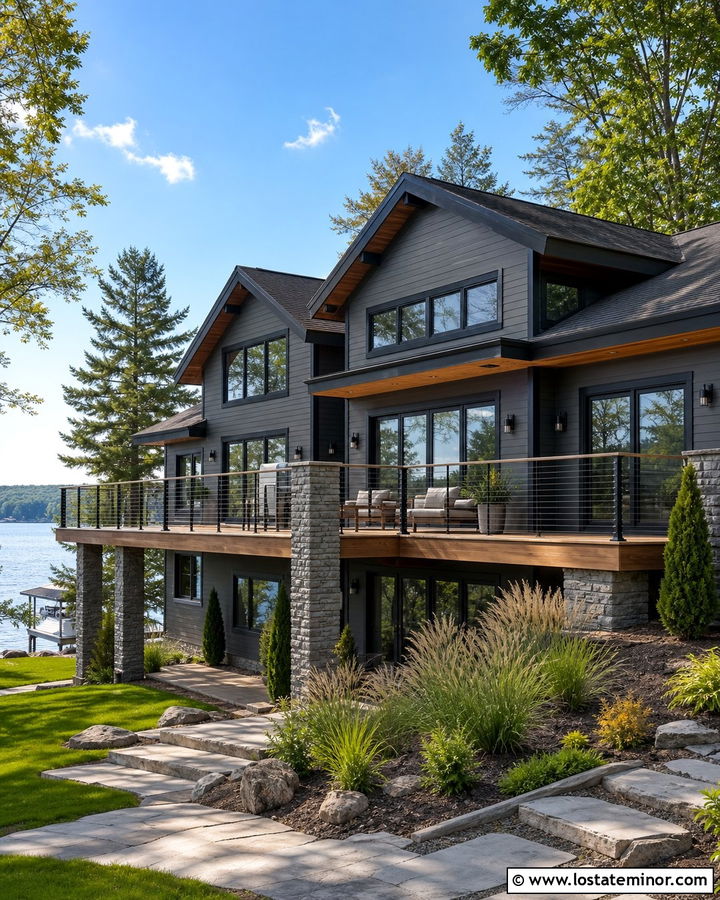
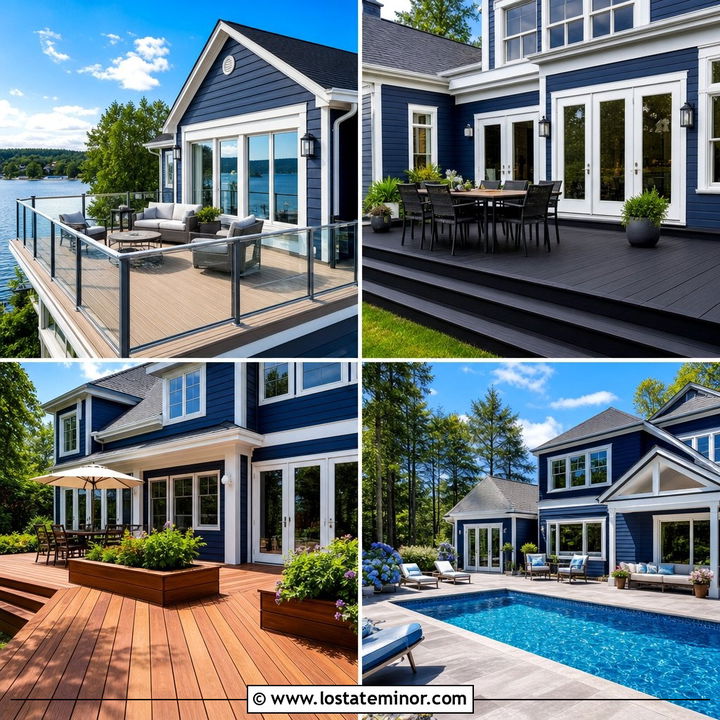
Black cable railing is an excellent choice when a charcoal gray house needs structure without obstructing the view. The thin horizontal lines suit modern, mountain, and lakeside homes with large windows and elevated decks. Pair the railing with medium cedar boards to add warmth and make the dark siding feel less imposing. Use black window frames and charcoal fascia so the railing appears connected to the architecture. A warm wood soffit can repeat the deck color above, creating visual balance from top to bottom. Stone columns or foundation cladding will help anchor the elevated structure. Keep the surrounding landscaping simple, using ornamental grasses and low evergreen shrubs. The resulting exterior feels open, contemporary, and carefully coordinated rather than dominated by heavy deck components.
17. Charcoal Grey House With White Pergola Deck
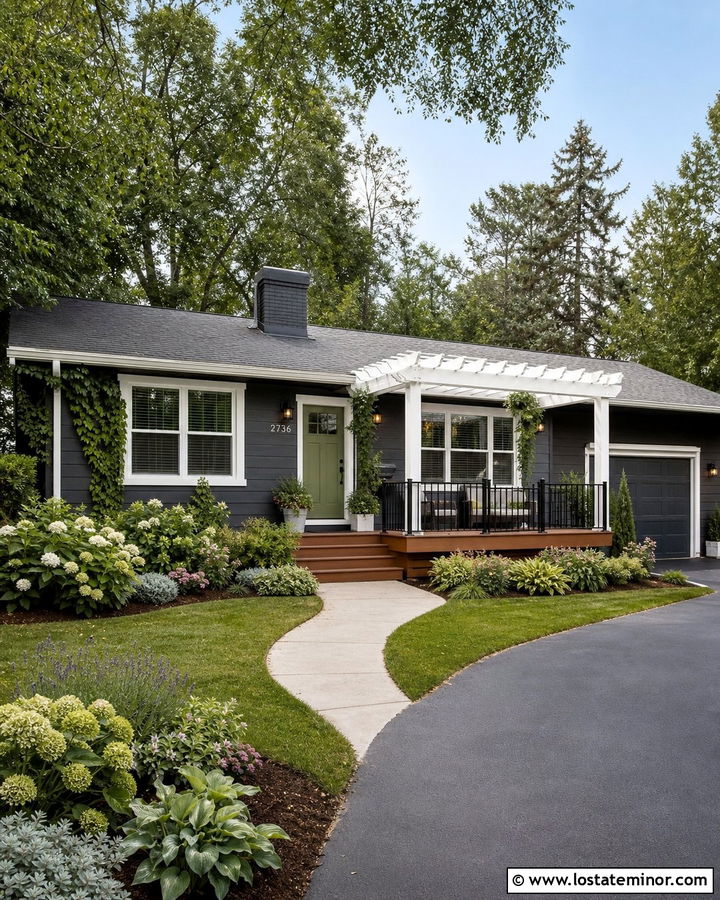
A white pergola can brighten a deck attached to a charcoal gray house while creating a useful architectural focal point. This high-contrast feature suits a traditional ranch, cottage, or updated Colonial exterior. Choose warm gray or medium-brown deck boards so the floor creates a gentle transition between the white overhead structure and dark siding. Repeat the pergola color on window trim, fascia, and porch columns. Black railings and exterior lights add definition without competing with the white beams. Climbing greenery can soften the structure, but keep the planting controlled so the pergola’s clean shape remains visible. A muted green front door and layered foundation planting will add natural color. The complete scheme feels bright, welcoming, and suitable for casual outdoor gatherings.
18. Charcoal Grey House With Wood Pergola Deck
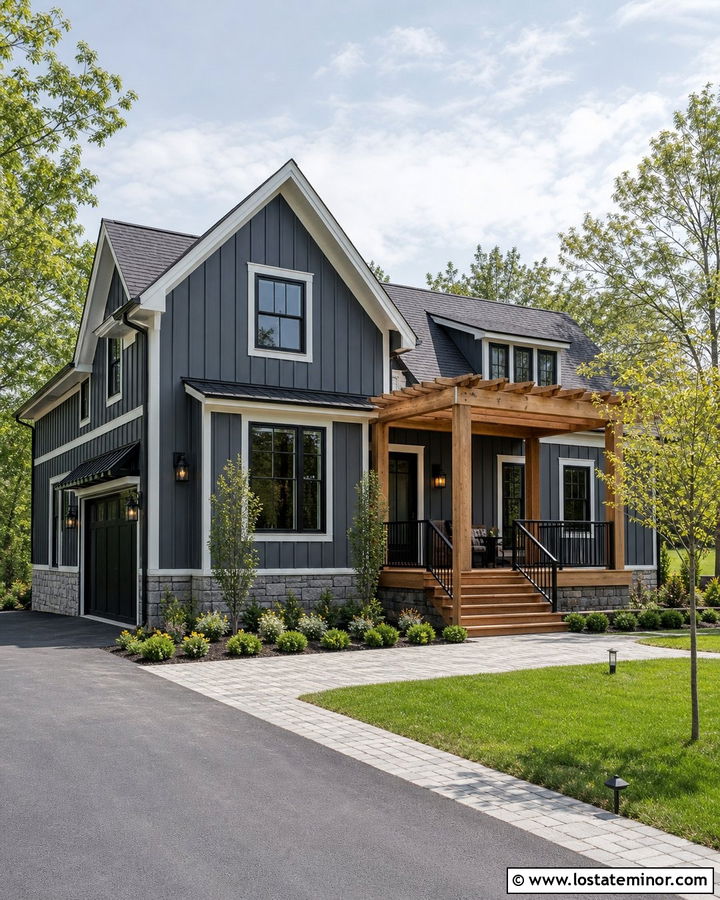
A natural wood pergola adds height, warmth, and architectural detail to a deck beside charcoal gray siding. Use cedar for both the pergola and deck boards to create a unified outdoor structure. Black hardware and railings can relate to dark window frames while giving the woodwork a more contemporary finish. This combination looks especially effective on a modern farmhouse with vertical board-and-batten siding and a simple gabled roof. Warm white trim can outline the roof and windows without competing with the pergola. Add gray stone around the foundation to connect the siding to the landscape. Straight garden beds, a broad lawn, and a simple paver walkway will keep the focus on the wood structure. The pergola becomes a natural extension of the complete house design.
19. Charcoal Grey House With Stone Deck Columns
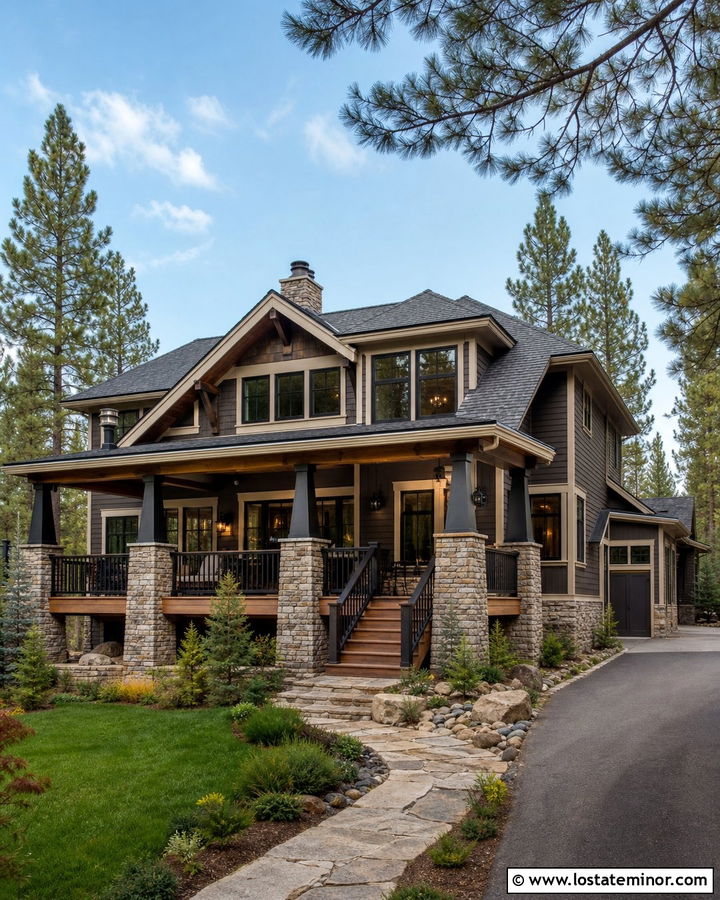
Stone columns can make a deck feel permanent and architecturally grounded. Pair charcoal gray siding with warm gray or greige stacked stone containing small amounts of brown. Those subtle warm tones will connect naturally with cedar or walnut deck boards. This exterior combination is ideal for a Craftsman, mountain home, or large suburban house with a covered deck. Use substantial tapered posts above the stone bases and finish them in charcoal or natural wood. Black railings can add definition, while cream trim will brighten the windows and roofline. Repeat the stone at the foundation or entry steps so it does not appear limited to the deck. Evergreen planting and broad stone paths will complete the substantial, nature-connected look without making the facade feel excessively rustic.
20. Charcoal Grey House With Brick Deck Base
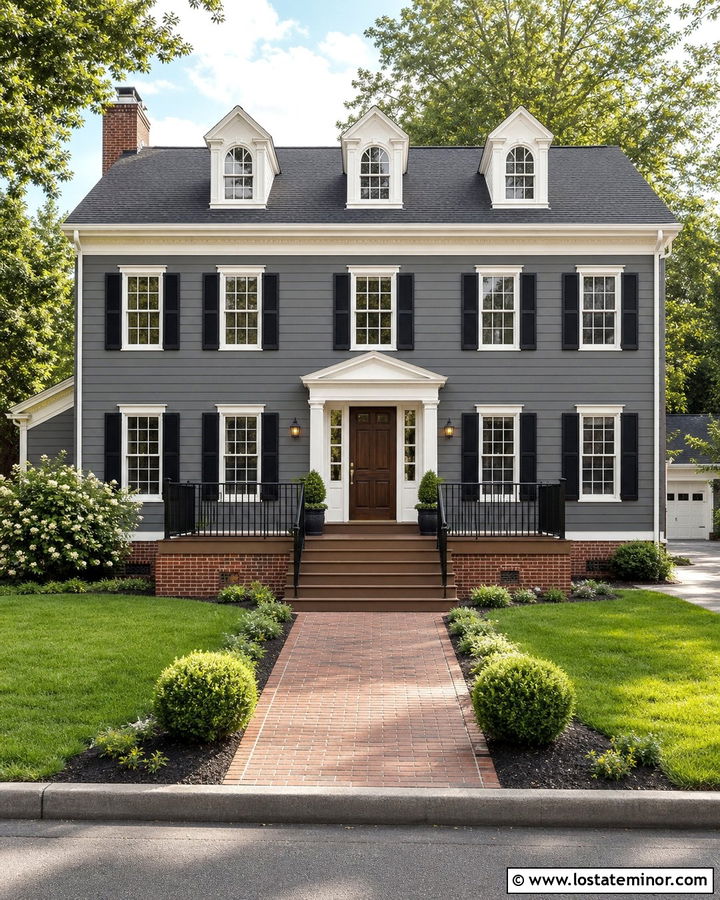
Brick beneath a deck can introduce warmth and traditional texture to a charcoal gray house. Select muted red, brown, and charcoal brick rather than bright orange masonry. This allows the foundation to blend with both the siding and medium-brown deck boards. A brick deck base looks particularly appropriate on a Colonial, Georgian, or traditional two-story home. Use creamy white trim around the windows, black shutters, and a walnut front door to complete the palette. The deck railing may be black metal or painted white, depending on the desired level of contrast. Repeat the brick along the front steps or walkway edging for continuity. Neatly clipped shrubs and a symmetrical lawn will reinforce the classic architecture while the dark siding gives the entire exterior a more updated appearance.
21. Charcoal Grey House With Pool Deck
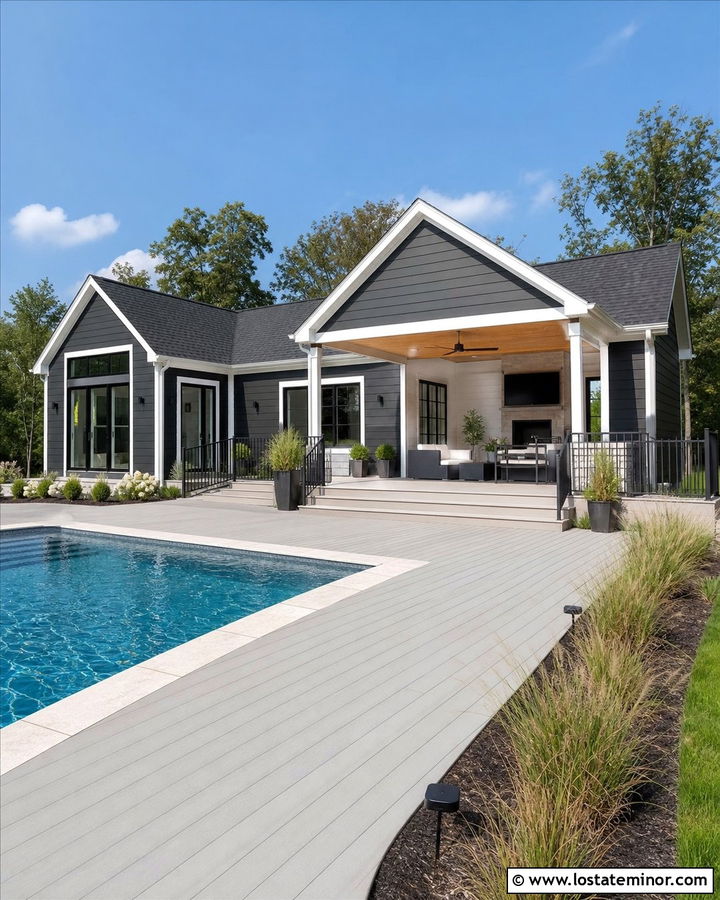
A pool deck beside a charcoal gray house should feel bright, comfortable, and visually connected to the building. Pale gray composite boards or light natural wood can provide contrast while keeping the outdoor area open and clean. Use black railings only where required, allowing broad sections of the deck to remain visually unobstructed. White window trim and large black-framed glass doors will connect the interior to the pool area. Consider adding a covered section with a natural wood ceiling for shade and texture. Light stone coping around the water can repeat the deck’s pale tones. Low grasses, evergreen shrubs, and simple planters will frame the setting without dropping excessive debris near the pool. The finished scheme feels modern, balanced, and suited to everyday outdoor living.
22. Charcoal Grey House With Small Front Deck
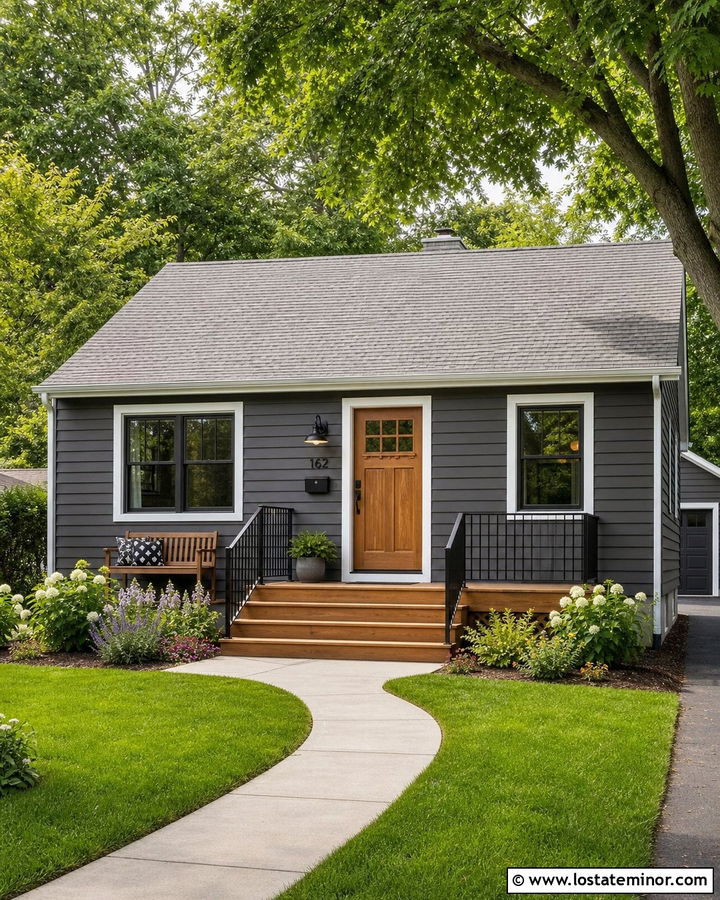
Even a small front deck can give a charcoal gray house a more welcoming entrance. On a compact bungalow or ranch, use warm cedar boards and broad steps to make the platform feel larger. Keep the railing simple, choosing black metal or narrow charcoal balusters that blend with the siding. White trim around the door and windows will provide definition, while a mustard yellow, muted red, or natural wood front door can become the focal point. Extend the deck slightly beyond the doorway when space permits, creating room for one bench or two simple chairs. A curved walkway, low shrubs, and layered flowers will soften the dark exterior. This practical design adds character without requiring a full porch or a large construction budget.
23. Charcoal Grey House With Multi-Level Deck
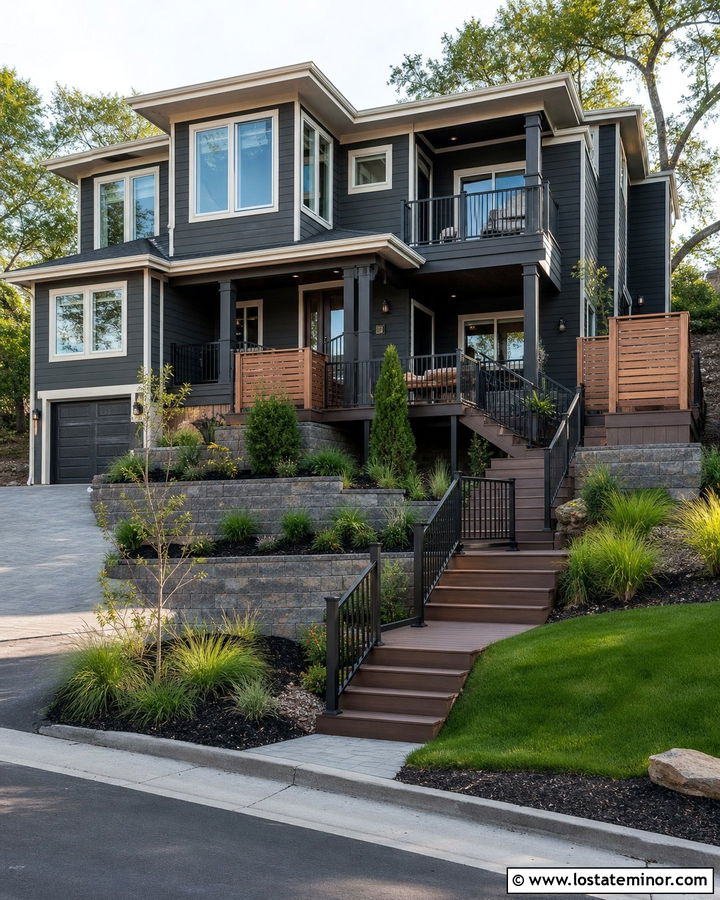
A multi-level deck can organize a sloped yard while adding useful outdoor zones to a charcoal gray house. Use medium-brown composite boards throughout the structure to maintain consistency between the levels. Black railings will define the edges, while charcoal-painted support posts can blend into the siding and reduce visual clutter. Design the upper level for dining near the house and the lower platform for relaxed seating or access to the lawn. Wide stairs are important because they make the separate levels feel connected. Gray stone retaining walls can help integrate the deck into the slope. Repeating the deck’s brown tone on a front door, soffit, or privacy screen ties the structure back to the complete exterior and keeps the complex layout visually controlled.
24. Charcoal Grey House With Rooftop Deck
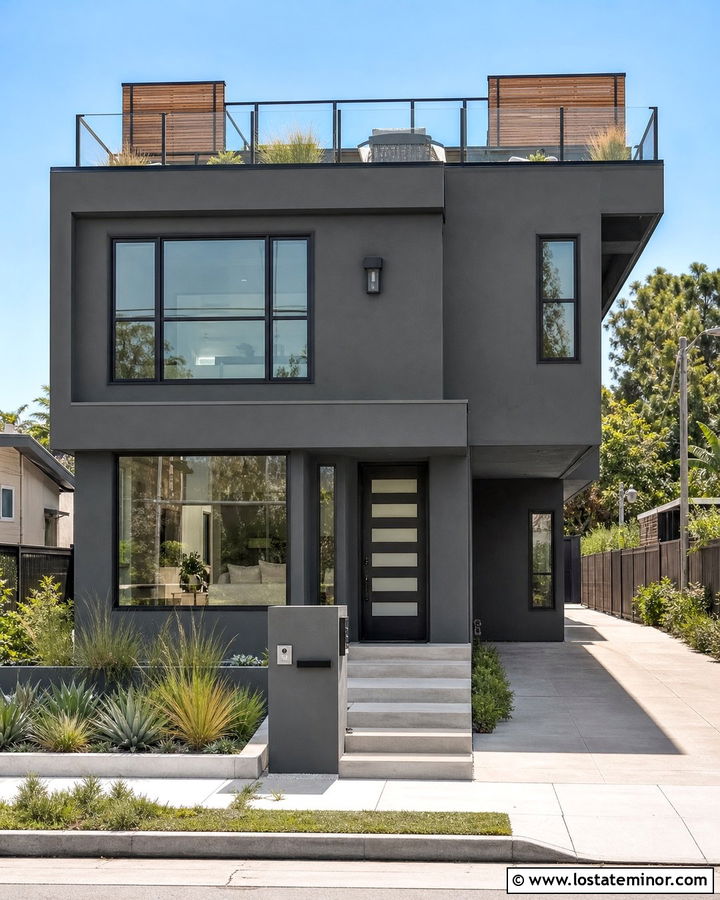
A rooftop deck complements the strong geometry of a charcoal gray modern house. Use light gray composite decking to reflect more daylight and clearly separate the outdoor surface from the dark walls. Glass or slim black metal railings will preserve long views and support the home’s clean architectural lines. Warm wood privacy screens can introduce texture while providing a visual link to an oak front door or soffit. Keep trim minimal and use matching charcoal around parapets, vents, and upper wall sections. Large black-framed windows can reinforce the contemporary character. At ground level, pale concrete, structured planting beds, and ornamental grasses will brighten the property. The complete design feels urban and sophisticated without relying on decorative details that might compete with the rooftop space.
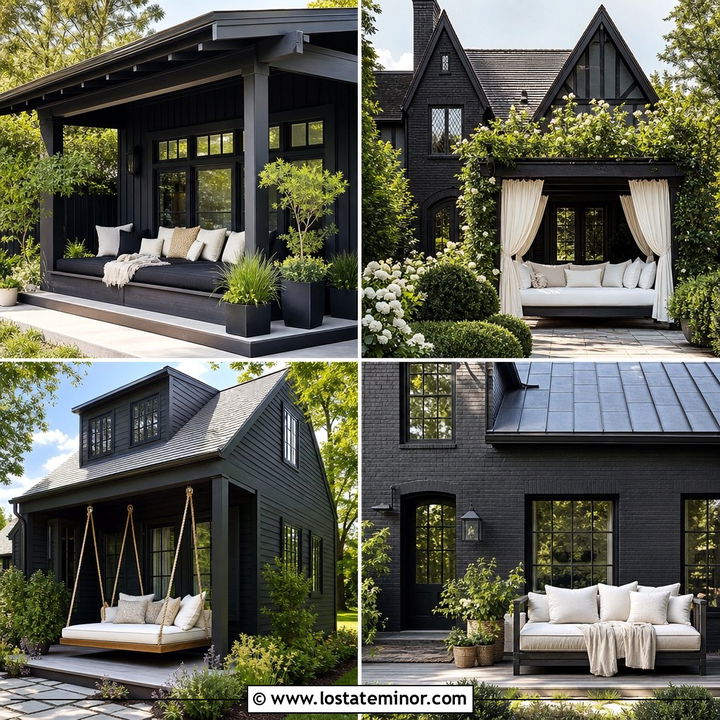
25. Charcoal Grey House With Screened Deck
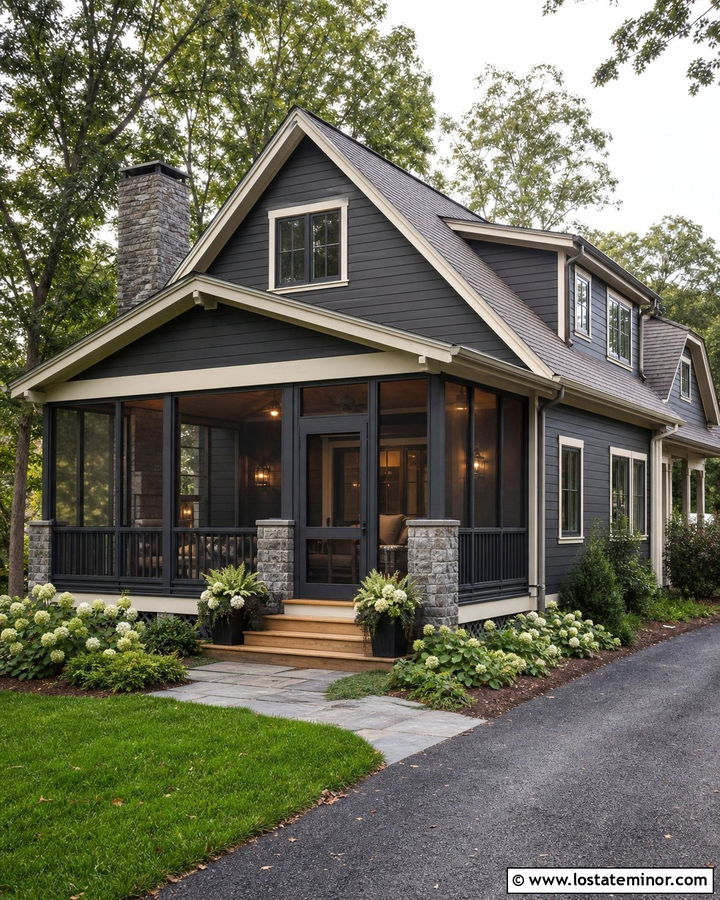
A screened deck can look fully integrated with a charcoal gray house when its framing repeats the primary exterior colors. Use charcoal-painted posts and dark screen panels so the enclosure recedes rather than appearing like a separate addition. Medium cedar deck boards and a matching wood ceiling will warm the interior and remain visible from the yard. Cream trim around nearby windows can soften the transition between dark siding and dark screens. This arrangement works well on a farmhouse, Craftsman, or transitional suburban home. Add gray stone around the post bases or foundation for texture. A simple gabled roof will give the screened area a clear architectural presence. Surround it with low planting so the complete structure remains open, balanced, and connected to the backyard.
26. Charcoal Grey House With Floating Deck
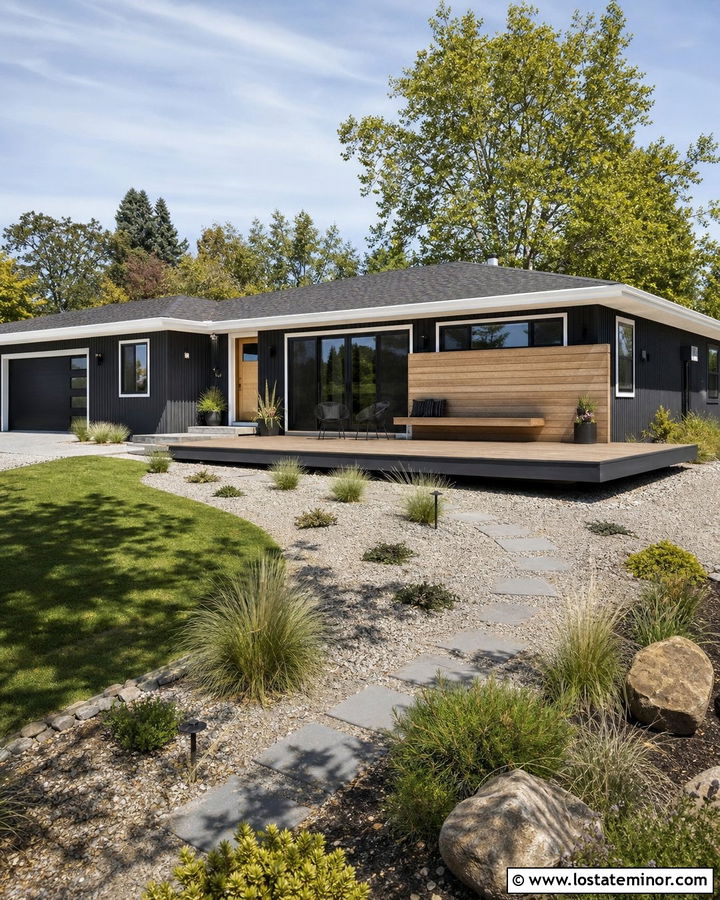
A floating deck can create an affordable outdoor destination beside a charcoal gray home without requiring a large attached structure. Position it near wide glass doors or along a garden path so it still feels connected to the architecture. Light oak or weathered wood boards will contrast clearly with the dark siding. A narrow charcoal border can visually frame the platform and repeat the house color. Because floating decks are usually low, an open edge may create a cleaner look than full railings where local requirements permit. Add a matching wood privacy wall or bench to give the simple platform more presence. Gravel, stepping stones, grasses, and small trees can frame the deck. The result feels intentional, modern, and accessible for a modest landscape budget.
27. Charcoal Grey House With Farmhouse Deck
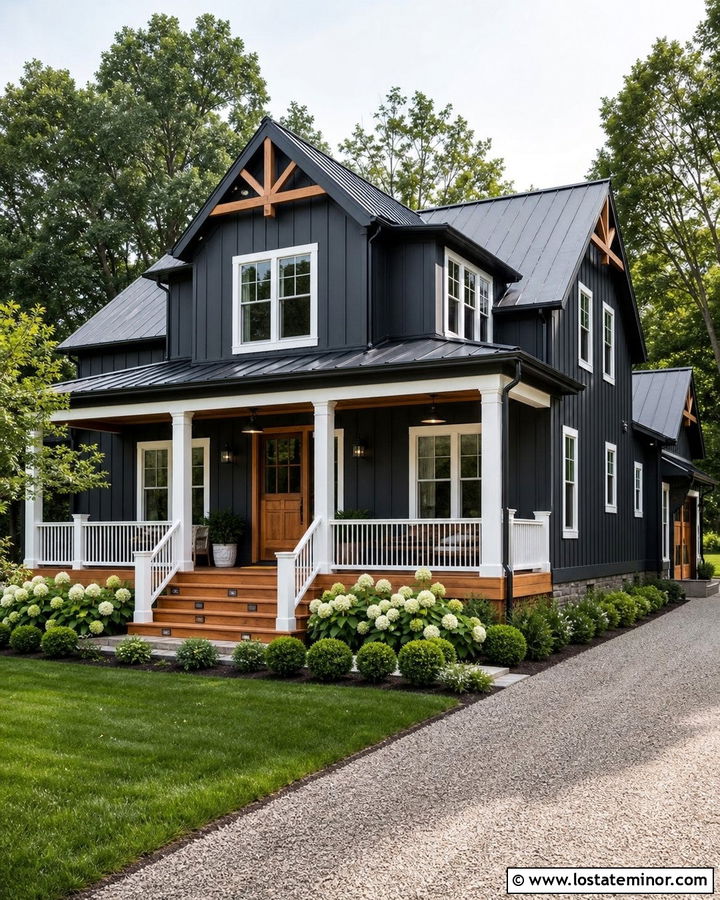
A farmhouse deck can soften a charcoal gray board-and-batten exterior with traditional materials and approachable details. Use medium-tone cedar boards, white square railings, and broad front steps to establish a welcoming entrance. White window trim and fascia will repeat the railing color, while a natural wood front door can connect with the deck. A black metal roof and simple black lighting provide sharper contrast. If the house has a large front gable, add a cedar bracket or wood ceiling beneath the porch to prevent the upper facade from feeling too dark. Straight planting beds, hydrangeas, and low boxwoods suit the clean architecture. This exterior retains recognizable farmhouse character while moving beyond the more common all-white siding and black accent combination.
28. Charcoal Grey House With Modern Deck
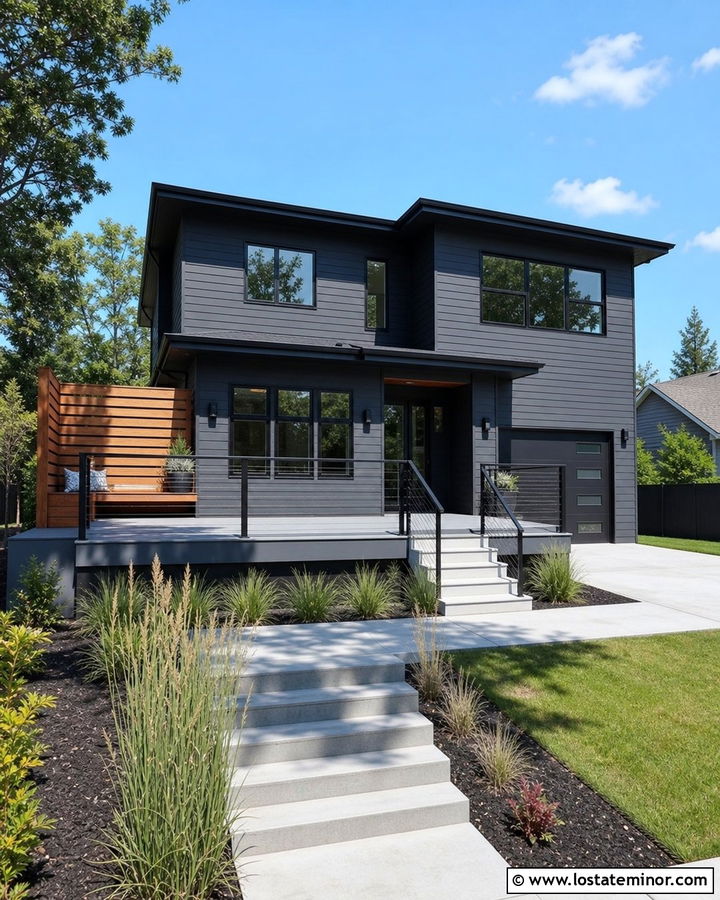
Clean lines and restrained materials allow a modern deck to complement charcoal gray siding. Choose wide light-gray composite boards arranged parallel to the main facade. Add a charcoal picture-frame border and slim black railings for a precise, tailored finish. An integrated cedar bench or privacy screen can provide warmth without disturbing the streamlined palette. Large black-framed windows, a flat or low-pitched roof, and minimal trim will reinforce the contemporary architecture. Pale concrete steps can connect the deck to a geometric walkway and structured planting beds. Avoid too many decorative objects or competing colors. Instead, use repeated forms and a limited mix of charcoal, light gray, black, and natural wood. The completed exterior will feel cohesive, spacious, and intentionally designed from every viewing angle.
29. Charcoal Grey House With Rustic Deck
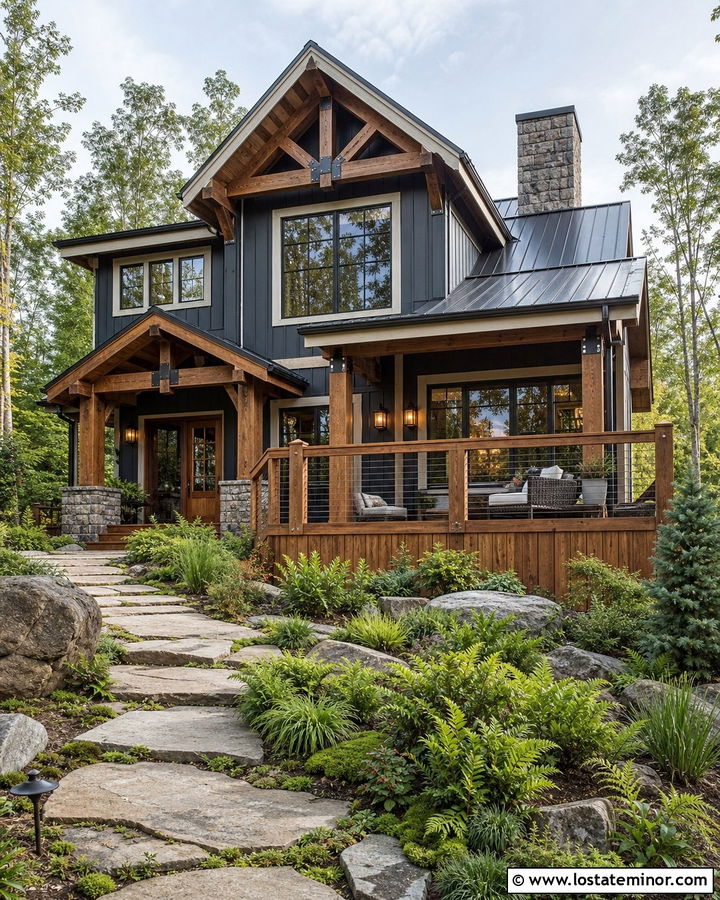
A rustic deck can make a charcoal gray home feel grounded in a wooded or rural setting. Use rough-sawn cedar or richly stained brown boards with visible grain and natural variation. Heavy timber posts, black metal connectors, and cable railings will add strength without making the design appear dated. Incorporate local stone around the foundation, stairs, or post bases to connect the deck to the land. Warm cream window trim can brighten the siding, while a wood front door and exposed gable beams repeat the deck material. A charcoal metal roof will unify the darker exterior elements. Native shrubs, ferns, grasses, and an irregular stone walkway should frame the house naturally. The finished design feels sturdy, warm, and appropriate for a cabin-inspired home.
30. Charcoal Grey House With Coastal Deck
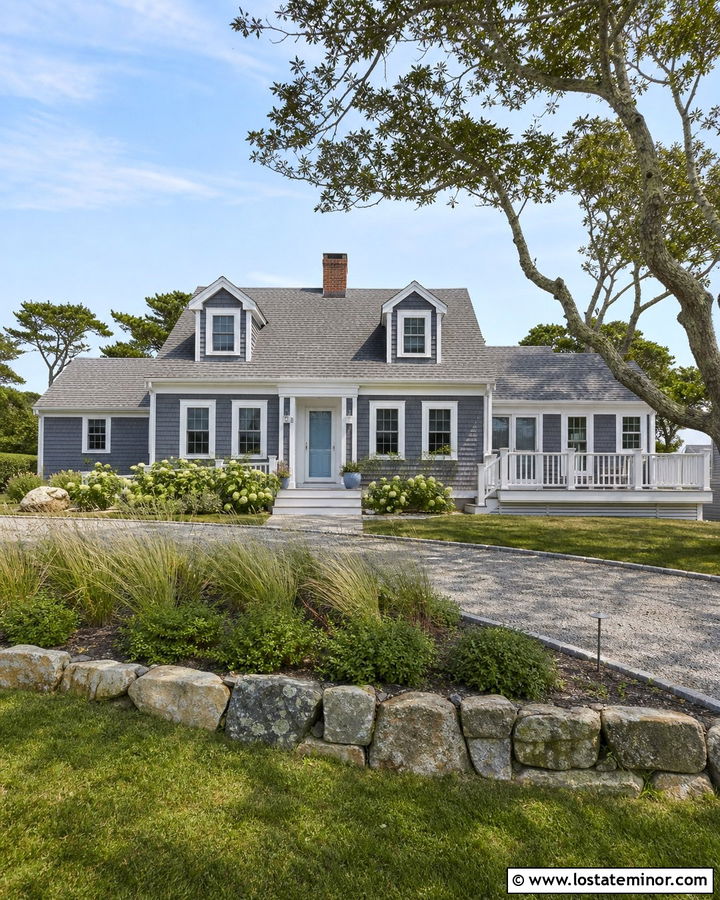
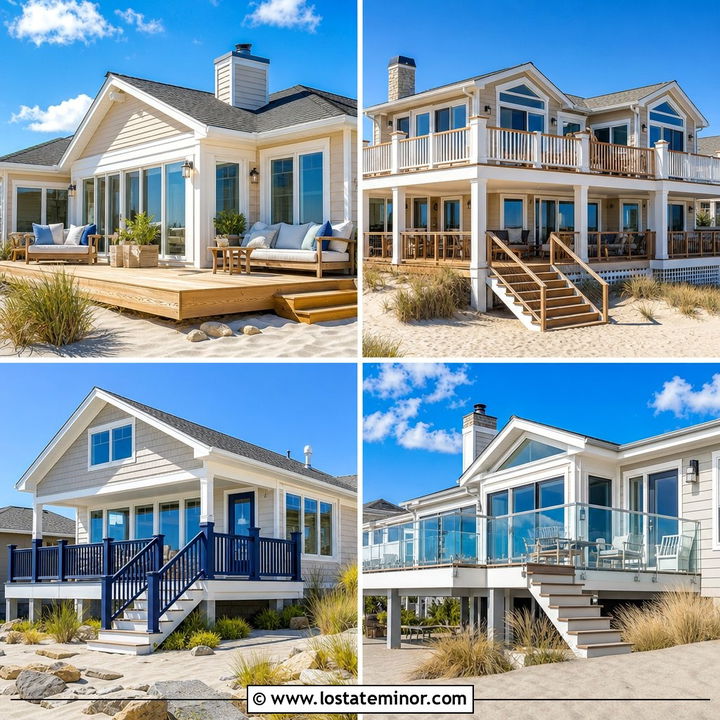
A coastal deck creates a refreshing contrast with a charcoal gray house when the palette remains light and natural. Choose pale driftwood-gray decking with crisp white railings and trim. A soft blue front door can introduce gentle color, while a medium-gray shingle roof maintains the understated scheme. This combination suits a coastal cottage, Cape Cod, or compact shingle-style home with dormer windows and a simple front-facing deck. Use horizontal cable sections sparingly if you want to preserve a more contemporary view. Beach grasses, hydrangeas, light gravel, and weathered stone will support the coastal character without becoming themed or overly decorative. The charcoal siding provides depth, while the pale deck materials make the full exterior look open, bright, and comfortable in strong natural daylight.
Conclusion:
The strongest 30 Charcoal Grey House Design With Deck Ideas treat the deck as part of the entire exterior rather than an isolated feature. Cedar, oak, walnut, mahogany, and weathered wood introduce warmth, while light gray or black composite boards create a more modern direction. Railings, trim, roofing, stone, brick, and landscaping should repeat or bridge these colors so the facade feels connected. Before choosing a finish, compare samples beside the siding in morning and afternoon daylight. Also consider maintenance, sun exposure, surrounding architecture, and the deck’s size. With thoughtful contrast and repeated materials, a charcoal gray house can feel dramatic, welcoming, natural, and beautifully suited to outdoor living.

Related posts: