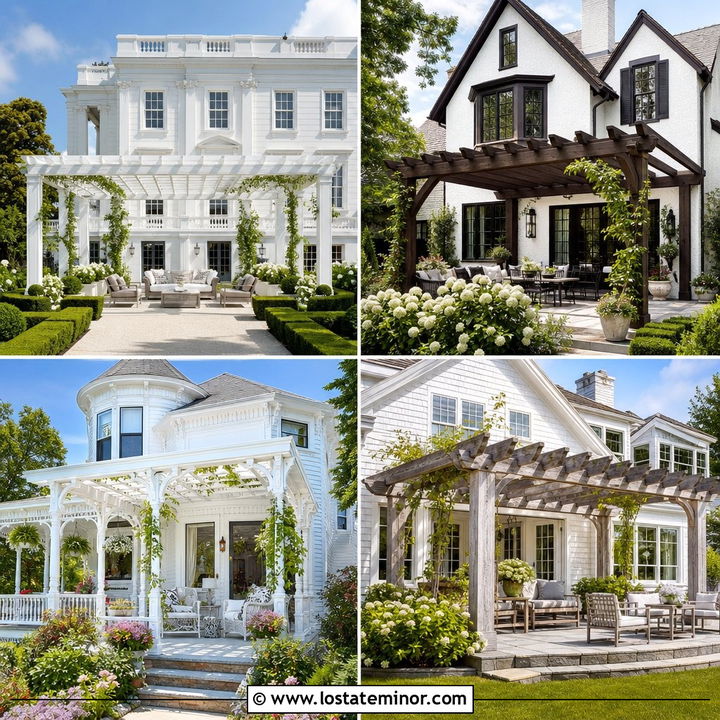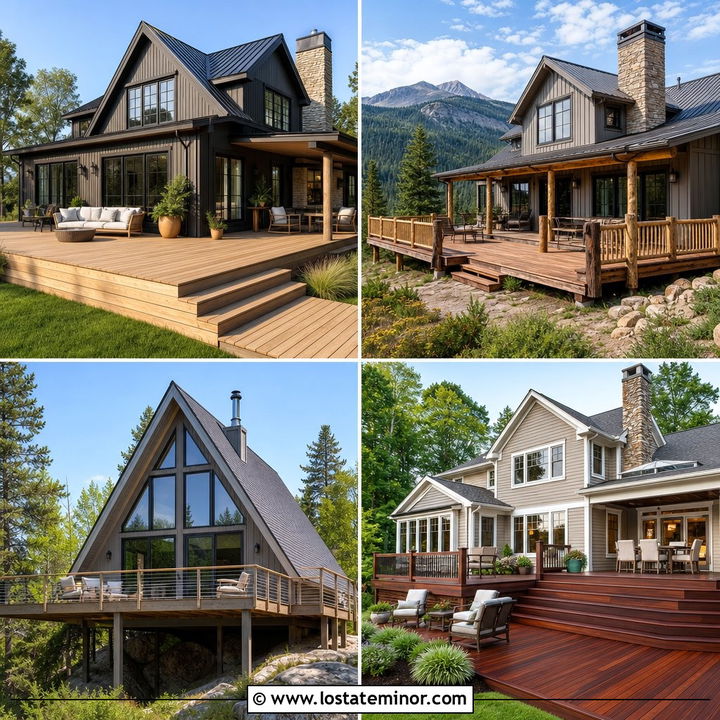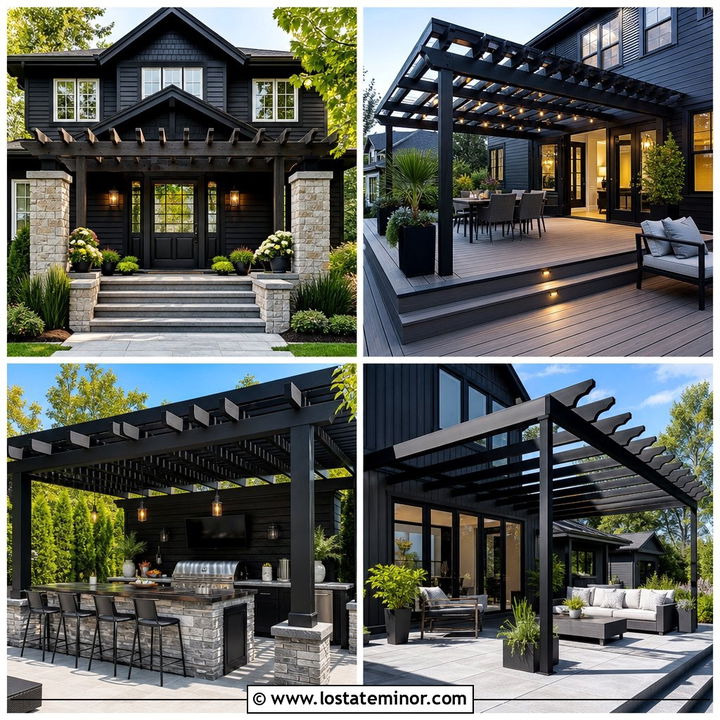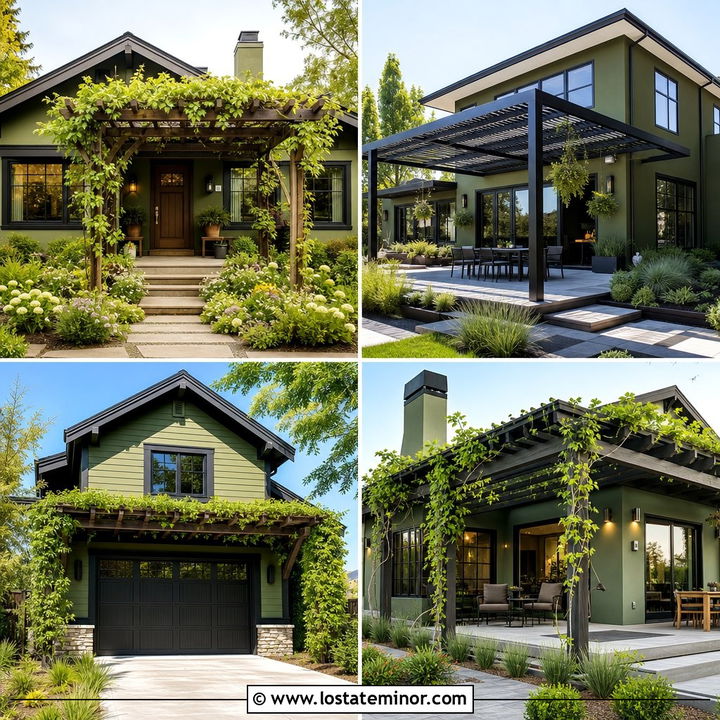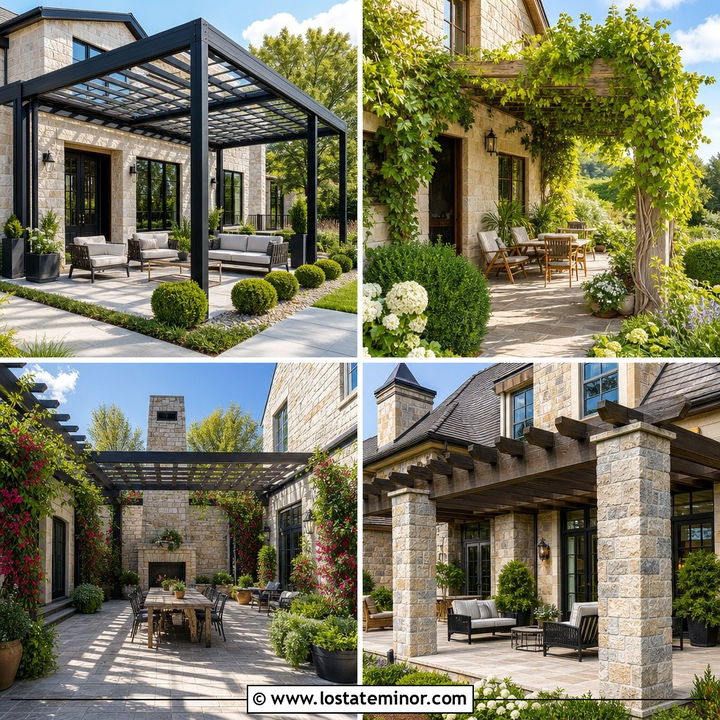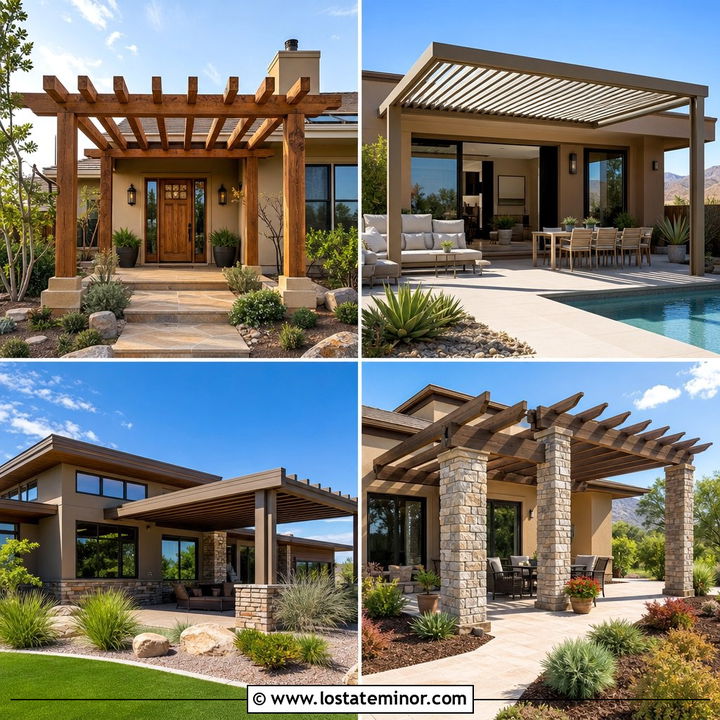
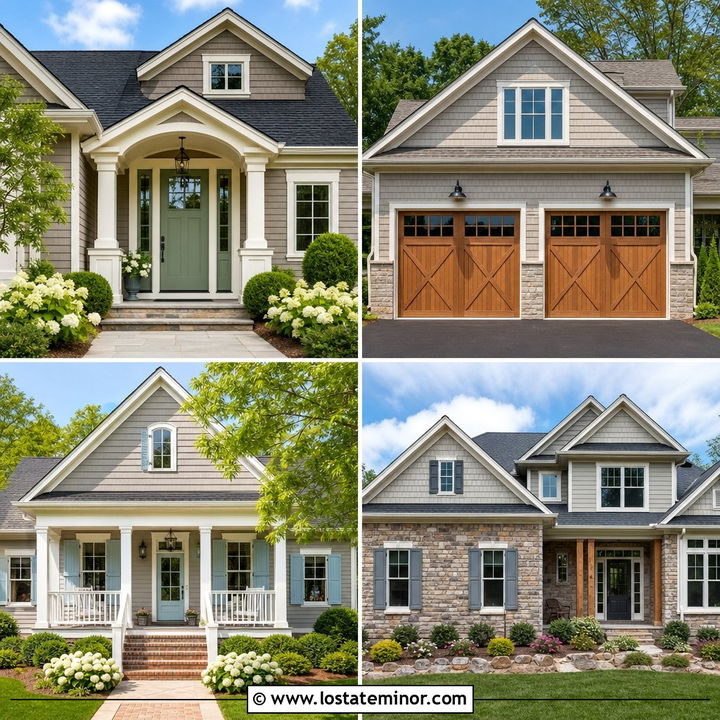
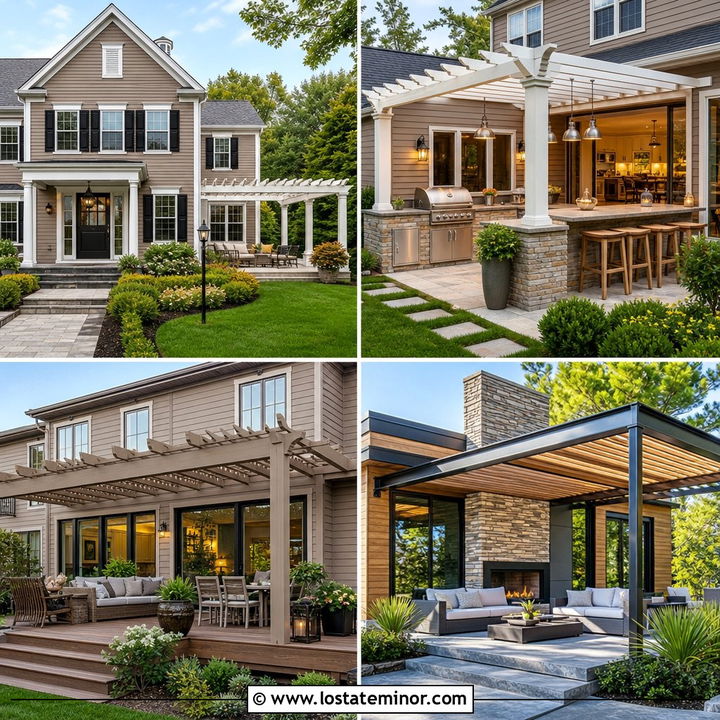
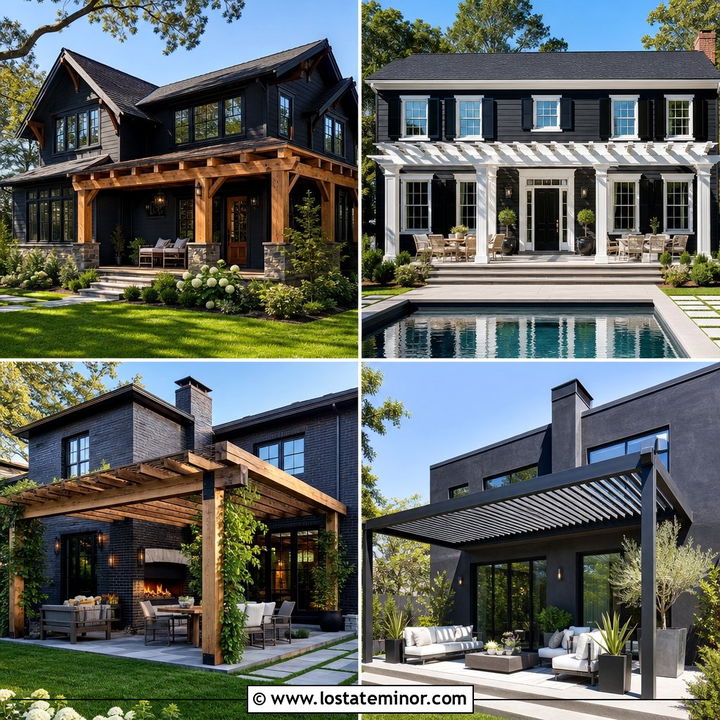
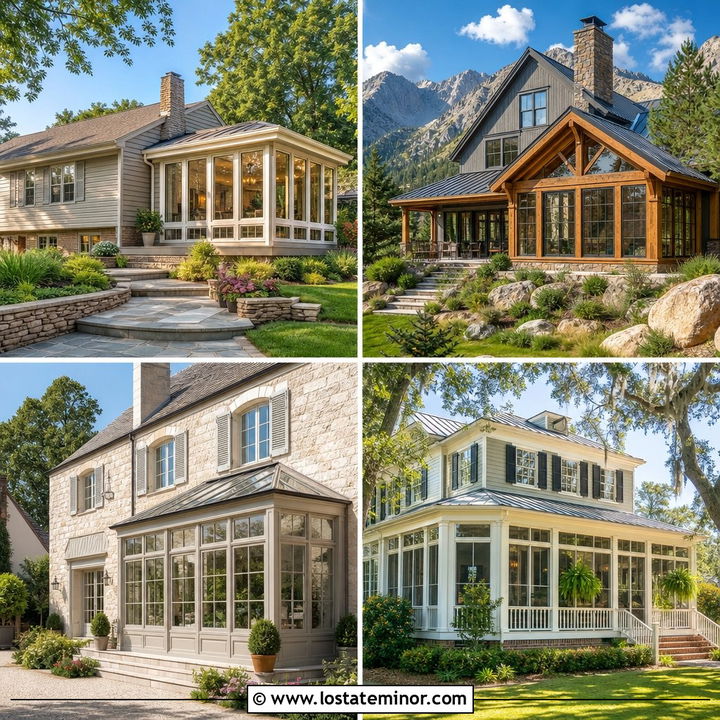
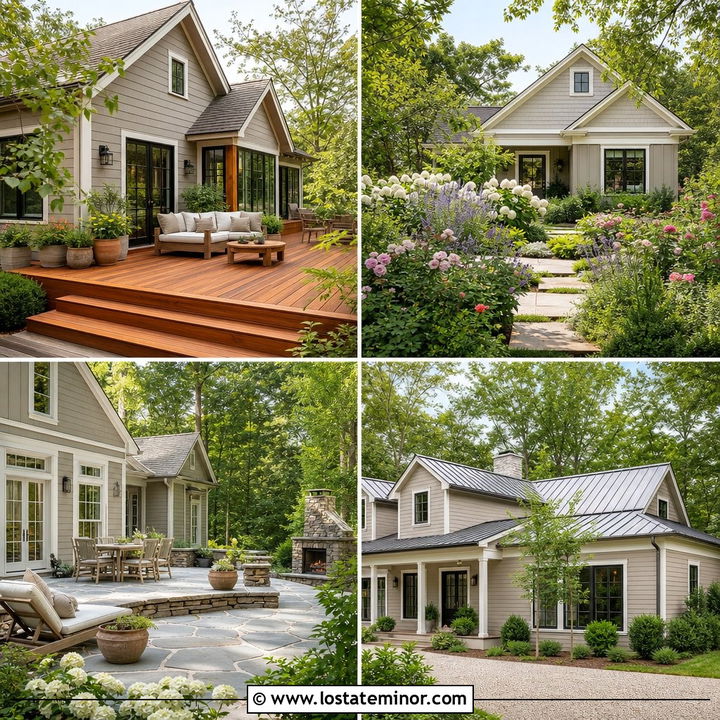
Greige brings together the warmth of beige and the tailored look of gray, making it a flexible choice for almost any home exterior. Add a pergola, and that quiet neutral palette gains structure, depth, and a stronger connection to the landscape. Current exterior makeovers often combine greige finishes with black details, natural wood, masonry, and pergolas that visually balance the facade. () The right combination can frame an entrance, define a patio, soften a garage, or create an inviting outdoor room. These complete exterior schemes cover modern, traditional, rustic, coastal, and budget-friendly approaches. Explore the following **30 Greige House Design With Pergola Ideas** for practical ways to coordinate siding, trim, roofing, doors, stonework, and landscaping.
1. Greige House With Cedar Front Pergola
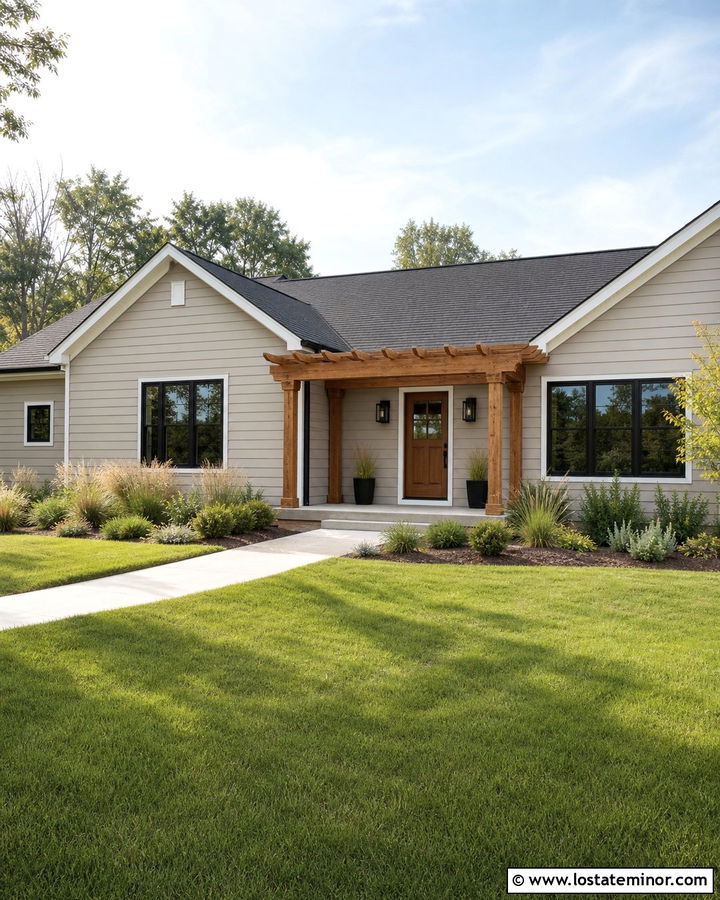
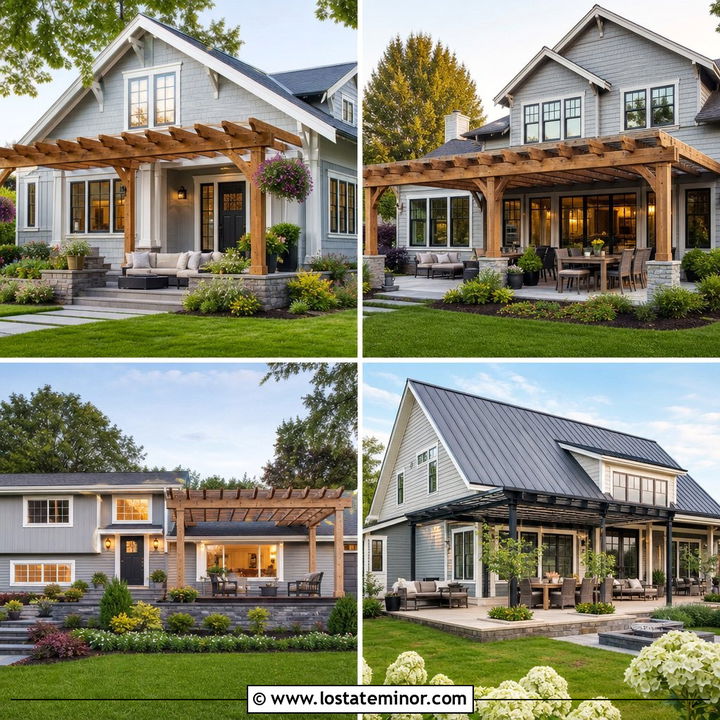
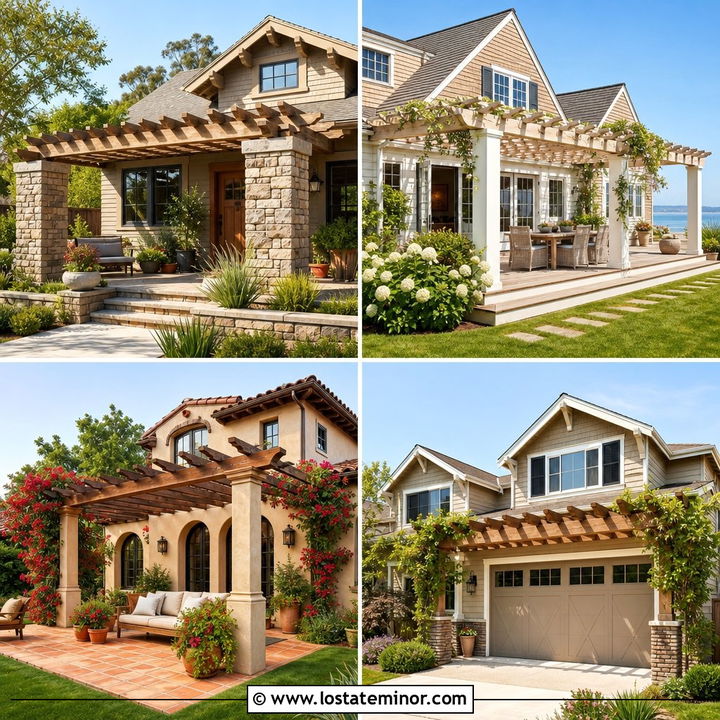
A cedar pergola can give a simple greige exterior an immediate sense of warmth and dimension. Place it over a front patio or walkway so it frames the entrance without hiding important architectural details. Medium greige lap siding creates a balanced background, while creamy white trim keeps the facade bright. Repeat the cedar stain on the front door, porch ceiling, or planter boxes to make the pergola feel connected to the house. Black sconces and window frames provide crisp contrast. A charcoal shingle roof grounds the warm materials without looking heavy. Complete the design with light concrete pavers, ornamental grasses, and compact evergreen shrubs. This combination works especially well on ranch homes, transitional cottages, and updated split-level exteriors.
2. Greige House With Black Modern Pergola
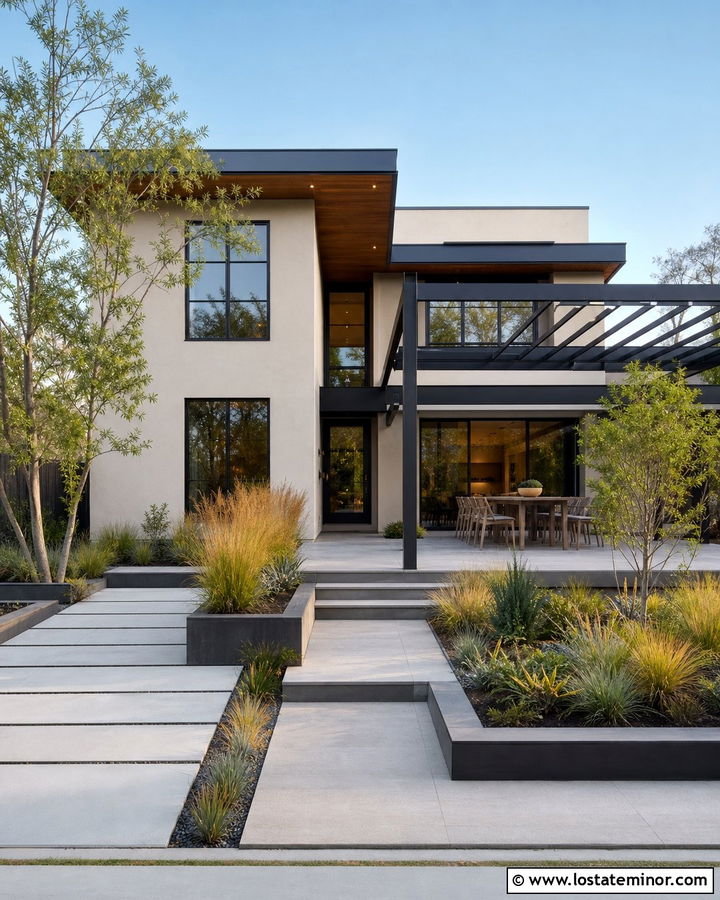
What if your greige home needs sharper architectural definition? A matte black pergola can create that contrast while giving the exterior a clean, modern edge. Use a warm light greige on smooth stucco or vertical siding, then repeat black on the windows, gutters, lights, and front door. A slim aluminum pergola works particularly well above a minimalist front patio or along the back terrace. Keep the beams straight and evenly spaced so the structure complements the home’s geometry. Pale limestone pavers will brighten the outdoor area and prevent the black details from overpowering the facade. Finish with structured planting beds, small trees, and simple concrete planters. The overall look feels modern but remains welcoming because the greige base softens the darker accents.
3. Greige Farmhouse With White Pergola
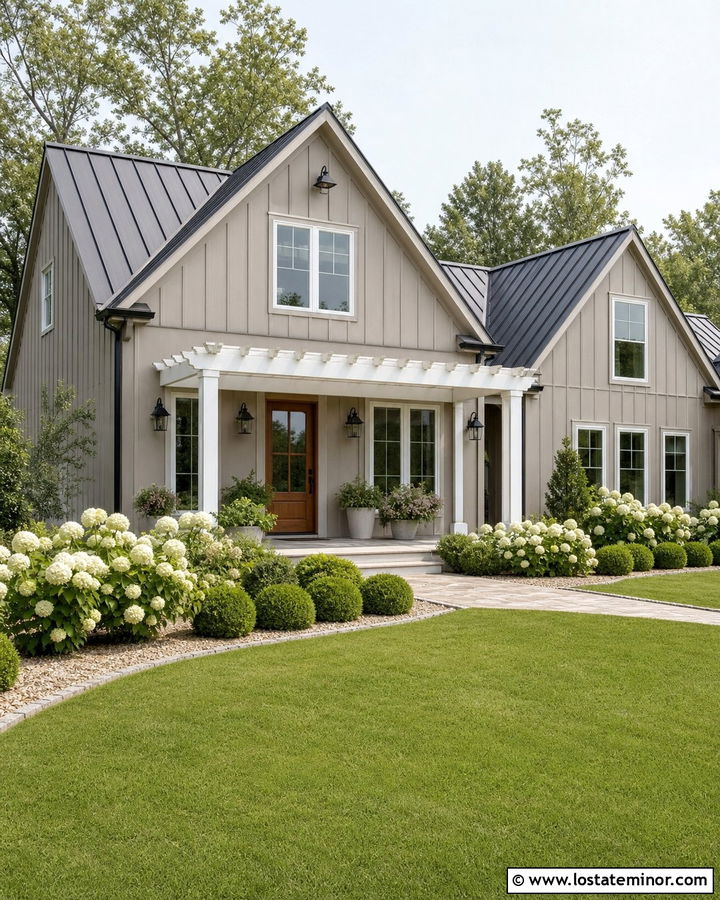
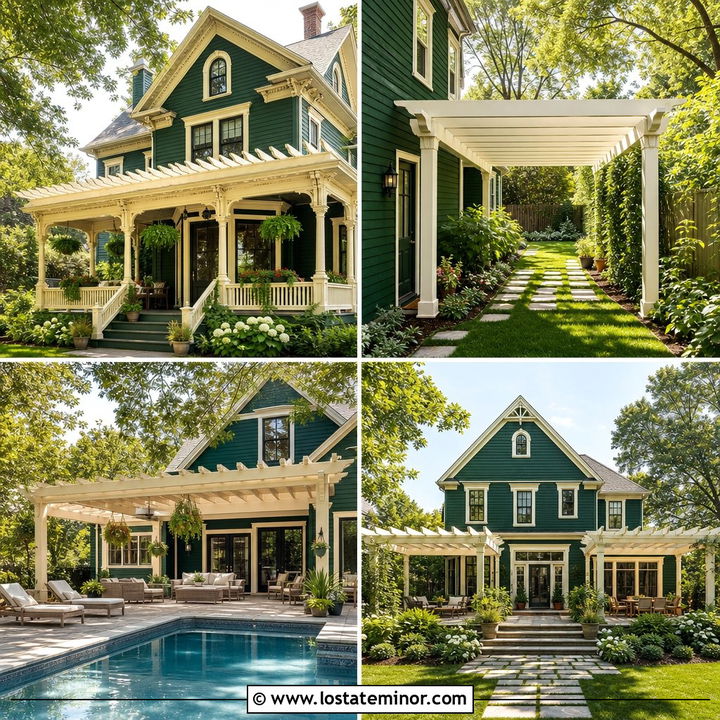
A white pergola feels right at home on a greige modern farmhouse, especially when it repeats the trim around the windows and roofline. Choose warm greige board-and-batten siding to highlight the vertical proportions of the facade. Crisp white rafters, columns, fascia, and window casings create a fresh contrast without making the house appear stark. A stained wood front door and matching porch furniture introduce an earthy layer between the two neutral colors. Black barn lights and a charcoal standing-seam roof give the scheme additional definition. Position the pergola over a side patio or extended front porch where it can create a comfortable transition into the yard. Hydrangeas, boxwood, and a gravel-edged walkway complete this relaxed farmhouse exterior.
4. Greige Ranch House With Garage Pergola
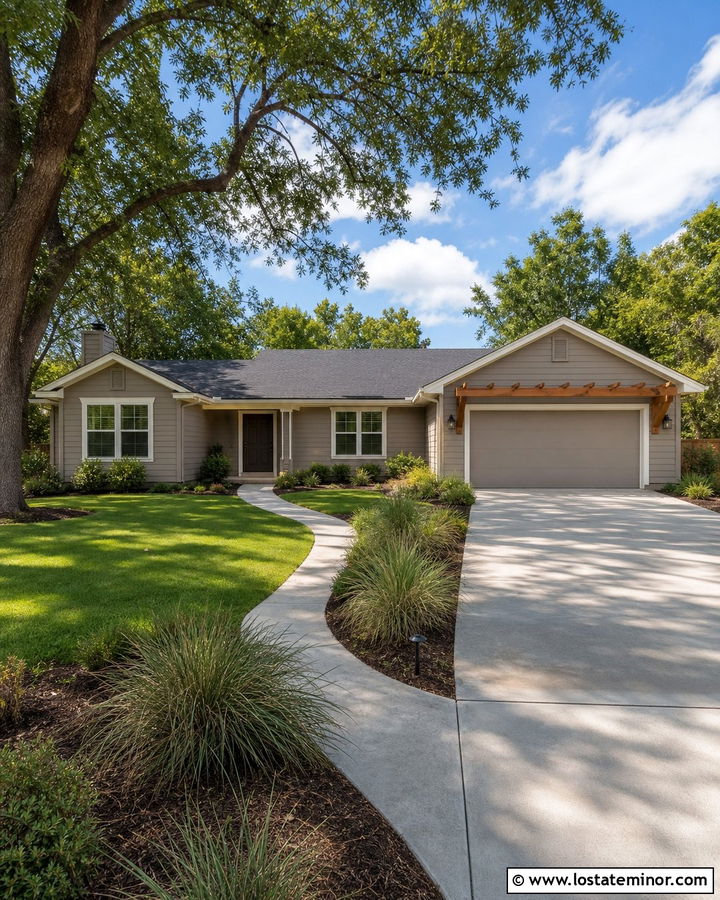
A pergola above the garage is an effective way to break up a broad ranch house facade. Select a midtone greige for the brick or horizontal siding, then paint the garage door in the same color for a streamlined appearance. A natural cedar pergola adds shadow, texture, and an architectural focal point without requiring a large porch addition. Extend the beams slightly beyond the garage opening so the structure feels properly proportioned. Cream trim softens the roofline, while a deep bronze front door and matching light fixtures reinforce the pergola’s warmth. Low ornamental grasses and spreading shrubs suit the horizontal architecture. A gently curved walkway can lead attention from the driveway toward the entrance, helping the entire one-story exterior feel more balanced.
5. Greige Craftsman House With Stone Pergola Columns
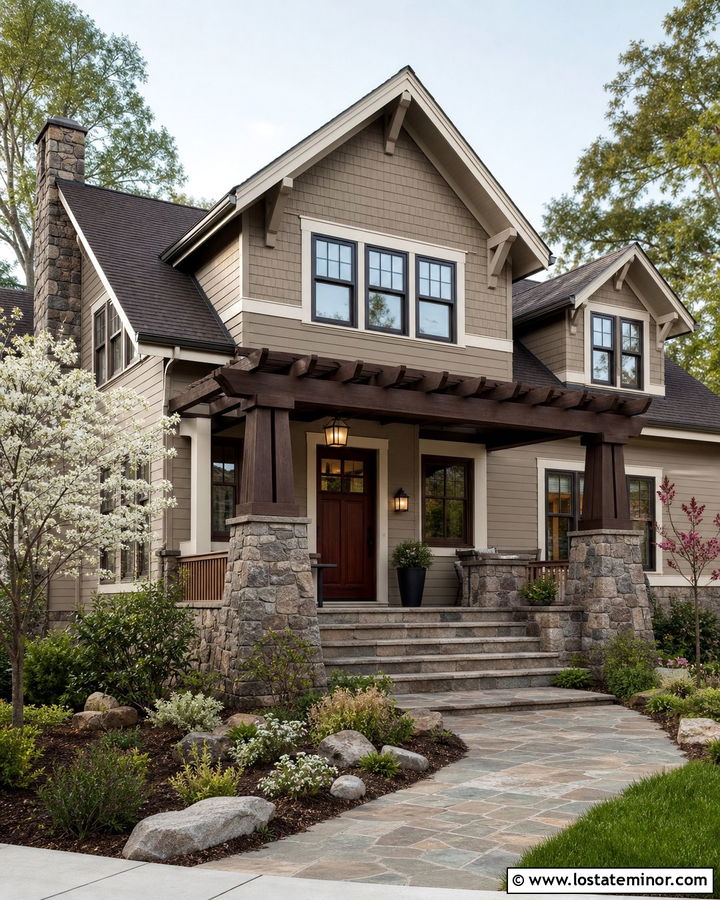
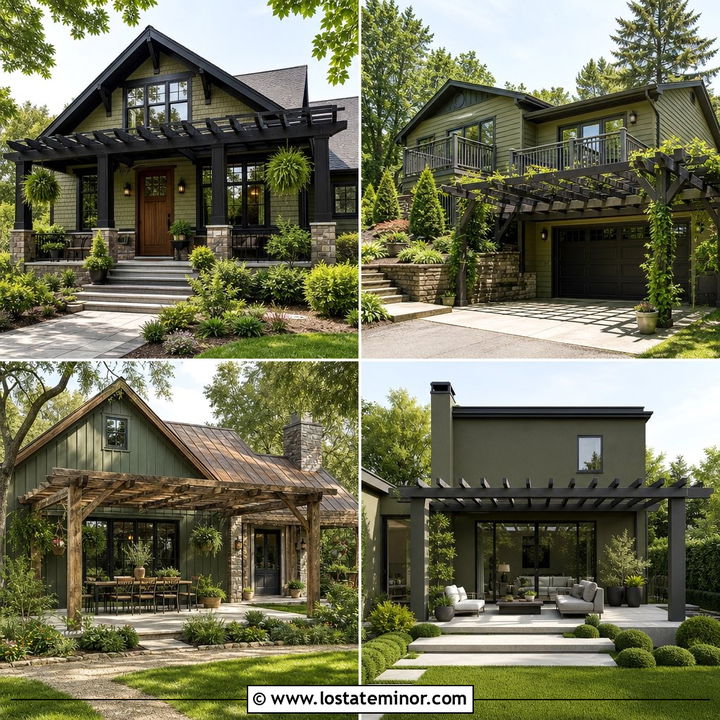
Stone columns can make a pergola look like an original part of a Craftsman exterior. Start with earthy greige siding that complements the mixed brown, gray, and cream tones in the masonry. Support a dark-stained wood pergola with tapered posts anchored by substantial stone bases. This combination gives the entry or patio a grounded, handcrafted appearance. Use muted ivory trim instead of brilliant white to maintain the warm palette. A mahogany front door, bronze hardware, and dark brown roof provide rich contrast. Repeat the stone along the porch foundation or walkway borders to connect the materials across the facade. Layered native plants, small flowering trees, and wide front steps will make the home feel established while keeping the pergola clearly visible.
6. Greige Colonial House With Side Pergola
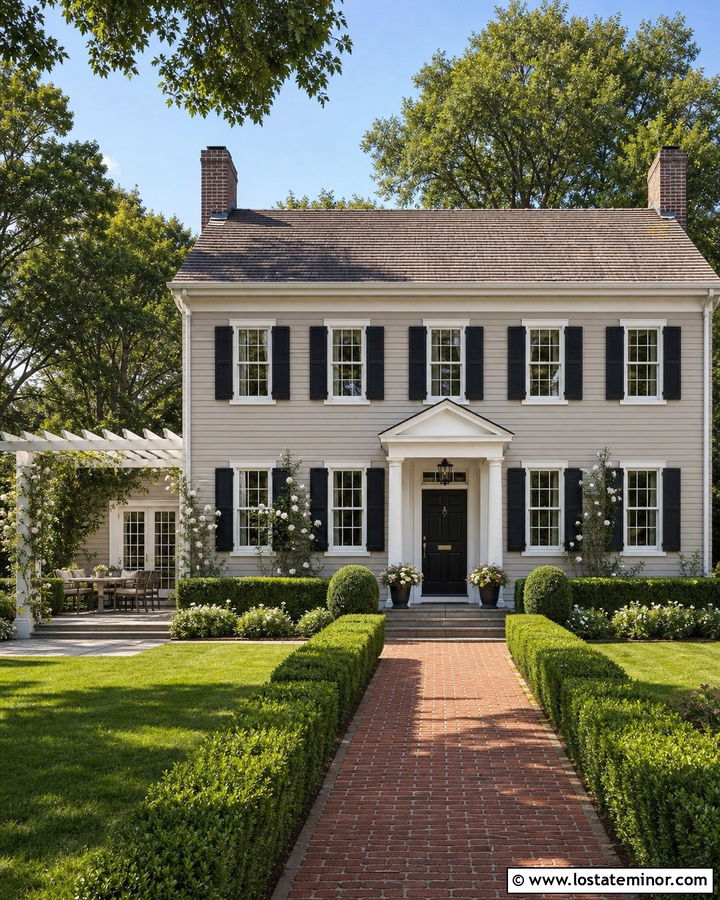
A side pergola can add outdoor living space without disrupting the symmetry of a traditional Colonial facade. Keep the main house formal with balanced greige clapboard siding, white trim, black shutters, and a centered black front door. Attach a white or softly stained pergola to one side, positioning it over a brick or bluestone terrace. The structure should align with the lower window height and use simple square posts that reflect the home’s classic lines. Add climbing roses or restrained vines for softness, but avoid covering every beam. Matching brick paths and clipped hedges help the addition blend into the established architecture. The result preserves the Colonial character while creating a useful outdoor dining area that feels connected to the house.
7. Greige Stucco House With Wood Pergola
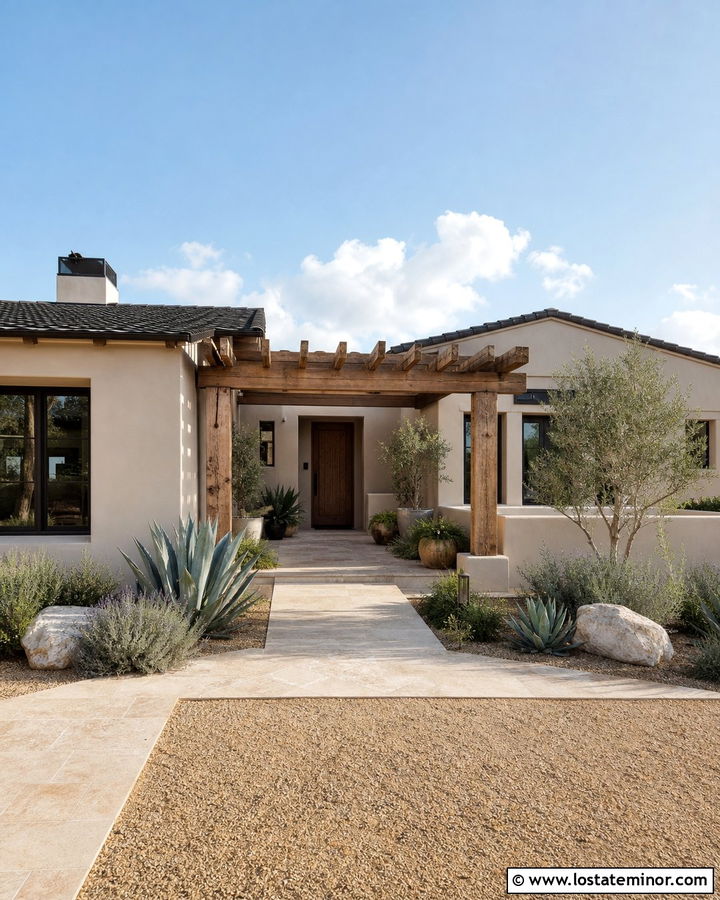
Sunlight can make a warm greige stucco exterior appear especially soft and inviting. Pair that finish with a substantial wood pergola over a front courtyard or rear entertaining patio. Medium-toned oak or cedar beams introduce natural grain against the smooth wall texture. Choose dark bronze windows and a stained plank door to reinforce the organic color palette. A low-slope brown or charcoal roof will keep the overall scheme grounded. For the patio, use pale travertine or sand-colored concrete that reflects daylight beneath the pergola. Drought-tolerant grasses, olive trees, agave, and gravel beds can complete the landscape in warmer climates. This combination suits contemporary Southwestern homes, Mediterranean-inspired houses, and organic modern exteriors without relying on overly decorative details.
8. Greige Brick House With Black Pergola
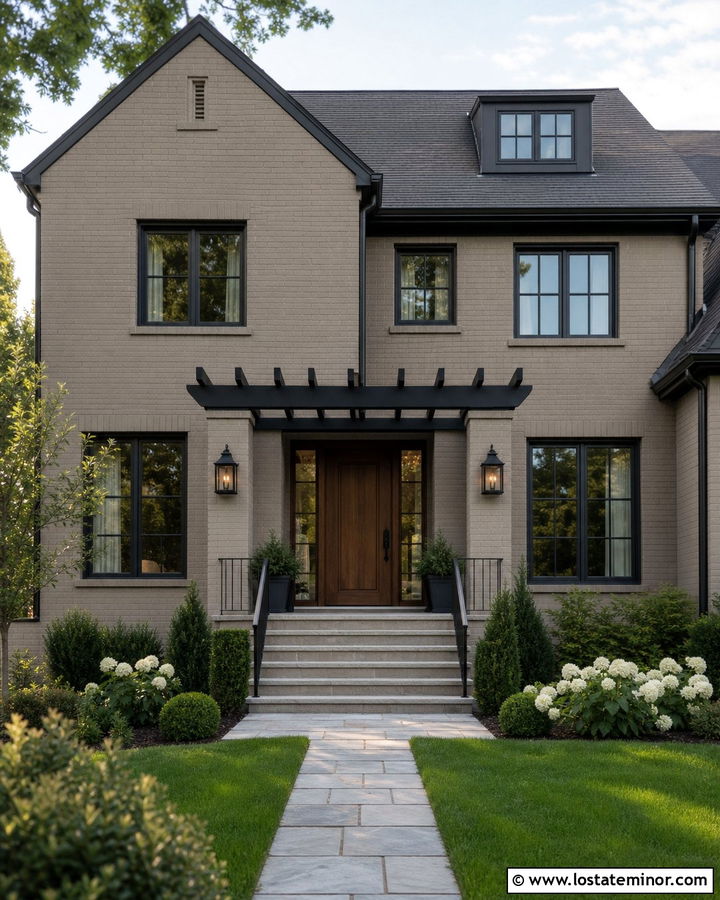
Painted greige brick gains character when paired with a strong black pergola. The masonry texture keeps the neutral color from feeling flat, while the dark structure outlines the entry or patio with a clear architectural frame. Continue black across the window trim, railings, gutters, and oversized lanterns. A natural wood front door can prevent the palette from becoming too cool. If the house has a large front elevation, use the pergola to balance an off-center entrance or visually connect separate sections of the facade. Light gray steps and a charcoal roof will support the scheme without competing with it. Keep the landscaping simple, using evergreen foundation shrubs, white flowers, and a clean walkway that directs attention toward the pergola-covered entrance.
9. Greige Bungalow With Front Porch Pergola
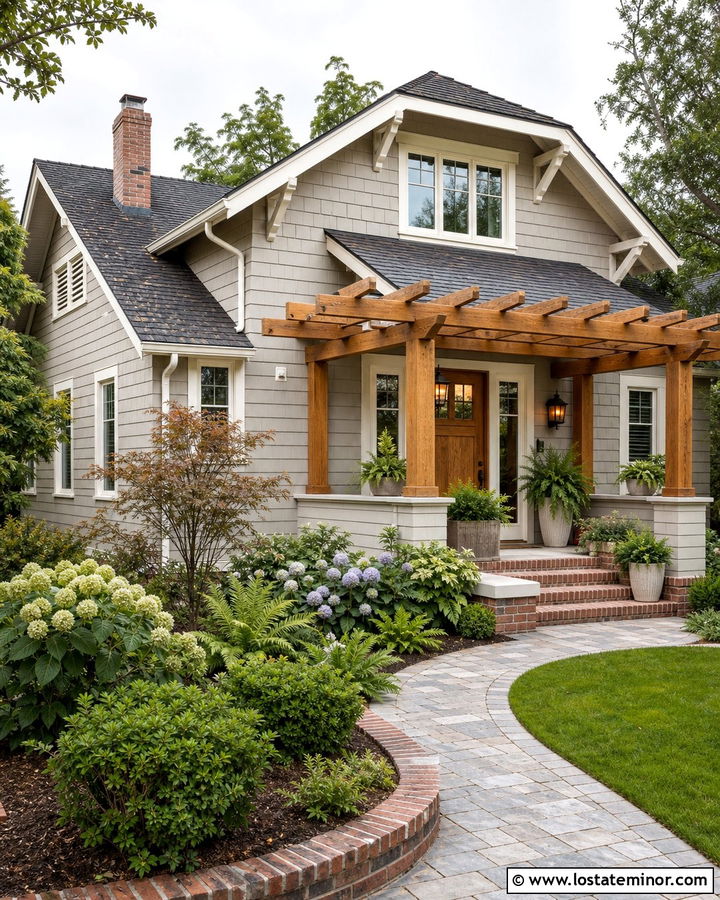
A low bungalow benefits from a pergola that extends the front porch outward and emphasizes the home’s welcoming proportions. Choose a soft greige for the shingle or clapboard siding, then use warm white on the trim, porch posts, and exposed rafter tails. A honey-stained wood pergola can span the seating area while leaving the original porch roof visible. Repeat the wood tone on the front door and porch swing for a coordinated finish. Dark bronze lights and simple house numbers provide subtle contrast. Wide steps, brick edging, and a gently curved path will reinforce the informal bungalow character. Surround the porch with hydrangeas, ferns, and layered shrubs so the architecture feels nestled into the landscape rather than separated from it.
10. Greige Split-Level House With Entry Pergola
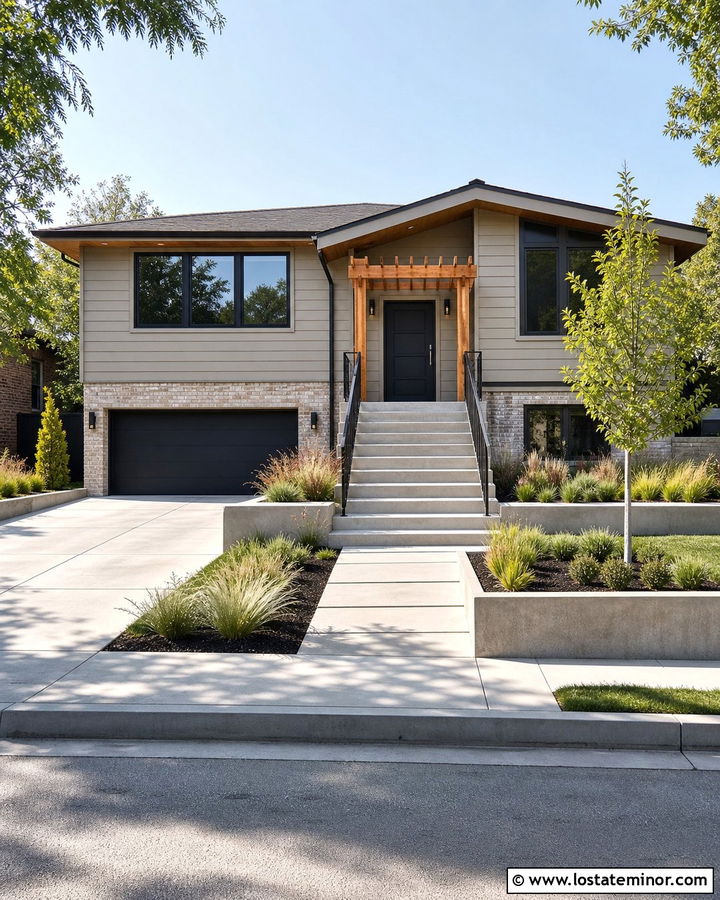
An entry pergola can help a split-level house gain a clearer and more attractive focal point. Use warm greige siding across both levels to unify the uneven sections of the facade. Then install a compact cedar pergola directly above the entrance, extending it far enough to frame the landing and front steps. A deep charcoal door, black railings, and matching windows create definition around the central feature. If the lower level includes brick, leave it natural when its tones complement the greige or apply a breathable masonry finish for greater consistency. Broad concrete steps and linear planting beds support the house’s geometry. The pergola should remain visually simple, allowing its warm wood color and carefully aligned beams to improve the exterior without creating clutter.
11. Light Greige House With Dark Wood Pergola
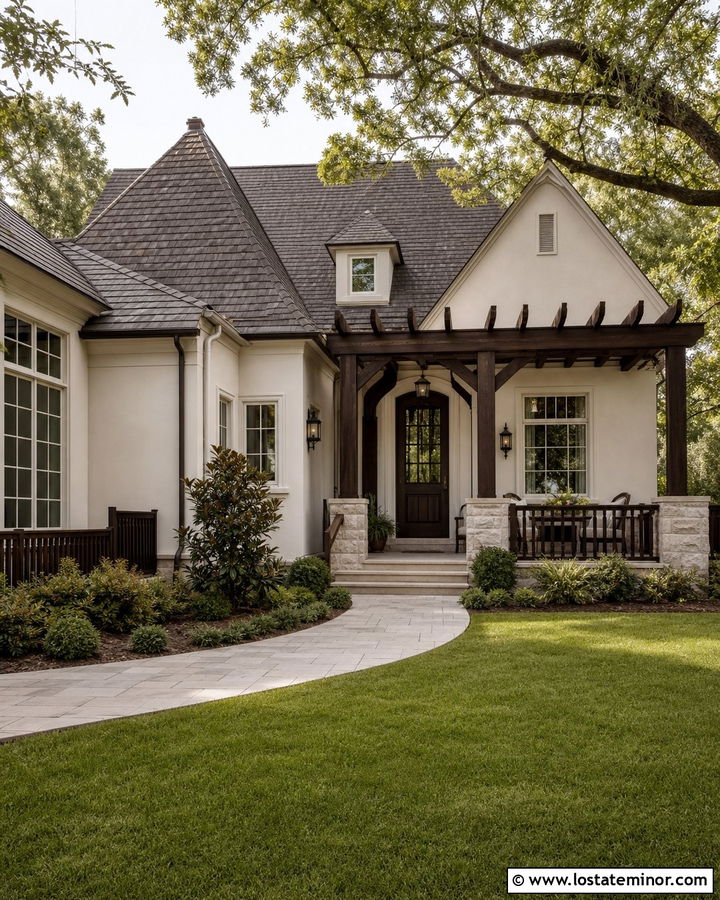
The contrast between light greige siding and a dark wood pergola produces a refined exterior with noticeable depth. Use a pale, warm greige across the body of the house, supported by soft white trim and light stone accents. Stain the pergola a deep walnut or espresso brown, then repeat that color on the front door, porch railing, and decorative brackets. This darker frame looks particularly striking over a bright front patio. A weathered charcoal roof can bridge the light and dark elements. Choose pale pavers and restrained landscaping so the pergola remains the primary focal point. This scheme adapts easily to cottages, suburban two-story houses, and transitional homes, offering strong contrast without the severity that can come from using solid black accents everywhere.
12. Dark Greige House With Natural Oak Pergola
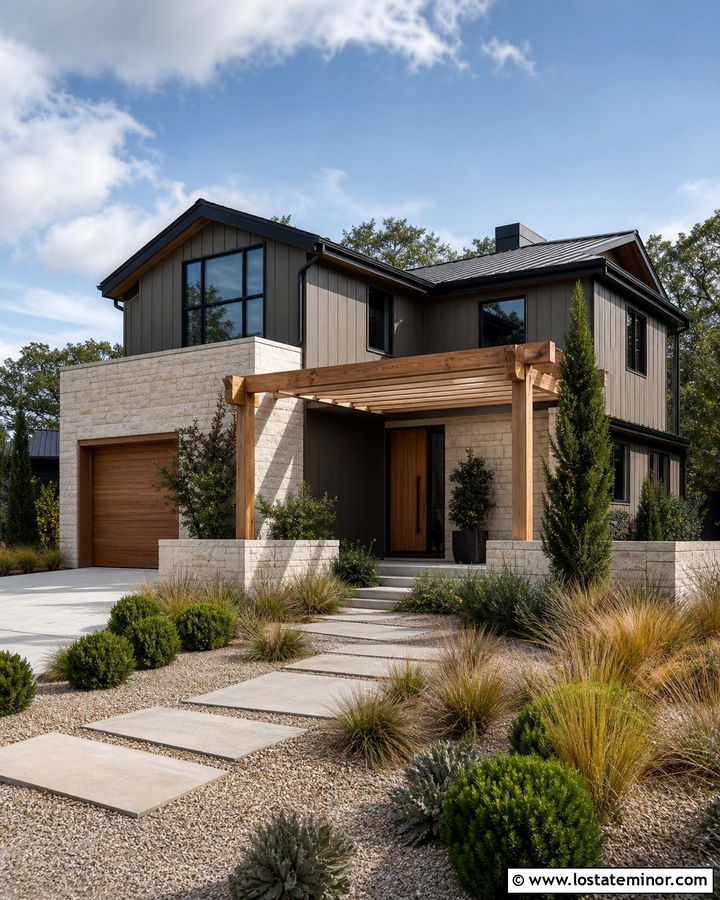
A dark greige exterior can feel dramatic without appearing cold when it is balanced by a natural oak pergola. Apply the deeper neutral to vertical siding or smooth panels, then use black windows and gutters for a streamlined finish. The lighter golden wood creates an attractive focal point over the front entrance or garden terrace. Repeat the oak tone on the garage door, privacy screen, or oversized pivot door to distribute warmth across the elevation. Cream limestone around the foundation will add brightness and texture. Keep the roof nearly black to maintain the strong modern profile. Wispy grasses, pale gravel, and sculptural evergreen plants soften the darker facade. This complete palette works best when the wood is allowed to remain visibly natural.
13. Greige Cape Cod House With White Pergola
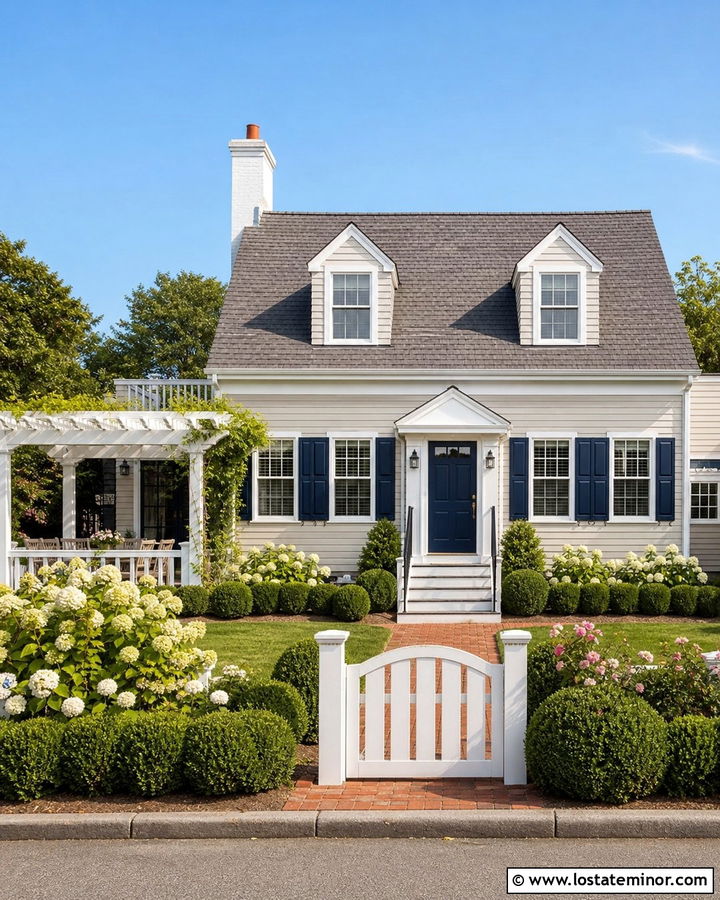
A compact white pergola can complement the cheerful proportions of a greige Cape Cod house. Paint the shingles or clapboard siding a soft coastal greige, then use clean white on the dormers, fascia, window trim, and pergola. Deep navy shutters and a matching front door add familiar coastal contrast without pushing the exterior into a strict blue-and-white palette. Place the pergola over a side terrace, detached garage walkway, or small front seating area. Brick pavers will introduce warmth beneath the structure, while a weathered gray roof supports the relaxed color scheme. Complete the setting with hydrangeas, roses, clipped boxwood, and a white gate. Keeping every detail simple allows the pergola to look natural beside the home’s traditional roofline and modest scale.
14. Greige Cottage With Climbing Vine Pergola
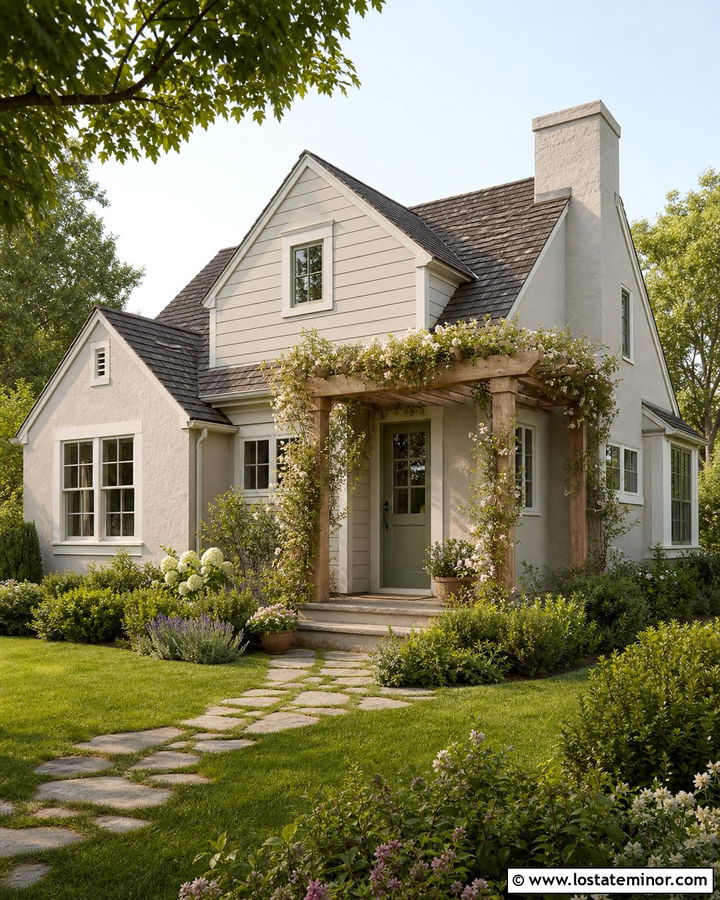
Imagine a warm greige cottage framed by flowering vines and soft afternoon greenery. A natural wood pergola over the front path or patio can create this layered garden look while connecting the house to its surroundings. Choose a creamy greige for the stucco or lap siding, then pair it with off-white trim and a muted sage front door. Let climbing jasmine, clematis, or roses cover only part of the structure so the beams remain visible. A brown-gray roof and aged brass lights support the gentle palette. Use irregular stone pavers, cottage flowers, and low hedges around the approach. The complete exterior should feel relaxed rather than overgrown, with the greige walls providing a calm background for the wood, foliage, and seasonal color.
15. Greige Mediterranean House With Courtyard Pergola
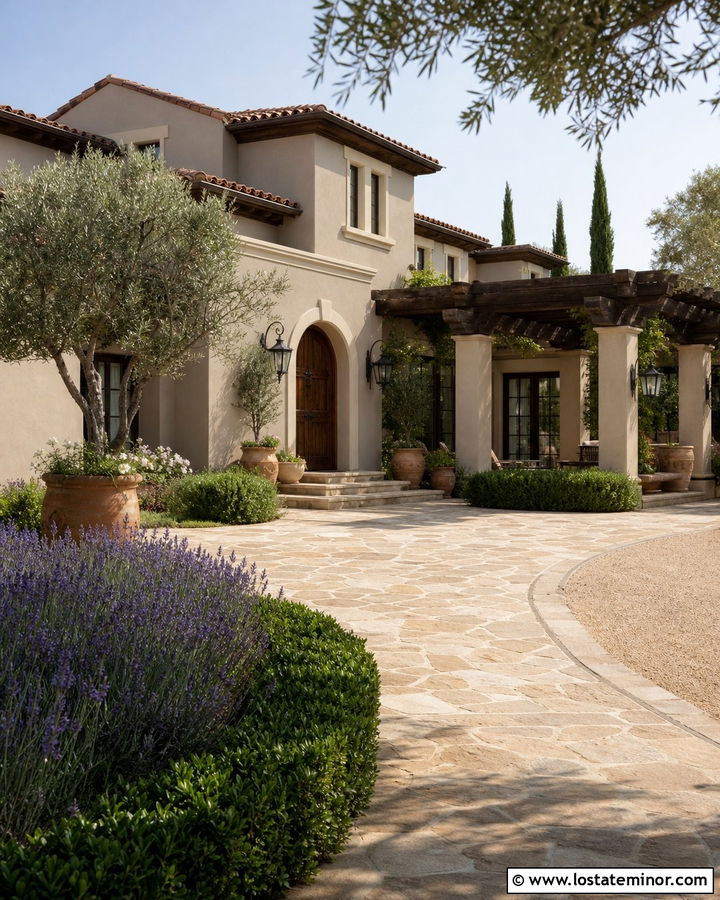
A courtyard pergola can bring shade and architectural rhythm to a greige Mediterranean exterior. Select a sandy greige stucco that works with terracotta roof tiles and warm stone paving. Use heavy dark wood beams across the courtyard entrance or outdoor dining area, supported by stucco columns that match the house. Arched windows, an aged wood door, and dark bronze lanterns reinforce the traditional character. Instead of bright white trim, choose a muted cream that blends gently with the wall color. Large clay planters, olive trees, lavender, and clipped evergreen shrubs will complete the sun-washed landscape. This combination feels cohesive because every finish carries a warm undertone, allowing the greige stucco to connect the roof, wood pergola, masonry, and garden.
16. Greige Modern House With Louvered Pergola
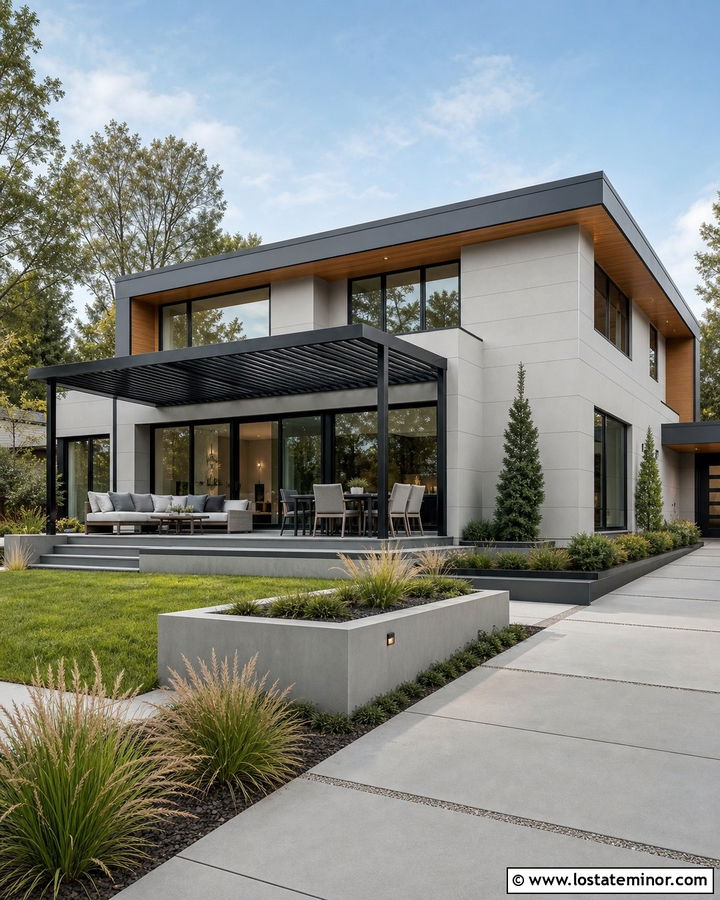
For a clean outdoor living area, pair a modern greige house with a streamlined louvered pergola. Smooth greige stucco or fiber-cement panels create a restrained base, while charcoal aluminum louvers echo black-framed windows and flat roof edges. Position the pergola over a rear terrace or beside a glass-walled living space so the structure feels like an extension of the architecture. Warm wood soffits and a matching front door prevent the gray tones from becoming sterile. Large pale concrete slabs keep the ground plane simple and bright. Use linear planters filled with grasses and compact evergreens to reinforce the modern layout. The final design should rely on proportion, repeated colors, and clean material transitions rather than decorative trim or excessive exterior accessories.
17. Greige Coastal House With Weathered Wood Pergola
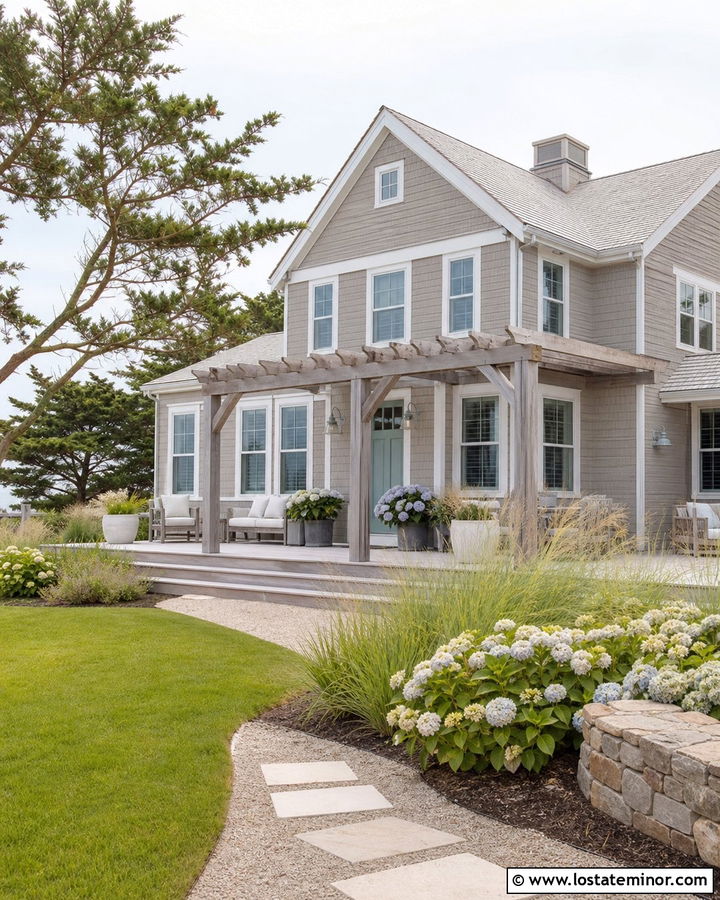
A weathered wood pergola creates an easy connection between a greige coastal house and its natural surroundings. Use light gray-beige shingles or lap siding with crisp white trim, then choose a pergola finish that resembles driftwood rather than orange cedar. Soft blue shutters or a muted aqua front door can add controlled color. A pale gray roof and galvanized metal lights maintain the breezy palette. Place the pergola over a deck, side patio, or outdoor dining terrace where it can frame open views. Sand-colored pavers, dune grasses, hydrangeas, and gravel paths complete the setting. Avoid overly dark hardware or heavy stonework. The beauty of this scheme comes from light-reflective surfaces, subtle contrast, and materials that develop character as they weather naturally.
18. Greige Tudor House With Timber Pergola
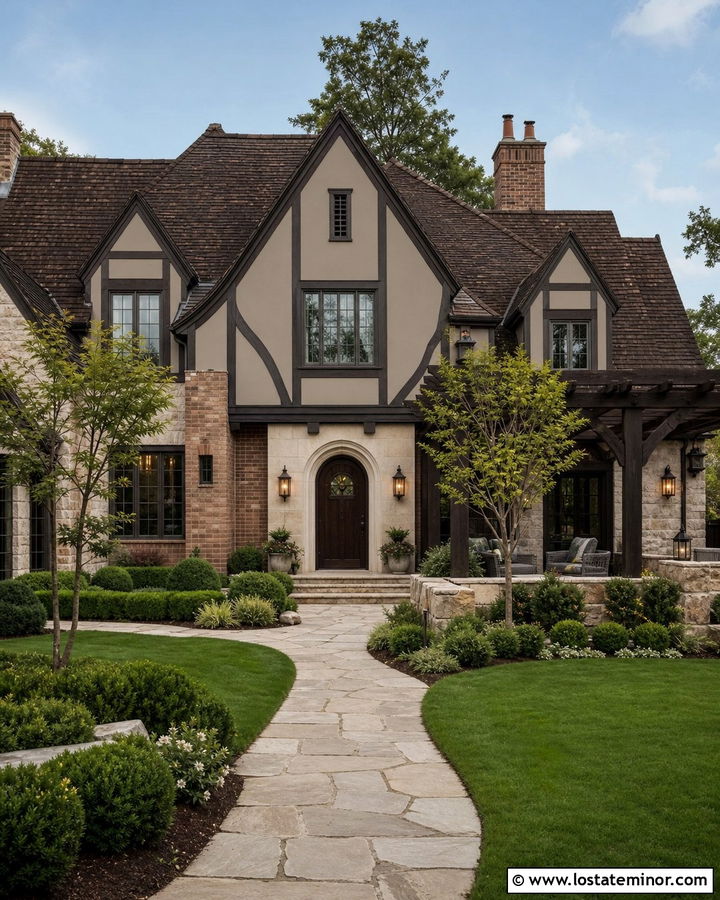
A timber pergola can enhance the substantial character of a Tudor exterior when its details are carefully restrained. Apply a medium greige to the stucco sections and use dark brown on the original half-timbering, window frames, and gutters. Build the pergola from heavy stained beams that repeat those darker architectural lines. It can cover a side terrace, garage entrance, or garden walkway without competing with the steep gables. Cream limestone and warm brick bring variation to the lower facade. A deep brown front door and bronze lanterns complete the historic palette. Keep the landscape structured with hedges, small ornamental trees, and a stone path. The pergola should look solid and handcrafted, matching the visual weight of the house rather than appearing thin or temporary.
19. Greige House With Pergola Over Garage
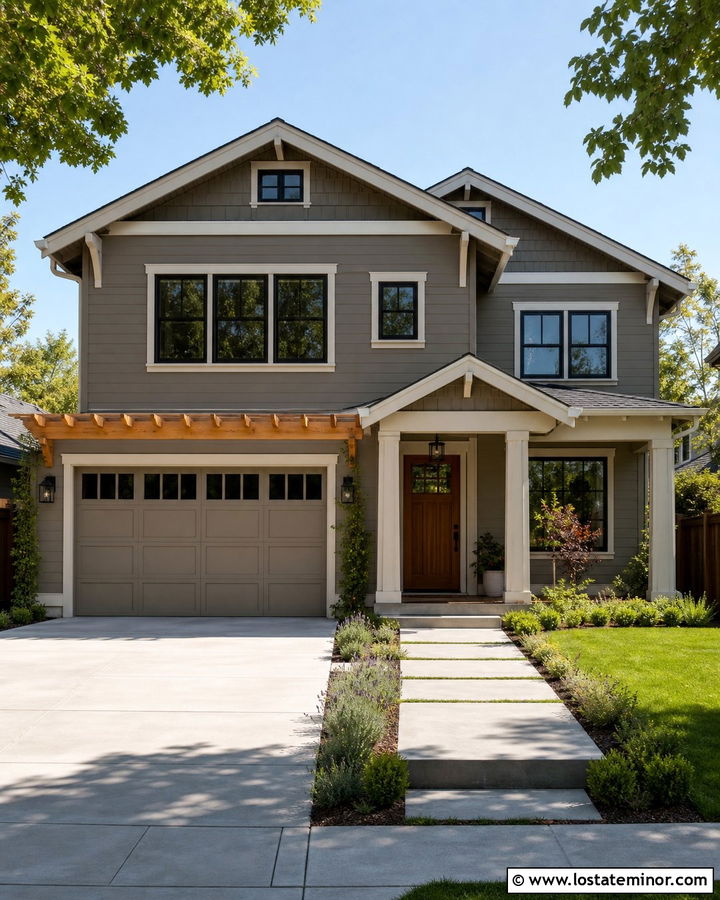
A pergola placed over a garage can turn a plain utility feature into part of the curb-appeal design. Paint the siding and garage door the same balanced greige so the opening visually recedes. Add a cedar or dark-stained wood pergola with shallow projecting rafters above the door. Repeat the wood on the main entrance to create a clear relationship between both sides of the facade. Black lights, hardware, and window frames add definition, while cream trim prevents the roofline from feeling too dark. For extra softness, train a controlled vine along one side of the pergola. Wide driveway borders, low shrubs, and a narrow planting bed will frame the garage without obstructing it. This approach works on ranch, Craftsman, and modern suburban homes.
20. Greige House With Pergola Covered Patio
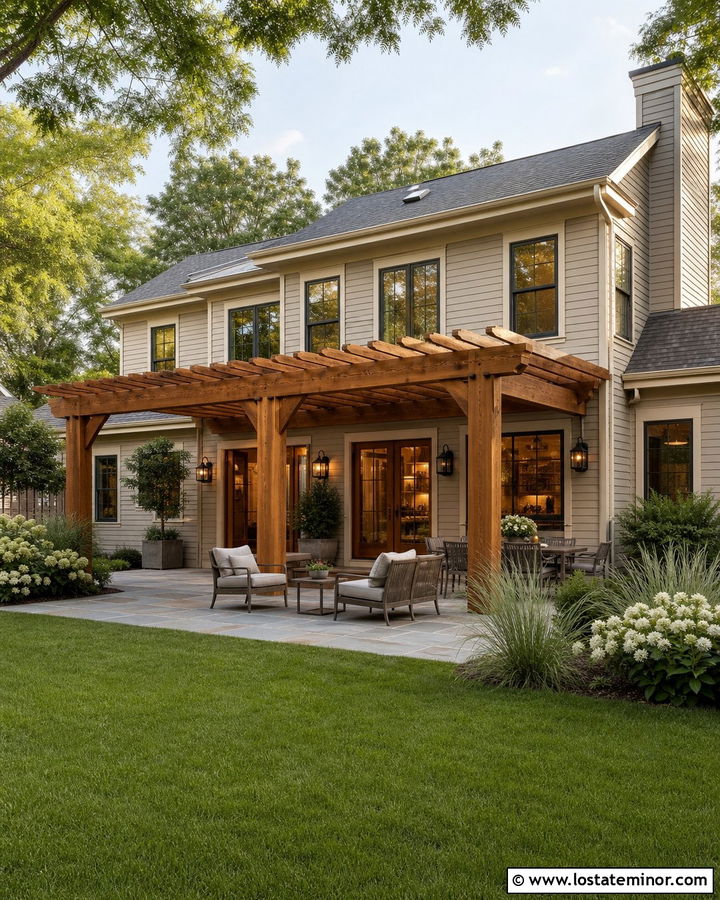
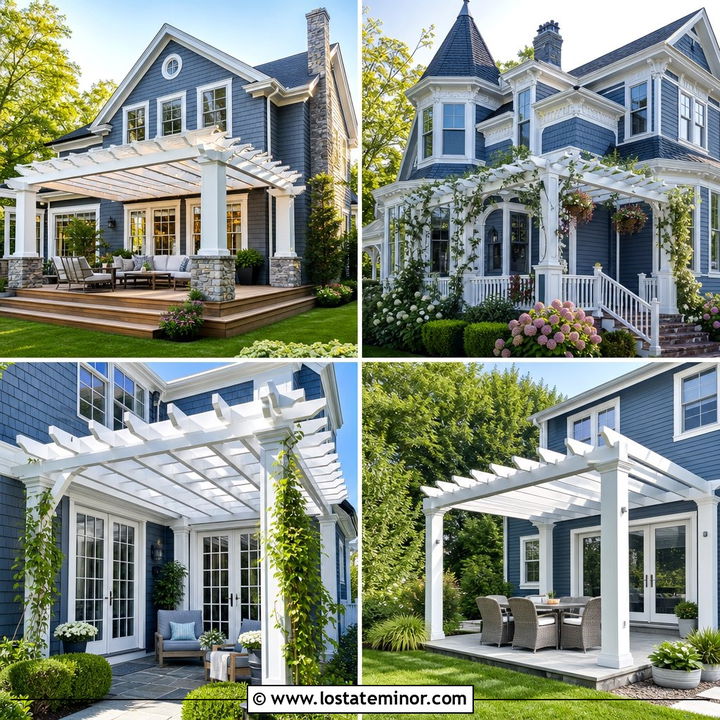
A pergola-covered patio should feel connected to the whole house rather than added as a separate backyard feature. Begin with warm greige siding and creamy white trim, then choose cedar beams that match the rear doors, deck border, or outdoor cabinetry. Align the pergola with existing windows and rooflines whenever possible. Stone pavers in mixed beige and gray tones can link the wall color to the garden. Beneath the structure, neutral seating and a simple outdoor dining area create function without visual clutter. Black sconces and hardware provide small moments of contrast. Surround the patio with layered grasses, flowering shrubs, and a broad lawn. The coordinated materials make the exterior look intentional from both the backyard and interior rooms facing the outdoor space.
21. Greige House With Pergola And Outdoor Kitchen
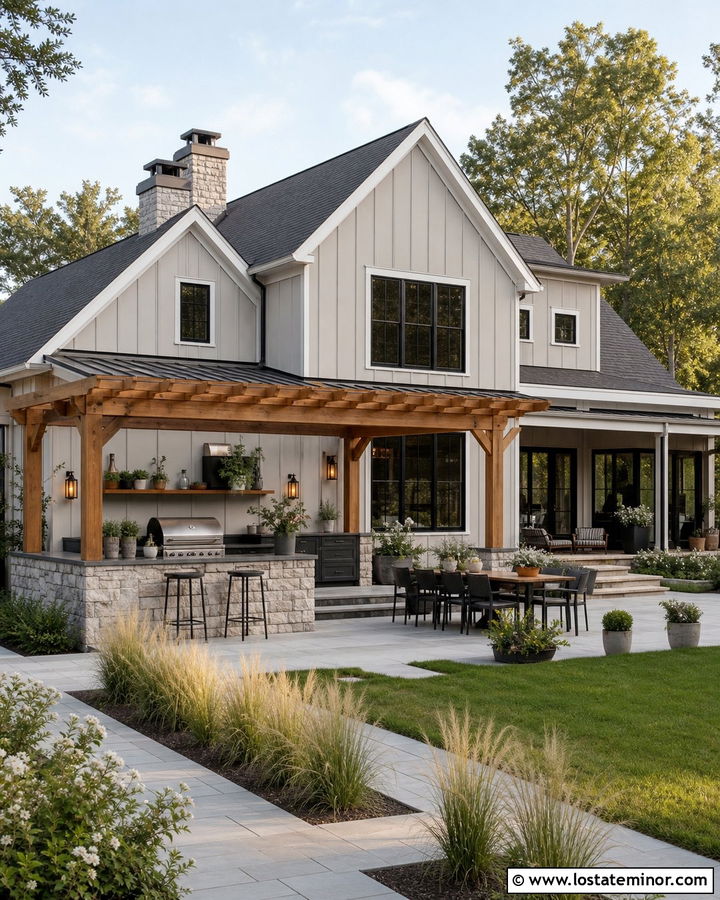
An outdoor kitchen becomes more cohesive when the pergola, cabinetry, and house colors share related finishes. Use a midtone greige exterior with warm white trim, then install a stained wood pergola over a stone or porcelain patio. Clad the kitchen base in the same stone used on the house foundation or chimney. Charcoal cabinets and a dark counter can coordinate with black window frames, while cedar beams introduce warmth overhead. Position the kitchen along a solid wall so smoke and appliances do not block the main view of the house. Add a dining table, task lighting, and planters for definition. This scheme creates a polished entertaining zone while keeping the greige facade visible as the calm background for the complete outdoor arrangement.
22. Greige House With Pergola And Stone Patio
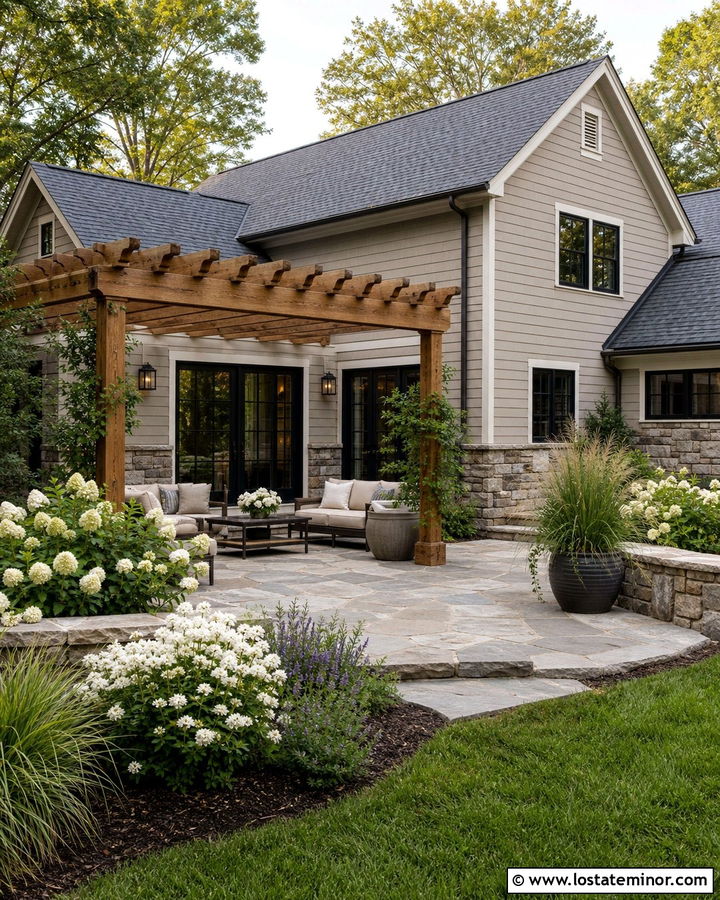
Texture becomes the main attraction when a greige exterior meets a substantial stone patio and wood pergola. Choose siding with a warm gray-beige undertone, then use irregular flagstone containing cream, taupe, and charcoal variations. A medium cedar pergola can cover the main seating area and pull out the stone’s warmer notes. Soft white window trim keeps the house bright, while a black front or patio door adds a strong anchor. Repeat the stone on low seat walls, porch bases, or garden steps. Comfortable neutral furniture and large planters will make the area feel finished without hiding the architecture. This layered combination suits traditional, rustic, and transitional homes because the natural materials soften the neutral siding and help the structure settle into the landscape.
23. Greige House With Pergola And Wood Deck
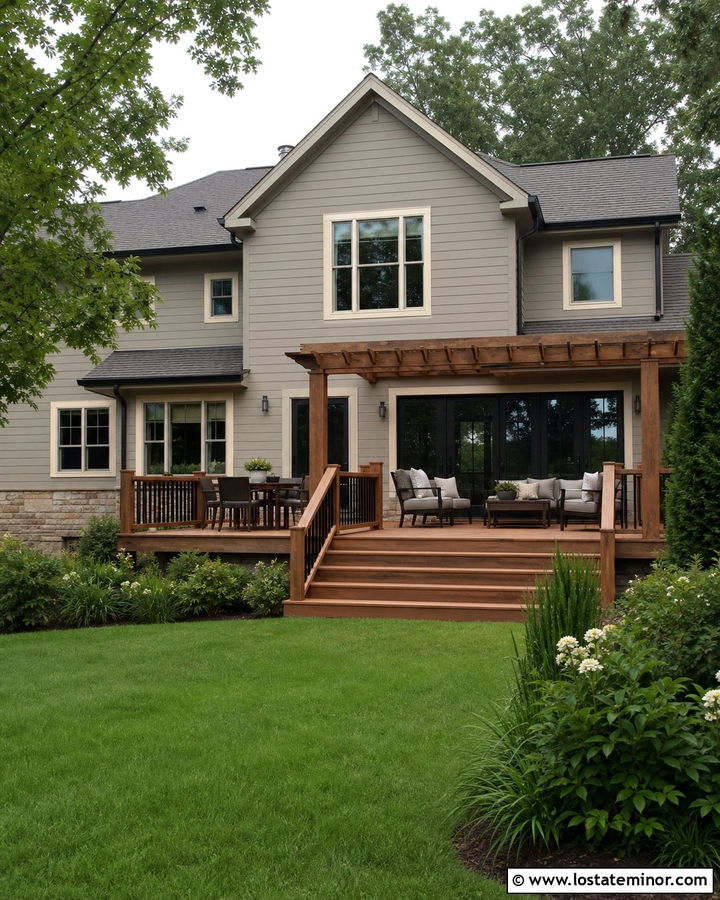
A wood deck can bridge the visual gap between a greige house and its pergola. Use a warm medium greige on the siding, then select a natural brown stain for both the decking and overhead structure. Matching these wood tones creates continuity, especially on a wide rear elevation. White or cream trim can outline the windows, while black railings keep the deck from looking overly rustic. Include broad steps that open toward the lawn and make the outdoor area feel accessible. If the house has stone accents, repeat a small amount around the deck foundation. Layer ornamental grasses, flowering shrubs, and small trees along the edges. The finished design feels comfortable and coordinated because the pergola appears to rise naturally from the deck rather than sit on top of it.
24. Greige House With Pergola And Brick Patio
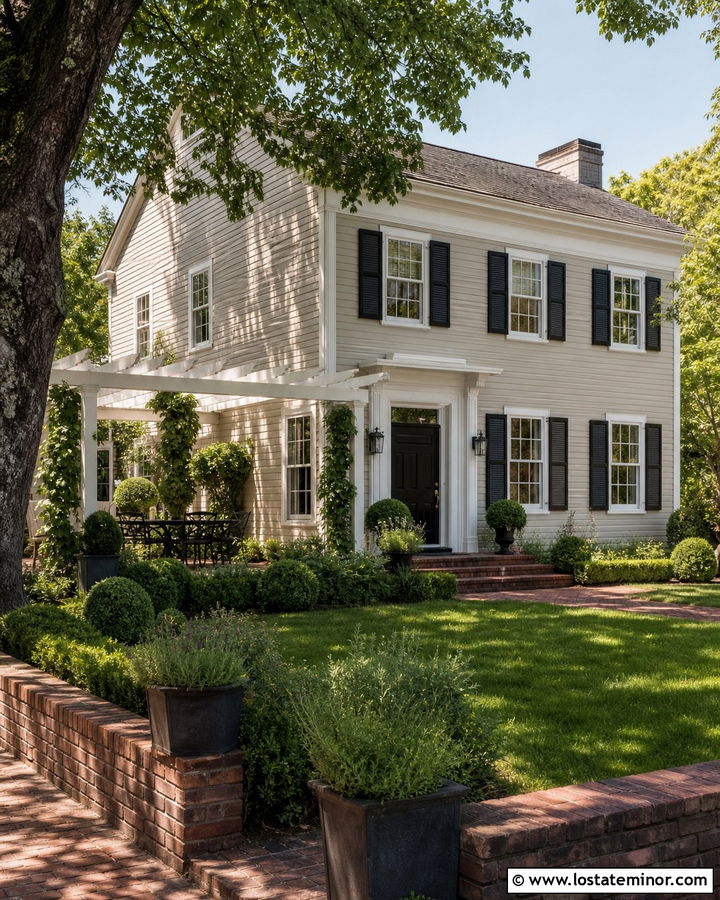
Brick paving adds welcome warmth beneath a pergola beside a greige house. Choose a soft greige exterior with creamy trim, then use muted red-brown or taupe brick rather than bright orange masonry. A painted white pergola creates a traditional look, while natural cedar offers a more relaxed transitional finish. Repeat the brick in the front path, steps, or low garden walls so the patio does not feel isolated. Black shutters and a dark door can sharpen the palette, particularly on Colonial or Georgian-inspired homes. Furnish the space with simple neutral seating and planters filled with herbs or seasonal greenery. The combination of greige walls, aged brick, and structured pergola beams creates depth while remaining versatile enough for both formal and informal landscapes.
25. Greige House With Pergola And Black Windows
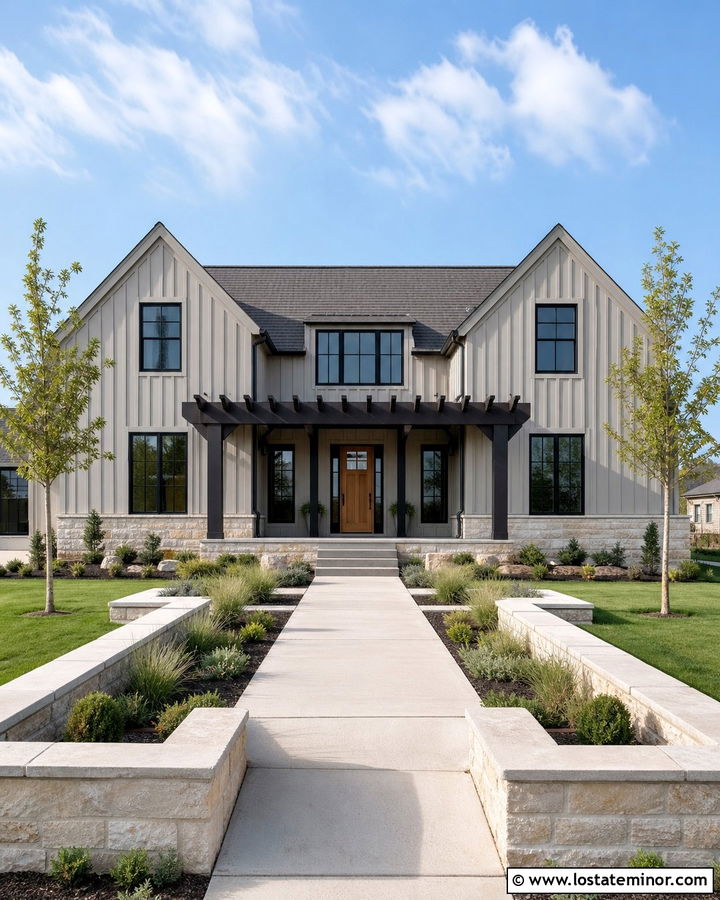
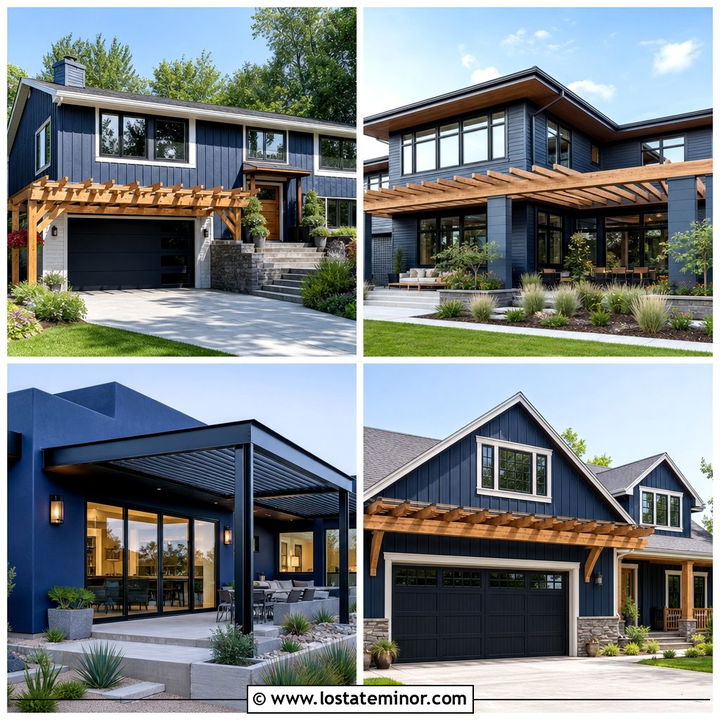
Black windows give a greige exterior a crisp framework, and a matching pergola can extend that structure into the outdoor area. Choose a light warm greige for stucco, vertical siding, or painted brick. Then repeat matte black on the pergola, doors, gutters, roof edging, and exterior lighting. Introduce natural wood through the front door or pergola ceiling slats so the design does not feel overly industrial. Pale stone around the foundation adds texture and softens the contrast. Keep the landscape contemporary with rectangular beds, airy grasses, and a straight concrete walkway. This exterior works especially well on modern farmhouses and transitional homes. The secret is limiting black to clear architectural lines while allowing greige to remain the dominant house color.
26. Greige House With Pergola And White Trim
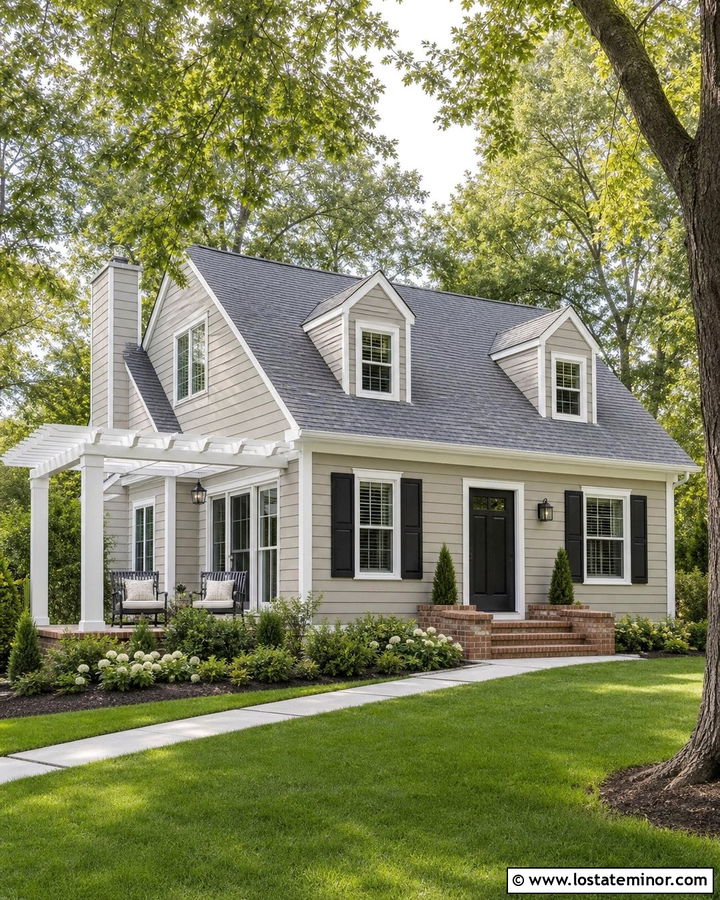
White trim is a natural partner for greige, but the right pergola helps the familiar combination feel more distinctive. Use a medium greige body color so the window casings, fascia, and porch columns remain clearly visible. Paint the pergola the same clean white for a cohesive addition over the entry or side patio. A navy, charcoal, or natural wood front door can provide a focal point without disturbing the neutral scheme. Choose a medium gray roof to bridge the body and trim colors. Brick steps, pale concrete pavers, and green foundation plantings keep the palette grounded. This design works across Cape Cod, Colonial, cottage, and traditional suburban architecture. Consistent white details make the pergola appear original instead of looking like a later addition.
27. Greige House With Pergola And Charcoal Roof
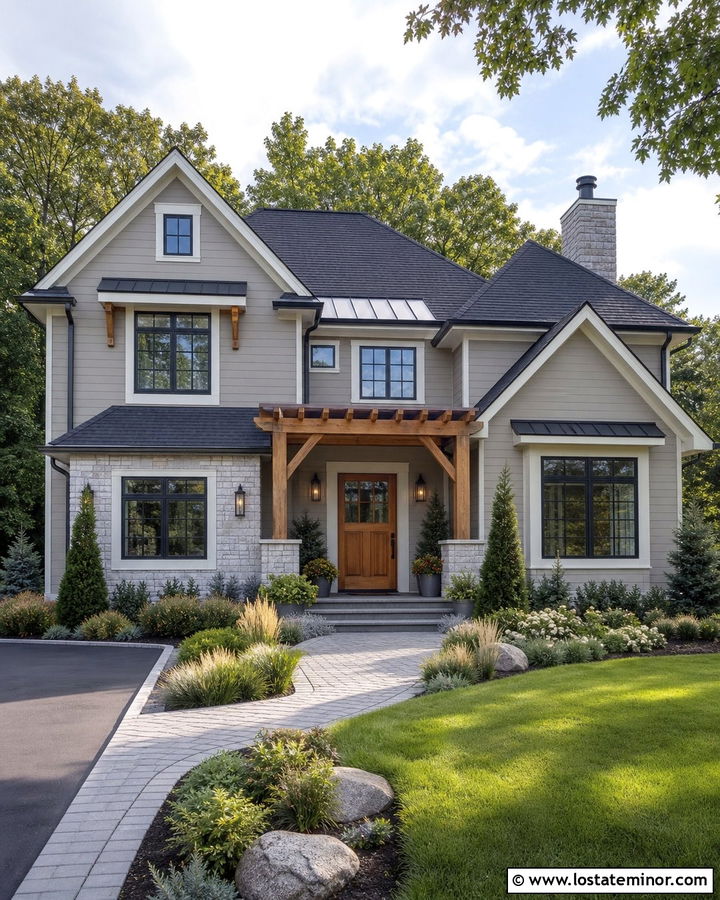
A charcoal roof gives a greige house a dependable anchor, especially when the pergola introduces a warmer material below. Select a balanced greige siding that does not lean too yellow in direct sunlight. Pair it with soft white trim, black gutters, and a medium cedar pergola over the entrance or patio. The roof and black details define the upper portion of the house, while the wood balances that visual weight at ground level. Repeat cedar on the front door, garage accents, or planter boxes. Pale gray stone and concrete can connect the cool and warm neutrals. Finish with layered evergreen landscaping and a clean walkway. This complete palette suits homes in many regions because it combines practical dark roofing with an adaptable, inviting facade.
28. Greige House With Pergola And Metal Roof
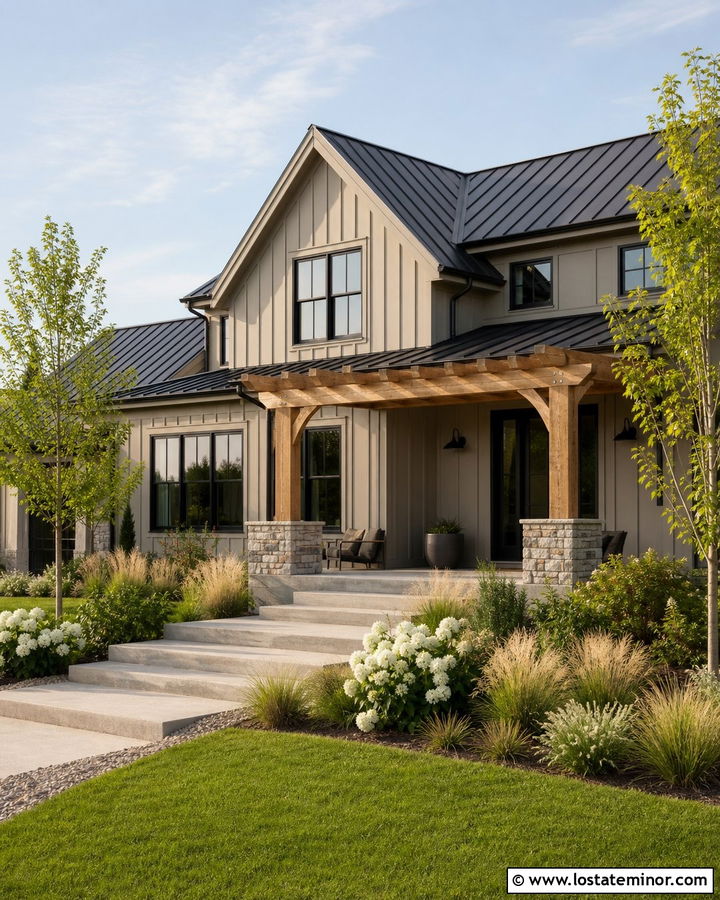
A metal roof and pergola can work together to give a greige exterior clear architectural rhythm. Use warm greige board-and-batten siding with a charcoal standing-seam roof for a modern farmhouse appearance. Add a natural oak or cedar pergola above the porch, garage, or outdoor dining terrace. The wood softens the metal and prevents the exterior from feeling too utilitarian. Cream trim offers a gentler contrast than bright white, while black-framed windows echo the roof. Stone porch bases and broad concrete steps provide visual stability. Keep the landscaping loose and natural with native grasses, white flowering shrubs, and small shade trees. The finished exterior feels current but not overly trendy because each material serves a clear visual and practical purpose.
29. Greige House With Freestanding Garden Pergola
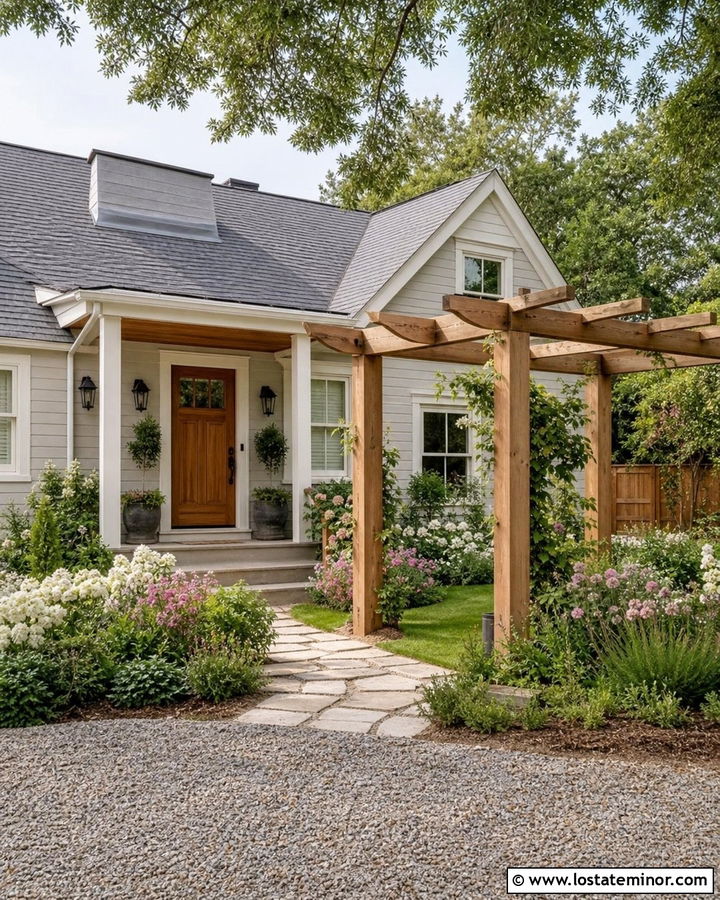
A freestanding pergola can still feel connected to a greige house when colors and materials are repeated thoughtfully. Place the structure at the end of a stone path, beside the lawn, or near a detached patio. Use the same cedar stain found on the house’s door, shutters, or porch ceiling. The main exterior can feature light greige siding, creamy trim, a gray roof, and black lights. Beneath the pergola, choose stone or gravel that matches the home’s walkway. Climbing plants and surrounding beds will soften the edges, but leave enough open space for the house to remain visible behind it. This layout adds depth to a larger yard and creates a destination without requiring the pergola to connect directly to the building.
30. Small Greige House With Simple Pergola
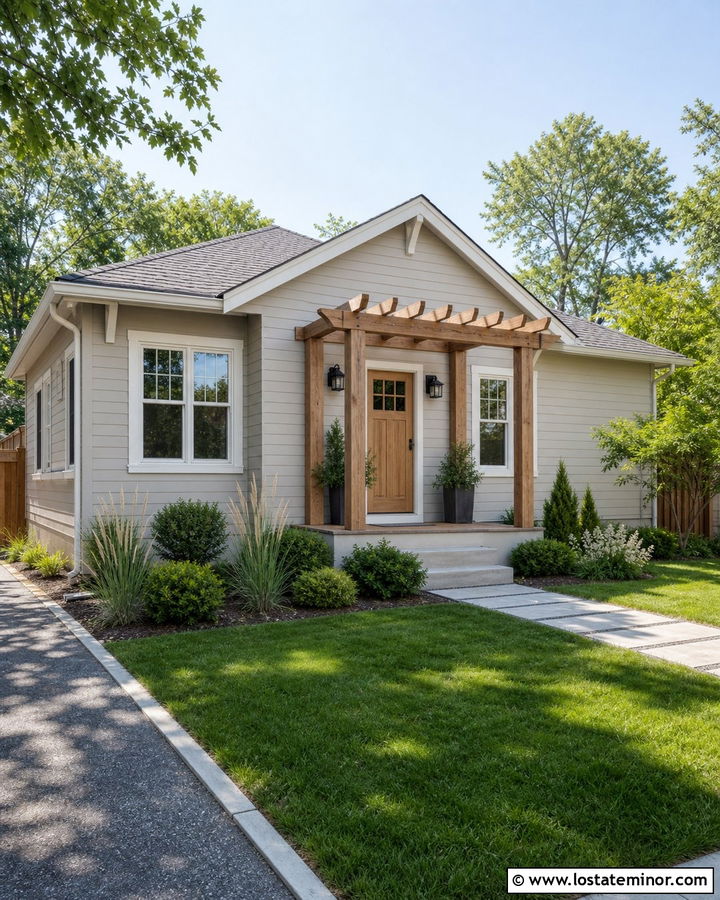
A modest home does not need an oversized structure to gain character from a pergola. On a small greige cottage, ranch, or bungalow, use a narrow wood pergola to frame the front door or cover a compact patio. Keep the beam depth proportional to the roofline and avoid columns that overwhelm the facade. Light greige siding, warm white trim, and a natural oak door will make the exterior feel open and bright. Choose a medium gray roof and small black sconces for definition. Budget-friendly concrete pavers can form the patio or walkway, while simple shrubs and ornamental grasses soften the foundation. A carefully scaled pergola provides enough depth and shadow to improve curb appeal without making the house look crowded.
Conclusion:
The best greige and pergola combinations treat the exterior as one complete design. Siding, trim, doors, roofing, masonry, landscaping, and pergola materials should feel connected rather than chosen separately. Warm wood structures make greige feel organic, while white pergolas create a brighter traditional appearance. Black aluminum and dark-painted designs bring stronger modern contrast. Before selecting a scheme, compare samples beside the roof, stone, and brick in different daylight conditions. Also match the pergola’s scale to the house and its intended use. Whether you are updating an entrance, garage, deck, or backyard terrace, these **30 Greige House Design With Pergola Ideas** offer a practical starting point for creating balanced, inviting curb appeal.

Related posts: