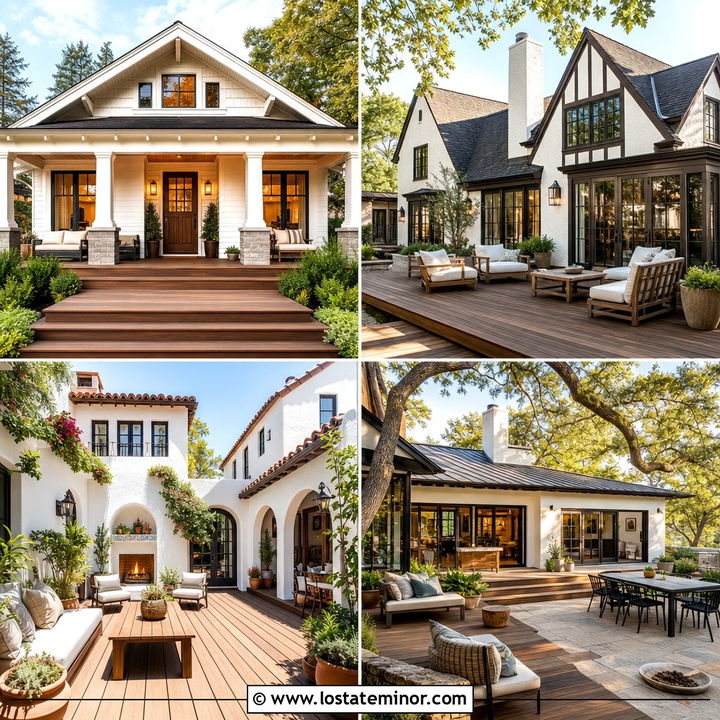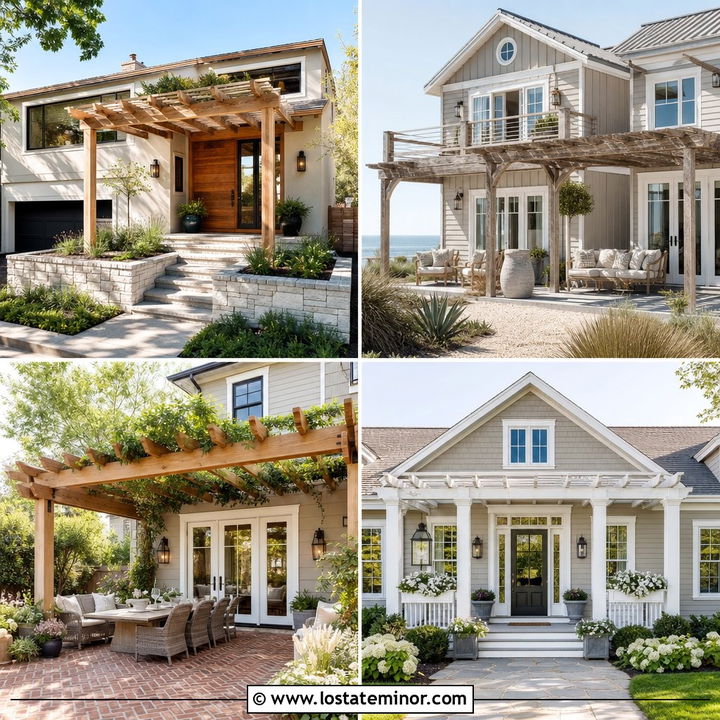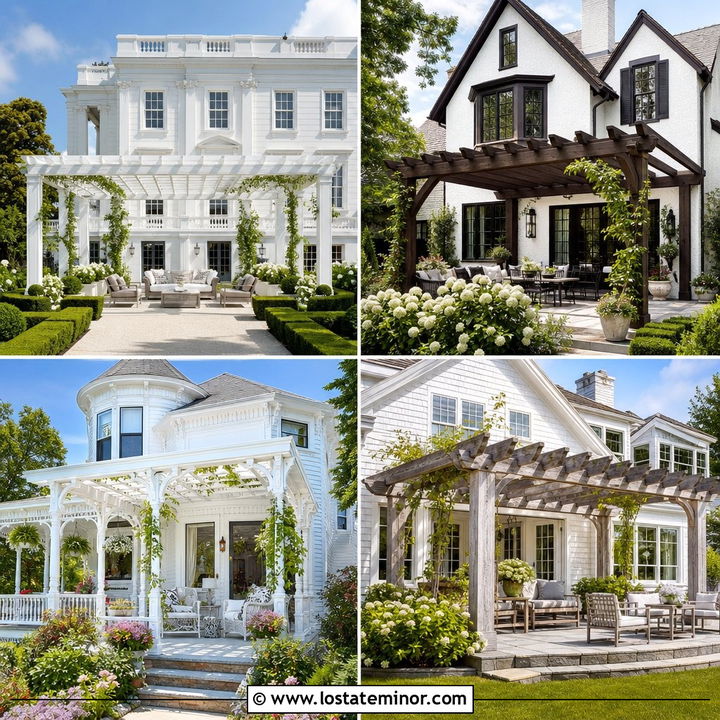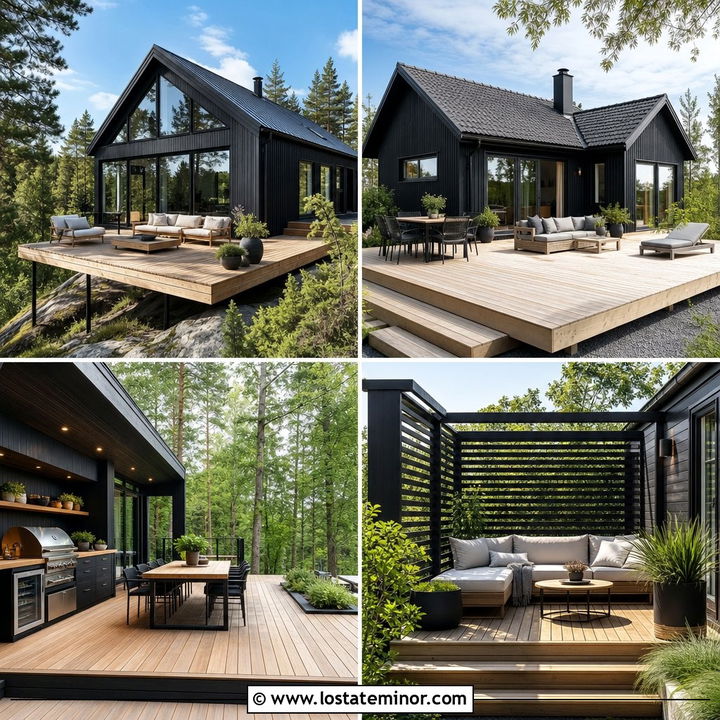
A greige exterior creates a flexible foundation for a deck because its balanced gray and beige undertones work with warm wood, weathered neutrals, crisp white, and darker contemporary finishes. Current exterior trends favor layered, nature-inspired palettes rather than flat, one-color facades, making greige especially useful for connecting siding with wood, stone, roofing, and landscaping. () The best **30 Greige House Design With Deck Ideas** coordinate the entire property, including trim, railings, doors, windows, and foundation materials. Before committing, compare exterior and deck samples beside the roof and masonry in morning and afternoon light. From small front platforms to expansive entertaining spaces, the complete looks below offer practical inspiration for **30 Greige House Design With Deck Ideas**.

1. Light Greige House With Natural Cedar Deck
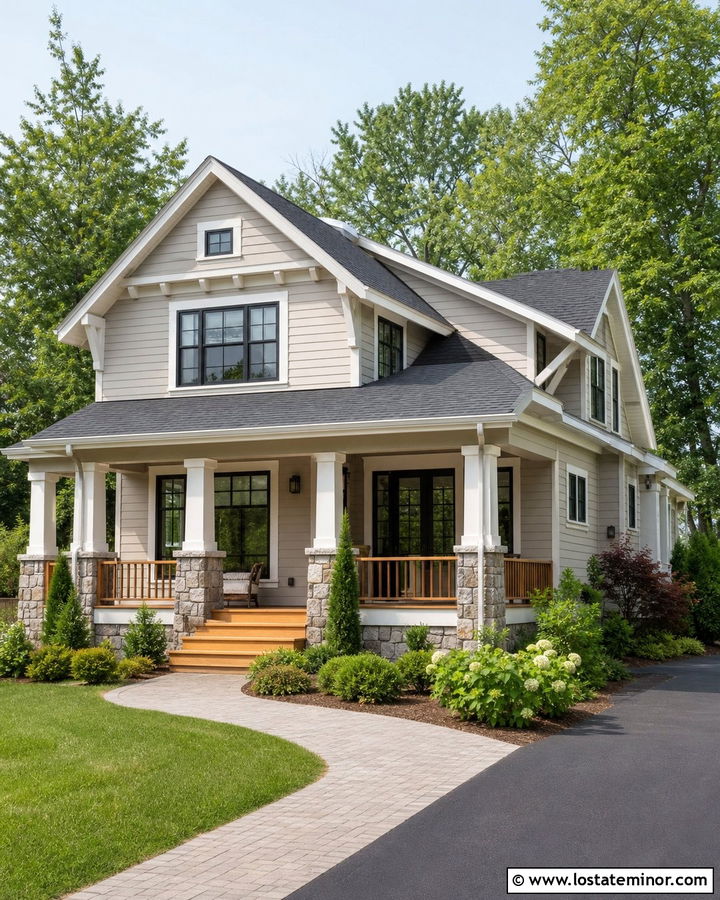
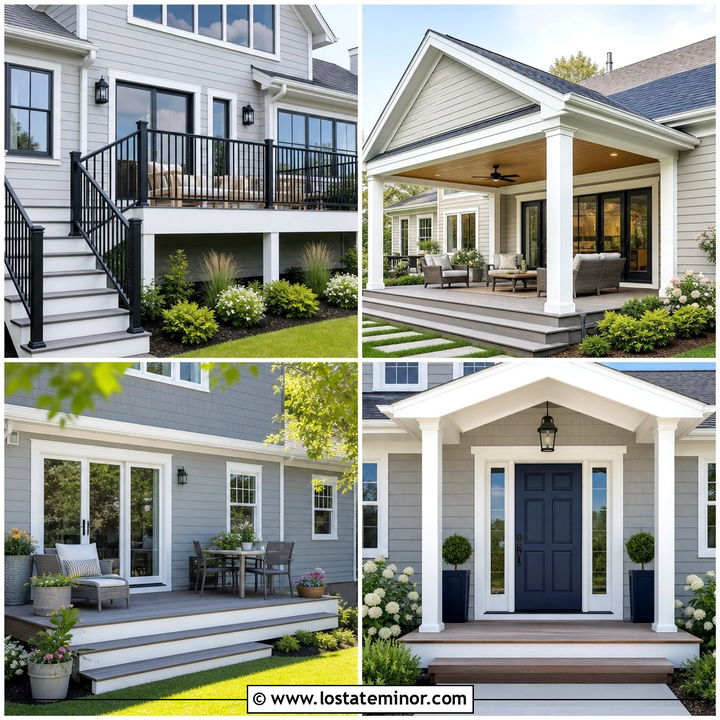
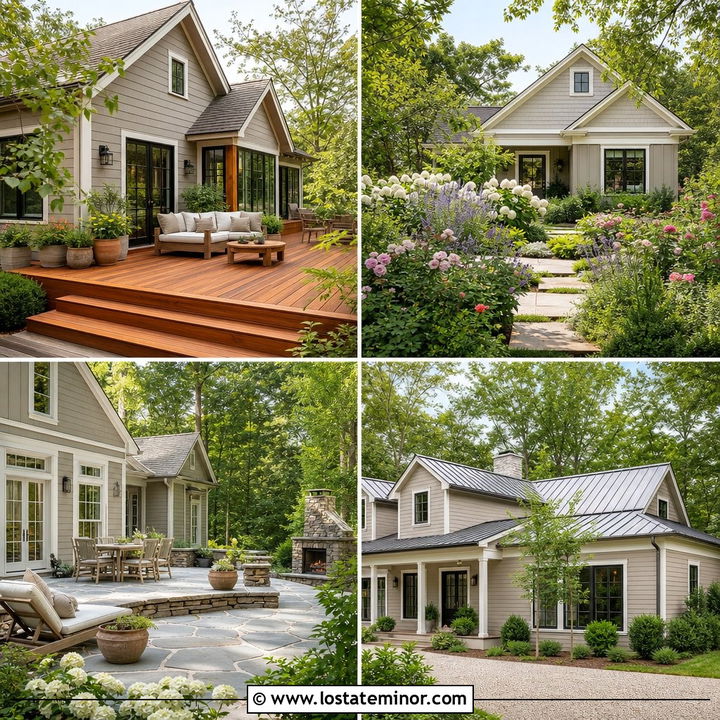
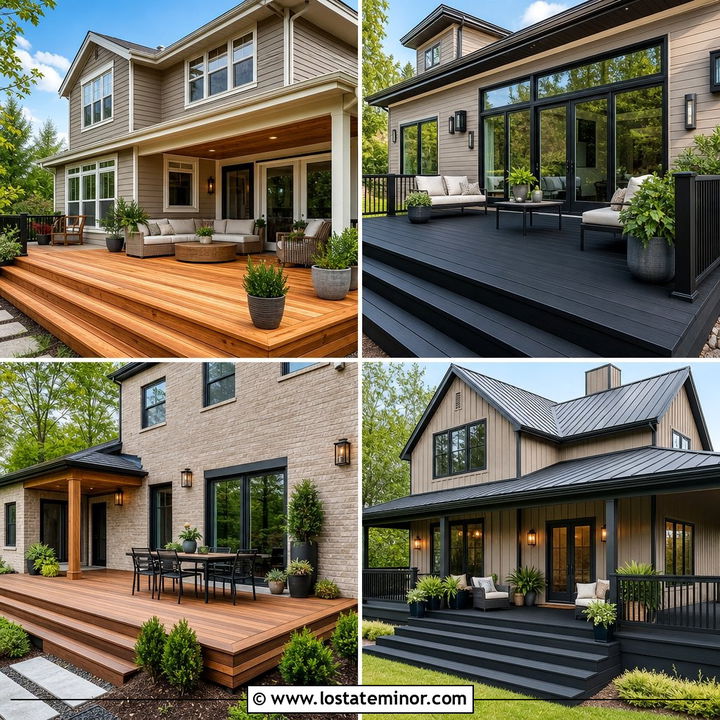
A light greige exterior and natural cedar deck make a welcoming combination without feeling overly rustic. Use horizontal lap siding in a pale greige such as Benjamin Moore Edgecomb Gray, then sharpen the facade with warm white trim. A clear or lightly tinted cedar stain allows the deck’s honey-colored grain to provide noticeable contrast. Black-framed windows, simple metal railings, and a charcoal roof keep the softer colors from appearing washed out. This scheme works beautifully on a craftsman house with a broad front porch or a raised rear deck. Repeat the cedar on brackets, porch beams, or the front door. That repetition makes the deck look connected to the architecture rather than added as a separate feature.
2. Warm Greige House With Dark Walnut Deck
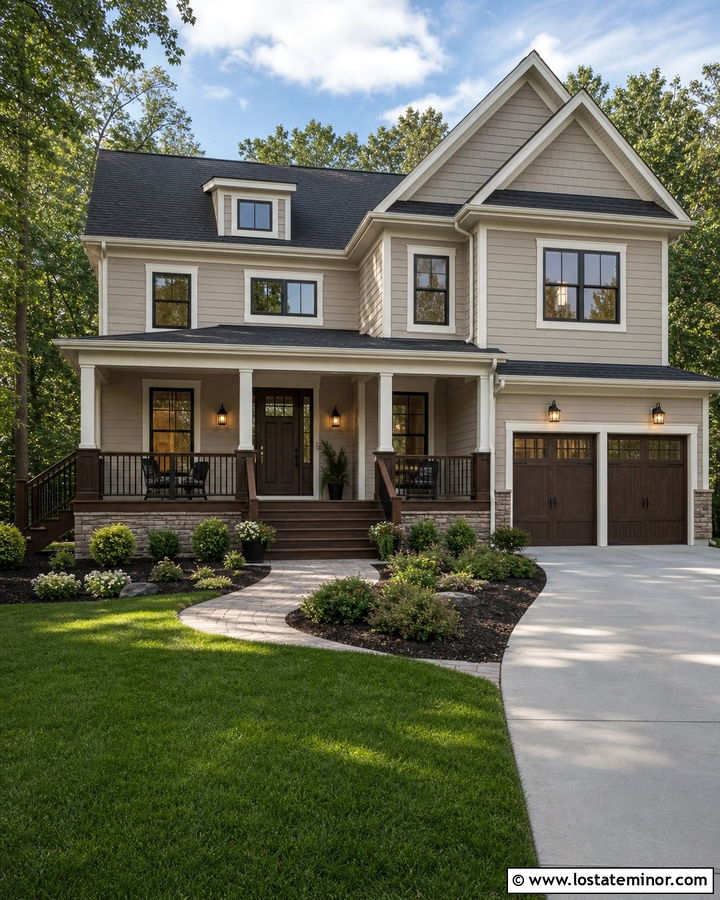
Can a dark deck work with warm greige siding? Absolutely, especially when the deck color echoes other deep elements around the house. Pair Sherwin-Williams Agreeable Gray siding with a dark walnut deck stain, creamy white trim, and an espresso-toned front door. Bronze exterior lights and dark window frames can repeat the deck’s richness across the facade. This palette is well suited to a traditional two-story house with a substantial rear deck and wide stairs. Add light taupe stone around the foundation to bridge the warm siding and brown boards. Keep the deck railing slightly lighter or use slim black balusters. The resulting exterior feels grounded, balanced, and inviting instead of heavy or overly brown.
3. Greige Ranch House With Weathered Gray Deck
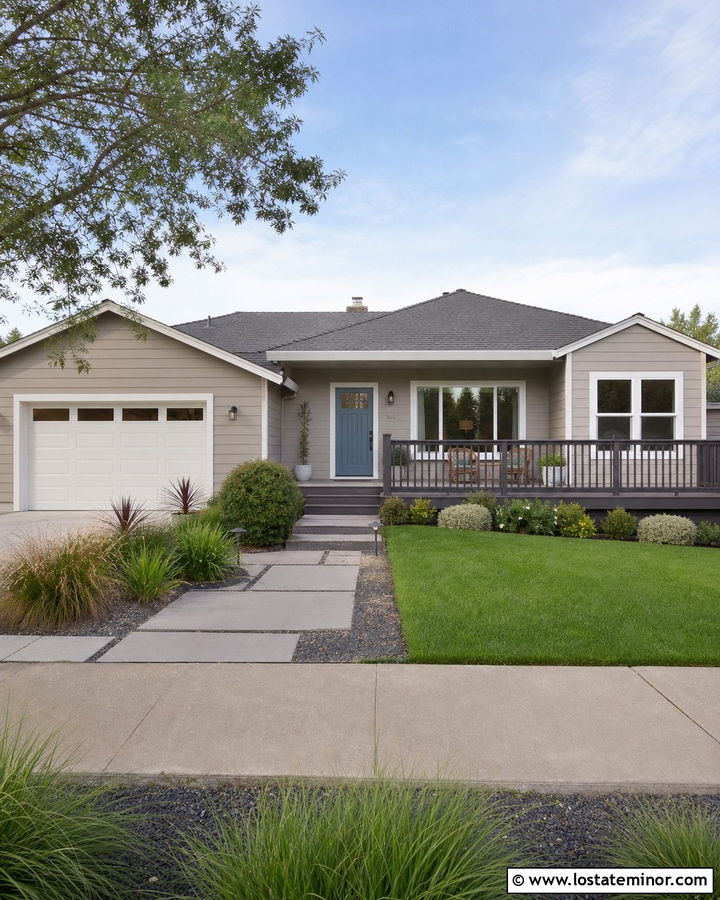
A low ranch house benefits from a streamlined palette that makes its long facade feel intentional. Cover the exterior in Sherwin-Williams Worldly Gray, a balanced greige, and pair it with weathered gray deck boards. Use soft white trim around the windows and fascia, then introduce charcoal on the roof, gutters, and simple deck railing. Because the siding and deck sit close in color, create separation with board direction and texture. Horizontal lap siding contrasts nicely with deck boards running away from the house. A muted blue-gray front door adds a small focal point without breaking the relaxed scheme. Low ornamental grasses, broad concrete pavers, and rounded shrubs complete this easygoing exterior while keeping sightlines open.
4. Greige Craftsman House With Two-Tone Deck
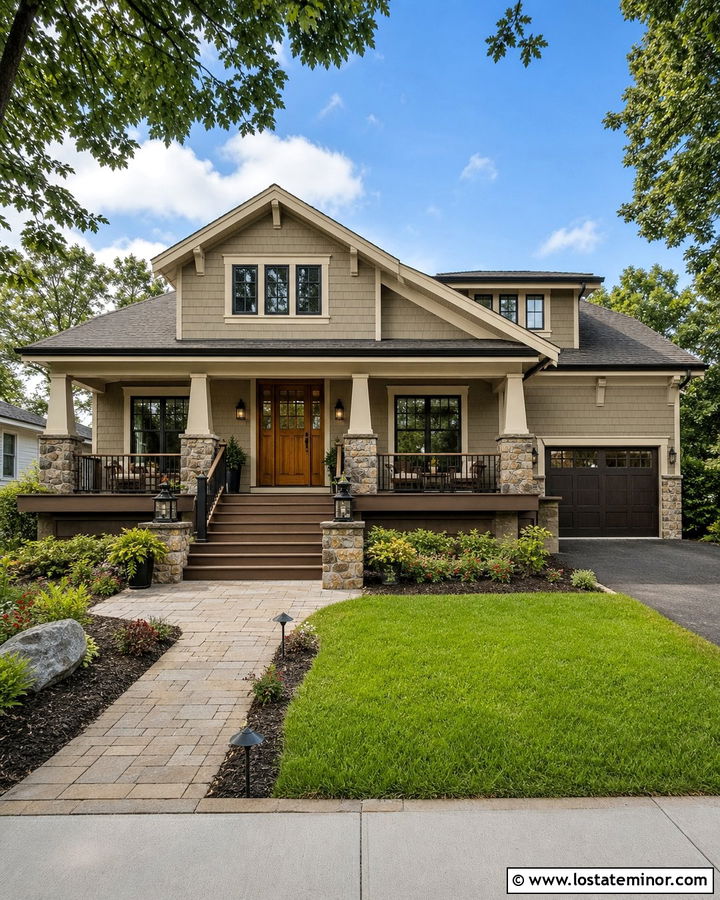
Craftsman architecture already includes layers of woodwork, stone, and trim, so a two-tone deck feels right at home. Paint the main siding Benjamin Moore Revere Pewter and use creamy ivory for the tapered columns, window trim, and roofline. Choose medium brown deck boards with dark espresso fascia and stair risers. Black metal balusters add another crisp line without hiding the structure. A stained oak front door can connect the deck to the front elevation, while fieldstone piers introduce gray, tan, and brown tones found throughout the palette. Keep the deck shape generous but straightforward. Wide stairs, substantial posts, and a built-in bench reinforce the craftsman character and make the whole exterior appear carefully planned.
5. Greige Colonial House With White Deck Railing
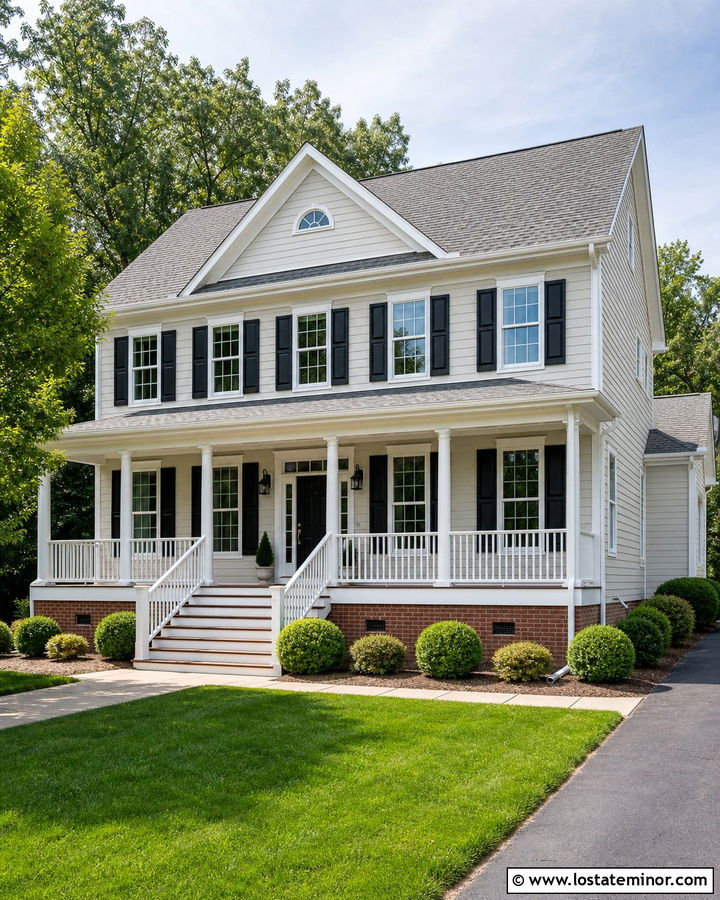
The familiar symmetry of a colonial house looks fresh when warm greige siding meets clean white deck details. Benjamin Moore Pale Oak gives the facade a soft gray-beige appearance, while bright white trim defines the windows, cornices, and columns. Continue that white onto the deck railing, but use medium brown boards underfoot for warmth and practical contrast. Black shutters and a glossy black front door create a strong central anchor. On a rear deck, align railing posts with the house’s window spacing to preserve the orderly architecture. Brick steps or a brick foundation can introduce traditional texture. The combination feels polished and established, yet the greige body prevents the black-and-white accents from becoming too stark or formal.
6. Dark Greige House With Light Oak Deck
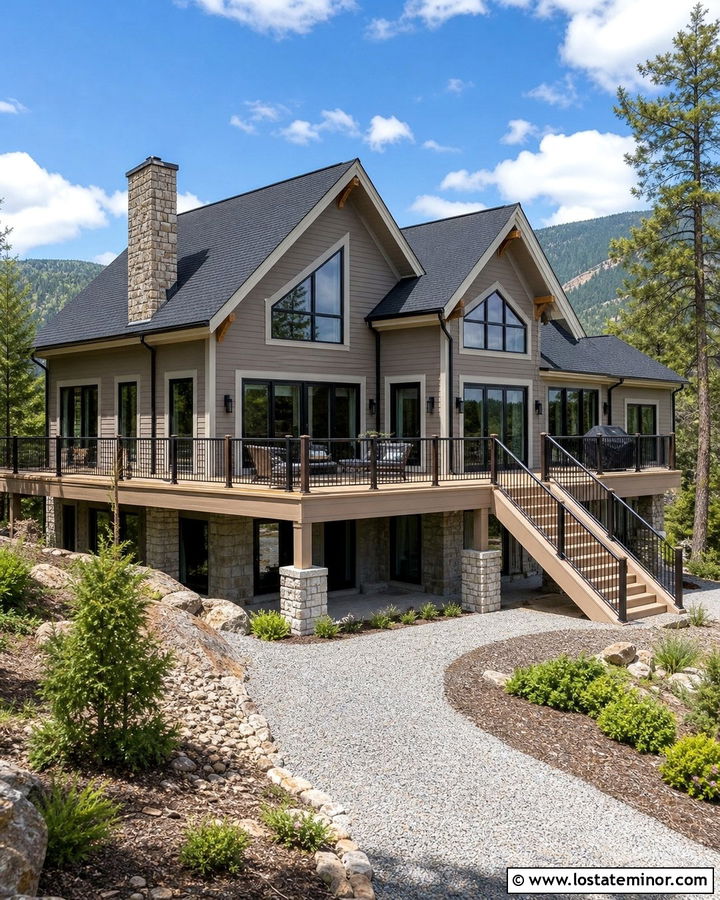
Deep greige siding can make a house feel sophisticated, but a pale deck keeps the composition from becoming visually heavy. Use Sherwin-Williams Mega Greige on board-and-batten or lap siding, then pair it with light oak-colored composite decking. Warm white trim around the windows provides clarity, while black railings and a black roof frame the exterior. This contrast is particularly effective on a modern mountain house with large windows and a raised deck. Add natural limestone around the lower level to connect the oak boards with the darker walls. The deck should remain simple, with broad steps and minimal ornament. Soft green landscaping and gravel paths help the deeper greige look organic, comfortable, and appropriate for its surroundings.
7. Greige Farmhouse With Black Deck Railing
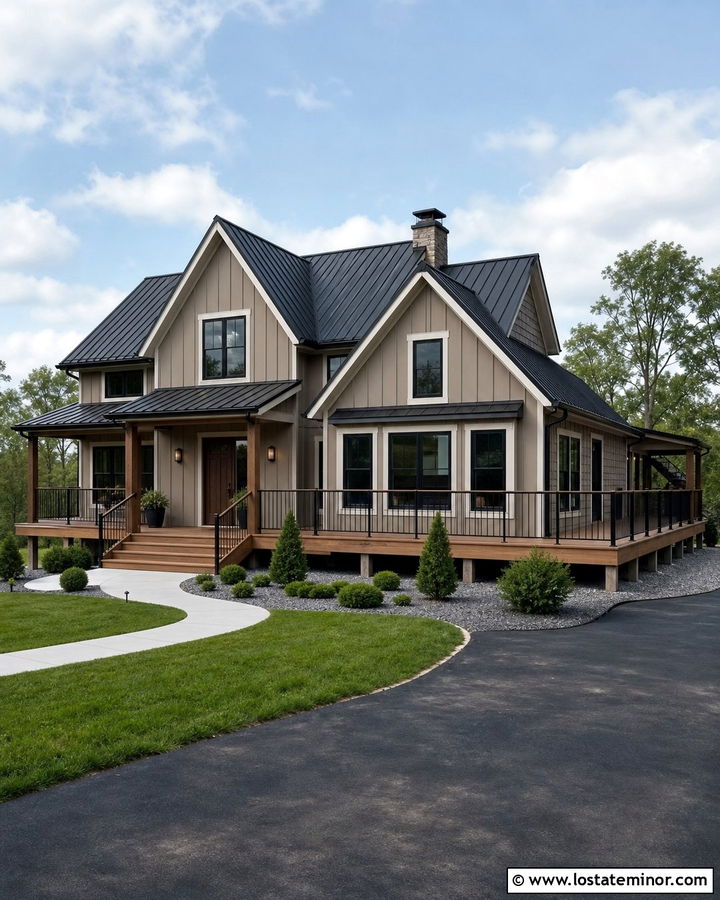
Picture a modern farmhouse where greige board-and-batten siding replaces the expected bright white exterior. Sherwin-Williams Anew Gray brings warmth to the tall facade, while off-white trim highlights the gables and porch columns. Use natural brown decking with slender black railings to coordinate with black windows, lights, and a charcoal metal roof. A medium walnut front door adds another warm surface without competing with the deck. Keep the railing design clean and uncomplicated so it supports the farmhouse lines. A wide deck that wraps one side of the house can connect outdoor dining and seating areas. Gravel planting beds, clipped shrubs, and a simple concrete walkway create a neat setting that complements the neutral, high-contrast scheme.
8. Greige Bungalow With Wraparound Deck
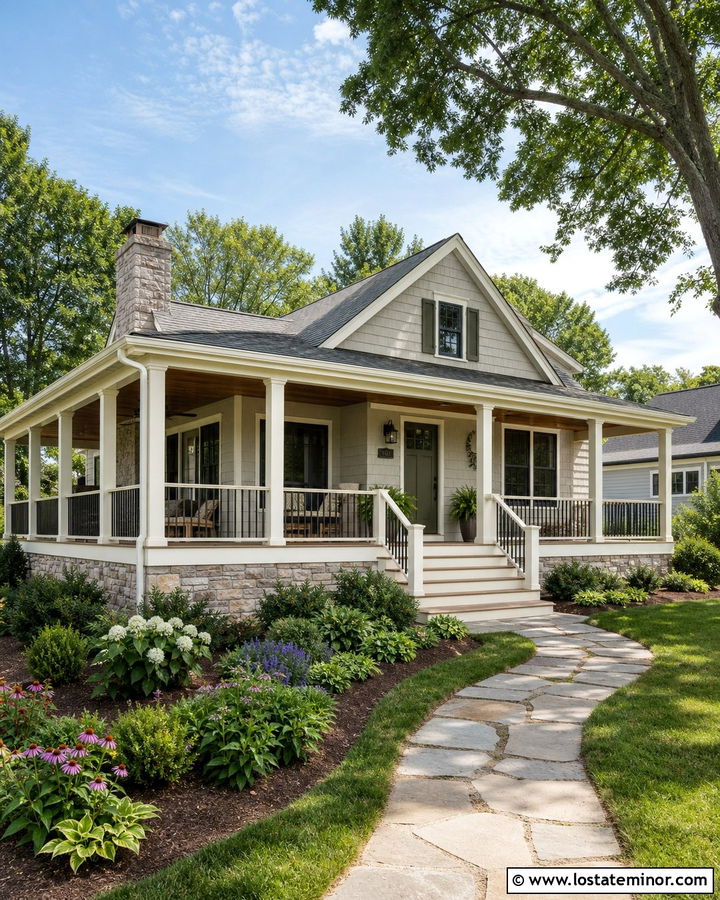
A wraparound deck can transform a compact bungalow into a home that feels larger and more connected to its yard. Paint the shingle or lap siding Benjamin Moore Balboa Mist, a soft light greige, and select warm cedar boards for the deck. Use creamy white on the eaves, posts, and railing frames, then add dark bronze balusters for definition. A muted olive front door works as a natural accent against the quiet siding. The deck roof should follow the bungalow’s existing pitch, helping the addition look original to the house. Finish the foundation with mixed tan-gray stone. Layered flower beds, a curving walkway, and low shrubs soften the deck edges while preserving a clear curb-appeal view.
9. Greige Split-Level House With Multi-Level Deck
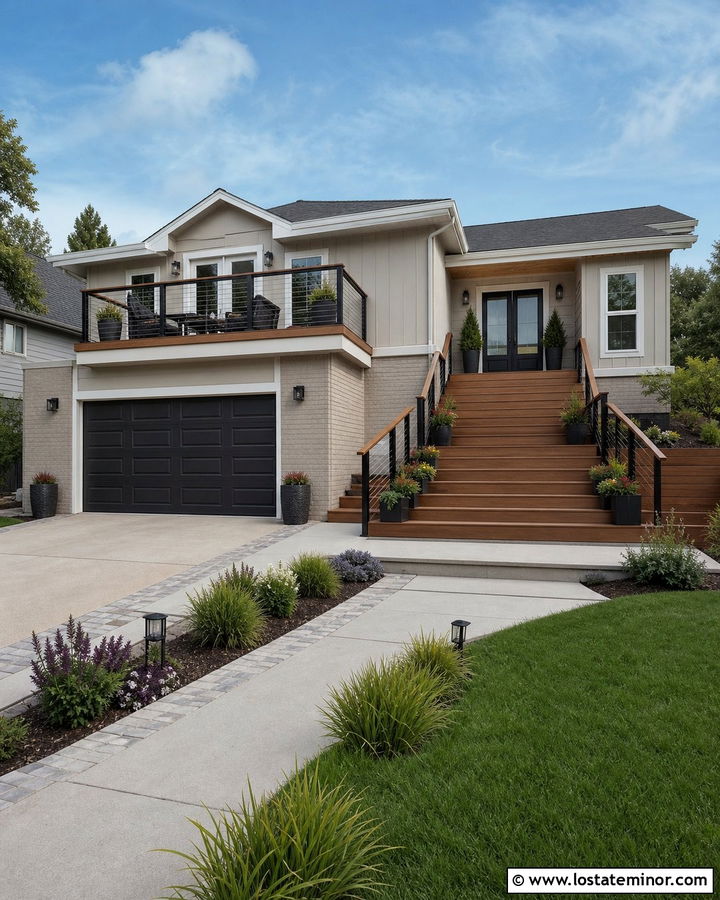
Split-level homes naturally suit decks with more than one elevation. Use Sherwin-Williams Mindful Gray across the main siding, crisp white on the trim, and charcoal around the garage door and windows. Build the deck with medium-toned teak-brown boards, creating an upper dining platform and a lower lounge area connected by broad stairs. Black cable railings maintain open views and repeat the dark architectural accents. If the lower story contains brick, choose a warm taupe or limewashed finish that relates to the greige siding. Matching planters can define each level without making the deck feel crowded. The layered structure follows the house’s existing geometry and turns a potentially awkward backyard elevation into a cohesive outdoor living space.
10. Greige Cape Cod House With Coastal Gray Deck
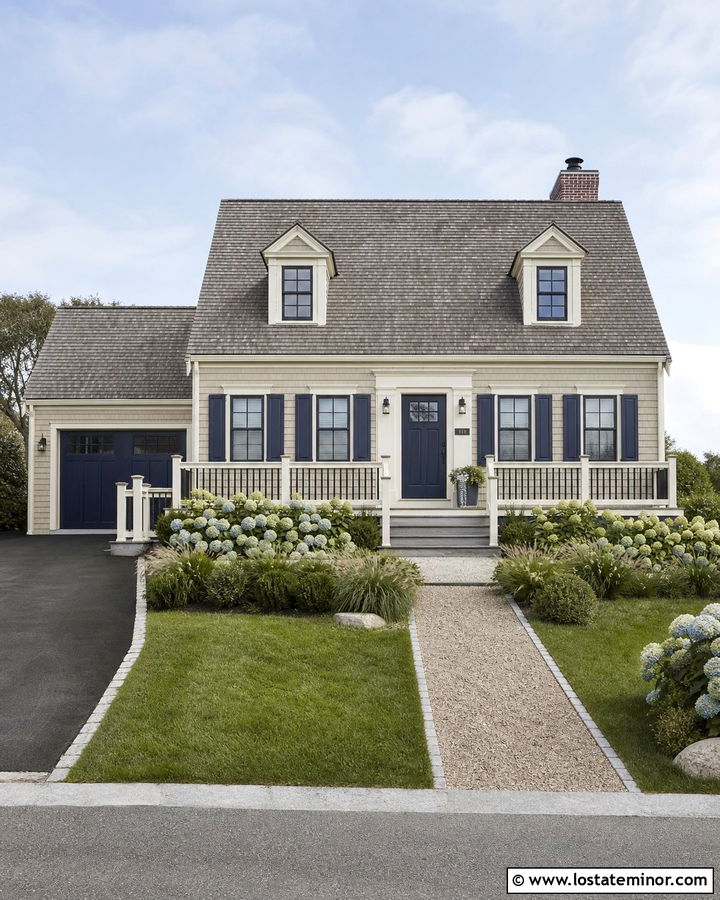
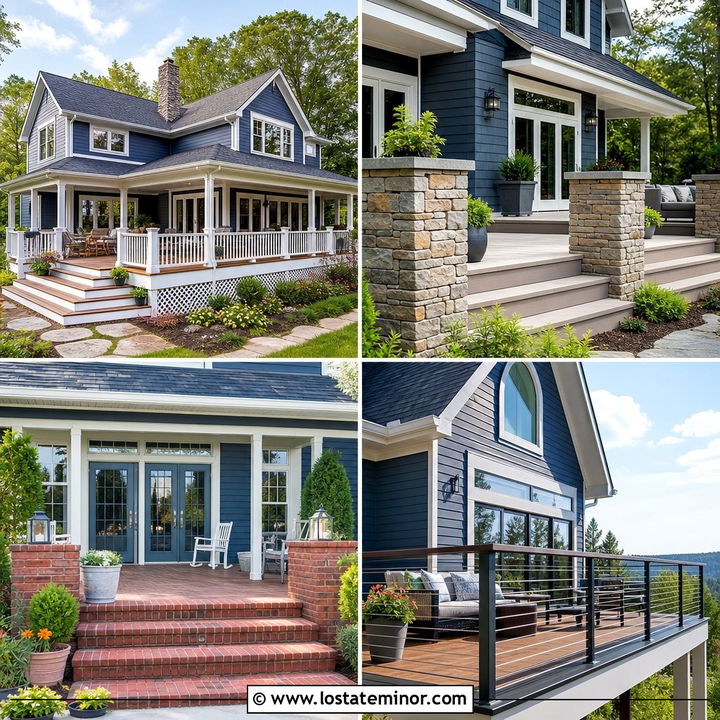
Soft, weathered colors bring out the relaxed character of a Cape Cod exterior. Paint the shingle siding Sherwin-Williams Alpaca, a warm light greige, and use a coastal gray deck finish with subtle brown undertones. Creamy white trim around the dormers, windows, and porch posts keeps the facade bright. Add muted navy shutters and a matching front door for controlled coastal color. White railing frames with dark metal balusters give the deck a lighter appearance while preserving definition. A gray shingle roof ties the cooler accents together. Surround the house with hydrangeas, ornamental grasses, pea gravel, and a flagstone walkway. The complete scheme looks breezy and casual without relying on bright blue or stark white siding.
11. Greige Contemporary House With Floating Deck
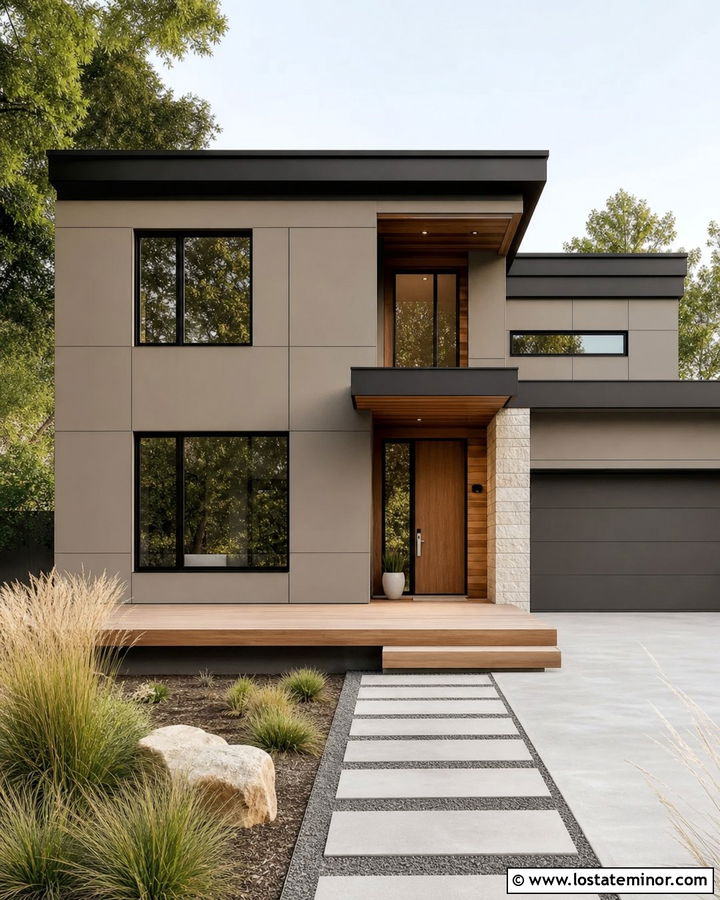
Clean lines and limited colors make a contemporary greige house feel calm rather than cold. Apply Benjamin Moore Thunder, a medium greige, to smooth fiber-cement panels or narrow horizontal siding. Add a low floating deck in natural white oak or pale teak, allowing the warm wood to stand out against the muted walls. Black window frames, fascia, and a flat charcoal roof provide crisp structure. A frameless or cable railing preserves the minimal appearance where safety requires a barrier. Repeat the deck material around the front entry or garage to create visual continuity. Large concrete stepping stones, architectural grasses, and restrained foundation planting complement the geometry. The final look is modern, warm, and closely connected to the landscape.
12. Greige Cottage House With Sage Deck Accents
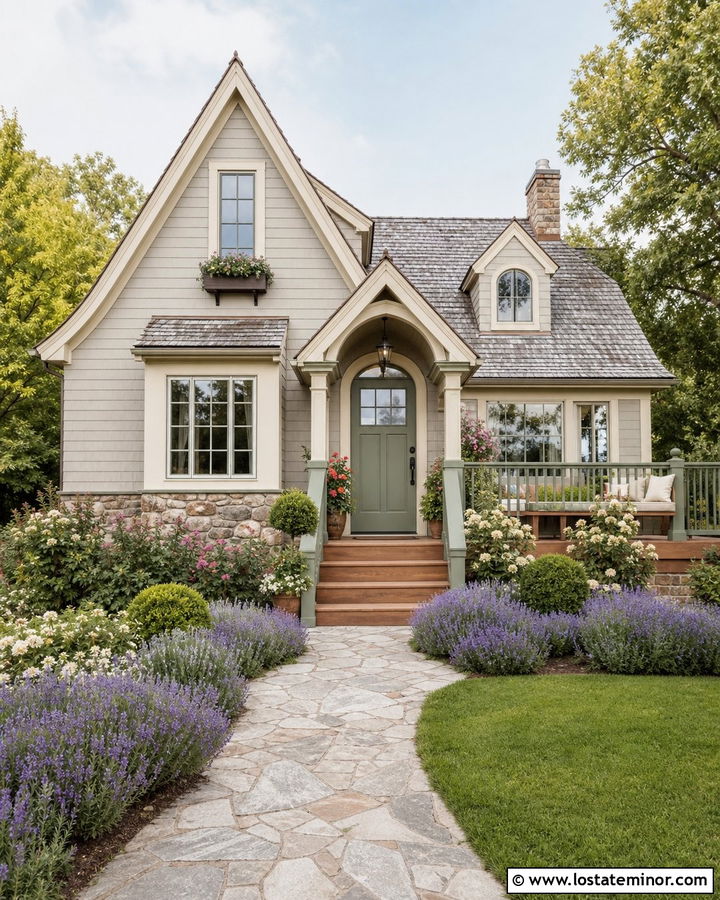
Greige and muted sage create a soft, garden-friendly exterior that suits a cottage without becoming overly decorative. Use Benjamin Moore Classic Gray as the light greige body color and warm ivory for the window trim, eaves, and porch posts. Finish the deck boards in natural cedar, then paint the railing or built-in bench a subdued sage green. Repeat the green on the front door or shutters to make the accent feel purposeful. A weathered gray roof and pale fieldstone foundation support the gentle palette. Keep the deck modest in scale, with wide steps leading directly into a layered front garden. Lavender, boxwood, flowering shrubs, and a curved stone path will frame the house and reinforce its informal cottage appeal.
13. Greige Tudor House With Espresso Deck
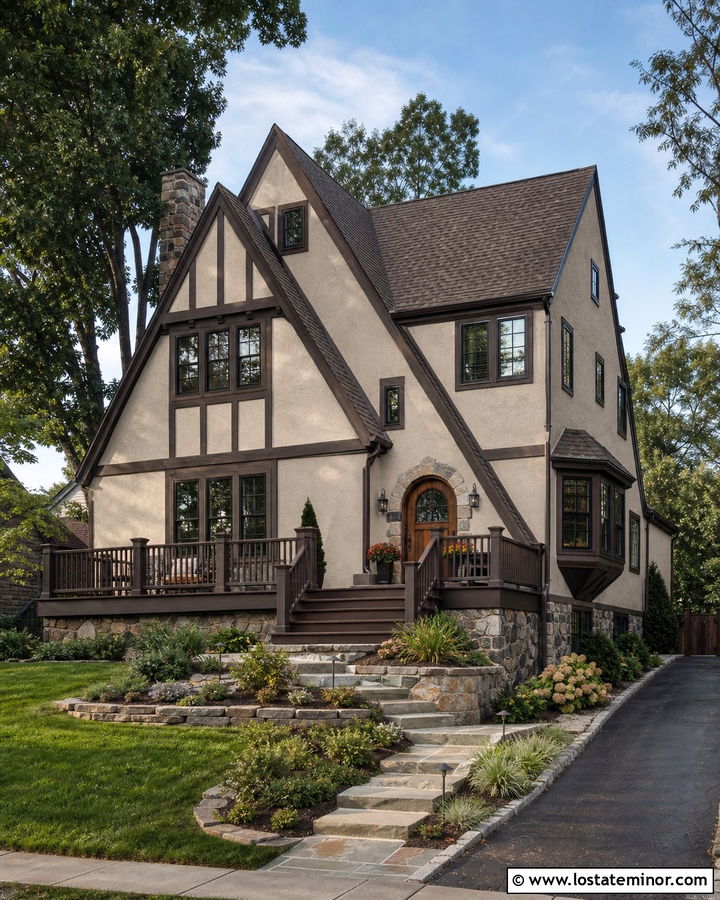
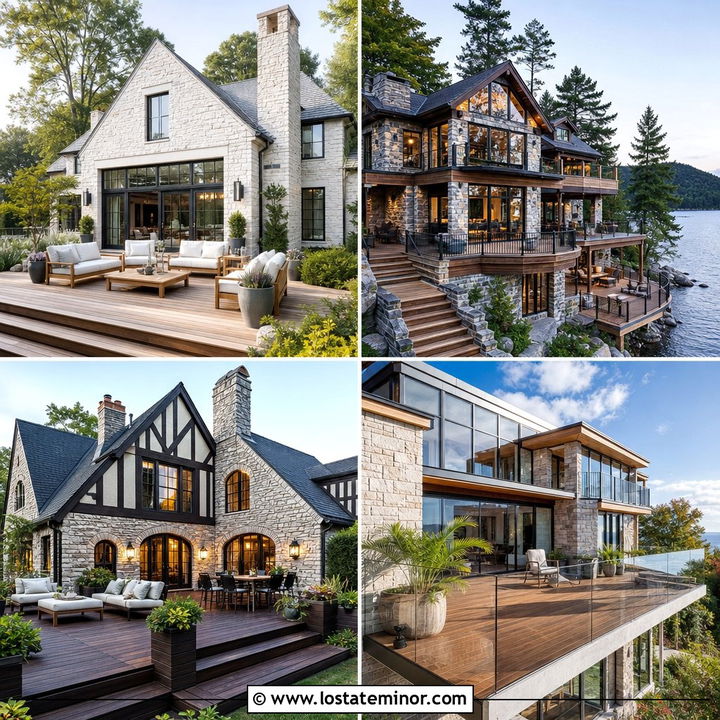
A Tudor exterior needs enough contrast to define its characteristic beams, steep gables, and substantial masonry. Paint the stucco sections Sherwin-Williams Accessible Beige, a warm greige, and finish the half-timber details in deep espresso brown. Carry that espresso tone onto the deck boards or fascia, creating a strong connection between old and new elements. Use warm cream around the windows and a dark stained arched front door. A brown-gray roof and irregular stone foundation keep the palette rich but natural. The deck should include sturdy posts and simple railings rather than sleek contemporary details. Terraced planting beds and a flagstone path help the structure settle into the landscape while maintaining the Tudor home’s distinctive character.
14. Greige Brick House With Cedar Platform Deck
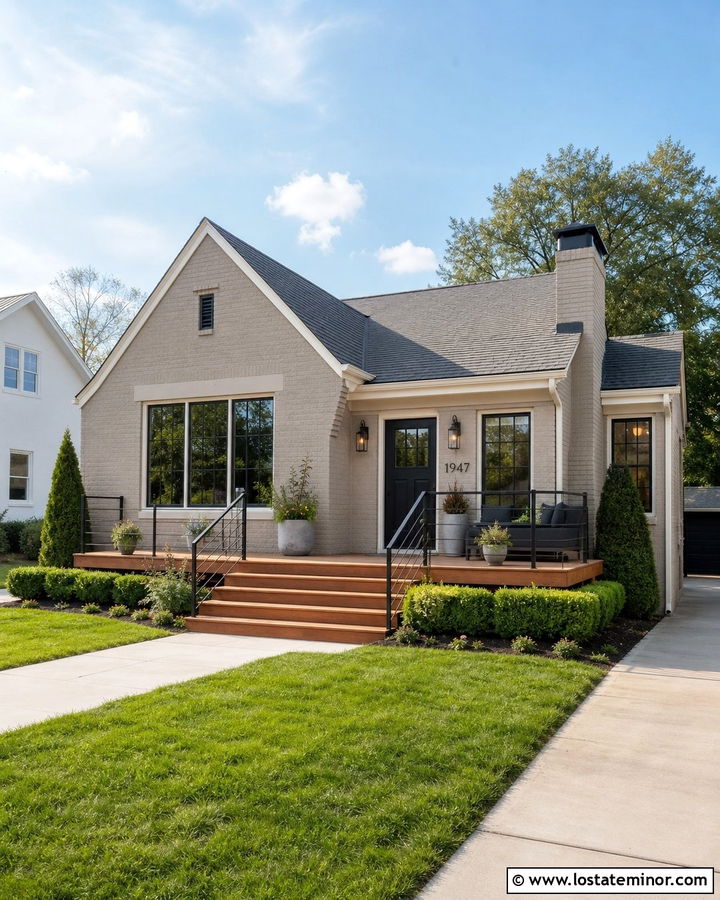
Painted brick gains warmth and dimension when it is paired with a low cedar platform deck. Choose Sherwin-Williams Perfect Greige for the brick and use a slightly lighter warm white on the fascia, soffits, and window trim. A clear cedar finish gives the deck a natural golden-brown tone that contrasts with the solid masonry. Paint the front door deep charcoal and repeat that color on slim metal railings or exterior lights. Keep the platform close to ground level with broad steps facing the yard. This design reduces visual bulk and lets the brick remain the dominant architectural material. Large planters, clipped hedges, and a straight concrete walkway can add structure while allowing the cedar grain to soften the painted exterior.
15. Greige Stucco House With Desert Tan Deck
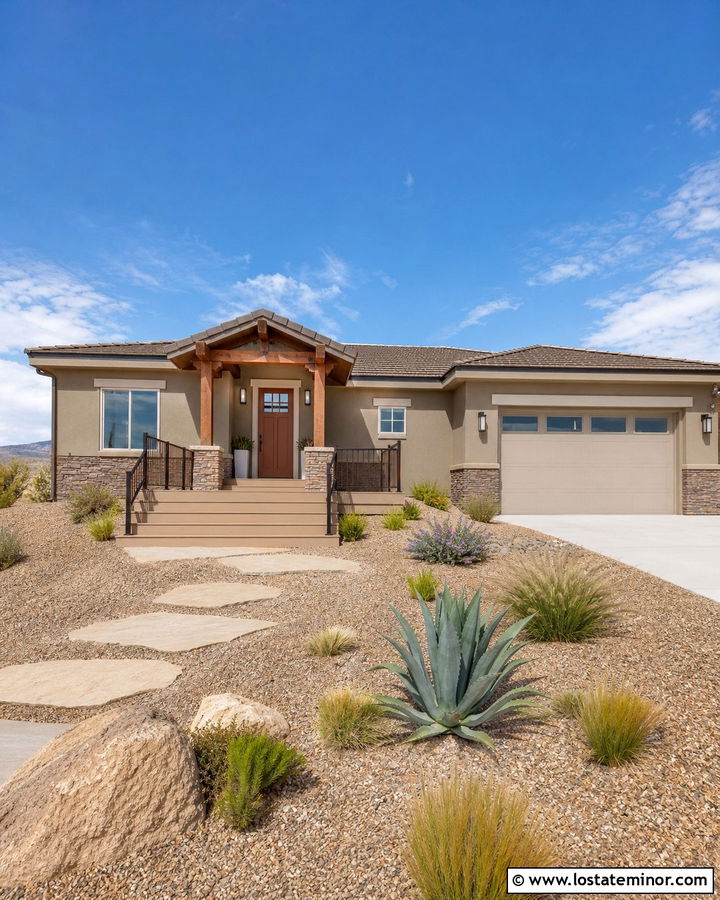
Warm sunlight can bring out beige undertones in greige, making a desert-inspired palette especially effective on stucco. Use Sherwin-Williams Shiitake, a warm mushroom greige, across the main walls. Pair it with desert tan composite decking and creamy off-white trim. Dark bronze railings, window frames, and lighting fixtures add contrast while fitting the earthy scheme. A terracotta or muted clay front door can provide a controlled touch of color. Choose a low-slope brown-gray roof and incorporate ledgestone around the entry or foundation. The deck may extend beneath a simple wood pergola for shade. Gravel beds, sculptural grasses, agave, and large stepping stones finish the landscape without competing with the house’s restrained materials.
16. Greige Lake House With Cable Railing Deck
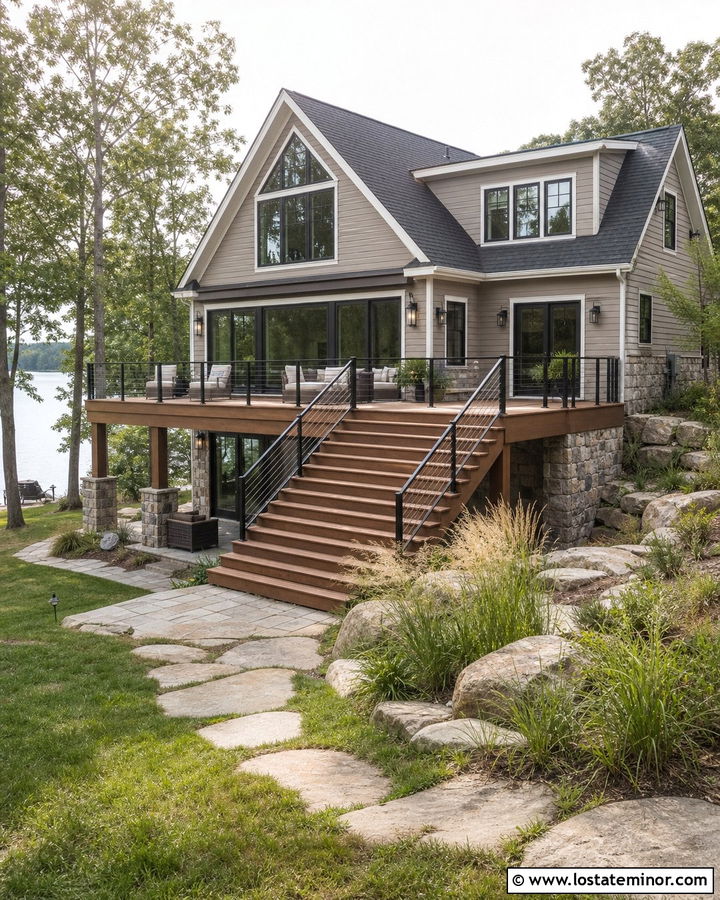
A lake house deck should preserve the view while still looking connected to the facade. Paint the exterior Benjamin Moore Copley Gray, a medium warm greige, and use natural teak-brown deck boards. Choose black cable railings that visually recede against the scenery and coordinate with black-framed windows. Soft white trim around the roofline keeps the house from appearing too dark, while a charcoal roof provides a practical visual cap. Add gray-tan stone around the walkout level to ground the elevated deck. Wide stairs can connect the upper entertaining space with the lawn and waterfront path. Native grasses, boulders, and restrained shrubs support the natural setting. Together, the greige, wood, stone, and metal create a relaxed, durable-looking exterior.
17. Greige Mountain House With Rustic Wood Deck
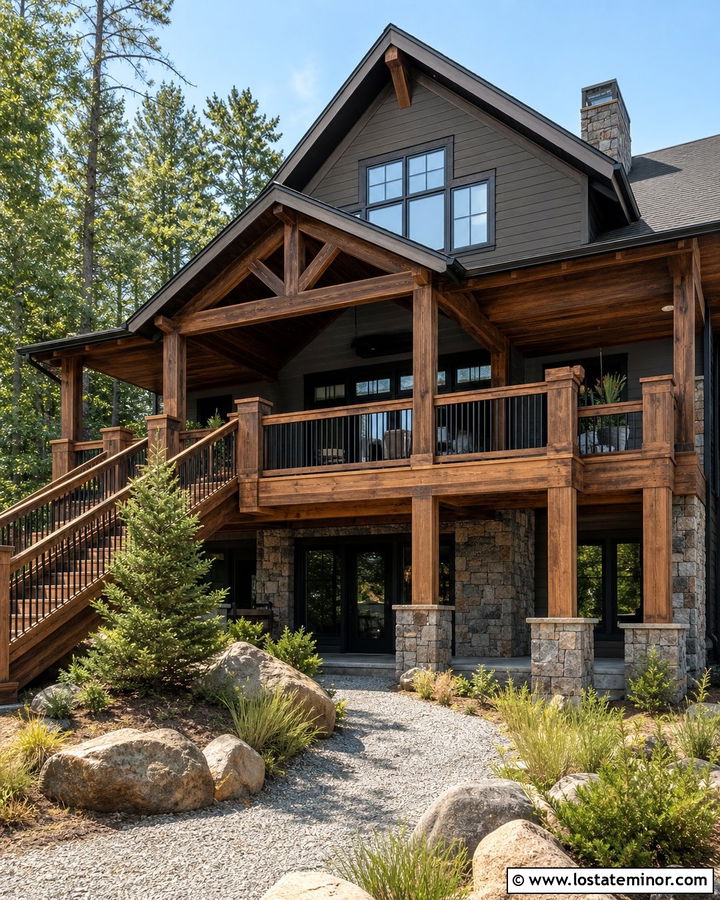
Rugged materials give a greige mountain home depth without requiring a complicated color palette. Cover the siding in Benjamin Moore Rockport Gray, a deeper greige with an earthy appearance. Use a rustic medium-brown wood stain on the deck, exposed beams, and substantial railing posts. Black balusters, window frames, and roof details prevent the timber elements from looking too traditional. A mix of gray and brown stone around the foundation connects all the neutral tones. Consider a covered deck with a strong gable that mirrors the main roofline. The structure should feel integrated rather than attached. Evergreen shrubs, native grasses, rock-lined beds, and a gravel path complete the setting while keeping the facade visible from a wide curbside angle.
18. Greige Prairie House With Horizontal Deck
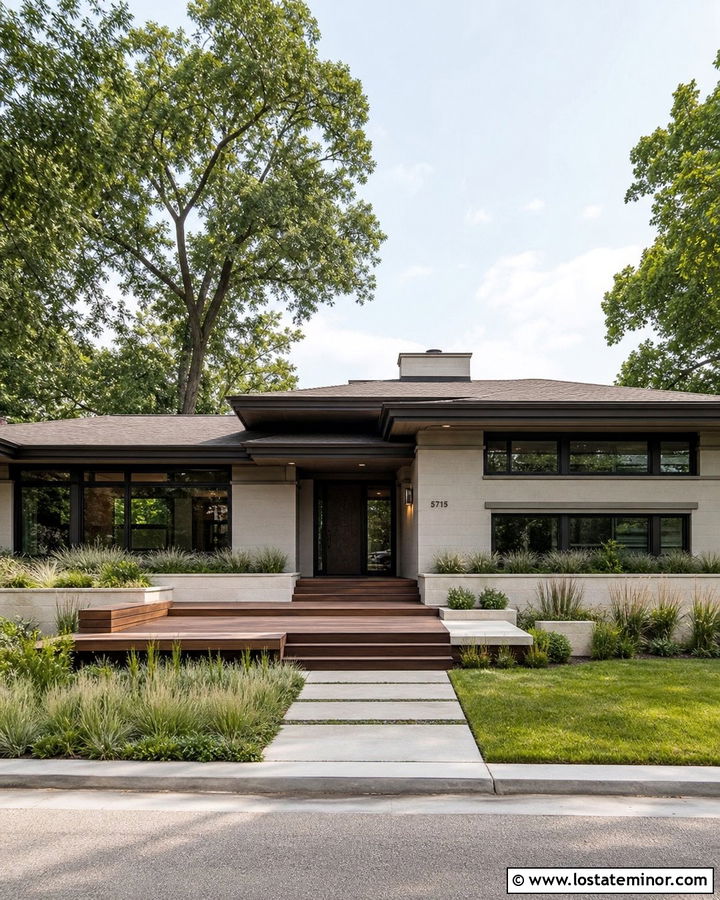
The strong horizontal lines of a prairie house pair naturally with a long, low deck. Paint the stucco or lap siding Sherwin-Williams Amazing Gray, a grounded medium greige. Select medium walnut deck boards arranged parallel to the facade to emphasize width. Deep bronze trim, broad roof overhangs, and dark-framed windows reinforce the architectural lines. Use limestone planters or foundation accents to introduce a lighter natural texture. Instead of tall railings, keep the deck close to grade and define its perimeter with built-in benches. A warm wood front door can repeat the decking without creating another color. Low ornamental grasses, structured shrubs, and broad concrete pavers maintain the home’s calm geometry and allow the greige exterior to remain the central backdrop.
19. Greige Victorian House With Painted Deck
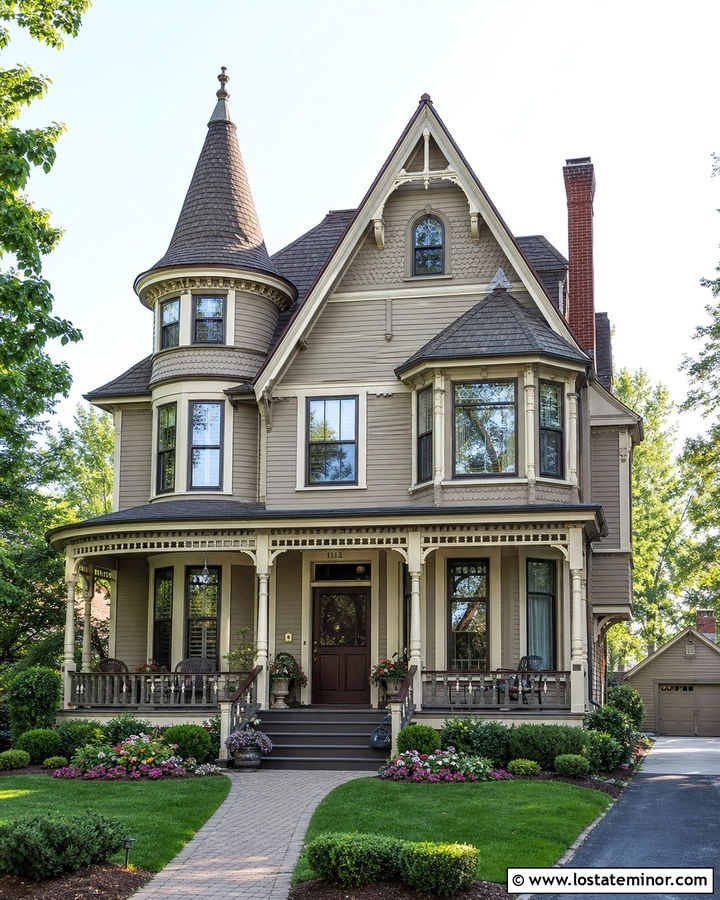
An ornate Victorian house can wear greige beautifully when the trim and deck provide enough contrast. Choose Benjamin Moore Stone Hearth for the main clapboard siding, then apply warm cream to the brackets, window surrounds, porch columns, and decorative gable work. Paint the deck floor a medium smoky gray and use dark brown on the rail cap and front door. This controlled three-color approach defines the architecture without turning every detail into a competing accent. A patterned shingle roof in muted gray-brown tones supports the historic character. Keep the porch furniture and planters simple so the facade remains readable. Curved flower beds and a straight front path can balance the decorative house with an orderly, welcoming landscape.
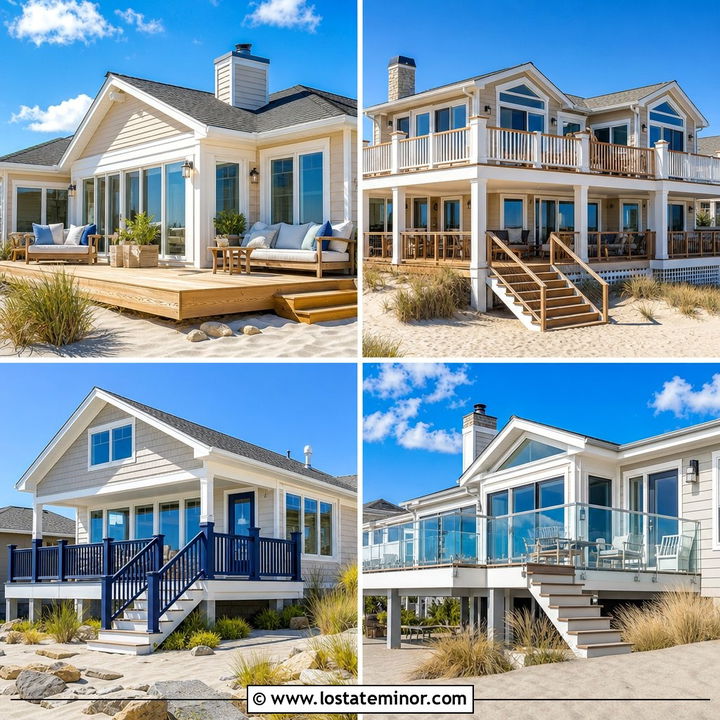
20. Greige Midcentury House With Redwood Deck
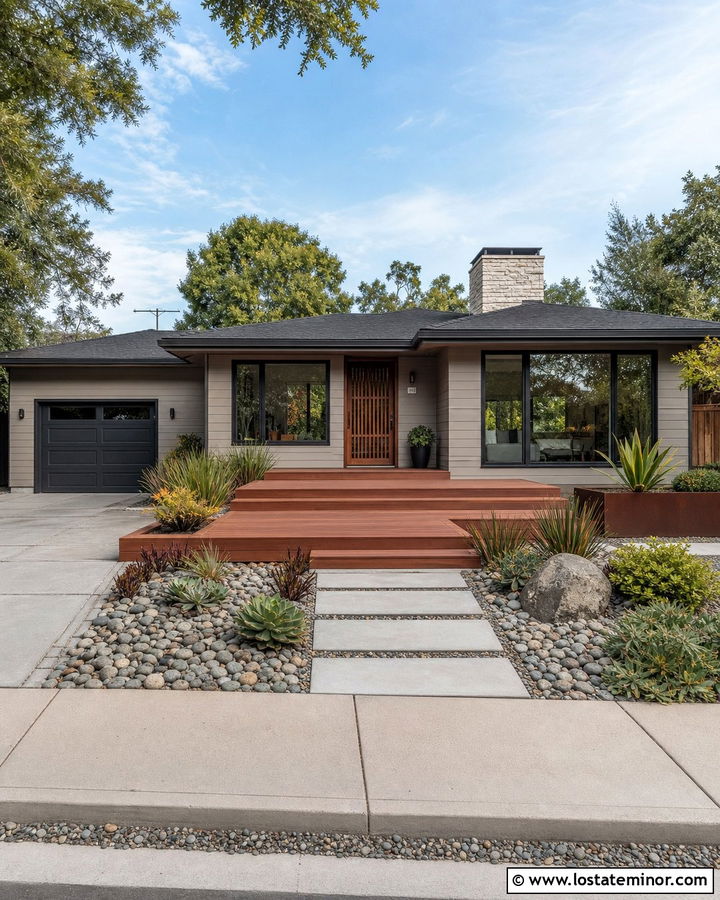
Warm redwood can energize a greige midcentury exterior while respecting its natural material palette. Paint the main siding Sherwin-Williams Colonnade Gray, a balanced greige, and use a transparent redwood stain on the deck and entry screen. Charcoal fascia, black windows, and a low dark roof create the clean contrast associated with midcentury architecture. Add cream or pale stone around the chimney and foundation to keep the exterior from feeling too dark. The deck should have broad horizontal steps and a simple railing, or no railing when it sits close to grade. Large windows facing the deck strengthen indoor-outdoor flow. Finish with sculptural shrubs, ornamental grasses, river rock, and rectangular concrete pavers arranged in an uncomplicated geometric pattern.
21. Greige A-Frame House With Elevated Deck
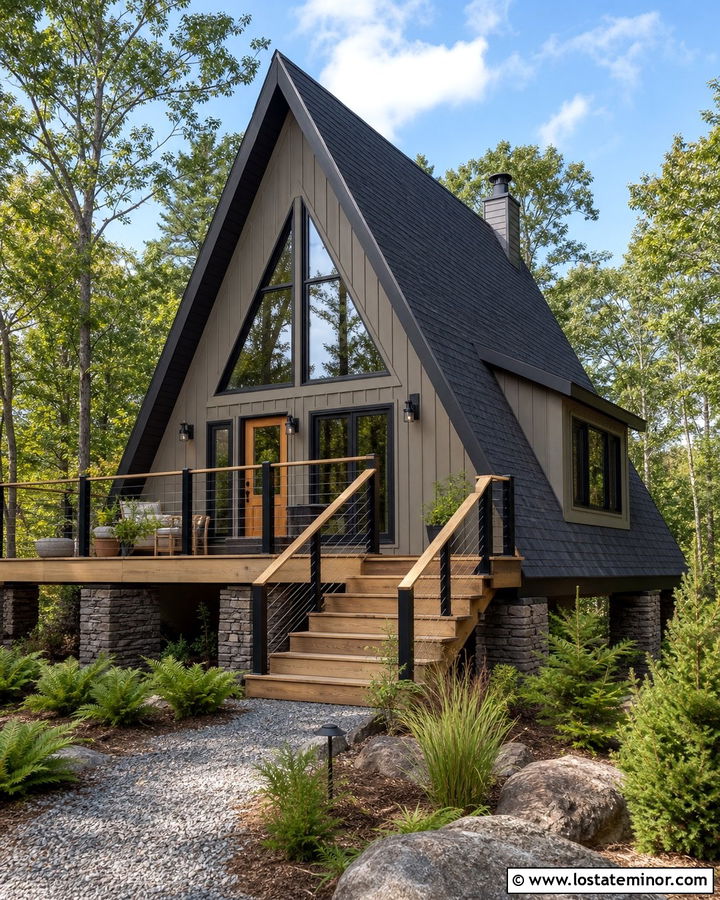
An elevated deck can make the dramatic front windows of an A-frame house even more prominent. Use Sherwin-Williams Mega Greige on the siding surrounding the glass, then apply deep charcoal to the roof, fascia, and structural framing. Light natural oak deck boards brighten the lower portion of the exterior and prevent the tall facade from looking top-heavy. Choose black cable railings to protect the view through the triangular windows. A warm wood front door can match the deck and create a clear entry point. Gray-brown stone piers support the structure visually and physically. Naturalistic planting with ferns, grasses, and evergreen shrubs helps the home blend into a wooded lot while preserving a clean, modern curb-appeal presentation.
22. Greige Townhouse With Small Deck
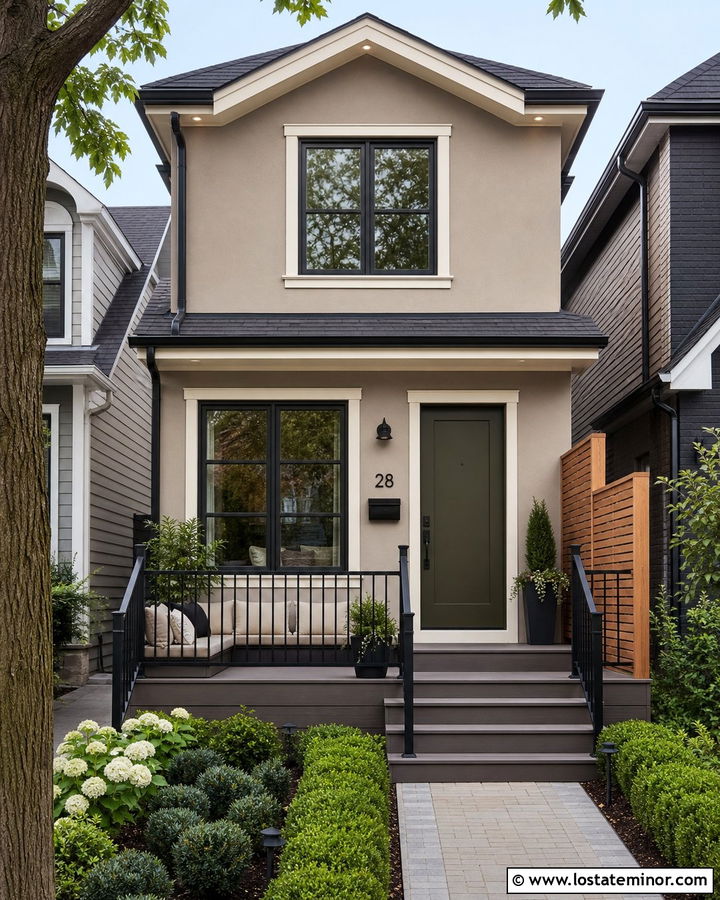
Limited outdoor space can still support a complete, polished exterior scheme. Paint a townhouse facade Benjamin Moore Pashmina, a rich warm greige, and use compact gray-brown composite boards on the deck. Creamy white trim lightens the windows and door surround, while black metal railings provide definition without consuming visual space. Choose a deep olive or black front door to anchor the narrow elevation. If neighboring units sit close by, install a cedar privacy screen that repeats the warmth of the greige body. Built-in corner seating can keep the deck functional without overcrowding it. Slender planters, a narrow paver walkway, and neatly clipped greenery make the small exterior feel intentional while maintaining clear access and an open view of the facade.
23. Greige Duplex House With Divided Deck
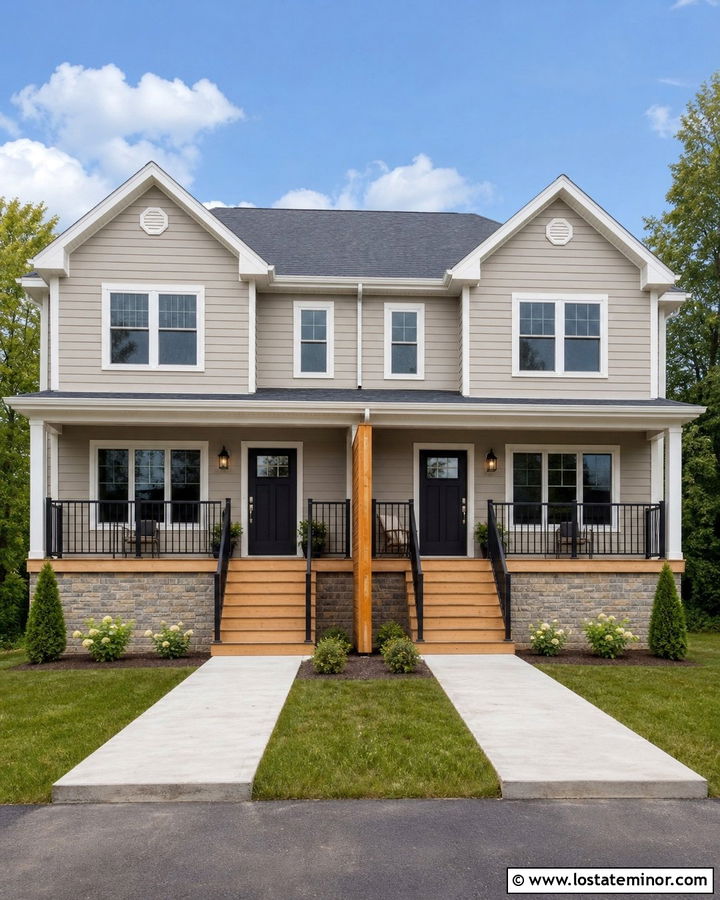
A duplex deck needs privacy, yet it should still look like one coordinated architectural feature. Use Sherwin-Williams Agreeable Gray across the full exterior and crisp warm white on the trim, columns, and shared roofline. Select weathered oak composite boards for both deck areas, then divide them with a vertical cedar privacy panel. Black railings and matching exterior lights create consistency from one side to the other. Give each entrance the same deep charcoal door color to preserve symmetry. A central run of gray-tan stone can visually support the dividing wall and connect it to the foundation. Mirrored shrubs, matching planters, and parallel walkways complete the balanced design while allowing each household to furnish its deck independently.
24. Greige Coastal House With White Deck
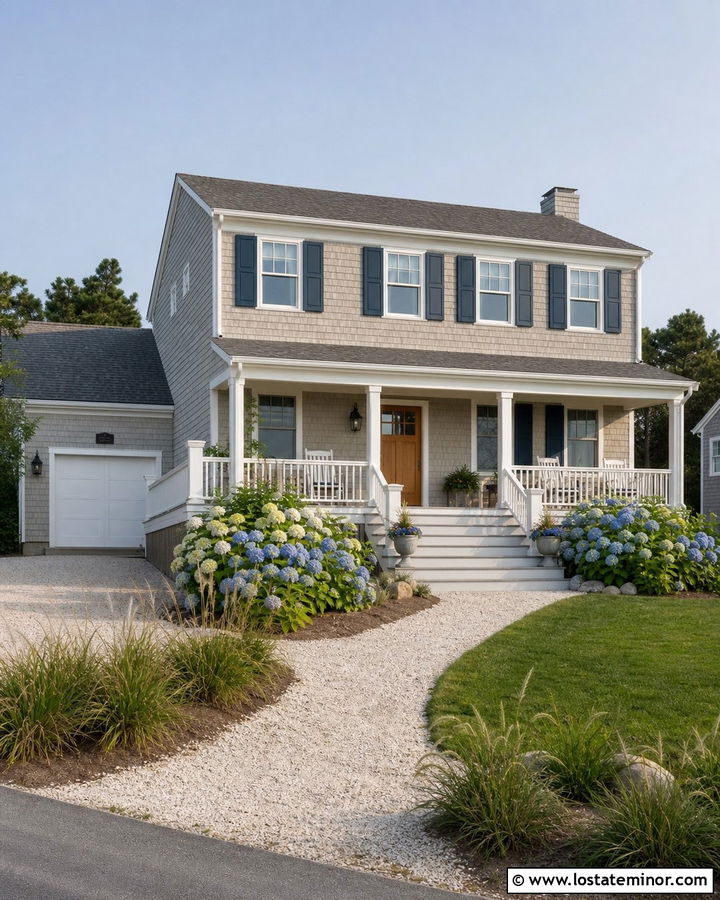
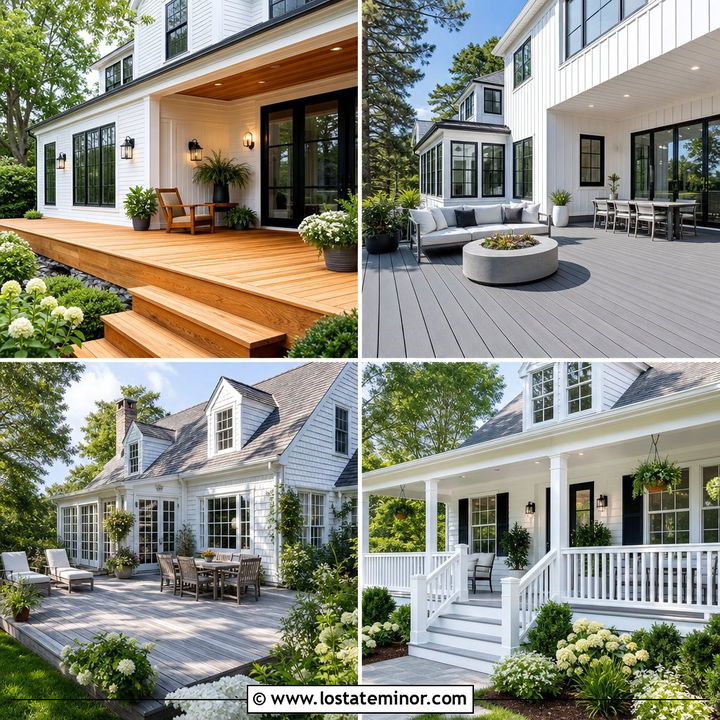
A white deck can look crisp beside greige siding when warmer materials prevent the exterior from feeling sterile. Use Benjamin Moore Edgecomb Gray for the main shingle siding and soft white for the deck railing, posts, fascia, and trim. Instead of pure white flooring, choose pale driftwood-gray boards that are easier on the overall composition. Add muted navy shutters and a natural teak front door for classic coastal contrast. A medium gray roof connects the cooler deck surface with the warm greige walls. Broad stairs and open railing spacing will keep the deck light and airy. Dune grasses, hydrangeas, crushed-shell paths, and low evergreen shrubs create an appropriate landscape while allowing the full house and deck to remain clearly visible.
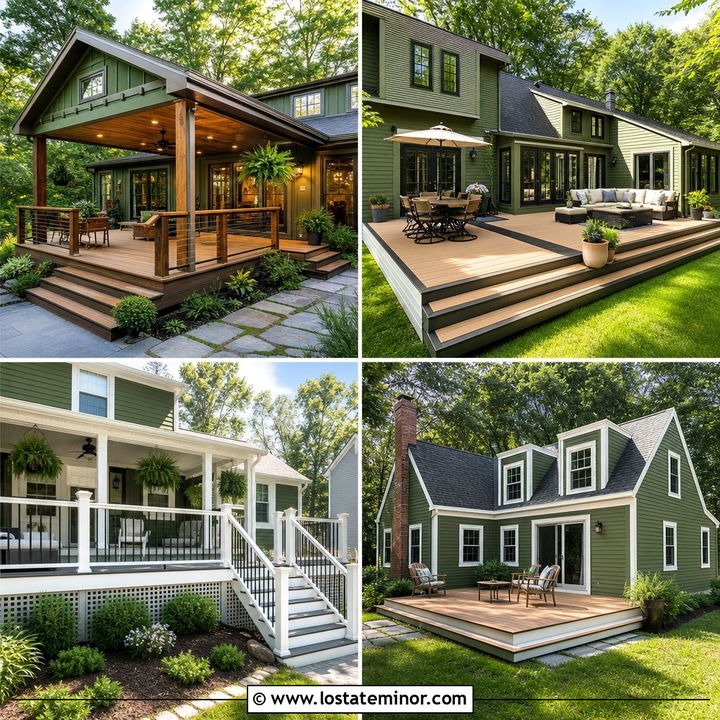
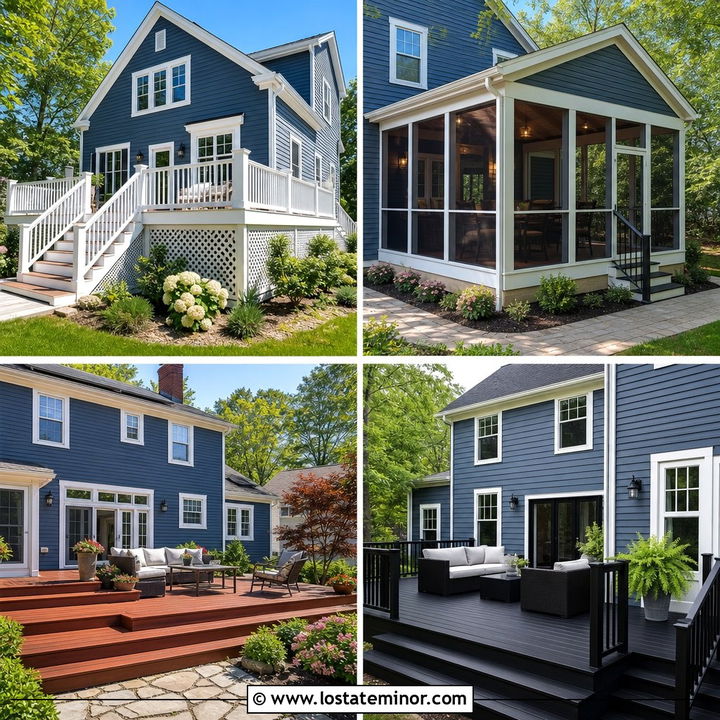
25. Greige Scandinavian House With Pale Wood Deck
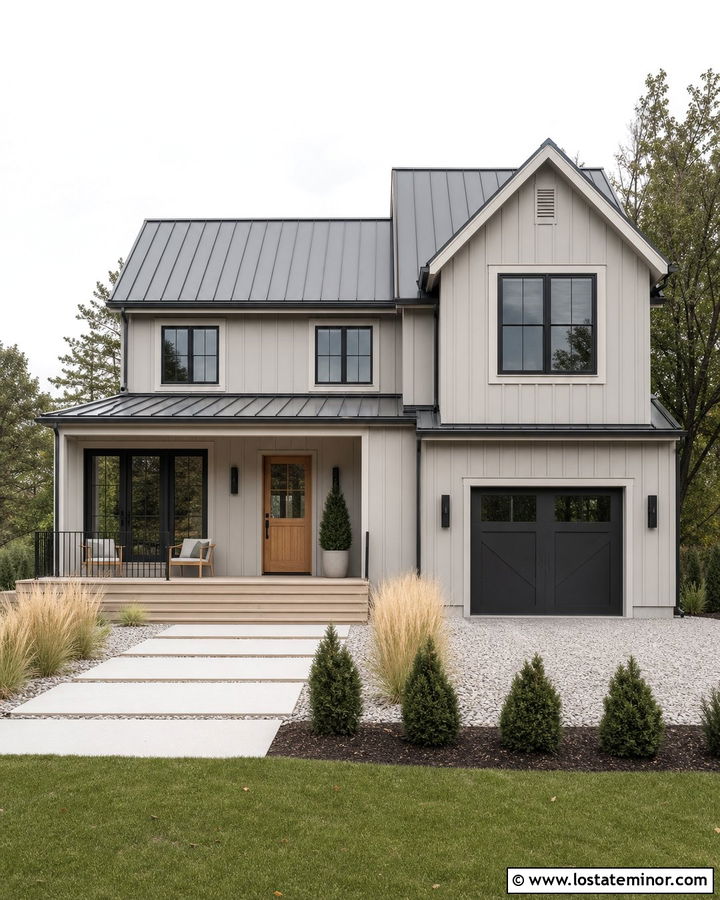
Simple forms and pale natural materials give a Scandinavian-inspired house a warm, uncluttered appearance. Paint vertical siding in Sherwin-Williams Modern Gray, a light greige, and pair it with a pale ash or white oak deck. Use off-white trim sparingly around the doors and roofline, then define the windows with matte black frames. A black or charcoal standing-seam roof brings contrast to the restrained palette. Keep the deck low, broad, and free from unnecessary decorative railing. If a barrier is needed, use slim black metal or clear glass panels. A natural oak front door repeats the deck tone. Gravel, large pavers, airy grasses, and carefully spaced evergreen shrubs finish the exterior with texture while preserving its clean architectural lines.
26. Greige Mediterranean House With Pergola Deck
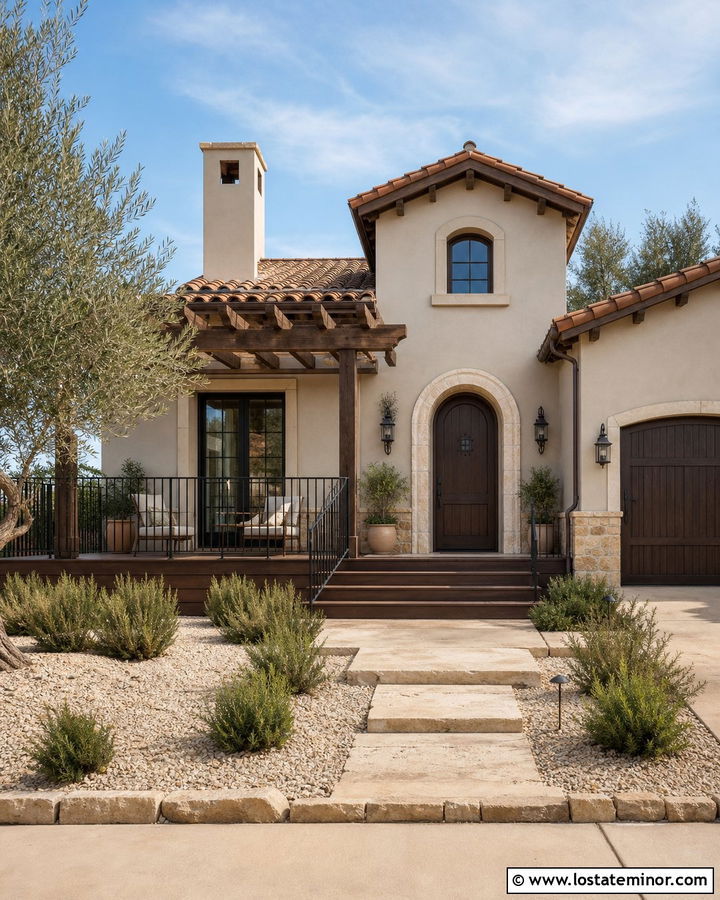
Greige can update a Mediterranean home while preserving its warm, sun-friendly character. Cover the stucco in Sherwin-Williams Accessible Beige, a light warm greige, and use dark walnut decking beneath a substantial cedar pergola. Paint the window trim creamy ivory and choose dark bronze for the railings, lights, and arched front door. A muted terracotta roof provides traditional color without overwhelming the neutral walls. Add warm limestone around the foundation or entry steps to connect the light stucco with the deeper deck. The pergola may include simple beams rather than ornate detailing. Olive trees, clipped rosemary, pale gravel, and broad stone pavers create a structured landscape that frames the complete house while reinforcing the earthy brown, greige, and cream palette.
27. Greige Cabin House With Covered Deck
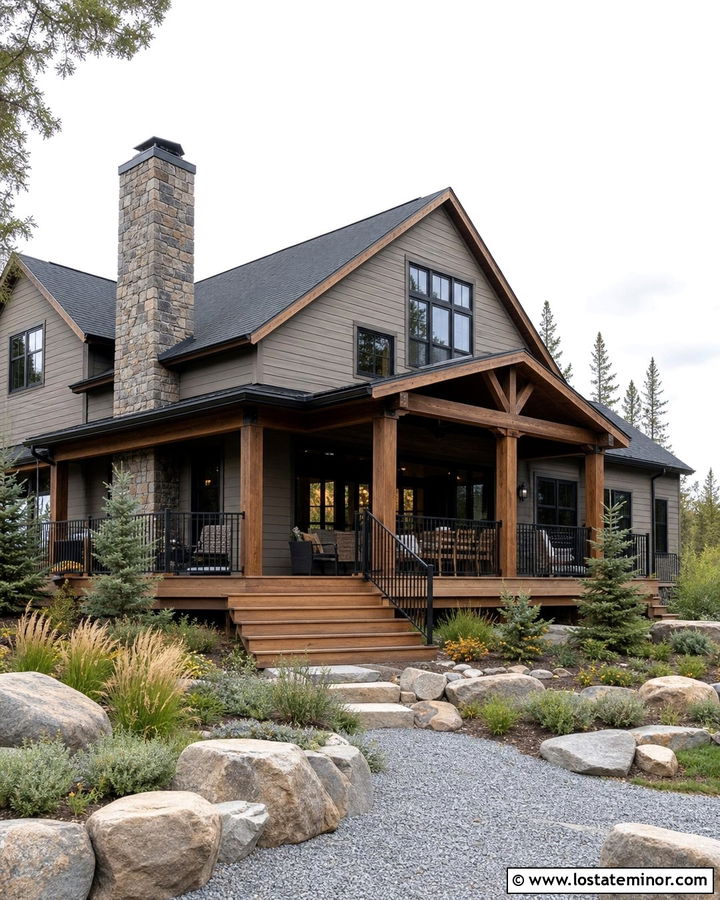
A covered deck makes a compact cabin feel more substantial and provides a clear transition between the house and landscape. Use Benjamin Moore Ashley Gray, an earthy medium greige, on horizontal wood siding. Finish the deck boards, posts, and exposed rafters in a warm chestnut stain. Black window frames, metal railings, and a charcoal roof bring definition to the rustic surfaces. Add irregular gray-brown stone around the foundation and chimney so the exterior does not rely entirely on wood. The deck roof should repeat the cabin’s main pitch and extend far enough to feel useful. Evergreen planting, natural boulders, native grasses, and a gravel walkway create a low-maintenance-looking setting that suits the strong, layered neutral palette.
28. Greige Modern House With Charcoal Deck
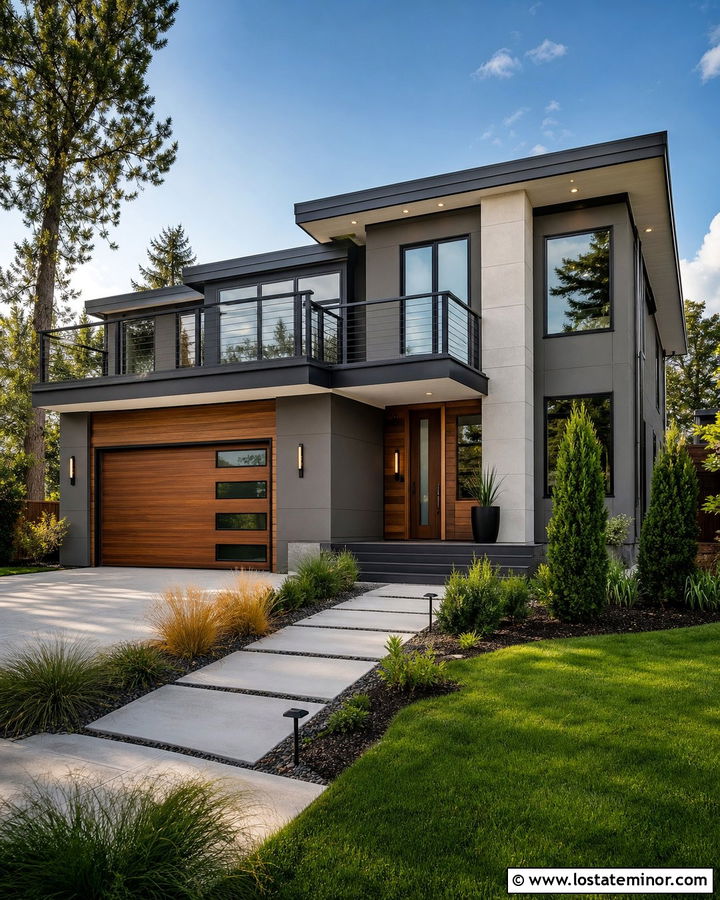
For a bold modern exterior, pair midtone greige walls with a charcoal deck that reads as an extension of the architecture. Use Sherwin-Williams Keystone Gray, a deep greige, on smooth panels or mixed vertical siding. Choose charcoal composite decking and matching fascia, then add black cable railings and black window frames. Warm white soffits keep shaded areas from appearing too dark. Introduce natural cedar on the front door, garage door, or a small privacy wall to soften the gray-heavy scheme. Pale concrete foundation panels and large-format pavers provide another lighter surface. Structured grasses and compact evergreen shrubs frame the facade without hiding it. This palette works especially well on homes with strong rectangular forms and generous glazing.
29. Greige Traditional House With Mahogany Deck
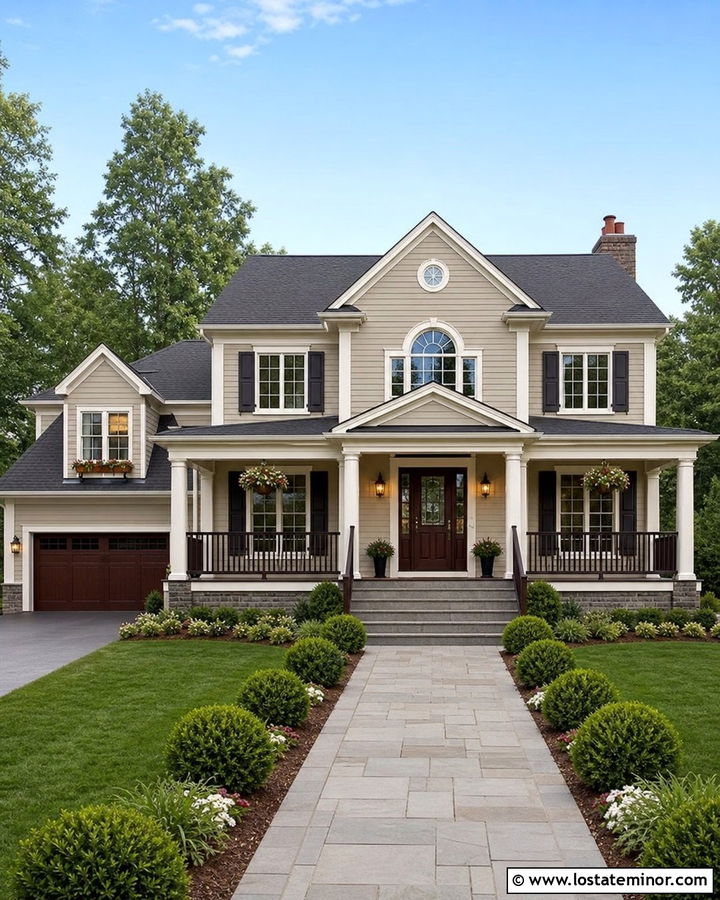
Rich mahogany gives a traditional greige home an elegant focal point without introducing a bright accent color. Paint the siding Benjamin Moore Revere Pewter and use warm white on the trim, columns, and window frames. Finish the deck in a deep mahogany stain, then repeat that tone on the front door and porch ceiling. Black or dark bronze railings provide crisp definition between the reddish-brown wood and soft greige walls. A charcoal architectural-shingle roof keeps the upper facade neutral. Brick or warm gray stone steps can bridge the deck and foundation. Symmetrical shrubs, seasonal greenery, and a straight walkway reinforce the traditional architecture. The final exterior feels established, warm, and coordinated from the roofline to the yard.
30. Greige House With Matching Greige Deck
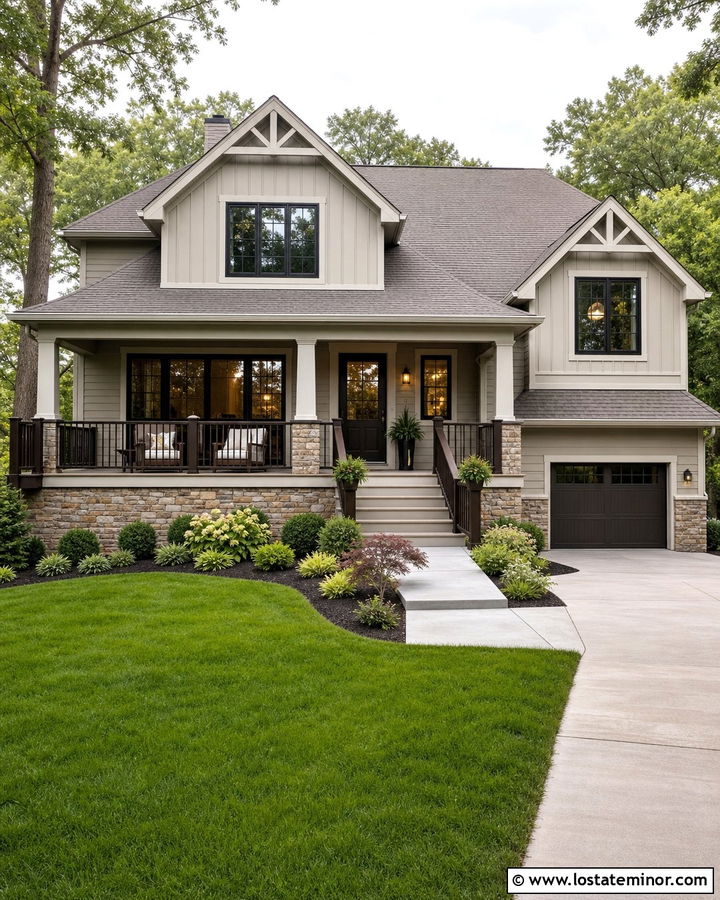
A tonal greige exterior can feel refined when each surface has a slightly different depth and texture. Paint the siding Sherwin-Williams Perfect Greige, then select composite deck boards in a lighter driftwood greige. Use creamy white for the trim and deep bronze for the windows, railings, and front door. The contrast between smooth siding, wood-grain decking, dark metal, and textured stone prevents the neutral scheme from appearing flat. Add warm taupe stone around the foundation to connect the two greige shades. This approach works on a transitional house with traditional rooflines and simplified modern details. Green lawn, layered shrubs, and a pale concrete walkway provide natural color, allowing the carefully coordinated neutral materials to remain the focus.
Conclusion:
The most successful **30 Greige House Design With Deck Ideas** treat siding and decking as parts of one exterior palette. Start with the greige undertone, then choose deck boards that either repeat its warmth or create purposeful contrast. Natural cedar, walnut, weathered gray, charcoal, and pale oak all offer distinctive results. Coordinate the trim, railings, roof, front door, masonry, and landscaping so no feature looks disconnected. Dark accents sharpen light greige, while pale wood and cream trim can balance deeper shades. Most importantly, test actual siding and decking samples outdoors before making a final decision. A carefully layered scheme will give the complete home stronger curb appeal and a more inviting outdoor living area.

Related posts: