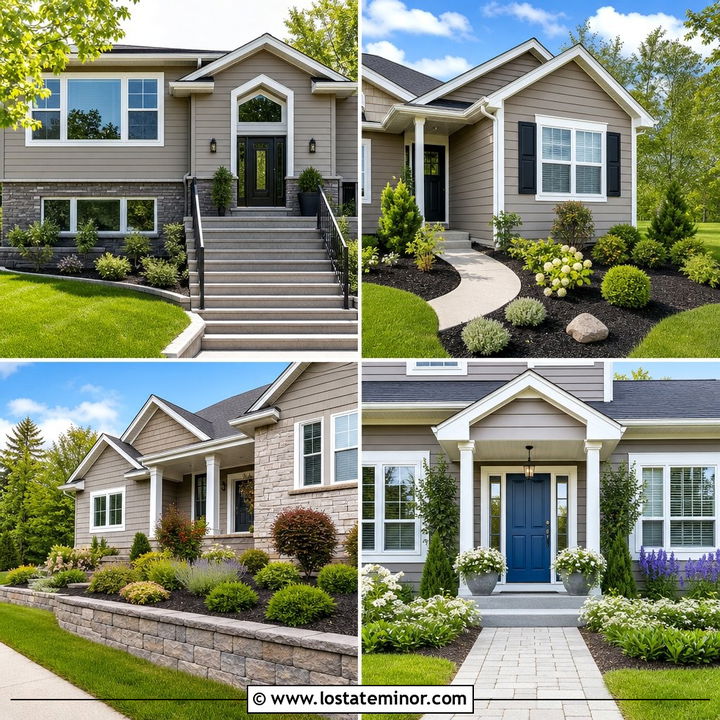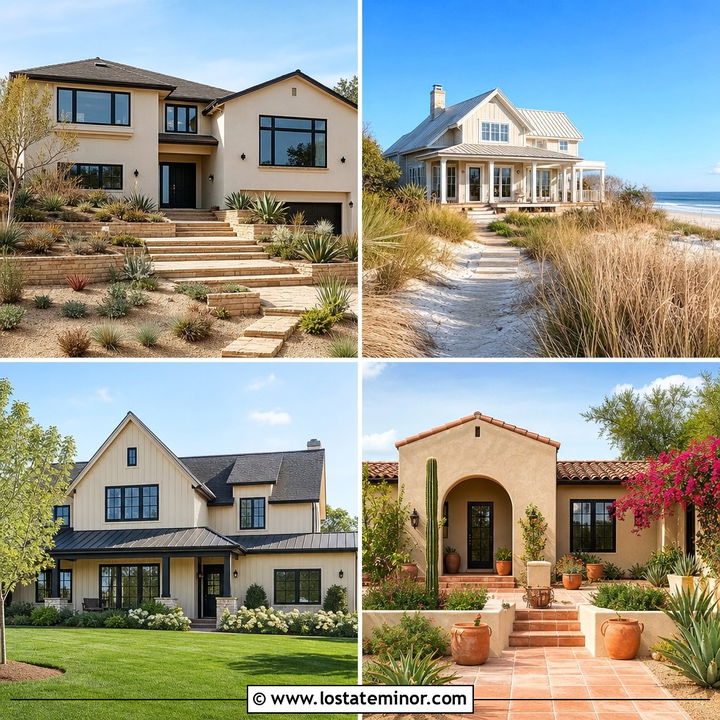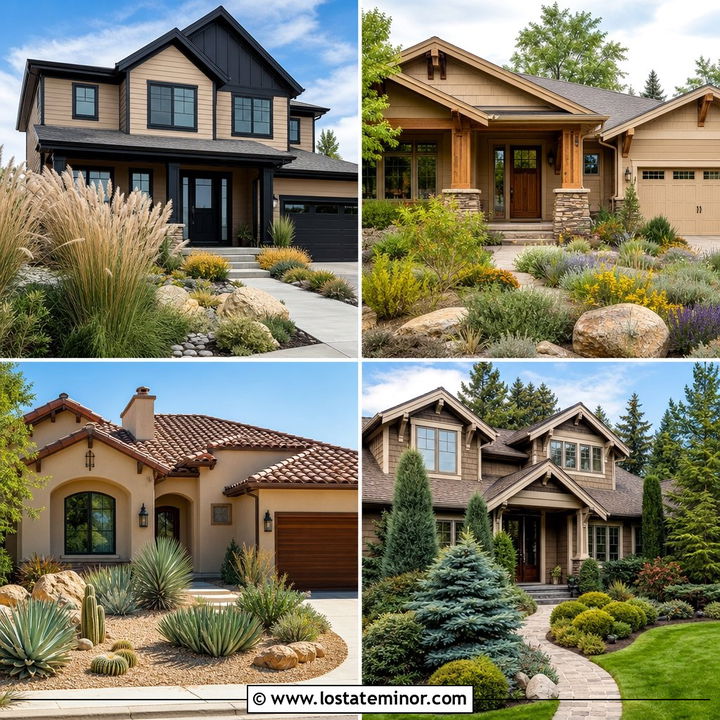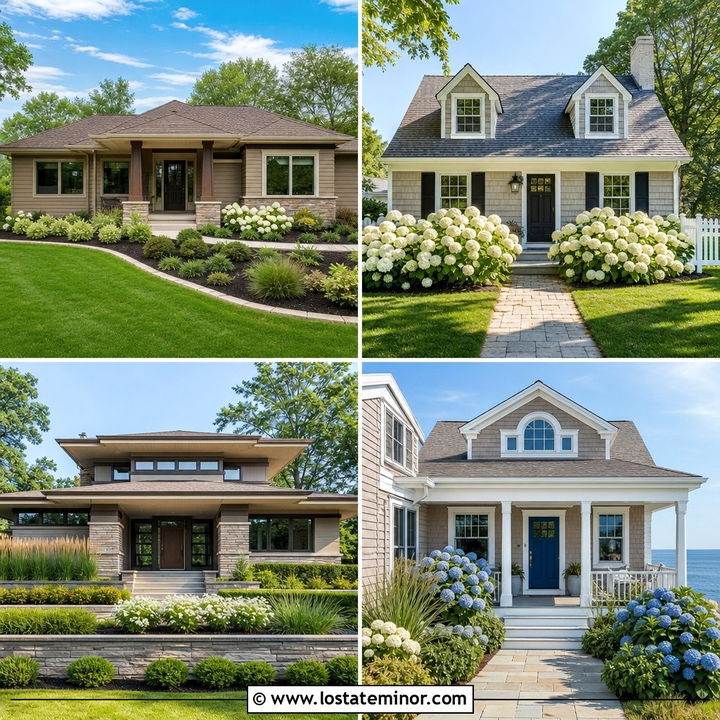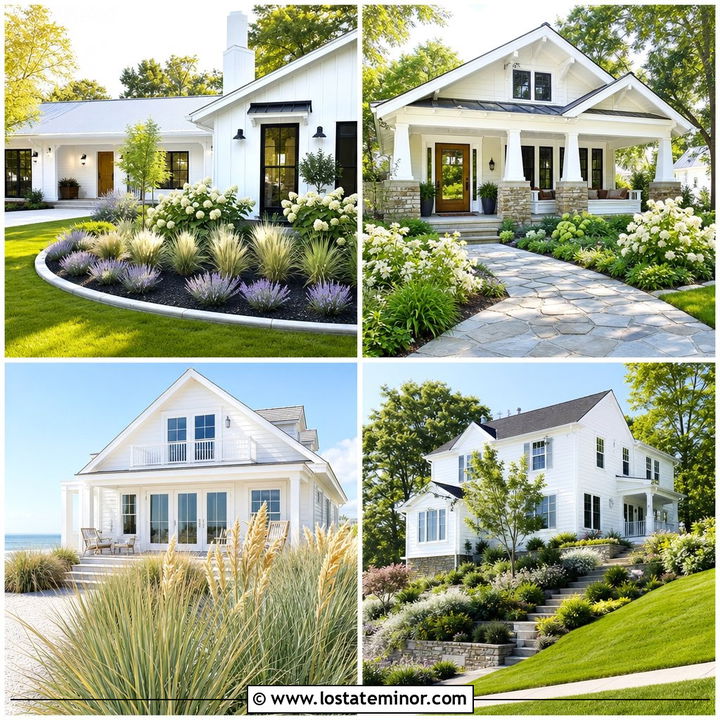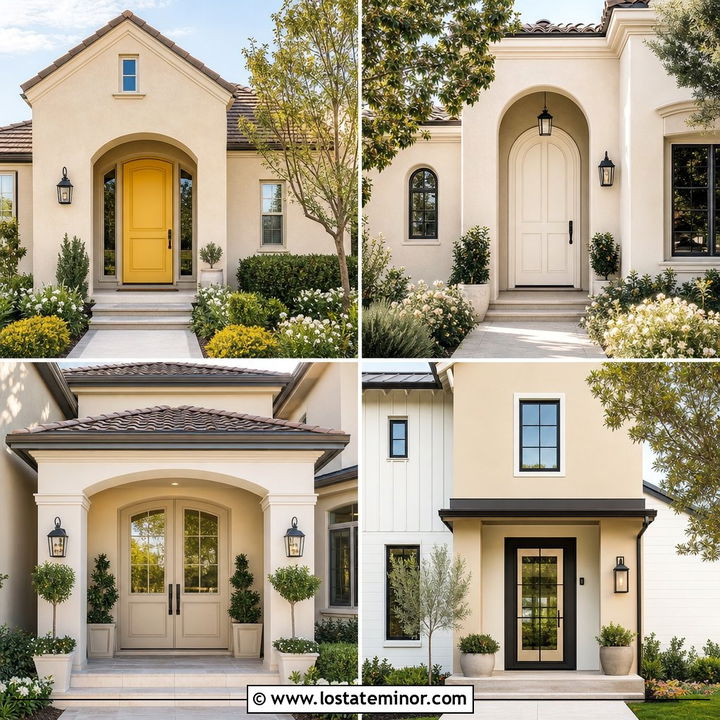
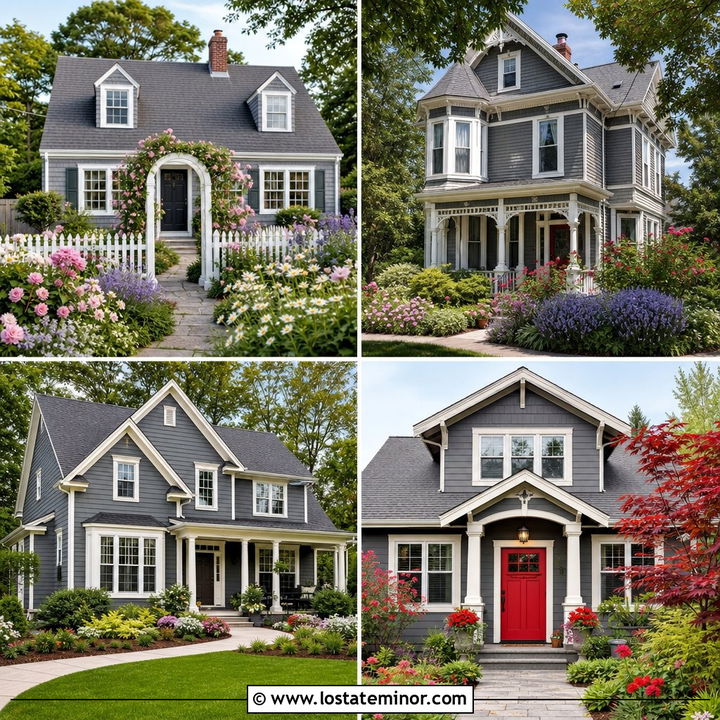
A beige exterior becomes far more interesting when the architecture, accent colors, and landscaping work as one coordinated composition. Today’s strongest beige homes move beyond flat builder palettes by combining warm neutral siding with natural wood, stone, dark metal, and landscape colors drawn from the surrounding environment. Layered planting, defined walkways, and a clearly marked entrance can also turn a simple front lawn into an inviting transition from the street to the house. () The following 30 Beige House Design With Front Yard Ideas cover ranch homes, cottages, farmhouses, modern builds, and traditional facades. Each complete look connects the beige exterior to its trim, roof, front door, hardscaping, and planting plan. Explore these practical 30 Beige House Design With Front Yard Ideas to find a combination suited to your home.
1. Beige Ranch House With Curved Flower Beds
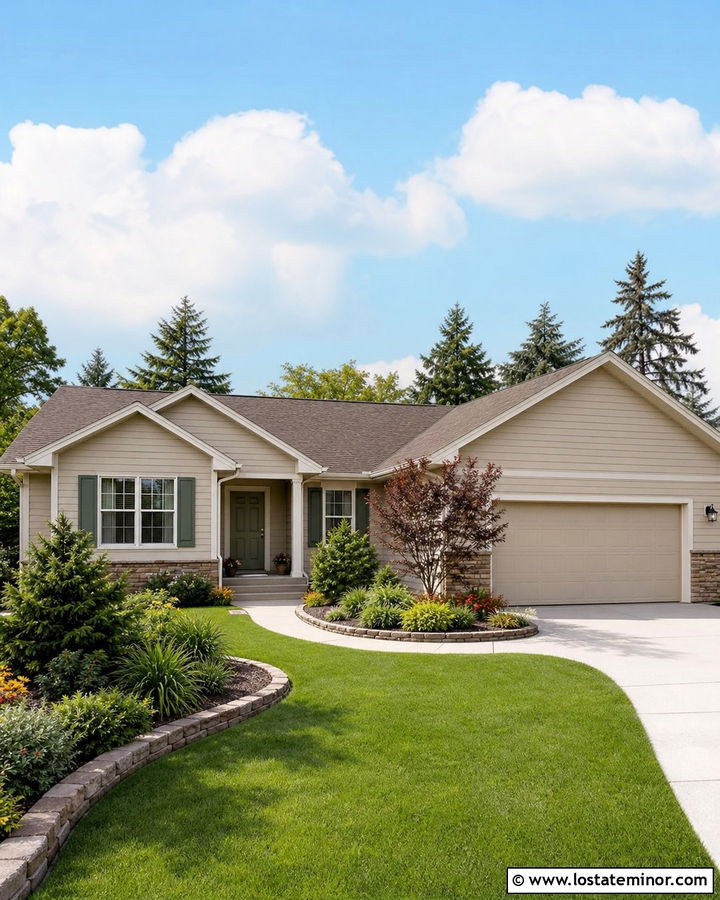
A long beige ranch can appear flat when a narrow foundation bed follows the facade in a perfectly straight line. Introduce gentle curves to soften that horizontal shape and guide attention toward the entrance. Use warm sandy beige siding with creamy white trim, a muted sage front door, and a medium-brown shingle roof. In the yard, create two broad planting beds edged with natural stone or dark metal. Layer low evergreen shrubs near the house, flowering perennials in the middle, and ground cover along the front. An ornamental tree positioned near one end helps balance the garage or longest roof section. Keep some open lawn between the beds and sidewalk so the composition remains clean, spacious, and easy to maintain.
2. Beige Craftsman House With Native Garden
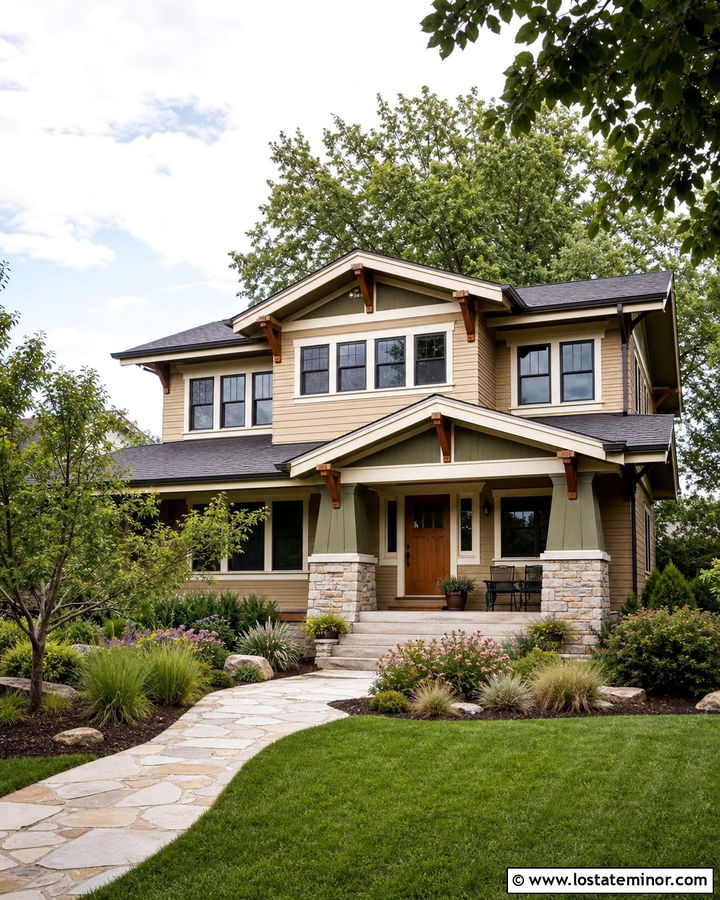
Could your Craftsman home feel more connected to its setting? Start with warm beige lap siding, off-white trim, olive green accents, and a stained oak front door. Stone porch columns and exposed wood brackets add texture without overwhelming the quiet exterior color. Replace rigid rows of shrubs with drifts of native grasses, flowering perennials, and compact shrubs suited to local growing conditions. Their varied forms create movement while reinforcing the Craftsman connection to natural materials. A wide flagstone walkway should approach the porch with a slight curve, passing through the layered garden. Repeat the stone from the columns along the bed edges. This repetition ties the house and yard together, while seasonal flowers keep the neutral facade from looking plain.
3. Beige Colonial House With Boxwood Walkway
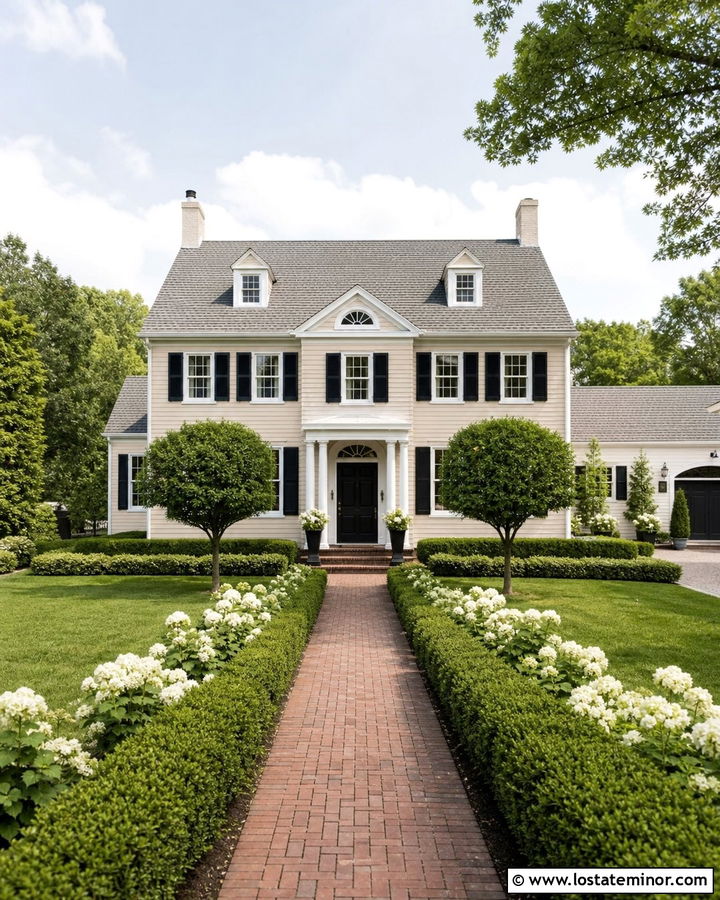
Symmetry brings instant order to a beige Colonial exterior. Choose classic light beige siding, bright white trim, black shutters, and a glossy black front door to emphasize the balanced window arrangement. A straight brick walkway can run from the sidewalk to the central entrance, creating a strong visual axis. Border it with low clipped boxwoods or another compact evergreen that stays beneath the windows. Matching ornamental trees placed on each side of the house provide height without hiding the architecture. Add restrained white flowering plants near the porch and use identical planters beside the door. The result is polished but not overly formal. Keep the lawn edges crisp, repeat black in the porch lights, and allow the orderly landscaping to highlight the home’s traditional proportions.
4. Beige Modern Farmhouse With Gravel Garden
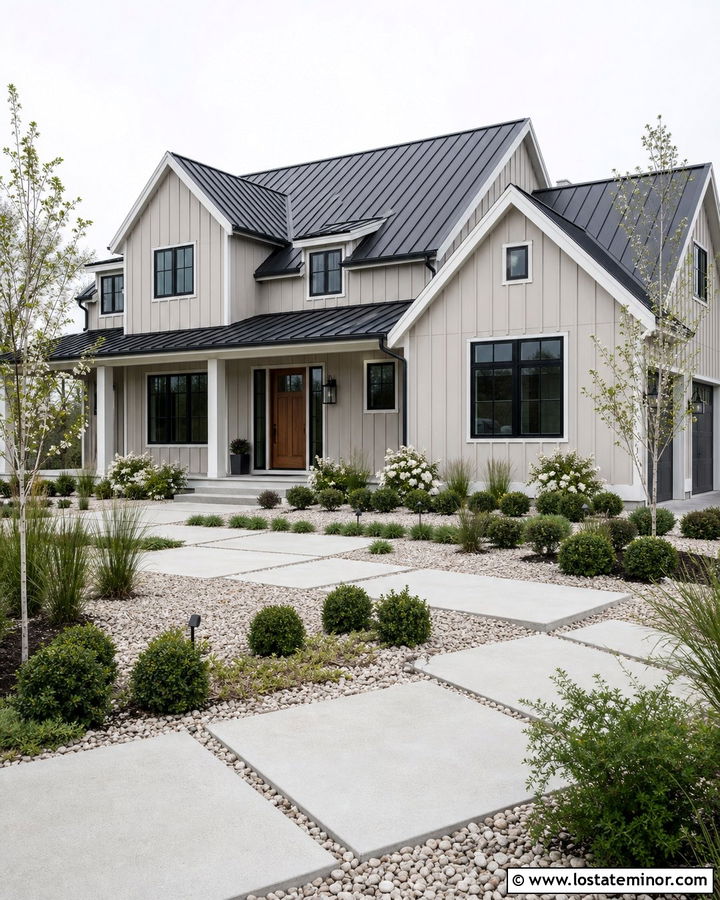
A modern farmhouse does not need an expansive green lawn to feel welcoming. Cover the facade in soft greige-beige board-and-batten siding, then add warm white trim, a charcoal metal roof, black windows, and a natural cedar front door. In the front yard, combine pale gravel with wide concrete stepping pads leading to the porch. Plant ornamental grasses, compact evergreen shrubs, and small flowering trees in simple groups rather than scattered patterns. Large weathered steel or matte black planters can repeat the darker architectural accents. Preserve one controlled section of lawn if space allows, but let the gravel garden provide the primary structure. The mix of beige siding, dark metal, blond wood, and airy planting creates a farmhouse exterior that feels fresh, uncluttered, and approachable.
5. Beige Bungalow With Cottage Front Garden
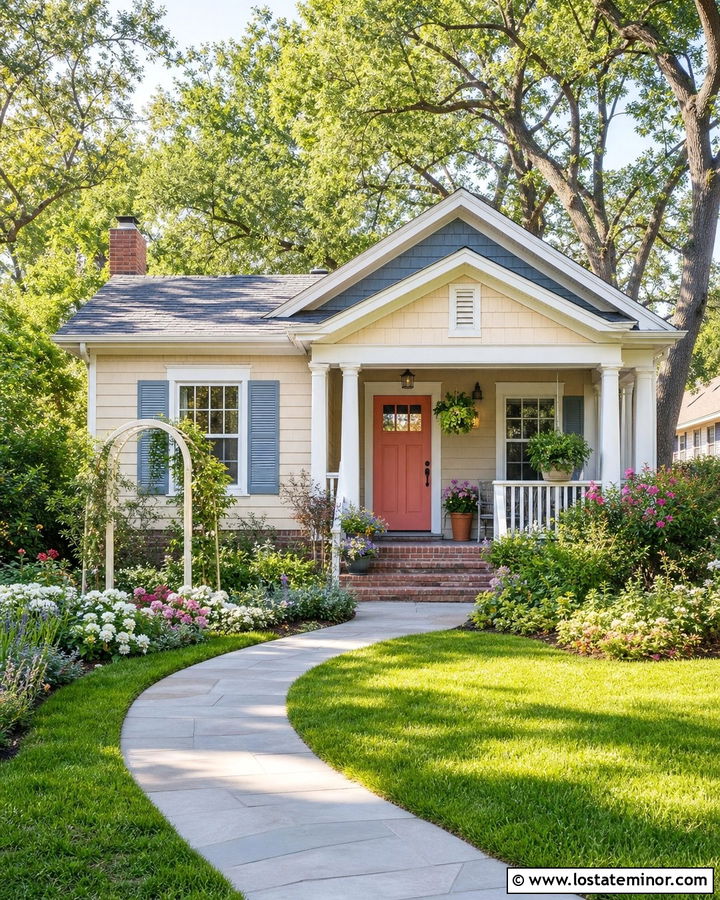
Soft color and abundant planting can give a small beige bungalow remarkable curb appeal. Select creamy beige clapboard siding with ivory trim, dusty blue window accents, and a warm coral front door. Frame the porch with white columns and natural brick steps for a cozy, established appearance. In the front yard, allow curved beds to wrap around both sides of the walkway. Combine low hedges, flowering shrubs, herbs, and long-blooming perennials in a relaxed arrangement. Leave enough open space around each plant for mature growth and easy upkeep. A short painted gate or simple arbor can mark the entrance from the sidewalk. Repeating blue, coral, and cream through flowers and planters ties the garden to the house without making the overall palette feel too coordinated.
6. Beige Stucco House With Desert Landscaping
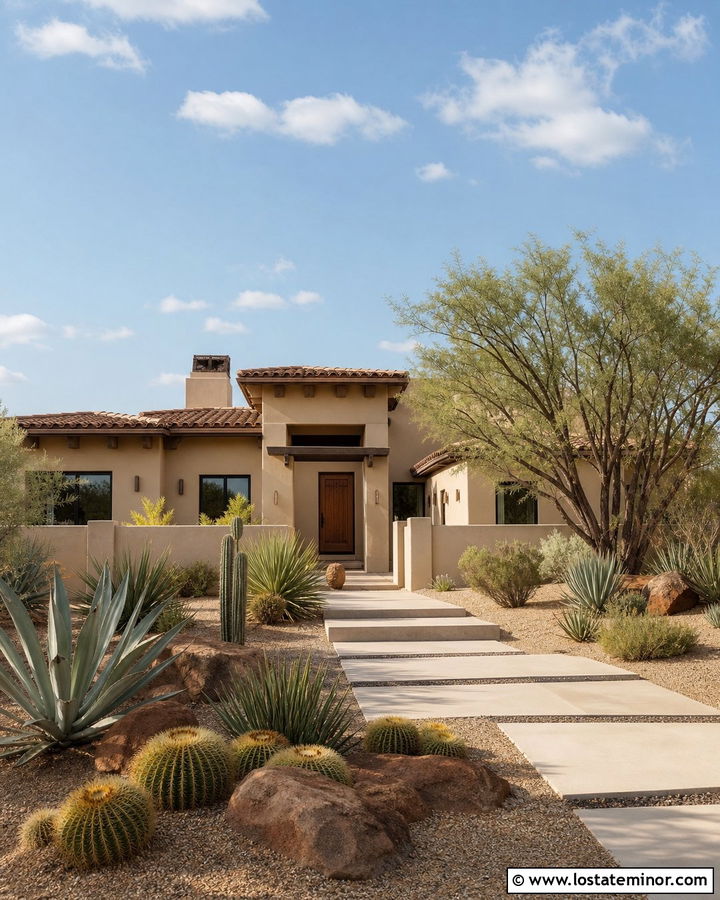
Sun-washed beige stucco fits naturally into a low-water front yard. Pair the warm tan-beige walls with dark bronze windows, a walnut-toned front door, and a terra-cotta or medium-brown roof. Replace a thirsty lawn with decomposed granite, local stone, and spaced concrete slabs. Sculptural agaves, yuccas, flowering desert shrubs, and rounded cacti can create distinct layers while leaving clear negative space between plants. Use clusters of three or five rather than lining every plant along the foundation. A small desert tree near the walkway can provide a focal point and filtered shade. Rust-colored boulders repeat the roof’s warmth, while black path lights connect with the window frames. The finished exterior feels intentional, regionally appropriate, and visually rich without relying on dense planting.
7. Beige Brick House With Hydrangea Border
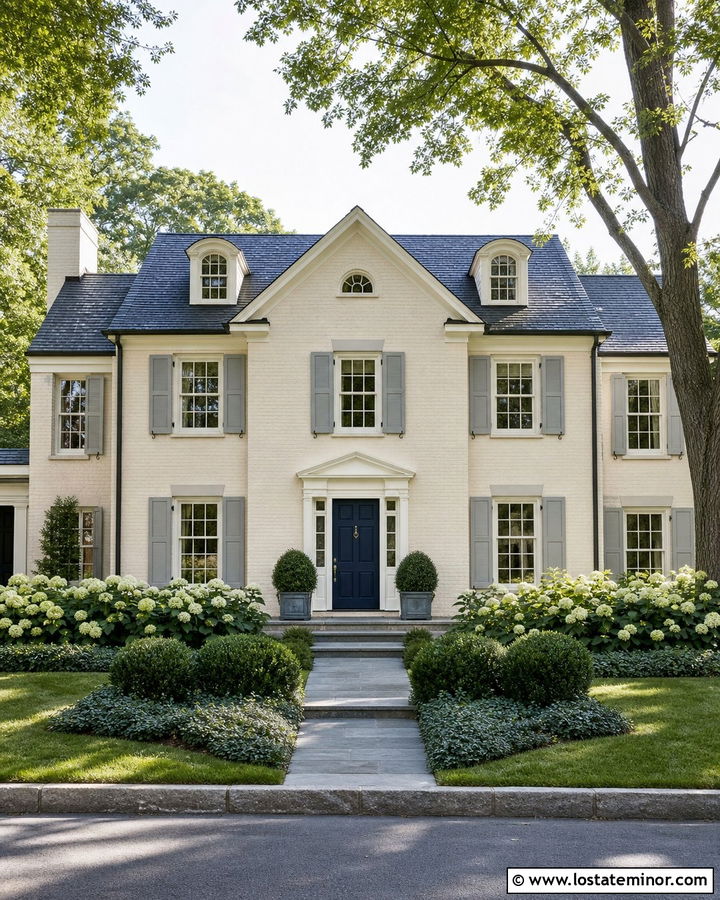
Painted or naturally beige brick provides a textured background for a lush flowering border. Keep the brick a pale warm beige and introduce creamy white trim, soft gray shutters, and a deep blue front door. A slate-colored roof grounds the light palette. Plant broad groups of hydrangeas along the foundation where growing conditions are appropriate, leaving windows, vents, and paths unobstructed. Evergreen shrubs placed between the flowering groups maintain structure outside the blooming season. A bluestone walkway can connect the driveway to the entrance while repeating the cool undertones of the door and roof. Add low ground cover near the path to soften its edges. This complete scheme balances warm masonry with cool blue accents and generous greenery, creating a graceful exterior that feels established rather than overly formal.
8. Beige Cape Cod House With White Picket Fence
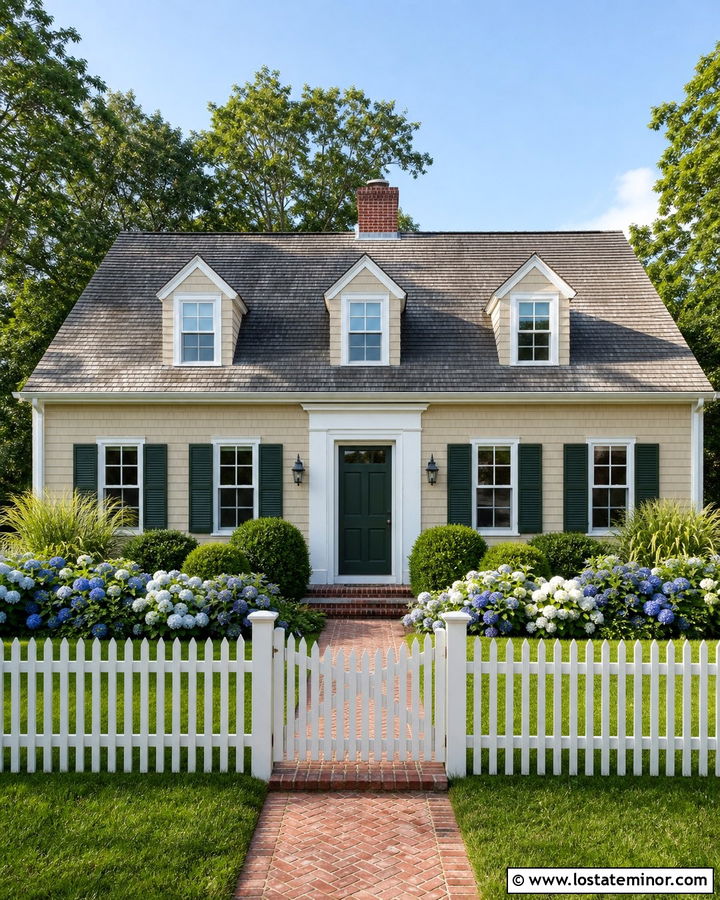
A compact Cape Cod looks especially charming when its front yard has a clear boundary. Use soft oatmeal-beige shingles, crisp white trim, dark green shutters, and a matching green front door. A weathered gray roof complements the subdued coastal palette. Install a low white picket fence along the sidewalk, leaving a simple gate aligned with the entrance. Inside the fence, create informal beds filled with white flowers, blue flowering perennials, clipped shrubs, and ornamental grasses. A narrow brick or shell-colored gravel path can lead to the front steps. Keep plants lower near the facade so the dormers and symmetrical windows remain visible. The fence, path, and planting layers make the small yard feel purposeful while reinforcing the home’s familiar, welcoming character.
9. Beige Tudor House With English Garden
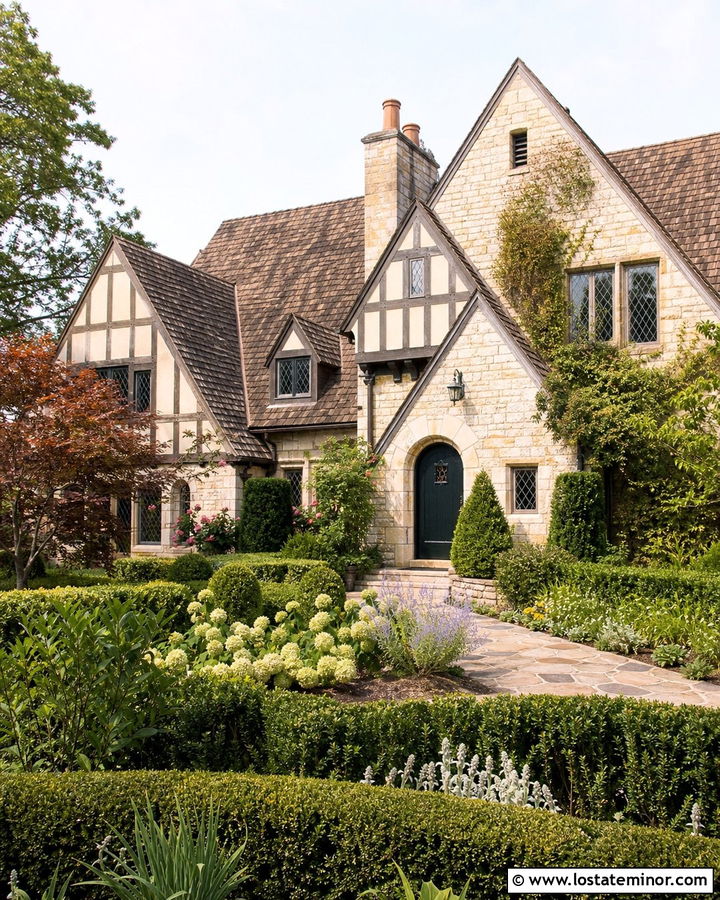
The irregular rooflines of a Tudor home pair beautifully with a loose, romantic landscape. Choose mushroom-beige stucco between dark brown timber details, then add creamy limestone accents and a deep forest green arched door. A brown shingle roof maintains the earthy palette. In the front yard, use curved stone paths, layered flowering borders, clipped evergreen forms, and climbing plants on a simple metal arbor. Place taller shrubs near blank wall sections rather than beneath decorative windows. Roses, salvia, lavender, and soft grasses can mingle naturally where the climate allows. A small ornamental tree adds height and frames the entrance without competing with the gables. The combination of textured beige walls, dark structural lines, and abundant planting gives the home depth, softness, and an inviting storybook quality.
10. Beige Split-Level House With Terraced Yard
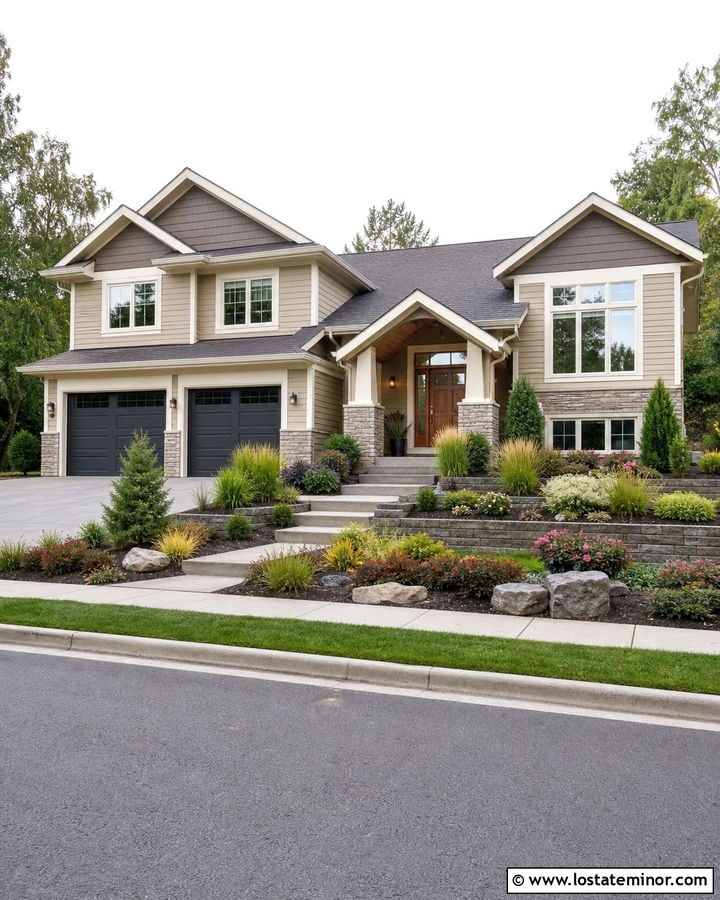
A sloped lot can become an asset when the front yard is divided into practical planting levels. Coat the split-level exterior in balanced taupe-beige siding with warm white trim, charcoal garage doors, and a stained wood entrance. Use low stone retaining walls to form two or three broad terraces rather than one steep bank. Fill each level with spreading ground cover, ornamental grasses, flowering shrubs, and compact evergreens. Wide steps should connect the driveway or sidewalk to the front door, with simple handrails that match the dark garage accents. Repeat the retaining-wall stone around the porch base for a unified appearance. This layered approach visually anchors the tall facade, makes the entry route easier to recognize, and turns an awkward slope into a structured curb-appeal feature.
11. Beige Cottage House With Stone Path
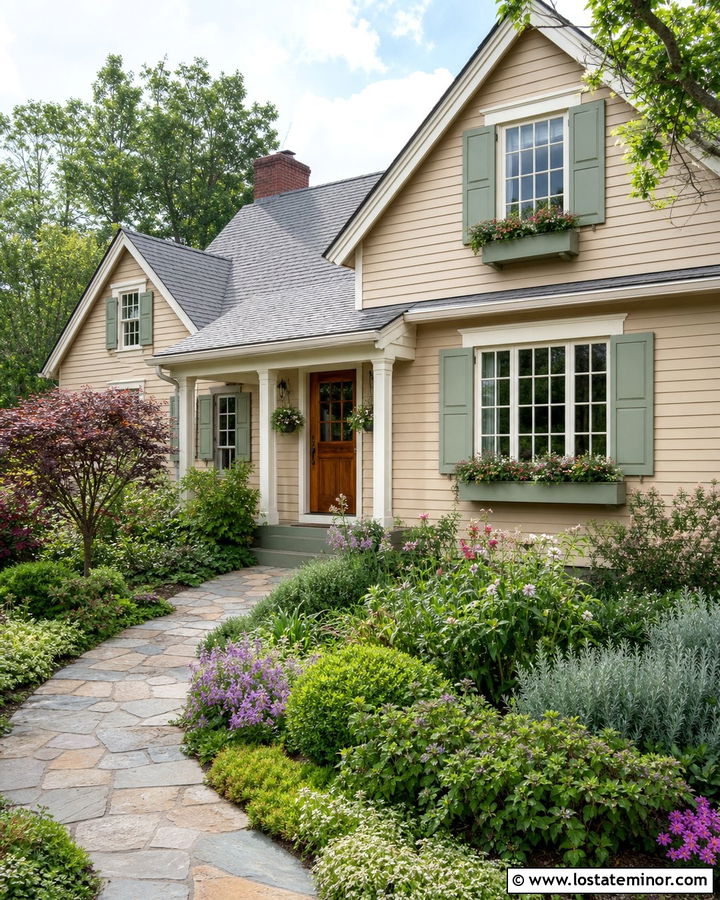
Picture a gently winding stone path leading through a colorful garden to a small beige cottage. Warm biscuit-beige siding sets a soft foundation, while cream trim, sage green shutters, and a natural wood door keep the palette connected to the landscape. Use irregular flagstones with narrow ground-cover joints to create an established, handcrafted entrance route. On either side, layer flowering shrubs, compact grasses, herbs, and perennials with different bloom periods. A small tree placed away from the center preserves the view of the door while adding height. Window boxes can repeat the garden colors at facade level. Avoid covering every inch of soil with unrelated plants. A limited, repeated plant palette will look fuller, calmer, and more intentional against the detailed cottage exterior.
12. Beige Mediterranean House With Courtyard Entry
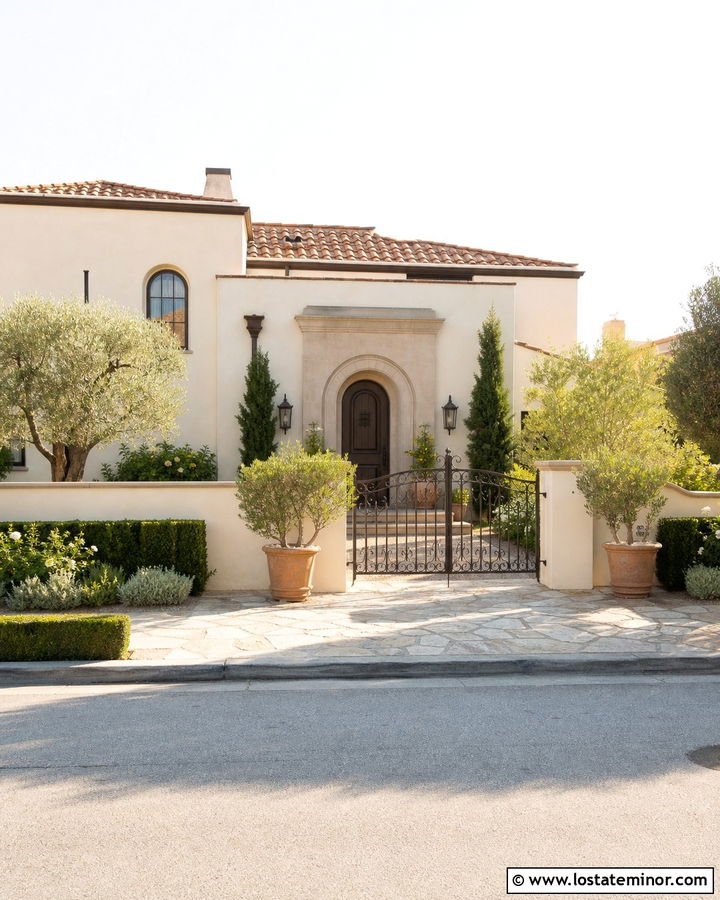
Warm beige stucco, arched openings, and terra-cotta roofing create a natural foundation for a Mediterranean courtyard. Use sandy beige walls with creamy limestone trim, dark bronze metalwork, and a rich brown arched front door. Define the front yard with a low stucco wall that matches the house, then add a wide wooden or wrought-metal gate. Inside, arrange large terra-cotta planters, clipped evergreens, silvery foliage, and drought-tolerant flowering plants around a central gravel or paver area. A small fountain can become a focal point when space and maintenance plans permit. Continue the walkway material through the gate to the door so the entry feels uninterrupted. The enclosed landscape adds privacy and depth while making the beige facade feel warmer, more architectural, and distinctly welcoming.
13. Beige Contemporary House With Concrete Pavers
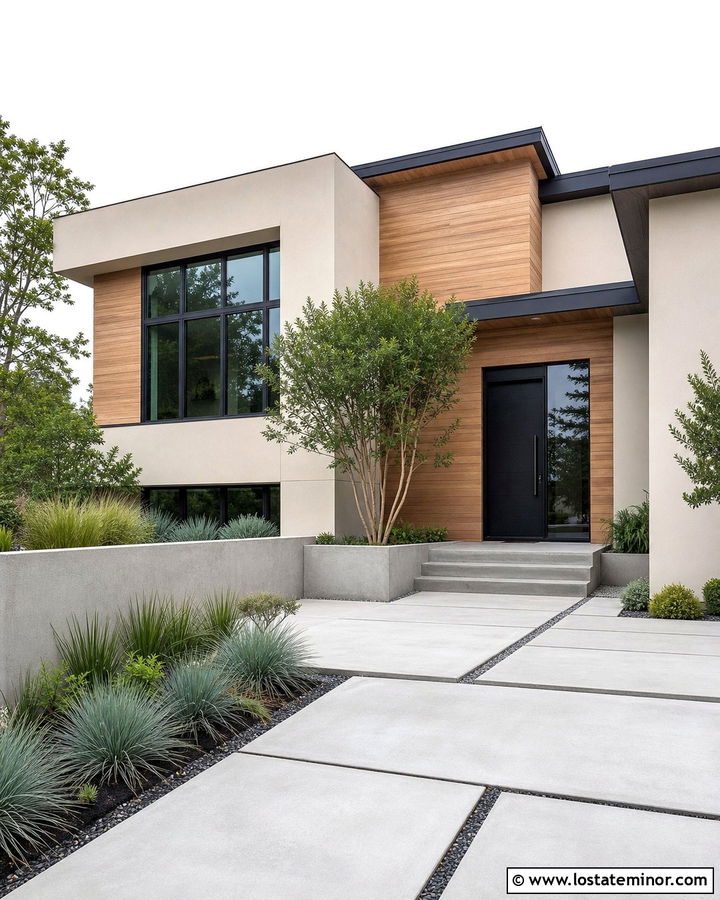
Clean geometry keeps a contemporary beige home from feeling generic. Cover the exterior in light stone beige stucco and horizontal wood siding, using charcoal window frames and a black pivot-style front door for contrast. Lead visitors through the yard with oversized rectangular concrete pavers separated by narrow strips of gravel or low ground cover. Arrange ornamental grasses, sculptural evergreen shrubs, and one multistem tree in clearly defined planting zones. Avoid tiny plants scattered throughout the space; fewer, larger groups better match the home’s strong lines. A low concrete wall can frame the walkway or conceal utility areas. Warm wood softens the black accents, while the beige walls prevent the composition from becoming severe. The complete look feels crisp, calm, and carefully integrated with the landscape.
14. Beige Farmhouse With Wraparound Porch
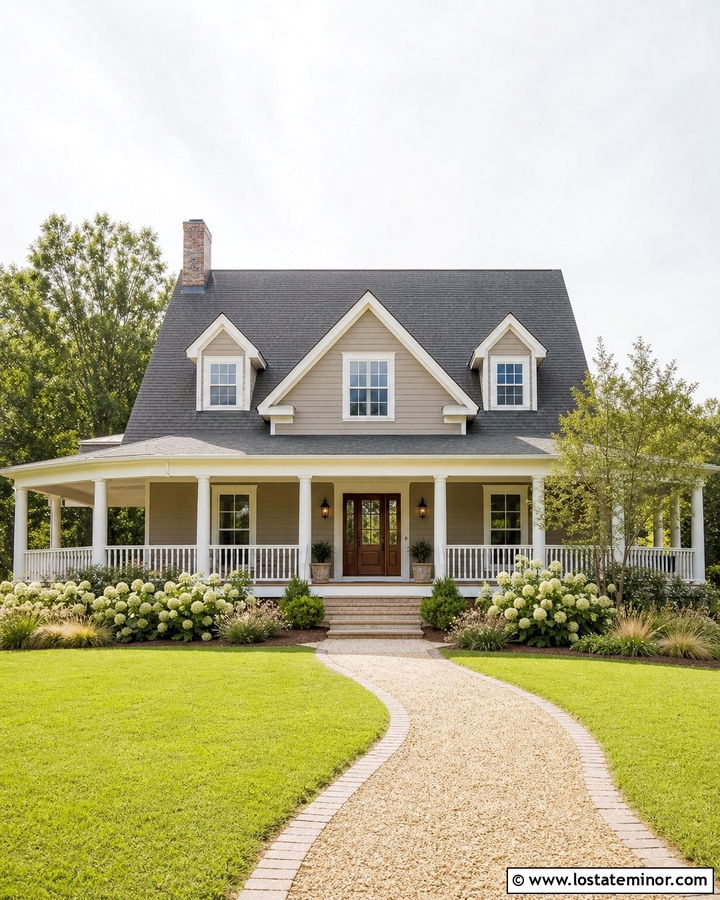
A wraparound porch already provides strong curb appeal, so the front yard should support it rather than compete with it. Paint the horizontal siding a warm khaki beige and use creamy white on the porch railing, columns, window trim, and eaves. Add a stained mahogany front door and a dark gray roof for depth. A broad lawn can preserve the open farmhouse character, while generous planting beds anchor the porch corners. Use flowering shrubs, hydrangeas, ornamental grasses, and small trees in relaxed groups. A straight gravel walkway bordered with brick creates an easy route from the driveway to the steps. Place matching planters beside the entrance and repeat the door’s wood tone in porch furniture. This restrained yard keeps the long porch visible while adding color and softness.
15. Beige House With Black Trim And Formal Lawn
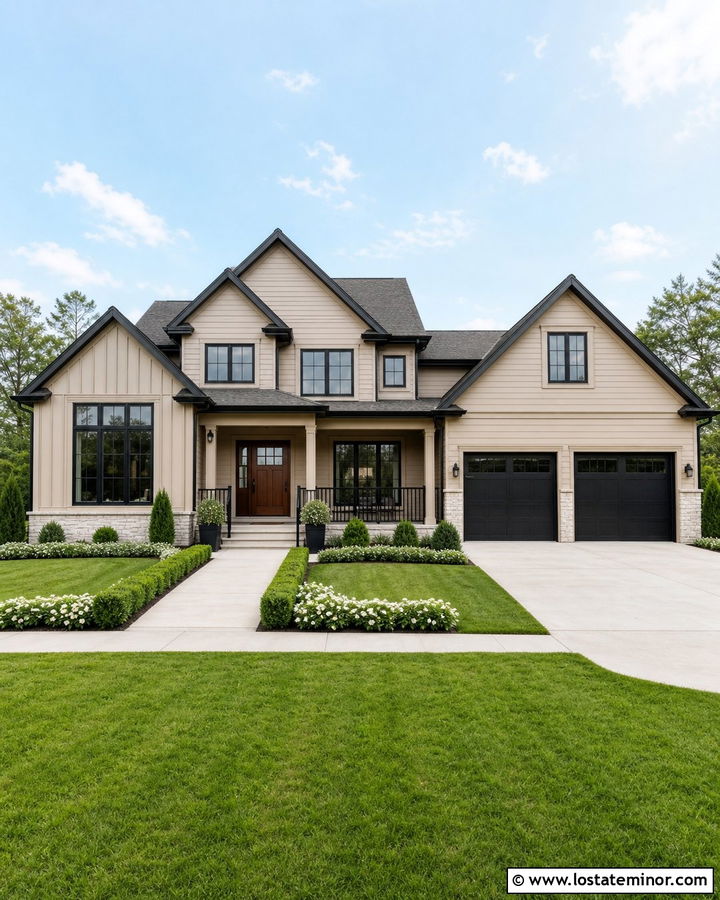
High contrast can make a simple beige facade look sharper and more architectural. Choose a warm linen-beige body color with matte black window trim, gutters, porch railings, and garage doors. A medium walnut front door prevents the scheme from feeling too stark. Keep the lawn broad and carefully edged, then frame it with symmetrical evergreen beds. Low hedges along the walkway reinforce the formal layout without blocking the house. Place matching upright shrubs near the entrance and repeat black through streamlined path lights and large planters. White flowers can provide a controlled seasonal accent. Because black details attract attention, use them consistently rather than adding unrelated accent colors. The resulting exterior has a clean visual hierarchy: dark lines define the architecture, while the green lawn and planting soften the neutral palette.
16. Beige House With Sage Green Door And Meadow Yard
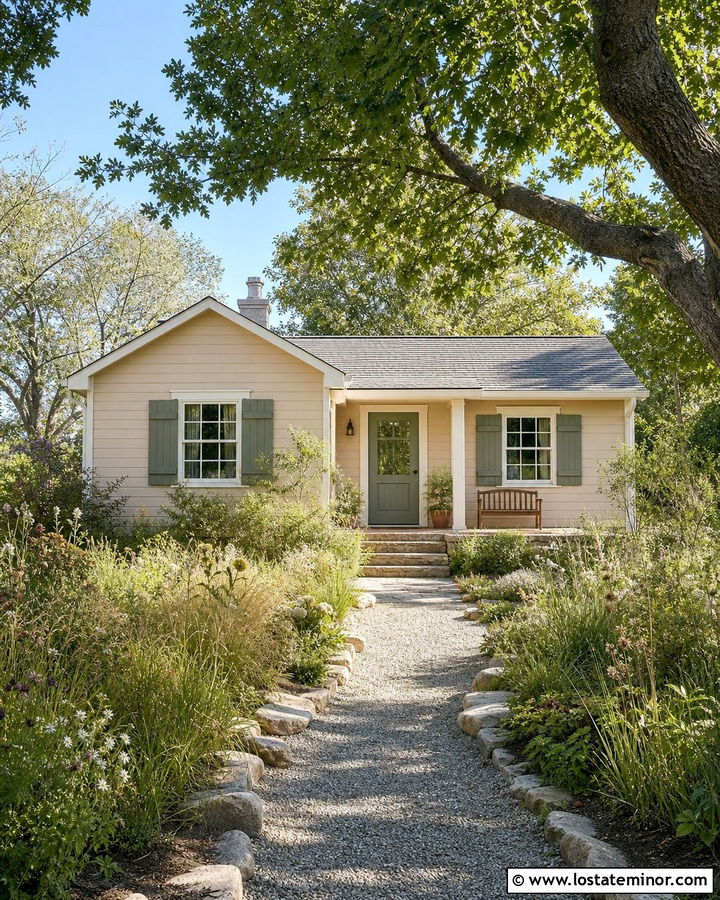
A sage green entrance creates a gentle transition between beige siding and a naturalistic front yard. Paint the house a warm almond beige with ivory trim and choose muted sage for the front door, shutters, or both. Weathered stone steps and a medium-gray roof complete the understated palette. Replace part of the standard lawn with a carefully planned meadow-style bed containing locally appropriate grasses and flowering plants. Keep a defined mowed edge or stone border so the planting looks deliberate. A clear gravel path should remain wide enough for comfortable everyday use. Add a small bench or birdbath away from the main route as a secondary focal point. The varied greenery reinforces the door color, while seasonal flowers add movement and life without overpowering the calm beige exterior.
17. Beige House With Blue Door And Coastal Yard
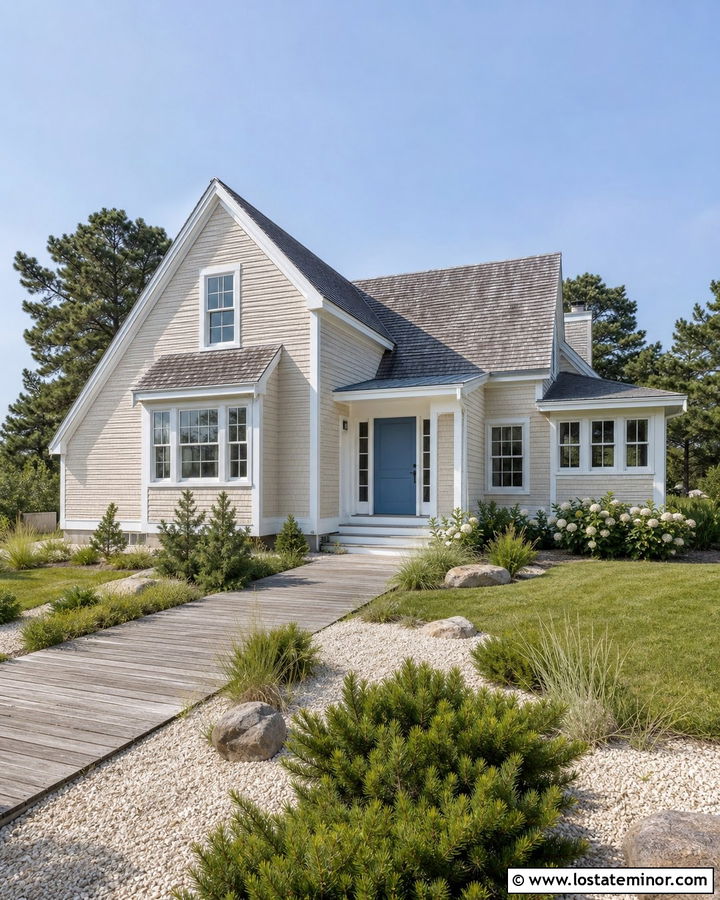
A blue door can bring a refreshing focal point to a pale beige house. Select sand-beige shingle siding with bright white trim, a slate blue front door, and a weathered gray roof. Use pale gravel, natural stone, and a limited mix of salt-tolerant or regionally suitable grasses and shrubs to build a relaxed coastal-inspired yard. A boardwalk-style path or wide rectangular stepping stones can lead through the planting to the porch. Add white hydrangeas where the site conditions support them, or choose another rounded flowering shrub with a similar effect. Keep decorative elements simple and avoid obvious themed accessories. The colors should suggest the coast through sand, sky, weathered wood, and greenery. This produces a fresh exterior that still suits an everyday suburban neighborhood.
18. Beige House With Red Door And Brick Walkway
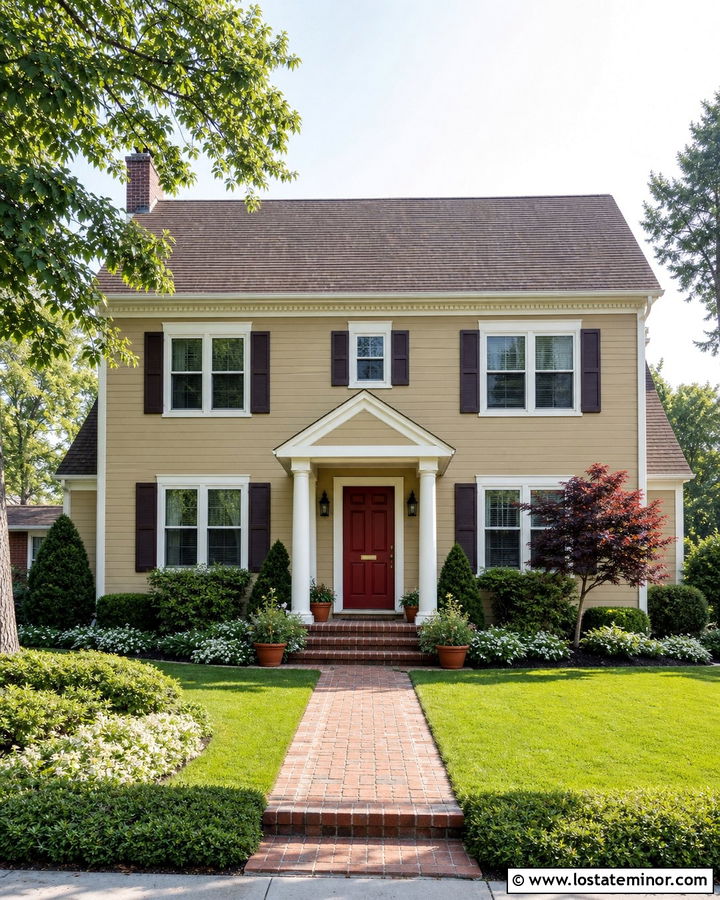
Warm red creates a confident entrance when it is repeated through smaller landscape details. Use golden beige siding with cream trim, dark brown shutters, and a classic brick-red front door. A brown architectural shingle roof keeps the palette cohesive. Build or refresh the walkway with red and brown brick in a simple running-bond or herringbone pattern. Along its edges, plant compact evergreen shrubs, white flowers, and deeper red seasonal accents. Avoid using red everywhere; the door should remain the primary focal point. A small flowering tree can balance one side of the facade, especially when the garage occupies the other. Traditional lanterns, brass-toned hardware, and clay planters add warmth. Together, the brick path and door create a clear visual invitation across the green front lawn.
19. Beige House With Olive Shutters And Layered Shrubs
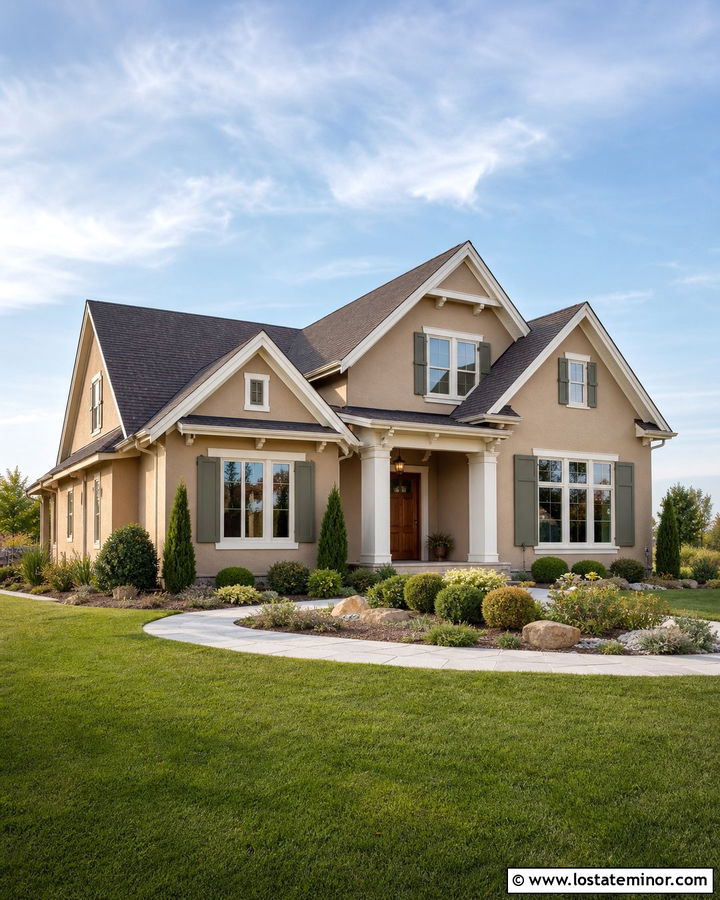
Olive shutters provide softer contrast than black while giving a beige exterior more connection to the yard. Pair light camel-beige siding with warm white trim, muted olive shutters, and a medium-brown wood door. Use a charcoal-brown roof that supports the earthy color family. Build foundation beds in three layers: low ground cover at the front, rounded flowering or evergreen shrubs in the middle, and narrow upright plants near blank wall areas. Keep every layer below nearby windows and away from siding. Repeat the olive tone through foliage rather than decorative objects. A pale stone walkway and natural stone edging can brighten the darker greens. The finished composition feels rich and mature because its contrast comes from leaf texture, height, and form instead of bright or competing colors.
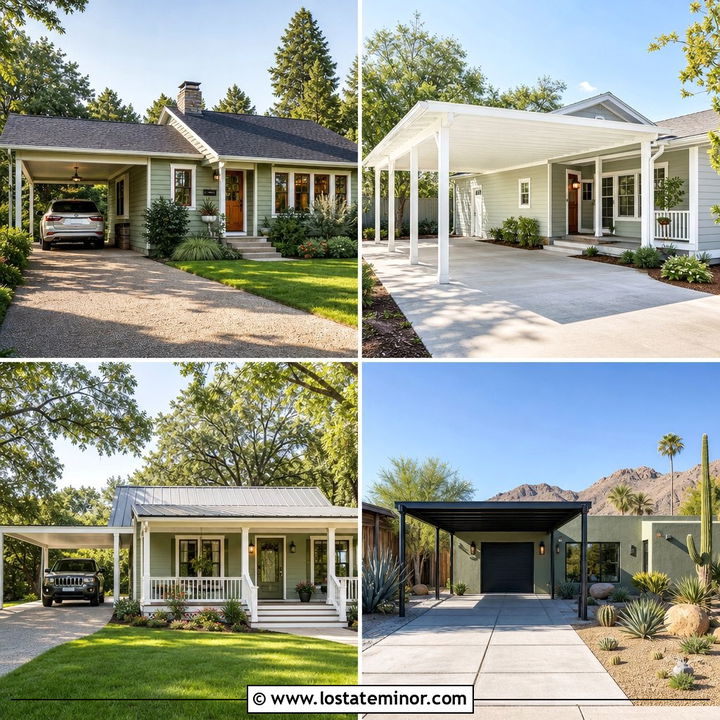
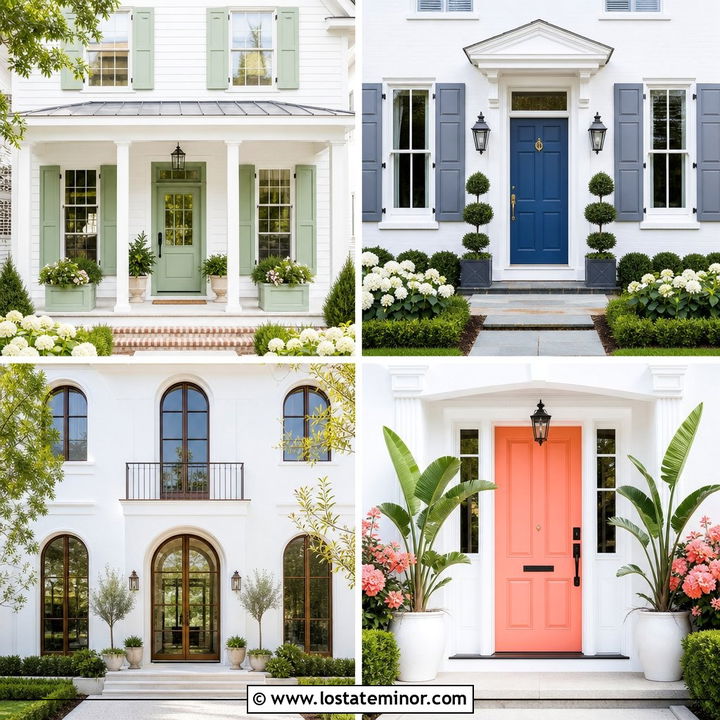
20. Beige House With Charcoal Garage And Driveway Border
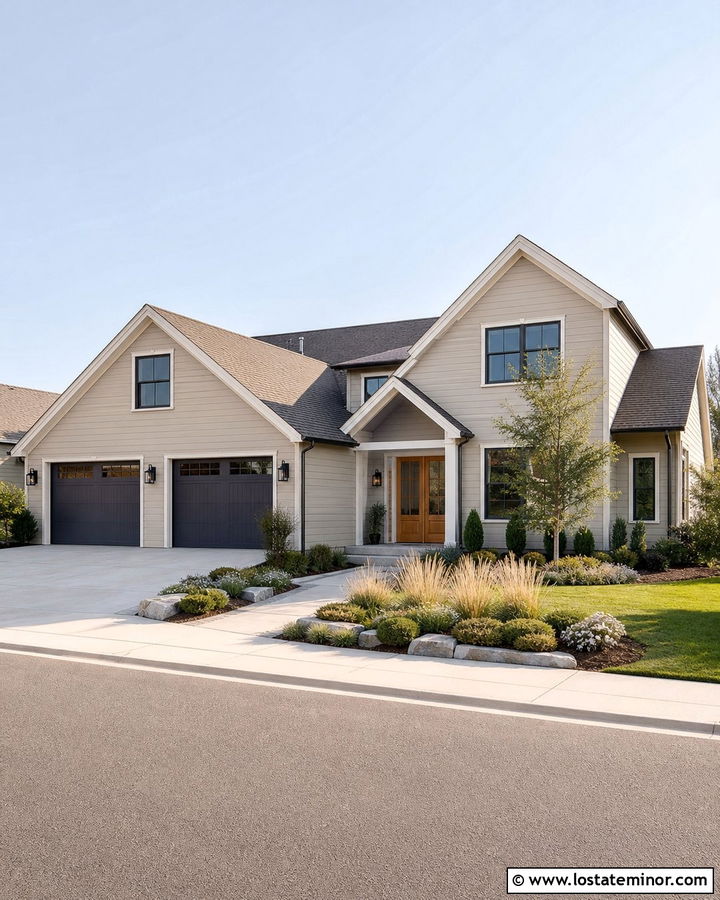
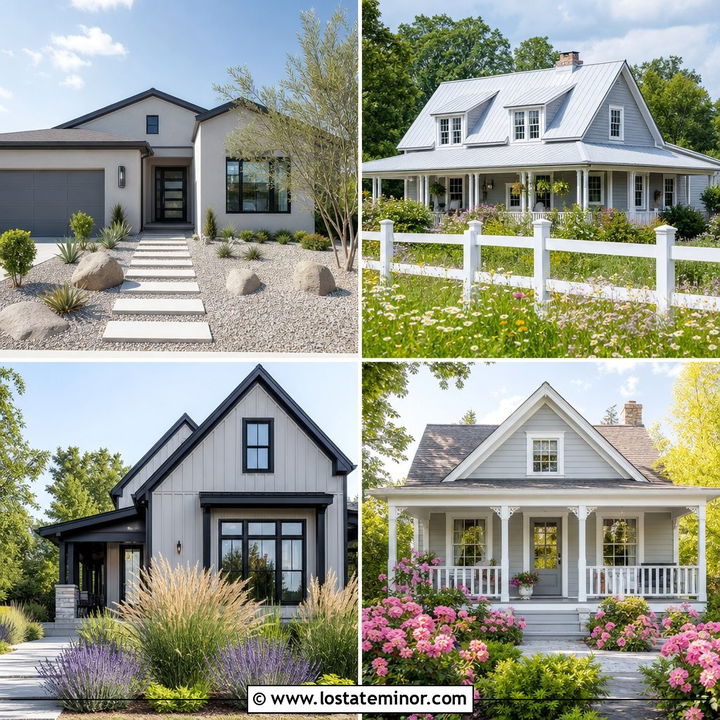
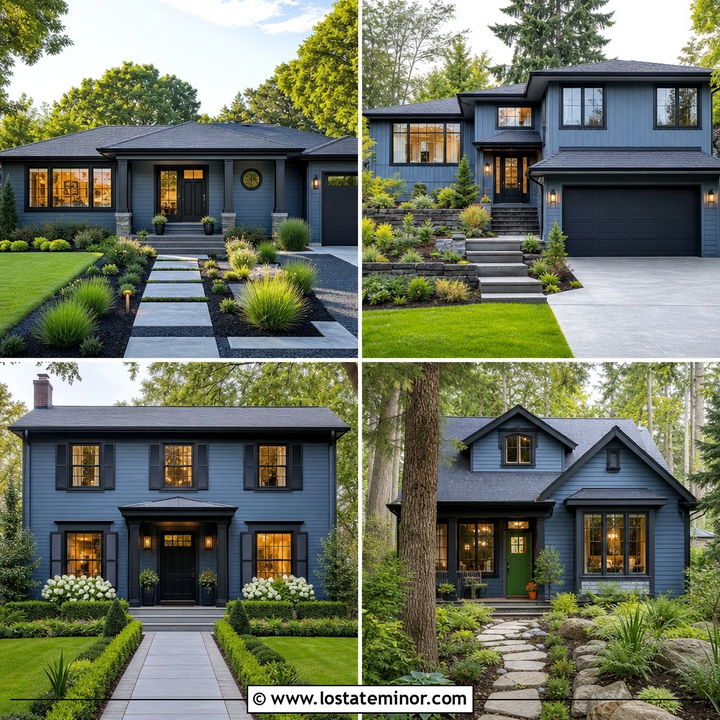
When a garage dominates the facade, a dark finish can help it visually recede. Choose warm greige-beige siding, off-white trim, charcoal garage doors, and a natural oak front door. Use the same charcoal on porch lights and narrow window details for consistency. Along the driveway, install a generous planting strip rather than leaving hard paving directly beside the lawn. Fill it with low grasses, durable ground cover, compact shrubs, and one or two small trees where space allows. A stone or brick border gives the driveway a clean edge and repeats materials used near the entrance. Keep taller planting away from sight lines. By balancing the garage with a clearly marked front walkway and layered greenery, this scheme redirects attention toward the entrance while softening the largest paved surface.
21. Beige House With Cedar Porch And Prairie Garden
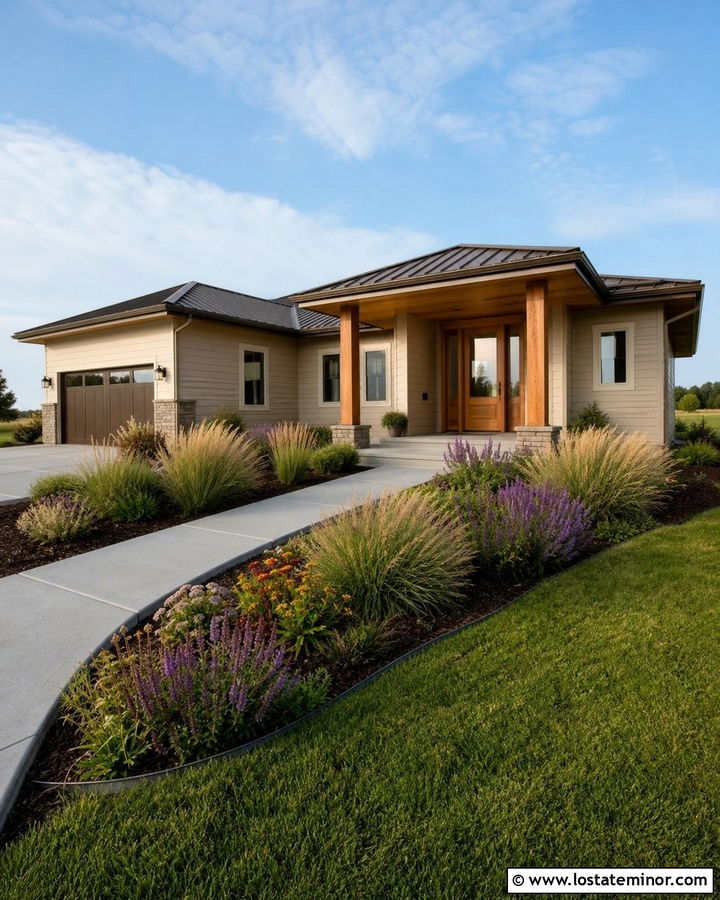
Natural cedar brings warmth and dimension to a beige exterior without introducing another painted color. Cover the home in soft wheat-beige siding with cream trim and a dark bronze roof. Use cedar for the porch posts, front door, ceiling, and selected railing details. In the yard, plant broad drifts of prairie-inspired grasses and locally suited flowering perennials. Their loose forms contrast nicely with the clean porch structure. A wide concrete path can cut directly through the planting, making the entrance easy to find and use. Add dark metal edging to separate the beds from a smaller area of lawn. The cedar and beige tones create a calm backdrop, while the grasses provide movement. This complete design feels relaxed, warm, and especially suitable for an open suburban or rural setting.
22. Beige House With Stone Porch And Evergreen Yard
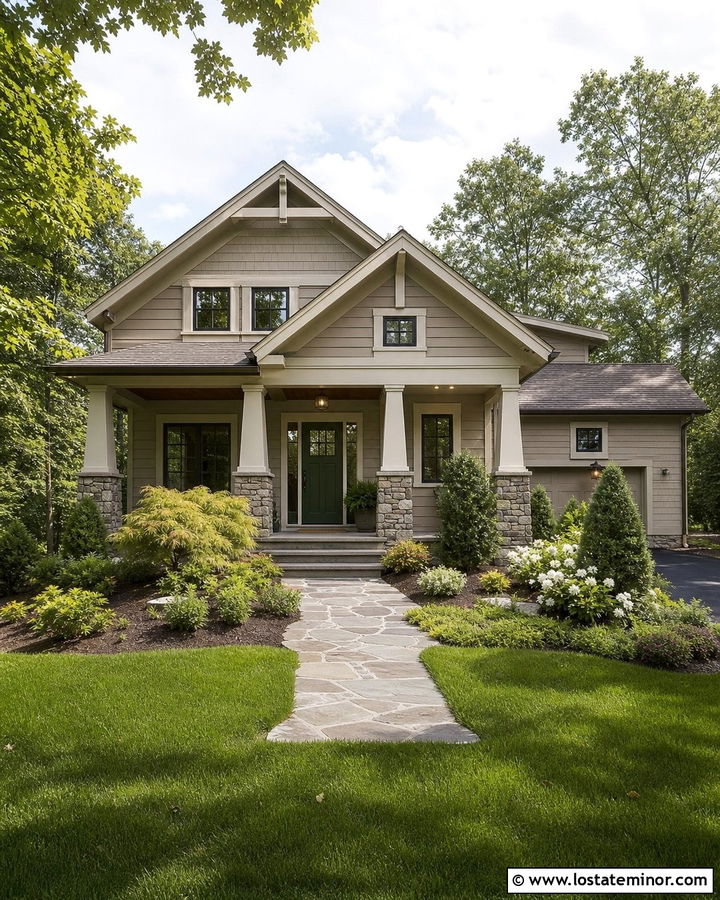
An evergreen-focused landscape gives a beige house dependable structure throughout the year. Use light taupe-beige siding with creamy trim, a dark green front door, and gray-brown stone across the porch base and columns. Repeat the stone along the walkway or planting-bed border. Arrange evergreen plants according to mature size, combining low spreading forms, rounded shrubs, and narrow upright specimens. The variety of shapes keeps an all-green palette from becoming monotonous. Leave breathing room around the porch, windows, and steps. A few white flowering perennials or small deciduous shrubs can add seasonal contrast without changing the garden’s core character. Mulch or dark gravel creates a crisp background for the foliage. The stone, greenery, and beige siding work together as a durable, grounded exterior composition.
23. Beige Two-Story House With Ornamental Trees
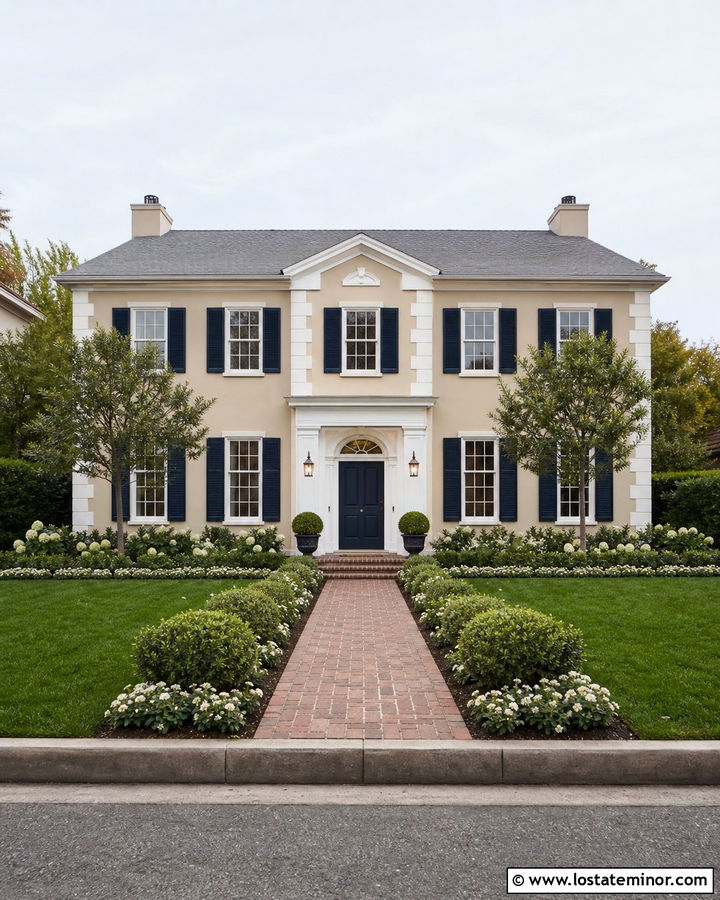
A tall two-story facade needs front-yard elements with enough scale to balance it. Choose balanced beige siding with bright white trim, navy shutters, and a matching navy front door. Place two appropriately sized ornamental trees near the outer portions of the house rather than directly in front of the entrance. Their canopies can frame the facade while preserving important views and access. Beneath them, create wide planting beds containing low shrubs, grasses, and ground cover. A central concrete or brick walkway should remain open and visible from the street. Use matching planters beside the door to strengthen the entrance. The trees add vertical interest, while the lower planting visually connects them to the lawn. This layered arrangement helps the tall home feel settled into its site instead of standing above it.
24. Beige Townhouse With Small Front Yard
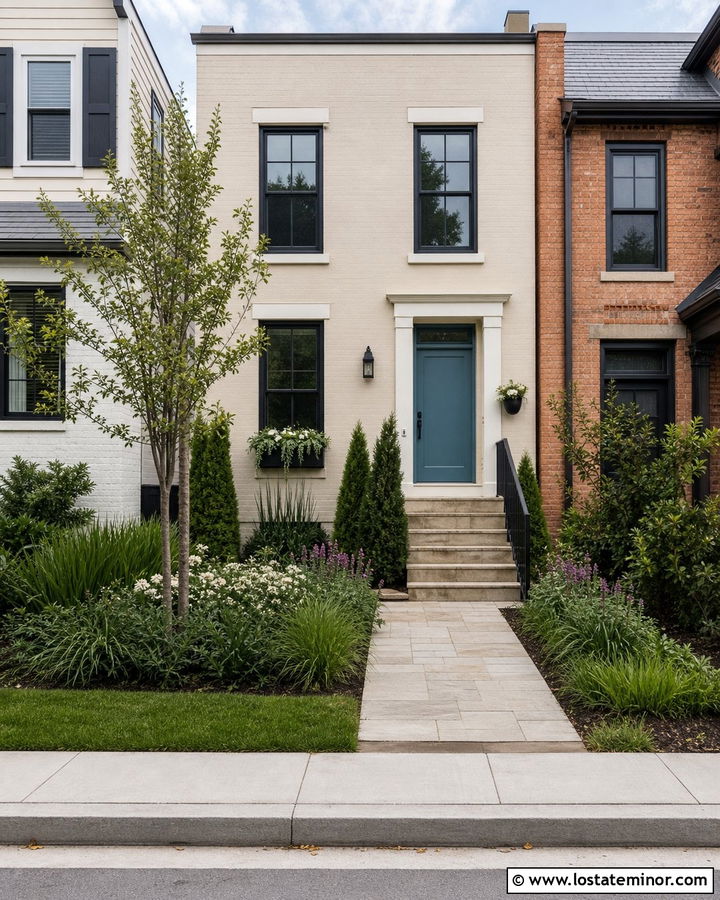
Even a narrow townhouse yard can create a memorable welcome. Paint the exterior warm putty beige with ivory trim, black window frames, and a muted teal front door. Use a straight path of large stone pavers to keep the limited space visually organized. Install one narrow planting bed along the property line and another near the foundation, choosing upright shrubs, compact grasses, and long-blooming perennials that will not crowd the walkway. A slender ornamental tree can add privacy and height if the space permits. Wall-mounted planters or window boxes bring greenery upward without using valuable ground area. Repeat black in the railing and house numbers. The controlled materials and limited planting palette make the small yard feel larger, while the colorful door gives the compact beige facade a strong identity.
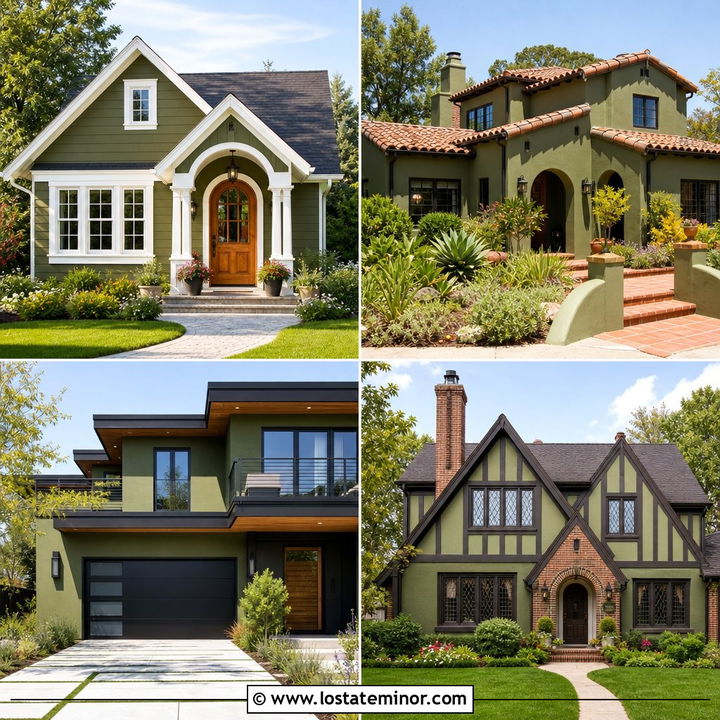
25. Beige Midcentury House With Minimal Front Yard
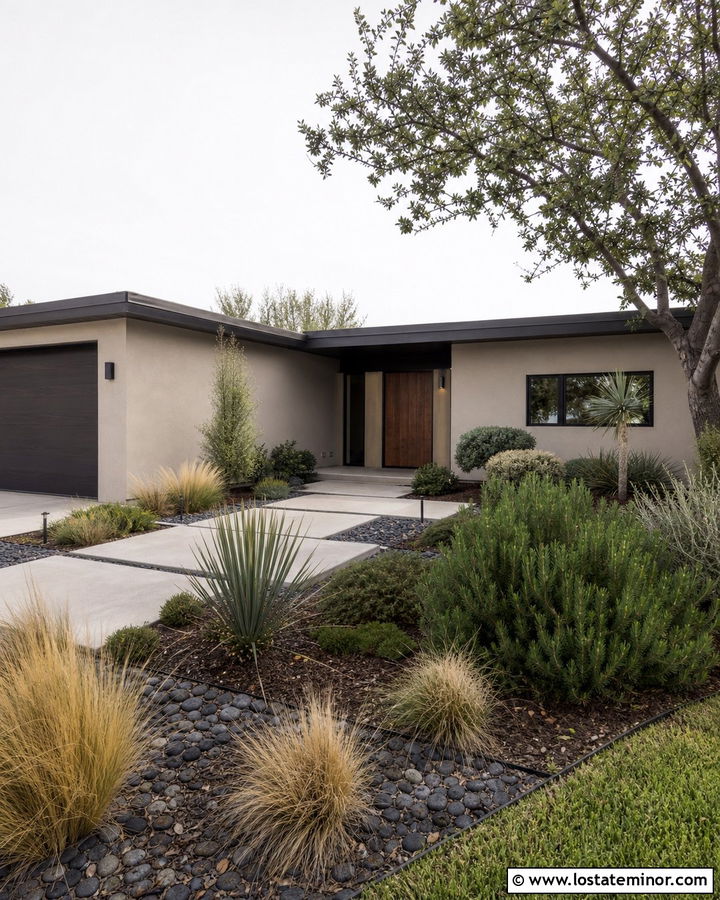
A midcentury home benefits from landscaping that respects its low roofline and horizontal architecture. Use warm mushroom-beige stucco with dark bronze trim, a walnut slab-style front door, and charcoal fascia. Replace narrow foundation planting with broad, asymmetrical groups of ornamental grasses, sculptural shrubs, and low ground cover. A single statement tree placed off-center can reinforce the home’s original composition. Create the entry path with large rectangular concrete slabs, allowing gravel or greenery to fill the joints. River rock near the facade adds texture without hiding architectural details. Keep decorations minimal and let the shapes of the plants provide interest. The combination of earthy beige, dark metal, natural wood, and simple geometric hardscaping creates a complete exterior that feels authentic, updated, and easy to understand from the street.
26. Beige Victorian House With Colorful Garden
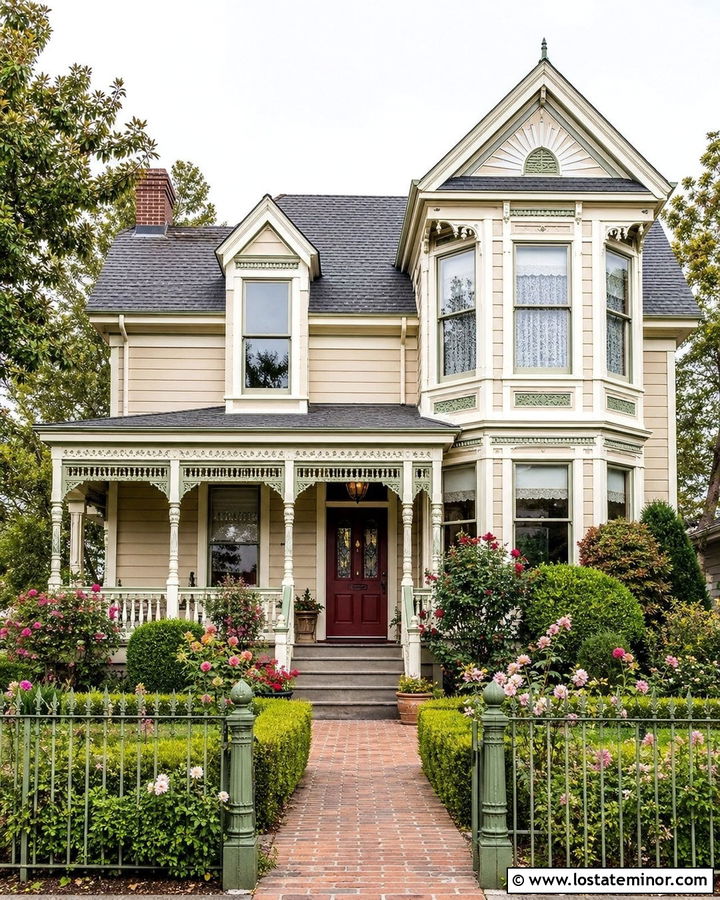
Detailed Victorian architecture can carry more color than a simple modern facade, but the palette still needs control. Use pale parchment beige as the main body color, creamy white on the trim, muted green on decorative details, and burgundy on the front door. A dark gray roof anchors the lighter shades. In the front yard, combine a small lawn with curving beds filled with flowering shrubs, roses, perennials, and clipped evergreens. Repeat burgundy and soft green sparingly through foliage and flowers. A narrow brick walkway can lead to the porch steps, while an ornamental metal fence defines the property edge. Keep plants from covering carved brackets, porch railings, or tall windows. This approach celebrates the home’s character while allowing the beige exterior to hold the colorful details together.
27. Beige French Country House With Lavender Border
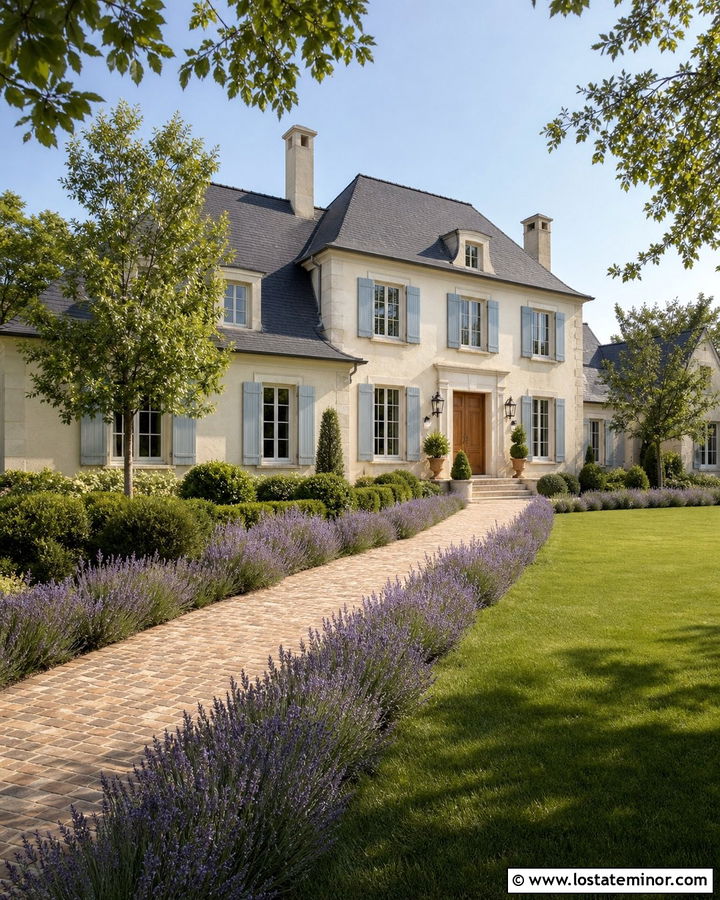
A French country exterior feels most convincing when warm masonry and restrained planting share the same soft palette. Combine creamy beige stucco with pale limestone, weathered blue-gray shutters, a medium oak door, and a charcoal roof. Run a gravel or aged-brick walkway toward the entrance, then border it with lavender where climate and growing conditions allow. In other regions, use a locally suitable plant with similar silvery foliage and purple flowers. Rounded evergreen shrubs can anchor the path corners, while small trees frame the facade. Keep the beds loose but repeated, avoiding a crowded mixture of unrelated plants. Terra-cotta pots near the door add another warm material. The beige walls, gray-blue accents, purple flowers, and soft green foliage produce an elegant yet comfortable rural-inspired composition.
28. Beige Modern House With Raised Planters
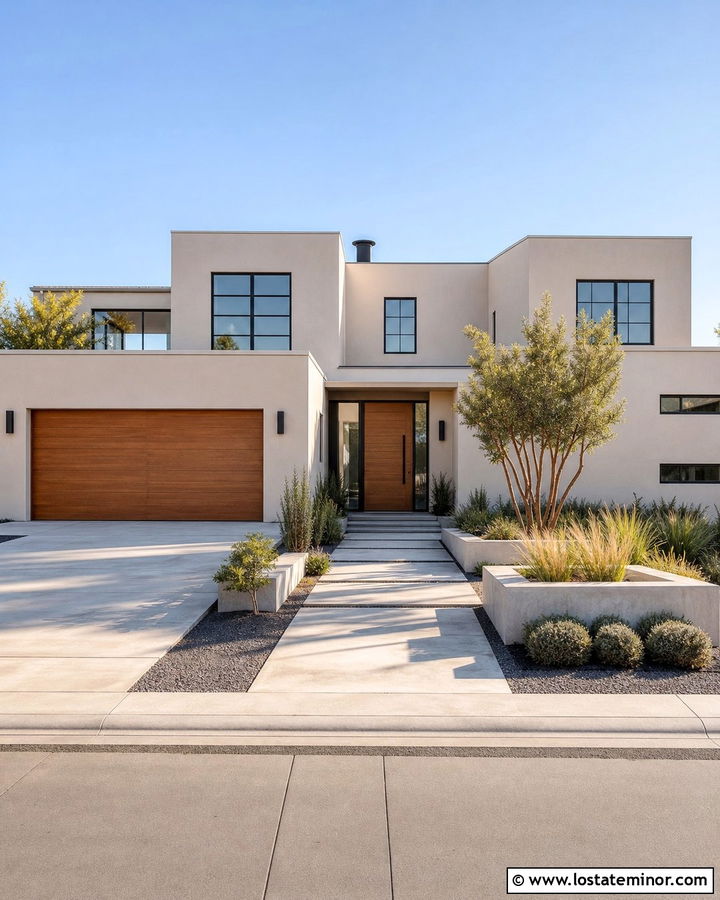
Raised planters can organize a flat front yard and strengthen the geometry of a modern beige house. Select pale clay-beige stucco, black-framed windows, a warm wood garage door, and a matching wood entry. Construct low rectangular planters from smooth concrete, light stone, or weathered steel. Fill them with repeated groups of ornamental grasses, compact shrubs, and architectural plants suited to the local climate. Position the planters to frame the walkway rather than create obstacles. Large concrete slabs and dark gravel can connect the driveway, entrance, and planting areas. Add one multistem tree to soften the straight lines and provide a vertical focal point. By limiting the materials and repeating the same plants, the yard feels purposeful. The raised beds also give the neutral exterior greater depth and dimension.
29. Beige Traditional House With Front Yard Patio
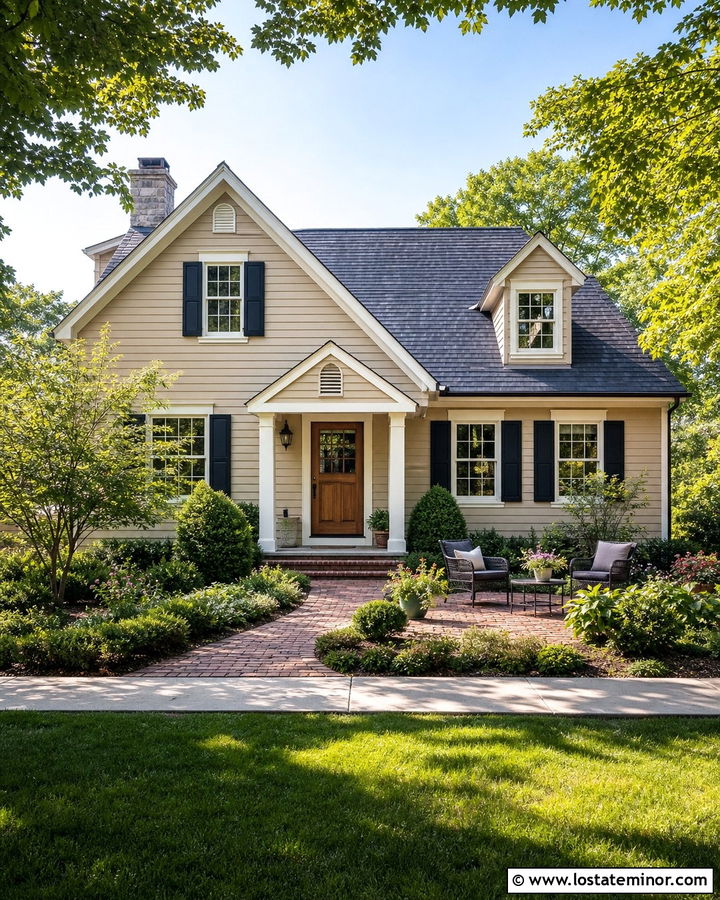
A small front patio can turn an underused lawn into a welcoming extension of the entrance. Paint the traditional facade soft tan-beige with ivory trim, black shutters, and a stained chestnut front door. Create a brick or natural stone patio near the porch, keeping it connected to the main walkway and away from primary traffic routes. Add a simple bench or two compact chairs without overcrowding the space. Surround the patio with low evergreen shrubs, flowering perennials, and a small shade tree positioned at a safe distance from the foundation. Repeat the patio material on the front steps or bed edging. The seating area should look integrated rather than dropped into the grass. This arrangement adds function, strengthens the entrance, and breaks a large lawn into comfortable outdoor zones.
30. Beige Luxury House With Circular Drive Garden
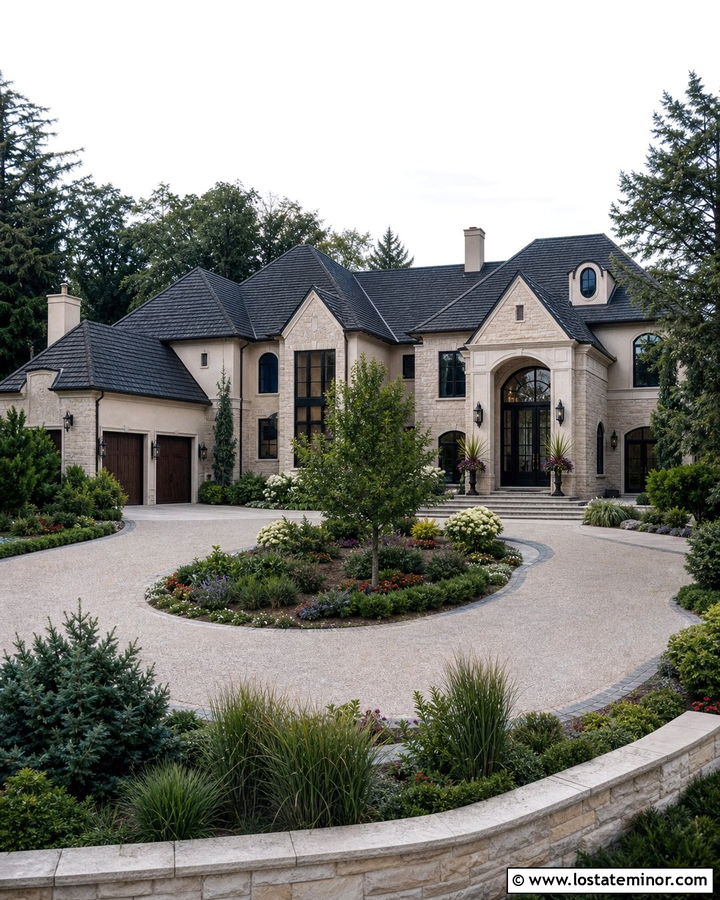
A large beige house and circular driveway require equally generous landscape gestures. Use warm limestone beige across stucco and stone walls, with creamy trim, dark bronze windows, walnut garage doors, and a charcoal roof. Create a substantial central island inside the drive rather than filling it with a few undersized plants. Anchor the island with a sculptural tree, then surround it with broad groups of evergreen shrubs, ornamental grasses, and seasonal flowers. Repeat these plants near the entrance to connect the island to the house. Wide stone steps and large matching planters can emphasize the front door. Keep all planting clear of driveway visibility zones. The repeated materials, balanced scale, and controlled palette make the expansive property feel unified, while the central garden creates an impressive approach.
Conclusion:
The most effective beige exterior is never just one neutral paint color. It is a complete composition built from siding, trim, roofing, doors, hardscaping, and plants that complement one another. Strong contrast can come from black details, colorful doors, rich wood, stone, or layered greenery. Meanwhile, walkways, trees, borders, and planting beds help connect the architecture to the street. Before making changes, consider your home’s scale, sunlight, climate, maintenance needs, and existing permanent materials. Then repeat a limited selection of colors and textures throughout the property. These 30 Beige House Design With Front Yard Ideas offer adaptable starting points for creating a warmer, more distinctive, and more welcoming home exterior.

Related posts: