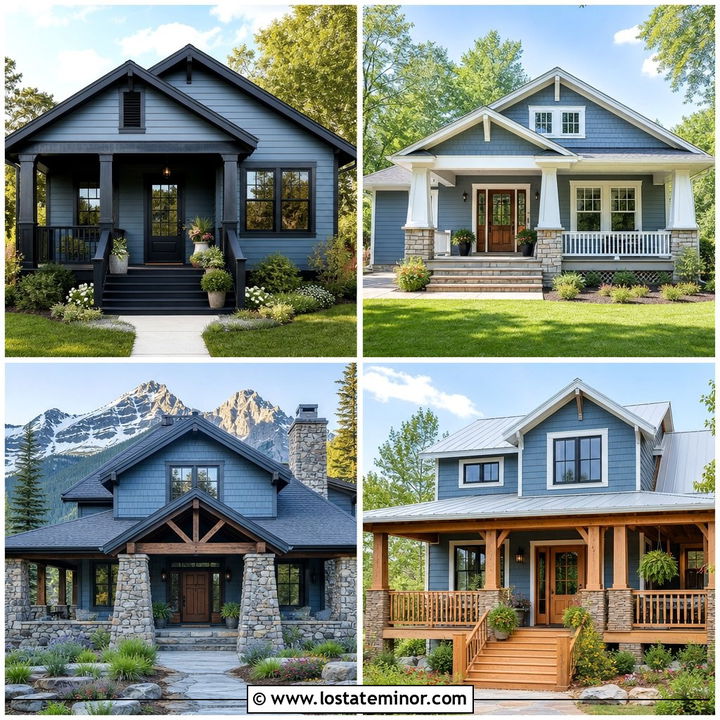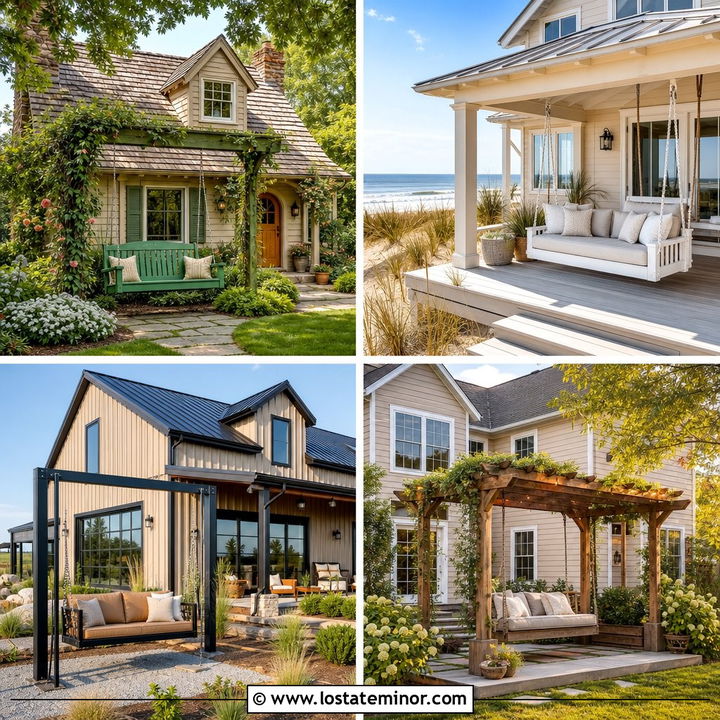
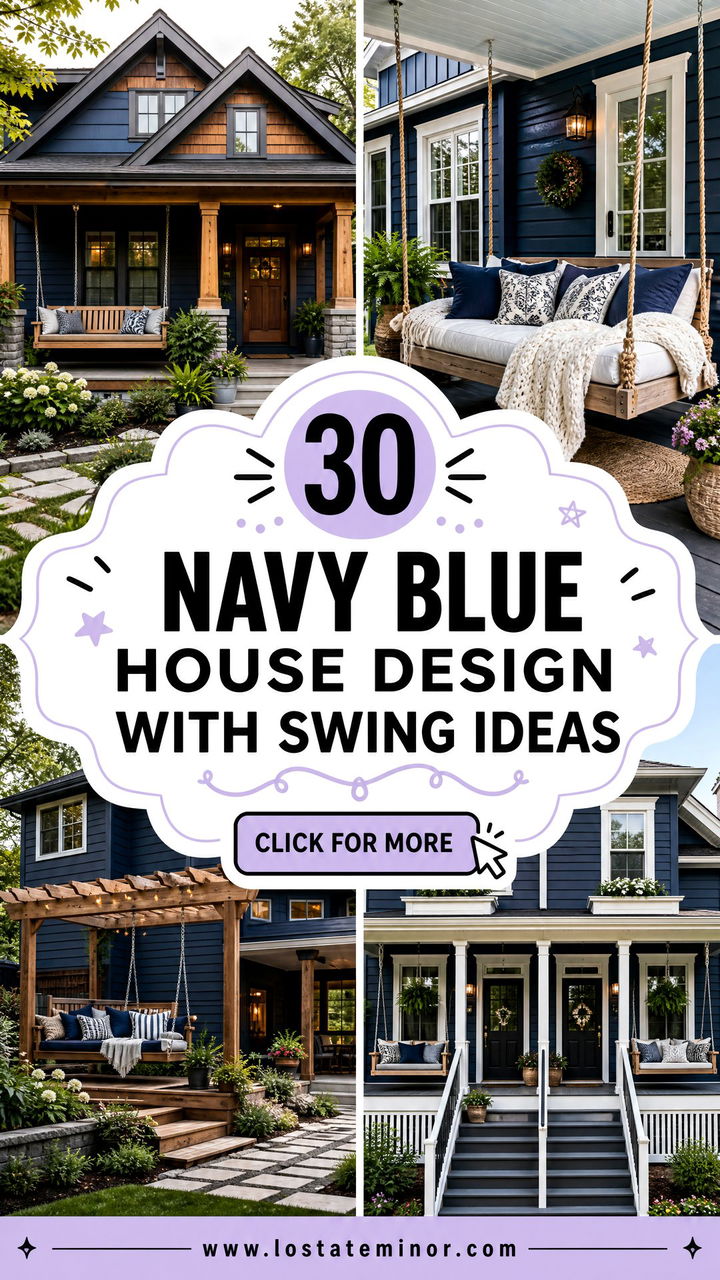
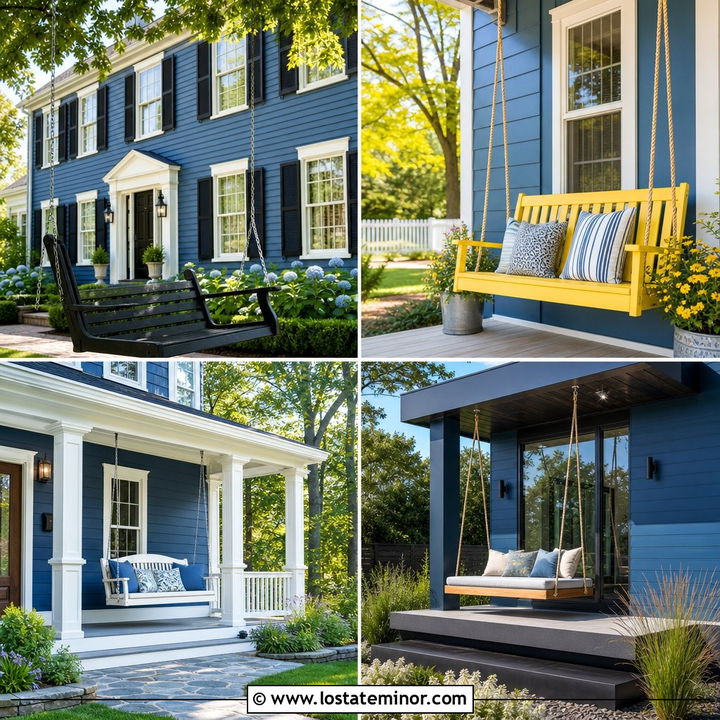
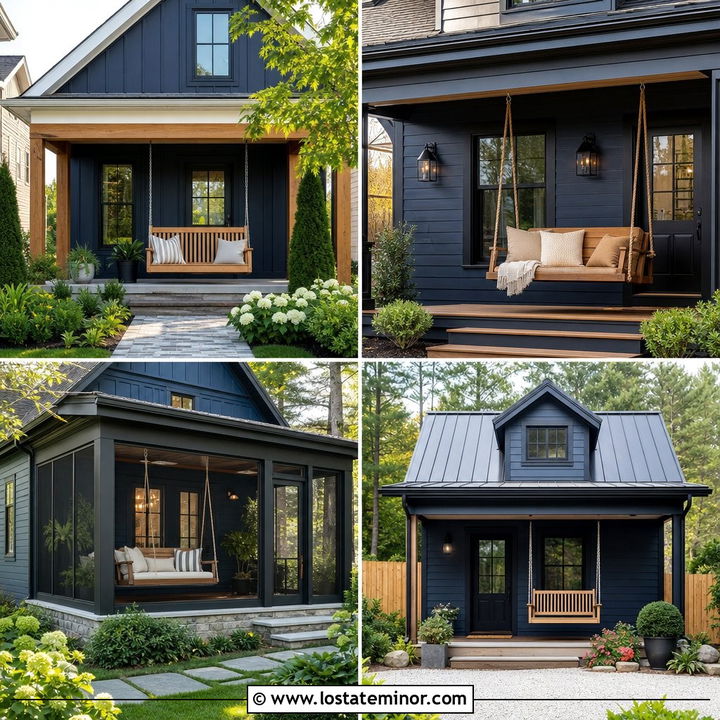
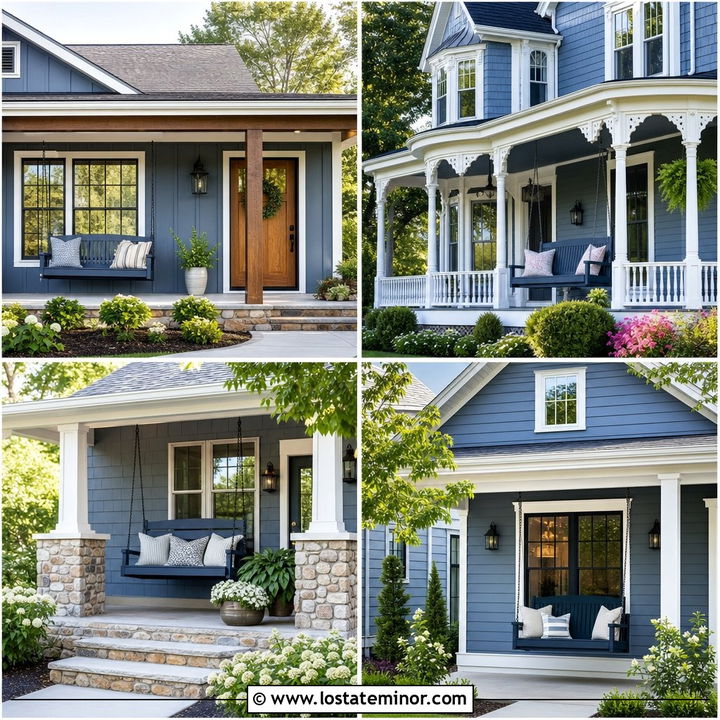
The best 30 Navy Blue House Design With Swing Ideas combine bold exterior color with a comfortable place to relax. Navy siding creates a strong backdrop, while a well-chosen swing makes the porch feel welcoming and lived-in. Crisp white trim remains a timeless partner for dark blue, but natural cedar, weathered wood, charcoal, cream, and brick can add warmth or soften the contrast. () The swing should also match the home’s architecture and porch size. A classic farmhouse may suit a white slatted bench, while a modern facade looks better with a streamlined wood platform. Consider roof color, flooring, railings, hardware, and landscaping so everything feels connected. The complete looks below offer practical inspiration through 30 Navy Blue House Design With Swing Ideas.
1. Navy Blue Farmhouse With White Porch Swing
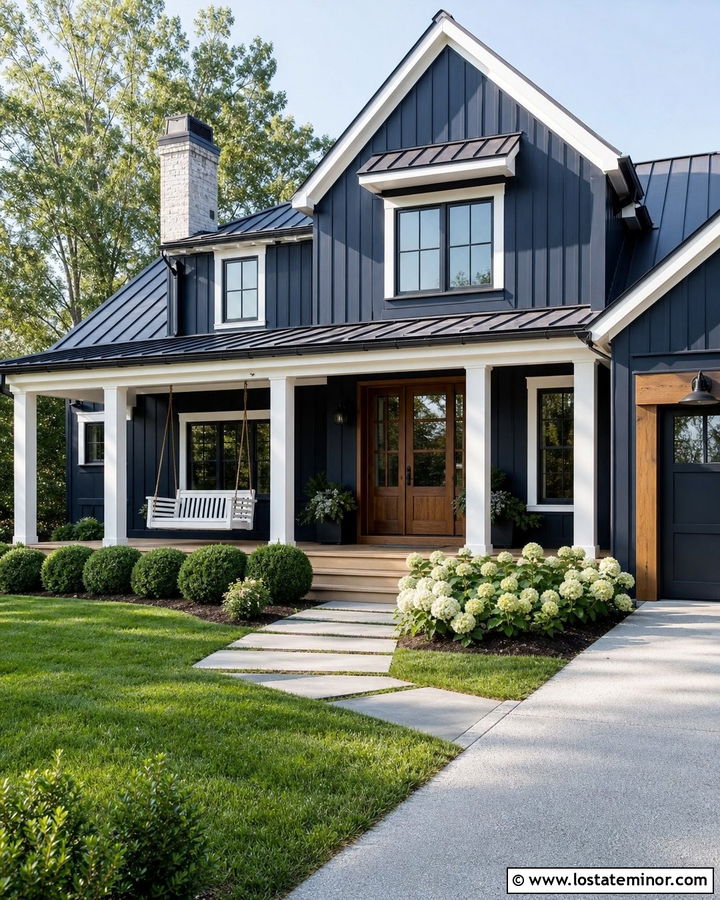
A navy blue modern farmhouse looks clean and familiar when paired with a white wooden porch swing. Use deep navy board-and-batten siding to emphasize the tall gables, then repeat bright white on the window trim, fascia, columns, and swing. A medium-tone cedar front door keeps the strong blue-and-white palette from feeling cold. Black lanterns, standing-seam roof accents, and simple metal railings introduce definition without competing with the swing. Hang the bench at one end of a wide covered porch where it will not block the entrance. Light oak-look composite decking can handle regular use while adding warmth. Finish the curb appeal with hydrangeas, clipped boxwoods, ornamental grasses, and a straight stone walkway leading to the front steps.
2. Navy Blue Craftsman With Cedar Swing
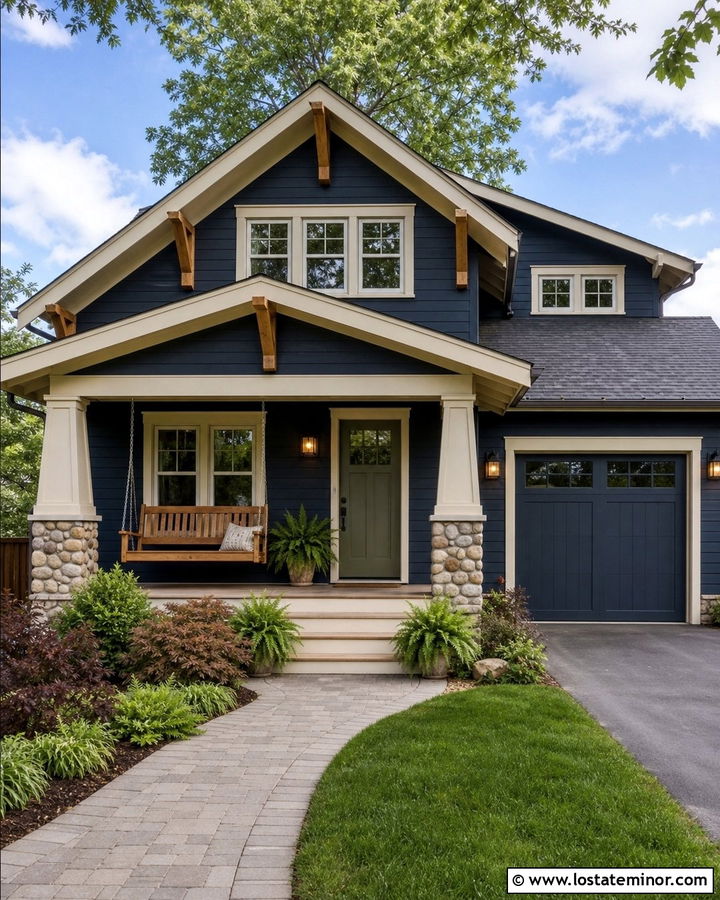
Warm cedar creates an inviting contrast against the solid appearance of a navy blue Craftsman house. Cover the main facade in navy lap siding and use matching shingles beneath the front gable. Cream trim feels softer than brilliant white and works especially well with exposed wood brackets, tapered columns, and a natural cedar swing. Choose a bench with broad arms and straightforward slats so it echoes the home’s handcrafted details. River rock around the column bases can connect the warm wood to the landscaping. A muted olive front door adds another natural note without distracting from the blue siding. Complete the porch with bronze lighting, tan cushions, a woven outdoor rug, and deep green shrubs that frame the house without covering its distinctive low roofline.
3. Navy Blue Colonial With Black Porch Swing
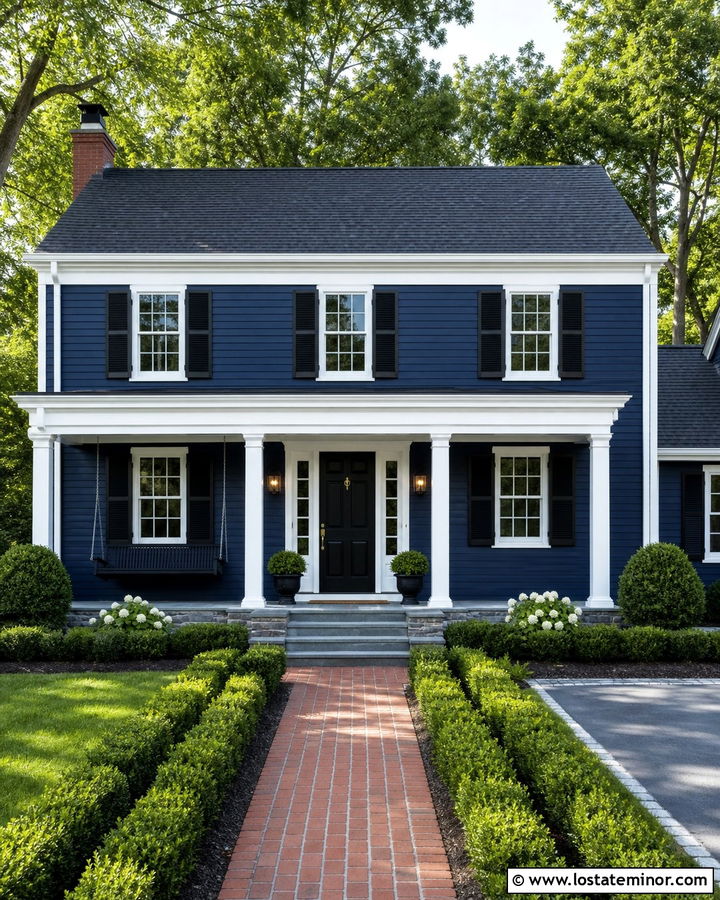
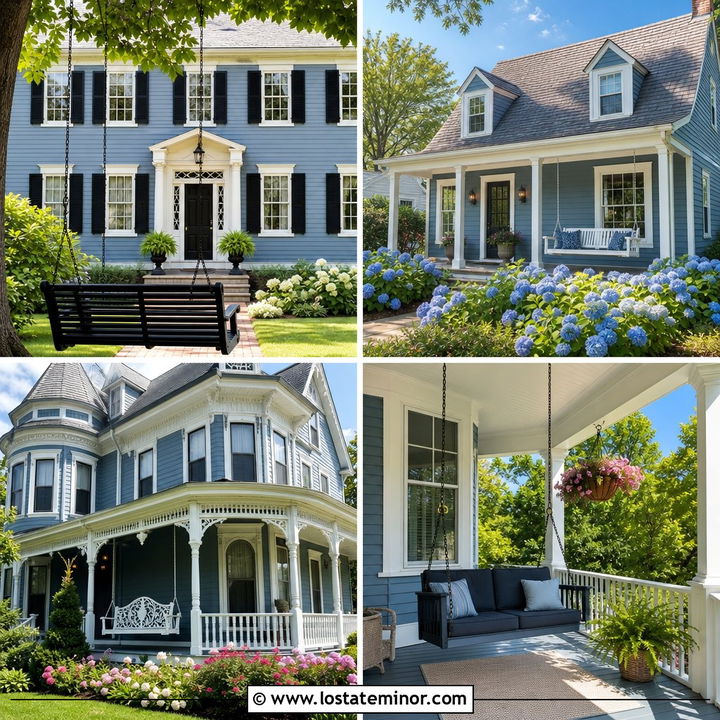
Symmetry makes a navy blue Colonial exterior feel polished, and a black porch swing can add comfort without weakening that orderly appearance. Paint the clapboard siding a rich navy, then highlight the evenly spaced windows, cornice, and entry surround with crisp white. Black shutters, a black paneled front door, and a slim black swing create a repeated accent color across the facade. Position the swing on one side of the covered porch and balance it with two matching planters on the opposite side. Gray stone steps and a charcoal shingle roof help bridge the dark blue and black elements. Keep cushions light, perhaps in ivory or a small navy stripe. Formal boxwood borders and a brick walkway reinforce the home’s traditional, balanced curb appeal.
4. Navy Blue Cape Cod With Rope Swing
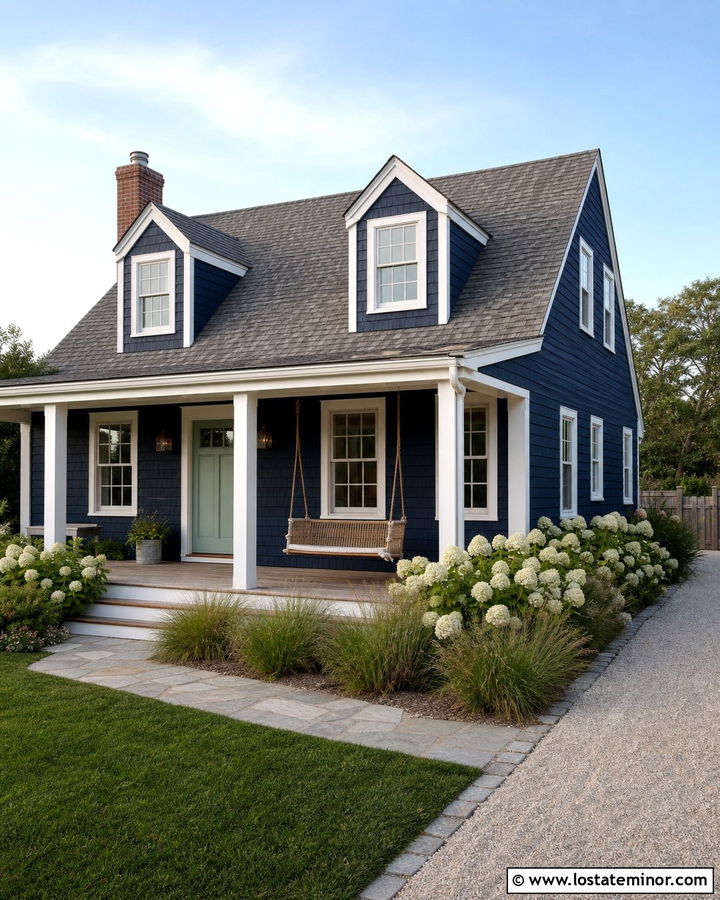
Could a small Cape Cod house support a comfortable swing without looking crowded? It can when the furniture is light and carefully scaled. Choose navy blue cedar shingles or narrow clapboard siding with soft white trim around the dormers, windows, and roofline. Add a compact natural teak swing suspended by thick outdoor rope beneath the porch ceiling. The rope introduces relaxed coastal texture, while the teak warms the dark facade. A sea-glass green door can provide a subtle coastal accent that remains calm beside navy. Use weathered gray porch flooring to complement the roof shingles and create an aged seaside effect. White hydrangeas, beach grass, pea gravel, and an informal flagstone path keep the landscaping airy, making the cottage and its swing feel open rather than overdecorated.
5. Navy Blue Ranch House With Freestanding Swing
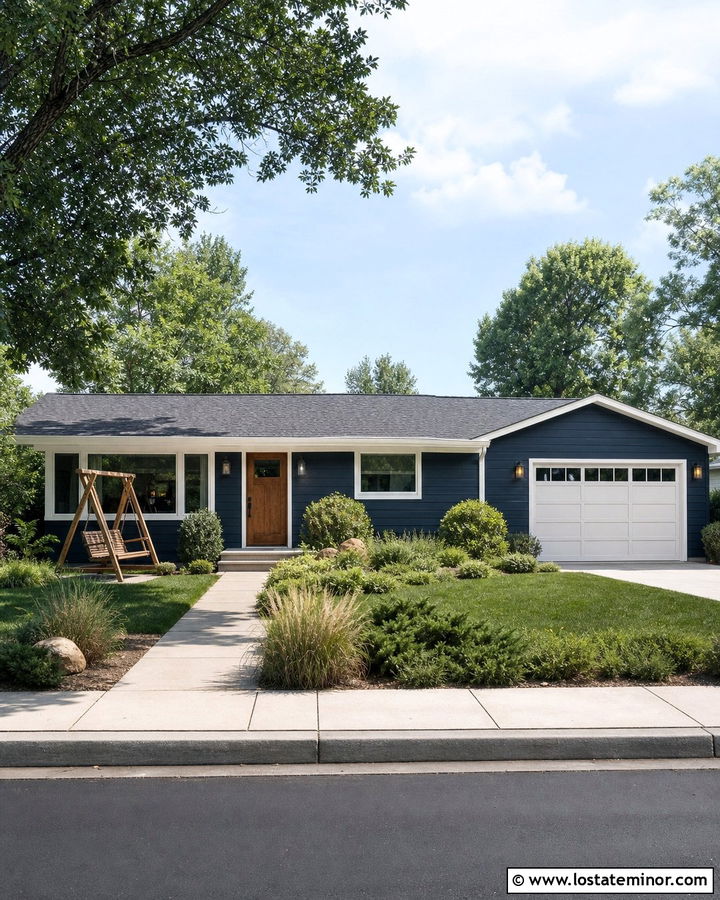
A freestanding swing solves the problem of adding motion and seating to a navy blue ranch house without a deep covered porch. Paint the long horizontal siding a clear navy blue and use warm white trim to outline the windows and low roofline. Place a cedar A-frame swing near the front patio, ideally beside the entry rather than in front of a major window. Matching cedar can appear again on the front door, house numbers, or planter boxes, making the swing part of the exterior scheme. A charcoal roof and dark bronze lights add grounded contrast. Extend large concrete pavers from the driveway to the swing area for a practical connection. Low grasses, spreading juniper, and rounded shrubs preserve sightlines and emphasize the ranch home’s broad, relaxed proportions.
6. Navy Blue Bungalow With Wicker Swing
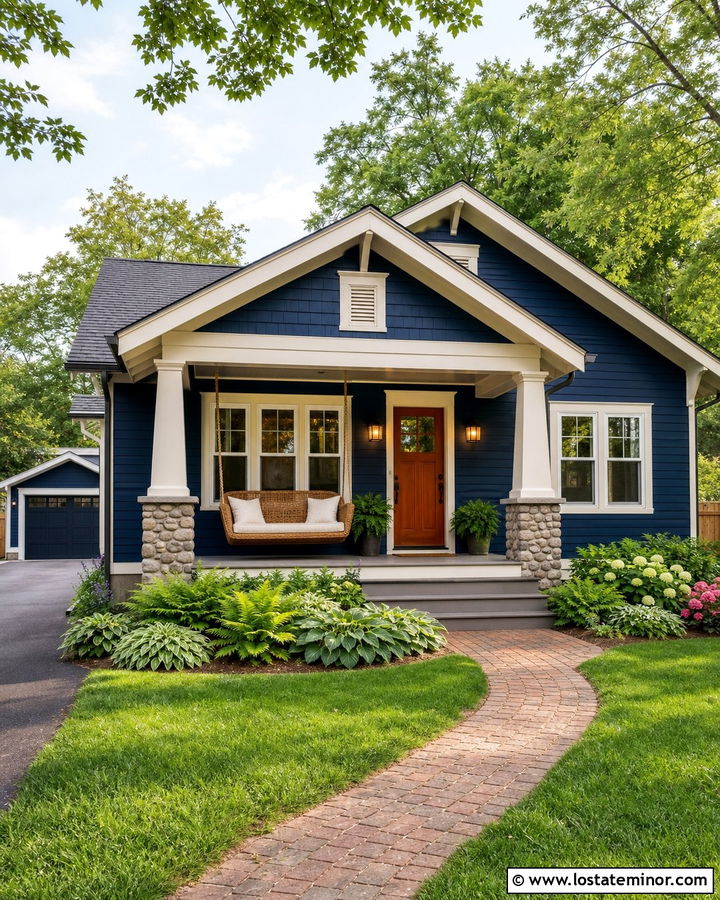
Texture gives a compact navy blue bungalow more visual depth, especially when the porch contains a woven wicker swing. Use deep navy lap siding with ivory trim and a warm gray porch floor. A natural honey-brown wicker swing softens the saturated body color and feels appropriately casual beneath a low, sheltering roof. Add cream cushions with a small blue pattern so the seat relates to both the trim and siding. Tapered porch posts can be painted ivory above stone or brick bases, creating a sturdy frame around the swing. A burnt orange front door offers a controlled touch of warmth. Layer the landscaping with ferns, hostas, flowering shrubs, and a curved brick path. The result is a cozy full-house look that feels colorful but still thoughtfully coordinated.
7. Navy Blue Cottage With Bed Swing
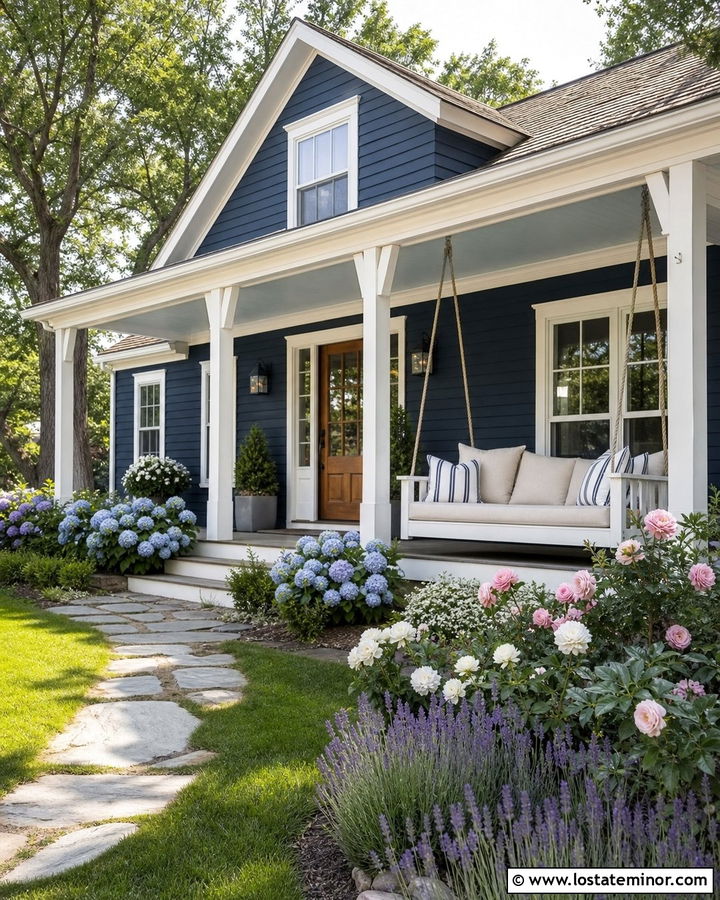
A deep porch becomes an outdoor room when a navy blue cottage includes a cushioned bed swing. Paint the cottage siding a slightly softened navy so it remains rich in bright daylight without appearing almost black. Pair it with creamy white trim, a pale blue porch ceiling, and a natural wood door. The bed swing can feature a simple white frame, thick oatmeal cushions, and navy striped pillows. Hang it securely at one side of the porch, leaving an open route between the steps and front entrance. Wide-plank gray decking provides a neutral foundation for the larger seat. Add white roses, lavender, hydrangeas, and an irregular stone walkway for relaxed garden character. Limit smaller decorations because the generously sized swing should remain the porch’s clear focal point.
8. Navy Blue Victorian House With Spindle Swing
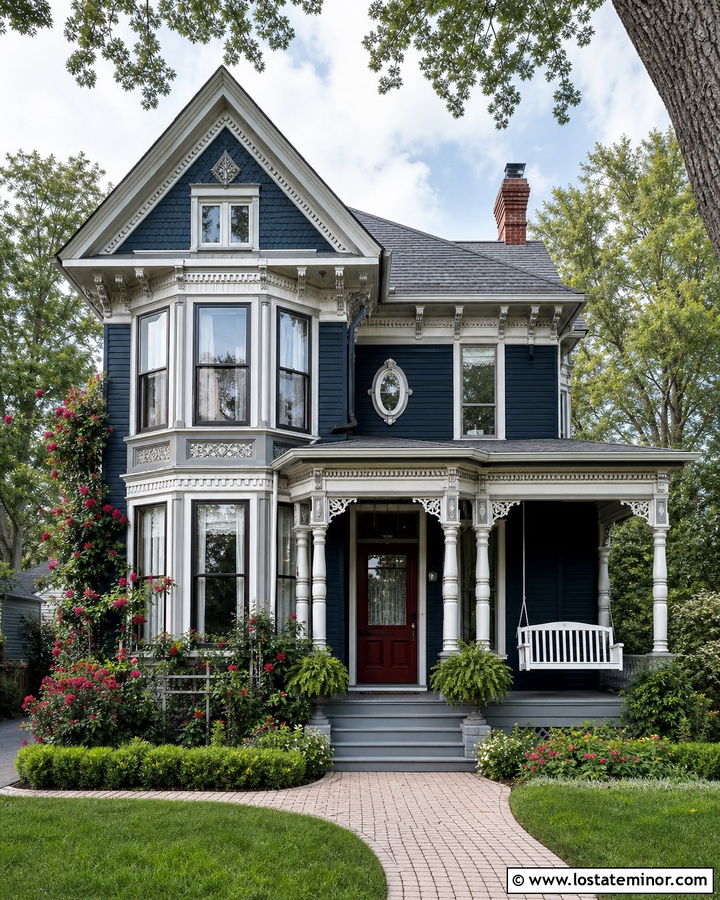
Decorative architecture calls for a swing with enough detail to feel intentional. On a navy blue Victorian house, use a white spindle-back swing that repeats the shapes of turned porch columns and ornamental railings. Keep the main clapboard siding dark navy, while applying white and muted gray to brackets, window surrounds, and patterned gable trim. This controlled three-color palette highlights craftsmanship without making the facade look overly busy. A burgundy front door can introduce historically inspired warmth in a small, concentrated area. Paint the porch floor medium gray to reduce visible wear and ground the lighter details. Hang the swing between structural posts where it appears integrated with the architecture. Ferns, climbing roses, and a curved front path complete the traditional yet approachable exterior.
9. Navy Blue Coastal House With Teak Swing
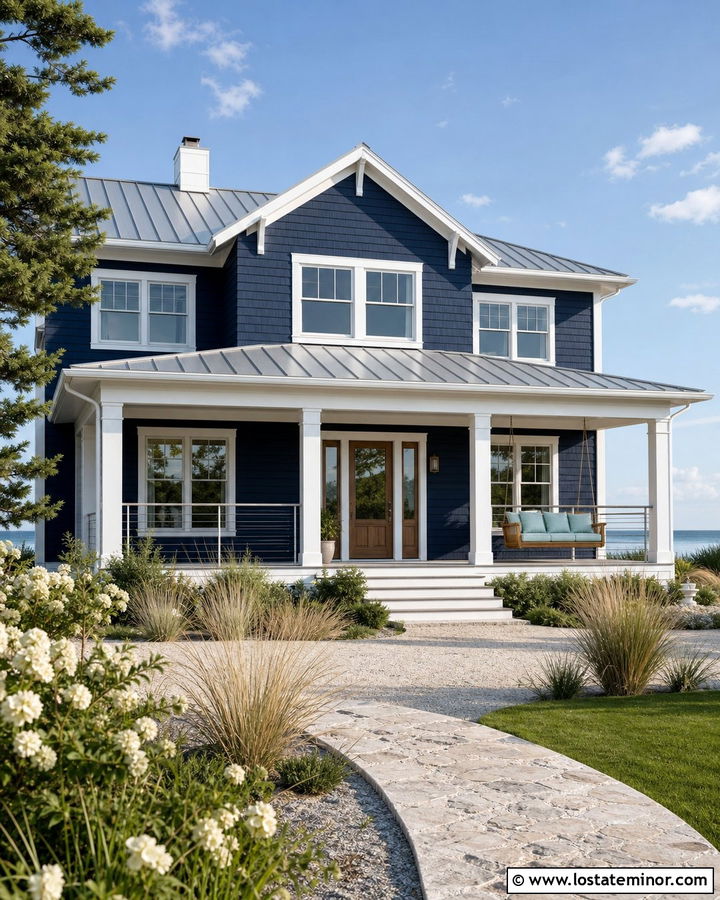
Salt-washed materials and clean colors help a navy blue coastal house feel relaxed instead of formal. Cover the facade in navy shingle siding, then add bright white window trim, square columns, and simple porch railings. A solid teak swing brings natural golden color to the porch and withstands the visual weight of the dark siding. Let the wood weather naturally if you prefer a softer gray-brown finish over time. Aqua or pale blue cushions can connect the seating to the coastal setting without introducing a competing statement color. Use a light gray metal roof or weathered gray shingles to keep the upper facade bright. Sandy gravel, native grasses, white flowering shrubs, and a shell-toned walkway create an easy landscape that frames the entire home and highlights the swing.
10. Navy Blue Split-Level With Pergola Swing
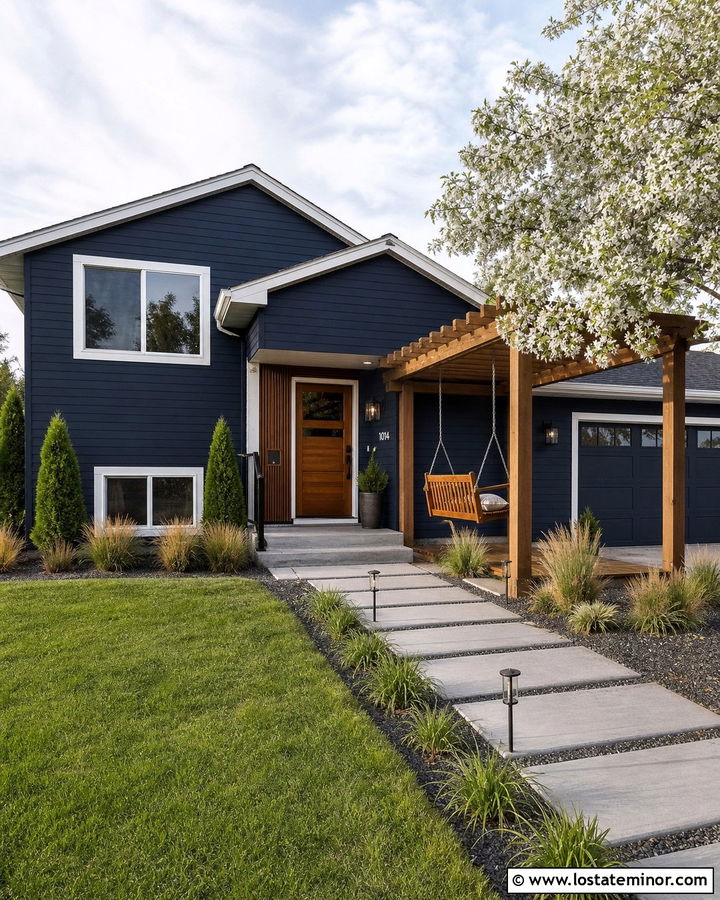
A front-yard pergola can give a navy blue split-level house a stronger entry and a dedicated place for a swing. Use navy horizontal siding on both levels, balanced with warm white trim and a charcoal roof. Build a cedar pergola beside the recessed front steps, then suspend a simple matching bench swing from its upper beams. Repeating cedar on the front door or garage trim ties the new structure to the main house. Keep the pergola open rather than overly decorative so it suits the home’s straightforward midcentury lines. Large concrete pavers can connect the driveway, entry, and swing area. Add low ornamental grasses, upright evergreens, and one small flowering tree to soften the different floor levels. This arrangement turns an awkward front elevation into a unified curb-appeal composition.
11. Navy Blue Modern House With Platform Swing
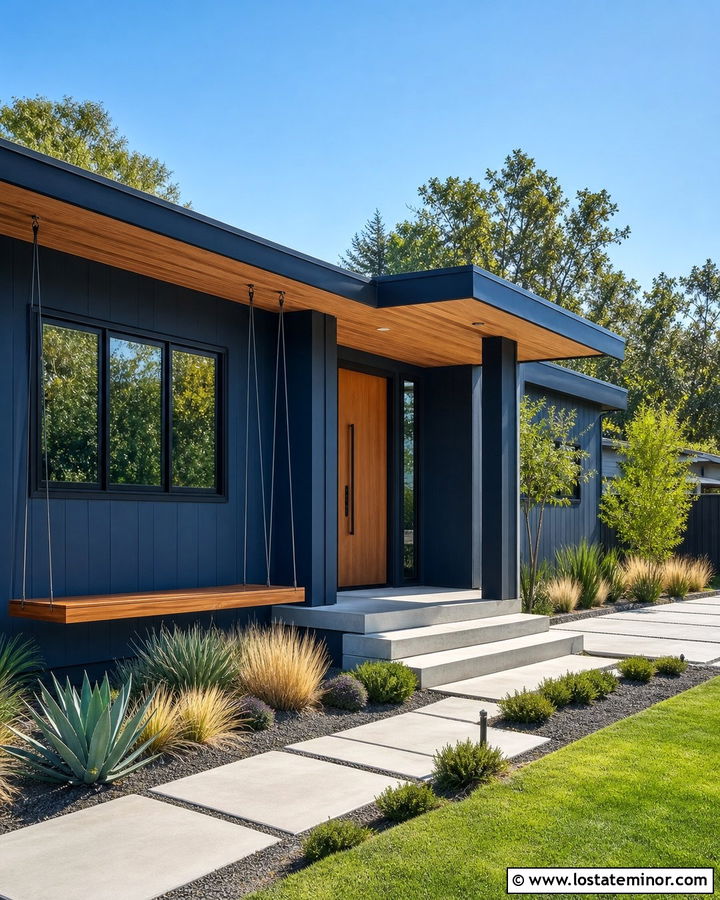
Strong geometry gives a navy blue modern house plenty of visual presence, so the swing should have an equally streamlined shape. Choose smooth navy vertical siding with charcoal window frames and minimal trim. Install a rectangular cedar platform swing beneath a flat-roofed entry canopy, using black suspension cables instead of traditional chains. The warm wood introduces contrast while preserving the clean architectural language. Repeat cedar on a pivot front door, soffit, or privacy screen so the swing does not appear isolated. Pale concrete steps and a wide walkway can brighten the darker materials. Keep cushions low-profile in light gray or off-white. Structured plantings of ornamental grass, agave, compact shrubs, and one sculptural tree support the modern facade while leaving clear views of its windows, entry, and suspended seating.
12. Navy Blue Tudor House With Oak Swing
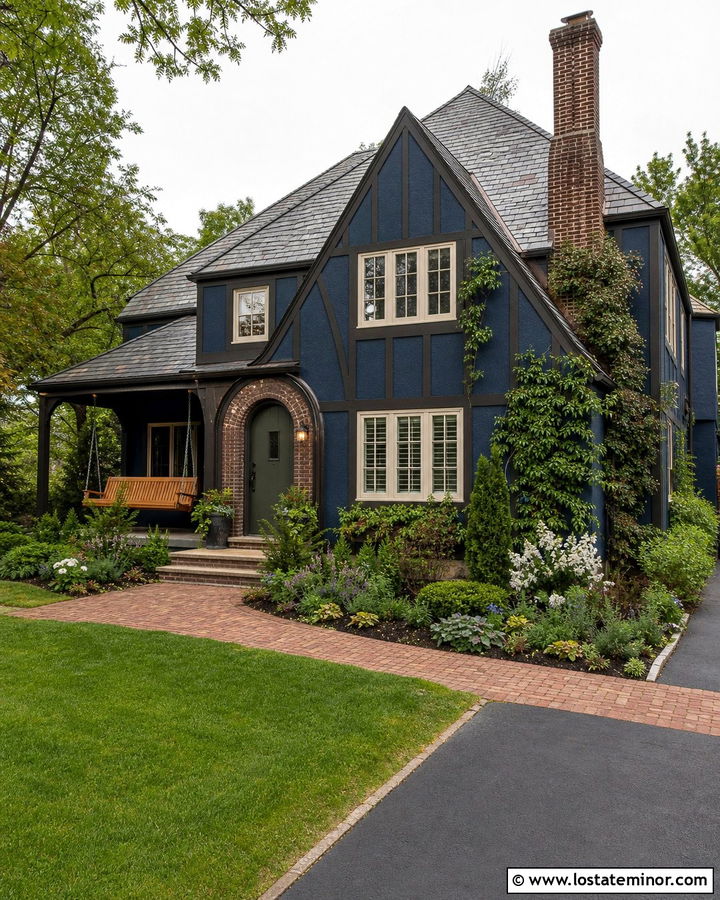
A Tudor exterior can wear navy blue beautifully when its traditional materials remain visible. Use deep navy stucco or painted siding between dark timber details, then soften the contrast with warm cream window trim. An oak swing with a high slatted back suits the home’s substantial roofline and handcrafted character. Place it beneath a small covered side porch so it complements rather than crowds the arched front doorway. Dark bronze chains and lanterns relate to the timber accents. Retain natural red or brown brick around the chimney, porch base, and walkway to add age and warmth. An olive green door offers a subtle heritage-inspired accent. Layered evergreens, climbing plants, and loose cottage borders help the navy facade settle naturally into the landscape while keeping the oak swing visible.
13. Navy Blue Saltbox House With Black Swing
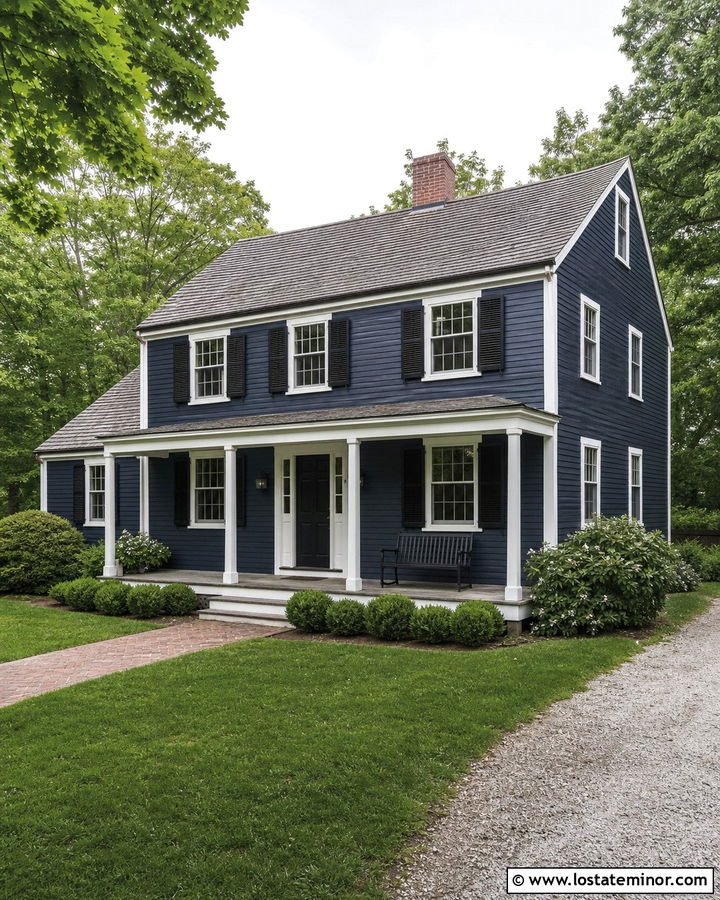
The simple silhouette of a saltbox house benefits from a disciplined navy, white, and black palette. Paint the long clapboard walls a classic navy blue, then use crisp white around the windows, corners, and modest porch columns. A slim black wooden swing introduces a sharp accent that can be repeated on shutters, lanterns, and the front door. Choose a swing without ornate carving, since straightforward construction better matches this historic architectural form. Weathered gray porch boards and roof shingles provide a softer transition between the three high-contrast colors. A brick path, low boxwood hedge, and traditional foundation plantings maintain the home’s understated character. Position the swing against an uncluttered section of siding, where its black outline remains clear and the navy exterior can serve as a strong backdrop.
14. Navy Blue Cabin With Log Swing
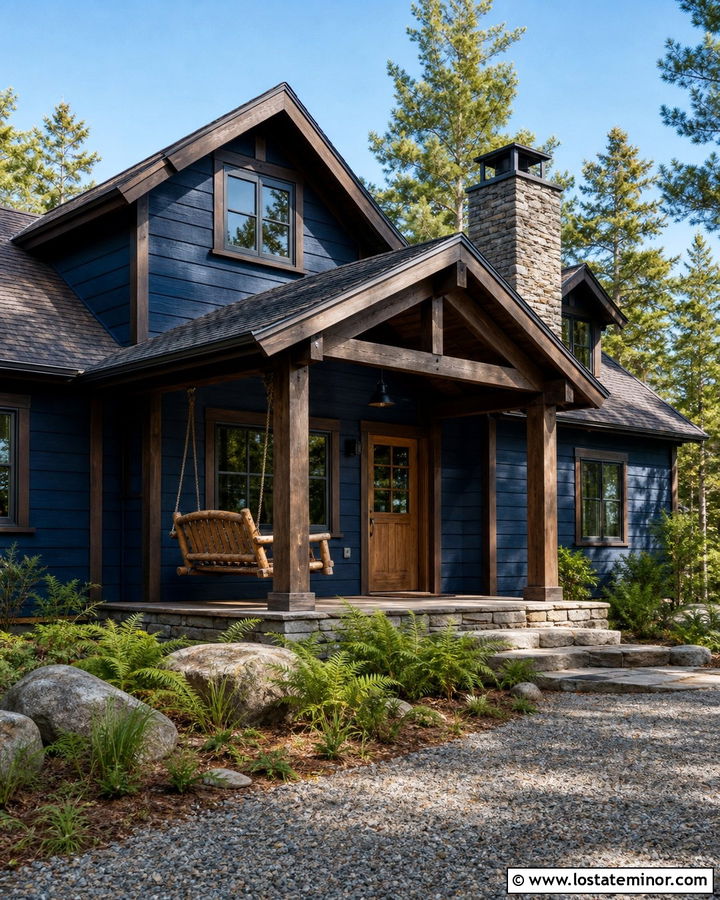
Woodland surroundings can make a navy blue cabin feel dramatic, but rustic wood details keep it grounded. Apply deep navy stain or paint to rough-sawn siding and pair it with dark brown trim around the windows and eaves. A log swing made from sealed cedar or pine fits naturally beneath a timber-framed porch. Use strong black hardware and leave enough clearance around the bench for safe movement. A stone chimney, stacked-stone porch base, and natural flagstone steps reinforce the cabin’s relationship with the site. Keep the front door in a medium wood tone rather than adding another paint color. Tan seat cushions can lighten the swing without looking delicate. Native ferns, boulders, pine trees, and an informal gravel drive complete this practical mountain-inspired exterior.
15. Navy Blue Southern House With Daybed Swing
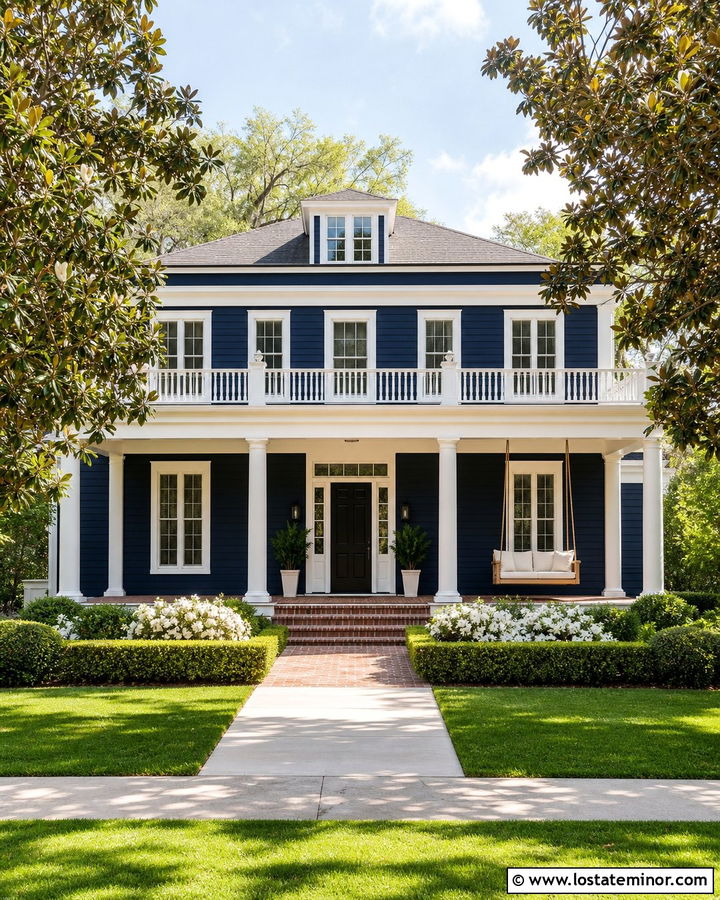
Long Southern porches offer enough room for a generous daybed swing and a layered exterior color scheme. Paint the house navy blue, then use warm white on the columns, railings, window trim, and deep overhang. A pale blue porch ceiling reflects daylight and visually cools the seating area. Choose a natural cypress daybed swing with ivory cushions and a few restrained navy patterns. The light wood prevents the broad facade from becoming too formal. Install the swing at one end of the porch, leaving the central steps and front door easy to access. Red brick porch flooring adds warmth and hides everyday wear. Magnolias, white azaleas, clipped hedges, and a broad lawn frame the home while preserving the elegant symmetry associated with Southern architecture.
16. Navy Blue Mediterranean House With Rattan Swing
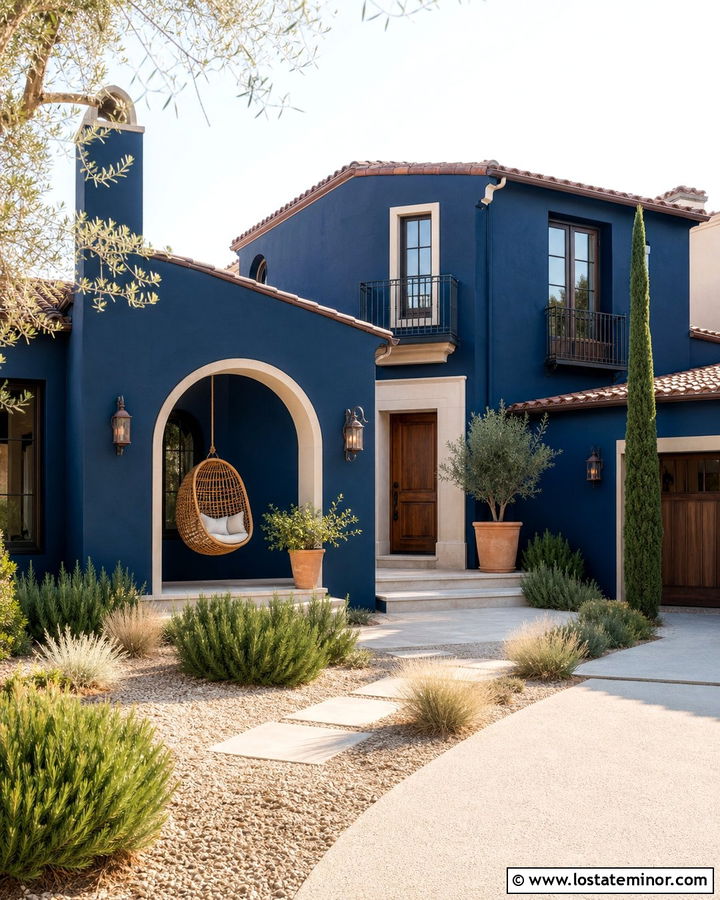
Navy blue offers an unexpected update for a Mediterranean house when it is balanced by earthy textures. Use navy-painted stucco across the main facade and creamy off-white around arched windows, columns, and roof edges. Terracotta roof tiles immediately warm the strong blue and connect it to a caramel rattan swing beneath the front loggia. Choose a swing with a rounded woven frame that echoes the arches without becoming overly ornate. Sand-colored cushions and dark bronze hardware complete the restrained palette. Repeat terracotta in large planters beside a natural wood front door. A pale stone walkway, gravel planting beds, olive trees, rosemary, and drought-tolerant grasses support the architecture. Bright sunlight will reveal the blue undertones while emphasizing the contrast among stucco, tile, woven fiber, and stone.
17. Navy Blue Brick House With Iron Swing
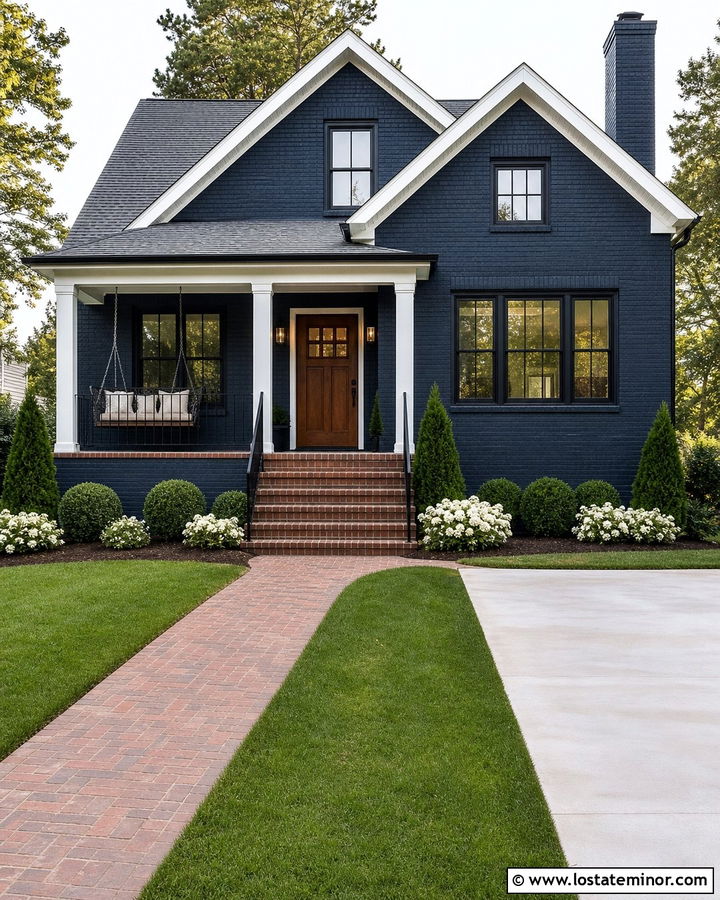
Painted brick gives navy blue extra depth because the mortar lines and rough surface remain visible. Balance that texture with bright white trim, a medium gray roof, and a black iron swing on the covered porch. Select a swing with a straightforward metal frame and add neutral cushions for comfort. Black can then reappear on the lanterns, window frames, gutters, and railing, creating a consistent outline around the facade. A stained walnut front door prevents the navy, white, and black scheme from feeling too severe. Use red brick steps or a matching walkway if you want to preserve a reference to the house’s original material. Neatly shaped shrubs, white flowers, and a green lawn keep the view fresh while allowing the painted brick and iron seating to remain prominent.
18. Navy Blue Board And Batten House With Cedar Swing
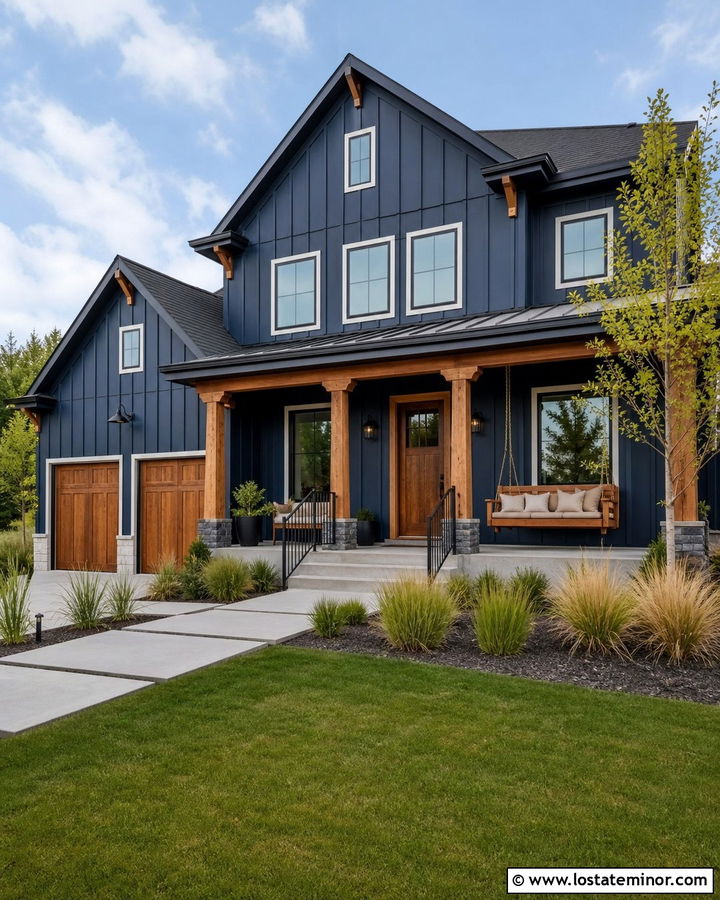
Vertical board-and-batten siding makes navy blue appear tall, crisp, and contemporary. Pair it with a cedar porch swing to bring warmth into the high-contrast exterior. The same wood tone can be repeated on porch beams, garage doors, and a recessed front entry. Use soft white around the windows and charcoal on the roof, gutters, and metal railing. A clean-lined cedar swing with wide horizontal slats will relate to the modern facade while providing a noticeable change in direction from the vertical siding. Choose oatmeal cushions rather than bright patterns so the wood grain stays visible. Concrete porch flooring and broad rectangular steps give the exterior a solid neutral base. Finish with native grasses, young trees, black planters, and a wide walkway that clearly leads visitors toward the entry and swing.
19. Navy Blue Shingle House With Weathered Swing
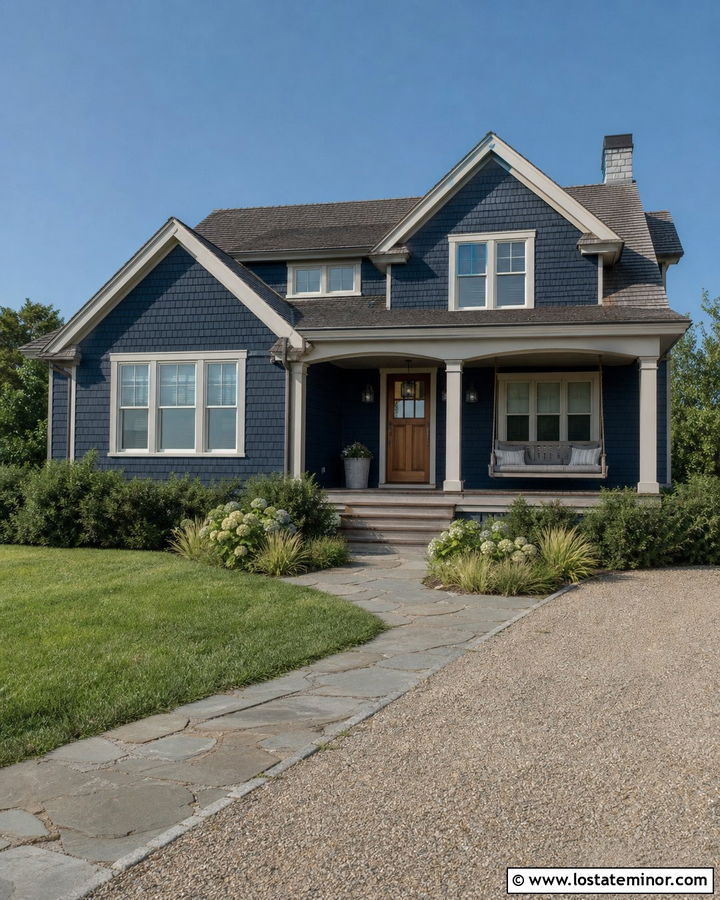
Weathered textures can soften the intensity of a navy blue shingle house. Use dark navy cedar shingles on the upper and lower facade, then frame the windows, porch, and eaves with an aged warm white. A gray-washed wooden swing feels comfortable within this material palette because it reflects the tones of a weathered roof and coastal decking. Add faded blue cushions and one cream throw pillow for a subtle layered look. A natural oak front door brings a small amount of warmth to the center of the house. Use galvanized porch lights and simple metal gutters rather than shiny finishes. Hydrangeas, low junipers, beach grasses, and irregular flagstone create an established landscape. The completed exterior feels collected over time, with the swing naturally belonging to the porch rather than appearing newly added.
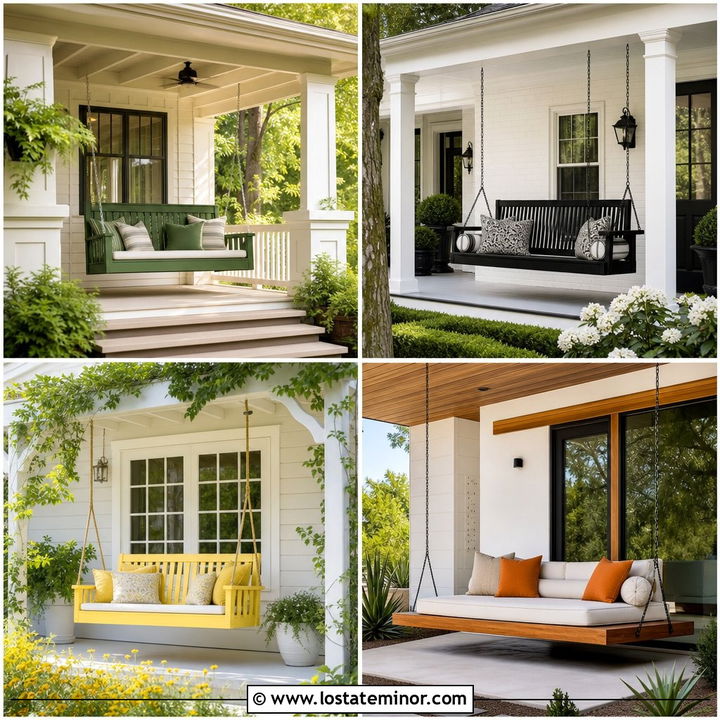
20. Navy Blue Lake House With Double Swings
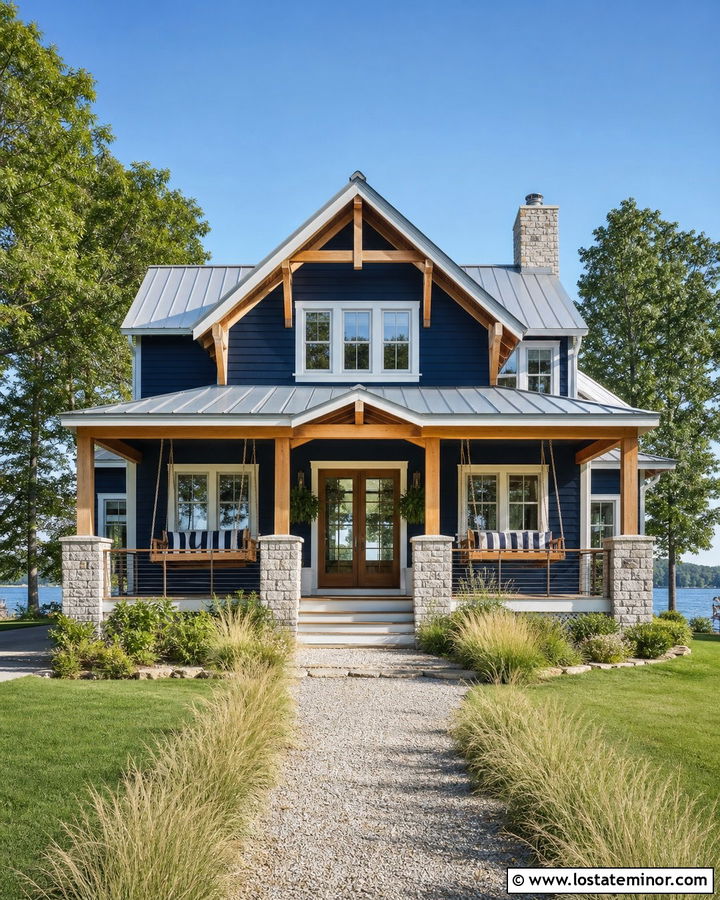
A broad lake house porch can support two matching swings and still maintain an open view. Cover the exterior in navy blue lap siding with white trim, exposed natural wood beams, and a light gray metal roof. Place matching teak bench swings at opposite ends of the porch to establish balance around the central entry. Use navy and cream striped cushions to connect the furniture directly to the house palette. A glass-paneled wood door can preserve views through the home while repeating the warm swing material. Cable railings keep the facade visually light and suit the waterside setting. Add stone porch columns, broad steps, native grasses, and a gravel walkway leading toward the lawn. The twin swings make the entire frontage feel social, symmetrical, and ready for relaxed outdoor use.
21. Navy Blue A-Frame House With Hanging Swing
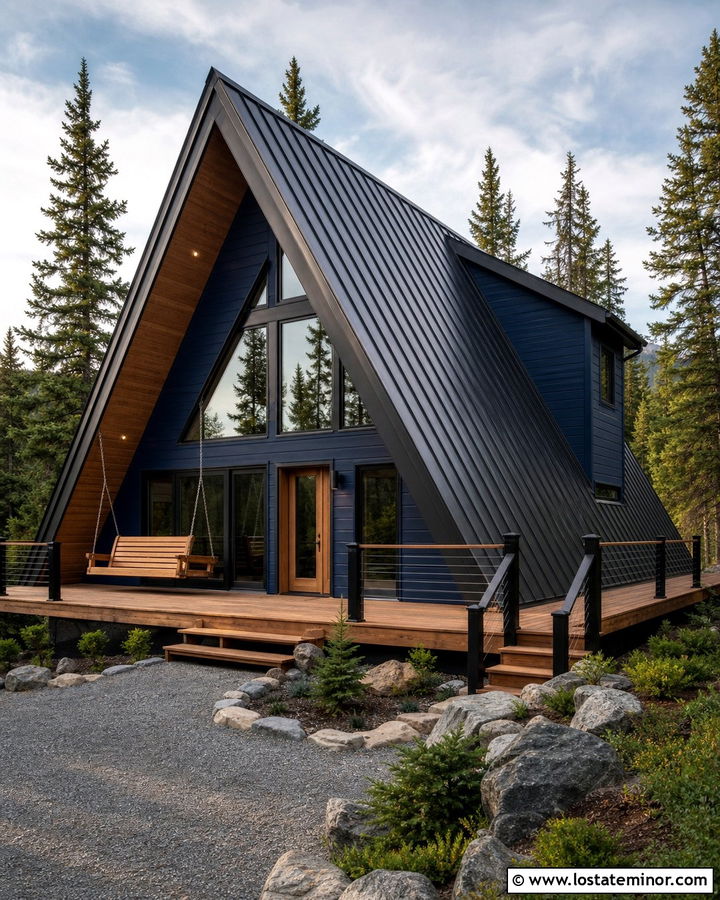
An A-frame house already has a powerful silhouette, so a low hanging swing helps balance its dramatic roof. Stain or paint the main siding navy blue, then use charcoal trim around the triangular windows and roof edges. Add natural cedar to the front deck, entry door, and simple hanging bench swing. Position the swing under the extended roof or a small side canopy rather than covering the central glass. Black chains and railing cables create continuity with the dark window frames. Keep the swing cushions light gray to prevent the deck from becoming visually heavy. Gravel paths, evergreen trees, low ground cover, and a few large stones suit the mountain setting. This combination maintains the A-frame’s bold geometry while making the outdoor entrance feel warmer and more usable.
22. Navy Blue Prairie House With Slatted Swing
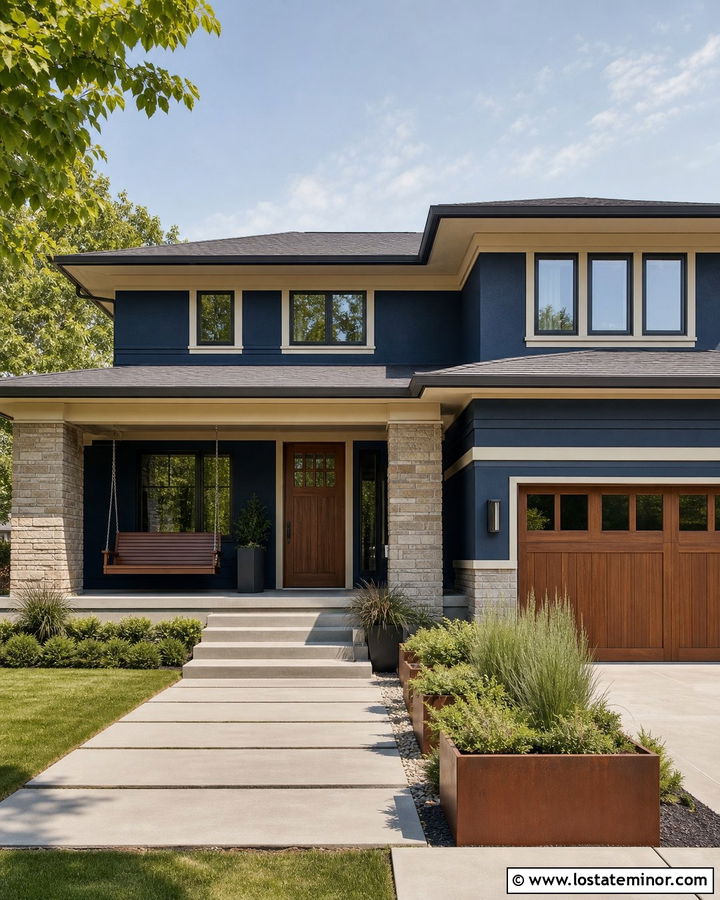
Long horizontal lines define Prairie architecture, and a wide slatted swing can reinforce them. Use navy blue stucco or lap siding beneath broad roof overhangs, with taupe stone around the foundation and porch columns. Instead of bright white, select muted cream trim so the palette remains connected to the natural materials. A walnut-toned swing with closely spaced horizontal slats will echo the windows, roofline, and porch railing. Suspend it with dark bronze chains beneath a low covered terrace. Keep the front door and garage door in a related walnut finish for balance. Large concrete steps, rectangular planters, ornamental grasses, and low spreading shrubs emphasize the home’s width. The navy exterior supplies depth, while the wood swing and stone provide an earthy transition to the surrounding landscape.
23. Navy Blue Duplex With Matching Porch Swings
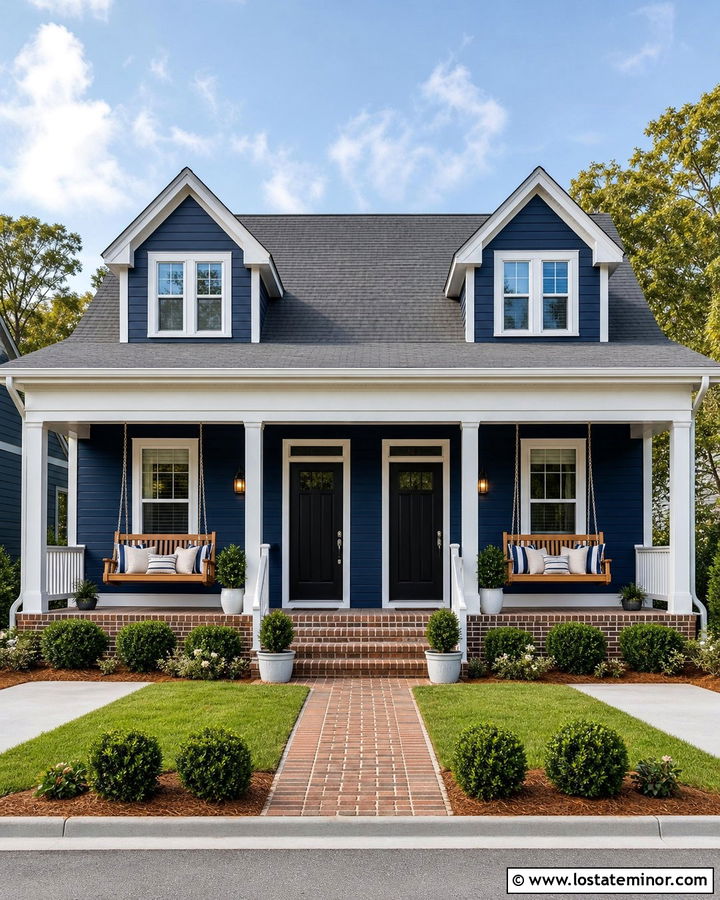
Matching swings can unify a navy blue duplex while still allowing each entrance to have a distinct personality. Paint the entire facade navy blue and use white trim to define the shared roofline, windows, columns, and porch railing. Install identical natural wood swings on opposite sides of the porch to create visual balance. Different cushions can subtly identify each unit—perhaps cream stripes on one side and a small geometric blue pattern on the other. Repeat black on both front doors, lanterns, and mailbox hardware. A single gray shingle roof keeps the structure cohesive. Use a central brick walkway that divides near the steps, along with mirrored shrubs and planters. This complete arrangement looks orderly from the street without making the two entrances feel anonymous or overly commercial.
24. Navy Blue Townhouse With Compact Swing
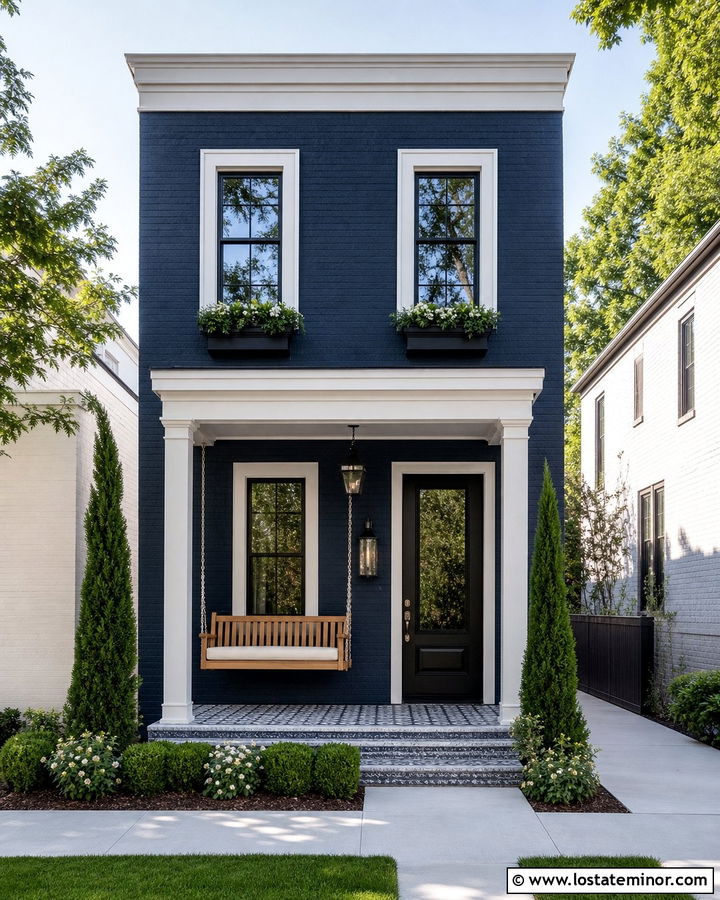
A narrow townhouse porch requires careful planning, but a compact swing can still provide useful seating. Choose a navy blue painted brick or smooth siding facade with warm white window trim and a black front door. Install a short two-seat swing along the side wall so its movement does not interrupt the main path to the entrance. Natural teak or acacia wood supplies warmth without making the small porch feel visually crowded. Use slim black chains and a fitted cream cushion to maintain a clean appearance. A small patterned tile floor can add character while connecting the blue, white, and black palette. Keep the landscaping vertical with columnar evergreens, window boxes, and narrow planting beds. The result feels comfortable and finished despite the home’s limited frontage.
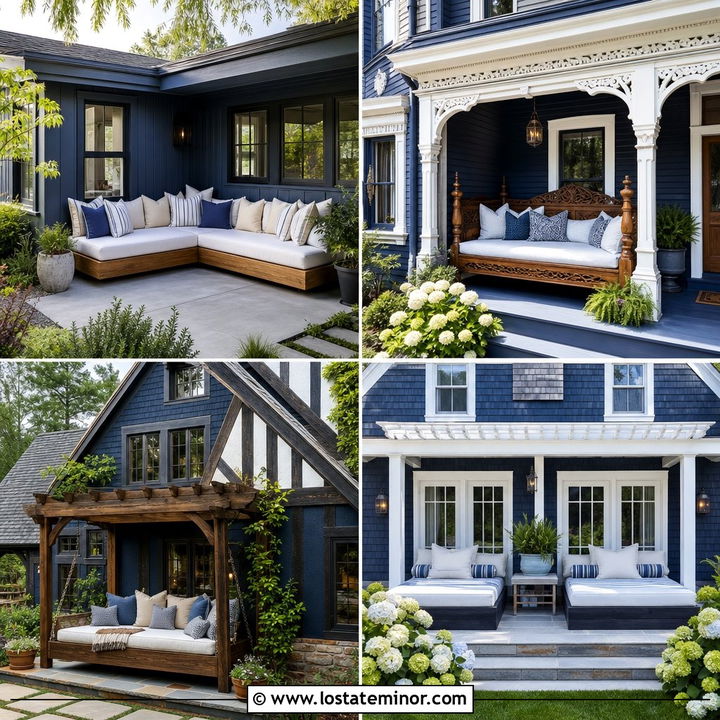
25. Navy Blue House With Garage Pergola Swing
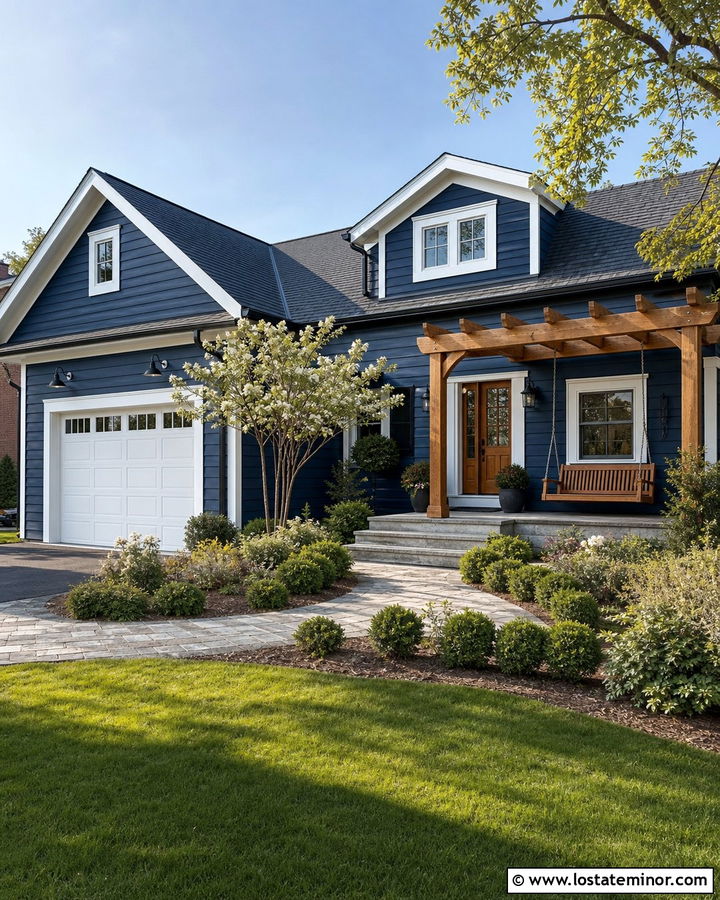
A house with a front-facing garage can feel more welcoming when a swing pergola redirects attention toward the pedestrian entrance. Paint the main siding navy blue and use white trim around the windows, roofline, and garage door. Build a cedar pergola between the garage and front steps, then hang a matching wood swing beneath it. Repeat cedar on the front door and small garage details to connect both sides of the facade. Black lighting, gutters, and swing hardware provide a crisp outline. Use a stone or concrete patio under the structure so the seating area feels permanent. Low hedges can partially screen the driveway without hiding the house. A curved walkway, flowering tree, and layered foundation plants help the pergola and swing become part of the complete curb-appeal design.
26. Navy Blue Mountain House With Black Frame Swing
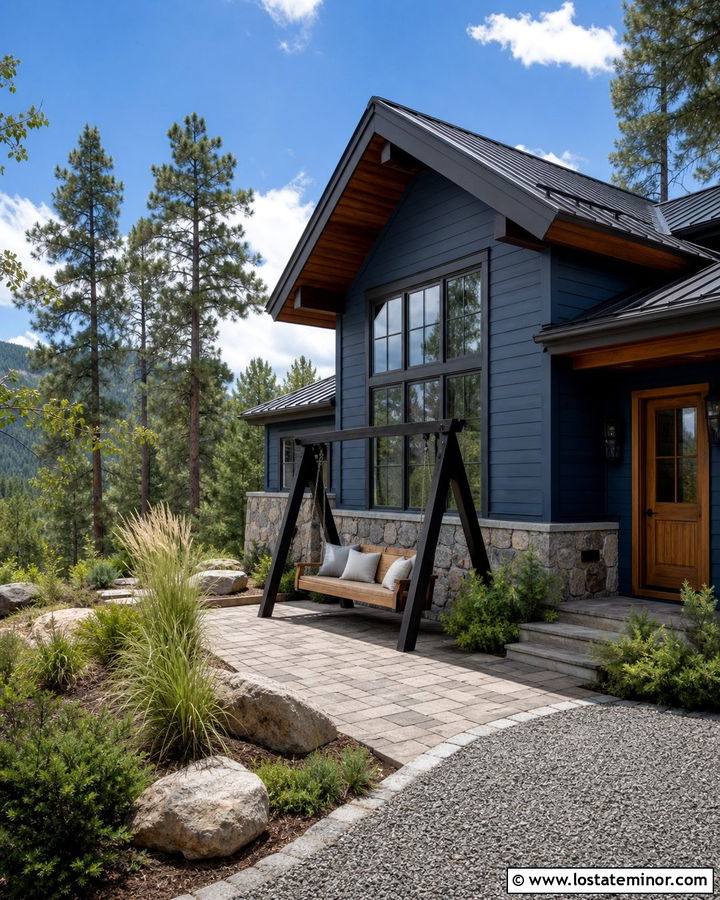
A black A-frame swing gives a navy blue mountain house a bold, durable outdoor focal point. Use deep navy fiber-cement siding with charcoal window frames, a black metal roof, and natural stone around the lower facade. Position the freestanding swing on a level gravel or paver terrace beside the covered entry. Its black frame should relate to the roof and windows, while a cedar bench seat adds warmth against the cool colors. Repeat cedar beneath the roof overhang and on the front door for a connected finish. Tan or light gray cushions will remain visible against the dark structure. Native grasses, evergreen shrubs, boulders, and tall pine trees complete the setting. The finished home looks rugged and contemporary without sacrificing a comfortable place to enjoy the landscape.
27. Navy Blue Lowcountry House With Rope Daybed Swing
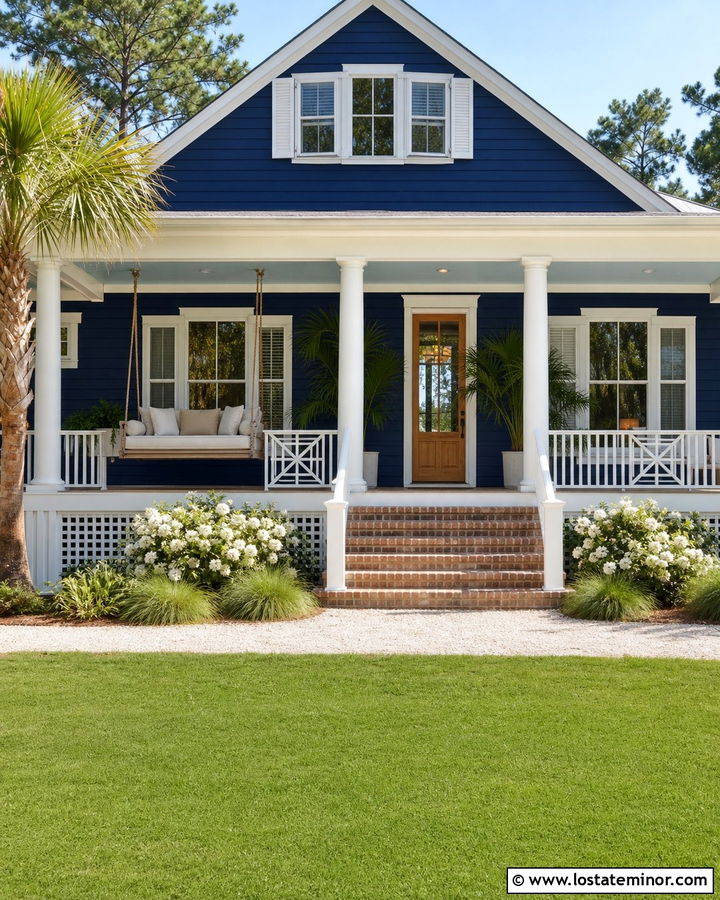
Raised foundations and wide porches make a Lowcountry house especially well suited to a rope-hung daybed swing. Paint the siding navy blue and apply crisp white to the tall columns, railings, window surrounds, and exposed foundation lattice. Add a pale blue porch ceiling to reflect natural daylight above the seating area. A white daybed swing suspended with thick natural rope keeps the porch bright against the dark siding. Use sand-colored cushions and subtle blue pillows for an easy coastal connection. Warm brick steps can ground the elevated facade, while a natural wood front door adds another organic material. Palmettos, white flowering shrubs, ornamental grasses, and a shell or gravel drive create an appropriate regional landscape. The complete exterior feels airy despite its saturated navy body color.
28. Navy Blue Foursquare House With Red Swing
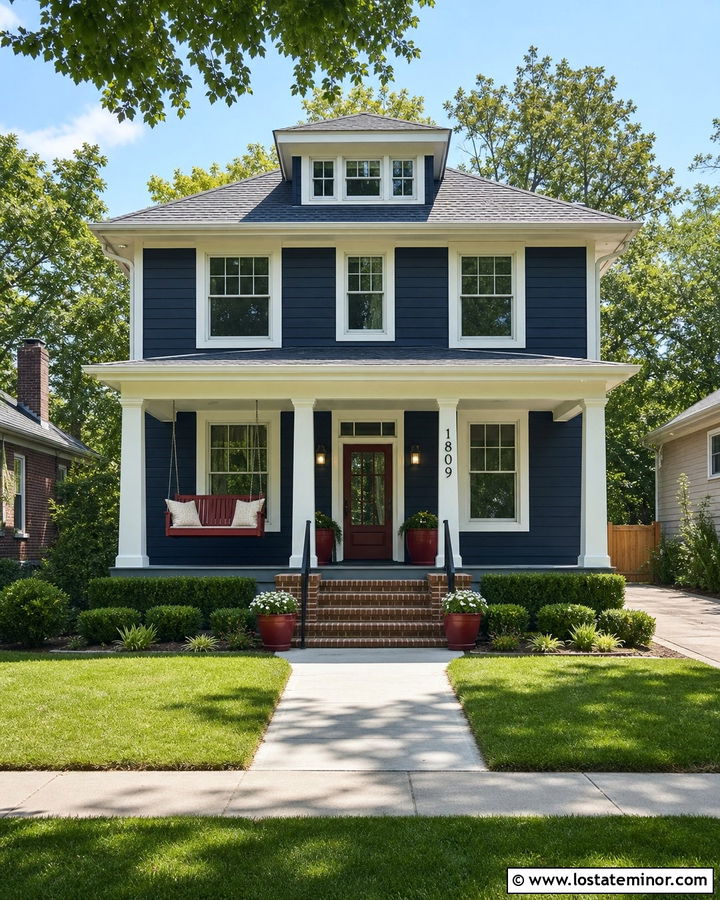
A muted red swing can give a navy blue American Foursquare house a memorable but controlled accent. Cover the boxy facade in navy clapboard siding, then use warm white on the broad porch columns, trim, and upper dormer. Choose a deep barn-red wooden swing rather than a bright primary red. This darker tone complements navy while respecting the home’s traditional character. Repeat the red only once, perhaps on a small portion of the front door or a pair of planters, to avoid a themed appearance. Medium gray porch flooring and roof shingles provide a practical neutral bridge. Symmetrical shrubs, brick steps, and a straight front walk reinforce the architecture’s solid proportions. Cream cushions can soften the swing and connect it to the surrounding white porch details.
29. Navy Blue Shotgun House With Yellow Swing
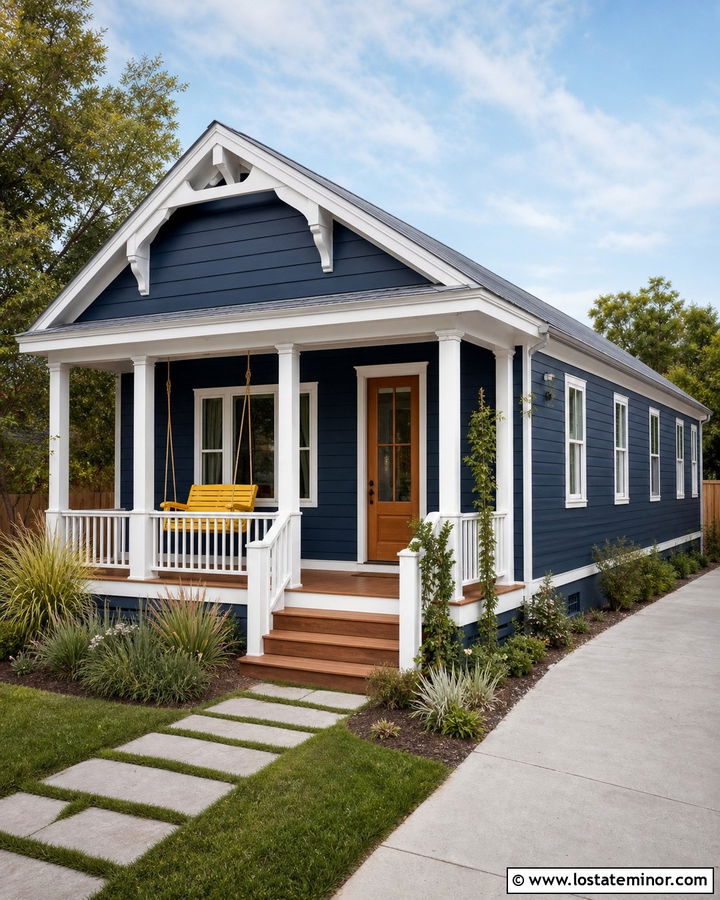
A narrow navy blue shotgun house can carry a cheerful yellow swing when the remaining palette stays simple. Paint the long siding and front gable a rich navy, then use crisp white on the trim, porch posts, railing, and decorative brackets. Add a compact mustard-yellow swing near one end of the front porch. The muted golden color feels warm against blue without becoming overly bright. Keep the front door natural wood or white so it does not compete with the seating. A gray metal roof and medium-tone wood porch floor offer practical neutral surfaces. Use narrow garden beds filled with ornamental grasses, flowering perennials, and climbing vines. A straight stepping-stone path emphasizes the house’s slender shape and leads the eye toward the colorful, welcoming porch.
30. Navy Blue Contemporary Farmhouse With Cable Swing
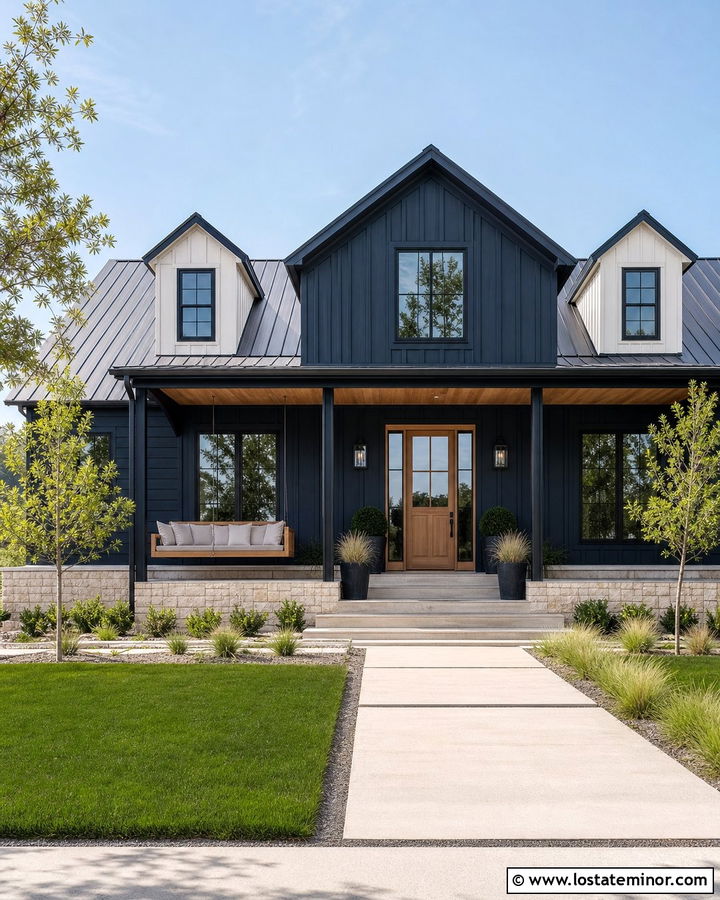
A cable-hung swing gives a navy blue contemporary farmhouse a lighter, more refined alternative to heavy chains. Use deep navy vertical siding across the main volumes and warm white on secondary gables, trim, and porch columns. Place a streamlined oak swing beneath the covered entry, suspended by thin black cables that relate to the windows and metal roof. Repeat oak on the oversized front door and porch ceiling to distribute warmth across the facade. Pale limestone around the foundation adds subtle texture without interrupting the clean palette. Choose tailored light gray cushions and avoid excessive porch accessories. A wide concrete walkway, clipped grasses, young trees, and simple black planters support the modern appearance. Every material contributes to one balanced exterior rather than competing for attention.
Conclusion:
These 30 Navy Blue House Design With Swing Ideas show how one strong exterior color can support many architectural looks. White trim creates crisp contrast, while cream, cedar, brick, stone, and weathered wood offer softer transitions. The swing should complement the home’s proportions, materials, and porch depth rather than functioning as an unrelated accessory. Before choosing a final scheme, sample the navy paint on multiple walls and check it during bright sun, shade, and cloudy conditions. Measure the swing area carefully, allow safe clearance, and confirm that porch framing can support suspended furniture. With the body color, trim, roof, swing, hardscaping, and plants planned together, a navy blue exterior can feel both distinctive and genuinely welcoming.

Related posts: