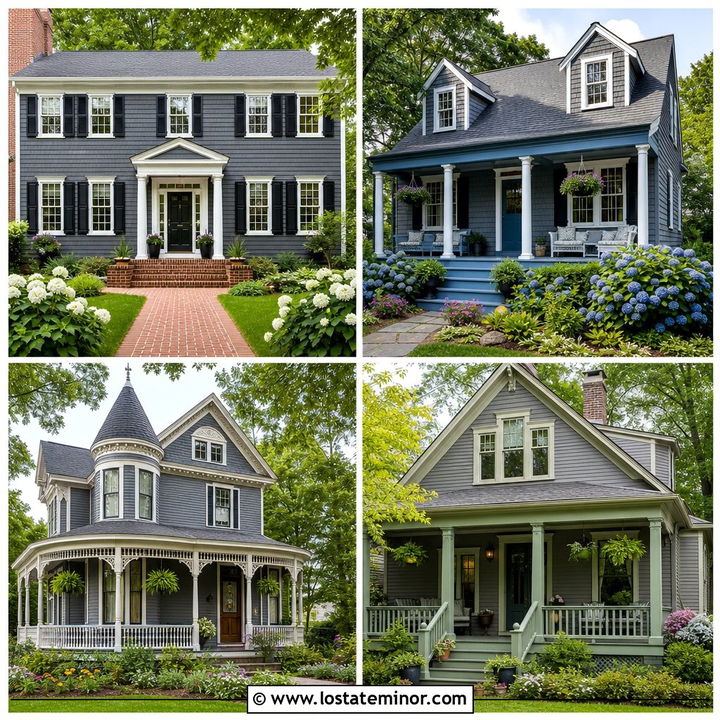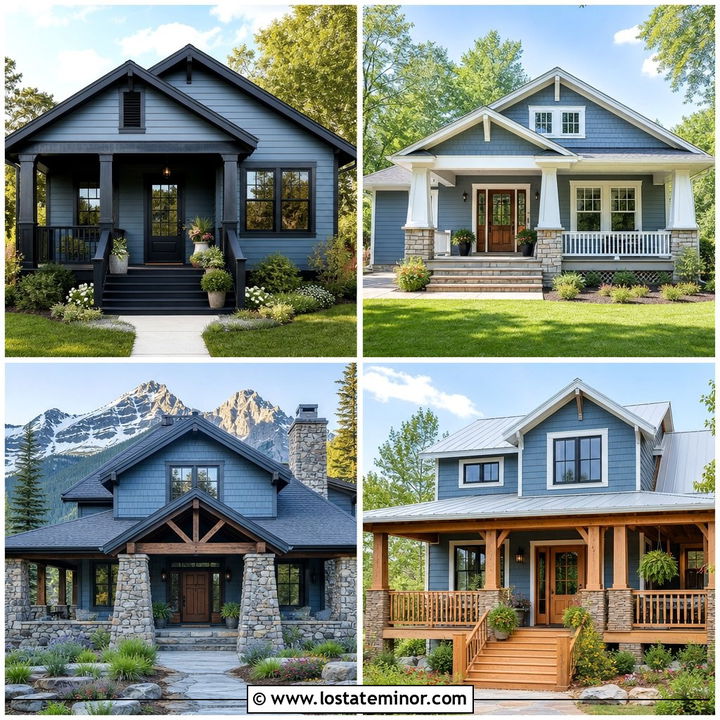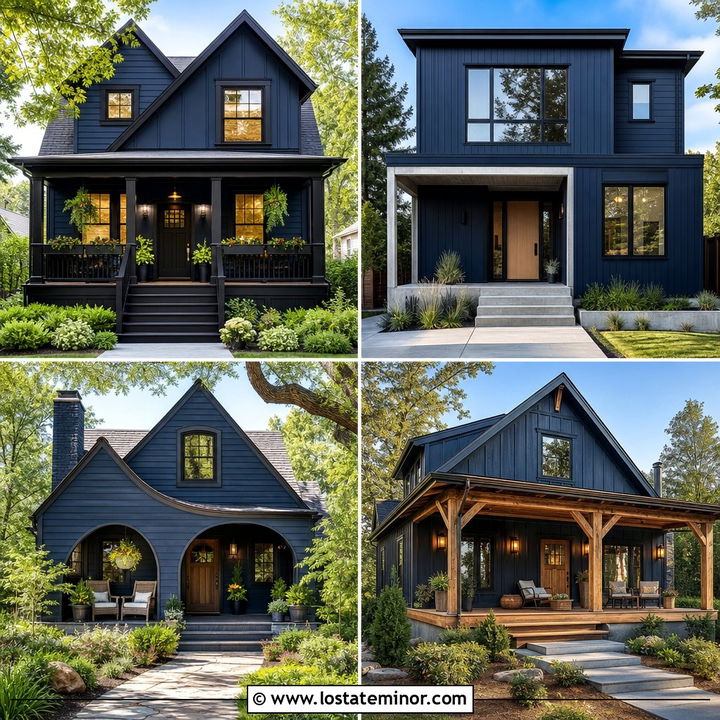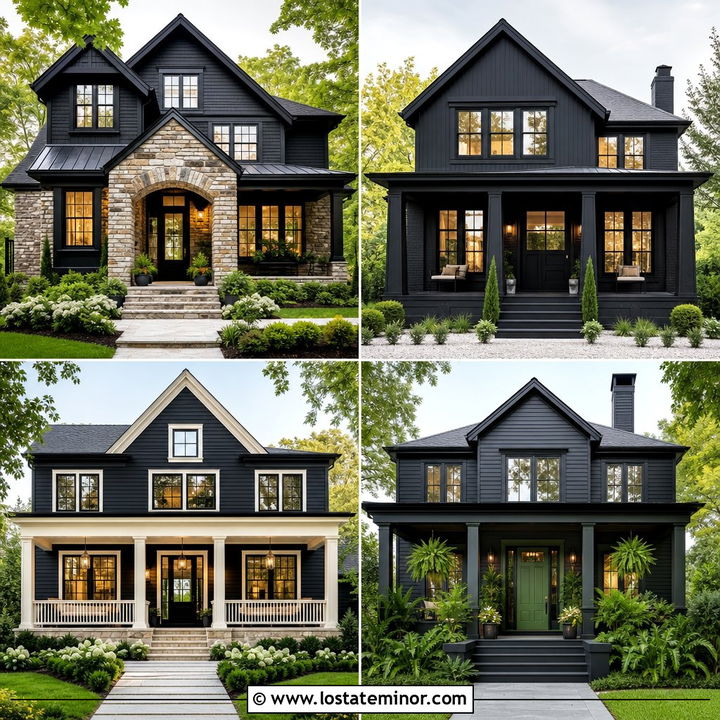
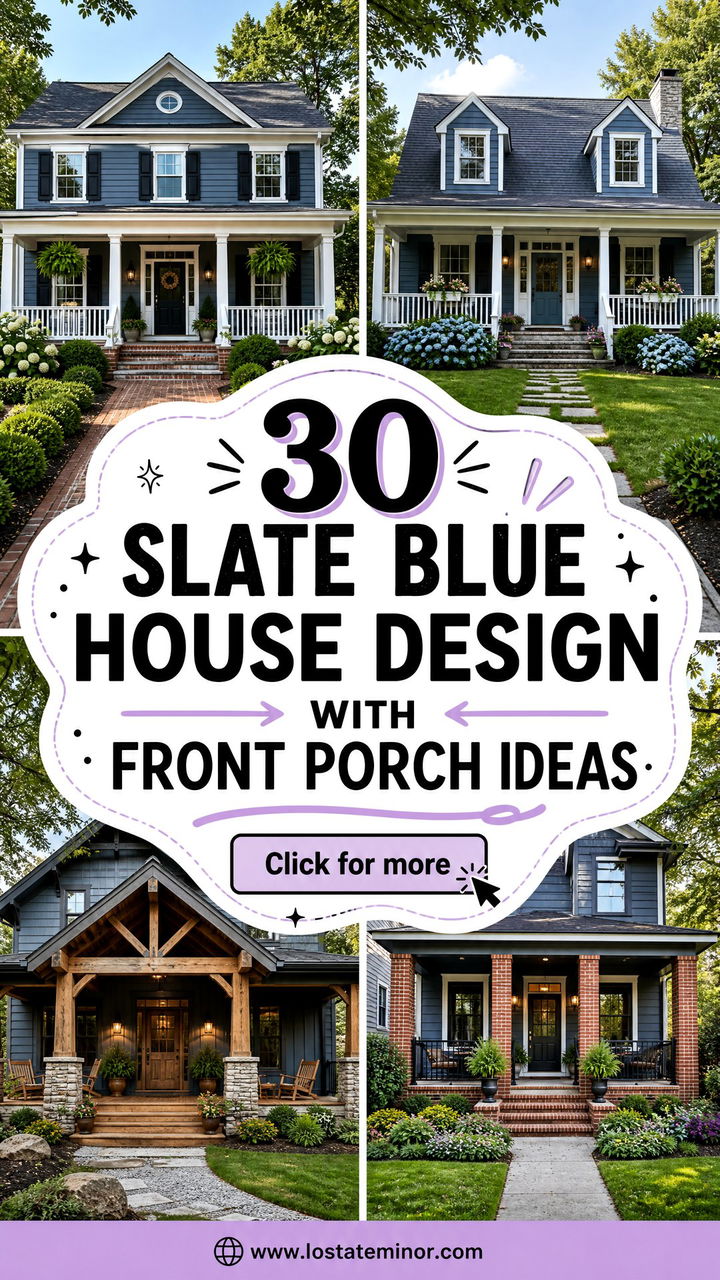
Slate blue brings a calm, polished character to a home while feeling more colorful than standard gray siding. Benjamin Moore describes Slate Blue 1648 as a versatile blue inspired by weathered slate, making it a flexible starting point for traditional and modern exteriors. () The right porch can make this blue-gray shade feel crisp, rustic, coastal, or contemporary. White columns create clean contrast. Cedar details add warmth, while brick and stone provide an earthy foundation. Dark trim can give the same color a sharper architectural edge. The complete schemes below coordinate siding, roofing, doors, railings, lighting, and landscaping rather than treating the porch as an isolated feature. Explore these **30 Slate Blue House Design With Front Porch Ideas** to create a welcoming exterior with balanced color and lasting curb appeal.
1. Slate Blue House With White Front Porch
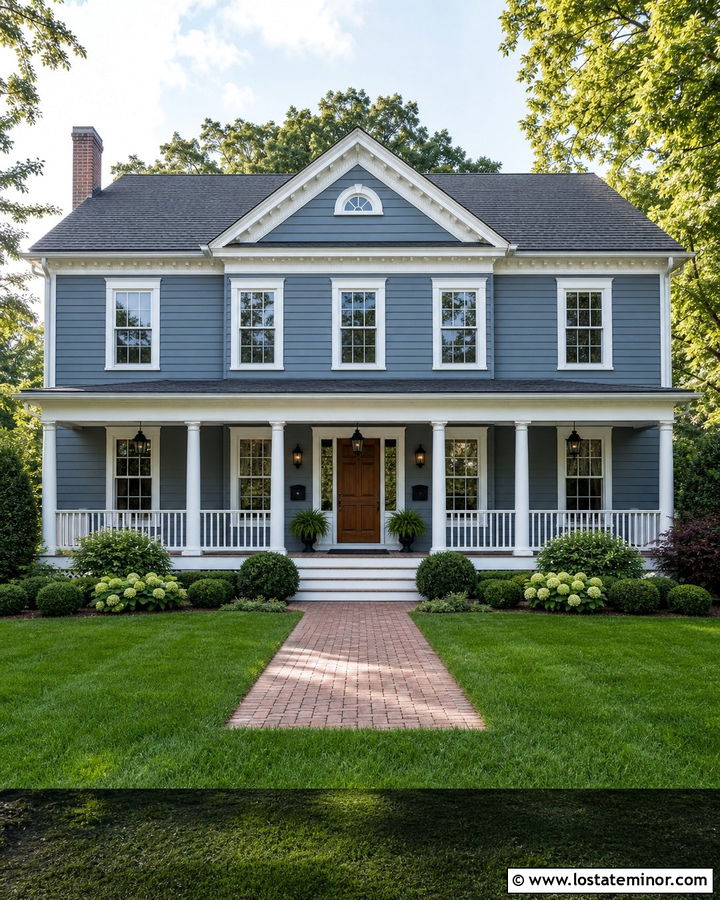
Crisp white is one of the easiest ways to brighten a slate blue exterior. Use slate blue lap siding across the house, then paint the porch columns, railings, fascia, soffits, and window trim a clean white. Repeating white throughout the facade keeps the porch from looking disconnected. A medium-gray shingle roof supports the cool palette without competing with it. Bring in warmth through a stained wood front door, woven porch chairs, and natural fiber planters. Black lanterns add a small amount of definition near the entry. This complete scheme works especially well on Colonial, Cape Cod, and traditional two-story homes. For softer contrast, select a warm off-white rather than a brilliant white with strong blue undertones.
2. Slate Blue House With Cedar Front Porch
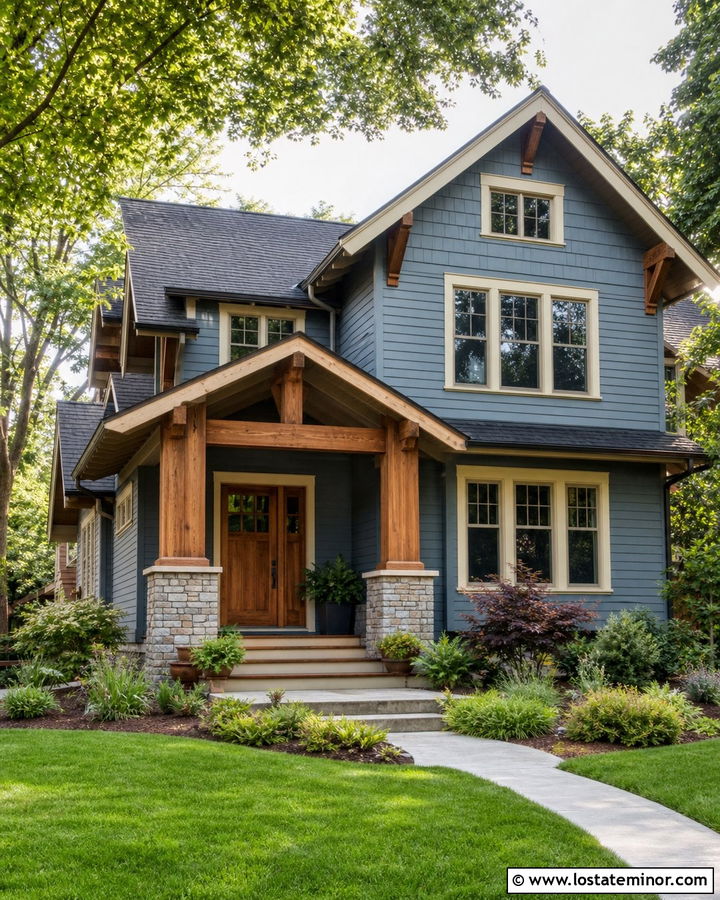
Natural cedar prevents slate blue siding from feeling too cool or formal. Frame the porch with substantial cedar posts, exposed beams, and a tongue-and-groove wood ceiling. A matching cedar front door can reinforce the warm accent without requiring additional colors. Keep the window trim creamy white and choose charcoal roofing to anchor the facade. If the house has gables, small cedar brackets or shake accents can connect the porch to the upper architecture. This combination looks particularly convincing on a Craftsman home with horizontal siding and a stone foundation. Use a medium honey or chestnut stain that preserves visible wood grain. Simple black railings, house numbers, and lanterns provide a clean transition between the blue-gray siding and rustic wood details.
3. Slate Blue House With Black Front Porch
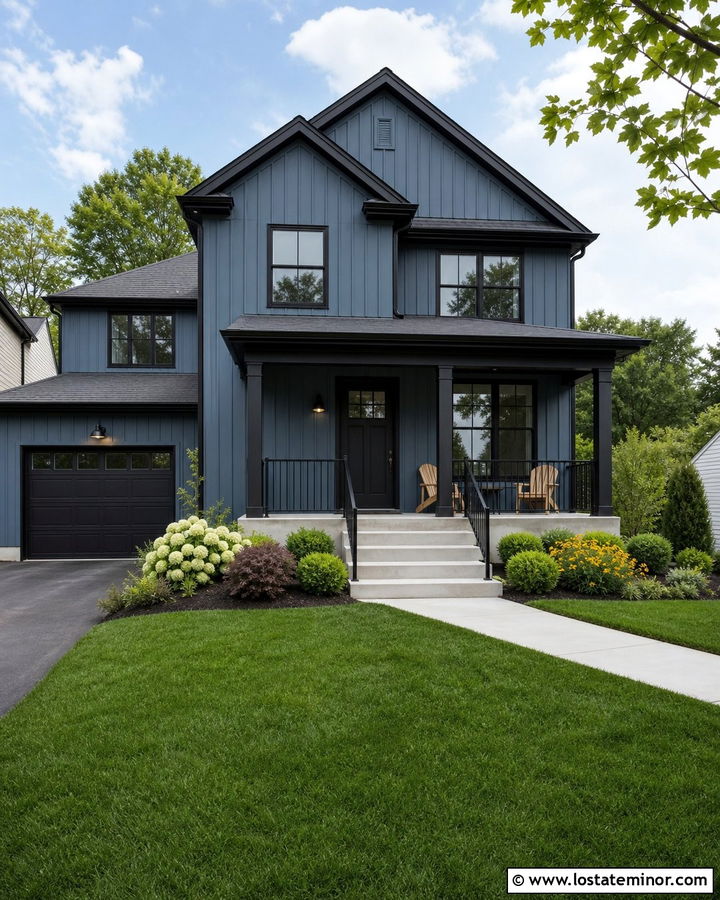
A black porch gives slate blue siding a stronger and more contemporary outline. Paint the columns, beams, railings, steps, window frames, gutters, and front door in a soft matte black rather than a reflective finish. This approach looks best when the dark accents are repeated evenly around the entire facade. A charcoal roof blends naturally with the trim and helps the porch feel integrated. To keep the entrance welcoming, use pale concrete flooring, light wood porch furniture, and layered green landscaping. Board-and-batten siding can make the combination feel modern, while traditional lap siding creates a transitional look. Before committing, test the black beside the slate blue in direct sun because the contrast can appear much sharper outdoors than it does on a small sample.
4. Slate Blue House With Brick Front Porch
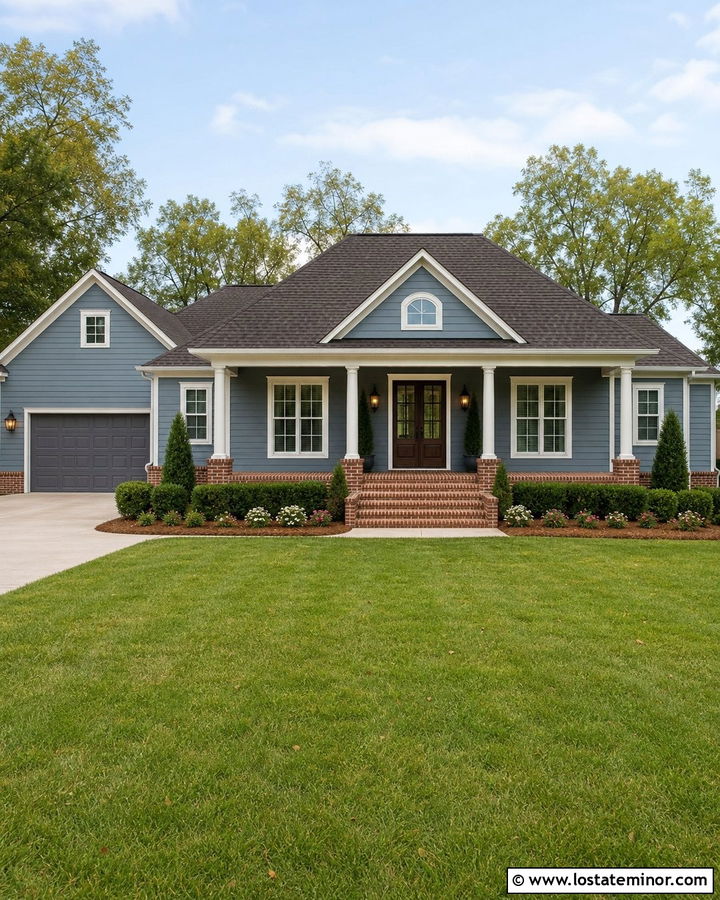
Weathered red brick adds rich texture and a familiar sense of warmth to a slate blue house. Use brick on the porch floor, steps, column bases, and low foundation walls rather than covering the entire facade. Creamy white trim helps bridge the warm brick and cool blue-gray siding. A walnut-stained front door continues the earthy palette, while aged bronze lanterns feel more natural than shiny chrome. Choose roofing with charcoal, brown, and muted gray granules so it relates to both primary materials. This complete exterior is a strong fit for ranch, Colonial, and Southern traditional homes. If the existing brick has orange undertones, select a slightly grayer slate blue. That small adjustment can prevent the siding and masonry from looking overly contrasting or visually unrelated.
5. Slate Blue House With Stone Front Porch
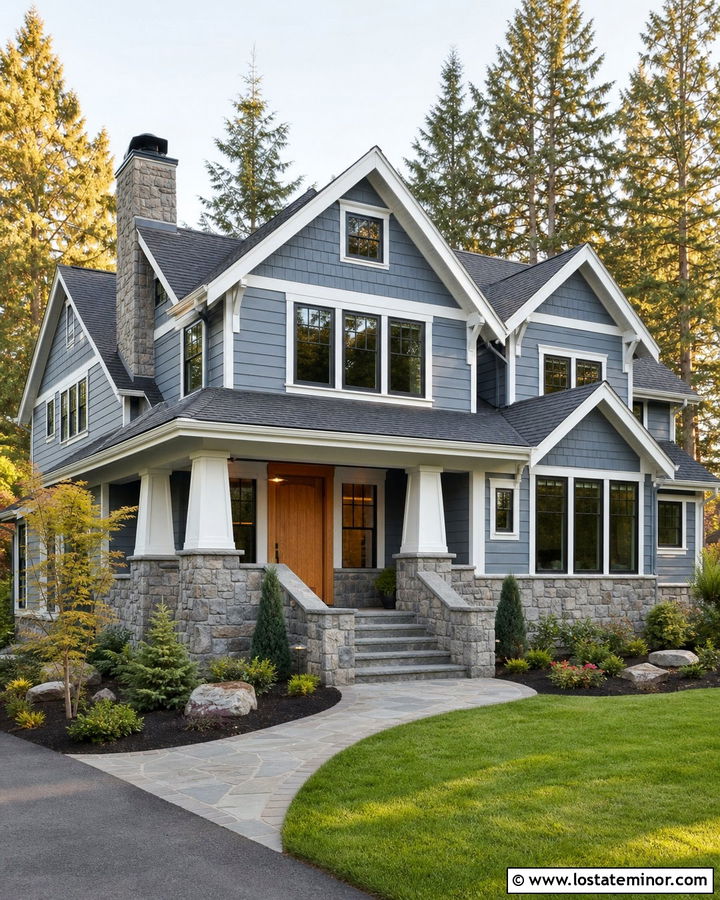
A stone porch can make slate blue siding feel grounded and substantial. Select irregular fieldstone or ledgestone containing cool gray, taupe, and soft brown tones. Apply it to the porch foundation, stair walls, and column bases, then use simple white or stained wood posts above. The varied stone colors create a natural transition between slate blue walls and surrounding landscaping. A dark gray roof and black-framed windows strengthen the scheme without introducing unnecessary color. Consider a natural oak front door to warm the center of the facade. This look suits Craftsman homes, mountain cottages, and larger suburban properties. Keep mortar close to the stone’s midtone rather than bright white. High-contrast mortar can make the porch appear busier and distract from the siding color.
6. Slate Blue Modern Farmhouse With Front Porch
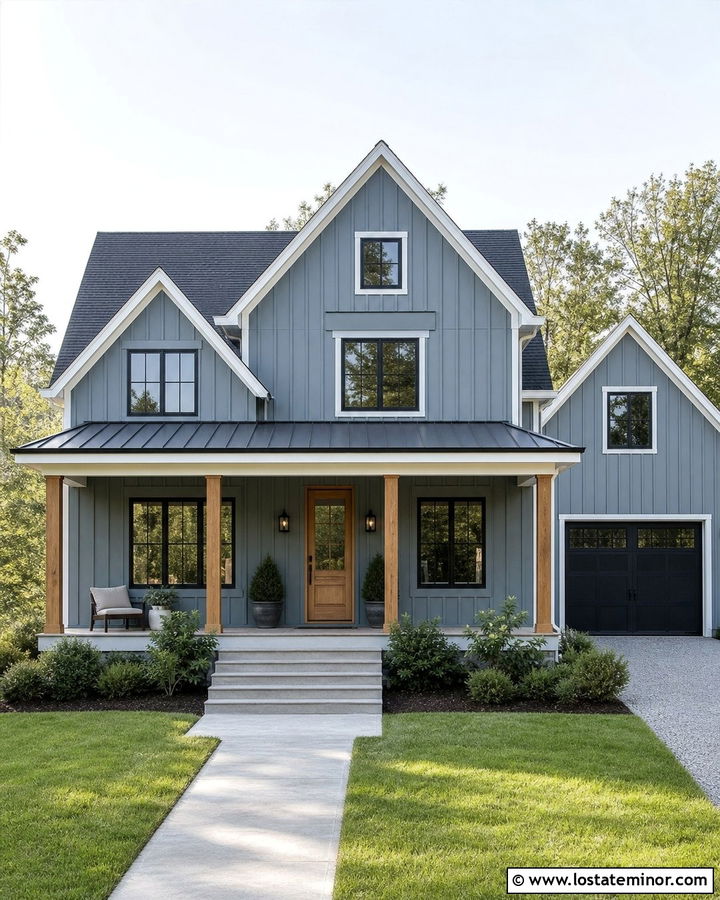
Slate blue offers a refreshing alternative to white on a modern farmhouse. Cover the main facade with vertical board-and-batten siding, then use white trim around the windows, gables, and porch roof. Square cedar columns and a natural wood front door introduce warmth without weakening the clean architectural lines. A black standing-seam metal porch roof creates a clear focal point and coordinates with black windows, gutters, and exterior lights. Continue the farmhouse character with wide concrete steps and restrained landscaping instead of overly decorative porch details. The main roof can be charcoal shingles to keep costs manageable while preserving the metal accent over the entry. This combination feels current but still approachable because the muted slate blue softens the stronger black-and-white contrast commonly used on farmhouse exteriors.
7. Slate Blue Craftsman House With Front Porch
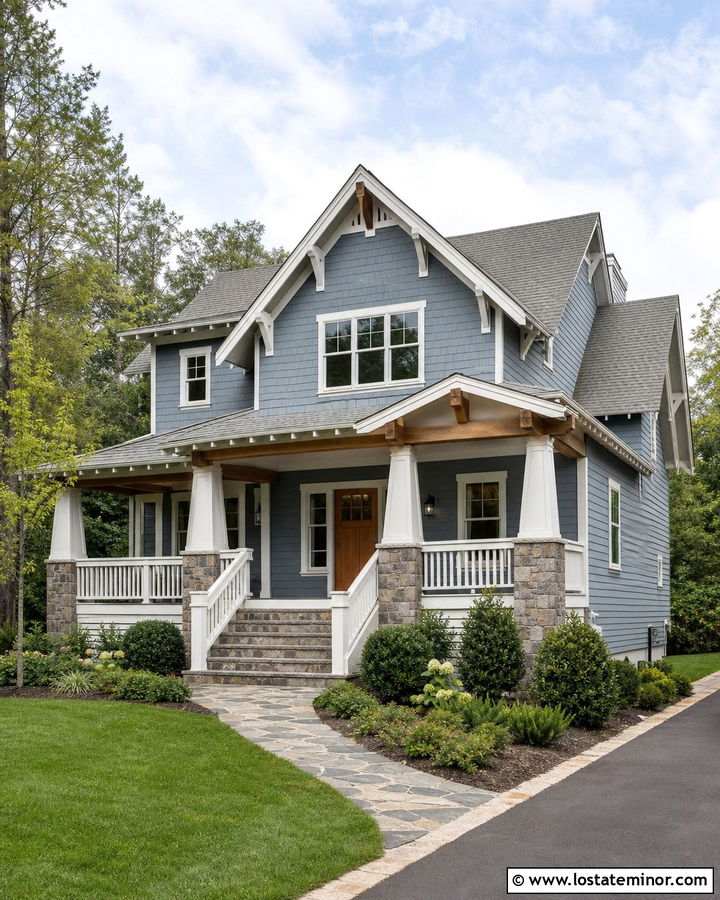
Craftsman architecture gives slate blue plenty of room to work with layered materials. Use lap siding on the lower walls and slate blue shake siding within the front gables. Support the deep porch roof with tapered white columns resting on broad stone bases. Exposed cedar brackets, porch beams, and a stained Craftsman door add warmth near eye level. A weathered-gray roof complements the siding while allowing the wood and masonry to remain noticeable. Keep porch railings simple and substantial rather than delicate. Olive, cream, or charcoal cushions can quietly repeat colors found in the stonework. This full exterior scheme emphasizes the horizontal proportions and handcrafted details associated with Craftsman homes. It also provides enough contrast to keep a shaded porch from disappearing into the blue facade.
8. Slate Blue Ranch House With Front Porch
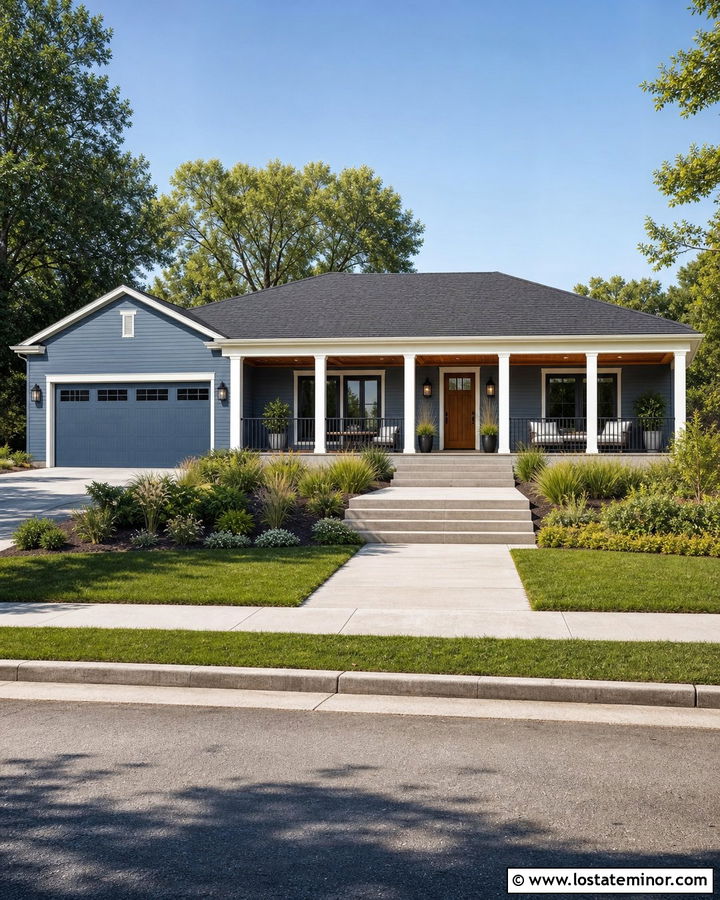
A long front porch can correct the flat appearance that some ranch homes develop. Paint the horizontal siding slate blue and run a warm white porch across most of the facade. Simple square columns create rhythm without making the low roofline feel crowded. Add a medium-stained wood door and matching wood porch ceiling to bring visual interest toward the entrance. Charcoal shingles, black lanterns, and slim black railings add definition. Wide concrete or brick steps should align with the door and walkway to make the entry easy to identify. Low shrubs and ornamental grasses preserve the home’s horizontal character. This coordinated scheme works particularly well when the garage door is painted slate blue to blend with the body rather than becoming the dominant feature.
9. Slate Blue Colonial House With Front Porch
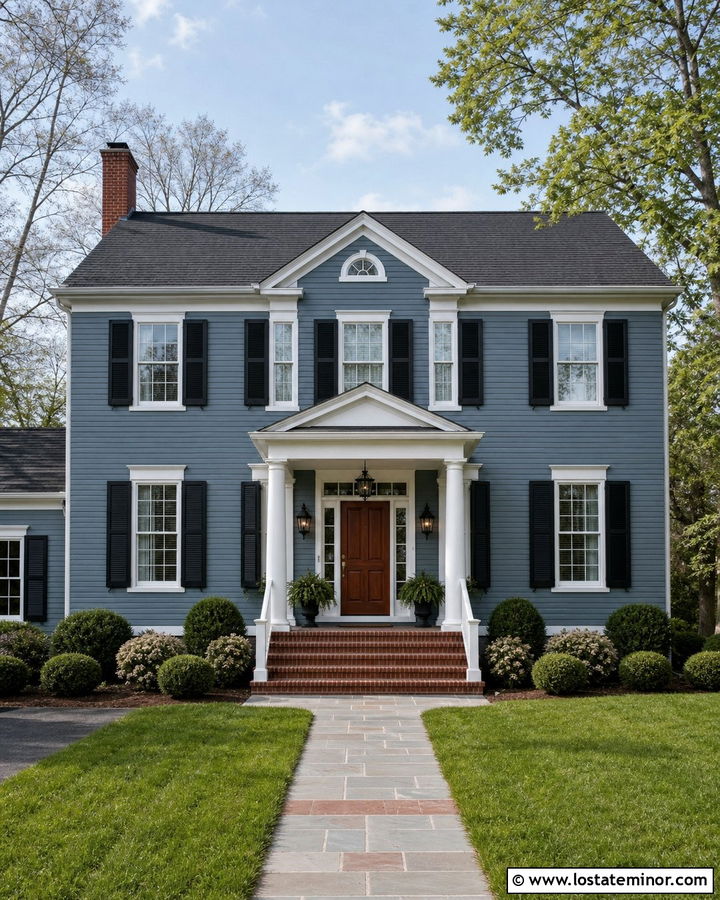
Symmetry makes a slate blue Colonial feel orderly and timeless. Center a covered porch around the front door, using white round columns, a simple pediment, and white railings. Paint the shutters black or deep charcoal to frame evenly spaced windows. A rich red-brown or mahogany front door introduces traditional warmth at the center. Choose a dark architectural-shingle roof and repeat its tone through lanterns and metal hardware. Because Colonial facades already contain strong visual organization, avoid adding too many porch materials or accent colors. Matching planters, balanced shrubs, and paired porch lights are usually enough. The slate blue body color softens the formality of the architecture, while the crisp trim preserves its recognizable details. This is an especially effective update for faded gray or pale blue siding.
10. Slate Blue Cape Cod House With Front Porch
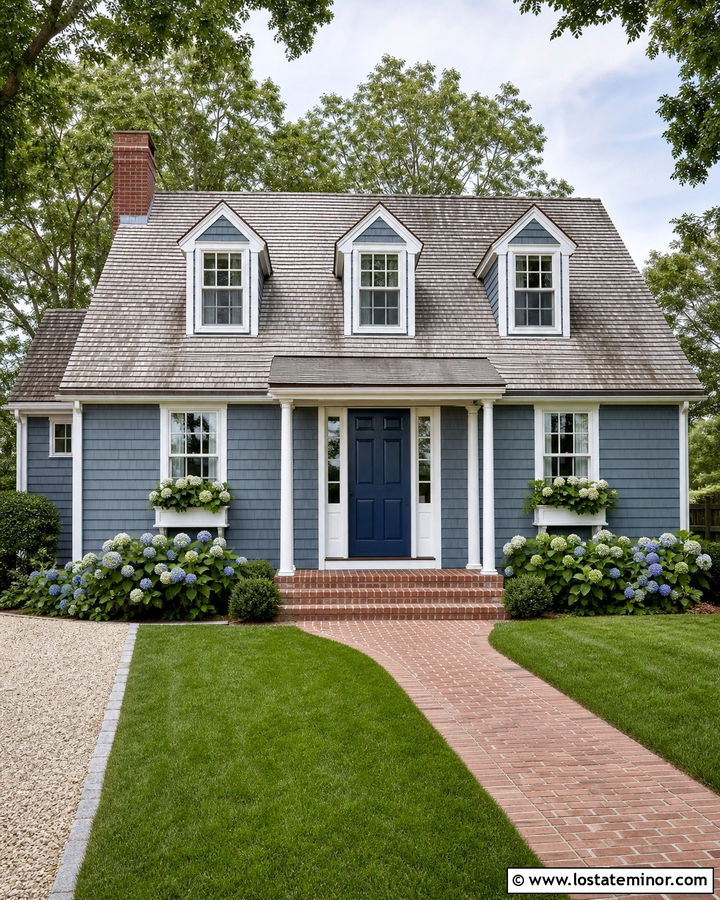
A compact Cape Cod benefits from a porch that feels light and proportional. Use slate blue shingle or clapboard siding with creamy white window trim and narrow white porch columns. A small shed-roof porch can stretch across the center without hiding dormers or overwhelming the low facade. Select a weathered-gray roof for a quiet coastal connection. A dark navy front door creates subtle depth while staying within the blue family. Brick porch flooring and simple wooden steps add warmth without requiring elaborate materials. Window boxes filled with white flowers can reinforce the trim during warmer months. Keep railings low and open so the home remains visible from the street. The completed look should feel inviting, balanced, and appropriately scaled rather than excessively grand.
11. Slate Blue Bungalow With Front Porch
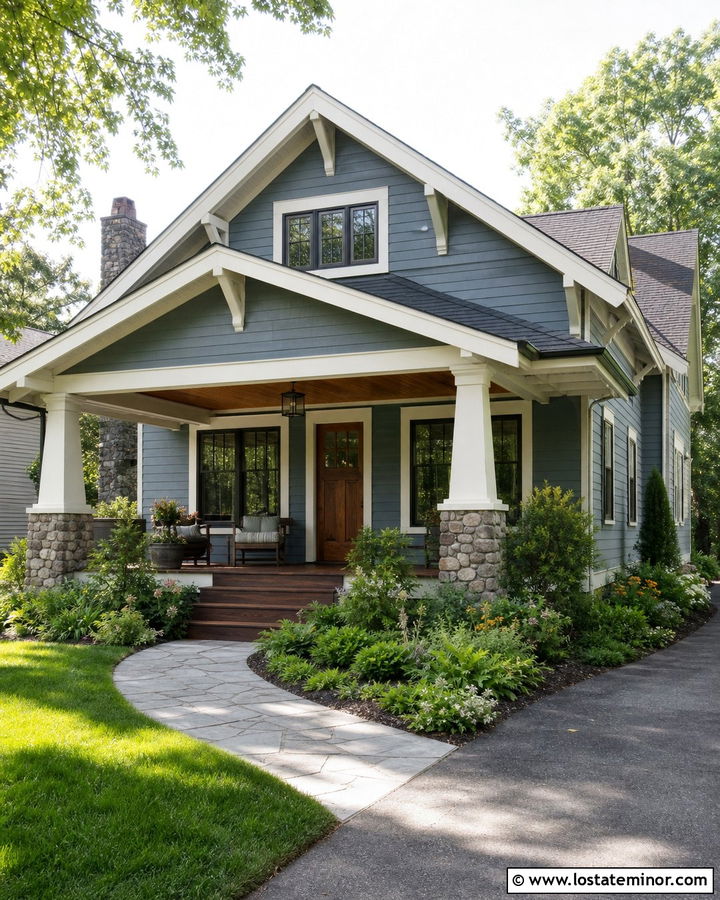
A bungalow’s porch is often its most important architectural feature, so give it enough contrast to stand forward. Pair slate blue siding with chunky warm-white columns, exposed rafter tails, and a stained beadboard ceiling. Use dark brown porch flooring to ground the entry and connect it with a medium-tone wood front door. Stone column bases can introduce gray and tan shades found elsewhere in the scheme. A deep charcoal roof creates a neat cap above the low, broad facade. Consider painting window sashes dark bronze while leaving the surrounding trim warm white. This combination adds dimension without making the bungalow overly busy. Finish the setting with a curved walkway, layered foundation plants, and two comfortable porch chairs that suit the home’s relaxed proportions.
12. Slate Blue Victorian House With Front Porch
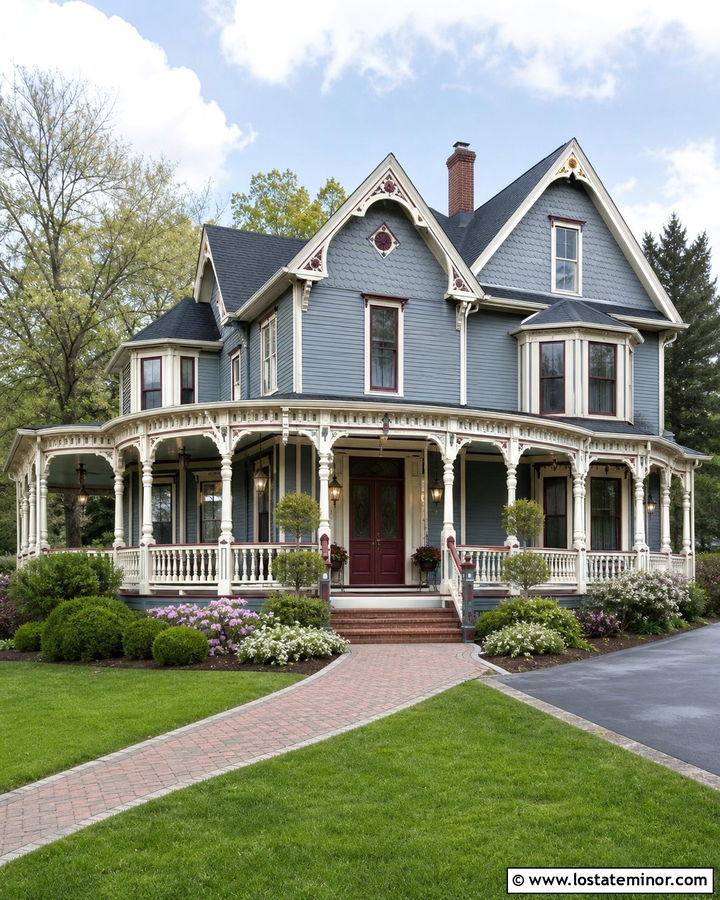
Slate blue can simplify a Victorian exterior while still highlighting its decorative craftsmanship. Use the blue-gray shade as the dominant body color, then choose warm white for porch posts, brackets, spindles, window trim, and patterned gable details. Deep burgundy or muted plum can appear sparingly on the front door and small trim bands. This controlled three-color palette preserves detail without turning the facade into a patchwork. A dark charcoal roof balances the ornate porch and tall roofline. If the house has fish-scale shingles, keep them slate blue or use a slightly deeper coordinating blue. Brick steps and antique-bronze lighting reinforce the historical character. Carefully repeating each accent color from the porch to the upper facade creates a complete, intentional exterior rather than a decorated entry attached to a plain house.
13. Slate Blue Cottage With Front Porch
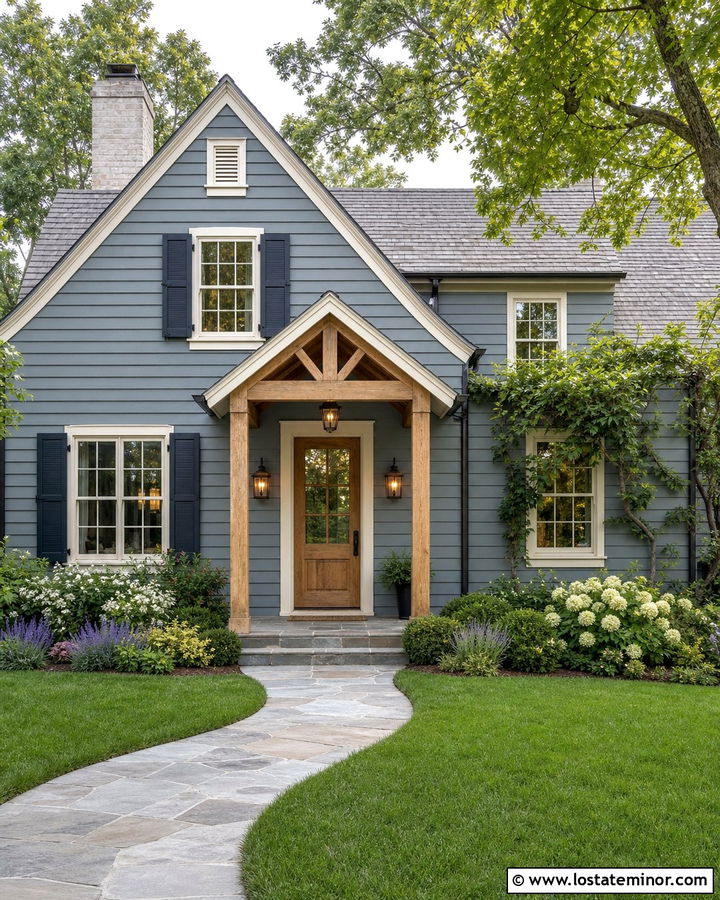
A slate blue cottage can feel charming without relying on excessive decoration. Cover the facade with narrow lap siding and frame the windows in soft ivory. Add a small gabled porch with simple wood posts, a natural oak door, and gray flagstone flooring. A steep weathered-gray roof strengthens the cottage shape and connects visually with the muted siding. Allow climbing greenery or loose flowering shrubs to soften the porch edges, but keep plants away from painted surfaces. Copper or aged-brass lanterns provide a warm metallic note that will develop character over time. If shutters are included, use deep blue-gray rather than black for a gentler look. The final scheme feels layered and welcoming because every material has a natural, slightly softened finish that complements the slate-inspired color.
14. Slate Blue Coastal House With Front Porch
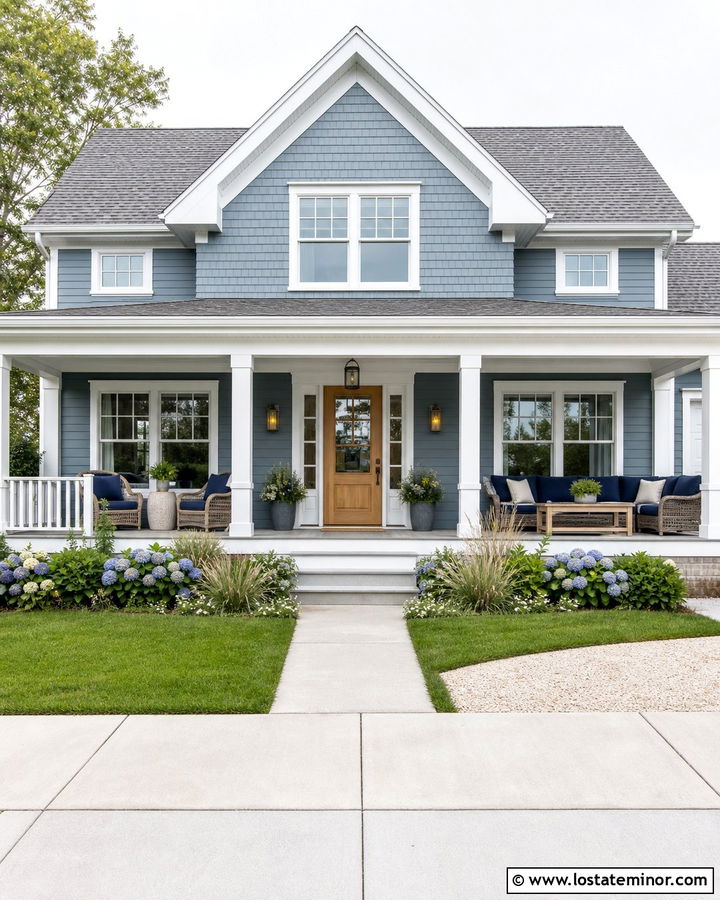
For a coastal exterior, combine slate blue siding with bright white trim and a breezy full-width porch. White square columns and railings create definition, while pale gray porch decking keeps the palette light. A natural teak or light cedar front door prevents the blue-and-white scheme from feeling overly crisp. Use a medium-gray shingle roof rather than a blue roof, which could make the facade appear too monochromatic. Navy porch cushions, woven furniture, and understated brass lights provide practical accents. Shingle siding in the gables can add texture associated with coastal architecture without changing the primary color. Complete the curb appeal with beach grasses, hydrangeas, and a light gravel or concrete walkway. The design should suggest coastal ease while still fitting naturally into a typical suburban neighborhood.
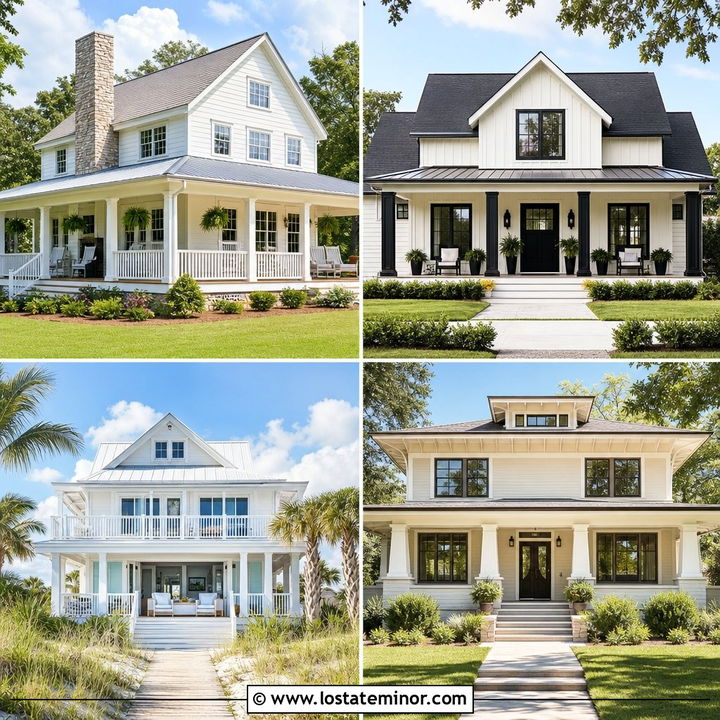
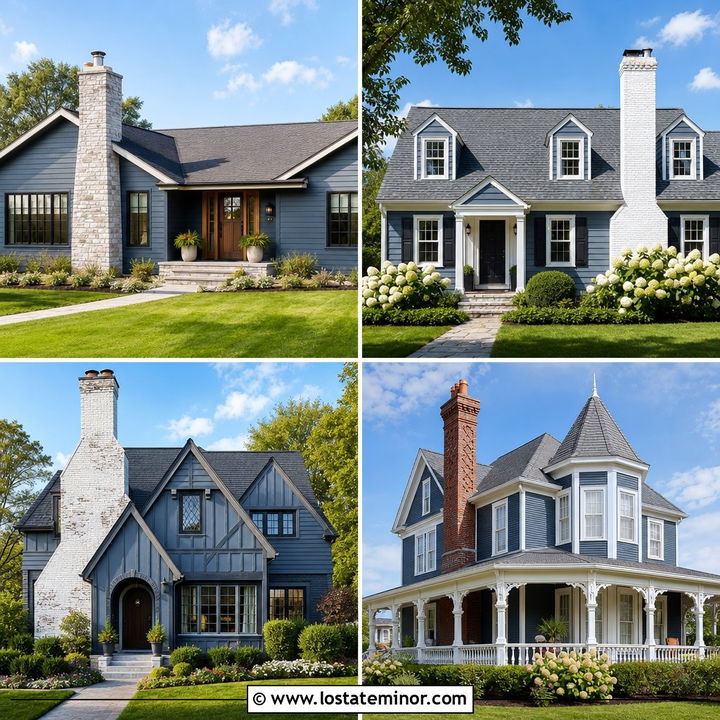
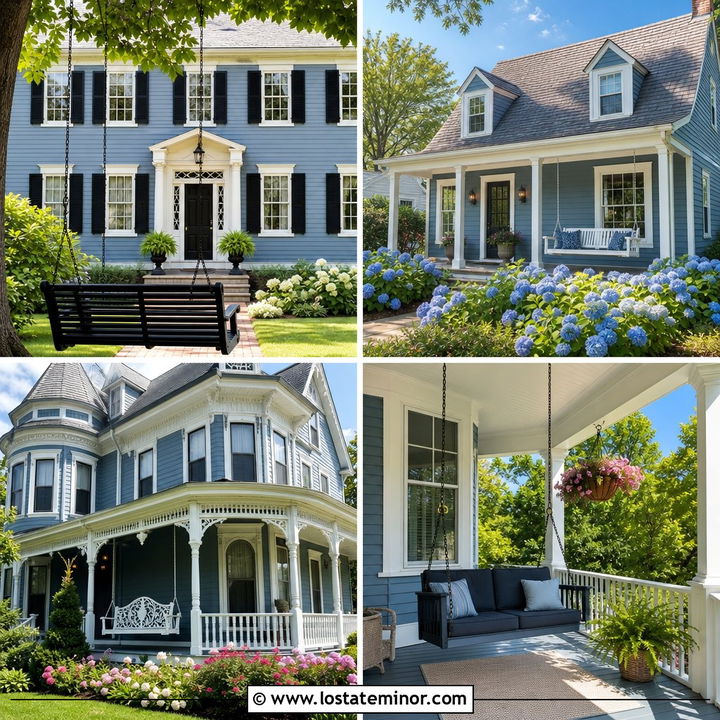
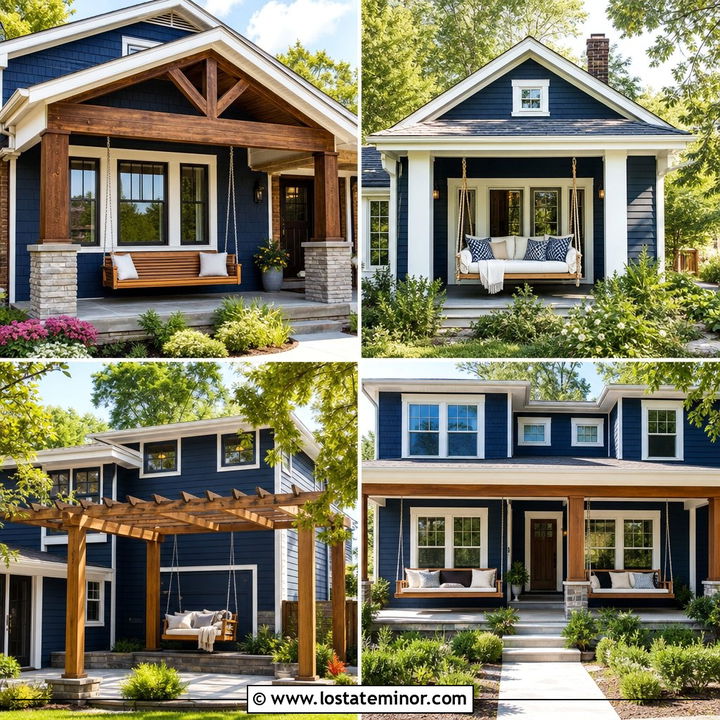
15. Slate Blue House With Wraparound Porch
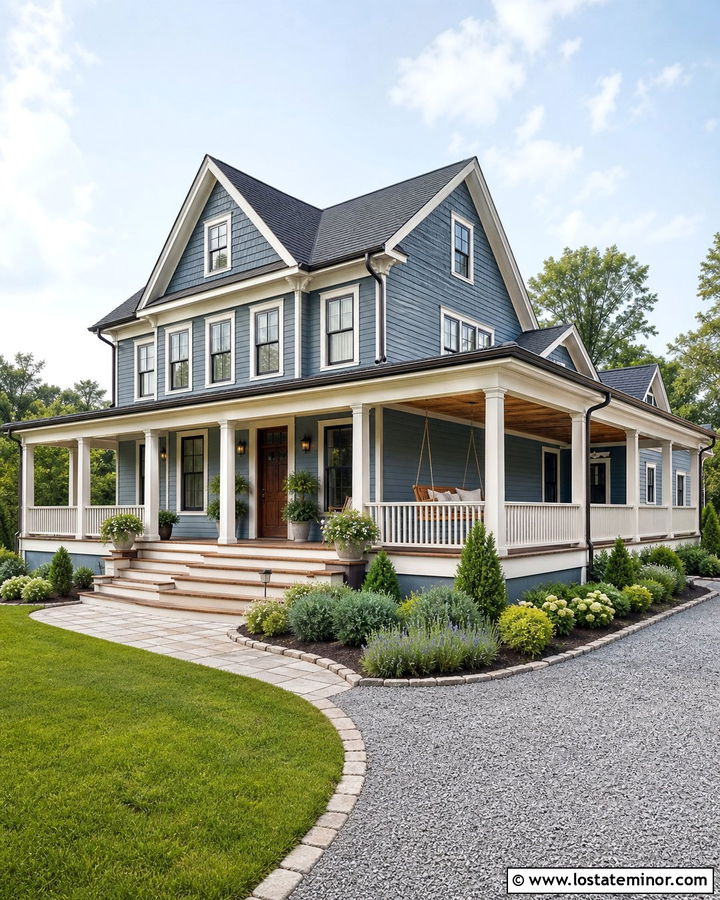
A wraparound porch creates a strong horizontal band, so its color should support rather than compete with the siding. Paint the house slate blue and use creamy white on the columns, railings, beams, and fascia. A stained wood porch floor adds continuous warmth around the facade and makes the broad porch feel less formal. Choose a medium walnut front door and repeat that wood tone through ceiling fans or a porch swing. Charcoal roofing and dark bronze gutters give the upper portion of the house clear definition. On a farmhouse or Queen Anne-inspired home, consider slate blue shingles in the gables for extra texture. Keep furnishings limited to several coordinated zones so the porch remains open. Repeating identical planters and lights helps unify the long elevation.
16. Slate Blue House With Screened Front Porch
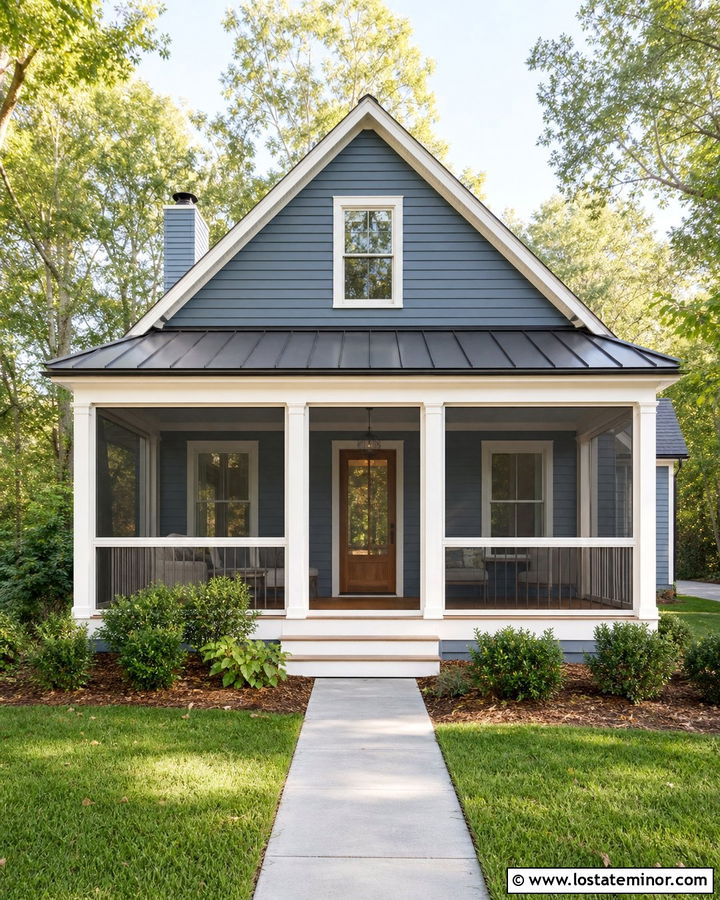
A screened porch can appear dark from the street, but thoughtful contrast keeps it attractive. Use slate blue siding across the house and paint the porch frame, screen surrounds, columns, and roof trim warm white. Charcoal screens and a dark storm door visually recede, allowing the architecture to remain clear. Install natural wood flooring and a pale blue-gray ceiling to create warmth inside the enclosed area. A black metal porch roof can define the addition, especially on a ranch or cottage facade. Place the main front door in a warm wood finish so it remains visible behind the screening. Low landscaping and a direct walkway improve the entrance visually. This scheme turns a practical screened structure into an intentional part of the house rather than an obvious later addition.
17. Slate Blue House With Small Front Porch
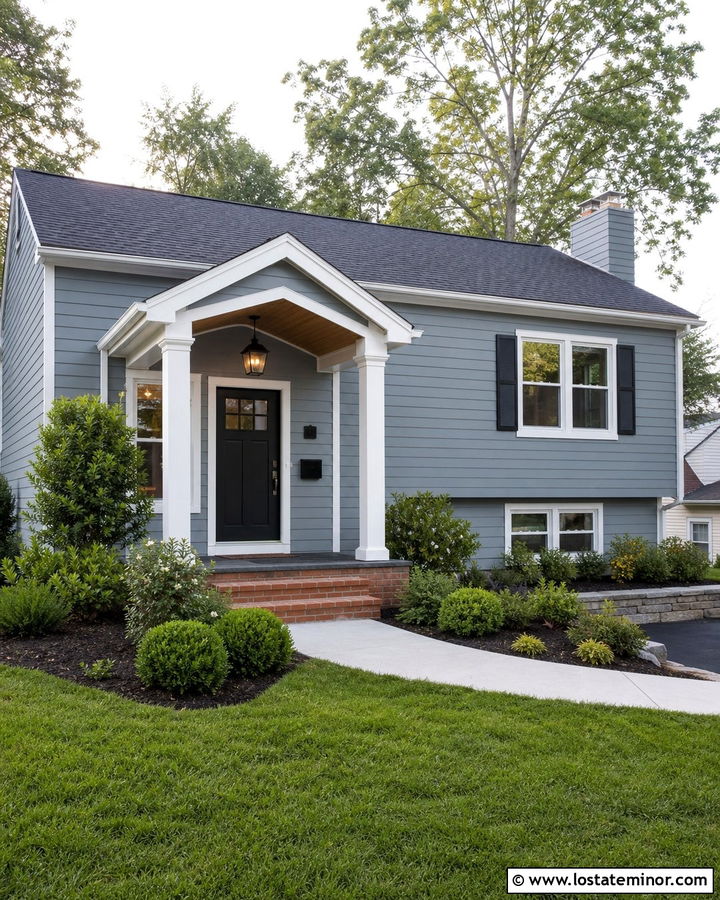
Even a shallow porch can make a slate blue exterior more welcoming. Create a compact gabled roof supported by two simple white or cedar posts. Keep the roofline high enough to avoid crowding the front door and nearby windows. A black door provides a strong focal point, while a warm wood ceiling adds interest without taking up physical space. Use slate or brick on the landing and steps to make the entry feel permanent. Coordinate the porch roof with the home’s charcoal shingles, then repeat black through the light fixture and house numbers. One large planter is often more effective than several small accessories. This streamlined treatment works for split-levels, cottages, and modest ranch homes where a full-width porch would be impractical or too expensive.
18. Slate Blue House With Deep Front Porch
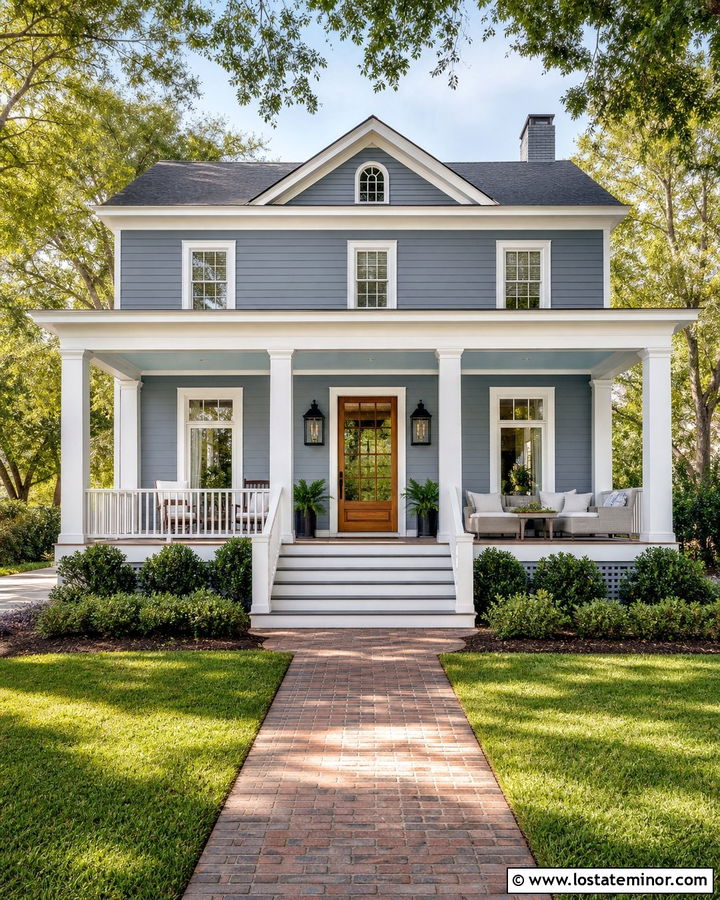
A deep porch creates shade and comfort, but it requires lighter finishes to prevent the entrance from feeling gloomy. Pair slate blue siding with white columns, white railings, and a reflective pale blue porch ceiling. Use warm oak flooring and a glass-paneled wood door to bring natural color into the shaded area. Larger black lanterns can provide definition without visually disappearing beneath the roof. A charcoal main roof and matching porch roof keep the structure cohesive. Arrange furnishings in one or two clear groups, leaving an open route from the steps to the door. On a Southern or farmhouse exterior, wide stairs and broad column spacing will make the deep porch feel generous. Bright trim around interior porch windows also helps bounce daylight toward the entry.
19. Slate Blue House With Metal Porch Roof
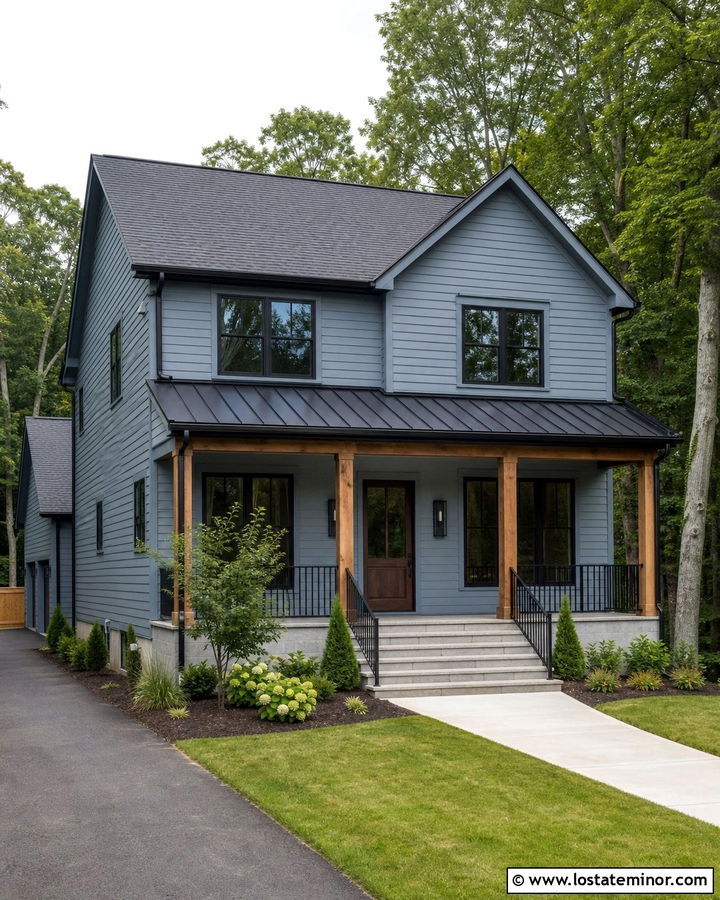
A standing-seam metal porch roof gives slate blue siding a clean architectural accent. Matte black is the strongest option for modern farmhouse and transitional homes, while galvanized gray feels softer on cottages and ranches. Support the roof with cedar posts or white square columns depending on the desired level of warmth. Repeat the metal color through gutters, window frames, lanterns, and porch railings. A stained wood front door provides contrast at the center of the cool palette. Keep the main roof in charcoal shingles so the metal remains an intentional highlight rather than covering every surface. Light gray stone steps and restrained foundation plantings complete the entrance. The thin metal profile also works well when the porch must fit below second-story windows or a low existing eave.
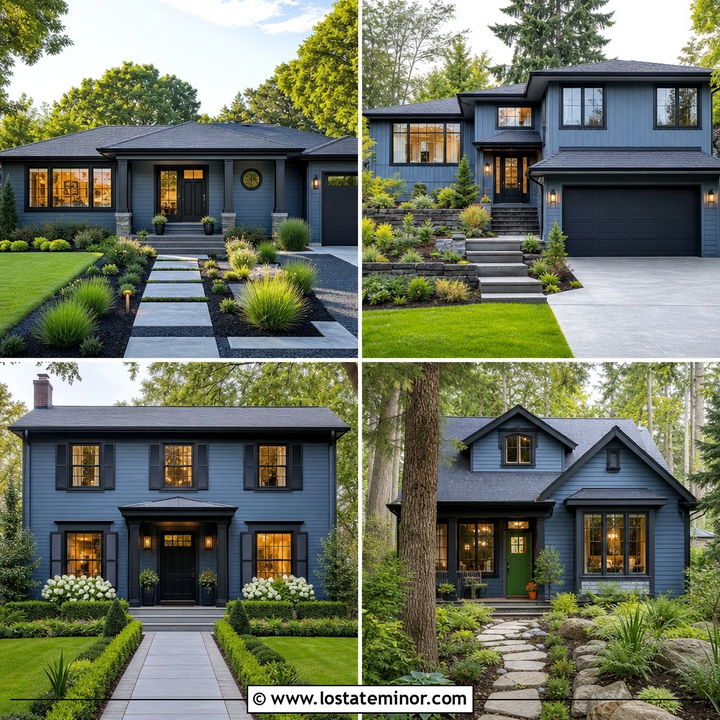
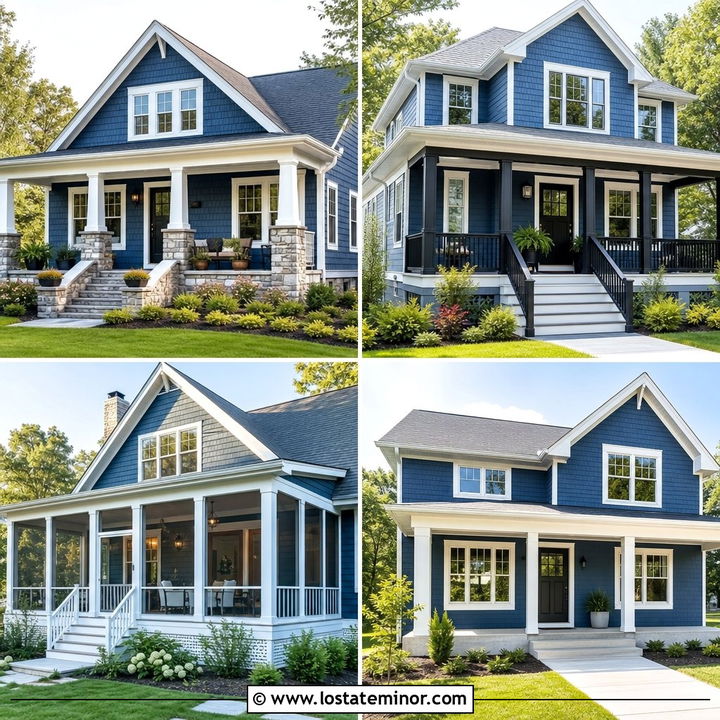
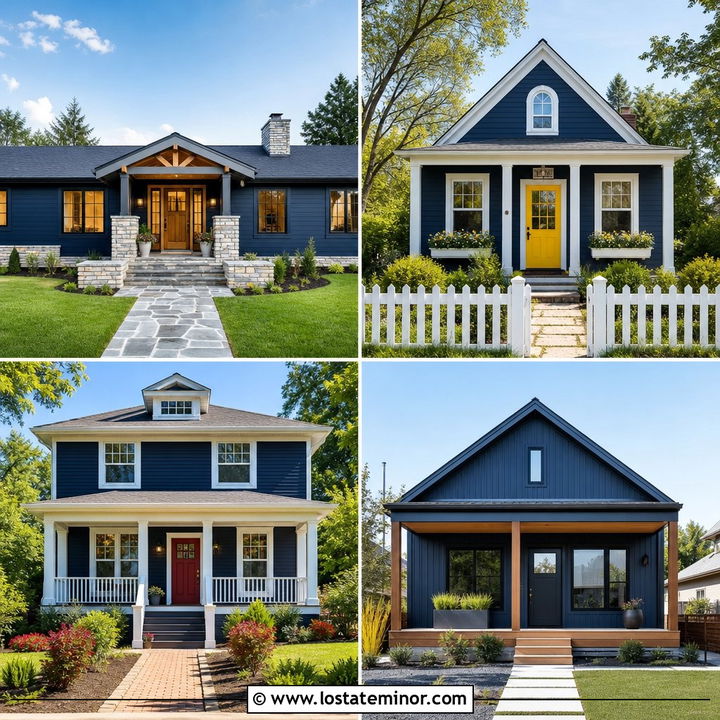
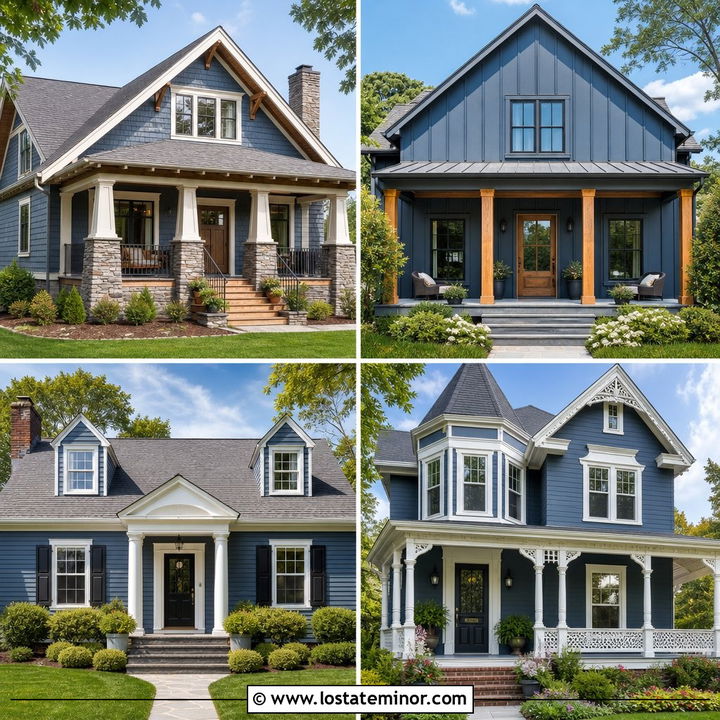
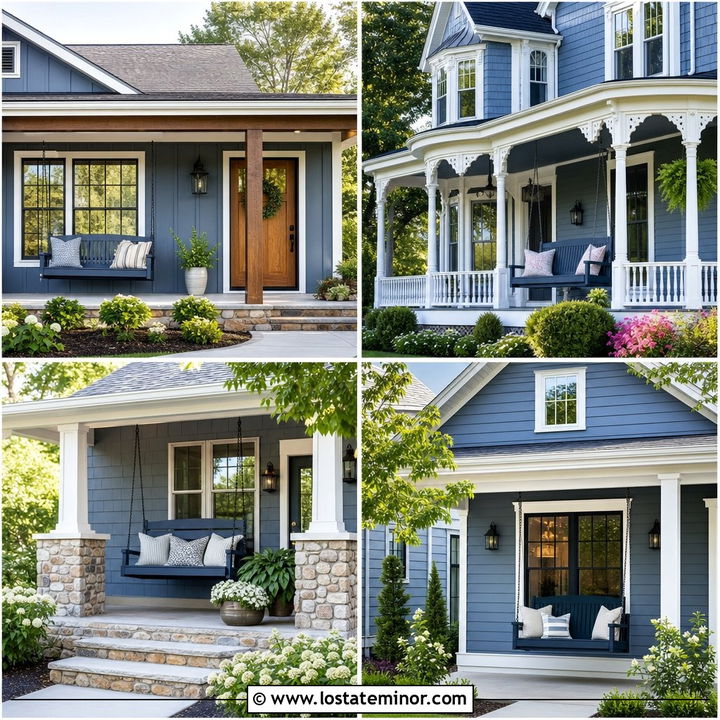
20. Slate Blue House With Yellow Front Door Porch
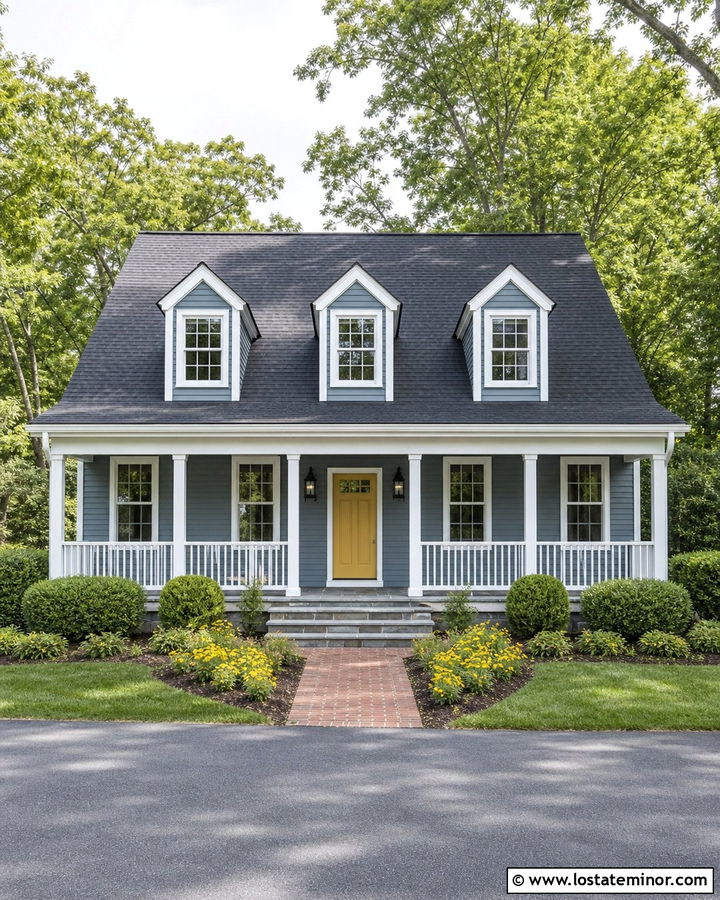
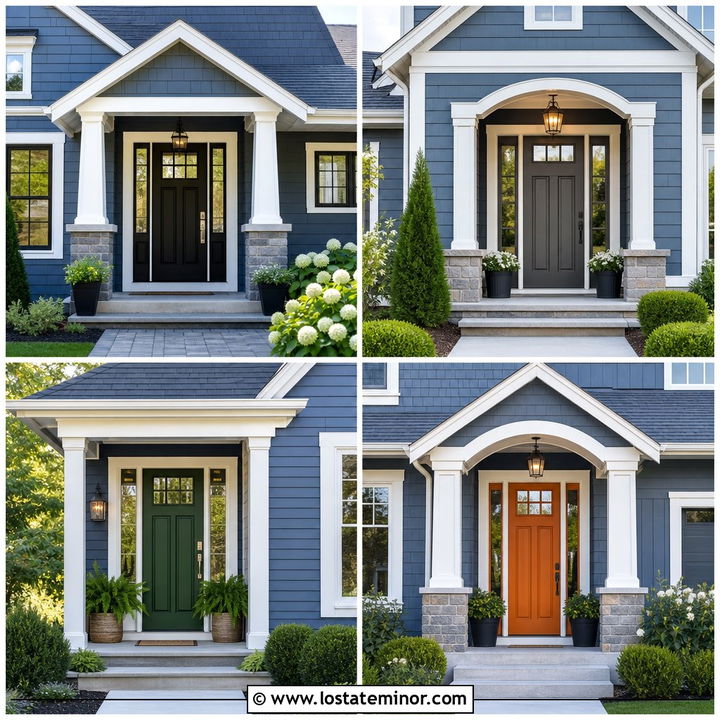
A yellow door adds cheerful contrast to slate blue without changing the calm character of the overall house. Choose muted ochre, golden yellow, or soft mustard rather than a bright primary shade. Surround it with warm white trim and use the same white on the porch columns and railings. Gray stone flooring, a charcoal roof, and black lanterns keep the colorful door grounded. The combination works especially well on cottages, Cape Cod homes, and modest traditional facades. Repeat yellow only in small seasonal flowers or patterned porch cushions so it remains a focal point. Avoid introducing additional strong colors through shutters or furniture. The most balanced result uses slate blue across most of the facade, white for architectural definition, and yellow as one concentrated welcoming accent.
21. Slate Blue House With Red Front Door Porch
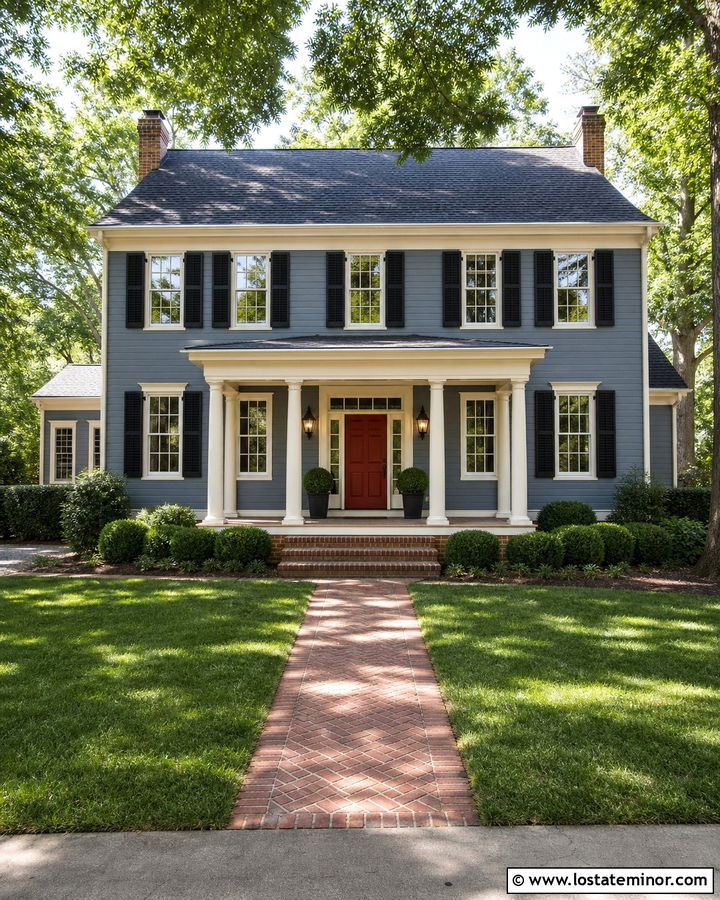
A brick-red or deep cranberry front door gives slate blue siding a classic American character. This pairing looks best with creamy white trim, traditional porch columns, and a dark gray roof. Use brick for the porch steps or floor so the door color feels connected to a permanent exterior material. Black shutters and iron lanterns can add definition on a Colonial or traditional two-story house. Keep porch furniture neutral with wood, black, or warm beige finishes. A bright fire-engine red may appear harsh beside muted blue-gray, so choose a red with brown or wine-free earthy undertones. Balanced landscaping on both sides of the entrance supports the formal color scheme. The result is colorful but controlled, with the porch acting as a clear and welcoming center point.
22. Slate Blue House With Green Front Door Porch
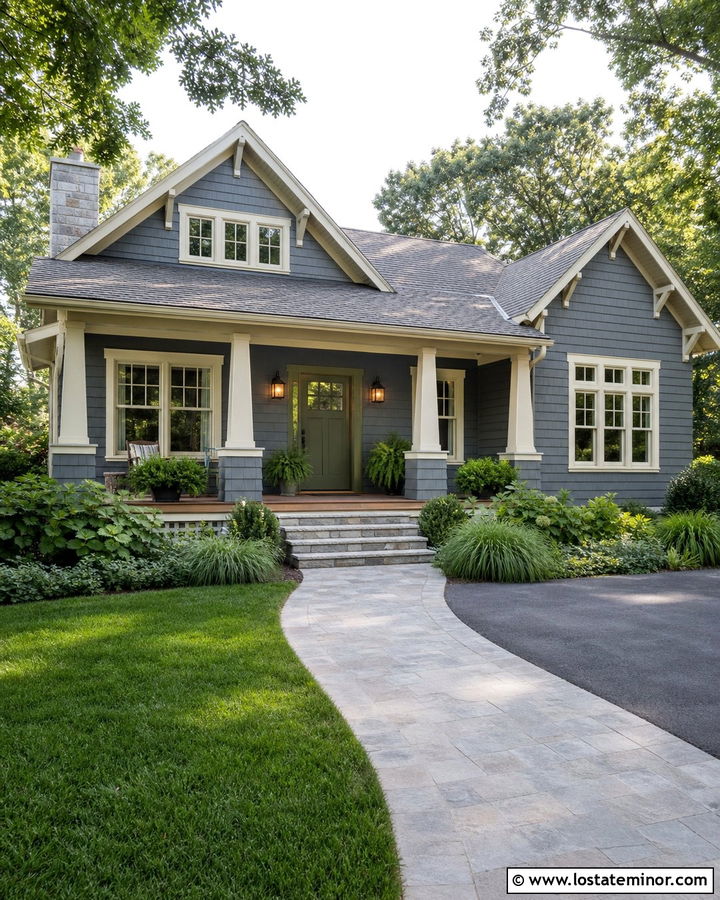
Muted green creates an organic companion for slate blue siding. Consider olive, moss, eucalyptus, or deep forest green for the front door, depending on the home’s architecture and surrounding vegetation. Use warm ivory trim to separate the two subdued colors and brighten the porch structure. Natural stone steps and cedar porch flooring strengthen the outdoor connection. A weathered-gray roof works well because it does not favor either blue or green. This scheme suits cottages, Craftsman houses, and homes in wooded settings. Black or dark bronze lighting adds necessary contrast near the entrance. Rather than matching the porch furniture to the door, choose natural wood and neutral fabric. Layered ferns, grasses, and broadleaf shrubs will complete the palette while keeping the door distinct from the landscaping.
23. Slate Blue House With Natural Wood Porch
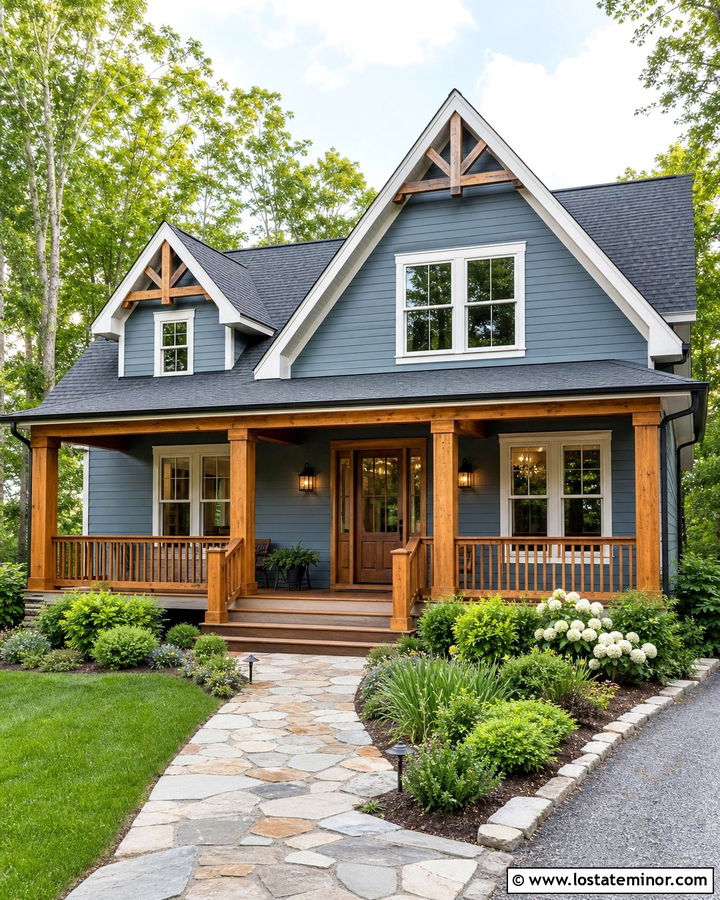
A porch built around natural wood can make a slate blue house feel relaxed and inviting. Use timber posts, railings, beams, decking, and a paneled front door in related stains rather than identical tones. Medium cedar posts and slightly darker walnut flooring create subtle depth. Keep the window trim warm white so the facade retains a crisp outline. A charcoal roof and black metal lights provide structure above and around the wood features. This combination works on rustic farmhouses, contemporary cottages, and mountain-inspired homes. Protect exterior wood with a suitable clear or lightly tinted finish, and account for how the stain may change as it weathers. Carry one wood detail into the upper facade, such as gable brackets, to make the porch feel connected to the entire house.
24. Slate Blue House With Concrete Front Porch
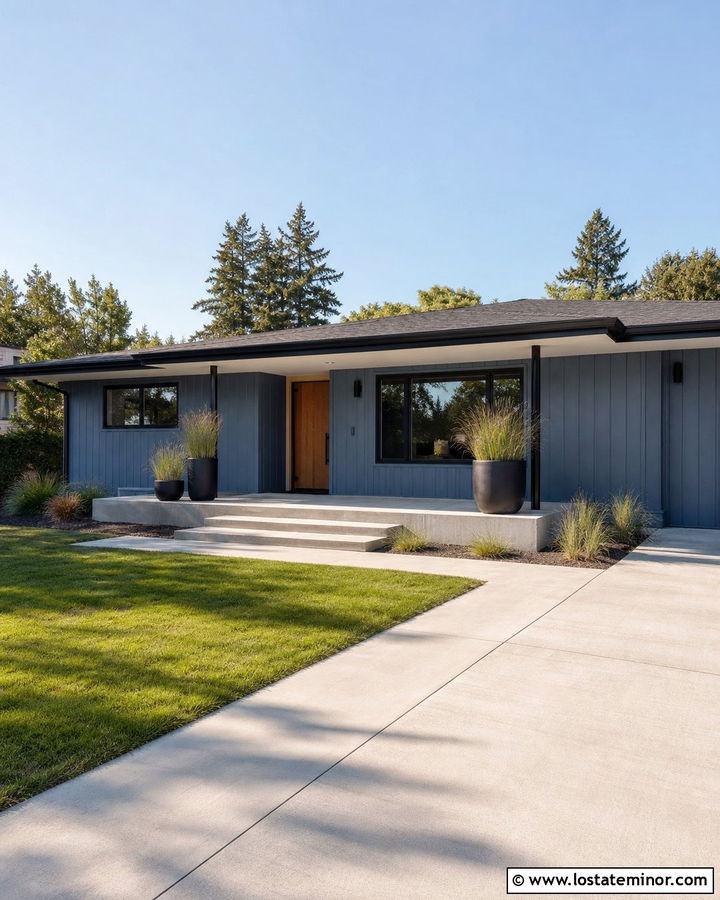
Concrete gives a slate blue exterior a clean, understated foundation. Use broad poured-concrete steps and a smooth porch slab with simple square edges. Pair these surfaces with vertical slate blue siding, black-framed windows, and slim black porch columns for a modern look. A warm wood front door prevents the gray and blue materials from becoming too cool. The porch roof can be flat or gently sloped, with a dark metal fascia that relates to the windows. Choose large black planters and architectural grasses instead of ornate furnishings. A straight concrete walkway and restrained lawn reinforce the uncluttered design. On a midcentury ranch, warmer gray concrete can complement existing masonry. Seal the porch with a non-glossy finish so it remains visually quiet and does not distract from the siding.
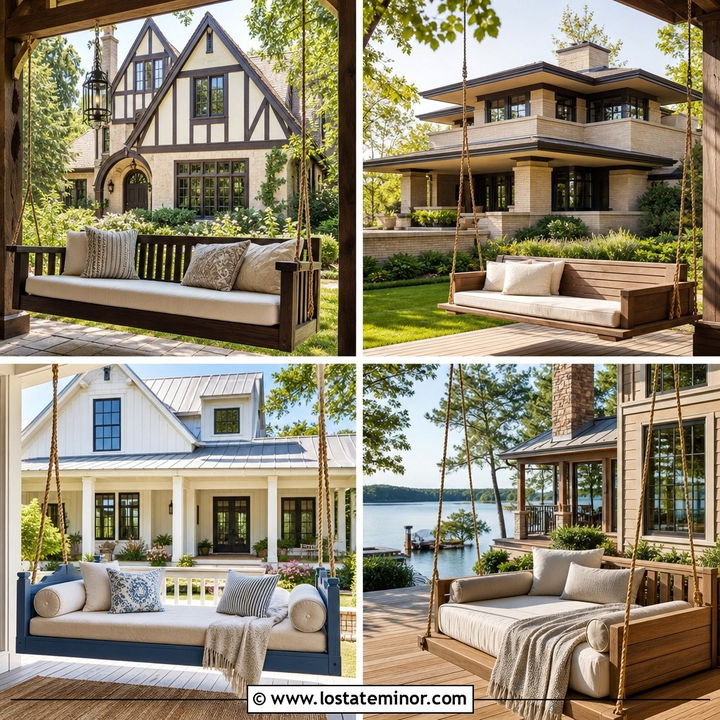
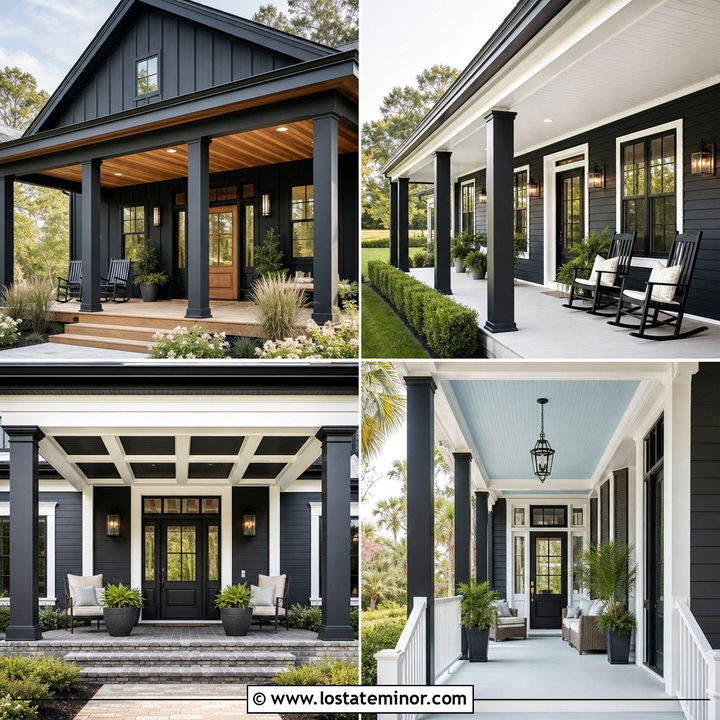
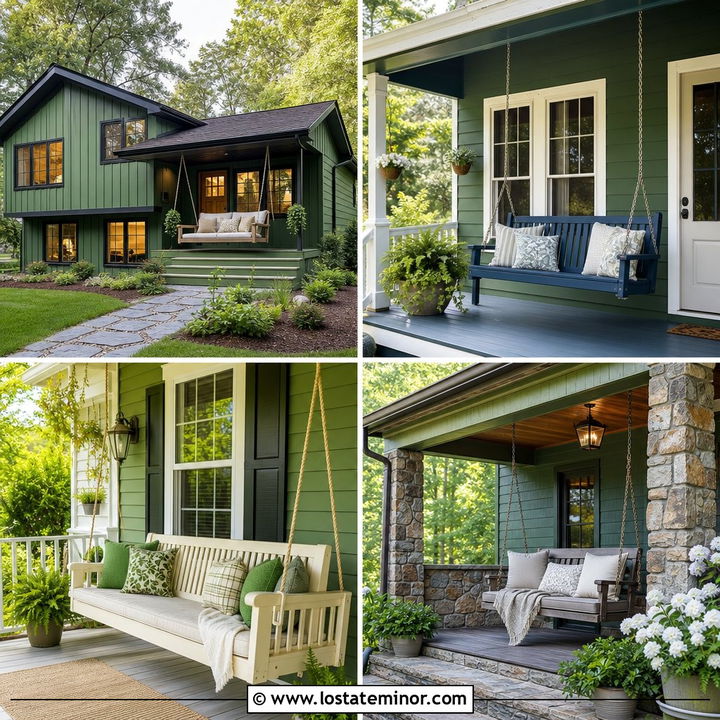
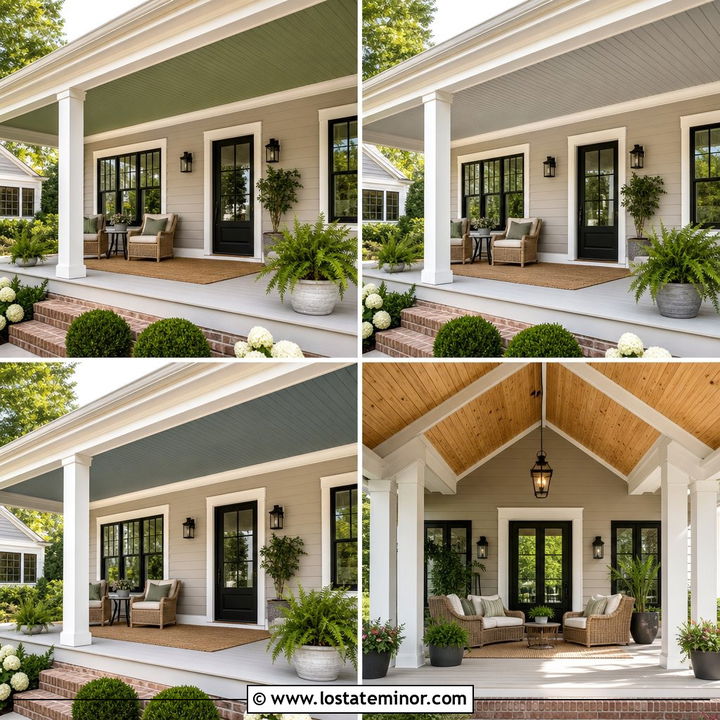
25. Slate Blue House With White Columns And Black Railings
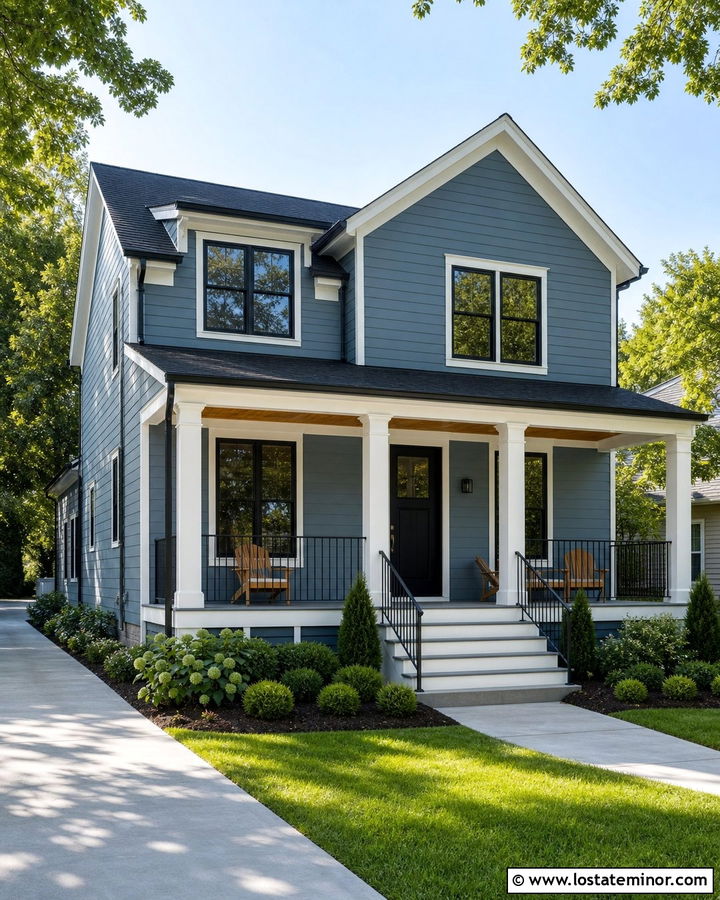
Combining white columns with black railings creates more depth than an entirely white porch. Use substantial white posts to frame the entrance and thin black metal balusters to keep views open. Slate blue lap or shingle siding provides a balanced middle tone between the light and dark accents. Coordinate the black railings with the front door, window sashes, gutters, and lanterns. A warm gray porch floor and charcoal roof maintain the restrained palette. If the exterior begins to feel too cool, add a wood porch ceiling or a pair of natural wood chairs. This scheme fits transitional, Colonial, and updated ranch homes because it blends familiar proportions with cleaner details. Keep railing profiles simple so they support the porch architecture instead of becoming its most noticeable feature.
26. Slate Blue House With Rustic Timber Porch
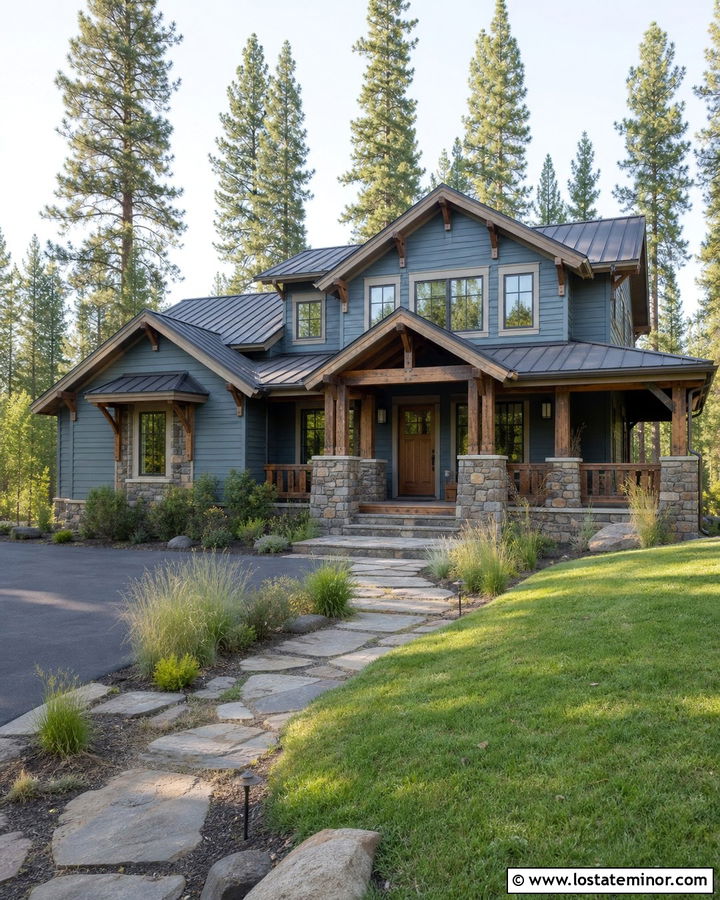
Rough timber brings weight and texture to a slate blue facade. Build the porch with thick stained posts, exposed rafters, and visible structural brackets. Use gray-brown stone around the porch base and stairs to connect the wood with the blue-gray siding. A dark bronze metal roof and matching lanterns support the rustic palette without creating stark black contrast. Select a front door one shade darker than the timber so it remains easy to identify. This exterior works well for cabins, modern mountain homes, and Craftsman-inspired suburban houses. Keep trim in a soft taupe or muted cream rather than bright white. Native grasses, evergreen shrubs, and an irregular stone walkway can frame the house naturally. Limit decorative accessories because the timber construction already supplies strong visual character.
27. Slate Blue Split-Level With Front Porch
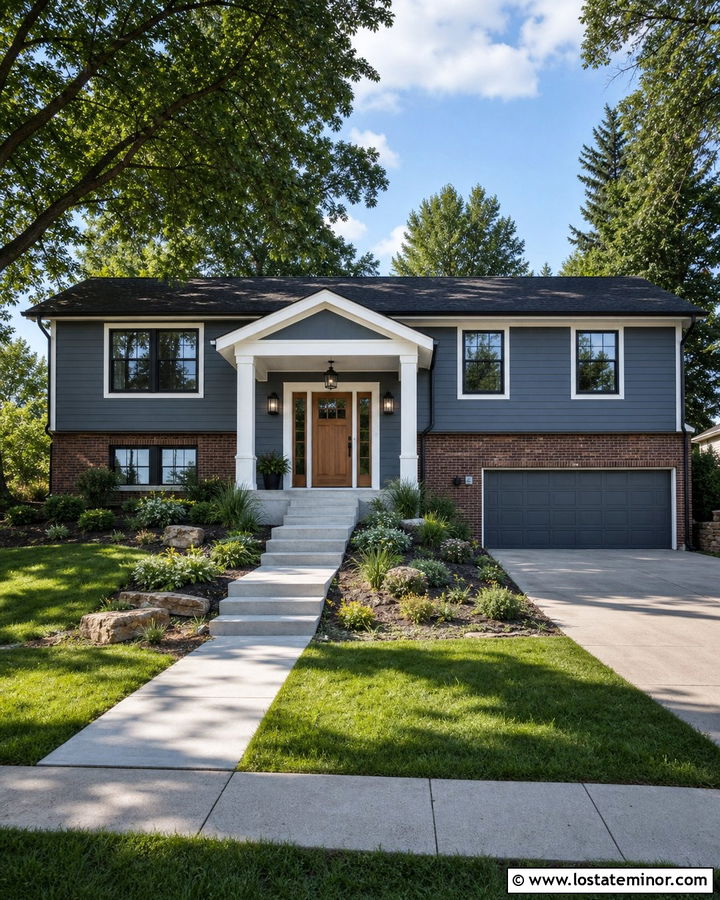
A new porch can give a split-level house a clearer entrance and better visual balance. Use slate blue siding across both levels, then add a small gabled or shed-roof porch over the front door. White columns and fascia will brighten the recessed entry, while a natural wood door creates a warm focal point. Paint the garage door slate blue so it blends into the lower facade. Charcoal roofing, black gutters, and black-framed lights provide consistent definition. If the lower level contains brick, retain it when its red or brown tones work with the blue-gray siding. Broad steps and a direct walkway can make the raised entrance feel more approachable. Use layered landscaping to soften changes in grade without covering windows or hiding the new porch structure.
28. Slate Blue House With Farmhouse Porch Swing
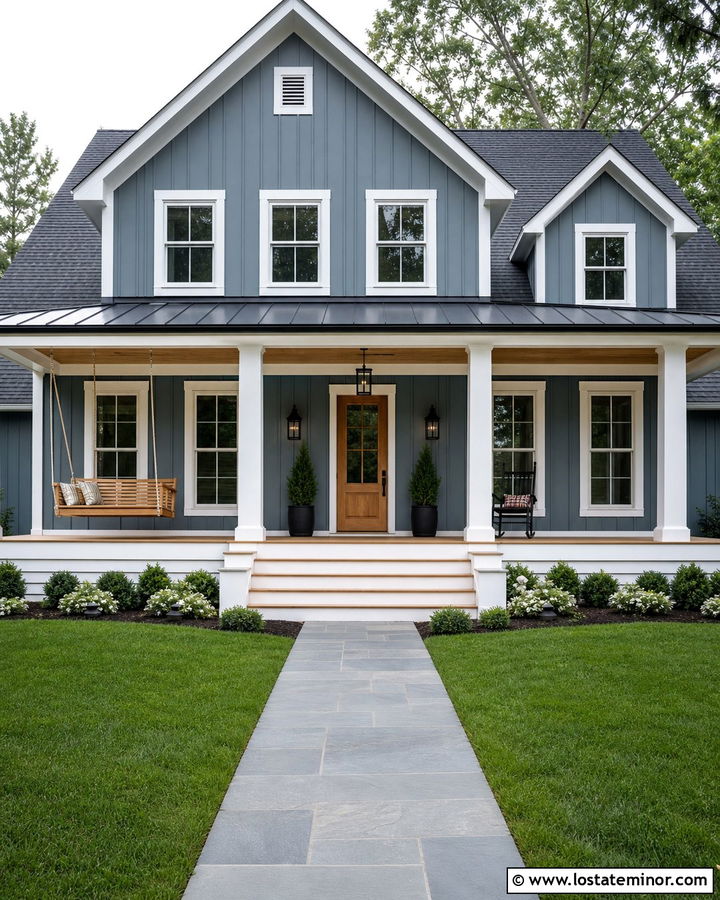
A porch swing can become part of a complete slate blue farmhouse scheme when its finish connects with other exterior materials. Use vertical slate blue siding, white square columns, and a pale wood or white swing suspended from a stained tongue-and-groove ceiling. A natural wood front door repeats the ceiling color and introduces warmth near the center of the porch. Black lanterns, hardware, and a metal porch roof add crisp structure. Keep the main roof charcoal and use simple white-framed windows throughout the facade. Neutral cushions in cream, ticking stripes, or soft gray prevent the swing from becoming overly decorative. Position it to one side of the entry so the walkway remains open. Symmetrical planters and broad porch steps complete the comfortable farmhouse appearance.
29. Slate Blue House With Brick Columns And Porch
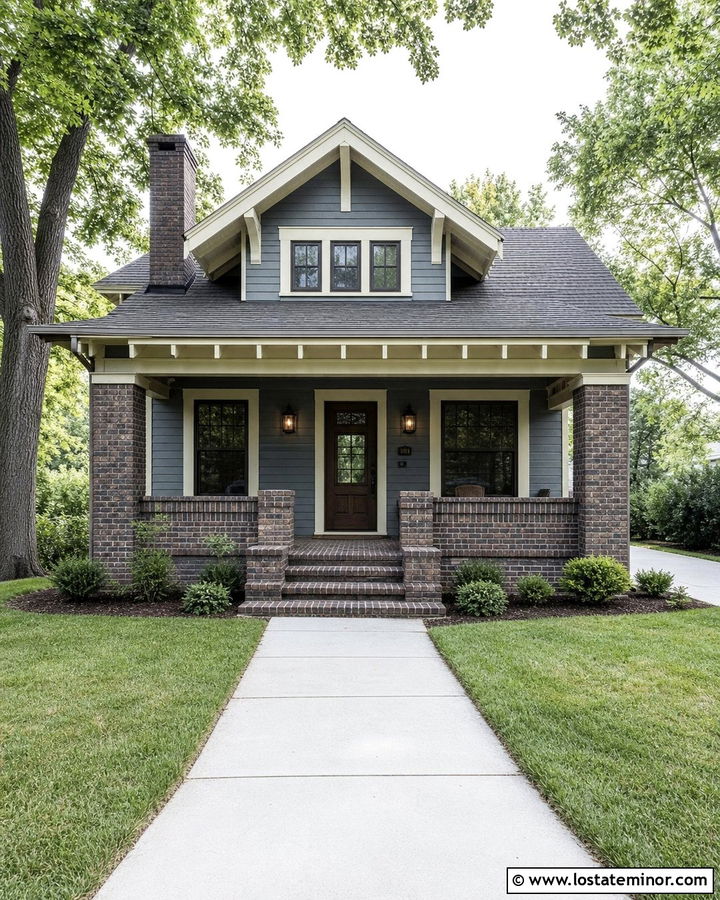
Brick columns give a slate blue exterior a substantial, traditional base. Choose brick containing muted red, brown, charcoal, and gray tones rather than bright orange. Use it for full-height columns or combine brick bases with tapered white posts. Slate blue siding should remain the dominant facade material, while creamy trim outlines windows and roof edges. A dark wood front door and bronze lanterns relate naturally to the masonry. Extend the brick across the porch floor or front steps to make the columns feel integrated. A weathered charcoal roof completes the balanced palette. This arrangement is suitable for Southern homes, Craftsman plans, and wide suburban ranches. Keep mortar understated and use simple landscaping so the combination of brick texture and blue siding does not become visually crowded.
30. Slate Blue House With Monochromatic Front Porch
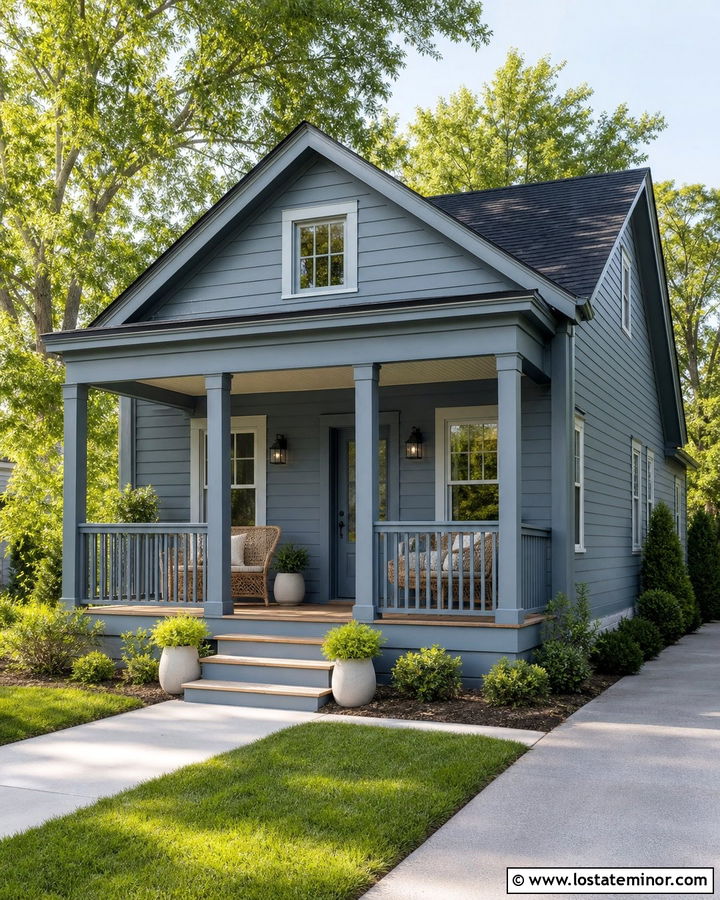
A monochromatic porch creates a quiet, sophisticated slate blue exterior. Paint the siding, porch columns, beams, railings, and front door in Slate Blue 1648, then use slightly different sheens to reveal architectural detail. Reserve soft gray-white for window trim and the porch ceiling so the facade does not become flat. Charcoal roofing and dark bronze lighting provide deeper neutral accents. This approach works particularly well on modern cottages, minimal farmhouses, and small homes where high-contrast trim could interrupt the architecture. Add warmth through oak porch flooring, woven furniture, and terracotta-free neutral planters. The key is texture: combine lap siding, vertical boards, wood grain, and metal so the limited palette still has dimension. Carefully placed greenery will look especially vivid against the unified blue-gray background.
Conclusion:
These **30 Slate Blue House Design With Front Porch Ideas** show how one versatile body color can support many architectural moods. White trim makes slate blue feel fresh and traditional, while black details produce a sharper modern effect. Cedar, brick, and stone introduce warmth that balances the color’s cooler blue-gray character. The porch should also connect with the roof, windows, garage, walkway, and landscaping rather than functioning as a separate feature. Before selecting materials, compare samples outdoors beside permanent surfaces at several times of day. Natural and shaded light can change how blue or gray the siding appears. With a coordinated palette and appropriately scaled porch, slate blue can create a distinctive, comfortable, and polished home exterior.

Related posts: