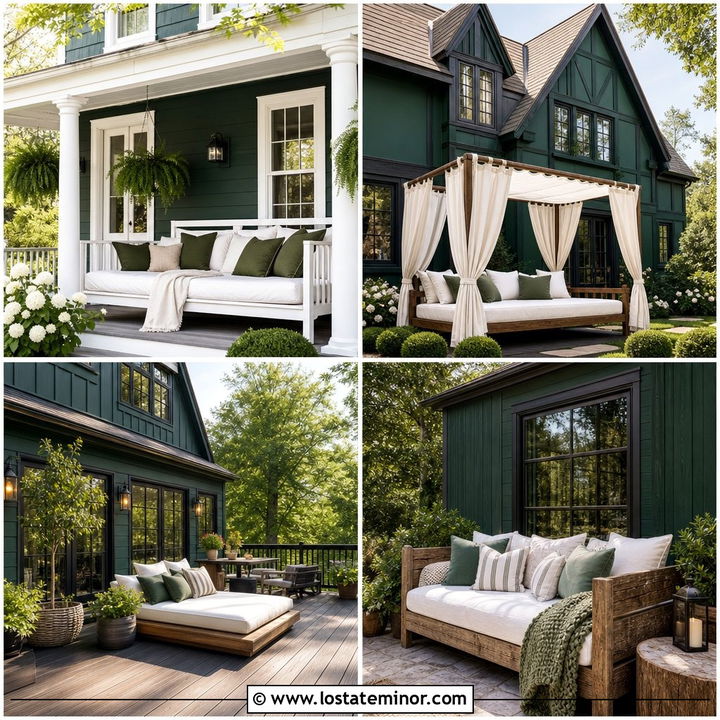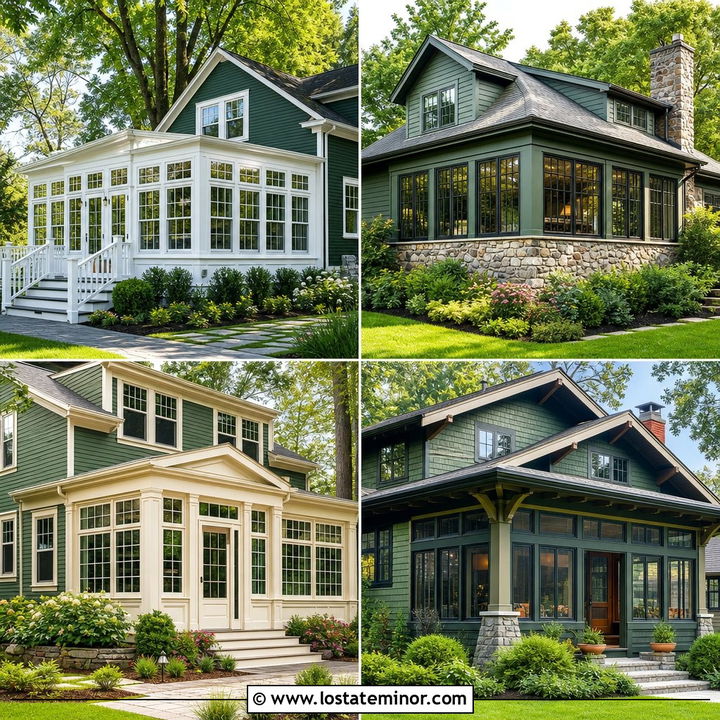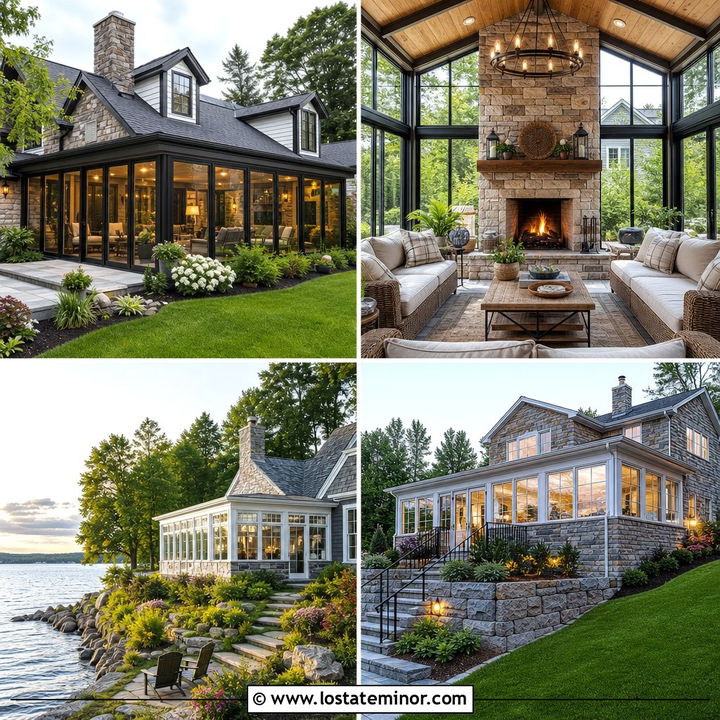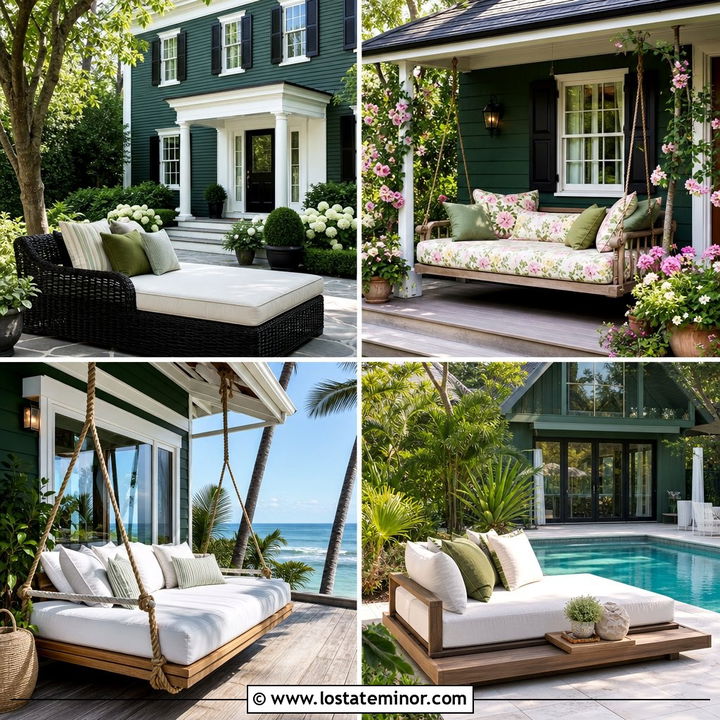
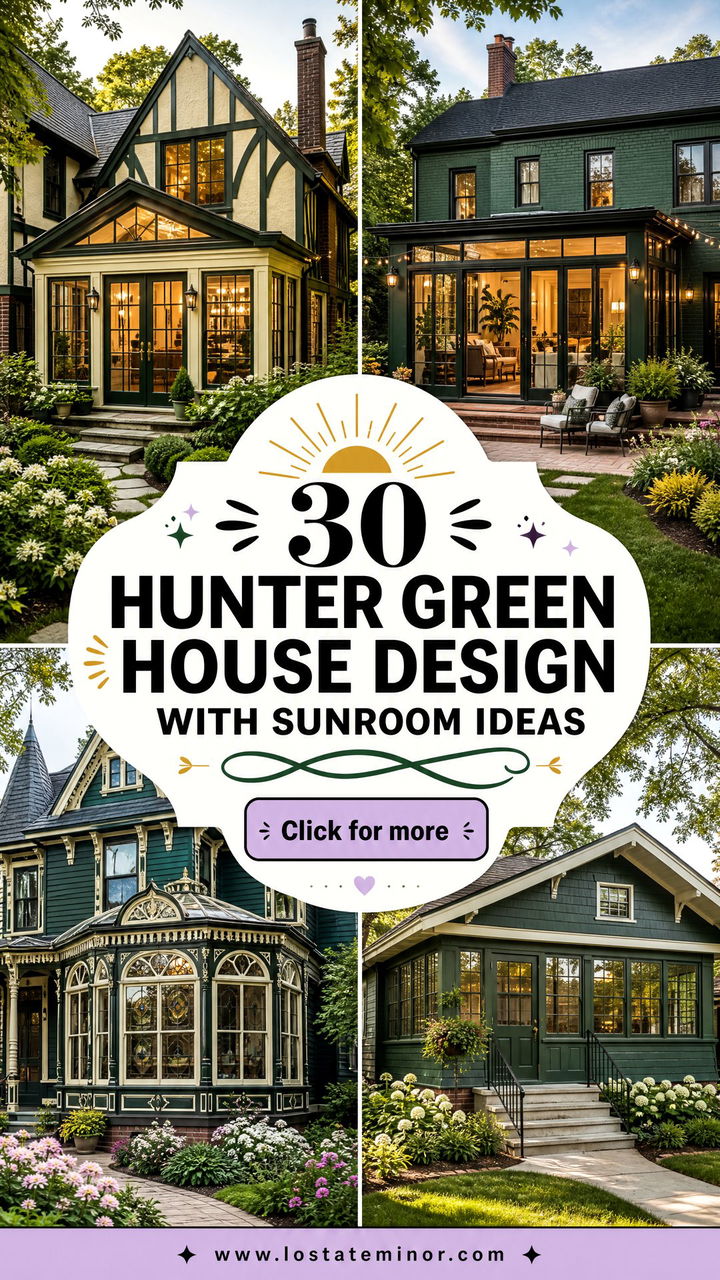
A hunter green exterior can make a home feel grounded, polished, and closely connected to the landscape. Add a sunroom, and the design gains another layer of warmth through glass, natural light, and indoor-outdoor character. The key is treating the sunroom as part of the architecture rather than an obvious addition. Matching rooflines, coordinated trim, repeated materials, and thoughtful foundation details create a seamless result. Hunter green also works with many exterior finishes, including brick, fieldstone, cedar, black metal, and warm white paint. Whether you are updating a ranch or designing a large traditional home, these 30 Hunter Green House Design With Sunroom Ideas offer complete exterior combinations. Explore the following 30 Hunter Green House Design With Sunroom Ideas for practical color pairings and curb-appeal inspiration.
1. Hunter Green Colonial With White Sunroom
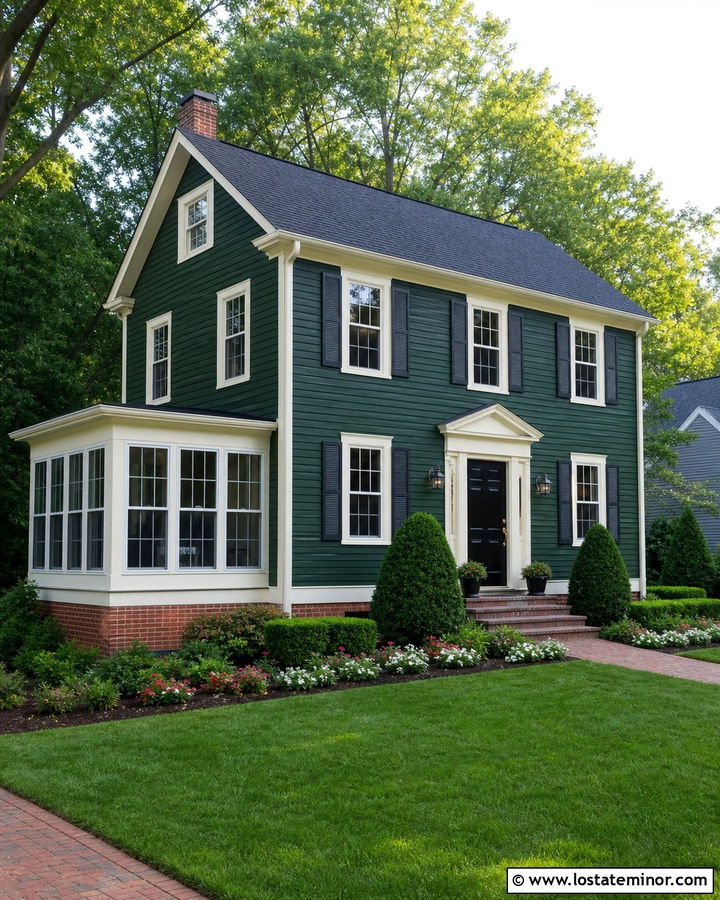
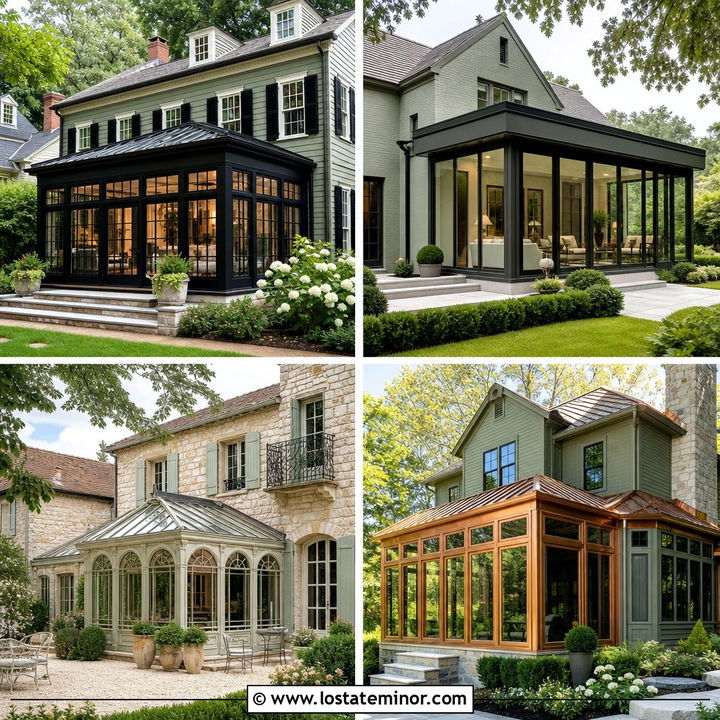
A two-story Colonial becomes more inviting when hunter green clapboard siding is paired with a traditional white-framed sunroom. Place the sunroom along one side of the house so the main facade remains balanced and formal. Warm white trim around the windows, cornice, and columns provides clean contrast without looking overly bright. A red brick foundation helps connect the glass addition to the original architecture. Finish the exterior with a black front door, brass hardware, and a charcoal architectural-shingle roof. Inside the sunroom, light wood flooring and neutral furnishings keep the windows visually open. Symmetrical shrubs, brick walkways, and flowering borders reinforce the Colonial character while softening the dark green body color.
2. Hunter Green Craftsman With Cedar Sunroom
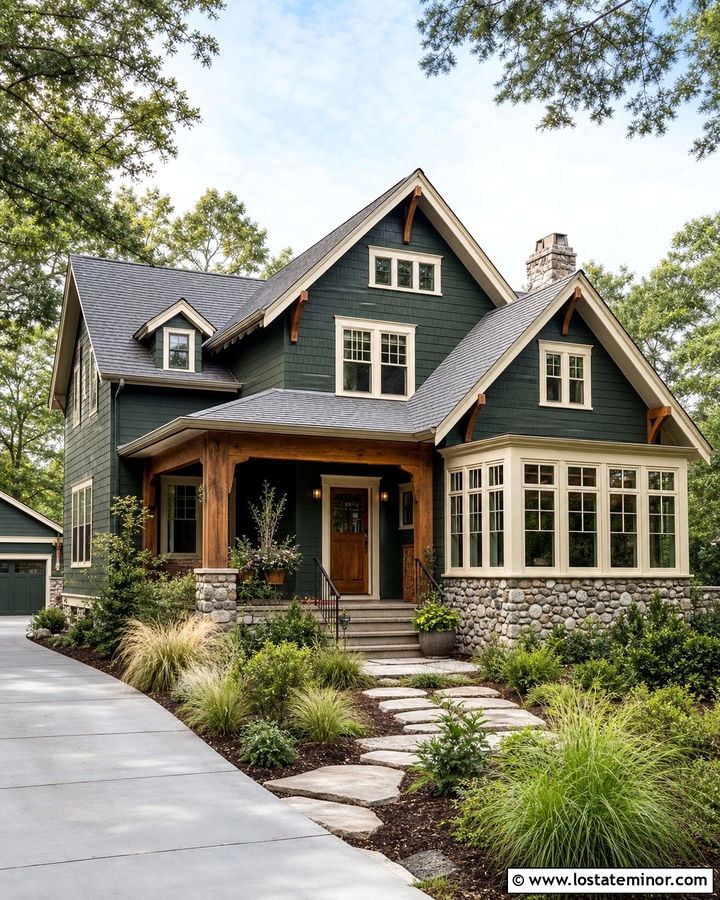
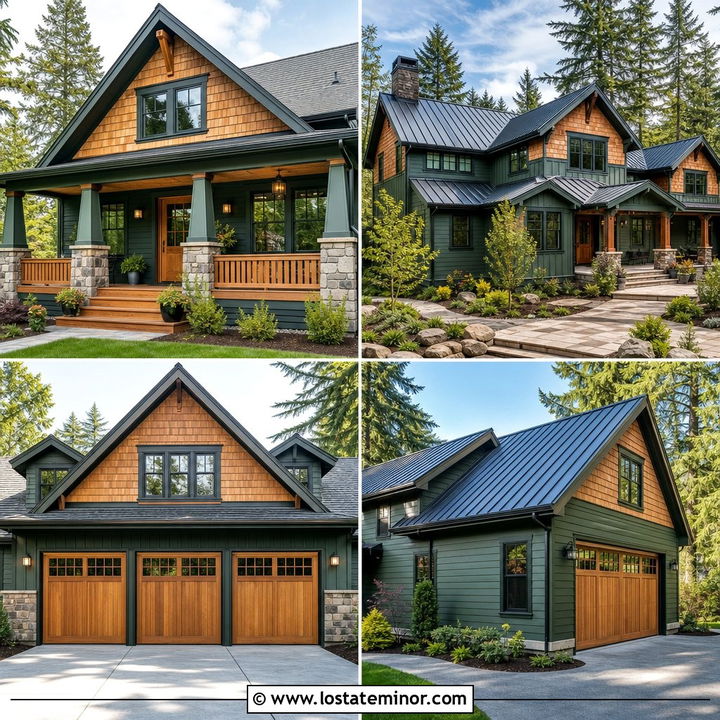
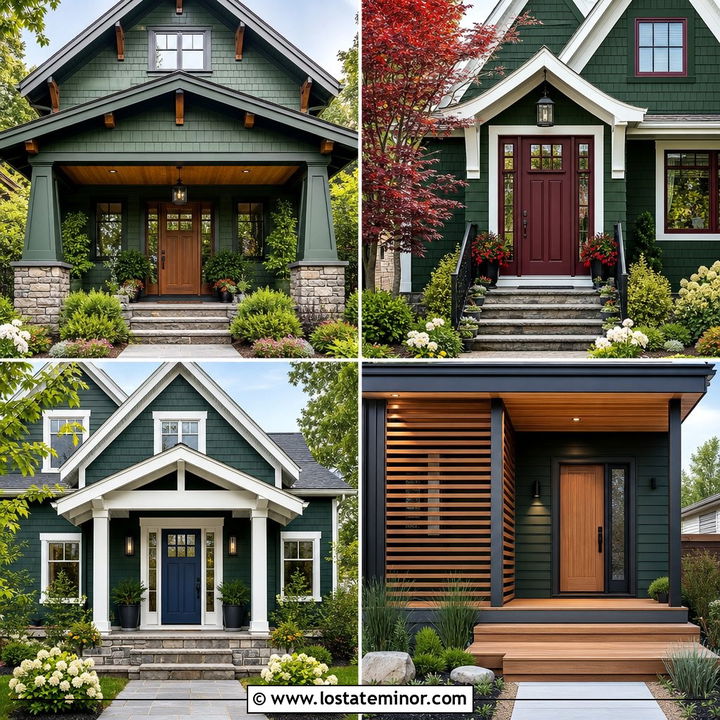
Rich hunter green siding naturally complements the handcrafted character of a Craftsman home. Use horizontal lap siding on the main level and matching green shingles beneath the front gable for subtle texture. A side sunroom framed with cedar beams adds warmth and prevents the exterior from feeling too dark. Repeat the cedar on the front door, porch ceiling, and decorative gable brackets. Cream trim works well around divided-light windows, while a medium-gray roof keeps the overall palette earthy. Support the sunroom with a stone base that matches the front porch columns. Native grasses, broad stepping stones, and informal shrubs complete this relaxed exterior. The finished scheme feels coordinated because every material appears in more than one location.
3. Hunter Green Farmhouse With Black Frame Sunroom
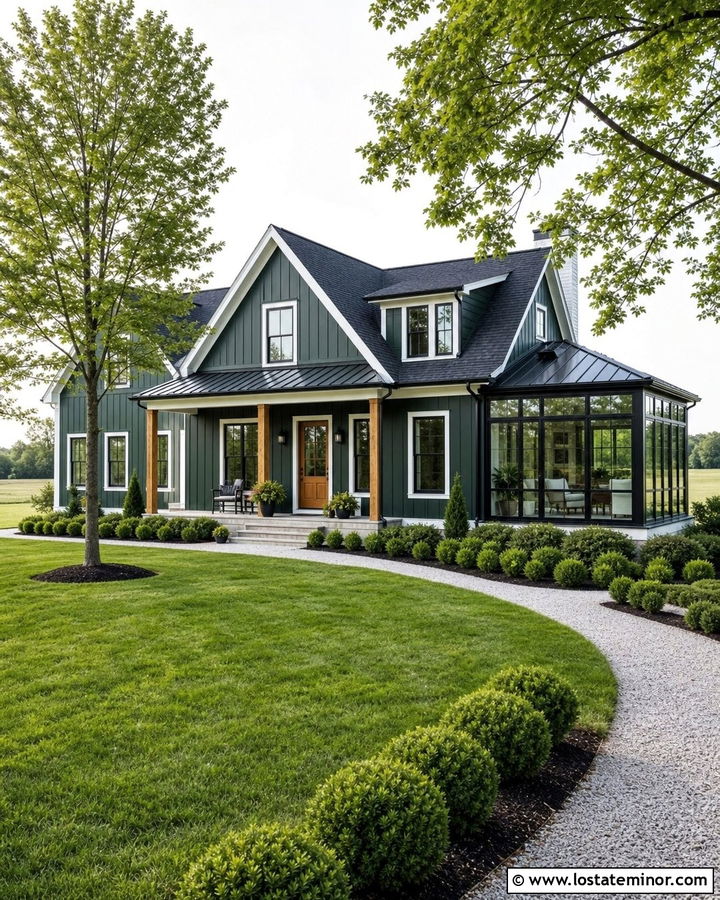
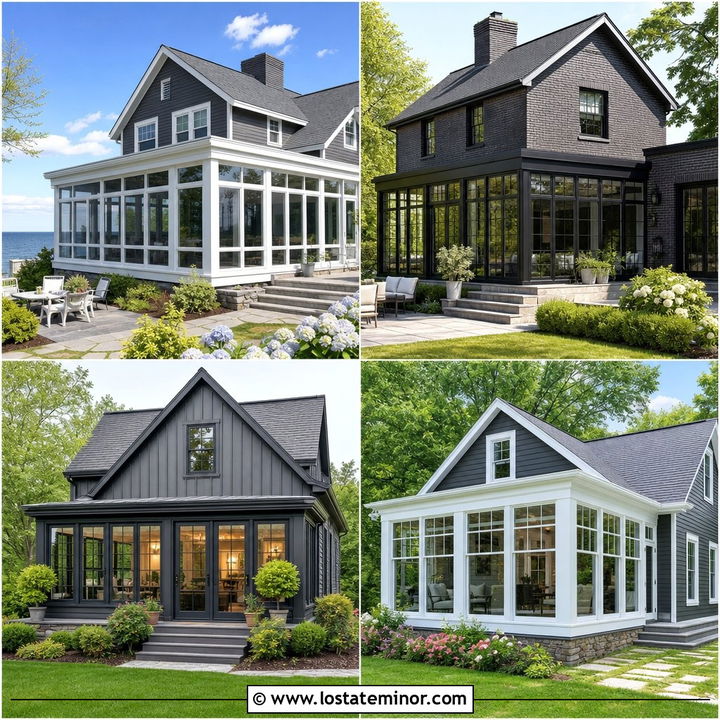
Clean lines give a hunter green modern farmhouse a fresh alternative to the familiar all-white exterior. Cover the house in deep green board-and-batten siding, then introduce a black steel-frame sunroom on the side or rear corner. The slim dark frames create definition without competing with the vertical siding. Use soft white trim sparingly around the roofline and main entrance. A natural oak front door and matching porch posts bring needed warmth to the green-and-black palette. Choose a matte black metal roof for the sunroom and a charcoal shingle roof for the main house. Simple foundation plantings, a gravel walkway, and structured boxwood beds support the modern farmhouse look while keeping the glass addition visible from the curb.
4. Hunter Green Ranch With Corner Sunroom
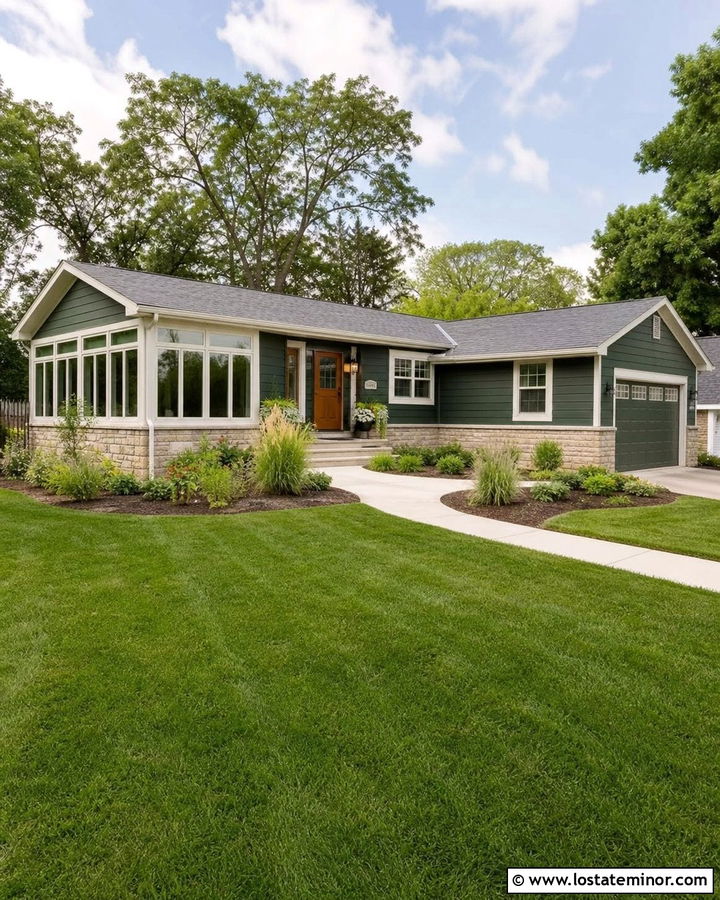
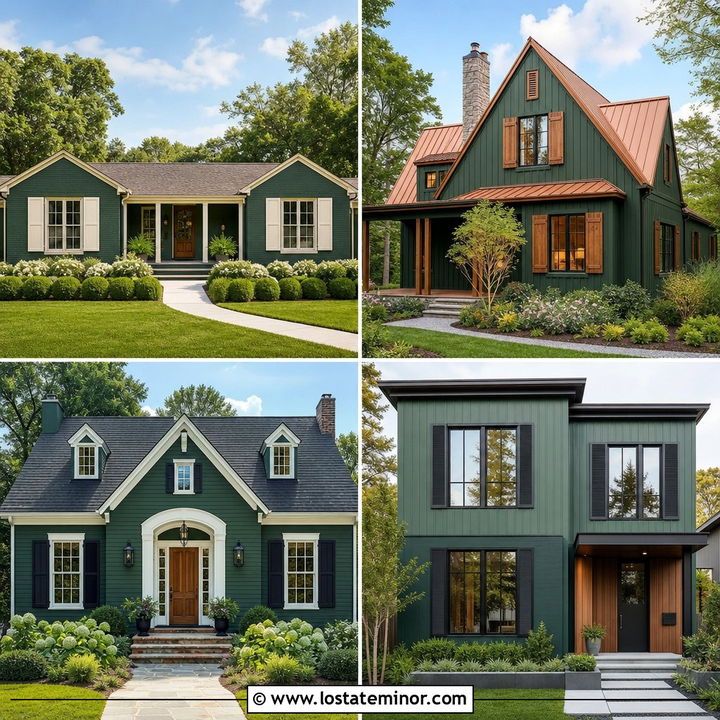
A corner sunroom can give a simple ranch home greater dimension without overwhelming its low roofline. Paint the horizontal siding hunter green and use warm white trim to clearly outline the windows, eaves, and glass addition. Position the sunroom at the front-side corner where it can function as a bright sitting area overlooking the yard. A low-pitched roof should follow the angle of the main house for a natural transition. Add a stained wood front door and light buff stone around the sunroom foundation. Medium-gray roofing keeps the design quiet and practical. Curved planting beds, ornamental grasses, and a wide concrete walkway soften the long facade. This arrangement makes the ranch appear broader, brighter, and more architecturally balanced.
5. Hunter Green Tudor With Cream Sunroom
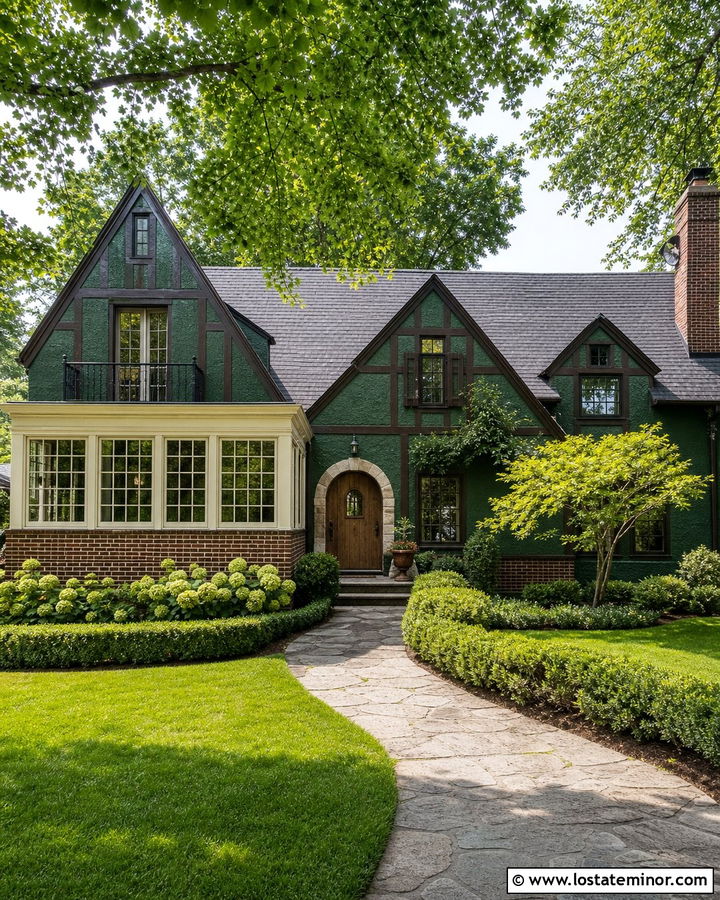
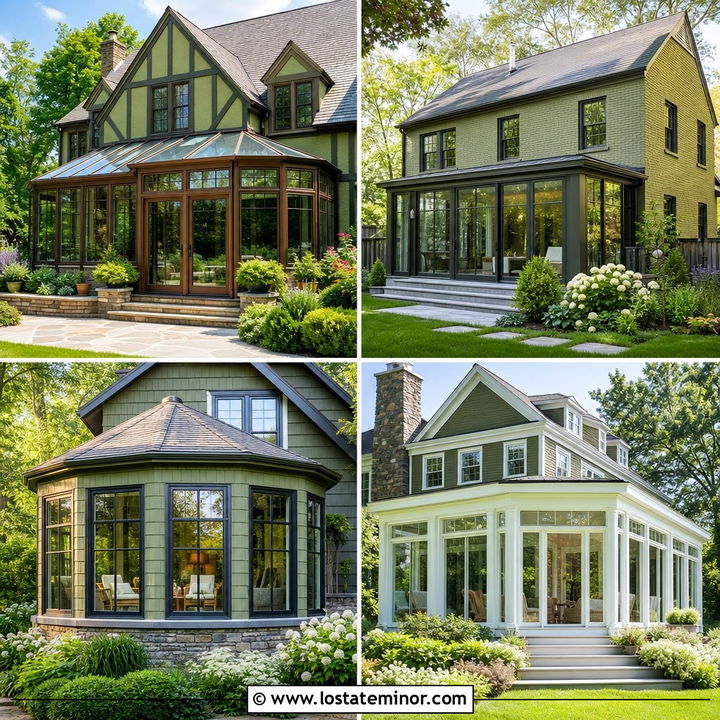
Can a sunroom feel authentic on a Tudor exterior? It can when the addition repeats the home’s steep rooflines, divided windows, and substantial materials. Use hunter green stucco or painted siding between dark brown half-timber details. Frame the sunroom in creamy off-white to lighten the rich exterior palette. A steep sunroom roof with dark shingles helps the addition relate to the main gables. Incorporate reddish-brown brick along the foundation and around an arched front entry. Dark bronze window frames, copper lighting, and a stained oak door provide traditional finishing touches. Layer the landscape with clipped hedges, climbing greenery, and curved stone paths. The result is a character-rich exterior where the sunroom feels established rather than newly attached.
6. Hunter Green Cape Cod With Wraparound Sunroom
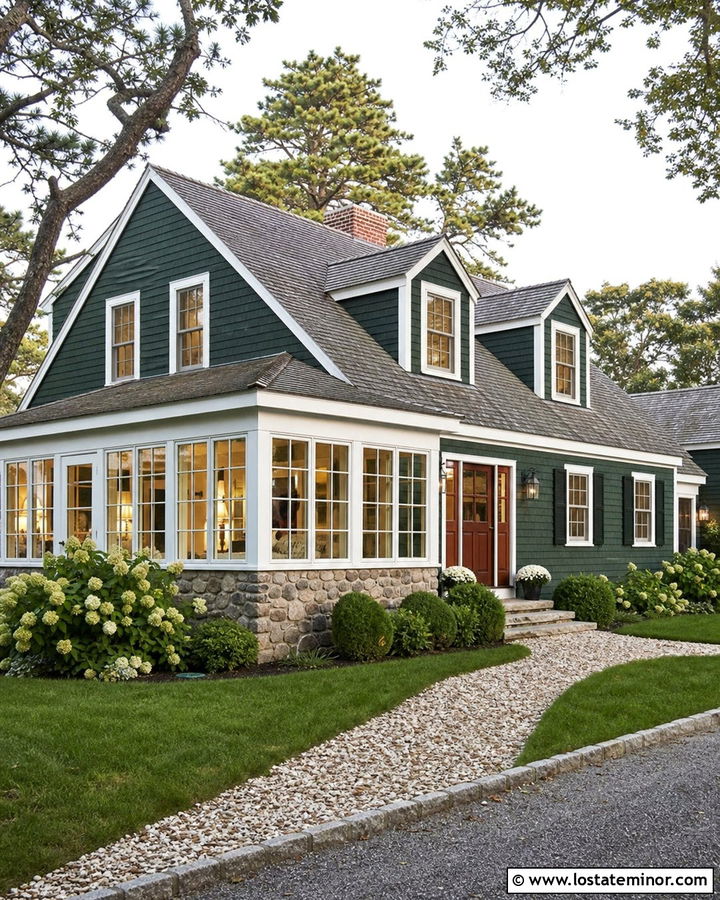
A compact Cape Cod can gain valuable living space through a sunroom that wraps around one front-side corner. Hunter green shingles give the house coastal character, while crisp white trim highlights the dormers, roofline, and sunroom windows. Keep the addition modest in height so the steep central roof remains the dominant feature. White framing makes the glass walls feel light and open. Add a weathered gray roof, a natural mahogany front door, and understated black lanterns. A low brick or stone base visually anchors the sunroom and protects the lower walls from splashes. Hydrangeas, evergreen shrubs, and a simple shell or gravel path reinforce the casual setting. This full exterior scheme feels traditional, bright, and appropriate for a smaller home.
7. Hunter Green Midcentury House With Glass Sunroom
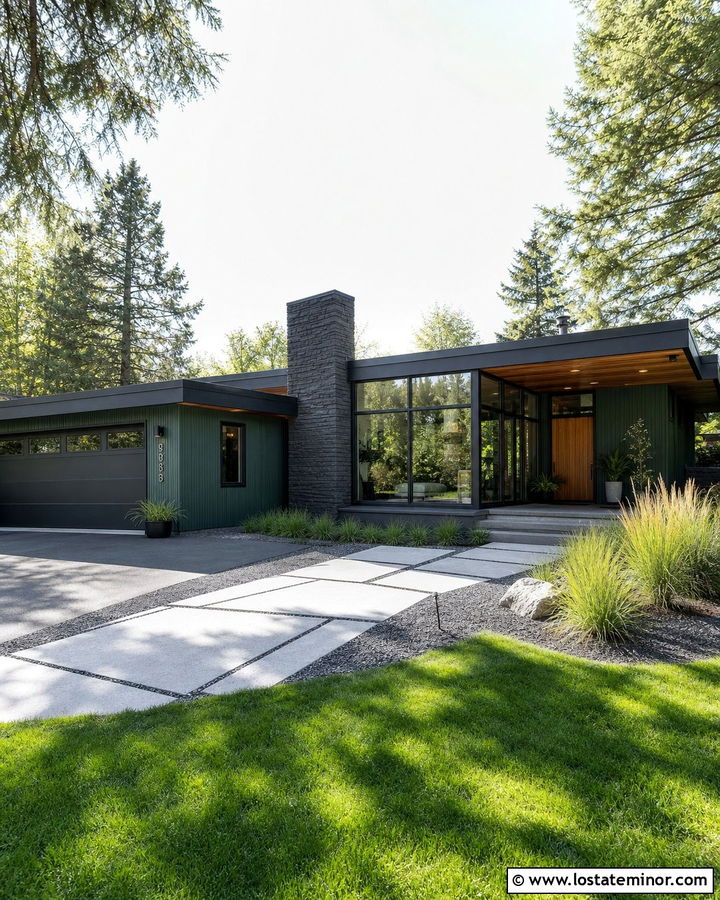
Long rooflines and broad windows make a midcentury house a strong match for a streamlined glass sunroom. Use hunter green vertical siding to emphasize the architecture while helping the home blend with mature trees. Frame the sunroom with black aluminum and carry the same finish across the original window frames. Warm cedar soffits, a flat-panel wood door, and horizontal privacy screens balance the cool green siding. Keep the roof low and nearly flat, with deep overhangs that visually connect old and new sections. A charcoal stone chimney can serve as a central anchor. Complete the landscape with concrete pavers, sculptural grasses, gravel beds, and restrained evergreen plantings. The sunroom should appear open and modern without disrupting the home’s strong horizontal composition.
8. Hunter Green Brick House With Rear Sunroom
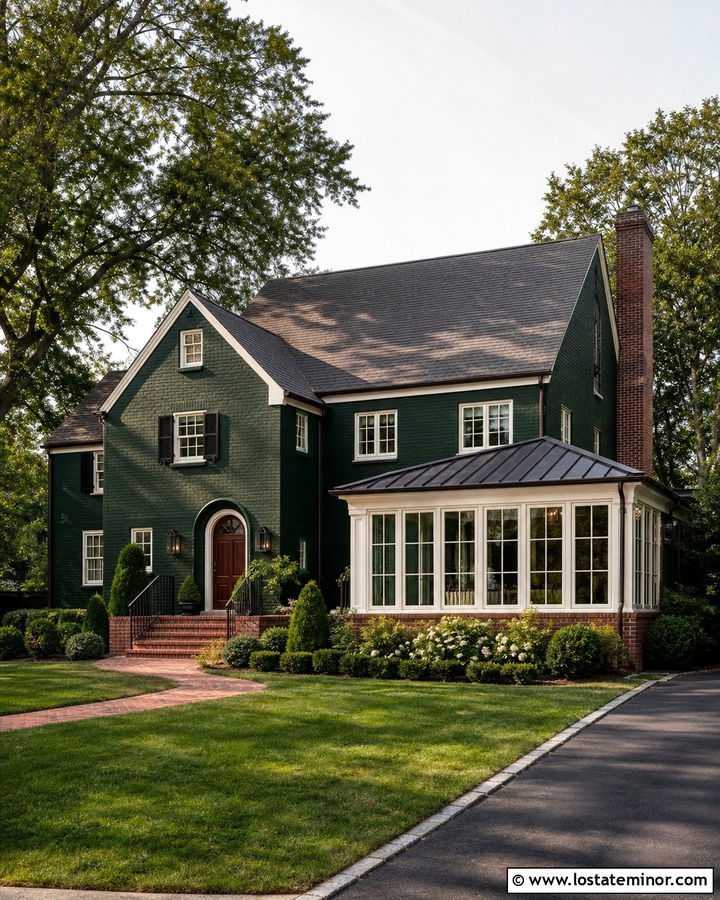
Painting an older brick house hunter green creates a rich, textured finish that changes subtly throughout the day. A rear sunroom can still contribute to curb appeal when it extends slightly beyond one side of the facade. Use warm white window frames and a matching cornice to define the addition against the dark brick. A black metal roof gives the sunroom a crisp edge, while a dark gray shingle roof keeps the main house understated. Repeat unpainted red brick on the sunroom base or garden walls to preserve a connection with the home’s history. Add a walnut-colored front door and aged brass fixtures. Layered shrubs and a brick path bring the complete palette together without hiding the masonry texture.
9. Hunter Green Victorian With Decorative Sunroom
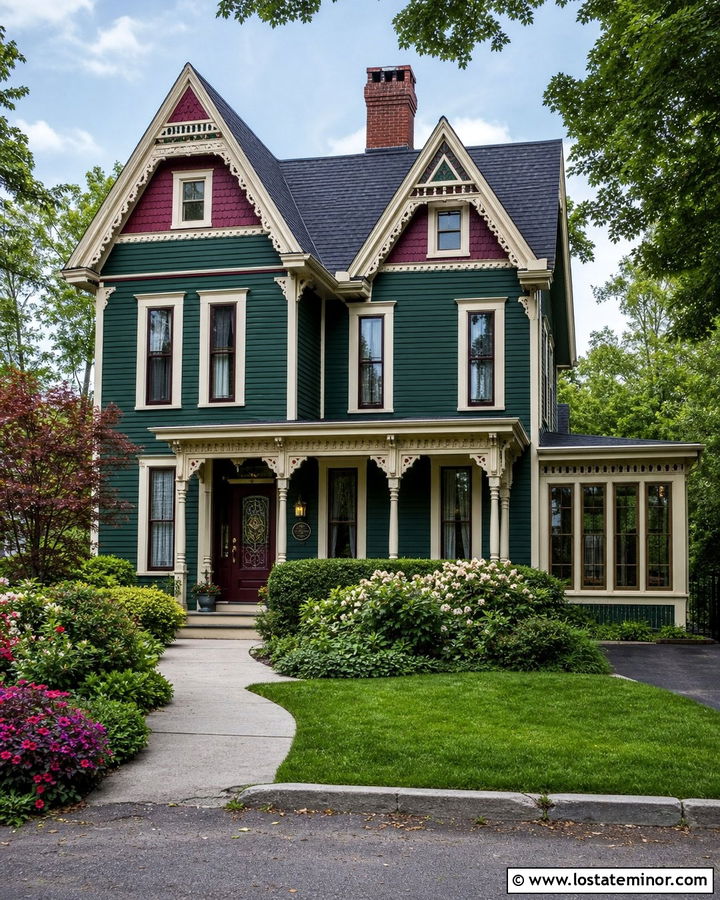
A Victorian exterior can handle a layered color scheme, but the palette should remain controlled. Paint the primary siding hunter green, then use warm ivory on the trim, brackets, window surrounds, and decorative sunroom framing. Muted gold accents can highlight small details without making the facade overly busy. Design the sunroom as a glassed-in side porch with tall windows and a low decorative railing beneath them. A charcoal roof and dark burgundy front door add depth. Repeat original features, such as turned posts, patterned shingles, or spindlework, around the addition. Flowering shrubs, a curved walkway, and a small ornamental tree complement the architecture. This coordinated treatment gives the sunroom period character while allowing hunter green to remain the dominant exterior color.
10. Hunter Green Split-Level With Walkout Sunroom
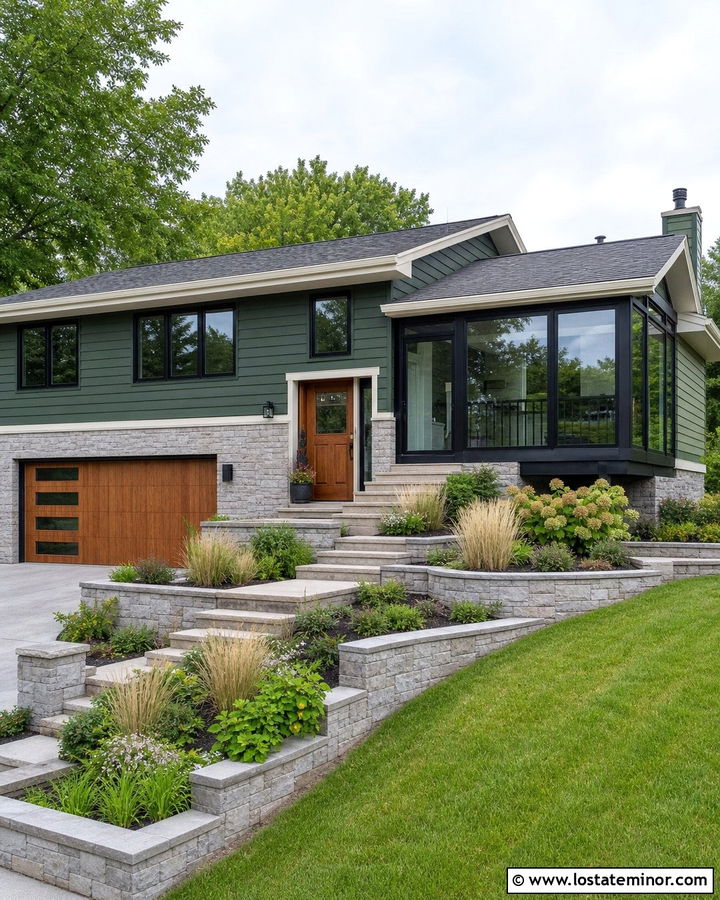
A walkout sunroom can improve the proportions of a split-level home by connecting its uneven sections. Cover the upper story in hunter green lap siding and use light gray stone across the lower level. Place the sunroom beside the taller portion, aligning its roof with an existing horizontal line. Black-framed windows create a modern contrast, while warm white fascia prevents the exterior from becoming too heavy. Repeat the stone at the sunroom base and around the front steps. A medium wood garage door and matching entry door add warmth to the composition. Use tiered planting beds to handle changes in grade naturally. Broad steps, low retaining walls, and ornamental grasses help the entire property look planned rather than pieced together over time.
11. Hunter Green Cottage With Greenhouse Sunroom
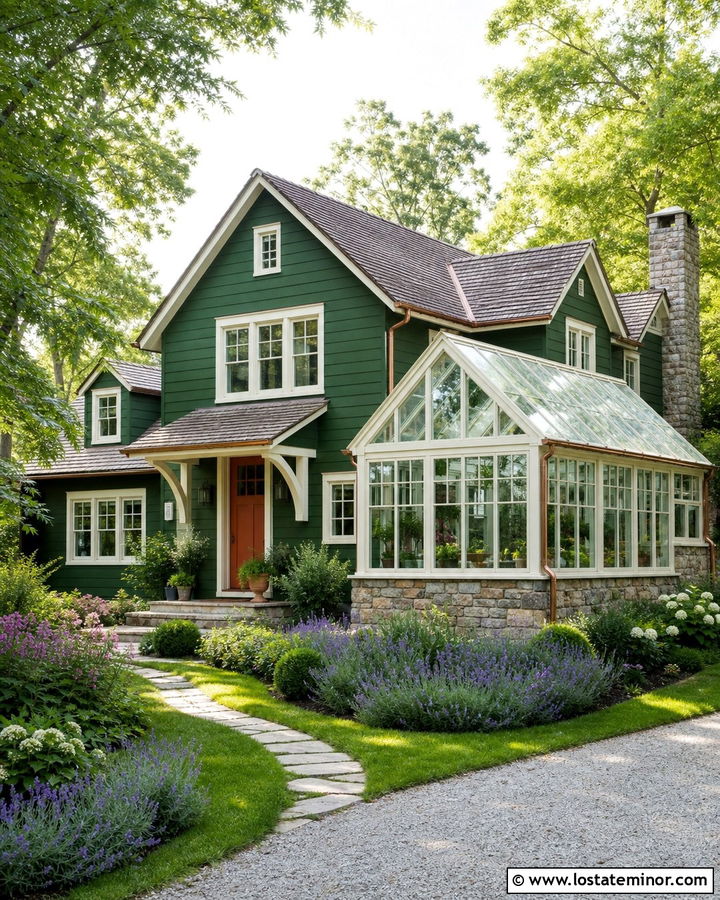
A greenhouse-inspired sunroom suits the intimate scale of a cottage and strengthens its connection to the garden. Choose hunter green lap siding for the house and a soft cream frame for the glass addition. A pitched glass roof gives the sunroom a light profile while echoing the cottage’s main gable. Use natural fieldstone along the foundation, chimney, and garden edging. A muted terracotta front door introduces a gentle color accent that feels warm beside the green. Cream window trim, copper gutters, and weathered wood details complete the palette. Surround the home with lavender, flowering perennials, and winding stone paths. The sunroom should overlook the most planted portion of the yard, allowing it to feel like a comfortable transition between the home and garden.
12. Hunter Green Contemporary House With Flat Roof Sunroom
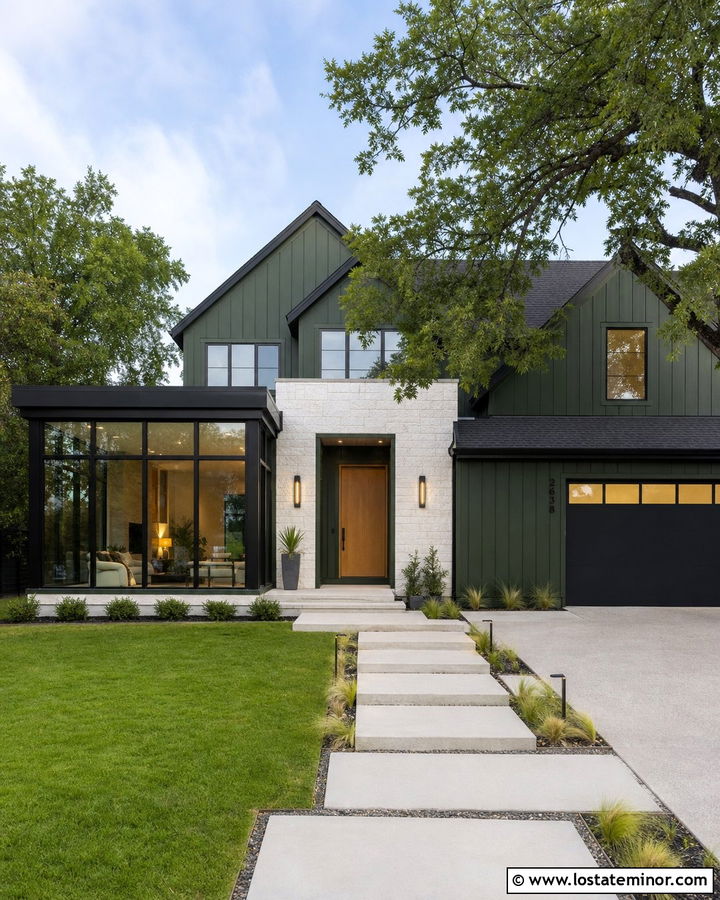
A contemporary hunter green house benefits from restrained materials and strong geometric lines. Use smooth vertical siding in a deep green finish across the main facade, then add a flat-roof sunroom with large black-framed glass panels. Keep the sunroom frame thin and consistent so the structure looks clean rather than bulky. Light limestone around the entrance and foundation brings contrast to the dark siding. A flush natural wood front door adds warmth without introducing decorative detail. Concealed gutters and a charcoal roof maintain the streamlined appearance. Finish the yard with large concrete pavers, clipped grasses, and simple rectangular planting beds. This complete exterior works because the glass, stone, wood, and hunter green siding each occupy clear, well-proportioned sections of the facade.
13. Hunter Green Bungalow With Front Sunroom
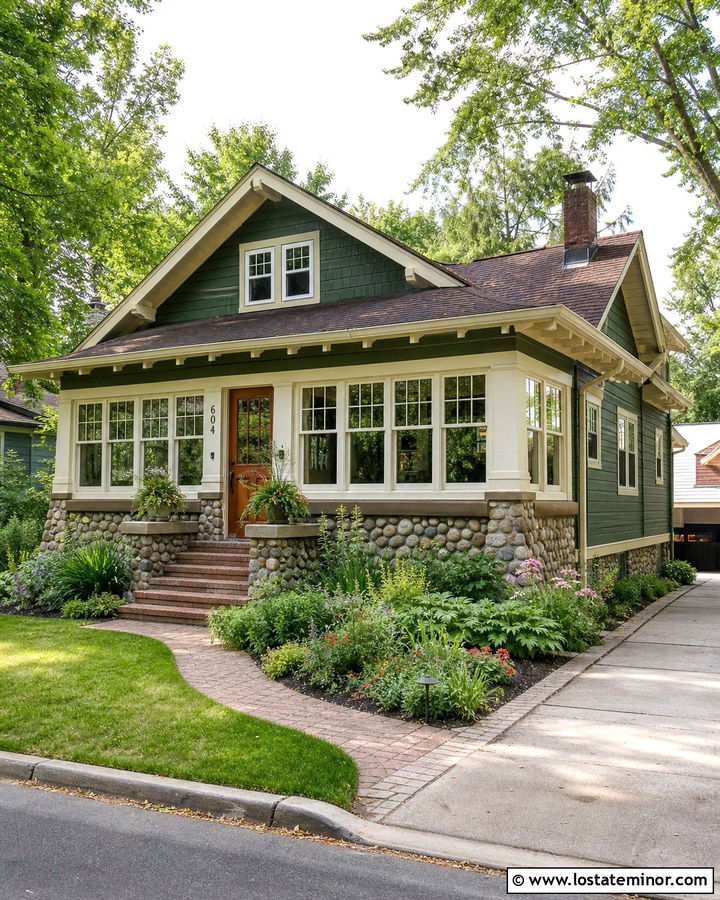
An enclosed front porch can become a practical sunroom while preserving the welcoming nature of a bungalow. Paint the home’s lap siding hunter green and use creamy white on the thick window trim, tapered columns, and exposed rafter tails. Install groups of divided-light windows between the original porch supports so the enclosure still reads as a porch. A river-rock or fieldstone base provides texture and visual weight. Choose a medium-brown shingle roof and repeat that warmth with a stained wood front door. Keep furniture low inside the sunroom so it does not clutter the street-facing windows. Deep garden beds, brick steps, and a curved front walk complete the cozy exterior. The result feels original to the house rather than like a later enclosure.
14. Hunter Green Georgian House With Symmetrical Sunroom
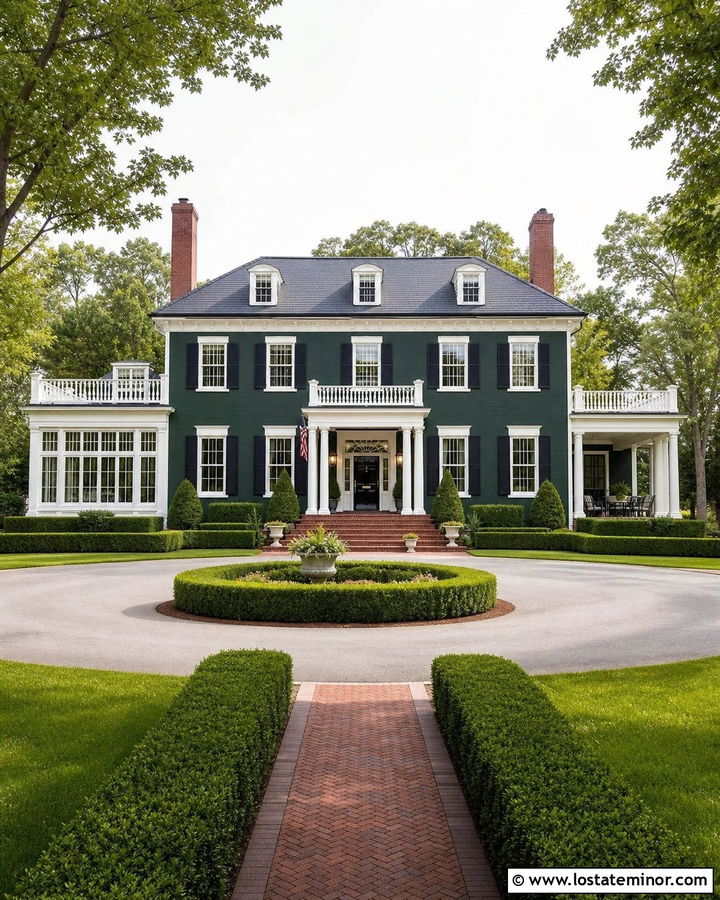
Symmetry is essential when adding a sunroom to a formal Georgian home. One effective approach is placing matching glass wings on both sides, with one serving as a sunroom and the other balancing the facade. If only one addition is possible, use structured landscaping or a covered porch on the opposite side. Paint the brick or siding hunter green and apply warm white to the window frames, cornice, columns, and sunroom structure. A glossy black front door creates a strong central focal point. Use a dark slate-colored roof and red brick steps for traditional contrast. Boxwood hedges, straight walkways, and evenly spaced trees reinforce the architecture. Careful alignment allows the glass addition to feel refined, permanent, and consistent with the home’s formal proportions.
15. Hunter Green Mountain House With Stone Sunroom
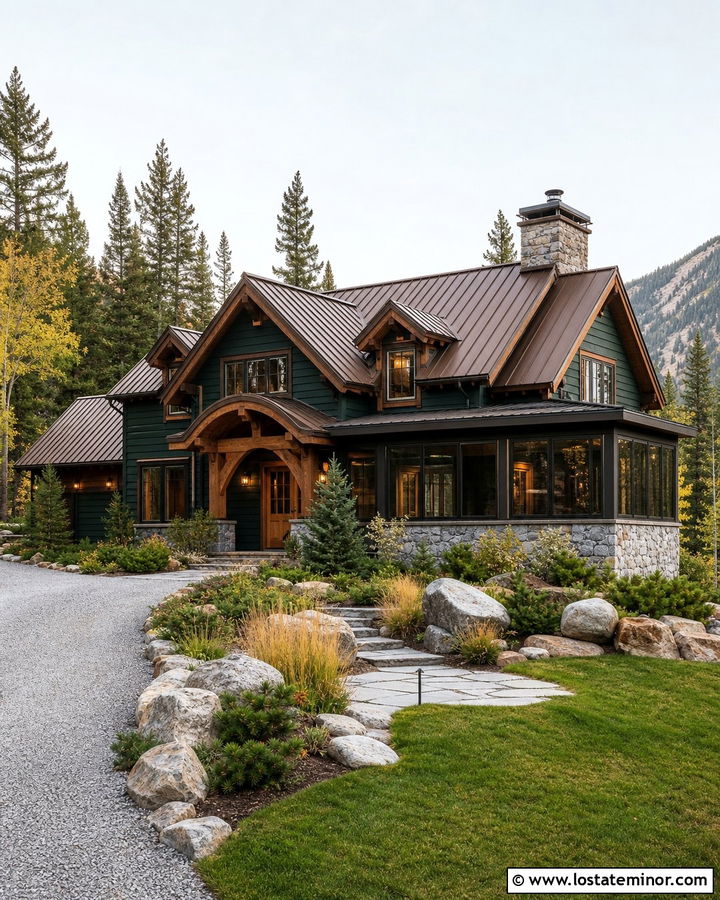
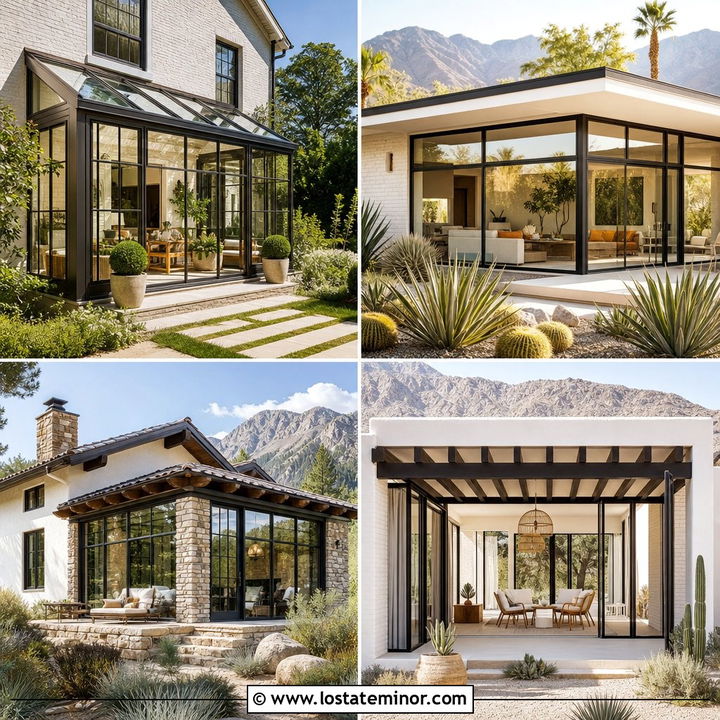
Hunter green looks especially natural when surrounded by woods, stone, and changing seasonal colors. On a mountain-style home, combine deep green siding with a sunroom supported by a substantial gray fieldstone base. Use dark bronze window frames to soften the transition between the glass and siding. Exposed cedar beams, a natural wood front door, and a brown metal roof introduce warm rustic tones. The sunroom can project from one side beneath a broad gable, giving it wide views while maintaining a strong roofline. Repeat the stone around the entrance and chimney for consistency. Native evergreens, boulders, and a gently curving gravel drive help the structure settle into the site. The overall exterior feels sturdy, comfortable, and closely tied to its surroundings.
16. Hunter Green Coastal House With Bronze Sunroom
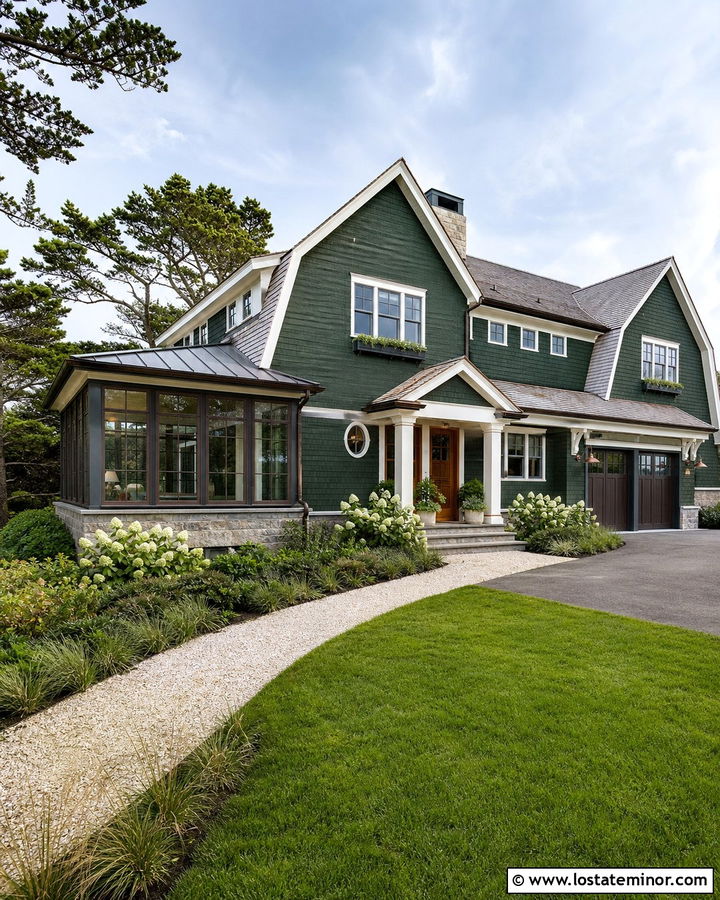
Hunter green offers a sophisticated coastal alternative to pale blue or weathered gray. Apply it to shingle siding and pair it with warm white trim around the roofline, porch, and windows. A bronze-framed sunroom creates softer contrast than black and works beautifully with sandy stone or pale brick. Give the addition a low hipped roof that can withstand the visual weight of a broad coastal facade. A natural teak door and copper-toned exterior lights bring additional warmth. Choose a weathered gray roof to keep the design relaxed. Salt-tolerant grasses, hydrangeas, and a crushed-shell walkway support the coastal setting without making it themed. The finished house looks polished yet casual, with the glass sunroom serving as a bright connection to the outdoor view.
17. Hunter Green Prairie House With Low Sunroom
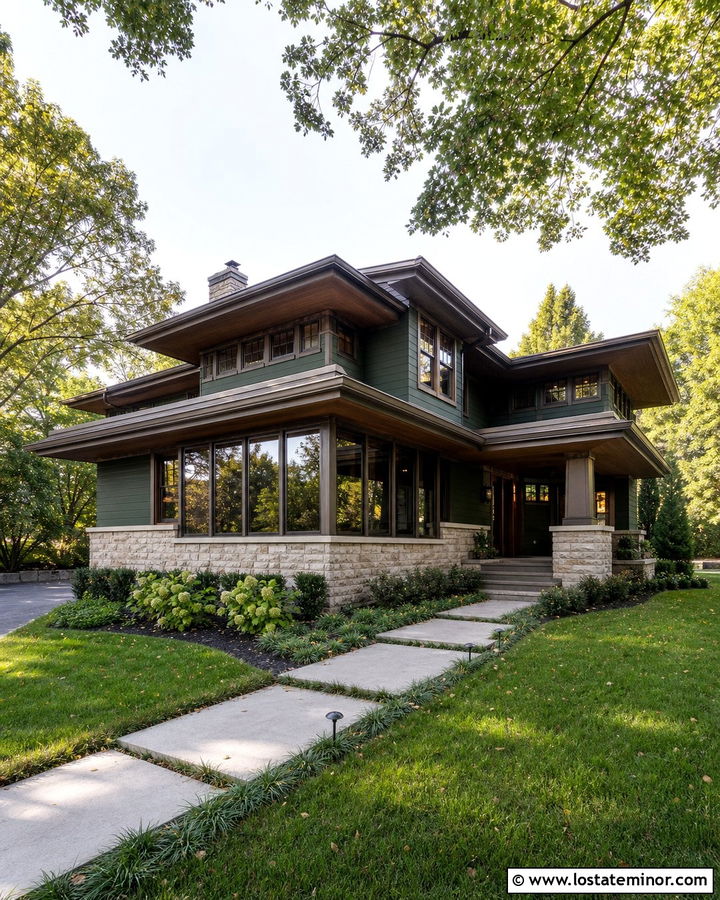
Strong horizontal lines should guide every choice on a Prairie-style exterior. Cover the house in hunter green stucco or smooth lap siding and use taupe trim to outline broad windows without creating sharp contrast. Place a low sunroom beneath an extended roof overhang so it appears integrated into the original structure. Bronze window frames, limestone foundation walls, and stained wood soffits reinforce the earthy palette. Choose a wide front door with simple geometric glass rather than ornate details. The sunroom windows can repeat the horizontal divisions found elsewhere on the house. Long planting beds, low shrubs, and rectangular walkway slabs continue the visual lines into the landscape. This approach makes the sunroom feel like a natural extension of the architecture rather than a separate glass box.
18. Hunter Green Saltbox With Side Sunroom
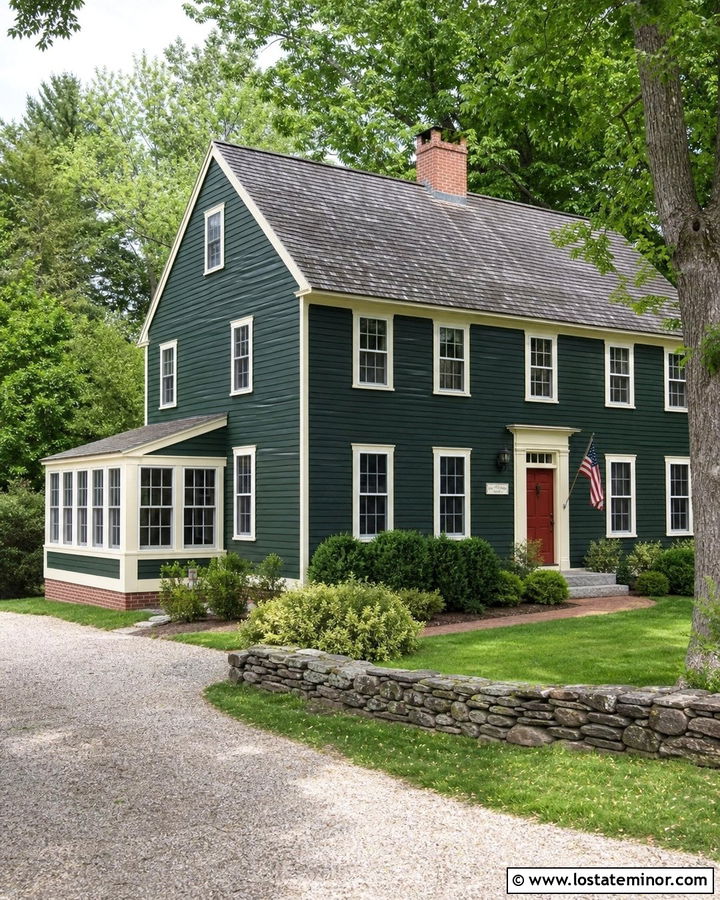
The uneven roofline of a saltbox house gives it recognizable character, so a sunroom should remain visually secondary. Position a compact glass addition along the shorter side and use a simple shed roof that meets the house below the main eaves. Hunter green clapboard siding creates a traditional New England appearance, especially with creamy white corner boards and window trim. Add a dark gray cedar-look roof and a brick-red front door for restrained historic color. Frame the sunroom in white and support it with a red brick foundation that matches the chimney. Informal hedges, stone walls, and a gravel drive suit the architecture better than highly formal landscaping. The finished exterior remains modest while providing a bright, useful room connected to the yard.
19. Hunter Green French Country House With Arched Sunroom
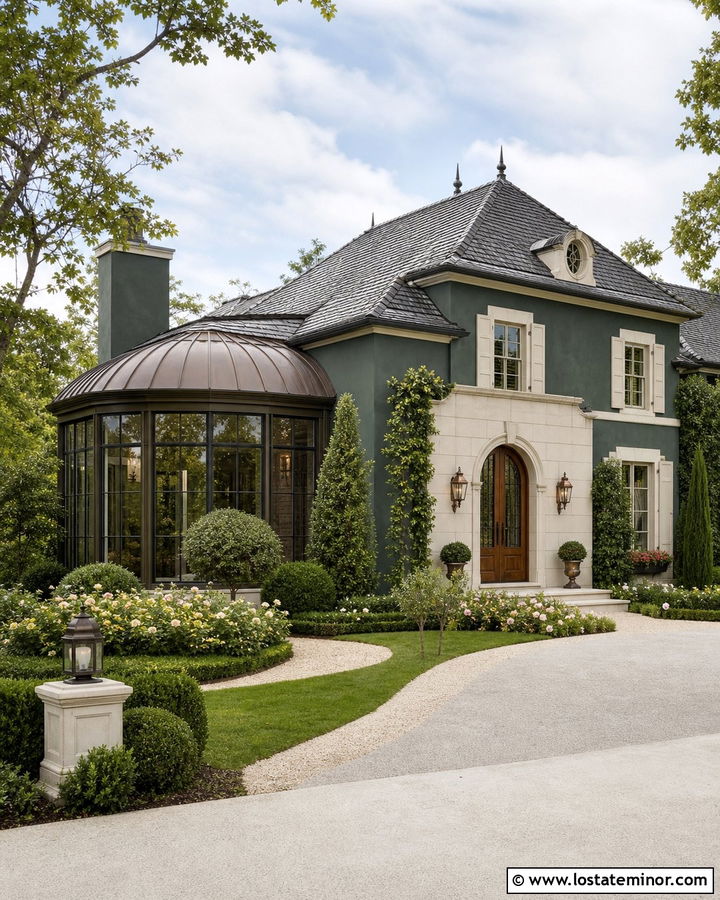
Soft curves and textured masonry help a sunroom complement a French country exterior. Use hunter green painted stucco or siding for the main walls, balanced by creamy limestone around the entrance and lower facade. Design the sunroom with tall arched windows and dark bronze frames. A gently hipped roof in weathered charcoal adds traditional shape without overpowering the glass walls. Warm ivory trim, a medium oak door, and copper lanterns keep the palette welcoming. Repeat the limestone at the sunroom base so the addition feels structurally connected to the house. Curved gravel paths, clipped shrubs, flowering roses, and small ornamental trees support the relaxed formality. Hunter green gives the romantic architectural details greater depth while allowing the pale masonry to stand out.
20. Hunter Green A-Frame With Glass Sunroom
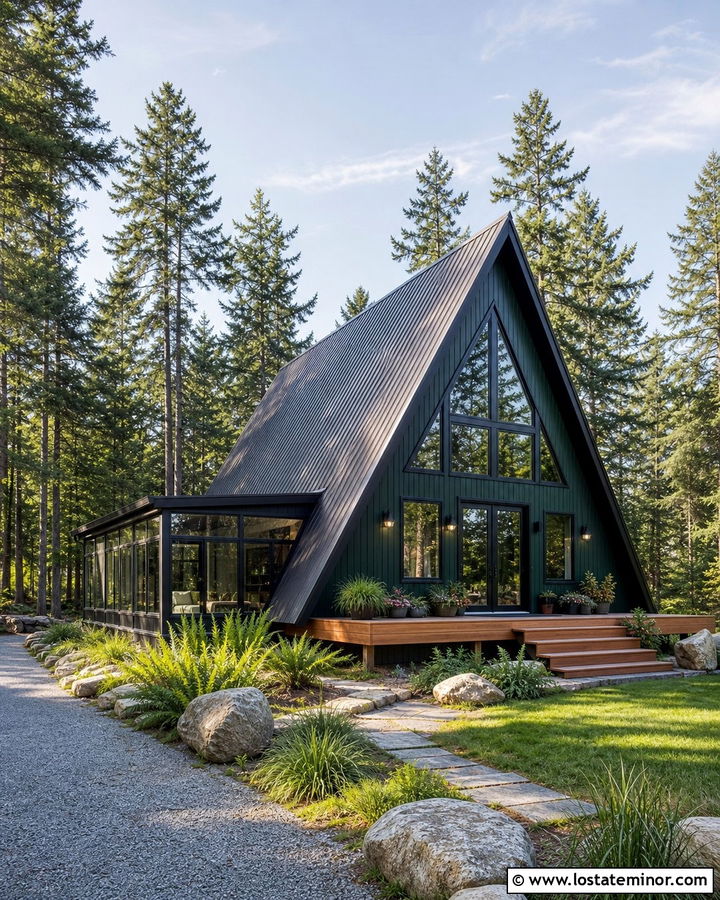
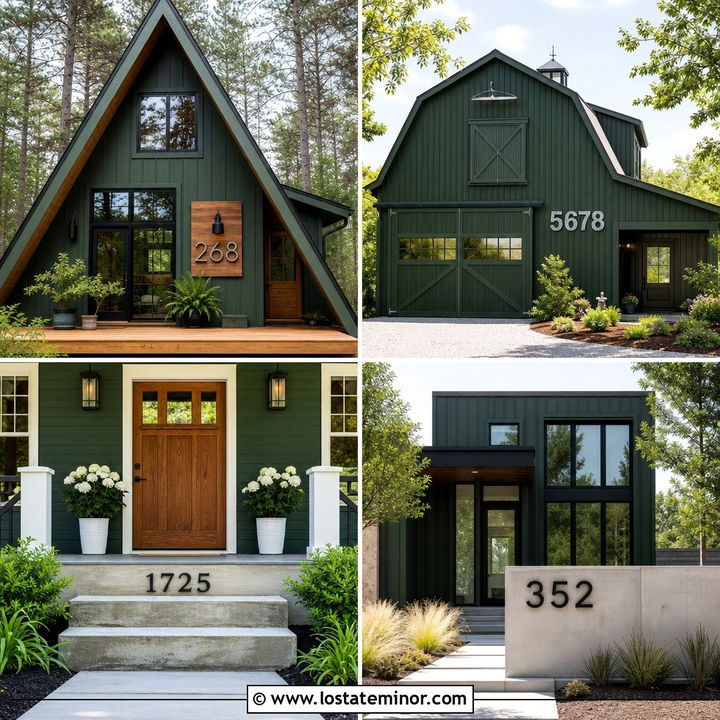
An A-frame home already has a bold silhouette, so the sunroom should complement its geometry instead of competing with it. Paint the exterior hunter green to help the steep structure blend with a wooded landscape. Build a low rectangular sunroom along one side using black metal frames and a shallow roof. Cedar decking can connect the addition to the front entry and provide a warm break between the green walls and dark glass framing. Keep trim minimal and use a charcoal metal roof across the main structure. Large triangular windows in the A-frame should remain the primary focal point. Ferns, native grasses, stone steps, and a gravel drive complete the natural setting. The contrasting shapes create interest while maintaining a simple, cohesive material palette.
21. Hunter Green Mediterranean House With Courtyard Sunroom
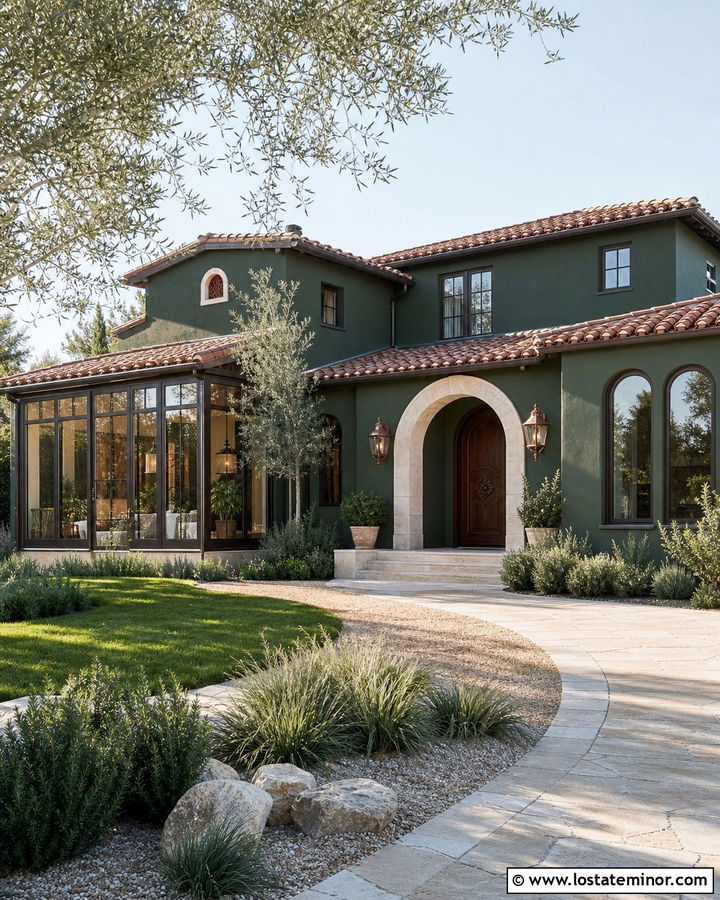
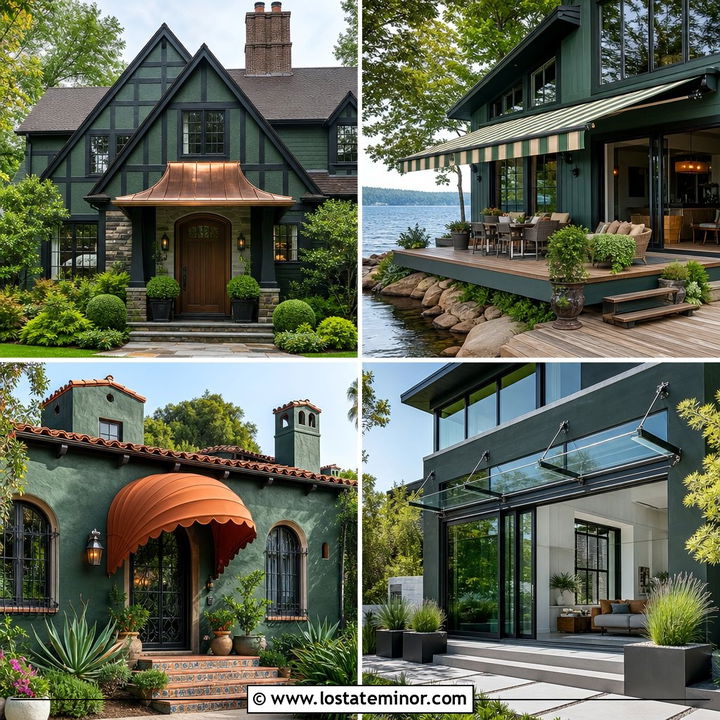
Hunter green can update a Mediterranean-inspired house when it is applied with warm, natural finishes. Use deep green stucco across the main walls and creamy limestone around arched windows and the entrance. Place the sunroom beside a sheltered front courtyard, framing it with dark bronze metal and clear glass. A low terracotta tile roof connects the addition to the home’s rounded roof forms. Choose a heavy wood front door, copper lighting, and pale stone paving to warm the dark body color. The sunroom base can feature matching stucco or limestone veneer. Olive trees, clipped rosemary, ornamental grasses, and gravel beds complete the exterior. This combination feels distinctive but balanced because the earthy green works comfortably with terracotta, aged metal, wood, and stone.
22. Hunter Green Two-Story House With Gabled Sunroom
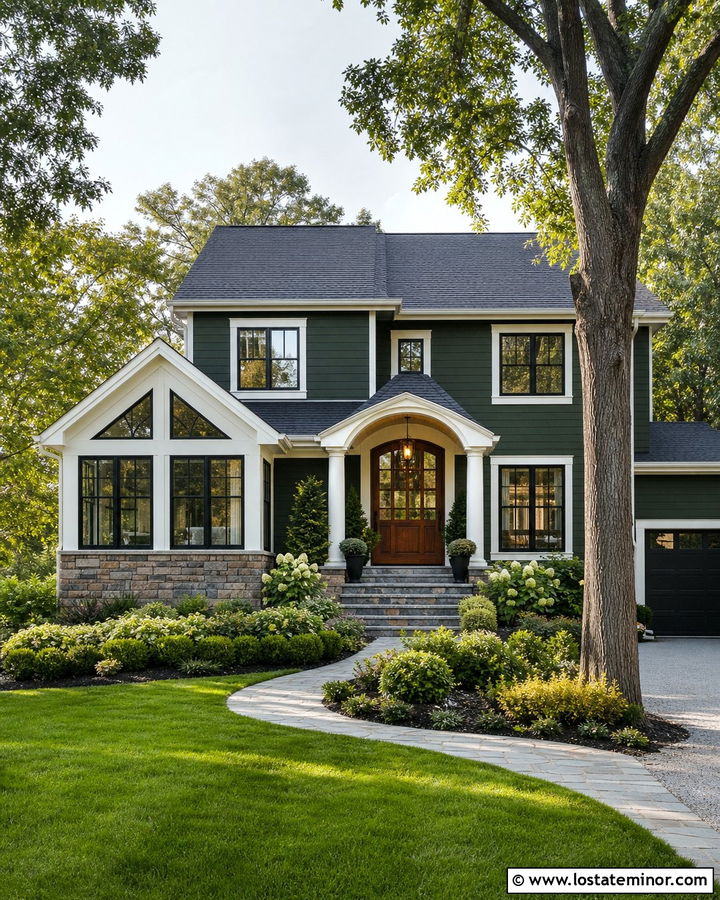
A gabled sunroom can add architectural interest to a straightforward two-story suburban home. Cover the primary facade with hunter green horizontal siding and use white trim around the windows, corners, and roofline. Position the sunroom on one side with a front-facing gable that repeats the shape above the main entrance. Black window frames give the glass walls definition, while a stone base prevents the addition from appearing lightweight. Repeat the same stone around the garage or front steps to unify the design. A warm wood door and charcoal roof keep the palette balanced. Use layered foundation shrubs and a gently curved walkway to soften the tall facade. Matching architectural shapes help the new sunroom look planned as part of the original house.
23. Hunter Green Cabin With Rustic Sunroom
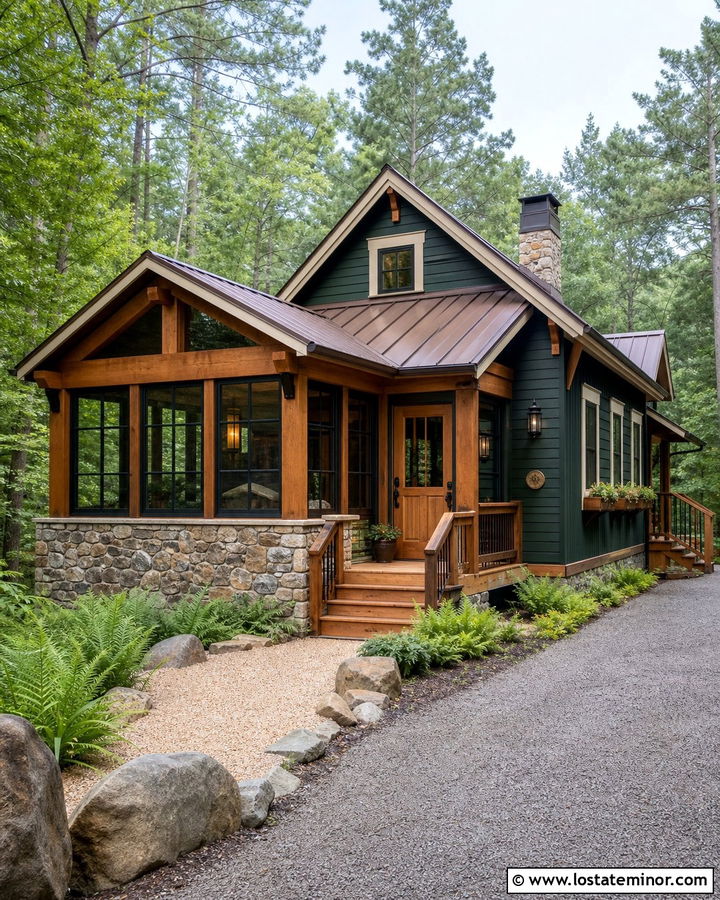
Imagine a compact cabin surrounded by evergreens, with hunter green siding that nearly blends into the forest. A rustic sunroom can extend from one side using chunky cedar posts, dark-framed windows, and a stone foundation. Keep the roof simple and cover it with the same brown metal used on the main cabin. Cream trim around the windows adds enough contrast to keep the facade from disappearing into the landscape. Use a solid wood door, black iron hardware, and a broad cedar deck to strengthen the handcrafted look. Inside, avoid blocking the glass with tall furnishings. Outside, frame the home with ferns, natural boulders, and a gravel path. The coordinated green, brown, and gray palette feels comfortable without becoming overly themed or decorative.
24. Hunter Green Queen Anne House With Turret Sunroom
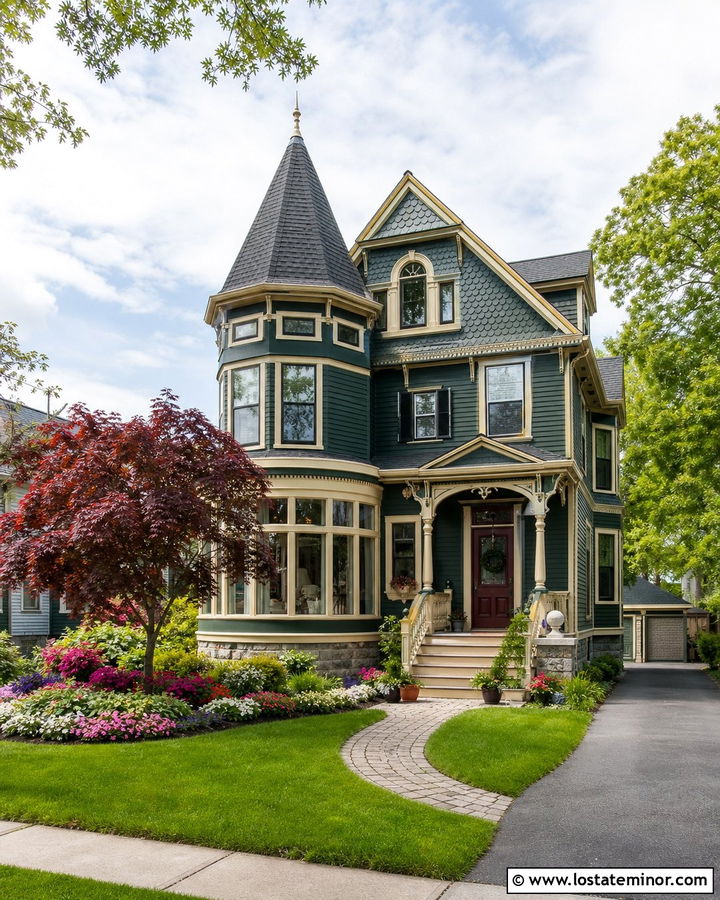
A Queen Anne home offers an opportunity to make the sunroom part of an expressive, asymmetrical facade. Paint the primary siding hunter green and use soft cream on the window trim, porch posts, brackets, and sunroom framework. The sunroom can occupy a rounded corner or sit beneath a small turret, with narrow glass panels following the curved shape. Add muted burgundy accents to the front door and selected decorative details. Charcoal roofing provides a quiet backdrop for patterned shingles and ornamental trim. A painted brick or stone foundation visually supports the glass enclosure. Curved paths, layered flowers, and a small ornamental tree complement the irregular architecture. Limiting the palette to three main colors keeps this detailed exterior attractive rather than visually overwhelming.
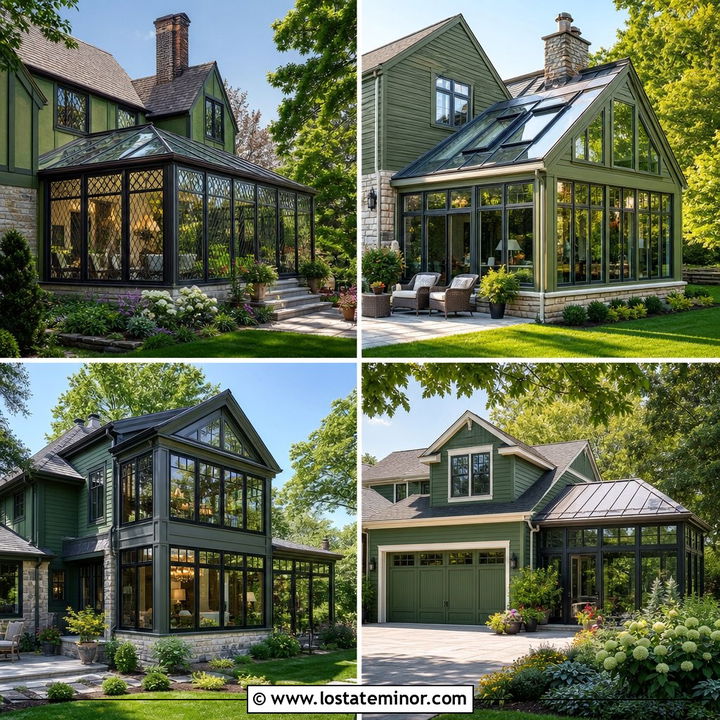
25. Hunter Green Dutch Colonial With Side Sunroom
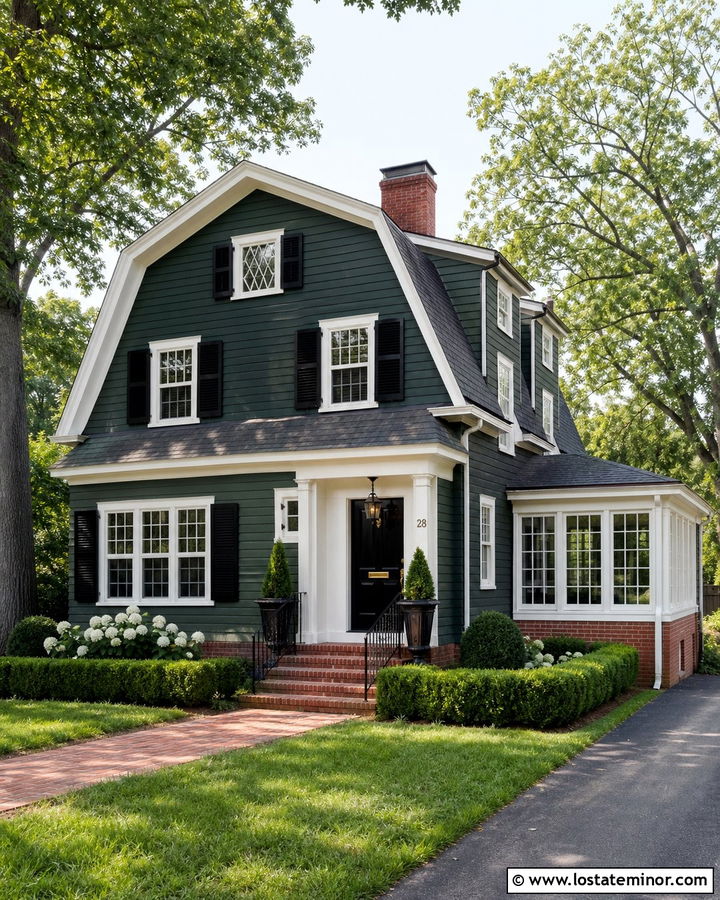
The gambrel roof should remain the defining feature of a Dutch Colonial, even after adding a sunroom. Place the glass room on one side beneath a low hipped or shed roof. Hunter green clapboard siding gives the house a strong traditional foundation, while warm white trim outlines the gambrel ends, dormers, and sunroom windows. Use red brick at the chimney, front steps, and sunroom base to connect the addition to the original home. A glossy black entry door and simple brass hardware provide a formal central accent. Choose dark gray shingles that do not compete with the roof shape. Boxwood hedges, brick walkways, and evenly spaced foundation plants complete the composed exterior while keeping the new glass room visually accessible.
26. Hunter Green Modern House With Shed Roof Sunroom
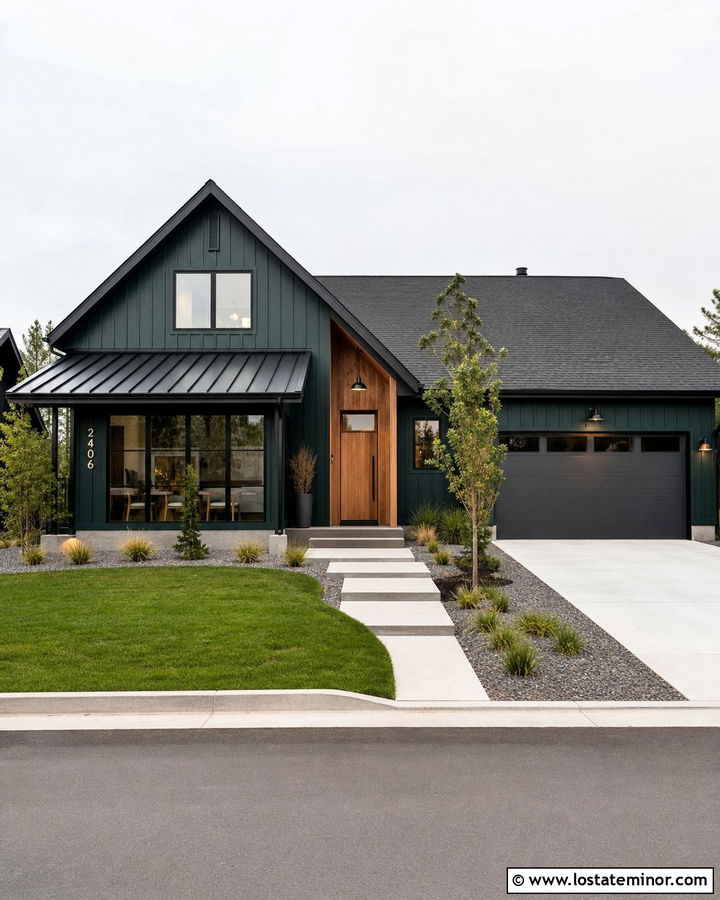
A shed-roof sunroom fits naturally with a modern home composed of simple rectangular forms. Use hunter green vertical siding on the largest section of the house, then frame the sunroom in matte black aluminum. Angle the addition’s roof in the opposite direction from the main roof to create controlled visual movement. Warm cedar cladding around the entry and garage adds contrast to the deep green body. Keep trim minimal and select black window frames throughout. A light concrete foundation and broad pale walkway prevent the facade from appearing too dark. Use structured grasses, small trees, and gravel mulch for clean landscaping. The final exterior feels cohesive because the siding, sunroom, entry, and garage are separate forms connected by a limited material and color palette.
27. Hunter Green Small Ranch With Budget Sunroom
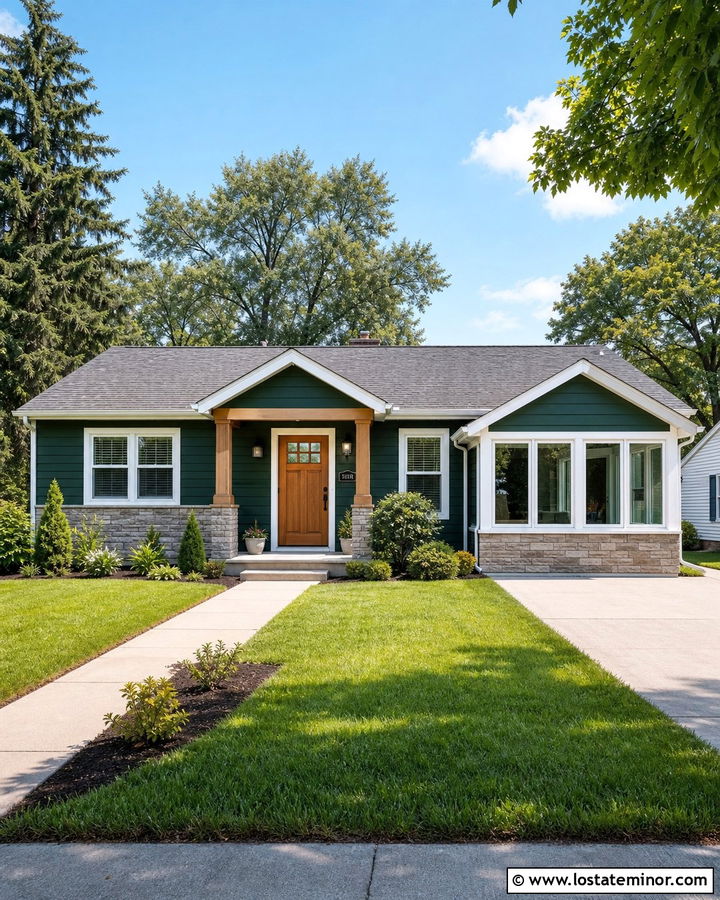
A modest ranch can receive a convincing sunroom update without using elaborate architectural details. Paint the existing siding hunter green and refresh the trim with a warm white that coordinates with standard white window frames. Convert a covered side patio into a sunroom using evenly spaced windows and simple painted framing. Match the addition’s shingle roof to the house and use affordable stone-look panels around the base for a finished appearance. A medium wood-tone front door and matching porch posts add warmth at a manageable scale. Keep the landscaping simple with evergreen shrubs, mulch beds, and a straight concrete walkway. Repeating the same green, white, brown, and gray colors across the entire facade helps economical materials look deliberate, balanced, and visually connected.
28. Hunter Green Estate House With Conservatory Sunroom
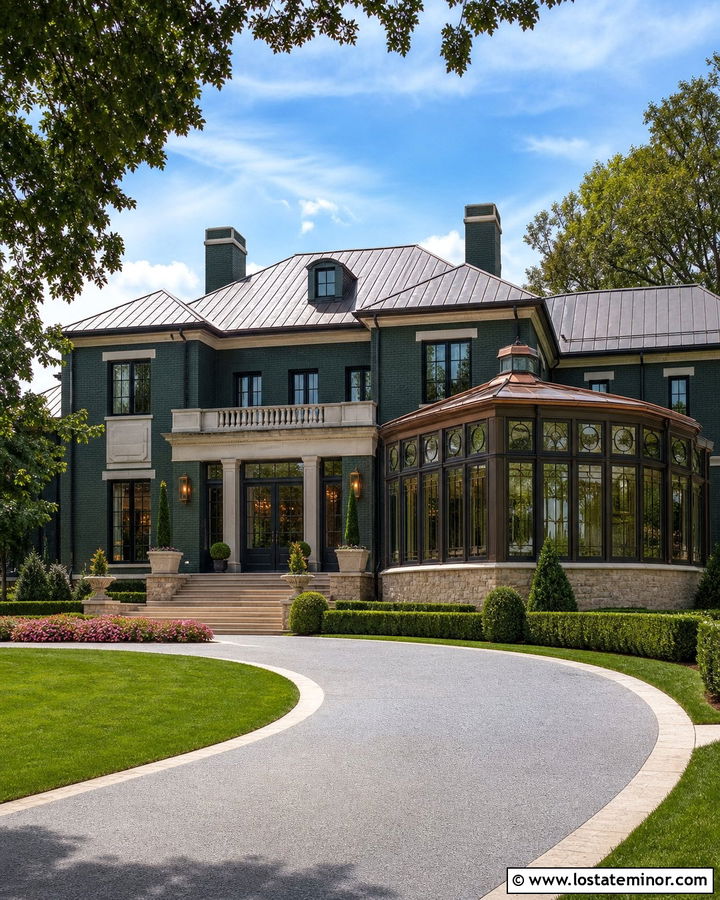
A large estate home can support a formal conservatory-style sunroom without losing architectural balance. Use hunter green painted brick or smooth siding across the primary facade, paired with limestone trim and dark bronze windows. Design the sunroom with a substantial stone base, tall glass panels, and a hipped glass or standing-seam roof. Position it at one end of the house and balance it with a garage wing, covered porch, or strong landscaping feature. A grand wood front door and copper lanterns add warmth to the deep green exterior. Broad stone steps and a circular drive reinforce the home’s scale. Structured hedges, mature trees, and symmetrical planting beds complete the look while allowing the elegant glass addition to remain clearly visible.
29. Hunter Green Lake House With View Sunroom
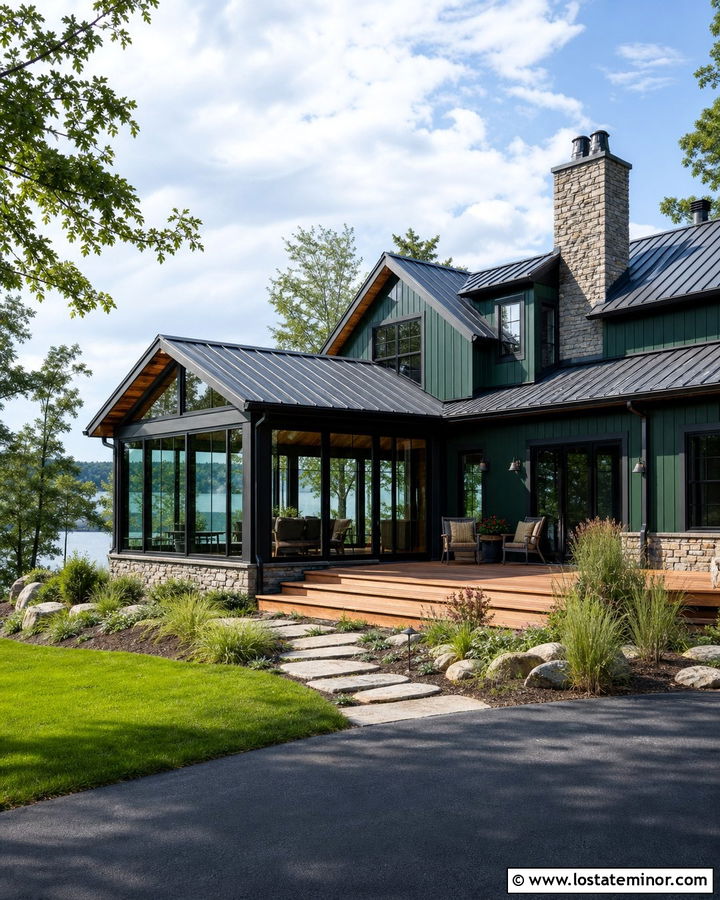
A lake house sunroom should maximize the view while looking attractive from both the water and the road. Cover the exterior in hunter green board-and-batten siding and use black-framed windows to create a clear, modern rhythm. Extend the sunroom from a rear-side corner where it can connect to a broad natural cedar deck. A stone chimney and matching sunroom base add texture and help anchor the tall glass walls. Choose a charcoal metal roof for durability and a clean silhouette. Warm wood soffits and a natural front door balance the darker finishes. Native grasses, low shrubs, and a stone path maintain open sightlines. This complete scheme allows the green house to settle into the shoreline landscape while the sunroom remains bright and expansive.
30. Hunter Green Farmhouse With Solar Control Sunroom
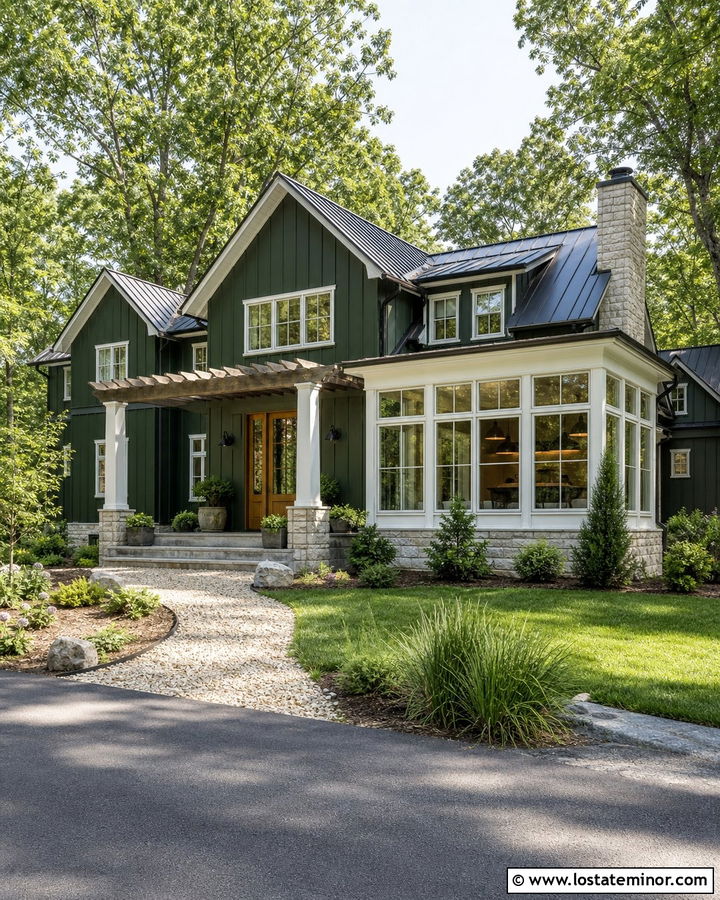
A glass sunroom can remain visually open while incorporating practical shade through its roof and window design. Paint the farmhouse hunter green and frame the addition with warm white supports that match the main trim. Use a standing-seam charcoal roof over part of the sunroom, then add tall glass panels beneath deep overhangs. Exterior shades or simple pergola slats can reduce glare without hiding the addition. Pair the green board-and-batten siding with a natural oak door, white porch columns, and a light stone foundation. Repeat the stone beneath the sunroom for continuity. Deciduous trees, layered shrubs, and a wide gravel walkway provide additional seasonal shade. The result combines classic farmhouse character with a comfortable, thoughtfully integrated glass living space.
Conclusion:
The strongest hunter green exteriors coordinate the sunroom with every visible part of the property. Roof pitch, window proportions, foundation materials, trim colors, and landscaping all influence whether the addition feels original or disconnected. Warm white creates classic contrast, while black and bronze frames produce a sharper, more modern look. Cedar, brick, and natural stone bring warmth to the deep green body color. Before finalizing a scheme, compare exterior samples beside the roof, windows, and masonry in changing daylight. These 30 Hunter Green House Design With Sunroom Ideas show how the color can work across traditional, rustic, coastal, and contemporary architecture while creating a welcoming connection between indoor comfort and the surrounding yard.

Related posts: