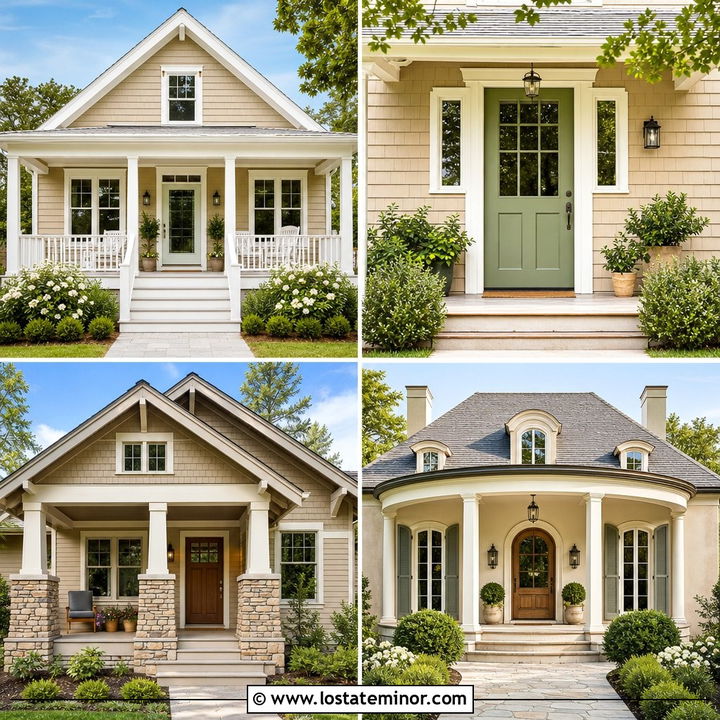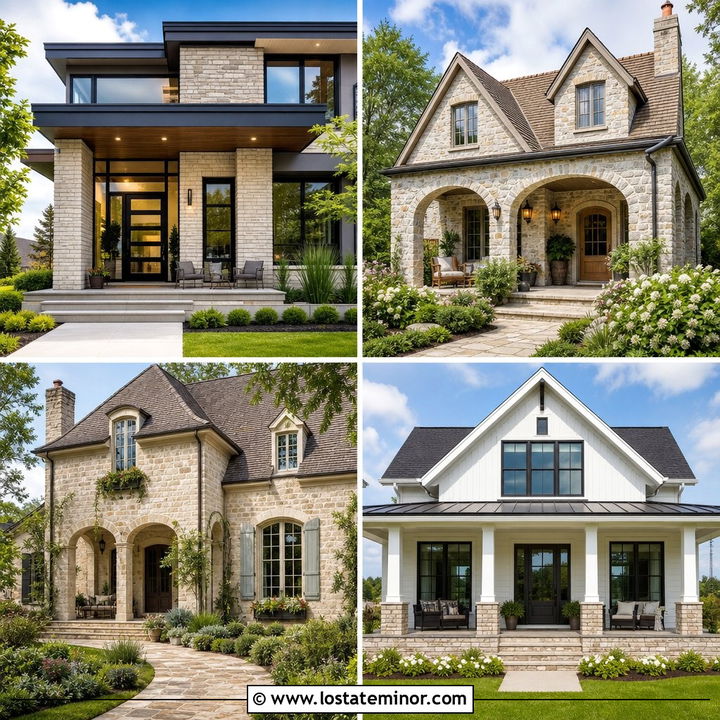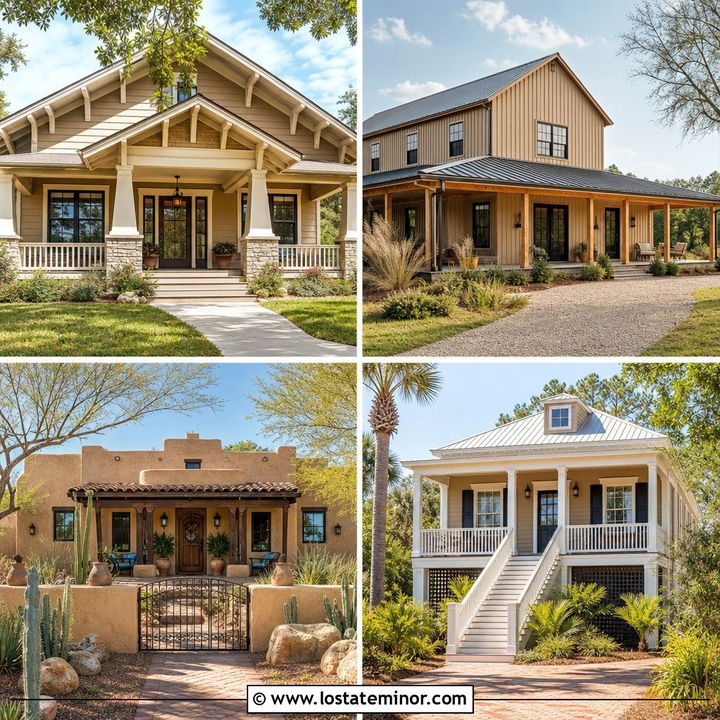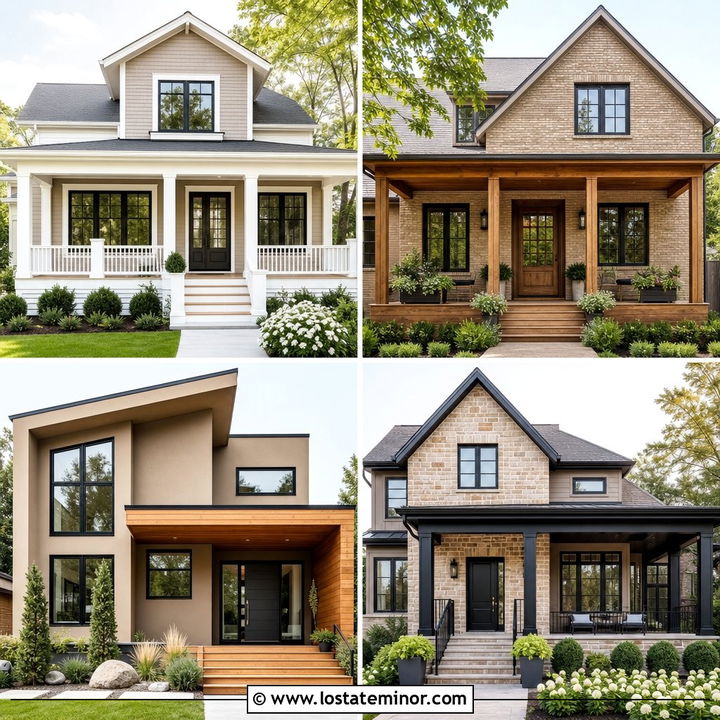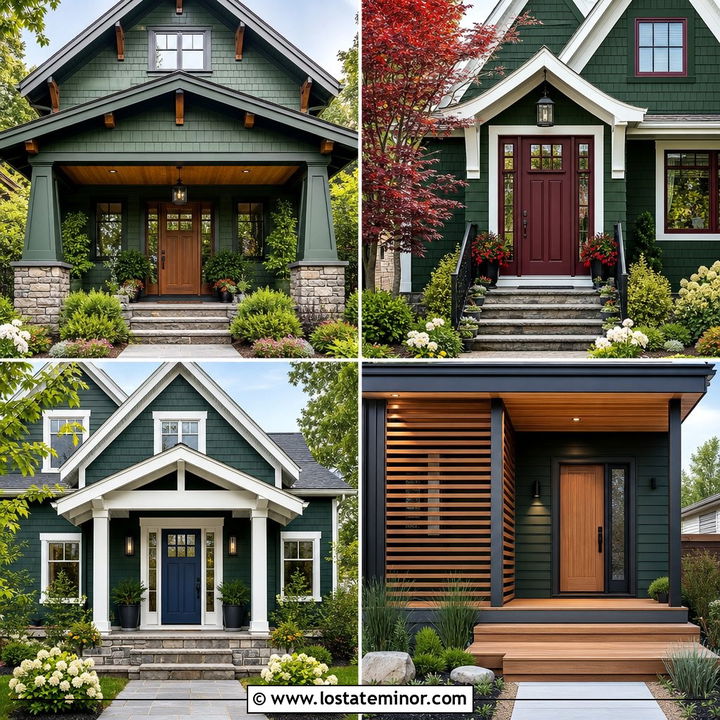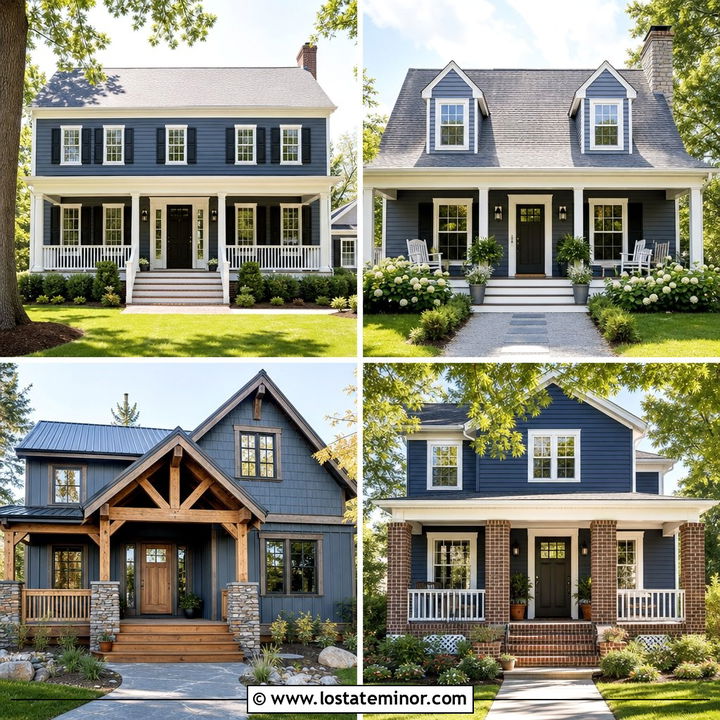
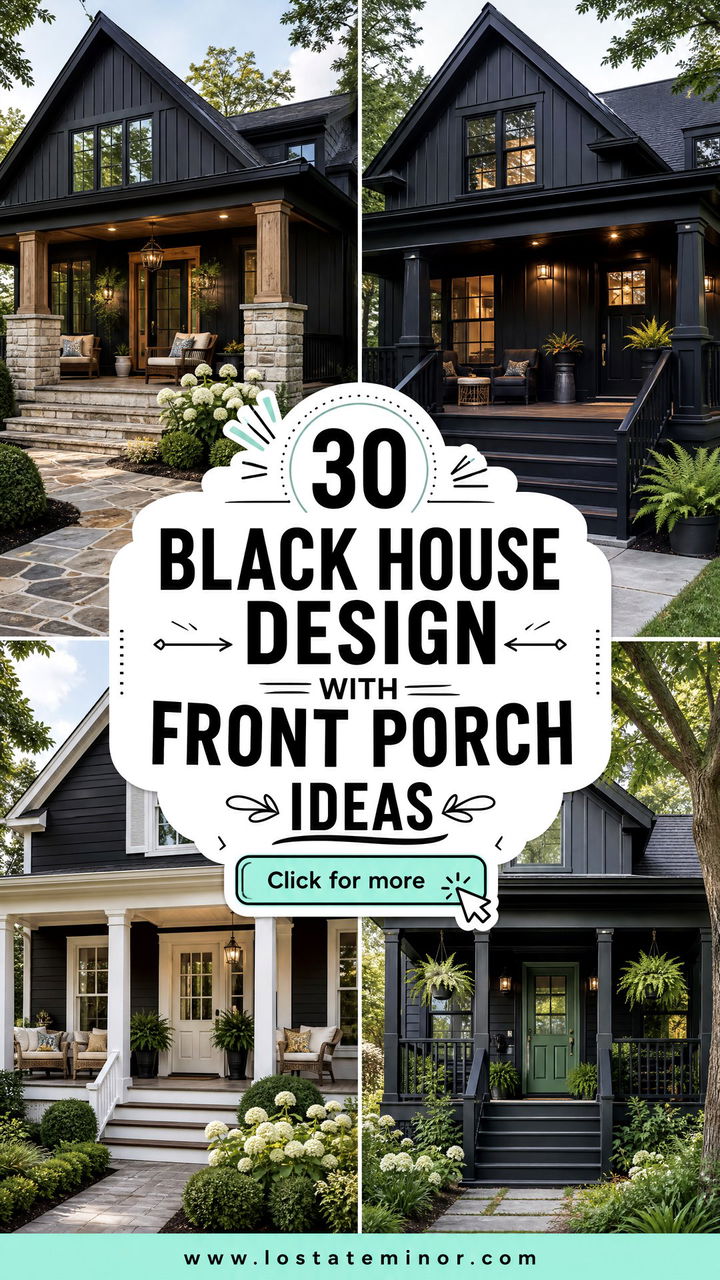
A black exterior can make almost any home feel more distinctive, polished, and architectural. The front porch is what keeps that dramatic color from appearing flat or uninviting. Warm wood, pale stone, white columns, textured brick, and colorful doors can soften black siding while giving the entrance a clear focal point. Porch depth, roof shape, flooring, railings, and landscaping also influence how the overall facade feels from the street. Whether you prefer a modern farmhouse, traditional Colonial, compact cottage, or simple ranch, the best design treats every exterior feature as part of one balanced scheme. The complete looks below combine practical materials, complementary colors, and welcoming details in **30 Black House Design With Front Porch Ideas**.
1. Modern Black House With Wood Front Porch
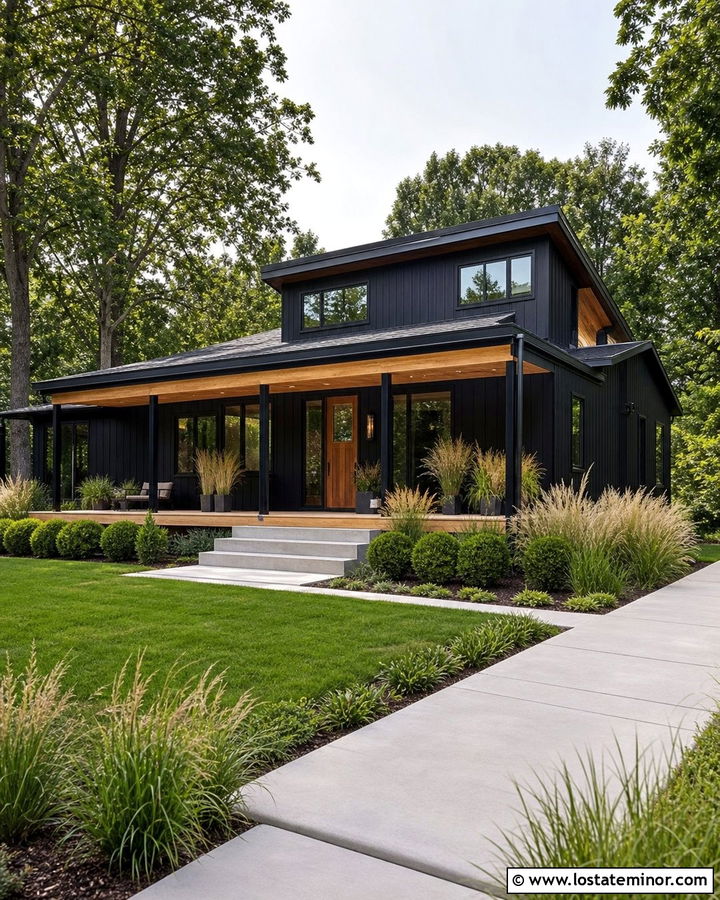
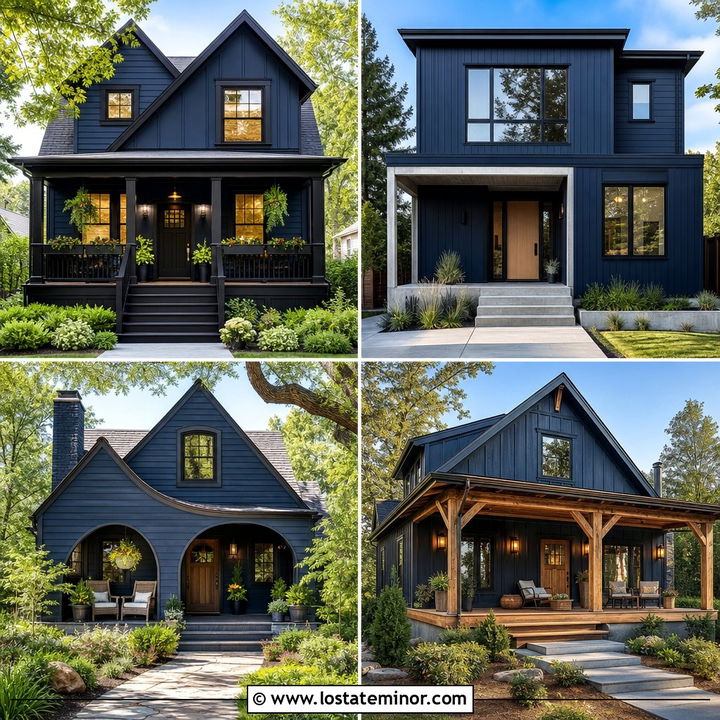
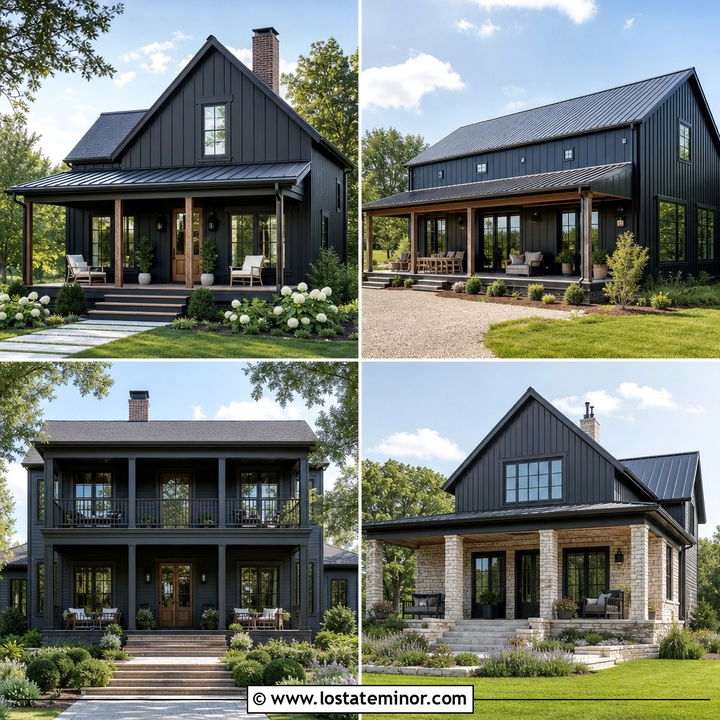
A modern black house feels warmer when its streamlined facade includes a natural wood porch. Choose matte black vertical siding, matching window frames, and a low-slope charcoal roof for a clean foundation. Cedar porch decking and thick wood posts introduce color without weakening the contemporary look. A simple wood front door can match the posts, while concrete steps and large rectangular pavers keep the entrance crisp. Avoid ornate railings that compete with the strong siding lines. Instead, use slim black metal rails or leave a low porch open when local codes allow. Add ornamental grasses, clipped shrubs, and a small multi-trunk tree. Their soft shapes provide contrast while preserving the home’s uncluttered, modern curb appeal.
2. Black Farmhouse With Wraparound Front Porch
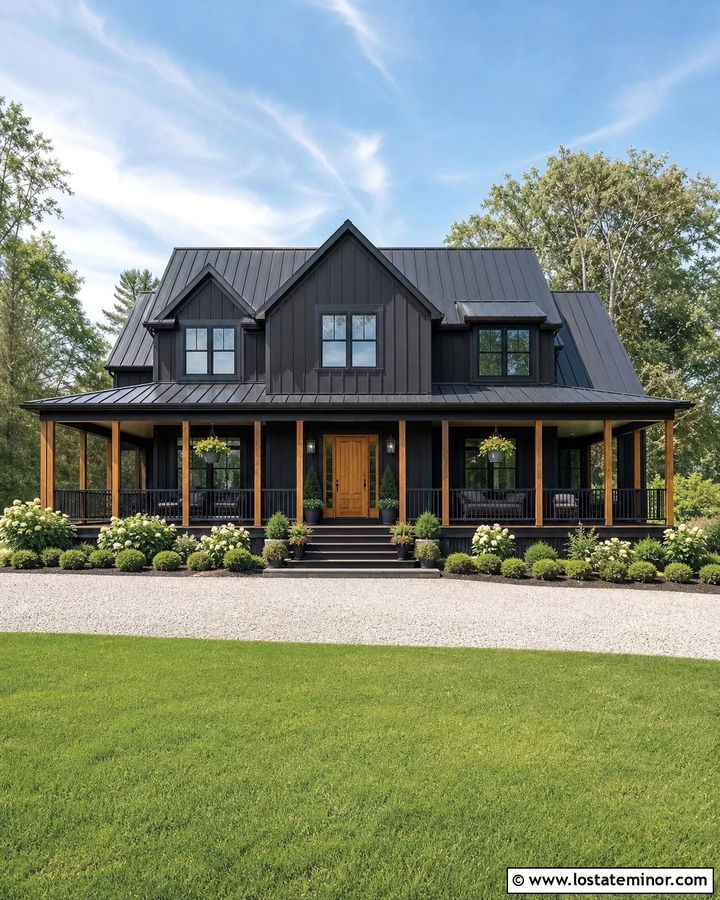
Imagine deep black board-and-batten siding wrapped by a generous porch with warm wood underfoot. This combination updates the familiar farmhouse silhouette without losing its welcoming character. A standing-seam black roof strengthens the vertical lines, while natural cedar columns prevent the exterior from becoming too dark. Use creamy white on the porch ceiling to reflect daylight toward the windows and front door. Black railings can connect the porch to the main body color without creating visual clutter. A stained oak door, oversized lanterns, and simple rocking chairs complete the entrance. Around the foundation, combine hydrangeas, boxwoods, and loose flowering perennials. The landscaping should feel relaxed and layered, balancing the strong black facade with comfortable country texture.
3. Black Craftsman House With Stone Front Porch
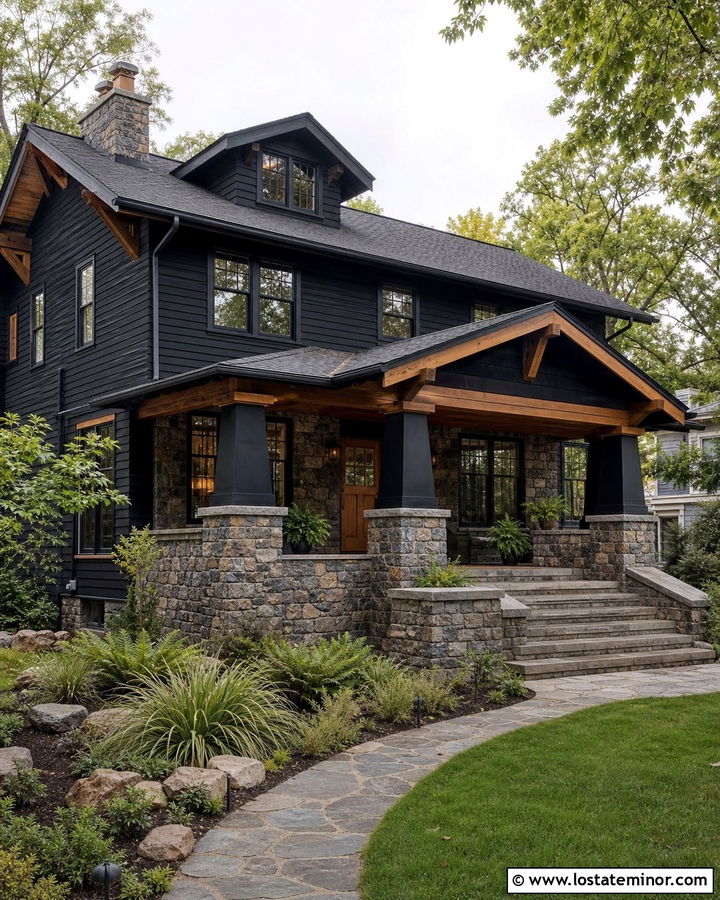
A black Craftsman exterior looks grounded and substantial when stone anchors the front porch. Use soft black lap siding with matching trim, then wrap tapered porch columns and the foundation in irregular gray-brown fieldstone. The stone’s natural variation breaks up the dark facade and highlights the handcrafted character associated with Craftsman homes. A medium-stained fir door, exposed wood beams, and a muted olive porch ceiling add warmth. Keep the roof dark charcoal so it blends with the siding rather than cutting the house into separate sections. Broad steps and square planters make the entrance feel appropriately sturdy. Finish the yard with ferns, native grasses, flowering shrubs, and a curved stone walkway that connects the architecture to the surrounding landscape.
4. Black Ranch House With Wide Front Porch
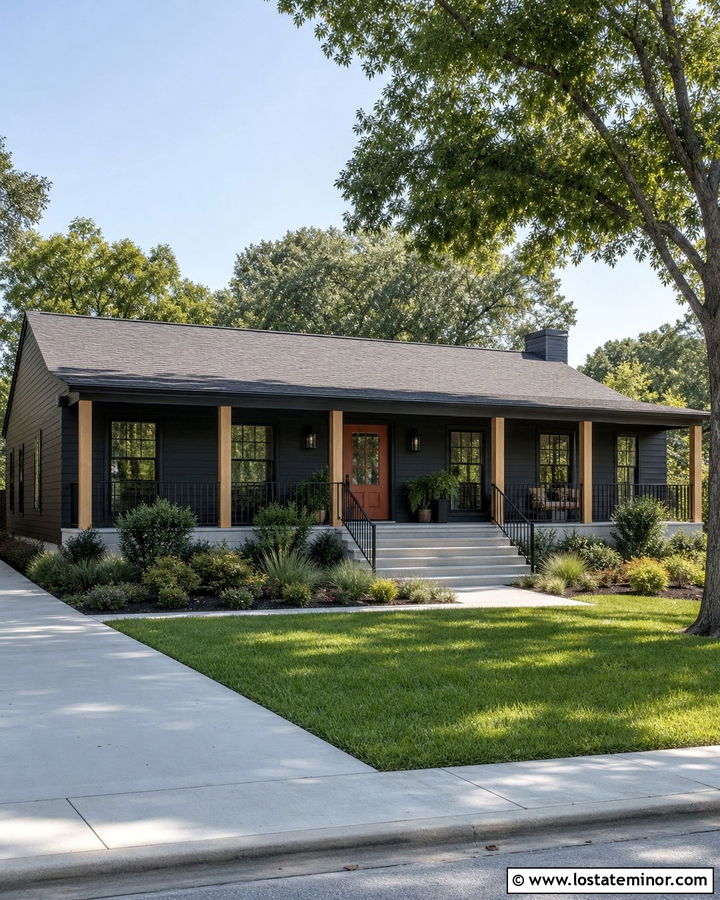
A long ranch facade can benefit from a porch that stretches across several windows instead of stopping at the front door. Paint the horizontal siding a rich neutral black and use a dark gray roof to create a low, cohesive profile. A wide porch with light oak posts draws the eye across the house while introducing warmth and rhythm. Consider pale concrete flooring to brighten the covered area and keep maintenance simple. A rust-colored front door adds a restrained accent without feeling disconnected from the wood. Use broad steps and black metal railings where elevation requires them. Layer low evergreen shrubs, grasses, and spreading ground cover along the porch. This horizontal landscaping complements the ranch proportions and keeps the bold exterior from overwhelming the lot.
5. Black Colonial With White Front Porch
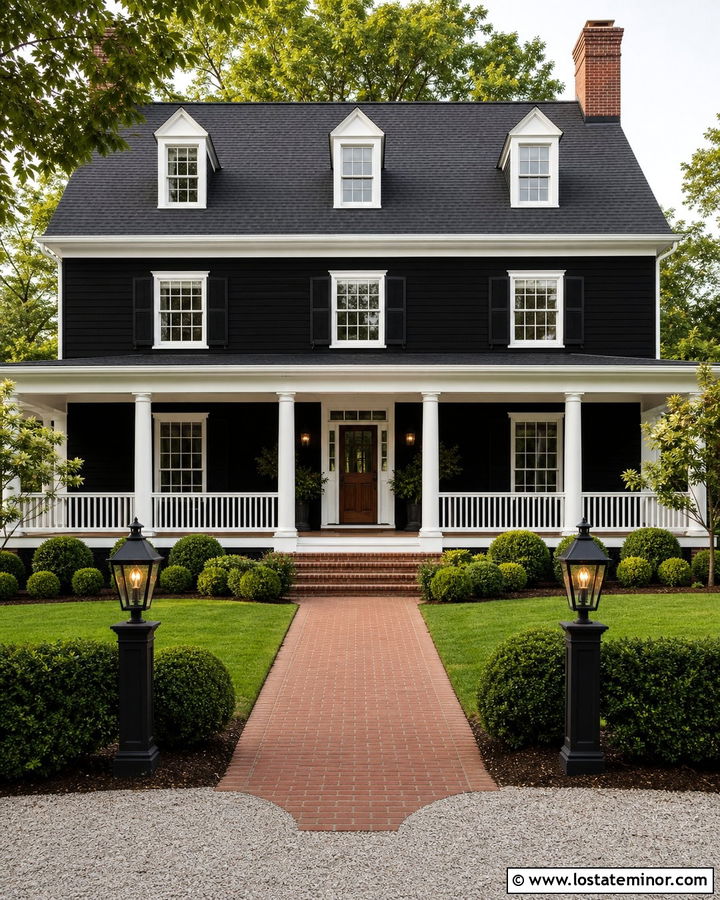
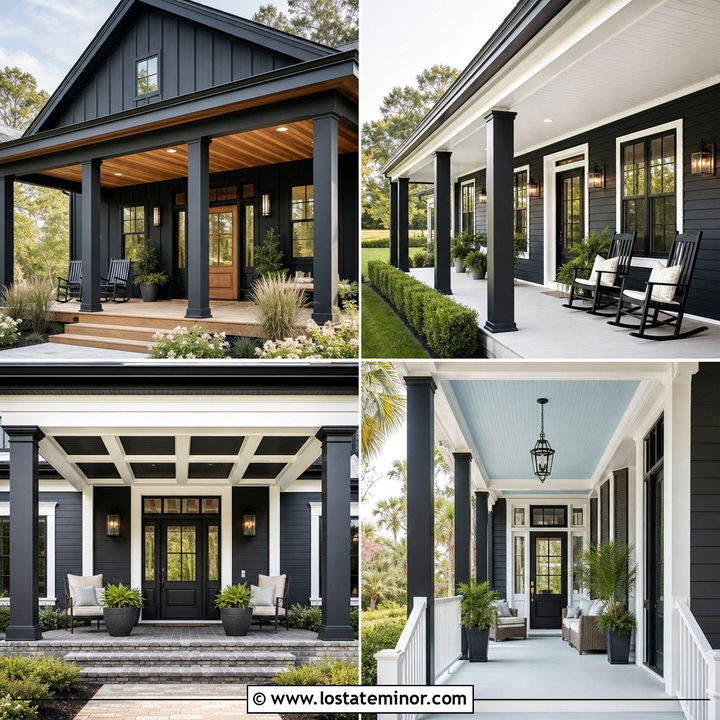
Strong contrast suits the orderly proportions of a Colonial home. Cover the symmetrical facade in classic black clapboard, then use warm white for the full-width porch, window trim, columns, and railings. This lighter framework emphasizes the architecture while making the entry feel bright and approachable. A glossy black door can maintain formality, although a medium walnut door offers a softer alternative. Choose a dark charcoal shingle roof and traditional copper or black lanterns. Red brick porch flooring adds another historic-looking material and warms the monochrome palette. Keep the landscaping balanced on both sides with matching evergreens, rounded shrubs, and neatly defined beds. A straight brick walkway reinforces the symmetry and gives the black-and-white exterior a composed, established appearance.
6. Black Cottage With Small Front Porch
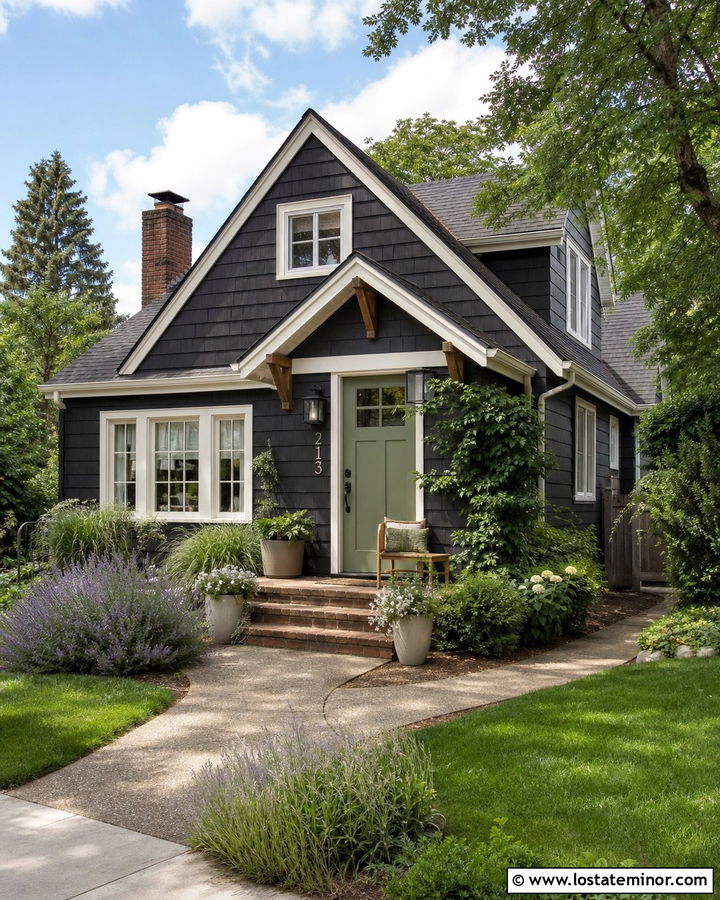
Could a compact porch still give a small black cottage plenty of personality? Start with charcoal-black shingle siding and soft ivory trim around the windows and roofline. Add a shallow gabled porch supported by simple cedar brackets or narrow wood posts. A sage green door brings a gentle garden color into the scheme, while weathered brick steps keep the entrance casual. Because the porch is small, avoid bulky furniture and heavy railings. One bench, a wall-mounted mailbox, and two modest planters may be enough. Surround the home with lavender, ornamental grasses, climbing vines, and loosely shaped flowering shrubs. The result feels cozy rather than crowded, with each porch feature contributing to the cottage’s inviting scale and dark, storybook-like exterior.
7. Black Cape Cod With Gabled Front Porch
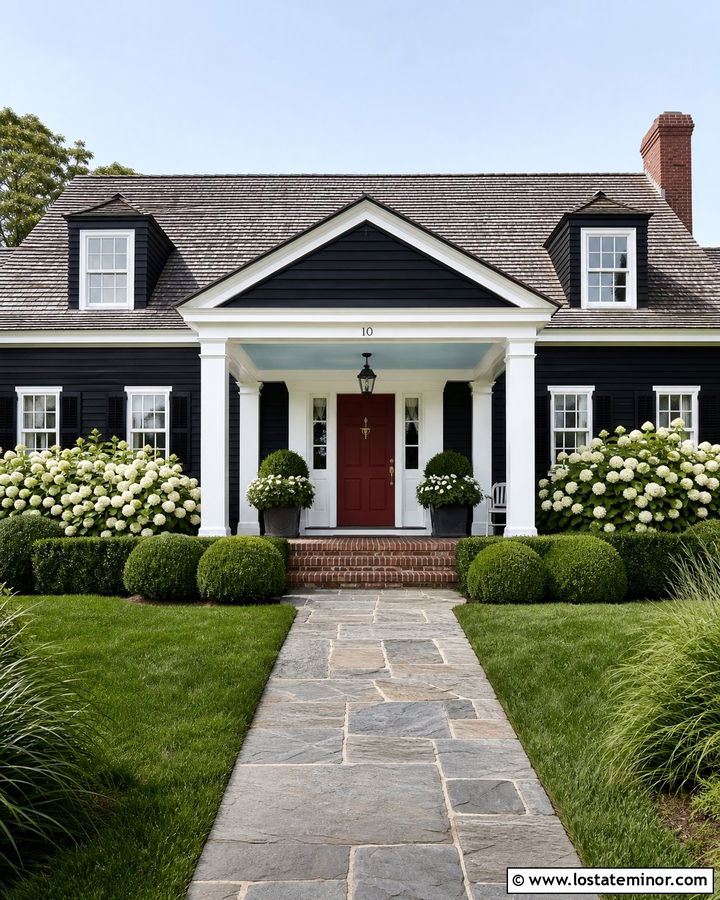
A Cape Cod can carry black siding beautifully when the porch respects its simple, traditional shape. Use deep black clapboard across the main body, crisp white window trim, and a weathered gray shingle roof. Place a compact gabled porch over the centered entry, repeating the pitch of the main roof for visual consistency. White square columns and a pale blue porch ceiling keep the covered area from feeling shadowy. Choose a cranberry red or natural mahogany door for a classic focal point. Brick porch flooring and a straight flagstone path add timeless texture. Frame the facade with clipped boxwoods, white hydrangeas, and low coastal grasses. These lighter plants stand out against the black walls while preserving the home’s neat, understated New England character.
8. Black Bungalow With Cedar Front Porch
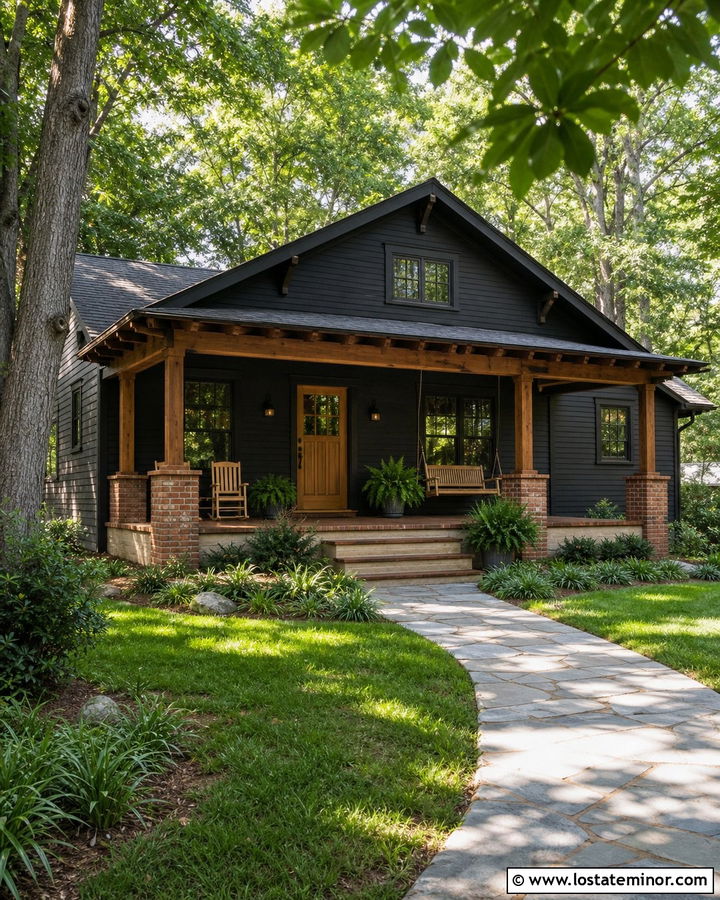
A bungalow’s deep eaves and broad porch provide an ideal framework for dark exterior color. Paint the horizontal siding a warm soot black, then leave the porch beams, ceiling, columns, and front door in natural cedar. The wood grain becomes a prominent part of the color scheme and reinforces the bungalow’s handcrafted feel. Use dark bronze windows and a charcoal architectural-shingle roof to connect the old and new materials. Brick porch piers can add weight at ground level, especially in a muted red or brown blend. Furnish the porch with compact wood seating and neutral cushions. Ferns, Japanese forest grass, and rounded foundation shrubs soften the steps. This balanced palette feels rich, comfortable, and appropriate for an established neighborhood.
9. Black Victorian With Detailed Front Porch
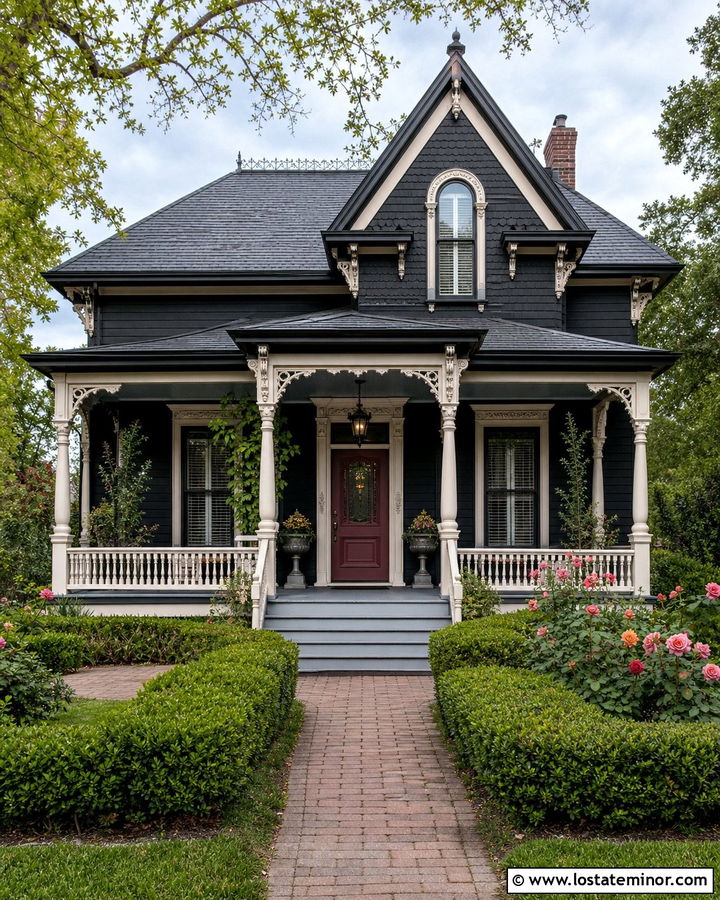
Decorative trim stands out dramatically against a black Victorian facade, but the palette should remain controlled. Use satin black clapboard as the base and warm white on turned porch posts, brackets, window surrounds, and patterned railings. A muted burgundy door and small touches of the same color in upper gable details can add depth without making the exterior busy. Consider medium-gray porch flooring and a charcoal slate-style roof to bridge the black and white. Traditional lanterns, tall planters, and a small bench help the porch feel usable rather than purely ornamental. Shape the surrounding beds with evergreen hedges, roses, and flowering vines. These romantic plants suit the architecture while softening the sharp contrast created by the dark walls and pale decorative woodwork.
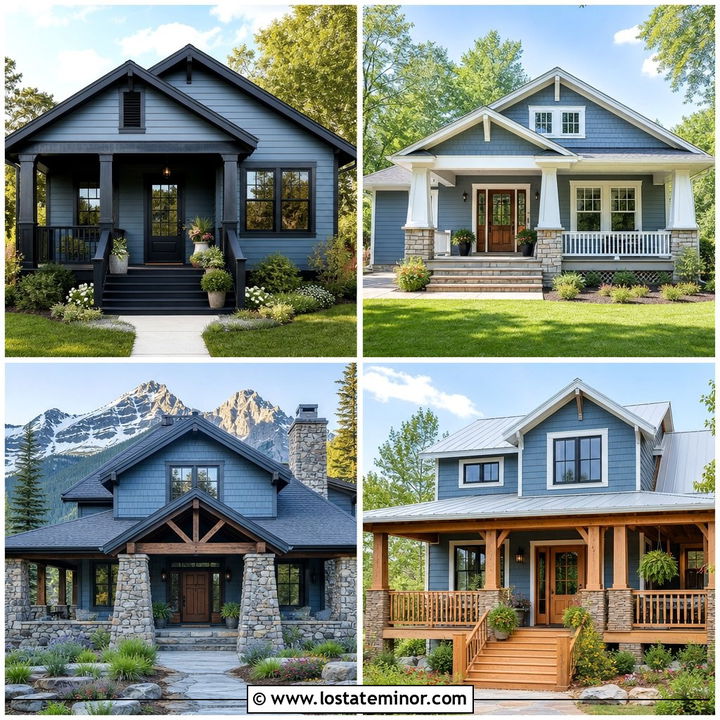
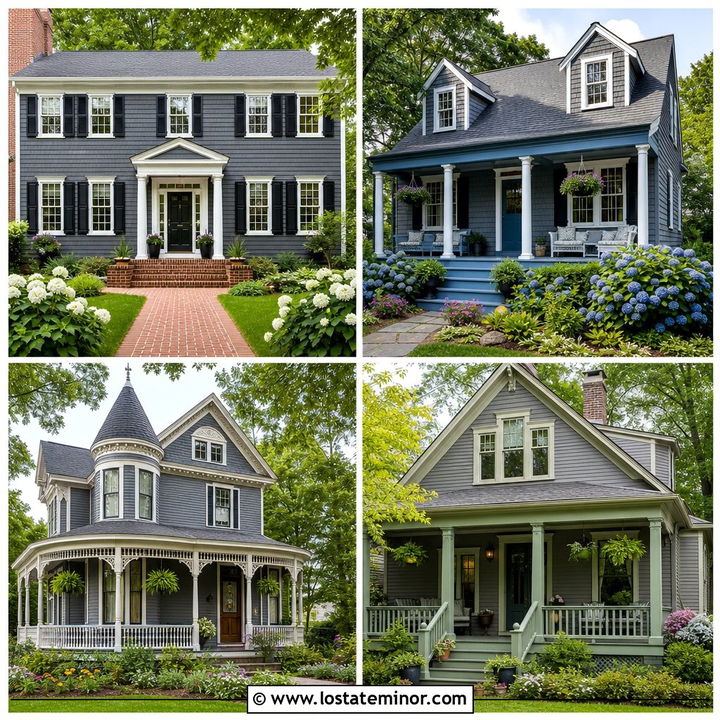
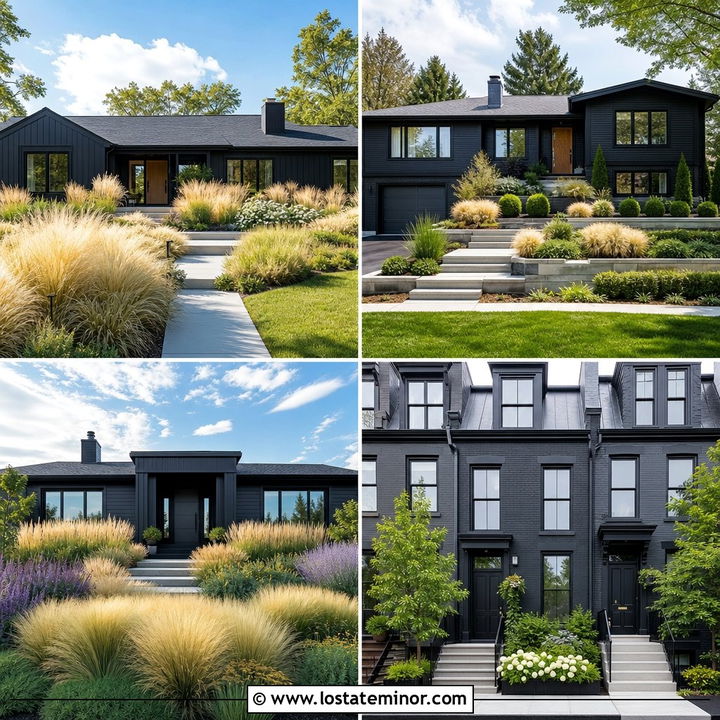
10. Black Split-Level With Raised Front Porch
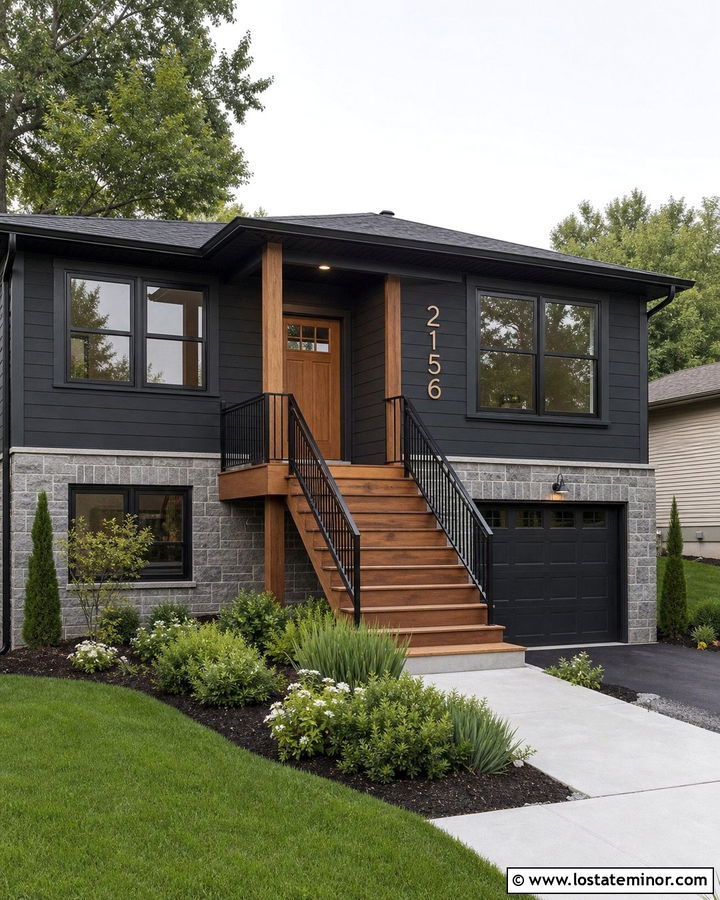
A raised porch can give a split-level home a clearer entrance and improve its street-facing proportions. Use matte black lap siding on the upper walls and medium-gray stone around the lower level. Extend a wood porch across the entry section, using broad stairs to connect it naturally to the yard. Cedar columns, a warm wood door, and slim black railings create a modern but comfortable palette. Keep the porch roof simple, ideally with a shallow pitch that relates to the existing roofline. Large house numbers and one substantial pendant light make the entrance easier to recognize. Plant layered shrubs beneath the raised structure to conceal empty space. A wide concrete walkway and low grasses complete the updated facade without making the design feel overly complicated.
11. Black House With Screened Front Porch
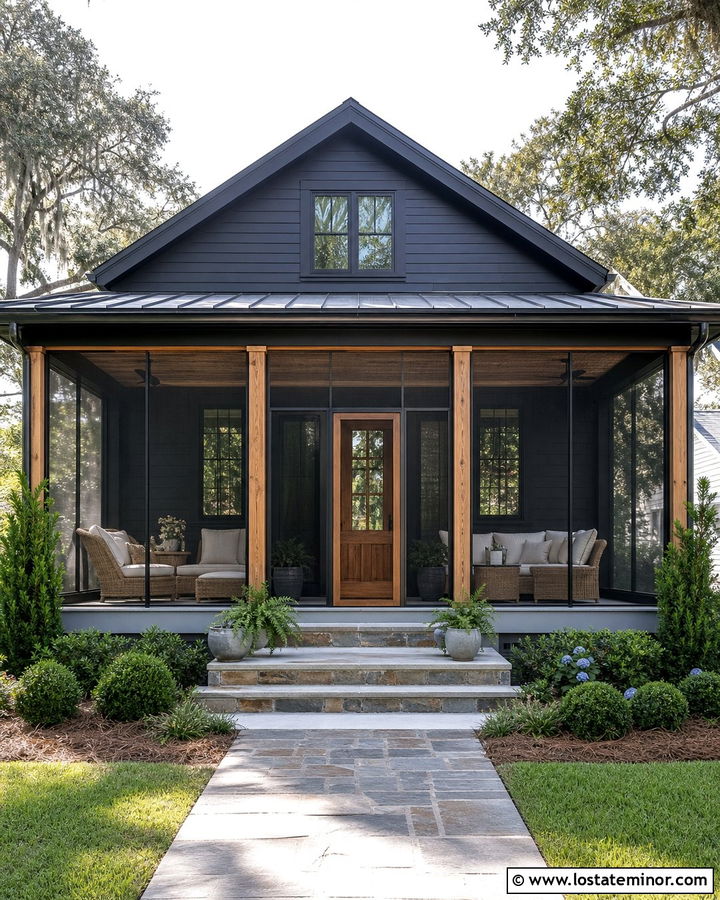
A screened front porch adds privacy and usable living space while giving a black house greater architectural depth. Paint the main lap siding a soft off-black and repeat the color on slim screen frames. Natural wood posts and a matching front door warm the shaded area, while a pale gray porch floor reflects more daylight. Choose nearly invisible dark screening so the enclosure feels open from the street. A light wood ceiling can continue the welcoming contrast overhead. Inside, use simple wicker seating and cream cushions that remain visible through the screens. Finish the exterior with black lanterns, stone steps, and layered green landscaping. The combination feels practical and refined, especially on cottage, Craftsman, farmhouse, and low-country homes in warm or mosquito-prone regions.
12. Black House With Concrete Front Porch
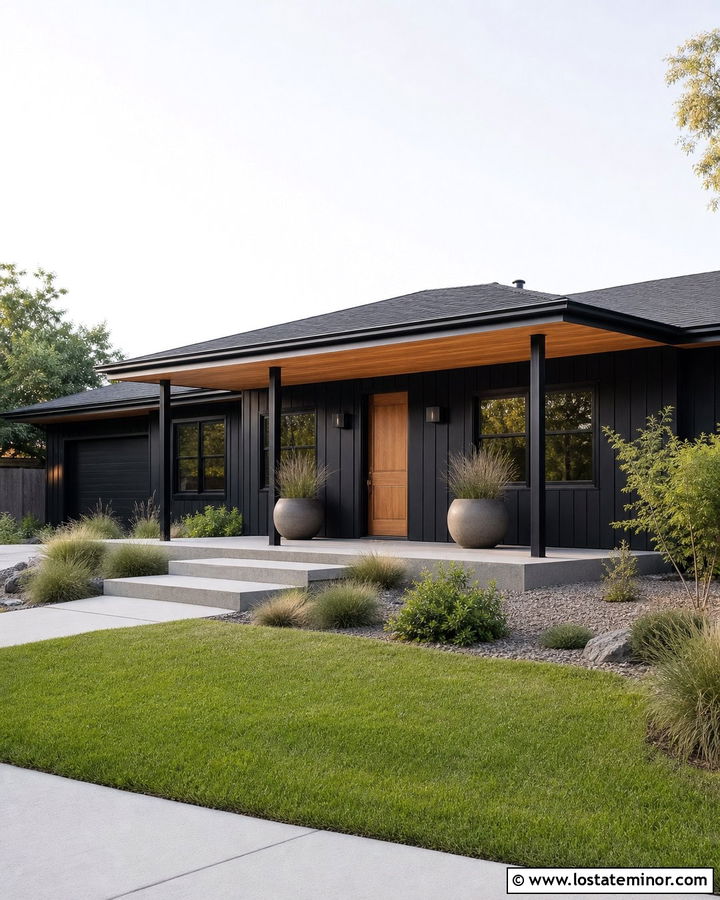
Smooth concrete can give a black exterior a clean, grounded entrance without adding another competing color. Pair deep black vertical siding with a broad poured-concrete porch, rectangular steps, and a matching walkway. Warm up the cool materials through a honey-toned wood door and a narrow wood porch ceiling. Black steel columns and window frames maintain the crisp modern lines. If additional softness is needed, add two large planters in warm gray or terracotta rather than filling the porch with small accessories. Drought-tolerant grasses, rounded shrubs, and a few flowering plants prevent the design from looking severe. This scheme works especially well on modern ranches and contemporary homes because the restrained materials emphasize form, proportion, and texture instead of decorative trim.
13. Black House With Brick Front Porch
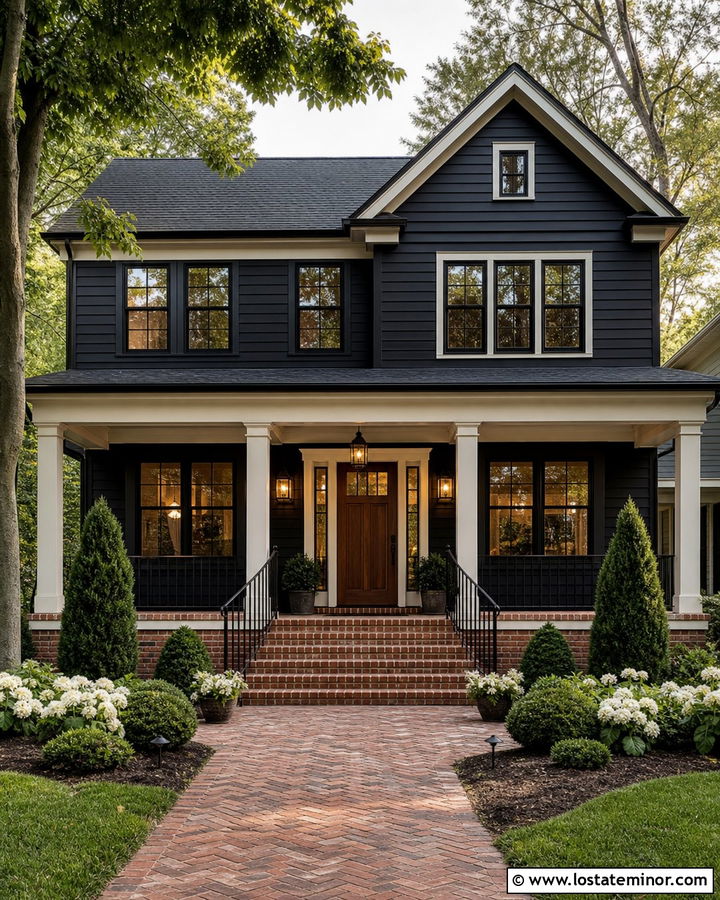
Brick creates familiar warmth beneath a bold black exterior. Select black-painted clapboard or board-and-batten siding, creamy off-white trim, and a dark charcoal roof. Use reclaimed red brick across the porch floor, steps, and walkway to establish a strong visual base. A walnut front door complements the brick’s earthy tones, while black railings and lanterns connect the porch back to the siding. For a more traditional exterior, choose white columns. Natural wood posts will make the same scheme feel more rustic or modern. Keep mortar color soft and muted so the brick does not appear overly patterned. Evergreen foundation shrubs, white flowers, and simple porch furniture complete a balanced look that feels established, welcoming, and easy to adapt to several architectural styles.
14. Black House With Natural Stone Front Porch
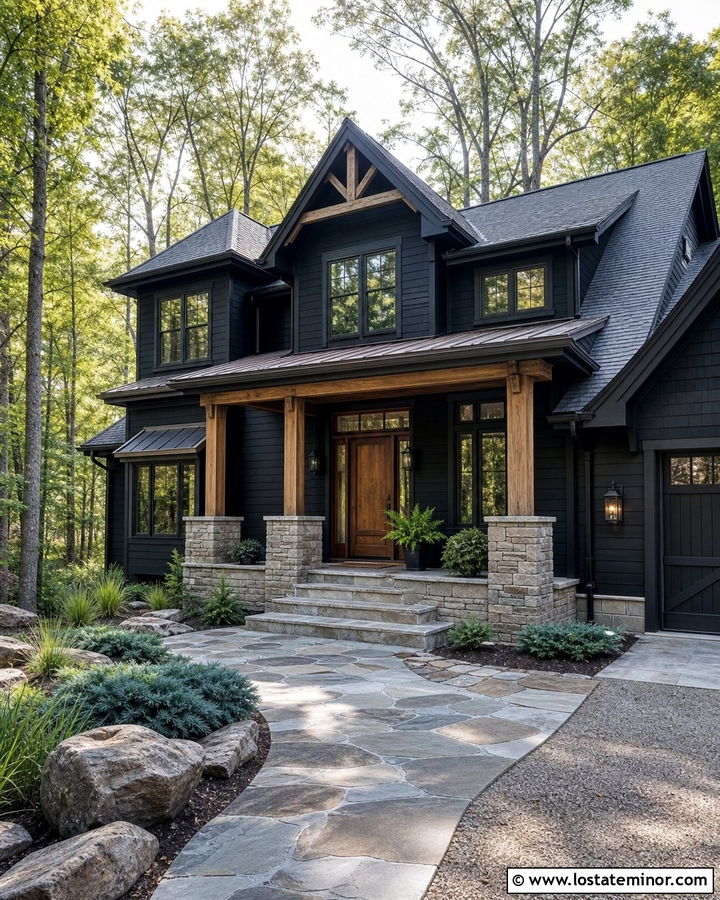
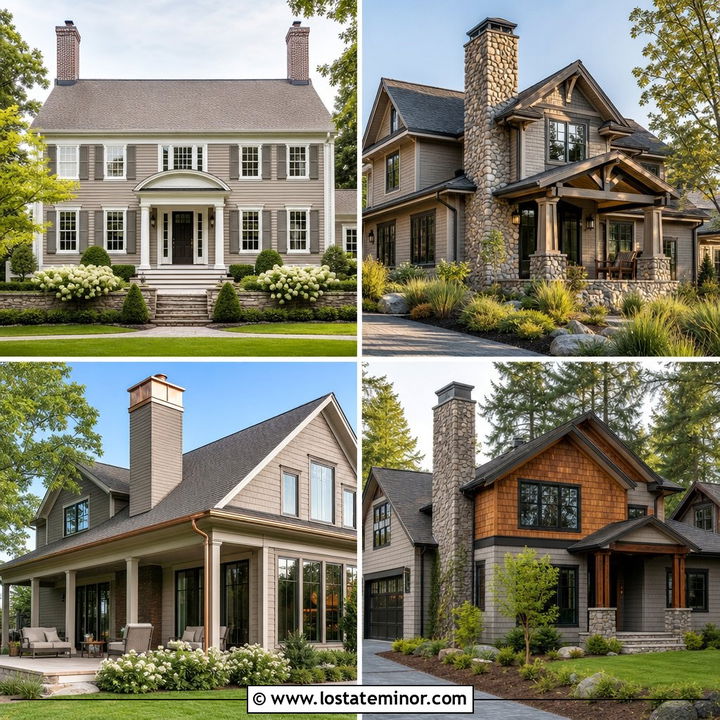
Natural stone can soften a black home by adding irregular shapes and earthy color variation. Use black fiber-cement siding as the dominant finish, then introduce ledgestone across the porch foundation, stair walls, and column bases. A mixture of gray, taupe, and muted brown stone works well because it bridges cool black paint and warm wood accents. Finish the columns and front door in medium cedar for a layered but cohesive facade. A charcoal roof and black windows preserve the strong outline of the house. Choose flagstone porch flooring if the budget allows, or use concrete in a complementary warm gray. Native grasses, ferns, low junipers, and boulders can extend the stone texture into the yard, helping the porch feel integrated with its natural setting.
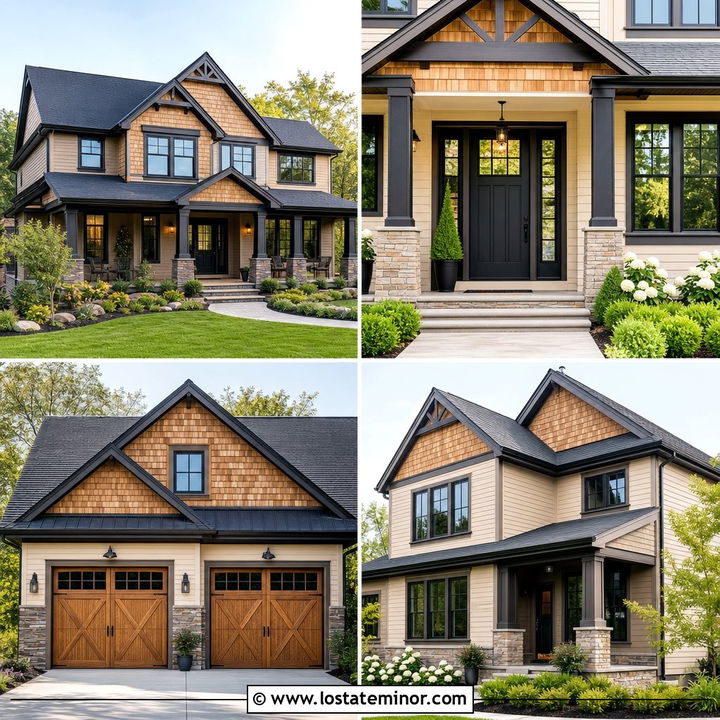
15. Black House With Metal Roof Front Porch
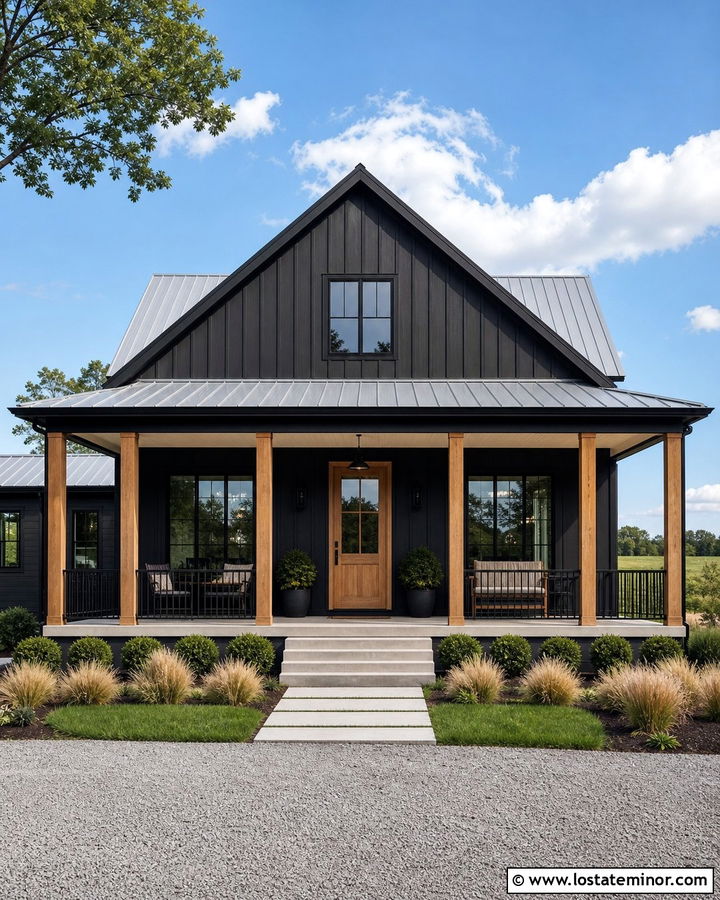
The sound and shine of a metal porch roof can give a black house a memorable, practical entrance. Cover the main facade in matte black board-and-batten siding, then install a galvanized or charcoal standing-seam roof over a full-width porch. Galvanized metal creates noticeable contrast, while charcoal offers a quieter, more unified appearance. Use stained wood columns and a natural oak door to warm both options. A pale porch ceiling prevents the entry from appearing too enclosed beneath the dark siding. Concrete flooring, black gutters, and simple metal railings keep maintenance manageable. Add structured shrubs and ornamental grasses around the porch, leaving enough open space to display the architecture. The finished design feels modern, durable, and well suited to farmhouse or rural settings.
16. Black House With Flat Roof Front Porch
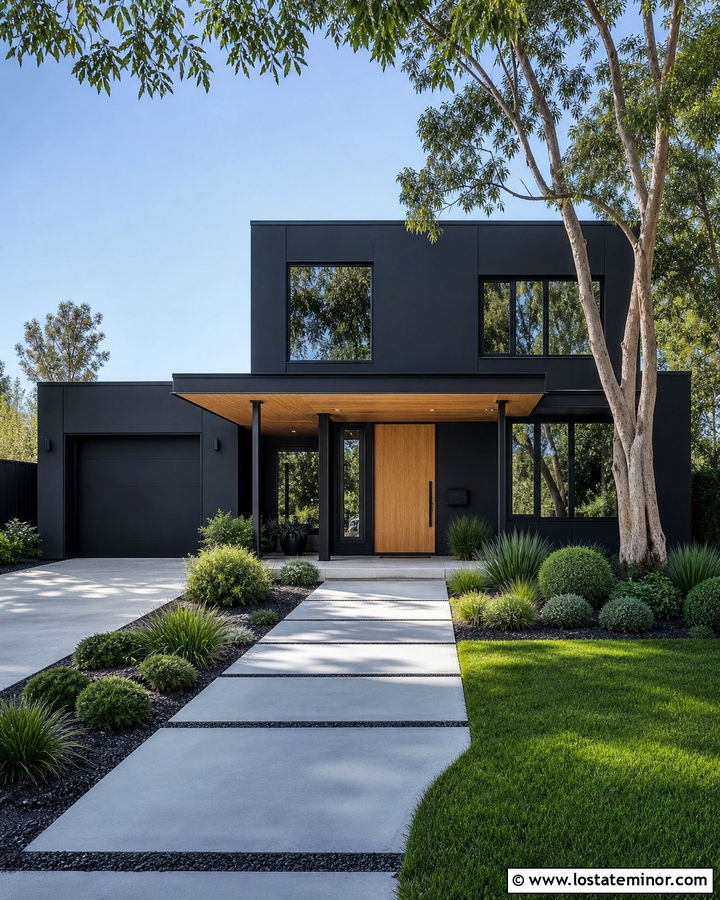
For a contemporary black house, a flat porch roof can emphasize clean horizontal lines. Choose an inky black exterior with matching windows and trim, then project a slim roof over the front entrance. Support it with narrow black steel posts or suspend it with discreet structural rods for a lighter appearance. A wide pivot door in natural white oak becomes the warm focal point. Continue large-format concrete pavers from the driveway to the porch so the entrance feels connected to the overall site. Under the canopy, use a cedar ceiling and restrained linear lighting. Avoid traditional shutters, ornate railings, or small decorative objects. Sculptural shrubs, grasses, and one ornamental tree provide softness while preserving the minimalist relationship between the black facade, flat roof, and warm wood entry.
17. Black House With Pergola Front Porch
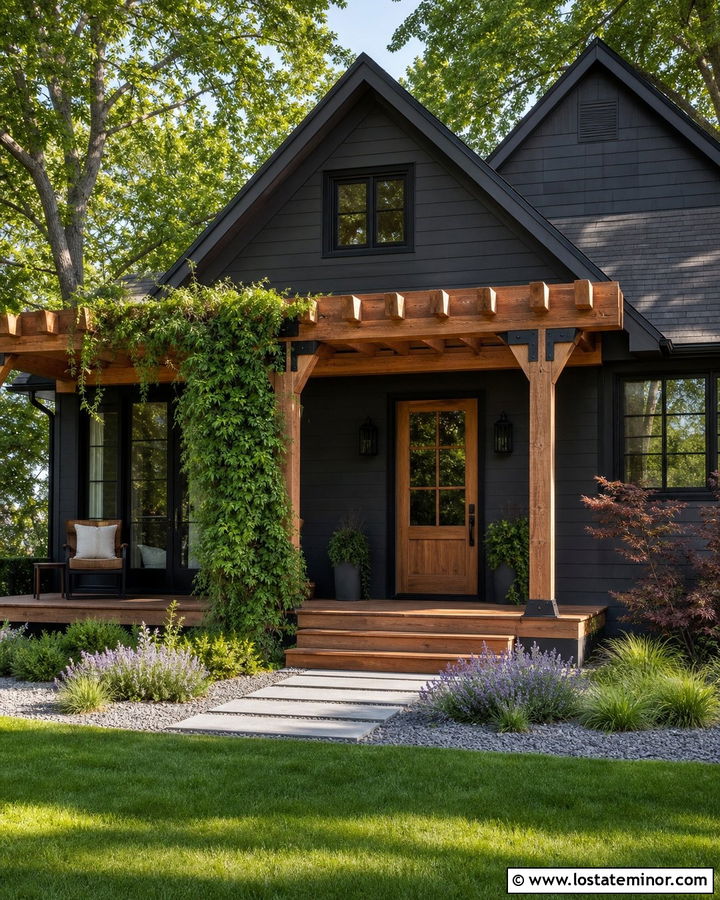
A pergola porch creates filtered shade and architectural interest without hiding a black facade. Use charcoal-black siding and build the pergola from natural cedar or pale oak so its beams stand out clearly. Extend the structure across the entry and one nearby window to make it feel substantial rather than decorative. A matching wood door and porch decking establish a consistent warm accent. Black metal brackets can tie the pergola to the window frames and roof. For additional shade, train a restrained climbing vine along only part of the structure or add a simple outdoor fabric panel. Gravel beds, large concrete pavers, lavender, and ornamental grasses create a relaxed transition to the yard. This open design works particularly well in mild, relatively dry climates.
18. Black House With Glass Front Porch
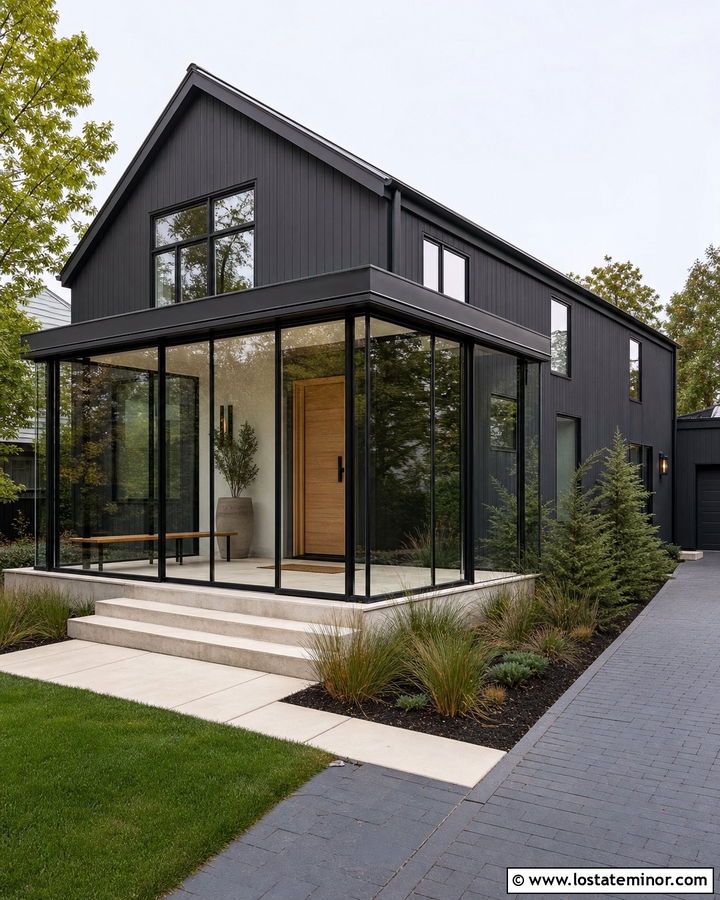
A glass-enclosed porch allows a black home to gain protected entry space without losing natural light. Pair satin black siding with slim black metal framing and large clear glass panels. The enclosure should read as a transparent extension rather than a heavy addition. Warm limestone or pale concrete flooring brightens the interior, while a wood front door provides contrast behind the glass. Keep the porch roof simple and aligned with the home’s windows or existing eaves. Minimal furnishings, such as one bench and a tall planter, preserve open sightlines. Outside, use evergreen shrubs and structural grasses instead of dense planting directly against the glass. This complete scheme suits contemporary homes, modern cottages, and renovated urban houses where protection from wind or weather is important.
19. Black House With White Columns Front Porch
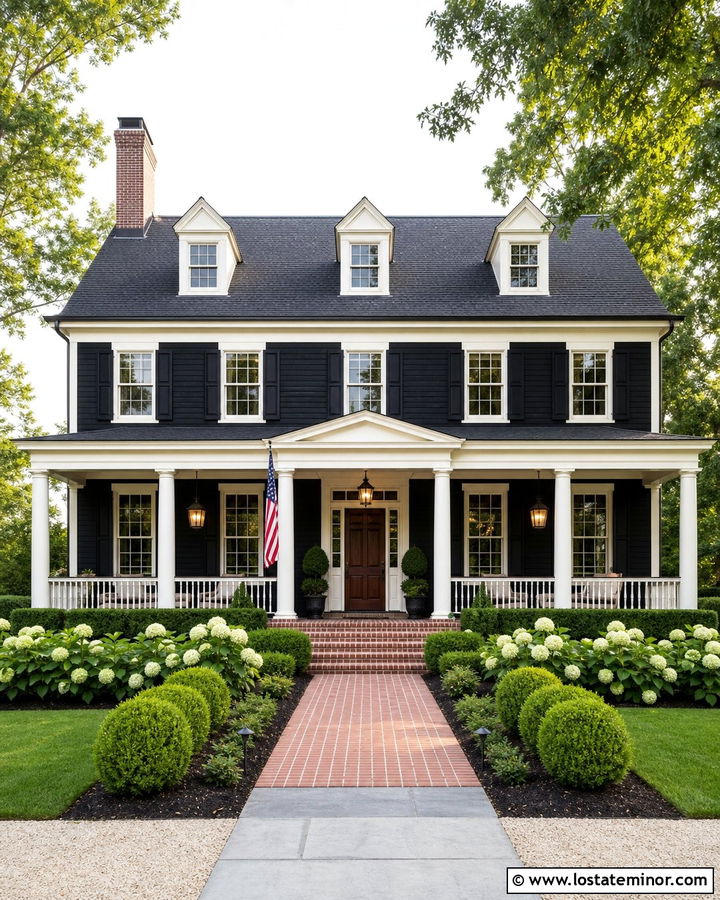
White columns can make a dark house feel more familiar and welcoming, especially when the architecture is traditional. Paint the body a true neutral black and repeat warm white on the porch columns, railings, window trim, fascia, and ceiling. This creates a connected framework rather than a few isolated white accents. Add a stained mahogany door and brick porch floor to bring warmth to the high-contrast palette. A charcoal roof keeps attention on the facade, while black lanterns provide a crisp finish against the white columns. Match column size to the porch scale; undersized supports can look weak beside dark siding. Rounded boxwoods, hydrangeas, and a straight walkway reinforce the home’s orderly appearance and soften the strong black-and-white color combination.
20. Black House With Wood Columns Front Porch
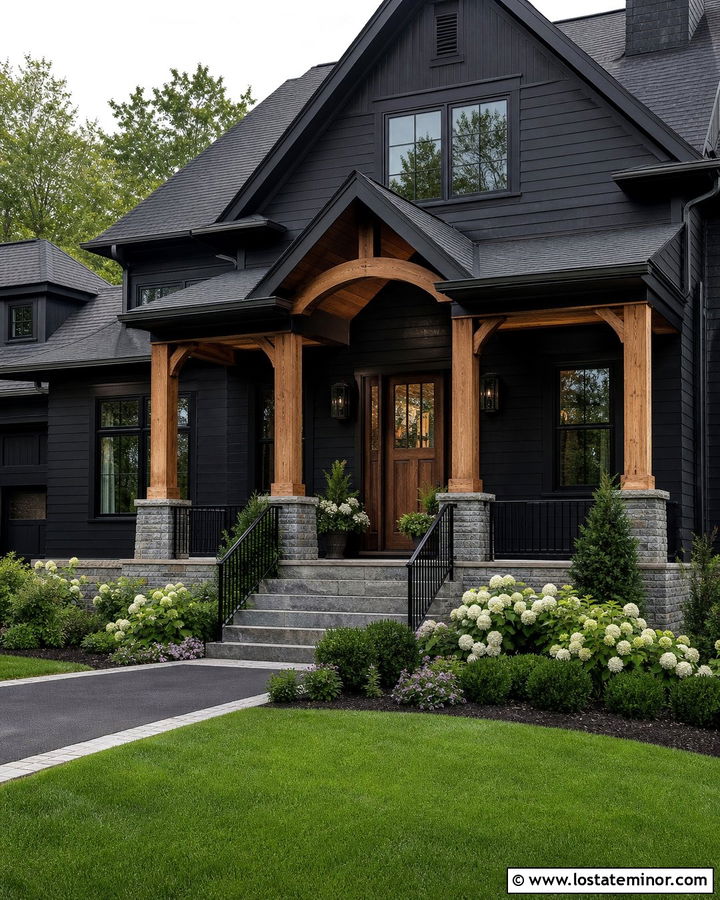
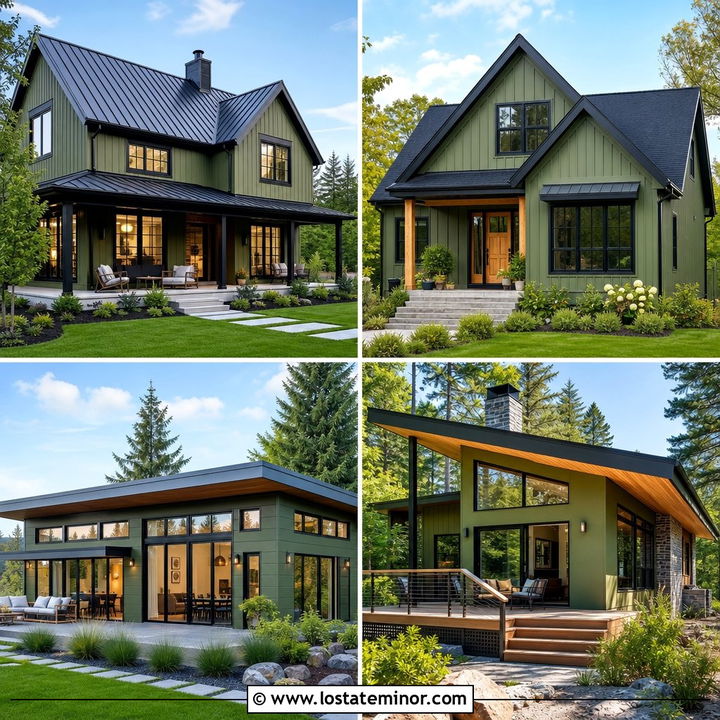
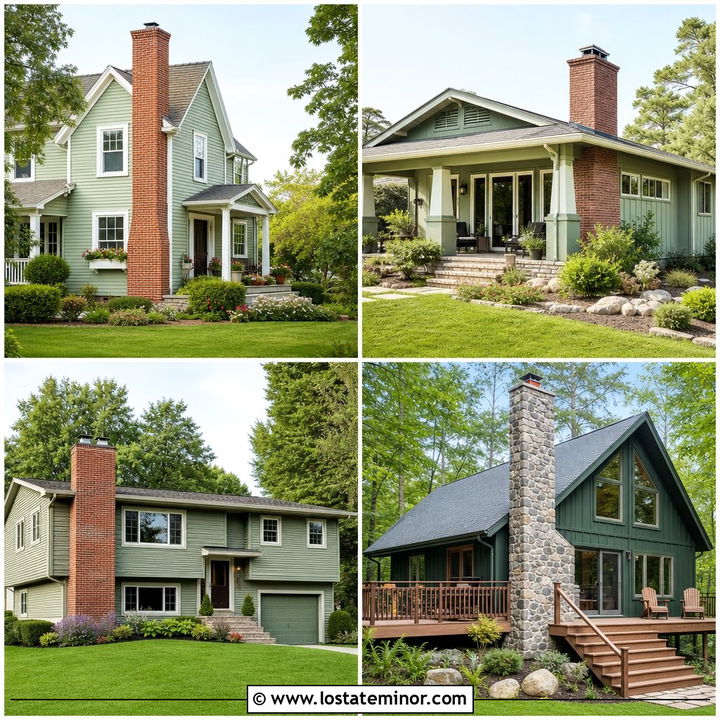
Wood columns are one of the easiest ways to make a black exterior feel comfortable instead of stark. Select a soft black paint with warm undertones, then add substantial cedar, Douglas fir, or white oak porch posts. Repeat the same stain on the front door, exposed beams, and a small section of porch ceiling. Black railings help outline the structure without distracting from the wood. Choose medium-gray stone for the steps or column bases to create a durable transition at ground level. The roof can remain charcoal, black, or weathered gray depending on the home’s style. Use layered green shrubs and pale flowering plants around the entrance. Their natural color supports the wood accents and creates a polished full-house scheme with broad curb appeal.
21. Black House With Black Front Porch
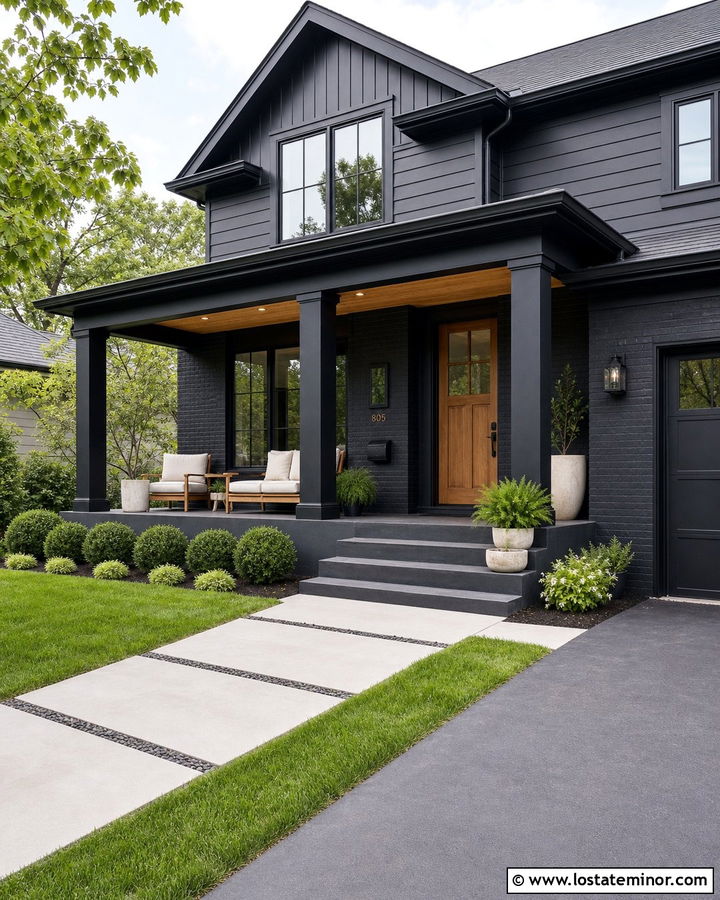
An all-black porch can look sophisticated when texture and finish prevent the exterior from becoming one flat surface. Combine matte black siding with satin black columns, semi-gloss trim, and textured black-painted brick at the foundation. Slight finish changes allow daylight to reveal each architectural layer. Use a warm wood door as the main contrast and consider a pale natural wood porch ceiling that remains visible only near the entrance. Dark gray concrete flooring is often more practical than true black because it shows less dust and creates subtle separation. Add cream cushions, light planters, and green foliage sparingly. The final design should feel intentional and dimensional, with the black porch serving as an extension of the architecture rather than a dark decorative attachment.
22. Black House With Warm White Front Porch
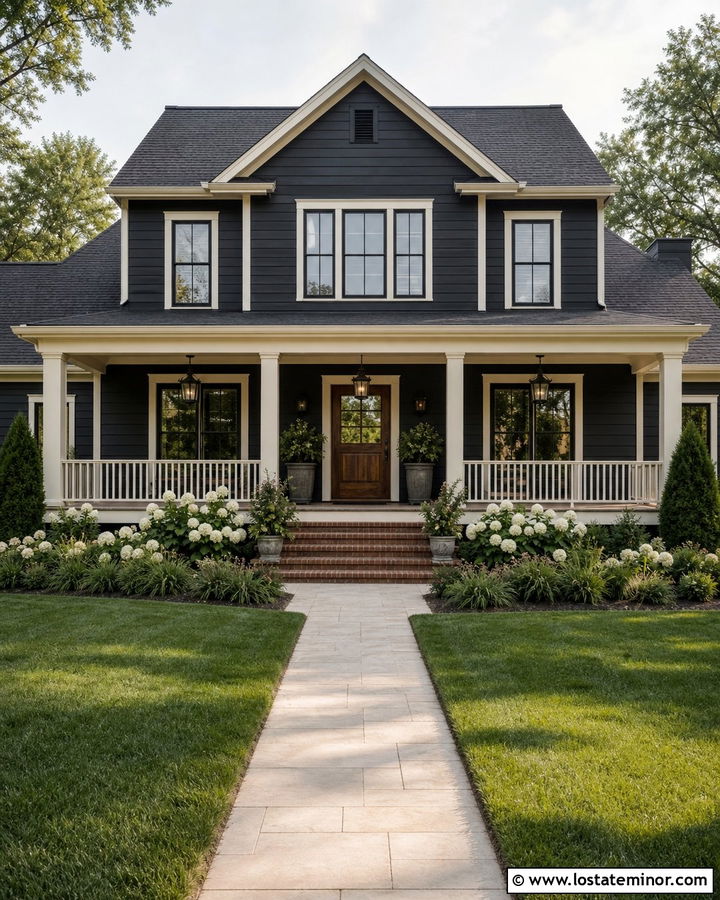
Warm white can soften black siding more gently than a sharp, cool white. Paint the house a deep charcoal black, then use an ivory or creamy white on the porch columns, ceiling, railing, fascia, and window trim. This combination works particularly well with brown brick, weathered stone, and wood doors because every material shares a warmer undertone. Choose a medium walnut front door and aged brass or dark bronze lighting for an inviting finish. Brick steps or taupe porch flooring will bridge the black and ivory surfaces. Keep the surrounding plants loose but organized, mixing evergreen shrubs with white flowers and soft grasses. The result offers plenty of contrast while avoiding the stark appearance that pure white can create beside a large dark facade.
23. Black House With Red Front Door And Porch
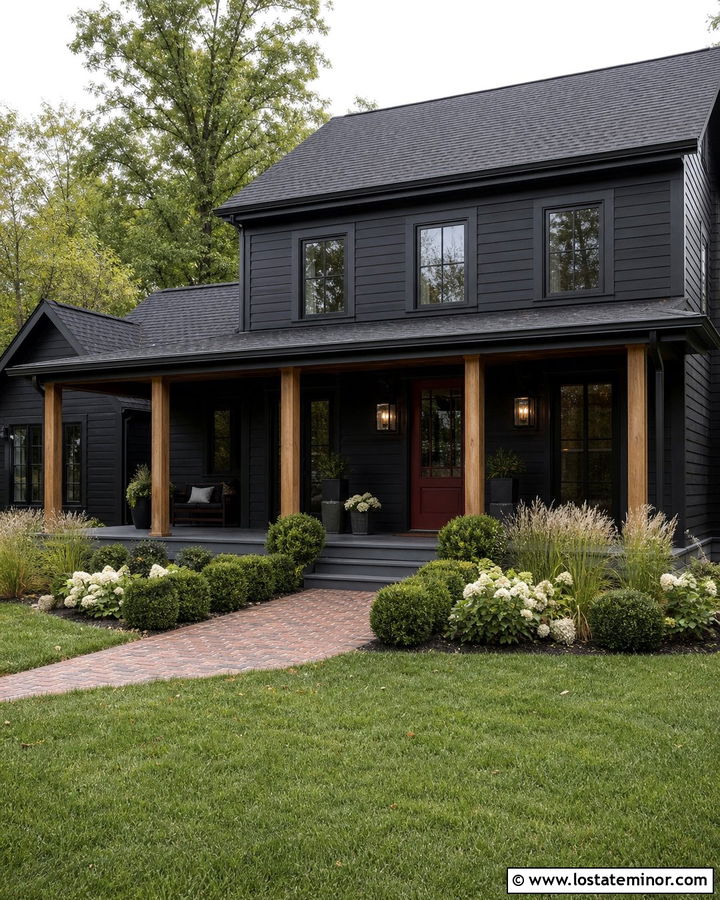
A red door gives a black house a strong focal point, but the exact shade determines the mood. Choose a muted oxblood, brick red, or deep cranberry rather than an extremely bright primary red. Surround it with matte black siding, black window frames, and a warm gray porch floor. Natural wood columns or creamy trim can soften the combination and keep the entrance approachable. Repeat the door color only once or twice, perhaps in a planter or subtle seasonal flowers, so it remains special. A dark shingle roof and black lanterns complete the exterior without introducing unnecessary colors. Use boxwoods, ornamental grasses, and pale blooms around the porch. Their restrained palette allows the red entry to stand out against the dramatic black house.
24. Black House With Blue Front Door And Porch
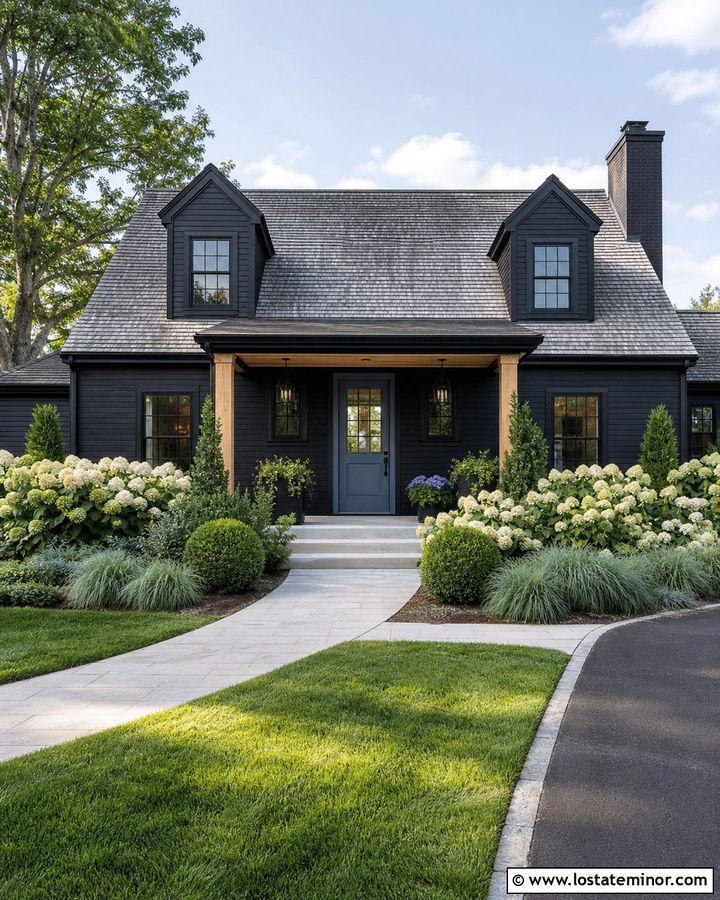
A blue front door introduces calm color against black siding while maintaining a refined exterior. Dusty blue, slate blue, and deep teal-blue are especially effective because their gray undertones relate naturally to charcoal and black. Pair the door with soft black lap siding, white oak porch columns, and pale gray stone flooring. A cedar ceiling can add warmth without competing with the blue. Keep window trim black for a seamless facade, or use warm white if the architecture needs more definition. Select simple black lighting and avoid mixing several metal finishes. Hydrangeas, blue-green grasses, and evergreen shrubs can gently echo the door color throughout the yard. This complete scheme feels relaxed and polished on cottages, ranches, Cape Cods, and modern farmhouses.
25. Black House With Green Front Door And Porch
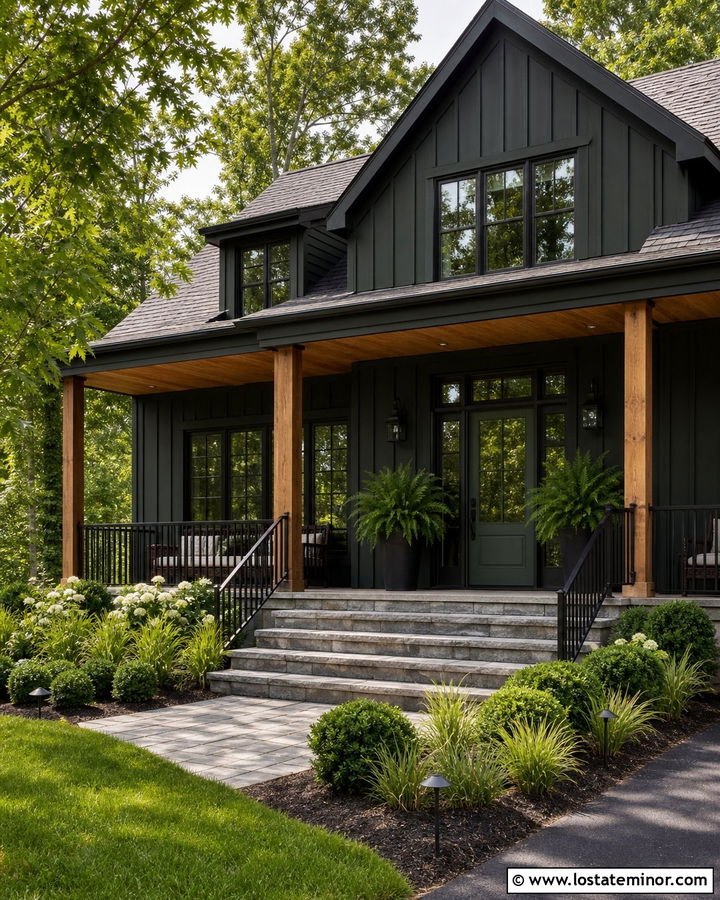
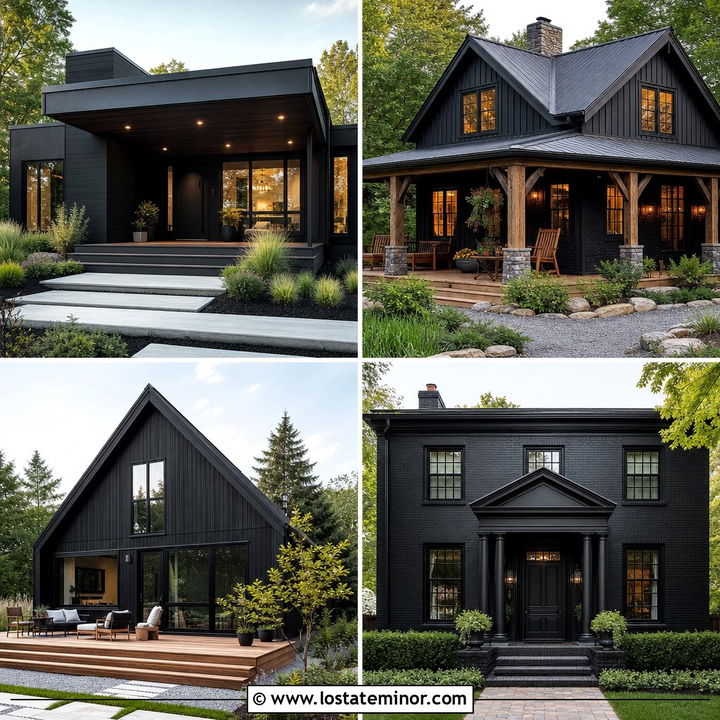
Green feels especially natural on a black house surrounded by mature landscaping. Choose an olive, moss, or muted forest green door, then place it within a porch finished with warm wood columns and gray stone steps. Deep black board-and-batten siding creates a strong background, while the earthy green entrance connects the home to the yard. A light wood porch ceiling reflects daylight and keeps the covered space from feeling dim. Use black window frames, gutters, and railings for visual continuity. Around the porch, repeat green through ferns, grasses, boxwoods, and other plants with varied leaf shapes. Avoid too many colorful flowers. A restrained landscape allows the door, wood, stone, and black siding to read as one calm, nature-inspired exterior scheme.
26. Black House With Double Front Door And Porch
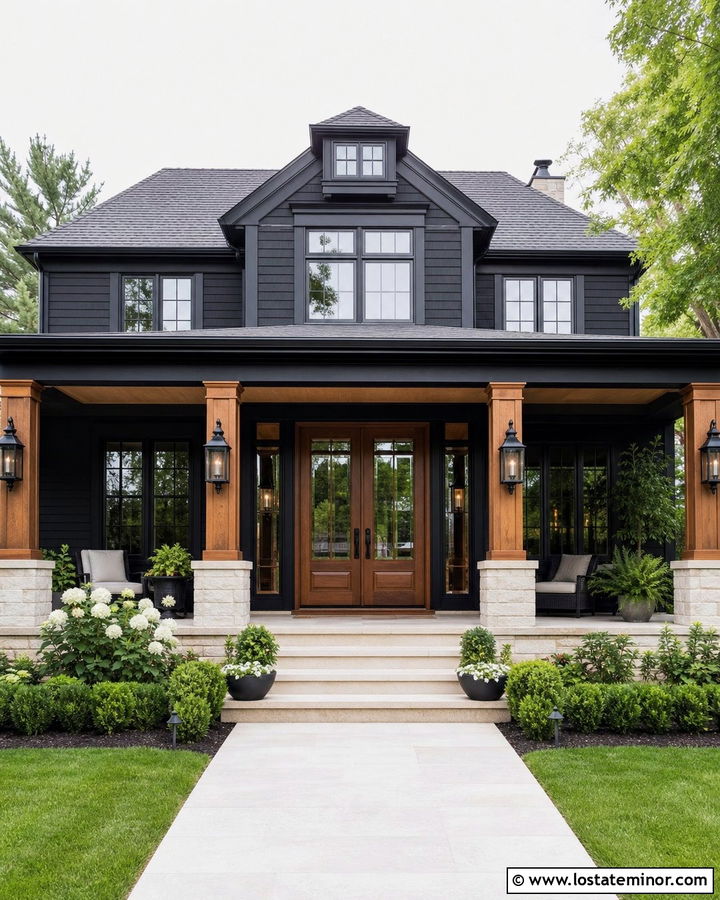
Double doors can give a black house a grand entrance when the porch is wide enough to support their scale. Choose natural oak or walnut doors with tall glass panels, then frame them with deep black siding and matching windows. A broad covered porch supported by stone-based wood columns will make the doorway feel integrated rather than oversized. Use pale limestone or warm gray concrete underfoot to brighten the entry. Large lanterns should flank the doors without crowding them, while broad steps create a comfortable approach from the walkway. Keep railings simple or omit them on a low porch where permitted. Symmetrical planters and balanced foundation shrubs complement the double-door arrangement and create a composed facade suitable for modern farmhouse, transitional, or contemporary homes.
27. Black House With Porch Swing
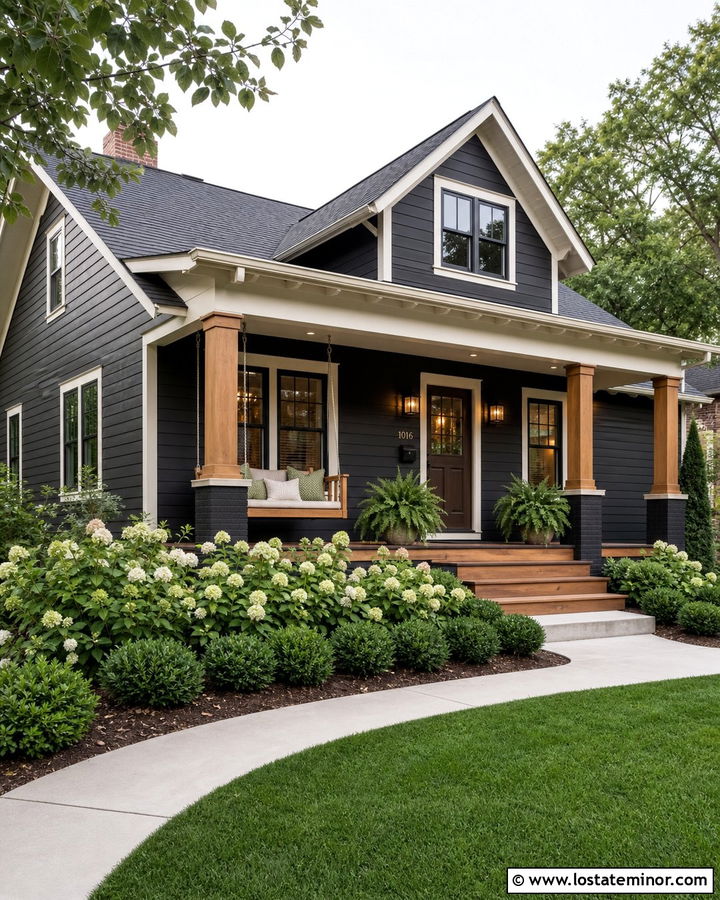
A porch swing immediately makes a dramatic black exterior feel more relaxed and livable. Place it beneath a sufficiently deep covered porch, leaving clear walking space between the swing and front door. Use soft black clapboard siding with warm white trim and a medium-stained wood floor. A natural wood swing can coordinate with the front door, while cream or muted green cushions lighten the shaded area. Support the porch with substantial white or wood columns based on the home’s architectural style. Black lanterns and simple railings maintain a connection to the siding. Surround the entrance with hydrangeas, ferns, and low evergreen shrubs. The swing then becomes part of a complete welcoming composition instead of looking like an accessory added to an unfinished porch.
28. Black House With Front Porch Steps
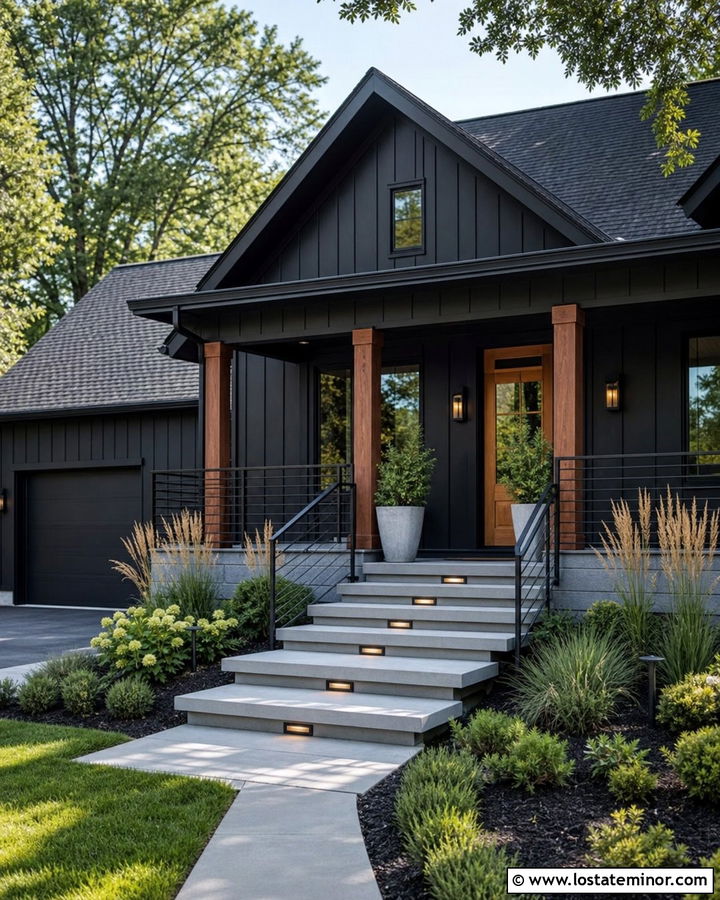
Front steps shape the first impression of a porch, particularly against a bold black facade. Wide stone or brick stairs can visually anchor a tall house, while floating concrete steps suit lower contemporary designs. Pair matte black siding with cedar porch posts and a warm wood door so the entrance remains visible from the sidewalk. Repeat the step material in the walkway or porch foundation to prevent a disconnected look. Low black railings provide safety without interrupting the view. Add lighting beneath stair treads or along nearby planting beds for practical nighttime navigation, but keep the daytime design uncluttered. Symmetrical planters, low grasses, and gradually layered shrubs can frame the steps, guiding attention naturally toward the porch and front door.
29. Black House With Front Porch Landscaping
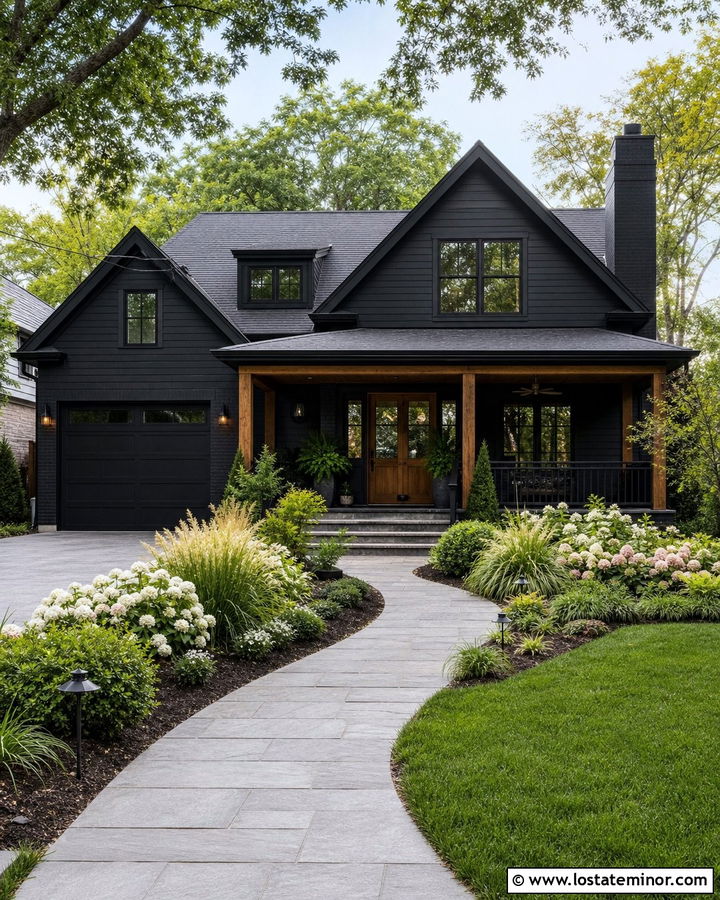
Greenery becomes especially vivid in front of a black house, making landscaping an important part of the exterior color scheme. Begin with deep black siding, a cedar porch, and a natural wood door. Then layer plants by height instead of lining the foundation with one row of identical shrubs. Place low ground cover near the walkway, medium grasses and flowering plants behind it, and structural evergreens closer to porch columns. White, pale pink, and soft purple flowers remain visible against the dark walls without overpowering them. Leave breathing room around steps, railings, and windows. A curved stone path can soften a boxy facade, while rectangular pavers reinforce modern architecture. This planned planting approach connects the porch to the yard and improves year-round curb appeal.
30. Small Black House With Covered Front Porch
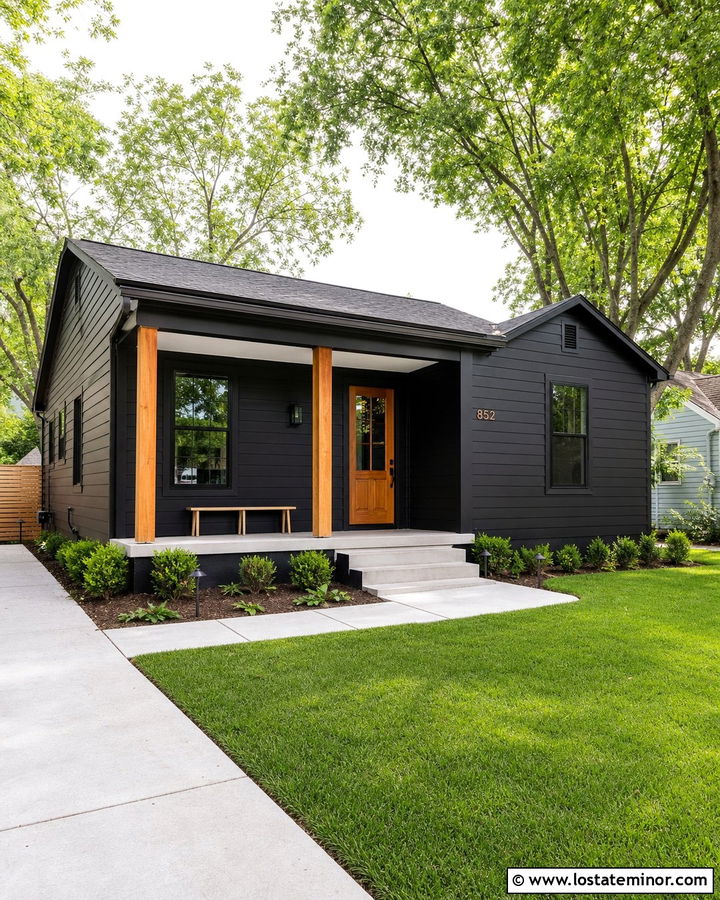
On a small home, a covered porch should add function without hiding too much of the facade. Use deep black horizontal siding with matching trim to create a simple, uninterrupted exterior. Add a compact gabled or shed-roof porch over the door and one front window. Natural cedar posts, a honey-toned door, and pale concrete steps provide enough contrast to define the entrance. Keep furniture limited to one chair or a narrow bench, depending on the available depth. A light porch ceiling will help reflect daylight into the doorway and nearby rooms. Use low shrubs and an open walkway so the house does not feel crowded. This efficient design gives a bungalow, cottage, or small ranch a stronger identity while preserving its approachable proportions.
Conclusion:
The strongest black exteriors combine bold color with a porch that adds warmth, texture, shelter, and a recognizable entrance. Natural wood, warm white trim, stone, brick, concrete, and carefully selected door colors can all balance dark siding. Porch size and roof shape should relate to the home’s architecture rather than follow a passing trend. It is also important to test black paint outdoors, where sunlight, shade, roof color, and surrounding greenery can affect its appearance. Thoughtful steps, lighting, plants, and furniture will make the finished facade feel inviting from the street. Use these **30 Black House Design With Front Porch Ideas** to build a complete exterior scheme that fits your home and lifestyle.

Related posts: