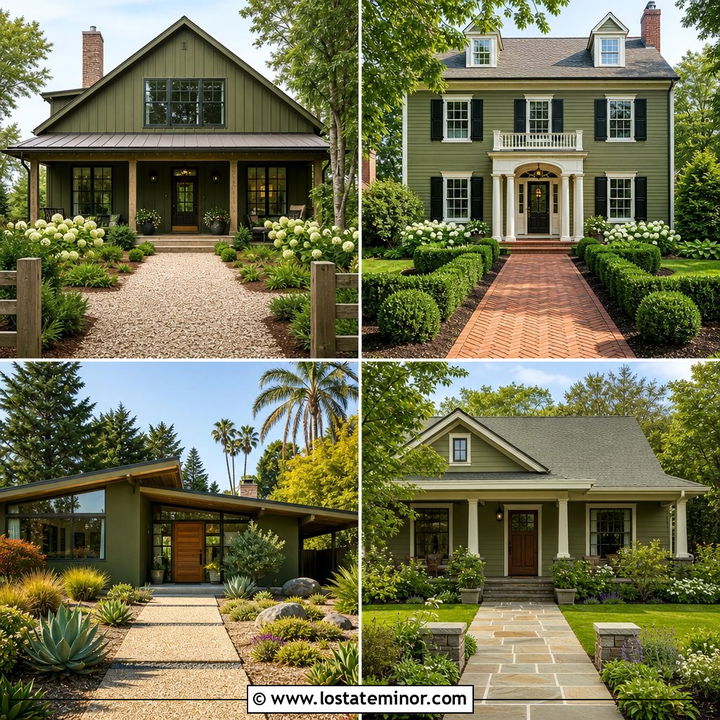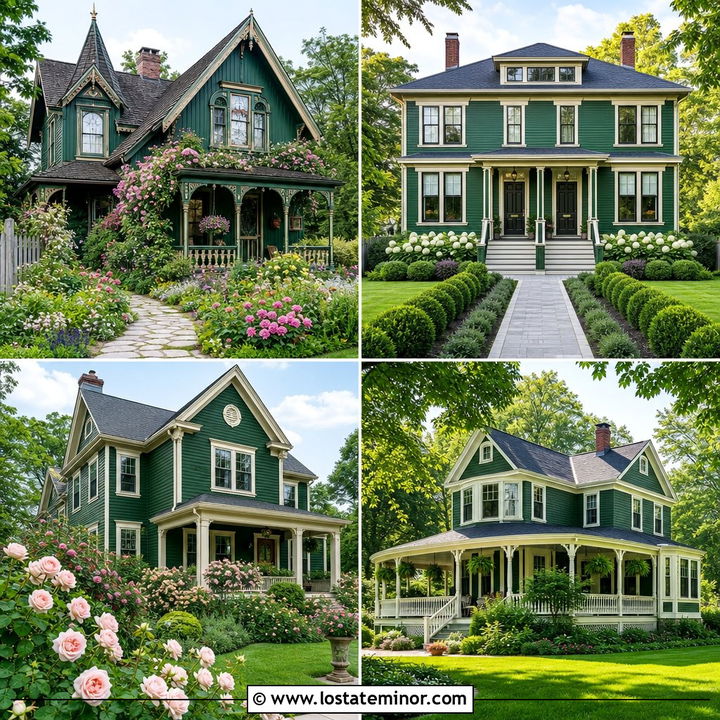
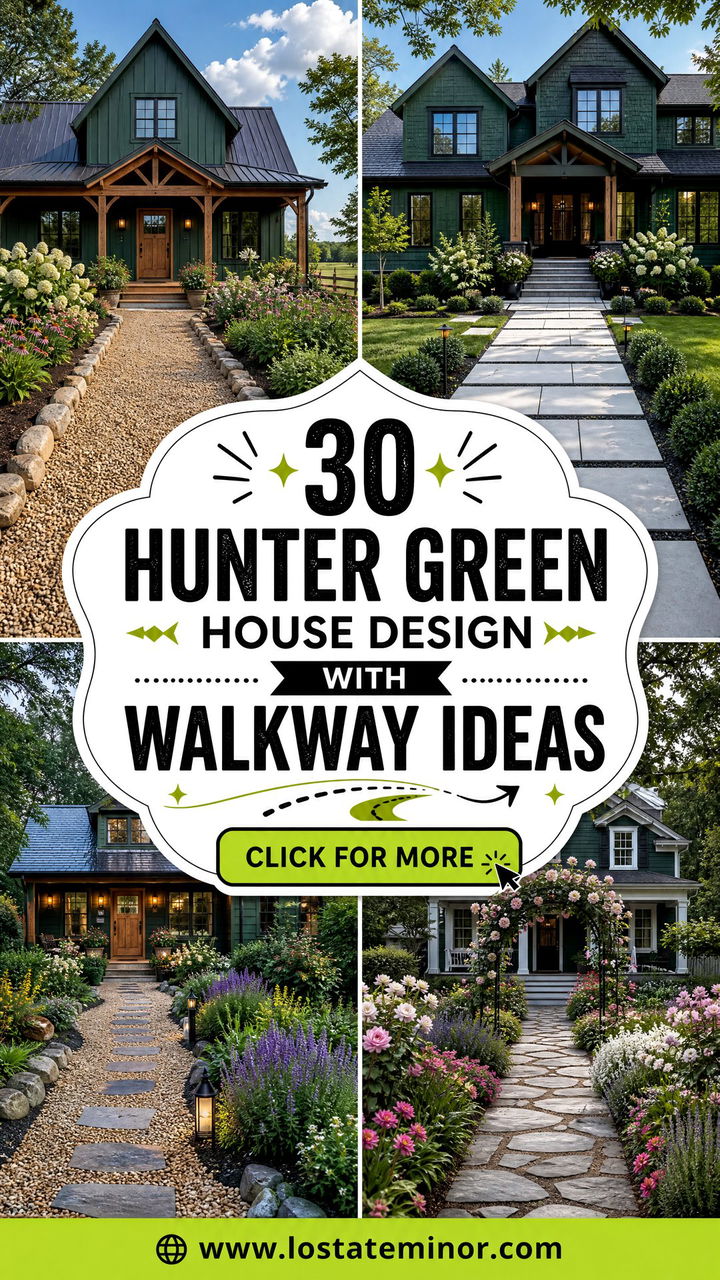
Hunter green creates a grounded, refined exterior that feels at home in both traditional neighborhoods and wooded settings. The best 30 Hunter Green House Design With Walkway Ideas connect this rich siding color to the entry through coordinated paving, trim, roofing, doors, and landscaping. Warm brick can soften the green, while pale limestone creates brighter contrast. Natural wood, black metal, cream paint, and weathered stone also complement its earthy character. Your walkway should match the home’s architecture, provide comfortable footing, and guide attention toward the front door. Whether you have a compact bungalow or a large modern farmhouse, these complete exterior combinations offer practical ways to build memorable curb appeal. Explore the full-house color schemes and pathways in these 30 Hunter Green House Design With Walkway Ideas.
1. Hunter Green Colonial With Brick Walkway
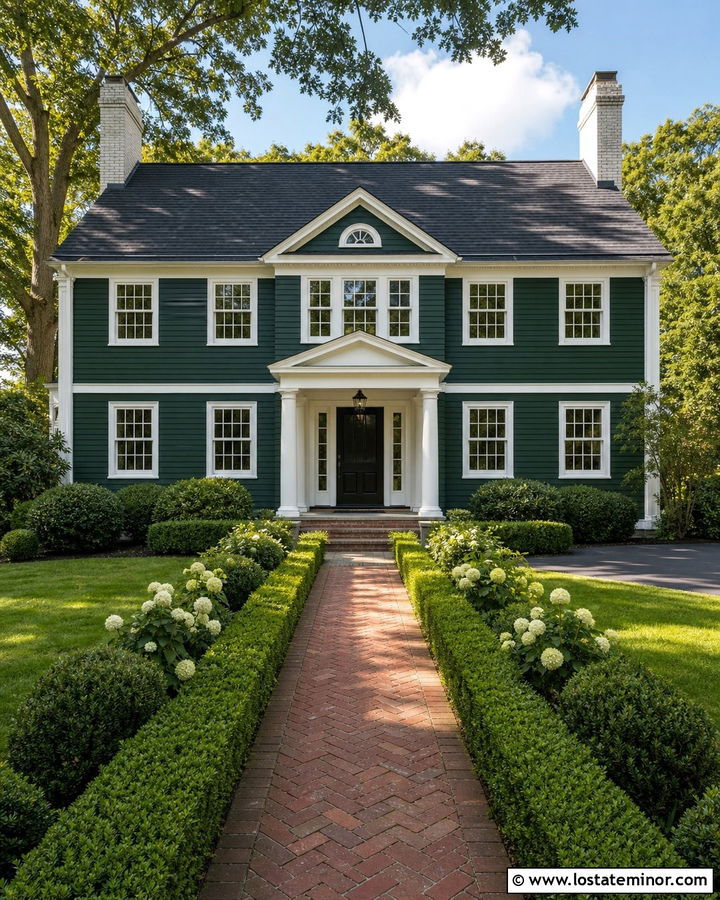
A straight red brick walkway gives a hunter green Colonial the formal, balanced character this house style deserves. Use deep green clapboard siding with warm white trim around symmetrical windows, cornices, and porch columns. A glossy black front door adds definition without competing with the brick. Lay the pathway in a classic running bond or herringbone pattern, then repeat the brick along the porch steps for a connected appearance. Neatly clipped boxwoods can emphasize the home’s symmetry while soft white flowers brighten the dark facade. Finish the scheme with a charcoal architectural-shingle roof, brass entry hardware, and traditional lanterns. The combination looks established and elegant, yet the strong contrast keeps the entire exterior feeling clean rather than overly historic.
2. Hunter Green Craftsman With Flagstone Walkway
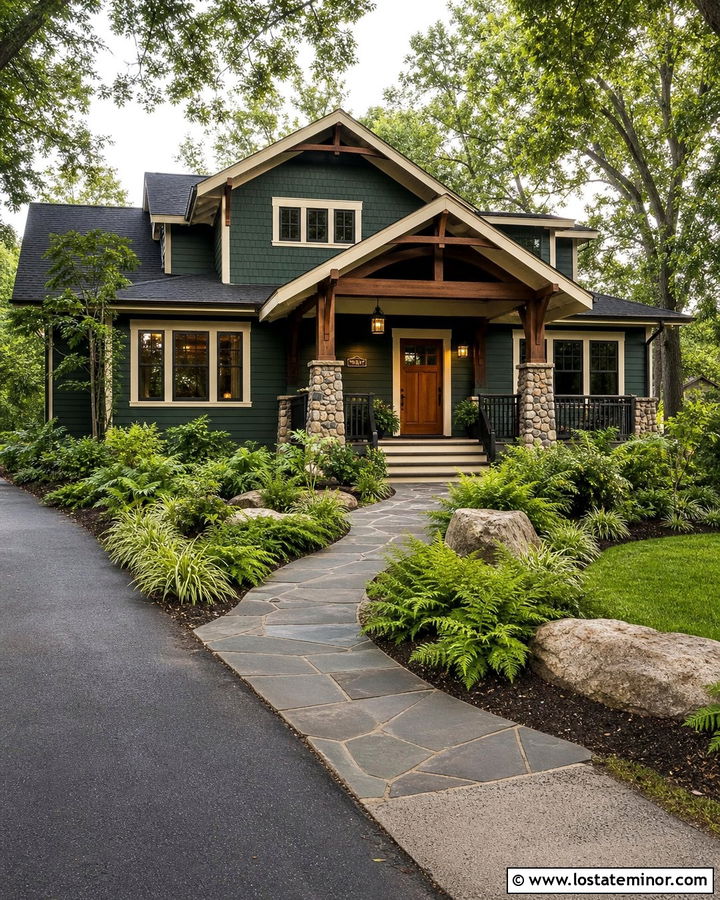
Natural flagstone brings out the organic side of a hunter green Craftsman house. Choose irregular gray and brown stones that pick up the tones of exposed porch beams, tapered stone columns, and a weathered roof. Wide cream trim can define the low roofline and divided-light windows without creating a stark border. A medium-toned oak front door gives the entry a warm focal point. Let the walkway curve gently through layered ornamental grasses, ferns, and spreading ground covers before meeting broad porch steps. Keep the joints relatively tight for comfortable footing while preserving the handcrafted look. Copper porch lights and simple black railings complete the facade. Together, the green siding, natural wood, rugged stone, and informal planting create relaxed curb appeal.
3. Hunter Green Farmhouse With Gravel Walkway
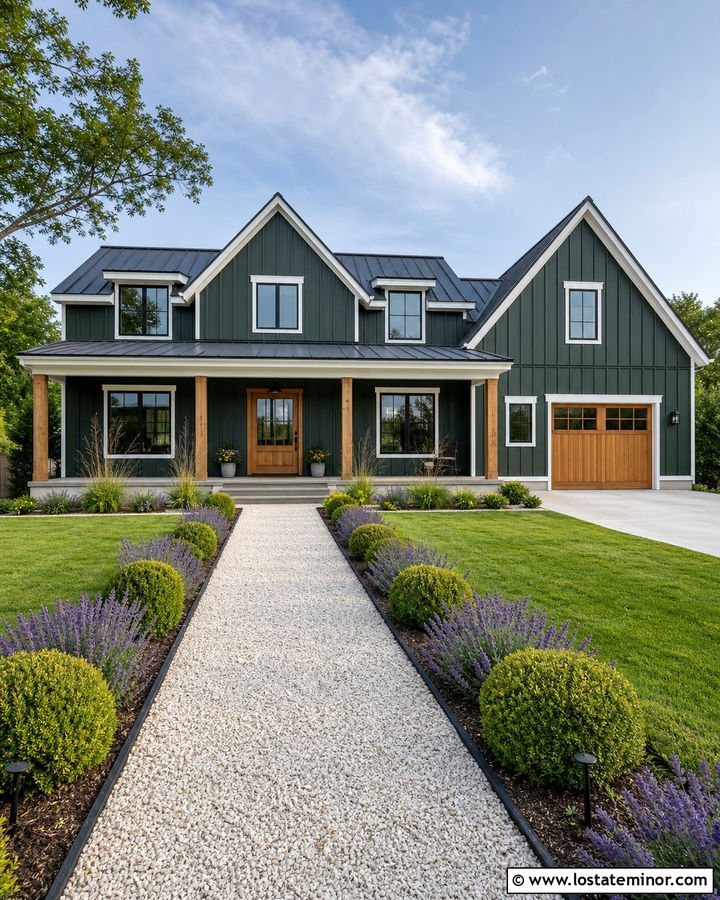
Could a simple gravel path make dark green siding feel lighter and more approachable? On a hunter green modern farmhouse, pale crushed gravel creates an attractive contrast while keeping the landscape relaxed. Use vertical board-and-batten siding, soft white window trim, and a charcoal standing-seam roof to establish crisp architectural lines. A natural cedar front door and matching porch posts add needed warmth. Define the walkway with dark steel edging so the gravel stays contained, and make the path wide enough for two people to walk comfortably. Lavender, catmint, and rounded evergreen shrubs can soften both sides. Add a small gravel landing near the porch to make the transition feel intentional. Black gooseneck lights and simple gutters finish this practical, budget-conscious exterior.
4. Hunter Green Ranch With Concrete Paver Walkway
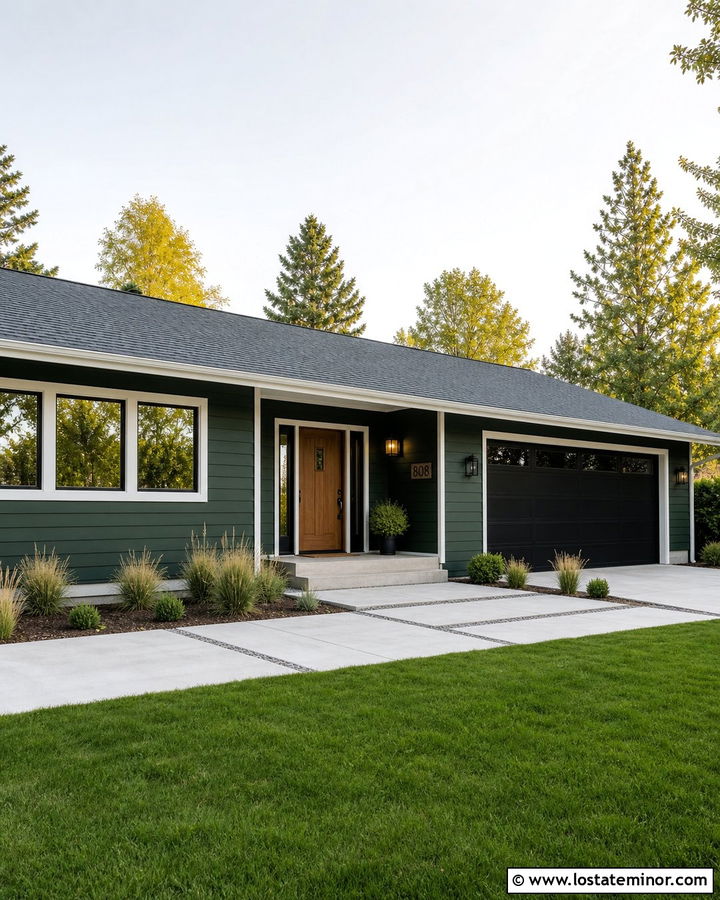
Large concrete pavers can give a low hunter green ranch house a cleaner, more contemporary presence. Paint the horizontal siding deep green, then use warm white fascia and window trim to visually lift the long facade. A walnut-colored front door creates a central destination, especially when framed by black sidelights. Set wide rectangular pavers in a straight route from the driveway, leaving narrow gravel joints between them for modern definition. Low ornamental grasses and compact shrubs preserve views of the windows and emphasize the home’s horizontal shape. A medium-gray roof, black garage door, and minimal wall lights complete the restrained palette. This design works particularly well when an older ranch needs an update that feels fresh without requiring major architectural changes or elaborate landscaping.
5. Hunter Green Cottage With Curved Stone Walkway
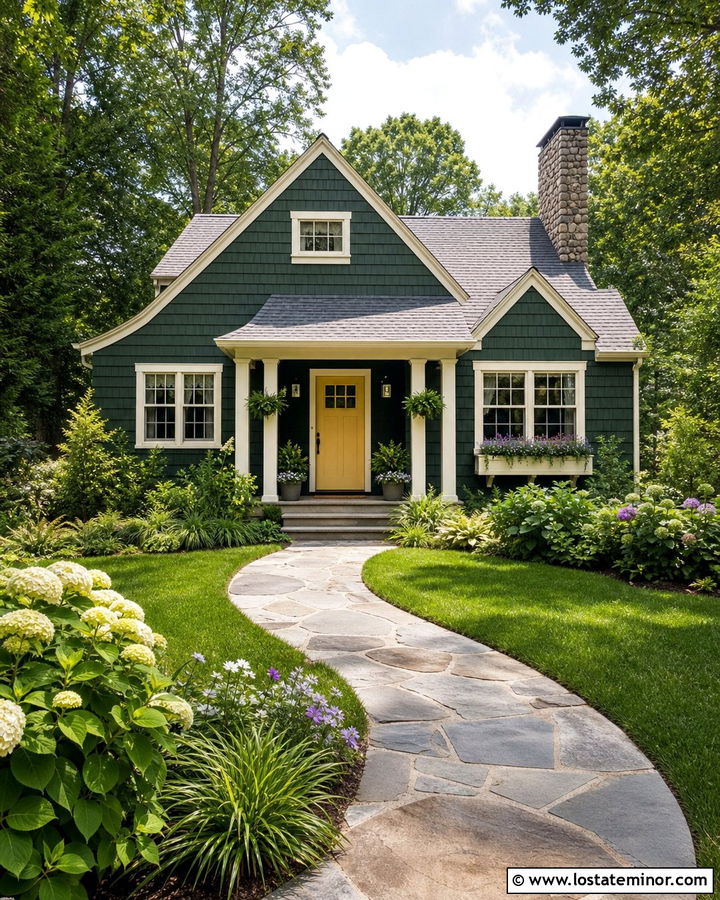
A gently curved stone walkway makes a hunter green cottage feel tucked into an established garden. Pair deep green shingle siding with creamy trim, a muted yellow front door, and a weathered gray roof. The yellow should feel soft and earthy rather than overly bright, allowing it to warm the entrance naturally. Use irregular fieldstone for the path and create subtle curves that reveal the house gradually. Plant the edges with flowering perennials, compact hydrangeas, ferns, and low thyme that can soften the stone joints. A small covered porch with white posts provides a welcoming endpoint. Window boxes and aged brass lanterns reinforce the cottage character. This full exterior scheme turns a modest house into a charming focal point without relying on excessive decoration.
6. Hunter Green Cape Cod With Bluestone Walkway
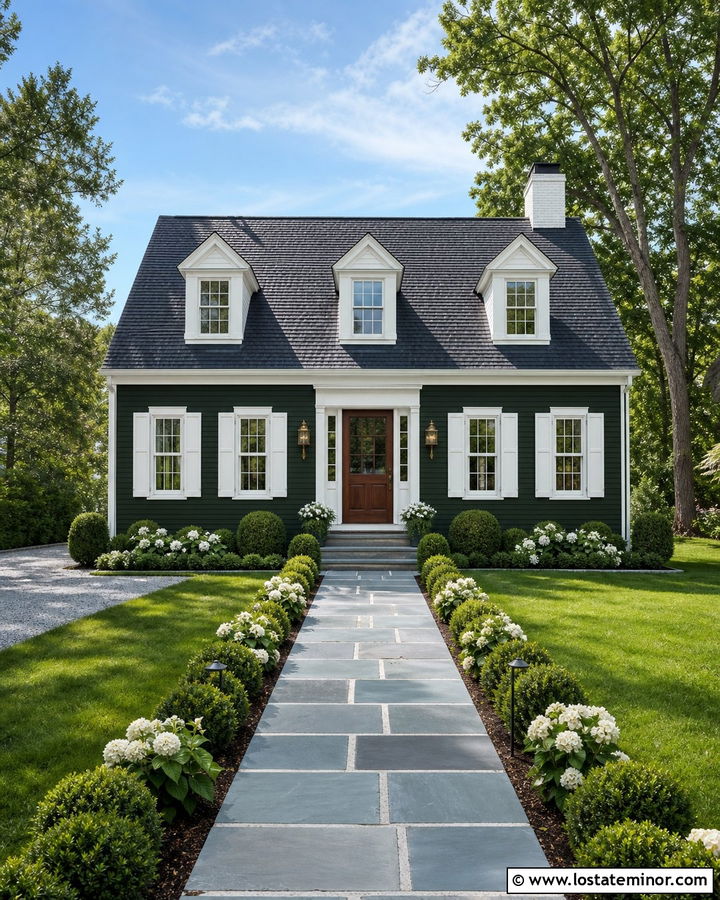
Bluestone offers a tailored surface that complements the simple symmetry of a hunter green Cape Cod. Use classic green clapboard siding, crisp white trim, and white dormers beneath a dark charcoal roof. A rich mahogany front door provides warmth at the center of the facade, while polished brass hardware introduces a traditional accent. Install rectangular bluestone in a straight path aligned with the entrance. A slightly wider section near the steps can create a graceful arrival area. Frame the walkway with low boxwood hedges and seasonal white flowers so the landscape supports the architecture rather than hiding it. White shutters can be added for a brighter coastal effect. The cool blue-gray stone balances the green siding, producing an exterior that feels polished, calm, and enduring.
7. Hunter Green Bungalow With Stepping Stone Walkway
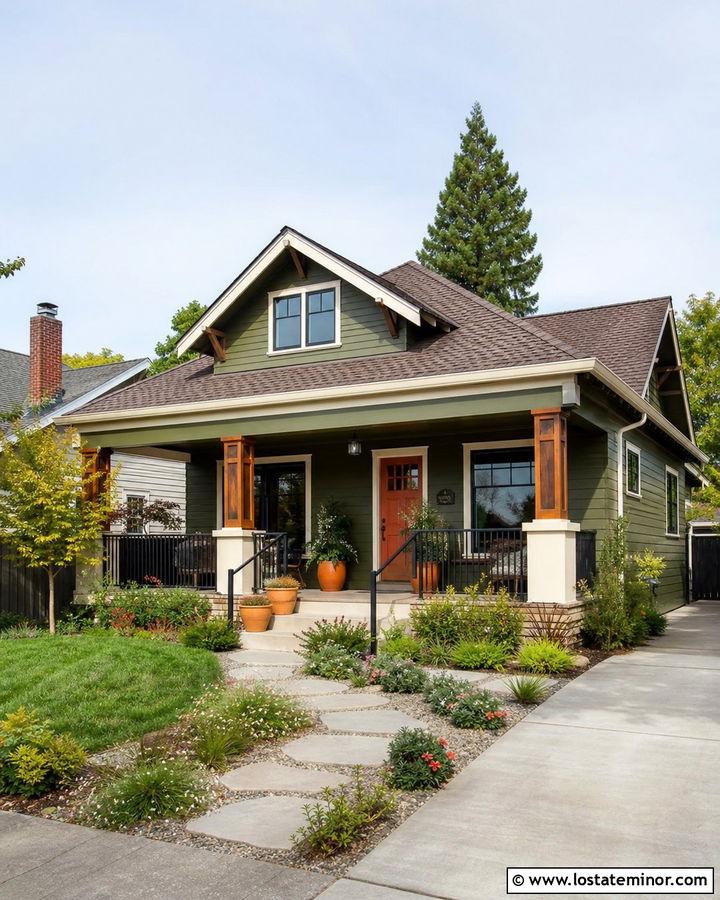
For a welcoming bungalow, combine hunter green siding with a casual stepping-stone path and a broad covered porch. Cream trim works beautifully around the windows and roofline, while stained cedar columns highlight the home’s handcrafted structure. Choose oversized rectangular stones in warm gray or taupe and place them through fine gravel or low ground cover. The spacing should feel natural but remain easy to navigate. A burnt orange front door can supply a controlled burst of warmth against the dark green facade. Repeat that color subtly through terra-cotta planters near the porch. Add a brown architectural-shingle roof, black metal railings, and layered native plants. The result feels relaxed and personal, with the walkway serving as a visual bridge between the garden and porch.
8. Hunter Green Tudor With Cobblestone Walkway
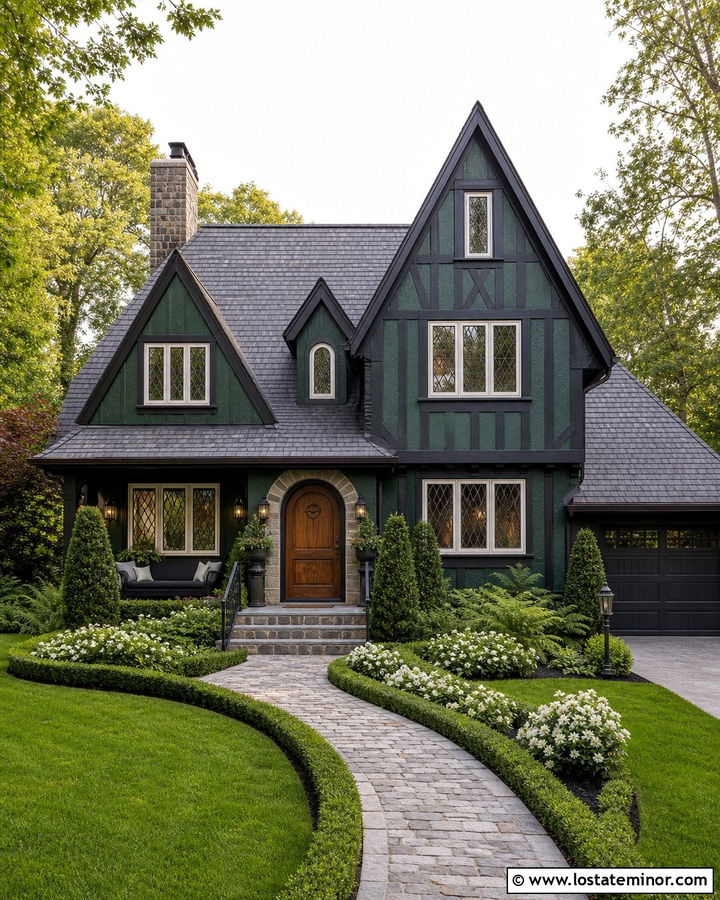
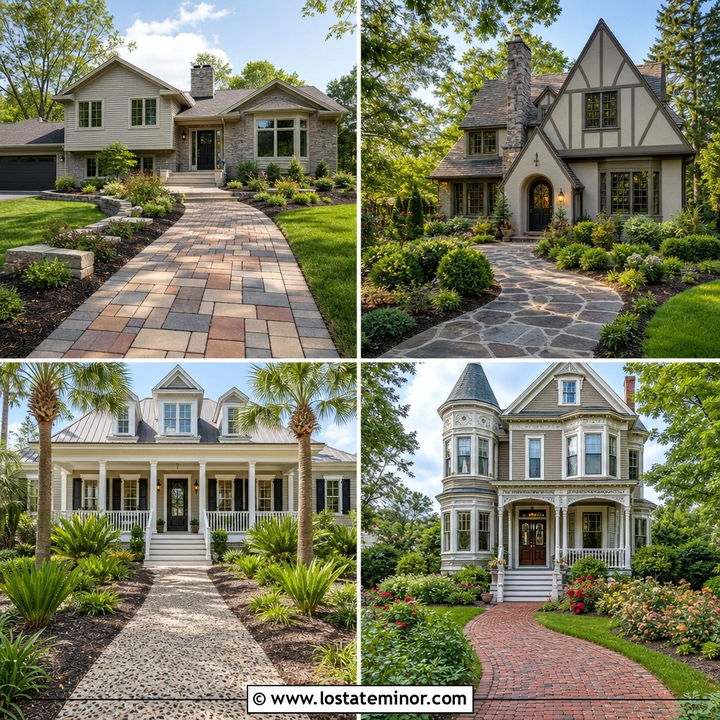
A cobblestone walkway enhances the storybook character of a hunter green Tudor without making the exterior feel theatrical. Use green-painted stucco or siding between dark brown half-timber details, then introduce warm cream around the windows. A deeply stained arched wood door creates a strong focal point beneath a small gabled entry. Choose tumbled gray and brown cobblestones for the pathway, arranging them in a subtle fan or running pattern. A curved route can complement the home’s irregular roofline and asymmetrical facade. Keep landscaping controlled with clipped yews, ferns, and white flowering plants. Dark bronze gutters, leaded-style windows, and a charcoal roof reinforce the traditional palette. Every material feels substantial, making the house appear established and carefully maintained.
9. Hunter Green Split-Level With Exposed Aggregate Walkway
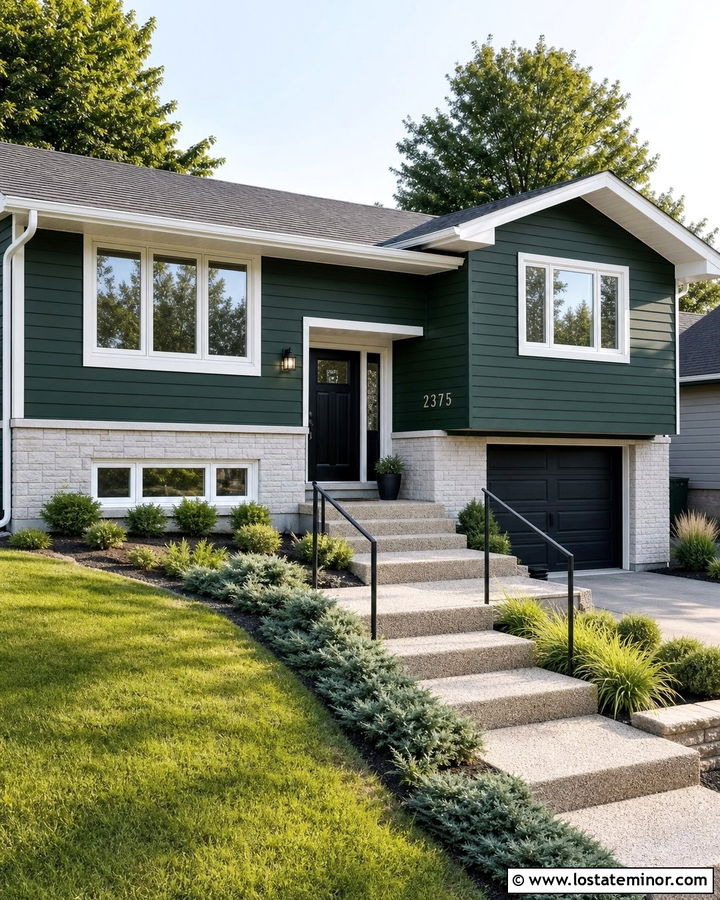
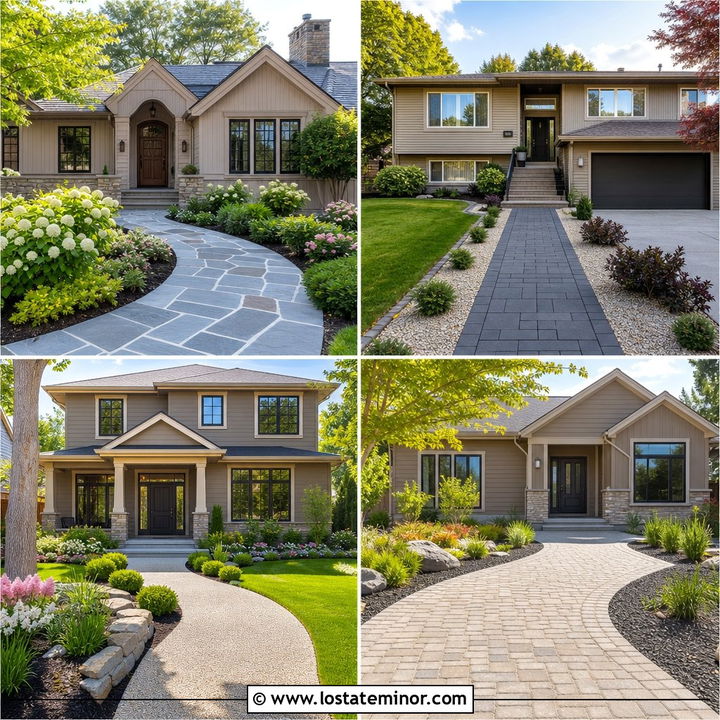
An exposed aggregate walkway can connect the different visual levels of a hunter green split-level house. Cover the upper story in deep green horizontal siding and use light greige brick or stone on the lower portion. Warm white trim will brighten the windows, while a black front door adds a crisp modern accent. Select aggregate containing gray, tan, and muted brown pebbles so the path relates to both the masonry and roof. A gently sloped walkway with broad landings is often more welcoming than narrow steps. Use low junipers and ornamental grasses to follow its movement without blocking the facade. Black railings, contemporary address numbers, and simple exterior lights help modernize the house. The finished look feels cohesive instead of visually divided.
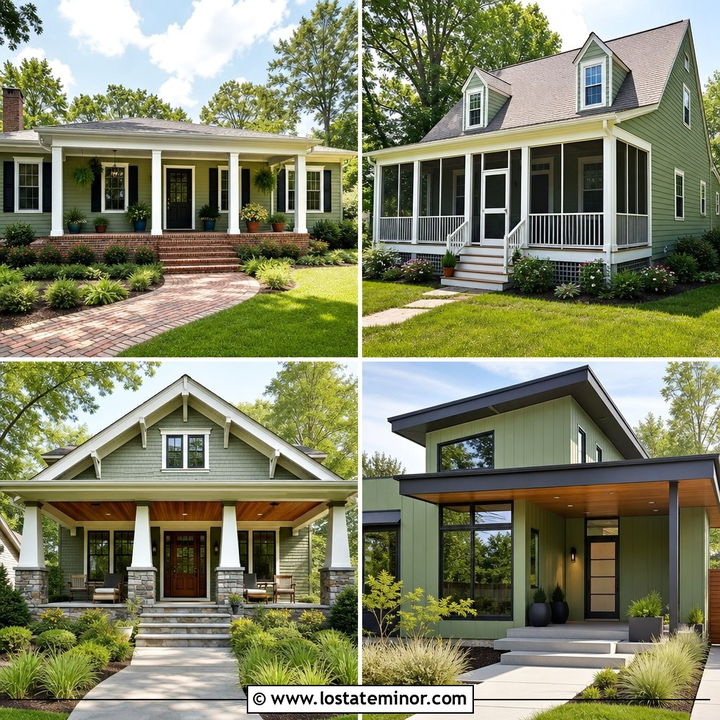
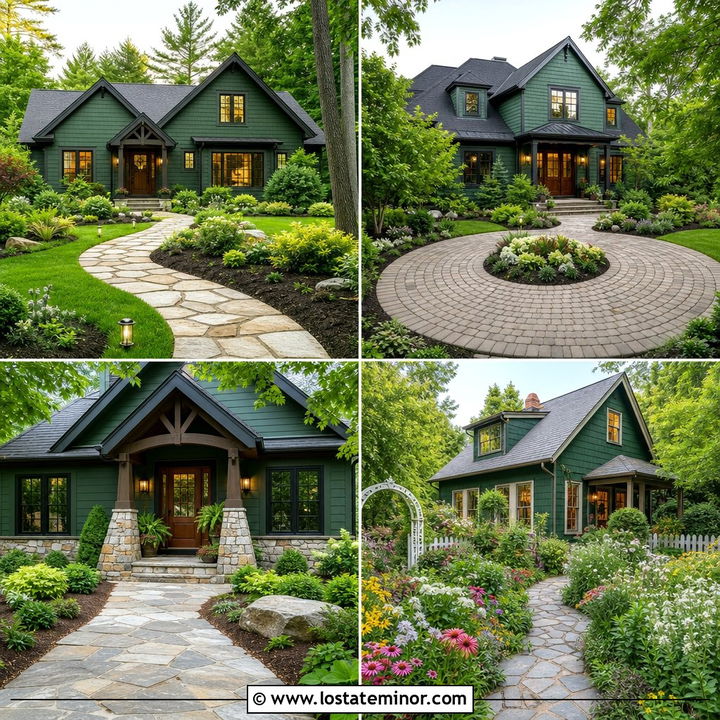
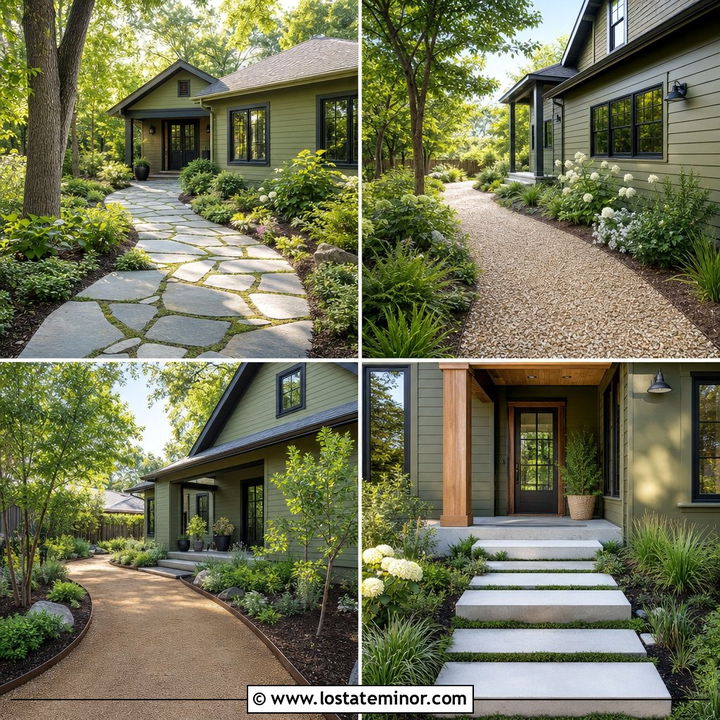
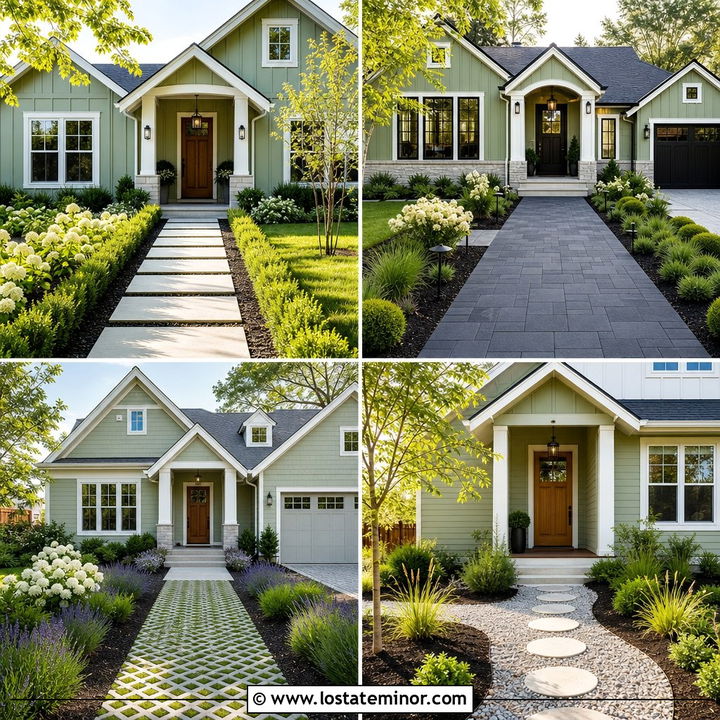
10. Hunter Green Mid-Century House With Square Pavers
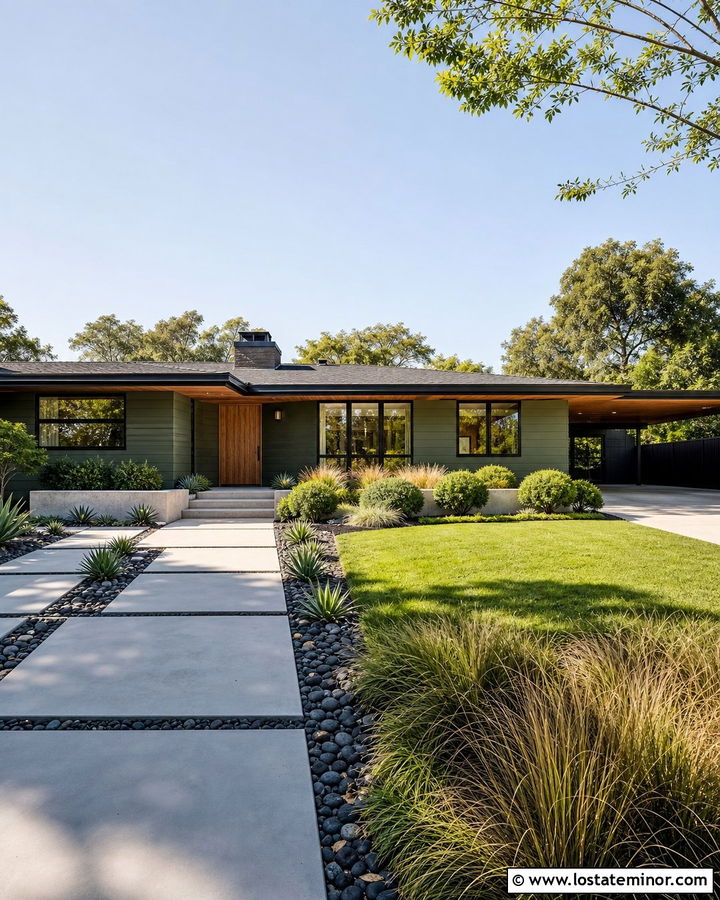
Square concrete pavers suit the clean geometry of a hunter green mid-century house. Keep the green body color rich and uniform, then use black window frames, natural wood soffits, and a warm walnut front door. Position oversized square slabs in a rhythmic sequence leading toward a recessed entrance. Dark river rock or low grass between the pavers can sharpen the pattern while improving drainage. Preserve the house’s horizontal character with a low charcoal roof and minimal trim. Sculptural grasses, compact agaves, and rounded shrubs provide texture without becoming fussy. If the property includes a carport, repeat the wood accent on a privacy screen beside it. This restrained combination creates strong curb appeal through proportion, repetition, and a carefully limited exterior palette.
11. Hunter Green Victorian With Herringbone Brick Walkway
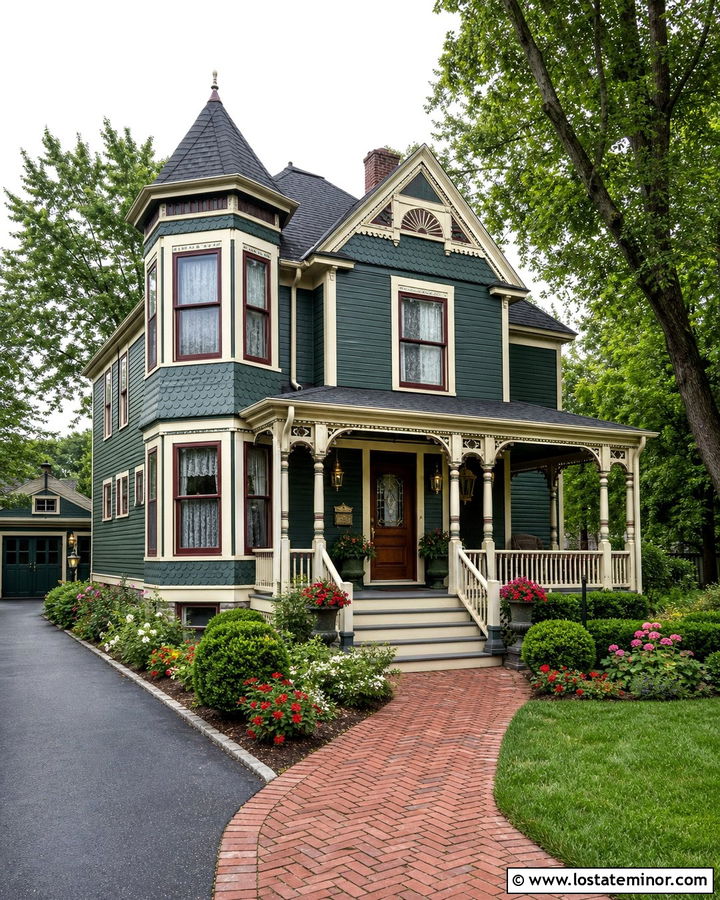
Rich color and patterned paving are natural partners on a hunter green Victorian house. Use deep green on the main siding, cream on the trim, and muted burgundy on selected brackets or window sashes. These accents should remain limited so the architecture stays detailed without becoming busy. A herringbone brick walkway introduces pattern at ground level and visually leads toward an ornate covered porch. Edge it with a simple soldier course for a finished border. A stained wood door, dark gray roof, and antique-style brass lights complete the historic palette. Keep the front garden organized with low hedges, roses, and flowering perennials. The brick’s warm red-brown tones prevent the green facade from feeling too cool, while the cream trim keeps every decorative feature readable.
12. Hunter Green Contemporary House With Floating Walkway
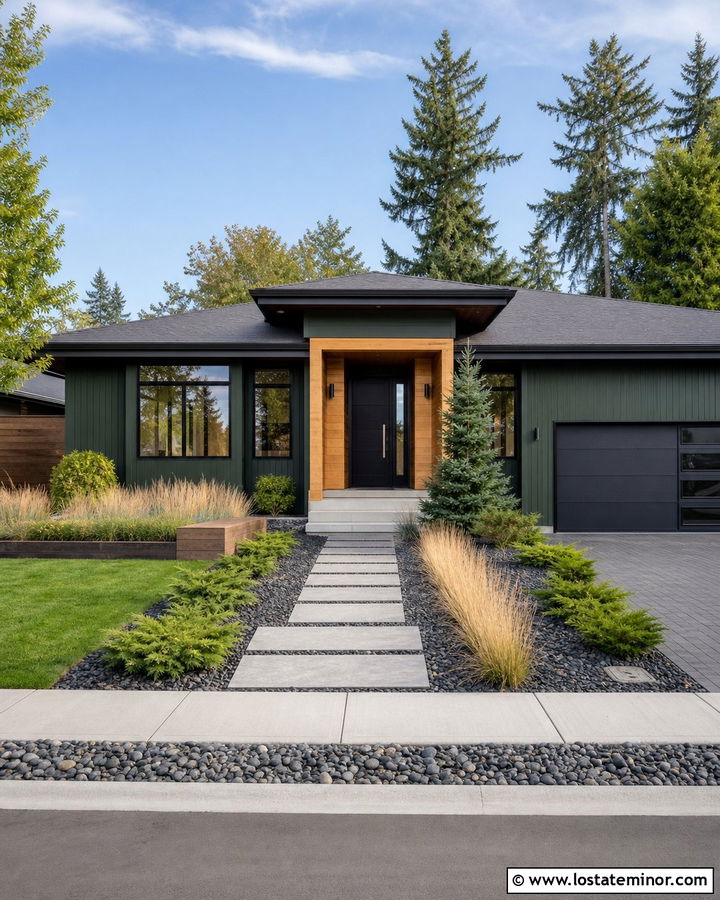
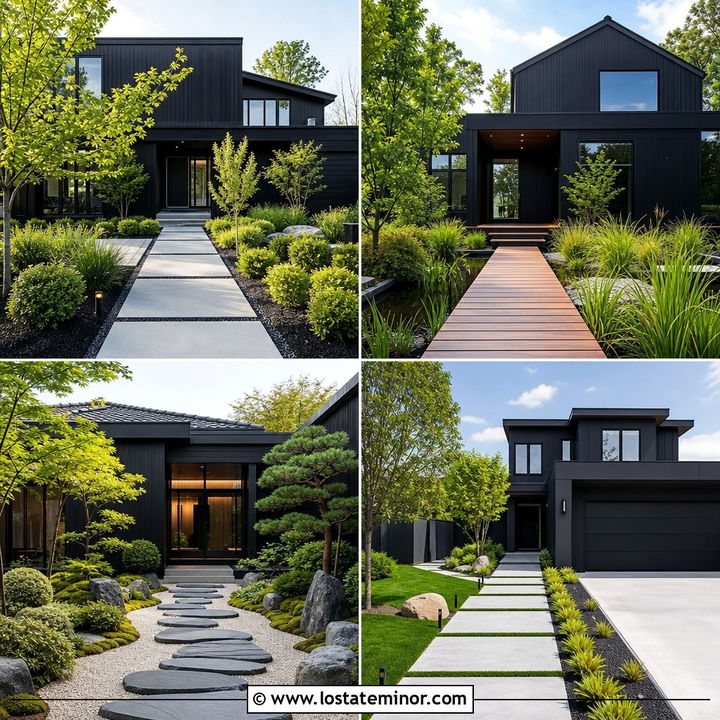
A floating walkway gives a hunter green contemporary home a bold but uncluttered entrance. Choose smooth green fiber-cement panels or narrow vertical siding, complemented by black-framed windows and light natural wood around the entry. Install long rectangular concrete slabs with narrow gravel channels between them, making each section appear to float above the landscape. Keep the route straight and aligned with the front door to reinforce the architecture. A matte black door can disappear into a recessed opening, allowing the cedar surround to become the focal point. Use simple masses of ornamental grass, low evergreen ground cover, and dark stone mulch. Flat or low-sloped roofing, concealed gutters, and streamlined lighting maintain the modern effect. The finished facade feels structured, calm, and intentionally connected to the site.
13. Hunter Green Farmhouse With Limestone Walkway
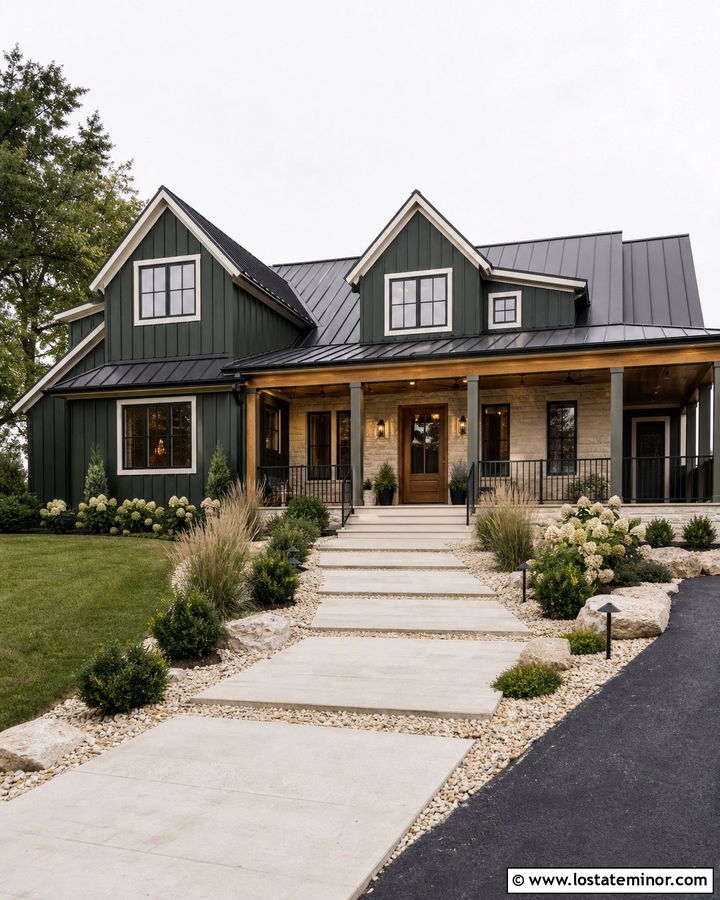
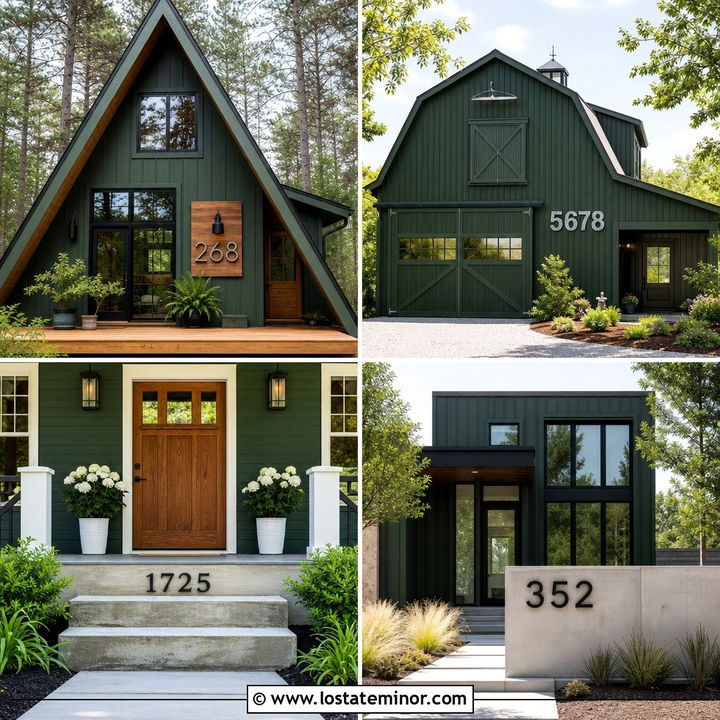
Light limestone creates a bright, sophisticated approach to a hunter green farmhouse. Cover the house in dark green board-and-batten siding and frame the windows with warm white trim. Add a natural oak front door, matching porch ceiling, and a charcoal metal roof for a balanced mix of rustic and refined materials. Large limestone slabs can run directly from the driveway to a deep front porch, with cream-colored gravel filling the joints. Plant soft grasses, white hydrangeas, and compact evergreens along the edges to keep the palette controlled. Black porch lights and railings add definition. Because limestone is much lighter than the siding, it visually opens the front yard and keeps the dark exterior from appearing heavy. The walkway and house read as one complete, welcoming composition.
14. Hunter Green Brick House With Slate Walkway
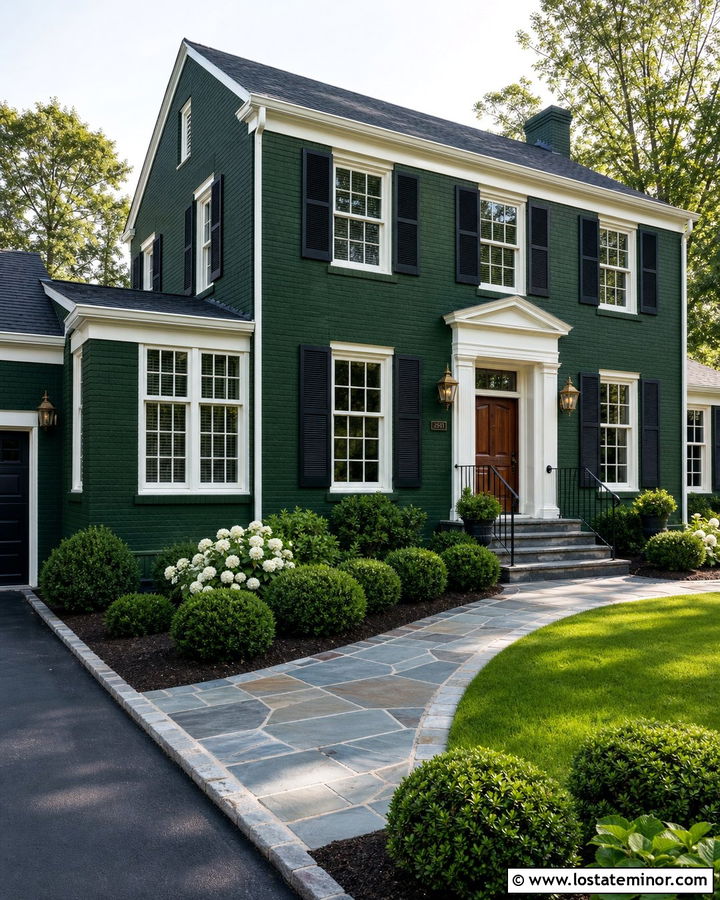
Painting a brick exterior hunter green creates visible texture beneath the deep color, especially when paired with a refined slate walkway. Use creamy off-white trim to highlight windows, eaves, and a modest portico. A medium walnut door adds warmth, while black shutters can strengthen the traditional facade. Choose mixed blue-gray slate pieces with occasional green undertones so the path connects naturally to the brick color. A straight layout feels formal, but slightly irregular stone edges keep it from looking severe. Repeat slate on the porch landing or steps for continuity. Low boxwoods, white flowering shrubs, and dark mulch provide a tidy frame. A charcoal roof and aged brass lanterns finish the design, creating a substantial exterior that feels updated without losing its original masonry character.
15. Hunter Green Coastal House With Shell Gravel Walkway
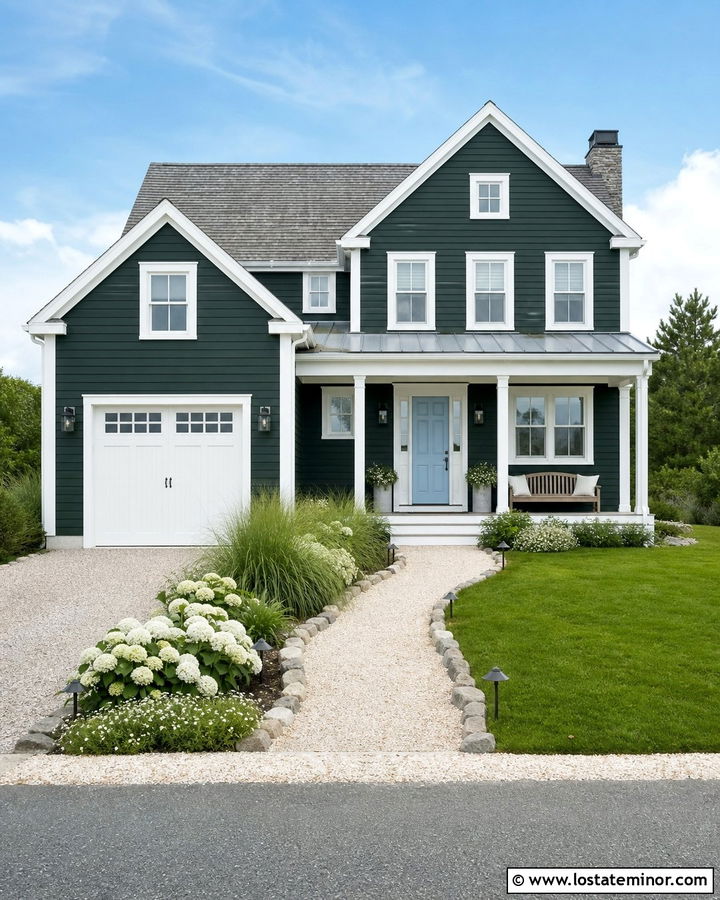
Hunter green can work beautifully on a coastal house when it is balanced with light materials. Pair deep green lap siding with bright white trim, a pale blue front door, and a weathered gray roof. Use crushed shell or pale shell-blended gravel for the walkway to brighten the yard and add subtle coastal texture. Steel or stone edging will keep the loose material neatly contained. A slightly curved route can pass through beach grasses, white hydrangeas, and other salt-tolerant-looking plantings before reaching a covered porch. Natural teak chairs or a light wood bench provide another warm layer. Keep shutters white or omit them for a cleaner facade. The result feels coastal and refreshing without depending on the usual light blue or gray exterior palette.
16. Hunter Green Mountain House With Boulder Walkway
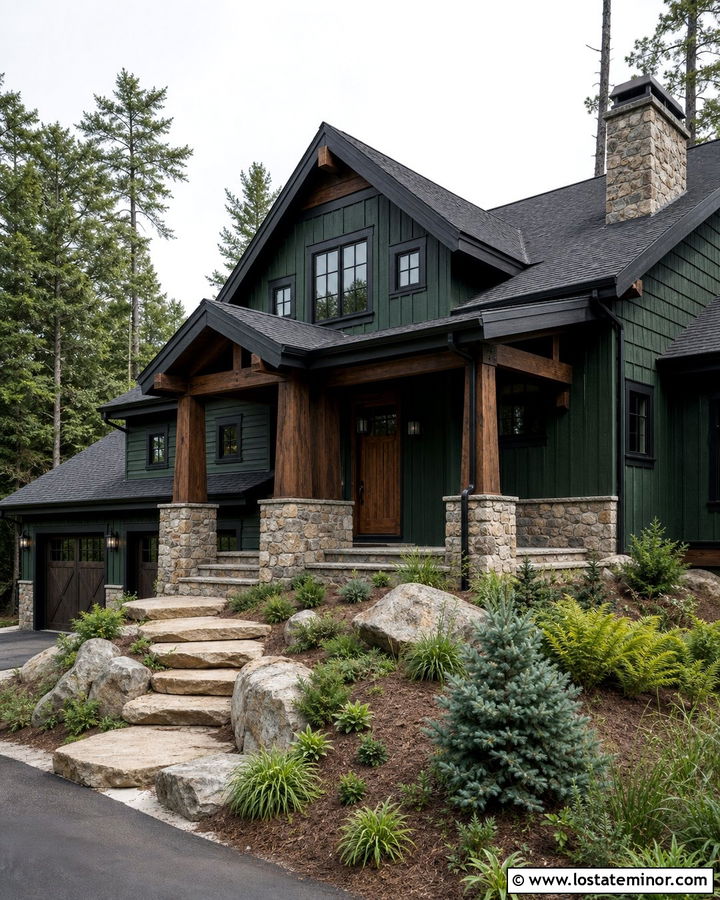
Rugged stone is an ideal partner for a hunter green mountain house surrounded by tall trees. Use dark green wood siding with stained timber beams, charcoal trim, and a substantial stone foundation. Build the walkway from broad, flat boulders or locally inspired fieldstone, ensuring the walking surface remains level and comfortable. A gradual curve can follow the natural grade and make the house feel integrated with the land. Repeat the same stone on porch columns and steps to connect the hardscape to the architecture. A warm cedar door brightens the shaded entry, while black metal lights add contrast. Ferns, native grasses, evergreen shrubs, and pine mulch soften the pathway. This layered design feels durable and appropriate for a wooded or sloped property.
17. Hunter Green Rustic House With Decomposed Granite Walkway
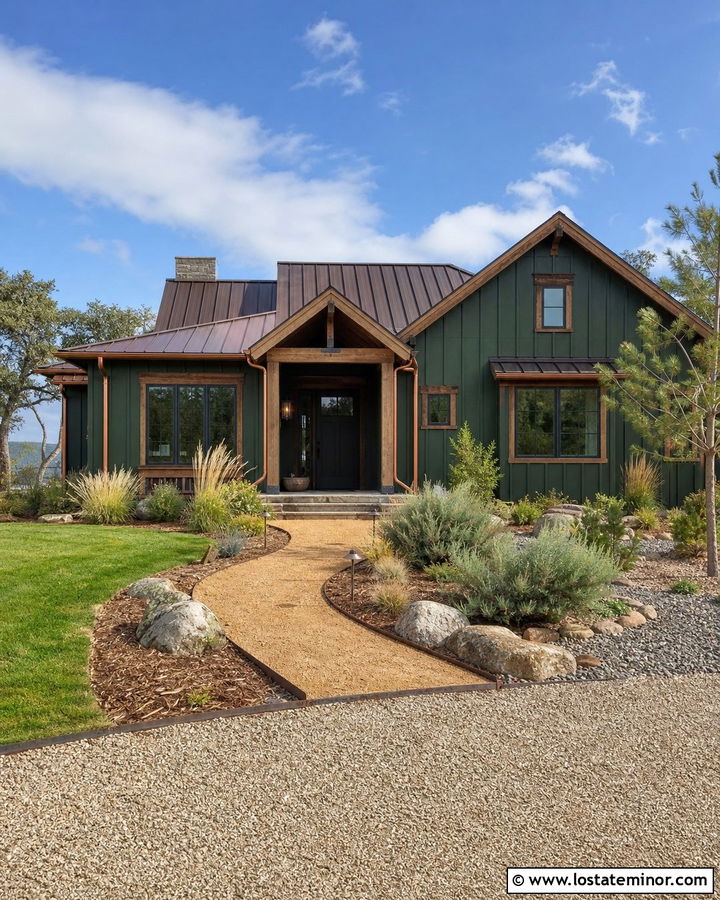
Decomposed granite gives a hunter green rustic house an affordable path with a warm, natural appearance. Pair deep green board-and-batten siding with rough cedar trim, a brown metal roof, and a black front door. Choose tan or golden decomposed granite to contrast with the facade and coordinate with the wood. A gently meandering walkway feels appropriate, but firm edging and proper compaction will give it a cleaner, more usable finish. Add large flat stones at the porch entrance where foot traffic is concentrated. Drought-tolerant grasses, sage-toned shrubs, and scattered boulders can frame the path without requiring a formal garden. Copper downspouts or dark bronze lights complete the earthy palette. The overall exterior looks relaxed, practical, and connected to a rural landscape.
18. Hunter Green House With White Paver Walkway
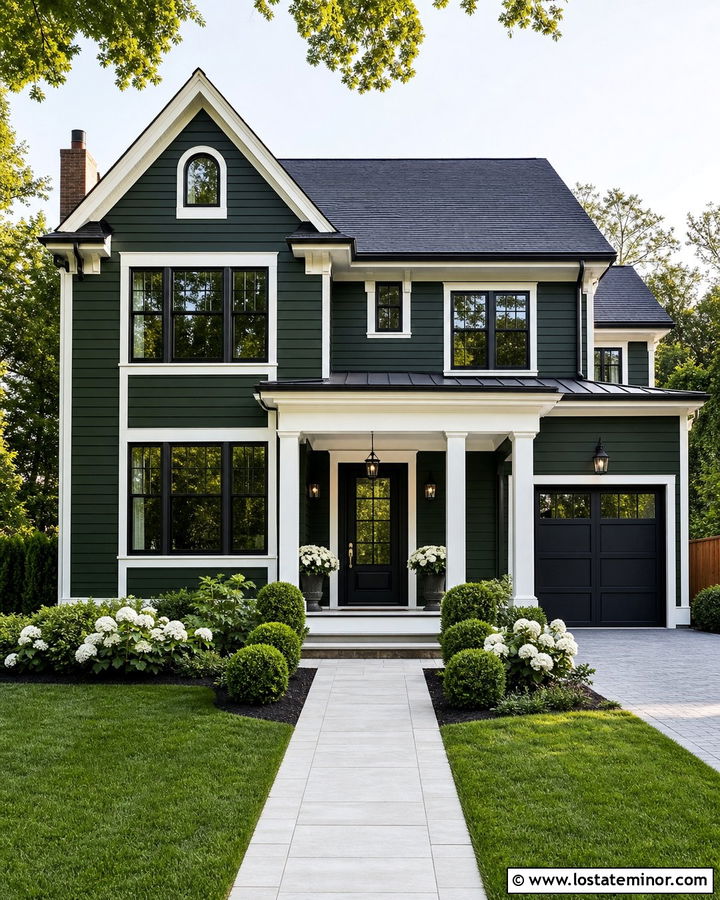
A pale paver walkway produces striking contrast against a hunter green house. This approach works especially well on a transitional two-story home with simple siding, balanced windows, and a modest covered entry. Use warm white trim rather than a cold blue-white so the facade feels comfortable in natural light. Install large cream or ivory concrete pavers in a straight pattern, repeating their color on the porch floor and front steps. A black door and black-framed windows can anchor the high-contrast palette. Soften the bright paving with rounded boxwoods, white flowers, and deep green ground cover. Choose a charcoal roof to connect the dark accents across the facade. The finished exterior feels crisp and polished, while the light walkway makes the entrance highly visible and inviting.
19. Hunter Green House With Black Paver Walkway
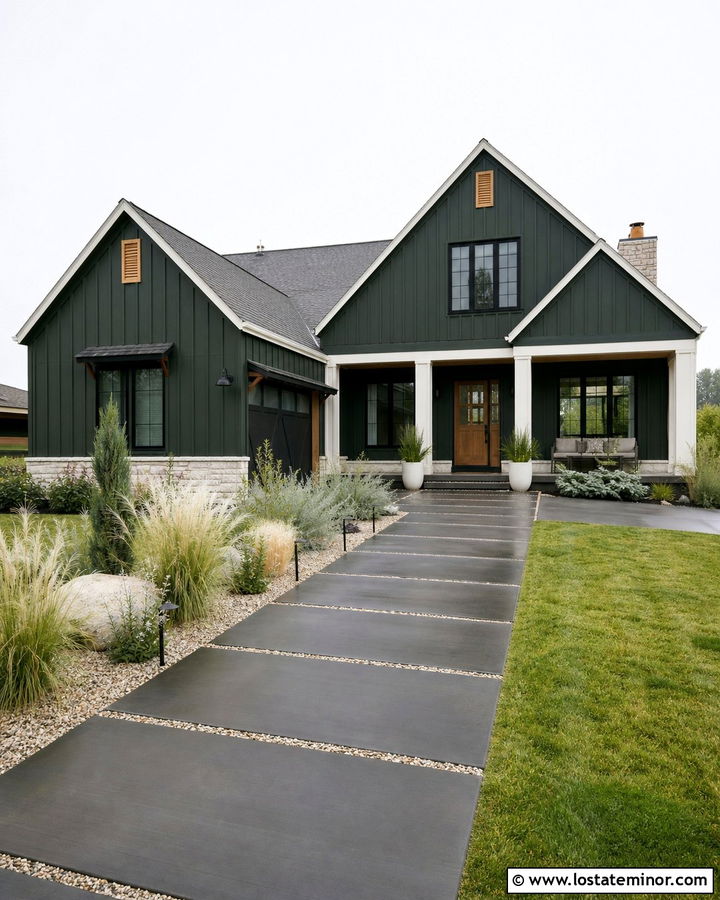
Dark pavers create a dramatic, grounded approach to a hunter green exterior when enough light contrast is included elsewhere. Use hunter green vertical siding with warm white fascia, pale stone accents, and a natural wood front door. Install charcoal or near-black concrete pavers in a broad path that leads directly to the entry. Light gravel joints can outline each paver and prevent the walkway from blending into one dark surface. Choose open, low landscaping so the front yard remains bright and the path is easy to see. White ornamental grasses, silvery foliage, and pale planters can help balance the deeper colors. Finish the house with black windows and a medium-gray roof. This scheme feels contemporary and confident without turning the entire exterior into a heavy monochromatic composition.
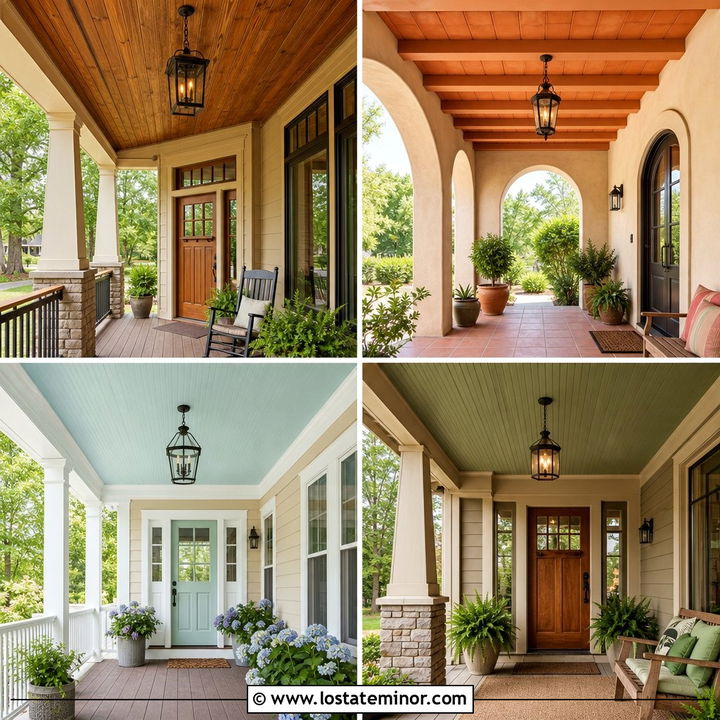
20. Hunter Green House With Red Brick Walkway
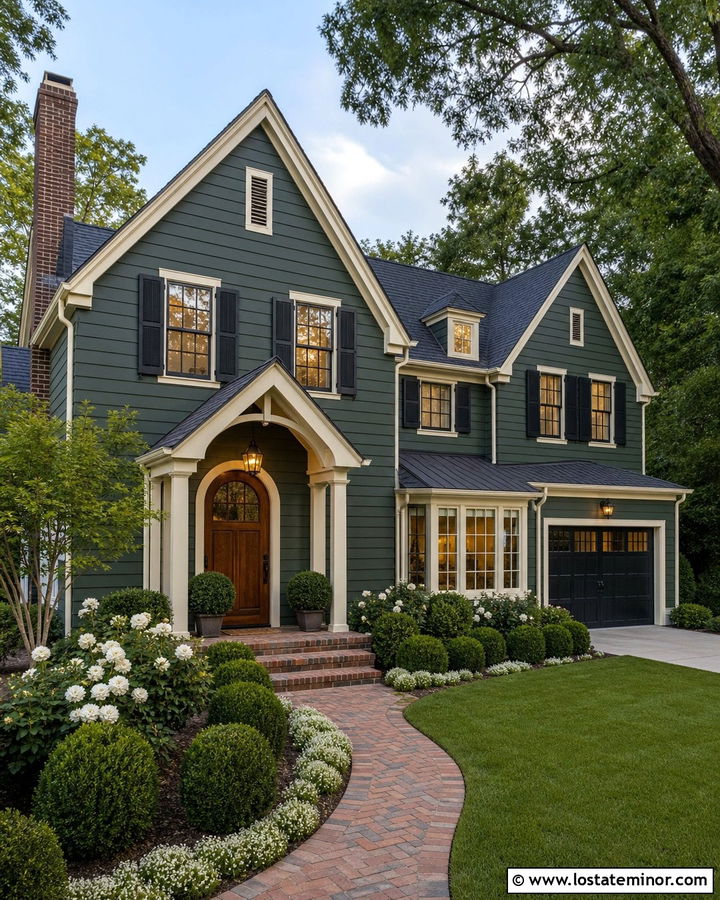
Red brick adds a welcoming, time-tested warmth to a hunter green house. To keep the pairing sophisticated, choose brick with muted brown and burgundy variation rather than bright orange-red coloring. The house can feature green horizontal siding, creamy trim, dark shutters, and a stained oak door beneath a simple gabled porch. Lay the walkway in basketweave or running bond, then repeat the brick as a border around the porch floor. Curved planting beds filled with boxwood, white roses, and seasonal greenery will soften the edges. A charcoal roof and antique brass lights unify the traditional exterior. Because red and green can become overly decorative, avoid bright accents elsewhere. Restrained colors and natural materials help the scheme feel architectural, mature, and suitable throughout the year.
21. Hunter Green House With Gray Stone Walkway
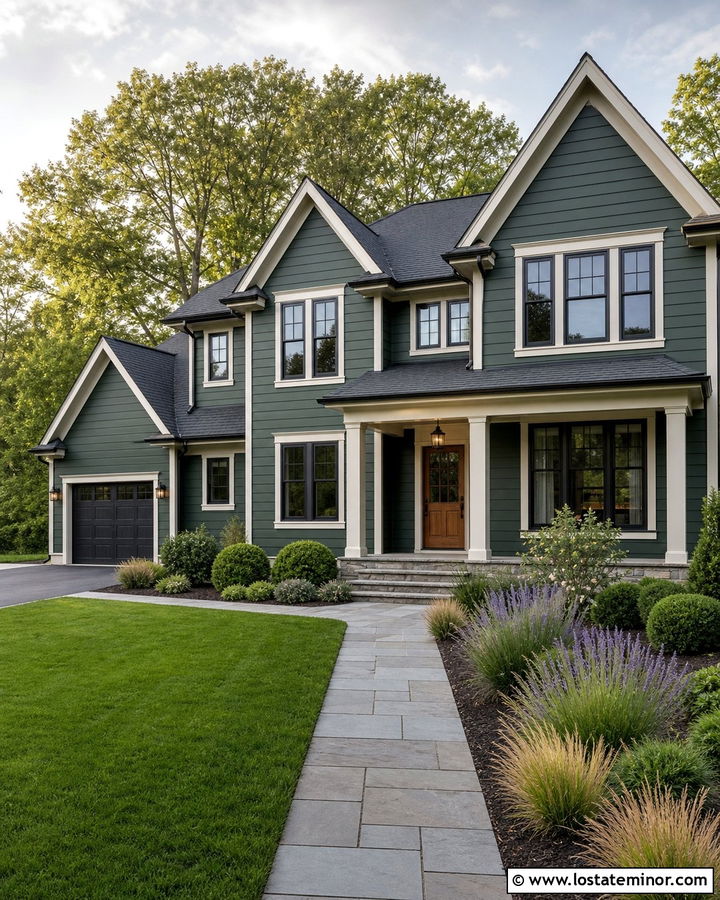
Gray stone provides a versatile foundation for a hunter green house with mixed traditional and modern details. Use deep green lap siding, soft cream trim, black windows, and a medium wood front door. Select gray walkway stones that contain subtle warm variation, allowing them to coordinate with both the roof and natural wood. Arrange large rectangular pieces in a clean running pattern rather than a highly irregular layout. The pathway can widen near the front porch to create space for matching planters. Add lavender, ornamental grasses, and rounded evergreens for softness and movement. A charcoal shingle roof will repeat the stone’s deeper tones without looking identical. This balanced palette is easy to adapt because the walkway remains neutral while the green exterior provides the primary visual character.
22. Hunter Green House With Pea Gravel Walkway
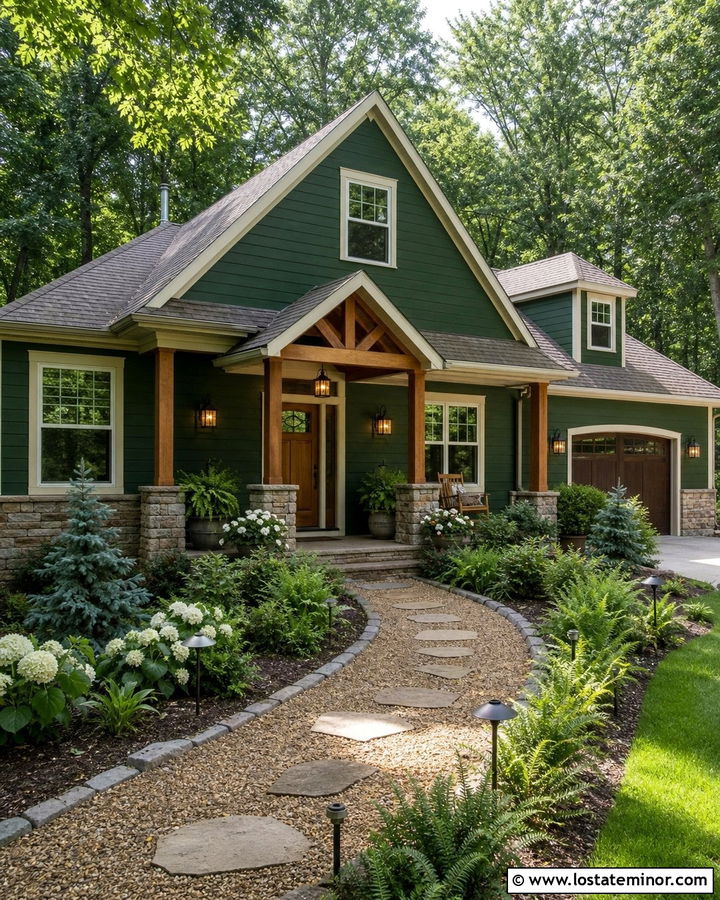
The soft crunch of pea gravel gives a hunter green house a relaxed garden atmosphere. Choose warm tan or mixed buff gravel to contrast with dark green siding, cream window trim, and a black or stained wood front door. Define the path with brick, steel, or stone edging so the small gravel stays away from planting beds. Broad stepping stones can be placed through the center for a smoother walking surface and stronger visual rhythm. Surround the walkway with ferns, hostas, white flowers, and low evergreen shrubs. A simple covered porch with natural wood posts can repeat the warm tones found in the gravel. Dark bronze lighting and a brown-gray roof finish the palette. This approach feels informal, approachable, and particularly suitable for cottage or woodland properties.
23. Hunter Green House With Wood Walkway
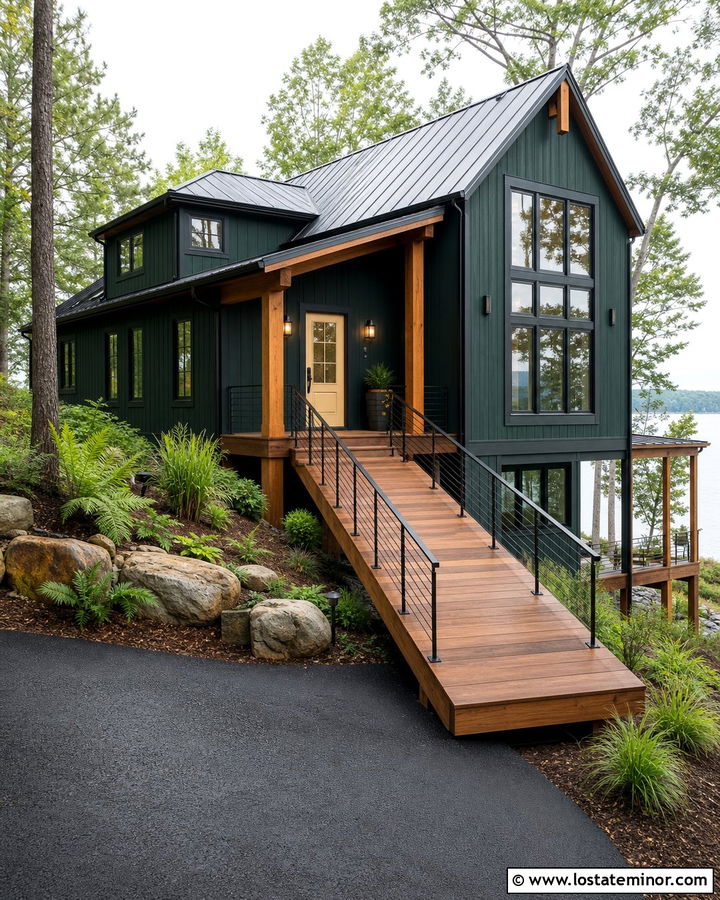
A raised wood walkway can turn a damp or uneven front yard into a distinctive entrance for a hunter green home. Use deep green siding with black trim, cedar porch posts, and a warm cream front door. Build the walkway from naturally durable-looking wood in a medium stain that coordinates with the porch and soffits. Simple black metal edging or low railings can provide definition where the path crosses a slope. Keep the boards aligned with the direction of travel for a long, clean visual line. Ferns, grasses, and moisture-loving plantings can surround the structure, making it appear settled into the landscape. A charcoal metal roof adds a contemporary touch. The combination is especially effective on modern cabins, lake houses, and wooded homes with challenging grades.
24. Hunter Green House With Mosaic Paver Walkway
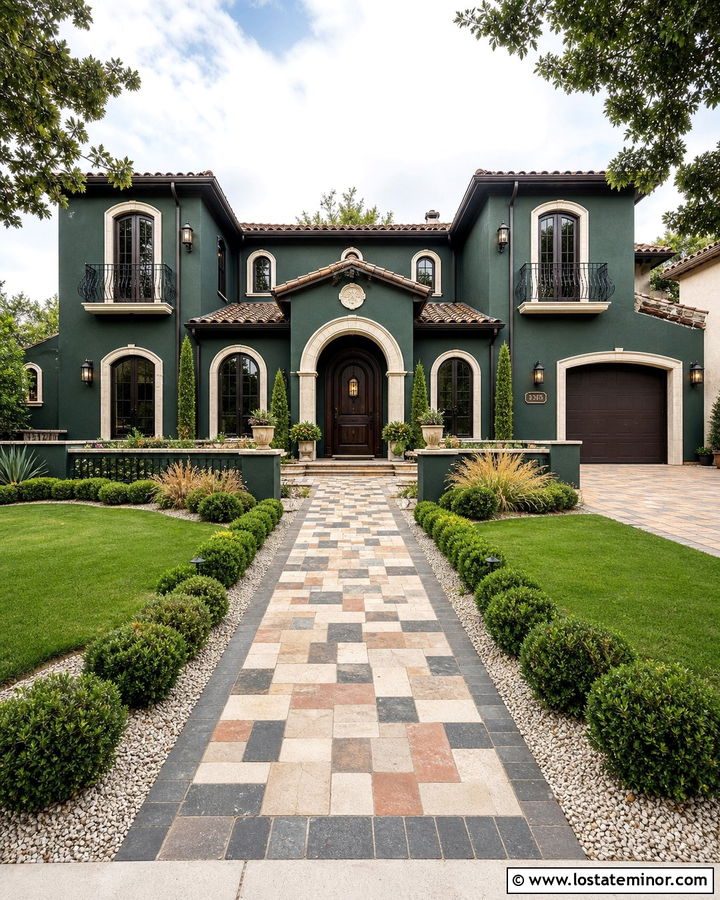
A mosaic-style paver walkway can add character to a hunter green Mediterranean-inspired house. Select tumbled pavers in cream, taupe, charcoal, and muted terracotta, using a controlled pattern rather than a random collection of colors. Pair the walkway with hunter green stucco or painted masonry, creamy trim, and a dark wood arched door. A low clay-tile or weathered brown roof brings warmth to the upper facade. Repeat one of the walkway colors on the porch steps to create continuity. Keep landscaping structured with rosemary-like shrubs, ornamental grasses, clipped evergreens, and pale gravel mulch. Dark bronze sconces and iron railings reinforce the architecture. The varied paving becomes a focal point, but the deep green body color keeps the complete exterior visually grounded.
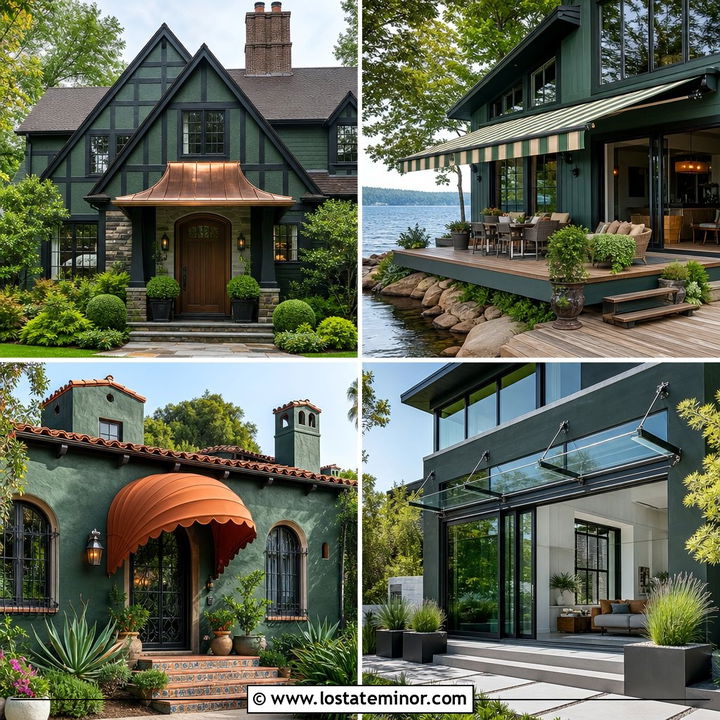
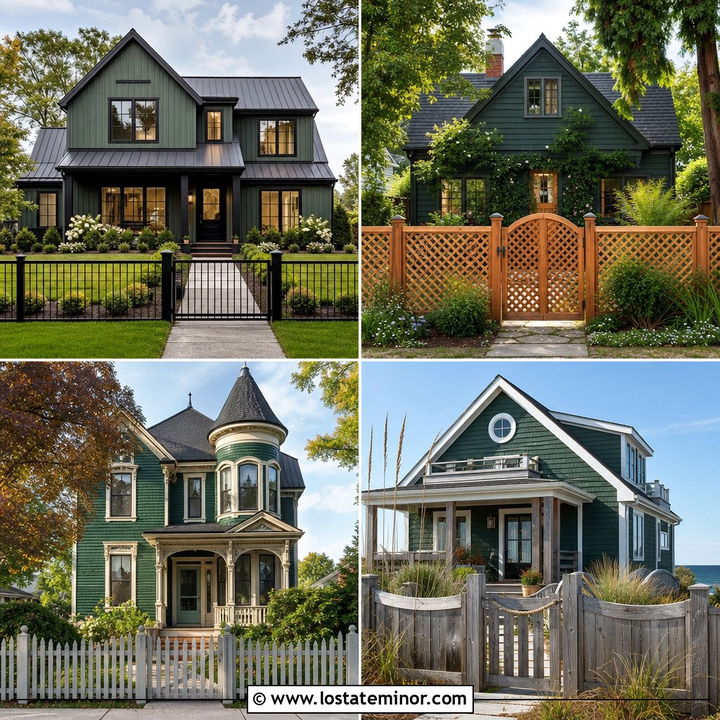
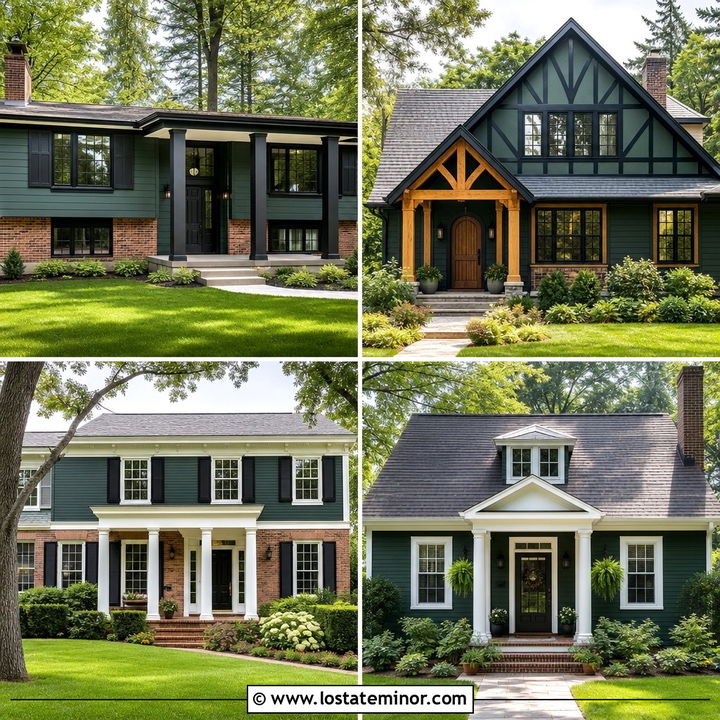
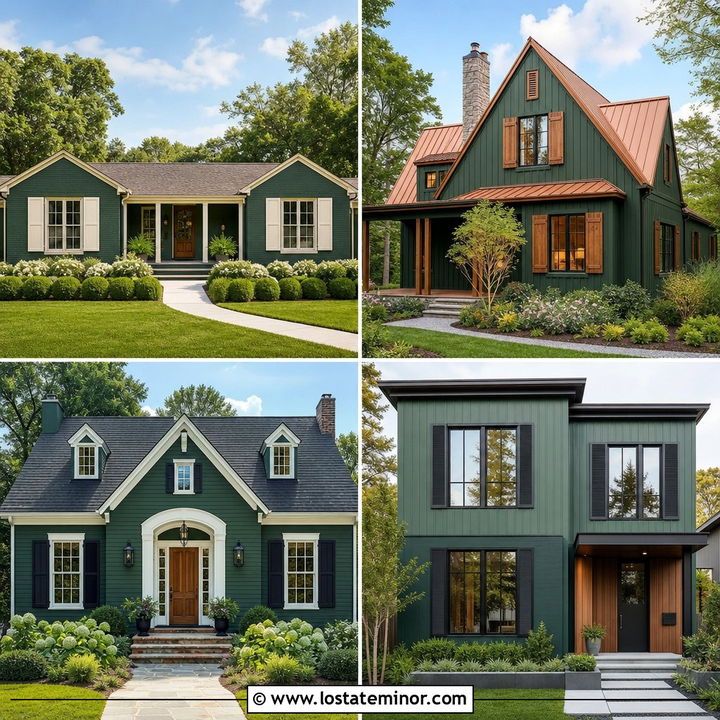
25. Hunter Green House With Grass Joint Walkway
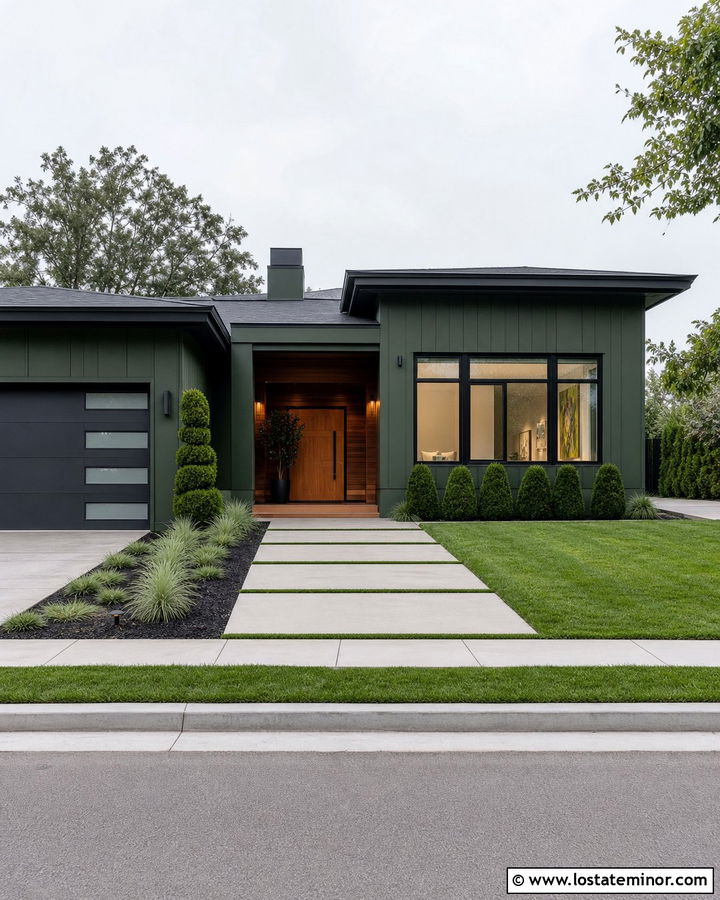
Grass-joint pavers offer a fresh way to lighten a hunter green modern house. Install oversized concrete slabs with narrow strips of turf or durable ground cover between them. The green joints connect visually with the siding, while the pale concrete prevents the scheme from becoming too dark. Use hunter green vertical panels, black-framed windows, a flat charcoal roof, and a cedar front door. Extend the same wood around the entry recess for warmth. Keep the path wide and geometric, leading directly from the sidewalk or driveway. Low grasses and carefully shaped evergreen shrubs should follow the walkway without covering its clean edges. Simple black lighting and minimal address numbers complete the facade. This full-house combination feels modern, landscape-focused, and softer than a solid concrete approach.
26. Hunter Green House With Circular Walkway
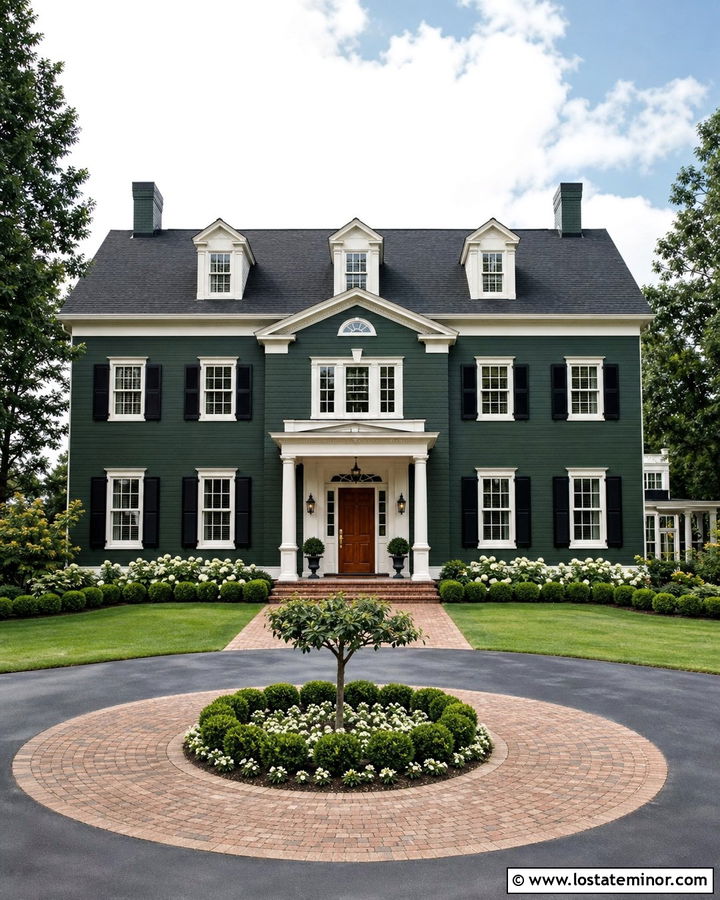
A circular walkway can strengthen the symmetry of a large hunter green Georgian or Colonial Revival home. Begin with deep green clapboard siding, creamy white trim, black shutters, and a polished wood front door. Use brick or cut stone to form a broad path around a central planting bed, fountain, or compact specimen tree. The circular feature should remain proportional to the house and leave a clear route to the entrance. Repeat the walkway material on the steps and porch landing to prevent a disconnected appearance. Clipped boxwoods and simple white flowers maintain a formal landscape without overwhelming the facade. A charcoal roof, brass hardware, and matching lanterns complete the composition. The curved hardscape adds distinction while preserving the home’s ordered, traditional character.
27. Hunter Green House With Side Entry Walkway
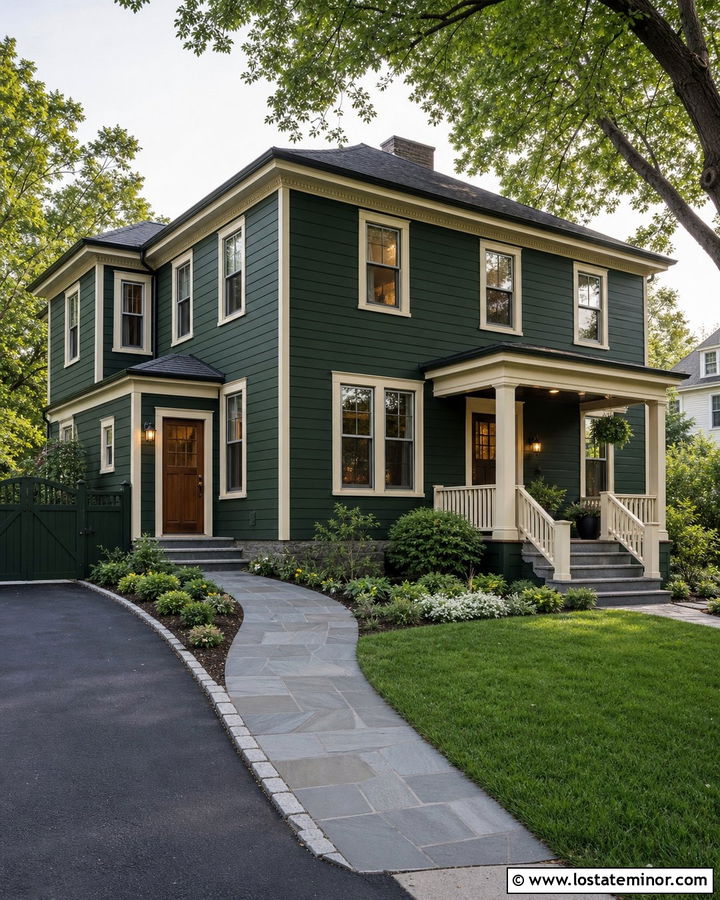
Not every front door faces the street, so a well-defined side entry walkway can be essential. On a hunter green American foursquare or urban cottage, use cream trim, a black roof, and a warm wood door positioned along the side porch. Create a clear route from the driveway with rectangular bluestone or concrete pavers. A subtle curve can reveal the entrance gradually, but the path should never feel hidden or confusing. Use low plantings near corners to preserve sightlines. A small arbor, matching gate, or wall-mounted light can mark the entry without blocking it. Repeat hunter green on the gate or porch railing for continuity. This design turns an awkward layout into an intentional arrival experience while preserving the house’s attractive street-facing architecture.
28. Hunter Green House With Accessible Walkway
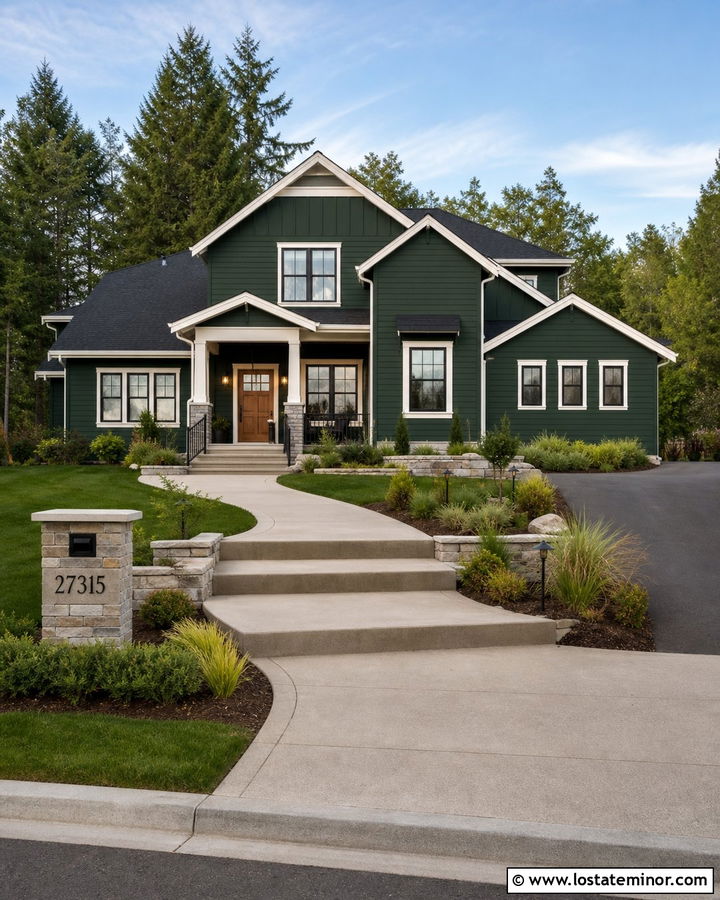
A broad, gently sloped walkway can make a hunter green house more welcoming while preserving strong curb appeal. Choose a smooth, slip-conscious concrete or textured paver surface with minimal joints and comfortable transitions. Pair it with deep green siding, warm white trim, a natural oak door, and a charcoal roof. Instead of making the accessible route look separate, integrate it into the overall landscape with gradual curves, stone retaining edges, and low plantings. Add broad landings near the driveway and covered porch. Simple black railings can coordinate with the windows and exterior lights when support is needed. Keep shrubs away from the walking surface so branches do not narrow the route. The completed design feels intentional, attractive, and naturally connected to the home.
29. Hunter Green House With Modern Concrete Walkway
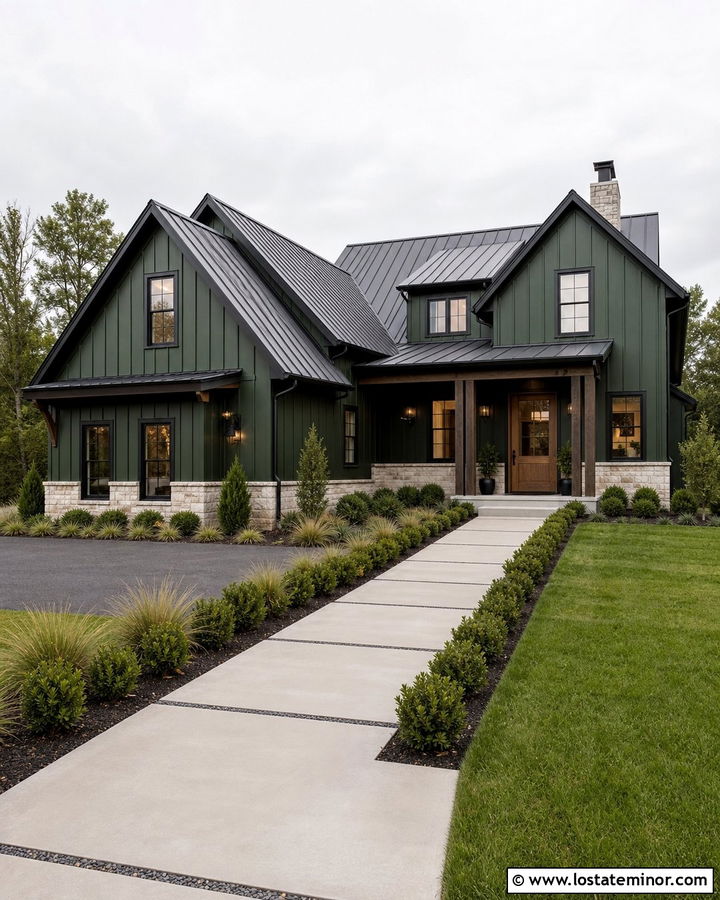
Smooth poured concrete creates a sharp architectural base for a hunter green modern farmhouse or transitional home. Break the walkway into large rectangular sections with narrow control joints that align with windows, porch posts, or the front door. Use dark green board-and-batten siding, black trim, a warm cedar door, and pale stone around the foundation. The concrete should have a light to medium gray finish that contrasts with the facade without looking bright white. Add linear grasses, low hedges, and dark mulch to reinforce the path’s geometry. Black metal lights and a charcoal standing-seam roof continue the modern palette. This exterior works because each feature shares clean lines, while wood and planting provide enough warmth to keep the house from feeling severe.
30. Hunter Green House With Garden Walkway
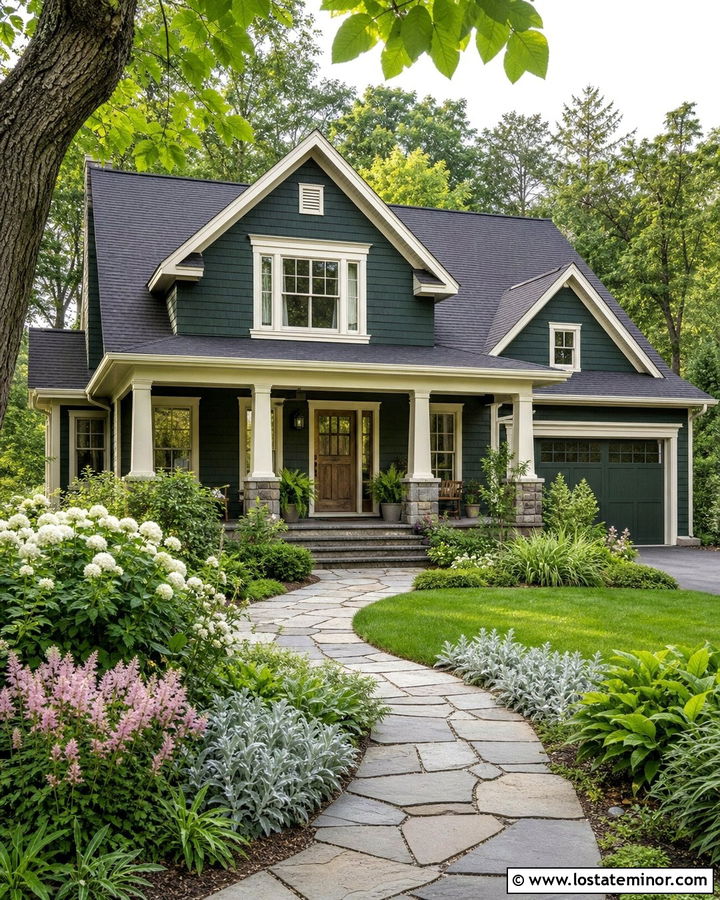
A lush garden walkway can make a hunter green house feel deeply connected to its landscape. Use cream trim, a weathered wood door, and a soft charcoal roof to complement the dark green siding. Build the path with irregular flagstone or aged brick, allowing gentle curves to pass through layered planting beds. Keep taller shrubs near the house and lower flowers beside the walking surface so the route remains visible. White blooms, pale pink flowers, silvery foliage, and several shades of green will stand out against the facade without creating harsh color clashes. Repeat the pathway material on the porch steps, and use understated bronze lighting for a finished look. This scheme suits cottages, traditional homes, and small country houses where an informal, established garden is part of the curb appeal.
Conclusion:
The most successful 30 Hunter Green House Design With Walkway Ideas treat the pathway as part of the exterior palette rather than a separate landscaping project. Brick and warm gravel bring out hunter green’s earthy character, while limestone, bluestone, and pale concrete create stronger contrast. Wood doors soften the deep siding color, cream trim adds warmth, and black accents deliver crisp definition. Before selecting a walkway, consider the home’s architectural style, natural foot-traffic pattern, yard slope, and surrounding materials. Repeat pathway colors on the porch, foundation, or roof to create continuity. With thoughtful proportions and coordinated landscaping, a hunter green exterior can feel distinctive, welcoming, and beautifully connected from the street to the front door.

Related posts: