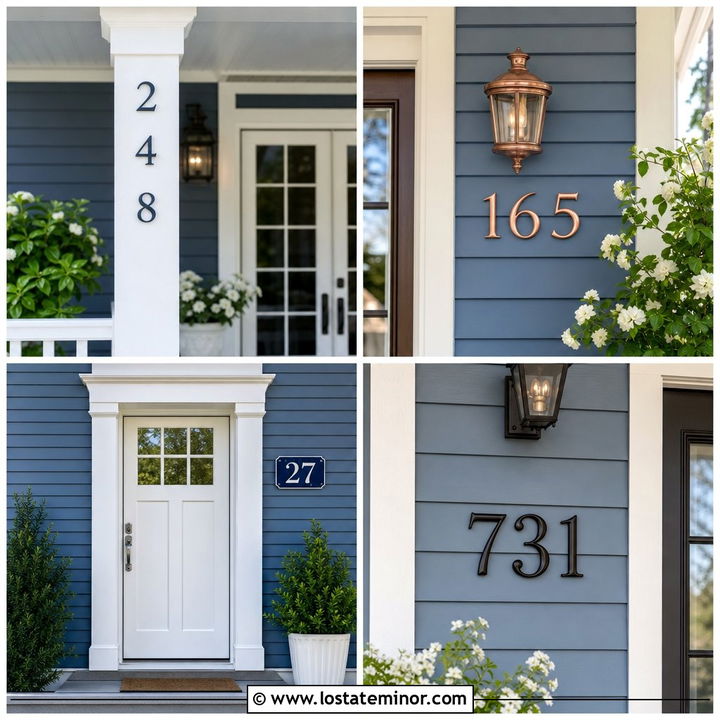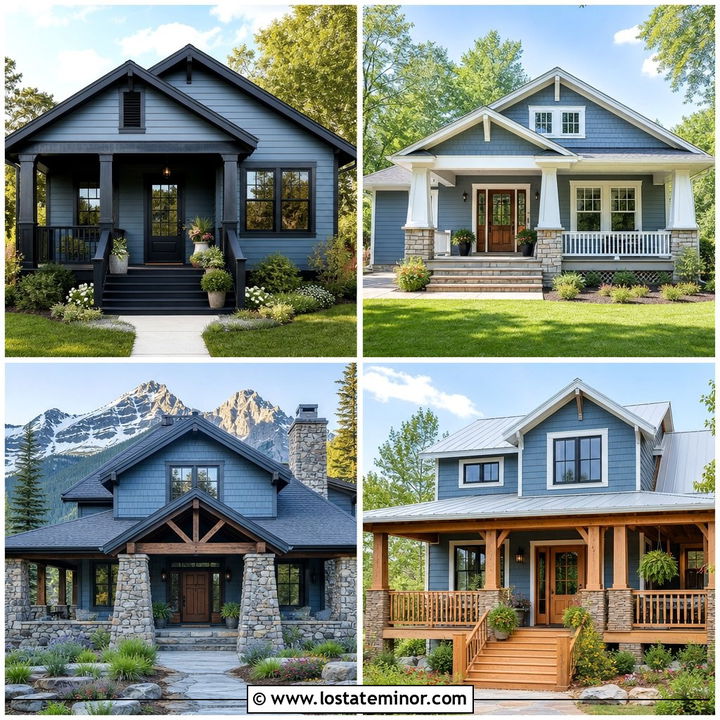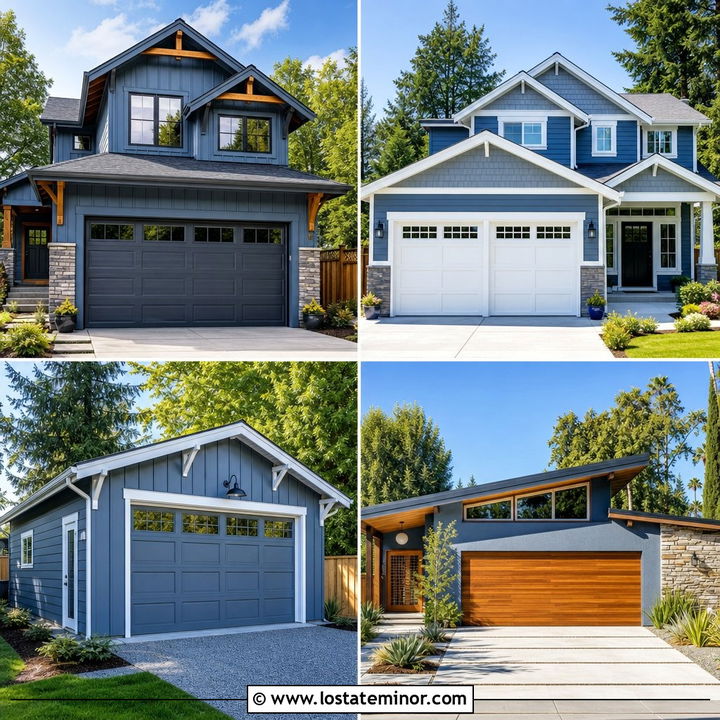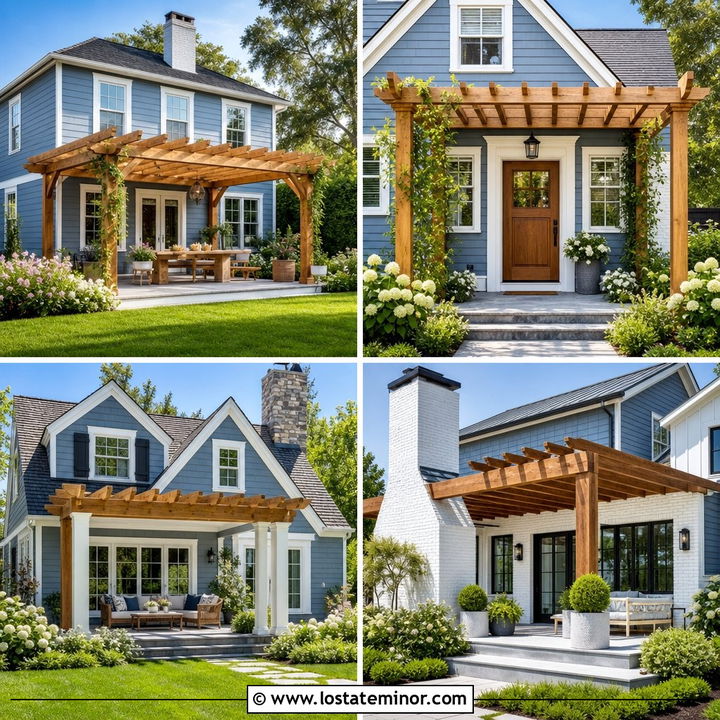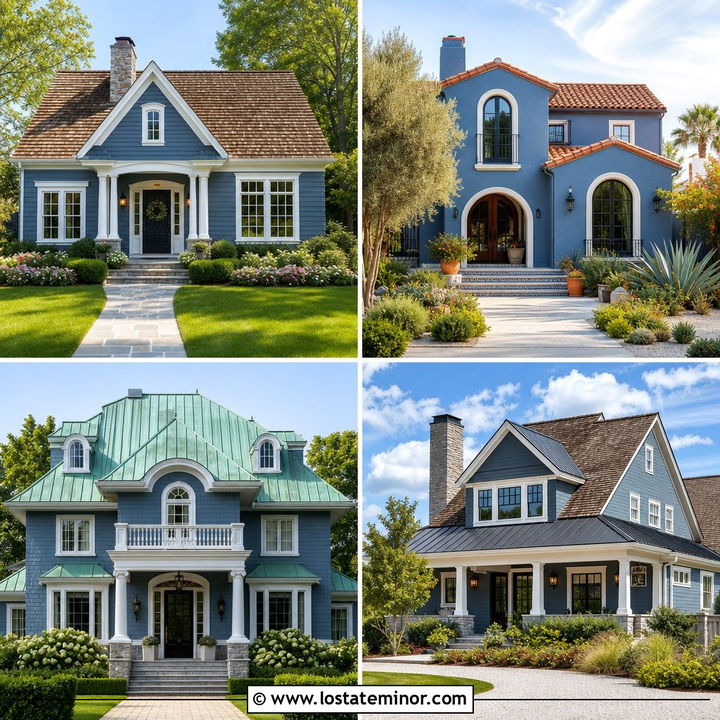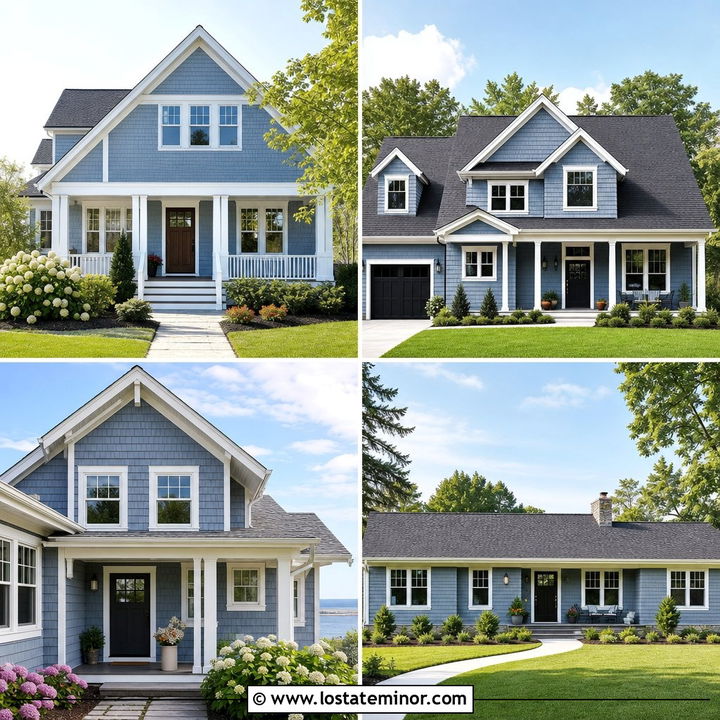
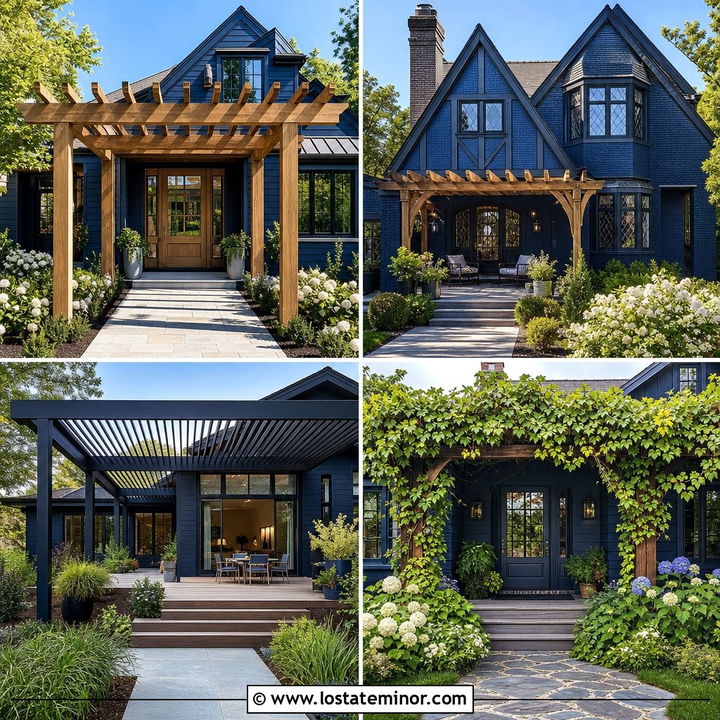
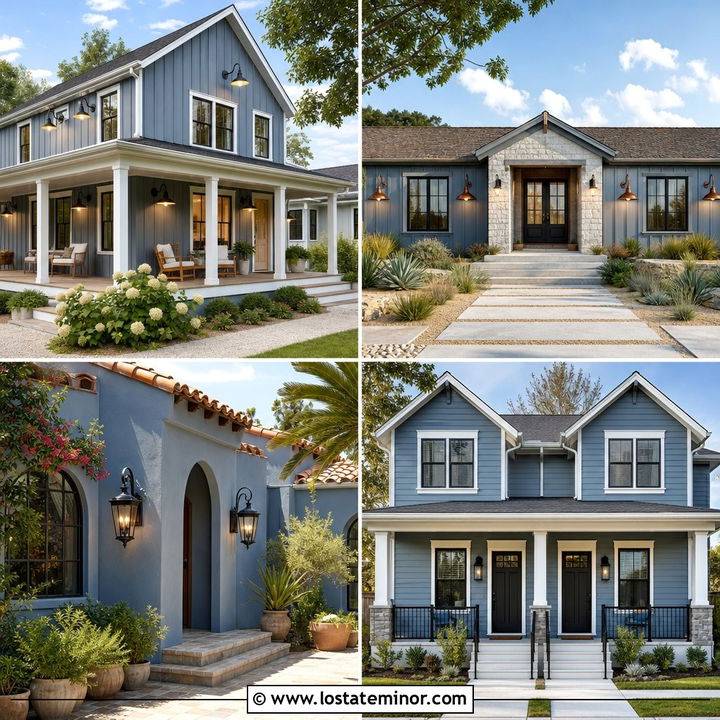
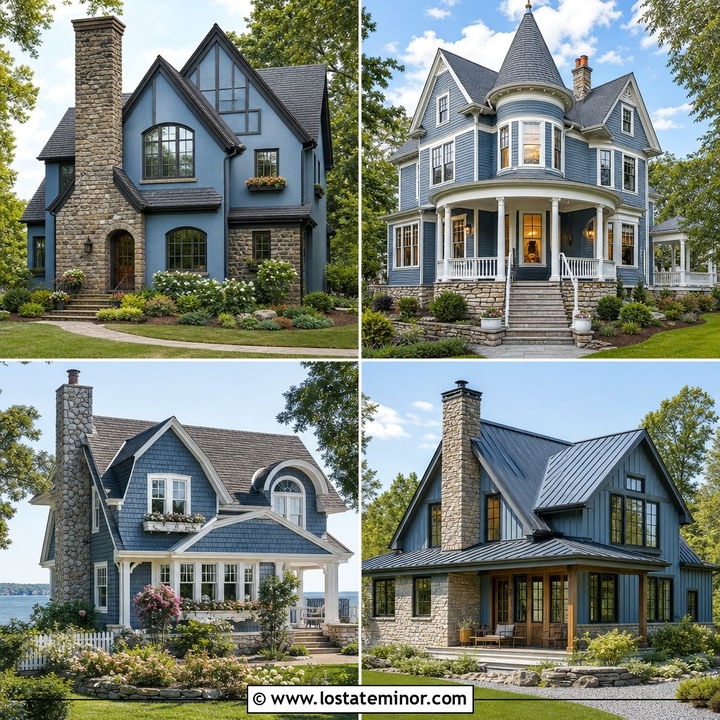
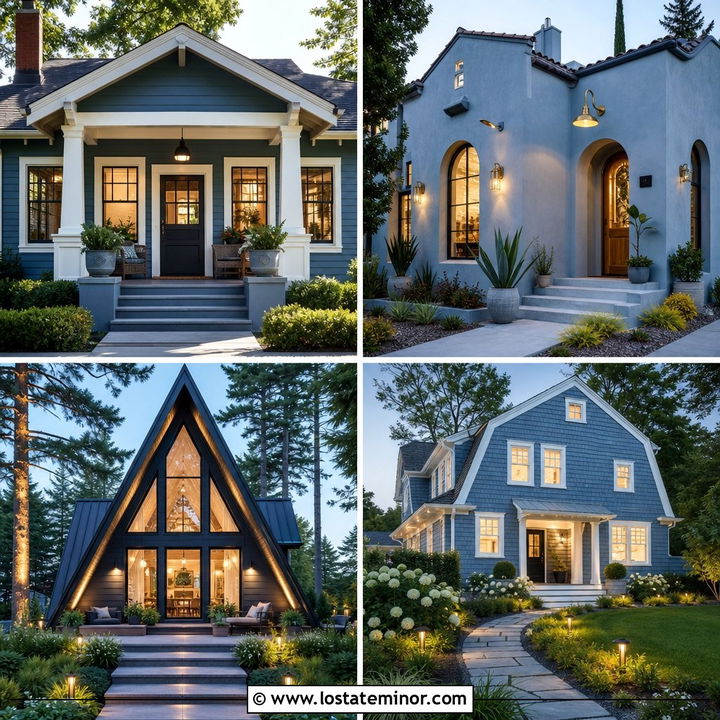
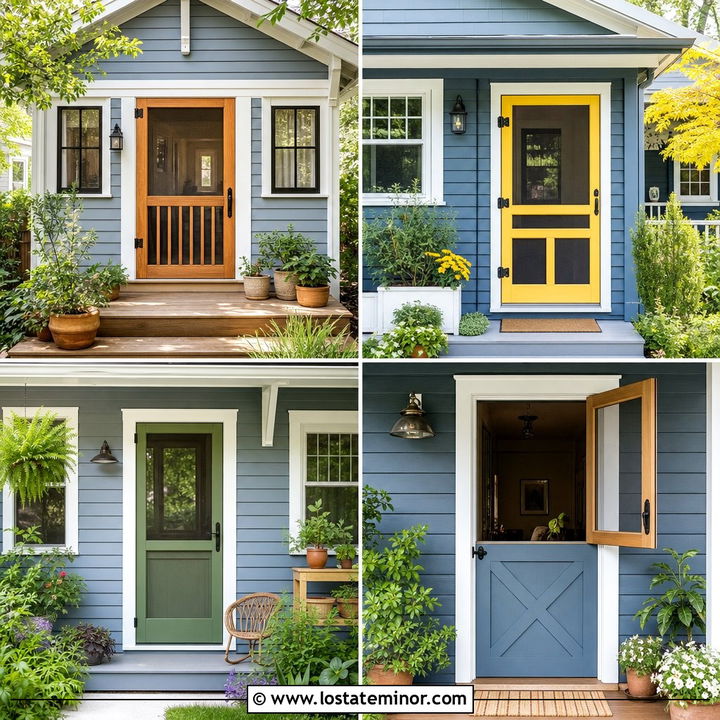
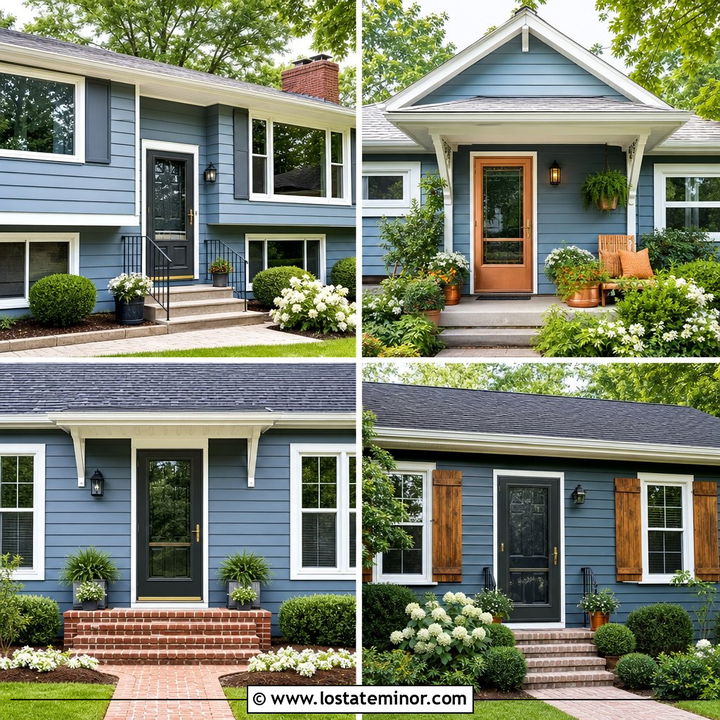
Dusty blue brings a calm, weathered character to an exterior without making the house feel cold or overly colorful. The best 30 Dusty Blue House Design With Trim Ideas go beyond choosing one paint swatch. They coordinate siding, trim, doors, roofing, masonry, and natural wood into a complete curb-appeal palette. Current exterior trends also favor weathered blues, nature-inspired materials, and softer contrasts that feel connected to the landscape. () Dusty blue can suit almost any home, from a coastal Cape Cod to a traditional brick colonial or a clean-lined ranch. The key is selecting trim that supports the blue-gray undertone while giving architectural details enough definition. Use the following complete schemes to compare 30 Dusty Blue House Design With Trim Ideas.
1. Dusty Blue House With Crisp White Trim
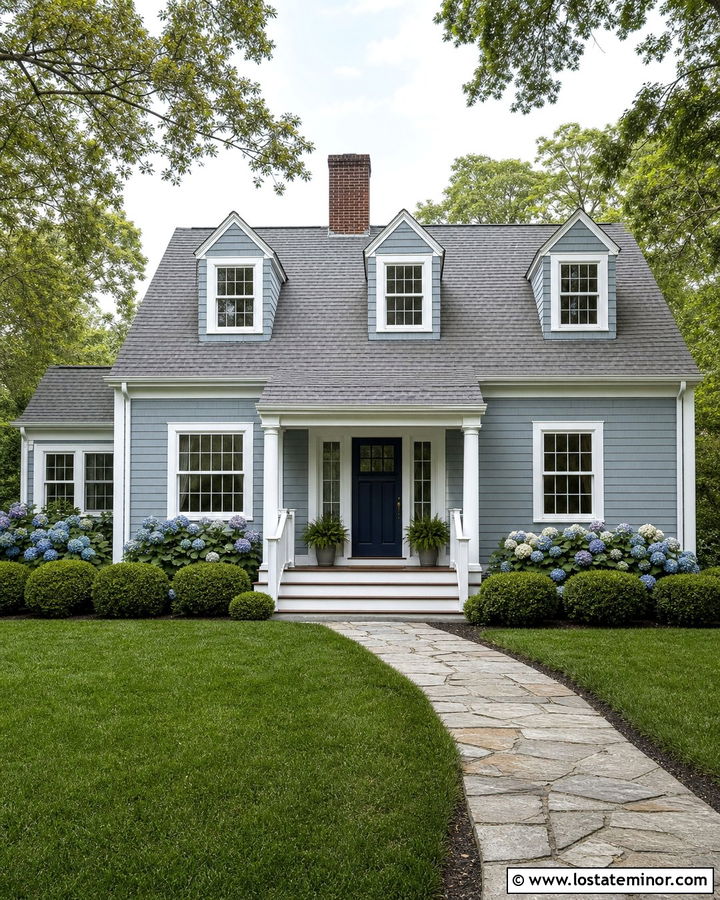
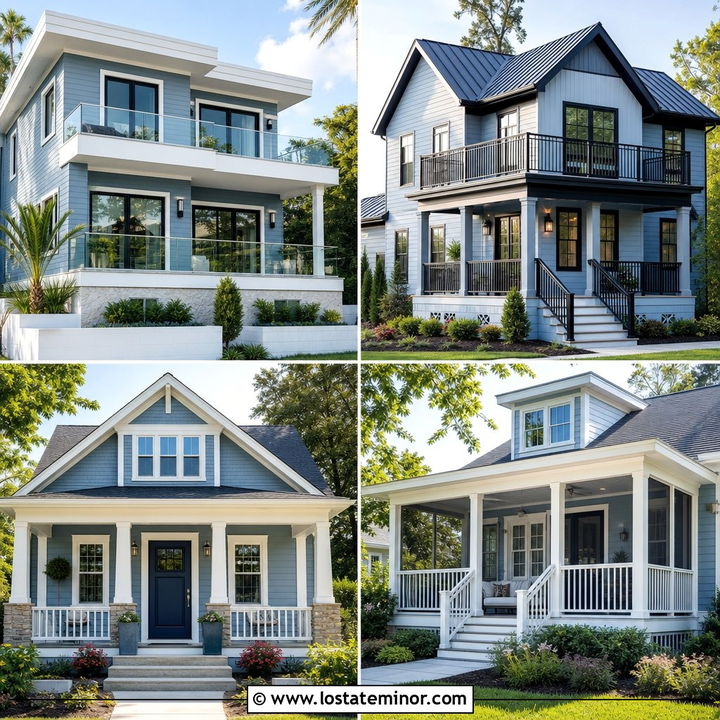
Crisp white trim gives dusty blue siding a fresh, clearly defined appearance. This familiar pairing works especially well on a Cape Cod home with symmetrical windows, dormers, and simple lap siding. Use bright white around the windows, fascia, porch railings, and corner boards so every architectural line looks clean. A medium-gray shingle roof keeps the contrast from becoming too sharp. Complete the exterior with a navy front door, brushed nickel hardware, and pale gray porch flooring. Hydrangeas, boxwoods, and a curved stone walkway strengthen the classic character. Because white reflects plenty of light, test the combination outdoors before painting. A slightly softened white may look more balanced if the dusty blue has strong gray undertones.
2. Dusty Blue House With Warm White Trim
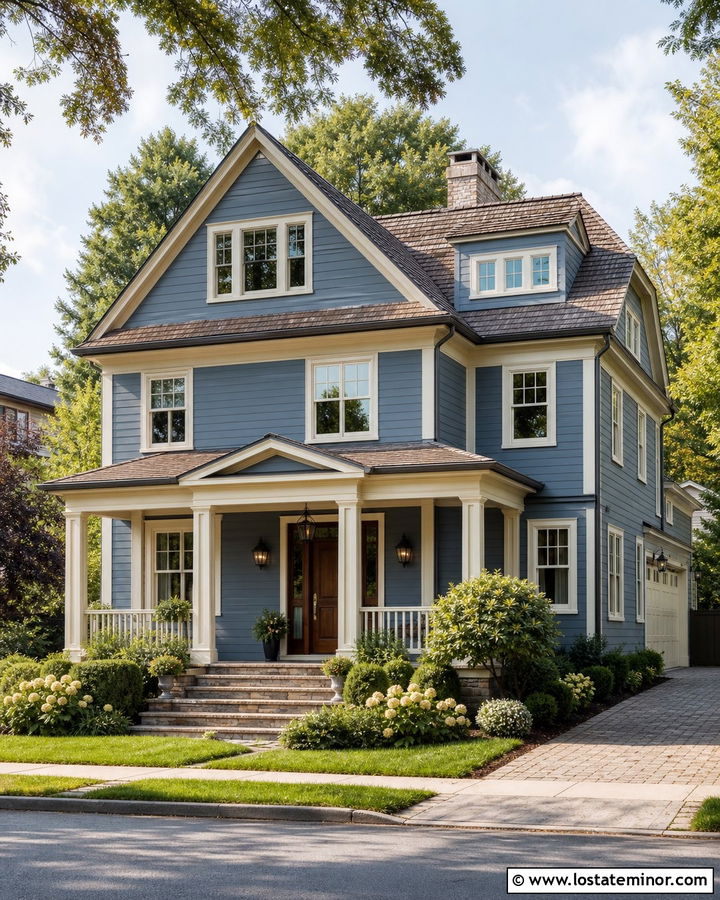
Warm white trim softens dusty blue and creates a relaxed exterior that feels more welcoming than a high-contrast blue-and-white palette. Try this combination on a traditional two-story home with horizontal siding, divided-light windows, and a covered entrance. Paint the window frames, eaves, columns, and garage door a creamy warm white. Then introduce a walnut-stained front door to connect the cool siding with warmer surroundings. Weathered brown roof shingles, antique brass lights, and natural stone steps make the scheme feel settled rather than overly new. This trim choice is particularly helpful when the property receives cool northern light. Avoid whites with obvious yellow undertones. A subtle warmth is enough to complement dusty blue while preserving the clean appearance homeowners usually want from light exterior trim.
3. Dusty Blue House With Cream Trim
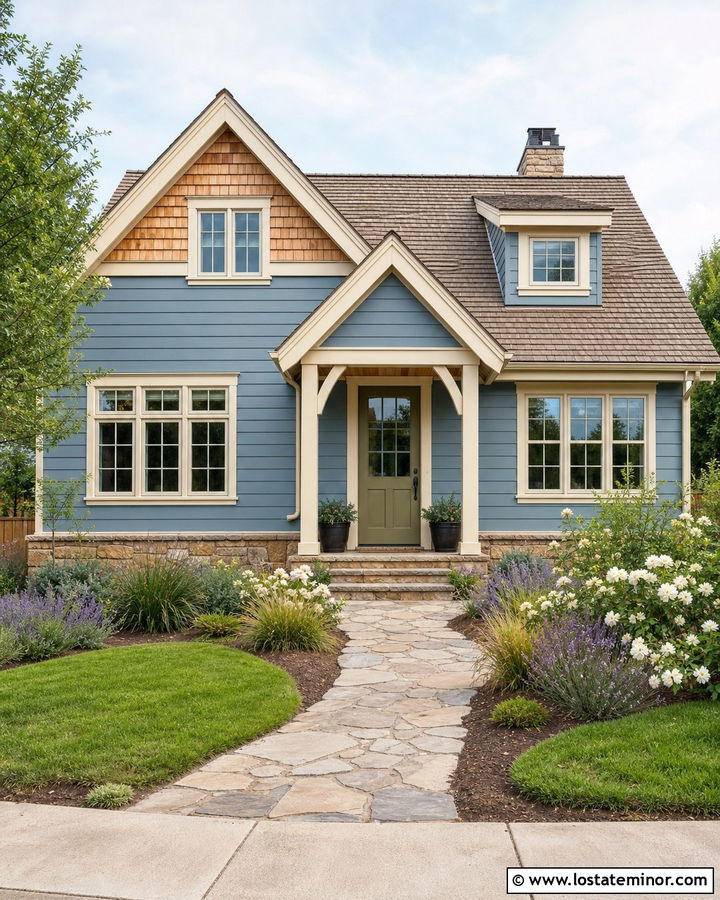
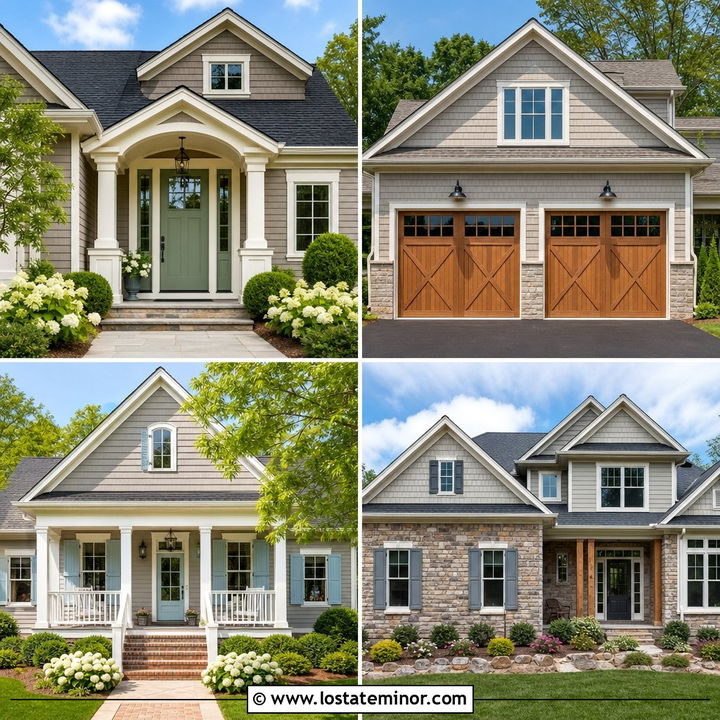
Cream trim gives a dusty blue exterior an older, more traditional personality. It is a natural fit for a cottage with cedar shingles, small dormers, and a welcoming front porch. Carry the cream across the window casings, porch posts, railing, fascia, and decorative gable details. A muted olive front door can add another nature-inspired layer without distracting from the siding. Choose a warm gray or weathered brown roof rather than a blue-black one. Cream also coordinates beautifully with tan fieldstone around the foundation or chimney. Keep the landscaping loose and colorful with lavender, white roses, and ornamental grasses. The finished palette feels gentle and established. It also avoids the sometimes harsh transition created when muted blue-gray siding is placed beside brilliant white paint.
4. Dusty Blue House With Black Trim
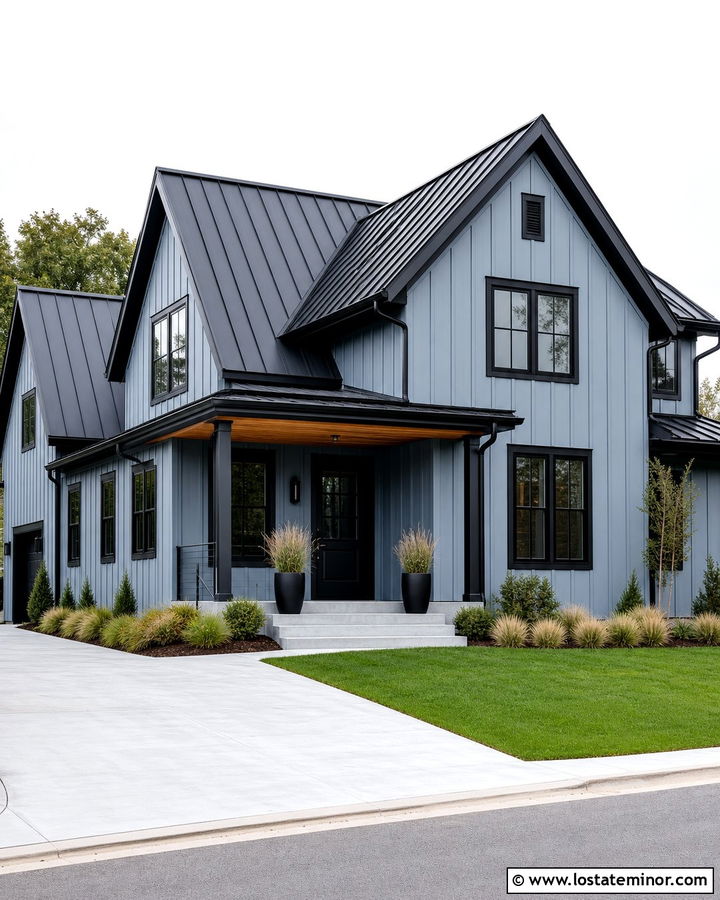
Black trim turns a soft dusty blue exterior into a bolder, more contemporary composition. The combination looks particularly strong on a modern home with simple gables, large windows, and vertical board-and-batten siding. Use black selectively on window frames, fascia, gutters, and the front door. Painting every narrow detail black can make the facade look busy, so leave broad porch walls and major siding areas dusty blue. A charcoal standing-seam metal roof reinforces the streamlined palette. Warm cedar soffits or porch beams prevent the blue and black from feeling too cool. Finish the property with concrete steps, dark planters, and structured grasses. This complete scheme relies on clear contrast, restrained materials, and uncluttered landscaping rather than ornamental detailing to create memorable curb appeal.
5. Dusty Blue House With Charcoal Gray Trim
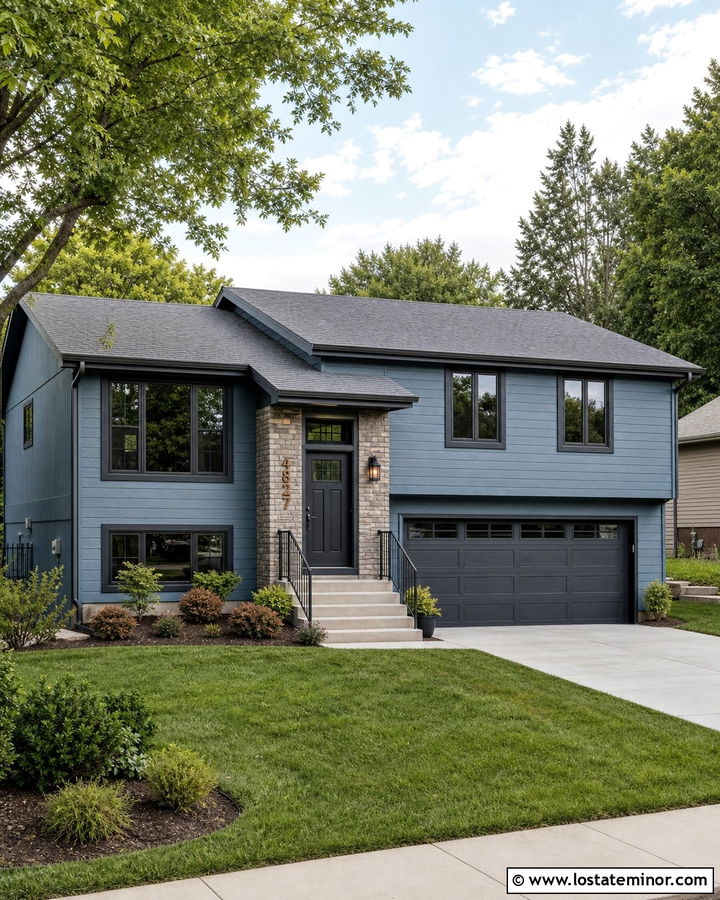
Charcoal gray trim offers definition without the intensity of pure black. On a split-level home, it can visually connect multiple rooflines, windows, and garage doors while allowing dusty blue siding to remain the main feature. Apply charcoal to the fascia, gutters, window frames, garage door, and front door. Use a medium-gray roof with similar undertones so the upper half of the house feels coordinated. A light stone veneer around the entry or lower level adds texture and prevents the exterior from becoming flat. Warm wood house numbers and porch seating provide a small but useful contrast. This scheme works best when the charcoal is noticeably darker than the siding. If the two colors are too close, trim lines may disappear from the street and weaken the architecture.
6. Dusty Blue House With Light Gray Trim
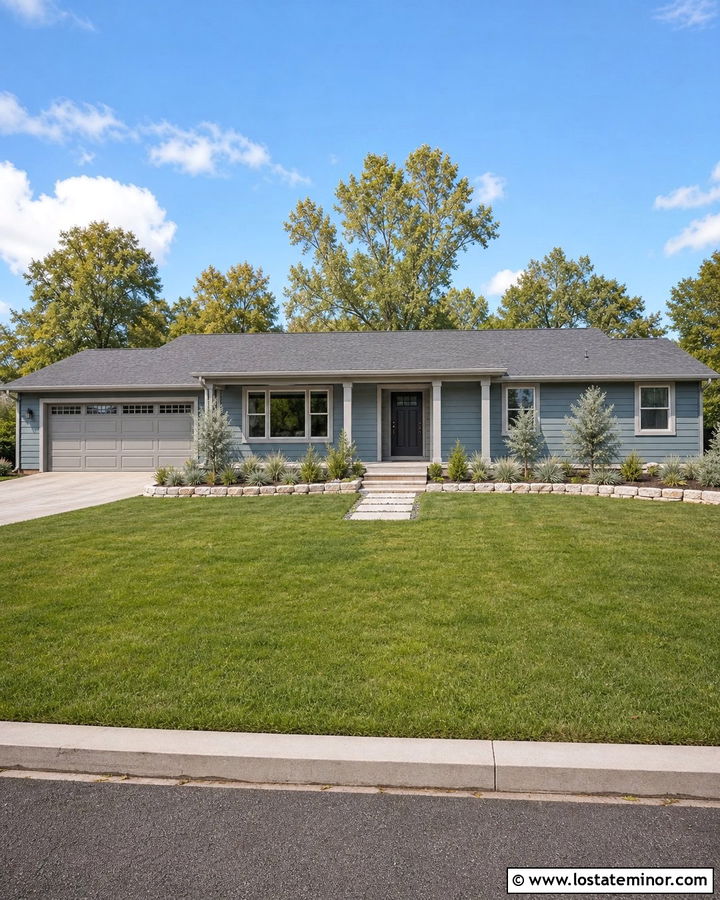
Light gray trim creates a low-contrast dusty blue exterior that feels quiet, polished, and easy to live with. Consider it for a one-story ranch where strong white outlines might divide the long facade into too many sections. Use pale gray on the window casings, fascia, soffits, garage door, and simple porch posts. A charcoal front door gives the entrance enough emphasis, while a gray architectural-shingle roof connects the darker and lighter tones. Add limestone edging, concrete pavers, and silvery green plants to continue the restrained palette through the yard. Make sure the trim is lighter than the siding by several visible steps. Otherwise, the colors may blend together. This subtle scheme looks strongest when texture, roof shape, and landscaping provide the exterior’s depth.
7. Dusty Blue House With Dark Blue Trim
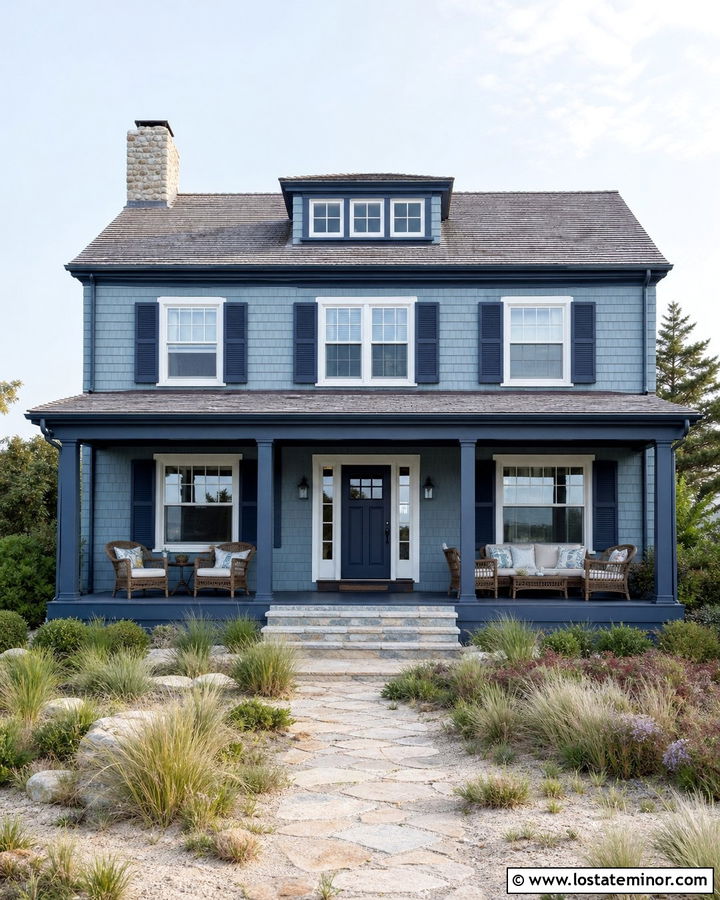
Dark blue trim produces a layered, tone-on-tone exterior without introducing a separate neutral. It works beautifully on a coastal shingle house with multiple gables, white window sashes, and a broad front porch. Keep the main shingles dusty blue, then use deep navy on the fascia, shutters, porch floor, and front door. Small areas of soft white around the window glass will prevent the darker details from feeling heavy. A natural cedar roof or weathered gray shingles can warm the blue palette from above. Add rope-style porch furniture, pale stone steps, and wind-tolerant grasses for a relaxed coastal finish. Because both blues share similar undertones, the transition looks intentional. The darker trim also frames decorative features while preserving the calm quality that makes dusty blue appealing.
8. Dusty Blue House With Two Tone Blue Trim
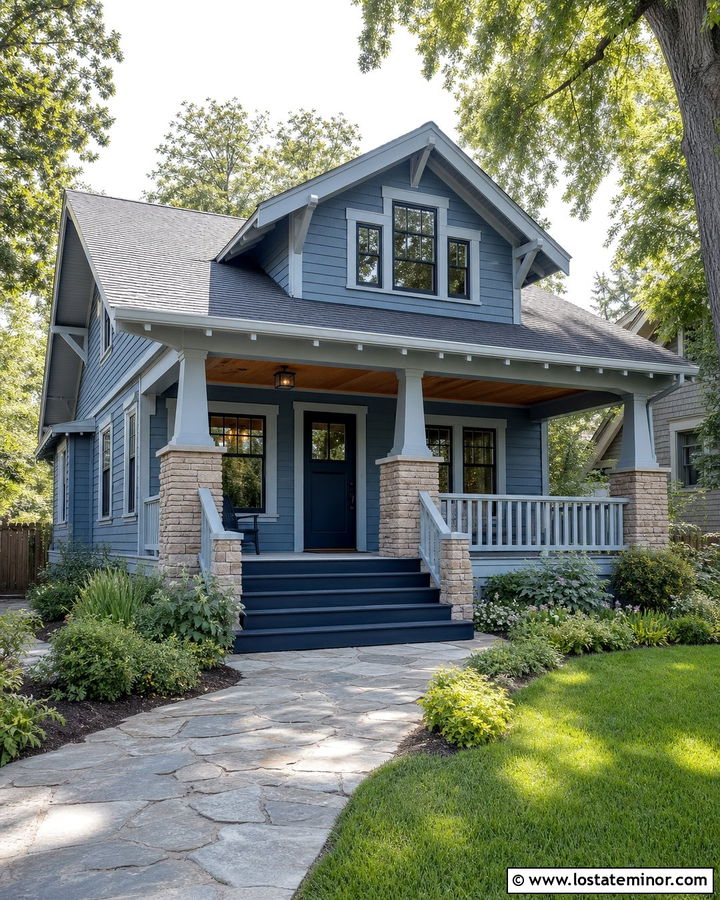
A two-tone blue scheme gives a Craftsman bungalow more depth while respecting its detailed architecture. Use dusty blue on the main lap siding and a lighter blue-gray on the upper gables, window trim, and porch railing. Deep navy can serve as a smaller third color on the front door and stair risers. This gradual shift from light to dark highlights the facade without creating abrupt contrast. Support the palette with tapered stone porch columns, warm oak ceiling boards, and a weathered charcoal roof. Native shrubs and a wide flagstone path reinforce the natural Craftsman character. Keep each blue visibly different under daylight. Colors that look distinct on a sample card may appear nearly identical outdoors, so test large painted boards beside the permanent stone and roofing materials.
9. Dusty Blue House With Natural Wood Trim
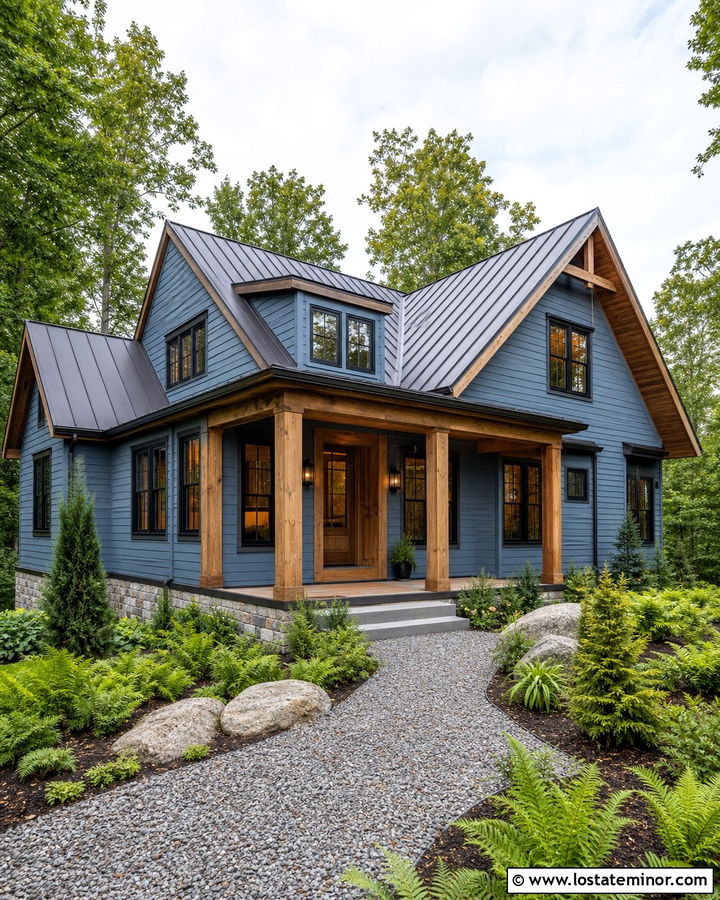
Natural wood trim brings warmth and organic texture to a dusty blue house. This pairing is especially effective on a mountain cottage or wooded contemporary home with broad eaves and substantial windows. Use medium-toned wood around the entry, porch posts, soffits, and selected gable edges instead of outlining every window. Keep some window frames charcoal to create crisp separation between the glass and siding. A dark bronze metal roof and stone foundation can tie the cool blue, brown wood, and landscape together. Choose a clear or lightly tinted exterior finish that protects the wood without turning it orange. Evergreen shrubs, ferns, and a gravel walkway complete the setting. The overall look feels connected to nature while remaining brighter and more approachable than a dark cabin exterior.
10. Dusty Blue House With Cedar Trim
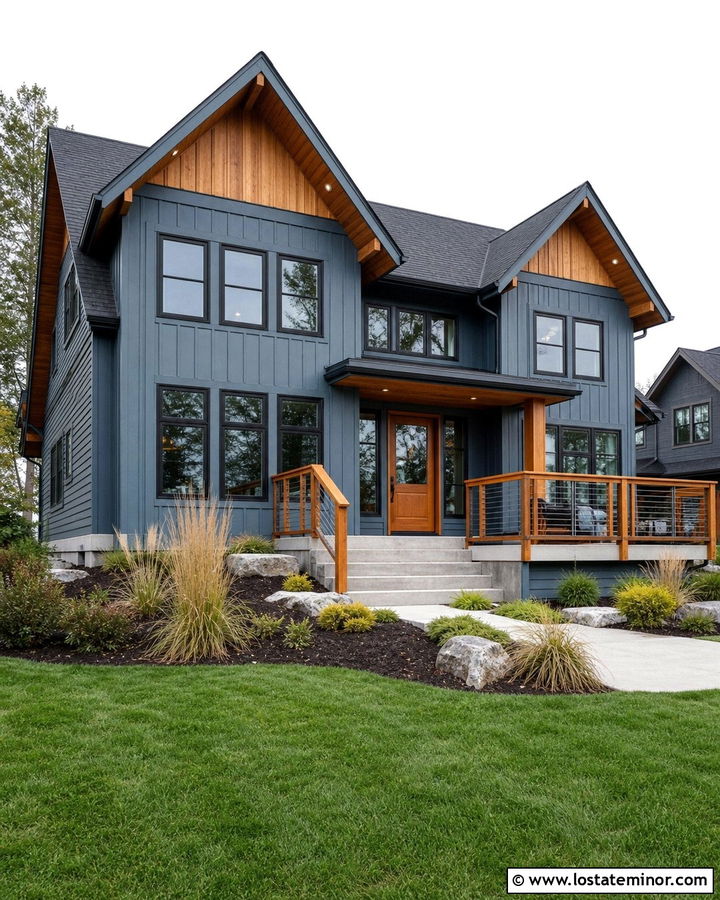
Fresh cedar trim adds a golden warmth that makes dusty blue siding appear richer and more dimensional. Use this scheme on a contemporary lake house with asymmetrical gables, vertical siding, and a partially covered deck. Place cedar on the porch ceiling, front door, deck railing, and recessed sections beneath the roof. Use charcoal window frames and a dark gray roof to ground the brighter wood tones. The cedar should function as a focused accent rather than surrounding every opening. Too much can compete with the muted blue. Large windows, simple concrete steps, and low ornamental grasses keep the design current. As the cedar naturally changes in appearance, its softer weathered tone can continue to complement the blue-gray siding, provided the wood receives suitable exterior protection and routine maintenance.
11. Dusty Blue House With Taupe Trim
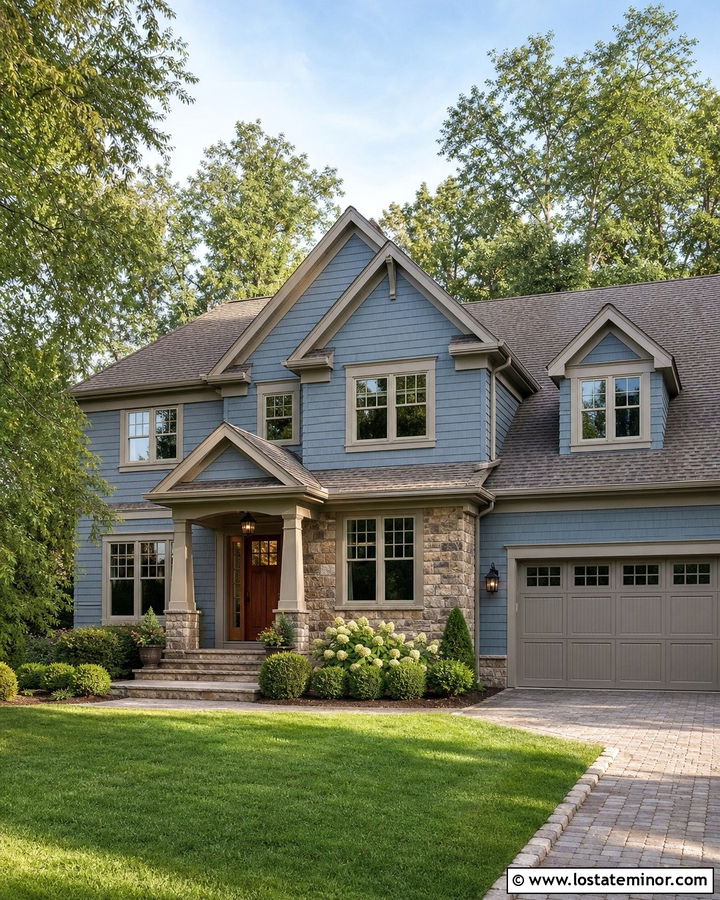
Taupe trim creates a balanced bridge between cool dusty blue siding and warm brown exterior materials. It is a practical choice for a suburban home with an existing brown roof, tan stone veneer, or beige paver driveway. Apply taupe to the garage door, window casings, fascia, and porch columns. Use a stained mahogany front door as the darkest warm accent. The taupe should contain enough gray to relate to the siding rather than looking yellow or muddy. Repeat it subtly in pathway stones and outdoor planters. Cream flowers, clipped shrubs, and a well-defined lawn can brighten the restrained palette. This scheme feels coordinated because each color shares either a gray or brown undertone. It is particularly useful when expensive permanent finishes need to remain unchanged during an exterior repaint.
12. Dusty Blue House With Greige Trim
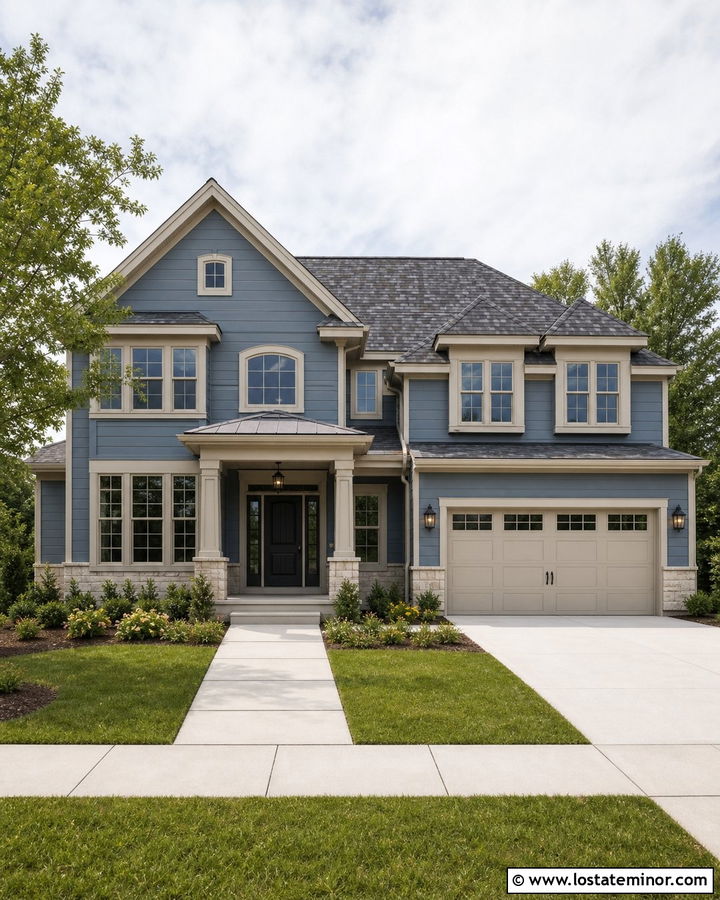
Greige trim gives dusty blue a sophisticated neutral partner that suits transitional architecture. Picture a two-story home with a centered entry, mixed lap and shingle siding, and clean but traditional window proportions. Paint the main body dusty blue, then use light greige on the trim, columns, garage door, and horizontal banding. A nearly black front door provides a strong focal point without requiring colorful accents. Choose a roof that blends warm and cool gray granules so it relates to both painted surfaces. Pale limestone, black lanterns, and simple foundation plantings complete the exterior. Before committing, compare the greige beside the siding throughout the day. Some greiges become noticeably beige in warm sun, while others shift gray. The best choice maintains a gentle contrast without appearing disconnected.
13. Dusty Blue House With Beige Trim
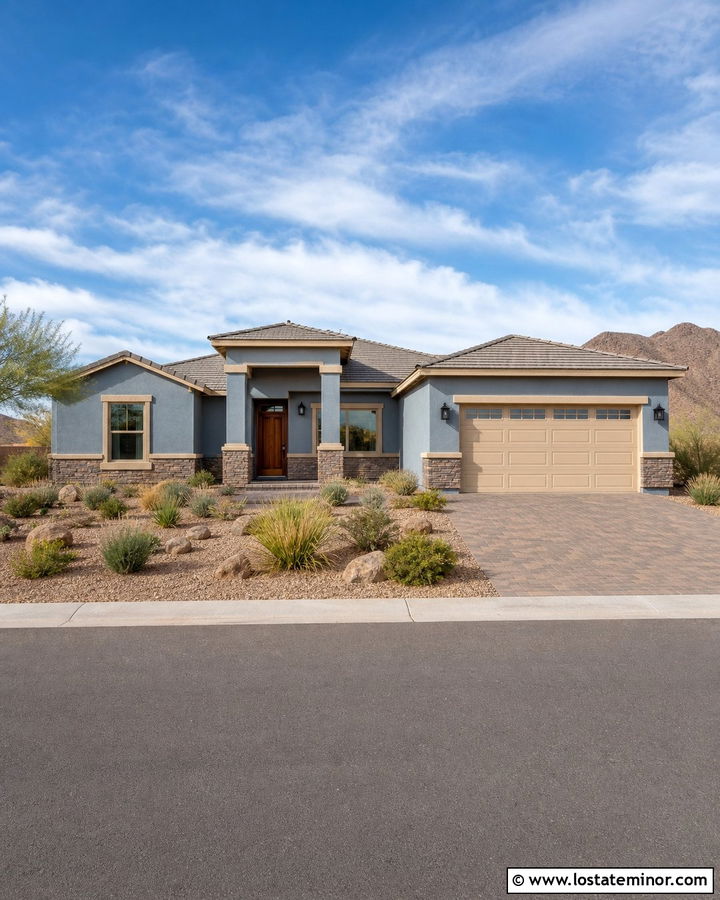
Beige trim can make dusty blue feel casual and sun-warmed, especially on a low-profile Southwestern or desert ranch. Choose a sandy beige for the fascia, window surrounds, garage door, and deep porch columns. Pair it with a medium-brown front door and a roof in blended tan and gray tones. Natural ledgestone around the foundation helps explain the beige and prevents it from appearing randomly added. Keep the blue muted and slightly gray so the house coordinates with dry grasses, gravel beds, and pale masonry. Black or dark bronze lighting can sharpen the softer palette. This combination is most successful when the beige remains understated. Strong yellow-beige trim may clash with blue-gray siding, while a quiet stone-inspired shade creates an appealing connection between the house and its arid surroundings.
14. Dusty Blue House With Bronze Trim
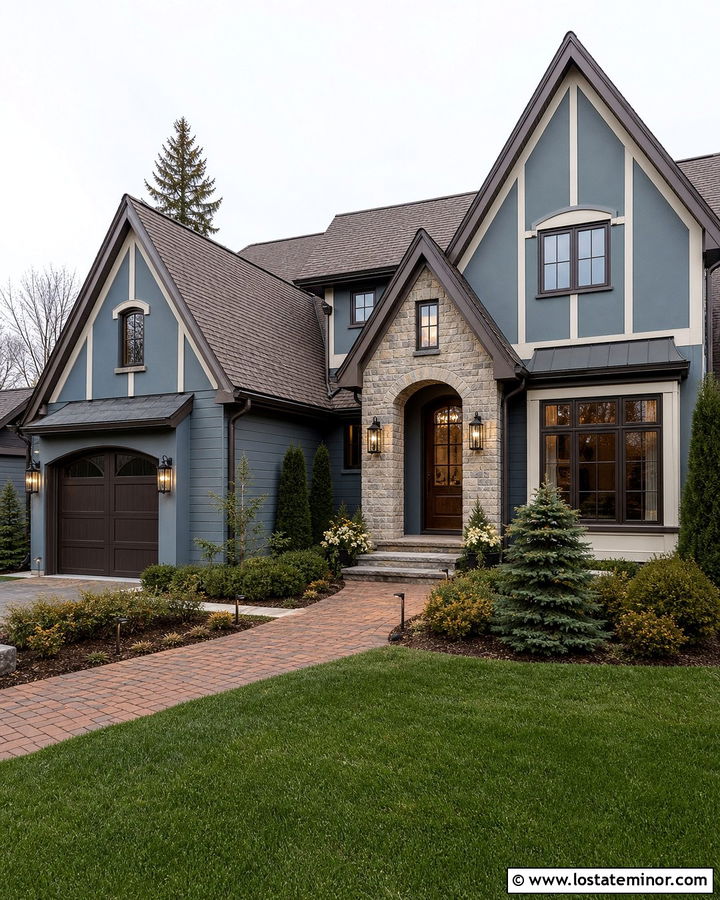
Deep bronze trim gives dusty blue siding a refined contrast that appears softer than black. Use it on a Tudor-inspired home with steep rooflines, substantial windows, and stone around the entrance. Bronze works well on window frames, gutters, downspouts, porch lights, and the garage door. Keep larger decorative boards in warm off-white so the facade does not become too dark. A walnut front door and mixed gray-brown roof complete the grounded palette. If the home has copper or bronze metalwork, repeat that finish consistently rather than mixing several unrelated dark metals. Layered evergreen landscaping and a brick walkway can further warm the exterior. From the street, the bronze reads as a rich neutral that defines the dusty blue without creating the sharp graphic effect associated with pure black trim.
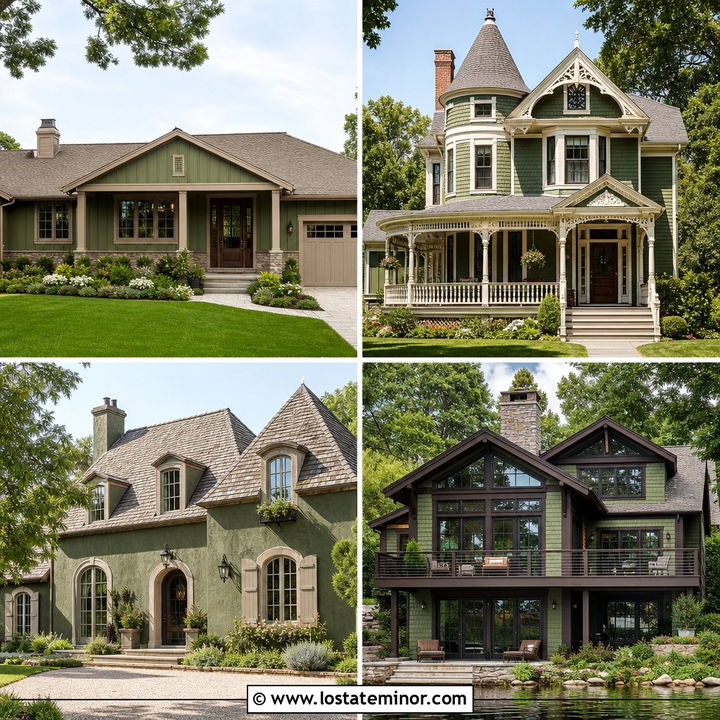
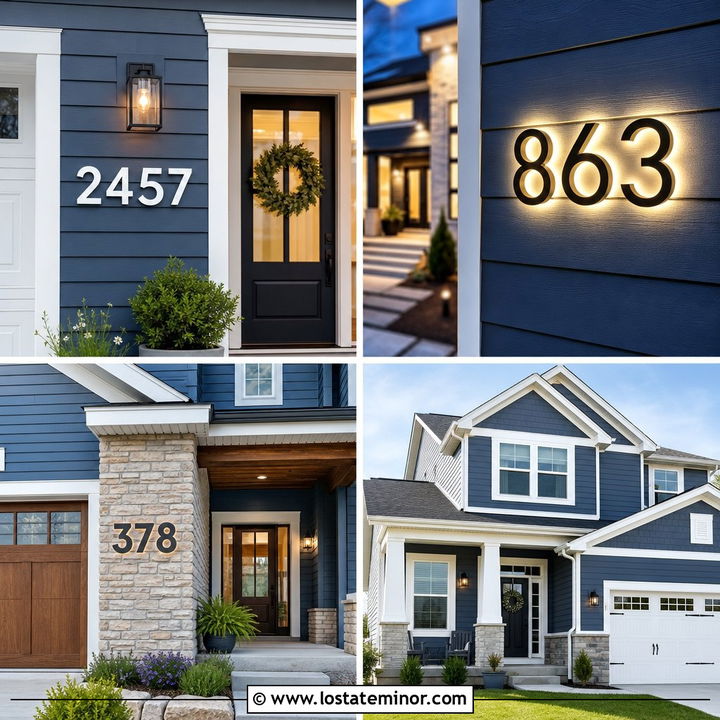
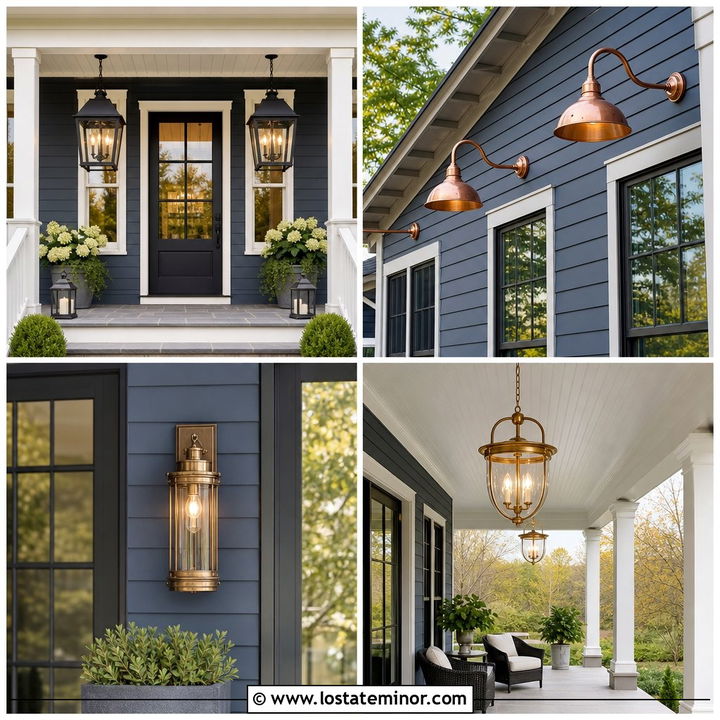
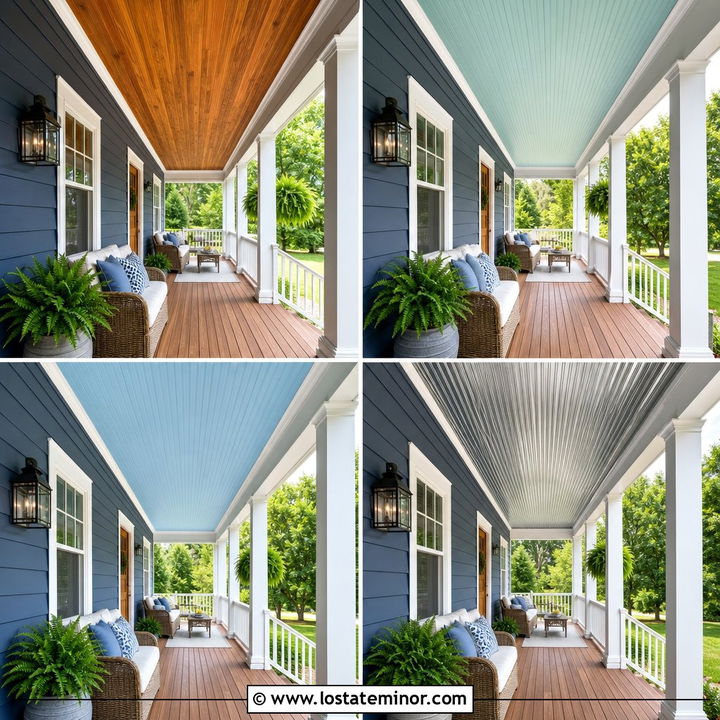
15. Dusty Blue House With Sage Green Trim
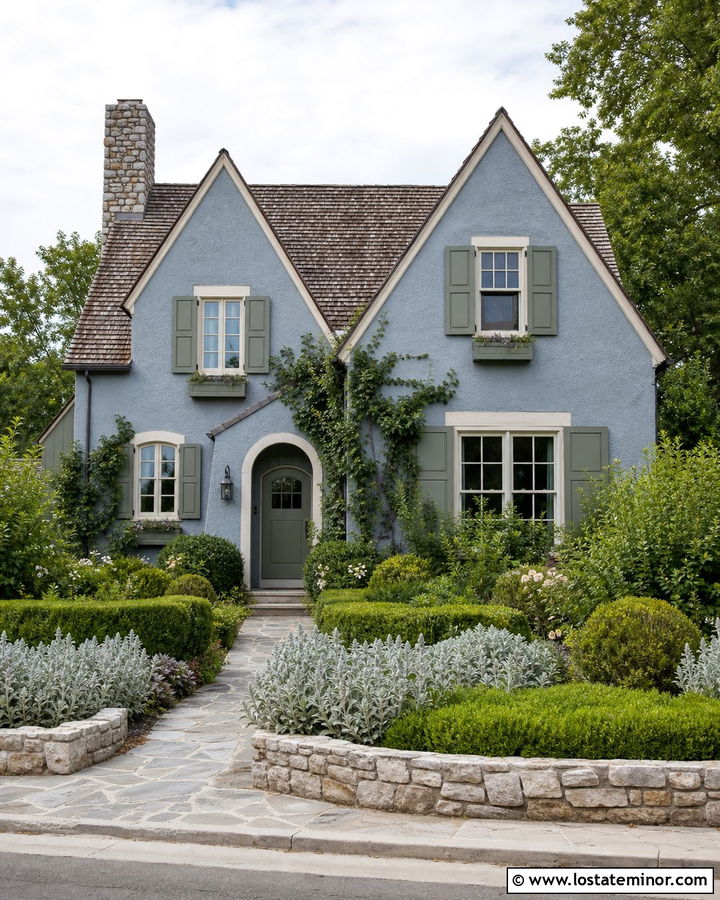
Dusty blue and muted sage green form a gentle, garden-inspired exterior palette. This combination works well on an English cottage with steep gables, divided-light windows, and climbing plants near the entry. Use dusty blue on the stucco or siding, then apply sage to the shutters, front door, and a small amount of decorative trim. Keep window casings creamy white to separate the two muted colors. A weathered brown roof and irregular stone chimney add the warmth needed to balance the blue-green scheme. Repeat sage through herbs, hedges, and silvery foliage rather than using brightly colored accessories. Select a gray-based green that remains clearly distinct from the siding. If both colors have similar values, the exterior can look blurry instead of intentionally layered and charming.
16. Dusty Blue House With Deep Green Trim
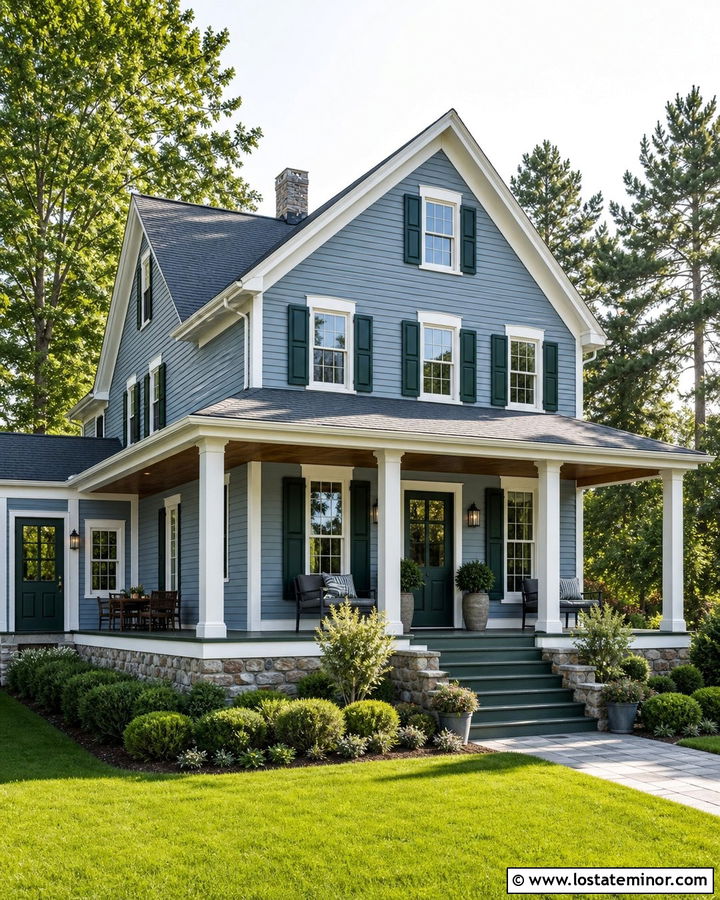
Deep green trim adds earthy contrast to dusty blue while offering a softer alternative to navy or black. Try it on a farmhouse-inspired home surrounded by mature trees. Paint the horizontal siding dusty blue and use forest green on the shutters, front door, garage side door, and porch floor. Warm white should cover the window casings, porch columns, and fascia to keep the facade bright. A charcoal roof and fieldstone foundation can anchor the three-color palette. Natural wood rocking chairs or a stained porch ceiling add another welcoming layer. This scheme looks especially cohesive when the landscaping includes evergreen shrubs and deep green foliage. Keep the green accents concentrated around openings. Spreading dark green across too many broad surfaces may overpower the dusty blue body color.
17. Dusty Blue House With Burgundy Trim
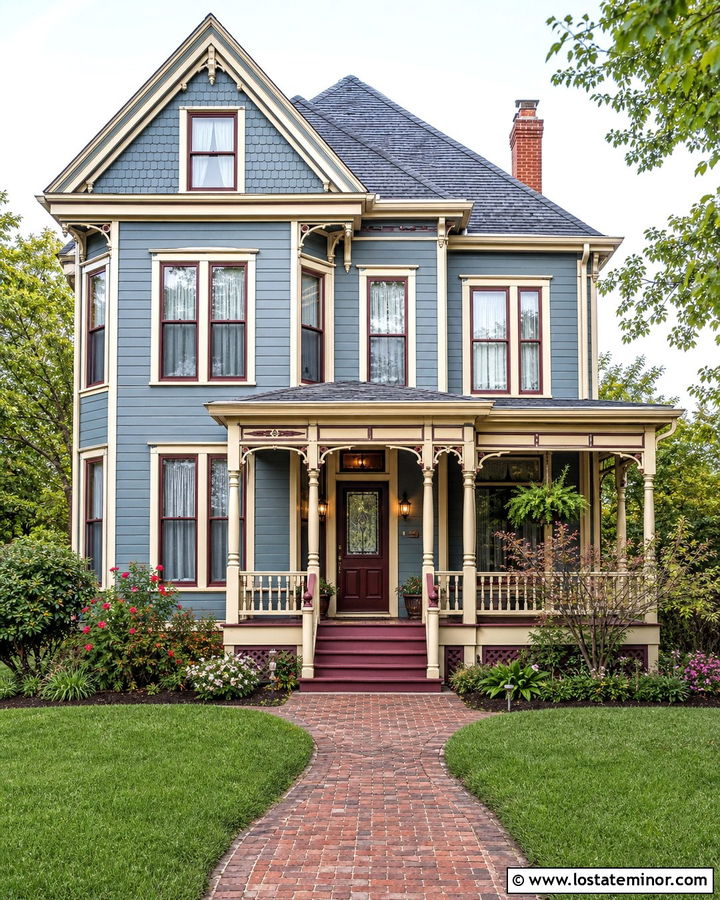
Burgundy trim gives a dusty blue exterior an unexpected historic richness. It is best suited to a Victorian or Italianate home with decorative brackets, tall windows, and a prominent front porch. Use burgundy on the front door, narrow window accents, porch floor, and selected ornamental details. Paint the main window casings and columns soft cream so the darker red does not overwhelm the facade. A slate-gray roof and aged brick chimney support the heritage character. Choose a muted wine-red with brown undertones rather than a vivid cherry shade. The restrained burgundy should feel deep and architectural from the street. Complete the look with brass hardware, traditional lanterns, and layered cottage landscaping. This carefully controlled palette highlights craftsmanship while allowing dusty blue to remain the dominant exterior color.
18. Dusty Blue House With Soft Yellow Trim
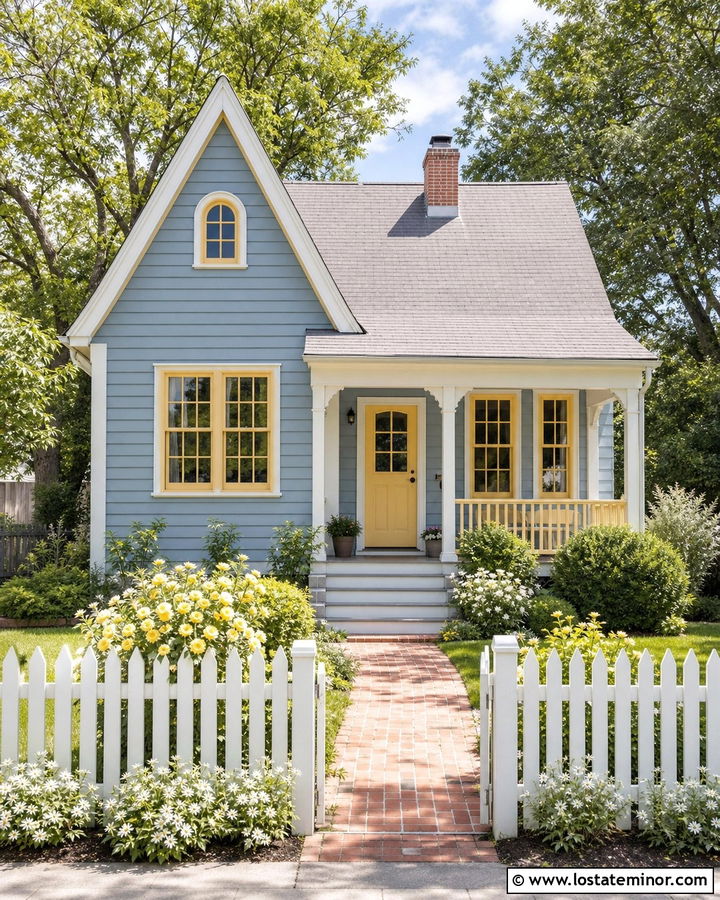
Soft yellow trim brings warmth and cheerfulness to a dusty blue cottage without creating a loud primary-color scheme. Choose a pale buttery yellow for the front door, window sash, and small porch details. Keep the broader casings, corner boards, and fascia warm white to give the exterior visual structure. A medium-gray roof, white picket fence, and brick walkway support the cottage character. Yellow flowers can repeat the accent in the garden, but mix them with plenty of white and green for balance. This palette works best when the yellow is light and slightly muted. Bright lemon tones can compete with dusty blue and make the facade feel juvenile. A subdued yellow behaves more like warm sunlight, gently lifting the blue-gray body color and drawing attention toward the entrance.
19. Dusty Blue House With White Trim And Black Shutters
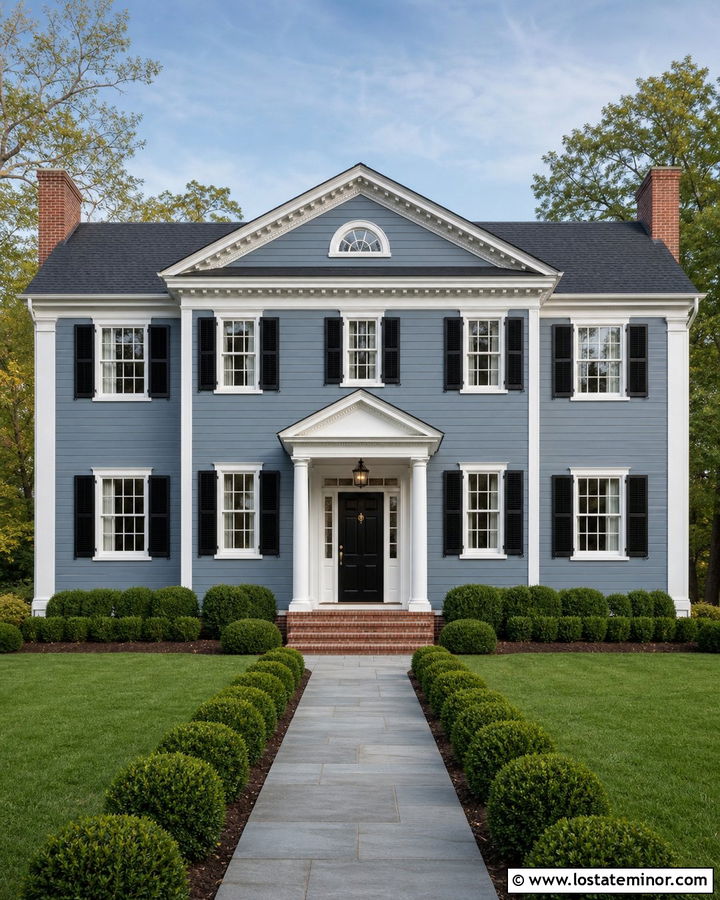
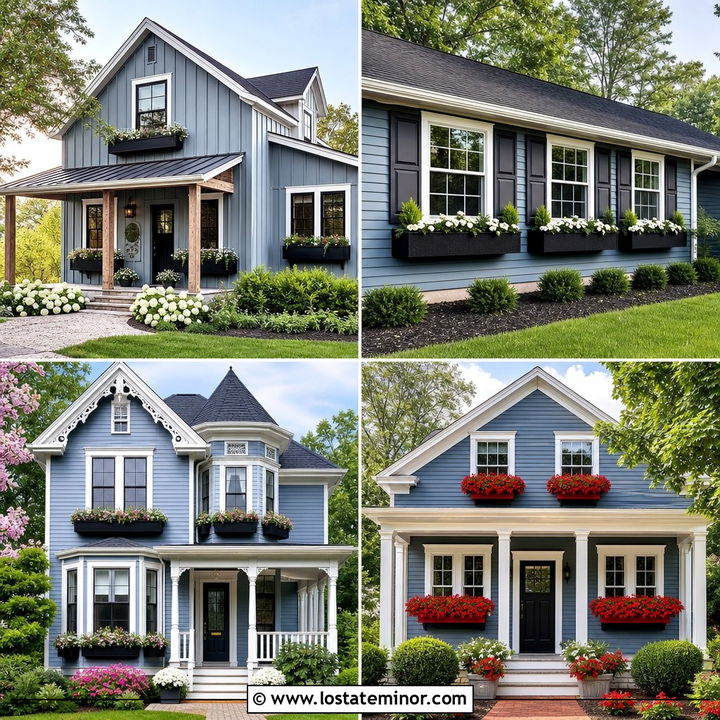
White trim and black shutters give dusty blue siding a structured, traditional appearance. This three-color scheme is ideal for a colonial home with evenly spaced windows, a centered front door, and a simple rectangular facade. Paint the corner boards, cornice, window casings, and columns clean white. Use properly scaled black shutters that visually match the window openings. A glossy black front door can coordinate with the shutters, while polished brass hardware adds warmth. Finish the home with a dark gray roof, red brick steps, and symmetrical boxwood plantings. The black accents should remain limited to features that deserve emphasis. Painting the garage door black may create too much visual weight. Keeping it white or dusty blue helps the main entrance remain the strongest focal point.
20. Dusty Blue House With Cream Trim And Navy Door
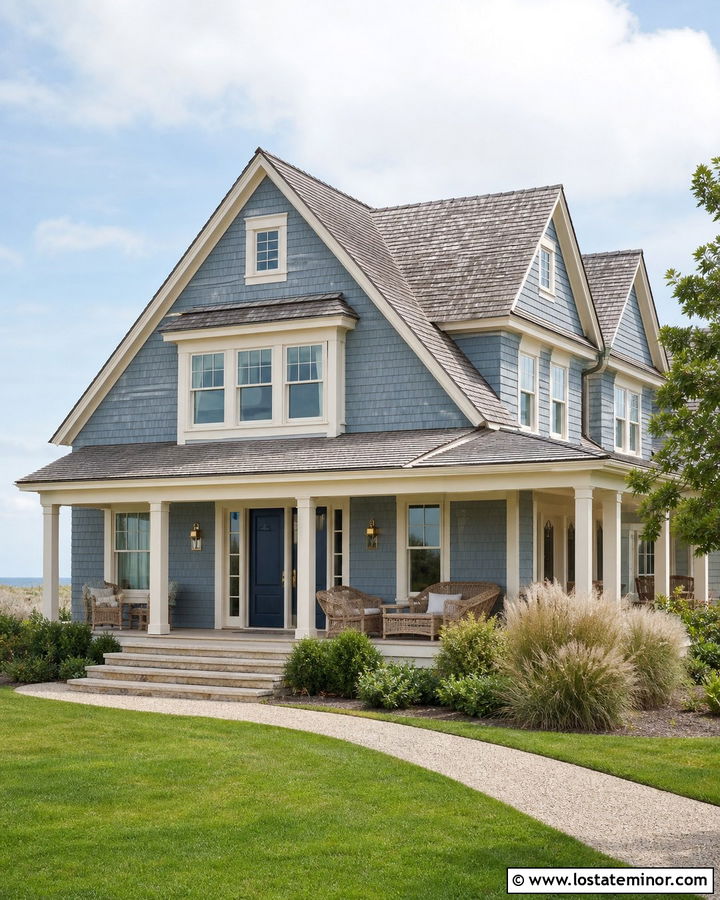
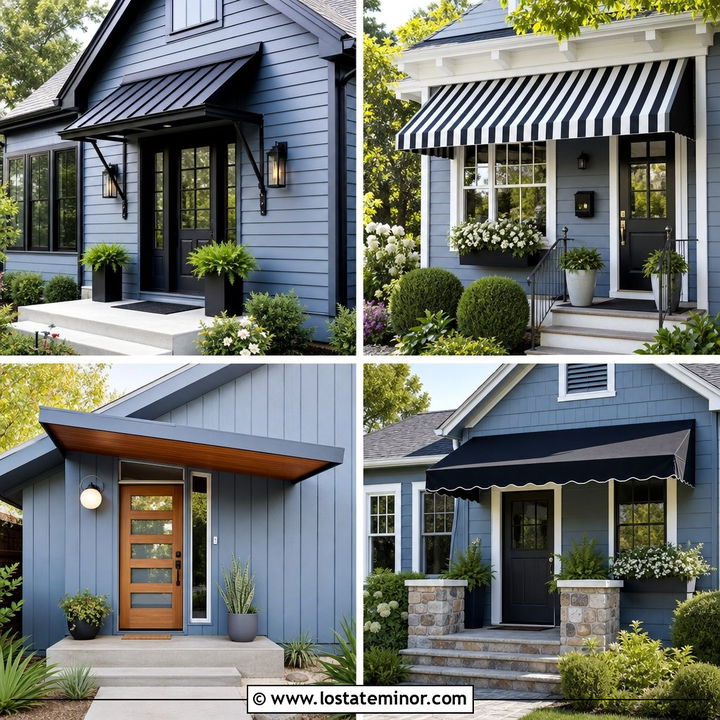
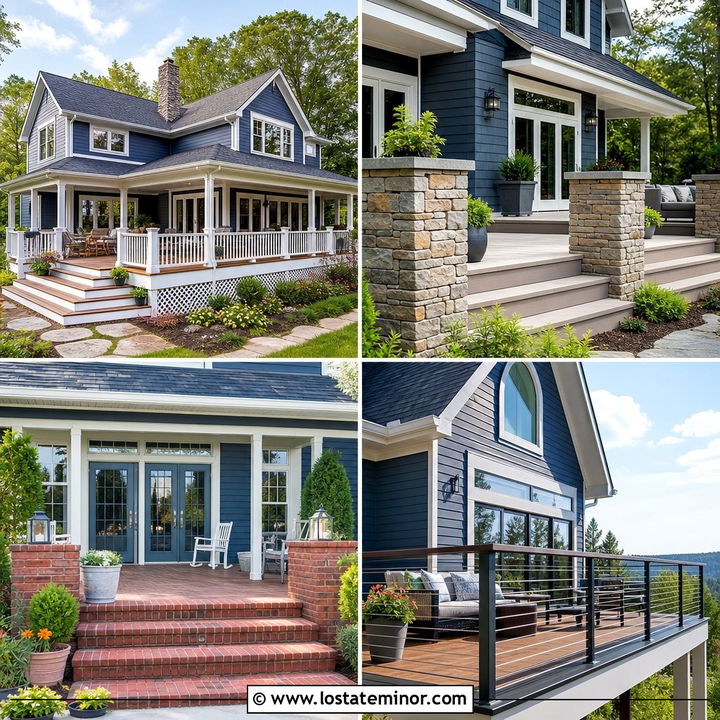
A navy door adds depth to a dusty blue exterior while cream trim keeps the overall look warm and approachable. This palette suits a shingle-style coastal home with broad rooflines, covered porches, and grouped windows. Use dusty blue across the shingles, cream on the window frames and porch structure, and deep navy at the main entrance. The darker door should be several shades deeper than the siding so it reads as intentional. Add a weathered gray roof, natural wicker furnishings, and brushed brass lighting for relaxed contrast. Pale stone steps and wispy grasses can connect the architecture to the landscape. The finished exterior feels layered rather than overly matched. It also provides a darker focal point without introducing black, which may look severe beside soft blue and cream.
21. Dusty Blue House With White Trim And Wood Door
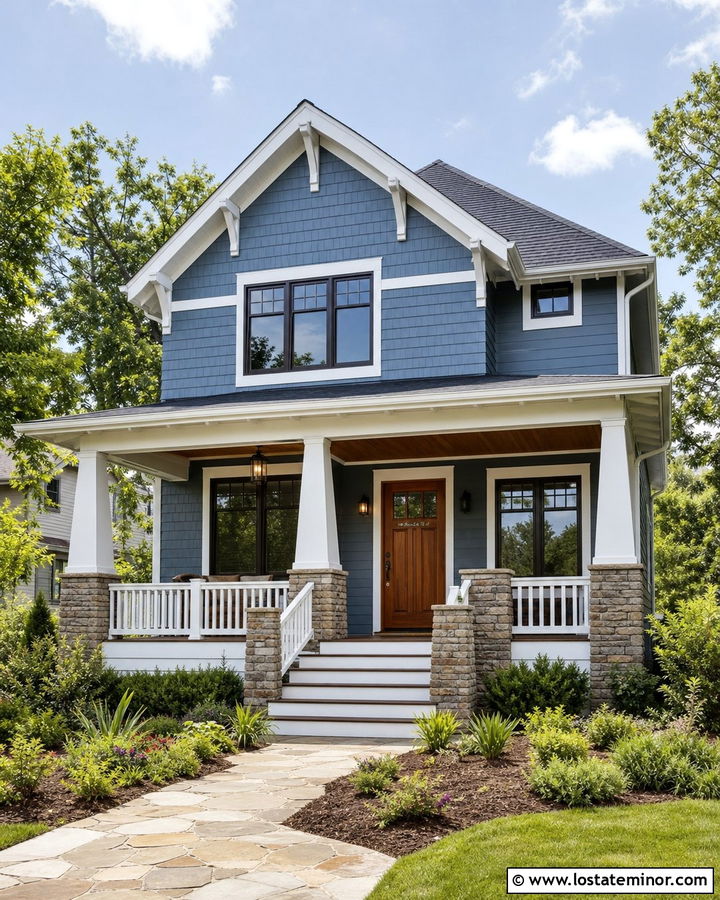
A natural wood door instantly warms the familiar combination of dusty blue siding and white trim. Use this complete scheme on a Craftsman home with a deep porch, tapered columns, and visible roof brackets. Paint the lap siding dusty blue and the trim a soft, clean white. Choose a medium walnut or white oak tone for the door, porch ceiling, and small decorative beams. A stone base around the porch columns can introduce gray, tan, and brown shades that unite the palette. Keep the roof charcoal and the window frames dark bronze for subtle definition. The door should remain the primary wood focal point, so avoid adding unrelated wood stains elsewhere. Simple native landscaping and broad porch steps will reinforce the home’s solid, handcrafted appearance without making the facade feel overly rustic.
22. Dusty Blue House With Charcoal Trim And Stone
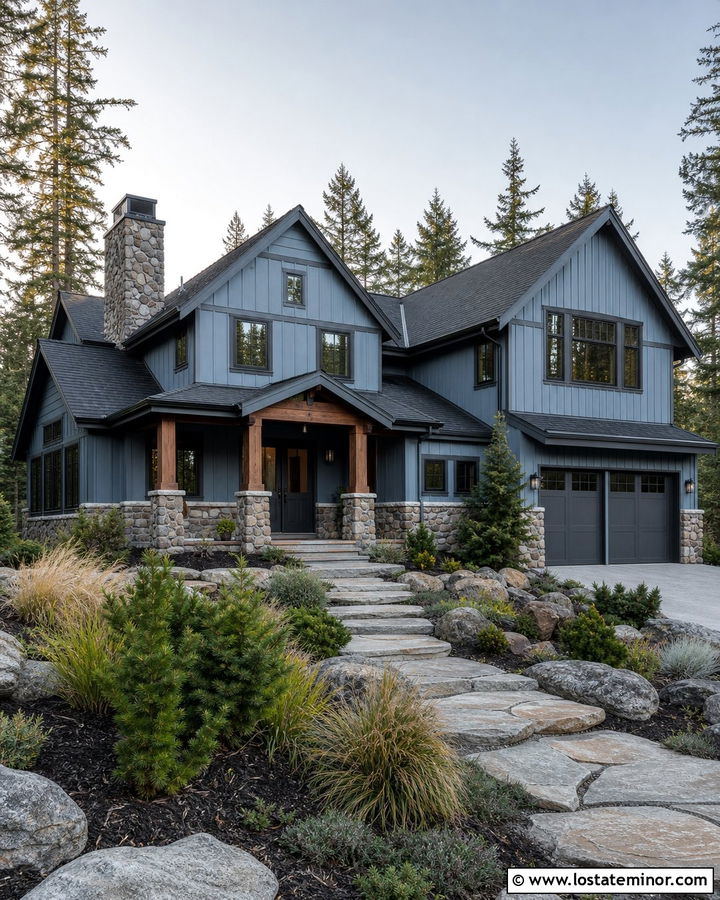
Charcoal trim and natural stone give dusty blue siding enough weight for a large home with multiple gables. Apply the blue to horizontal siding and upper board-and-batten sections. Use charcoal on the windows, fascia, garage doors, and front door to organize the busy elevation. Add gray fieldstone around the porch, chimney, and lower walls, selecting a blend with small blue-gray and warm brown variations. Those mixed undertones will connect the painted surfaces without producing an overly coordinated look. A charcoal architectural-shingle roof and stained timber porch posts complete the substantial palette. Keep the landscaping broad and simple with layered evergreens, grasses, and a wide stone path. The stone should support the house rather than cover every surface, allowing the dusty blue to remain clearly visible from the curb.
23. Dusty Blue House With White Trim And Red Brick
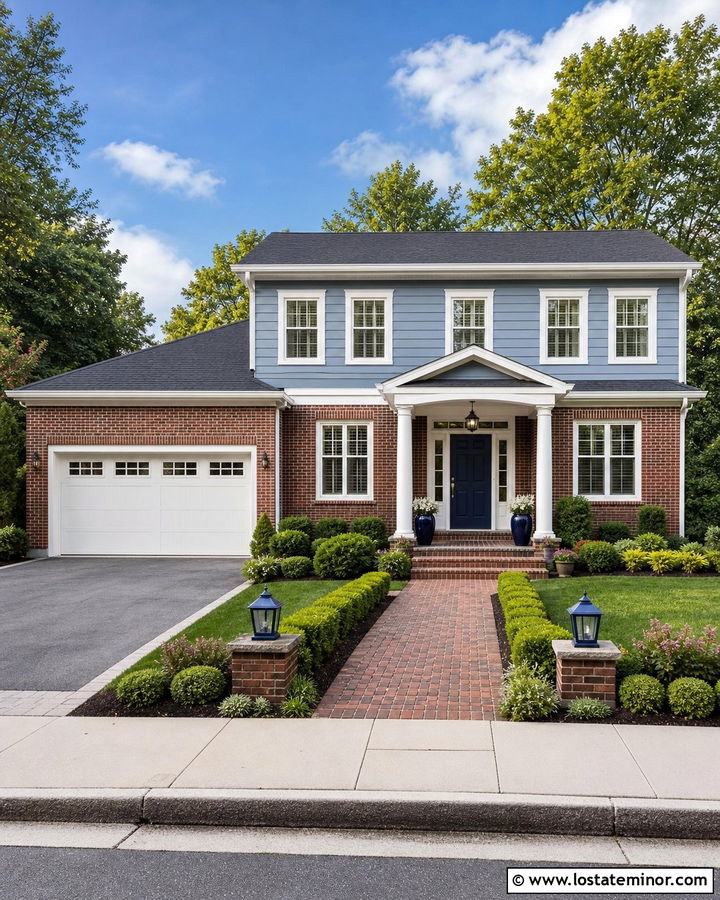
Dusty blue siding can refresh a red brick house when the two materials are balanced with warm white trim. This scheme works well on a colonial or raised ranch where brick covers the lower level and siding fills the upper story. Choose a dusty blue with enough gray to stand beside the earthy masonry. Use warm white on windows, fascia, columns, and the garage surround. A dark blue front door creates a smooth visual transition between the body color and deeper shadows in the brick. Keep existing black or charcoal roof shingles if they remain in good condition. Avoid painting every brick surface simply to force a match. Repeating the brick tone through walkway pavers and planters makes the original material feel like an intentional part of the updated exterior.
24. Dusty Blue House With Cream Trim And Copper Accents
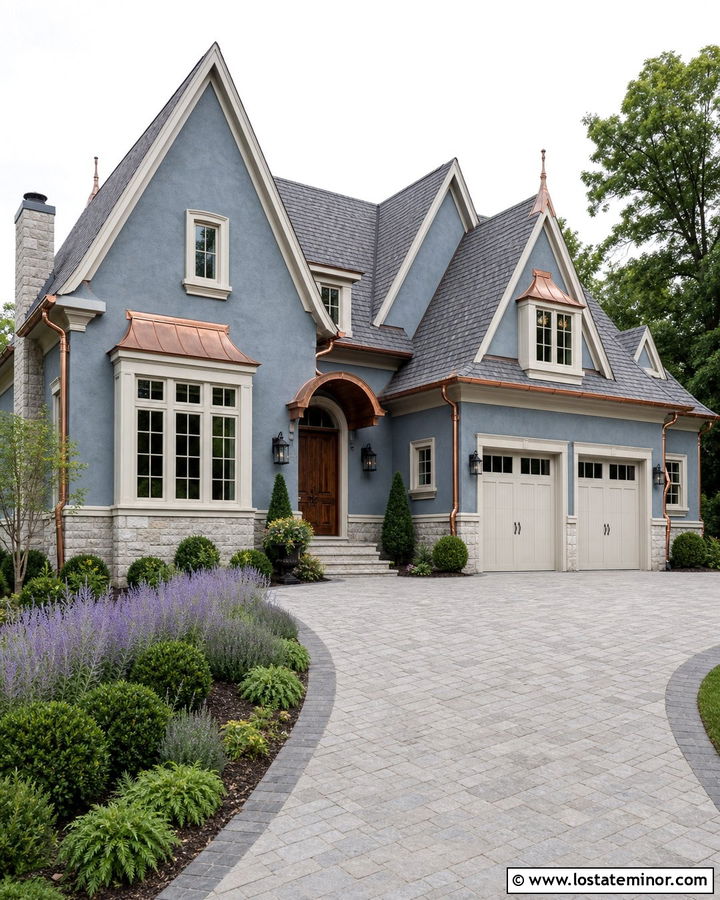
Copper accents bring a rich, changing warmth to dusty blue siding and creamy exterior trim. The combination is particularly attractive on a French country home with steep gables, arched windows, and a stone entrance. Use cream around the windows, on the fascia, and across the garage doors. Reserve copper for gutters, downspouts, roof caps, lanterns, and a small entry canopy. A stained wood door and mixed gray limestone can connect the cool siding with the warm metal. Because copper has a strong visual presence, a few well-placed details are more effective than covering large surfaces. Choose roofing in charcoal or weathered gray so it does not compete. Formal shrubs, lavender borders, and a curved paver driveway complete the elegant but approachable exterior composition.
25. Dusty Blue House With White Trim And Gray Roof
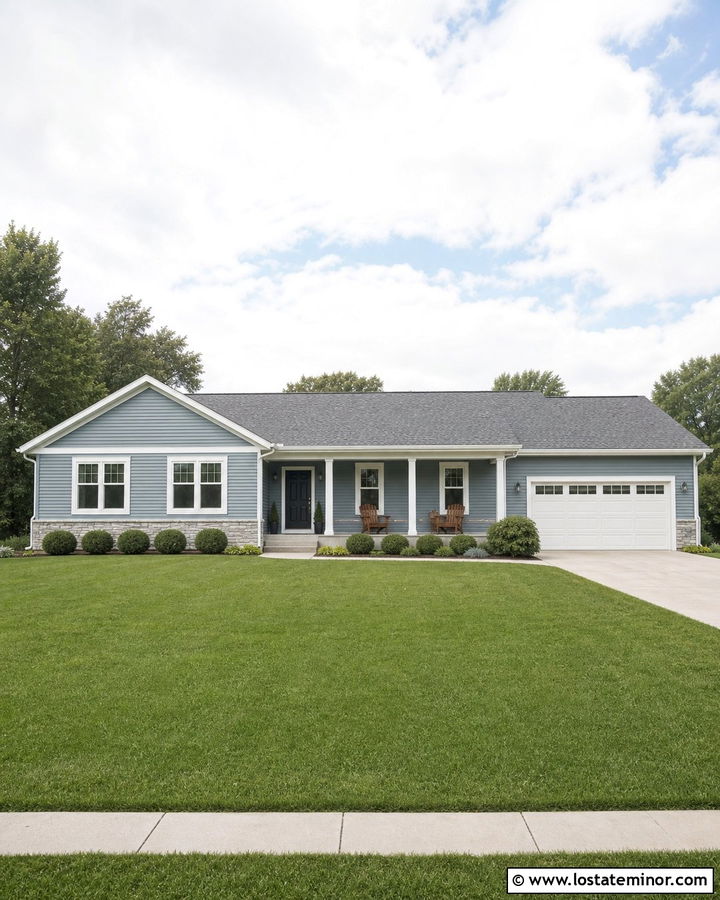
A gray roof is one of the easiest foundations for a dusty blue and white exterior. On a broad suburban ranch, medium-gray shingles can ground the long roofline without making the house appear top-heavy. Paint the siding dusty blue, then use soft white around the windows, fascia, porch supports, and garage door. A charcoal front door provides a darker focal point, while warm wood porch furniture prevents the scheme from feeling cool and flat. Use pale gray stone along the foundation to connect the roof to the lower facade. Rounded shrubs and a straight concrete walkway will maintain the ranch home’s simple character. When selecting the roof, avoid shingles with obvious purple or green flecks. A balanced neutral gray will remain easier to coordinate through future exterior updates.
26. Dusty Blue House With Dark Trim And Metal Roof
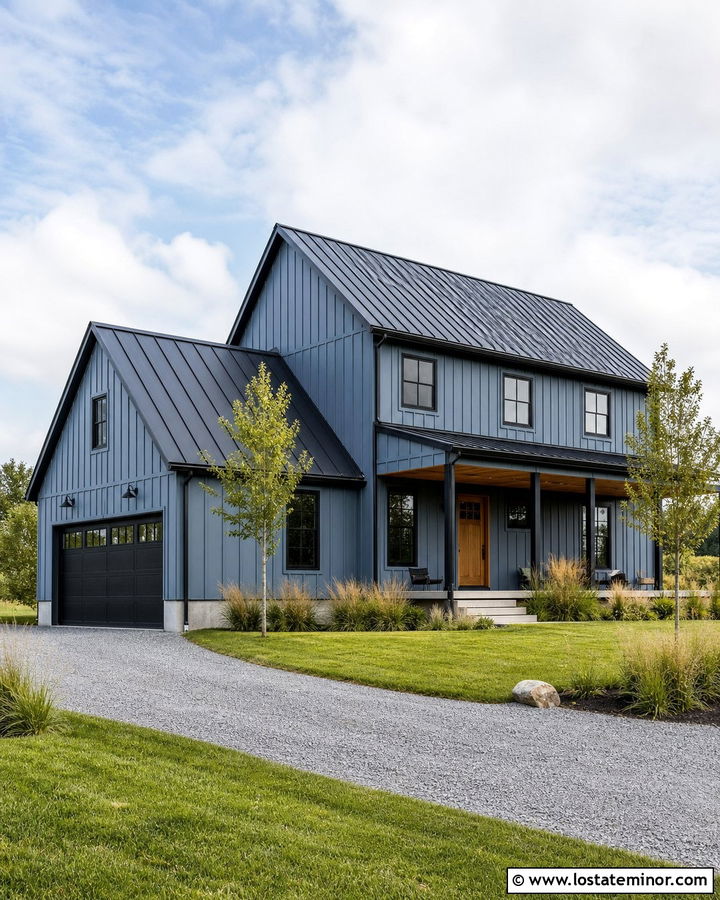
A dark standing-seam metal roof gives a dusty blue exterior a clean, durable-looking visual cap. This pairing is effective on a modern barn-style home with tall gables, vertical board-and-batten siding, and an attached garage. Use deep charcoal on the roof, window frames, gutters, and garage door. Keep the main siding dusty blue and add natural cedar at the front door and recessed porch ceiling. A light concrete foundation and gravel driveway can brighten the base of the composition. To prevent the facade from looking overly industrial, soften it with ornamental grasses, young trees, and generous lawn areas. The dark trim should repeat the roof color closely. Consistent dark finishes make the architecture feel unified, while the warm wood entrance keeps the complete exterior friendly and residential.
27. Dusty Blue House With Monochromatic Trim
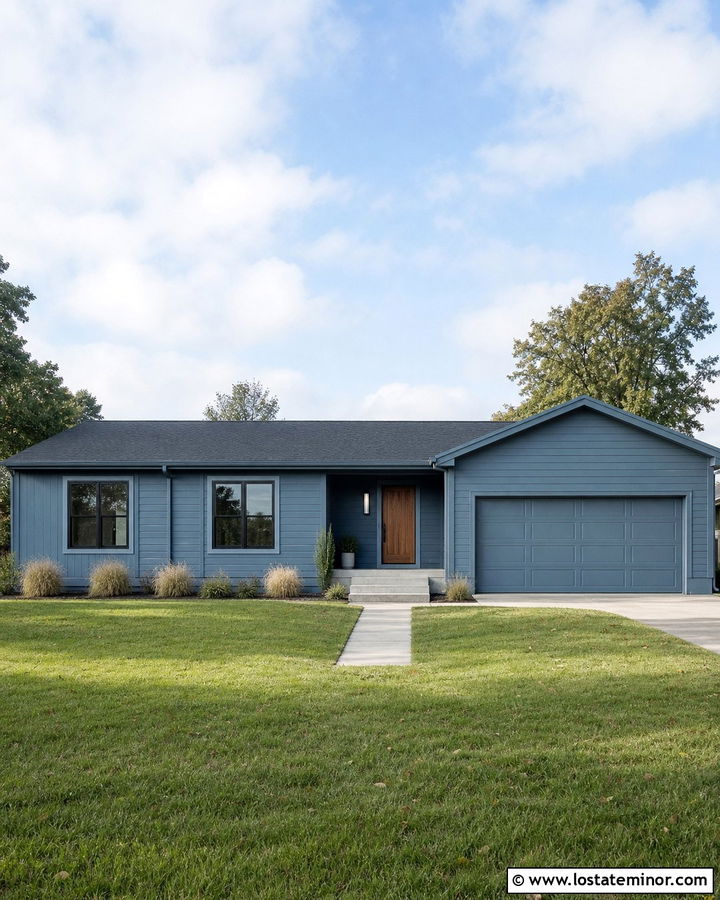
Monochromatic trim creates a seamless dusty blue exterior that emphasizes shape and texture instead of contrasting outlines. Paint the siding, corner boards, fascia, and garage door the same dusty blue, then use a slightly lighter blue-gray around the windows. This approach suits a minimalist ranch or Scandinavian-inspired home with simple forms and limited ornament. Black window frames and a warm wood front door provide just enough contrast to keep the entrance visible. Complete the design with a charcoal roof, pale concrete steps, and restrained landscaping. Using one dominant color can also make a smaller house appear broader because the eye is not interrupted by bright vertical trim lines. Carefully vary the sheen, using flatter siding and slightly more durable trim finishes, so details remain subtly visible in changing light.
28. Dusty Blue Victorian House With Three Color Trim
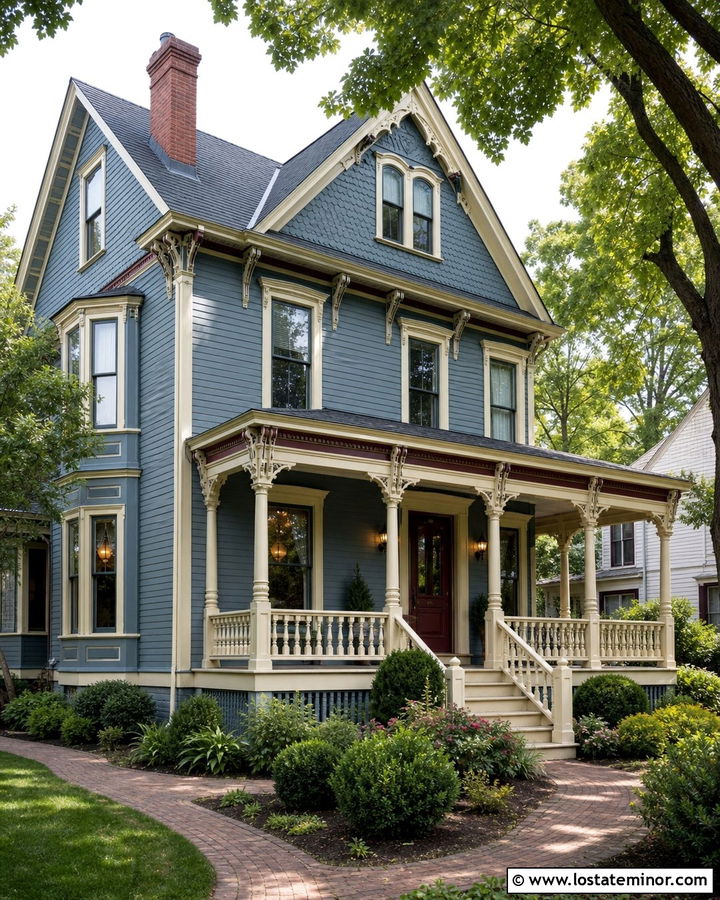
A Victorian exterior can support several trim colors because its brackets, shingles, and porch details offer natural places for separation. Start with dusty blue clapboard siding, then use warm cream on broad window casings, columns, and railings. Apply muted slate blue to fish-scale shingles and burgundy to the front door and a few narrow ornamental bands. The result should feel layered, not striped. A dark gray roof, brick chimney, and traditional porch lights provide a stable background for the painted details. Repeat no more than three main colors across the facade, excluding small metal finishes. This limit prevents decorative woodwork from looking chaotic. Mature trees, curved garden beds, and a brick path complete an exterior that respects historic character while remaining soft enough for a modern neighborhood.
29. Dusty Blue Craftsman House With White And Wood Trim
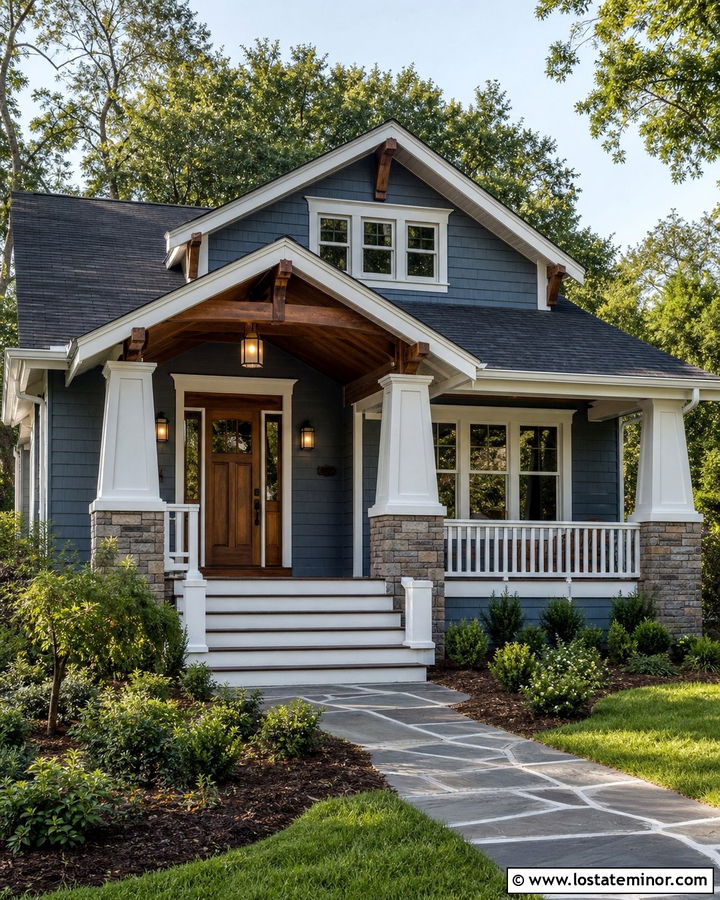
A Craftsman exterior benefits from trim that highlights its structure without hiding the warmth of natural materials. Cover the main lap siding in dusty blue, then use warm white on the window frames, fascia, porch railings, and tapered columns. Introduce stained cedar on the front door, exposed beams, and porch ceiling. Stone column bases should include both cool gray and warm tan pieces to unite the blue, white, and wood. Finish the roof in weathered charcoal and select dark bronze lighting instead of bright silver fixtures. Deep porch shadows already add contrast, so the painted trim does not need to be brilliant white. Wide steps, native shrubs, and a straight flagstone path will reinforce the home’s sturdy proportions and create a complete, balanced approach from the street.
30. Dusty Blue Modern Farmhouse With Black Trim
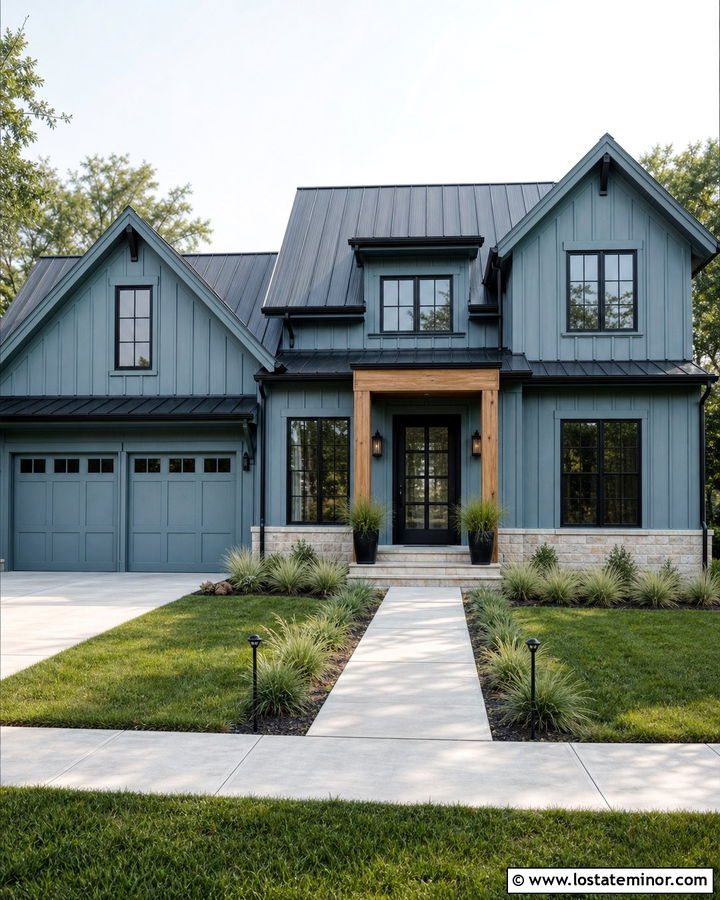
Dusty blue offers a softer alternative to white for a modern farmhouse exterior. Use it across vertical board-and-batten siding, then define the tall windows, gutters, roof edges, and glass-paneled front door with matte black. Keep the porch columns dusty blue or natural wood instead of outlining every feature in black. A charcoal metal roof, white oak door surround, and pale stone foundation will add texture to the restrained palette. Paint the garage doors dusty blue so they blend into the main walls and do not dominate the facade. Finish the property with a wide concrete walkway, simple black planters, and airy grasses. This scheme preserves the recognizable farmhouse silhouette while giving it more color, softness, and individuality than a standard black-and-white exterior.
Conclusion:
The strongest dusty blue exterior begins with more than the siding color. Trim, roofing, masonry, doors, and landscaping all affect whether the blue looks coastal, traditional, rustic, or contemporary. White and cream create familiar contrast, while charcoal, bronze, and navy deliver greater depth. Natural wood and stone can warm the palette and connect it to the surrounding landscape. Before painting, compare large samples beside permanent materials at several times of day. Pay close attention to undertones and the amount of contrast between the body and trim. Whether your home is a ranch, Victorian, Craftsman, or modern farmhouse, these 30 Dusty Blue House Design With Trim Ideas offer a practical starting point for cohesive curb appeal.

Related posts: