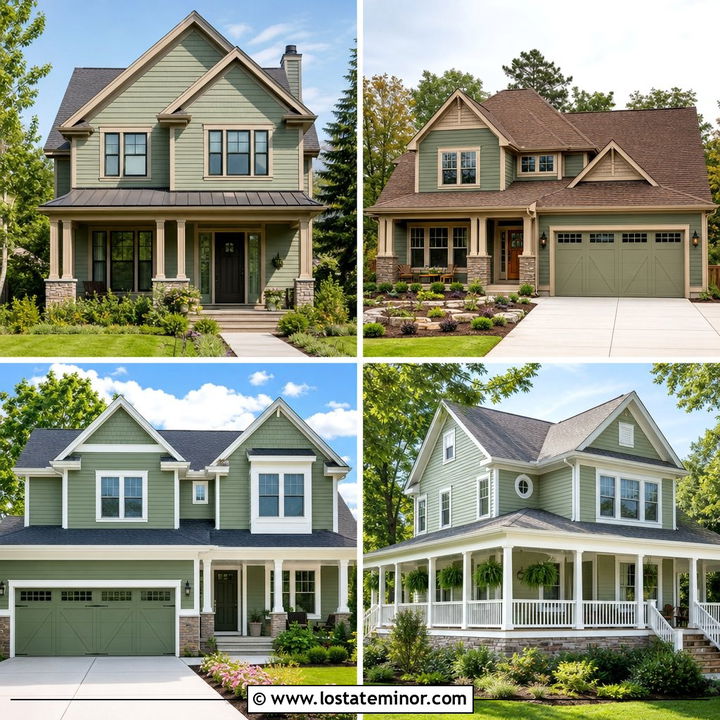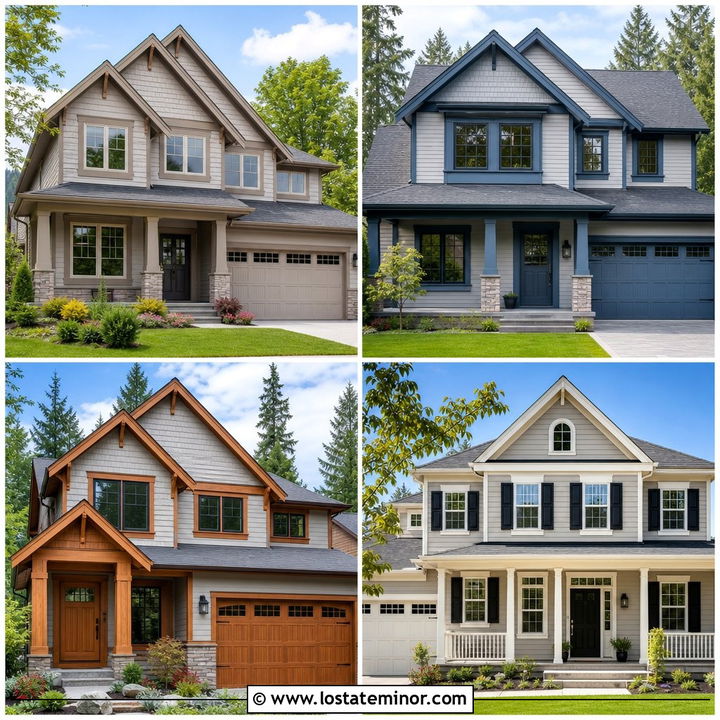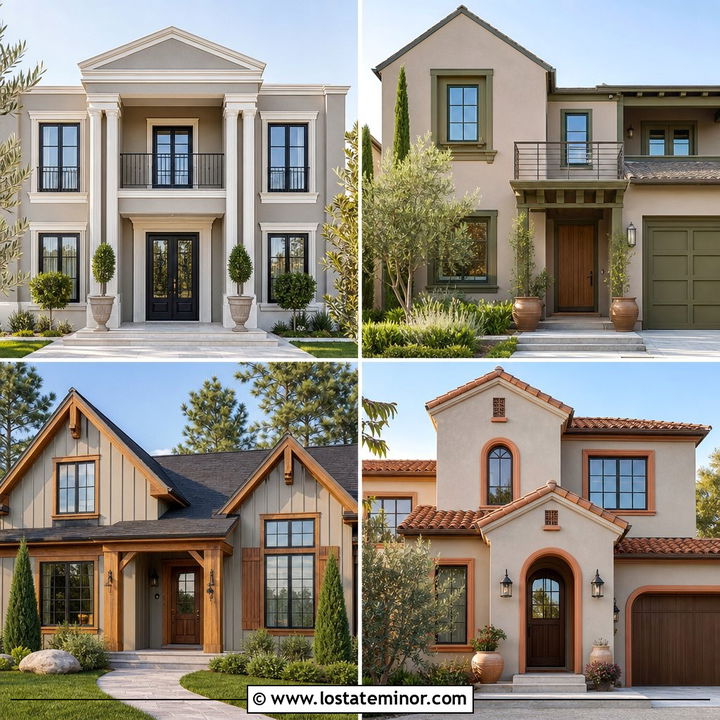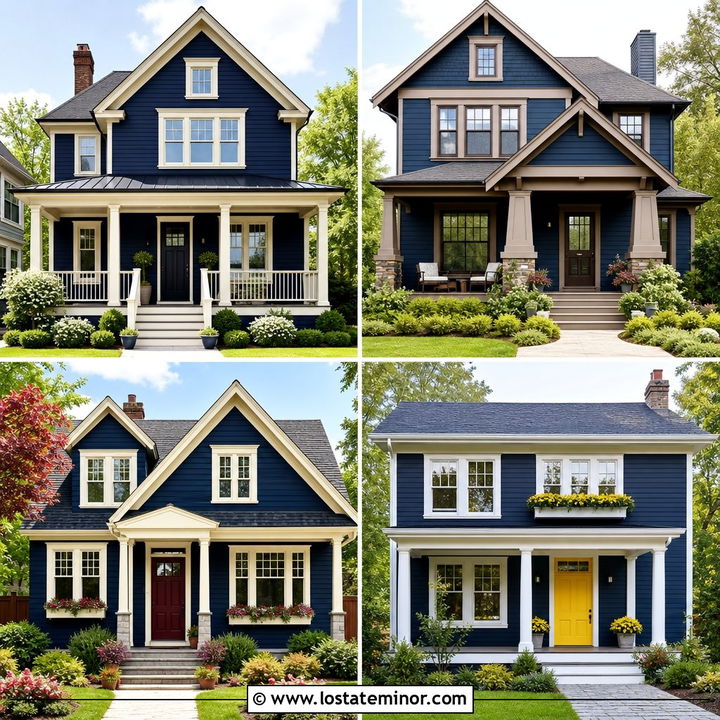
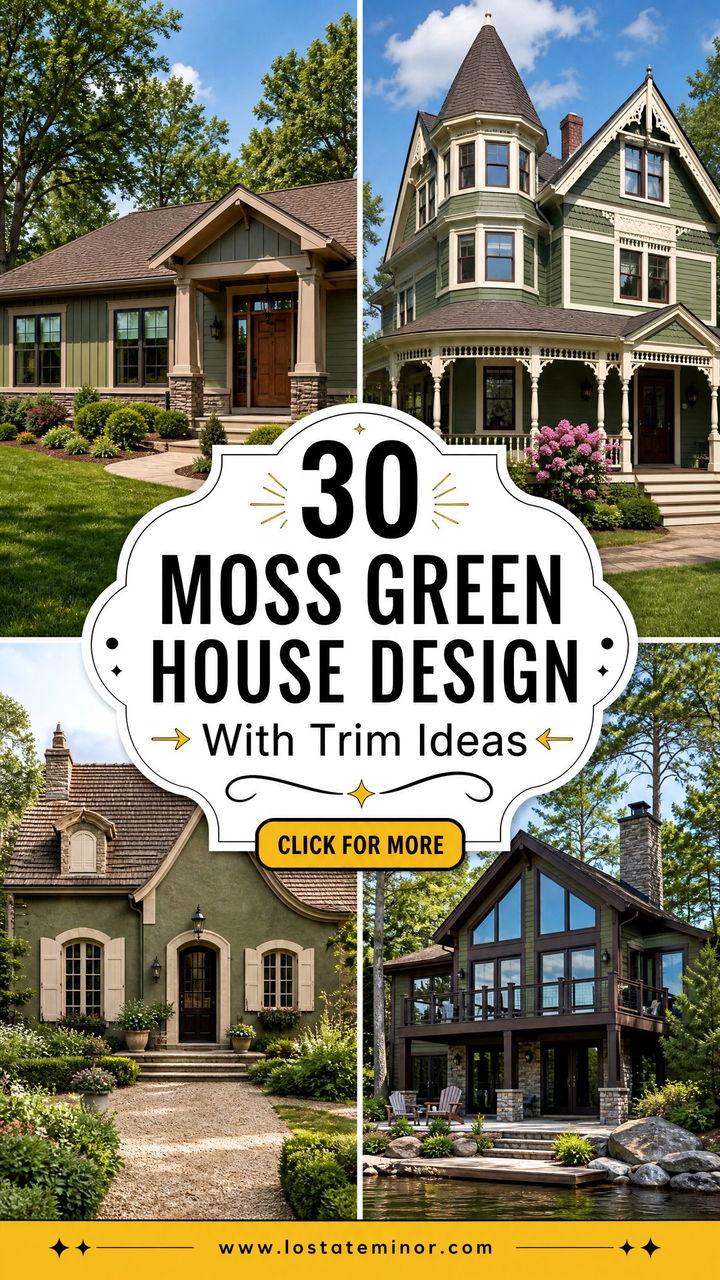
Moss green brings a grounded, natural character to an exterior without making the house feel overly dark or rustic. The best 30 Moss Green House Design With Trim Ideas pair this earthy body color with trim, roofing, masonry, doors, and wood accents that support the entire facade. Crisp white can sharpen the architecture, while cream, taupe, bronze, and stained cedar create a softer transition. Black trim adds modern contrast, and tonal green trim gives traditional homes a layered finish. Before painting, compare samples beside permanent materials such as brick, stone, shingles, and metal roofing. Check each combination in morning sun, afternoon light, and shade. The complete exterior schemes below offer practical inspiration for 30 Moss Green House Design With Trim Ideas.
1. Moss Green Colonial With White Trim
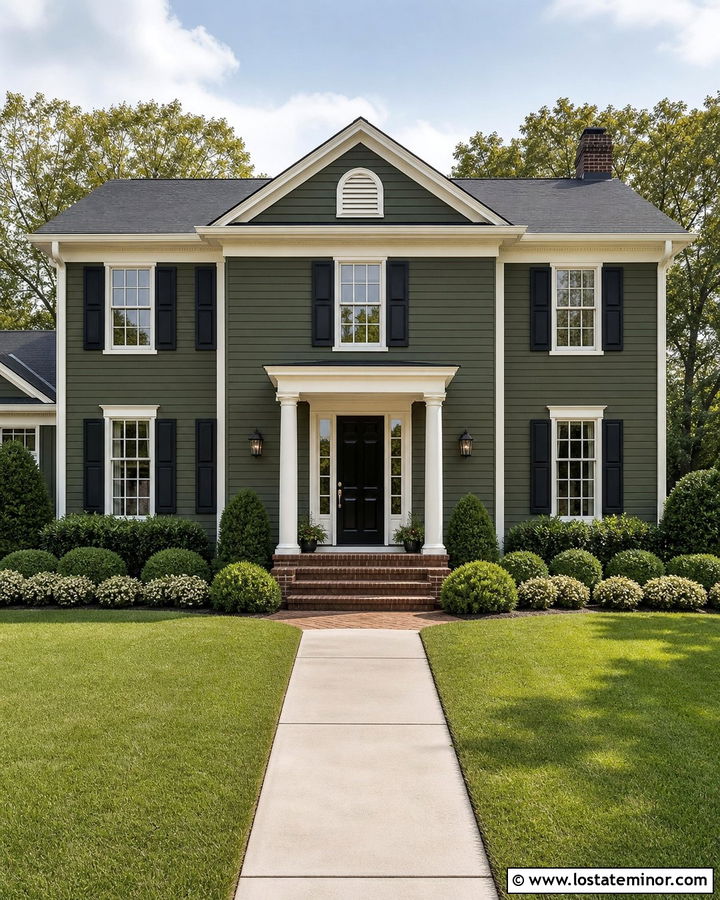
A two-story Colonial looks polished when moss green siding is outlined with clean white trim. Use white on the window casings, corner boards, fascia, columns, and classical front entry surround. This creates enough contrast to reveal the home’s balanced architecture without overpowering the green. A glossy black front door gives the centered entrance more visual weight, while black shutters connect it to a charcoal roof. Red or brown brick steps can remain unpainted for warmth and texture. Keep the foundation neutral so it does not compete with the siding. Symmetrical lanterns, clipped shrubs, and a straight walkway complete the formal curb appeal. This combination works especially well when you want a traditional exterior that still feels connected to the landscape.
2. Moss Green Craftsman With Cream Trim
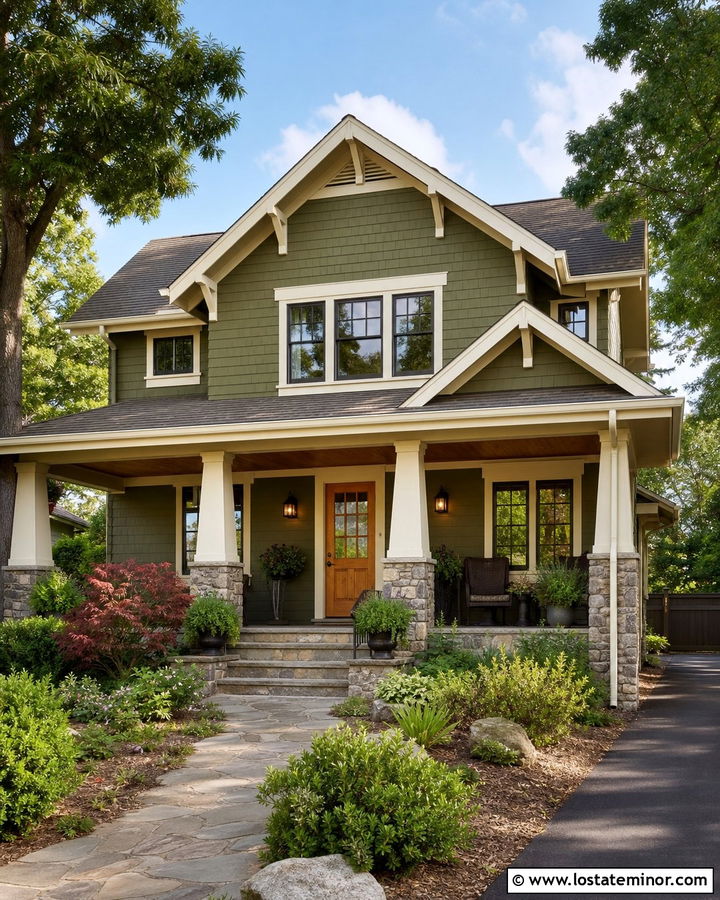
Warm cream trim softens moss green and suits the handcrafted details of a Craftsman home. Apply the cream to tapered porch columns, exposed rafter tails, window surrounds, fascia, and the front gable. It feels less stark than bright white and brings out the yellow-brown undertones often found in earthy green paint. Add a medium-stained oak front door and cedar porch ceiling to strengthen the natural palette. A fieldstone foundation can introduce gray, tan, and brown tones that bridge the green siding and wood accents. Choose dark bronze lighting rather than shiny silver fixtures. Wide porch steps, substantial railings, and layered foundation plants create a welcoming finish. The result feels detailed and inviting without becoming overly busy or theme-driven.
3. Moss Green Farmhouse With Black Trim
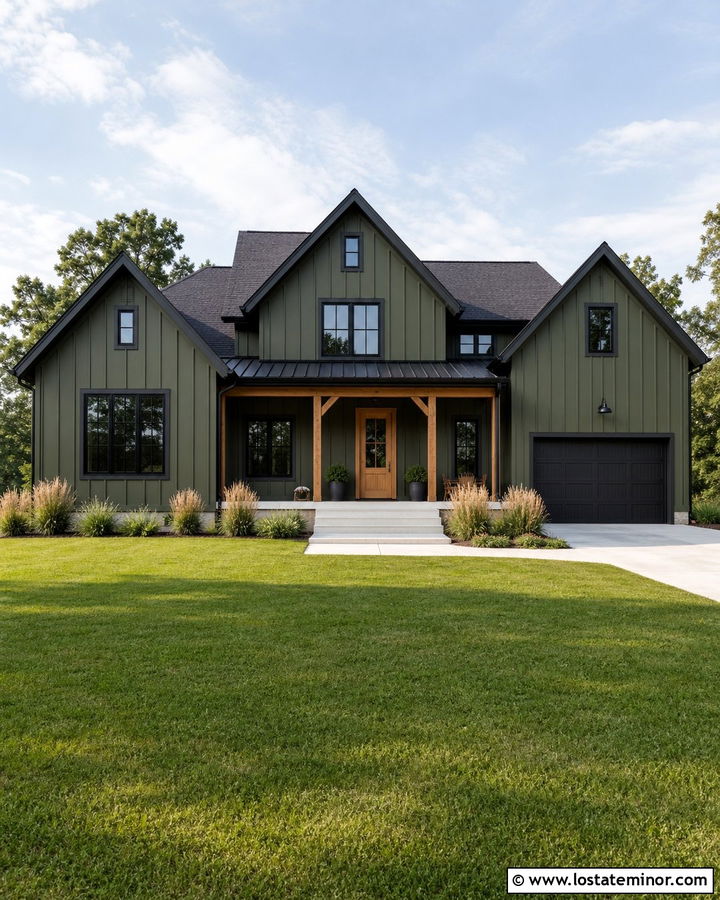
Black trim gives a moss green farmhouse a sharper, more contemporary outline. Use black around the windows, on the gutters, and across the metal porch roof, but keep broad fascia boards moss green to prevent the exterior from looking striped. Vertical board-and-batten siding highlights the tall shape of the house, while horizontal siding on lower sections adds subtle variation. A natural white oak front door warms the dark accents and creates a clear focal point. Simple timber porch posts can repeat that wood tone. Finish the scheme with a charcoal shingle roof, pale concrete steps, and matte black sconces. Open lawn, ornamental grasses, and restrained landscaping support the clean architecture. This is an effective balance of modern contrast and relaxed rural character.
4. Moss Green Mountain House With Cedar Trim
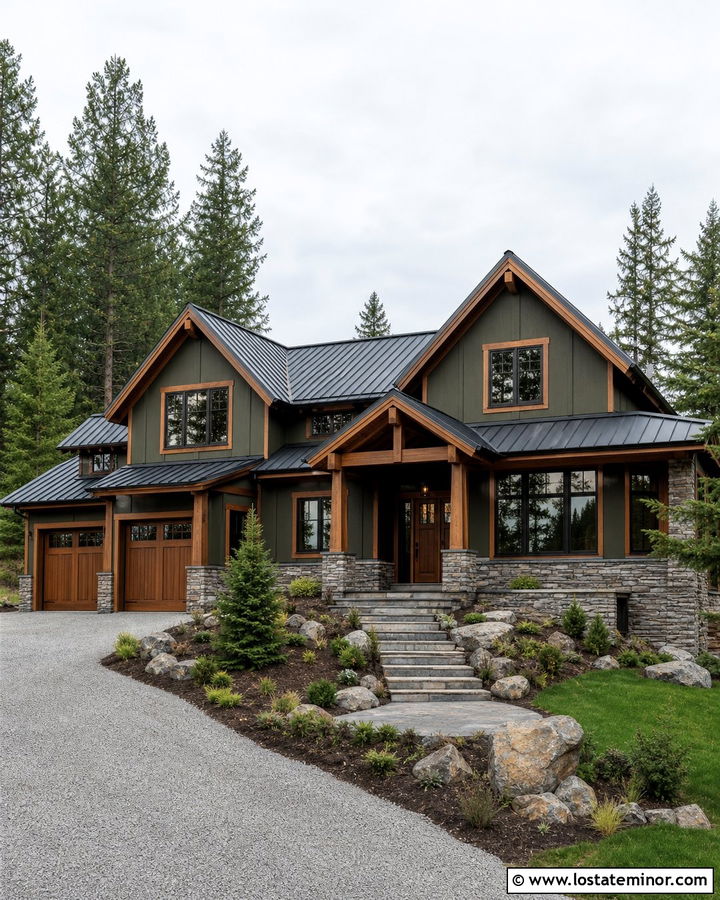
Natural cedar trim makes moss green siding feel at home in a wooded or mountainous setting. Frame the windows, gables, porch openings, and garage doors with a warm medium cedar stain. The wood should be visible enough to add texture, but it does not need to cover every architectural edge. Use charcoal trim on gutters and metal roof sections to ground the warmer materials. A gray ledgestone base can visually anchor the house and connect it to a sloped site. Large windows, exposed beams, and a deep front porch suit this combination particularly well. Finish with broad stone steps and low native planting beds. Regularly maintaining the wood stain will preserve the contrast and prevent the cedar from weathering into a tone that blends too closely with the masonry.
5. Moss Green Ranch House With Taupe Trim
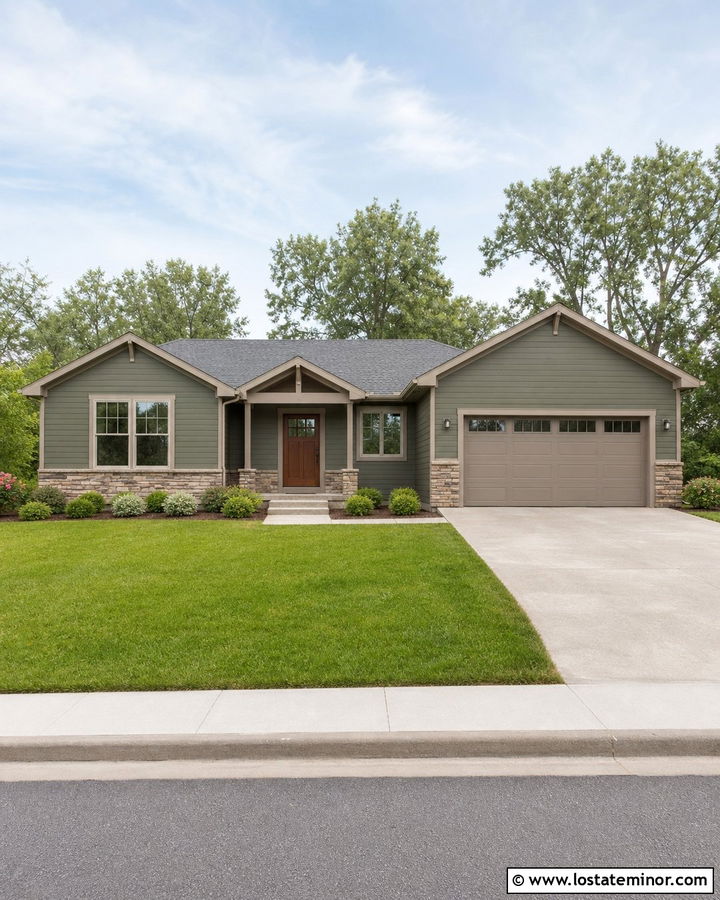
A moss green ranch can look wider and more refined with quiet taupe trim. Choose a taupe that shares the green paint’s muted quality rather than one with strong pink undertones. Carry it across the fascia, soffits, window frames, garage surround, and porch beam to form a gentle outline. A walnut-colored front door adds depth without creating the hard contrast of black. If the house has existing beige or brown stone, repeat one of its lighter tones in the trim selection. A medium-gray roof keeps the overall palette balanced. Low shrubs and horizontal planting beds emphasize the ranch home’s long profile. This combination is practical for homeowners who want noticeable color while preserving a calm, understated appearance that fits an established suburban neighborhood.
6. Moss Green Contemporary House With Charcoal Trim
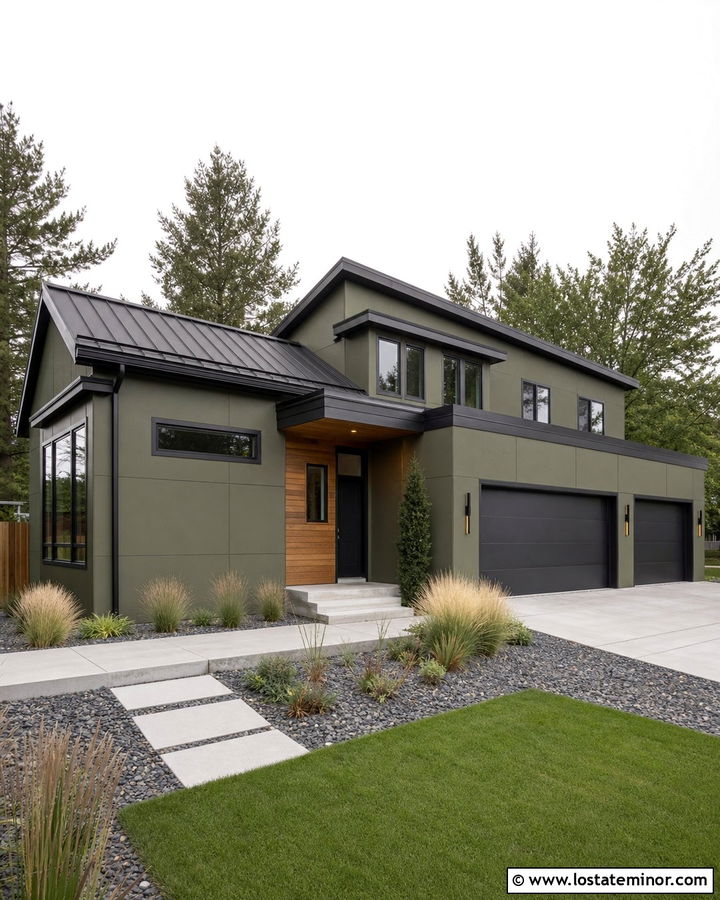
Charcoal trim can make a moss green contemporary exterior feel streamlined and architectural. Use the darker color on narrow window frames, roof edges, garage doors, and selected vertical panels. Avoid outlining every surface, since too many dark borders can divide a modern facade into disconnected sections. Smooth moss green fiber-cement panels pair nicely with warmer wood cladding around the entry. Add charcoal metal roofing and simple rectangular lights to repeat the trim color. Pale concrete, gray gravel, and large stepping stones keep the ground plane clean. A flat or low-pitched roof strengthens the modern profile, while ornamental grasses soften the hard materials. This complete scheme offers strong contrast without relying on pure black, making it easier to coordinate with stone, concrete, and naturally weathered wood.
7. Moss Green Cape Cod With Light Gray Trim
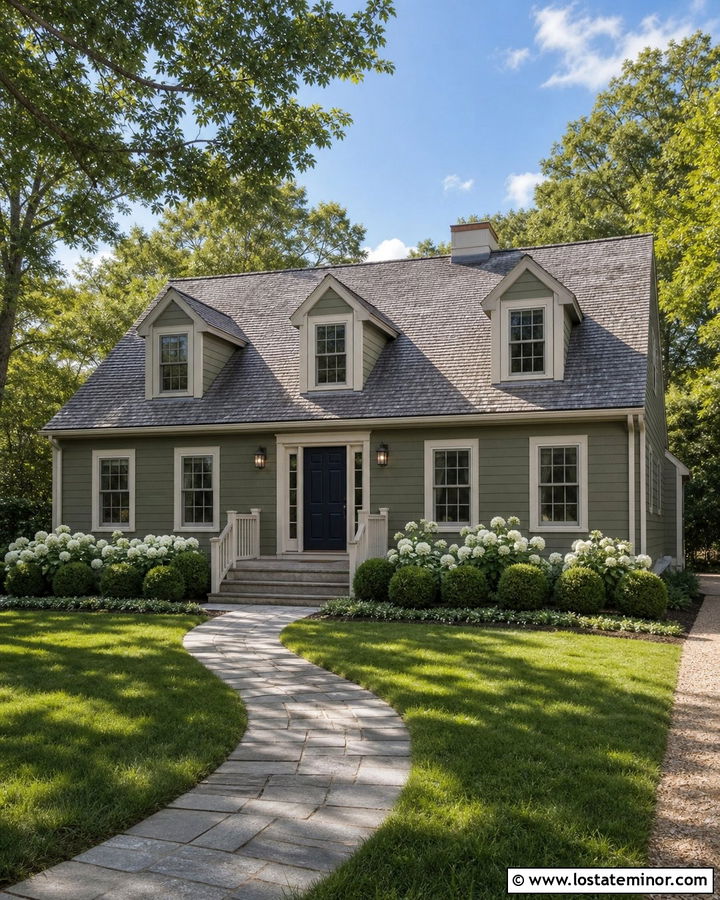
Light gray trim gives a moss green Cape Cod a relaxed, coastal-influenced finish without turning the house into a high-contrast composition. Use the gray on dormers, window casings, fascia, porch railings, and corner boards. Select a slightly warm gray so it coordinates with the earthy siding rather than looking icy. A weathered cedar or medium-gray shingle roof continues the subdued palette. The front door can be painted deep navy for a controlled accent, while brushed nickel or aged pewter hardware adds subtle brightness. White hydrangeas, compact boxwoods, and a curved stone path reinforce the neat cottage scale. This pairing works especially well on homes with several dormers because the softer trim defines each feature without making the roofline feel visually crowded.
8. Moss Green Cabin With Dark Brown Trim
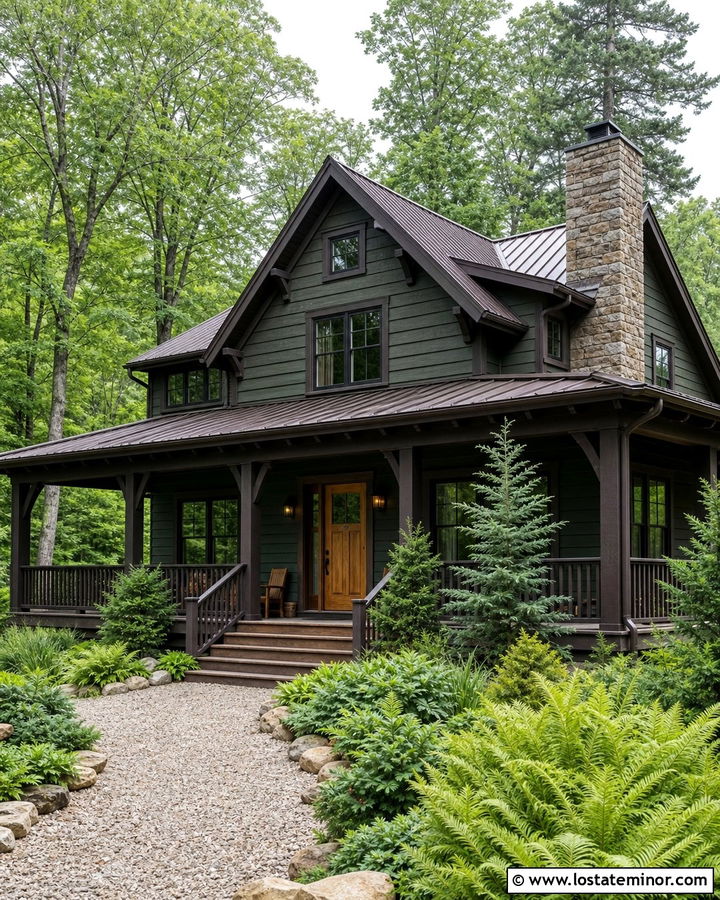
Dark brown trim strengthens the woodland character of a moss green cabin. Apply espresso brown to the window frames, fascia, porch railings, and structural beams for a deeply grounded look. Horizontal lap siding or rough-sawn boards will provide texture, while a dark brown metal roof keeps the palette cohesive. Use a honey-stained timber door to prevent the entrance from disappearing into the darker facade. A stone chimney with gray and brown variation can become the central architectural feature. Keep porch furniture and decorative elements simple so the natural materials remain prominent. Ferns, evergreen shrubs, gravel paths, and mature trees will frame the cabin naturally. This exterior works best when the brown trim is clearly darker than the green, creating definition even under heavy shade.
9. Moss Green Split-Level With Greige Trim
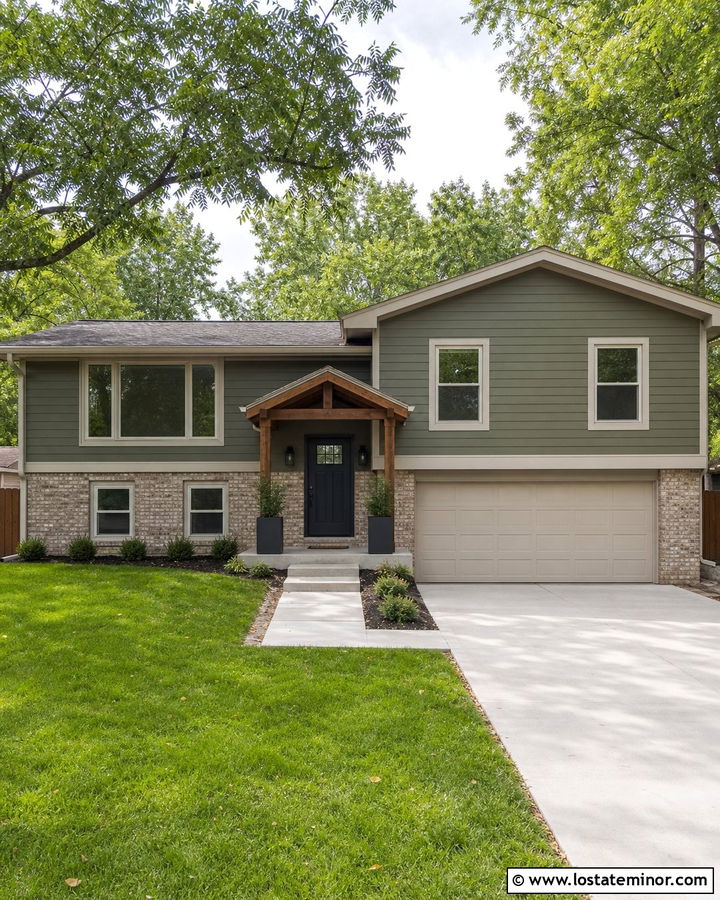
Greige trim can update a moss green split-level while working with common features such as brick foundations, wide garages, and mixed siding. Use the greige around windows, along the fascia, and on the garage door to visually connect upper and lower levels. A darker charcoal front door helps identify the entrance, which is sometimes less prominent on split-level homes. If the existing brick contains tan, gray, or brown, choose a greige that repeats one of those tones. Horizontal moss green siding will make the facade feel orderly, while a small cedar canopy adds warmth above the door. Simple rectangular planters and a widened walkway improve the approach. The finished palette feels cohesive because every color relates to an existing permanent material rather than competing with it.
10. Moss Green Cottage With Ivory Trim
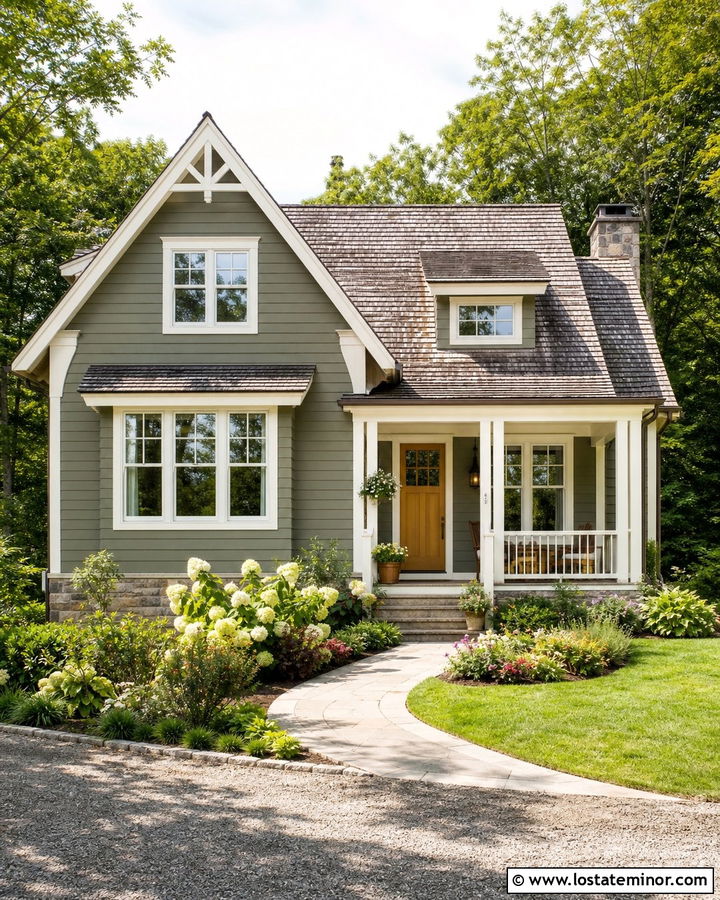
Ivory trim creates a gentle, storybook quality around a moss green cottage without looking overly bright. Apply it to the window casings, eaves, porch posts, and decorative gable details. A muted golden-brown door adds a cheerful focal point while remaining compatible with the earthy body color. For roofing, weathered gray shingles provide a quiet neutral that does not draw attention away from the smaller architectural features. A light stone foundation can introduce texture and help the cottage appear settled into the garden. Add a curved walkway, flowering shrubs, and informal planting beds instead of rigid rows. The softness of ivory is especially useful on compact facades because it highlights details without creating thick, visually heavy outlines. Keep gutters moss green or ivory for a clean finish.
11. Moss Green Prairie House With Bronze Trim
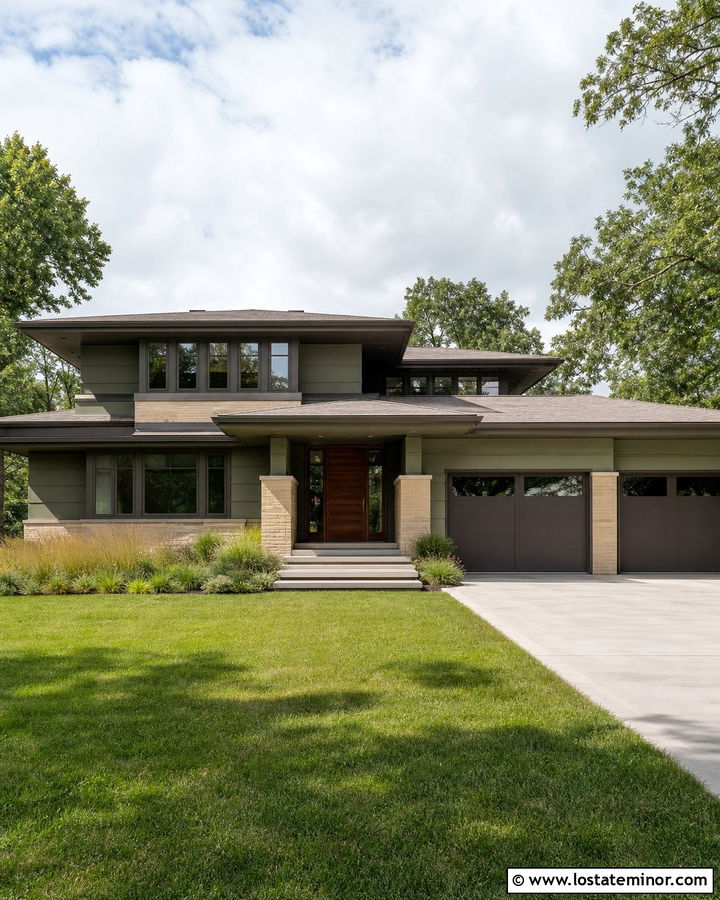
Bronze trim gives a moss green Prairie-style home a low, grounded appearance. Use deep architectural bronze on window frames, gutters, fascia, and garage doors to reinforce the strong horizontal roofline. The bronze should read as a warm brown-black rather than a cool, glossy black. Broad moss green lap siding can be paired with tan limestone or buff-colored brick around the base. A flat-panel walnut front door strengthens the entry without interrupting the subdued palette. Deep eaves, grouped windows, and a low-pitched roof are important parts of the overall effect. Finish the yard with wide concrete steps, geometric planting beds, and spreading ornamental grasses. This scheme feels integrated because the trim, masonry, and wood all share warm undertones that complement the moss green facade.
12. Moss Green Bungalow With Green Trim
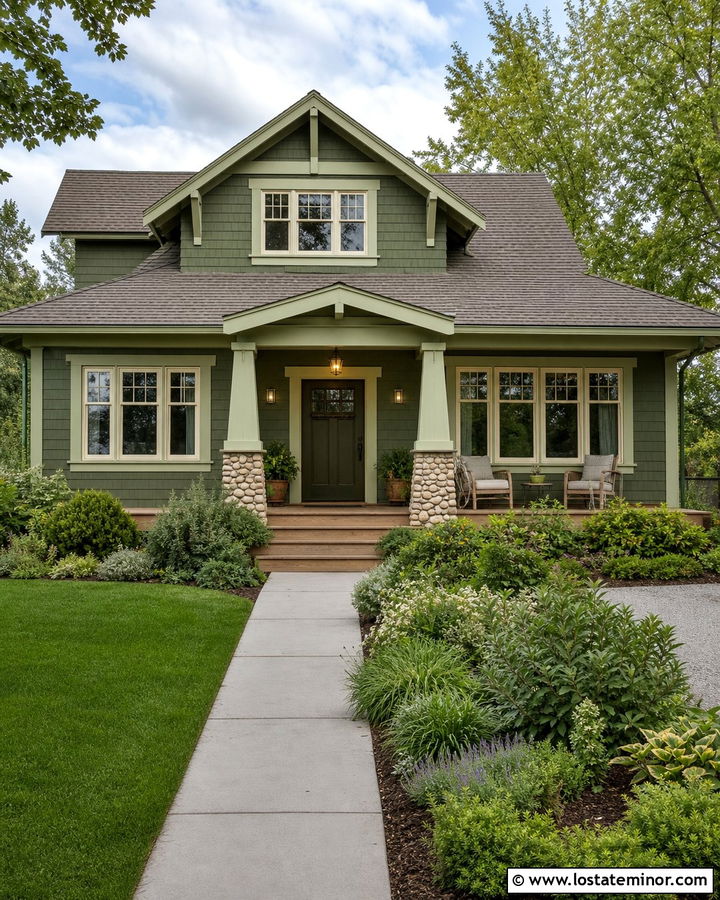
A tonal green palette brings depth to a moss green bungalow without depending on bright contrast. Choose trim one or two shades lighter than the siding for windows, porch posts, fascia, and gable details. The variation should remain visible from the street but still feel closely related to the main body color. Add a dark olive front door and medium-stained wood porch floor to create warmth at the entry. Cream can be used sparingly on the window sashes if the facade needs a little brightness. Brown-gray roof shingles and river-rock porch piers support the organic palette. This layered treatment is particularly effective on bungalows with substantial woodwork. It highlights craftsmanship while keeping the exterior calm, cohesive, and naturally suited to lush garden landscaping.
13. Moss Green Tudor With Stone Beige Trim
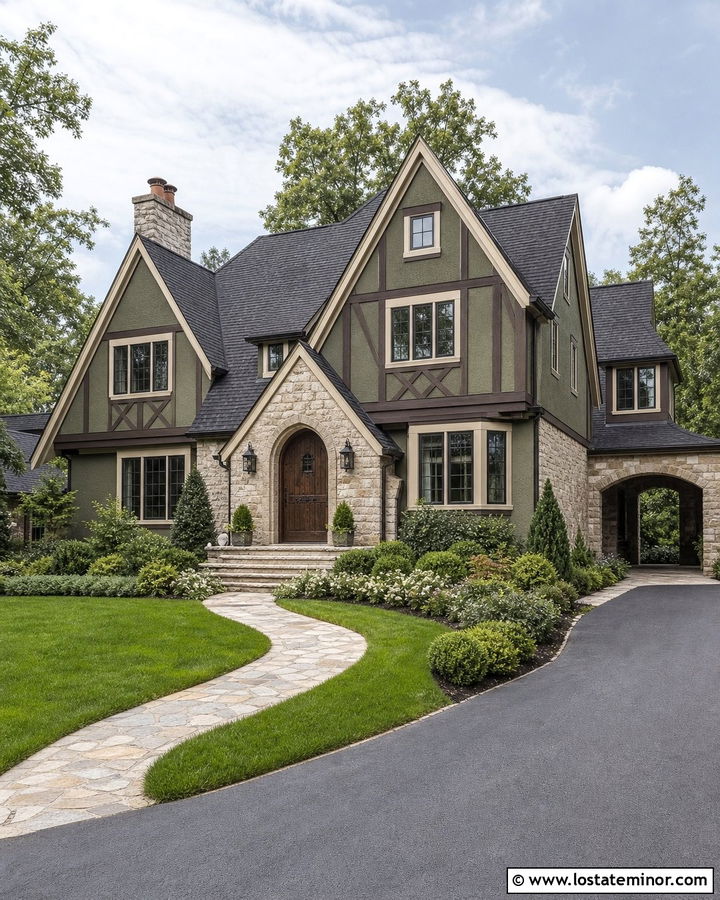
Stone beige trim complements the old-world materials found on a Tudor exterior. Use it around windows, on stucco sections, and beneath steep gables, while moss green covers the main siding or shingles. Dark brown half-timbering adds essential structure and can be repeated on the garage doors and front entry. A deep walnut door with black iron hardware reinforces the substantial character of the house. Choose stonework containing beige, gray, and muted brown so it creates a natural transition between the green body and dark framing. A charcoal roof will balance the steep roofline without introducing another warm color. Curved planting beds and an irregular stone walkway complete the facade. The finished house feels traditional and richly textured, yet the moss green prevents it from looking too heavy.
14. Moss Green Shingle House With Navy Trim
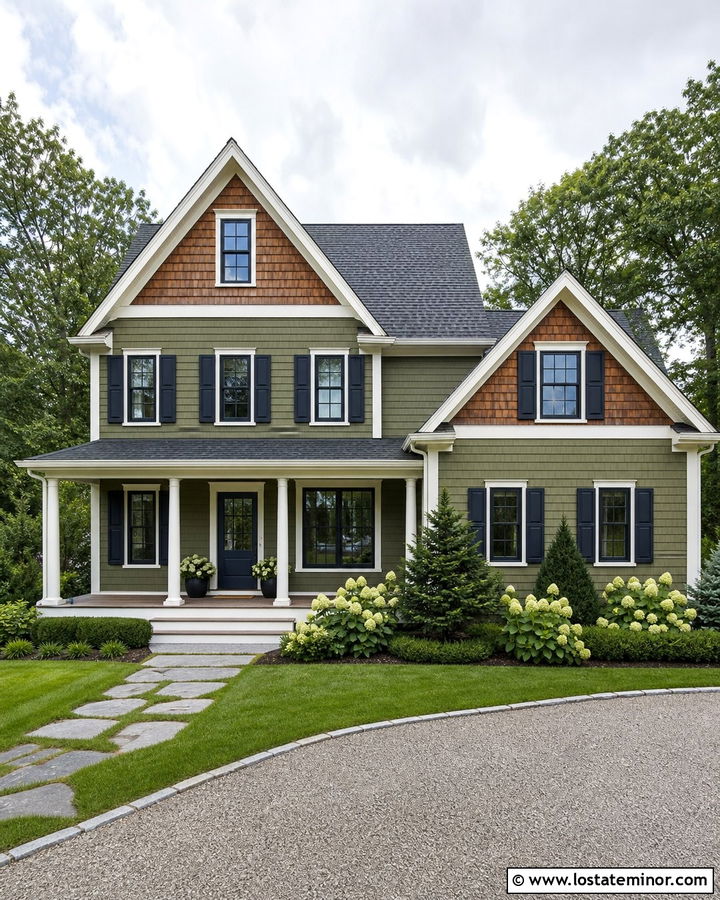
Deep navy trim gives a moss green shingle house an unexpected but controlled layer of color. Use navy on the window sashes, shutters, and front door, then introduce soft white on the outer window casings and fascia. This two-level trim treatment keeps the navy from blending into the green body. Natural cedar shingles in selected gables can add warmth and emphasize the home’s texture. A dark gray roof supports both body colors without competing for attention. Keep porch decking, steps, and railings in a weathered wood or soft gray finish. Hydrangeas and low evergreen shrubs suit the relaxed architecture. Because green and navy can appear similar from a distance, test the combination outdoors and make sure there is enough value difference to preserve clear architectural definition.
15. Moss Green Southwest House With Tan Trim
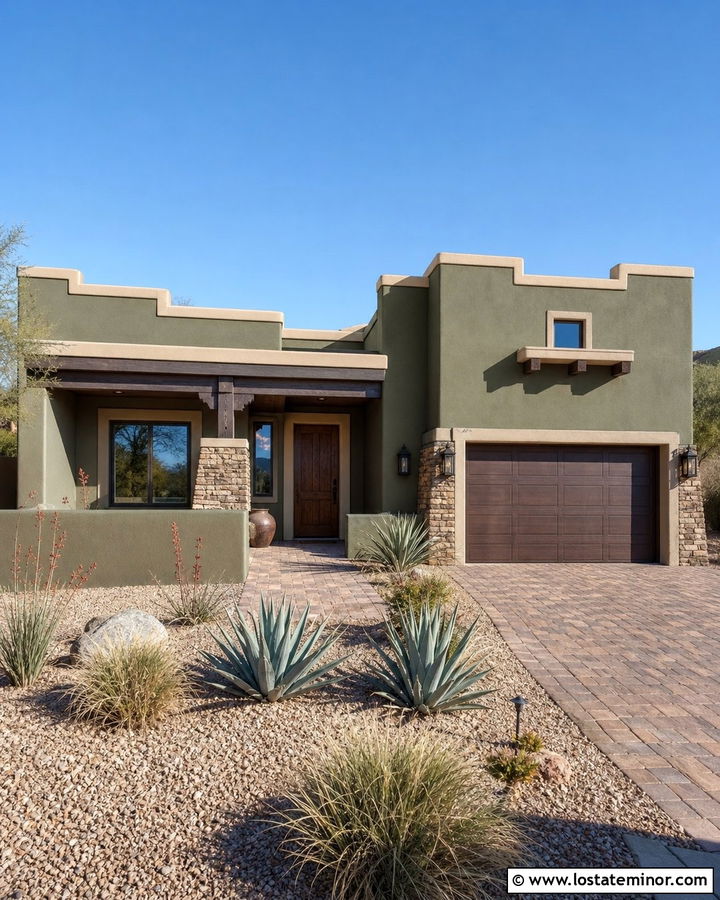
Moss green can work on a Southwest-inspired exterior when paired with sandy tan trim and warm regional materials. Cover the stucco walls in a muted moss green, then use tan around recessed windows, parapet edges, garage openings, and porch beams. A stained mesquite-style front door adds a richer brown tone without feeling separate from the palette. Incorporate buff stone, clay-colored pavers, and dark bronze lighting for texture. A flat roof and simple geometric facade keep the color scheme clean. Drought-tolerant grasses, gravel, agave, and sculptural shrubs frame the home while leaving the full exterior visible. The combination feels earthy rather than lush, proving that moss green can suit a dry landscape when its supporting colors echo sand, stone, and sun-warmed wood.
16. Moss Green Farmhouse With White Trim And Black Windows
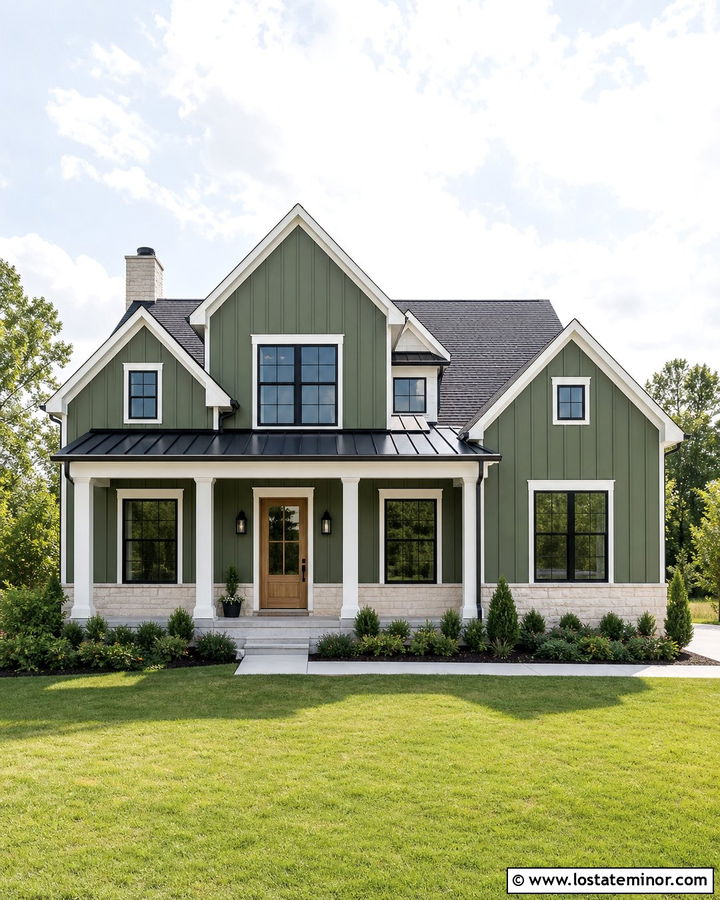
White trim and black windows create a balanced three-color scheme on a moss green farmhouse. Let the white define the porch columns, corner boards, fascia, and gable edges. The black should remain focused on window frames, gutters, lights, and the front door hardware. Keeping these roles separate prevents the facade from becoming visually cluttered. Vertical board-and-batten siding adds height, while a stone base brings natural variation to the lower level. Use a medium-stained wood door as a warm bridge between the green, white, and black. A black standing-seam porch roof can connect the windows to the roofline. Finish with pale gravel, concrete pavers, and layered foundation shrubs. This look feels modern, but the warmer green and wood stop it from appearing harsh.
17. Moss Green Victorian With Cream Trim
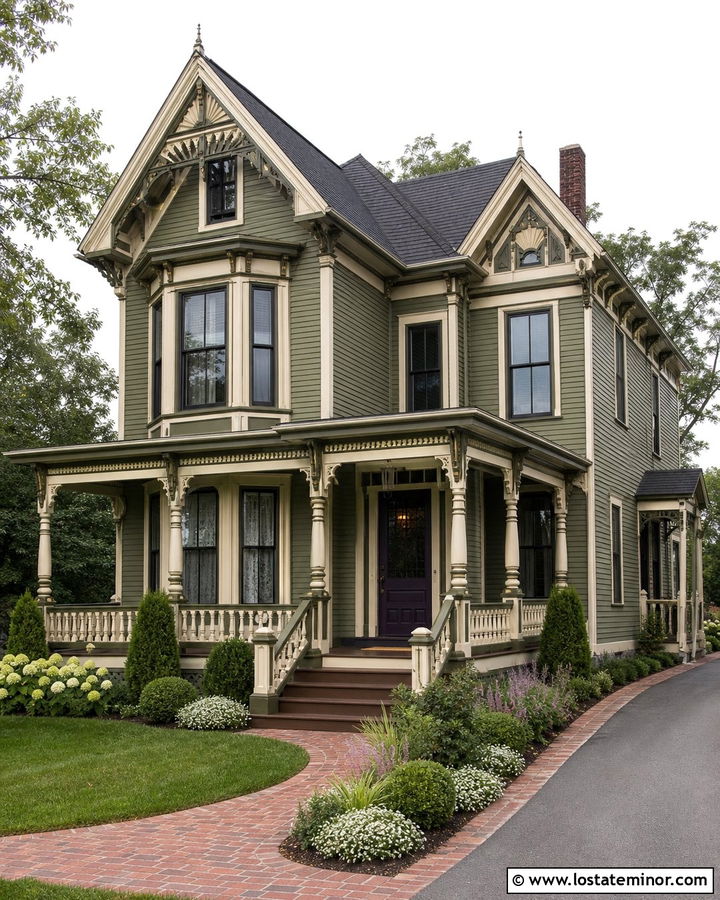
Cream trim brings out the layered architecture of a moss green Victorian while maintaining a warm, historic character. Use it across the porch columns, window surrounds, brackets, gable ornament, and decorative railings. A deeper olive can provide a secondary trim color on narrow details, creating definition without introducing an unrelated hue. Paint the front door muted plum or deep aubergine for a refined accent that stands apart from the green siding. A charcoal-gray roof gives the multiple rooflines a consistent foundation. Keep the porch floor natural wood or medium brown so it does not compete with ornate millwork. Neatly shaped shrubs and a curved brick path complete the traditional setting. Limiting the palette to three main colors helps the detailed facade remain elegant rather than overly decorative.
18. Moss Green Craftsman With Copper Accents
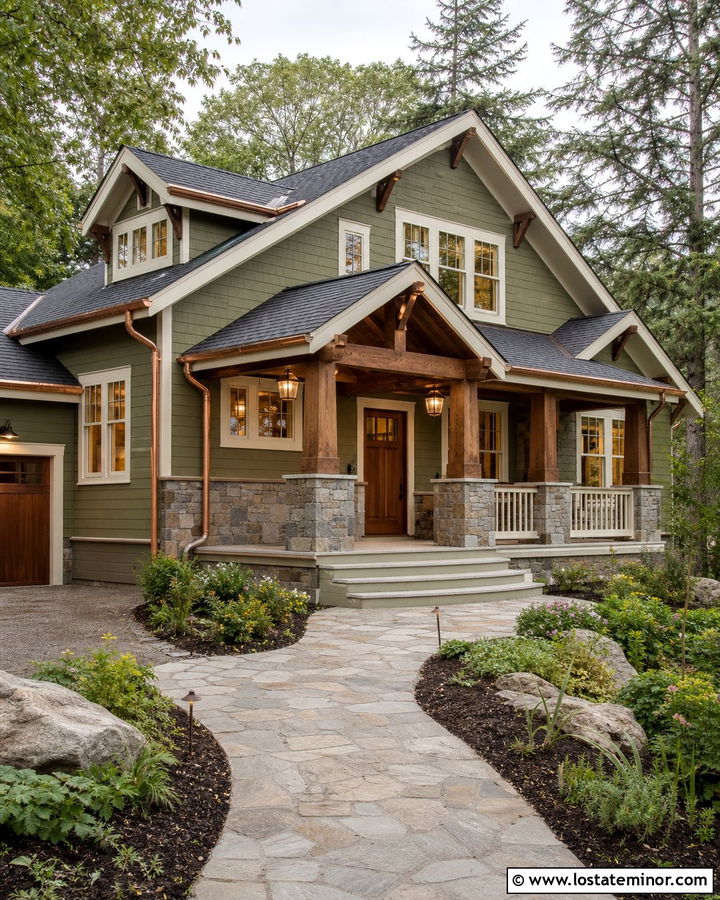
Copper accents bring warmth and changing character to a moss green Craftsman exterior. Use warm off-white trim on the windows, porch columns, fascia, and exposed rafter tails. Then introduce copper through gutters, downspouts, porch-roof flashing, and carefully selected light fixtures. A walnut front door and matching timber beams connect the metal accents to the rest of the facade. Gray-brown stone porch piers add another natural texture without overwhelming the siding. As the copper develops a patina, it can relate even more closely to the green body color. Keep the roof dark charcoal so the metallic details remain visible. Broad steps, layered native plants, and a simple stone walkway complete this earthy scheme. The result feels crafted, substantial, and naturally coordinated from roof to foundation.
19. Moss Green House With Brick And White Trim
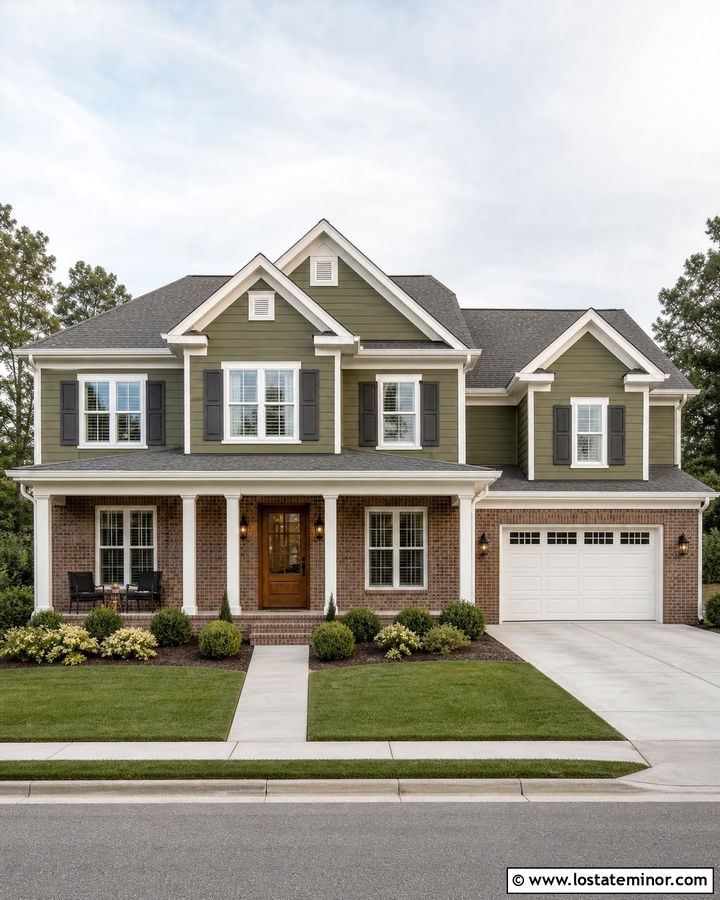
Existing brick can look refreshed beside moss green siding and warm white trim. First, identify the dominant colors in the brick, such as muted red, brown, tan, or charcoal. Choose a moss green that feels subdued enough to support that variation. Use white on the window frames, fascia, porch posts, and garage surround to create breathing room between the two stronger materials. A stained wood front door connects naturally with brown tones in the masonry. Keep shutters dark bronze or charcoal rather than adding another bright color. If brick covers the lower story, moss green siding above can make the house appear lighter. Clean landscaping, simple black lights, and a neutral walkway finish the composition. Leaving quality brick unpainted also preserves its useful texture and visual warmth.
20. Moss Green Modern House With Black Trim
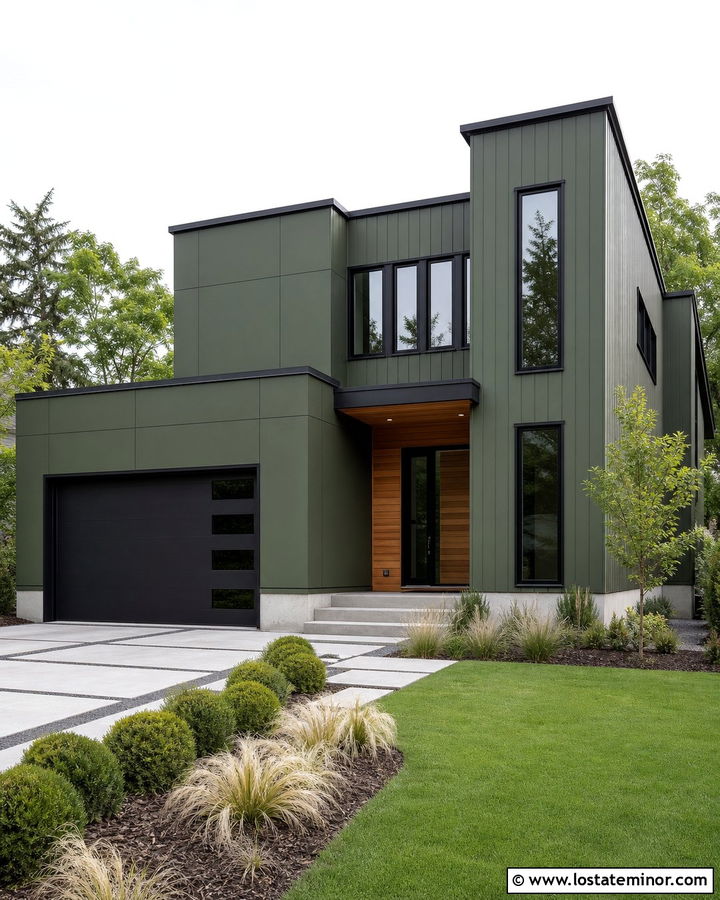
A modern house gains confident contrast from moss green walls and narrow black trim. Use smooth vertical siding or large fiber-cement panels to keep the green surfaces visually clean. Matte black window frames, gutters, parapet edges, and garage doors create precise lines across the facade. Add natural cedar around the recessed entrance so the front door remains welcoming rather than hidden within the darker details. Pale gray stone or concrete can cover the foundation and steps. The roof should be flat, low-pitched, or visually simple to support the contemporary appearance. Keep landscaping architectural with ornamental grasses, clipped shrubs, and broad concrete pavers. The final scheme works because black defines the structure, cedar introduces warmth, and moss green supplies enough color to keep the home from feeling cold.
21. Moss Green House With Cream Trim And Brown Roof
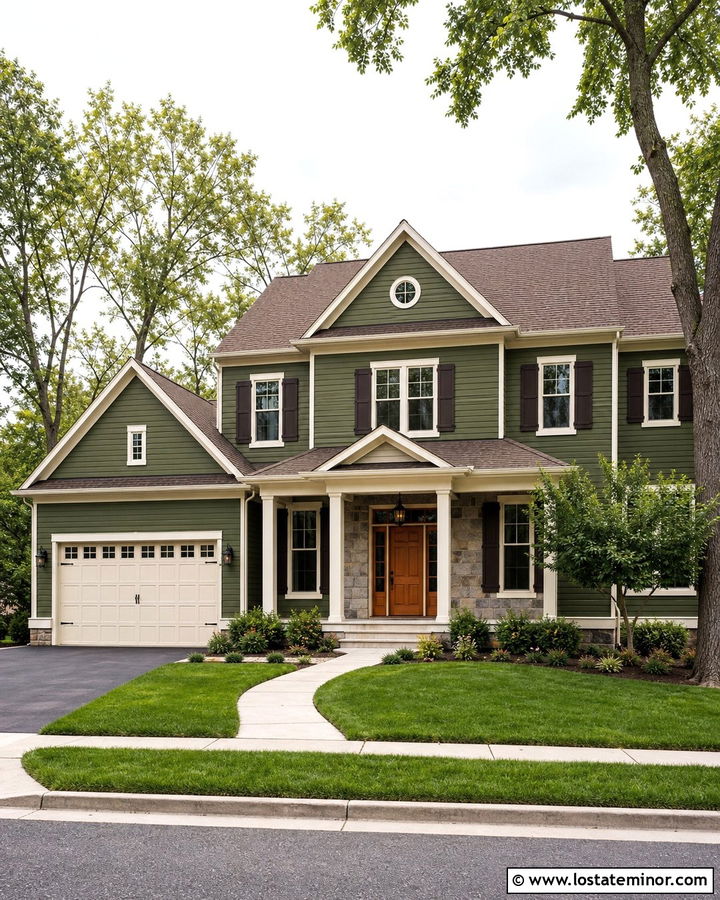
Cream trim and a brown roof create one of the warmest combinations for a moss green exterior. This palette suits homes surrounded by mature trees, natural stone, or established gardens. Use cream around the windows, eaves, porch columns, and garage door. A medium chocolate-brown roof will visually cap the green siding without creating the severity of black. Repeat the roof color through shutters or a small metal awning, but avoid covering too many features in dark brown. A natural oak front door adds another warm layer. Beige and gray fieldstone can anchor the base while connecting all three main colors. Finish with a light walkway and varied greenery. The overall facade feels comfortable, traditional, and carefully blended rather than sharply contrasted.
22. Moss Green House With Gray Trim And Stone
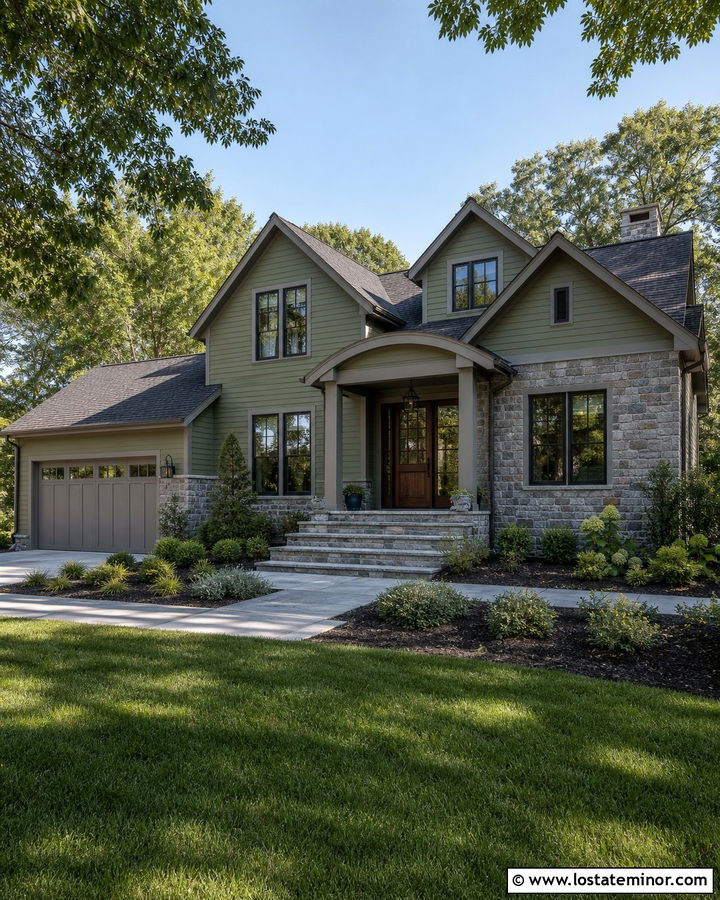
Cool gray trim helps moss green siding coordinate with gray stone while giving the exterior a tailored finish. Select a medium gray that is noticeably different from both the body color and masonry. Use it on the window surrounds, fascia, garage door, and porch beam. If the stone contains warmer beige or brown pieces, add a natural wood front door to keep the palette from becoming too cool. A charcoal roof can repeat the darkest tones in the masonry and create a clear top edge. Keep metal fixtures in dark bronze or black for consistency. Wide stone steps and a simple concrete path will make the foundation feel intentional. This combination works particularly well on transitional homes where traditional siding meets cleaner windows, simplified columns, and restrained detailing.
23. Moss Green House With White Trim And Wood Garage
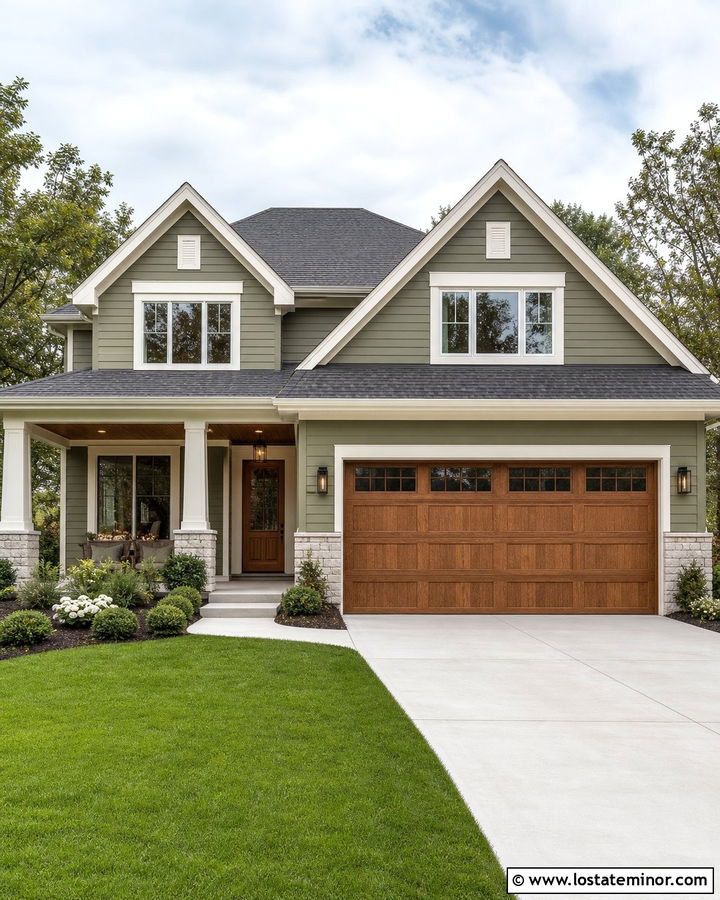
A natural wood garage door can become a strong focal point against moss green siding and fresh white trim. Choose a medium stain that shows the wood grain without turning orange. Use the same tone on the front door or porch ceiling so the garage does not feel like an isolated feature. White trim should frame the windows, roofline, garage opening, and porch columns. Add black or bronze hardware to create crisp definition on the wood surfaces. A gray shingle roof and light stone foundation keep the surrounding materials quiet. This design works well on a suburban two-story home where the garage occupies a large part of the street-facing facade. Coordinating the garage with smaller wood details distributes its visual weight and makes the complete exterior feel more balanced.
24. Moss Green House With Dark Olive Trim
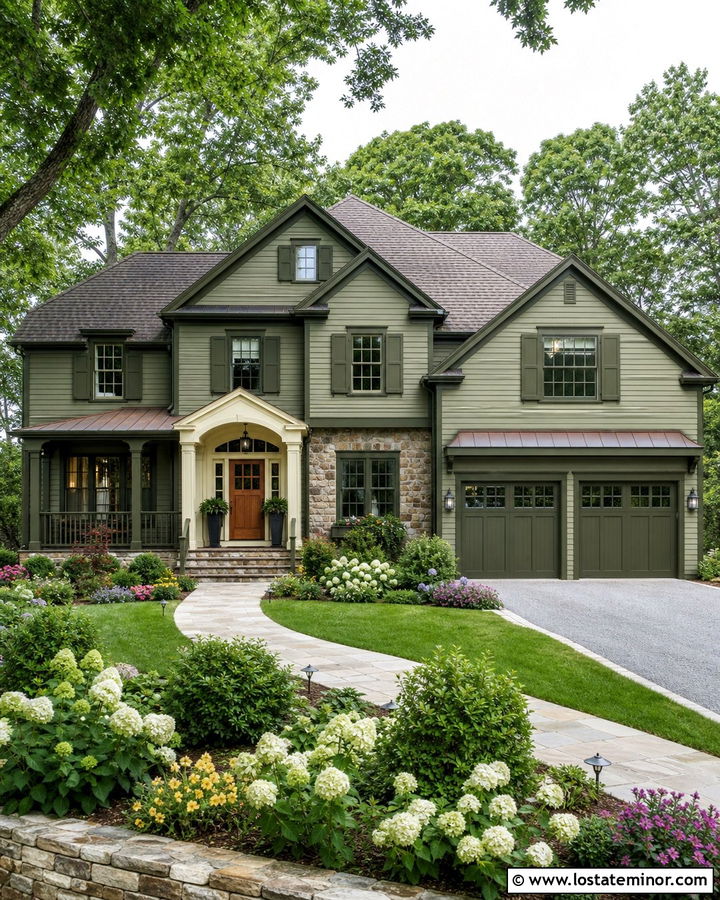
Dark olive trim creates a sophisticated monochromatic scheme around moss green siding. Use the deeper green on window frames, shutters, fascia, porch railings, and garage doors. The two greens should share similar undertones but differ enough in depth to remain distinct from the curb. A warm cream front door surround can add a small area of brightness near the entrance. Choose a natural wood door or a muted black door depending on how much contrast the home needs. Brown-gray roofing and mixed fieldstone reinforce the layered outdoor palette. This approach is especially attractive on traditional homes with numerous windows because it outlines each opening without introducing a stark neutral. Add lighter paving and flowering plants to prevent the overall composition from appearing too dark or visually dense.
25. Moss Green Bungalow With Khaki Trim
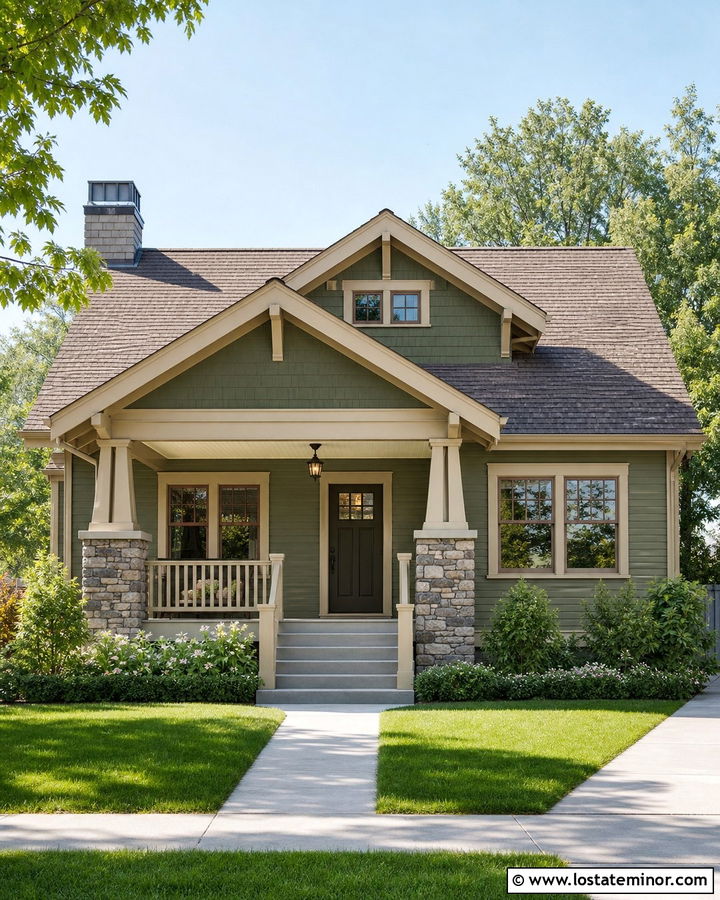
Khaki trim gives a moss green bungalow a soft, earthy outline that complements broad porches and low rooflines. Apply the khaki color to porch columns, window casings, fascia, and decorative gable beams. Use a darker brown-green on the front door and porch railings for extra depth. Stone piers containing tan and gray tones can connect the trim to the foundation. A weathered brown roof will preserve the warm, natural direction of the scheme. Keep the porch ceiling pale cream to reflect more light around the entry. Low hedges, flowering ground cover, and a straight concrete walkway create an approachable front yard. This low-contrast combination suits smaller houses because it highlights the architecture gently, allowing the entire exterior to feel wider, calmer, and visually unified.
26. Moss Green Coastal House With Blue Gray Trim
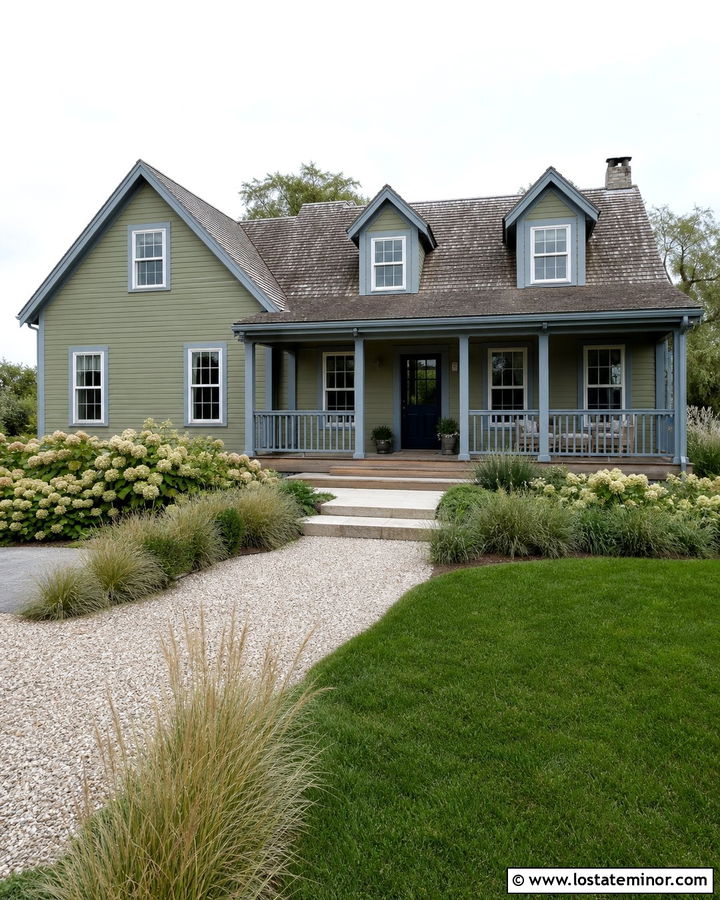
Blue-gray trim gives a moss green coastal house a cooler, breezier appearance while preserving its earthy foundation. Choose a soft blue-gray for window casings, porch railings, fascia, and dormers. Add white window sashes so the green and blue-gray remain clearly separated. A deep navy front door can provide a stronger version of the trim color at the entry. Weathered gray roof shingles, pale stone steps, and natural wood decking support the relaxed palette. Use simple porch columns and wide windows to keep the facade open and bright. Landscaping can include ornamental grasses, hydrangeas, and a shell-colored gravel path. The finished scheme feels appropriate near the water without relying on a completely blue exterior, and the moss green helps the home connect naturally to surrounding vegetation.
27. Moss Green Midcentury House With Mushroom Trim
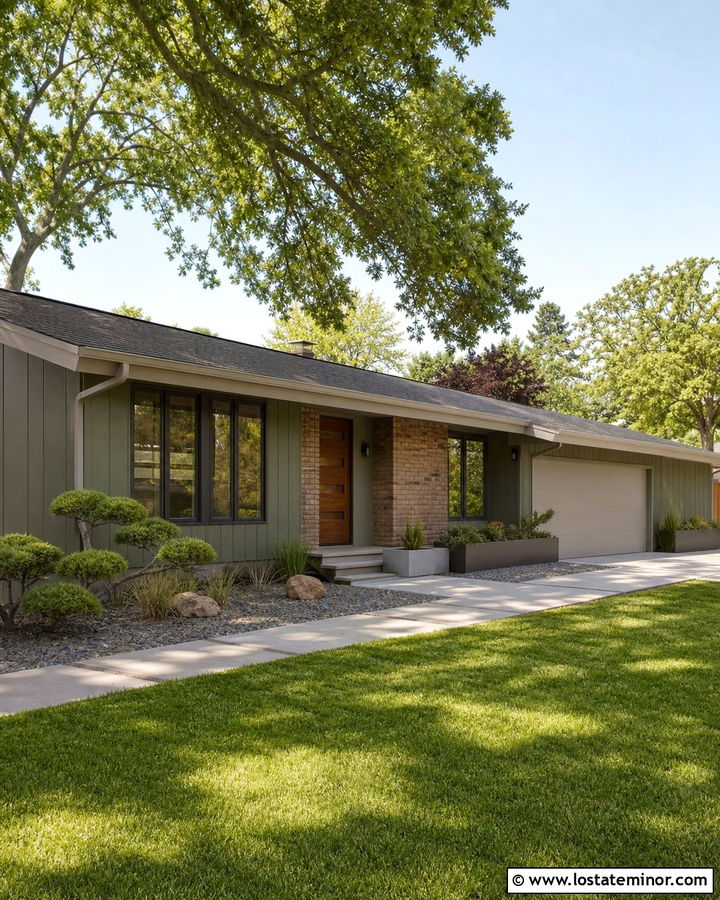
Mushroom-colored trim gives a moss green midcentury home a warm neutral framework. Use it on the fascia, soffits, garage door, and selected wall panels rather than outlining every window. Dark bronze window frames and a flat-panel walnut door add definition while preserving the period-inspired palette. If the house has brick, leave it natural and choose a mushroom tone that connects with its lighter mortar or brown variation. A low charcoal roof reinforces the long horizontal lines. Large rectangular planters, gravel beds, and sculptural shrubs complement the simple facade. Moss green should remain the dominant color across the main siding so the architecture does not become fragmented. This combination updates the exterior while respecting its low profile, broad overhangs, and straightforward materials.
28. Moss Green Queen Anne With Off White Trim
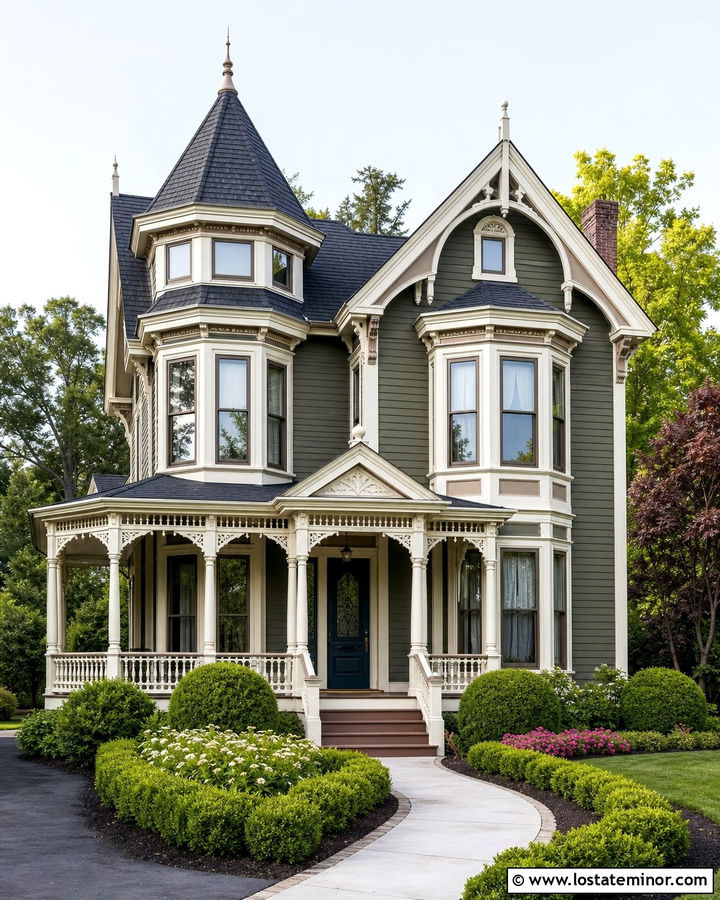
Off-white trim can clarify the ornate features of a moss green Queen Anne without creating an overly sharp contrast. Use it on the wraparound porch, spindlework, bay windows, brackets, and gable edges. Introduce muted taupe on narrow decorative panels to add depth and prevent the trim from reading as one solid mass. A dark teal front door provides a rich accent that remains compatible with moss green. Charcoal roof shingles unify towers, dormers, and steep roof sections. Keep porch flooring medium brown and use aged bronze hardware for warmth. Formal shrubs mixed with softer flowering plants will frame the detailed facade. A controlled three-color approach allows the architecture to remain visible while avoiding the cluttered effect that can occur when every Victorian detail receives a different paint color.
29. Moss Green French Country House With Putty Trim
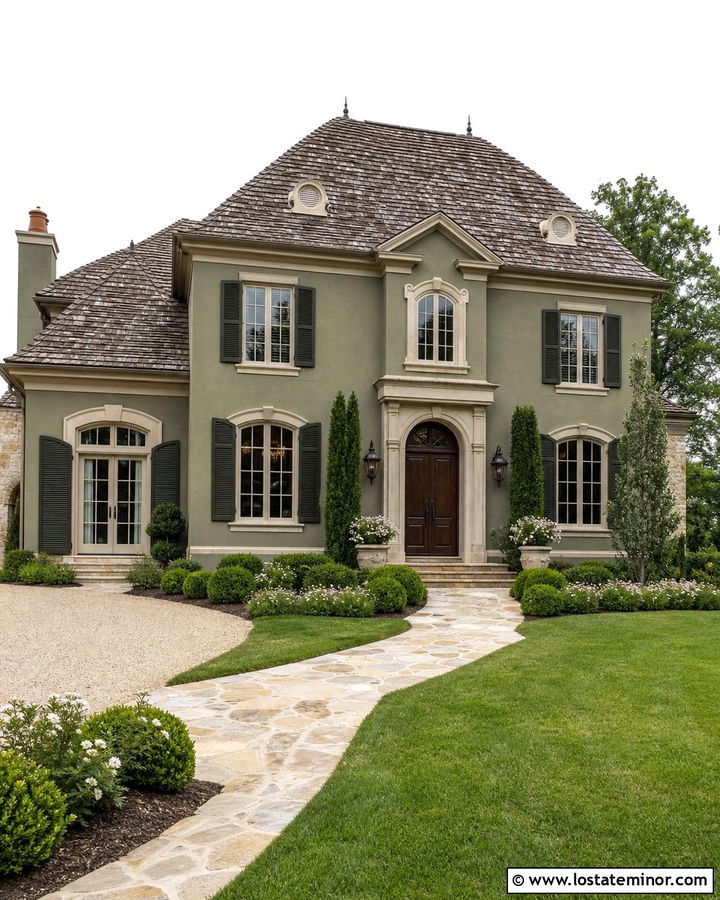
Putty trim complements the stone, stucco, and curved details of a moss green French country home. Apply moss green to the main stucco or lap-sided walls, then use warm putty around windows, doors, cornices, and arched openings. A dark brown front door with subtle iron hardware creates a substantial entrance. Choose limestone or manufactured stone containing cream, gray, and muted gold so it relates naturally to the trim. A brown-gray roof with varied texture supports the relaxed European influence. Keep shutters slightly darker than the siding rather than matching the door exactly. Curved planting beds, clipped shrubs, and an irregular stone walkway soften the formal facade. This scheme succeeds through close, earthy colors that emphasize material texture instead of relying on high contrast.
30. Moss Green Lake House With Espresso Trim
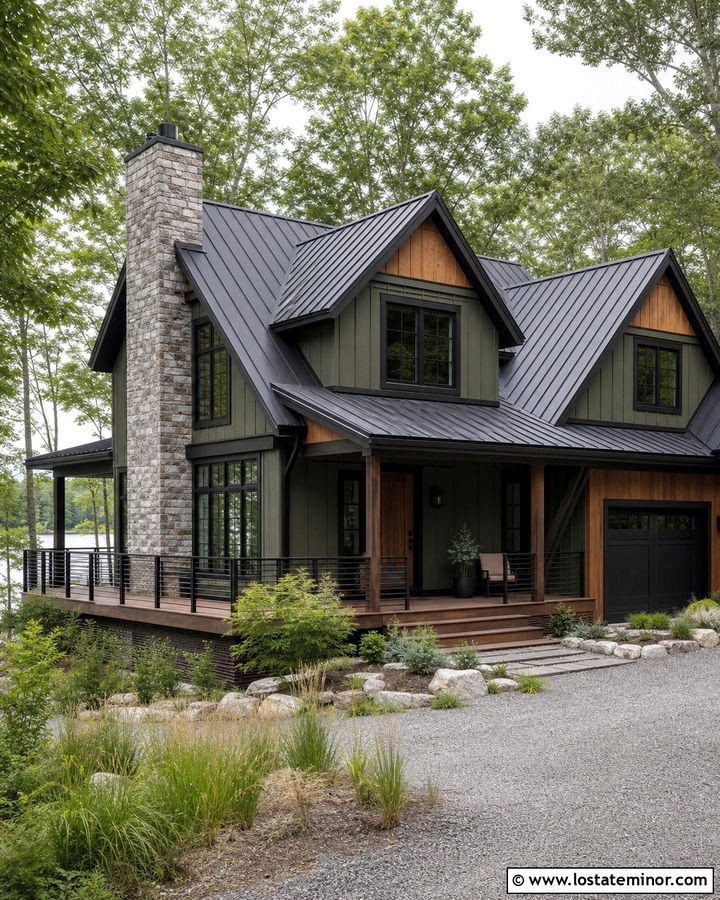
Espresso trim gives a moss green lake house depth while allowing broad windows and natural surroundings to remain central. Apply the dark brown to window frames, fascia, deck railings, and exposed roof beams. Use stained cedar on the front door, deck floor, and selected gable panels to create warmer contrast. A charcoal metal roof adds durability to the visual scheme and relates to black exterior lights. Gray stone around the foundation or chimney anchors the house near the shoreline or wooded lot. Large windows should remain unobstructed so reflected daylight brightens the darker palette. Frame the full facade with native grasses, low shrubs, and a simple gravel walkway. The combination feels substantial and relaxed, with enough contrast to remain clear in both direct sun and tree-filtered shade.
Conclusion:
These 30 Moss Green House Design With Trim Ideas show how one earthy exterior color can support traditional, rustic, transitional, and modern architecture. White and cream trim create brightness, while taupe, khaki, gray, and putty provide softer definition. Black, charcoal, bronze, espresso, and dark olive deliver stronger structure. Natural cedar, brick, stone, and copper can then add warmth and texture. Before committing, paint large samples beside the roof, masonry, windows, and other permanent features. View them at several times of day because moss green can appear warmer, cooler, lighter, or grayer as conditions change. A coordinated whole-house palette will always look more intentional than selecting siding and trim colors separately.

Related posts: