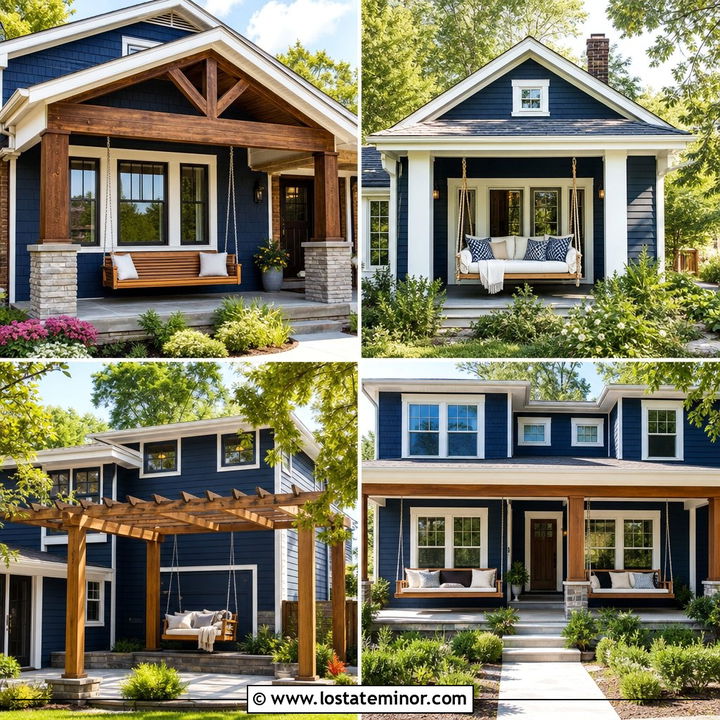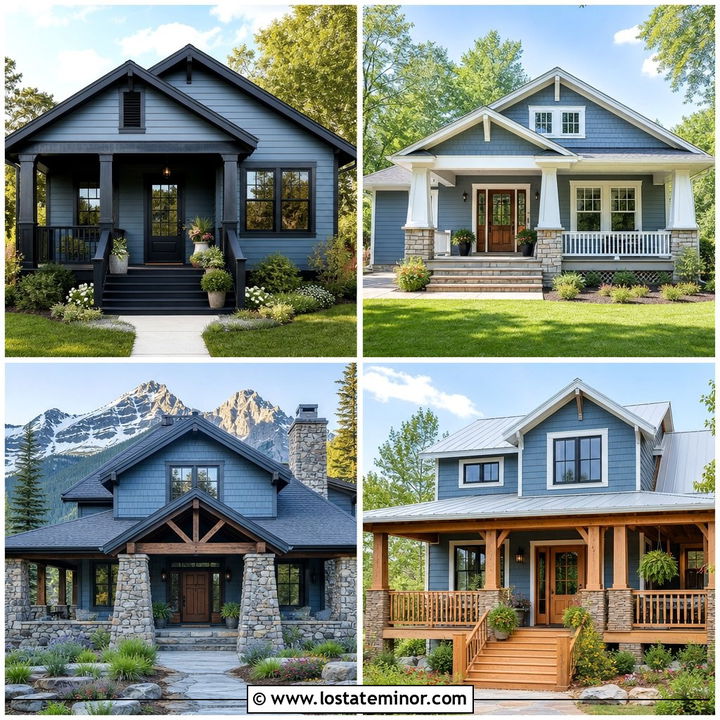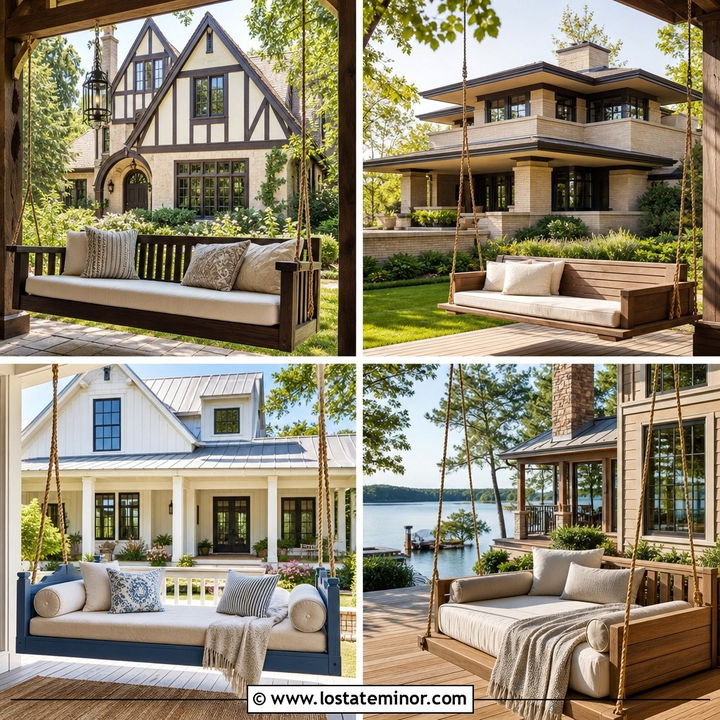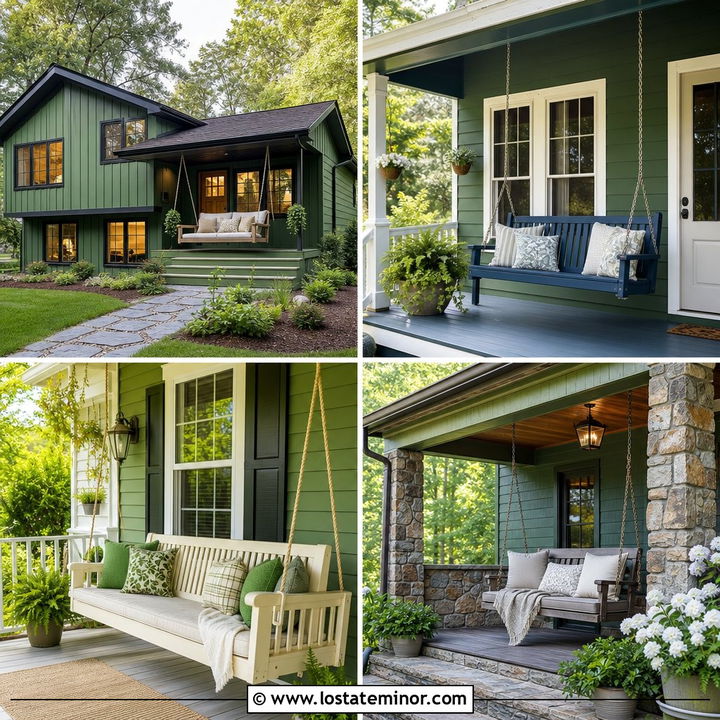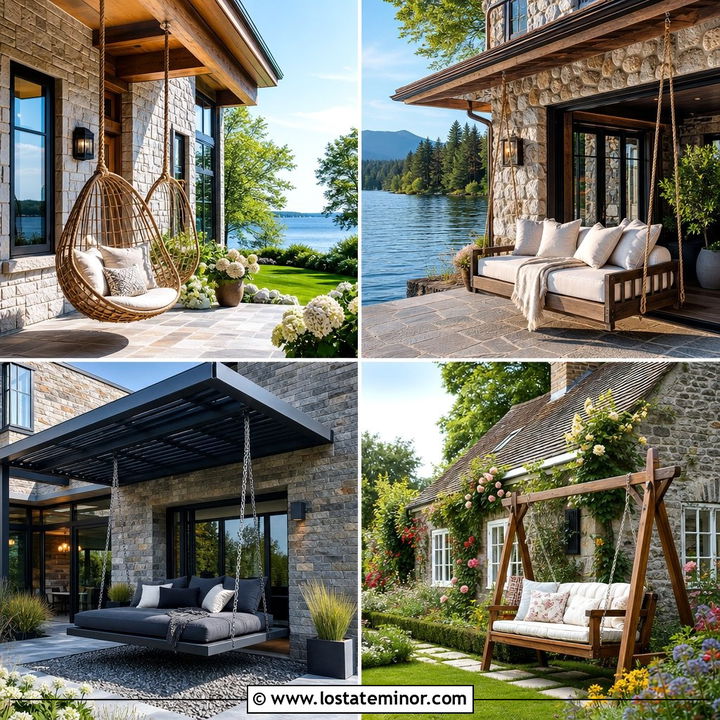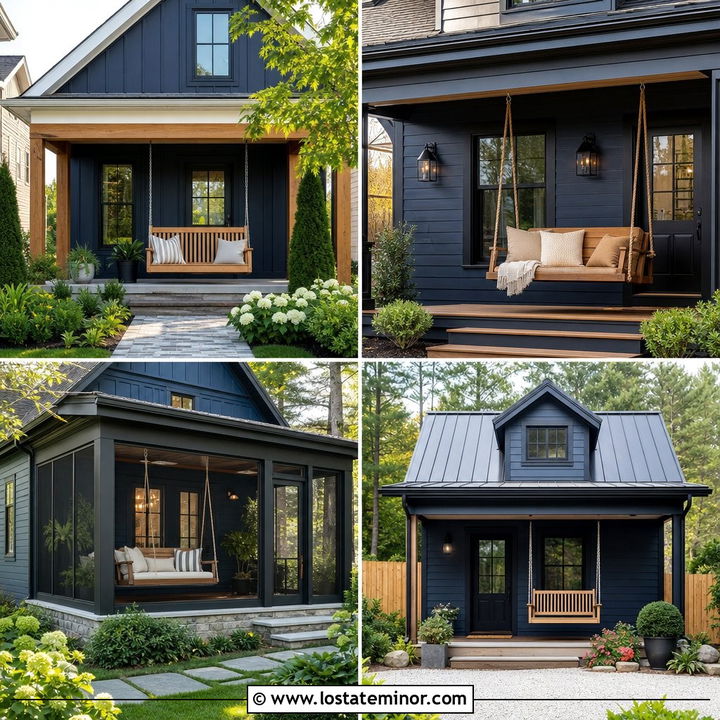
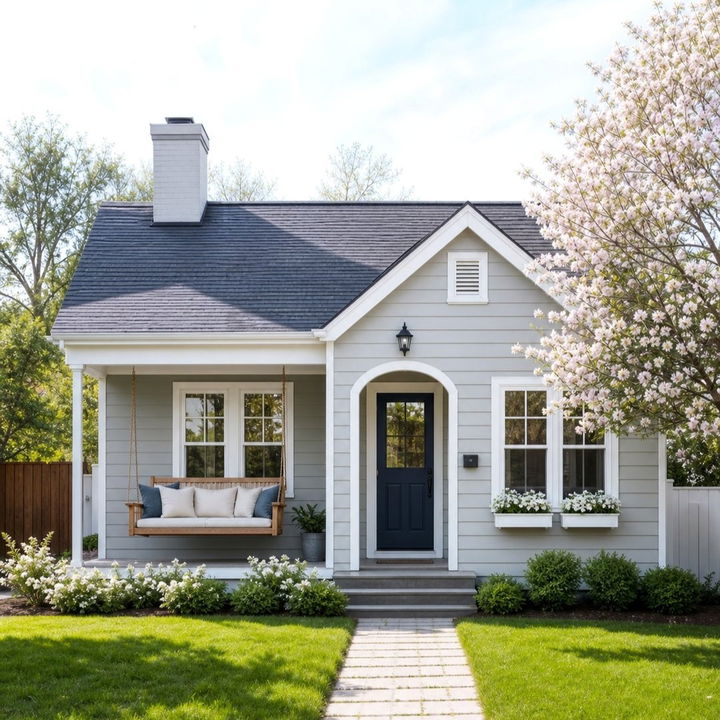
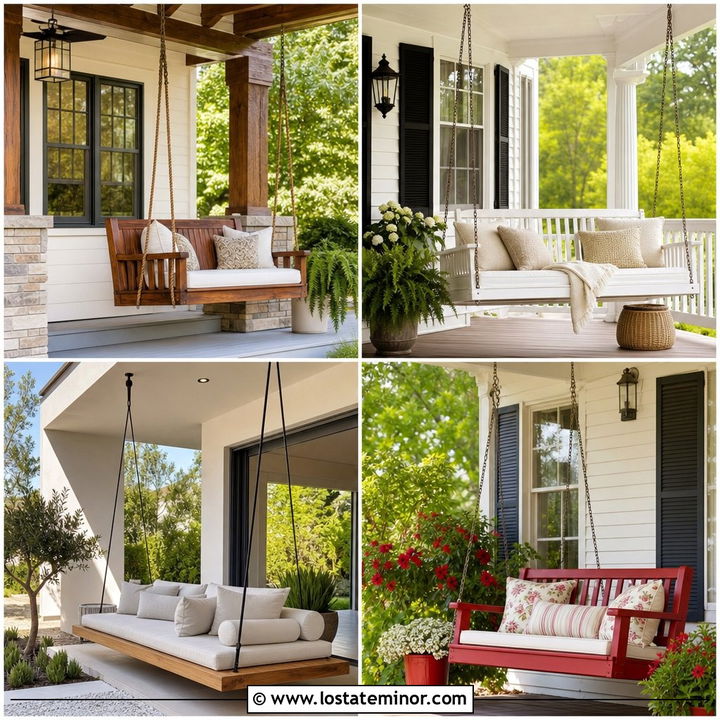
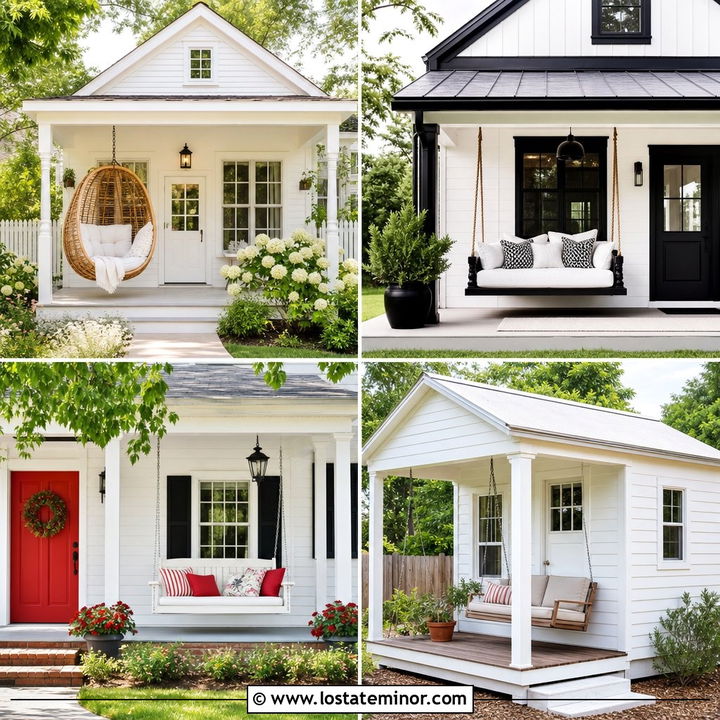
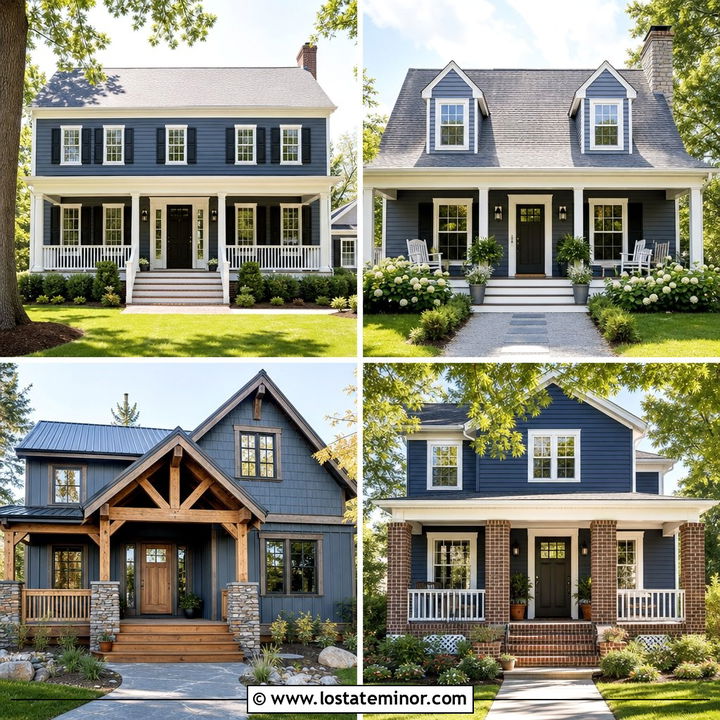
A dusty blue exterior brings a soft, welcoming character to almost any home, while a well-placed swing makes the facade feel comfortable and lived in. The key is treating both features as part of one complete curb-appeal plan. Trim, roofing, porch materials, landscaping, and swing finishes should work together rather than compete for attention. Dusty blue is especially flexible because its muted gray undertones pair naturally with crisp white, warm wood, charcoal, brick, and stone. It can look coastal, traditional, rustic, or modern depending on those supporting details. The following 30 Dusty Blue House Design With Swing Ideas explore complete exterior combinations for different house shapes, porch sizes, budgets, and architectural settings. Use them to find a balanced look that suits your property through these 30 Dusty Blue House Design With Swing Ideas.

1. Dusty Blue Craftsman House With Cedar Porch Swing
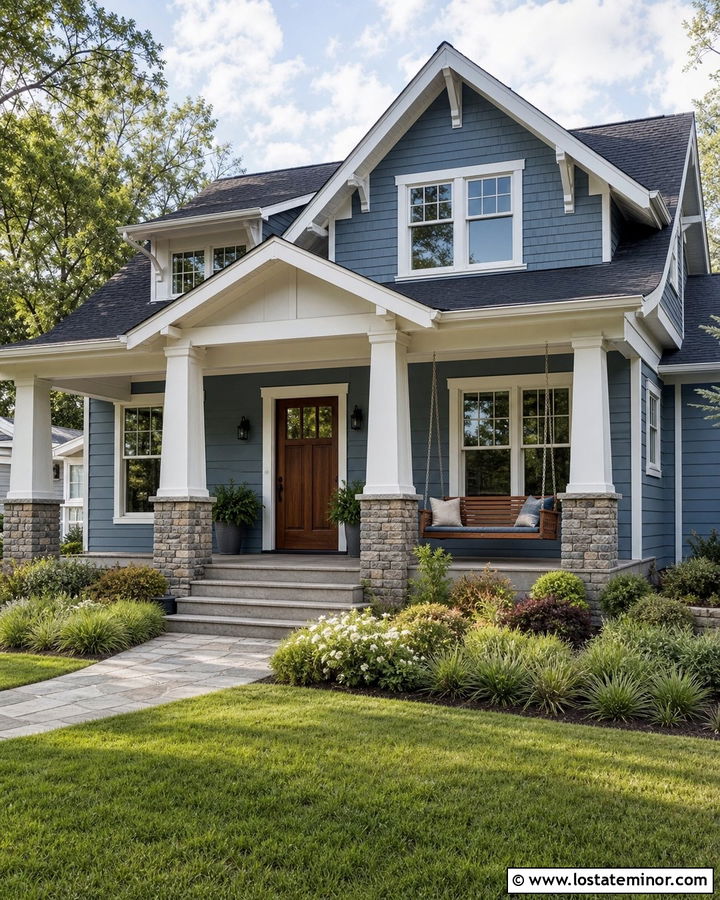
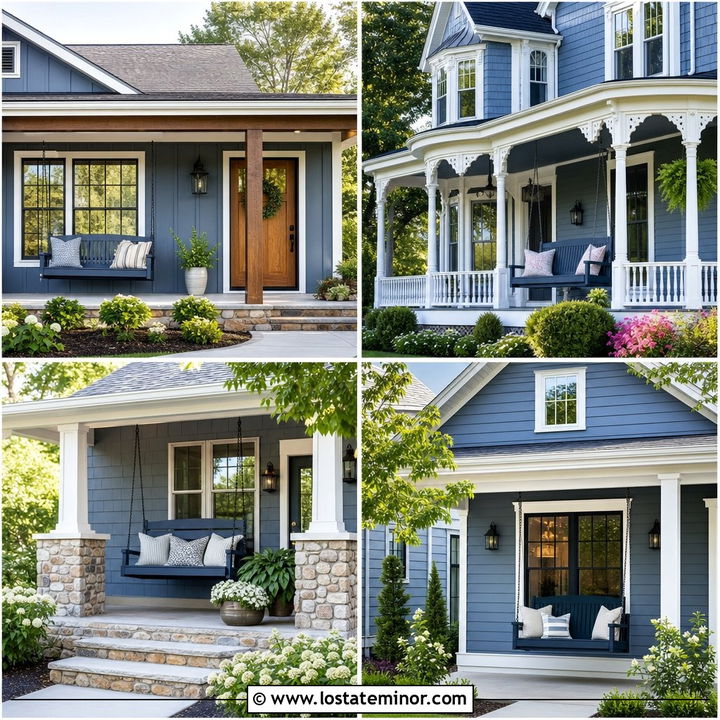
Warm cedar gives a dusty blue Craftsman exterior an inviting, handcrafted finish. Use muted blue-gray lap siding across the main facade, then define the roofline, windows, and tapered porch columns with creamy white trim. A natural cedar swing becomes the visual bridge between the cool siding and other warm details, including a stained front door and exposed porch beams. Add a charcoal architectural-shingle roof to ground the lighter palette. A stone column base containing both gray and sandy brown tones will connect every color without making the facade busy. Finish the porch with simple neutral cushions, black lanterns, and large planters. Low ornamental grasses and rounded shrubs can frame the walkway while allowing the porch swing to remain visible from the curb.
2. Dusty Blue Farmhouse With White Porch Swing
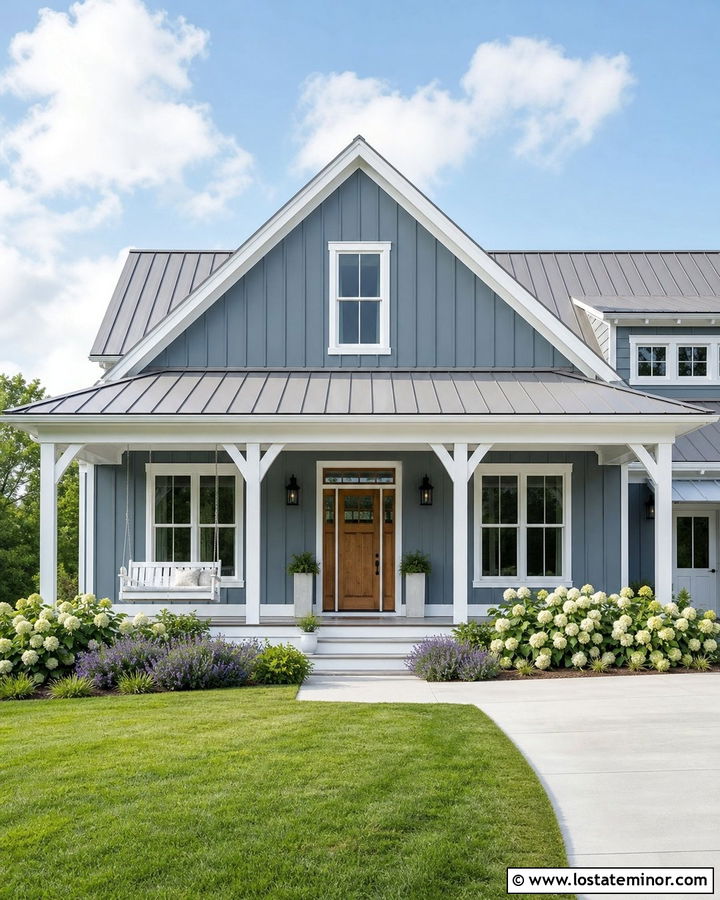
Picture a wide farmhouse porch where a clean white swing gently stands out against dusty blue siding. This combination feels bright and familiar without becoming overly stark. Paint the board-and-batten body muted dusty blue, then repeat white on the swing, porch columns, window trim, fascia, and railings. A medium-gray metal roof adds definition and handles the transition between the cool exterior colors. For warmth, choose a medium-stained oak front door and matching porch ceiling beams. Black barn lights and simple black door hardware provide small points of contrast. Keep the landscaping loose and natural with hydrangeas, lavender, and soft grasses. A light gray porch floor will hide everyday dust better than pure white while preserving the farmhouse’s fresh, open appearance.
3. Dusty Blue Coastal Cottage With Rope Swing
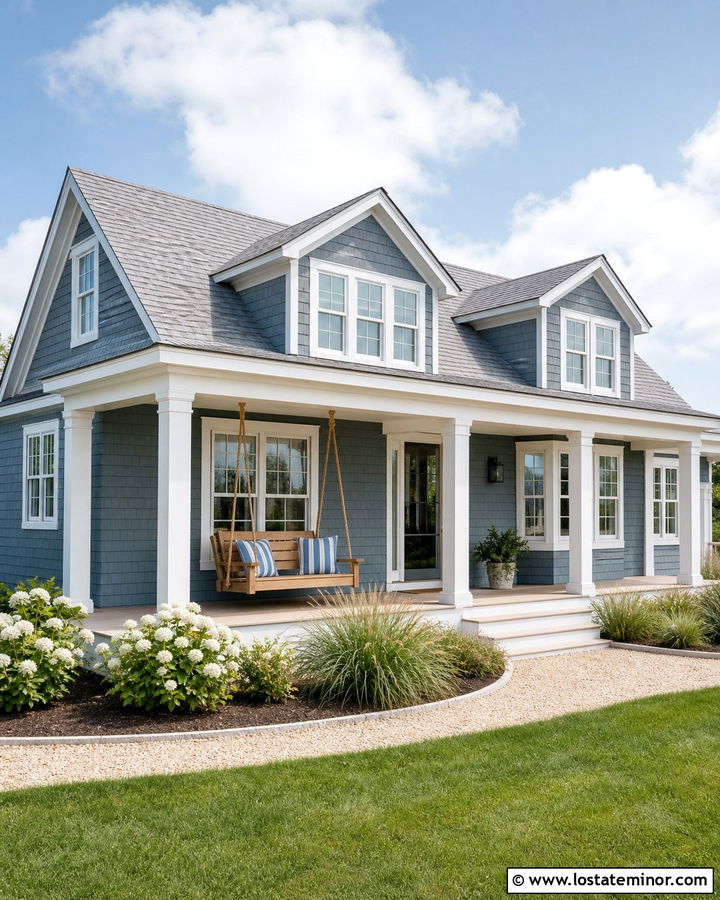
A rope-hung swing brings relaxed coastal character to a small dusty blue cottage. Choose weathered blue-gray shingle siding so the exterior has visible texture, then add warm white trim around the windows, porch roof, and front door. A natural teak swing suspended by thick marine-style rope provides a casual focal point without feeling heavy on a compact porch. Pale gray roof shingles and a sandy beige porch floor support the coastal palette. Consider a soft white front door with brushed nickel hardware to keep the entry light. Blue-striped or oatmeal swing cushions can add pattern in a controlled way. Surround the cottage with beach grasses, white flowering shrubs, and a curved shell or gravel path. The result feels breezy and cohesive, even in a landlocked suburban neighborhood.
4. Dusty Blue Colonial House With Black Swing
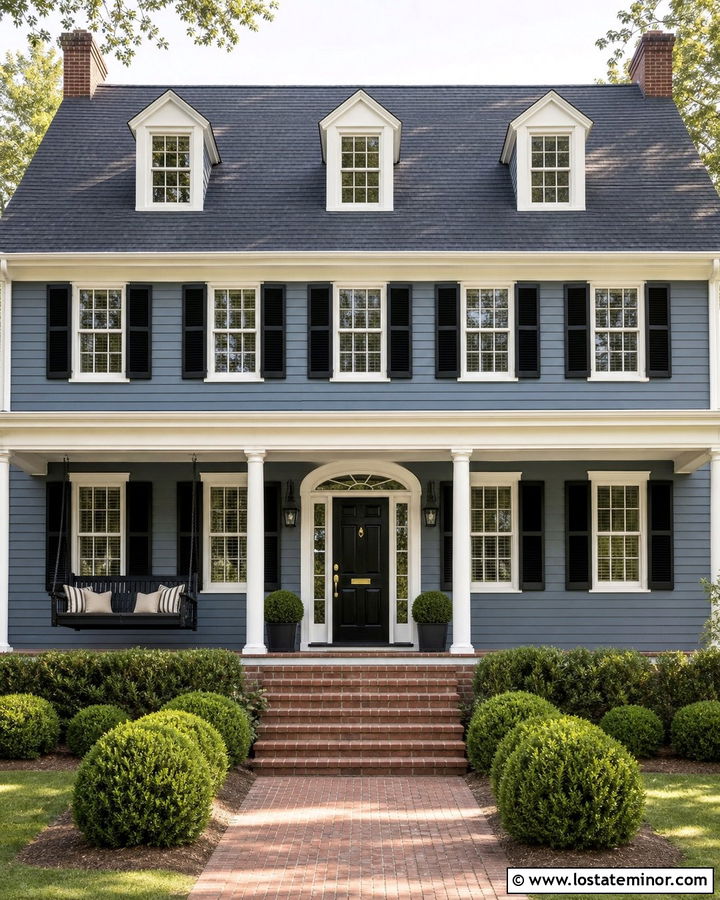
Does your Colonial exterior need contrast without losing its traditional symmetry? Pair dusty blue clapboard siding with crisp white corner boards, window trim, columns, and dentil molding. Then introduce a classic black wooden swing on one side of the covered porch. The black finish should connect with existing architectural elements, such as shutters, lanterns, door hardware, and a dark charcoal roof. A glossy black front door can complete the formal palette, while cream swing cushions prevent the porch seating from looking too severe. Red brick steps or a brick walkway will add warmth and historical character. Keep shrubs clipped and balanced on both sides of the entrance. This orderly landscaping strengthens the Colonial shape while the swing gives the carefully composed facade a more approachable, comfortable personality.
5. Dusty Blue Ranch House With Freestanding Swing
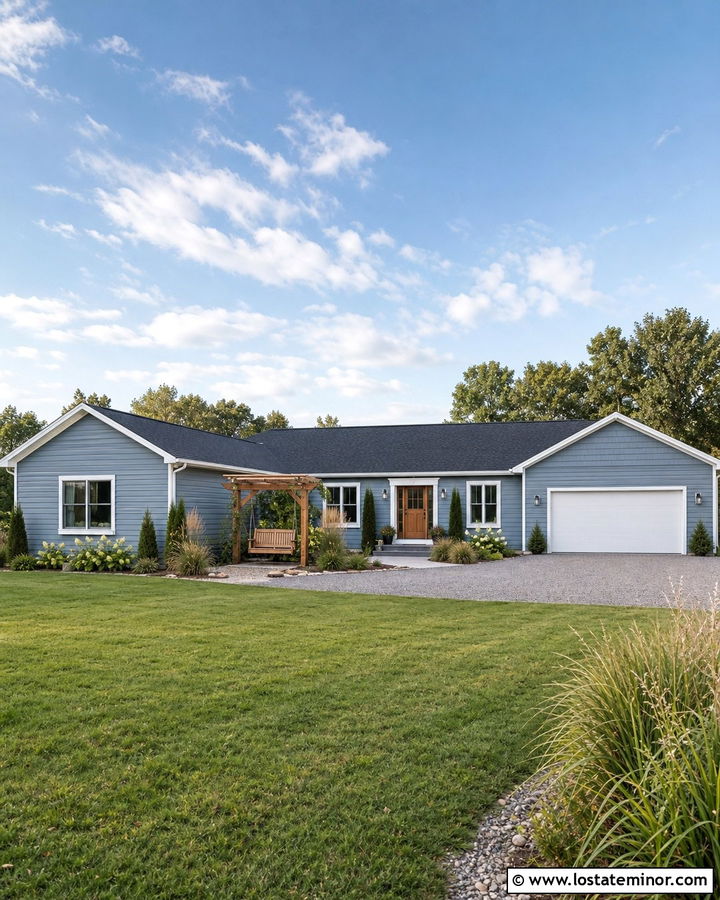
A ranch house without a covered porch can still feature an attractive front-yard swing. Paint the horizontal siding dusty blue and brighten the low roofline with soft white fascia, window trim, and garage surrounds. Place a freestanding cedar swing beneath a simple wood arbor near the front walkway, where it complements the long, horizontal architecture rather than blocking the facade. Repeat the cedar stain on the front door or garage accents to create continuity. A deep charcoal roof and black exterior lights will sharpen the otherwise quiet palette. Build a small gravel or paver pad under the swing for stability and easier maintenance. Layer ornamental grasses, compact evergreens, and flowering perennials around the arbor. This turns an unused section of lawn into a purposeful curb-appeal feature.
6. Dusty Blue Bungalow With Wicker Porch Swing
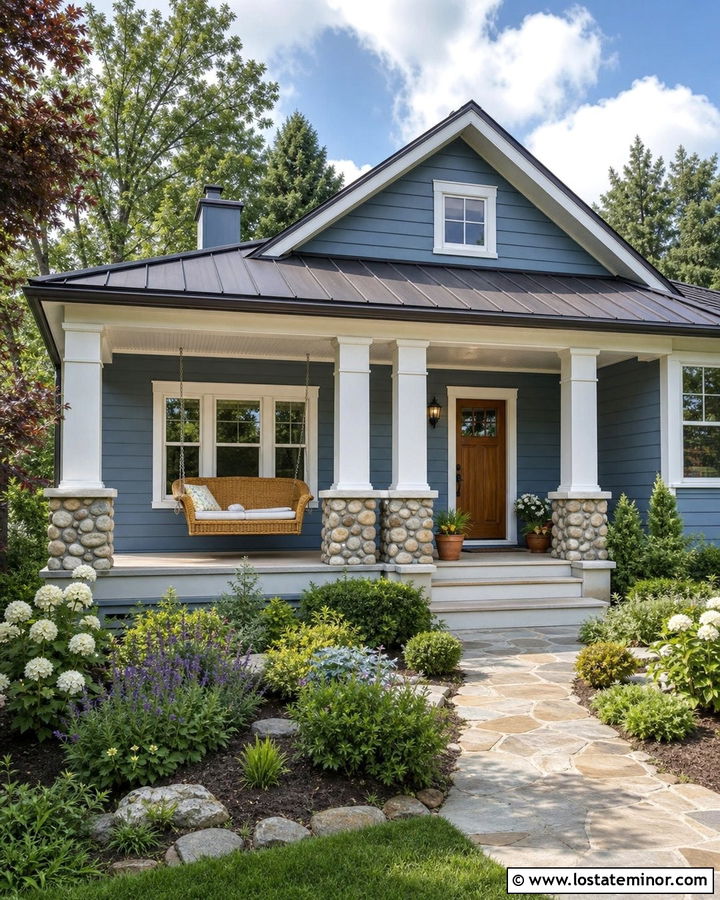
For a bungalow, texture matters just as much as color. Dusty blue lap siding creates a calm background for a woven wicker porch swing in a natural honey-brown finish. Frame the exterior with creamy white trim, substantial square columns, and a pale beadboard porch ceiling. A dark bronze roof or deep brown shingles can echo the wicker while emphasizing the bungalow’s broad eaves. Choose a warm wood front door with divided glass to strengthen the handcrafted look. The swing cushions can combine ivory fabric with small blue-gray patterns, keeping the seating connected to the siding. Use river-rock column bases, terracotta planters, and dense cottage landscaping along the porch foundation. Together, these materials produce a layered exterior that feels collected, comfortable, and appropriate for the home’s compact proportions.
7. Dusty Blue Cape Cod House With Bench Swing
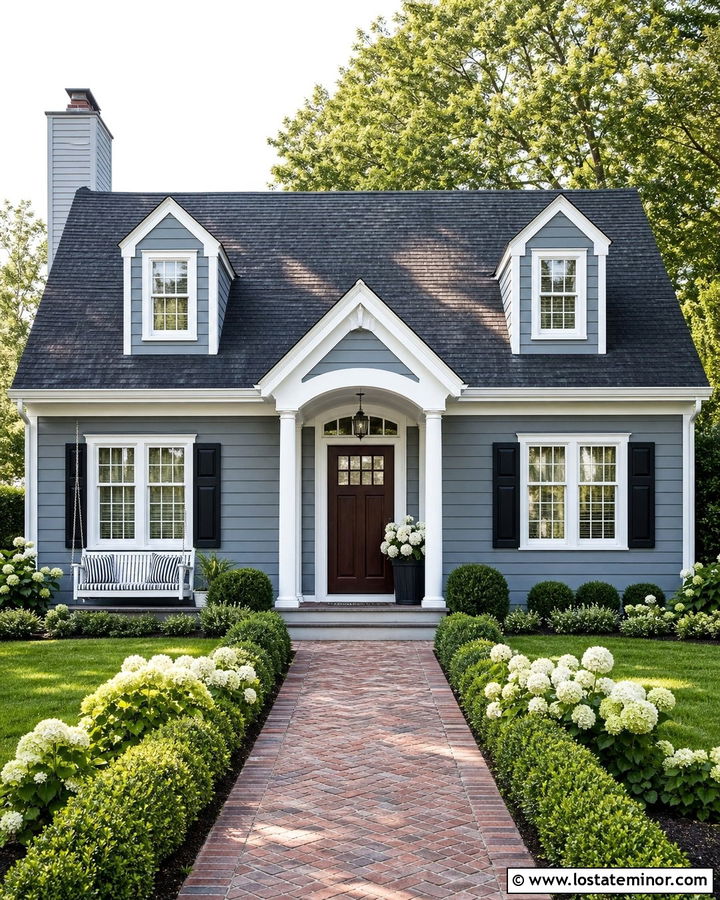
A compact bench swing fits naturally beneath the shallow covered entry of a dusty blue Cape Cod home. Keep the exterior traditional with blue-gray clapboard siding, bright white dormer trim, white corner boards, and simple black shutters. A white two-seat swing maintains the clean palette without crowding the smaller facade. Add navy or ticking-stripe cushions for gentle contrast. The front door can provide warmth through a natural mahogany finish, while a weathered charcoal roof keeps the upper half grounded. If the porch is narrow, hang the swing at one end and leave a clear route to the entrance. Boxwood borders, hydrangeas, and a brick walkway will reinforce the orderly cottage appearance. The entire scheme feels polished from the street while still offering a practical place to relax.
8. Dusty Blue Victorian House With Ornate Swing
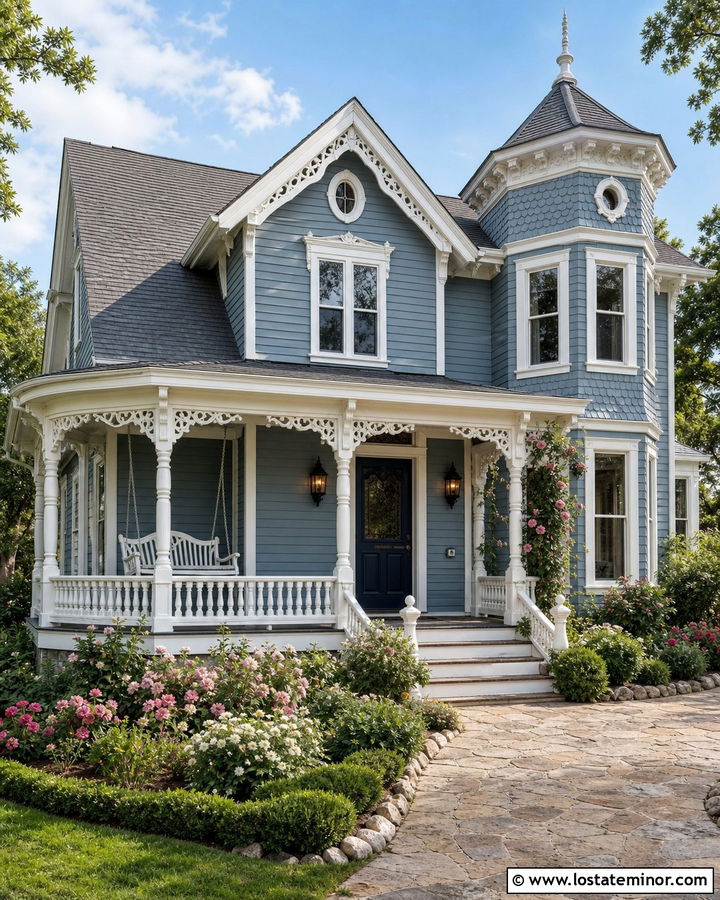
Decorative architecture can handle a more detailed swing, especially when the colors remain controlled. Cover the Victorian facade in dusty blue, then highlight scalloped shingles, porch brackets, window surrounds, and turned columns with warm white. Introduce a deep navy accent on selected trim bands or the front door to give the ornate details greater depth. An antique-inspired white swing with a slatted back or gentle scrollwork will suit the porch without introducing another strong color. Choose a medium-gray roof and dark bronze lighting to anchor the pale palette. Soft floral cushions can reference the home’s period charm, but avoid overly busy patterns. Curved planting beds, climbing roses, and a stone walkway will soften the tall architecture while creating a welcoming frame around the decorative porch and swing.
9. Dusty Blue Split-Level House With Covered Swing
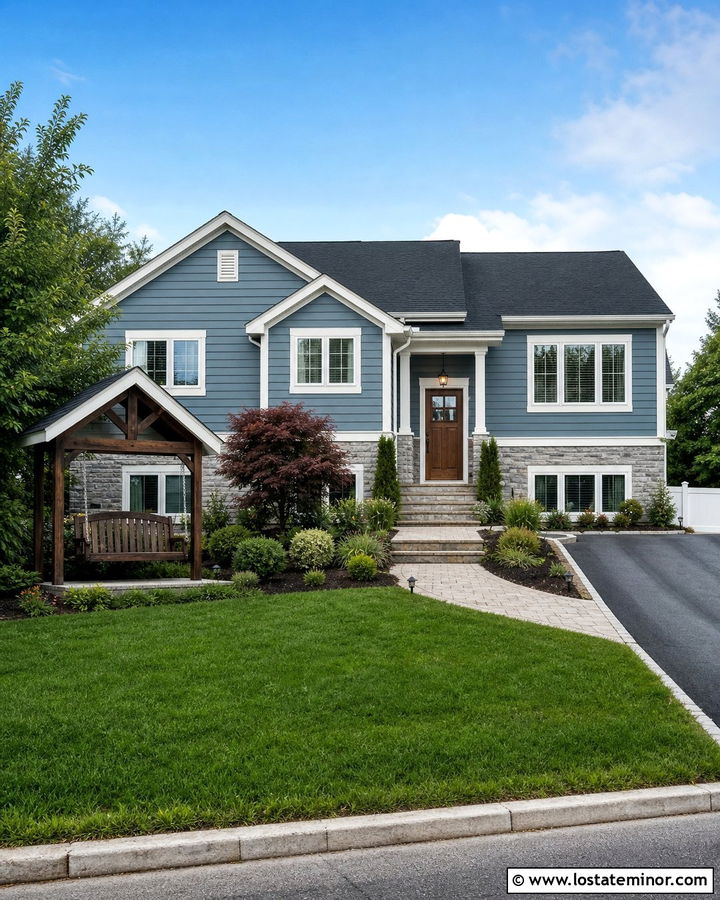
Split-level homes often need a stronger focal point at the entrance. A small roofed swing structure can balance the facade while creating a useful seating area. Paint the upper siding dusty blue and retain light gray stone or pale brick on the lower level. Use creamy white around the windows, garage door, roof edges, and new swing pavilion. A simple wood swing stained medium walnut introduces needed warmth between the blue siding and masonry base. Match the swing stain on the front door or planter boxes for a connected appearance. Charcoal roofing across both the house and swing cover will unify the separate forms. A broad paver path, layered shrubs, and a small ornamental tree can guide attention toward the entry. The completed design makes the split-level exterior feel intentional rather than divided.
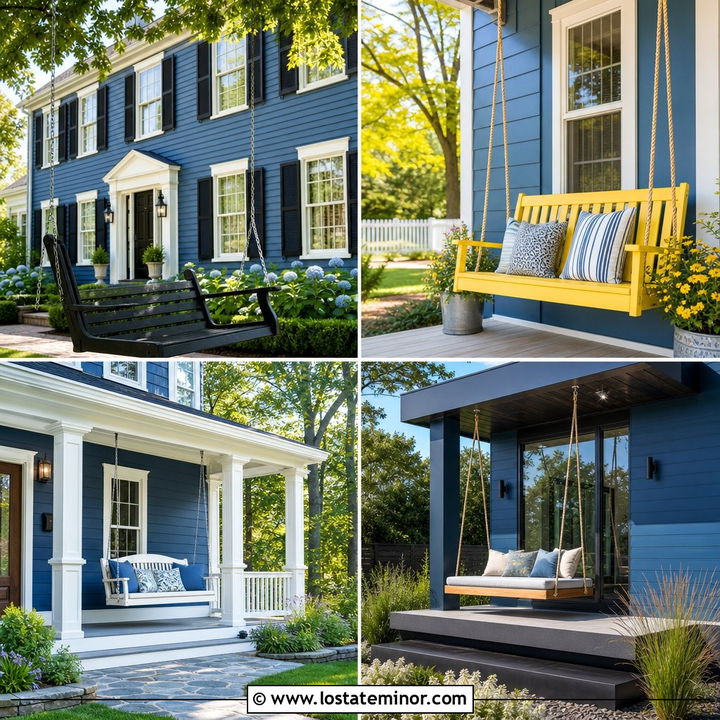
10. Dusty Blue Modern House With Platform Swing
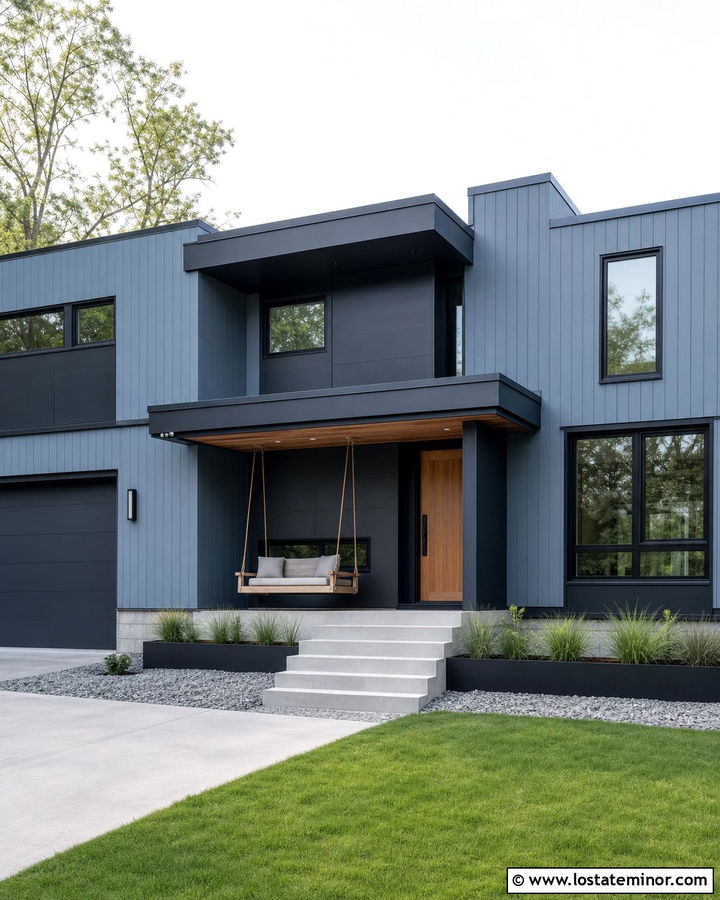
Clean architecture calls for a swing with an equally streamlined profile. Use dusty blue vertical siding on the main volumes of a modern house, then add charcoal panels or black-framed windows for crisp contrast. A low-profile platform swing made from pale cedar can hang beneath a flat-roofed entry canopy. Keep its ropes, chains, and cushions neutral so the rectangular form remains the focus. A warm wood front door should repeat the swing’s natural finish, helping soften the cool exterior palette. Concrete steps, gravel beds, and linear planters will support the modern geometry without making the property feel bare. Choose restrained landscaping, such as feather reed grass and compact evergreens. The dusty blue body prevents the facade from looking cold, while the suspended platform adds an unexpected sense of comfort.
11. Dusty Blue Cottage With Porch Bed Swing
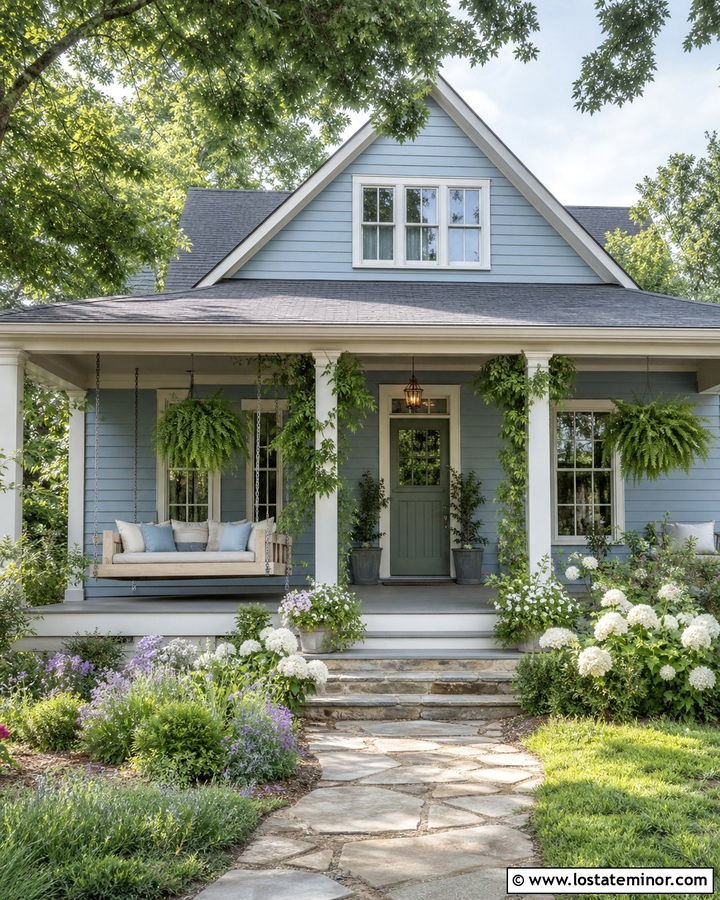
Few features make a deep cottage porch feel more inviting than a bed swing. Dusty blue clapboard siding forms a soothing background, while creamy white columns, railings, and window trim brighten the shaded area. Choose a substantial bed swing in a pale natural wood finish and dress it with thick oatmeal cushions, dusty blue pillows, and one subtle striped bolster. A warm gray porch floor will handle foot traffic while complementing a dark gray shingle roof. Add a muted sage front door if you want gentle color variation without disturbing the restful palette. Wall lanterns, hanging ferns, and climbing plants can frame the swing while leaving enough visual breathing room. Before installation, confirm that the overhead structure and mounting hardware can safely support the swing and its expected load.
12. Dusty Blue Southern House With White Swing
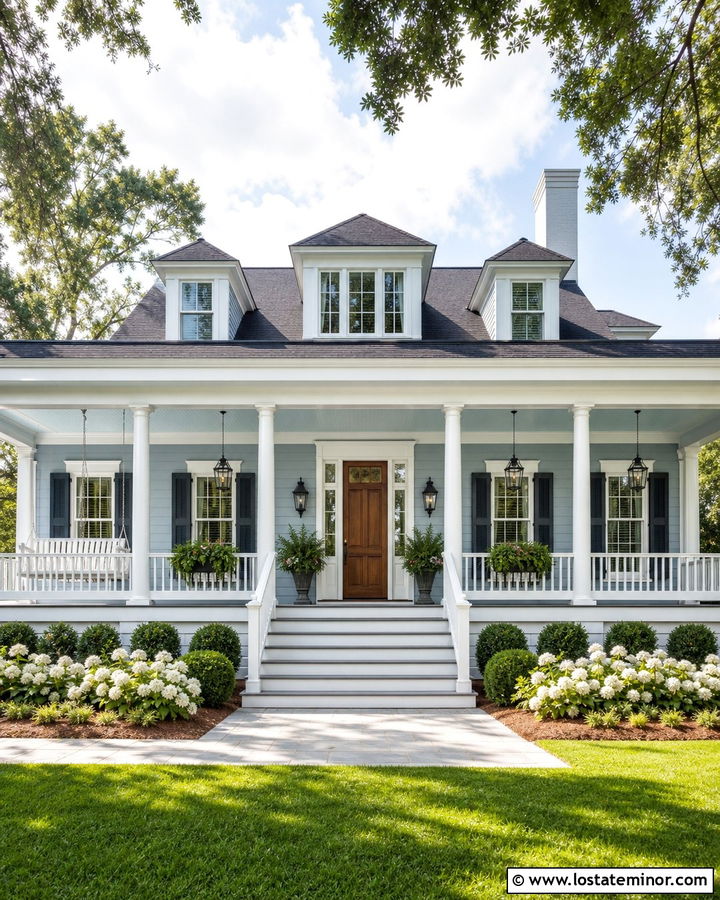
A long Southern porch looks elegant when dusty blue siding is paired with a simple white swing. Repeat the white finish across tall porch columns, railings, window trim, and the front-door surround to establish a graceful rhythm. A soft haint-blue porch ceiling can create subtle tonal layering without exactly matching the exterior walls. Choose a medium-gray porch floor and a charcoal roof to keep the pale colors grounded. The front door could be stained walnut or painted deep navy, depending on whether you prefer warmth or stronger contrast. Add neutral cushions with small blue patterns to the swing. Symmetrical planters, ceiling fans, and traditional lanterns complete the outdoor living area. Broad steps and layered foundation shrubs will make the full porch feel connected to the yard rather than elevated above it.
13. Dusty Blue Lake House With Wood Swing
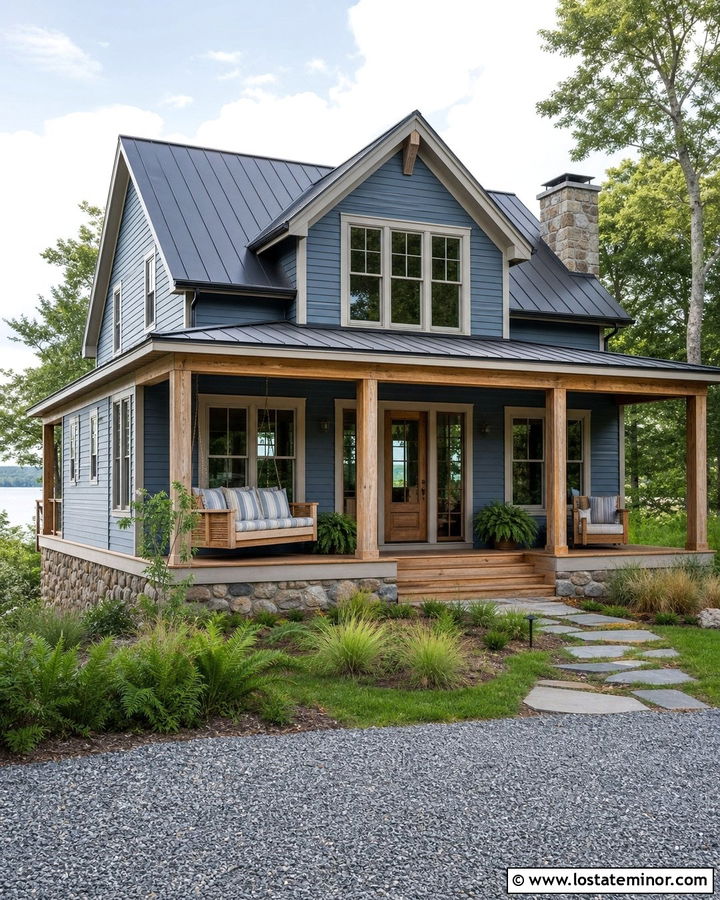
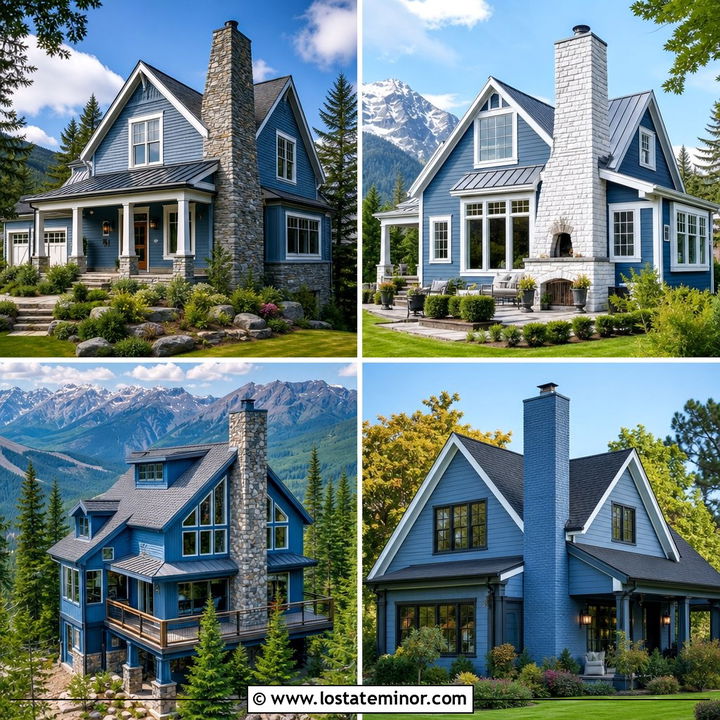
A dusty blue lake house feels most natural when its color scheme reflects water, weathered wood, and surrounding trees. Pair muted blue-gray siding with light greige trim instead of sharp white for a softer transition. Hang a chunky wood swing beneath the covered porch, using a medium cedar stain that coordinates with deck boards, support beams, and the front door. A dark metal roof will offer clean contrast and reinforce the casual retreat character. Select fade-resistant cushions in cream, slate blue, or narrow stripes. Fieldstone around the foundation or porch columns can visually connect the structure to the landscape. Keep plantings informal with native grasses, ferns, and flowering shrubs. A gravel drive and broad stepping-stone path will complete the low-maintenance scheme while preserving the welcoming view of the swing.
14. Dusty Blue Brick House With Porch Swing
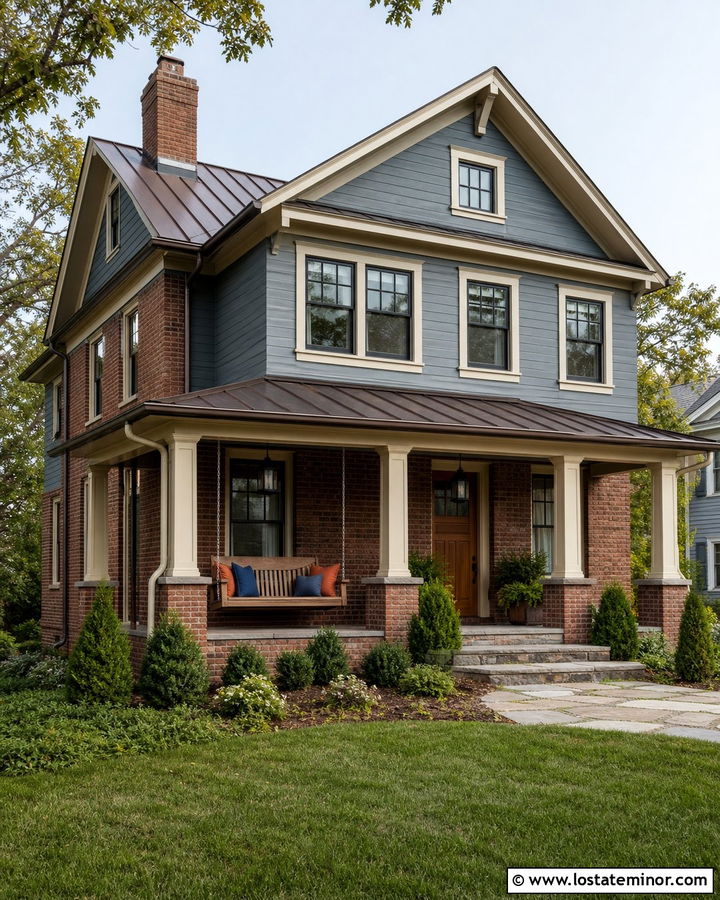
Painted siding and existing brick can work beautifully together when their undertones are compatible. Use dusty blue on the upper facade or gables of a brick house, allowing warm red or muted brown brick to remain visible below. Cream trim will create a gentler connection than bright white, while a dark bronze roof and gutters can ground both materials. Place a stained wood swing on the covered porch and repeat its finish on the front door. Choose cushions in warm ivory, blue-gray, and small rust accents to tie the cool siding to the masonry. If the brick feels especially strong, limewashed sections can soften the contrast without hiding all its texture. Add evergreen shrubs and pale stone pavers around the entry. The final exterior feels layered, established, and more balanced than an all-painted facade.
15. Dusty Blue Stone House With Black Swing
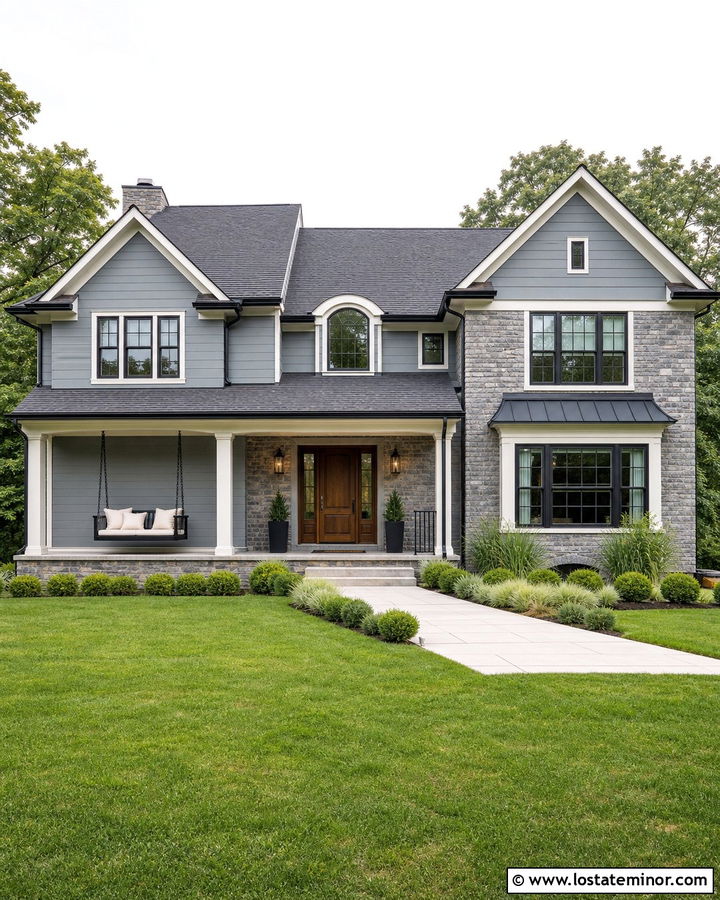
Cool gray stone provides a natural foundation for dusty blue siding. Apply the blue-gray color to upper gables or clapboard sections, then use off-white trim to clearly separate the siding from the masonry. A matte black porch swing will echo black window frames, metal railings, and exterior lanterns, creating a deliberate contemporary contrast. Keep the swing cushions light gray or cream so the seating remains comfortable-looking rather than visually heavy. A medium charcoal roof can connect the black accents with the softer stone. For the front door, consider a warm walnut stain that prevents the palette from becoming too cool. Use large-format concrete pavers, clipped shrubs, and ornamental grasses around the porch. This combination suits transitional homes because it blends familiar natural materials with clean, updated finishes.
16. Dusty Blue House With Red Porch Swing
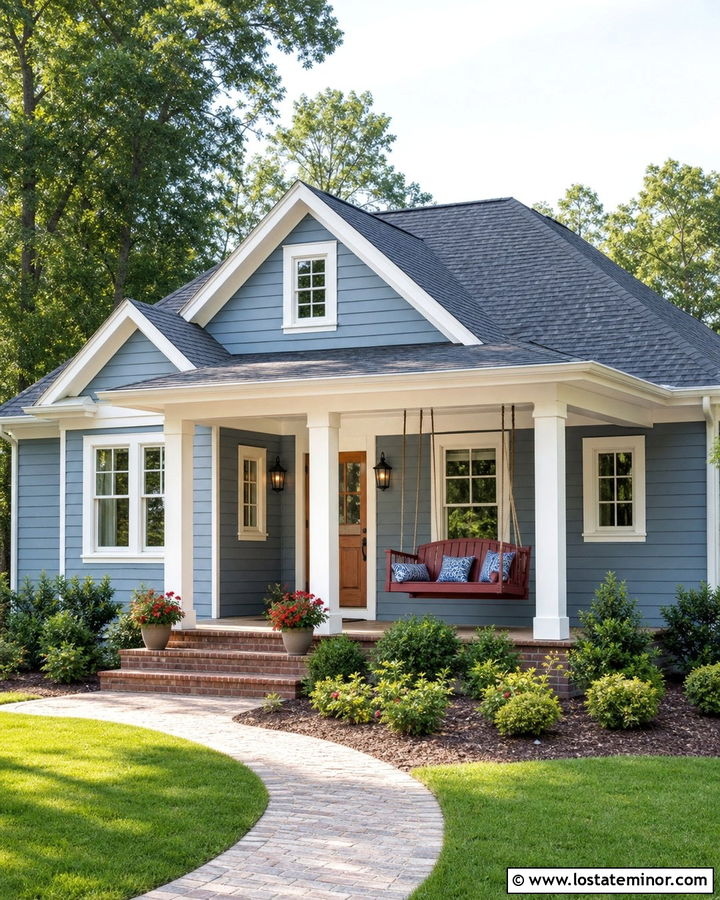
A red swing can become a cheerful accent when the rest of the exterior remains quiet. Start with subdued dusty blue siding and creamy white trim, then select a porch swing in a muted barn-red finish rather than a bright primary red. The softened color will stand out without overpowering the house. Connect the swing to smaller details through red-flowering planters, a patterned outdoor pillow, or a restrained door wreath. Keep the front door natural wood or deep navy so it does not compete with the seating. A charcoal-gray roof and black lanterns will provide structure. Warm brick steps can further support the red accent. This scheme works especially well on cottages and farmhouses, where a slightly rustic swing finish contributes character and makes the porch feel friendly from the street.
17. Dusty Blue House With Sage Green Swing
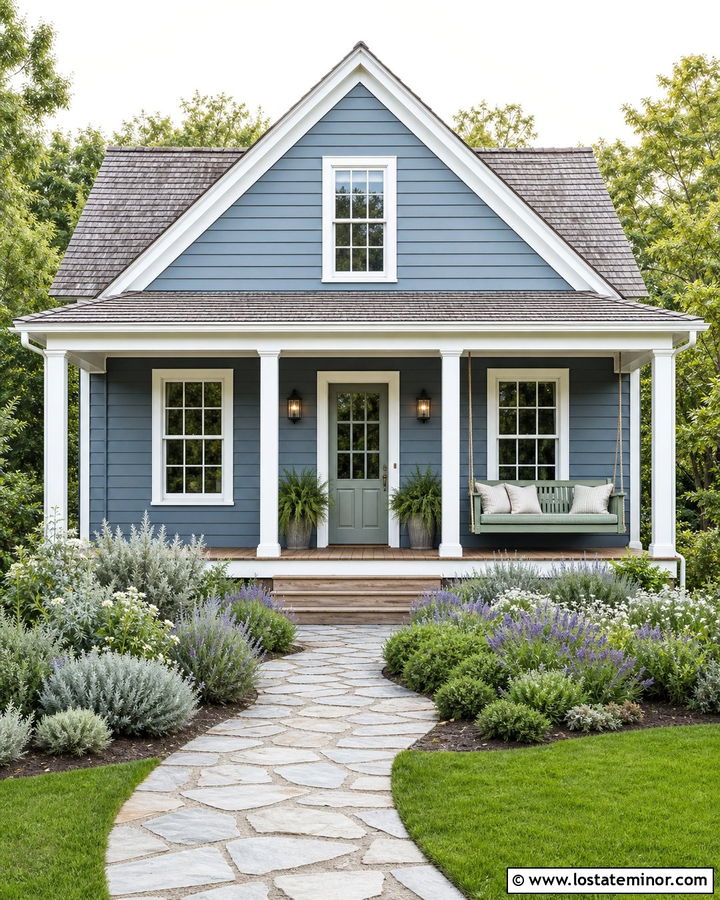
Dusty blue and sage green share muted undertones, making them a calm combination for a garden-focused exterior. Cover the house in blue-gray siding and use soft white trim around the windows, eaves, railings, and porch posts. Paint a simple wooden swing muted sage, then repeat that green sparingly in planters or the front-door color. Avoid adding too many other colors; natural wood flooring and a weathered gray roof are enough to complete the palette. Cream cushions will keep the swing clearly visible against the blue wall. For landscaping, use plants with silvery or deep green foliage, along with white and lavender flowers. A curved stone path can soften the house’s straight lines. This coordinated design feels peaceful because every color appears slightly weathered rather than bright or heavily saturated.
18. Dusty Blue House With Yellow Porch Swing
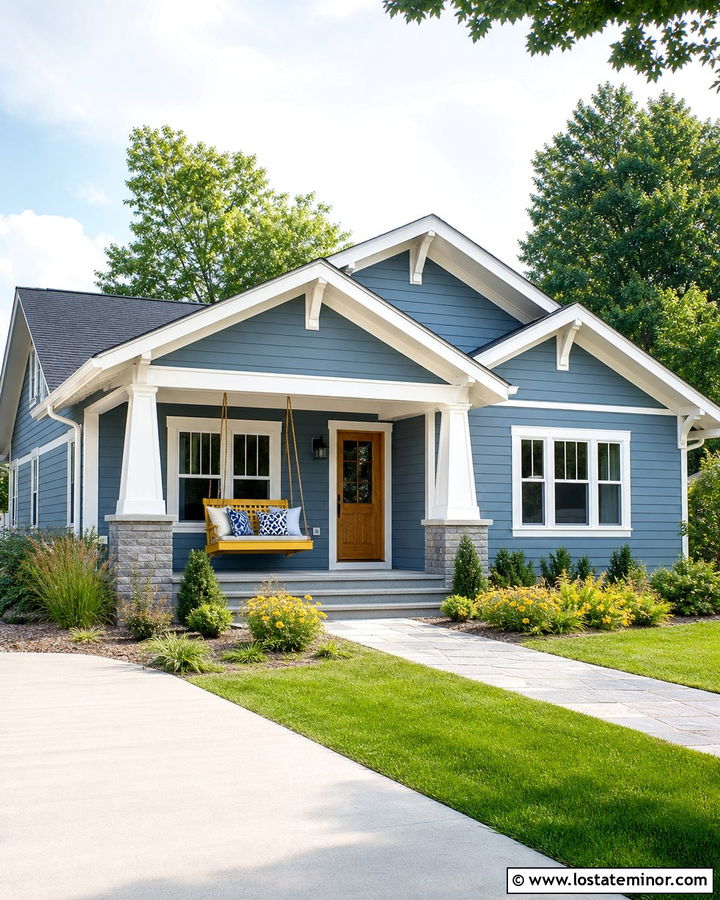
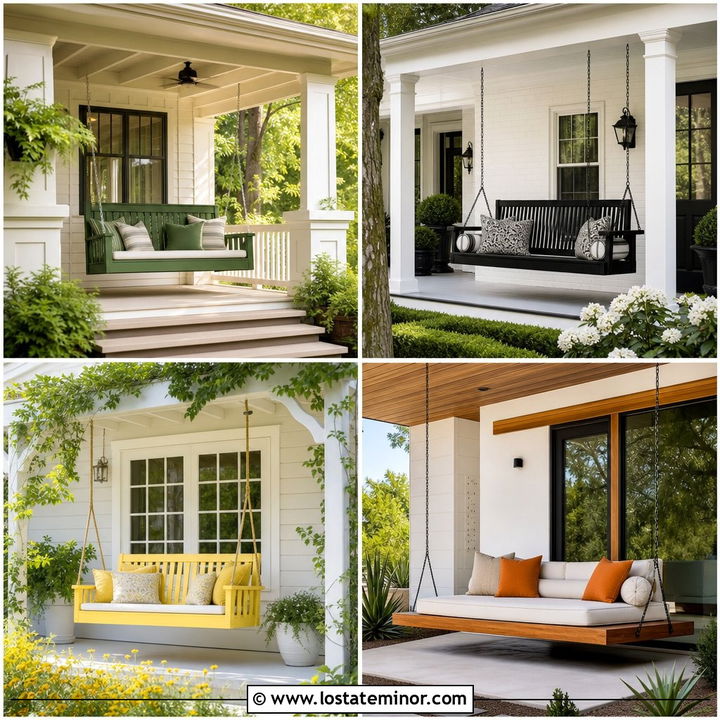
Sunshine yellow brings playful energy to dusty blue siding, but choosing the right shade is essential. Select a warm, muted golden yellow for the swing rather than neon or lemon. Surround the blue-gray exterior with crisp white trim, a dark charcoal roof, and restrained black hardware. These neutrals give the colorful swing room to stand out. Keep the front door natural wood or paint it the same dusty blue as the siding to avoid creating two competing focal points. White and blue patterned cushions can connect the swing to the house. Add yellow flowers in small quantities near the porch, balanced with green shrubs and ornamental grasses. This full exterior scheme works particularly well for modest cottages or bungalows that need a memorable detail without requiring major construction or extensive material changes.
19. Dusty Blue House With Natural Rope Swing
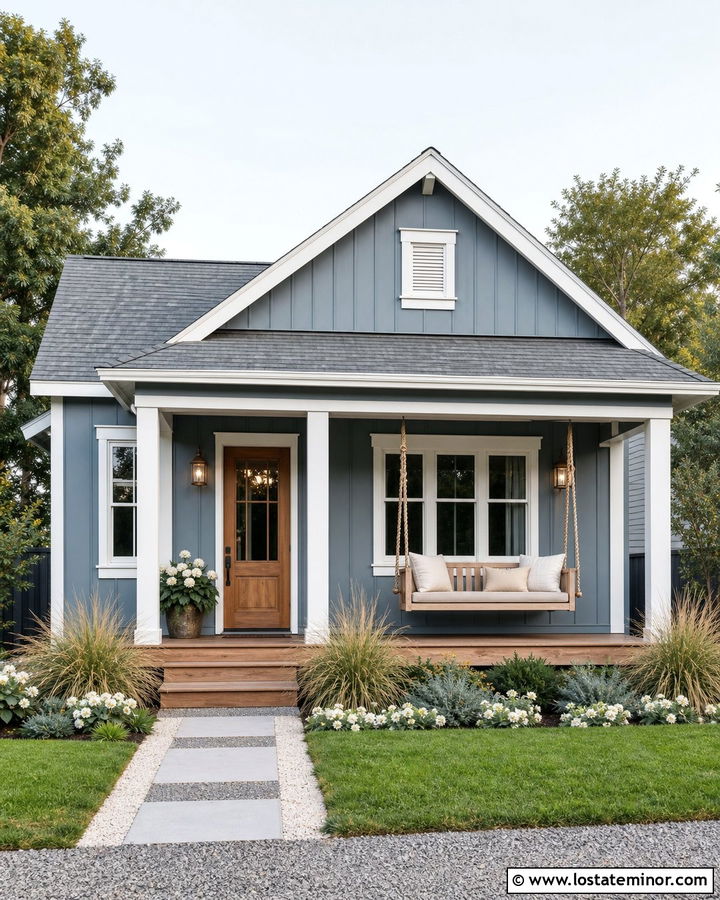
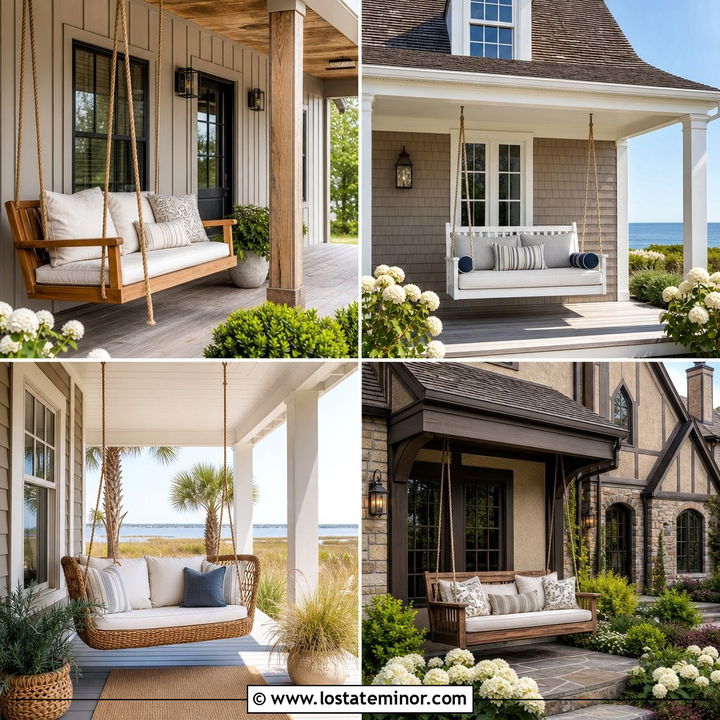
Sometimes the lightest-looking swing creates the strongest effect. A simple slatted wood swing suspended with thick natural rope suits a dusty blue house with an open or compact porch. Use warm white trim, natural cedar porch decking, and a medium-gray roof to build a soft neutral frame around the blue-gray siding. The swing should have a clear or lightly weathered finish so its grain remains visible. Repeat the same wood tone on the front door, ceiling beams, or window boxes. Oatmeal cushions and one dusty blue throw pillow will make the swing feel connected without looking overly decorated. Install black or aged-brass lanterns for understated contrast. Loose grasses, white flowers, and a gravel-edged walkway reinforce the natural mood while keeping attention on the complete facade.
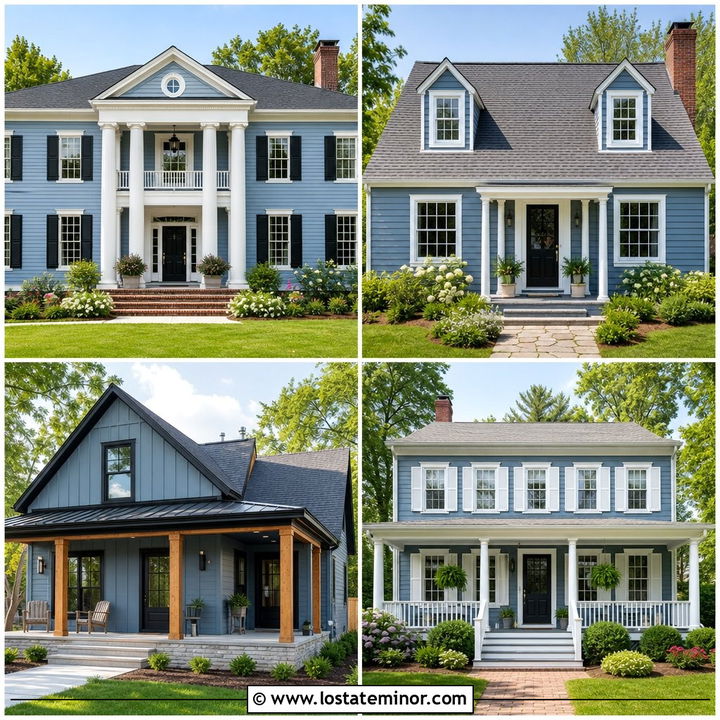
20. Dusty Blue House With Black Chain Swing
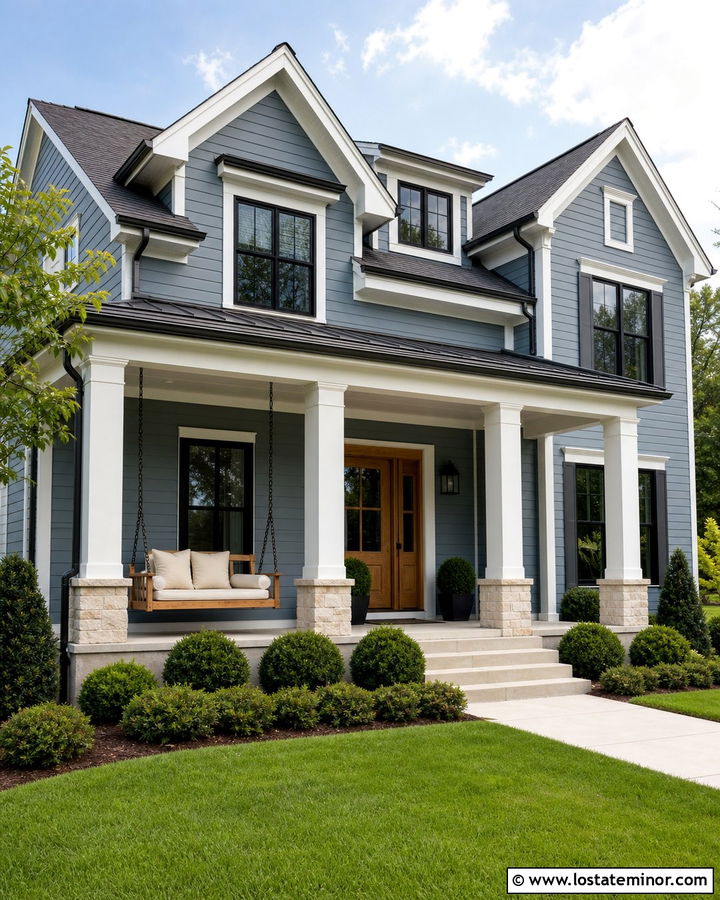
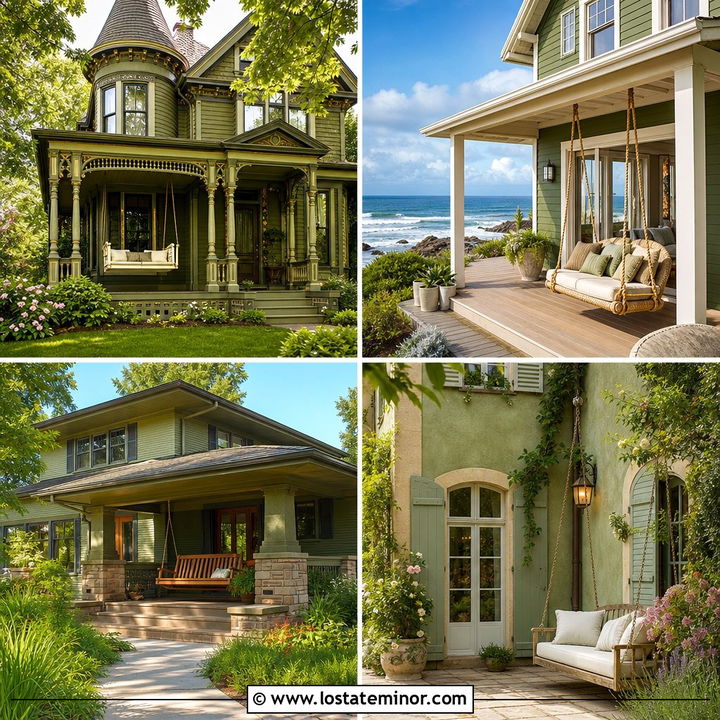
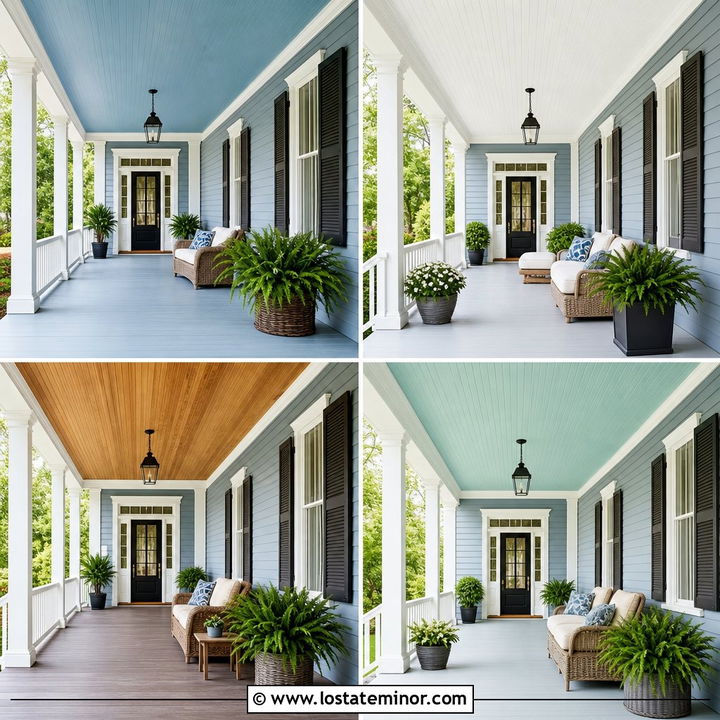
Black chains can make a porch swing feel more architectural, especially on a transitional dusty blue exterior. Pair blue-gray lap siding with bright white trim, square porch columns, and black-framed windows. Choose a medium-toned wood swing so the black suspension chains remain visible without making the seating entirely dark. Repeat black on the lanterns, gutters, door hardware, and metal roof accents. A warm oak front door will relate to the swing seat and soften the cool palette. Keep porch cushions creamy white with narrow charcoal piping for a tailored finish. Concrete steps and pale stone column bases can give the lower facade additional weight. Structured shrubs and clean-edged planting beds will reinforce the updated design, while the swing introduces movement and a welcoming everyday function.
21. Dusty Blue House With Double Porch Swings
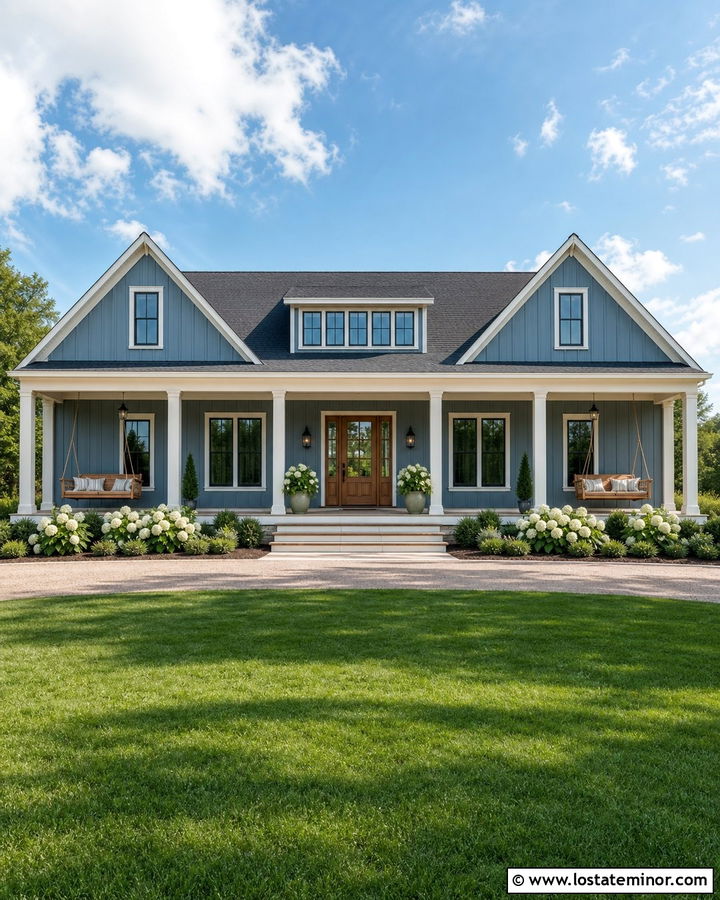
A wide porch can support two matching swings and still look balanced when the arrangement respects the architecture. Paint the home dusty blue with warm white trim, then place one natural wood swing at each end of the porch. Center the front door and main steps between them to preserve a clear, symmetrical focal point. Repeat the swing stain on the door, porch ceiling beams, or handrails. A charcoal roof and black lanterns will define the pale facade from a distance. Use identical neutral cushions on both swings, perhaps adding blue-gray striped pillows for continuity. Large planters beside the steps can reinforce the symmetry without blocking the seating. This design works well for farmhouses, Colonials, and broad ranch homes where a single small swing might feel visually lost against the long elevation.
22. Dusty Blue House With Corner Porch Swing
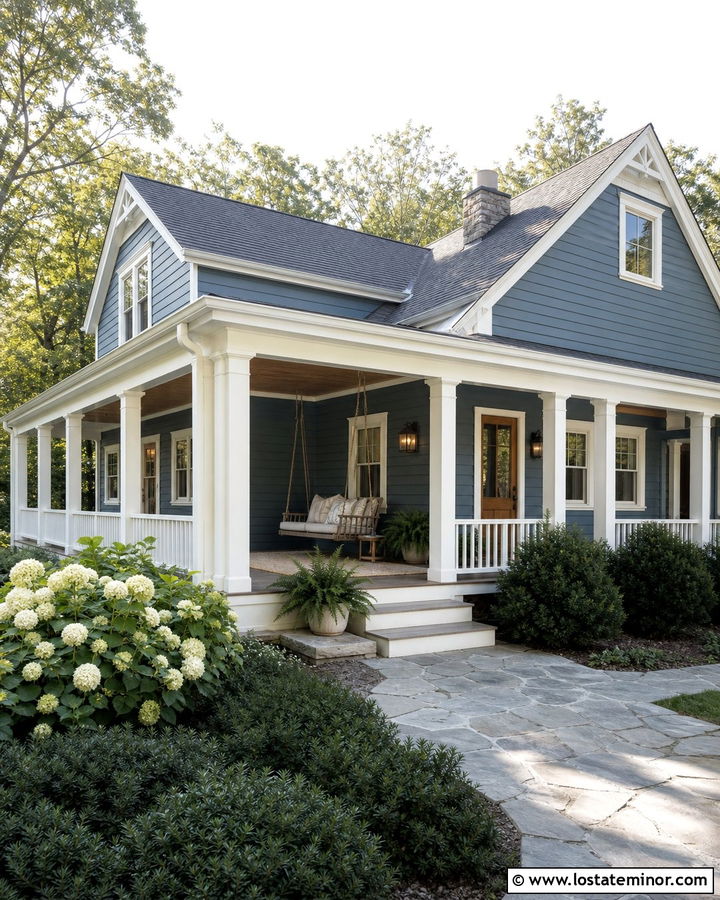
An L-shaped porch creates a natural corner for a swing that feels private yet remains visible from the yard. Dusty blue siding can wrap both wings of the house, while creamy white trim defines the porch opening, windows, columns, and railings. Hang a weathered teak swing along the quieter side, leaving the main entrance and steps unobstructed. Repeat the wood tone on the front door and porch floor to create a connected exterior. A dark gray roof will neatly cap the soft palette. Place a compact side table and neutral outdoor rug near the swing, but avoid overcrowding the corner. Layer hydrangeas, ferns, and low evergreens around the porch foundation. The finished arrangement turns an awkward transition area into an attractive destination within the complete curb-appeal design.
23. Dusty Blue House With Pergola Swing
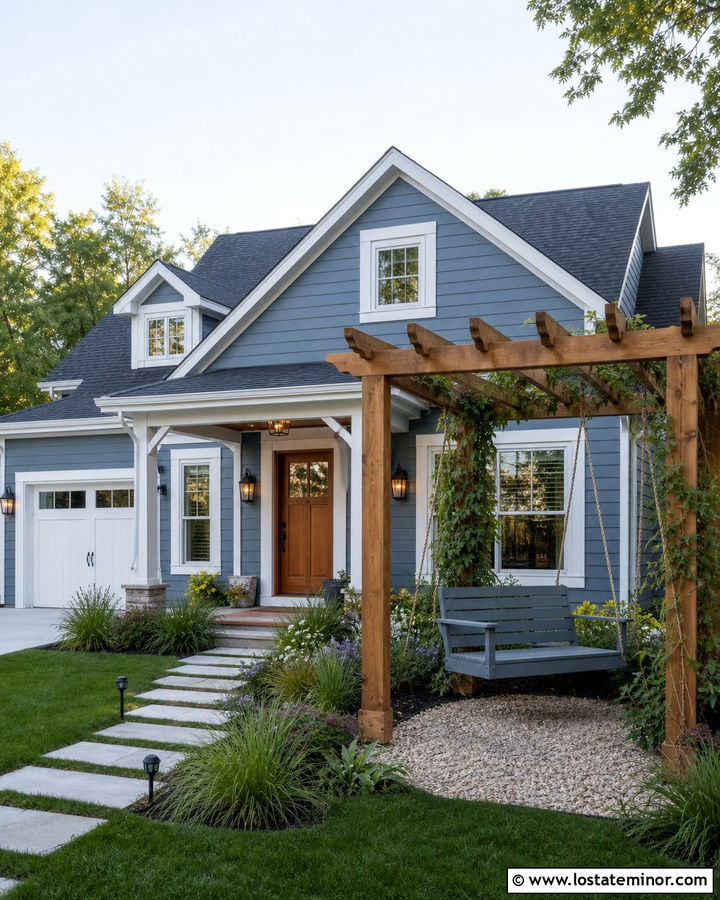
When a home lacks a deep porch, a front-yard pergola can give the swing an architectural setting. Paint the house dusty blue with white window trim and a warm wood front door. Build the pergola from cedar and hang a matching slatted swing beneath it, creating a strong connection between the structure and entry. Position it beside the walkway rather than directly in front of important windows. A dark gray roof, black lanterns, and simple gutters will add contrast without distracting from the wood feature. Train light climbing vines along the pergola while keeping the overhead area open enough to preserve visibility. Add a gravel pad, stepping stones, and layered perennial beds. This solution expands the exterior living space and gives a plain front lawn a useful, clearly defined focal point.
24. Dusty Blue House With Swing And Stone Columns
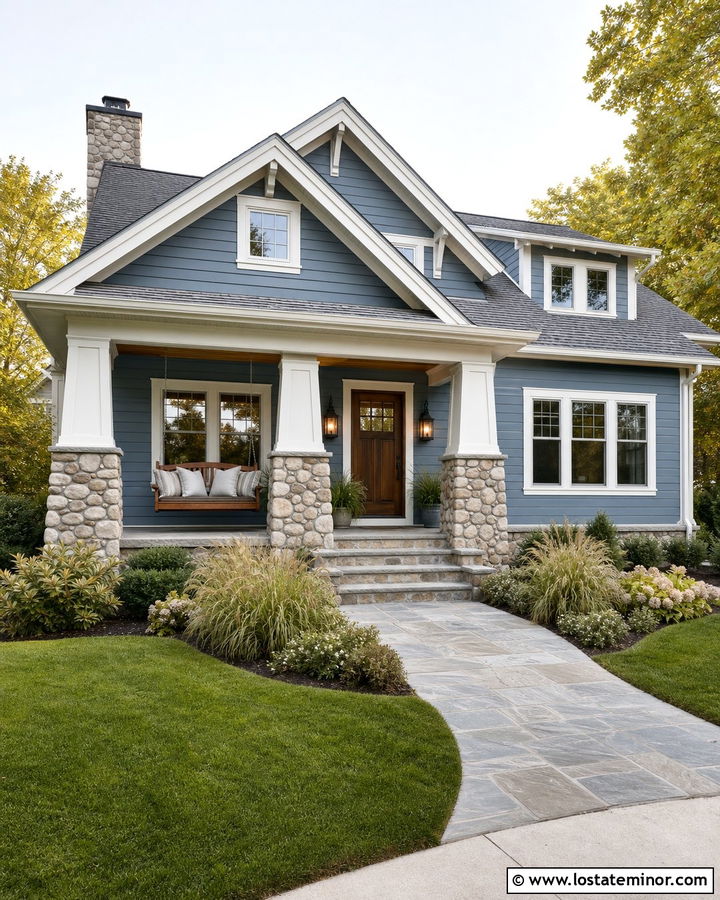
Stone columns can visually support a porch swing while grounding a dusty blue facade. Use muted blue-gray siding above a base of fieldstone containing charcoal, beige, and soft brown tones. Wrap the upper column sections and window trim in creamy white, then select a natural cedar swing that echoes the warmer colors in the stone. A walnut front door and dark bronze lanterns can strengthen that connection. Choose a weathered gray or charcoal roof to complement the cooler stone pieces. Keep swing cushions light and simple, with perhaps one textured blue pillow. Broad stone steps and a matching walkway will make the masonry feel intentional across the property. Low shrubs, ornamental grasses, and neatly spaced planters can soften the substantial columns without hiding their craftsmanship or the swing.
25. Dusty Blue House With Swing And Brick Porch
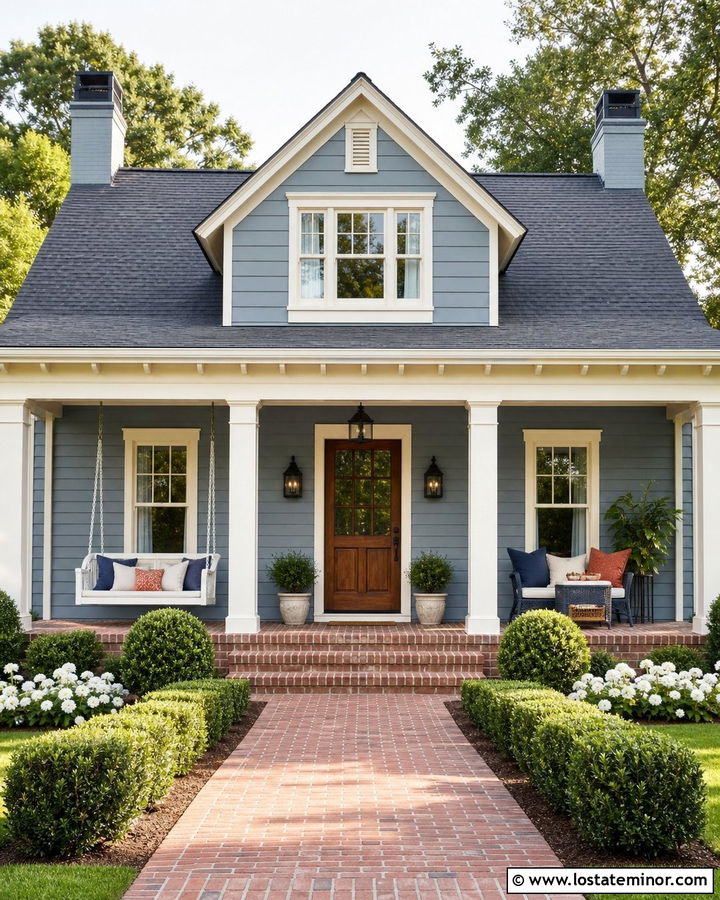
Warm brick underfoot gives a dusty blue porch an established, traditional appearance. Use blue-gray clapboard or shingle siding with soft cream trim to reduce the contrast between the cool body color and red-brown masonry. Hang a painted white swing from the porch ceiling, then add cushions featuring dusty blue, cream, and a restrained rust accent. A stained wood front door will pull warmth upward from the brick floor. Choose black lanterns and a charcoal roof for clean definition. If the existing brick contains strong orange tones, consider a light limewash to soften it while retaining natural variation. Frame the porch with clipped boxwoods and seasonal white flowers. A brick walkway can extend the material into the yard, helping the swing, porch, and main house read as one complete composition.
26. Dusty Blue House With Swing And Metal Roof
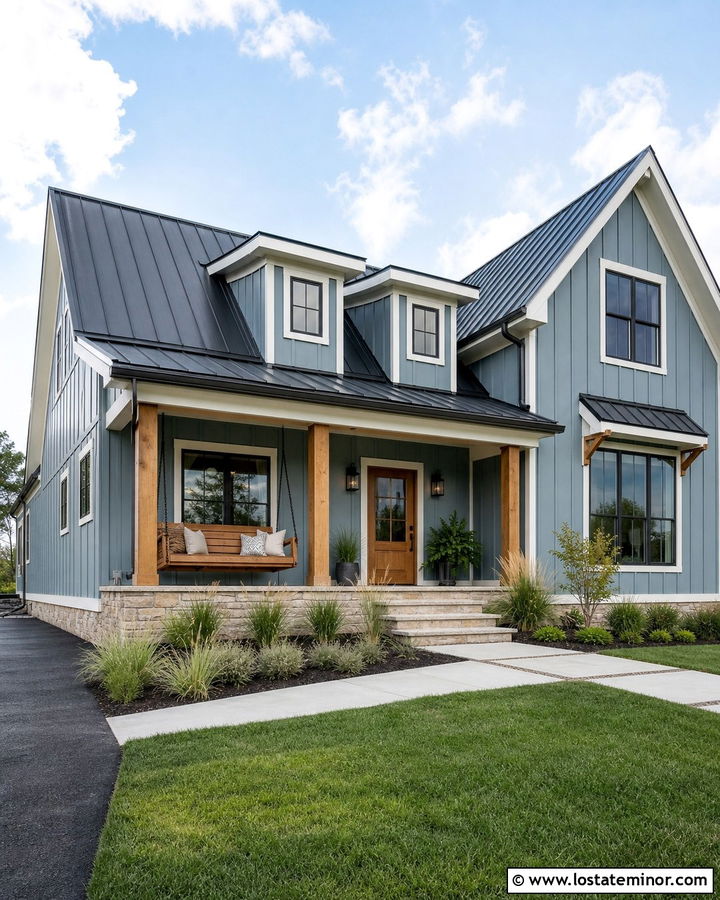
The crisp lines of a metal roof create a polished contrast above soft dusty blue siding. Choose a medium charcoal standing-seam roof rather than solid black if the house receives intense sunlight. Repeat the roof color on gutters, downspouts, swing chains, and exterior lights. A warm cedar swing will prevent the cool blue-and-gray palette from feeling industrial. Match its finish on the front door or porch posts, while keeping window trim and fascia creamy white. Light neutral cushions will make the swing appear comfortable without competing with the metal details. Use stone porch steps, concrete pavers, and structured grasses to support the clean exterior lines. This combination is especially effective on modern farmhouses and updated rural homes, where traditional siding and contemporary roofing can comfortably share the same facade.
27. Dusty Blue House With Swing And Copper Accents
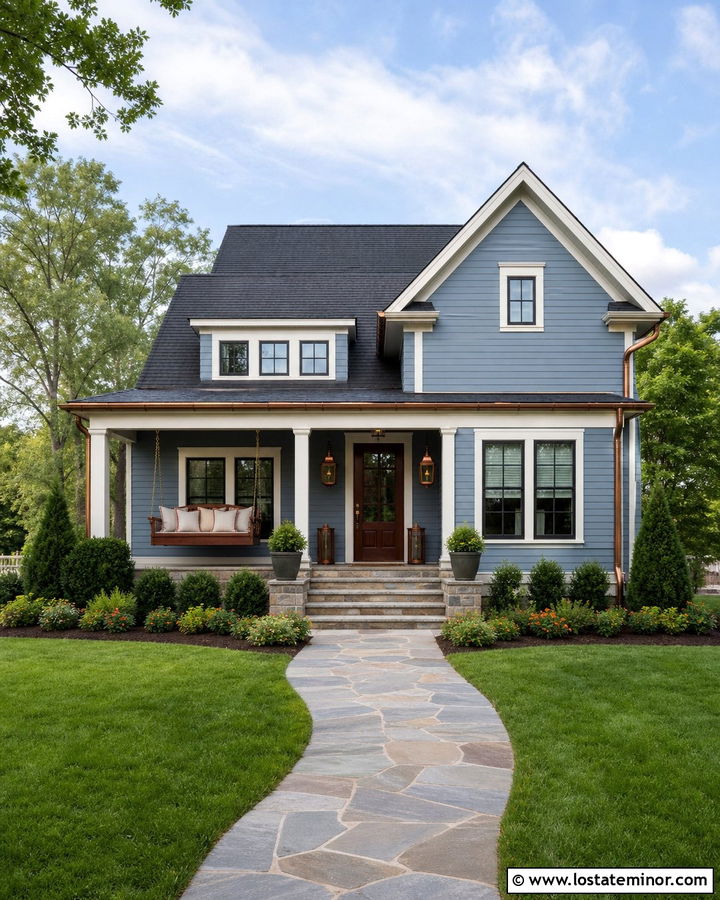
Copper adds warmth and gradual character to a dusty blue exterior. Apply muted blue-gray siding throughout the facade and use creamy white trim to create a light, classic framework. Choose a stained mahogany swing, then introduce copper through gutters, downspouts, porch lights, or a small canopy above the door. As the metal develops a natural patina, its blue-green tones will relate beautifully to the siding. A deep bronze or charcoal roof can keep the copper details from feeling disconnected. Use neutral swing cushions with subtle rust-colored piping to repeat the warm metal. Stone steps and evergreen landscaping will provide a stable base for the richer finishes. Since copper is visually strong, limit it to a few purposeful locations rather than adding it to every available exterior feature.
28. Dusty Blue House With Swing And Black Shutters
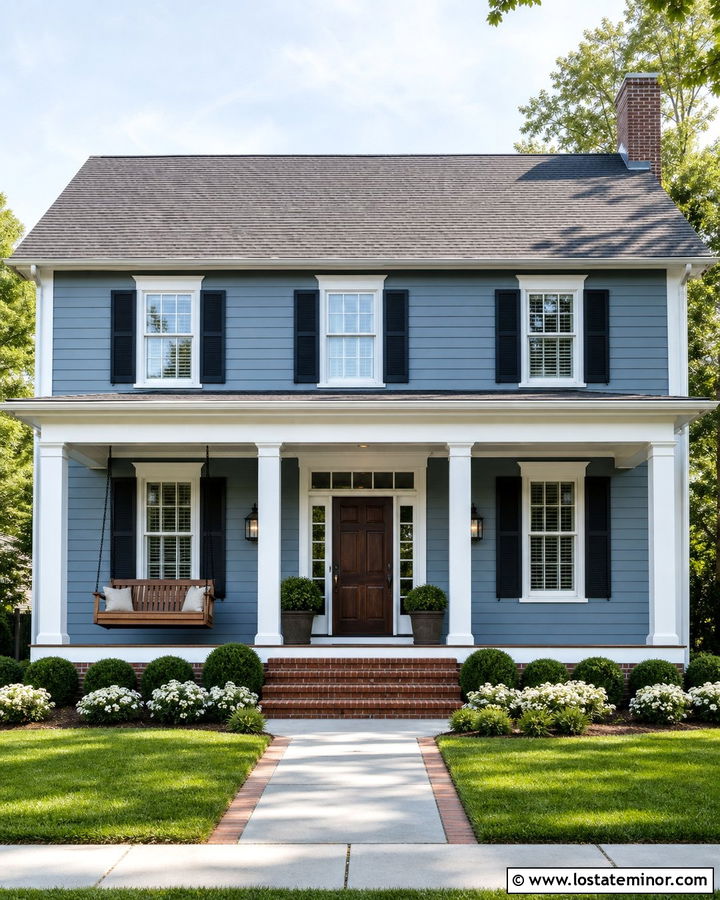
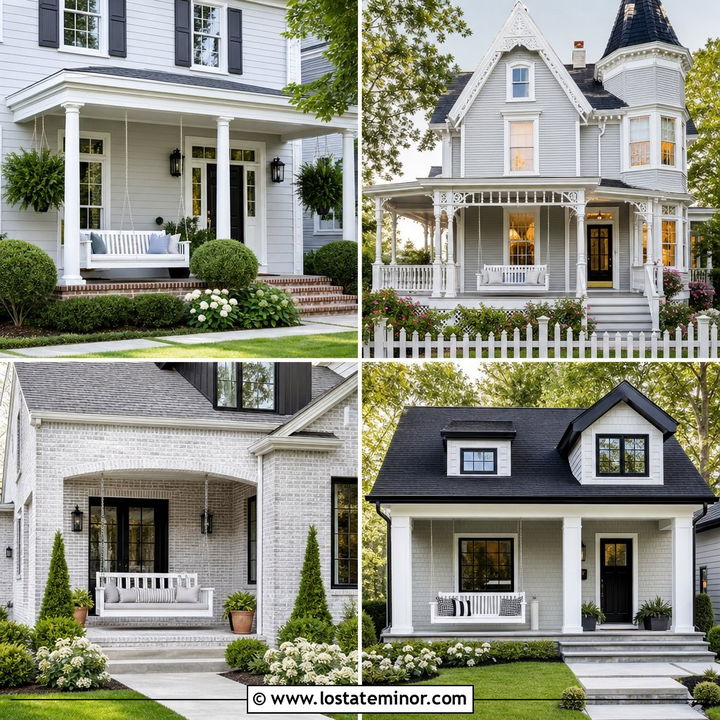
Black shutters give dusty blue siding a sharp outline and can help a traditional exterior appear more substantial. Surround the windows, porch columns, and roof edges with crisp white trim, then repeat matte black on the shutters, swing chains, lanterns, and front-door hardware. The swing itself can be natural wood to add warmth between the dark accents and cool siding. Alternatively, paint it white if the porch is small and needs a lighter appearance. Choose a charcoal roof that supports the shutters without creating an oversized black mass above the house. Red brick steps or a walnut front door can introduce a balanced warm note. Use symmetrical foundation shrubs and simple white flowers to keep the finished facade orderly, inviting, and easy to appreciate from the curb.
29. Dusty Blue House With Swing And White Railings
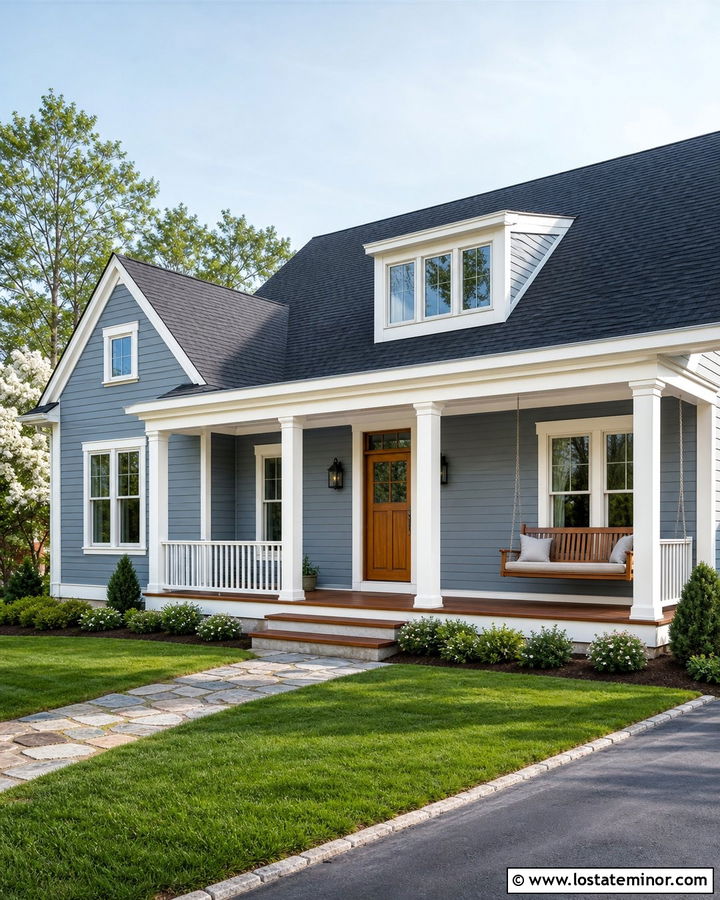
White railings can brighten a dusty blue porch, but they should frame the swing rather than conceal it. Select a railing design with simple vertical balusters and leave a clear opening around the main seating area. Dusty blue siding, white columns, white window trim, and matching fascia will create a unified exterior shell. A medium cedar swing offers warm contrast and can coordinate with the porch floor and front door. Add light gray cushions with small blue details for a practical, connected look. A charcoal roof and black lanterns provide just enough definition above and around the pale porch. Low plantings are important near the railing so the architecture remains visible. A straight stone walkway and tidy lawn will complete this clean, family-friendly curb-appeal scheme.
30. Dusty Blue House With Swing And Wraparound Porch
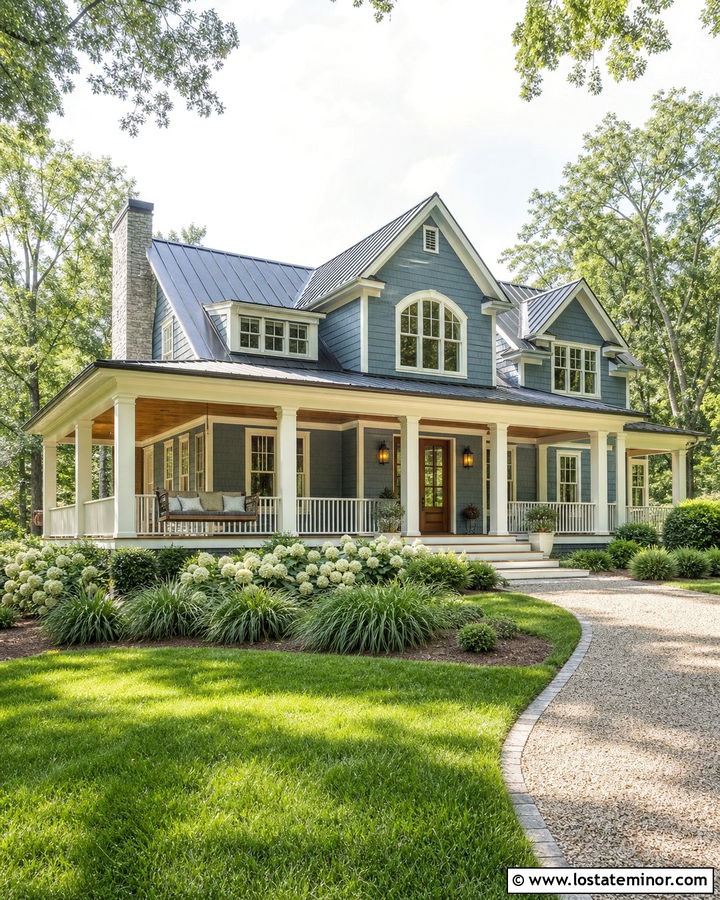
A wraparound porch offers enough space for a swing, dining furniture, and rocking chairs without forcing every feature together. Cover the house in muted dusty blue siding and use warm white on the continuous columns, railings, window trim, and fascia. Place a large stained wood swing along the quieter side elevation where it can enjoy yard views while remaining visible from the curb. Repeat the wood finish on the front door and porch ceiling for continuity. A charcoal metal roof will emphasize the long porch line and balance the light trim. Use matching neutral textiles across all seating areas so the porch feels coordinated. Broad steps, hydrangeas, ornamental grasses, and a curved walkway can connect the expansive structure to the landscape while preserving its relaxed, welcoming character.
Conclusion:
A successful dusty blue exterior should feel like one complete composition rather than a collection of separate decorating choices. Begin with the home’s architecture, then select trim, roofing, masonry, and wood finishes that complement its muted blue-gray body. The swing can blend into that palette or provide one controlled accent, but it should always connect with another visible feature. Consider porch proportions, clear walking space, weather-resistant materials, and secure structural installation before making a final choice. Landscaping can then soften the edges and frame the seating from the street. Whether your home is a farmhouse, ranch, cottage, or modern build, these 30 Dusty Blue House Design With Swing Ideas offer practical ways to create comfortable, memorable curb appeal.

Related posts: