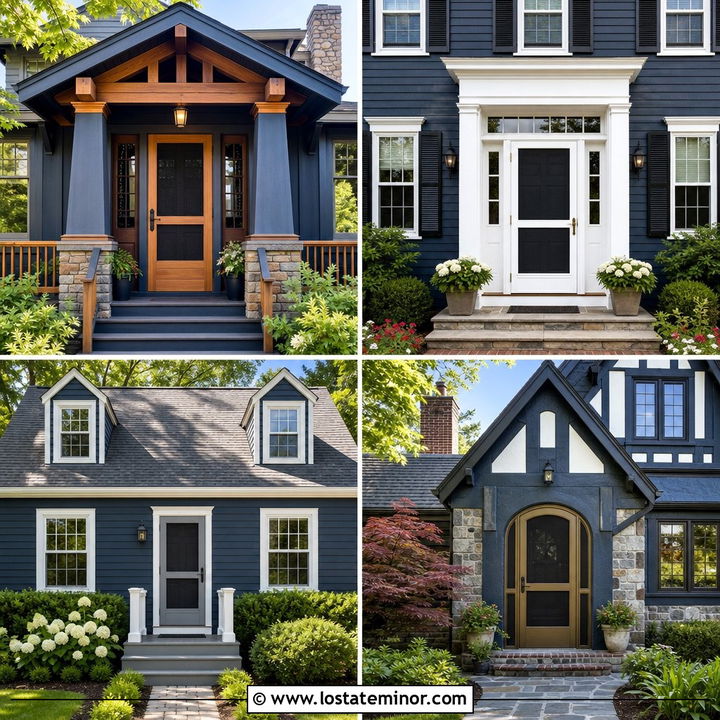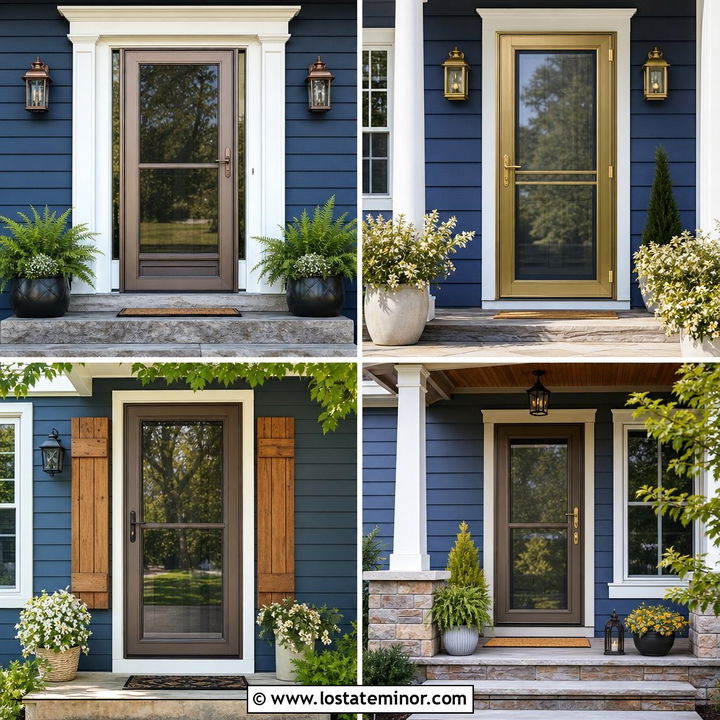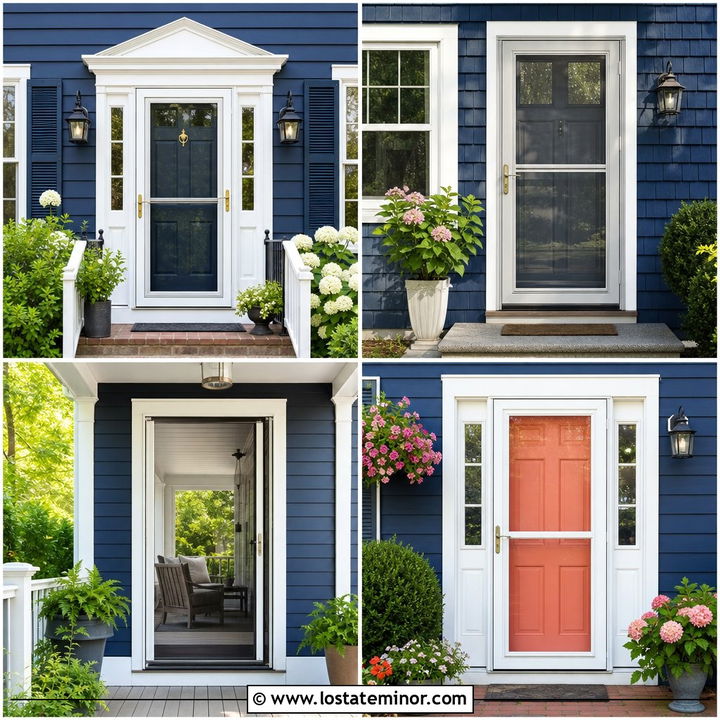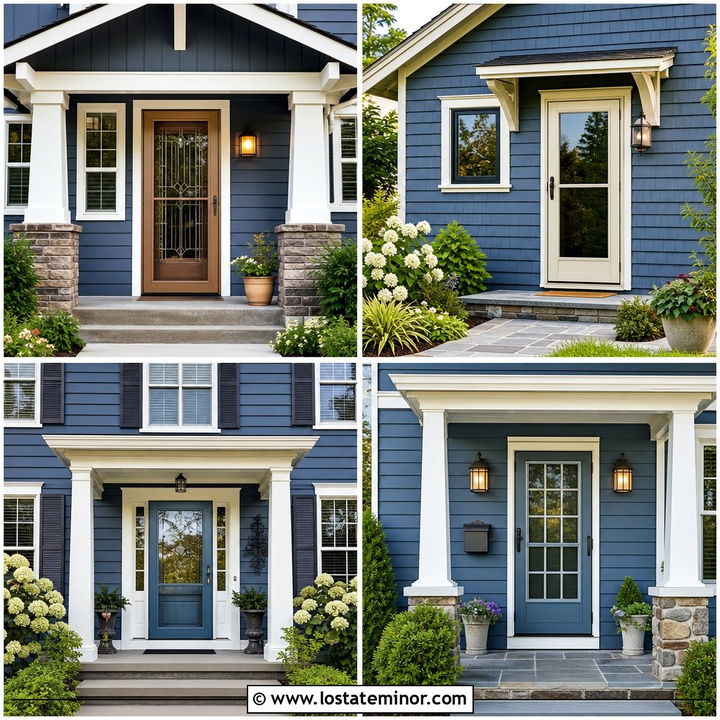
Dusty blue brings a calm, polished character to an exterior without feeling cold or overly coastal. The muted gray undertone also makes this color surprisingly flexible across traditional, rustic, and modern architecture. A thoughtfully selected storm door can reinforce that softness, introduce contrast, or frame a more colorful entry door. The best combinations consider the entire facade, including trim, roofing, masonry, porch materials, hardware, and landscaping. A storm door should coordinate with both the siding and front door so the entrance feels integrated rather than added later. () Whether you prefer crisp white, dramatic black, warm bronze, or a matching blue frame, these complete exterior schemes offer practical inspiration. Explore each 30 Dusty Blue House Design With Storm Door Ideas combination below.
1. Dusty Blue House With White Storm Door
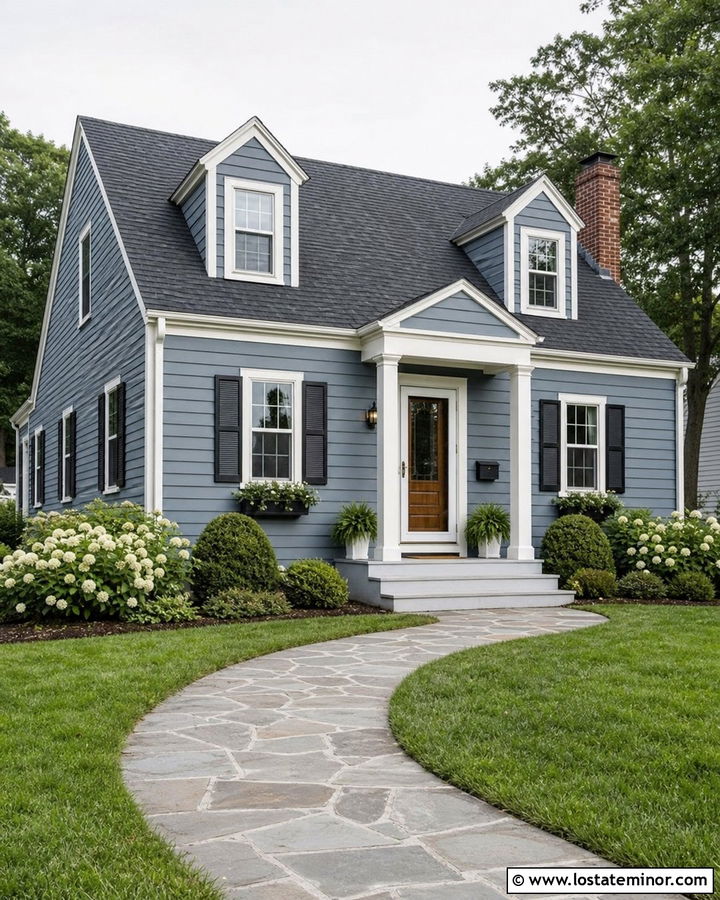
A white storm door creates a clean frame against dusty blue siding and keeps the entrance feeling bright. Use warm white rather than stark white on the storm door, window trim, fascia, and porch columns for a softer transition. A medium-stained oak front door adds warmth behind the glass, while brushed nickel hardware supports the cool blue palette. This combination works especially well on a Cape Cod house with horizontal lap siding, dormer windows, and a charcoal architectural-shingle roof. Add pale gray porch flooring and simple black lanterns for definition. Boxwood shrubs, white hydrangeas, and a curved stone walkway complete the welcoming exterior without competing with the restrained blue-and-white color scheme.
2. Dusty Blue House With Black Storm Door
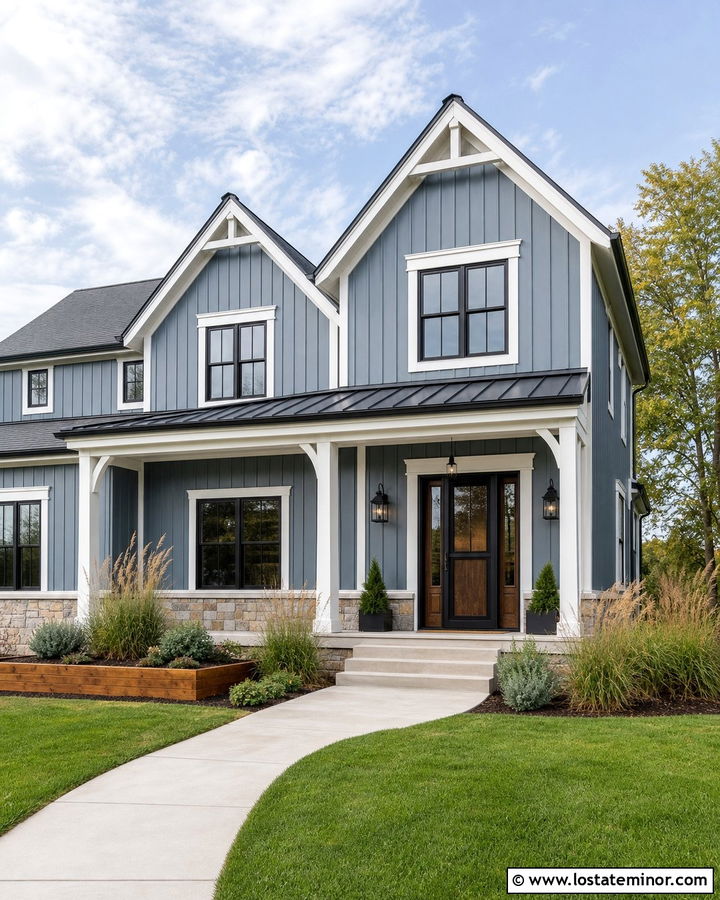
Does your dusty blue exterior need stronger definition? A slim black storm door can anchor the entry while connecting visually with black windows, gutters, lighting, and roof details. Choose a full-view design with minimal framing so the black accent looks refined instead of heavy. Behind it, a warm walnut front door prevents the scheme from becoming too cool. This palette suits a modern farmhouse with dusty blue board-and-batten siding, white corner boards, a black metal porch roof, and natural stone foundation accents. Keep the porch floor medium gray and introduce cedar planters for warmth. Ornamental grasses and a straight concrete walkway reinforce the clean architecture while allowing the dusty blue siding to remain the dominant exterior feature.
3. Dusty Blue House With Bronze Storm Door
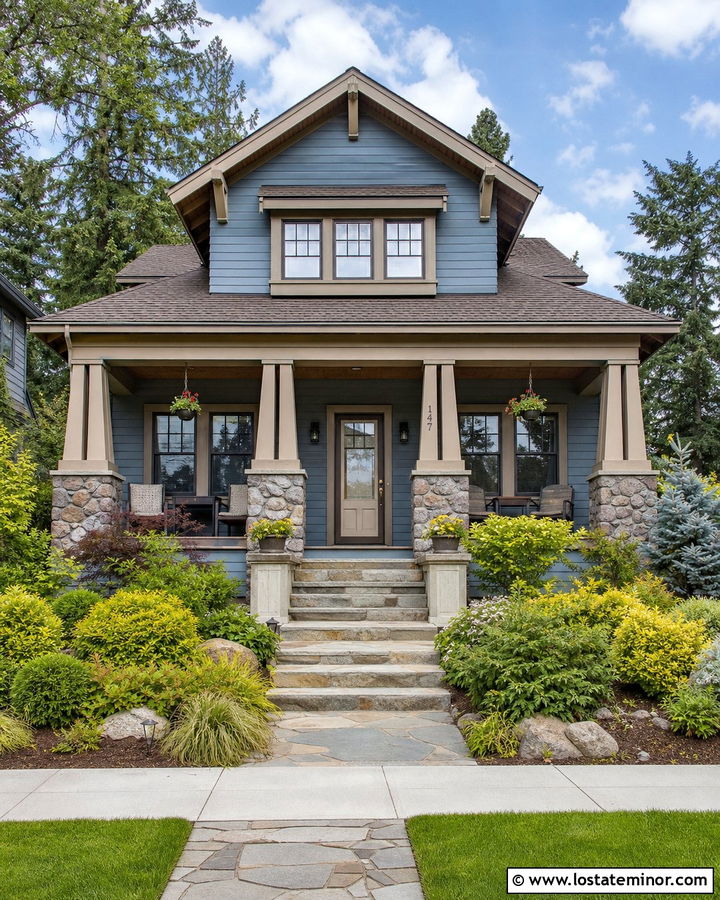
Warm bronze offers a gentler alternative to black and looks particularly attractive with dusty blue siding that has noticeable gray undertones. Select a dark bronze storm door with clear glass, then repeat the finish on porch lights, house numbers, and door hardware. A creamy white front door behind the glass adds brightness without creating sharp contrast. This complete palette complements a Craftsman house with tapered columns, exposed roof brackets, stone porch piers, and wide horizontal siding. Use taupe trim and a weathered brown roof to maintain the earthy character. Natural flagstone steps, layered evergreen landscaping, and warm wood porch furniture help connect the bronze frame to the rest of the facade, producing a relaxed and carefully coordinated entrance.
4. Dusty Blue House With Matching Storm Door
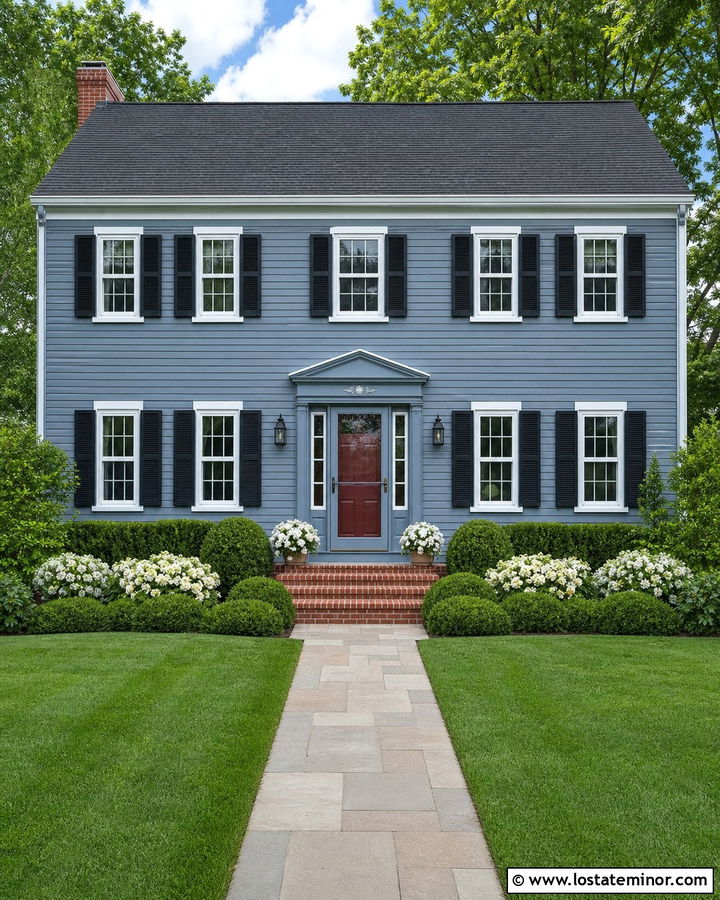
A matching dusty blue storm door gives the entrance a seamless appearance and allows the front door behind it to provide the main contrast. Use the same blue on the siding and aluminum storm door frame, but choose a durable factory finish or carefully matched exterior enamel. A muted brick-red front door creates a warm focal point without overpowering the gentle facade. This combination works beautifully on a traditional Colonial with symmetrical windows, white trim, black shutters, and a dark gray roof. Red brick steps provide another subtle connection to the door color. Keep foundation plantings orderly, with clipped boxwoods and seasonal white flowers. The coordinated blue frame makes the storm door feel like an intentional architectural element.
5. Dusty Blue House With Wood Front Door And Storm Door
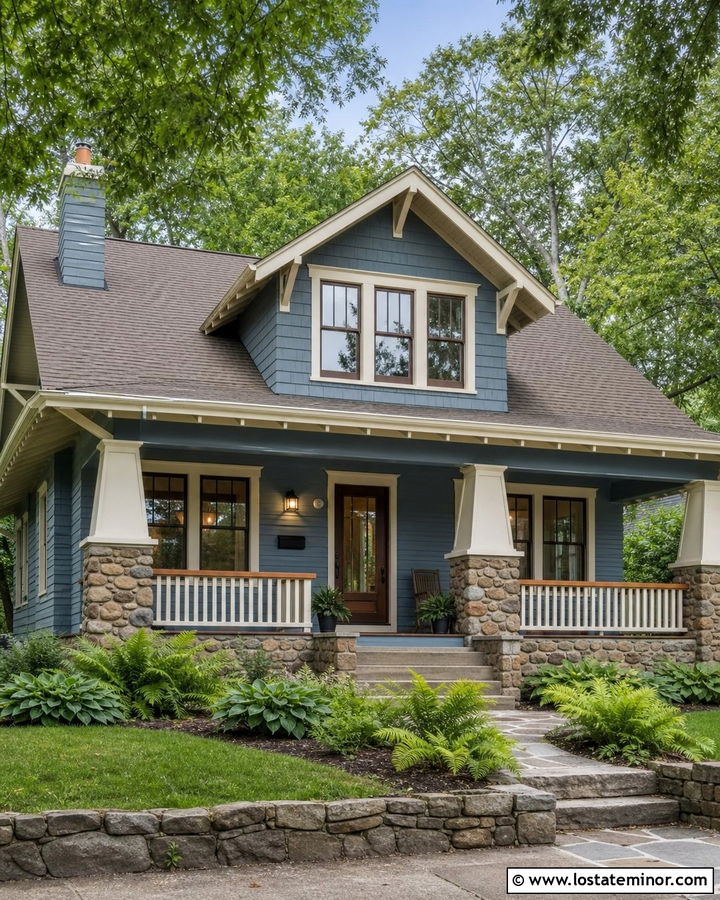
The glow of natural wood keeps dusty blue siding from appearing flat or chilly. Install a full-glass storm door with a narrow bronze frame so the rich grain of a mahogany or walnut front door remains visible. Cream trim around the windows and porch softens the blue, while a brown-gray roof ties the warm and cool tones together. This scheme is ideal for a bungalow with deep eaves, exposed rafters, tapered porch columns, and a low stone foundation. Repeat the wood tone on porch brackets, rail caps, or a small bench. Ferns, hostas, and relaxed native plantings support the handcrafted look. The transparent storm door protects the wood while preserving its visual impact from the street.
6. Dusty Blue Ranch With Full Glass Storm Door
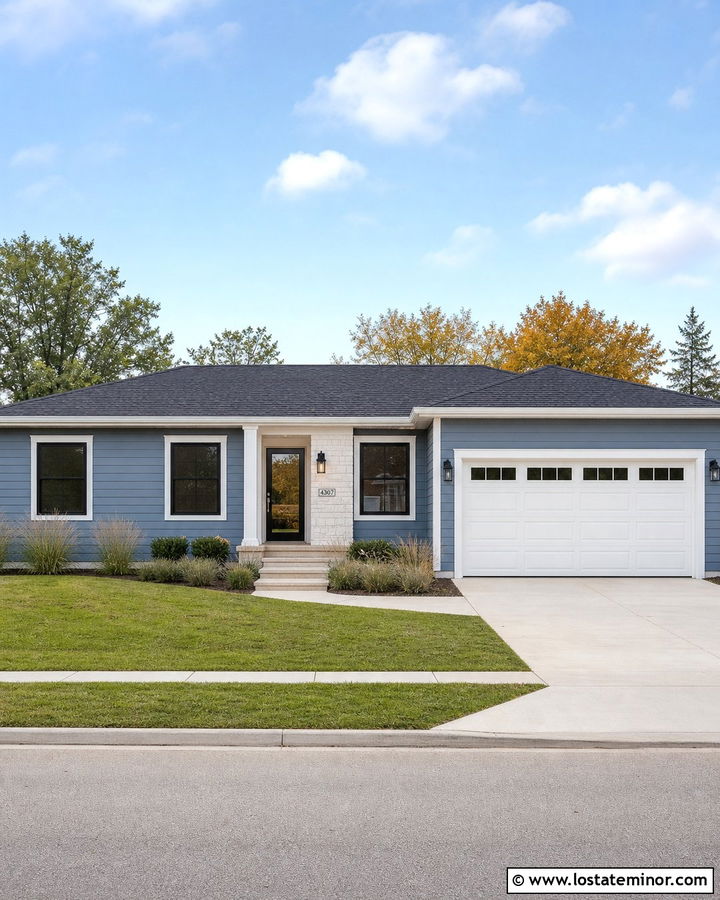
Low, horizontal ranch architecture benefits from a simple entrance that does not interrupt the home’s long lines. Pair dusty blue lap siding with a full-view storm door in matte black and a warm white front door. Use black on the window frames and garage lighting, then repeat warm white on the soffits, fascia, and garage door. A charcoal roof provides a steady neutral cap without making the one-story facade look top-heavy. Introduce pale limestone around the entry or lower walls to create texture and break up the siding. A broad concrete walkway, low ornamental grasses, and neatly shaped shrubs preserve the open character. The nearly invisible glass panel makes the protected entrance feel brighter and more spacious.
7. Dusty Blue Craftsman With Retractable Screen Storm Door
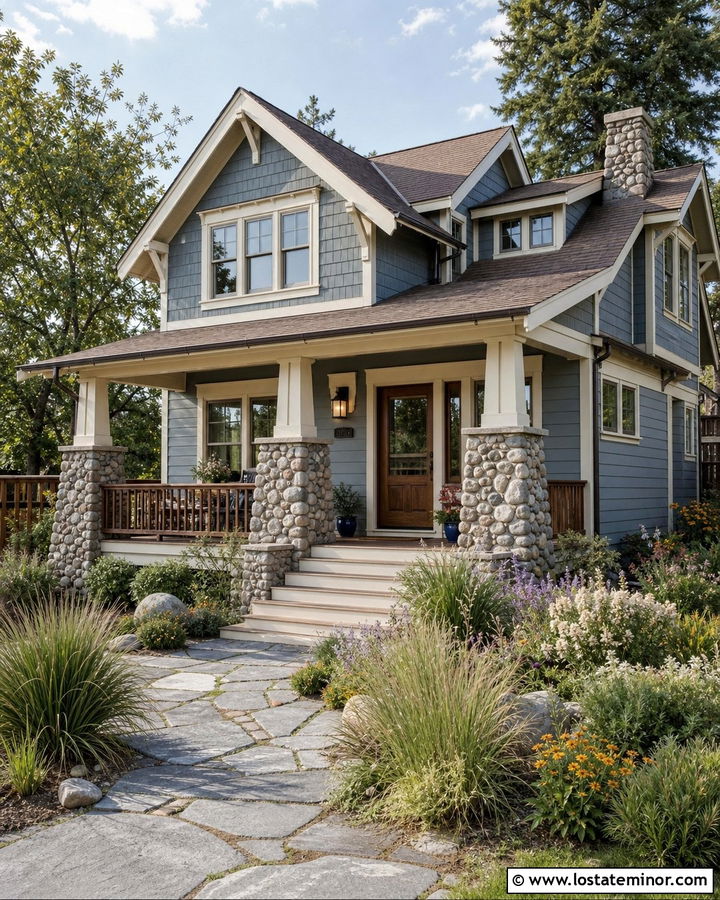
Fresh air and Craftsman character can work together when the storm door has a retractable screen and an understated frame. Choose a warm bronze model for dusty blue shingle-and-lap siding, creamy trim, and a stained fir front door. The bronze finish relates naturally to river-rock porch columns, brown roof shingles, and copper-toned lighting. Keep the upper gables slightly lighter blue if you want to emphasize the layered architecture without adding an unrelated color. Wide porch steps and substantial wood railings strengthen the welcoming proportions. Finish the yard with native grasses, flowering shrubs, and a flagstone path. This balanced exterior feels substantial yet comfortable, while the screen function adds practicality without diminishing the carefully crafted entrance.
8. Dusty Blue Colonial With Black Storm Door
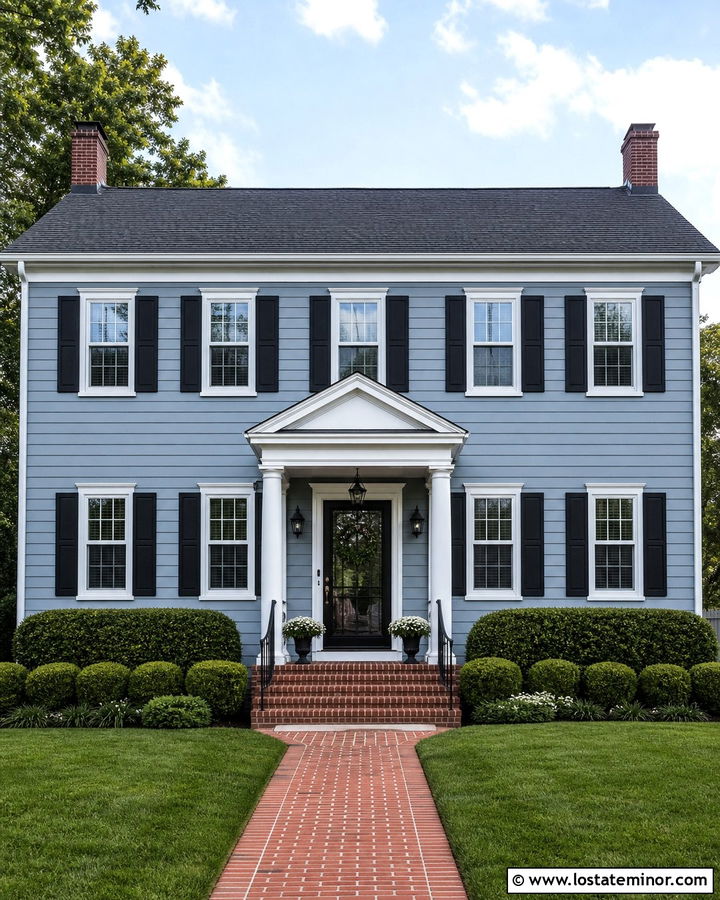
Symmetry makes every entrance detail more noticeable, so a Colonial storm door should feel crisp and deliberate. Set a black full-glass storm door over a glossy black front door for a unified focal point. Dusty blue clapboard siding, bright white trim, and matching white columns keep the overall facade traditional and balanced. Add black shutters and a charcoal roof to distribute the dark entry color across the house. Red brick steps and a narrow brick walkway bring warmth to the cool palette while respecting the architecture. Matching lanterns on both sides of the door reinforce the home’s symmetry. Formal boxwood hedges and evenly spaced foundation shrubs complete this composed exterior without making it appear stiff or overly decorated.
9. Dusty Blue Farmhouse With White Storm Door
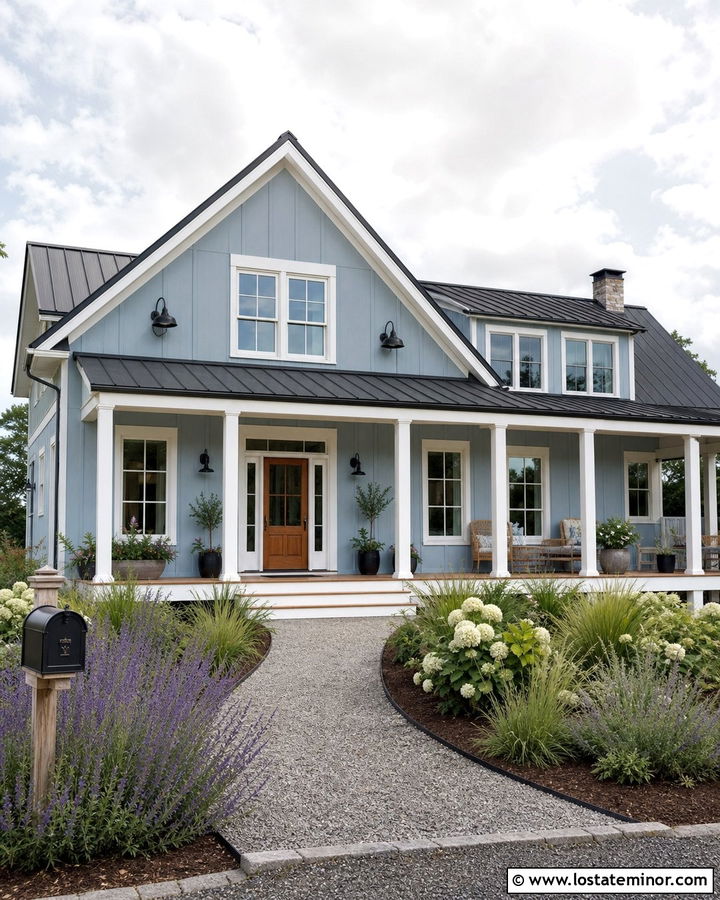
Soft colors can give farmhouse architecture a lighter, more approachable appearance. Cover the facade in dusty blue board-and-batten siding, then use warm white on the storm door, porch columns, window trim, and wide fascia boards. A medium brown wood front door visible behind the glass adds essential warmth. Choose a dark charcoal standing-seam roof and black gooseneck lights to sharpen the otherwise gentle palette. A covered front porch with natural wood decking makes the entrance feel comfortable and lived-in. Keep the landscaping informal with white flowering shrubs, lavender, grasses, and a gravel-edged walkway. The white storm door blends into the trim, allowing the wood entry door and dusty blue siding to share attention.
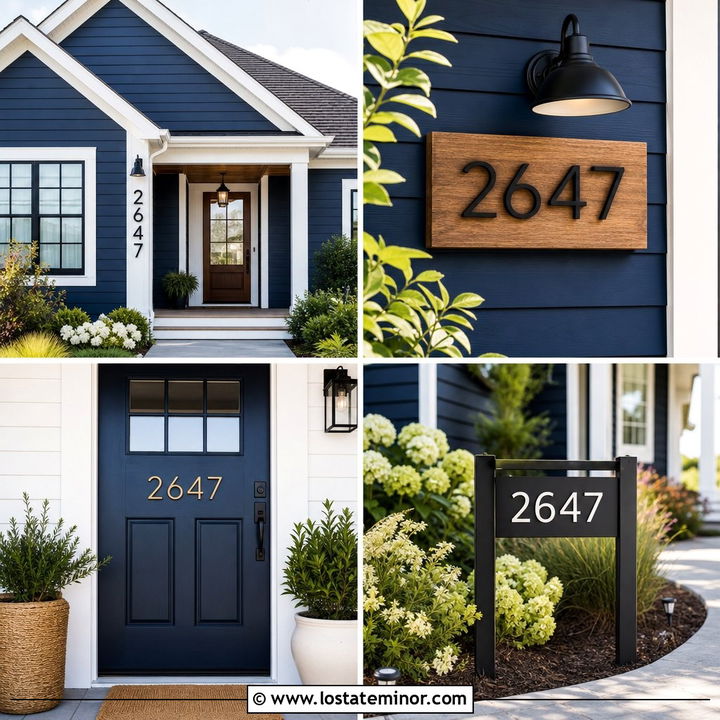
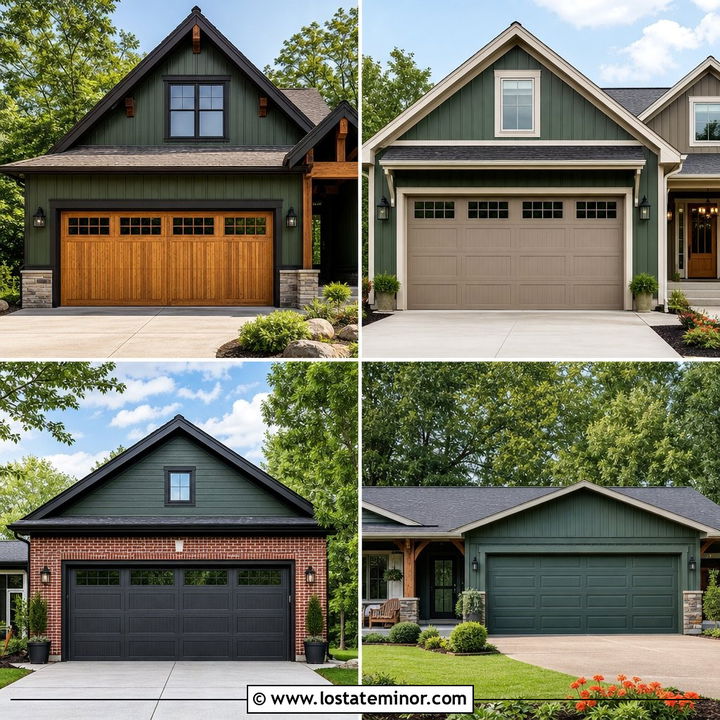
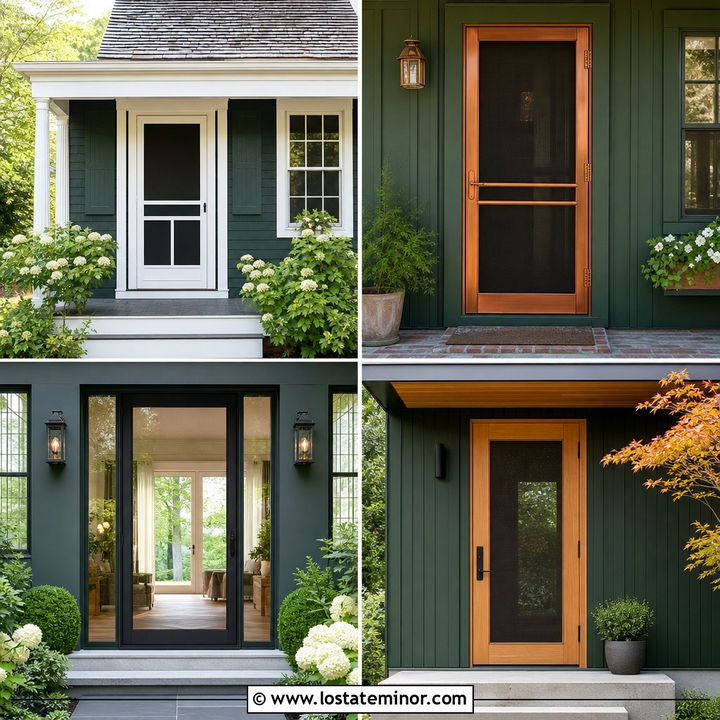
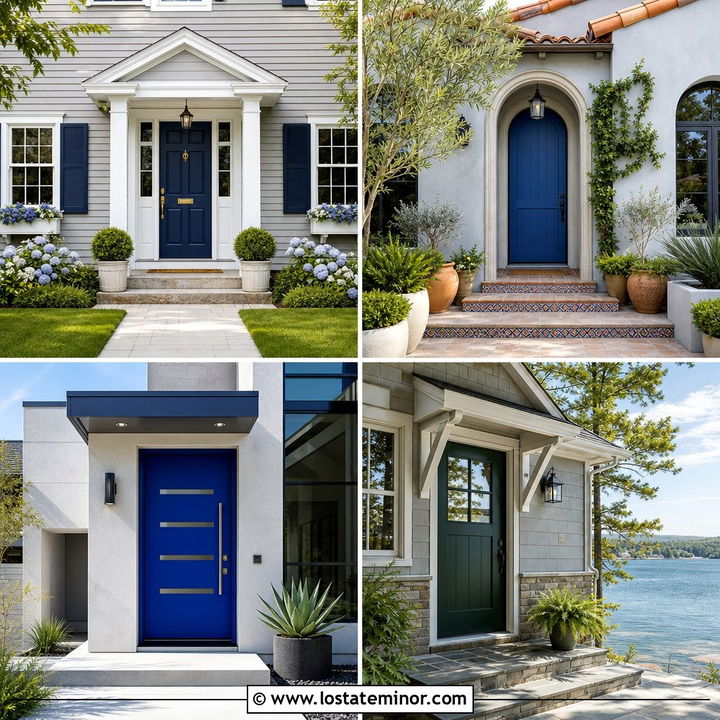
10. Dusty Blue Cottage With Cream Storm Door
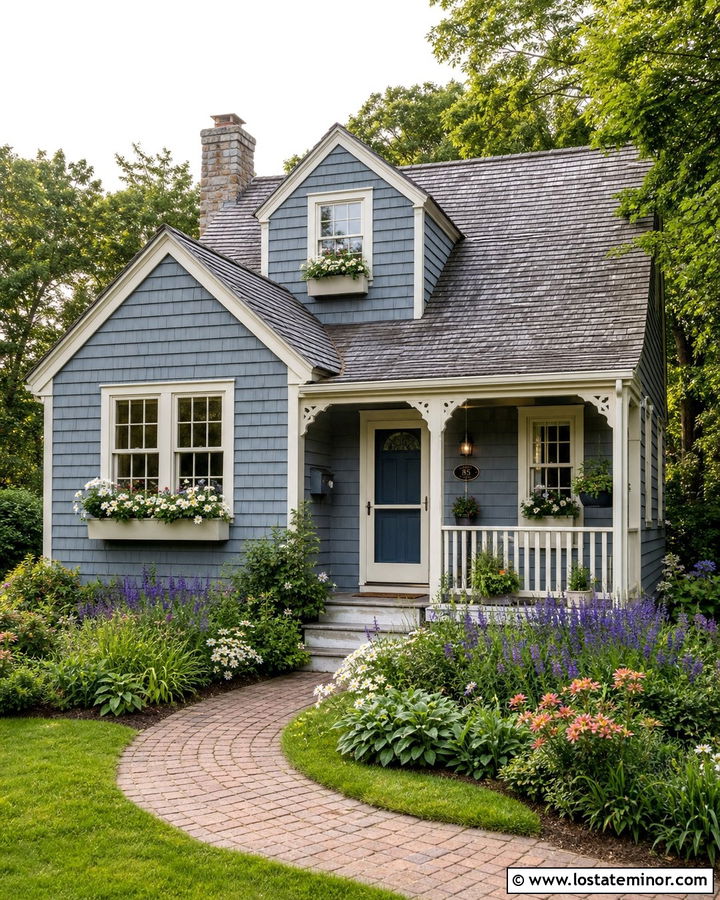
Cream creates less contrast than pure white, making it a natural choice for a cozy cottage exterior. Pair dusty blue cedar shingles with an ivory storm door and a deeper slate-blue front door. Repeat the cream on window trim, eaves, porch railings, and small decorative brackets. A weathered gray roof and stone chimney reinforce the home’s storybook character without introducing excessive color. Choose a storm door with divided lower panels or subtle traditional detailing to match the cottage architecture. A curved brick walkway, overflowing window boxes, and layered perennial beds add charm around the facade. This palette feels collected and inviting because every shade is softened, from the dusty siding to the creamy trim and restrained blue entrance.
11. Dusty Blue Split-Level With Charcoal Storm Door
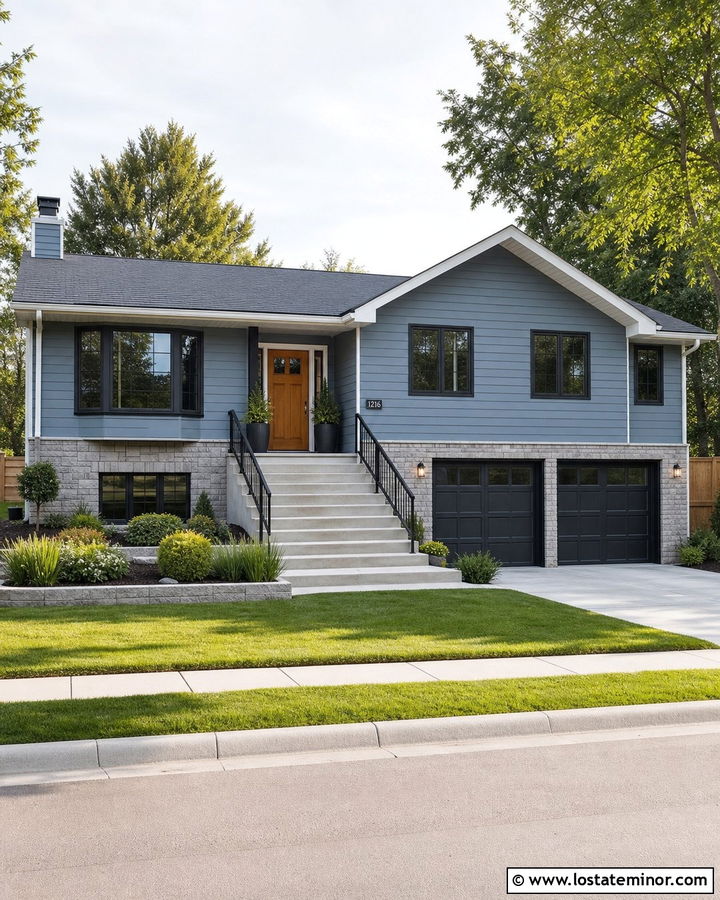
A split-level house often needs visual connections between its different exterior materials. Use dusty blue siding on the upper story, pale gray stone or brick below, and a charcoal storm door to create a clear entry focal point. Paint the front door a warm honey-brown, allowing it to show through a large glass panel. Charcoal window frames, garage doors, and gutters repeat the storm door color across the broad facade. Keep the trim soft white so the overall design remains bright. Update the entrance with wide concrete steps, simple metal railings, and rectangular planters. Layered shrubs can soften changes in elevation, while a clean driveway and geometric walkway give the remodeled split-level exterior a more current, cohesive appearance.
12. Dusty Blue Bungalow With Copper Storm Door
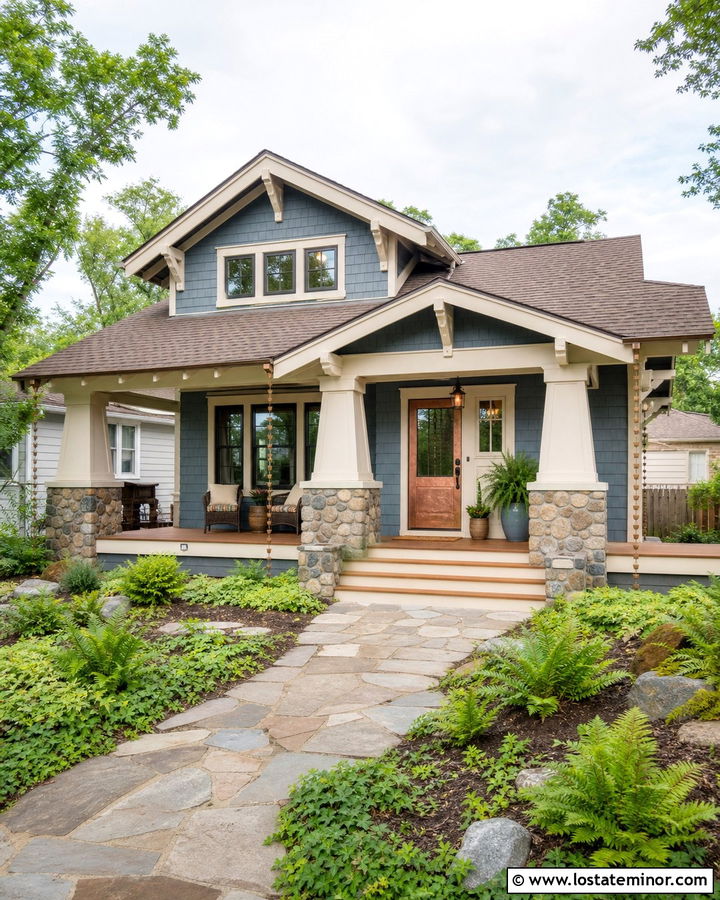
Copper-toned finishes bring warmth and individuality to a dusty blue bungalow. Choose a storm door in an aged copper or copper-brown finish, ideally with a full glass panel that reveals a cream front door. Echo the metal tone through porch lights, house numbers, and rain chains rather than using too many decorative pieces. Dusty blue lap siding, ivory trim, cedar porch flooring, and a brown architectural roof create a comfortable Arts and Crafts palette. Stone porch piers ground the facade and support substantial tapered columns. Surround the home with ferns, flowering ground cover, and a natural stone path. As the copper-colored finish develops character, it strengthens the bungalow’s handcrafted appearance and complements the muted blue siding.
13. Dusty Blue Cape Cod With Navy Storm Door
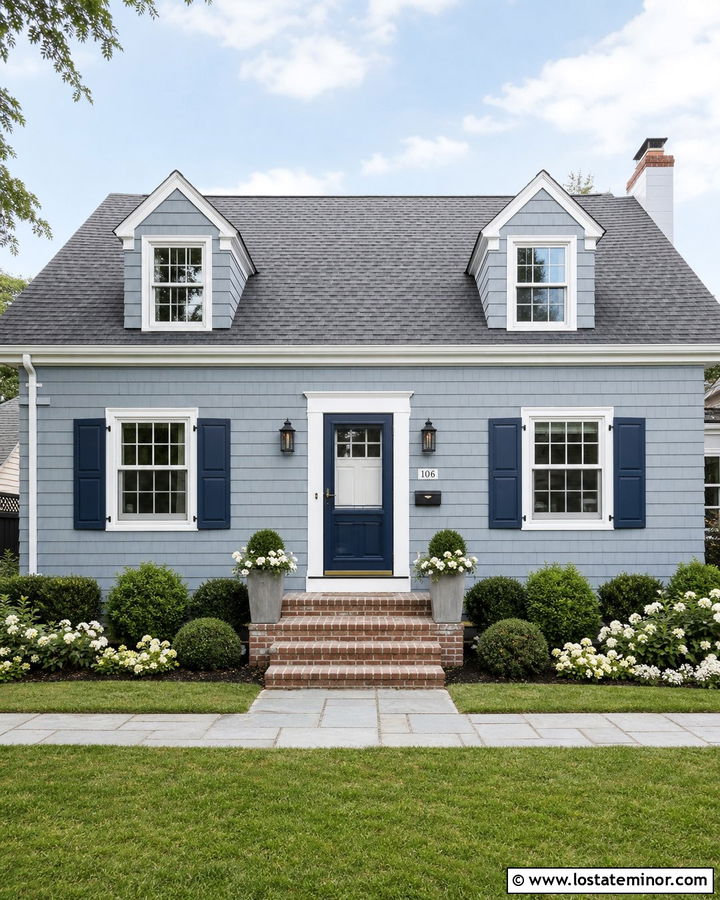
Layering blue tones can create depth while maintaining a quiet, cohesive exterior. Paint the Cape Cod siding dusty blue and select a navy storm door that is several shades darker. Place a warm white front door behind the glass to prevent the entrance from disappearing into the blue facade. Use the same navy on shutters, then carry warm white across dormers, corner boards, and window trim. A medium gray roof keeps the palette classic without adding another strong color. Brick steps and a compact bluestone landing provide subtle warmth and texture. Low hedges, white roses, and symmetrical planters suit the tidy architecture. The navy storm door frames the entry clearly while preserving the home’s understated coastal character.
14. Dusty Blue Victorian With Black Storm Door
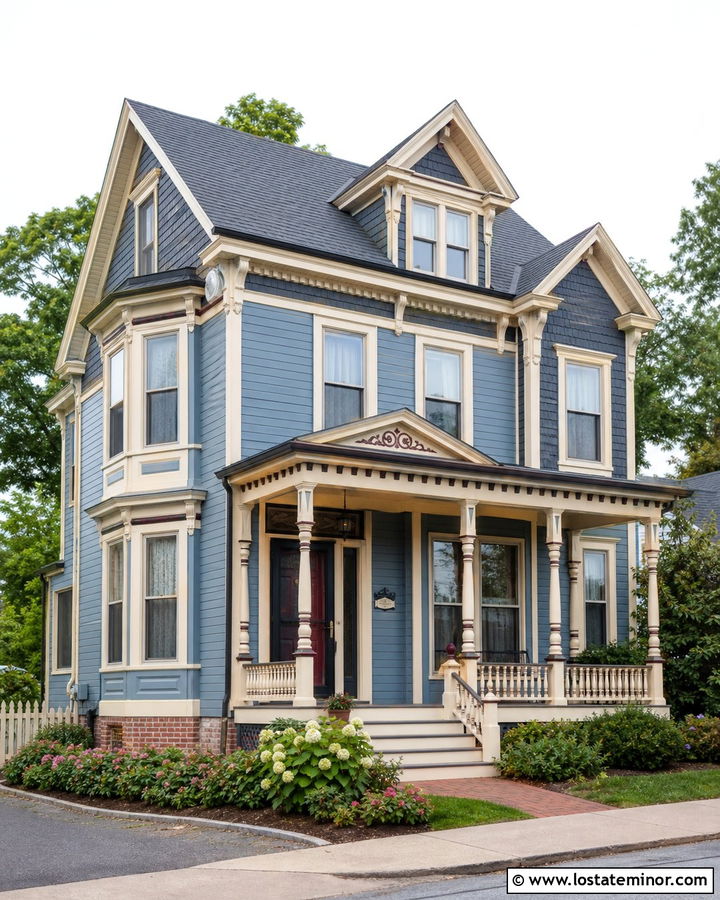
Decorative Victorian architecture can handle stronger contrast than a simple facade. Use muted dusty blue as the primary siding color, creamy white on ornate trim, and charcoal blue on gable shingles. A black storm door gives the busy entrance a clear outline, especially when installed over a warm burgundy front door. Repeat black sparingly on porch lights and roof details rather than covering every decorative feature. A dark gray roof and natural brick foundation help ground the layered colors. Restore turned porch posts, brackets, and railings in cream so their shapes remain visible against the blue. Curved garden beds, flowering shrubs, and a brick walkway complete a lively but controlled exterior that respects the home’s historic personality.
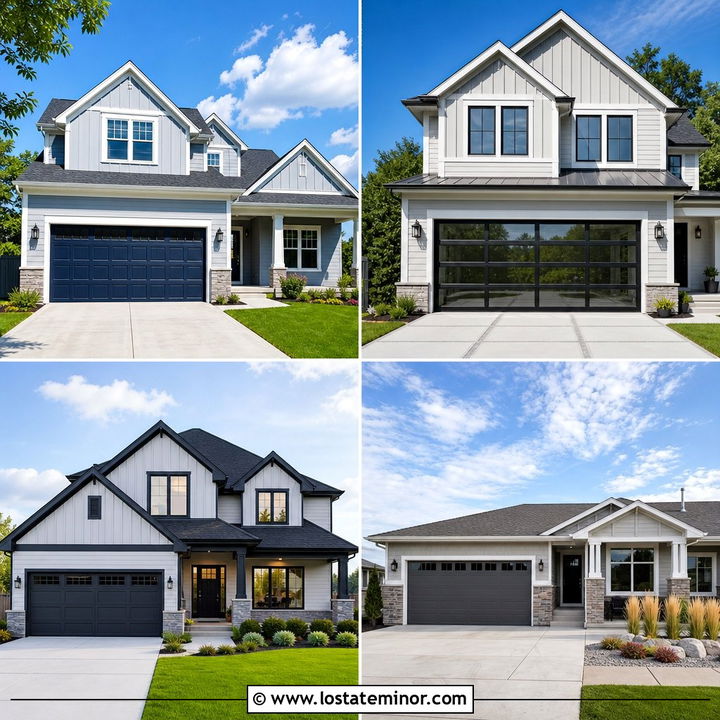
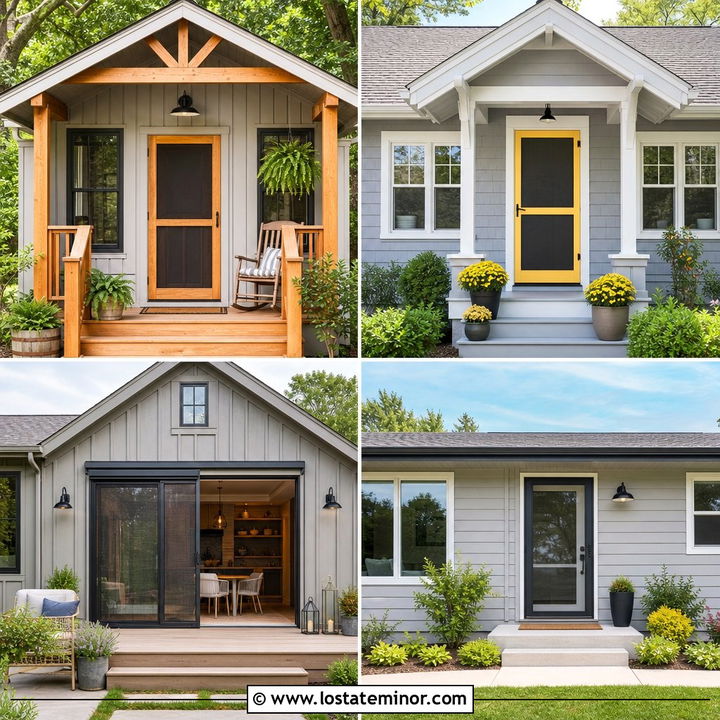
15. Dusty Blue House With Red Front Door And Storm Door
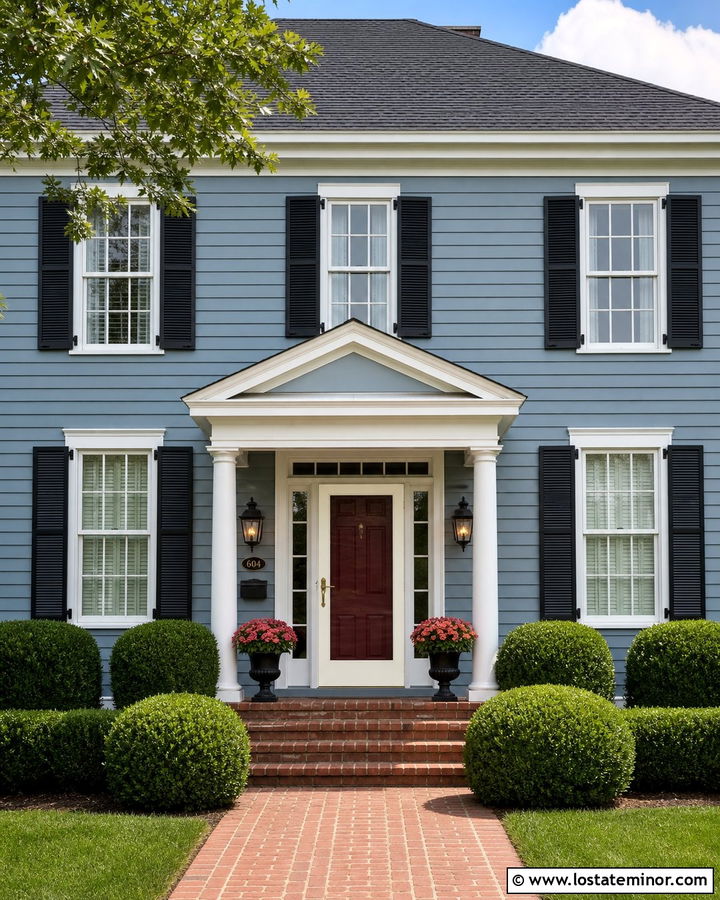
A restrained red door can energize dusty blue siding while maintaining a classic appearance. Choose an oxblood or muted brick-red front door rather than a bright primary red. Protect it with a full-view storm door in warm white, matching the window trim, porch posts, and fascia. Black shutters and a charcoal roof add structure to the exterior, while red brick steps connect naturally with the door color. This palette suits a Georgian-inspired or traditional two-story home with balanced windows and a centered entrance. Keep the landscaping formal but not severe, using rounded shrubs, white flowers, and matching planters. The clear storm door ensures the red entrance remains visible and gives the facade a memorable, well-proportioned focal point.
16. Dusty Blue House With Yellow Front Door And Storm Door
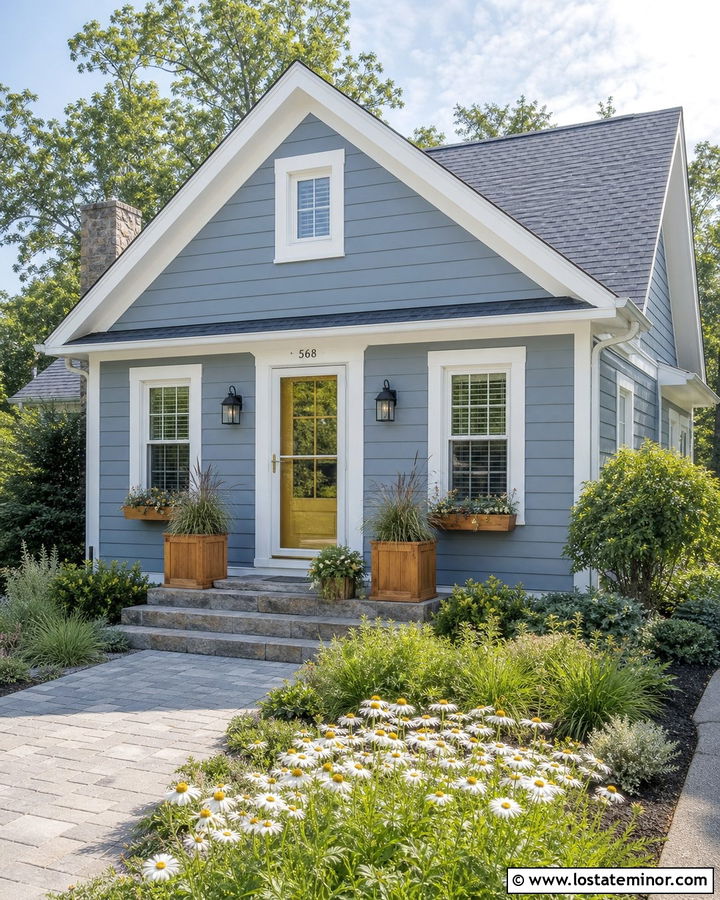
Imagine arriving home to a cheerful yellow door framed by calm dusty blue siding. Choose a muted mustard or golden yellow rather than a neon shade, then install a white full-glass storm door that keeps the color visible. White trim, a medium gray roof, and natural stone steps create a balanced background for the brighter entrance. This scheme feels especially appropriate on a compact cottage or updated ranch with simple horizontal siding and a small covered porch. Add black lighting for definition and use warm wood planters to bridge the yellow and blue. White daisies, ornamental grasses, and a clean paver walkway reinforce the fresh character. The result feels sunny, welcoming, and easy to recognize.
17. Dusty Blue House With Green Front Door And Storm Door
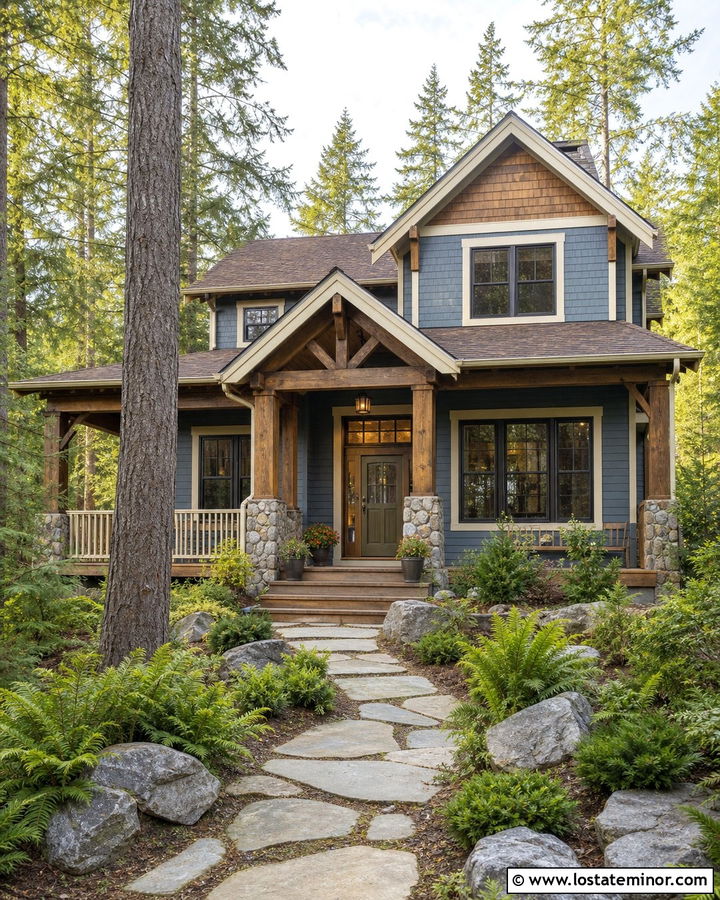
Dusty blue and muted green create a nature-inspired combination that feels calm rather than colorful. Paint the front door a deep olive or forest green and place it behind a bronze full-view storm door. The bronze frame warms both cool colors and connects easily with natural stone, brown roofing, and aged metal lighting. Use cream trim to soften transitions around the windows and eaves. This exterior works well on a rustic Craftsman or mountain cottage with shake siding in the gables and lap siding below. Add timber porch columns and a fieldstone base for depth. Evergreen shrubs, ferns, and a winding stone walkway strengthen the woodland palette while allowing the blue body color to remain clearly distinguishable from the green entrance.
18. Dusty Blue House With Coral Front Door And Storm Door
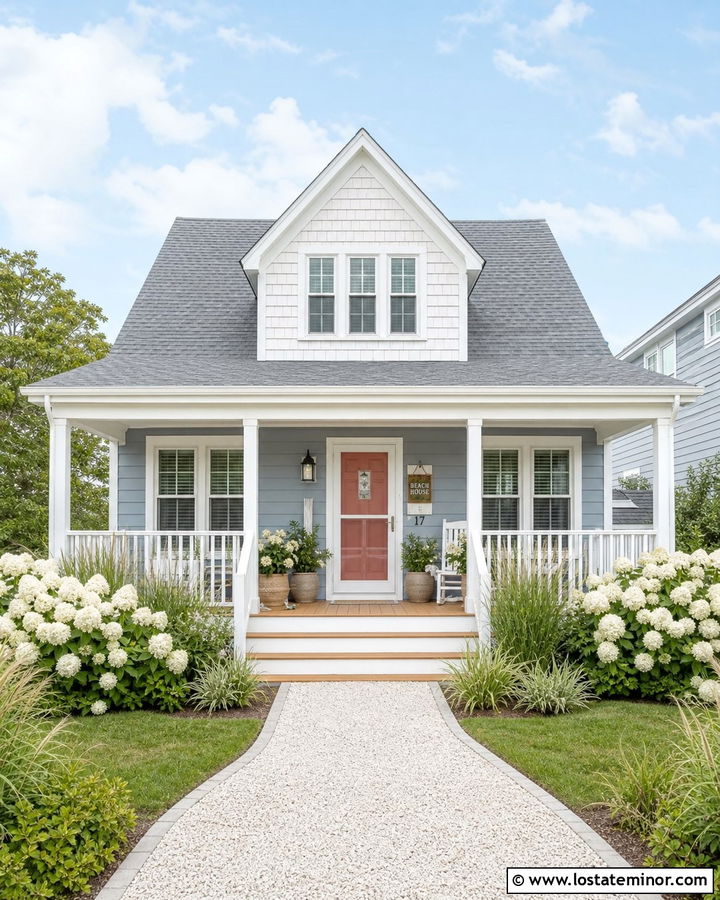
Coral introduces warmth without the formality of red, making it a lively partner for a soft dusty blue facade. Select a toned-down coral front door with terracotta undertones and protect it with a slim white storm door. Repeat the white on window trim, porch railings, and fascia, then use a medium gray roof to keep the palette grounded. This combination fits a coastal cottage with shingle siding, a compact front porch, and simple square columns. Natural wood decking and woven planters prevent the coral accent from looking too polished. Finish the yard with airy grasses, white hydrangeas, and a pale gravel walkway. The visible coral door becomes a friendly focal point within the cool, relaxed exterior scheme.
19. Dusty Blue House With Gray Storm Door
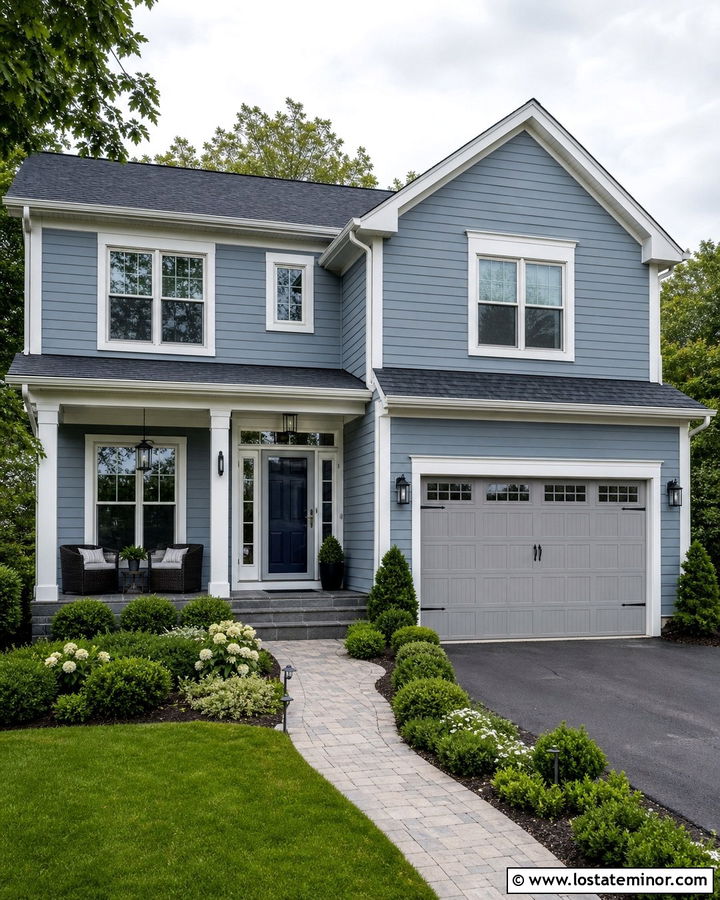
A medium gray storm door creates a low-contrast transition between dusty blue siding and a darker front door. Choose a gray that shares the siding’s cool undertone, but make it deep enough to define the entrance. A navy front door behind the glass adds quiet depth, while crisp white trim keeps the overall facade from looking cloudy. This understated palette works well on a suburban two-story house with lap siding, a front-facing garage, and a charcoal roof. Paint the garage door white or soft gray to reduce its visual weight. Use slate porch flooring, brushed nickel hardware, and black lanterns for a controlled mix of finishes. Structured shrubs and a straight paver walkway support the clean, practical curb appeal.
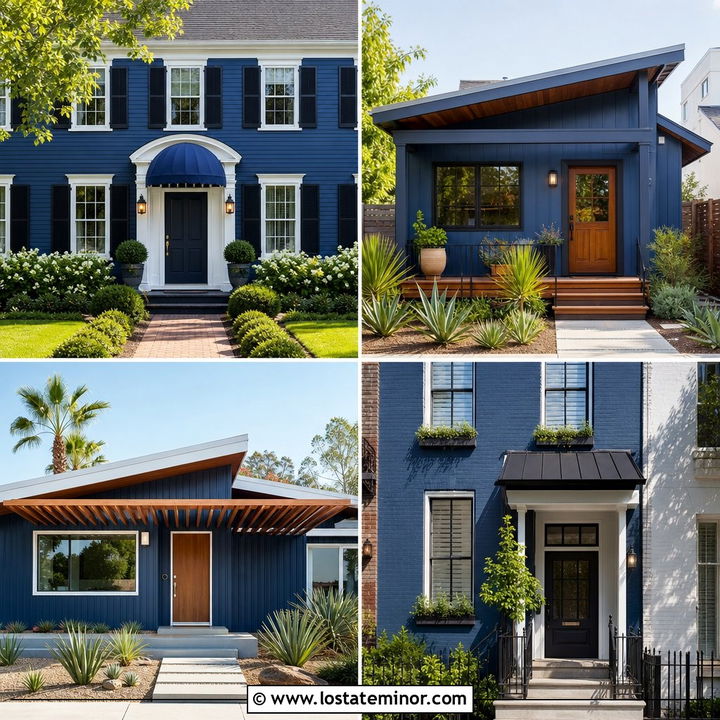
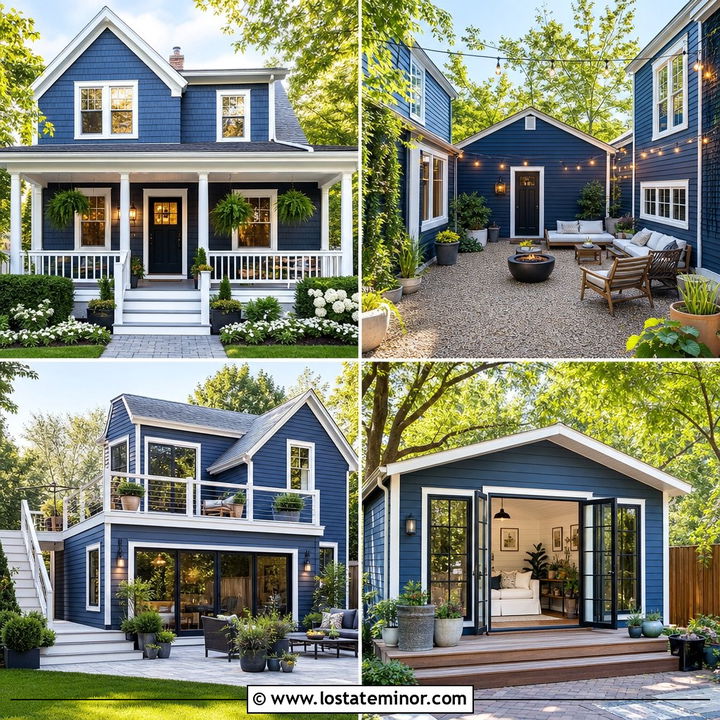
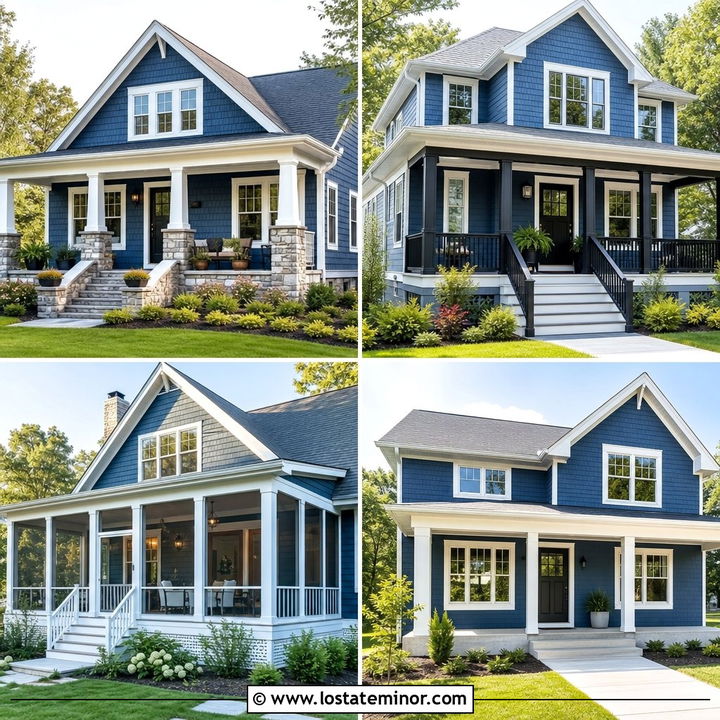
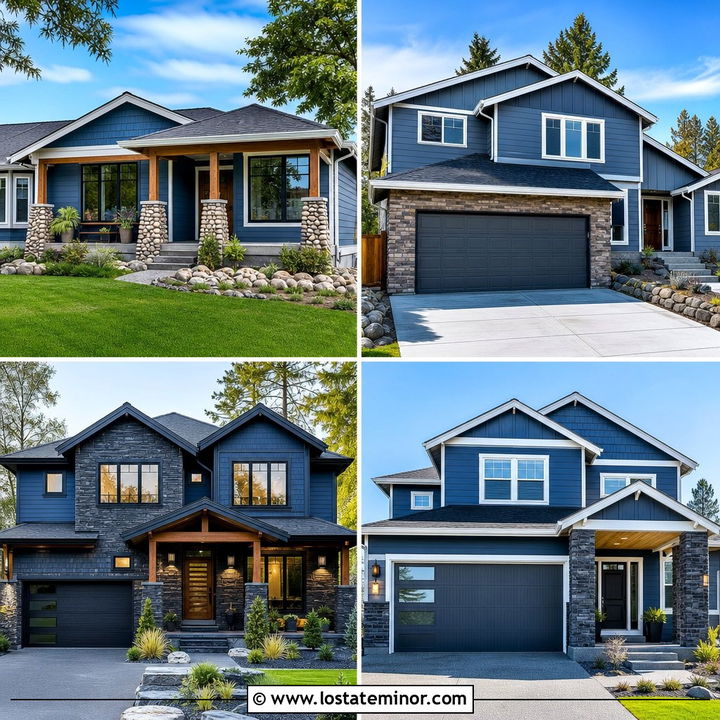
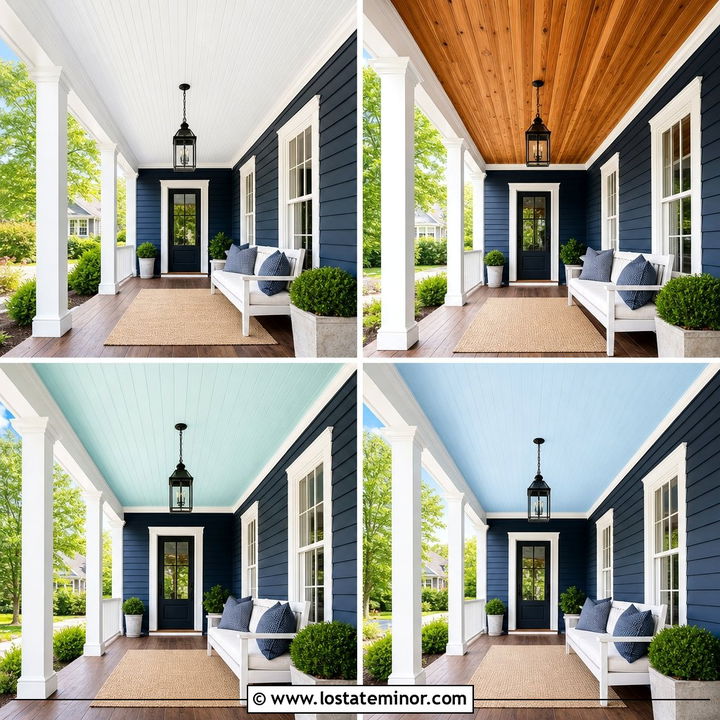
20. Dusty Blue House With Beige Storm Door
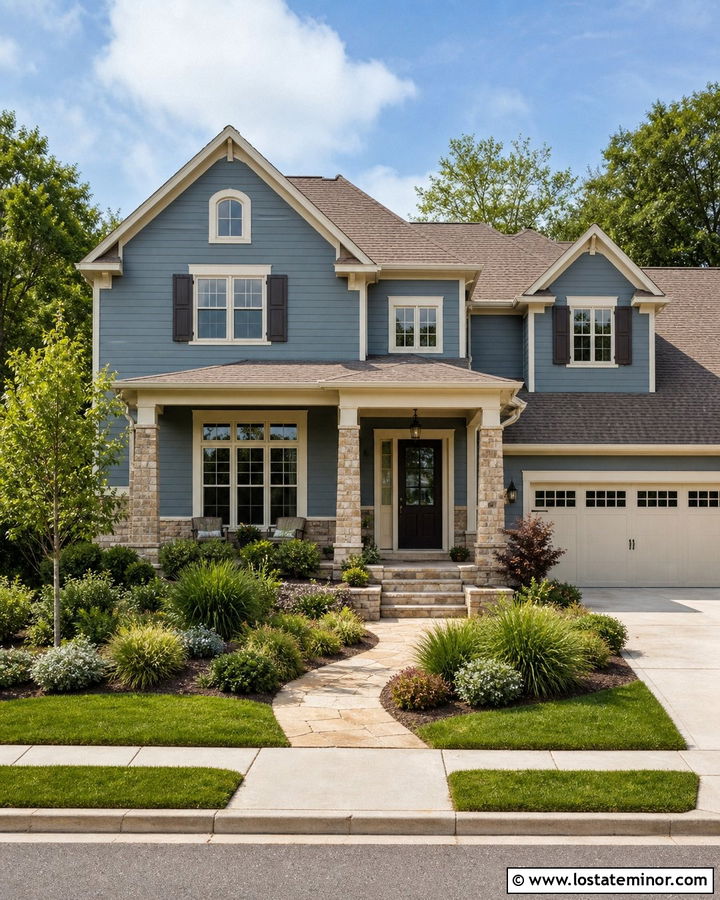
Beige may seem unexpected beside dusty blue, but a warm greige storm door can connect blue siding with tan stone and natural landscaping. Choose a light mushroom-beige frame and pair it with an espresso-brown front door. Use creamy off-white trim rather than bright white, then add taupe roof shingles for a blended, earthy finish. This scheme suits a transitional home with dusty blue lap siding, limestone accents, and a modest covered entry. Repeat the beige tone on porch columns or garage doors to make the storm door feel connected to the larger facade. Layered green shrubs, pale ornamental grasses, and a sandstone walkway complete the setting. The result is soft, balanced, and welcoming without relying on sharp black-and-white contrast.
21. Dusty Blue House With Glass Panel Storm Door
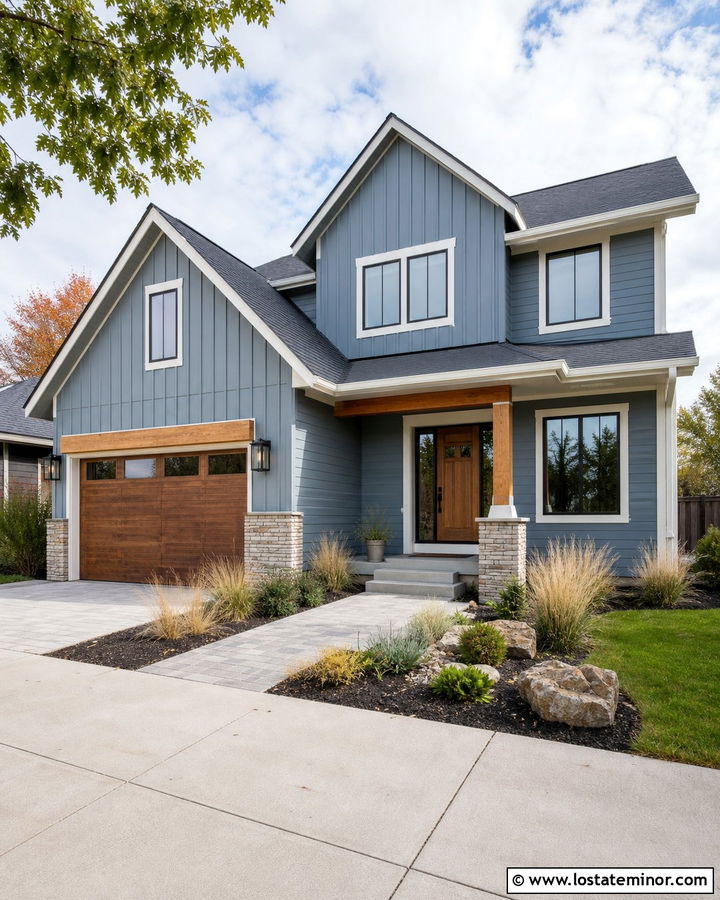
A nearly frameless glass storm door is ideal when the front door deserves to remain visible. Pair dusty blue siding with warm white trim, then choose a clear full-view storm door with a narrow black frame. A richly stained oak front door becomes the focal point behind the glass and connects with matching porch beams or a cedar garage door. This polished combination works on a contemporary suburban house with mixed lap and vertical siding, large windows, and a simple gabled roof. Add pale ledgestone near the entrance to introduce texture without making the facade busy. Rectangular concrete pavers, neatly clipped grasses, and understated foundation plants support the architecture. The expansive glass keeps the entry bright and visually open.
22. Dusty Blue House With Half Glass Storm Door
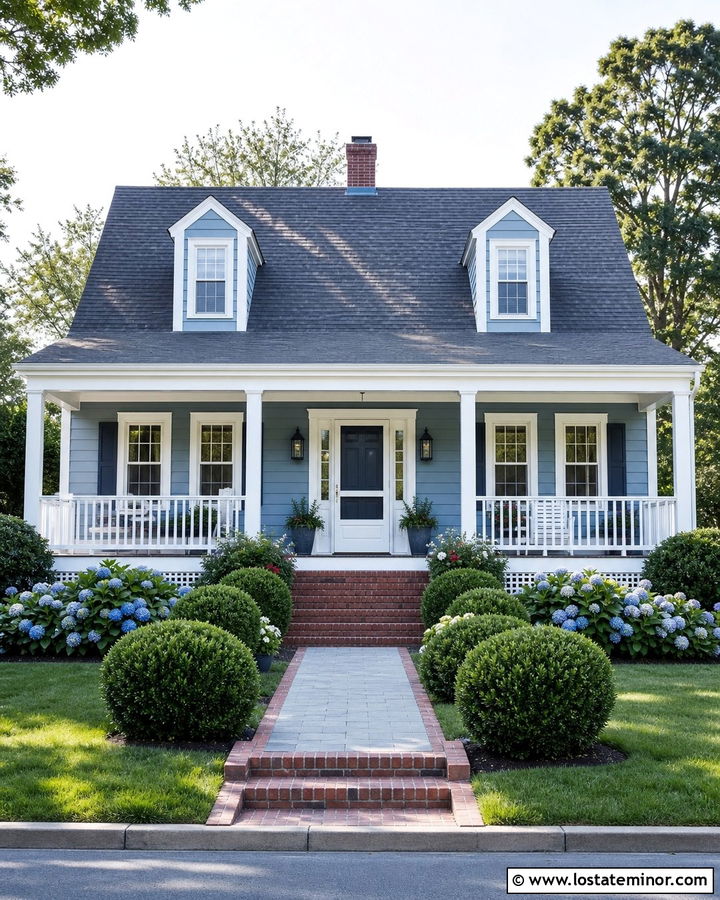
A half-glass storm door provides ventilation and light while giving the lower entrance more visual weight. Choose a white door with a solid lower panel, matching white trim, railings, and porch columns. Place it over a soft navy front door for a layered blue palette. Dusty blue clapboard siding and a dark gray roof complete the calm combination. This configuration is especially suitable for a traditional cottage or modest family home where durability matters as much as appearance. Select a lower panel with simple lines rather than ornate molding to keep the facade current. Brick porch steps, black lanterns, and foundation beds filled with hydrangeas and boxwoods bring practical charm. The storm door feels substantial without hiding the deeper blue entry.
23. Dusty Blue House With Arched Storm Door
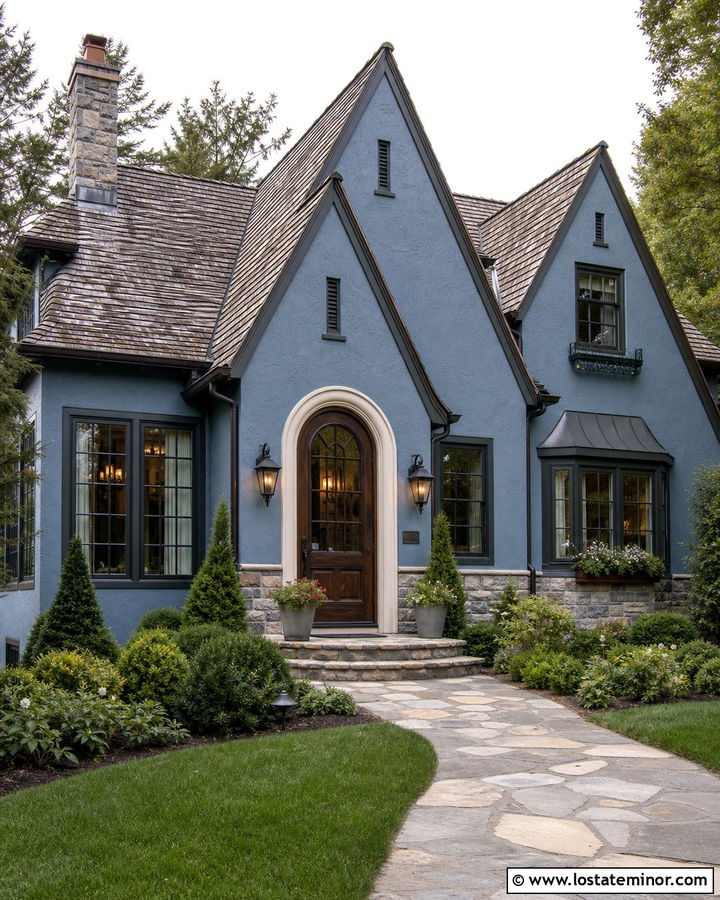
An arched entrance deserves a storm door designed to follow its architectural shape. Use dusty blue stucco or lap siding with creamy trim around the opening, then add an arched bronze storm door over a dark walnut front door. The rounded bronze frame complements warm stonework and helps the entry stand out without creating harsh contrast. This combination works beautifully on a Tudor-inspired or European cottage with steep gables, divided-light windows, and a mixed stone foundation. Choose brown-gray roof shingles and repeat bronze on understated wall lanterns. A curved flagstone path and loosely shaped evergreen shrubs echo the softness of the doorway. The completed exterior feels distinctive because the storm door supports, rather than interrupts, the original architecture.
24. Dusty Blue House With Storm Door And Brick Porch
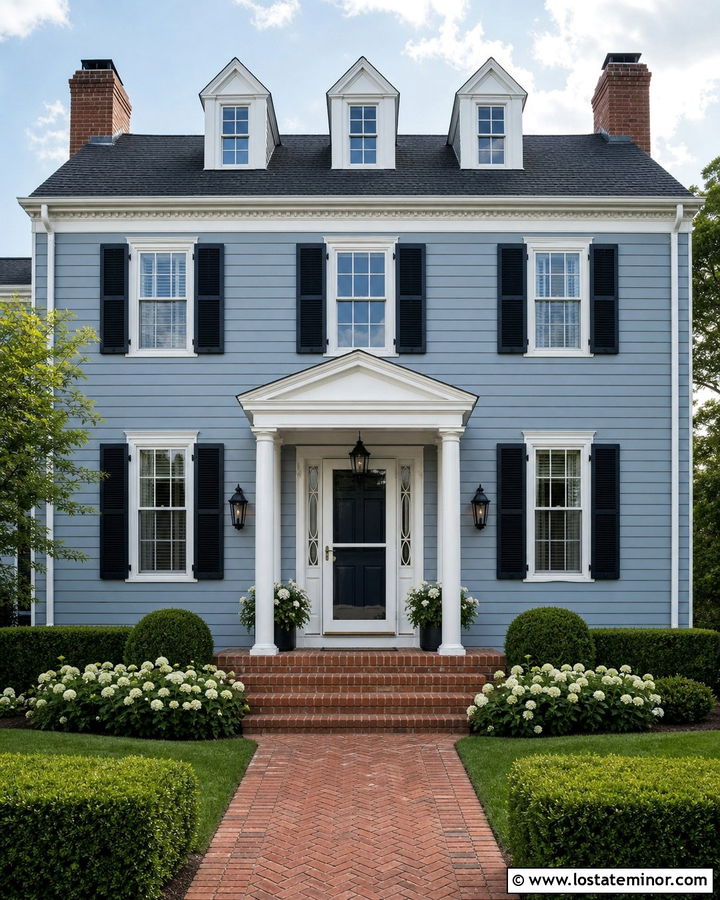
Red brick introduces warmth and texture that can make dusty blue siding look richer. Use a white full-view storm door over a deep navy front door, then repeat white across the porch columns, window trim, and fascia. Traditional red brick steps and porch flooring provide a grounded base for the cool upper facade. This combination suits a Colonial Revival or classic suburban house with symmetrical windows and a charcoal roof. Add black shutters and black lanterns to outline the architecture without distracting from the blue body color. Keep mortar joints warm gray so they relate to the muted siding. Boxwoods, white flowering plants, and a straight brick walkway produce a polished entrance that feels established, balanced, and easy to maintain.
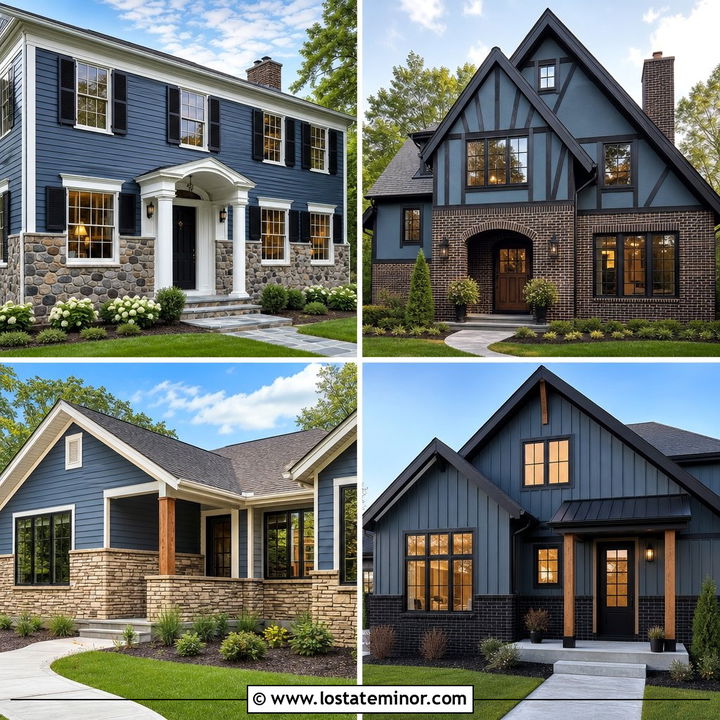
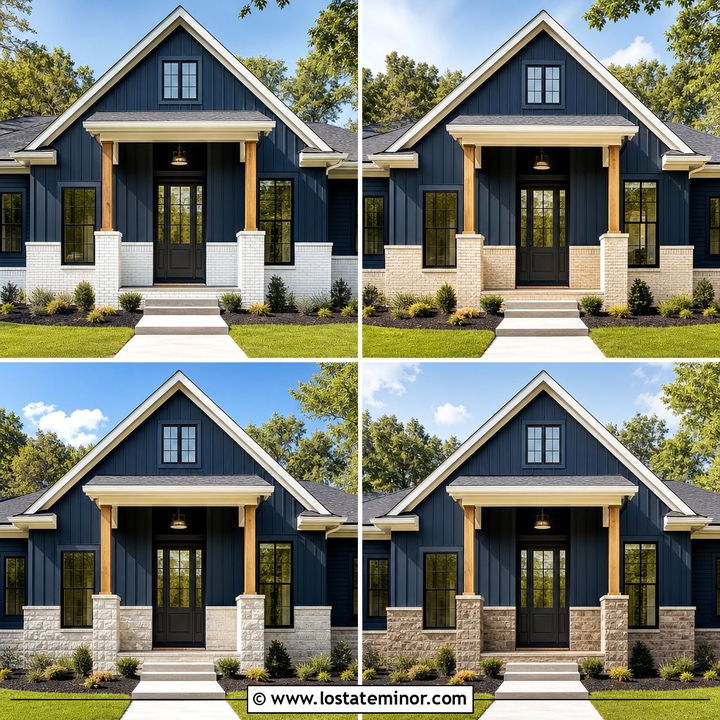
25. Dusty Blue House With Storm Door And Stone Accents
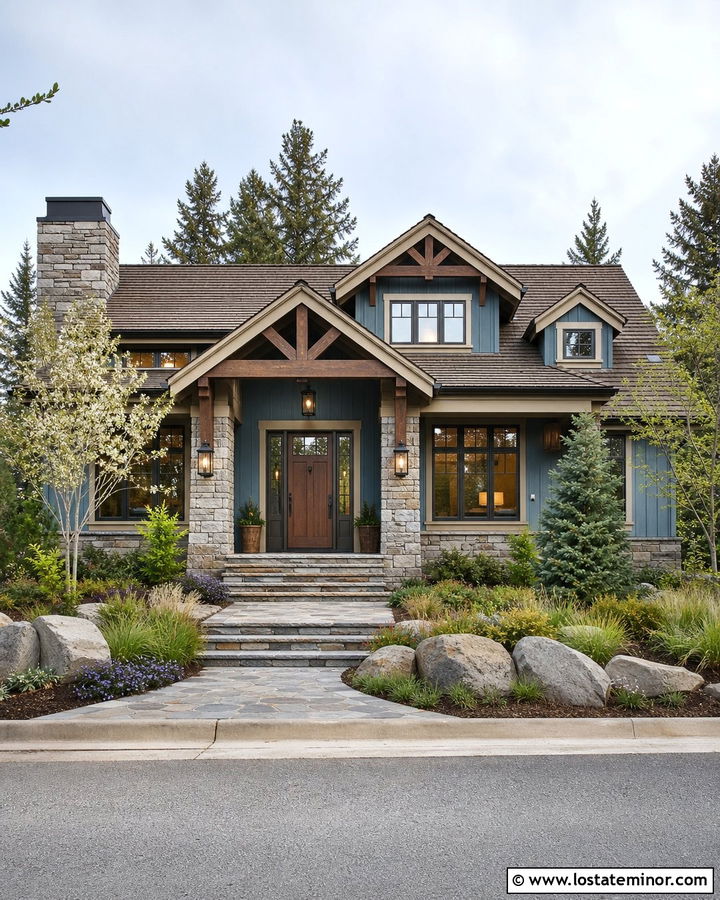
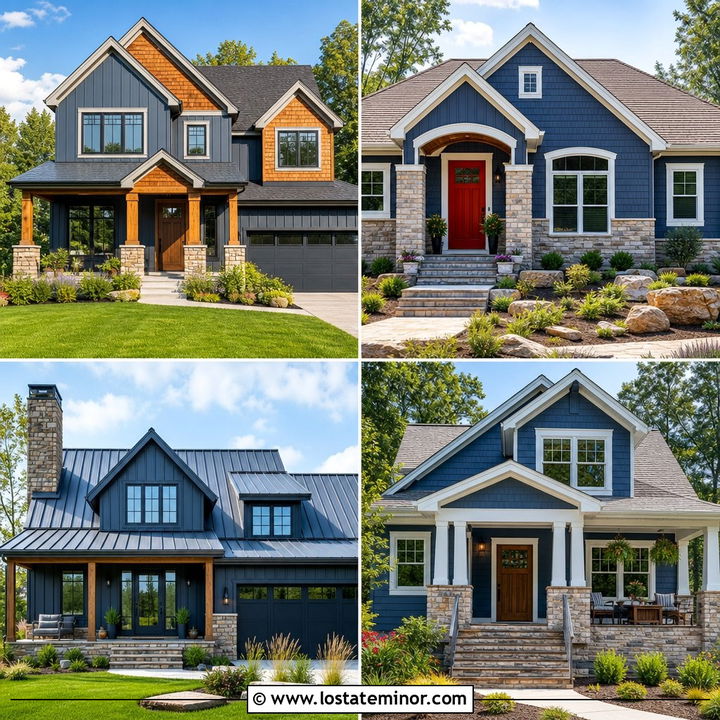
Stone can shift dusty blue from coastal to earthy, especially when the masonry contains gray, tan, and brown tones. Cover the main facade in dusty blue horizontal siding and use mixed ledgestone on the foundation, chimney, and porch columns. A dark bronze storm door over a stained cedar front door will connect with the stone’s warm colors. Choose cream trim and a weathered brown roof to keep contrast gentle. This complete scheme works well on a lodge-inspired Craftsman with broad gables and exposed timber details. Extend the stone into the walkway or porch steps for continuity. Native grasses, evergreen shrubs, and small flowering trees frame the house naturally. Every material supports the subdued blue rather than competing with it.
26. Dusty Blue House With Storm Door And Black Shutters
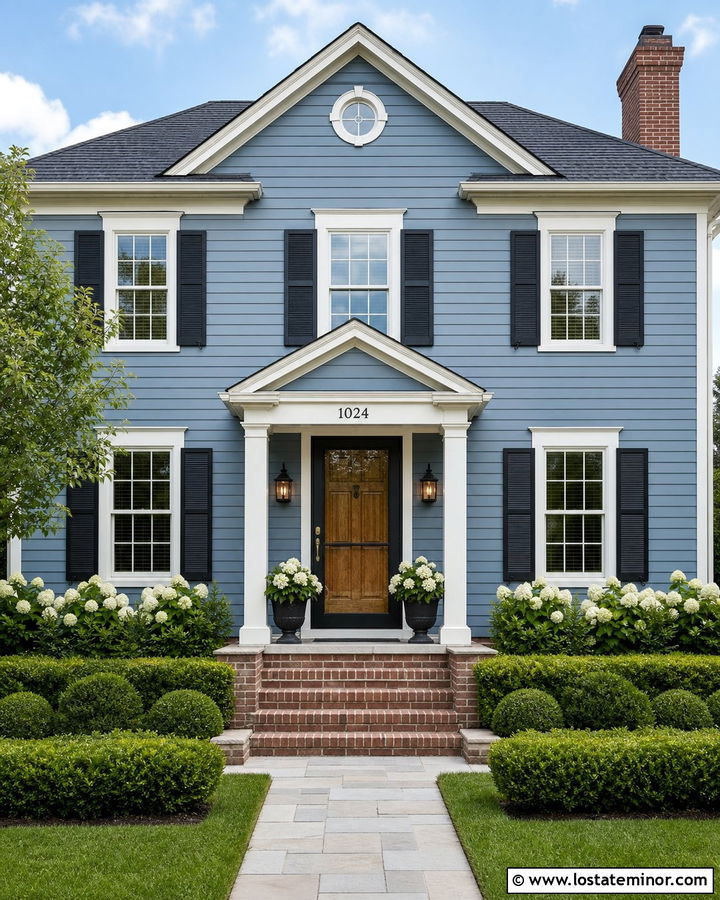
Black shutters give dusty blue siding a traditional outline, but the entrance should repeat that contrast to feel balanced. Install a slim black storm door over a natural oak front door, allowing the wood to soften the dark accents. Use warm white trim on windows, corners, and porch columns, then finish the roof in charcoal gray. This scheme works across Colonial, Georgian, and traditional two-story homes with evenly spaced windows. Keep the shutter size proportional to each window so the facade looks architecturally convincing. Red brick porch steps introduce warmth, while black lanterns connect the entrance to the shutters. Formal hedges, white hydrangeas, and a simple paved walkway create a tidy setting for this reliable blue, black, white, and wood palette.
27. Dusty Blue House With Storm Door And Cedar Shutters
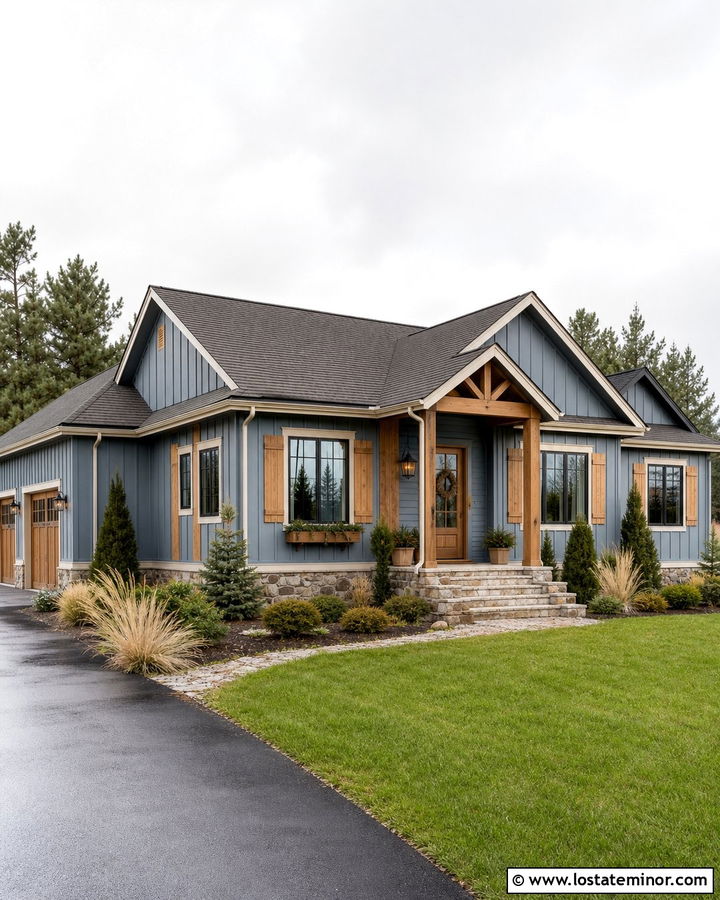
For a warmer and more relaxed exterior, combine dusty blue siding with cedar shutters and a coordinating wood front door. A bronze full-view storm door protects the entrance while allowing both wood grain and color to remain visible. Use soft cream trim to bridge the cool siding and warm cedar, then choose a weathered charcoal-brown roof. This palette is particularly attractive on a lakeside cottage, rustic ranch, or casual Craftsman with a covered porch. Repeat cedar on porch posts, gable brackets, or garage doors, but avoid covering every surface in wood. Natural stone steps, grasses, and evergreen landscaping reinforce the organic character. The cedar accents give the muted blue facade texture, warmth, and a clear connection to its surroundings.
28. Dusty Blue House With Storm Door And Wraparound Porch
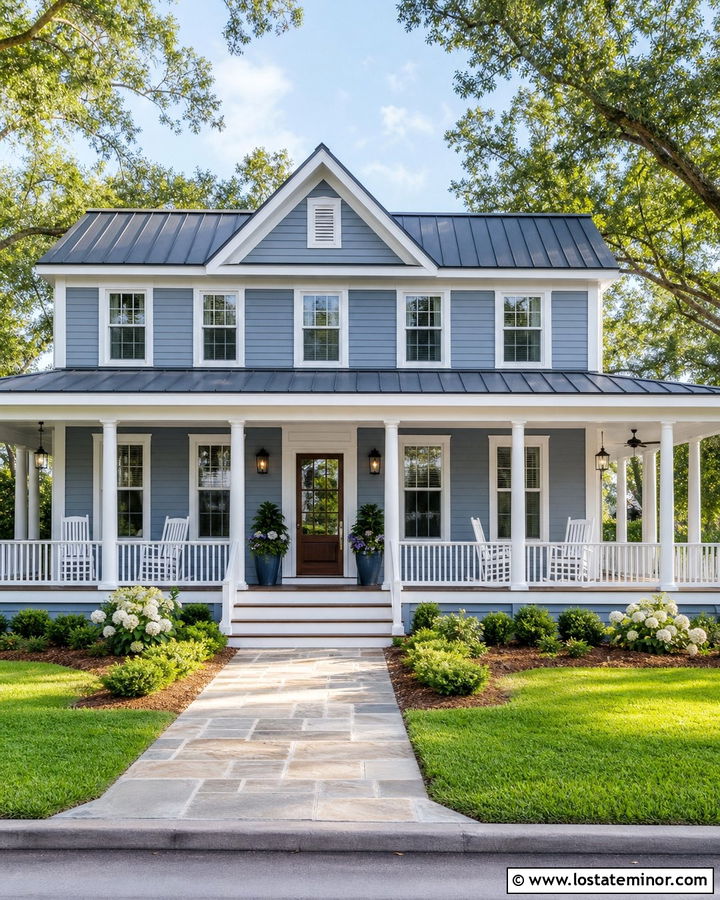
A wraparound porch gives dusty blue siding plenty of room to make an impression. Paint the porch columns, railings, ceiling trim, and storm door warm white for a bright, unified frame. Behind the full-glass storm door, use a medium-stained mahogany entry door to add depth and warmth. A dark gray metal roof can define the long porch line and give the exterior a crisp finish. This combination suits a farmhouse or Southern-inspired home with tall windows, balanced gables, and generous outdoor living space. Natural wood porch flooring keeps the white structure from feeling too formal. Add rocking chairs, large planters, hydrangeas, and a broad stone walkway while preserving an uncluttered, welcoming view of the entire blue facade.
29. Dusty Blue House With Storm Door And Black Roof
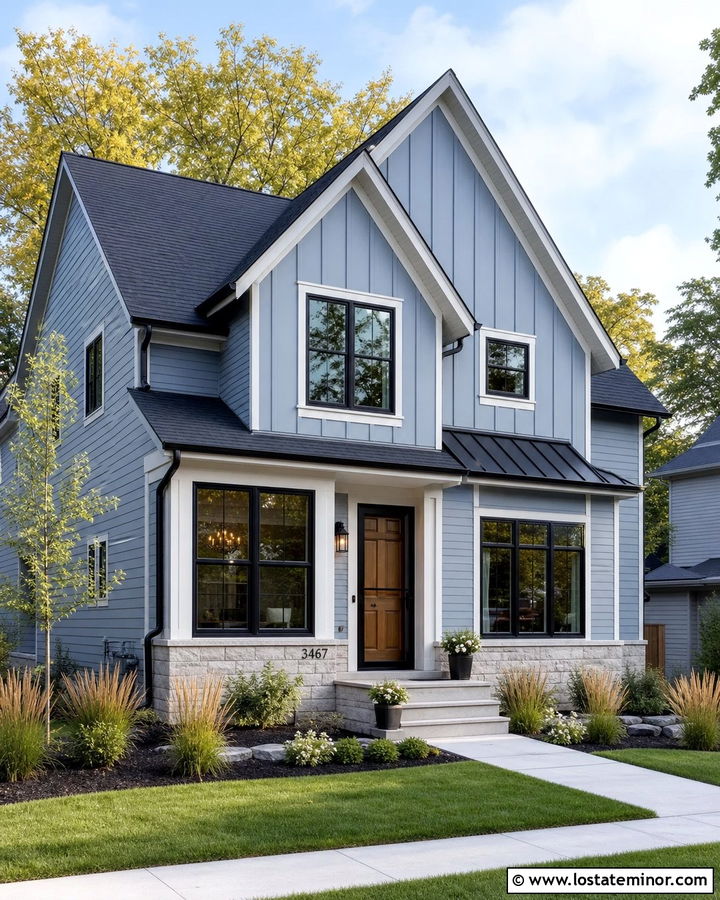
A black roof gives dusty blue siding a sharper, more contemporary edge. Balance that strong upper element with a black full-view storm door, black window frames, and restrained black lighting. Place a warm cedar front door behind the glass to keep the entrance inviting. Use off-white trim sparingly around rooflines and porch supports so the architecture remains clear. This palette works especially well on a modern gabled house with a mixture of dusty blue board-and-batten and horizontal siding. Pale gray stone along the foundation adds texture and prevents the black-and-blue scheme from feeling too stark. A concrete walkway, linear garden beds, and sculptural grasses complete the clean exterior while maintaining a comfortable suburban character.
30. Dusty Blue House With Storm Door And Matching Garage
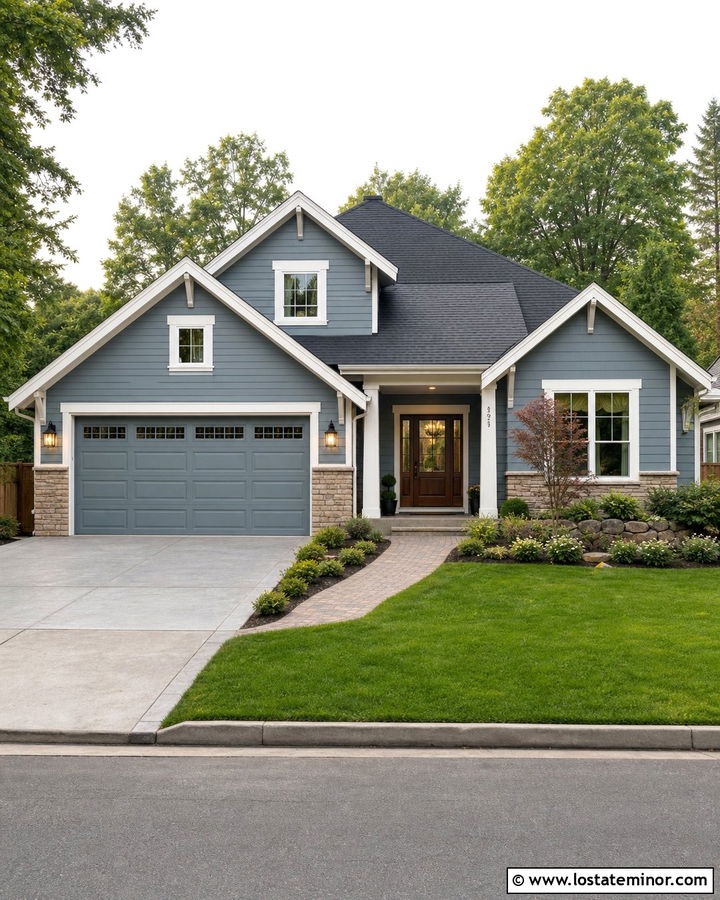
Matching the garage door to dusty blue siding helps it recede, allowing the entrance to receive more attention. Use the same muted blue on the lap siding and paneled garage door, then frame a rich walnut front door with a dark bronze full-glass storm door. Warm white trim around windows and rooflines creates separation without emphasizing the garage. A charcoal roof, tan stone foundation, and bronze lighting complete the balanced palette. This approach works well on a front-garage suburban home, where large garage doors can otherwise dominate the facade. Add a defined paver walkway leading directly to the entrance, along with layered shrubs and a small ornamental tree. The coordinated surfaces create a calm, intentionally designed full-house exterior.
Conclusion:
A dusty blue exterior offers enough softness for a cottage and enough sophistication for a modern or traditional home. The storm door then becomes an important connecting detail rather than a purely practical addition. White and cream frames create brightness, while black, charcoal, and navy introduce definition. Bronze works naturally with stone, wood, and warmer roofing materials. Clear full-view doors preserve a colorful or stained entry, while half-glass versions provide a more substantial appearance. Before choosing, compare siding, trim, roofing, masonry, and door samples together in outdoor light. The most successful 30 Dusty Blue House Design With Storm Door Ideas combinations treat every color and material as part of one complete curb-appeal scheme.

Related posts: