1. Dusty Blue Ranch House With White Garage Door
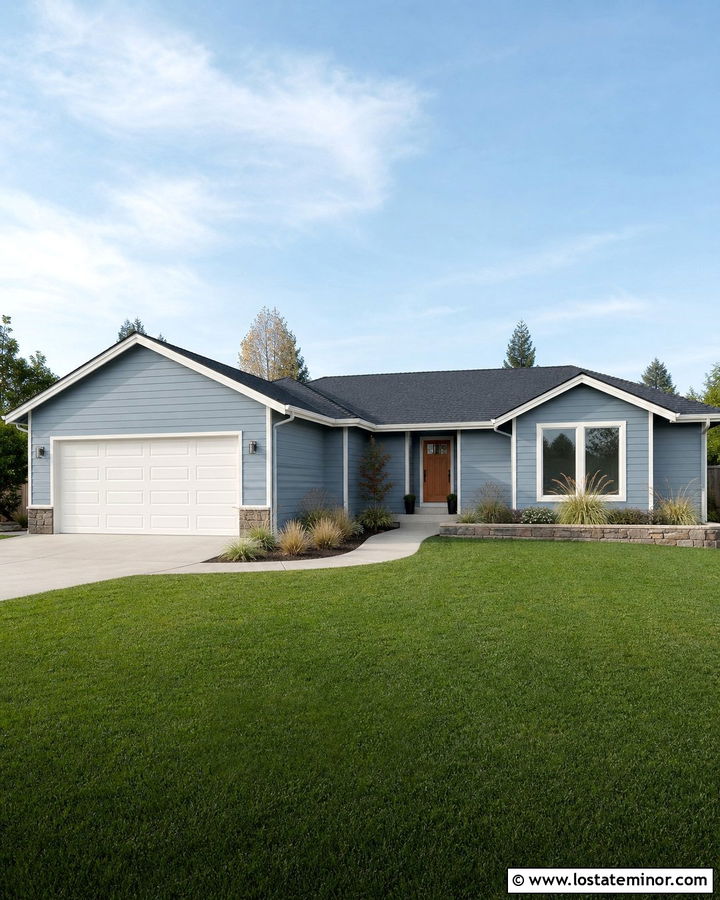
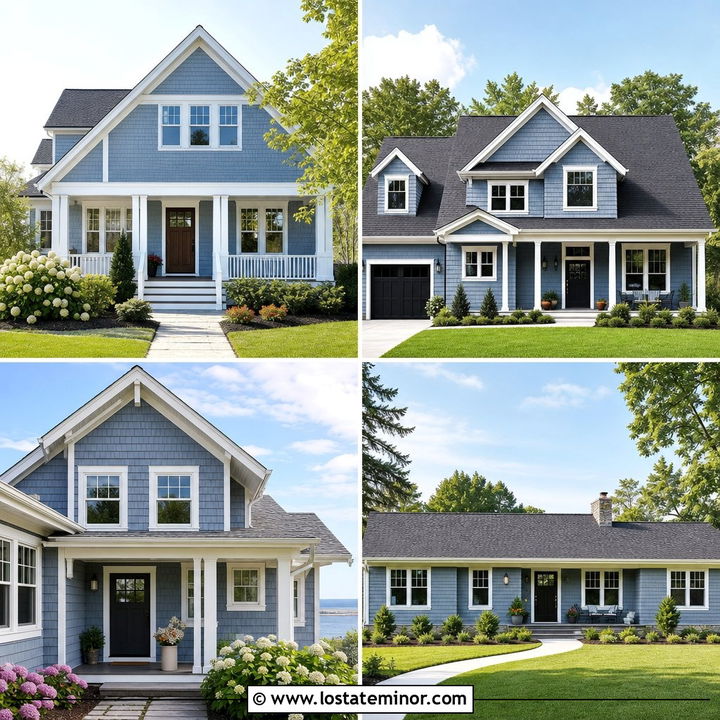
A single-story ranch can feel wider and brighter when dusty blue horizontal siding meets a clean white garage door. Carry the same white onto the fascia, window trim, gutters, and simple porch posts so the garage looks intentional rather than disconnected. A charcoal architectural-shingle roof adds enough depth to ground the pale palette. For the front entry, choose a medium-stained wood door that introduces warmth without competing with the broad garage opening. Low stone planters or a short stone foundation can add texture near the ground. Keep landscaping relaxed with ornamental grasses, clipped shrubs, and a curved concrete walkway. This balanced scheme is practical for a ranch with a prominent front-facing garage because every color has a clear purpose.
2. Dusty Blue Craftsman House With Cedar Garage Door
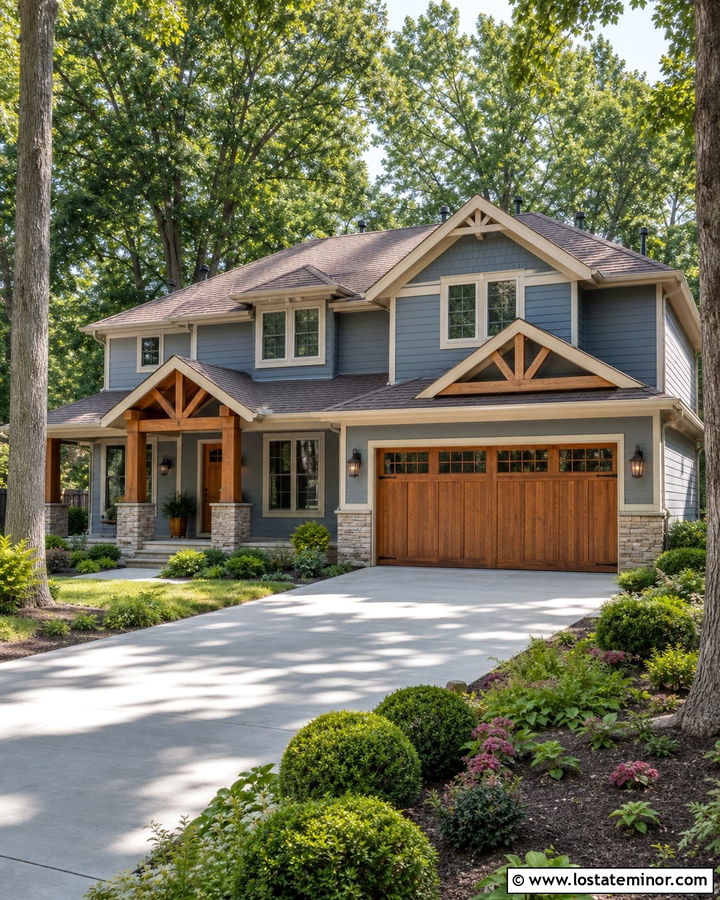
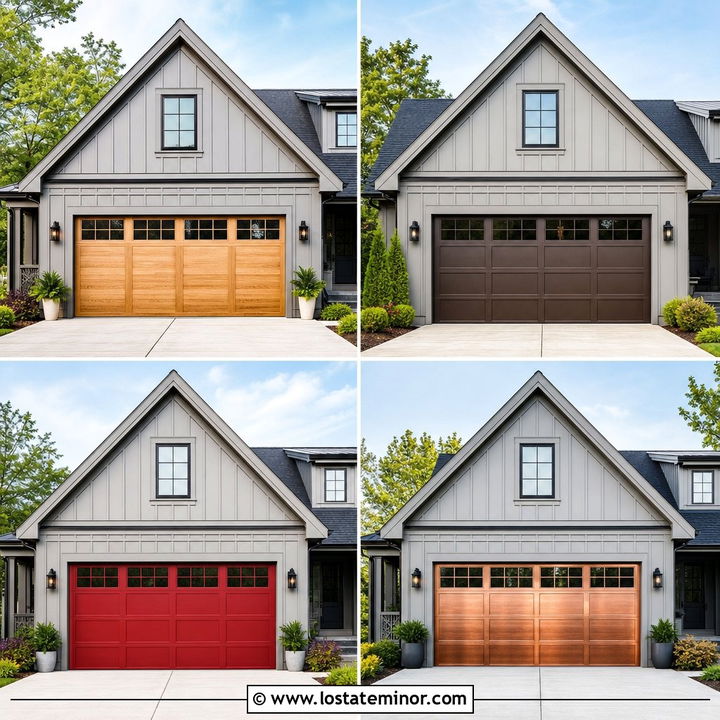
Warm cedar is an excellent counterpoint to the cool undertones found in dusty blue siding. On a Craftsman house, use the blue across lap siding and shingle-covered gables, then make a cedar plank garage door the primary natural accent. Repeat the wood on the front door, porch ceiling, or exposed brackets to connect both sides of the facade. Creamy white trim will feel softer than stark white and works especially well with tan stone columns. A medium brown roof can reinforce the warmth of the wood, while black lanterns provide crisp definition. Choose a clear or lightly tinted protective finish for the cedar. The finished house feels welcoming, handcrafted, and comfortably connected to a wooded or suburban landscape.
3. Dusty Blue Colonial House With Black Garage Door
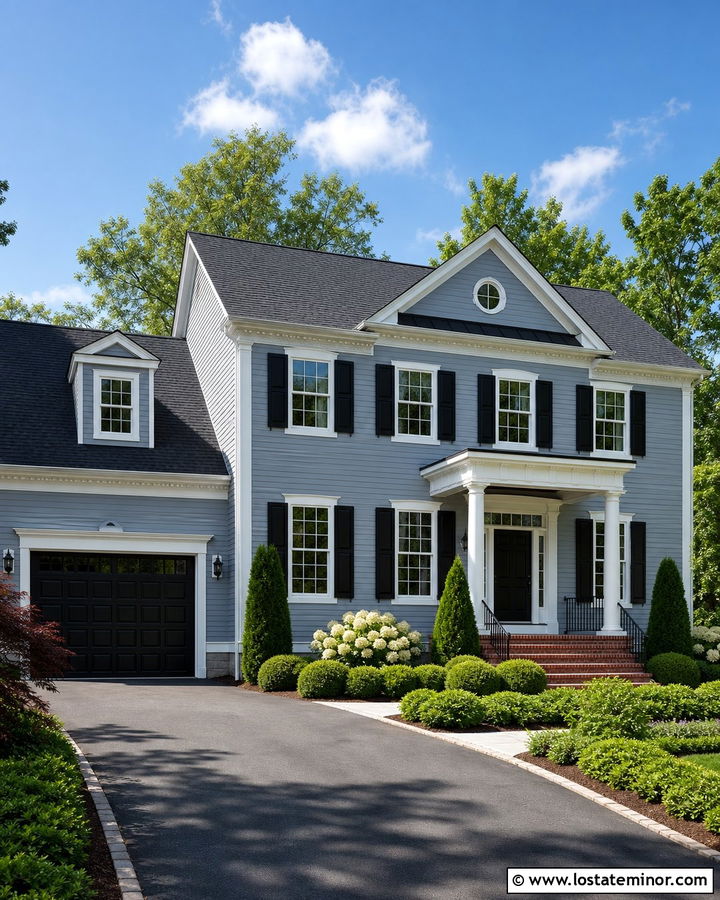
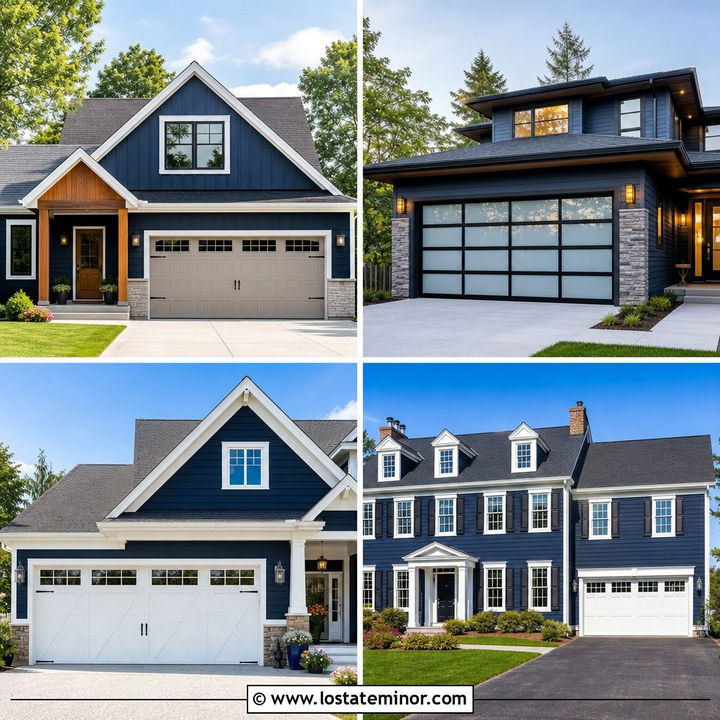
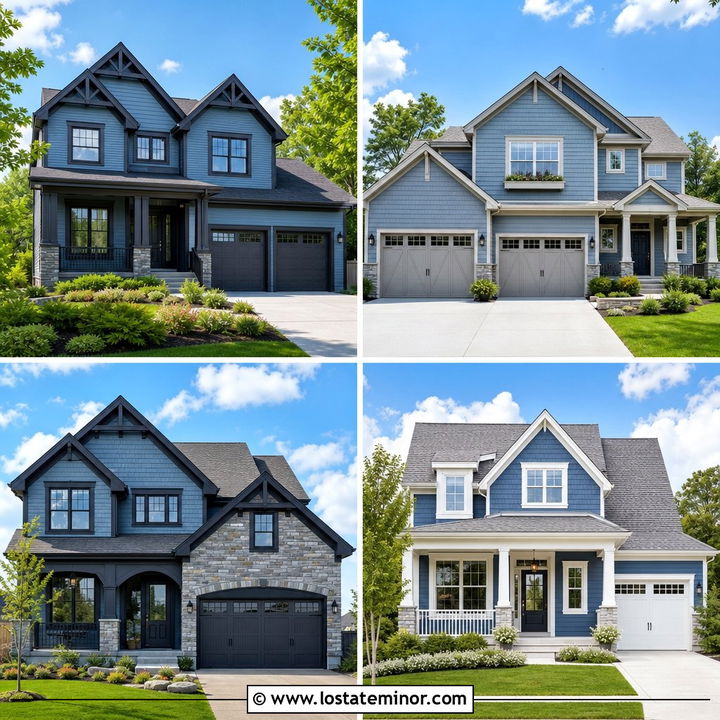
Does your Colonial need stronger contrast without losing its traditional character? Pair dusty blue clapboard siding with a black paneled garage door, black shutters, and a centered black front door. Use bright white around the windows, cornice, columns, and entry surround to preserve the crisp symmetry associated with this architecture. The garage should include classic rectangular panels rather than highly contemporary detailing. Small upper windows can help lighten its dark surface. A charcoal roof, red brick steps, and polished brass entry hardware complete the established palette. Because black attracts attention, this combination works best when the garage sits slightly behind the main wall. Balanced shrubs and matching planters can further direct the eye toward the front entrance instead of the driveway.
4. Dusty Blue Farmhouse With Matching Garage Door
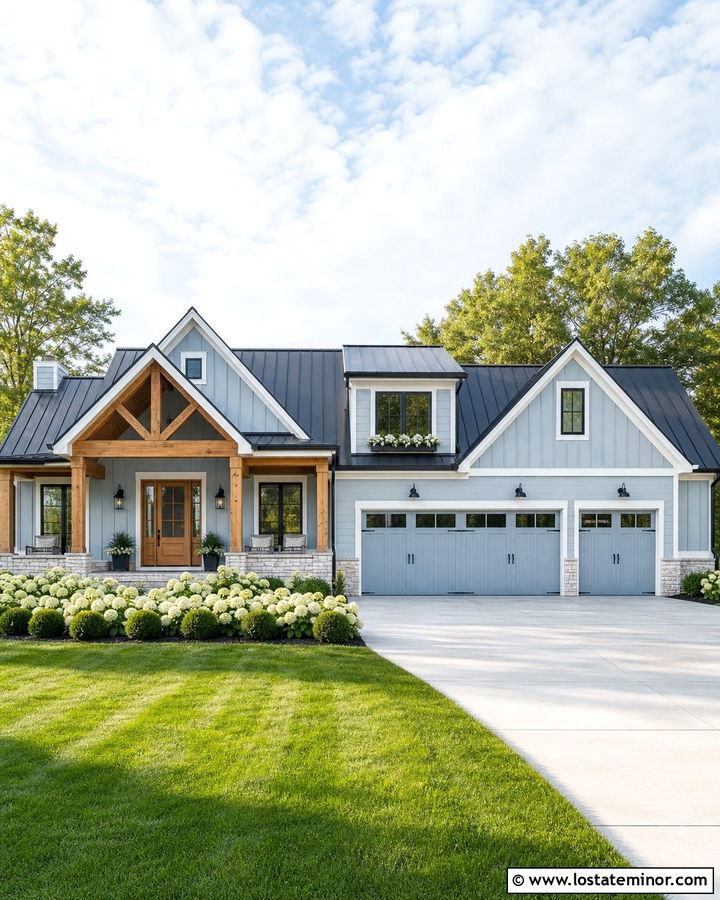
Painting the garage door the same dusty blue as the siding helps a large farmhouse exterior feel calm and continuous. This technique is particularly useful for a three-car garage or a door positioned close to the street. Choose a simple paneled or plank-style door and let its shadow lines provide subtle definition. Crisp white board-and-batten trim, window frames, porch columns, and fascia will create the familiar farmhouse contrast. Add a medium-toned wood front door and matching porch beams to prevent the blue-and-white scheme from appearing flat. A black standing-seam metal roof can deliver a clean finishing line. Use black sconces sparingly around the garage, then soften the driveway with hydrangeas, boxwood, and layered foundation planting.
5. Dusty Blue Cape Cod House With Cream Garage Door
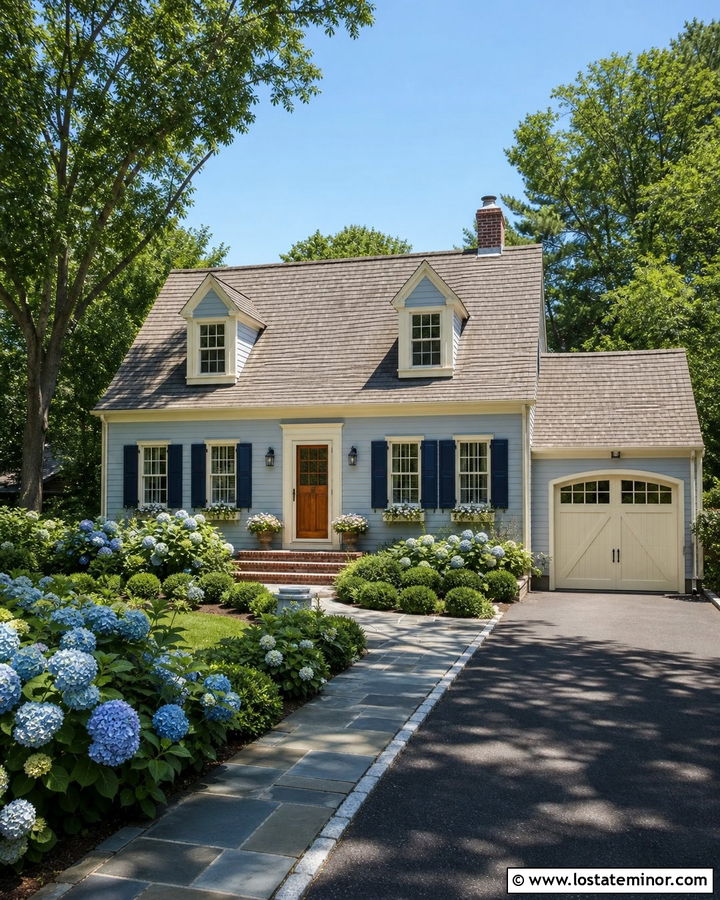
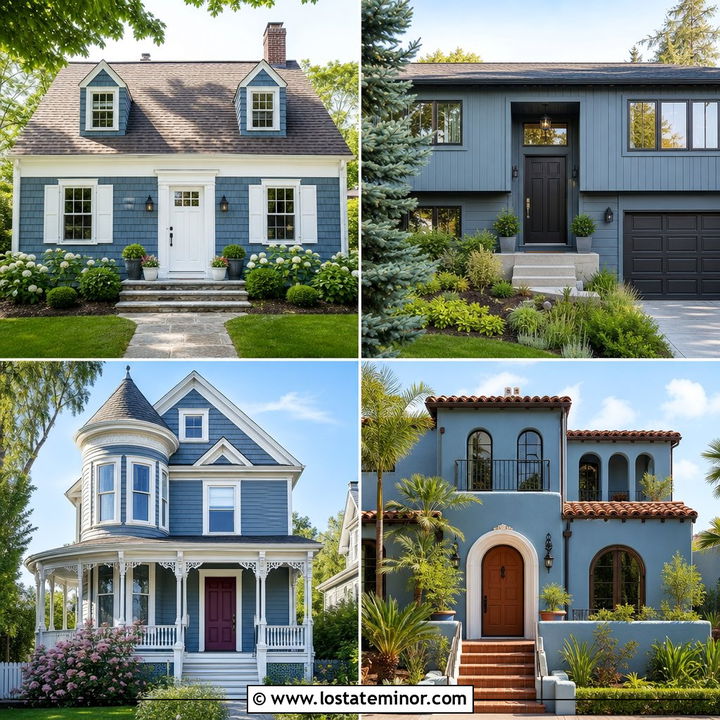
Soft cream can give a dusty blue Cape Cod exterior a warmer, more relaxed appearance than pure white. Apply the cream to a traditional raised-panel garage door, dormer trim, corner boards, and the entry surround. The gentle contrast suits weathered shingles, compact rooflines, and homes surrounded by mature landscaping. A gray cedar-shake roof or a dimensional gray shingle roof will maintain the understated palette. For extra character, add navy shutters and a natural oak front door with simple brass hardware. Brick or bluestone steps can provide an established New England feel without overwhelming the color scheme. Keep the garage hardware minimal and choose small square windows. The result feels classic, approachable, and carefully coordinated rather than overly themed.
6. Dusty Blue Modern House With Charcoal Garage Door
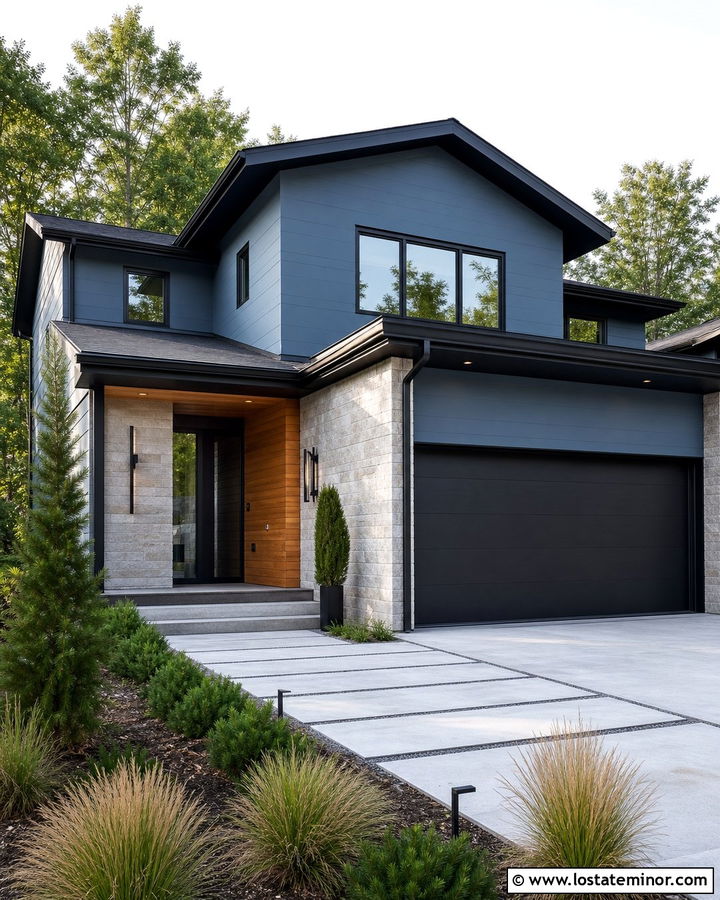
Clean lines make dusty blue look surprisingly modern. Use smooth fiber-cement panels or narrow horizontal siding across the facade, then add a charcoal flush-panel garage door with thin horizontal seams. Black window frames, dark gutters, and a charcoal roof will connect the garage to the rest of the architecture. Warm wood around a recessed front entry keeps the cool palette from becoming severe. For additional dimension, place light gray stone along one lower wall or around the garage return. Modern landscaping should remain structured, with linear concrete pavers, ornamental grasses, and compact evergreens. Select a garage door without decorative handles or traditional arches. This restrained approach lets the dusty blue body color remain visible while the darker garage visually settles into the building.
7. Dusty Blue Bungalow With Natural Oak Garage Door
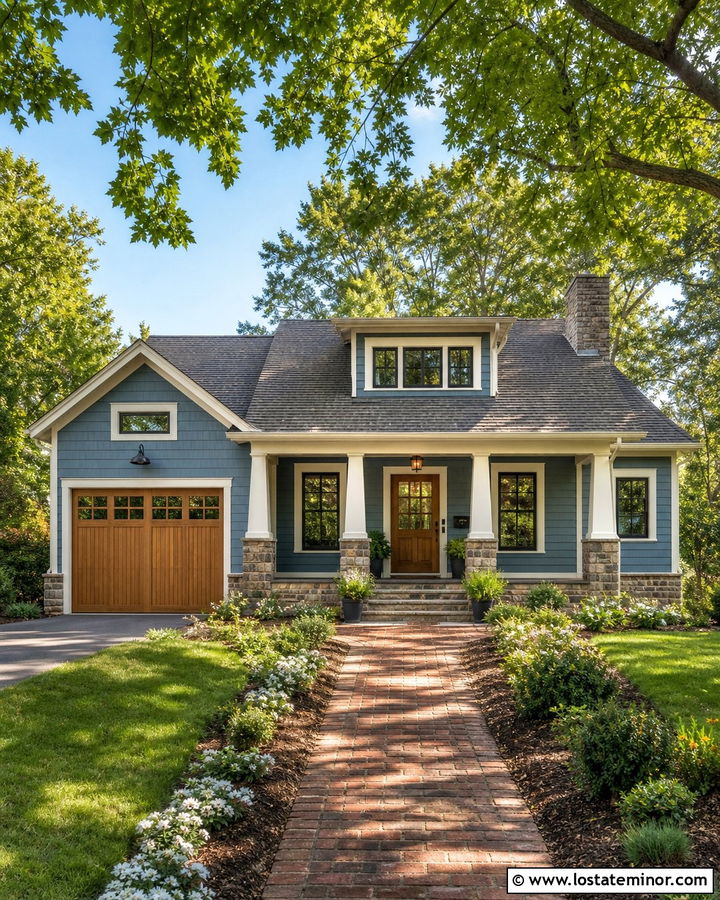
A cozy bungalow benefits from a garage door that feels warm, modest, and connected to its architectural details. Natural oak works beautifully beside dusty blue siding, especially when repeated on tapered porch columns, the front door, or decorative roof brackets. Choose a garage door with narrow vertical boards and a row of simple windows across the top. Off-white trim will gently outline the roof, windows, and porch without creating harsh contrast. Dark bronze lights, gutters, and door hardware can coordinate with a brown or weathered charcoal roof. Use river rock or warm fieldstone around the foundation to support the earthy palette. A brick walkway, flowering shrubs, and a small lawn complete this friendly exterior without hiding the bungalow’s charming proportions.
8. Dusty Blue Split-Level House With Light Gray Garage Door
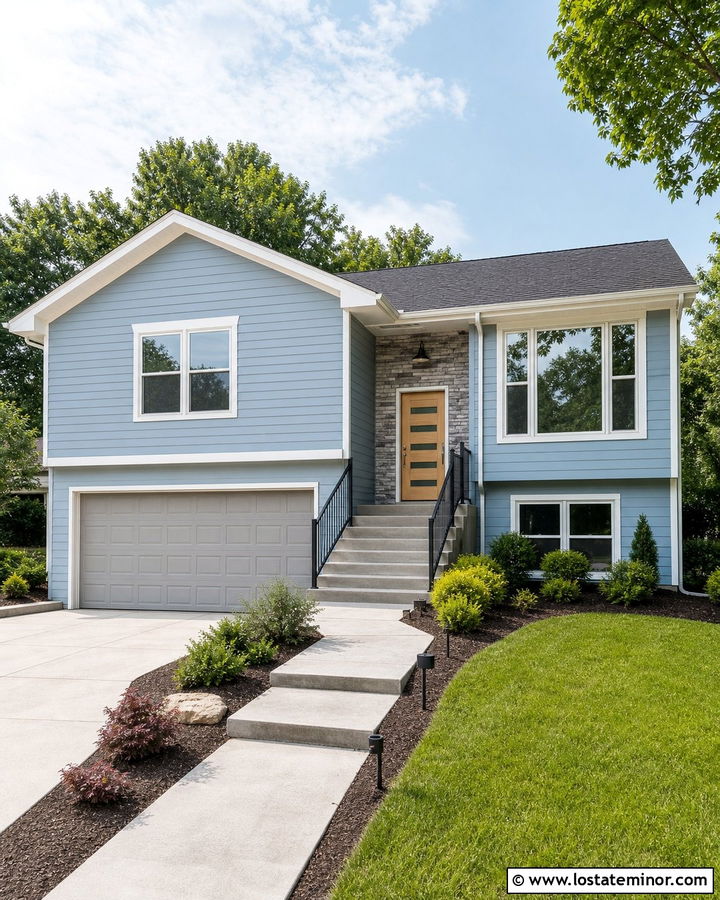
Split-level homes often have large garage doors positioned directly beneath living spaces. A light gray garage door can reduce that visual weight while giving dusty blue siding a layered, tonal appearance. Select a gray with cool blue undertones, then repeat it on the foundation, utility door, or narrow horizontal trim bands. Use soft white for windows and fascia to brighten the upper level. A natural wood front door can distinguish the entry, which may otherwise become lost beside the garage. Charcoal roof shingles and black handrails provide small, grounding accents. Consider adding stone veneer around the garage base or entry steps for texture. Clean shrubs, a widened walkway, and contemporary house numbers can make the entire split-level exterior look more current and cohesive.
9. Dusty Blue House With Walnut Garage Door
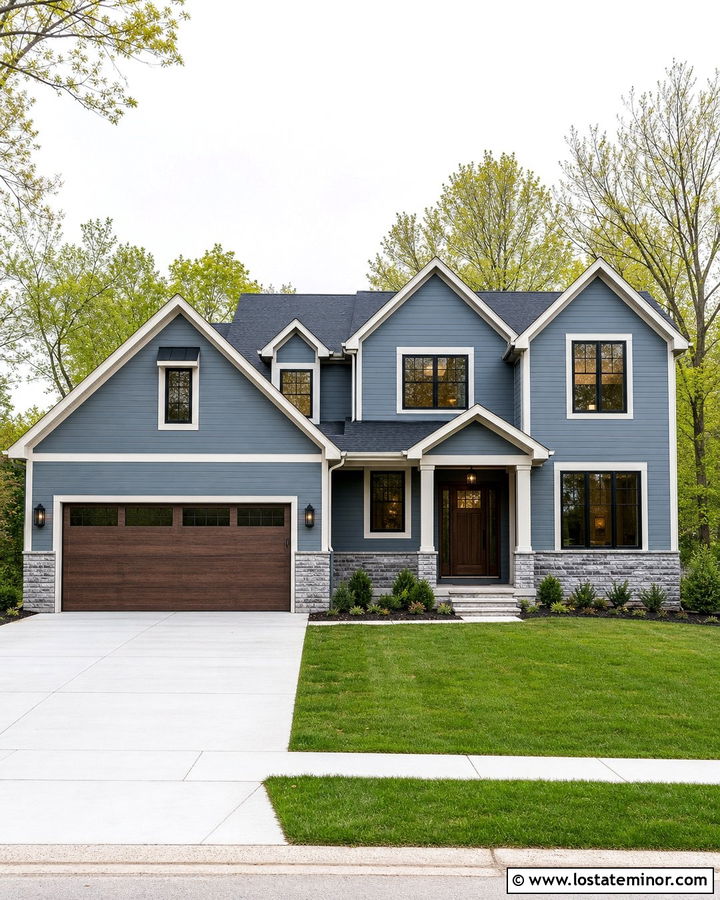
Rich walnut brings depth and an upscale finish to a muted dusty blue facade. This pairing works especially well on a transitional house that combines traditional rooflines with simplified modern details. Choose a garage door with horizontal walnut-look planks and minimal black hardware. Repeat the wood tone on the front door or the underside of a small entry canopy, but avoid covering too many surfaces. Warm white window trim will bridge the cool siding and brown wood more naturally than brilliant white. Add gray limestone or ledgestone near the foundation for another neutral layer. A charcoal roof and black-framed windows provide definition. Finish the curb appeal with a broad concrete driveway, linear planting beds, and soft green foliage that allows the wood grain to remain prominent.
10. Dusty Blue House With Navy Garage Door
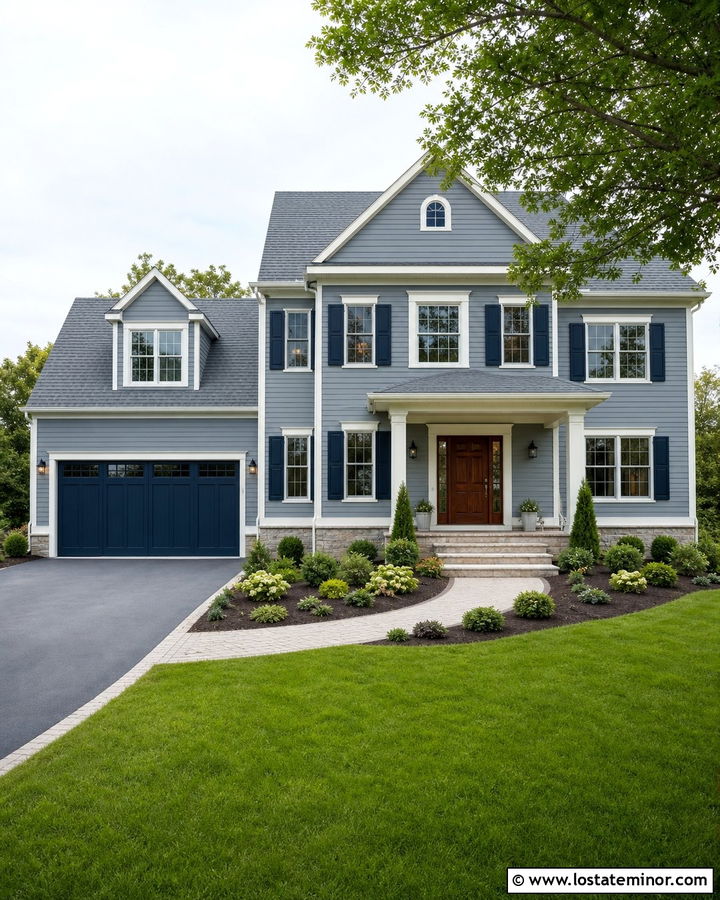
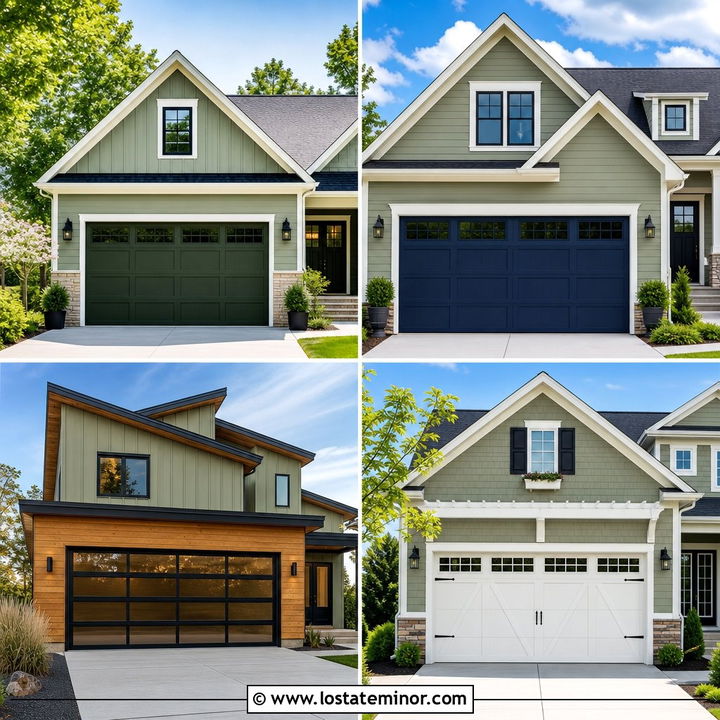
A navy garage door creates noticeable contrast while staying within the same blue color family. Pair it with medium dusty blue siding on a two-story traditional home, then repeat the navy on shutters or a secondary side door. White trim keeps the two blues distinct and prevents the facade from looking too heavy. For the front door, consider warm mahogany or muted brick red to introduce a controlled point of contrast. A medium gray roof will support both blue tones without competing with them. The garage door should have understated rectangular panels and small top windows with white frames. Place larger shrubs near the entry and lower planting near the garage. This encourages visual balance while allowing the darker garage color to feel deliberate rather than dominant.
11. Dusty Blue House With Glass Garage Door
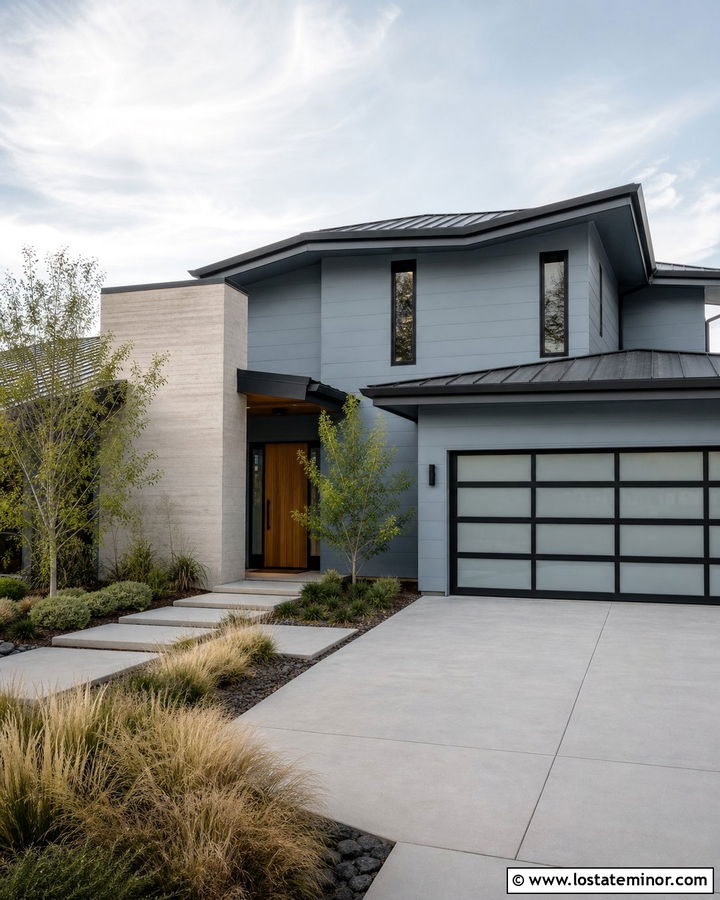
A glass garage door can turn dusty blue siding into a sharp contemporary backdrop. Choose frosted or translucent panels set within black aluminum frames to maintain privacy and soften reflections. Connect the black framework to slim window frames, exterior sconces, gutters, and a low-slope metal roof. Use dusty blue on smooth siding panels, vertical cladding, or a combination of both. A pale concrete or limestone accent wall can brighten the composition, while a cedar front door adds warmth near the entry. Keep the driveway simple and uncluttered so the garage’s grid remains visually clean. Structured grasses, sculptural shrubs, and large concrete pavers complete the modern curb appeal. This combination is especially effective when the garage is integrated into a strong geometric facade.
12. Dusty Blue House With Carriage Garage Doors
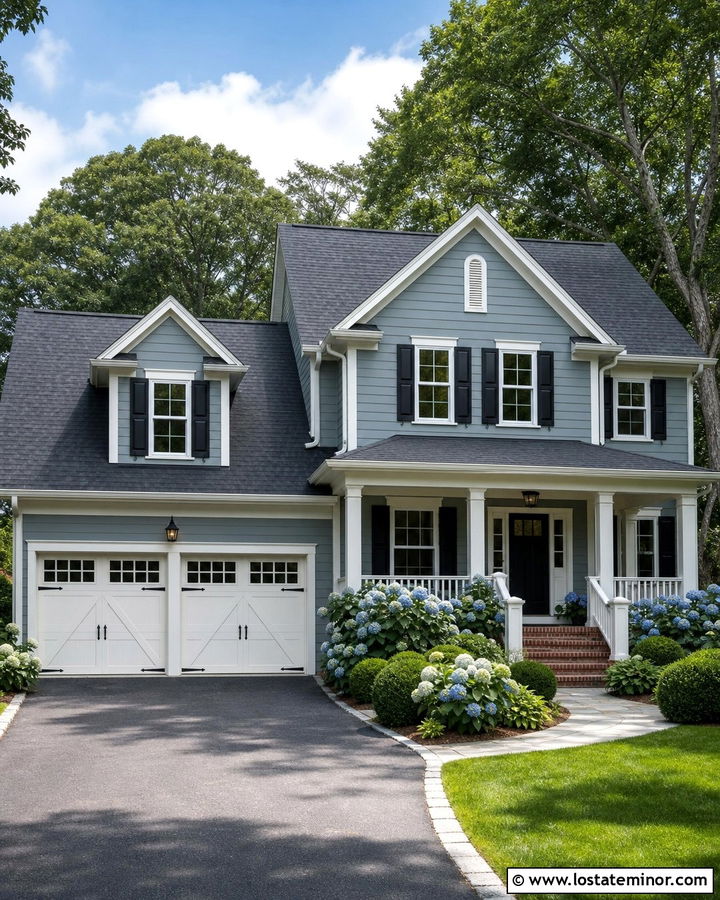
Carriage-style garage doors bring traditional charm to dusty blue siding without requiring a complete exterior renovation. Choose warm white doors with divided-light windows, subtle crossbuck details, and matte black handles. Carry the white onto porch rails, window trim, and corner boards for a unified finish. A black front door and matching shutters can add contrast, while red brick steps provide warmth at the center of the facade. This complete scheme suits a traditional suburban home, cottage, or updated Colonial. If the garage has two separate bays, matching doors will create a pleasing rhythm. Use restrained hardware so the doors do not look overly decorative. Hydrangeas, clipped boxwoods, and a gently curved walkway will reinforce the welcoming, established character of the house.
13. Dusty Blue House With Stone Garage Surround
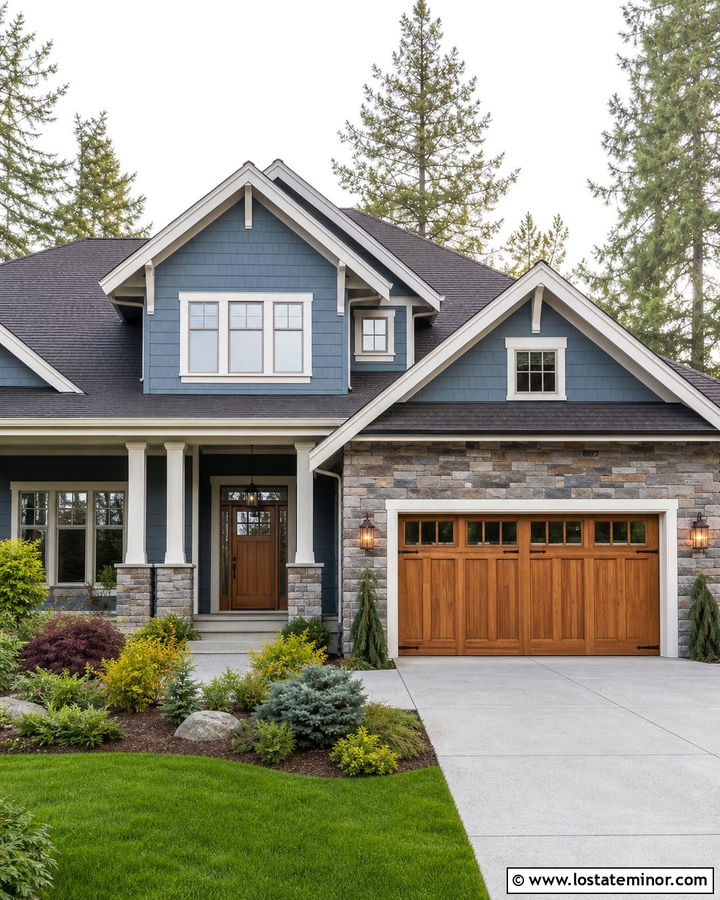
Stone around the garage can anchor a dusty blue house and protect the most visually active part of the elevation. Select a mix of gray, taupe, and soft brown stone that complements both the blue siding and a warm wood garage door. Keep the stone limited to the lower garage walls, columns, or a carefully defined projection. Repeating it around the porch base will prevent the garage from feeling separate. Use creamy white trim, bronze lighting, and a charcoal-brown roof to blend the cool and warm materials. The front door can match the garage wood tone for continuity. Avoid stone with strong orange coloring, which may fight the muted siding. Layered evergreen landscaping will soften the transition between the masonry, driveway, and lawn.
14. Dusty Blue House With White Double Garage Door
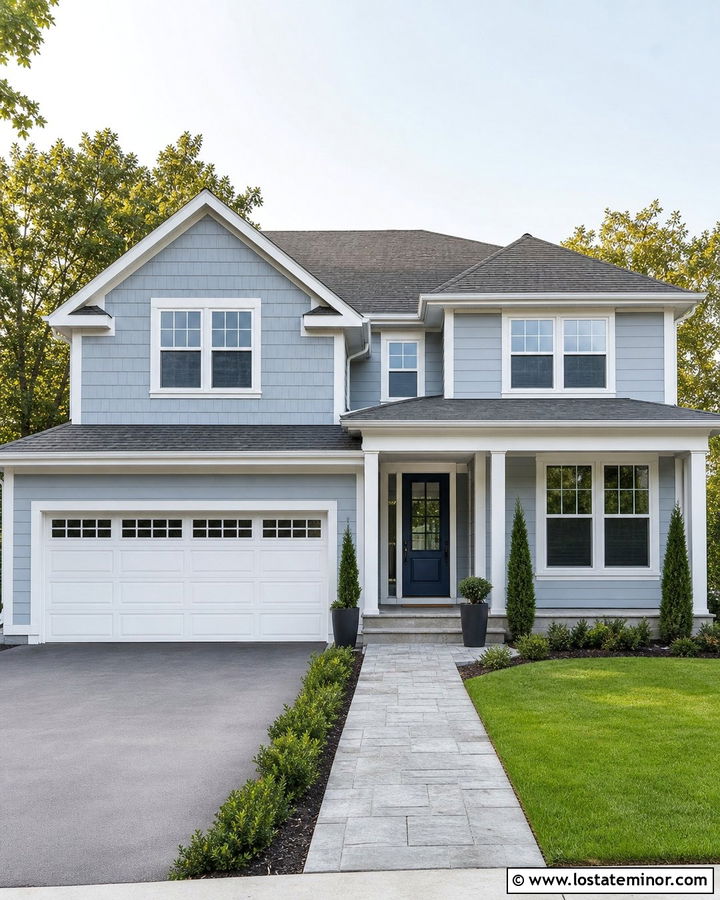
A broad double garage door can look clean and balanced when its color repeats the home’s white trim. Use a door with shallow rectangular panels and a top row of clear or frosted windows. On the rest of the house, dusty blue lap siding, white fascia, and white window frames create an airy foundation. Add a deep blue front door so the entry remains more visually important than the garage. A medium gray roof and light gray stone walkway keep the palette cool but approachable. If possible, frame the garage with blue siding rather than additional white trim, which could make the opening look larger. Tall planters or narrow evergreen shrubs near the garage corners can soften its width without interfering with access.
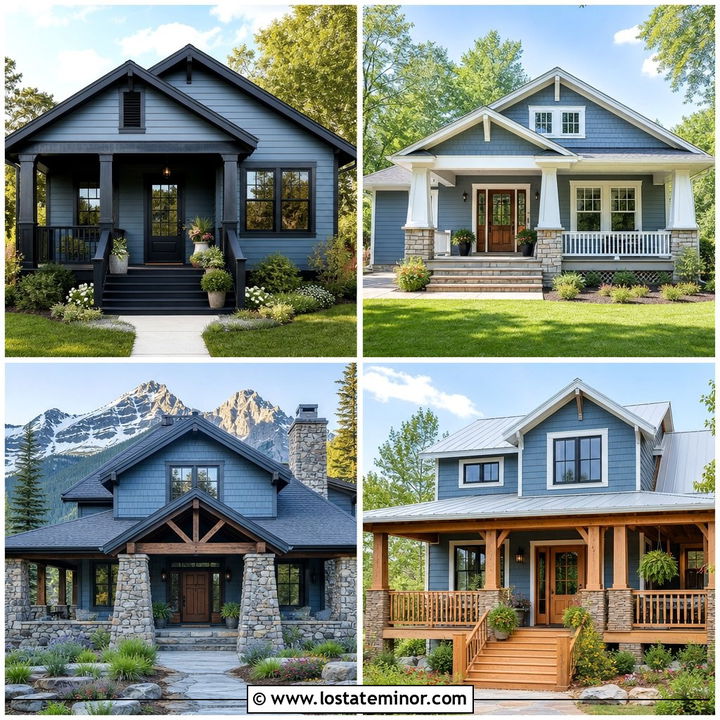
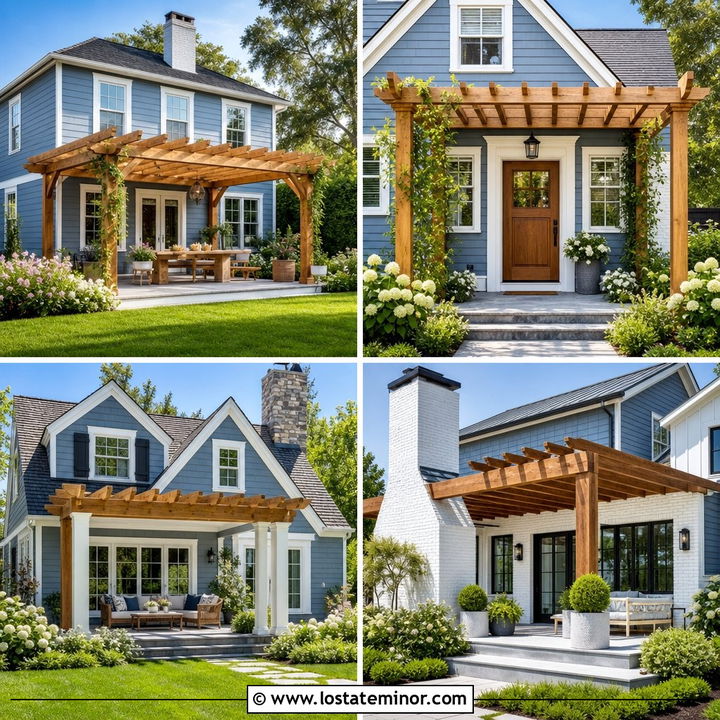
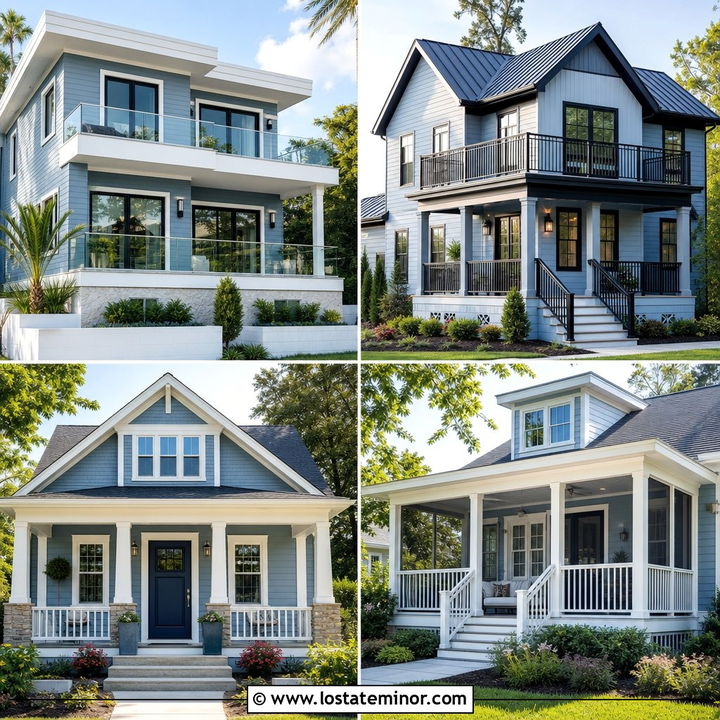
15. Dusty Blue Tudor House With Dark Brown Garage Door
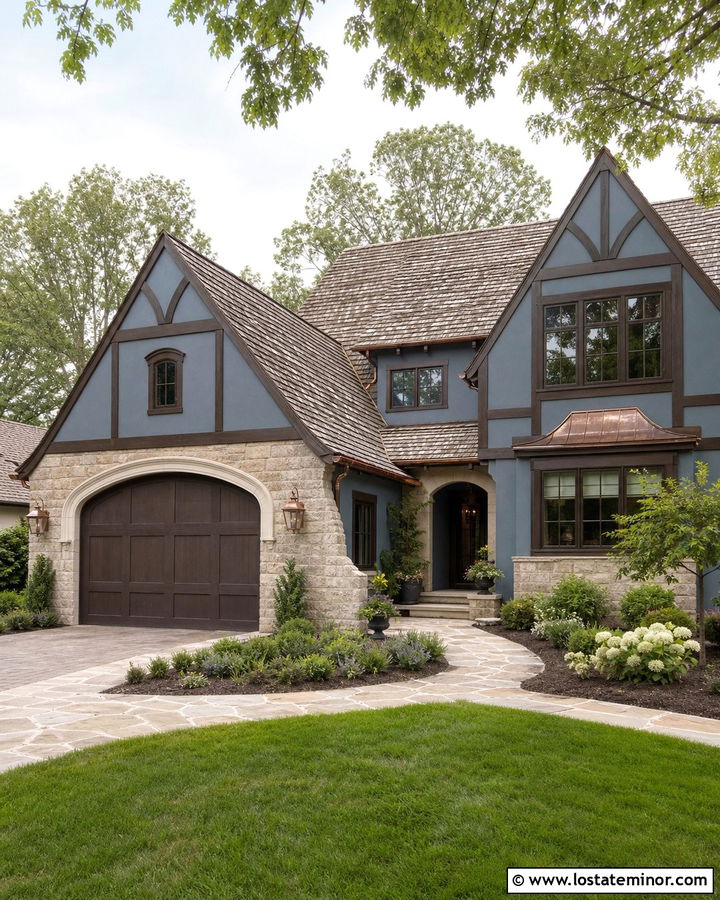
Dusty blue offers an unexpected way to refresh a Tudor-inspired exterior while respecting its dark timber details. Apply the blue to stucco or shingle infill areas, then use deep brown on the garage door, decorative beams, window frames, and front door. A dark brown garage with arched upper windows will fit the architecture better than a plain contemporary panel. Warm limestone or irregular fieldstone around the lower walls adds texture and connects the brown accents to the ground. Choose creamy trim only where needed instead of outlining every surface. A weathered brown roof, copper-toned lights, and curved planting beds reinforce the traditional character. This restrained palette makes the dusty blue feel established, warm, and appropriate for a storybook-style home.
16. Dusty Blue Coastal House With White Garage Door
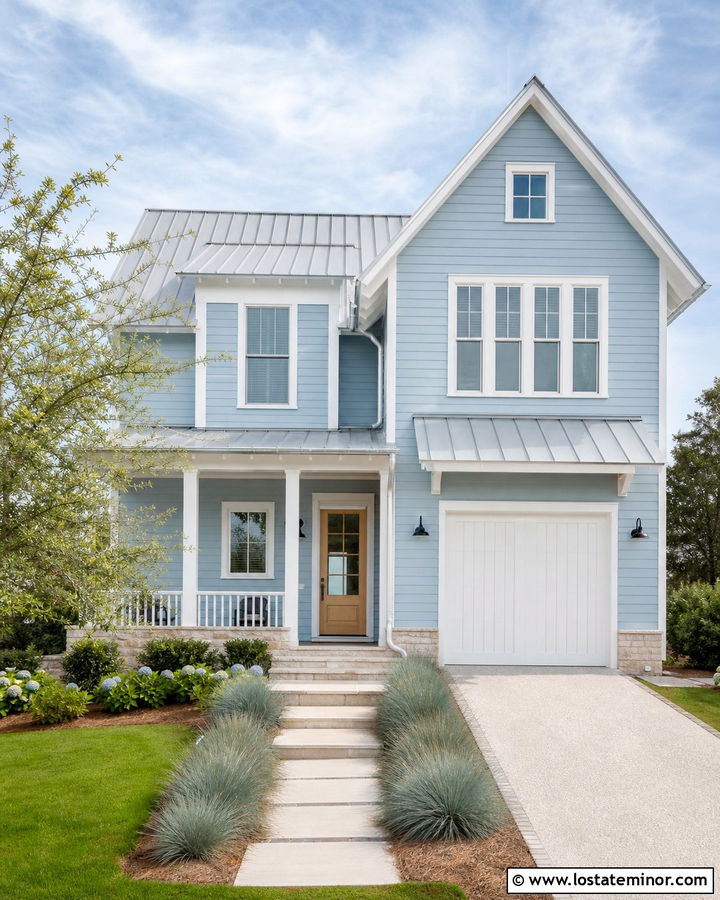
A breezy coastal exterior does not need bright turquoise or nautical decorations. Muted dusty blue siding, white trim, and a simple white garage door create a softer interpretation that works well beyond the shoreline. Select a garage door with clean vertical panels or subtle crossbuck detailing. Add light natural wood to the front door, porch ceiling, or balcony railing for warmth. A pale gray metal roof will reflect light and support the airy palette. Use sand-colored stone along the foundation or steps to connect the house with its landscape. Blue-green grasses, hydrangeas, and low shrubs can frame the facade without blocking it. Black or brushed nickel fixtures should remain simple, allowing the blue, white, and natural materials to shape the complete look.
17. Dusty Blue House With Black Shutters And Garage Door
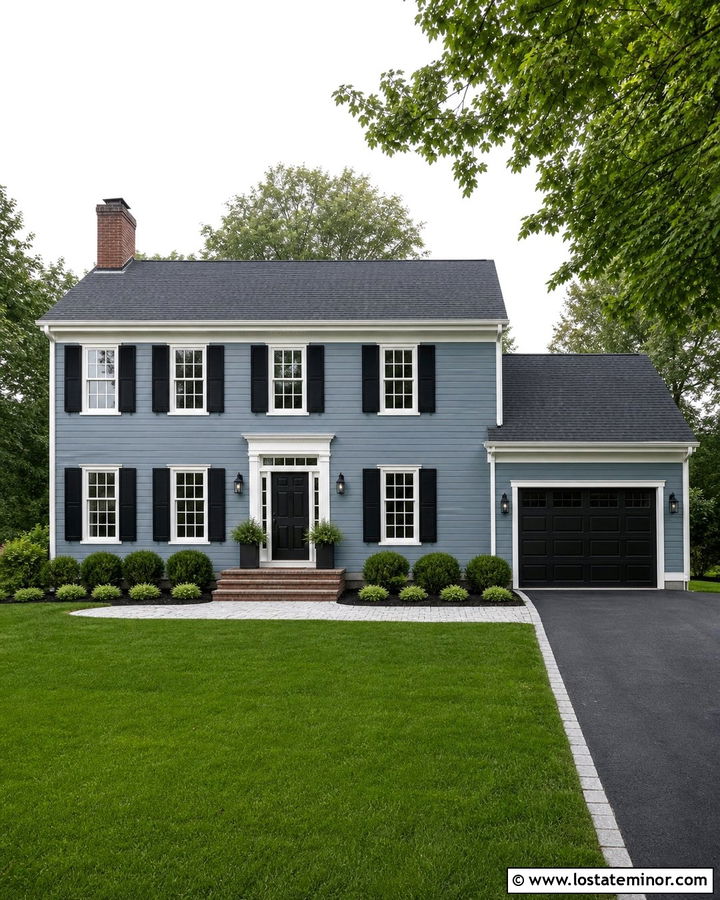
For a crisp, high-contrast exterior, coordinate a black garage door with black shutters and a black front door. Dusty blue siding softens these bold elements, while white window trim separates the dark shutters from the blue walls. This palette works well on a Georgian, Colonial, or symmetrical two-story house. Choose traditional garage door panels with small windows rather than an entirely flat black surface. A charcoal roof will connect the accents across the top of the facade. Red brick steps or warm stone planters can keep the scheme from feeling too cool. Because black details draw the eye, maintain consistent spacing and scale. Larger shutters, matching lanterns, and evenly placed foundation shrubs will make the final exterior feel organized and architecturally balanced.
18. Dusty Blue House With Sage Green Garage Door
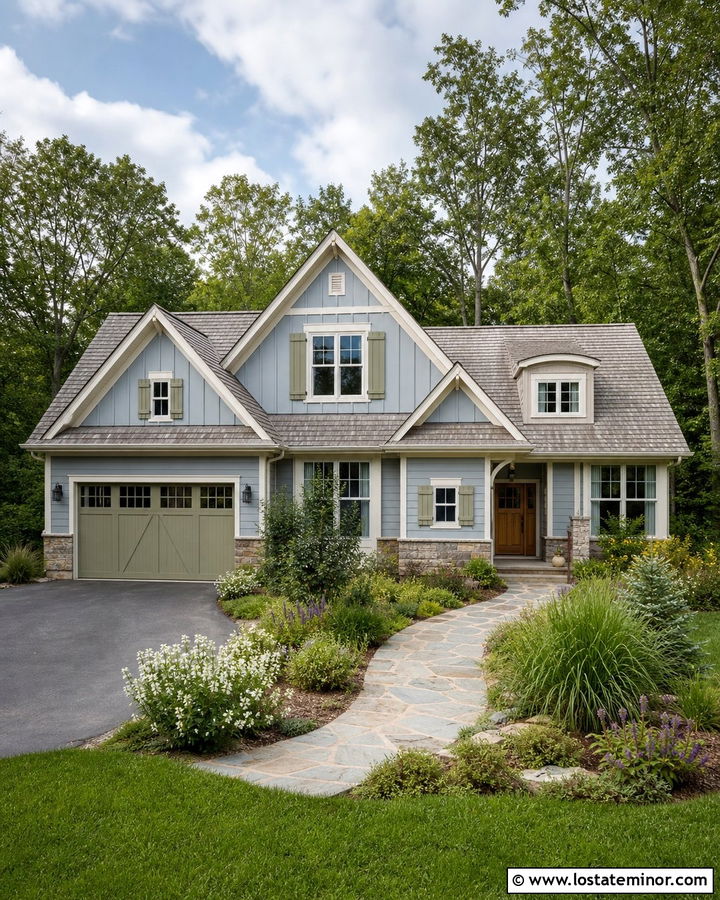
Dusty blue and muted sage create a nature-inspired scheme with gentle contrast. This pairing suits a cottage, bungalow, or casual Craftsman surrounded by mature trees. Use dusty blue on the main siding and sage green on a paneled garage door, then repeat the green subtly on shutters or porch furniture. Cream trim will connect the two muted colors and brighten windows, eaves, and columns. A natural wood front door introduces warmth without adding another painted hue. Choose a weathered gray or brown roof that feels equally compatible with blue and green. Stone in soft tan and gray tones can ground the porch and garage. Keep the landscaping layered and informal, using grasses, flowering shrubs, and evergreens that echo the relaxed exterior palette.
19. Dusty Blue House With Bronze Garage Door
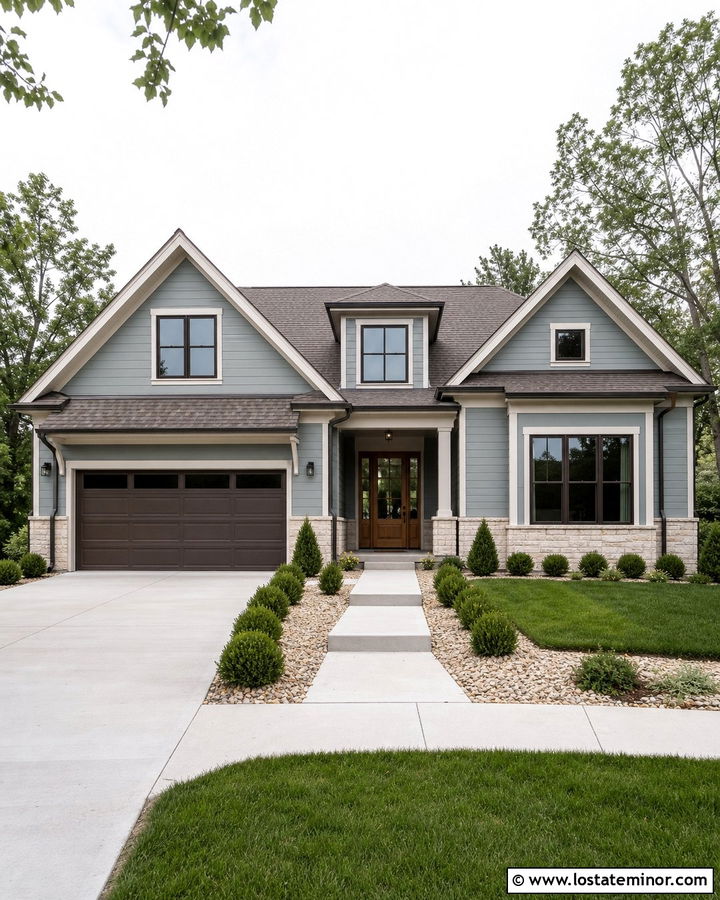
A dark bronze garage door offers a softer alternative to pure black. Against dusty blue siding, the brown undertones add warmth while the deep value gives the facade structure. Use bronze on window frames, gutters, downspouts, and exterior lights so the garage connects to smaller details across the house. Warm white trim can outline the roof and entry without interrupting the sophisticated palette. Consider a medium-stained wood front door that sits between the blue and bronze visually. Light limestone around the foundation will brighten the lower elevation and prevent the dark accents from becoming too dominant. This combination looks especially polished on a transitional home with mixed siding, simple gables, and restrained ornament. Structured shrubs and pale gravel beds complete the refined curb appeal.
20. Dusty Blue House With Weathered Wood Garage Door
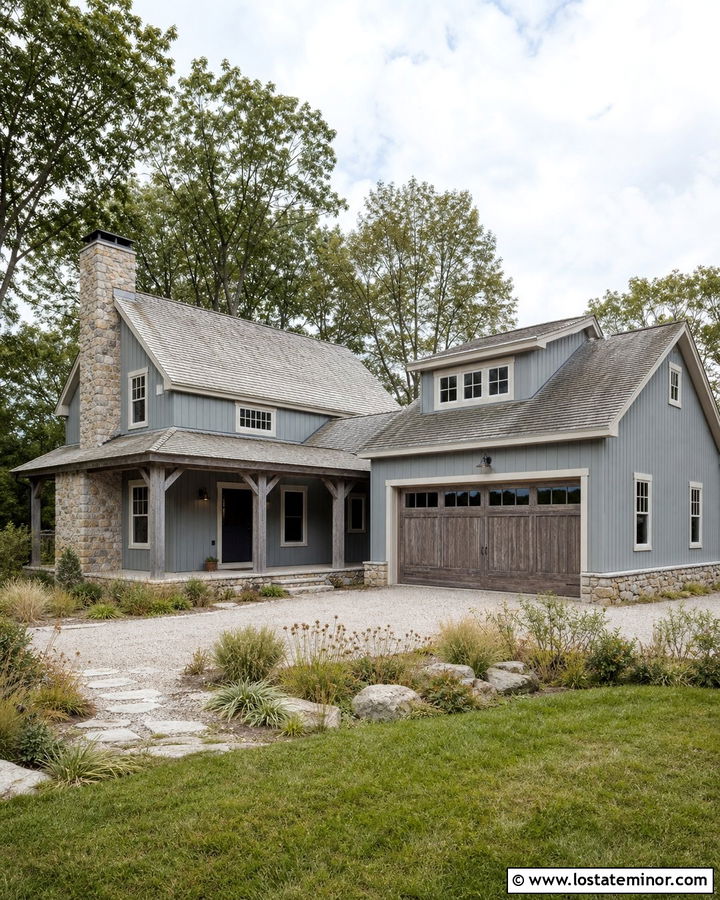
Weathered wood gives a dusty blue exterior an easy, lived-in quality that suits rustic cottages and casual country homes. Choose gray-brown planks rather than heavily orange wood so the garage harmonizes with the siding. Repeat the material on porch beams, shutters, or a small gable accent. Soft white trim can brighten the windows and roof edges, while a charcoal-gray front door creates a subtle focal point. Use fieldstone with gray and brown variation around the foundation or chimney to connect the complete palette. A textured gray roof will support the weathered character better than glossy metal. Finish the facade with gravel paths, native grasses, and informal shrubs. The resulting house feels relaxed and natural without appearing neglected or overly rustic.
21. Dusty Blue House With Arched Garage Doors
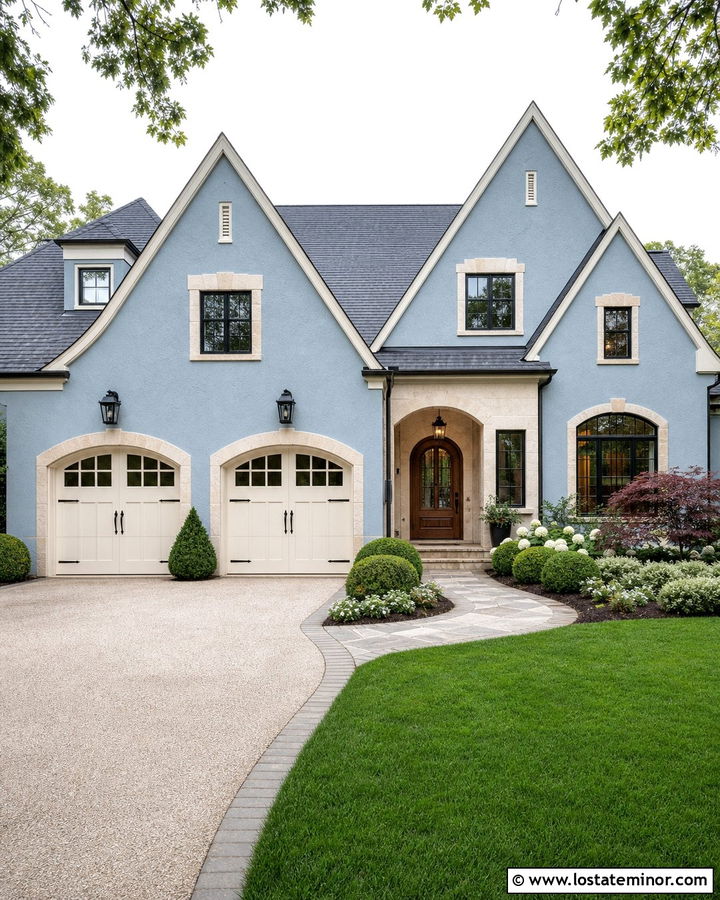
Arched garage doors can bring softness and architectural interest to a large front-facing garage. On a dusty blue European-inspired home, choose two separate warm white doors with curved tops, divided windows, and restrained black hardware. Frame the openings with pale limestone or cream stucco to emphasize their shape. Dusty blue siding or painted shingles above the garage will connect it to the main house. Repeat the arches at the porch, entry canopy, or front door when the existing architecture allows. A charcoal roof and black lanterns add contrast, while a medium wood front door introduces warmth. Rounded shrubs and a curved driveway can echo the architecture. Keep decorative details controlled so the arches remain elegant instead of visually busy.
22. Dusty Blue Side-Load Garage House
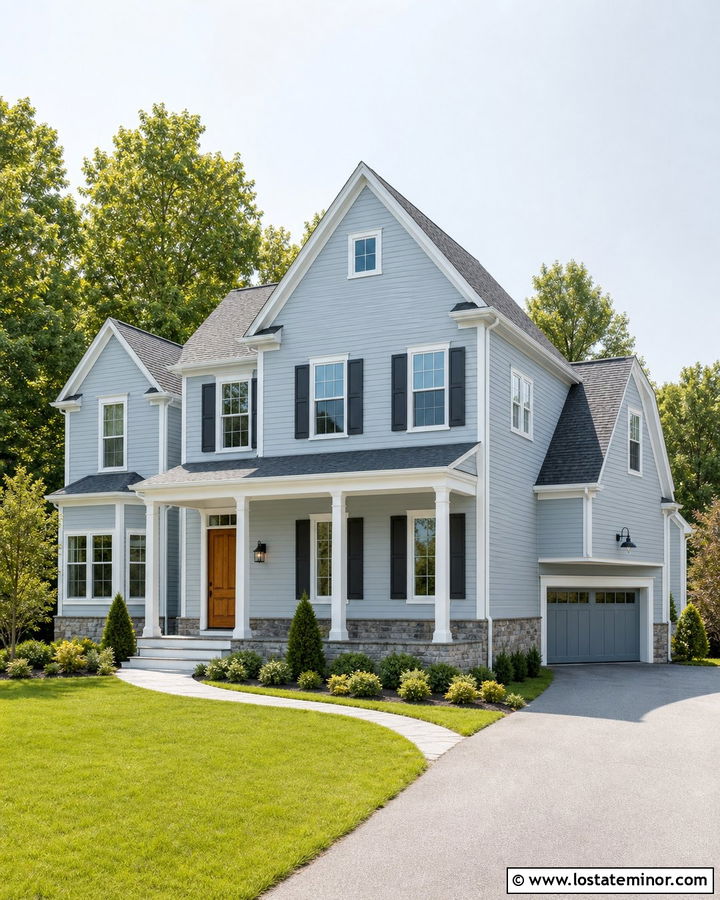
A side-load garage allows the front facade to feature dusty blue siding without a large door competing for attention. Paint the garage door the same dusty blue as the adjacent wall so it becomes even less noticeable from the street. Use white trim around the main windows, porch columns, and roof edges, but keep the garage casing blue for a seamless transition. A natural wood front door can become the clear focal point from the front walkway. Add charcoal shutters, black lighting, and a medium gray roof for definition. Stone along the porch and garage foundation will connect the front and side elevations. This approach is ideal for corner lots or wider properties where the driveway can curve naturally toward the recessed garage entrance.
23. Dusty Blue House With Detached Garage
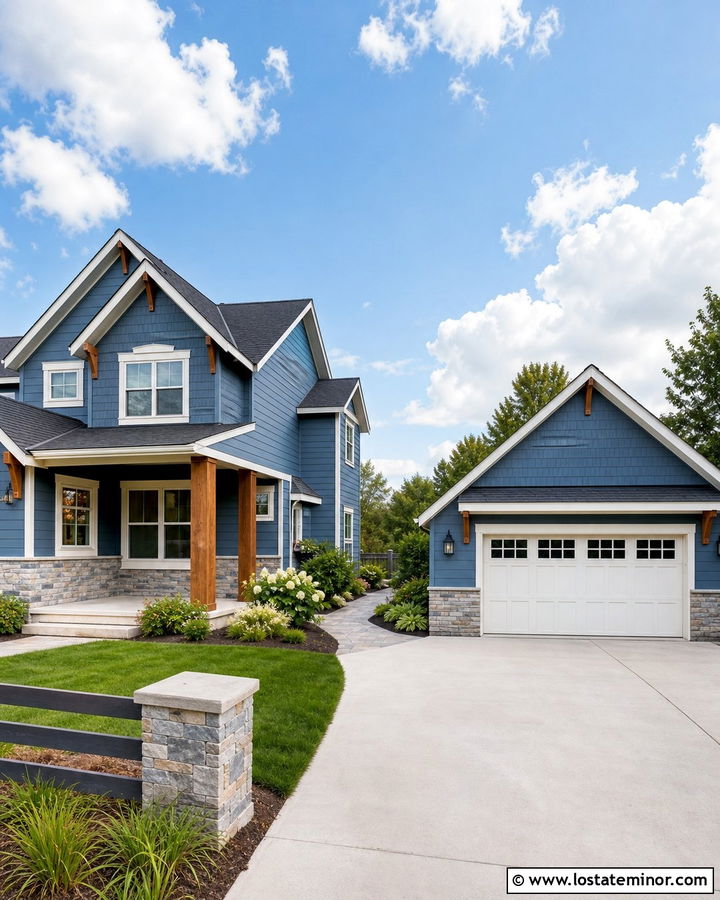
A detached garage should relate to the house without looking like a miniature copy overloaded with details. Use the same dusty blue siding and roof material on both buildings, then coordinate the garage door with the home’s warm white trim. A simple paneled door with upper windows will keep the outbuilding attractive and practical. Repeat one feature from the main house, such as cedar brackets, stone foundation trim, or black lanterns. Connect the structures visually with a paved walkway, matching planting beds, or a short fence. If the garage is visible from the street, position shrubs around its corners rather than directly in front. The shared colors create continuity, while simplified architecture allows the main house and front entry to retain visual priority.
24. Dusty Blue House With Three-Car Garage
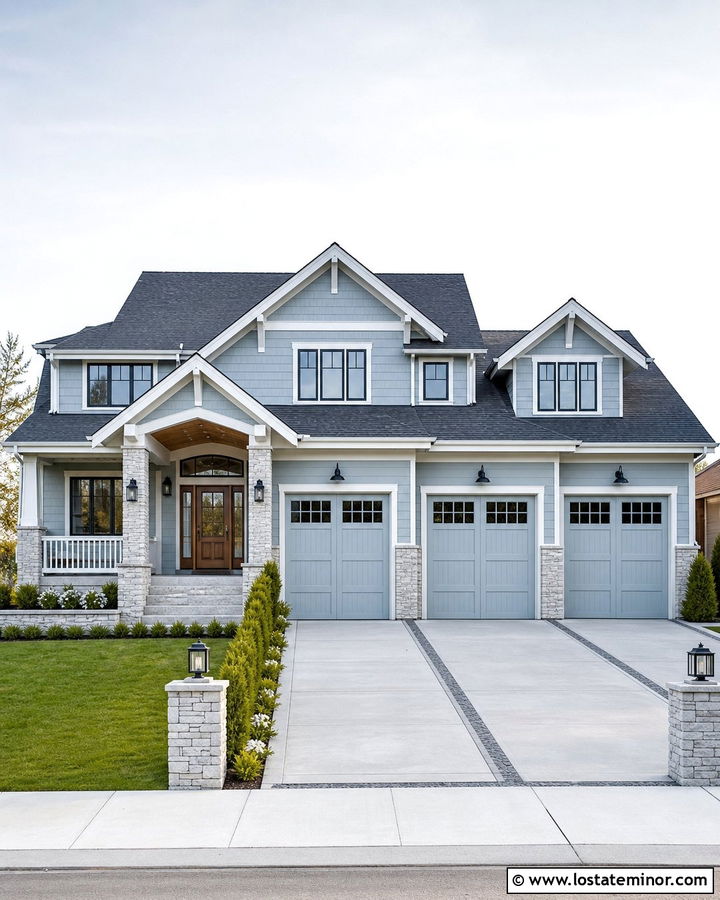
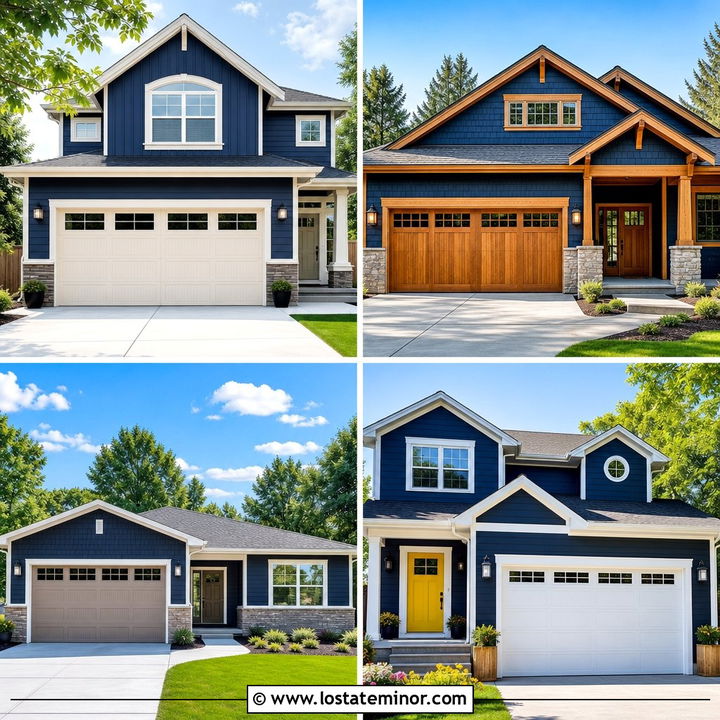
Three garage doors cover a significant portion of a facade, so strong color contrast can quickly become overwhelming. Paint the doors the same dusty blue as the house, or choose a blue-gray only one shade lighter. Let raised panels, small windows, and natural shadow provide definition. White trim should be used around the main windows, roofline, and porch, but consider dusty blue casing around the garage bays. Warm wood at the front door and porch ceiling draws attention away from the driveway. A charcoal roof, light stone base, and black lights establish a balanced range of values. Break up the long garage wall with stone columns, wall-mounted planters, or narrow shrubs placed between doors where space allows. The result feels expansive but controlled.
25. Dusty Blue Cottage With Cream Garage Door
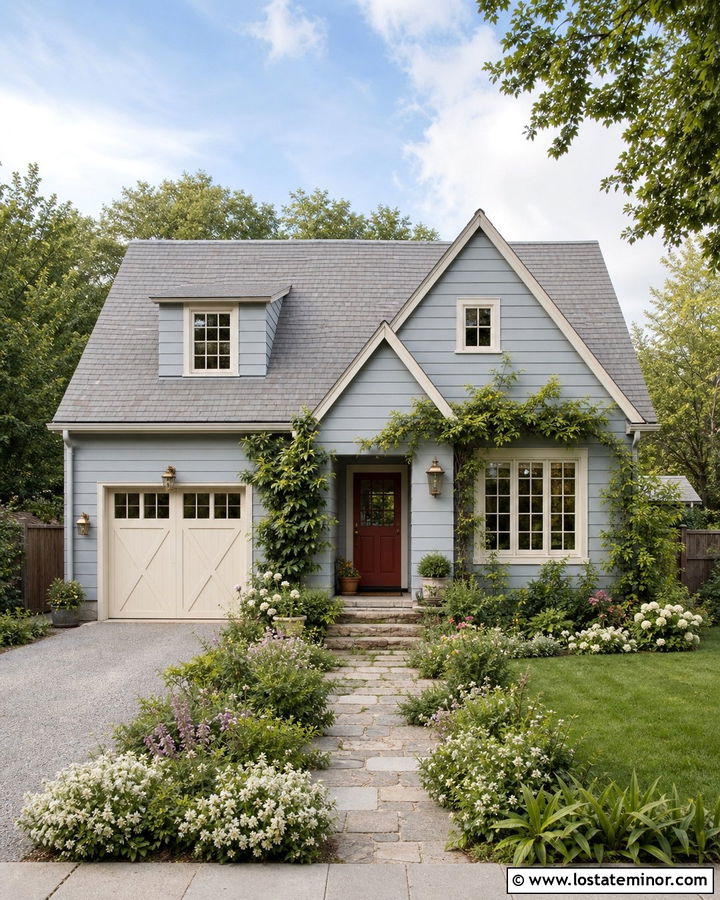
Picture a compact cottage surrounded by flowers, with dusty blue shingles and a softly contrasting cream garage door. This gentle palette suits small homes because it creates definition without chopping the facade into strong blocks of color. Choose a garage door with vertical boards, modest crossbuck trim, and small square windows. Repeat the cream on window surrounds, eaves, porch rails, and decorative gable trim. A muted red or natural wood front door can add warmth near the entry. Use gray roof shingles and aged brass lighting to preserve the cottage character. A stone path, informal garden borders, and climbing greenery will frame the exterior. Keep plants trimmed around the garage so its charming details remain visible from the curb.
26. Dusty Blue Farmhouse With Cedar Garage Doors
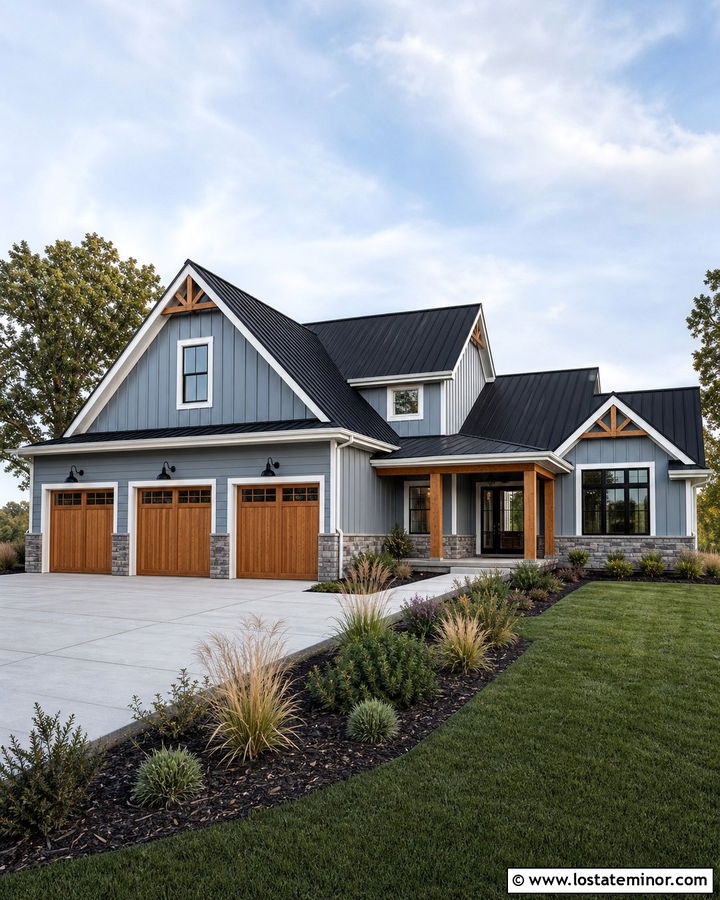
A large modern farmhouse can handle the visual warmth of multiple cedar garage doors. Cover the main body in dusty blue board-and-batten siding, then use natural cedar on two or three plank-style doors. Repeat the wood sparingly on porch posts, brackets, and the front door. White trim around windows and gables will brighten the blue, while a black standing-seam roof provides a strong outline. Consider a stone skirt in mixed gray and taupe tones to anchor the tall facade. Black sconces should be large enough for the garage scale but simple in shape. Wide concrete or gravel driveways can be softened with grasses and low shrubs. This complete palette blends farmhouse familiarity with a more colorful and contemporary exterior finish.
27. Dusty Blue Contemporary House With Slatted Garage Door
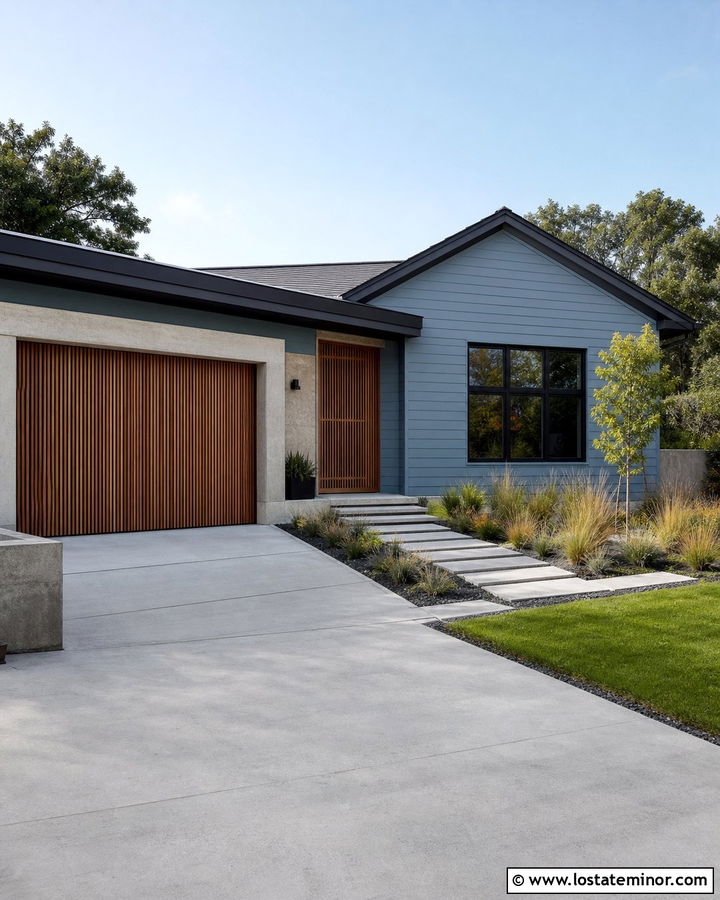
Vertical slats can make a contemporary garage feel like part of the architecture rather than a separate utilitarian feature. Choose a cedar-toned slatted garage door beside smooth dusty blue panels or narrow vertical siding. Continue the slat pattern across a nearby entry screen or upper-level accent to establish a clear connection. Black-framed windows, dark metal fascia, and a low charcoal roof add precise contrast. Pale concrete walls and steps can brighten the composition without introducing another strong color. Keep the front door dusty blue or natural wood, depending on how much warmth the facade needs. Structured grasses, small trees, and large rectangular pavers reinforce the clean geometry. The final look feels modern, textured, and carefully integrated from garage to entry.
28. Dusty Blue Brick House With Taupe Garage Door
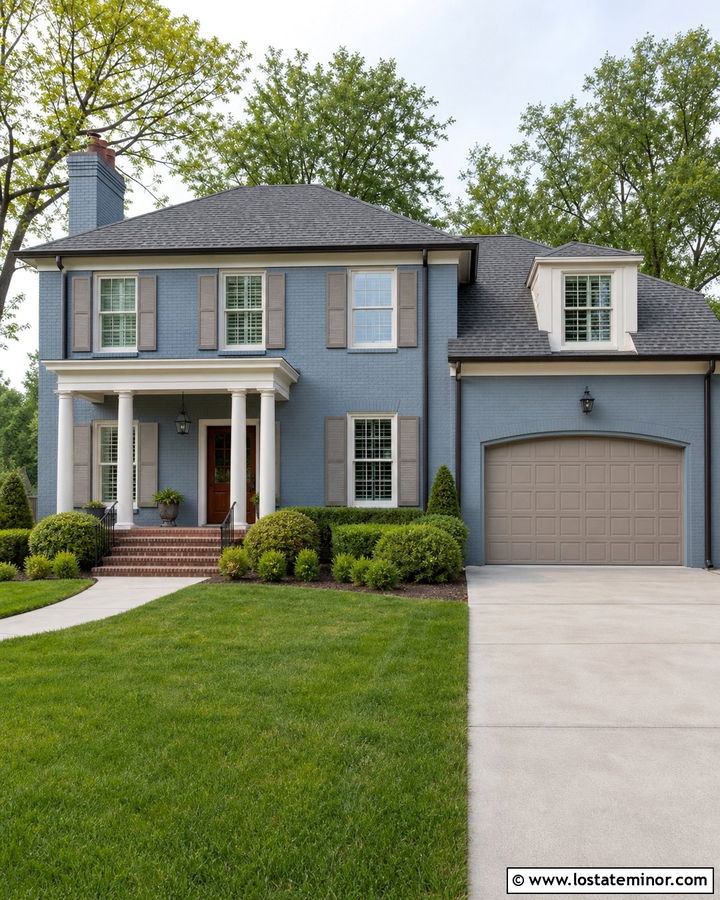
Dusty blue painted brick can feel softer and more dimensional when paired with a warm taupe garage door. Choose taupe with gray undertones so it complements the blue without turning yellow beside it. Repeat the taupe on shutters or porch flooring, then use creamy white for windows, columns, and fascia. A stained wood front door adds another warm layer while remaining distinct from the garage. Dark bronze gutters and lights work well with a brown-gray roof. Preserve some natural brick on steps, a chimney, or foundation accents if you want extra texture and history. Neatly clipped shrubs and a broad walkway will support the traditional design. This palette is particularly useful when an existing beige garage door is still in good condition.
29. Dusty Blue Mid-Century House With Wood Garage Door
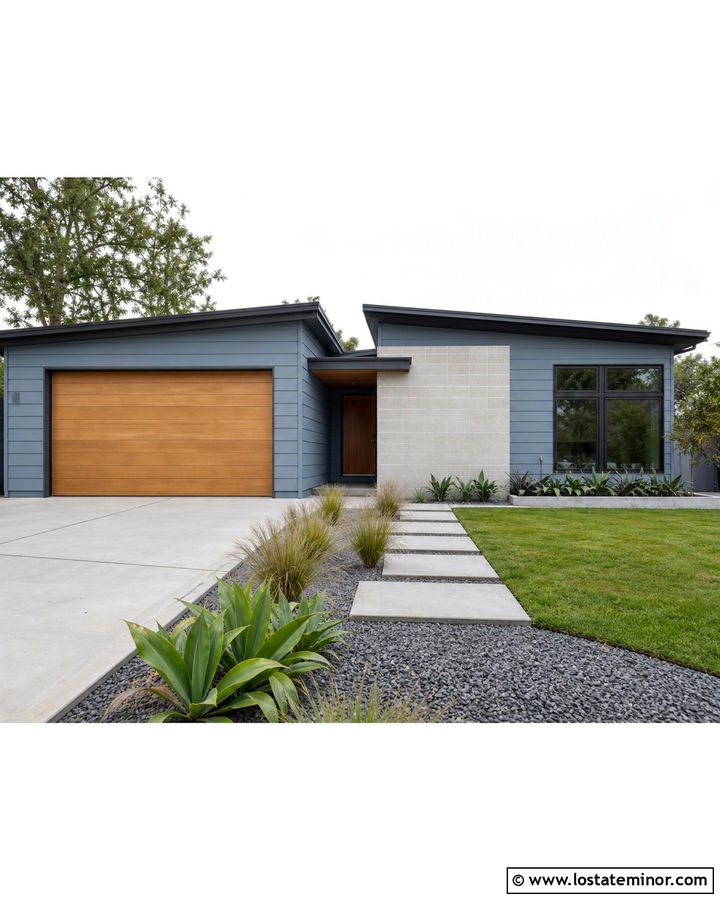
A mid-century home calls for simple materials and strong horizontal lines. Use dusty blue siding or painted brick across the main facade, then select a flat natural wood garage door with long horizontal planks. Repeat the wood around a recessed entry or beneath the roof overhang. Charcoal window frames, fascia, and exterior lights create graphic definition without relying on decorative trim. A pale stone or concrete block wall can separate the driveway from the front entrance. Keep the roof low and dark, with uncluttered gutters that follow its shape. Landscaping should feel architectural, using ornamental grasses, broad-leaf plants, gravel, and rectangular stepping stones. This restrained combination makes the garage an integrated design feature while preserving the home’s clean mid-century proportions.
30. Dusty Blue Victorian House With Burgundy Garage Door
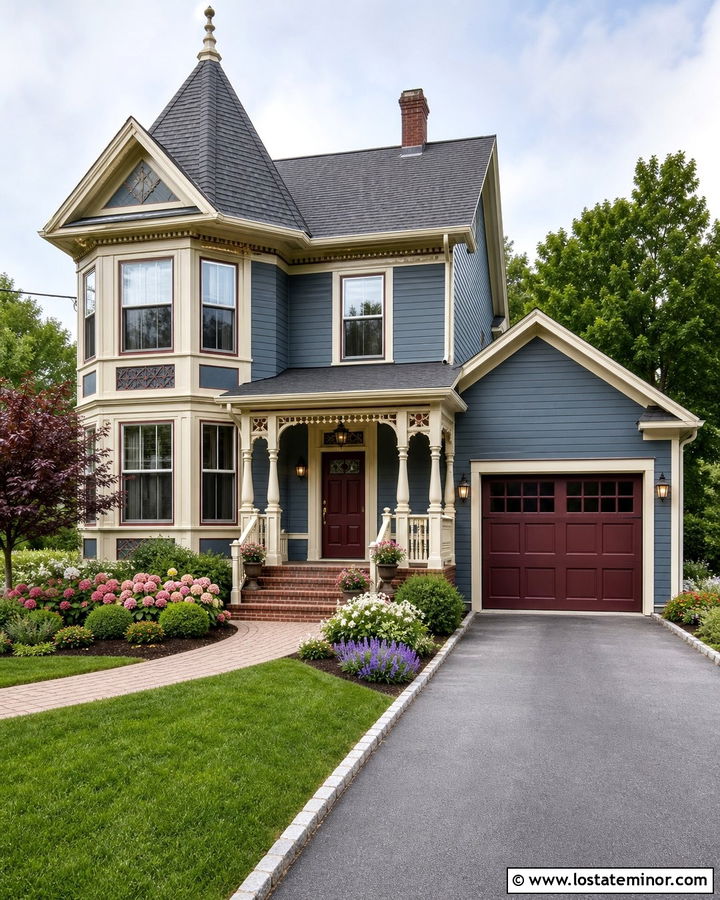
A muted burgundy garage door can give a dusty blue Victorian exterior rich contrast without using predictable black or white. Select a deep, earthy red and repeat it on the front door or small portions of decorative trim. Cream should remain the primary accent around windows, porch columns, railings, and intricate brackets. Use charcoal or dark slate for the roof and limited secondary details. If the garage is a later addition, include paneled doors with upper windows and trim proportions that reference the original house. Dusty blue shingles and clapboard can add depth across gables and lower walls. Brick steps, brass lighting, and structured flowering plants complete the palette. Careful color placement keeps the ornament visible while preventing the facade from looking overly complicated.
Conclusion:
The best dusty blue exterior treats the garage door, siding, trim, roof, front entry, and landscaping as one connected composition. White and cream garage doors brighten traditional homes, while matching blue doors reduce the visual size of wide or multi-bay garages. Cedar, oak, and walnut add welcoming warmth. Charcoal, navy, bronze, and black create stronger definition for modern or formal architecture. Before committing, test large color samples beside the garage material in morning and afternoon light. Also compare them with permanent surfaces such as roofing, brick, and stone. Whether you prefer a quiet tonal palette or a bold contrasting door, these 30 Dusty Blue House Design With Garage Door Ideas provide a practical starting point for creating balanced curb appeal.

Related posts: