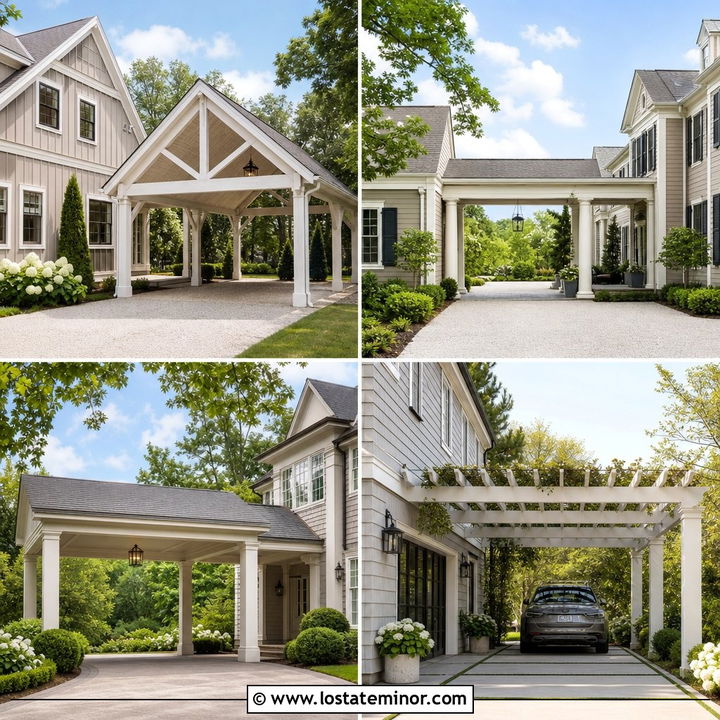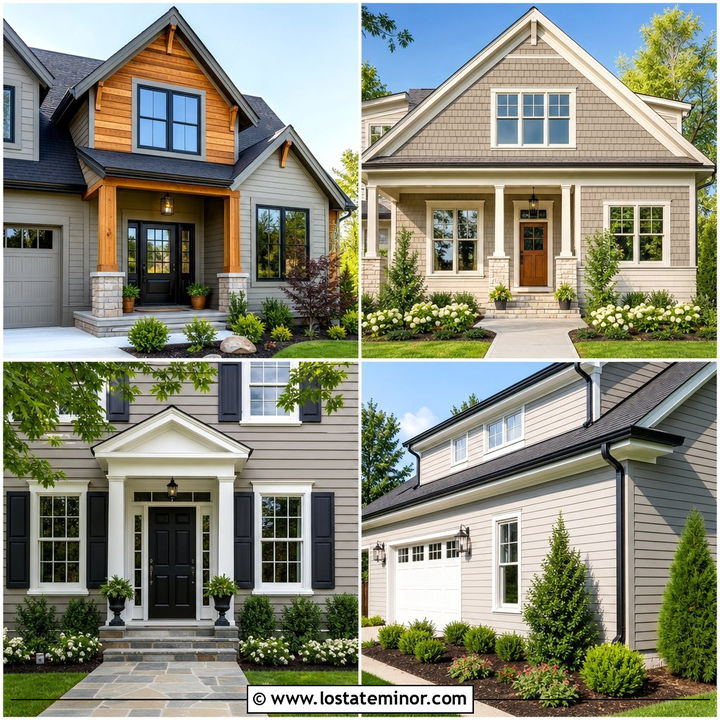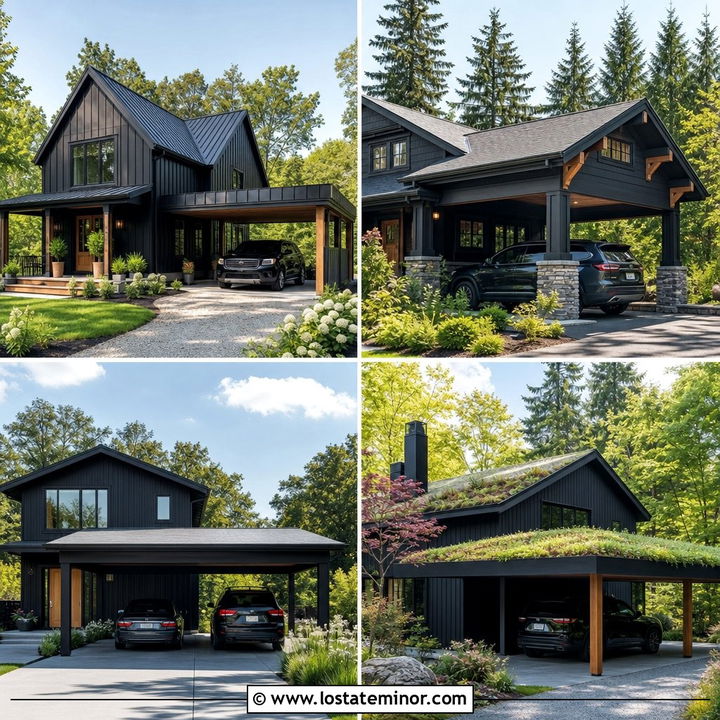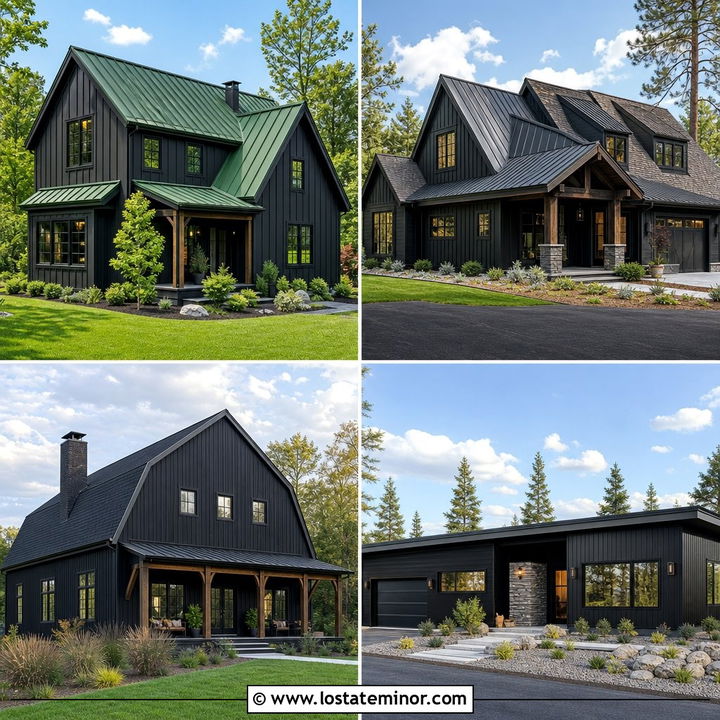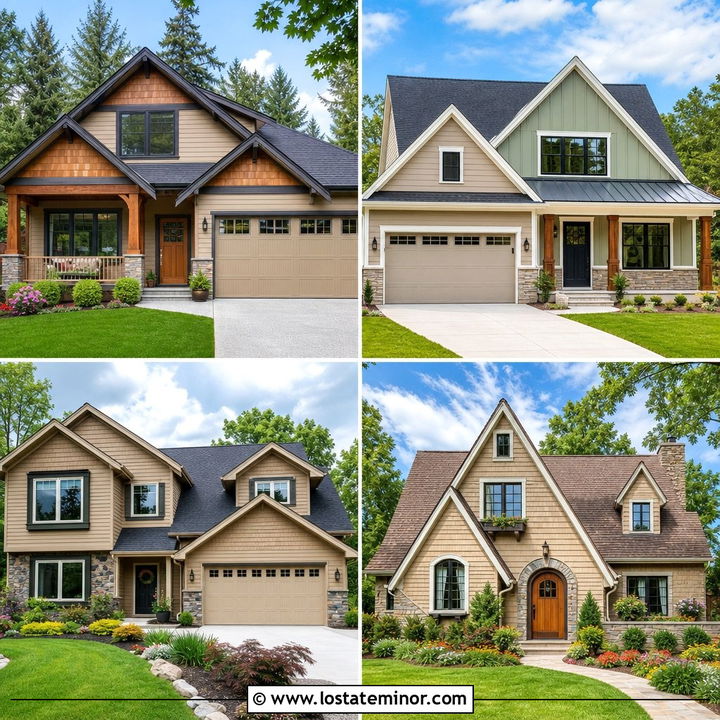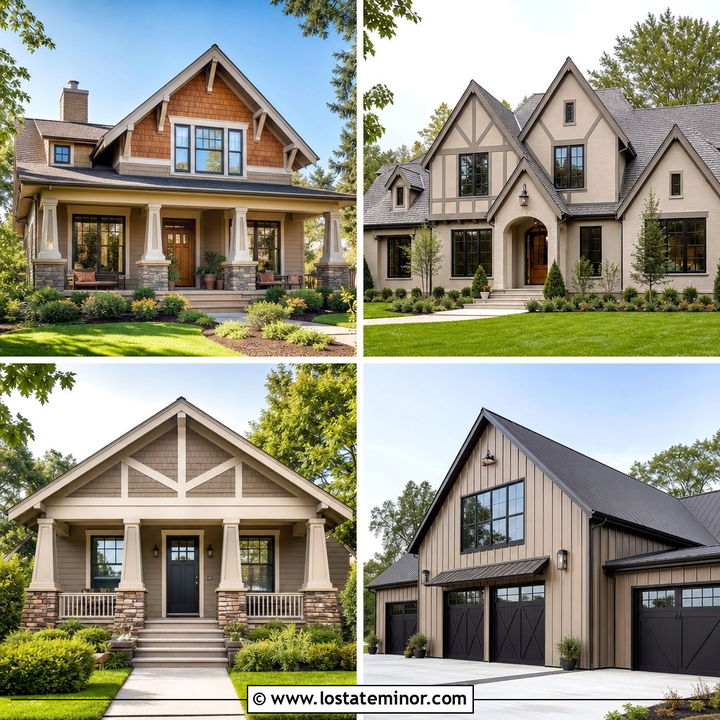
Greige brings the warmth of beige and the balance of gray into one flexible exterior color. That mix works especially well with natural wood, stone, brick, metal, and both light and dark trim. Current exterior palettes also favor nature-connected neutrals, muted greens, warm browns, and grounded accents that complement the surrounding landscape. () The best 30 Greige House Design With Accents Ideas go beyond choosing a single paint swatch. They coordinate siding, trim, doors, roofing, masonry, and landscaping as one complete curb-appeal plan. Before committing, compare samples beside permanent materials and view them throughout the day. The combinations below cover traditional, modern, rustic, and relaxed suburban homes, giving you practical inspiration from 30 Greige House Design With Accents Ideas.
1. Greige House With Black Trim And Cedar Door
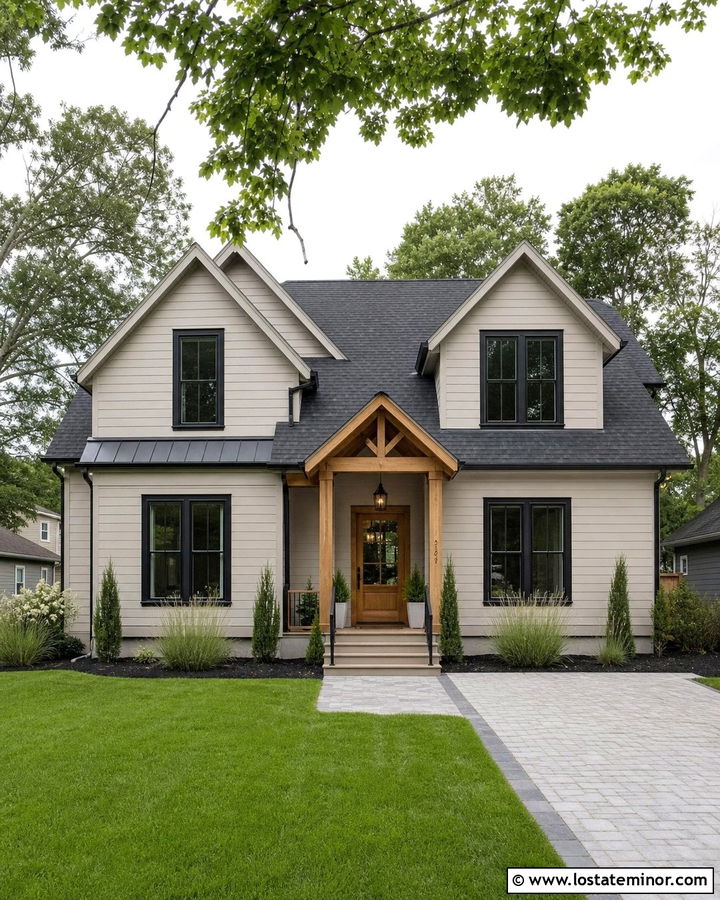
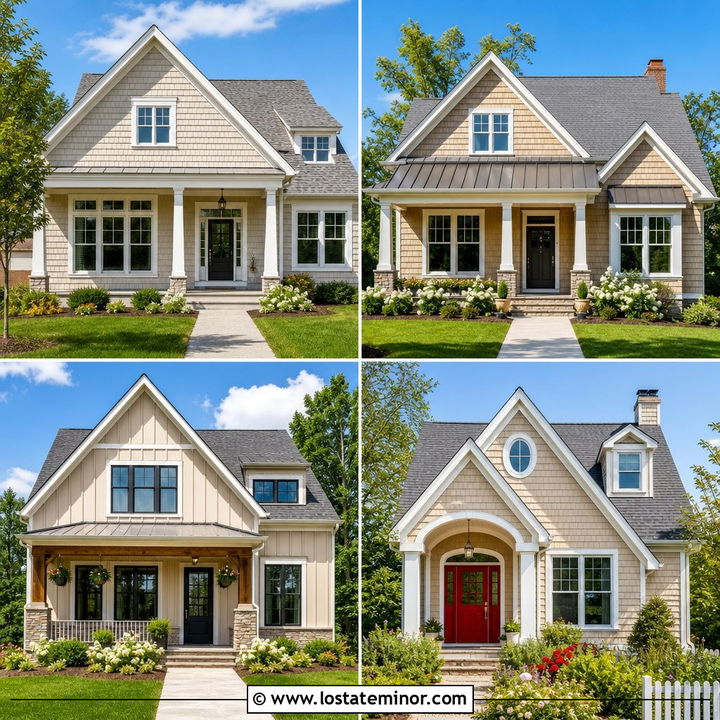
A light greige exterior becomes sharper and more architectural when paired with black trim and a cedar front door. Use the greige across the main siding so the house retains a welcoming, neutral base. Black window frames, fascia, gutters, and porch railings can then outline the structure without overwhelming it. A medium-toned cedar door adds warmth between those contrasting colors. Repeat the wood on porch beams, brackets, or small gable details for balance. This combination works particularly well on modern farmhouses and updated suburban homes. Choose a charcoal roof instead of a brown one to keep the contrast clean. Simple ornamental grasses, clipped shrubs, and pale concrete walkways complete the polished exterior.
2. Greige House With White Trim And Navy Shutters
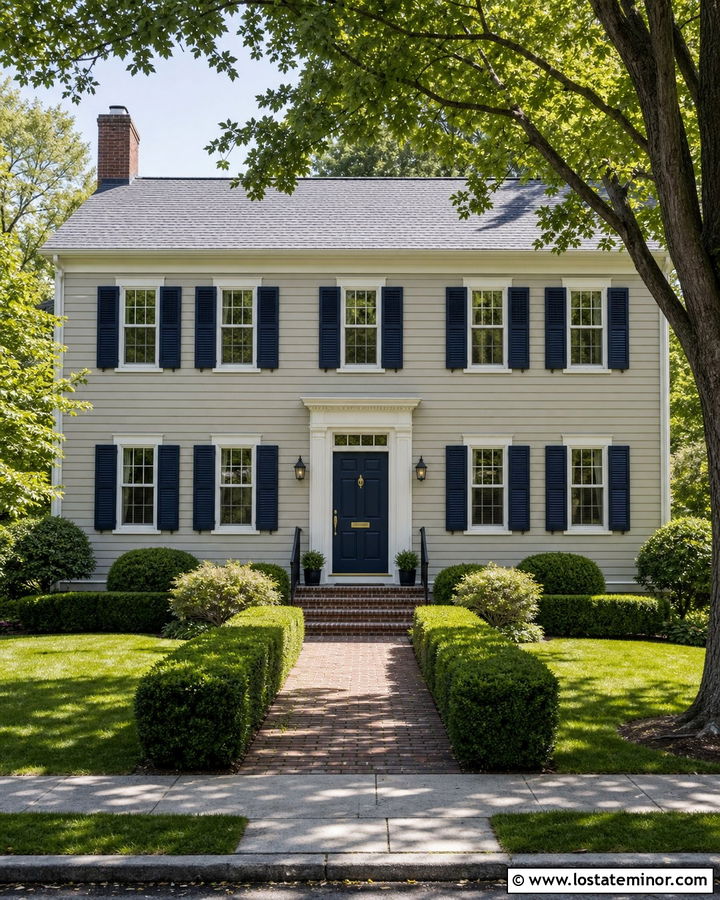
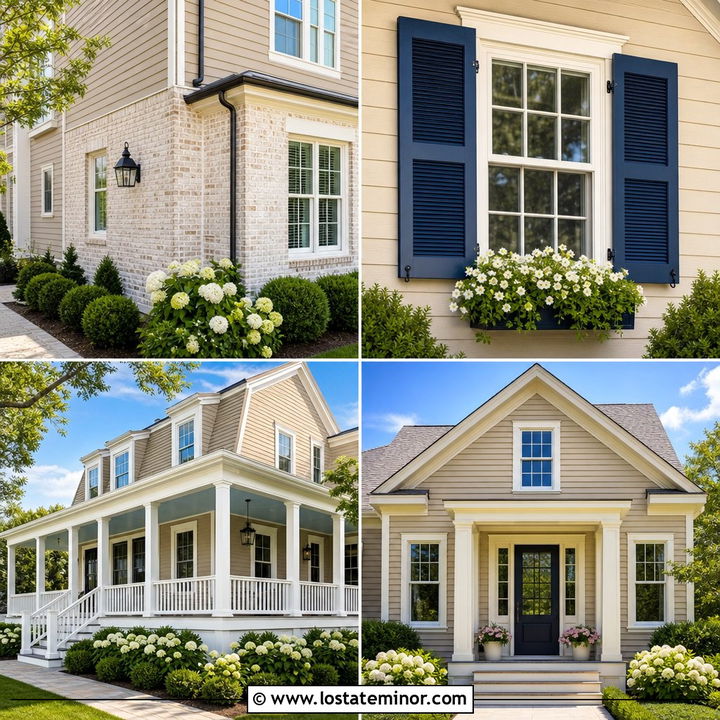
What if you want classic curb appeal without relying on a plain gray-and-white palette? Cover the siding in a warm, mid-light greige and use soft white around the windows, cornices, columns, and porch railing. Navy shutters bring depth to the facade while maintaining a traditional appearance. The blue should be dark enough to create contrast but slightly softer than black. A matching navy door can make the scheme feel formal, while a stained wood door gives it a more relaxed finish. This look suits Colonial, Cape Cod, and Georgian-inspired homes. Add a medium gray roof, aged brass hardware, and symmetrical evergreen landscaping. The finished house feels established, balanced, and pleasantly updated rather than overly trendy.
3. Greige House With Stone And Dark Bronze Accents
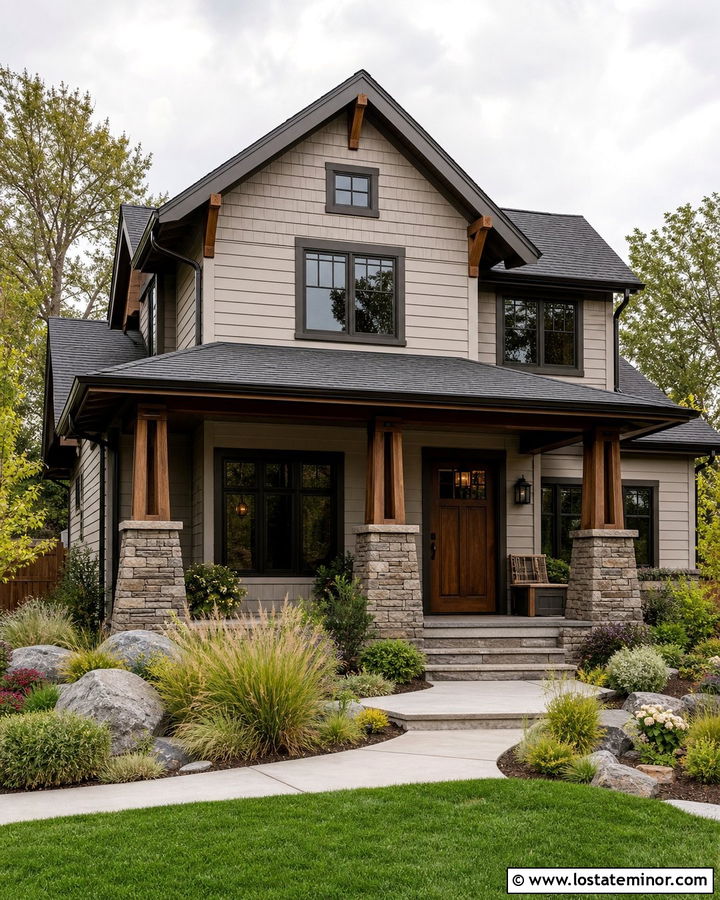
Natural stone gives a greige home texture, depth, and a strong connection to the landscape. Select stone containing a mixture of taupe, cream, gray, and muted brown so it relates naturally to the siding. Use it around the foundation, porch columns, entry wall, or chimney instead of covering every surface. Dark bronze windows, gutters, light fixtures, and railings create a softer contrast than pure black. A walnut-stained front door can bridge the greige siding and earthy masonry. This complete exterior works beautifully on Craftsman, mountain, and transitional homes. Keep the garage door close to the body color so it does not dominate the facade. Layered shrubs, boulders, and native grasses reinforce the grounded palette.
4. Greige House With Sage Green Door And Cream Trim
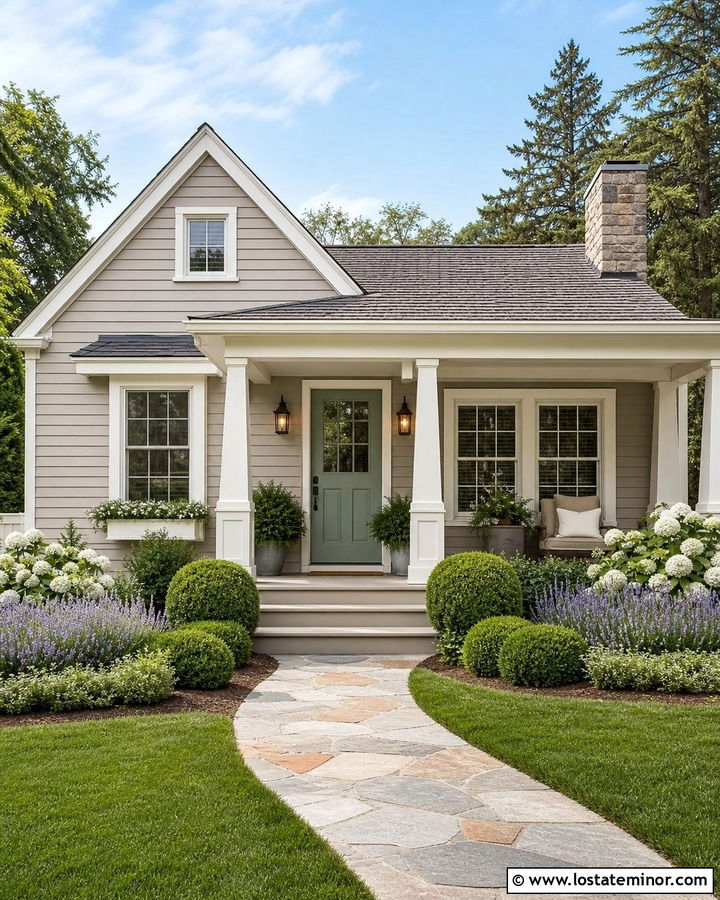
Soft sage green brings a calm, garden-inspired accent to a warm greige exterior. Begin with greige lap siding and creamy off-white trim that supports the body color’s warm undertones. Paint the front door a muted sage rather than a bright or blue-green shade. The subtle color change is noticeable from the street but still feels natural. Sage can also appear on small shutters, porch furniture, or planter boxes, although restraint keeps the entry looking intentional. Choose a weathered brown or warm gray roof to maintain the organic character. This palette suits cottages, bungalows, ranch homes, and modest suburban houses. Lavender, boxwood, hydrangeas, and silvery foliage make the green accent feel integrated with the overall landscaping.
5. Greige House With Charcoal Roof And White Columns
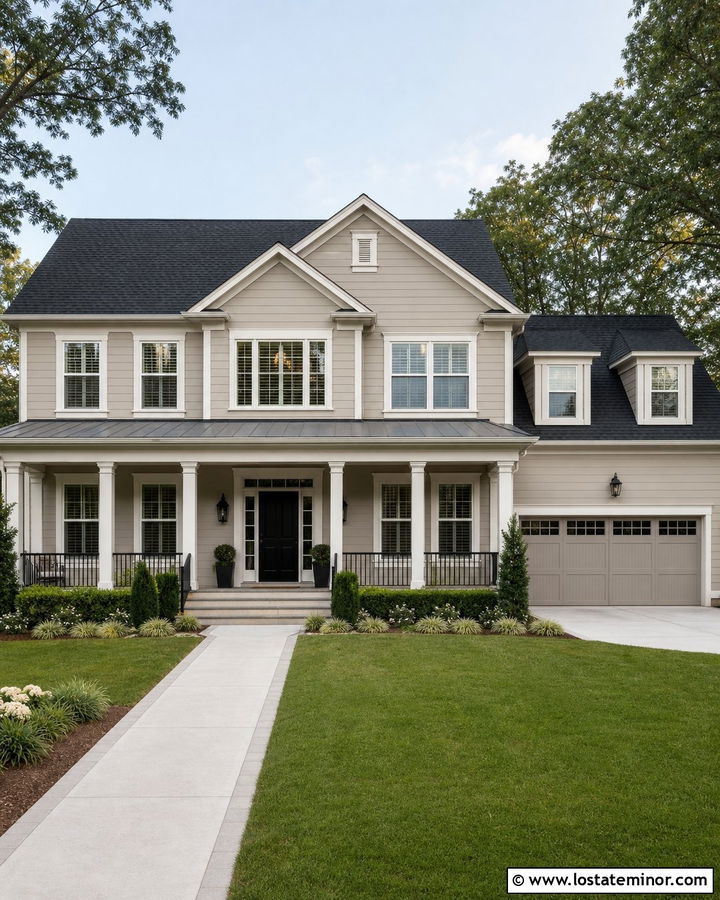
A charcoal roof provides a dependable anchor for a light greige house, especially when the facade includes a prominent porch. Use soft white on the porch columns, window casings, fascia, and railings to frame the greige without creating a cold effect. The dark roof adds definition above, while a charcoal or black front door repeats that depth near eye level. If the house has a large garage, paint its door greige rather than white to help it visually recede. This balanced arrangement works well on two-story traditional homes, Southern houses, and wide suburban facades. Add black lanterns and simple metal hardware for continuity. Neatly edged beds and deep green shrubs provide enough color without competing with the architecture.
6. Greige House With Red Brick And Black Shutters
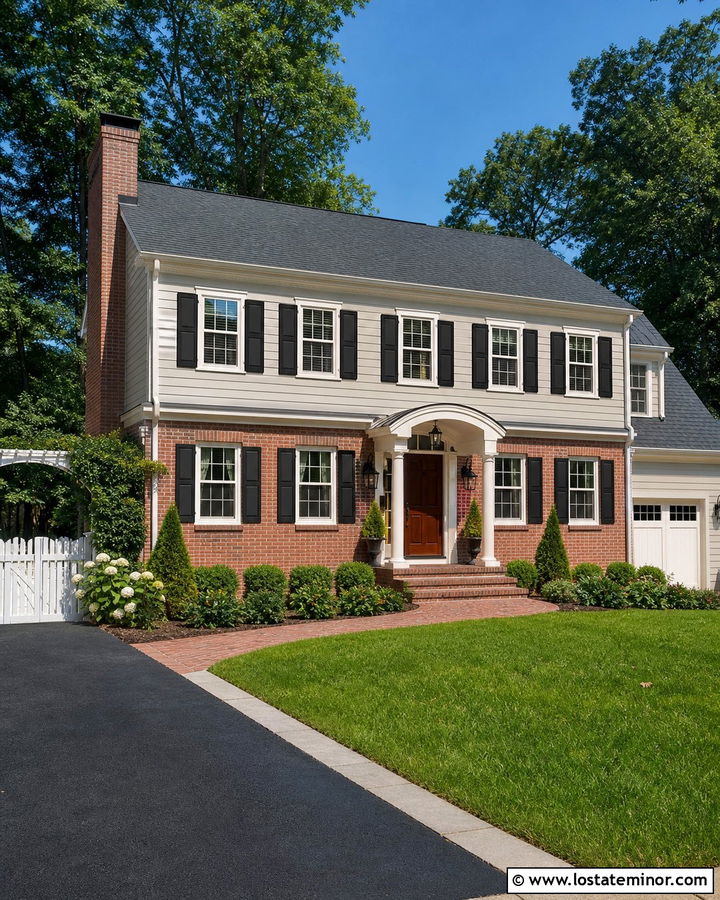
Existing red brick can look more refined when combined with a greige that shares its warm undertones. Use the greige on upper siding, additions, gables, or previously painted areas while leaving attractive brick exposed below. Creamy white mortar, trim, and porch details can soften the transition between materials. Black shutters and a black front door introduce crisp definition and prevent the exterior from becoming overly brown. For a warmer entrance, replace the black door with stained mahogany and retain black on the shutters. This scheme is ideal for traditional split-levels, Colonials, and brick ranch homes. Choose restrained landscaping with evergreen foundation plants and a curved walkway. The result respects the original masonry while making the entire facade feel more coordinated.
7. Greige House With Natural Wood Garage Doors
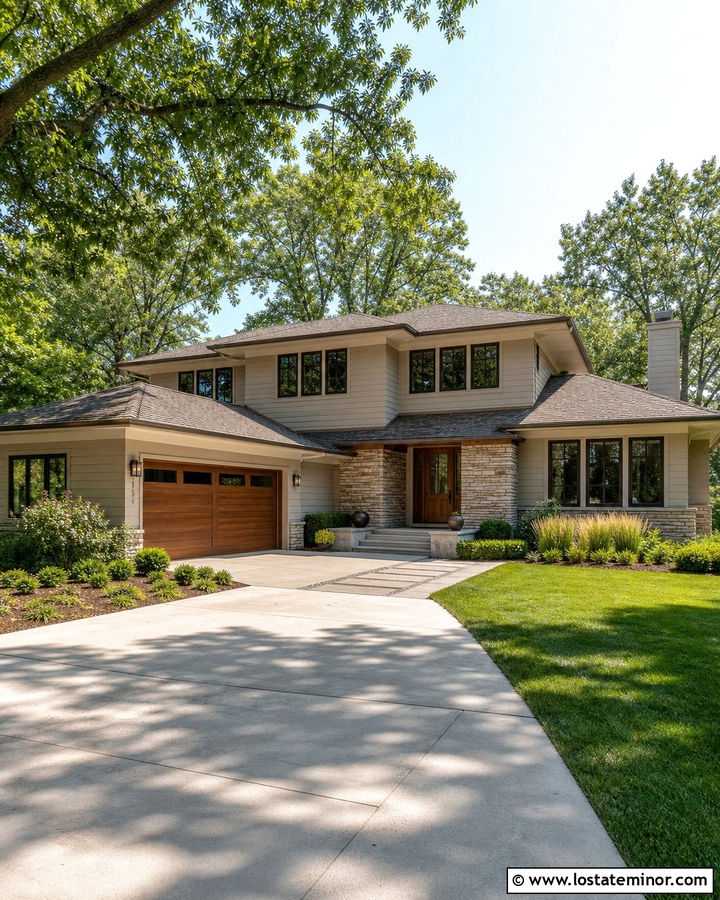
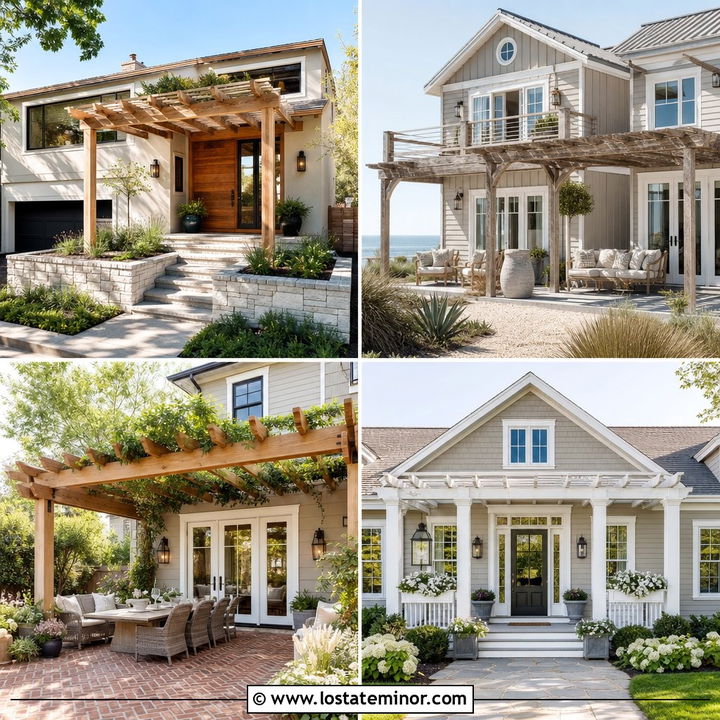
Large garage doors become attractive architectural features when finished in natural wood rather than stark white. Pair light greige siding with warm cedar or walnut garage doors, then repeat the wood tone on the main entrance and small porch details. Use dark bronze or charcoal around the windows to give the exterior a clear framework. Cream trim can soften rooflines and prevent the house from appearing too dark. This complete scheme works especially well on contemporary, Prairie, and upscale transitional homes with front-facing garages. Select a roof containing warm gray and brown tones to connect the materials. Wide concrete pavers, low ornamental grasses, and structured shrubs complement the clean design. Keep wood stains consistent so the accents look deliberate rather than mismatched.
8. Greige House With Deep Blue Door And White Trim
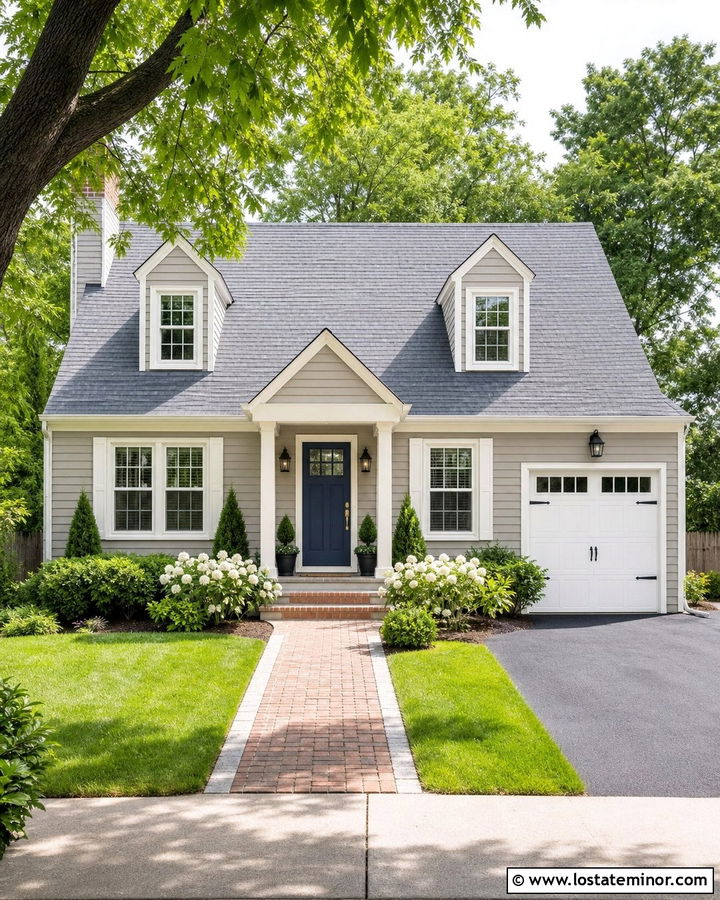
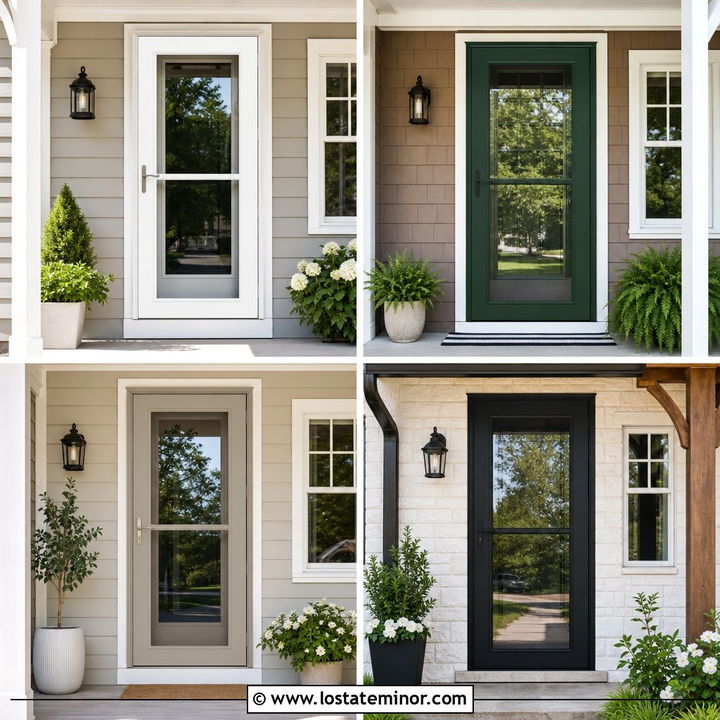
A deep blue front door creates a confident focal point against greige siding without overpowering the home. Choose a slightly muted navy, denim, or blue-gray that remains sophisticated in bright daylight. Soft white trim around the windows and entry helps separate the blue from the greige body. A medium gray roof, white garage door, and simple black lighting can support the palette without adding unnecessary colors. This approachable combination flatters ranch homes, Cape Cod houses, cottages, and straightforward suburban facades. Repeat the door color sparingly through planters or a porch bench rather than painting every shutter blue. White flowers and evergreen shrubs keep the landscaping fresh. The finished exterior feels friendly, classic, and easy to personalize over time.
9. Greige House With Black Windows And Limestone
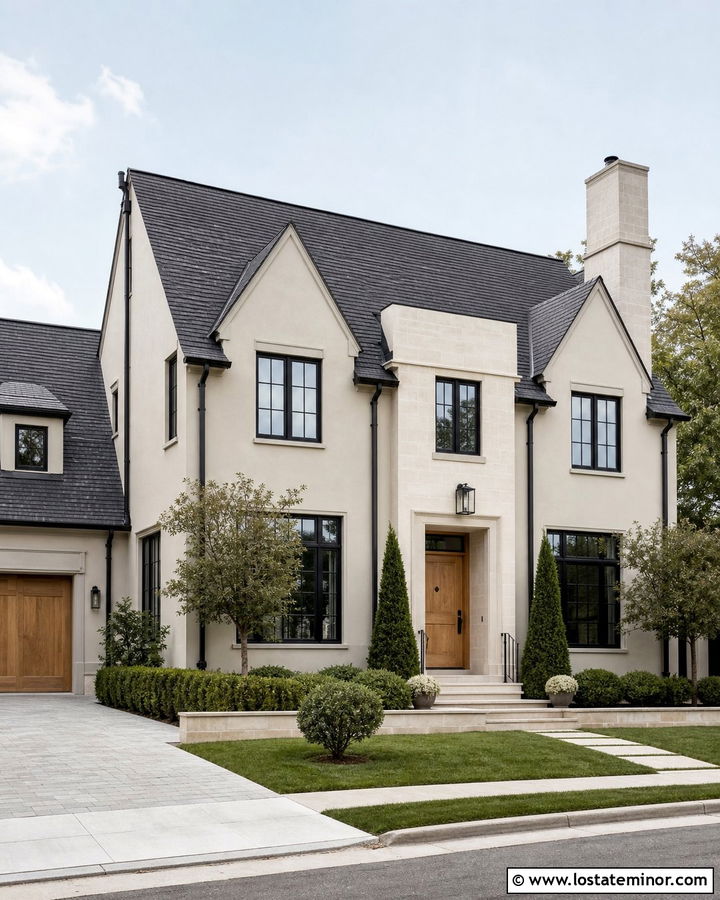
Cool limestone and warm greige can create a layered neutral exterior with a clean, high-end appearance. Place pale limestone around the entry, chimney, or lower portion of the facade, then use light greige siding across the larger surfaces. Black windows introduce necessary contrast and highlight the house’s proportions. Continue black on slim gutters, roof edging, and contemporary light fixtures. A natural oak front door adds warmth without distracting from the stone. This look works well on modern European, transitional, and contemporary suburban homes. Avoid bright white trim, which can break up the sophisticated tonal effect. Instead, choose trim that is one or two shades lighter than the siding. Structured hedges, small trees, and broad stone pavers finish the elegant curb appeal.
10. Greige House With Olive Green Shutters And Wood Door
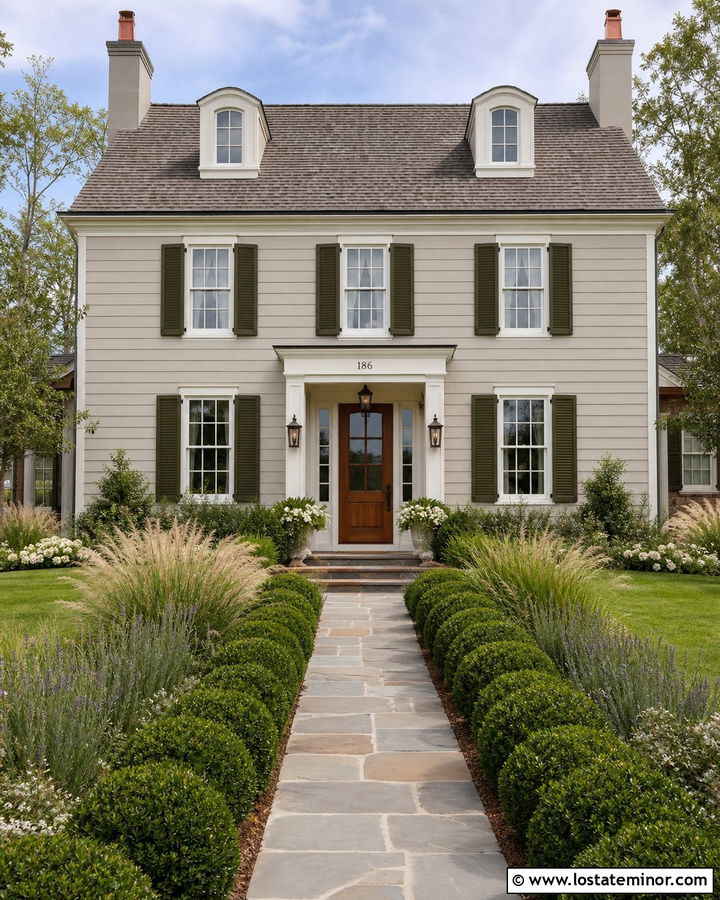
Olive green shutters give greige siding an earthy accent that feels richer than standard gray or black. Choose a deep, muted olive with brown undertones so it coordinates with warm greige, natural wood, and surrounding vegetation. Use creamy white on window trim and porch columns to maintain definition. A stained oak or walnut door supports the organic palette and creates a welcoming entrance. Warm gray roof shingles and aged bronze lanterns will connect the darker details. This combination is particularly attractive on cottage, French country, and traditional homes with symmetrical windows. Surround the facade with rosemary, ornamental grasses, boxwood, and soft flowering plants. The green shutters then become part of the landscape rather than an unrelated decorative color.
11. Greige House With White Brick And Black Accents
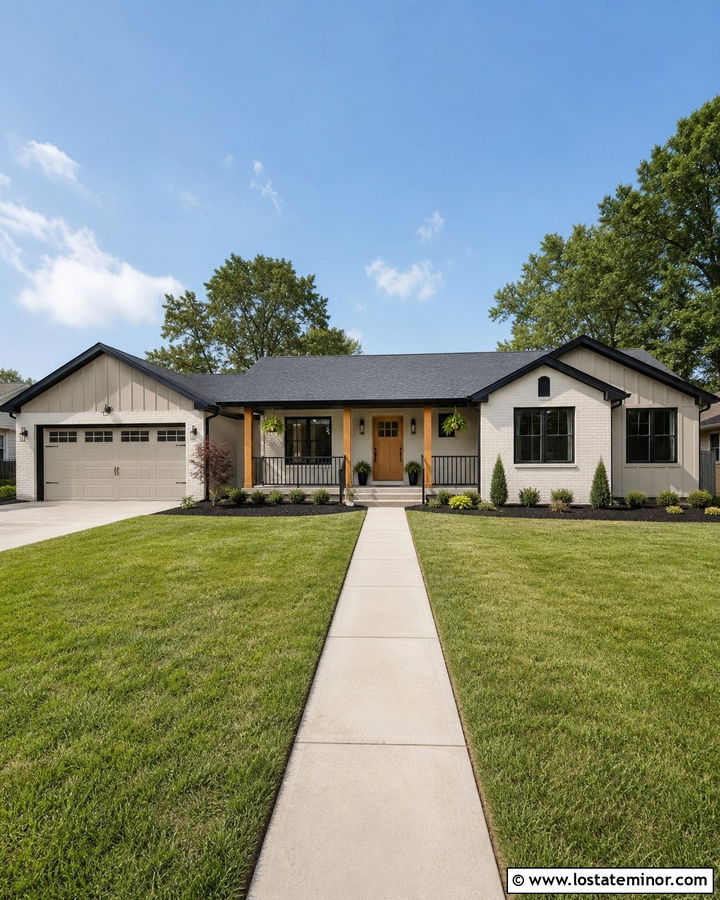
Combining greige siding with painted white brick creates subtle variation while keeping the exterior light and cohesive. Use greige on upper gables, board-and-batten sections, or side elevations. Apply warm white to the brick so it complements the greige instead of appearing icy. Black windows, gutters, porch railings, and a simple front door provide strong, controlled contrast. Natural wood porch columns can soften the graphic palette and prevent the home from feeling severe. This scheme suits modern farmhouses, renovated ranches, and mixed-material suburban homes. Paint a prominent garage door greige to reduce its visual weight. Finish the property with dark mulch, green foundation shrubs, and a straight concrete or brick walkway for a clean, organized curb-appeal view.
12. Greige House With Copper Gutters And Mahogany Door
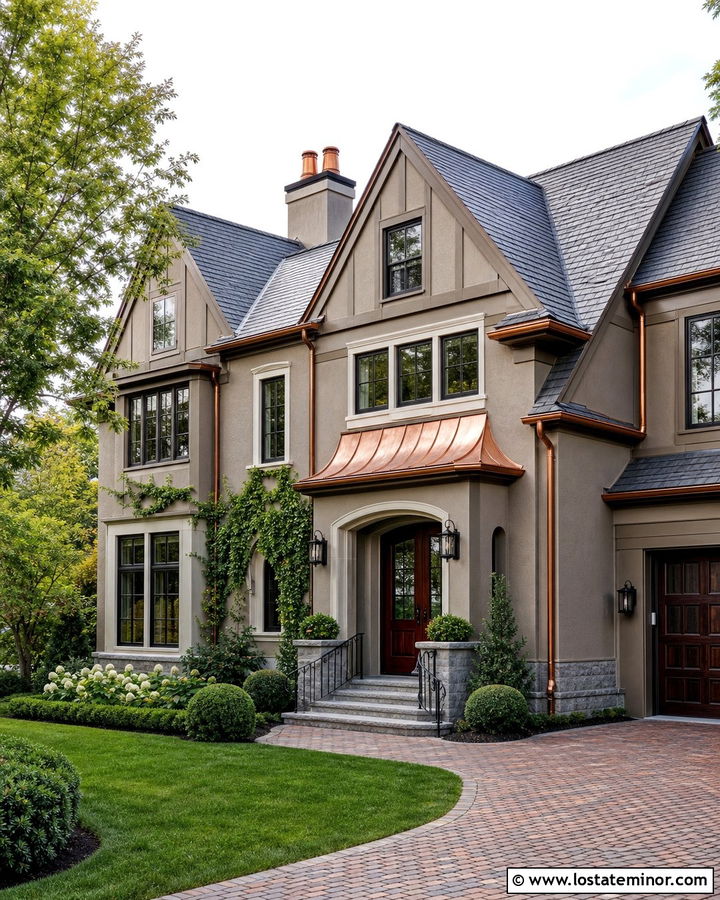
Copper accents bring warmth and character to greige without requiring a brightly colored door or dramatic trim. Start with a medium greige body and creamy white window casings. Install copper gutters, downspouts, porch roofing, or entry awnings where the metal can become a visible architectural detail. A rich mahogany front door strengthens the warm color story and looks especially attractive beside stone steps. Dark bronze windows and lanterns will complement both new copper and its naturally aged appearance. This exterior works beautifully on Tudor, European cottage, and traditional custom homes. Keep the main roof charcoal or weathered gray to avoid too many brown tones. Formal shrubs, climbing greenery, and warm brick pavers add a fitting final layer.
13. Greige House With Tonal Taupe Trim And Bronze Windows
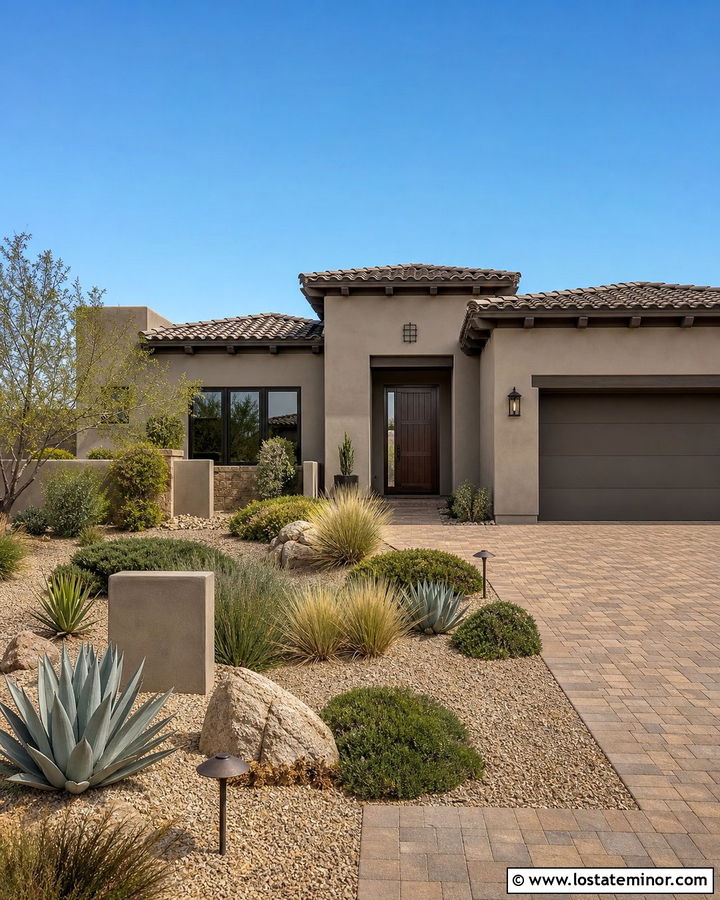
Not every greige exterior needs high-contrast white or black trim. A tonal palette uses slightly darker taupe on fascia, window casings, porch columns, and garage doors to create quiet architectural definition. Bronze windows add another warm, deep neutral without producing harsh outlines. Choose a front door in dark walnut or deep brown-black to establish a clear entrance. This understated combination works particularly well on desert, Mediterranean, contemporary, and Southwestern houses. Clay-colored pavers and warm stone can complement the palette, while a brown-gray tile roof completes the architecture. Use drought-tolerant landscaping with agave, native grasses, gravel, and sculptural shrubs. The subtle shifts between greige, taupe, and bronze produce a sophisticated facade that responds beautifully to strong sunlight.
14. Greige House With Black Board And Batten Accents
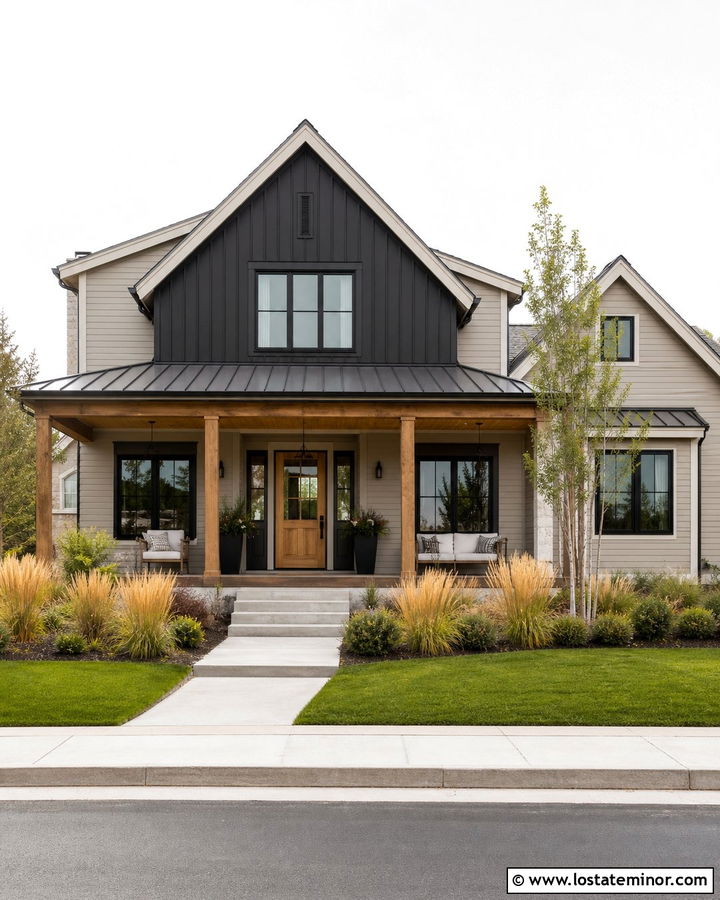
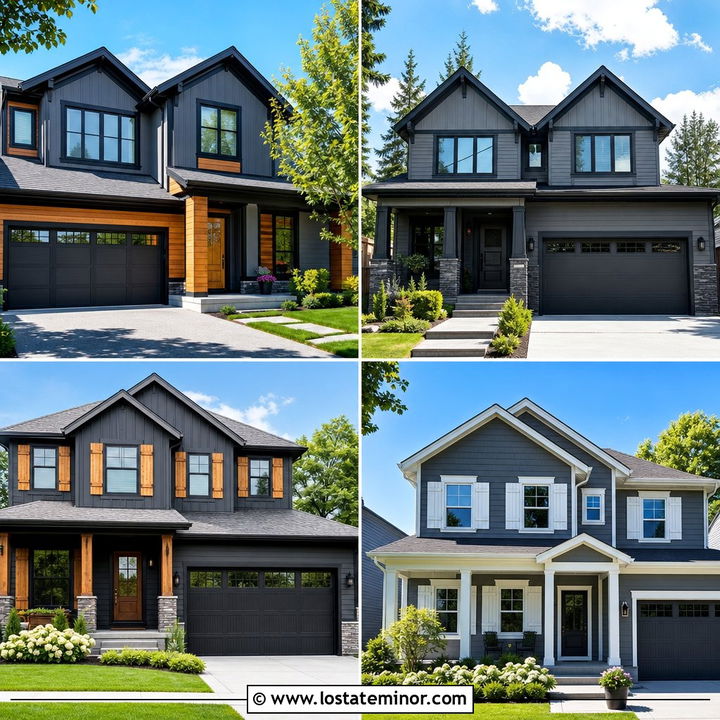
Black board-and-batten sections can break up a large greige facade and emphasize selected architectural areas. Keep greige horizontal siding on most of the house, then add black vertical siding to a front gable, garage wing, or recessed entry. White trim may be used sparingly around columns and roof edges, but it should not compete with the two main colors. A warm wood front door and matching porch ceiling soften the dramatic contrast. This design suits modern farmhouses and transitional homes with varied rooflines. Use a charcoal metal roof over the porch and matching shingles on the main structure. Simple concrete paths, ornamental grasses, and young trees reinforce the streamlined character while keeping the complete exterior welcoming.
15. Greige House With Cedar Shakes And Cream Trim
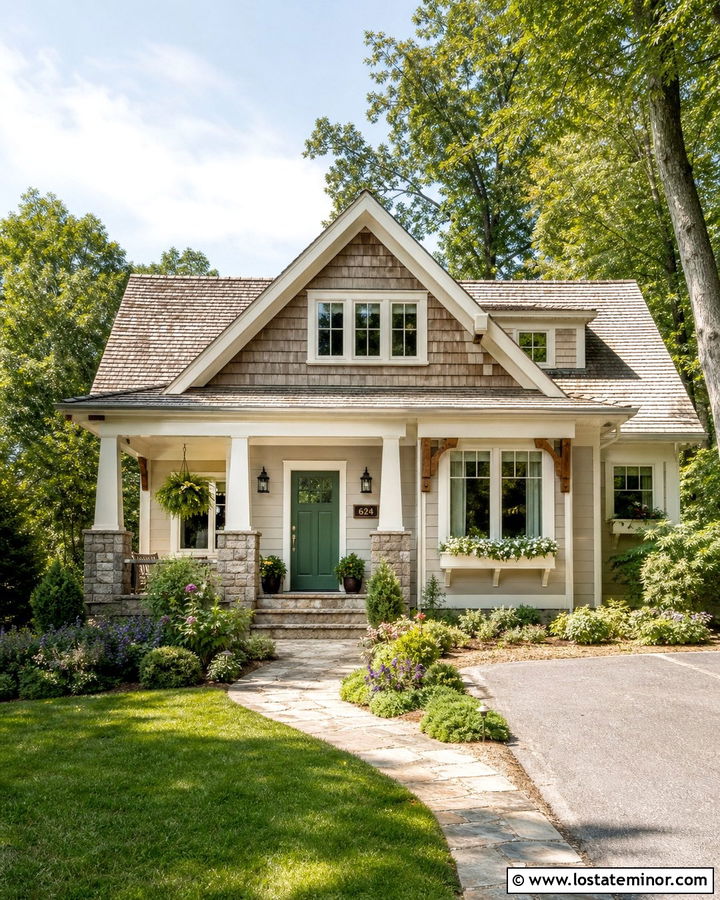
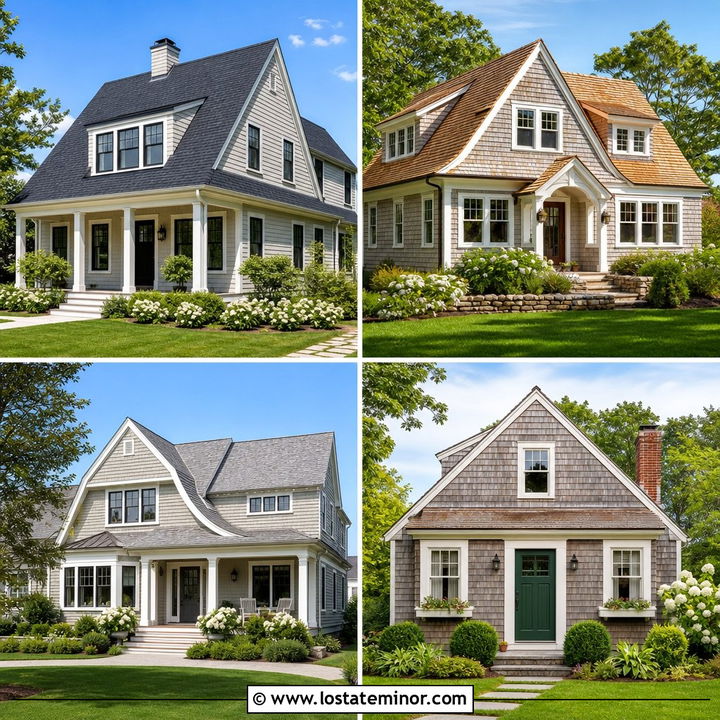
Cedar shakes introduce natural texture to a greige exterior and work especially well on homes with prominent gables. Apply greige clapboard siding across the main facade, then use weathered cedar shakes above the porch or on upper peaks. Cream trim provides a soft boundary between the two materials and relates better to warm wood than brilliant white. A deep brown or forest green front door can ground the entry. Select weathered gray roof shingles that contain subtle brown variation. This layered scheme suits Craftsman homes, cottages, lake houses, and Cape Cod architecture. Stone porch piers and timber brackets can add further depth. Informal shrubs, flowering perennials, and a curved walkway support the relaxed, handcrafted appearance of the house.
16. Greige House With Burgundy Door And Gray Stone
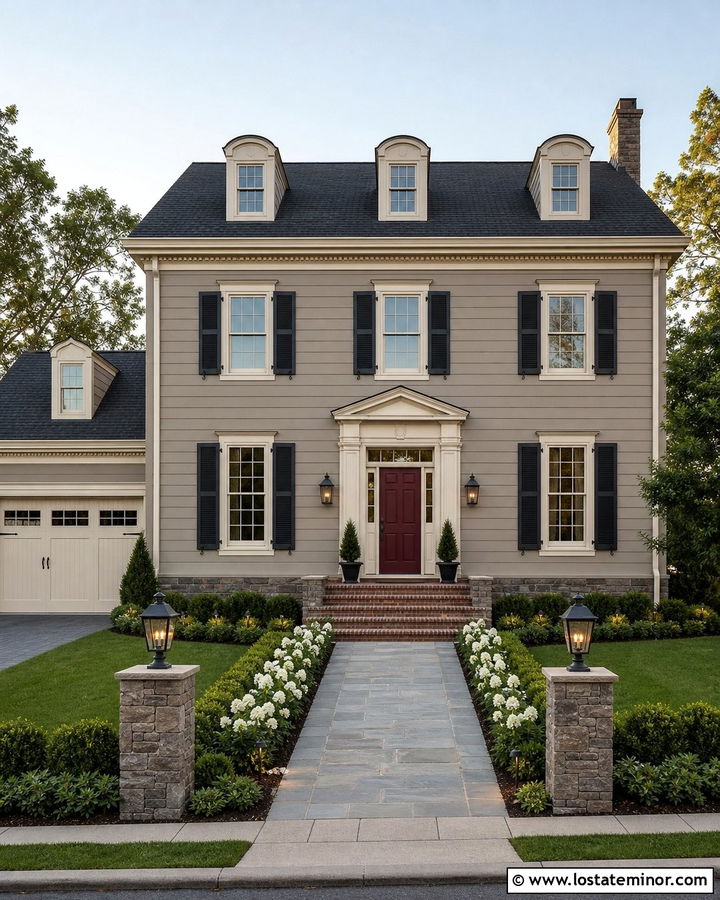
A burgundy front door adds traditional color to a greige home while staying deeper and more restrained than bright red. Pair the greige siding with gray stone containing faint taupe or brown movement. Use soft ivory trim to separate the materials and brighten the windows. Burgundy should remain concentrated on the entrance, although small matching shutters can work on a symmetrical facade. Black or dark bronze lanterns give the scheme visual weight, and a charcoal roof keeps the overall palette balanced. This combination complements Colonials, Georgian homes, and traditional two-story houses. Add brick steps or a brick-edged walkway to echo the door’s warmth. Evergreen hedges and white flowering plants complete the dignified, welcoming curb appeal.
17. Greige House With Teal Door And Warm Wood Accents
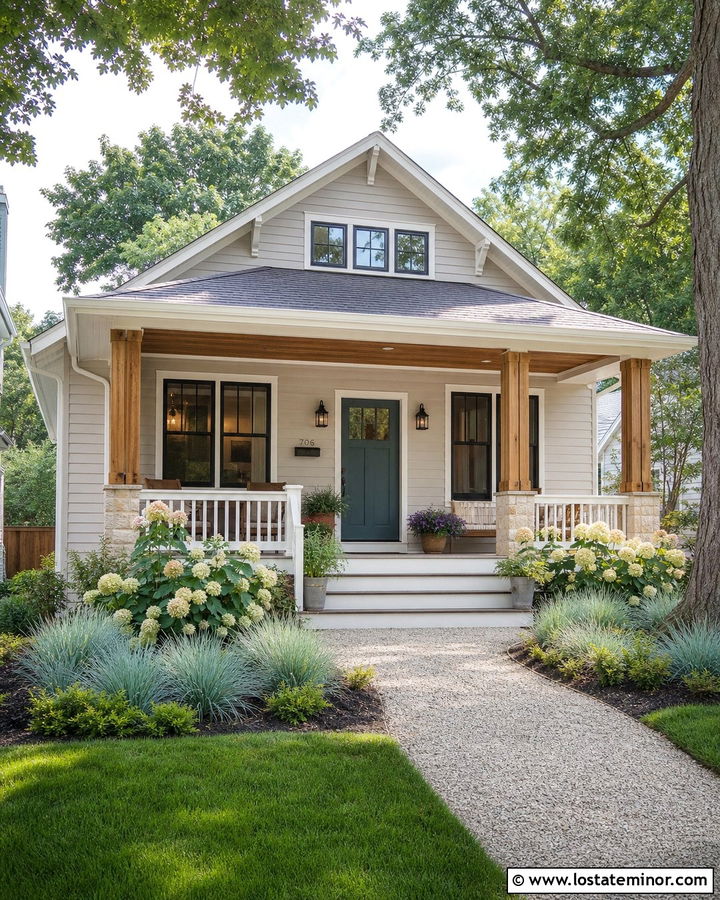
A muted teal door can make a greige exterior feel cheerful without sacrificing its sophisticated neutral base. Select a deep blue-green rather than a bright tropical teal. Pair it with warm white trim, a cedar porch ceiling, and natural wood brackets or columns. The wood keeps the teal from feeling disconnected and highlights the warmth within the greige siding. Dark bronze hardware and a weathered gray roof provide practical finishing elements. This palette works nicely on bungalows, coastal cottages, and relaxed ranch homes. Use the teal only at the entrance so it remains a purposeful focal point. Blue-green grasses, hydrangeas, and pale gravel paths can gently repeat the cool accent while preserving a natural suburban setting.
18. Greige House With Dark Greige Trim And Oak Door
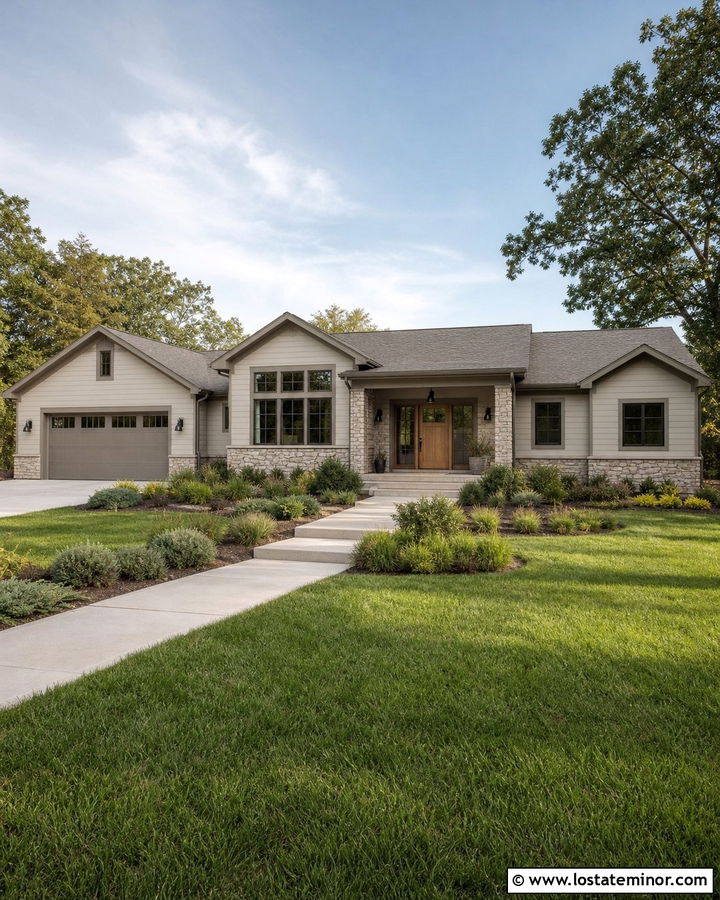
A layered greige palette offers depth without introducing a separate accent color. Cover the main siding in a light greige, then choose a dark greige for window trim, fascia, shutters, and porch railings. The darker tone should share the body color’s undertone, whether it leans warm, neutral, or slightly cool. A natural oak door prevents the monochromatic scheme from looking flat. Use warm gray roofing and stone containing both greige shades to connect the facade. This approach is ideal for contemporary ranches, modern Craftsman homes, and houses in communities with limited color selections. Add black only through small fixtures and house numbers. Layered green landscaping brings life to the neutral architecture while allowing its subtle details to remain visible.
19. Greige House With Rustic Stone And Timber Beams
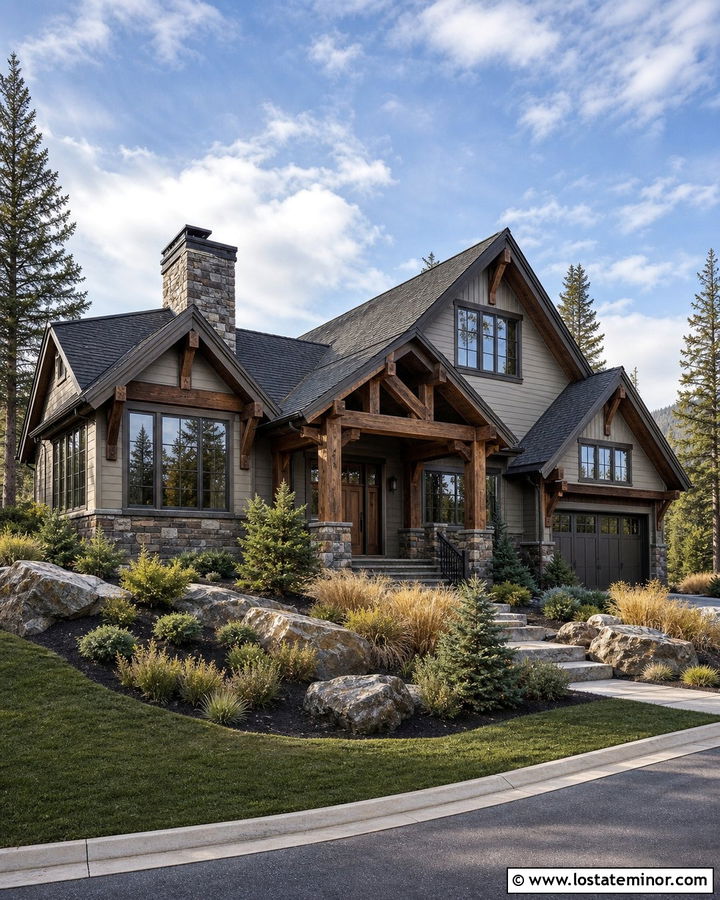
The texture of rough stone and heavy timber can transform a greige exterior into a warm mountain-inspired retreat. Use a medium greige on lap siding or stucco, then place rustic stone around the foundation, chimney, and porch piers. Stained timber beams, brackets, and columns should have enough depth to stand out against the siding. Dark bronze windows and a charcoal roof add contrast without looking overly modern. A matching timber front door makes the entrance part of the complete design. This combination suits mountain homes, lodges, Craftsman houses, and rustic suburban builds. Native evergreens, boulders, and sweeping grasses help the architecture blend into its surroundings. Keep the stone colors limited to gray, taupe, and muted brown.
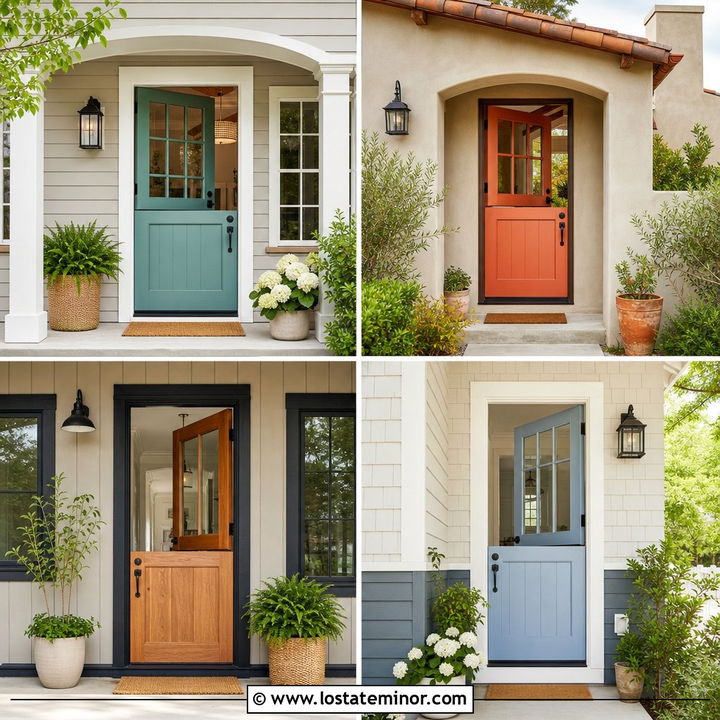
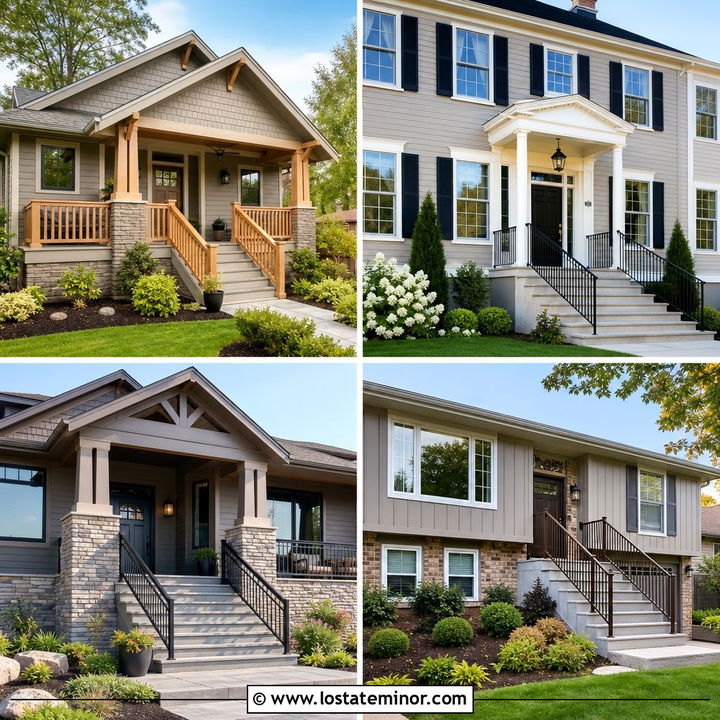
20. Greige House With Light Blue Shutters And White Porch
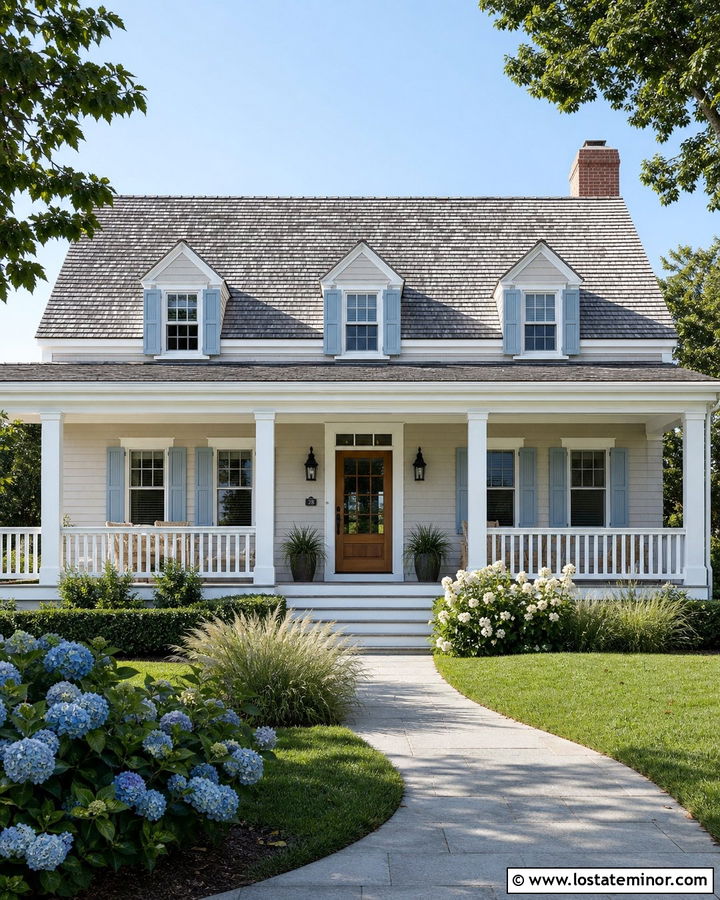
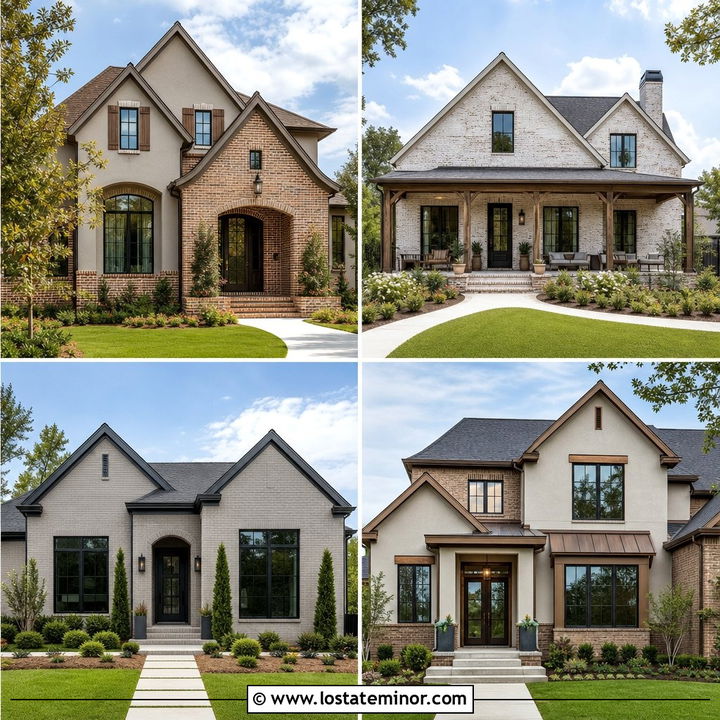
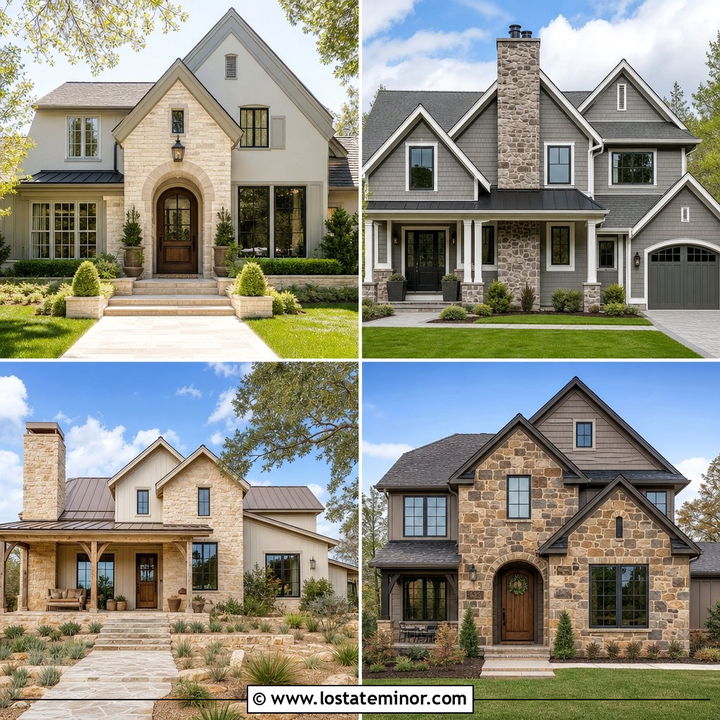
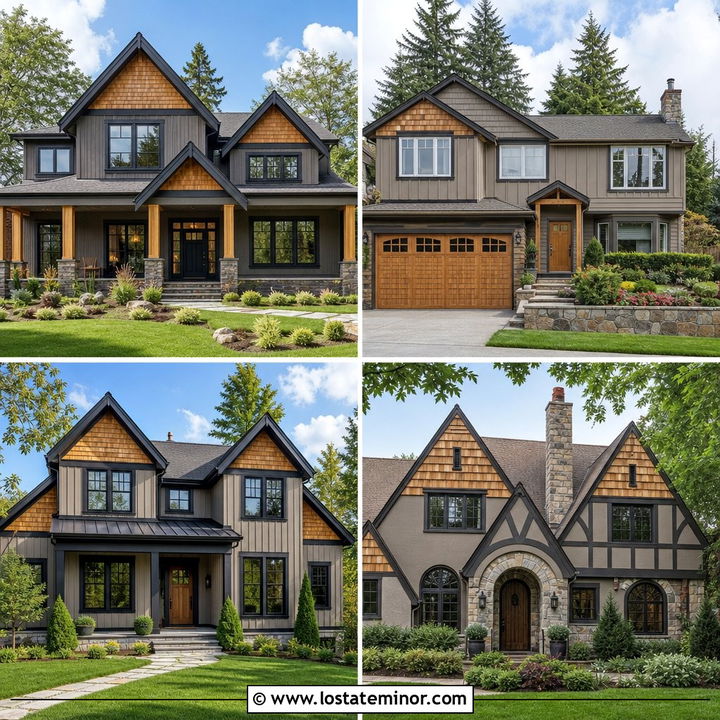
Light blue shutters can give warm greige siding a soft coastal character, especially when paired with a generous white porch. Choose a dusty blue-gray instead of a sugary pastel so the color remains refined. Use warm white on columns, railings, window trim, and the porch ceiling. A natural wood or deeper blue front door will add enough definition at the center of the facade. Weathered gray roof shingles and nickel or black lanterns complete the easygoing palette. This scheme works on coastal cottages, Cape Cod homes, and small Southern houses. Hydrangeas, white roses, and soft ornamental grasses enhance the relaxed appearance. The overall exterior feels airy and distinctive without depending on bright color or nautical decorations.
21. Greige House With Terracotta Roof And Brown Accents
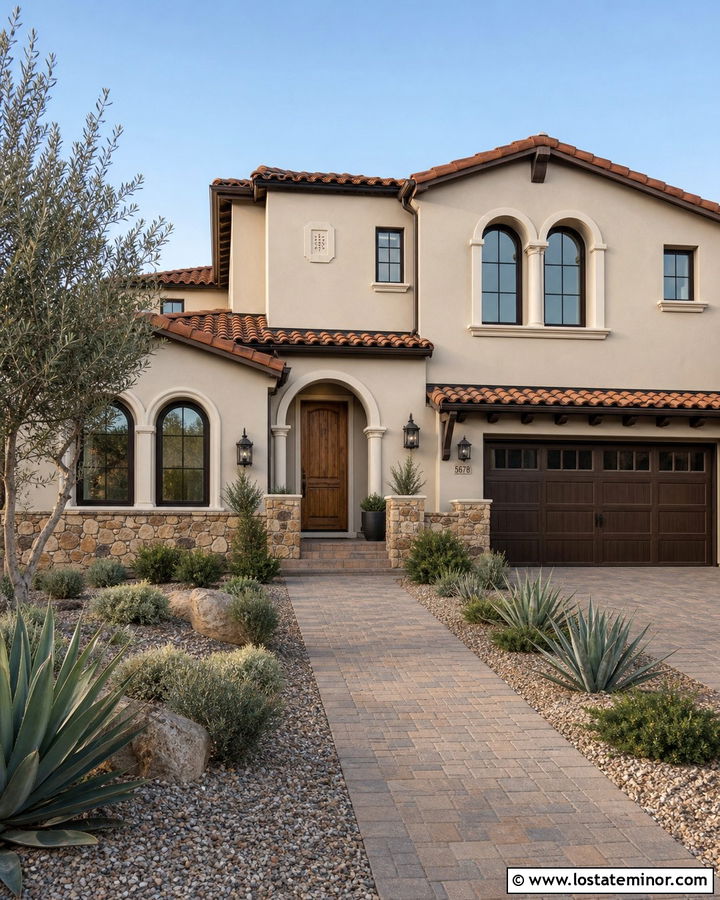
Greige stucco creates an attractive neutral foundation for a warm terracotta roof. Choose a greige that leans beige rather than blue-gray so it connects naturally with the roof tiles. Use dark brown on windows, garage doors, brackets, and entry details to create definition. Cream trim around arched openings can add brightness without producing a sharp contrast. A carved or paneled wood front door completes the warm, Mediterranean-inspired composition. This palette suits Spanish Revival, Tuscan, and Southwestern homes. Stone containing sand, rust, and taupe can be added around the base in limited amounts. Drought-tolerant plants, gravel beds, olive trees, and a warm paver walkway help the house look rooted in its setting rather than decorated with unrelated materials.
22. Greige House With Charcoal Garage And Wood Entry
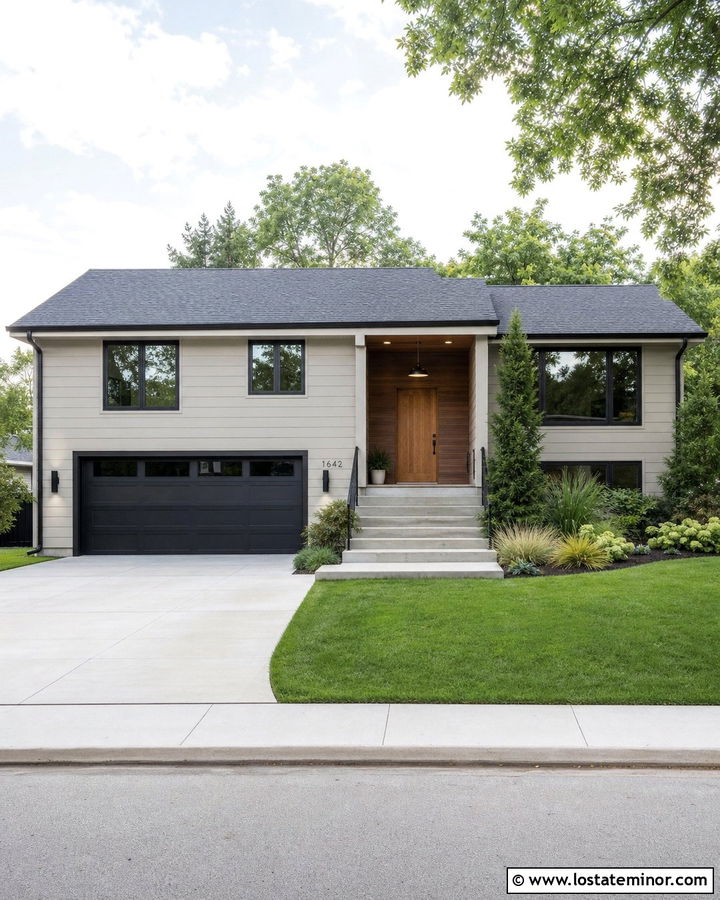
On a home with a wide front-facing garage, a charcoal door can provide depth while making the entry feel warmer and more inviting. Use light greige siding as the main body color and repeat charcoal on window frames, gutters, and small roof details. Add a natural wood front door beneath a wood-lined porch to direct attention away from the garage. Soft white fascia keeps the roofline clear and prevents the palette from becoming too heavy. This arrangement works well on split-levels, contemporary ranches, and modern suburban houses. Choose a dark gray roof that connects with the garage. Broad concrete steps, low hedges, and asymmetrical plantings reinforce the clean lines while keeping the entire facade approachable.
23. Greige House With Cream Stone And Espresso Accents
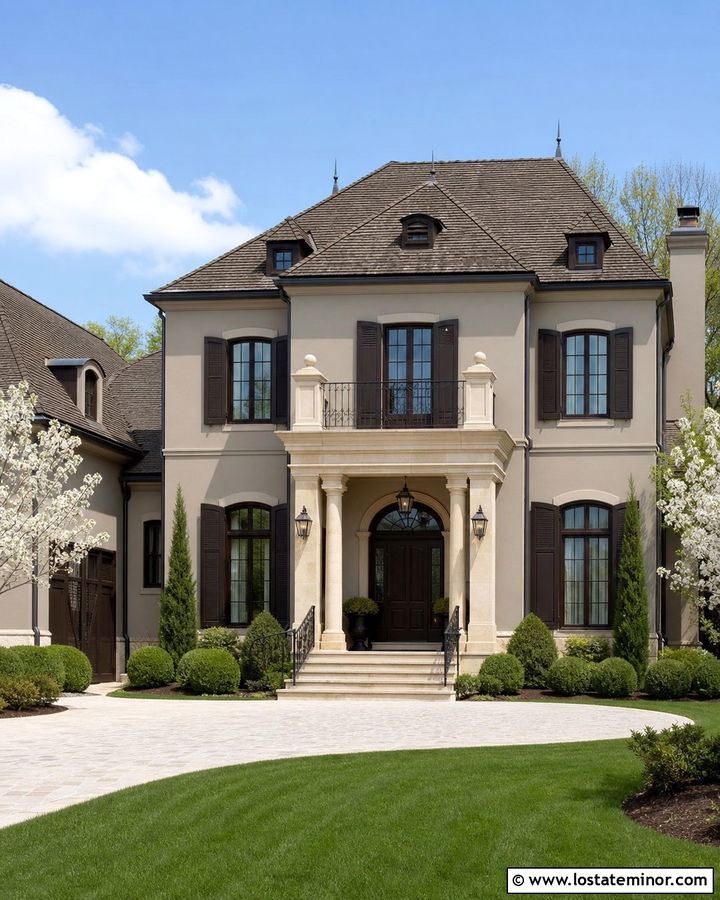
Cream-colored stone can brighten a greige exterior while adding more depth than plain white trim. Use the stone around porch columns, the foundation, or the primary entry wall. Choose greige siding that sits slightly deeper than the masonry so both materials remain visible. Espresso brown windows, shutters, fascia, and doors provide rich contrast that feels warmer than black. A medium brown-gray roof ties the dark accents to the light stone. This complete palette is particularly flattering on European, French country, and transitional homes. Use warm bronze lights and simple iron railings for consistency. Rounded shrubs, flowering trees, and limestone-toned walkways complement the architecture. Avoid cool blue-gray materials, which can make the cream stone appear unexpectedly yellow.
24. Greige House With Yellow Door And Black Windows
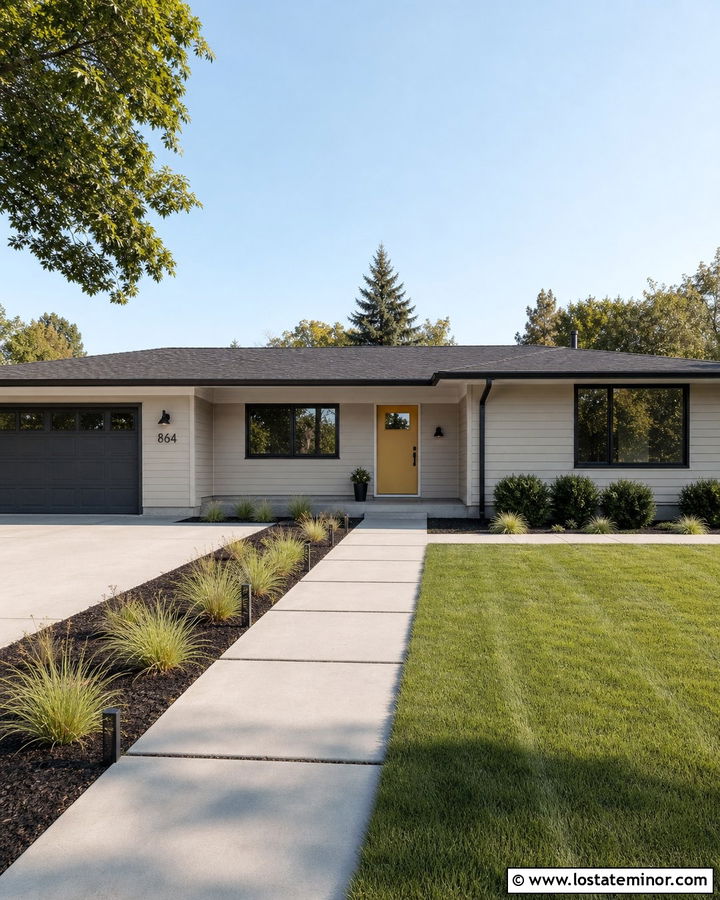
A yellow front door can energize a greige facade when the rest of the exterior remains controlled. Select a muted ochre, golden yellow, or mustard rather than a bright lemon shade. Black windows, gutters, and porch fixtures give the house a strong structure, while warm white trim keeps the siding from appearing dull. Use the yellow only on the door so it reads as a clear, intentional accent. A charcoal roof and light concrete walkway provide neutral support. This combination is especially effective on mid-century ranches, compact contemporary homes, and updated split-levels. Add low ornamental grasses and tidy evergreen shrubs instead of highly colorful flower beds. The finished house feels playful, modern, and still suitable for a residential neighborhood.
25. Greige House With Forest Green Trim And Stone Porch
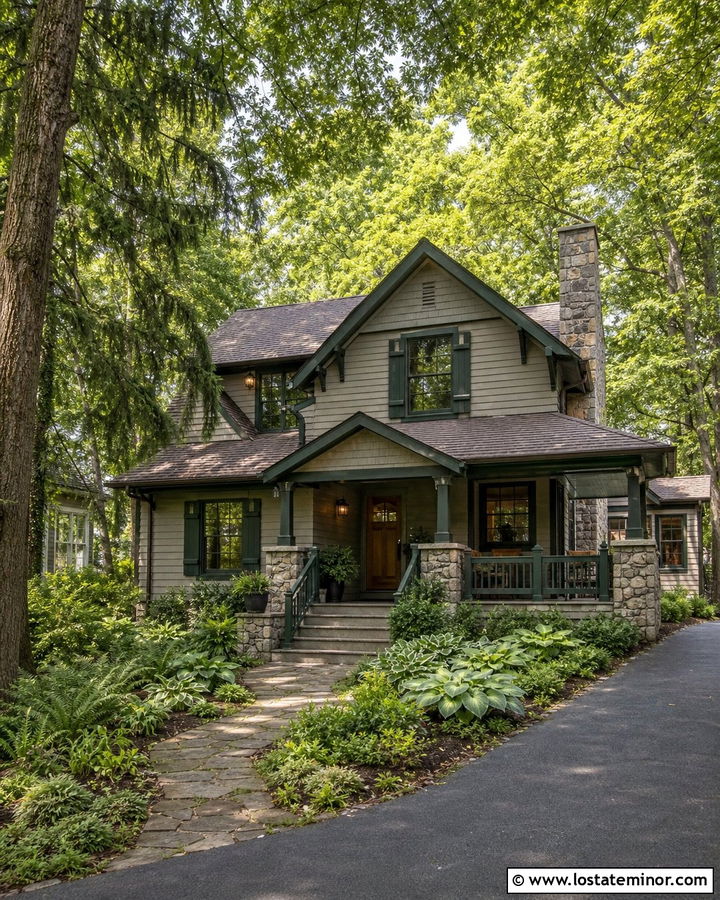
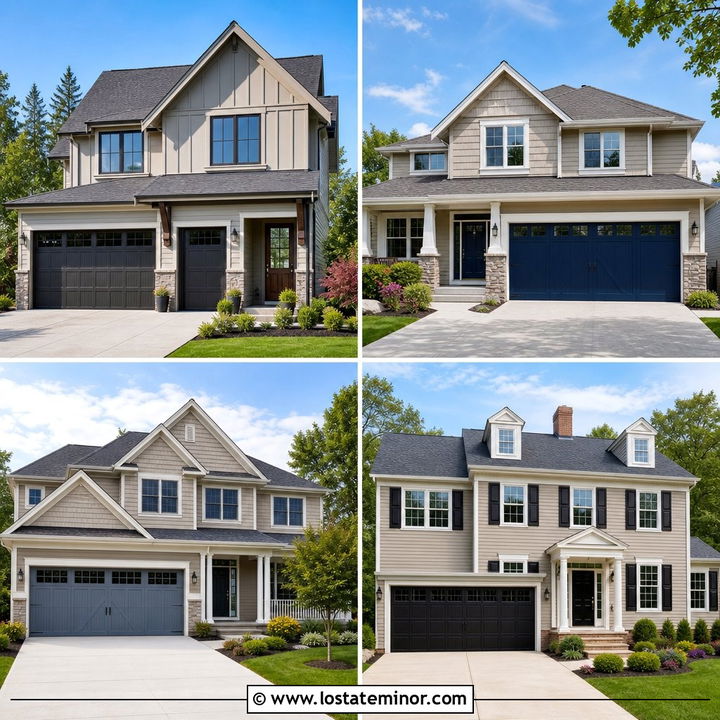
Deep forest green trim gives greige siding a nature-based contrast that is softer than black and more distinctive than brown. Apply green to the window frames, fascia, shutters, and porch railing while keeping the main siding warm and understated. A stone porch with gray, tan, and mossy undertones helps connect the trim to the landscape. Choose a stained wood front door to maintain the earthy direction. A charcoal or weathered brown roof can work, depending on the stone. This exterior combination suits cabins, Craftsman homes, lake houses, and wooded suburban properties. Ferns, hostas, evergreen shrubs, and natural stone paths will strengthen the setting. Keep white accents minimal so they do not interrupt the grounded palette.
26. Greige House With White Trim And Cedar Porch
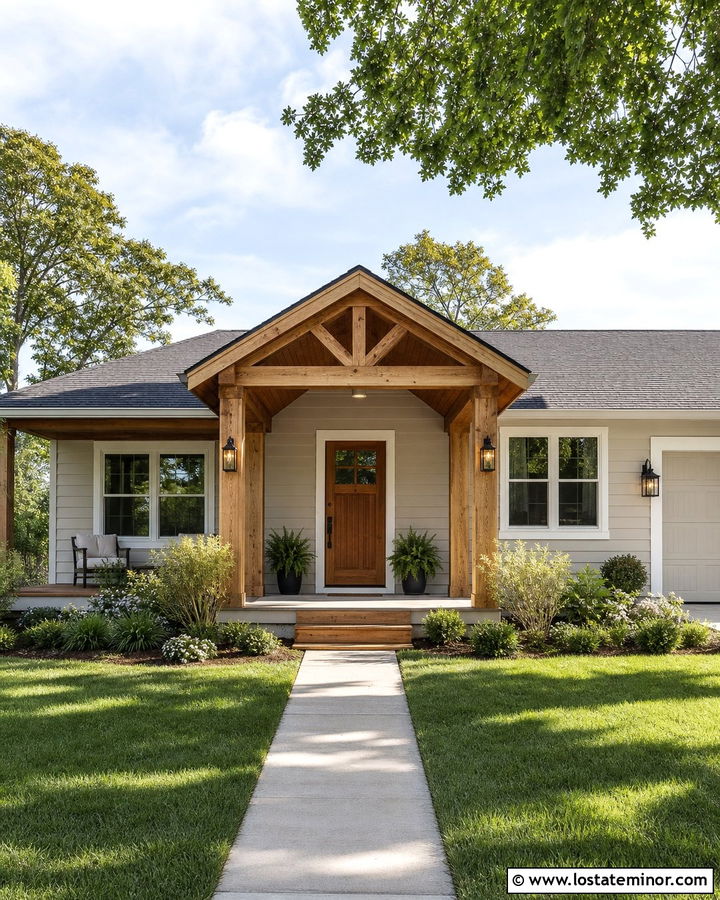
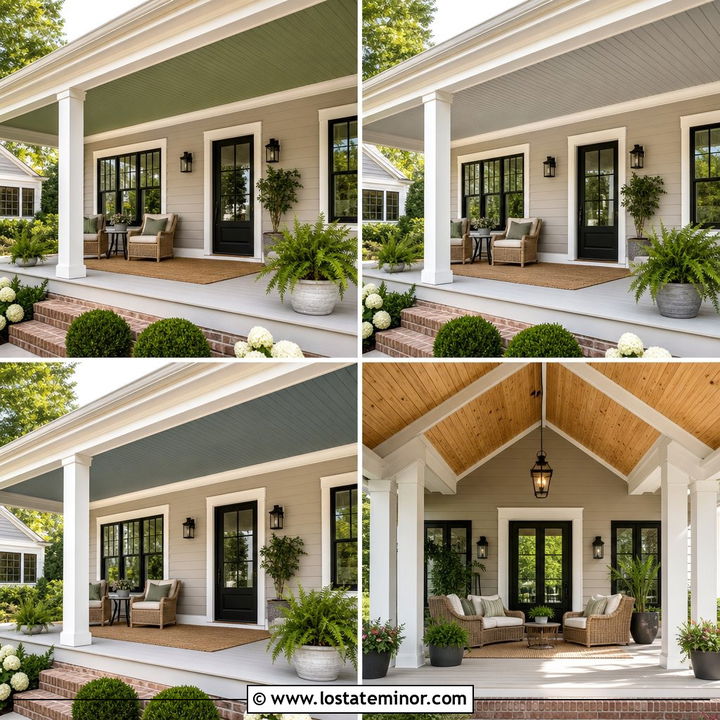
A cedar porch adds architectural warmth to a simple greige house and can make even a modest facade feel more intentional. Paint the siding a balanced light greige and use soft white around windows, fascia, and roof edges. Leave the porch posts, beams, ceiling, and front door in a coordinated cedar stain. A dark gray roof anchors the light colors, while black lanterns and hardware provide small points of contrast. This complete look is ideal for ranch homes, updated bungalows, and contemporary cottages. Extend the porch material into planter boxes or a nearby privacy screen, but avoid mixing several wood stains. A straight walkway, fresh lawn, and layered foundation plants will frame the warm entry and improve curb appeal.
27. Greige House With Brown Roof And Black Door
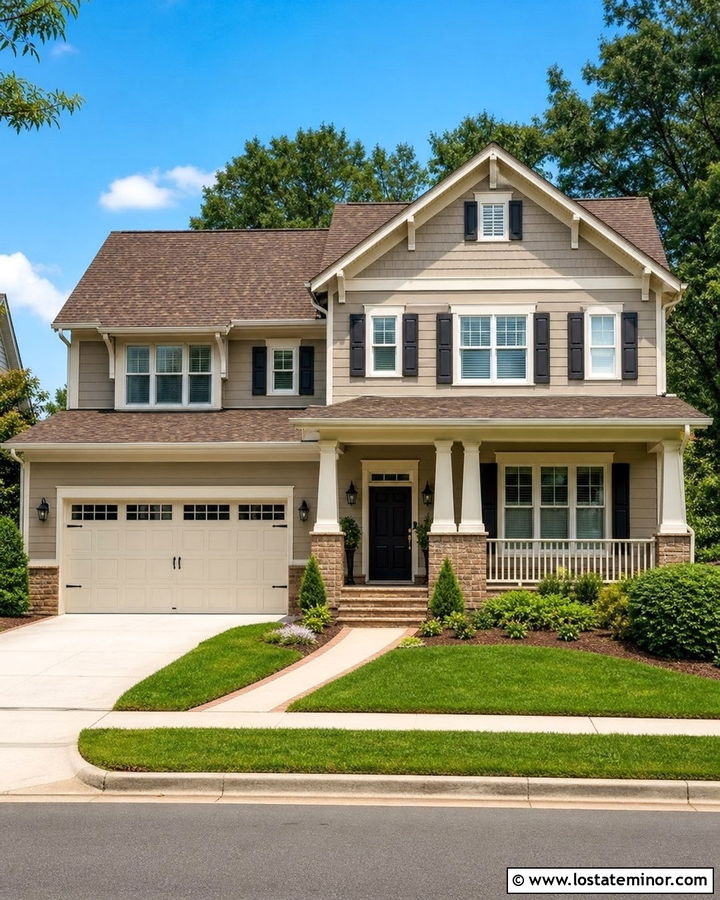
A brown roof can coordinate successfully with greige when the body color contains noticeable warm beige undertones. Choose a greige that feels earthy in direct sunlight rather than one that turns cool or silvery. Use creamy white on the trim and garage door to maintain a clear, welcoming facade. A black front door, black shutters, and dark lanterns provide enough contrast to modernize the brown roofing. Small sections of tan stone can connect the roof to the siding. This scheme works well on traditional ranches, Craftsman houses, and suburban two-story homes where replacing the roof is not part of the project. Green shrubs, brown mulch, and warm brick edging complete the cohesive palette without making the exterior feel overly beige.
28. Greige House With Painted Brick And Wood Shutters
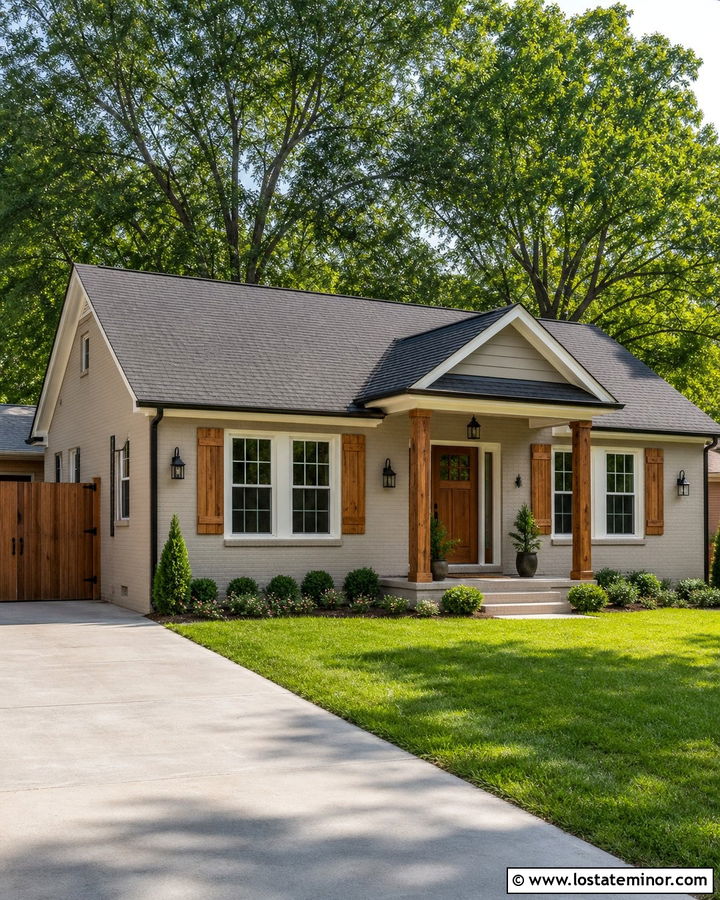
Painting outdated brick greige can unify a busy facade while preserving the masonry’s valuable texture. Select a breathable exterior coating suited to brick, and choose a greige that coordinates with the existing roof and mortar undertones. Natural wood shutters add warmth and keep the painted surface from looking flat. Repeat the wood on the door or porch columns, then use creamy white for window trim and fascia. Black fixtures offer just enough definition. This transformation works especially well on brick ranches, cottages, and older split-level homes. Avoid using too many wood accents across wide walls; strategically placed shutters are more effective. Simple foundation shrubs, a clean lawn, and a widened front path can further refresh the complete exterior.
29. Greige House With Metal Roof And Black Porch
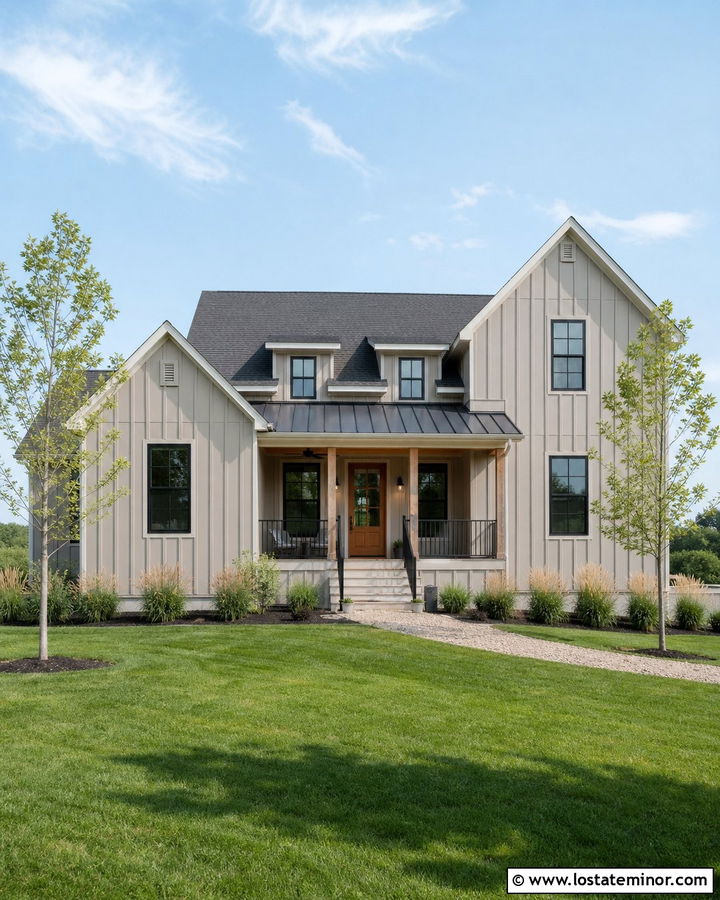
A black metal porch roof creates a crisp focal point on a greige house while offering a strong connection to black windows and railings. Use greige board-and-batten or horizontal siding across the full facade, then place the metal roofing over the entry or wraparound porch. Warm white trim can outline the roofline and brighten recessed areas. Add a natural wood door and porch ceiling to soften the black details. This palette works on modern farmhouses, barndominium-inspired homes, and contemporary rural houses. If the main roof uses shingles, select charcoal to coordinate with the porch metal. Gravel paths, broad lawns, young shade trees, and restrained foundation beds complement the practical architecture and maintain a bright, uncluttered curb-appeal view.
30. Greige House With Mixed Siding And Stone Accents
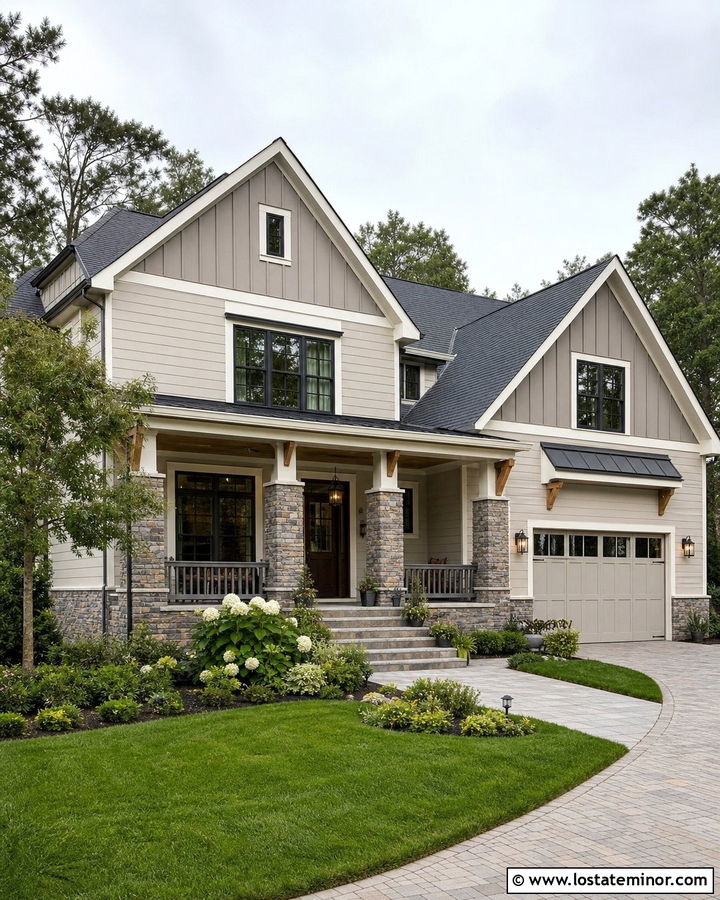
Mixed materials can make a greige exterior more dynamic when every surface follows a controlled color palette. Use light greige lap siding across the main level and a slightly darker greige board-and-batten treatment on the gables. Add warm gray stone around the foundation, porch columns, or garage bay. Soft white trim separates the materials, while a black or dark bronze door creates a clear focal point. Natural wood brackets can add warmth without introducing another major color. This versatile composition suits transitional, Craftsman, and large suburban homes with complex rooflines. Choose roofing that repeats the darkest gray found in the stone. Balanced trees, layered shrubs, and a broad walkway help organize the detailed facade and create finished curb appeal.
Conclusion:
A successful greige exterior depends on how the body color relates to every fixed and decorative feature around it. Black trim can add structure, white can brighten traditional details, and wood can reveal greige’s warmer side. Stone, brick, roofing, shutters, doors, and landscaping should support the same undertone instead of competing with it. Use the 30 Greige House Design With Accents Ideas as starting points, then adjust each palette for your architecture and surroundings. Always test large samples beside the roof, masonry, windows, and woodwork. View them in morning sun, afternoon light, and shade. Careful sampling will help you create a greige house that feels cohesive, welcoming, and distinctive from the curb.

Related posts: