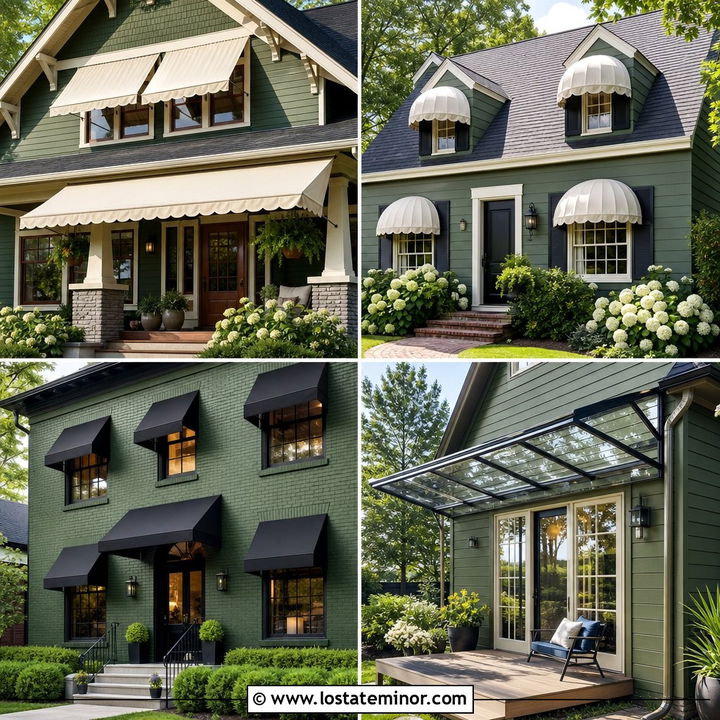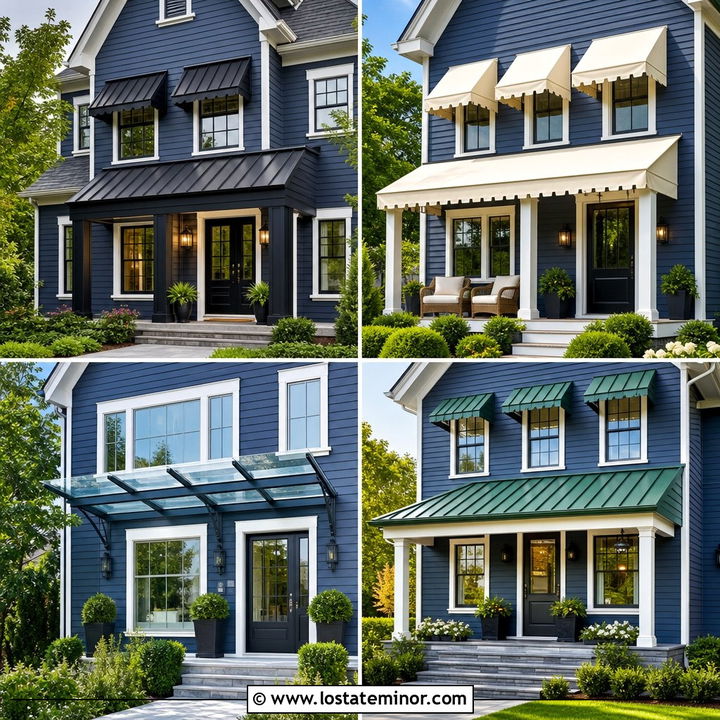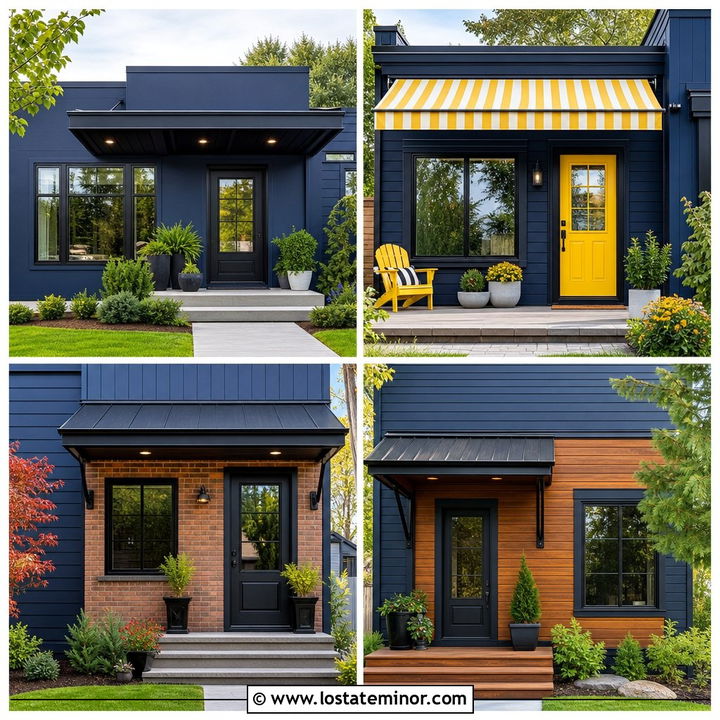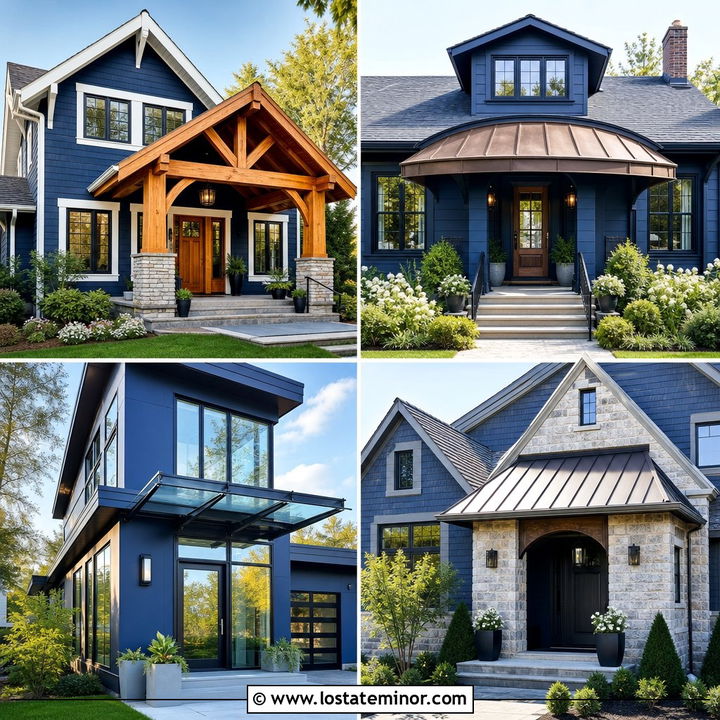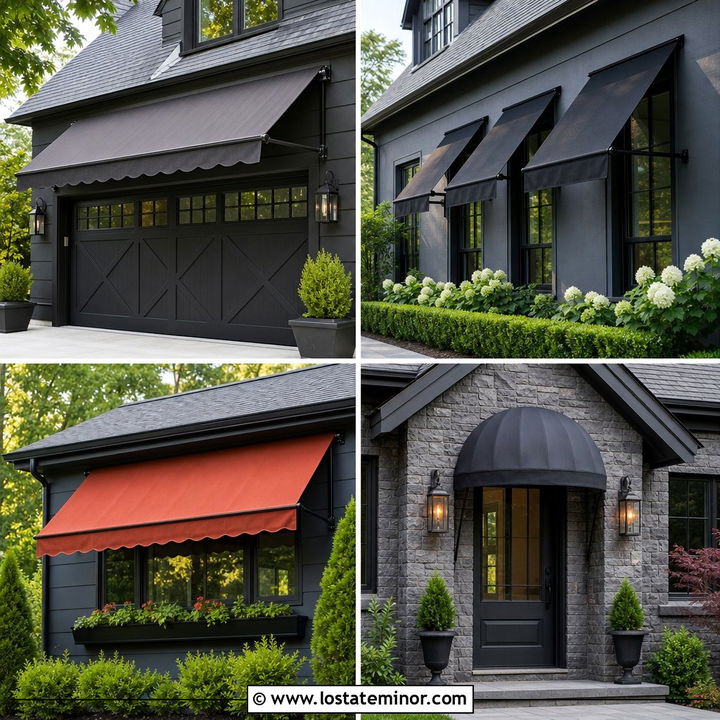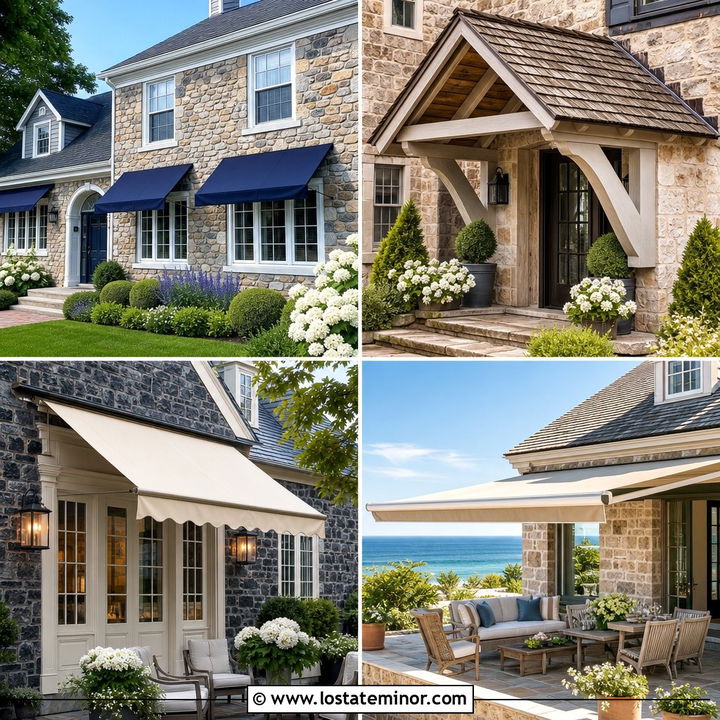
Dusty blue gives a home a calm, welcoming presence while offering more character than standard gray or beige. The right awning makes this muted exterior color even more effective by adding shade, depth, and architectural definition. Current exterior inspiration frequently combines dusty blue siding with crisp trim, black-framed windows, natural wood details, and slim metal awnings for a balanced look. () From traditional fabric covers to modern steel canopies, awnings can highlight windows, doors, porches, and garages without overwhelming the facade. Roof color, siding texture, landscaping, and awning scale also matter. The complete schemes below explore practical combinations for ranch homes, cottages, farmhouses, bungalows, and more. Use these 30 Dusty Blue House Design With Awning Ideas to shape a coordinated exterior with lasting curb appeal.
1. Dusty Blue House With Black Metal Awning
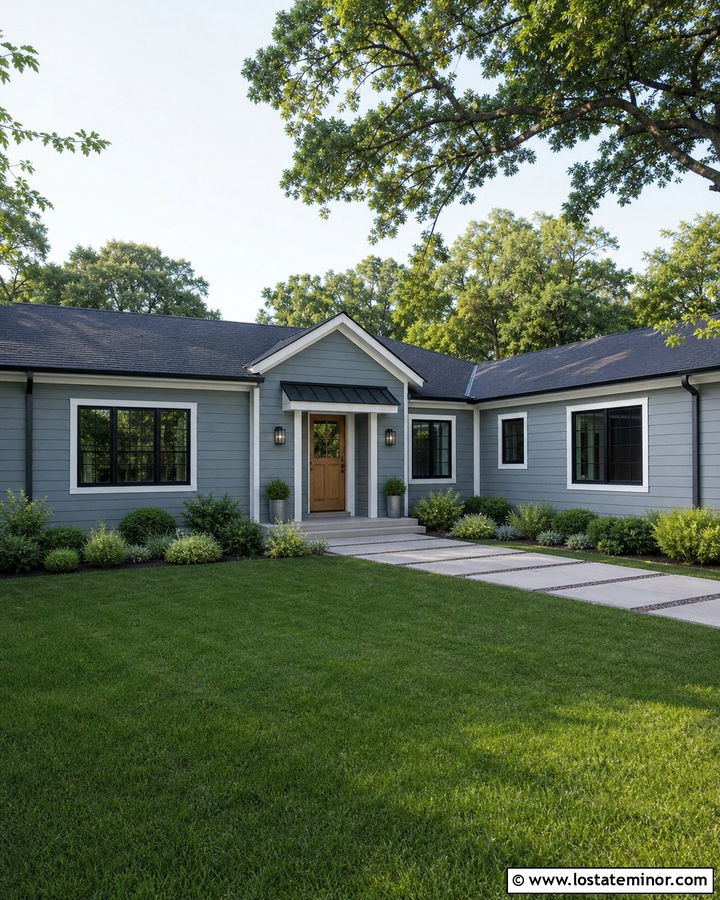
A slim black metal awning gives a dusty blue exterior a clean and tailored finish. This pairing works especially well on a modern ranch with horizontal lap siding and simple rectangular windows. Paint the trim a soft white to create definition without making the facade look too stark. Then repeat matte black on the gutters, sconces, house numbers, and window frames. A medium-gray shingle roof supports the cooler palette and lets the blue remain the main feature. Position the awning above the front door or a wide picture window where it can create a strong focal point. Warm the entrance with a natural oak door, pale stone steps, and layered evergreen landscaping. The result feels current but not excessively trendy.
2. Dusty Blue House With White Window Awnings
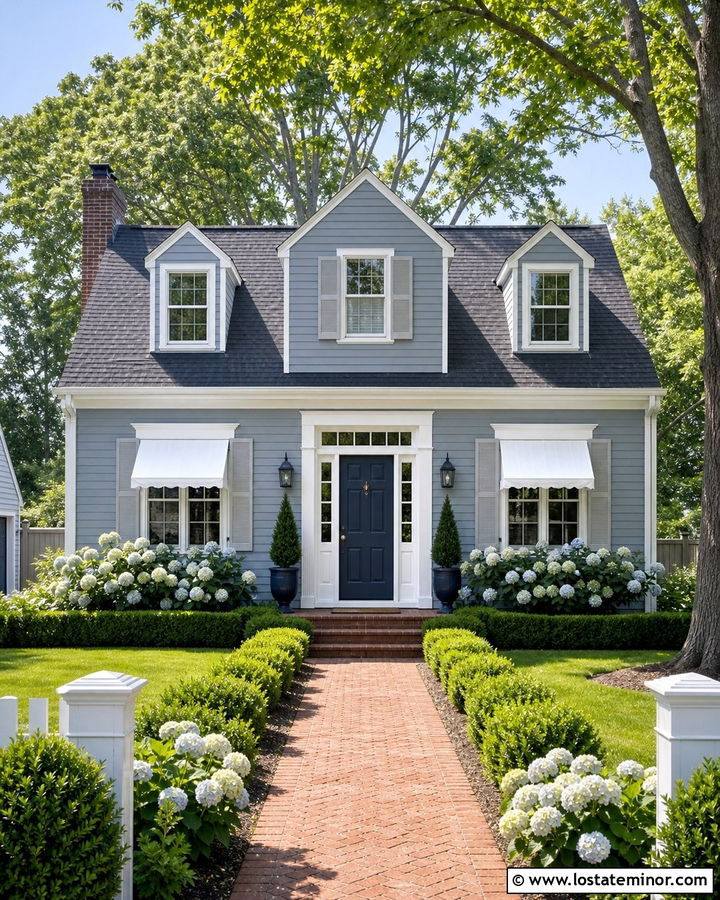
White window awnings create an airy contrast against dusty blue siding. The combination suits a Cape Cod house with symmetrical windows, simple dormers, and a steep charcoal roof. Choose awnings with narrow profiles so they complement the architecture instead of hiding the window trim. Matching the awnings to warm white corner boards, fascia, and porch railings creates a unified exterior. A navy front door can add depth while preserving the quiet blue-and-white palette. For a slightly relaxed coastal effect, include pale gray shutters and a weathered brick walkway. Low boxwood hedges, hydrangeas, and ornamental grasses soften the structured facade. This complete look is particularly useful when you want the awnings to appear original to the house rather than added later.
3. Dusty Blue House With Cedar Door Awning
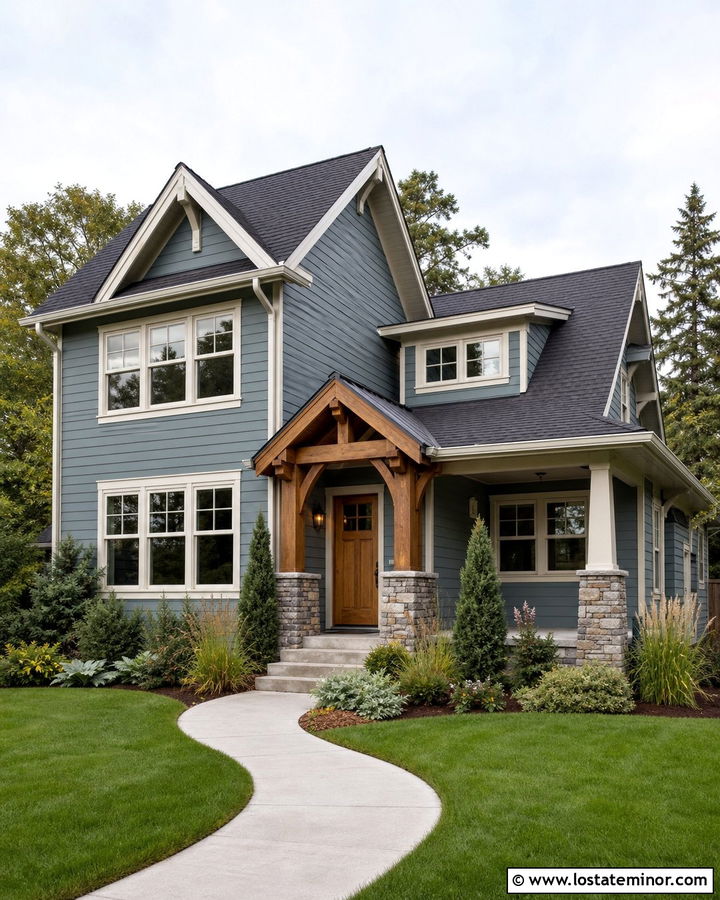
Natural cedar is an effective way to bring warmth to a cool dusty blue house. Use a small cedar awning above the entry of a craftsman home, supported by substantial wood brackets. Repeat the same wood tone on the front door, porch posts, or garage panels so the canopy feels connected to the entire facade. Cream trim offers a softer transition than bright white, while a weathered gray roof keeps the palette grounded. A stone porch base containing tan, gray, and muted brown tones can bridge the siding and wood elements. Keep the awning roof simple, with dark shingles or standing-seam metal. Finish the curb appeal with a curved walkway, native shrubs, and warm bronze lighting that emphasizes the craftsmanship without cluttering the entry.
4. Dusty Blue House With Striped Fabric Awning
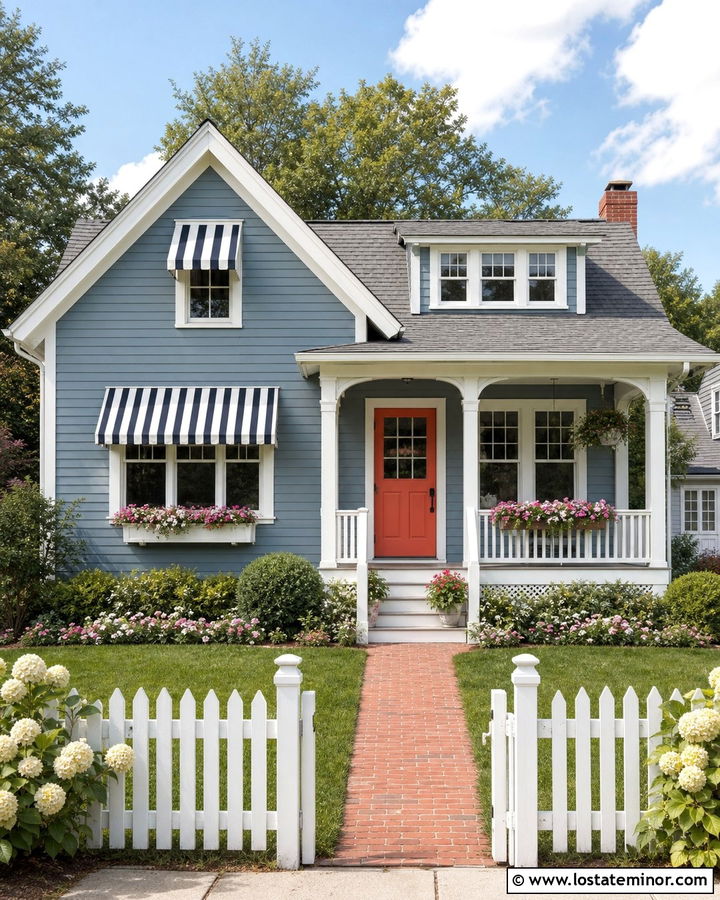
A striped fabric awning can give a dusty blue cottage a cheerful, established character. Select a soft white and muted navy stripe rather than a high-contrast pattern. The restrained colors will support the dusty blue siding while making the front windows more noticeable. Carry soft white onto the trim, porch columns, and decorative gable details. A coral or muted red front door introduces a small dose of warmth without competing with the striped fabric. This combination looks especially comfortable beneath a medium-gray shingle roof. Use matching awnings across windows of the same size and keep their projection consistent. A white picket fence, brick path, flowering shrubs, and neatly edged lawn complete the welcoming cottage exterior while reinforcing its friendly neighborhood appeal.
5. Dusty Blue House With Copper Door Awning
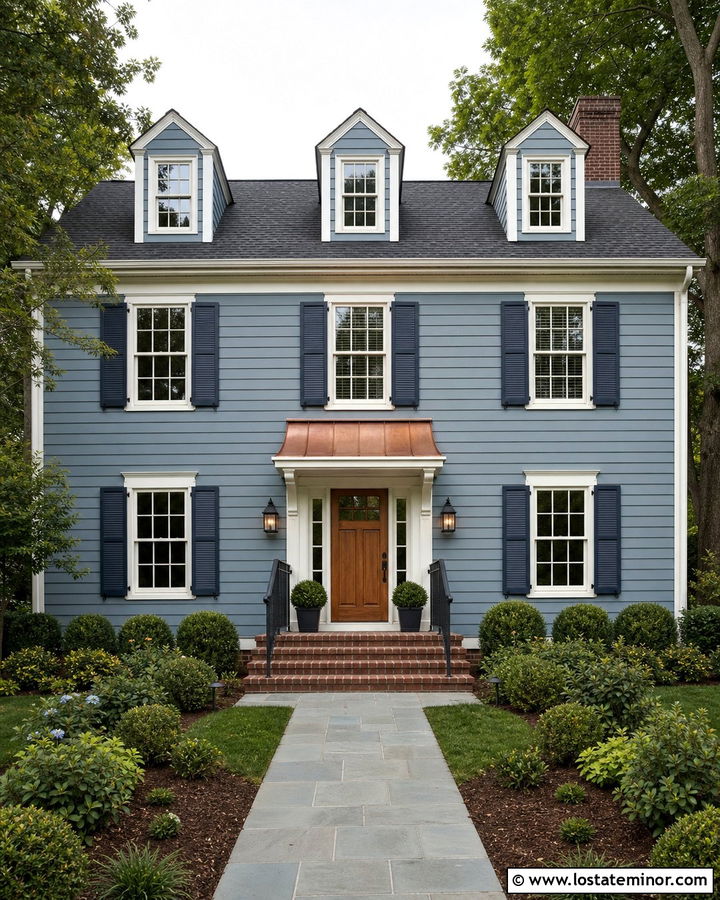
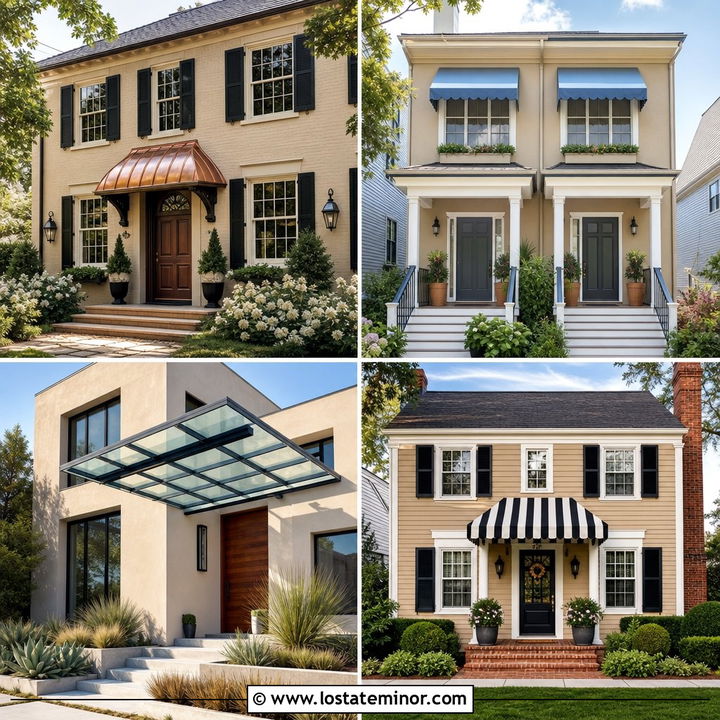
Copper provides rich contrast against a dusty blue facade and develops more visual character as it ages. Place a shallow copper awning above the front door of a traditional colonial home. Its warm metallic surface will stand out against blue clapboard siding, cream trim, and dark navy shutters. Repeat copper selectively through gutters, lanterns, or a small mailbox rather than covering the house with competing metal finishes. A warm wood door can connect the awning to the entry, while red brick steps introduce another earthy material. Keep the roof neutral with charcoal shingles. Symmetrical foundation plants and a straight walkway support the colonial architecture. This polished scheme combines cool color, warm metal, and familiar materials in a balanced way that feels distinctive without becoming overly decorative.
6. Dusty Blue House With Front Porch Awning
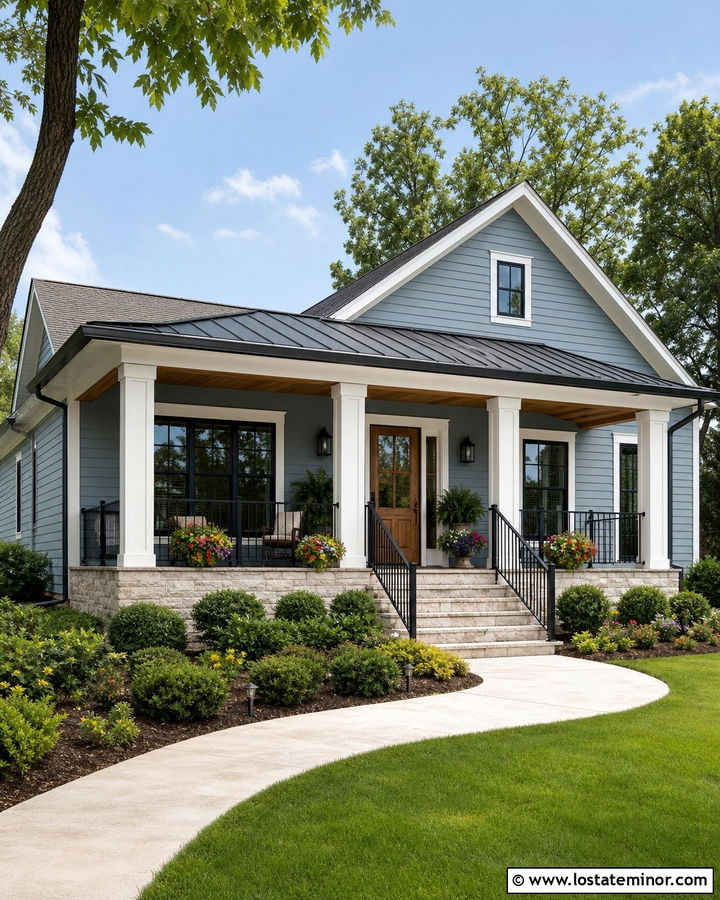
A wide porch awning can visually anchor a one-story dusty blue bungalow. Choose a simple shed-style structure that follows the width of the porch and protects both the door and nearby windows. White-painted posts and fascia keep the awning crisp, while a dark metal roof adds a clear outline against the muted siding. Bring in natural wood through the front door, porch ceiling, or outdoor bench. If the foundation is visible, a low stone veneer can make the house feel more substantial. Keep the steps broad and uncluttered, with black railings that repeat the roof and lighting finishes. Rounded shrubs, grasses, and colorful planters will soften the horizontal architecture. This design turns the entire porch into the focal point rather than treating the awning as an isolated attachment.
7. Dusty Blue House With Garage Door Awning
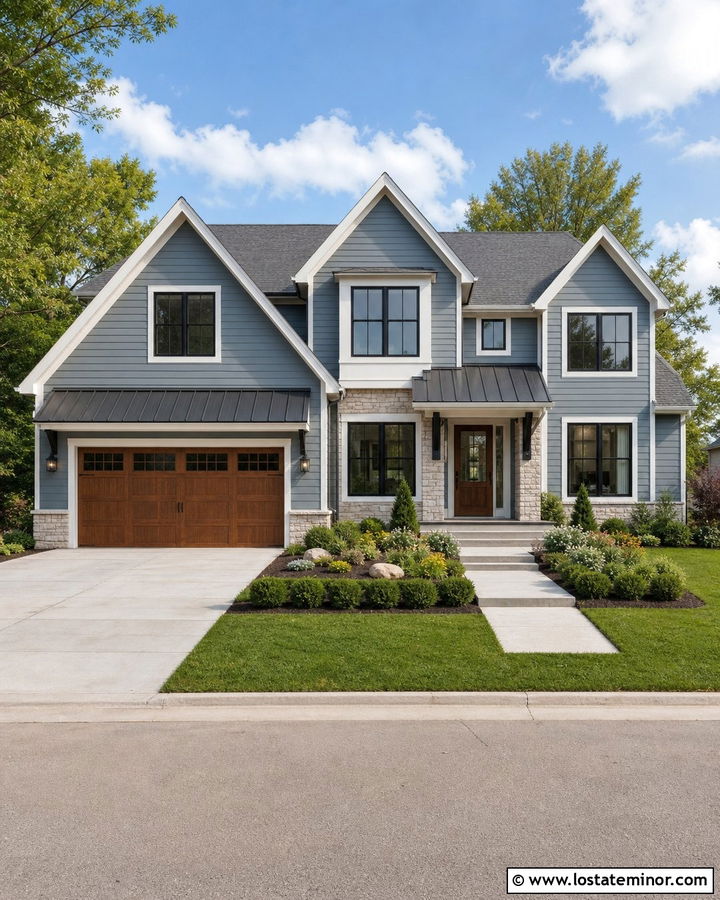
A garage awning can help a large garage door feel more integrated with a dusty blue exterior. On a transitional two-story home, install a dark standing-seam canopy above the garage and coordinate it with a smaller awning over the entry. Repeating the form creates cohesion across the facade, a useful approach when garage elements occupy a prominent position. () Use warm white trim around the windows and doors, then choose a medium-stained wood garage door to balance the cool blue siding. Black brackets, gutters, and exterior lights can connect the metal awnings to the remaining details. Add pale stone around the garage base or entry columns for texture. A clean driveway border, layered shrubs, and a defined walkway complete the coordinated design.
8. Dusty Blue House With Gray Metal Awning
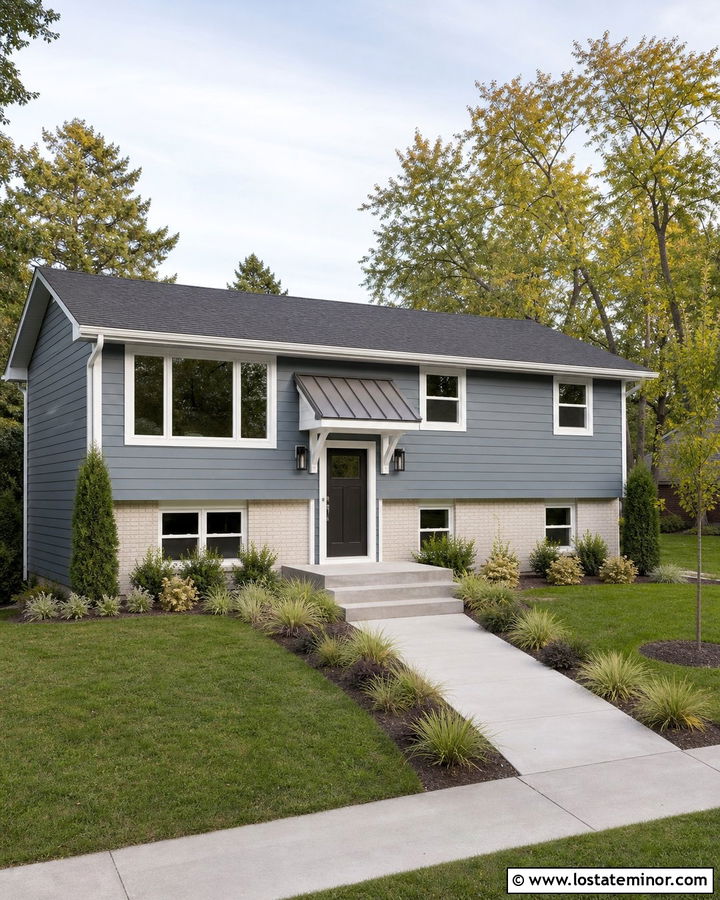
Soft gray metal creates subtle structure without producing the bold contrast of black. This option works well on a dusty blue split-level house where the exterior already has several horizontal lines. Select a medium-gray awning that relates to the roof but remains slightly darker than the siding. Use it above the main entrance to make the door easier to identify from the street. White trim can brighten the windows, while a charcoal front door provides a grounded focal point. If the lower level has brick, limewashed red brick or pale gray masonry will fit the cooler scheme. Keep landscaping low near the entry so it does not hide the awning. A widened concrete path and modern wall lights can further clarify the entrance and update the complete facade.
9. Dusty Blue House With Natural Wood Window Awnings
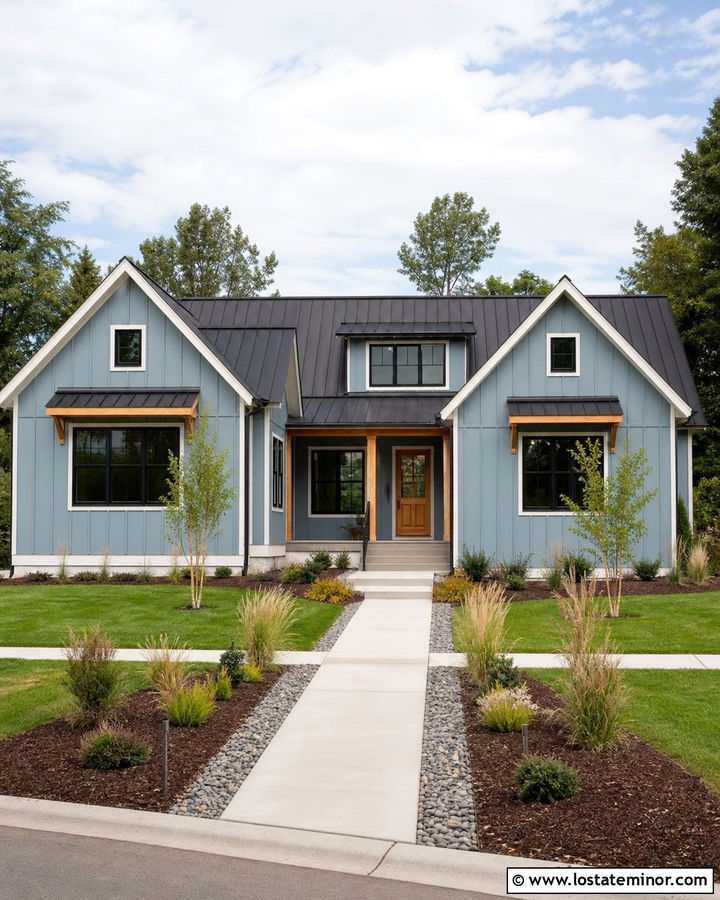
Wood window awnings give a dusty blue modern farmhouse more warmth and dimension. Use simple cedar frames with shallow metal tops above several front-facing windows. The wood should coordinate with porch beams, the front door, and any decorative gable brackets. Keep the remaining trim creamy white for a fresh but comfortable contrast. Black-framed windows and a charcoal standing-seam roof will introduce sharper lines and prevent the farmhouse exterior from appearing overly rustic. Vertical board-and-batten siding can make the dusty blue color feel especially clean. Complete the setting with gravel-edged planting beds, native grasses, and a straight concrete walkway. Repeating the wood carefully across the facade ensures the awnings feel like part of the architecture rather than small decorative pieces placed at random.
10. Dusty Blue House With Scalloped Fabric Awnings
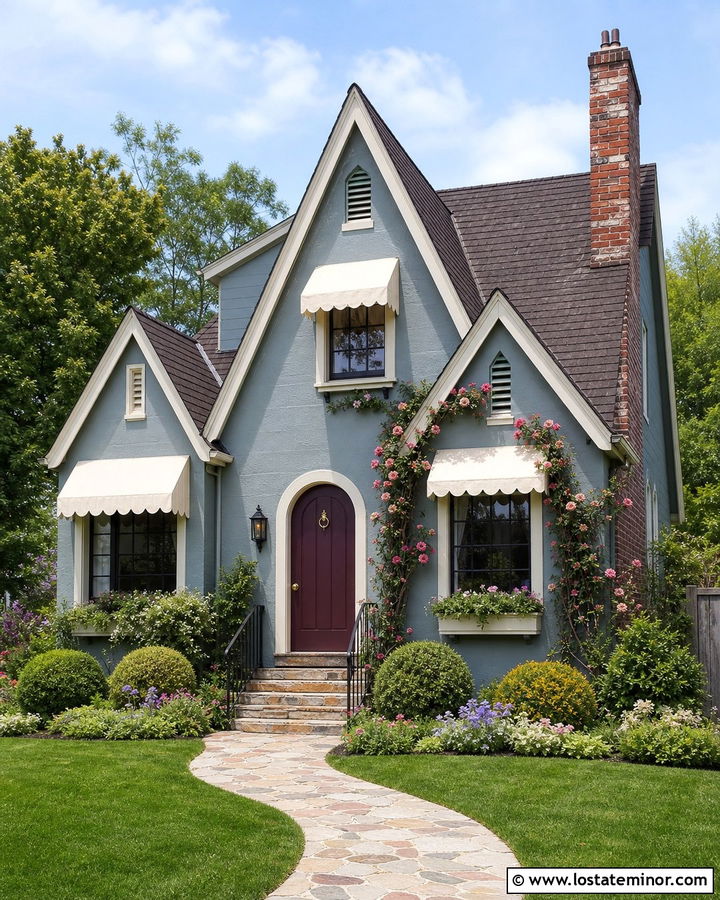
Scalloped awnings introduce softness and vintage charm to a dusty blue cottage or small Tudor-influenced home. Use solid cream fabric rather than a busy print so the curved edges remain the main detail. The cream color can continue on window trim, fascia, and decorative brackets. Paint the front door a deep plum or muted burgundy to create a traditional accent that feels warmer than black. A steep roof with dark brown shingles will support the storybook character, while a brick chimney adds natural texture. Keep the awnings aligned with the tops of the windows for an orderly appearance. Curved garden beds, climbing roses, and a gently winding stone path can echo their rounded shape. Together, these details create a complete facade that feels charming but controlled.
11. Dusty Blue House With Flat Roof Entry Awning
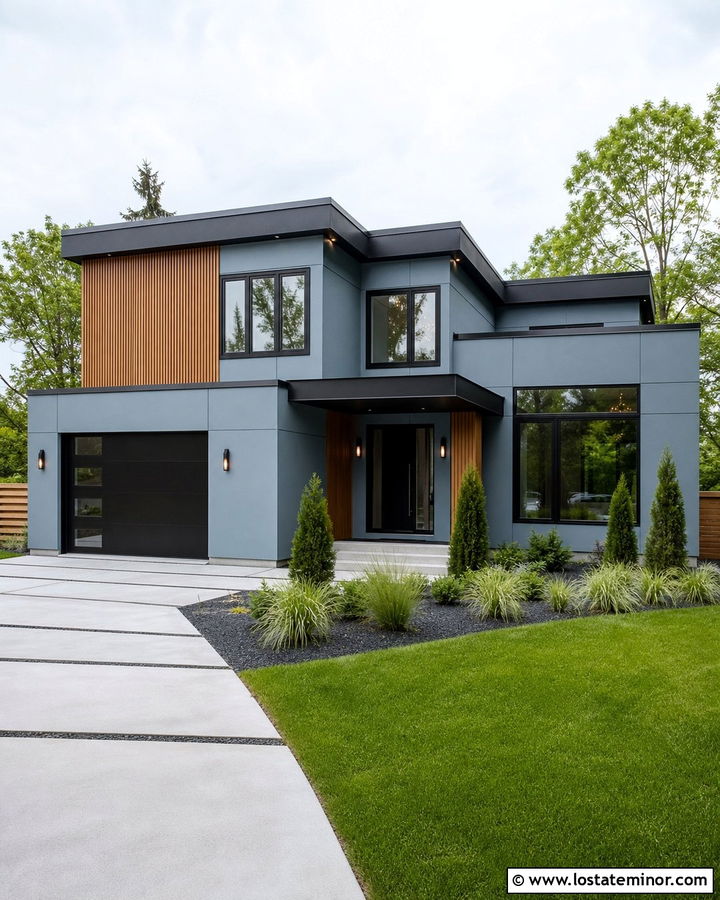
A flat-roof entry awning suits a streamlined dusty blue contemporary home. Choose a thin black canopy that projects over the front landing and aligns with nearby window frames. Its clean shape will create contrast without distracting from the house’s simple geometry. Smooth dusty blue fiber-cement panels can be paired with vertical wood slats around the recessed entry. Continue matte black on the front door, address numbers, and minimalist sconces. A low-slope charcoal roof or parapet keeps the upper facade visually quiet. Use large concrete pavers, dark gravel, sculptural grasses, and a few compact evergreens to frame the house. Because the awning is intentionally minimal, accurate proportion matters. It should be wide enough to define the doorway but not so deep that it resembles a full porch roof.
12. Dusty Blue House With Farmhouse Porch Awning
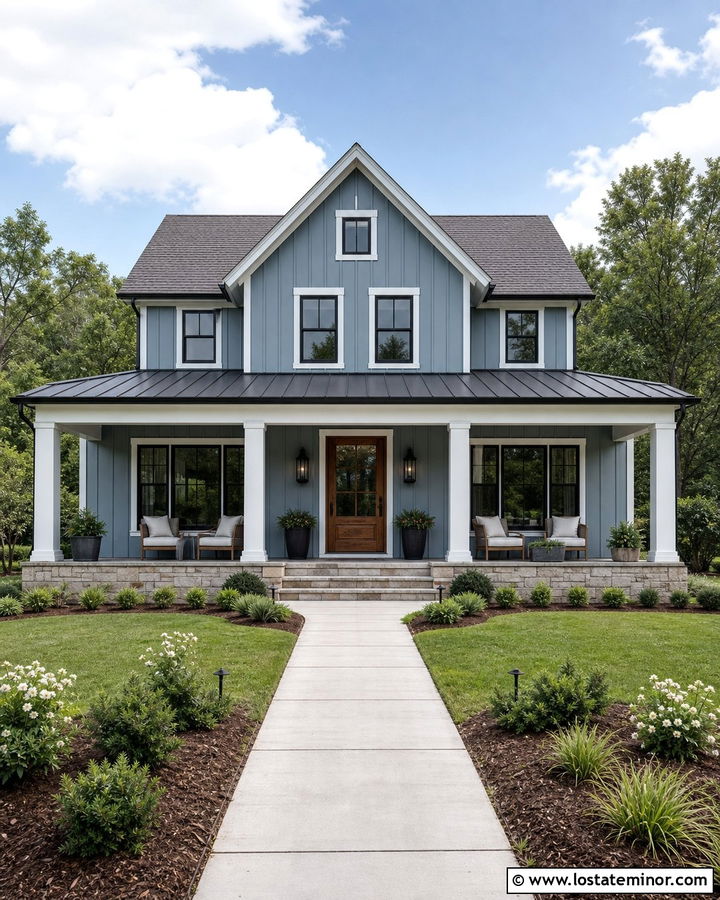
A farmhouse porch awning should feel sturdy, open, and connected to the roofline. Cover the front portion of a dusty blue farmhouse with a standing-seam metal awning supported by white square columns. Use vertical board-and-batten siding to emphasize the home’s height and provide clean shadows across the blue surface. A natural walnut front door introduces warmth, while black window frames, lanterns, and gutters outline the facade. Consider a medium-gray main roof rather than solid black to soften the overall contrast. Pale stone around the porch foundation can prevent the house from looking top-heavy. Finish the setting with a wide walkway, symmetrical planters, simple rocking chairs, and loosely structured landscaping. Every feature supports the awning while keeping the dusty blue exterior clearly visible.
13. Dusty Blue House With Craftsman Bracket Awning
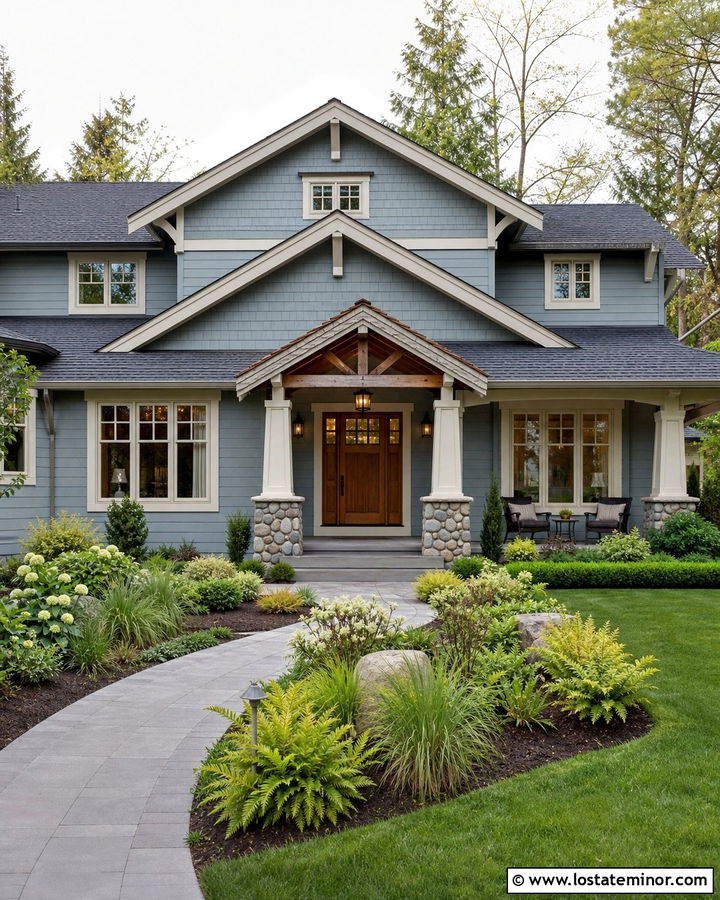
Substantial brackets make a door awning look at home on a craftsman exterior. Paint the house dusty blue and use cream trim around the windows, eaves, and tapered porch columns. Build the entry awning with stained cedar rafters and triangular brackets, then cover it with charcoal shingles that match the main roof. A fir front door with divided glass can continue the warm natural finish. Add river rock or fieldstone around the column bases and lower facade to strengthen the handcrafted character. Dark bronze lights and hardware will feel softer than pure black. Deep planting beds containing ferns, evergreen shrubs, and ornamental grasses can help the house settle into its surroundings. This combination gives the awning structural presence while allowing the muted blue siding to remain calm and inviting.
14. Dusty Blue House With Retractable Patio Awning
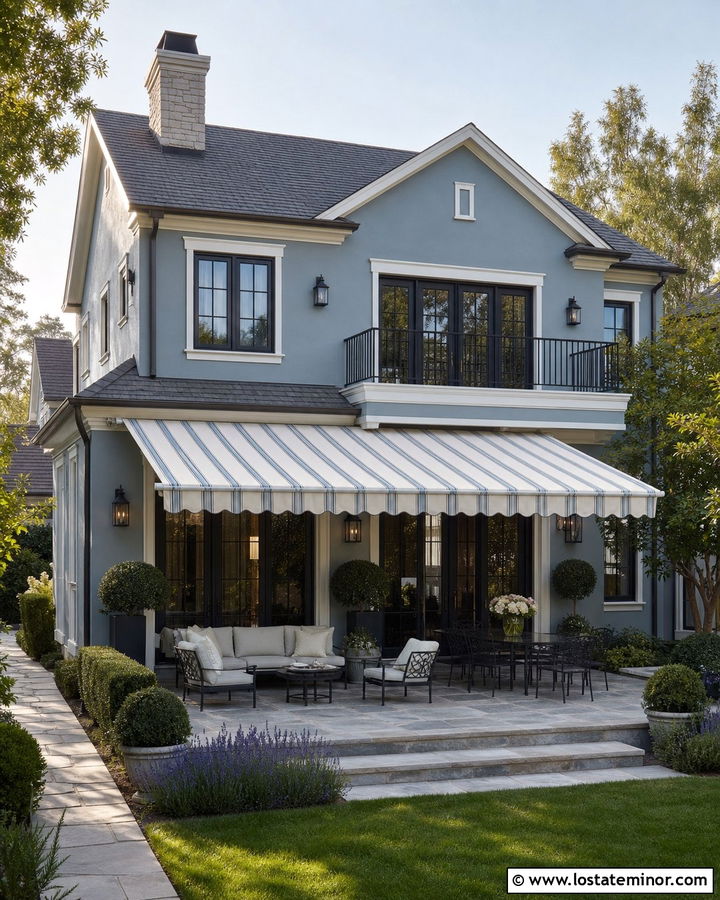
A retractable patio awning can become part of the curb appeal when a side terrace is visible from the street. Choose a dusty blue two-story home with white trim and install a cream retractable awning above a paved patio. A narrow dusty blue stripe in the fabric can connect the cover to the siding without creating an overly matched appearance. Use black-framed French doors beneath the awning and repeat black on the lighting and railings. A warm gray roof and natural stone patio keep the complete palette neutral. Surround the terrace with clipped shrubs, lavender, and small ornamental trees so the fabric feels integrated with the landscape. When extended, the awning should follow the scale of the doors and leave architectural trim visible around the opening.
15. Dusty Blue House With Arched Window Awnings
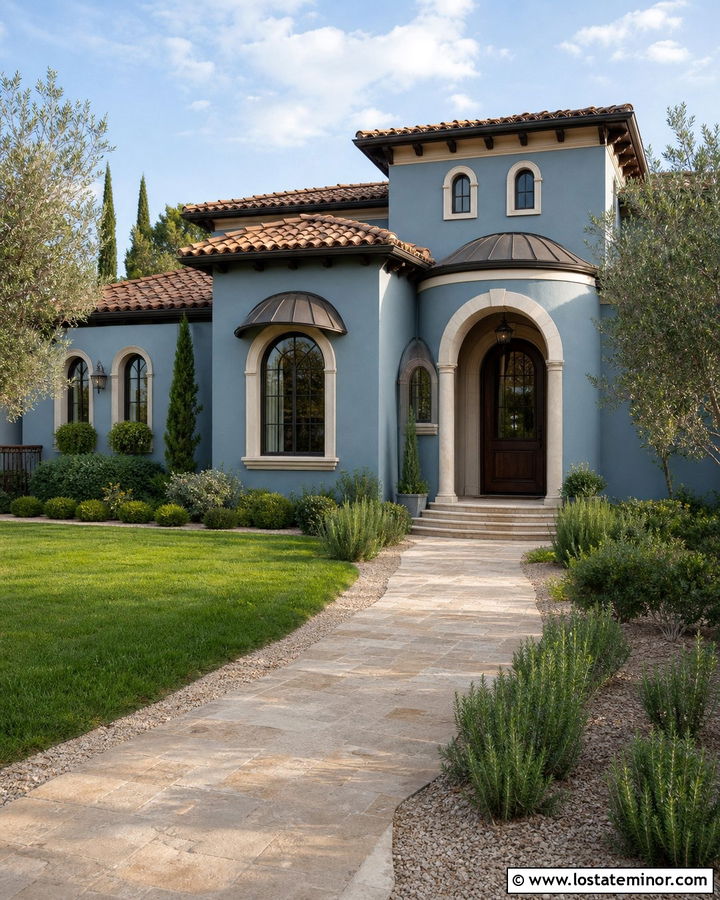
Arched awnings can reinforce the graceful openings on a dusty blue Mediterranean-influenced house. Use curved bronze metal canopies above tall front windows and repeat the shape over the entry. Warm bronze works beautifully with dusty blue stucco because it introduces contrast without looking harsh. Paint the window trim a creamy ivory and select a walnut door with an arched top. A terracotta tile roof brings warmth to the upper facade, while pale limestone around the doorway adds a refined transition between colors. Keep the awnings shallow so they frame rather than conceal the windows. Olive trees, rosemary, gravel beds, and a warm stone walkway complete the composition. The repeated arches create rhythm across the full house and make the awnings feel architecturally intentional.
16. Dusty Blue House With Black Fabric Awnings
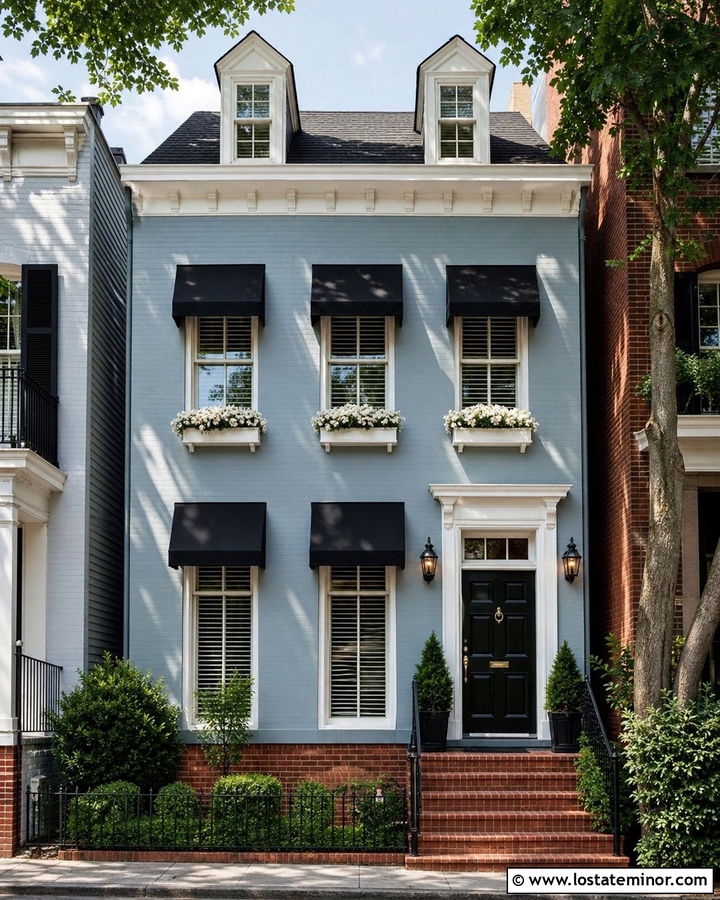
Black fabric awnings give a dusty blue townhouse or narrow urban home a smart, tailored appearance. Choose straight-edged fabric with minimal valances to preserve a clean silhouette. Use the awnings over the main windows and match them to a glossy black front door, iron railings, and traditional lanterns. Warm white trim prevents the scheme from becoming too dark, while red brick steps or a brick foundation introduce familiar texture. A charcoal roof keeps the upper portion of the exterior consistent with the awning color. Window boxes filled with white and pale blue flowers can soften the black accents. Since several awnings may appear on a narrow facade, use identical shapes and mounting heights. This repetition creates order and makes the dusty blue siding appear more polished.
17. Dusty Blue House With Cream Door Awning
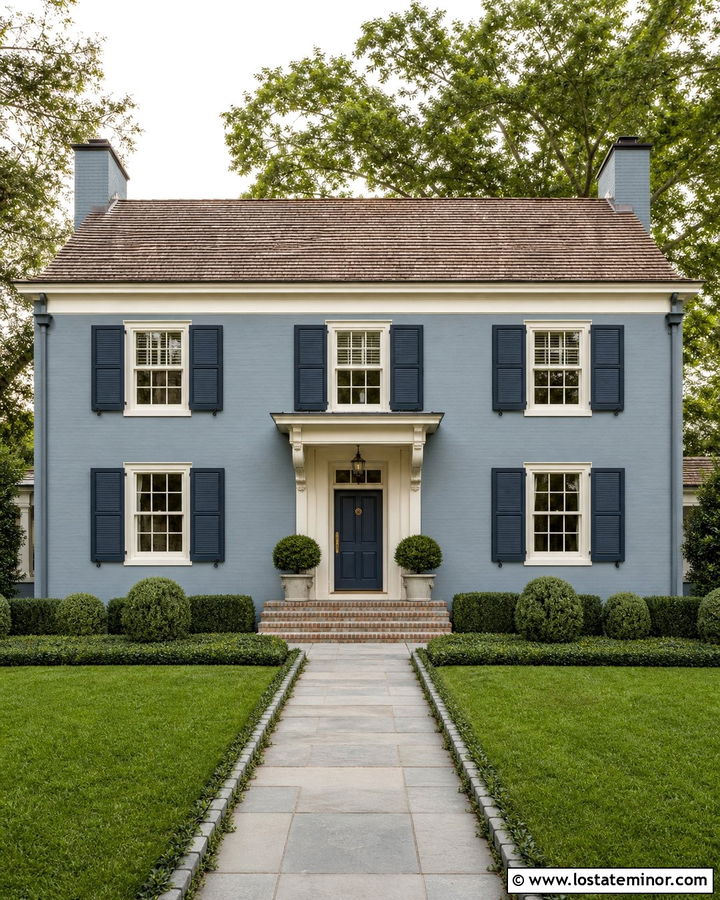
A cream awning offers gentle contrast for homeowners who want a softer alternative to bright white. On a dusty blue Georgian-inspired house, use a cream-painted canopy above a centered paneled door. Support it with simple brackets that match the window casings and corner trim. Deep blue shutters can add definition while maintaining a layered monochromatic palette. Choose a medium-brown shingle roof to bring subtle warmth to the exterior. Brick steps, aged brass hardware, and a stained wood threshold can further soften the cool siding. Keep the landscaping formal but not rigid, using paired planters, rounded hedges, and a straight walkway. The cream awning naturally draws attention to the entrance while complementing the home’s symmetrical architecture and understated dusty blue color.
18. Dusty Blue House With Standing Seam Awning
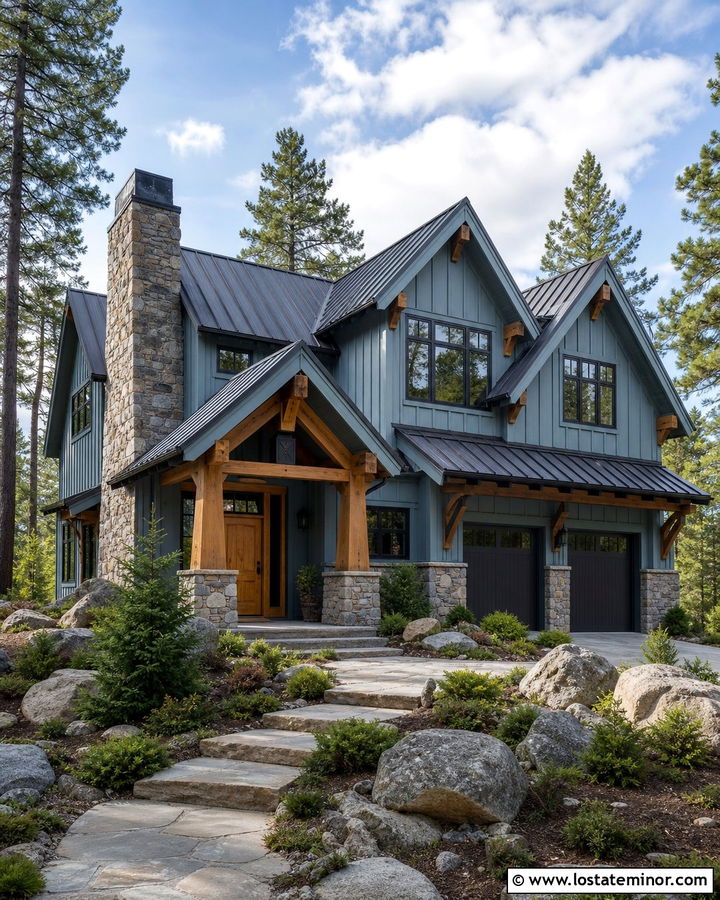
Standing-seam awnings bring crisp texture to a dusty blue exterior. This combination is especially effective on a mountain contemporary home with mixed siding, large windows, and a steep roof. Use charcoal metal above the front door and garage, matching the awnings to the main roof. Apply dusty blue vertical siding across the primary walls, then add natural stone and dark-stained timber around the lower level. Black window frames help unite the metal elements, while a warm wood door keeps the entrance approachable. Avoid adding too many small accent colors because the siding, stone, wood, and metal already provide variety. Evergreen landscaping, boulders, and a broad flagstone path will ground the house. The finished scheme feels rugged, coordinated, and suitable for a wooded setting.
19. Dusty Blue House With Shingle Roof Awning
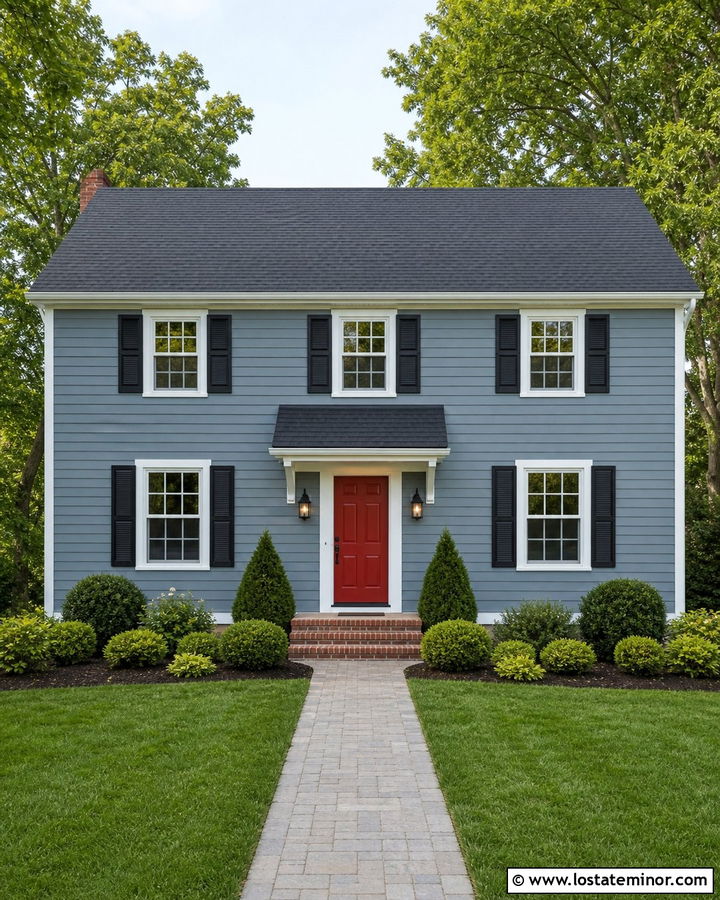
A small shingle-roof awning looks natural on a dusty blue suburban colonial or cottage. Match its shingles exactly to the main charcoal roof so the addition appears original to the architecture. White trim around the awning fascia, windows, and corners will clearly outline the blue clapboard siding. Use black shutters for contrast and select a warm red front door to establish a recognizable entry point. Brick steps can repeat the door’s warmth and connect the home to a traditional landscape. Keep the awning pitch similar to nearby gables rather than introducing an unrelated angle. Symmetrical sconces, foundation shrubs, and a straight paver walkway will support the organized facade. This familiar material combination offers a practical way to add shelter without making the exterior feel noticeably altered.
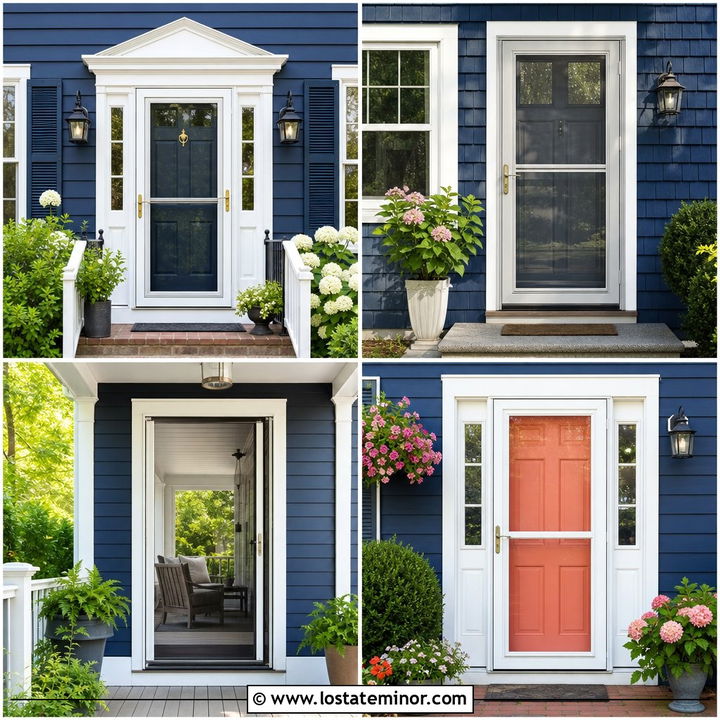
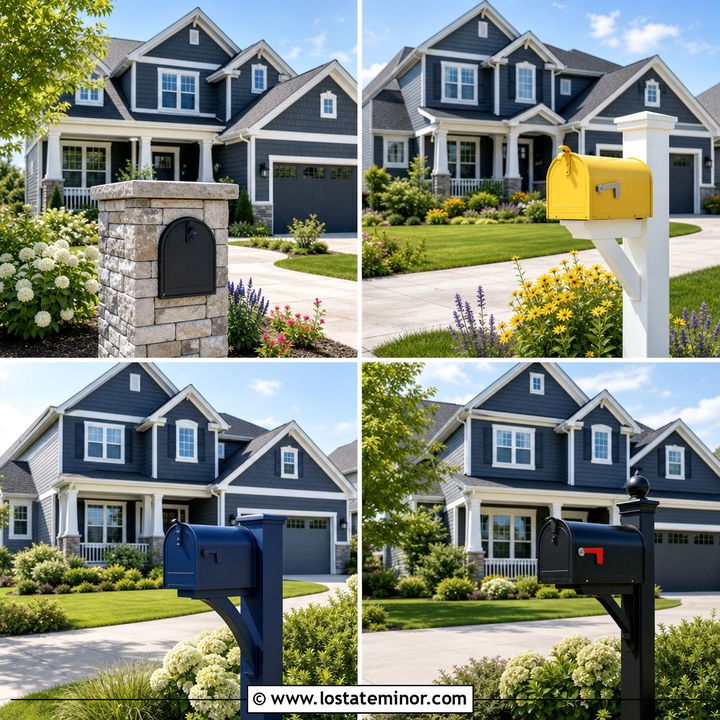
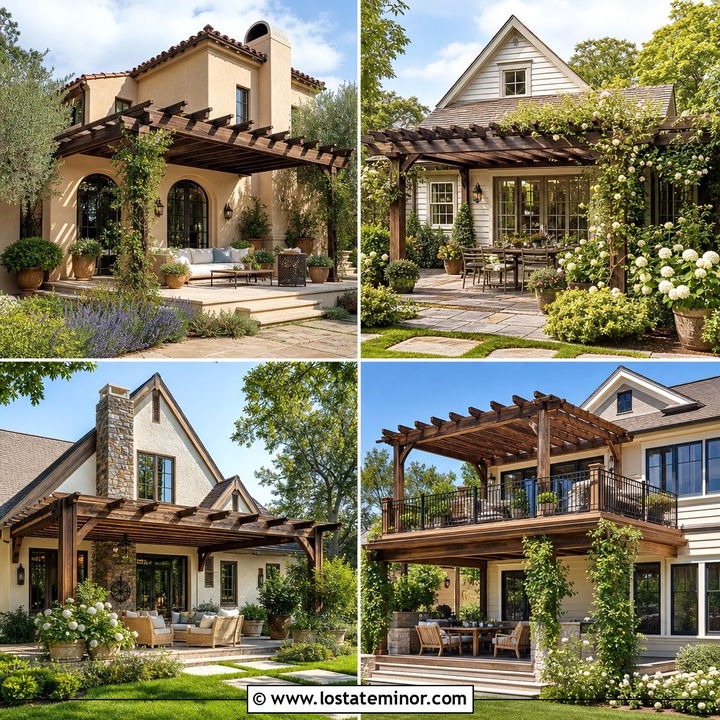
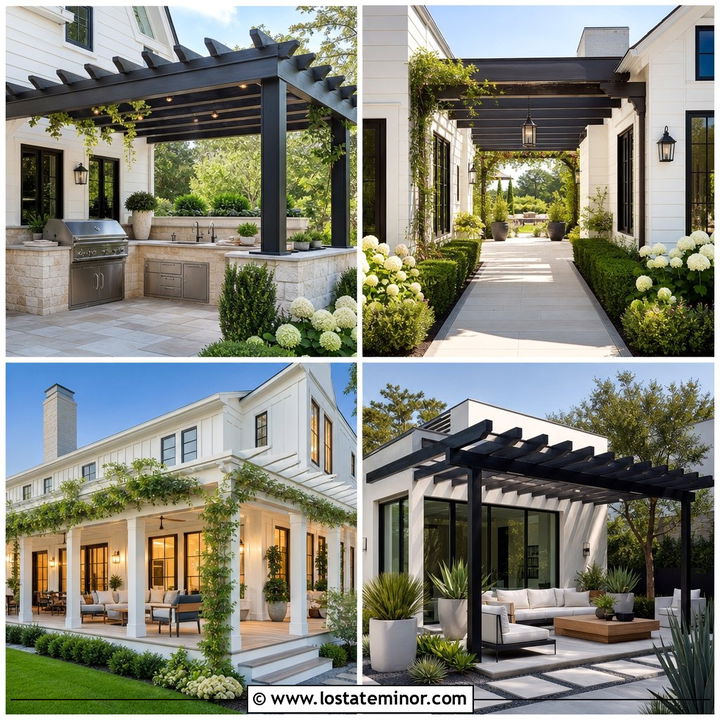
20. Dusty Blue House With Midcentury Entry Awning
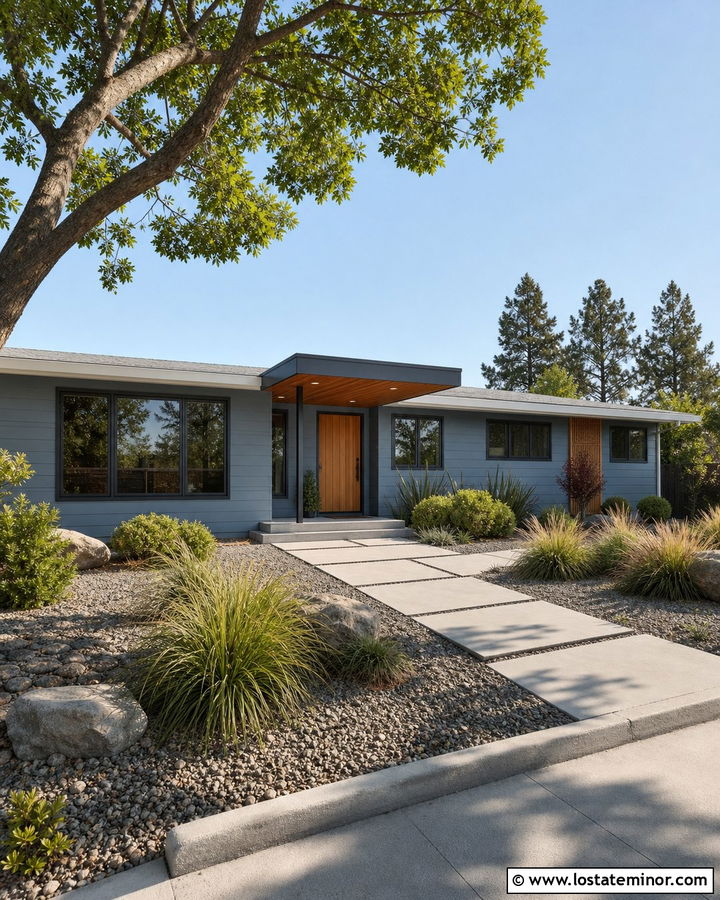
Picture a low dusty blue ranch with a long roofline and a sheltered entrance. A thin wood-and-metal awning can emphasize the home’s midcentury character without turning it into a themed renovation. Use warm cedar slats beneath a flat charcoal canopy and repeat the wood on the front door or privacy screen. Paint the trim a soft off-white, then choose dark bronze window frames and garage hardware. A light gray roof allows the awning to remain visible without making the house feel heavy. Create a wide path using rectangular concrete slabs surrounded by gravel. Low ornamental grasses, sculptural shrubs, and a small specimen tree will complement the horizontal architecture. The warm wood and cool dusty blue form a balanced, welcoming full-house palette.
21. Dusty Blue House With Shed Roof Awning
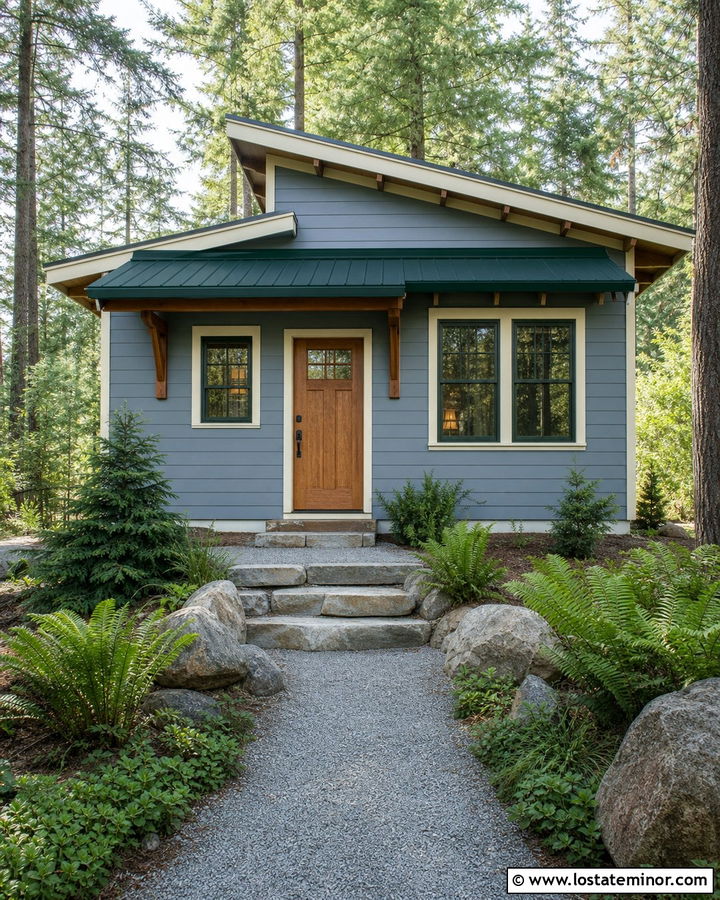
A shed-roof awning is simple enough to work across many house types, including a compact dusty blue cabin. Extend the awning across the front door and one adjacent window to form a useful sheltered zone. A dark green metal roof can create a nature-inspired alternative to standard charcoal, especially in a wooded setting. Pair it with cream window trim and a natural cedar door. Use horizontal wood siding or durable fiber-cement boards to preserve the cabin’s straightforward character. Stone steps and a gravel walkway will connect the house to the landscape. Add ferns, evergreen ground cover, and native shrubs rather than formal hedges. The dark green awning, warm wood, and muted blue walls create a layered exterior that feels comfortable among mature trees.
22. Dusty Blue House With Victorian Window Awnings
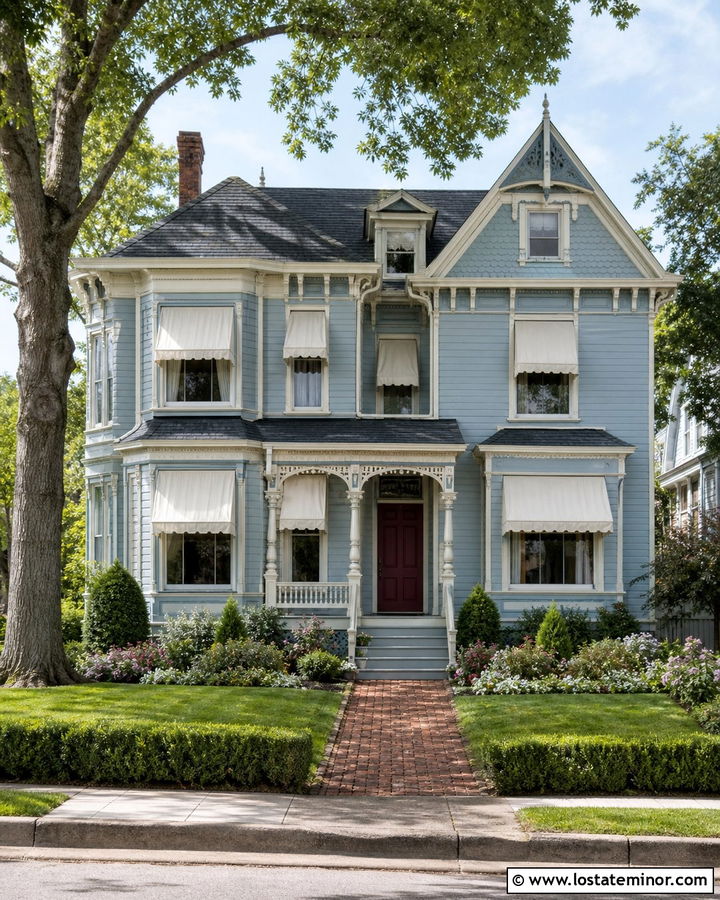
Decorative window awnings can complement the detailed facade of a dusty blue Victorian home. Choose narrow cream fabric awnings with straight valances so they do not compete with ornate brackets, fish-scale shingles, or carved trim. Use dusty blue as the main body color and add deeper blue to selected gables for dimension. Cream can cover the remaining trim, while muted burgundy works well on the front door and small ornamental details. A dark gray roof provides a steady background for the more complex color placement. Keep each awning consistent in fabric and shape, even when the windows vary in size. A brick walkway, clipped hedges, and traditional flower beds will complete the historic appearance while keeping the elaborate house exterior organized.
23. Dusty Blue House With Rustic Timber Awning
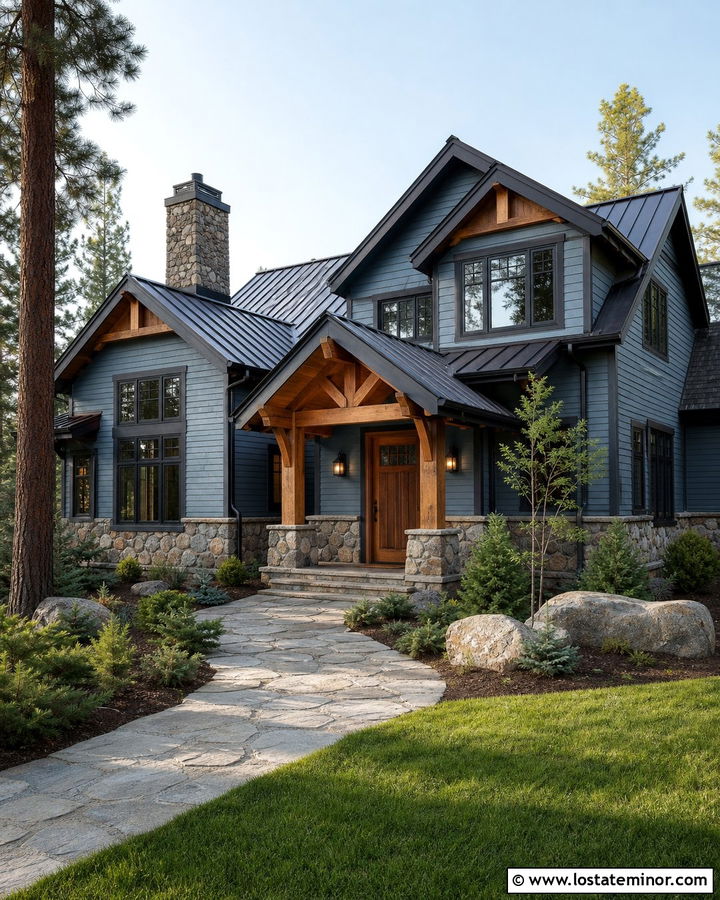
Thick timber beams can make a dusty blue lodge exterior feel warm and substantial. Build the entry awning with rough-sawn cedar posts and exposed rafters, topped by a dark metal roof. Continue the timber around the porch and in selected gable details. Dusty blue siding keeps the structure from becoming visually too brown, while charcoal trim adds a contemporary outline. Use irregular fieldstone across the foundation and chimney to connect the house with the surrounding landscape. A heavy wood front door and bronze sconces will suit the awning’s scale. Finish the curb view with a broad stone path, evergreen shrubs, and natural boulders. The full design balances the softness of dusty blue with rugged materials that give the facade depth and a strong sense of shelter.
24. Dusty Blue House With Coastal Door Awning
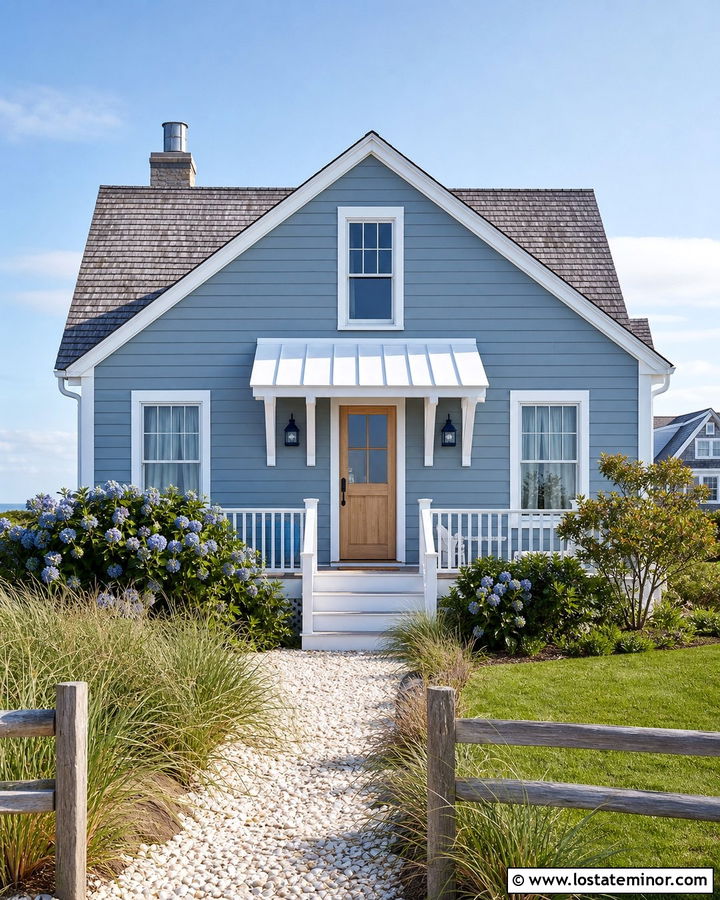
A coastal door awning should look light, crisp, and resistant to visual clutter. On a dusty blue beach cottage, use a white metal canopy supported by simple white brackets. Match it to the window trim, porch railing, and fascia for a clean frame around the blue siding. A pale natural wood door can bring warmth without disrupting the breezy palette. Choose a weathered gray roof and use dark navy only for small accents such as house numbers or planters. Horizontal siding will reinforce the relaxed architecture. Complete the yard with a shell or gravel path, beach grasses, hydrangeas, and a low wood fence. The awning adds clear entrance definition while allowing the dusty blue exterior, bright trim, and informal planting to create the main coastal impression.
25. Dusty Blue House With Red Door Awning
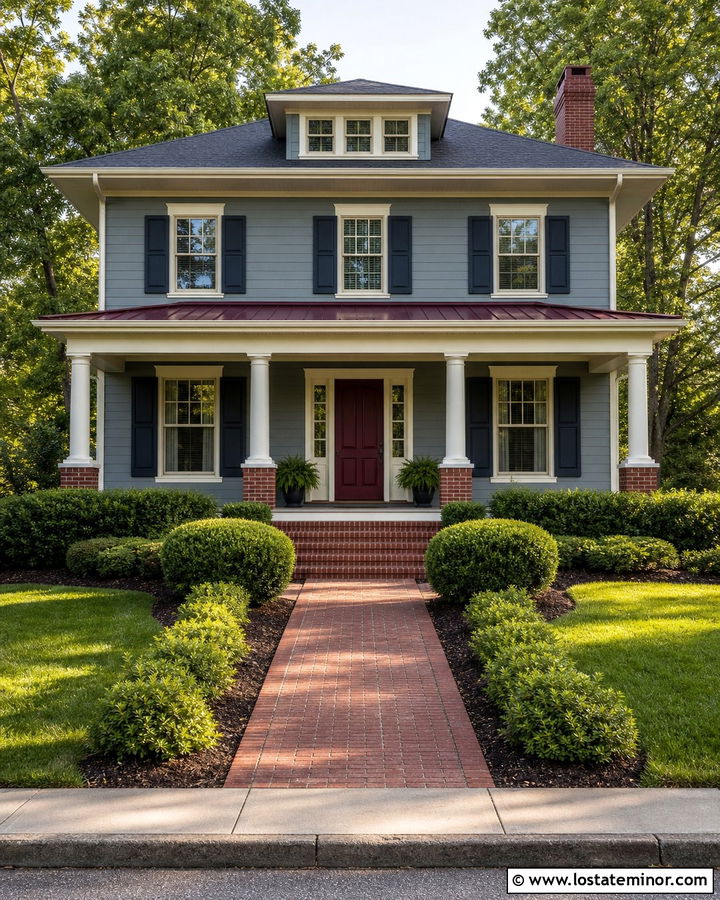
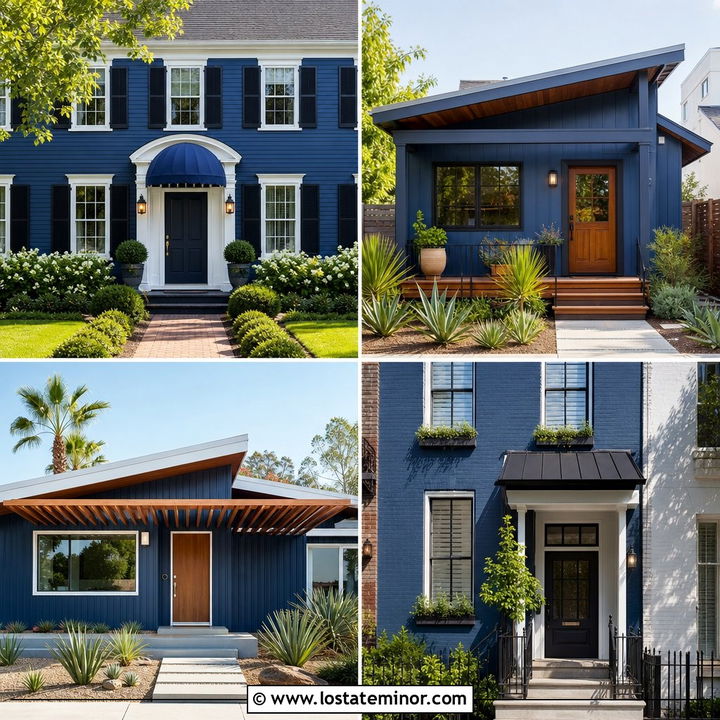
A red awning can be surprisingly attractive against dusty blue when the red is deep and muted. Use a burgundy metal canopy above the entrance of a traditional American foursquare. Repeat the color on the paneled front door so the awning and entry read as one feature. Cream trim, dark blue shutters, and a charcoal roof will keep the remaining exterior balanced. If the home has brick porch piers, leave them unpainted to connect the red accent with an existing material. Broad white columns can brighten the shaded porch without overpowering the siding. Add a straight brick path, formal shrubs, and simple porch furniture. By limiting burgundy to the doorway zone, the complete scheme feels intentional and welcoming rather than busy or overly colorful.
26. Dusty Blue House With Bronze Window Awnings
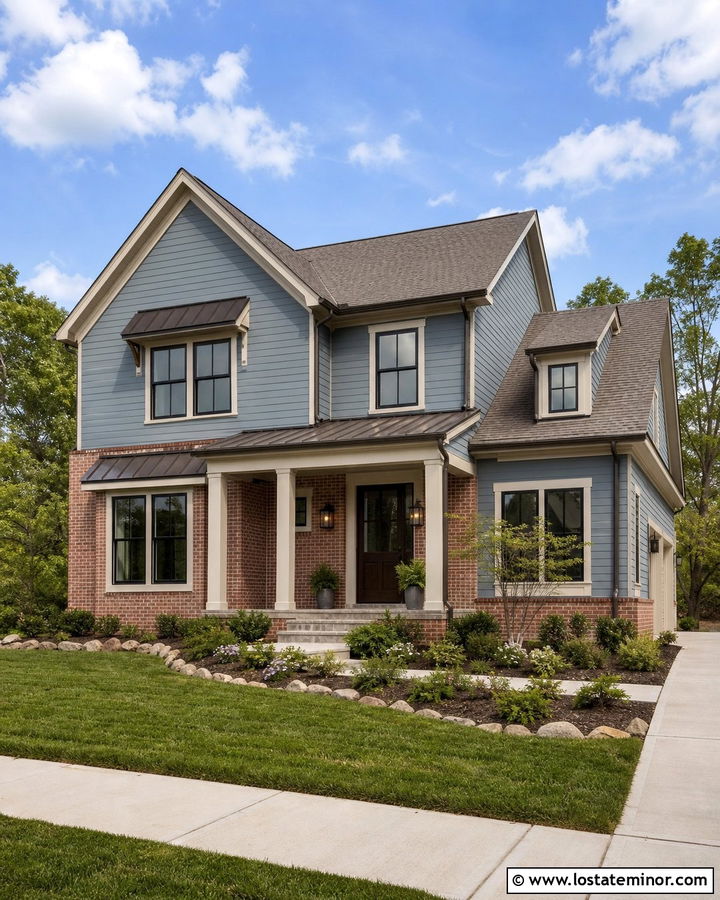
Bronze window awnings create a refined middle ground between black and brown. They work well on a dusty blue brick-and-siding home where warm masonry is already present. Install slim bronze canopies above the primary windows and repeat the metal on gutters, lanterns, and door hardware. Paint the siding dusty blue while leaving warm tan or red brick unpainted. Cream trim can tie both materials together and soften their contrast. Choose a deep brown front door and a roof containing brown-gray tones. Use stone edging, green shrubs, and a warm concrete walkway to complete the curb view. Bronze appears especially cohesive when repeated selectively. Too many metallic details could distract from the dusty blue walls and the natural variation within the brick.
27. Dusty Blue House With Corner Wrap Awning
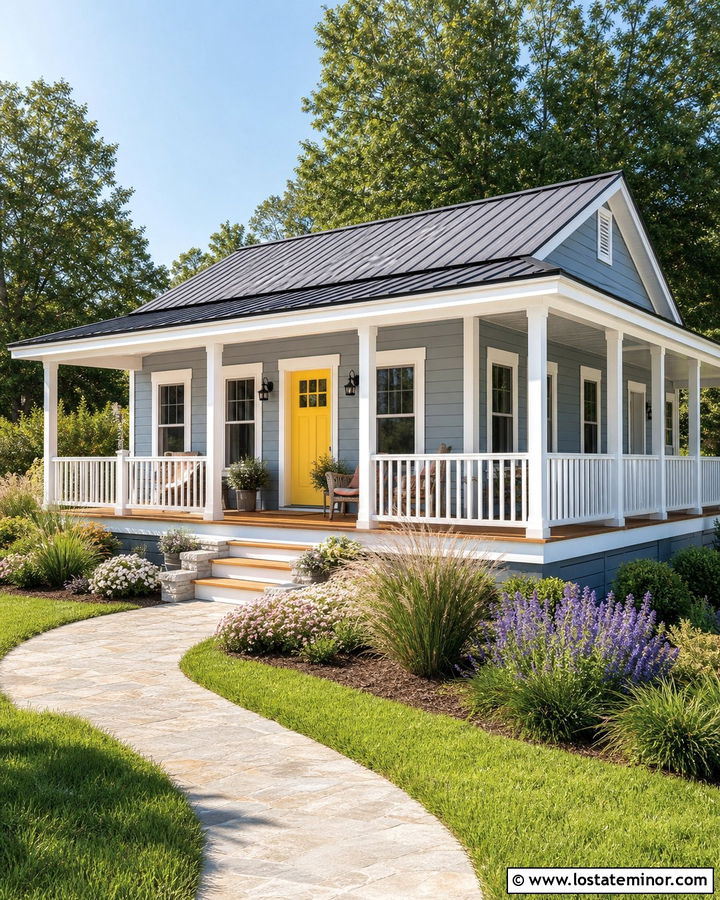
A corner wrap awning can define an outdoor sitting area on a dusty blue cottage or small ranch. Extend a white-painted canopy around the front and side corner, keeping its roofline low enough to preserve the home’s windows. White posts and railings create a clear frame against the muted blue siding. Use a charcoal metal roof for contrast and repeat it on gutters and exterior lights. A sunny yellow front door can add a modest, cheerful accent beneath the shaded structure. Warm wood decking and pale stone steps prevent the palette from feeling too cool. Wrap the porch with low shrubs, flowering perennials, and ornamental grasses. This complete treatment makes the awning part of the house’s overall massing while creating a comfortable transition between the interior and yard.
28. Dusty Blue House With Awning Over Bay Window
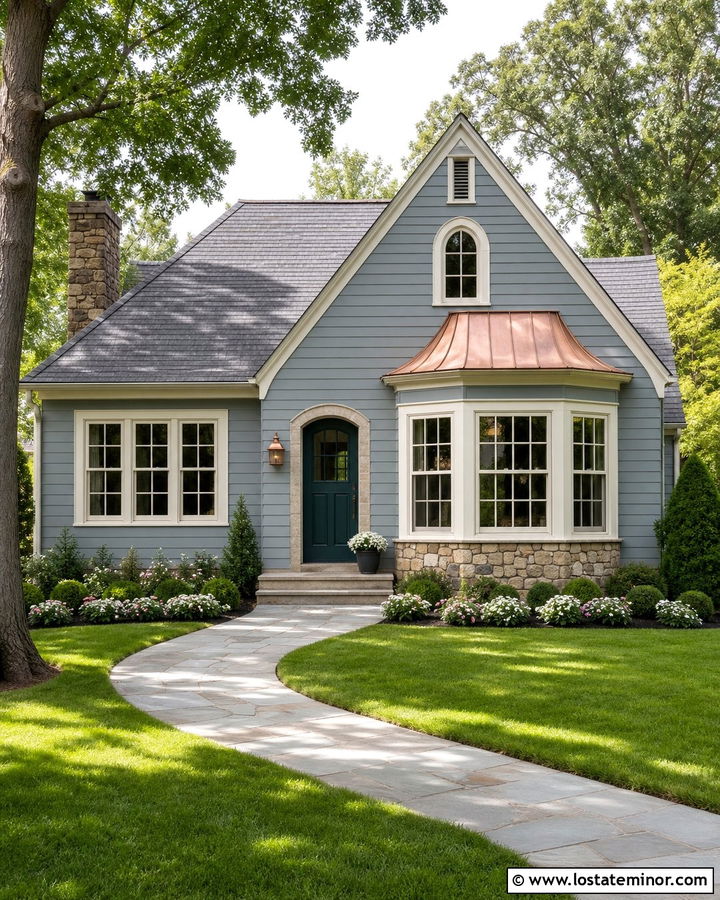
An awning above a bay window can turn an existing projection into the visual center of a dusty blue facade. On a traditional cottage, use a shallow copper canopy that follows the shape of the bay. Repeat copper on a small entry roof or porch light to prevent the window feature from feeling isolated. Cream trim will highlight the bay’s individual panes, while a dark teal front door adds depth without leaving the blue color family. Use a medium-gray roof and warm stone around the foundation for balance. Plant low flowers beneath the bay so the window remains fully visible. A curved walkway can gently lead the eye toward the entrance. The coordinated materials give the entire house a more finished and thoughtfully layered appearance.
29. Dusty Blue House With Awning And Stone Porch
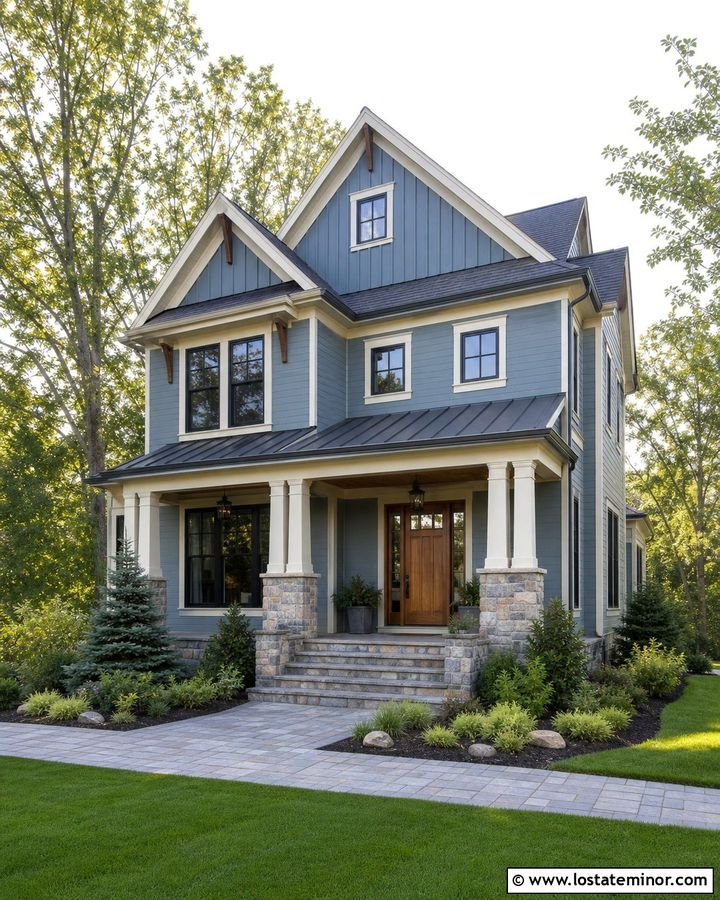
Stone can visually support an awning and make a dusty blue house feel firmly grounded. On a large craftsman-inspired home, install a charcoal metal porch awning over columns with pale fieldstone bases. Use dusty blue lap siding on the main walls and deeper blue board-and-batten inside the gables. Cream trim will separate the two blue treatments and highlight the roofline. Add a stained oak front door and matching porch ceiling to warm the sheltered area. Black-framed windows can connect with the awning without dominating the facade. Wide stone steps, a paver walkway, and layered evergreen planting will complete the approach. The stone, wood, blue siding, and dark canopy work as one balanced palette rather than a collection of unrelated upgrades.
30. Dusty Blue House With Awning And Matching Shutters
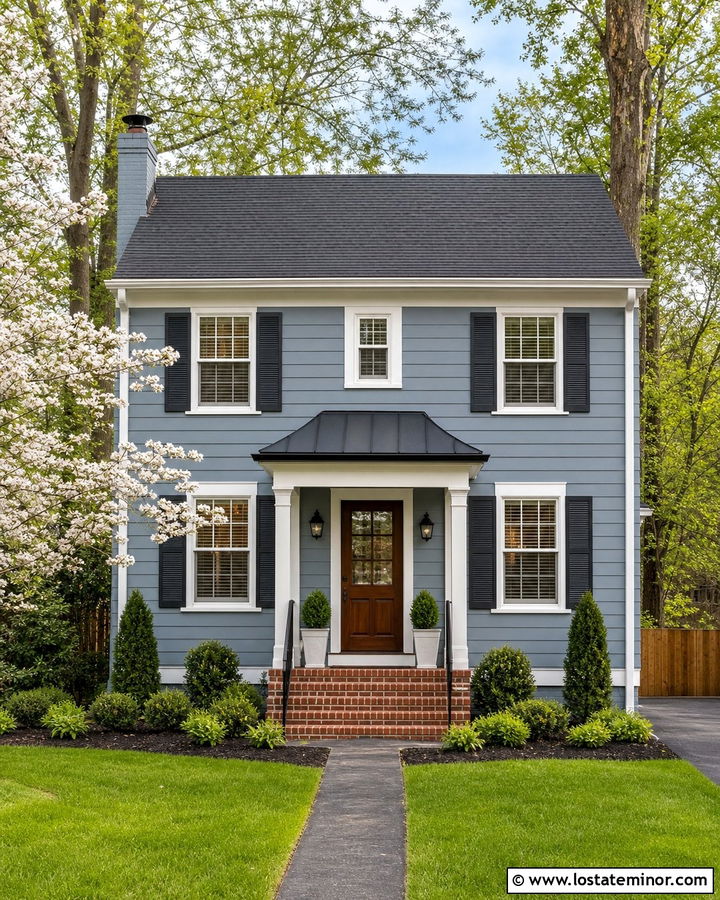
Matching the awning and shutters creates a clear accent color that can organize a dusty blue exterior. Choose deep charcoal for both features on a compact two-story home with simple lap siding. Use a small charcoal awning above the front door and properly scaled shutters on the street-facing windows. Warm white trim will keep the darker accents crisp, while a medium-brown wood door brings warmth to the entrance. Select a charcoal-gray roof with enough variation to avoid a flat, overly dark appearance. Brick porch steps and a narrow walkway can add traditional texture. Finish with balanced foundation shrubs, one small flowering tree, and understated black lighting. This coordinated scheme makes the dusty blue body color appear intentional while giving every side of the facade a consistent visual structure.
Conclusion:
The best 30 Dusty Blue House Design With Awning Ideas treat the awning as part of a complete exterior rather than a separate accessory. Dusty blue siding can work with black metal, warm cedar, aged copper, cream fabric, bronze, or matching shingles. The strongest choice depends on the home’s roof, architectural character, trim, masonry, and existing materials. Before selecting a design, compare awning samples and paint colors directly against the house in changing daylight. Check proportions carefully and confirm installation requirements with qualified local professionals. Finally, repeat the awning color or material in a few nearby details. Coordinated doors, lights, gutters, shutters, and landscaping will help the entire property feel balanced, welcoming, and thoughtfully finished.

Related posts: