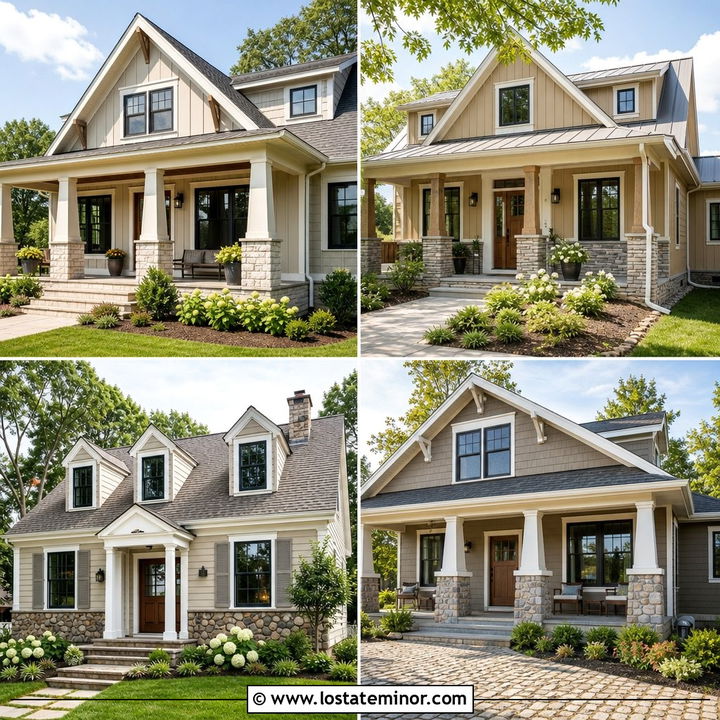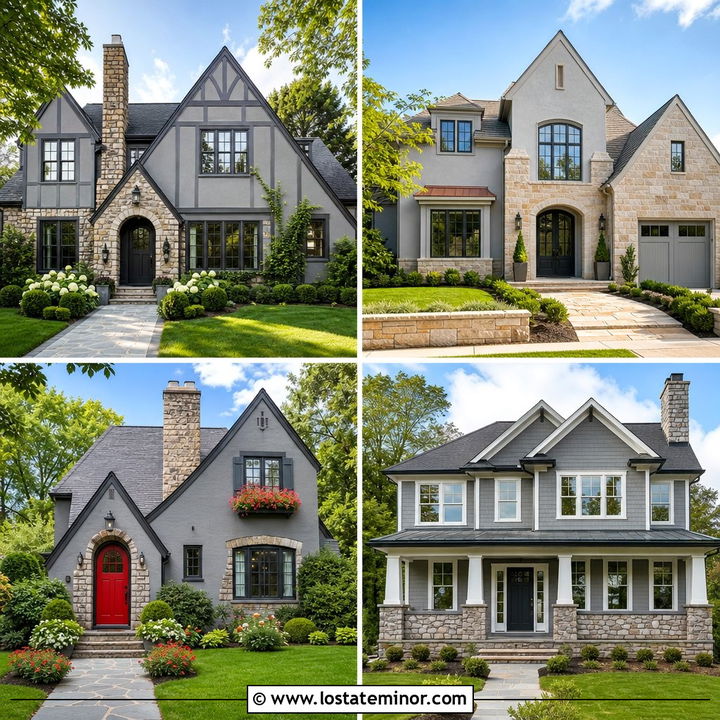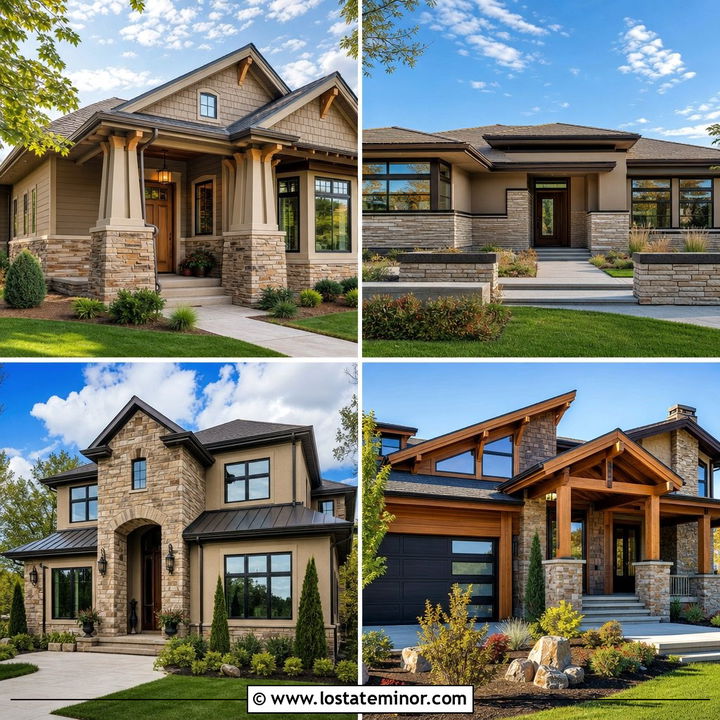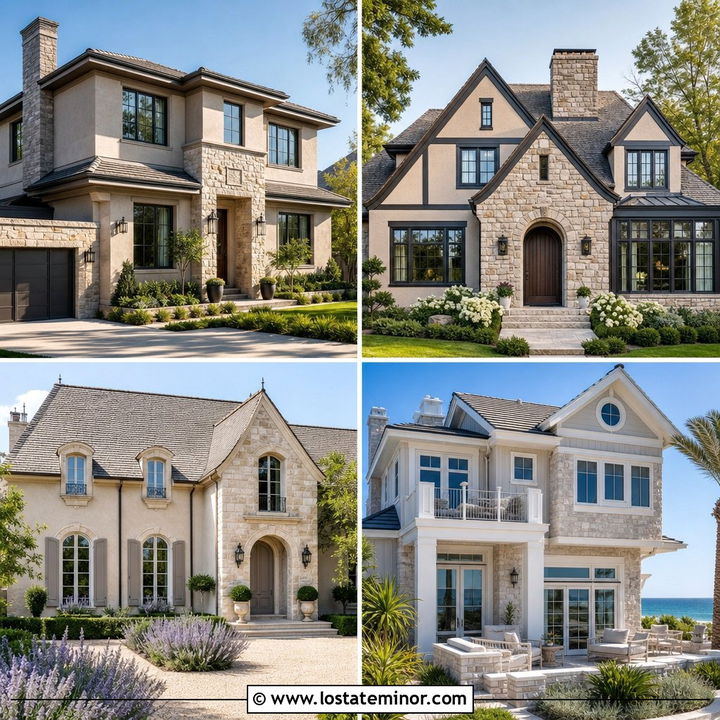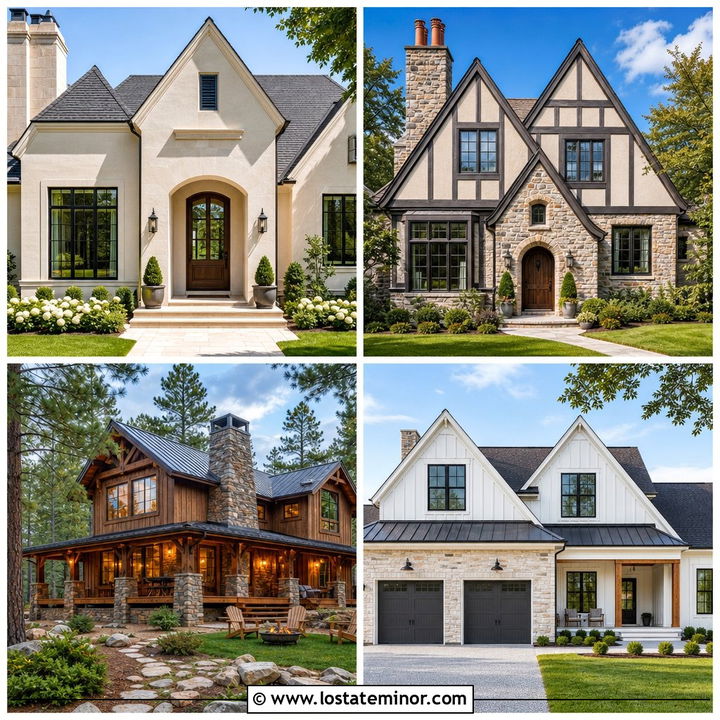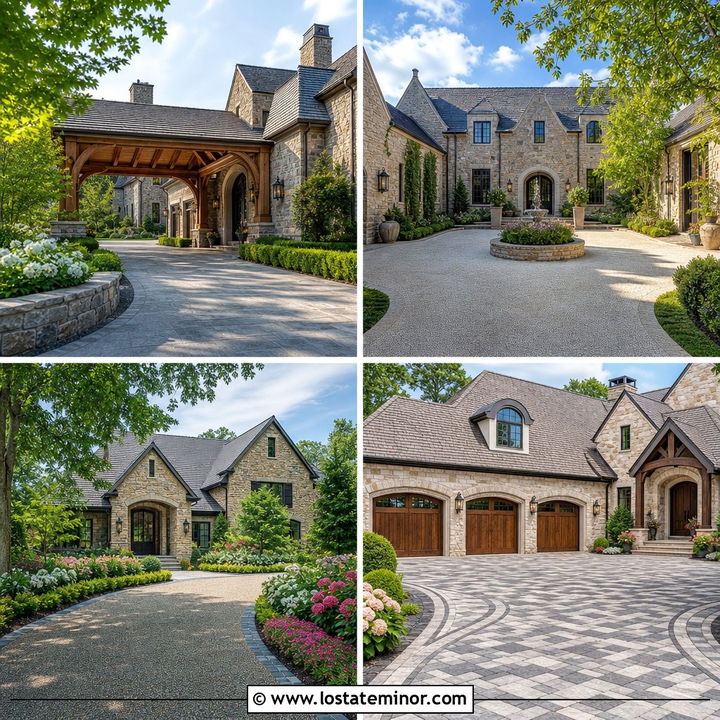
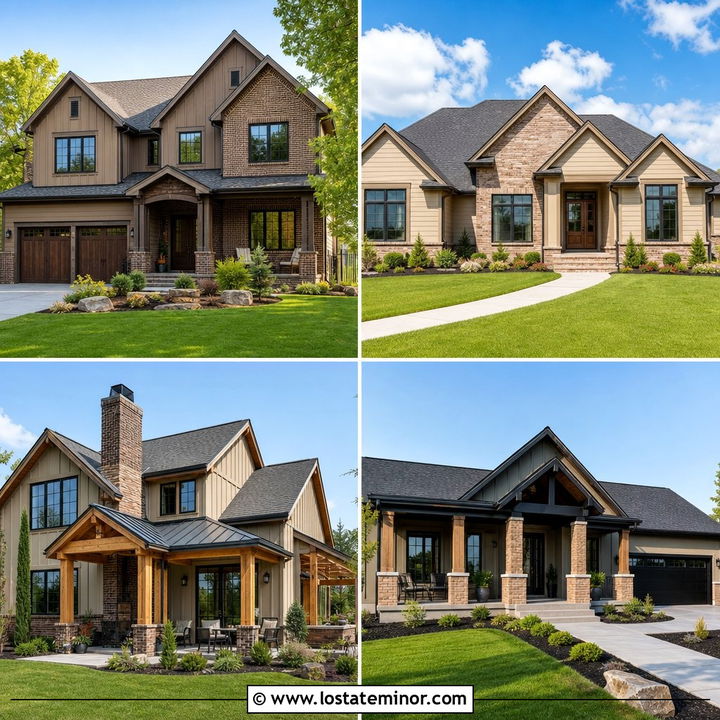
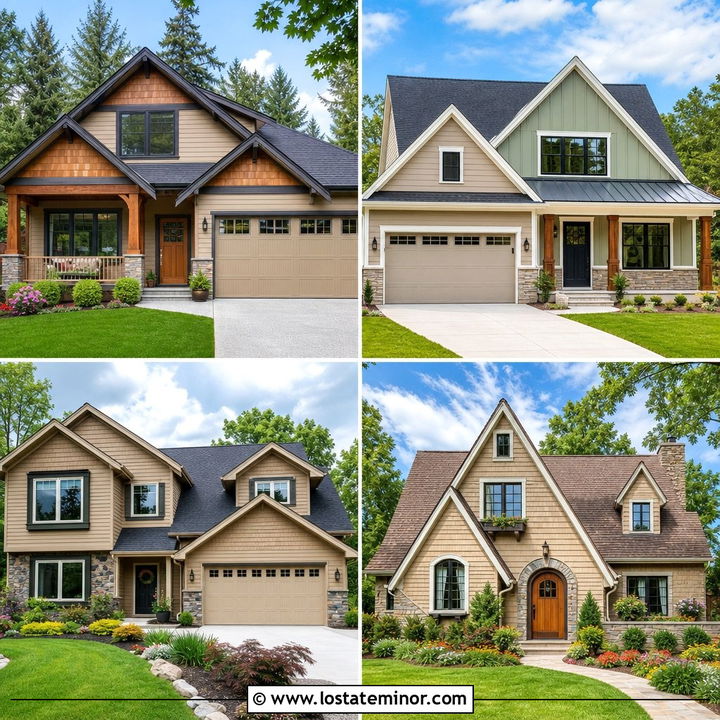
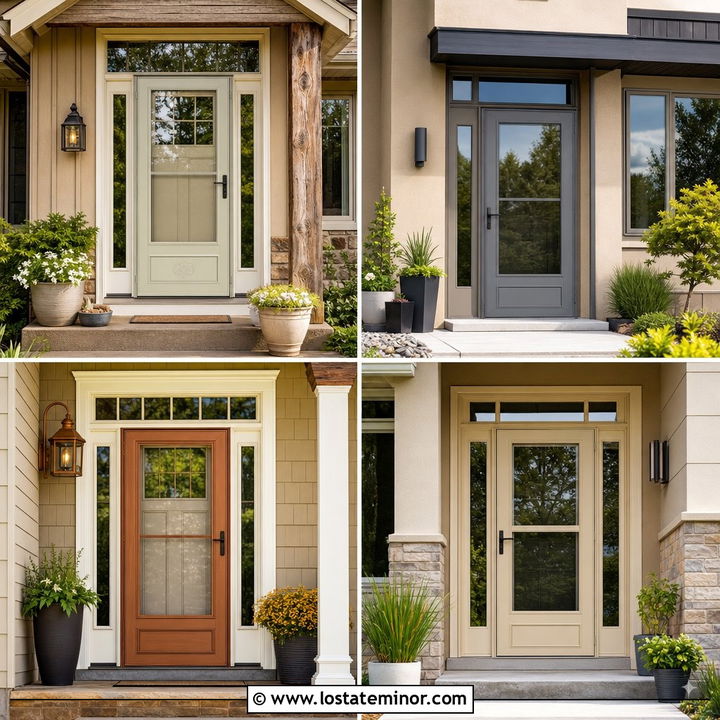
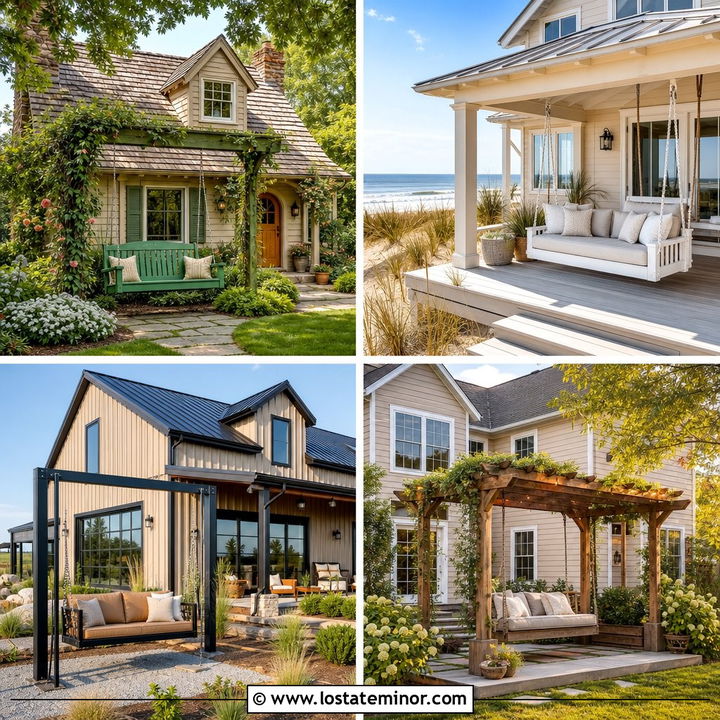
Tan siding and natural stone create an exterior that feels warm, grounded, and welcoming. The combination also works across many architectural types, from low ranch homes to Craftsman houses and modern farmhouses. The key is choosing a tan paint with undertones that connect naturally to the stone. Creamy tans complement golden limestone, while taupe-tans balance cooler gray fieldstone. Trim, roofing, doors, and wood details should repeat colors already visible in those main materials. This keeps the facade coordinated rather than busy. The complete schemes below include practical combinations for different home sizes, stone placements, and curb-appeal goals. Use these **30 Tan House Design With Stone Accents Ideas** to plan a balanced exterior that fits your home and neighborhood.

1. Light Tan House With Limestone Accents
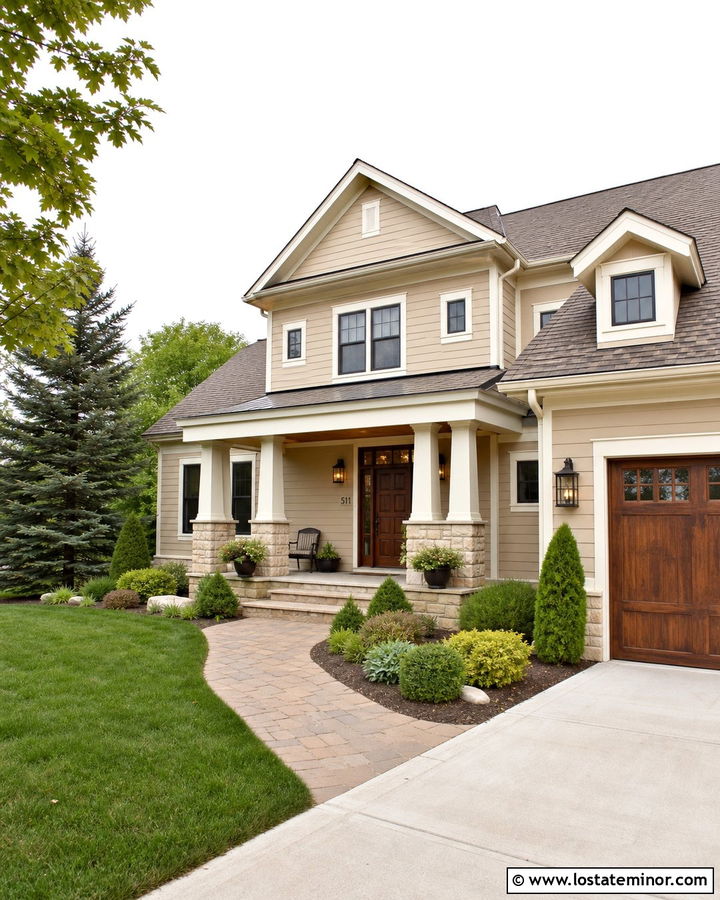
Light tan siding and creamy limestone create a bright exterior without the sharpness of an all-white palette. Use limestone around the porch base, lower facade, or entry columns so its soft texture grounds the house. Warm white trim keeps windows and rooflines crisp, while a medium-brown front door introduces comfortable contrast. This combination suits a traditional two-story home because it highlights symmetry without making the facade look overly formal. Choose roof shingles with brown and muted gray variation to connect the siding and stone. Bronze lanterns, tan pavers, and simple evergreen shrubs complete the look. Avoid blue-gray trim, which may feel disconnected from the warm undertones running through the limestone and tan body color.
2. Tan Craftsman House With Stone Columns
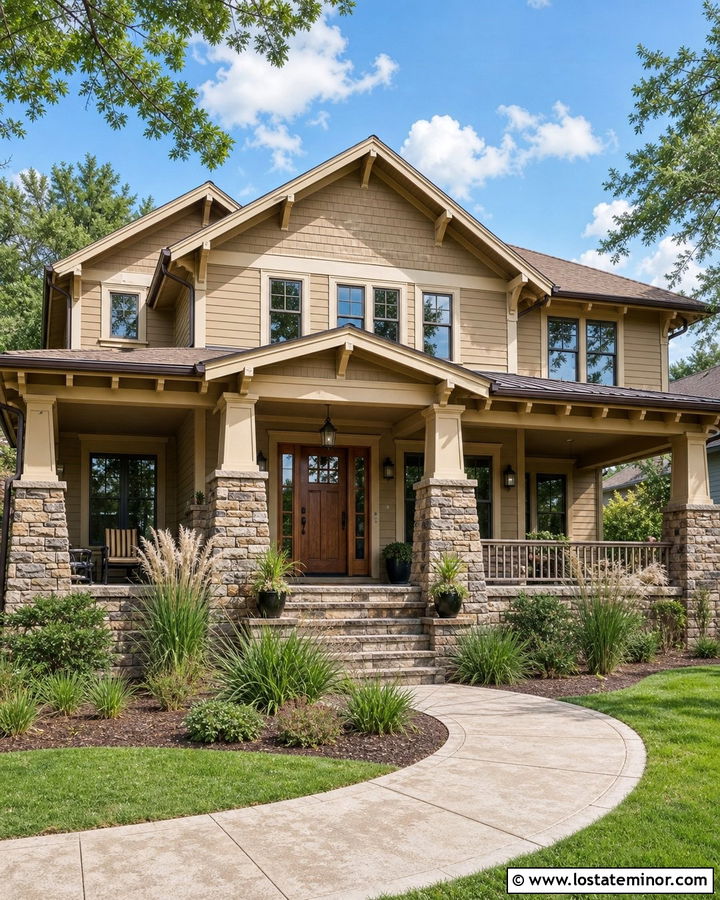
A Craftsman exterior looks naturally complete when tan lap siding is paired with substantial stone porch columns. Select ledgestone containing beige, brown, cream, and charcoal pieces to give the entrance depth. Cream trim can outline the wide porch, exposed rafters, and divided windows without producing excessive contrast. Add a stained oak front door and matching porch ceiling to repeat the stone’s warmer tones. Deep bronze gutters and lighting provide a quieter alternative to black. The stone should wrap around the bases of the tapered columns rather than appearing as a thin decorative strip. Low ornamental grasses, broad front steps, and a curved walkway reinforce the house’s relaxed character. The finished scheme feels detailed, durable, and approachable from the street.
3. Tan Ranch House With Stone Wainscoting
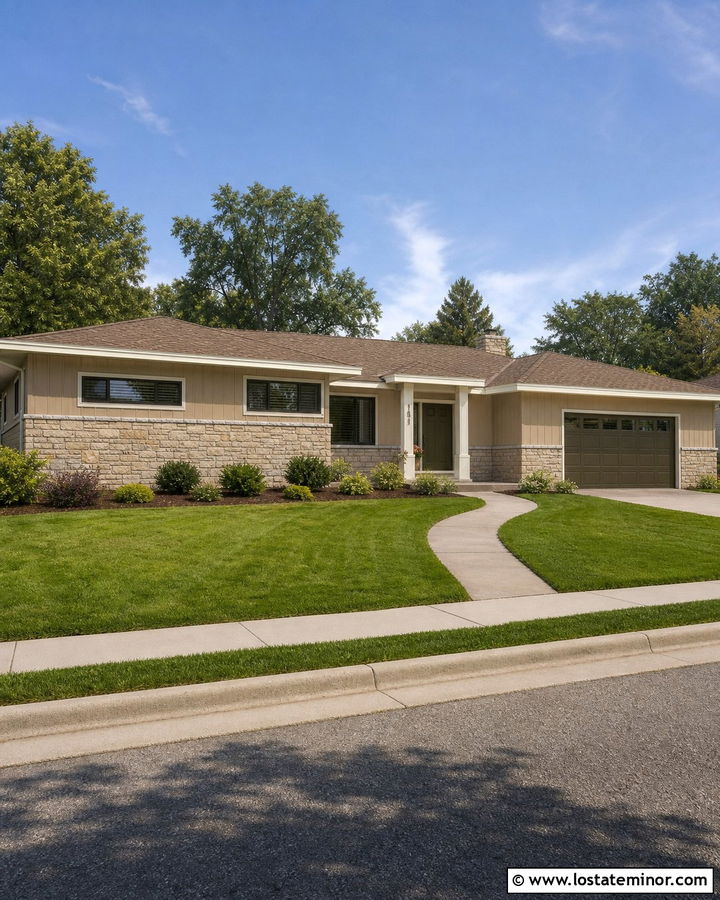
Stone wainscoting can give a long tan ranch house stronger proportions and more visible texture. Run the stone across the lower third of the front facade, including beneath prominent windows, to create one continuous foundation line. A warm fieldstone blend works especially well with sandy tan siding and an earthy brown roof. Paint the trim creamy white to keep the single-story roofline from feeling heavy. Then choose a muted olive front door for subtle, nature-inspired color. Wide window boxes or dark bronze shutters can help break up long expanses of siding. Keep shrubs below the stone line so the masonry remains visible. This practical arrangement adds character while preserving the ranch home’s simple, horizontal shape and familiar suburban appeal.
4. Tan Modern Farmhouse With White Stone
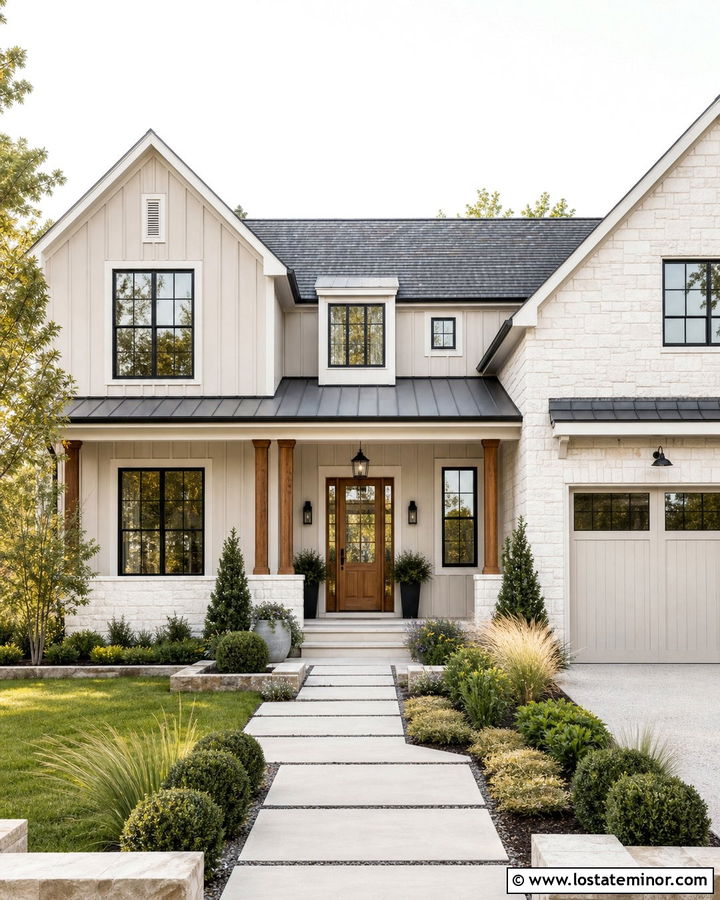
Can tan work on a modern farmhouse? A pale greige-tan body color offers a softer alternative to bright white while maintaining a clean, updated appearance. Pair vertical board-and-batten siding with chalky white limestone around the entry and garage wing. White trim creates a low-contrast transition, while black-framed windows and a charcoal metal porch roof sharpen the composition. A natural cedar door prevents the neutral facade from looking cold. Keep the stone installation simple, using broad rectangular pieces with narrow mortar joints rather than a highly varied rustic pattern. Concrete pavers, clipped shrubs, and airy ornamental grasses support the modern direction. This complete exterior combines farmhouse familiarity with understated materials, making it suitable for both rural properties and newer suburban neighborhoods.
5. Dark Tan House With Gray Stone
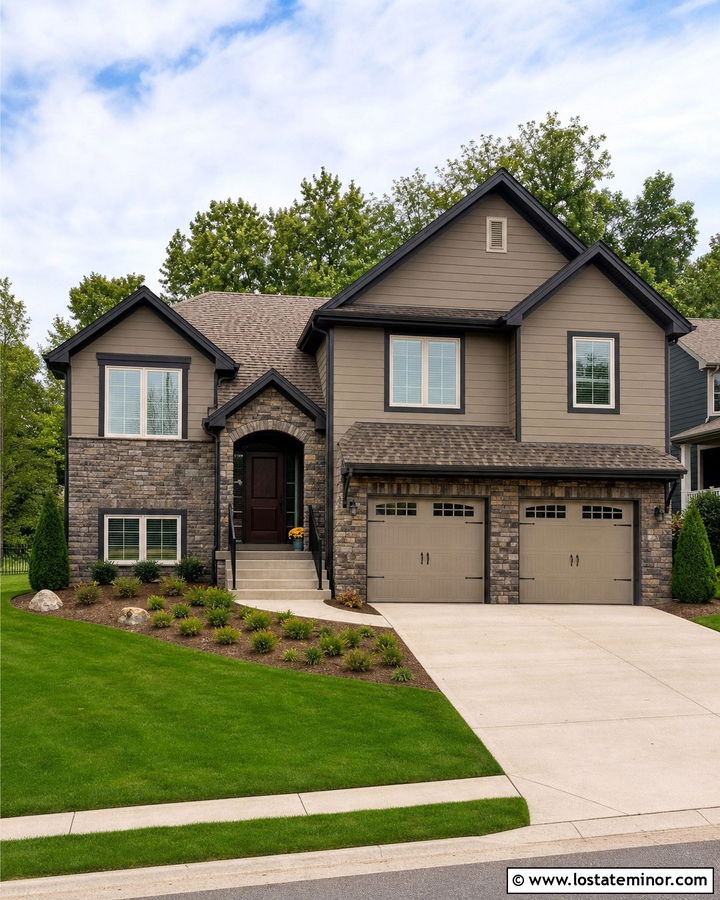
A deeper tan exterior benefits from cooler gray stone that introduces contrast without overwhelming the architecture. Choose taupe-based tan siding, then place medium-gray fieldstone around the garage, chimney, or lower level. Charcoal trim can outline windows and fascia for a tailored finish, while an espresso-brown door maintains the palette’s warmth. This scheme is especially effective on a split-level house because the darker stone visually anchors the projecting lower floor. Select roofing that mixes charcoal, brown, and soft gray instead of using solid black shingles. Repeat the dark trim through garage hardware, railings, and lighting. Light concrete paths and fresh green landscaping brighten the overall presentation. The result feels substantial and modern while remaining comfortable enough for a traditional residential setting.
6. Tan Colonial House With Stone Entry
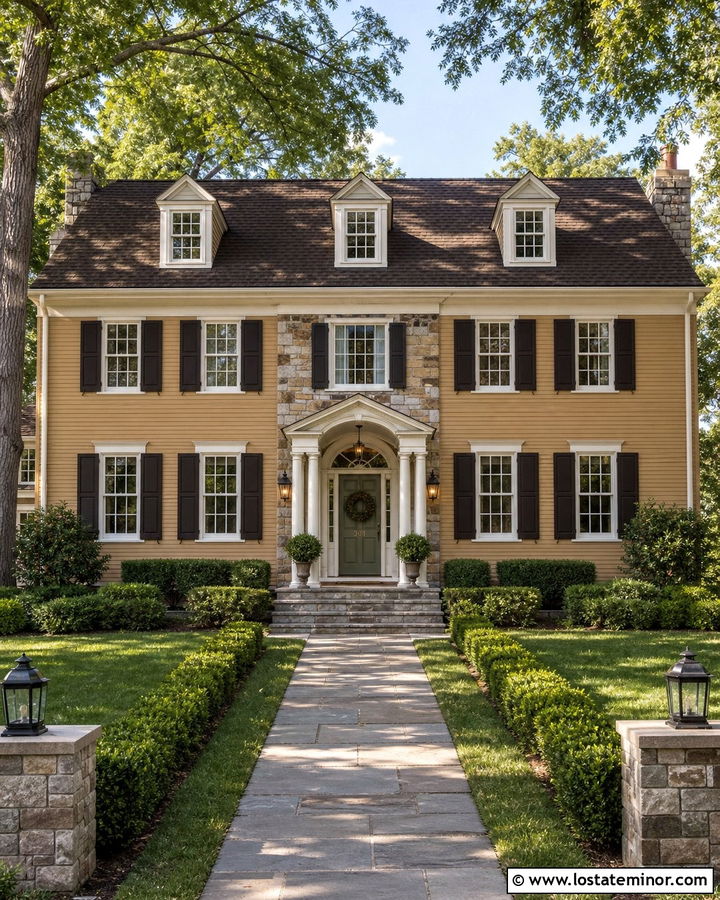
Symmetry gives a tan Colonial exterior its classic presence, but a carefully placed stone entry can make the facade more distinctive. Use warm beige stone around the central doorway and across the porch foundation, keeping the rest of the house in smooth tan clapboard. Crisp ivory trim highlights evenly spaced windows, corner boards, and the cornice. Deep brown shutters add traditional contrast without competing with the stone. For the front door, muted burgundy or heritage green brings restrained color to the center of the design. A dark brown architectural-shingle roof keeps the upper portion grounded. Finish with matching lanterns, straight hedges, and a broad brick or stone walkway. Limiting masonry to the entrance protects the Colonial home’s clean, balanced proportions.
7. Tan House With Stacked Stone Garage
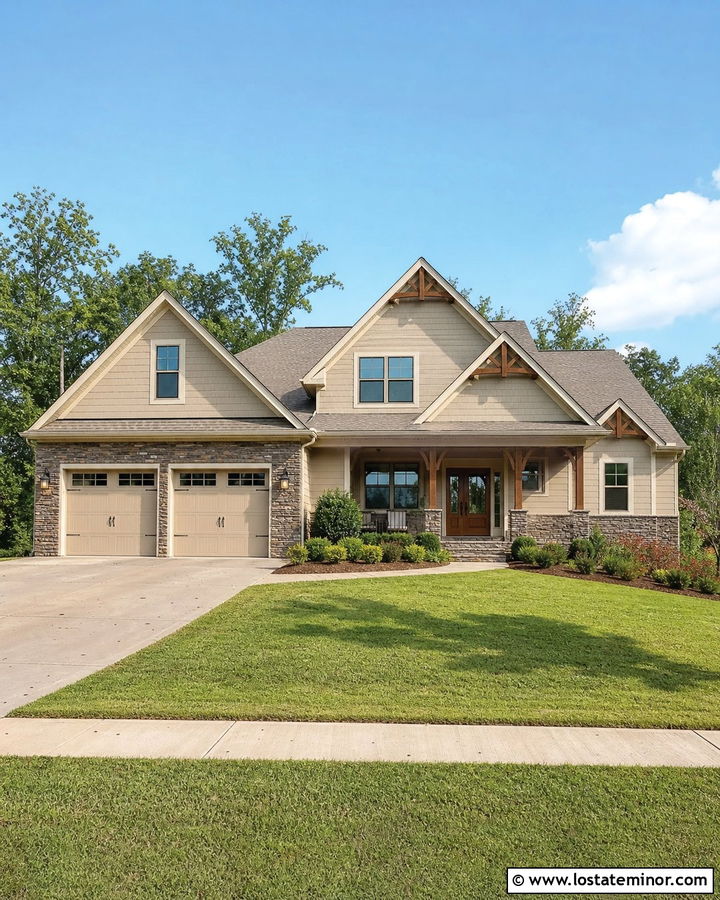
If the garage dominates the front elevation, stacked stone can turn it into a coordinated architectural feature. Cover the wall surrounding the garage doors with warm taupe and gray ledgestone, then use medium tan siding across the remaining facade. Paint the garage doors a shade close to the siding so they recede rather than becoming large contrasting rectangles. Cream trim around the windows and roofline lightens the composition. A stained wood front door and matching brackets connect the house to the stone’s brown variation. Continue a smaller amount of stone along the porch base to balance the garage wing. Layered shrubs between the driveway and entry help redirect attention toward the front door, producing a cohesive and welcoming curb view.
8. Tan Bungalow With River Rock Porch
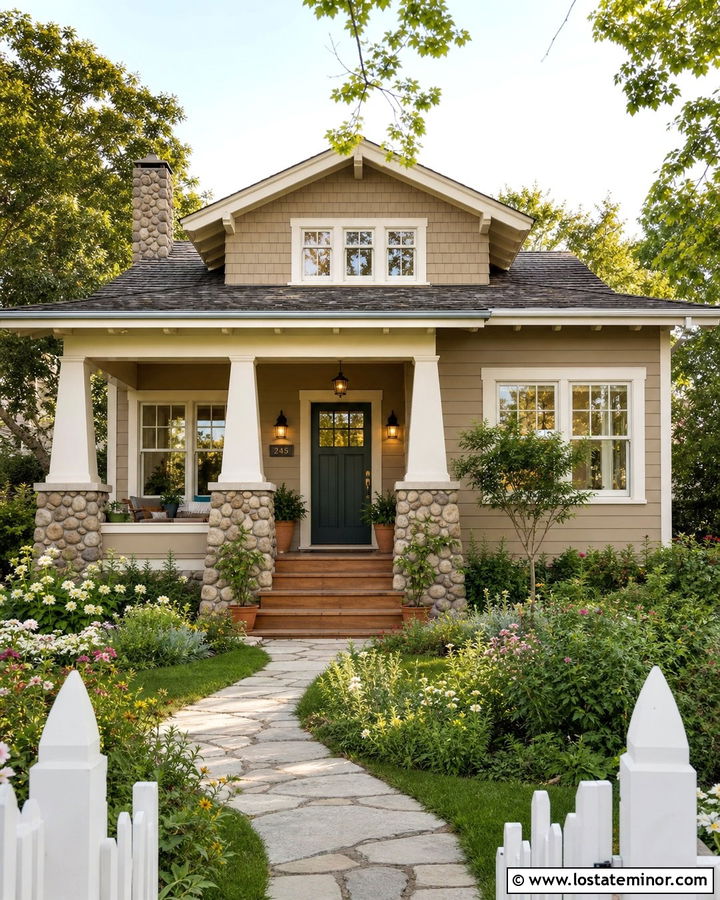
Rounded river rock brings informal charm to a tan bungalow, particularly when it covers the porch foundation and short column bases. Look for stone that blends warm gray, muted brown, cream, and sandy beige. Soft tan shingle siding above it will echo those natural colors without creating a flat, monochromatic facade. Use warm white trim around thick window casings, porch beams, and roof edges. A rich teal or forest green front door adds personality while still feeling connected to the landscape. Cedar steps and bronze lighting provide additional warmth. Keep the roof in a weathered brown-gray tone rather than stark black. A cottage-style garden with low flowers, grasses, and a gently curved walkway makes the stone porch feel established and inviting.
9. Tan Split-Level House With Stone Foundation
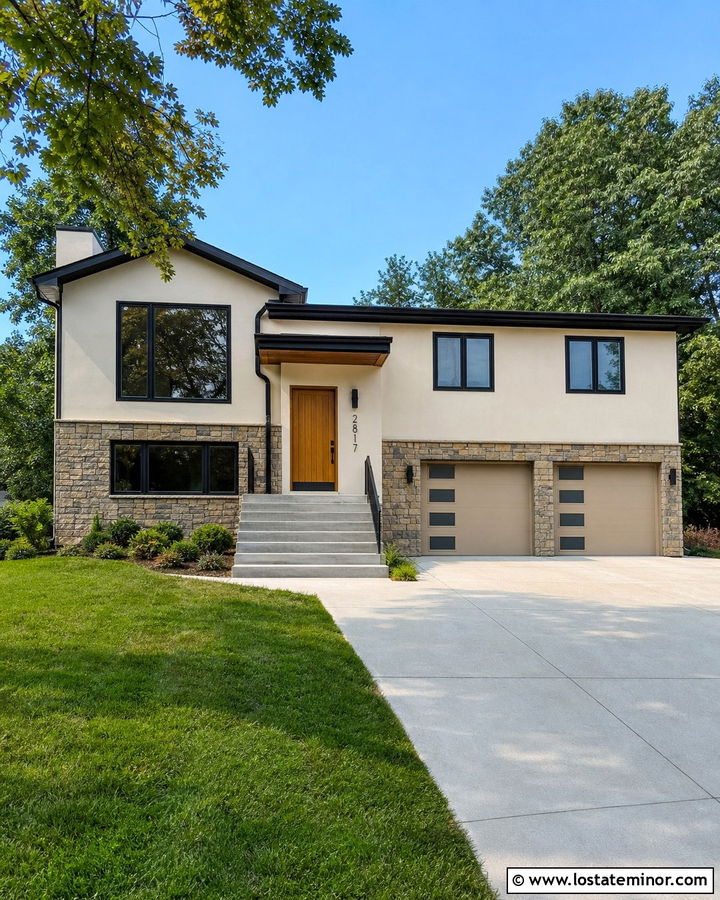
A tan split-level home often needs stronger visual organization, and a stone foundation can clearly define its lower floor. Cover the exposed base with rectangular fieldstone in balanced beige and gray tones. Use light tan horizontal siding above it to make the upper story appear brighter. Charcoal window frames and simple dark trim provide definition, while a natural wood door adds warmth near the center. If the garage sits below the main living level, select doors that closely match the tan siding. This prevents the lower facade from becoming too busy. Extend stone onto one entry wall or planter to create continuity. Clean foundation planting, broad concrete steps, and modern house numbers can update the exterior without hiding the home’s original split-level structure.
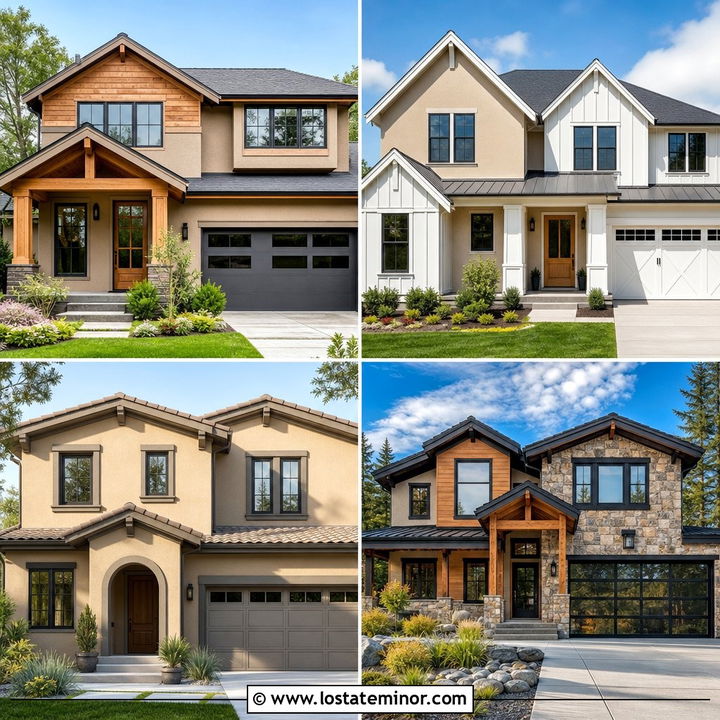
10. Tan Cottage House With Sandstone Accents
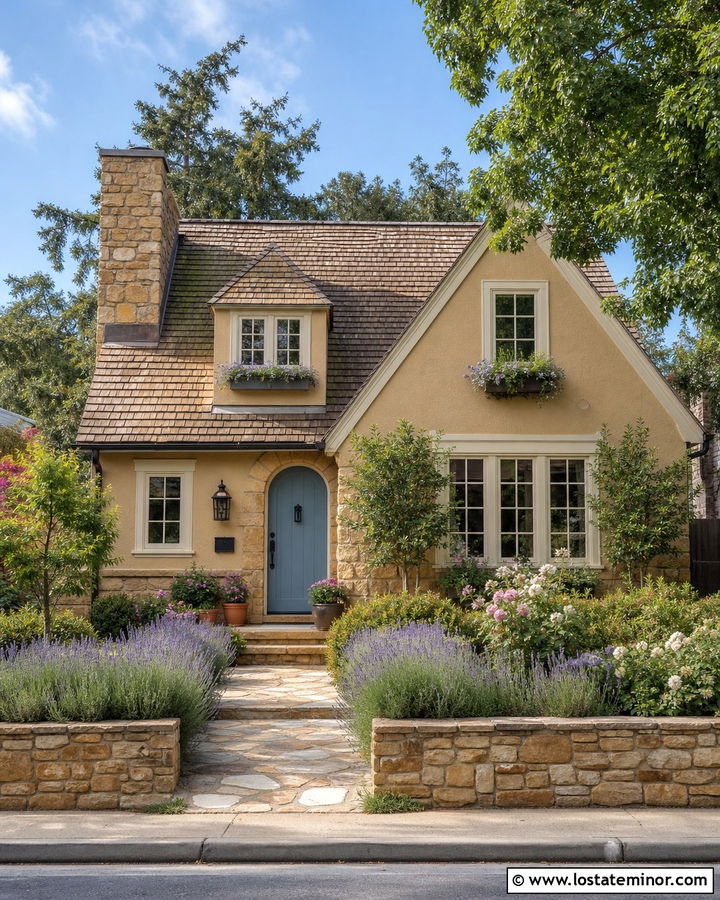
Golden sandstone and creamy tan siding can give a small cottage exterior a warm, sunlit appearance. Use sandstone on a low foundation, prominent chimney, and short garden wall so the material appears intentional from several angles. Soft ivory trim will outline charming details such as dormers, window boxes, and a small covered entry. For gentle contrast, choose a dusty blue front door and muted bronze hardware. A weathered brown roof connects naturally with the stone’s honey and rust-colored variation. Avoid adding several competing siding materials, since the sandstone already supplies plenty of texture. Lavender, flowering shrubs, and an irregular flagstone path complete the relaxed setting. The house feels cozy and layered without depending on overly ornate architectural decoration.
11. Tan Mediterranean House With Travertine Stone
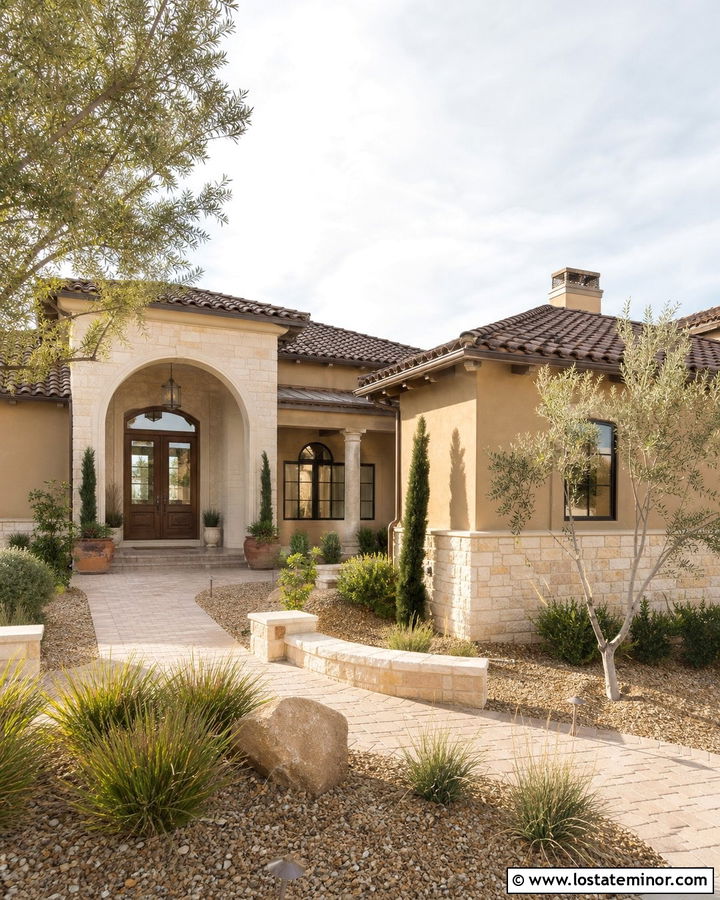
Warm tan stucco forms a natural backdrop for pale travertine on a Mediterranean exterior. Apply the stone around arched entrances, lower walls, and courtyard columns to emphasize the home’s substantial masonry character. Cream trim can soften window surrounds, while a walnut-stained double door introduces a rich focal point. Select clay roof tiles with muted brown and terracotta variation rather than intensely orange tiles. Dark bronze windows, railings, and lanterns provide contrast that feels appropriate for the architecture. Keep the stone pattern broad and orderly so it complements the smooth stucco instead of making the facade look overly rustic. Drought-tolerant grasses, olive trees, gravel beds, and a warm paver walkway reinforce the complete palette while supporting a polished, climate-conscious landscape.
12. Tan House With Black Trim And Stone
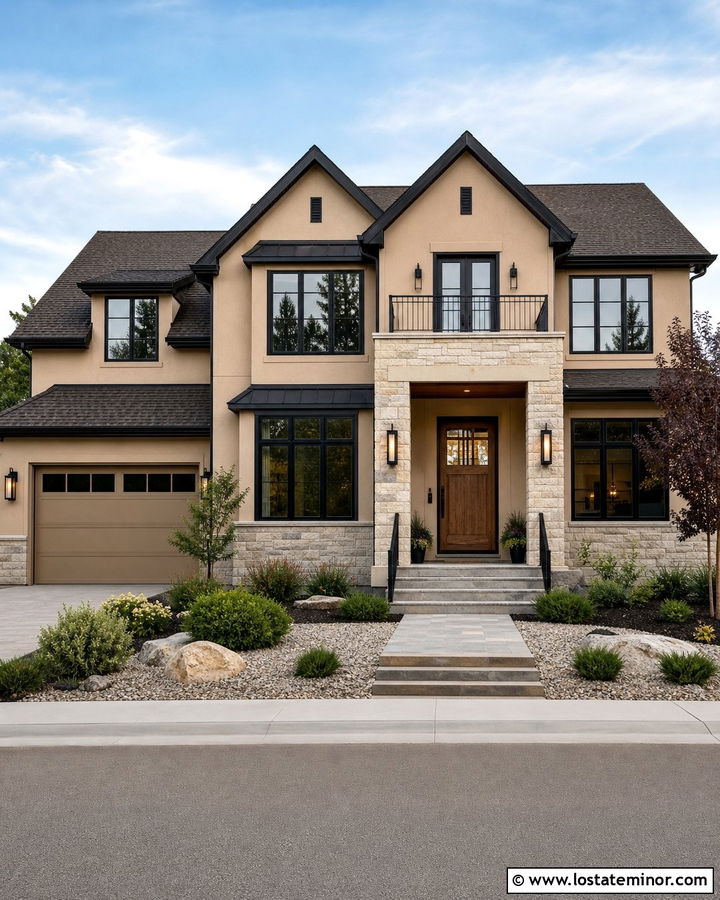
Black trim gives a tan house sharper definition, while stone prevents the high-contrast combination from looking too graphic. Choose a light camel-tan siding color and use black on window frames, fascia, gutters, and slim porch railings. Add beige-gray ledgestone around the lower facade and entry columns to bridge the light body color and dark architectural lines. A medium-tone wood front door introduces another natural layer without competing with the black accents. Keep the garage doors tan, especially when they occupy a large portion of the facade. Charcoal roof shingles can connect with the trim, but they should include subtle brown variation. Light gravel beds, green shrubs, and warm pathway lighting help the finished exterior feel welcoming rather than severe.
13. Tan House With White Trim And Fieldstone
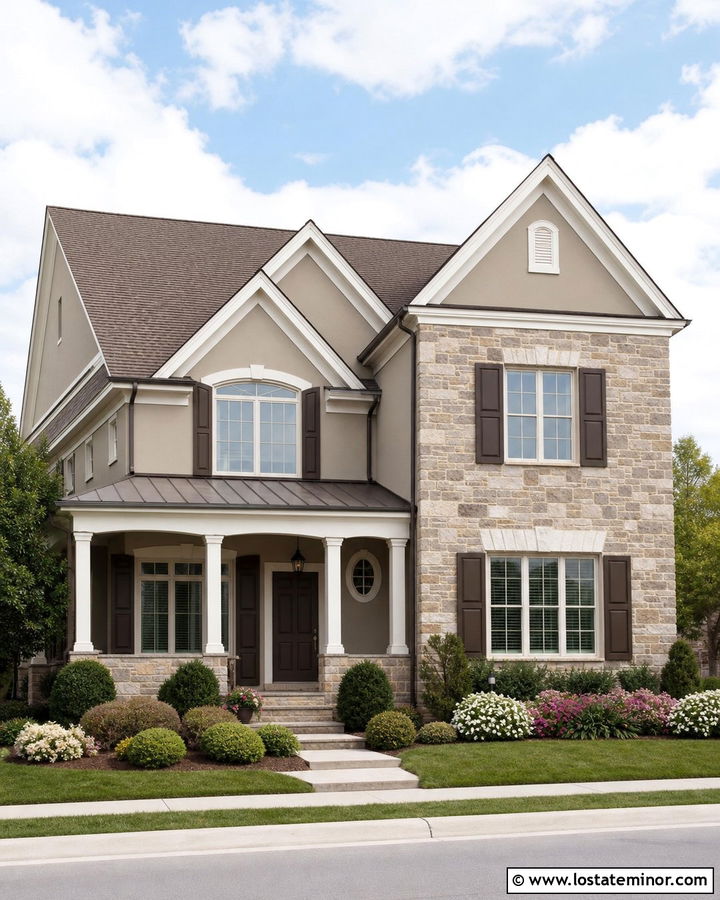
There is an easy familiarity to tan siding, white trim, and traditional fieldstone. The combination works well on a suburban two-story house with gables, shutters, and a covered front porch. Choose mixed fieldstone with beige, cream, taupe, and limited gray pieces, then repeat its lightest tone on the trim. A dark brown door and coordinating shutters create depth while maintaining the warm color story. Use stone across the porch base and one front-facing wall instead of scattering narrow patches around the facade. Medium-brown roof shingles and bronze fixtures complete the palette. Keep landscaping structured but not rigid, using rounded evergreens and seasonal flowers near the entry. The complete design looks established, balanced, and unlikely to feel dated quickly.
14. Tan House With Cedar And Stone Accents
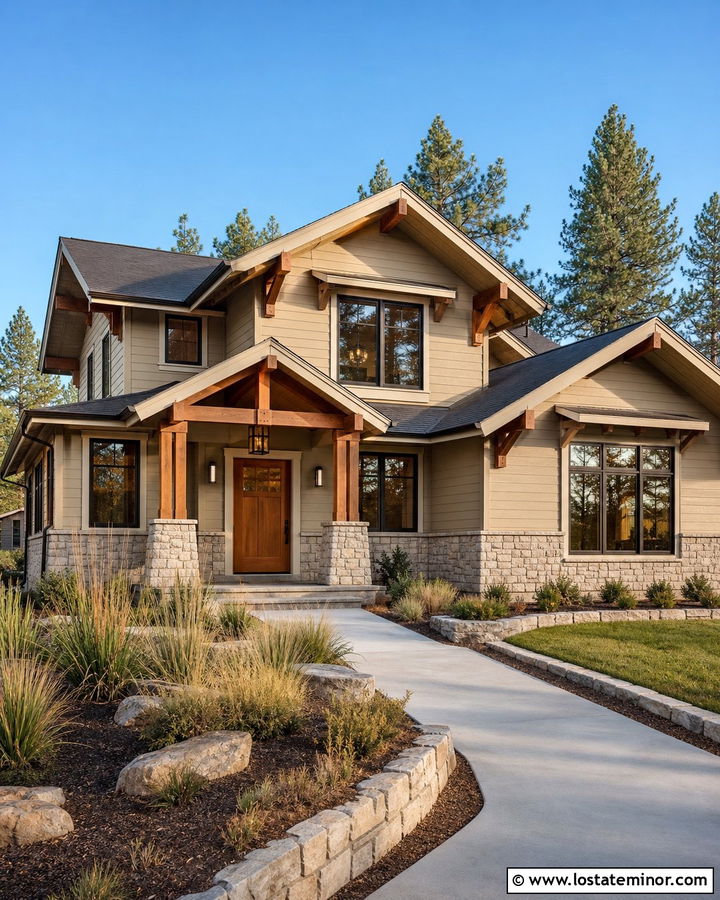
Natural cedar can energize a tan-and-stone exterior by adding color, grain, and handcrafted character. Start with muted tan siding and a cream-and-gray stone base. Add cedar at the front door, porch posts, gable brackets, and select soffits rather than covering every available surface. This controlled repetition helps the wood feel integrated. Use warm white trim to separate the tan siding from the cedar details, and choose dark bronze windows for definition. A roof with brown and charcoal tones will tie all three materials together. Cedar changes appearance as it weathers, so select a protective finish that supports the desired color. Native grasses, stone-edged planting beds, and a simple concrete walkway complete this earthy exterior without making it look excessively rustic.
15. Tan Cape Cod House With Stone Chimney
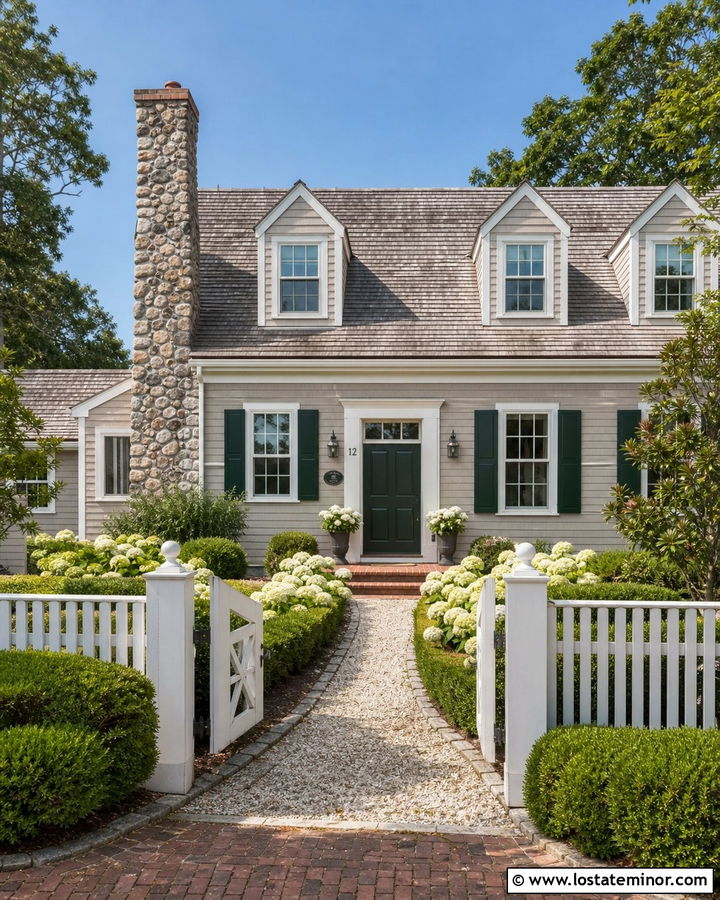
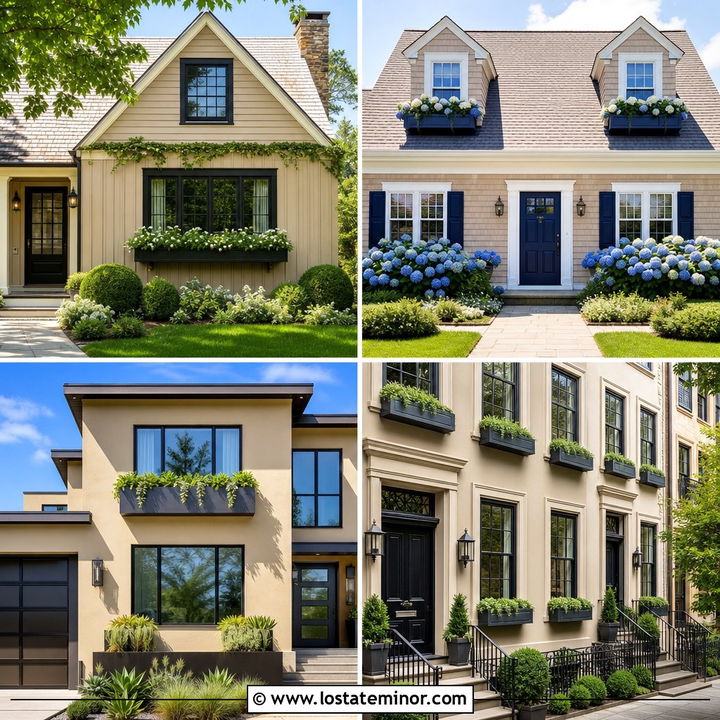
A tall stone chimney can become the defining feature of a tan Cape Cod exterior. Use irregular fieldstone with warm gray and buff tones, allowing the chimney to rise visibly beside the steep roof. Cover the house in light tan shingles or narrow clapboard, then apply creamy white to dormers, window casings, and corner trim. Deep green shutters and a matching door provide classic color without overpowering the natural stone. Weathered gray-brown roof shingles support the home’s coastal character more naturally than solid black roofing. Keep additional stone minimal, perhaps repeating it along the front step or short garden wall. Hydrangeas, clipped hedges, and a shell or gravel path create a complete exterior that feels traditional, comfortable, and carefully connected.
16. Tan Tudor House With Rustic Stone
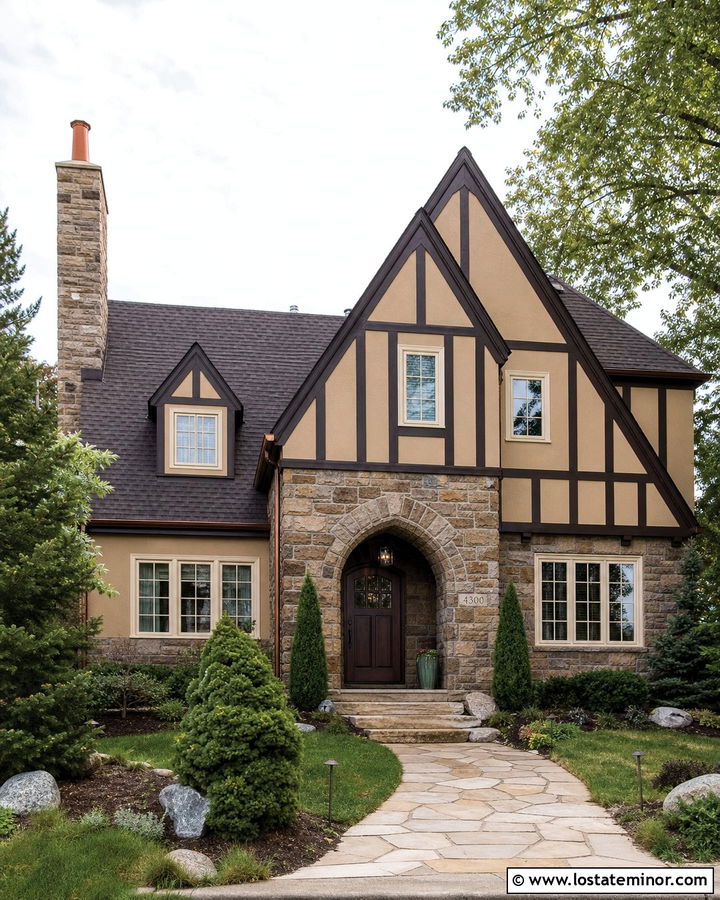
Heavy stonework can enhance a Tudor home when the surrounding colors remain controlled. Choose medium tan stucco for the main walls, deep espresso for half-timber details, and rugged brown-gray stone around the foundation and arched entry. The stone should contain enough tan variation to connect with the stucco. A dark wood front door with simple iron hardware suits the strong architecture, while cream window trim keeps openings visible beneath the deep roofline. Use dimensional shingles in charcoal brown to balance the darker beams. Repeat the stone on a chimney or short retaining wall, but avoid covering every wall. Layered evergreens, restrained flowering plants, and an irregular stone walkway soften the substantial facade while maintaining the home’s old-world character.
17. Tan Prairie House With Horizontal Stone
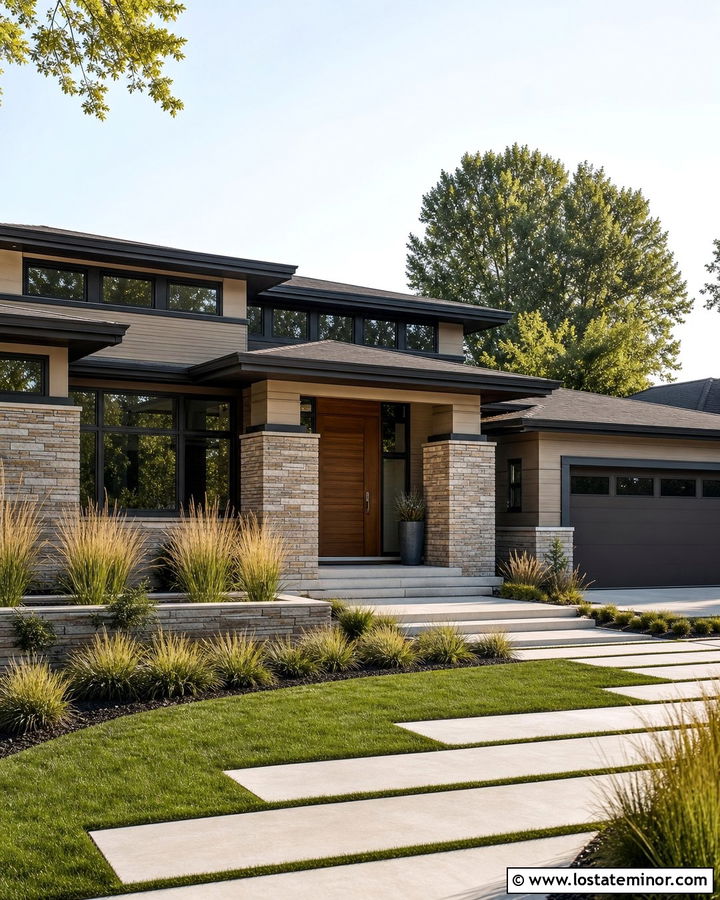
Long horizontal lines define Prairie architecture, making linear stacked stone an appropriate companion to tan stucco or siding. Run the stone along the lower facade and across projecting porch walls to emphasize the house’s width. Select a low-contrast blend of beige, taupe, and muted charcoal. A mid-tone tan body color keeps the composition earthy, while dark bronze window frames and fascia outline the structure. Use a flat-panel walnut door beneath the deep roof overhang for a warm central accent. Broad roof shingles in a brown-gray shade reinforce the horizontal profile. Finish the property with long planting beds, ornamental grasses, and rectangular concrete pavers. This scheme respects Prairie proportions while giving the tan exterior enough texture to appear layered and contemporary.
18. Tan Contemporary House With Linear Stone
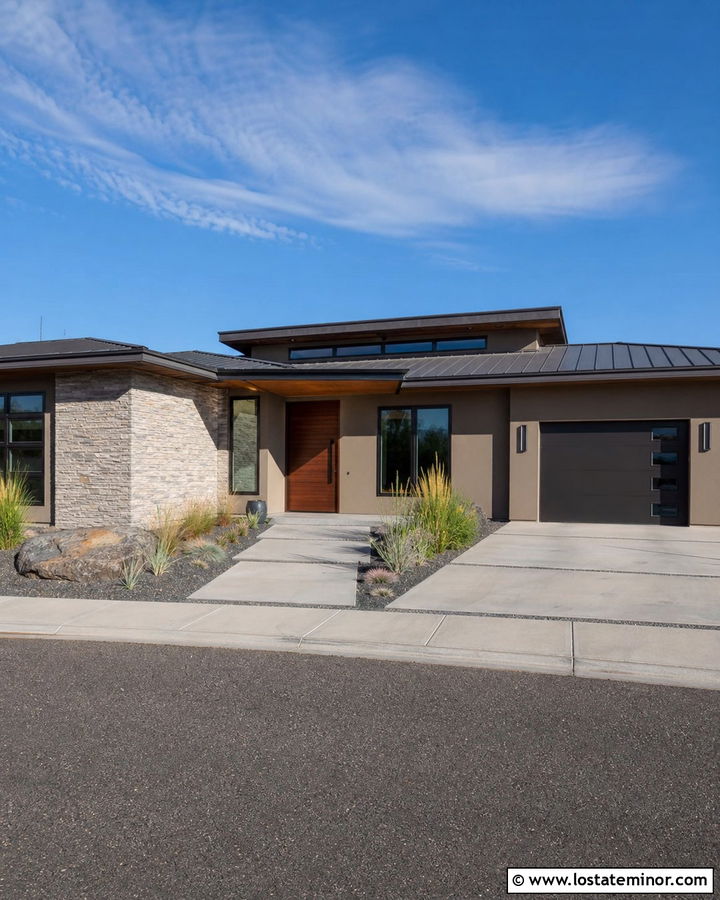
Clean architecture calls for controlled material changes. On a contemporary tan house, use smooth stucco or wide horizontal panels beside a single wall of narrow-cut linear stone. Choose stone with warm gray, sand, and taupe tones so it relates directly to the tan body color. Charcoal window frames, a low-slope metal roof, and dark garage doors give the facade clear definition. Add a cedar pivot door as the warm focal point, repeating the wood on a soffit or privacy screen. Keep trim minimal and close to the body color. Rectangular planting beds, architectural grasses, and large concrete walkway slabs support the clean exterior. The result has visible depth and contrast, yet every color remains grounded in the stone’s natural variation.
19. Tan House With Stone Porch Arch
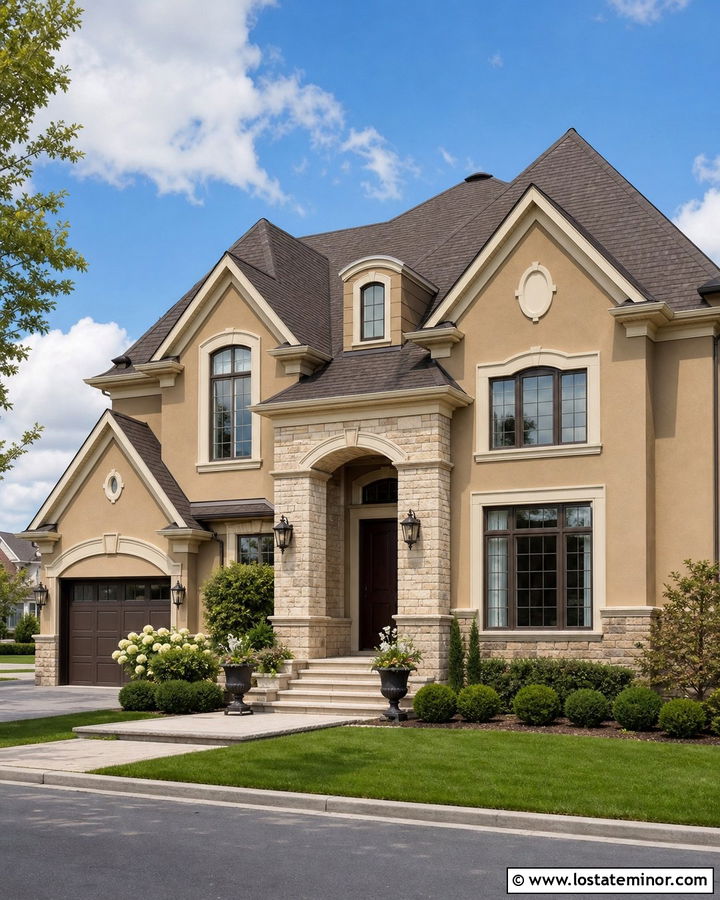
A stone porch arch can give an otherwise simple tan exterior a strong, welcoming center. Use moderately sized stone in cream, taupe, and warm gray, covering the complete arch and its supporting columns. Light tan siding around it allows the masonry to stand out without appearing disconnected. Paint window trim soft white and choose an espresso-brown front door set within the shaded opening. Bronze lanterns add warmth, while a brown-charcoal roof balances the visual weight of the stone. Repeat a small amount of masonry along the foundation so the arch does not look like an isolated addition. Wide entry steps, symmetrical planters, and low shrubs keep the approach open. This design works particularly well for traditional and European-influenced suburban homes.
20. Tan House With Stone Chimney And Wood Door
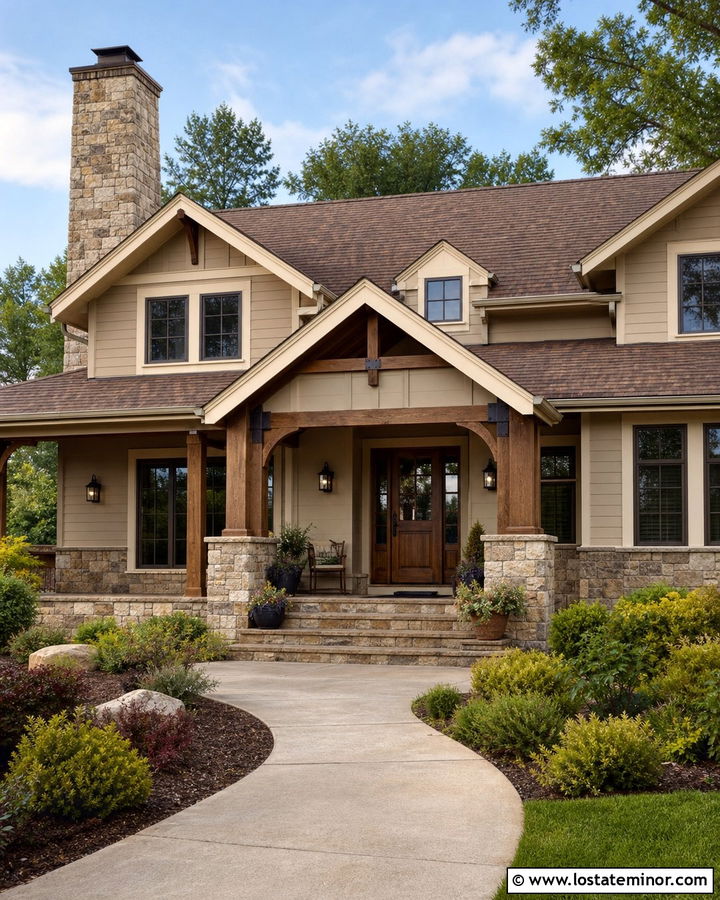
Picture a broad stone chimney rising beside warm tan siding and a richly stained wood entrance. The chimney establishes a natural focal point, while the door repeats the stone’s warmer brown tones at eye level. Select fieldstone with a balanced mix of buff, cream, gray, and muted rust. Use ivory trim to brighten roof edges and windows, then add dark bronze fixtures for subtle definition. A weathered brown roof will coordinate more easily than a cool blue-gray shingle. To distribute the masonry visually, repeat stone on the front steps or porch base. Keep shutters simple or omit them when the facade already has several strong materials. Layered shrubs and a curved walkway complete a welcoming, lodge-inspired exterior without making it feel overly rugged.
21. Tan House With Bluestone Accents
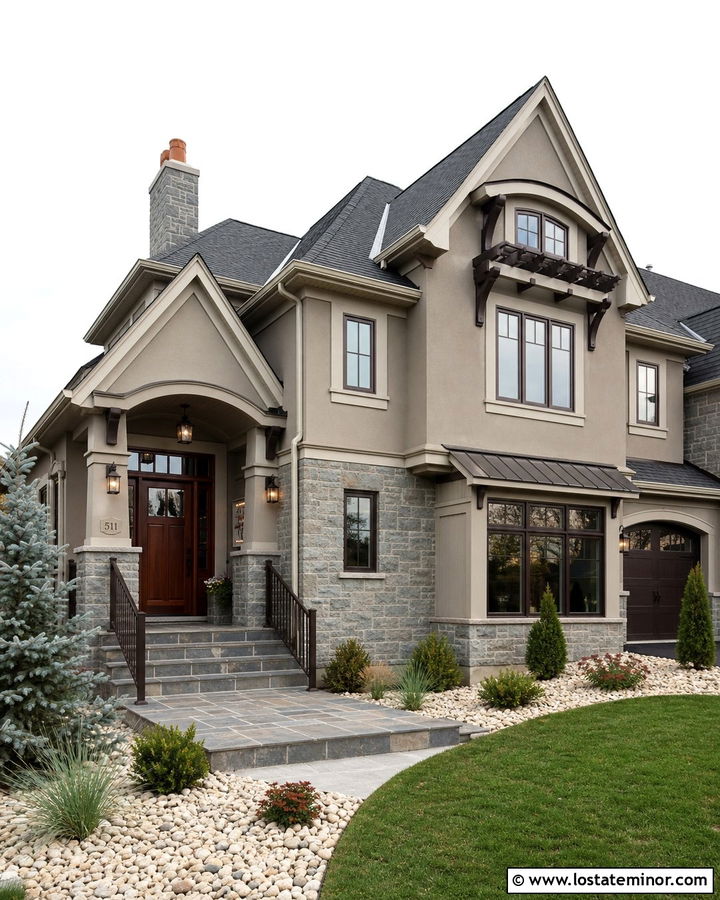
Bluestone creates an attractive cool contrast against a warm tan house, but the supporting colors must connect both sides of the palette. Choose taupe-tan siding with a slight gray undertone rather than a golden beige. Use bluestone on the porch floor, lower walls, and entry steps, where its blue-gray variation will be clearly visible. Creamy gray trim provides a softer transition than bright white. A stained mahogany door introduces warmth, and charcoal roof shingles repeat the deeper stone tones. Black or dark bronze railings can outline the porch without becoming the dominant feature. Add blue-green evergreens, pale gravel, and simple foundation plantings. This balanced scheme is especially effective on transitional homes that combine traditional rooflines with cleaner windows and simplified details.
22. Tan House With Stone And Brick Accents
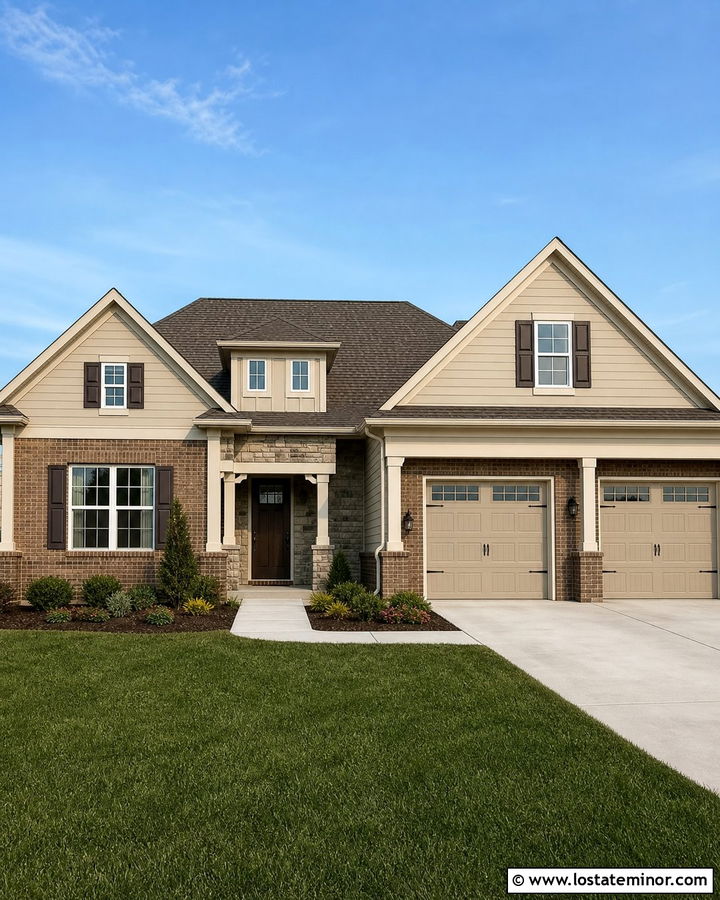
Combining tan siding, stone, and brick requires restraint because all three materials bring their own color and texture. Start with a quiet light tan body color. Choose muted brown brick for the main lower wall, then use coordinating buff-gray stone only around the entry or column bases. Cream trim gives the materials breathing room, while a dark brown door anchors the central approach. Look for brick and stone that share at least one undertone, such as taupe, sand, or weathered brown. Avoid strong red brick beside highly multicolored stone. A roof blending brown and charcoal can unify the complete facade. Simple landscaping and an uncluttered walkway are important here, allowing the layered masonry to look intentional instead of overly decorative.
23. Tan Rustic House With Ledgestone Accents
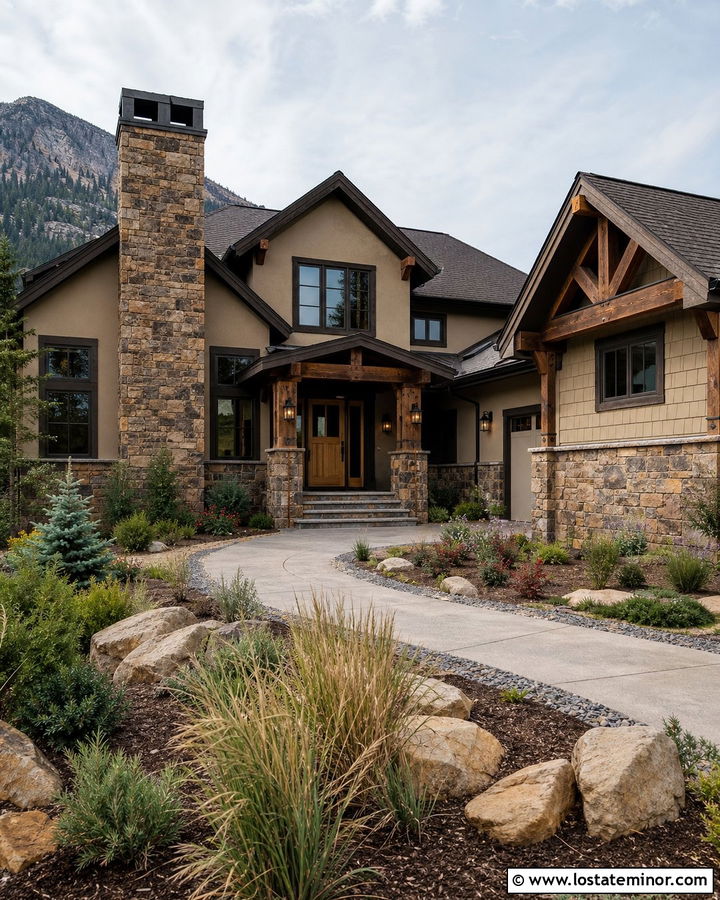
Warm tan siding and rugged ledgestone can create a rustic exterior that still feels polished. Place the stone across the foundation, chimney, and porch column bases, using a blend of brown, charcoal, sand, and cream. Medium tan lap siding keeps the house lighter than a traditional lodge, while dark brown trim provides depth around windows and roof edges. Add cedar porch beams and a matching front door to reinforce the natural palette. A charcoal-brown roof works well above the varied materials. Keep railings simple and avoid overly decorative fixtures that could compete with the stone texture. Native shrubs, boulders, grasses, and a broad gravel-edged walkway connect the house to its surroundings, creating an inviting design suited to wooded or mountainous settings.
24. Tan French Country House With Stone Facade
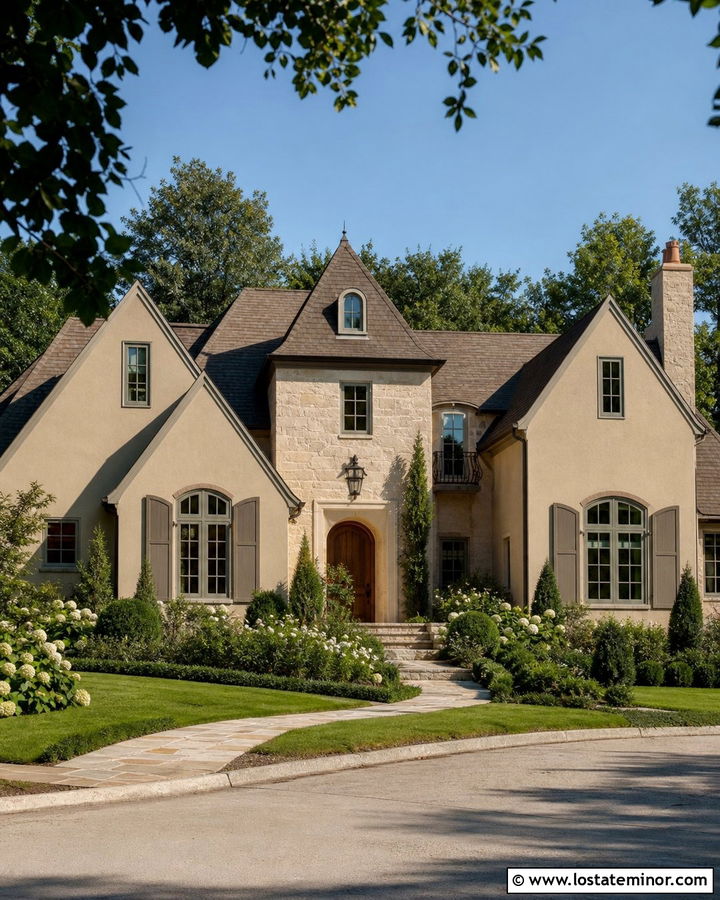
A French country home can carry more stone than many other architectural types without appearing visually heavy. Use pale tan stucco on secondary walls and creamy limestone across the central facade, entry tower, or projecting wings. Warm gray trim keeps windows visible while preserving the soft, weathered palette. Choose a medium walnut door with subtle iron hardware and lantern-style lighting. A steep roof in brown-gray shingles adds traditional character, while limited copper accents can develop a natural patina over time. Keep the stone colors low in contrast and avoid bright orange variation. Curved planting beds, clipped boxwoods, flowering shrubs, and a gently winding stone path complement the architecture. The complete exterior feels refined but still comfortable and connected to the landscape.
25. Tan Southwest House With Desert Stone
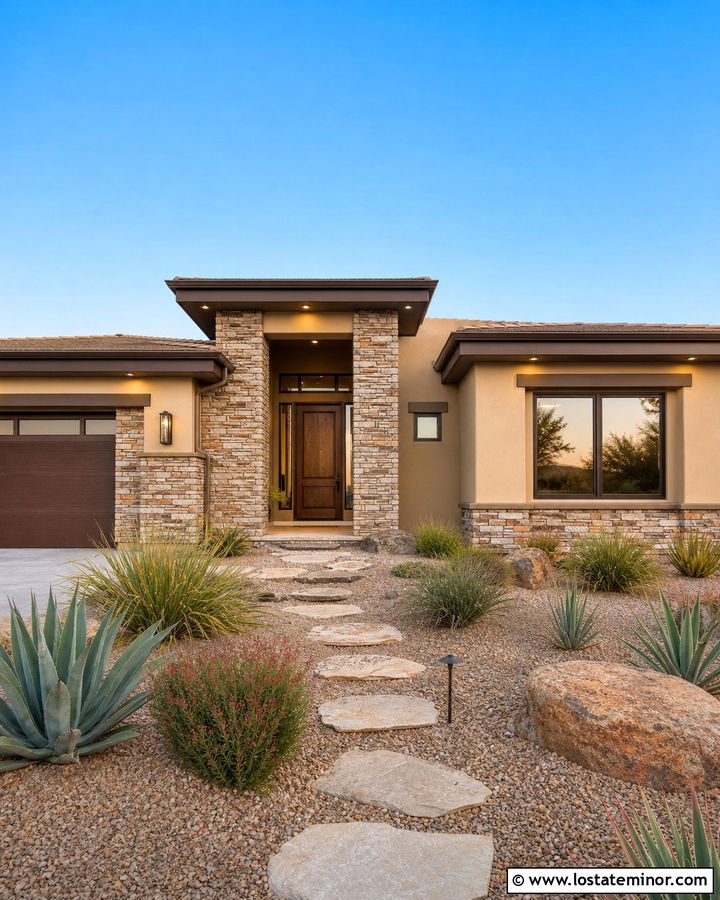
Desert surroundings naturally support tan stucco and locally inspired stone colors. Choose a sandy tan body shade, then add stacked stone containing rust, cream, warm gray, and muted brown around the entry and lower walls. Dark bronze windows create clean contrast without looking harsh in strong sunlight. A wood door with a medium chestnut finish provides warmth, while deep brown fascia defines the flat or low-slope roofline. Keep the stone application broad and uncomplicated to match the home’s substantial forms. Gravel beds, sculptural agaves, native grasses, and large stepping stones complete the drought-tolerant setting. The coordinated palette allows the house to blend with its environment while the varied stone supplies enough texture to keep the facade visually interesting.
26. Tan House With Stone Accent Wall
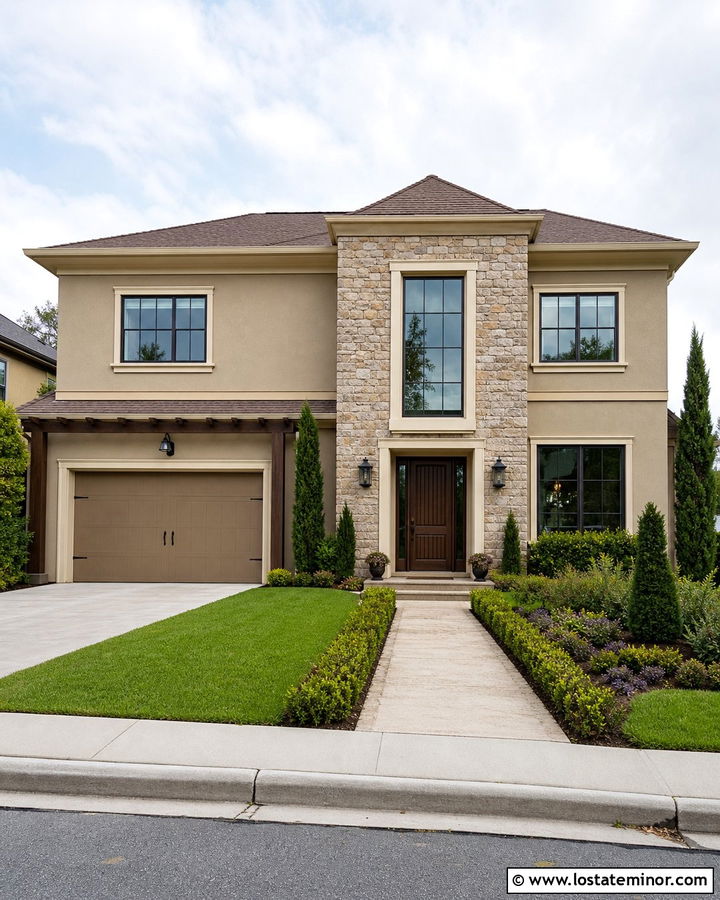
One full stone accent wall can be more effective than several small, disconnected masonry patches. Select the wall containing the front door, stair tower, or highest gable so the stone highlights an architectural feature. Surround it with warm tan siding and soft cream trim. A beige-gray stacked stone blend offers texture without creating severe contrast. Choose a dark walnut door and bronze lighting to bring warmth into the focal area. Keep the remaining walls simple, using one siding profile and minimal decorative trim. A medium brown roof and tan garage doors prevent other large surfaces from competing with the stone. Frame the accent wall with narrow evergreens and a direct walkway, helping visitors read it as the intentional center of the complete exterior.
27. Tan House With Stone Retaining Walls
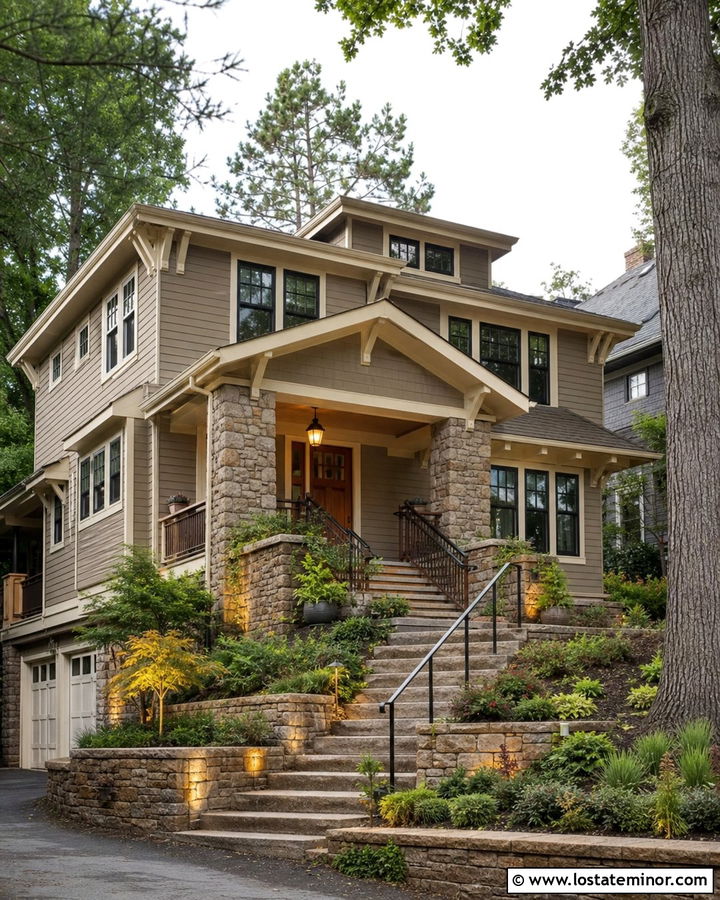
On a sloped property, retaining walls can connect a tan house to its landscape as effectively as stone applied directly to the facade. Use the same warm fieldstone on the porch base, entry columns, and terraced garden walls. This repetition makes the site and architecture feel like one composition. Choose soft tan siding, ivory trim, and a chestnut front door to complement the masonry. Dark bronze gutters and railings add quiet contrast. A brown-gray roof echoes both the soil and cooler stone pieces. Plant low ground cover along wall edges so the stone remains visible, then use broad steps to guide attention toward the entrance. The completed design feels established and thoughtfully integrated rather than placed separately on top of the hillside.
28. Tan House With Stone And Metal Roof
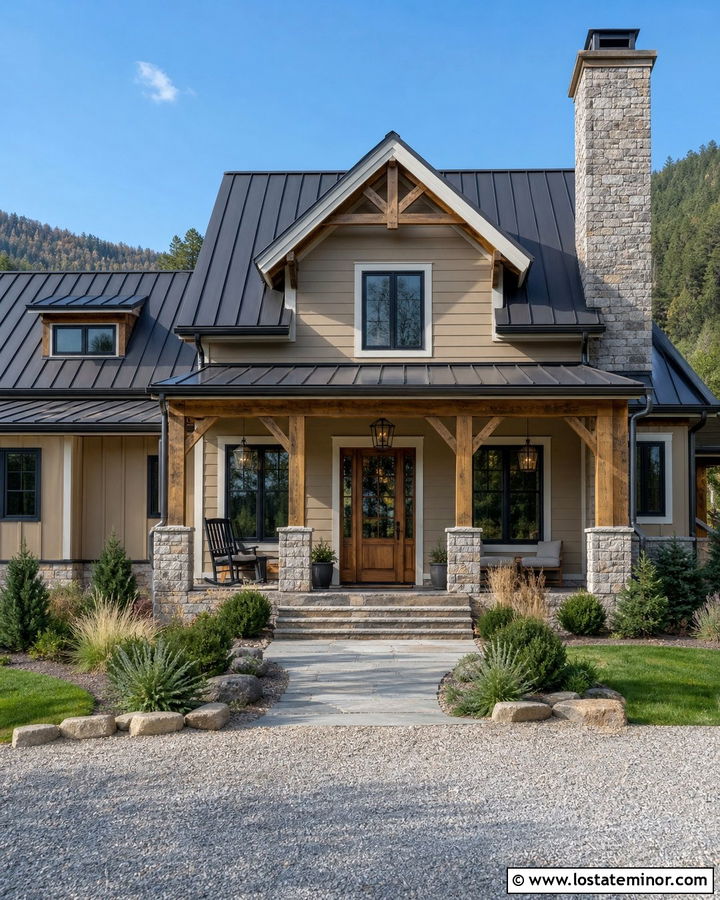
A metal roof can modernize a tan-and-stone house while providing a strong visual cap. Choose a matte charcoal or dark bronze finish rather than a highly reflective color. Pair it with medium tan siding and buff-gray stone across the chimney, porch columns, and foundation. Warm white trim prevents the dark roof from making the exterior feel top-heavy. A natural cedar door and matching porch beams bring warmth to the middle of the facade. If the main roof is shingled, use metal only on porch and bay-window roofs for a more affordable accent. Repeat the metal color through gutters, lighting, and railings. Neat grasses, evergreen shrubs, and a stone-edged walkway complete this practical scheme for farmhouse, Craftsman, or mountain-inspired homes.
29. Tan House With Stone Around Windows
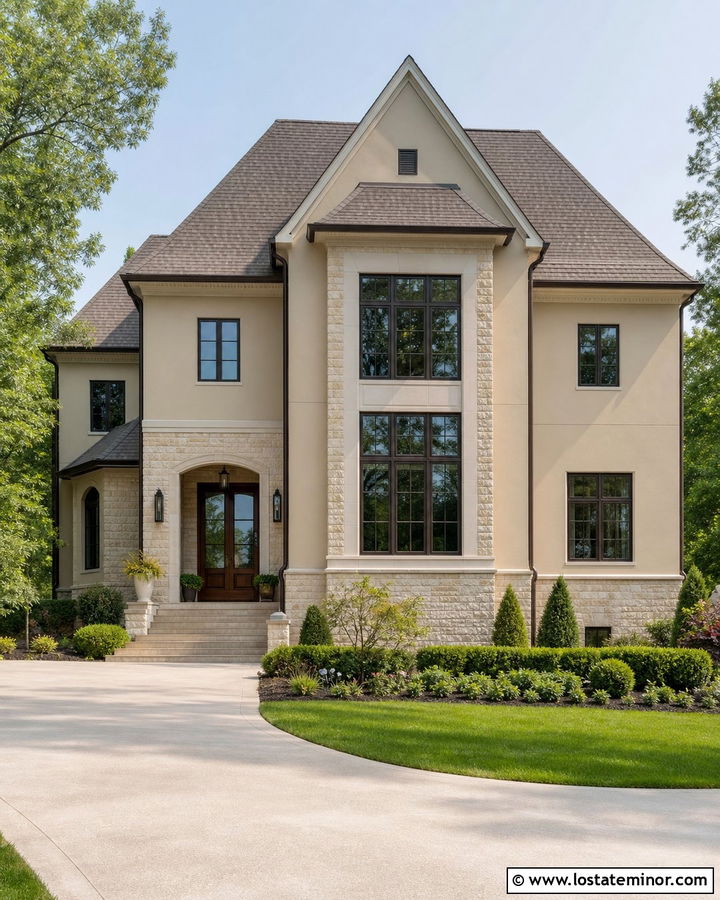
Stone surrounding select windows can make a tan exterior feel custom, provided the placement follows the architecture. Use masonry around a large stair window, bay window, or grouped dining-room windows rather than outlining every opening. Choose smooth-cut limestone in warm cream and beige for a refined transition to light tan stucco. Keep the remaining trim ivory and use dark bronze window frames for crisp definition. A walnut door balances the warm stone, while brown-gray roofing keeps the upper facade quiet. Extend the limestone to the foundation or entry steps so the window treatment has a visual connection to the ground. Symmetrical shrubs and clean planting beds allow the architectural detail to remain visible, creating an elegant exterior without unnecessary ornament.
30. Tan House With Mixed Stone Accents
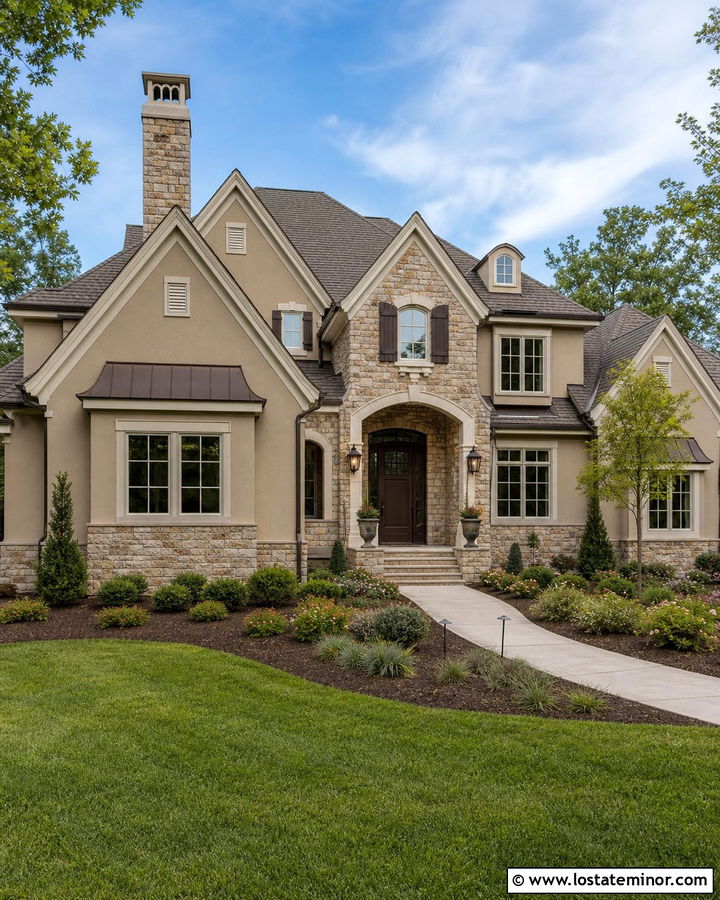
Mixed stone can bring depth to a large tan exterior, but the colors and installation pattern should remain cohesive. Select a blend containing limestone, fieldstone, and ledgestone in related shades of cream, taupe, brown, and warm gray. Use it across the foundation, chimney, and central entry, changing the scale slightly rather than introducing unrelated colors. Medium tan siding gives the stone a calm backdrop, while soft white trim outlines windows and rooflines. Add a dark wood door, bronze lighting, and a dimensional brown-gray roof. Keep shutters and decorative brackets minimal because the stone already supplies significant movement. Broad planting beds, small ornamental trees, and a clear walkway finish the facade, allowing the complete material palette to appear intentional and balanced.
Conclusion:
The strongest tan and stone exteriors build every choice around a shared group of undertones. Start with the existing stone or selected veneer, then choose tan siding that repeats its cream, gold, taupe, brown, or gray notes. Use trim to control contrast and repeat darker colors through roofing, doors, windows, and fixtures. Stone also looks more intentional when it highlights meaningful areas such as the foundation, chimney, porch, garage, or main entry. Landscaping should frame those features rather than cover them. Whether your home is traditional, rustic, modern, or Mediterranean, these **30 Tan House Design With Stone Accents Ideas** offer complete schemes for creating warmer, more coordinated curb appeal.

Related posts: