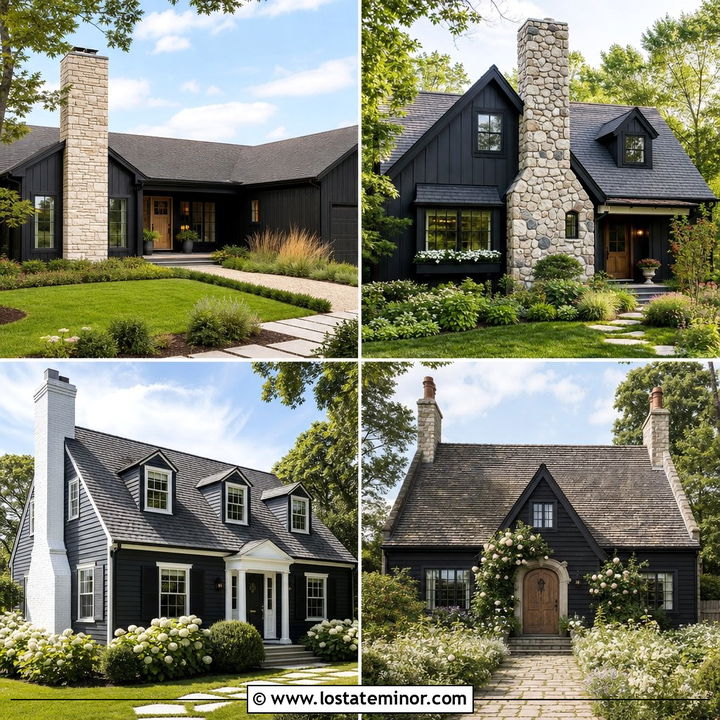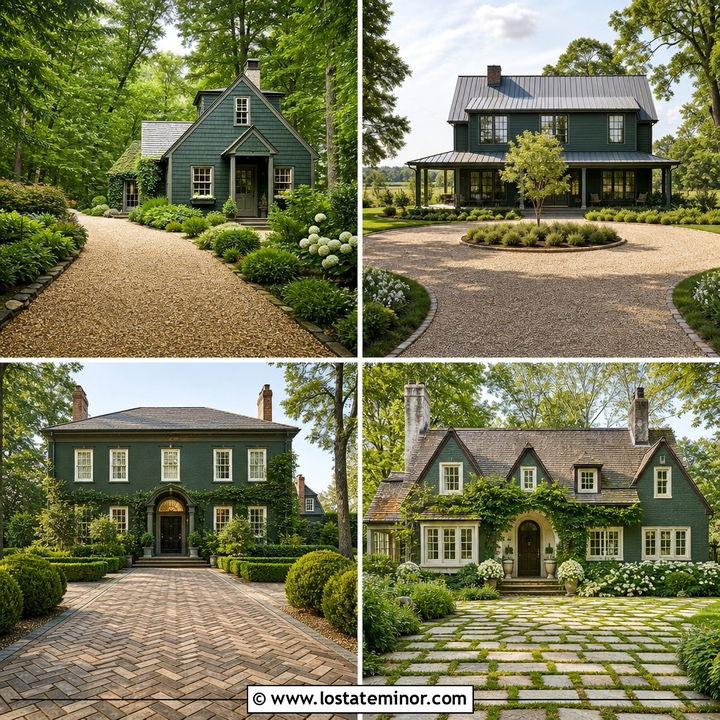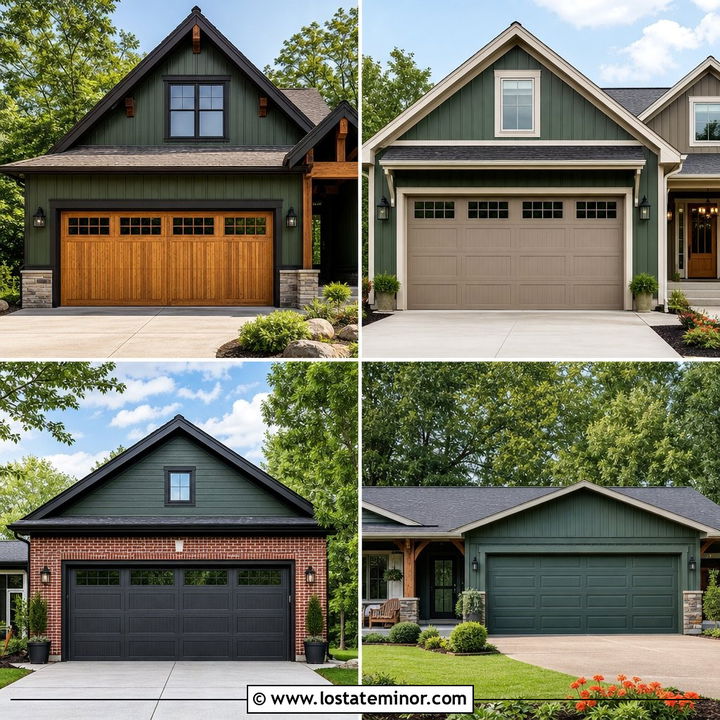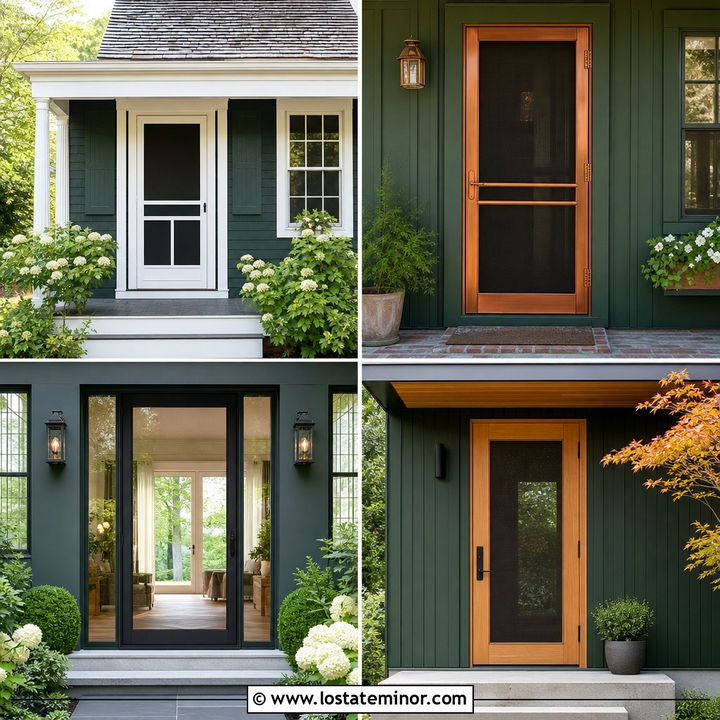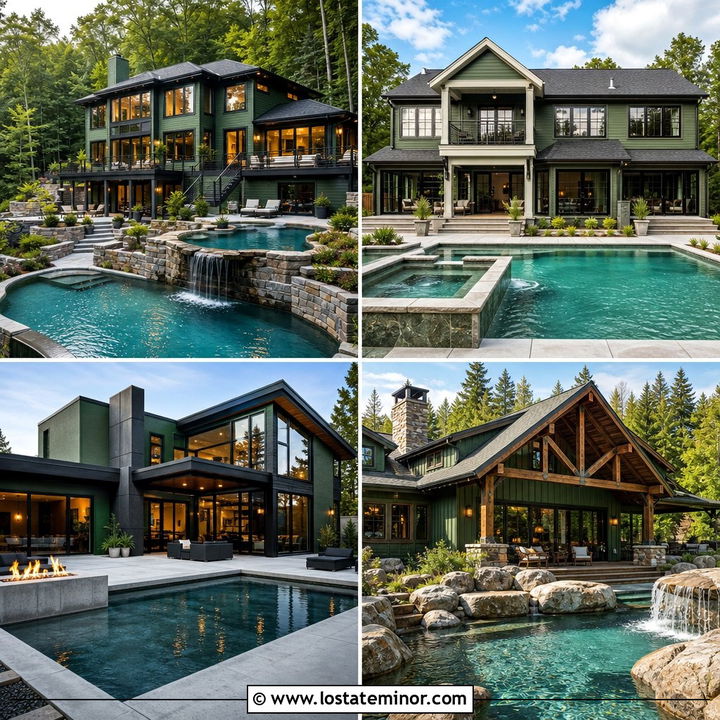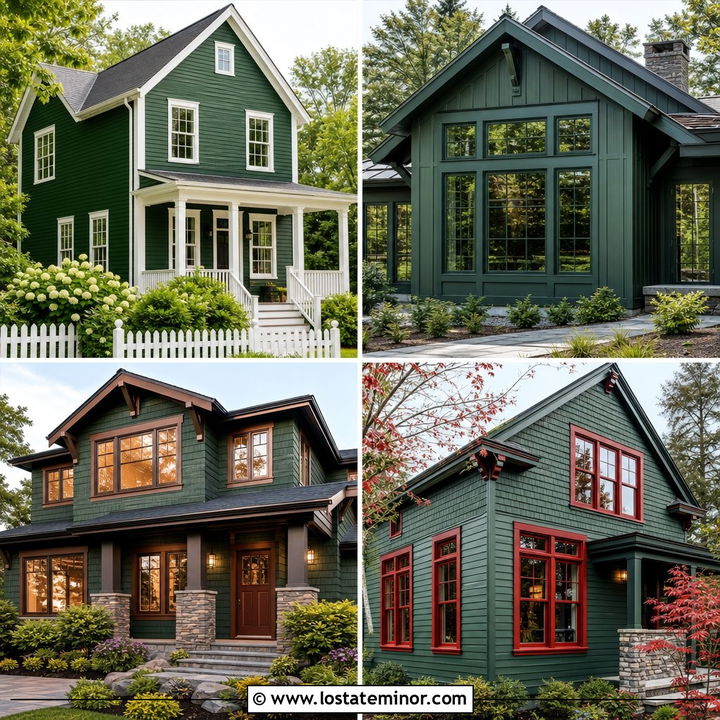
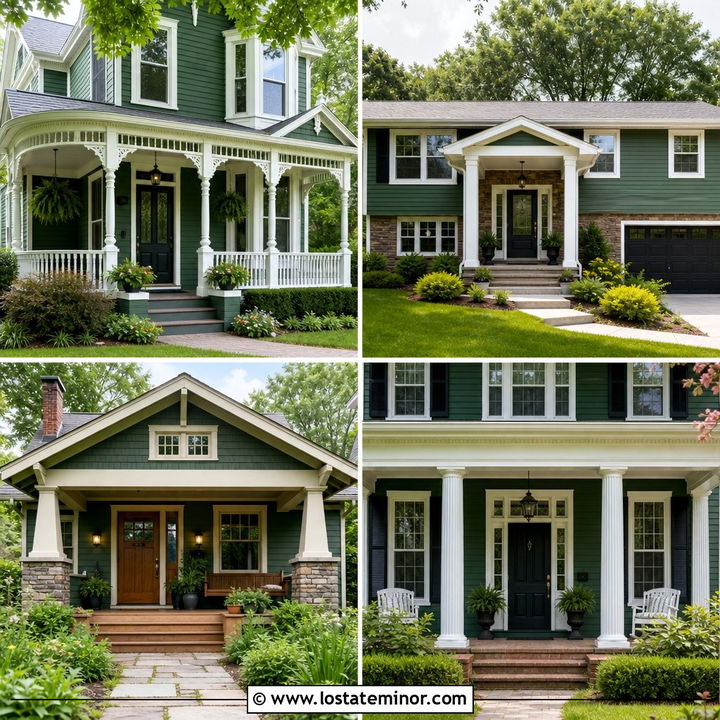
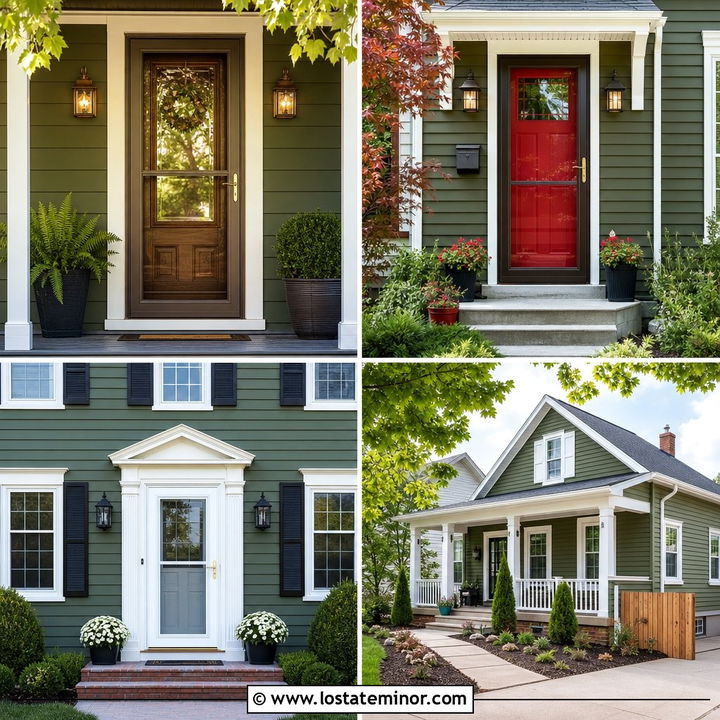
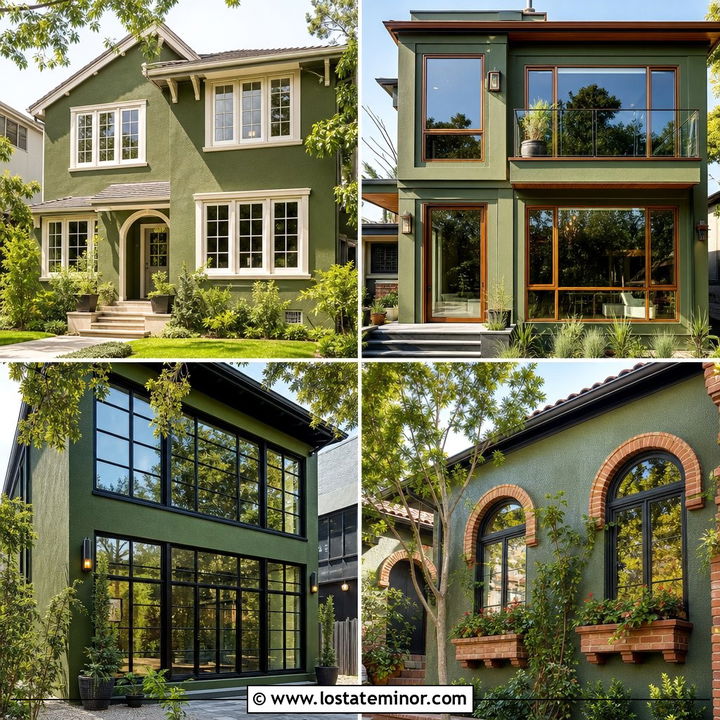
Forest green creates a grounded, elegant exterior that feels at home in wooded, mountain, rural, and suburban settings. A well-designed chimney makes this rich color even more appealing by adding height, texture, and an architectural focal point. Brick brings traditional warmth, while limestone, fieldstone, and ledgestone create a rugged connection to nature. Forest green also works beautifully with white trim, black windows, natural cedar, and earthy masonry accents. () The key is to coordinate the chimney with the roof, foundation, porch, and entry rather than treating it as a separate feature. The complete exterior combinations below explore different house shapes, masonry finishes, and accent palettes through **30 Forest Green House Design With Chimney Ideas**.
1. Forest Green Craftsman With Stone Chimney
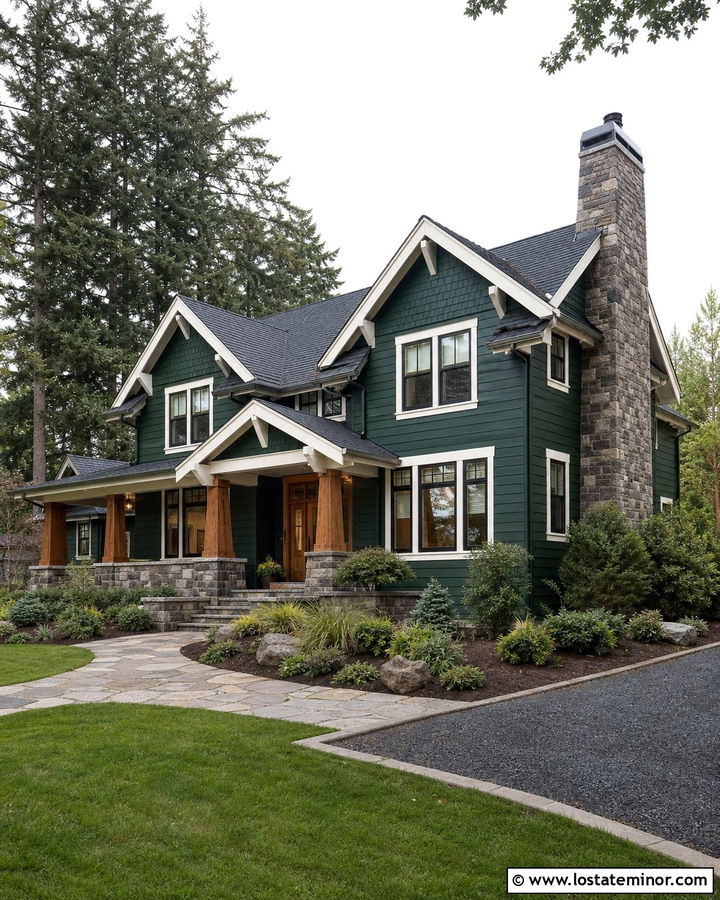
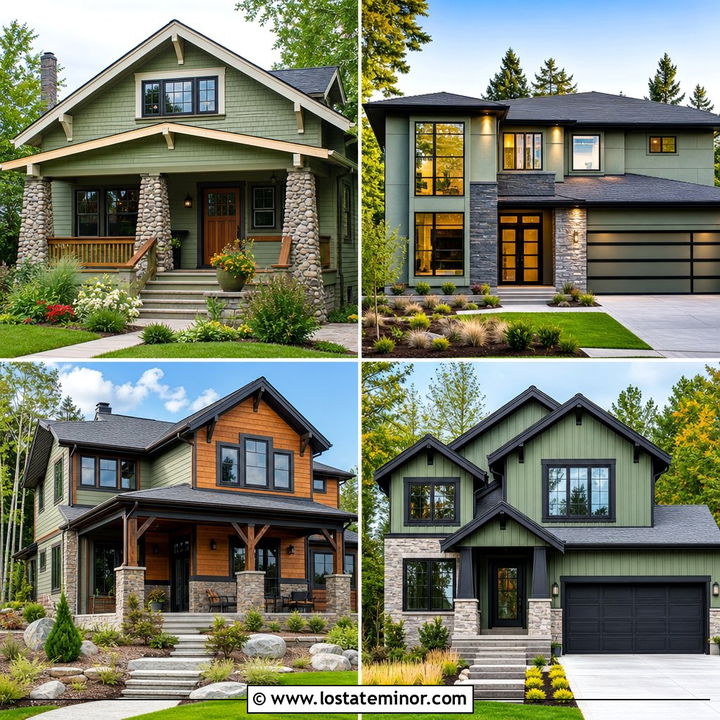
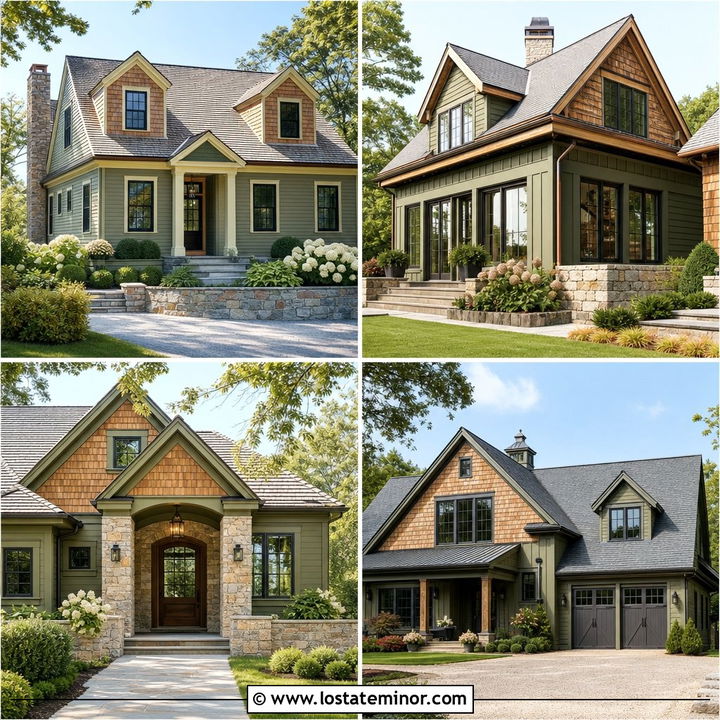
A forest green Craftsman feels warm and established when a wide stone chimney anchors one side of the facade. Choose horizontal lap siding for the main walls and forest green shakes beneath the front gables. Cream trim can outline the roof, windows, and exposed rafter tails without creating harsh contrast. Build the chimney from irregular gray and brown fieldstone, then repeat that masonry around the porch foundation. Stained cedar columns and a matching wood front door add warmth beside the dark siding. A charcoal architectural-shingle roof keeps the palette grounded. Finish the complete look with broad porch steps, black lanterns, and layered evergreen landscaping that connects the forest green exterior to its natural surroundings.
2. Forest Green Colonial With Red Brick Chimney
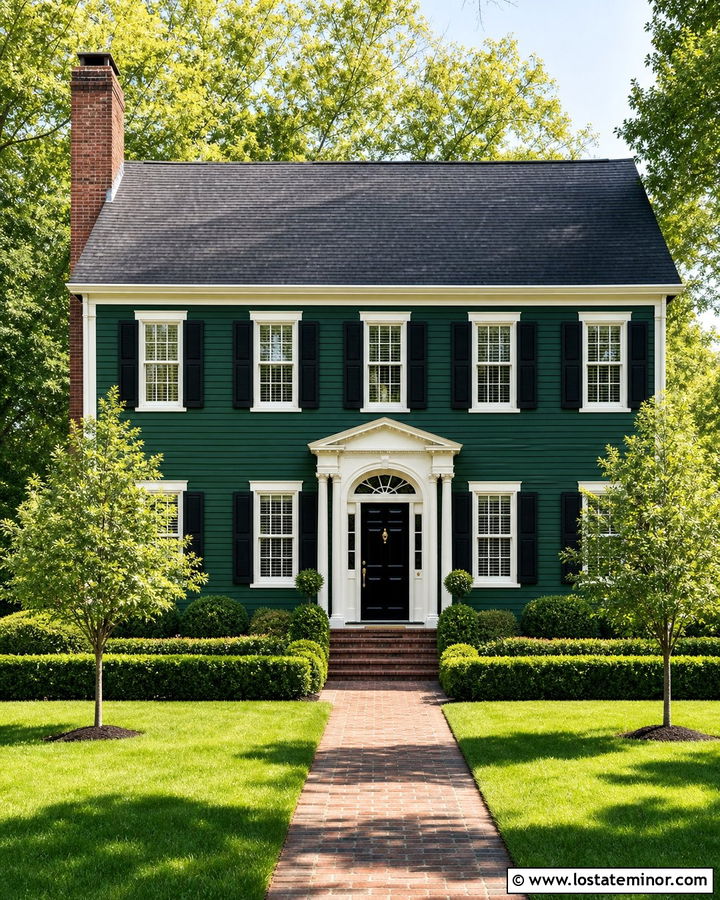
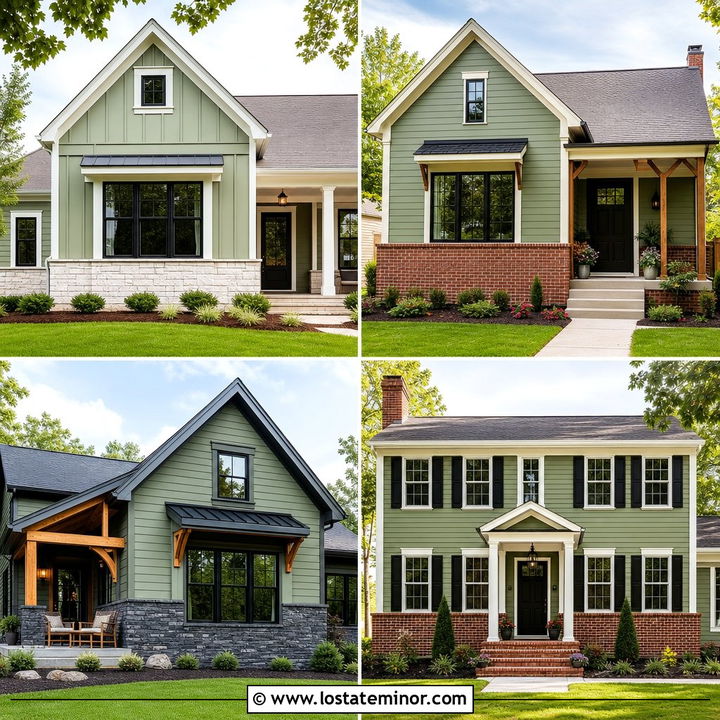
Traditional red brick brings welcome warmth to the orderly facade of a forest green Colonial. Use symmetrical lap siding, evenly spaced windows, and crisp warm-white trim to preserve the home’s classic appearance. A substantial brick chimney rising along an exterior side wall should contain muted red, brown, and charcoal tones rather than bright orange brick. Repeat the same masonry on the front steps or walkway border to make the chimney feel intentional. Black shutters, a glossy black front door, and a dark charcoal roof provide formal contrast. Keep the landscaping balanced with clipped boxwoods and matching trees near the entrance. This complete scheme gives forest green siding a refined, historic character without making the exterior feel overly dark.
3. Forest Green Farmhouse With Whitewashed Brick Chimney
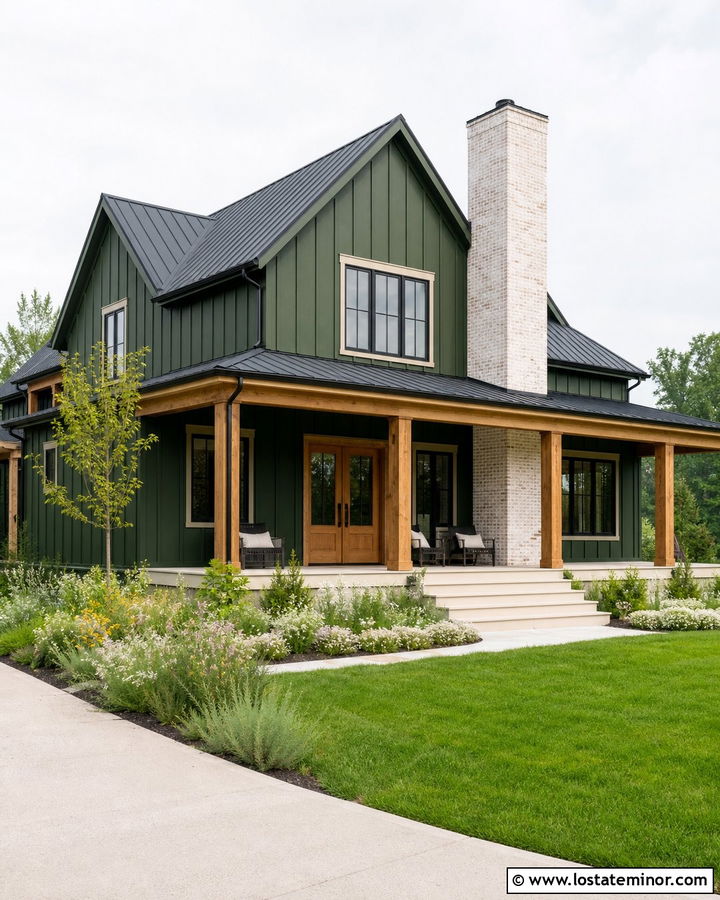
Fresh whitewashed brick can soften a large chimney while preserving the texture that makes masonry attractive. On a forest green modern farmhouse, combine vertical board-and-batten siding with a steep charcoal metal roof and simple cream window trim. The chimney should have a translucent limewashed finish that allows subtle red and brown brick variations to remain visible. Use the same treatment on the porch foundation or an outdoor fireplace wall for continuity. Natural cedar posts, double wood entry doors, and a warm gray porch floor keep the exterior from looking too stark. Black gutters and light fixtures add thin, modern outlines. The finished farmhouse feels clean and current, yet the chimney still contributes age, substance, and handcrafted character.
4. Forest Green Cape Cod With Fieldstone Chimney
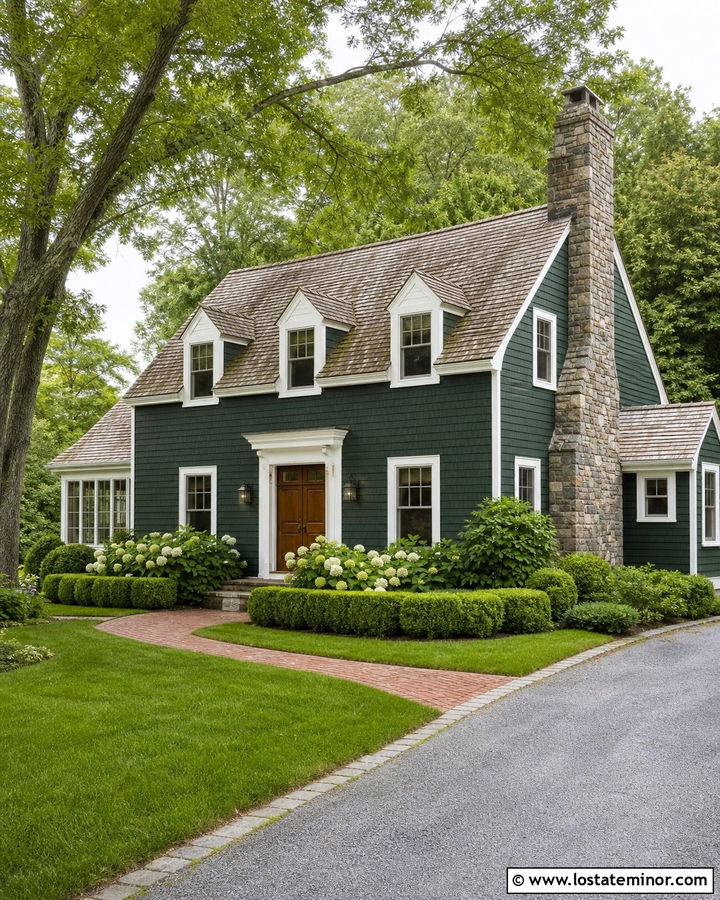
Could a small Cape Cod carry a dark exterior color without feeling cramped? Forest green siding works surprisingly well when paired with bright trim, compact proportions, and a textured fieldstone chimney. Use white around the dormers, windows, fascia, and front entrance to define the traditional roofline. Position a broad stone chimney on one gable end, using gray, taupe, and mossy brown stones that echo the landscape. Cedar roof shingles can weather naturally, while a medium-brown front door adds gentle warmth. Low hydrangeas, clipped hedges, and a curving brick walkway soften the architecture. This balanced combination makes the home appear cozy and substantial while allowing the stone chimney to serve as the strongest rustic accent.
5. Forest Green Ranch With Limestone Chimney
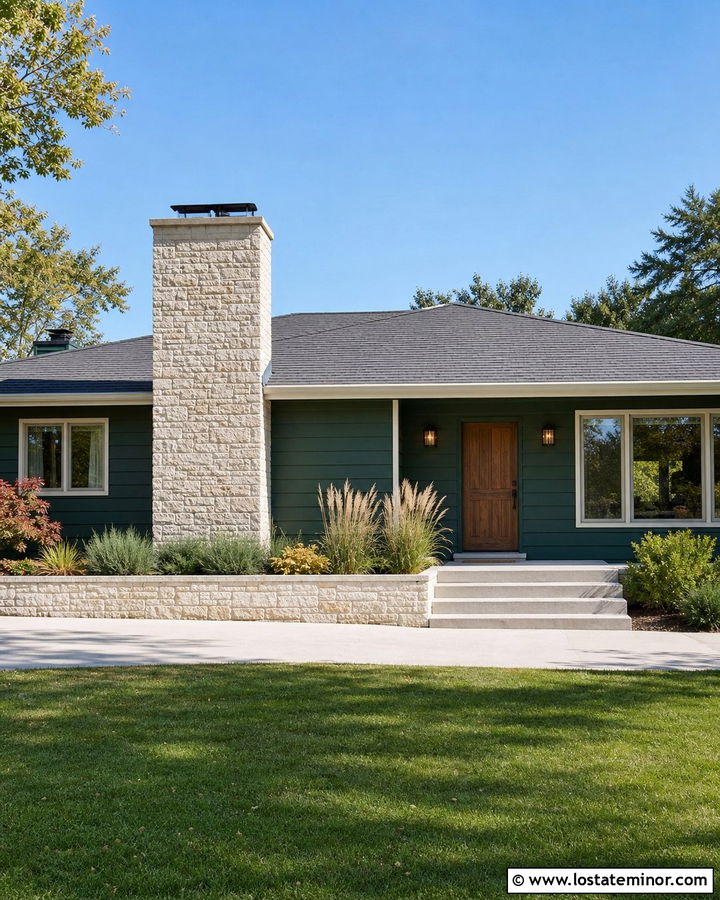
A long ranch house benefits from a tall limestone chimney that breaks up its horizontal shape. Cover the exterior in forest green lap siding and use soft beige trim around wide picture windows and shallow roof eaves. Creamy limestone with subtle gray veining creates a brighter focal point against the deep green walls. Extend the stone across part of the front elevation or around a raised planter so the chimney does not look isolated. A medium-gray roof, natural oak front door, and bronze exterior lights create an earthy transitional palette. Use broad concrete steps and ornamental grasses to emphasize the home’s low profile. The combination updates a familiar ranch exterior without hiding its simple, practical midcentury character.
6. Forest Green Tudor With Cream Stucco Chimney
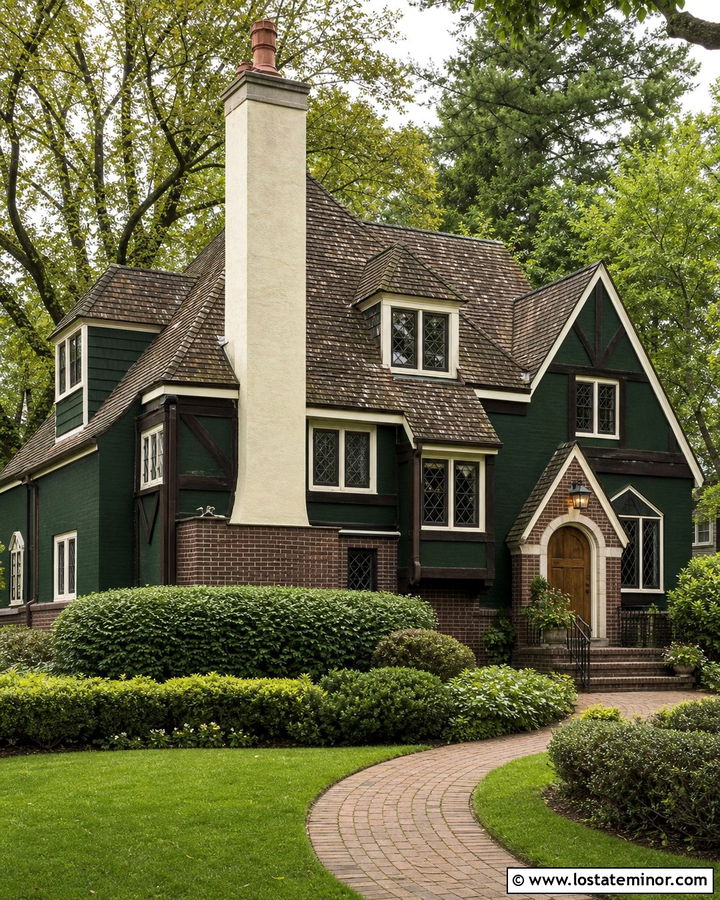
Forest green gives Tudor architecture an enchanting, old-world quality, especially when combined with cream stucco and dark timber details. Apply the green to lower-story lap siding or upper gable panels, then frame the facade with deep brown decorative beams. A wide cream stucco chimney can rise prominently near the front entrance, finished with a dark clay chimney pot. Add reddish-brown brick around its base for extra texture and repeat that brick along the arched walkway. Leaded-style windows, a stained oak door, and a weathered brown roof enhance the historic influence. Avoid brilliant white trim, which can feel too sharp. Warm ivory instead connects the green walls, chimney, timbering, and masonry into one cohesive exterior composition.
7. Forest Green Cottage With Cobblestone Chimney
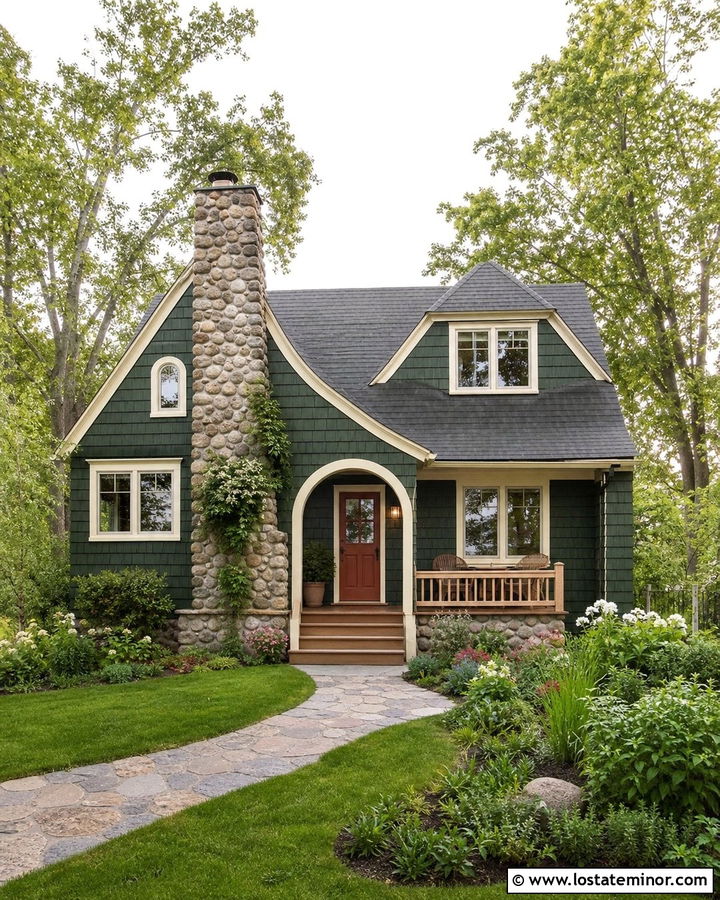
Picture a compact cottage surrounded by flowering shrubs, with a rounded cobblestone chimney rising above a steep roof. Forest green shingle siding creates a soft, storybook backdrop without competing with the masonry. Choose warm gray, brown, and muted beige cobbles for the chimney, then use matching stone around the foundation and garden path. Cream trim around divided-light windows keeps the facade cheerful. A muted rust-colored front door introduces a small touch of warmth that relates to the brown stones. Add a charcoal roof with gentle curves over the entry and a small cedar porch. Informal plantings, climbing vines, and low garden walls complete the setting while keeping the chimney visible as the home’s central architectural feature.
8. Forest Green Cabin With River Rock Chimney
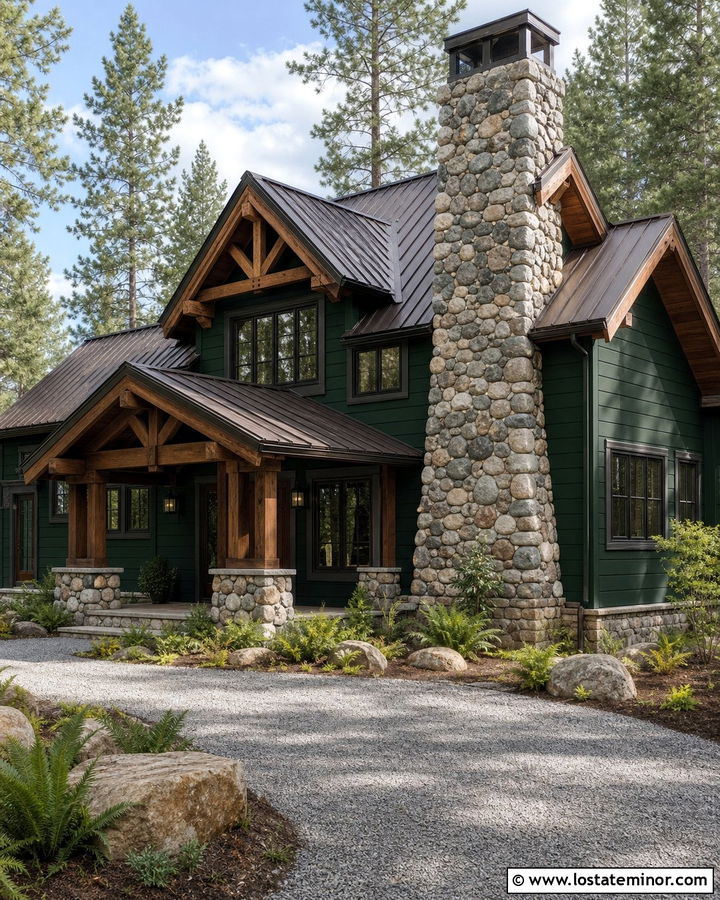
A forest green cabin looks naturally settled into a wooded property when paired with a rugged river rock chimney. Use wide wood siding or stained engineered planks in a deep green finish, complemented by dark bronze windows and exposed cedar beams. Build the chimney from rounded stones containing charcoal, brown, tan, and muted rust tones. Carry the same rock across the lower foundation to visually support the tall masonry structure. A dark brown metal roof works well in forest surroundings and requires less contrast than black. Include a generous covered porch, simple timber railing, and a solid wood front door. Native ferns, boulders, and a gravel walkway strengthen the rustic character without making the exterior appear unfinished or overly rough.
9. Forest Green Contemporary House With Black Brick Chimney
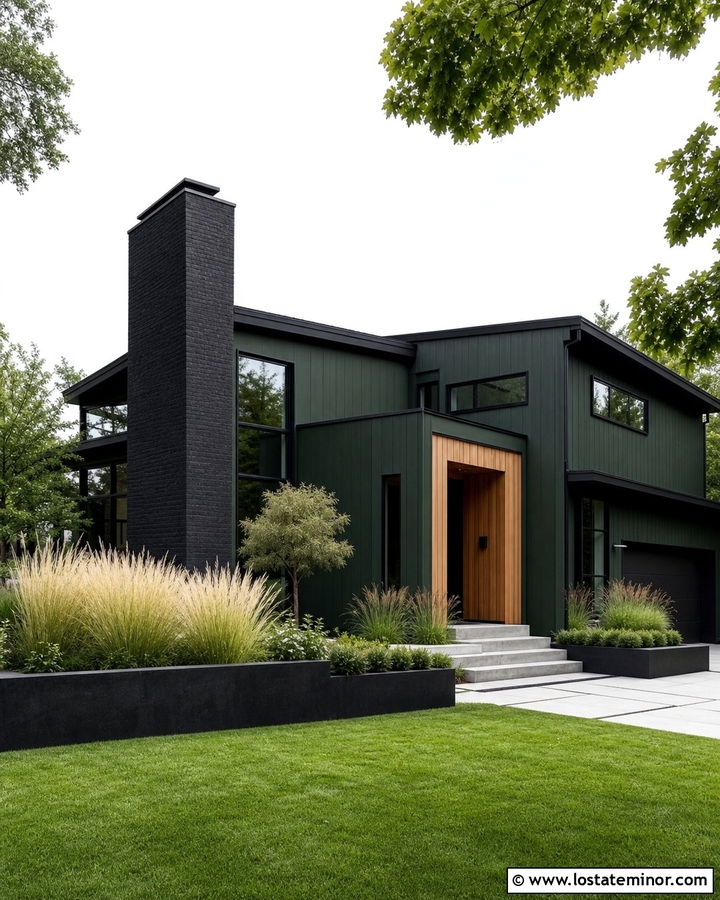
Clean geometry allows a black brick chimney to become a sculptural feature on a contemporary forest green house. Use smooth vertical siding on the main volumes, with black-framed windows and minimal trim. Position the chimney where it intersects two sections of the facade, making it visible from the street without overwhelming the entrance. Matte black brick creates subtle texture and connects naturally with the window frames, metal roof, and streamlined gutters. Add warm cedar cladding around the front door or garage to prevent the palette from becoming cold. Concrete steps, angular planting beds, and ornamental grasses reinforce the modern architecture. The resulting exterior is bold and dramatic, but natural materials help it remain approachable within a residential neighborhood.
10. Forest Green Split-Level With Gray Stone Chimney
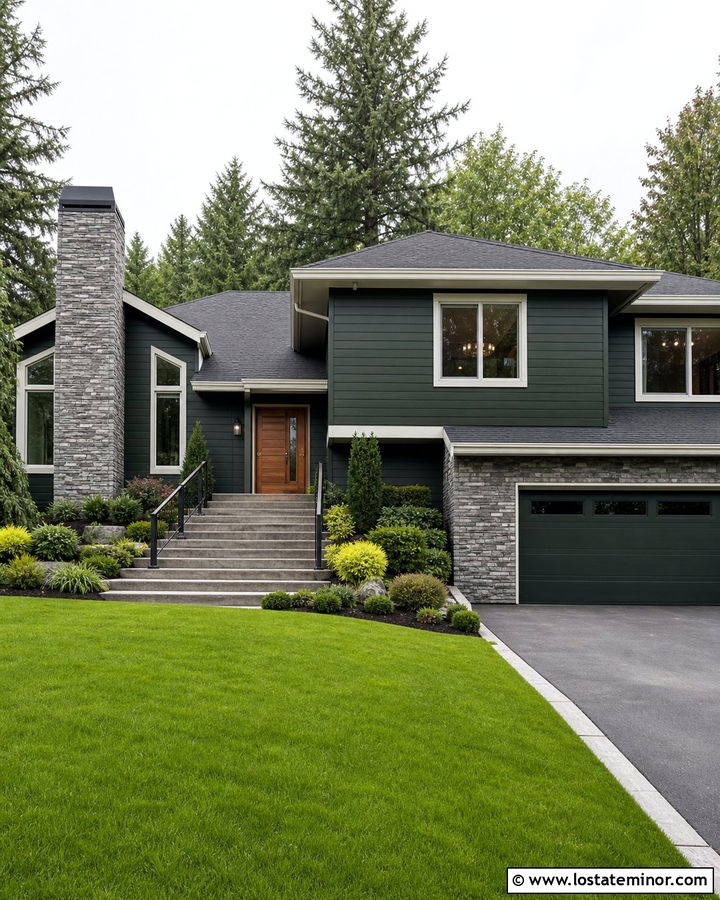
A prominent chimney can help unify the staggered rooflines and multiple elevations of a split-level home. Paint the siding forest green, then use medium-gray stacked stone on the chimney and lower garage wall. This repeated material creates a clear visual path across the exterior. Choose warm white trim for the windows, fascia, and entry surround, while keeping the garage door close to the green siding color. A stained wood front door marks the entrance without adding another strong hue. Dark gray shingles connect the roof to the masonry. Update the yard with broad steps, horizontal railings, and layered foundation plants. These details turn the chimney into an organizing feature rather than another competing element on an already complex facade.
11. Forest Green Victorian With Painted Brick Chimney
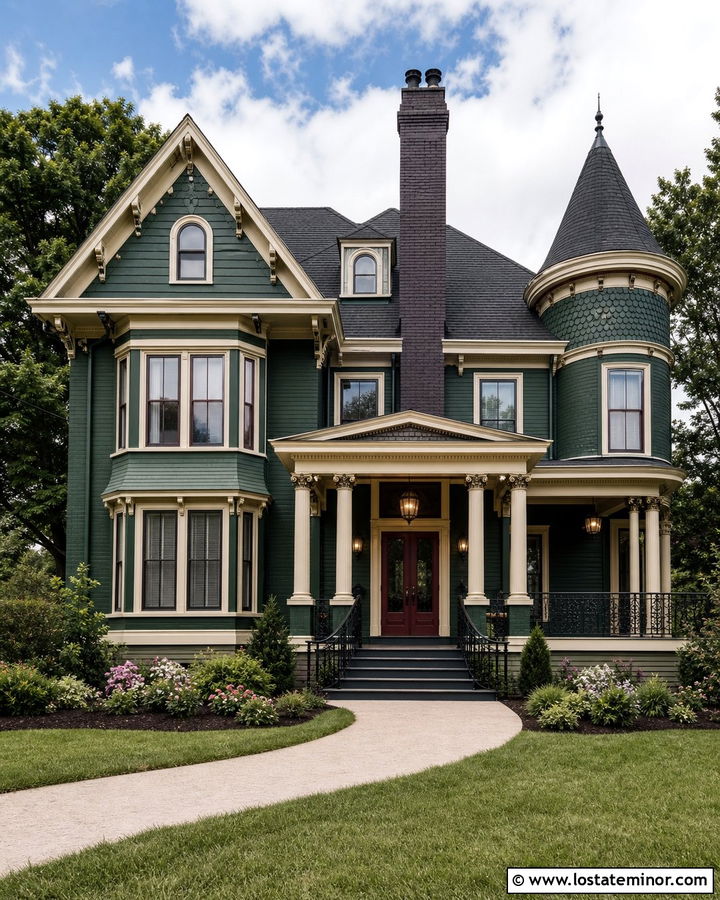
Ornate Victorian details become easier to appreciate when the exterior palette stays controlled. Forest green can cover the lap siding and decorative shingles, while muted cream highlights brackets, window casings, and porch columns. Paint an existing brick chimney a warm charcoal to coordinate with the roof and reduce visual competition from weathered or mismatched masonry. A dusty burgundy front door adds historically inspired color without overpowering the green. Use the same burgundy sparingly on small gable ornaments or porch details. Black metal railings and traditional lanterns provide definition. The complete palette feels rich but not cluttered. It also lets the home’s tower, bay windows, wraparound porch, and chimney stand out through shape and texture rather than numerous unrelated colors.
12. Forest Green Bungalow With Clinker Brick Chimney
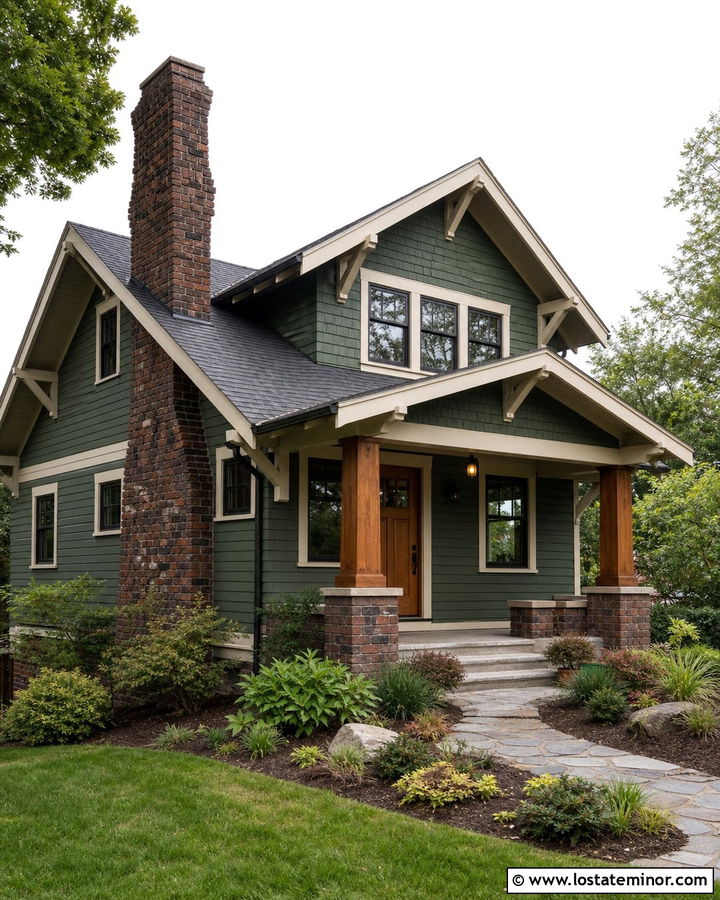
Clinker brick has irregular shapes, dark fired surfaces, and natural color variation that suit the handcrafted character of a bungalow. Pair a large clinker brick chimney with forest green lap siding and slightly lighter green shakes in the front gable. Use creamy tan trim instead of pure white to complement the brown, burgundy, and charcoal tones in the brick. Thick stained-wood porch columns, exposed rafters, and a divided-light oak door reinforce the Craftsman influence. Extend the brick across the porch piers and front steps so the chimney belongs to the larger design. A weathered charcoal roof keeps the look grounded. Deep porch seating and native landscaping can complete this relaxed exterior without distracting from its distinctive masonry workmanship.
13. Forest Green Saltbox With Weathered Brick Chimney
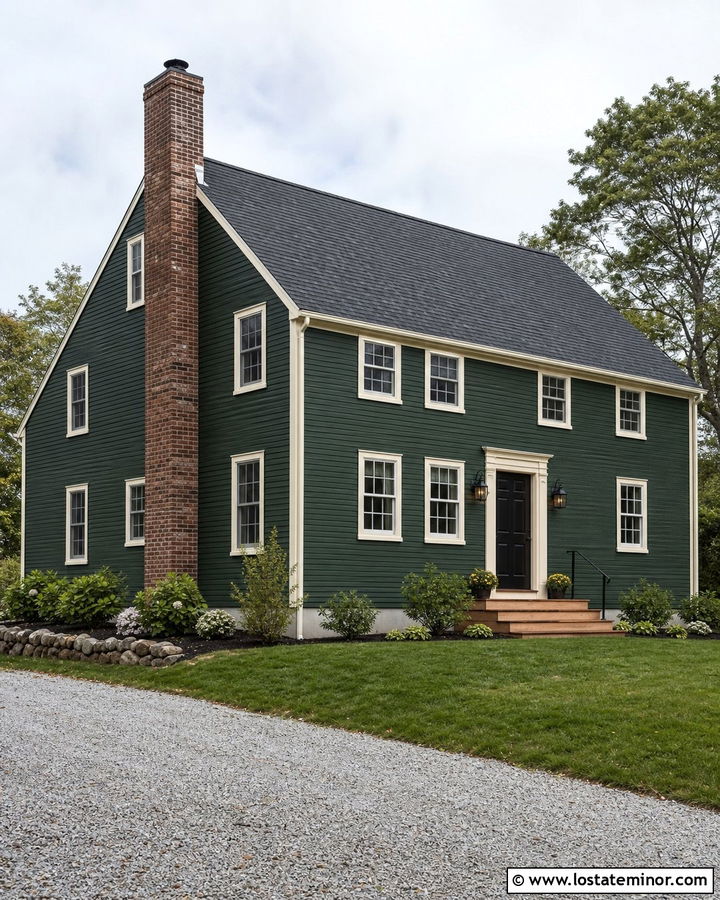
The steep rear roofline of a saltbox house creates an ideal backdrop for a tall, traditional chimney. Cover the exterior with forest green clapboard siding, then use warm off-white trim around simple multi-pane windows. A weathered brick chimney containing soft red, brown, and gray variations brings age and texture to the restrained facade. Avoid painting perfect historic brick unless repairs or mismatched additions make the surface visually distracting. A black or deep bronze front door adds definition, while cedar steps introduce a natural material near the entry. Choose a charcoal shingle roof with modest overhangs. Stone-edged planting beds, a gravel drive, and simple shrubs preserve the practical New England character while giving the dark green exterior welcoming curb appeal.
14. Forest Green Chalet With Stacked Stone Chimney
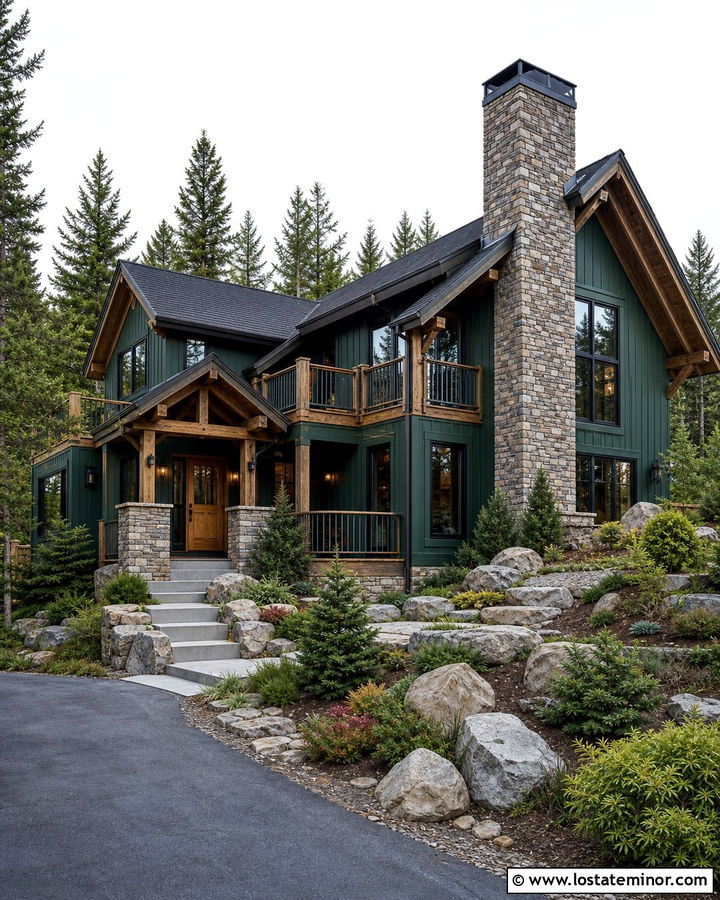
A mountain chalet needs a chimney with enough visual weight to balance its broad roof and exposed timber construction. Forest green siding allows the house to blend with surrounding evergreens, while a floor-to-roof stacked stone chimney creates a strong vertical centerpiece. Select ledgestone in gray, taupe, and deep brown, then repeat it around the foundation and porch columns. Warm cedar beams, balcony railings, and soffits provide contrast beneath the dark roof. Black window frames can outline large areas of glass without introducing a new color. Keep the entry door in a rich wood stain. Terraced landscaping, natural boulders, and a sloped stone walkway complete the mountain setting while preserving a polished, thoughtfully coordinated exterior appearance.
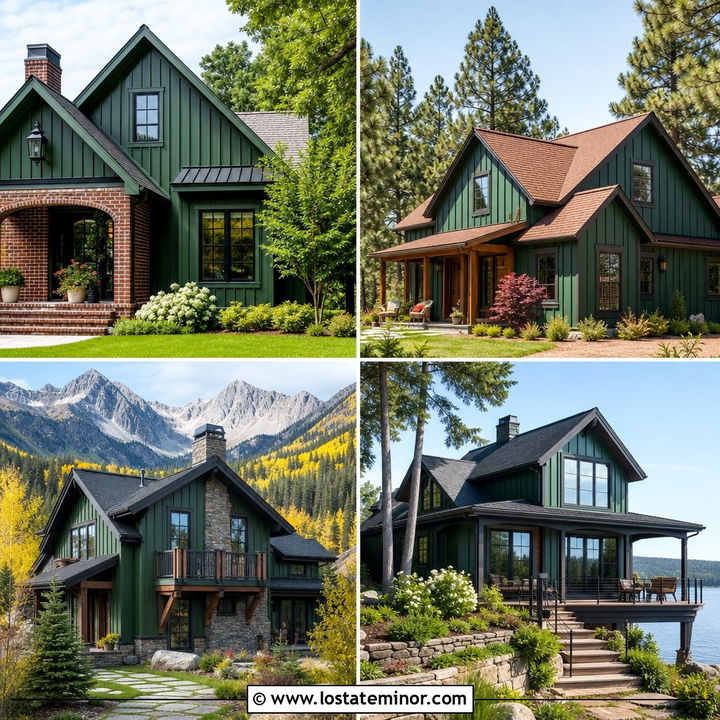
15. Forest Green Mediterranean House With Stucco Chimney
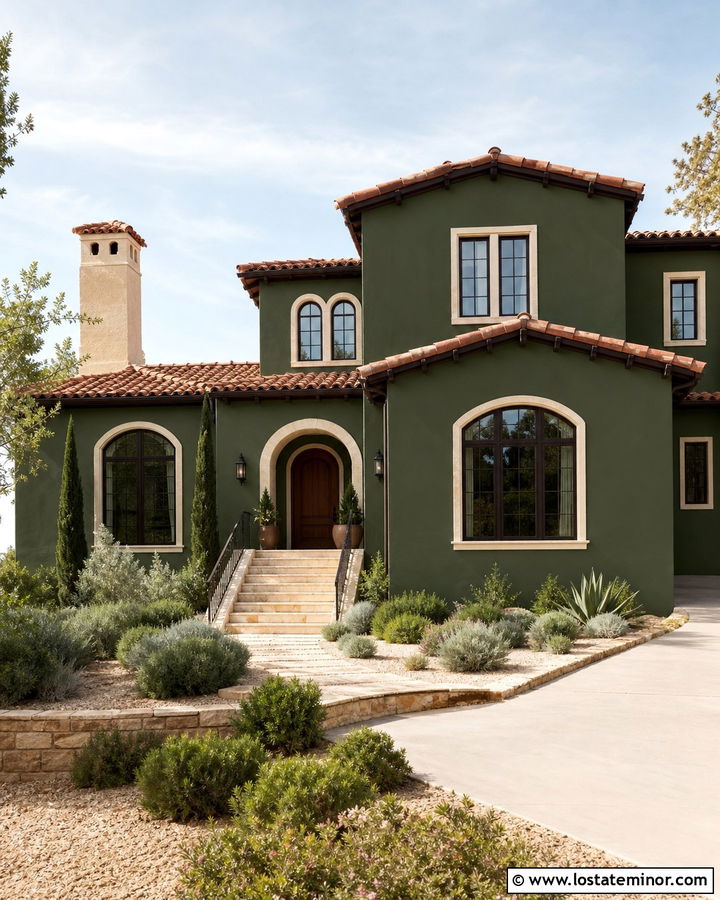
Forest green may be unexpected on a Mediterranean home, but it can look sophisticated when balanced with warm stucco and clay details. Use the green on smooth main walls or selected siding sections, then finish the chimney in sandy beige stucco. A terracotta chimney cap and clay tile roof bring warmth to the deep body color. Cream window surrounds, dark bronze frames, and a walnut entry door maintain a sun-baked, natural palette. Add limestone steps and wrought iron railings near the entrance. The chimney should have a simple tapered shape rather than excessive ornamentation. Drought-tolerant landscaping, gravel beds, and olive-toned foliage complete the full exterior while allowing forest green to feel connected to the home’s warm architectural materials.
16. Forest Green Prairie House With Buff Brick Chimney
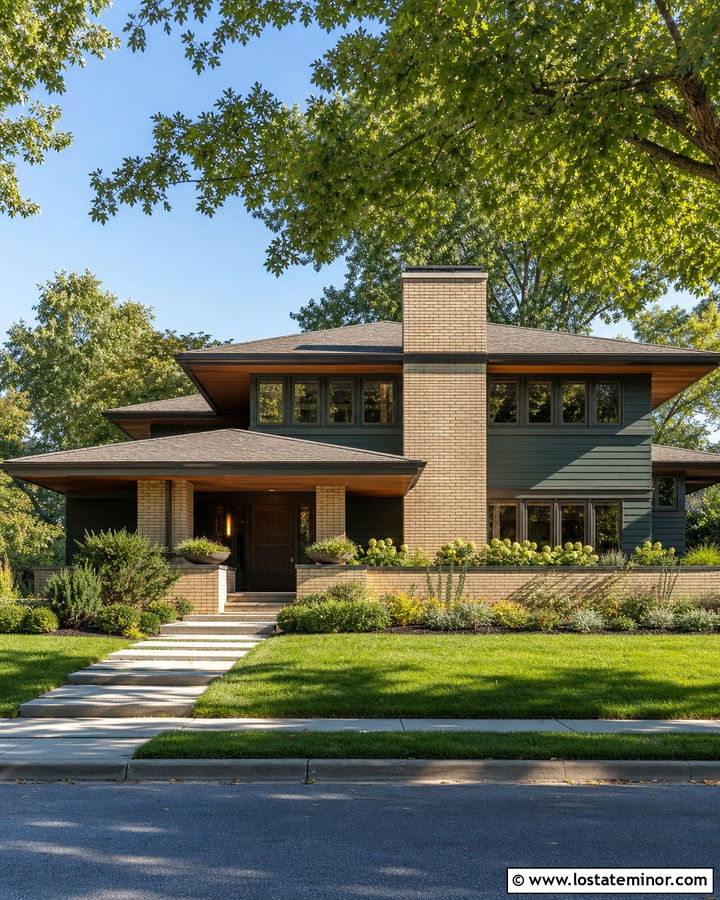
Low rooflines and strong horizontal bands define a Prairie-style house, so the chimney should appear broad rather than narrow. Pair forest green stucco or horizontal siding with a wide buff brick chimney near the center of the facade. Select brick with beige, tan, and subtle brown tones to brighten the composition without introducing stark white. Repeat the masonry on low garden walls and porch piers. Bronze-framed windows, deep roof overhangs, and warm wood soffits enhance the architecture’s horizontal emphasis. A muted brown front door blends smoothly into the palette. Use linear planting beds and rectangular concrete pavers across the front yard. Together, these features create a grounded exterior in which the chimney feels structurally and visually essential.
17. Forest Green Midcentury House With Block Chimney
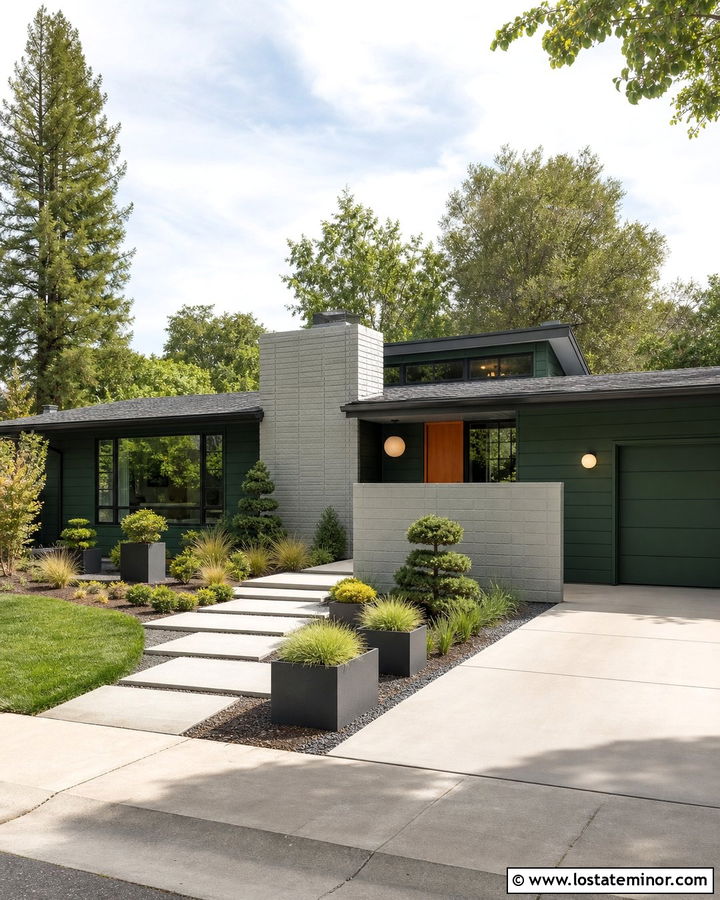
A concrete block chimney can become a striking period feature on a forest green midcentury home. Choose smooth horizontal siding or flat exterior panels in a deep green, then finish the chimney in light gray textured masonry block. The pale surface provides contrast while maintaining the clean simplicity associated with midcentury design. Repeat the block on a short privacy wall or raised planter near the entrance. Add black-framed picture windows, a warm orange-brown wood door, and a low charcoal roof. Slim house numbers and simple globe lighting can reinforce the era without turning the exterior into a theme. Drought-tolerant grasses, sculptural shrubs, and wide concrete pavers keep the landscaping open, geometric, and compatible with the architecture.
18. Forest Green Dutch Colonial With Brick Chimney
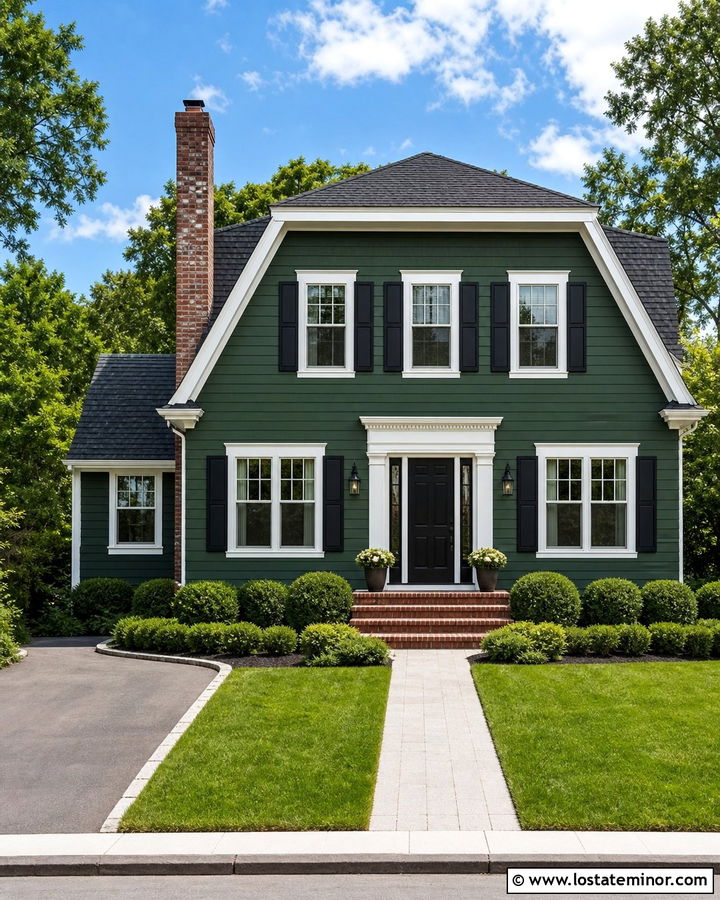
A forest green Dutch Colonial gains depth when its sweeping gambrel roof is balanced by a traditional brick chimney. Use dark green lap siding below the roof and matching shingles on the upper dormers. Warm white trim helps define the curved roof edges, windows, and central entry. Choose aged red brick with dark brown accents for the chimney, then repeat the material on the steps and walkway border. Black shutters and a black front door create a formal rhythm across the symmetrical facade. A medium-charcoal roof prevents the upper portion from appearing too heavy. Rounded shrubs and a simple lawn soften the strong geometry. The finished exterior remains unmistakably traditional while using forest green to create a more distinctive identity.
19. Forest Green French Country House With Limestone Chimney
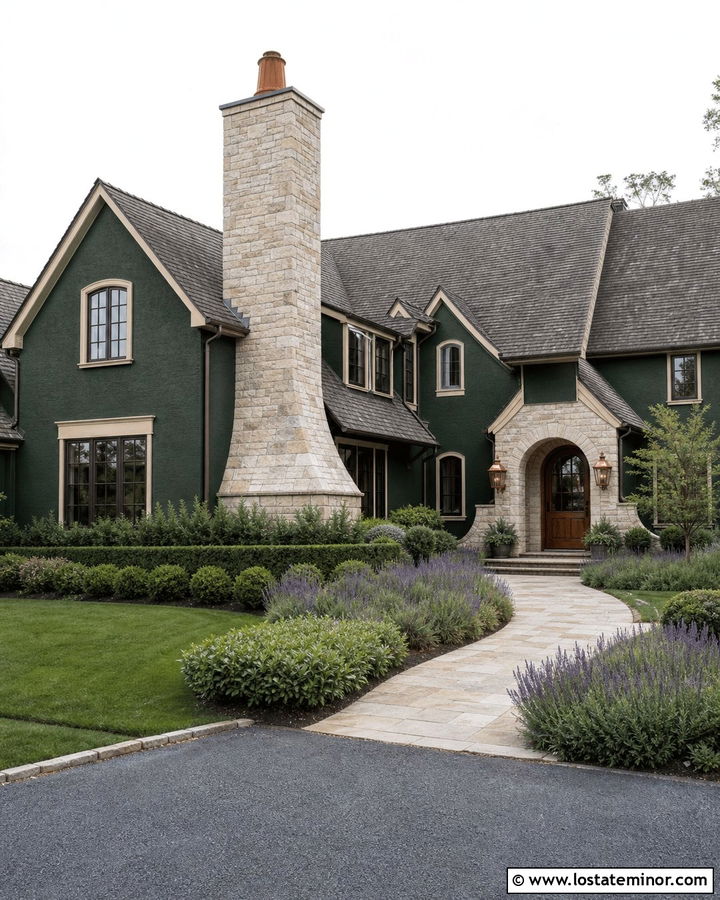
Soft limestone can lighten the commanding appearance of a forest green French country exterior. Use green-painted stucco or lap siding across the main walls, framed by warm cream trim and dark bronze windows. A tall limestone chimney with a gently flared base should include pale beige and light gray blocks in varied sizes. Repeat that stone around the arched entrance and lower facade to create architectural continuity. Choose a weathered charcoal roof with steep hips and small dormers. A medium-toned wood door and copper-finished lanterns contribute warmth without introducing bright color. Informal hedges, lavender-like plantings, and a curved stone walkway complete the countryside influence. The overall exterior feels gracious, layered, and comfortable rather than overly formal.
20. Forest Green Georgian House With Cream Brick Chimney
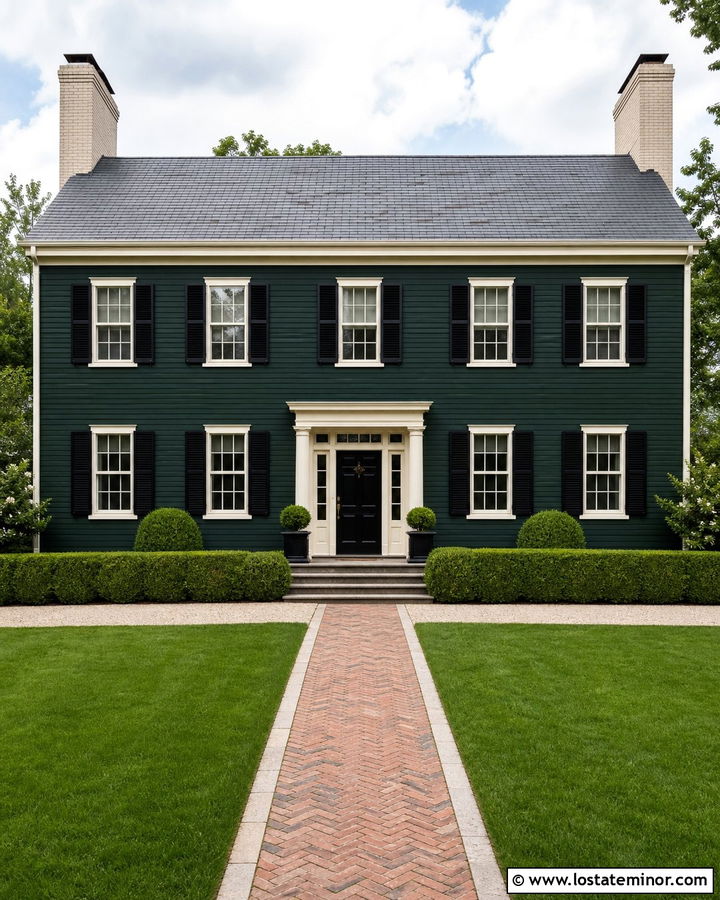
Symmetry is the defining strength of Georgian architecture, and a pair of cream brick chimneys can reinforce that balanced appearance. Cover the main facade in forest green clapboard siding with restrained ivory trim. Place matching chimneys at opposite ends of the roof so they frame the house evenly. Cream or light taupe brick keeps these tall features visible against the dark siding without producing the sharpness of painted white masonry. Use black shutters, a polished black door, and aged brass hardware for classic contrast. A dark slate-colored roof adds weight above the light cornice. Straight brick walkways, clipped hedges, and symmetrical entry planters complete the design, giving the forest green exterior a dignified and carefully ordered presentation.
21. Forest Green Mountain House With Ledgestone Chimney
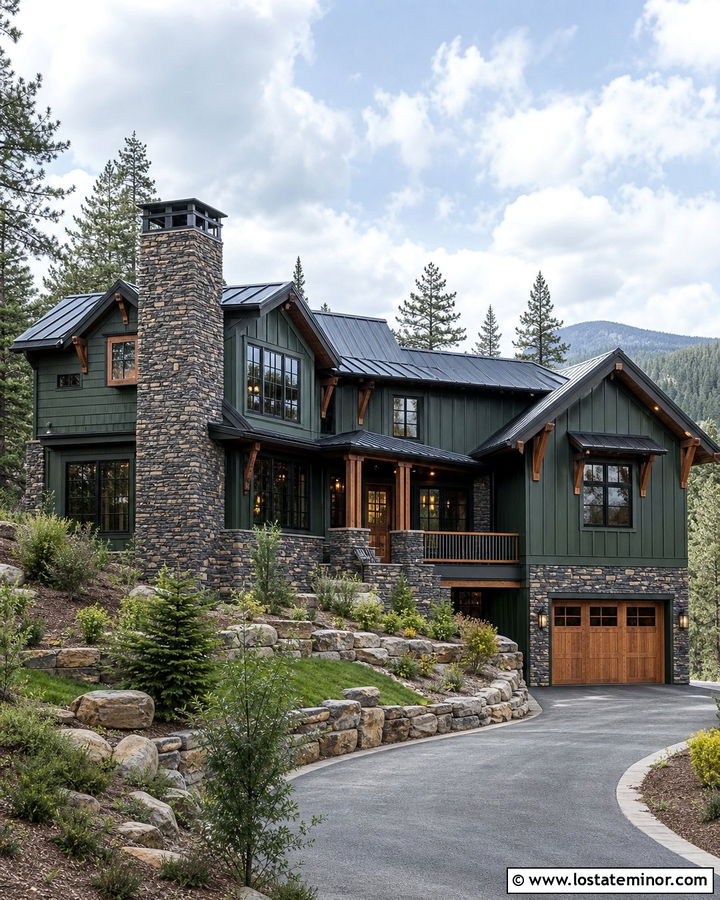
On a sloped mountain property, a towering ledgestone chimney can make the entire house feel secure and connected to the terrain. Use forest green board-and-batten siding on tall gables, paired with warm cedar soffits, brackets, and porch beams. The chimney should feature thin pieces of charcoal, brown, and gray ledgestone with rough, irregular edges. Extend the stone along the walkout foundation so it appears to rise naturally from the ground. Black windows and a dark metal roof create crisp outlines against the green facade. A cedar garage door introduces warmth across a large visual area. Native shrubs, stone retaining walls, and a winding driveway complete the rugged setting while maintaining polished mountain-home curb appeal.
22. Forest Green Lake House With Granite Chimney
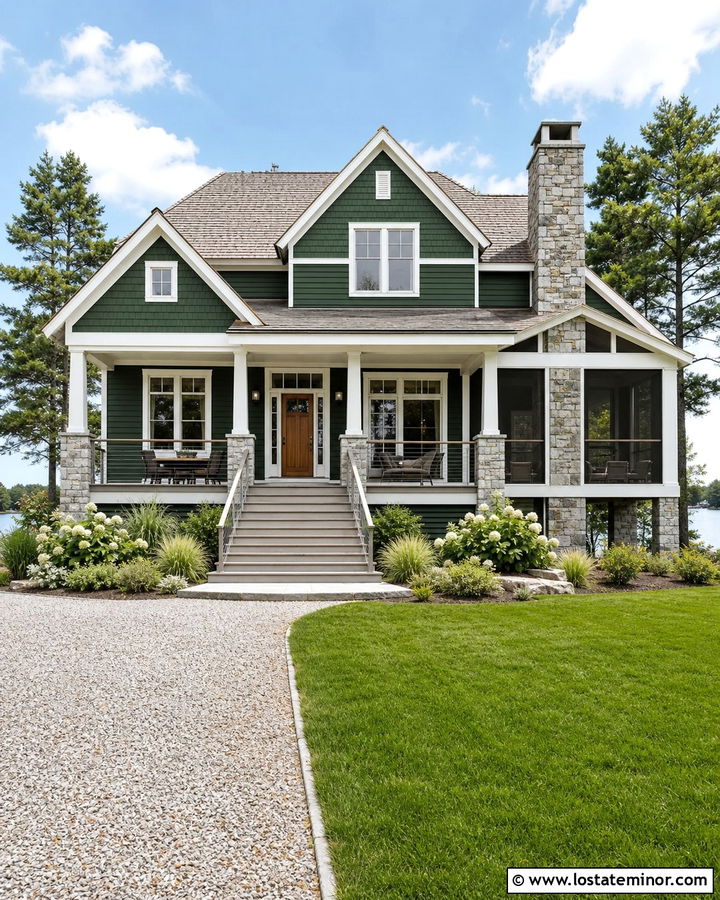
Cool gray granite gives a forest green lake house a clean regional character that feels both rustic and refreshing. Apply the green to horizontal siding and shingled gables, then use crisp white trim to brighten the windows, porch, and roof edges. Build the chimney from chunky granite pieces containing gray, silver, and subtle pink undertones. Repeat the stone on porch piers or the lower foundation. A weathered gray roof connects the masonry to the upper facade, while a natural teak or cedar door warms the entrance. Use a screened porch, broad steps, and simple cable railings to support casual outdoor living. Hydrangeas, ornamental grasses, and a light gravel drive complete this relaxed waterside exterior without obscuring the chimney.
23. Forest Green Coastal Cottage With Pale Stone Chimney
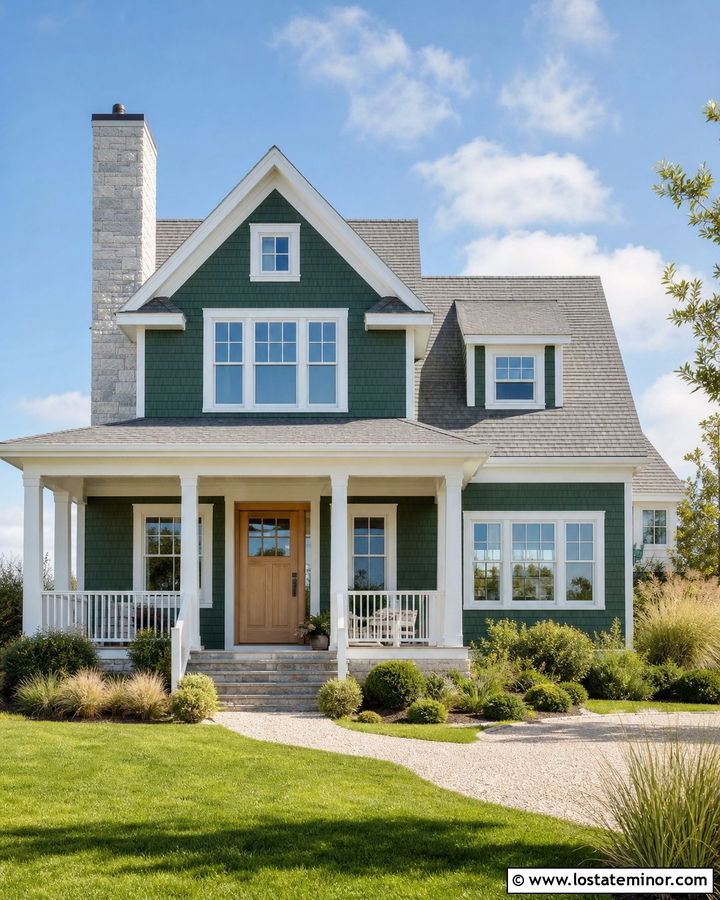
Forest green offers a richer alternative to the pale blues commonly associated with coastal cottages. Keep the look light by pairing green shingle siding with white trim, a soft gray roof, and a pale stone chimney. Use limestone or light granite with minimal yellow coloring so the masonry relates to sandy walkways and weathered coastal materials. A light natural-wood door and porch floor bring subtle warmth. White porch railings, simple square columns, and divided-light windows preserve the cottage character. Repeat a small amount of stone around the front steps to integrate the chimney. Wind-tolerant grasses, rounded shrubs, and a shell-colored gravel path frame the house while allowing the full green facade to remain bright, clear, and inviting.
24. Forest Green Suburban House With Charcoal Brick Chimney
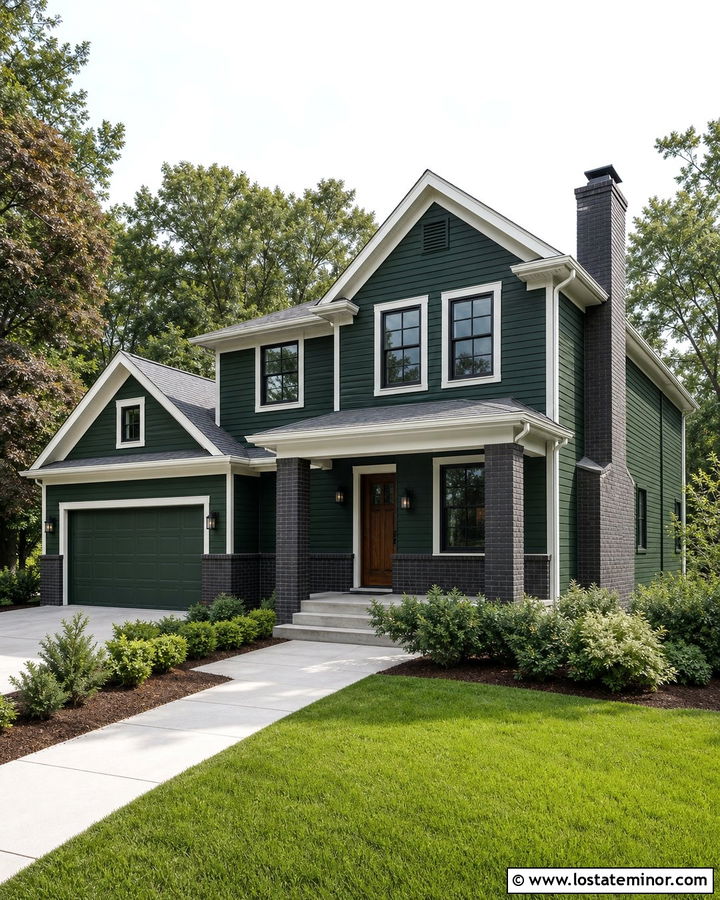
An ordinary suburban exterior can gain considerable depth from a charcoal brick chimney and a controlled forest green palette. Use green horizontal siding across the main house, with warm white trim around windows and roof edges. Charcoal brick can cover the chimney, garage base, and entry columns, creating repeated dark accents across the facade. Choose a medium-gray roof rather than solid black so each architectural layer remains visible. A natural walnut front door adds warmth, while a forest green garage door helps the wide garage recede. Black sconces and simple railings complete the update. Foundation shrubs, a tidy lawn, and a widened front walkway make the house feel welcoming without relying on expensive structural changes or complicated decorative details.
25. Forest Green Modern Farmhouse With Stone Chimney
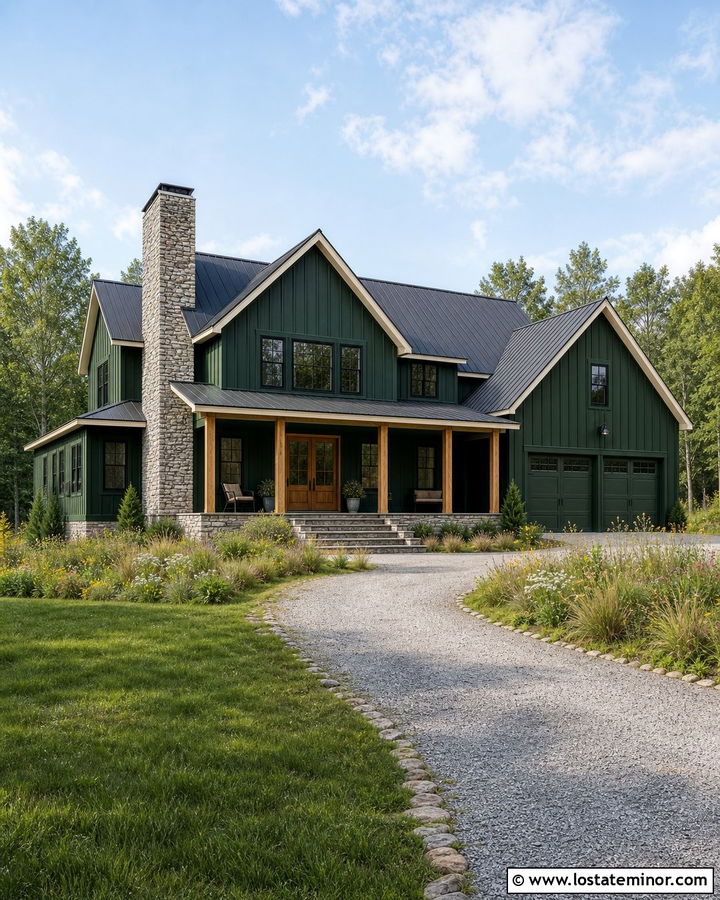
A modern farmhouse can carry forest green beautifully when the chimney, porch, and roof create clear visual contrast. Use vertical green board-and-batten siding with black windows and a charcoal standing-seam metal roof. Place a tall gray fieldstone chimney near the center or along a prominent gable, then repeat the stone around the porch foundation. Natural cedar posts, brackets, and double entry doors soften the dark palette. Instead of bright white trim, use a subdued warm cream on fascia boards and small connecting walls. A matching green garage door keeps attention on the entrance and chimney. Broad porch steps, simple black lights, and loose meadow-style landscaping complete a modern rural exterior that feels strong, natural, and thoughtfully balanced.
26. Forest Green A-Frame With Black Metal Chimney
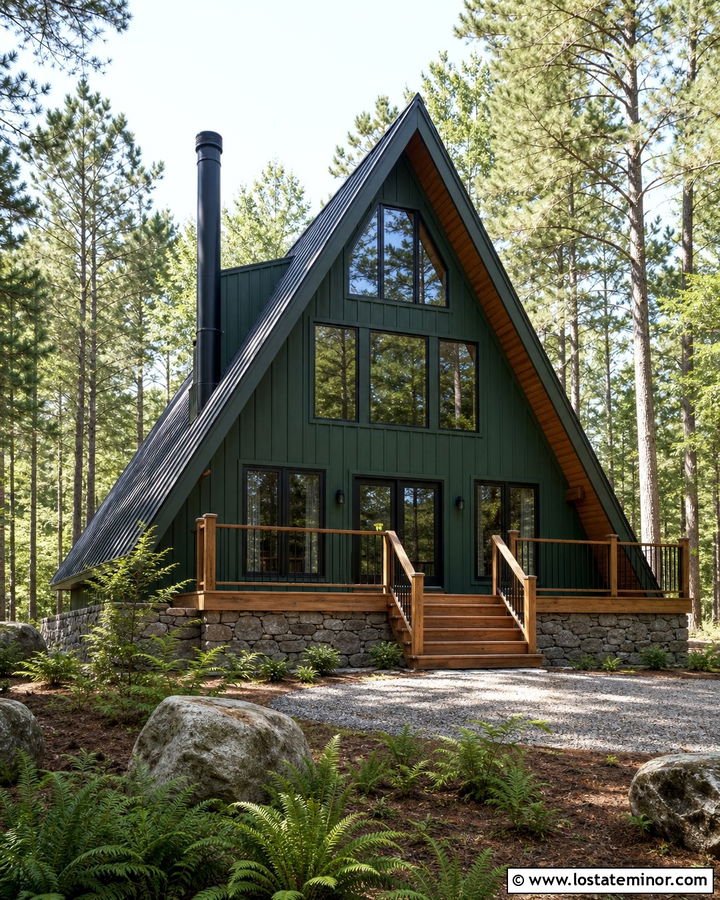
An A-frame house already has a dramatic silhouette, so its chimney should be streamlined and carefully positioned. Cover the steep exterior walls in forest green vertical wood siding, then add a matte black metal chimney that runs cleanly beside the roofline. Black window frames and a dark standing-seam roof make the chimney feel integrated rather than added later. Warm cedar decking, front steps, and soffits prevent the design from appearing severe. A stone base in gray and brown tones can ground the triangular structure and provide another natural texture. Keep railings simple and open. Ferns, pine trees, and a gravel approach frame the complete facade while preserving clear views of the A-frame shape, glazing, and chimney.
27. Forest Green English Cottage With Warm Brick Chimney
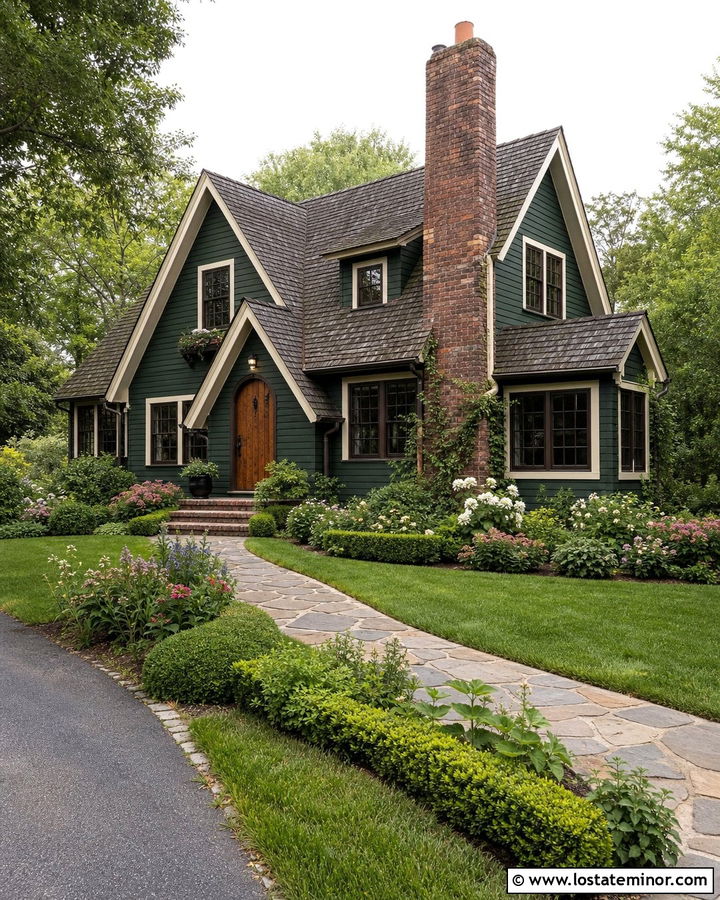
Uneven rooflines, small dormers, and a warm brick chimney give a forest green English cottage an inviting sense of age. Use dark green stucco or narrow lap siding, paired with creamy trim and dark brown window frames. Select handmade-look brick in muted red, plum, and brown for the chimney, repeating it on the arched entry steps. A weathered wood or charcoal roof complements the irregular architecture. Choose an oak plank door with black iron hardware to reinforce the traditional character. Allow climbing greenery to frame selected walls without covering the masonry or windows. Curved paths, layered flower beds, and low hedges create a relaxed garden setting. The coordinated materials make the cottage feel charming but still practical and well maintained.
28. Forest Green Lodge With Dual Stone Chimneys
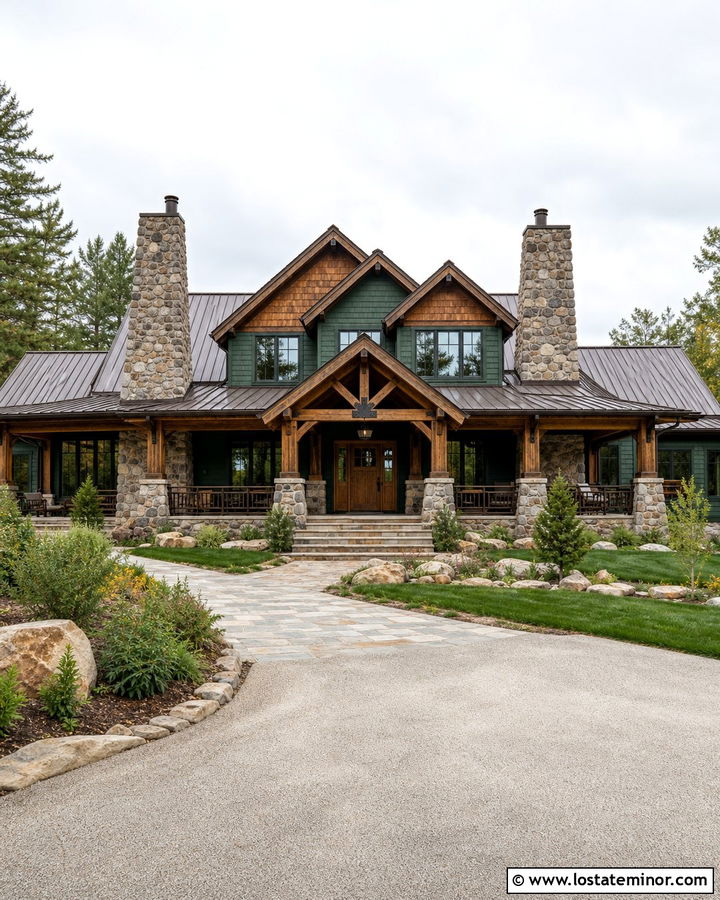
Large lodge architecture needs substantial features, and two stone chimneys can balance a broad, multiwing facade. Use forest green wood siding on the main walls with cedar shingles in the gables. Construct matching chimneys from oversized gray and brown fieldstone, positioning them at opposite ends of the roof or on separate wings. Repeat the same masonry around the foundation, porch columns, and front steps. Heavy timber beams and a natural wood door bring warmth between the stone elements. A dark brown metal roof creates a softer effect than black. Wide windows, a deep covered porch, and restrained native landscaping complete the full composition. The symmetrical masonry gives the lodge a permanent, grounded appearance suited to a wooded property.
29. Forest Green Small House With Slim Brick Chimney
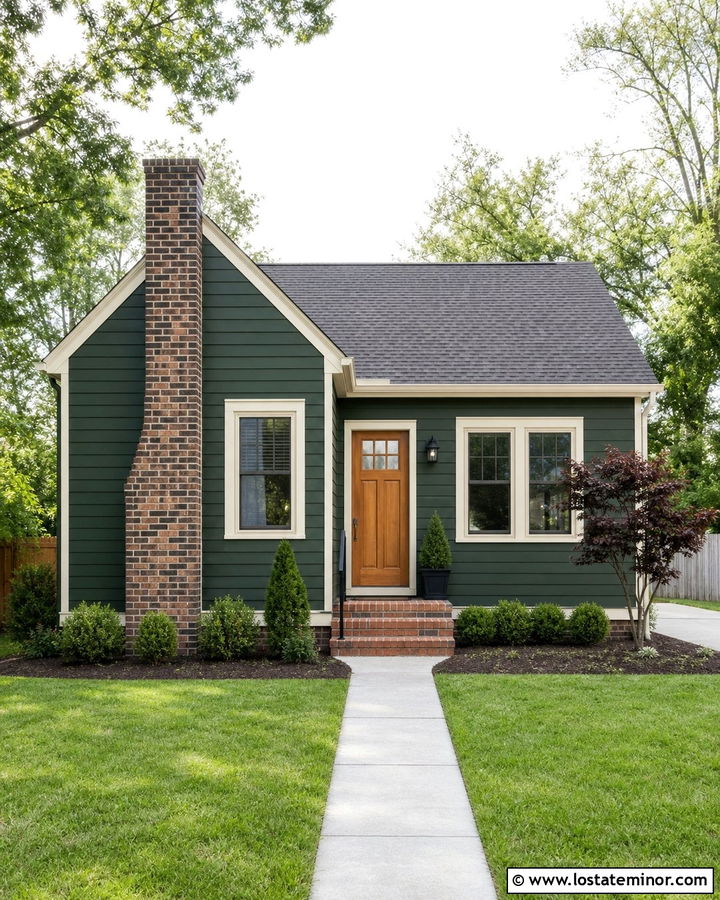
A small house does not need an oversized chimney to gain architectural character. Choose a slim brick design that rises neatly along one gable without blocking windows or crowding the roof. Forest green lap siding makes the compact facade feel distinctive, while cream trim keeps the windows and entrance clearly defined. Use narrow bricks in brown, muted red, and charcoal tones, then repeat them on a small front stoop. A medium-gray roof prevents the upper half from looking too heavy. Add a honey-toned wood door and simple black lighting for warmth and contrast. Compact shrubs, a narrow walkway, and one ornamental tree frame the house efficiently. Every element contributes to the scheme without overwhelming the modest structure.
30. Forest Green Luxury House With Mixed Masonry Chimney
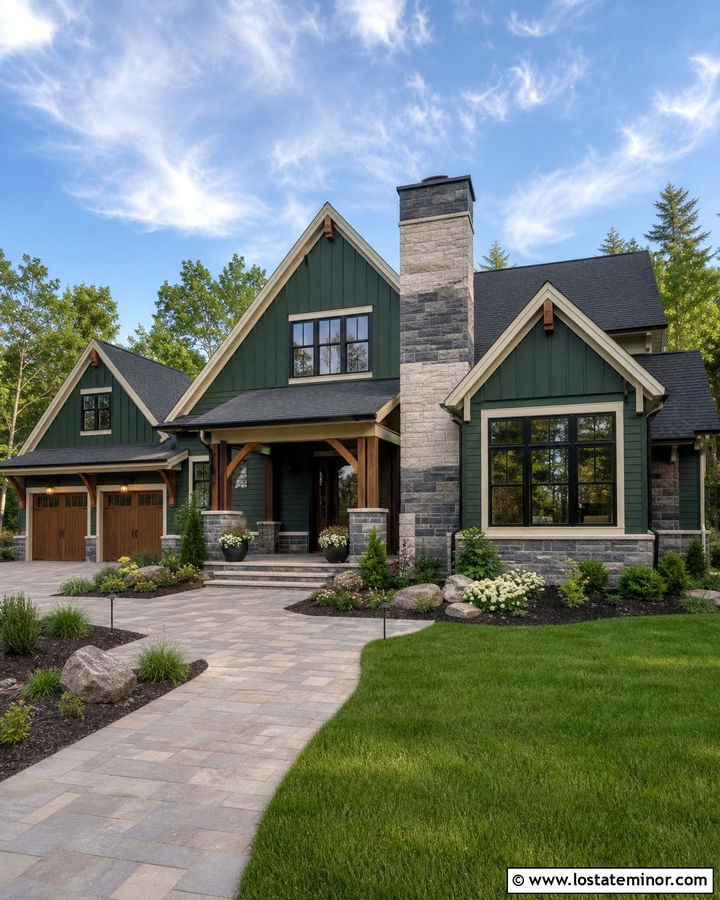
A luxury exterior can combine forest green siding with an impressive mixed-masonry chimney, provided the material palette remains disciplined. Use deep green board-and-batten on tall gables and horizontal siding on lower wings. Build the chimney from large limestone blocks accented with smaller pieces of charcoal ledgestone. Repeat both materials sparingly around the entrance and foundation. Black windows and a dark slate roof create polished contrast, while walnut garage doors and exposed cedar beams warm the expansive facade. Cream trim should be limited to key rooflines and window surrounds. Layered landscaping, a broad stone walkway, and an open driveway complete the curb view. The final design feels detailed and upscale without allowing the chimney or siding to dominate independently.
Conclusion:
The most successful **30 Forest Green House Design With Chimney Ideas** treat the chimney as part of a coordinated exterior rather than a stand-alone feature. Forest green siding can support traditional red brick, pale limestone, rugged fieldstone, charcoal masonry, or streamlined black metal. The right choice depends on the house style, roof color, surrounding landscape, and amount of contrast you want. Repeat the chimney material on steps, foundations, columns, or garden walls to create visual continuity. Then use trim, windows, doors, and wood accents to balance the darker body color. Before committing, compare large exterior samples beside the actual masonry in morning and afternoon light. This simple step helps every color and texture work together naturally.

Related posts: