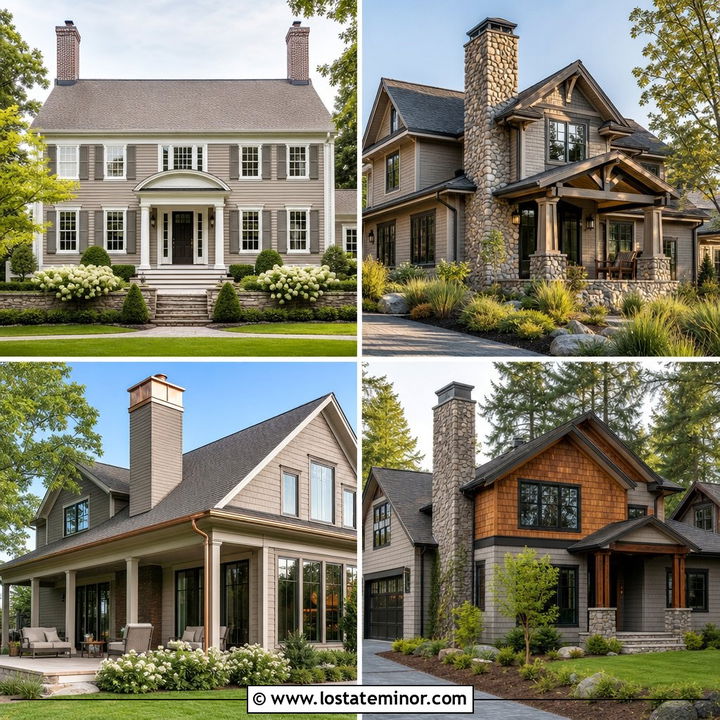
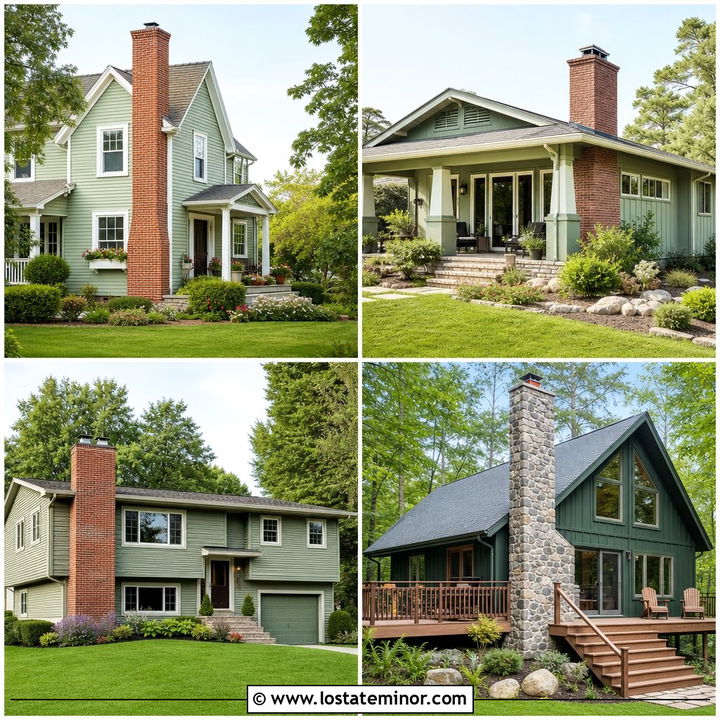
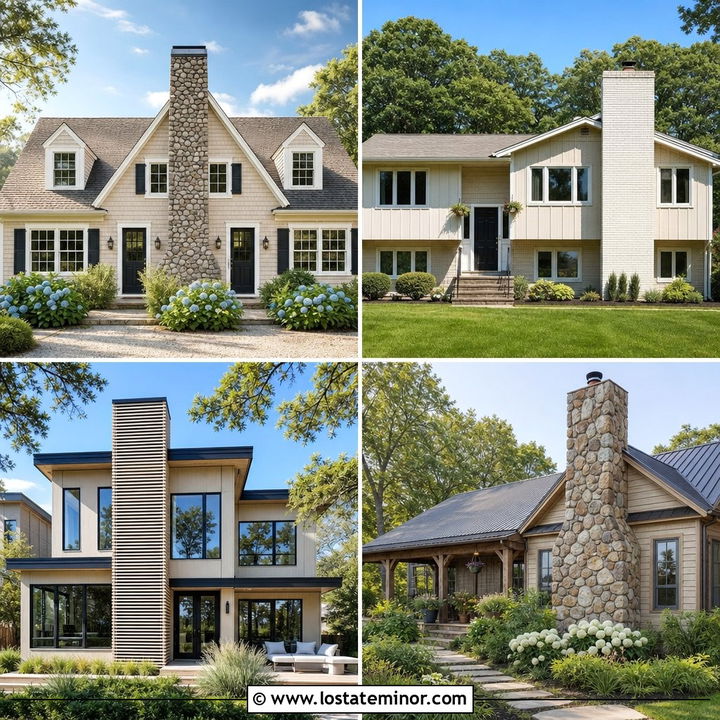
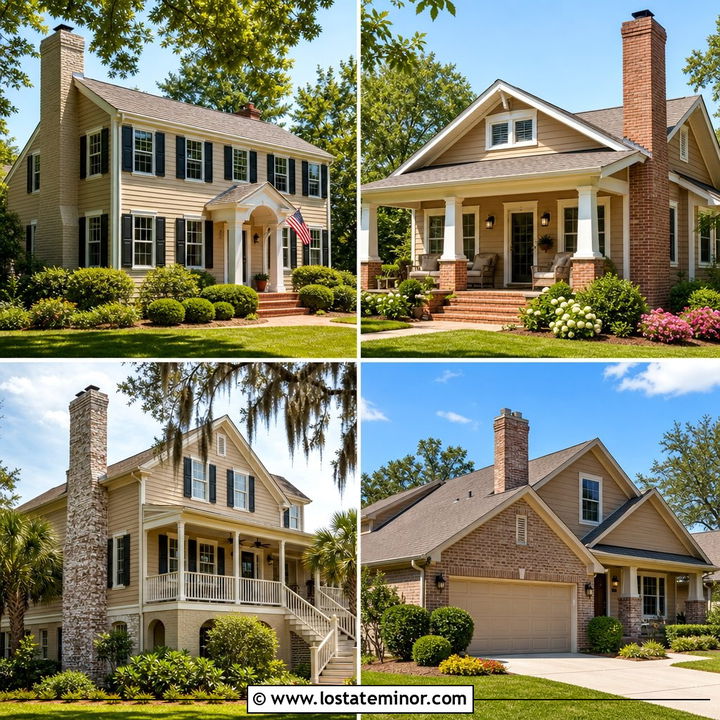
A taupe exterior can feel warm, refined, and deeply connected to its surroundings, especially when the chimney becomes part of the overall color scheme. These 30 Taupe House Design With Chimney Ideas explore complete exterior looks rather than treating masonry as an afterthought. You will find taupe siding, stucco, shingles, and painted brick paired with red brick, limestone, fieldstone, whitewashed masonry, and other chimney finishes. Each combination also considers trim, roofing, doors, windows, porches, and landscaping. That makes it easier to visualize how the entire facade will look from the curb. Whether you are updating a ranch or planning a new Tudor, use these complete exterior schemes to guide your project. Here are 30 Taupe House Design With Chimney Ideas.
1. Taupe House With Red Brick Chimney
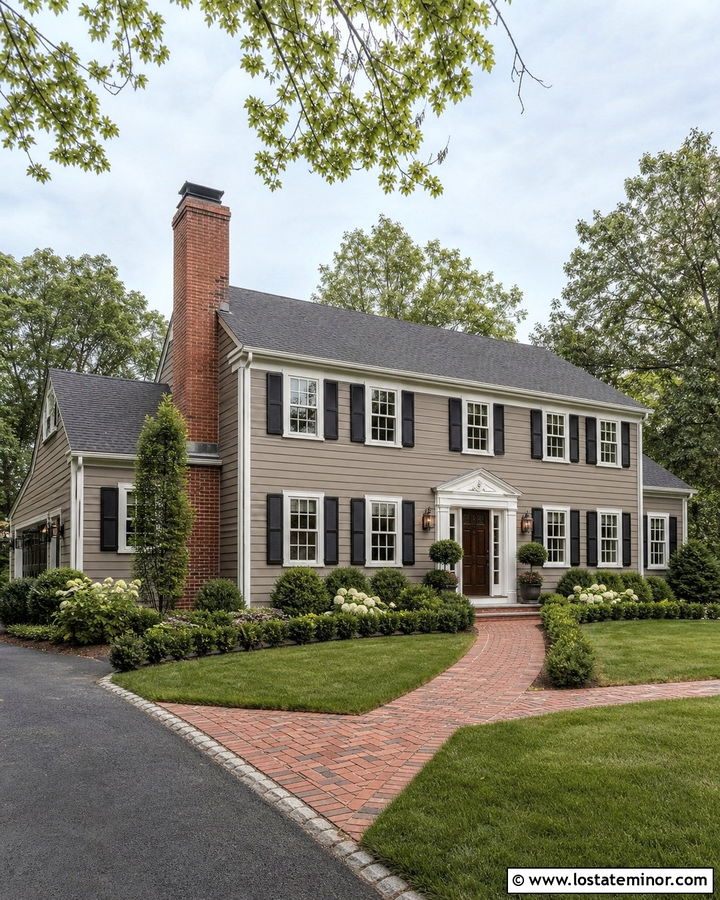
A traditional red brick chimney gives warm taupe siding a comfortable, established appearance. Choose a taupe with brown or beige undertones so it connects naturally with the earthy reds in the masonry. Crisp white window trim can brighten the facade, while black shutters and a charcoal roof add structure. Repeat the brick near the entry with a matching walkway, porch floor, or low garden border. A medium-stained wood door introduces another warm material without competing with the chimney. This combination works especially well on Colonial and traditional two-story homes with symmetrical windows. Keep foundation plantings simple and balanced. Dark green shrubs, ornamental grasses, and cream flowers soften the brick while allowing the chimney to remain a strong architectural feature.
2. Taupe House With Whitewashed Brick Chimney
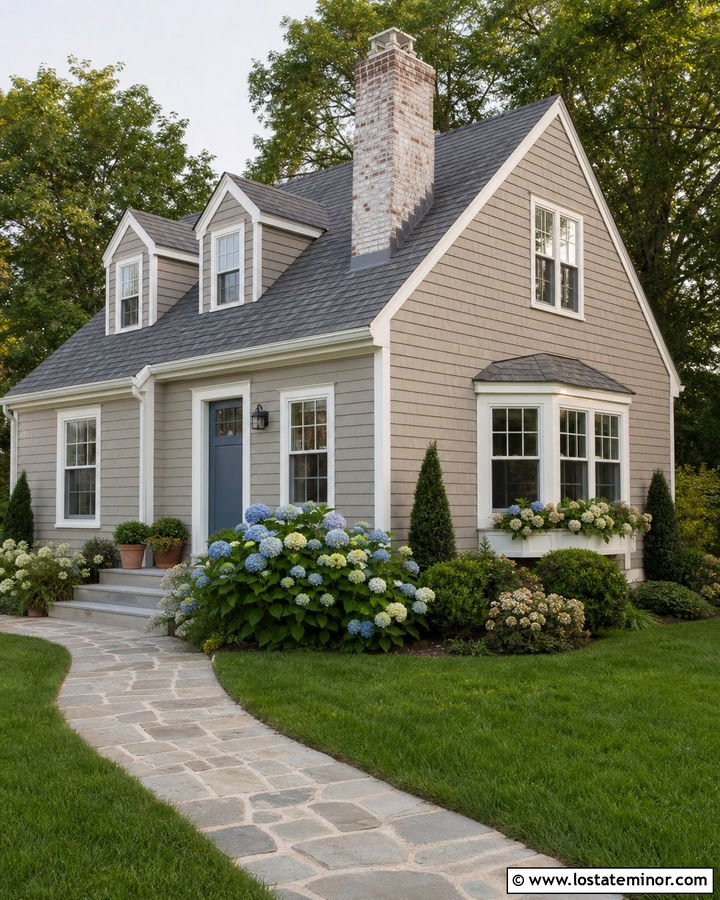
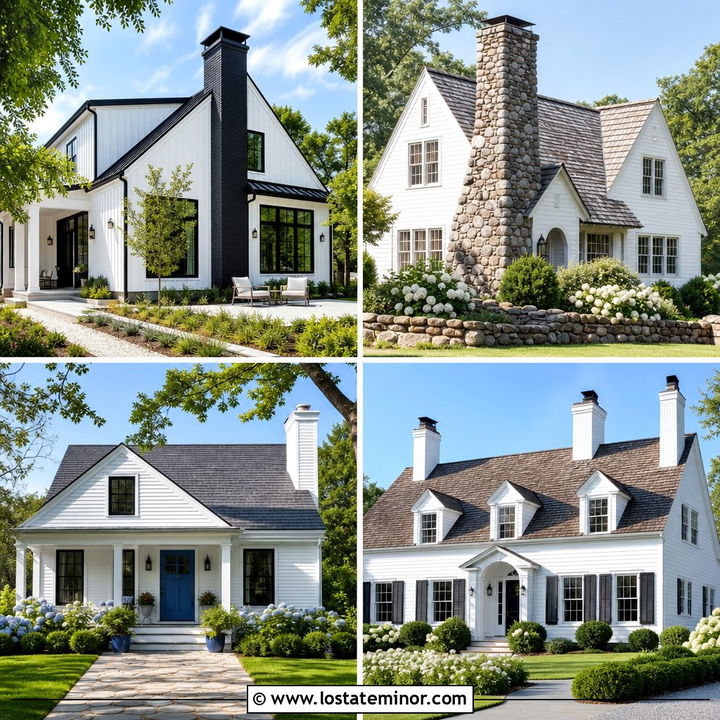
Whitewashing an existing brick chimney can create a softer transition against a light taupe exterior. The remaining variations in the brick prevent the chimney from looking flat, while the pale finish keeps the house feeling bright. Pair the scheme with warm white trim instead of a sharp blue-white. A muted blue-gray front door can add gentle color, and weathered zinc lighting provides a subtle aged accent. This look is particularly fitting for a Cape Cod house with cedar shingles, divided-light windows, and a steep roof. Carry the whitewashed texture to a small foundation wall or porch column for visual continuity. Gray roof shingles, curved garden beds, and informal hydrangeas complete the approachable exterior without making the neutral palette feel overly controlled.
3. Taupe Farmhouse With Stone Chimney
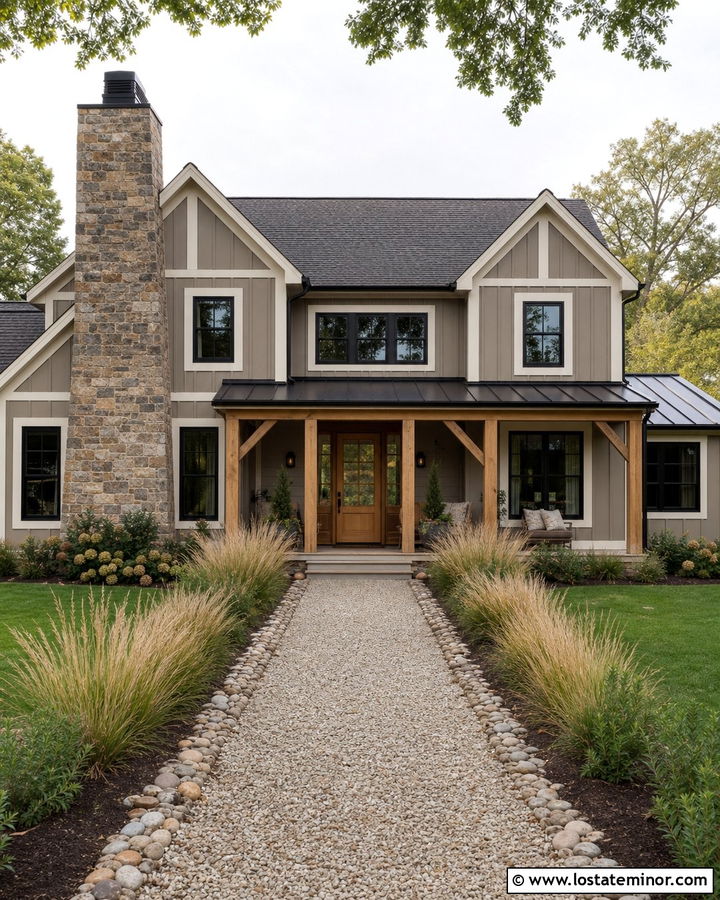
Picture a long farmhouse facade grounded by a broad fieldstone chimney. Medium taupe board-and-batten siding gives the home warmth, while creamy white trim keeps its rooflines and windows clearly defined. Choose chimney stone containing brown, gray, and sand tones so every material relates to the siding. A natural oak front door and matching porch posts can reinforce the rustic character. Instead of using black on every detail, limit it to window frames, sconces, and simple metal railings. A dark bronze standing-seam roof over the porch adds contrast without overpowering the stone. Finish the property with a gravel-edged walkway, native grasses, and loosely clipped shrubs. The complete design feels modern but still appropriate for a relaxed rural setting.
4. Taupe Craftsman With River Rock Chimney
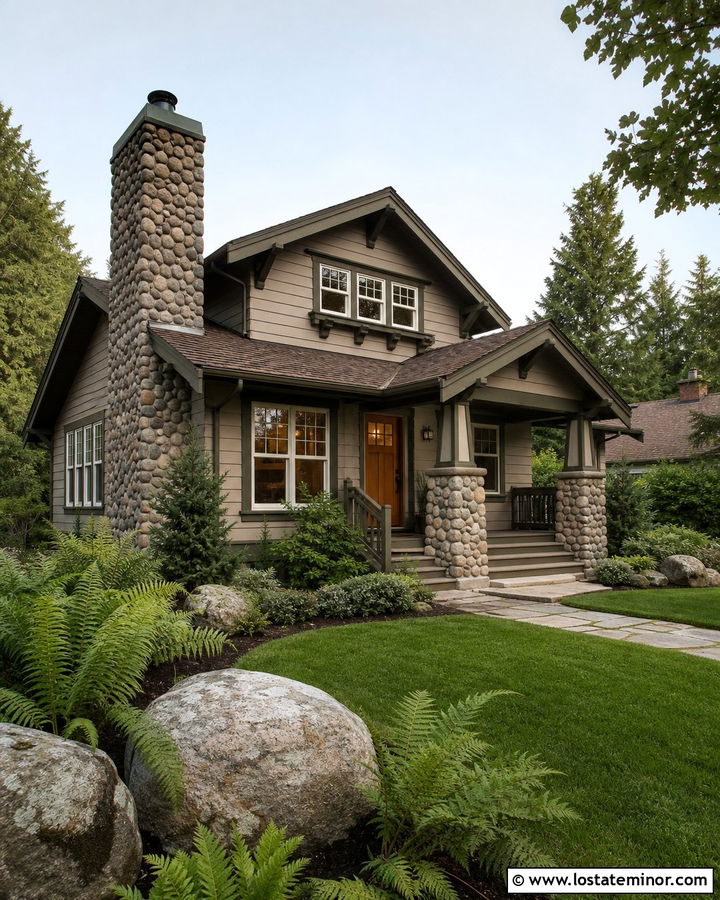
Rounded river rock can turn a Craftsman chimney into an inviting centerpiece. Use a subdued taupe body color that pulls from the lighter stones, then add deep olive trim beneath the eaves and around selected architectural details. Cream window frames will keep the facade from becoming too dark. A stained fir door, exposed rafter tails, and tapered porch columns strengthen the Craftsman character. Extend the river rock across the porch foundation so the chimney does not appear isolated. A brown architectural-shingle roof works better here than a cool gray roof because it supports the natural palette. Layered landscaping with ferns, compact evergreens, and boulders adds texture. The result is an earthy exterior where siding, masonry, wood, and planting feel intentionally connected.
5. Taupe Tudor With Limestone Chimney
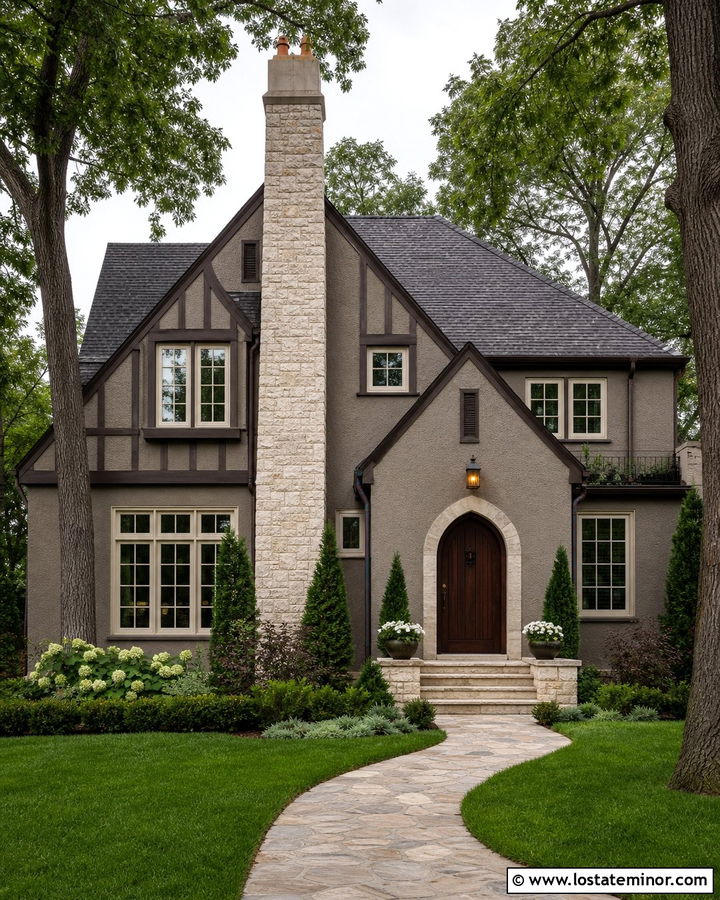
A steep Tudor roofline becomes even more impressive when it is paired with a tall limestone chimney. Choose a medium mushroom taupe for the stucco walls and deep brown for half-timber detailing. Soft ivory trim around the windows will relate to the palest shades in the limestone. For the entry, use a dark arched wood door with traditional black hardware. The roof should remain quiet, such as weathered charcoal shingles, because the chimney and timbering already provide plenty of detail. Consider using limestone around the entry steps or along a low garden wall to balance the facade. Upright evergreens and a curved stone path complement the architecture. This palette makes the Tudor feel historic and substantial without relying on an overly dark exterior color.
6. Taupe Ranch With Painted Brick Chimney
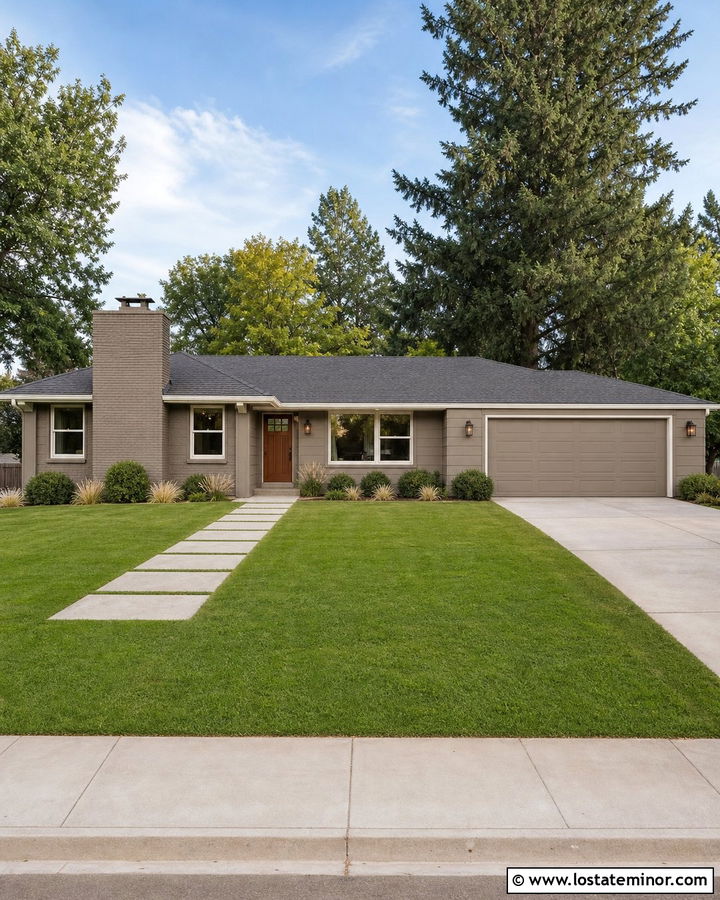
A painted brick chimney can help unify a ranch house with a long, low facade. Coat both the siding and chimney in closely related taupe tones, using a slightly darker taupe on the masonry to preserve depth. Warm white trim can outline the windows, fascia, and garage without creating severe contrast. Add a walnut-stained front door and bronze exterior lighting for warmth. If the chimney sits near one end of the house, repeat its darker color on the garage door or foundation to improve balance. A charcoal roof gives the exterior a clean upper edge. Low ornamental grasses, rounded shrubs, and a straight concrete walkway respect the horizontal architecture. This restrained approach can make an older ranch appear wider, cleaner, and more intentionally designed.
7. Dark Taupe House With Gray Stone Chimney
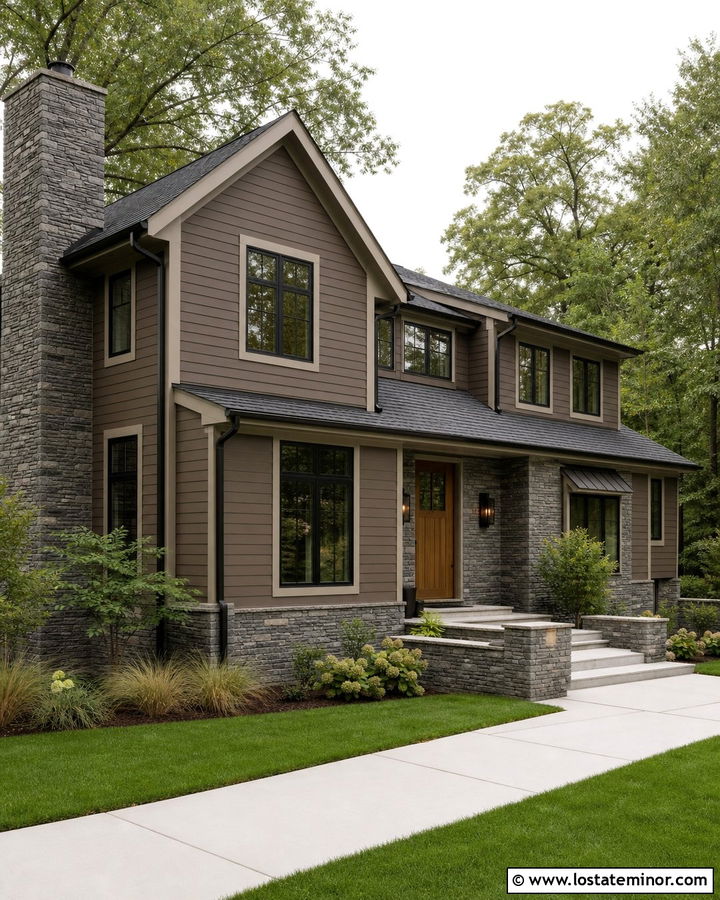
Dark taupe siding creates a rich backdrop for a chimney built from cool gray stone. This pairing is ideal when you want a dramatic exterior without committing to black or charcoal walls. Use pale greige trim to soften the contrast around windows and roof edges. Matte black window frames, gutters, and sconces add modern definition, while a medium cedar front door introduces necessary warmth. The roof can be a deep charcoal that visually connects with the darkest pieces of stone. Repeat a small amount of gray masonry on the entry wall or porch base. Because the exterior is relatively deep in color, use light gravel, pale concrete, and fresh green landscaping around it. These brighter surfaces keep the complete curb-appeal view from looking heavy.
8. Light Taupe House With Charcoal Chimney
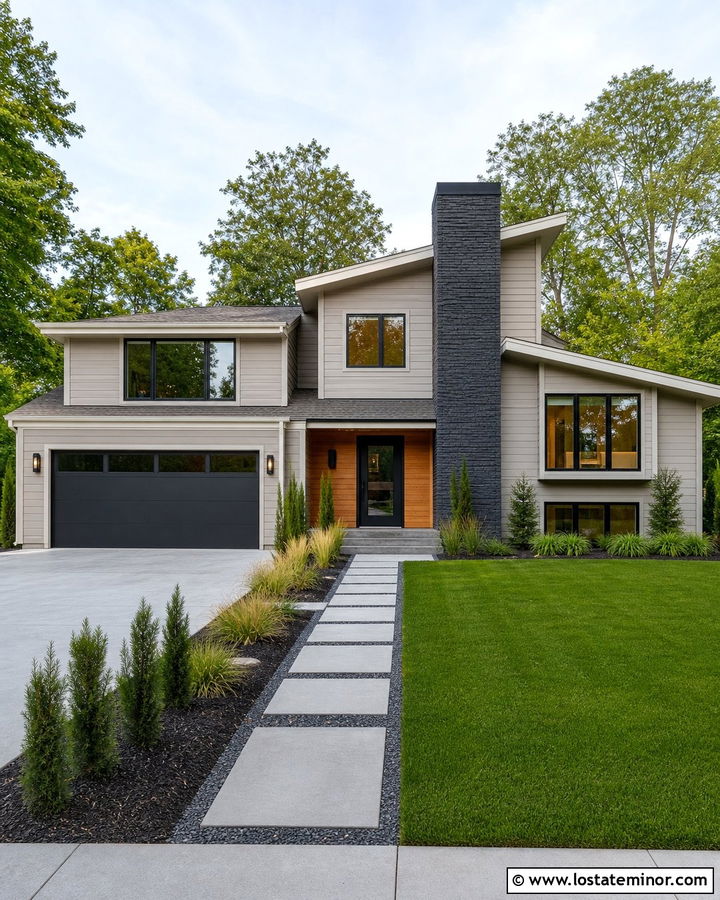
A charcoal-painted chimney can provide a strong vertical accent on a light taupe home. This works particularly well on a contemporary split-level where the chimney rises between offset roof sections. Keep the trim close to the siding color, using a soft off-white rather than brilliant white. Black-framed windows and a charcoal garage door can repeat the chimney color across the facade. To prevent the palette from feeling cold, add horizontal cedar siding around the recessed entry. A warm gray roof will bridge the light and dark portions of the exterior. Simple concrete pavers, structured grasses, and low evergreen plantings complement the clean architecture. The finished scheme feels balanced because the charcoal chimney is echoed in several places instead of standing alone as one dark block.
9. Taupe Cottage With Cobblestone Chimney
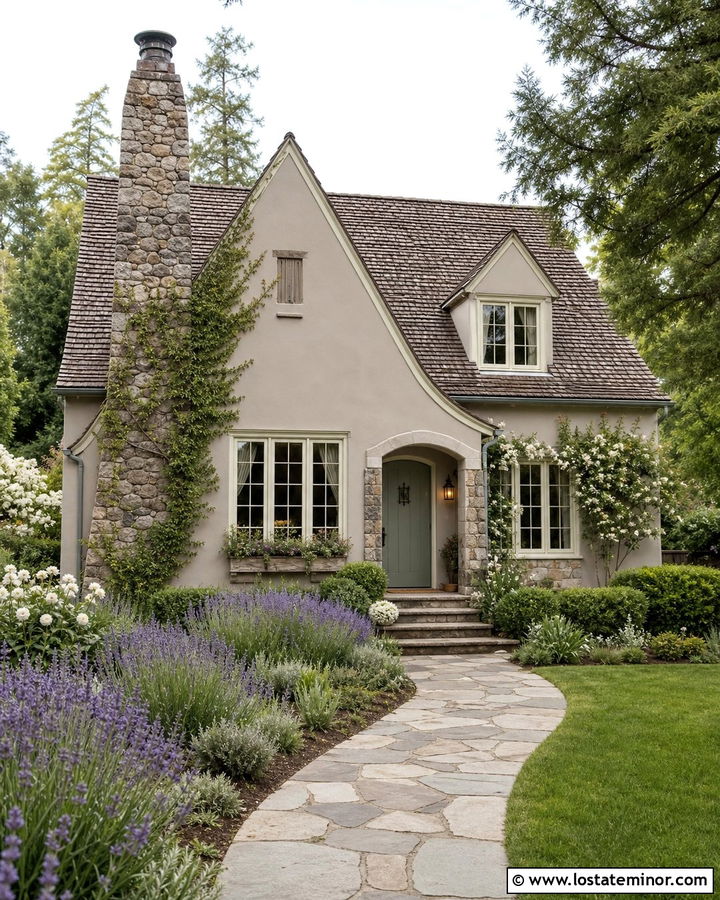
An irregular cobblestone chimney can give a taupe cottage the charm of a home that has evolved over time. Select a warm, pale taupe for lap siding or stucco, then use creamy trim around casement windows and beneath the roofline. A dusty sage front door introduces soft color while connecting the house to the garden. Weathered brown roof shingles support the cottage character and complement the warmer stones. Carry a small amount of cobblestone onto the porch base or garden wall to make the chimney feel integrated. Flowering shrubs, lavender, climbing greenery, and a curved flagstone path create a relaxed setting. Avoid too many sharp black accents. Aged bronze lighting and hardware are gentler choices for this complete, storybook-inspired exterior palette.
10. Taupe Colonial With Twin Brick Chimneys
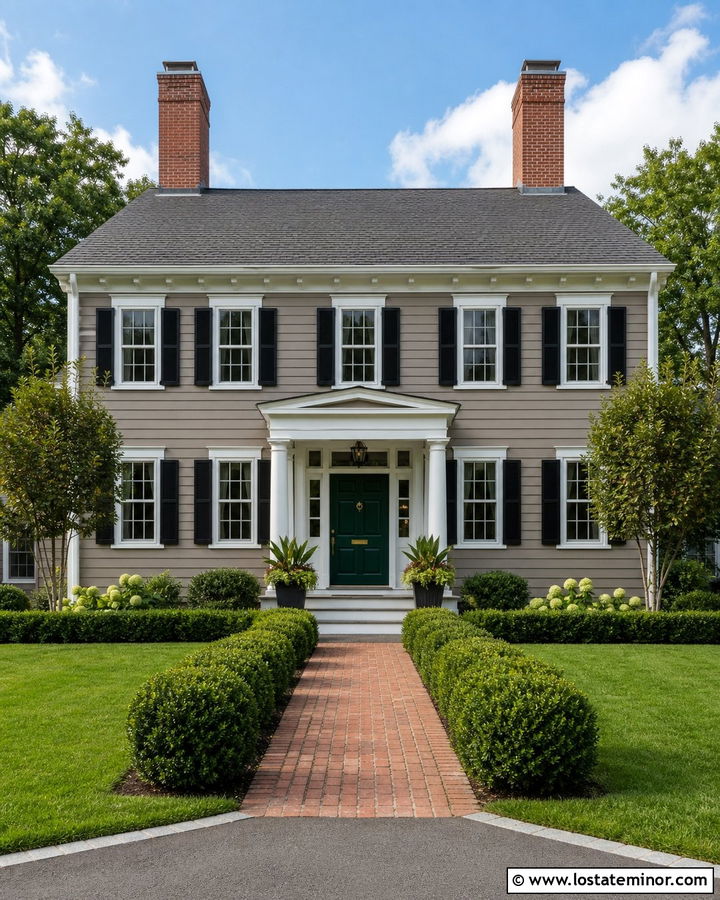
Twin chimneys naturally emphasize the symmetry of a Colonial house. Paint the siding a classic medium taupe and keep the chimneys in their original reddish-brown brick for traditional contrast. Creamy white trim, white porch columns, and evenly spaced black shutters establish a clear architectural rhythm. Choose a glossy deep green or black front door as a centered focal point. A dark gray roof can recede behind the chimneys, allowing their shape and masonry to remain visible. If the house has a brick walkway, select pavers that closely match the chimney rather than introducing another red tone. Boxwood hedges, matching planters, and small ornamental trees reinforce the formal arrangement. The balanced palette makes the exterior feel polished while preserving the historic character of the brick.
11. Taupe Bungalow With Tapered Stone Chimney
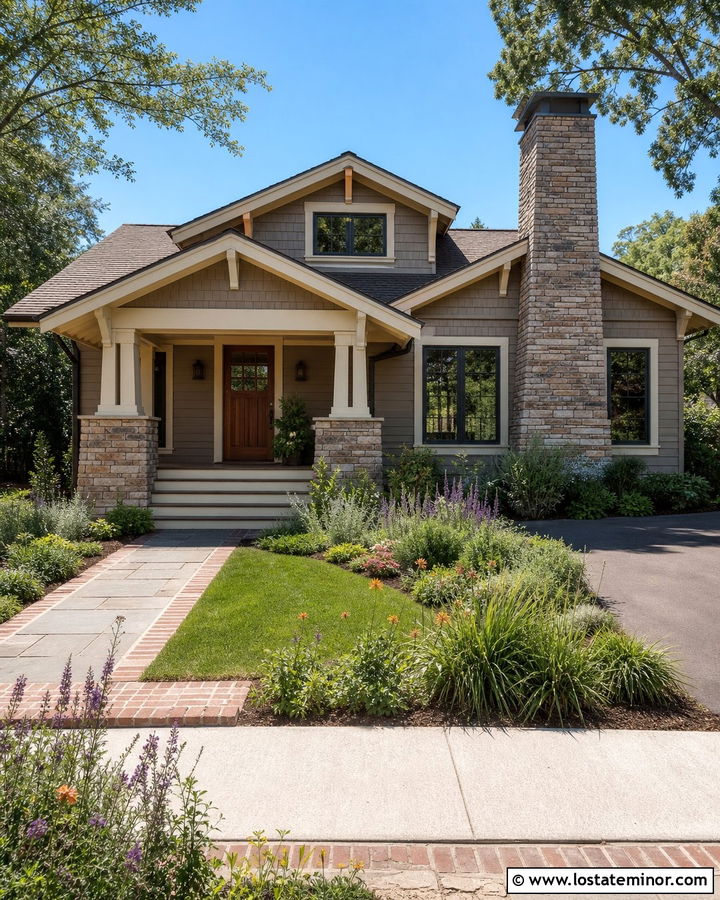
A tapered stone chimney feels right at home on a low, welcoming bungalow. Use warm taupe shingle siding on the upper walls and horizontal lap siding below to add subtle texture. Cream trim around wide windows and deep eaves will highlight the architecture. Build or reface the chimney with stacked stone in beige, brown, and soft gray, then repeat that material on the tapered porch columns. A craftsman-style door in rich chestnut adds warmth at the center of the facade. Dark bronze gutters and lighting are less severe than black and work beautifully with the stone. Complete the view with broad front steps, a brick-edged walkway, and layered native plants. Every element supports the bungalow’s handcrafted appearance without making the small exterior feel visually crowded.
12. Taupe Modern House With Concrete Chimney
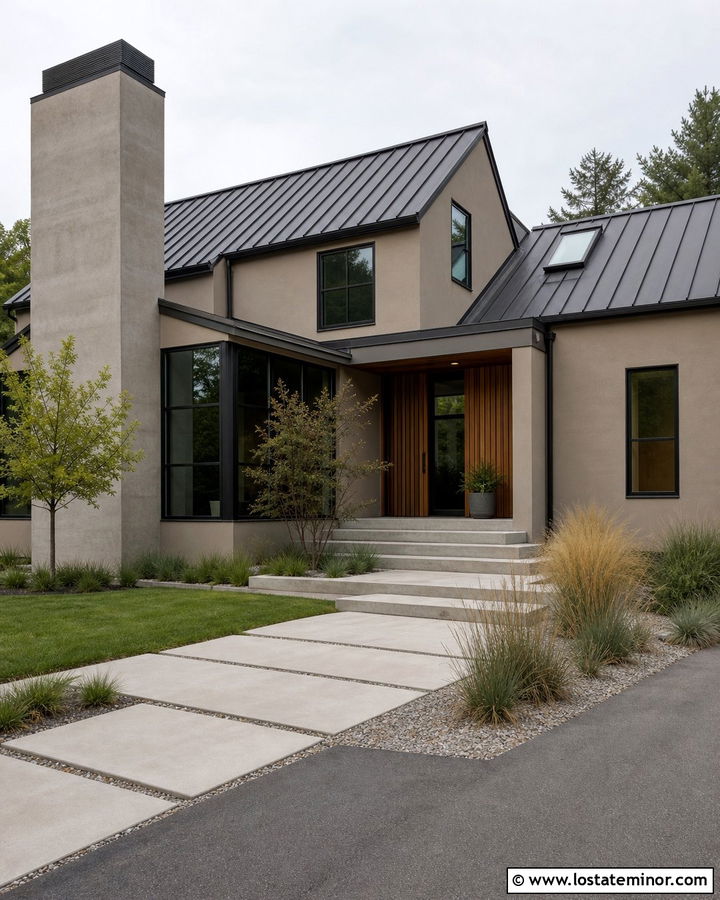
A smooth concrete chimney can become a sculptural feature on a modern taupe house. Choose cool taupe stucco or fiber-cement panels for the main walls, keeping the color slightly warmer than the concrete. Slim black window frames, a black standing-seam roof, and concealed gutters reinforce the clean lines. Add vertical cedar slats near the front door to prevent the neutral palette from feeling sterile. The chimney should remain simple, with minimal caps or decorative masonry. Repeat its gray tone in broad concrete steps and large-format walkway pavers. Structured grasses, small trees, and gravel planting beds suit the architecture better than formal hedges. With limited colors and carefully repeated materials, the chimney appears integrated into the building rather than attached as a separate feature.
13. Taupe Cape Cod With Center Chimney
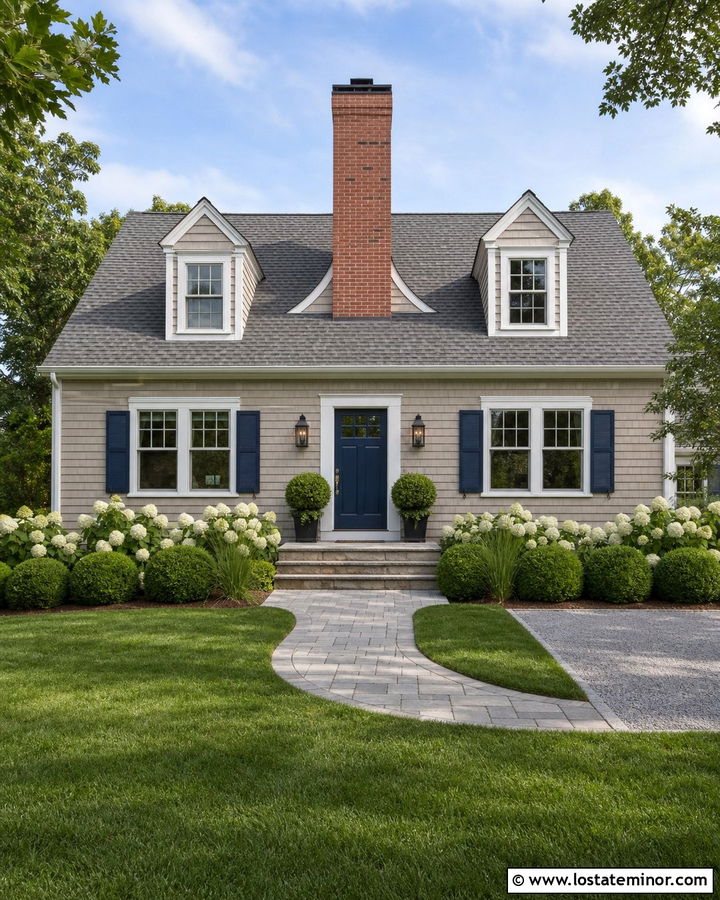
A centered chimney gives a Cape Cod home an appealing sense of history and balance. Cover the facade in pale taupe cedar shingles, then use soft white for the dormers, corner boards, and window trim. A weathered red brick chimney adds warm contrast above a medium-gray shingle roof. Deep blue shutters and a matching front door can bring understated coastal color to the exterior. Keep the entry steps and pathway in natural gray stone so they do not compete with the brick. Small boxwoods, white hydrangeas, and ornamental grasses create a tidy but relaxed landscape. The success of this scheme comes from its controlled range of muted colors. Taupe connects the gray roof, red brick, blue accents, and green plantings into one calm composition.
14. Taupe French Country House With Limestone Chimney
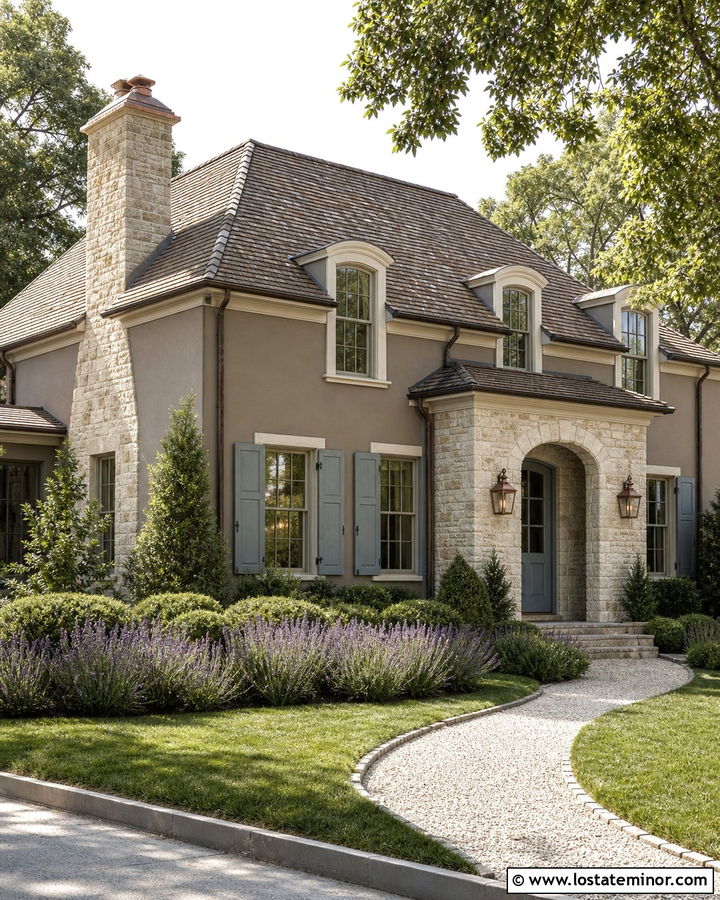
Soft taupe stucco and pale limestone create an elegant French country exterior without excessive ornament. Use a warm taupe body color with subtle beige undertones, then build the chimney and lower facade accents from irregular cream limestone. Muted ivory trim around tall windows keeps the transitions gentle. A faded blue-gray front door and matching shutters add quiet color, while copper lanterns bring warmth and character. Choose a softly variegated brown-gray roof to complement the aged appearance of the masonry. Curved gravel paths, clipped shrubs, and lavender beds can frame the facade without hiding the stonework. The chimney should look substantial but not overly formal. Repeating limestone at the entrance gives the complete house a balanced, enduring appearance from every curb-facing angle.
15. Taupe Mediterranean House With Stucco Chimney
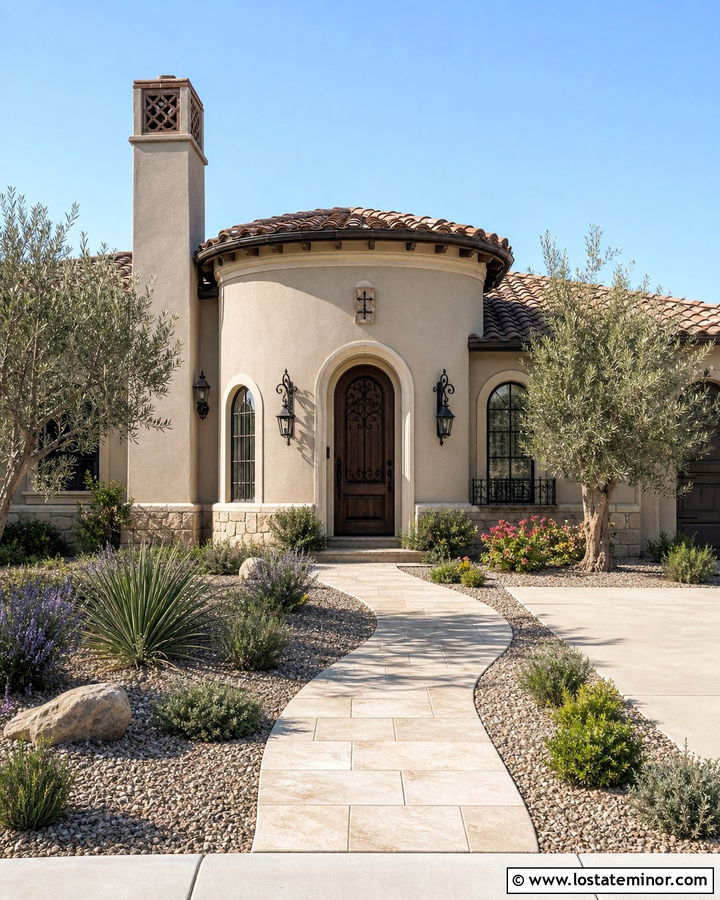
On a Mediterranean home, a stucco chimney can blend into the architecture instead of becoming a contrasting tower. Cover the walls and chimney in warm sandy taupe, then define windows, arches, and roof edges with creamy beige trim. A terracotta tile roof adds earthy red-orange color and creates a natural connection with the taupe. Choose a dark walnut front door and wrought-iron balcony details for depth. A stone base in light beige can protect the lower walls visually while adding texture. Keep the chimney cap simple and coordinate it with the dark metal accents. Drought-tolerant landscaping, pale gravel, olive trees, and a curved tile walkway complete the scheme. The overall exterior feels sun-washed, cohesive, and appropriate for warm-climate architecture.
16. Taupe Split-Level With Brick Chimney
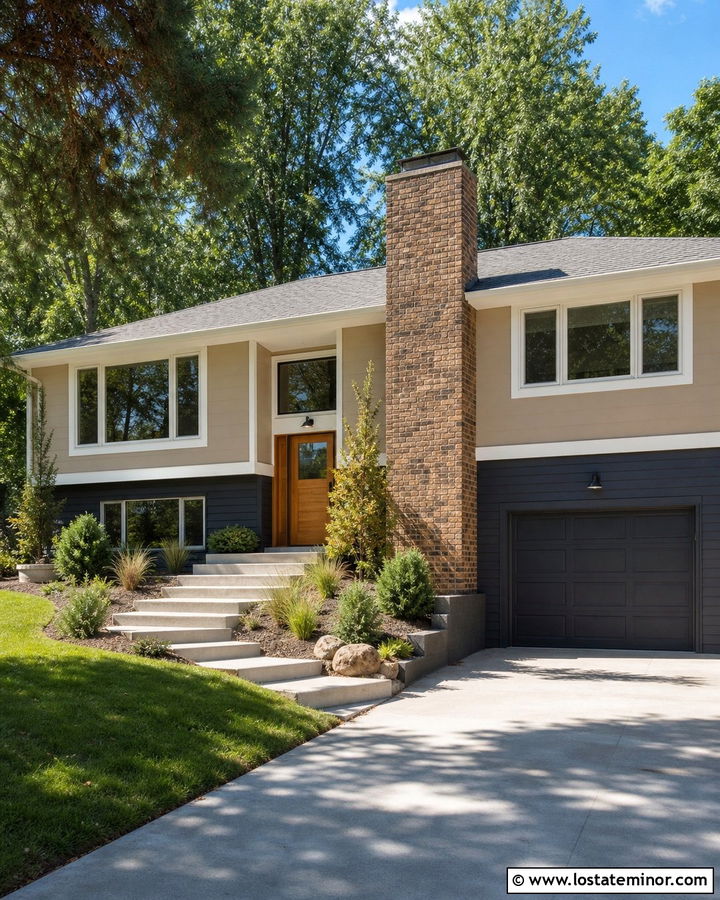
A split-level house often has several competing visual sections, so the chimney can serve as a useful anchor. Paint the main siding medium taupe and retain a multitone brown brick chimney that extends from foundation to roof. Use warm white trim to outline windows, while charcoal on the garage door and lower-level siding grounds the facade. A natural wood entry door adds warmth near the center. If the brick appears only on one side, repeat its brown color in porch posts or a stained wood privacy screen. Choose simple gray roof shingles that do not introduce another undertone. Broad steps, a tiered walkway, and low landscaping can connect the different elevations. This approach organizes the exterior while allowing the original chimney to remain an attractive period feature.
17. Taupe A-Frame With Tall Stone Chimney
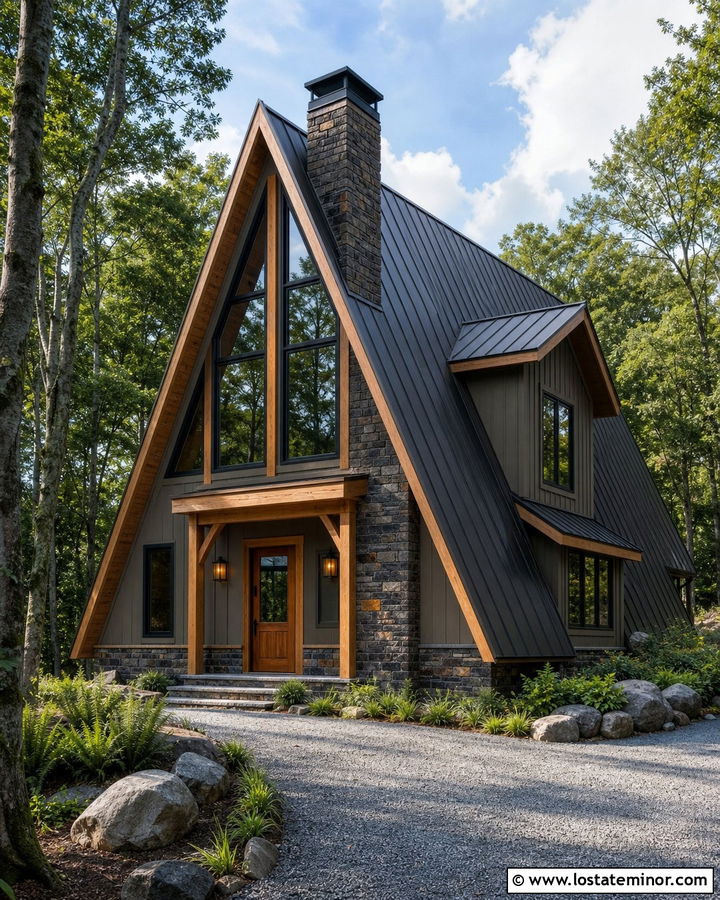
A tall stone chimney beautifully complements the dramatic roofline of an A-frame house. Use deep forest taupe on vertical siding to help the building settle into a wooded setting. The chimney can feature rugged ledgestone in charcoal, brown, and muted rust tones. Black-framed windows emphasize the triangular facade, while honey-toned timber beams and a matching front door bring warmth. A dark standing-seam roof creates a clean outline and handles the strong architecture without adding visual clutter. Continue the chimney stone across a low foundation band for greater cohesion. A gravel driveway, natural boulders, ferns, and native grasses make the landscaping feel connected to the site. This full scheme is particularly effective for mountain, lake, and woodland properties with mature trees.
18. Taupe Shingle House With Fieldstone Chimney
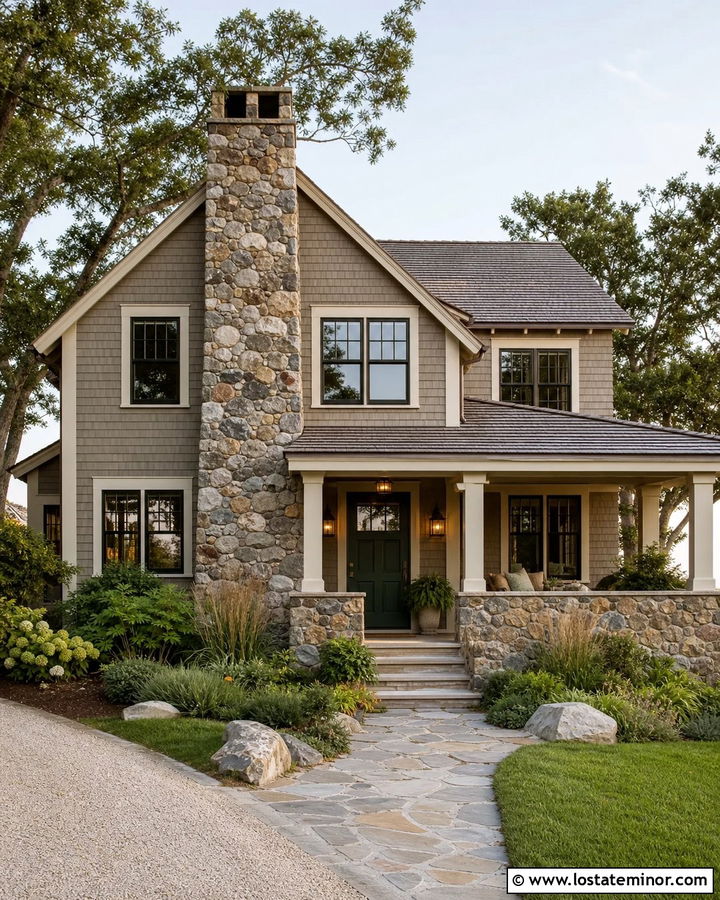
Taupe shingle siding and fieldstone make a naturally layered combination. Choose a weathered taupe that shifts gently between brown and gray, then pair it with fieldstone containing similar variations. Cream trim keeps windows and porch details visible without looking stark. A dark green front door can echo the surrounding landscape, while aged brass or bronze lighting adds warmth. Use a medium-gray roof so the shingles and stone remain the main textures. If the chimney is large, balance it with a fieldstone porch wall or foundation section on the opposite side. Informal shrubs, grasses, and a flagstone walk suit the relaxed materials. The house will feel detailed from the curb, yet the limited neutral palette keeps the exterior calm and visually connected.
19. Taupe Painted Brick House With Natural Brick Chimney
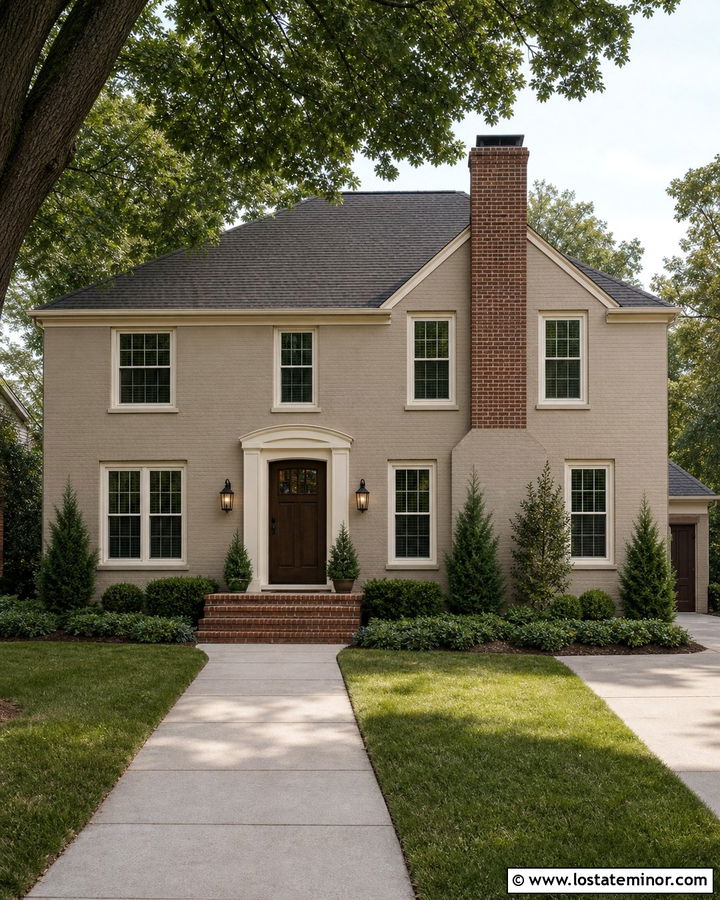
Painting the house brick taupe while leaving the chimney natural creates contrast without losing the building’s original masonry character. Select a warm medium taupe that relates to the mortar and deeper shades in the exposed brick. Use creamy white on window frames, fascia, and porch trim. A dark brown front door and bronze lighting will support the earthy palette. The roof can be charcoal gray, provided it does not have strong blue undertones. Leave a small area of natural brick around the entry steps or porch floor to connect the chimney with the lower facade. Simple evergreen landscaping keeps attention on the brick textures. This treatment works well when the existing brick feels too busy but one well-built chimney deserves to remain visible.
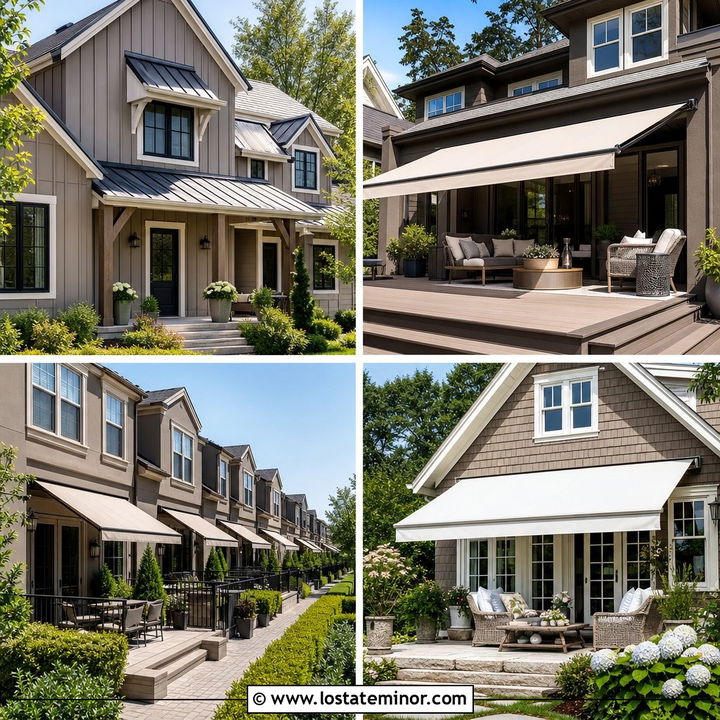
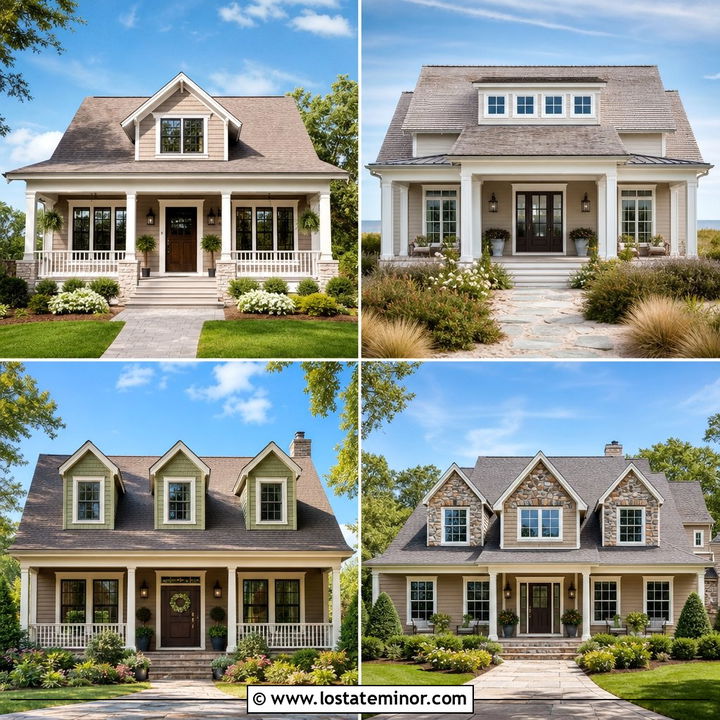
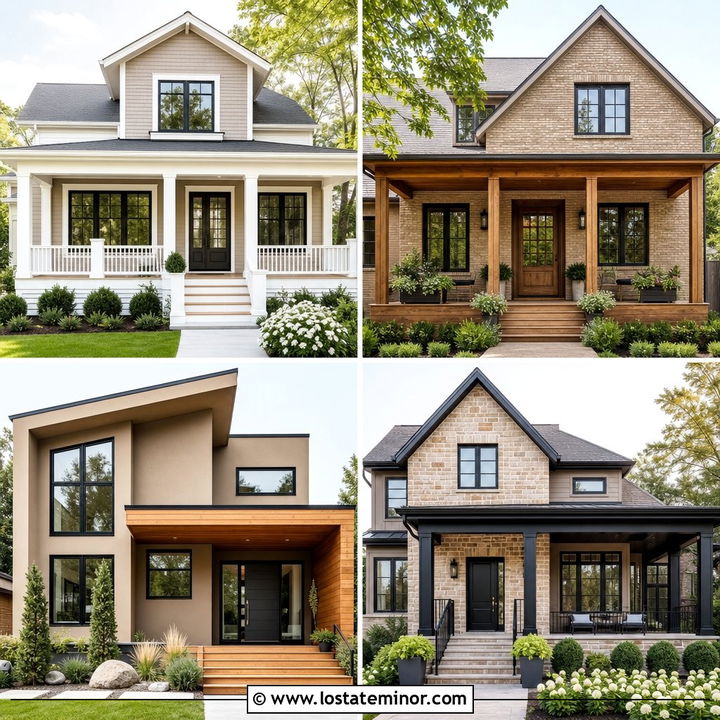
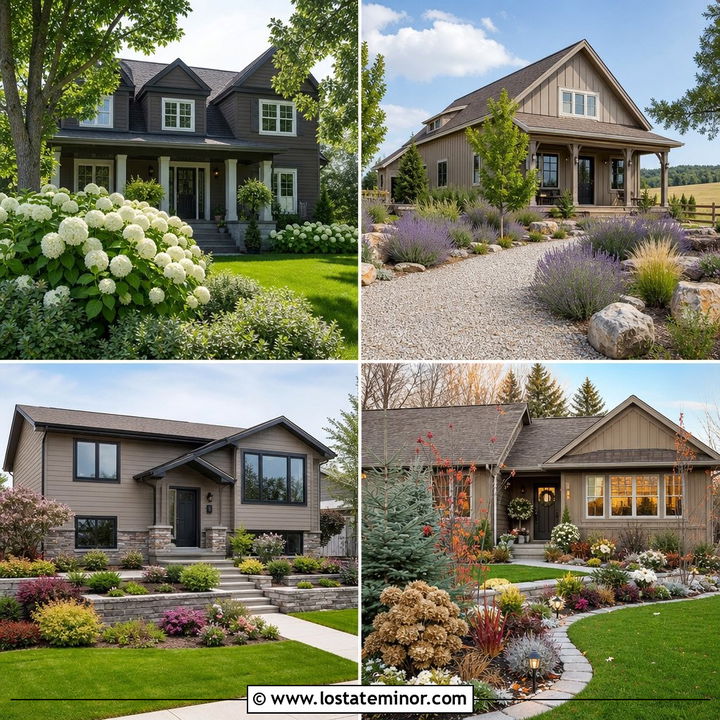
20. Taupe Stucco House With Stone Chimney
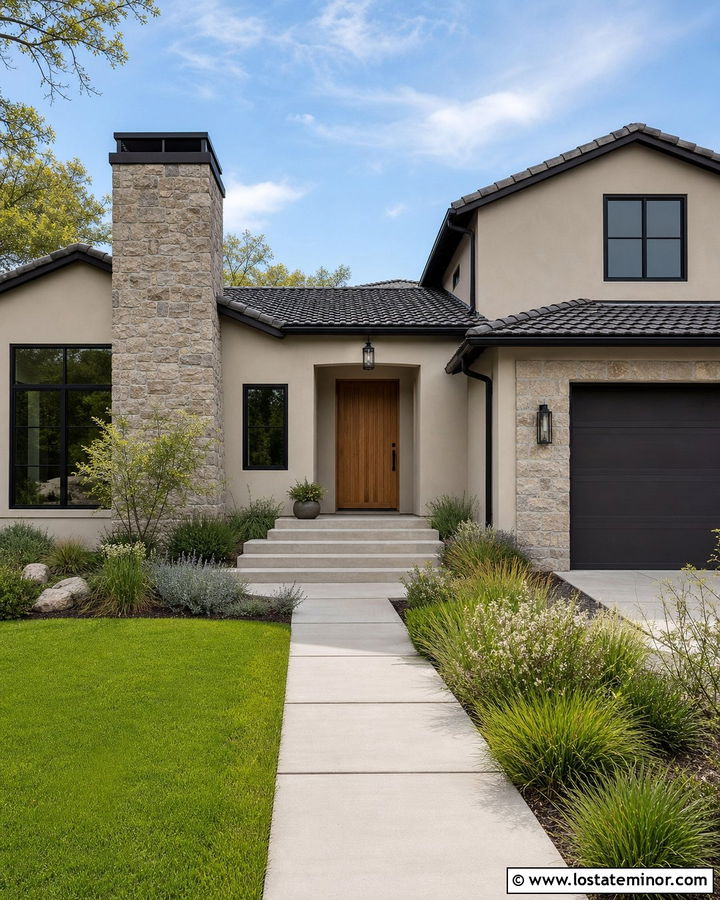
Smooth taupe stucco gains much-needed texture when paired with a rough-cut stone chimney. Choose a light mushroom taupe for the main walls and use warm gray-beige stone with moderately varied pieces. Off-white trim around windows and eaves brightens the exterior, while black window frames create crisp definition. A vertical wood front door in medium oak balances the cooler stone. Repeat a narrow band of stone around the garage or entry, but avoid covering too many surfaces. A charcoal tile roof can cap the palette and connect with darker minerals in the masonry. Use broad concrete steps, clipped grasses, and drought-tolerant shrubs around the home. This complete exterior feels clean and current while retaining the warmth expected from natural stone and taupe.
21. Taupe House With Black Brick Chimney
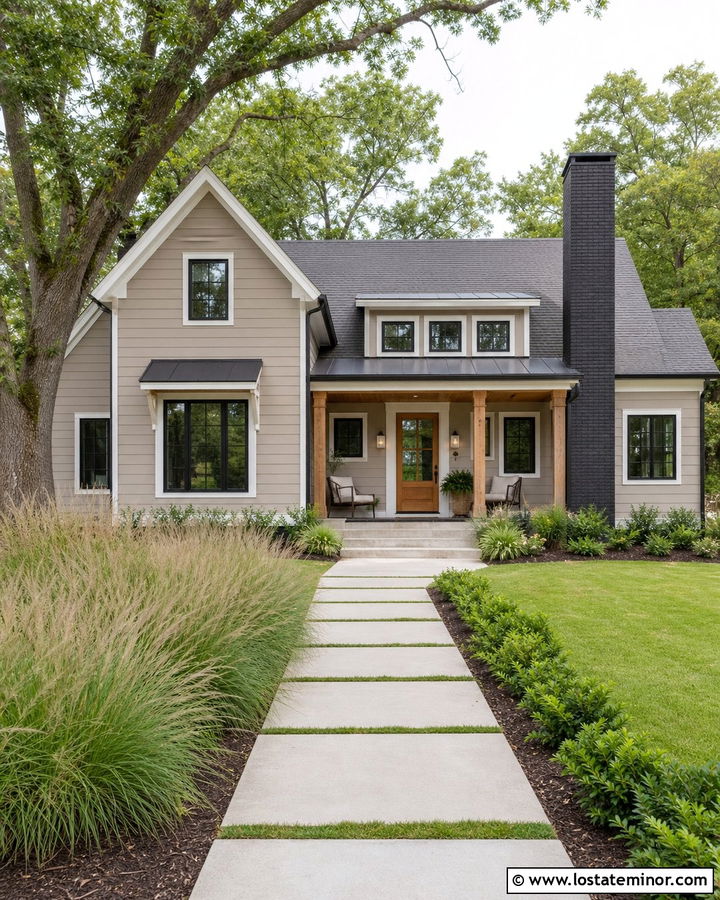
A black-painted brick chimney brings bold contrast to a warm taupe exterior. It is especially effective on a modern farmhouse or renovated traditional home with simple rooflines. Use medium taupe siding, soft white trim, and black-framed windows to distribute the chimney color across the facade. A natural cedar door and porch ceiling will keep the black accents from feeling severe. Consider a charcoal roof rather than solid black so the upper part of the house retains some tonal variation. The brick texture should remain visible beneath the paint, adding depth to the dark surface. Pale concrete, green lawn, and airy ornamental grasses can brighten the foreground. The finished look is graphic and modern, but warmer than a standard black-and-white exterior scheme.
22. Taupe House With German Schmear Chimney
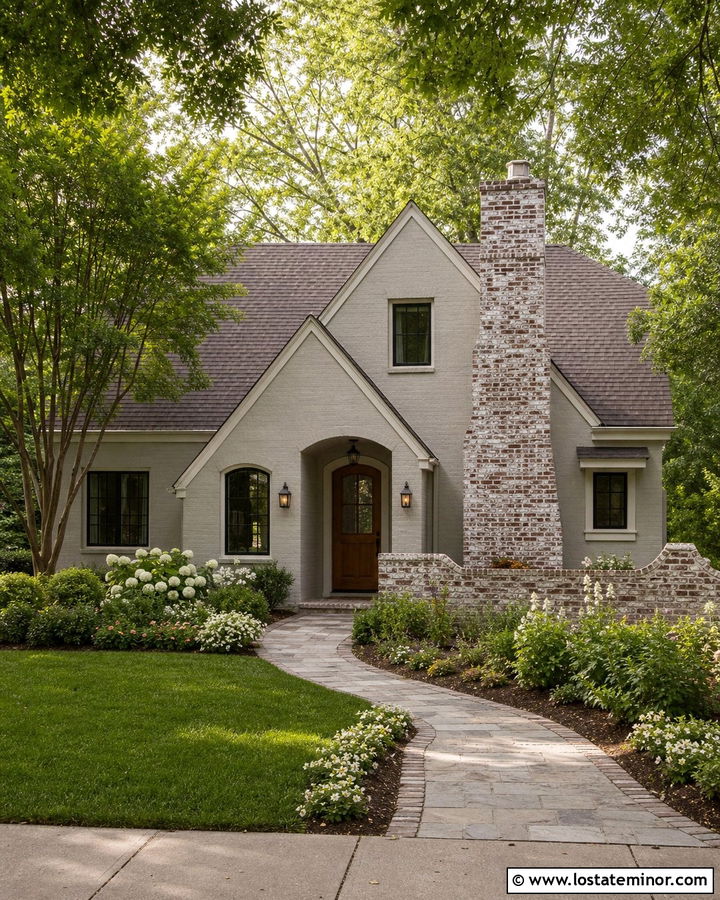
German schmear gives a brick chimney an aged, textured finish that pairs naturally with taupe siding. Select a soft greige-taupe body color and creamy trim that relates to the pale mortar coating. Allow hints of red and brown brick to remain visible so the chimney has dimension. A medium-stained wood front door, bronze sconces, and brown-gray roof shingles support the warm character. This treatment works beautifully on cottage, farmhouse, and transitional exteriors. Repeat the masonry finish on a short porch wall or entry step, but use it sparingly. Loose foundation plantings, flowering shrubs, and a gently curved path can soften the finished facade. The result feels collected and established, even when the home itself is a relatively recent build.
23. Taupe House With White Brick Chimney
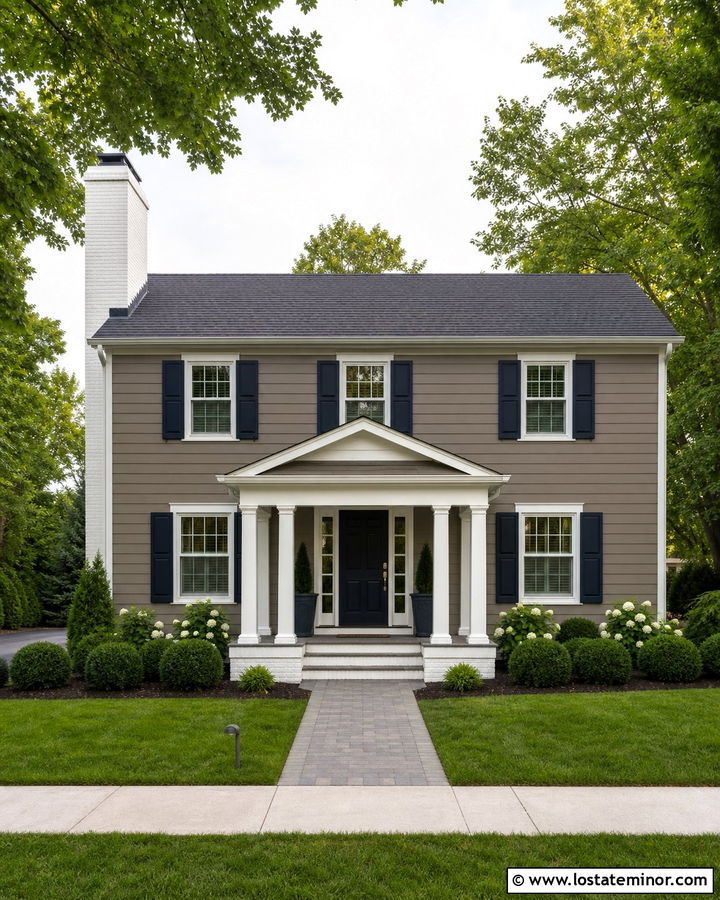
A white brick chimney can brighten a taupe house while retaining more texture than smooth painted masonry. Choose medium brown-gray taupe siding so there is enough contrast to define the chimney. Use the same warm white on the window trim, fascia, and porch columns for a consistent scheme. Deep navy shutters and a matching front door add classic color, while a charcoal roof keeps the exterior grounded. If the chimney is positioned on one side, use white brick at the opposite porch base to balance its visual weight. A red brick walkway should be avoided unless it relates to another existing material. Instead, select gray pavers and simple green landscaping. The completed exterior feels fresh, orderly, and suitable for both traditional and updated suburban homes.
24. Taupe House With Board-And-Batten Chimney Surround
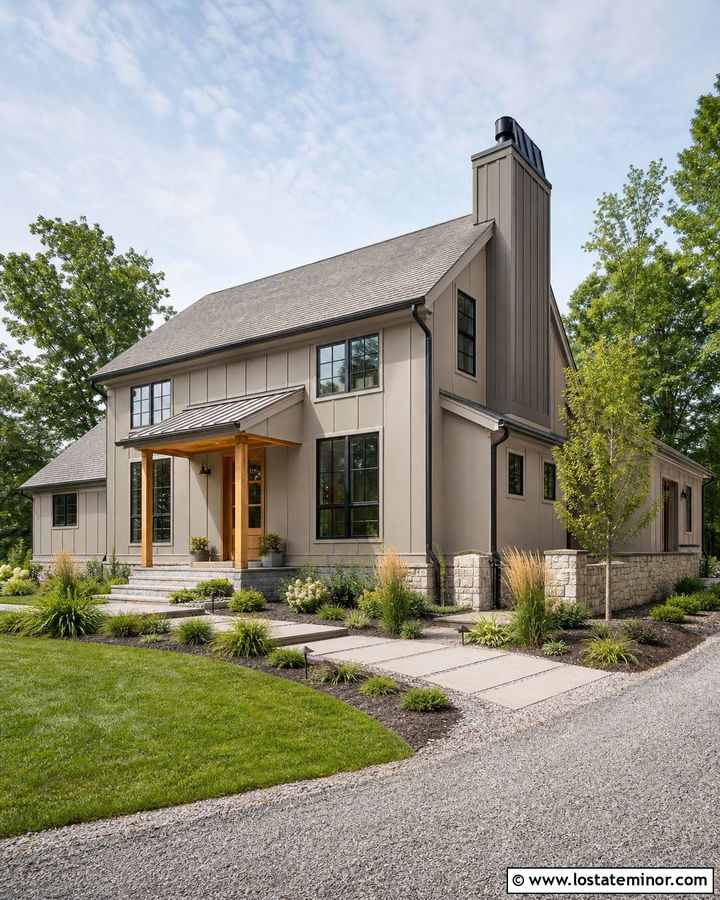
A framed chimney surround can become a seamless part of a taupe board-and-batten exterior. Paint the surround a deeper version of the main taupe to create quiet definition without introducing unrelated masonry. Add a dark metal chimney cap, black windows, and charcoal gutters for clean contrast. Warm white soffits will prevent the roofline from appearing too heavy. Use stone around the foundation and natural cedar at the entry to bring texture to the scheme. This approach is useful when a prefabricated chimney needs an architectural enclosure rather than a stone or brick finish. A modern farmhouse, lake house, or contemporary cottage can all carry the look. Structured planting beds and a wide gravel-edged walkway complete the neat, understated curb appeal.
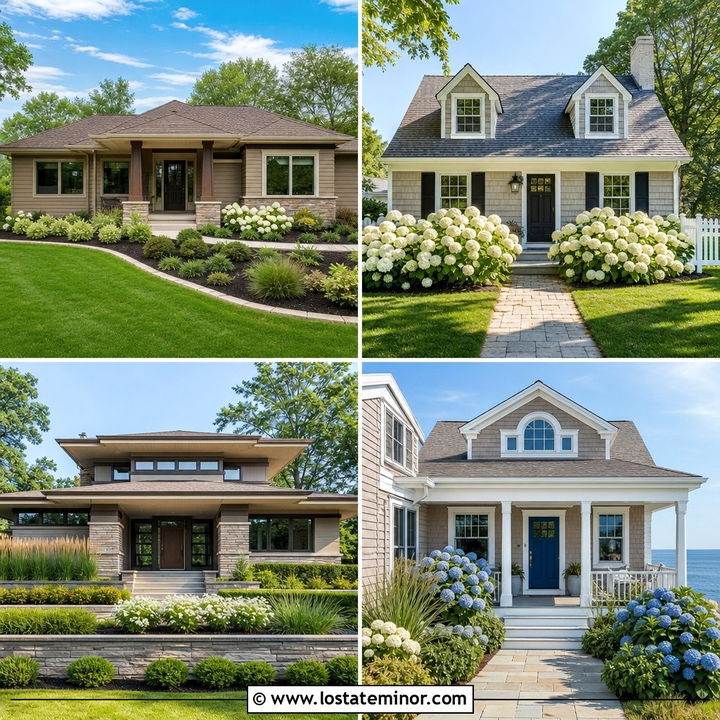
25. Taupe House With Sandstone Chimney
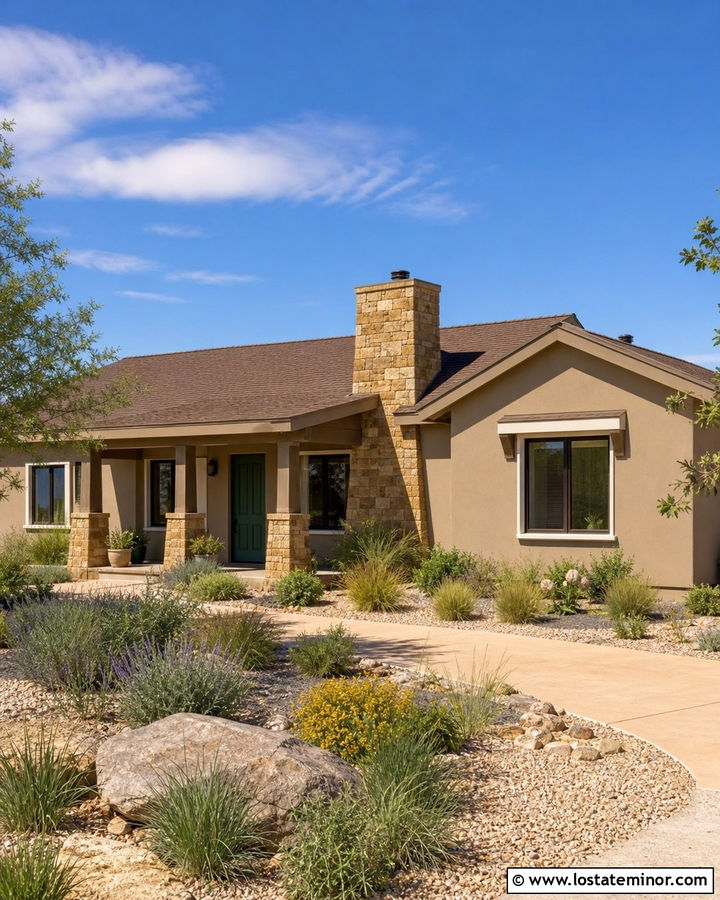
Golden sandstone introduces a sun-warmed quality to a taupe exterior. Choose a taupe with subtle tan undertones, then pair it with sandstone containing cream, honey, and muted brown shades. Soft ivory trim will blend more naturally than bright white. A sage green door and dark bronze windows create gentle contrast without taking attention away from the stone. Use a medium brown roof to continue the warm palette above the chimney. Sandstone can also appear on the porch columns, steps, or low retaining wall, creating a visual path across the property. Native grasses, pale gravel, and drought-tolerant flowering plants reinforce the earthy colors. This full exterior scheme is especially suitable for ranch, Southwestern, and transitional homes in sunny or dry regions.
26. Taupe House With Bluestone Chimney
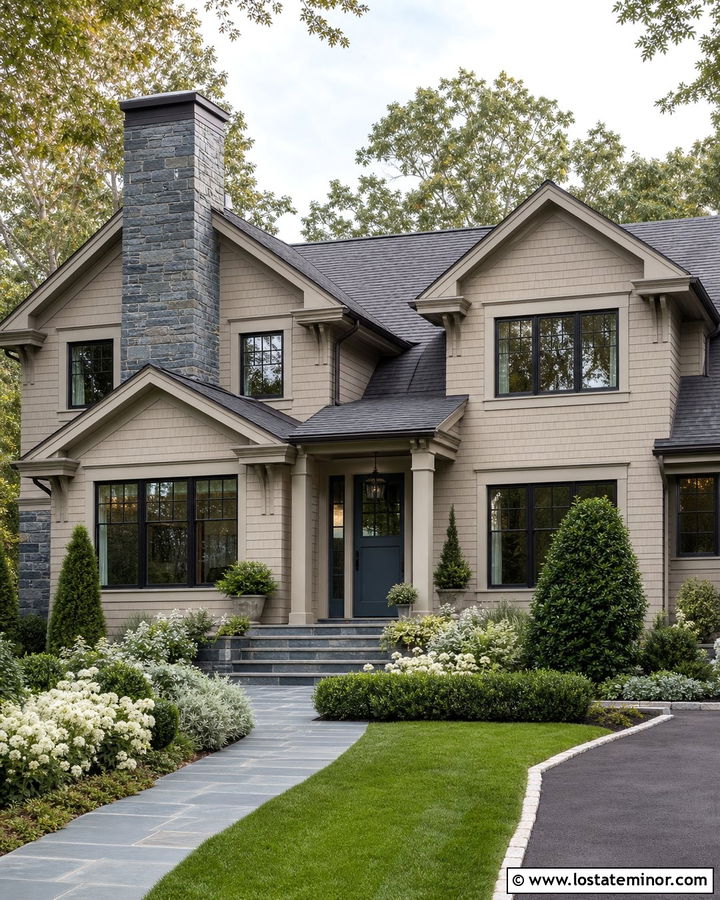
Cool bluestone can give a taupe house a sophisticated gray-blue contrast. Start with a balanced taupe that does not lean strongly yellow, then use creamy gray trim around the windows and doors. The chimney should feature varied bluestone pieces with charcoal mortar for a defined, tailored finish. A deep slate-blue front door connects directly with the masonry, while black lighting and window frames add crisp detail. Choose a cool charcoal roof that sits comfortably beside the stone. Repeat bluestone in the front steps and walkway so the chimney feels anchored to the landscape. White flowers, clipped evergreens, and silver-green plants complement the restrained palette. The combination works beautifully on transitional, coastal, and updated Colonial architecture without looking overly themed.
27. Taupe House With Rustic Ledgestone Chimney
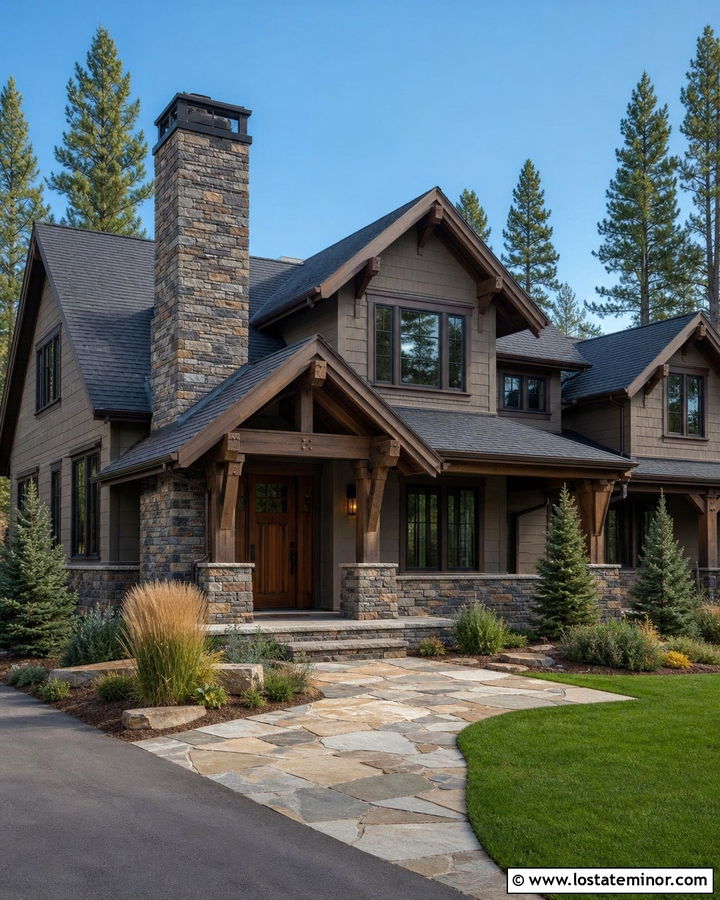
Thin horizontal ledgestone emphasizes the height of a chimney while adding rich shadow lines. Pair it with midtone taupe lap siding and dark brown trim for a warm, rustic appearance. The stone should include charcoal, tan, and weathered brown so it bridges the siding and a deep gray roof. Use a solid wood front door and heavy timber porch brackets to repeat the natural character. If the chimney dominates one side of the house, carry a low ledgestone band beneath the porch on the other side. Bronze gutters and simple lanterns will blend more smoothly than glossy black fixtures. Complete the setting with a natural stone walkway, evergreen shrubs, and ornamental grasses. This substantial exterior suits lodge, Craftsman, and mountain-inspired suburban homes.
28. Taupe House With Cream Brick Chimney
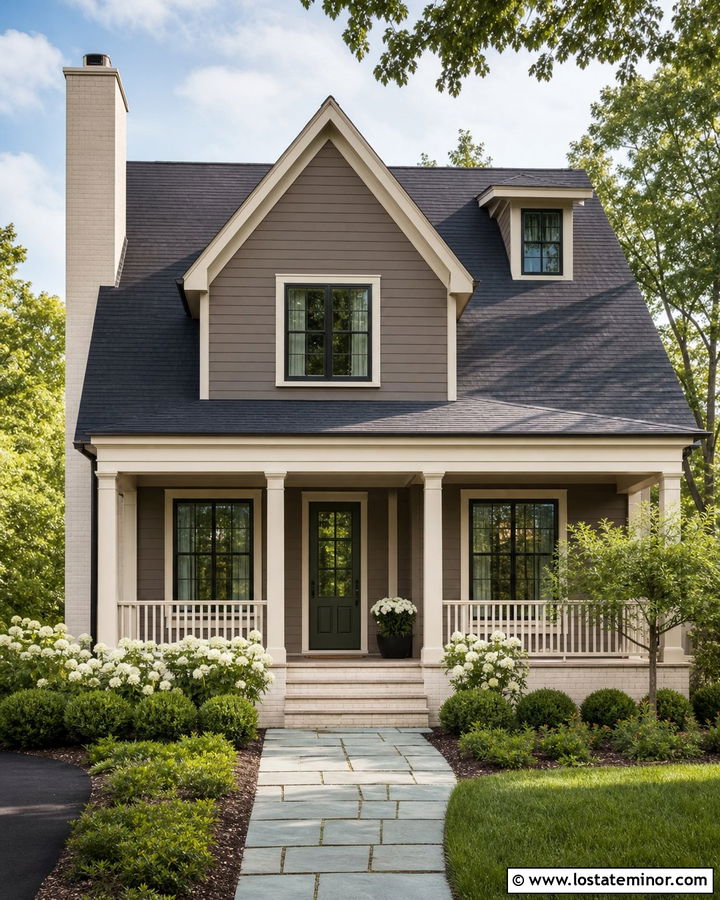
Cream brick creates a gentle, low-contrast chimney that looks polished against darker taupe walls. Choose a rich taupe with warm gray undertones, then repeat the chimney’s cream color on trim, porch columns, and window surrounds. A dark olive front door offers subdued color, while bronze hardware brings a refined finishing touch. Medium charcoal roof shingles keep the upper facade defined without overwhelming the light masonry. Use cream brick again along the porch foundation or as an edging material near the entry. The restrained combination can make a traditional house feel lighter and more current. Layered shrubs, white flowering plants, and a pale stone walkway support the soft palette. Each material remains noticeable, but none competes aggressively for attention from the curb.
29. Two-Tone Taupe House With Stone Chimney
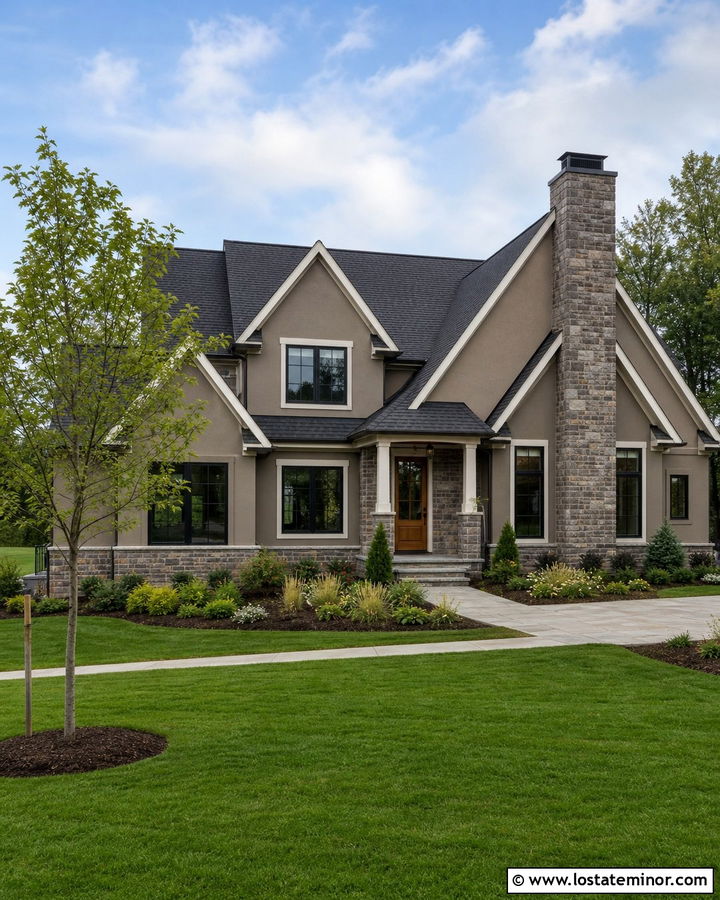
Using two taupe shades can organize a large facade with multiple rooflines. Apply light taupe to the upper siding and a deeper taupe to the lower level, garage, or projecting wing. A mixed gray-brown stone chimney can bridge both shades. Keep the trim warm white for clarity, then introduce black windows and a medium wood door as focused accents. The roof should be charcoal with enough variation to avoid looking like one flat surface. Repeat the chimney stone at the entry and foundation corners, creating a balanced rhythm across the house. This strategy works well on large transitional and new-construction homes that might otherwise appear visually busy. Broad landscaping beds and a simple walkway allow the layered architecture and controlled color changes to remain clear.
30. Monochromatic Taupe House With Matching Chimney
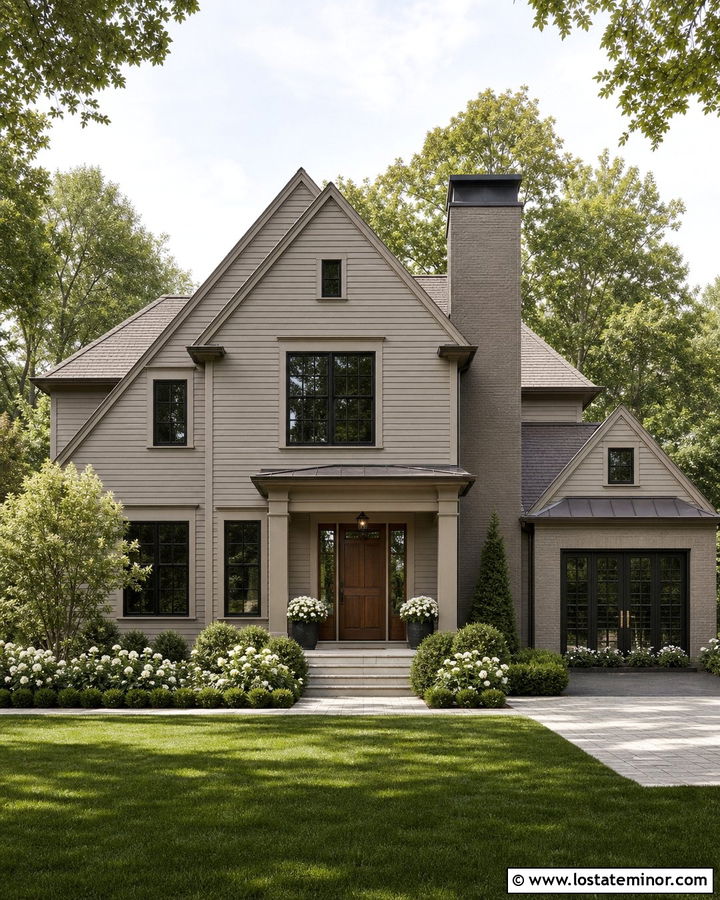
A monochromatic taupe scheme can make a complicated exterior look calm and cohesive. Paint the siding, trim, and masonry chimney in related taupe shades rather than one identical color. Use a midtone taupe on the walls, a lighter version on trim, and a darker brown-taupe on the chimney. This subtle shift preserves architectural depth while maintaining a unified appearance. Black windows, a dark bronze roof, and a walnut front door provide carefully placed contrast. Different textures become particularly important, so combine lap siding, painted brick, wood, and stone paving. Keep landscaping green and structured, with pale flowers for brightness. The completed home feels sophisticated from the street because every surface relates to the same color family without appearing flat or unfinished.
Conclusion:
The best 30 Taupe House Design With Chimney Ideas treat the chimney as part of a complete exterior palette. Red brick can add traditional warmth, while limestone, fieldstone, bluestone, or painted masonry can shift the house toward rustic, coastal, modern, or refined design. Always compare the taupe undertone with permanent surfaces such as the roof, stone, brick, windows, and hardscaping. Then repeat one or two chimney colors elsewhere to create balance. Large outdoor paint samples are also helpful because taupe can change noticeably in sun and shade. With coordinated trim, doors, roofing, landscaping, and masonry, a taupe exterior can look layered, distinctive, and thoughtfully connected from roofline to walkway.

Related posts: