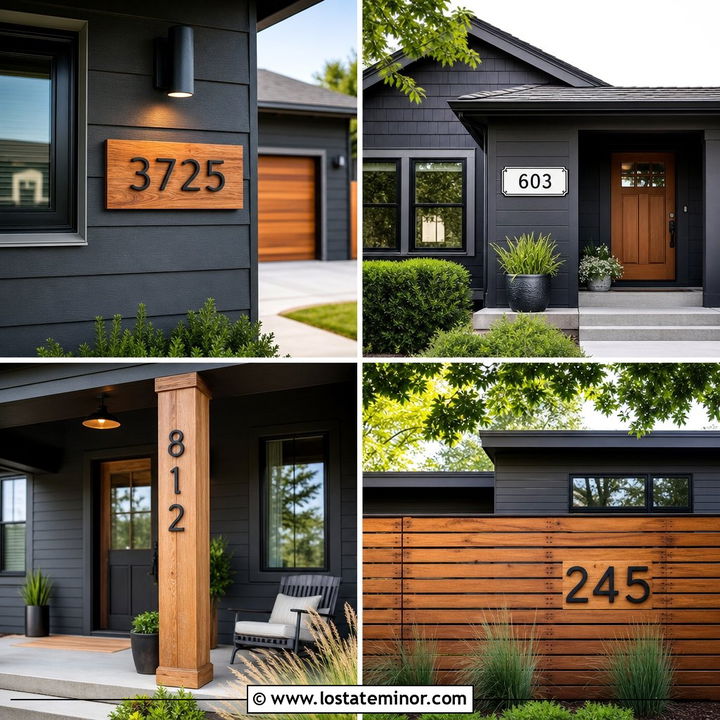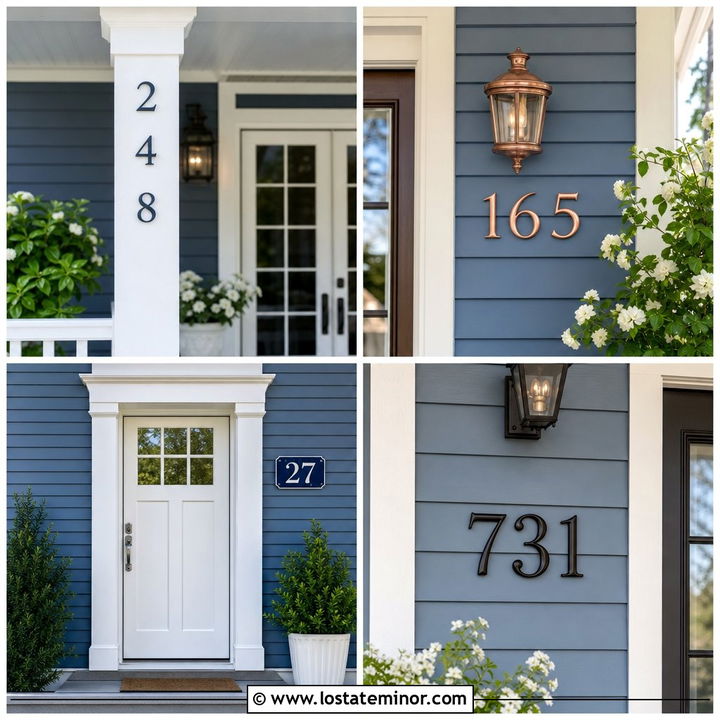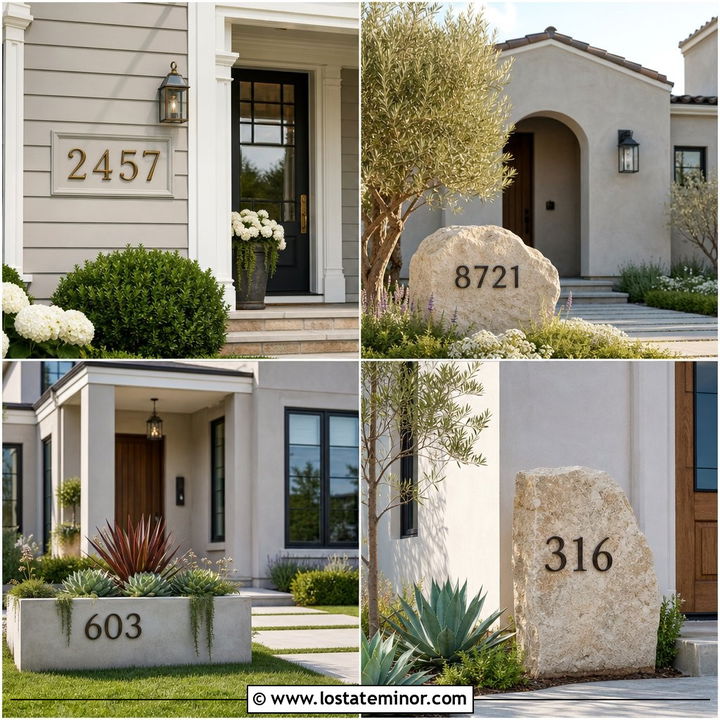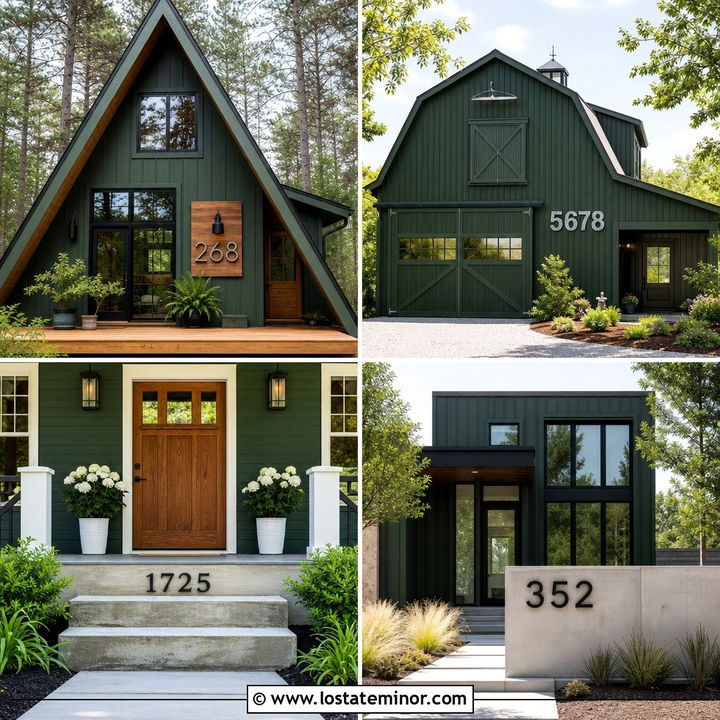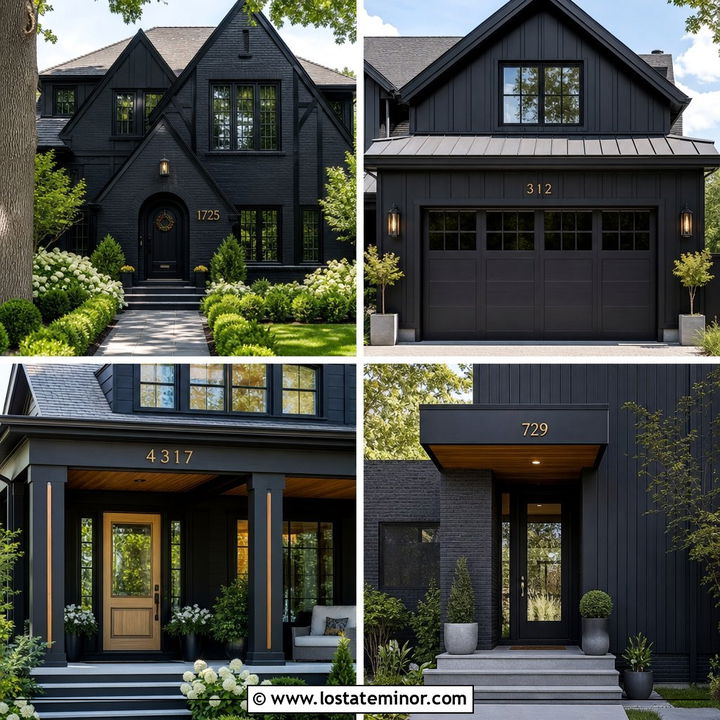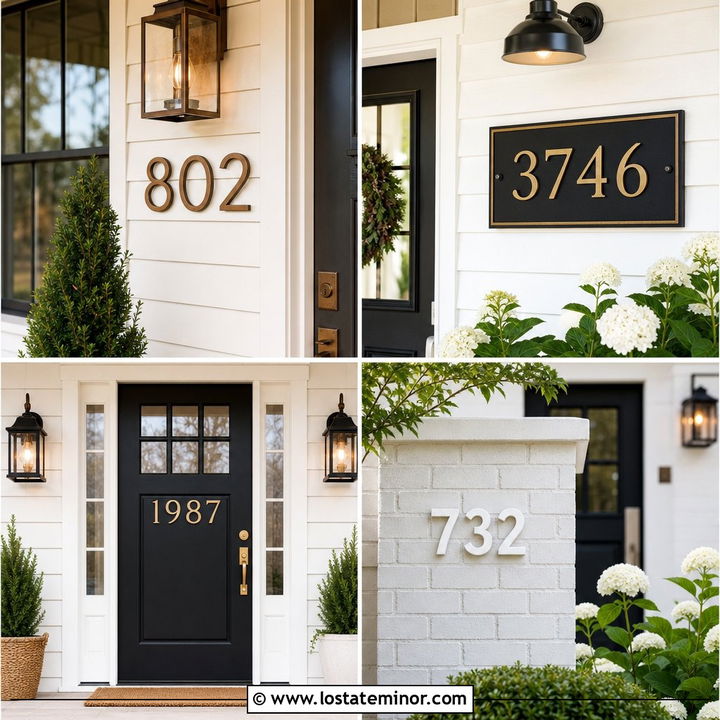
Stone creates a strong, lasting foundation for curb appeal, while well-chosen address numbers add function and personality. These 30 Stone House Design With House Numbers Ideas explore complete exterior looks instead of treating the numbers as an afterthought. You will find modern, rustic, farmhouse, cottage, ranch, Tudor, and traditional homes featuring limestone, fieldstone, ledgestone, slate, and river rock. Each scheme coordinates the stone facade with siding, roofing, doors, lighting, landscaping, and clearly visible numbers. Contrast, scale, placement, and nighttime readability are considered throughout. Whether you are building new or refreshing an existing entrance, these combinations can help your address feel connected to the architecture. Browse the complete exterior schemes below in 30 Stone House Design With House Numbers Ideas.
1. Modern Stone House With Black Numbers
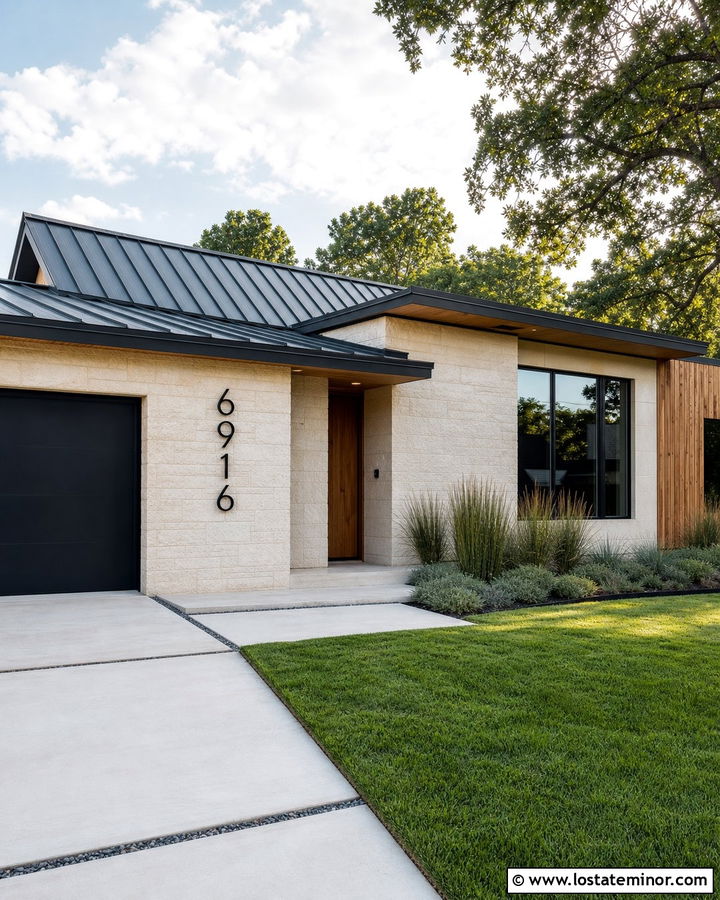
A modern stone house gains a clean, graphic look when matte black numbers repeat the finish of its windows and lighting. Use pale limestone across the main facade, then add warm vertical cedar siding around a recessed entrance. Large black numbers can sit vertically on a smooth limestone panel beside the front door, where they remain visible without competing with the stone texture. Choose a charcoal standing-seam roof and a natural wood door to balance the cooler materials. Low ornamental grasses, rectangular concrete steps, and a straight walkway reinforce the modern lines. At night, a slim downlight should wash the numbers evenly. This complete scheme feels contemporary, warm, and carefully coordinated rather than stark or overly industrial.
2. Rustic Stone House With Bronze Numbers
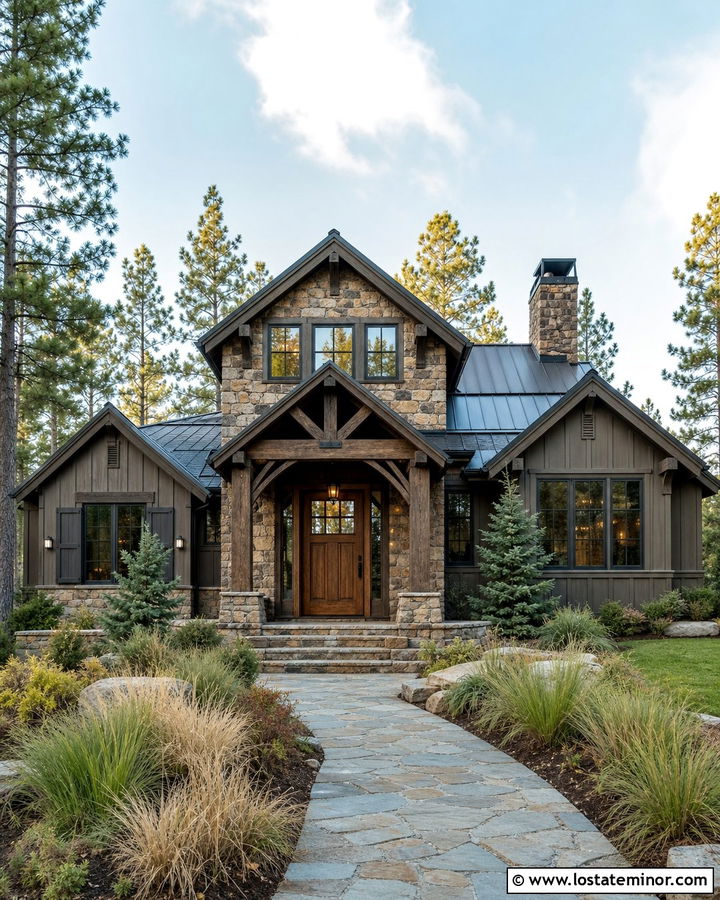
Rugged fieldstone looks especially inviting when it is paired with aged bronze house numbers and warm wood details. Cover the lower facade and chimney in mixed brown and gray fieldstone, then use deep taupe board-and-batten siding above it. Mount substantial bronze numbers on a smoother stone near the porch, avoiding heavily uneven joints that can make installation difficult. A dark walnut front door, timber porch beams, and bronze lanterns repeat the rich metal finish. Complete the house with a weathered charcoal roof and natural flagstone walkway. Layer evergreen shrubs, flowering perennials, and native grasses around the foundation. The finished exterior has the character of a mountain retreat while keeping the address practical, readable, and visually connected to the home.
3. White Stone House With Brass Numbers
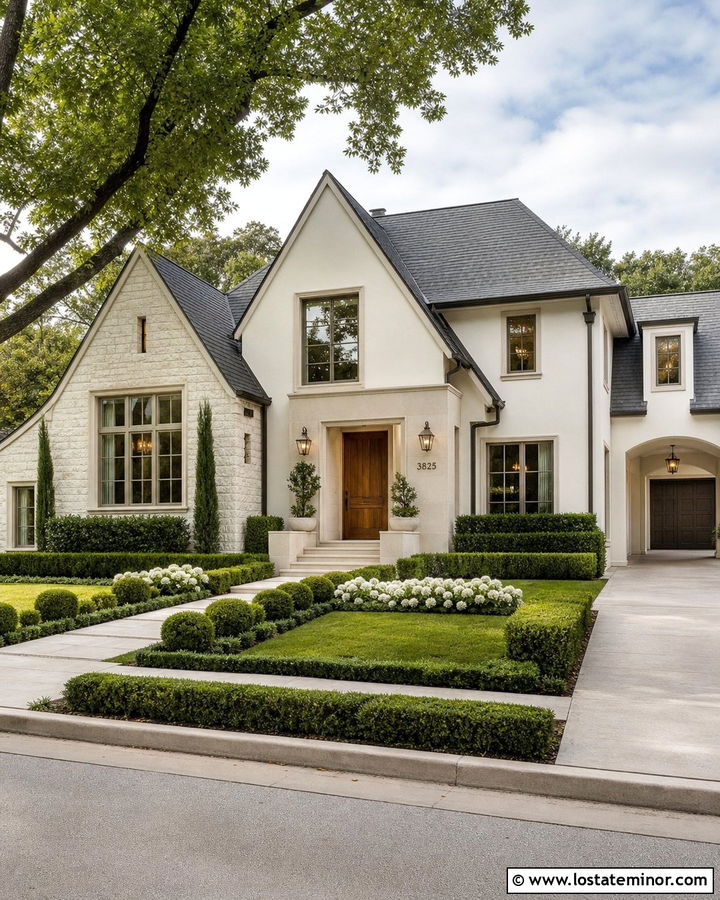
Do you want a bright stone exterior that still feels warm? Creamy white limestone, soft white stucco, and brushed brass numbers create an elegant combination without looking cold. Place the numbers horizontally on a smooth limestone block beside a medium-tone oak front door. Their warm metallic finish should coordinate with the door hardware and simple wall lanterns. Use ivory trim rather than crisp blue-white trim so every surface relates to the stone’s natural undertones. A medium gray roof adds definition without creating harsh contrast. Finish the facade with pale concrete pavers, clipped boxwoods, and loosely planted white flowers. This scheme suits transitional, Mediterranean, and contemporary homes because it combines classic materials with streamlined details and a clear, welcoming entrance.
4. Gray Stone House With White Numbers
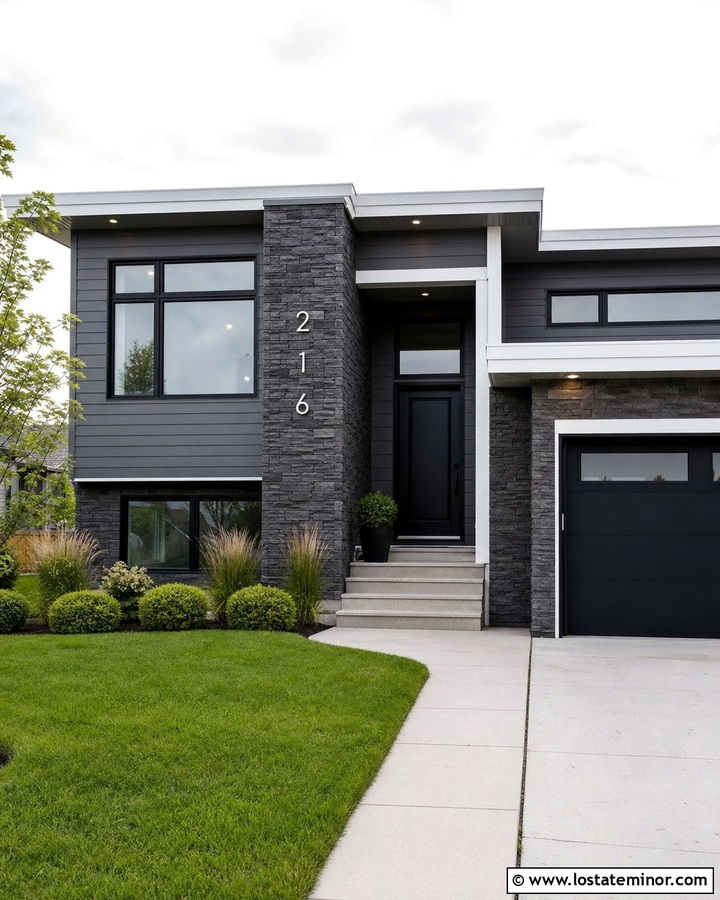
White house numbers can be remarkably effective against charcoal ledgestone, particularly when the rest of the exterior uses a limited color palette. Apply the dark stone to the garage wing and entrance column, then soften it with medium gray horizontal siding. Oversized white numbers mounted vertically on the stone column will connect visually with white window trim and the garage surround. Choose a black front door and matching sconces for sharper definition. A light gray concrete walkway keeps the foreground simple, while rounded shrubs and airy grasses reduce the hardness of the architecture. Make sure the numerals have thick, uncomplicated shapes that remain legible from the street. The result is a polished split-level or contemporary ranch exterior with balanced contrast and dependable address visibility.
5. Farmhouse Stone House With Metal Numbers
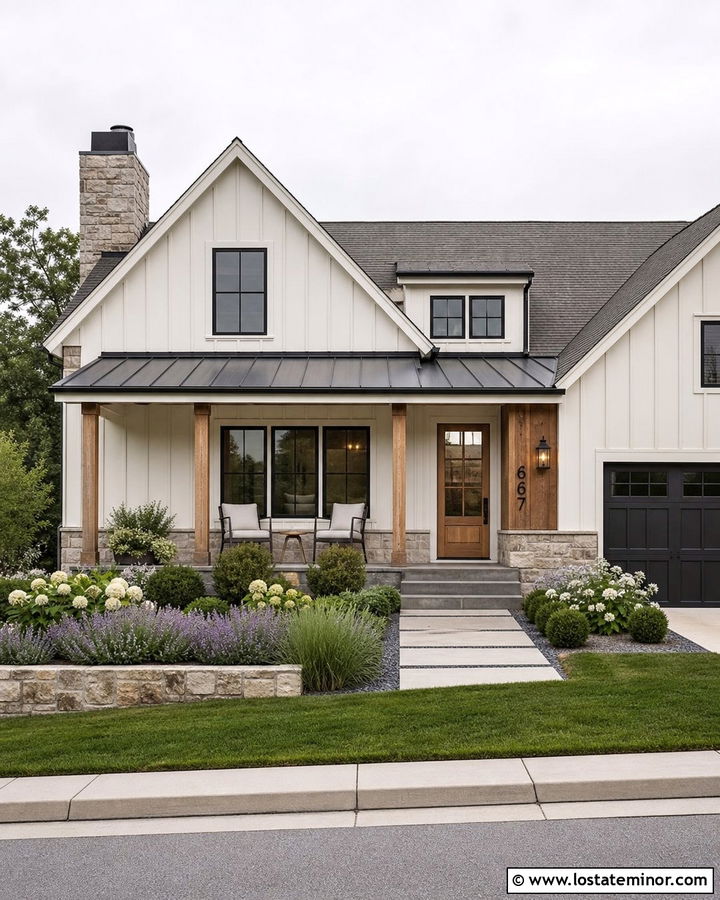
A modern farmhouse can feature stone without losing its light, familiar character. Start with warm white board-and-batten siding and use beige-gray limestone around the porch foundation, chimney, and garage. Install dark galvanized metal numbers on a vertical wood panel beside the front door rather than forcing them onto highly textured stone. A stained oak door and matching porch ceiling bring natural warmth to the scheme. Black-framed windows, gooseneck lights, and a charcoal metal porch roof provide crisp contrast. Keep the main roof in a softer weathered gray to prevent the house from appearing too black and white. A gravel-edged walkway, lavender, hydrangeas, and tidy foundation grasses complete this relaxed farmhouse exterior while making the address easy to locate.
6. Stone Craftsman House With Copper Numbers
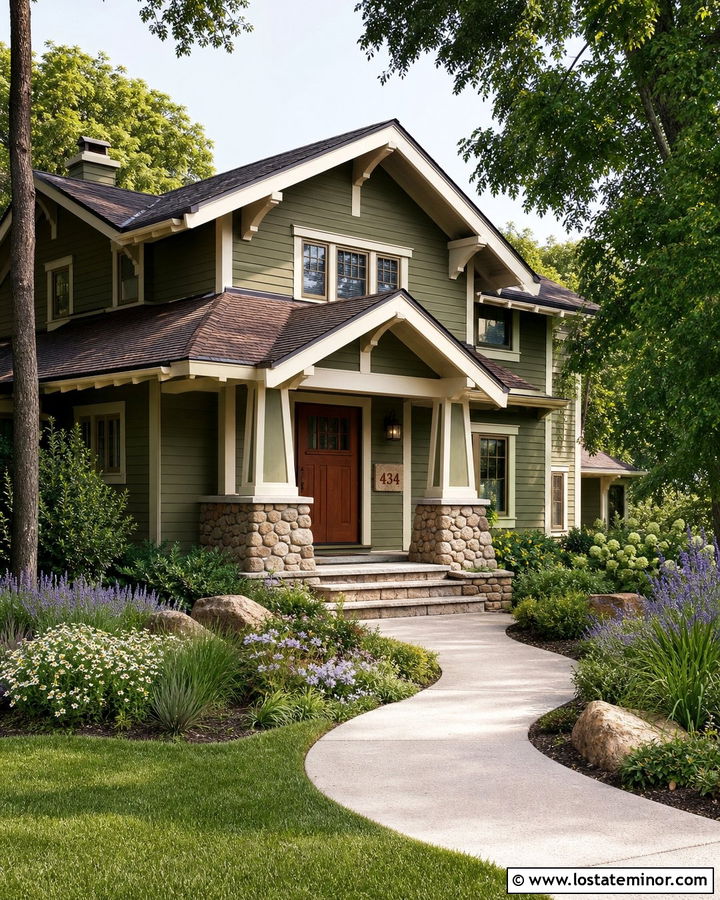
Copper numbers bring depth and handcrafted character to a Craftsman exterior built with warm stone and stained wood. Use tan river rock around the porch piers and lower walls, then combine it with muted olive siding and creamy trim. Install the copper numbers beside the front door on a flat stone plaque or painted trim board. As the metal develops a natural patina, it will continue to complement the green siding. A mahogany door, tapered columns, exposed rafter tails, and a brown architectural-shingle roof strengthen the Craftsman identity. Echo the curved river stones in a gently winding walkway and informal planting beds. Broad porch lighting should illuminate both the steps and address, creating a welcoming facade that feels detailed, practical, and rooted in its surroundings.
7. Stone Ranch House With Vertical Numbers
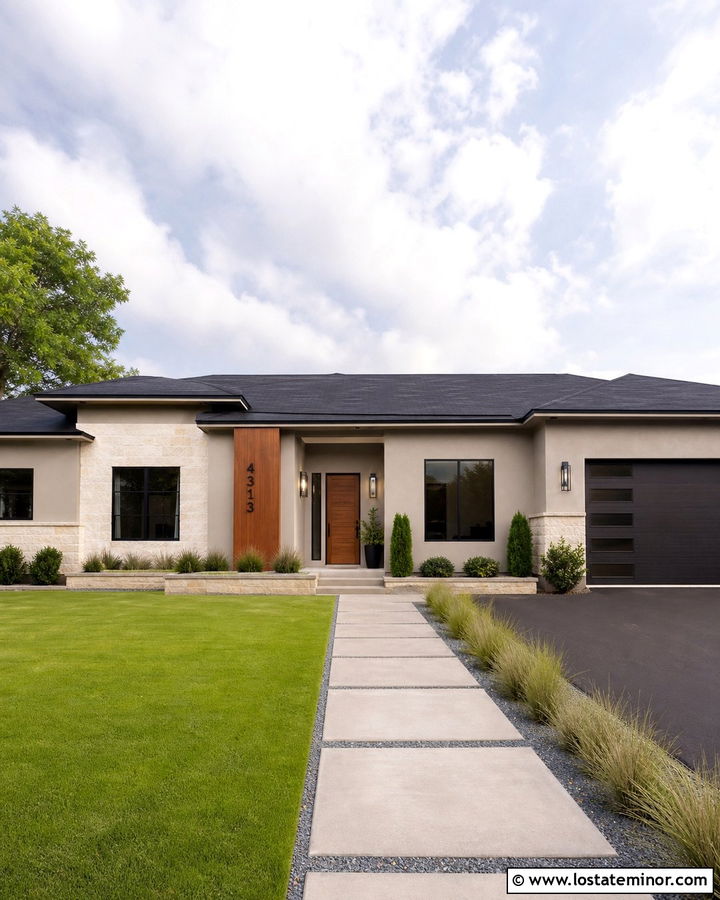
A long ranch facade benefits from vertical house numbers because they create a strong focal point near the entrance. Cover the lower half of the house in buff limestone and use muted greige siding above it. Place tall charcoal numbers on a smooth wood panel attached to a stone porch column. This provides a level mounting surface while visually connecting the column to black window frames and contemporary sconces. A medium walnut front door introduces warmth, and a low charcoal roof grounds the wide elevation. Keep landscaping horizontal with layered grasses, low evergreens, and broad planting beds. A straight concrete walkway can lead directly toward the numbered column. The vertical address adds needed height and helps visitors identify the entrance across the extended single-story facade.
8. Stone Colonial House With Traditional Numbers
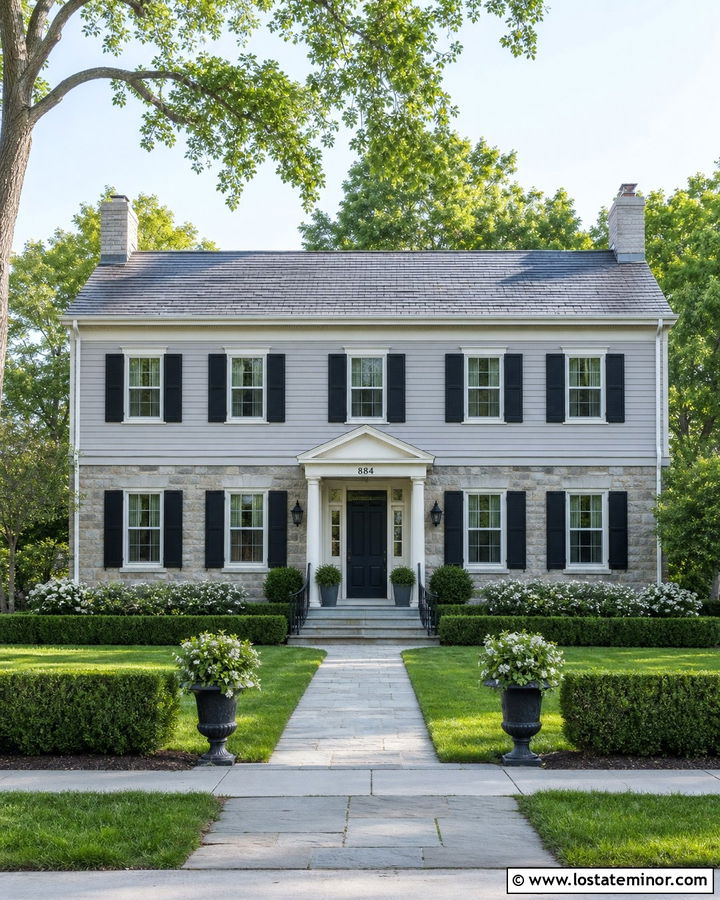
For a symmetrical Colonial home, house numbers should support the architecture rather than become an oversized statement. Use soft gray stone across the first floor, pale gray clapboard above, and clean white trim around evenly spaced windows. Center classic black numbers on the white door surround or place them neatly above the entrance. A deep navy front door adds traditional color and relates well to a slate-gray roof. Black lanterns, shutters, and simple iron railings create a consistent accent finish. Keep the walkway centered and frame it with clipped hedges, rounded shrubs, and matching planters. The measured placement of every detail strengthens the balanced facade. This approach gives the address excellent visibility while preserving the formal, orderly appearance that makes Colonial architecture distinctive.
9. Stone Cottage House With Ceramic Numbers
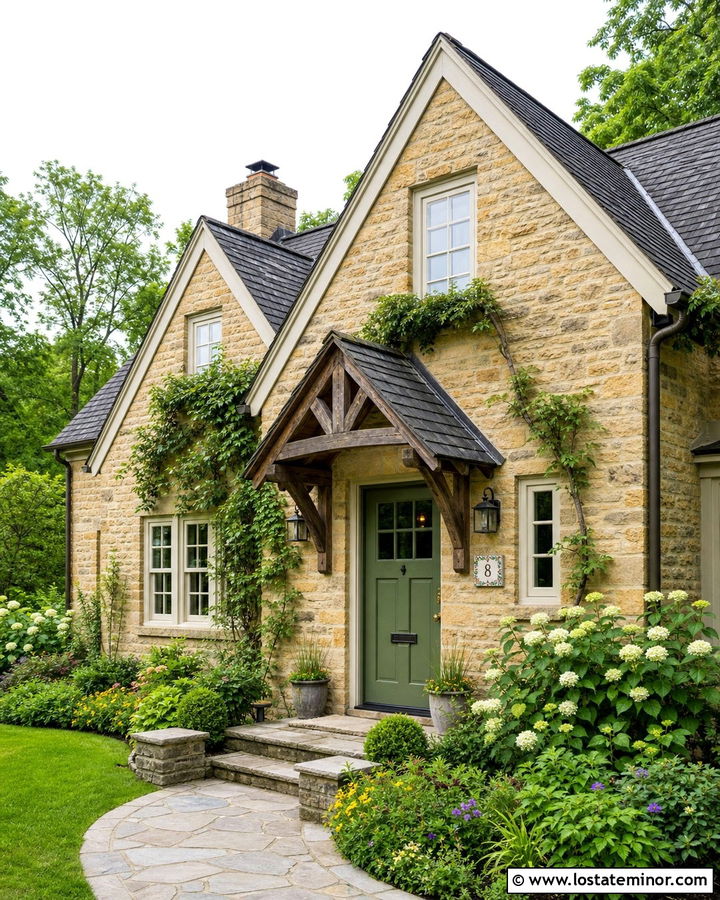
Hand-painted ceramic numbers can give a stone cottage a personal touch without overwhelming its old-world character. Choose irregular honey-colored fieldstone, a moss green front door, and soft cream trim beneath a steep charcoal roof. Mount a compact ceramic number plaque on a smooth section near the door, using colors that repeat the green, cream, and muted blue found elsewhere. Add dark bronze lanterns and a small timber porch canopy for warmth. A curved flagstone path, climbing greenery, flowering shrubs, and loosely layered garden beds should soften the rugged masonry. Keep branches and vines trimmed away from the plaque so the address remains readable. The finished cottage feels collected and charming, yet the number display remains clear enough for guests and delivery drivers to find quickly.
10. Stone Tudor House With Iron Numbers
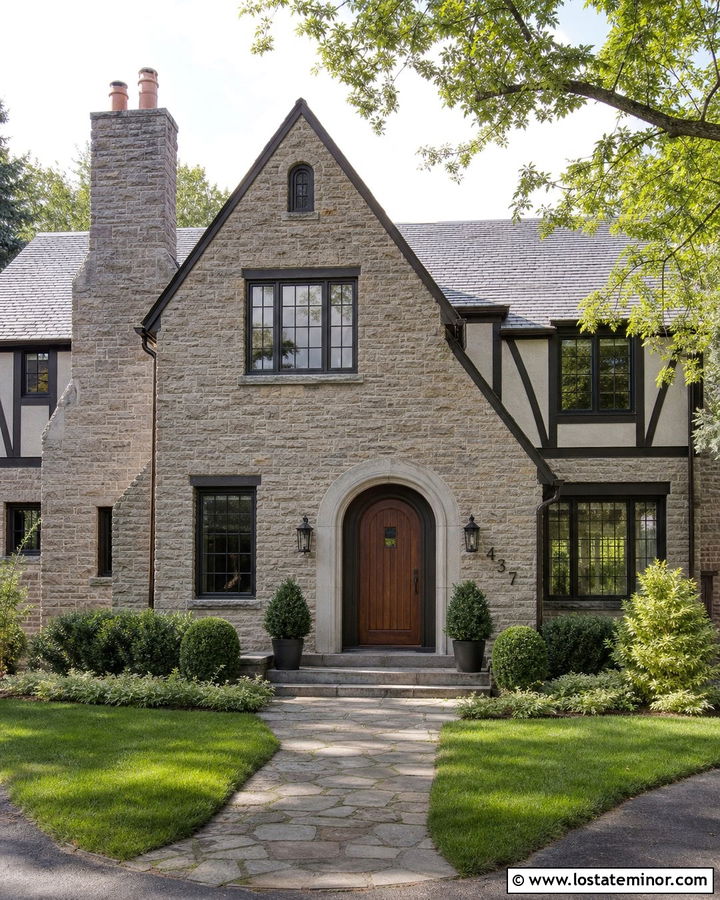
Dark iron numbers naturally suit a Tudor home with heavy masonry, steep gables, and exposed timber details. Build the lower exterior with warm gray rubble stone, then use cream stucco and dark brown half-timbering above. Position large iron numbers on a smooth stone lintel beside the arched entry, where their simple shape will stand apart from the decorative architecture. Repeat the metal in lanterns, door hardware, gutters, and a modest railing. A rich brown wood door and slate roof deepen the traditional palette. Lead visitors toward the entrance with an irregular stone path surrounded by clipped evergreens and shade-tolerant plants. The restrained number design prevents the facade from becoming visually crowded while still adding enough contrast for dependable street-level visibility.
11. Stone Bungalow With Wood Number Sign
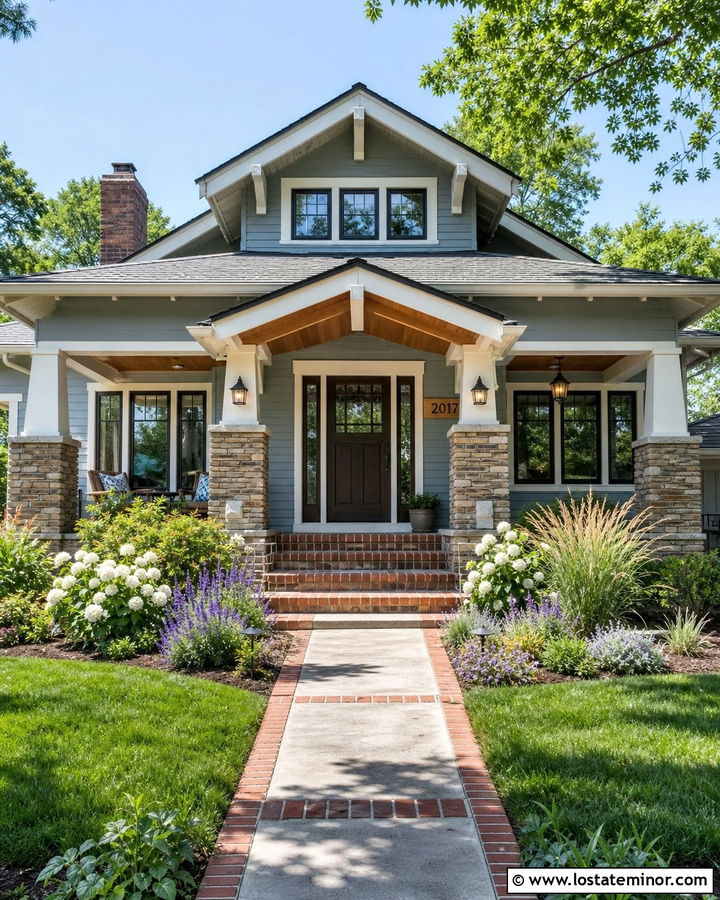
A wood address sign helps a stone bungalow feel friendly, handcrafted, and connected to its porch. Use sandy stacked stone on the porch piers and foundation, muted blue-gray lap siding, and warm white trim. Mount simple black numbers on a thick cedar board beside the front door, sealing the wood for exterior exposure. Match the sign to the stained porch ceiling, brackets, and natural wood door. A dark gray roof and black lanterns provide definition without making the small facade feel heavy. Wide porch steps, a brick-edged path, flowering shrubs, and layered native plants create a welcoming approach. Because bungalows often have deep porches, include a dedicated light above the number sign so the address stays visible after sunset.
12. Stone Cape Cod House With Navy Numbers
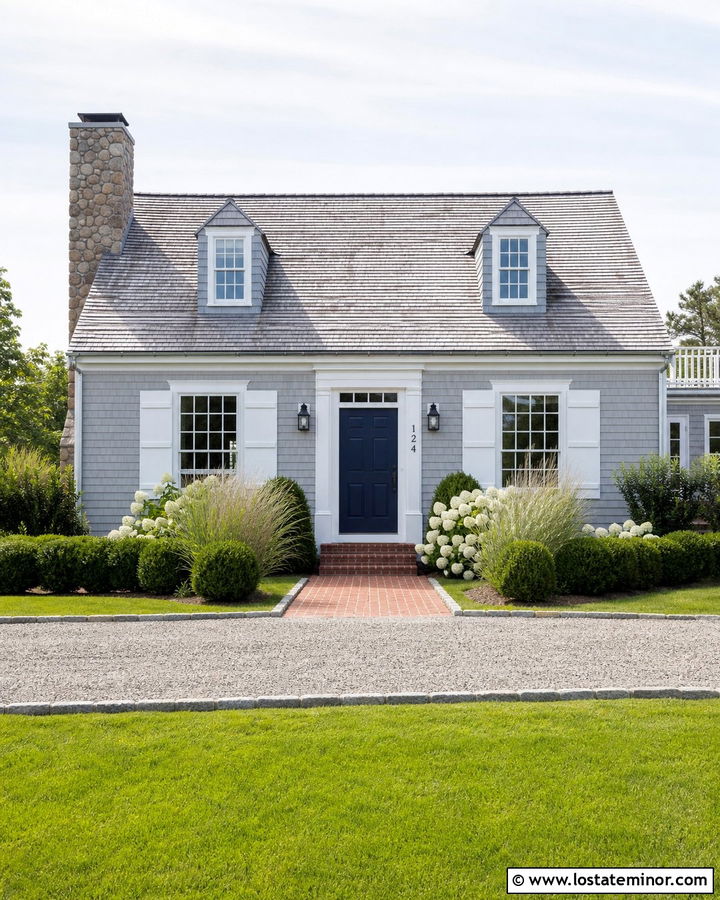
A compact Cape Cod exterior can use navy house numbers to create subtle color continuity. Cover the chimney and front foundation with pale coastal fieldstone, then paint the shake siding a soft weathered gray. Place navy numbers on a wide white trim board beside the door, repeating the color of the shutters and front entry. The numbers should be large enough to read but slim enough to suit the home’s modest scale. Add a cedar-shingle roof or weathered gray architectural shingles for a classic coastal appearance. A brick walkway, low boxwoods, white hydrangeas, and salt-tolerant grasses complete the setting. This restrained gray, white, navy, and natural stone palette makes the entire house feel coordinated while preserving Cape Cod simplicity and charm.
13. Stone Split-Level House With Floating Numbers
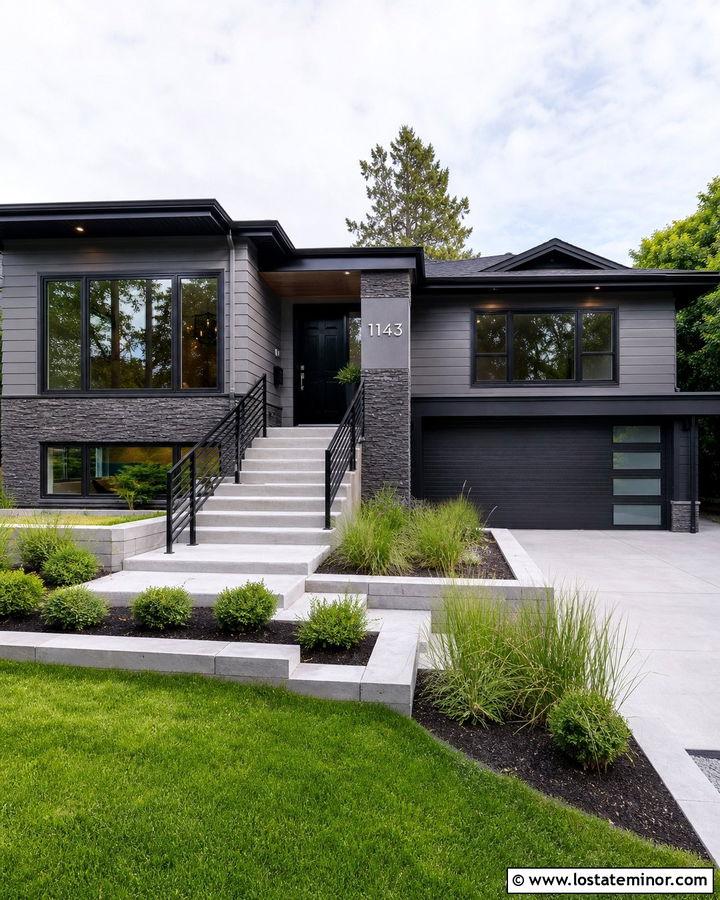
Floating house numbers are an easy way to give a stone split-level exterior a cleaner, more current appearance. Use charcoal stacked stone around the lower level and garage, then add warm gray siding across the upper story. Install large brushed aluminum numbers with spacers on a flat stone panel near the elevated entrance. The small shadow behind each numeral creates dimension while keeping the display crisp. Connect the silver finish to modern door hardware, then use black-framed windows and a black front door for stronger contrast. Broad concrete steps, horizontal railings, and tiered planting beds can visually organize the sloped front yard. This coordinated update respects the home’s original form while making the entrance, stonework, and address feel more intentional and contemporary.
14. Mountain Stone House With Illuminated Numbers
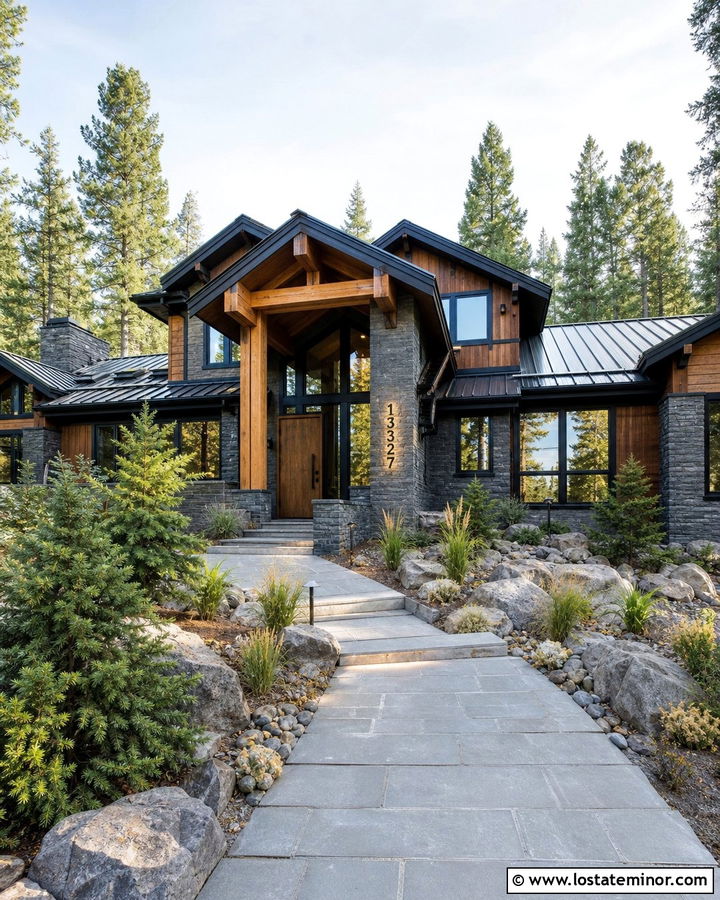
In a wooded or mountain setting, illuminated house numbers can improve visibility while complementing a dramatic stone exterior. Combine dark gray ledgestone with stained cedar siding, heavy timber beams, and a matte black metal roof. Place backlit black numbers on a smooth stone column near the driveway-facing entrance. A warm white glow will separate the numerals from the dark masonry without producing harsh glare. Choose an oversized natural wood door and black-framed windows to continue the rugged modern palette. Use native boulders, evergreen shrubs, and drought-tolerant grasses around a wide stone walkway. The address should remain unobstructed by seasonal growth or snow. This complete design feels substantial and appropriate to the landscape while providing a clear visual guide after dark.
15. Mediterranean Stone House With Tile Numbers
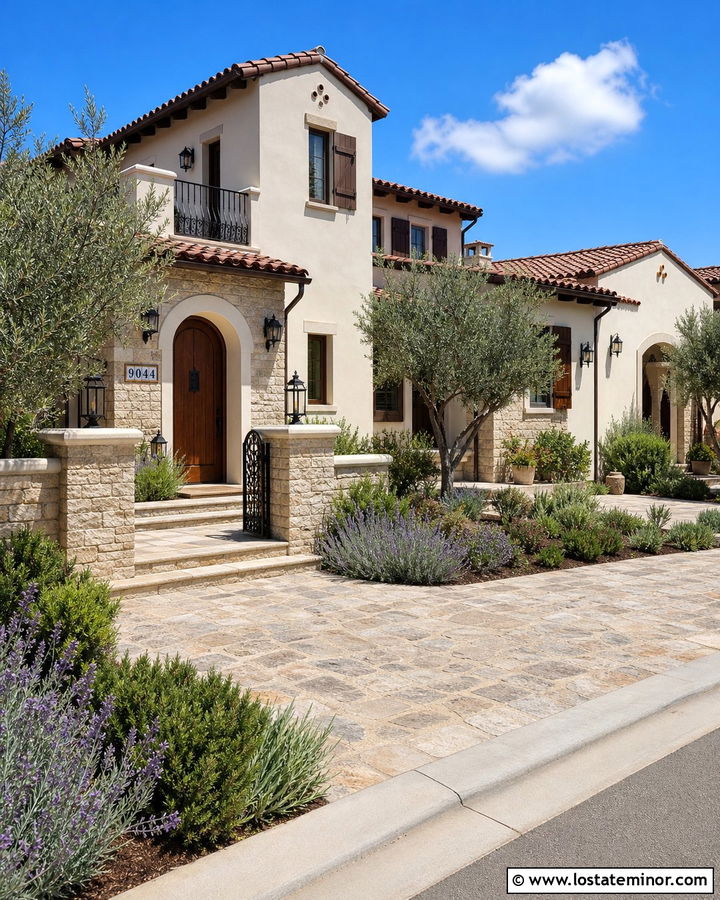
Decorative tile numbers feel at home on a Mediterranean exterior when their colors are repeated with restraint. Use creamy limestone, warm white stucco, and a terracotta tile roof as the primary materials. Set a blue-and-white address tile panel into a smooth stucco section beside an arched wood door. Small touches of blue can appear in glazed planters, but the rest of the facade should remain quiet. Add dark bronze lanterns, wood shutters, and wrought-iron balcony details for depth. A warm stone courtyard, olive trees, lavender, and clipped rosemary create a regionally inspired landscape without hiding the entrance. The tile panel supplies handcrafted character and strong contrast, while the surrounding stone, stucco, and natural wood keep the entire house elegant and balanced.
16. Contemporary Stone House With Oversized Numbers
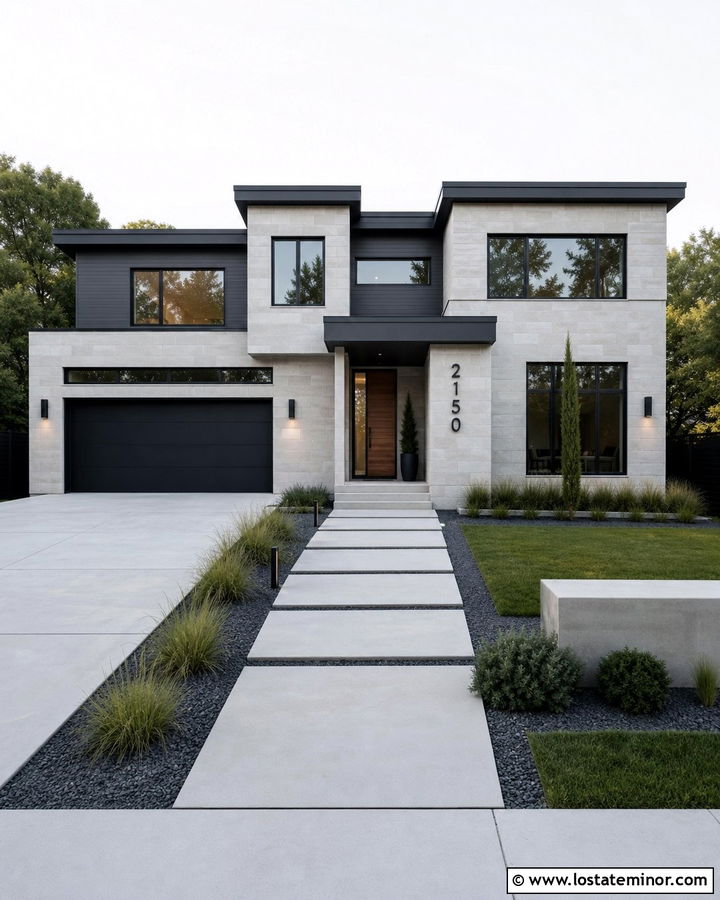
Oversized numbers can look sophisticated on a contemporary stone house when the facade has enough open space to support their scale. Use smooth silver-gray limestone across one rectangular volume and dark charcoal siding across another. Mount tall black numbers vertically on the limestone wall near a recessed walnut door. Leave generous blank space around the address so it reads as part of the architecture, not added decoration. Flat or low-sloped rooflines, black window frames, and minimal metal lighting reinforce the geometry. Finish the front yard with large concrete slabs, gravel, sculptural evergreens, and ornamental grasses. A broad driveway should remain visually separate from the entrance path. The restrained materials and bold address create a memorable, highly legible exterior without relying on unnecessary ornament.
17. French Country Stone House With Aged Brass Numbers
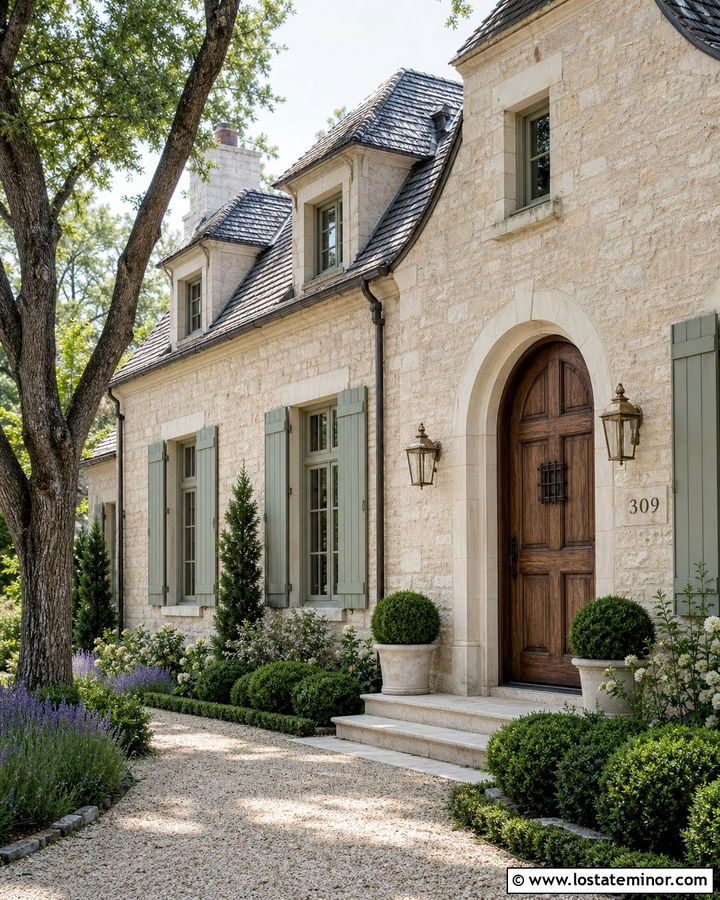
A French country facade calls for house numbers with warmth, softness, and a sense of age. Select creamy rubble stone, pale taupe stucco, and muted sage shutters beneath a steep weathered-gray roof. Place aged brass numbers on a limestone plaque near the arched front door. Their warm finish should repeat in lanterns and door hardware, while remaining dark enough to contrast with the plaque. Use a stained oak door, gently curved roof details, and divided-light windows to support the traditional architecture. A gravel path, clipped hedges, lavender, and loosely shaped flowering shrubs create an inviting garden setting. The finished design feels refined but not formal, and the carefully positioned numbers guide the eye naturally toward the entrance without distracting from the textured stonework.
18. Stone Farmhouse With Numbers On The Porch Post
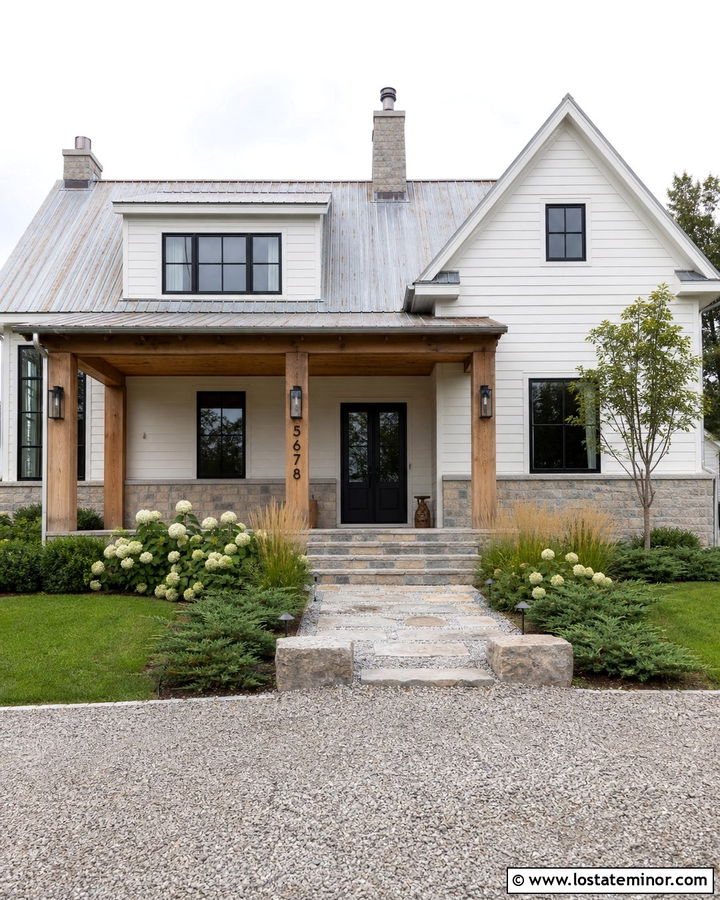
When stone walls are too irregular for easy mounting, a wide porch post offers a practical location for house numbers. Pair pale gray fieldstone with creamy white lap siding, a weathered metal roof, and substantial stained timber columns. Install vertical black numbers on the column closest to the walkway, keeping them at a comfortable viewing height. Repeat black on the window frames, porch lights, and front door, then add a natural wood ceiling to soften the contrast. Broad stone steps and a simple gravel-bordered path create a clear approach. Use hydrangeas, ornamental grasses, and low evergreens without allowing them to cover the post. This farmhouse scheme makes the address feel integrated into the porch structure while preserving the beauty and irregular texture of the stone facade.
19. Stone Entry House With Numbers Above The Door
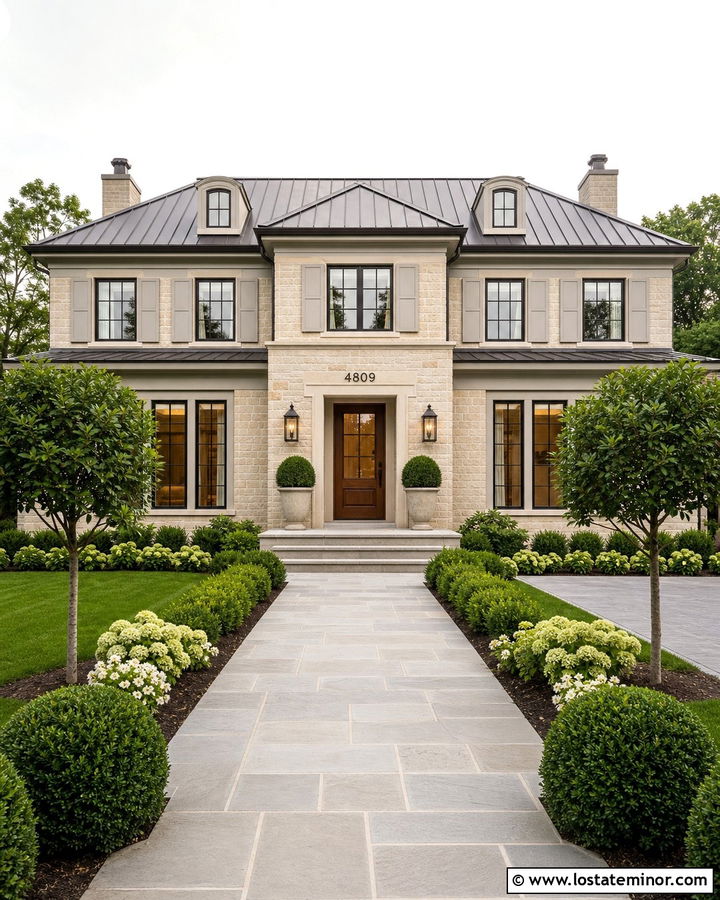
Numbers above the front door work well when an entrance has a broad lintel or porch beam that can frame the address. Design a transitional home with light beige limestone, warm greige siding, creamy trim, and a dark bronze roof. Center bold bronze numbers above a walnut door so the placement follows the entrance’s natural symmetry. Install matching lanterns on both sides and use divided-light windows to keep the facade balanced. The address should contrast strongly with its background and remain visible below the porch roof. A straight bluestone walkway, symmetrical planters, clipped shrubs, and small ornamental trees reinforce the organized design. This placement provides a clear focal point while allowing the limestone walls to remain visually uninterrupted and free from unnecessary drilled attachments.
20. Stone Garage House With Numbers On The Column
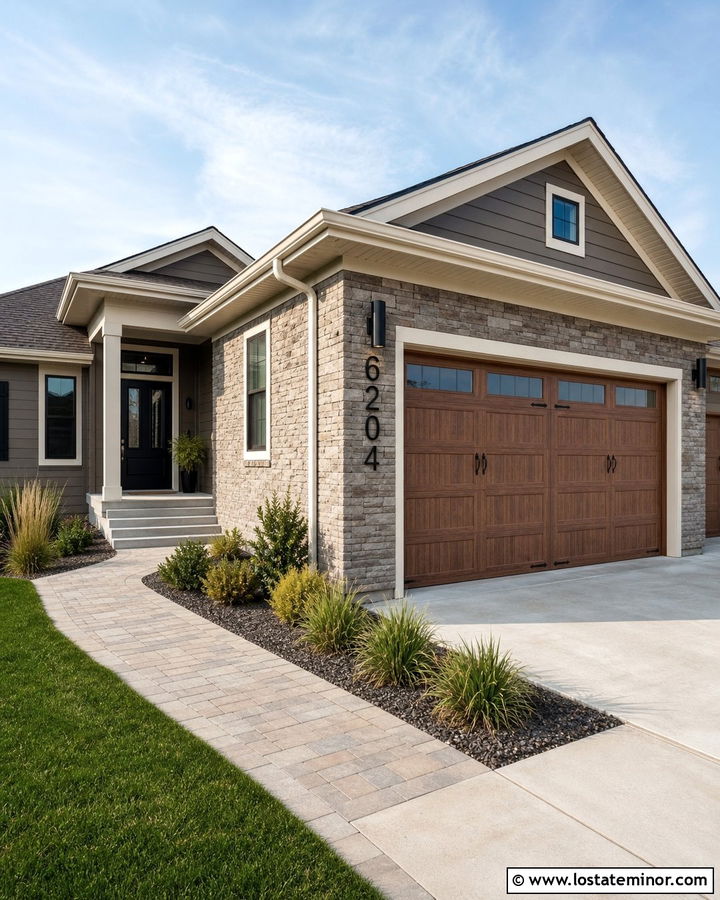
A garage-facing home often needs its address positioned where drivers can see it before reaching the front door. Use warm gray stacked stone across the garage base and entrance columns, paired with taupe siding and creamy trim. Place large black numbers vertically on the stone column nearest the driveway. If the stone is deeply textured, add a smooth metal backing plate for stable mounting and sharper contrast. Repeat black on the garage hardware, window frames, sconces, and front door. Natural cedar garage doors add warmth and prevent the facade from feeling overly gray. Complete the look with a clean concrete driveway, a separate paver walkway, low shrubs, and upright grasses. The number display becomes a useful architectural feature rather than an isolated label.
21. Stone Porch House With Address Plaque
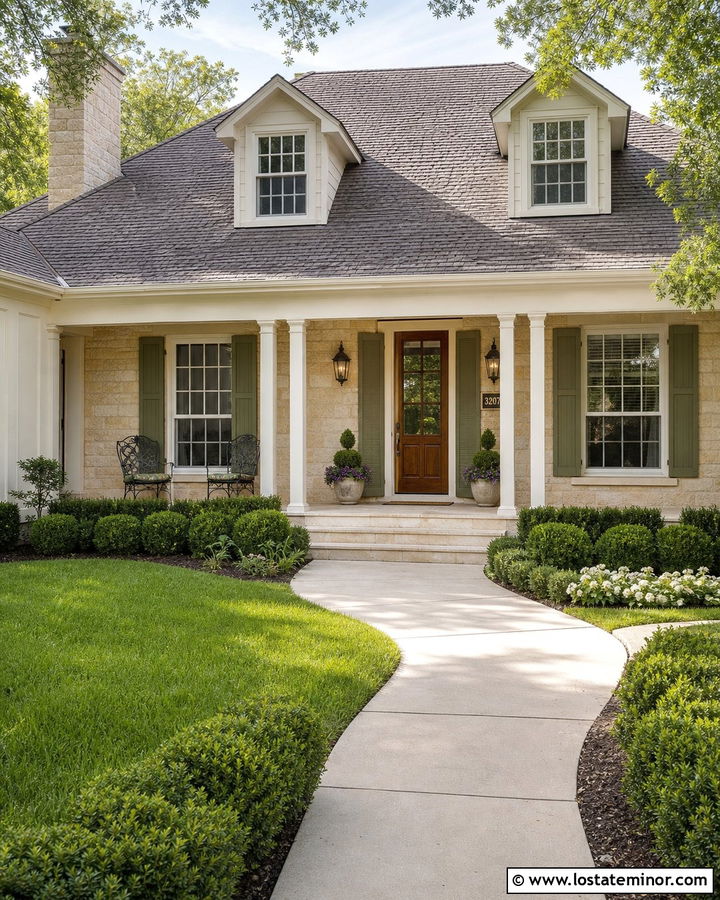
A framed address plaque can organize multiple digits and create a polished focal point on a covered stone porch. Choose soft buff limestone, ivory siding, and muted olive shutters for a relaxed traditional exterior. Install a dark bronze plaque with light raised numbers on a flat wall beside the front door. Match its rectangular shape to the nearby lantern and door panels for visual consistency. A medium brown wood door, bronze hardware, and warm gray roof complete the natural palette. Use limestone steps, a gently curved walkway, and symmetrical pots to define the approach. Keep the plaque free from wreaths, tall furniture, and climbing plants. This complete arrangement feels established and welcoming, while the contrasting address remains organized, durable, and easy to identify from the sidewalk.
22. Stone House With Numbers On A Wood Panel
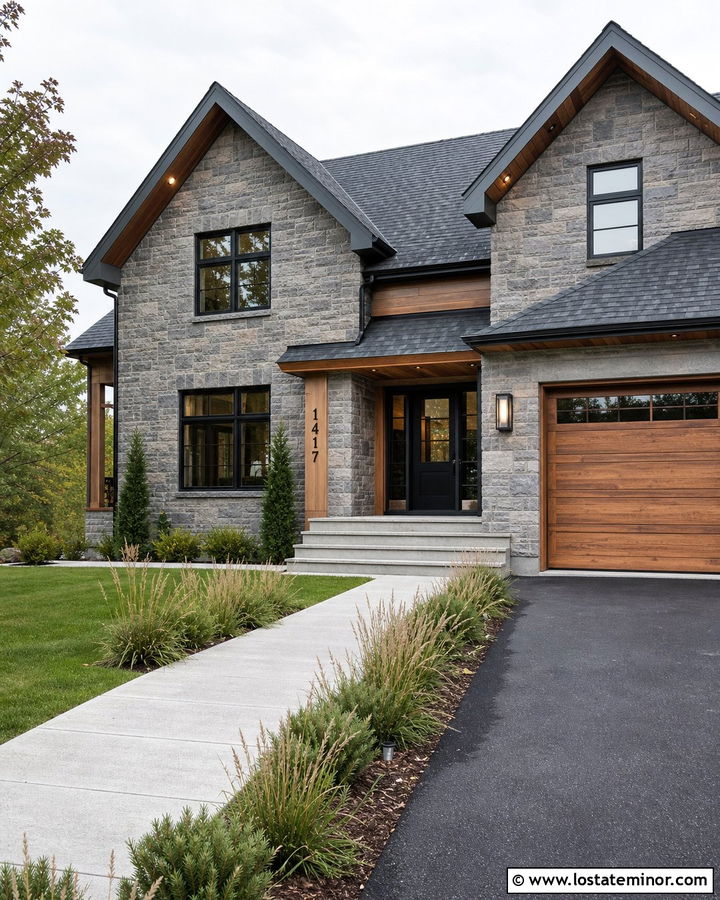
Mounting house numbers on wood creates a smooth visual pause within a heavily textured stone facade. Cover a modern rustic home in medium gray fieldstone, then introduce a narrow cedar panel beside a black front door. Attach large matte black numbers vertically to the cedar, allowing the warm grain to provide natural contrast. Repeat the wood on the garage door, soffits, and porch ceiling so the panel feels purposeful. Use black-framed windows, a charcoal roof, and minimal rectangular sconces for consistency. Wide concrete steps and a straight path can sharpen the rustic materials, while soft grasses and evergreen shrubs prevent the house from feeling severe. The combined stone, wood, and metal palette produces a balanced entrance with an address that is clear and easy to install.
23. Stone House With Numbers On A Mailbox Wall
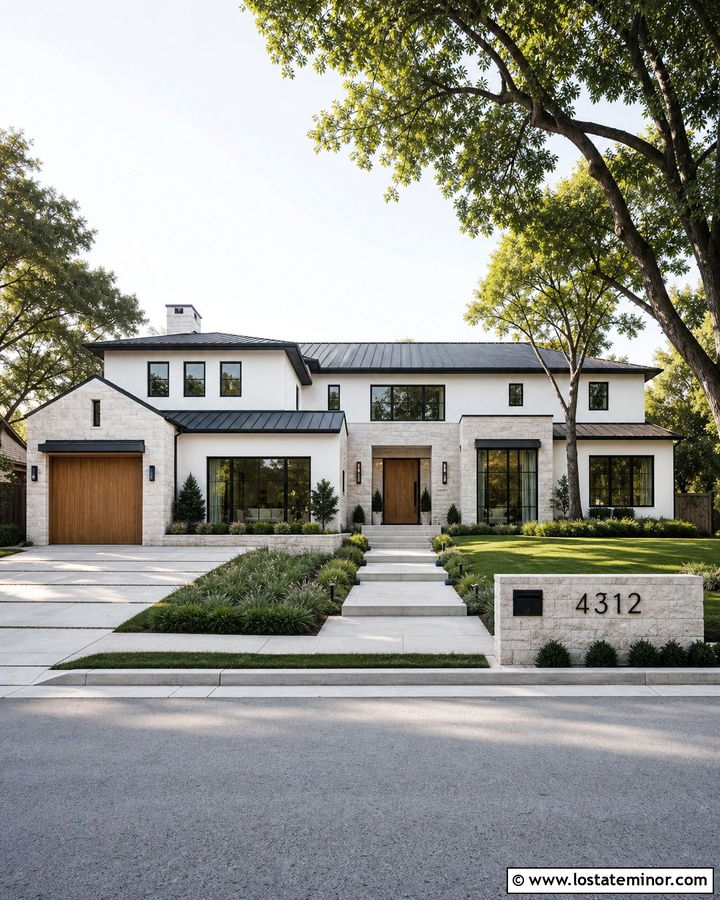
A mailbox wall near the street can solve visibility problems when the stone house sits far back from the road. Build a low monument from the same warm gray limestone used on the facade, then insert oversized black numbers and a matching mailbox. The house itself can feature off-white stucco, natural oak doors, black windows, and a charcoal roof. Keep the monument’s proportions simple so it supports rather than competes with the architecture. Add a concealed downlight or nearby landscape light for nighttime readability. Low grasses and ground cover can soften the base without hiding the address. A paved driveway and separate walkway should direct the eye toward the entrance. Repeating the house stone on the roadside marker visually connects the entire property.
24. Stone House With Engraved Address Block
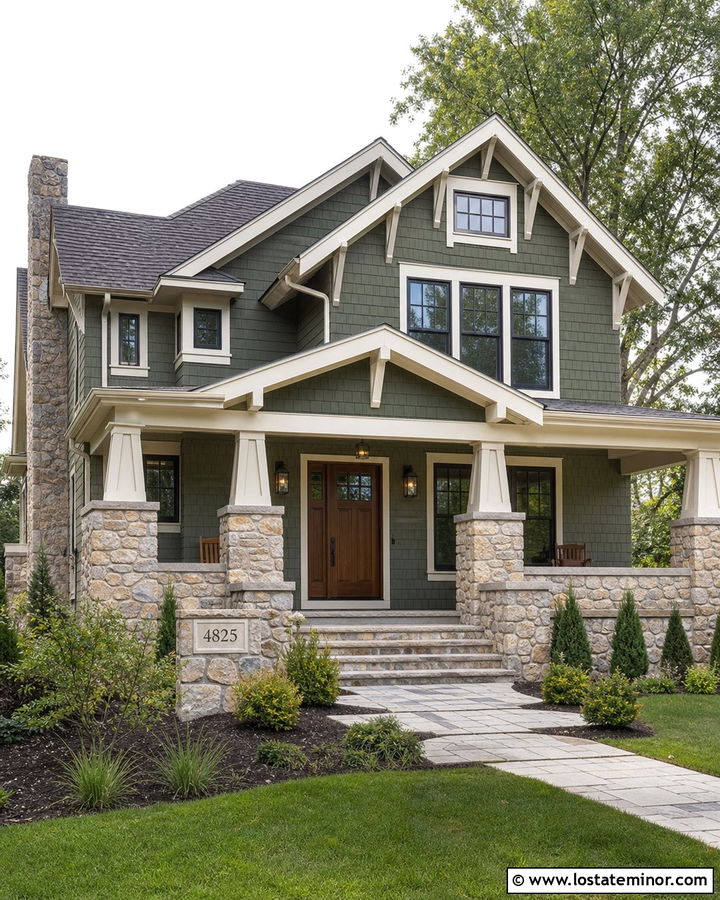
An engraved address block offers a permanent, built-in appearance that works beautifully with traditional masonry. Use tan and gray fieldstone across a substantial Craftsman facade, then insert a smooth rectangular limestone block near the porch entrance. Engrave simple dark numbers deeply enough to remain legible as the stone ages. Coordinate the block with limestone window sills, porch caps, and stair treads to make it feel original to the construction. Muted green siding, creamy trim, a walnut door, and bronze lanterns complete the natural palette. Add tapered stone piers, a broad porch, and layered evergreen landscaping. Because the address block cannot be moved easily, confirm its visibility from the street before installation. Thoughtful placement creates a refined, durable feature that belongs within the masonry.
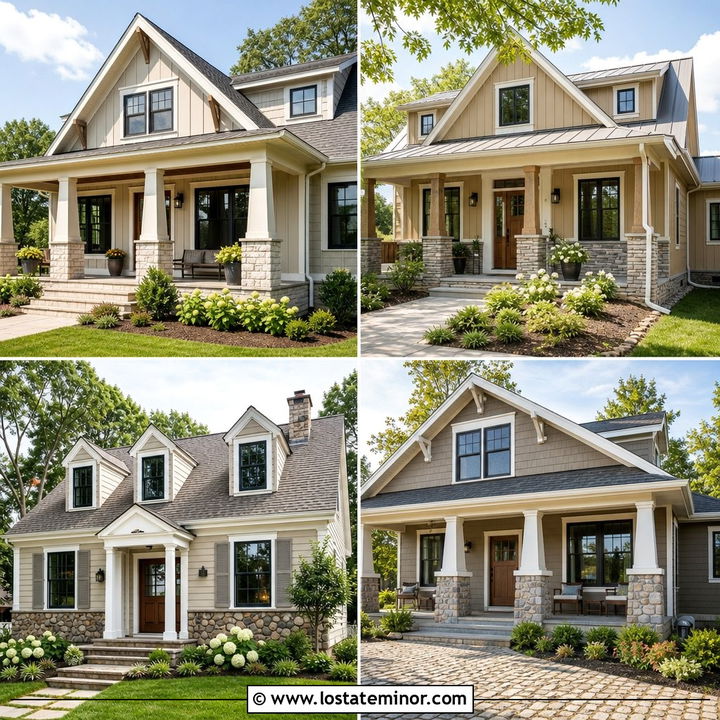
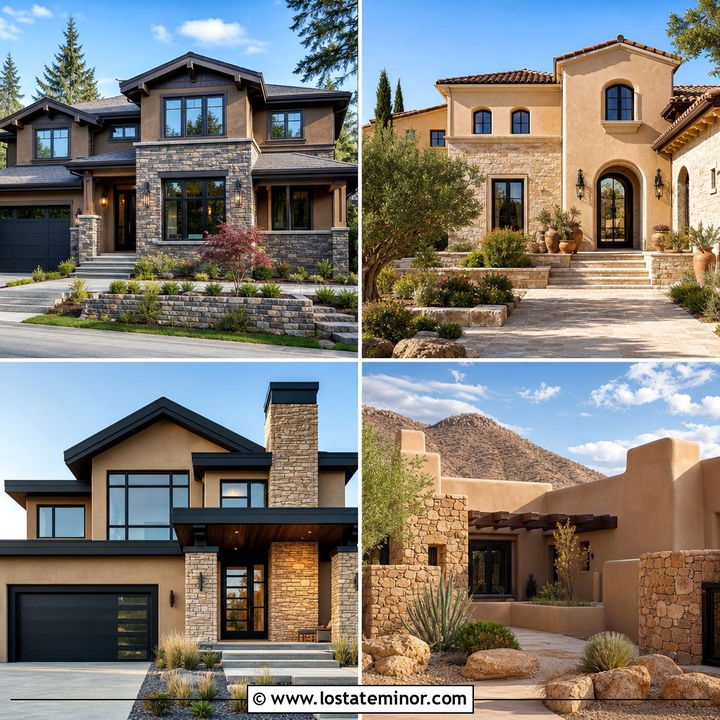
25. Stone House With Numbers On A Planter
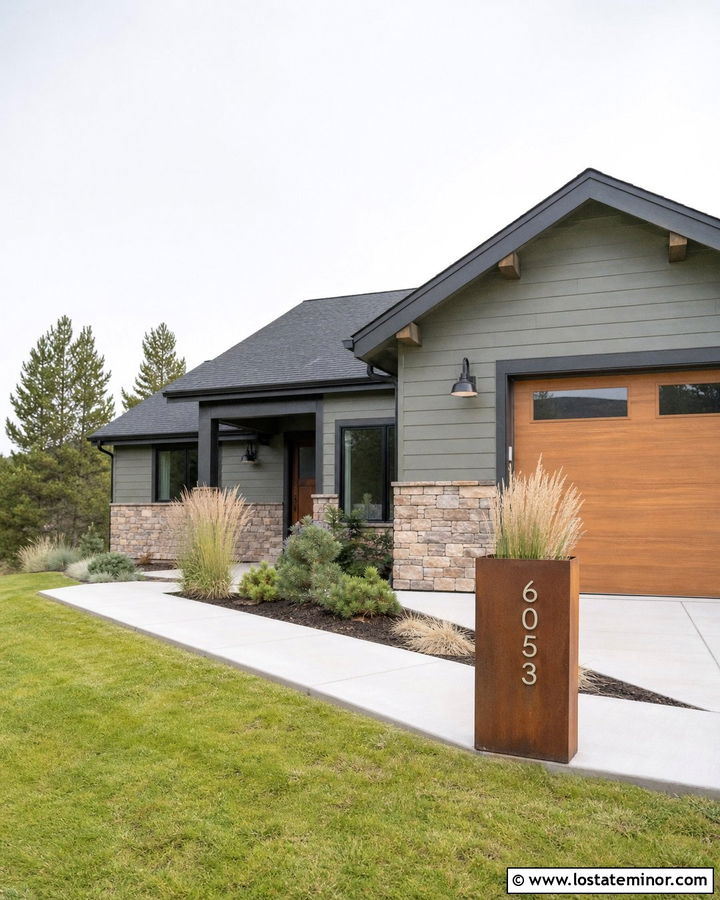
A numbered planter can add street-level visibility and greenery to a stone house with limited mounting space. Choose a contemporary ranch with gray-green siding, warm cultured stone, black windows, and a cedar garage door. Position a tall rust-colored metal planter near the walkway and attach contrasting cream or charcoal numbers to its smooth front surface. Use grasses or upright evergreens that frame the address without covering it. Repeat the planter’s warm tone in the front door and subtle landscape edging. A charcoal roof, broad concrete path, and simple black sconces complete the scheme. Secure the planter and select a weather-resistant finish for long-term use. The result is a practical address marker that feels connected to both the architecture and the surrounding landscape.
26. Dark Stone House With Stainless Steel Numbers
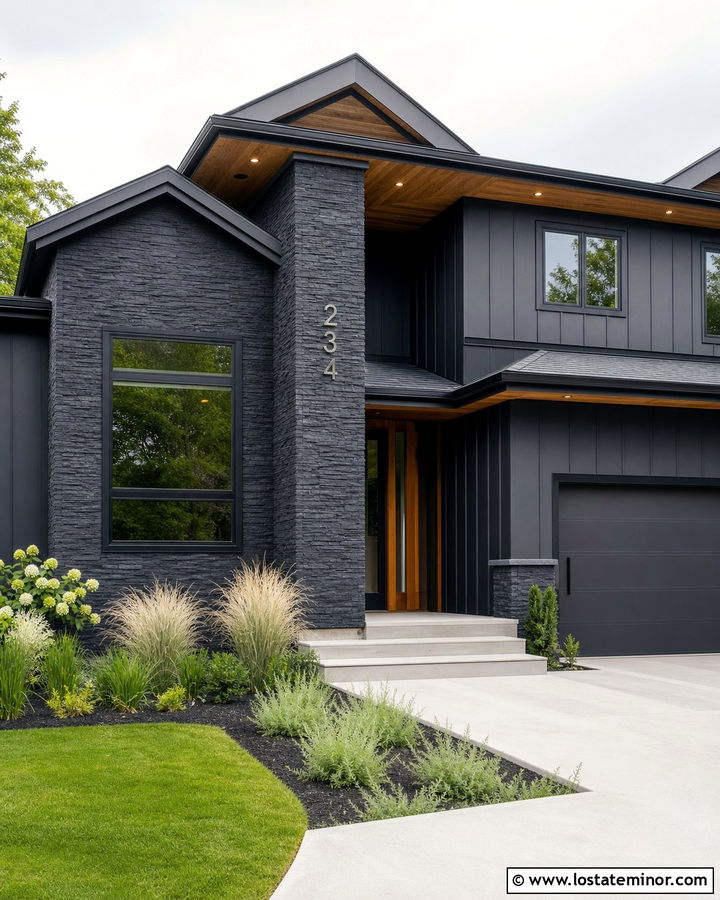
Stainless steel numbers provide crisp contrast and a lighter visual note on a dark stone exterior. Use charcoal slate ledgestone, black board-and-batten siding, and warm cedar accents across a modern two-story home. Mount brushed stainless steel numbers on a broad stone column beside the entry, using standoffs to create subtle shadows. Repeat the metal finish sparingly on the door hardware, while keeping windows, gutters, and sconces matte black. A cedar pivot door and matching soffits prevent the dark palette from appearing flat. Pale concrete steps, silvery grasses, and white-flowering plants brighten the landscape. Direct architectural lighting toward the numbered column. This full scheme feels bold and modern, yet the address remains highly visible because its finish clearly separates from the deep stone background.
27. Light Stone House With Charcoal Numbers
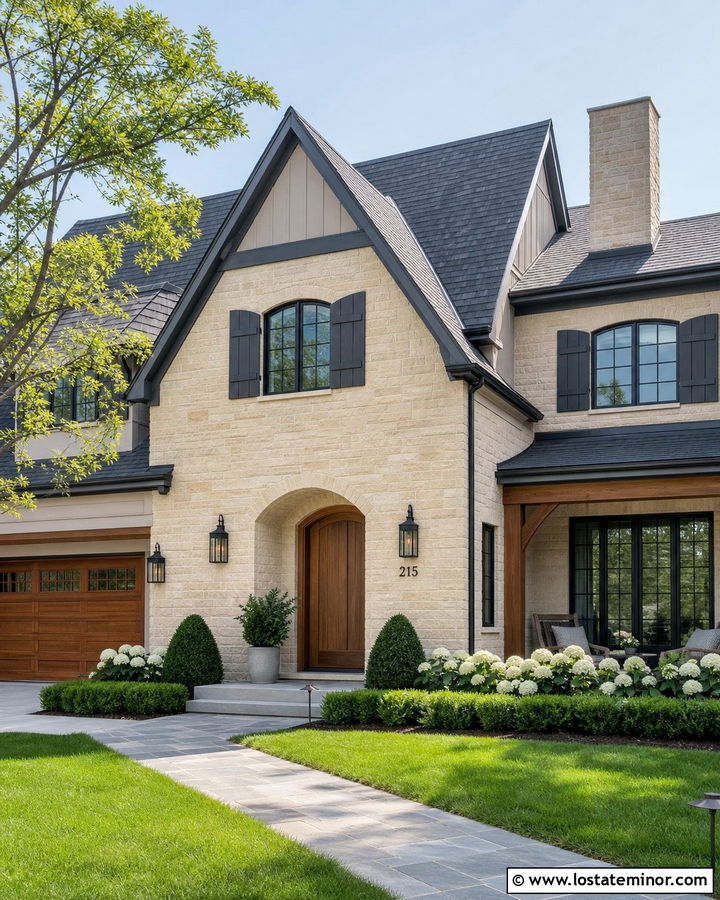
Soft limestone and charcoal numbers create a high-contrast exterior that remains warmer than a basic black-and-white scheme. Wrap a transitional home in pale beige limestone and add light greige siding to the upper gables. Mount large charcoal numbers horizontally near the door, selecting a smooth stone area or matching limestone plaque. Use the same charcoal tone for the roof, shutters, window frames, and contemporary lanterns. A medium oak front door and garage door bring warmth to the facade. Complete the curb appeal with a bluestone walkway, clipped evergreens, white flowers, and a balanced lawn. This combination is easy to adapt to suburban homes because it mixes traditional materials with updated finishes. The clear number contrast also supports straightforward daytime and nighttime identification.
28. River Rock House With Black Address Plaque
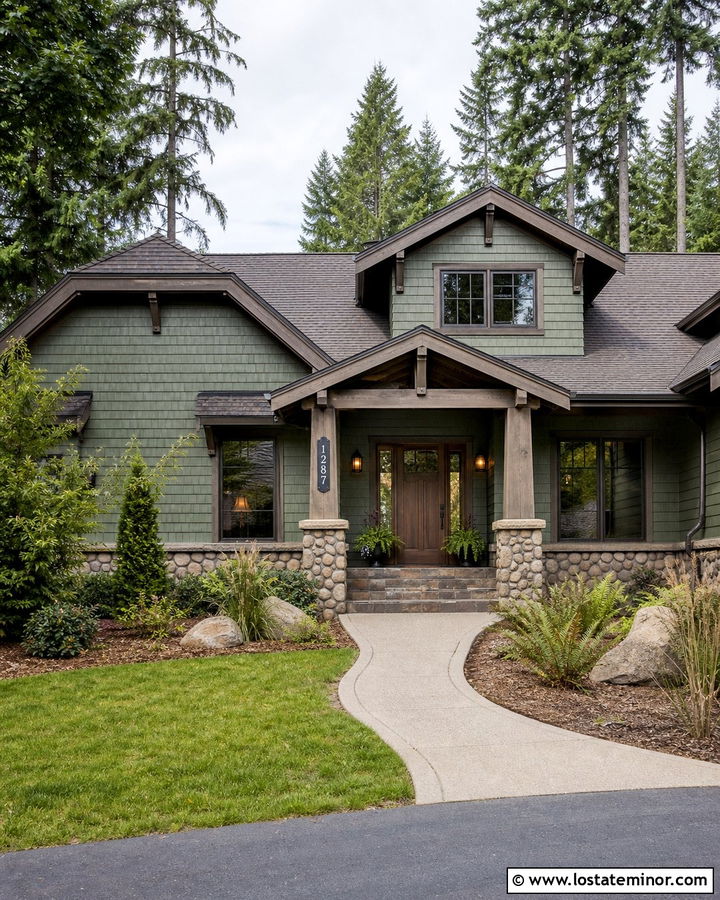
Rounded river rock creates plenty of texture, so a simple black address plaque can provide the visual clarity the facade needs. Use brown, tan, and charcoal river rock around the porch and chimney, paired with earthy green shake siding and cream trim. Select a rectangular black plaque with substantial light-colored numbers, then mount it on a timber porch post or smooth siding panel. A deep brown front door, bronze lanterns, and a weathered roof keep the palette grounded. Repeat rounded forms through a curved walkway and natural planting beds filled with ferns, grasses, and evergreen shrubs. Avoid decorative scripts that may disappear against the complex masonry. The streamlined plaque balances the rustic materials while giving the entrance a reliable, easily recognized address marker.
29. Limestone House With Floating Brass Numbers
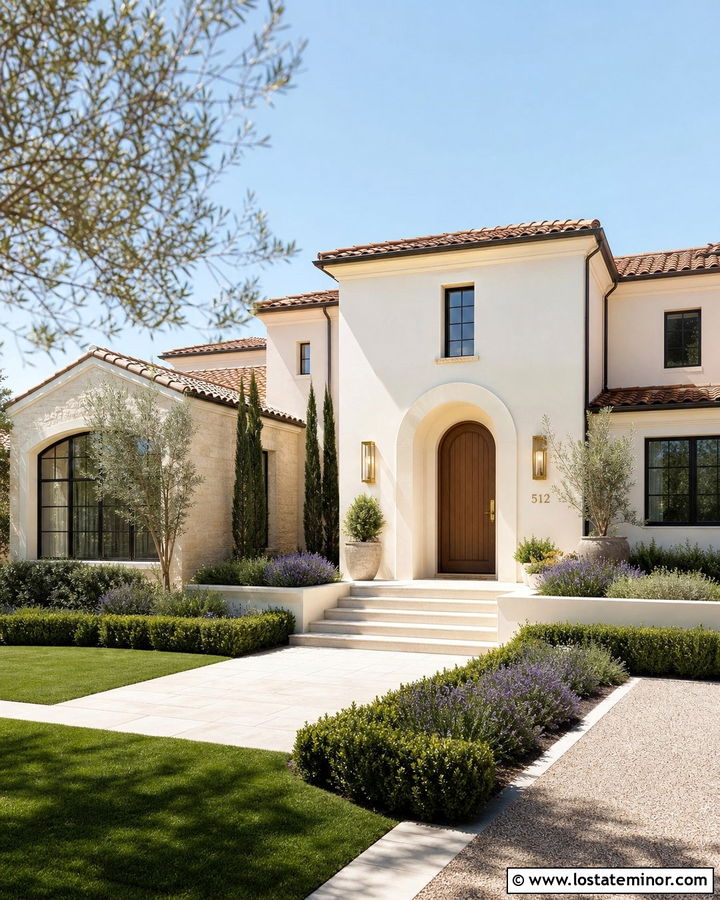
Floating brass numbers can make a refined limestone exterior feel warmer and more dimensional. Use smooth cream limestone across a contemporary Mediterranean or transitional home, accented by warm white stucco and a light terracotta roof. Mount generously sized brushed brass numbers beside an arched oak door, leaving a slight gap behind each numeral. Repeat the finish on streamlined lanterns, door pulls, and a narrow mailbox slot. Dark bronze windows add definition without introducing a completely separate color. A pale stone walkway, olive trees, clipped shrubs, and lavender reinforce the warm exterior palette. Position the numbers beneath a protected overhang if possible to maintain their finish. This coordinated approach gives a light stone house an elegant focal point while preserving excellent address visibility.
30. Mixed Stone House With Backlit Numbers
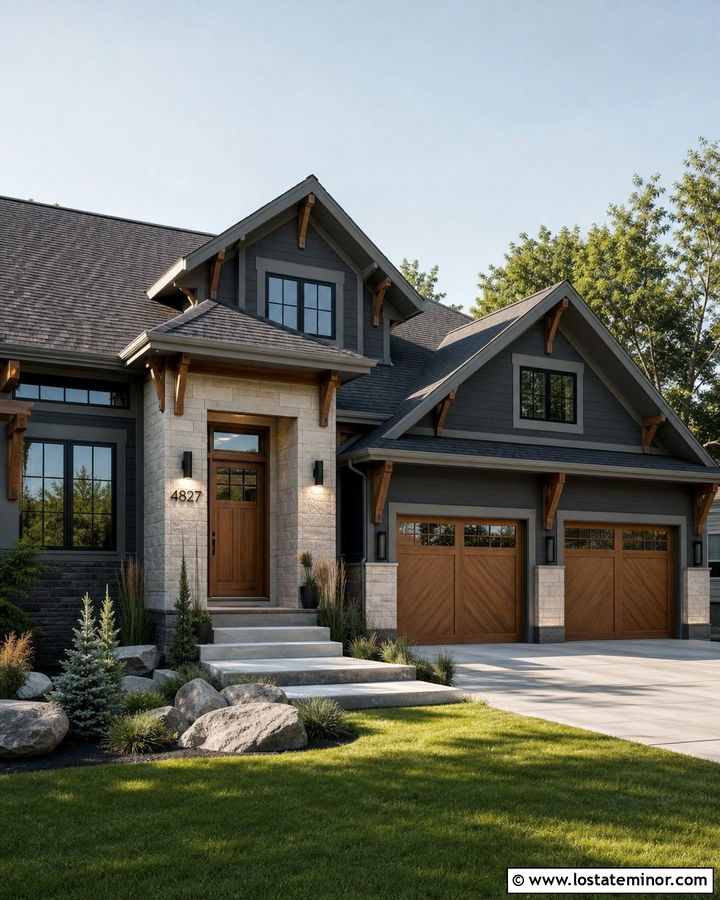
Mixed stone can give a facade depth, but the address treatment should remain simple enough to prevent visual clutter. Combine light limestone and charcoal ledgestone across a modern Craftsman house, using each stone to define a separate architectural volume. Place backlit matte black numbers on the lighter stone near a recessed cedar door. The gentle halo will improve visibility and connect with warm porch lighting after dark. Use charcoal siding, black-framed windows, creamy trim, and a medium gray roof to unify the contrasting masonry. Cedar garage doors and porch beams introduce warmth across the wider facade. Finish with broad concrete steps, layered grasses, low evergreens, and landscape boulders. The final exterior feels detailed and substantial, while the illuminated address remains the clear entrance marker.
Conclusion:
The best 30 Stone House Design With House Numbers Ideas treat the address as part of the architecture, not a last-minute accessory. Begin by studying the stone’s color, texture, and undertones. Then select numbers that coordinate with the doors, windows, lights, roofing, and other metal finishes. Strong contrast and proper scale improve visibility, while a nearby light source keeps the address readable after dark. Smooth plaques, wood panels, porch posts, columns, planters, and mailbox walls offer useful alternatives when irregular masonry is difficult to drill. Most importantly, step back to view the complete facade from the street. A successful design should guide visitors toward the entrance while strengthening the home’s overall curb appeal.

Related posts: