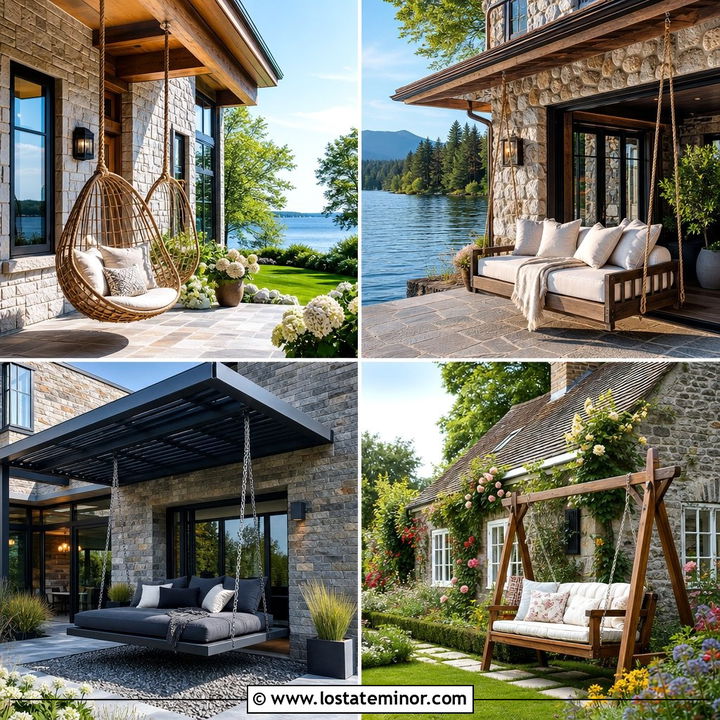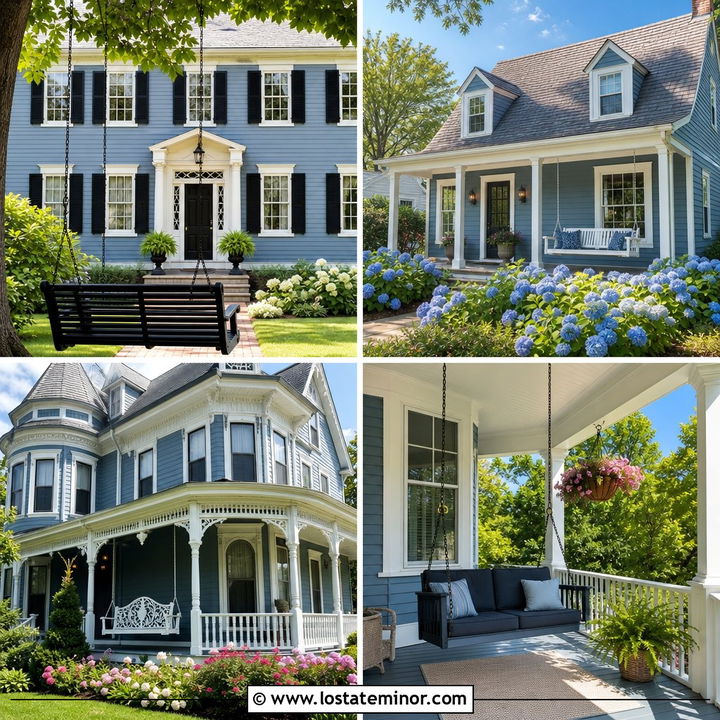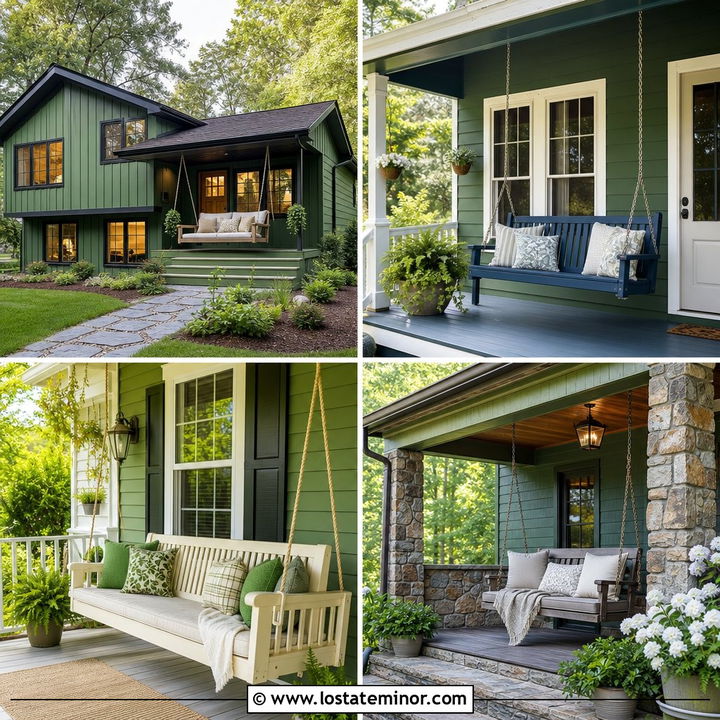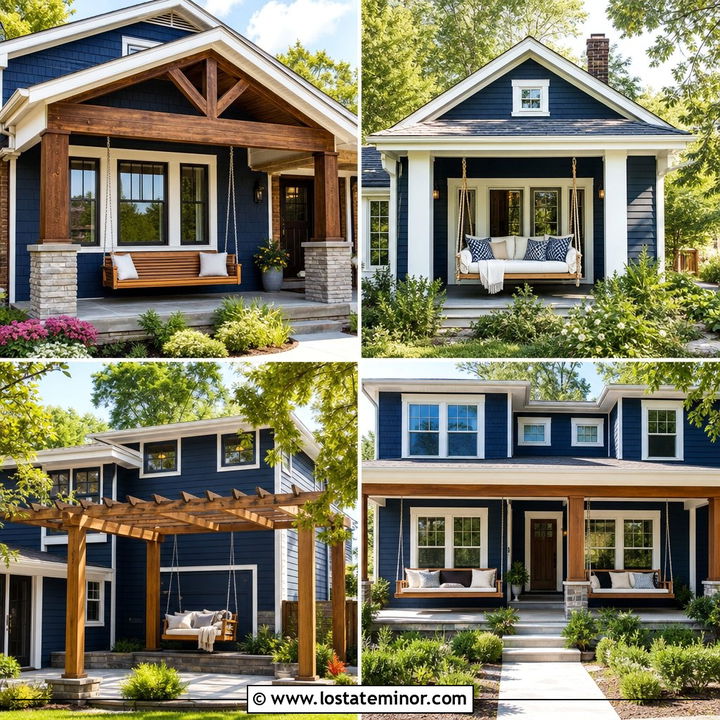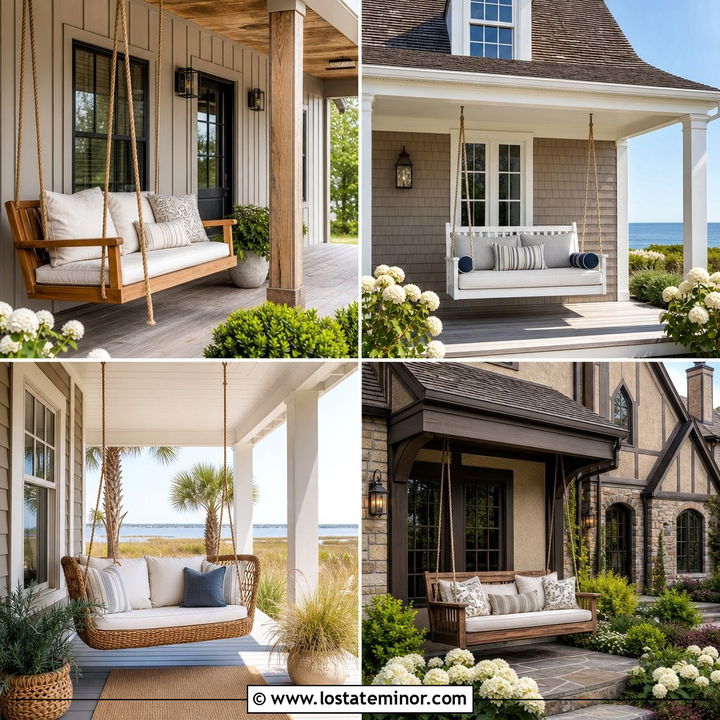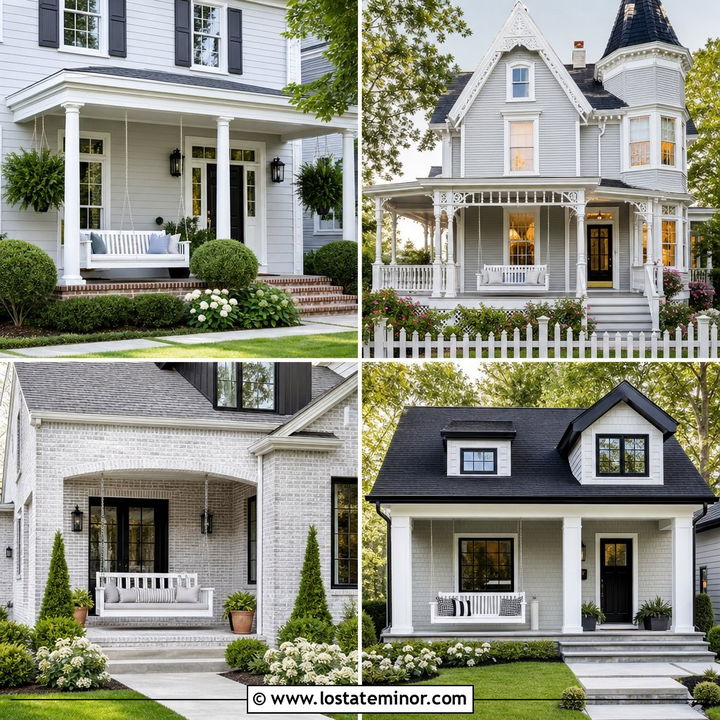
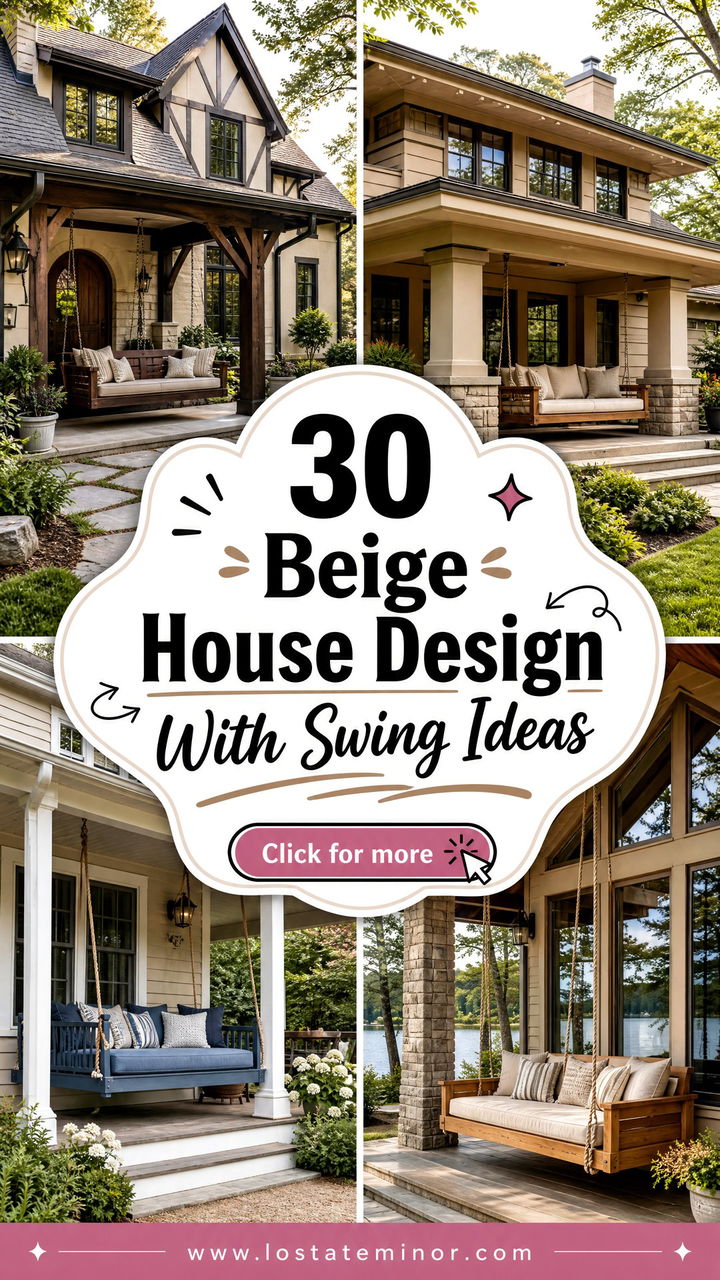
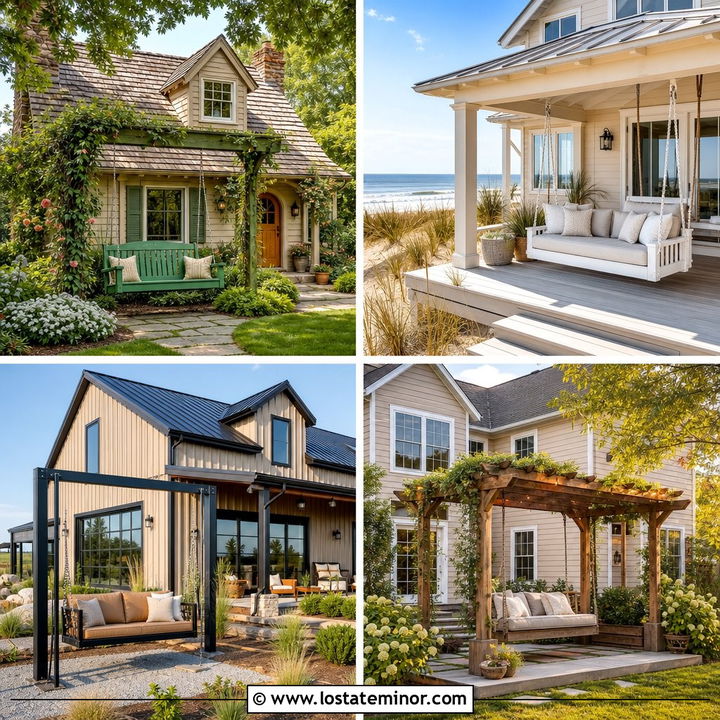
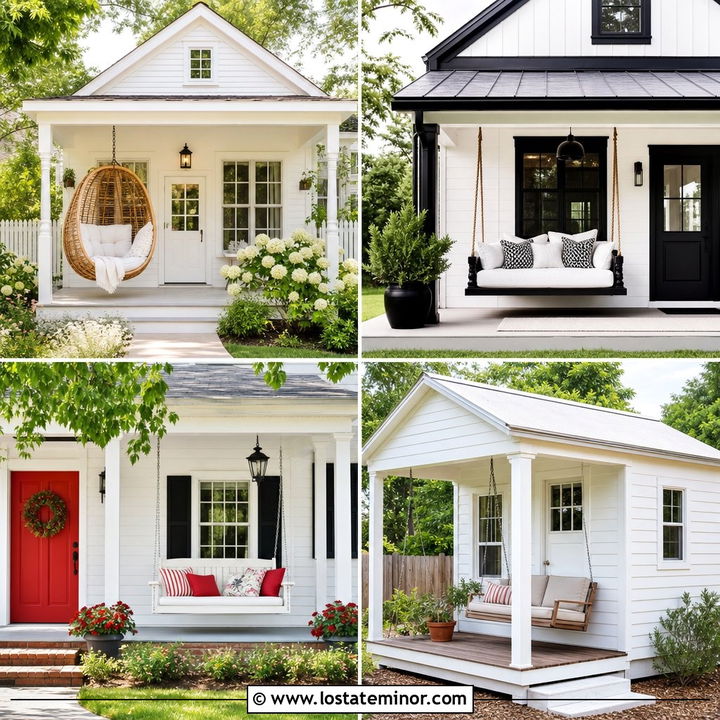
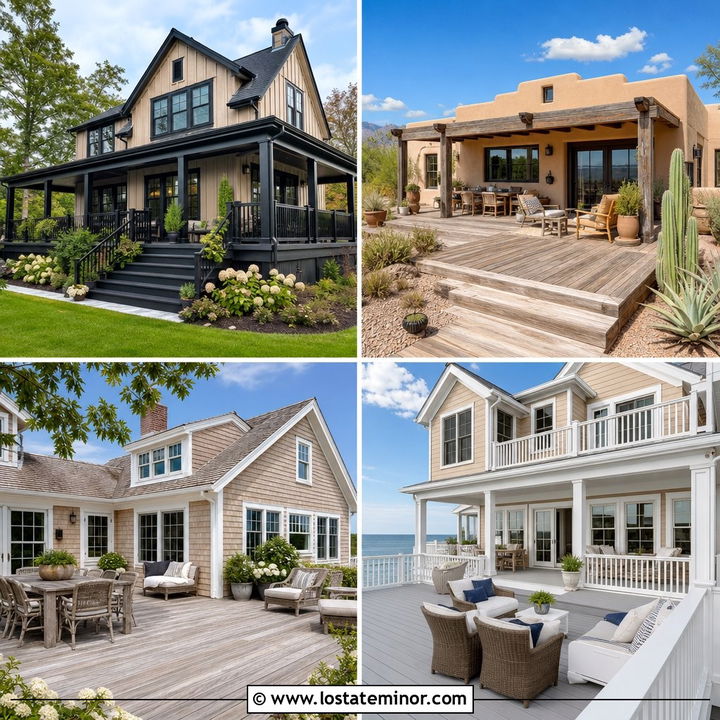
Beige creates a warm, flexible backdrop for an exterior, while a well-placed swing gives the home an inviting focal point. The most successful designs treat the swing as part of the complete facade rather than an isolated accessory. Siding, trim, roofing, porch materials, landscaping, and swing finishes should all feel connected. Current beige exteriors often gain character through natural wood, soft black, muted green, dusty blue, stone, and layered cream accents. These combinations keep neutral homes from looking flat while preserving their relaxed appeal. () Whether you prefer a farmhouse porch, Craftsman entry, coastal veranda, or compact ranch facade, the following 30 Beige House Design With Swing Ideas offer practical inspiration for creating a polished and welcoming exterior.
1. Beige Farmhouse With White Porch Swing
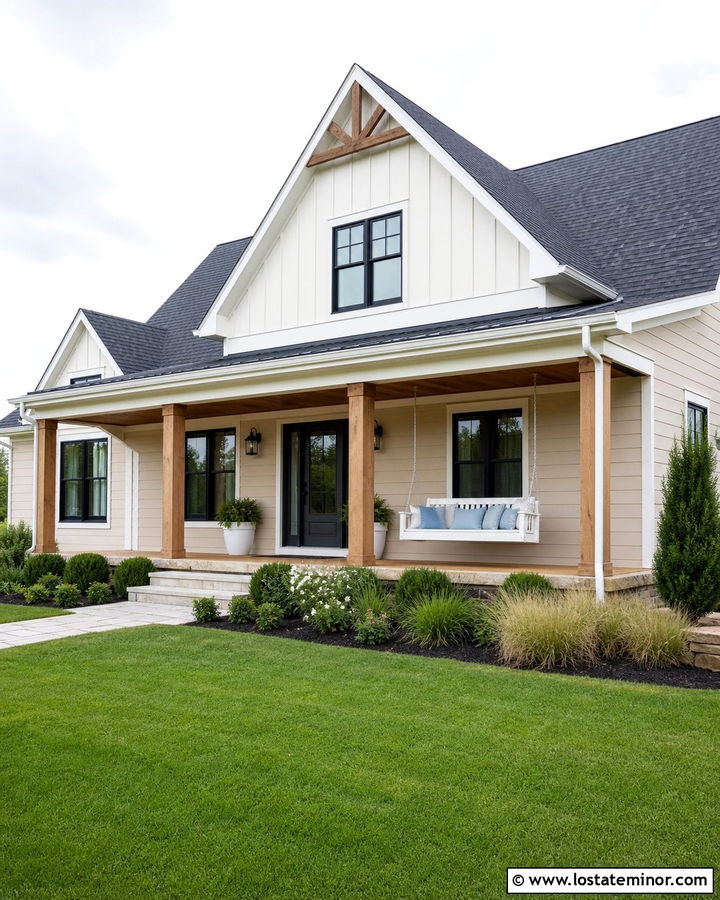
A warm beige modern farmhouse looks especially bright when paired with crisp white trim and a matching white porch swing. Choose horizontal lap siding for the main facade and board-and-batten siding inside the front gable. A medium charcoal roof provides enough contrast to define the roofline without making the exterior feel heavy. Center the swing beneath the covered porch, leaving clear walking space between it and the front door. Soft blue cushions can add a gentle touch of color. Black lanterns, window frames, and simple metal railings sharpen the neutral palette. Complete the setting with wide porch steps, clipped shrubs, ornamental grasses, and a straight stone walkway. The result feels clean, comfortable, and suited to both suburban and rural surroundings.
2. Beige Craftsman With Cedar Porch Swing
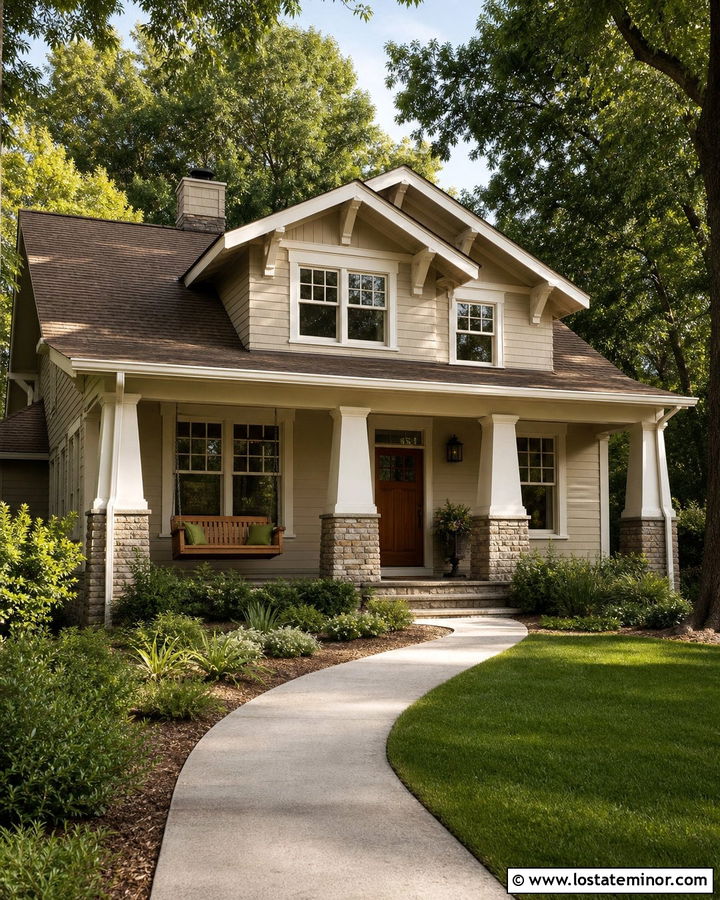
Natural cedar gives a beige Craftsman exterior the warmth and texture it needs. Use medium beige lap siding, creamy white window trim, and earthy brown roof shingles as the foundation. A cedar porch swing can then coordinate with exposed rafter tails, tapered columns, and a stained wood front door. Add stone bases beneath the columns to ground the facade and introduce another natural material. Deep olive cushions on the swing will echo the landscaping without overpowering the house. Craftsman homes benefit from layered details, so include divided-light windows, broad roof overhangs, and a porch ceiling finished in warm wood. Low evergreen shrubs and curved planting beds soften the strong architecture. This complete scheme feels handcrafted, balanced, and naturally connected to its setting.
3. Light Beige Ranch With Black Swing
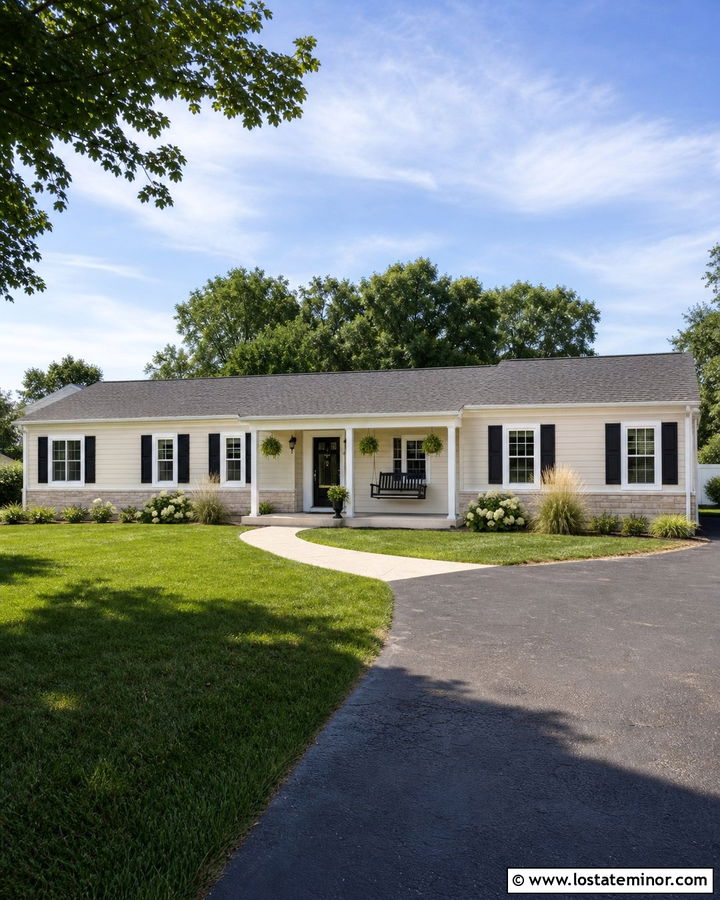
Could a simple ranch home look more defined without a major renovation? A matte black porch swing creates an effective focal point against light beige siding. Continue the black accents through the front door, exterior lights, and slim window shutters. Bright white trim around the windows and fascia prevents the darker details from feeling too strong. If the porch is shallow, select a compact two-seat swing and position it at one end rather than directly beside the entrance. A medium-gray roof and pale stone foundation keep the palette grounded. Improve the long horizontal facade with grouped ornamental grasses, flowering shrubs, and a walkway that gently curves toward the porch. This approach gives a modest beige ranch stronger contrast while retaining its open, approachable character.
4. Beige Colonial With Matching Porch Swings
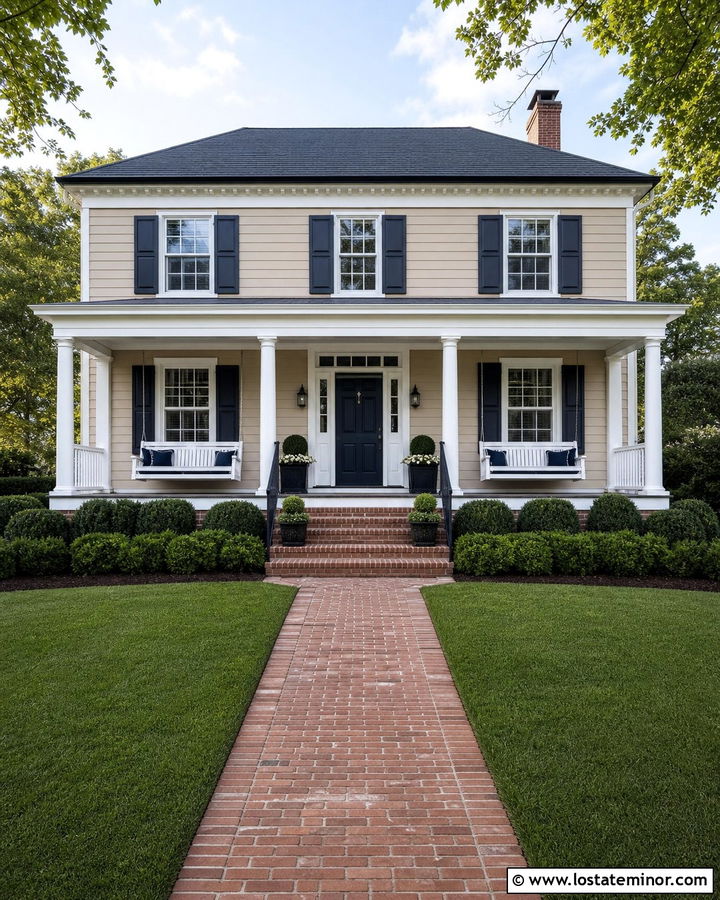
Symmetry is the natural strength of a Colonial home, and a pair of porch swings can reinforce that balanced appearance. Paint the clapboard siding a classic sandy beige and use soft white on the columns, window casings, railings, and cornice. Place one white swing on each side of the centered front door. Navy cushions will coordinate beautifully with a navy door and dark gray shutters. Keep the porch furniture arrangements identical so the facade remains orderly. A charcoal shingle roof adds a crisp upper border, while red brick steps introduce traditional warmth near the ground. Boxwood hedges, matching planters, and a straight brick walkway complete the formal layout. The swings soften the structured architecture and make a traditionally reserved exterior feel more comfortable and welcoming.
5. Beige Bungalow With Green Porch Swing
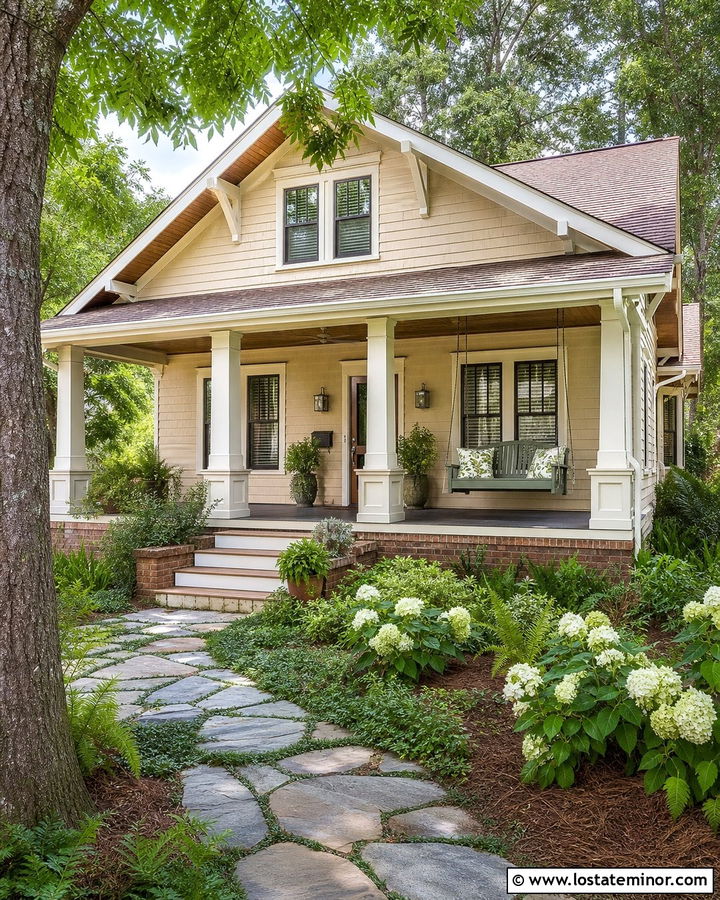
A muted green swing can bring garden-inspired color to a cozy beige bungalow. Start with creamy beige siding, warm white trim, and a weathered brown roof. Paint the porch swing a subdued sage green that connects visually with surrounding shrubs and mature trees. The same color can appear on the front door or small window accents for continuity. Use chunky square porch posts and a brick foundation to preserve the bungalow’s solid, handcrafted appearance. Layer the swing with cream and botanical-patterned outdoor cushions. A stained tongue-and-groove porch ceiling adds warmth above the seating area. Finish the yard with ferns, hydrangeas, low ground cover, and an informal flagstone path. The completed exterior feels charming and colorful without losing the calm quality of its beige foundation.
6. Beige Cape Cod With Blue Porch Swing
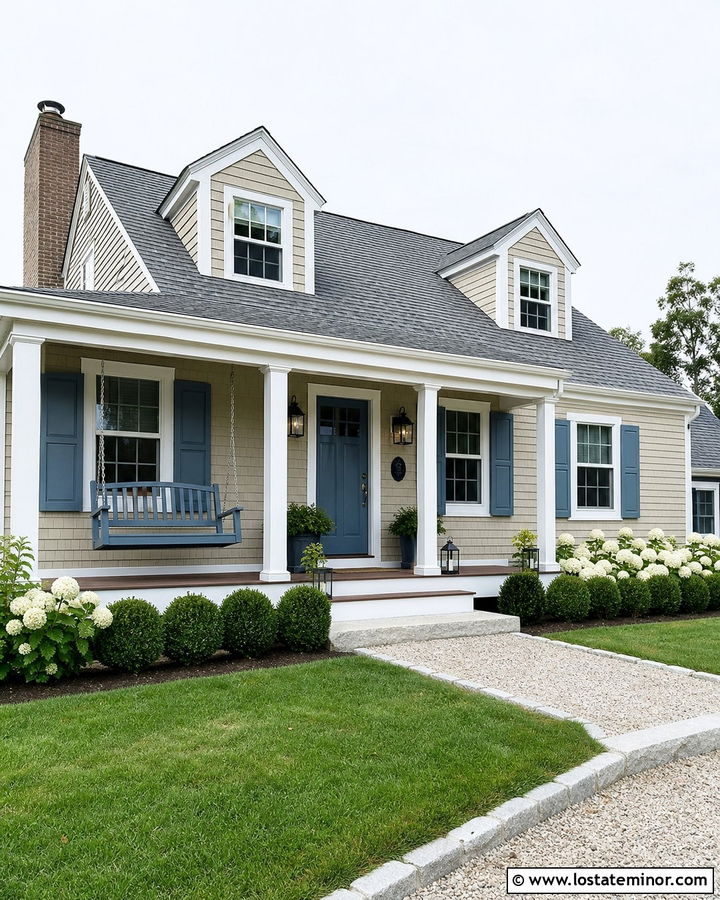
Fresh coastal color can transform a compact beige Cape Cod without making it look overly themed. Choose pale beige cedar shingles or shake-style siding, then outline the windows, dormers, and roof edges with clean white trim. A dusty blue porch swing introduces a cool contrast that works well with a medium-gray roof. Repeat the blue on the front door or small shutters so the swing feels intentional. Keep the porch floor natural gray or lightly weathered rather than introducing another strong color. White hydrangeas, low boxwood borders, and a crushed-shell-inspired gravel walkway support the relaxed coastal character. Add simple nickel or black lanterns for definition. This complete facade remains traditional, but the blue swing gives it a friendly and memorable curb-appeal feature.
7. Beige Brick House With Wood Swing
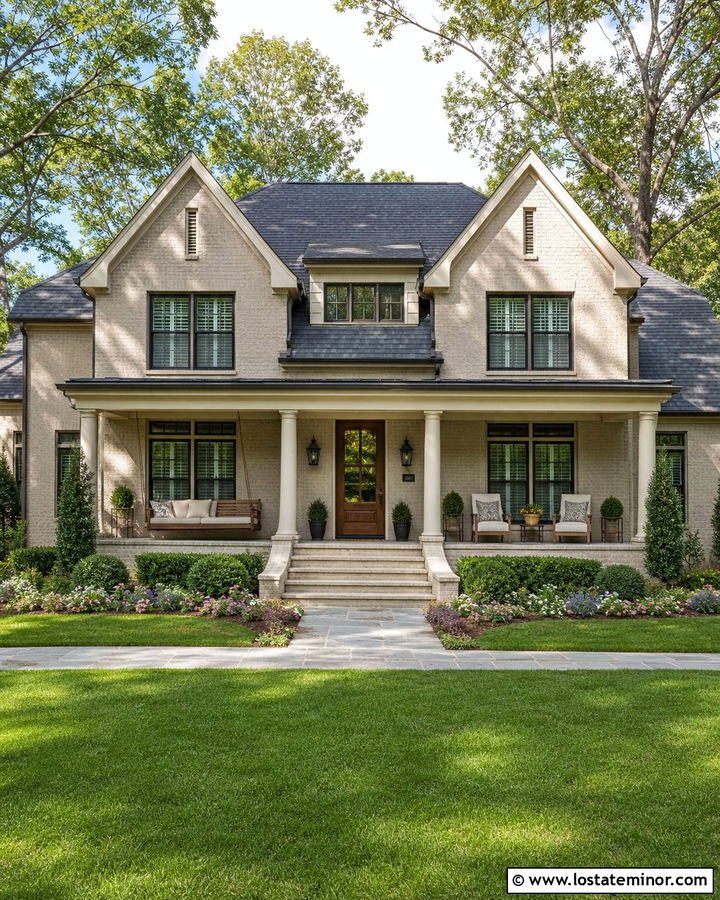
Painted beige brick has subtle texture, so it pairs beautifully with the visible grain of a natural wood swing. Select a warm putty beige for the brick and creamy off-white for the trim, columns, and soffits. A medium walnut-stained swing will stand apart without creating harsh contrast. Coordinate it with the front door and wooden planter boxes. If the house has dark roof shingles, add black metal chains and black porch lanterns to connect the upper and lower portions of the facade. Neutral cushions in ivory and soft brown maintain a sophisticated palette. Create a lush foreground with layered hedges, seasonal flowers, and a broad stone walkway. The mix of painted masonry and stained wood produces a rich, welcoming exterior that feels more dimensional than an all-beige scheme.
8. Beige Stucco House With Wicker Swing
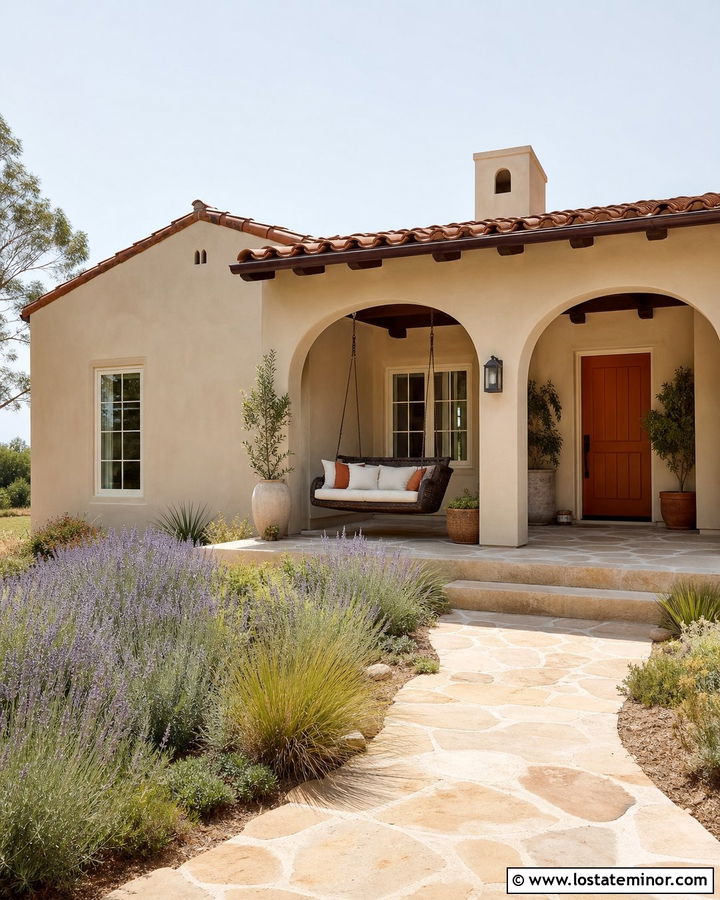
A woven swing introduces softness to the smooth surfaces of a beige stucco exterior. Use a sun-warmed sand beige on the walls, creamy trim around the windows, and a muted terracotta shade on the front door. A dark brown all-weather wicker swing will complement clay roof tiles and bronze exterior fixtures. Position it beneath an arched porch opening where its rounded form can echo the architecture. Ivory cushions and rust-colored accent pillows will tie the seating to the facade. Incorporate stone porch flooring and chunky wood ceiling beams for additional texture. Drought-tolerant grasses, lavender, and low flowering plants suit the warm palette. This combination works particularly well on Mediterranean and Southwestern homes because every material feels earthy, practical, and connected to the landscape.
9. Greige House With Black Bed Swing
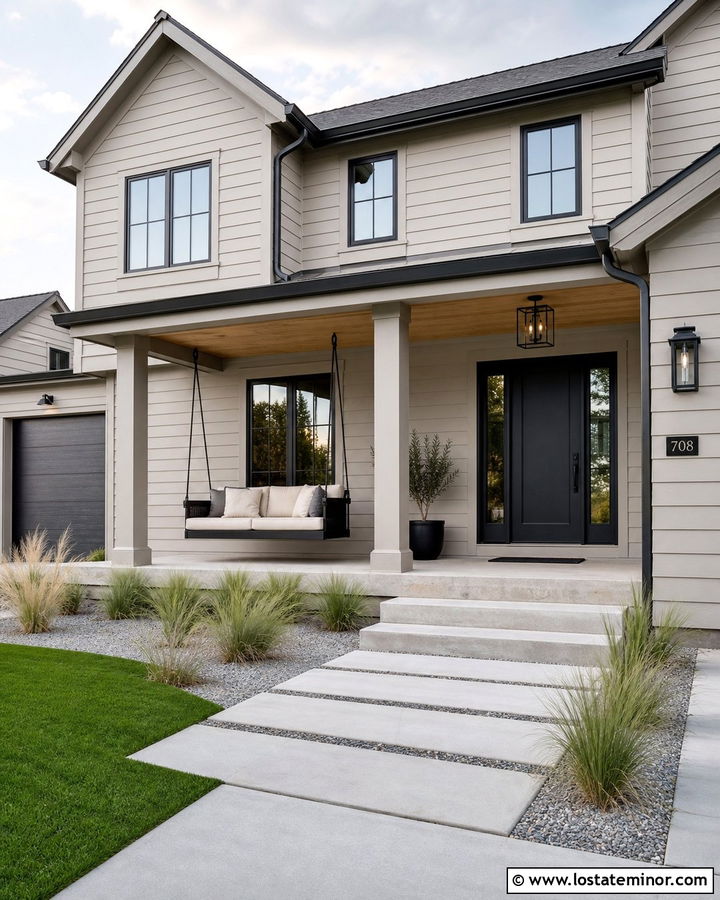
For a more contemporary interpretation, pair a soft greige exterior with a substantial black bed swing. Greige combines the warmth of beige with a restrained gray undertone, making it an effective backdrop for dark architectural accents. Use the same matte black finish on the windows, front door, gutters, and porch lights. Keep the trim only slightly lighter than the siding for a streamlined appearance. The bed swing should have a simple rectangular frame, thick cream cushions, and minimal hardware. Install it beneath a deep covered porch with a pale wood ceiling to soften the contrast. Concrete steps, linear planting beds, and a wide paver walkway reinforce the modern layout. This complete design feels refined but comfortable, with the oversized swing turning the porch into a functional outdoor room.
10. Tan Beige House With Rope Swing
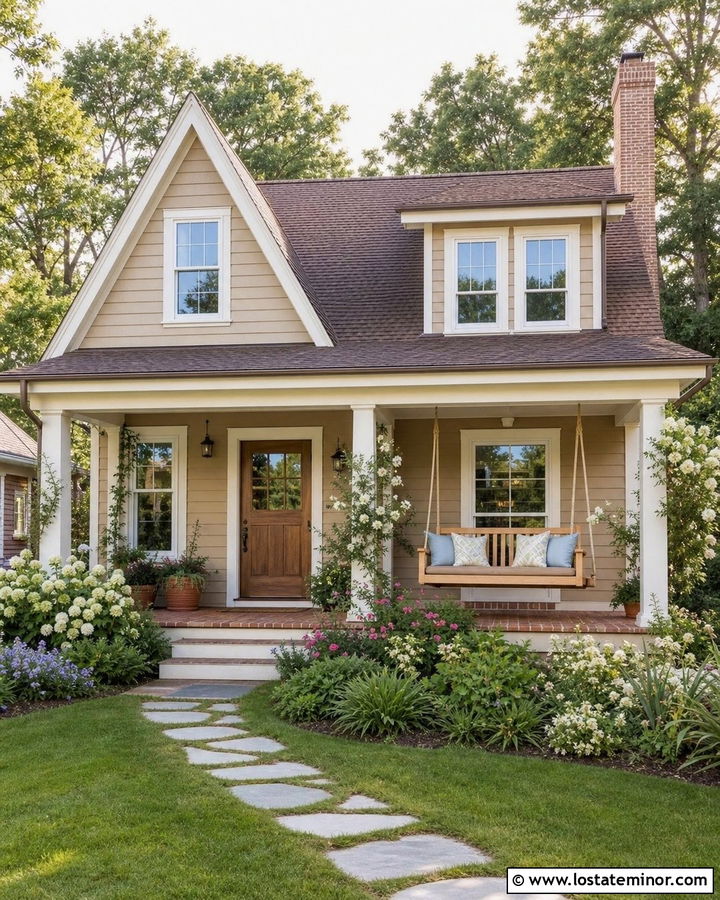
A rope-hung wooden swing suits the casual character of a tan beige cottage or small farmhouse. Use golden tan siding with soft cream trim and a medium brown roof. The swing can be made from unfinished teak or cedar, suspended by thick natural rope from a sturdy porch beam. Coordinate the wood with the front door, porch posts, or window boxes to create a consistent material story. Add faded blue and ivory cushions for relaxed color. A brick porch floor brings subtle red and brown undertones into the scheme. Surround the house with informal flower beds, climbing greenery, and a stepping-stone walkway. Instead of appearing overly polished, the finished exterior should feel collected and lived-in. The rope swing becomes a simple feature that enhances the home’s friendly, country-inspired atmosphere.
11. Dark Beige House With Cream Porch Swing
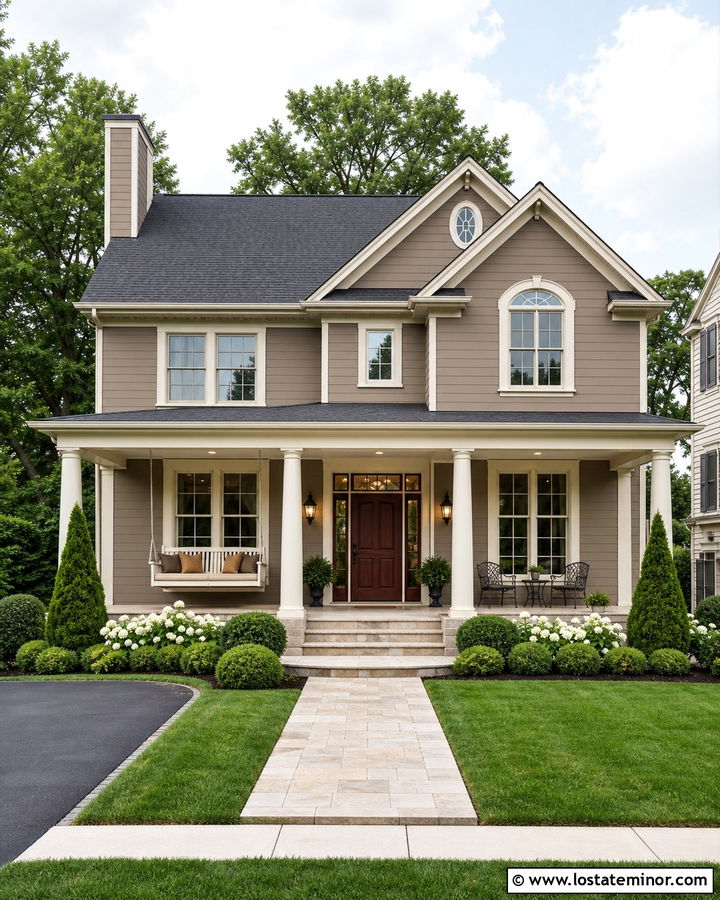
Deep beige siding can give a home an elegant, grounded presence, especially when balanced by a cream-colored swing. Choose a mushroom beige or taupe-beige body color, then apply warm cream to the trim, porch columns, and window frames. The lighter swing will remain visible beneath the shaded porch and connect naturally with the architectural details. Dark bronze lanterns, gutters, and door hardware add definition without creating the severity of pure black. A stained mahogany front door introduces richness near the center of the facade. Use cushions in cream, caramel, and muted olive to bridge the light and dark tones. Pale stone porch flooring and structured evergreen landscaping keep the exterior polished. This layered neutral palette proves that beige can look substantial, detailed, and visually interesting.
12. Beige Cottage With Hanging Rattan Swing
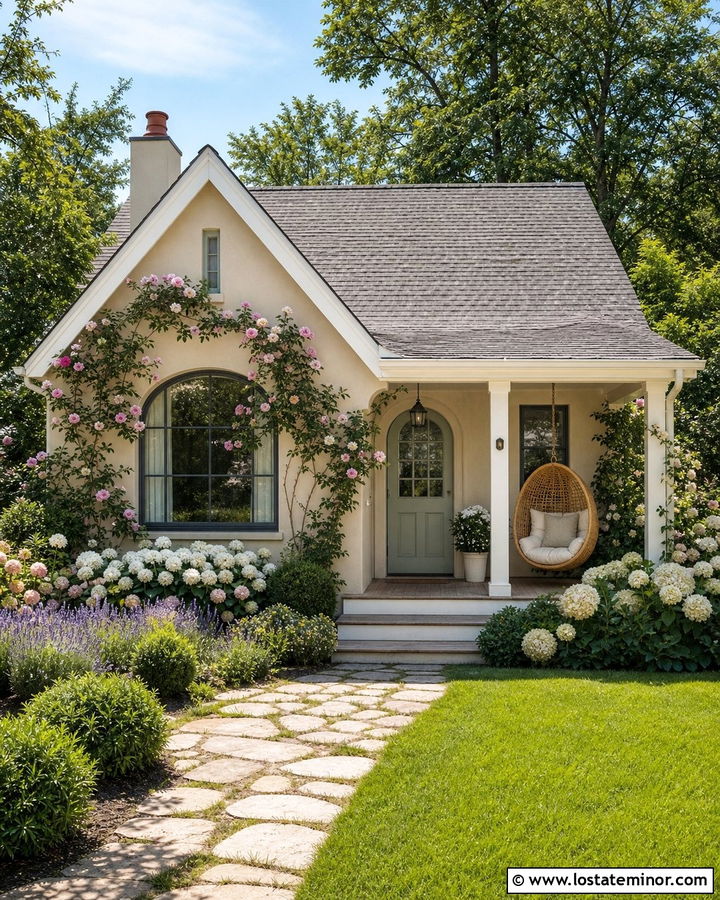
A hanging rattan swing gives a beige cottage a relaxed, garden-oriented personality. Paint the siding a soft linen beige and use warm white on the trim, porch railings, and decorative brackets. A rounded rattan swing chair can occupy one side of the porch, allowing the front door and walkway to remain open. Choose oatmeal cushions and add one muted floral pillow for subtle color. A pale green front door will connect the exterior to the surrounding plants. Weathered wood porch boards and a soft gray roof keep the scheme casual. Frame the house with climbing roses, lavender, hydrangeas, and an irregular stone path. The curved swing contrasts gently with the cottage’s straight siding lines, making the entrance feel personal, comfortable, and tucked into the landscape.
13. Beige Victorian House With Decorative Swing
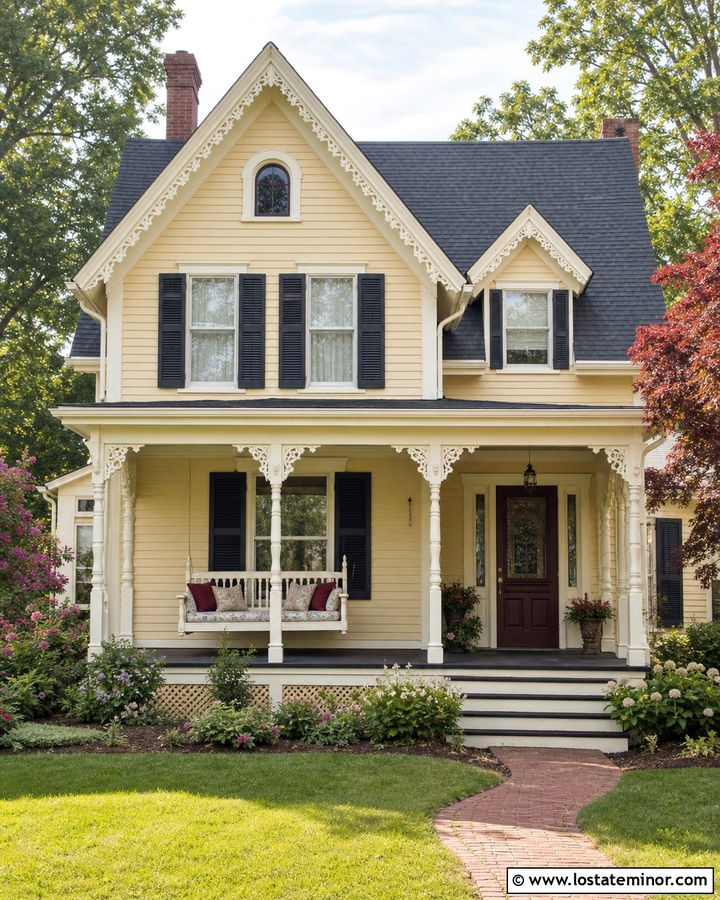
Victorian architecture offers plenty of detail, so the swing should complement the facade rather than compete with it. Use buttery beige siding, ivory trim, and deep charcoal accents on the shutters and decorative porch brackets. A traditional spindle-back swing painted ivory will blend with the railings while remaining visible against the darker porch floor. Introduce a muted burgundy front door to highlight the entrance and reference the home’s historic character. Small burgundy and beige cushions can repeat the palette on the swing. Preserve visual order by limiting the exterior to three main colors, even if the house has elaborate woodwork. A steep dark roof, brick walkway, and layered flowering shrubs finish the composition. The result feels detailed and period-appropriate without becoming visually crowded.
14. Beige Split-Level With Freestanding Swing
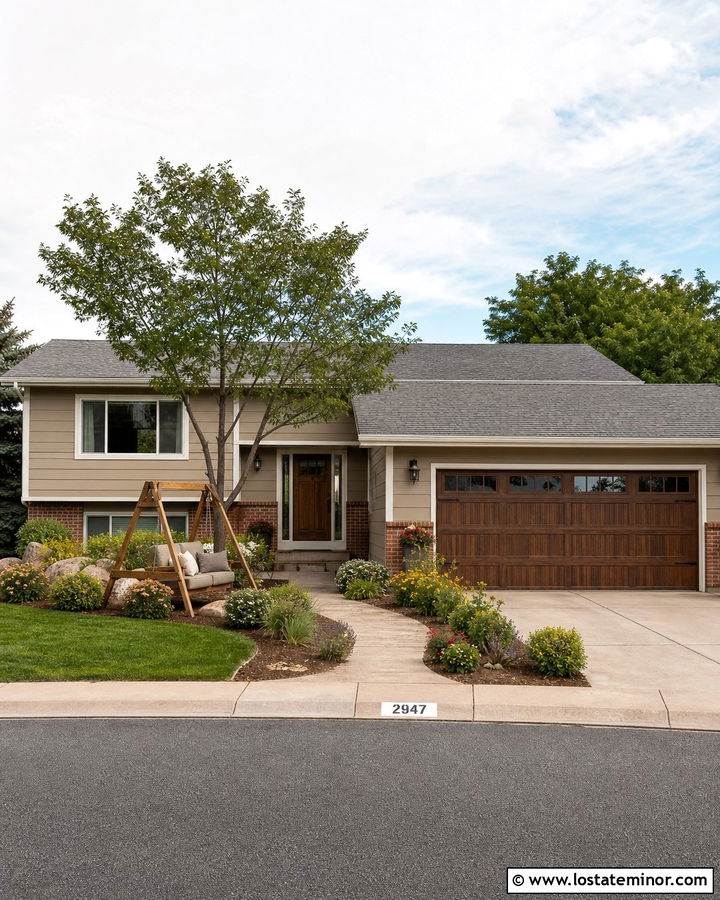
Many split-level homes lack a deep covered porch, but a freestanding swing can still become part of the curb-appeal plan. Paint the upper siding a balanced beige and retain natural red-brown brick on the lower level. Add bright cream trim and a deep brown front door to connect the two materials. Place a cedar A-frame swing in a landscaped side area near the entry walkway, where it remains visible from the street without blocking windows. Match the swing stain to a new wood garage door or porch railing. Use simple taupe cushions to keep the feature understated. Broad planting beds, ornamental trees, and a widened paver path help integrate the swing into the facade. This arrangement creates an outdoor destination while respecting the home’s compact entrance.
15. Beige Coastal House With Daybed Swing
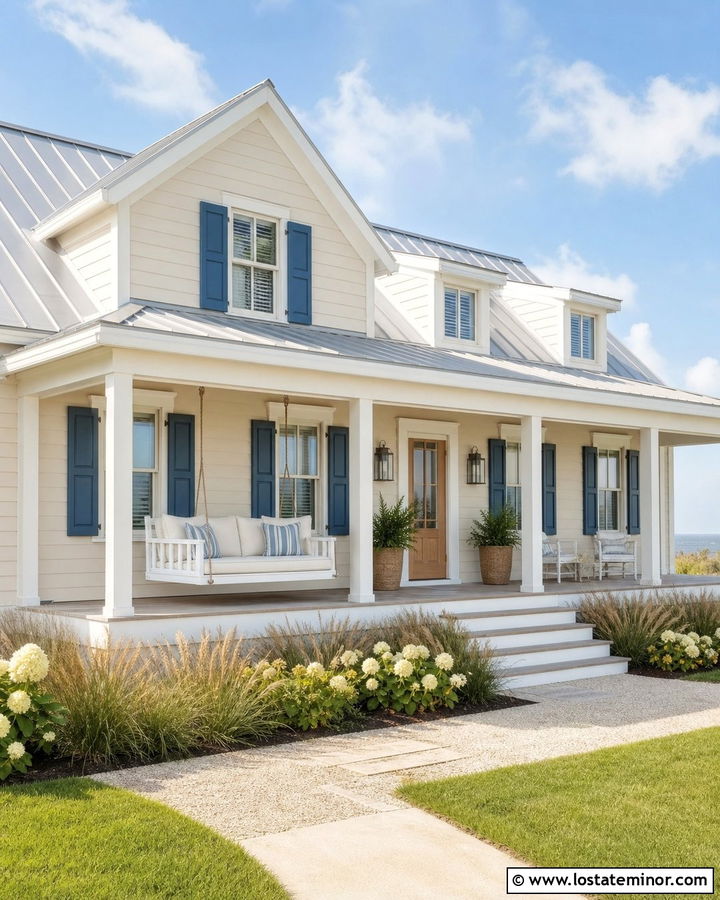
Imagine a broad coastal porch where a cushioned daybed swing faces the front lawn. Pale sand beige siding provides a warm alternative to bright white, while clean white trim keeps the exterior fresh. Use a light gray metal roof and soft blue shutters to reinforce the breezy palette. The swing should have a white-painted frame, thick ivory cushions, and blue striped pillows. Hang it with sturdy white or stainless-steel hardware for a clean appearance. Natural woven planters and pale wood porch flooring contribute texture without darkening the facade. Sea grass, hydrangeas, and a gravel-edged walkway create low-maintenance curb appeal. This complete exterior feels light and restful, with the generous swing making the covered porch look like a true extension of the living space.
16. Beige Modern House With Slatted Wood Swing
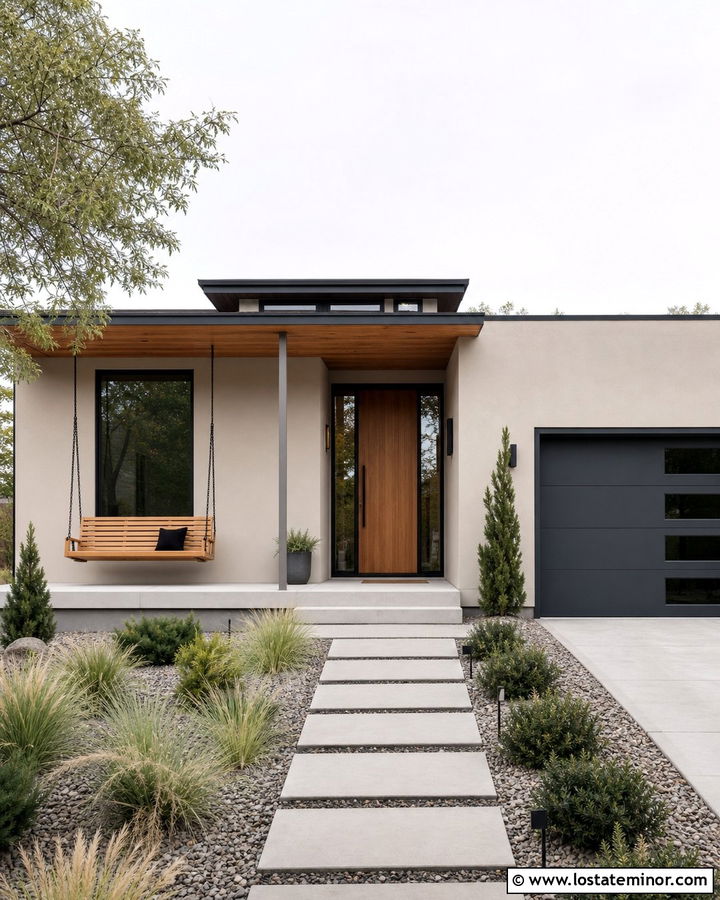
A minimalist beige exterior becomes warmer when paired with a streamlined slatted wood swing. Choose a light stone beige for smooth stucco or fiber-cement panels, then add charcoal window frames and a matching flat or low-slope roof. The swing should feature clean horizontal cedar slats and simple black suspension hardware. Place it beneath a recessed porch finished with a natural wood ceiling. A pivot-style front door in the same cedar tone will connect the seating feature to the architecture. Keep cushions solid cream or light gray so the wood remains prominent. Linear concrete pavers, gravel beds, sculptural grasses, and compact evergreen plants reinforce the contemporary setting. The swing softens the geometric facade while preserving the uncluttered look that gives a modern home its visual strength.
17. Beige Tudor House With Dark Wood Swing
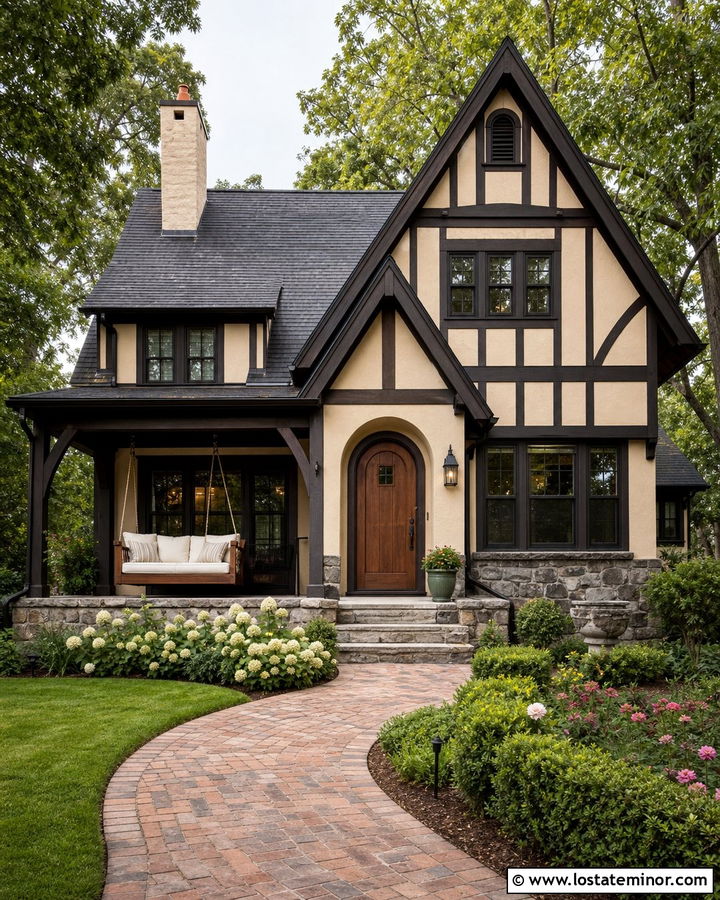
A dark wood swing fits naturally into the layered materials of a beige Tudor exterior. Use warm beige stucco between the timber details, with deep brown beams, window frames, and trim. Choose a walnut-stained porch swing that closely matches the decorative timbering. Cream cushions prevent the seat from disappearing against the darker porch area. A rounded wood front door, steep charcoal roof, and stone foundation will strengthen the established Tudor character. If the entry is small, place the swing beneath a side-gable porch rather than forcing it near the doorway. Curved planting beds, clipped hedges, and a brick walkway echo the home’s traditional lines. The completed design feels cohesive because the swing repeats an existing material and color instead of adding an unrelated decorative element.
18. Beige Southern House With Double Swings
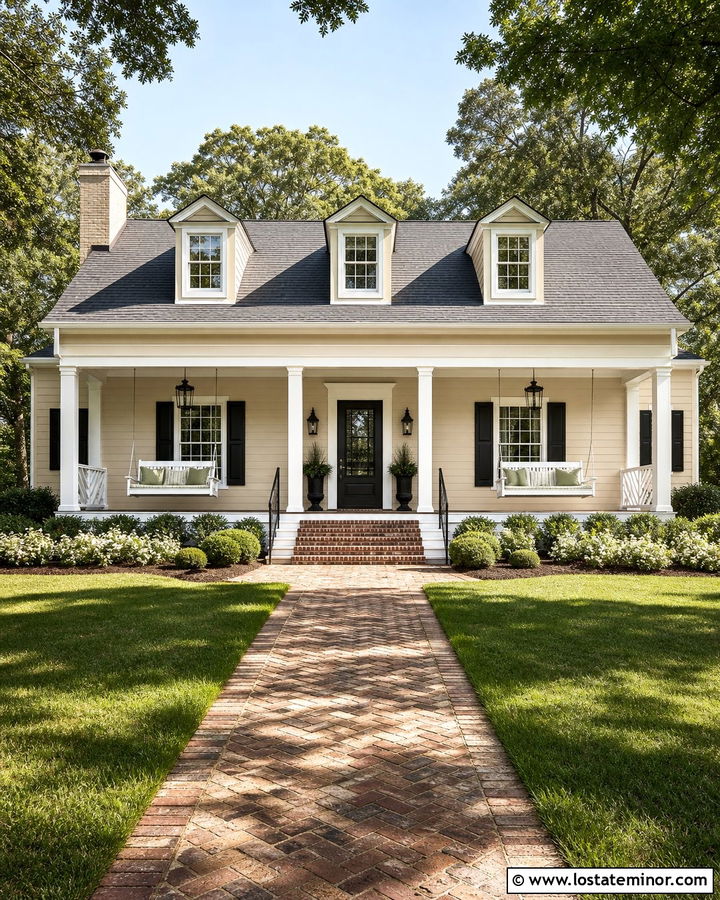
A broad Southern porch can comfortably support two matching swings while maintaining a gracious, balanced facade. Cover the house in warm biscuit beige siding and use bright white for the tall columns, window trim, railings, and ceiling details. Hang one white swing at each end of the porch, leaving the central doorway unobstructed. Soft green cushions provide calm color and connect with the lawn and mature shade trees. A glossy black front door and black lanterns introduce formal contrast. Natural brick steps keep the large porch grounded, while a charcoal roof frames the light exterior. Arrange identical planters and outdoor side tables near both swings. This symmetrical setup turns the entire front porch into usable seating while preserving the stately appearance of the architecture.
19. Beige Rustic House With Log Swing
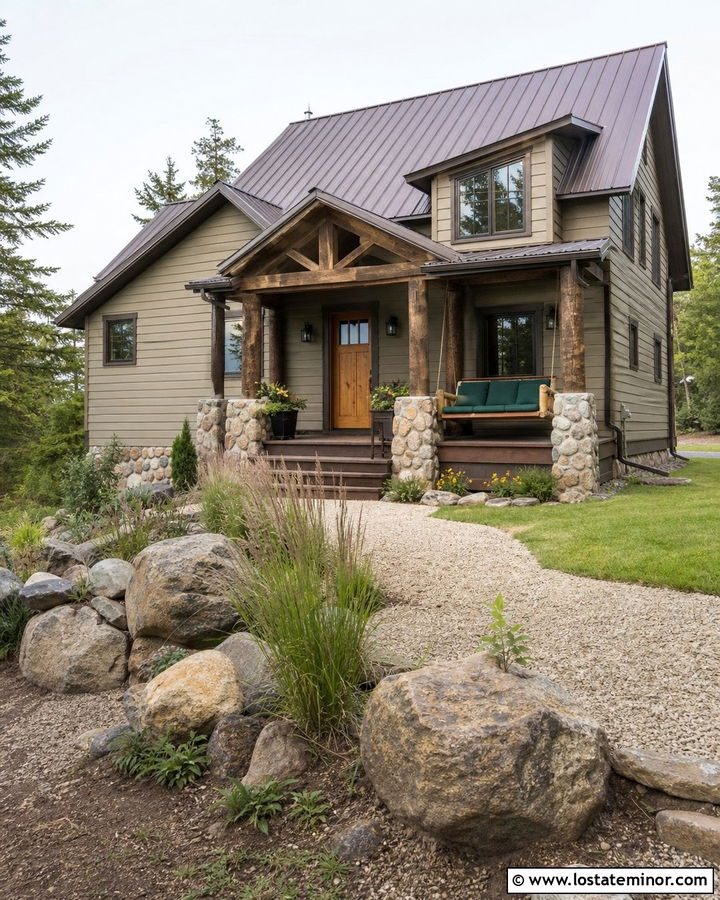
Rough wood and natural stone prevent a beige rustic exterior from looking too smooth or uniform. Select an earthy khaki beige for the lap siding, then add a fieldstone foundation and chunky stained timber porch posts. A log-style swing works best when its stain matches the structural beams rather than introducing a second wood tone. Use deep forest green cushions to connect the porch with a wooded setting. A dark brown metal roof and solid wood front door complete the grounded palette. Keep the surrounding landscape informal with native grasses, boulders, evergreens, and a gravel walkway. The swing should appear substantial enough for the architecture, with visible chains or heavy rope. Together, these elements create a durable exterior that feels relaxed, natural, and appropriate for a rural property.
20. Beige Prairie House With Low-Back Swing
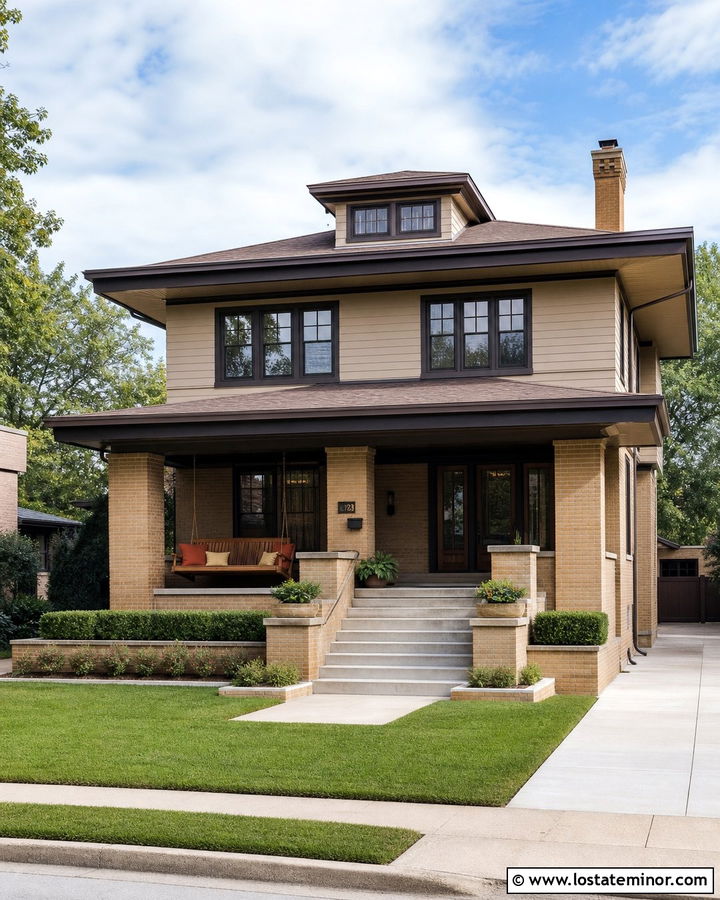
The long horizontal lines of a Prairie-style house call for a swing with a simple, low profile. Use a medium wheat beige on the stucco or lap siding and a darker brown on the broad fascia, window frames, and porch beams. Choose a low-back wood swing stained in a warm chestnut finish. Its shape should remain visually quiet beneath the home’s extended roofline. Add cushions in muted rust, cream, and olive to reflect the earthy palette. Brick porch columns and geometric windows can provide the architectural detail. Continue the horizontal emphasis with wide concrete steps, low hedges, and rectangular planting beds. The swing becomes part of the porch composition instead of a dominant ornament, helping the complete exterior feel comfortable while preserving its strong architectural proportions.
21. Beige Stone House With Metal Swing
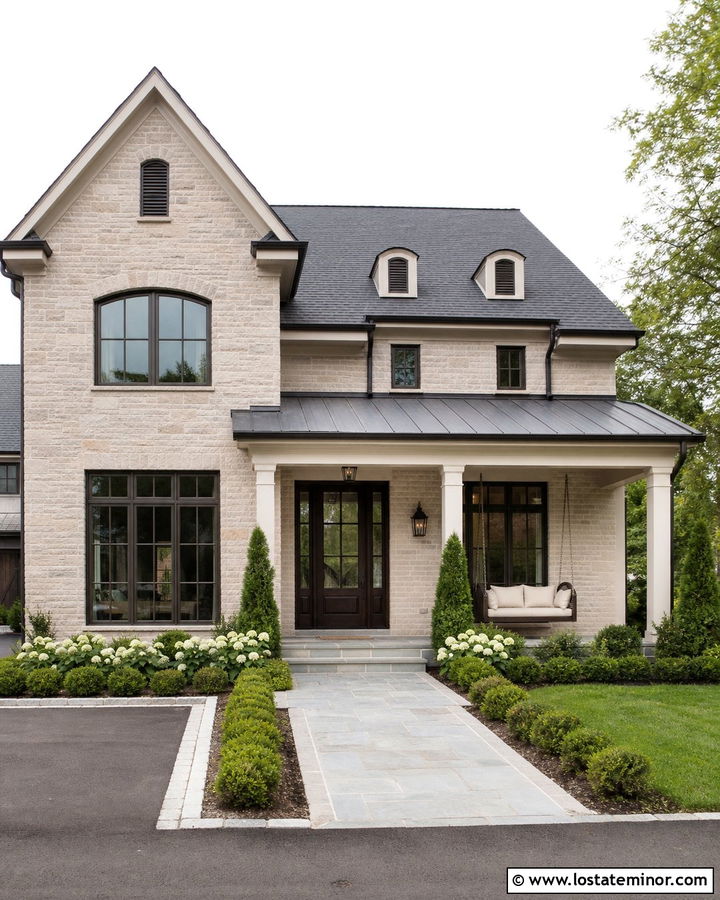
A powder-coated metal swing offers a crisp contrast against a beige stone house. Choose natural limestone or manufactured stone in blended cream, sand, and light taupe shades. Use warm white trim and dark bronze window frames to highlight the masonry. A black or bronze metal swing with a gently curved back can coordinate with the lanterns, railings, and front-door hardware. Add thick beige cushions to keep the seat comfortable and visually connected to the stone. A dark stained front door introduces another grounding element. Keep the porch floor simple with large-format gray stone or concrete. Structured shrubs, white flowers, and a paved walkway create a polished foreground. The slender swing frame balances the visual weight of the stone, producing an exterior that feels strong but not overly heavy.
22. Beige Farmhouse With Blue Bed Swing
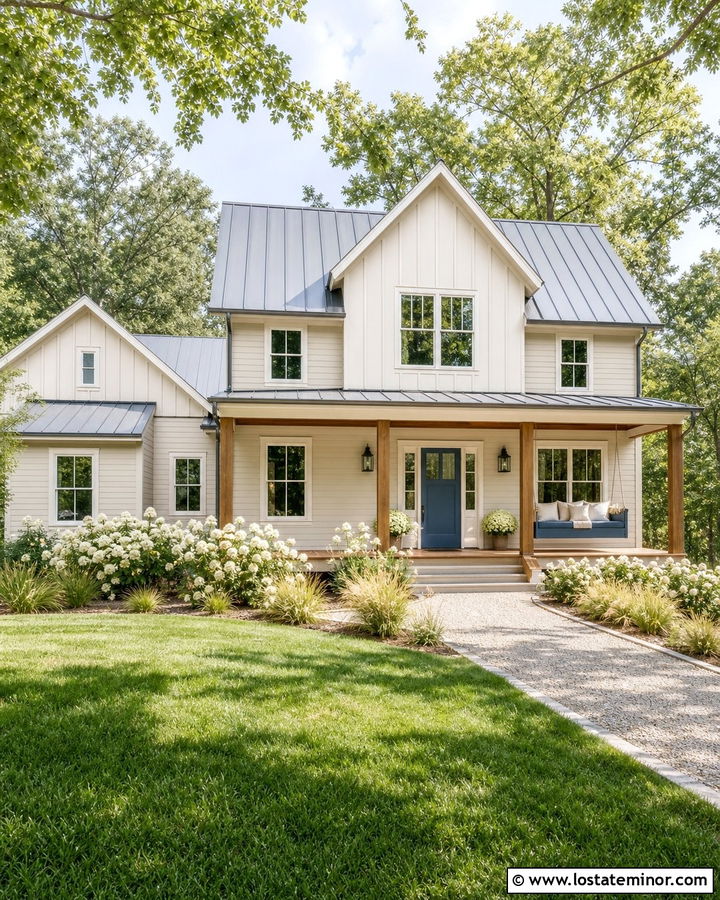
A blue bed swing can become the main accent on a warm beige farmhouse without overwhelming the neutral exterior. Paint the horizontal siding a light oat beige and use creamy white on the porch columns, window trim, and board-and-batten gables. Choose a dusty slate blue for the swing frame, then repeat it on the front door or small gable vent. Thick cream cushions and subtle striped pillows keep the seating soft and coordinated. A galvanized metal roof or medium-gray shingle roof supports the blue tones. Add natural wood porch flooring to warm the cooler accents. White flowering shrubs, ornamental grasses, and a gravel-bordered walkway complete the setting. This design offers more personality than a fully neutral farmhouse while maintaining a relaxed and cohesive appearance.
23. Beige Adobe House With Canopy Swing
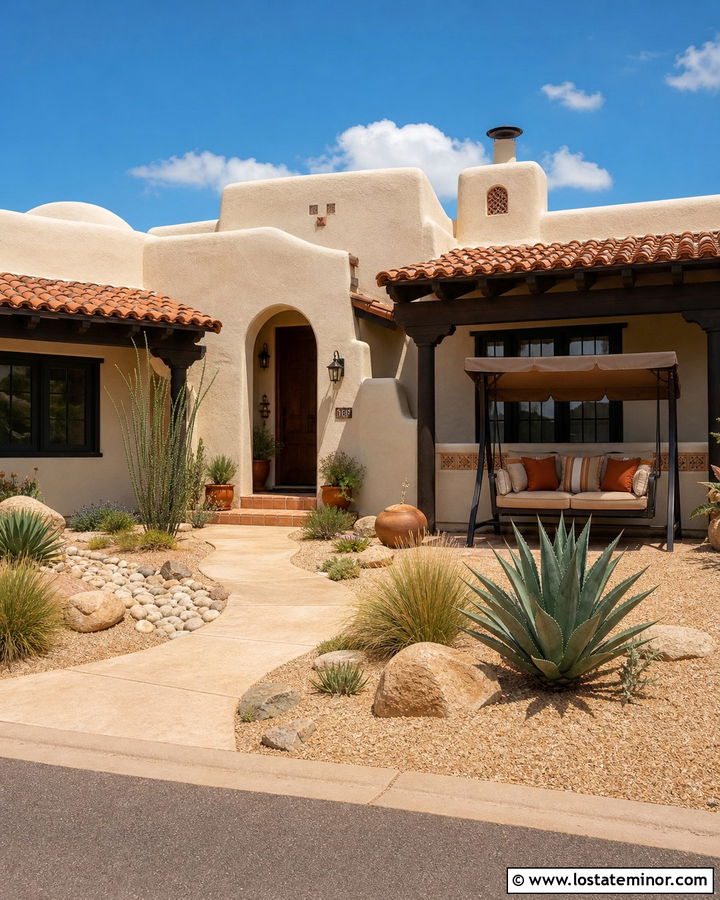
A freestanding canopy swing can complement a beige adobe-style home when a covered porch is unavailable. Use a warm desert beige on the rounded stucco walls, with terracotta accents around the entry and deep brown window frames. Select a dark bronze swing frame with a sand-colored canopy that closely relates to the house color. Cushions in cream and muted rust will connect the seating to the roof tiles and surrounding landscape. Position the swing in a small gravel courtyard beside the front walkway, framed by a low stucco wall or timber pergola. Agave, ornamental grasses, native flowering plants, and natural boulders finish the scene. The complete design provides comfortable outdoor seating while respecting the earthy colors, sculptural shapes, and open setting of Southwestern architecture.
24. Beige Cottage With Arbor Swing
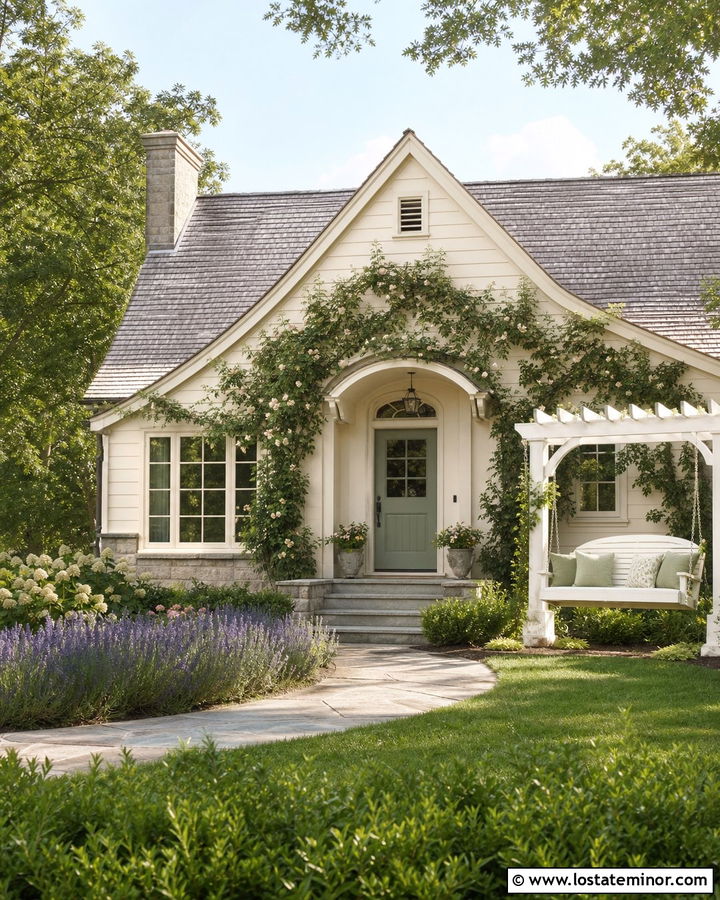
An arbor swing creates a garden feature that can visually extend a small beige cottage beyond its front porch. Use light almond beige siding, creamy trim, and a muted green front door. Build a white or pale wood arbor near the curved walkway and hang a matching slatted swing beneath it. Climbing vines can soften the structure, but keep them trimmed so the swing remains visible. Add sage and cream cushions to connect the feature with the door and house color. A weathered gray roof and natural stone foundation reinforce the cottage character. Surround the arbor with lavender, roses, and low evergreen borders. By repeating the trim color and garden palette, the freestanding swing feels like a planned part of the property rather than an unrelated piece of yard furniture.
25. Beige Craftsman With Mission Swing
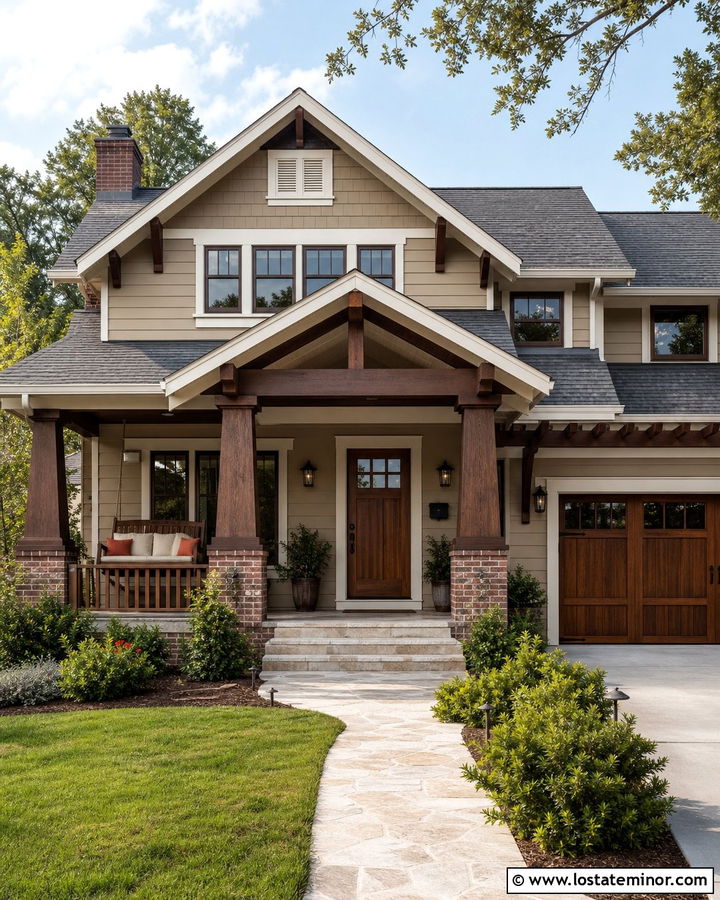
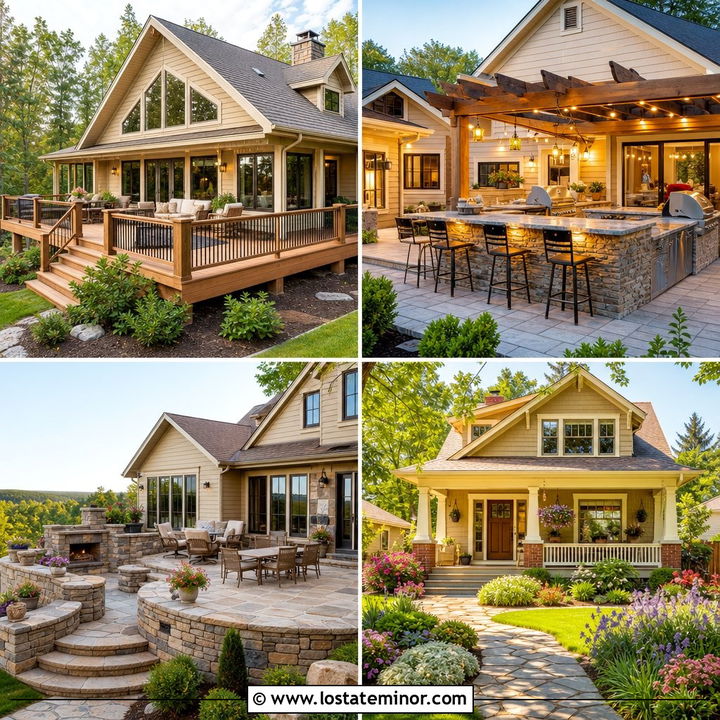
A Mission-style swing naturally suits the strong lines and visible craftsmanship of a beige Craftsman home. Apply warm camel beige to the siding and creamy off-white to the window trim and porch ceiling. Use a dark oak stain on the swing, front door, exposed beams, and porch railings. The repeated wood finish creates a clear visual connection across the facade. Square cream cushions can soften the swing’s straight frame, while muted rust pillows echo a red-brown brick foundation. Add tapered columns, deep eaves, and multi-pane windows to strengthen the architectural identity. A charcoal roof and bronze lanterns provide quiet contrast. Finish with native shrubs, stone steps, and a broad walkway. The complete scheme feels substantial, handcrafted, and welcoming without relying on bright accent colors.
26. Beige French Country House With Iron Swing
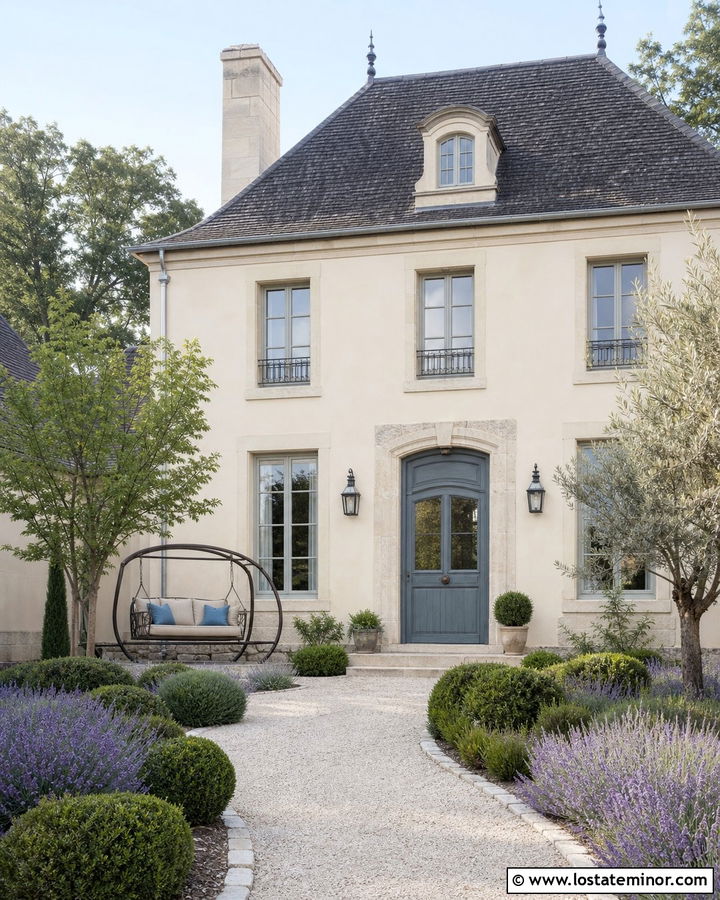
Graceful ironwork can add detail to a beige French country exterior while preserving its soft, natural palette. Choose a pale limestone beige for the stucco and creamy white for the trim. A dark bronze iron swing with curved arms will coordinate with window grilles, balcony rails, and lantern-style lights. Add oatmeal cushions and muted blue pillows to soften the metal frame. A weathered blue-gray front door can repeat the accent color and bring attention to the entrance. Use mixed stone around the foundation and a steep charcoal roof to create depth. Lavender, clipped shrubs, small ornamental trees, and a gently curved gravel path support the European-inspired setting. The swing adds an elegant seating feature, but its restrained finish allows the architecture and landscaping to remain equally important.
27. Beige Lake House With Cedar Bed Swing
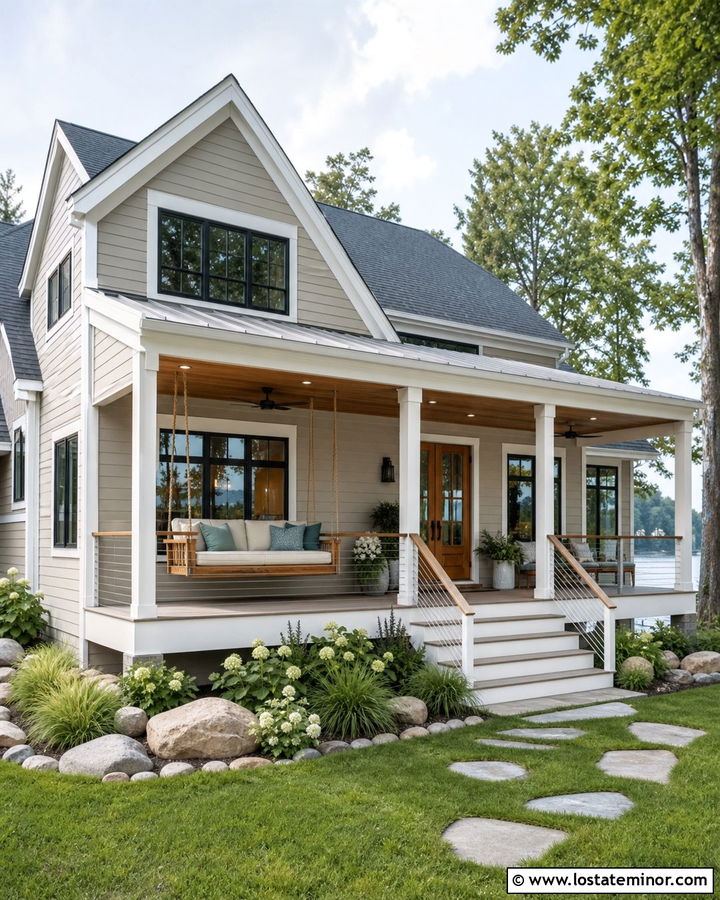
A cedar bed swing can make the porch of a beige lake house feel like an outdoor retreat. Use soft driftwood beige siding with white trim and a muted blue-gray roof. The swing should have a substantial natural cedar frame, cream mattress-style cushions, and pillows in soft blue and green. Repeat the cedar on the front door, porch ceiling, or decorative brackets to integrate it with the house. Black window frames and simple black lanterns provide modern definition. Keep porch railings open or use slim cable details so the facade remains visually light. Native grasses, smooth stones, hydrangeas, and a wide stepping-stone path create an easy landscape. The completed exterior feels casual and airy, with the oversized swing supporting the relaxed character expected from a waterside home.
28. Beige Contemporary Ranch With Egg Swing
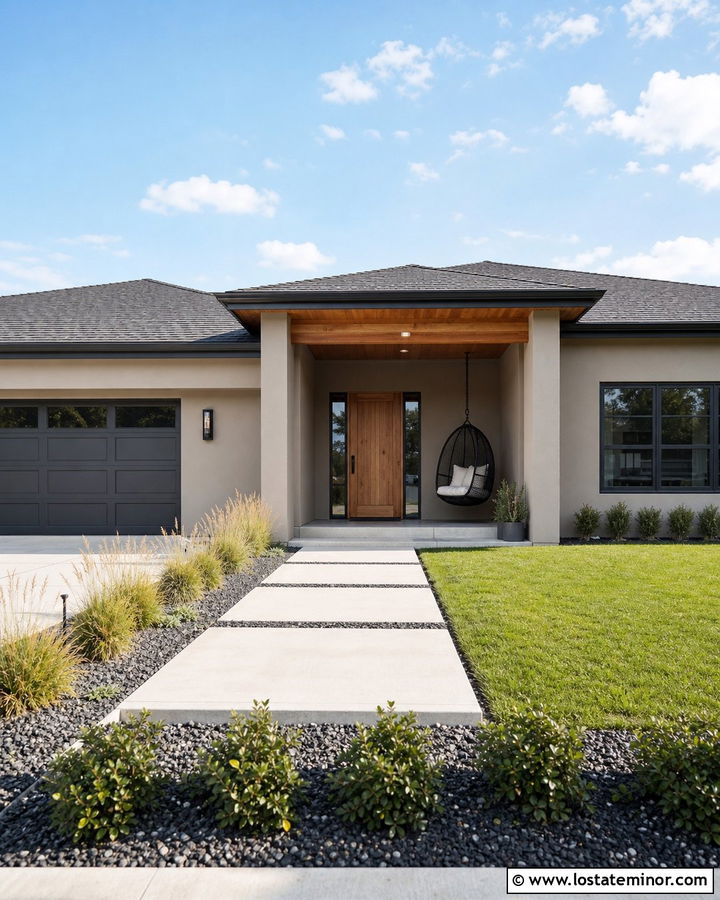
A sculptural egg swing gives a contemporary beige ranch a playful focal point without requiring a large porch. Paint the exterior a soft putty beige and use charcoal on the window frames, garage door, and fascia. Place a black woven egg swing beneath a small covered entry or extended roof overhang. Choose a cream cushion so the seat connects with the siding rather than appearing too dark. Natural wood on the front door or porch ceiling can soften the black-and-beige contrast. Use broad concrete slabs, gravel strips, low ornamental grasses, and neatly shaped shrubs in the landscape. The curved swing provides a welcome counterpoint to the ranch home’s long straight lines. This complete scheme looks updated, functional, and distinctive while remaining simple enough for a modest suburban facade.
29. Beige Porch House With Red Swing
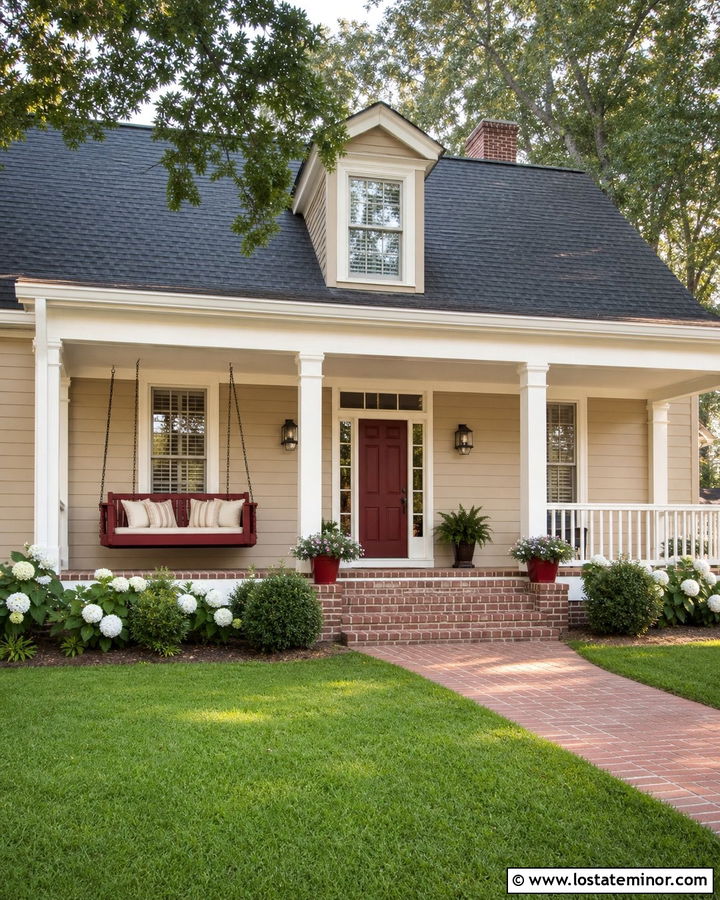
A muted red swing can give a beige house a cheerful traditional accent when used with restraint. Select a warm flax beige for the siding, soft white for the porch trim, and a charcoal-gray roof. Paint the swing a deep barn red rather than a bright primary shade. Repeat that red on the front door or a pair of small planters so the feature feels connected to the overall scheme. Use cream cushions and dark metal chains to balance the color. A brick walkway and porch steps will naturally support the red undertones. Green shrubs, white flowers, and mature shade trees keep the yard fresh. This design works particularly well on farmhouse, cottage, and traditional exteriors that need one memorable color without changing the entire neutral palette.
30. Beige Transitional House With Taupe Swing
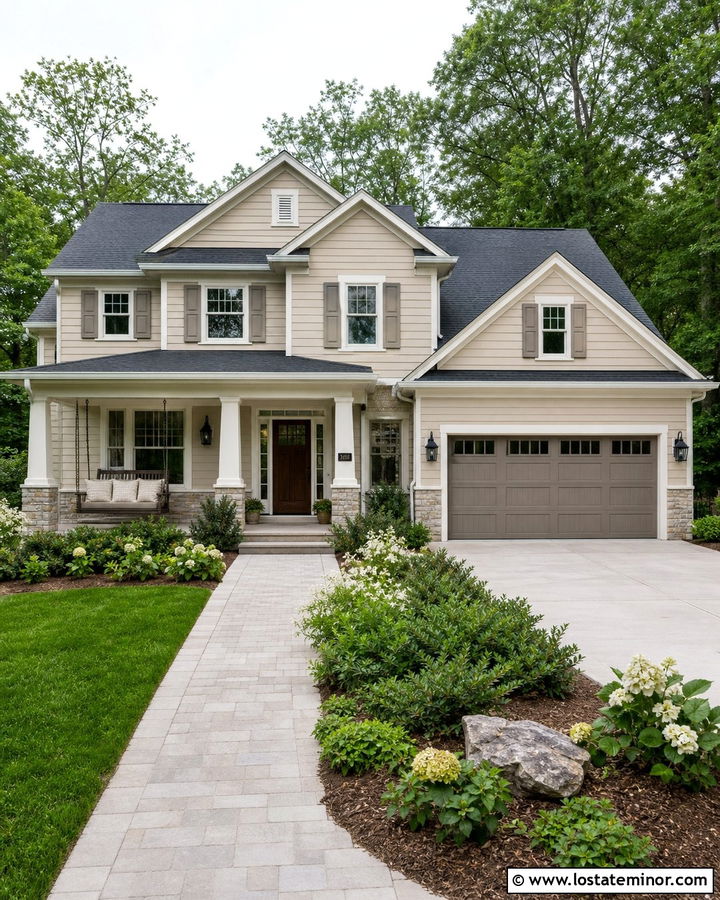
For a quiet and sophisticated finish, pair a light beige transitional house with a deeper taupe swing. Use balanced beige siding, warm white trim, and a medium charcoal roof. The swing can feature a taupe-painted wood frame with ivory cushions, creating subtle contrast rather than a dramatic focal point. Repeat the taupe on the garage door, shutters, or porch floor to distribute the darker neutral across the facade. A walnut front door adds warmth at the center, while black lanterns provide small points of definition. Combine horizontal siding with light stone accents to give the home more texture. Neatly layered shrubs, pale flowers, and a wide paver walkway complete the exterior. The restrained palette feels polished, comfortable, and less likely to appear dated as preferences change.
Conclusion:
The best swing should look like a natural part of the house rather than an accessory added at the last minute. Start with the beige undertone, then select a swing finish that connects with the trim, roof, door, masonry, or nearby landscaping. White creates freshness, wood adds warmth, black supplies contrast, and muted colors introduce personality. Porch depth, walking clearance, suspension support, and weather exposure should also guide the final placement. From compact hanging chairs to full daybed swings, these 30 Beige House Design With Swing Ideas show how complete exterior planning can make a neutral home feel more distinctive. A coordinated palette and thoughtful landscaping will help the swing strengthen the entire curb-appeal design.

Related posts: