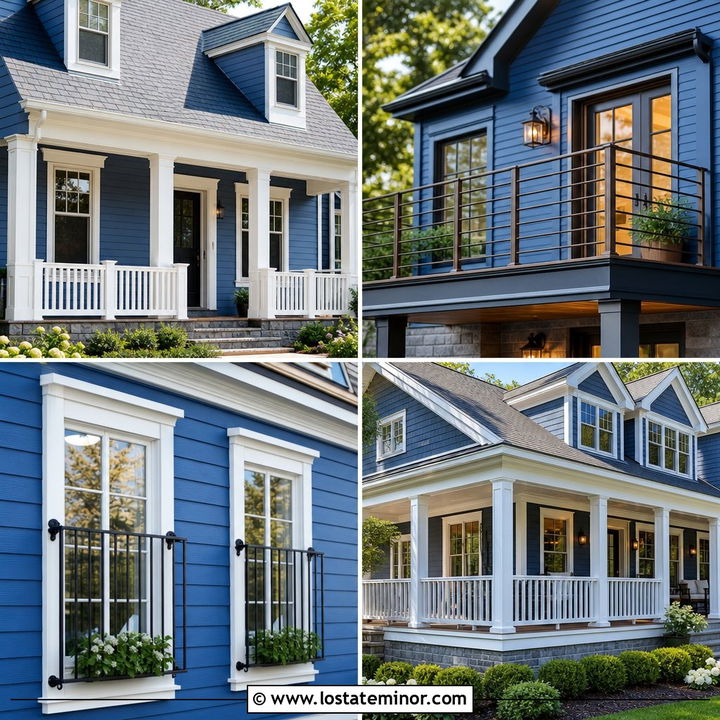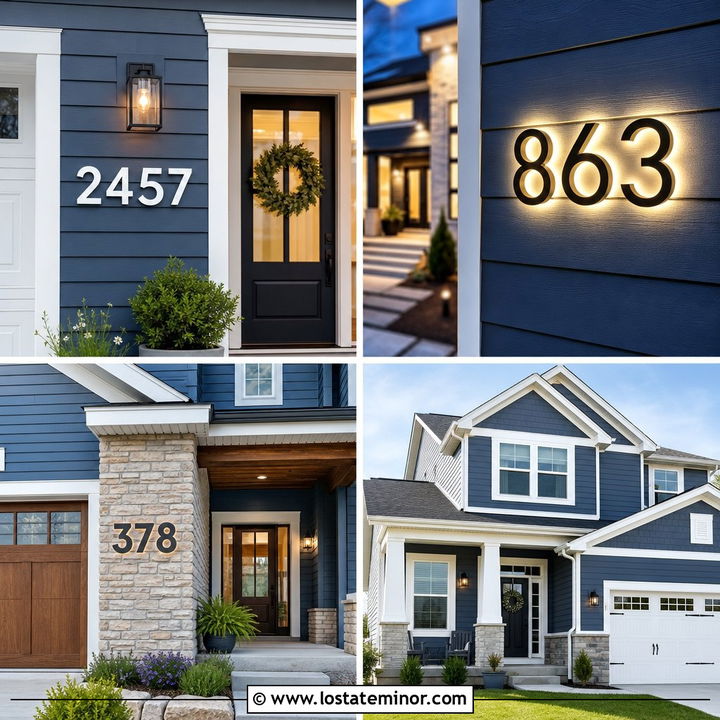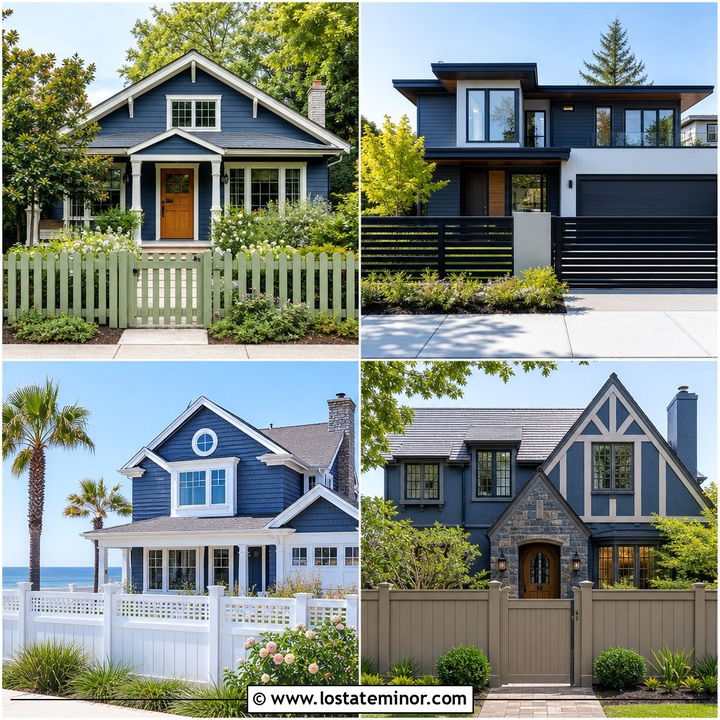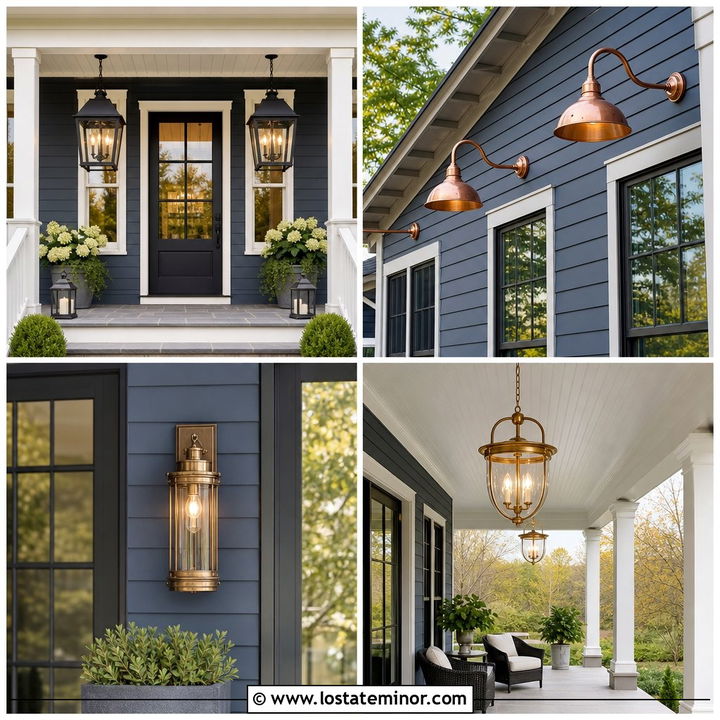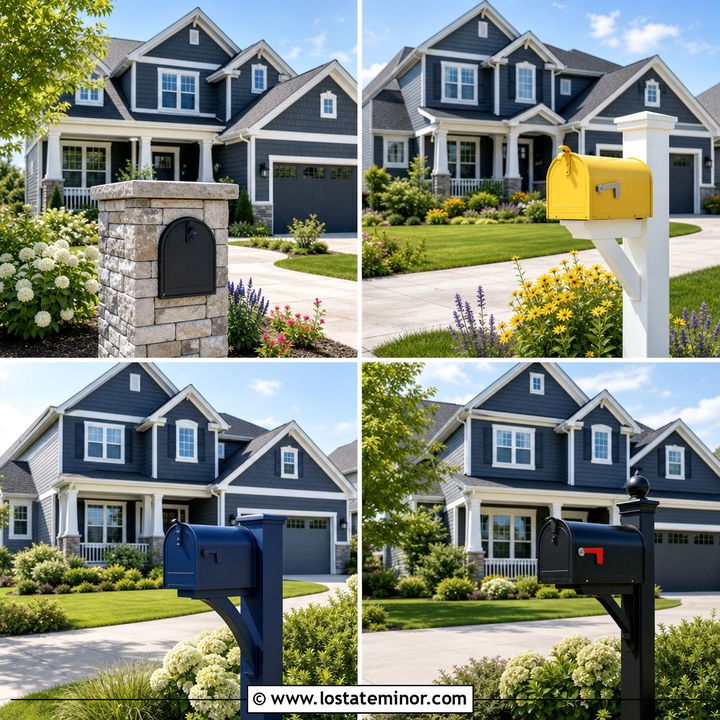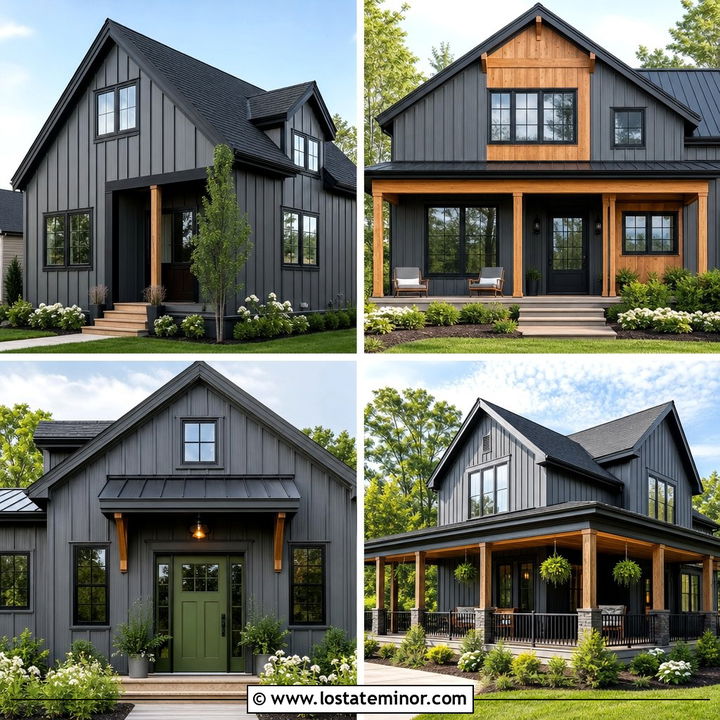
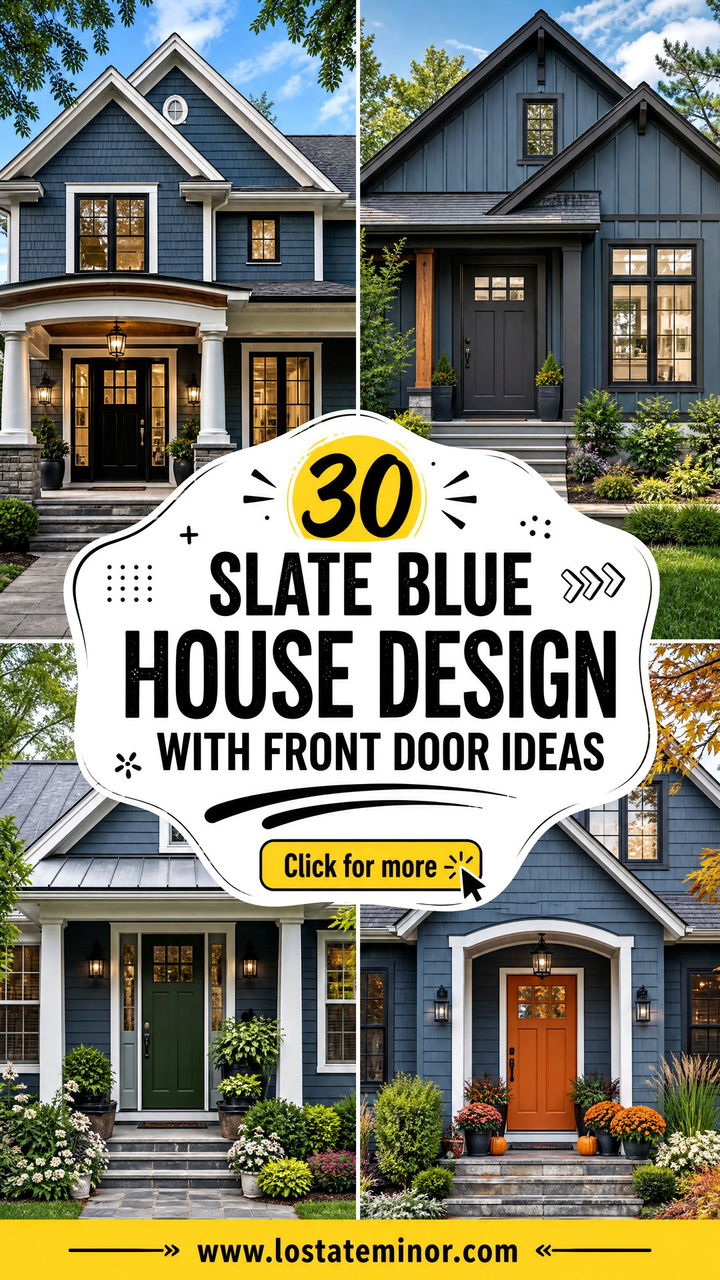
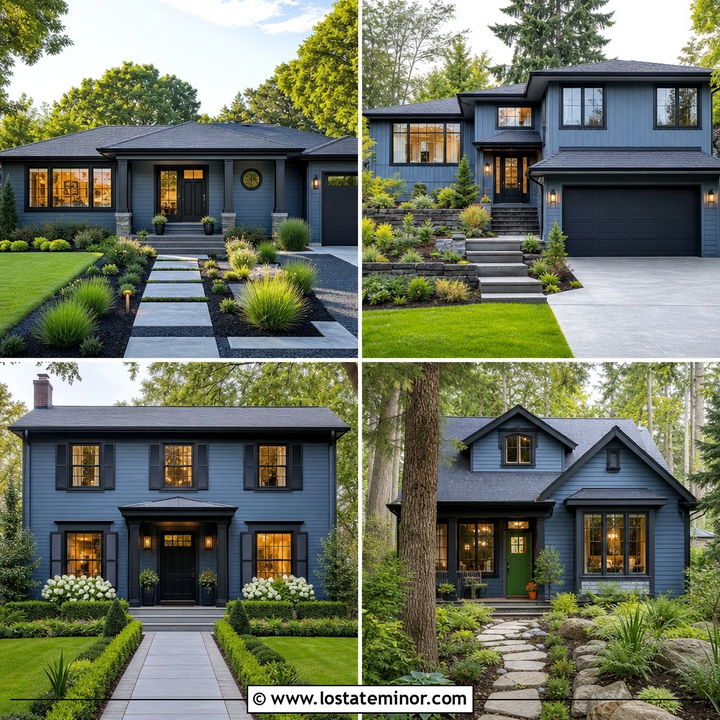
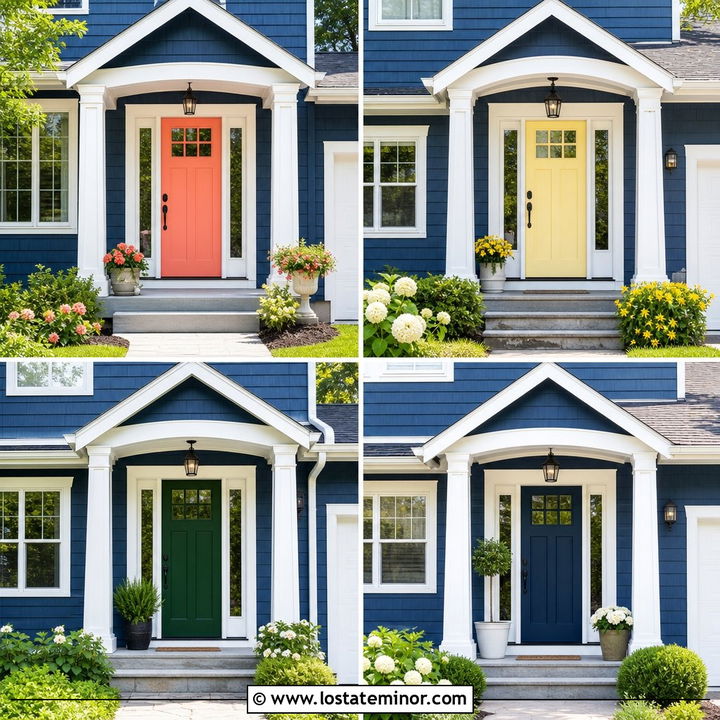
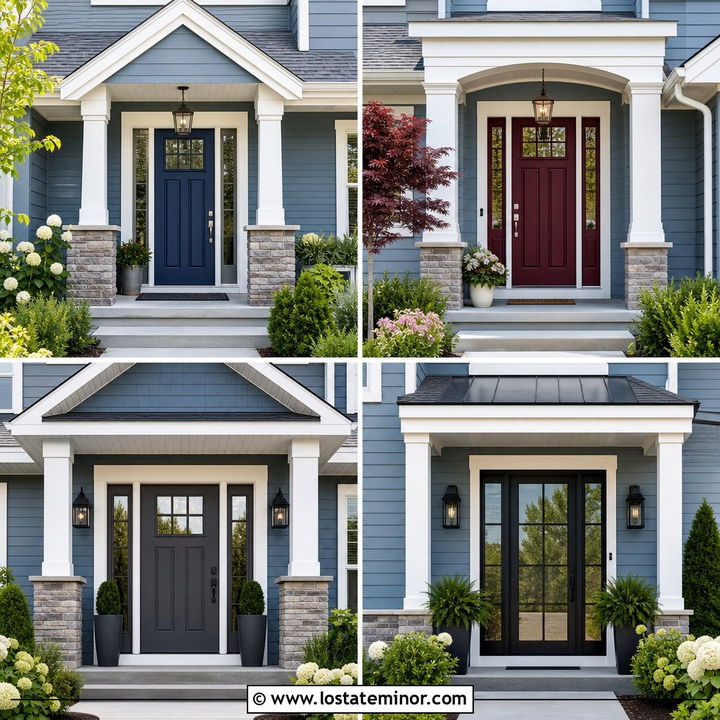
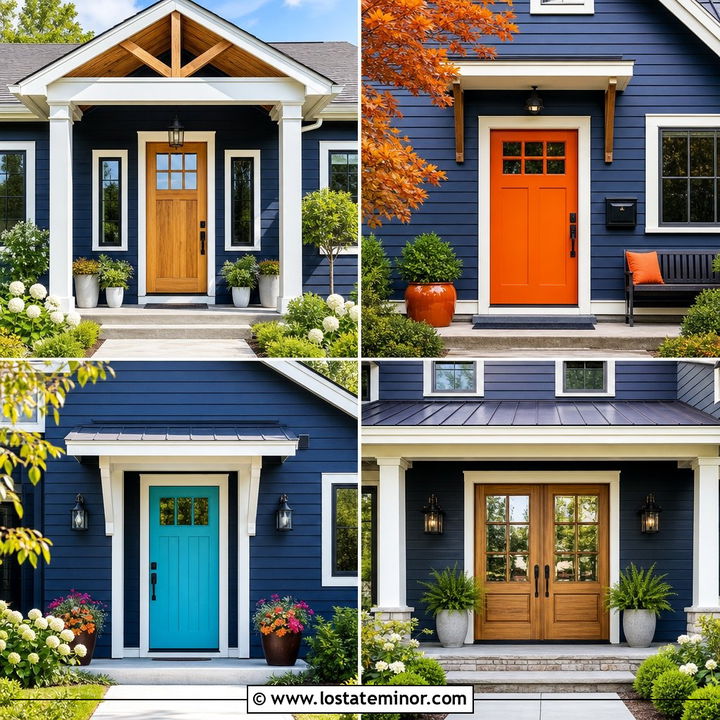
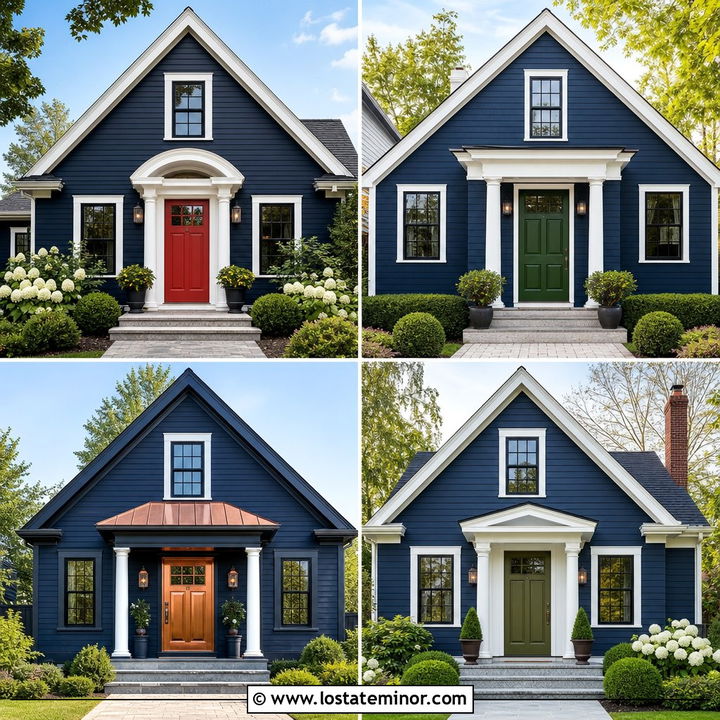
Slate blue brings a calm, tailored look to an exterior because it balances cool blue with soft gray. **30 Slate Blue House Design With Front Door Ideas** explores how this adaptable siding color can shift from coastal and traditional to rustic and modern. Benjamin Moore describes Slate Blue 1648 as a versatile blue reminiscent of weathered slate, making it a useful reference for the schemes below. () The right door can sharpen that gray undertone, warm the facade, or introduce a lively focal point. Trim, roofing, masonry, porch materials, and landscaping also affect the finished result. Always sample exterior colors beside permanent surfaces and view them throughout the day before painting. Use these complete curb-appeal schemes to explore **30 Slate Blue House Design With Front Door Ideas**.
1. Slate Blue House With Black Front Door
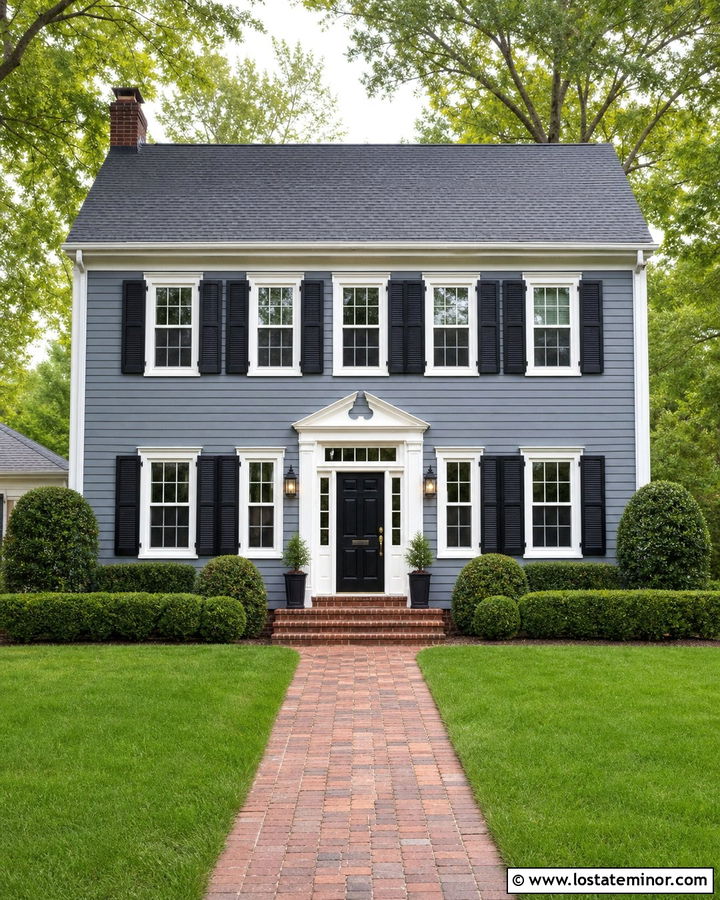
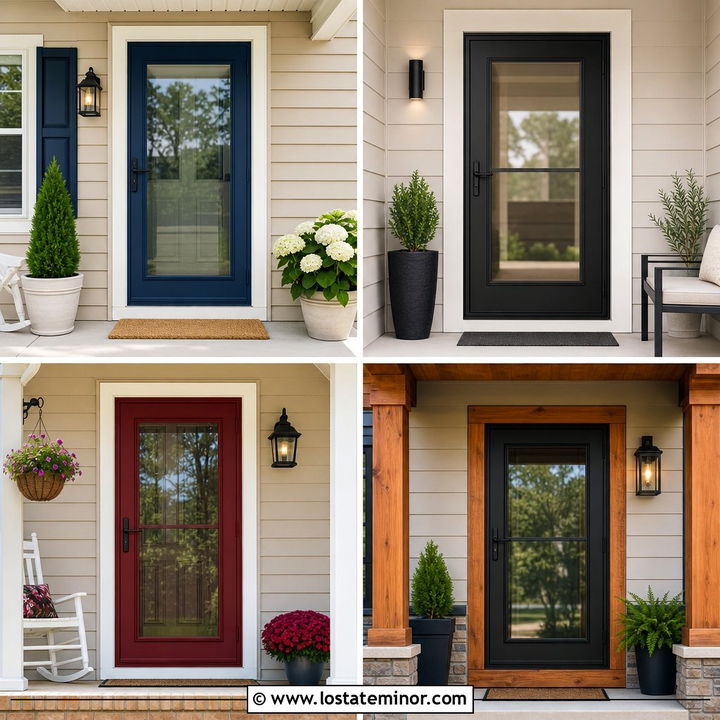
A black front door gives a slate blue house a crisp, grounded focal point. This pairing works especially well on a symmetrical Colonial with white window trim, simple shutters, and a dark charcoal roof. Choose a clean black rather than a faded blue-black so the entrance remains distinct from the blue-gray siding. Brass hardware and traditional lanterns can add welcome warmth without weakening the sharp contrast. Carry black onto the shutters, metal railings, and small roof details to create a consistent exterior. Keep the garage door slate blue or white so it does not compete with the entry. A straight brick walkway, clipped shrubs, and balanced foundation plantings complete this polished scheme while reinforcing the formal architecture.
2. Slate Blue House With Natural Wood Front Door
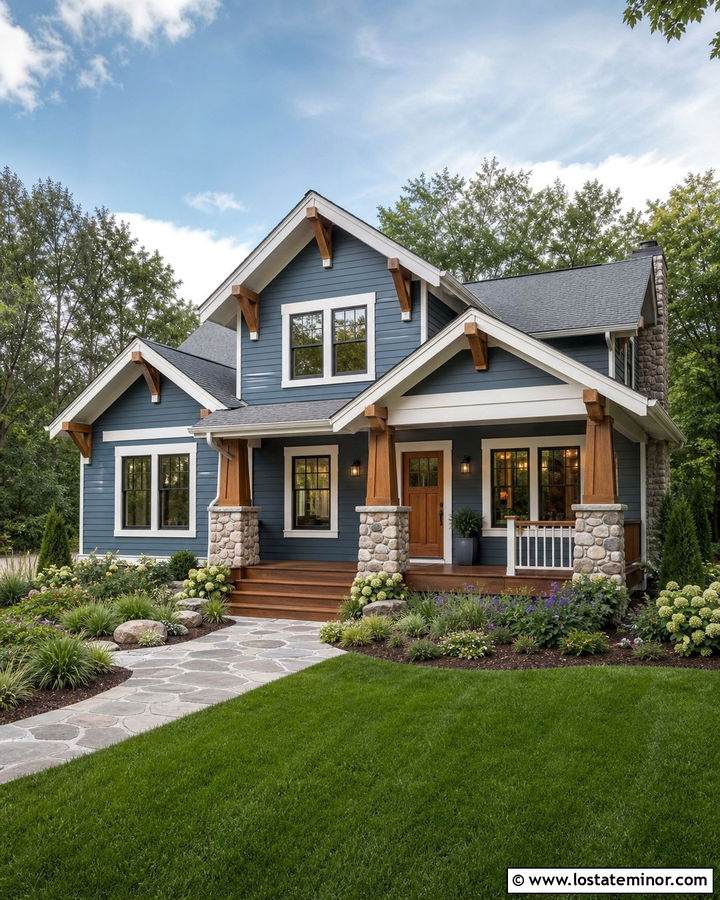
Natural wood softens the cool character of slate blue and makes the entrance feel inviting. On a Craftsman house, pair blue-gray lap siding with a medium cedar or stained oak door featuring simple rectangular glass panels. Warm white trim keeps the facade bright, while stone porch columns connect the wood tones to the landscape. Repeat the door stain on porch beams, brackets, and a small section of vertical siding for balance. A weathered gray roof works better than a strongly colored shingle because it lets the wood remain the main accent. Finish the exterior with black lanterns, deep bronze gutters, layered ornamental grasses, and a broad stone walkway. The result feels handcrafted, relaxed, and thoughtfully coordinated.
3. Slate Blue House With White Front Door
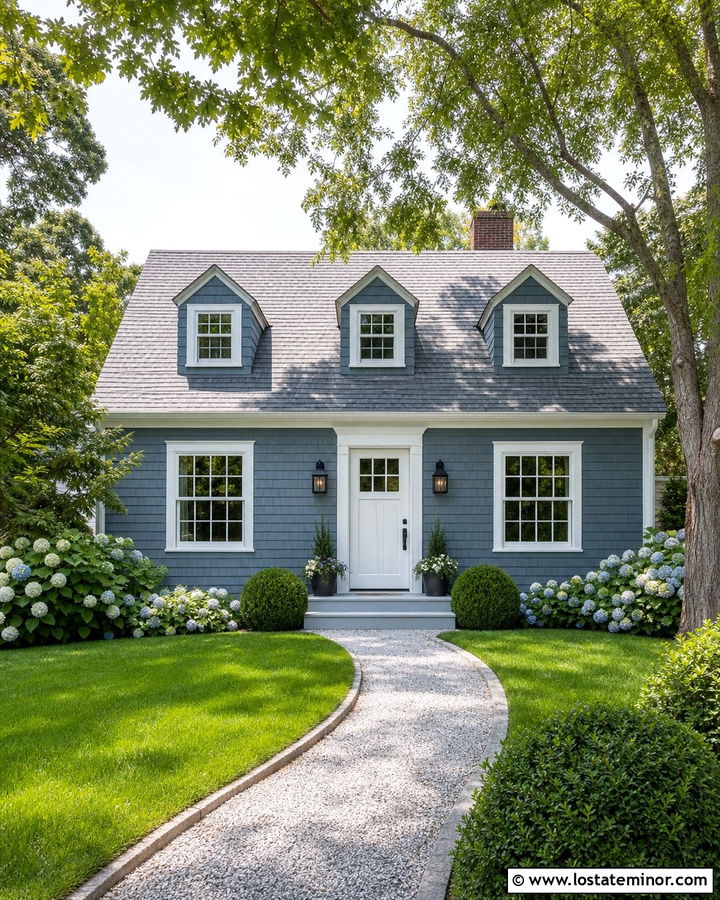
What if you want a front door that feels bright without introducing another strong color? A clean white door creates a fresh transition between slate blue siding and white architectural trim. This combination suits a Cape Cod house with cedar-style shingles, dormer windows, and a compact covered entry. Use a slightly warm white to prevent the exterior from appearing icy, especially in shaded or northern light. Add black hinges, a black mailbox, and classic lanterns for definition. A gray shingle roof and light stone steps preserve the soft coastal palette. Hydrangeas, boxwoods, and a curved gravel path can frame the facade without overwhelming it. The finished exterior feels open, orderly, and easy to maintain visually.
4. Slate Blue House With Red Front Door
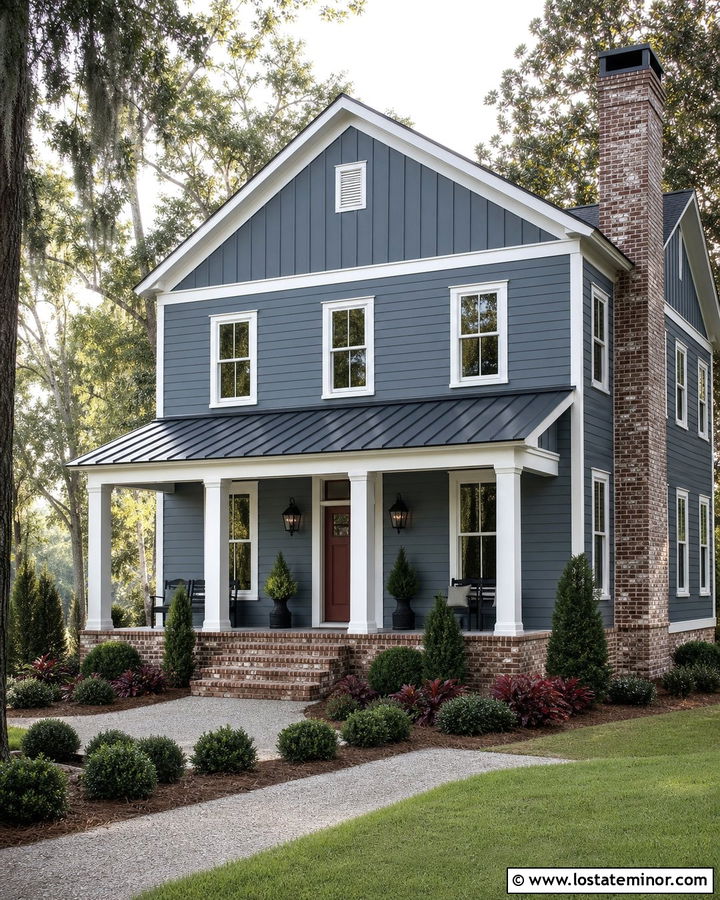
A rich red front door adds traditional energy to a slate blue exterior. Choose a muted brick red or currant shade instead of a bright primary red, which can appear too intense against the softened siding. This complete scheme looks at home on a two-story farmhouse with white corner boards, a standing-seam porch roof, and simple square columns. Use black for the roof, lights, and metal railings to anchor the contrasting colors. Reclaimed brick steps can repeat the red door in a quieter material. Keep shutters slate blue or remove them entirely if the windows have strong trim. Evergreen shrubs, red-leaf plants, and natural mulch help the bold entrance feel connected to the surrounding yard.
5. Slate Blue House With Yellow Front Door
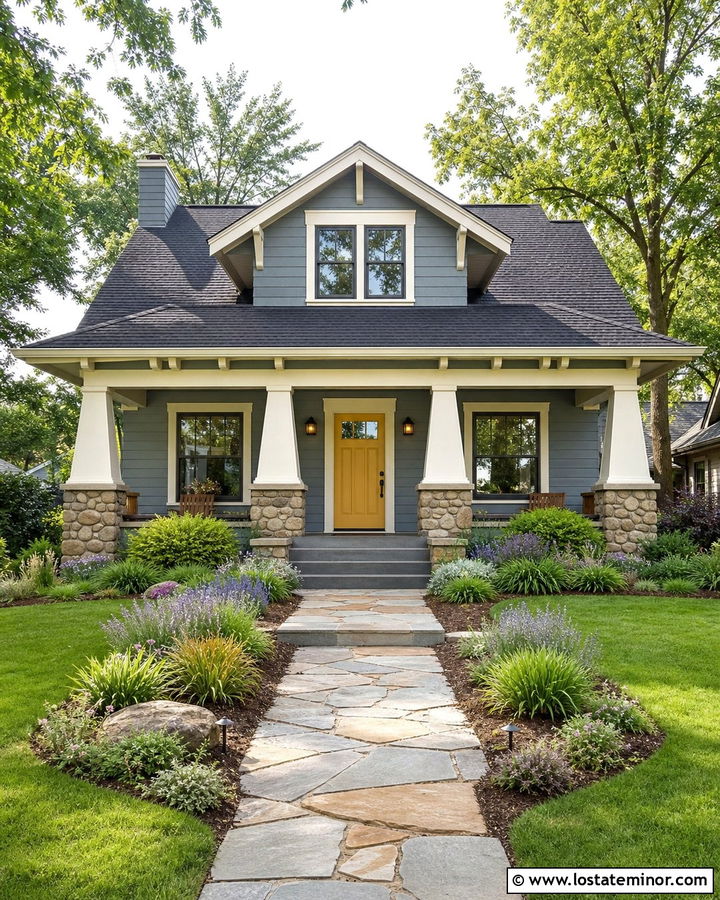
A mustard yellow door brings warmth and personality to a slate blue bungalow. The gray in the siding controls the yellow’s energy, while the sunny entrance gives the small facade a memorable focal point. Frame the door with creamy white trim rather than stark white for a softer transition. A charcoal roof, tapered porch columns, and a warm stone foundation can add depth without making the exterior busy. Use dark bronze porch lights and house numbers to complement the yellow. Avoid carrying the accent color onto shutters or garage doors; one concentrated dose is usually enough. A flagstone path, flowering perennials, and loose ornamental grasses complete the casual curb appeal. This pairing feels cheerful yet mature when the yellow has earthy undertones.
6. Slate Blue House With Navy Front Door
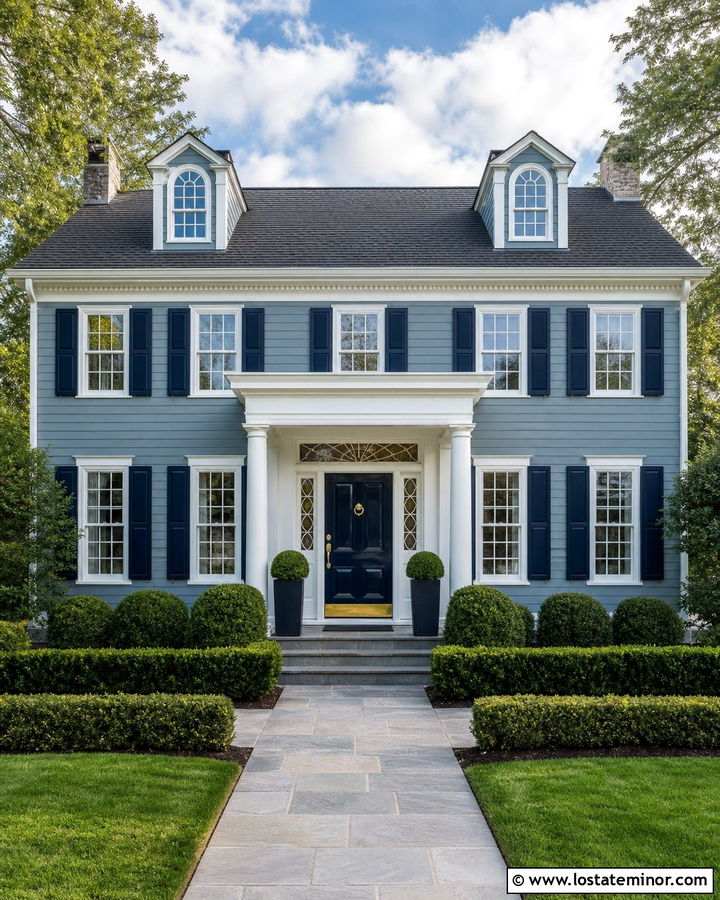
Layering a navy door onto slate blue siding creates subtle contrast instead of a dramatic color break. This tonal treatment is ideal for a Georgian-inspired house where symmetry and architectural detail should command more attention than the palette. Use bright white trim around the windows, cornice, columns, and door surround to separate the two blues clearly. A glossy navy finish can make the entrance look more formal, while polished brass hardware adds warmth. Match the shutters to the navy door for a balanced three-color scheme. Select a dark gray roof that does not introduce brown undertones. Neatly shaped hedges, a centered stone path, and matching planters reinforce the structure. The result is quiet, sophisticated, and visually cohesive.
7. Slate Blue House With Sage Green Front Door
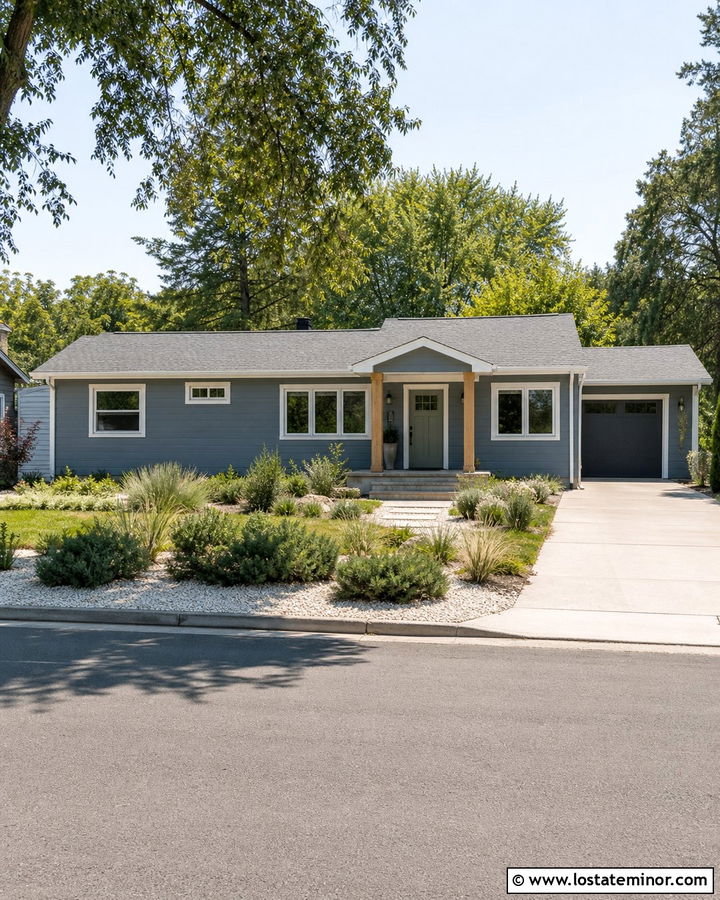
Slate blue and sage green form a soft, nature-inspired exterior when both colors share muted gray undertones. Try this pairing on a low ranch house with wide horizontal siding, warm white trim, and a medium gray roof. A dusty sage door adds distinction without creating a sharp or overly colorful contrast. Repeat green through native landscaping rather than painting the shutters the same shade. Natural cedar posts and a small stone entry landing introduce warmth between the cool colors. Black-framed lights and house numbers provide just enough definition. Keep the garage door slate blue so the long facade feels unified. Juniper, ornamental grasses, and pale gravel can complete this comfortable scheme, which works particularly well in leafy suburban surroundings.
8. Slate Blue House With Charcoal Front Door
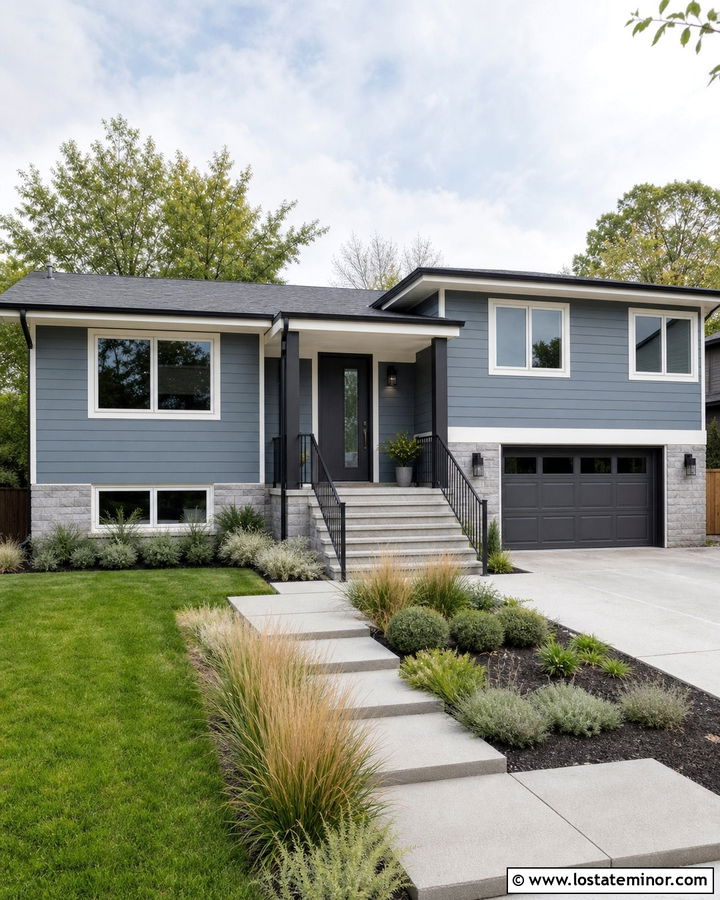
For a restrained contemporary look, place a charcoal gray front door against slate blue siding. The door should be several shades darker than the body so it reads as an intentional accent. This combination suits a split-level exterior with clean trim, broad windows, and mixed horizontal and vertical siding. Use soft white around the windows but repeat charcoal on the garage door, gutters, and metal railings. A light gray stone base can bridge the difference between the blue siding and dark features. Consider a door with narrow vertical glass to keep the entrance from appearing heavy. Structured grasses, low shrubs, and large concrete pavers support the streamlined design. The overall palette feels practical, modern, and pleasantly understated.
9. Slate Blue House With Terracotta Front Door
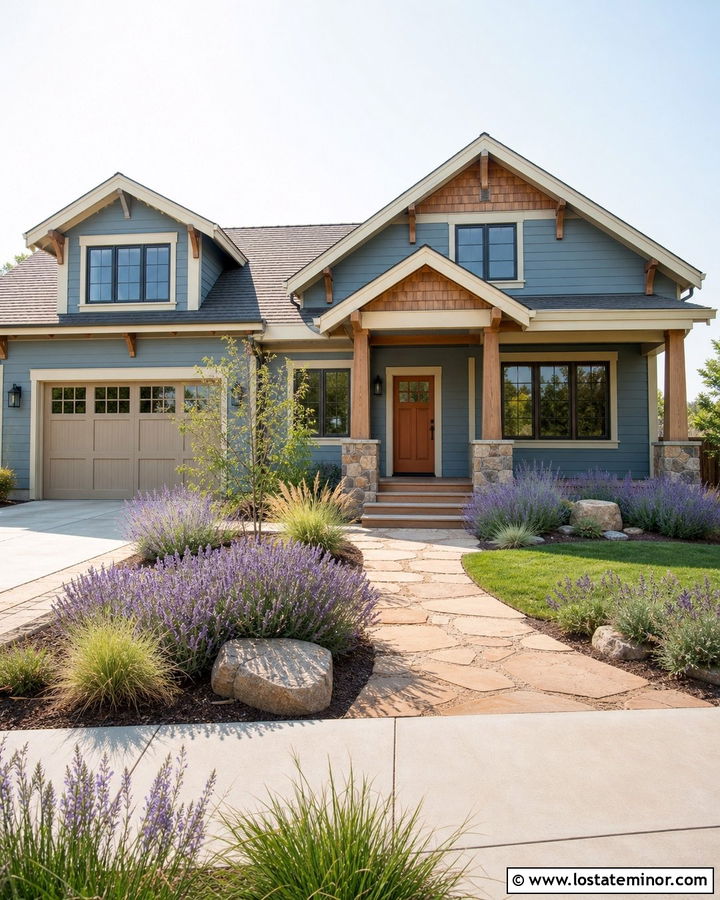
Terracotta offers an earthy alternative to a conventional red front door. Its orange-brown warmth creates a welcoming contrast with cool slate blue without looking excessively bright. Use the pairing on a transitional house with blue-gray stucco, lap siding, or a mixture of both. Cream trim, a weathered clay-colored walkway, and a warm gray roof help connect the two main colors. Choose a simple paneled door with aged bronze hardware for a grounded appearance. Small cedar accents beneath the gables can echo the door’s warmth. Keep window frames dark bronze or charcoal to outline the architecture. Drought-tolerant grasses, lavender, and natural stone complete the setting. The resulting facade feels sun-warmed, balanced, and distinctive in a subtle way.
10. Slate Blue House With Burgundy Front Door
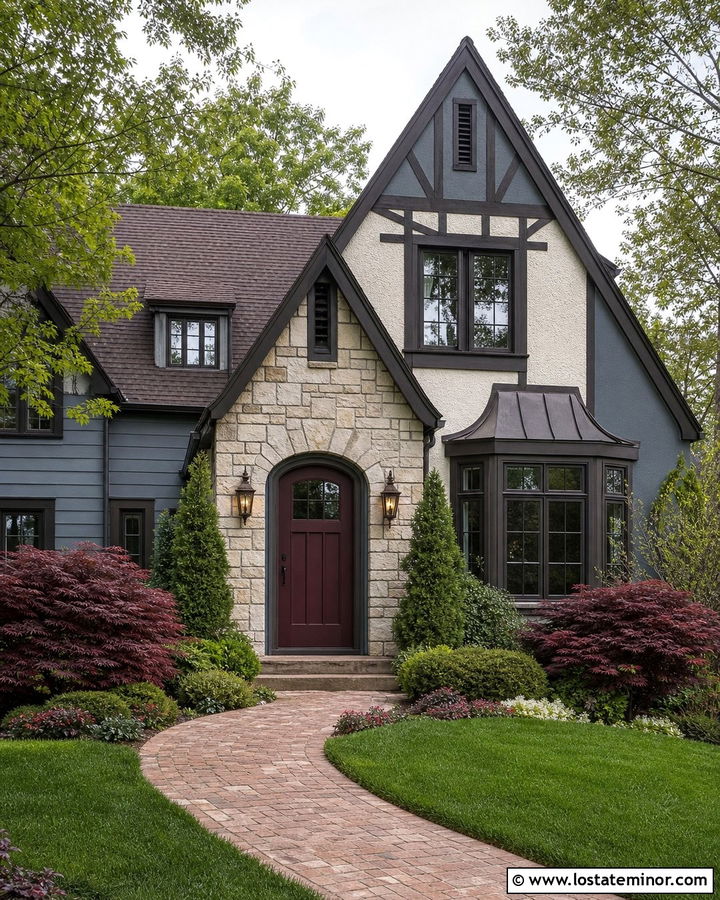
Burgundy gives a slate blue house a deep, traditional accent that feels softer than black and more reserved than bright red. This pairing complements a Tudor-style exterior with steep rooflines, divided windows, and sections of pale stone or cream stucco. Use burgundy on the front door only, allowing its rich color to mark the entrance without spreading across the facade. Dark brown roof shingles and bronze lights can reinforce the door’s warmth. Keep trim creamy white, and paint decorative half-timbering charcoal for definition. A curved brick path ties naturally into the red undertones. Layer evergreen shrubs with burgundy foliage near the porch. The complete scheme feels established and elegant while still allowing the slate blue siding to remain prominent.
11. Slate Blue House With Teal Front Door
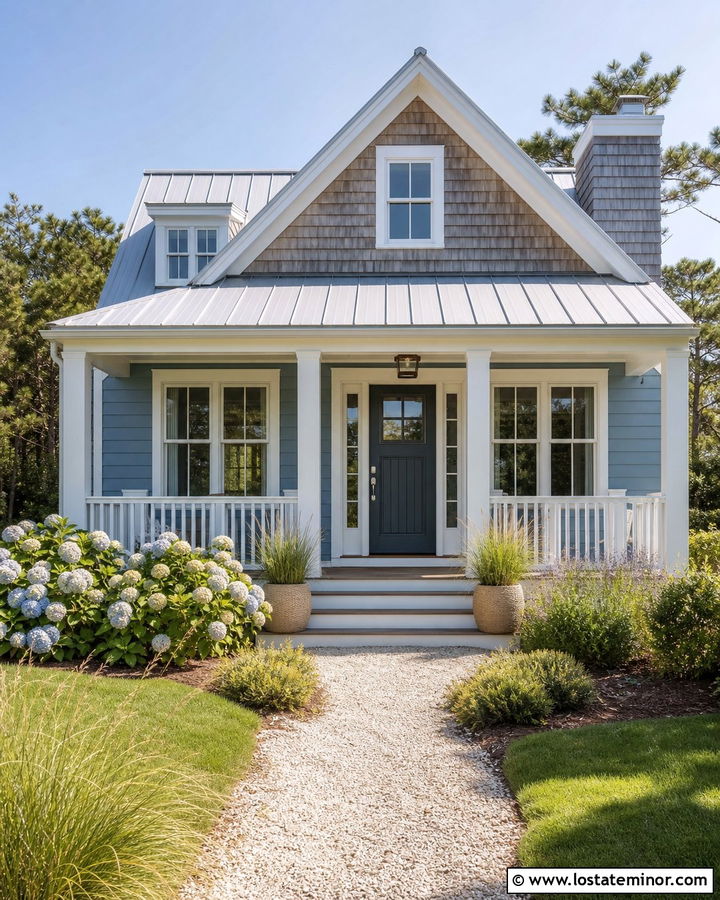
A teal front door can make slate blue siding feel livelier while preserving a cool, coastal palette. Select a deep blue-green with enough saturation to stand apart from the gray-blue body. On a coastal cottage, pair this door with white trim, cedar-shake gables, and a pale gray metal roof. Keep porch railings and columns white to frame the color clearly. Natural rope-toned planters, light wood porch furniture, and brushed nickel hardware can support the relaxed character without becoming thematic. Avoid using additional bright blue accents that might weaken the door’s impact. Beach grasses, hydrangeas, and a shell-colored gravel path complete the exterior. The combination feels breezy, colorful, and suitable for both waterside and suburban settings.
12. Slate Blue House With Pale Blue Front Door
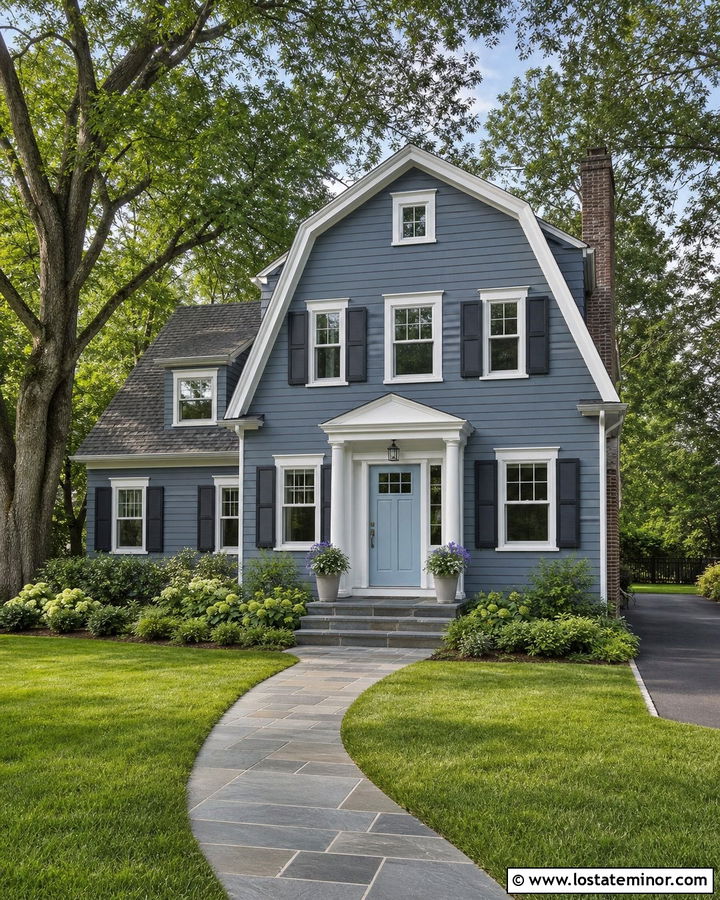
A pale blue door creates a light tonal scheme that highlights subtle differences within the same color family. Picture a Dutch Colonial with slate blue siding, a gambrel roof, and a powder blue door surrounded by broad white trim. The lighter entry draws attention without breaking the facade’s peaceful mood. Choose a door color that is noticeably brighter than the siding, not merely one shade lighter. Silver or satin nickel hardware works naturally with the cool palette. Dark gray shutters and roofing provide the necessary visual weight. Add a white porch bench, bluestone steps, and soft green foundation plants to round out the look. This exterior feels gentle and collected, with enough contrast to prevent the blues from blending together.
13. Slate Blue House With Walnut Front Door
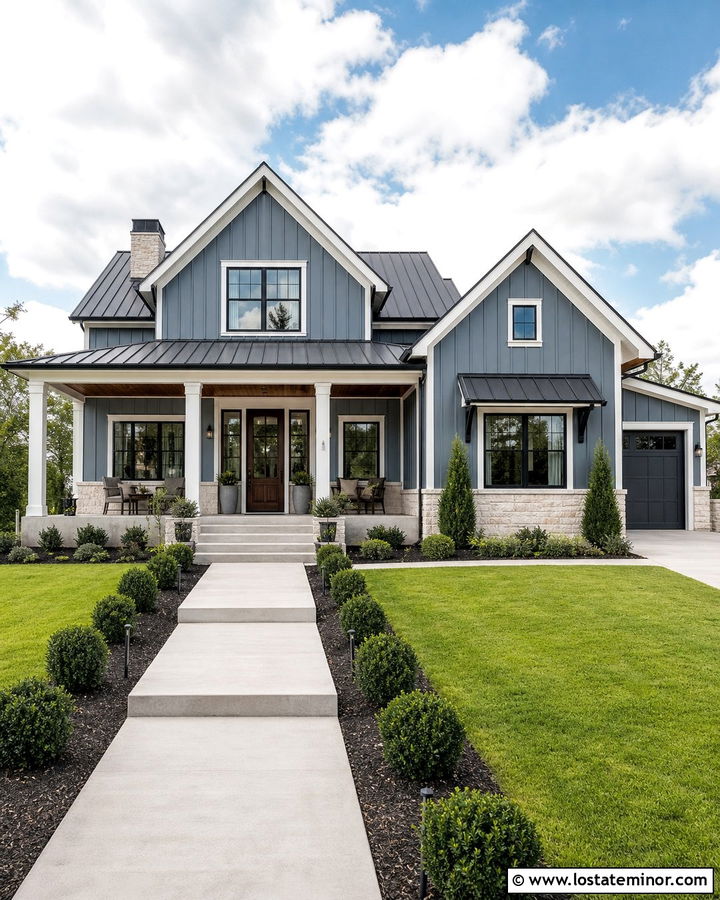
Dark walnut creates a richer, more formal wood accent than cedar or light oak. It pairs beautifully with slate blue on a modern farmhouse featuring vertical board-and-batten siding, a generous front porch, and simple black windows. Use warm white for the fascia, columns, and garage door to brighten the large facade. Repeat walnut on porch ceiling boards or a single gable feature, but avoid covering every wood surface in the same dark stain. Black sconces and a charcoal metal roof add definition. Light limestone around the porch foundation can prevent the scheme from feeling too dark. Finish with a straight concrete walkway, layered shrubs, and structured planters. The contrast feels warm, substantial, and updated without losing farmhouse simplicity.
14. Slate Blue House With Light Oak Front Door
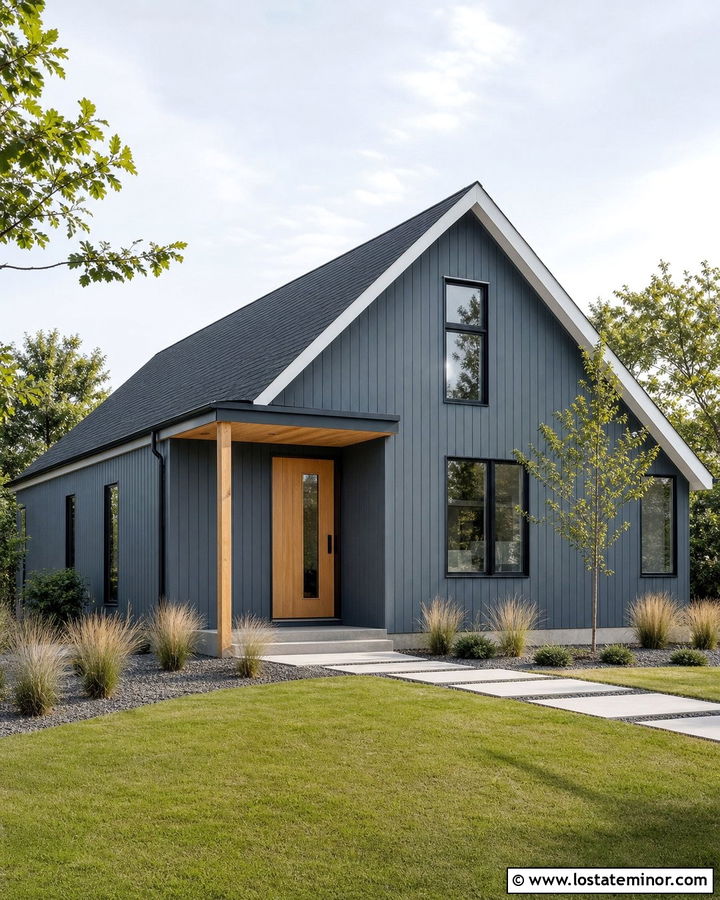
Light oak provides a clean organic accent for a slate blue modern exterior. The wood’s pale golden grain warms the cool siding while supporting a simple, uncluttered facade. Use this combination on a Scandinavian-inspired house with vertical blue-gray cladding, a steep roof, and large black-framed windows. Keep trim minimal and choose soft white for the soffits. A door with slim glass panels can echo the window geometry while allowing the oak to remain visible. Repeat the wood on a recessed porch ceiling or narrow privacy screen. A black roof and charcoal gutters sharpen the overall composition. Gravel planting beds, wispy grasses, young trees, and broad concrete pavers reinforce the natural minimalism. The complete exterior feels bright, contemporary, and approachable.
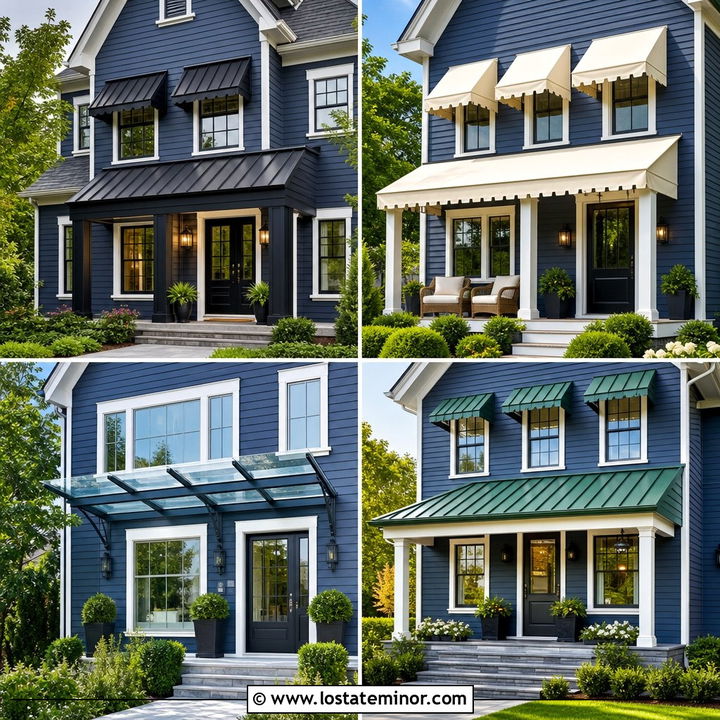
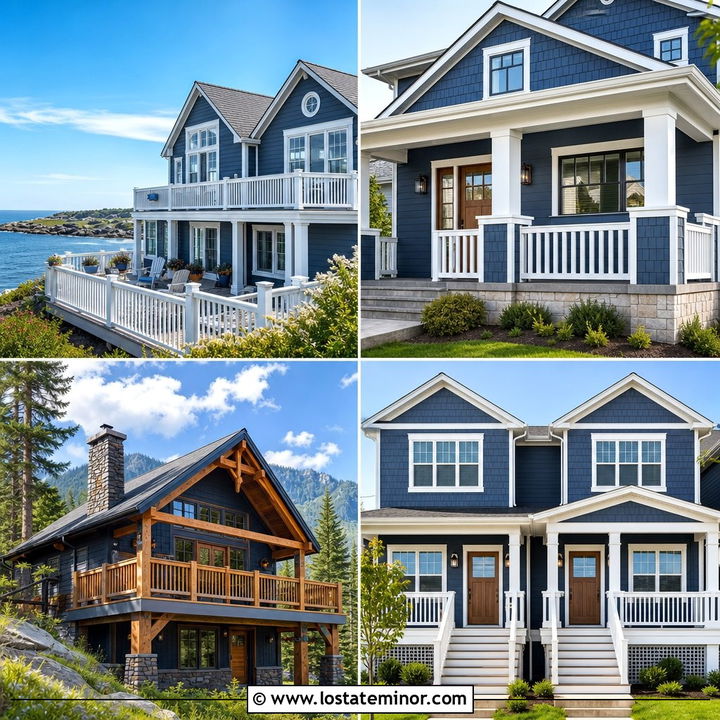
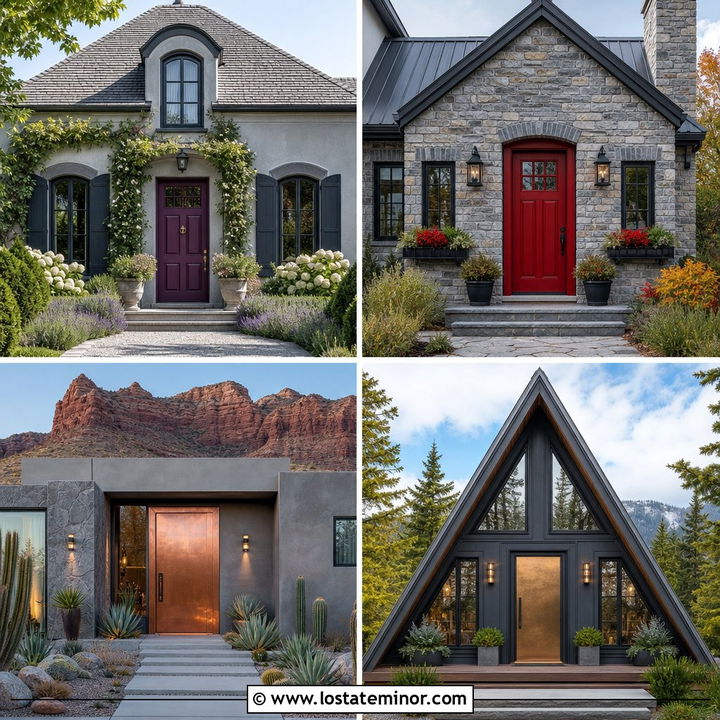
15. Slate Blue House With Cream Front Door
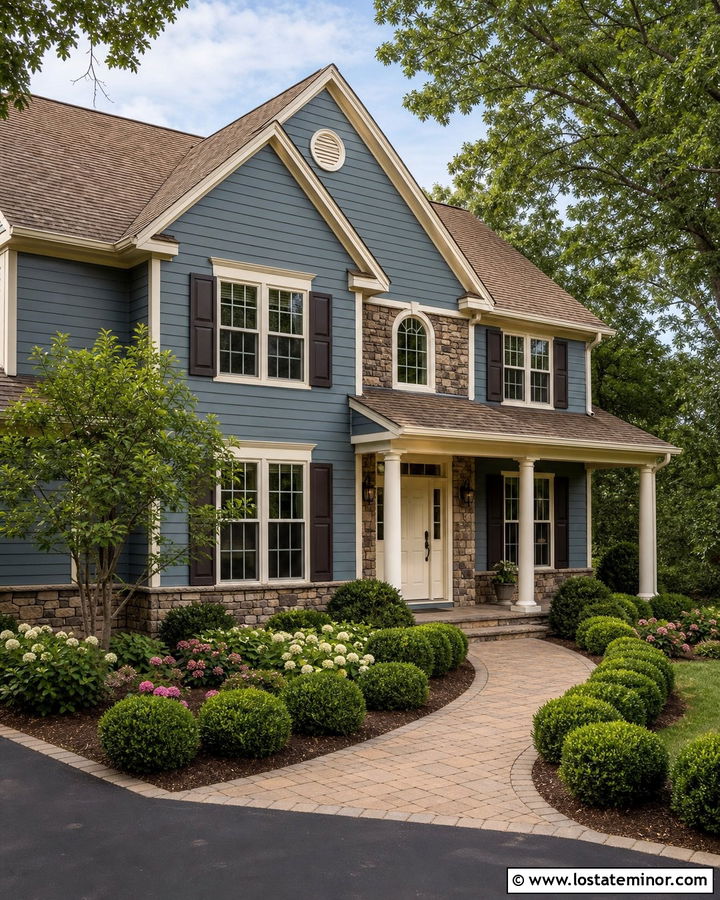
Cream offers a warmer and more forgiving alternative to a pure white front door. It works especially well when slate blue siding is paired with tan stone, warm roof shingles, or aged brick. On a traditional suburban house, use creamy trim throughout so the door appears connected to the windows, fascia, and porch columns. Add deep bronze shutters to provide contrast without introducing another cool color. A medium brown roof can work here because the cream and masonry create a bridge between brown and blue. Choose antique brass door hardware and warm lanterns to finish the entrance. Curved planting beds, boxwoods, flowering shrubs, and a warm paver walkway support the classic palette. The result feels soft, welcoming, and comfortably established.
16. Slate Blue House With Greige Front Door
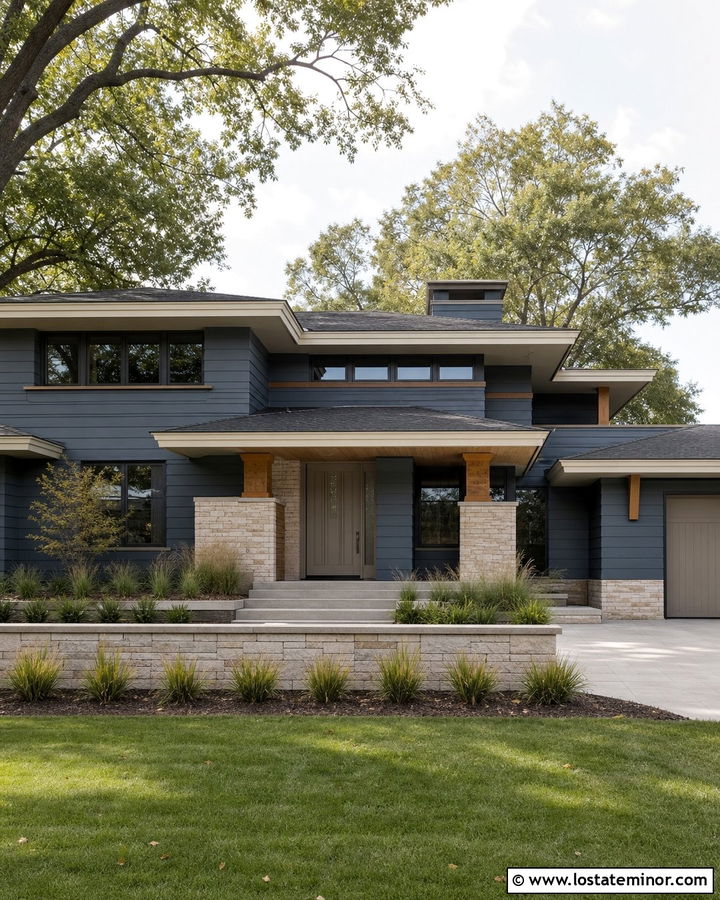
A greige front door emphasizes the gray side of slate blue and creates a sophisticated neutral scheme. This approach is useful when the house already contains taupe stone, weathered brick, or warm concrete that must remain. For a Prairie-style home, combine low rooflines, slate blue horizontal siding, broad cream eaves, and a medium greige door. Dark bronze window frames and gutters define the long architecture without overpowering it. Repeat greige on porch flooring or a low masonry wall, not on every trim surface. Natural oak details can add a small amount of warmth. Use broad ornamental grasses and horizontal planting beds to mirror the building’s lines. The finished design feels calm, connected, and carefully adapted to permanent exterior materials.
17. Slate Blue House With Dark Green Front Door
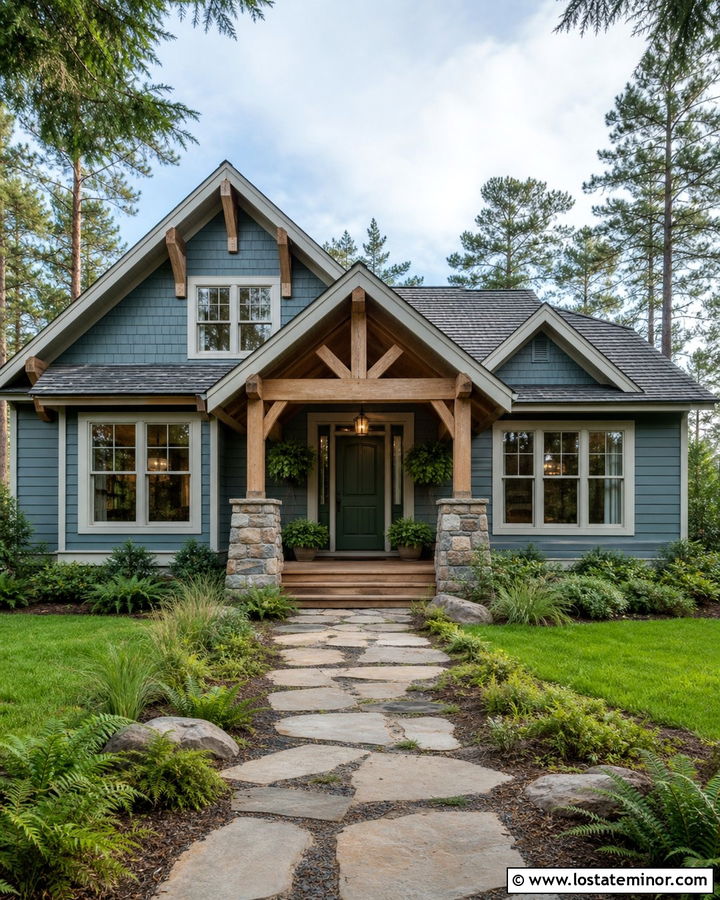
Deep forest green gives slate blue siding a grounded, woodland character. Since both colors are darkened by gray, the contrast feels nuanced rather than loud. Use the combination on a cabin-inspired suburban home with board-and-batten siding, stone porch piers, and natural timber beams. Warm white window trim prevents the facade from becoming overly shadowed. Choose black or aged bronze hardware for the green door and repeat that finish on the porch lights. A weathered charcoal roof keeps the upper portion neutral. Cedar steps and a wood porch floor can warm the blue and green palette. Surround the house with ferns, evergreen shrubs, native grasses, and a natural stone walkway. This complete exterior feels restful, durable, and closely tied to its landscape.
18. Slate Blue House With Coral Front Door
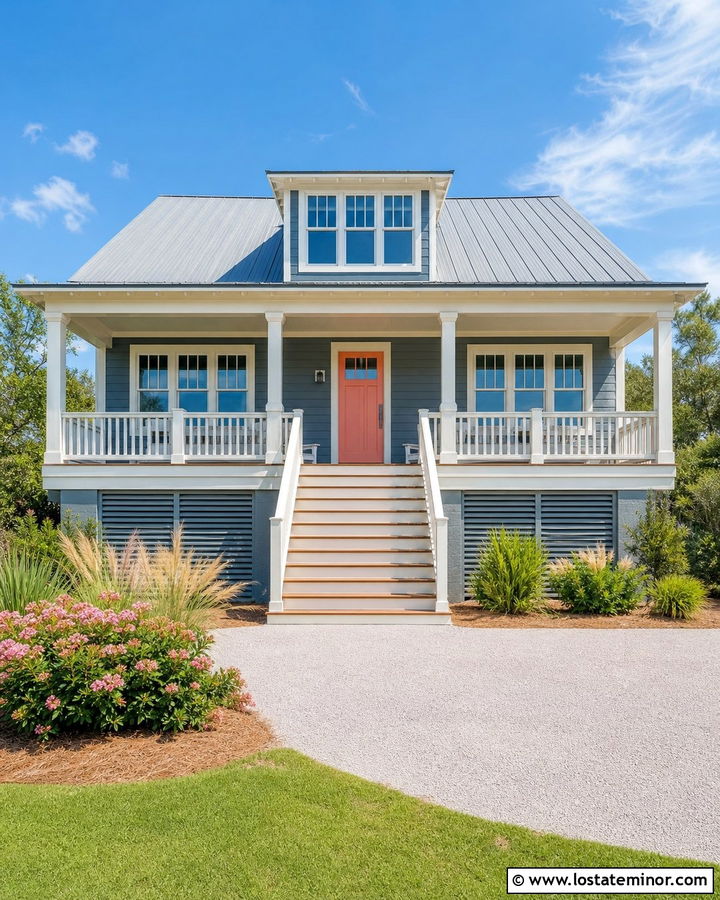
Coral introduces an upbeat focal point without the sharp intensity of orange or primary red. Against slate blue, a softened coral door looks especially appealing on a beach-style raised cottage with white railings and a broad covered porch. Keep trim crisp but slightly warm, and use a pale gray metal roof to preserve the airy palette. Limit coral to the door and perhaps two small planters so the color remains special. Brushed nickel hardware and simple white lights prevent the entrance from feeling overly decorative. Add natural wood stair treads to ground the brighter combination. Dune grasses, flowering shrubs, and a light gravel driveway complete the relaxed setting. The exterior feels fresh and playful while still maintaining a composed blue-gray foundation.
19. Slate Blue House With Plum Front Door
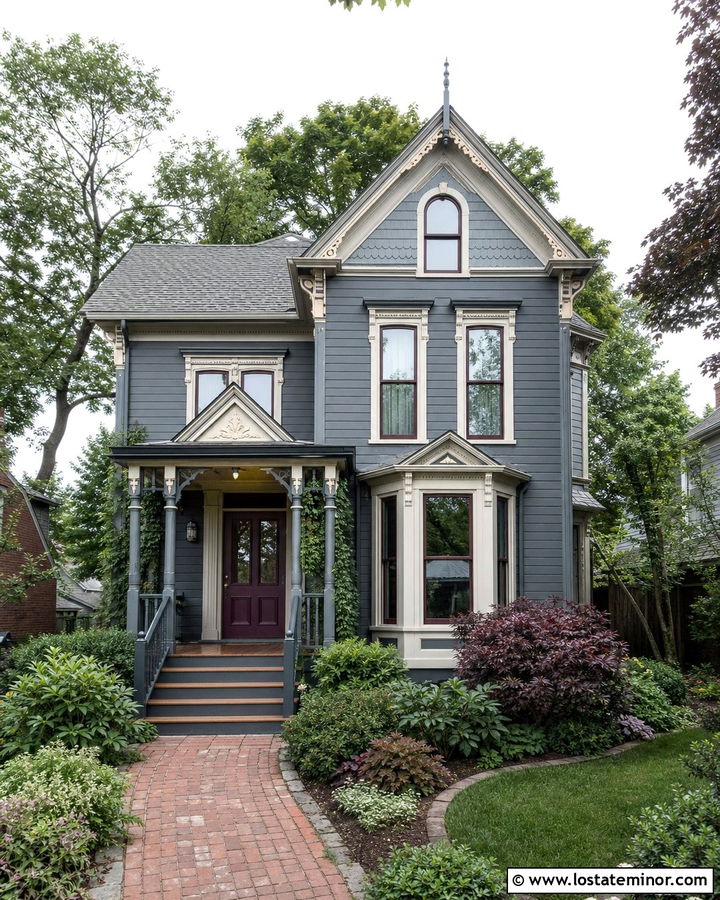
A muted plum door brings unexpected depth to a slate blue Victorian exterior. The key is choosing a dusky purple with gray or red undertones rather than a bright violet. Pair it with creamy trim that clearly outlines brackets, window casings, porch posts, and decorative gable details. Use charcoal on small accents such as railings and roof shingles to prevent the palette from becoming too sweet. A stained wood porch floor adds another grounding layer. Repeat plum sparingly on a narrow band of decorative trim if the house has enough architectural detail to support it. Curved garden beds, climbing greenery, and burgundy foliage can connect the door to the yard. This scheme feels expressive, historic, and thoughtfully controlled rather than overly colorful.
20. Slate Blue House With Copper Front Door
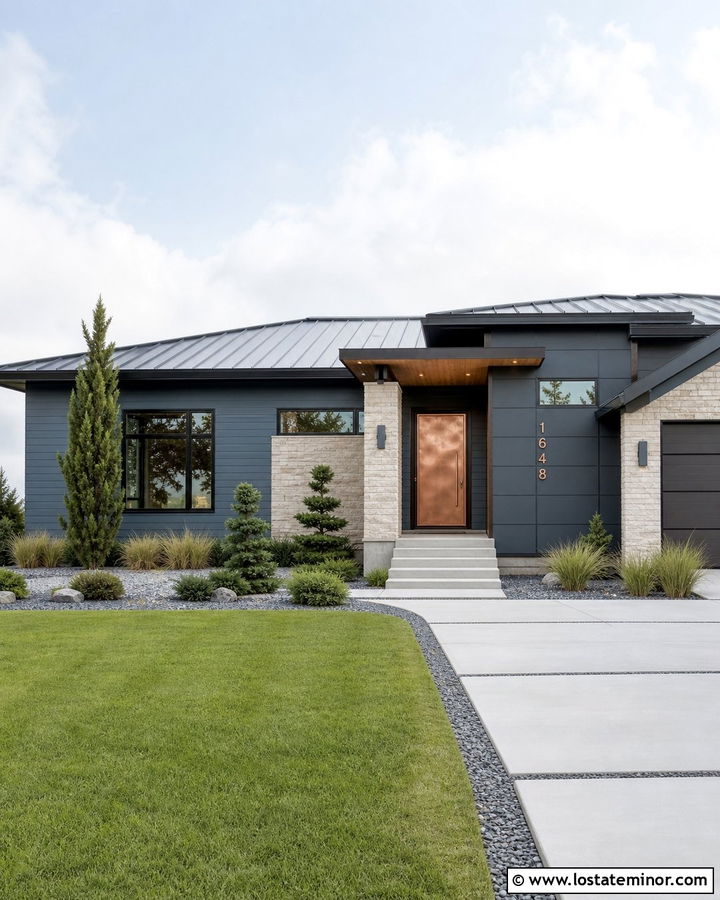
A copper-clad front door turns a slate blue exterior into a striking material-focused design. New copper brings warm orange tones, while naturally aged copper develops blue-green variation that can relate beautifully to the siding. Use this feature on a contemporary house with slate blue fiber-cement panels, charcoal trim, and a low metal roof. Keep the door shape simple so the metal surface remains the focus. Repeat copper only in small details, such as house numbers or a narrow roof edge. Light concrete steps and pale stone walls can brighten the darker palette. Choose restrained landscaping with ornamental grasses and sculptural evergreens. The finished exterior combines cool color with warm metal, producing an architectural look that feels distinctive without depending on a bright painted accent.
21. Slate Blue House With Black Glass Front Door
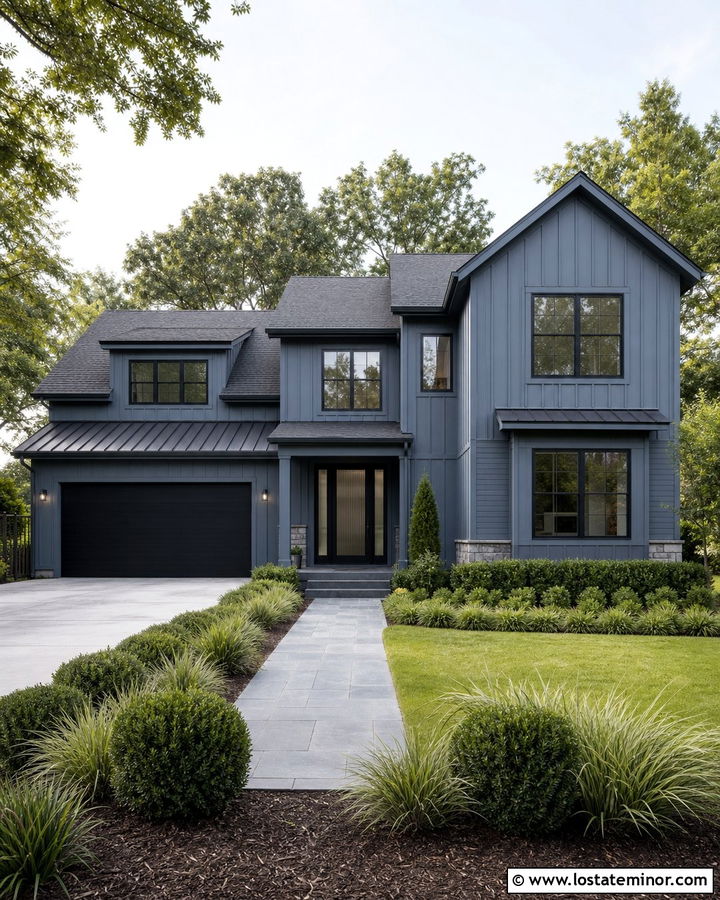
A black-framed glass door gives slate blue siding a lighter, more open appearance than a solid black door. This option is well suited to a contemporary two-story house with mixed vertical siding, large windows, and a recessed entry. Choose frosted, reeded, or divided glass when privacy is important. Repeat the black frame around windows, railings, and slim exterior lights to create a connected grid. Use pale gray trim instead of bright white for a smoother transition between slate blue and black. A charcoal roof and slate pavers support the cool modern palette. Add low grasses, clipped shrubs, and a clean concrete driveway. The completed facade feels streamlined and bright, while the transparent entrance gives the dark accent a less imposing presence.
22. Slate Blue House With Mahogany Double Front Door
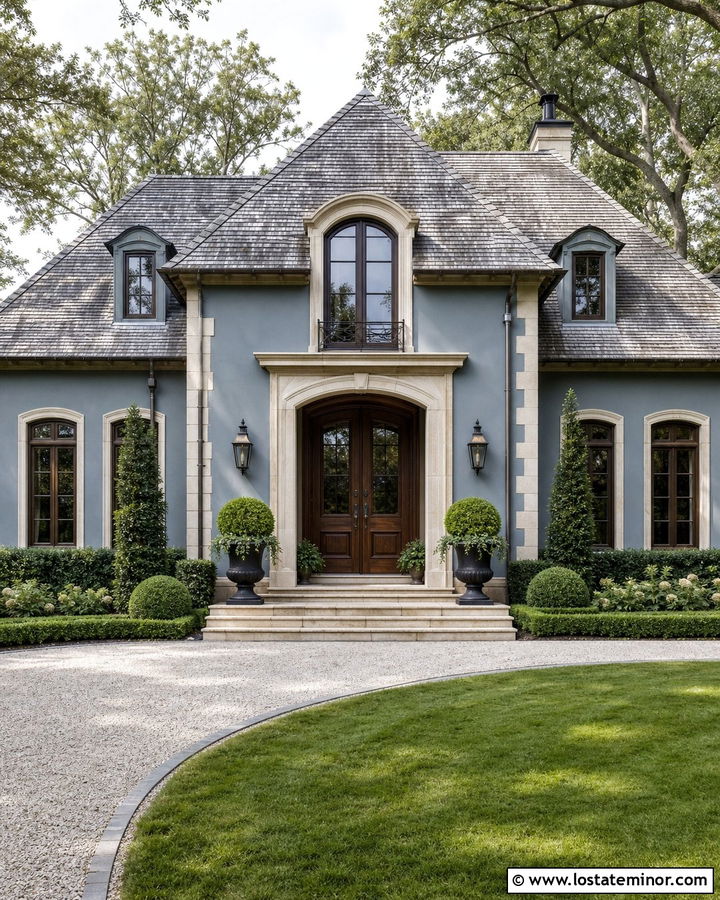
Mahogany double doors bring warmth, scale, and formality to a wide slate blue facade. This entrance works best on a French country or European-inspired house with balanced wings, tall windows, and a combination of siding and pale limestone. Choose a medium-dark stain that reveals the grain rather than an opaque reddish finish. Cream trim and bronze window frames complement the wood, while a weathered gray roof keeps attention near the entrance. Use substantial lanterns and simple dark hardware that match the door’s proportions. A curved stone driveway, broad front steps, and symmetrical planters can reinforce the formal layout. The entire scheme feels refined but not cold because the richly stained doors offset the cooler blue-gray siding and stone.
23. Slate Blue House With Black Dutch Door
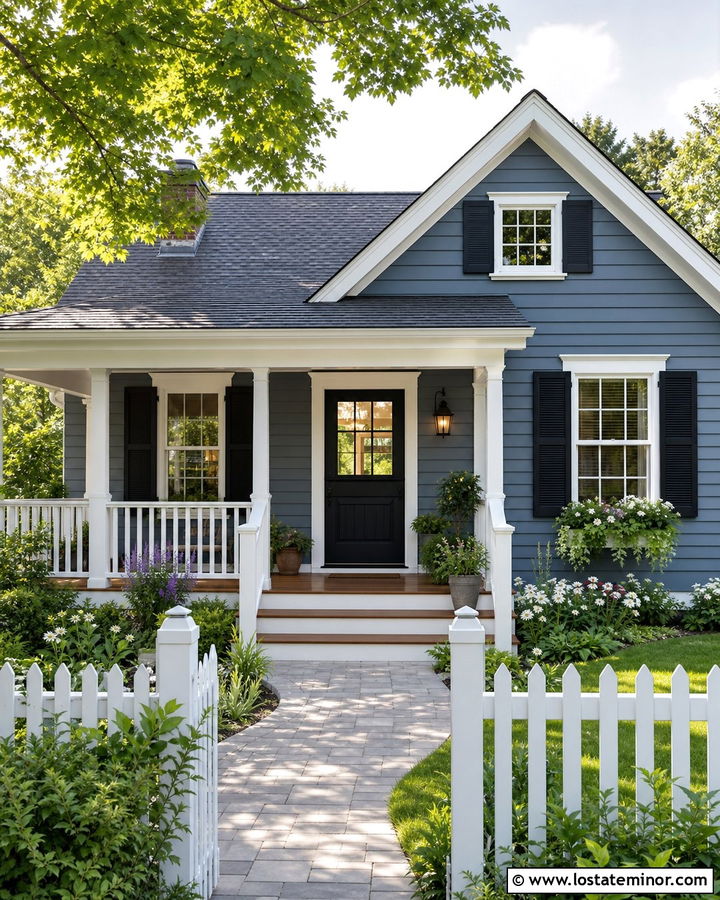
A black Dutch door gives a slate blue cottage practical charm and strong visual definition. The divided door naturally suits a compact facade with a covered porch, white trim, and cottage-style windows. Use a satin black finish so the entry has depth without looking overly glossy. Black shutters can support the door, but they should be correctly sized for the windows and used sparingly. Add warm wood porch flooring to soften the cool siding and dark accents. A simple gray roof, white porch columns, and black lanterns complete the architectural palette. Frame the home with a picket fence, a curved walkway, and loose flowering borders. The finished look feels friendly and traditional, with enough contrast to keep the small exterior visually organized.
24. Slate Blue House With Red Dutch Door
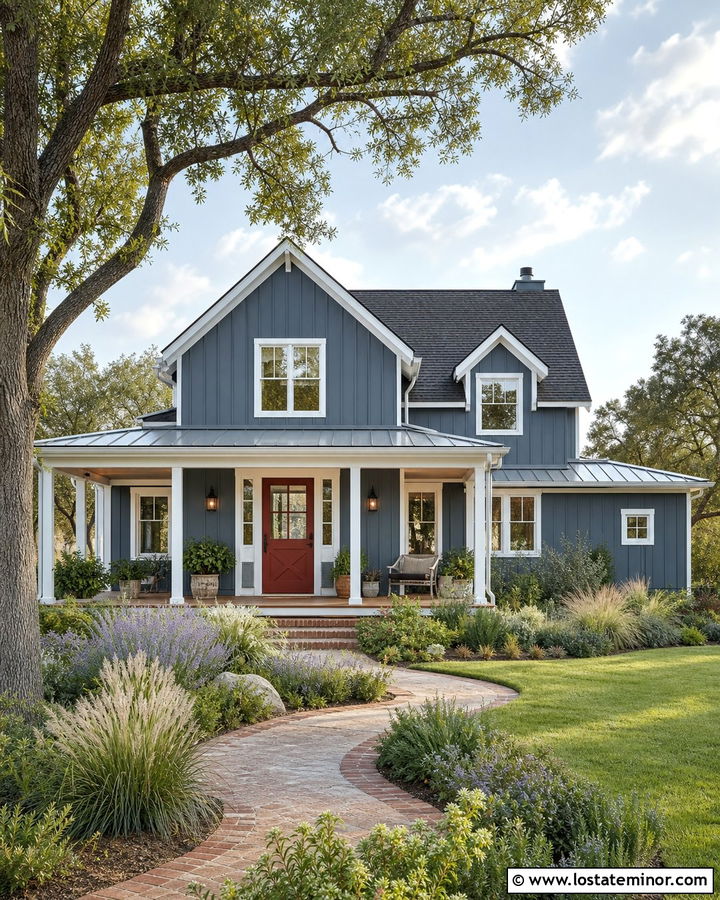
For a farmhouse exterior with more personality, pair slate blue board-and-batten siding with a muted red Dutch door. The split design gives the colorful entry a functional, old-house character, while white trim keeps it from disappearing into the shaded porch. Choose barn red with brown undertones rather than a highly saturated scarlet. Use a galvanized metal porch roof, black lights, and a natural wood porch floor to support the rural palette. Keep the main roof charcoal and paint the garage doors slate blue so the red remains concentrated at the entrance. Brick-edged paths, lavender, grasses, and informal shrubs can soften the straight siding lines. The overall house feels welcoming, practical, and updated without losing familiar farmhouse details.
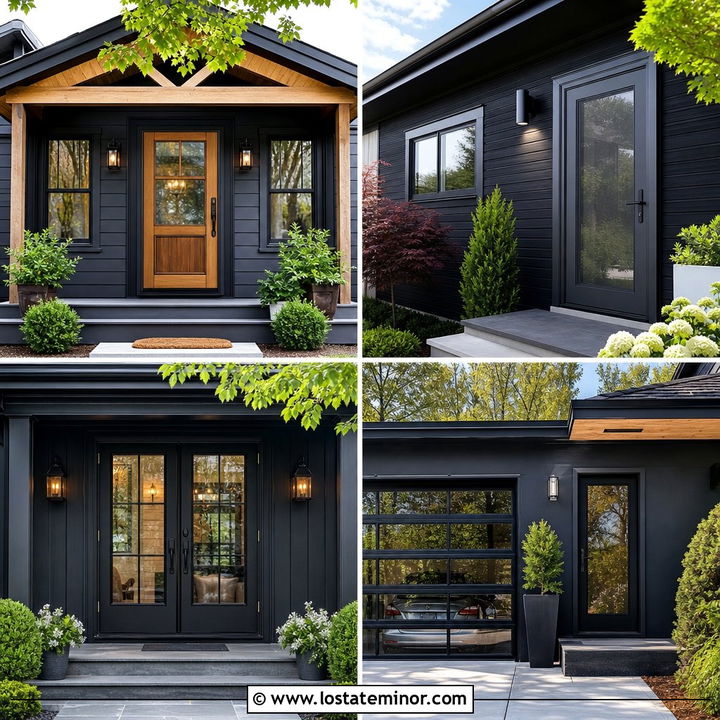
25. Slate Blue House With Blue-Green Front Door
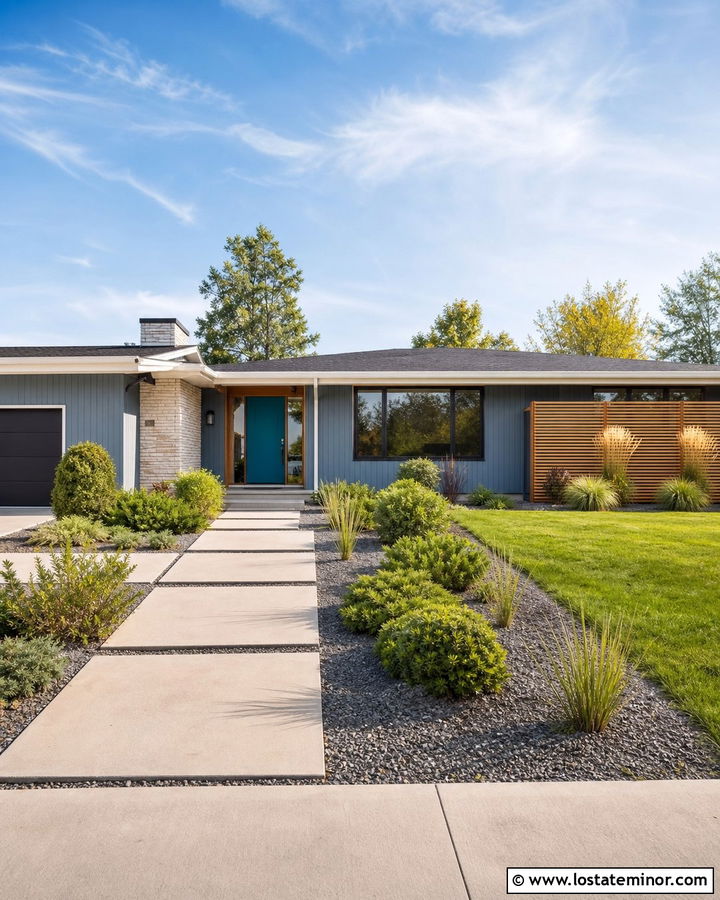
A saturated blue-green door creates a smooth bridge between slate blue siding and green landscaping. This combination is particularly effective on a midcentury modern house with a low roof, broad windows, and simple horizontal lines. Choose a door color deeper and greener than the siding so the entrance remains visible from the street. Warm white fascia and a light stone chimney can brighten the composition. Repeat dark charcoal on window frames, garage trim, and modern sconces. A narrow cedar screen or soffit introduces warmth without interrupting the clean architecture. Use large concrete squares, gravel, sculptural shrubs, and ornamental grasses in the front yard. The completed exterior feels colorful yet controlled, with every feature supporting the home’s strong horizontal profile.
26. Slate Blue House With Soft Pink Front Door
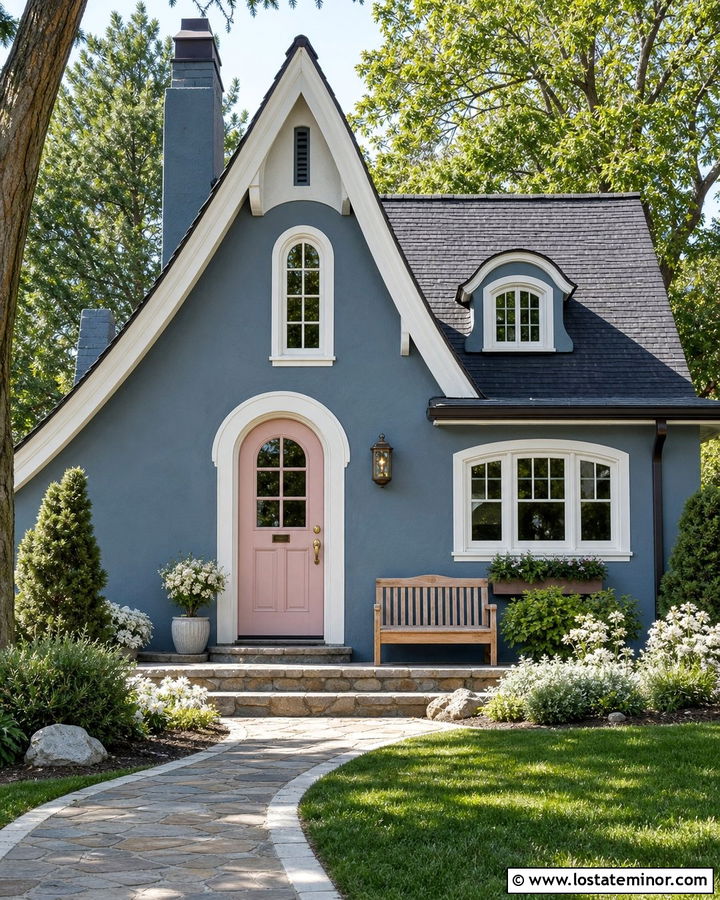
A dusty pink door can look surprisingly polished against slate blue when the pink has muted, earthy undertones. Try this scheme on a small storybook cottage with simple siding, an arched entry, and creamy white trim. The contrast feels softer than red but still directs attention toward the porch. Use charcoal for the roof and tiny metal details so the palette retains enough structure. Warm brass hardware complements the pink and prevents the entrance from appearing cool. Natural stone steps and a light oak porch bench can add texture. Surround the house with white flowers, silvery foliage, and deep green shrubs rather than more pink accents. The finished exterior feels cheerful and distinctive while preserving the calm character of slate blue.
27. Slate Blue House With Burnt Orange Front Door
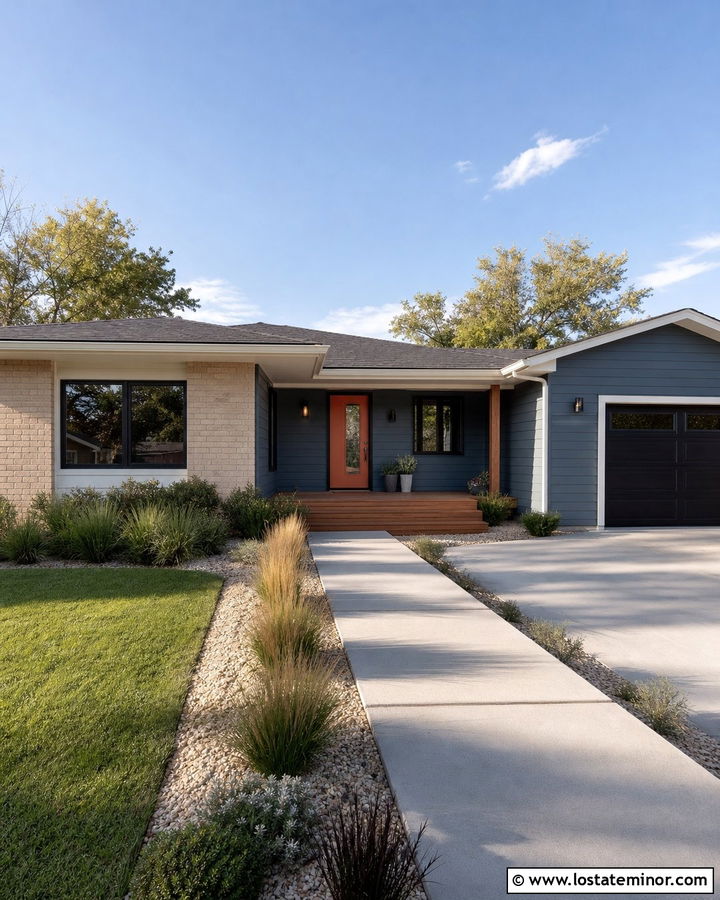
Burnt orange delivers strong contrast while remaining earthy enough for a slate blue exterior. On a modern ranch, place the orange door beneath a shallow cedar porch with clean posts and a low charcoal roof. Use warm white trim around the windows to maintain brightness across the long facade. A section of light tan brick can connect the door to the architecture and keep it from looking like an isolated color choice. Repeat black on window frames, lighting, and house numbers for definition. Keep the garage door slate blue to reduce its visual prominence. A broad concrete walkway, gravel beds, native grasses, and drought-tolerant plants support the relaxed modern scheme. The overall effect is energetic, warm, and well balanced.
28. Slate Blue House With Gray Front Door
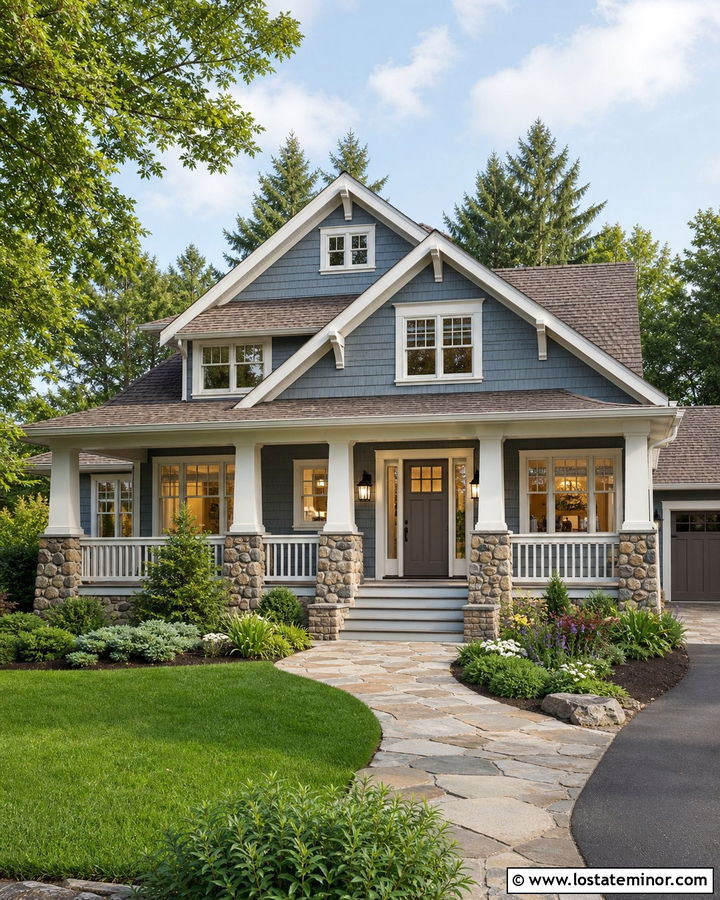
A medium gray door creates a quiet entrance that allows stonework and architectural details to take the lead. Use this understated pairing on a Craftsman house with slate blue lap siding, warm white trim, and a prominent fieldstone porch. Select gray with a slight warm undertone so it connects naturally to the varied stone. Dark bronze lights and hardware add definition around the door without creating harsh contrast. Repeat gray on porch flooring and steps, but keep the window trim lighter for clarity. A brown-gray roof can unite the blue siding with the masonry. Layer evergreen shrubs, flowering perennials, and a wide flagstone path around the porch. The complete exterior feels substantial, natural, and carefully coordinated rather than dependent on a bold entry color.
29. Slate Blue House With Matching Front Door
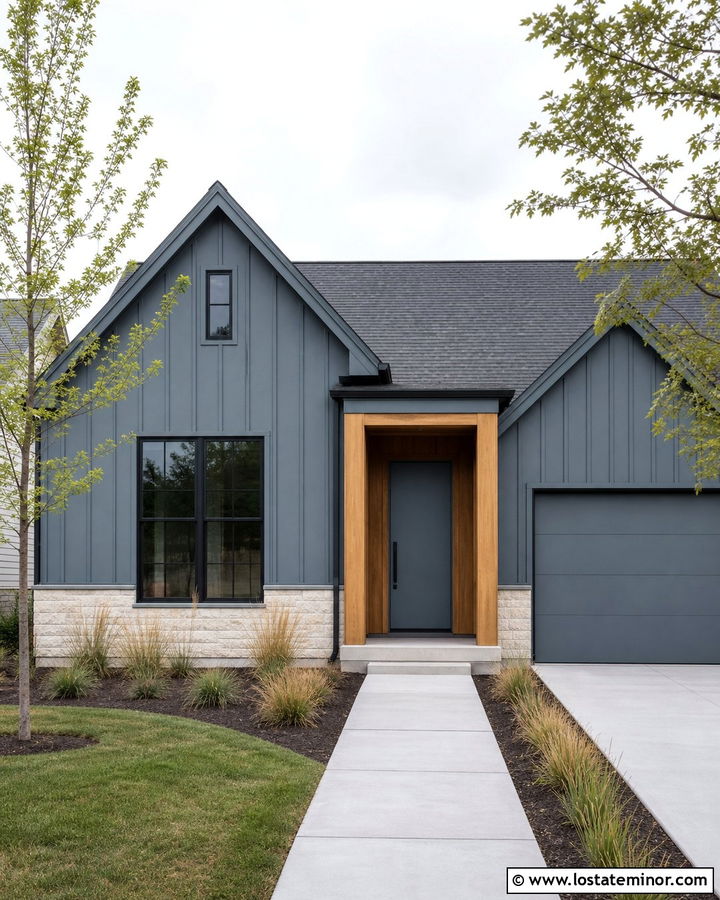
Painting the front door the same slate blue as the siding creates a seamless monochromatic facade. This technique works on a minimalist house where shape, texture, and materials provide the visual interest. Use vertical board-and-batten siding on the body and a simple flush door in an exact matching blue-gray finish. Outline the entrance with warm wood, black metal, or a recessed white surround so visitors can still locate it easily. Black-framed windows and a charcoal roof give the scheme definition. Consider using pale limestone at the foundation and natural oak beneath the porch ceiling to introduce contrast through material rather than paint. Sparse grasses, a straight walkway, and restrained planting beds complete this clean exterior, which feels calm, modern, and intentionally unified.
30. Slate Blue House With Deep Purple Front Door
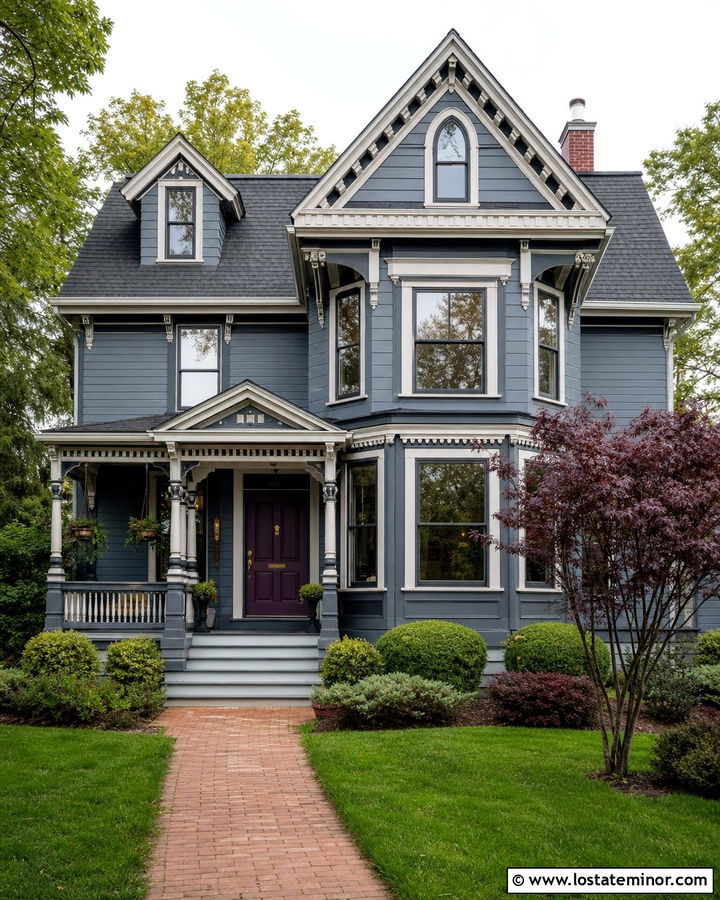
Deep purple gives a slate blue house a creative accent while maintaining the sophistication of a dark color. Choose an aubergine or raisin shade that contains plenty of gray, avoiding bright purple tones that may compete with the facade. This pairing suits an eclectic Queen Anne house with varied siding patterns, bay windows, and a detailed porch. Use creamy white to outline the architecture and charcoal for narrow secondary accents. A dark gray roof helps simplify the upper facade. Brass hardware and warm porch lights bring out the subtle red undertones in the door. Add plum foliage, evergreen shrubs, and a brick walkway to connect the accent with the landscape. The final exterior feels individual, balanced, and richly layered without becoming visually chaotic.
Conclusion:
These **30 Slate Blue House Design With Front Door Ideas** show how one blue-gray exterior can support many different curb-appeal moods. Black, navy, and gray doors produce a tailored effect, while wood, cream, and earthy green create warmth. Red, yellow, coral, orange, and plum can introduce personality when used with restraint. The strongest scheme also considers trim, roofing, masonry, porch materials, and landscaping as one connected composition. Before choosing a final palette, compare samples beside the roof and other permanent surfaces. Check them in bright sun, shade, and changing daylight. With thoughtful contrast and repeated accent materials, slate blue can make traditional, cottage, farmhouse, Craftsman, ranch, and modern homes feel cohesive and welcoming.

Related posts: