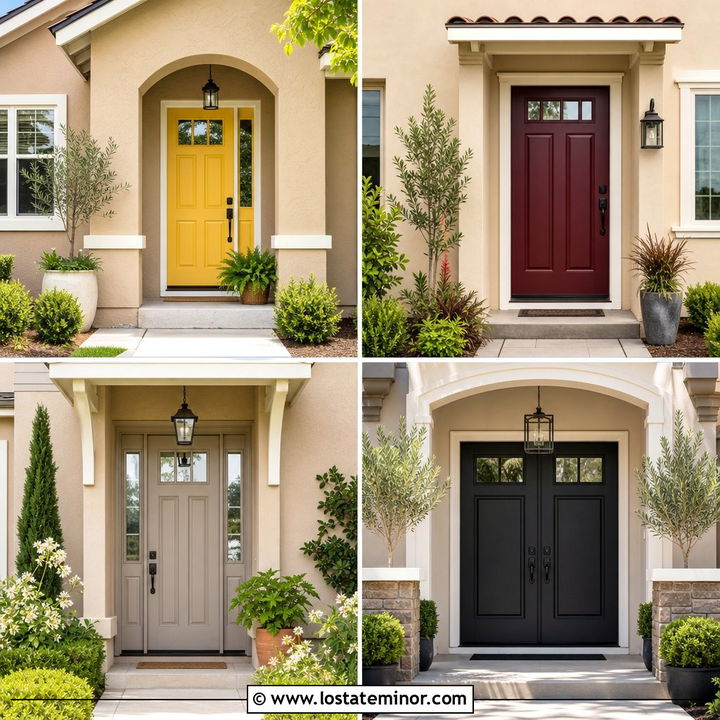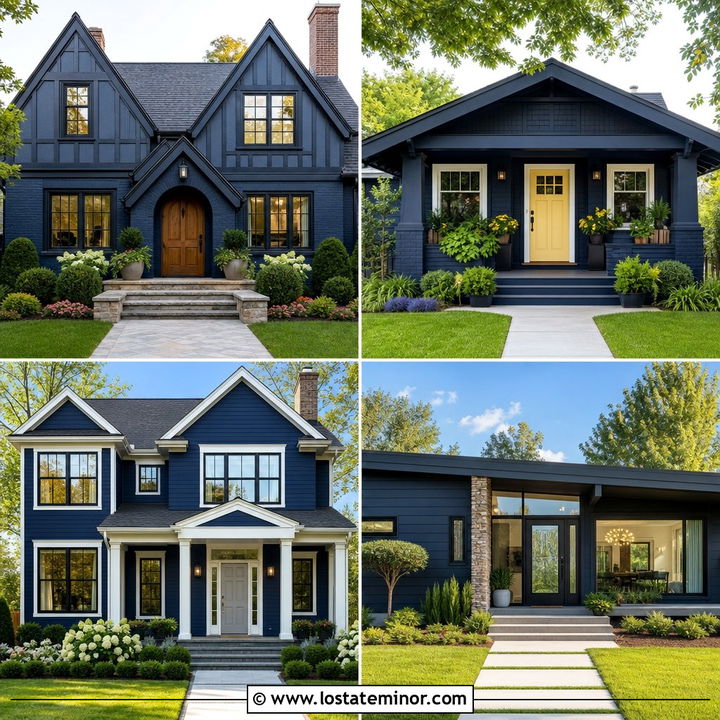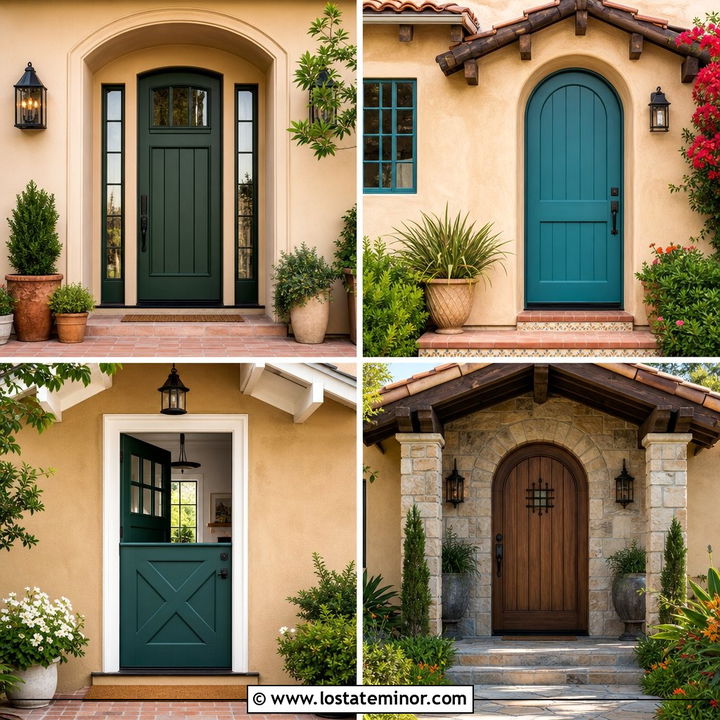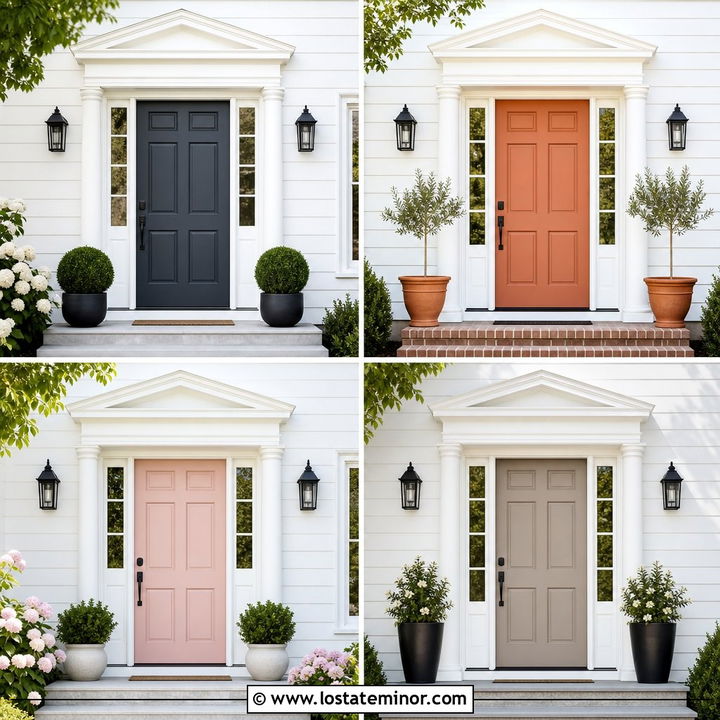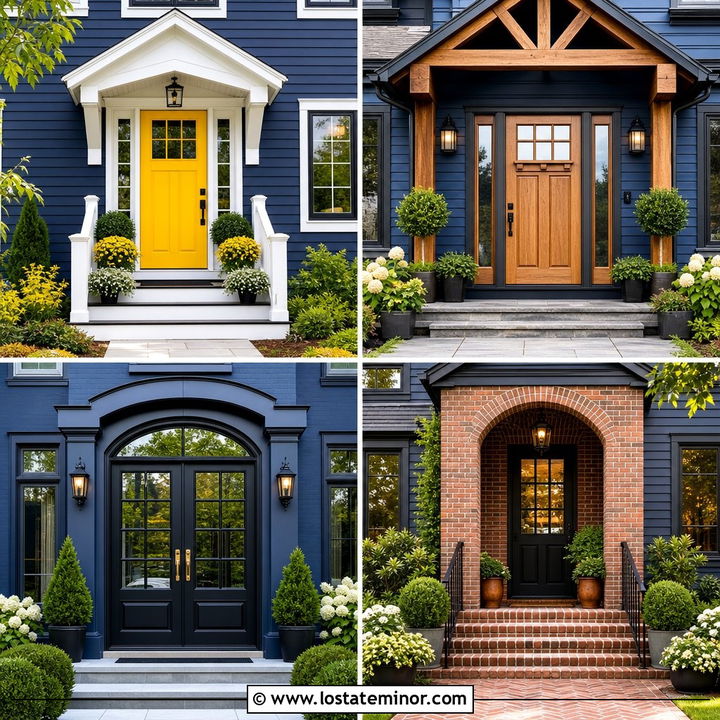
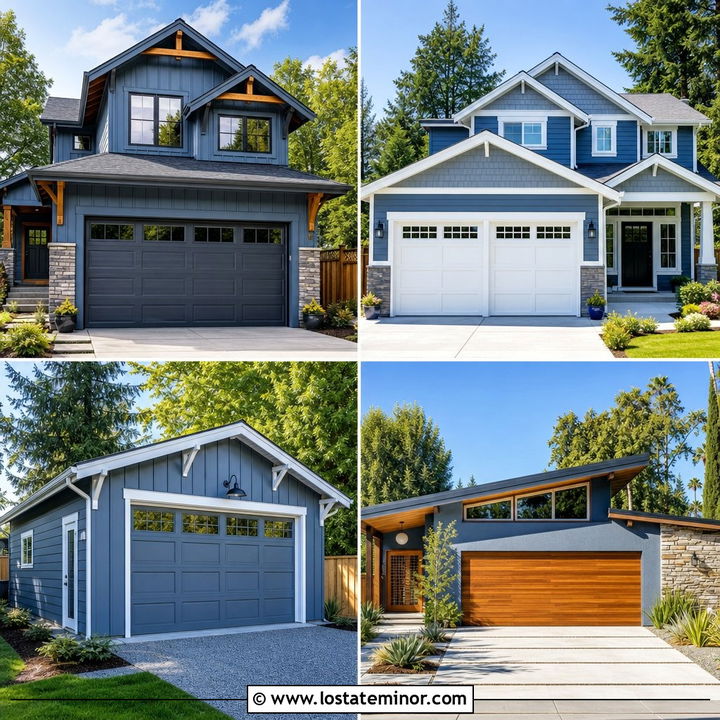
Dusty blue brings a calm, welcoming character to a home while offering more personality than standard gray or beige. The right entry door can make this muted blue-gray siding feel traditional, coastal, rustic, or strikingly modern. Current exterior palettes frequently combine weathered blue finishes with white trim, natural wood, stone, and darker architectural accents for balanced curb appeal. () Before choosing a door color, consider the roof, masonry, window frames, porch materials, and amount of natural light around the entrance. A successful scheme connects every finish instead of treating the door as an isolated feature. The complete exterior combinations below explore practical, attractive, and adaptable options for **30 Dusty Blue House Design With Entry Door Ideas**.

1. Dusty Blue Colonial With Black Front Door
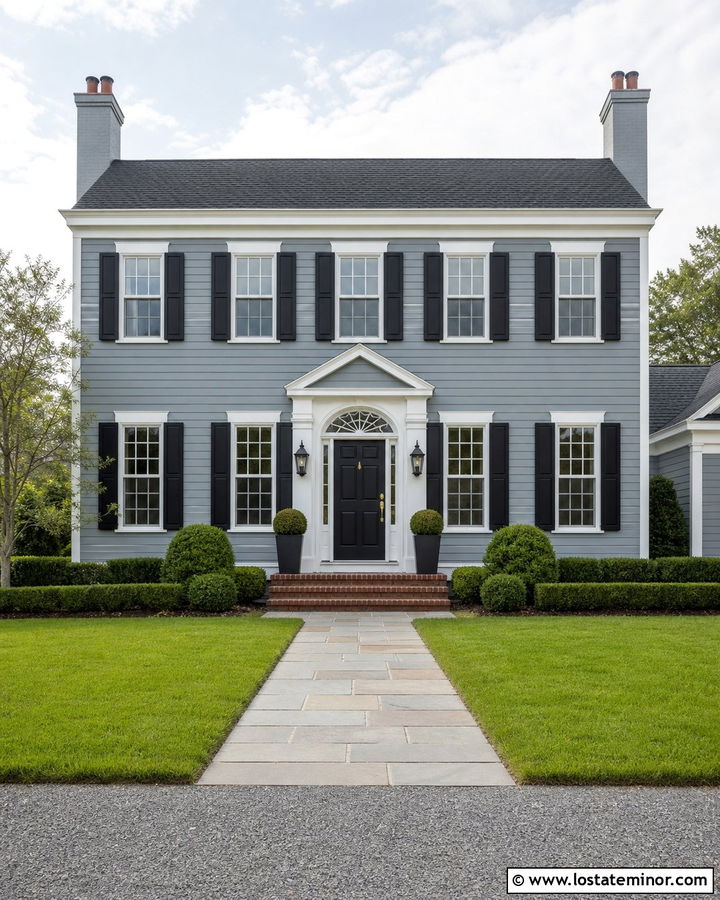
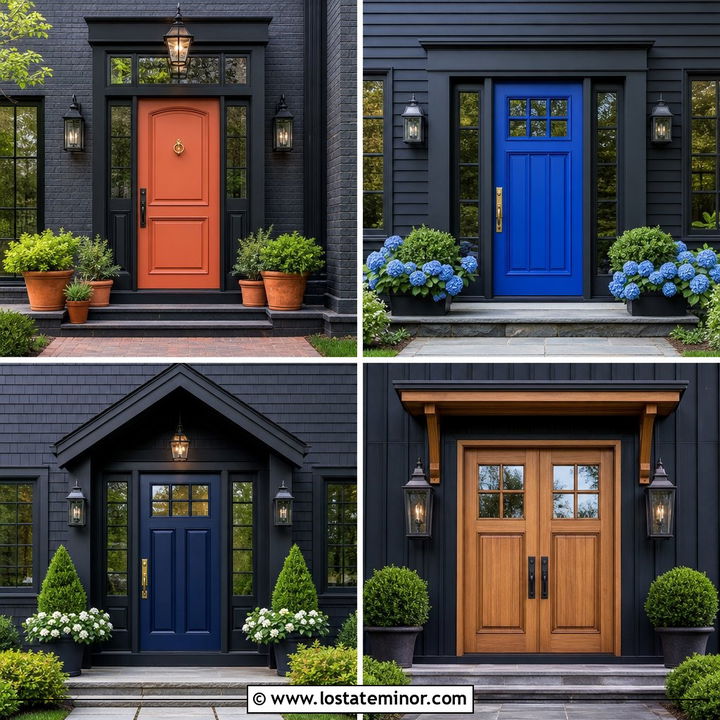
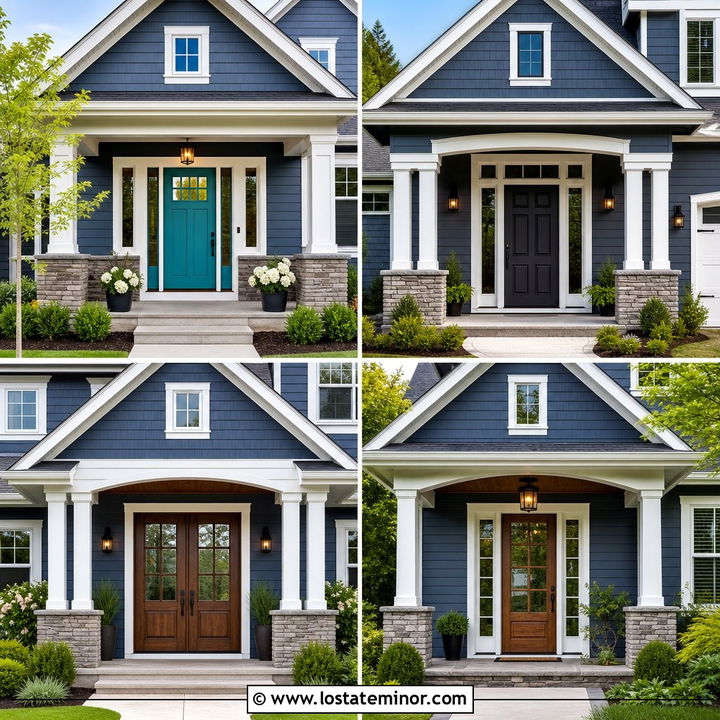
A black front door gives a dusty blue Colonial exterior a crisp and stately focal point. Use clean white around the windows, cornices, columns, and door casing to emphasize the home’s symmetry. Matte black shutters can repeat the door color without making the facade feel overly busy. A medium charcoal roof connects these dark accents while allowing the dusty blue clapboard siding to remain visible. For the entrance, consider a traditional six-panel door with polished brass hardware and matching lanterns. Red brick steps introduce subtle warmth beneath the cool palette. Neatly clipped boxwoods, a straight flagstone walkway, and balanced foundation plantings complete this polished exterior. The result feels classic, orderly, and welcoming rather than severe.
2. Dusty Blue Craftsman With Natural Wood Front Door
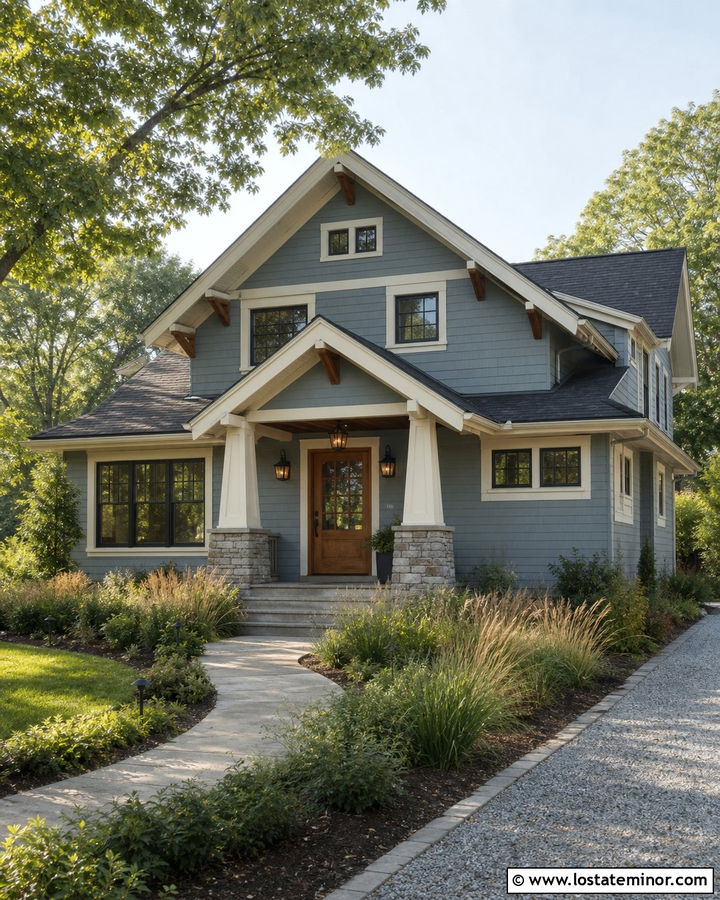
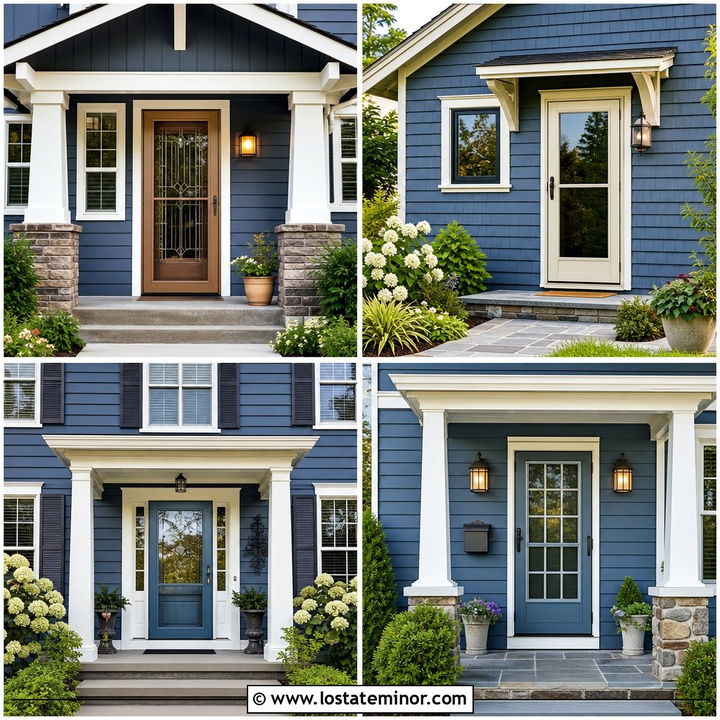
Natural wood creates a warm counterpoint to the cool undertones of a dusty blue Craftsman exterior. Choose a medium-stained oak or fir door with visible grain, divided-light windows, and sturdy black hardware. Creamy white trim works well around the windows and tapered porch columns because it feels softer than a brilliant white. Repeat the door’s wood tone on the porch ceiling, brackets, or exposed beam details. A stone foundation containing gray, tan, and muted brown shades can connect the siding to the entry. Finish the scheme with a weathered charcoal roof and bronze porch lighting. Layered native grasses, low shrubs, and a gently curved walkway support the Craftsman character while keeping the whole facade relaxed and grounded.
3. Dusty Blue Cape Cod With White Front Door
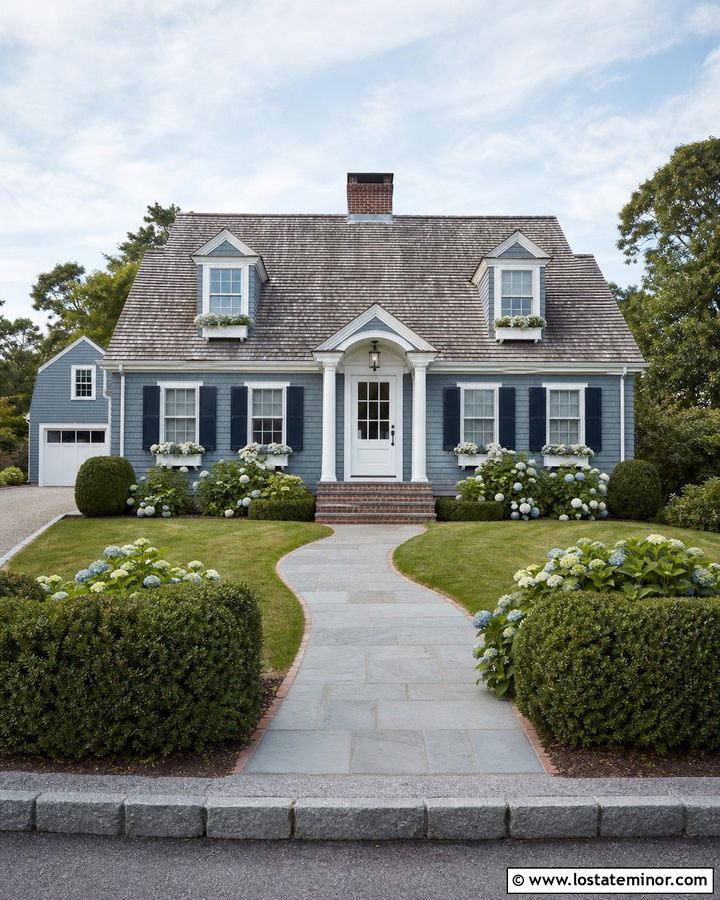
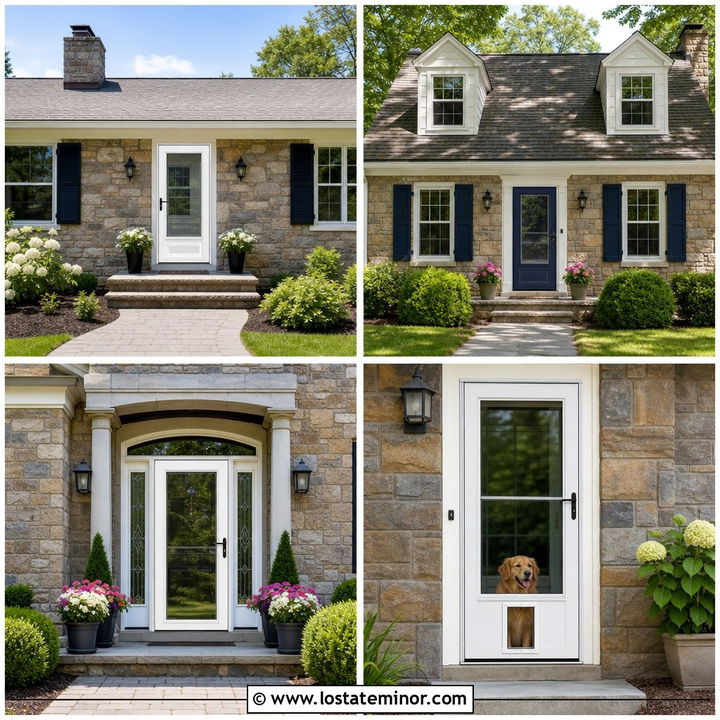
Imagine a compact Cape Cod with soft dusty blue shingles, a white entry door, and a welcoming path through flowering garden beds. This low-contrast combination feels light, clean, and well suited to a smaller facade. Paint the trim, dormers, window boxes, and door casing in the same warm white for visual continuity. Navy shutters add enough depth to define the windows without overwhelming the gentle body color. A weathered gray shingle roof strengthens the coastal influence, while brick or bluestone steps keep the entrance grounded. Choose a door with a simple upper window or traditional divided lights. Hydrangeas, clipped hedges, and ornamental grasses can frame the facade while allowing the white front door to remain clearly visible.
4. Dusty Blue Ranch With Red Front Door
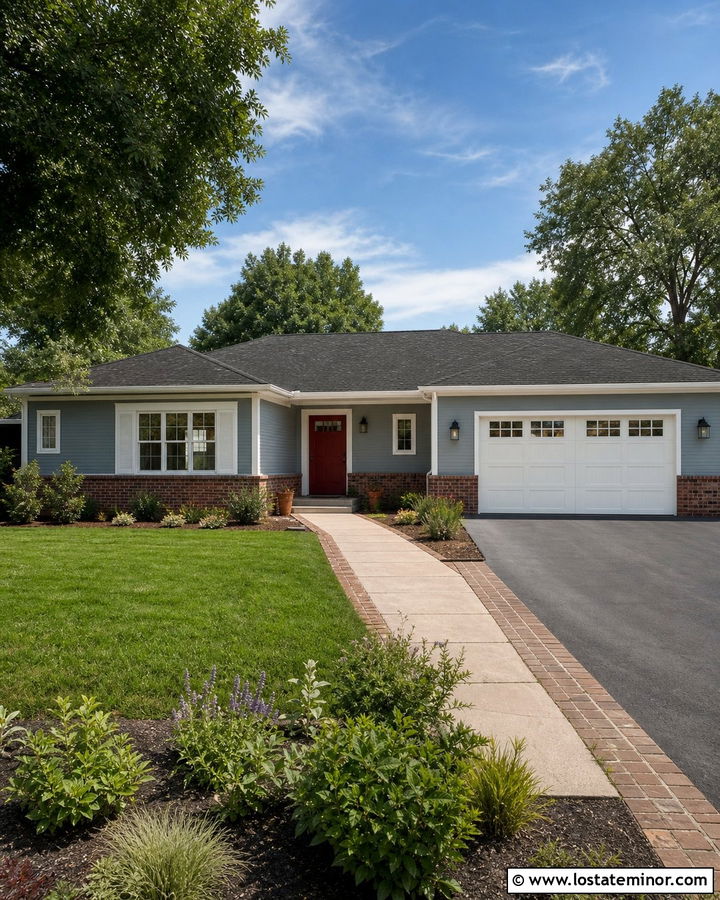
A red front door can energize a long, low dusty blue ranch without making the exterior look overly colorful. Select a deep barn red or muted cranberry instead of a bright primary red. The softer shade complements the gray undertones in the siding and works especially well with existing red brick. Use warm white trim around the windows, fascia, and garage door to brighten the horizontal roofline. Charcoal shingles and black metal lighting provide a simple foundation for the stronger door color. If the ranch includes brick across the lower facade, leave it natural and repeat its warm tones in clay planters or walkway pavers. Broad foundation beds and a clear path to the entrance prevent the doorway from getting lost beneath the extended eaves.
5. Dusty Blue Farmhouse With Stained Oak Door
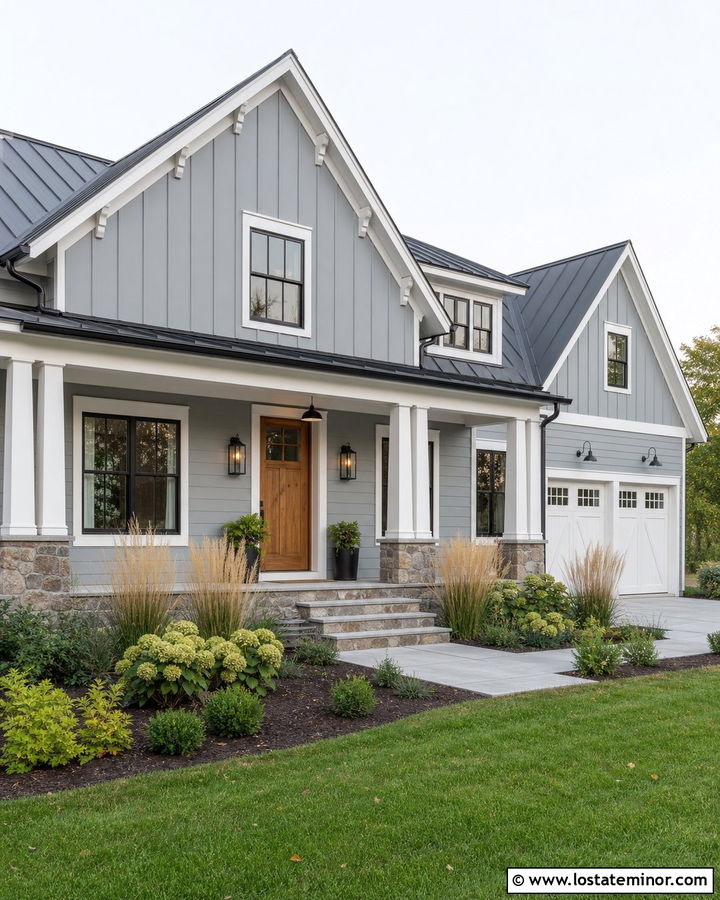
Could a farmhouse feel colorful without losing its simple character? Dusty blue board-and-batten siding paired with a stained oak front door offers a soft but distinctive answer. Use crisp white on the window trim, corner boards, porch columns, and garage doors. A charcoal standing-seam roof adds modern definition while supporting the muted siding color. Choose a substantial oak door with vertical planks or divided glass to repeat the home’s clean lines. Natural stone around the porch foundation can connect the wood to the landscaping. Black sconces, gutters, and simple railings introduce small graphic details. Complete the look with a pale concrete walkway, layered green shrubs, and relaxed ornamental grasses that soften the architecture without hiding the porch or entry.
6. Dusty Blue Bungalow With Mustard Yellow Door
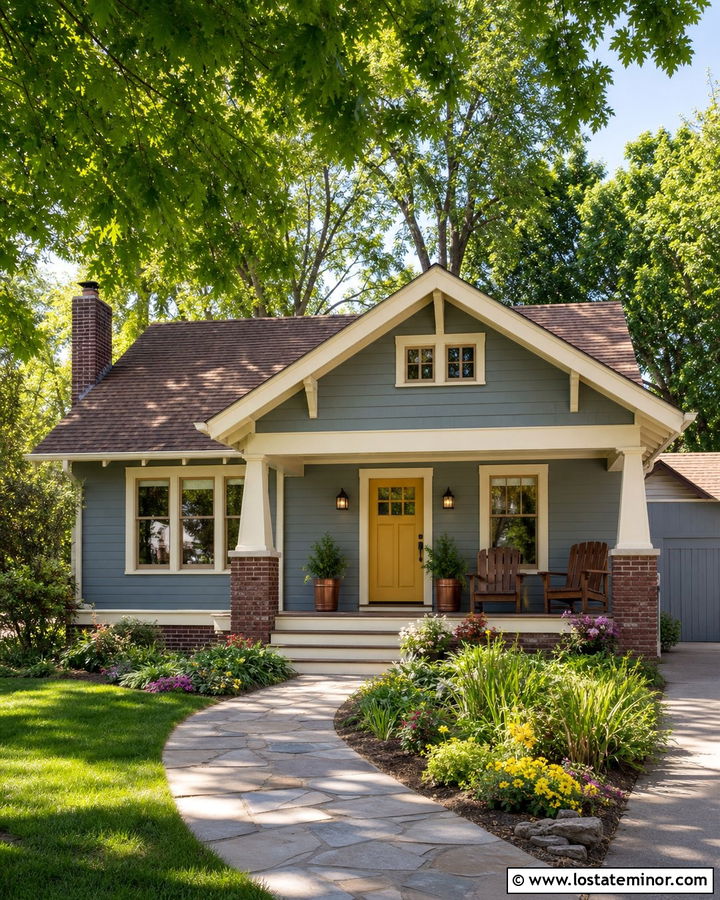
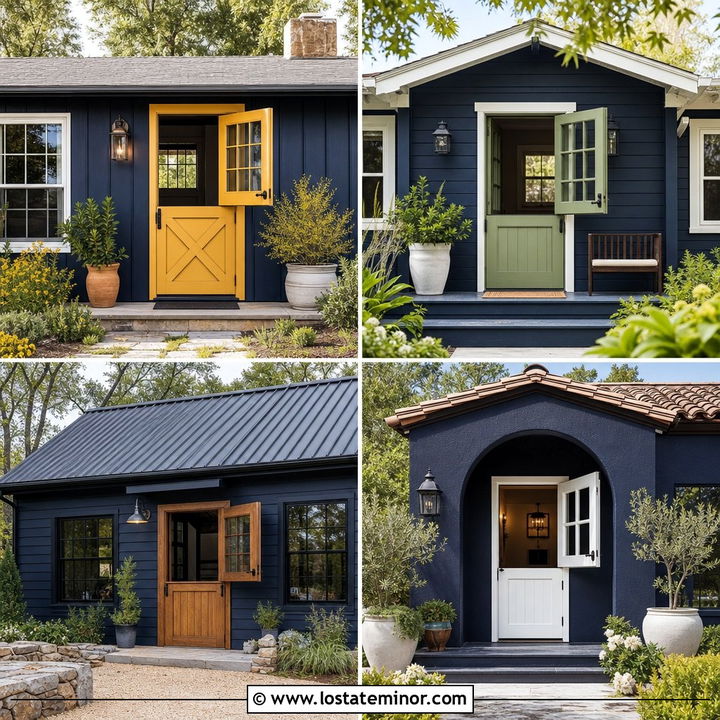
Golden mustard yellow brings cheerful warmth to a dusty blue bungalow while maintaining a vintage-inspired character. Keep the yellow slightly muted so it looks comfortable beside the softened blue siding. Cream trim around the windows, porch columns, and decorative brackets helps blend the two colors. Add medium brown roof shingles and a brick foundation for another layer of warmth. A traditional Craftsman-style door with three small upper windows can make the mustard finish feel connected to the architecture rather than randomly applied. Bronze lighting, copper planters, and natural wood porch furniture reinforce the inviting palette. Frame the entrance with low hedges, flowering perennials, and a curved stone walkway. The overall exterior feels playful, friendly, and thoughtfully balanced.
7. Dusty Blue Tudor With Burgundy Front Door
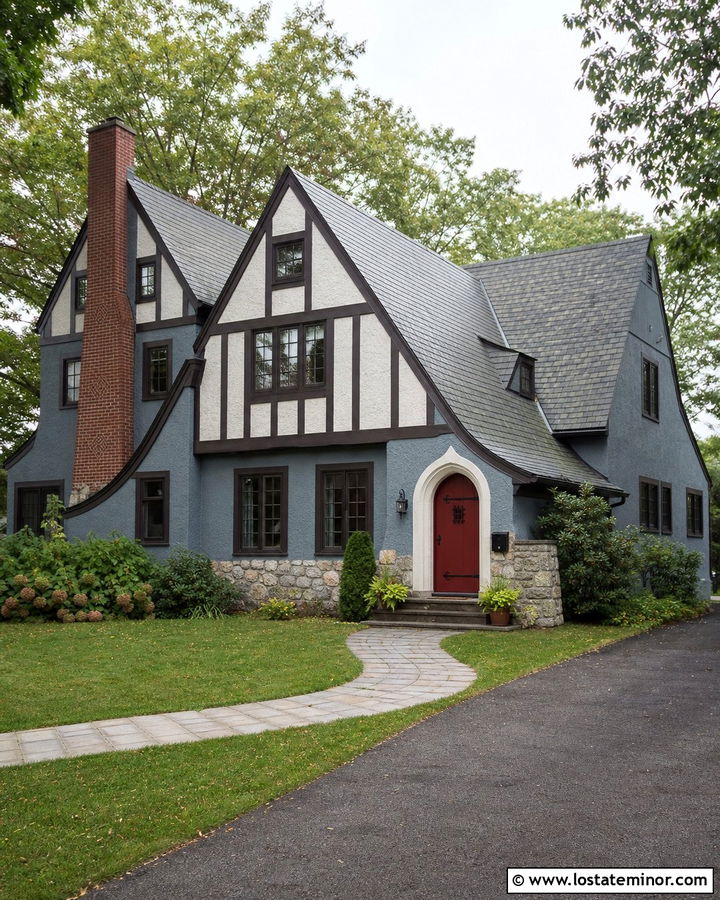
A burgundy front door gives a dusty blue Tudor exterior an elegant sense of depth. Apply dusty blue to the stucco or upper siding while using warm off-white around the windows and within the decorative half-timber pattern. Dark brown timbering, gutters, and roof details establish a strong architectural framework. The burgundy door should have a brown-red undertone that relates to brick arches, chimney masonry, or clay walkway pavers. Consider an arched wood door with black iron hardware to suit the home’s traditional lines. Slate-gray roofing and warm fieldstone along the foundation can bridge the blue, brown, and red finishes. Informal shrubs, climbing greenery, and a slightly curved entry walk complete the romantic facade without making it look overly ornate.
8. Dusty Blue Cottage With Sage Green Door
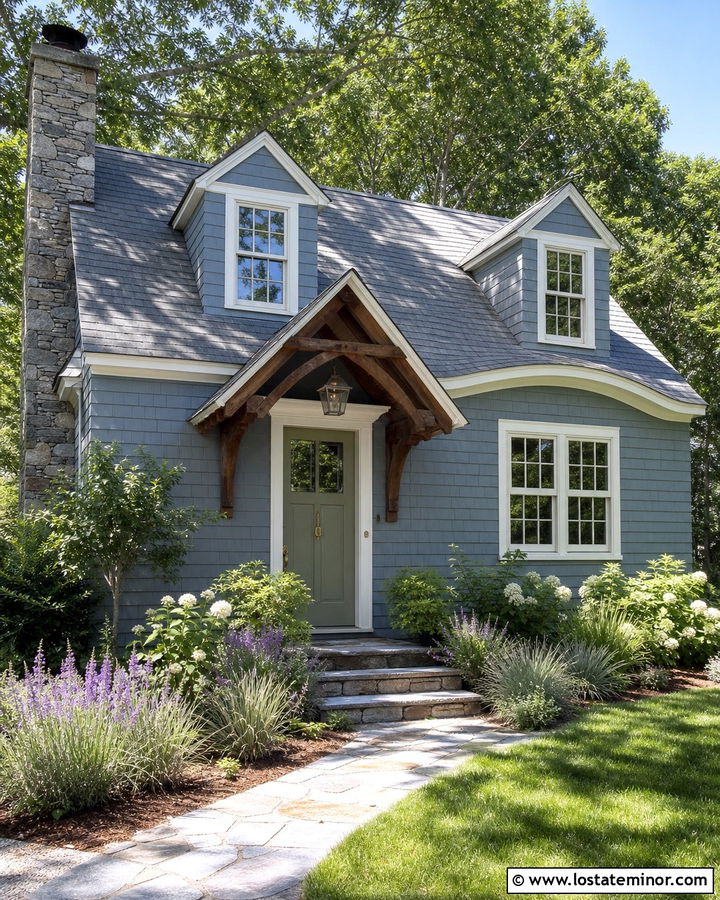
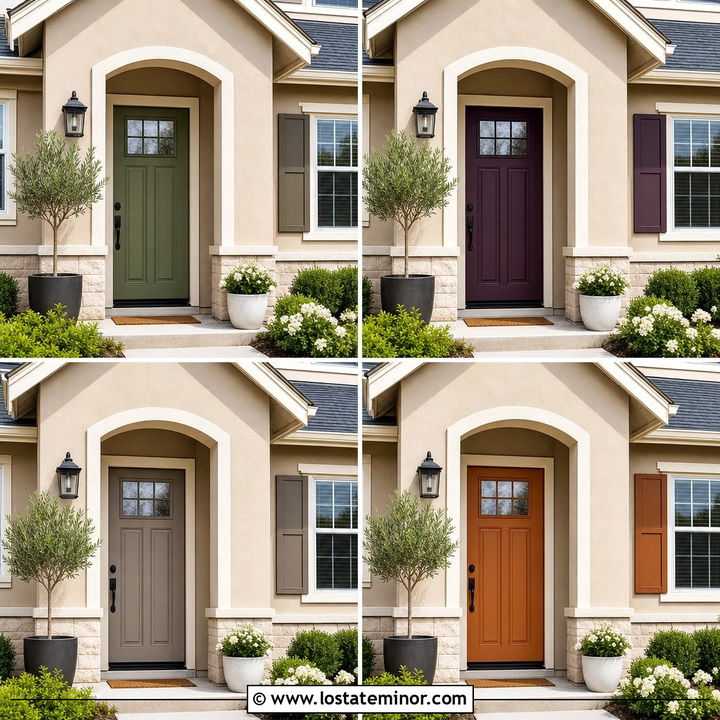
Dusty blue and sage green form a gentle, garden-inspired palette that looks especially inviting on a cottage exterior. Because both colors are muted, define the facade with creamy white window trim, fascia, and porch posts. Select a sage door that is slightly deeper than the siding so the entry remains recognizable from the street. A natural cedar porch floor or small awning can add needed warmth between the two cool colors. Soft gray roof shingles keep the upper portion quiet, while mixed stone steps introduce organic texture. Surround the house with lavender, white flowers, ornamental grasses, and leafy shrubs. A simple door with divided glass, aged brass hardware, and a classic wall lantern supports the cottage character while keeping the complete exterior approachable.
9. Dusty Blue Split-Level With Charcoal Front Door
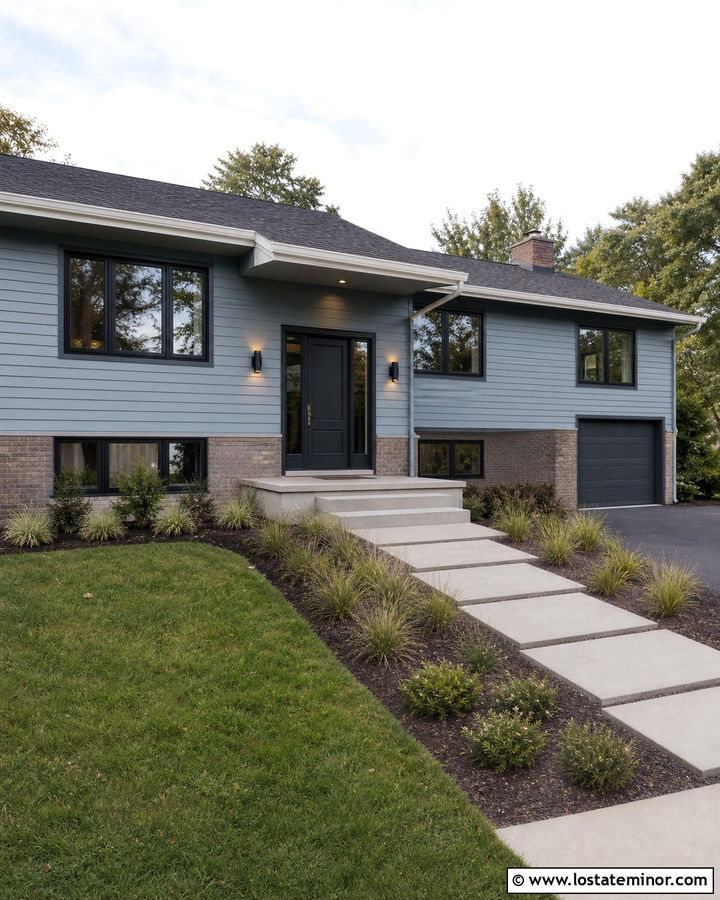
A charcoal front door can update a dusty blue split-level while respecting the home’s straightforward architecture. Carry the dusty blue across the upper horizontal siding and use the existing brick or stone on the lower level as a grounding feature. Choose charcoal for the door, garage door, and narrow window frames to connect the separated sections of the facade. Soft white trim around the roofline prevents the palette from becoming too heavy. If the entrance is recessed, add bright modern sconces and a pale concrete landing to improve visibility. A dark gray roof completes the coordinated scheme. Structured grasses, compact shrubs, and broad stepping stones can modernize the landscaping while guiding attention toward the often-overlooked entry area.
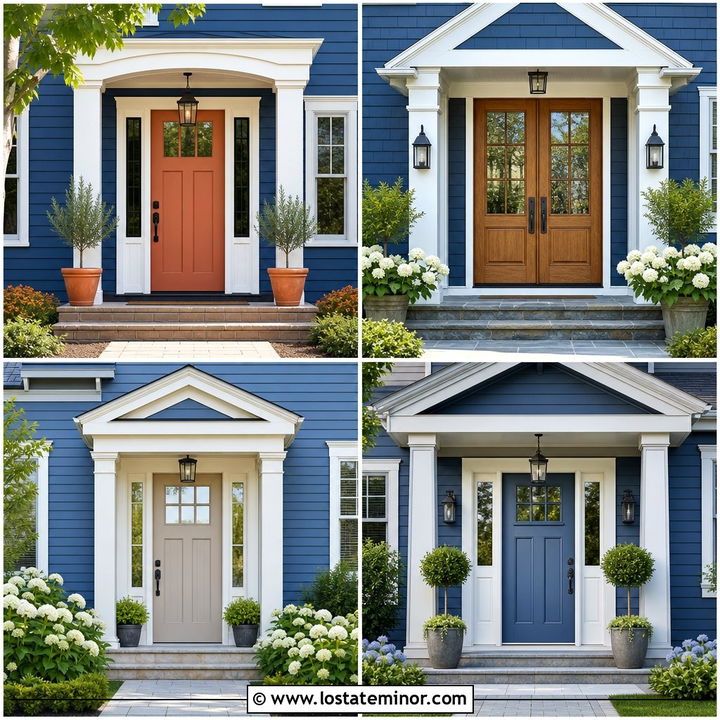
10. Dusty Blue Victorian With Plum Front Door
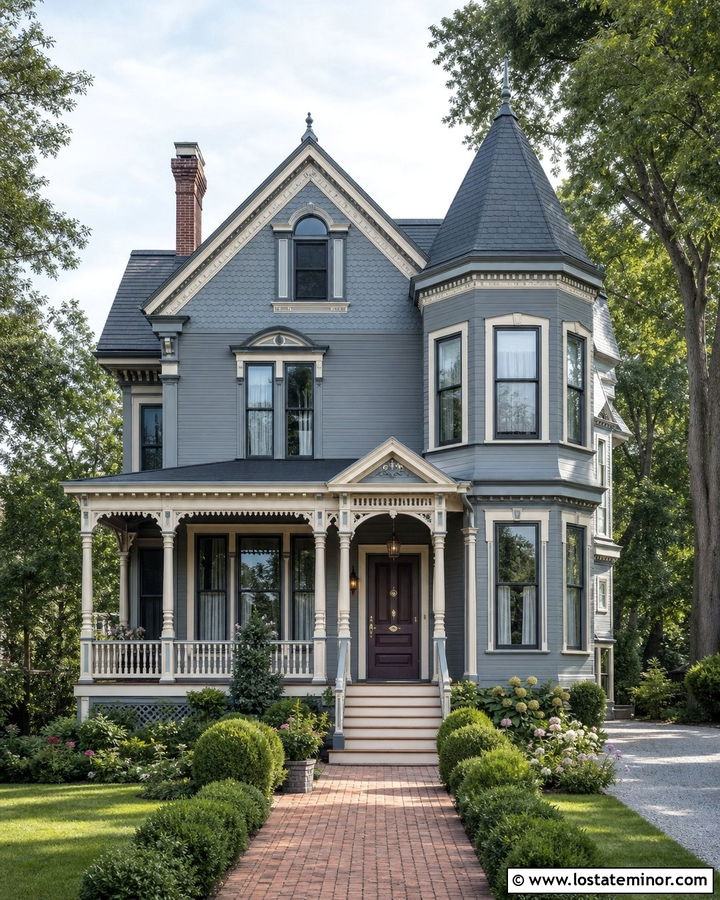
Rich plum creates an expressive but sophisticated entrance on a dusty blue Victorian house. This pairing works best when the plum has smoky gray undertones rather than a bright purple cast. Use warm ivory on the window casings, porch columns, gingerbread trim, and decorative brackets. A deeper blue-gray can highlight selected architectural details without covering every ornament in a separate color. The plum door becomes the central jewel within this restrained palette. Add aged brass hardware, traditional lanterns, and a natural wood porch floor for warmth. Slate roofing or dark gray shingles keep the elaborate facade grounded. Formal shrubs, flowering borders, and a straight brick walkway complete the historic look while allowing the blue siding and detailed entry to remain the main features.
11. Dusty Blue Coastal House With Navy Front Door
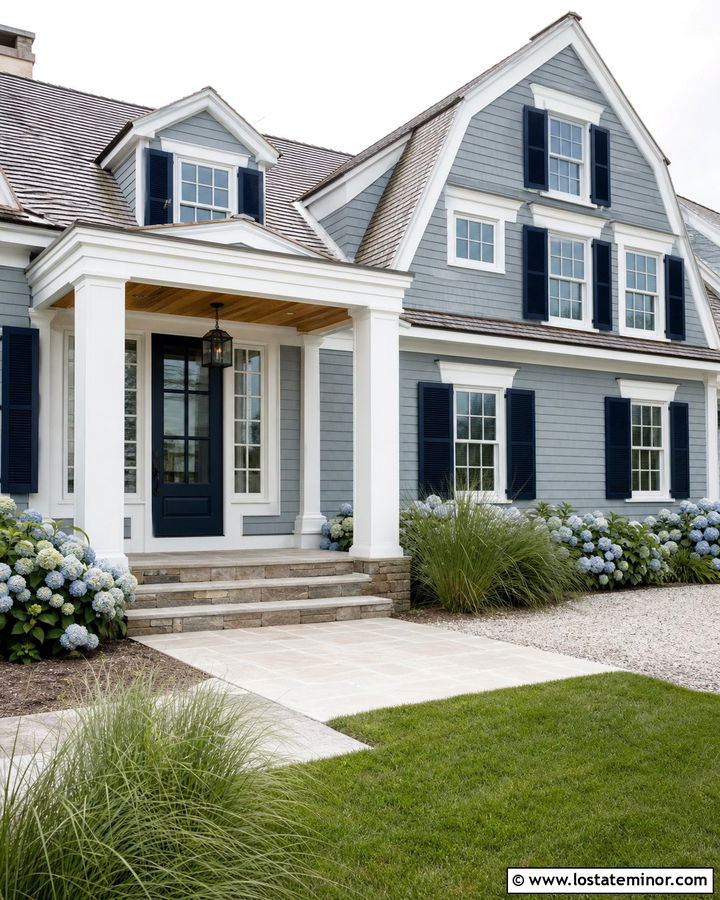
For a tonal coastal exterior, pair dusty blue siding with a deep navy front door and bright white trim. The navy adds depth at the entrance without introducing an unrelated color. Use it again on shutters or a small porch railing, but avoid spreading it across every feature. White columns, window casings, soffits, and fascia keep the house looking fresh against the layered blues. Weathered gray roof shingles, light stone steps, and a natural wood porch ceiling create a relaxed coastal finish. Choose a navy door with divided glass to reflect daylight and brighten the entry. Hydrangeas, dune grasses, pale gravel, and a wide shell-colored walkway reinforce the seaside mood while framing a complete exterior that still suits an inland suburban neighborhood.
12. Dusty Blue Modern House With Walnut Entry Door
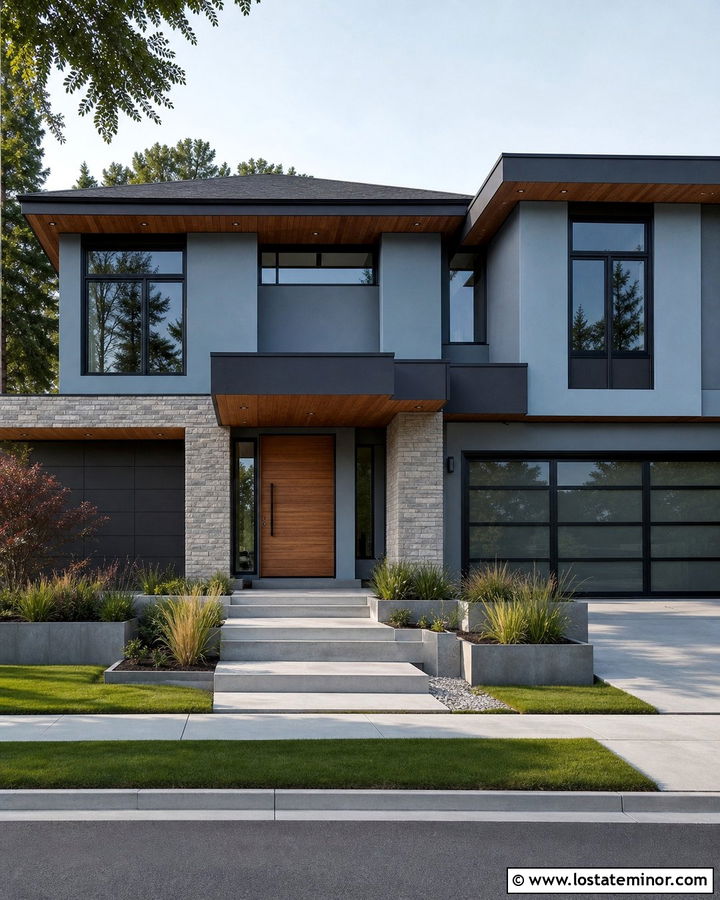
Clean lines allow a walnut entry door to become a warm architectural feature against dusty blue modern siding. Use vertical blue panels across the primary facade and introduce charcoal fiber-cement panels around the garage or upper level. Black window frames and a flat or low-pitched dark roof strengthen the contemporary geometry. Select a wide walnut door with minimal hardware, horizontal grain, and one narrow glass sidelight. A matching wood soffit can carry the door color across the architecture in a controlled way. Pale concrete steps and gray stone cladding provide neutral transitions between the materials. Keep the landscaping structured with ornamental grasses, compact evergreens, and rectangular planting beds. The final exterior feels modern and warm rather than cold or overly industrial.
13. Dusty Blue Georgian House With Dark Green Door
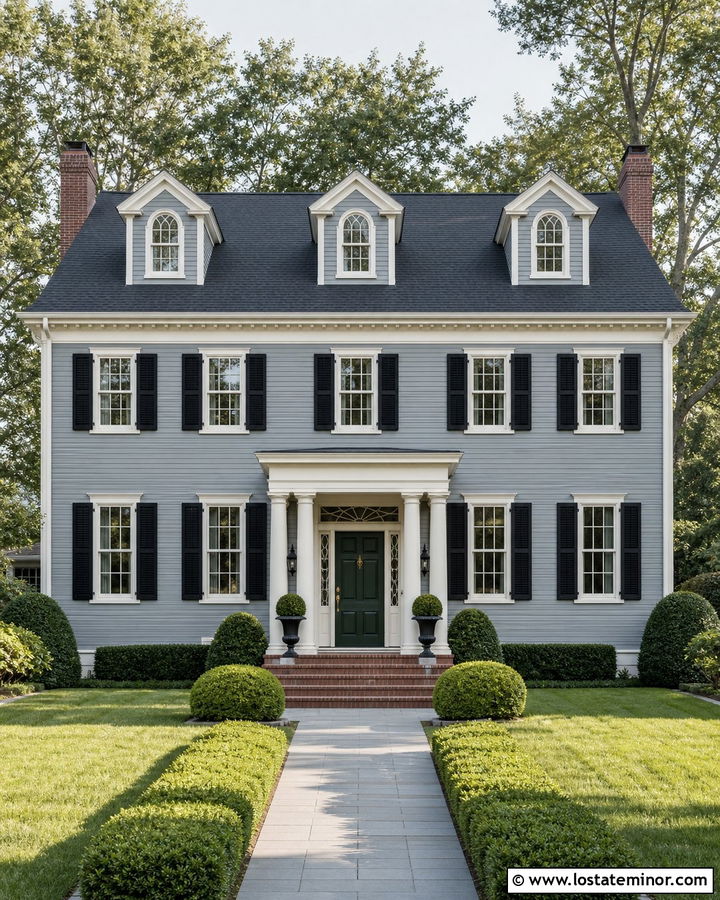
A dark green entry door brings historic character to a symmetrical dusty blue Georgian facade. Choose a deep forest green with restrained gray undertones so it complements the muted blue body color. Warm white trim should outline the sash windows, door surround, cornice, and classical columns. Black shutters, a charcoal roof, and iron lanterns add definition without competing with the green entrance. Brass hardware offers a small but noticeable touch of warmth. Red brick steps are particularly useful because they connect the cool paint colors to traditional masonry. Keep the landscaping formal with matched topiaries, clipped hedges, and a straight walkway. This complete palette feels established and dignified while still offering more color than the usual white or neutral Georgian exterior.
14. Dusty Blue Brick House With Black Glass Door
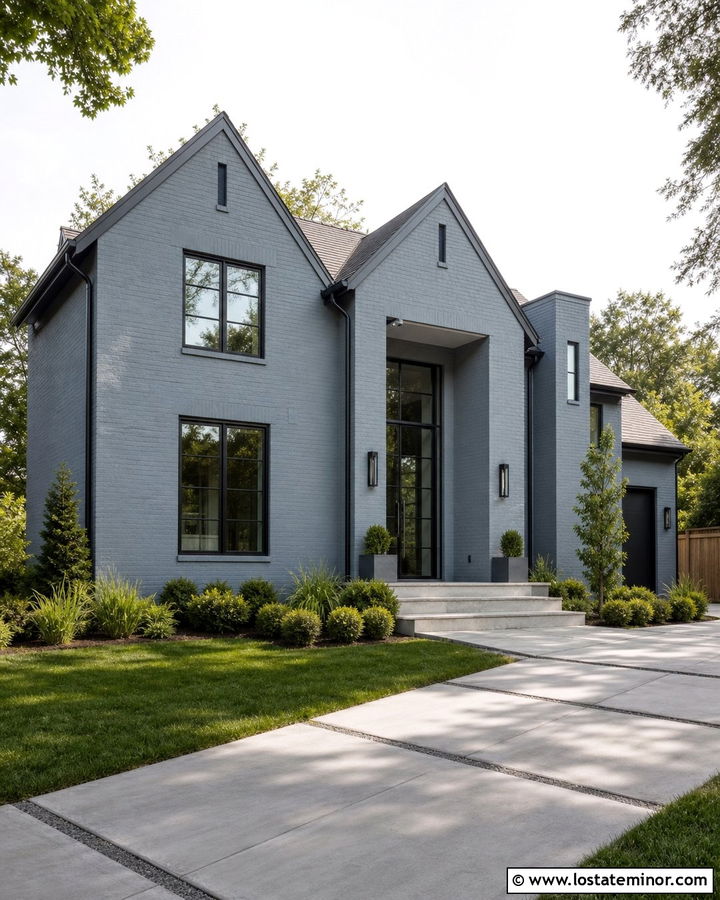
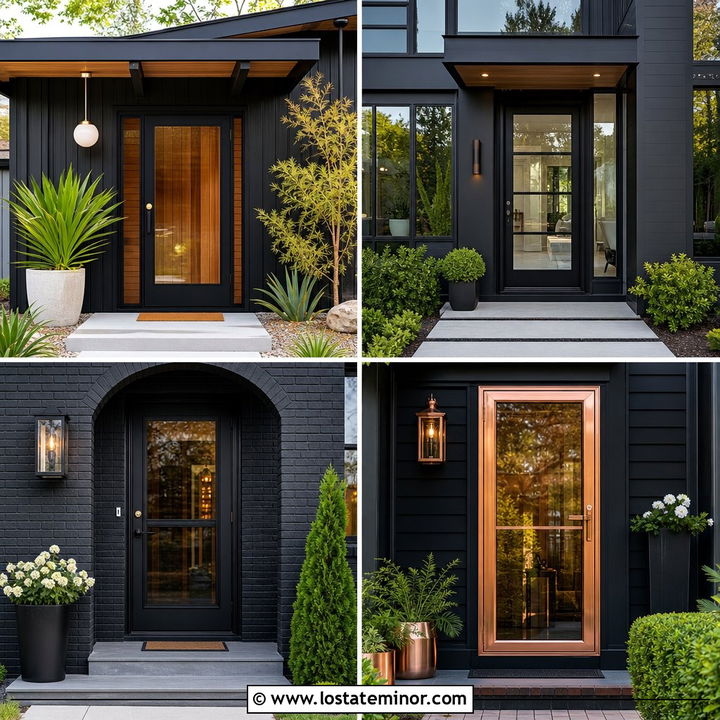
Painted dusty blue brick can look current and dimensional when paired with a streamlined black glass entry door. The brick’s texture prevents the muted body color from appearing flat, while black creates a sharp frame around the entrance. Repeat black on the window frames, gutters, and modern sconces. Use a soft off-white only on the soffits and selected architectural trim to prevent excessive contrast. A charcoal roof and pale limestone steps maintain the cool, restrained palette. Choose a door with one large glass panel and narrow black muntins for a clean transition between traditional masonry and modern detailing. Boxwoods, broad concrete pavers, and simple grasses create a tidy foreground. The exterior feels updated without disguising the home’s original brick character.
15. Dusty Blue Shingle House With Coral Front Door
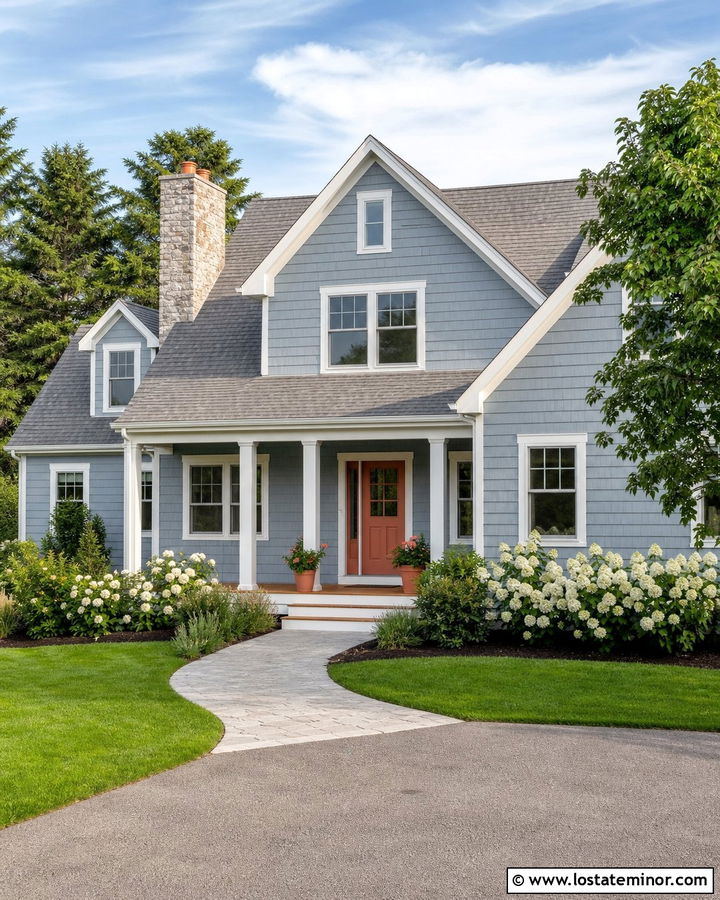
A muted coral front door adds warmth and personality to a dusty blue shingle house. Look for a coral with earthy red-orange undertones rather than a sugary pink finish. White trim around the windows, porch, and roofline gives both colors a clean setting. A medium gray roof and pale stone chimney help balance the stronger entry color. Repeat coral sparingly through small flowerpots or seasonal blooms instead of adding it to permanent shutters. A traditional door with a half-light window keeps the entrance open and approachable. Natural wood porch decking can soften the contrast between blue and coral. Surrounding hydrangeas, white roses, and green shrubs complete the lively palette while ensuring the facade remains comfortable, cohesive, and appropriate for everyday curb appeal.
16. Dusty Blue Prairie House With Bronze Door
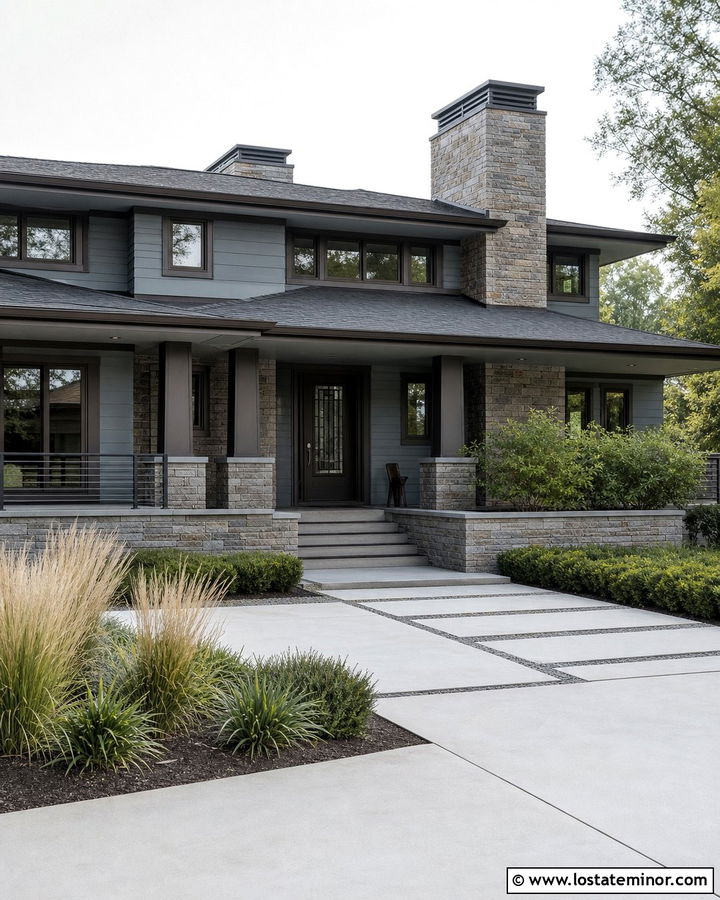
Bronze creates a quiet, refined entry on a dusty blue Prairie-style house. Choose a deep oil-rubbed bronze finish that reads as a warm brown-black instead of a solid black. Carry the bronze across the window frames, horizontal railings, and low-profile exterior lights to emphasize the architecture’s long lines. Use dusty blue on broad stucco surfaces or horizontal siding, then introduce warm gray stone around the foundation and chimney. A low charcoal roof with wide overhangs completes the grounded shape. The entry door can feature narrow geometric glass panels and simple bronze hardware. Horizontal planting beds, native grasses, flat stone pavers, and low shrubs reinforce the home’s relationship to the landscape. Together, the muted colors create a polished, natural exterior.
17. Dusty Blue Cottage With Cream Front Door
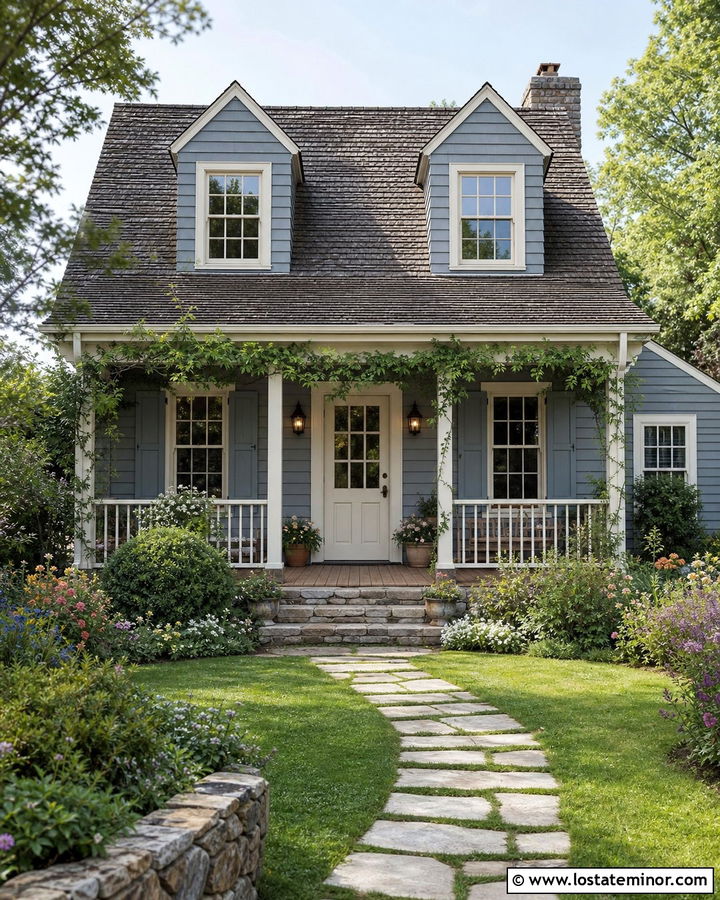
Cream creates a softer entry than bright white on a dusty blue cottage, especially when the facade includes warm stone or aged brick. Paint the door, window trim, porch posts, and fascia in the same buttery off-white to establish continuity. Add faded blue-gray shutters that are slightly darker than the siding for gentle tonal contrast. Weathered brown roof shingles and a natural oak porch floor provide warmth overhead and underfoot. A paneled cream door with divided glass and antique brass hardware supports the traditional cottage appearance. Consider fieldstone steps with tan and gray variation to connect the cool siding to the warm trim. Loose flowering borders, climbing vines, and a winding walkway create a welcoming setting without obscuring the small but carefully coordinated entrance.
18. Dusty Blue Midcentury Ranch With Orange Door
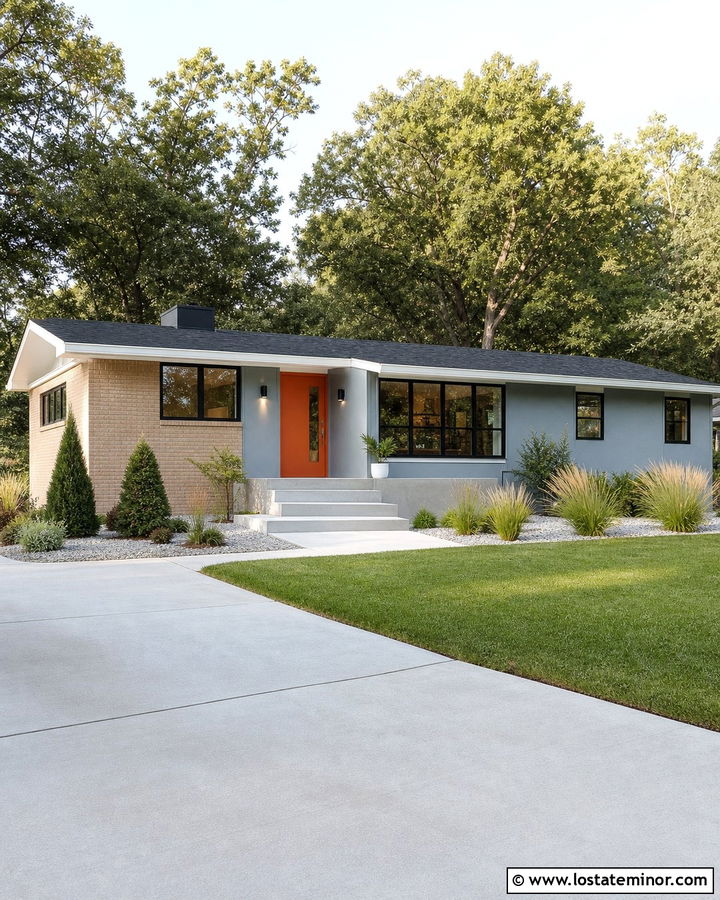
A burnt orange front door gives a dusty blue midcentury ranch an energetic focal point rooted in the period’s warm color palettes. Choose a softened clay orange instead of a highly saturated shade. Keep the trim minimal and paint it warm white or pale gray. Black window frames, slim house numbers, and simple cylindrical sconces provide crisp modern details. If the facade contains original tan brick, leave it unpainted so its warmth relates naturally to the orange entrance. A low charcoal roof and wide concrete steps emphasize the home’s horizontal shape. Finish the yard with gravel beds, sculptural grasses, compact evergreens, and a broad walkway. This balanced combination feels playful and retro while remaining polished enough for a contemporary suburban setting.
19. Dusty Blue Two-Story House With Teal Door
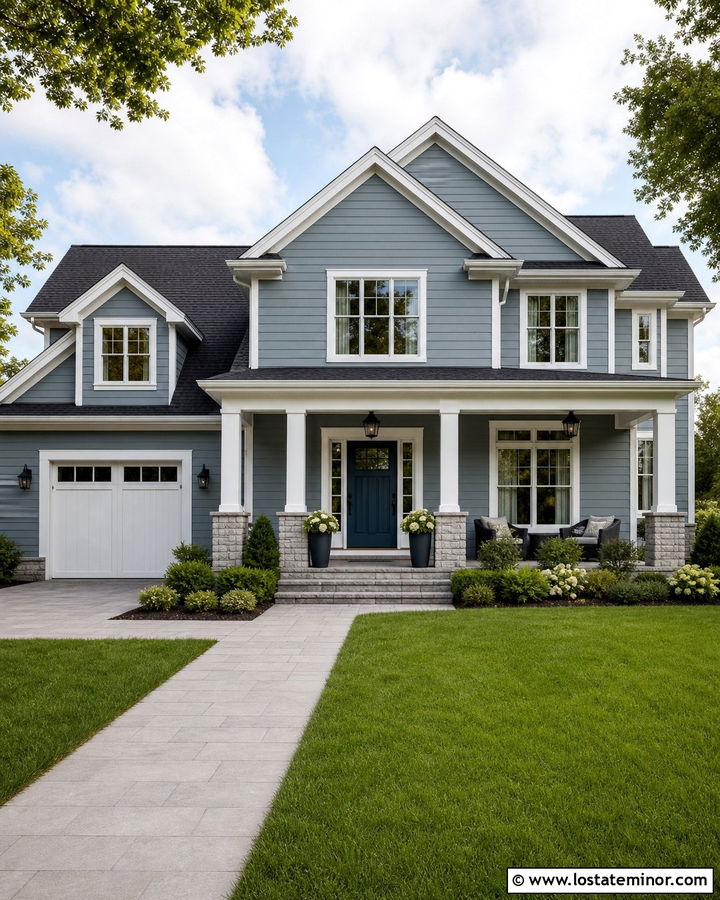
Teal can give a dusty blue two-story home extra dimension without creating a harsh color break. Select a dark, green-leaning teal that is clearly deeper than the body color. Bright white trim around the windows, porch columns, and garage keeps the layered blues from blending together. Use charcoal roof shingles and black metal lighting to anchor the tall facade. A door with glass sidelights helps the entrance feel open beneath the second story. Gray stone around the porch base or garage adds texture while connecting the cool colors. Place matching planters on both sides of the doorway and use layered shrubs to create visual balance. The finished scheme is colorful but controlled, with the teal entry acting as a clear and welcoming destination.
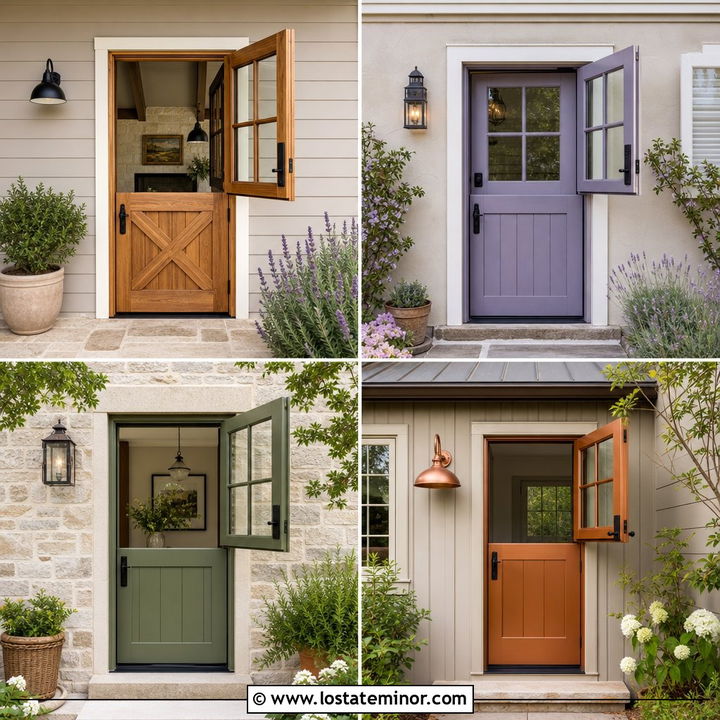
20. Dusty Blue Stone House With Copper Door
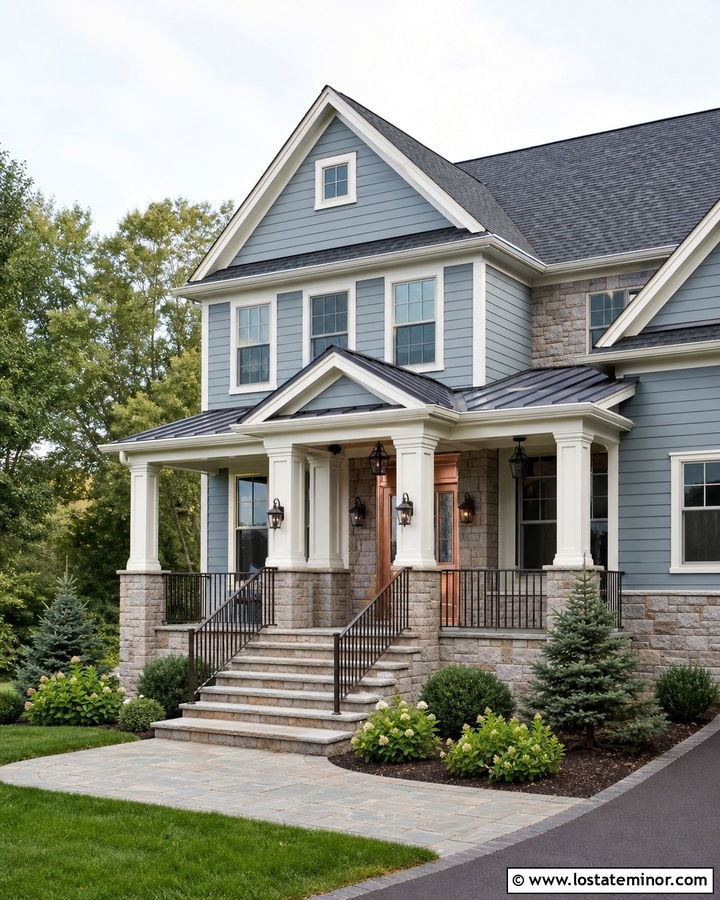
A copper-clad entry door becomes a striking warm feature when surrounded by dusty blue siding and natural stone. Choose stone containing soft gray, cream, and muted brown tones so it connects both the blue facade and metallic entrance. Keep the window trim warm white and use dark bronze gutters, railings, and lights instead of stark black. A charcoal roof creates a strong neutral cap while allowing the copper to remain the distinctive feature. Over time, a living copper finish may develop natural color variation, adding further texture to the entry. Wide stone steps and substantial wood or stone porch columns give the door enough architectural support. Evergreen shrubs and restrained plantings complete an upscale exterior that feels warm, solid, and carefully layered.
21. Dusty Blue Traditional House With Cranberry Door
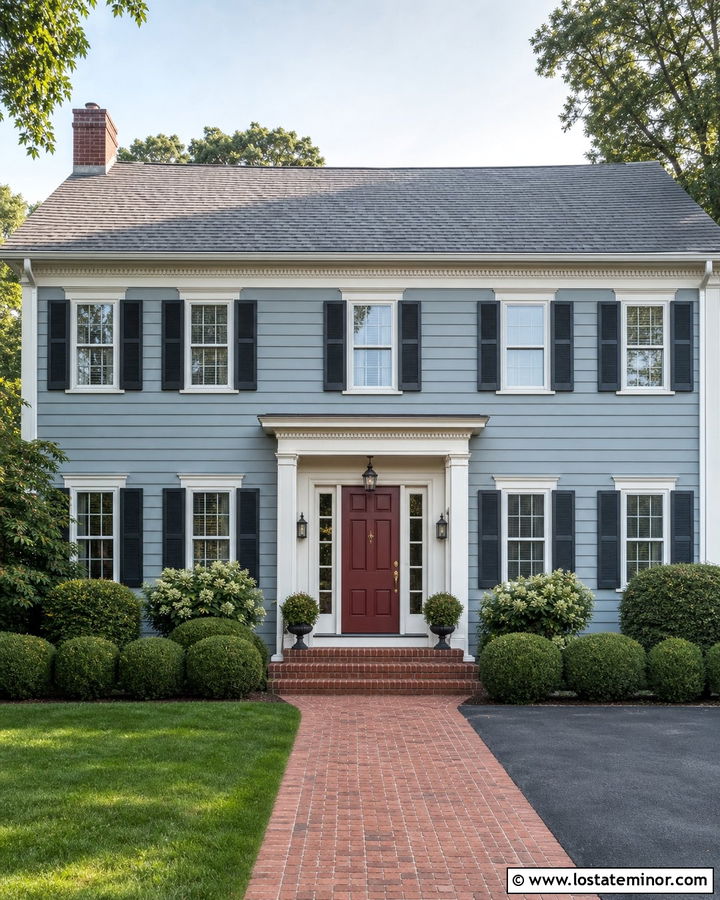
Cranberry red offers a welcoming alternative to brighter red on a dusty blue traditional exterior. Its deeper, slightly brown undertone works comfortably with gray roofing, red brick steps, and aged brass hardware. Paint the window trim and door casing a warm white to frame the colors without introducing a bluish contrast. Dark charcoal shutters can add structure, particularly on a wide two-story facade. Use the cranberry finish only on the door so it remains a meaningful focal point. A classic paneled design with sidelights suits the familiar architecture. Complete the approach with a brick walkway, clipped boxwoods, and layered green foundation plantings. The overall palette feels established and approachable, with enough color to distinguish the house while protecting its traditional character.
22. Dusty Blue Farmhouse With Olive Green Door
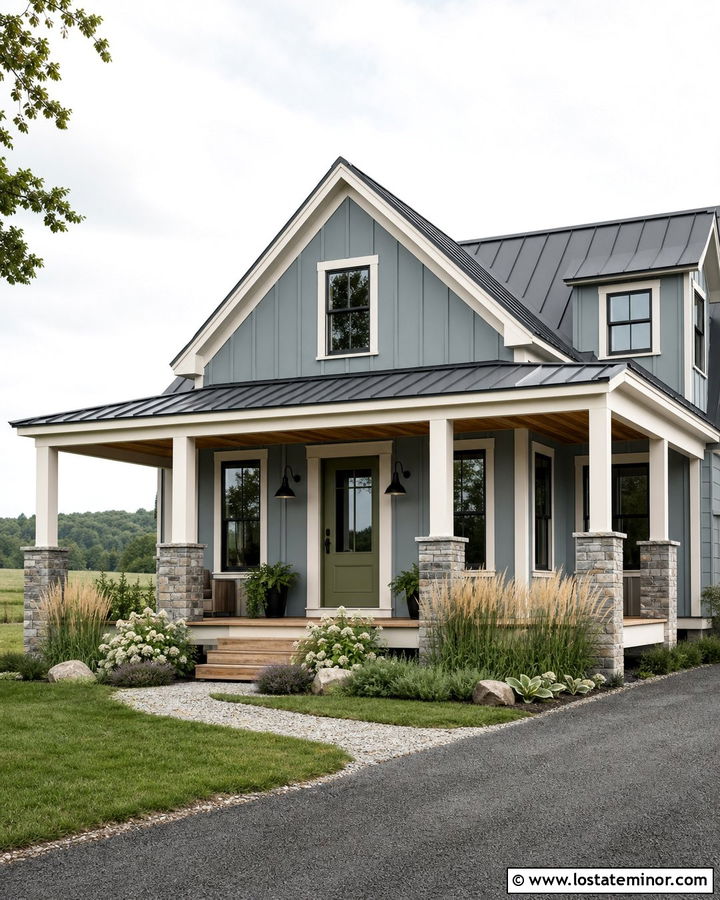
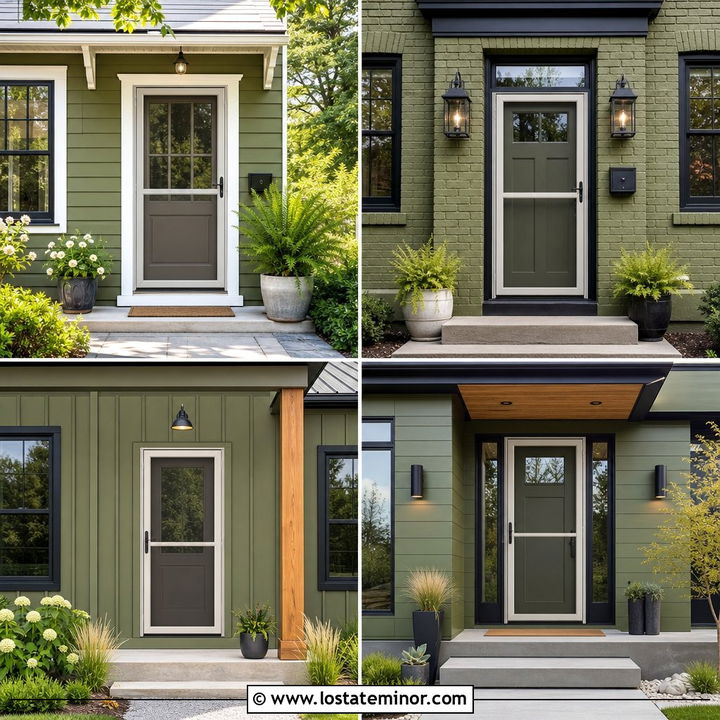
Earthy olive green brings a grounded, rural quality to dusty blue farmhouse siding. Select an olive with warm gray undertones and pair it with creamy white board-and-batten trim. A galvanized metal porch roof or charcoal standing-seam roof can add practical farmhouse texture. Use natural wood for the porch decking, ceiling, or simple support brackets to bridge the cool siding and green door. Black barn-style sconces provide contrast without dominating the palette. A half-glass olive door keeps the entrance friendly, while stone porch piers introduce tan and gray variation. Relaxed grasses, white flowering shrubs, and a gravel-edged walkway support the countryside character. This exterior combination feels connected to nature but remains clean enough for a newer suburban farmhouse.
23. Dusty Blue Duplex With Matching Blue Doors
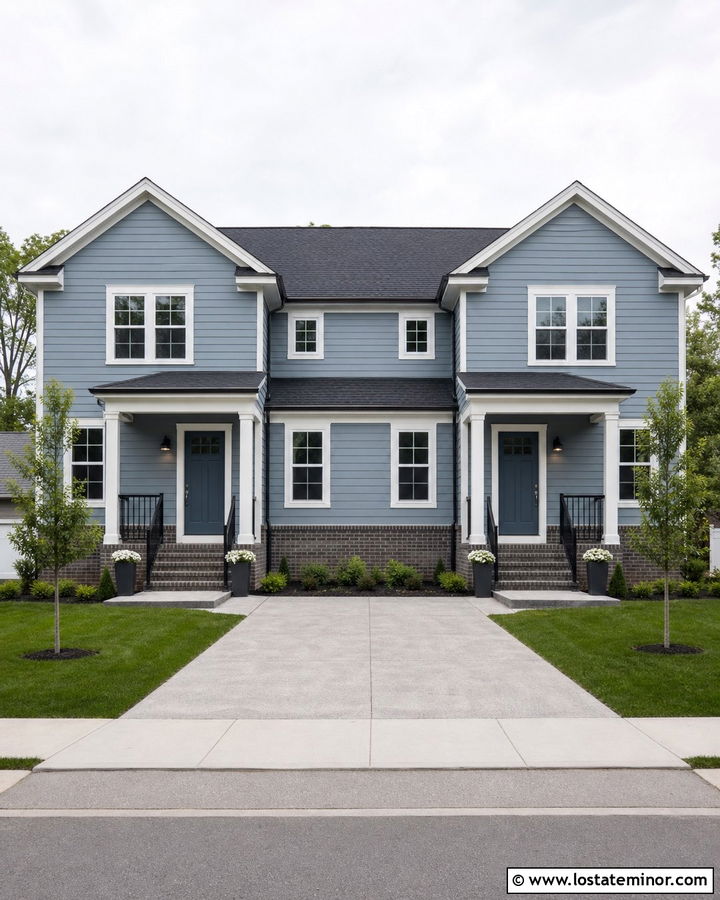
Matching blue doors can give a dusty blue duplex a unified appearance while maintaining a clear identity for each entrance. Choose a door color two or three shades darker than the siding, such as a smoky slate blue. Use identical warm white trim, porch columns, lights, and hardware around both entries to reinforce symmetry. Charcoal roofing and black railings add enough contrast to define the shared structure. Separate the entrances with balanced planters, small address plaques, or individual paths rather than unrelated door colors. If the lower facade includes brick, choose a gray-brown blend that suits the cool palette. The finished exterior feels organized and intentional, helping the duplex read as one attractive building instead of two competing color schemes joined together.
24. Dusty Blue Townhouse With Mahogany Door
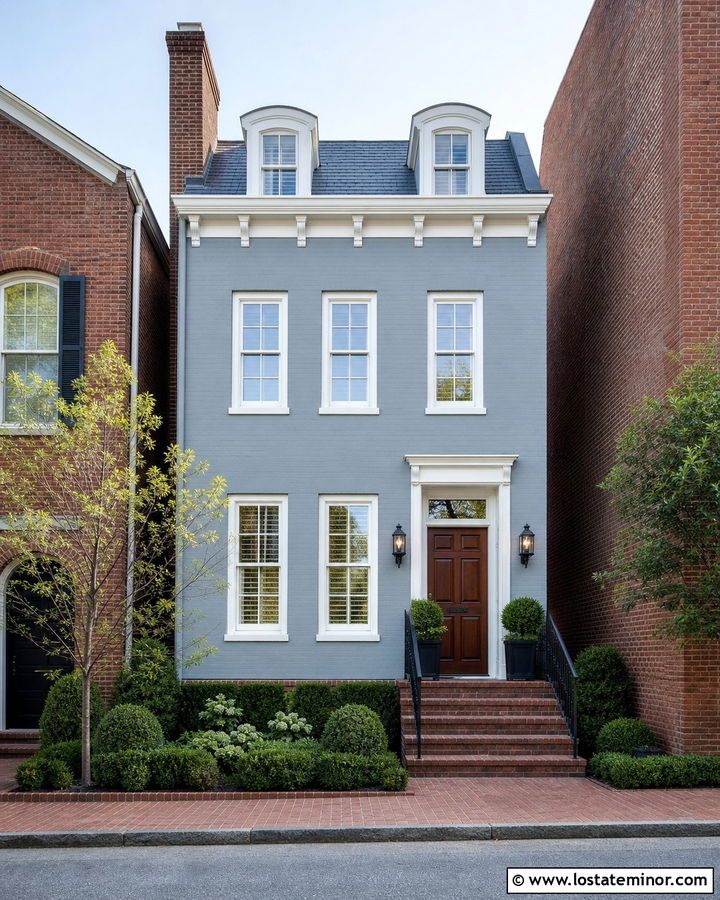
A mahogany door introduces rich warmth to the narrow facade of a dusty blue townhouse. The reddish-brown wood stands out against blue-gray siding while relating naturally to brick party walls, steps, or neighboring masonry. Use soft white around tall windows, cornices, and the door surround to brighten the vertical elevation. Black iron railings and lanterns provide thin, defined accents that do not crowd the compact frontage. A dark slate roof or charcoal upper trim creates balance above the entrance. Choose a traditional paneled mahogany door with a transom window to bring light into the interior. Simple boxwood planters, a clean brick walkway, and a small ornamental tree add curb appeal while keeping the coordinated entry clearly visible from the sidewalk.
25. Dusty Blue Mediterranean House With Terracotta Door
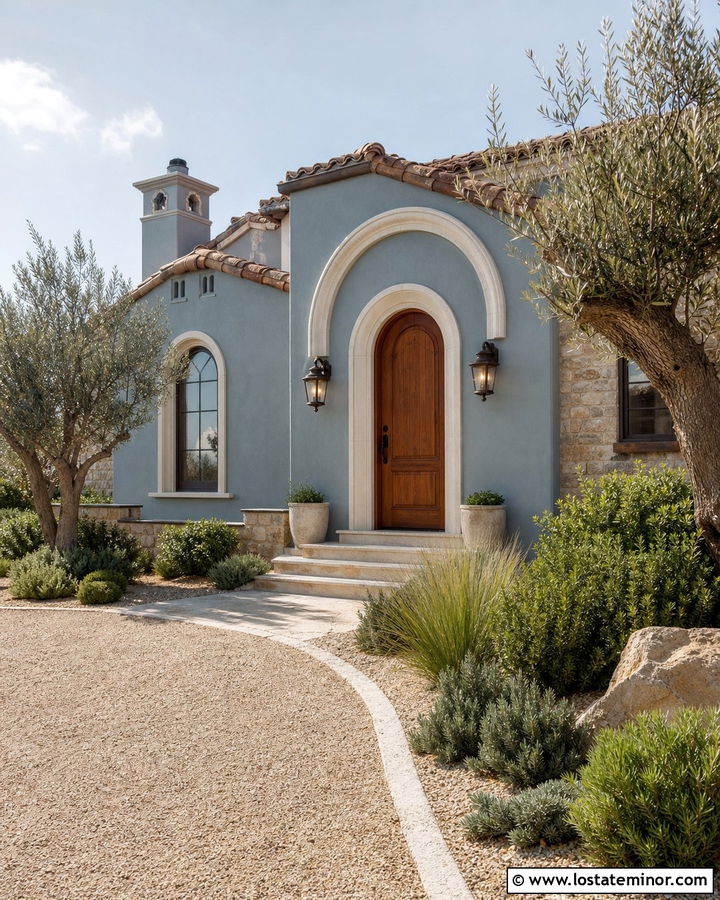
Terracotta brings sun-warmed color to dusty blue stucco on a Mediterranean-influenced exterior. The dusty blue should remain muted and gray enough to complement clay rather than compete with it. Use creamy trim around arched windows, columns, and the recessed entrance. A terracotta-colored wood door with black iron hardware can echo the clay roof tiles without creating an exact match. Natural limestone steps and sandy beige stone accents help transition between the cool walls and warm roof. Add dark bronze lanterns and simple iron railings for definition. Drought-tolerant grasses, rosemary, olive trees, and pale gravel create an appropriate landscape frame. Together, the blue stucco and earthy entry finishes produce a relaxed, distinctive facade with balanced regional character.
26. Dusty Blue Scandinavian House With Pale Wood Door
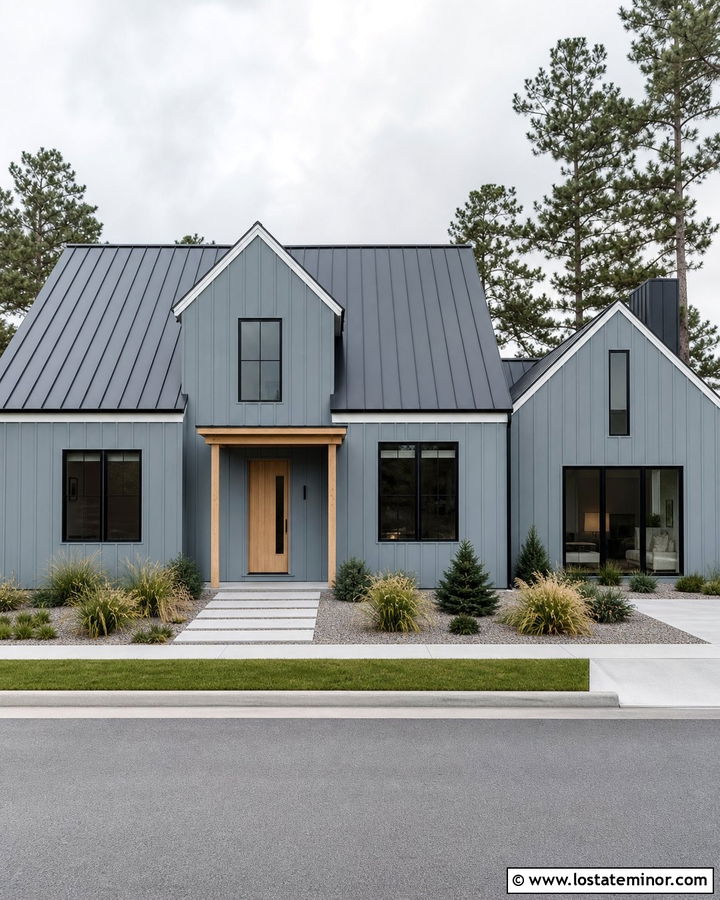
Pale wood gives a dusty blue Scandinavian-inspired house a bright, natural entry without strong color contrast. Apply dusty blue to simple vertical siding and use clean white around the windows and roof edge. Choose a light oak or ash door with minimal hardware and one narrow vertical window. A charcoal metal roof and black window frames add crisp definition to the understated facade. Repeat pale wood under the porch canopy or on a small section of accent siding to connect the door to the overall composition. Wide concrete pavers, gravel, ornamental grasses, and compact evergreens support the uncluttered design. The combination feels calm, modern, and welcoming, with natural texture preventing the simplified exterior from appearing plain or unfinished.
27. Dusty Blue French Country House With Gray Door
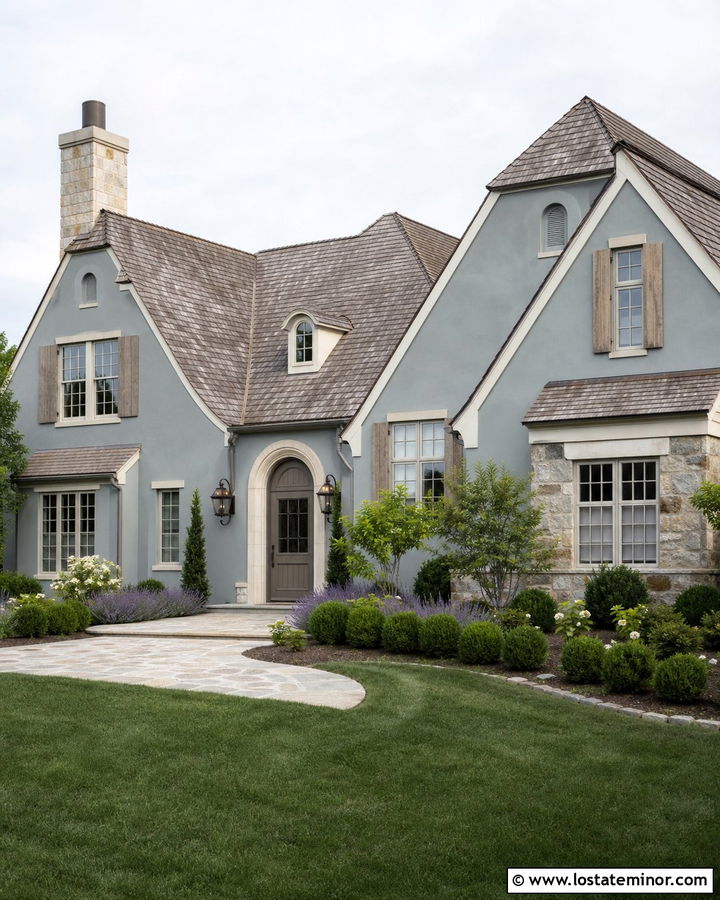
A warm gray entry door complements dusty blue French Country siding while allowing stonework and architectural curves to take visual priority. Choose a medium greige-gray that is darker than the siding but softer than charcoal. Cream trim around the windows and arched doorway maintains the exterior’s warm undertone. Use limestone or irregular fieldstone on the foundation, chimney, and entrance surround. A weathered gray roof with subtle brown variation ties the restrained colors together. Black or aged bronze lanterns offer small points of contrast. Add divided-light windows, gentle roof pitches, and natural wood shutters to reinforce the country character. Lavender, clipped shrubs, and a curved stone path complete the facade, creating an elegant entrance that feels collected rather than overly formal.
28. Dusty Blue Contemporary House With Red Cedar Door
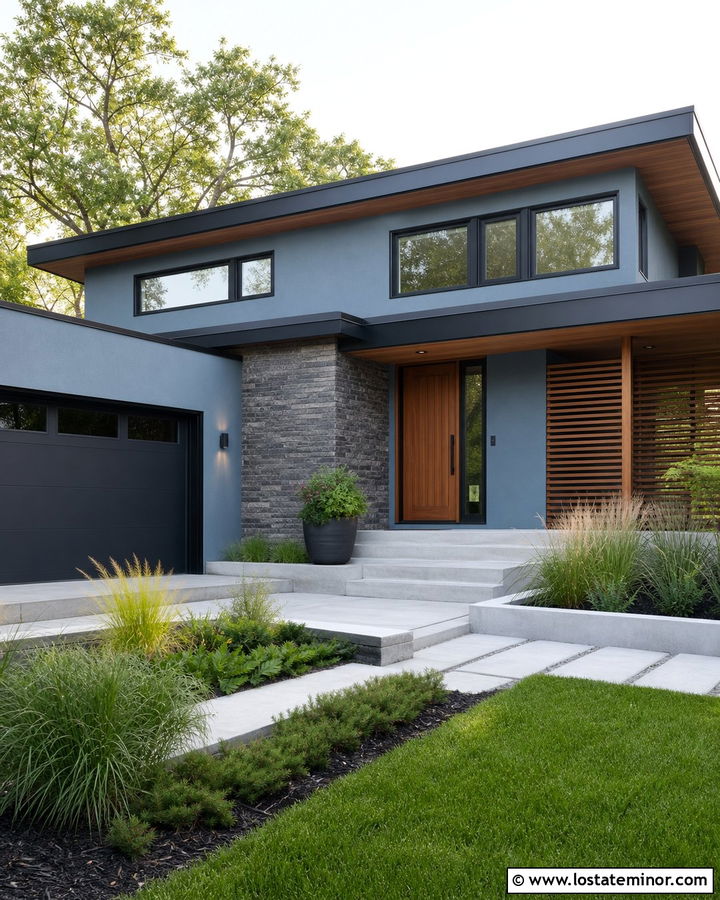
Red cedar adds texture and warmth to a dusty blue contemporary facade without relying on a painted accent color. Choose a clear or medium stain that preserves the cedar’s reddish-gold grain. Use dusty blue across wide horizontal panels, then frame the windows and garage in matte charcoal. A flat charcoal roof, pale concrete steps, and sections of gray ledgestone strengthen the clean architecture. The entry door should be wide and simple, with concealed or minimal hardware and a narrow sidelight. Repeat cedar on the soffit or privacy screen to make the door part of a larger material story. Geometric planting beds, structured grasses, and broad rectangular pavers complete the modern curb appeal while keeping every color and texture visibly connected.
29. Dusty Blue Queen Anne House With Deep Rose Door
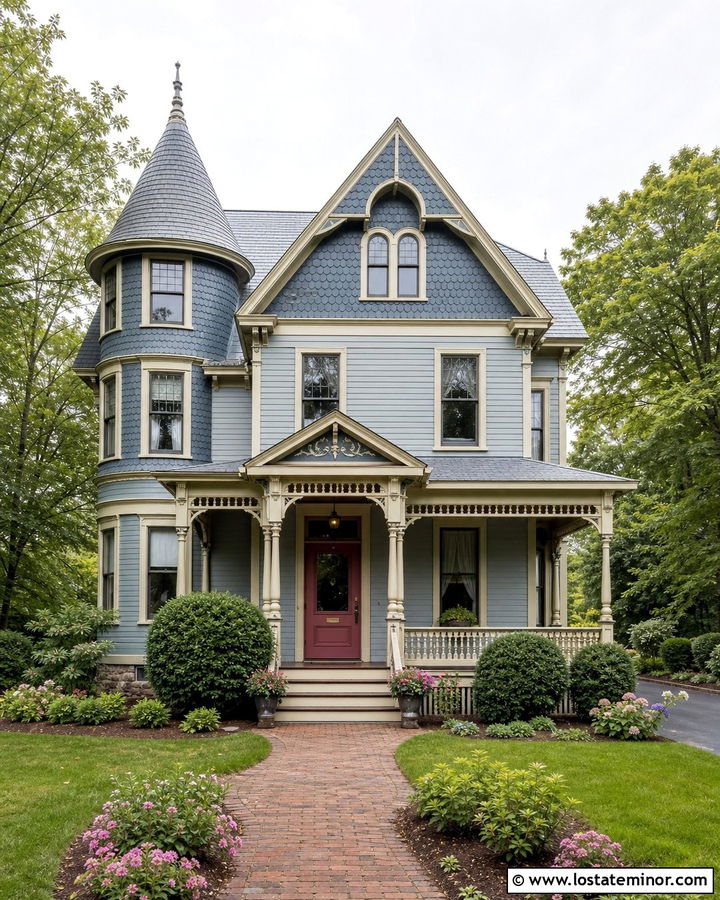
Deep rose can highlight the entry of a dusty blue Queen Anne house without turning the ornate facade into a collection of competing colors. Select a muted rose with brown or gray undertones. Use cream across the porch posts, window trim, railings, and decorative spindlework. A darker dusty blue can emphasize shingles or selected gable details, creating depth within the main body color. The rose door should remain the only warm painted feature, supported by antique brass hardware and a traditional glass panel. Gray slate roofing and a natural wood porch floor ground the decorative architecture. Balanced shrubs, flowering borders, and a curved brick path create a graceful approach while allowing the detailed house and distinctive entrance to remain fully visible.
30. Dusty Blue Minimalist House With White Oak Door
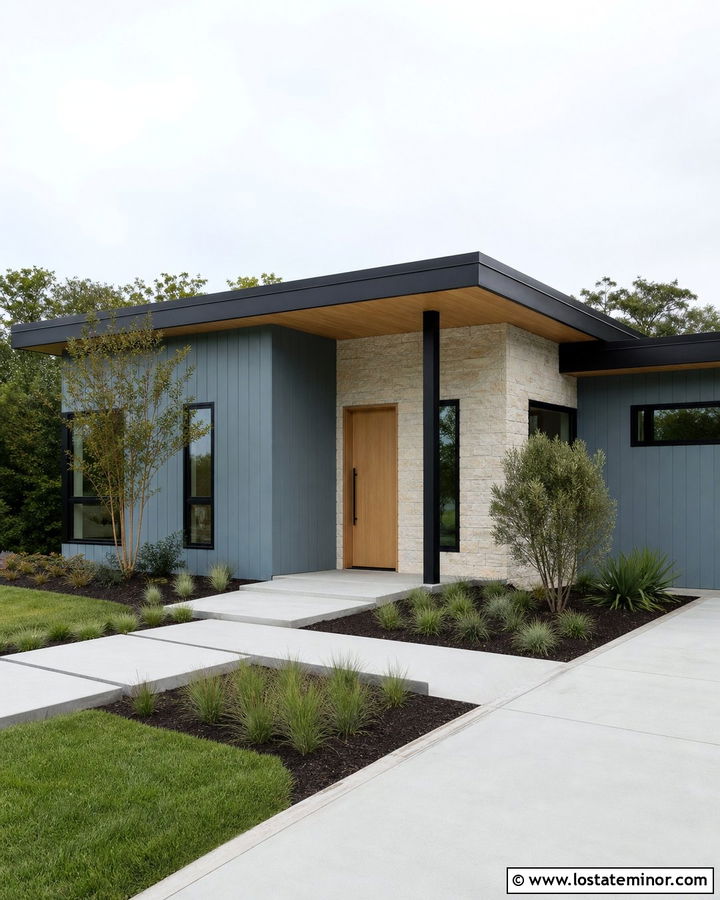
For a quiet minimalist exterior, combine smooth dusty blue siding with a white oak entry door and sharply edited accents. Choose flush siding panels or narrow vertical boards to keep the body color consistent. The door should feature pale natural grain, a simple black handle, and no decorative molding. Use black-framed windows, charcoal fascia, and a dark low-slope roof to define the architecture. Pale gray concrete around the entrance provides a clean transition from the driveway and walkway. A small section of limestone can add texture without interrupting the restrained palette. Keep landscaping simple with low grasses, a few sculptural shrubs, and straight planting lines. This complete scheme feels warm and livable while preserving the clarity expected from minimalist design.
Conclusion:
The best dusty blue exterior is built around more than one attractive door color. Roofing, trim, masonry, hardware, landscaping, and architectural style must also work together. Black and navy doors provide strong definition, while natural wood, copper, and terracotta bring welcome warmth. Sage, olive, teal, and muted red create more colorful entrances without fighting the soft blue-gray siding. Before committing, compare large paint samples beside the permanent roof, brick, and stone at several times of day. This step can reveal undertones that small chips may hide. Use these **30 Dusty Blue House Design With Entry Door Ideas** to create a complete facade that feels balanced, personal, and inviting from the street.

Related posts: