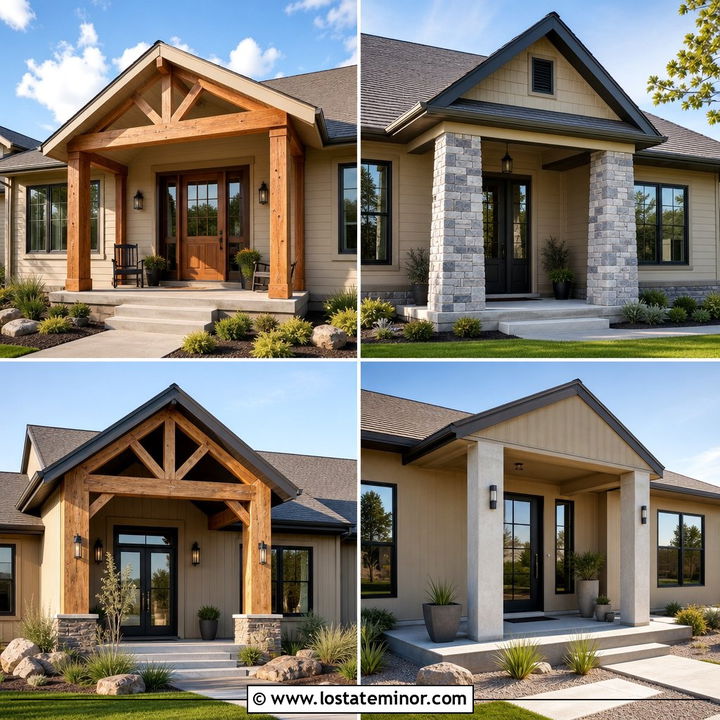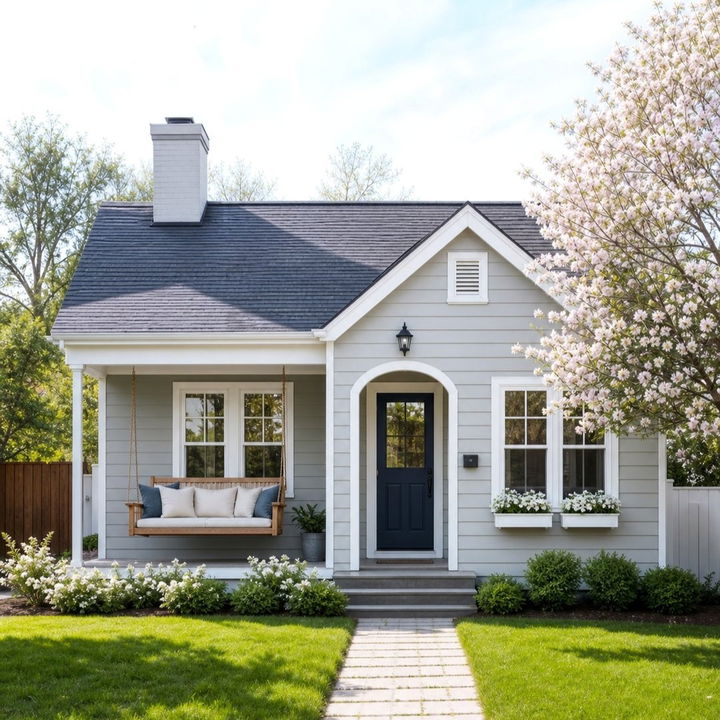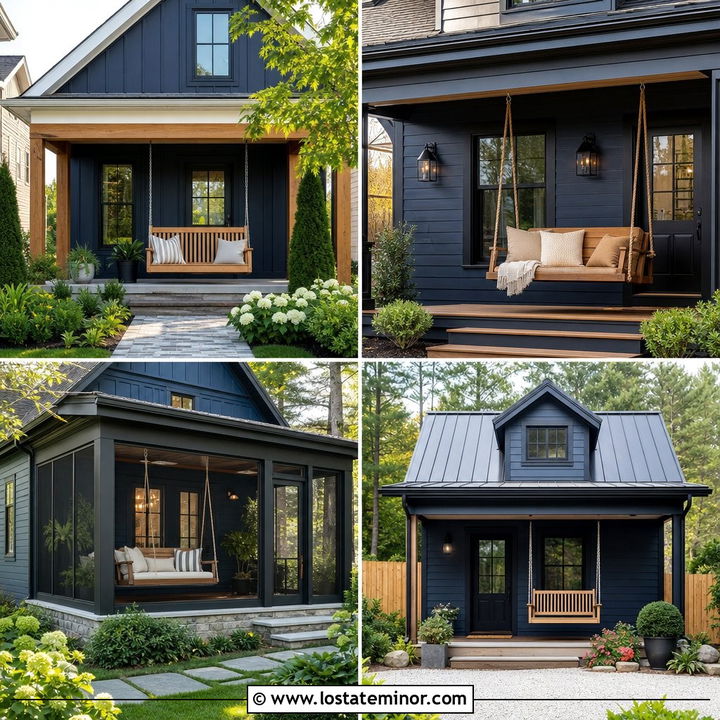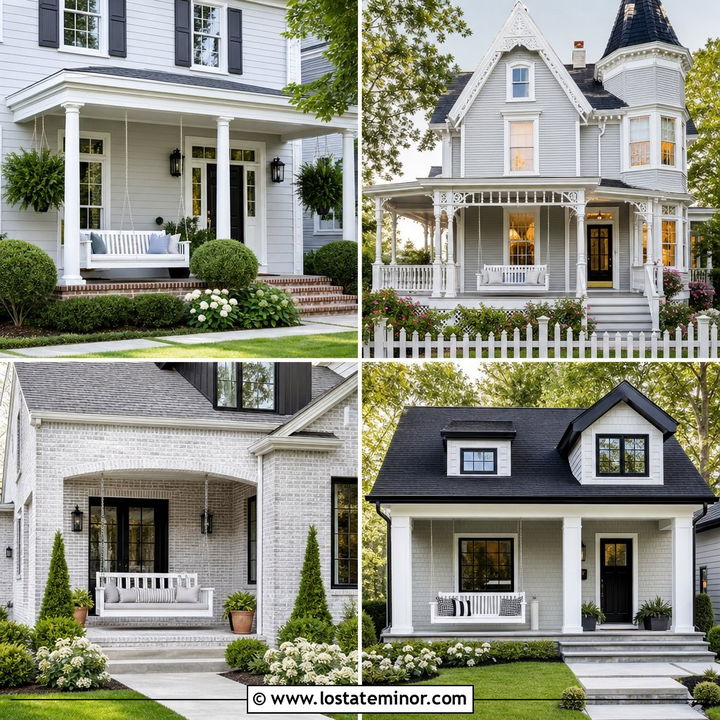
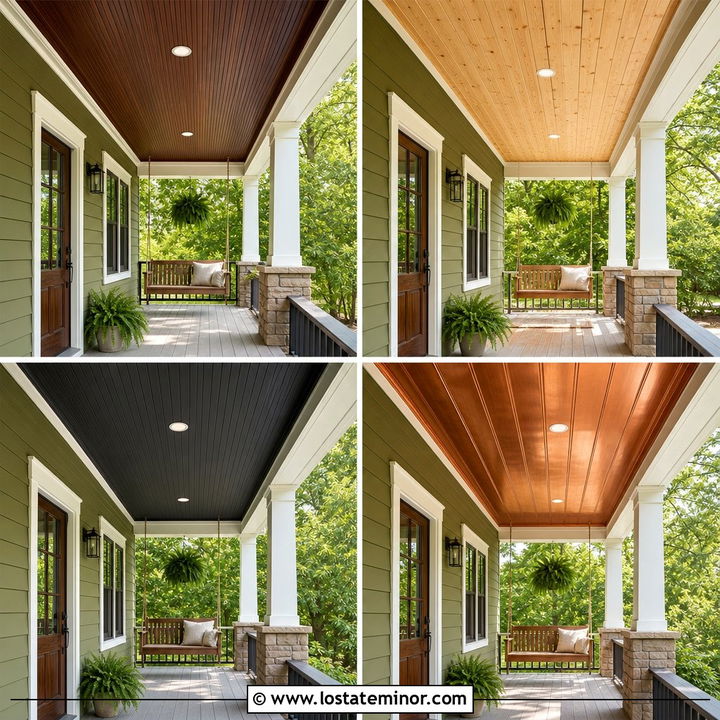
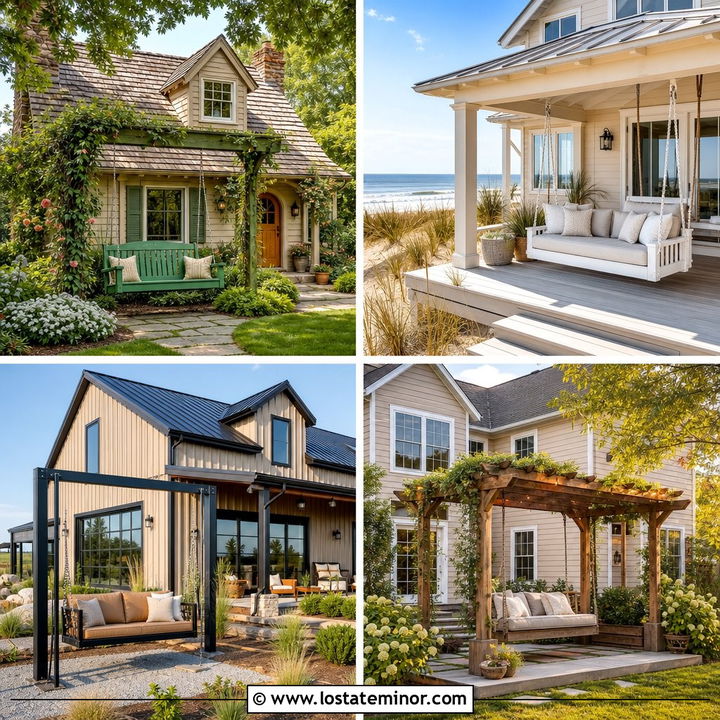
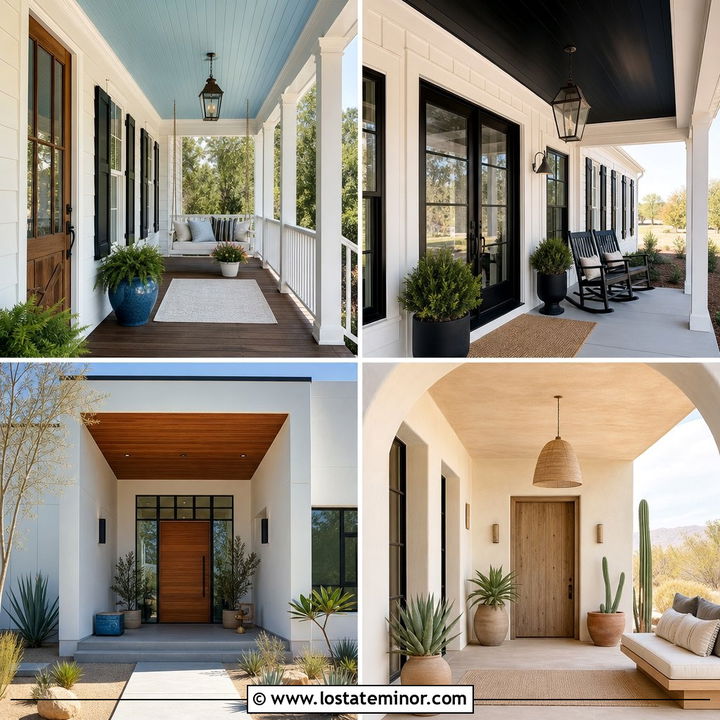
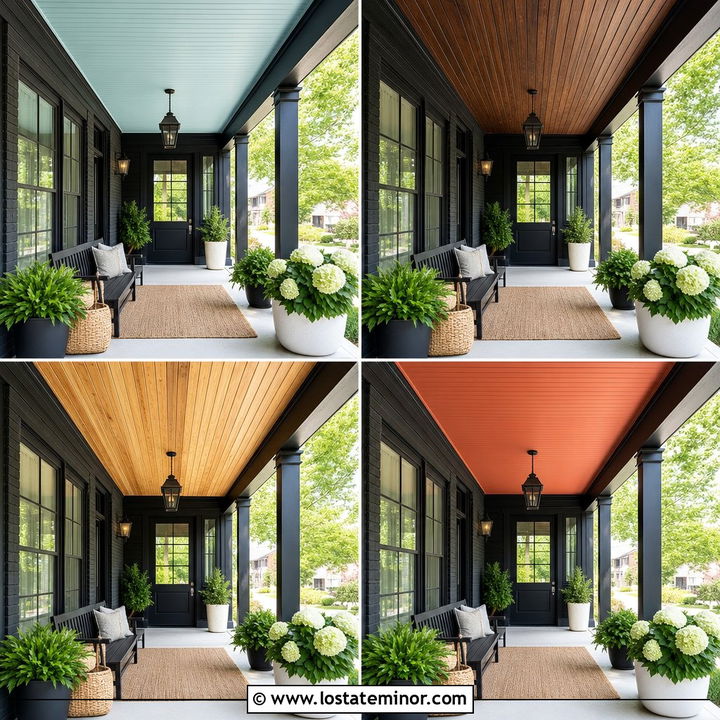
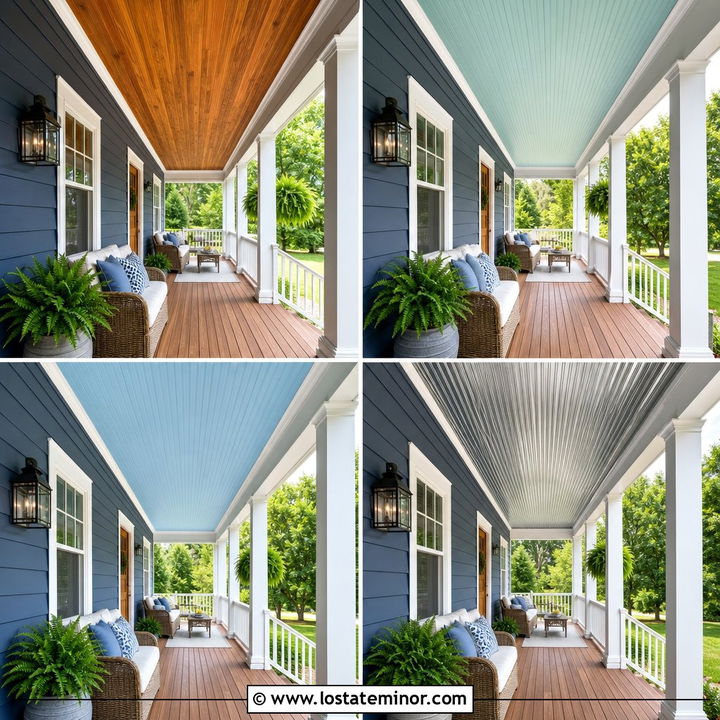
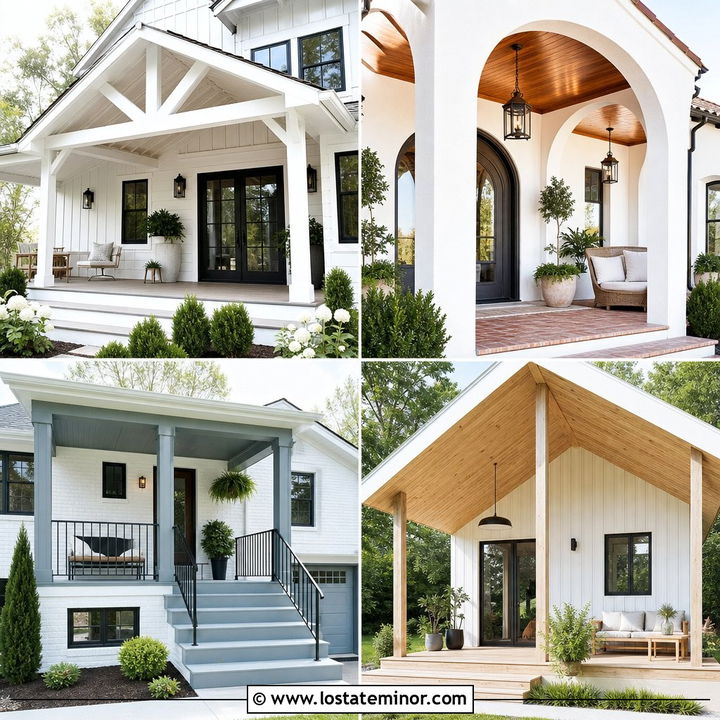
A tan exterior gives you a warm, flexible base, but the porch ceiling is what can make the entire facade feel intentional. The best **30 Tan House Design With Porch Ceiling Ideas** combine siding, trim, roofing, doors, columns, and ceiling materials as one coordinated scheme. Tan works especially well with crisp white, charcoal, natural wood, muted green, and bronze accents, while porch ceilings can introduce color or architectural texture. () From classic blue beadboard to modern cedar slats, each option changes how the entrance feels from the street. The key is balancing undertones and repeating the ceiling color elsewhere in small amounts. Explore these complete exterior looks in our **30 Tan House Design With Porch Ceiling Ideas**.

1. Tan Colonial With Haint Blue Beadboard Ceiling
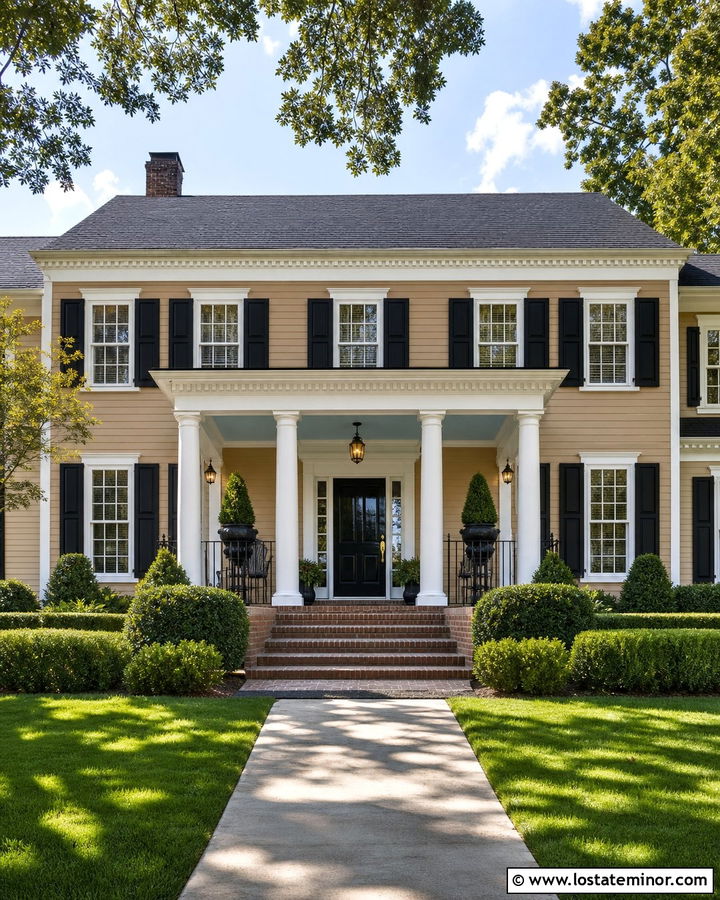
A warm tan Colonial looks brighter and more welcoming when pale haint blue appears overhead. Choose medium tan clapboard siding, crisp white trim, and a soft blue beadboard porch ceiling. This traditional ceiling treatment adds gentle color without competing with the home’s symmetrical architecture. Blue porch ceilings have a long association with Southern homes and remain popular for their light, airy appearance. () Complete the scheme with black shutters, a glossy black front door, white columns, and aged brass lanterns. Red brick steps provide earthy contrast that connects naturally with tan siding. Repeat the ceiling blue in small planters or outdoor cushions so it feels purposeful. A charcoal shingle roof grounds the lighter colors and gives the entire exterior a polished finish.
2. Tan Craftsman With Stained Wood Porch Ceiling
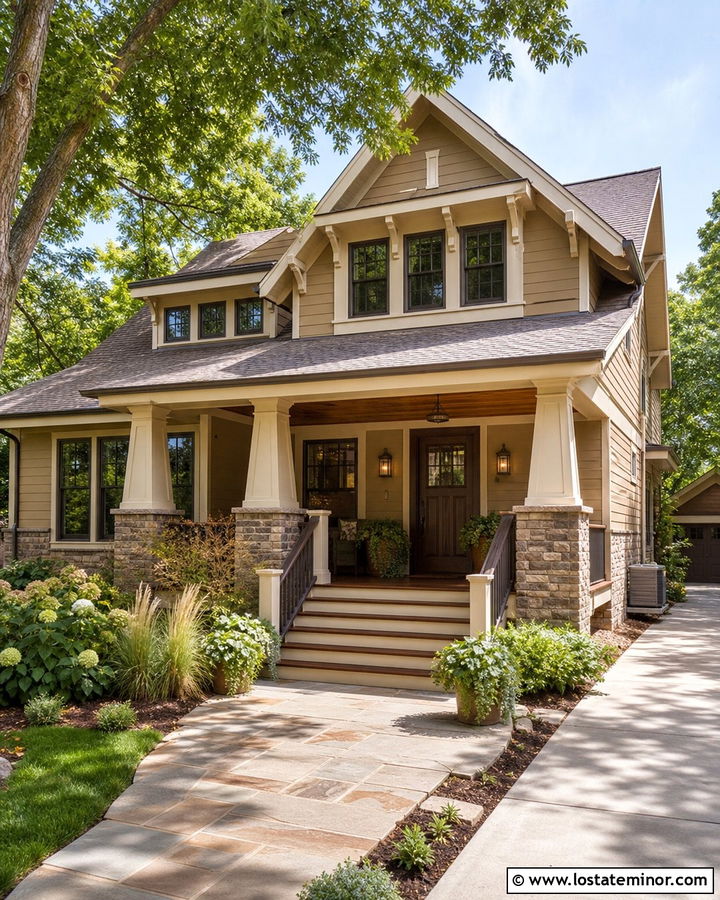
Natural wood brings out the earthy warmth already present in tan Craftsman siding. Use a muted camel tan for the main body, creamy trim around the windows, and rich cedar tongue-and-groove boards across the porch ceiling. Thick tapered columns set on stone piers will strengthen the home’s handcrafted character. A medium walnut front door can echo the ceiling without matching it exactly. Add oil-rubbed bronze lights, dark brown gutters, and an architectural shingle roof containing warm gray and brown tones. The porch floor could be stained slightly darker than the ceiling to establish visual depth. Keep the landscaping relaxed with ornamental grasses, hydrangeas, and broad stone steps. Together, the natural materials make the tan exterior appear layered rather than plain or overly neutral.
3. Tan Ranch With White Tongue And Groove Ceiling
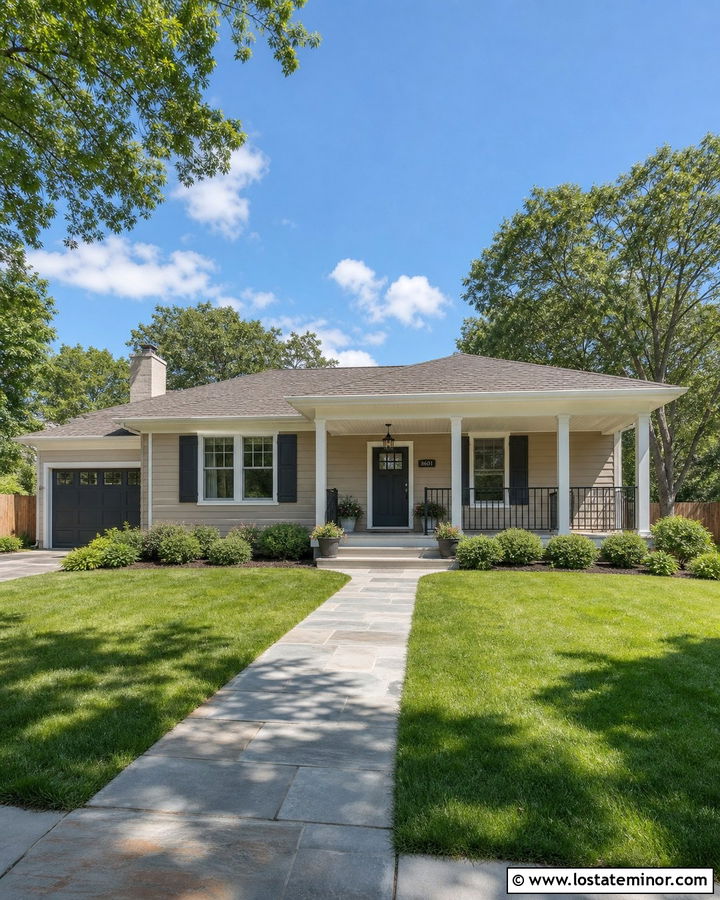
Does your tan ranch house feel low or visually heavy from the street? A bright white tongue-and-groove porch ceiling can make the covered entry seem taller and more open. Pair sandy tan horizontal siding with warm white fascia, window trim, columns, and ceiling boards. Use charcoal shutters and a dark charcoal front door to keep the pale palette from looking washed out. A simple concrete porch, black metal railing, and understated wall lights suit the ranch’s clean horizontal lines. If the roof is brown, select a tan with slightly golden undertones rather than one that leans gray. Low evergreen shrubs and a straight flagstone walkway will reinforce the uncluttered architecture. This complete exterior scheme is practical, familiar, and easy to update as landscaping or accessories change.
4. Tan Farmhouse With Black Porch Ceiling
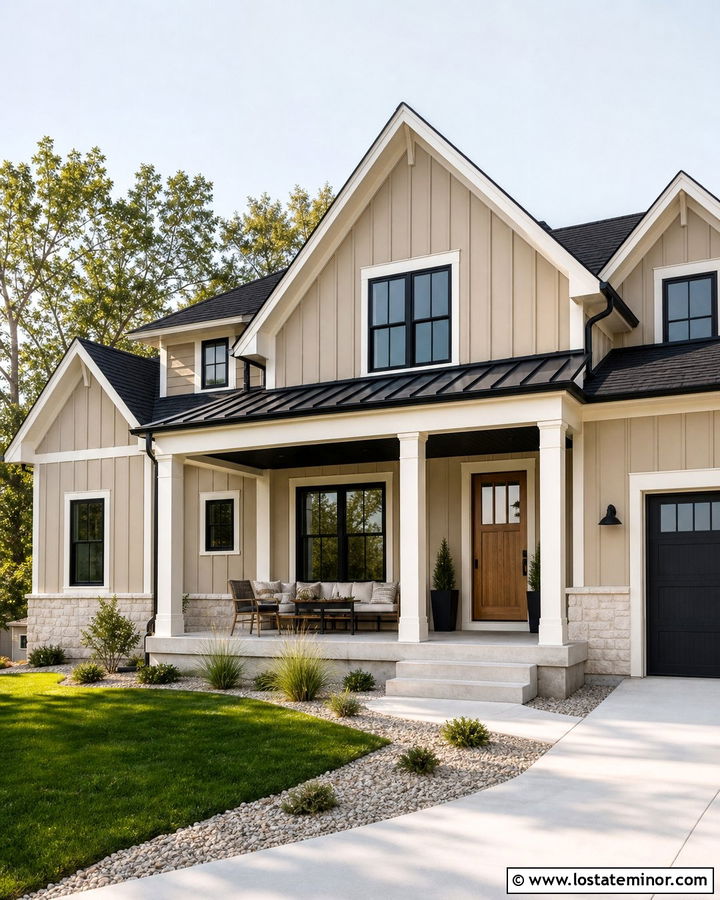
For stronger contrast, place a matte black porch ceiling above a light tan modern farmhouse exterior. The dark surface creates a defined outdoor room while emphasizing the roofline and covered entrance. Choose soft wheat tan board-and-batten siding with creamy white trim rather than stark white. Black window frames, gutters, standing-seam porch roofing, and ceiling paint will connect the dark features throughout the facade. Warm the combination with a natural oak front door and simple stone along the foundation. Because the ceiling is dramatic, keep the porch columns tan or off-white and use restrained black lighting. A wide concrete walkway, clipped greenery, and pale gravel beds complement the modern palette. This approach gives a tan farmhouse depth while avoiding the predictable all-white farmhouse appearance.
5. Tan Cottage With Sage Green Porch Ceiling
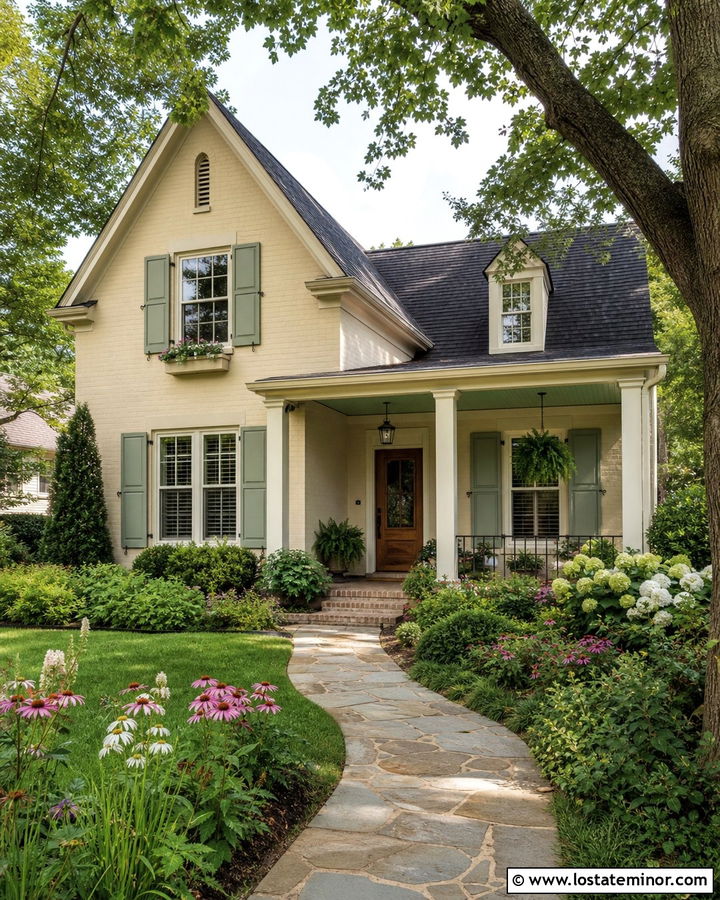
A sage green porch ceiling can give a tan cottage a soft garden-inspired identity. Start with light biscuit tan siding and creamy ivory trim. Paint the beadboard ceiling a muted gray-green, then repeat that color on the shutters or a small garden gate. A stained wood front door keeps the entry warm, while antique bronze hardware supports the natural palette. Consider weathered brick for the porch floor and foundation because its uneven reds and browns complement both tan and green. The roof should be medium brown or warm charcoal rather than blue-gray. Surround the cottage with layered shrubs, flowering perennials, and a curved stone path. This complete look feels collected and comfortable. It is particularly effective when the house sits near mature trees or established landscaping.
6. Tan Bungalow With Cream Beadboard Porch Ceiling
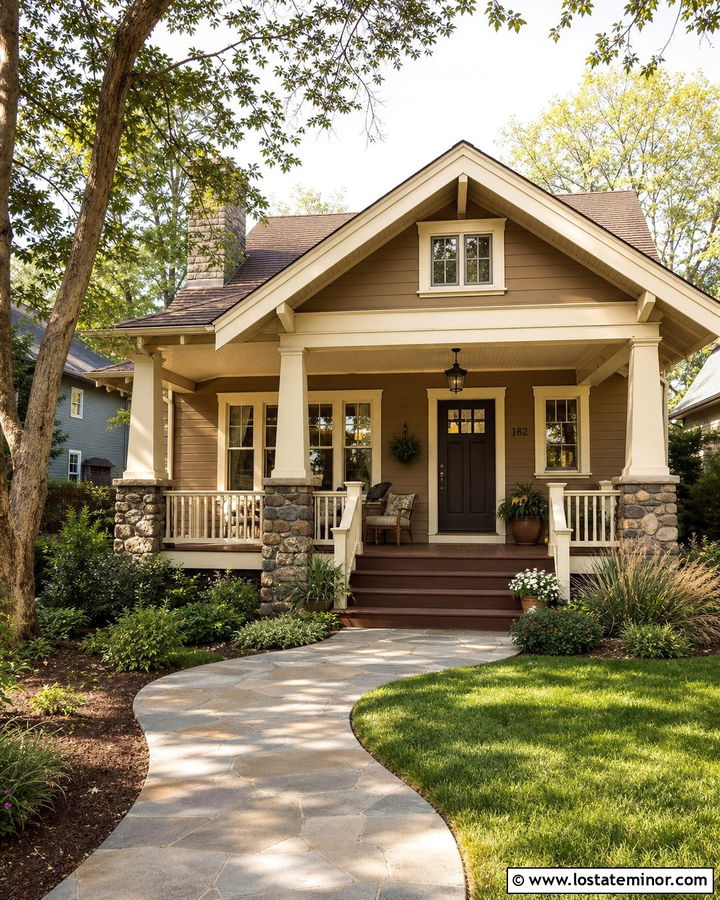
Cream beadboard is an easy way to soften the deep shadows beneath a bungalow’s broad porch roof. Use a medium caramel tan on the siding and a buttery cream on the ceiling, rafters, window trim, and substantial square columns. Instead of high-contrast black, select espresso brown for the front door, gutters, and Craftsman-inspired lighting. A porch floor stained in warm chestnut will bridge the darker accents and lighter ceiling. Stone column bases containing beige, rust, and muted gray can add texture without creating a busy facade. Keep the railing simple and paint it cream so it visually connects with the overhead boards. A gently curved walkway and informal foundation planting complete the design. The result feels historic and cozy while still appearing clean from the curb.
7. Tan Brick House With Natural Cedar Porch Ceiling
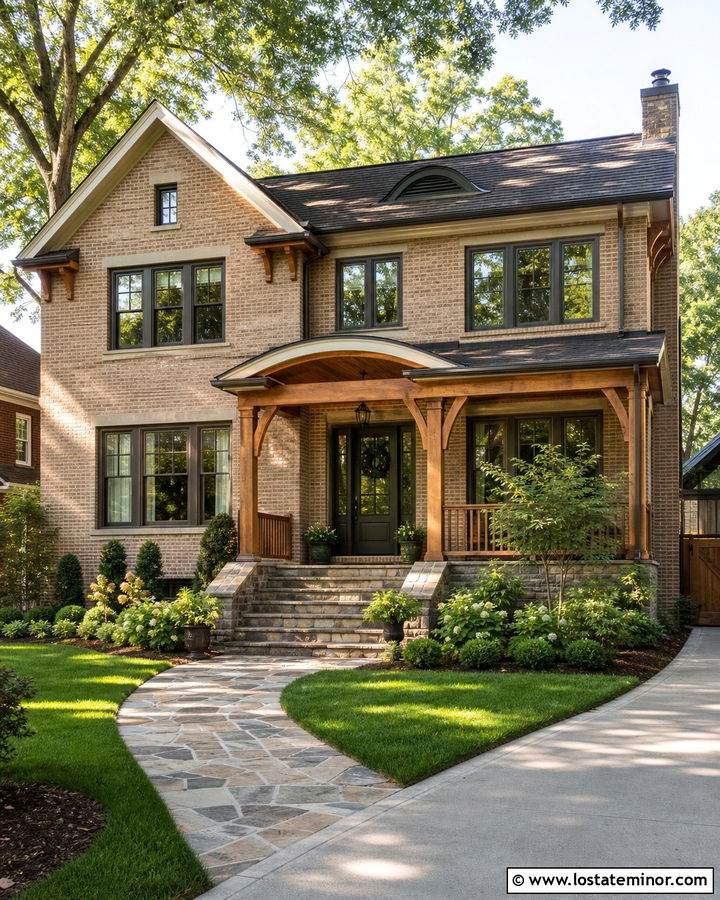
Tan brick gains much-needed texture when it is paired with a natural cedar porch ceiling. Select a clear or lightly tinted exterior sealer that preserves the cedar’s honey color rather than turning it orange. Cream mortar, warm white fascia, and bronze window frames will support the brick’s subtle variation. Introduce a deep olive front door to give the entrance a grounded focal point. Cedar brackets or short ceiling beams can help the overhead material connect with the rest of the architecture. Keep the roof neutral with charcoal-brown shingles, and choose bronze porch lights that blend quietly into the scheme. Flagstone steps containing tan and gray tones will unite the brick, wood, and roofing. This combination makes a traditional brick home look more custom without requiring a fully painted exterior.
8. Tan Stucco House With Terracotta Porch Ceiling
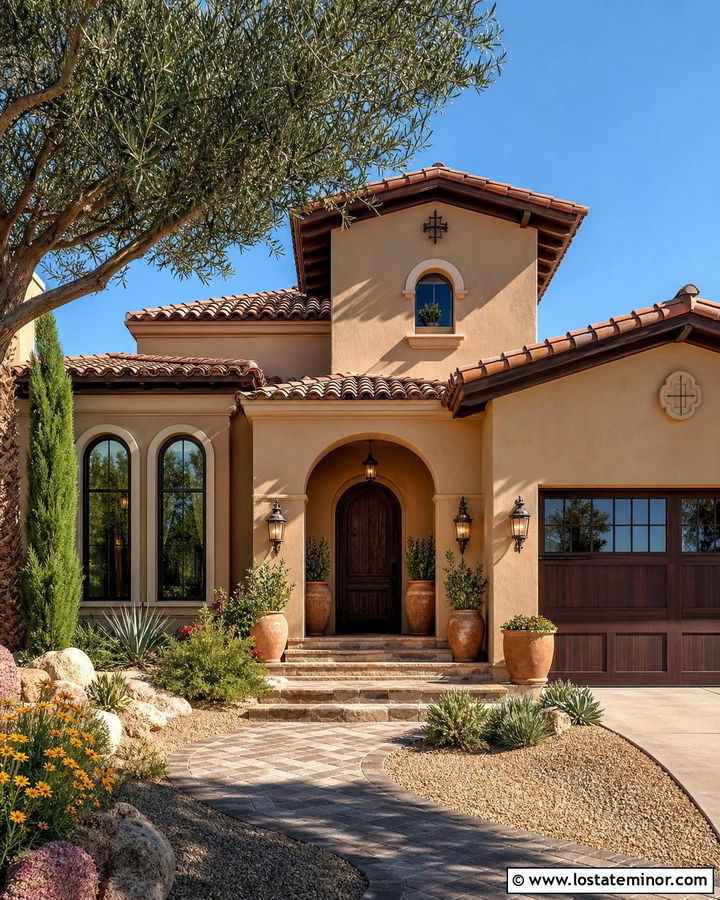
Sun-washed color works beautifully on a tan stucco exterior with Mediterranean influences. Cover the main walls in a sandy tan and paint the recessed porch ceiling a muted terracotta. The warm ceiling creates a subtle glow around the entrance while coordinating with a clay tile roof. Use creamy trim around arched windows and select a dark walnut front door with decorative iron hardware. Porch columns can remain tan so the terracotta stays concentrated overhead. Add aged bronze lanterns, large earthen planters, and natural stone steps to reinforce the material palette. Avoid bright white because it may appear too sharp beside the earthy colors. Drought-tolerant landscaping, gravel beds, and a curved walkway complete this relaxed facade. The overall design feels colorful while remaining sophisticated and grounded.
9. Tan Cape Cod With Pale Aqua Porch Ceiling
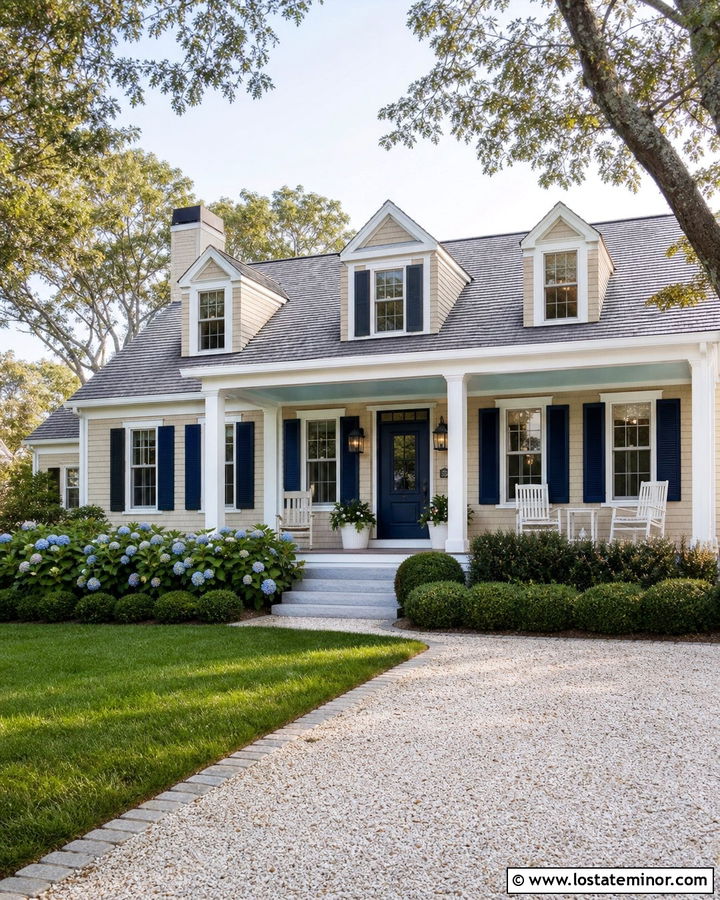
A pale aqua porch ceiling introduces coastal color without making a tan Cape Cod house look themed. Choose light dune tan shingles or lap siding with clean white trim and dormers. Paint the covered porch ceiling a quiet aqua that contains enough gray to remain soft in bright daylight. Navy shutters and a navy front door provide deeper contrast, while polished nickel or black lanterns add definition. Keep porch railings and square columns white to frame the ceiling color clearly. A weathered gray composite porch floor can suggest driftwood and balance the warmer tan walls. Finish the exterior with gray roof shingles, hydrangeas, clipped boxwoods, and a shell or pale gravel walkway. The coordinated palette looks fresh near the coast but also works in an ordinary suburban neighborhood.
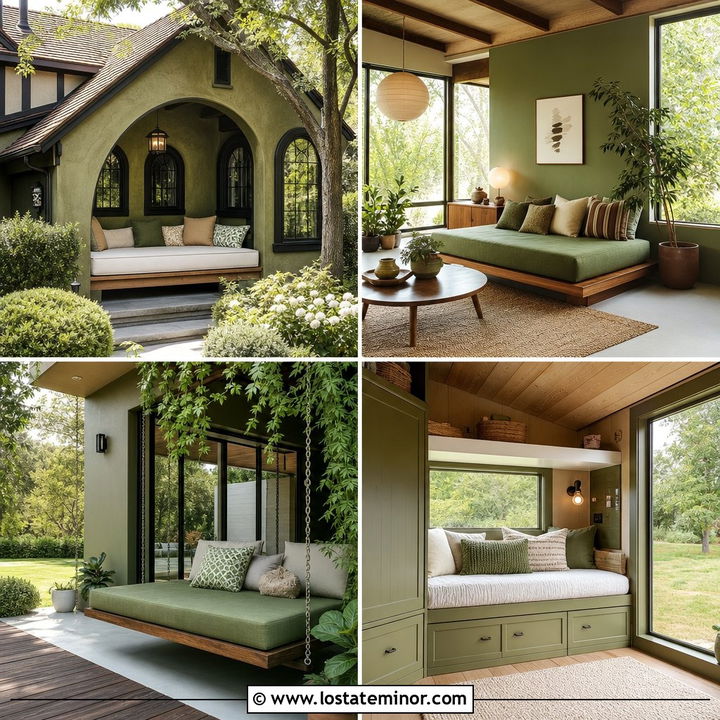
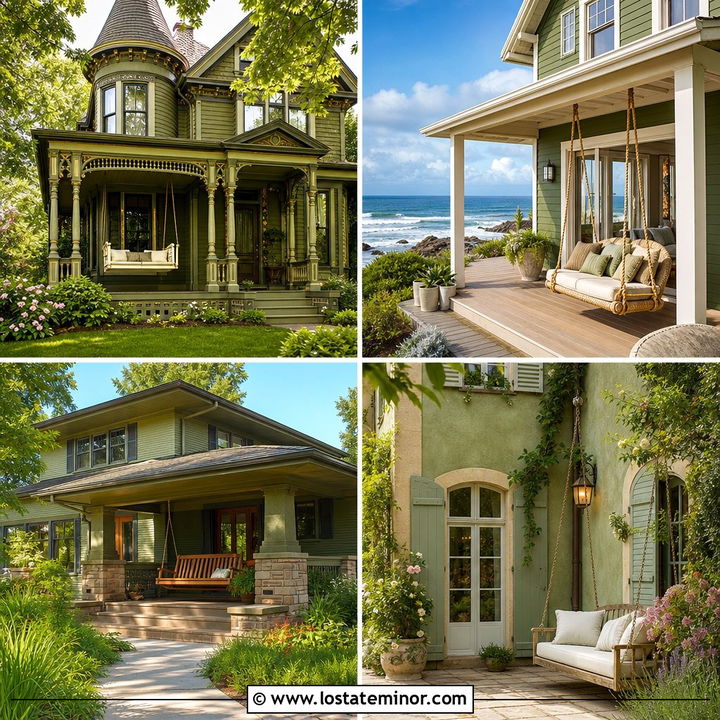
10. Tan Split Level With Charcoal Porch Ceiling
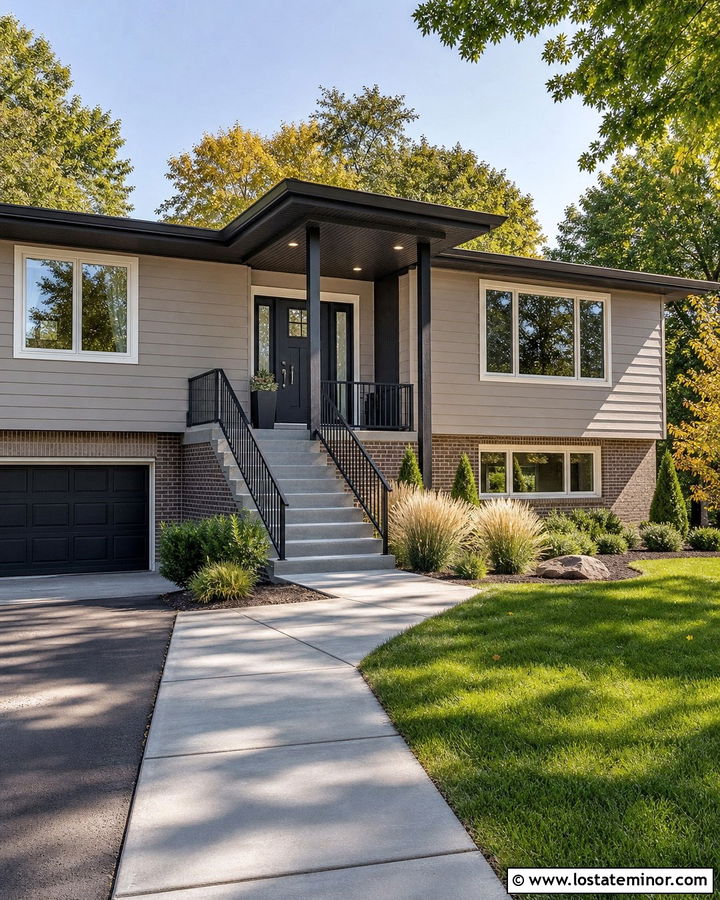
A charcoal porch ceiling can update a tan split-level without requiring major structural changes. Paint the siding a neutral mushroom tan and use warm white around the windows, fascia, and garage door. Apply charcoal to the ceiling beneath a new extended entry canopy, then repeat it on the front door, gutters, and slim metal porch posts. These connected dark details give the asymmetrical facade a stronger visual structure. If the lower level has brick, preserve its natural brown and red variation instead of painting it. Wide concrete steps and a horizontal black railing support the streamlined look. Add layered ornamental grasses and low evergreens to soften the straight architecture. The dark ceiling helps the entry stand out, while the tan siding keeps the overall house warm and approachable.
11. Tan Mediterranean House With Coffered Wood Porch Ceiling
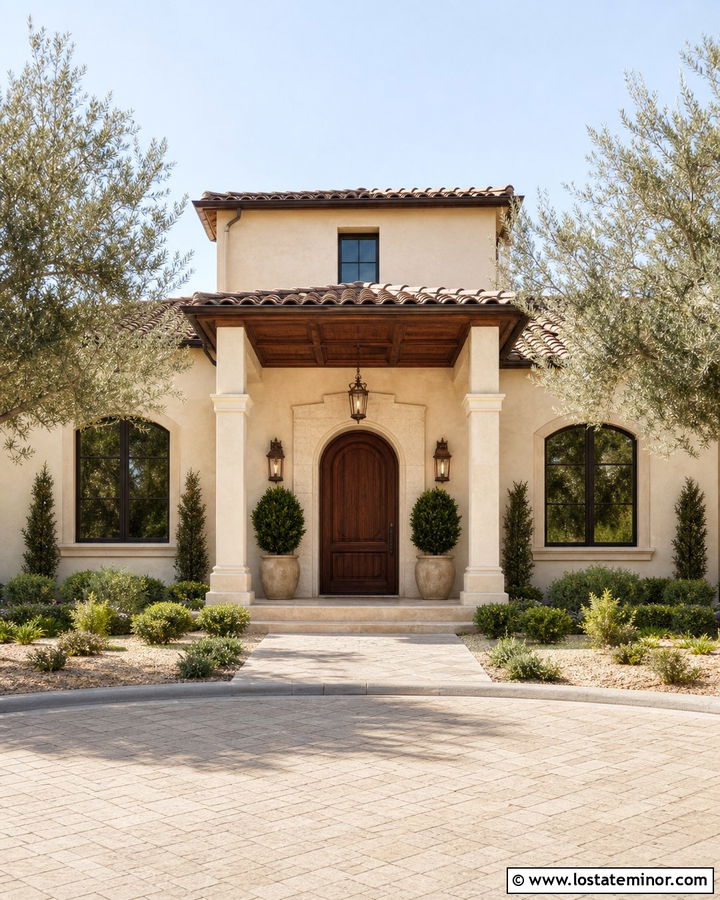
A coffered wood ceiling adds architectural richness to a large tan Mediterranean porch. Use a creamy sandstone tan on the stucco body and stain the ceiling coffers a medium walnut. The recessed panels should be large enough to suit the scale of the entry rather than creating a small, busy grid. Dark bronze windows, lanterns, and railings will connect with the wood’s deeper tones. Choose an arched mahogany door and natural limestone around the entrance for an elegant layered effect. A red-brown clay tile roof introduces traditional warmth, while pale stone paving keeps the porch from becoming too dark. Finish with symmetrical planters and restrained Mediterranean landscaping. This complete exterior scheme makes the covered entrance feel substantial and carefully integrated into the home’s architecture.
12. Tan Victorian With Soft Blue Porch Ceiling
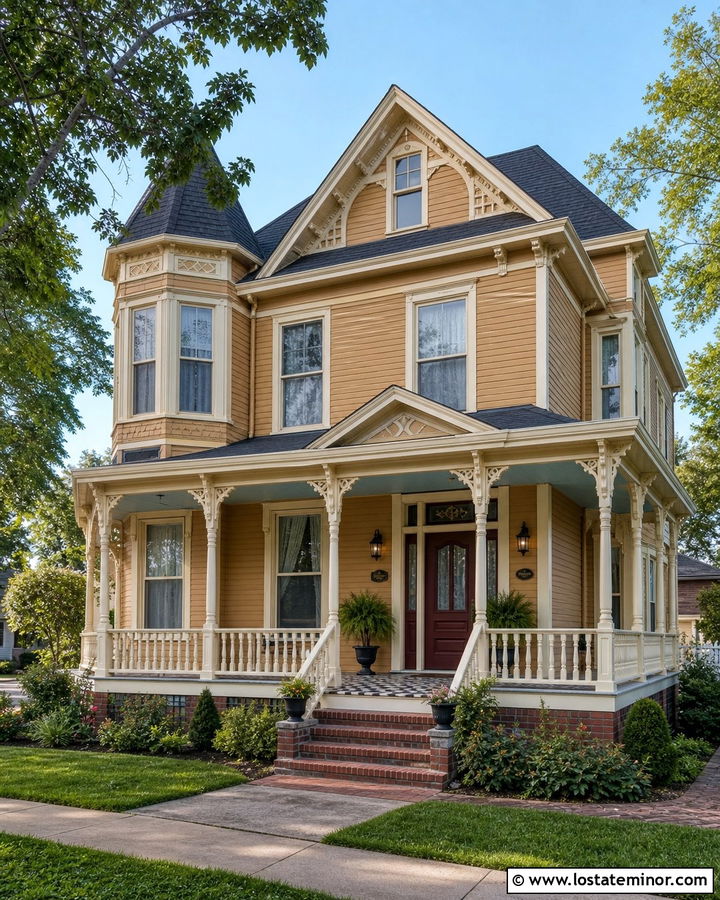
A soft blue porch ceiling balances the detailed trim found on a tan Victorian home. Begin with muted honey tan siding, then use creamy white on brackets, spindles, window surrounds, and porch railings. Paint the beadboard ceiling a dusty blue and repeat that shade selectively on small gable details. A deep burgundy front door can introduce historical richness without overwhelming the palette. Choose charcoal roofing and dark bronze lights to anchor the lighter colors. Because Victorian architecture already contains many decorative elements, avoid adding too many additional accent shades. The ceiling color should remain noticeably lighter than the door and roof. Brick steps, a patterned porch floor, and traditional foundation planting complete the facade. This balanced scheme celebrates the ornamentation while keeping the overall exterior readable and inviting.
13. Tan Prairie House With Walnut Slat Porch Ceiling
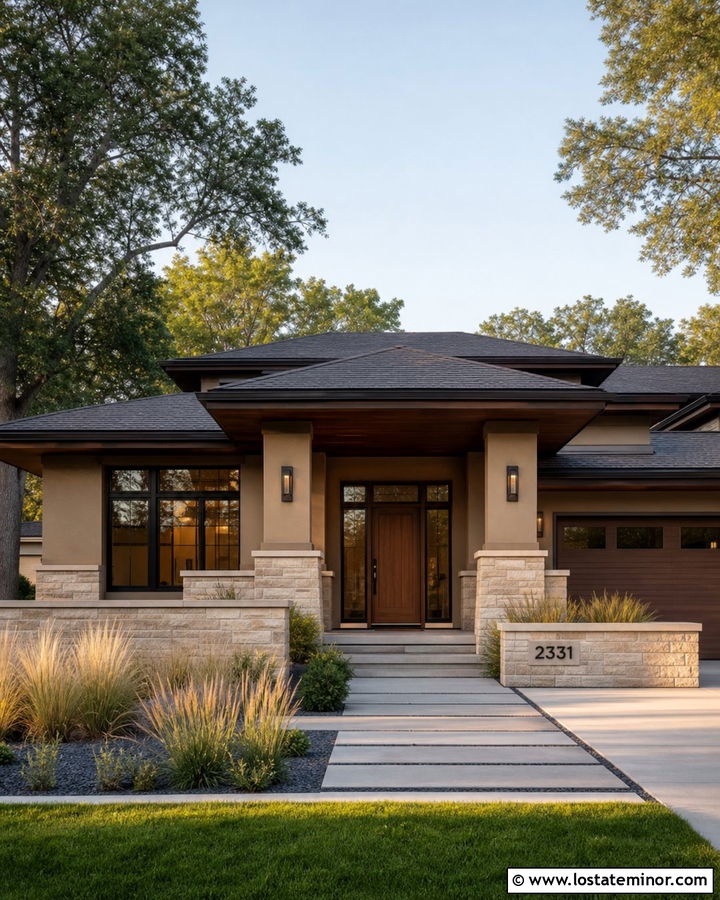
Long horizontal lines define a Prairie-style home, making a walnut slat ceiling an especially compatible porch feature. Use an earthy taupe-tan stucco or horizontal siding for the main exterior. Install closely spaced walnut-toned slats beneath the broad porch overhang, aligning them with the house’s strong horizontal direction. Deep bronze window frames and fascia will sharpen the design without creating harsh black contrast. A wide wood front door, low stone walls, and square masonry columns should share similar warm brown undertones. Select a low-profile charcoal roof and large rectangular paving stones for a grounded appearance. Plant ornamental grasses and broad shrubs in horizontal groupings. The finished exterior feels cohesive because every material supports the same warm, low, and linear architectural composition.
14. Tan Coastal House With Sky Blue Porch Ceiling
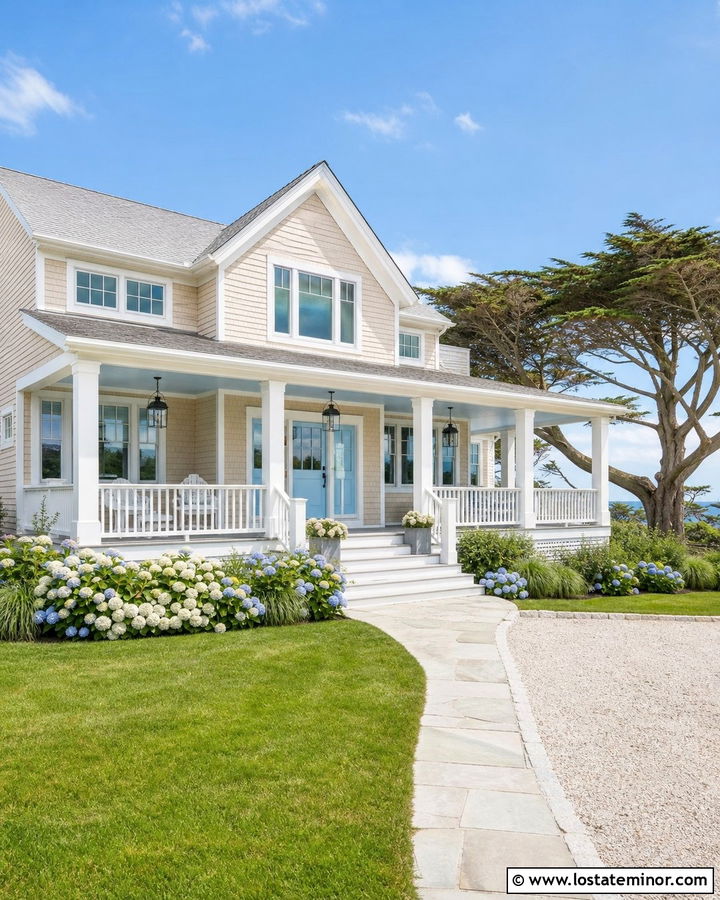
Bright daylight can make a clean sky blue ceiling glow above a tan coastal porch. Choose pale sand tan siding with fresh white trim, white railings, and simple square columns. Paint the ceiling a clear but softened sky blue, then repeat the shade on the front door for a unified focal point. Light gray roofing and weathered gray decking will cool the warm body color. Black lanterns can provide small moments of contrast without making the house feel heavy. If the porch is wide, add white ceiling fans that visually disappear against the trim and allow the blue boards to remain prominent. Beach grasses, hydrangeas, and a light stone walkway complete the curb appeal. The palette feels breezy and cheerful while staying appropriate for coastal or inland suburban settings.
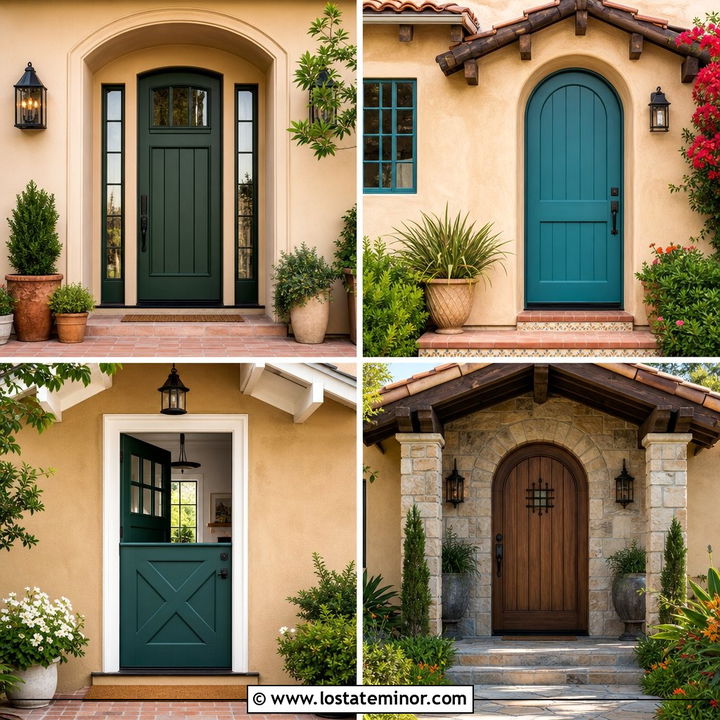
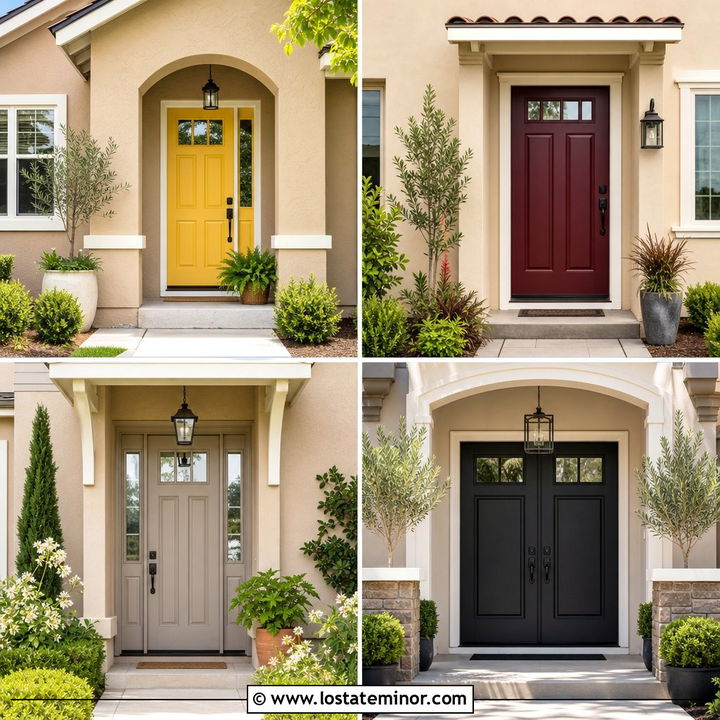
15. Tan Tudor With Dark Brown Porch Ceiling
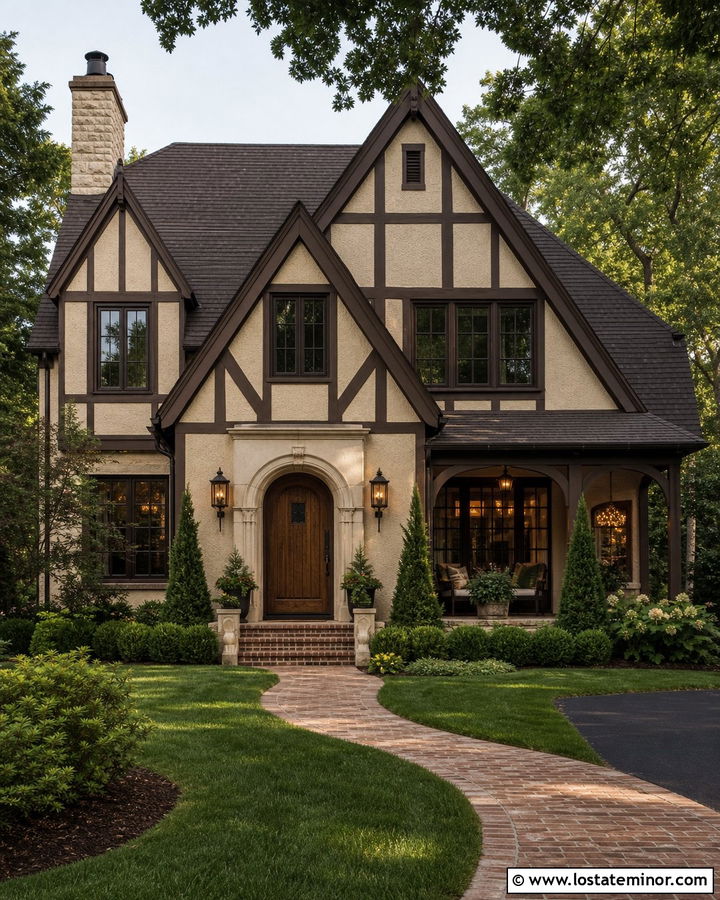
A dark brown porch ceiling fits naturally beneath the steep rooflines of a tan Tudor exterior. Use a subdued parchment tan on stucco walls and deep espresso brown on half-timbering, window frames, and the recessed entry ceiling. The repeated dark color makes the porch feel connected to the home’s existing architectural details. Select a heavy arched wood door in a medium walnut stain so it remains visible against the darker ceiling. Cream limestone around the doorway can brighten the entrance and create separation. A roof with charcoal and brown variation will bridge the full palette. Use brick steps, copper-toned lanterns, and restrained evergreen landscaping for an established look. This scheme respects the Tudor character while making the covered entrance more defined, warm, and visually balanced.
16. Tan Craftsman With Olive Green Porch Ceiling
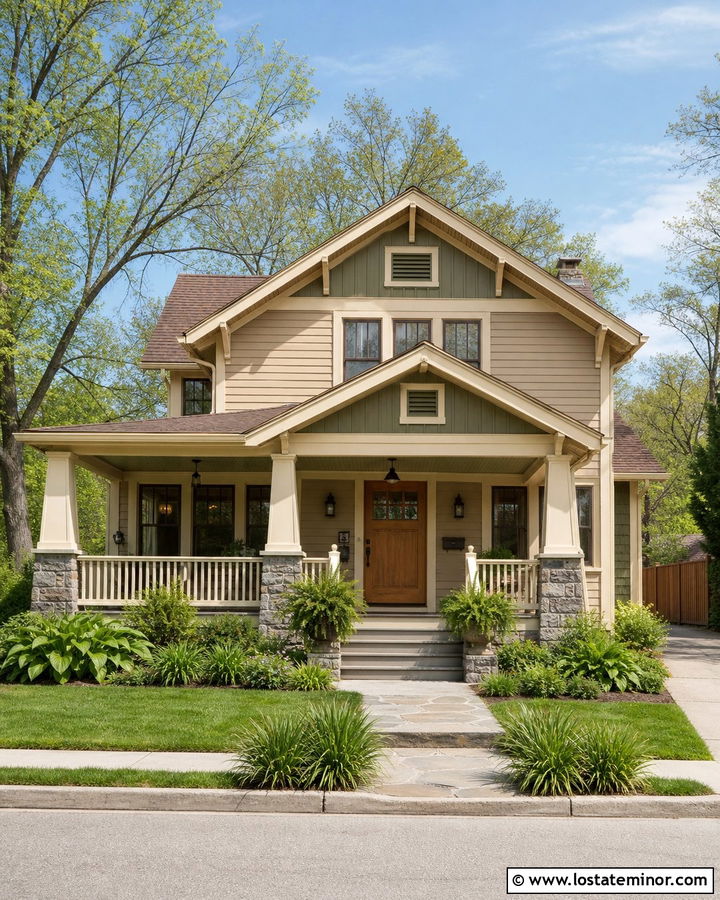
Olive green gives a tan Craftsman house an earthy layer of color that feels quieter than blue. Paint the main siding a warm flax tan and use creamy off-white on window trim, railings, and tapered columns. Apply muted olive to the beadboard ceiling, porch door, and selected gable vents. Natural stone column bases should contain green-gray and beige tones that connect the complete palette. Add a medium oak front door, bronze hardware, and brown architectural shingles for extra warmth. The olive ceiling will read differently in shade, so test it beside the tan siding before committing. Ferns, ornamental grasses, and broad-leaf shrubs will strengthen the garden connection. The final exterior feels grounded and handcrafted, with enough contrast to reveal the porch architecture clearly.
17. Tan Modern House With Matching Tan Porch Ceiling
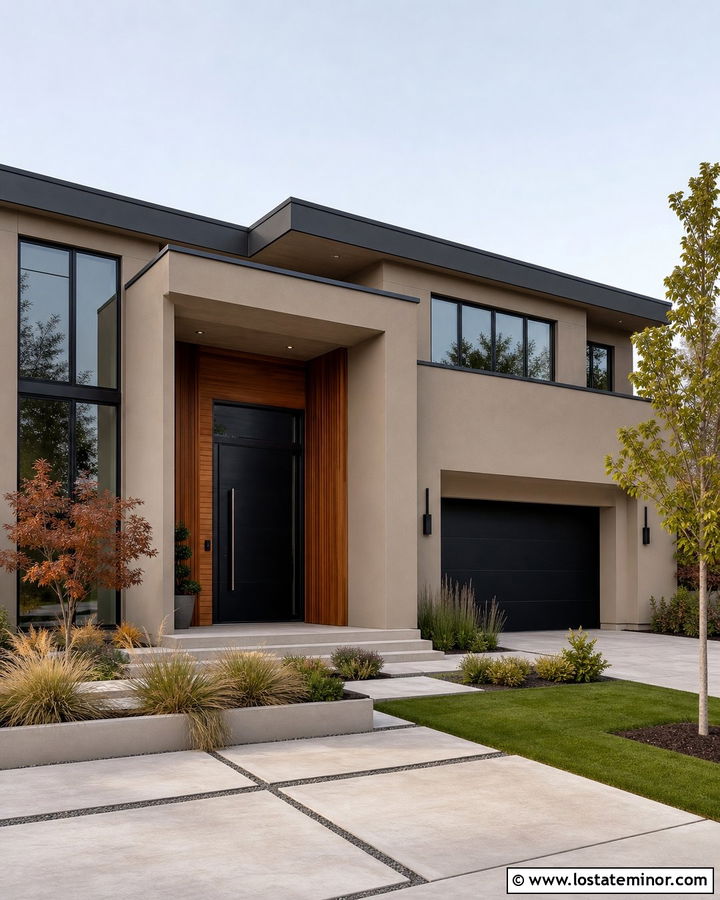
Painting the porch ceiling the same tan as the walls can create a seamless modern exterior. Choose a balanced greige-tan and continue it across smooth stucco, the recessed ceiling, and solid porch walls. This color-wrapped treatment works best when the architecture includes strong geometric forms and intentional shadow lines. Introduce contrast through black-framed windows, a black pivot door, and thin charcoal fascia. Warm cedar panels near the entrance can prevent the neutral palette from feeling sterile. Use pale concrete paving and simple black lighting to preserve the uncluttered appearance. The landscaping should be equally restrained, with sculptural grasses, low shrubs, and one small ornamental tree. Although the ceiling matches the body, changes in natural light will create enough tonal variation to make the porch feel dimensional.
18. Tan Traditional House With Greige Porch Ceiling
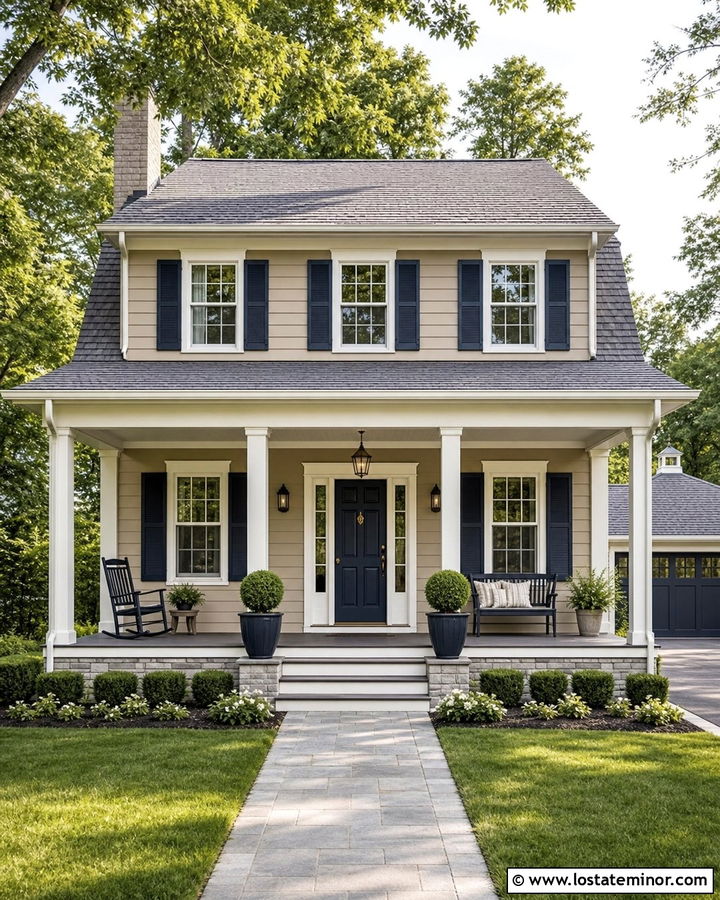
Greige is a useful porch ceiling color when a tan traditional house contains both warm and cool fixed materials. Start with medium beige-tan siding and creamy white window trim. Paint the ceiling a pale greige that connects the warm walls with a cool gray roof or gray stone foundation. Use a deep navy front door for a classic focal point and repeat navy on the shutters. Brushed nickel or black lighting will coordinate with the cooler roof tones. Keep columns, railings, and fascia creamy white to maintain clear architectural definition. A gray-brown composite porch floor can bridge the ceiling and stone without copying either one. Add symmetrical planters and a straight paver walkway. The completed scheme feels balanced, even when the house has several existing neutral finishes that cannot be changed.
19. Tan Southern House With Blue Gray Porch Ceiling
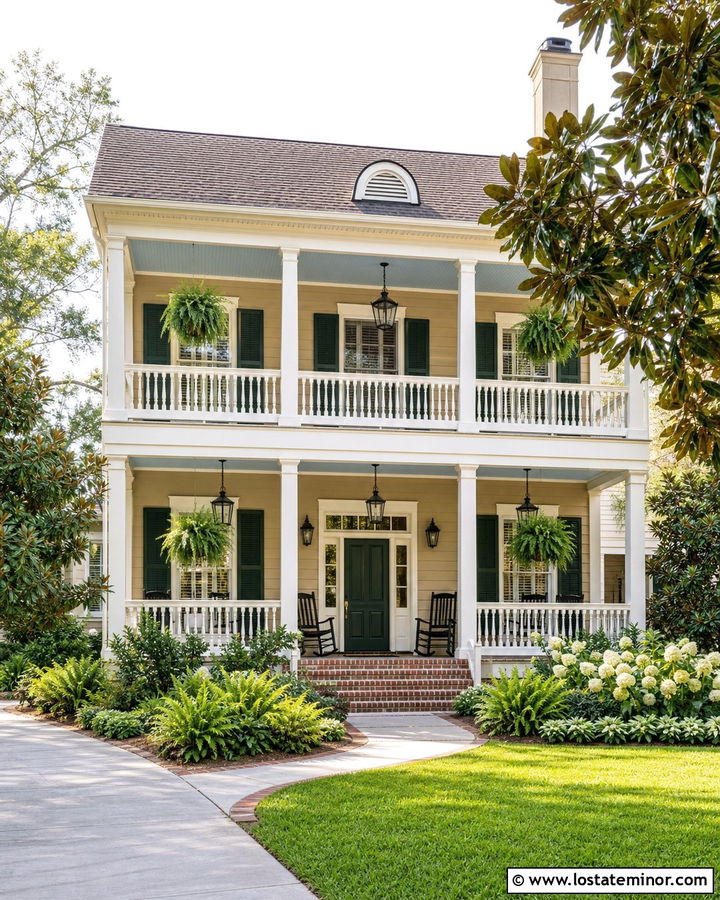
A blue-gray ceiling creates a gentle transition between a tan Southern exterior and a broad shaded porch. Choose warm khaki tan siding with soft white columns, railings, and decorative trim. Apply a misty blue-gray to the beadboard ceiling so it remains colorful without appearing overly bright. Deep forest green shutters and a matching front door can add traditional contrast. Use red brick on the porch floor and steps to bring warmth into the lower half of the facade. Black rocking chairs, lanterns, and ceiling fans offer practical dark accents. A brown-charcoal roof will visually connect the tan siding and green details. Large ferns, magnolias, and layered foundation beds complete the welcoming look. The ceiling remains noticeable from the curb but does not overpower the home’s stately proportions.
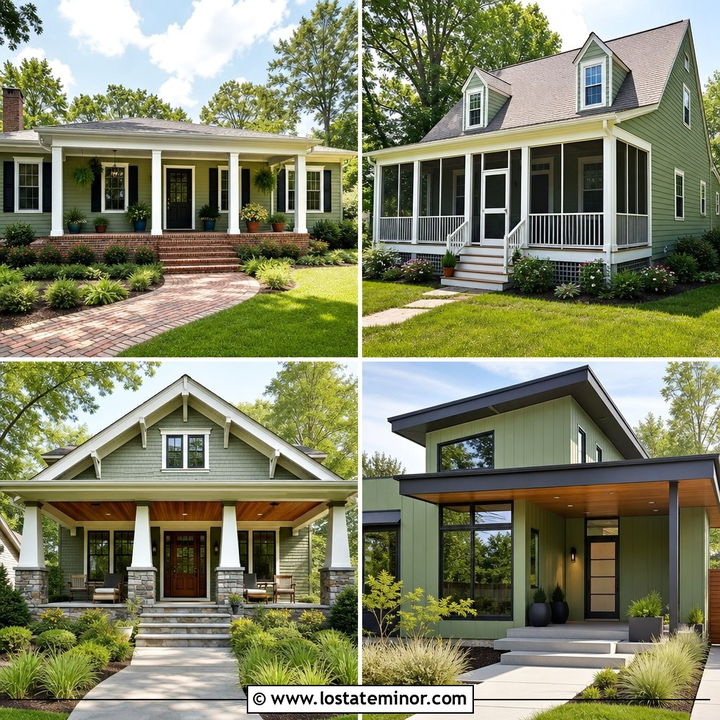
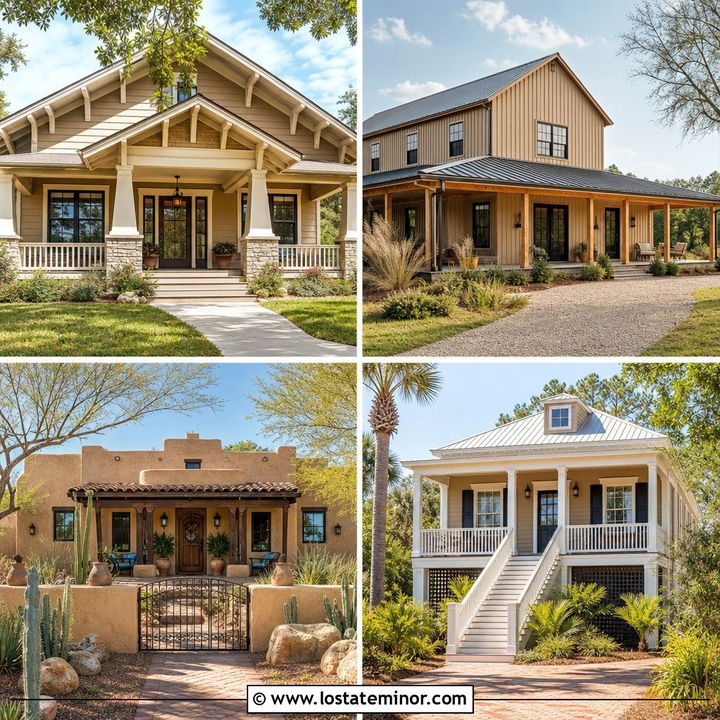
20. Tan Cabin With Knotty Pine Porch Ceiling
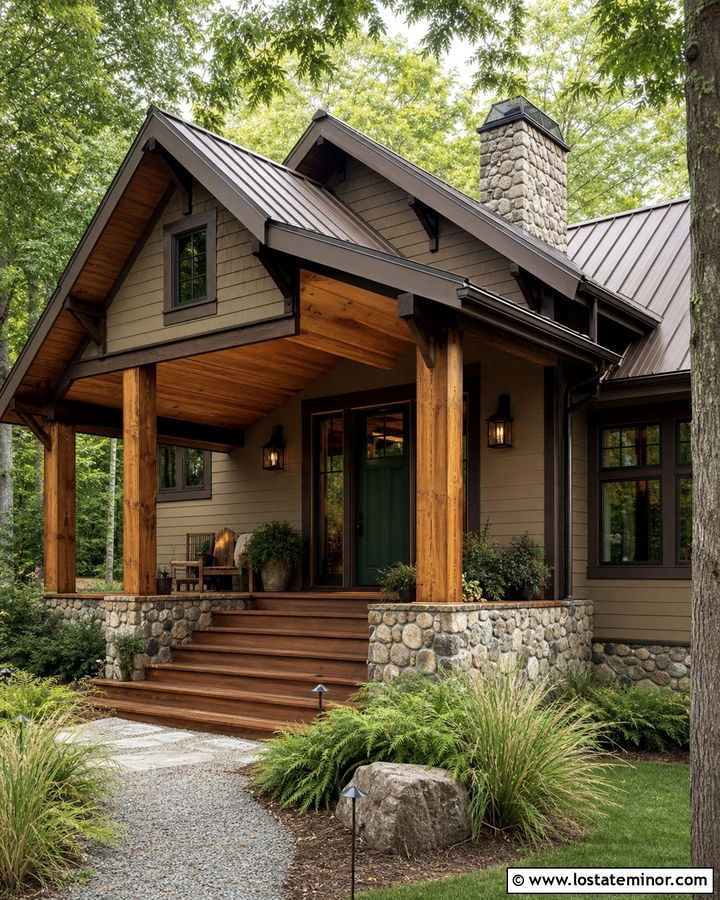
A knotty pine ceiling makes a tan cabin porch feel warm and closely connected to its wooded surroundings. Cover the house in deep buckskin tan siding, then finish the overhead boards with a clear matte sealer or light honey stain. Use dark brown trim, exposed rafters, and chunky timber columns to frame the lighter pine. A forest green front door adds restrained color and blends naturally with surrounding trees. Incorporate rugged fieldstone around the foundation, chimney, and column bases. Brown metal roofing can reinforce the rustic palette while offering a clean profile. Choose wide wood steps and simple black iron lighting rather than decorative fixtures. Native grasses, ferns, and an informal gravel walkway complete the exterior. Every element should feel durable, natural, and appropriate for a relaxed cabin setting.
21. Tan Duplex With White Vinyl Porch Ceiling
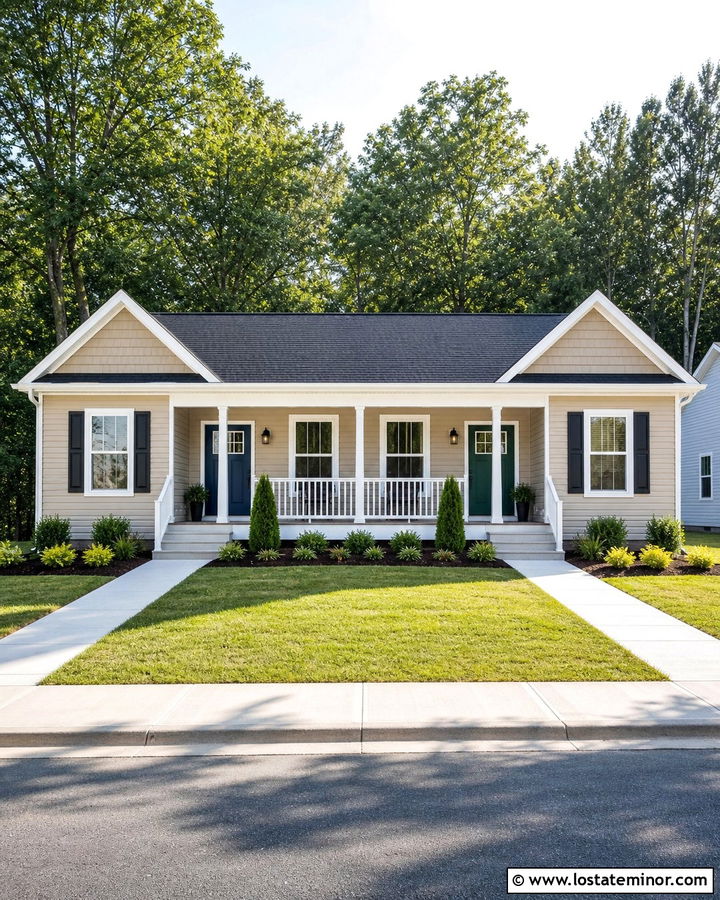
White vinyl porch panels provide a clean, low-maintenance finish for a tan duplex or attached home. Select neutral oatmeal tan siding and continue warm white across the porch ceiling, fascia, columns, and shared railing. Use two different but related front door colors, such as muted navy and deep green, to give each entrance an individual identity. Black lanterns and house numbers can unify both sides of the facade. A charcoal roof and medium gray porch floor will add practical contrast without dividing the building visually. Keep landscaping balanced with matching shrubs and mirrored walkway borders. The white ceiling reflects daylight into both recessed entries, helping them feel less enclosed. This simple scheme is especially useful when the architecture needs consistency, durability, and broad neighborhood appeal rather than elaborate decorative detail.
22. Tan Adobe House With Sand Colored Porch Ceiling
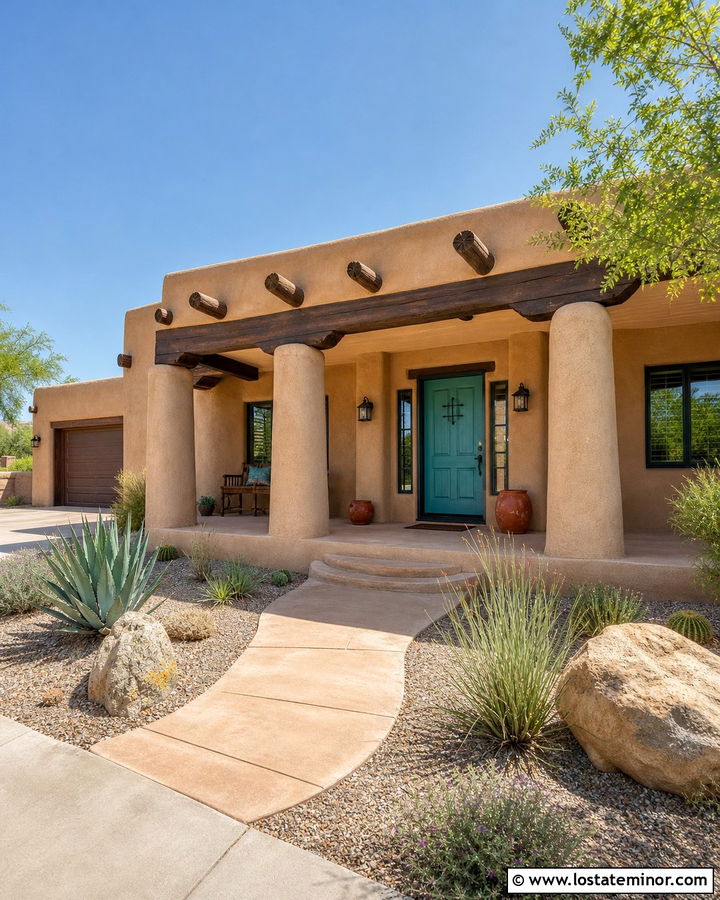
A sand-colored porch ceiling can blend almost invisibly into a tan adobe exterior. Choose a sun-baked desert tan for the rounded stucco walls and use a slightly lighter sandy shade overhead. Keep the porch beams exposed in a dark weathered wood stain to create rhythm and contrast. A turquoise front door introduces a concentrated Southwestern accent, while black iron lights and hardware add definition. Use clay-colored paving, smooth stucco columns, and gravel landscaping to support the regional character. Succulents, ornamental grasses, and large natural rocks can frame the walkway without hiding the architecture. Because the ceiling and walls are closely related, texture becomes especially important. Rough stucco, timber beams, and handmade-looking pavers prevent the neutral design from feeling flat despite its limited color range.
23. Tan French Country House With Limewashed Wood Ceiling
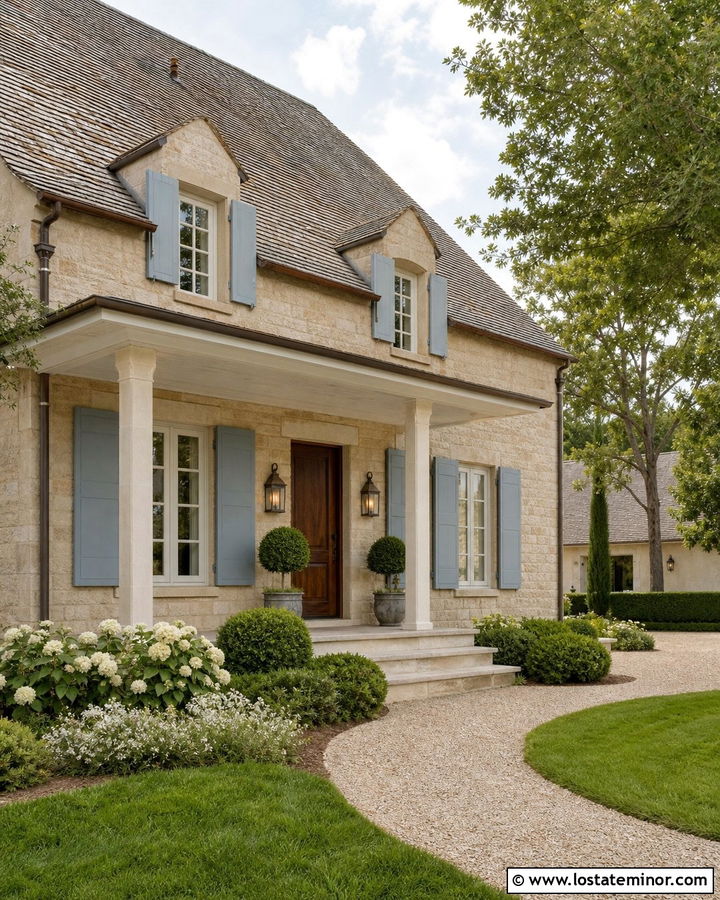
A limewashed wood ceiling lends gentle age and texture to a tan French country facade. Use pale limestone tan stucco with creamy trim around tall windows and softly arched openings. The porch ceiling boards should have a translucent off-white finish that allows some natural grain and knots to remain visible. Add muted blue-gray shutters and a walnut front door with simple iron hardware. Limestone steps and a warm gray roof will keep the palette quiet and refined. Rather than using stark black accents, choose aged bronze lanterns and gutters. Informal lavender-colored flowers, clipped shrubs, and a curved gravel walkway can soften the symmetrical architecture. The completed exterior feels layered and established, with the weathered ceiling serving as a bridge between painted surfaces and natural materials.
24. Tan Shingle House With Driftwood Porch Ceiling
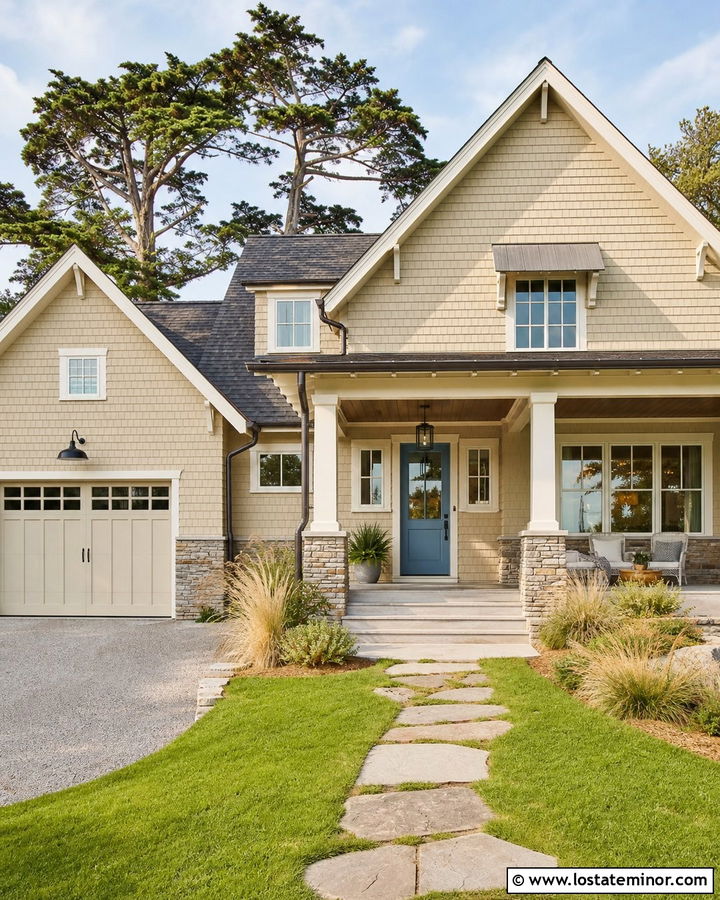
Weathered driftwood tones complement the subtle texture of a tan shingle house. Choose soft beach tan shingles and paint or stain the porch ceiling a gray-brown driftwood color. Cream trim around windows and rooflines will brighten the facade, while deep slate blue on the front door adds a measured coastal accent. Use weathered gray decking, simple white columns, and dark bronze lights to complete the porch. If the house includes stone, select a blend containing beige, gray, and muted brown rather than strongly colored stone. A soft charcoal roof will reinforce the cooler notes in the ceiling. Surround the home with ornamental grasses and an irregular stone path. The mix of tan, driftwood, and blue creates coastal character without relying on obvious nautical decorations or overly bright colors.
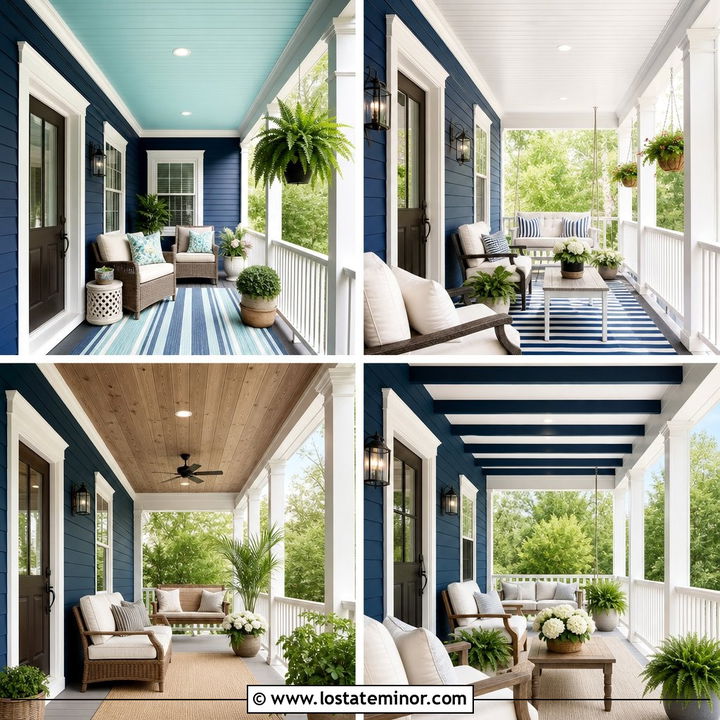
25. Tan Rambler With Navy Porch Ceiling
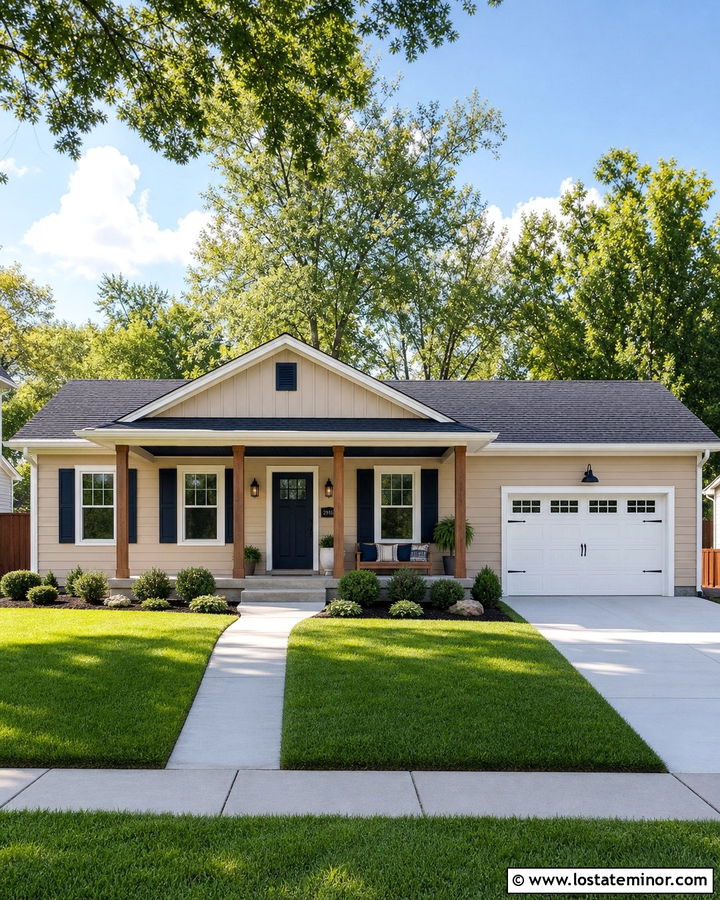
A navy porch ceiling can give a simple tan rambler a stronger identity from the curb. Start with light almond tan siding and warm white trim around the windows, eaves, and garage. Paint the porch ceiling a deep but slightly softened navy, then repeat it on the front door or a pair of shutters. Natural wood porch posts prevent the high-contrast scheme from appearing too formal. Use charcoal roofing, black wall lights, and a gray concrete porch for a practical foundation. Because a rambler has a long horizontal facade, keep the navy limited to the entry area so it creates a clear destination. Low shrubs and a broad walkway can guide attention toward the porch. The result is straightforward, affordable, and noticeably more polished than an entirely neutral exterior.
26. Tan Stone House With Copper Tone Porch Ceiling
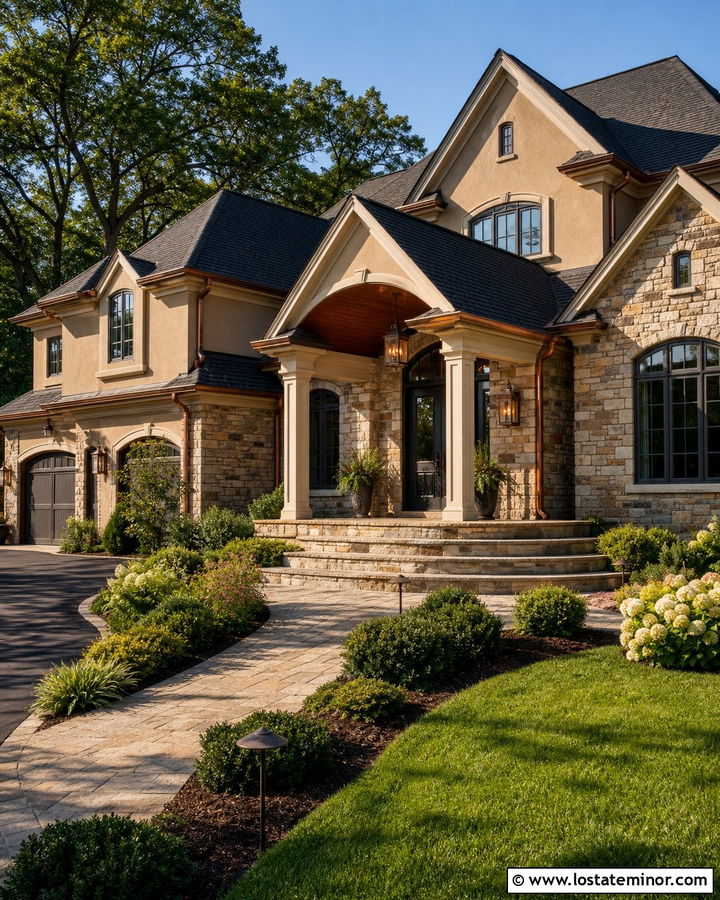
A copper-toned porch ceiling brings warmth to a tan stone house without introducing a bright new color. Use sandy tan stucco or siding beside natural stone containing cream, rust, and gray. Paint the porch ceiling a burnished copper-brown, or use metal-look panels with a subdued matte finish. Repeat the warm metallic tone through gutters, lanterns, and small roof details. A deep charcoal front door and window frames will keep the scheme from becoming too brown. Choose creamy trim to outline the roof and columns, then add a medium charcoal roof for balance. Broad stone steps and a curved paver walkway will reinforce the home’s substantial character. The ceiling should appear warm and dimensional in sunlight, creating a refined focal point that relates directly to the stone’s natural variation.
27. Tan Farmhouse With Exposed Beam Porch Ceiling
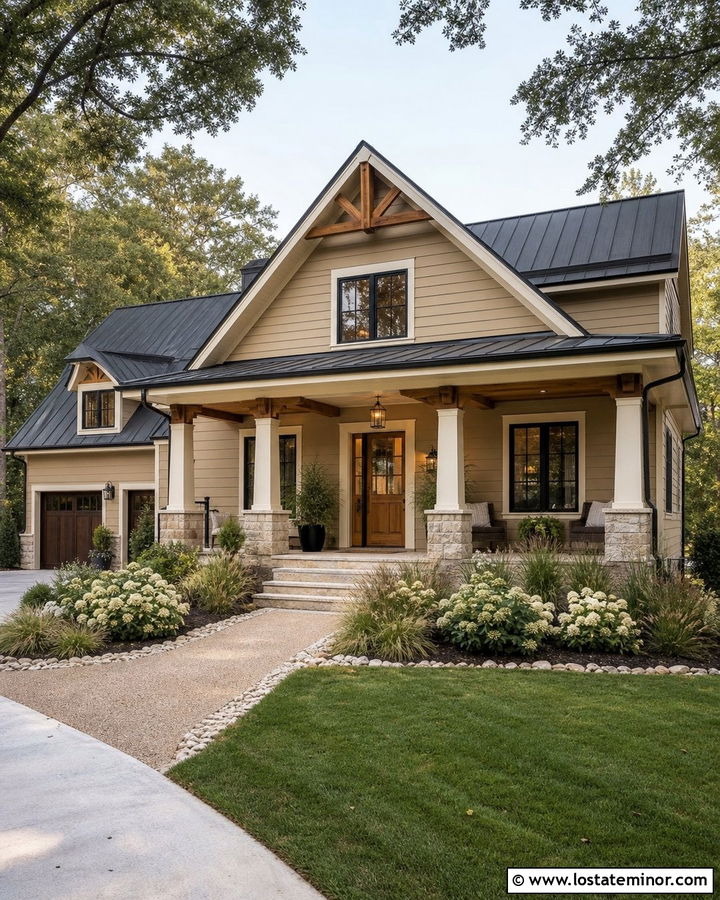
Exposed beams can turn a plain porch ceiling into a defining feature on a tan farmhouse. Paint the main board-and-batten siding a muted straw tan and use warm white on the flat ceiling boards, trim, and columns. Add substantial beams in a medium cedar or walnut stain. Carry the same wood tone onto the front door and small gable brackets so the beams do not appear isolated. Black windows, metal roofing over the porch, and simple barn-style lights provide modern contrast. A pale stone foundation and natural wood porch floor will soften the black details. Keep the landscaping informal with hydrangeas, grasses, and a wide gravel-edged walkway. This complete scheme gives the farmhouse warmth, depth, and architectural character while preserving its clean, recognizable silhouette.
28. Tan Colonial Revival With Pale Green Porch Ceiling
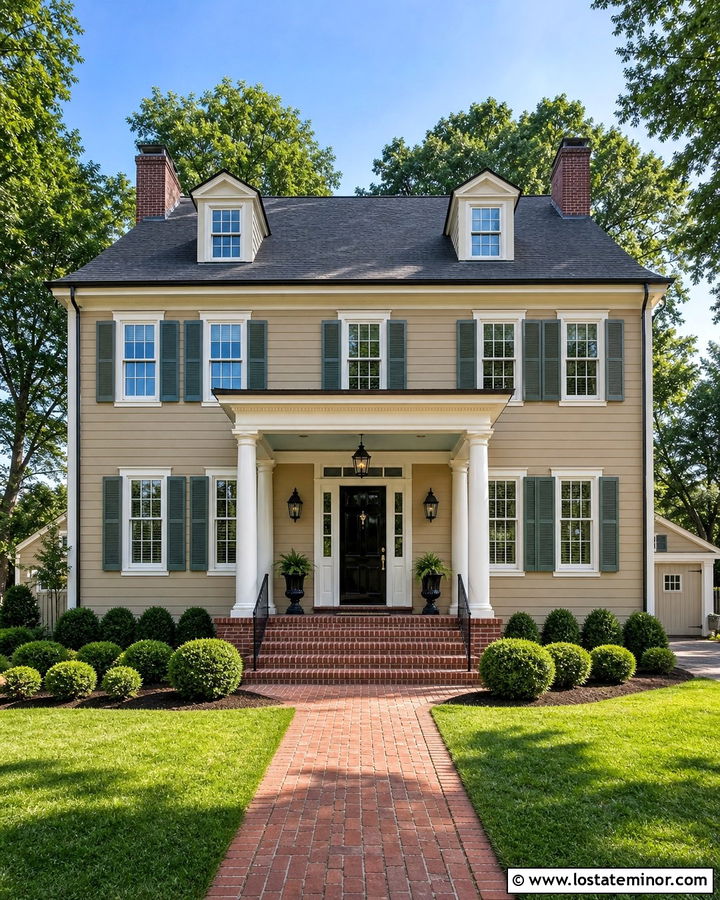
A pale green ceiling provides understated color for a formal tan Colonial Revival home. Choose warm putty tan siding, crisp ivory trim, and a muted celadon green for the porch ceiling. Repeat the green on the shutters while using a glossy black front door as the central focal point. White or ivory columns should remain visually dominant, especially if the porch includes classical capitals and detailed cornices. Red brick steps and a straight brick walkway add traditional warmth beneath the cooler ceiling. Use black lanterns, dark gutters, and a charcoal roof to outline the structure. Symmetrical boxwoods and matching planters will reinforce the orderly facade. The green is softer than navy and more distinctive than white, giving the historic-looking exterior a fresh layer without disrupting its balanced architecture.
29. Tan Contemporary House With Cedar Slat Porch Ceiling
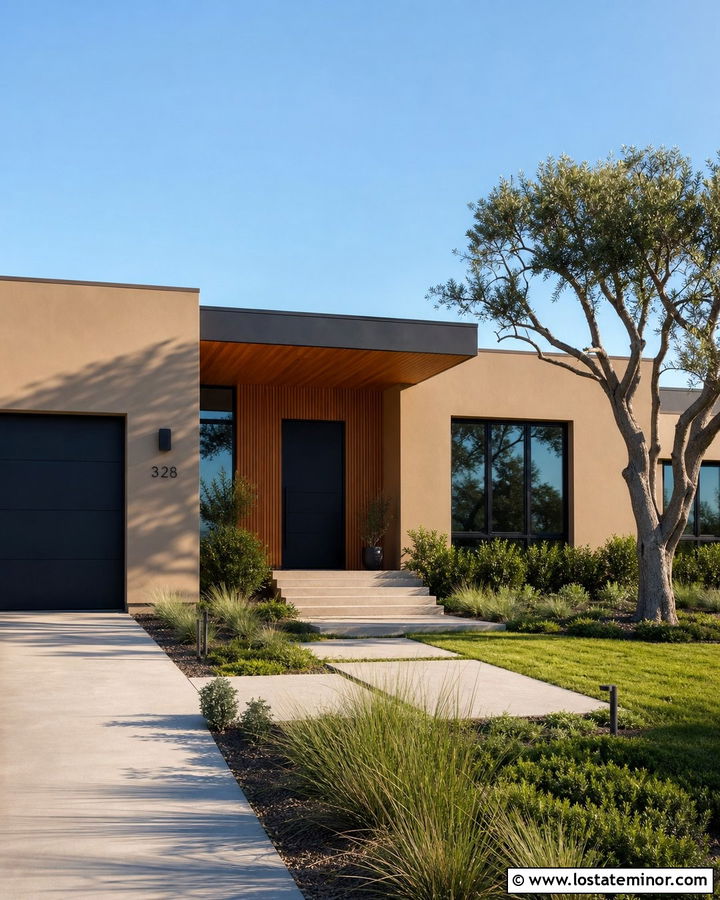
A cedar slat ceiling introduces natural warmth beneath the sharp overhang of a tan contemporary house. Use smooth light mocha tan stucco for the main exterior and run narrow cedar slats across the ceiling in a clear matte finish. Black-framed windows, charcoal fascia, and a flat black front door will create a crisp outline around the warm materials. Add a vertical cedar panel beside the entrance to connect the ceiling visually with the front elevation. Pale concrete steps and large rectangular walkway slabs keep the lower facade bright. Use minimal lighting recessed between the slats rather than decorative hanging fixtures. Structured ornamental grasses and low evergreen masses complement the clean architecture. The resulting design feels modern but not cold because tan and cedar soften the extensive black and concrete surfaces.
30. Tan Two Story House With Warm White Porch Ceiling
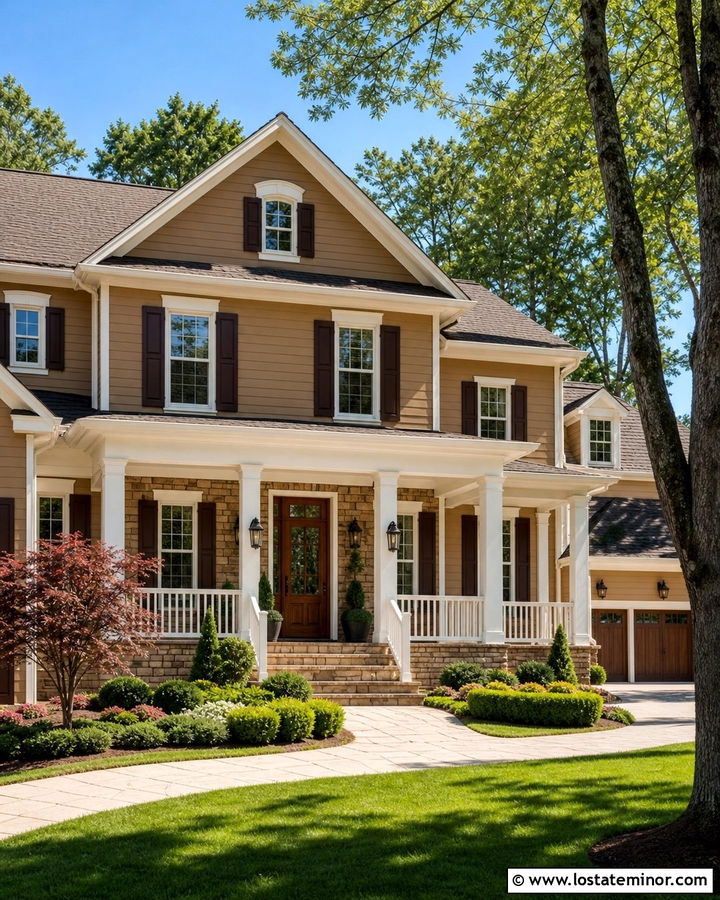
Warm white is a reliable porch ceiling choice for a large two-story tan house with several exterior materials. Paint the primary siding a balanced golden tan and use warm white on the ceiling, fascia, columns, railings, and window trim. Deep brown shutters and a rich walnut front door will bring depth to the tall facade. If the lower level includes brick or stone, choose material with beige and brown variation to connect it naturally with the siding. A charcoal-brown roof and bronze lanterns will complete the warm neutral scheme. Keep the porch floor medium gray so it does not become another brown surface. Layered foundation shrubs, a wide walkway, and one ornamental tree can visually anchor the height. The bright ceiling makes the entrance appear open, clean, and clearly defined.
Conclusion:
The right porch ceiling can turn a basic tan exterior into a complete, memorable curb-appeal scheme. Blue beadboard adds tradition, stained wood introduces natural warmth, and darker ceilings provide contemporary contrast. Cream, greige, and matching tan finishes offer quieter options for homeowners who prefer a cohesive neutral palette. Before selecting a finish, compare its undertones with the siding, roof, stone, and porch flooring in bright daylight. Repeat the ceiling color or material elsewhere in a controlled way, such as on shutters, beams, doors, or small accents. These **30 Tan House Design With Porch Ceiling Ideas** show how thoughtful coordination can make every house style feel more welcoming, balanced, and intentionally designed.

Related posts: