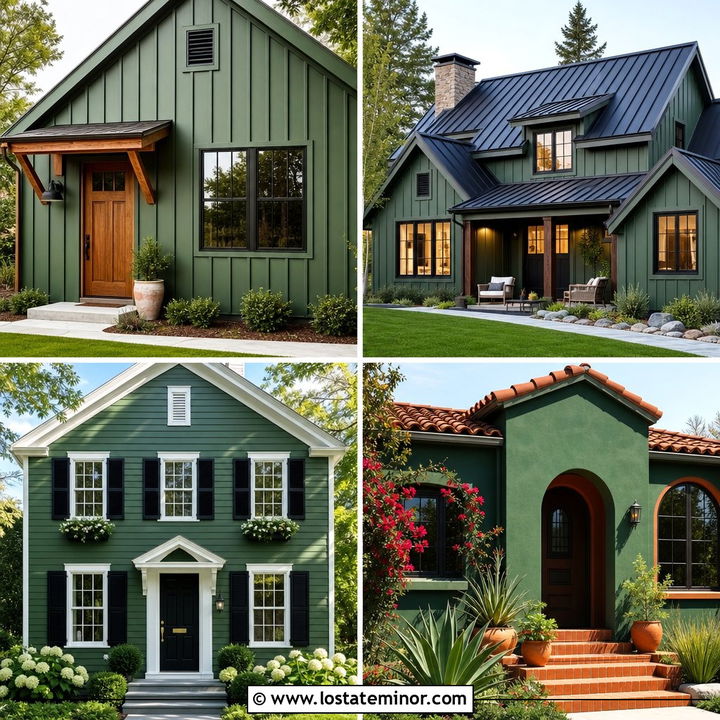
1. Moss Green Siding With Warm White Trim
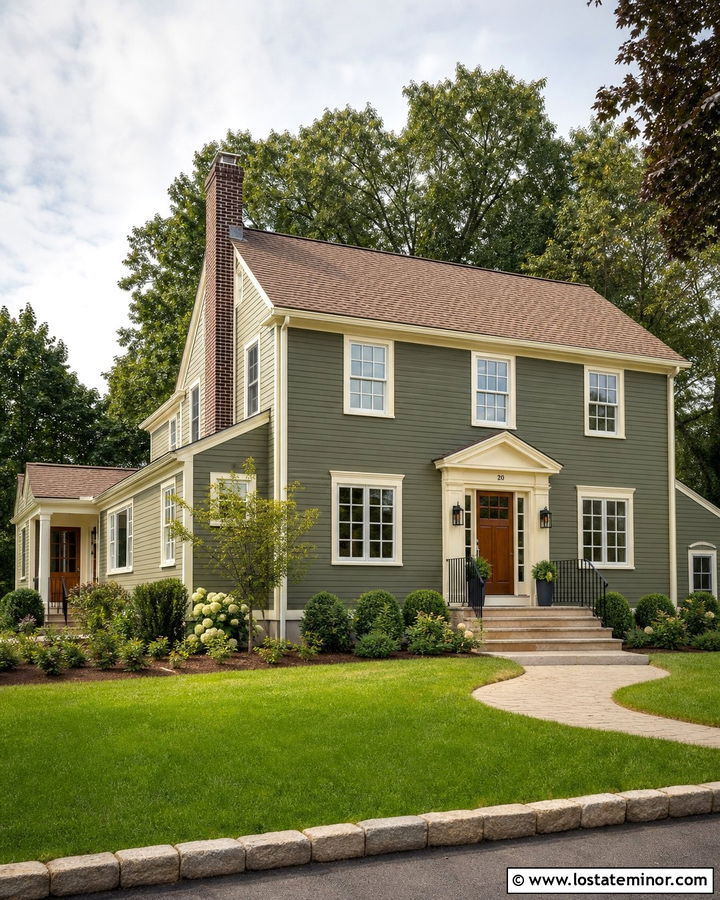
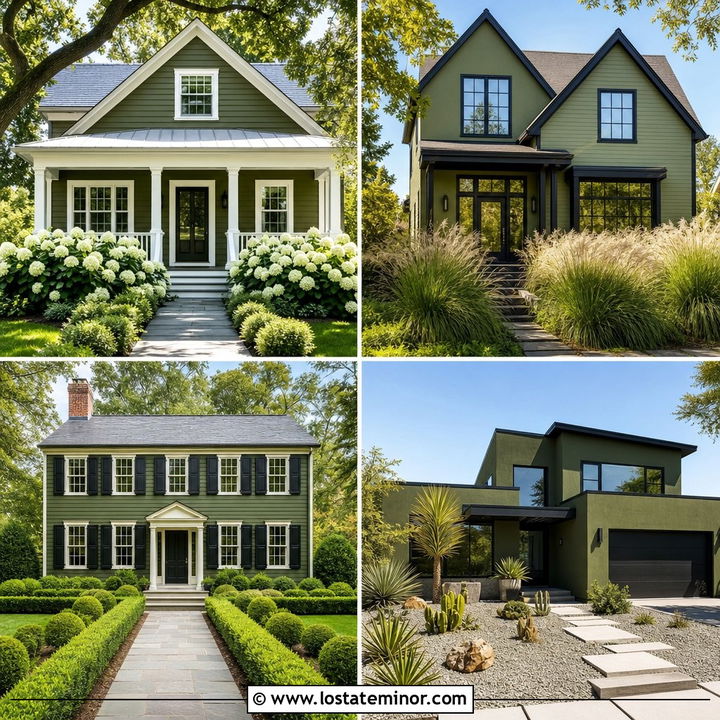
Warm white trim gives moss green siding a clean outline without making the contrast feel harsh. Use the green across the main horizontal lap siding, then apply a creamy white to window frames, corner boards, fascia, and porch columns. A medium-brown shingle roof grounds the palette, while a natural oak front door adds warmth near the entry. This combination works especially well on a traditional two-story home or Cape Cod with balanced windows. Keep shutters in moss green or omit them so the trim remains simple. Beige stone steps and soft green landscaping complete the look. Choose a warm white rather than a cool, blue-based white to maintain the earthy character of the siding.
2. Moss Green Siding With Black Trim
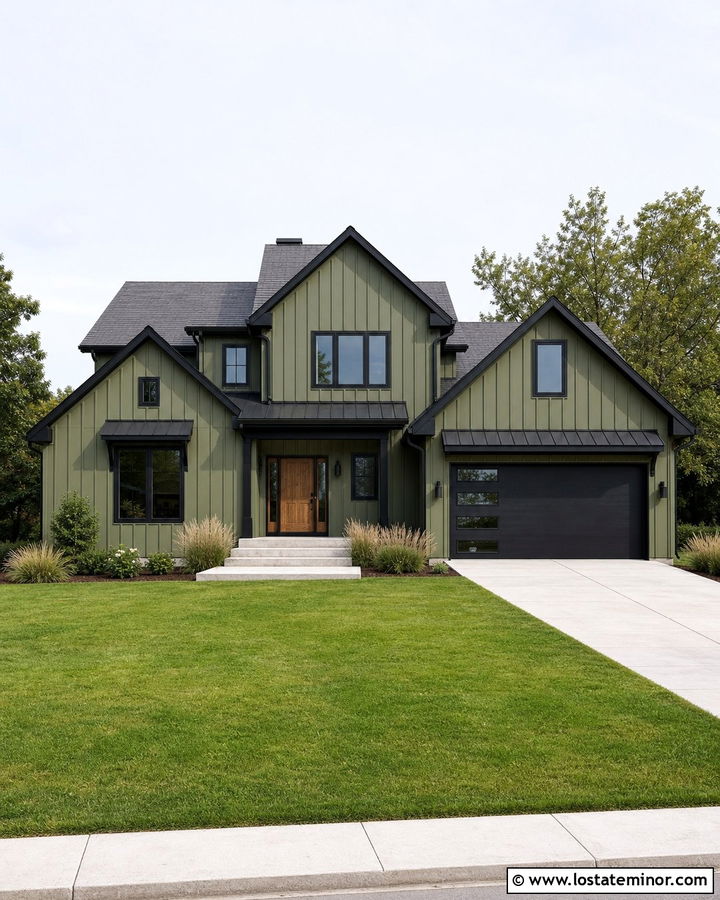
Looking for a sharper, more contemporary finish? Black trim makes moss green siding feel structured and modern, especially on houses with simple rooflines. Use black around the windows, gutters, fascia, porch railings, and garage door hardware. A charcoal architectural-shingle roof will connect those dark elements across the facade. To prevent the scheme from becoming too heavy, add a medium-toned cedar front door and pale concrete steps. Vertical board-and-batten siding can emphasize the clean lines of this pairing. Keep the landscaping open with ornamental grasses, low shrubs, and a wide walkway. The completed exterior feels bold but still connected to nature because the green siding and warm wood soften the strong black framework.
3. Moss Green Siding With Cream Trim And Cedar Door
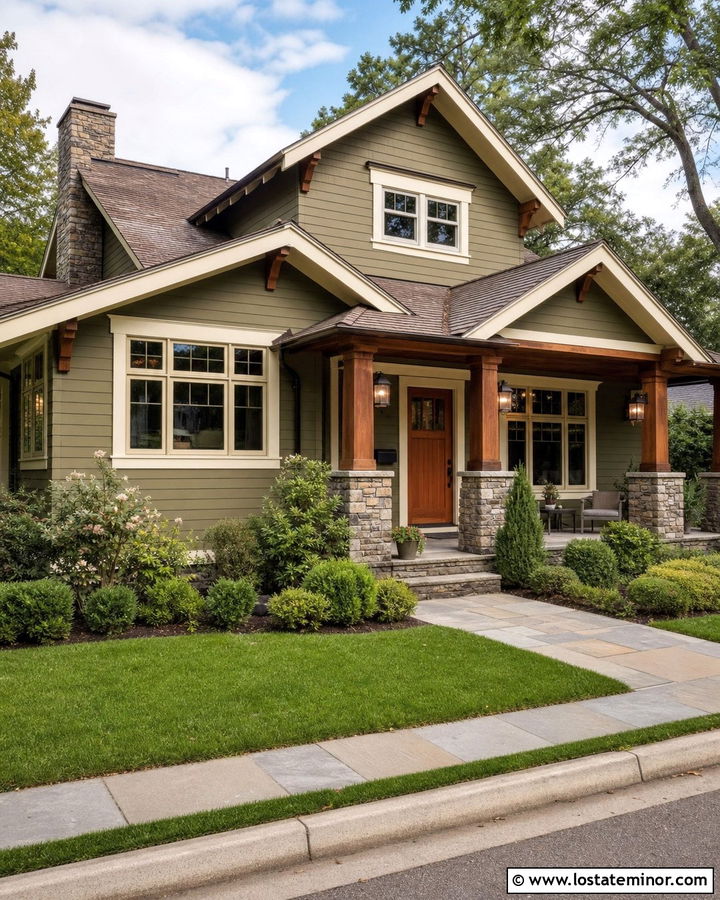
The glow of a cedar door can make a moss green exterior immediately feel more inviting. Cover the facade in horizontal moss green siding and use soft cream on the trim, porch ceiling, columns, and window frames. The cream creates gentle contrast, while the cedar introduces a warm focal point. Select a door with simple glass panels so the wood remains visible. A weathered brown roof, natural stone porch foundation, and bronze lighting will support the relaxed palette. This scheme suits Craftsman homes, cottages, and suburban houses with covered entries. Repeat the cedar on porch beams or small gable brackets, but use it sparingly. That repetition makes the exterior look coordinated instead of overly rustic.
4. Moss Green Siding With Greige Trim
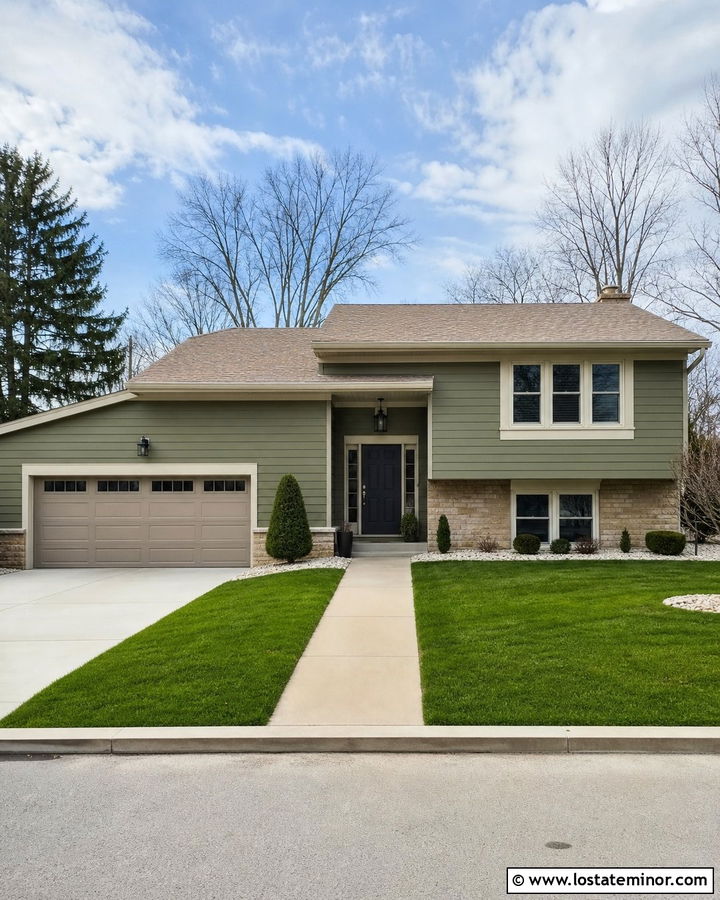
Greige trim offers a quieter alternative to bright white and helps moss green siding blend with stone, concrete, and weathered roofing. Choose a light warm greige for window surrounds, fascia, soffits, and corner boards. Paint the garage door in the same greige to reduce its visual size. A charcoal front door provides a defined entry, while taupe stone along the foundation adds useful texture. This complete scheme is particularly effective on a ranch or split-level house with a long facade. Use wide trim boards so the neutral color is noticeable from the street. Finish the yard with layered evergreens, pale gravel, and a straight concrete walkway for an exterior that looks calm, cohesive, and thoughtfully updated.
5. Moss Green Board And Batten Siding With Black Windows
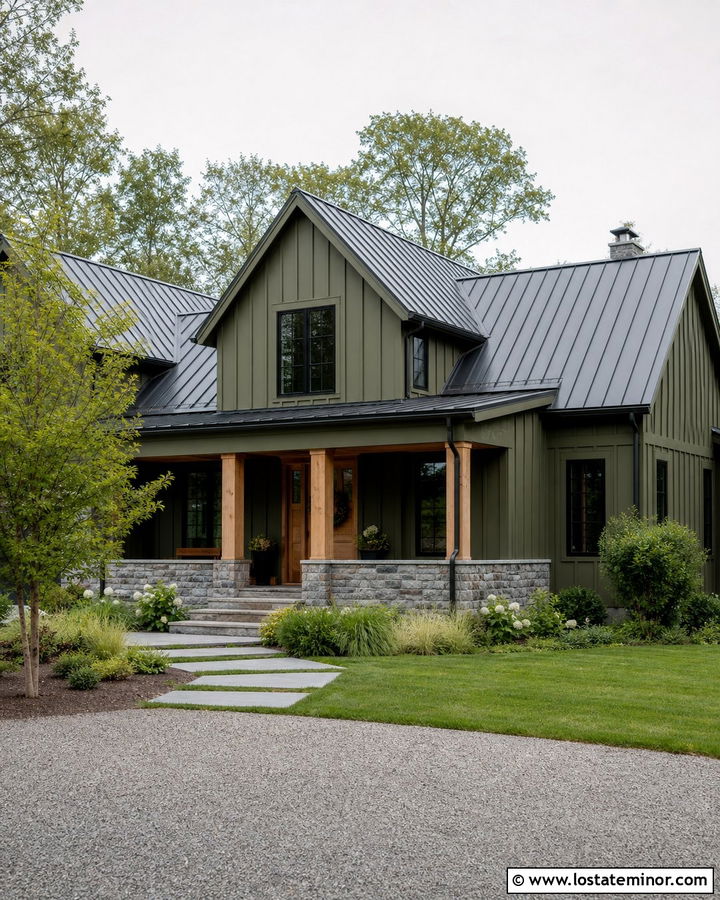
Tall panels of moss green board-and-batten siding can make a compact home appear more vertical and refined. Pair the siding with slim black windows, black gutters, and a dark charcoal metal roof for crisp definition. Warm cedar posts at the entrance prevent the black details from feeling severe. Continue the wood tone on the front door and porch ceiling to create a clear connection between the architectural elements. A low wall of gray fieldstone can anchor the facade without competing with the vertical lines. This scheme works beautifully on modern farmhouse, mountain, and contemporary cottage architecture. Keep the landscaping simple, using grasses and rounded shrubs that soften the house while allowing the siding pattern to remain the primary feature.
6. Moss Green Lap Siding With White Shutters
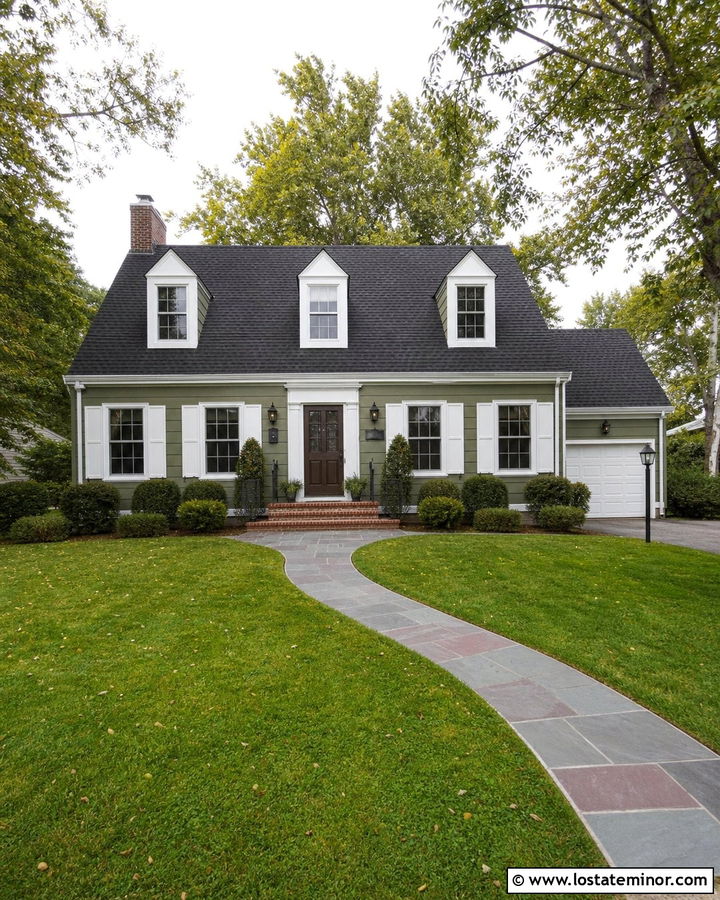
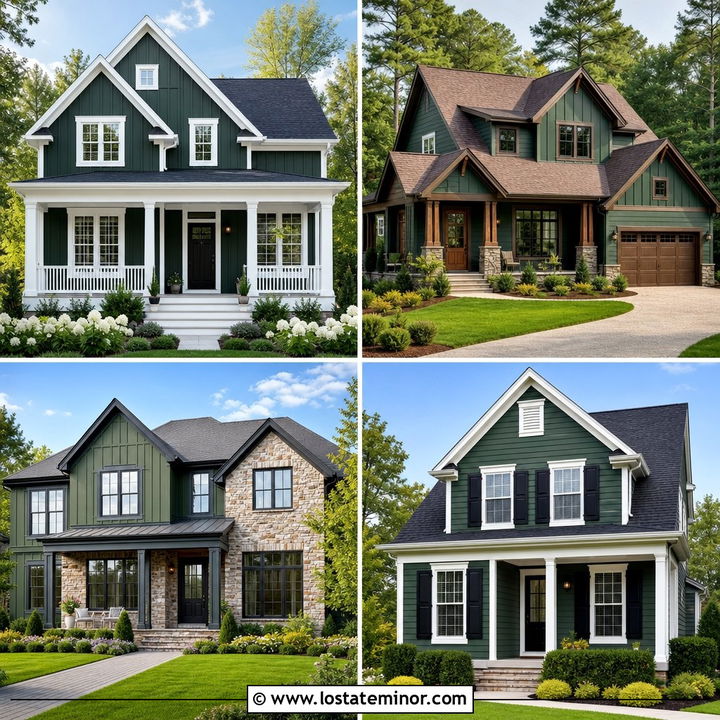
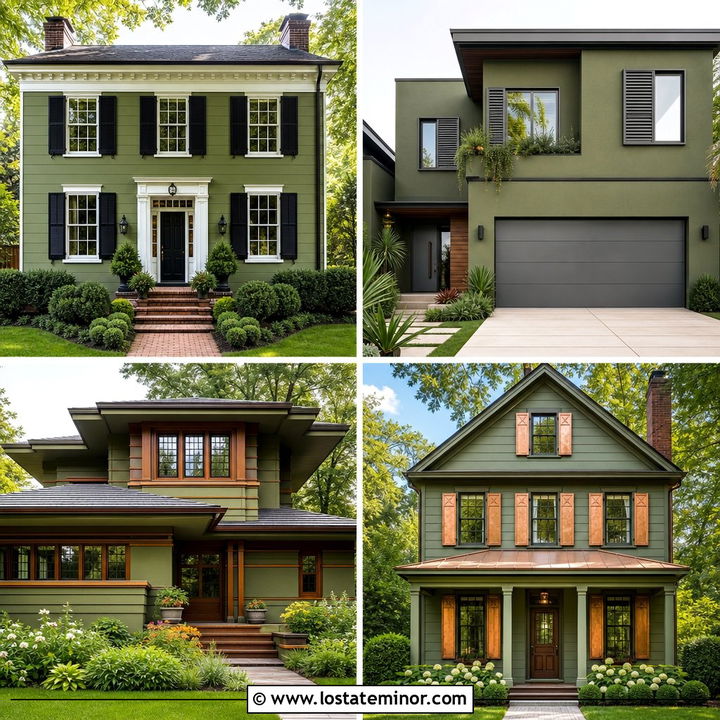
Traditional white shutters bring symmetry and brightness to moss green lap siding. Choose shutters that are correctly sized for the windows, then repeat their white color on the trim, porch railing, and fascia. A deep brown front door adds weight at the center of the facade, while a dark gray roof keeps the overall palette neutral. This treatment works especially well on Colonial and Cape Cod homes with evenly spaced windows. Brick steps can add warmth, provided the brick has muted red or brown tones. Use simple black lanterns for a small amount of contrast. The finished house feels familiar and polished, but the moss green body color gives it more personality than a standard gray, beige, or white exterior.
7. Moss Green Mixed Siding With Matching Trim
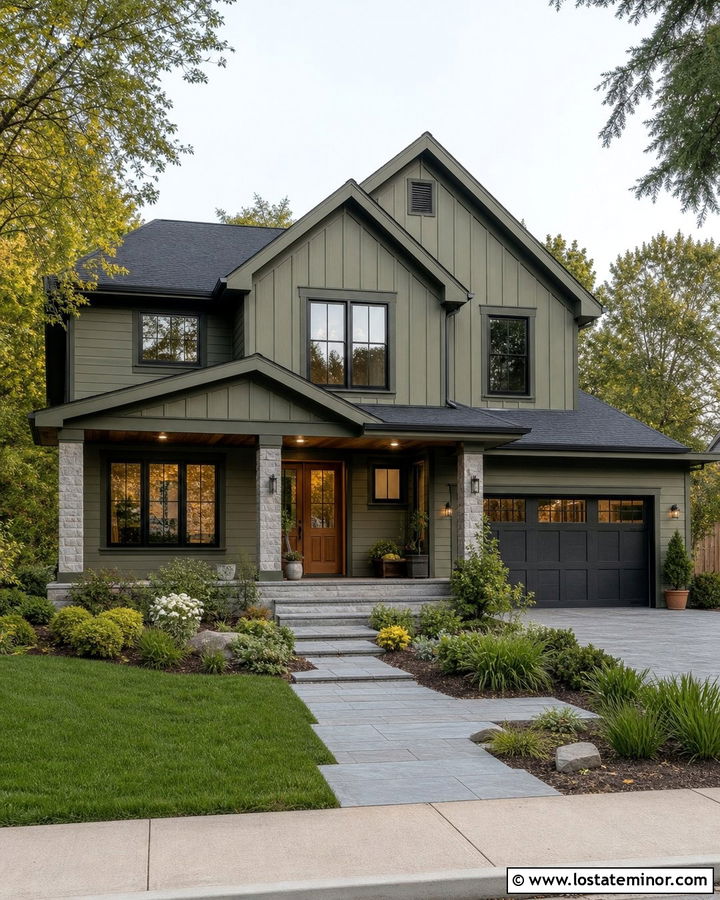
Combining horizontal lap siding and vertical board-and-batten creates texture without requiring several competing colors. Apply the same moss green to both siding profiles, using vertical panels in the gables and lap siding across the main walls. Paint the trim a slightly deeper moss green for a subtle tonal effect. Black windows and a charcoal roof add definition, while a warm wood door breaks up the green. This coordinated approach suits transitional homes with multiple rooflines because it simplifies a potentially busy facade. Add light gray stone around the porch base or chimney for another layer of texture. The result feels detailed from close range, yet calm and unified when viewed from the curb.
8. Moss Green Siding With Stone Veneer
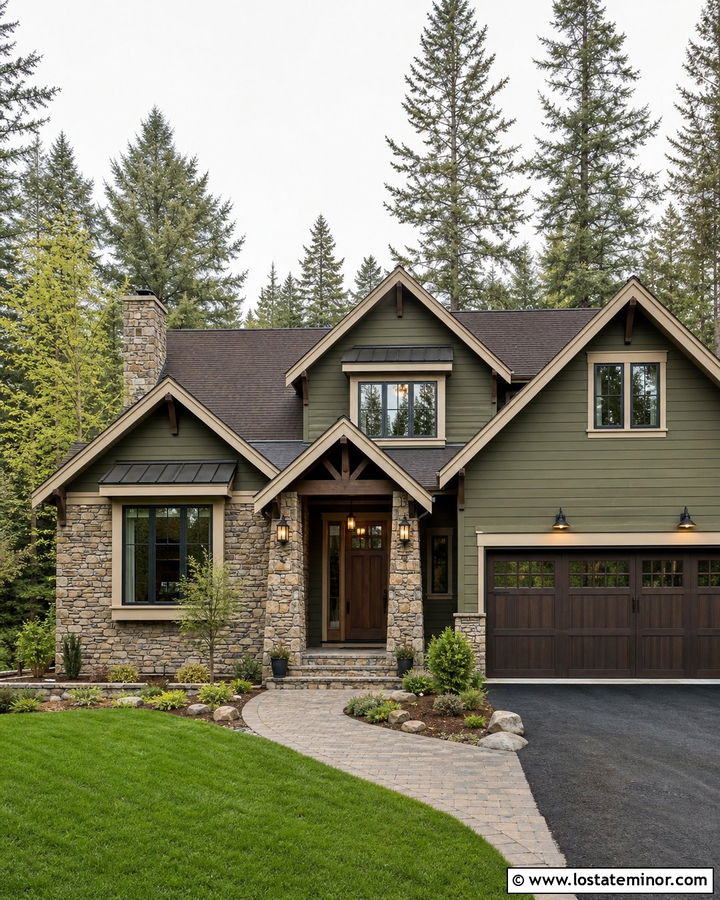
Rugged stone can make moss green siding look especially connected to its setting. Use horizontal green siding across the upper walls and add mixed tan-gray stone veneer around the foundation, porch columns, or garage wing. Pull a warm beige from the stone for the window trim and fascia. A stained walnut front door and dark bronze fixtures will reinforce the earthy palette. Choose a roof in charcoal brown rather than solid black to maintain a softer transition between materials. This combination suits Craftsman, lodge-inspired, and traditional suburban homes. Avoid covering too many unrelated sections with stone. Concentrating it on structural areas gives the facade a believable foundation and allows the moss green siding to remain the dominant exterior finish.
9. Moss Green Siding With Red Brick
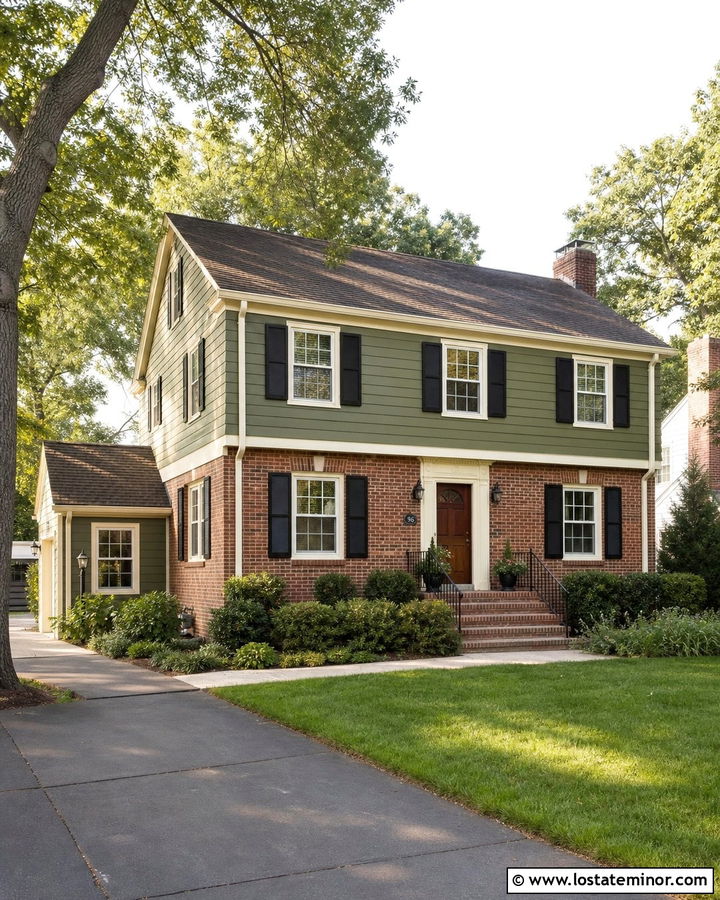
Existing red brick does not prevent you from choosing moss green siding. In fact, a muted green can balance brick that contains brown, charcoal, or earthy red variations. Use the siding on upper stories, gables, or additions while keeping the original brick visible below. Cream trim provides a smooth transition between the two materials. Select a dark brown roof and a stained wood front door to repeat the brick’s warmth. Black shutters or lighting can be added in small amounts for definition. This pairing is ideal for traditional homes that need an update without painting the masonry. Before choosing the green, compare large samples beside several sections of brick because natural color variation can influence the final appearance.
10. Moss Green Siding With Limewashed Brick
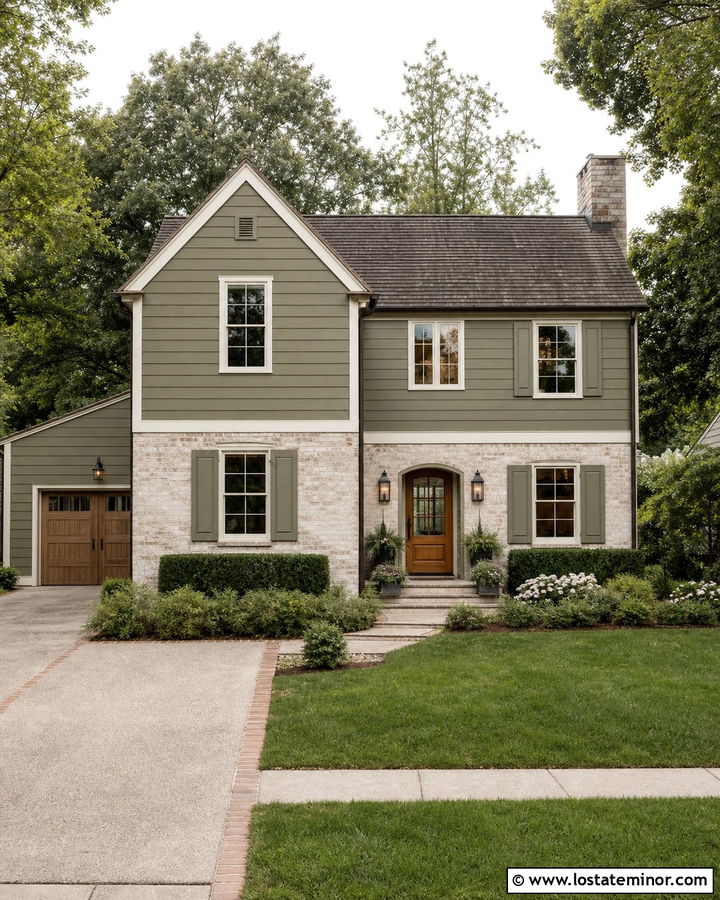
Soft limewashed brick creates an airy foundation beneath moss green siding. Apply the green to the upper level, gables, or main clapboard walls, then use a thin, varied limewash that allows some of the original brick color to remain visible. Warm white trim will connect the siding and masonry. A natural wood door, aged bronze lanterns, and a brown-gray roof keep the palette comfortable rather than stark. This exterior works well on cottages, transitional homes, and older brick houses with later siding additions. Keep the limewash intentionally uneven for natural depth. Muted flowers, clipped shrubs, and a brick-edged walkway can reinforce the relaxed appearance while framing the complete facade with understated color and texture.
11. Moss Green Siding With Cedar Shingles
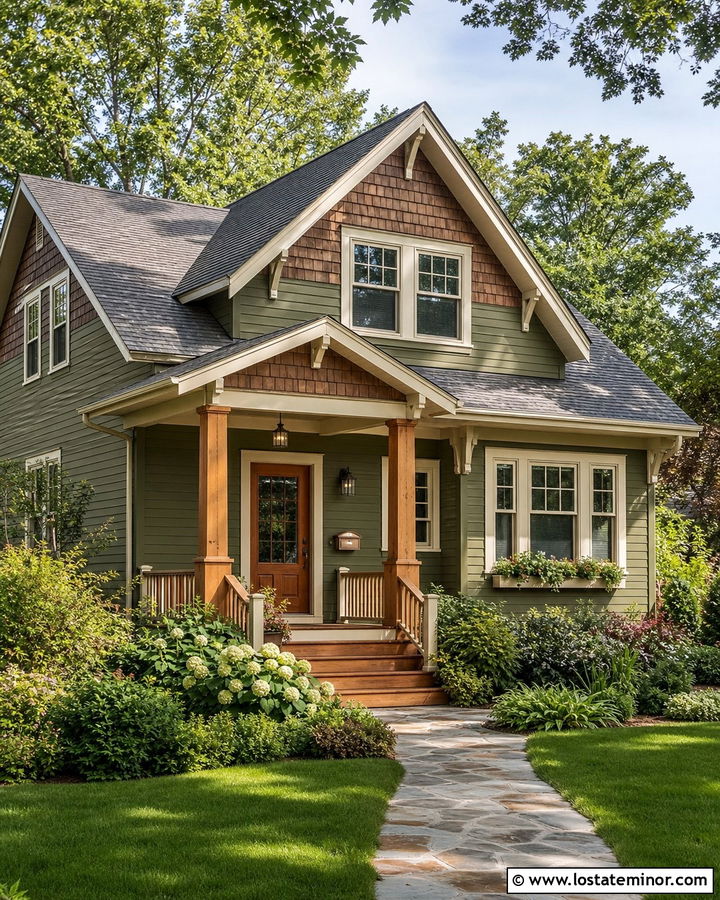
Cedar shingles bring rich texture to a moss green siding scheme, particularly when placed in gables or around a covered entry. Use moss green lap siding on the main walls and naturally weathered cedar shingles as the secondary material. Cream trim will brighten both finishes, while a medium-gray roof keeps attention on the facade. Repeat the cedar tone on the front door, porch posts, or window boxes for visual balance. This pairing is a strong choice for coastal cottages, Craftsman homes, and wooded suburban properties. Allow the cedar to age naturally or use a protective stain that preserves its honey-brown appearance. The contrast between smooth siding and textured shingles gives the whole exterior depth without needing another painted accent color.
12. Moss Green Siding With Natural Wood Accents
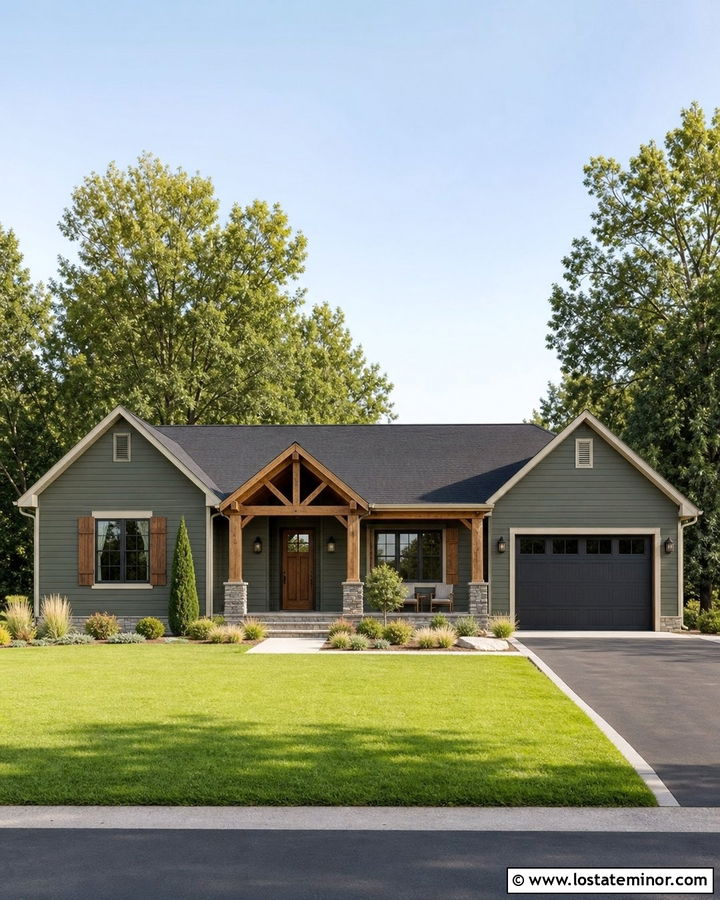
Natural wood accents make moss green siding feel warmer and more architectural. Start with green horizontal siding, then introduce stained wood through porch columns, beams, shutters, and the front door. Keep the stain consistent so the exterior does not appear pieced together. Soft beige trim and a charcoal roof provide neutral boundaries around the stronger materials. This complete palette works on ranch homes, contemporary cabins, and updated Craftsman houses. Use stone only in a limited area, such as the porch base, to avoid overwhelming the wood. Bronze or black lighting can add a clean finishing touch. Surrounded by grasses, evergreens, and a broad lawn, the house will feel settled into the landscape while remaining polished and welcoming.
13. Moss Green Siding With Charcoal Roof
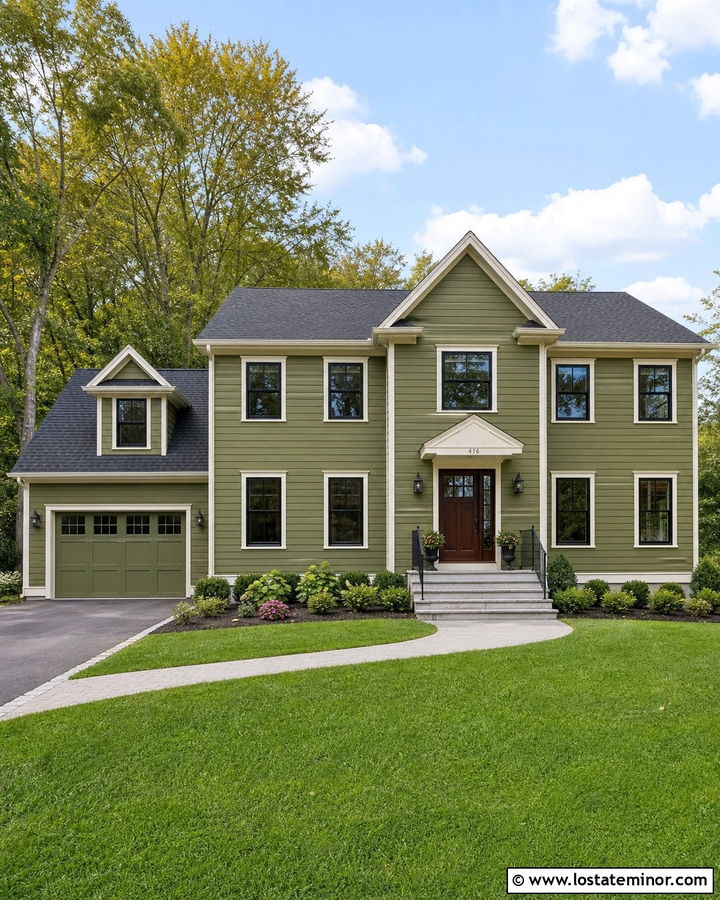
A charcoal roof creates dependable contrast above moss green siding and works with both warm and cool supporting materials. Use soft off-white trim to separate the dark roof from the green walls. Add a walnut-colored front door and black window frames for balanced depth across the facade. If the home has a garage, paint its door moss green so it blends into the siding instead of becoming a large contrasting block. This combination looks effective on two-story traditional homes, bungalows, and split-level exteriors. Choose charcoal shingles with subtle color variation rather than an extremely solid black surface. Light gray steps, simple foundation plantings, and a curved walkway will brighten the lower portion and create an inviting path toward the darker entrance.
14. Moss Green Siding With Brown Roof
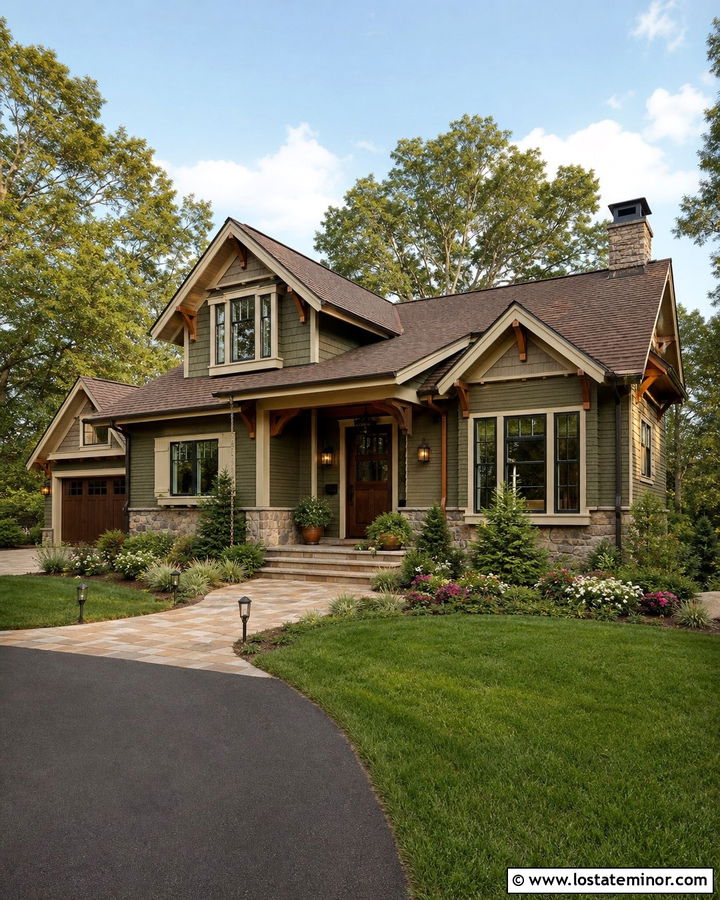
Brown roofing emphasizes the warm, earthy undertones found in moss green siding. A dimensional shingle with chestnut, taupe, and dark brown variation will look more natural than a single flat color. Pair this roof with cream trim, a deep brown front door, and tan stone around the foundation. Copper-toned gutters or bronze lights can repeat the warmth in small, practical details. This palette is a natural fit for Craftsman, cottage, and ranch architecture, especially when the property includes mature trees. Avoid cool gray accents that could interrupt the warmth. Instead, use beige pavers, cedar porch furniture, and layered green landscaping. The complete exterior will feel comfortable, established, and harmonious from the roofline down to the front walkway.
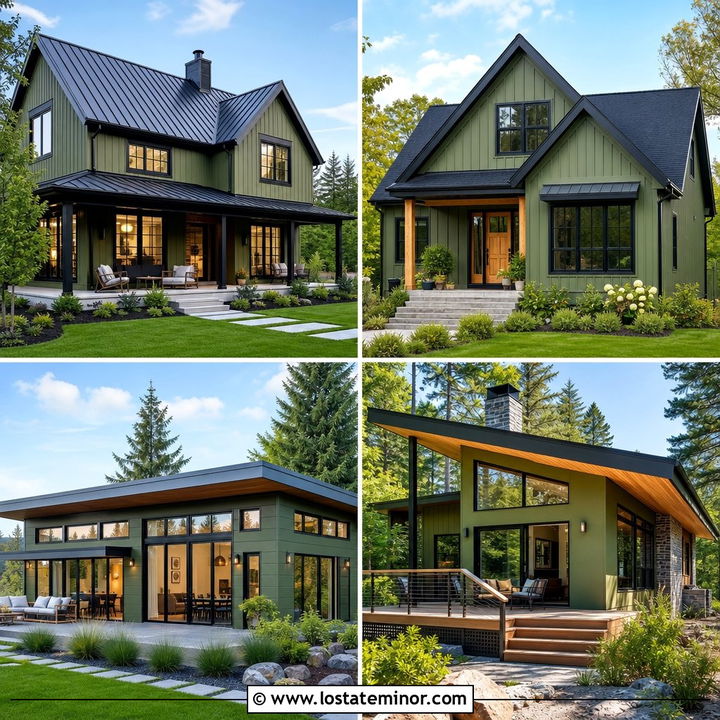
15. Moss Green Siding With Black Metal Roof
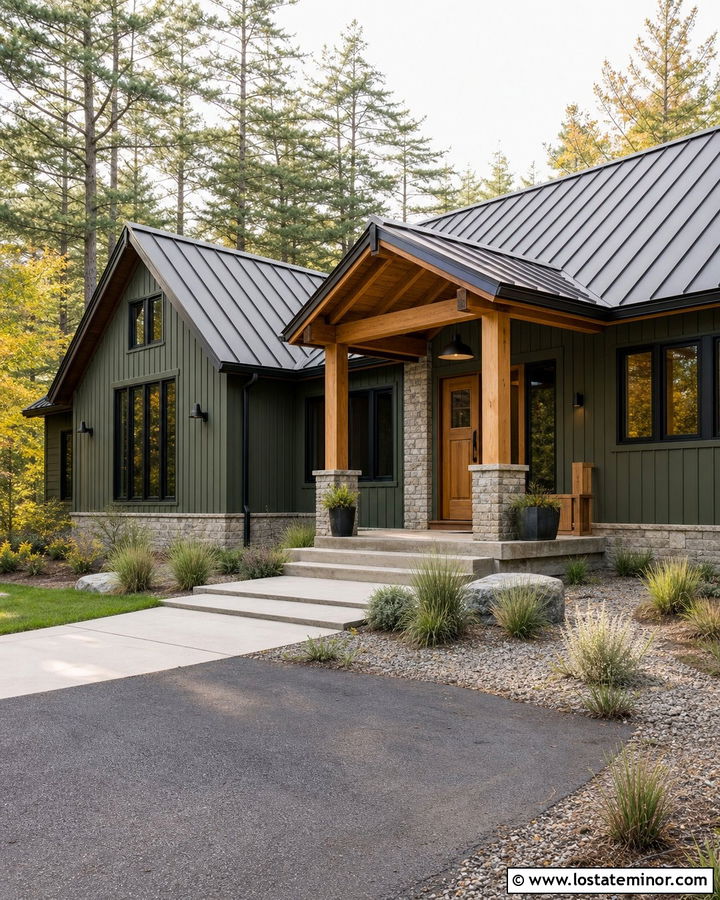
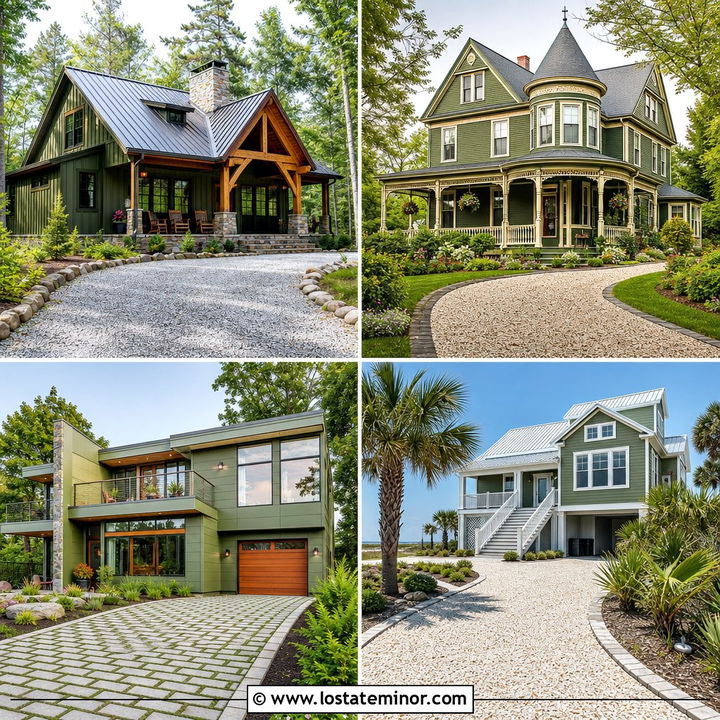
The smooth surface of a black metal roof gives moss green siding a crisp modern edge. Use vertical siding to echo the roof’s strong seams, then soften the contrast with warm wood porch beams and an oak front door. Black-framed windows, gutters, and slim railings can repeat the roof color throughout the facade. Keep the foundation light with pale gray stone or concrete so the exterior does not become visually top-heavy. This scheme works particularly well for modern cabins, barndominiums, and simple farmhouse forms. A deep roof overhang will create attractive shadows while protecting the siding. Finish the setting with ornamental grasses, gravel beds, and a broad path that complements the house’s clean geometry without making the landscape feel overly formal.
16. Moss Green Siding With Deep Green Metal Roof
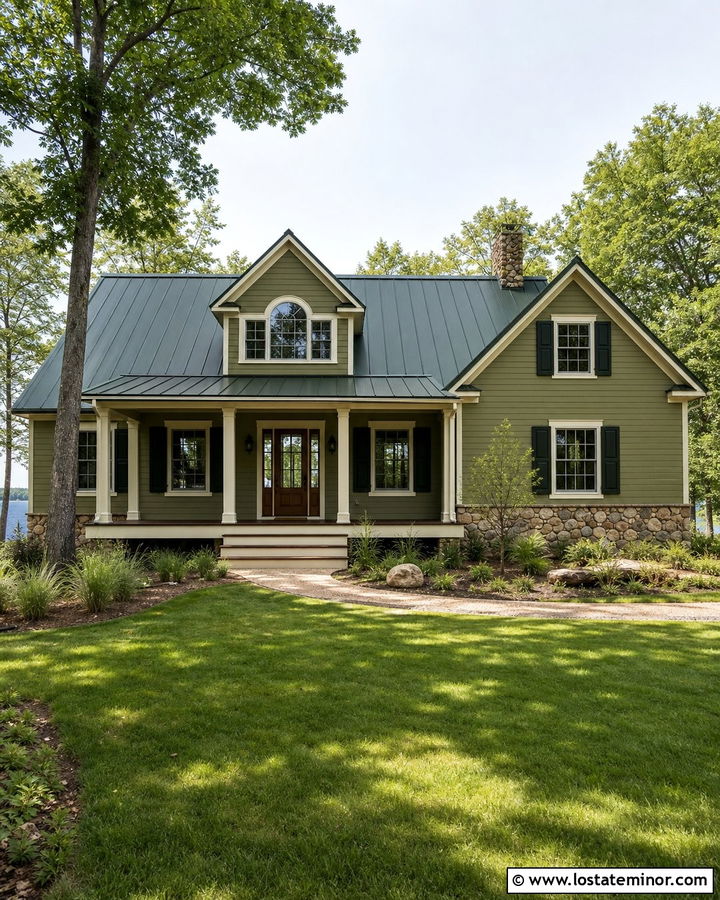
A tonal green exterior can look sophisticated when the roof is noticeably darker than the siding. Pair moss green lap siding with a deep forest green metal roof, then use cream trim to clearly separate the two surfaces. Natural stone at the base and a medium-brown front door will introduce warmth. This palette is well suited to rural cottages, lake houses, and mountain homes where surrounding greenery becomes part of the view. Keep shutters and gutters in the roof color for consistency. Because green appears in several large areas, avoid adding another strong accent hue. Instead, use soft beige steps, wood porch flooring, and restrained landscaping to build a complete exterior that feels layered rather than overly matched.
17. Moss Green Siding With Copper Roof Accents
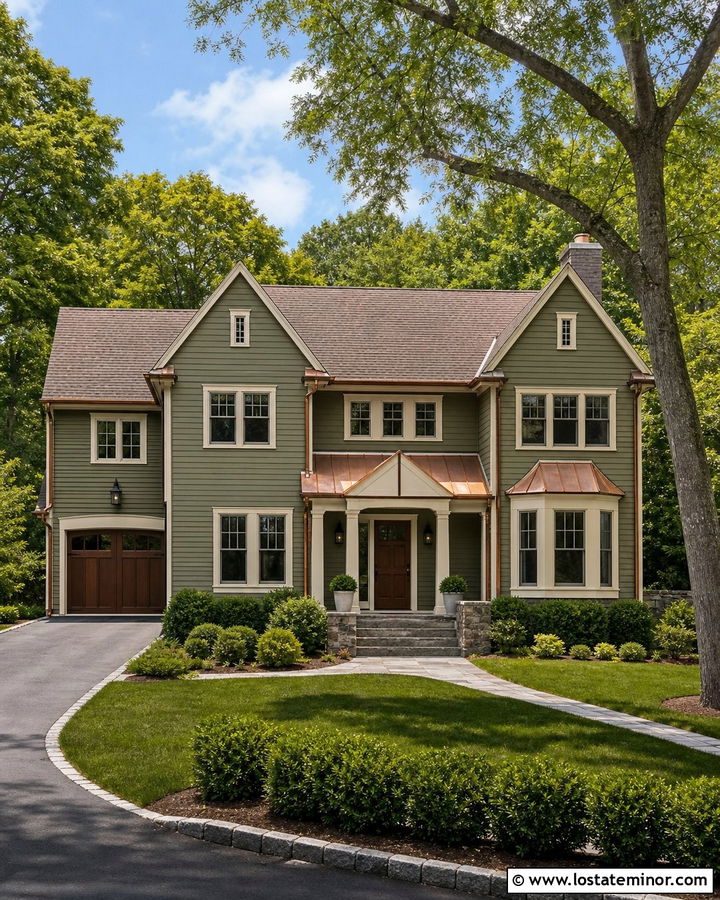
Copper introduces an evolving warm accent that pairs naturally with moss green siding. Use it selectively over a bay window, porch, dormer, or entry canopy rather than covering the entire roof. Cream trim, brown architectural shingles, and a solid wood front door will support the combination. As the copper develops deeper brown and green tones, it can become even more connected to the siding palette. This design works beautifully on Tudor, Craftsman, and traditional homes with detailed rooflines. Repeat the metal through gutters or small lanterns, but avoid using too many decorative finishes. Stone steps and rounded shrubs provide a quiet base. The completed house feels distinctive and high-end while maintaining the approachable character associated with earthy green siding.
18. Moss Green Siding With Mustard Yellow Door
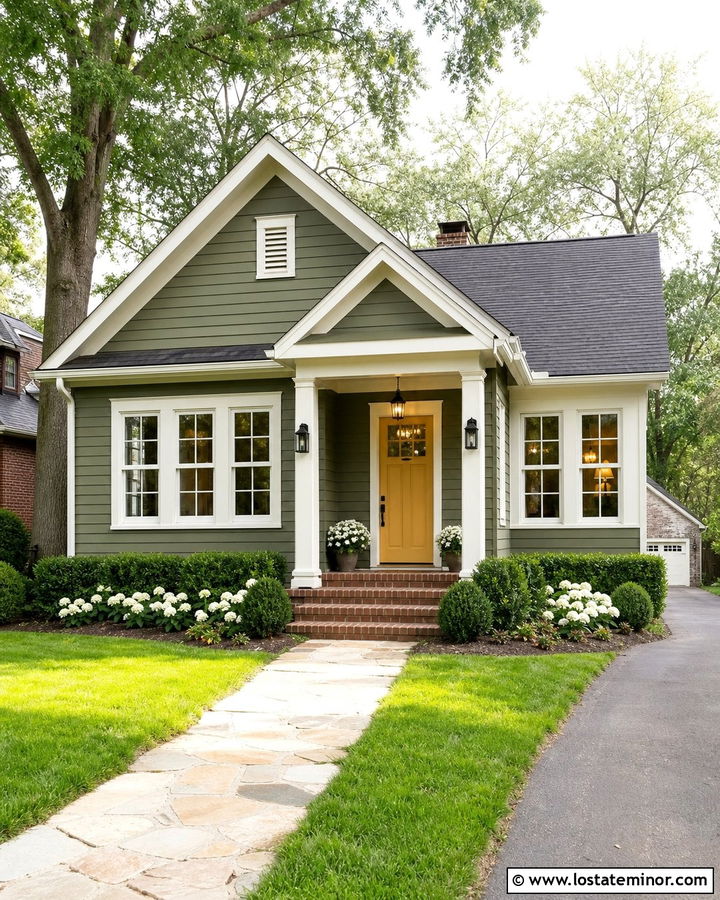
A mustard yellow front door brings a cheerful point of color to moss green siding without creating a neon or overly playful effect. Surround the door with warm white trim and keep the remaining windows, fascia, and porch columns in the same creamy neutral. A charcoal roof and simple black lighting will ground the brighter entry. This palette suits cottages, bungalows, and modest ranch homes where the door can become an easy-to-see focal point. Repeat the yellow gently through seasonal flowers rather than additional painted architecture. Natural brick steps or a light stone walkway will make the entrance feel connected to the yard. The full scheme remains earthy, but the door gives the exterior a memorable and welcoming personality.
19. Moss Green Siding With Burgundy Door
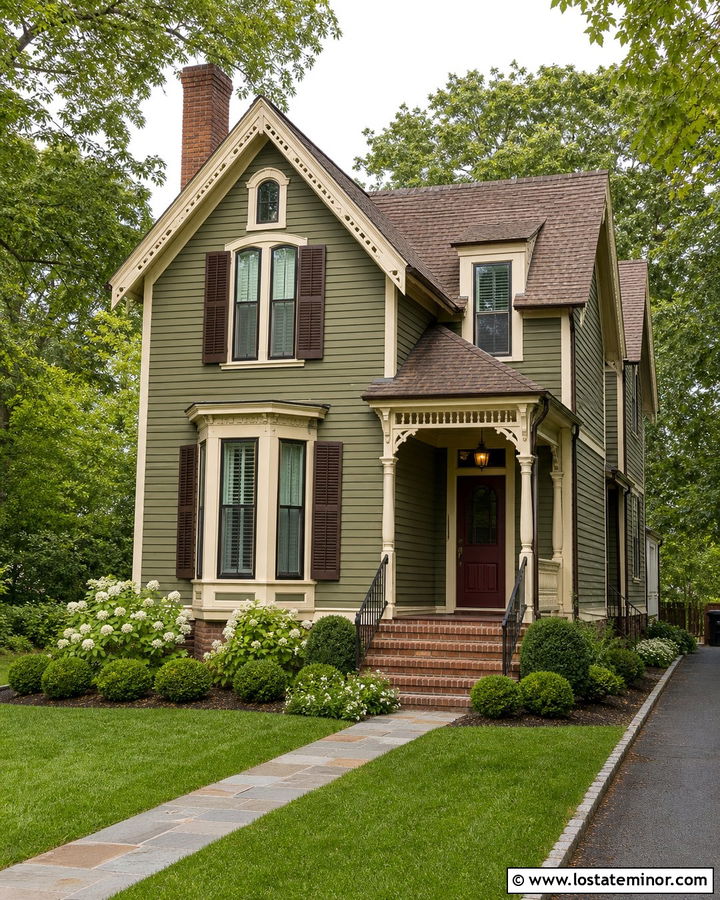
Deep burgundy provides a rich front-door accent against moss green siding. Since red and green can become visually strong together, choose a muted wine-red shade with brown undertones rather than a bright primary red. Use cream trim, bronze hardware, and a weathered brown roof to keep the combination mature and balanced. This look is especially attractive on Colonial, Victorian, and traditional cottage exteriors. If shutters are included, paint them deep brown or moss green instead of repeating the burgundy. Brick steps can subtly echo the door without making the scheme feel overly coordinated. Surround the entry with clipped boxwood, pale flowers, and classic lanterns. These restrained additions help the colorful door appear intentional within the complete house design.
20. Moss Green Siding With Black Front Door
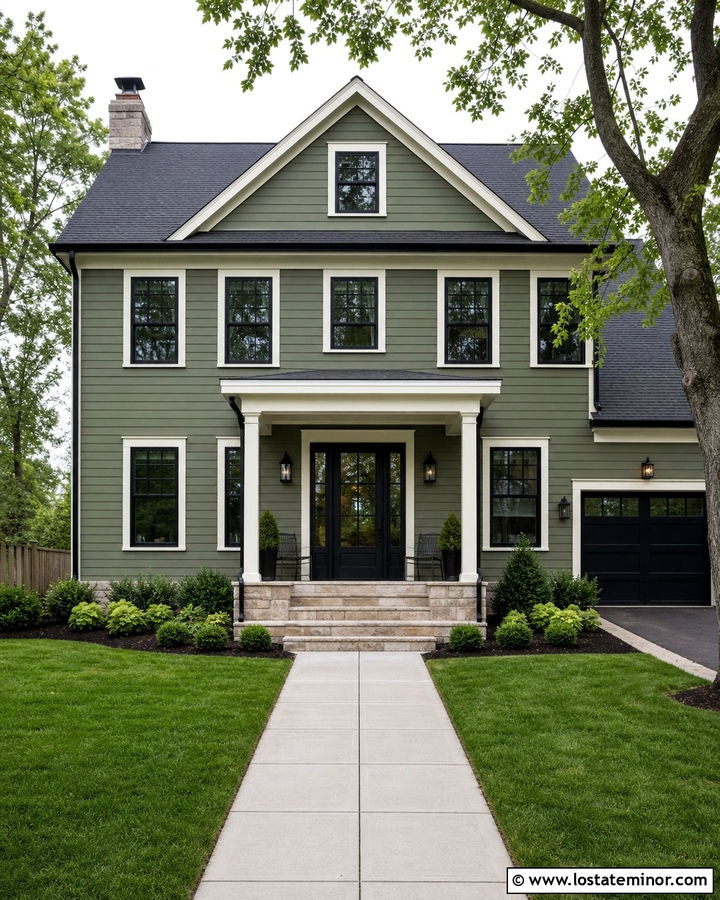
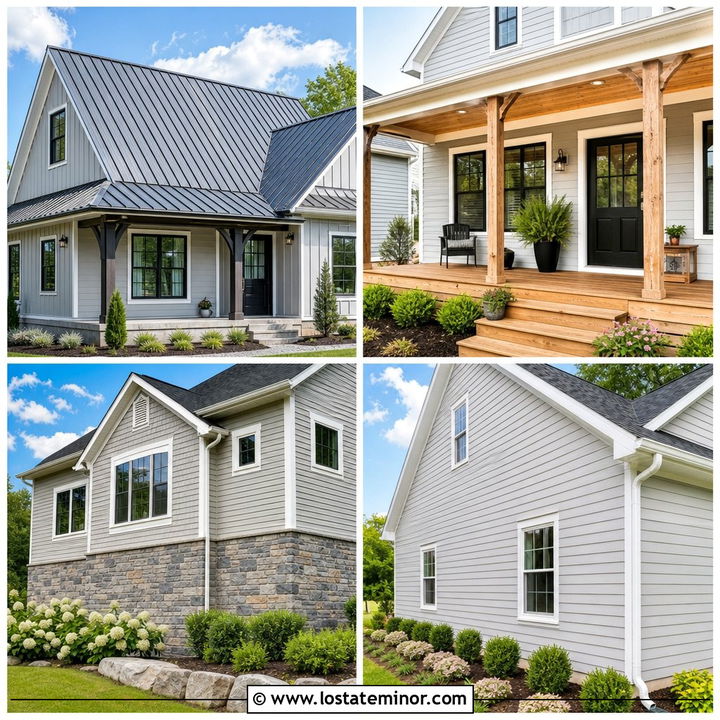
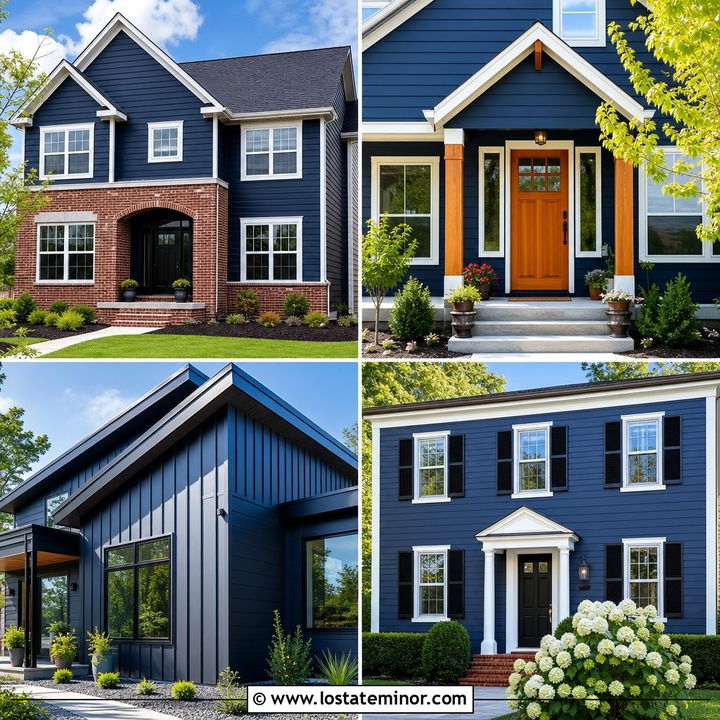
A black front door creates an immediate visual anchor on a moss green house. Pair it with black window frames, gutters, and simple metal railings so the entrance does not feel like an isolated dark feature. Use warm white trim around the door and windows to preserve brightness. A charcoal roof will tie the upper portion of the exterior to the black accents, while a light stone porch keeps the lower facade open. This combination works on nearly any architectural style, including ranch, Colonial, contemporary, and modern farmhouse homes. Choose a door with glass panels if the porch is deeply shaded. Natural landscaping and a clean concrete walkway will soften the high contrast and maintain the welcoming quality of the overall green exterior.
21. Moss Green Siding With Natural Wood Door
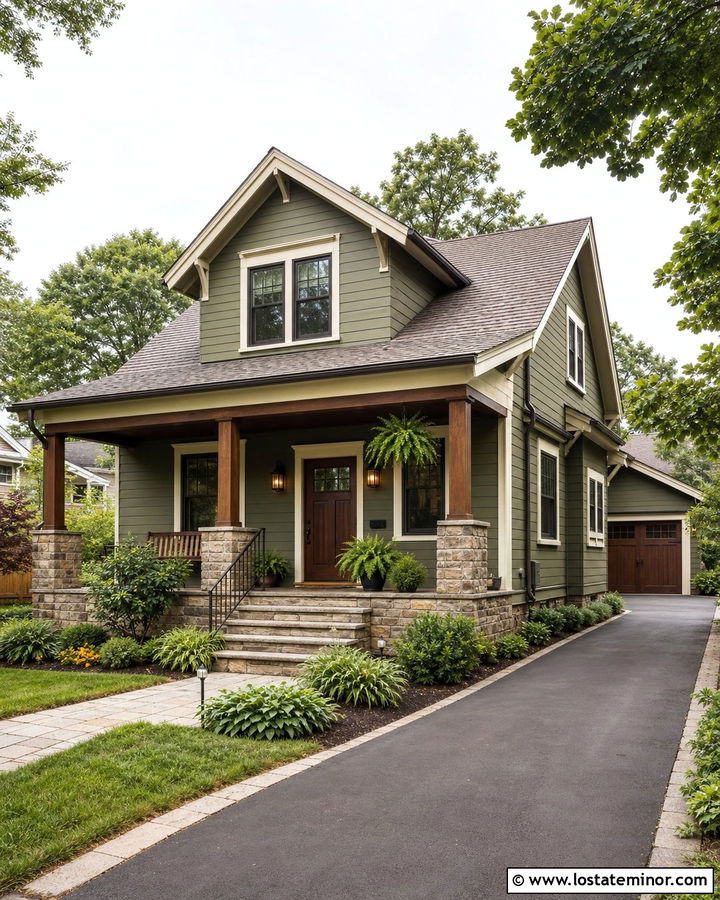
Few combinations feel as effortless as moss green siding and a natural wood front door. Select a medium oak, walnut, or mahogany stain that remains visible against the green without becoming too orange. Use off-white trim and dark bronze hardware to connect the warm door with the surrounding architecture. A brown-gray roof and tan stone porch can further support the earthy palette. This scheme works especially well on Craftsman houses and homes with prominent covered entrances. Consider repeating the door stain on porch beams, gable brackets, or a nearby bench. Limit the repetition to two or three areas so the wood remains special. The completed exterior feels warm, grounded, and carefully coordinated without depending on dramatic color contrast.
22. Moss Green Siding With Covered Porch
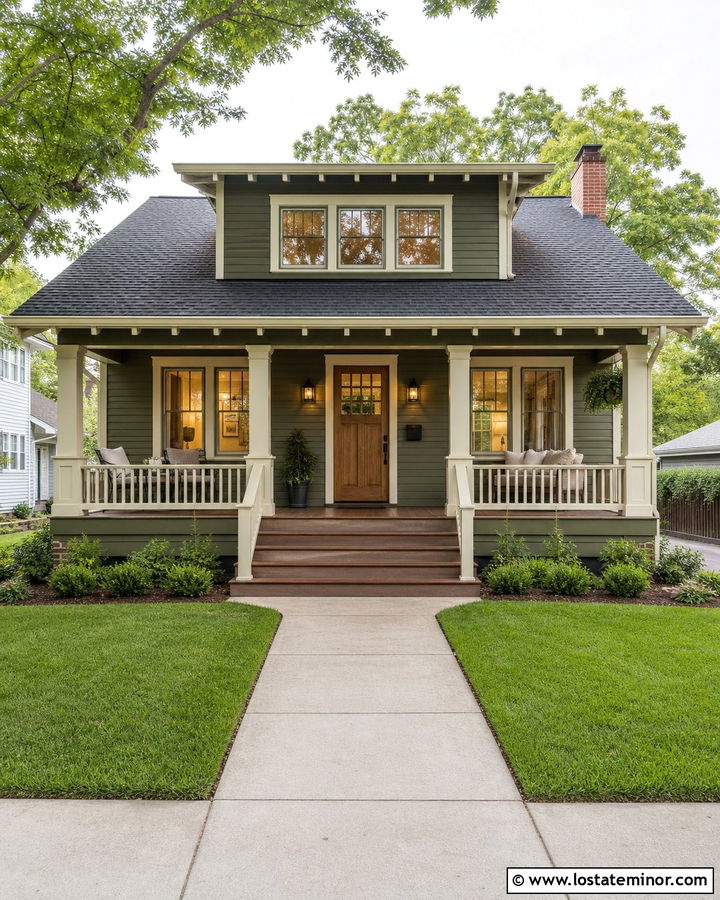
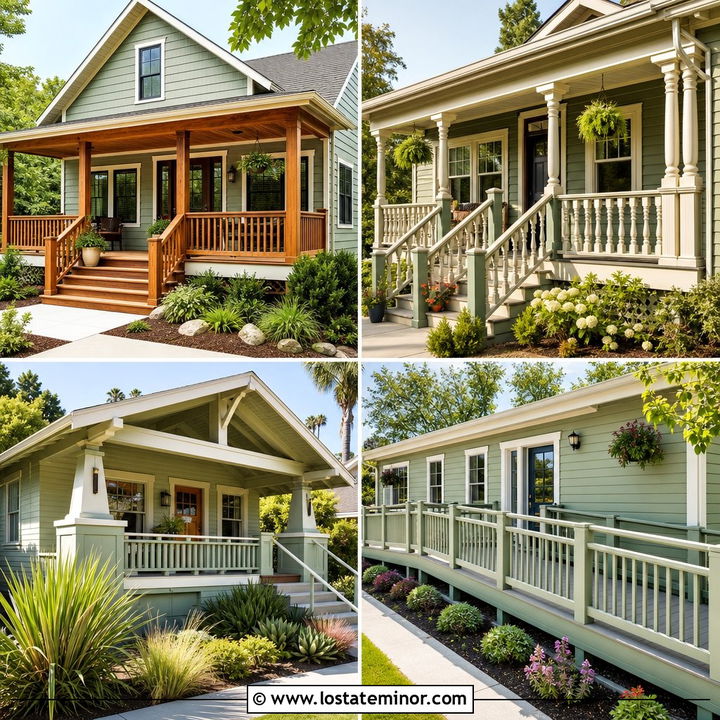
A covered porch gives moss green siding more depth by introducing columns, shadows, railings, and a welcoming transition to the front door. Apply moss green lap siding across the facade, then use cream on the porch columns, ceiling, and window trim. Stained wood flooring and a matching wood door will warm the sheltered entry. A charcoal shingle roof and black lanterns add definition without dominating the design. This complete look works for bungalows, Craftsman homes, and traditional suburban houses. Keep the porch furniture simple and make sure it does not hide the entrance. Low foundation shrubs, broad steps, and a walkway aligned with the front door will emphasize the porch and help the entire exterior feel balanced from the street.
23. Moss Green Siding With Wraparound Porch
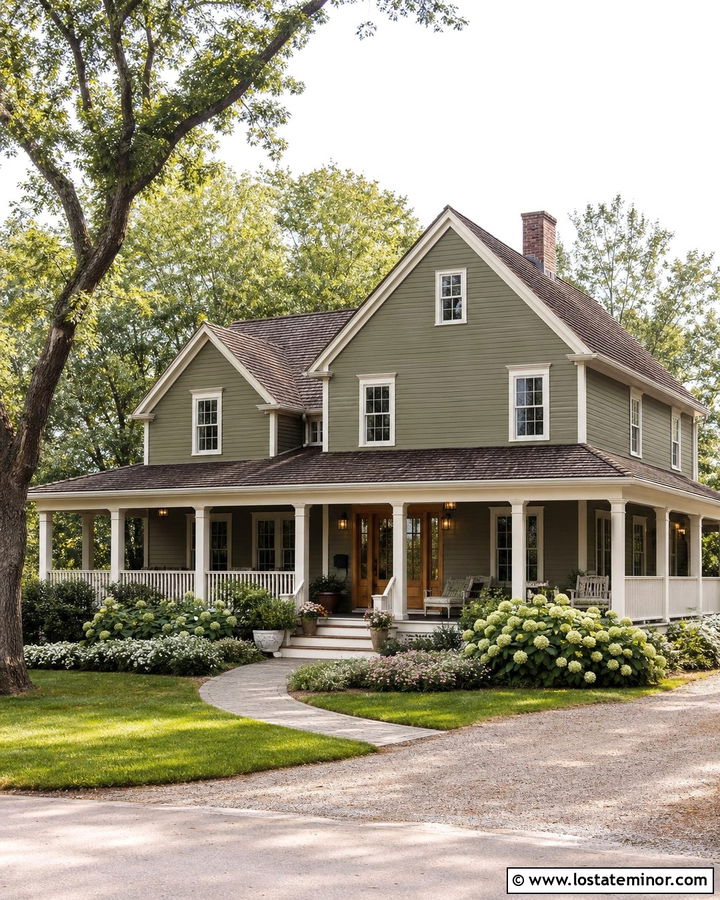
Imagine moss green siding framed by a long, bright wraparound porch. The green provides a calm backdrop, while creamy white columns, railings, fascia, and window trim clearly define the architecture. Use natural wood for the porch floor and front door to keep the expansive white details from feeling too formal. A medium-gray or weathered brown roof will complete the restrained palette. This treatment is ideal for farmhouse, Southern, and country-style homes with broad front elevations. Add ceiling fans and dark bronze lighting for practical contrast. The landscaping should follow the porch with continuous garden beds, hydrangeas, and low shrubs. A curved walkway can soften the symmetry and make the generous exterior feel relaxed, approachable, and connected to the yard.
24. Moss Green Siding With Wood Garage Door
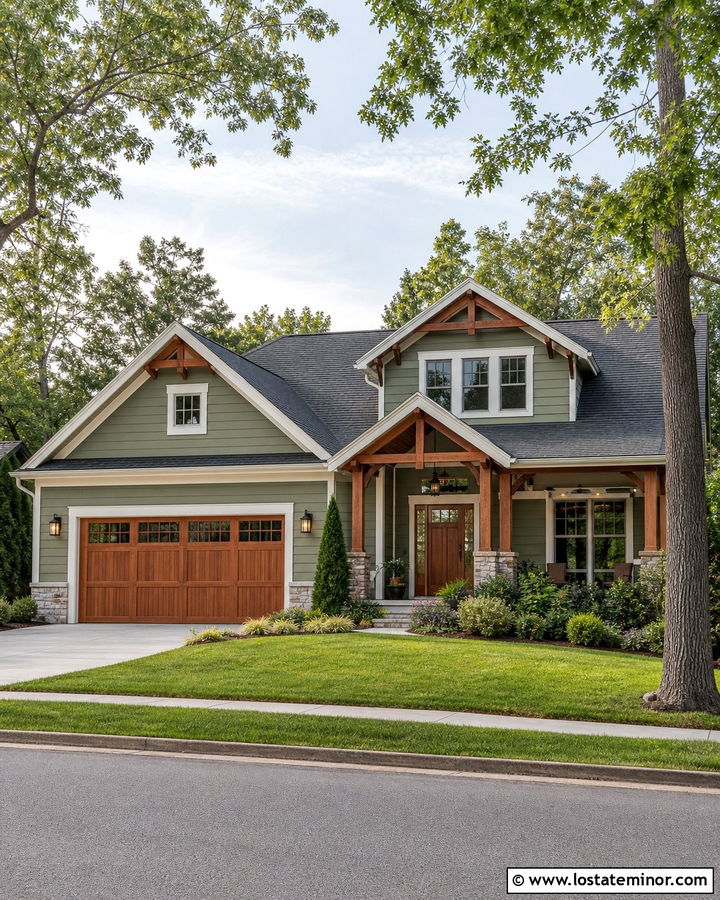
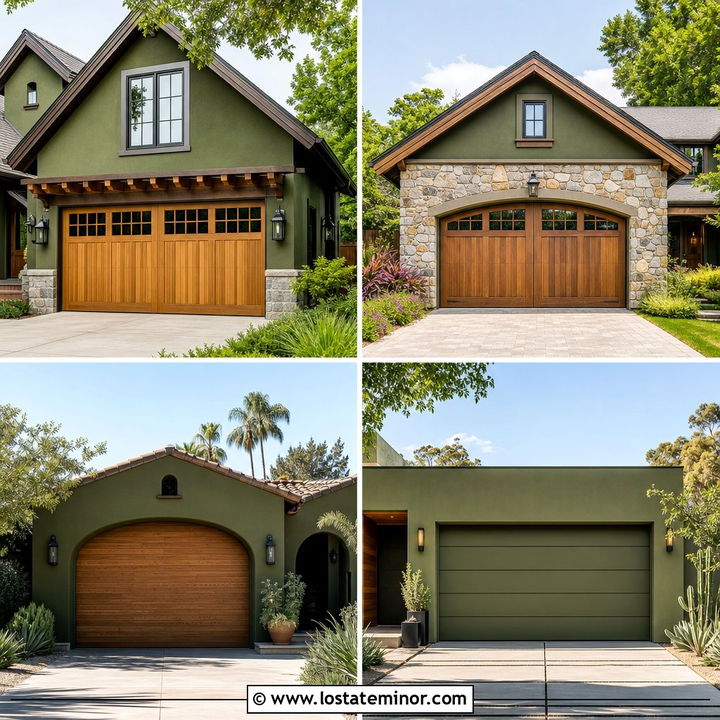
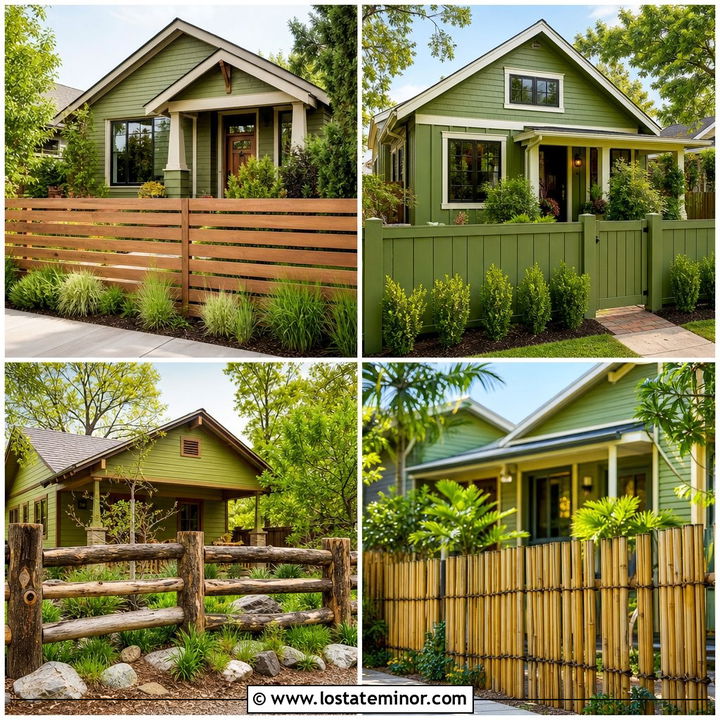
A wood garage door can become a handsome part of a moss green exterior rather than an oversized distraction. Choose a simple paneled door in a medium cedar or walnut stain, then repeat that finish on the front door or porch beams. Use warm white trim around both openings to create consistency. Moss green lap siding should remain the main field color, supported by a charcoal roof and light stone foundation. This scheme is particularly effective on Craftsman homes and front-facing suburban garages. Avoid overly decorative hardware that competes with the wood grain. Place taller shrubs near the outside garage corners and keep the driveway clear. These choices help frame the complete facade and direct attention back toward the primary entrance.
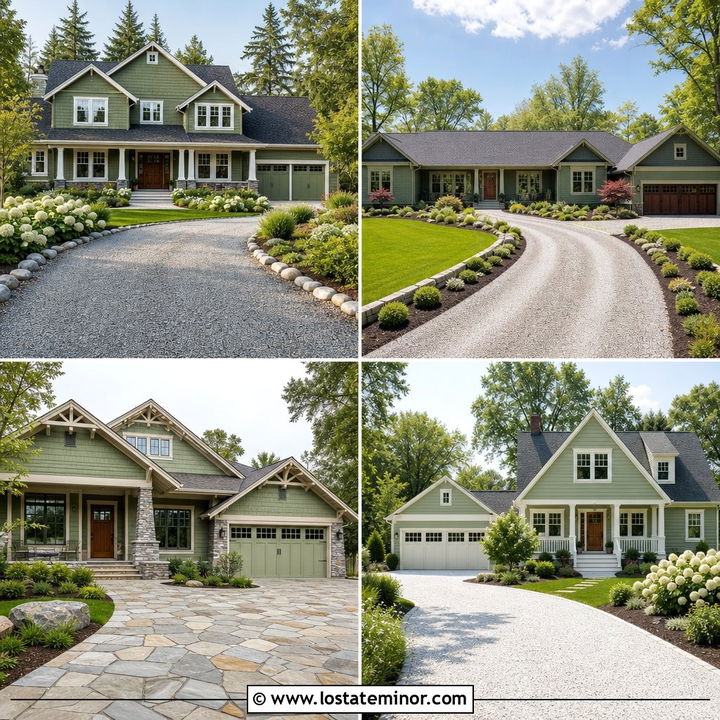
25. Moss Green Siding Ranch House
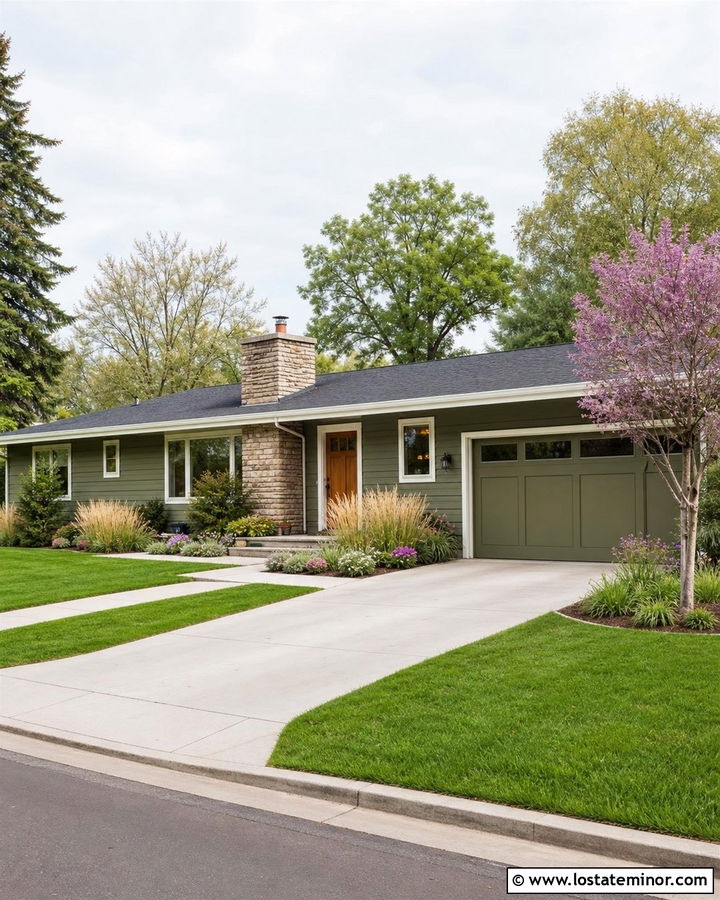
A long ranch facade benefits from a color scheme that creates rhythm without chopping the house into unrelated sections. Cover the main walls in moss green horizontal siding, use warm white around the windows and roofline, and paint the garage door green to help it recede. A natural wood front door establishes a warmer focal point near the center. Add tan stone to one chimney, entry wall, or foundation area for texture. A low charcoal roof will visually ground the house. Wide planting beds, ornamental grasses, and small flowering trees can soften the horizontal architecture. This complete design keeps the ranch’s simple character intact while giving its siding, entrance, garage, roof, and landscaping a more deliberate connection.
26. Moss Green Siding Craftsman House
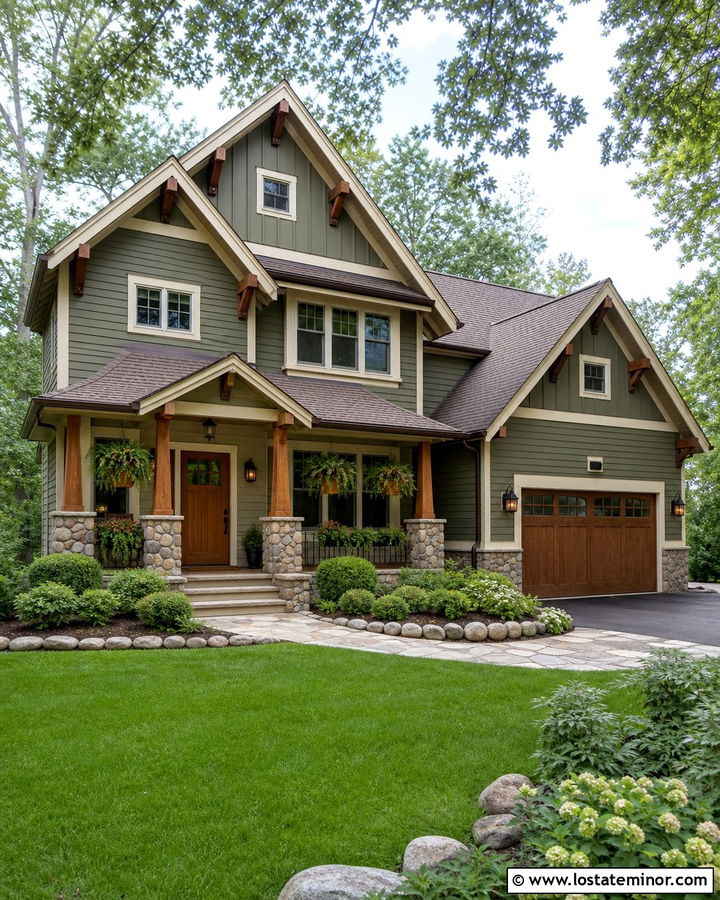
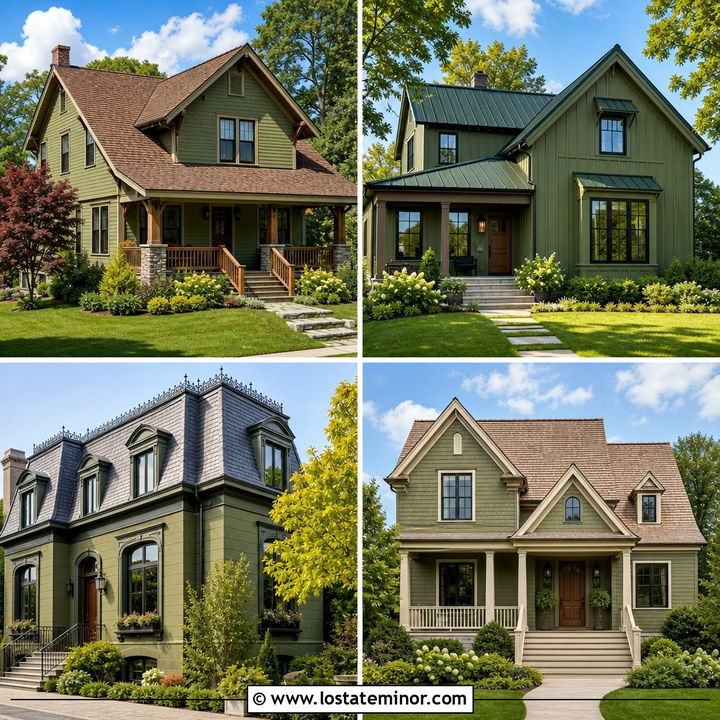
Craftsman architecture gives moss green siding plenty of natural partners, including tapered columns, exposed brackets, stone piers, and stained wood. Use green lap siding on the main walls and matching board-and-batten in the gables. Cream trim can highlight the roofline without overpowering the handcrafted details. Finish the porch columns and front door in a rich cedar stain, then use mixed fieldstone around the column bases. A brown architectural-shingle roof will complete the warm palette. Black or aged bronze lights offer restrained contrast. Layer the yard with ferns, rounded shrubs, and a stone-edged walkway. Each material should appear in more than one location, helping the full facade look coordinated rather than like a collection of separate upgrades.
27. Moss Green Siding Colonial House
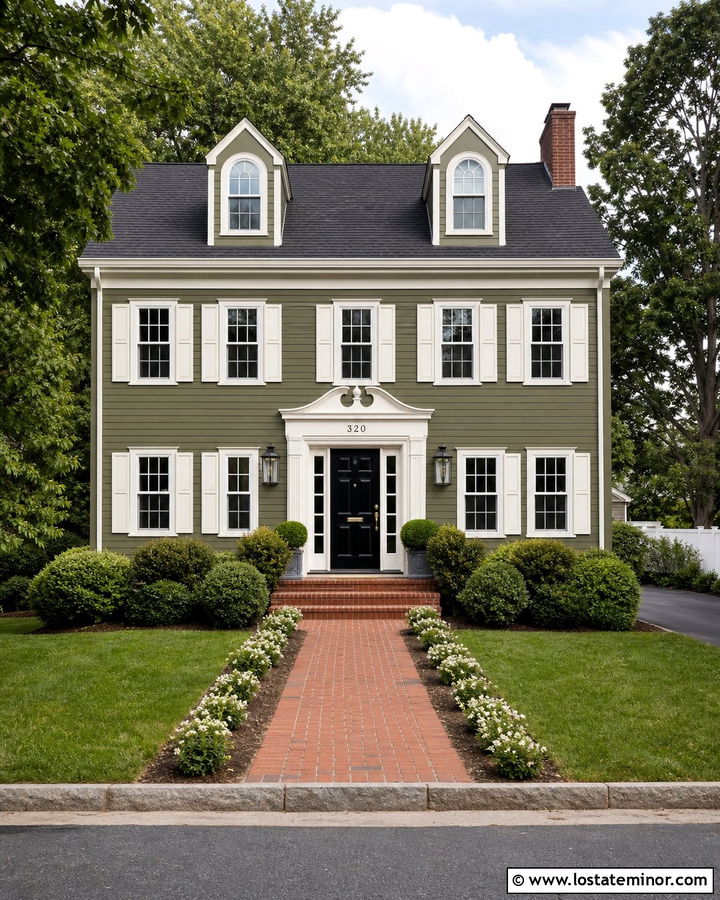
Symmetry allows moss green siding to give a Colonial house character while preserving its formal structure. Apply traditional horizontal clapboard across the exterior and frame the evenly spaced windows with warm white trim. Add white shutters for a lighter appearance or deep green shutters for a quieter tonal scheme. A glossy black door creates a strong center point beneath a simple pediment or portico. Choose a charcoal roof and red-brown brick steps to provide classic supporting colors. Matching lanterns on both sides of the entry will reinforce the symmetry. Keep the landscaping similarly balanced, using paired shrubs and a straight walkway. The result feels established and traditional, but the earthy siding keeps the house from looking overly rigid or predictable.
28. Moss Green Siding Modern Farmhouse
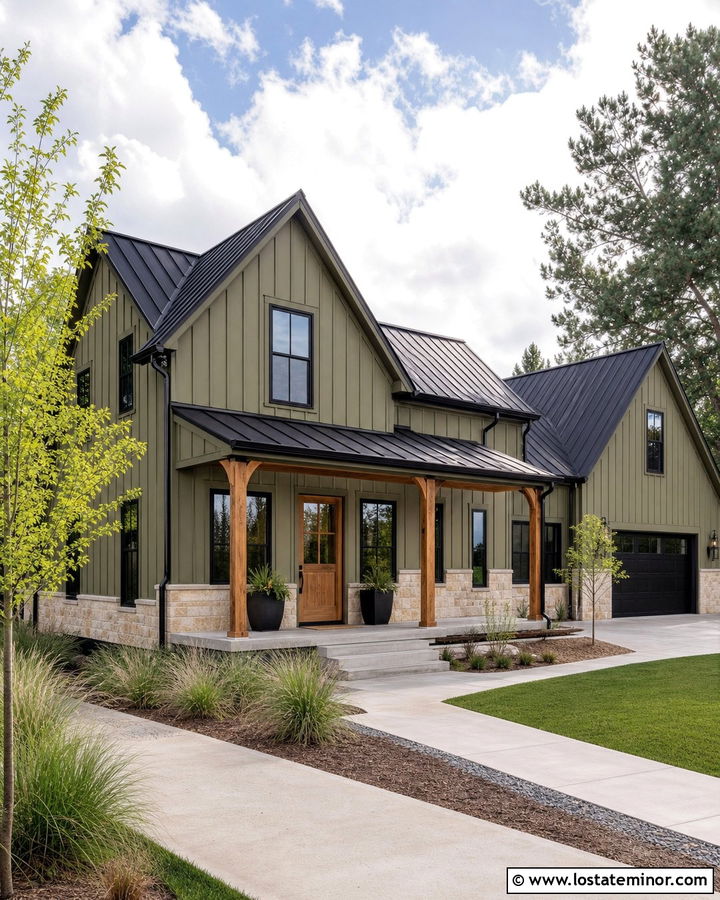
Moss green offers a refreshing alternative to white for a modern farmhouse exterior. Use vertical board-and-batten siding across the primary walls, paired with black windows, a black metal roof, and simple black gutters. Warm cedar porch posts and a matching front door will soften the high-contrast details. Add pale limestone or light gray stone around the foundation to give the house a sturdy base. Keep decorative features minimal so the siding pattern and roofline remain clear. A wide concrete path, native grasses, and young trees complement the uncluttered architecture. This complete palette maintains the clean shapes associated with modern farmhouse design while the green and wood make the home feel more connected to its natural suburban or rural surroundings.
29. Moss Green Siding Cottage House
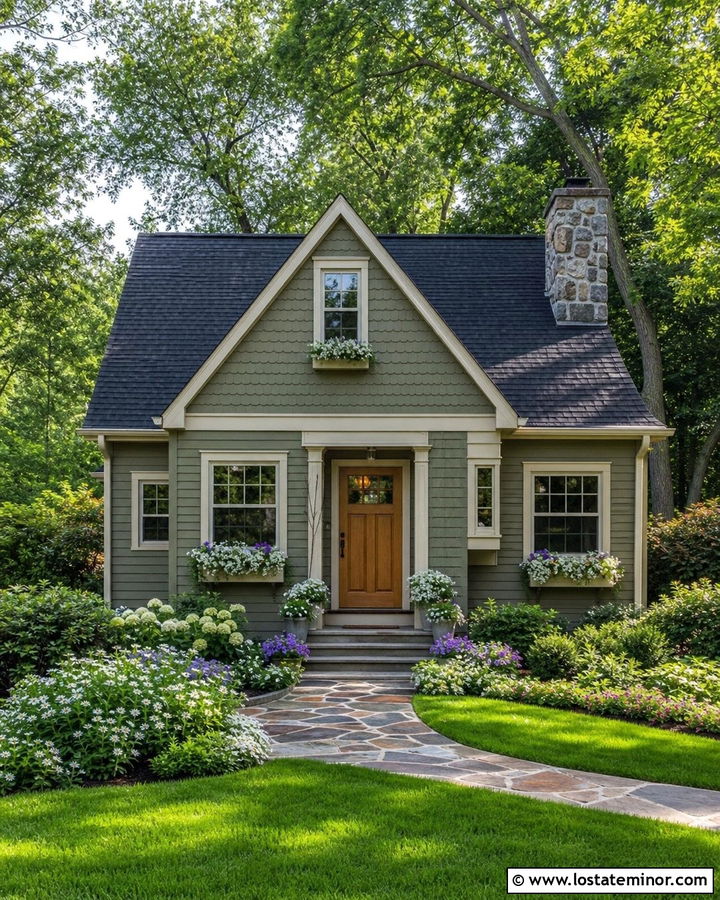
A moss green cottage can feel charming without relying on excessive decoration. Use narrow lap siding or textured shingles in moss green, then outline the windows, eaves, and small porch with soft cream trim. A honey-toned wood door adds warmth, while a steep charcoal roof gives the compact facade definition. Consider a small stone chimney or fieldstone foundation to reinforce the storybook shape in a practical way. Window boxes should coordinate with the trim and contain simple white, pink, or purple flowers. A curved stone path and loosely layered garden beds will frame the house naturally. The completed exterior feels cozy and distinctive because every element supports the modest scale, earthy color, and welcoming entrance.
30. Moss Green Siding Split-Level House
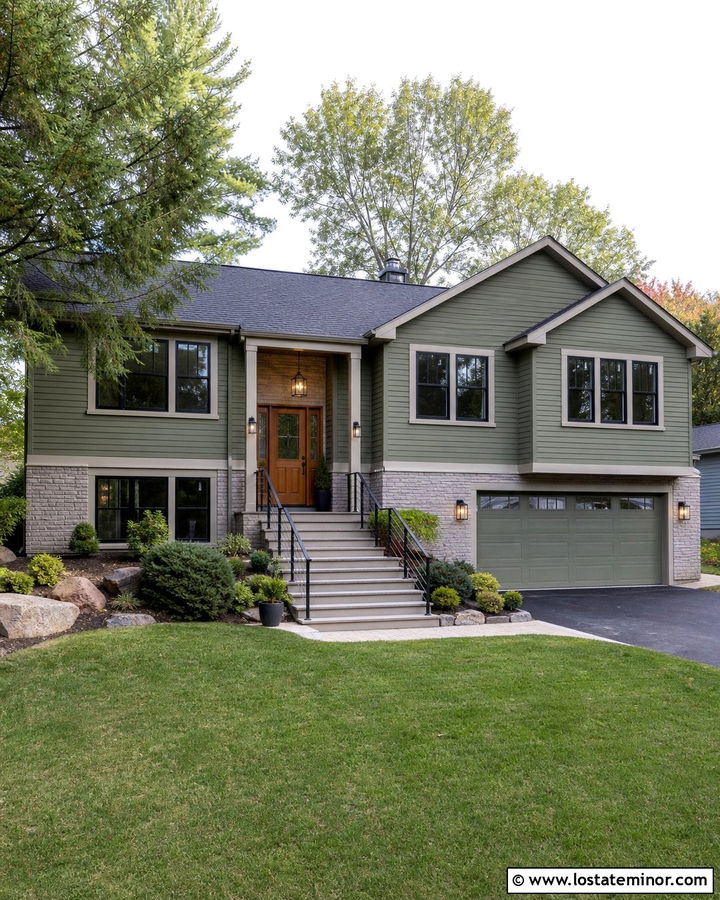
Updating a split-level exterior starts with visually connecting its different sections. Use moss green siding across both levels so the staggered facade reads as one house. Add warm greige trim around the windows, fascia, and entry rather than using high-contrast white lines that emphasize every division. Paint the garage door moss green to reduce its prominence, then introduce a natural wood door as the main focal point. Charcoal roofing and gray-tan stone along the lower level will ground the structure. Wide steps, modern railings, and layered landscaping can clarify the route to the entrance. This unified treatment respects the home’s original shape while giving the complete exterior a cleaner, warmer, and more current curb-appeal palette.
Conclusion:
These 30 Moss Green House Design With Siding Ideas show how one grounded exterior color can support many different architectural directions. Warm white and cream create soft contrast, while black details give the green a more modern edge. Cedar, stone, brick, and copper introduce natural texture that keeps the facade interesting. Roof color, garage placement, porch design, and landscaping should always be considered as part of the same scheme. Before making a final choice, test a large siding or paint sample beside the existing roof and masonry in morning and afternoon light. With thoughtful coordination, moss green siding can make a ranch, cottage, Colonial, Craftsman, or contemporary house feel welcoming, balanced, and distinctive.

Related posts: