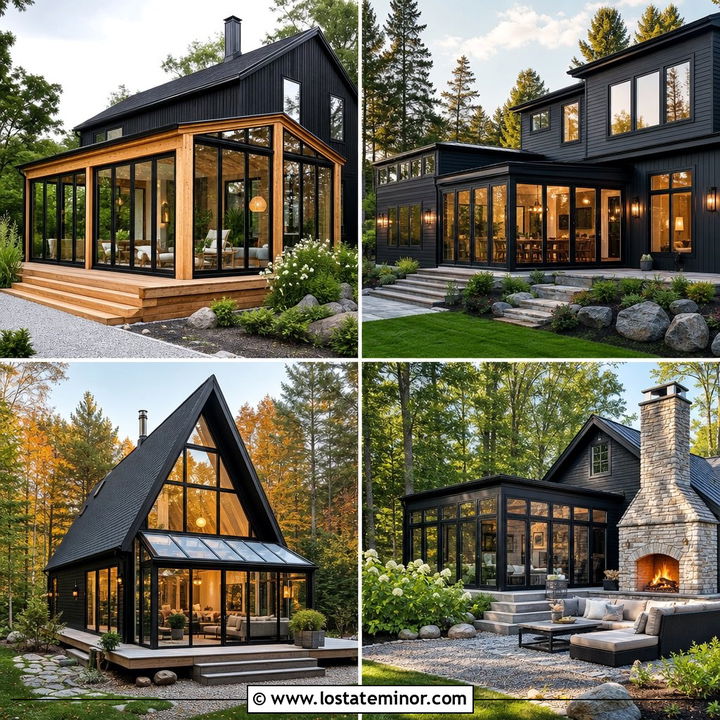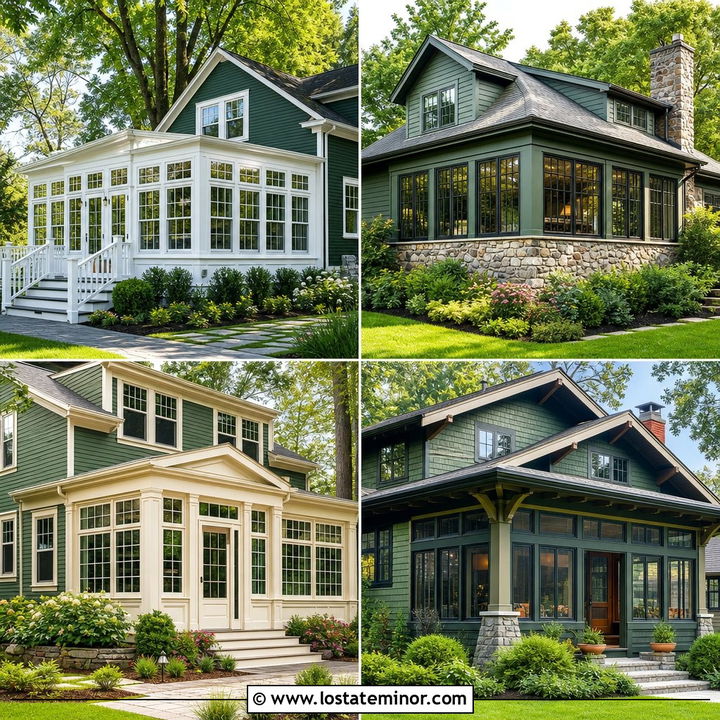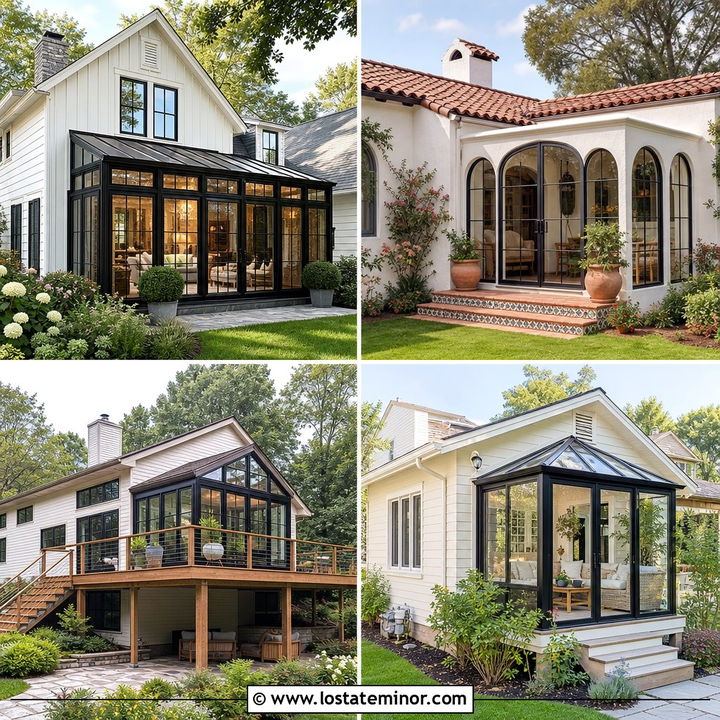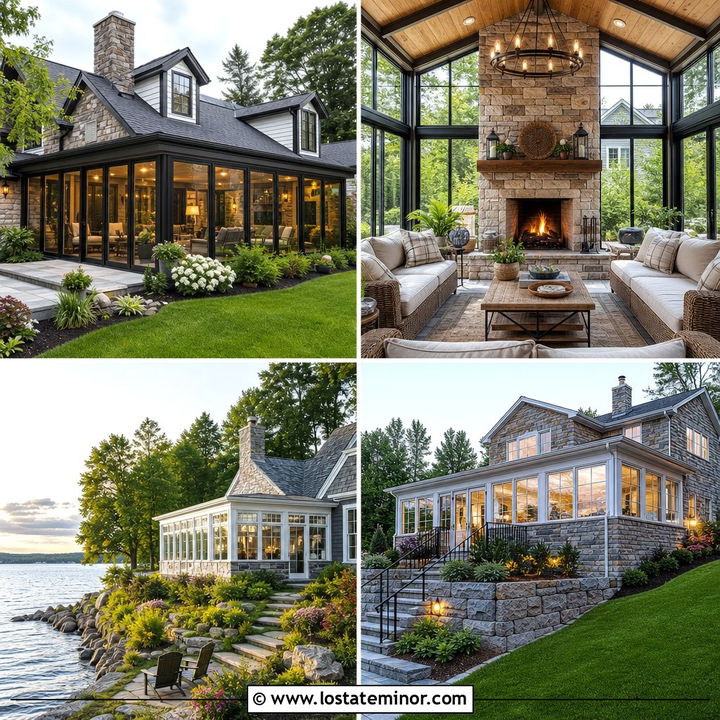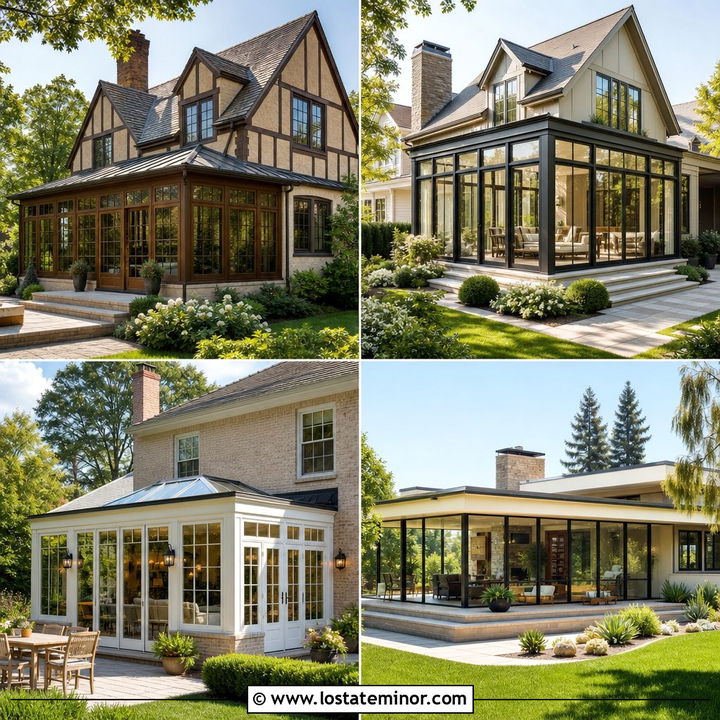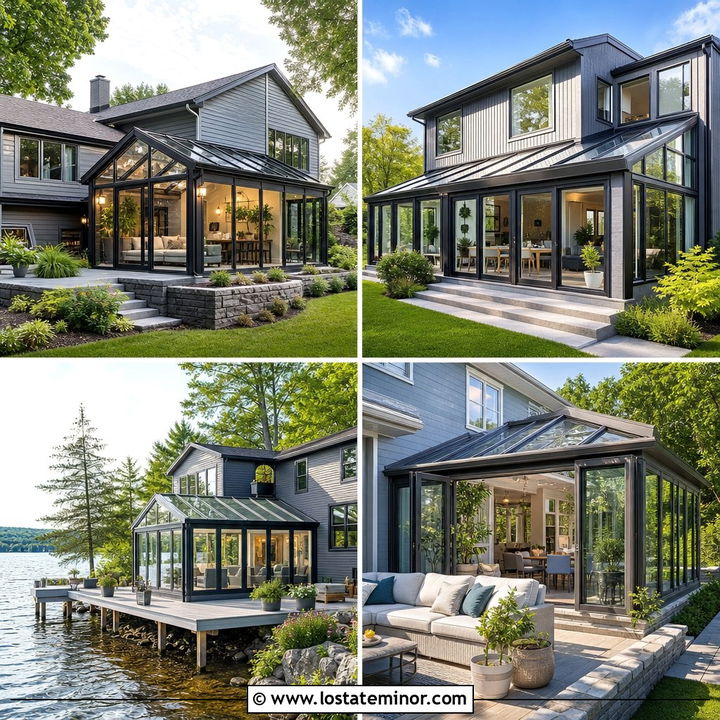
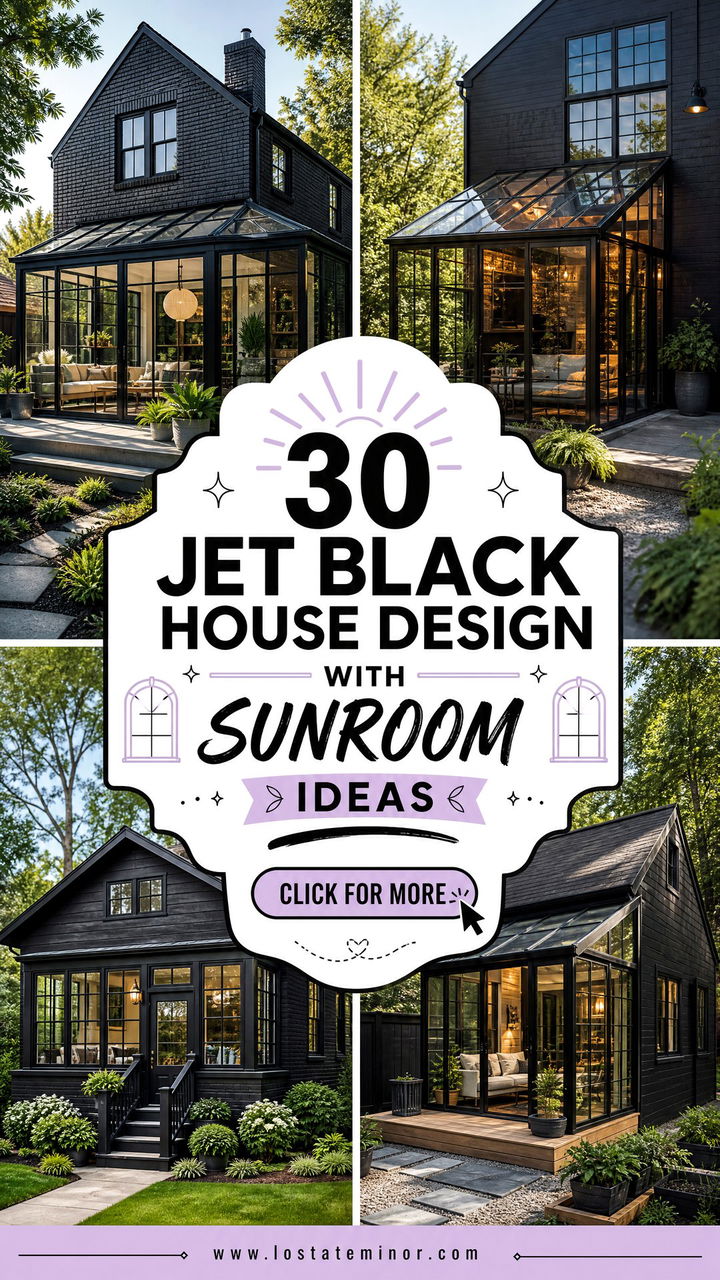
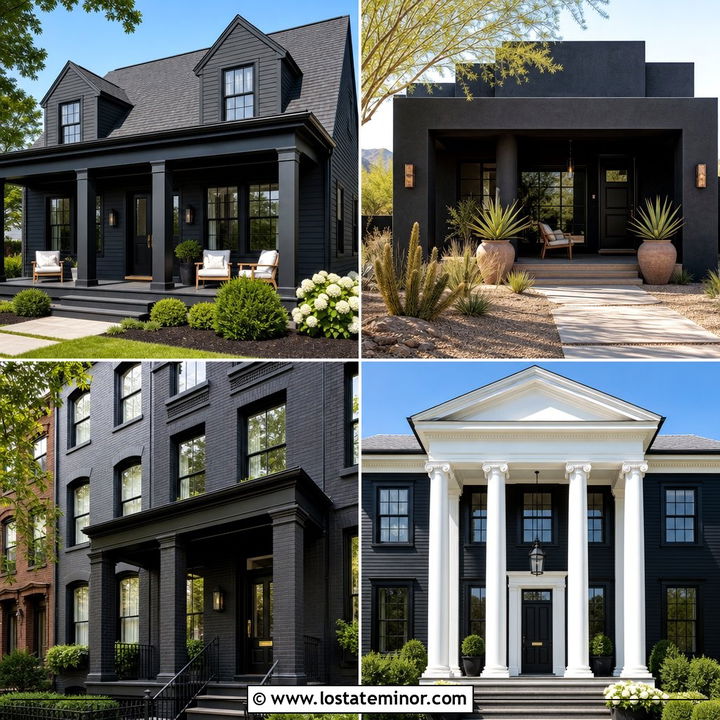
Jet black house design with sunroom ideas combine dramatic curb appeal with bright, comfortable living space. A saturated black exterior gives the home a crisp architectural outline, while broad sunroom windows keep the overall design from feeling too heavy. Current black exterior inspiration often balances dark siding with warm wood, pale masonry, white trim, reflective glass, or understated metal accents. () The best results treat the sunroom as part of the architecture rather than an obvious addition. Matching rooflines, coordinated window frames, repeated siding, and consistent foundation materials create that connection. Whether you prefer a farmhouse, ranch, cottage, or modern home, the following complete exterior schemes offer practical and attractive 30 Jet Black House Design With Sunroom Ideas.
1. Jet Black Modern Farmhouse With Glass Sunroom
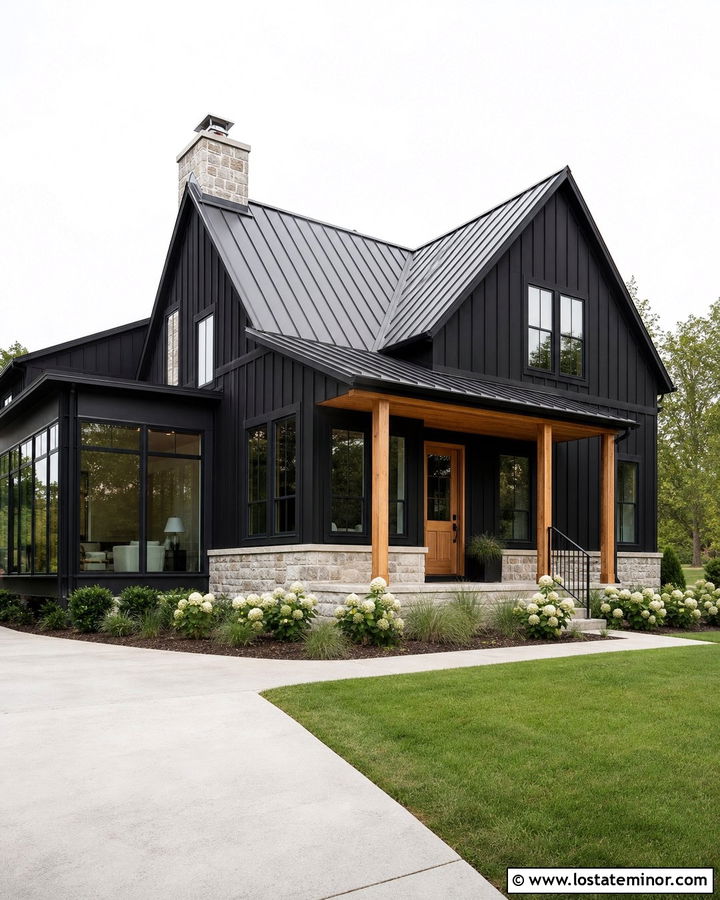
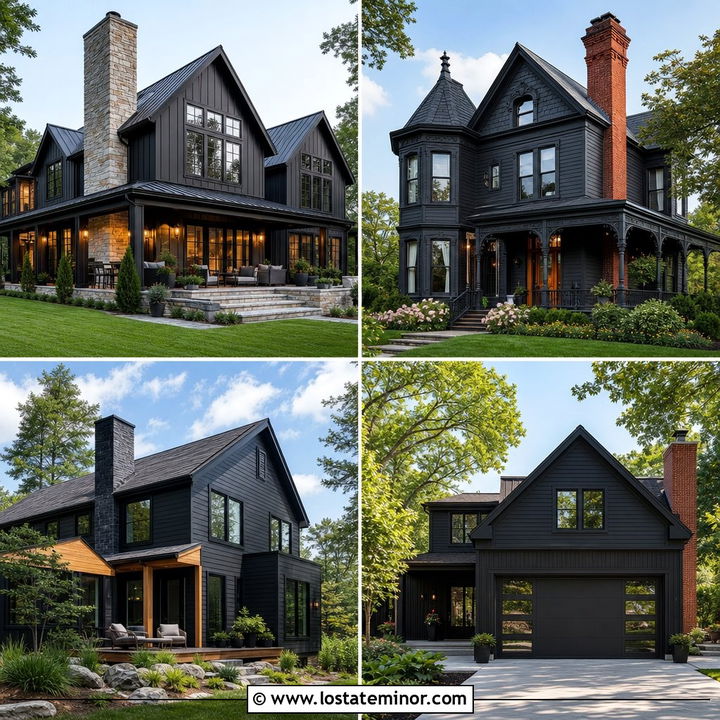
A jet black modern farmhouse looks especially balanced when its sunroom repeats the home’s simple geometry. Cover the main facade in black vertical board-and-batten siding, then use matching black frames around tall sunroom windows. A low stone foundation can visually connect the glass addition to the house without making it feel bulky. Warm cedar works well on the front door, porch ceiling, and a few structural beams. Keep the roof charcoal black for continuity, but use pale concrete steps and soft gray gravel to brighten the ground level. A side-positioned sunroom preserves the farmhouse’s centered entrance while adding plenty of glass. Ornamental grasses, hydrangeas, and a broad green lawn soften the high-contrast exterior and make the entire property feel welcoming.
2. Jet Black Ranch House With Front Sunroom
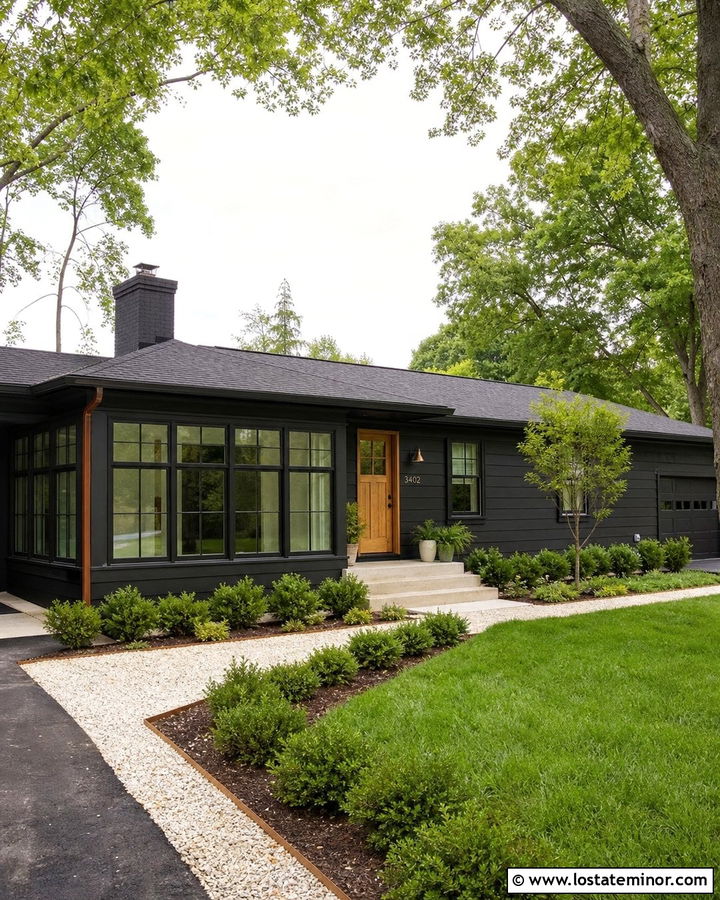
Long ranch homes can handle jet black beautifully because their low shape keeps the color grounded. Place a shallow sunroom near one end of the facade so it feels like an extension of the main living area rather than a separate box. Black horizontal siding and matching window trim create a smooth, uninterrupted exterior. Use a low-pitched charcoal roof across both structures for a unified silhouette. A natural oak front door, cedar sunroom soffit, and warm wood planter boxes prevent the dark palette from feeling flat. Wide concrete steps and a light gravel walkway introduce useful contrast. Choose simple foundation plants that remain below the windows. This keeps the sunroom open to the landscape while emphasizing the ranch home’s clean horizontal lines.
3. Jet Black Craftsman House With Wood Sunroom
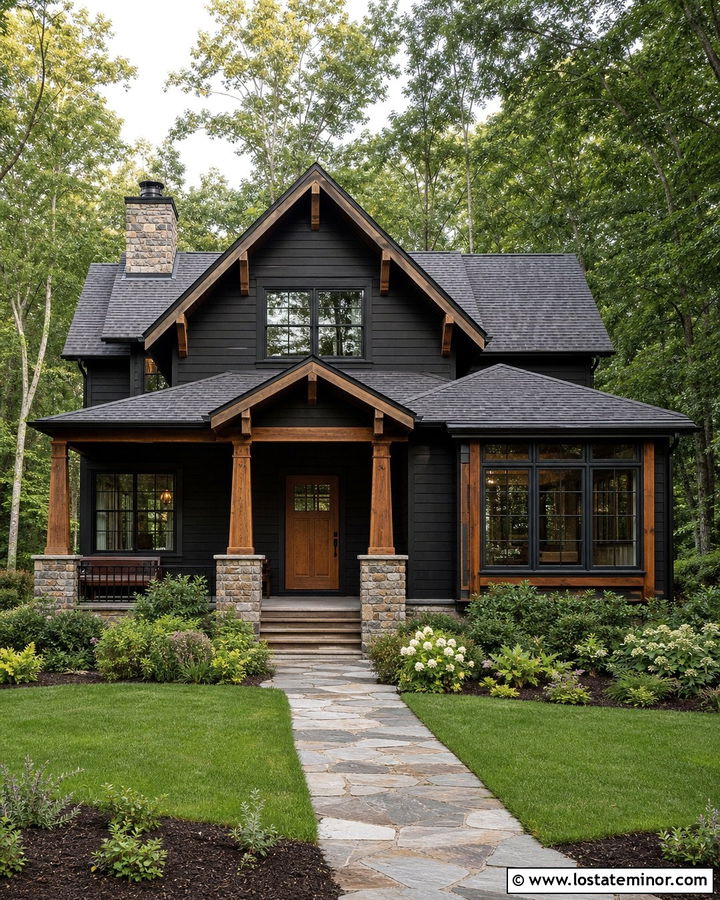
Craftsman architecture benefits from strong materials, making jet black siding a natural partner for substantial wood details. Use black lap siding across the house and sunroom, then frame the addition with stained cedar posts and exposed rafters. Divided-light windows can give the glass walls a traditional scale that matches the main house. A medium-gray shingle roof keeps the exterior dark without producing a completely monochromatic result. Add stone around the porch piers, chimney, and sunroom foundation to establish visual weight. The front door can repeat the cedar stain for a cohesive finish. Curved planting beds, a flagstone path, and layered shrubs soften the bold facade. This complete scheme feels handcrafted, established, and appropriate for a wooded or suburban setting.
4. Jet Black Colonial House With White Sunroom
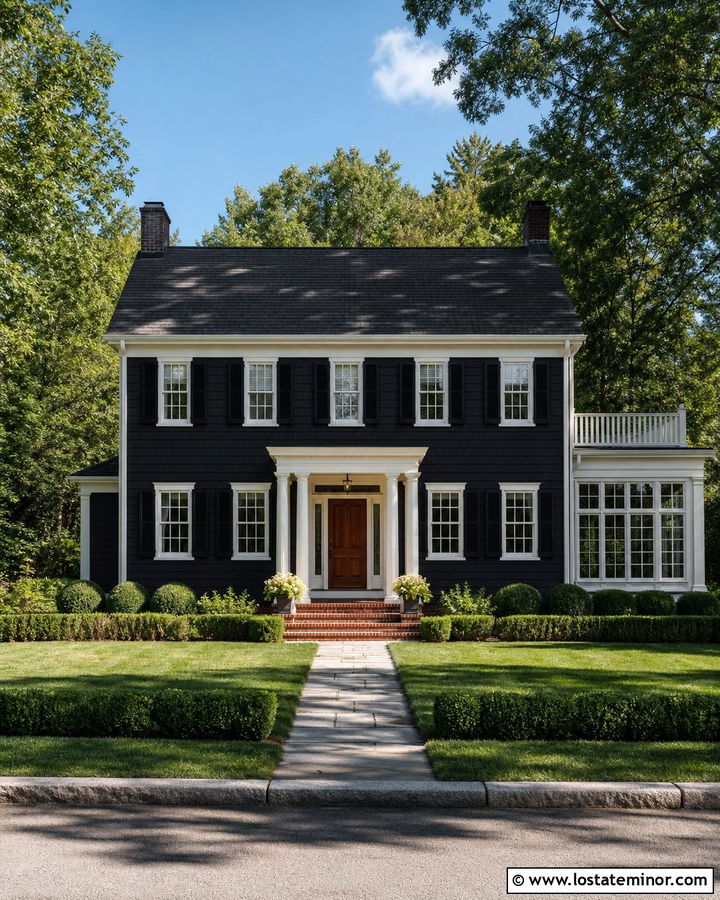
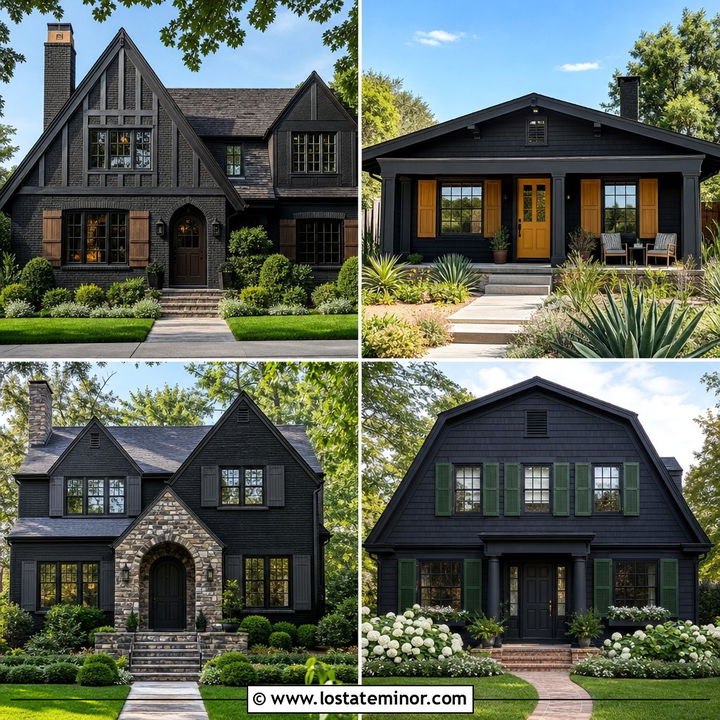
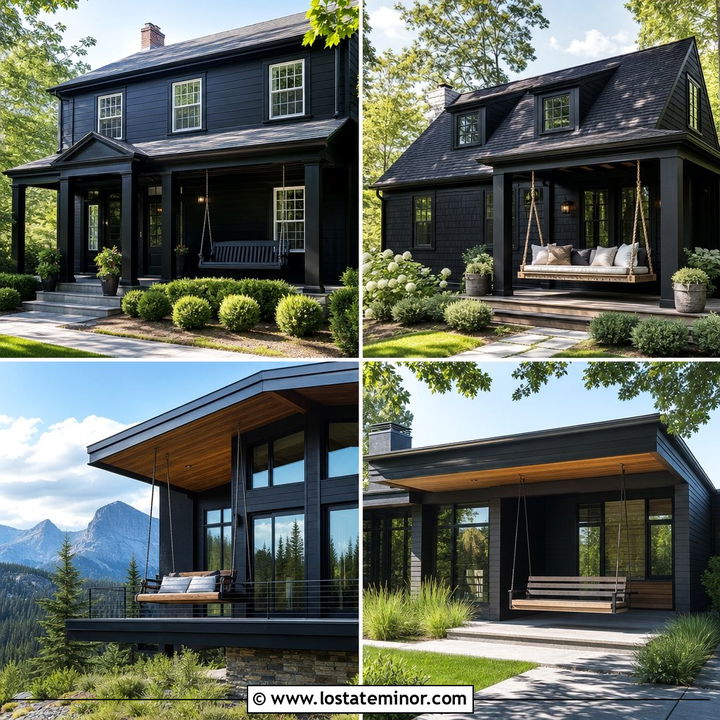
Could a traditional Colonial carry an almost-black exterior? Yes, especially when crisp white details preserve its familiar symmetry. Paint the clapboard siding jet black while keeping the cornice, window casings, columns, and front entry surround warm white. Position a white-framed sunroom on one side and give it a roof pitch that relates to the main structure. The pale framework visually lightens the glass addition and creates a deliberate connection to the trim. Black shutters and a polished black roof maintain a formal appearance. Consider a muted blue-gray or rich mahogany front door for controlled color. Brick steps, clipped boxwoods, and a straight walkway reinforce the home’s orderly character. The result feels updated without erasing the Colonial architecture underneath.
5. Jet Black Contemporary House With Flat Roof Sunroom
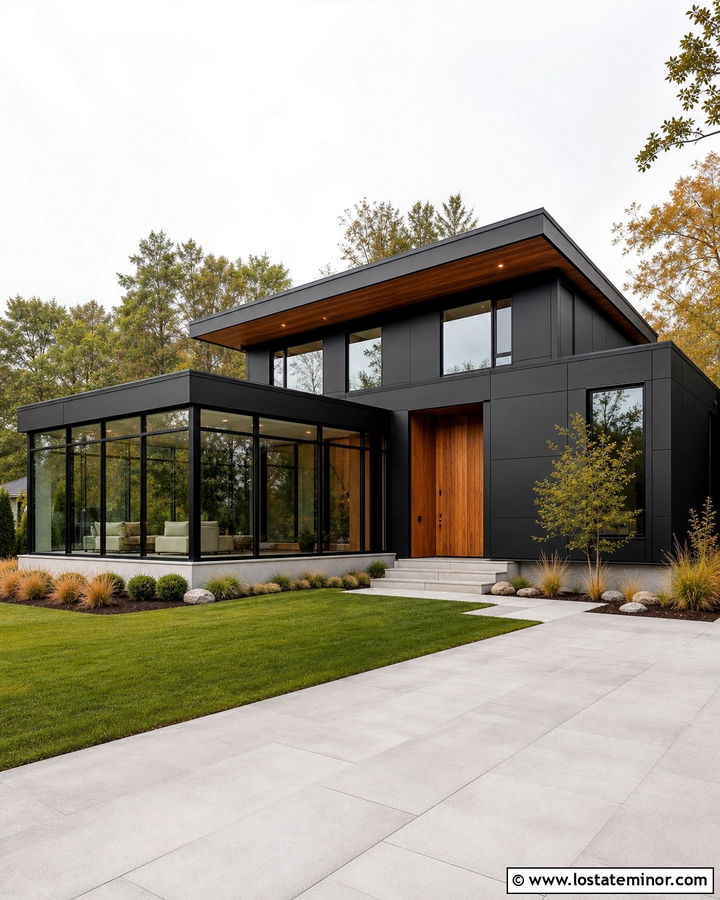
Clean planes and large windows allow a contemporary jet black home to feel bold rather than decorative. Wrap the exterior in smooth black fiber-cement panels or narrow vertical siding, using minimal seams wherever possible. Build the sunroom as a flat-roofed glass volume with slender black framing. Extending the roof slightly beyond the windows provides shade and creates a strong architectural line. Warm the composition with natural wood around the recessed entrance or beneath the sunroom overhang. Pale concrete walls and pavers can define the foundation without competing with the black facade. Keep landscaping restrained through sculptural grasses, small trees, and broad planting groups. This streamlined palette makes the transparent sunroom the visual focal point while preserving a calm, uncluttered full-house exterior.
6. Jet Black Cape Cod House With Gabled Sunroom
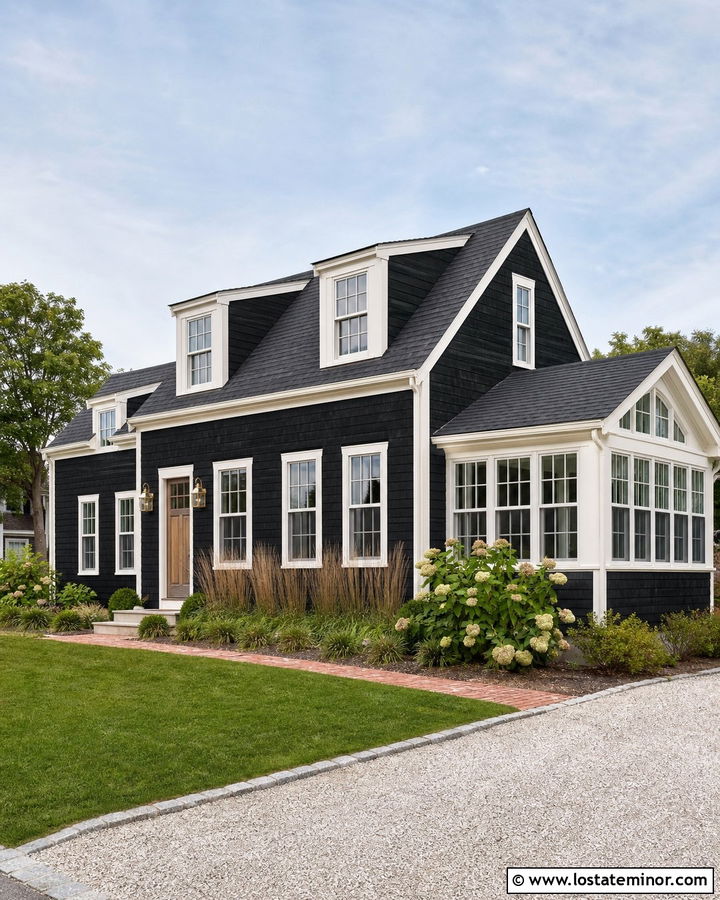
A Cape Cod home becomes more distinctive in jet black, but its compact proportions still need lighter details. Use black cedar shingles or clapboard siding with creamy white trim around the dormers, eaves, and front entrance. A gabled sunroom placed at the side should repeat the pitch of the main roof, helping the addition look original to the house. White window frames give the sunroom a classic conservatory character, while a black shingle roof ties it back to the facade. Add a weathered oak door and simple brass lighting for warmth. Low hydrangeas, coastal grasses, and a narrow brick walkway suit the smaller scale. The finished exterior feels familiar and charming, yet the deep black body gives it a fresh identity.
7. Jet Black Midcentury House With Sloped Sunroom
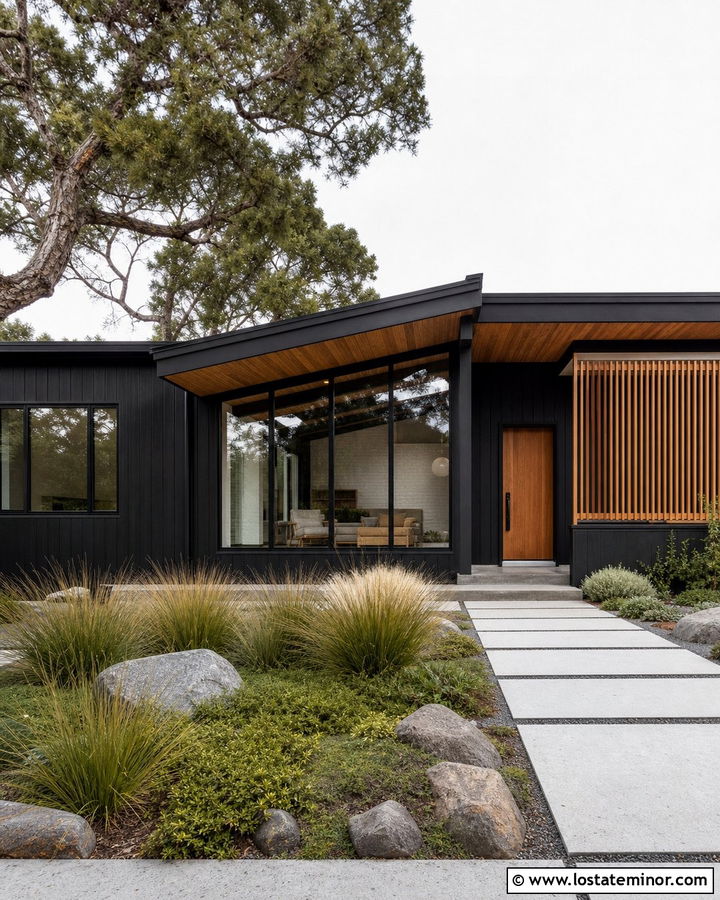
Picture a low midcentury roof floating above black siding and a wall of reflective glass. A sloped-roof sunroom can continue that dramatic roof angle, extending the home’s original horizontal form. Use jet black vertical wood siding or grooved panels across both sections. Slim black window frames maintain the period-inspired geometry without introducing unnecessary trim. A walnut front door, cedar privacy screen, and matching soffits bring warmth to the dark exterior. Light-gray concrete steps and a wide paver terrace help the facade feel open and livable. For landscaping, combine ornamental grasses, boulders, ground covers, and one sculptural tree. Avoid formal shrubs that could block the glazing. The design should feel connected to its site, with the sunroom serving as a natural bridge between indoors and outdoors.
8. Jet Black Brick House With Steel Sunroom
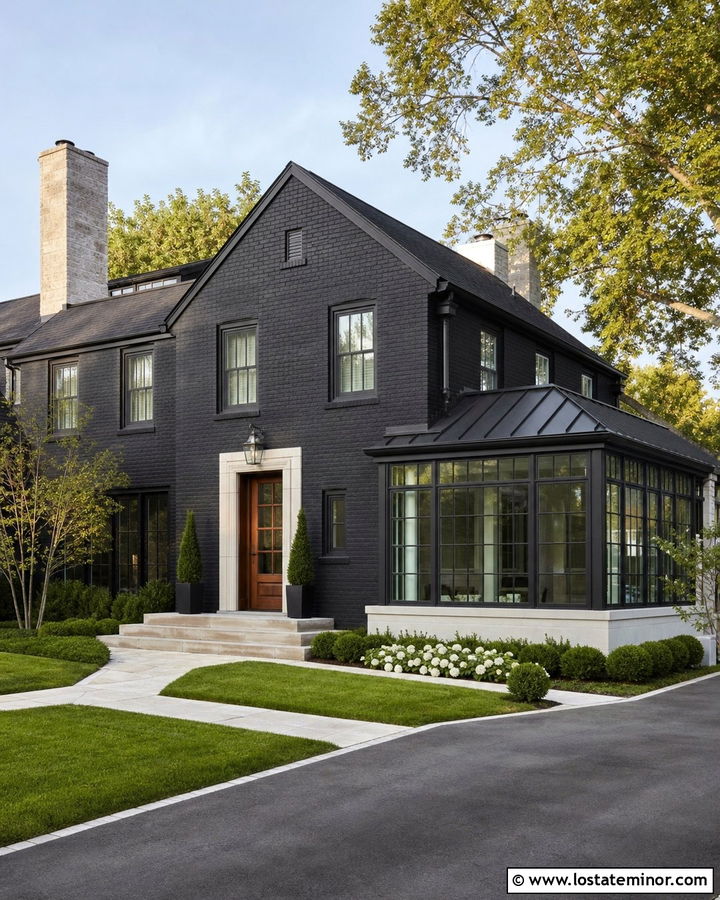
Painting brick jet black creates texture that remains visible even within a deeply saturated palette. Add a steel-framed sunroom with narrow black mullions to echo the brick color while contrasting its rough surface. A glass or dark standing-seam roof keeps the addition visually light. Use limestone steps, a pale stone foundation, or warm concrete paving to break up the darkness around ground level. The front door can be natural mahogany, muted olive, or black with a wood surround. If the existing roof is charcoal, repeat that tone on gutters and flashing for consistency. Structured evergreens and white flowering plants stand out strongly against black masonry. This pairing works particularly well on renovated traditional homes where the goal is to introduce modern glazing without hiding the original brickwork.
9. Jet Black Board And Batten House With Sunroom
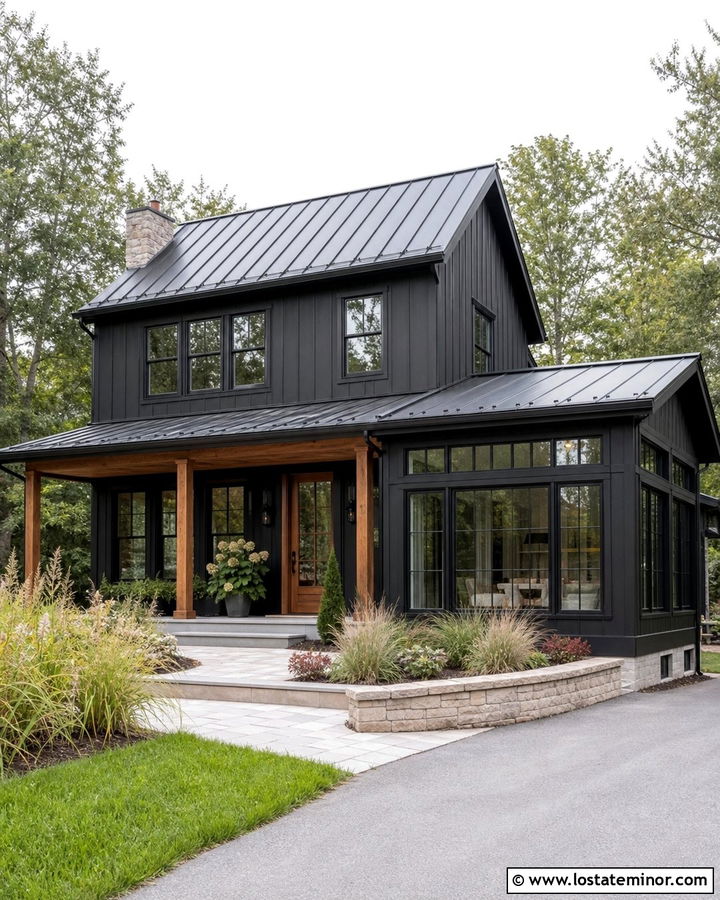
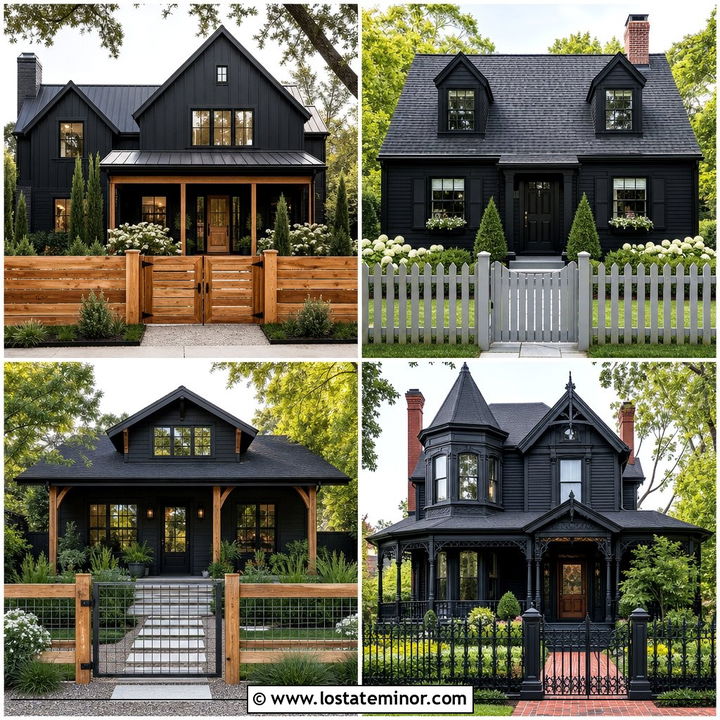
Vertical board-and-batten siding naturally draws attention to height, making it useful on both compact and two-story black homes. Carry the jet black siding onto the solid sections of the sunroom so the addition appears built into the facade. Black-framed windows can fill the remaining walls, while a simple shed roof connects below the home’s main eave. Introduce medium-tone cedar on the entry door, porch posts, and sunroom ceiling. These repeated wood details keep the scheme coordinated rather than random. Choose a charcoal metal roof for a clean farmhouse or transitional finish. A pale stone walkway, low retaining wall, and airy green landscaping provide contrast. The completed house feels contemporary and bold, but the visible siding pattern gives the black exterior welcome dimension.
10. Jet Black Cedar House With Garden Sunroom
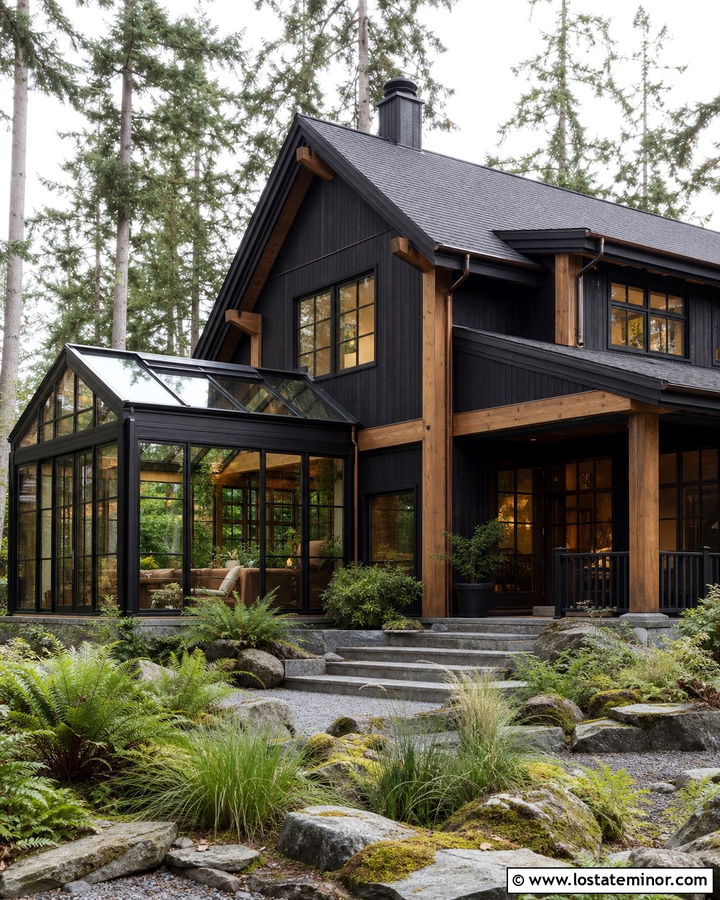
Jet black stain over cedar creates a softer, more natural appearance than an opaque painted surface. The grain remains visible, allowing the home to settle comfortably into a wooded landscape. Pair the siding with a garden-facing sunroom framed in black metal and finished with a clear glass roof. Natural cedar beams at the corners can create subtle warmth without interrupting the monochromatic architecture. Use dark bronze gutters, a charcoal roof, and large stone steps to complete the exterior. Ferns, native grasses, mossy boulders, and layered evergreen planting reinforce the connection to nature. Position the sunroom where it can overlook the most attractive part of the yard. Its transparent walls will reduce the visual weight of the black house and reflect surrounding greenery throughout the day.
11. Jet Black Tudor House With Stone Sunroom
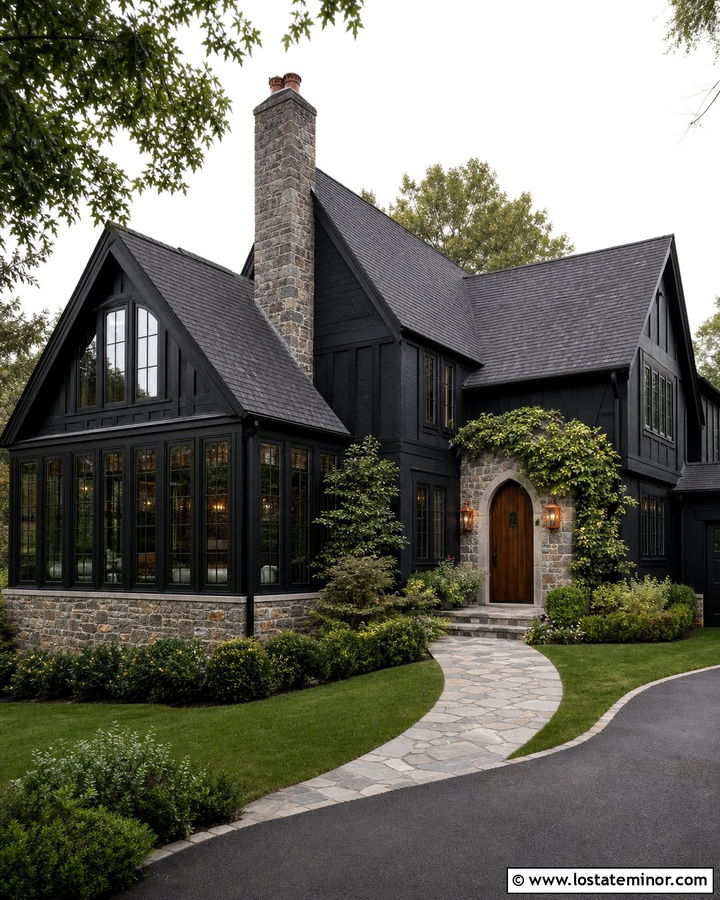
A Tudor home already has strong rooflines and substantial materials, so jet black can make its character even more pronounced. Use the color on stucco, timber details, and window trim for a unified look rather than a busy two-tone facade. Design the sunroom with a steeply pitched roof, black divided-light windows, and a stone base that matches the chimney. This foundation treatment gives the addition enough visual strength to complement the main house. A stained arched door and copper-toned lighting introduce restrained warmth. Keep roof shingles deep charcoal instead of glossy black to preserve an established appearance. Informal hedges, climbing greenery, and a curved stone walkway can soften the architecture. The sunroom should resemble a modern interpretation of a traditional Tudor garden room.
12. Jet Black Victorian House With White Sunroom
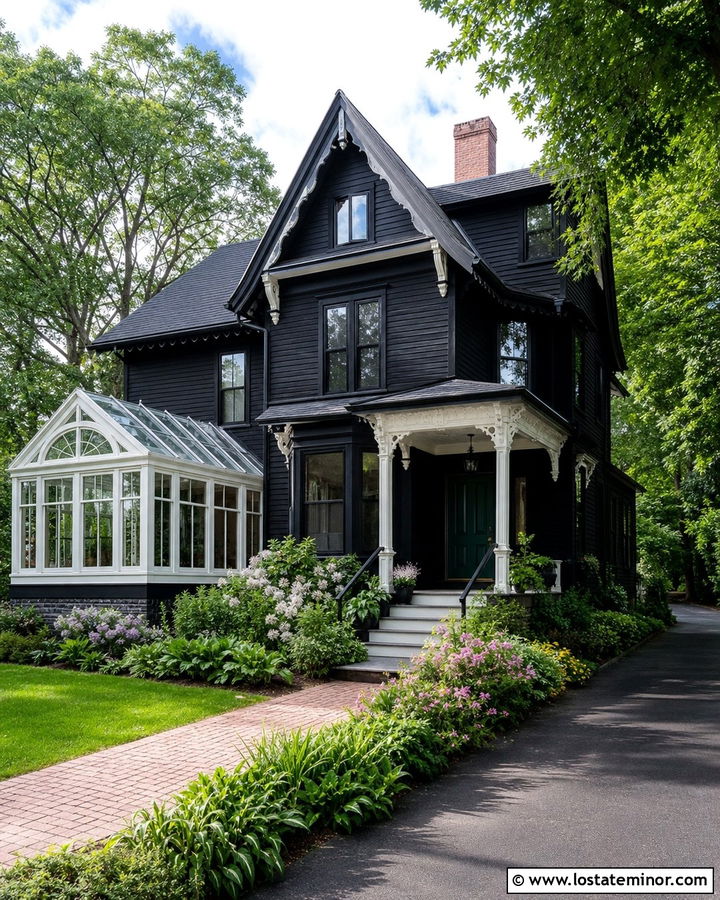
Ornate Victorian details become strikingly clear when they are organized within a black-and-white color scheme. Paint the siding jet black, then highlight selected brackets, porch columns, window casings, and decorative trim in soft white. Avoid outlining every detail, which can make the facade look overly busy. A white-framed sunroom with a glass roof provides a graceful transition between the dark house and garden. Repeat black within the sunroom window sashes or lower panels to keep it connected to the main exterior. A deep red, forest green, or natural wood front door can supply one controlled accent. Use brick paths, flowering shrubs, and traditional foundation planting. This approach respects the home’s historic personality while giving the complete exterior a sharper, more modern presence.
13. Jet Black Split-Level House With Corner Sunroom
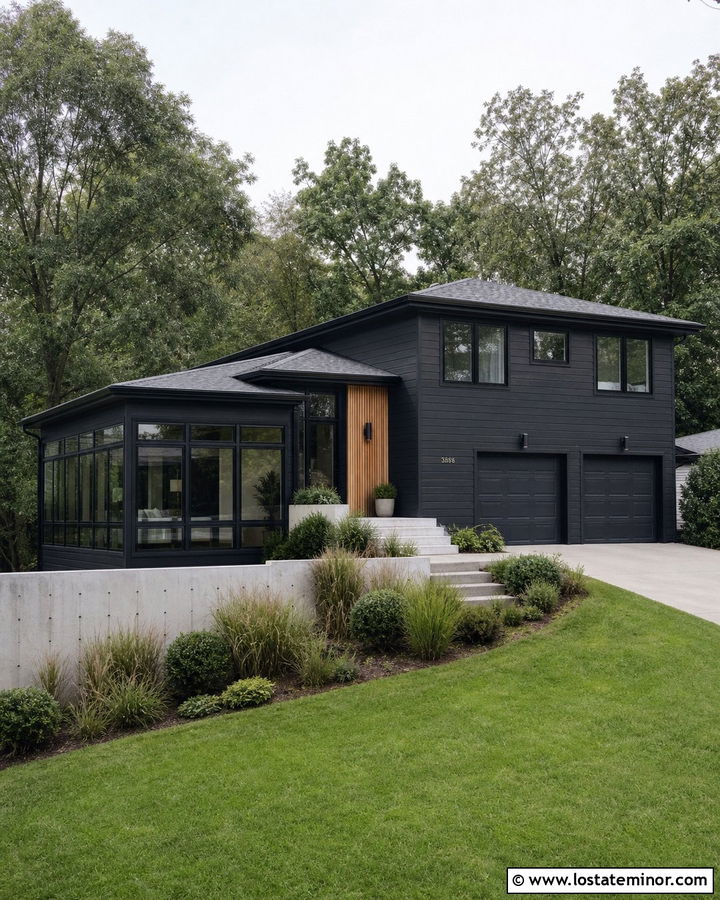
A well-positioned sunroom can help a split-level home feel more architecturally balanced. Place the glass addition near the lower living level, where it can fill an awkward corner and visually connect staggered sections of the house. Use jet black horizontal siding throughout the facade, with matching black frames on the sunroom. A shed roof can tuck neatly beneath the upper story without competing with the existing roofline. Add vertical cedar siding around the entrance or garage to distinguish important areas. Pale concrete steps and a retaining wall can organize the sloped front yard. Keep garage doors black so they recede rather than dominate. Layered grasses and low shrubs will soften the foundation while leaving the sunroom visible from the curb.
14. Jet Black Barndominium With Large Sunroom
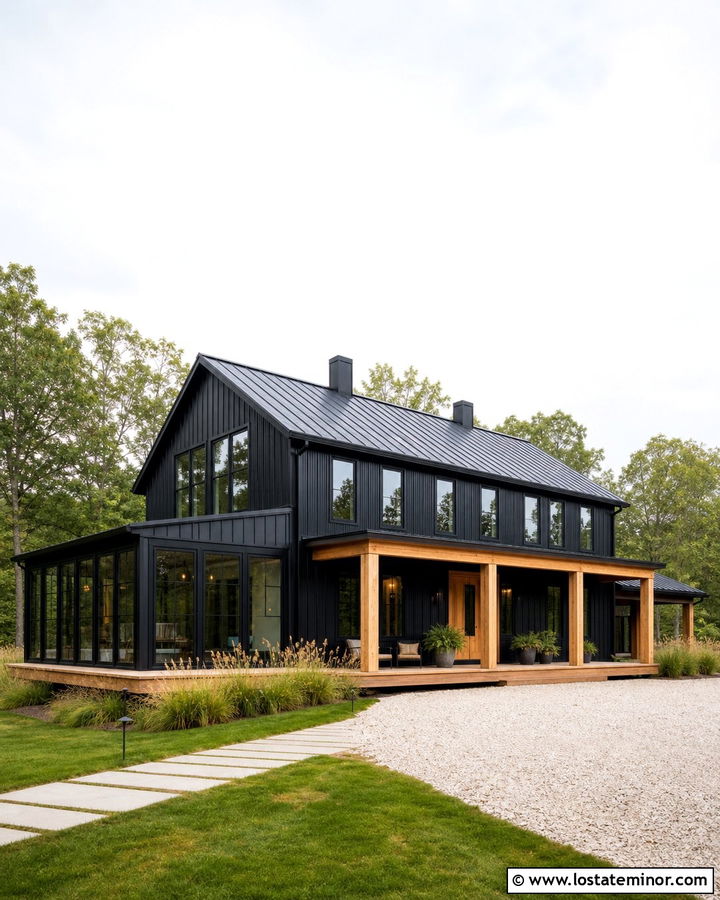
The broad walls of a barndominium provide an ideal background for a generous sunroom. Use jet black metal siding on the primary structure and continue the same finish around the solid lower panels of the addition. Tall black-framed windows should align with the main building’s doors and openings to establish a consistent rhythm. A charcoal standing-seam roof can extend over the sunroom, creating shade and architectural continuity. Natural timber posts, a cedar entrance, and a wide wood deck soften the industrial materials. Choose pale gravel, concrete pavers, and simple meadow planting instead of formal landscaping. The completed scheme feels spacious and modern while still fitting a rural setting. Glass brings transparency to the long black facade and keeps the overall mass from appearing too enclosed.
15. Jet Black Lake House With Screened Sunroom
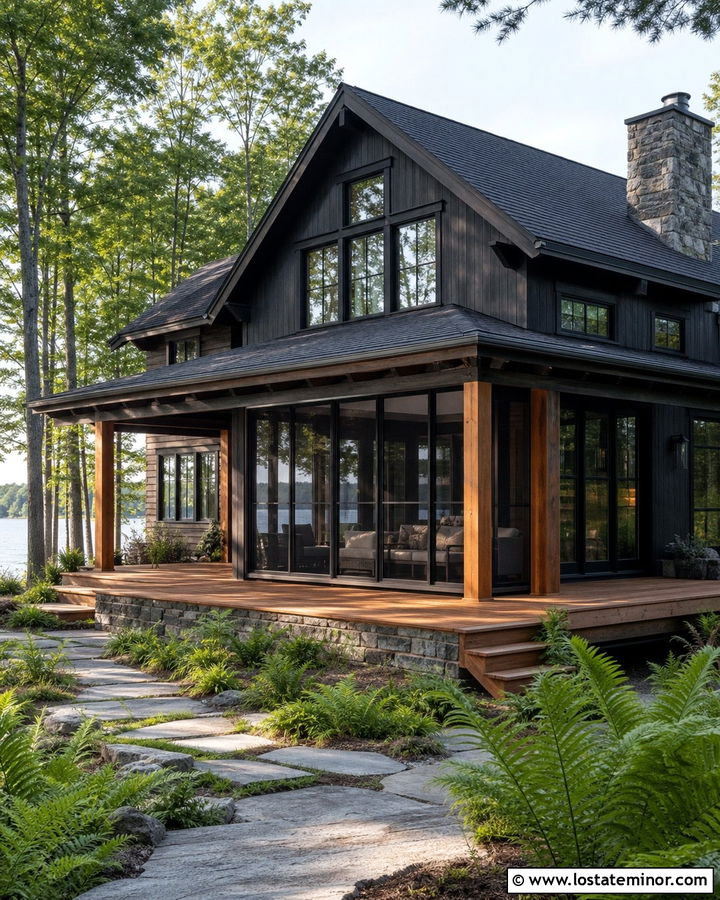
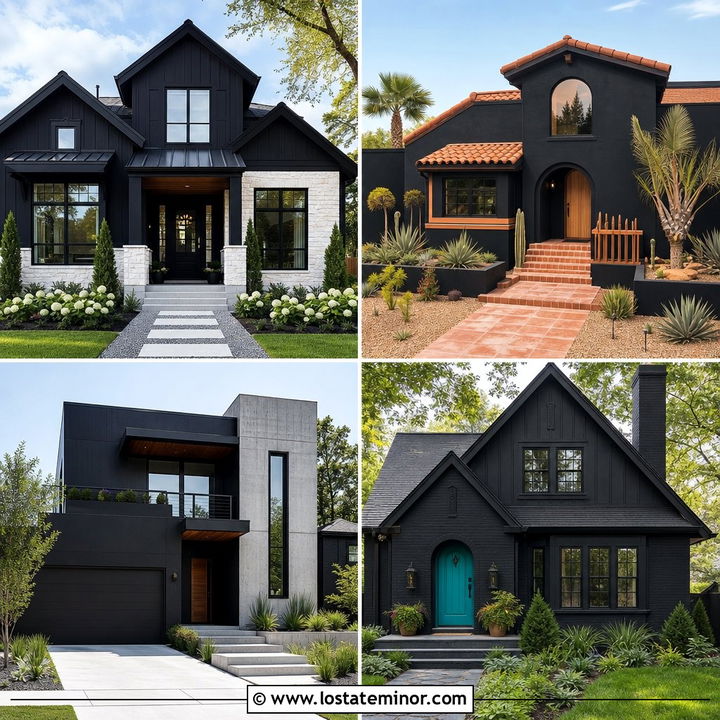
At a lake property, a jet black exterior can frame the surrounding water and trees without competing with the view. Use dark-stained wood siding, black trim, and a charcoal roof to create a quiet backdrop. The sunroom can combine screened upper sections with black-framed sliding panels, allowing it to function in changing weather. Place the addition beneath a broad roof overhang and support it with natural timber posts. A stone foundation will help the house feel anchored on uneven terrain. Consider a warm cedar deck that wraps around the sunroom and connects it to outdoor seating areas. Native grasses, ferns, and a natural stone path keep maintenance manageable. From the curb or shoreline, the transparent sunroom will add depth and light to the dark facade.
16. Jet Black Mountain House With Stone Sunroom
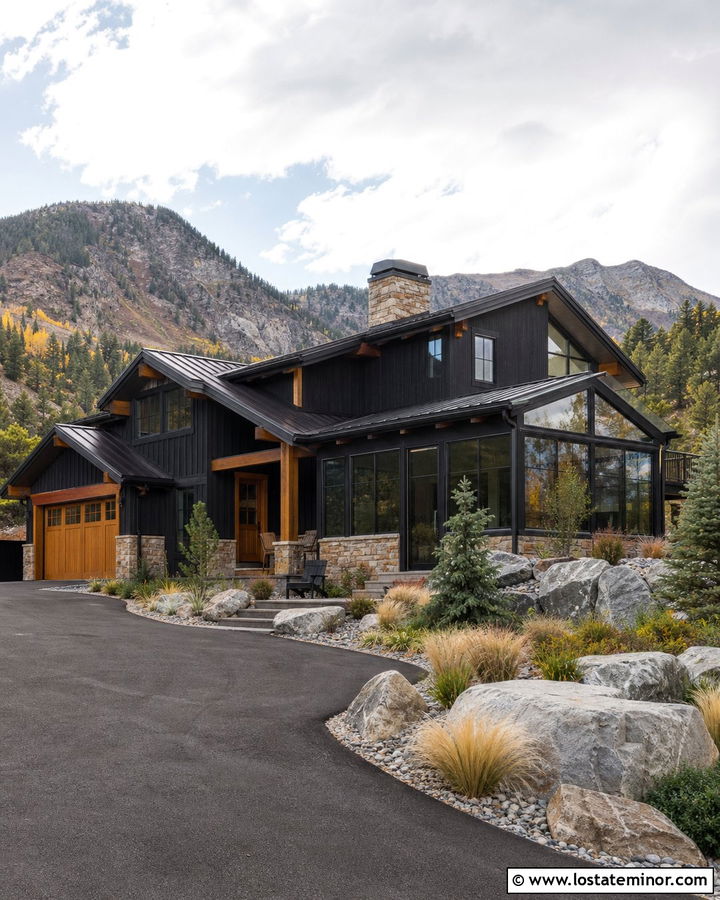
Rugged stone and jet black siding create a strong exterior that looks appropriate against mountain scenery. Cover the upper walls in black vertical siding and use locally inspired stone around the lower level, chimney, and sunroom foundation. The sunroom should have wide black-framed windows and a sloped roof that follows the home’s main roof direction. Heavy timber beams can add warmth while visually supporting the glass structure. A dark metal roof handles the bold palette better than a high-contrast shingle color. Use a natural wood front door and matching garage doors to prevent the house from appearing too severe. Large boulders, conifers, native grasses, and a gently curving driveway complete the look. Every material should feel durable, substantial, and connected to the surrounding landscape.
17. Jet Black Cottage With Greenhouse Sunroom
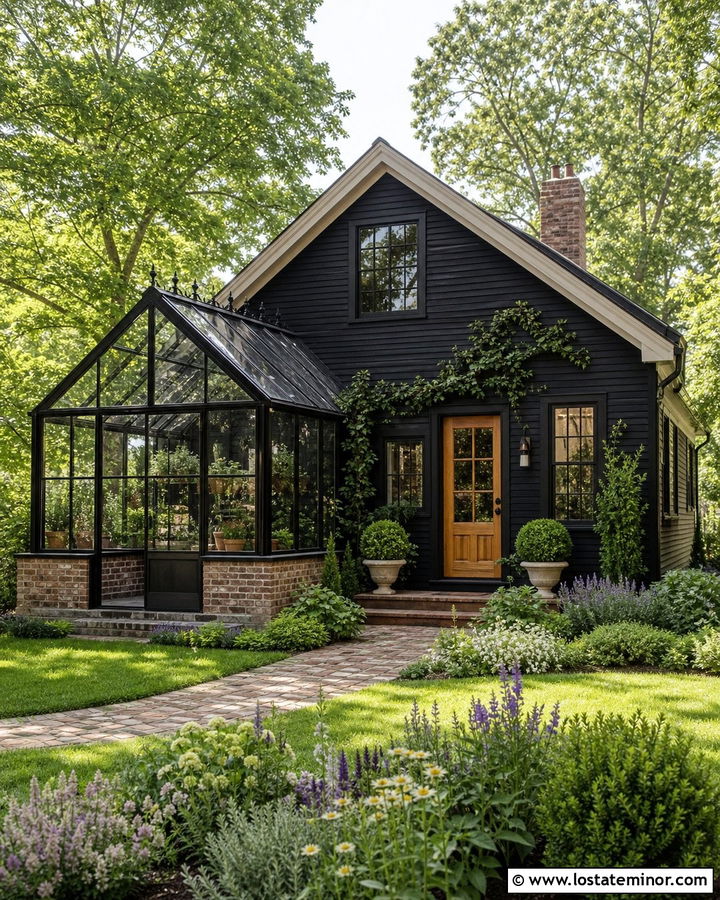
A small cottage can carry jet black when the exterior includes enough glass and natural texture. Paint the clapboard siding a saturated black and add a greenhouse-inspired sunroom with slender black frames, tall windows, and a pitched glass roof. Keep the addition modest so it complements rather than overwhelms the cottage. Cream trim around the main windows and eaves can soften the transition, while a honey-toned wood door provides a welcoming focal point. Use reclaimed brick for the sunroom base and garden walkway. Flowering perennials, herbs, climbing vines, and low boxwood borders create a relaxed garden setting. The combination feels charming rather than formal. Because the sunroom reflects the sky and planting, it visually expands the compact home while balancing the dark siding.
18. Jet Black Prairie House With Low Roof Sunroom
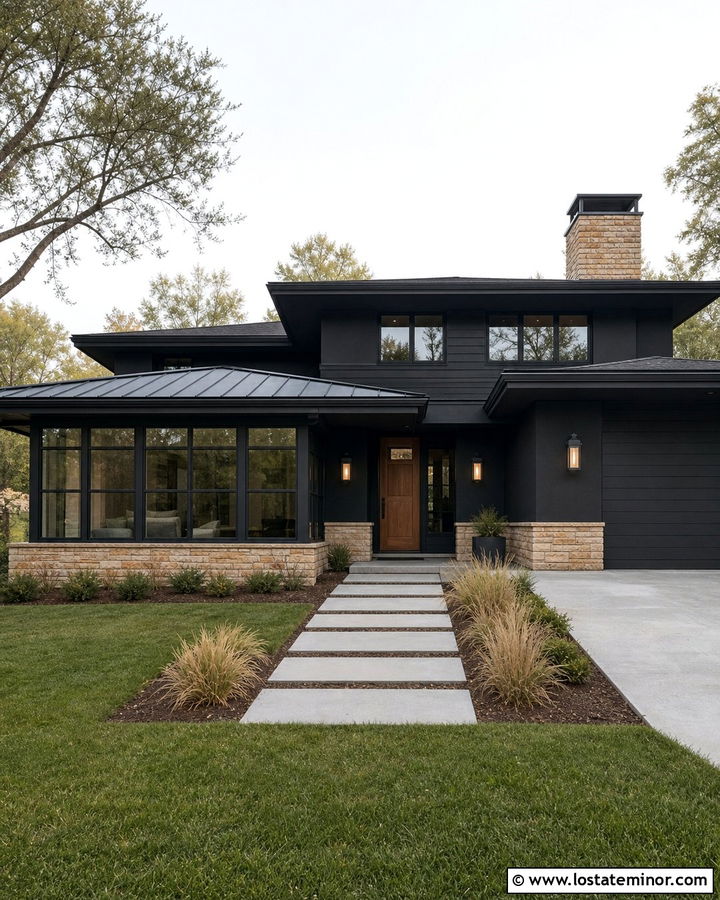
Strong horizontal lines define Prairie-influenced architecture, and a low sunroom can reinforce that character. Use jet black stucco or narrow horizontal siding beneath wide, deep roof overhangs. Align the sunroom roof with an existing fascia line so the glass enclosure appears to continue naturally from the house. Black window frames and broad panes create an uninterrupted connection to the yard. Warm tan stone around the foundation, entry columns, and chimney keeps the exterior grounded. Choose a medium-brown wood door and bronze lighting rather than sharp white accents. Long rectangular planting beds, ornamental grasses, and linear concrete pavers should echo the home’s geometry. The result is an integrated exterior where the dark color emphasizes the roofline and the bright sunroom adds transparency.
19. Jet Black Stucco House With Courtyard Sunroom
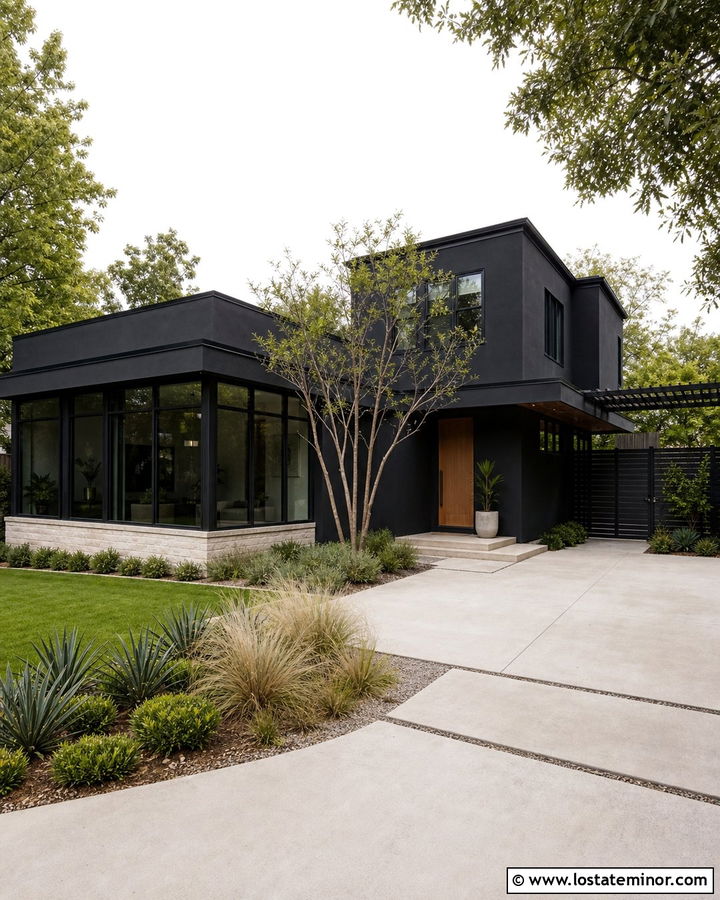
Smooth jet black stucco gives a courtyard home a dramatic, sculptural quality. Place the sunroom where two wings of the house meet, allowing its glass walls to overlook a protected garden. Slim black frames will disappear into the surrounding facade, while a flat roof keeps the composition simple. Introduce pale limestone around the sunroom base, entrance, and courtyard paving to provide relief from the dark walls. Warm wood can appear on the front door, privacy gates, and overhead slats. Keep window trim black rather than adding a competing outline. Drought-tolerant grasses, olive-like trees, and neatly grouped shrubs complement the strong architecture. This complete scheme works best when the sunroom feels open to the private landscape but remains visible enough to brighten the exterior from wider angles.
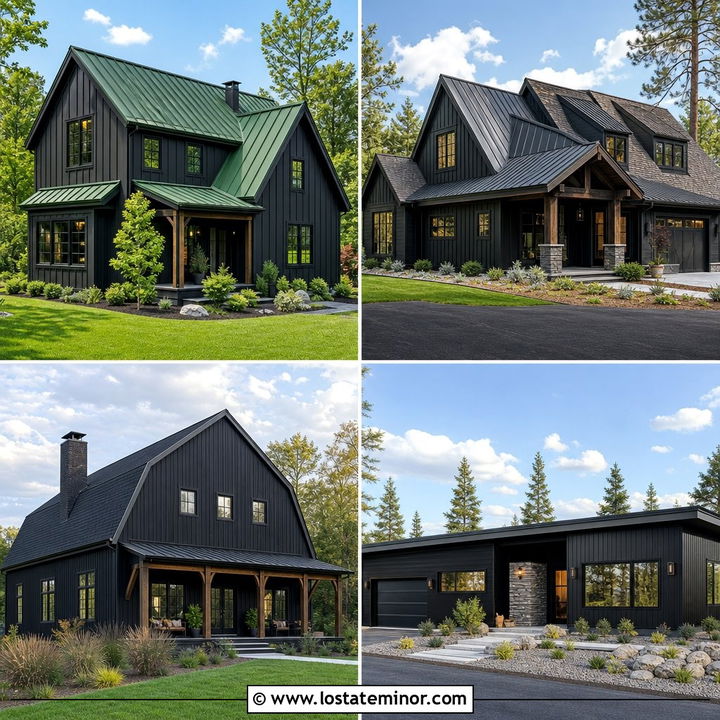
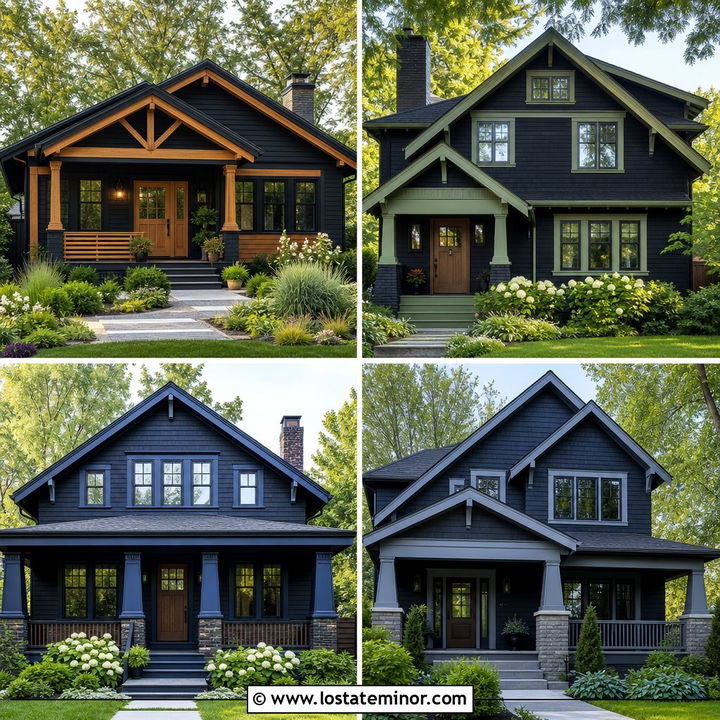
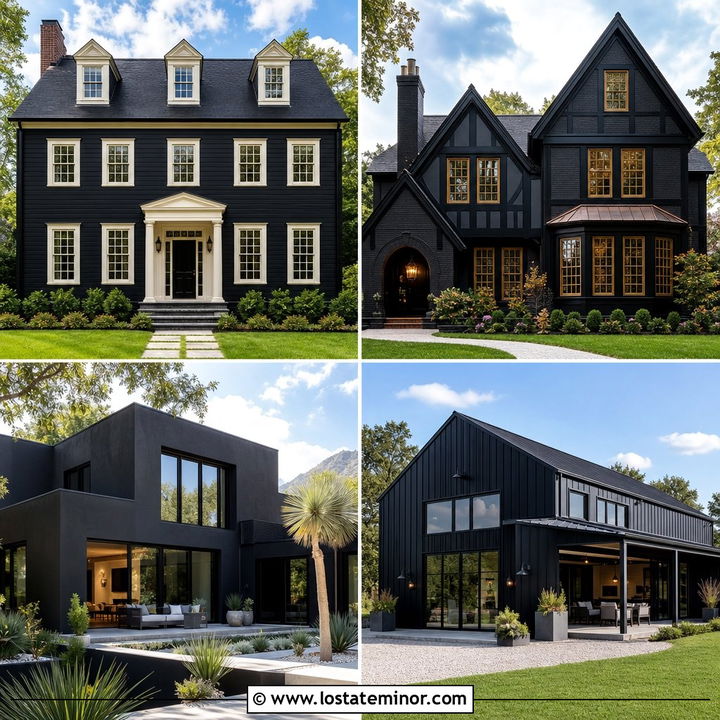
20. Jet Black Industrial House With Metal Sunroom
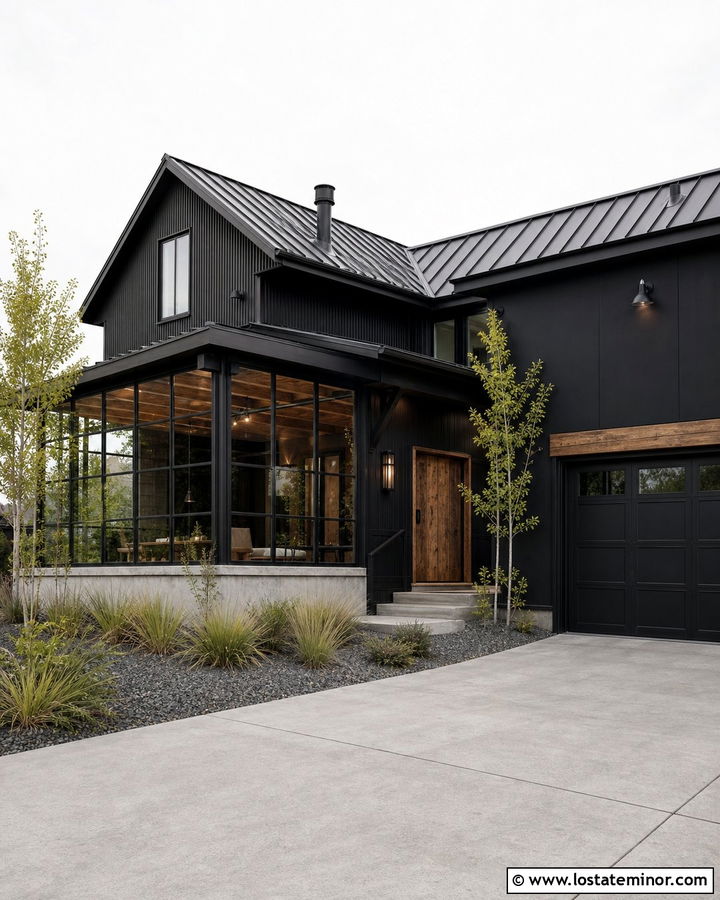
An industrial-inspired house can use jet black across multiple materials without looking flat. Combine black corrugated metal siding with sections of matte fiber-cement panels. Build the sunroom with steel framing, large rectangular panes, and a dark metal roof. Exposed beams or structural connections can remain visible as intentional design features. To warm the facade, add reclaimed wood around the entrance and beneath the sunroom ceiling. A pale concrete foundation, broad steps, and a simple patio provide practical contrast. Black garage doors should match the siding so they blend into the elevation. Use structured grasses, gravel beds, and a few small trees instead of decorative foundation planting. The finished exterior feels direct and modern, with the sunroom acting as a lighter transparent counterpart to the solid metal walls.
21. Jet Black Scandinavian House With Wood Sunroom
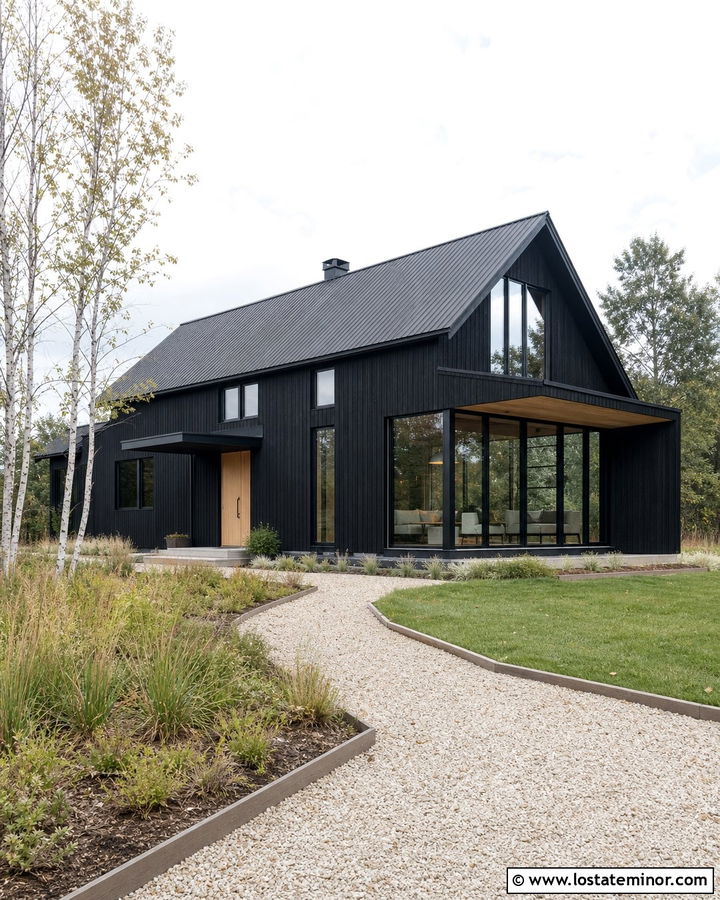
Simple massing, natural materials, and large windows make a Scandinavian-inspired house an excellent match for jet black. Use black vertical timber cladding across the primary structure and sunroom base. Keep the roof steep, clean, and charcoal, with minimal visible trim. A sunroom framed in black can occupy one end of the house beneath an extension of the main roof. Line its ceiling and selected walls with pale oak to introduce brightness. Repeat that wood on the front door and a small entry canopy. Light gravel paths, native grasses, birch trees, and simple timber edging support the understated exterior. Instead of adding many colors, rely on the contrast between black cladding, reflective glass, fresh greenery, and warm wood. The result feels calm, practical, and closely connected to nature.
22. Jet Black Bungalow With Front Sunroom
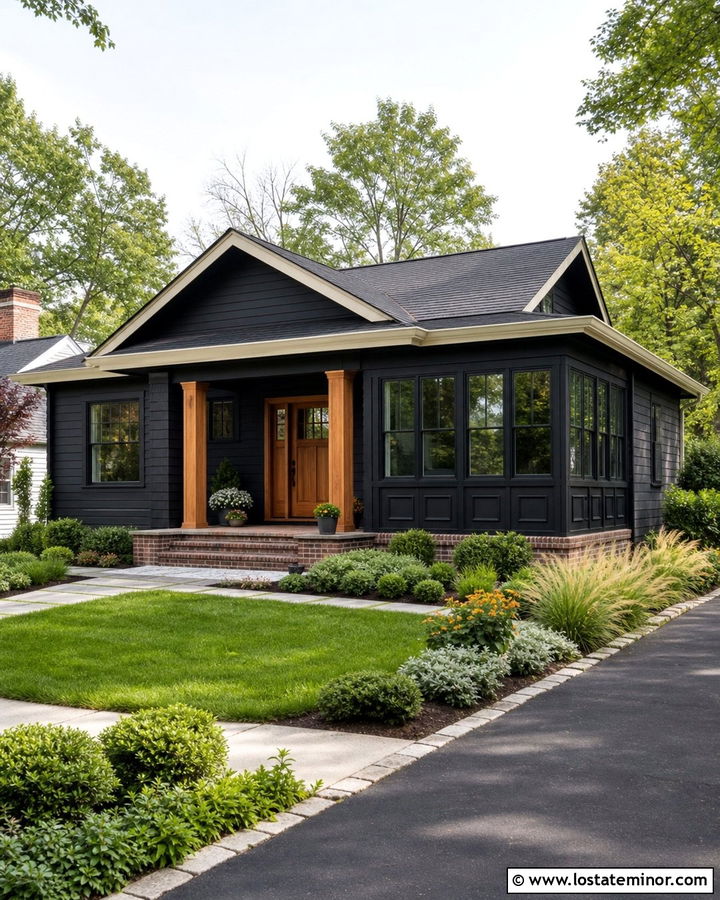
A front sunroom can add useful depth to a compact bungalow while strengthening its curb appeal. Paint the house and the sunroom’s lower walls jet black, then use black-framed windows above. A low gabled roof should repeat the pitch and materials of the bungalow’s main roof. Natural cedar columns and a wood front door create warmth near the center of the facade. Keep trim minimal, perhaps using soft cream only around the roof edge and selected window casings. A brick or stone foundation will help the addition feel permanent rather than enclosed after construction. Frame the walkway with low shrubs, grasses, and seasonal flowers that do not cover the windows. This arrangement turns the sunroom into a bright architectural feature while preserving the bungalow’s welcoming, human-scale proportions.
23. Jet Black A-Frame House With Side Sunroom
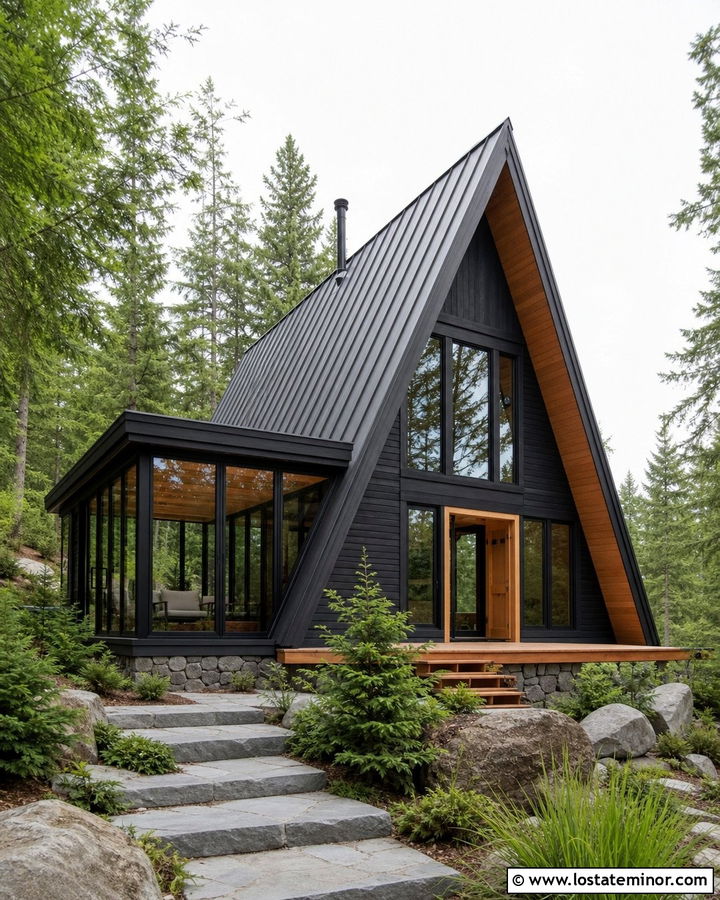
The dramatic roof of an A-frame should remain the dominant feature, so attach the sunroom at one side with a lower, quieter profile. Use jet black wood siding on the triangular facade and sunroom base, then specify slender black frames for the glass enclosure. A dark standing-seam roof can unify the two structures while handling snow and rain visually well. Add natural cedar around the entrance, deck, and sunroom ceiling to soften the black shell. Stone steps and a rough stone foundation make the home feel secure on a wooded or sloped site. Keep landscaping informal with ferns, grasses, evergreens, and existing trees. The glass addition expands the living area without weakening the recognizable A-frame outline, and its reflections make the dark exterior feel lighter.
24. Jet Black Saltbox House With Lean-To Sunroom
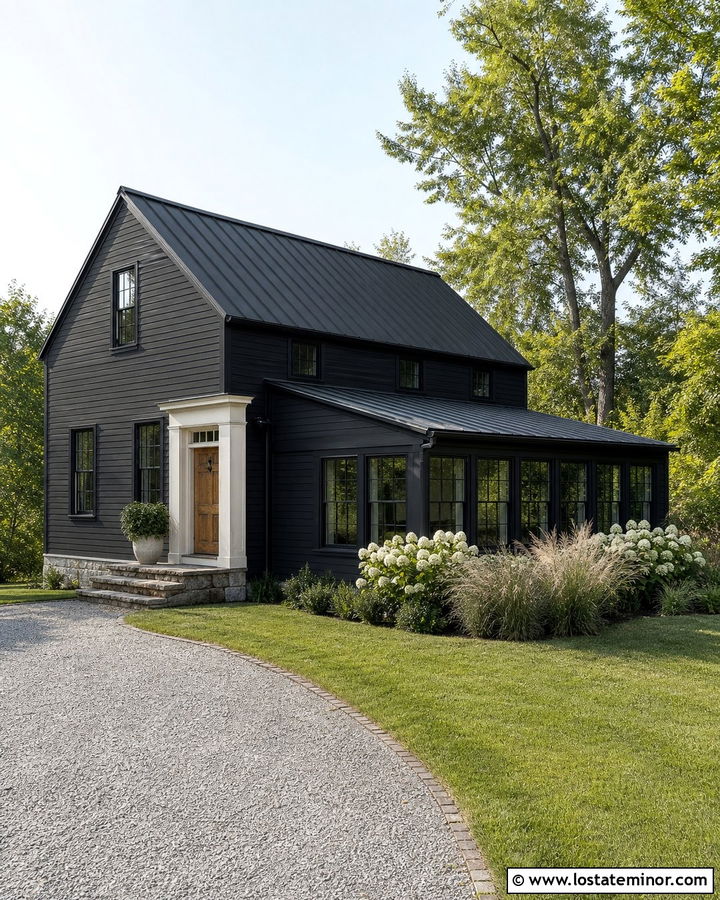
A lean-to sunroom naturally complements the sloping rear roof of a saltbox house. Paint the wood siding jet black and carry the color across the sunroom’s solid base and connecting walls. Use evenly spaced black-framed windows to maintain the home’s simple, historic rhythm. The roof can be dark metal or charcoal shingles, depending on whether the desired look is traditional or more contemporary. Off-white trim around the main entrance and selected windows prevents the facade from becoming too visually dense. Add a weathered wood door, fieldstone steps, and a gravel path for relaxed character. Meadow grasses, hydrangeas, and a few mature trees complete the setting. The sunroom should look like a thoughtful evolution of the house’s familiar asymmetrical profile.
25. Jet Black House With Two-Story Sunroom
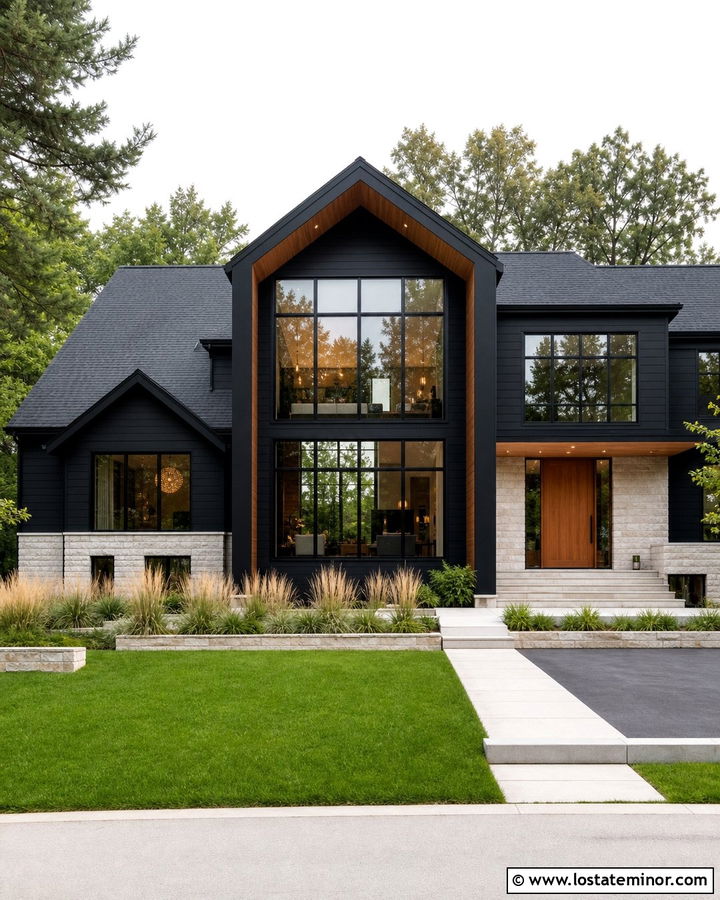
A two-story sunroom can become the defining feature of a large jet black home. Place it within a recessed section of the facade so the glass does not project like a separate tower. Use black structural framing and align the mullions with windows on both floors. Jet black siding on adjacent walls will make the transparent section appear even brighter. A charcoal roof and black gutters keep attention on the glazing. Add pale stone across the lower level and repeat it on entrance steps or retaining walls. Warm wood doors and soffits can provide a measured contrast. Tall grasses and layered trees help frame the vertical glass without hiding it. At full-house scale, the sunroom should balance the mass of the dark exterior and introduce a clear architectural center.
26. Jet Black House With Oak Framed Sunroom
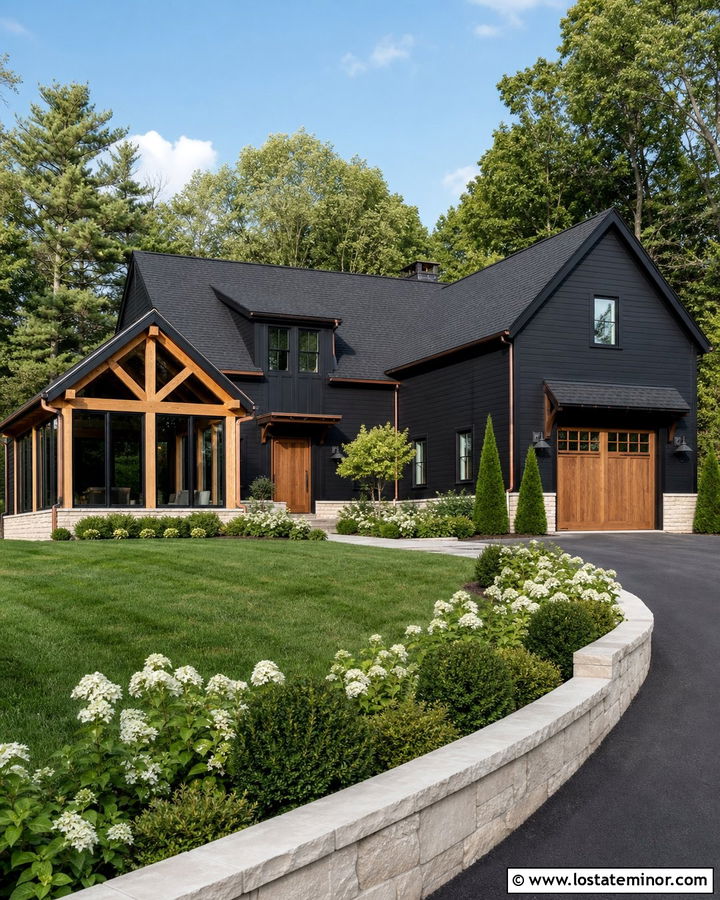
Oak framing gives a jet black exterior immediate warmth and creates a clear focal point. Use black lap or vertical siding on the house, then construct the sunroom with substantial natural oak posts and beams between broad glass panels. Keep the sunroom’s roof charcoal or black so it connects to the main structure. An oak front door, garage door, and porch ceiling can repeat the same tone across the facade. Avoid mixing several different wood stains, since consistency makes the complete scheme feel more polished. Pale limestone at the foundation and along the walkway will brighten the lower elevation. Use green shrubs, white flowers, and softly shaped trees around the house. The oak should look structural and purposeful, not like a decorative layer placed over the glass.
27. Jet Black House With Red Brick Sunroom
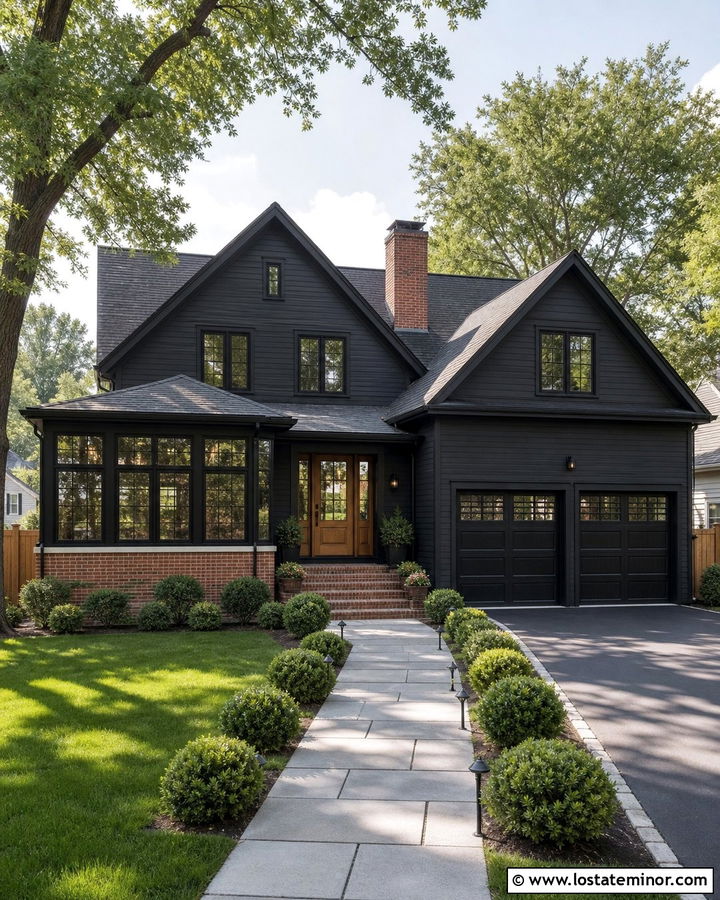
Existing red brick can become a useful accent when the rest of a home changes to jet black. Paint or reclad the primary siding in black while preserving brick around the chimney, entrance steps, and sunroom foundation. Black-framed glass above the brick base gives the addition a lighter appearance. Select a roof in charcoal rather than brown so it coordinates with the new siding. A medium wood front door can bridge the warm brick and cool black surfaces. Keep trim black for a cohesive look, using cream only if the architecture needs stronger window definition. Concrete pavers, clipped shrubs, and green lawn create a clean suburban setting. Repeating the brick in several locations ensures the sunroom feels connected to the entire facade rather than treated as a separate feature.
28. Jet Black House With Copper Roof Sunroom
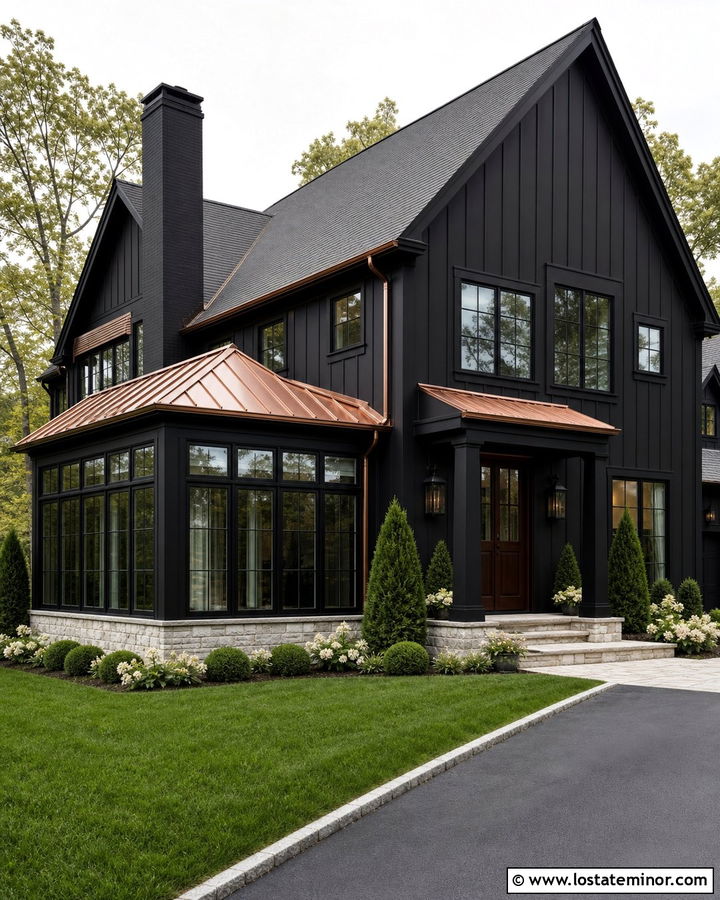
Copper can bring warmth and a sense of permanence to a jet black house, especially when it is used with restraint. Cover the sunroom with a simple standing-seam copper roof while keeping its frames black. As the copper changes over time, it will continue to contrast with the dark siding in a natural way. Repeat the metal on a small entry canopy, gutters, or understated exterior lights rather than covering every roof surface. Use a charcoal main roof, black trim, and a rich wood front door to support the palette. Pale stone at the foundation provides a cooler counterpoint. Structured evergreens and light flowering plants will stand out against the facade. The copper-roofed sunroom becomes the focal point, but the complete exterior remains coordinated and balanced.
29. Jet Black House With Solar Sunroom
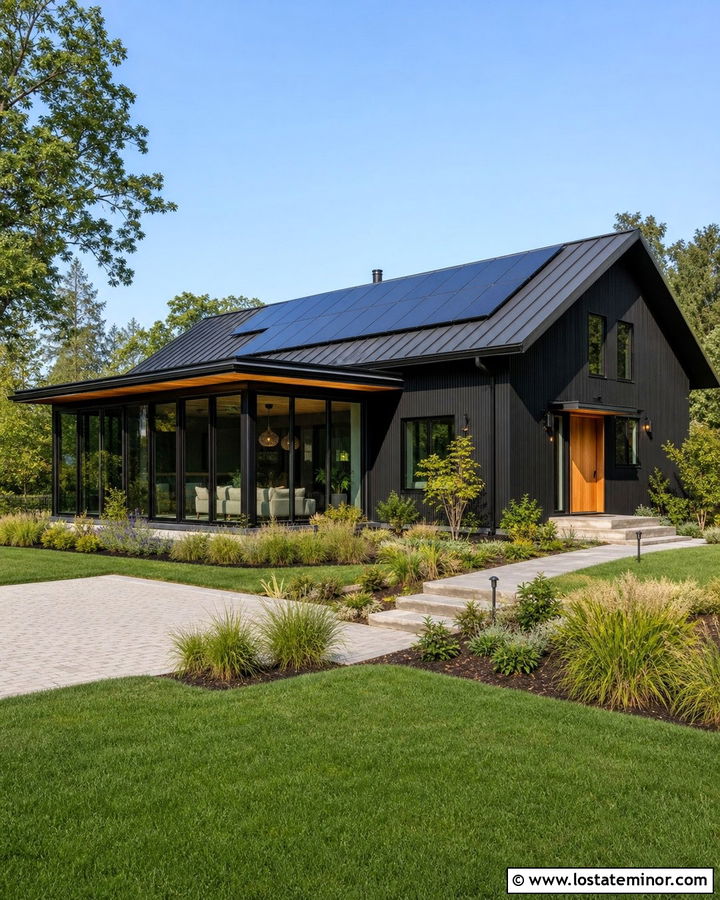
A sunroom can support an energy-conscious exterior without looking overly technical. Design the jet black house with a south-facing glass addition, depending on the site and local climate, and extend a roof plane above it for controlled shade. Black-framed windows and black vertical siding create a seamless architectural connection. Solar panels can sit neatly on the charcoal standing-seam roof, aligned in one clean rectangular group. Natural wood around the entrance and sunroom ceiling prevents the sustainable features from feeling cold. Add pale permeable pavers, native planting, and rain-friendly landscape beds around the property. The finished design should look intentional from the street, with panels, glazing, siding, and rooflines treated as parts of one composition rather than unrelated upgrades added at different times.
30. Small Jet Black House With Budget Sunroom
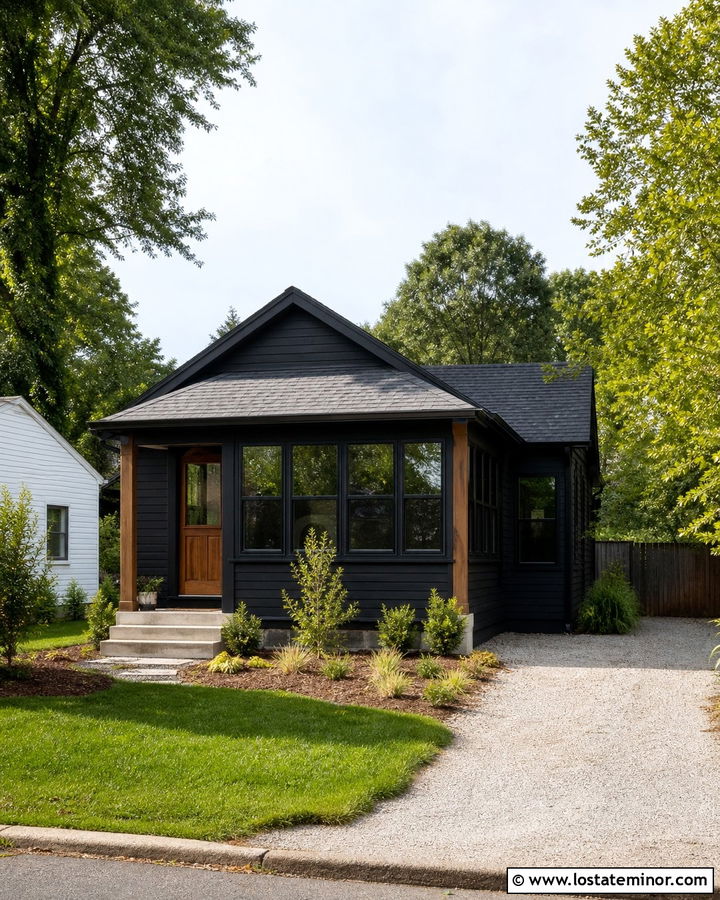
A modest house does not need a complicated addition to achieve a convincing black exterior and sunroom combination. Paint existing siding jet black, then enclose a covered porch with standard-size black-framed windows. Reusing the porch roof and foundation can preserve the original proportions while limiting structural changes. Match the sunroom’s lower panels to the main siding so the glass enclosure feels integrated. Keep the roof charcoal and select one affordable warm accent, such as a stained wood front door or cedar porch posts. Light concrete steps and simple gravel paths provide contrast without expensive masonry. Choose young native shrubs, ornamental grasses, and mulch beds for approachable landscaping. Careful repetition of color and materials can make this smaller project appear custom, cohesive, and thoughtfully planned.
Conclusion:
The strongest 30 Jet Black House Design With Sunroom Ideas balance dramatic color with glass, texture, and thoughtful architectural connections. Jet black can work on nearly any home style when the roofline, window frames, foundation, and sunroom materials feel coordinated. Warm wood creates an inviting contrast, while stone, brick, and pale concrete help ground the darker facade. White trim can sharpen traditional homes, but modern exteriors often look cleaner with black trim and fewer color changes. Before committing, compare exterior samples in direct sun, shade, and reflected landscape light. Most importantly, design the sunroom as part of the complete house. Matching proportions and repeated materials will make even a new addition appear established and intentional.

Related posts: