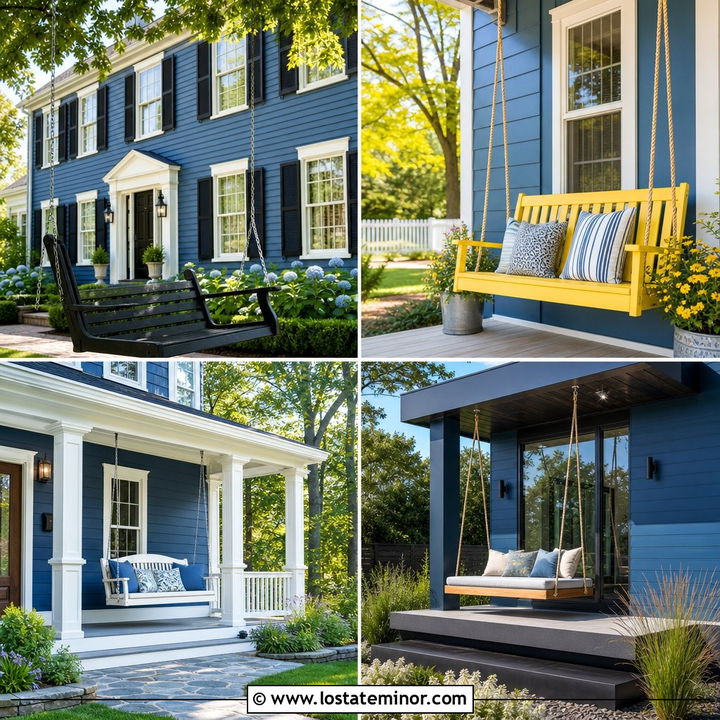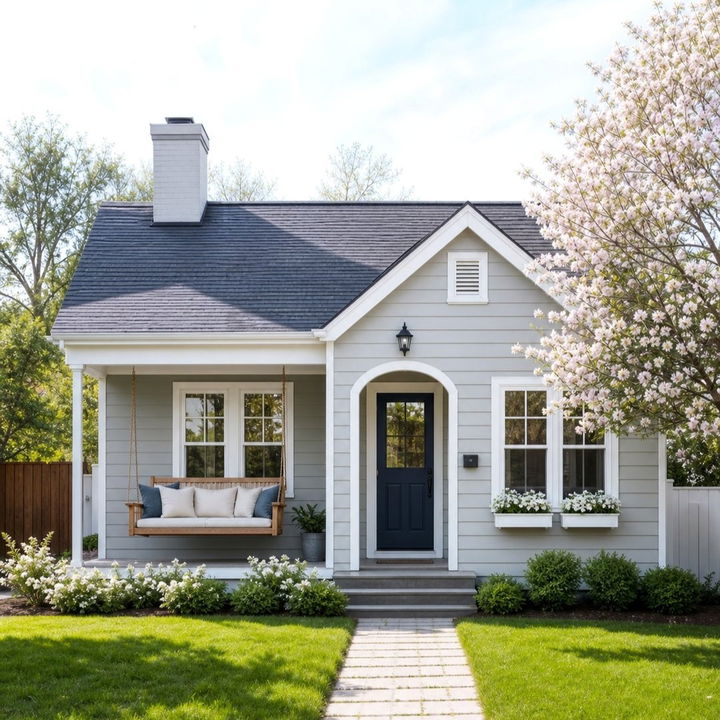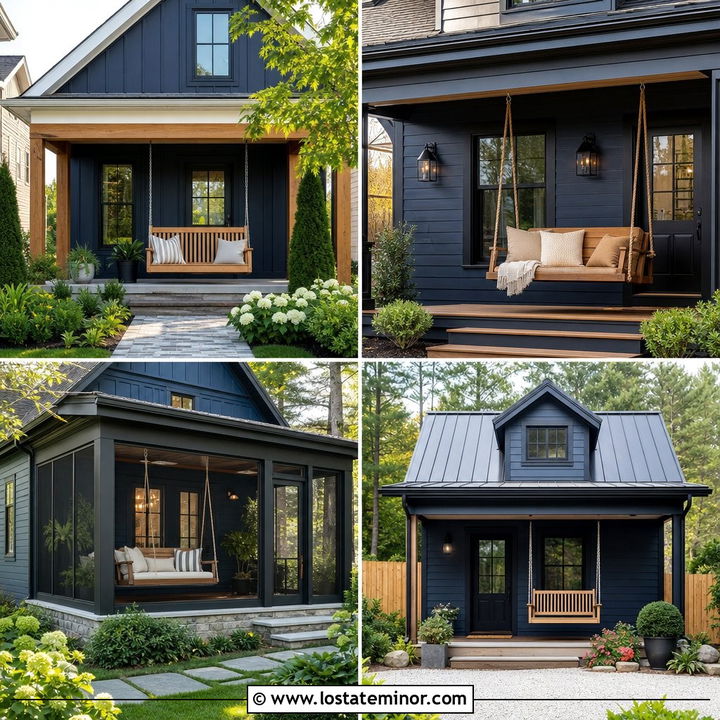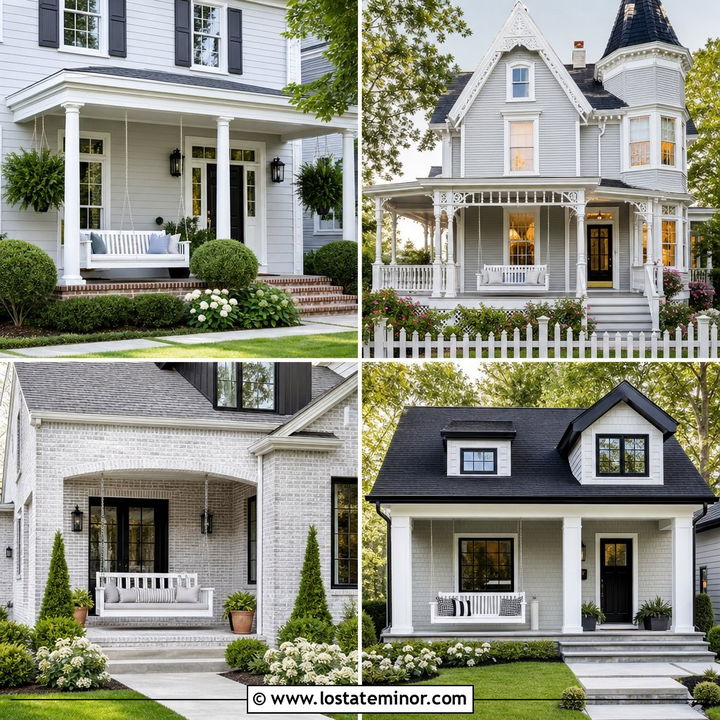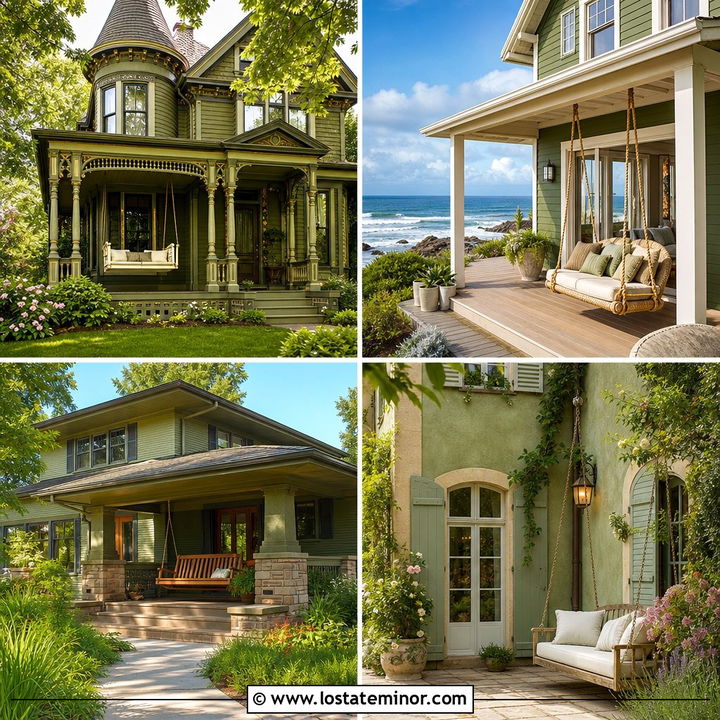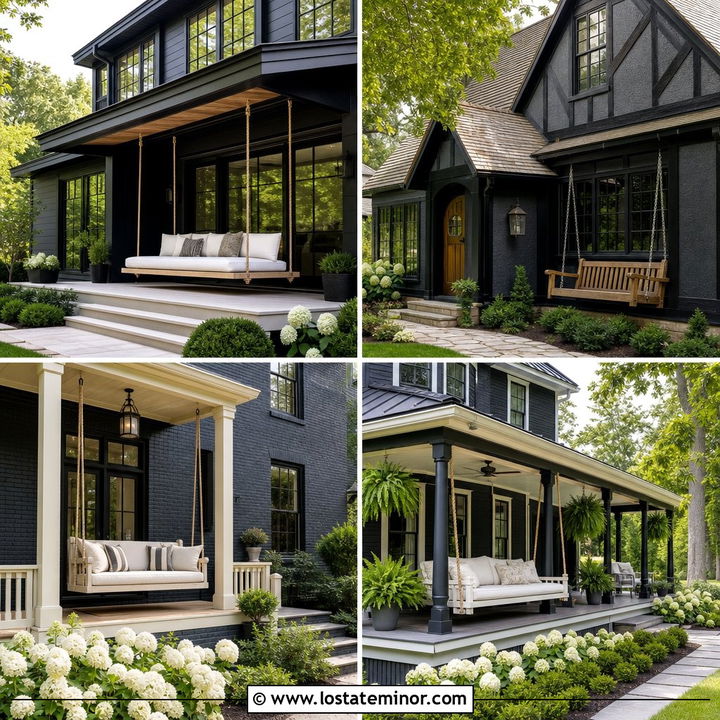
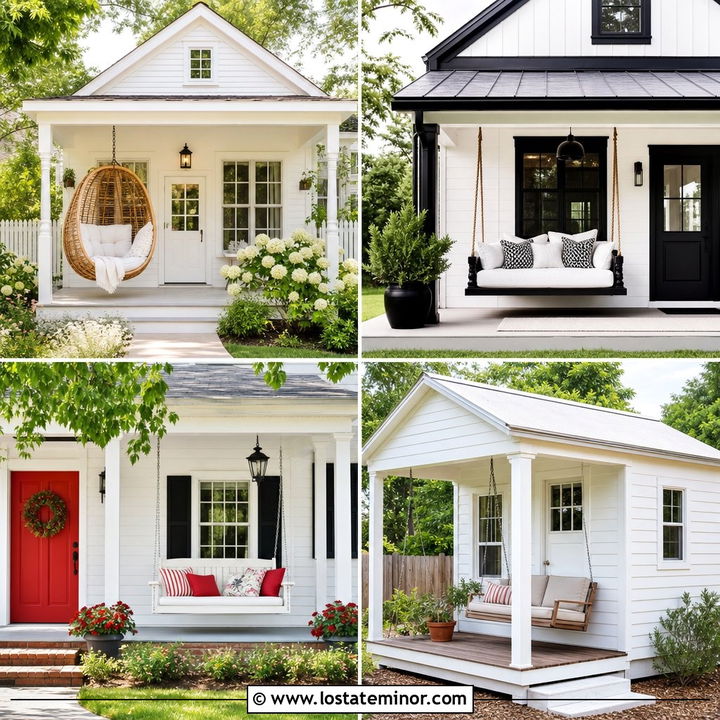
An off-white exterior creates a warm, polished backdrop that can suit nearly any home, from a small bungalow to a sprawling modern farmhouse. Adding a swing makes the facade feel even more welcoming while giving the porch, deck, or front yard a clear purpose. The key is treating the swing as part of the complete exterior scheme. Its material, finish, cushions, and hardware should coordinate with the siding, trim, roof, front door, and landscaping. Creamy whites pair naturally with wood, stone, brick, muted greens, deep blues, and understated black accents. The following 30 Off White House Design With Swing Ideas explore practical ways to create a comfortable, balanced, and attractive exterior. Use these complete looks to find the right 30 Off White House Design With Swing Ideas for your property.

1. Off White Farmhouse With Cedar Porch Swing
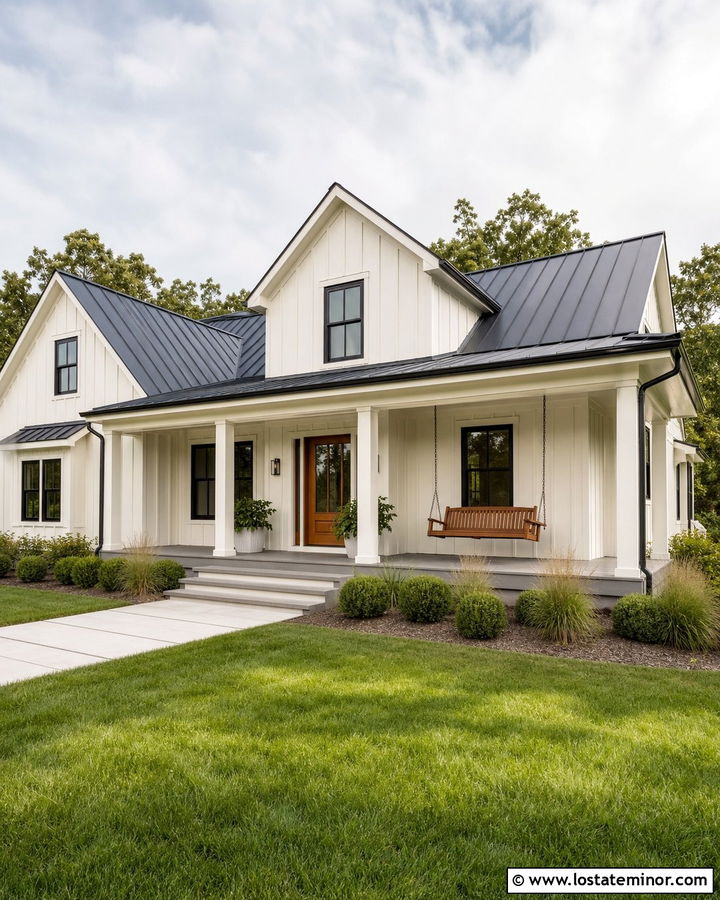
Warm off-white board-and-batten siding gives a modern farmhouse a softer appearance than brilliant white paint. Pair it with crisp cream trim, a charcoal metal roof, and a medium-stained cedar front door. A matching cedar porch swing connects the entrance to the home’s natural accents without making the facade look overly rustic. Hang the swing with simple black chains that echo the roof, lights, and window frames. Neutral oatmeal cushions keep the seating relaxed and practical. Complete the exterior with a wide concrete walkway, clipped boxwoods, ornamental grasses, and pale gravel beds. Keeping the porch floor warm gray prevents too many brown finishes from competing. This full scheme feels clean and current while retaining the friendly character expected from a farmhouse porch.
2. Off White Craftsman With Green Porch Swing
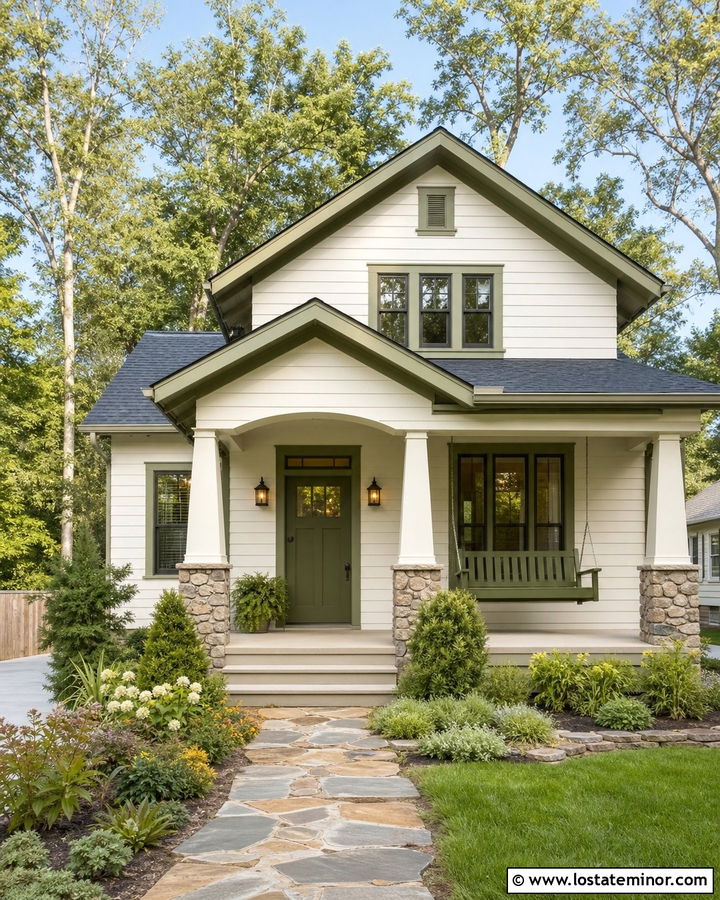
A Craftsman home gains rich character when creamy off-white lap siding is combined with deep olive trim and a coordinating green porch swing. Use the olive shade on the window frames, stair railing, and front door to distribute the color evenly across the facade. Tapered columns set on warm fieldstone bases add texture and visually anchor the porch. Choose a traditional slatted swing with gently curved arms rather than an overly ornate model. Tan cushions and small rust-colored pillows complement the stone without overwhelming the green. A weathered bronze porch light and matching house numbers reinforce the handcrafted look. Finish with a flagstone path, layered evergreen shrubs, and low native flowers. The resulting Craftsman exterior feels grounded, comfortable, and closely connected to its landscaping.
3. Off White Colonial With Black Porch Swing
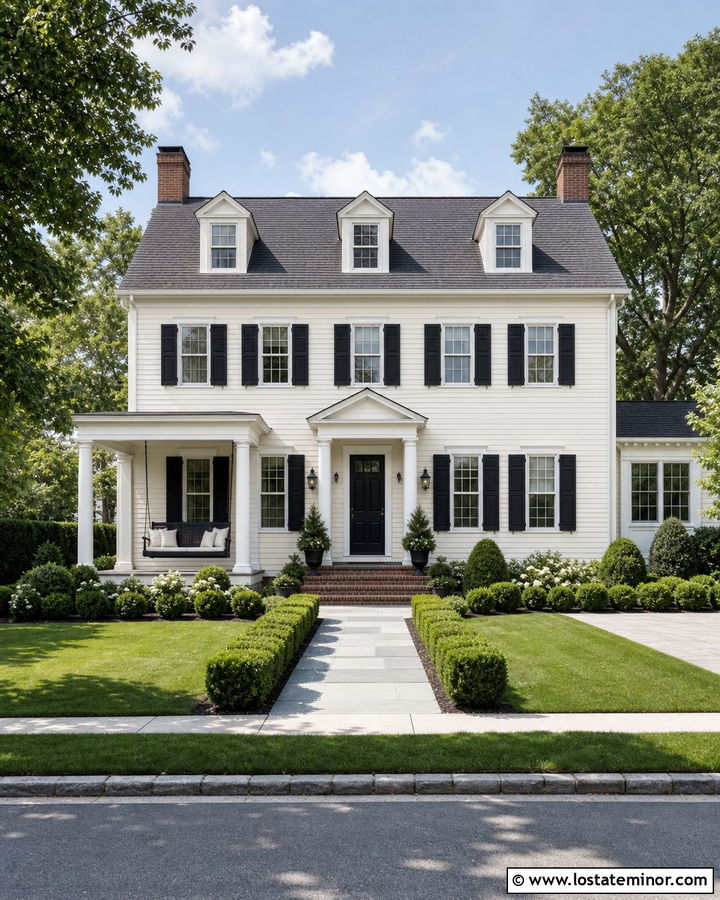
Would a black swing feel too bold against an off-white Colonial? When repeated carefully, the dark finish provides useful contrast and highlights the home’s symmetry. Paint the clapboard siding a warm ivory and keep the window trim a cleaner soft white. Add black shutters, lantern-style sconces, and a paneled black front door. Center a classic black porch swing on one side of the entrance, then balance it with two substantial planters on the other. Cream cushions help the dark seat blend into the lighter porch. Red brick steps and a slate-gray roof introduce traditional materials without creating another dominant color. Straight hedges, evenly spaced windows, and a centered walkway maintain the formal structure while the swing makes the exterior feel approachable rather than rigid.
4. Off White Ranch House With Hanging Bed Swing
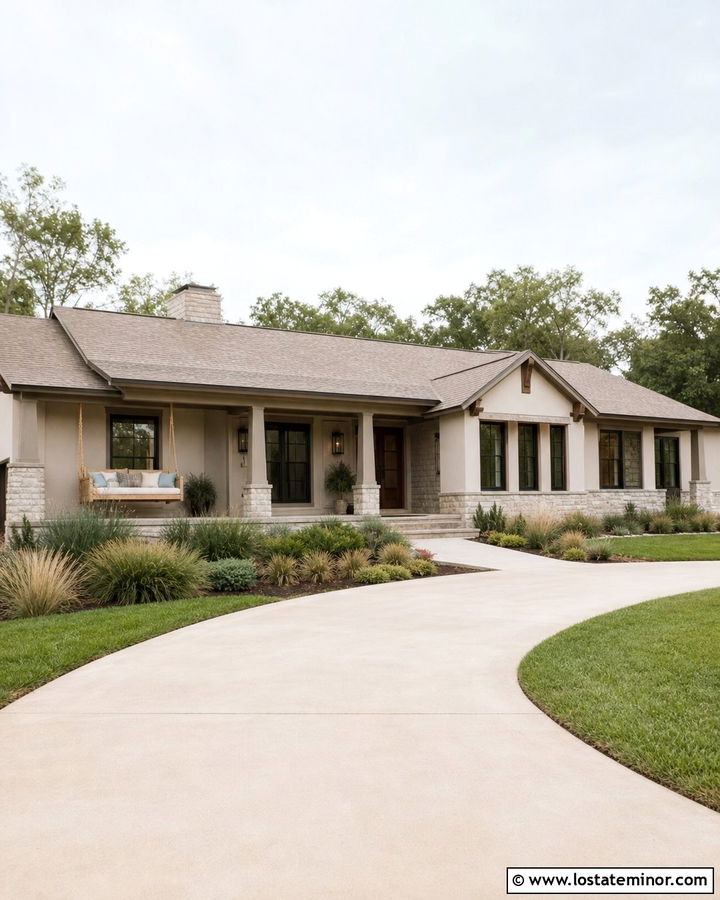
A long ranch facade offers enough horizontal space for a generous hanging bed swing. Use soft greige-white siding with taupe undertones to prevent the one-story home from appearing washed out in strong sunlight. Dark bronze window frames and a walnut front door bring warmth and definition. Position the bed swing beneath an extended covered porch near the main living area. A natural oak frame, thick flax-colored mattress, and muted blue pillows create an inviting focal point. Support it with substantial ceiling hardware suited to the porch structure. Add limestone around the entry and repeat its sandy color in the porch flooring. Broad planting beds, low grasses, and a gently curved walkway soften the straight roofline and give the entire ranch exterior a more layered composition.
5. Off White Bungalow With Blue Porch Swing
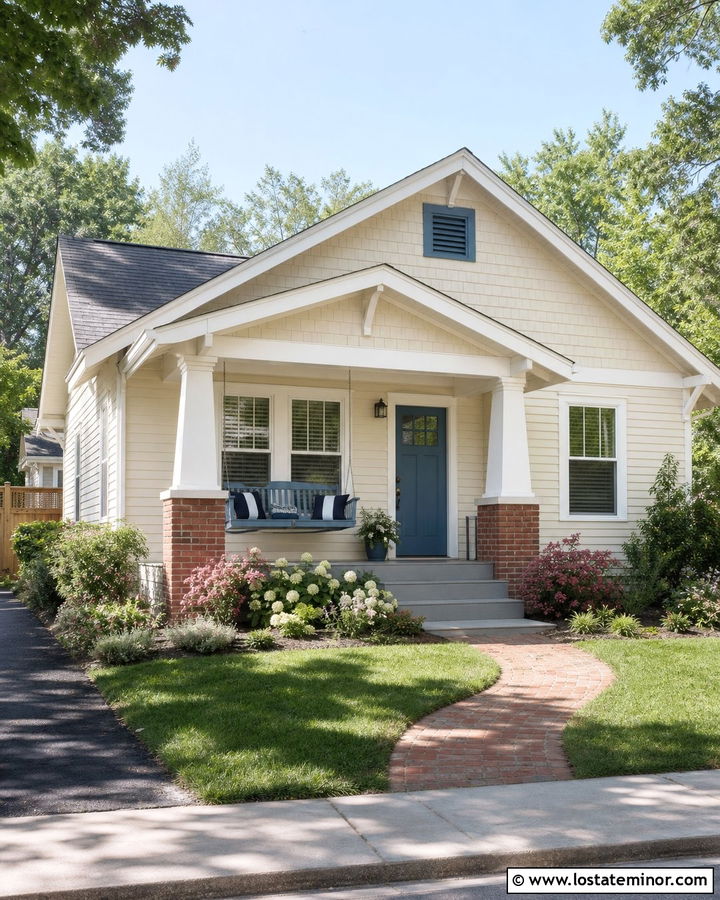
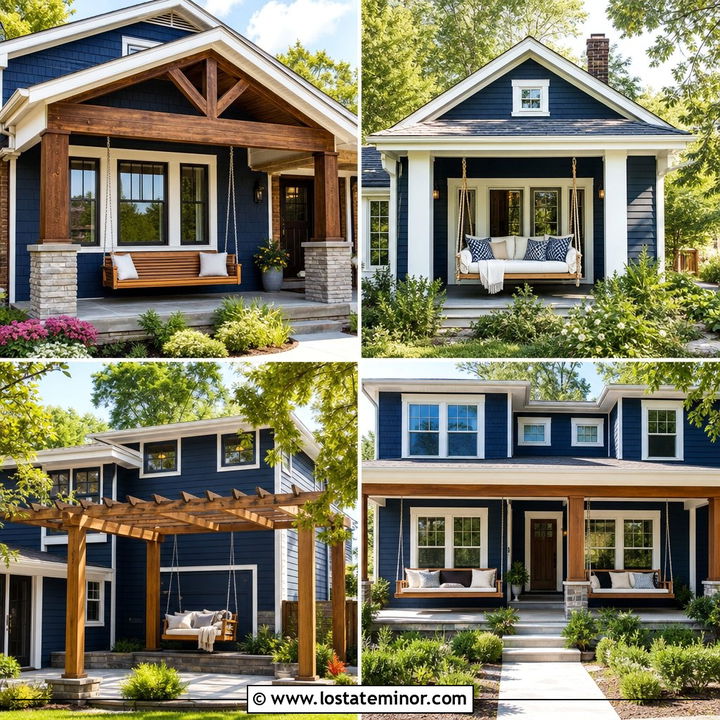
A compact bungalow can carry color beautifully when the palette stays controlled. Paint the shingle and lap siding a creamy off-white, then introduce dusty blue on the porch swing, front door, and small gable vent. Soft white trim keeps the roofline and window casing distinct without creating harsh contrast. A medium-gray shingle roof grounds the lighter exterior, while natural brick porch piers preserve the bungalow’s traditional texture. Choose a simple painted swing with vertical slats and navy-and-cream cushions. It should fit comfortably between the porch columns without blocking the entrance or front windows. Add a narrow brick walkway, flowering shrubs, and layered foundation plants. The blue accents give the small house personality, while the off-white body keeps the complete facade bright and visually open.
6. Off White Cape Cod With White Porch Swing
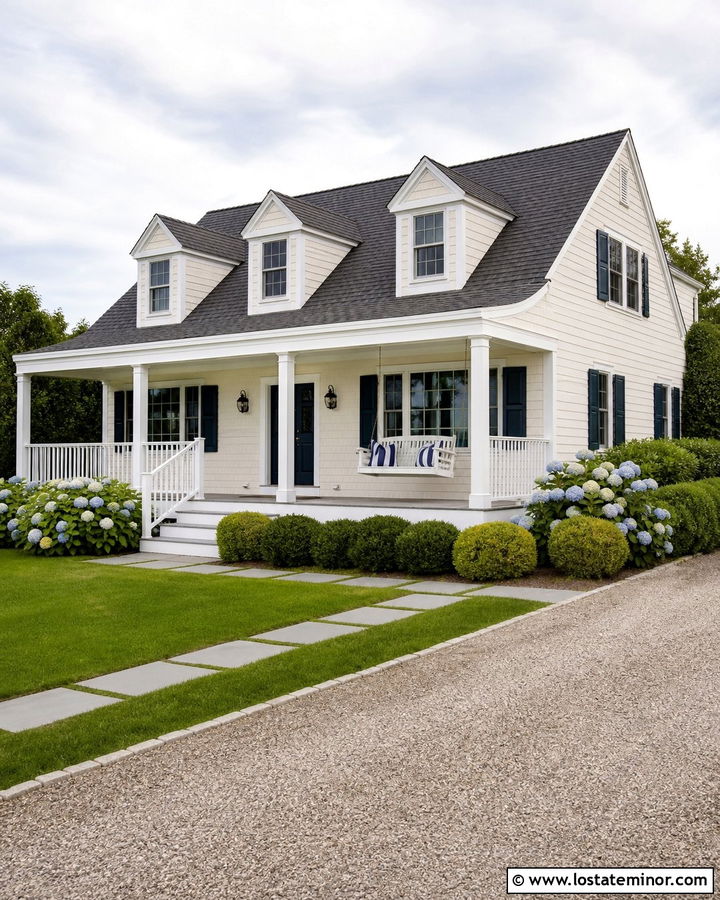
For a light, cohesive Cape Cod exterior, combine warm off-white shingles with a slightly brighter white swing, trim, and porch railing. The subtle tonal difference creates dimension while protecting the home’s simple coastal character. Add faded navy shutters and a matching front door to frame the windows and establish one clear accent color. A small slatted swing works best beneath a side porch or covered entry where it will not crowd the compact facade. Use blue-striped cushions sparingly to connect the seat to the shutters. Weathered gray decking and a charcoal roof introduce quiet contrast. Hydrangeas, rounded shrubs, and a straight stepping-stone path complete the setting. The result is fresh and familiar, yet warmer and more forgiving than an exterior finished entirely in stark white.
7. Off White Cottage With Sage Green Swing
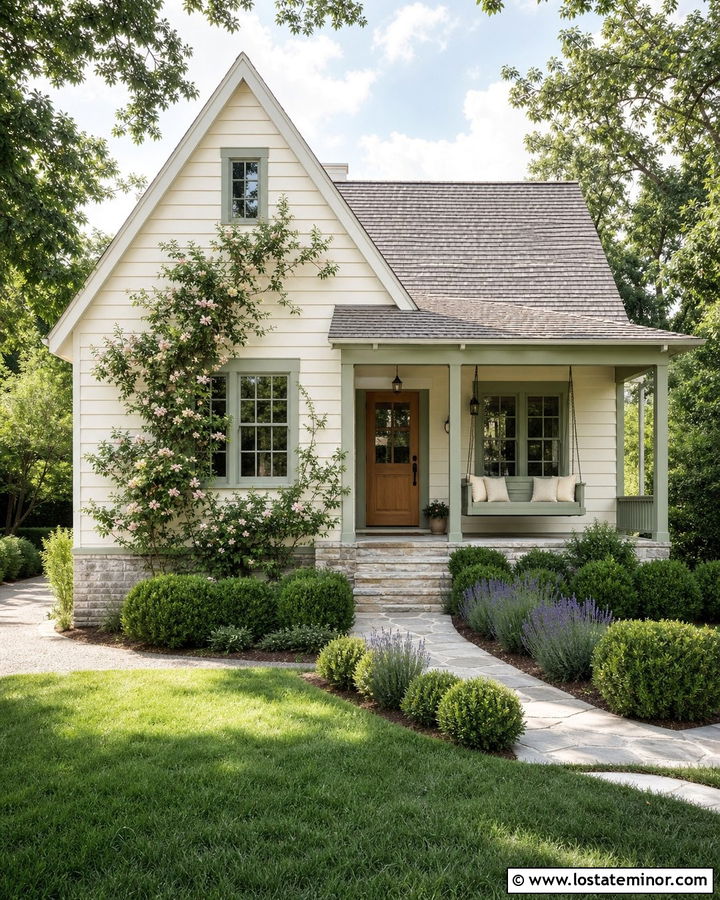
Soft textures make an off-white cottage feel settled into its garden. Choose creamy stucco or narrow lap siding, sage green window trim, and a muted sage porch swing beneath a small covered entry. A warm wood front door prevents the green-and-white combination from looking overly delicate. If the foundation is visible, cover it with irregular light-gray stone that complements both the siding and the garden path. Select a compact swing with a simple backrest and natural linen cushions. Climbing roses or jasmine can frame the porch, but they should be pruned so the architectural details remain visible. Add lavender, low hedges, and a curved stone walkway. The garden colors, tactile stone, and gentle green finish create a complete cottage exterior that feels relaxed without looking cluttered.
8. Off White Victorian With Dark Red Porch Swing
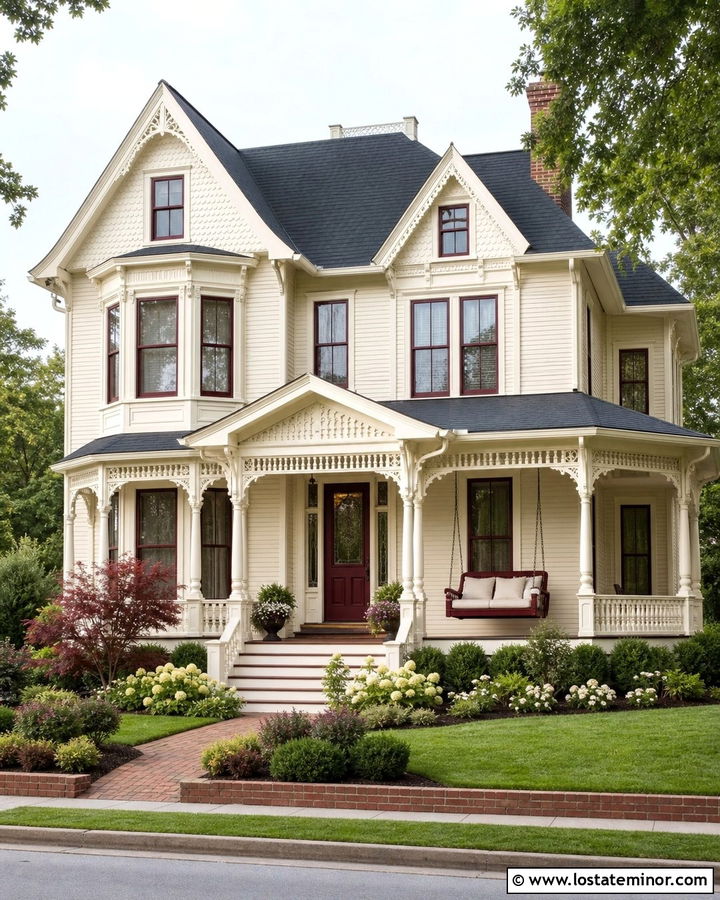
An off-white Victorian exterior provides a calm foundation for decorative trim and a dramatic porch swing. Use a rich ivory on the main siding, warm white on the gingerbread details, and muted burgundy on selected window sashes and the front door. Paint the swing the same dark red to make it look intentional rather than added later. Keep cushions neutral, using cream or soft taupe fabric that does not compete with the ornate woodwork. A charcoal roof and dark bronze hardware add depth. If the porch wraps around the house, place the swing near a side bay where it remains visible from the curb but does not dominate the entrance. Formal shrubs, brick edging, and restrained flowering plants let the architecture and coordinated color scheme remain the primary features.
9. Off White Modern Farmhouse With Black Bed Swing
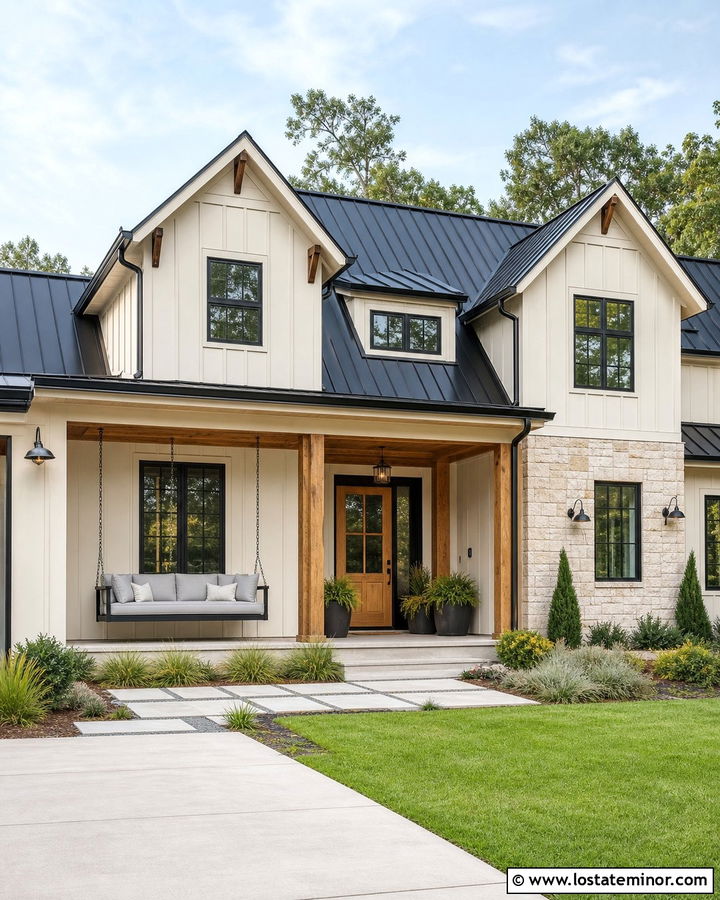
Sharp black details can give an off-white modern farmhouse definition without taking over the exterior. Cover the house in creamy white board-and-batten siding and use matte black windows, gutters, porch lights, and standing-seam roofing. Hang a streamlined black bed swing at one end of the covered porch, leaving a clear route to the front door. Thick light-gray cushions soften the black frame and make the seating appear comfortable from the curb. Natural cedar ceiling boards and a matching front door warm the high-contrast palette. Use pale limestone on the chimney or porch base to add texture. Straight concrete pavers, structured grasses, and simple evergreen planting support the modern lines. This balanced combination feels crisp, practical, and more welcoming than an exterior built around black and white alone.
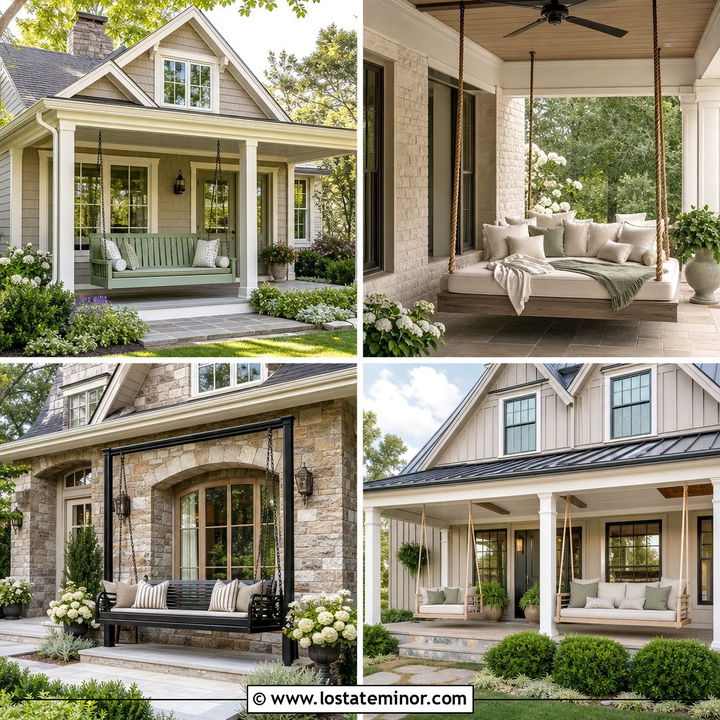
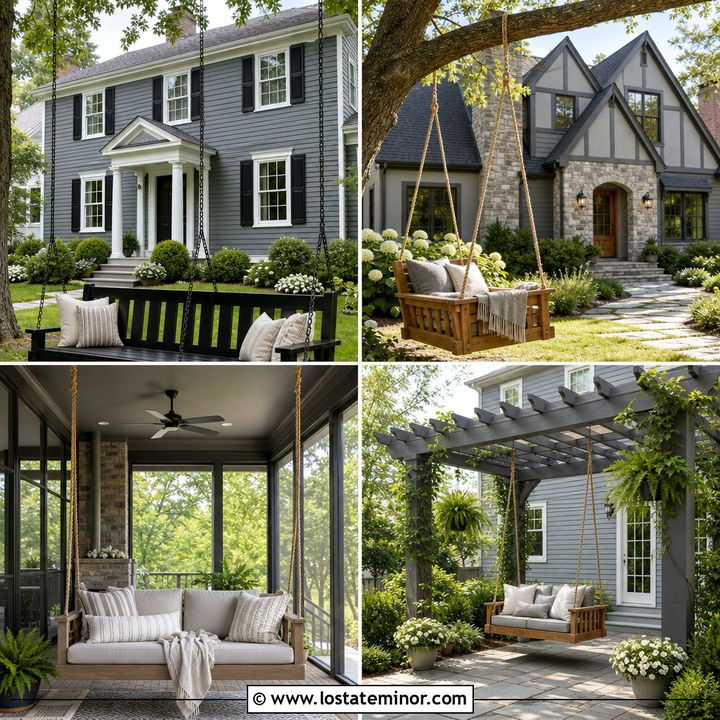
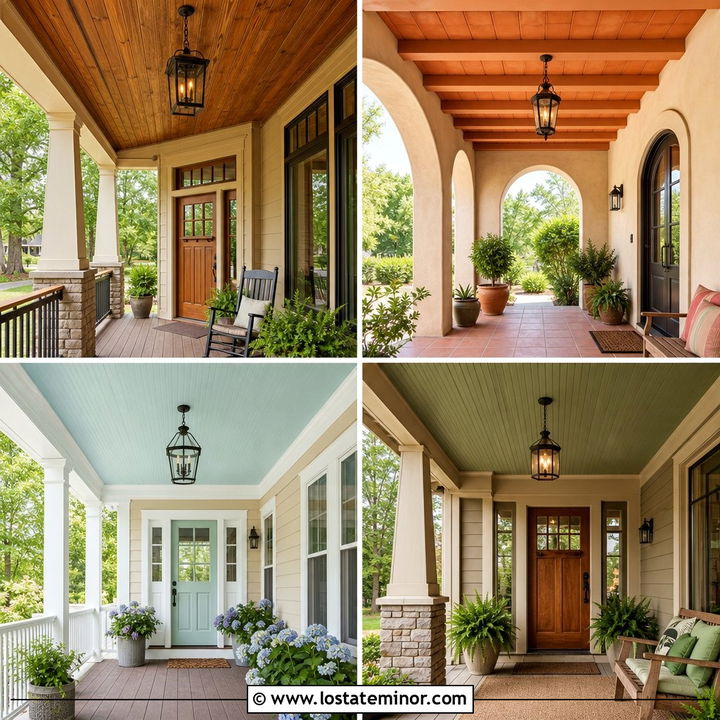
10. Off White Southern House With Blue Ceiling Swing
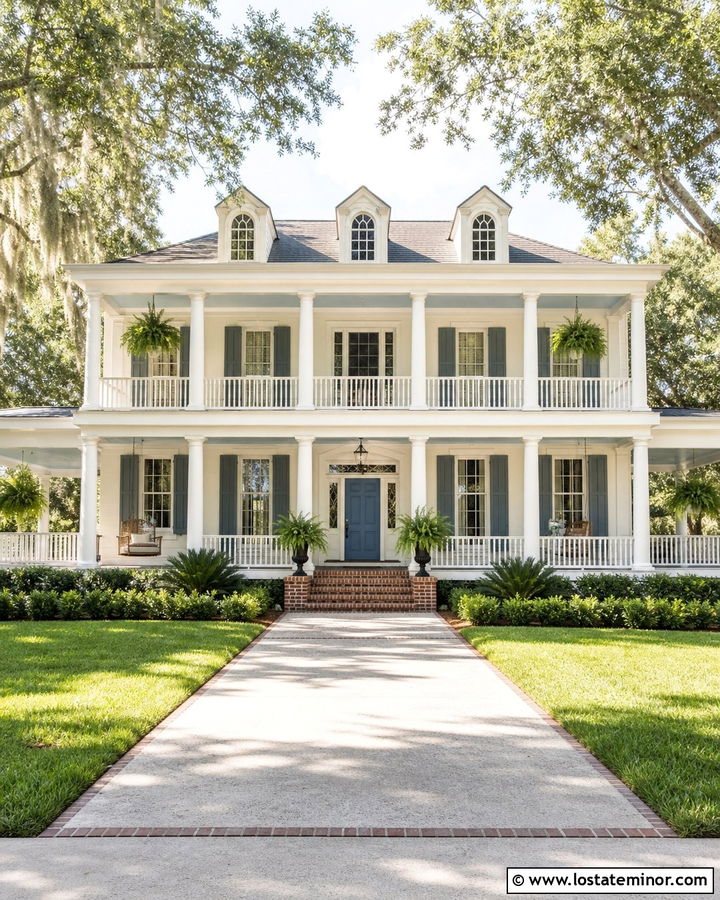
A broad Southern porch calls for a swing that feels integrated into its generous architecture. Paint the siding a soft ivory and the columns, railing, and trim a creamy white. A pale blue porch ceiling adds a gentle layer of color overhead, while a natural teak swing keeps the seating grounded. Repeat the blue on the swing cushions or front door rather than introducing several unrelated shades. Warm brick steps and a dark gray roof provide traditional contrast. Position the swing between evenly spaced columns where it can move freely without interfering with the walkway. Large ferns, symmetrical planters, and mature shade trees help frame the facade. The complete scheme is bright but not stark, with the blue ceiling, wood seat, and off-white exterior working together naturally.
11. Off White Brick House With Wood Porch Swing
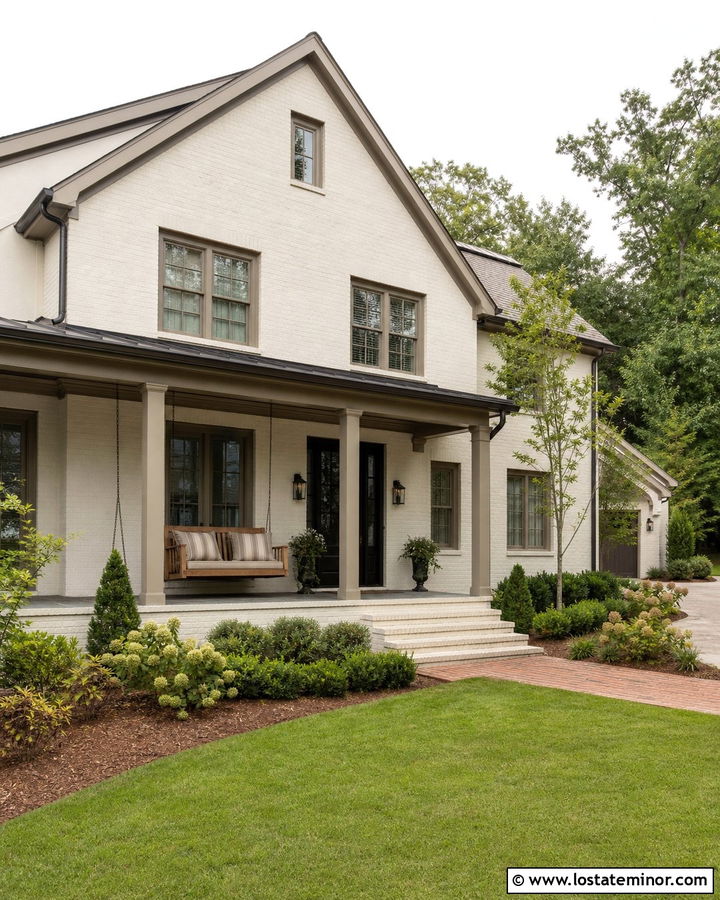
Painting an older brick exterior off-white can create a calmer facade while allowing the brick texture to remain visible. Select a mineral-inspired creamy white finish rather than a glossy, opaque-looking color. Pair it with warm taupe trim, a dark bronze front door, and an unfinished teak or acacia porch swing. The natural grain introduces warmth that might otherwise be missing from the painted masonry. Use deep brown chains or ropes that coordinate with the door and exterior lighting. A beige cushion with narrow charcoal stripes adds pattern without distracting from the brick. Keep the porch floor medium gray for durability and contrast. Layered shrubs, a brick-bordered walkway, and small ornamental trees help the updated house feel established instead of newly coated or disconnected from its surroundings.
12. Off White Stucco House With Woven Swing
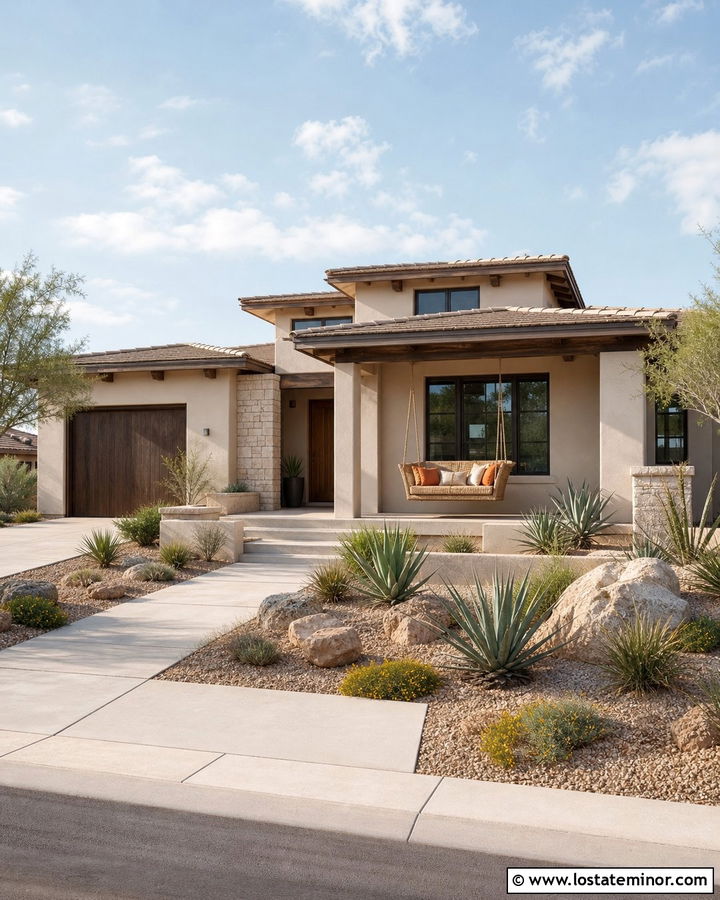
Smooth off-white stucco creates a clean background for a sculptural woven swing. On a contemporary Southwestern home, pair creamy stucco walls with sand-colored stone, dark bronze windows, and a warm mesquite front door. Choose a weather-resistant woven swing in natural tan, supported by dark metal chains under a deep covered porch. Rust, cream, and muted terracotta cushions connect the seating to the desert-inspired materials. A flat or low-pitched roof keeps the silhouette simple, while exposed wood beams add warmth overhead. Use gravel beds, agave, ornamental grasses, and a broad concrete path instead of lush foundation planting. This scheme works because every color comes from a tight earthy palette. The swing adds texture and comfort without disrupting the home’s streamlined stucco architecture.
13. Off White Spanish House With Wood Swing
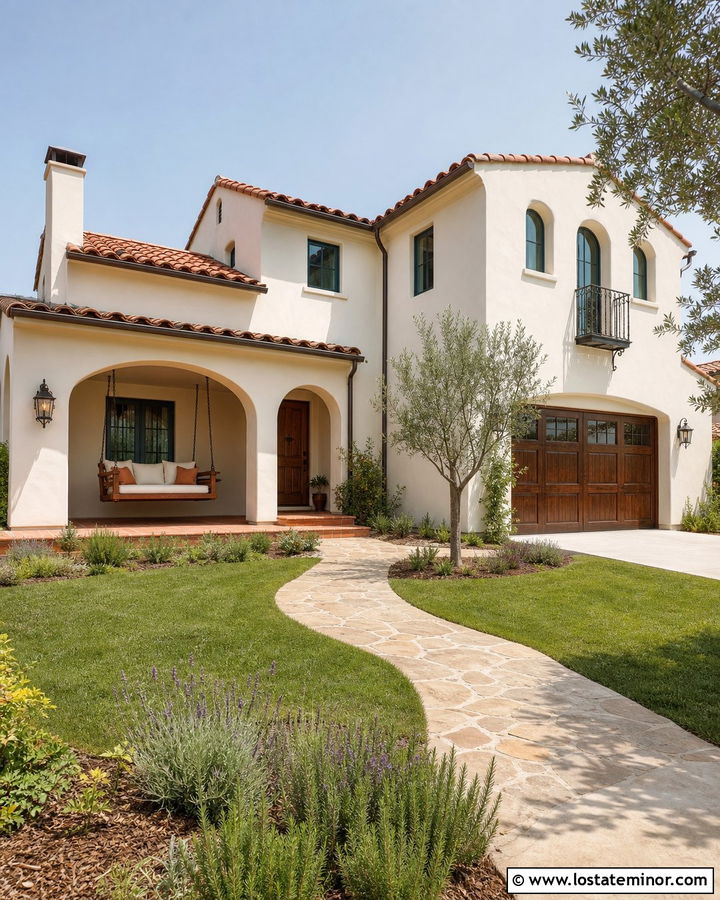
A Spanish-style home looks especially warm when its stucco is painted a buttery off-white instead of cool white. Combine the walls with a terracotta tile roof, dark wood garage doors, and bronze-framed windows. Place a substantial stained-wood swing beneath an arched front porch, using cream cushions and one or two muted clay-colored pillows. Decorative black brackets or chains can echo wrought-iron balcony details and lanterns. Keep the front door in the same wood family as the swing so both features appear planned as part of the architecture. Saltillo-inspired porch flooring and a curved stone walkway support the traditional materials. Olive trees, rosemary, and drought-tolerant greenery complete the landscape. The full exterior feels sun-washed, welcoming, and visually connected from roof to seating.
14. Off White Mediterranean House With Black Swing
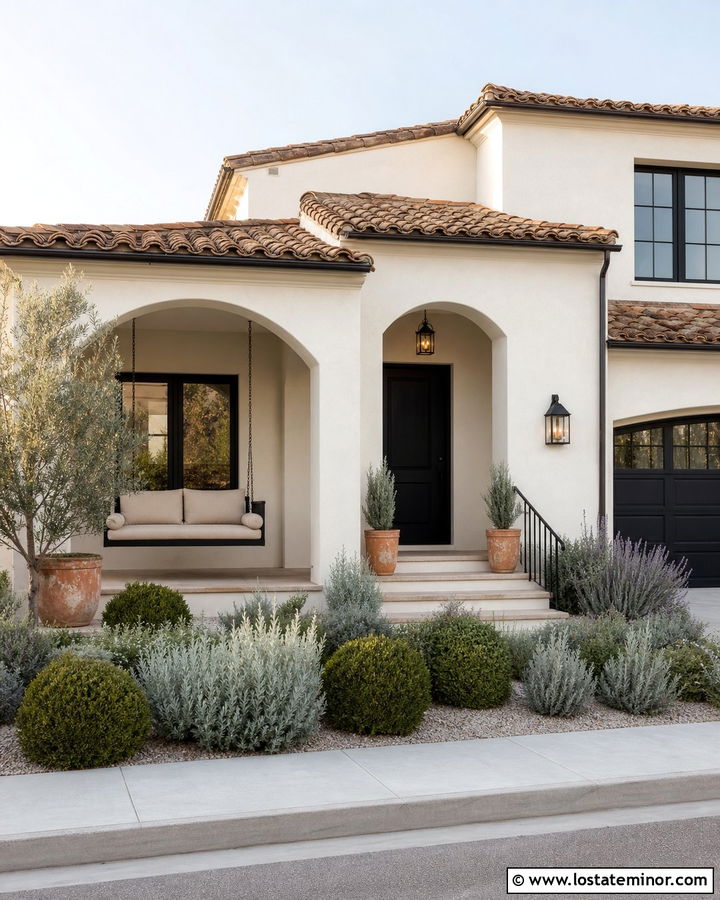
A black swing can sharpen the relaxed lines of an off-white Mediterranean house. Start with warm cream stucco and an aged red-clay tile roof. Add black-framed windows, understated iron railings, and a black front door to create consistent contrast. Under a covered loggia or arched porch, hang a simple matte black swing with thick beige cushions. Avoid overly decorative metalwork, which can compete with the roof and arches. Pale limestone around the entrance provides an elegant transition between the dark accents and light walls. Use large terracotta planters, silvery foliage, and neatly clipped shrubs along a gravel-edged walkway. Repeating black in small, deliberate amounts makes the swing feel architectural. The cream stucco preserves warmth and prevents the full exterior from appearing severe or excessively formal.
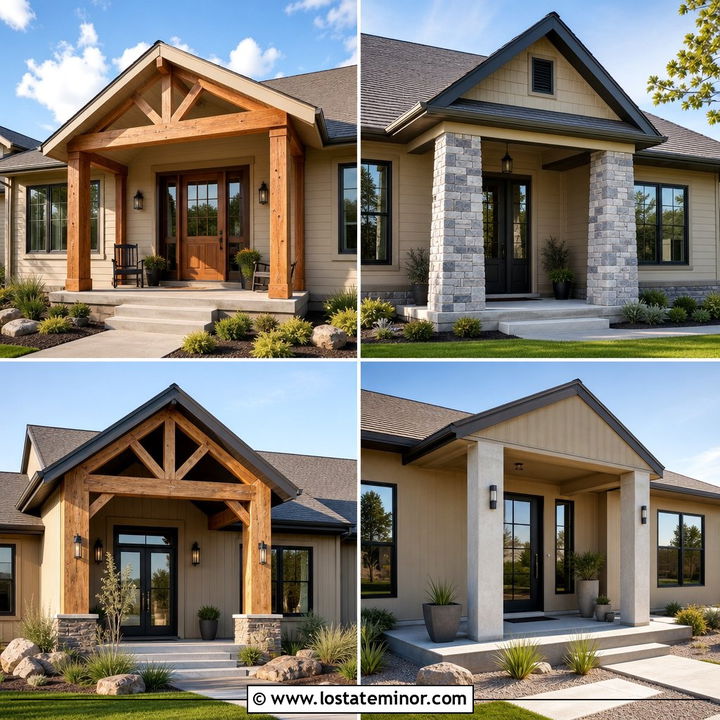
15. Off White Coastal House With Rope Swing
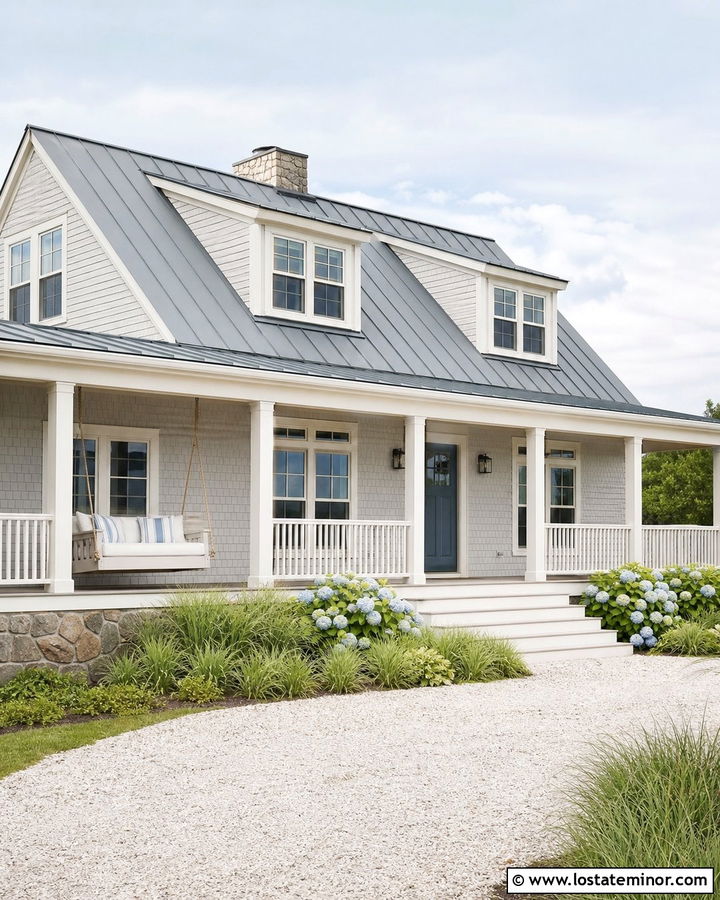
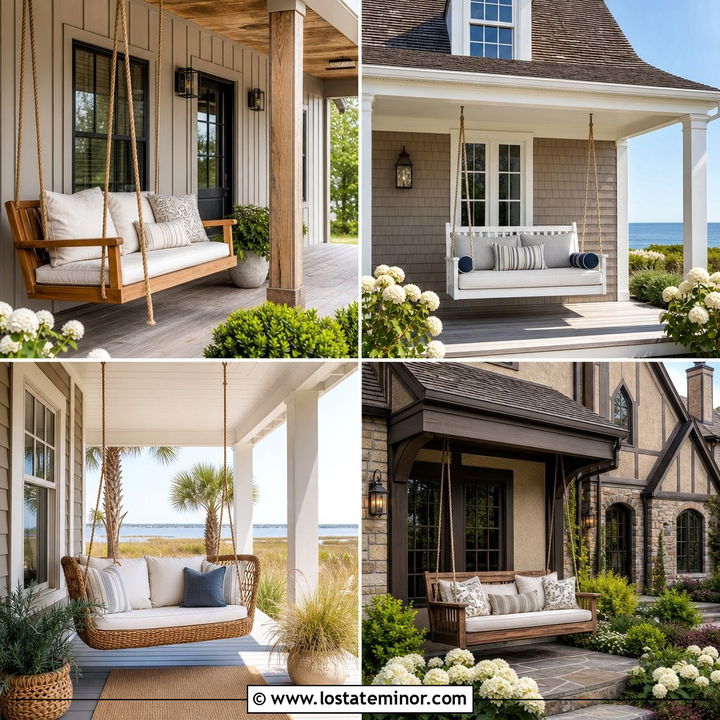
Breezy coastal character comes from texture and restrained color rather than nautical decorations. Use an off-white shingle exterior with subtle gray undertones, bright cream trim, and a weathered blue front door. Hang a pale teak swing from thick marine-style rope beneath the porch roof. Cream cushions with thin blue stripes repeat the door color without overwhelming the facade. A soft gray metal roof and natural stone foundation help the house blend with a shoreline-inspired setting. Keep railings simple and open so the swing remains visible from the yard. Dune grasses, hydrangeas, crushed-shell paths, and low evergreen shrubs complete the curb appeal. The combination of weathered wood, rope, blue accents, and layered off-whites produces a relaxed exterior that still looks polished and thoughtfully coordinated.
16. Off White Modern House With Minimalist Swing
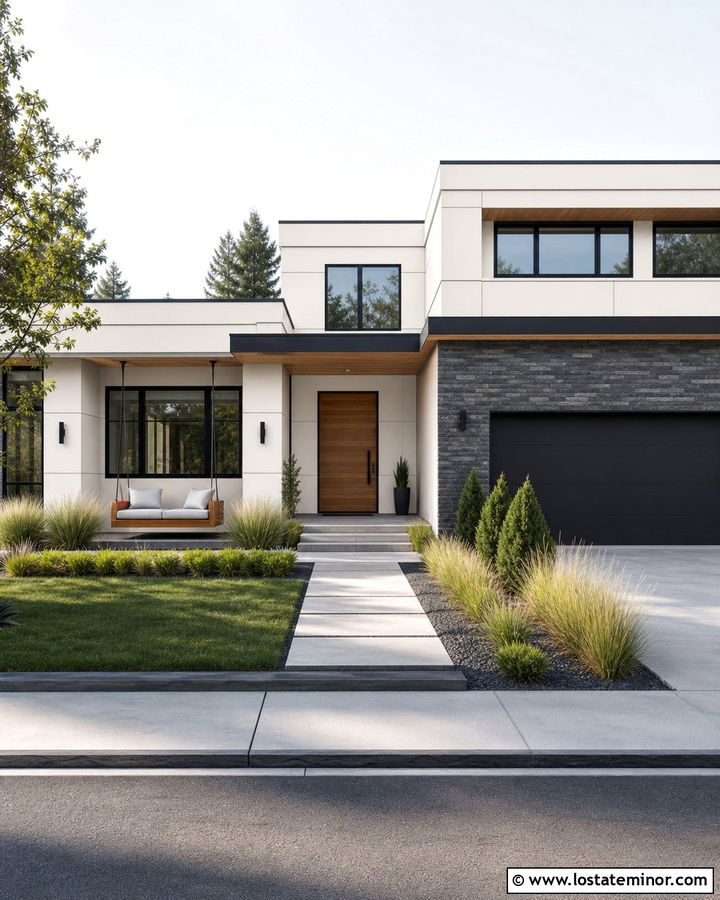
Can a porch swing work on a sharply modern home? A streamlined design fits easily when its shape and finish follow the architecture. Choose warm off-white fiber-cement panels, charcoal window frames, and a flat-roofed entry canopy. Suspend a rectangular natural oak swing using thin black metal supports, keeping cushions low-profile and solid light gray. Repeat the oak on the front door and a narrow soffit detail to connect the swing to the facade. Dark stone around the garage or lower level anchors the light exterior. Use large concrete pavers, architectural grasses, and clipped evergreen forms to maintain a clean landscape. The swing adds softness and movement, while its straight lines prevent it from looking out of place. This scheme makes a minimalist exterior feel more comfortable without adding unnecessary decoration.
17. Off White Split Level With Freestanding Swing
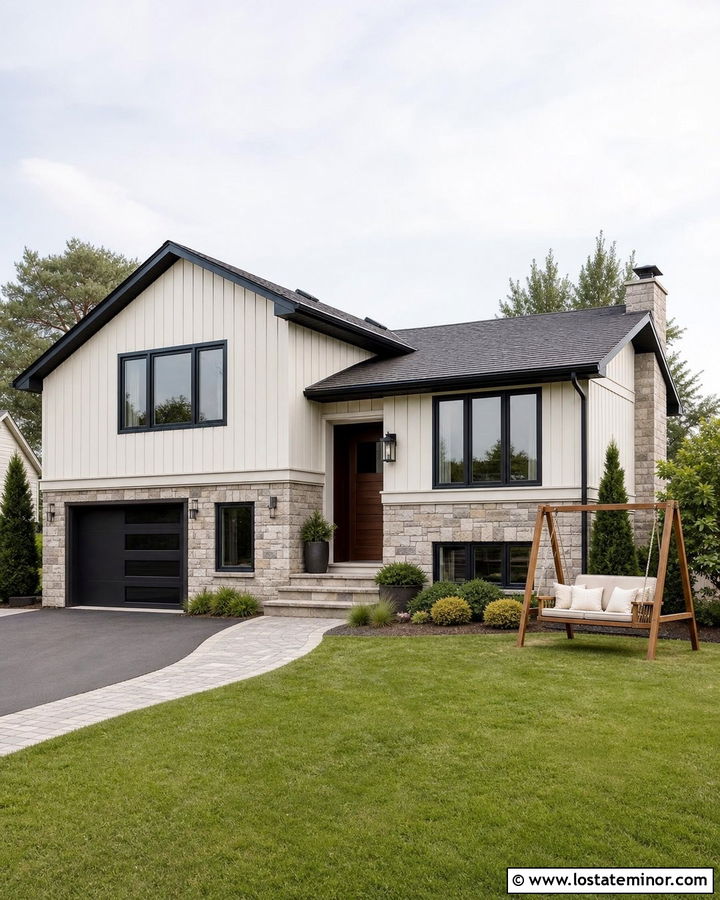
A split-level house may not have a deep front porch, but a freestanding swing can still become part of its curb appeal. Paint the upper siding a soft off-white and use light taupe brick or stone on the lower level. Add charcoal trim, a walnut front door, and a simple dark roof. Place a cedar A-frame swing in a landscaped area near the front walkway, positioned where it complements rather than blocks the facade. Match its stain to the front door for visual continuity. Neutral cushions and a small paved landing make the seating feel permanent. Low shrubs should preserve clear views of both levels. A gently curved path can connect the swing area to the entrance, turning an awkward lawn corner into a useful and coordinated outdoor destination.
18. Off White Tudor House With Oak Swing
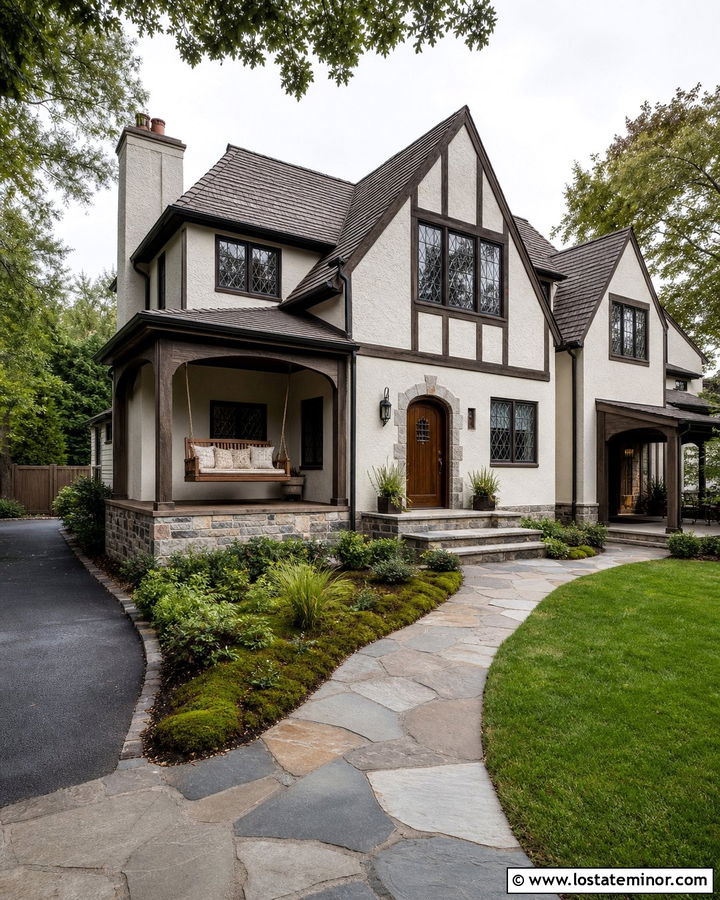
The dark framework of a Tudor home looks less heavy when paired with warm off-white stucco. Keep the half-timber details deep brown rather than black, then repeat that warmth with an oak front door and matching porch swing. Place the swing under a small covered side porch or beneath an extended gable, where it can complement the asymmetrical architecture. Use oatmeal cushions and a subtle moss-green throw for a quiet connection to the landscape. A weathered brown roof, leaded windows, and irregular stone along the foundation preserve the traditional character. Curved planting beds and a flagstone walkway soften the strong timber pattern. Because the swing shares its finish with the door and roof tones, it becomes part of the overall Tudor palette instead of appearing like unrelated outdoor furniture.
19. Off White French Country House With Gray Swing
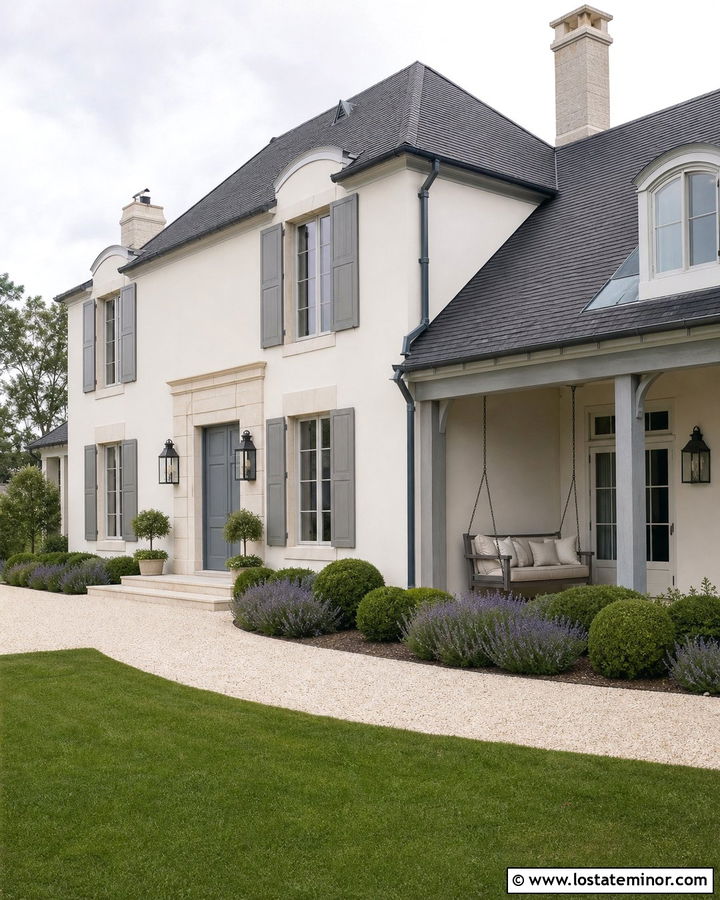
A French country exterior benefits from colors that appear softly aged rather than sharply contrasted. Use chalky off-white stucco, warm gray shutters, and a blue-gray front door beneath a steep charcoal roof. Paint a traditional porch swing the same warm gray as the shutters to create a balanced, repeated accent. Linen-colored cushions and a woven throw add comfort without changing the restrained palette. Light limestone around the entry and chimney introduces subtle texture, while dark metal lanterns outline the door. Position the swing beneath a side portico or sheltered front terrace. Lavender, clipped shrubs, and a gravel path reinforce the home’s relaxed formality. The gray swing bridges the roof, shutters, and stone, allowing the off-white body to remain the bright central element of the complete design.
20. Off White Prairie House With Slatted Swing
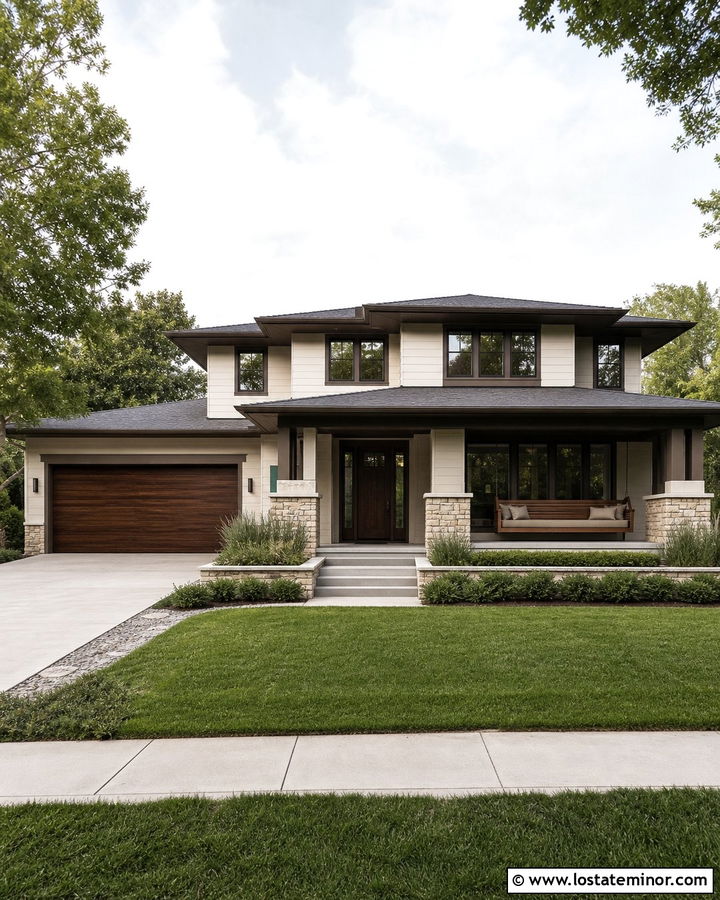
Long horizontal lines define a Prairie-style house, so the swing should follow the same visual direction. Choose creamy off-white stucco or lap siding, bronze window frames, and a low charcoal roof with broad overhangs. A wide slatted swing in medium walnut complements the architecture better than a narrow ornate model. Hang it from a covered terrace using dark bronze hardware, then add flat cushions in warm taupe. Repeat walnut on the front door and garage accents for a connected scheme. Buff-colored stone along the foundation adds weight without breaking the horizontal flow. Broad concrete steps, low hedges, and sweeping ornamental grasses reinforce the home’s relationship to the landscape. The result feels structured and calm, with the swing enhancing the architecture instead of competing against its distinctive roofline.
21. Off White Cottage With Yellow Porch Swing
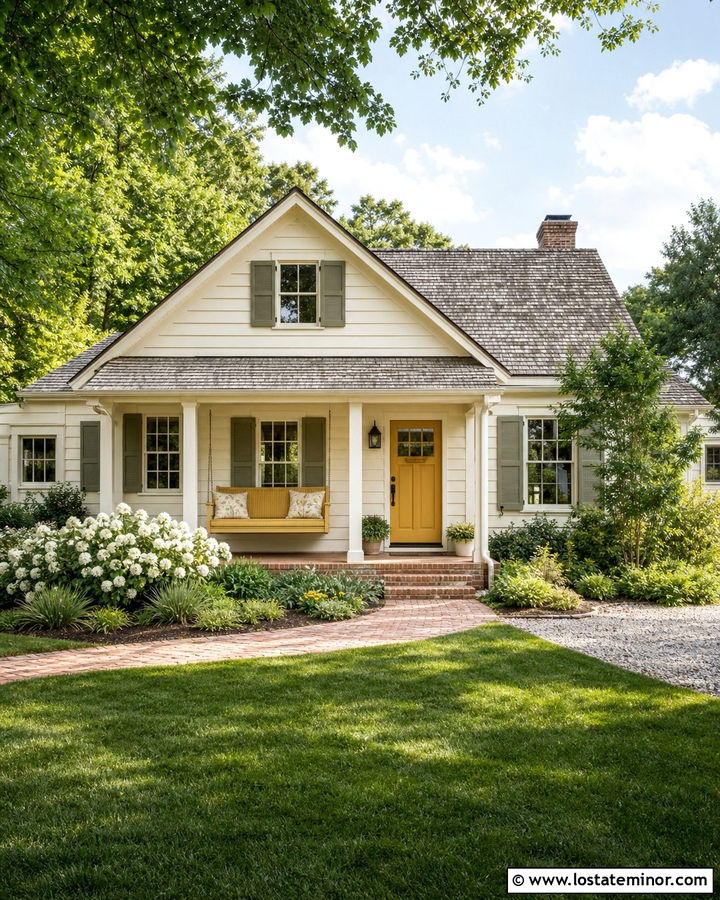
A cheerful yellow swing can bring personality to an off-white cottage without making the entire exterior feel overly colorful. Use warm ivory siding, cream trim, and a muted golden-yellow front door. Paint the small porch swing the same yellow, choosing a softened mustard tone rather than a brilliant primary shade. Gray-green shutters provide a gentle counterbalance, while a weathered gray roof keeps the palette grounded. Add cream cushions with a small botanical pattern to connect the seat to surrounding garden beds. A brick path, white flowering shrubs, and loose perennial planting reinforce the informal cottage mood. Repeating yellow only at the door and swing gives the design a clear rhythm. The off-white siding remains dominant, allowing the brighter seating to feel welcoming rather than visually overwhelming.
22. Off White Farmhouse With Red Porch Swing
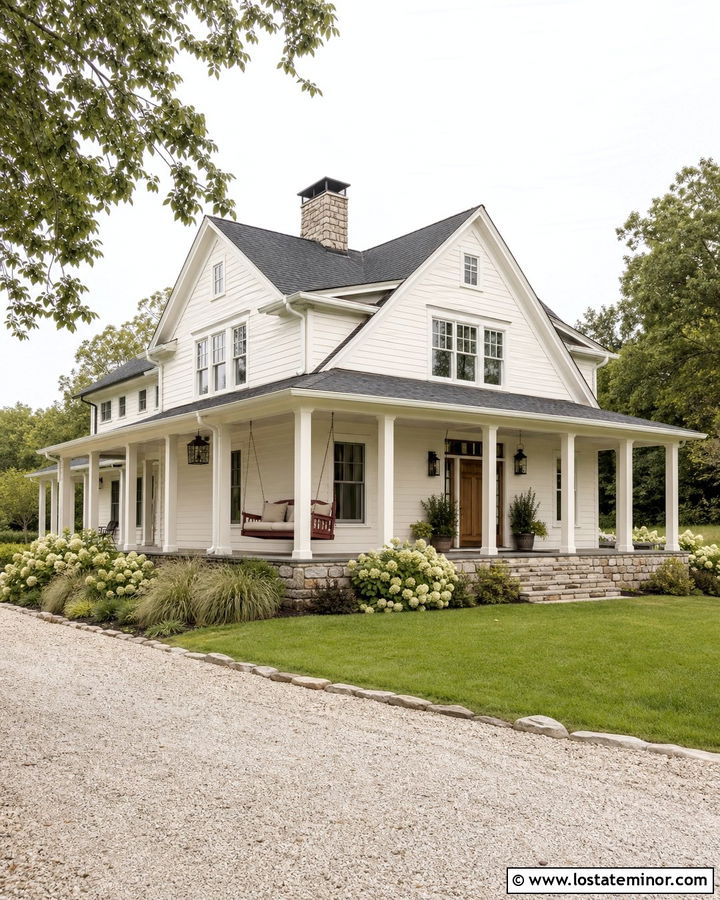
A deep red porch swing introduces classic rural character when it is balanced with quiet exterior finishes. Paint the farmhouse siding a creamy off-white and keep the trim only slightly lighter. Use a dark charcoal roof, black porch lights, and a natural wood front door. The swing should be barn red or muted cranberry instead of bright scarlet, giving it a more settled appearance. Add oatmeal cushions and a small charcoal-striped pillow to tie the seating into the surrounding palette. A weathered wood porch floor and fieldstone steps prevent the facade from looking too newly finished. Place the swing near one end of a wraparound porch and balance it with black rocking chairs. Simple hydrangeas, grasses, and a gravel drive complete this welcoming country exterior.
23. Off White Colonial Revival With Green Swing
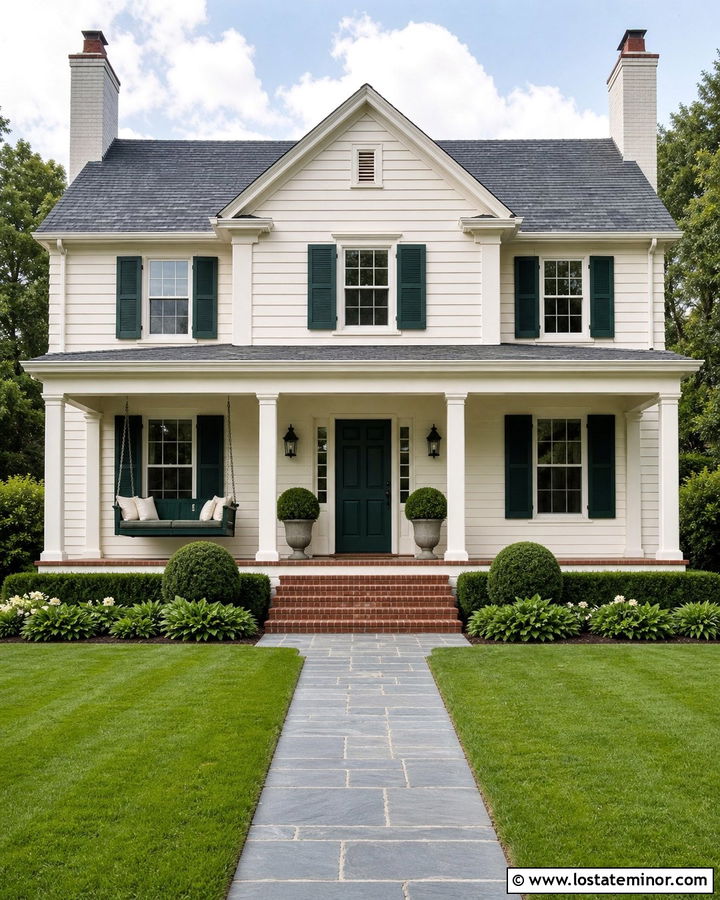
Symmetry guides every element of a Colonial Revival exterior, including the porch seating. Use a rich off-white clapboard body, crisp cream columns, dark green shutters, and a matching paneled front door. Paint a classic slatted swing the same deep green and place it on one side of the porch. Balance its visual weight with a bench, planter, or pair of chairs on the opposite side. White cushions keep the swing from appearing too dark beneath the porch roof. Red brick steps and a gray slate roof preserve the formal historic palette. Straight foundation hedges, rounded boxwoods, and an axial walkway strengthen the symmetry. The repeated green finish ties the windows, entrance, and swing together, creating a complete exterior that feels traditional, orderly, and genuinely comfortable.
24. Off White Lake House With Hanging Daybed
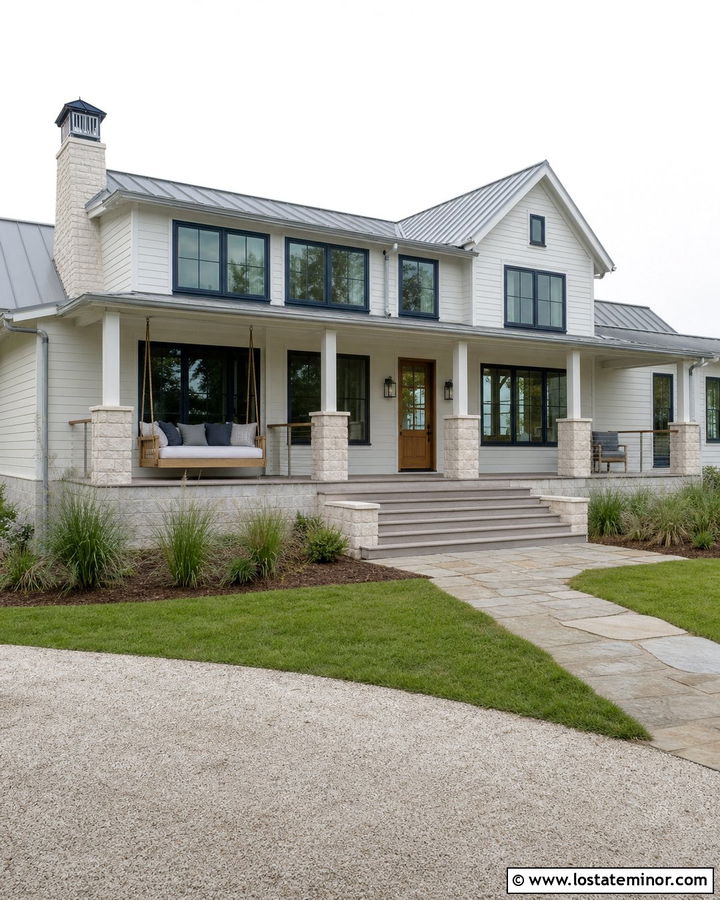
A lake house should feel relaxed while remaining durable and visually connected to its surroundings. Select soft off-white siding with a slight gray undertone, deep blue window trim, and a natural cedar front door. Install a hanging daybed beneath a broad porch overlooking the yard or water. A weathered teak frame, thick cream mattress, and blue-gray cushions coordinate with the exterior without using obvious themed decorations. Choose a medium-gray metal roof and pale stone porch columns to handle the larger scale of the facade. Cable railing or simple wood balusters preserve open views. Native grasses, broad steps, and an informal stone walkway create an easy transition into the landscape. The off-white walls brighten the house, while the daybed makes the generous porch feel purposeful and inviting.
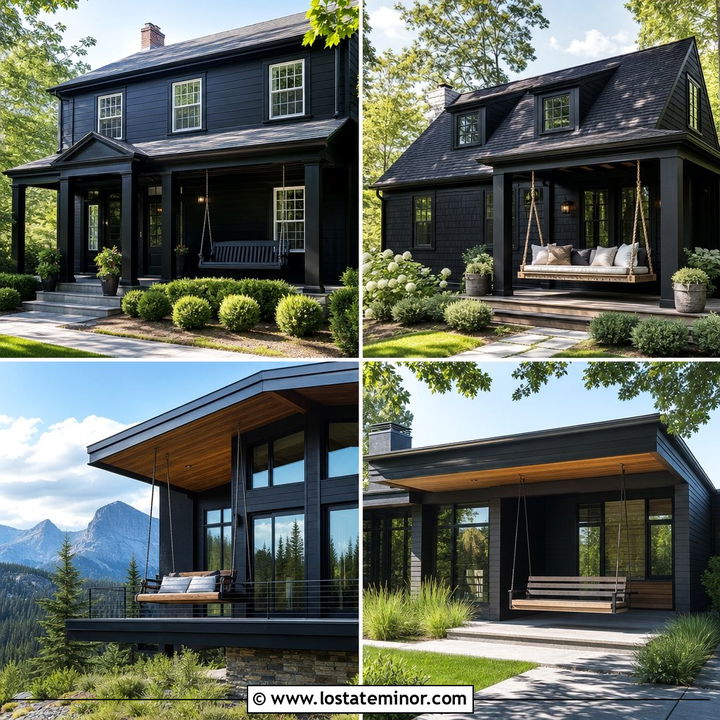
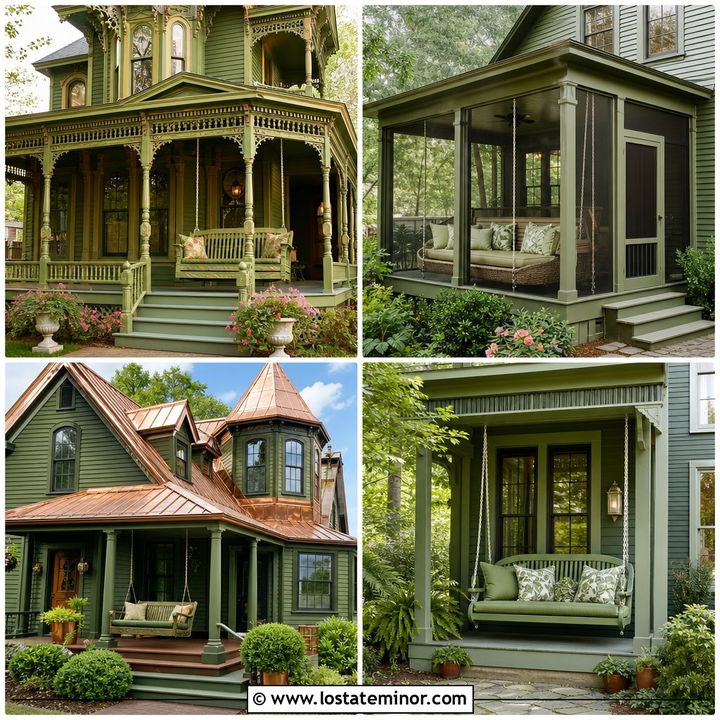
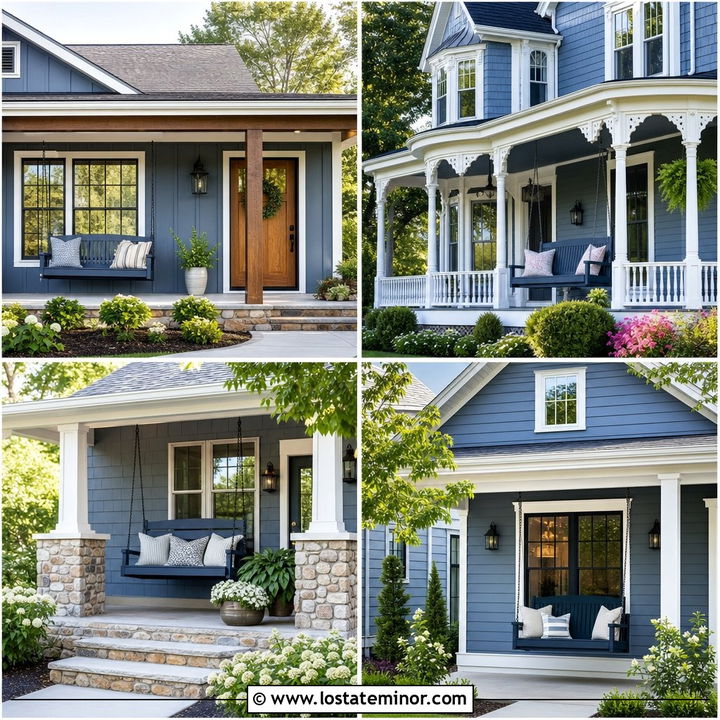
25. Off White Mountain House With Timber Swing
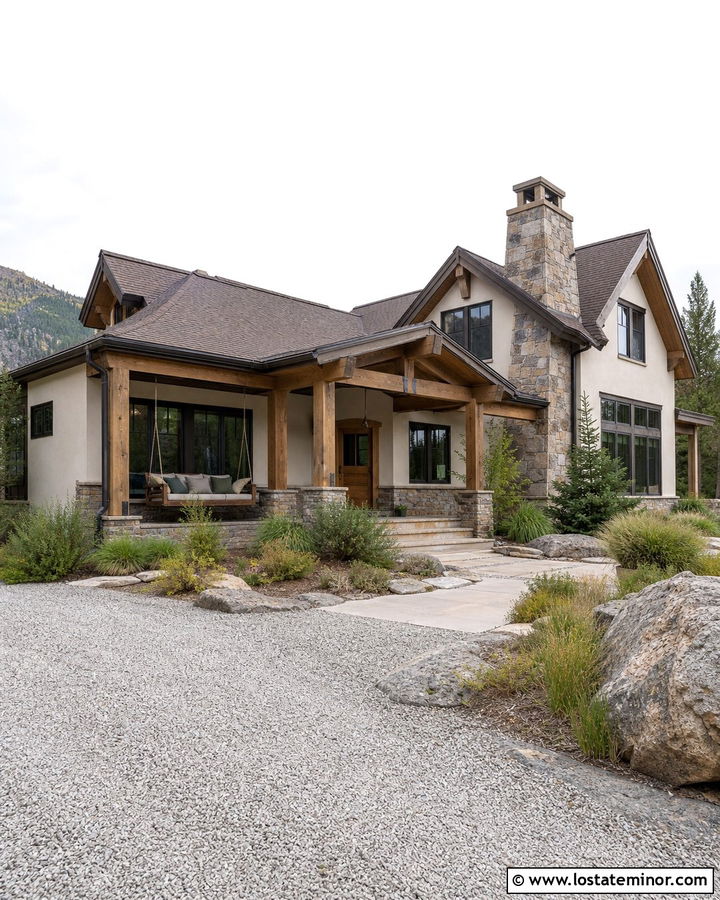
Heavy timber and stone can make a mountain house feel dark, so off-white siding provides valuable brightness. Use a warm limestone-white body color between exposed cedar beams, then add charcoal window frames and a dark brown roof. Hang a thick timber swing beneath the covered entry, matching its stain to the columns and front door. Choose durable taupe cushions with subtle forest-green accents. A fieldstone base around the porch and chimney grounds the light siding and connects the house to the rugged setting. Use black iron hardware that is substantial enough to match the architecture. A broad gravel drive, natural boulders, evergreen trees, and native grasses complete the curb appeal. The swing softens the strong materials while reinforcing the warm timber details repeated across the entire exterior.
26. Off White Scandinavian House With Wood Swing
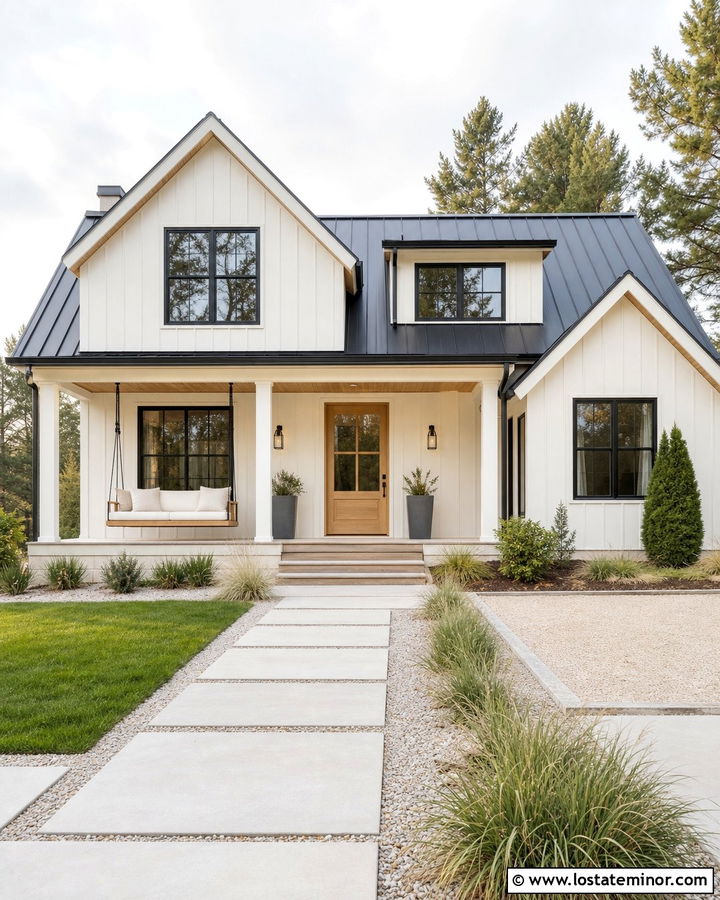
Simple materials are essential for an off-white Scandinavian-inspired exterior. Cover the house in warm white vertical siding and add pale natural wood at the front door, soffits, and porch ceiling. Choose a clean-lined ash or light oak swing with cream cushions, supported by slim black brackets. Black-framed windows and a charcoal metal roof create definition, but they should remain secondary to the light walls and wood. Keep porch railings minimal or omit them where building conditions allow. Use pale gravel, rectangular concrete pavers, airy grasses, and a few sculptural evergreen plants around the facade. The limited palette makes the swing feel like part of the architecture. Its natural finish brings warmth to the off-white house while preserving the uncluttered appearance associated with Scandinavian design.
27. Off White Rustic House With Log Swing
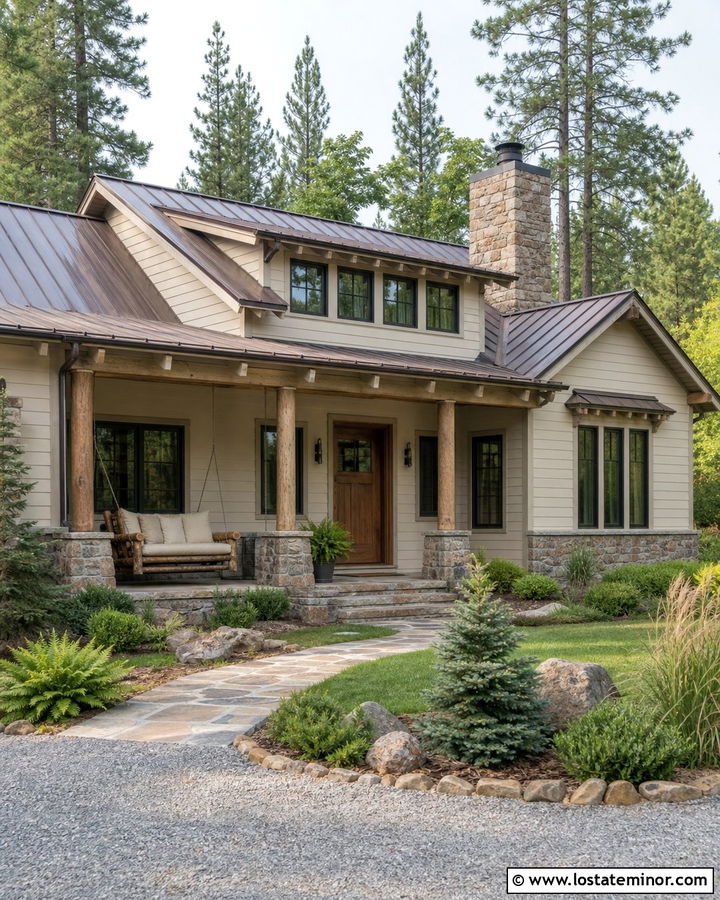
A rustic exterior does not need to be completely brown. Warm off-white lap siding can brighten a cabin-inspired house while allowing log posts, stone, and heavy woodwork to stand out. Use dark bronze windows, a cedar front door, and a weathered brown metal roof. Install a handcrafted log swing beneath the covered porch, matching its finish to the columns without making every wood surface identical. Neutral canvas cushions improve comfort and soften the rugged frame. Irregular fieldstone around the foundation and chimney gives the light siding a strong visual base. Keep the planting informal with evergreens, ferns, and native grasses along a natural stone path. The resulting exterior remains earthy and durable, but the off-white body prevents the heavy rustic materials from becoming visually overwhelming.
28. Off White Low Country House With Teal Swing
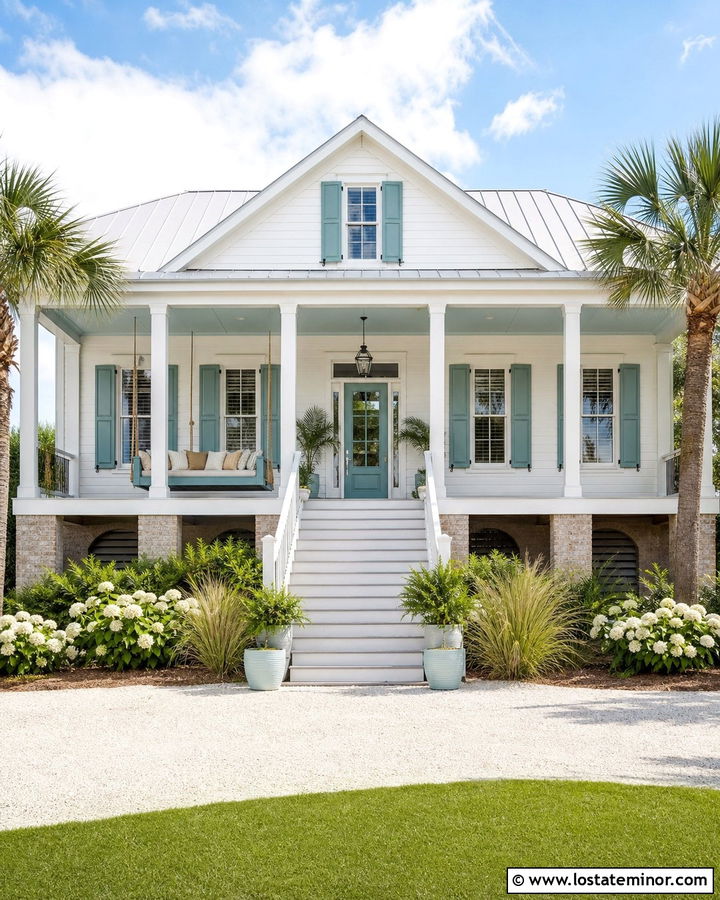
Raised Low Country architecture offers an ideal setting for a colorful porch swing. Paint the siding a creamy off-white and use clean white on the tall columns, railings, and window trim. Introduce muted teal on the shutters, front door, and a traditional slatted swing. The repeated color creates energy while remaining appropriate beside natural coastal greenery. Add pale gray porch flooring and a soft blue ceiling to layer the cool tones. Cream cushions and woven tan accents keep the seating from feeling too coordinated. Brick foundation piers and wide front steps ground the elevated facade. Palmettos, hydrangeas, ornamental grasses, and a shell or gravel drive complete the landscape. The teal swing becomes a lively focal point within a balanced, bright, and regionally inspired exterior scheme.
29. Off White Midcentury House With Platform Swing
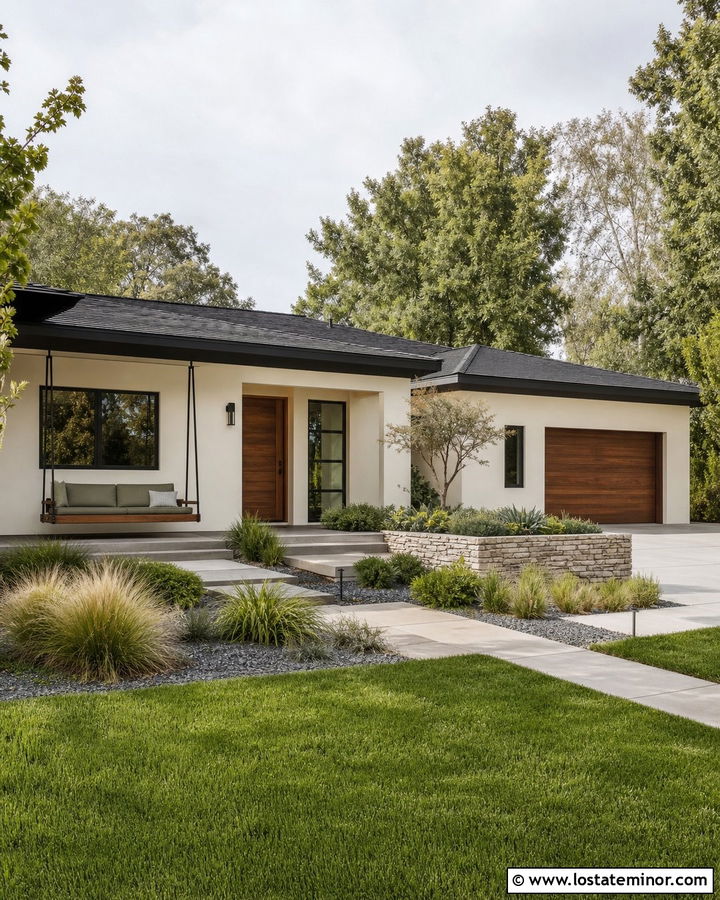
A platform swing can update a midcentury home while preserving its low, geometric character. Use warm off-white stucco with walnut siding panels around the entrance and garage. Keep the windows dark bronze and choose a low charcoal roof with broad eaves. Suspend a rectangular walnut platform swing from a covered patio beside the front entry, using slim black supports and tailored olive-gray cushions. Repeat the walnut finish on the door to make the swing feel architectural. A stacked-stone planter or chimney can add period-appropriate texture without crowding the facade. Finish with large concrete pavers, gravel beds, sculptural shrubs, and spreading ornamental grasses. The off-white exterior brightens the home, while the platform swing brings comfort and movement to its disciplined midcentury lines.
30. Off White Traditional House With Navy Swing
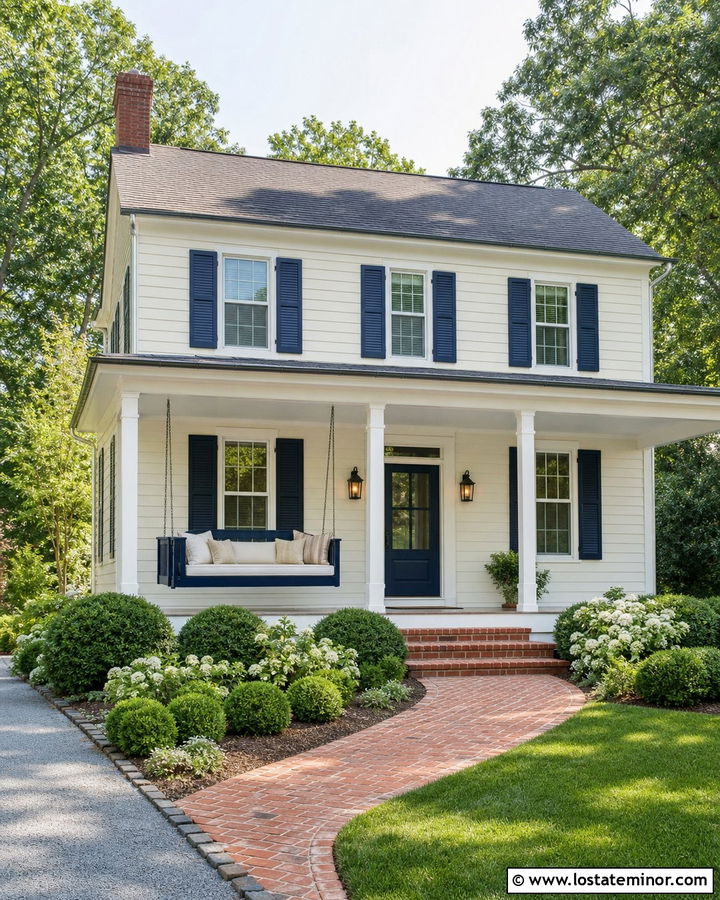
A navy porch swing gives a traditional off-white house a polished focal point that remains easy to coordinate. Choose creamy clapboard siding, soft white trim, navy shutters, and a matching front door. Paint the swing in the same deep blue, then add natural linen cushions and a small checked pillow for restrained pattern. A medium-gray roof, red brick steps, and dark bronze lanterns complete the classic material mix. Place the swing beneath the wider side of the porch so it does not interrupt the centered entry. Use symmetrical planters near the door but allow the remaining landscaping to feel slightly relaxed. Rounded shrubs, white flowers, and a clean brick walkway frame the facade. The repeated navy details create unity while the off-white siding keeps the complete exterior bright.
Conclusion:
The best 30 Off White House Design With Swing Ideas treat outdoor seating as an important part of the architecture rather than a last-minute porch accessory. Begin with an off-white shade that complements the roof, masonry, sunlight, and surrounding landscape. Then coordinate the swing with an existing feature, such as the front door, shutters, timber beams, or window frames. Natural wood brings warmth, while navy, green, black, yellow, red, and teal can add controlled color. Remember to consider scale, safe structural support, walking clearance, and weather-resistant materials. With a connected palette and thoughtful placement, an off-white home and swing can create a comfortable exterior that looks complete, welcoming, and attractive from the curb.

Related posts: