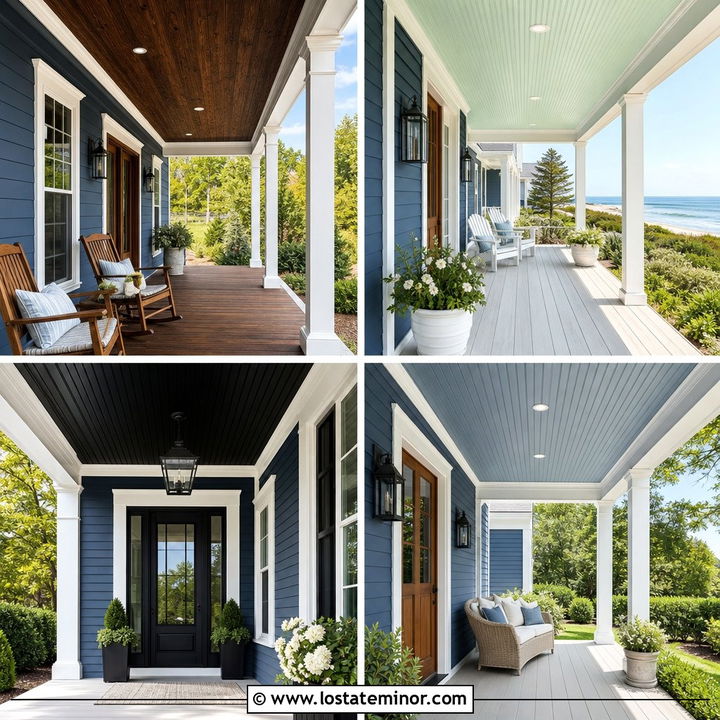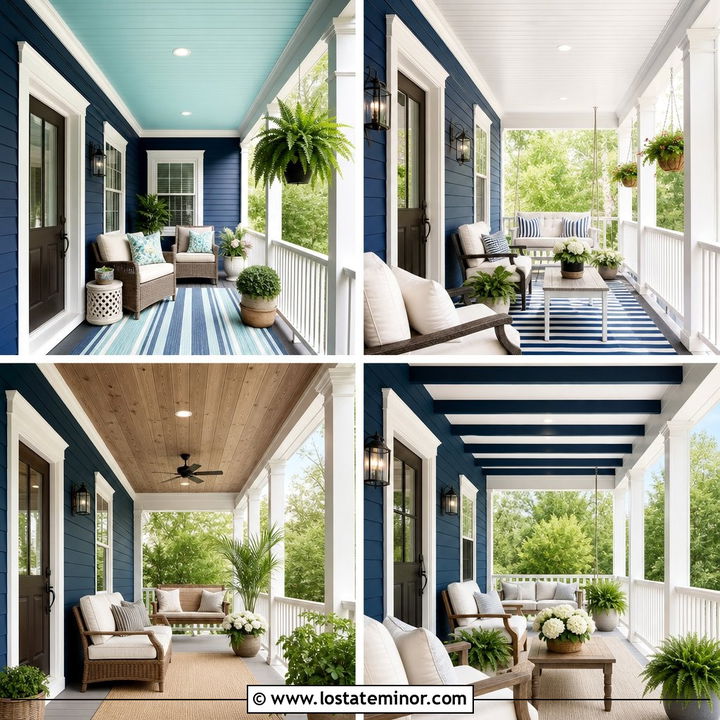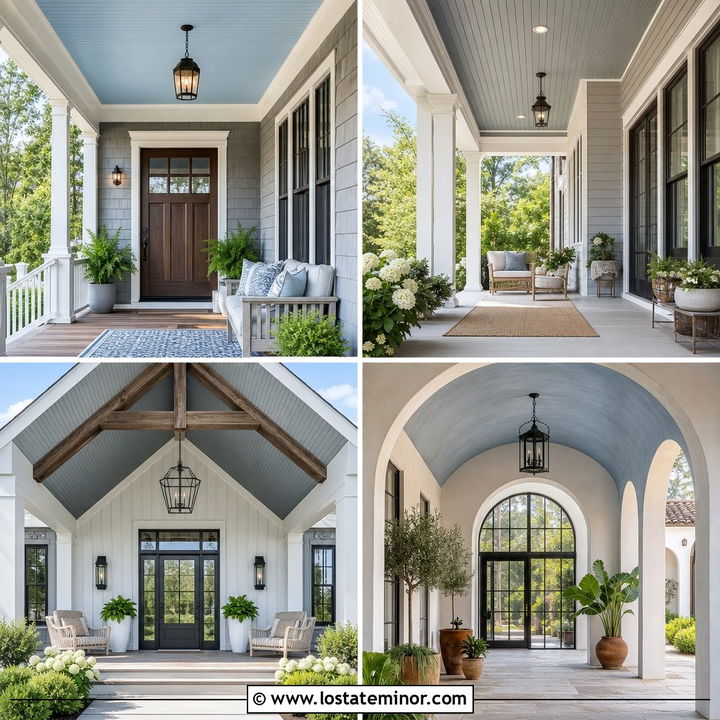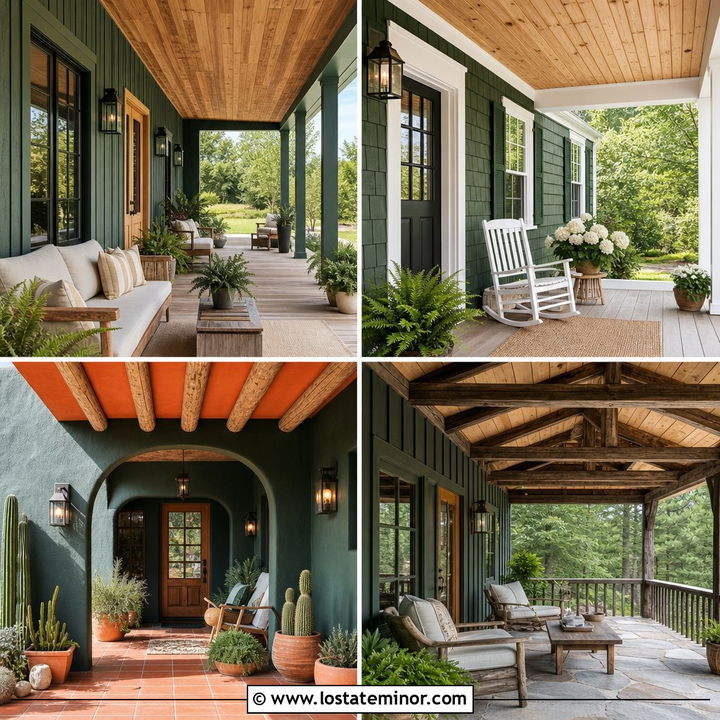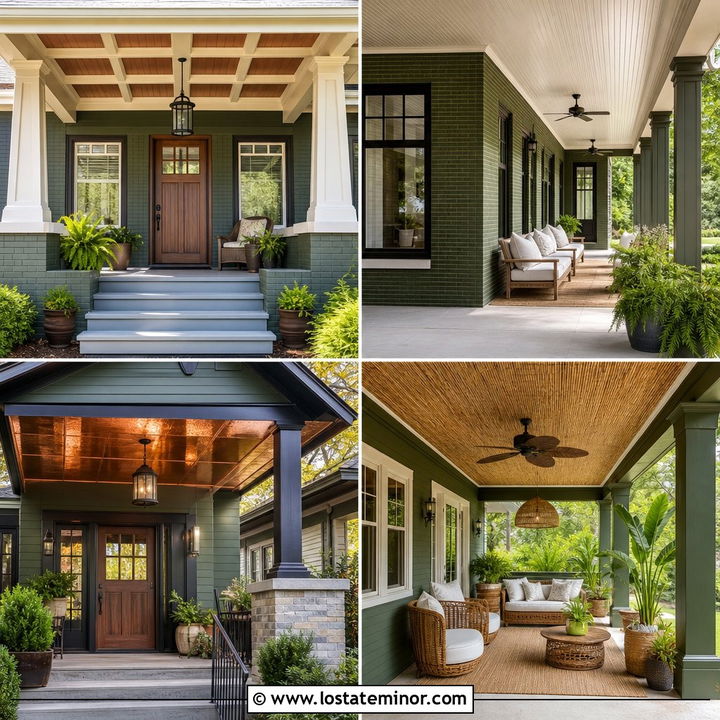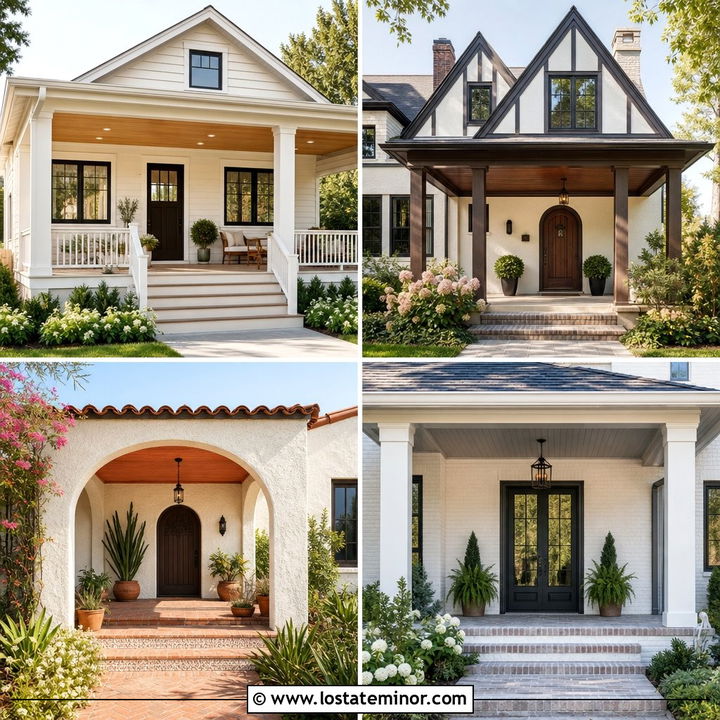
Dusty blue creates a calm, polished exterior that feels softer than navy and more colorful than standard gray. The best **30 Dusty Blue House Design With Porch Ceiling Ideas** connect the siding, ceiling, trim, roof, front door, and hardscaping into one balanced palette. Pale blue-green porch ceilings are especially effective because they add subtle contrast without competing with muted blue siding, while crisp whites, warm woods, black accents, and natural stone provide definition. Blue-gray exterior colors also suit many architectural forms, including Craftsman homes, ranch houses, cottages, Colonials, and modern farmhouses. () The complete schemes below offer practical inspiration for creating your own **30 Dusty Blue House Design With Porch Ceiling Ideas**.

1. Dusty Blue House With Haint Blue Porch Ceiling
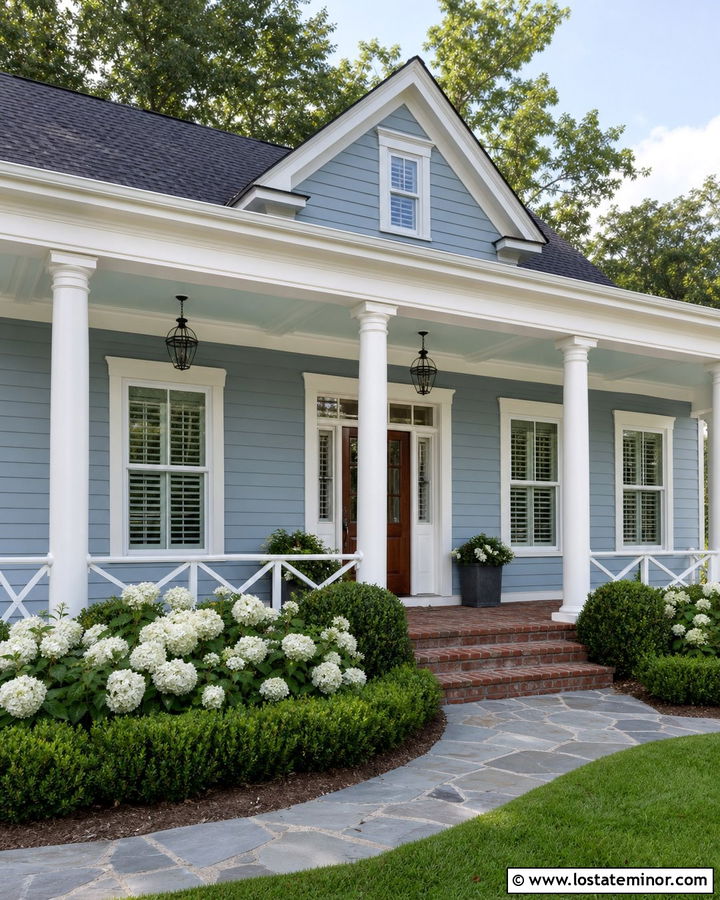
A traditional haint blue ceiling brings a gentle blue-green layer to dusty blue siding without making the facade look overly matched. Use crisp white on the porch columns, window trim, railings, and fascia to separate the two blue tones. A stained mahogany front door adds warmth, while antique brass hardware gives the entry a classic finish. For the roof, choose charcoal shingles that echo the siding’s gray undertone. Red brick porch steps can introduce another warm material and make the palette feel established rather than overly coastal. Complete the setting with clipped boxwoods, white hydrangeas, and a simple stone walkway. This combination works particularly well on Southern cottages, traditional farmhouses, and homes with deep covered porches.
2. Dusty Blue House With Sky Blue Porch Ceiling
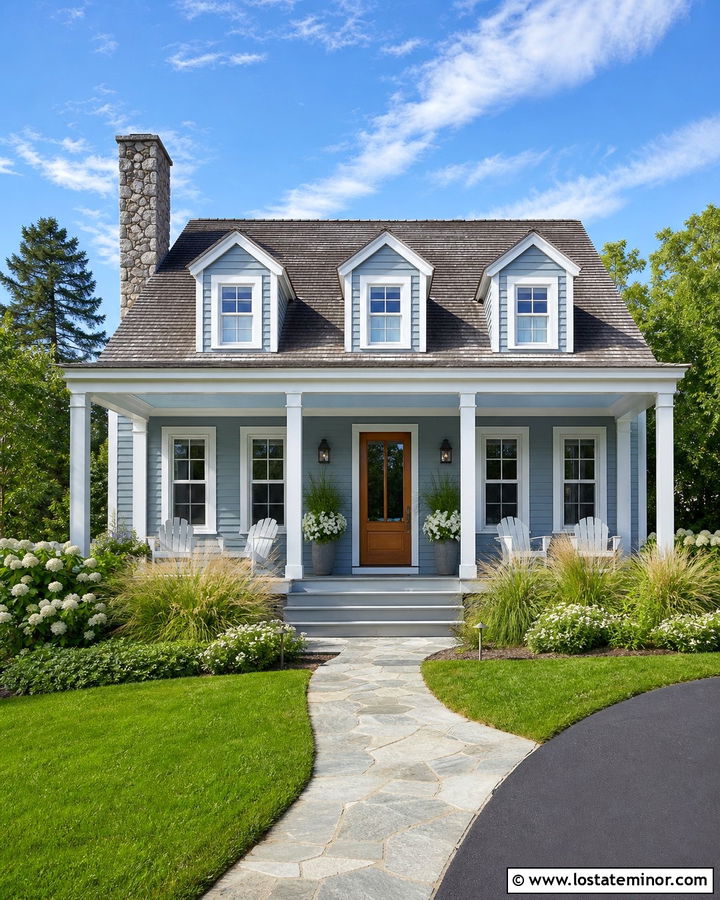
A clear sky blue porch ceiling makes a dusty blue exterior look brighter and more open. The ceiling should be several shades lighter than the siding so it reads as a deliberate highlight. Soft white trim keeps the transition smooth, while a medium-stained oak door gives the entry a natural focal point. Consider white porch railings, pale gray flooring, and brushed nickel lights for a clean scheme. A weathered gray shingle roof will reinforce the cooler undertones without becoming too dark. This palette is especially attractive on a Cape Cod home with dormers and symmetrical windows. Use ornamental grasses, blue-green shrubs, and white flowers to continue the light, airy colors throughout the front yard.
3. Dusty Blue House With White Porch Ceiling
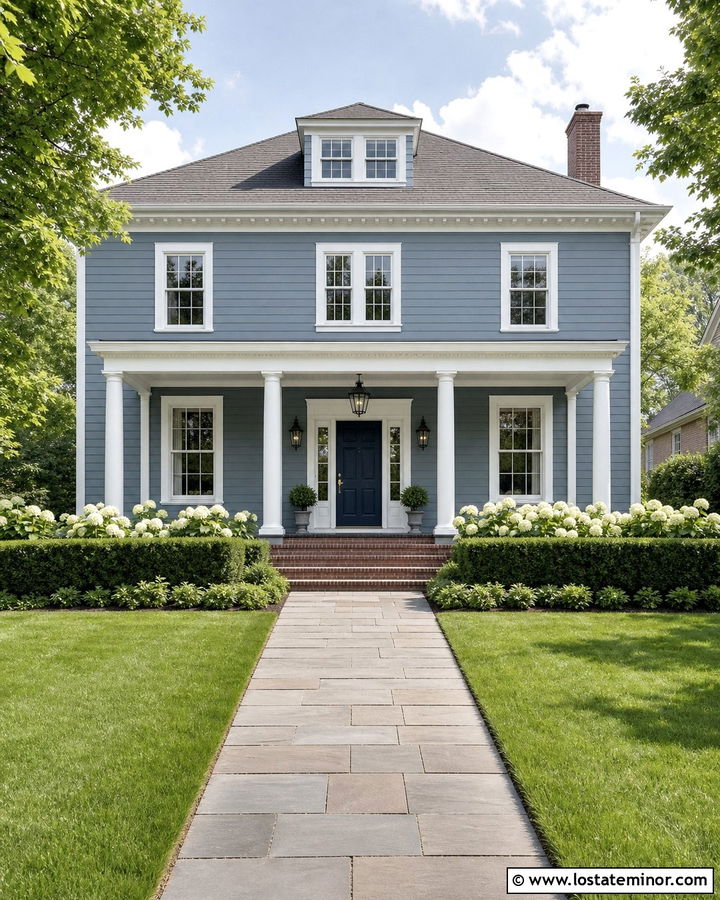
If you prefer a clean and uncomplicated palette, pair dusty blue siding with a bright white porch ceiling. Repeating the same white on the columns, window casings, soffits, and railings creates a crisp architectural frame. A navy front door provides tonal depth while still remaining connected to the blue exterior. Black lanterns and house numbers add small points of contrast, and a charcoal roof anchors the lighter colors. This scheme works beautifully on a Colonial house because it emphasizes symmetry and traditional detailing. To prevent the facade from feeling too cool, introduce red brick steps, warm wood furniture, and layered green landscaping. The resulting exterior feels polished, familiar, and easy to maintain visually.
4. Dusty Blue House With Wood Porch Ceiling
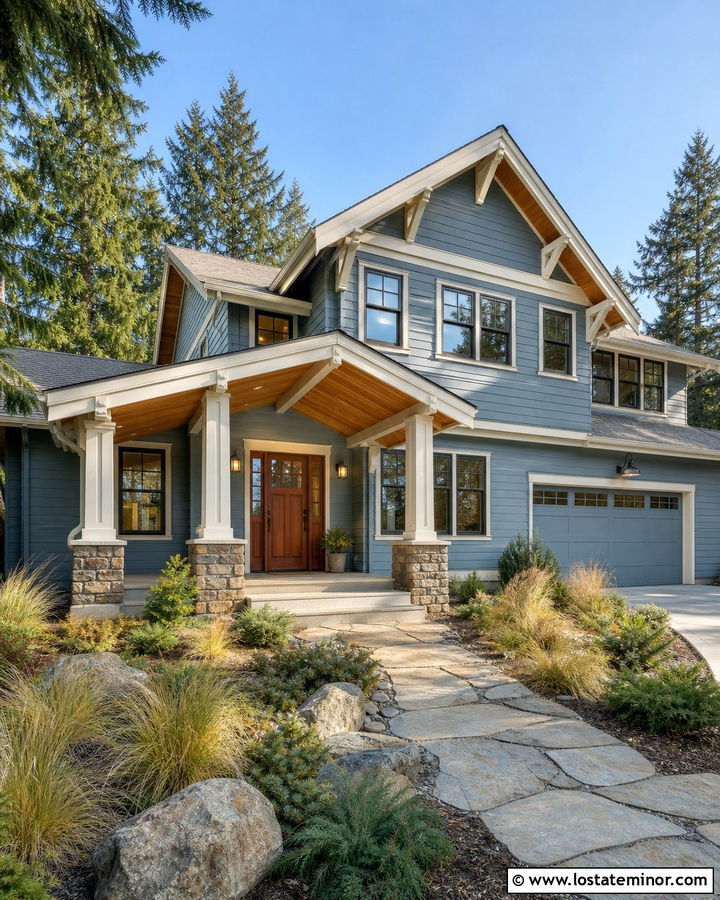
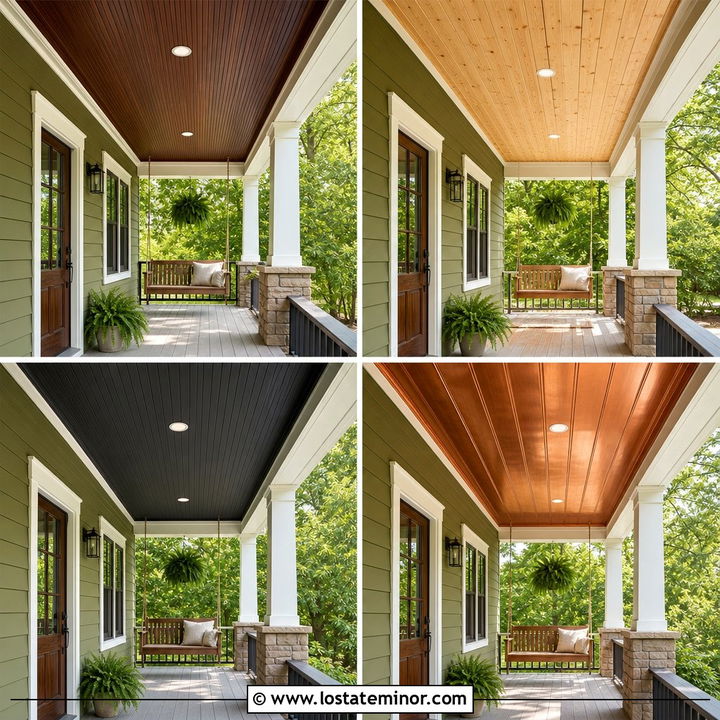
Natural wood overhead can warm a dusty blue house and make its porch feel more inviting. Choose tongue-and-groove cedar with a clear or honey-toned stain so the grain remains visible. Carry that wood tone to the front door, porch swing, or exposed brackets for continuity. Creamy white trim offers a softer alternative to stark white, while dark bronze lights and gutters complement the organic materials. A warm gray roof helps connect the siding with the wood ceiling. This complete exterior look is ideal for a Craftsman house featuring tapered columns, stone bases, and broad rooflines. Low evergreen shrubs, native grasses, and an irregular flagstone path can reinforce the relaxed, handcrafted character of the design.
5. Dusty Blue House With Beadboard Porch Ceiling
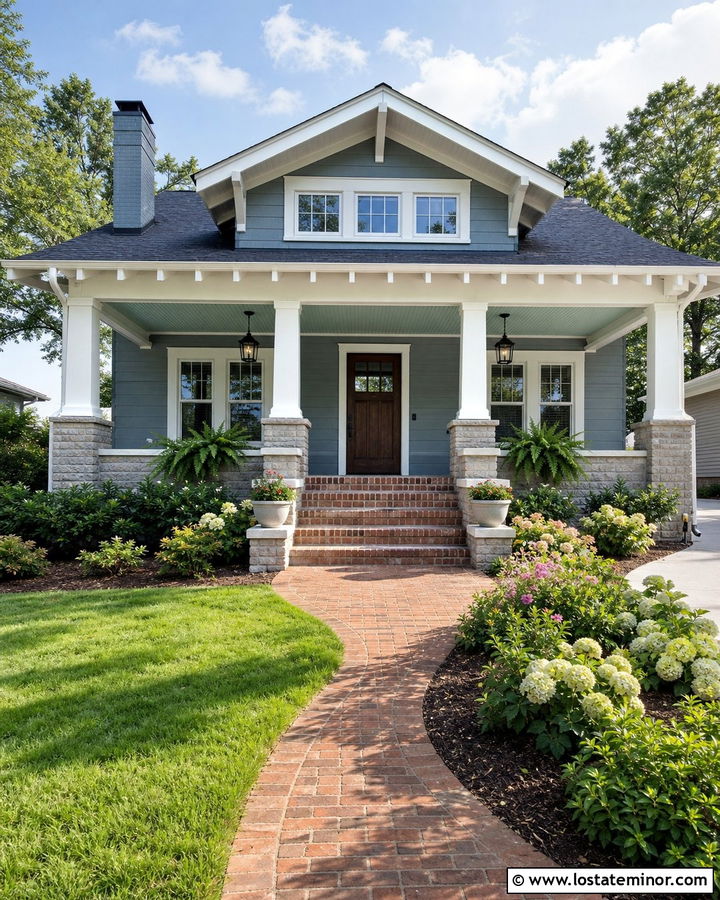
Painted beadboard gives a porch ceiling subtle texture that can be seen from the curb without overpowering dusty blue siding. Use a pale aqua-blue on the beadboard to distinguish it from the deeper exterior body color. Bright white beams, columns, and window trim will outline the porch and highlight the ceiling’s narrow grooves. Add a warm walnut front door, oil-rubbed bronze fixtures, and medium-gray porch flooring for balance. This treatment looks especially charming on a bungalow with a low roof, broad steps, and a welcoming front porch. Select a charcoal architectural-shingle roof to ground the scheme. Ferns, flowering shrubs, and a curved brick walkway will help the finished exterior feel established, comfortable, and thoughtfully coordinated.
6. Dusty Blue House With Navy Porch Ceiling
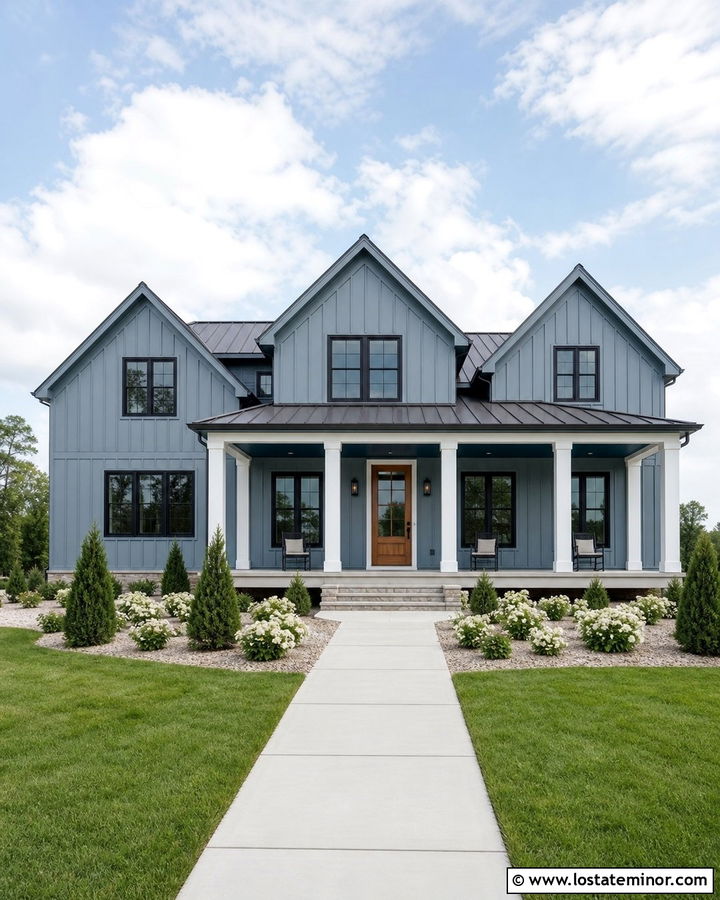
Would you like the porch to feel more dramatic? A navy ceiling creates a sheltered, intimate effect against dusty blue siding while preserving a tonal color story. Keep the columns and fascia bright white so the dark ceiling appears intentional rather than heavy. A natural teak front door introduces necessary warmth, and black-framed windows connect visually with the deep overhead color. Use light gray porch flooring to reflect brightness back into the covered area. This scheme suits a modern farmhouse with simple board-and-batten siding, broad gables, and minimal ornament. A dark charcoal metal roof can complete the strong silhouette. Balanced landscaping with pale gravel, structured evergreens, and white flowering plants prevents the exterior from becoming visually dark.
7. Dusty Blue House With Pale Gray Porch Ceiling
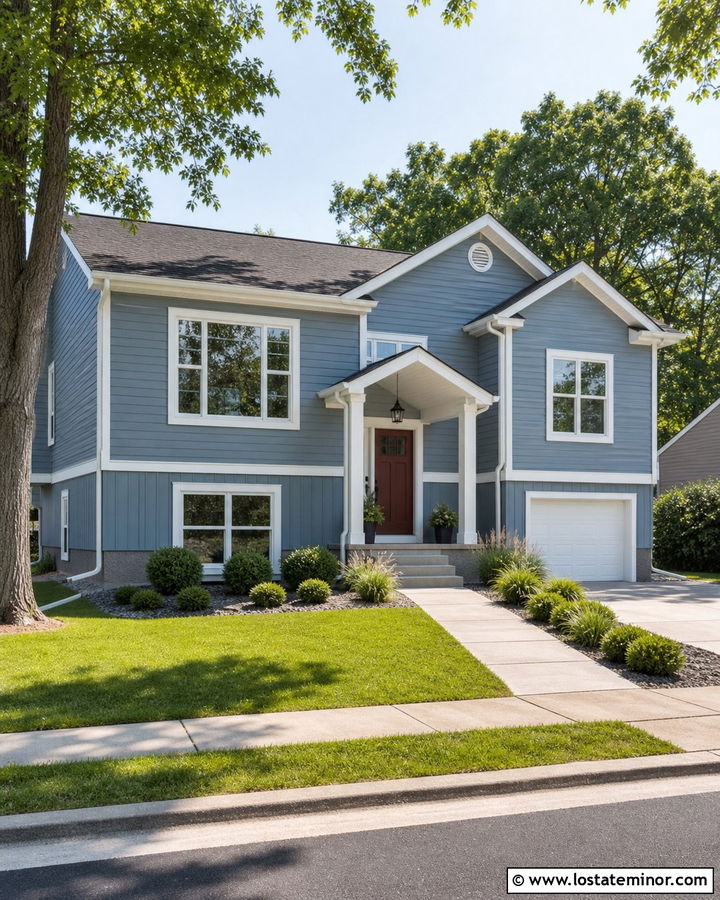
A pale gray ceiling is a quiet choice that allows dusty blue siding to remain the main feature. Select a gray with cool blue undertones rather than a warm taupe, which could look disconnected from the exterior. Paint the porch columns, beams, and window trim a clean white for definition. A muted burgundy door adds restrained warmth and gives the entry a distinctive focal point. Match the roof with medium-charcoal shingles, then repeat gray on the porch floor and foundation. This combination works particularly well on a split-level house where a simple palette can unify multiple rooflines and siding sections. Soft grasses, rounded shrubs, and a straight concrete walkway support the exterior’s practical, well-balanced appearance without adding unnecessary visual clutter.
8. Dusty Blue House With Soft Green Porch Ceiling
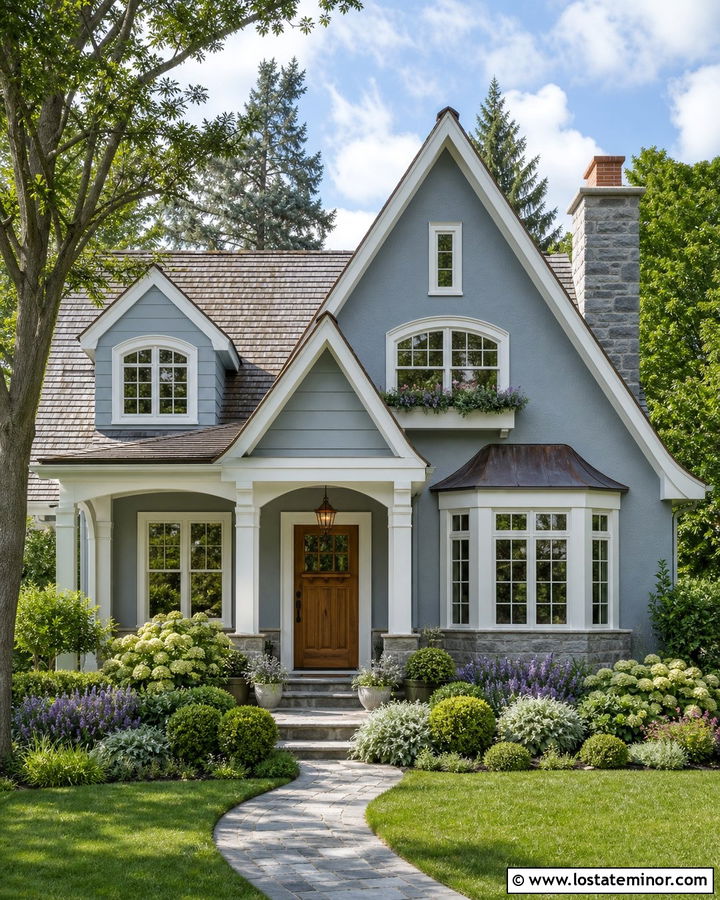
Soft green overhead introduces a garden-inspired accent to dusty blue siding. Look for a muted green containing blue or gray undertones so the two colors blend naturally. Use warm white on the columns and trim to give the overall palette a slightly softer appearance. A medium oak door, copper porch light, and aged bronze hardware bring warmth to the cool exterior colors. Natural stone around the foundation can add texture and connect the home to its landscaping. This complete look is a strong fit for a cottage with divided-light windows, a steep roof, and a small covered entry. Surround the walkway with lavender, boxwood, hydrangeas, and silvery foliage to create an inviting transition between the blue-green house and the yard.
9. Dusty Blue House With Aqua Porch Ceiling
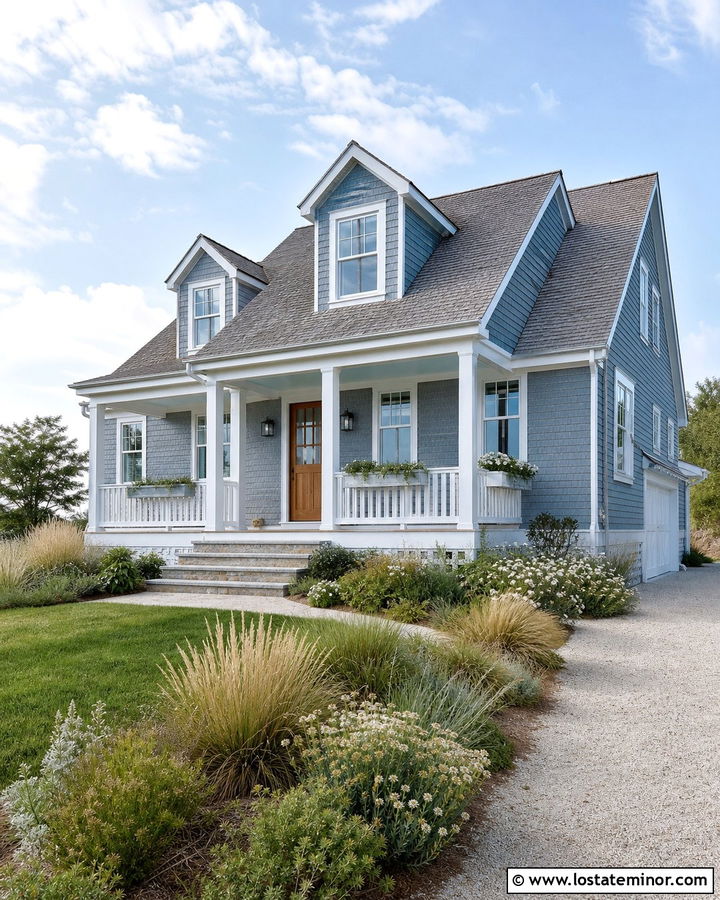
A soft aqua ceiling can give a dusty blue exterior a livelier coastal note without making the house appear overly bright. Keep the aqua muted and slightly gray so it complements the siding rather than fighting it. White porch posts, railings, and trim create a fresh border around both blues. Choose a natural cedar front door and matching window boxes to introduce warmth. A weathered gray roof, pale stone steps, and light concrete walkway support the breezy palette. This combination is well suited to a coastal cottage with shingle siding, dormer windows, and a wraparound porch. Use sea grasses, low evergreen shrubs, and white blooms around the foundation to complete a relaxed but polished curb-appeal design.
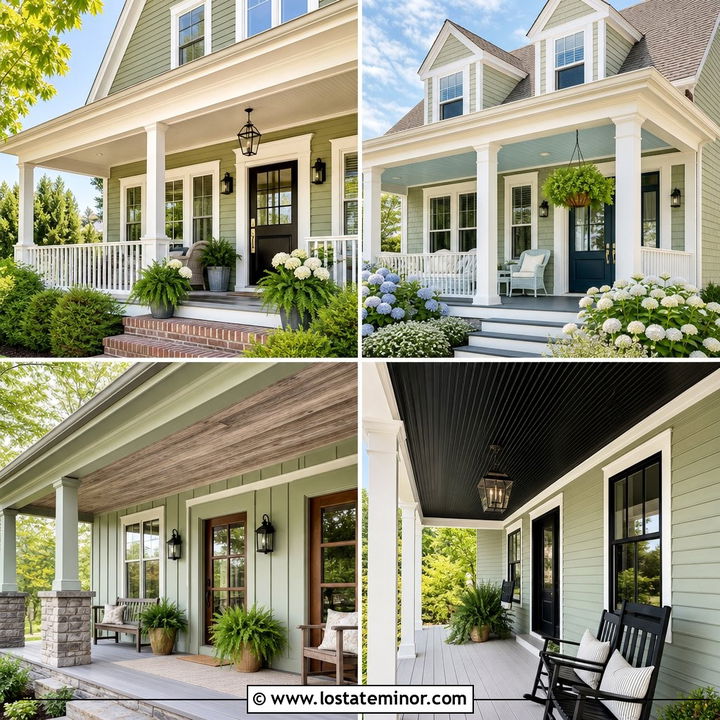

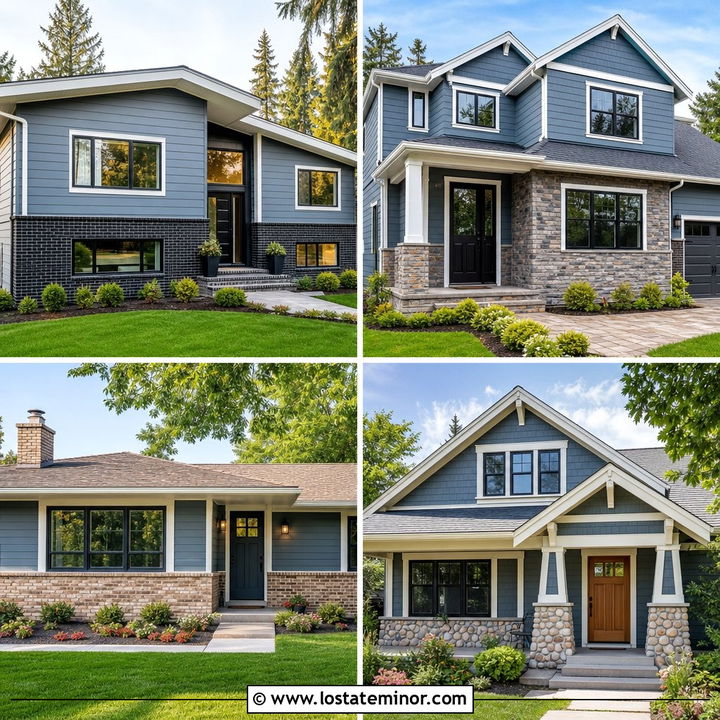
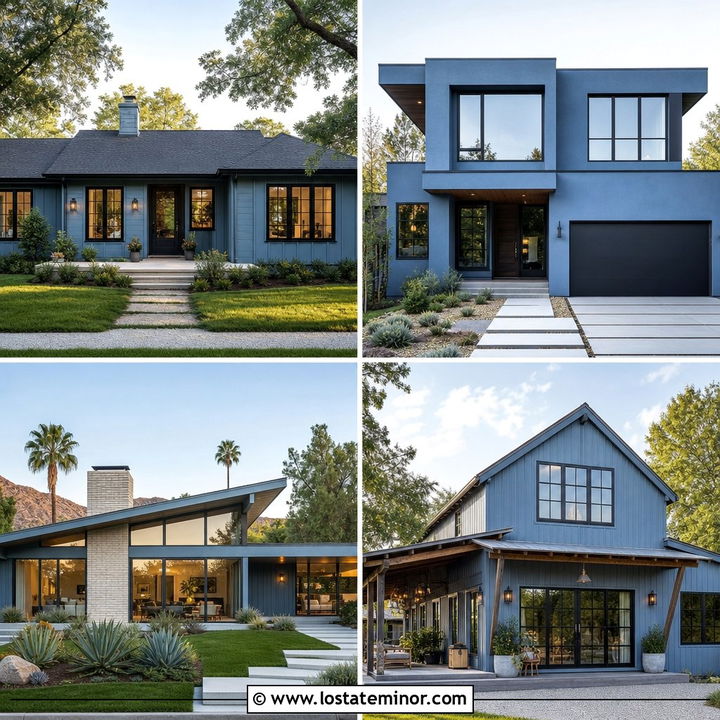
10. Dusty Blue House With Cream Porch Ceiling
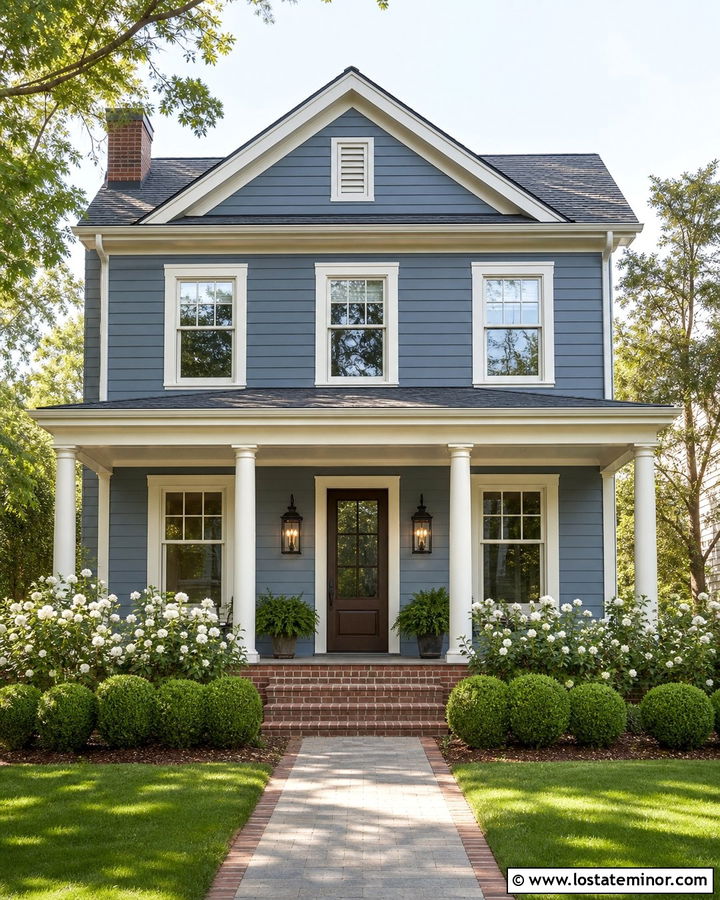
Cream paint can soften a dusty blue facade and create a more traditional, welcoming mood. Choose a light cream with limited yellow undertones so it feels warm without looking dated. Repeat that shade on the porch columns, window casings, fascia, and decorative brackets. A dark chocolate-brown door makes a handsome focal point and coordinates with an aged bronze porch light. Warm gray roof shingles and red brick steps add depth to the restrained palette. This complete scheme flatters a traditional two-story home with horizontal lap siding and a centered front porch. Add rounded hedges, white roses, and a brick-edged walkway to reinforce the classic character. The warm ceiling also makes shaded porches appear brighter during the day.
11. Dusty Blue House With Black Porch Ceiling
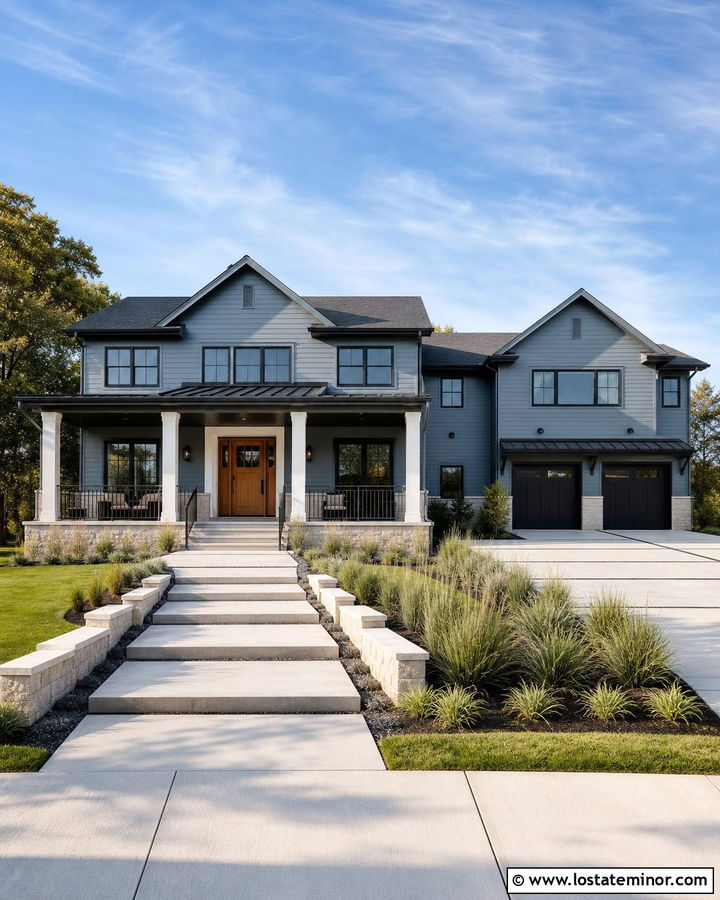
A black porch ceiling delivers strong contrast and a contemporary edge to subdued dusty blue siding. Because black absorbs visual light, use it on a high or generously sized porch rather than a cramped entry. Balance the ceiling with white columns, white fascia, and light gray concrete flooring. A warm cedar door keeps the cool scheme from feeling severe, while black windows, lights, gutters, and railings repeat the ceiling color across the facade. This exterior combination works especially well on a modern house with flat or low-pitched rooflines and large windows. Simple limestone accents can add texture without disrupting the limited palette. Finish with structured grasses, rectangular planting beds, and a broad concrete walkway for clean, confident curb appeal.
12. Dusty Blue House With Light Blue Porch Ceiling
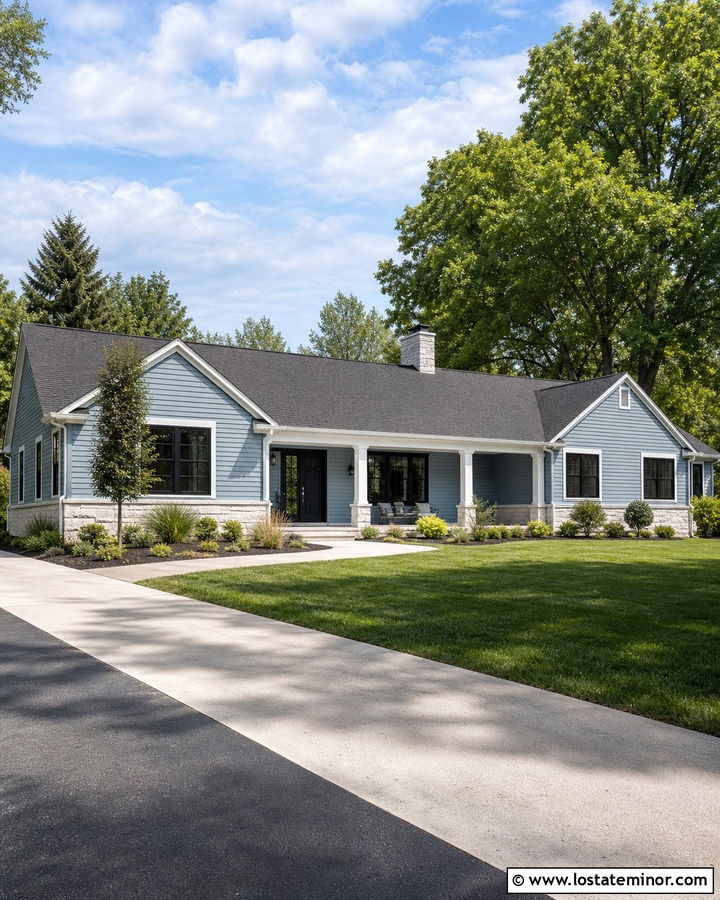
Using a lighter version of dusty blue on the porch ceiling creates a smooth, layered exterior. The ceiling remains visibly different from the siding, but the close relationship between the colors keeps the design calm. Frame the porch with soft white beams, columns, and railings. Add a black front door and black-framed windows to sharpen the pastel palette. A dark gray roof provides enough weight to balance the lighter facade, while pale stone on the porch foundation adds natural variation. This look is particularly suitable for a suburban ranch house with a long roofline and broad covered porch. Low shrubs, ornamental grasses, and a wide walkway can emphasize the horizontal architecture while keeping the front elevation open and welcoming.
13. Dusty Blue House With Sea Salt Porch Ceiling
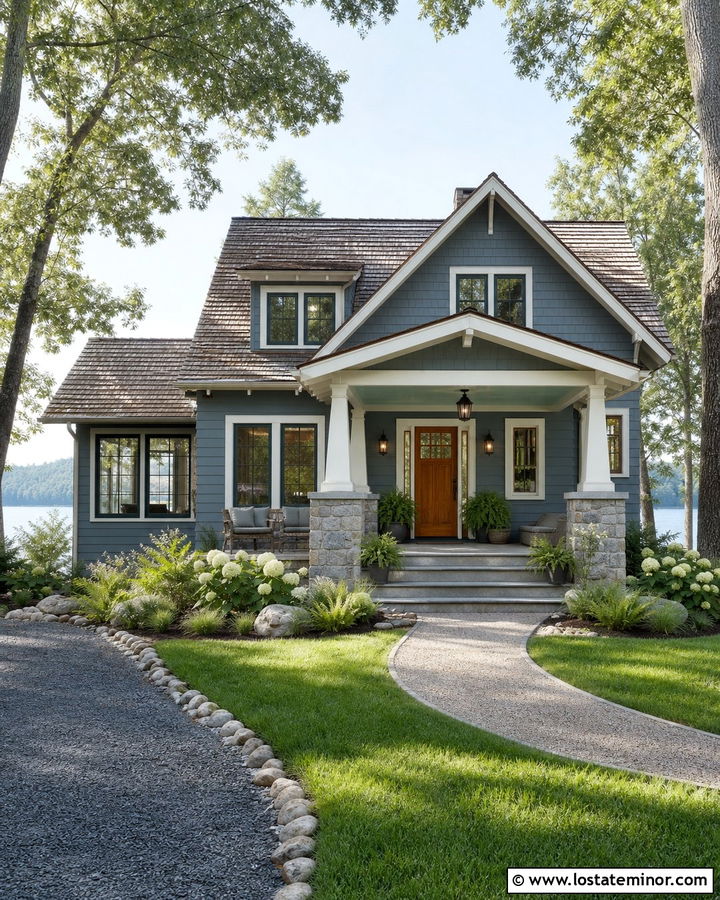
A muted sea salt ceiling combines pale blue, green, and gray, making it a natural companion for dusty blue siding. The subtle difference becomes especially visible beneath a covered porch where changing light reveals the ceiling’s green undertone. Use creamy white on the trim and columns to create a relaxed transition. A stained fir door and matching porch bench will add warmth, while dark bronze lights offer gentle contrast. Choose a weathered wood roof and gray stone porch piers for an earthy foundation. This palette looks attractive on a lakeside cottage or casual Craftsman home with substantial eaves. Surround it with ferns, hydrangeas, native grasses, and a gravel-edged walkway to reinforce the quiet, landscape-connected character.
14. Dusty Blue House With Turquoise Porch Ceiling
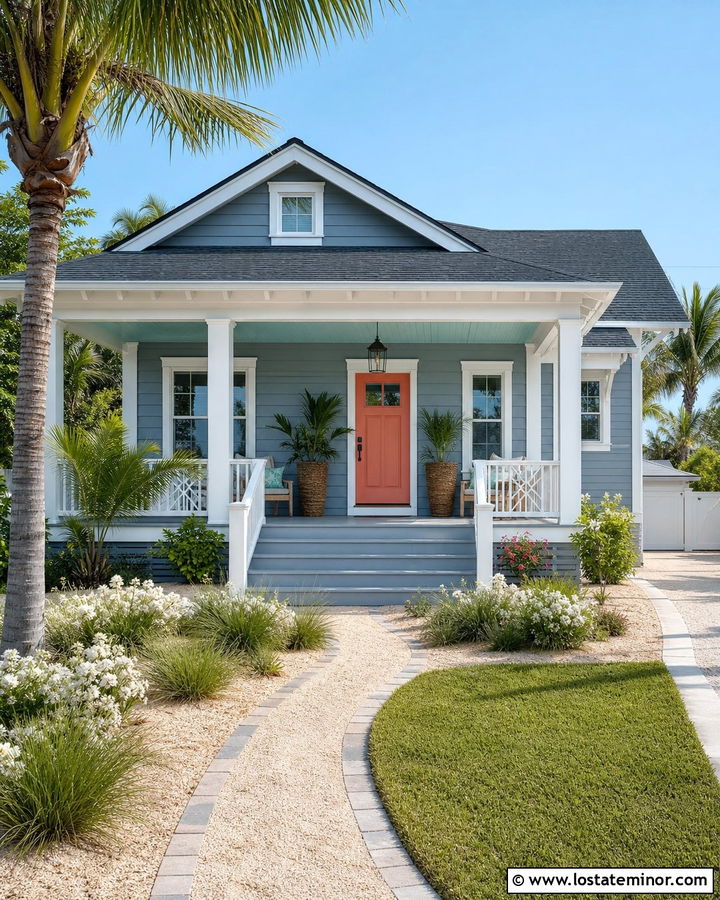
Muted turquoise can add personality to a dusty blue home while keeping the exterior cohesive. Reserve the brighter turquoise for the porch ceiling and use restrained colors elsewhere. Crisp white trim, square columns, and railings will clearly define the transition between the siding and ceiling. A warm coral front door creates an energetic focal point, but keep the roof and porch floor neutral with charcoal and medium gray. This combination suits a cheerful beach bungalow or compact cottage with a simple front-facing porch. Light wood furniture and woven planters can introduce natural texture. Finish the property with sandy gravel, curved planting beds, palms or ornamental grasses, and white flowers so the more colorful accents still feel grounded in a complete exterior scheme.



15. Dusty Blue House With Gray Blue Porch Ceiling
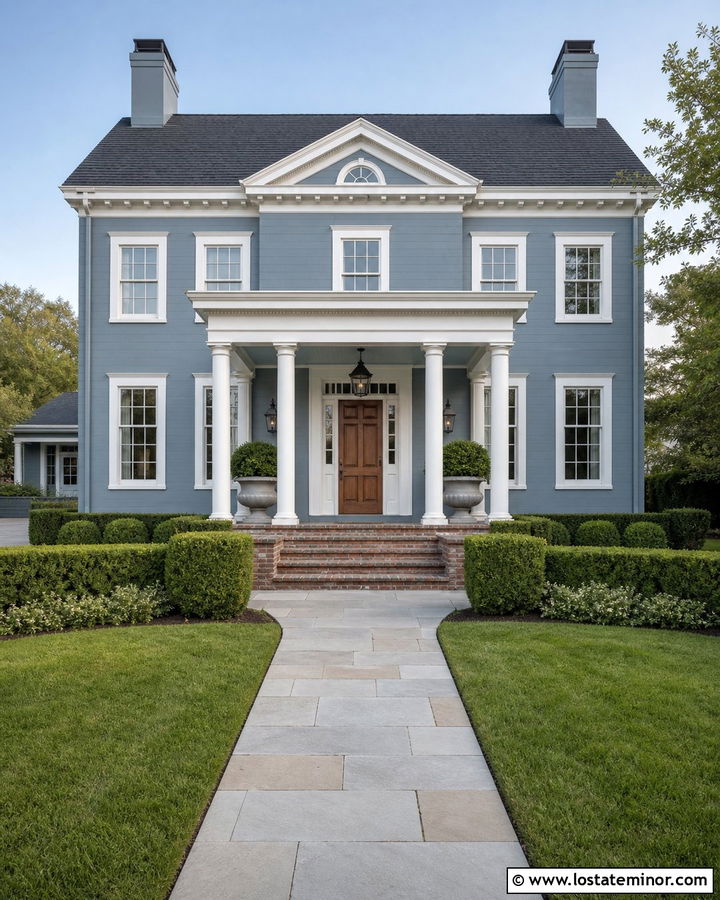
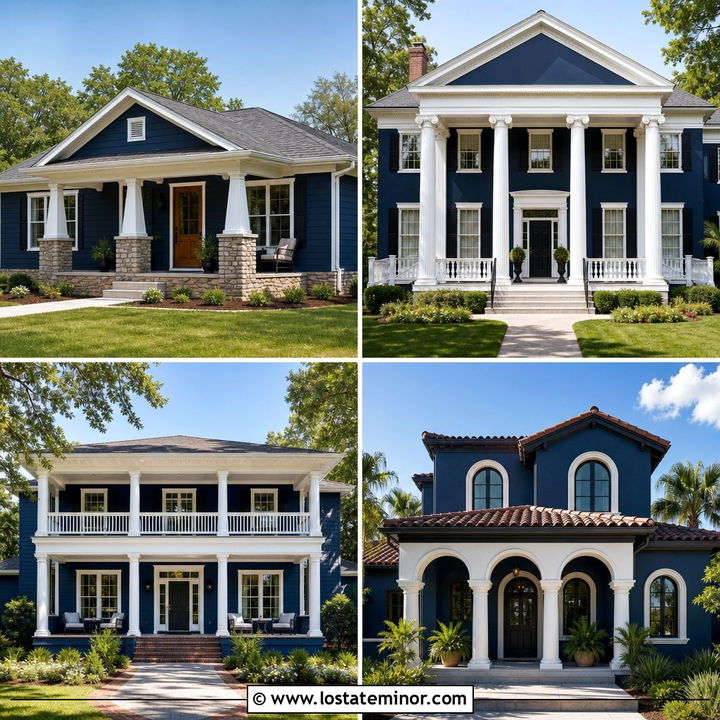
For a refined monochromatic appearance, choose a gray-blue ceiling that sits between the dusty blue siding and charcoal roof. This middle tone helps the porch feel connected to both major surfaces. Use bright white on the columns, window frames, and fascia to keep the layered blues from blending together. A cognac-colored wood door provides warmth and draws attention toward the entry. Black metal lights and rail details supply a neat finishing touch. This palette is ideal for a Georgian or Colonial-inspired home where symmetry deserves emphasis. Brick steps in a weathered red-brown tone can soften the cool colors. Formal hedges, paired planters, and a straight stone walkway complete the composed, traditional curb-appeal design.
16. Dusty Blue House With Stained Pine Porch Ceiling
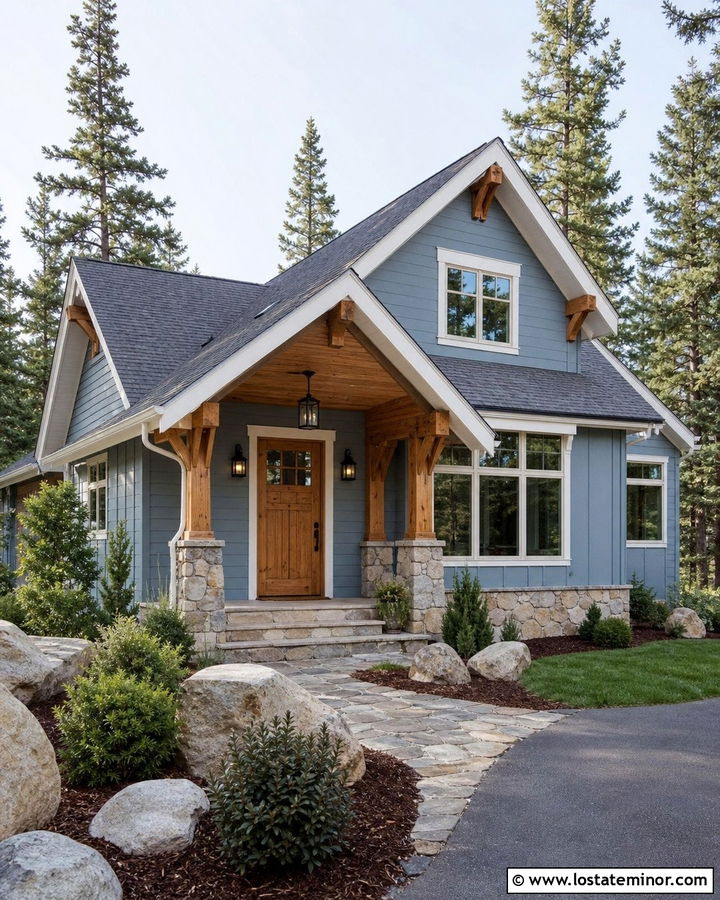
Stained pine creates a lighter and more casual effect than dark cedar while still warming dusty blue siding. A clear matte finish allows the knots and natural grain to give the ceiling character. Repeat the pine on the front door, decorative gable brackets, or porch furniture. Choose warm white trim and columns to bridge the golden wood and cool blue exterior. Medium-gray shingles provide a neutral roof, while pale fieldstone around the porch base adds varied texture. This combination is a natural match for a mountain cottage or rustic Craftsman house with exposed rafters and broad eaves. Use native shrubs, boulders, mulch beds, and an informal stone path to make the home feel comfortably integrated with its wooded surroundings.
17. Dusty Blue House With Cedar Porch Ceiling
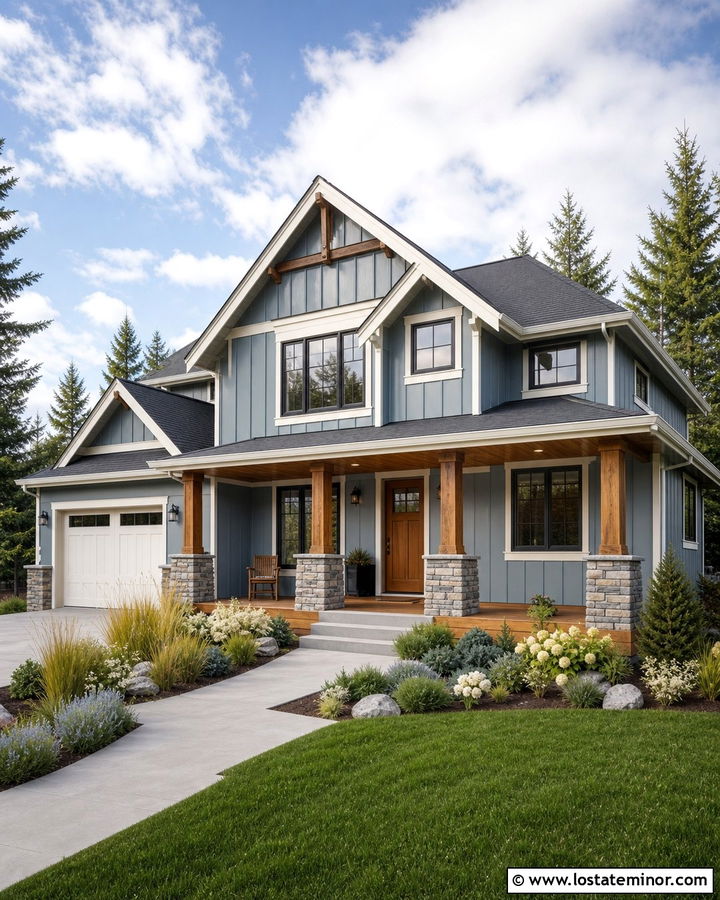
The rich orange-brown undertones of cedar create a striking yet natural contrast against dusty blue siding. Use clear-sealed cedar boards overhead and repeat the material on the front door or porch posts for a connected design. Cream trim works better than brilliant white when you want the palette to feel warm and relaxed. Dark bronze windows, lights, and gutters can relate to the wood while giving the facade definition. A deep charcoal roof provides a stable backdrop for both colors. This full exterior treatment suits a contemporary Craftsman with mixed lap siding, board-and-batten gables, and stone porch columns. Layer the landscaping with evergreens, yellow-green grasses, and pale flowering plants to frame the warm and cool materials evenly.
18. Dusty Blue House With White Beadboard Porch Ceiling
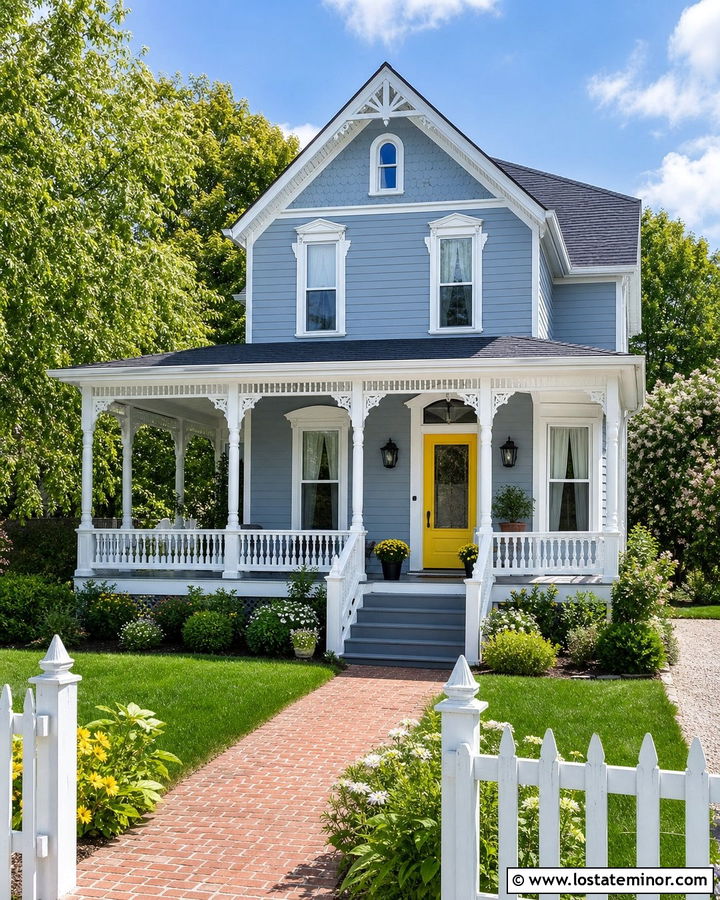
White beadboard keeps a dusty blue house looking bright while adding more craftsmanship than a flat ceiling. Narrow ceiling boards work especially well on a small porch because their lines can make the covered space appear longer. Repeat the white on turned columns, railings, window trim, and fascia for a unified architectural frame. A cheerful yellow front door can become the main accent, while black hardware and lanterns prevent the palette from looking overly sweet. Select medium-gray roof shingles and a soft gray porch floor to ground the color. This scheme complements a Victorian cottage with decorative brackets and detailed trim. Simple foundation shrubs and white picket fencing can support the nostalgic character without making the facade feel busy.
19. Dusty Blue House With Pale Teal Porch Ceiling
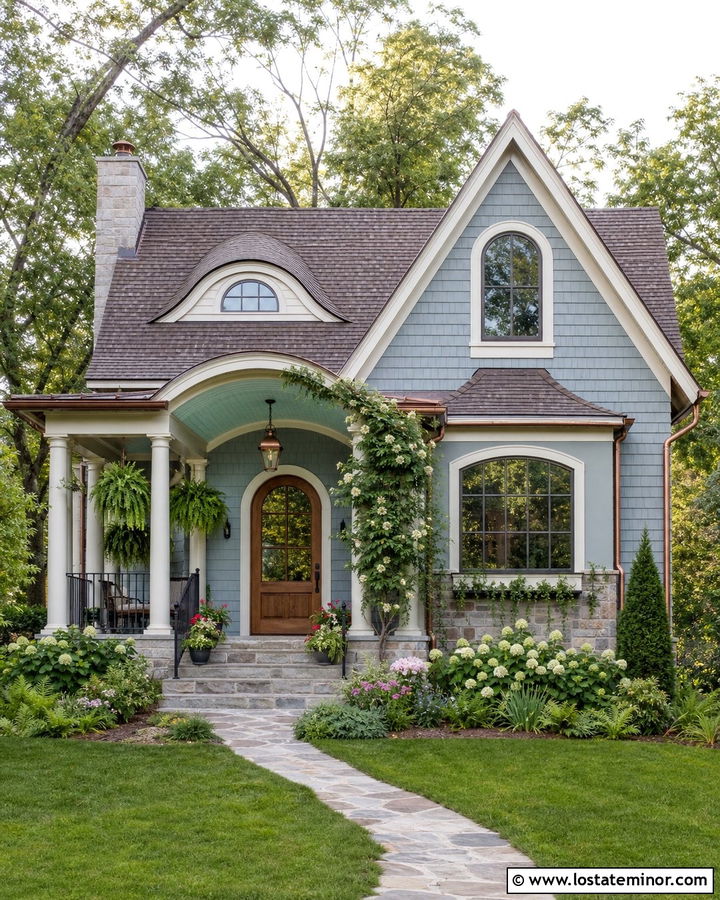
Pale teal offers more green than conventional sky blue, creating noticeable but tasteful contrast beneath a dusty blue porch. Keep the teal soft and desaturated so it maintains the calm quality of the siding. Off-white columns and trim provide a warmer frame, while a walnut front door introduces depth. Copper gutters or a copper porch lantern can add an attractive warm metallic note that will complement both blue tones. Choose a brown-gray roof and irregular stone porch base for a naturally layered exterior. This color scheme suits a storybook cottage with arched details, steep gables, and textured siding. Ferns, flowering vines, and informal garden beds will make the blue, teal, wood, and stone combination feel charming and complete.



20. Dusty Blue House With Warm Gray Porch Ceiling
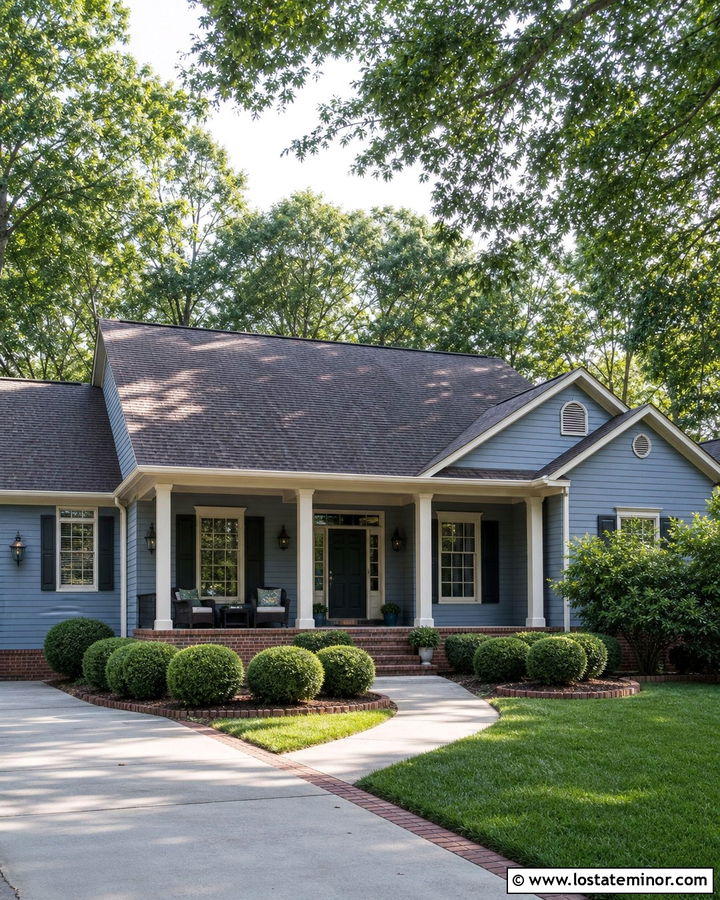
Warm gray overhead can bridge cool dusty blue siding with brown roof shingles, brick steps, or earthy stone accents. Select a balanced gray that contains a hint of beige but does not appear distinctly tan. Use creamy white for the columns and window trim, then add a dark green front door for subtle natural color. Bronze fixtures and stained wood furniture continue the warmer direction. This practical palette works well on a brick-and-siding ranch where several existing materials must coordinate. Let dusty blue cover the primary siding while preserving warm red-brown brick around the foundation or chimney. Rounded shrubs, a simple concrete drive, and brick-edged planting beds will pull the established materials together and give the updated house a cohesive appearance.
21. Dusty Blue House With Blue Green Porch Ceiling
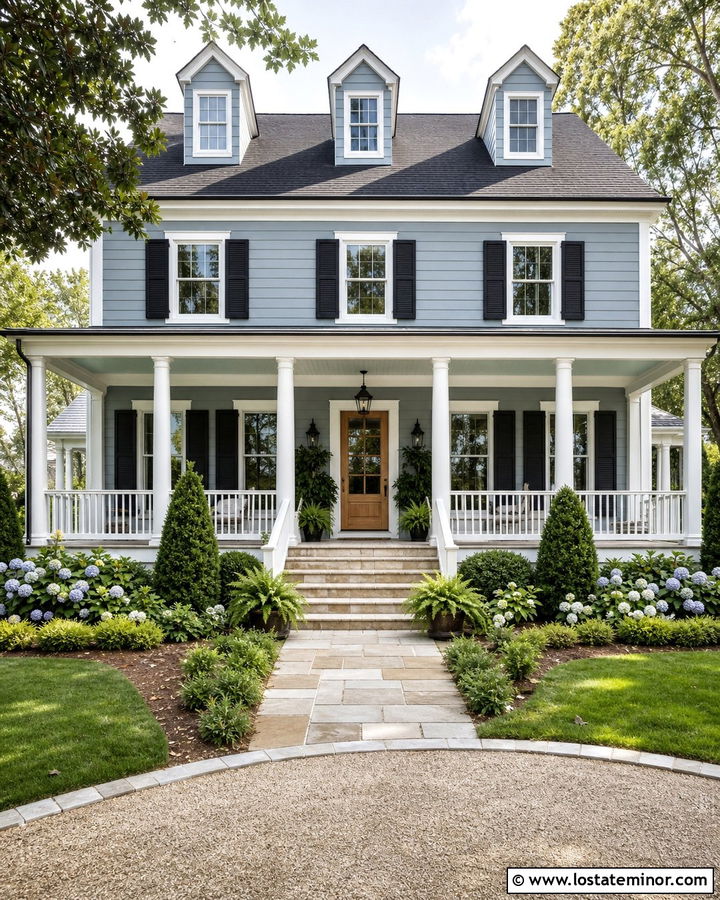
A blue-green porch ceiling creates a gentle connection between a dusty blue house and lush landscaping. Choose a light, grayed shade that reads blue in daylight and slightly greener in shadow. Bright white trim can clearly separate the ceiling from the siding, while a natural oak front door adds an inviting central feature. Use black shutters and a charcoal roof to bring definition to the softer colors. Pale limestone on the steps and porch base introduces a durable neutral texture. This palette flatters a classic Southern farmhouse with a broad porch, tall windows, and simple square columns. Frame the facade with magnolias, hydrangeas, ferns, and clipped evergreen shrubs to strengthen the easy relationship between the architecture and surrounding greenery.
22. Dusty Blue House With Sage Porch Ceiling
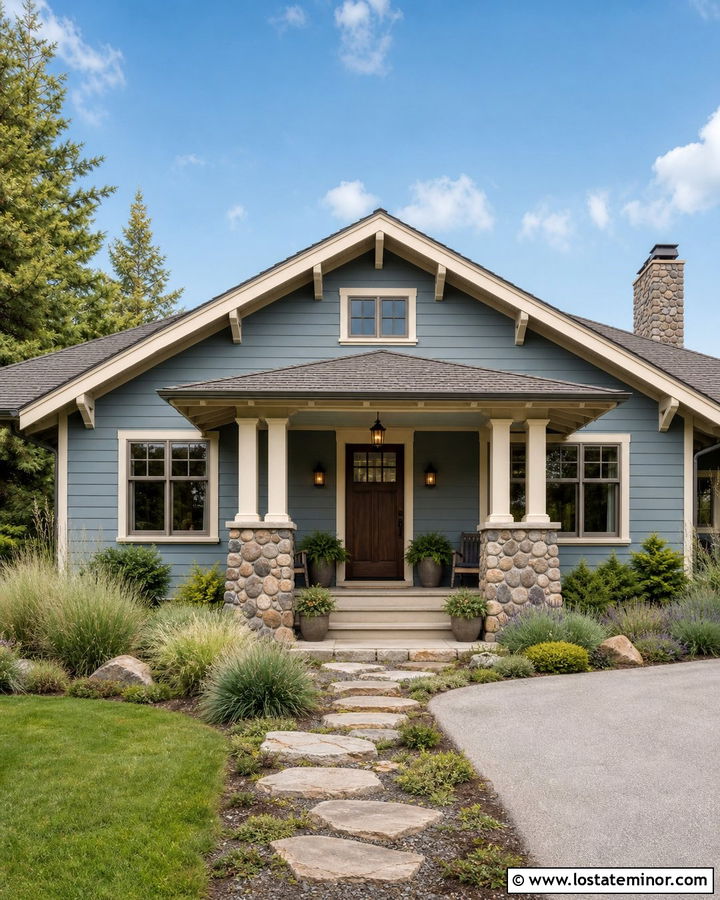
A muted sage ceiling is an unexpected partner for dusty blue siding, yet both colors share a soft gray base that allows them to work together. Choose a pale sage rather than a strong olive shade. Cream-colored columns and trim will warm the entire facade and create a smooth transition between green and blue. A dark walnut front door, bronze lights, and warm gray roof shingles provide grounding elements. Add river-rock porch piers or a low stone foundation to bring in more natural color. This scheme looks comfortable on a rustic bungalow or cottage with deep eaves and divided-light windows. Native grasses, evergreen shrubs, and lavender along the walkway can reinforce the understated, garden-friendly exterior without introducing excessive color.
23. Dusty Blue House With Powder Blue Porch Ceiling
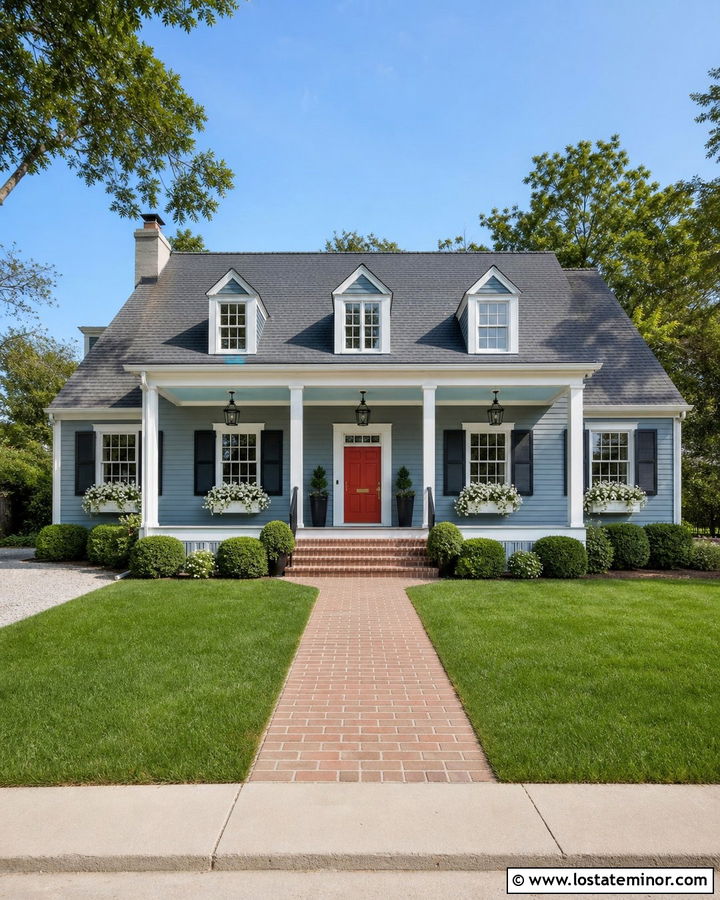
Powder blue creates a light and cheerful ceiling that remains softer than a bright sky shade. Against dusty blue siding, it produces a subtle tonal contrast that looks particularly attractive in strong daylight. Use clean white for the trim, porch posts, and railings to preserve the fresh appearance. A classic red front door can provide a small but effective warm accent, especially when paired with red brick steps. Keep the roof charcoal and use black lanterns to anchor the brighter details. This complete palette works beautifully on a Cape Cod house with dormers, symmetrical shutters, and a compact covered porch. Neatly clipped shrubs, window boxes, and a straight brick walkway complete the familiar, welcoming East Coast character.
24. Dusty Blue House With Robin Egg Blue Porch Ceiling
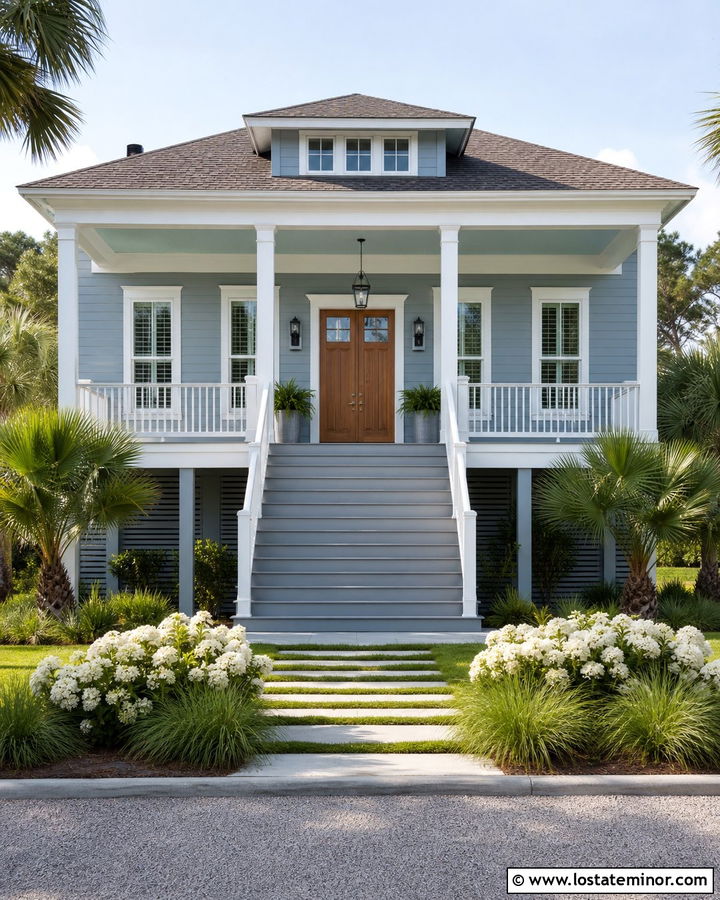
Robin egg blue has a noticeable green undertone that can make a covered porch feel lively and fresh. Pair it with muted dusty blue siding, crisp white columns, and white window trim so each color remains easy to read. A medium-brown wood door adds warmth, while brushed brass hardware gives the entry a polished accent. Choose gray porch flooring and a weathered charcoal roof to keep the more colorful blues grounded. This combination suits a coastal Colonial or Lowcountry home with raised foundations, broad stairs, and a deep front porch. Layer the yard with palmettos, white hydrangeas, ornamental grasses, and evergreen shrubs. The landscaping supports the blue-green palette while the natural door prevents the facade from feeling too cool.
25. Dusty Blue House With Tongue And Groove Porch Ceiling
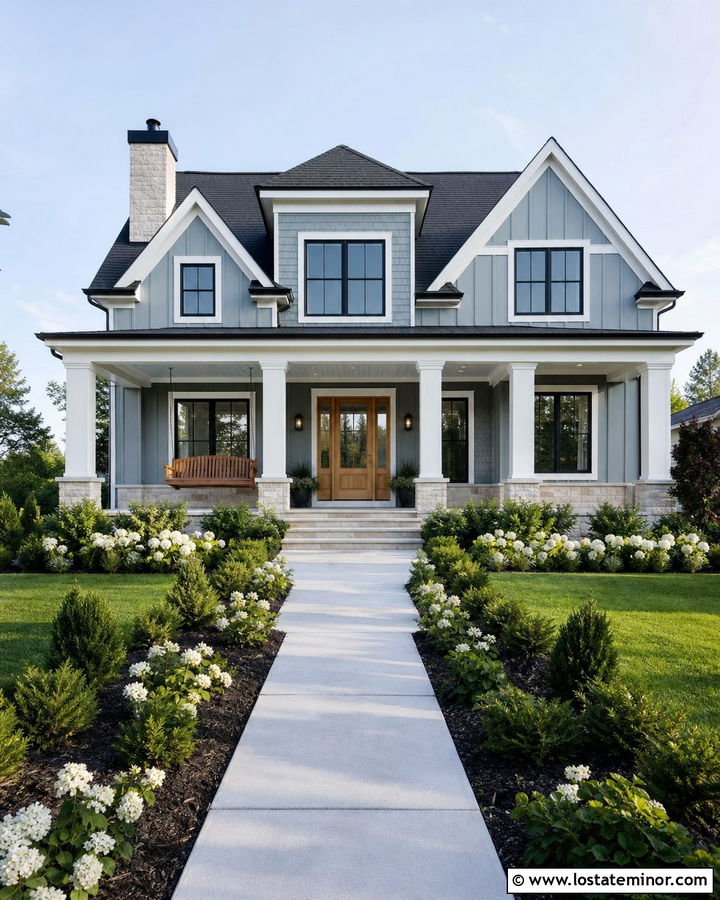
A tongue-and-groove ceiling can bring clean linear detail to a dusty blue exterior. Paint the boards a very light blue-gray so the grooves remain visible while the ceiling stays bright. Use white beams, columns, and fascia to frame the overhead treatment. A cedar front door and matching porch swing warm the cool blue palette, while matte black lights and windows add modern definition. Light gray stone around the porch foundation introduces another subtle texture. This combination is ideal for a transitional house that blends traditional lap siding with larger windows and simplified trim. Use a charcoal roof, broad concrete walkway, layered evergreen beds, and white blooms to create a balanced facade that feels current without relying on short-lived decorative trends.
26. Dusty Blue House With Coffered Porch Ceiling
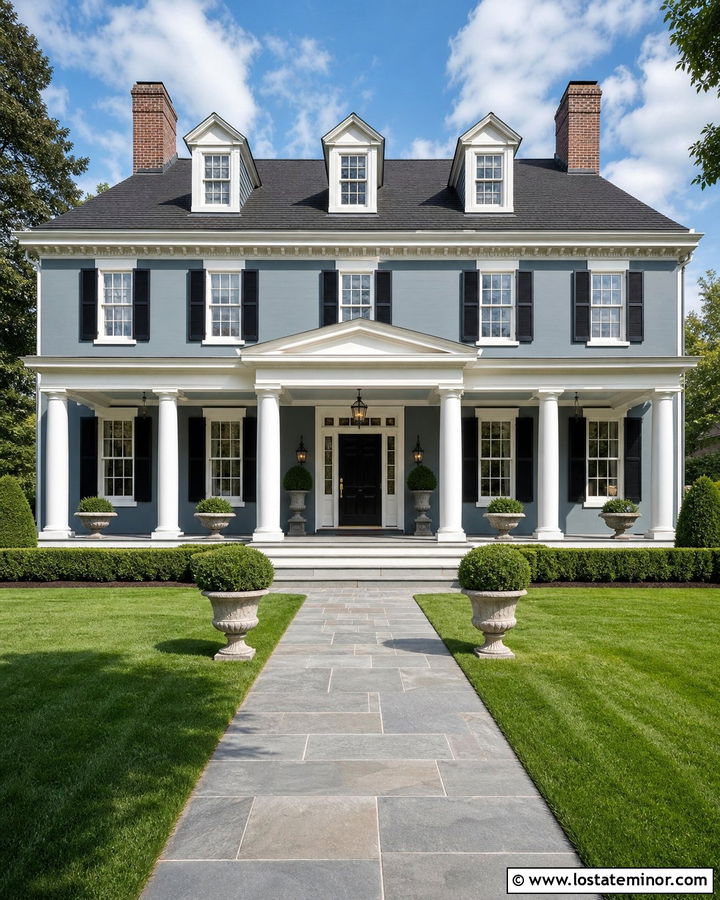
A coffered porch ceiling gives a larger dusty blue home extra architectural depth. Paint the recessed ceiling panels pale blue and use bright white on the beams to create a clear grid. Continue the white across substantial porch columns, window trim, and fascia. A glossy black front door offers formal contrast, while brass lights and hardware add restrained warmth. Gray slate porch flooring and a charcoal roof maintain the elegant cool-toned foundation. This treatment is well suited to a large Colonial or Georgian home with a wide covered entry and symmetrical windows. Formal boxwood hedges, stone planters, and a straight flagstone walkway reinforce the structured appearance. Keep accessories minimal so the detailed ceiling and balanced facade remain the main attractions.
27. Dusty Blue House With Vaulted Wood Porch Ceiling
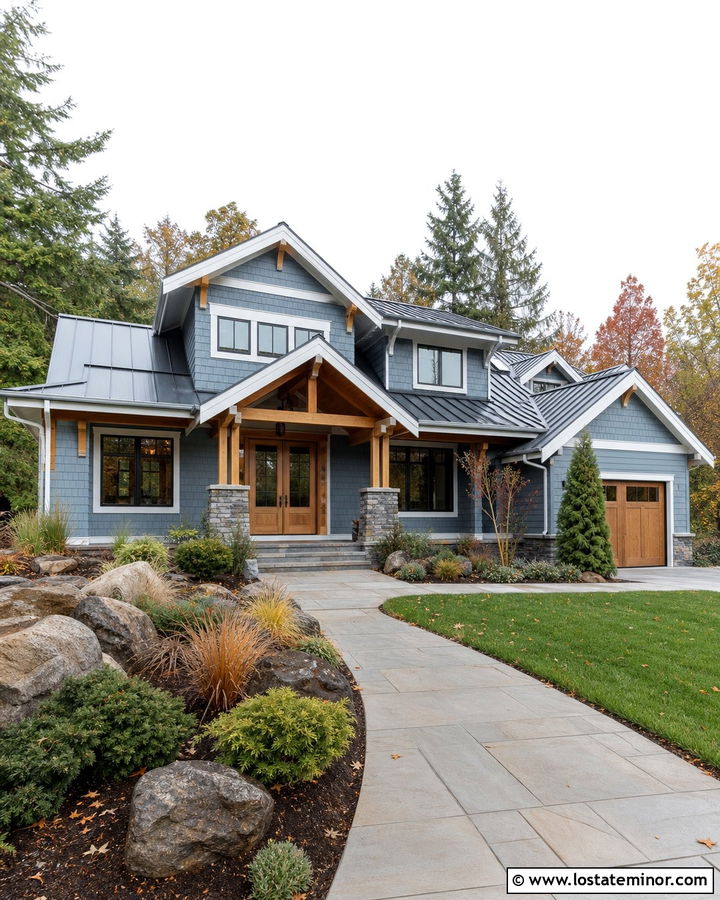
A vaulted wood ceiling turns a front porch into a strong architectural feature and gives dusty blue siding welcome warmth. Cover the ceiling with clear-stained cedar or fir, emphasizing the peak with a substantial exposed beam. Repeat the wood on double front doors and decorative brackets. Soft white trim keeps the siding crisp, while black-framed windows and dark metal lights create definition. A charcoal standing-seam roof can echo the strong lines of the vaulted entry. This exterior works especially well on a modern Craftsman or lodge-inspired home with mixed siding and stone columns. Frame the property with native grasses, evergreen trees, boulders, and a broad stone walkway to support the home’s substantial, nature-connected curb appeal.
28. Dusty Blue House With Porch Ceiling And Black Trim
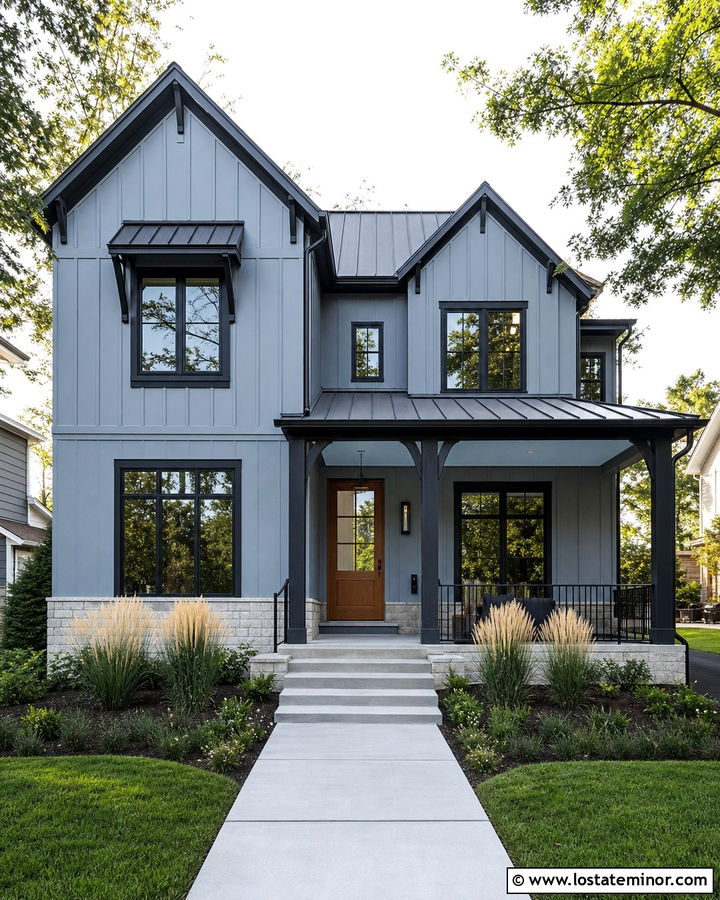
Black trim gives a dusty blue exterior a bold contemporary outline, especially when it frames a pale blue porch ceiling. Use black on the windows, fascia, porch beams, railings, and garage door details, but retain dusty blue as the dominant body color. A light sky-blue ceiling keeps the covered area from becoming too dark. Choose a warm natural wood door to soften the contrast and add limestone around the porch base for texture. A black metal roof will complete the modern palette. This scheme is ideal for a two-story transitional house with large windows and simple gables. Straight planting beds, sculptural grasses, and a wide concrete path create an equally clean setting without distracting from the strong architectural color blocking.
29. Dusty Blue House With Porch Ceiling And Stone Columns
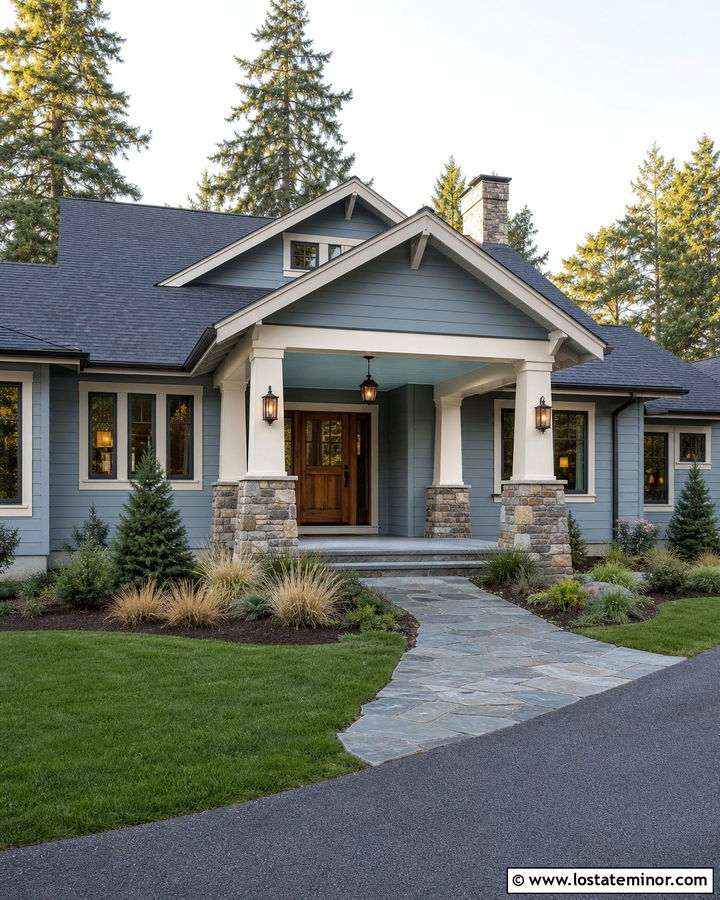
Stone columns can anchor a dusty blue house while a pale blue-green ceiling keeps the porch feeling light. Choose stone containing gray, cream, and soft brown tones so it connects the siding with a warm wood door. Paint the upper columns and trim creamy white, then use a charcoal roof to define the building’s silhouette. A muted haint blue ceiling adds a gentle Southern detail without competing with the stone. Dark bronze lanterns and gutters complement the earthy material mix. This complete look suits a Craftsman ranch with broad eaves, tapered columns, and horizontal lap siding. Evergreen shrubs, ornamental grasses, and a curved flagstone path will repeat the stone’s natural colors and create a smooth transition from lawn to porch.
30. Dusty Blue House With Wraparound Porch Ceiling
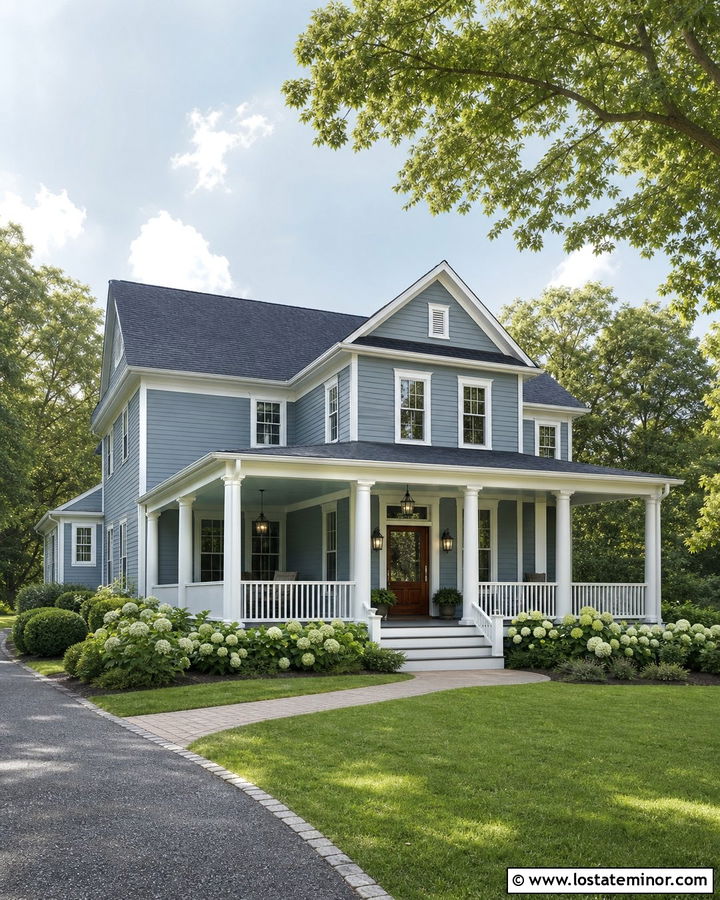
A wraparound porch offers enough ceiling area to make a pale blue overhead color an important part of the overall exterior. Pair dusty blue siding with an airy blue-green ceiling, crisp white columns, white railings, and a stained mahogany front door. The extensive white framework will separate the two blue tones and emphasize the porch’s length. Use dark gray roof shingles and warm gray porch flooring to balance the lighter facade. This combination is a natural choice for a farmhouse, Lowcountry residence, or traditional country home. Add porch swings, simple wood seating, and restrained black lanterns. Broad foundation beds, hydrangeas, shade trees, and a gently curved walkway complete the welcoming curb view without concealing the architecture.
Conclusion:
A successful dusty blue exterior depends on more than finding one attractive paint color. The porch ceiling, trim, door, roof, masonry, and landscaping should support the siding as one complete composition. Pale haint blue and blue-green ceilings create soft tonal depth, while white, cream, gray, navy, and natural wood offer distinctly different moods. Before choosing a scheme, sample every color on the actual house and review it in direct sun, shade, and reflected porch light. Also consider permanent materials such as roofing, brick, and stone. These **30 Dusty Blue House Design With Porch Ceiling Ideas** demonstrate how thoughtful color layering can make almost any home feel welcoming, coordinated, and visually memorable.

Related posts: