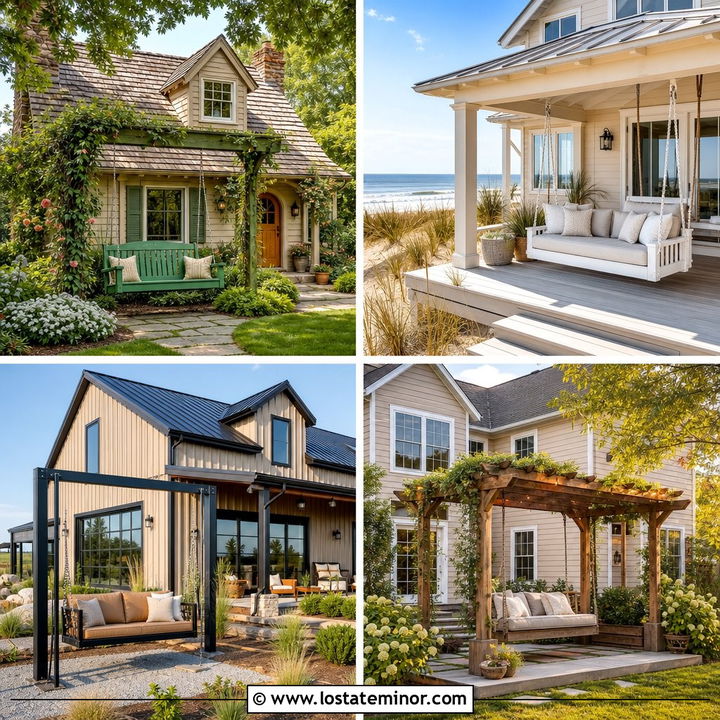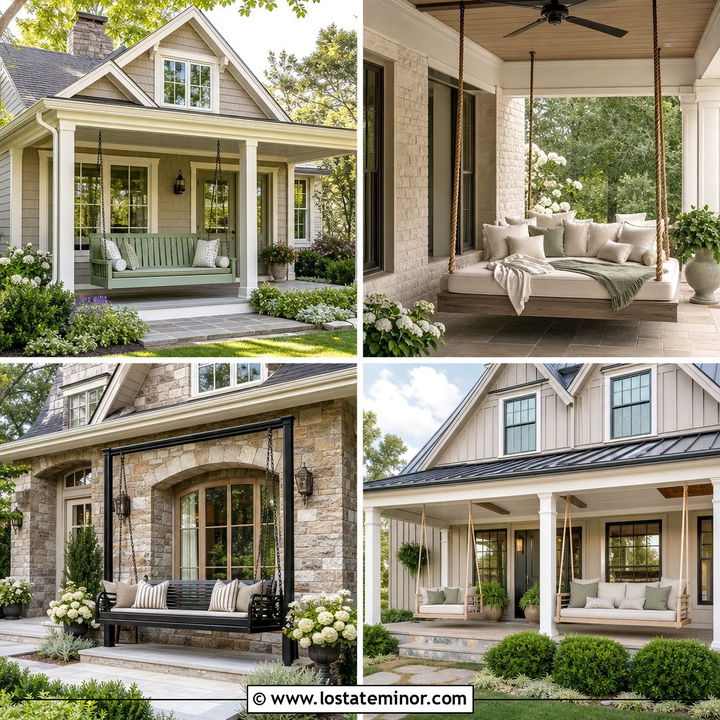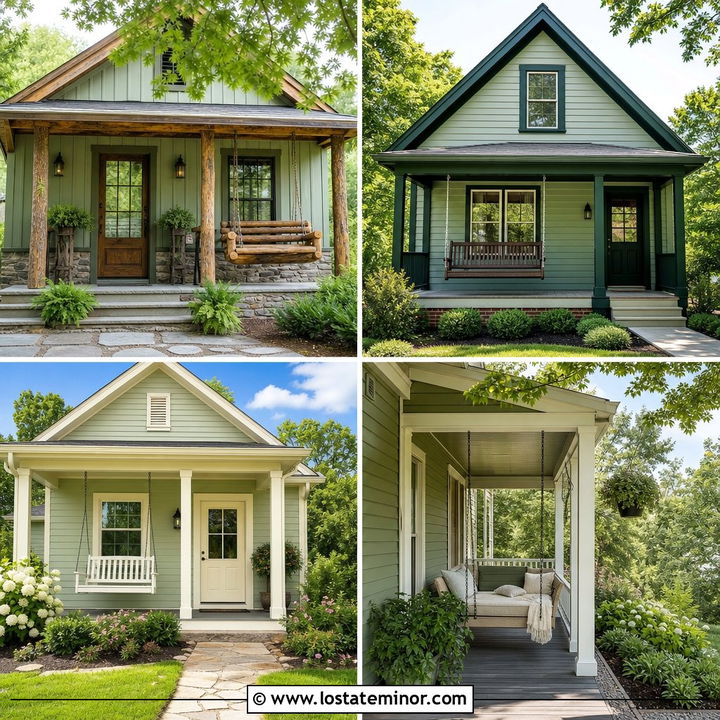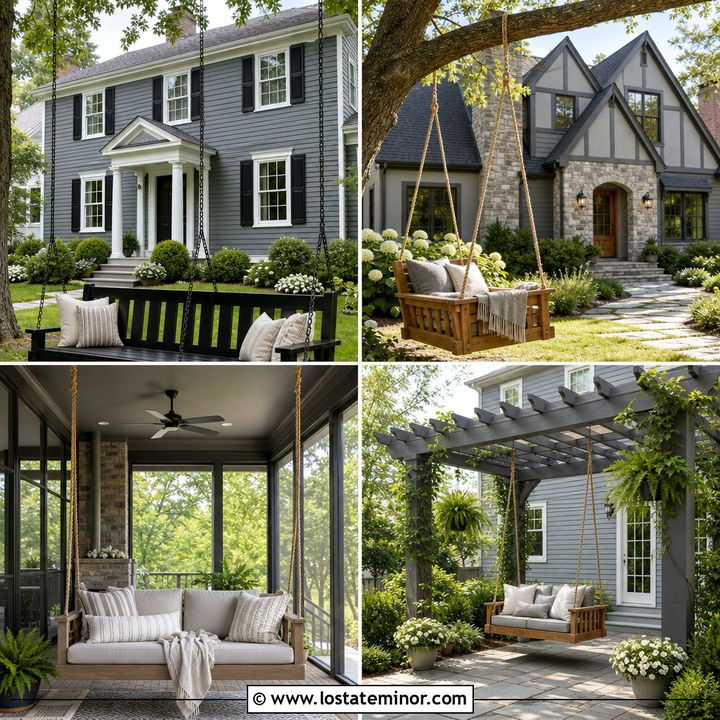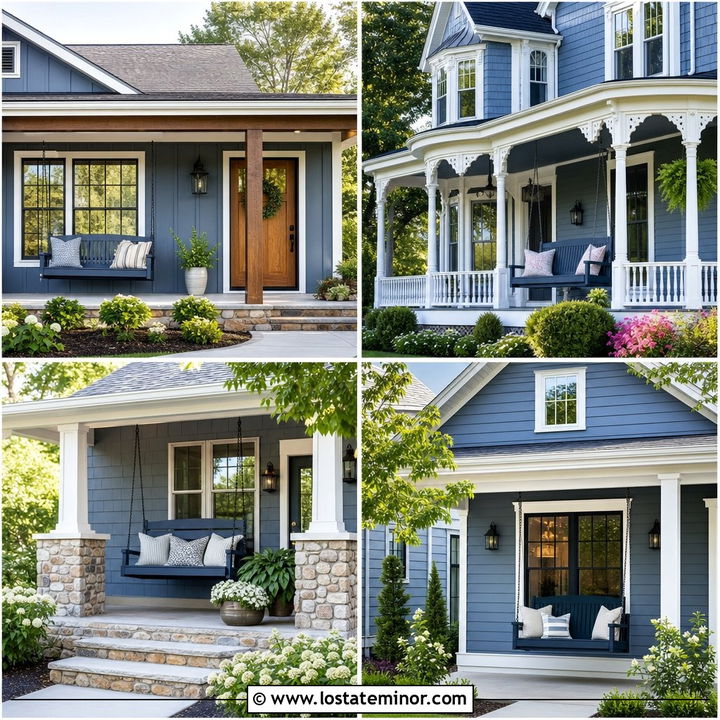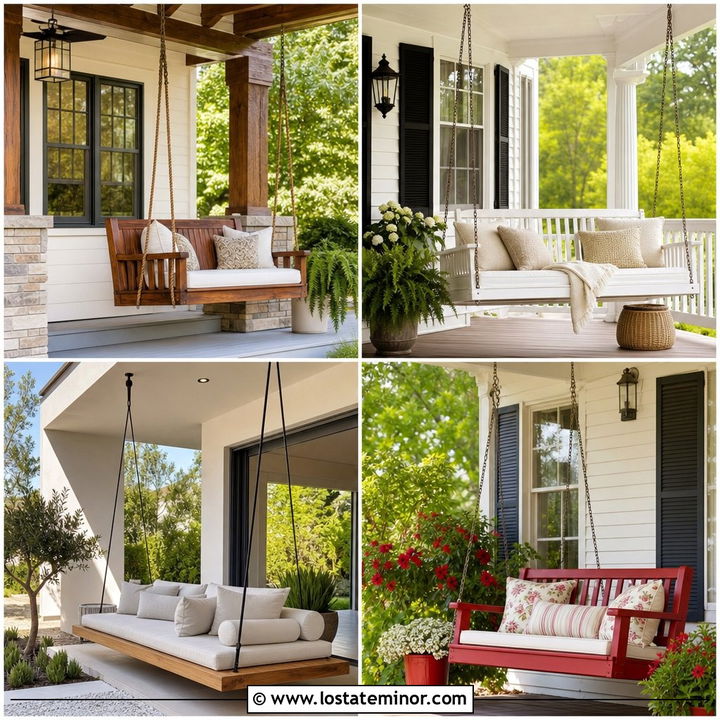
A white exterior creates a bright, flexible backdrop for a welcoming swing, whether it hangs from a deep farmhouse porch or stands beneath a garden arbor. The best 30 White House Design With Swing Ideas connect the swing to the entire facade instead of treating it like a separate accessory. Paint undertones, roof color, trim, decking, doors, and landscaping should all work together. A natural cedar swing can warm crisp white siding, while a black swing adds definition to a softer off-white home. Scale matters too. Large houses need substantial swing beds or wide benches, while compact cottages look balanced with simpler seating. The complete exterior combinations below offer practical 30 White House Design With Swing Ideas for different house types, porch sizes, regions, and budgets.

1. White Modern Farmhouse With Wood Porch Swing
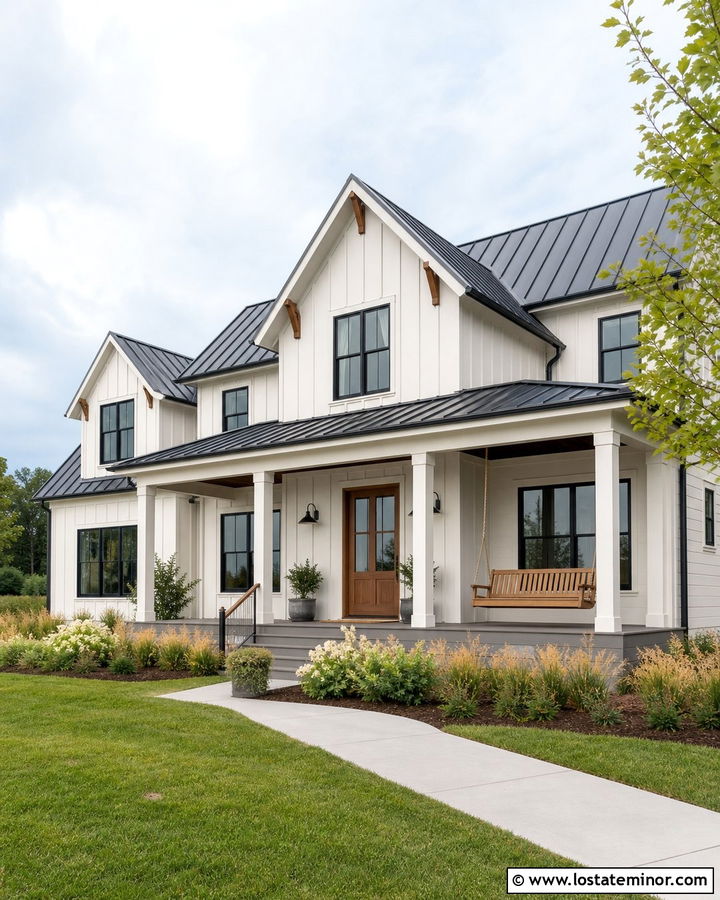
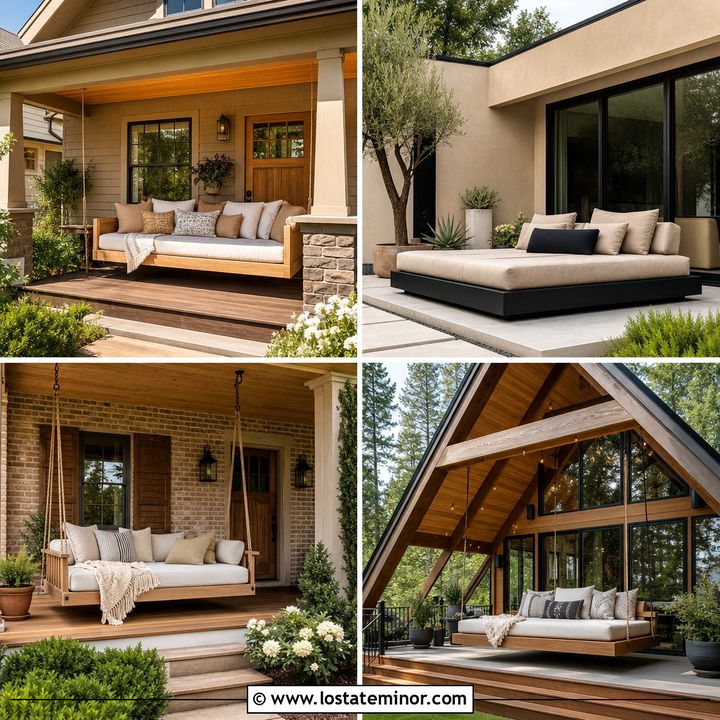
A white modern farmhouse feels more inviting when its bold black details are softened with natural wood. Use warm white board-and-batten siding, matte black windows, and a medium-gray standing-seam roof. A thick cedar porch swing adds warmth beneath the covered entry and coordinates with a stained wood front door. Keep the porch floor medium gray or weathered brown so everyday dirt is less noticeable. Cream cushions and muted green pillows create a comfortable look without competing with the architecture. Complete the facade with simple black lanterns, square white columns, and low ornamental grasses. This combination works especially well on a broad one-story or two-story farmhouse because the swing fills the porch without making the entrance appear crowded.
2. White Colonial House With Black Porch Swing
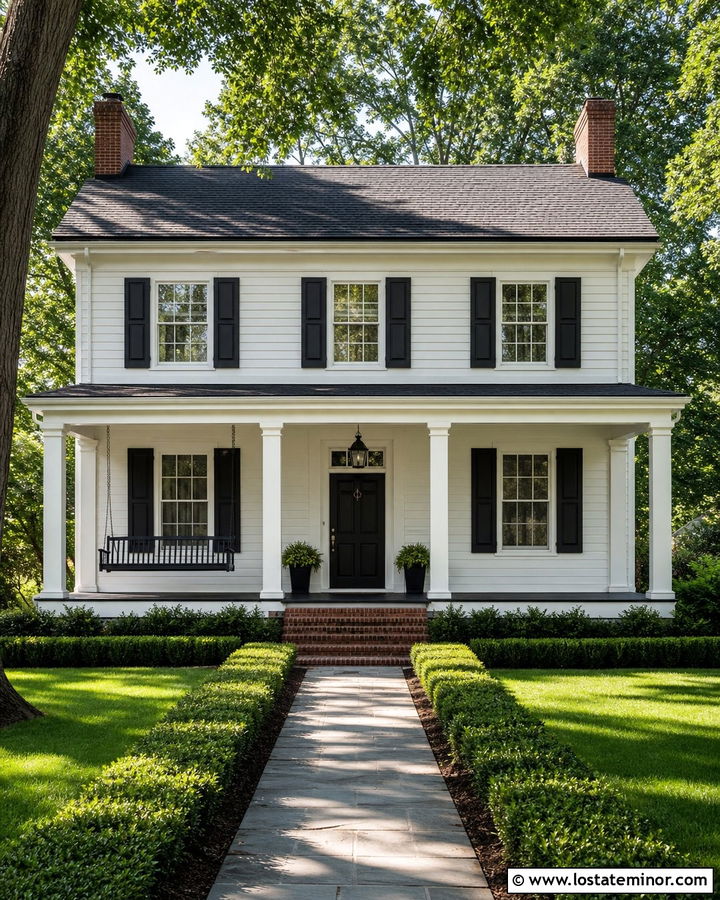
Symmetry gives a white Colonial house its familiar, polished appearance. A black porch swing can reinforce that structure without making the facade feel overly formal. Choose soft white clapboard siding, white trim, black shutters, and a centered black front door. Position the swing at one end of a full-width porch, balanced by two matching planters near the entrance. Straight swing slats and dark metal chains suit the clean architectural lines. Add a charcoal porch floor and traditional brass or black lanterns for continuity. Boxwood borders, brick steps, and a straight walkway complete the orderly exterior. The swing should be generously sized but visually simple, allowing the evenly spaced windows and centered doorway to remain the primary features.
3. White Cottage With Wicker Egg Swing
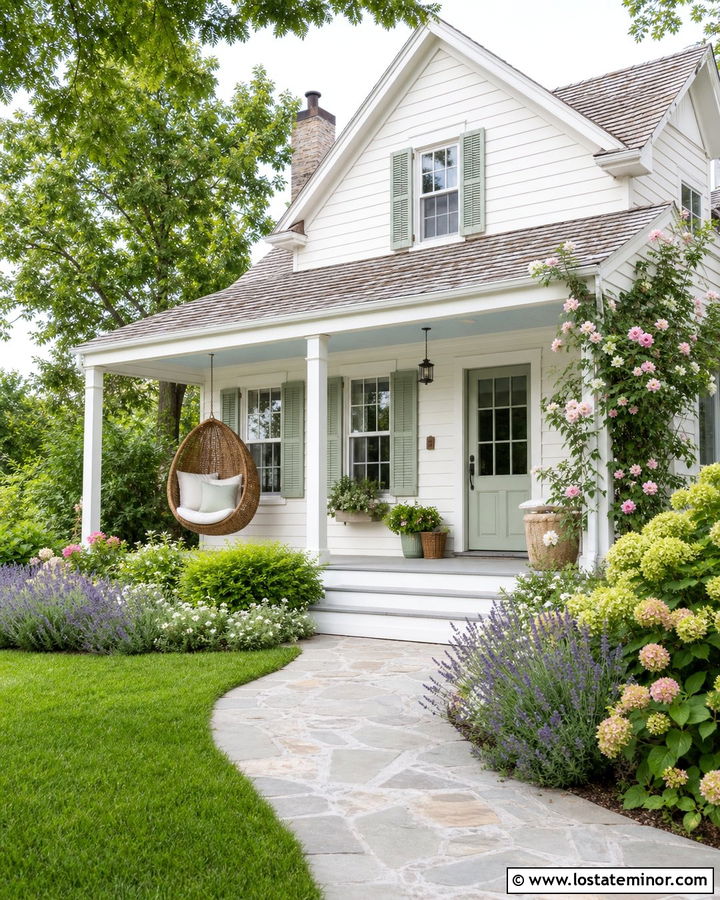
Imagine a small white cottage surrounded by flowering shrubs and a gently curved walkway. A woven egg swing gives the exterior a relaxed focal point while fitting comfortably into a narrow covered porch. Pair creamy white lap siding with sage green shutters, a muted green door, and a weathered cedar roof or warm gray shingles. Select a light natural-rattan swing with an oatmeal cushion rather than a dark frame that could overpower the compact house. A pale blue porch ceiling can add another subtle color layer. Finish the setting with climbing roses, lavender, and informal stone edging. The rounded swing shape contrasts beautifully with rectangular cottage windows, creating a playful but balanced exterior that still feels traditional and welcoming.
4. White Craftsman House With Mission Porch Swing
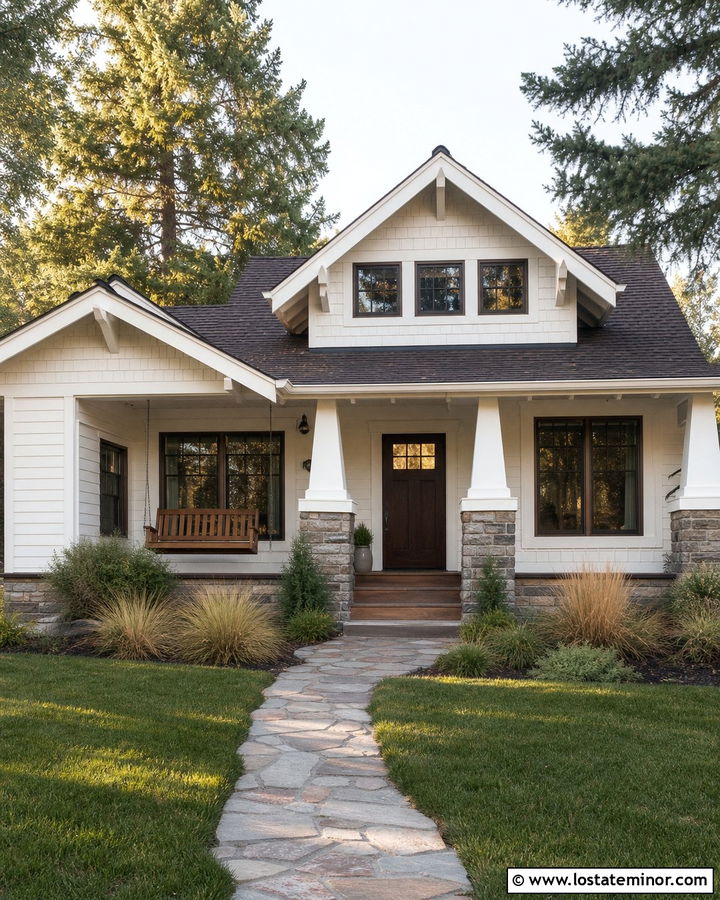
A Craftsman exterior benefits from solid materials and handcrafted-looking details. Start with warm white shingle and lap siding, then ground the facade with tapered columns resting on stone piers. A stained oak Mission-style swing complements exposed rafter tails, divided-light windows, and a deep brown front door. Choose a swing with broad arms and vertical slats so it looks substantial beneath the low porch roof. Olive or rust-colored cushions can repeat tones found in the stone foundation and landscaping. Bronze lights and dark brown gutters provide softer contrast than solid black. A flagstone walkway, native grasses, and compact evergreens complete the full-house scheme. The result feels comfortable, sturdy, and appropriately scaled to classic Craftsman architecture.
5. White Ranch House With Pergola Swing
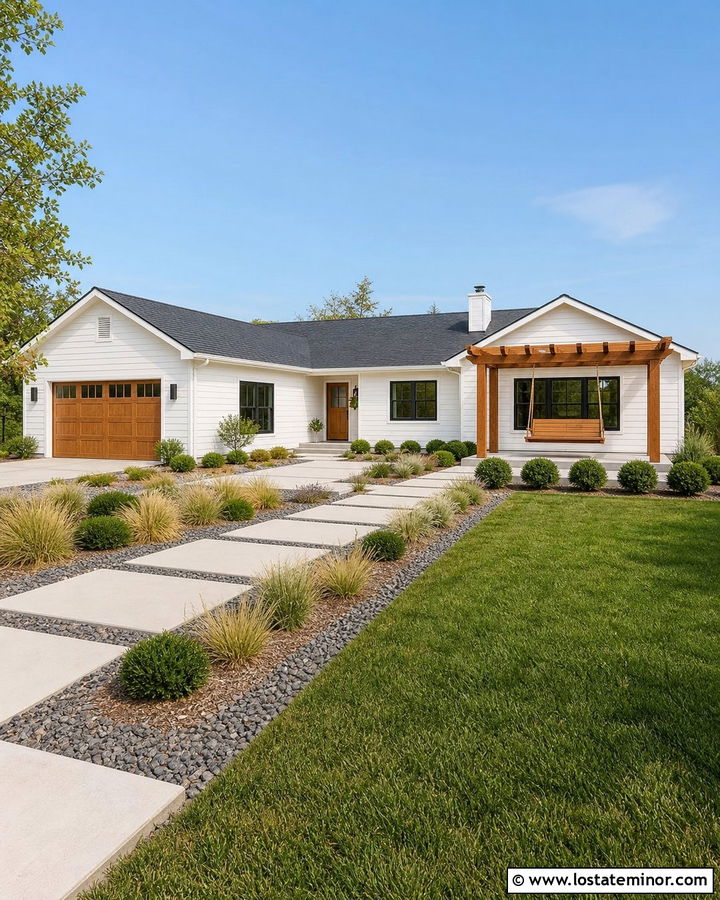
A plain white ranch can gain dimension from a low pergola built across part of the front patio. Use clean white horizontal siding, dark bronze windows, and a charcoal architectural-shingle roof. Suspend a streamlined cedar swing from the pergola near the living room windows, leaving the front door clearly visible. The warm wood structure breaks up the long facade and makes the low roofline feel more intentional. Repeat the cedar on the door or garage accents for a coordinated design. Wide concrete pavers and gravel borders keep the landscape contemporary and easy to maintain. Add rounded shrubs and one small ornamental tree to soften the horizontal lines. This arrangement creates porch-like seating without requiring a large roofed addition.
6. White Cape Cod House With Blue Porch Swing
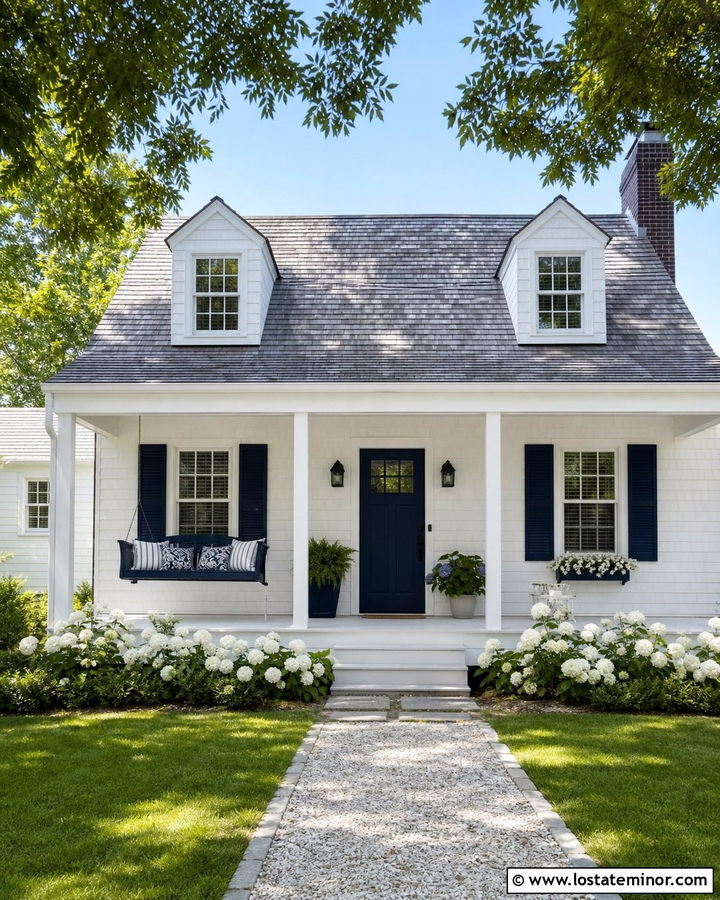
A deep blue swing brings coastal character to a compact white Cape Cod home. Pair crisp white shingles with navy shutters, a navy front door, and a medium-gray cedar-style roof. Place the swing beneath a small covered porch or side extension, using white ropes or stainless chains for a lighter visual effect. Blue-and-white striped cushions repeat the exterior palette while keeping the seating casual. Window boxes, white hydrangeas, and a shell or crushed-stone walkway reinforce the coastal mood without becoming overly themed. Keep railings and trim bright white so the roof dormers remain clearly defined. The blue swing acts as a practical accent that connects the door, shutters, and garden into one cohesive curb-appeal composition.
7. White Southern House With Double Porch Swings
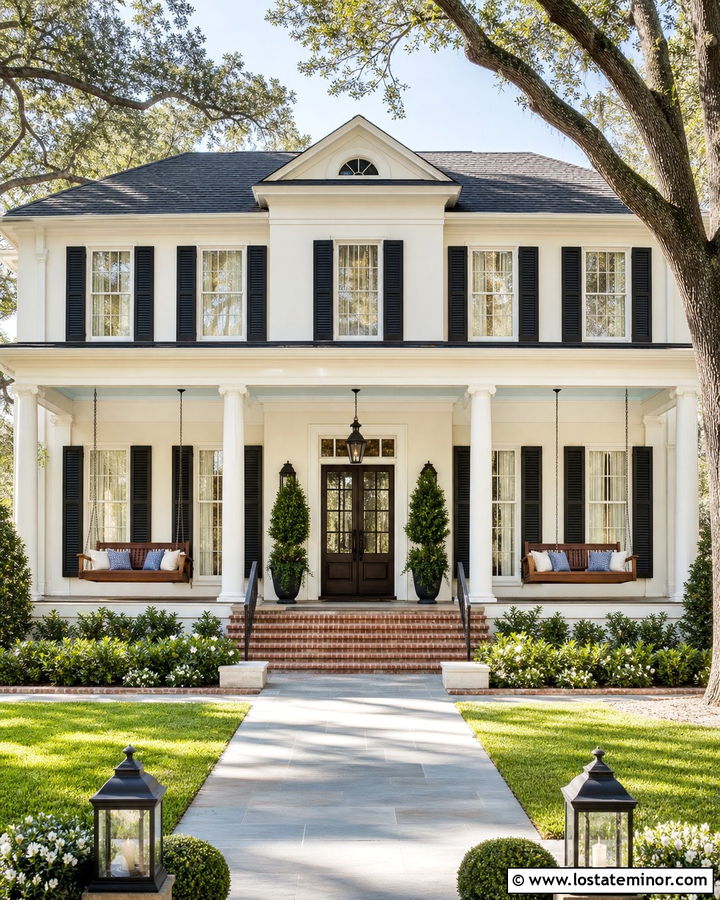
A large Southern home with a deep front porch can comfortably support two matching swings. Choose warm white siding, tall white columns, black shutters, and a dark gray roof for a classic foundation. Hang natural mahogany swings at opposite ends of the porch to maintain symmetry around the central front door. Light beige cushions and blue patterned pillows keep the seating airy beneath the broad roof. A pale blue ceiling can visually lift the porch and distinguish it from the white facade. Use brick steps, black lanterns, and large evergreen planters to anchor the entrance. The matching swings make the porch feel designed as a complete outdoor room while preserving the gracious, balanced appearance associated with traditional Southern architecture.
8. White Coastal House With Rope Swing Bed
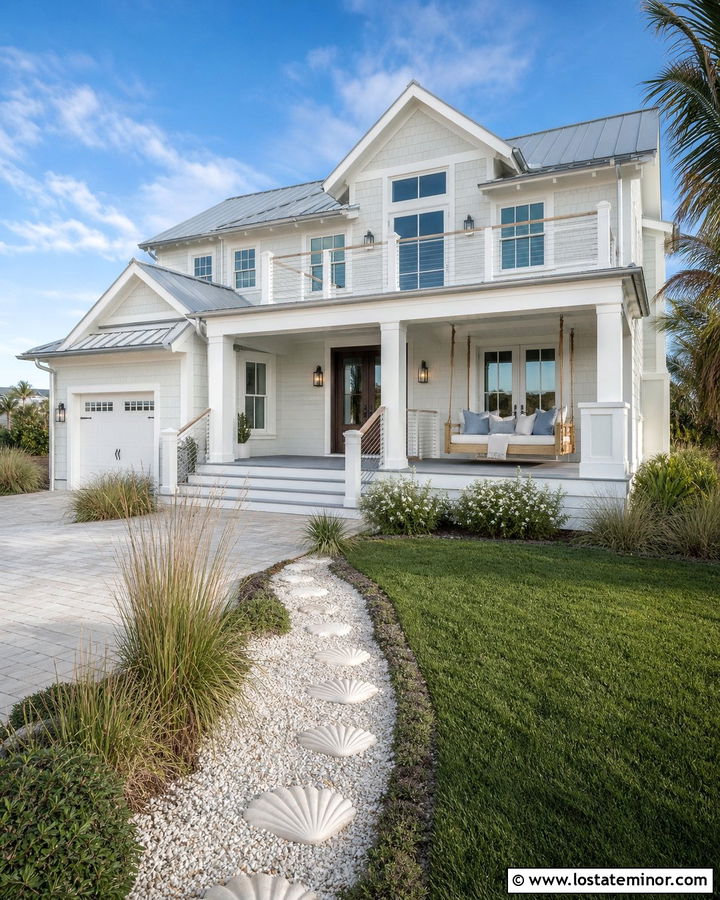
A wide rope swing bed suits a breezy white coastal house with an expansive covered porch. Select soft white shake siding, white trim, and a light silver-gray metal roof that keeps the exterior bright. The swing bed can feature a bleached oak frame suspended by thick natural rope. Use a deep seat cushion in sand beige, then add watery blue and soft green pillows. Pale gray decking prevents the porch from becoming a single flat field of white. Glass doors, cable railings, and simple coastal grasses maintain an open feeling. Keep the swing slightly to one side of the entrance so it does not block circulation. Together, these details create a comfortable exterior that feels relaxed, practical, and connected to its surroundings.
9. Painted White Brick House With Cedar Swing
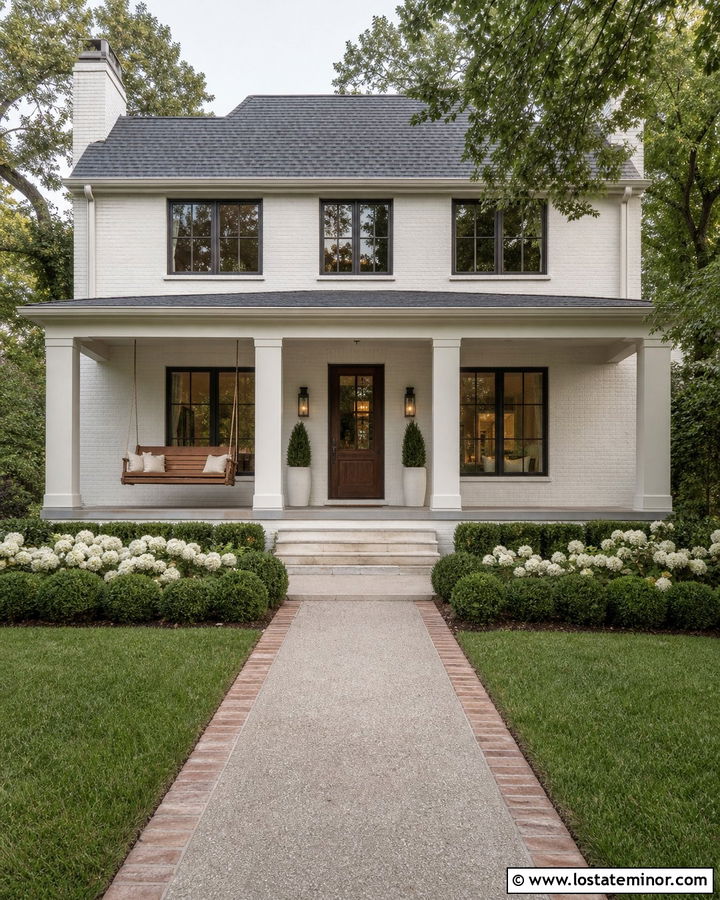
Painted white brick gains warmth and texture when paired with a cedar porch swing. Use a soft, slightly creamy masonry white rather than a stark tone that could emphasize every surface variation. Add dark bronze windows, a rich walnut door, and a weathered charcoal roof. A cedar swing suspended beneath a simple portico repeats the door’s warmth while standing out clearly against the brick. Neutral cushions keep the materials at center stage. Consider limestone steps and a porch floor in muted gray to bridge the warm and cool colors. Low boxwoods, white flowers, and a straight brick-edged path create a tailored landscape. This full exterior scheme makes older brick architecture feel fresh without removing its substantial, established character.
10. White Tudor House With Garden Arbor Swing
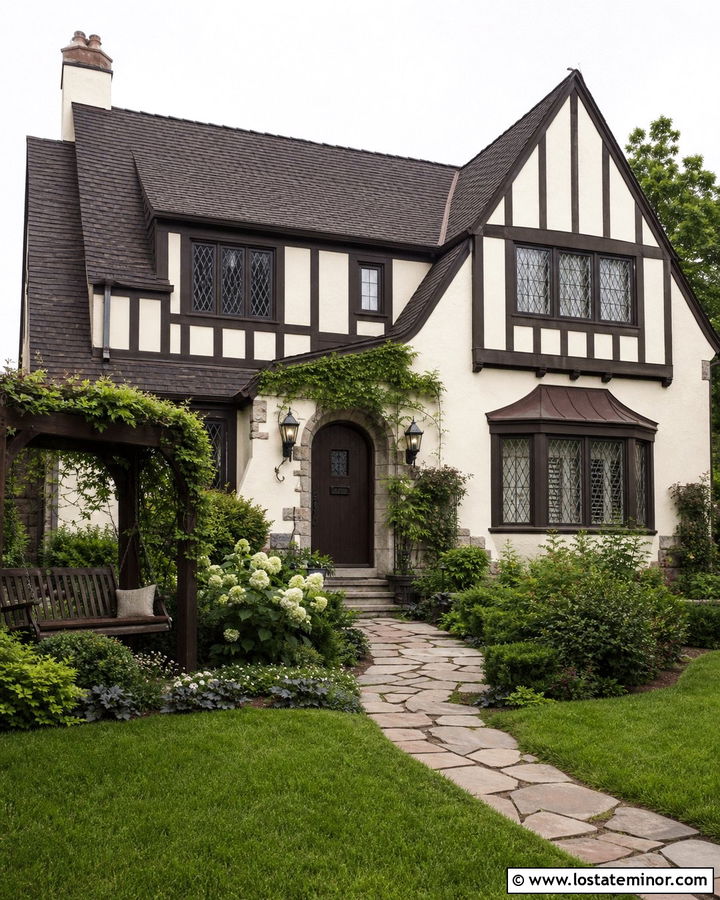
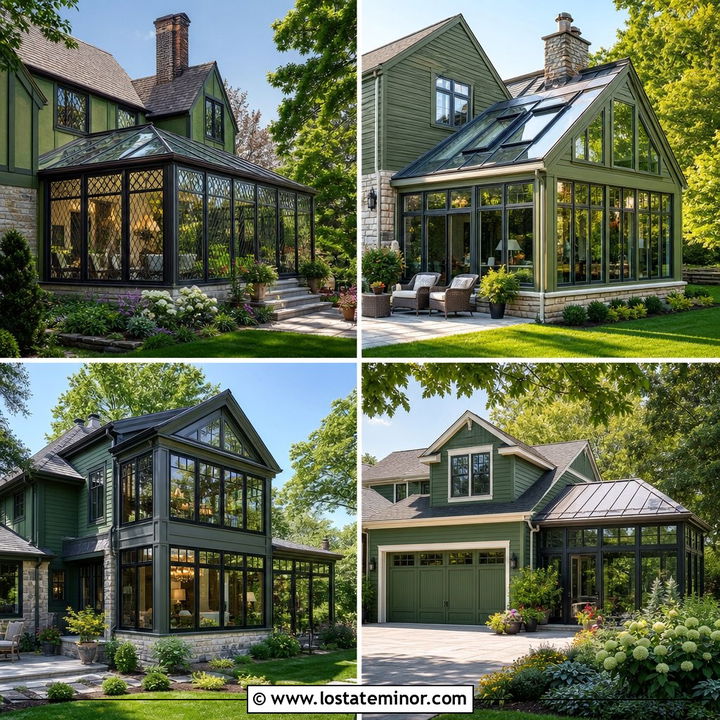
A white Tudor exterior can support a romantic garden swing when the materials remain connected to the architecture. Pair warm white stucco with dark brown half-timbering, leaded windows, and a steep charcoal roof. Place an iron or dark-stained wood swing beneath a freestanding arbor near the front walkway. Train restrained climbing greenery over the structure while keeping the house visible from the street. Repeat the swing’s dark finish on the front door, window frames, and exterior lights. Irregular stone paving and layered shrubs complement the old-world character. Because Tudor facades already contain strong patterns, choose a swing with a simple back and limited decoration. The resulting landscape feature feels intentional rather than added as an unrelated garden ornament.
11. White Bungalow With Cedar Porch Swing
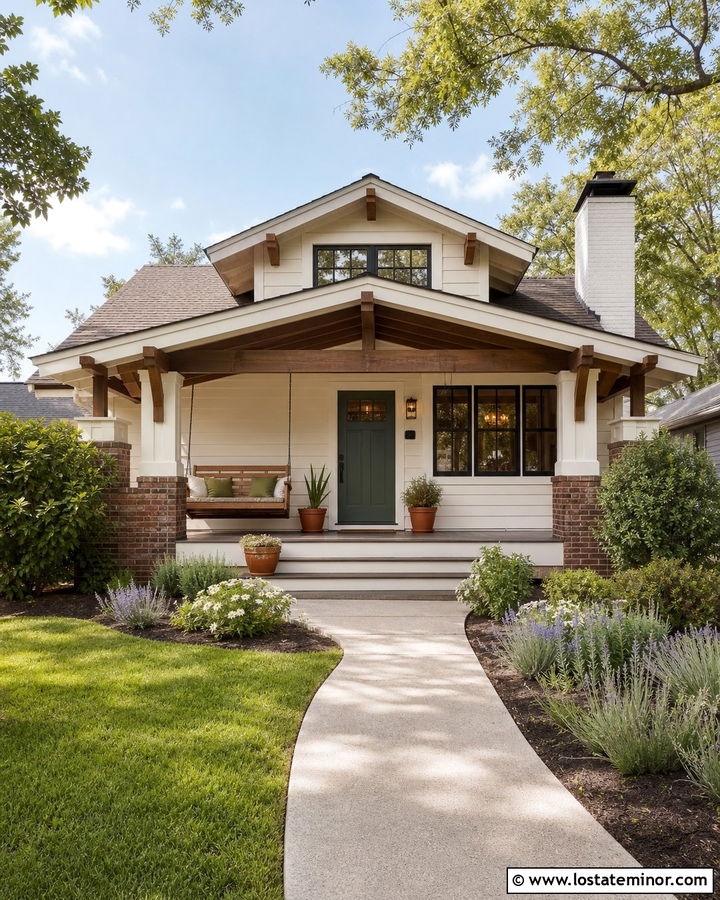
A low, welcoming bungalow porch is a natural place for a cedar swing. Cover the house in creamy white lap siding and use warm white trim to maintain a relaxed appearance. Add a moss green front door, dark bronze hardware, and brown-gray roof shingles. The swing should have a straightforward slatted design that coordinates with exposed beams and square porch columns. Olive cushions and a patterned outdoor rug introduce color without overwhelming the small facade. Use brick porch piers and terracotta planters to add earthy texture around the white exterior. A curved path and informal perennial beds soften the home’s horizontal roofline. This combination works especially well when the swing occupies one porch bay and leaves a clear route to the entrance.
12. White Split-Level House With Side Porch Swing
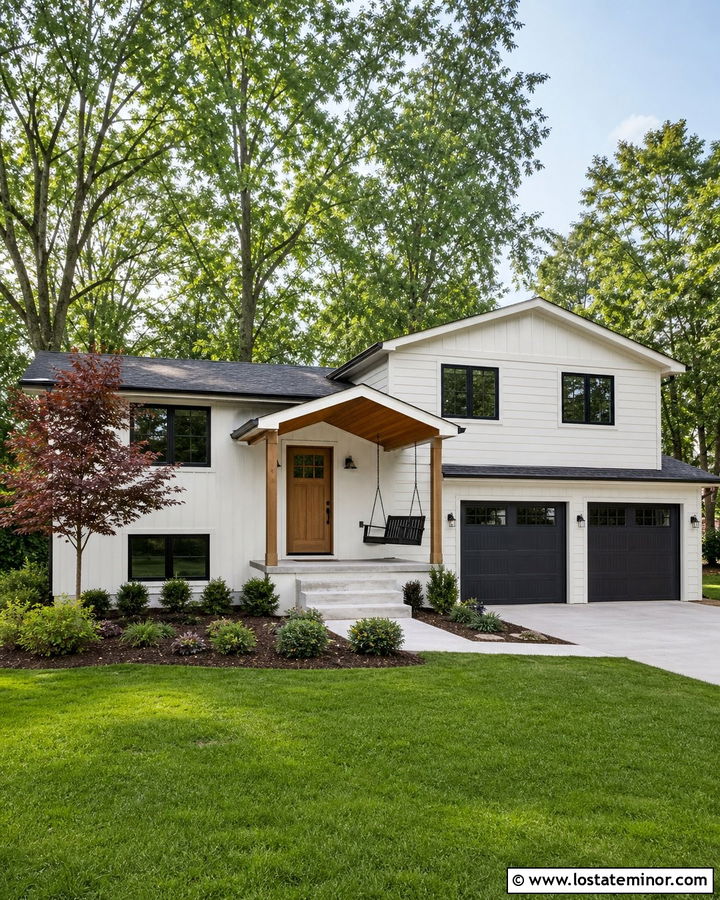
A split-level house often needs a stronger, more welcoming entry. A covered side porch with a swing can help balance an attached garage and create a clearer destination for visitors. Use soft white siding, charcoal garage doors, dark-framed windows, and a medium-gray roof. Build the porch with simple white posts and a stained wood ceiling. A compact black swing adds definition, while tan cushions prevent it from appearing too severe. Repeat the porch wood on the front door and horizontal address panel. Broad concrete steps, layered evergreen beds, and a small tree can visually connect the different levels of the facade. The complete design turns an awkward recessed area into useful seating while improving the proportions of the entire exterior.
13. White Greek Revival House With Black Swing
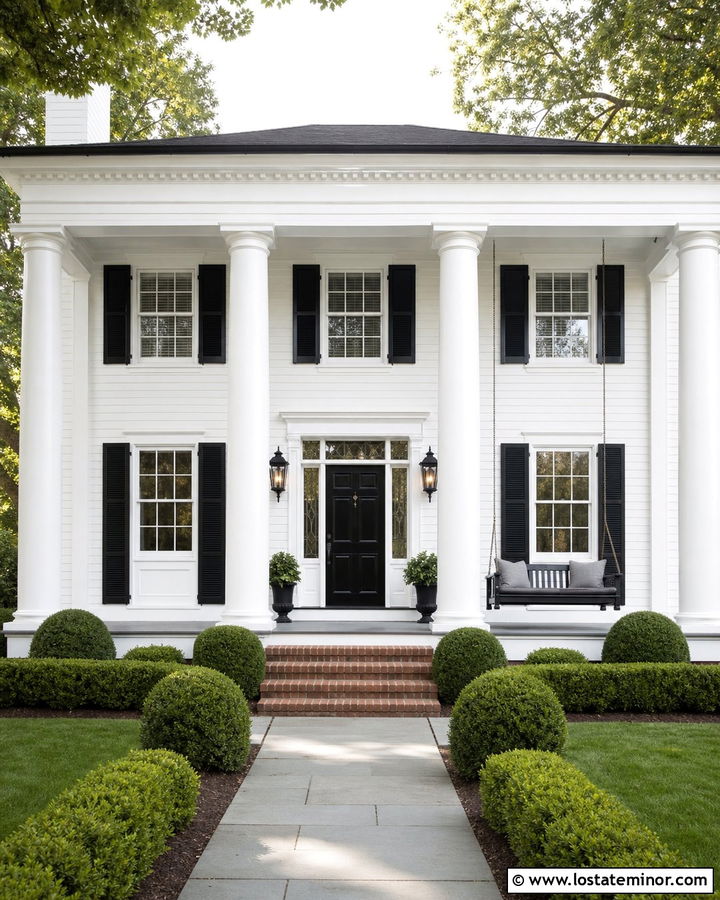
Tall columns and a centered entrance give a Greek Revival home a commanding presence. A black porch swing adds contrast while respecting the facade’s formal structure. Use bright white clapboard, matching white columns, black shutters, and a glossy black door. Position the swing between two columns on one side, then balance it with a bench or large planters on the other. Select a traditional swing with a straight back and subtle spindle details. Gray cushions keep the seating comfortable without introducing an unrelated accent color. Brick steps and a straight gravel or stone walkway reinforce the central axis. Carefully clipped hedges and symmetrical trees complete the exterior, ensuring the swing feels integrated into the architecture rather than casually placed.
14. White Victorian House With Decorative Porch Swing
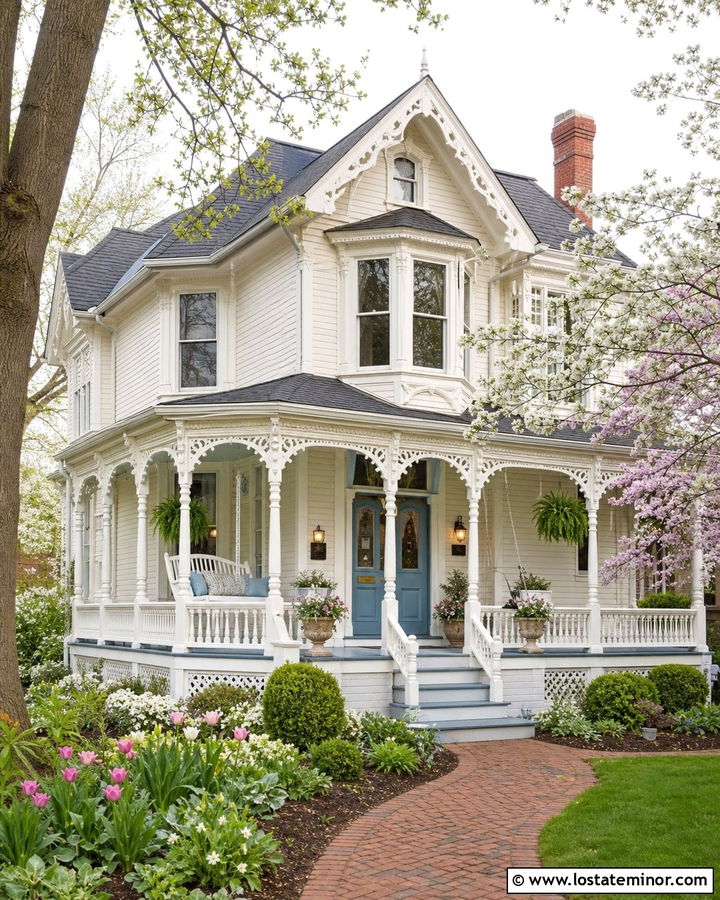
A white Victorian exterior comes alive through layered trim, ornamental brackets, and a carefully detailed swing. Choose a gentle ivory-white body color with slightly brighter trim so the woodwork remains visible. Add a dusty blue door, blue-gray porch floor, and charcoal roof. A white spindle-back swing can echo the porch railing without adding another competing material. Use pale blue cushions and one subtle floral pattern to connect the seating to the front door. Hanging baskets, small flowering trees, and a curved brick walkway support the romantic character. Avoid covering every feature in contrasting paint. A restrained white-and-blue scheme allows the decorative shapes to provide interest while the swing becomes a functional part of the complete porch composition.
15. White Contemporary House With Minimal Swing
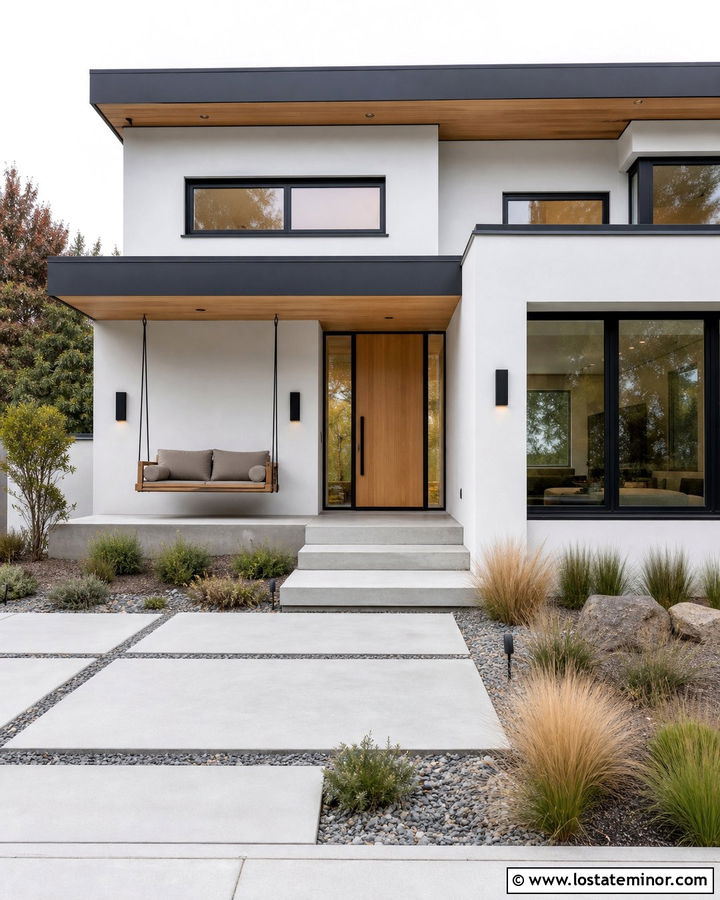
Clean architecture calls for a swing with equally simple lines. Cover a contemporary house in smooth warm white stucco and pair it with black-framed windows, a flat charcoal roofline, and a natural oak door. Install a rectangular oak swing beneath a cantilevered entry canopy, using slim black suspension cables for a nearly floating appearance. Choose solid taupe cushions and avoid busy patterns. Large concrete slabs, ornamental grasses, and gravel beds reinforce the uncluttered exterior. Repeat the oak on soffits or garage details so the swing belongs within the material palette. The seating should sit beside the main circulation path rather than directly in front of the door. This approach adds comfort while preserving the home’s sharp geometry and open visual space.
16. White French Country House With Iron Swing
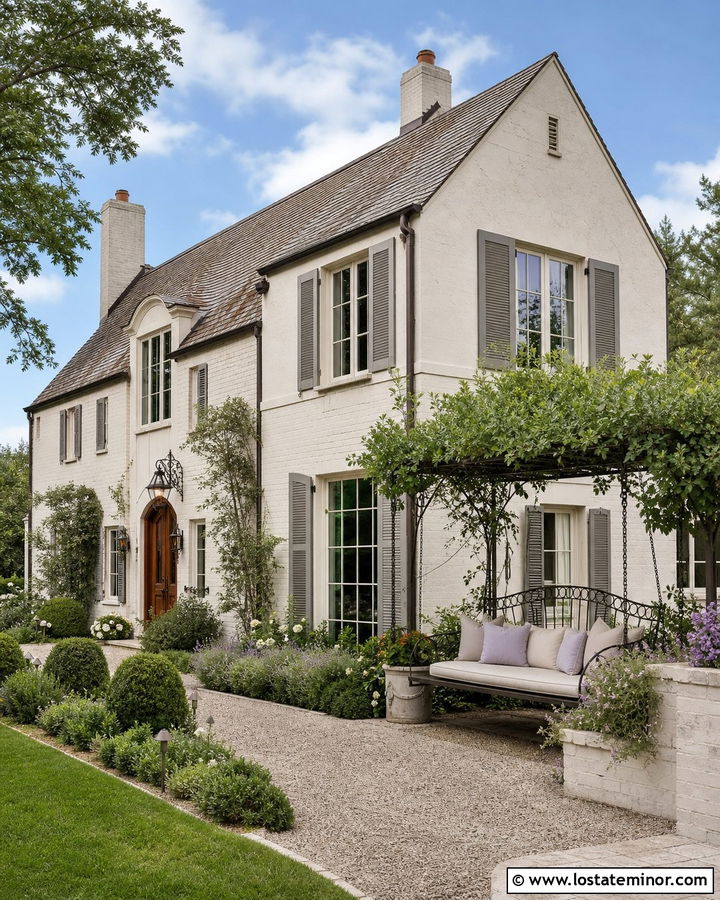
A white French country house looks especially graceful with a dark iron swing set within a structured garden. Use creamy white limewashed brick or stucco, soft gray shutters, and a steep weathered-gray roof. Place the swing beneath a small covered side porch or freestanding metal arbor. Choose a design with gentle curves but limited ornamentation so it complements arched windows without appearing overly elaborate. Natural linen cushions and muted lavender pillows soften the black metal. Add pea-gravel paths, clipped shrubs, and casually arranged flowering plants around the facade. A medium-toned wood front door brings warmth to the pale exterior. The completed scheme balances elegant architectural details with comfortable seating and an approachable, lived-in garden atmosphere.
17. White Prairie House With Wide Wood Swing
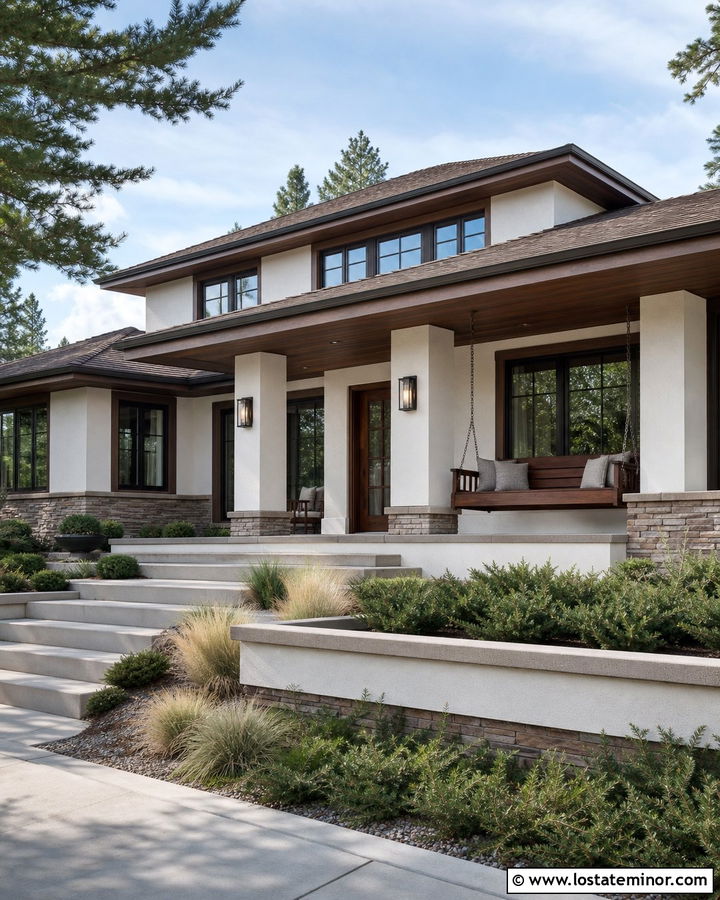
A Prairie-inspired home needs a swing that follows its strong horizontal lines. Use warm white stucco or lap siding, broad brown roof overhangs, and dark bronze window frames. A wide walnut-stained swing fits naturally beneath the extended front eave. Select a low back, broad arms, and simple rectangular cushions in warm gray. Stone foundation bands and wide concrete steps help ground the white facade. Repeat the swing’s wood tone on the front door and soffits to create visual continuity. The landscape should remain low and layered, using grasses, spreading evergreens, and horizontal planter walls. Instead of making the swing a decorative centerpiece, treat it as part of the architecture. This keeps the exterior calm, balanced, and true to the home’s proportions.
18. White Saltbox House With Simple Porch Swing
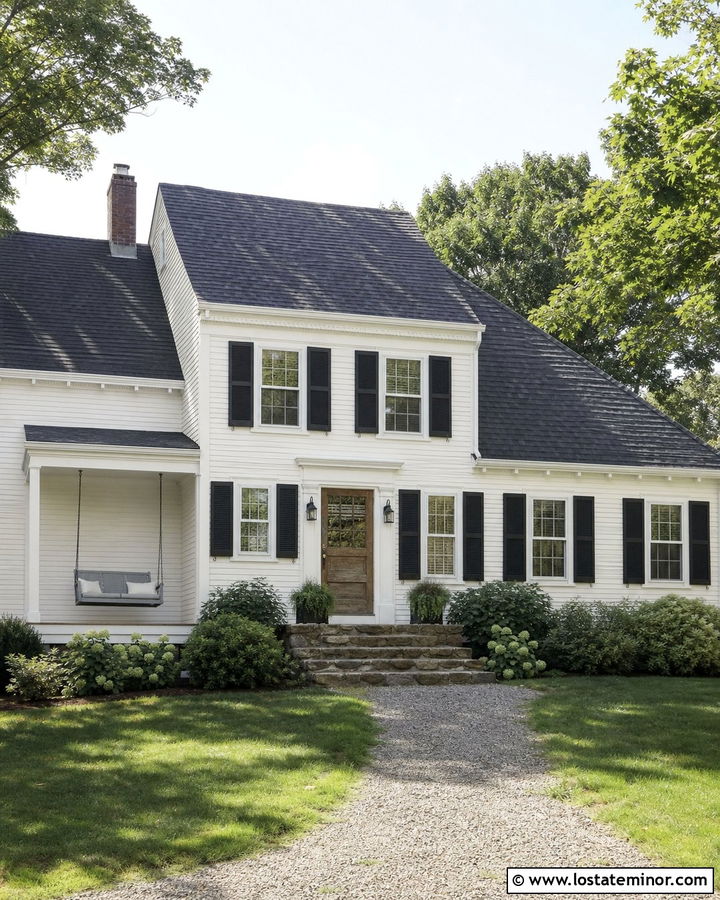
The uneven roofline of a Saltbox house already provides memorable character, so its swing can remain modest. Choose a soft white clapboard exterior, muted black shutters, and a natural weathered-wood door. Add a narrow covered porch along the front or long side of the house. A plain gray-painted swing blends comfortably with the charcoal roof and avoids competing with the historic silhouette. Use cream cushions and a folded navy throw for controlled color. Fieldstone steps, a gravel path, and loosely clipped shrubs complete the traditional setting. Black iron lanterns can connect the swing hardware to the other exterior accents. This thoughtful arrangement creates a restful seating area while allowing the steep roof and simple white siding to define the overall design.
19. White Lowcountry House With Blue Ceiling Swing
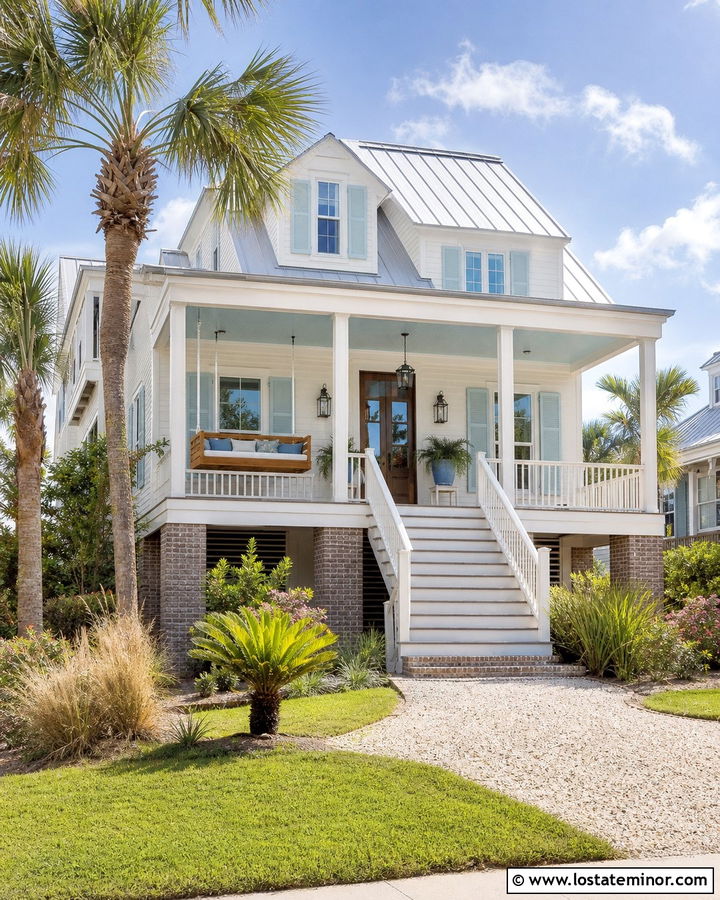
A raised Lowcountry home offers the perfect setting for a deep porch and generously sized swing. Use warm white lap siding, tall windows, pale blue shutters, and a silver-gray metal roof. Paint the porch ceiling a soft sky blue, then hang a natural teak swing with thick ivory ropes. Cushions in faded blue and sand tones connect the seating to the shutters and coastal landscape. White railings maintain the house’s bright, elevated appearance. Brick foundation piers, broad steps, and a crushed-shell walkway provide texture below the porch. Add palmettos, ornamental grasses, and flowering shrubs without hiding the facade. The complete design feels airy and relaxed, while the swing provides enough visual weight to suit the wide porch and tall foundation.
20. White Stucco House With Woven Swing
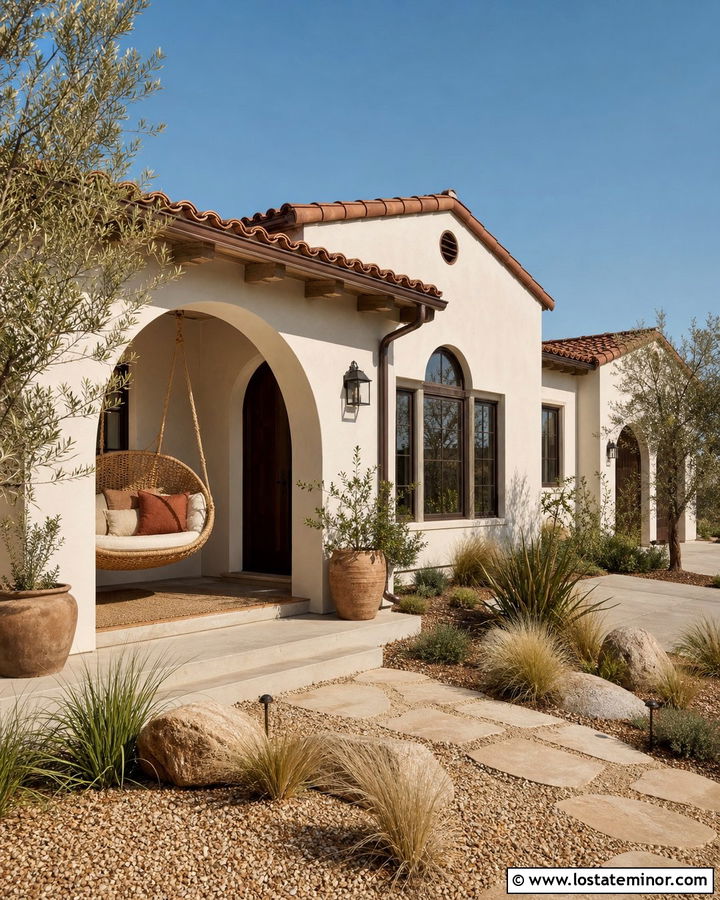
A white stucco home can feel warm and welcoming when paired with a woven swing and earthy finishes. Use creamy white stucco, a low terracotta tile roof, and dark wood doors. Place a natural rattan swing beneath a covered entry arcade or shaded front patio. Oatmeal cushions, rust-colored pillows, and a textured outdoor rug connect the seating to the roof. Keep window trim dark bronze or warm brown instead of bright black. Large clay pots, drought-tolerant grasses, and pale gravel complement the regional materials while framing the whole house. Arched openings add visual rhythm around the swing. This combination prevents the white stucco from appearing cold and creates a comfortable exterior grounded in natural color, texture, and climate-conscious landscaping.
21. White A-Frame House With Hanging Bench Swing
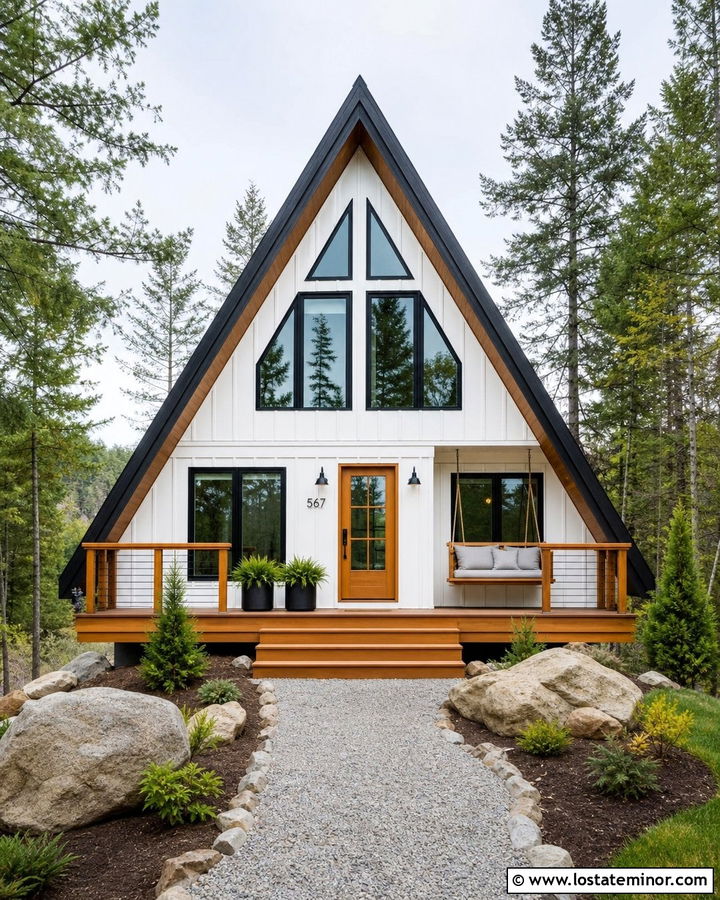
The steep roof of an A-frame house creates a dramatic backdrop for a simple hanging bench. Use crisp white vertical siding, black-framed glass, and a dark metal roof to emphasize the triangular silhouette. Install a warm cedar swing beneath a small front deck extension or within the recessed entry. Black chains connect it visually to the windows and roof. Keep cushions light gray so the wood remains noticeable from the curb. A matching cedar door and deck railing create a unified material story. Surround the house with native evergreens, boulders, and a gravel walkway instead of formal foundation beds. The complete look feels modern and natural, with the horizontal swing providing a comfortable counterpoint to the strong diagonal rooflines.
22. White Cottage Garden House With Arbor Swing
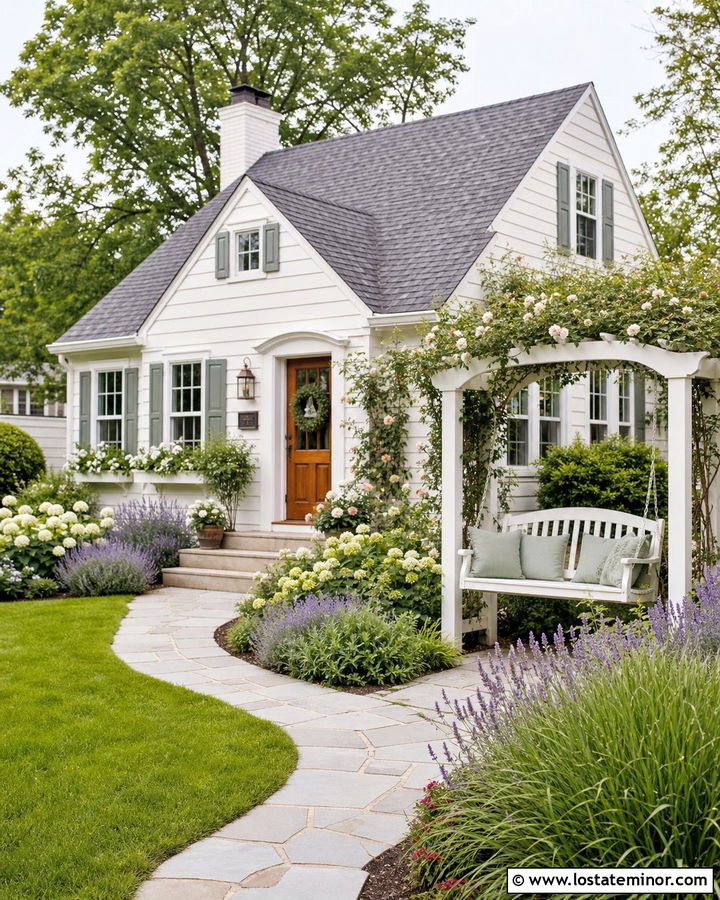
A freestanding arbor swing can extend the curb appeal of a white cottage beyond its porch. Paint the house a warm garden white and add soft green shutters, a natural wood door, and gray roof shingles. Position a white-painted swing beneath an arbor beside the curved front path, ensuring it frames rather than blocks the facade. Climbing roses or clematis can soften the structure while leaving enough open space for airflow and visibility. Use sage cushions to connect the swing with the shutters. Layer lavender, hydrangeas, ornamental grasses, and low evergreen edging around the walkway. This arrangement makes the garden seating feel like part of the home’s architecture and provides an appealing destination between the street and the entrance.
23. White House With Black Trim And Swing Bed
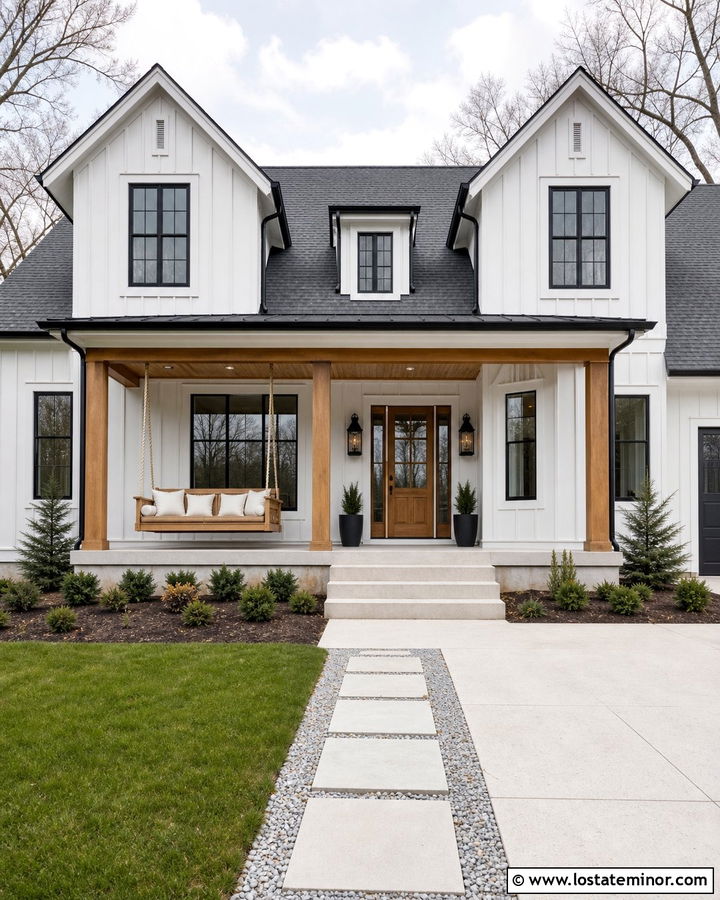
High-contrast trim can make a white house feel sharp, but a wood swing bed keeps the exterior from appearing too rigid. Use soft white board-and-batten siding, black windows, black gutters, and a charcoal roof. Place a substantial oak swing bed on the covered front porch and suspend it with thick cream rope. Neutral tan cushions create a gentle transition between the white walls and warm wood frame. Repeat the oak on the front door and porch ceiling. Concrete steps, dark planters, and restrained evergreen landscaping support the modern palette. Limit smaller black accents so the windows remain the dominant dark feature. The finished house combines graphic definition with enough natural texture to feel comfortable, balanced, and approachable.
24. White House With Green Door And Porch Swing
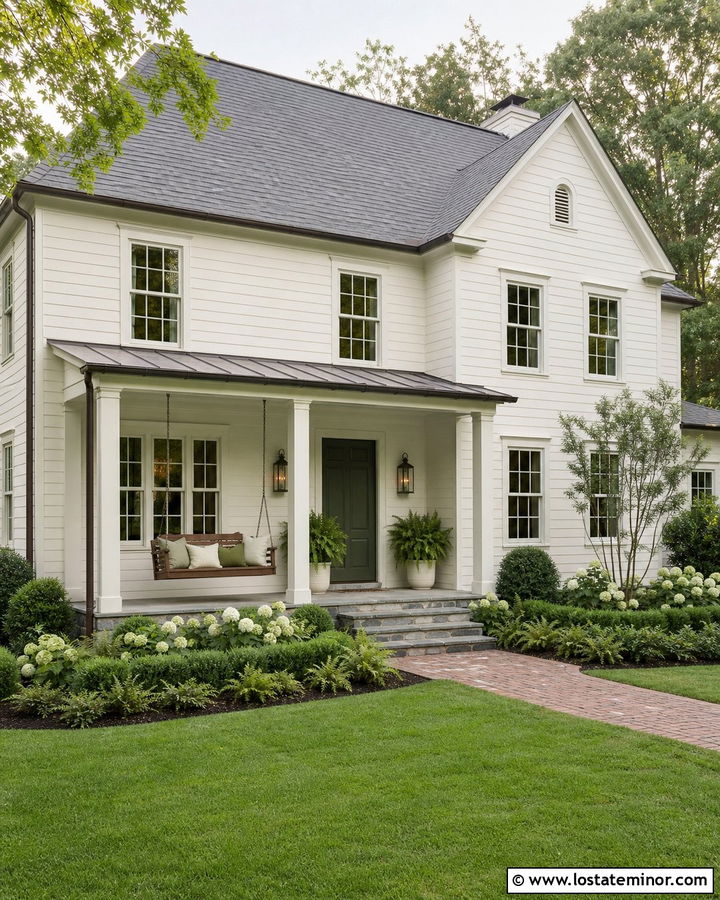
A green front door gives a white exterior an organic focal point, especially when the swing and landscape support the same color family. Use creamy white lap siding, white trim, and a medium-gray roof. Choose a muted forest or olive green door, then add a natural wood swing with sage and cream cushions. Bronze lanterns and hardware suit the warmer palette better than glossy black. Position the swing to one side of the entrance and place a tall planter on the opposite side for balance. Ferns, boxwoods, and white flowering shrubs reinforce the fresh color scheme. A brick or flagstone walkway adds traditional texture. The final design feels colorful without losing the clean versatility that makes a white house so appealing.
25. White House With Red Door And Porch Swing
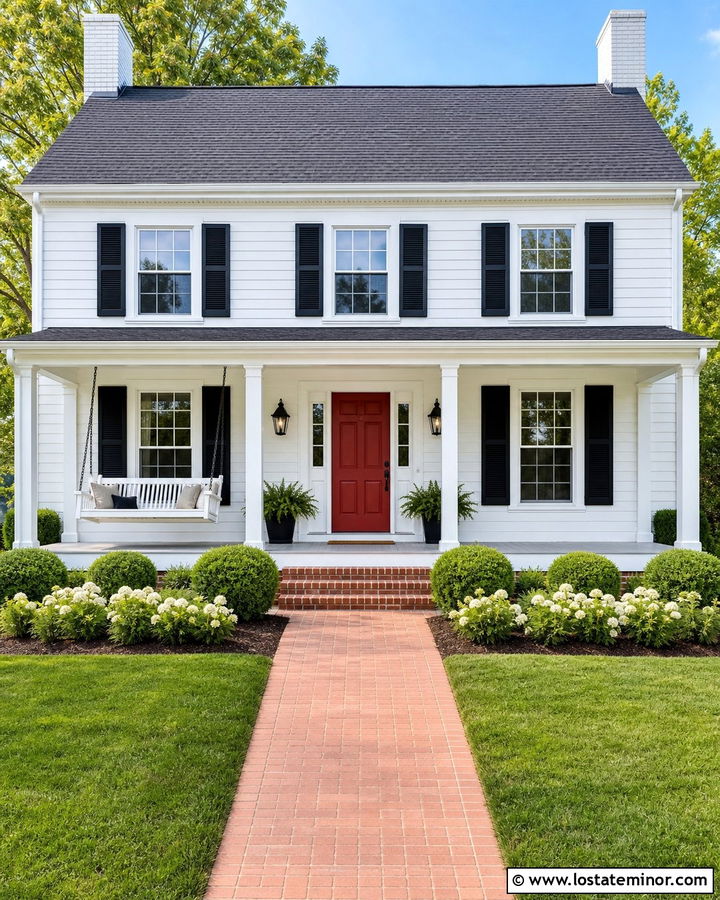
A red door creates a strong, cheerful accent on a classic white home. Keep the rest of the exterior controlled so the entrance does not compete with too many colors. Use clean white siding, black shutters, a charcoal roof, and a rich brick-red front door. Add a white porch swing with black chains, then use neutral seat cushions and one small red patterned pillow. Brick steps can repeat the warmth of the door and connect the house to the walkway. Place the swing away from the central entry so the red door remains the main focal point. White flowers, clipped greenery, and simple black lanterns complete the scheme. This traditional combination works particularly well on Colonial, farmhouse, and cottage facades.
26. White House With Wood Door And Cedar Swing
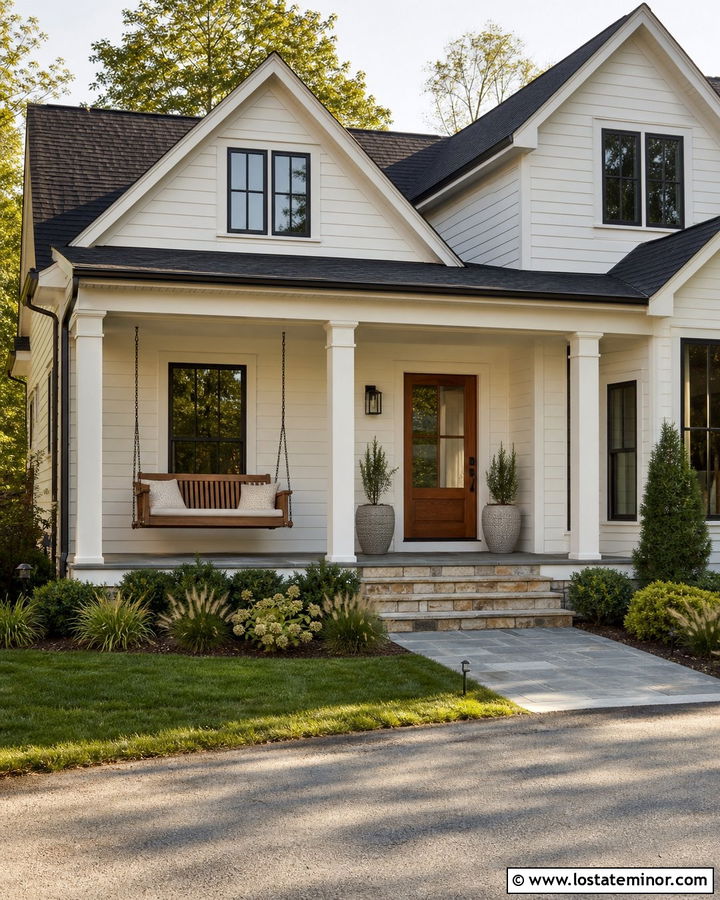
Natural wood can transform a plain white facade by adding warmth in two carefully repeated locations. Choose soft white siding, bronze windows, and a charcoal-brown roof. Install a medium-toned oak or cedar front door, then select a porch swing in a closely related stain. The wood finishes do not need to match exactly, but their undertones should feel compatible. Use cream cushions, black or bronze chains, and a warm gray porch floor. Stone steps and large textured planters help bridge the natural materials. Keep the landscaping loose but simple, with evergreen shrubs and pale ornamental grasses. Repeating wood on the entrance and seating makes the entire exterior feel planned, even when the architecture and white paint remain straightforward.
27. White House With Stone Accents And Wood Swing
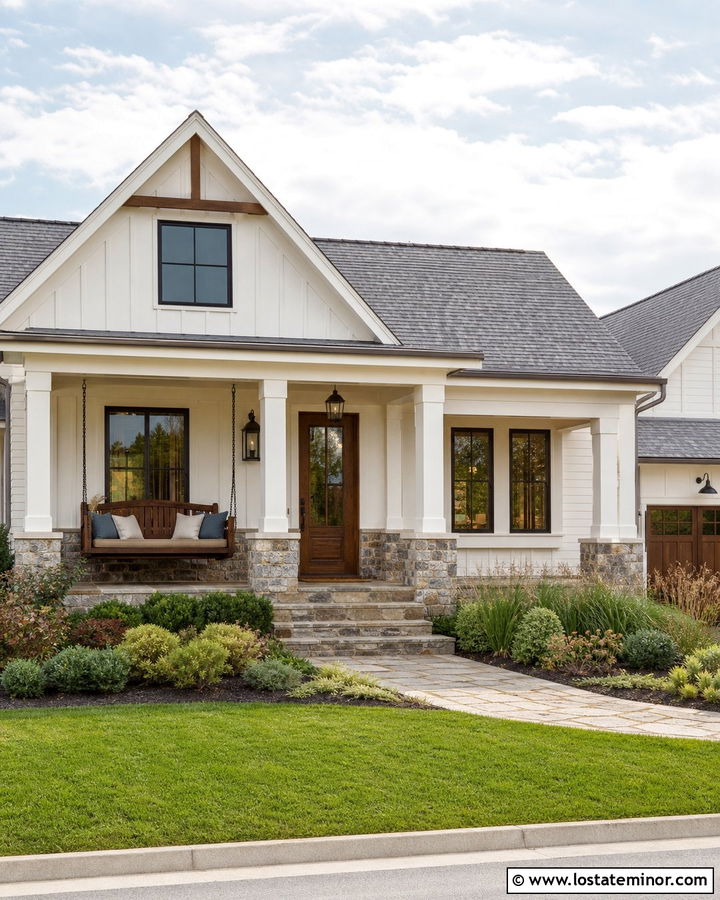
Stone accents can ground a bright white house and provide a natural color guide for the porch swing. Use warm white siding above a mixed gray-and-tan stone foundation. Add a medium-gray roof, bronze windows, and a walnut-stained front door. Choose a wood swing in a warm brown finish that picks up the tan notes in the masonry. Taupe cushions and subtle blue-gray pillows can reference the cooler stones. Place the swing between substantial porch columns with matching stone bases. A flagstone walkway and low, layered shrubs extend the material palette into the yard. This complete scheme works beautifully on Craftsman, rustic farmhouse, and transitional homes because every finish relates to a color already present in the stone.
28. White House With Brick Porch And Black Swing
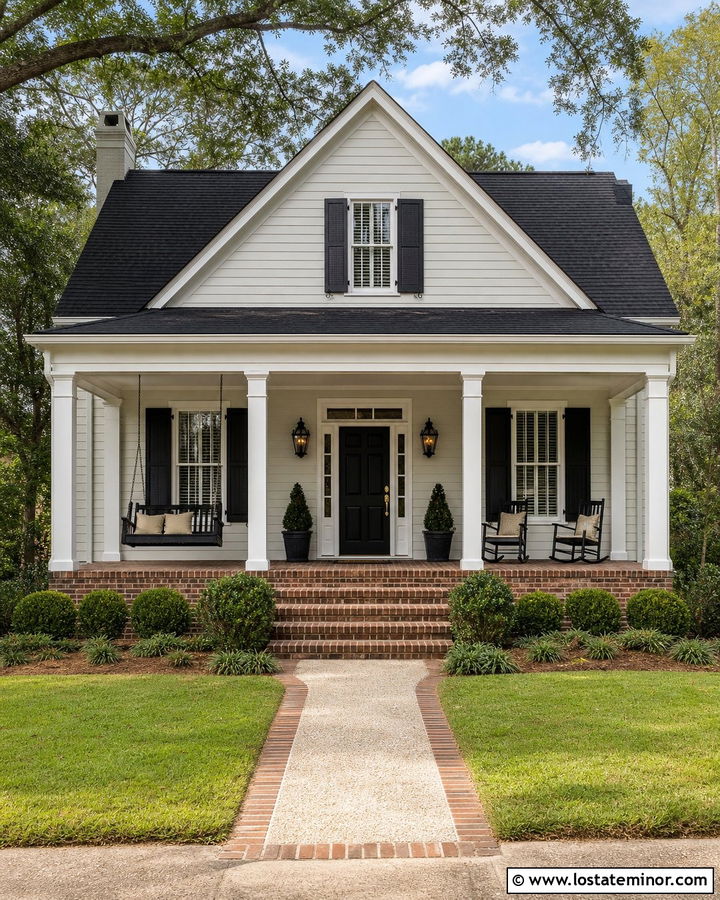
A brick porch introduces rich, familiar texture beneath a white exterior. Choose a soft off-white body color, matching trim, and dark gray roof shingles. Use traditional red-brown brick for the porch floor and steps, then add a black wood swing to provide crisp definition against the siding. Tan cushions soften the transition from the dark swing to the warm brick. Repeat black on the front door, lanterns, and narrow window shutters, but keep the porch columns white. A brick-edged walkway and simple green foundation planting extend the design into the front yard. The swing looks most balanced when positioned in a full porch bay with enough surrounding wall space. This creates a timeless, practical exterior with strong curb presence.
29. Small White House With Budget Porch Swing
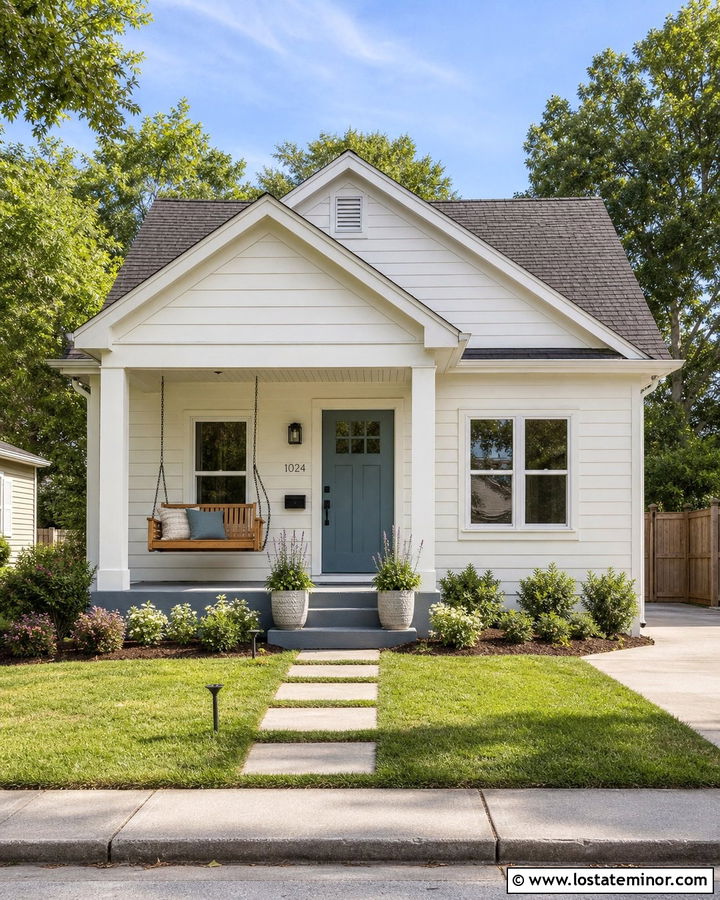
A small white house does not require a major porch renovation to gain a welcoming swing. Start with existing white siding and refresh the trim in a slightly brighter white. Paint the front door muted blue or green, then install a compact wood swing under a structurally suitable covered area. A simple ready-made slatted bench can look customized with outdoor cushions and black hanging hardware. Paint an aging concrete porch medium gray for a cleaner base. Add two matching planters, a new porch light, and a narrow gravel or stepping-stone path. Keep shrubs below the windows so the facade remains visible. By repeating just a few colors and materials, an affordable swing becomes part of a complete, intentional curb-appeal update.
30. White Luxury House With Oversized Swing Bed
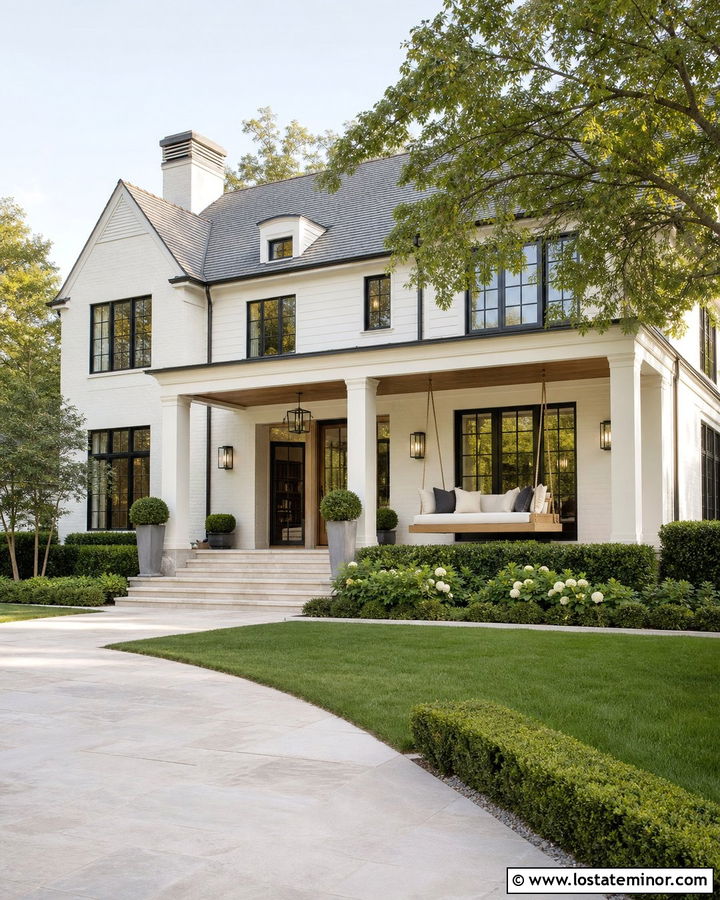
A large white house needs an oversized swing bed that matches the scale of its architecture. Use warm white masonry or lap siding, expansive black-framed windows, a slate-gray roof, and broad limestone steps. Place a custom teak swing bed beneath a deep porch roof, ideally within its own defined seating bay. Thick ivory cushions and tailored charcoal pillows create a sophisticated connection to the facade. Repeat teak on the front door and porch ceiling to keep the broad exterior from feeling cold. Large planters, structured hedges, and mature trees should frame the house without concealing it. The swing bed becomes a clear luxury feature, yet its materials and proportions ensure it belongs within the complete exterior rather than looking like freestanding furniture.
Conclusion:
The most successful White House Design With Swing Ideas treat outdoor seating as part of the full architectural scheme. The swing’s size, color, material, and location should relate to the siding, roof, door, porch, and landscape. Natural wood brings warmth to black-and-white exteriors, while painted swings can repeat door, shutter, or trim colors. Deep porches can handle swing beds and wide benches, but smaller houses benefit from compact silhouettes and simpler cushions. Before installation, confirm that beams, chains, ropes, and hardware can safely support the intended load. With good proportions and a coordinated palette, a swing can turn nearly any white house into a more comfortable and memorable home.

Related posts: