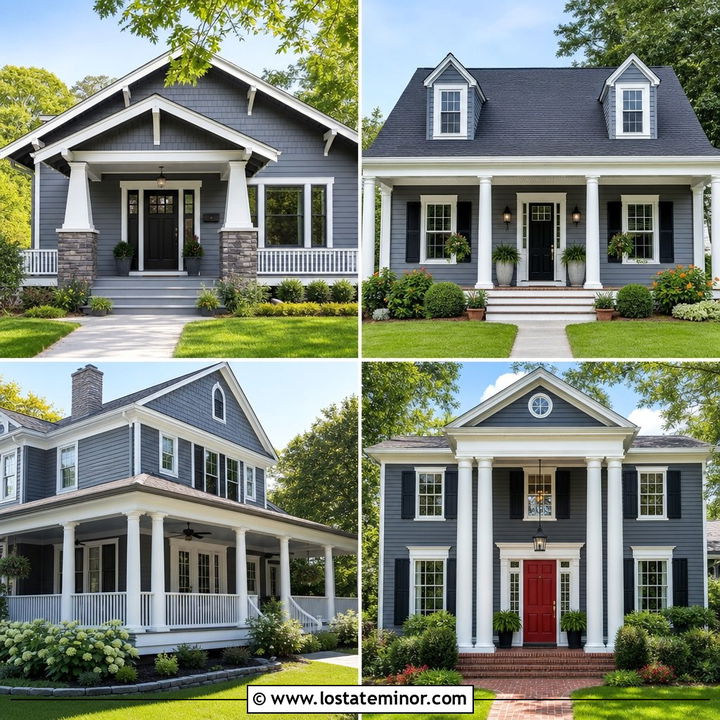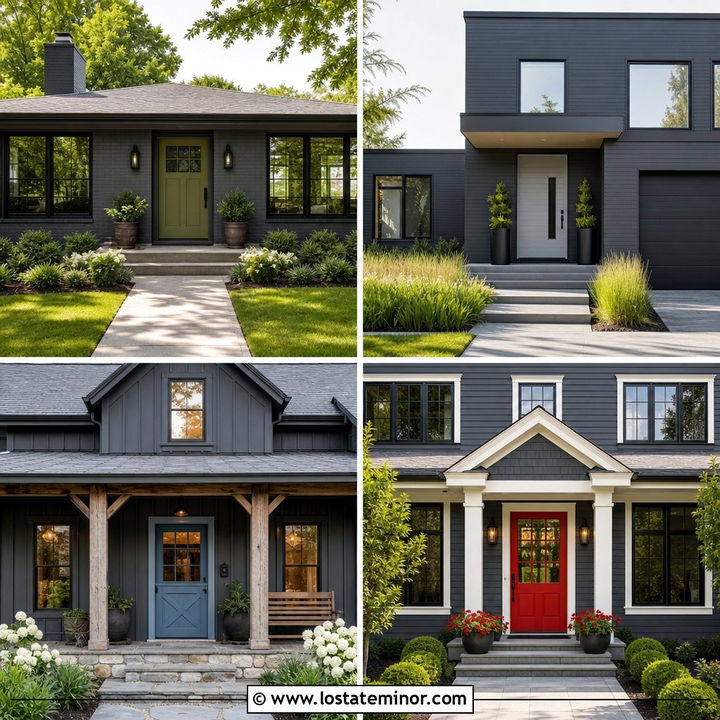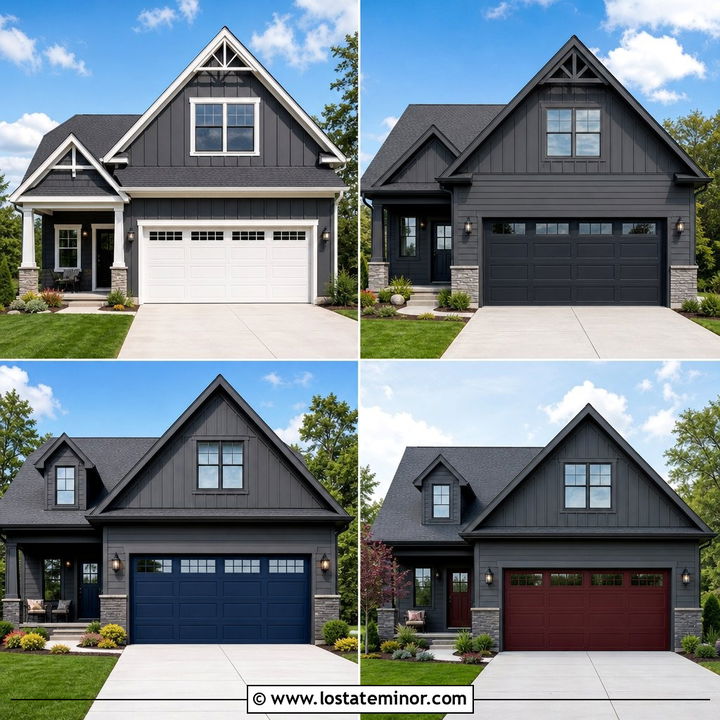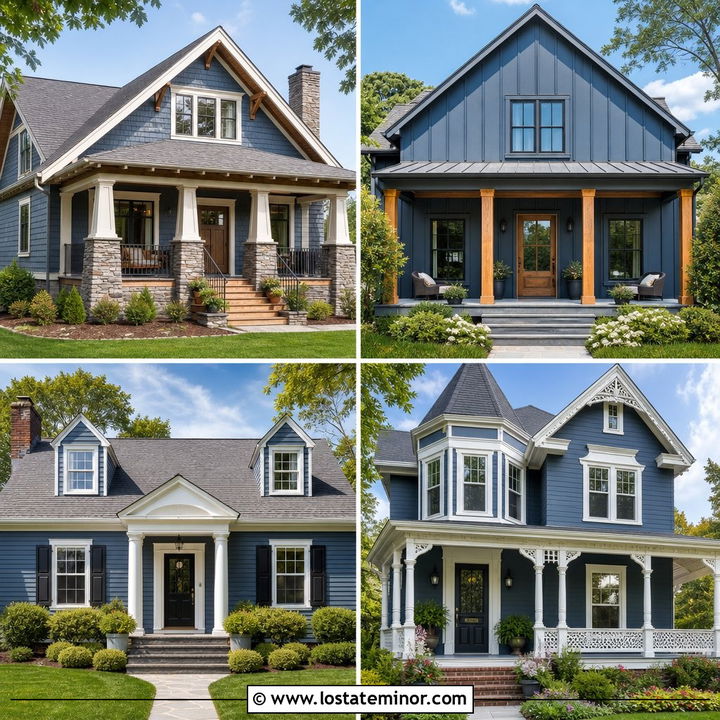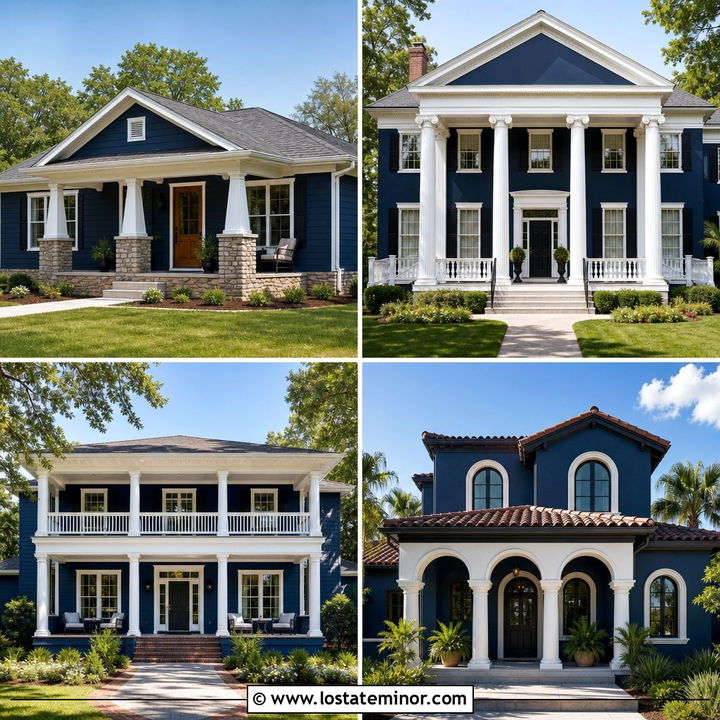
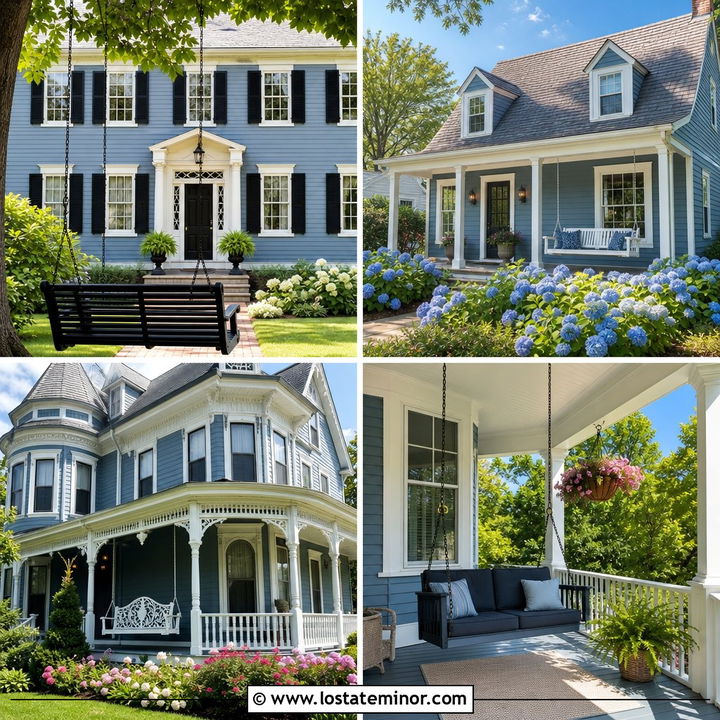
A dusty blue exterior feels calm, welcoming, and versatile, especially when porch columns give the facade stronger definition. The best **30 Dusty Blue House Design With Porch Columns Ideas** combine the siding, columns, trim, roof, front door, and foundation materials into one balanced palette. Dusty blue works beautifully with crisp white, warm cream, charcoal, natural cedar, weathered brick, and soft gray stone. Columns can also introduce texture through wood, masonry, or metal while visually anchoring the entry. () Whether you are updating a small ranch or planning a large wraparound porch, proportion and color repetition make the finished exterior feel intentional. Explore these **30 Dusty Blue House Design With Porch Columns Ideas** for complete, curb-ready combinations.

1. Dusty Blue House With White Square Porch Columns
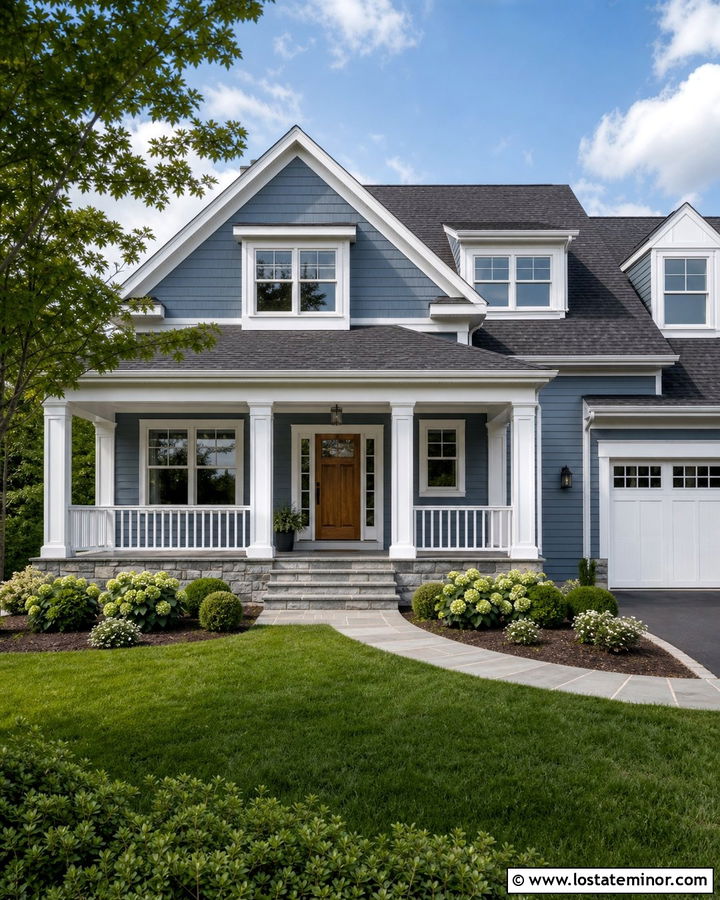
Crisp white square columns give a dusty blue house a clean, familiar appearance that works across many neighborhoods. Use medium dusty blue horizontal siding for the main body, then repeat bright white on the window trim, fascia, railings, and porch ceiling. Wide columns look more substantial than narrow posts and help a long porch feel properly supported. A charcoal architectural-shingle roof adds depth without competing with the soft siding color. Complete the entry with a natural oak door, brushed black lanterns, and gray stone porch flooring. Keep the foundation pale gray so it quietly connects the porch to the house. Low hydrangeas and rounded evergreen shrubs soften the straight architectural lines while leaving the attractive columns visible from the street.
2. Dusty Blue House With Natural Cedar Porch Columns
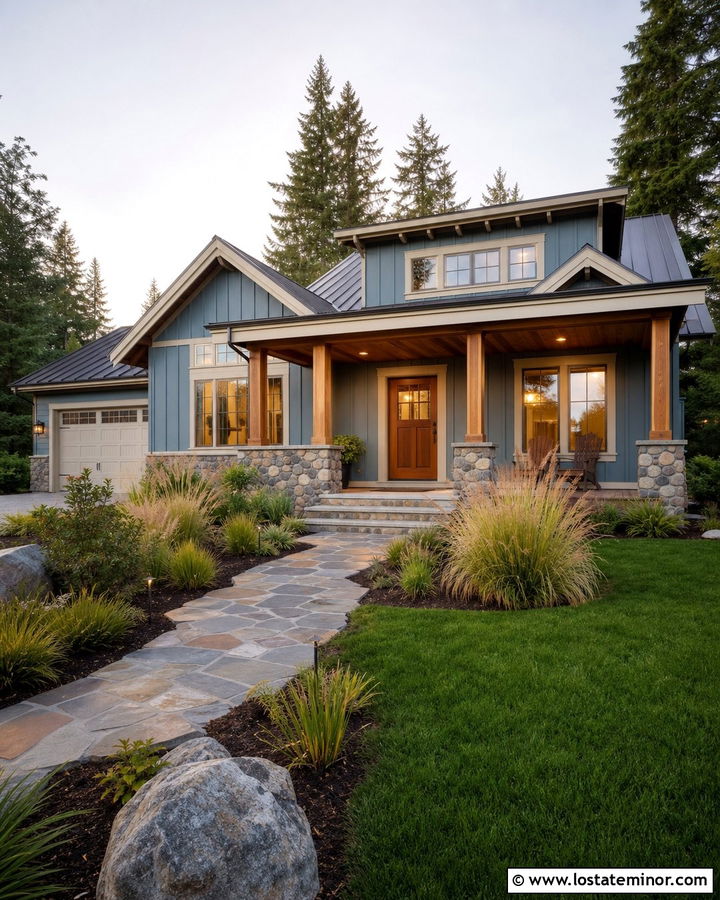
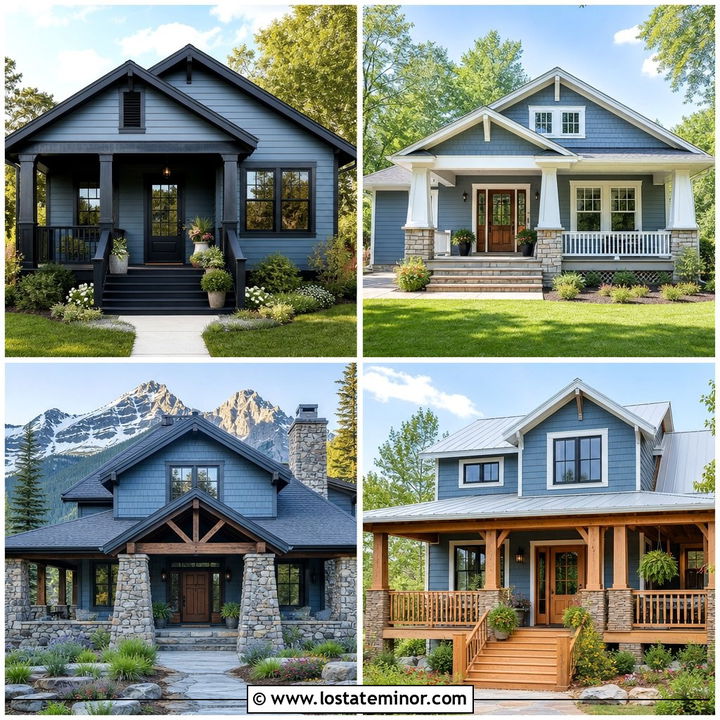
Natural cedar columns bring warmth to the cool undertones of dusty blue siding. This combination looks especially comfortable on a craftsman, cabin-inspired home, or modern ranch with a deep covered porch. Choose simple cedar posts with a clear matte sealer rather than an orange-toned stain. Repeat the same wood on the front door, porch ceiling, and small gable brackets to make the columns feel integrated. Creamy white window trim keeps the palette soft, while a dark bronze roof and matching gutters add contrast. Stone around the column bases can provide extra visual weight, but select a blend containing blue-gray and warm taupe. Native grasses, dark mulch, and an irregular flagstone walkway continue the relaxed, natural character of the complete exterior.
3. Dusty Blue Craftsman With Tapered Stone Columns
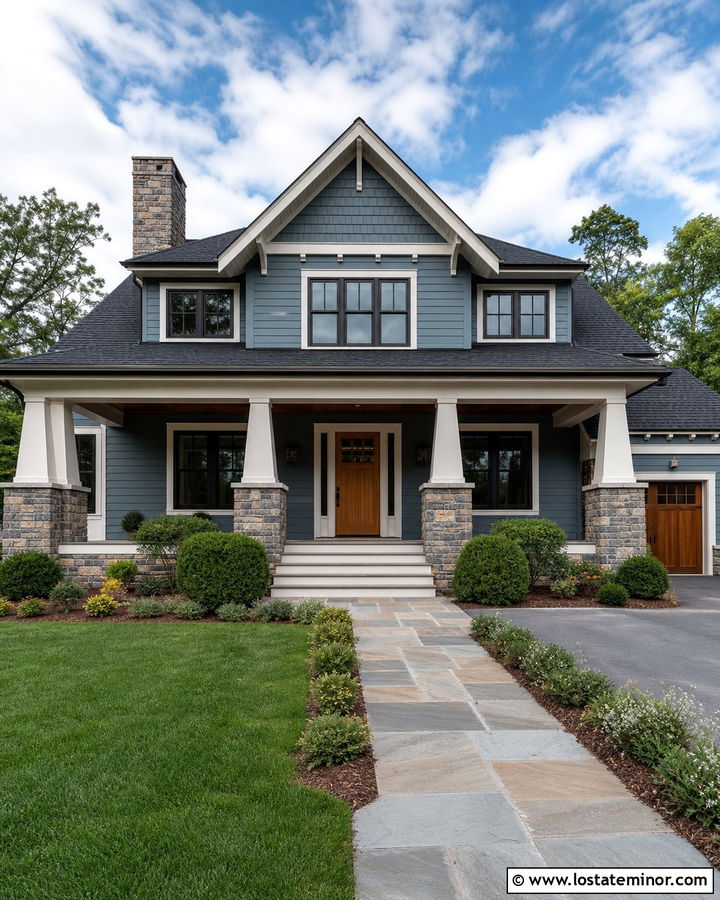
A dusty blue craftsman becomes more grounded when tapered porch columns rest on substantial stone piers. Cover the upper columns in warm white, then use ledgestone containing soft gray, tan, and muted brown around the bases. Those earthy variations bridge the blue siding and the porch’s stained wood details. Place dusty blue lap siding on the lower walls and matching cedar-style shakes inside the gables for subtle texture. Deep charcoal window sashes and a dark roof give the lighter colors a defined outline. A quarter-sawn oak front door adds another warm note without overpowering the entry. Broad porch steps, low railings, and symmetrical foundation plantings create the solid, handcrafted appearance that makes this full exterior scheme work particularly well.
4. Dusty Blue House With Black Porch Columns
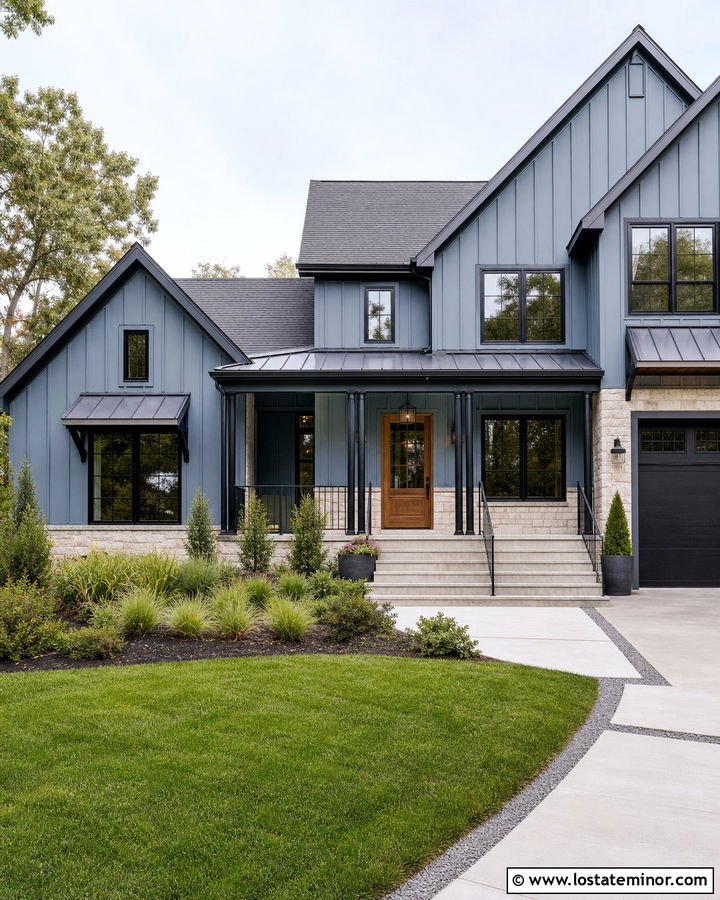
Black porch columns make dusty blue siding feel sharper and more contemporary. This pairing works best when black appears elsewhere, such as on window frames, gutters, exterior lights, and the standing-seam porch roof. Keep the main roof charcoal rather than pure black so the upper half of the house does not look too heavy. A warm wood front door prevents the cool palette from feeling severe. For a modern farmhouse, use dusty blue board-and-batten siding with slender black columns and simple horizontal railings. Light concrete steps and pale limestone foundation accents brighten the lower facade. Limit decorative details and use clean-lined planters beside the entrance. The result is a complete blue, black, and wood scheme with bold structure and approachable curb appeal.
5. Dusty Blue House With Brick Column Bases
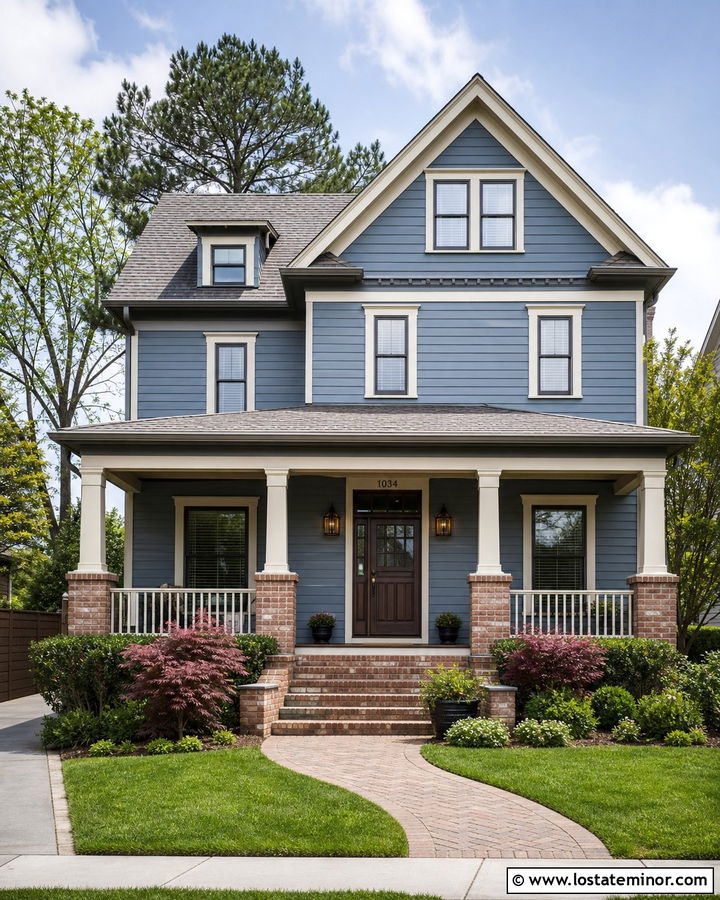
Brick column bases are an effective way to connect dusty blue siding with a traditional porch. Select weathered red brick if you want noticeable warmth, or choose pale limewashed brick for a quieter transition. The brick should also appear on the steps, foundation, or walkway border so it does not look like a separate addition. Above the masonry piers, use square cream columns that coordinate with the window casings and porch railings. A deep brown front door and bronze lighting complement the brick’s earthy tones. Finish the house with a weathered gray roof that supports both the warm masonry and muted blue body. Layered shrubs, red-leaf ornamental plants, and a gently curved brick walkway complete this inviting, established-looking exterior combination.
6. Dusty Blue Colonial With Round White Columns
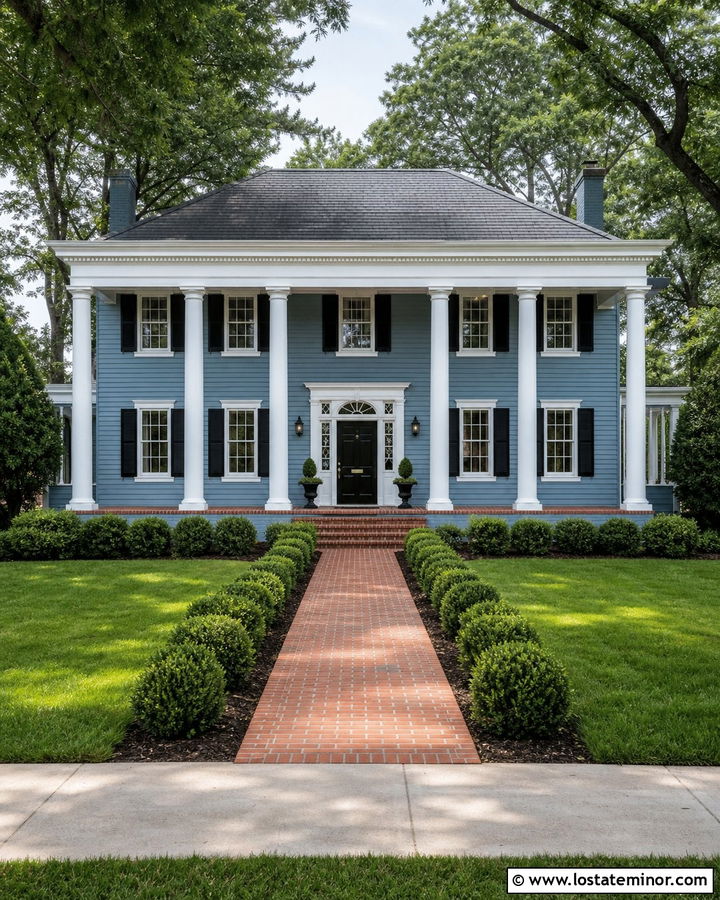
Round white columns give a dusty blue colonial exterior the formal symmetry associated with a centered entrance. Paint the two-story facade a balanced dusty blue and use clean white for the cornice, window trim, shutters, and classical porch details. The columns should line up evenly with the doorway and upper windows so the architecture remains orderly. A glossy black front door, black lanterns, and a dark slate-colored roof introduce traditional contrast. Add red brick porch flooring for warmth and historical character, but keep railings white to maintain continuity. Matched planters and clipped boxwoods can frame the steps without hiding the column bases. This entire scheme feels polished because each strong accent is repeated evenly across the front elevation rather than appearing in isolation.
7. Dusty Blue Farmhouse With Chunky White Columns
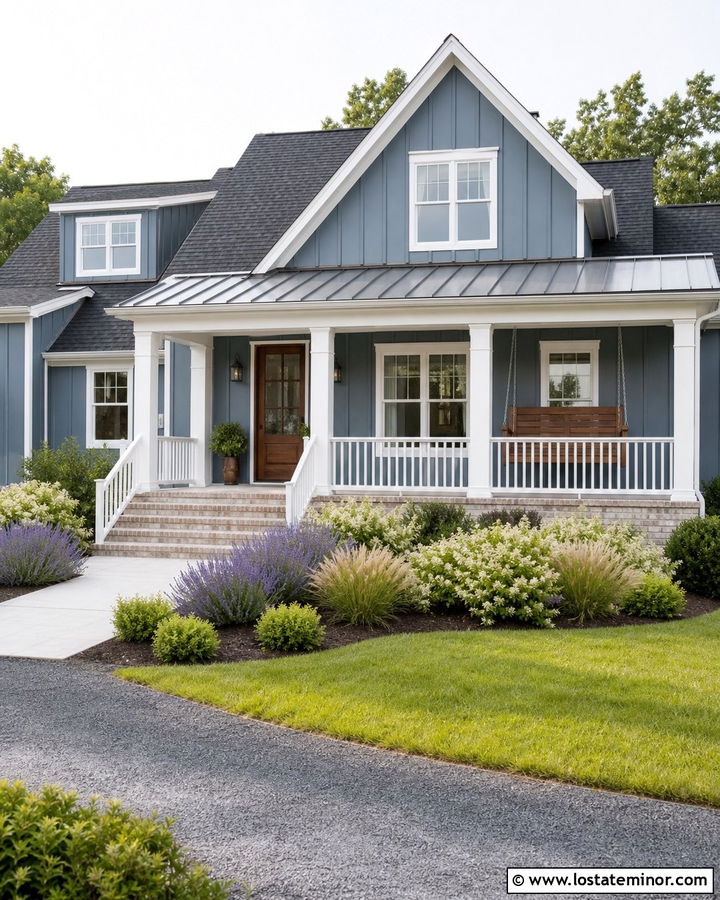
Chunky white columns give a dusty blue farmhouse porch the visual strength needed beneath a broad roofline. Cover the main house in dusty blue board-and-batten siding and reserve white for the columns, corner boards, window trim, and porch railing. A medium-gray metal porch roof adds a crisp horizontal break below a charcoal shingle roof. Bring warmth to the cool palette with a stained mahogany door and a matching porch swing. The column design should remain square and simple, without elaborate capitals that could fight the farmhouse architecture. Pale brick steps and a smooth concrete porch floor keep the entrance practical and bright. Informal landscaping with lavender, ornamental grasses, and white flowering shrubs reinforces the relaxed character while creating a softly layered curb view.
8. Dusty Blue Bungalow With Craftsman Porch Columns
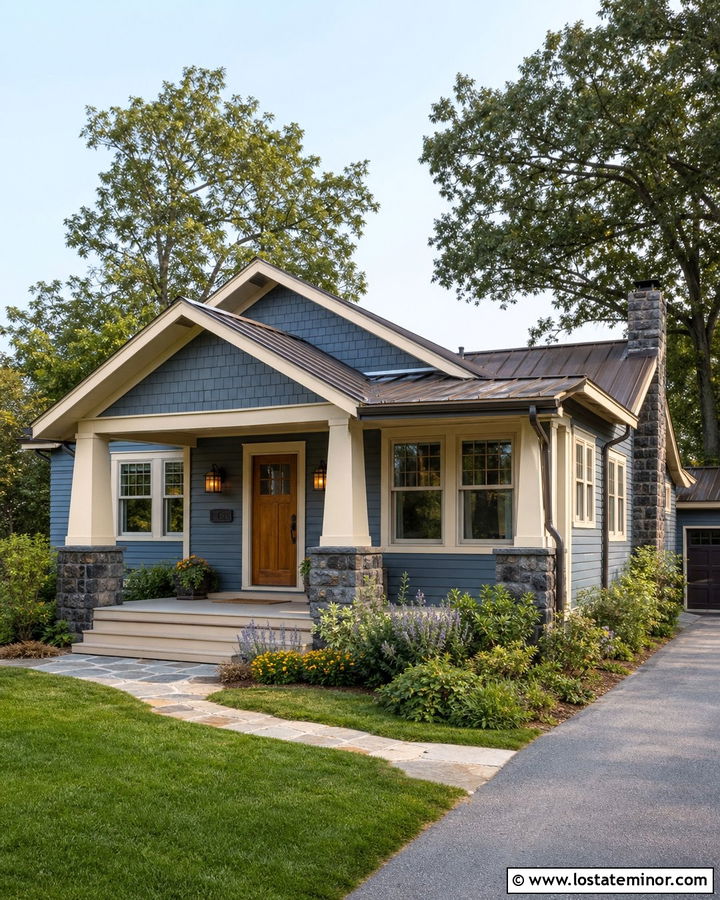
A low dusty blue bungalow benefits from sturdy craftsman columns that make its broad porch feel balanced. Use tapered cream columns over dark gray fieldstone bases, repeating the stone along the exposed foundation. Dusty blue clapboard siding keeps the exterior calm, while deeper blue-gray shakes inside the front gable add dimension. Choose a warm amber-stained door with divided glass and repeat that wood tone on the porch ceiling or railing cap. An aged bronze roof and matching lanterns suit the bungalow’s comfortable proportions better than stark black accents. Wide steps should lead directly toward the entrance and sit between the substantial piers. Finish the yard with a short stone path, cottage perennials, and compact shrubs that preserve an open view of the porch architecture.
9. Dusty Blue Ranch With Simple Wood Columns
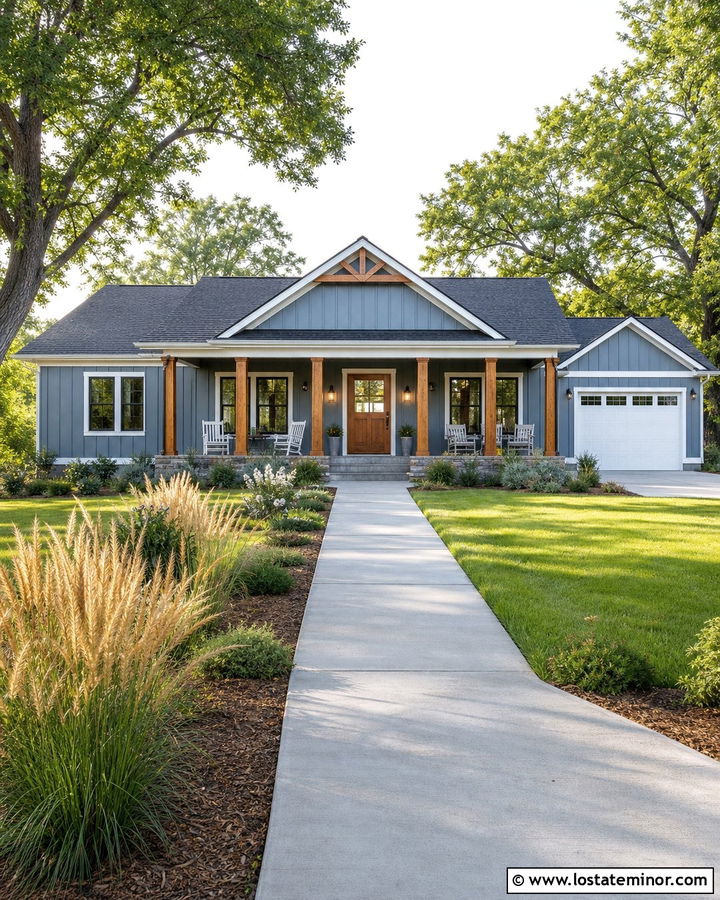
Simple wood columns can transform a flat dusty blue ranch without making the house appear overly decorated. Extend a shallow porch across the central portion of the facade and support it with evenly spaced cedar posts. The natural wood introduces warmth and breaks up the home’s long horizontal profile. Use dusty blue lap siding with soft white window trim and a medium charcoal roof. A matching cedar front door and gable accent help connect the posts to the rest of the architecture. Consider low stone skirting around the porch base to add texture at ground level. A straight concrete walkway, broad planting beds, and low ornamental grasses maintain the ranch’s clean lines. The completed exterior feels updated, approachable, and appropriately scaled to a single-story home.
10. Dusty Blue Cape Cod With Narrow White Columns
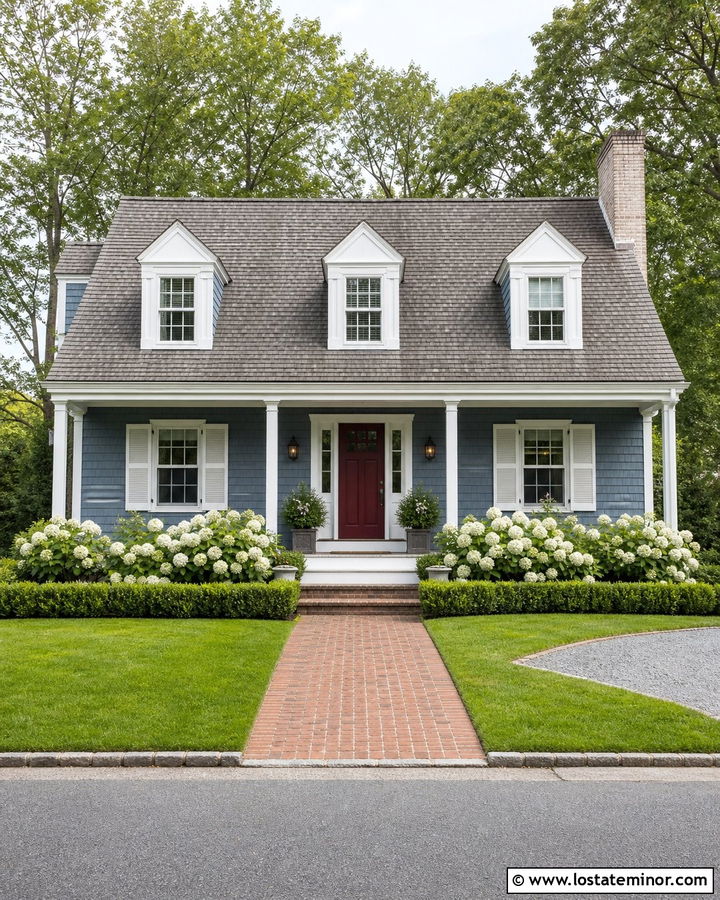
A dusty blue Cape Cod calls for porch columns that feel graceful rather than oversized. Slender white square columns work well beneath a shallow covered porch or centered entry portico. Repeat white on the dormers, window trim, corner boards, and porch railing to outline the classic roof shape. Dusty blue shingles or narrow clapboards add coastal softness without turning the house overly nautical. Choose a deep cranberry front door for traditional warmth, or use muted navy for a quieter monochromatic result. A weathered gray roof and pale brick chimney maintain the restrained palette. Complete the front yard with a brick walkway, low boxwoods, and white hydrangeas. Keeping the landscaping and porch details symmetrical allows the charming proportions of the whole house to remain the main attraction.
11. Dusty Blue Cottage With Cream Porch Columns
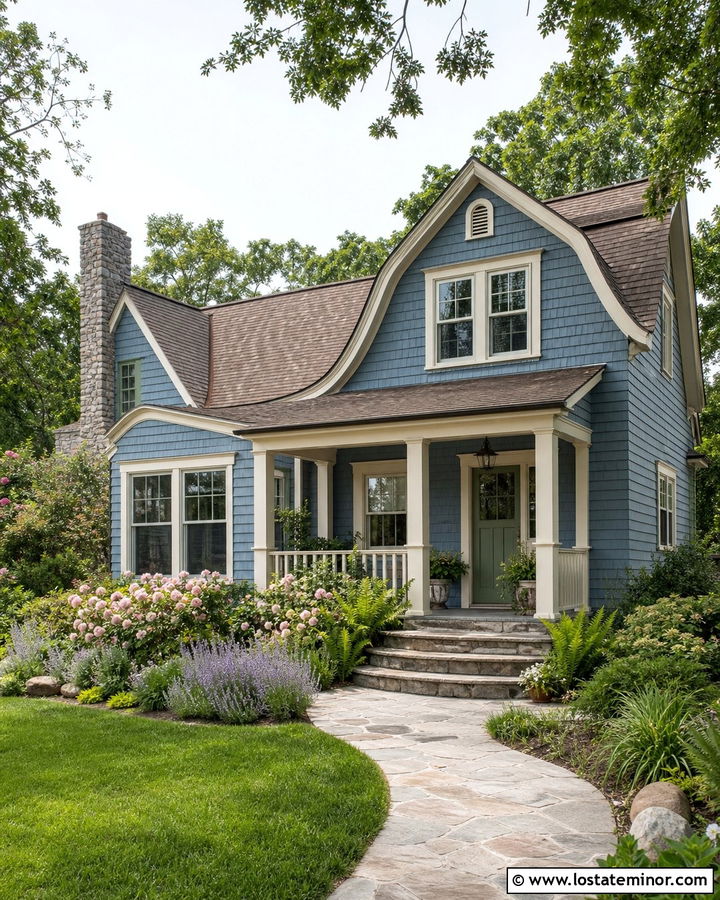
Cream porch columns give a dusty blue cottage exterior a softer effect than bright white. This slightly warm pairing looks natural beside aged brick, mossy stone, and informal garden planting. Apply dusty blue to lap siding or cedar shingles, then repeat creamy off-white on the columns, window trim, eaves, and porch railing. A sage green front door introduces gentle contrast while staying connected to the surrounding landscape. Use a roof in weathered brown-gray rather than black, which may look too sharp against the mellow color scheme. Irregular fieldstone steps and a flagstone walkway enhance the cottage character. Roses, lavender, ferns, and layered shrubs can frame the porch, but leave enough open space around the columns to preserve their architectural presence and welcoming rhythm.
12. Dusty Blue Coastal House With White Porch Columns
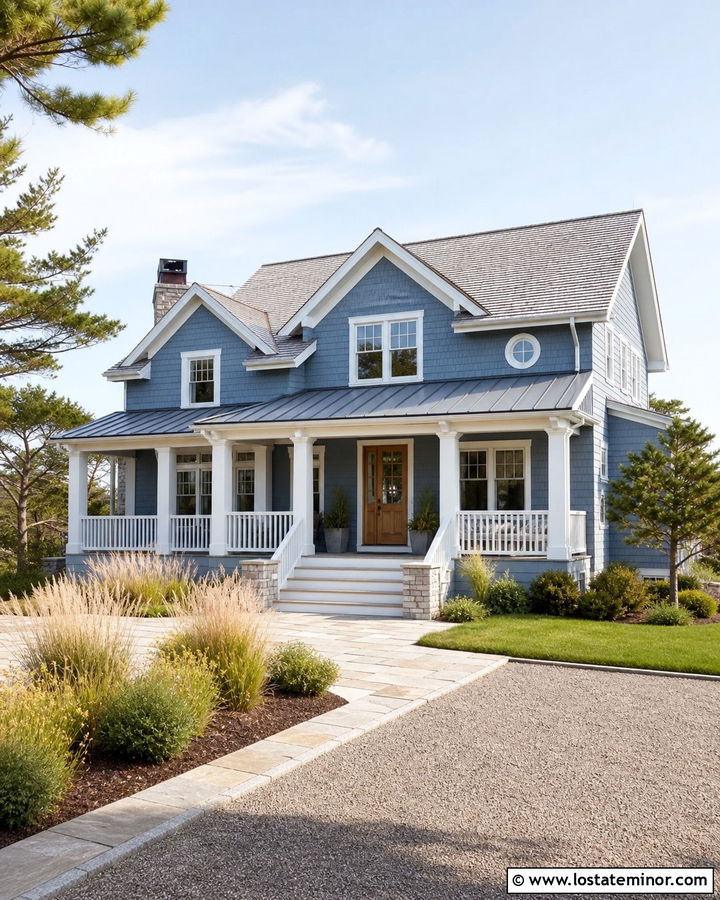
For a coastal exterior that does not rely on obvious nautical decoration, combine dusty blue siding with wide white columns and understated gray accents. Use horizontal siding on the main walls and cedar-style shingles in the upper gables to create natural texture. White columns, railings, trim, and garage doors make the facade feel bright, while a gray standing-seam porch roof adds a durable-looking contrast. A natural teak front door and woven porch furnishings warm the blue-and-white palette. Keep the main roof a medium weathered gray that visually supports the softer colors. Pale stone steps, shell-colored pavers, ornamental grasses, and wind-shaped shrubs complete the setting. The full composition feels fresh and breezy while remaining suitable for both coastal and inland suburban neighborhoods.
13. Dusty Blue Victorian With Decorative Porch Columns
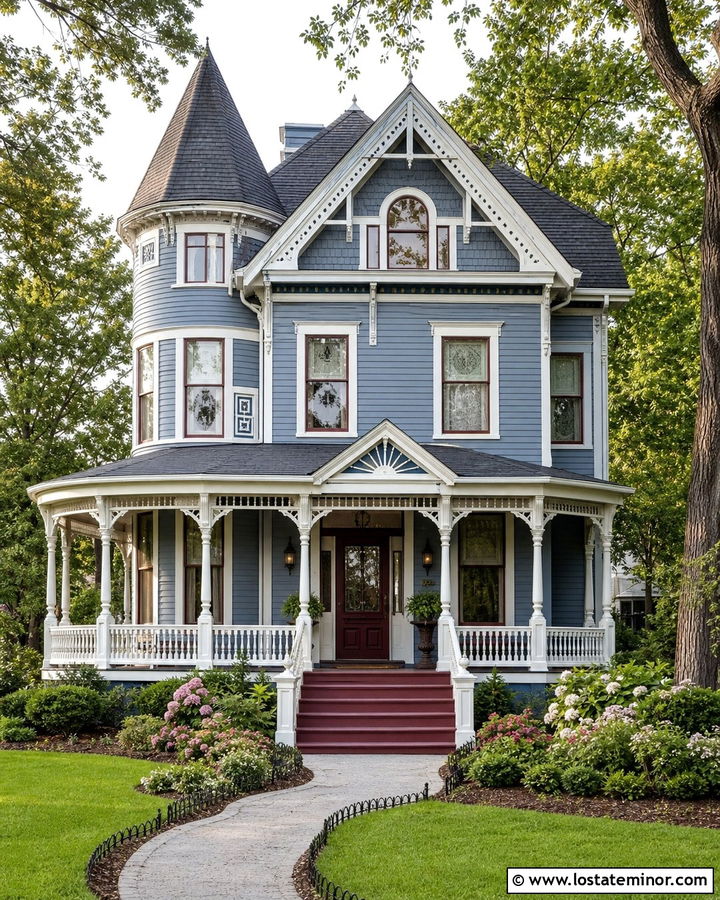
Dusty blue is a fitting backdrop for the layered trim and detailed porch columns of a Victorian house. Keep the main body muted, then use warm white on turned columns, brackets, balusters, window casings, and decorative gable trim. A slightly darker blue-gray can highlight selected panels without creating a crowded rainbow effect. Introduce one controlled accent through a burgundy front door or muted red porch floor. Dark gray roofing allows the ornate woodwork to remain prominent while grounding the tall facade. The porch columns should be detailed enough to suit the architecture but unified by one consistent color. Curved garden beds, an iron-edged walkway, and traditional flowering shrubs finish the property. This restrained palette celebrates the house’s craftsmanship without making every ornament compete for attention.
14. Dusty Blue House With Gray Porch Columns
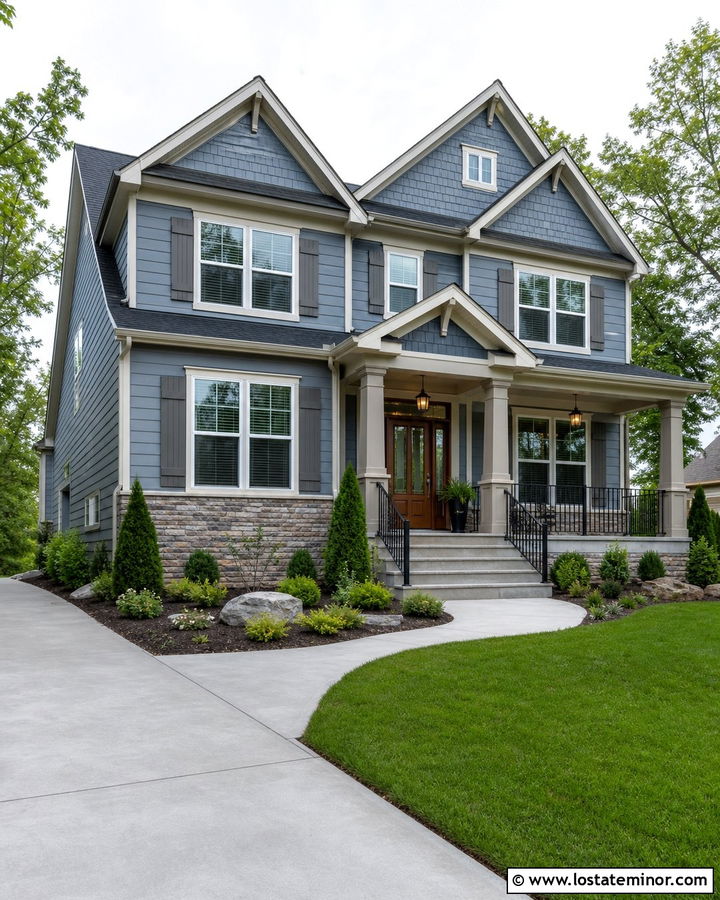
Medium gray porch columns create a subtle, tonal transition on a dusty blue house. This low-contrast combination is useful when bright white feels too traditional or visually sharp. Choose a warm charcoal-gray for the columns and repeat it on shutters, gutters, porch railings, and the garage door. Keep window trim a softer off-white to prevent the facade from becoming flat. A medium brown wood door introduces a needed organic note, while gray-and-tan stone at the foundation connects the cool paint colors to the landscape. Use dusty blue horizontal siding on the main walls and slightly darker shakes in the gables. Broad concrete steps, black lighting, and structured evergreen beds complete a composed exterior that feels contemporary without depending on extreme contrast or trendy decorative pieces.
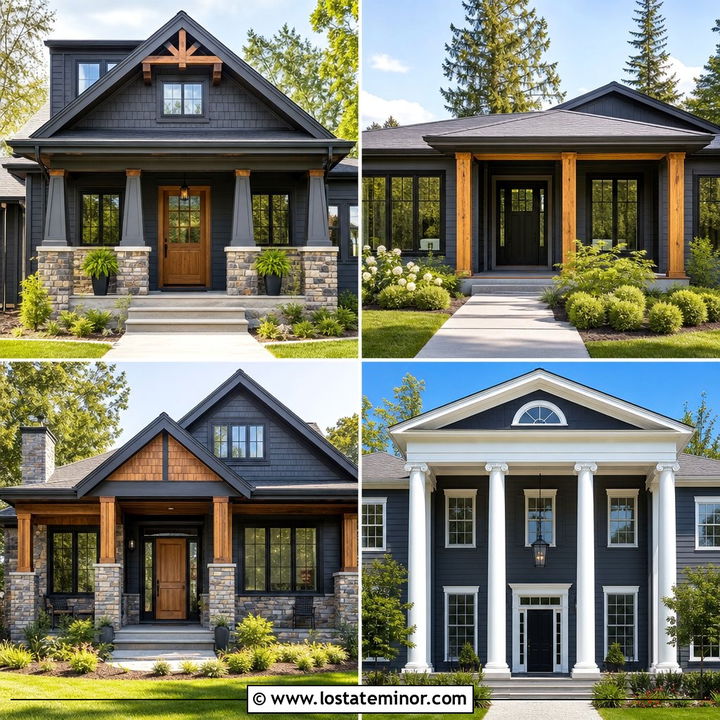
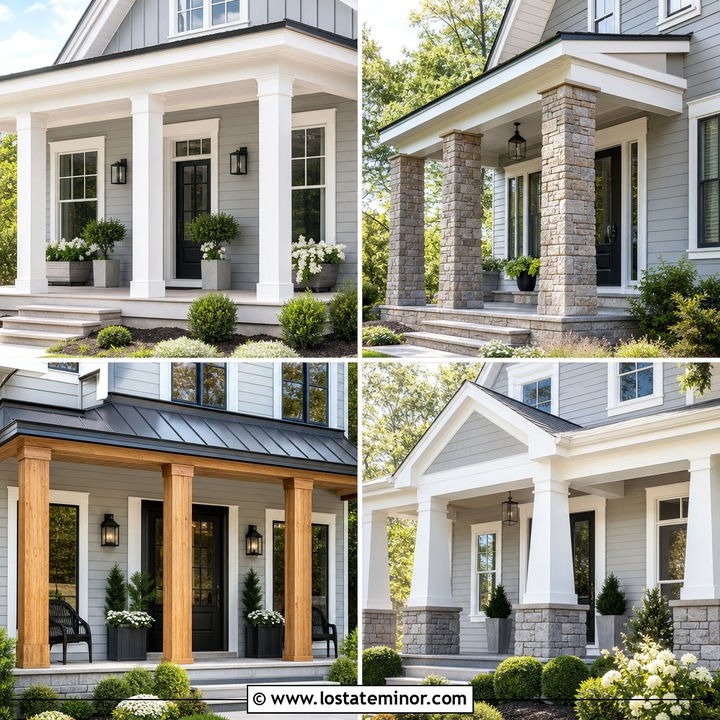


15. Dusty Blue House With Dark Navy Porch Columns
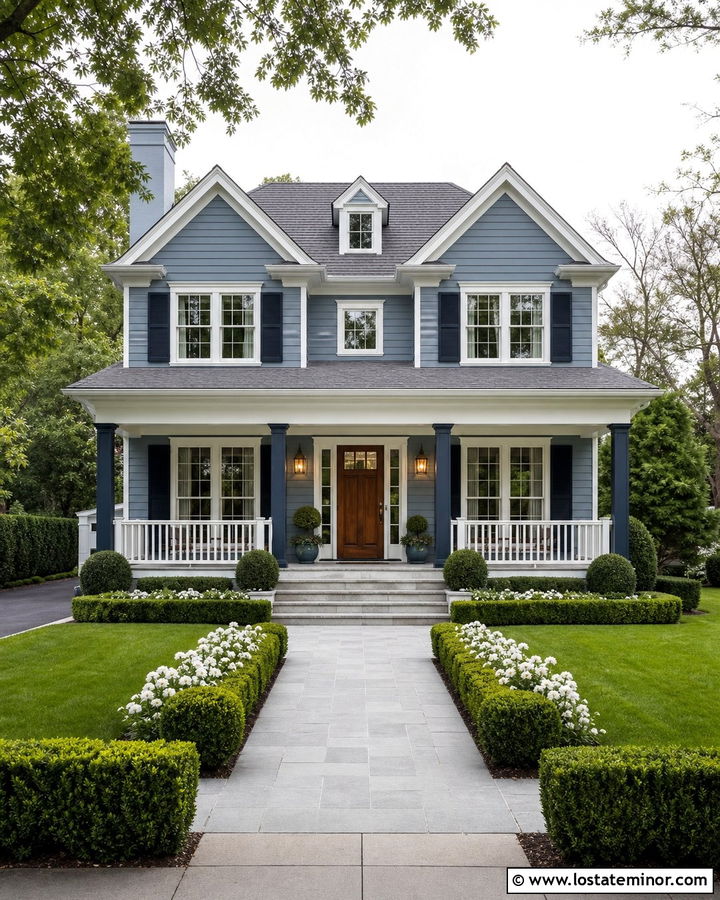
Dark navy columns create depth while preserving the calm blue character of the entire facade. Choose navy that is several shades darker than the dusty blue siding so the porch structure is noticeable but not disconnected. Repeat navy on the shutters, garage door, or window sashes to distribute the darker color across the house. Soft white trim around the windows and roofline prevents the layered blues from becoming visually heavy. Add a natural walnut front door, warm brass-toned lanterns, and pale gray stone steps for balance. This scheme works especially well on a transitional two-story house with a centered porch. Neatly clipped hedges and a straight paver walkway reinforce the orderly design, allowing the two coordinated blue tones and defined column rhythm to lead the curb appeal.
16. Dusty Blue House With Stone-Wrapped Porch Columns
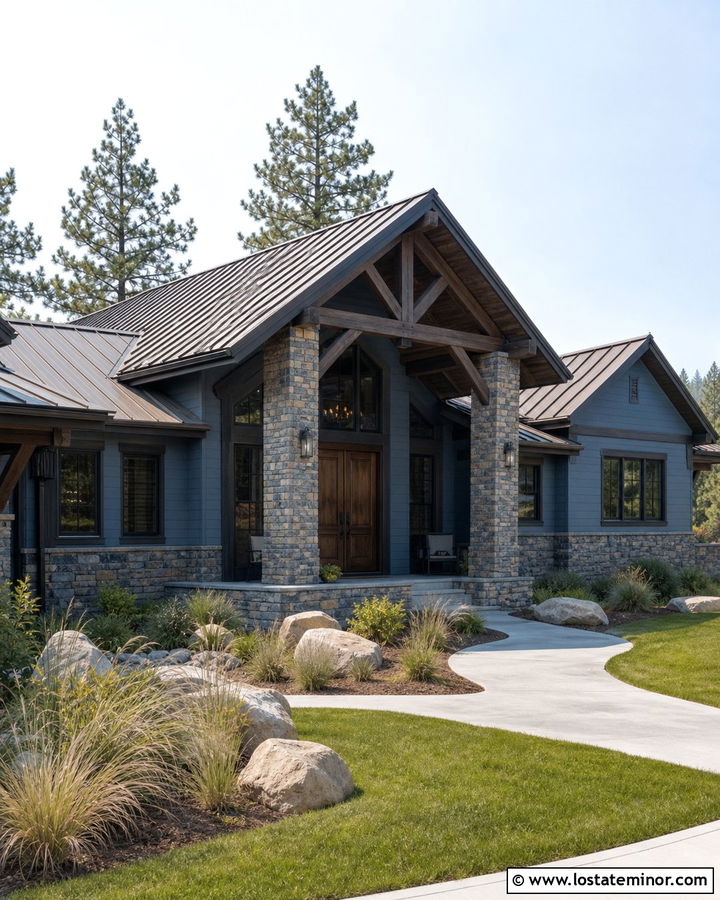
Fully stone-wrapped porch columns give a dusty blue exterior a strong, rustic foundation. Use this approach on a mountain-inspired house, wide ranch, or lodge-style home with generous roof overhangs. Choose stacked stone that blends blue-gray, warm taupe, and restrained brown rather than highly contrasting multicolored masonry. Carry the stone across a portion of the foundation or lower walls so the columns connect naturally to the facade. Dusty blue siding above the masonry keeps the exterior from appearing too dark. Add charcoal trim, a dark bronze roof, and a richly stained double front door. Exposed wood beams under the porch roof introduce warmth at eye level. Native grasses, large boulders, and a gently curving walkway complete the substantial yet welcoming exterior composition.
17. Dusty Blue House With Red Brick Porch Columns
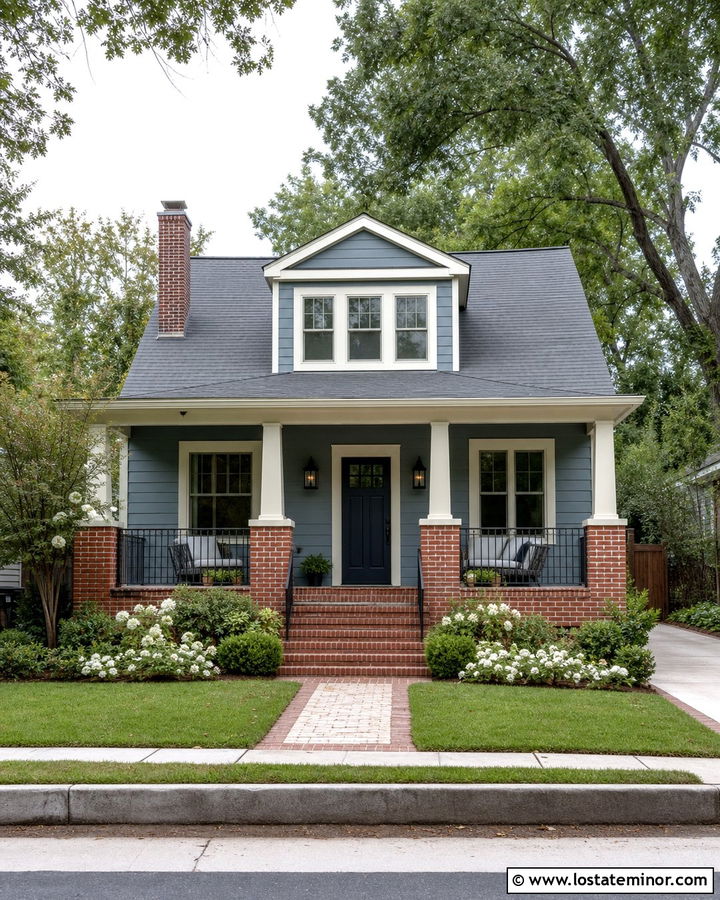
Red brick columns add traditional warmth and rich texture to muted dusty blue siding. The best effect comes from brick with weathered red, brown, and charcoal variations rather than a bright orange finish. Use full brick piers with short white or cream column sections above them to keep the porch from looking too heavy. Repeat the brick on the steps, chimney, or walkway edging for continuity. A deep navy front door relates to the siding while adding enough depth to mark the entrance. Warm white trim and a charcoal roof provide a clean framework around both colors. Simple black lanterns and dark metal railings can modernize the scheme. Green foundation shrubs and white flowers offer a fresh transition between the brickwork and the surrounding lawn.
18. Dusty Blue House With Black Metal Porch Columns
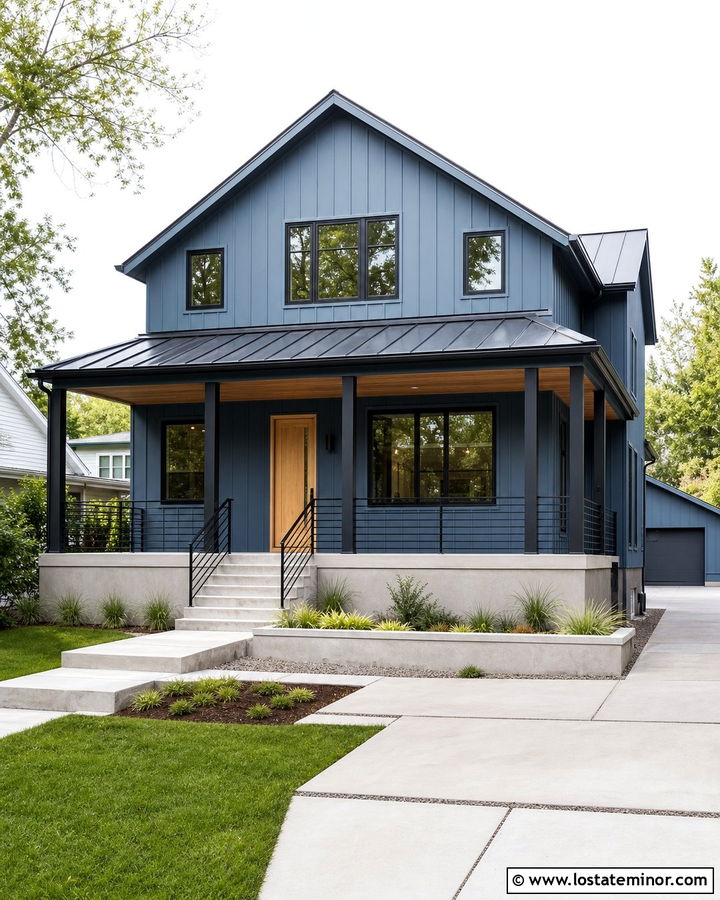
Slim black metal columns create an airy porch that suits a modern dusty blue exterior. Their narrow profile keeps sightlines open and works well on a compact house where bulky posts could overwhelm the entrance. Pair the columns with dusty blue vertical siding, black-framed windows, and a black standing-seam porch roof. Use light wood on the front door and porch ceiling to soften the industrial edge. Pale concrete steps and a warm gray foundation provide a quiet base for the stronger colors. Keep railings minimal or use thin black horizontal bars that echo the columns. Rectangular planting beds, architectural grasses, and a clean concrete walkway reinforce the modern composition. The finished exterior feels structured and current while retaining the welcoming softness of dusty blue.
19. Dusty Blue House With White Columns And Black Shutters
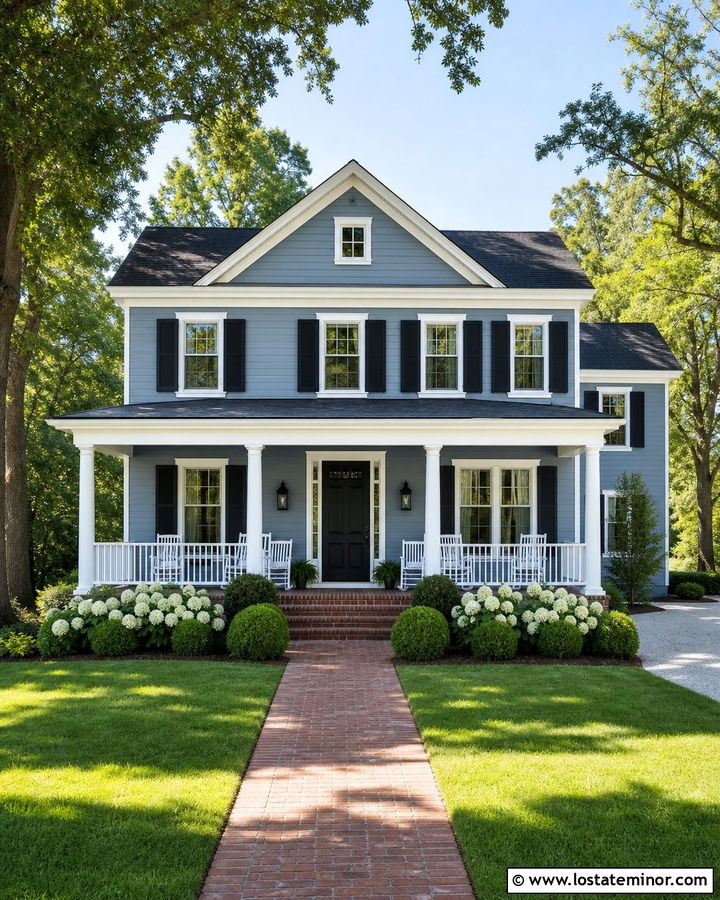
White porch columns and black shutters form a clear, three-color palette around dusty blue siding. This familiar combination works particularly well on traditional, colonial, and Southern-inspired homes. Paint the columns, porch railing, cornice, and window casings a crisp but not icy white. Use matte black for the shutters, lanterns, and front door, distributing the deepest tone evenly across the facade. A charcoal roof ties those black details together without becoming the dominant feature. Red brick porch flooring can add warmth beneath the cool upper colors, while white rocking chairs repeat the trim. Keep the planting design formal with balanced boxwoods, hydrangeas, and a straight brick walkway. Consistent spacing between the shutters and columns supports the house’s symmetrical, carefully planned appearance.
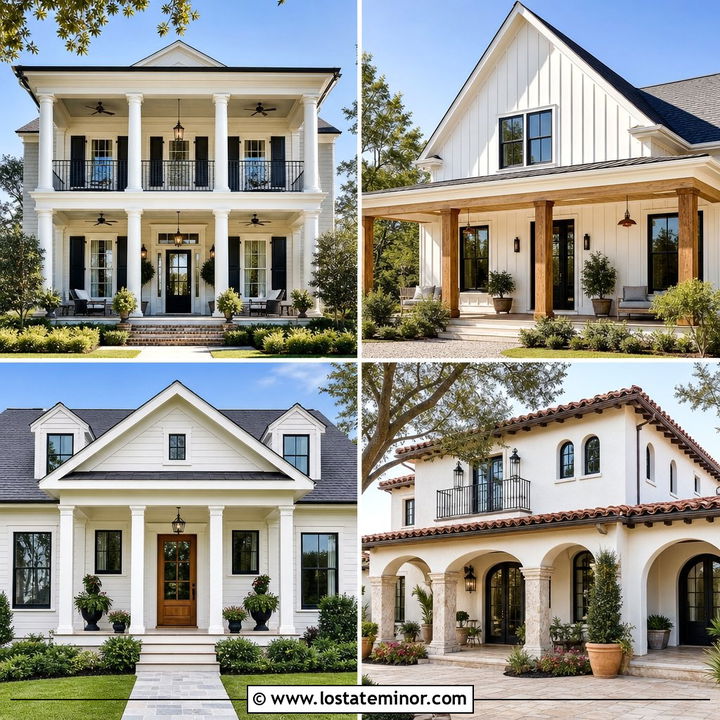
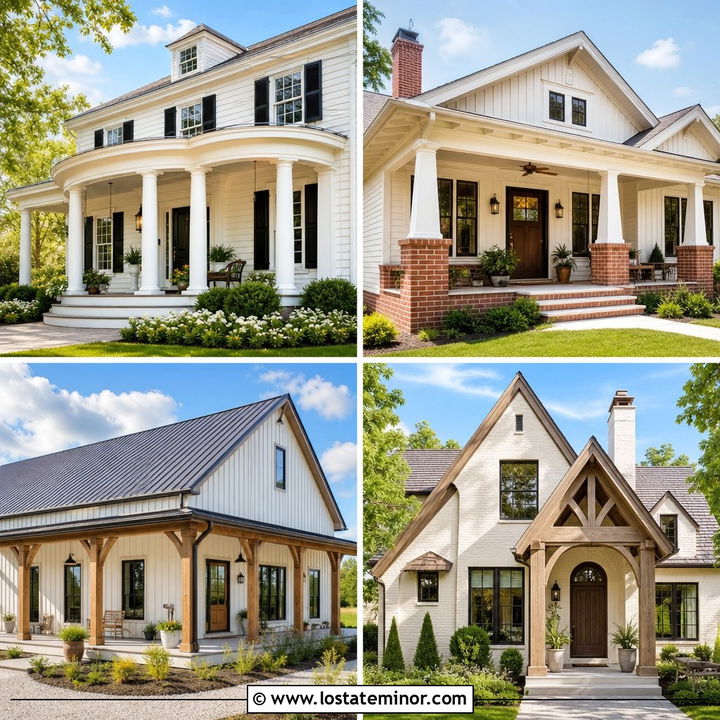
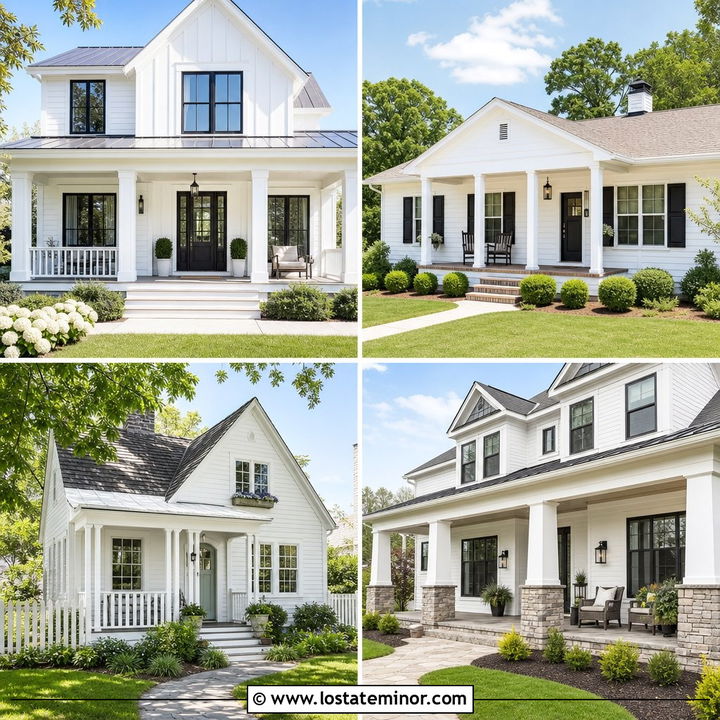
20. Dusty Blue House With Cedar Columns And Black Trim
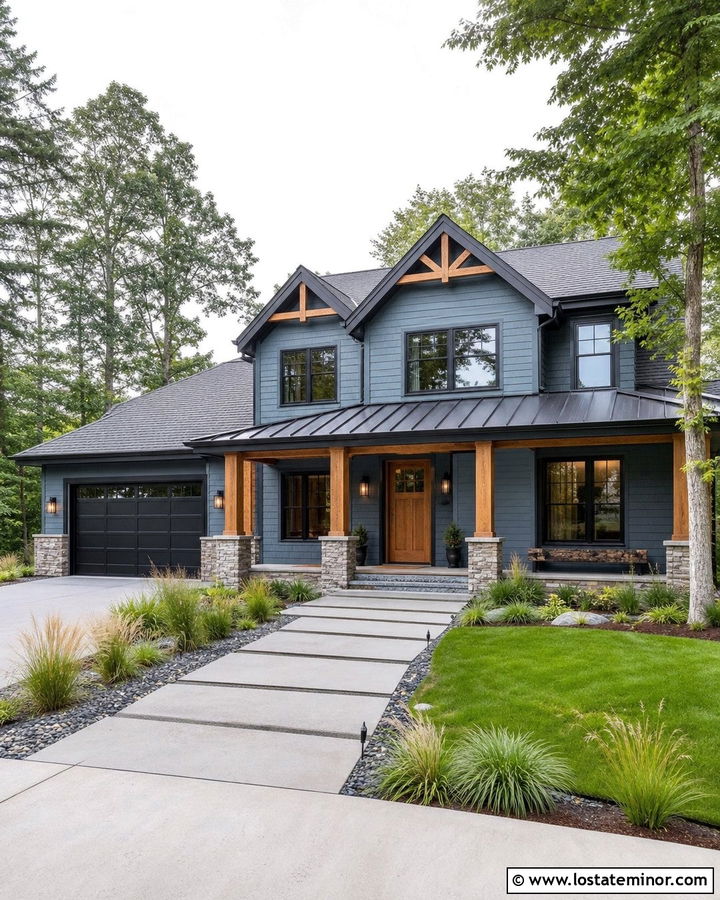
Cedar columns and black trim give dusty blue siding a warm modern-rustic personality. Use natural cedar on substantial porch posts, the front door, and selected gable brackets. Black window frames, fascia, gutters, and lighting provide a crisp edge around those organic materials. The dusty blue body color acts as the quiet middle ground, preventing the wood and black accents from fighting for attention. Choose a charcoal metal porch roof with a medium-gray shingle roof above it. A restrained stone veneer containing gray and tan can wrap the foundation and lower column bases. Large concrete pavers, gravel borders, and native ornamental grasses support the updated architecture. This full scheme is particularly successful on a modern craftsman or contemporary farmhouse with straightforward rooflines and generous windows.
21. Dusty Blue House With A Black Front Door And White Columns
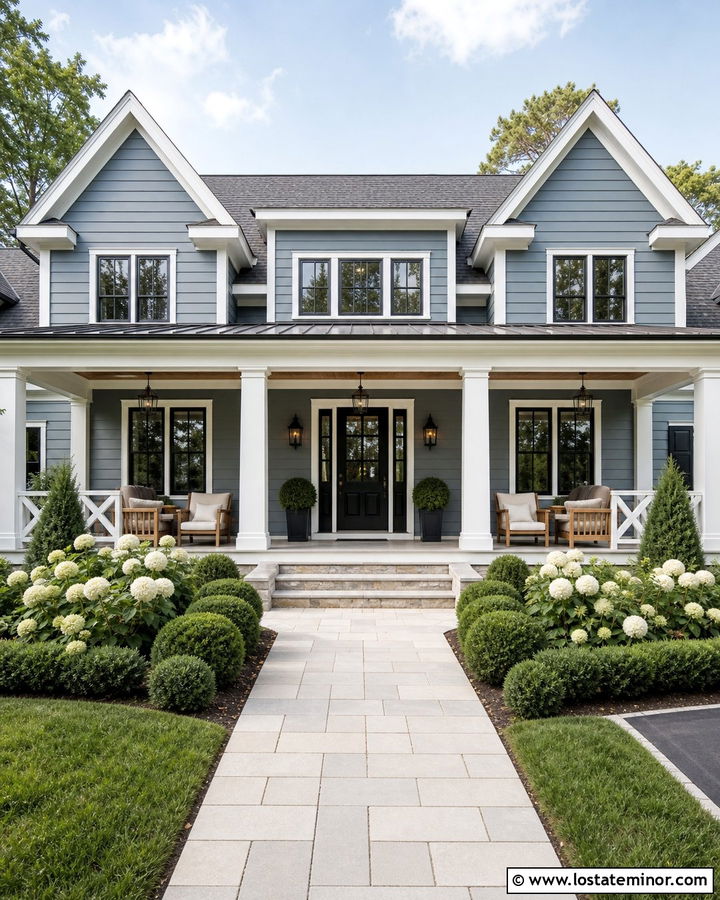
A black front door becomes a strong focal point when framed by white porch columns and dusty blue siding. Use the black sparingly on exterior lanterns, house numbers, and perhaps the window sashes. This repetition keeps the door from looking like an isolated dark rectangle. The columns should remain broad and bright, helping the covered entry stand forward against the blue body. A gray shingle roof and pale stone porch floor maintain a neutral background. For a touch of warmth, install a stained wood porch ceiling or place natural wood furniture along one side. White hydrangeas, clipped evergreens, and a light paver walkway support the clean palette. The completed look feels crisp and welcoming without relying on complicated trim colors or excessive architectural ornament.
22. Dusty Blue House With A Red Door And White Columns
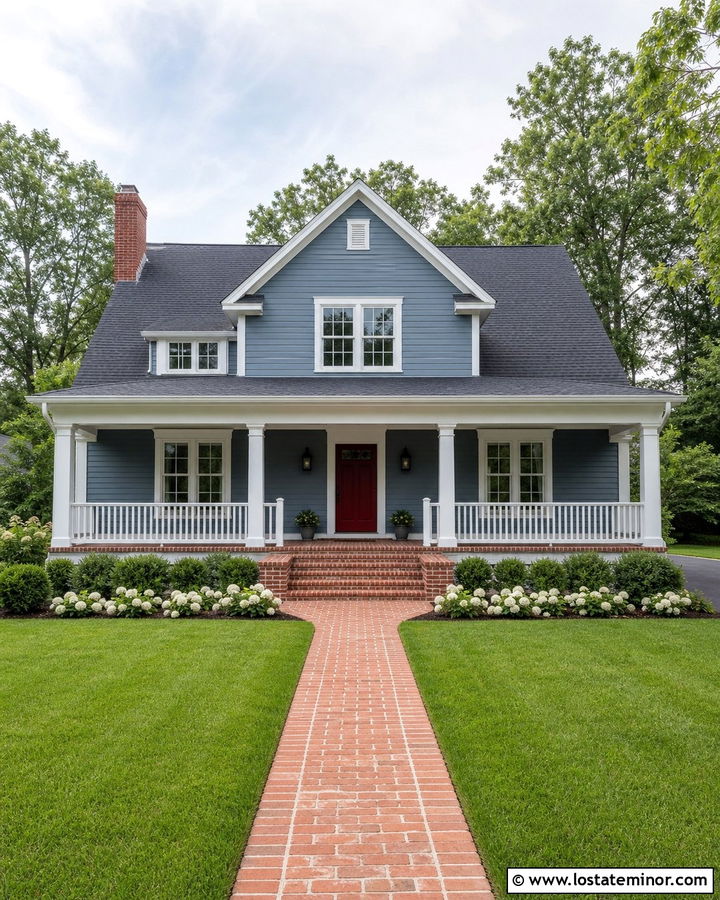
A muted red front door introduces energy to a dusty blue house without disrupting its relaxed appearance. Choose brick red, oxblood, or deep cranberry instead of a bright primary red. Frame the entrance with white square columns and repeat that white on the railings, window trim, and fascia. A charcoal-gray roof helps both colors feel grounded. Weathered red brick on the porch floor or chimney can connect the door to the rest of the architecture in a subtle way. Keep shutters dusty navy or omit them if the facade already has many details. Traditional black lanterns and aged brass door hardware add a polished finish. Green shrubs and white flowering plants provide simple landscaping that allows the blue siding and warm doorway to remain the clear visual focus.
23. Dusty Blue House With A Wood Door And Stone Columns
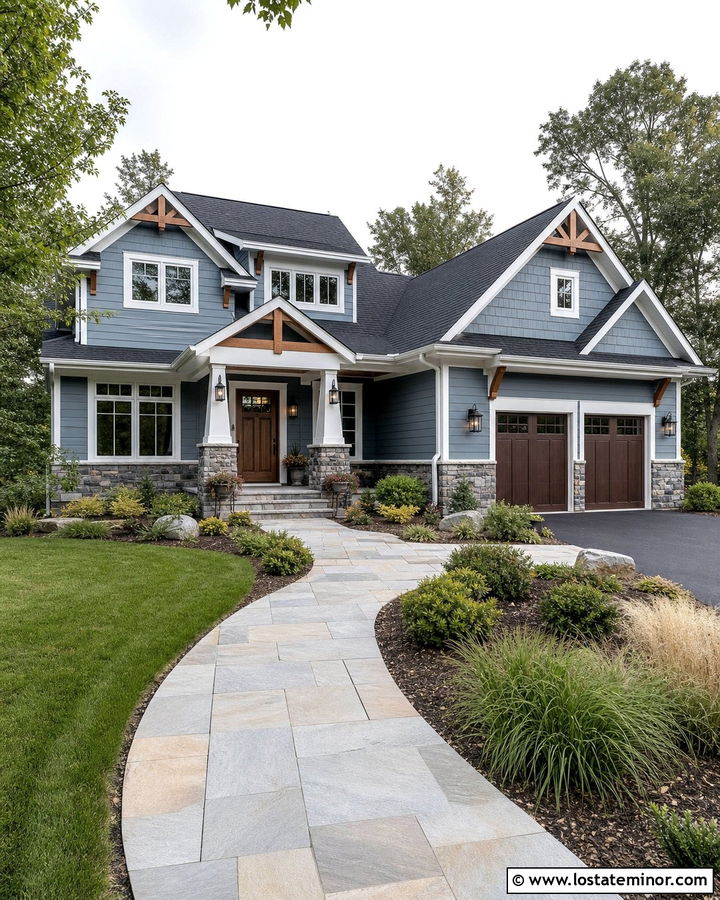
A natural wood door looks especially rich when it sits between stone-based columns on a dusty blue facade. Select a medium walnut or warm oak stain that has enough depth to stand out from the siding. Use tapered white column tops over gray-and-tan stone piers, repeating the masonry along the foundation or porch steps. Soft white window trim keeps the exterior bright, while a charcoal roof adds an anchoring upper edge. Small wood accents in the gables can echo the door without overwhelming the blue siding. Choose black or dark bronze lanterns for clean definition. A wide stone walkway, structured shrubs, and several ornamental grasses complete the scene. Every material contributes a distinct texture while remaining connected through repeated warm and cool undertones.
24. Dusty Blue House With Navy Shutters And Porch Columns
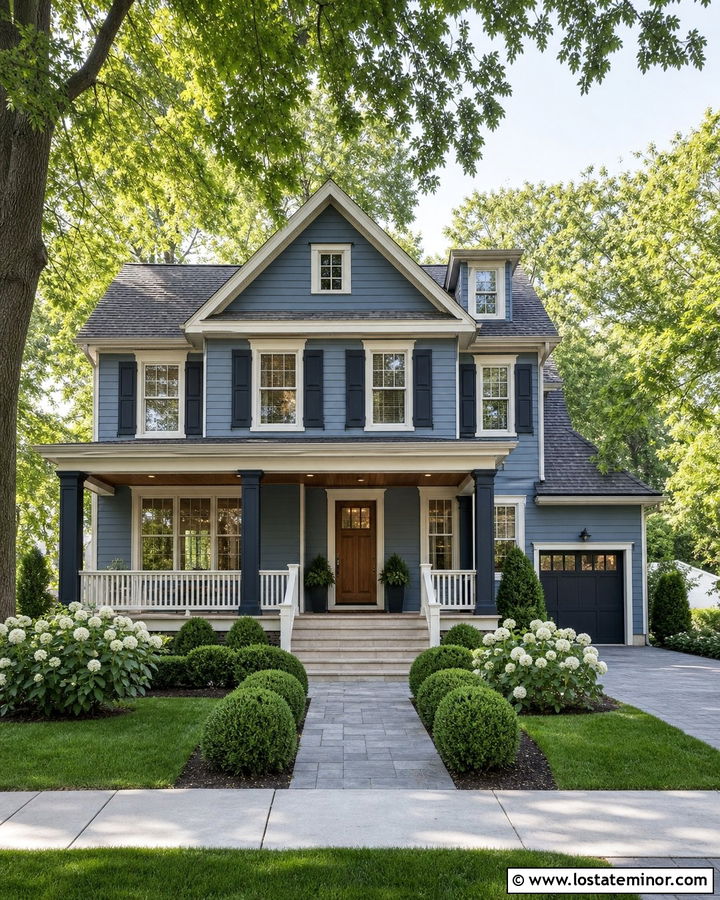
Painting both the shutters and porch columns a deep muted navy produces a layered blue exterior with gentle contrast. Keep the body color noticeably lighter so the architectural features remain visible from the curb. Warm white window casings, fascia, and porch railings add breathing room between the two blues. A medium-gray roof is preferable to black because it does not make the upper facade appear overly heavy. Add a warm cedar door and matching porch ceiling to balance the cool palette. Pale limestone steps and foundation accents introduce a light natural texture. This combination suits a traditional two-story home, symmetrical cottage, or updated colonial. Restrained landscaping with rounded shrubs and white blossoms reinforces the calm color story instead of introducing unrelated colors around the entrance.
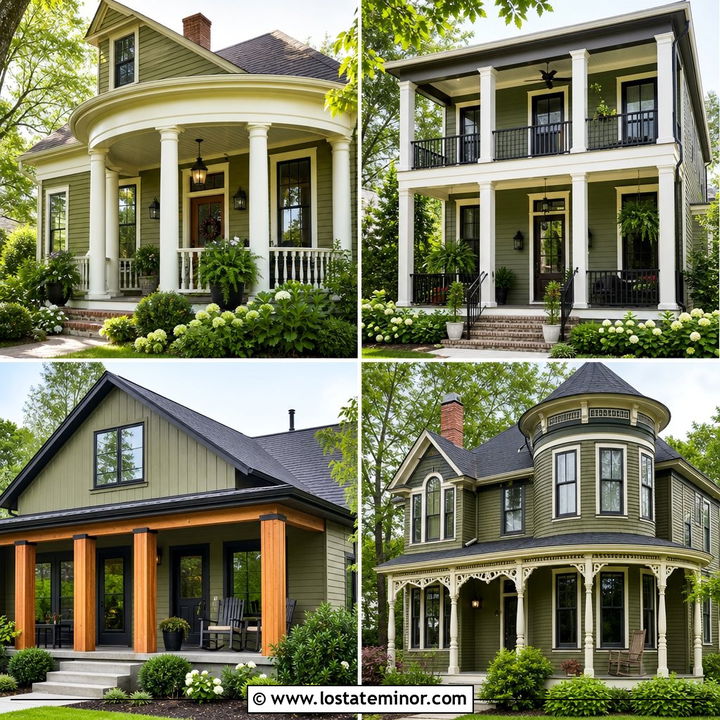
25. Dusty Blue House With White Shutters And Porch Columns
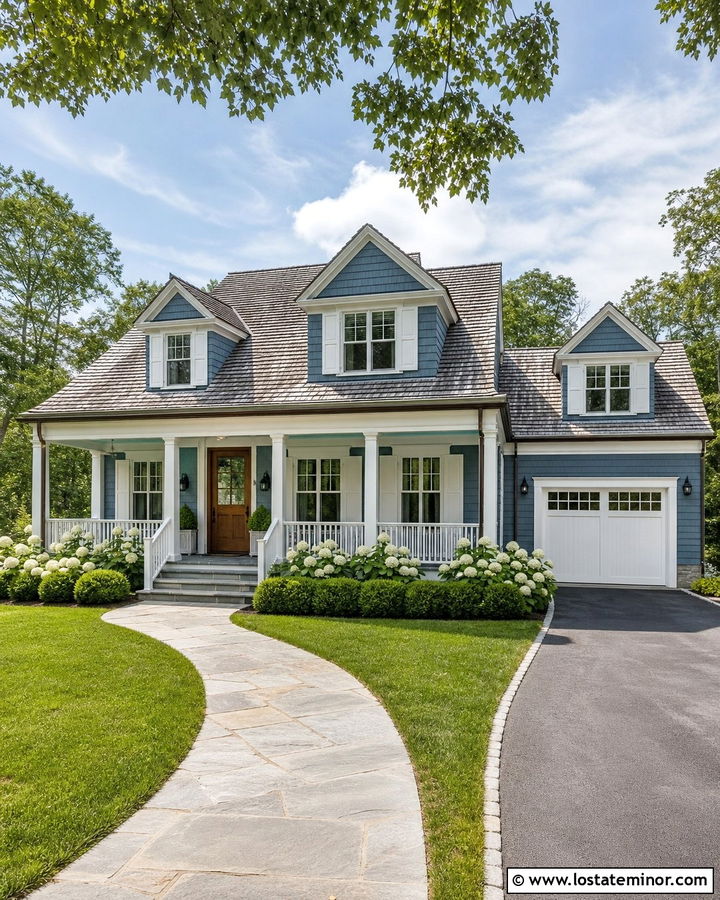
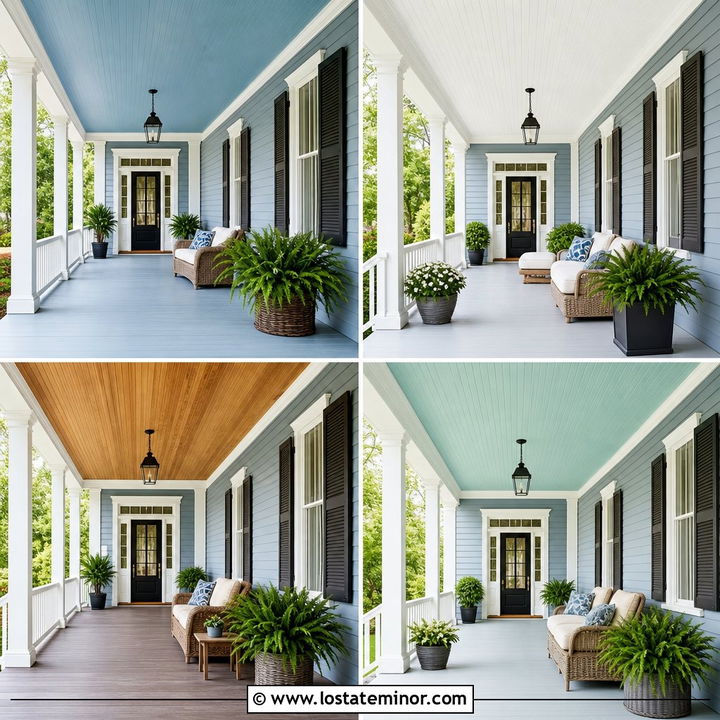
Using white on both the shutters and porch columns makes a dusty blue house feel bright, open, and coordinated. Choose an off-white with a slight warm undertone if the property receives intense sunlight, since extremely stark white may create excessive contrast. Repeat the trim color on the porch railing, garage door, eaves, and window frames. A weathered gray roof keeps the palette relaxed, while a stained medium-brown door adds a natural focal point. Consider a pale blue porch ceiling for a subtle extension of the siding color. Brick or bluestone flooring gives the porch enough texture to avoid feeling overly polished. Layer white hydrangeas, green boxwoods, and a curved stone walkway across the yard for a friendly, classic exterior that looks complete from every curb angle.
26. Dusty Blue House With A Metal Porch Roof And Columns
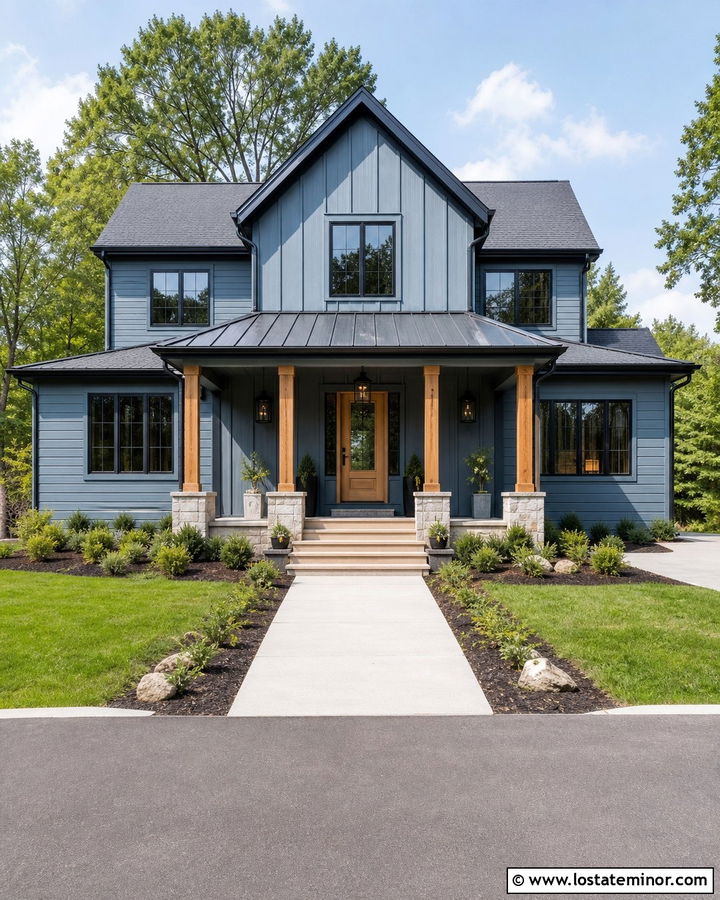
A dark standing-seam porch roof adds a clean architectural break to a dusty blue house. Support it with square white columns for classic contrast or natural cedar posts for a warmer, more contemporary result. Repeat the roof’s charcoal finish on gutters, lanterns, and window sashes so it looks connected to the overall design. Dusty blue board-and-batten siding beneath the porch emphasizes vertical lines, while horizontal lap siding on the remaining walls introduces variation. Use a light wood door to brighten the sheltered entrance. Pale stone bases can protect and visually strengthen the columns without making them bulky. Complete the exterior with broad steps, a straight walkway, and low plantings. The metal porch roof becomes part of a unified material palette rather than an unrelated add-on.
27. Dusty Blue House With A Wraparound Columned Porch
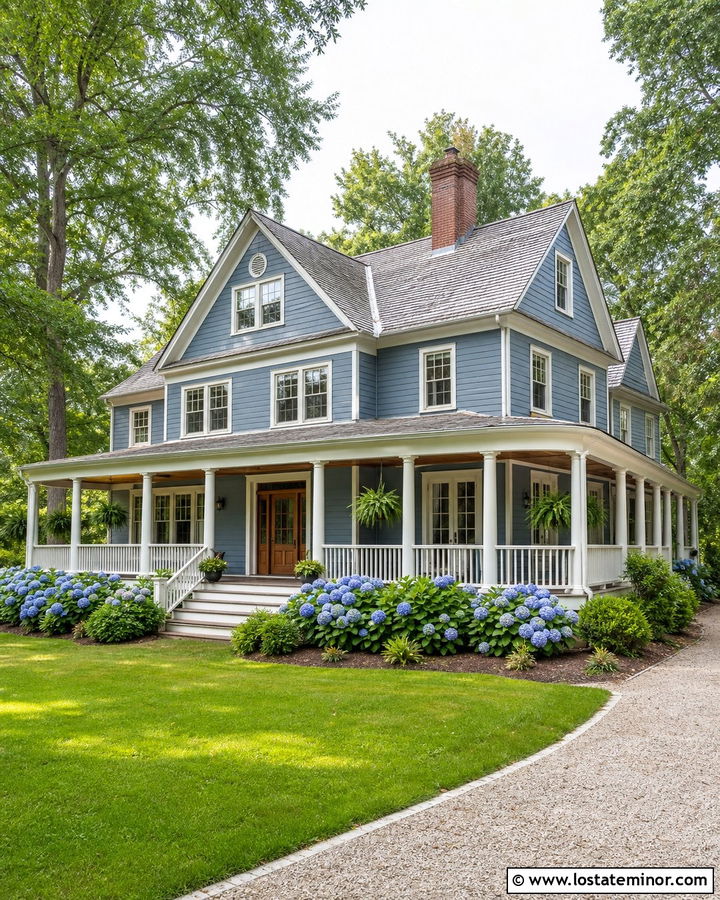
A wraparound porch gives a dusty blue house an inviting horizontal line and creates room for a repeating series of columns. Use evenly spaced warm white posts to maintain a light, graceful rhythm around the facade. Carry the same white onto railings, window trim, fascia, and corner boards. Dusty blue lap siding provides a calm background, while a weathered gray roof and brick chimney add quiet traditional character. Choose a natural wood front door and repeat its stain on the porch floor or ceiling. Porch furniture should stay within the blue, white, and wood palette to prevent visual clutter. Deep garden beds, hydrangeas, ferns, and a curved gravel walkway soften the long structure. The entire exterior feels generous, relaxed, and connected to its landscaped setting.
28. Dusty Blue Split-Level With A Columned Portico
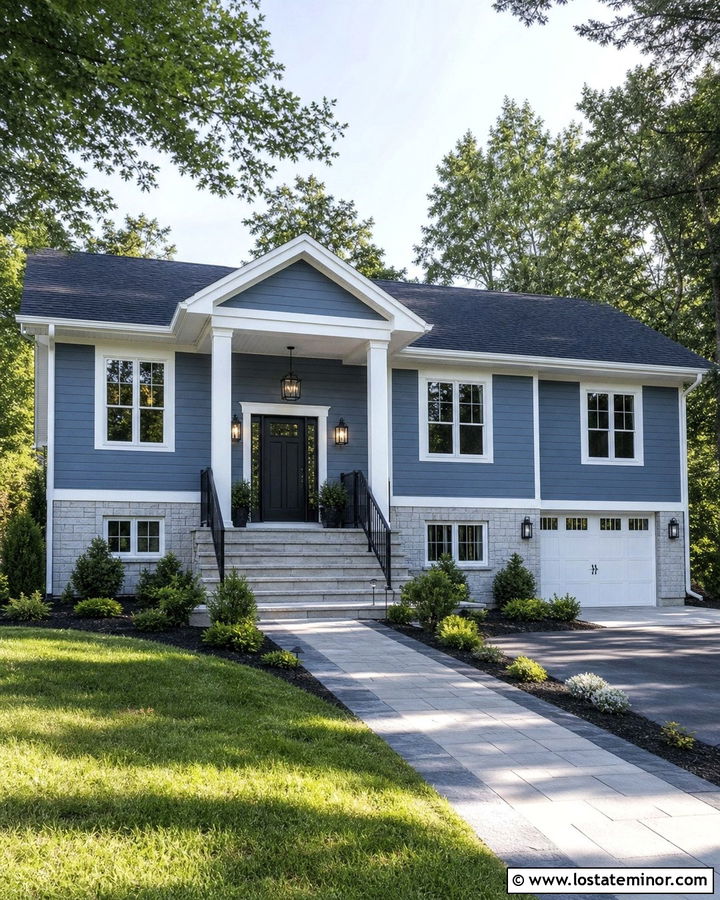
A centered columned portico can give a dusty blue split-level home a clearer and more welcoming entrance. Use two substantial square columns rather than several thin posts, keeping the new structure proportional to the compact landing. Paint the columns warm white and carry that color around the windows, garage door, and roofline. Dusty blue siding can cover the upper level, while pale gray stone or limewashed brick grounds the lower portion. A black front door and matching lanterns create a sharp focal point beneath the small gable. Use charcoal roofing to unite the levels. Wide steps, a modern metal railing, and a direct paver walkway make the entrance easier to read from the curb while improving the balance of the complete facade.
29. Dusty Blue House With A Small Columned Front Porch
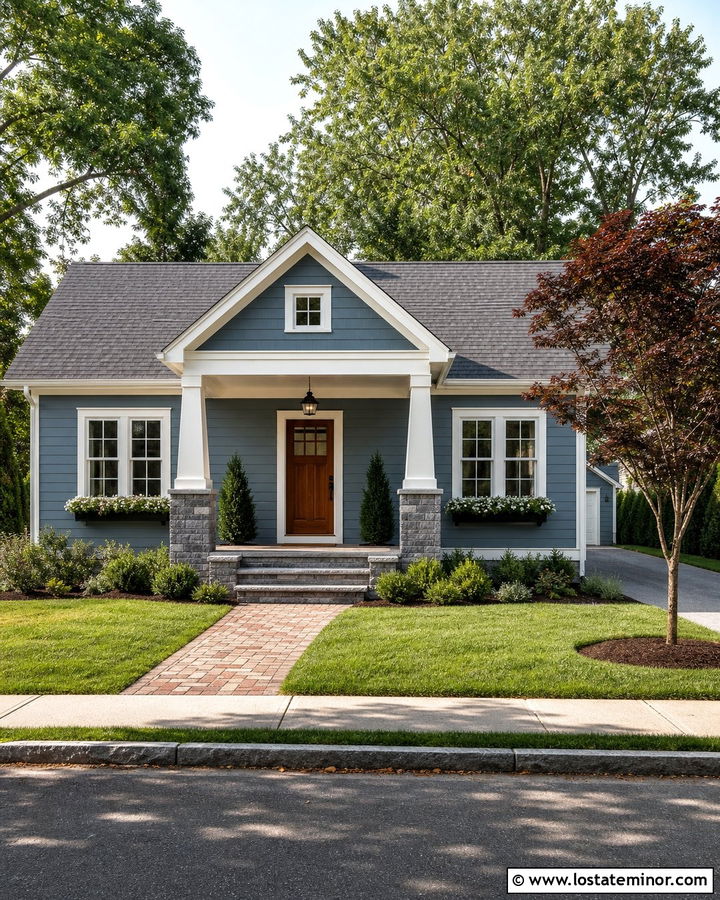
Even a modest dusty blue house can support a welcoming columned porch when every feature is carefully scaled. Place two simple cream columns beneath a compact gabled roof and keep the porch wide enough to frame the doorway without crowding nearby windows. Use dusty blue lap siding, warm white trim, and a medium-gray roof for a gentle base palette. A rich wood door adds warmth to the small entrance, while one black pendant light provides definition. Consider gray stone around the porch foundation to make the addition feel permanent. Low steps and a short brick walkway should align directly with the doorway. Compact shrubs, window boxes, and one small ornamental tree finish the curb view without hiding the columns or overwhelming the home’s approachable proportions.
30. Dusty Blue Modern Farmhouse With Mixed-Material Columns
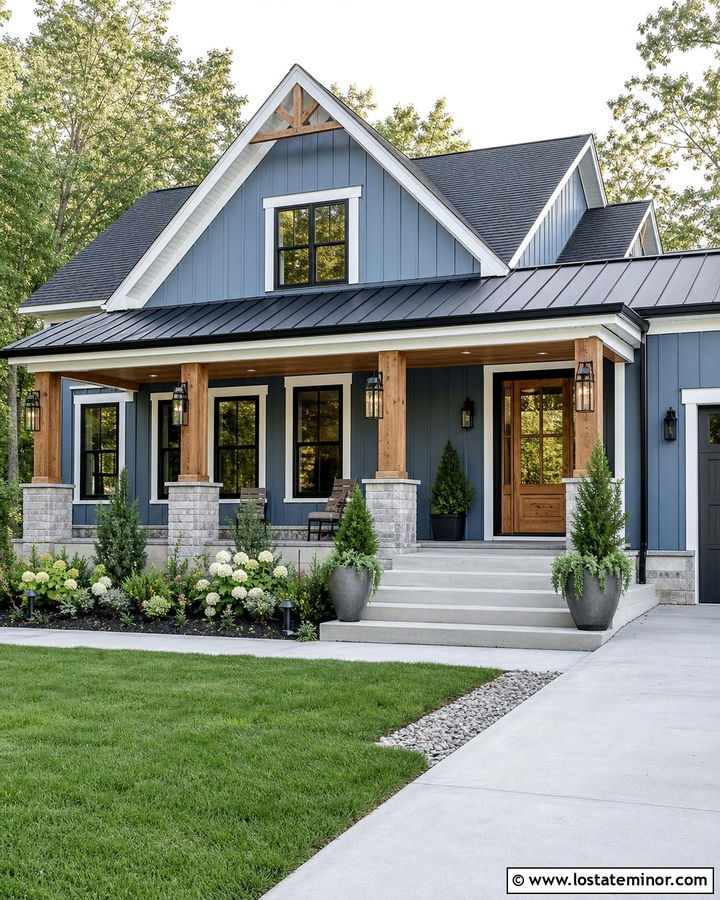
Mixed-material columns bring depth to a dusty blue modern farmhouse while supporting its simple geometry. Use square cedar posts set over pale limestone or gray stone bases, allowing the wood to warm the cool blue board-and-batten siding. Repeat cedar on the front door and porch ceiling, then introduce matte black through the windows, lanterns, gutters, and metal porch roof. Bright white fascia and limited white trim prevent the darker details from taking over. The main roof can remain charcoal architectural shingles for a softer transition above the metal section. Wide concrete steps, large planters, and linear foundation beds reinforce the clean structure. This complete palette combines color, texture, and contrast without turning the exterior into an overly complicated collection of materials.
Conclusion:
These **30 Dusty Blue House Design With Porch Columns Ideas** show how one adaptable exterior color can support traditional, coastal, craftsman, farmhouse, cottage, and modern architecture. The most successful look will coordinate the columns with details already present on the house. White columns create clean contrast, cedar adds warmth, dark metal introduces modern definition, and stone or brick bases ground the porch. Repeat each column material or accent color elsewhere through the door, trim, roof, foundation, or walkway. Before finalizing the palette, view siding and trim samples beside the permanent roofing and masonry in morning and afternoon light. A connected material plan will make the dusty blue exterior and columned porch feel intentional from the curb.

Related posts: