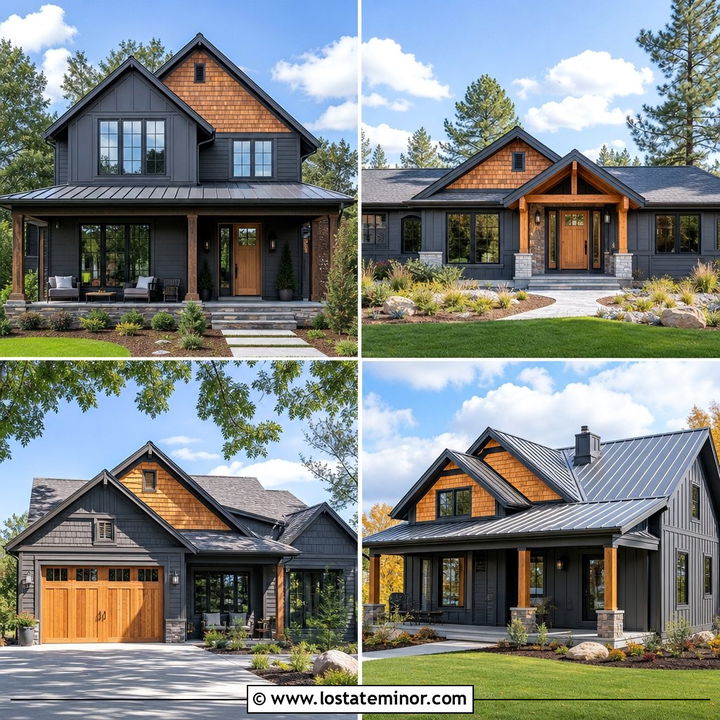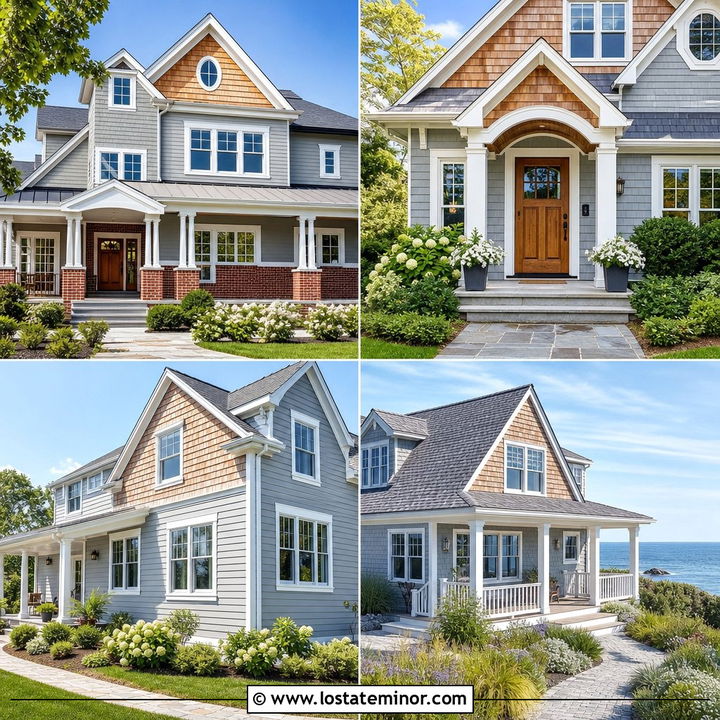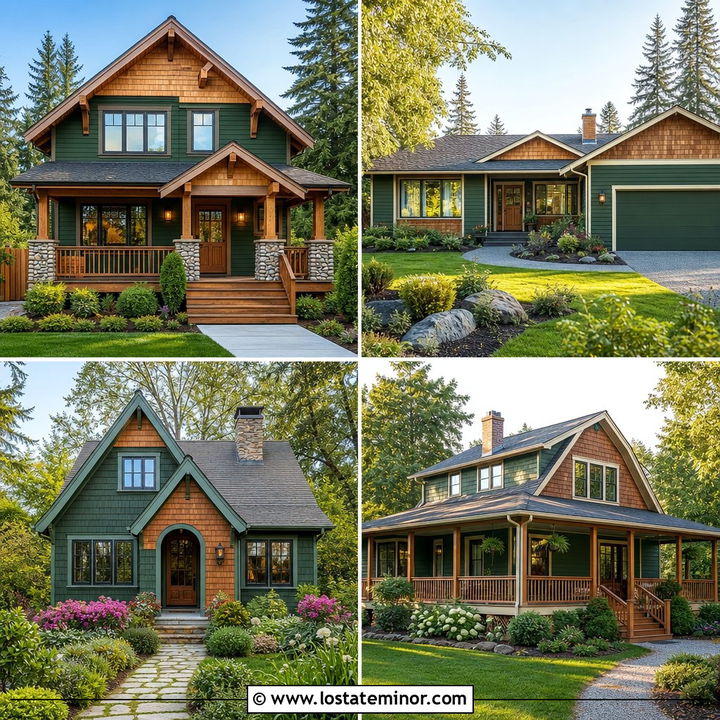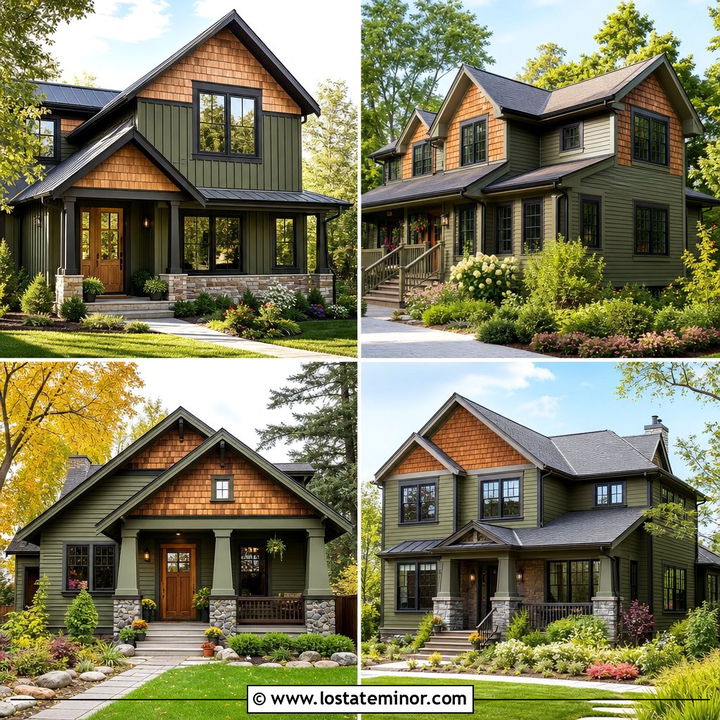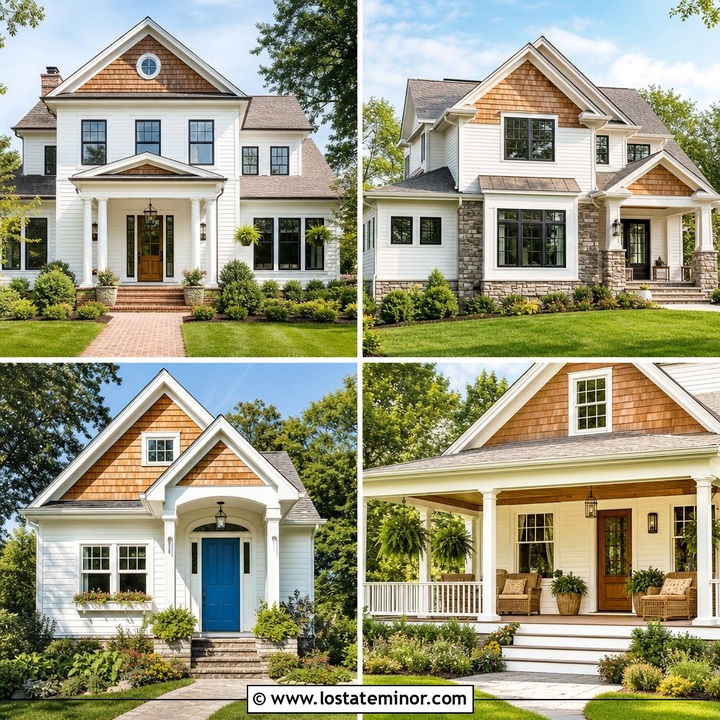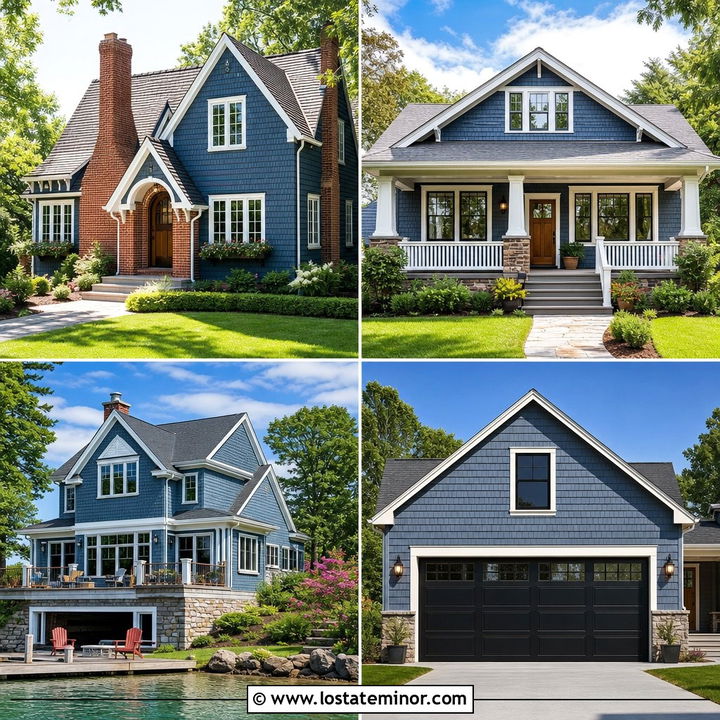
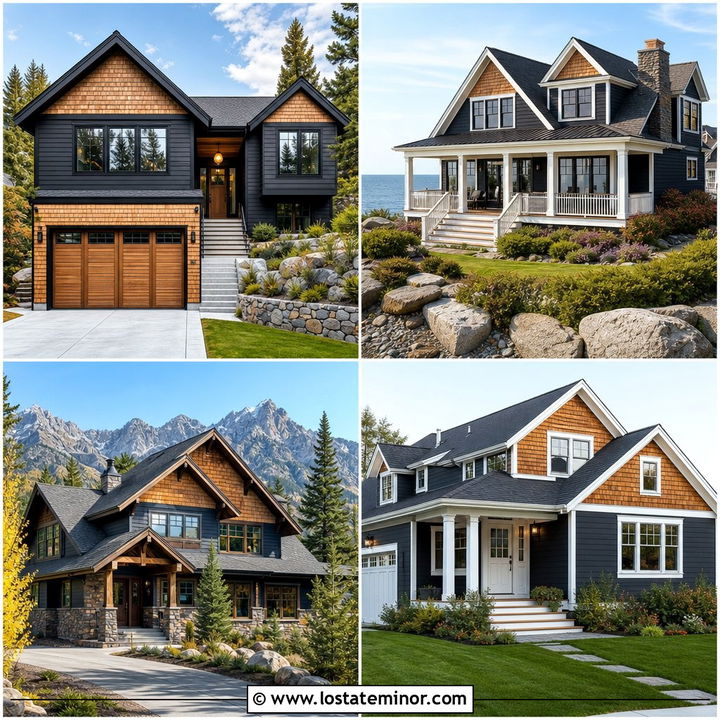
Navy blue siding and warm cedar shakes create an exterior that feels bold, natural, and welcoming. The deep blue gives the facade definition, while cedar adds texture and soft golden-brown contrast. This pairing works across Craftsman homes, Cape Cod cottages, ranch houses, modern farmhouses, and contemporary builds. It also coordinates beautifully with white trim, natural stone, brick, copper, and black metal details. Current exterior designs often use cedar selectively on gables, porches, dormers, and garages to highlight architecture without overwhelming the facade. () Before choosing materials, compare samples beside the roof and masonry in morning and afternoon light. The complete looks below explore **30 Navy Blue House Design With Cedar Shake Ideas** for distinctive, balanced curb appeal.

1. Navy Blue Craftsman With Cedar Shake Gables
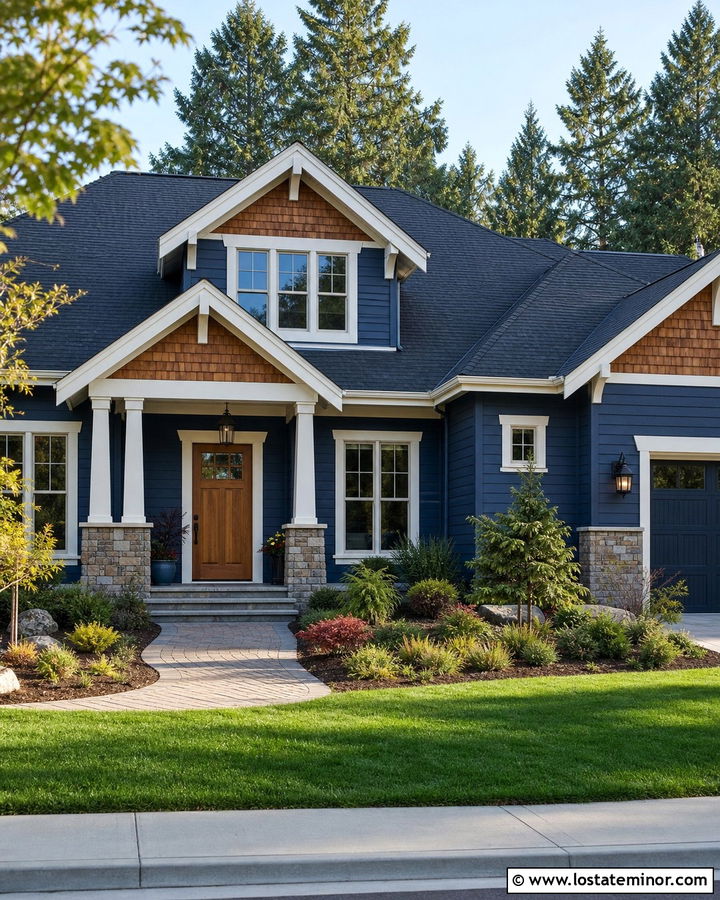
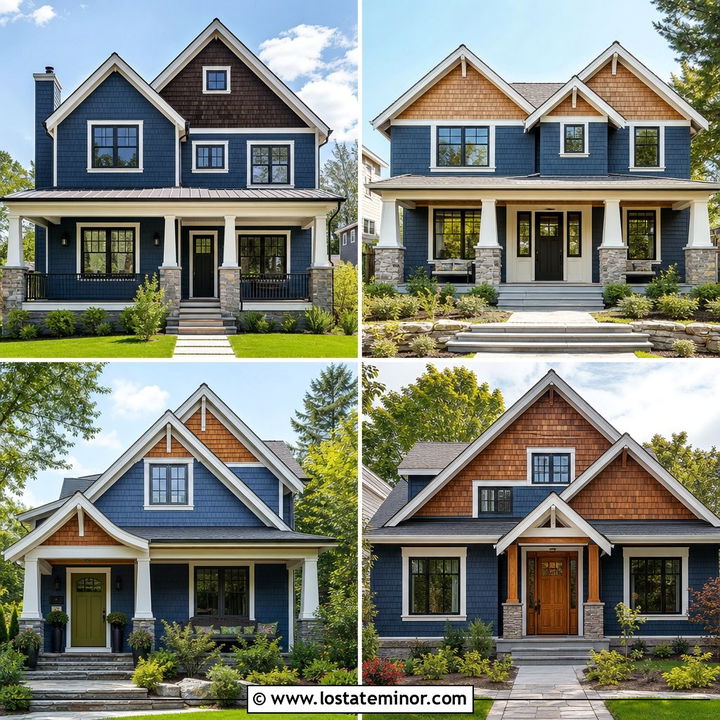
A navy blue Craftsman gains warmth and character when cedar shakes fill the front-facing gables. Use deep navy lap siding across the main level, then let natural cedar create a textured transition beneath the roof peaks. Creamy white trim keeps the dark body color from appearing too heavy, while a medium-stained oak door connects visually with the cedar. Stone porch bases in mixed gray and tan introduce another natural material without competing for attention. Complete the scheme with substantial tapered columns, matte black lighting, and an architectural-shingle roof in charcoal. Keep the cedar limited to clearly defined sections so it looks intentional. This balanced arrangement emphasizes the handcrafted details associated with Craftsman architecture while creating a polished exterior suitable for a wooded or suburban setting.
2. Navy Blue Cape Cod With Cedar Shake Siding
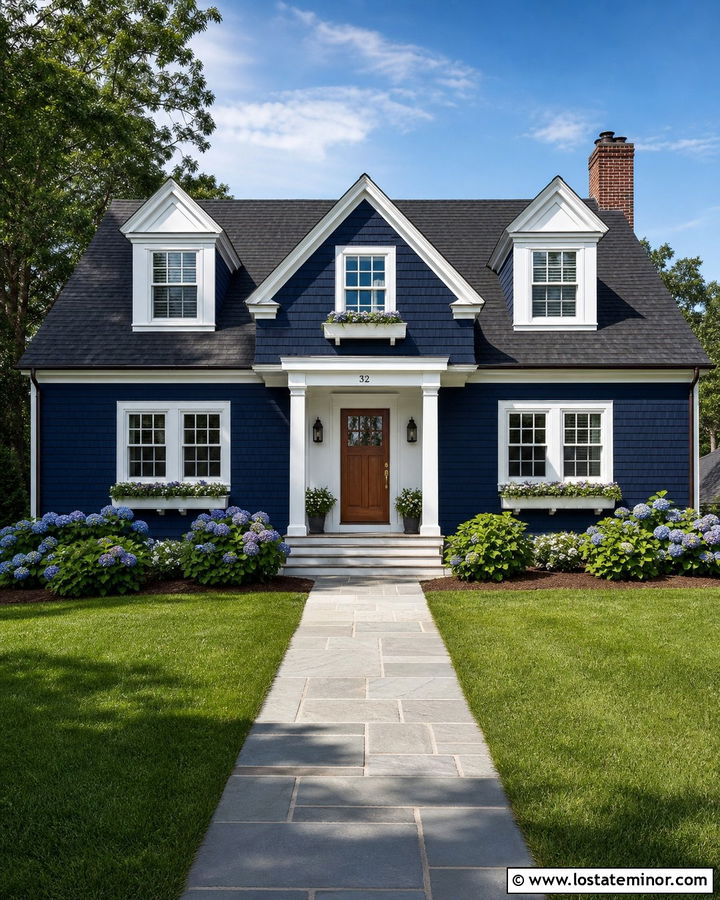
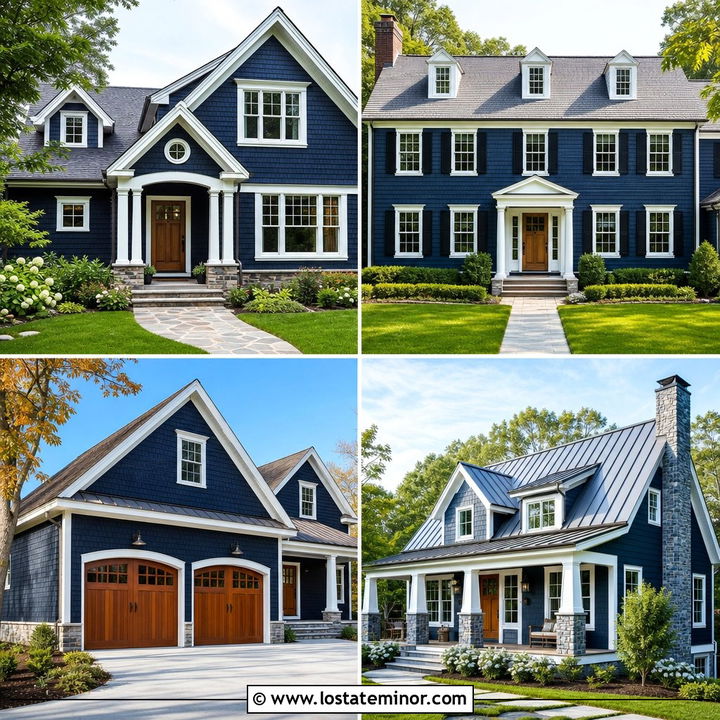
Picture a compact Cape Cod wrapped in navy-painted cedar shakes, framed by bright white trim and topped with a weathered charcoal roof. Covering the entire facade in shakes gives a smaller home rich texture without requiring several competing materials. White window casings, corner boards, fascia, and dormers establish the crisp contrast commonly associated with coastal architecture. Add a natural mahogany front door for warmth, then repeat that finish on a simple porch bench or window boxes. A pale gray stone walkway and low hydrangeas soften the saturated exterior color. Because cedar texture creates visible shadow lines, select a navy that stays noticeably blue in shade. The completed palette feels classic rather than themed, making it equally appropriate for a seaside community, lakeside neighborhood, or traditional inland suburb.
3. Navy Blue Colonial With Cedar Shake Dormers
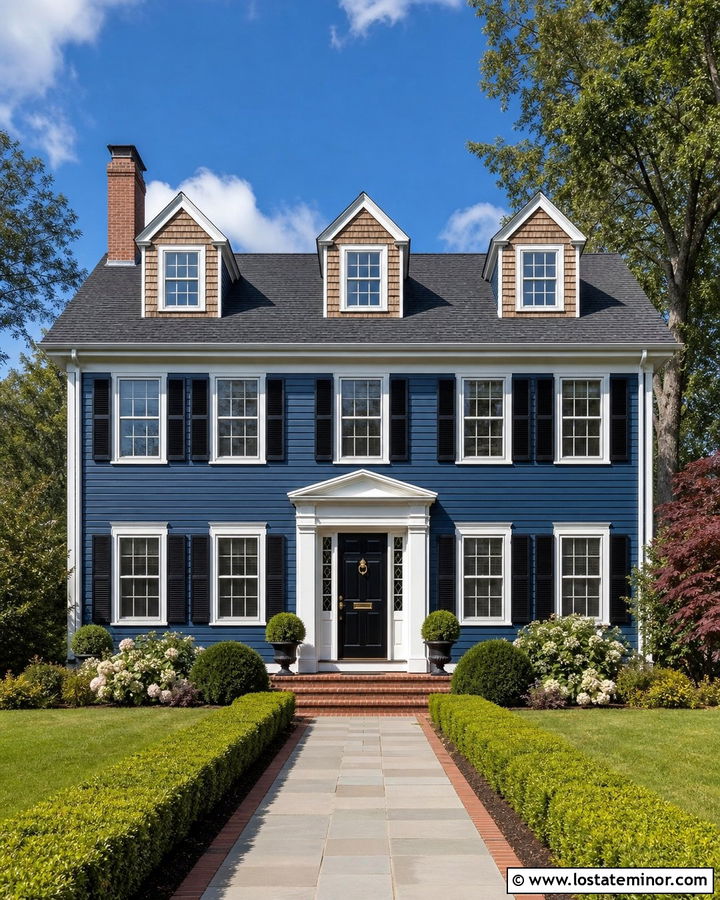
Does your Colonial exterior need more dimension without losing its orderly appearance? Keep symmetrical navy blue lap siding on the main facade and reserve cedar shakes for the dormers. This treatment highlights the upper architecture while preserving the home’s traditional proportions. Choose naturally finished cedar with controlled golden-brown coloring rather than a heavily varied rustic blend. Crisp white trim around the windows, roofline, and entry creates a structured frame. Black shutters and a glossy black front door add formal contrast, while aged brass hardware supplies a warmer detail near the entrance. A dark gray roof quietly anchors the entire combination. Matching cedar accents on a detached garage can extend the concept across the property. The result is a dignified Colonial exterior with enough organic texture to feel updated and inviting.
4. Navy Blue Ranch With Cedar Shake Entry
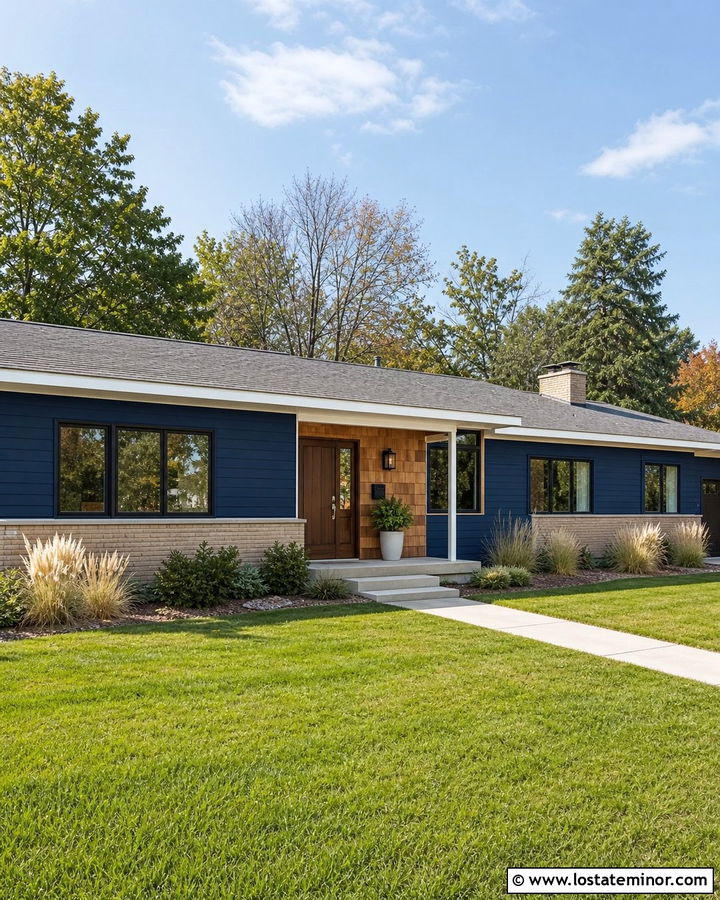
On a long, low ranch house, a cedar shake entry can create a much-needed focal point. Paint the horizontal siding a rich navy blue and place natural cedar shakes around the recessed doorway or beneath a projecting porch roof. This vertical concentration of texture visually breaks up the wide facade. Use warm white trim rather than stark white to soften the contrast, especially if the home has tan brick or beige stone. A medium walnut door, black-framed windows, and simple bronze lights complete the entrance. The roof should remain restrained, with charcoal or weathered gray shingles working particularly well. Extend a straight concrete walkway toward the cedar-clad entry and use low ornamental grasses along the foundation. This complete scheme makes a basic ranch feel more architectural without relying on an overly complicated renovation.
5. Navy Blue Modern Farmhouse With Cedar Shake Peaks
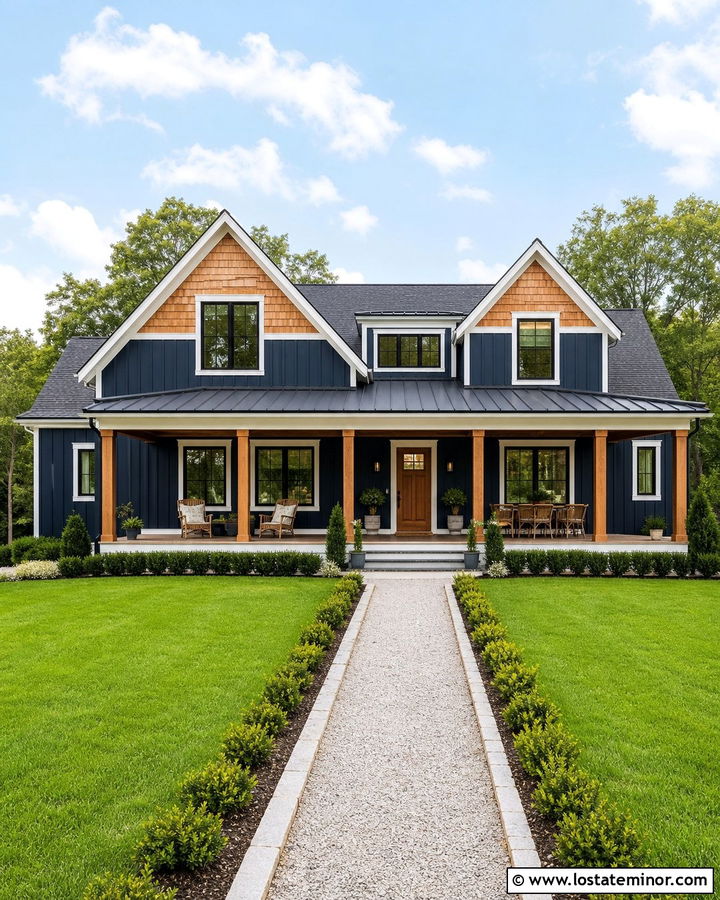
A modern farmhouse does not have to be white to feel bright and approachable. Deep navy blue board-and-batten siding creates strong vertical lines, while cedar shakes placed inside the tallest gable peaks add warmth near the roof. Use soft white trim around the windows and roof edges, but introduce black window frames for sharper definition. Natural cedar porch posts and a matching front door help distribute the wood tone across the lower facade. A charcoal standing-seam roof over the porch connects the windows, lighting, and roofline into one cohesive scheme. Avoid using cedar on every available surface. A few carefully selected peaks will prevent the exterior from becoming visually busy. The finished home feels contemporary and grounded, with farmhouse simplicity balanced by the texture and color variation of real or realistic cedar shakes.
6. Navy Blue Bungalow With Cedar Shake Porch
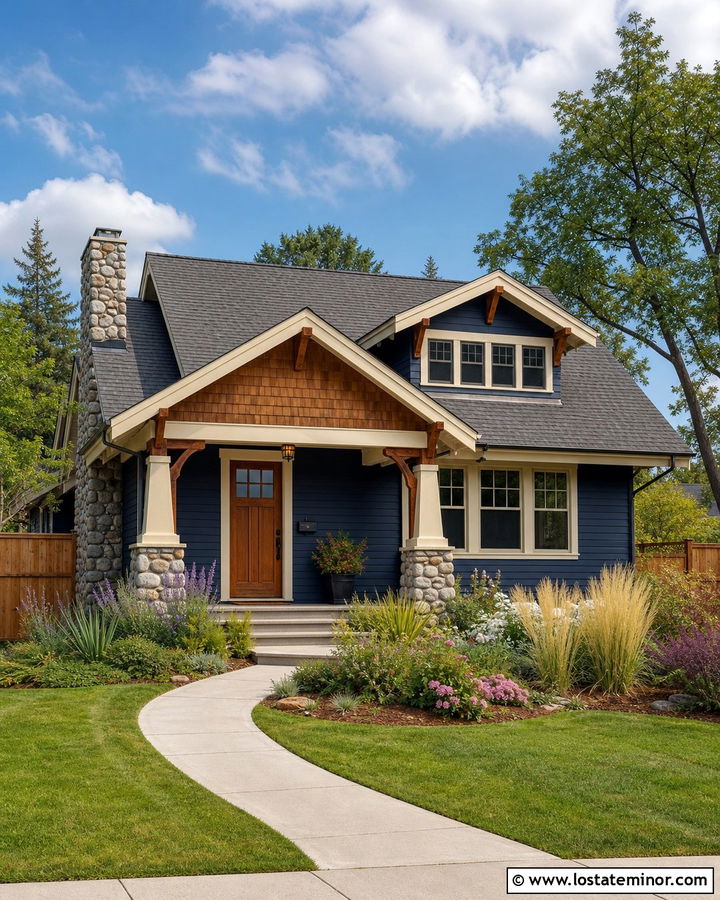
For a cozy bungalow, cedar shakes can turn the porch into the defining feature. Cover the main house in muted navy blue siding, then use warm cedar shakes across the porch gable and around the entry wall. Cream trim outlines the broad eaves and decorative brackets without producing an overly sharp contrast. Choose a craftsman-style wood door with divided glass, and repeat its stain on the porch ceiling or railing cap. River rock or fieldstone around the column bases adds weight close to the ground. A medium-gray roof works better than solid black when the bungalow has a compact footprint, since it keeps the upper half from looking too dark. Layered shrubs, native grasses, and a gently curved walkway complete an exterior that feels relaxed, handcrafted, and connected to its surroundings.
7. Navy Blue Split-Level With Cedar Shake Garage
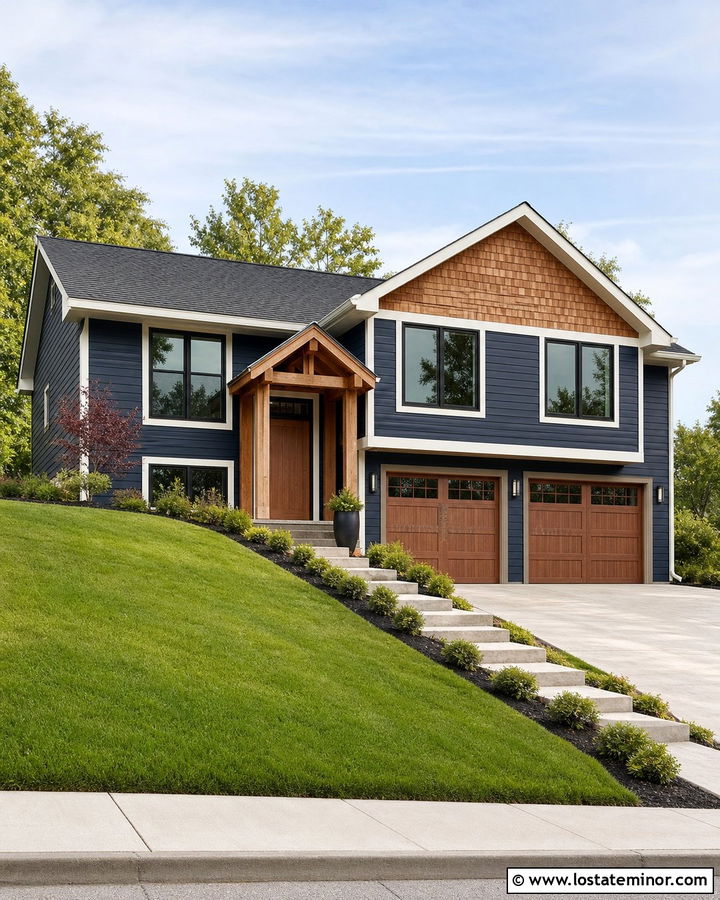
A split-level facade often benefits from one material that visually connects its uneven sections. Navy blue siding can unify the primary walls, while cedar shakes above and around the garage establish a warm architectural anchor. Choose natural cedar in a medium tone so it remains distinct beside the dark blue without appearing orange. Paint the trim a soft off-white and use a cedar-look garage door that closely matches the shake color. Black window frames and charcoal roof shingles add clean contemporary definition. If the entry sits between levels, frame it with a cedar canopy supported by simple wood brackets. Keep landscaping low around the garage and taller near the blank side wall to balance the elevation. The complete design transforms a practical split-level into a coordinated home with clearer proportions and stronger curb appeal.
8. Navy Blue Lake House With Cedar Shake Gables
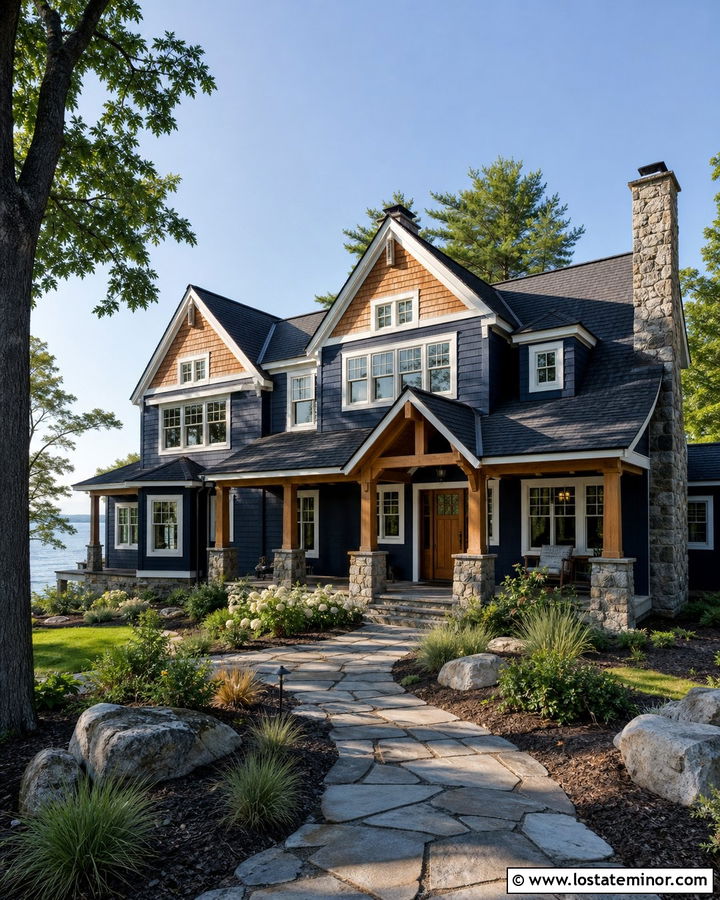
Sunlight, water, and surrounding greenery make navy blue a natural choice for a lake house. Apply rich blue siding to the main walls and install cedar shakes in several prominent gables to bring the exterior closer to the wooded landscape. White trim keeps the palette fresh, while a honey-toned front door and exposed porch beams repeat the cedar’s warmth. Select irregular gray stone for the chimney, foundation, or porch columns, allowing the masonry to bridge the cool siding and warm wood. A weathered charcoal roof will feel softer than deep black. Large divided-light windows and a broad porch reinforce the casual waterfront character. On the landscape side, use the same materials around a deck or screened porch. Repetition makes the home look complete from the road and the water.
9. Navy Blue Coastal Cottage With Weathered Cedar Shakes
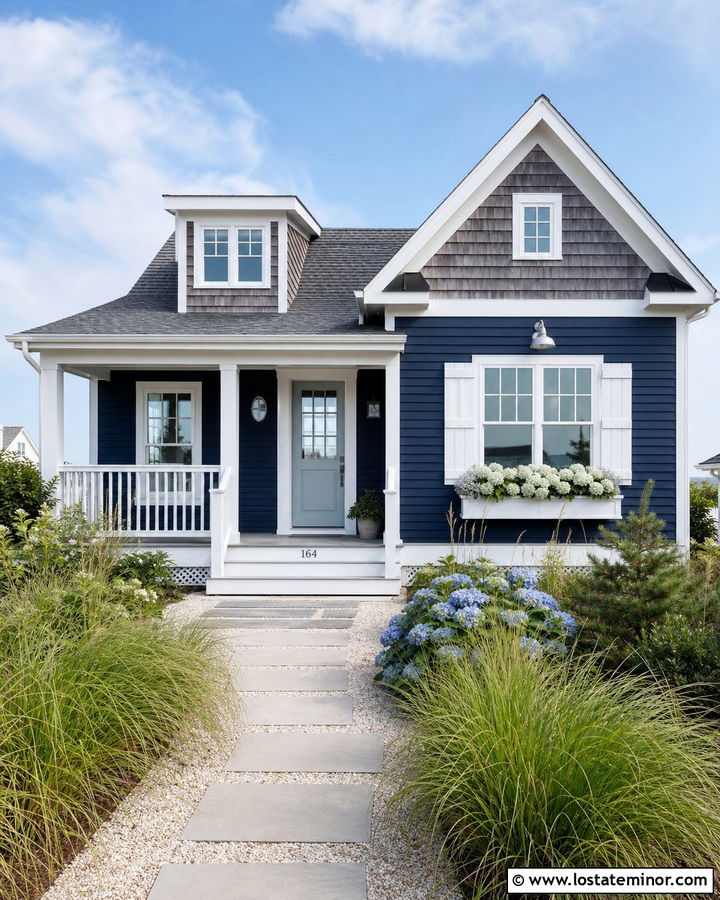
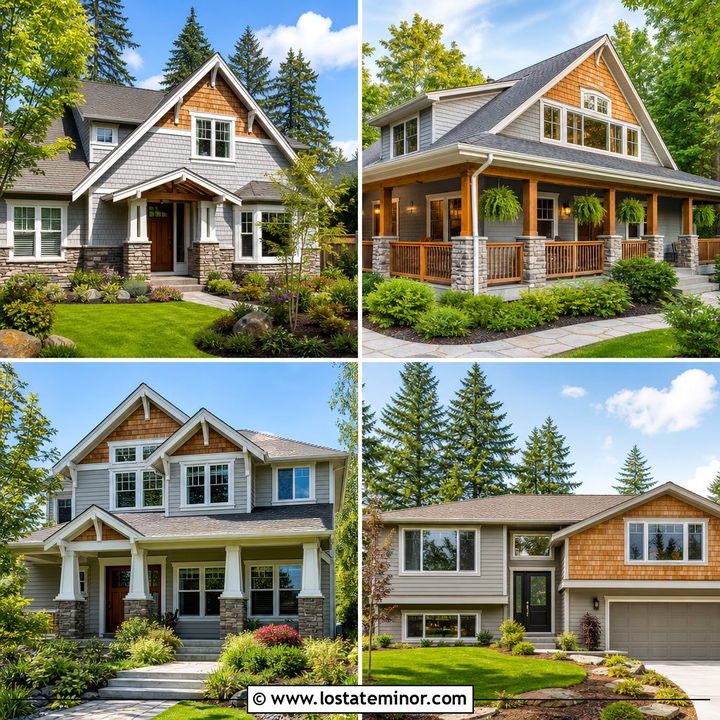
Salt-washed character can be recreated with navy siding and cedar shakes finished in a weathered gray stain. The gray-brown shingles provide texture while keeping the palette cooler and quieter than fresh golden cedar. Use them across upper gables, dormers, or the entire second story of a coastal cottage. Bright white trim around the windows and porch creates a clean outline against both exterior finishes. A pale blue-gray front door offers gentle variation, while brushed nickel or aged pewter hardware supports the coastal color family. Finish the house with a medium-gray roof and simple white railings. Beach grasses, hydrangeas, gravel paths, and light concrete pavers complete the setting without turning it into a nautical theme. The result feels breezy and established, even when the home is far from the shore.
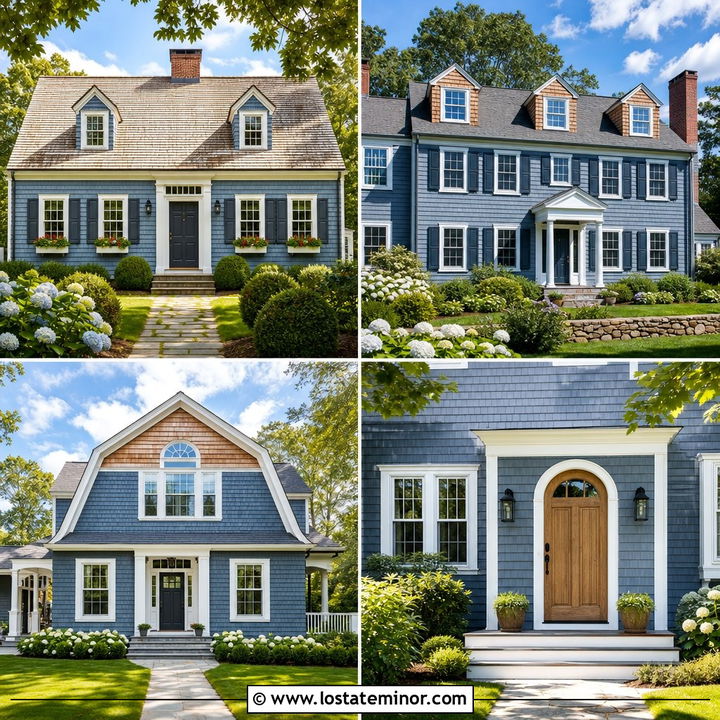
10. Navy Blue Shingle House With White Trim
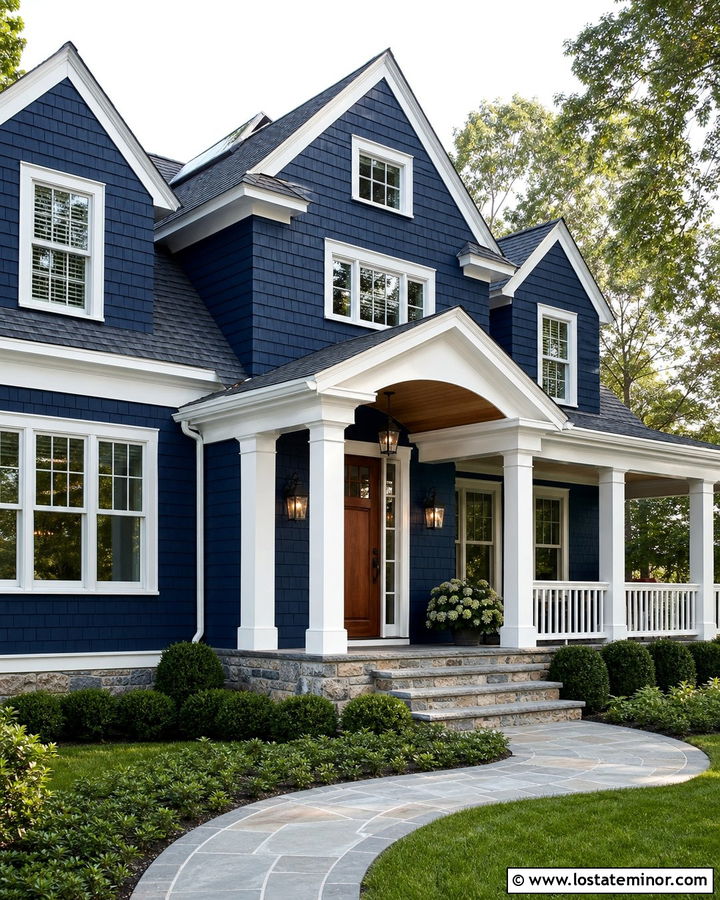
When cedar texture is the main attraction, a limited color palette often works best. Paint the complete shingle exterior a classic navy blue, then define the roofline, windows, columns, and railings with clean white trim. Keeping the shakes and siding in one color allows their uneven edges and shadow lines to provide subtle depth. Add a naturally stained front door and a small cedar porch ceiling so the exterior still includes visible wood warmth. Black lanterns and a charcoal roof create crisp finishing points without introducing another major color. This treatment suits Shingle-style homes with multiple rooflines, bays, and dormers because it visually connects complicated architecture. Before committing, view a large painted cedar sample outdoors. Deep colors can shift considerably between direct sunshine, overcast weather, and shaded sides of the house.
11. Navy Blue House With Cedar Shake Garage Doors
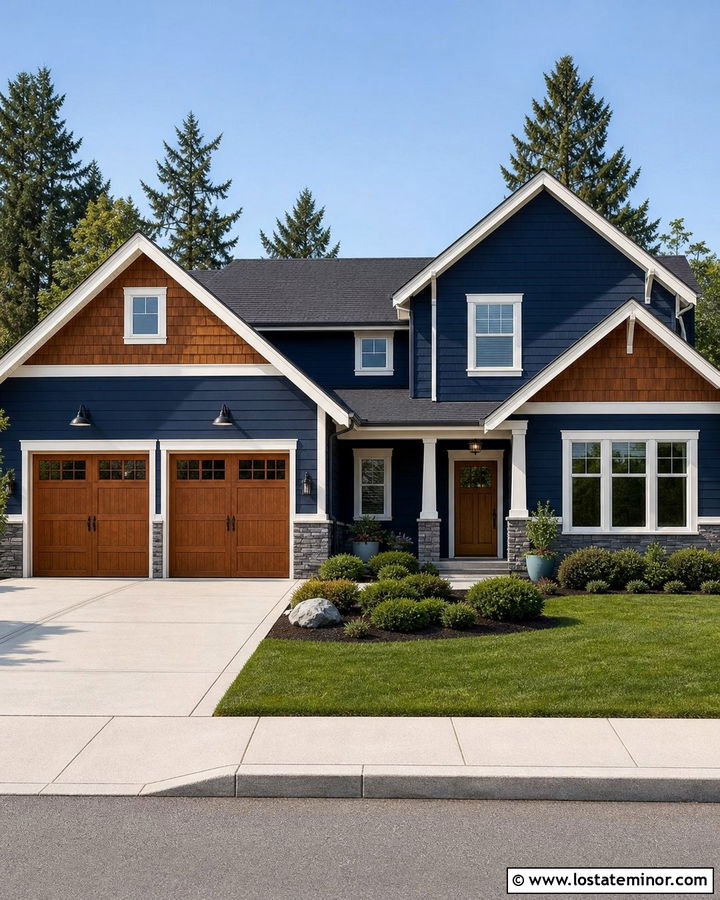
Cedar garage doors can bring warmth to a navy blue house, especially when the garage occupies a large portion of the street-facing facade. Pair deep navy lap siding with medium-toned cedar doors featuring simple vertical planks or understated carriage details. Use warm white trim around the openings to separate the wood from the dark body color. Small cedar shake panels above the doors help integrate them into the architecture instead of making them look like an isolated upgrade. A matching wood front door provides another point of repetition. Complete the palette with charcoal roofing, black sconces, and gray stone along the foundation. Keep stains consistent across every wood element, but allow natural grain variation. This creates a refined, layered exterior where the garage feels connected to the house rather than visually dominant.
12. Navy Blue House With Cedar Shake Front Porch
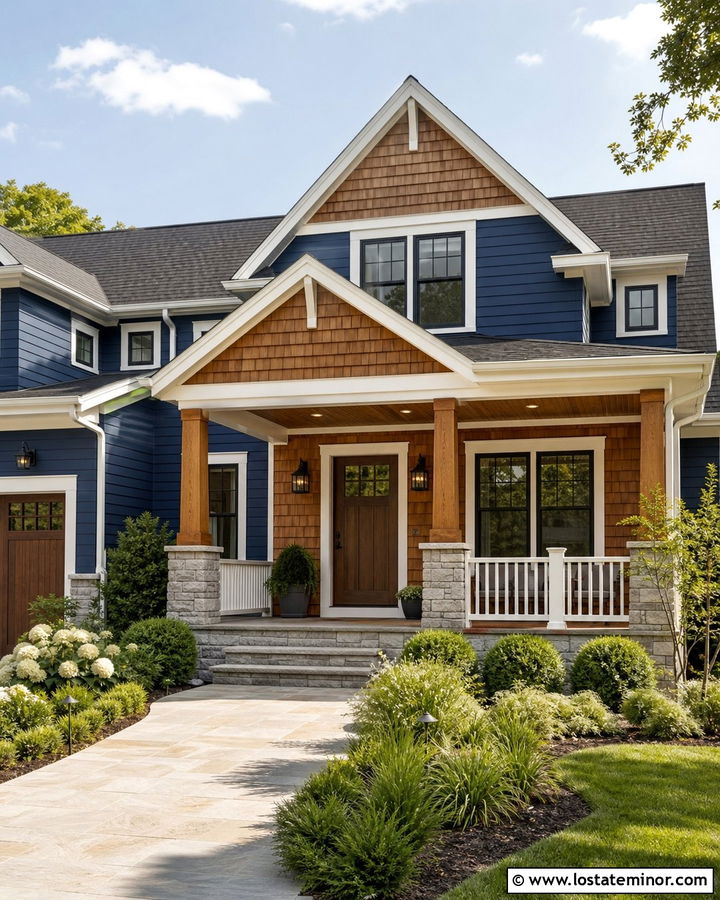
Imagine approaching a navy home through a porch wrapped in warm, tactile cedar. Use navy blue siding across the main facade, then place cedar shakes on the porch gable and entry wall. Cedar posts, a stained beadboard ceiling, and a coordinating wood door can extend the natural color through the entire entrance. Balance those warm materials with creamy white fascia, window trim, and railings. If the porch needs more visual weight, add limestone or light gray stone around the column bases. Choose a charcoal roof and black metal lights to establish a quiet framework around the richer finishes. This scheme works well when homeowners want cedar to be noticeable without maintaining a complete wood exterior. The porch becomes a welcoming focal point while the navy siding gives the house a sophisticated, consistent background.
13. Navy Blue House With Cedar Shake Upper Level
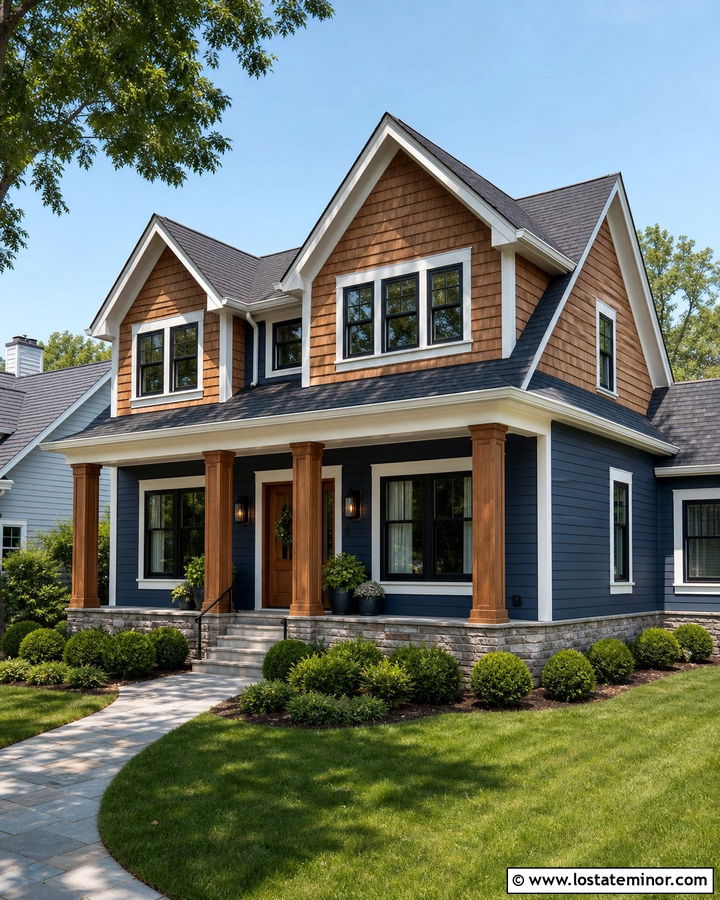
Using cedar shakes across the upper story can visually lower a tall home and create a clear material hierarchy. Paint the first floor a saturated navy blue, then apply natural cedar shakes to the second level or selected projecting sections. A horizontal white trim band can mark the transition and connect with the window casings. Repeat navy on a porch wall or garage wing so the lower color remains dominant. A walnut front door and cedar porch columns link the two levels, while gray stone near the foundation gives the house a grounded base. Select a roof that relates to the darker siding, such as charcoal architectural shingles. This two-material approach is especially effective on suburban homes with flat, uninterrupted elevations because it adds depth without requiring decorative shutters or excessive trim.
14. Navy Blue House With Cedar Shake Lower Level
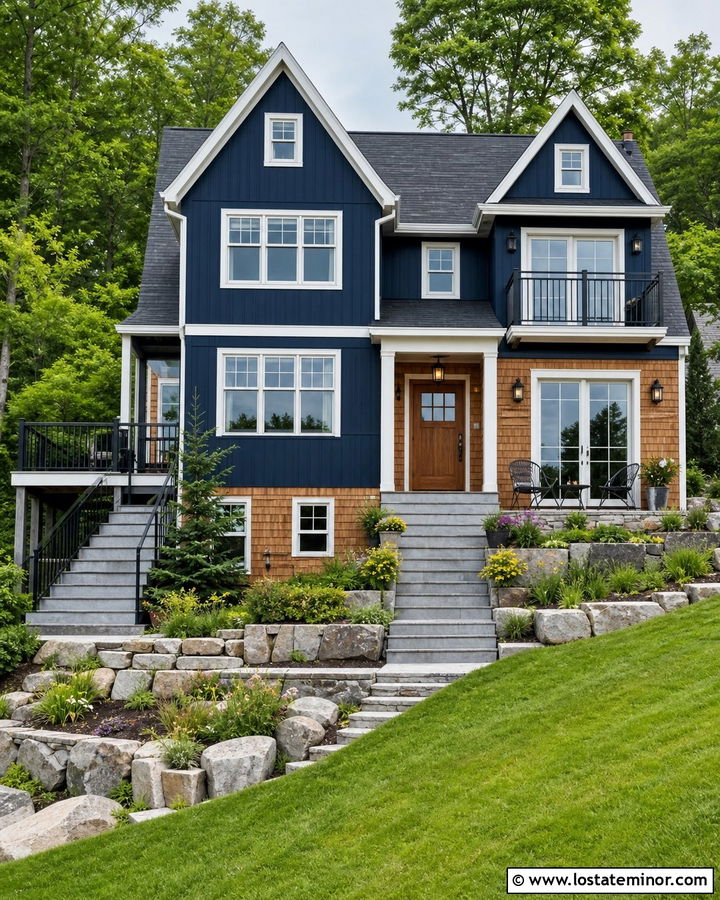
For an unexpected arrangement, place cedar shakes across the lower level and navy blue siding above. The warm shingles create a textured base, while the dark upper walls draw attention toward the gables and roofline. This layout works particularly well on hillside homes, raised cottages, and houses with walkout lower floors. Use creamy white window trim to provide continuity across both materials. A navy front door can blend into the upper color, or a natural wood door can reinforce the cedar base. Choose light gray stone steps and black railings for a clean transition from the landscape. Cedar closer to grade requires careful material selection and proper clearance from soil and splashback. When thoughtfully detailed, the combination feels grounded and distinctive rather than visually top-heavy.
15. Navy Blue House With Cedar Shake Tower
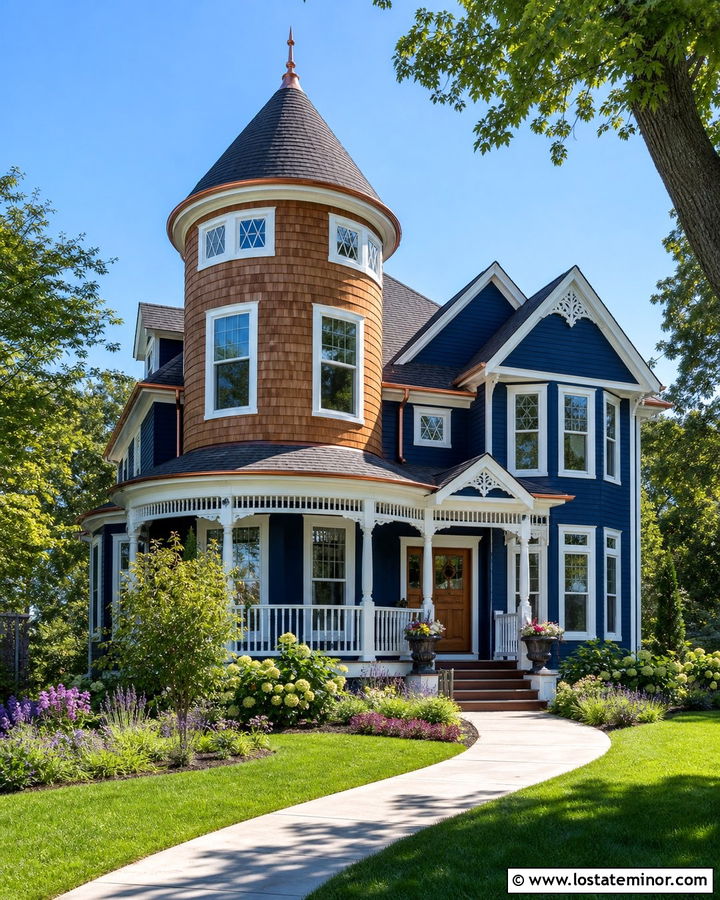
A rounded or polygonal tower deserves a finish that separates it from the rest of the facade. Cover the primary house in navy blue lap siding and wrap the tower in natural cedar shakes. The smaller shingle pattern follows curves and angled walls beautifully, giving this architectural feature visible craftsmanship. Use white trim around every tower window to connect it with the main facade. A conical charcoal roof, copper finial, and subtle copper gutters can add a refined finishing layer. Keep the front door stained in a cedar-related tone, but avoid adding wood to too many other areas. The tower should remain the clear focal point. This approach complements Victorian-inspired homes, lake houses, and custom suburban designs while keeping the overall palette controlled, elegant, and easy to understand from the curb.
16. Navy Blue House With Cedar Shake Dormers
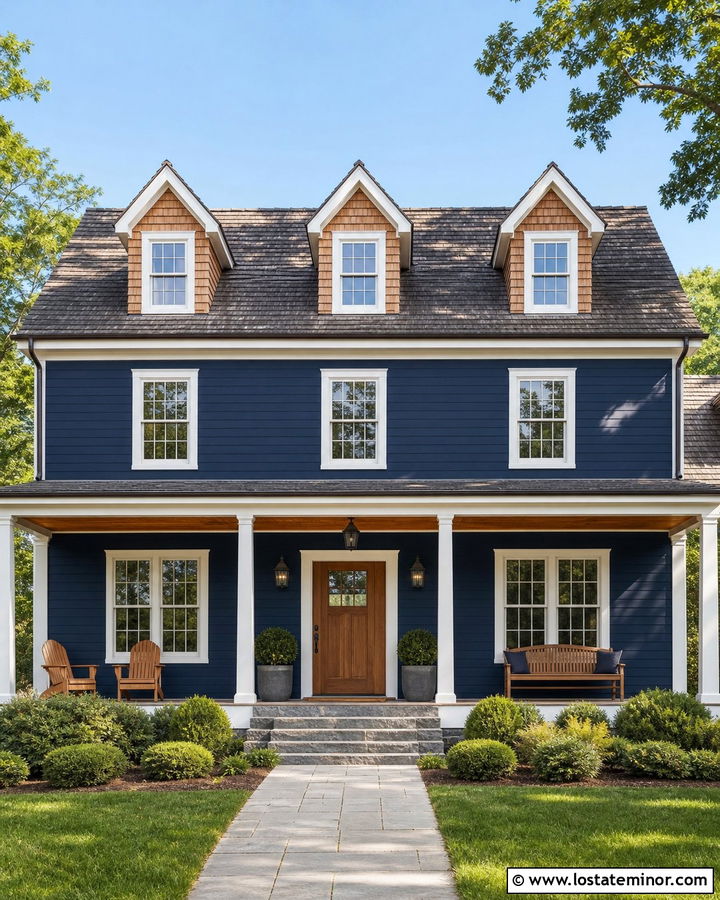
Dormers offer a natural place to introduce cedar without changing the complete siding system. Paint the house body a deep, slightly muted navy, then clad each dormer face in warm cedar shakes. Crisp off-white trim around the dormer windows highlights their shape and prevents the wood from blending into the roof. Carry the same cedar tone to the front door or porch ceiling for a balanced repetition at eye level. A roof in weathered gray allows both navy and cedar to remain prominent. If the home has shutters, use navy shutters on light masonry or black shutters only where they will not overcrowd the windows. This carefully edited combination gives a traditional home greater dimension. It also draws the eye upward, making the roofline feel more detailed and intentionally designed.
17. Navy Blue House With Cedar Shake Bay Window
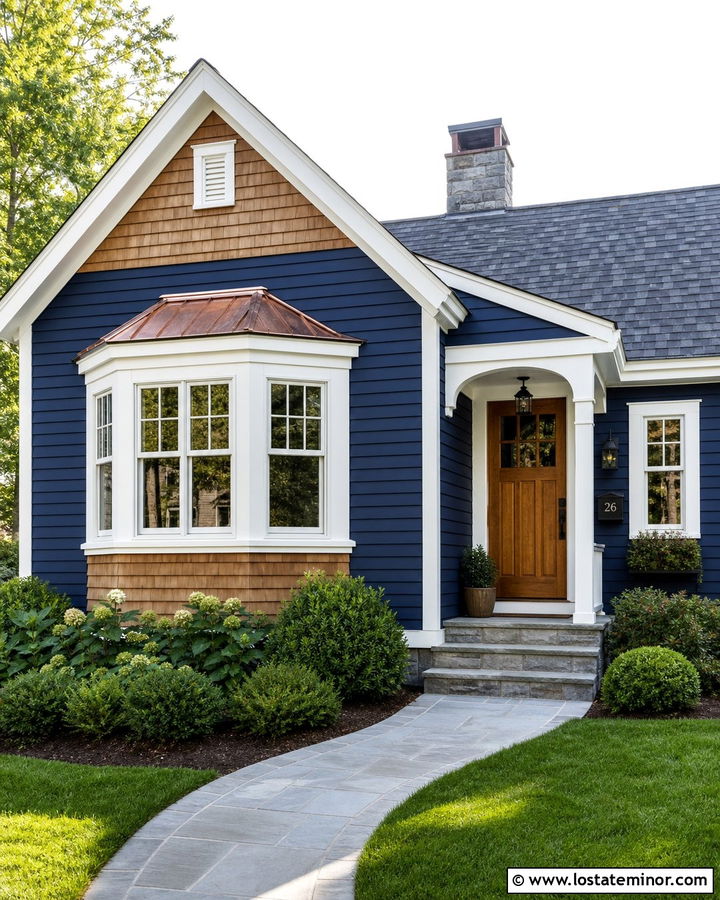
Could a plain front elevation benefit from one strong architectural feature? Surround a projecting bay window with cedar shakes and use navy blue siding across the remaining walls. The warm, textured enclosure makes the bay appear deeper and more substantial. Paint its window frames and trim creamy white for contrast, then install a small charcoal or copper roof above it. A cedar front door placed nearby will make the wood accent feel connected rather than random. Use understated stone along the foundation and black metal lighting to complete the scheme. Keep shrubs below the bay window low enough to preserve its visibility from the street. This design solution suits traditional houses, cottages, and remodeled ranch homes, adding dimension without requiring cedar across a large or maintenance-intensive portion of the exterior.
18. Navy Blue House With Cedar Shake Chimney
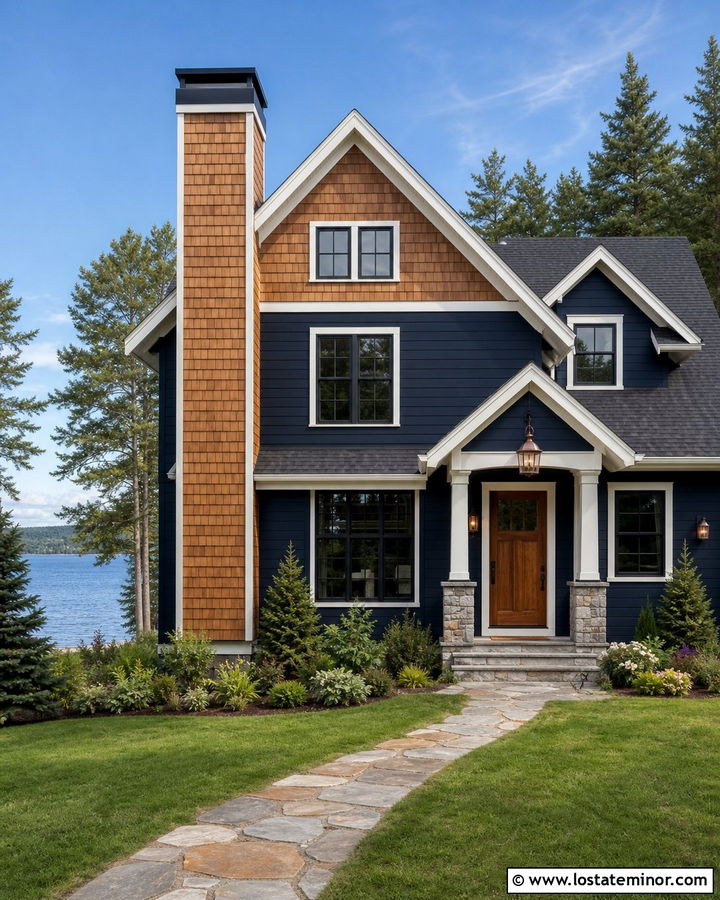
A cedar-covered chimney enclosure creates a tall vertical accent against navy blue siding. This works best on homes where the chimney is framed rather than built from masonry. Use medium-brown cedar shakes on the chimney and repeat them in one smaller gable to establish visual balance. Soft white trim can outline the windows, eaves, and porch columns, while a matching cedar door brings warmth to the ground level. Choose a charcoal roof that allows the chimney’s texture to stand apart without creating a harsh color break. If local codes or construction conditions require noncombustible materials, use an appropriate cedar-look product or redesign the accent with approved cladding. The completed exterior feels layered and custom, with the vertical cedar element guiding the eye through the full height of the facade.
19. Navy Blue House With Cedar Shake And Stone
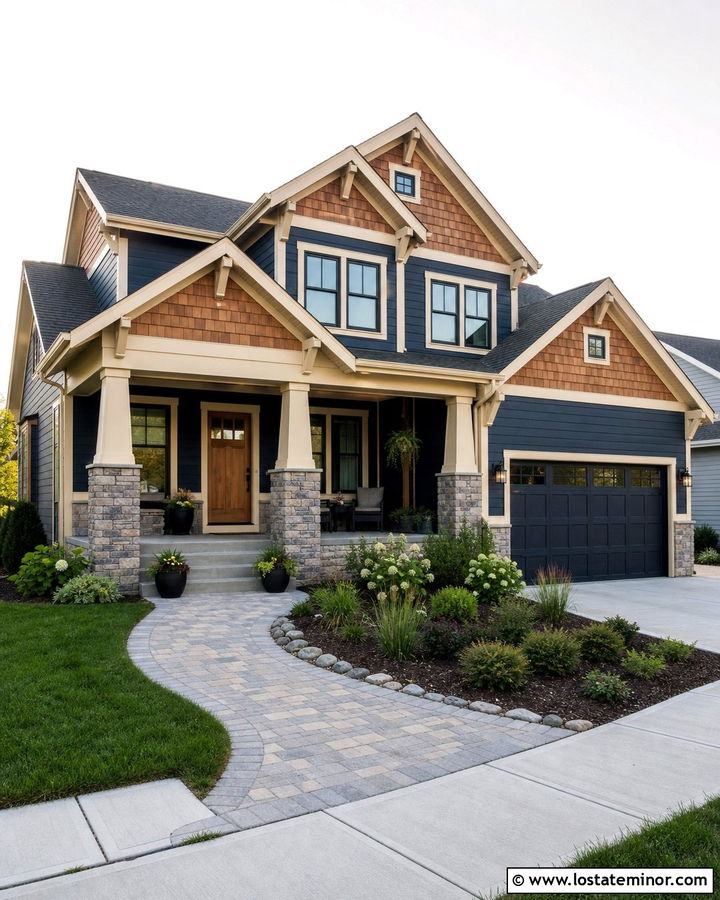
Navy blue, cedar, and stone form a naturally balanced three-material palette when each finish has a defined role. Use navy siding as the dominant surface, cedar shakes inside the gables, and stone around the foundation or porch supports. Select stone containing both cool gray and warm tan notes so it visually connects the blue paint with the brown wood. White or warm ivory trim keeps the transitions crisp. A natural oak front door and black-framed windows add definition without introducing unrelated colors. Avoid spreading small patches of all three materials across the facade. Larger, organized sections will appear calmer and more architectural. This combination is especially successful on Craftsman, mountain, lake, and transitional homes, where texture is welcome but the exterior still needs a strong visual hierarchy.
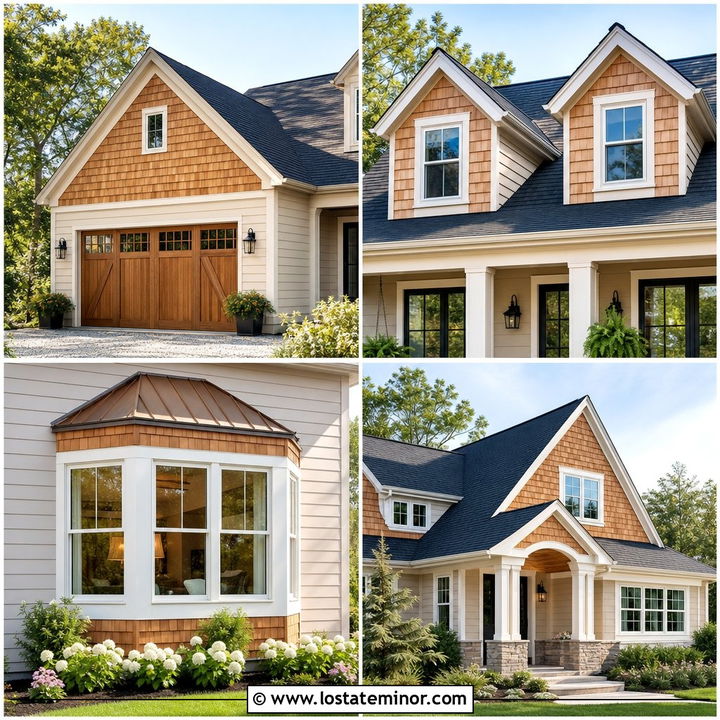
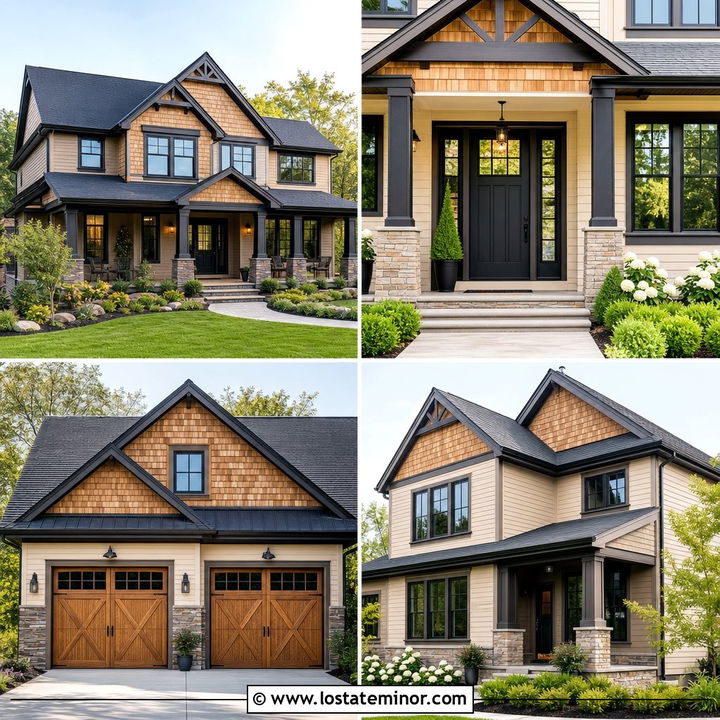

20. Navy Blue House With Cedar Shake And Brick
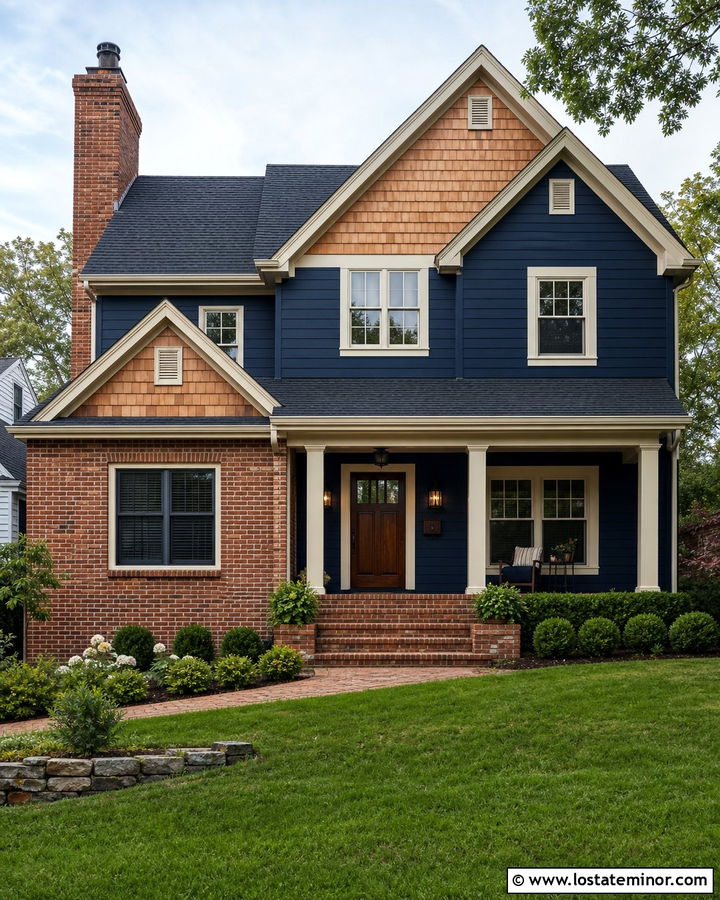
Existing brick can look refreshed beside navy blue siding and cedar shake accents. Keep attractive red or brown brick around the lower level, chimney, or entry, then add navy siding to the larger wall areas. Natural cedar shakes in a gable create a middle tone between the dark blue and earthy masonry. Choose a warm off-white for trim so it coordinates with the brick mortar rather than looking overly bright. A dark walnut door and aged bronze lighting enhance the traditional warmth of the palette. Before painting anything, compare the navy sample with the brick’s dominant undertone. Cooler burgundy brick may suit a cleaner navy, while orange-brown brick often works better with a slightly softened blue. This layered treatment modernizes the house while respecting masonry that already gives it substance and character.
21. Navy Blue House With Cedar Shake And Copper
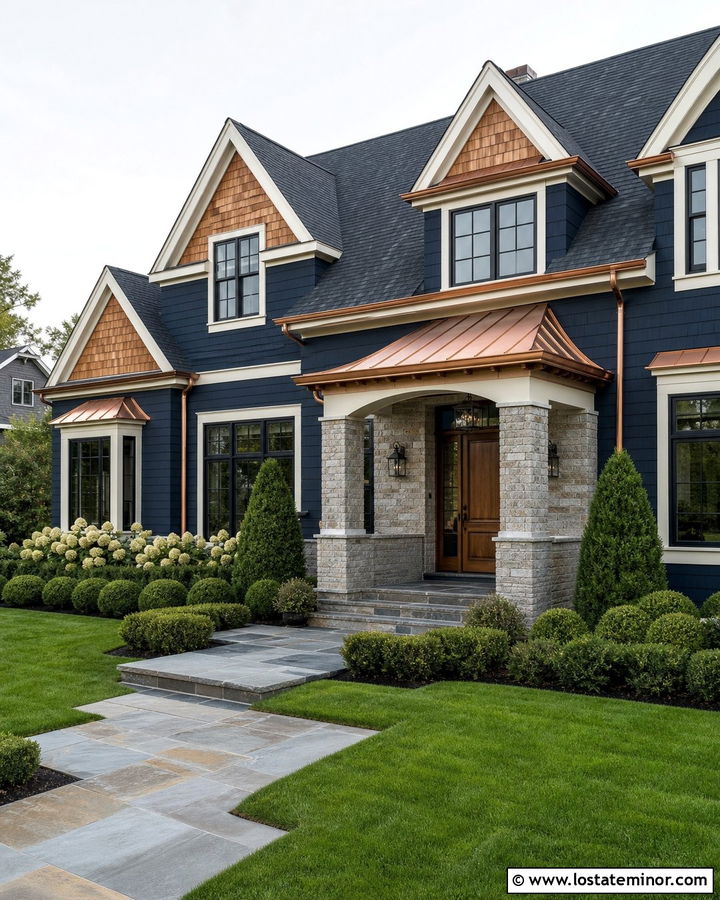
Few details glow against navy blue as effectively as warm copper. Paint the main siding a saturated navy and use natural cedar shakes on upper gables or dormers. Then introduce copper through gutters, downspouts, small awnings, or a porch roof. New copper will initially appear bright, so keep other accents simple while it develops a softer patina. Cream trim provides a gentler transition than brilliant white, while a medium-brown wood door supports the cedar. Gray stone around the entry can cool the warmer materials and ground the palette. Use copper selectively rather than covering every roof surface. One entrance canopy and a coordinated gutter system are often enough. The finished exterior feels established and carefully detailed, with navy providing depth and cedar preventing the metal accents from appearing too formal.
22. Navy Blue House With Cedar Shake And Black Windows
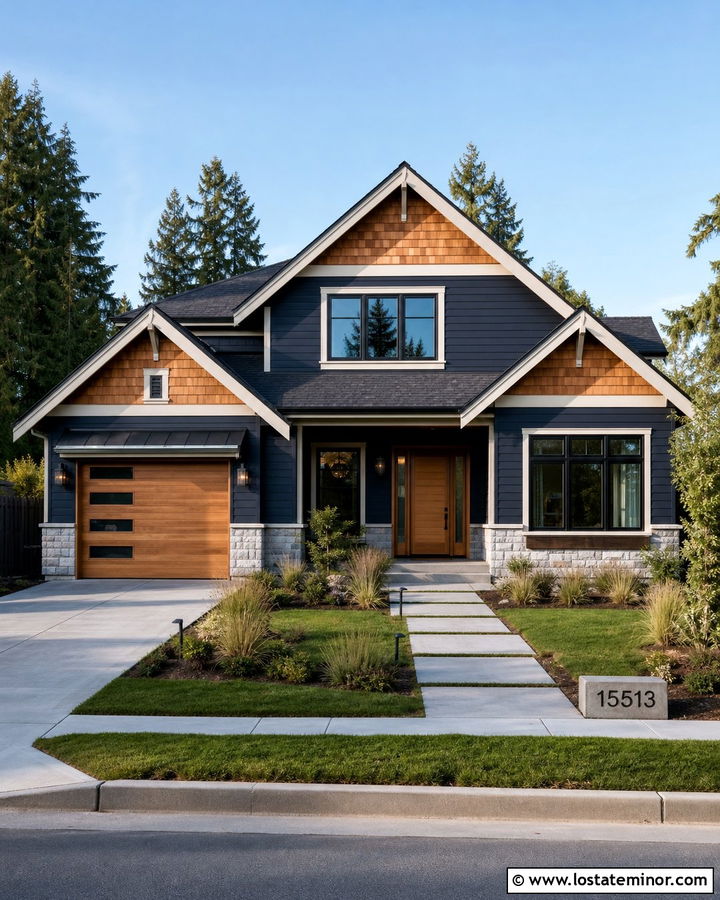
Black windows give a navy and cedar exterior a sharper, more contemporary edge. Choose navy blue horizontal siding for the main walls, then use natural cedar shakes inside asymmetrical gables or around the entry. Black window frames, downspouts, and slim exterior lights form a consistent dark outline. Instead of bright white trim, consider a muted cream or navy-painted trim so the transitions remain modern and restrained. A cedar pivot door or flush-panel garage door can repeat the warm wood color across the lower facade. Light gray concrete and pale stone will keep the overall scheme from becoming too dark. This look works best when the windows are large and the architecture has simple lines. Careful material placement allows the wood grain and black frames to remain visible against the saturated blue background.
23. Navy Blue House With Cedar Shake And White Shutters
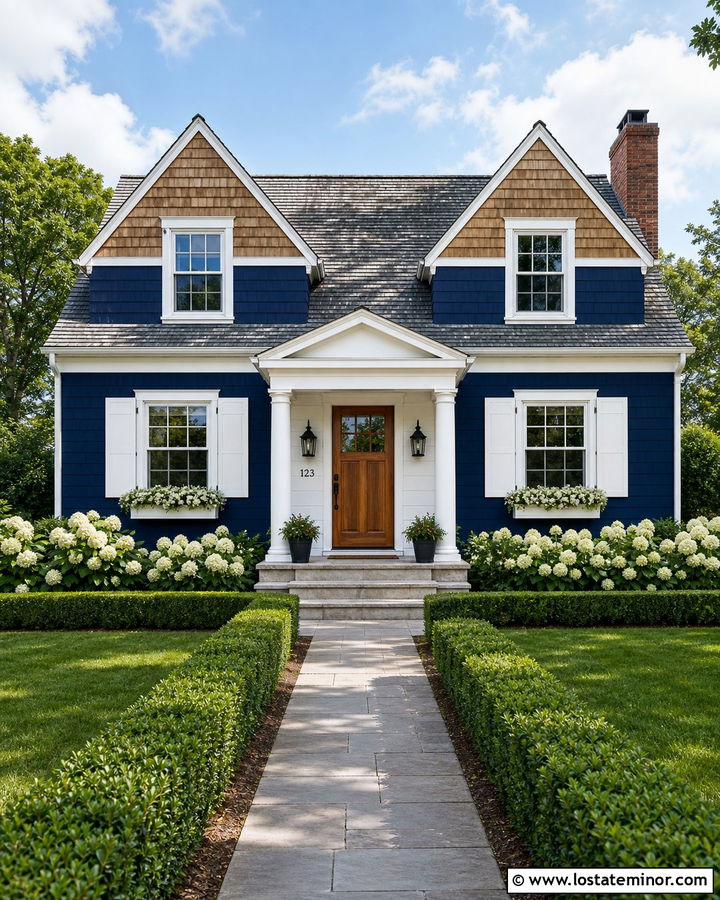
White shutters can bring classic brightness to a navy blue house, but their scale and placement matter. Use substantial shutters sized to match the window openings, then coordinate them with white trim, porch columns, and fascia. Natural cedar shakes in the front gables introduce warmth and prevent the blue-and-white scheme from feeling too stark. A cedar-stained front door provides an easy visual connection between the roofline and entrance. Finish the house with a weathered charcoal roof, simple black lanterns, and a pale stone walkway. This complete palette is particularly effective on Colonial, Cape Cod, cottage, and traditional suburban homes. Avoid adding shutters to windows where they would not logically fit. A smaller number of correctly proportioned shutters creates a more believable, polished exterior than decorating every window.
24. Navy Blue House With Cedar Shake And Wood Shutters
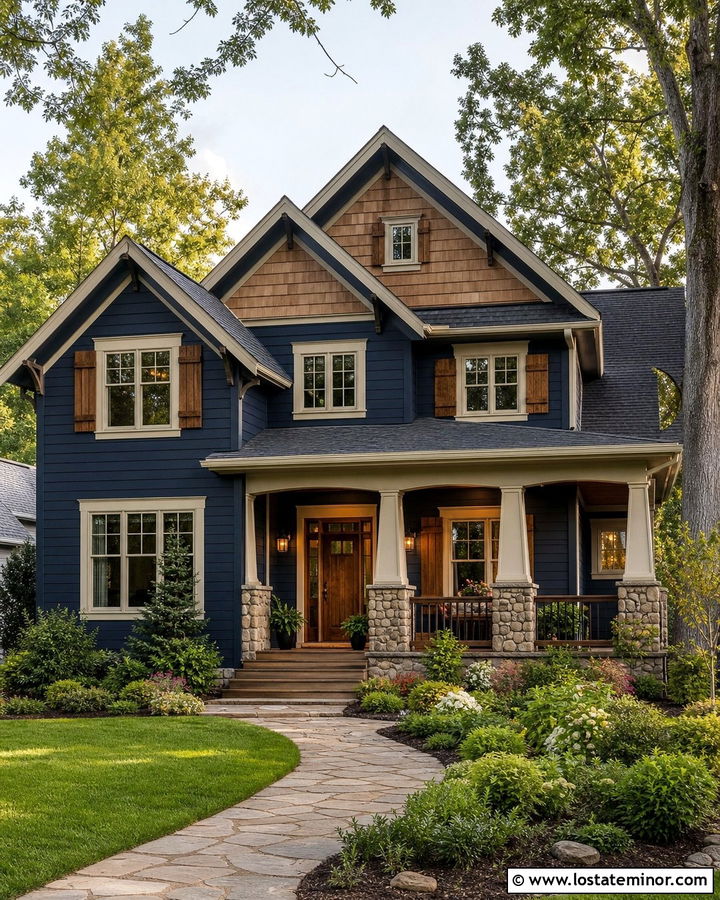
Natural wood shutters create a warmer and more rustic alternative to white or black. Pair dark navy siding with cedar shake gables, then install shutters stained to coordinate with the shingles. The finishes do not need to match perfectly, but they should share similar golden, brown, or weathered undertones. Use cream trim around the windows so each shutter remains distinct from the siding. Stone porch columns, a stained wood door, and bronze sconces can reinforce the natural palette. Keep the roof charcoal or dark brown, depending on the cedar stain and existing masonry. This arrangement works especially well on Craftsman homes, cabins, ranch houses, and lake properties. Limit additional decorative wood so the shutters and shakes remain intentional focal points rather than part of an overly busy collection of accents.
25. Navy Blue House With Cedar Shake And Red Door
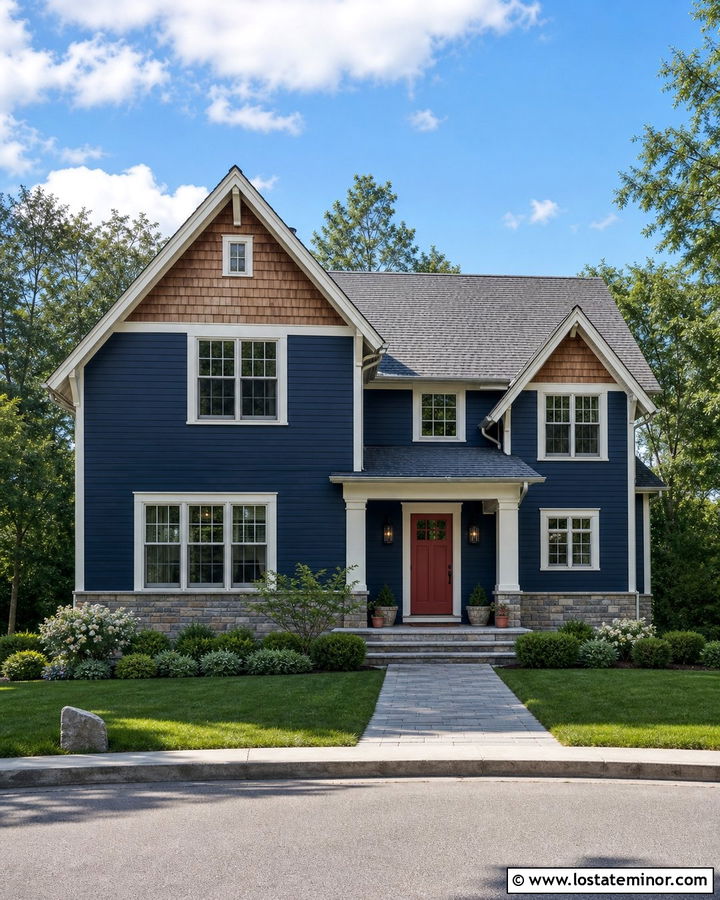
A restrained red front door adds energy to a navy blue and cedar exterior. Choose a deep brick red, oxblood, or muted cranberry instead of a bright primary red. These richer shades complement the warm cedar without creating a patriotic or overly themed palette. Use navy lap siding across the house and natural cedar shakes in one or two upper gables. Creamy white trim frames the architecture, while black hardware and lanterns give the entrance clear definition. A medium-gray roof and warm gray stone foundation help neutralize the stronger colors. Repeat the door color sparingly, perhaps in seasonal planters rather than permanent building materials. The result feels traditional and welcoming, with the front door acting as a controlled focal point against the steady navy background and textured cedar roof accents.
26. Navy Blue House With Cedar Shake And Green Door
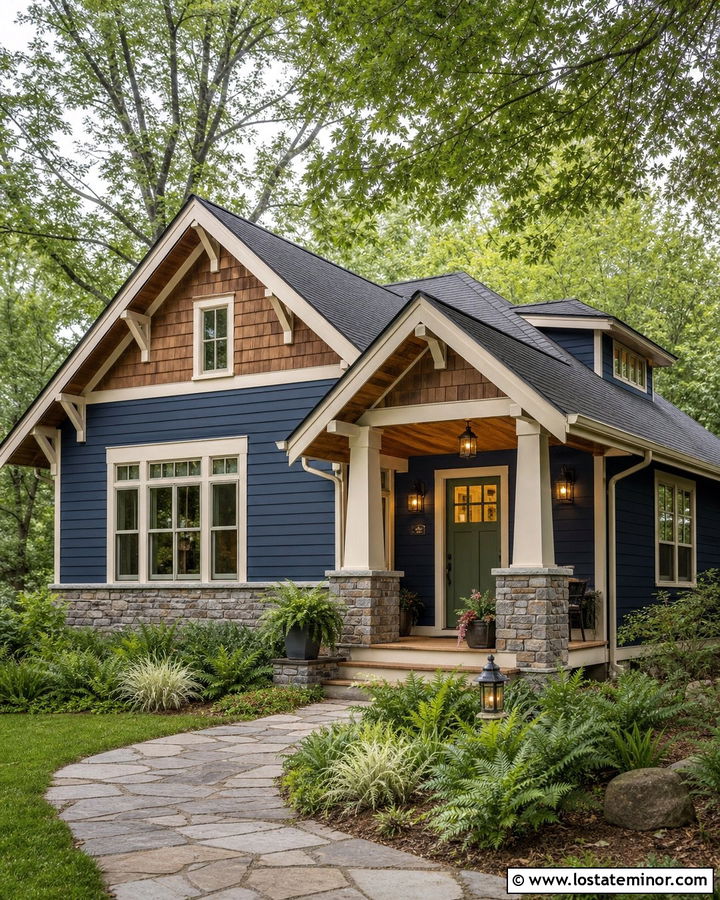
For a color combination inspired by wooded landscapes, add a muted green door to navy siding and cedar shakes. Olive, moss, or deep forest green works better than a bright grassy hue because it shares the visual depth of navy. Use natural cedar in the gables, then repeat its warm tone on porch posts or a ceiling. Soft ivory trim creates separation while keeping the palette earthy. Gray-green stone around the foundation can connect the door color with the landscaping. Finish the design with a charcoal roof and aged bronze lighting. This scheme is especially attractive on homes surrounded by mature trees, where the colors respond to the natural setting. Test the blue and green together outdoors to ensure they remain clearly different under shaded conditions and do not merge into one dark mass.
27. Navy Blue House With Cedar Shake And Yellow Door
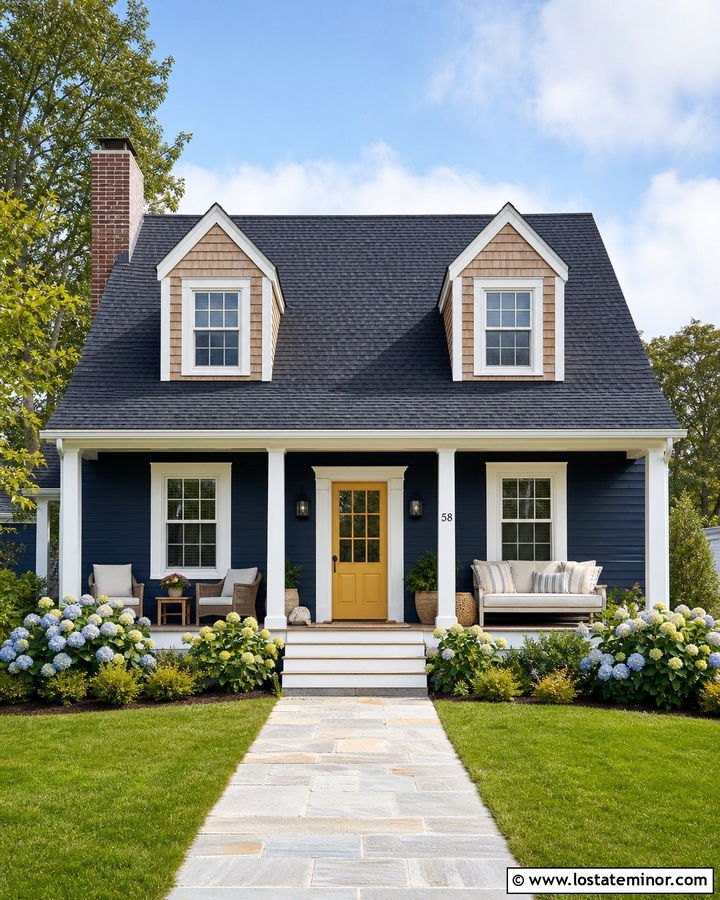
A yellow front door can brighten a navy exterior when the shade is warm, muted, and used with restraint. Mustard, ochre, and golden yellow relate naturally to cedar’s honey tones, making the entrance feel connected to the shake accents above. Cover the main walls in navy blue siding and use cedar shingles on the porch gable or dormers. Crisp white trim gives the playful door a clean framework, while black lights and a charcoal roof add grounding contrast. Keep porch furniture and planters neutral so the entrance does not become crowded with color. This combination suits cottages, bungalows, compact Cape Cod homes, and casual suburban houses. The completed exterior feels cheerful but balanced because the door occupies a small area and the navy siding remains the dominant visual element.
28. Navy Blue House With Dark Stained Cedar Shakes
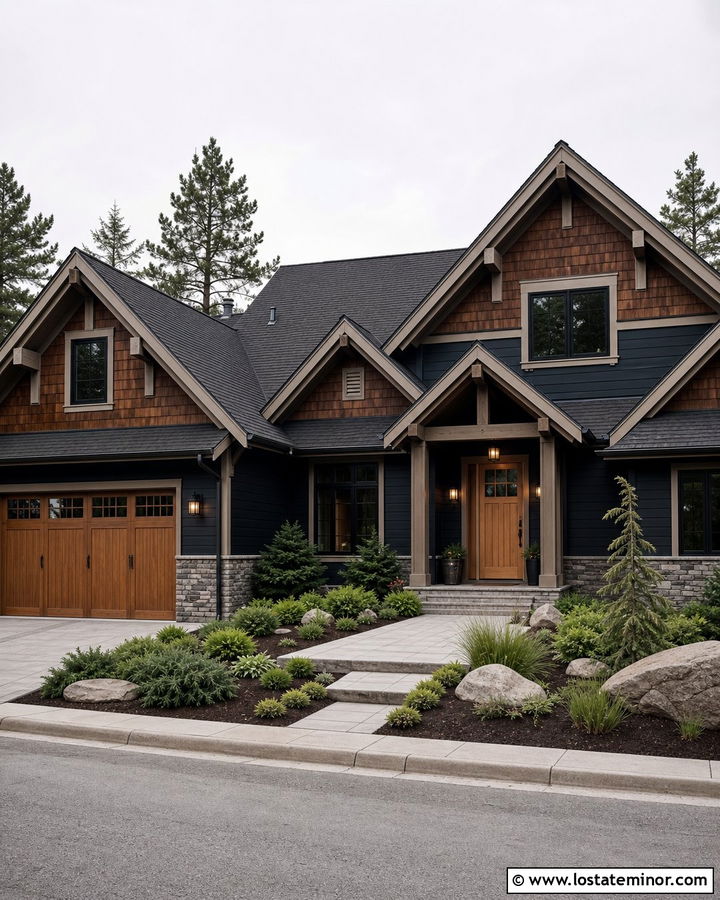
Dark-stained cedar creates a quieter, more sophisticated contrast than fresh golden wood. Pair deep navy blue siding with cedar shakes finished in walnut, espresso, or smoky brown. Place the shakes across upper gables where daylight can reveal their grain and individual edges. Use warm gray or greige trim instead of white to maintain the subdued palette. Black windows, dark bronze lights, and charcoal roofing continue the layered, low-contrast effect. A lighter oak front door can provide one welcoming highlight, or a matching dark wood door can create a more dramatic entrance. Add pale concrete pavers and soft green landscaping to prevent the house from feeling too heavy. This complete scheme fits contemporary Craftsman, mountain modern, and transitional architecture, offering organic texture without the brighter coloring associated with untreated cedar.
29. Navy Blue House With Gray Cedar Shakes
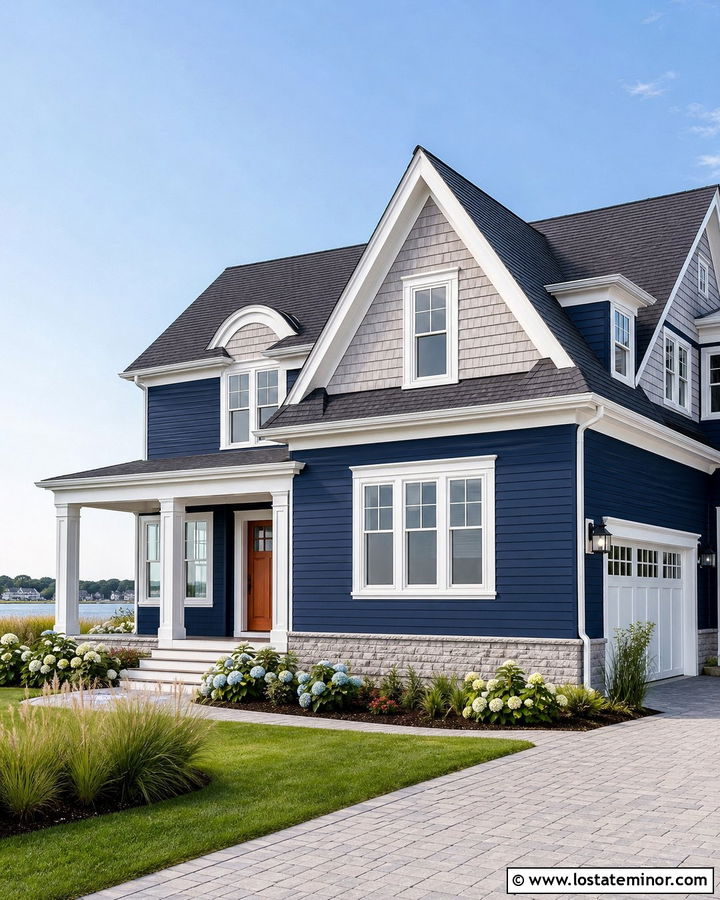
Gray cedar shakes give a navy house a relaxed, weathered appearance while maintaining a cool, coordinated color family. Use medium navy siding on the first floor and silvery gray shakes across gables, dormers, or the complete upper story. Bright white trim keeps the two darker materials clearly separated. Add a natural teak or mahogany door to introduce one measured source of warmth. A medium charcoal roof, brushed metal hardware, and pale gray stone reinforce the quiet palette. This approach works beautifully for coastal homes, renovated cottages, and traditional houses where golden cedar would feel too rustic. Because gray stains can shift blue or brown outdoors, compare several samples against the selected navy. The most successful combination will show visible contrast while sharing enough undertone to feel connected.
30. Navy Blue Contemporary House With Cedar Shake Panels
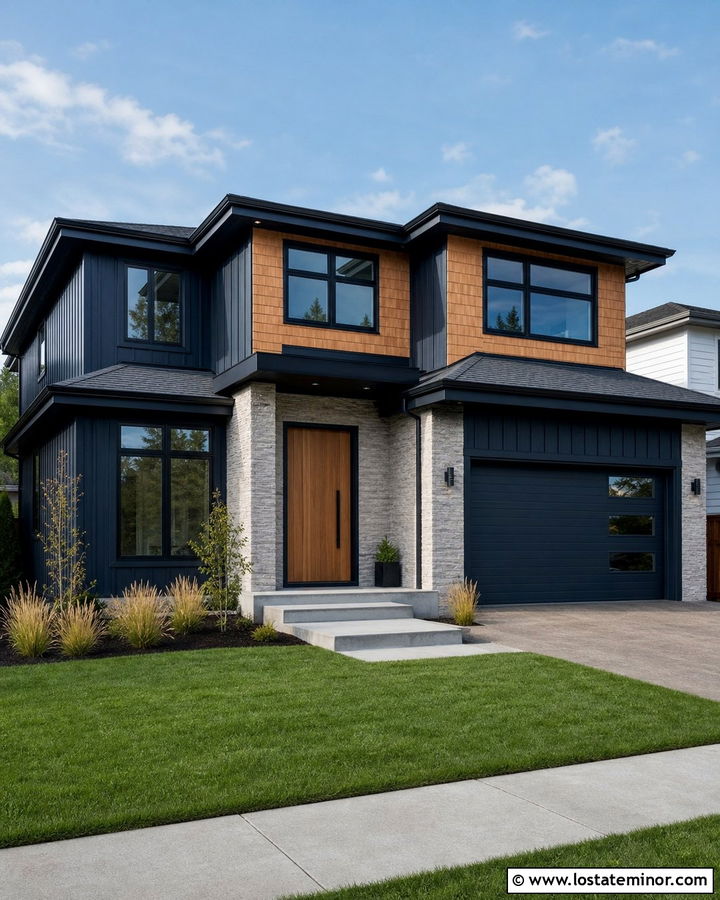
A contemporary home can use cedar shakes without appearing traditional. Start with simple navy blue vertical siding, then install clean rectangular sections of cedar shakes around the entry, upper windows, or garage volume. Keep the material boundaries aligned with architectural corners so every transition looks deliberate. Black window frames and dark metal fascia strengthen the modern geometry, while light gray stone or smooth concrete provides contrast near the ground. Choose cedar with a consistent medium stain and minimal color variation. A flush wood door can blend into the cedar entry panel, creating one warm focal area. Finish the property with broad concrete steps, structured grasses, and uncluttered planting beds. The complete design combines crisp modern lines with the approachable texture of wood, producing an exterior that feels bold without becoming cold.
Conclusion:
The best **30 Navy Blue House Design With Cedar Shake Ideas** combine color, texture, and architecture as one complete exterior plan. Navy should remain the dominant visual anchor, while cedar highlights features such as gables, dormers, porches, garages, or upper levels. White trim creates classic contrast, while cream, greige, or black details produce a softer or more contemporary result. Stone, brick, and copper can add depth when used in clearly defined sections. Before making a final choice, place large navy and cedar samples beside the existing roof, windows, and masonry. Check them throughout the day. A thoughtful material hierarchy will help the finished house look balanced, intentional, and attractive from every curbside angle.

Related posts: