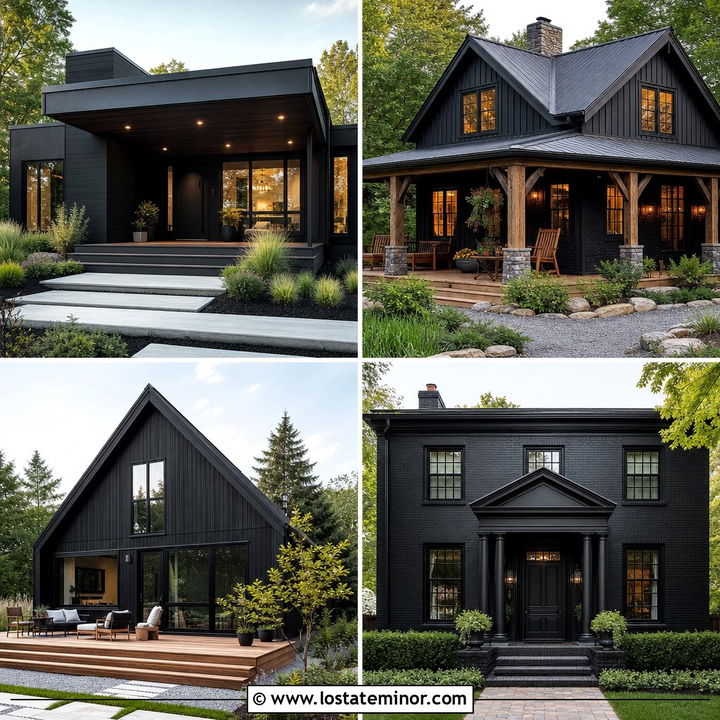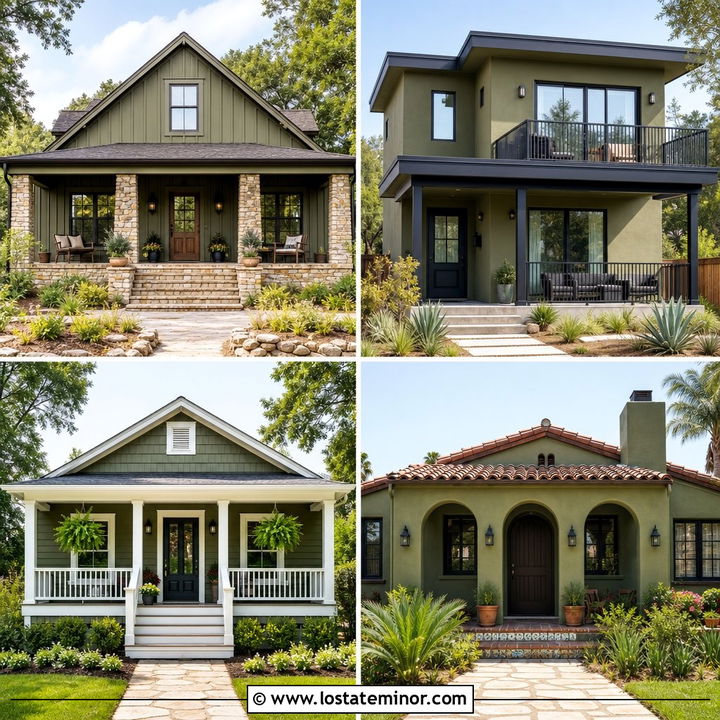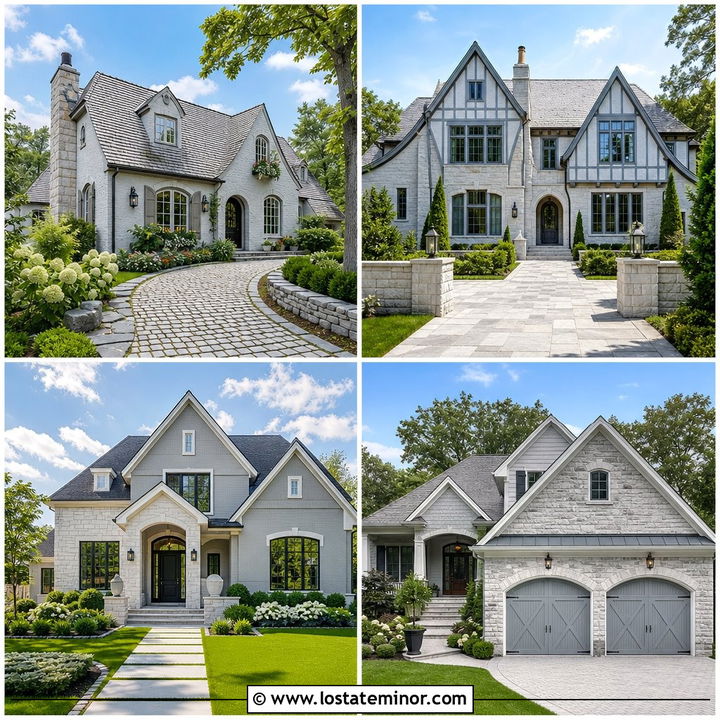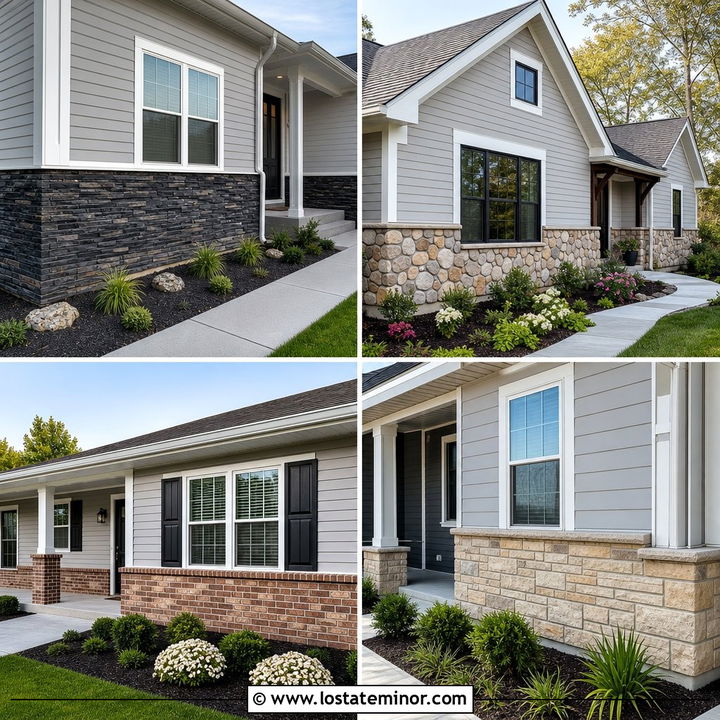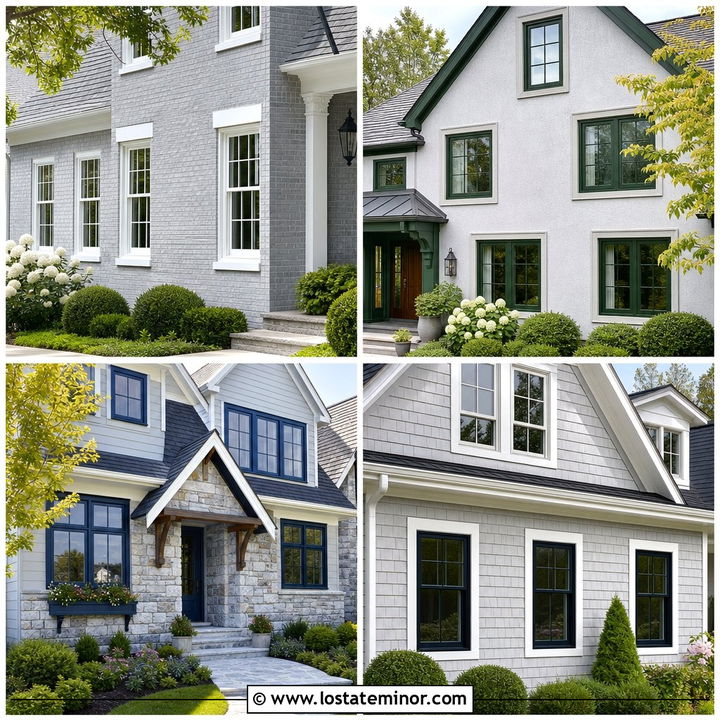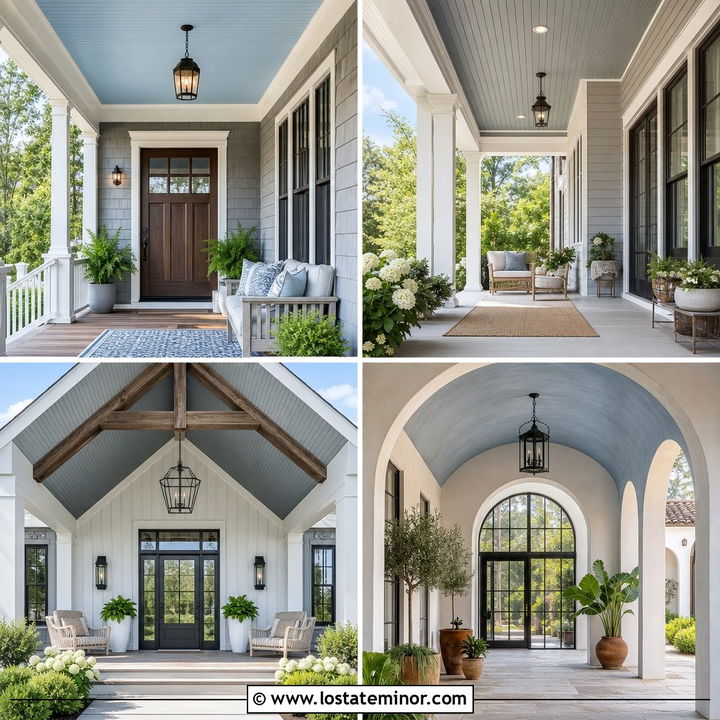
The best **30 Light Grey House Design With Front Porch Ideas** combine a soft neutral facade with porch details that give the home warmth, contrast, and personality. Light grey works across many architectural types because it pairs easily with white, black, natural wood, brick, and stone. The key is treating the exterior as one complete design rather than selecting each feature separately. Porch columns should relate to the trim, while the front door, roof, lighting, and landscaping should support the same palette. Current exterior inspiration often pairs grey siding with fresh white trim, darker accents, natural materials, and welcoming porch features. () Whether you prefer farmhouse character or modern simplicity, these complete schemes offer practical inspiration. Explore these **30 Light Grey House Design With Front Porch Ideas** to create a balanced, welcoming facade.
1. Light Grey Farmhouse With Wraparound Front Porch
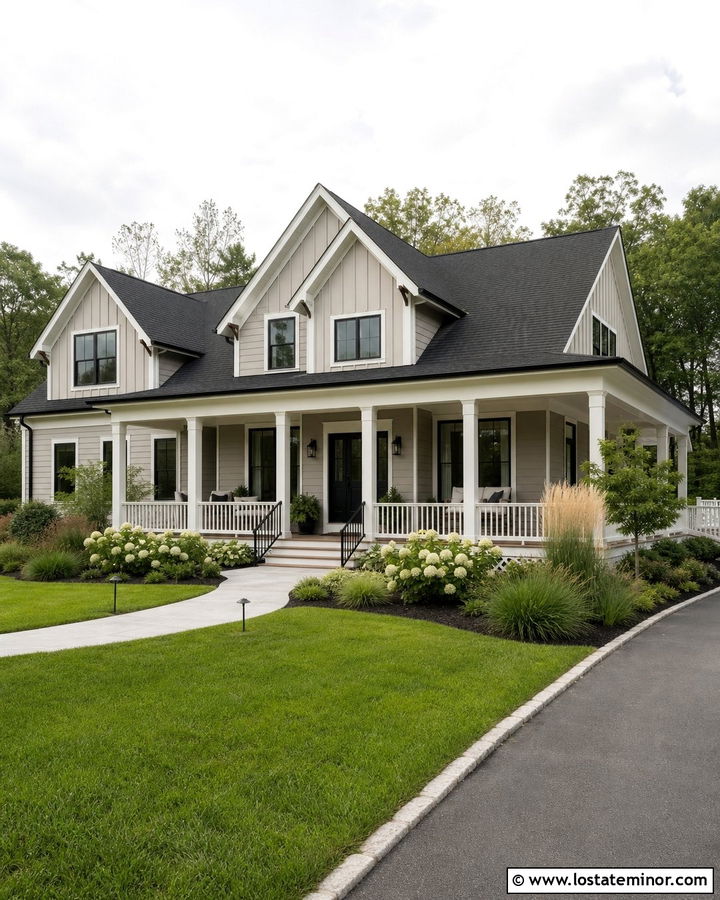
A wraparound porch gives a light grey farmhouse an inviting shape while breaking up a large exterior. Choose light grey horizontal siding with crisp white corner boards, window trim, railings, and square porch columns. A matte black front door, black sconces, and charcoal roof provide clean contrast without overpowering the pale facade. Warm stained porch flooring keeps the scheme from feeling too cool. Add two rocking chairs, simple planters, and a natural fiber outdoor rug for a comfortable finish. Vertical board-and-batten siding inside the front gable can introduce subtle texture while staying within the same palette. Keep the landscaping relaxed with hydrangeas, ornamental grasses, and a curved walkway. This full-house combination feels fresh, practical, and welcoming from every curbside angle.
2. Light Grey Craftsman With Timber Front Porch
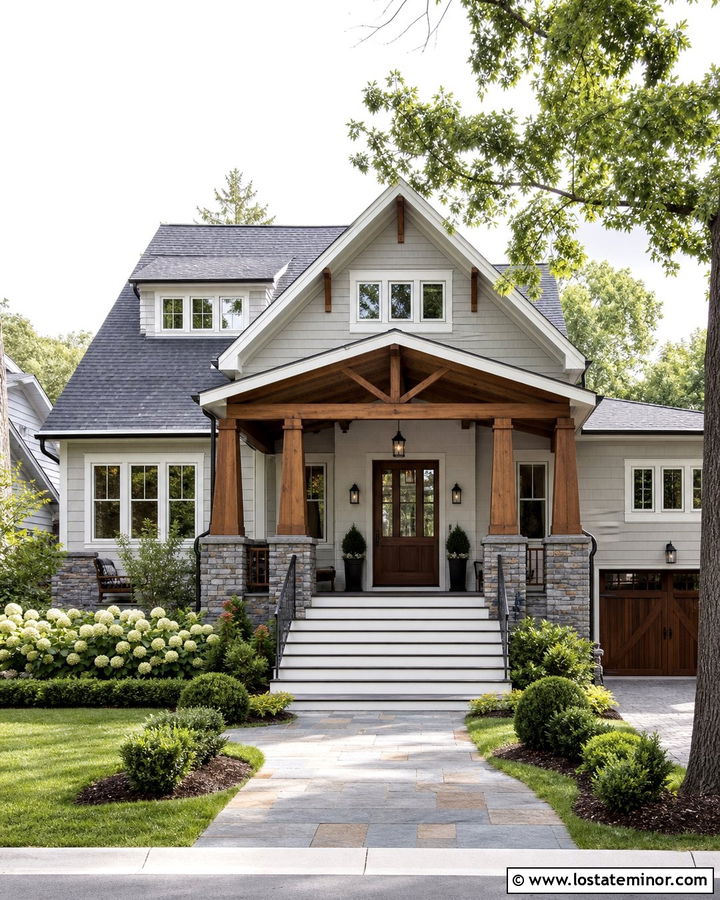
Natural timber instantly brings warmth to a light grey Craftsman exterior. Use soft grey lap siding across the main facade, then add cedar porch posts, exposed beams, and a stained wood front door. White window trim creates definition, while a medium charcoal roof grounds the lighter colors. Stone column bases in mixed grey and beige tones can connect the porch to the foundation. Craftsman details should feel substantial, so select broad tapered columns and deep roof overhangs instead of delicate supports. Black metal lanterns and house numbers add a restrained modern touch. Finish the design with wide porch steps, layered shrubs, and a straight stone walkway. The wood, stone, and grey siding work together naturally, giving the home a handcrafted appearance without making the exterior look overly rustic.
3. Light Grey Ranch House With Deep Front Porch
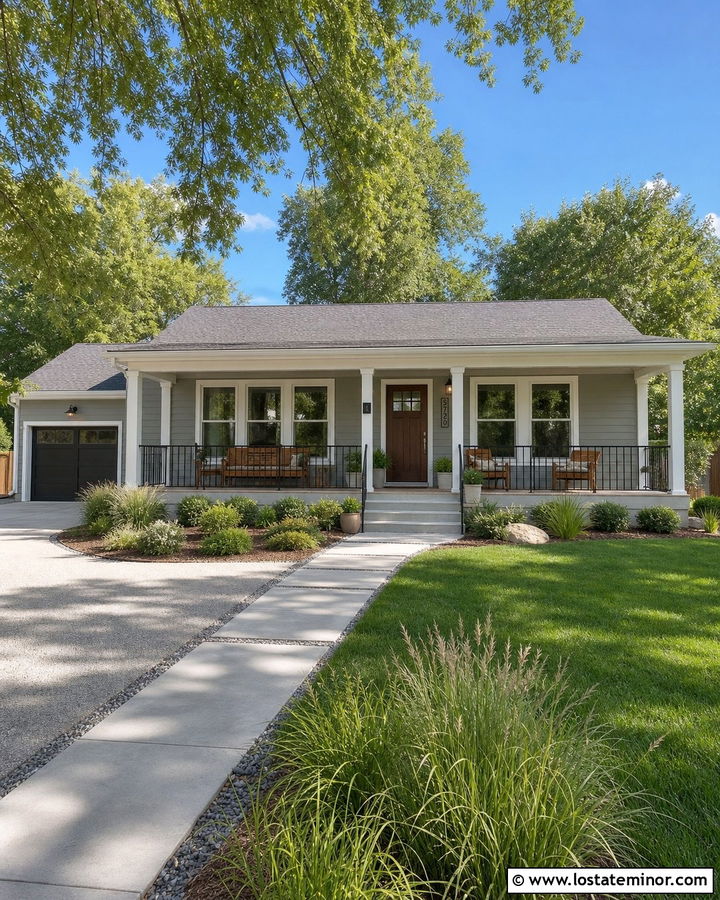
A deep front porch can transform a simple ranch house into a more welcoming and visually balanced home. Cover the exterior in light grey horizontal siding and use warm white for the soffits, window trim, porch ceiling, and square columns. A walnut-stained front door introduces richness near the center of the long facade. Consider a dark grey shingle roof and matching gutters to create a strong upper outline. The porch should extend across several windows so it feels connected to the architecture rather than added later. Large concrete pavers, low steps, and simple black railings keep the entrance practical. Use low-growing shrubs and ornamental grasses that will not hide the porch. This scheme makes a one-story house appear wider, calmer, and thoughtfully finished while preserving the ranch’s straightforward character.
4. Light Grey Colonial With Columned Front Porch
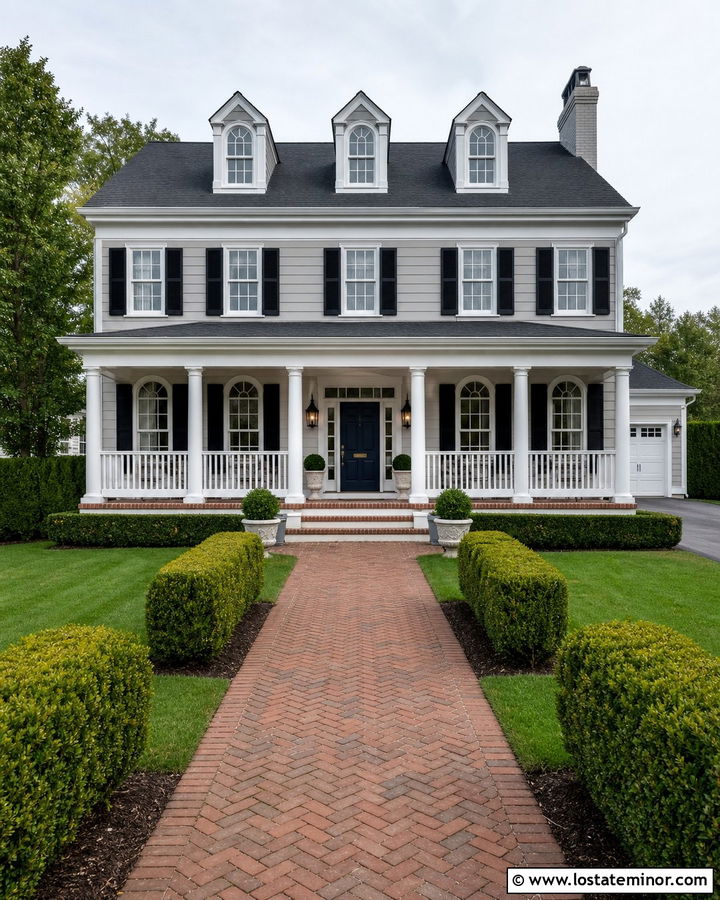
Symmetry makes a light grey Colonial exterior feel polished, especially when the front porch follows the home’s balanced arrangement. Select a pale neutral grey for the clapboard siding and bright white for the window casings, cornice, porch railing, and classical columns. Center a deep navy front door beneath a small pediment to create a confident focal point. Black shutters and a dark charcoal roof add traditional contrast on both sides of the facade. Use red brick for the porch floor and front steps to bring warmth and historical character into the palette. Matching brass or black lanterns should frame the doorway evenly. Straight hedges, symmetrical planters, and a centered walkway reinforce the architecture. The result feels formal but approachable, with every exterior detail supporting the Colonial home’s orderly proportions.
5. Light Grey Cape Cod With Blue Front Porch Door
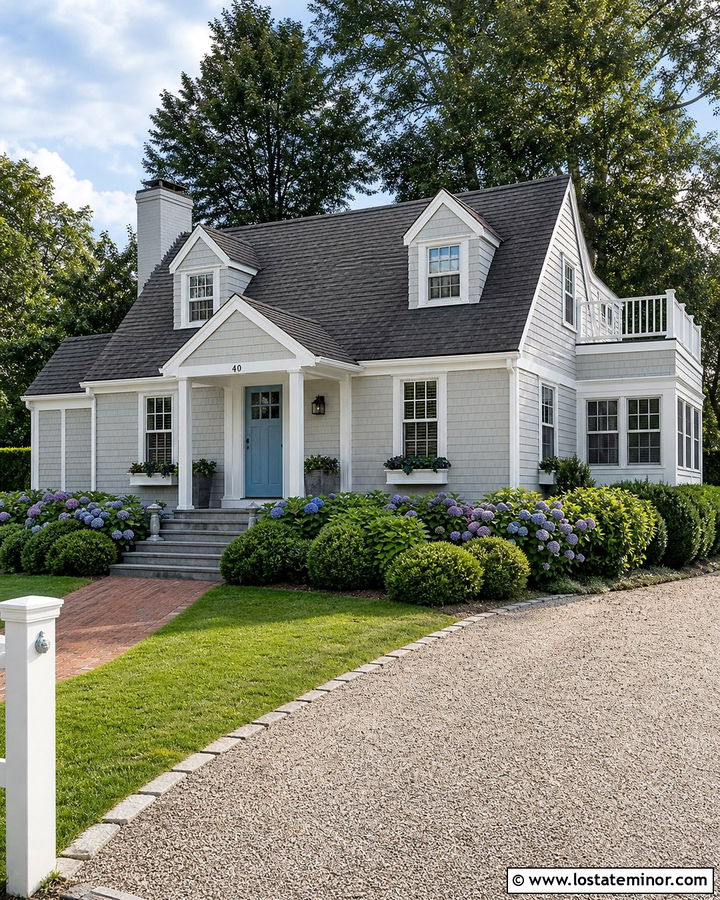
A Cape Cod home benefits from a simple palette that highlights its compact shape and familiar roofline. Paint the shingle or clapboard siding a misty light grey, then use clean white on the dormers, window trim, corner boards, and porch columns. A muted coastal blue front door adds color without becoming too bright. Choose a weathered grey roof so the upper and lower portions of the home blend smoothly. A small gabled front porch can frame the entry and protect it from rain while preserving the Cape Cod’s understated character. Add white railings, bluestone porch steps, and nickel or black lanterns. Hydrangeas, clipped boxwoods, and a narrow brick walkway complete the setting. This full exterior feels coastal and cheerful without relying on themed decorations or excessive nautical details.
6. Light Grey Bungalow With Brick Porch Columns
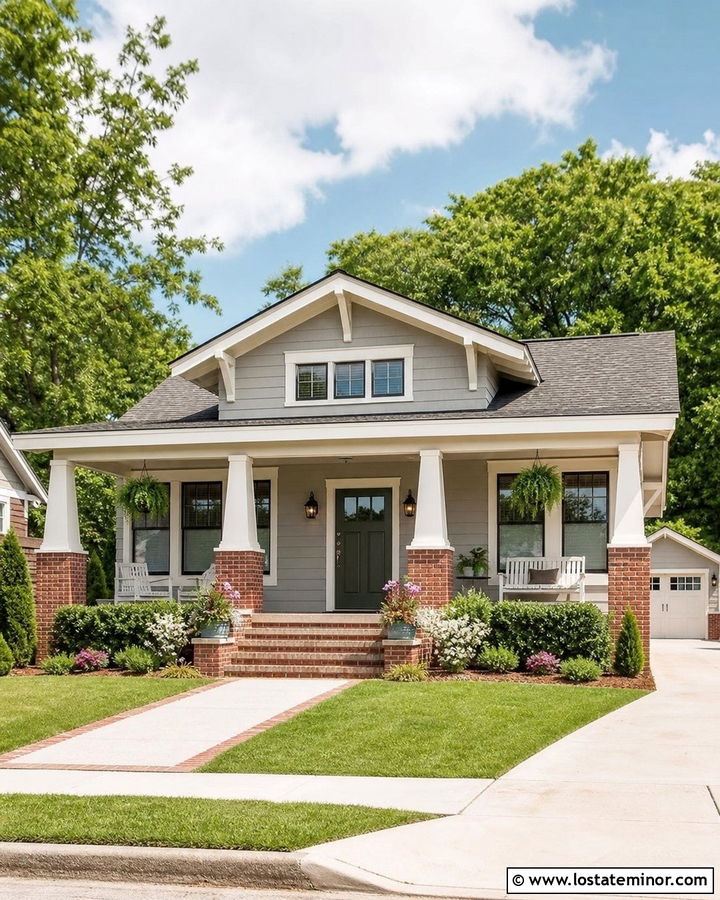
Brick porch columns add weight and warmth to a light grey bungalow, especially when the home has a broad low-pitched roof. Use light grey lap siding with creamy white trim around the windows, fascia, and porch beams. Build substantial column bases from warm red or brown brick, then top them with tapered white posts. A deep olive front door complements both the brick and grey siding while giving the entry a natural focal point. Dark bronze gutters, porch lights, and roof shingles will feel softer than solid black. Carry the brick onto the porch steps or walkway border to make the materials look intentional. Low foundation plantings should frame rather than conceal the porch. With its layered colors and sturdy details, this scheme gives a modest bungalow a distinctive, grounded street presence.
7. Light Grey Coastal House With White Front Porch
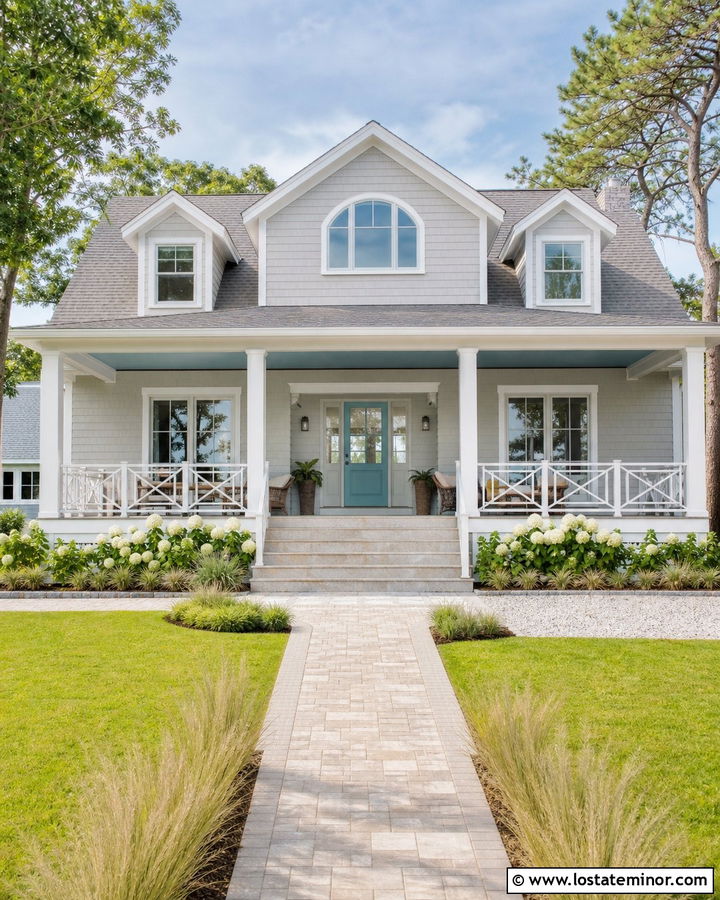
Bright white porch details make a light grey coastal house look airy and clean. Cover the facade in light grey cedar-style shingles or narrow lap siding, then use white for the railings, columns, window trim, and decorative gable details. A sea-glass blue front door provides a gentle accent that suits the relaxed palette. Select a medium grey roof to avoid harsh contrast, and consider a pale blue porch ceiling for subtle color overhead. Wide porch steps and simple white balusters will create an open entrance without feeling ornate. Add natural teak seating, woven planters, and light stone paving. Breezy grasses and white flowering shrubs support the coastal mood while remaining appropriate for a suburban yard. The finished house feels fresh and beach-inspired, yet refined enough for neighborhoods far from the water.
8. Light Grey Modern House With Black Front Porch
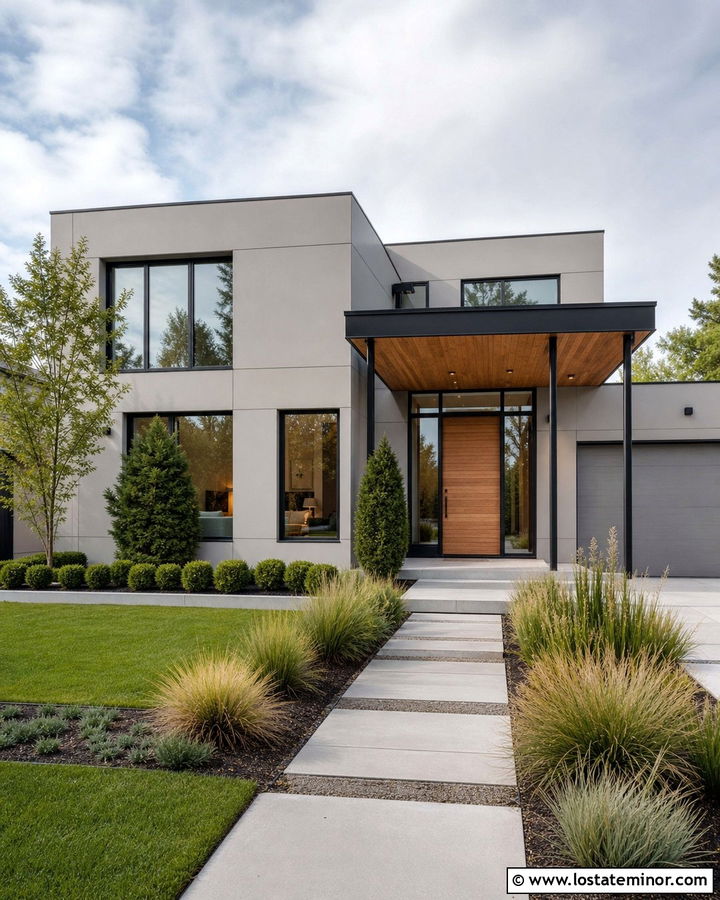
Black framing can give a light grey modern exterior strong definition without making the entire home feel dark. Use smooth light grey fiber-cement panels or stucco as the primary finish. Frame the recessed front porch with slim black steel columns, black window frames, and a flat black canopy. A warm cedar front door prevents the grey-and-black palette from becoming cold. Continue the wood tone on the porch ceiling or a narrow privacy screen for visual consistency. Large concrete porch slabs and a straight walkway complement the clean architecture. Keep landscaping structured with rectangular beds, compact evergreens, and ornamental grasses. The porch should remain open and uncluttered so its geometry stays visible. This combination creates a crisp, contemporary facade where the dark porch acts as a focal frame around the warmer entrance.
9. Light Grey Cottage With Cedar Front Porch
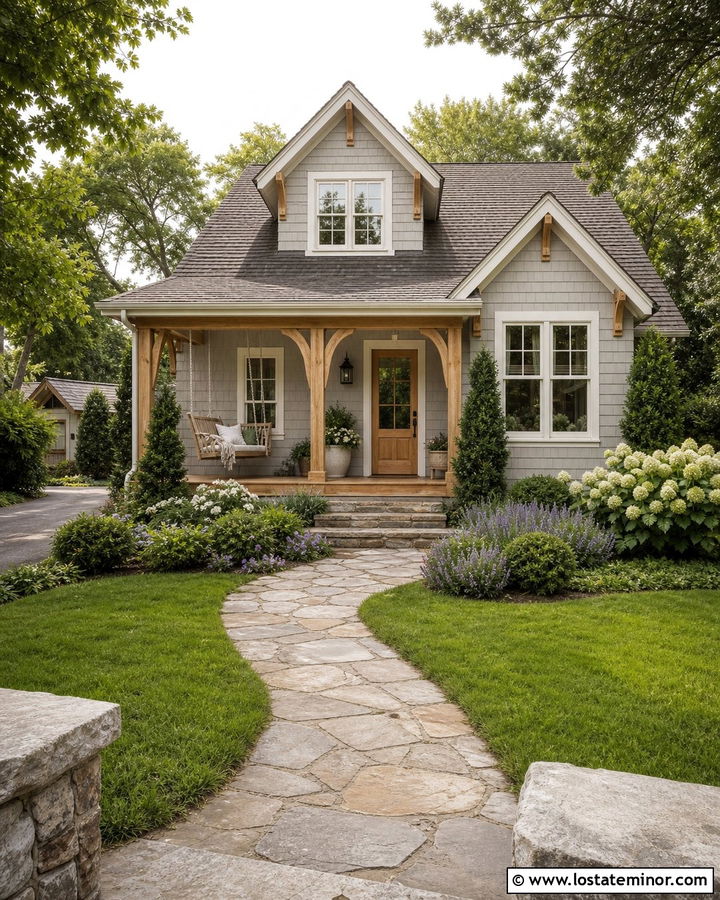
Soft grey siding and natural cedar can make a cottage feel charming without appearing overly decorative. Paint the main exterior a warm light grey and choose creamy white for the window trim, eaves, and small gable accents. Use cedar for the porch posts, brackets, flooring, and front door to create a connected band of warmth around the entrance. A weathered brown roof works especially well with this palette because it repeats the wood’s earthy undertones. Add a simple porch swing or compact bench rather than filling the small space with furniture. Irregular stone steps and a gently curving walkway support the informal cottage character. Surround the porch with lavender, hydrangeas, and low evergreen shrubs. The completed scheme feels cozy and carefully layered while allowing the light grey facade to remain calm and versatile.
10. Light Grey Split-Level With Covered Front Porch
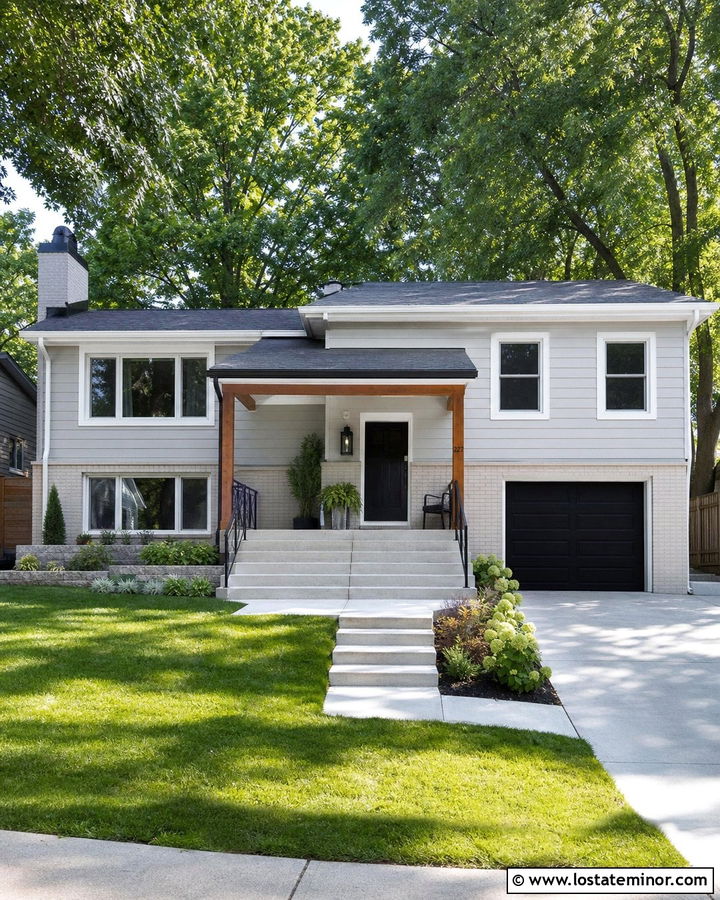
A covered porch can give a split-level house a clearer entrance and improve the balance of an uneven facade. Choose light grey siding for both levels, using white trim to connect windows that sit at different heights. Build a shallow shed-roof porch over the front door and support it with clean cedar posts. A black door and matching garage door create repetition across the front elevation. If the lower level has brick, leave it natural or apply a soft limewash that relates to the grey siding. Dark charcoal roof shingles and gutters help define the stepped roofline. Use broad concrete stairs, modern black railings, and layered foundation beds to guide attention toward the entry. This coordinated approach makes the split-level architecture look intentional, updated, and more welcoming from the street.
11. Light Grey Victorian House With Detailed Front Porch
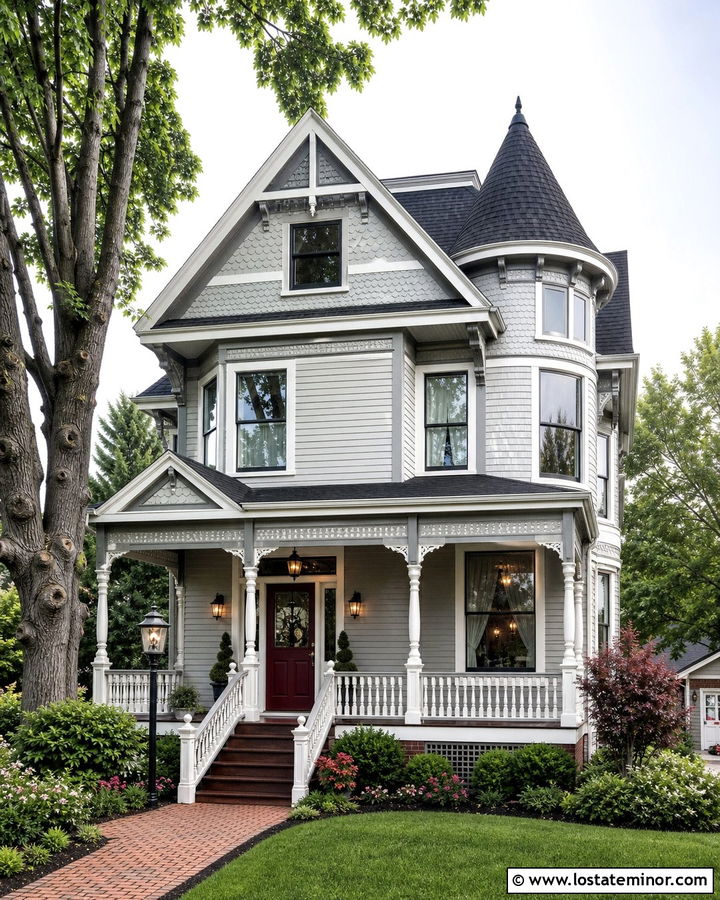
A Victorian exterior can wear light grey beautifully when the decorative trim uses a controlled color palette. Apply pale grey to the main siding, soft white to the porch columns and railings, and medium grey to brackets, gable trim, and scalloped shingles. A muted burgundy front door provides a traditional accent without competing with the architectural detail. Use a charcoal roof and dark metal porch lights to anchor the softer colors. The porch floor could be stained mahogany or painted a deeper grey for durability and contrast. Avoid using too many unrelated accent colors, since the home already has visual complexity. Formal shrubs, flowering borders, and a brick walkway complete the setting. This layered grey scheme highlights craftsmanship while keeping the overall Victorian facade elegant, readable, and cohesive.
12. Light Grey Prairie House With Low Front Porch
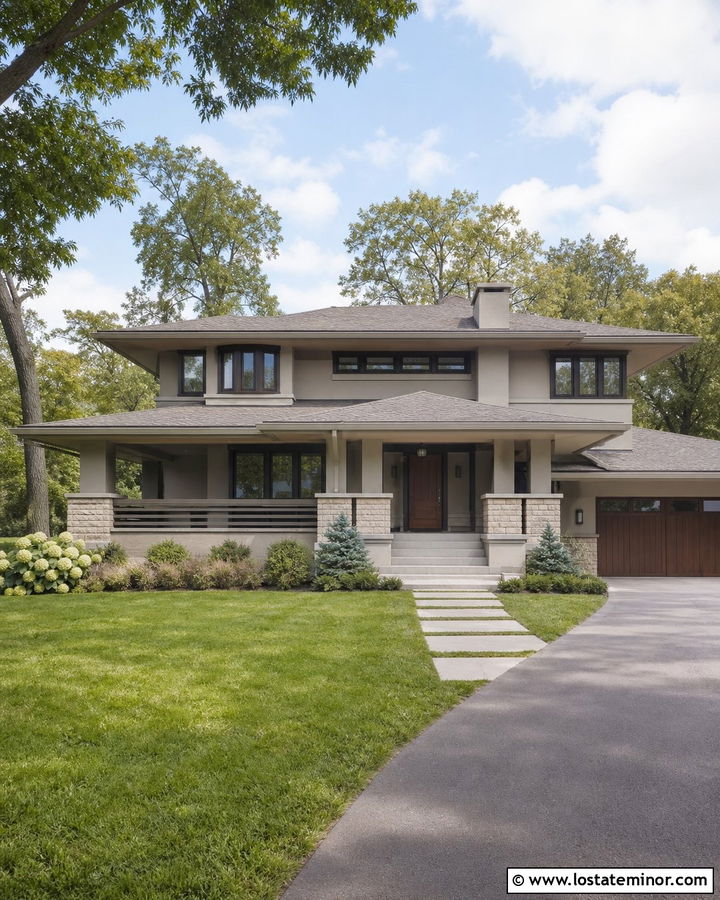
Horizontal lines are central to a Prairie-style home, and a long low porch can reinforce that distinctive shape. Use a warm light grey stucco or horizontal siding across the facade. Pair it with dark bronze window frames, wide cream-colored eaves, and substantial porch piers faced in natural limestone. A medium-stained oak front door complements the stone and gives the entrance warmth. Keep the porch railing low and simple, or omit it where building conditions allow, so the architecture maintains its broad visual flow. A low-slope brown-grey roof will look more integrated than a sharply contrasting black roof. Extend rectangular paving stones from the porch toward the sidewalk. Layer ornamental grasses, spreading evergreens, and low shrubs around the foundation. Together, these elements create a grounded exterior with balanced proportions and understated curb appeal.
13. Light Grey Tudor House With Arched Front Porch
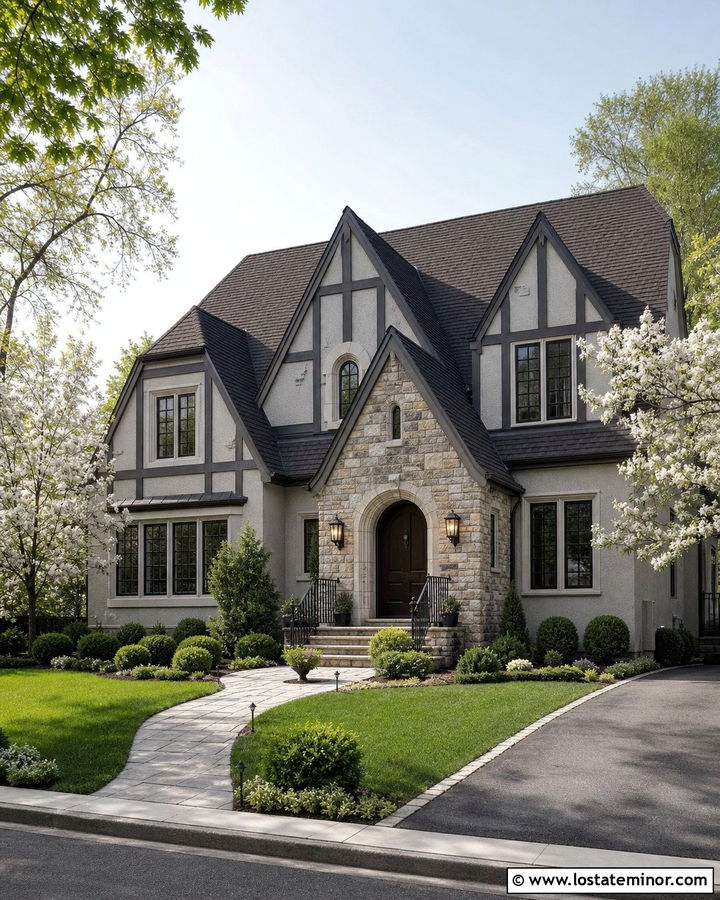
An arched porch brings focus to a Tudor entrance while echoing the home’s steep rooflines and traditional masonry. Use a warm light grey on the stucco or siding, then add creamy off-white trim around windows and beneath the eaves. Frame the porch opening with tumbled stone in beige, taupe, and muted grey tones. A dark walnut arched front door enhances the architectural character and connects naturally with brown-black roof shingles. If decorative half-timbering is present, finish it in deep charcoal rather than harsh black. Use aged bronze lanterns and simple iron railings to support the old-world details. A curved stone path, clipped shrubs, and small flowering trees soften the substantial facade. The finished scheme respects Tudor architecture while making the exterior feel lighter and more approachable.
14. Light Grey Scandinavian House With Wood Front Porch
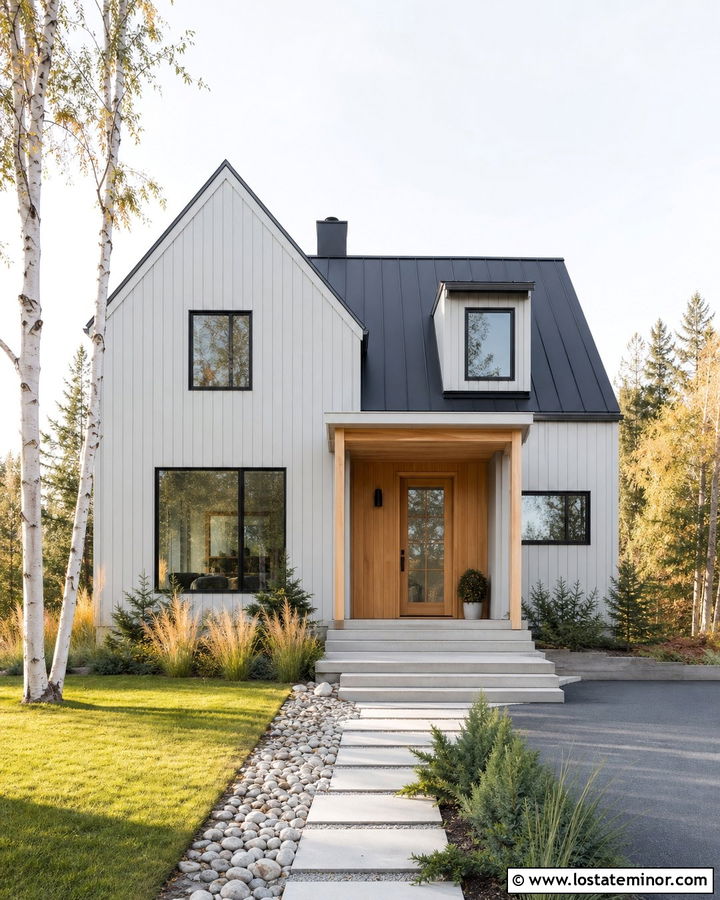
Clean lines and warm wood make a light grey Scandinavian-inspired house feel simple rather than stark. Choose a cool pale grey for vertical siding, paired with matching grey trim for a nearly monochromatic facade. Introduce natural ash or light cedar on the recessed porch ceiling, front door, and slim support posts. Black-framed windows and a black metal roof create sharp outlines that define the house’s minimal form. Keep the front porch compact, functional, and free from decorative railings whenever the site allows. Broad concrete steps and a gravel-edged walkway support the streamlined look. Use birch trees, soft grasses, and low evergreen plantings to frame the architecture. This restrained palette allows the wood porch to provide warmth while the light grey siding keeps the full exterior bright, modern, and connected to its surroundings.
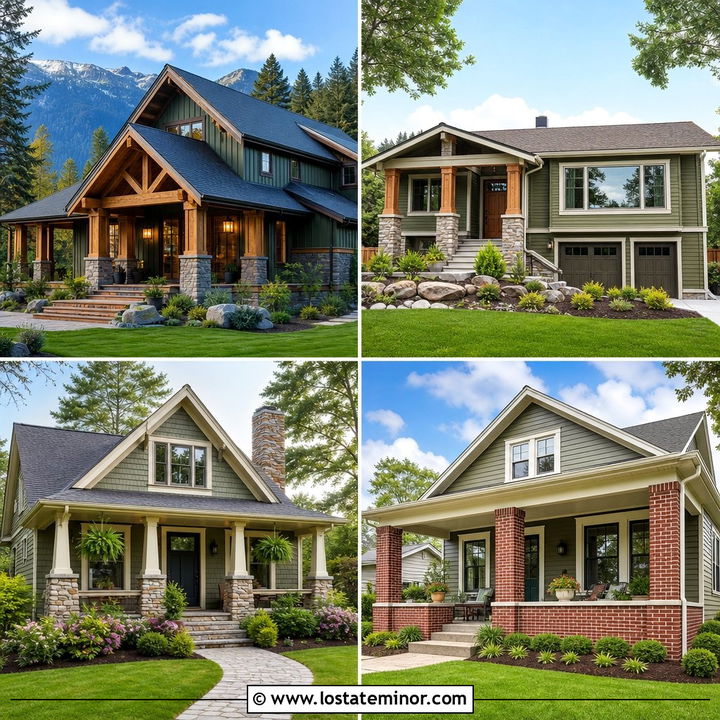
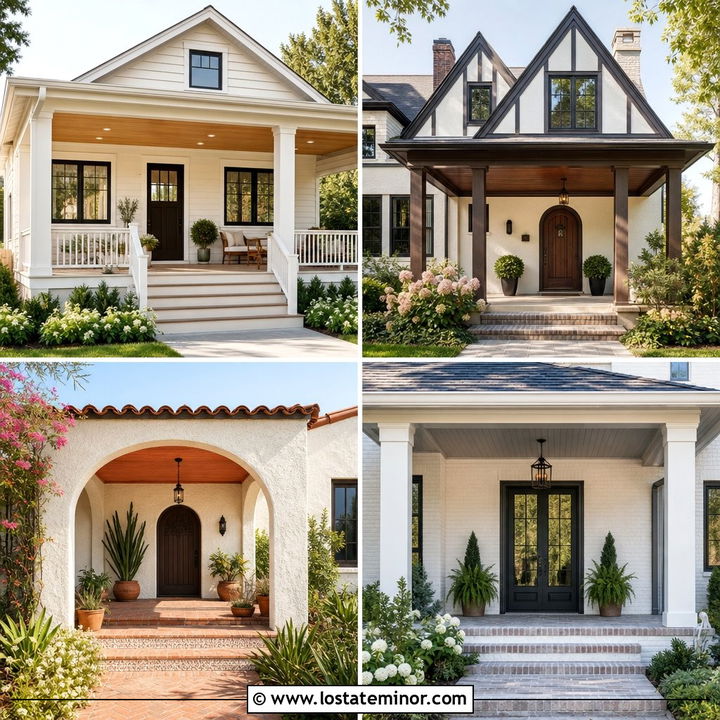
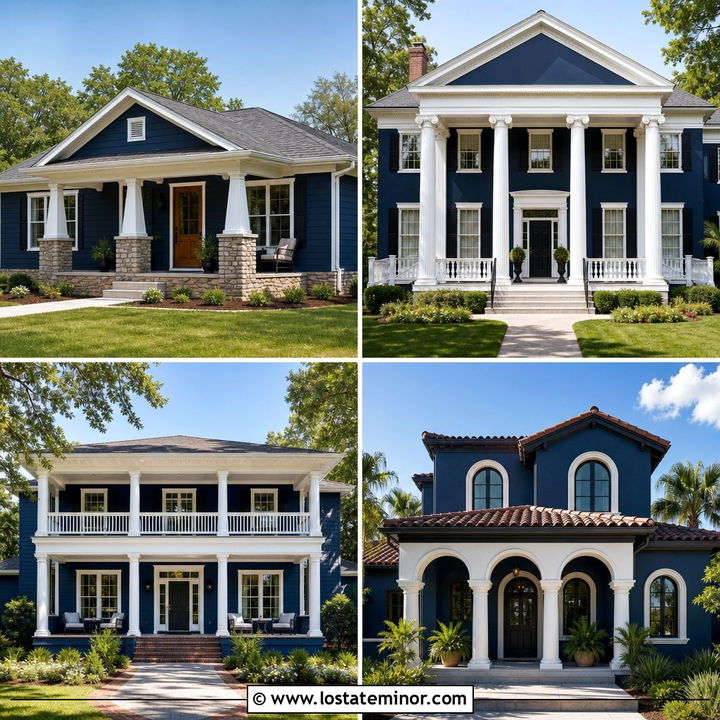
15. Light Grey French Country House With Stone Porch
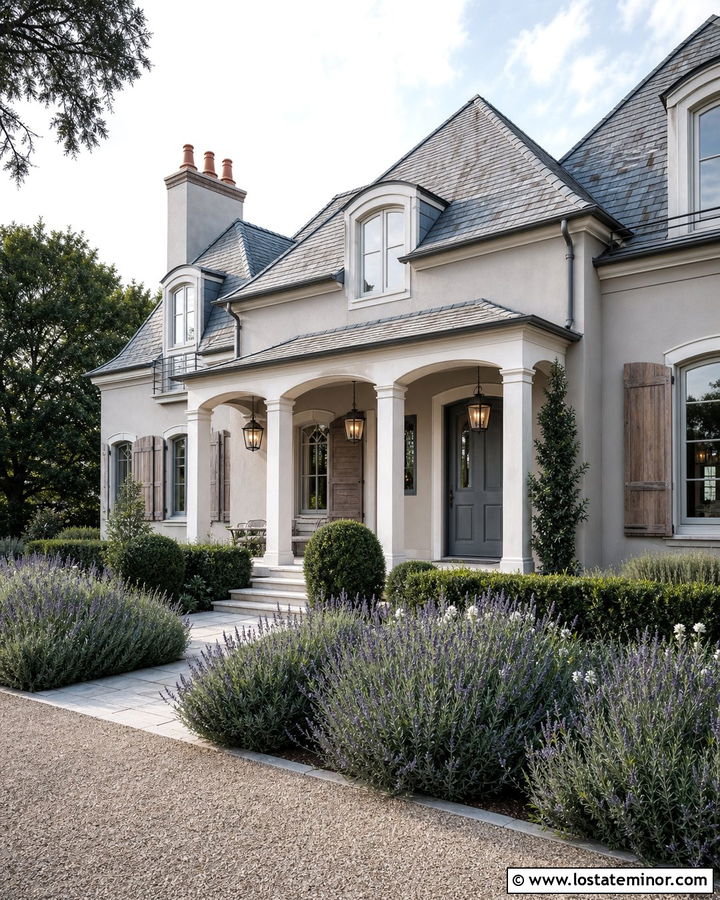
A light grey French country exterior feels graceful when natural stone softens the formal architecture. Apply a warm grey finish to the stucco or siding, then use soft ivory around the windows, roofline, and porch arches. Add pale limestone to the porch columns, foundation, and selected wall sections for depth. A faded blue-grey front door introduces quiet color while staying within the subdued palette. Choose a weathered brown or slate-grey roof with gently varied tones instead of a flat black finish. Curved porch openings, iron lanterns, and simple wood shutters can reinforce the architecture without creating clutter. Complete the facade with a gravel walkway, clipped greenery, lavender, and rounded planting beds. The combination of warm grey, creamy trim, stone, and blue-grey creates a refined home that still feels relaxed and livable.
16. Light Grey Traditional House With Brick Front Porch
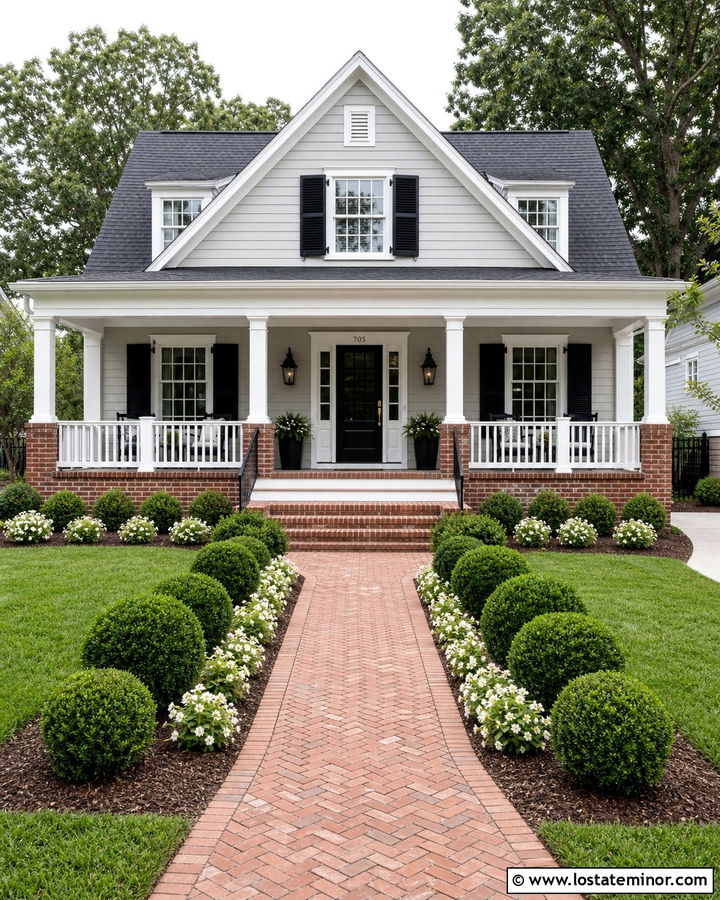
Warm brick can keep a light grey traditional house from appearing flat or overly cool. Select a balanced light grey for the siding, then use white on the window trim, porch columns, railings, and garage surround. Cover the porch floor, steps, and column bases with classic red brick. A glossy black front door and black shutters add familiar contrast while relating to a charcoal shingle roof. Repeat the brick along the walkway border or foundation so the porch does not look disconnected from the rest of the house. Symmetrical lanterns and matching planters create a tidy entrance. Choose green shrubs and white flowers to brighten the foreground without introducing competing colors. This complete exterior scheme feels established and comfortable, making it suitable for both older houses and newer suburban construction.
17. Light Grey Board And Batten House With Front Porch
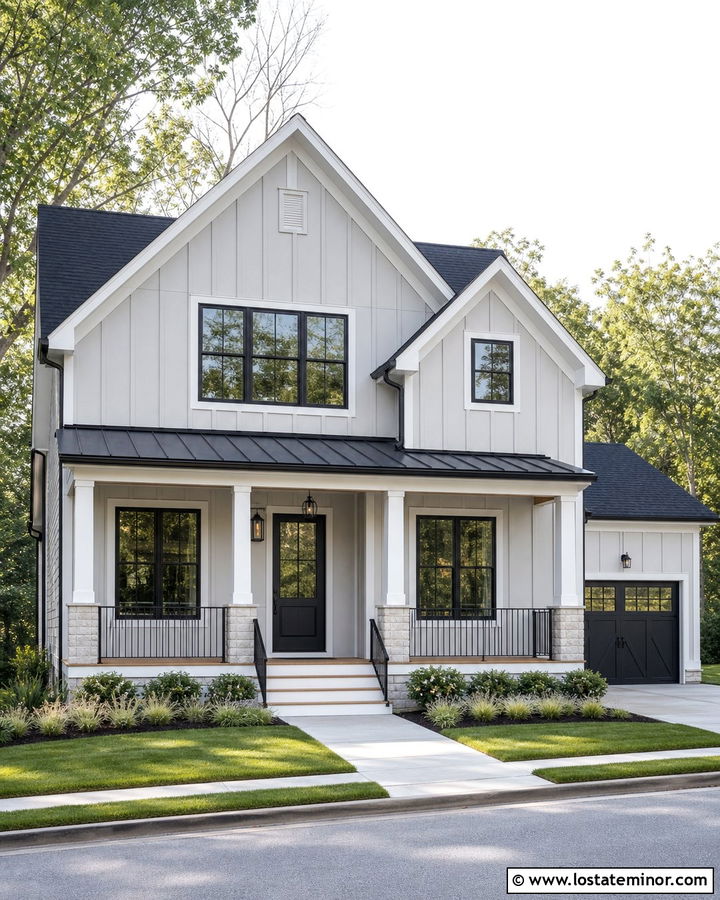
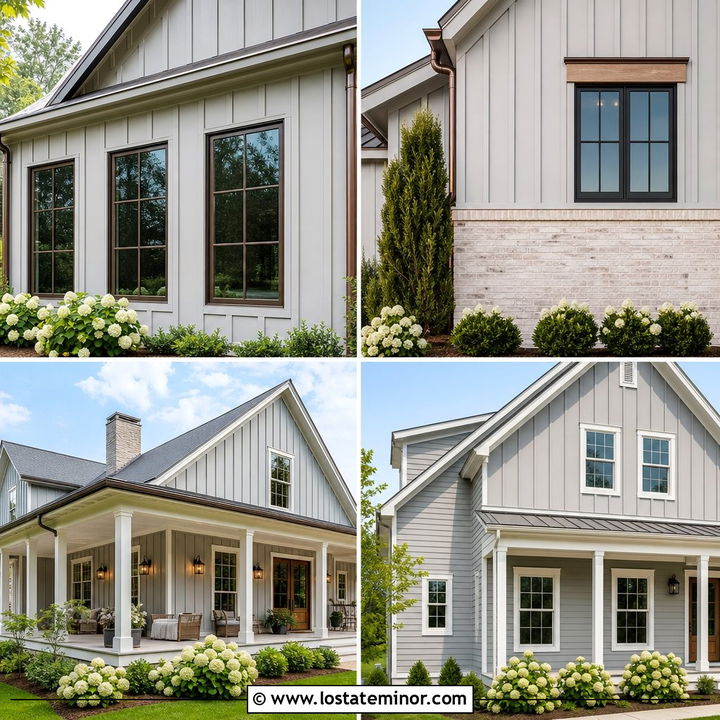
Vertical board-and-batten siding gives a light grey house height and texture, making it especially effective on a modern farmhouse or compact two-story home. Use a soft light grey across the walls and bright white on the porch columns, fascia, window frames, and gable trim. A black front door, black-framed windows, and black metal porch roof introduce bold but controlled contrast. Warm cedar porch flooring keeps the entrance from feeling too monochromatic. Consider stone column bases in pale grey and beige if the facade needs more visual weight. Keep railings simple with square white balusters or slim black metal panels. A straight concrete walkway, structured shrubs, and ornamental grasses complement the clean siding pattern. The full scheme feels current while remaining simple enough to age gracefully.
18. Light Grey Lap Siding House With Wide Front Porch
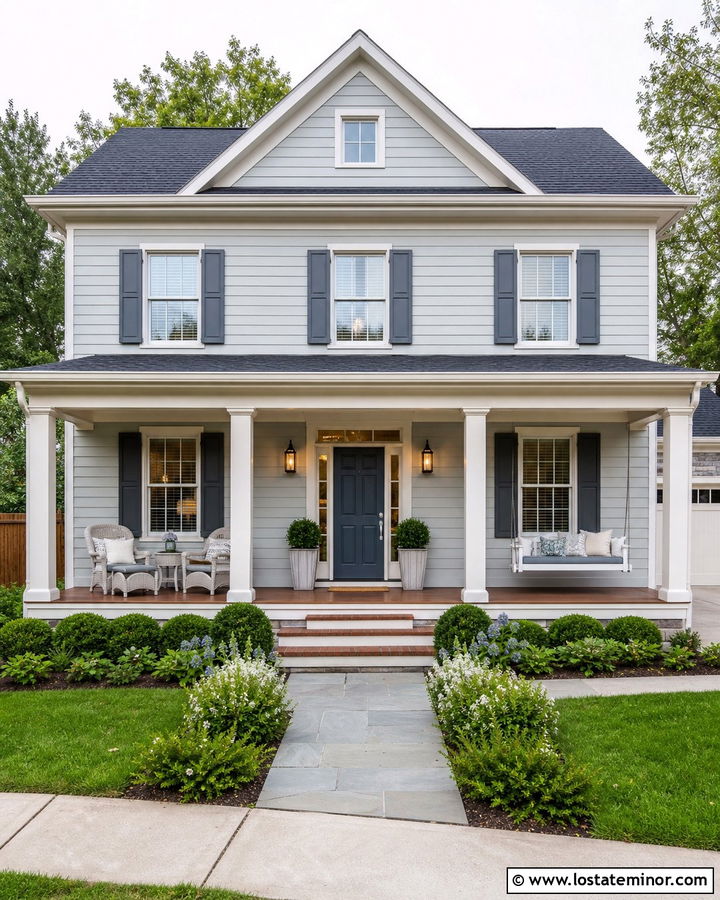
Traditional lap siding creates gentle shadow lines that add depth to a light grey exterior throughout the day. Pair the siding with warm white trim, broad porch columns, and a white-painted ceiling to keep a wide front porch bright. A medium blue front door offers color without disrupting the calm palette. Use a dark grey roof and matching gutters to frame the house, then introduce natural wood through porch furniture or stained floorboards. If the home has shutters, choose a slightly deeper grey rather than black for softer contrast. Divide the porch into a seating zone and a clear entry path so it looks useful rather than crowded. Layer boxwoods, flowering perennials, and low ground cover along the edge. This balanced design works well on traditional suburban homes with long, straightforward facades.
19. Light Grey Shake Siding House With Front Porch
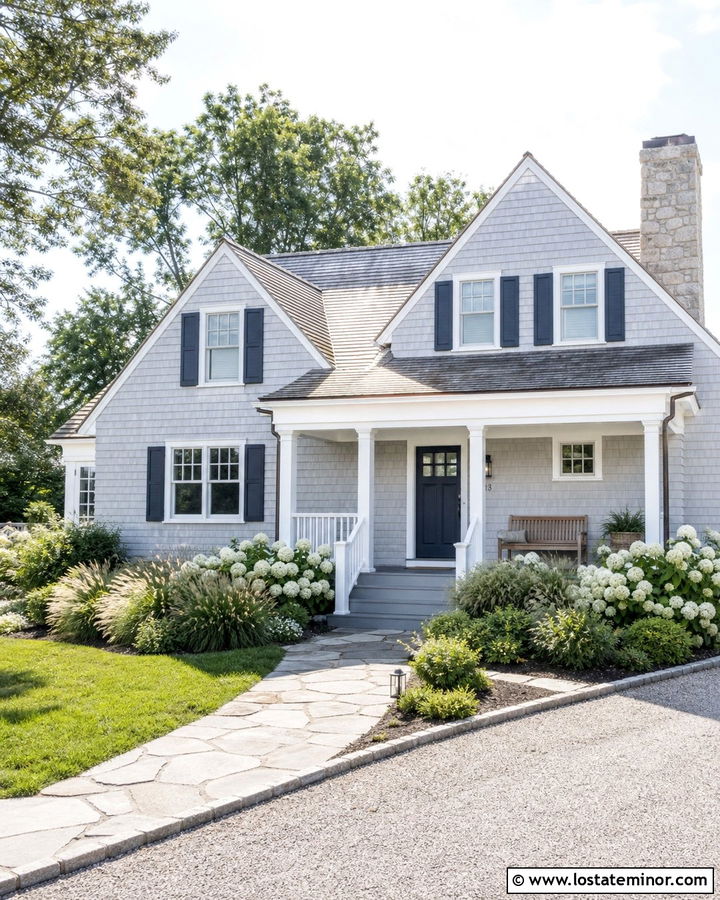
Shake siding gives light grey more movement and dimension than a completely smooth exterior. Use pale grey shakes on the upper walls or gables and matching lap siding below. Crisp white trim can outline the windows, roof edges, porch railing, and square columns. Choose a dusty navy front door and matching shutters to add coastal-inspired contrast. A weathered grey roof will blend naturally with the textured siding, while a bluestone porch floor introduces another quiet layer of color. Keep the porch furnishings simple with a wood bench and neutral cushions. White hydrangeas, beach grasses, and a flagstone walkway create a soft foreground. Whether used on a cottage or shingle-style home, this complete palette feels detailed and welcoming without depending on bright colors or excessive ornament.
20. Light Grey House With Metal Roof Front Porch
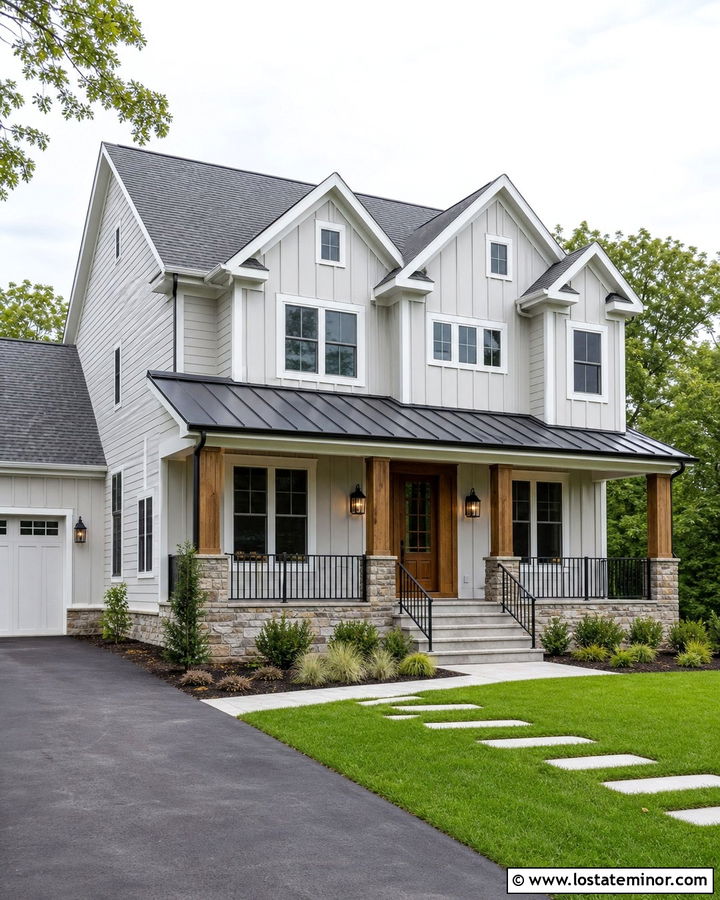
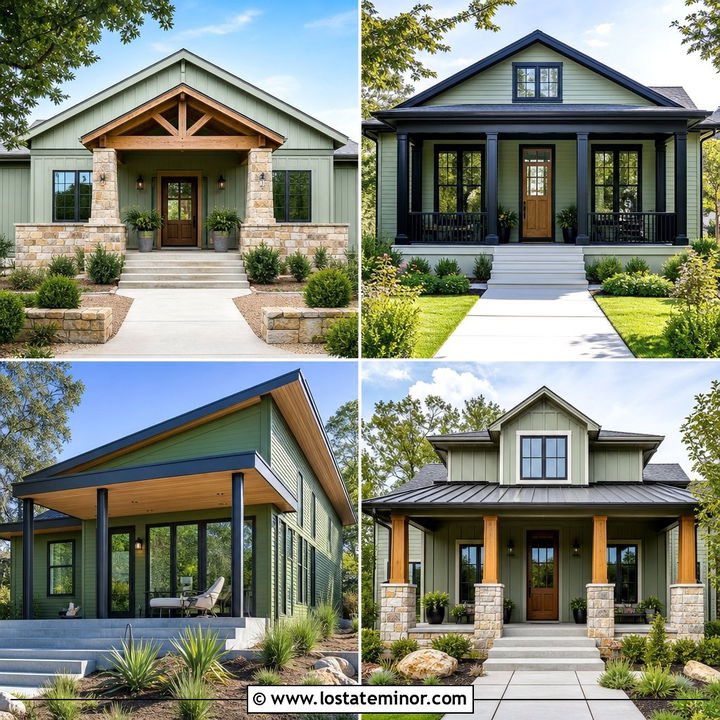
A metal porch roof creates a crisp architectural accent against light grey siding. Use a warm pale grey on the main house, white around the windows and eaves, and charcoal standing-seam metal over the front porch. The metal should relate to the main shingle roof, gutters, and black porch lights so it does not appear isolated. Cedar columns and a medium-stained wood door add warmth beneath the dark canopy. Consider a stone porch foundation in mixed grey and tan to bridge the cool and warm materials. Wide steps and black railings can give the entrance a finished edge. Add low shrubs and grasses that leave the porch structure visible. This design is particularly effective on farmhouses, ranches, and Craftsman homes that need a clear focal point around the front door.
21. Light Grey House With Gabled Front Porch
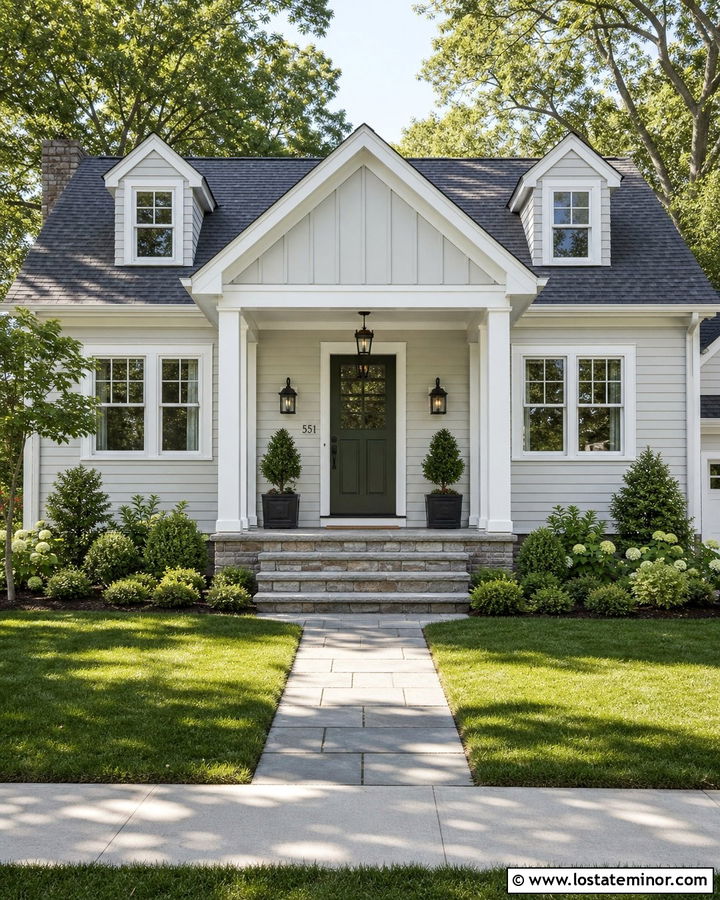
A gabled porch can make the entrance of a light grey house more visible while adding dimension to a plain roofline. Match the porch pitch to an existing roof or front-facing gable so the addition feels original. Use pale grey siding, bright white trim, and white square columns for a clean foundation. Fill the porch gable with light grey board-and-batten siding or natural cedar shingles to create subtle variation. A deep green front door provides a grounded focal point, while dark bronze lanterns and roof shingles soften the contrast. Stone steps and a paved walkway can connect the porch to the yard. Keep the landscaping symmetrical near the entrance. This coordinated arrangement gives the facade stronger proportions and makes even a compact porch feel architecturally significant.
22. Light Grey House With Shed Roof Front Porch
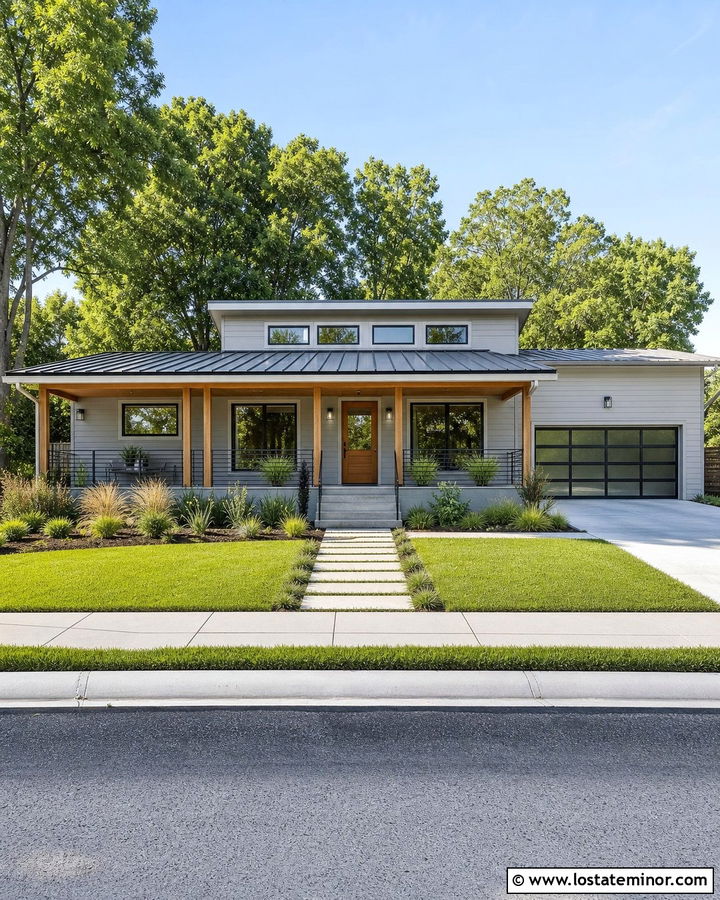
A shed roof porch offers a simple way to update a light grey house without introducing an elaborate roof structure. Run the porch roof across part or all of the facade, using charcoal metal roofing to create a thin, defined line. Soft grey horizontal siding and white window trim keep the house bright. Support the canopy with natural cedar posts, then repeat the wood on the front door and porch ceiling. Black-framed windows and modest black railings can sharpen the modern-rustic palette. Select large concrete porch slabs instead of small decorative tiles for a clean surface. Use linear planting beds with grasses, compact shrubs, and dark mulch to reinforce the horizontal architecture. The result suits ranch, cabin-inspired, and contemporary homes, giving each one a sheltered entrance with straightforward curb appeal.
23. Light Grey House With Screened Front Porch
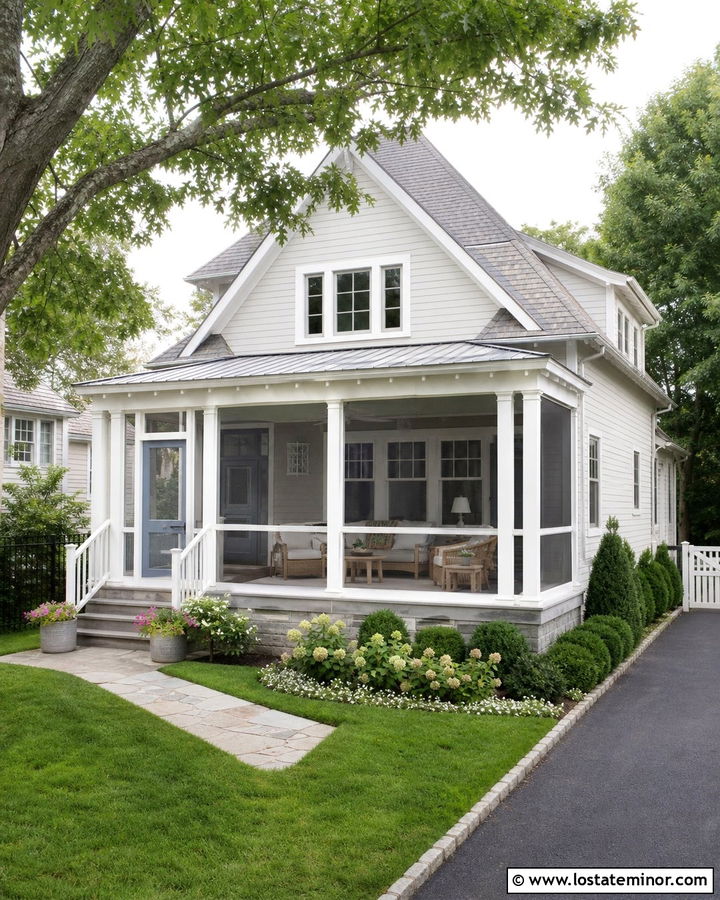
A screened front porch can look attractive from the street when its framing relates closely to the rest of the exterior. Paint the main house light grey and use white for the screen frames, columns, railings, and trim. This prevents the enclosure from appearing dark or visually heavy. Install a muted blue screen door as a gentle accent, then repeat that color in small porch accessories. A medium grey roof and bluestone steps will keep the overall scheme quiet and cohesive. Choose fine dark screening that preserves outward views without dominating the facade. Inside, use pale wood furniture and a light outdoor rug to maintain brightness. Foundation shrubs and flowering borders can soften the lower porch edge. This complete design creates practical outdoor living space while retaining an open, welcoming appearance.
24. Light Grey Small House With Compact Front Porch
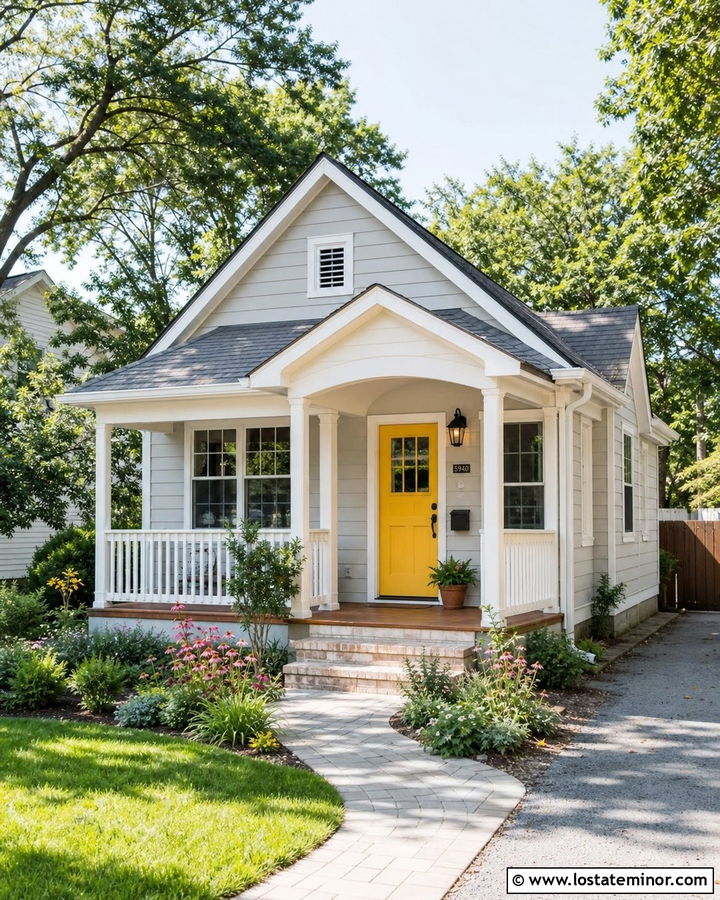
A small light grey house needs a porch that adds character without overwhelming the facade. Choose a narrow gabled portico or shallow covered landing proportioned to the front door and nearby window. Paint the siding a warm light grey and use creamy white for the trim, porch posts, and small railing. A cheerful yellow front door creates a clear focal point and makes the entrance easy to identify. Add a medium grey roof, black lantern, and simple house numbers for definition. Keep the porch floor in natural wood or light brick so the area feels warm. One bench or chair is enough for a compact space. Use a curved walkway and layered cottage plantings to make the approach feel generous. The finished exterior looks charming, balanced, and thoughtfully scaled.
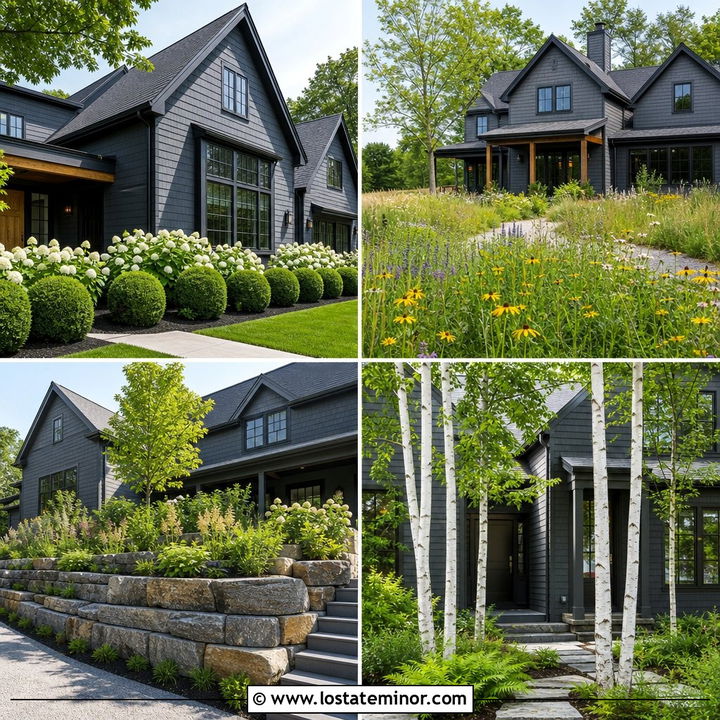
25. Light Grey Two-Story House With Double Front Porch
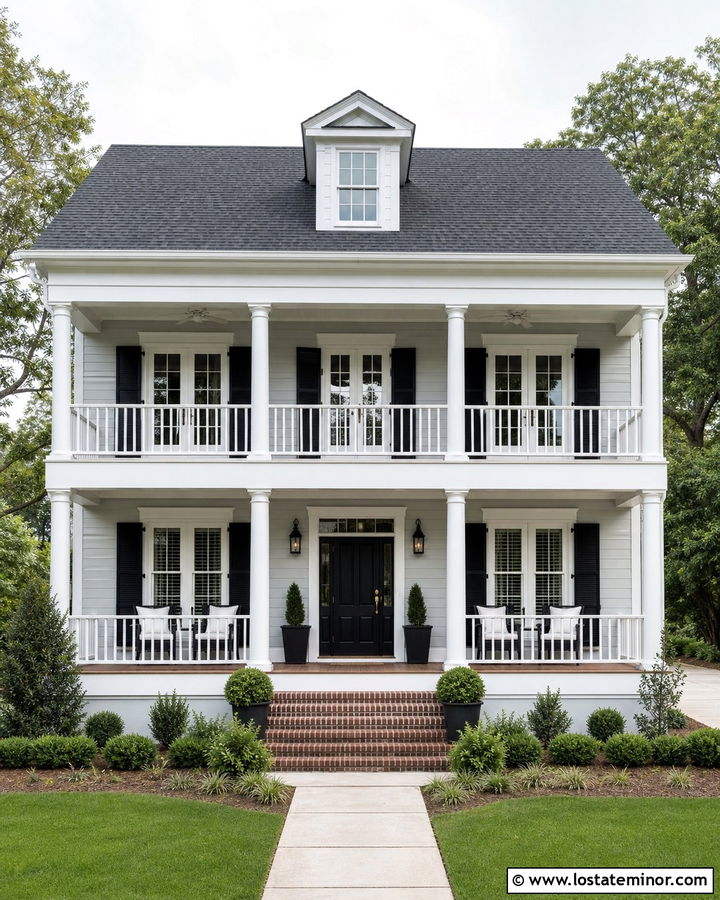
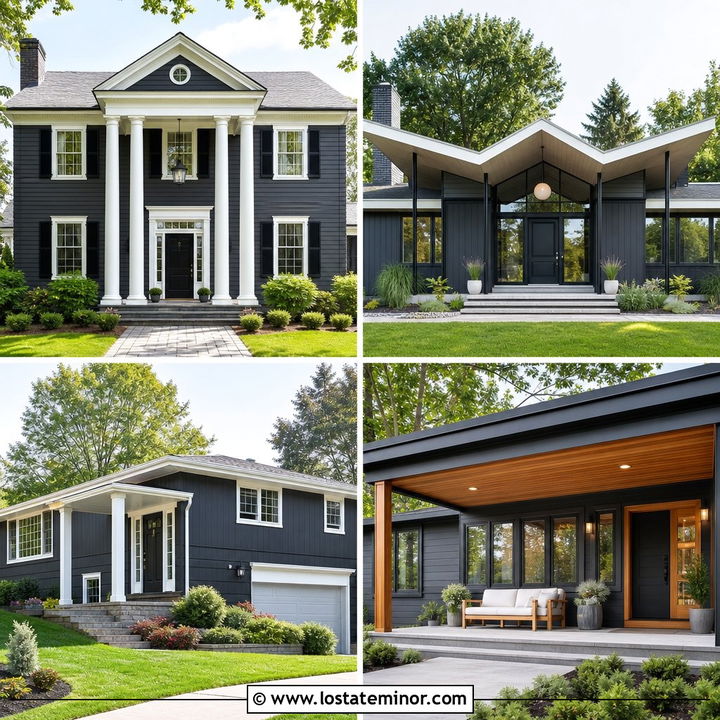
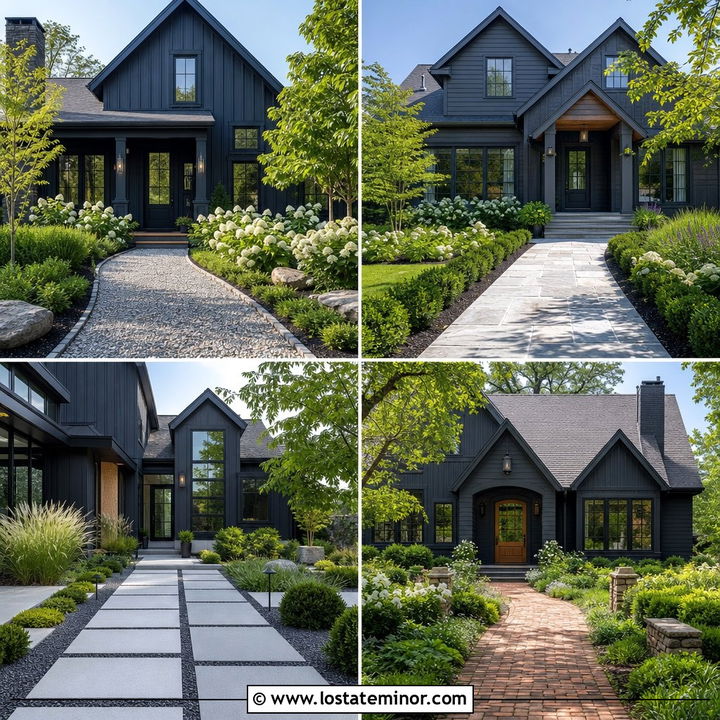
Double front porches can give a two-story light grey house a strong, graceful rhythm. Use pale grey siding across both floors and bright white on every column, railing, window surround, and porch beam. A black front door, black shutters, and a charcoal roof create repetition from top to bottom. Stain both porch floors a warm medium brown to prevent the large white framework from feeling cold. French doors or tall windows on the upper porch can reinforce the vertical proportions. Use simple balusters and evenly spaced columns so the facade remains orderly. Brick steps, symmetrical planters, and a straight walkway help ground the tall elevation. This palette works especially well on Southern, coastal, and traditional homes, where the porches should appear integrated rather than attached as separate decorative features.
26. Light Grey House With Accessible Front Porch
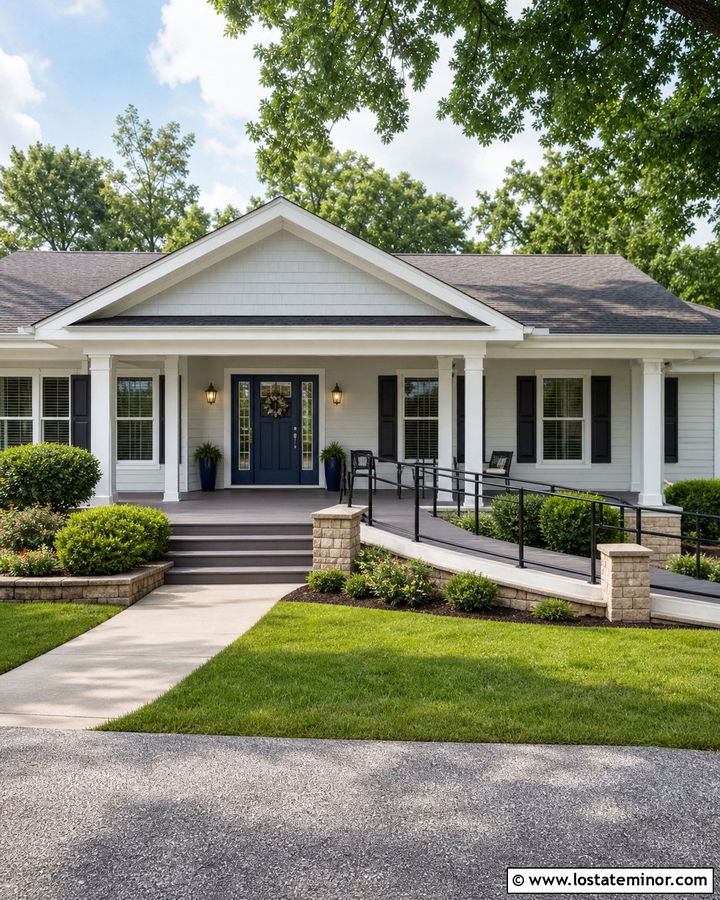
An accessible porch can blend into a light grey exterior without looking clinical or added as an afterthought. Use a broad covered porch with a gently sloped ramp incorporated into the landscaping. Paint the house soft light grey and finish the columns, fascia, and railings in warm white. Choose slim black metal handrails for clear definition and durability. A rich blue front door gives the entrance a visible focal point, while wide sidelights increase its visual presence. Use slip-resistant grey composite decking that relates to the siding without matching it exactly. Low retaining walls and wide planting beds can conceal portions of the ramp while preserving safe movement. Smooth pathways, layered shrubs, and bright porch lighting complete the design. The entire facade feels attractive, practical, and welcoming to visitors with different mobility needs.
27. Light Grey House With Stone Front Porch Foundation
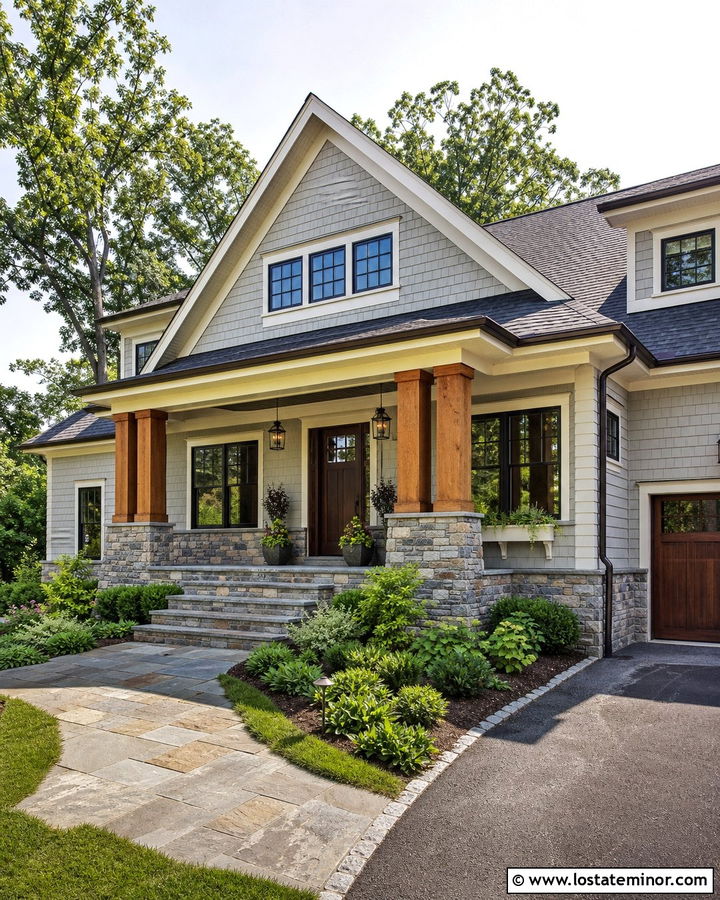
A stone foundation gives a light grey house a strong visual base and helps connect the porch to the surrounding landscape. Choose warm light grey siding with off-white trim and natural cedar porch columns. Use ledgestone containing grey, cream, and subtle brown tones across the porch base, stair walls, and lower foundation. A dark brown front door and weathered charcoal roof will complement these earthy materials. Keep the stone placement consistent rather than adding small disconnected patches around the facade. Broad stone steps and a flagstone walkway can extend the texture toward the yard. Select black or dark bronze lights for quiet contrast. Low evergreen shrubs, flowering perennials, and mulch in natural brown tones complete the foreground. This full palette feels substantial while keeping the overall exterior bright and approachable.
28. Light Grey House With Black Shutter Front Porch
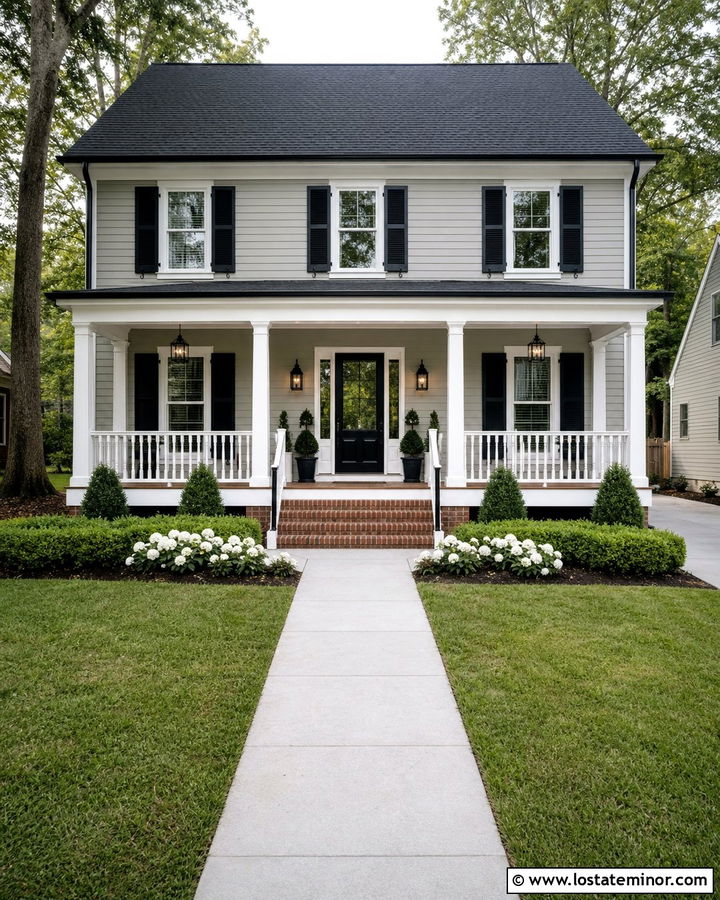
Black shutters give a light grey exterior clear contrast and can help organize a wide traditional facade. Use a soft neutral grey on the siding, crisp white around the windows and porch, and satin black on correctly proportioned shutters. Repeat the black on the front door, lanterns, gutters, and porch furniture frames so the shutters feel connected to the entire design. A warm wood porch floor and brick steps will prevent the palette from becoming too stark. Choose a charcoal roof that is slightly softer than the painted accents. White columns and railings keep the covered porch visually open. Add structured foundation shrubs and white flowering plants beneath the windows. The completed scheme feels tailored and familiar, with enough warmth and texture to remain welcoming rather than overly formal.
29. Light Grey House With Green Door Front Porch
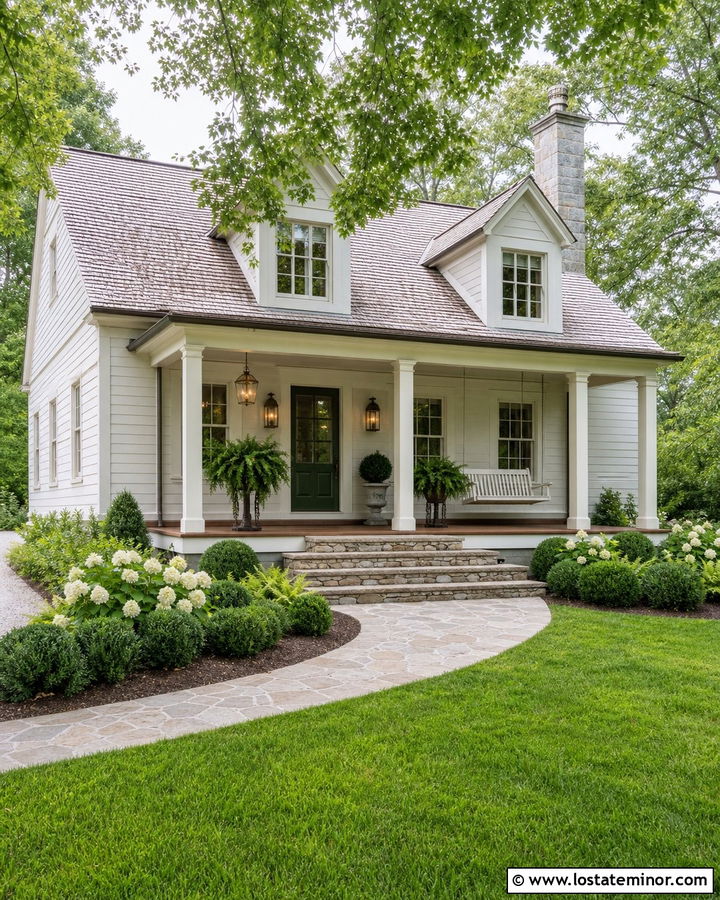
A deep green front door looks natural and sophisticated against light grey siding. Select a warm pale grey for the main facade, creamy white for the porch columns and window trim, and forest green for the door. Repeat the green subtly through planters, shutters, or outdoor cushions rather than painting every accent the same color. Natural stone porch steps and a medium brown wood floor add earthy texture. Choose a weathered grey roof and aged brass lanterns for a softer finish than black fixtures. The porch can include a simple swing, bench, or pair of chairs arranged away from the entry path. Boxwoods, ferns, and white hydrangeas strengthen the garden-inspired palette. Together, the grey, green, white, and natural materials create an exterior that feels established, peaceful, and connected to the landscape.
30. Light Grey House With Blue Porch Ceiling
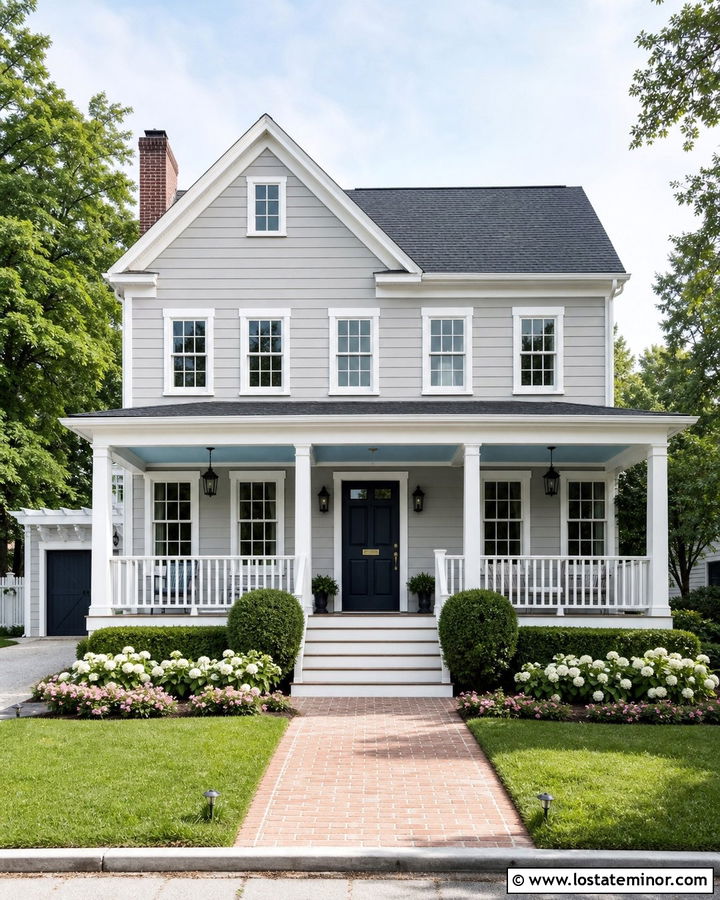
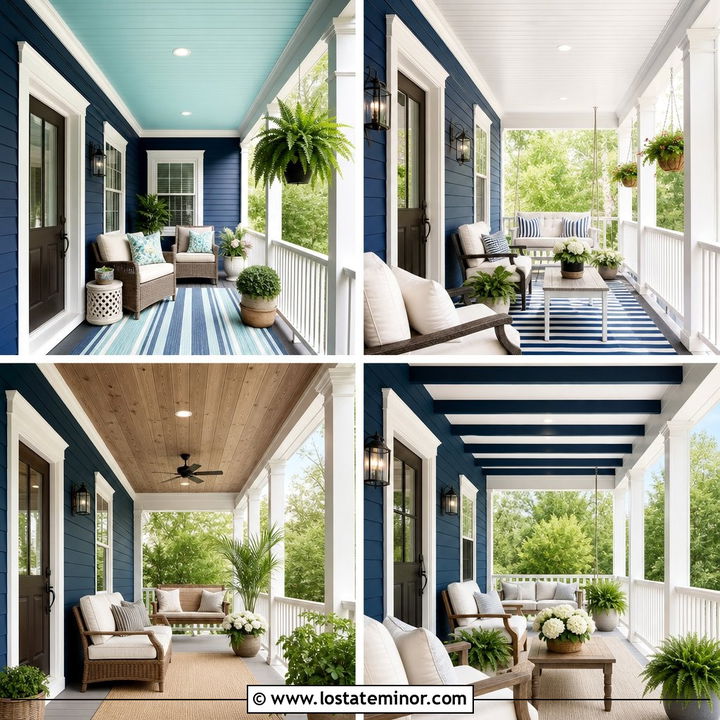
A blue porch ceiling introduces color to a light grey house in a subtle place that remains visible from the curb. Use a balanced light grey for the siding and clean white for the porch columns, railings, fascia, and window trim. Paint the ceiling a soft sky blue, then choose a navy front door to connect the overhead color to the main entrance. A charcoal roof and black lanterns give the lighter palette enough definition. Natural wood porch flooring adds warmth beneath the blue and grey surfaces. Keep furniture neutral with white, tan, or navy cushions. A straight brick walkway and layered green landscaping will frame the porch without competing with it. This complete scheme feels bright and welcoming, giving a traditional exterior a personalized but restrained touch of color.
Conclusion:
These **30 Light Grey House Design With Front Porch Ideas** show how one versatile exterior color can support many architectural looks. Light grey provides a calm foundation, but the porch materials and accent colors determine whether the house feels modern, traditional, coastal, rustic, or formal. White trim creates freshness, while black details add definition. Cedar, brick, and stone introduce the warmth that pale grey sometimes needs. Before committing, compare exterior samples beside the roof, masonry, and porch flooring in morning and afternoon light. Focus on proportion as carefully as color. Columns, railings, steps, and rooflines should suit the scale of the house. A coordinated approach will produce a front porch that looks welcoming, useful, and original to the home.

Related posts: