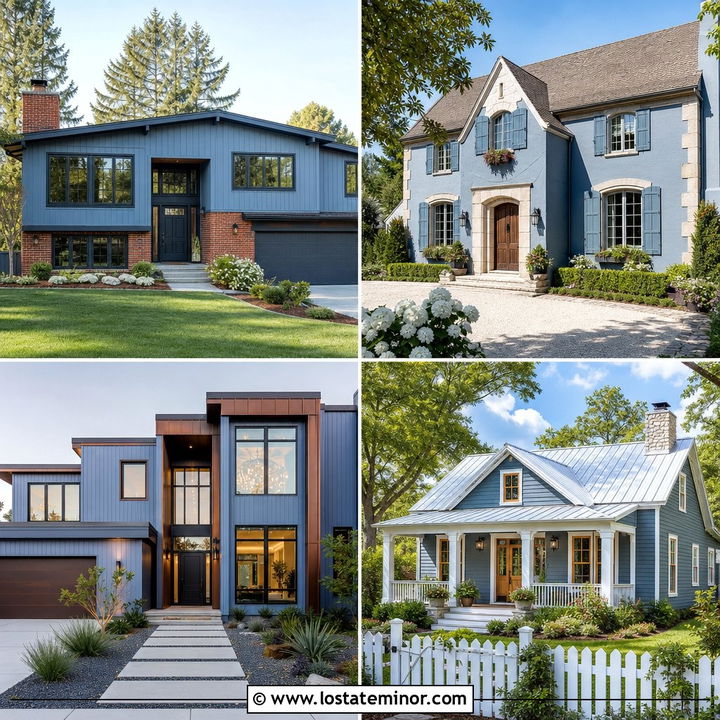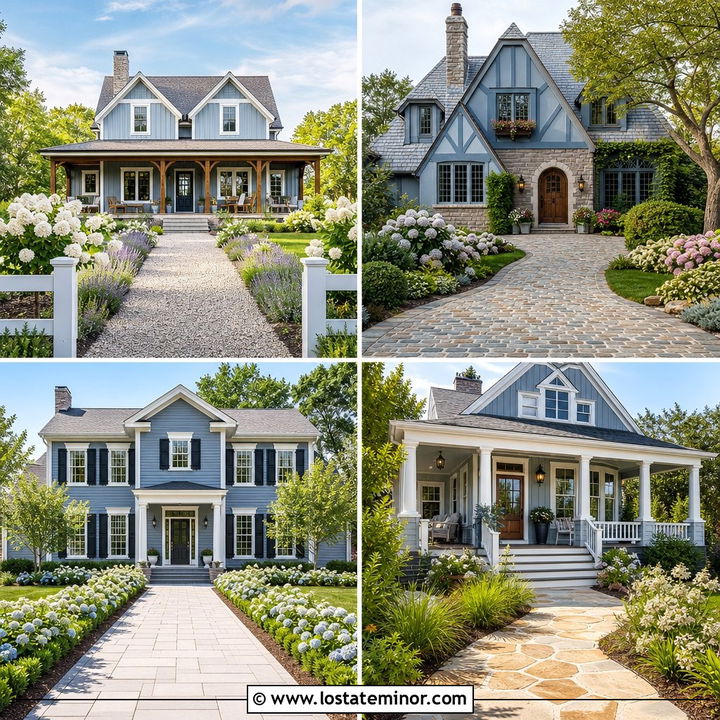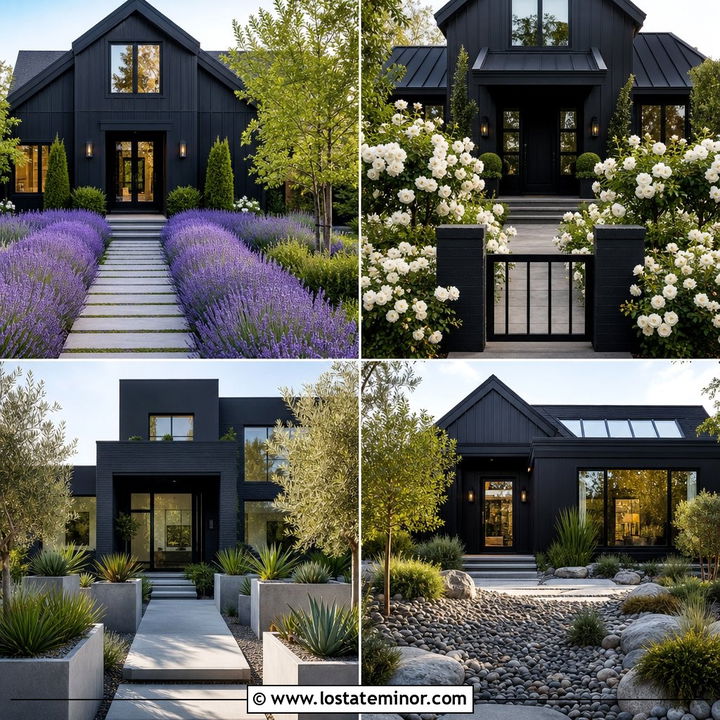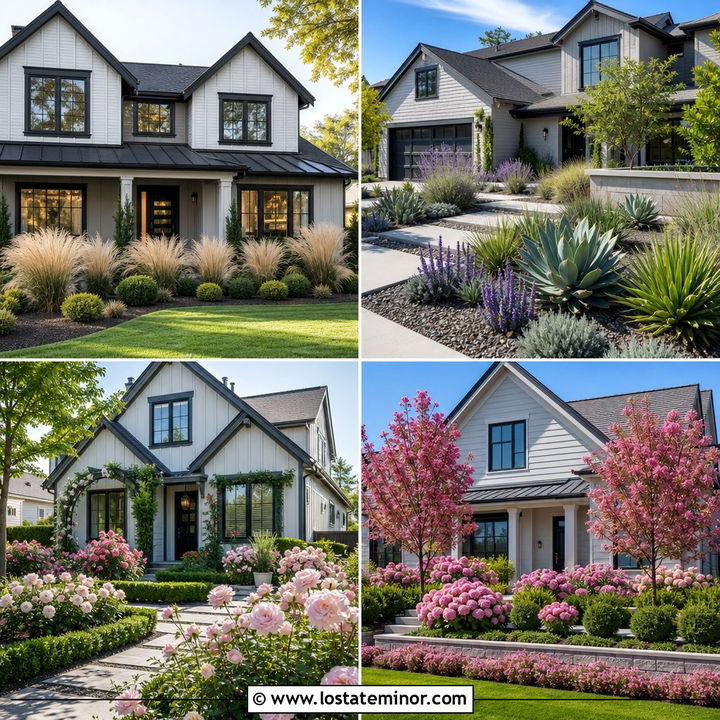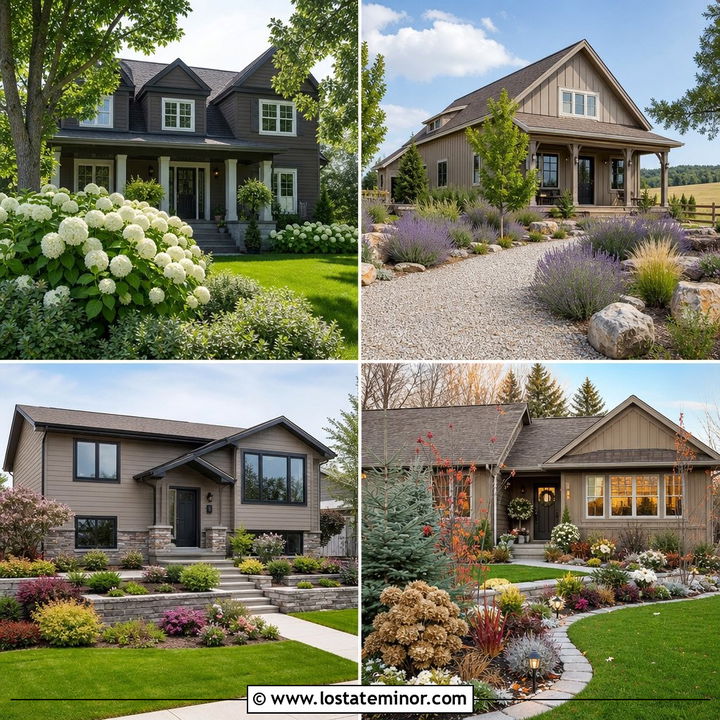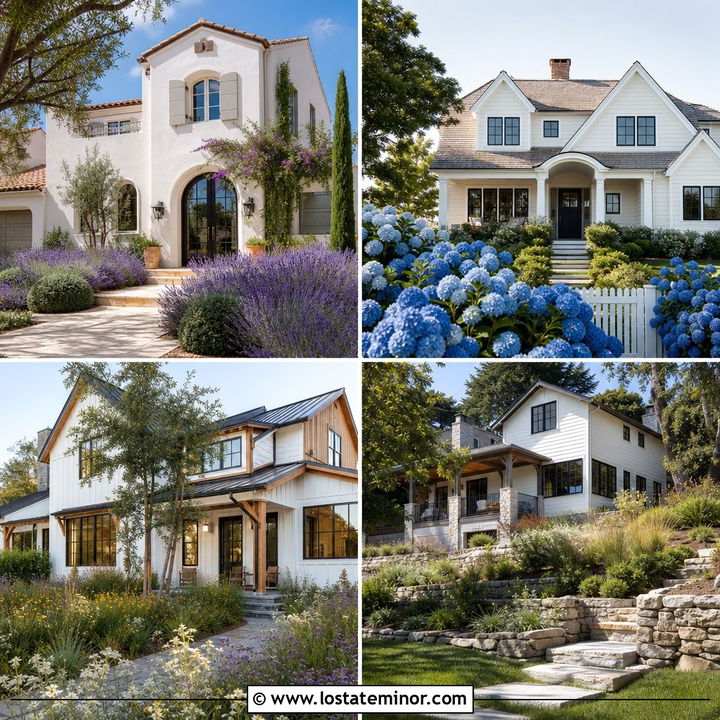
Dusty blue brings a calm, welcoming character to a home while giving the landscape plenty of room to shine. Its muted blue-gray undertone works especially well with crisp white trim, warm wood, weathered brick, natural stone, and deep charcoal accents. Current exterior trends also favor softened, nature-connected colors that help houses feel settled into their surroundings rather than separated from them. () The right planting plan can make this versatile color look coastal, traditional, modern, or cottage-inspired. Consider the home’s architecture, sunlight, roof color, and existing hardscape before choosing flowers and foliage. The complete schemes below pair distinctive architecture with practical planting combinations, walkways, porches, and accent colors. Explore these 30 Dusty Blue House Design With Landscaping Ideas.

1. Dusty Blue Craftsman With White Hydrangeas
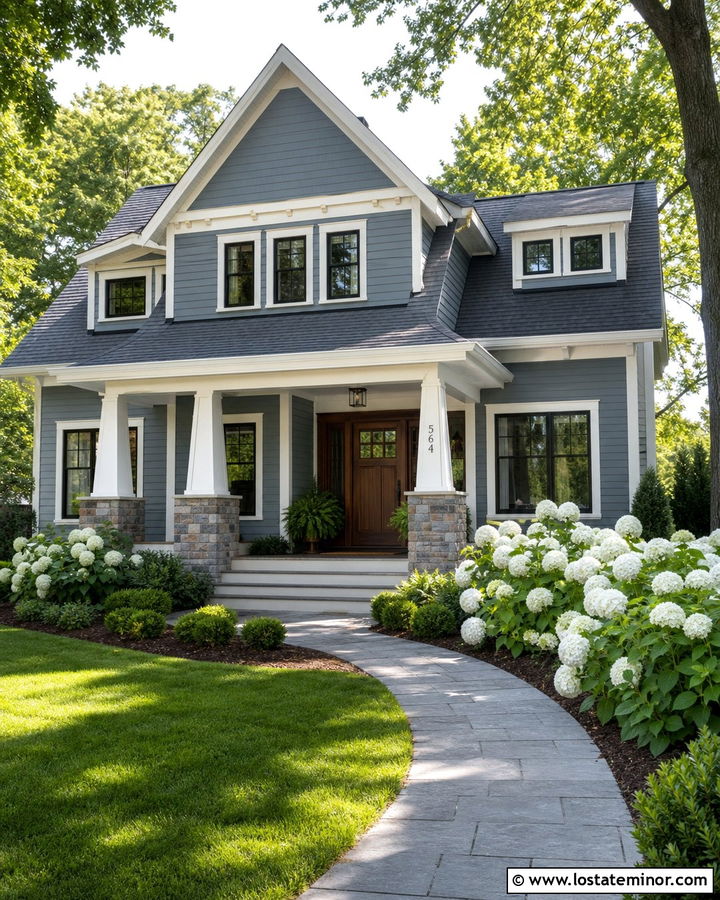
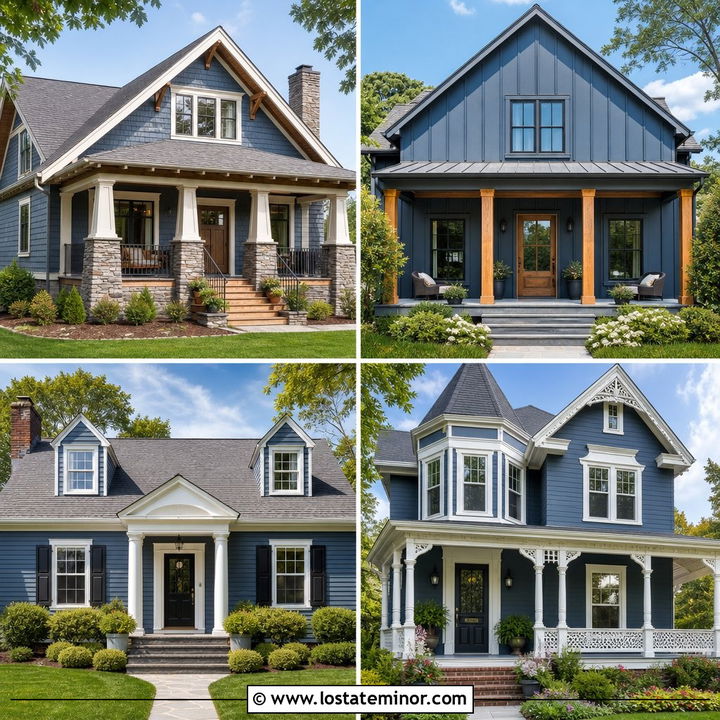
A dusty blue Craftsman feels especially inviting when large white hydrangeas soften its sturdy architectural lines. Use muted blue lap siding with creamy white trim, tapered porch columns, and a medium-brown stained front door. A charcoal architectural-shingle roof gives the lighter facade a strong visual frame. Plant hydrangeas in generous groups near the porch, leaving enough space for their mature size. Low boxwoods or inkberry shrubs can define the front edge without hiding the windows. Add a curved bluestone walkway and cedar mulch for a polished finish. Ferns placed beneath the porch overhang bring texture to shadier areas. The white flowers repeat the trim color, while natural wood and deep green leaves prevent the overall scheme from looking overly cool.
2. Dusty Blue Ranch With Layered Evergreens
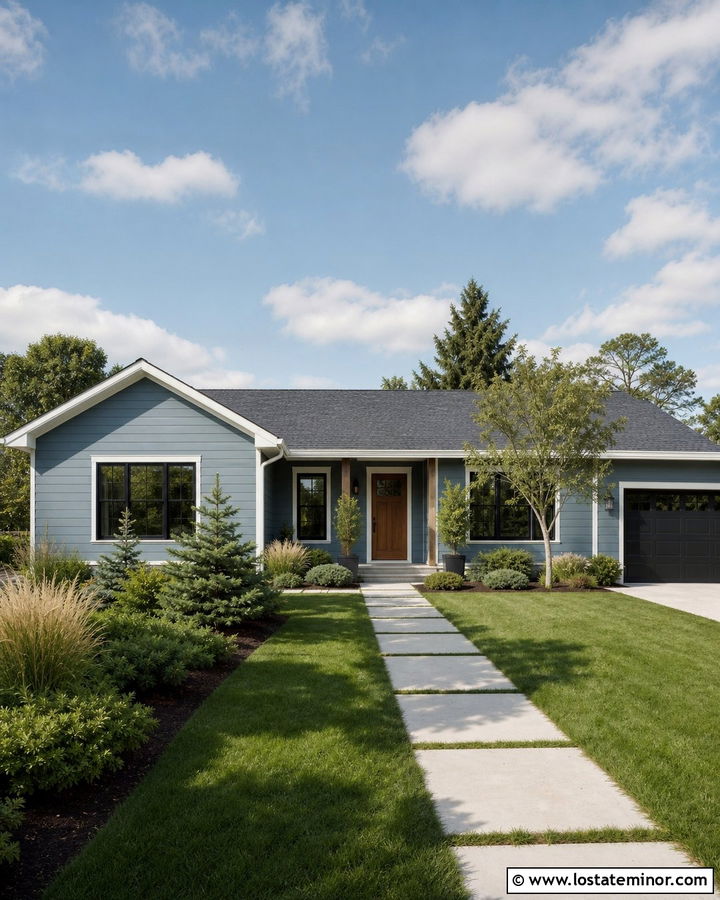
Long, low ranch homes benefit from landscaping that breaks the facade into balanced sections. Cover the exterior in smoky dusty blue siding, then add warm white trim and a rich walnut front door. Black window frames and gutters provide definition without overwhelming the single-story structure. Build layered foundation beds using compact junipers, rounded inkberry, dwarf spruce, and soft ornamental grasses. Keep taller plants near blank walls and shorter varieties beneath windows. A small ornamental tree at one corner can visually anchor the extended roofline. Use pale gray concrete pavers for a straight, uncomplicated path to the entry. Repeating evergreen shapes across the yard keeps the landscaping cohesive in every season and gives the quiet blue-gray house a structured, well-maintained appearance.
3. Dusty Blue Colonial With Boxwood Borders
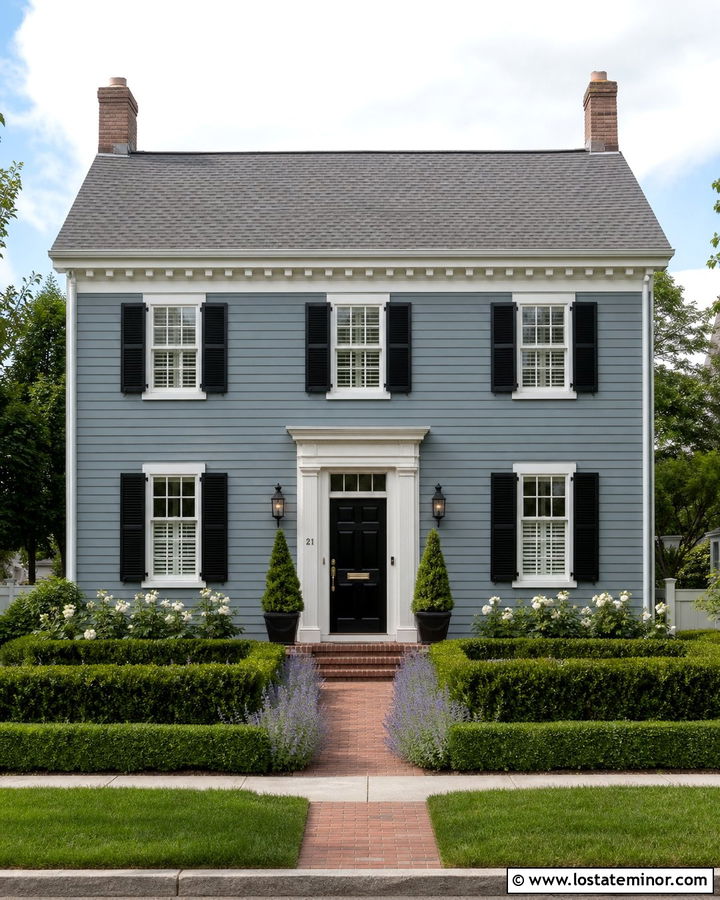
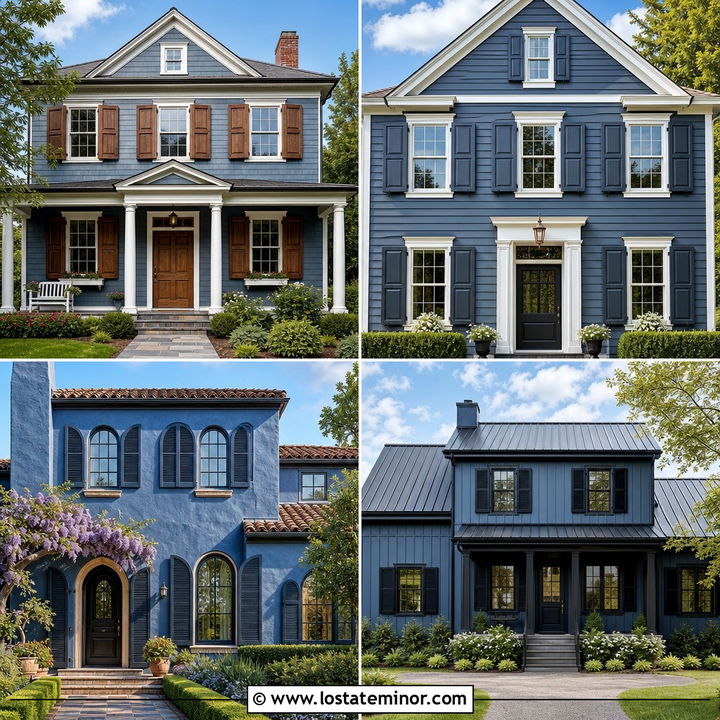
Symmetry makes a dusty blue Colonial look composed from the street. Choose a classic blue-gray body color, bright white window trim, black shutters, and a glossy black front door with brass hardware. Frame the central walkway with clipped boxwoods to reinforce the home’s balanced architecture. Behind them, layer white roses, catmint, and seasonal annuals for softer color and movement. Matching planters beside the doorway can hold small evergreens or white flowering plants. A straight red brick walkway introduces warmth and connects beautifully with traditional details. Keep foundation shrubs below the windows so the facade remains visible. This complete exterior works because every feature has a clear partner: black accents ground the dusty blue, white details brighten it, and disciplined greenery emphasizes the Colonial’s orderly proportions.
4. Dusty Blue Farmhouse With Lavender Walkway
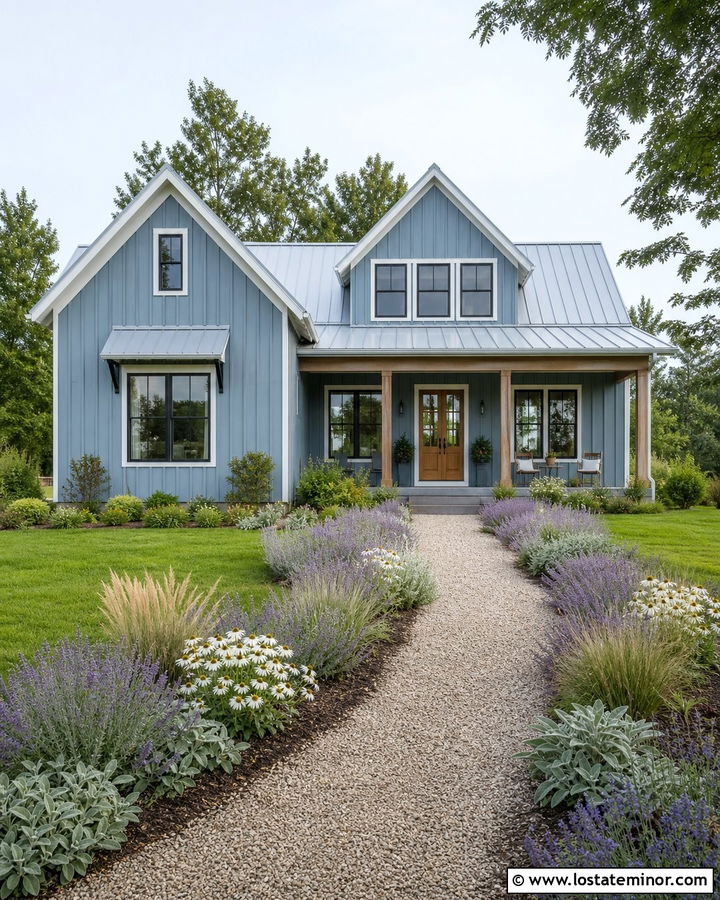
Imagine a broad farmhouse porch surrounded by silver-green foliage and rows of fragrant-looking lavender. Dusty blue board-and-batten siding gives the home a fresh alternative to the familiar all-white farmhouse. Pair it with soft white trim, a galvanized metal porch roof, and a natural oak front door. A crushed-gravel walkway edged with lavender creates a relaxed route to the porch. Add Russian sage, white coneflowers, lamb’s ear, and ornamental grasses to continue the cool garden palette. Black sconces and simple black-framed windows add contemporary contrast. Leave open lawn around the planting beds so the facade does not feel crowded. The combination feels rural and refined, with warm wood balancing the blue siding and drought-conscious plants creating a loose, natural transition into the yard.
5. Dusty Blue Cape Cod With Coastal Grasses
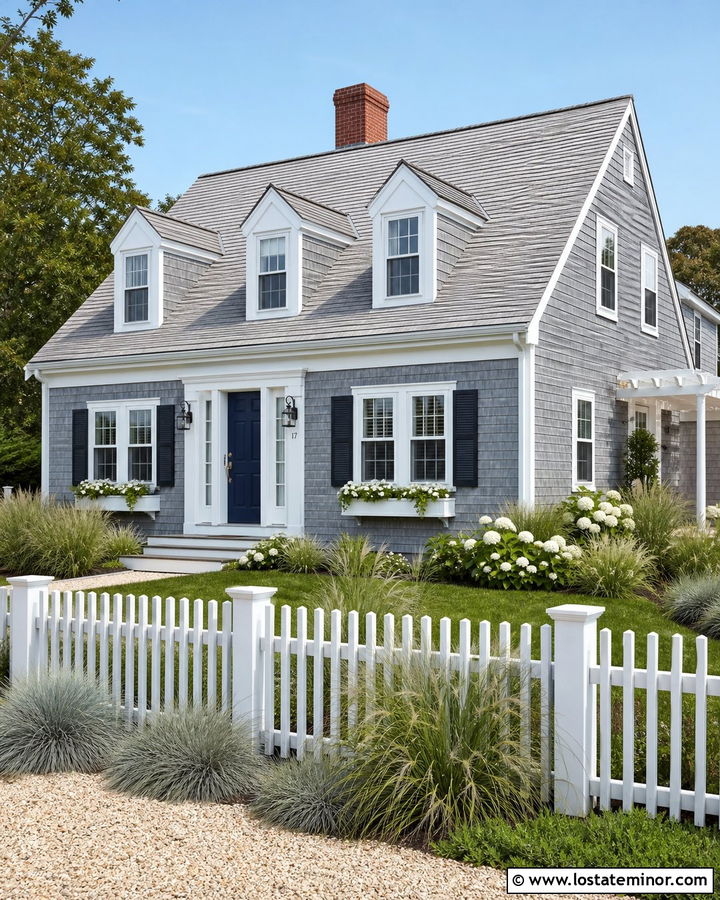
A compact Cape Cod can carry dusty blue beautifully when its landscaping remains breezy and restrained. Use weathered blue-gray shingles, crisp white trim, dormer windows, and a dark navy front door. Pale gray roof shingles support the coastal palette without creating harsh contrast. Surround the house with mounded beach grasses, blue fescue, white hydrangeas, and low evergreen shrubs. A shell-colored gravel path or light flagstone walkway adds an informal coastal texture. If space permits, install a short white picket fence around the front garden. Keep plants in broad drifts rather than scattered singles for a fuller, calmer appearance. The movement of grasses softens the symmetrical facade, while white flowers echo the trim. This scheme looks natural in coastal settings but also translates well to inland suburban neighborhoods.
6. Dusty Blue Bungalow With Cottage Garden
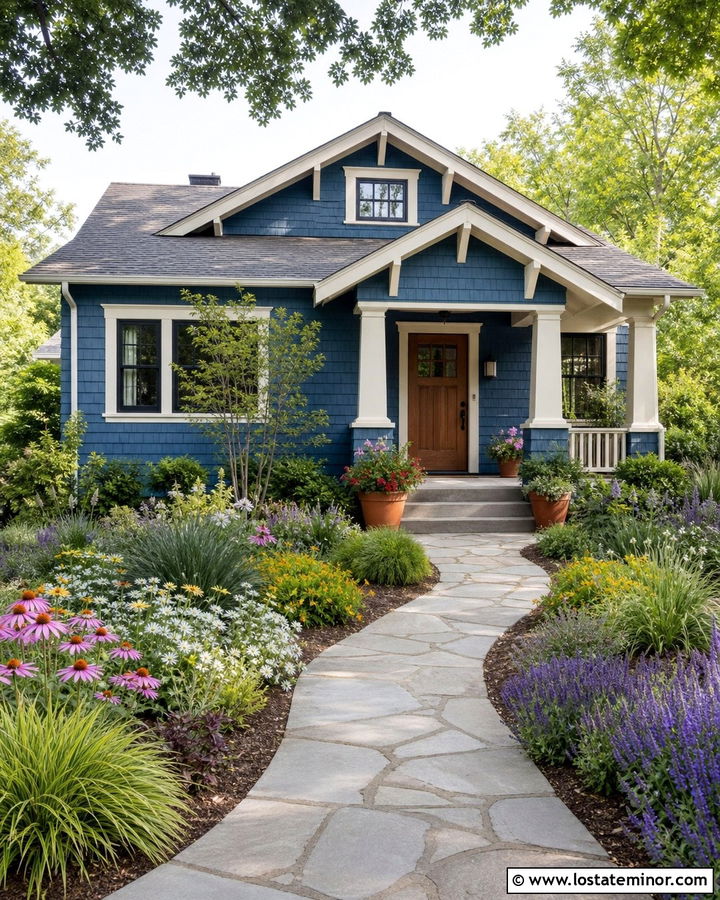
Could a small bungalow become the most memorable house on the block? Dusty blue shingle siding, warm ivory trim, and a stained cedar door create an appealing foundation. Highlight exposed rafters and porch brackets in the same ivory to preserve the home’s handcrafted character. Fill curved beds with pink coneflowers, white daisies, salvia, coreopsis, and feathery ornamental grasses. A narrow stone path should pass through the garden before reaching the porch, making the entrance feel discovered rather than purely functional. Use compact flowering shrubs at the corners instead of tall foundation hedges. Terracotta pots on the steps add warmth against the cool siding. The varied flowers bring personality, while repeated plant groupings and a defined bed edge keep the cottage landscape from appearing messy or unplanned.
7. Dusty Blue Victorian With Rose Beds
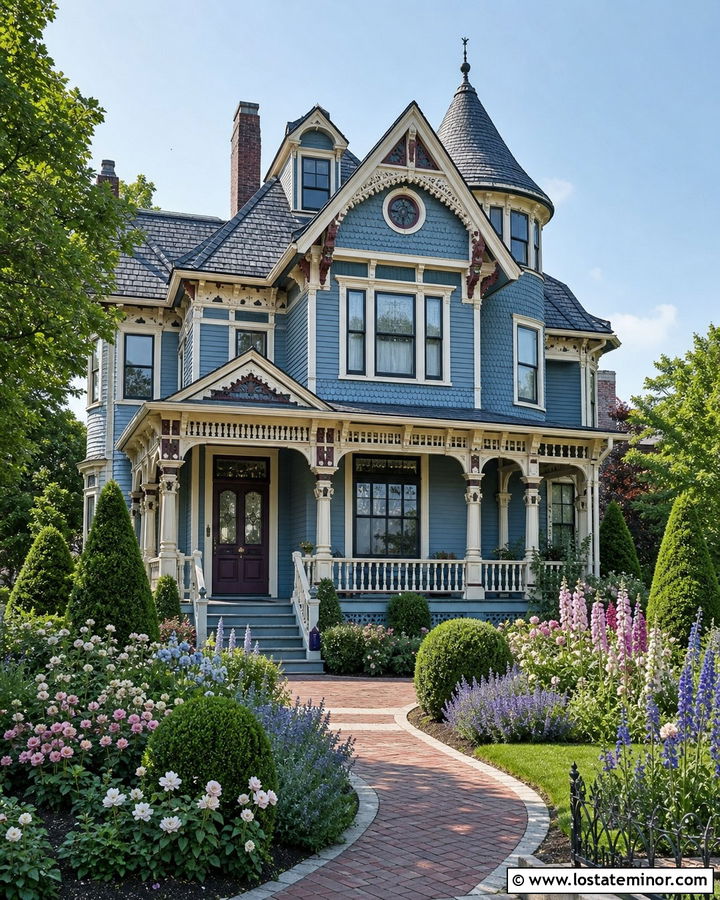
Ornate Victorian architecture can handle more color and detail than a simple modern facade. Paint the primary siding a medium dusty blue, then use cream on the gingerbread trim and muted burgundy on selected brackets or window details. A deep plum front door gives the entrance additional depth. Surround the porch with blush, white, and soft pink rose beds, supported by clipped evergreen shrubs. Foxgloves, delphiniums, and catmint can fill narrow gaps and introduce varied heights. Follow the home’s curved decorative forms with gently arched planting beds and a winding brick walkway. Avoid using too many unrelated flower colors, since the architecture already supplies visual complexity. Repeating cream, burgundy, and dusty blue throughout the facade creates an elaborate exterior that still feels coordinated from the curb.
8. Dusty Blue Split-Level With Modern Planting
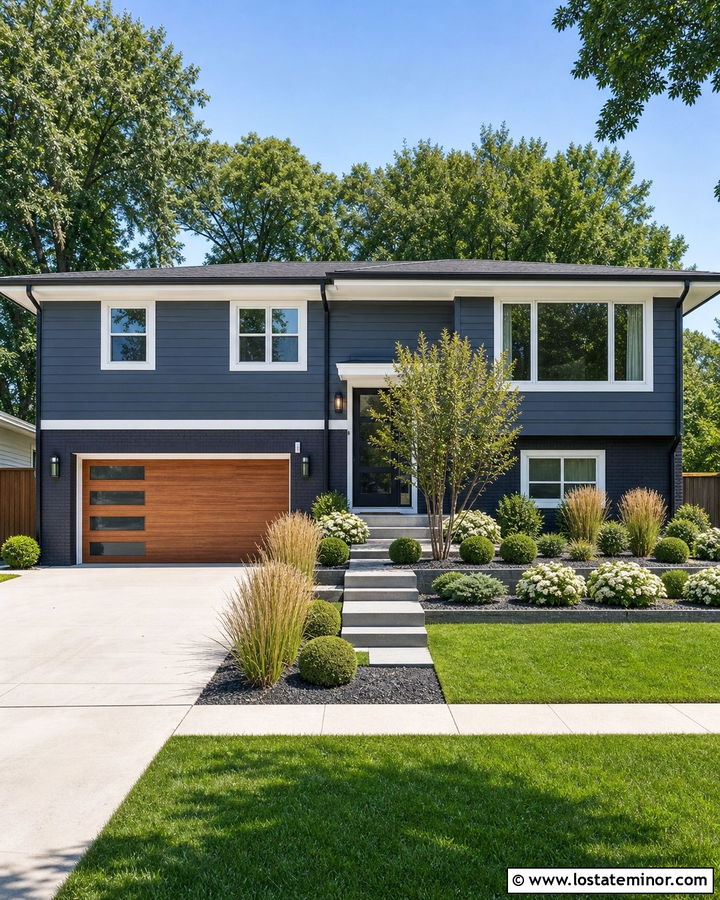
Split-level homes often need landscaping that unifies their uneven rooflines and staggered windows. Try a slightly deeper dusty blue on the upper siding, charcoal-painted brick below, and clean white trim around the windows. A modern natural-wood garage door adds warmth to the broad lower level. Create strong planting masses with upright ornamental grasses, dwarf globe arborvitae, low juniper, and white flowering shrubs. A rectangular concrete walkway and wide steps can make the entrance easier to identify. Place one multi-stem serviceberry or similar small tree near the taller side of the facade for balance. Dark gravel mulch reinforces the contemporary palette and reduces visual clutter. Repeating a limited selection of plants creates continuity, allowing the dusty blue exterior and varied architectural levels to read as one complete design.
9. Dusty Blue Tudor With Woodland Landscaping
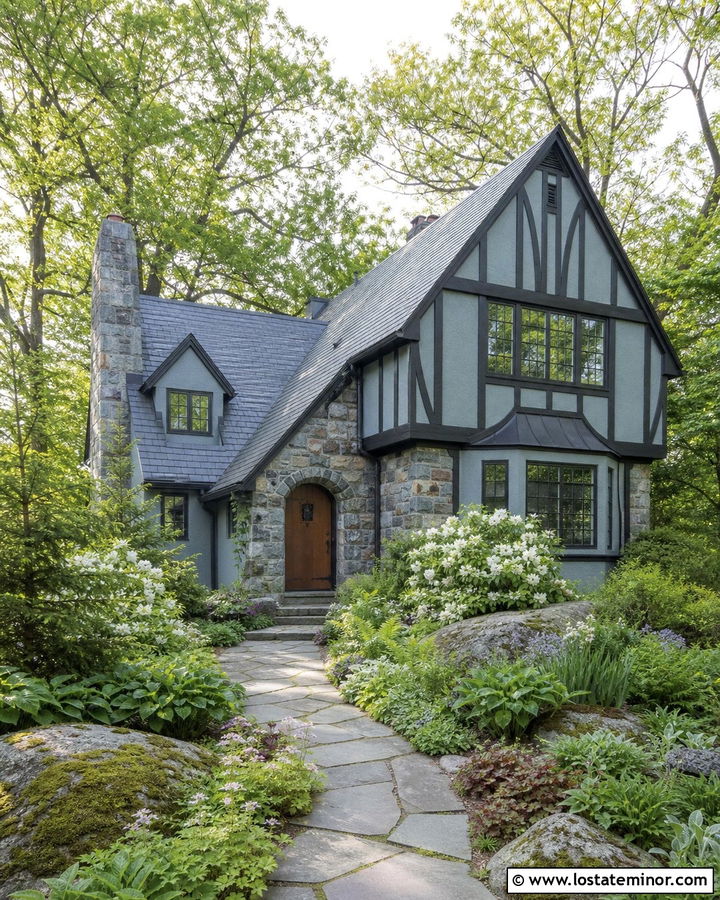
A dusty blue Tudor becomes softer and more approachable when surrounded by woodland-inspired planting. Use the muted color on stucco or shingle sections while preserving warm gray stone around the entry and foundation. Paint half-timber details deep charcoal rather than stark black, and choose a medium-toned arched wood door. Beneath mature trees, plant ferns, hostas, heuchera, hellebores, and low native sedges in layered groups. A gently curving flagstone path suits the irregular roofline better than a rigid concrete walk. Add mossy boulders or stone edging to connect the garden with the masonry facade. White flowering shrubs can brighten areas near the entry. This scheme allows shade-tolerant greenery and textured stone to support the historic architecture without making the house look dark, heavy, or hidden.
10. Dusty Blue Cottage With Picket Fence Garden
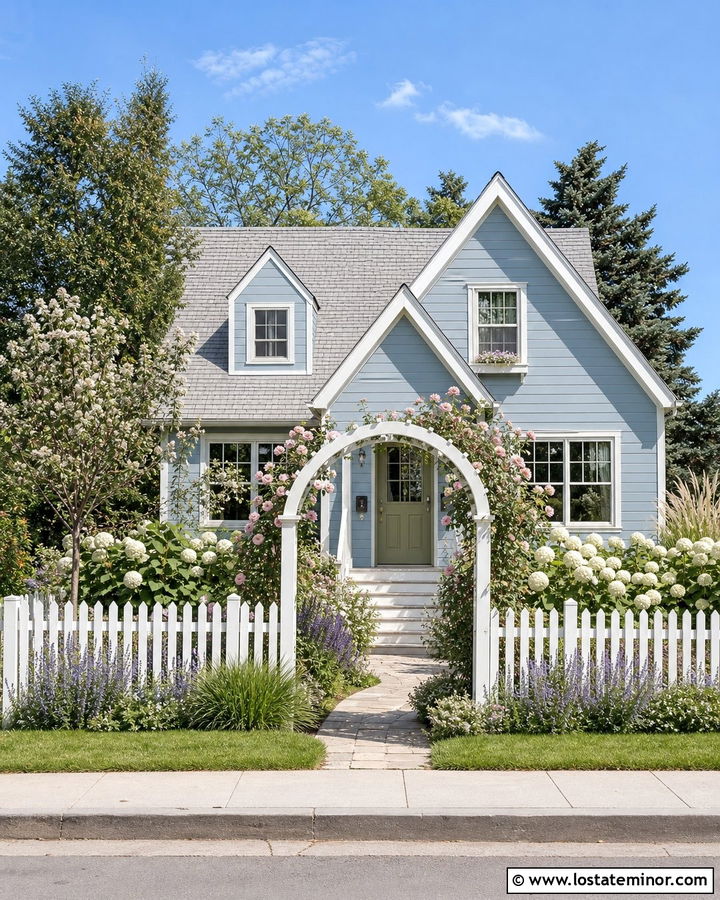
Nothing frames a dusty blue cottage more naturally than a low white picket fence and an overflowing front garden. Use soft blue-gray clapboard siding with white trim, a sage green door, and light gray roof shingles. Inside the fence, combine white hydrangeas, pink roses, purple salvia, and airy ornamental grasses. Allow a few plants to lean gently toward the walkway for a relaxed effect, but keep the path open and easy to navigate. An arbor over the gate can support a climbing rose or flowering vine suited to the local climate. Repeat sage green in planters or a small bench near the porch. The fence connects visually to the trim, while the colorful garden prevents the muted house color from looking washed out during bright summer weather.
11. Dusty Blue House With Red Brick Walkway
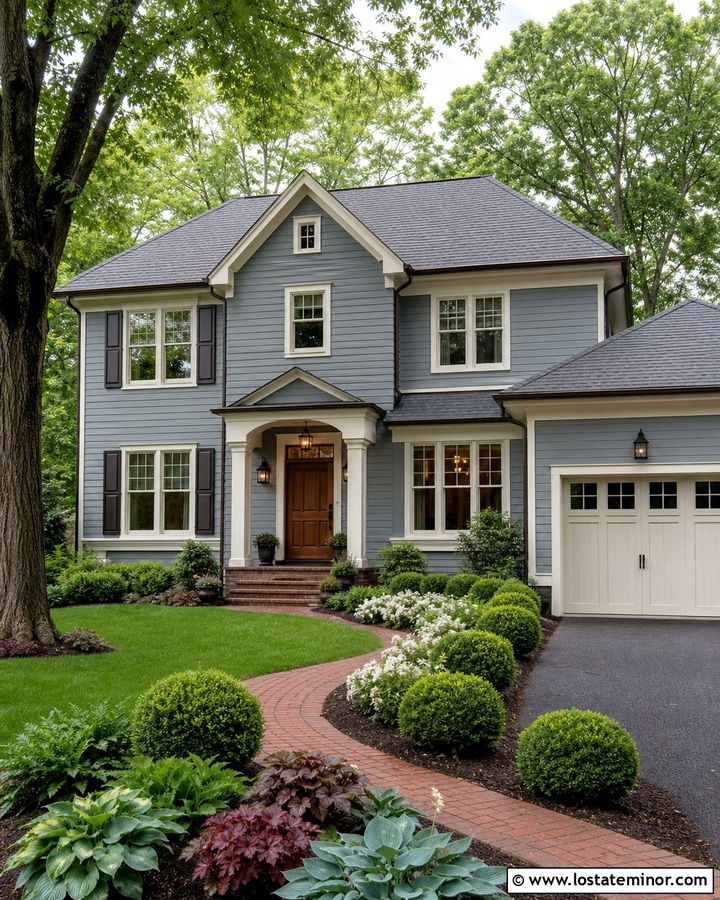
Warm red brick can bring instant character to a cool dusty blue exterior. On a traditional two-story home, pair blue-gray lap siding with creamy trim, dark bronze gutters, and a walnut-stained front door. Run a gently curved brick walkway from the sidewalk or driveway to the entry. Extend the material into a small landing so the path feels connected to the architecture. Plant rounded boxwoods, white spirea, blue-green hostas, and burgundy-leaf heuchera beside the walk. The burgundy foliage repeats the brick’s deeper tones, creating a smooth transition from house to landscape. Keep the mortar and bed edging understated. This palette feels established rather than trendy because it combines familiar materials, balanced color temperatures, and landscaping that supports the walkway instead of competing with it.
12. Dusty Blue House With Natural Stone Beds
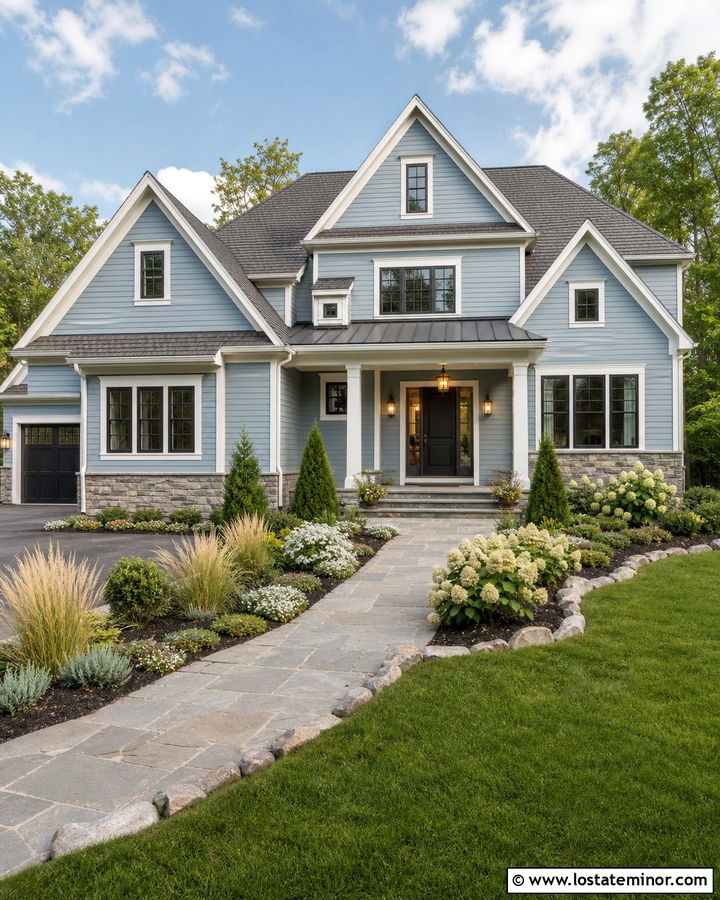
Natural stone gives dusty blue siding an earthy quality that works well on transitional homes. Select a subdued blue-gray body color, off-white trim, and a dark charcoal front door. Use irregular fieldstone around the porch base or lower foundation, then repeat that stone as edging around wide planting beds. Choose panicle hydrangeas, compact evergreens, switchgrass, and white flowering perennials for a layered but controlled arrangement. A flagstone walkway can connect the driveway to the front steps without introducing another competing material. Vary plant heights to prevent the broad stone border from appearing flat. The gray, tan, and brown notes in natural stone warm the siding while still complementing its cool undertones. This creates a grounded exterior that feels connected to the property rather than simply painted blue.
13. Dusty Blue House With Cedar Accents
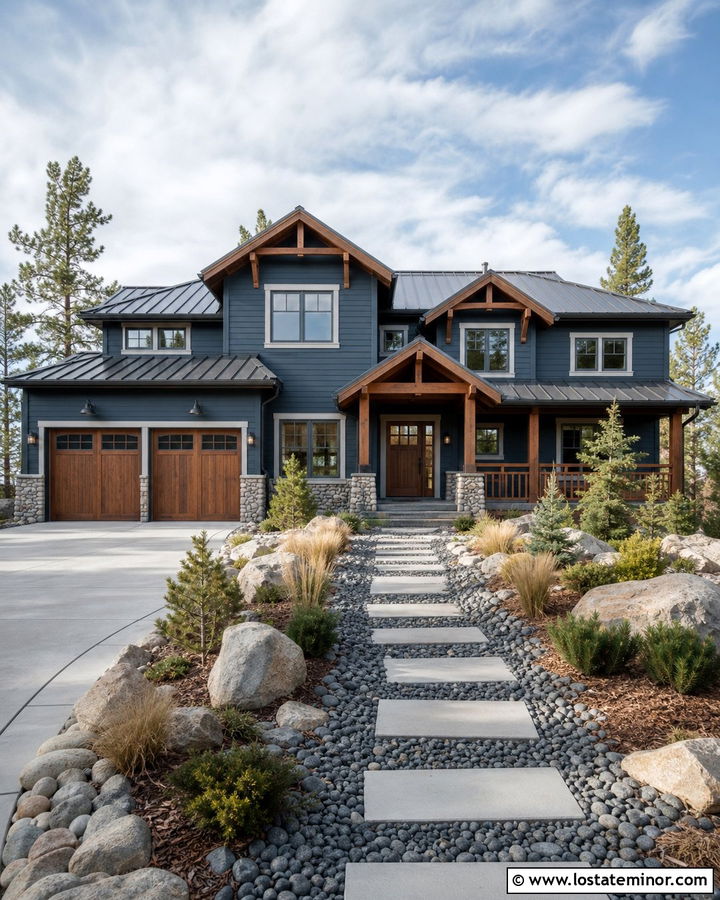
Warm cedar details make muted blue siding look richer and more dimensional. Apply dusty blue to a modern Craftsman or mountain-inspired home, then add cedar porch beams, garage doors, brackets, and a matching front door. Use soft white window trim and a charcoal metal roof to complete the facade. Continue the natural palette with boulders, river rock, dwarf pines, feather reed grass, and low spreading junipers. A wide concrete-and-gravel walkway keeps the landscape contemporary while letting the wood remain the primary warm accent. Choose cedar elements with similar stain tones so the exterior does not look pieced together. The golden-brown wood stands out clearly against blue-gray siding, while evergreen planting connects both colors to the yard. The result feels warm, relaxed, and appropriate for wooded or suburban settings.
14. Dusty Blue House With Black Trim
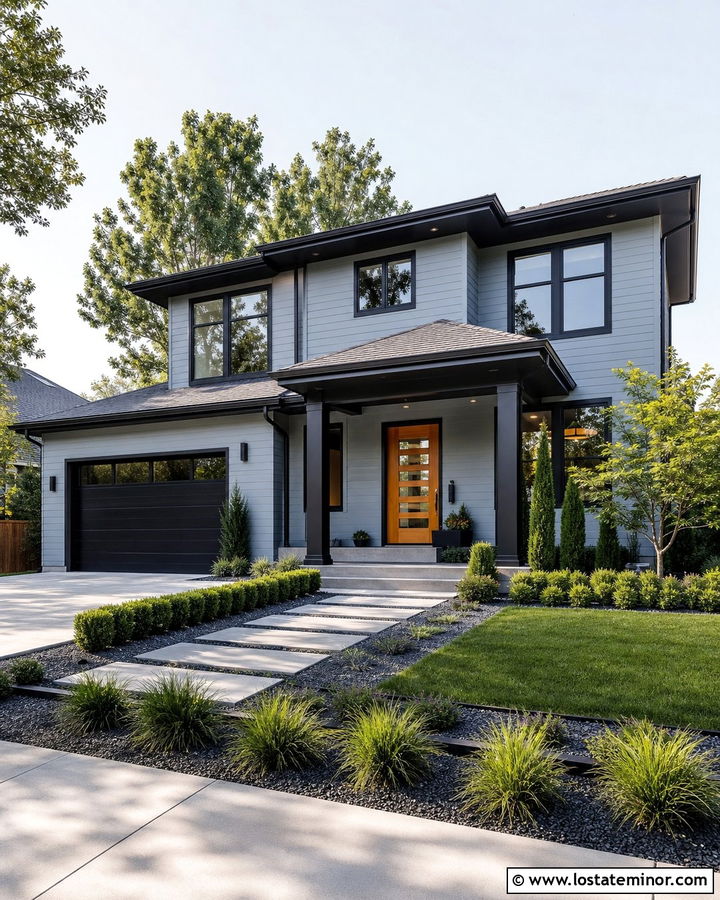
Black trim turns a gentle dusty blue facade into a sharper contemporary statement. Use the pairing on a modern two-story home with simple siding, broad windows, and a streamlined covered entry. Carry matte black onto the window frames, gutters, porch posts, and garage door. A warm wood front door keeps the scheme from becoming too cold. In the yard, repeat clean shapes with clipped evergreens, upright grasses, and low ground cover planted in wide rectangular beds. Black steel edging and charcoal gravel can strengthen the modern geometry. Include one small ornamental tree to soften the architecture without blocking it. The landscaping should remain edited and intentional. Dusty blue offers enough color to feel welcoming, while black outlines the structure and gives each window, roofline, and architectural transition a crisp finish.
15. Dusty Blue House With Cream Trim
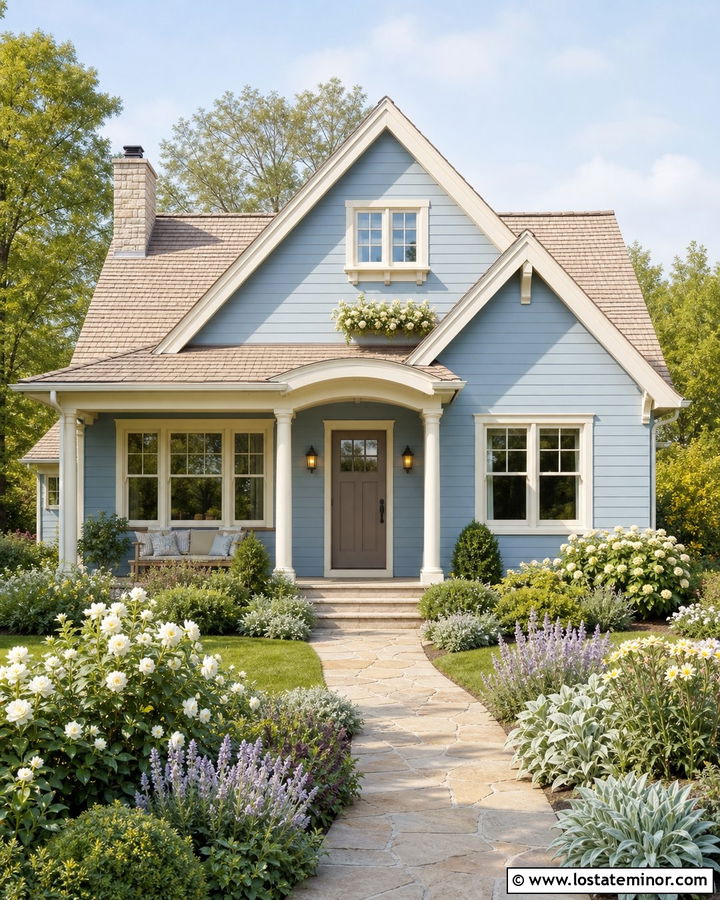
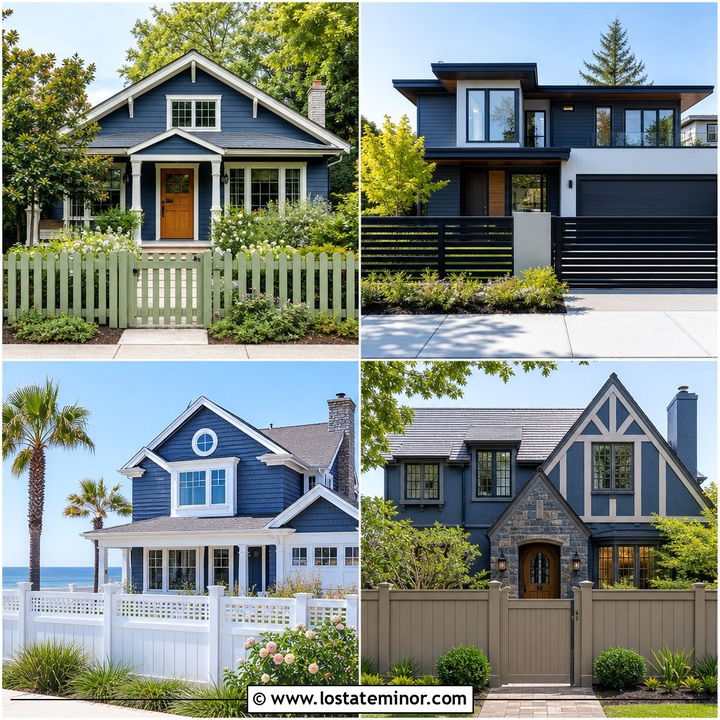
Cream trim creates a gentler contrast than bright white and works especially well with warm roofing or aged masonry. Cover a traditional cottage or farmhouse in muted dusty blue, then paint the fascia, porch columns, and window casings a buttery off-white. Add a warm taupe front door and aged-brass lighting. Use soft planting colors such as white, pale yellow, lavender, and silver-green. Mounded spirea, catmint, white roses, and lamb’s ear can fill the foundation beds without becoming visually heavy. A buff-colored stone path relates to the cream paint and introduces another warm layer. Avoid icy gray hardscaping, which may weaken the inviting effect. This complete palette gives dusty blue a comfortable, lived-in appearance and works particularly well when the property already contains beige stone, tan brick, or weathered wood.
16. Dusty Blue House With Navy Front Door
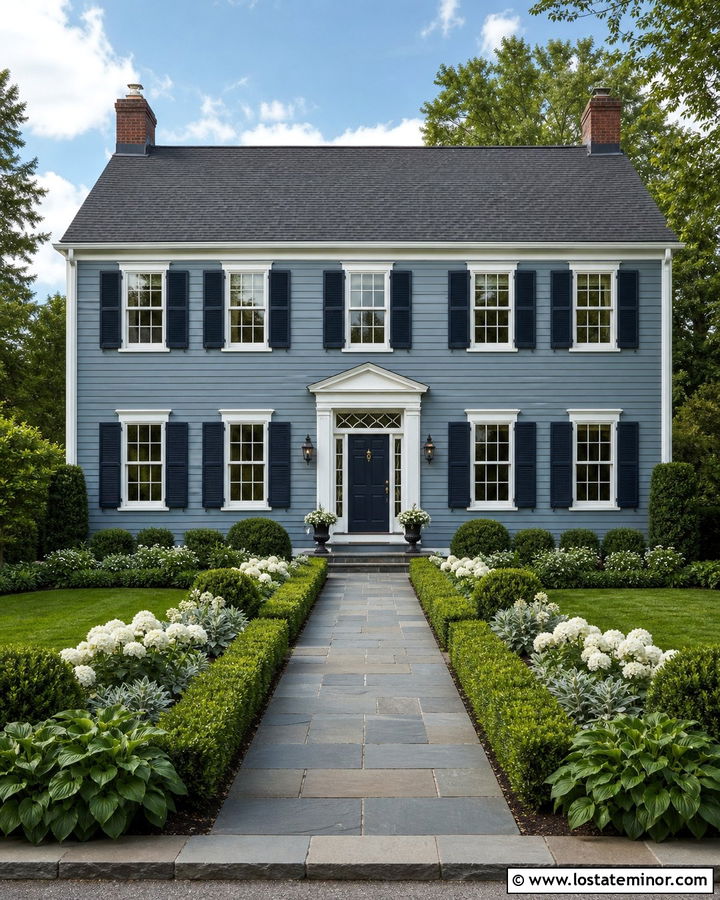
For subtle contrast, choose a navy front door that looks like a deeper version of the dusty blue siding. This tonal scheme suits a symmetrical Georgian or Colonial Revival house with white trim and dark gray roofing. Paint the shutters navy as well, but keep porch railings and window casings bright enough to separate the two blues. Lead visitors toward the entrance with a straight bluestone path bordered by clipped boxwood and white flowering shrubs. Blue-green hostas and silvery lamb’s ear can continue the cool palette near shaded walls. Add polished brass hardware to warm the doorway and make it more visible. The darker door provides a strong destination without introducing an unrelated accent color, while disciplined planting reinforces the home’s symmetry and formal architectural character.
17. Dusty Blue House With Yellow Front Door
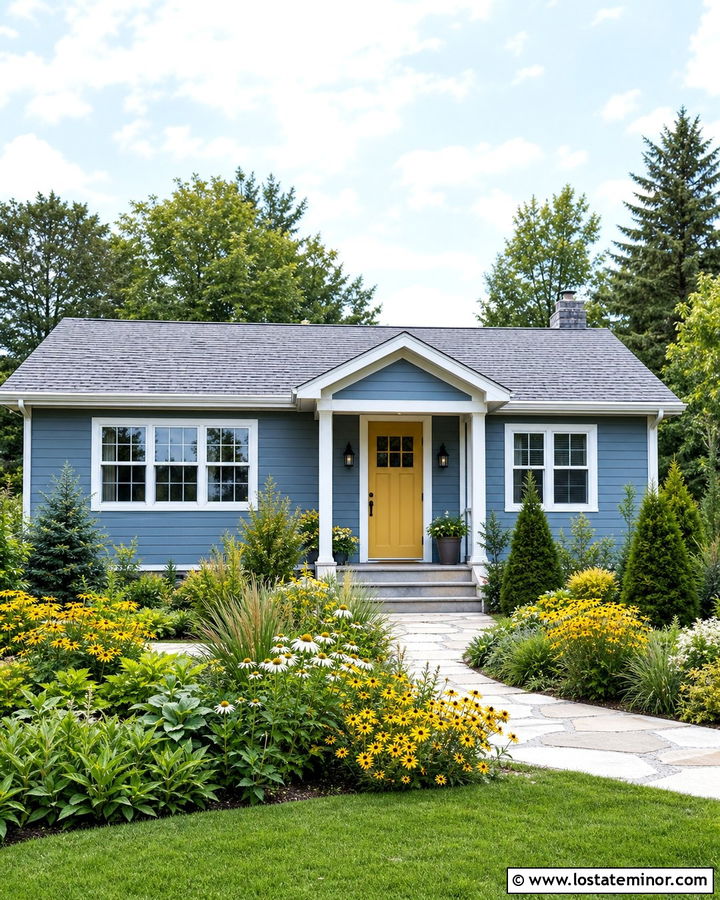
A yellow door can give a dusty blue house a cheerful focal point without overpowering the facade. Choose a warm mustard or muted golden yellow rather than a highly saturated lemon shade. Surround it with soft white trim, simple black lighting, and blue-gray siding on a compact ranch or cottage. Carry the warm accent into the landscaping with yellow coreopsis, black-eyed Susans, ornamental grasses, and golden-leaf shrubs. Balance those plants with white coneflowers and deep green evergreens. A pale concrete or natural stone walkway keeps attention on the colorful entrance. Limit yellow to the door and selected flowers so it feels deliberate. This combination is especially effective when the entrance lacks strong architectural features, because the contrasting door immediately helps visitors understand where to approach the home.
18. Dusty Blue House With Wood Front Door
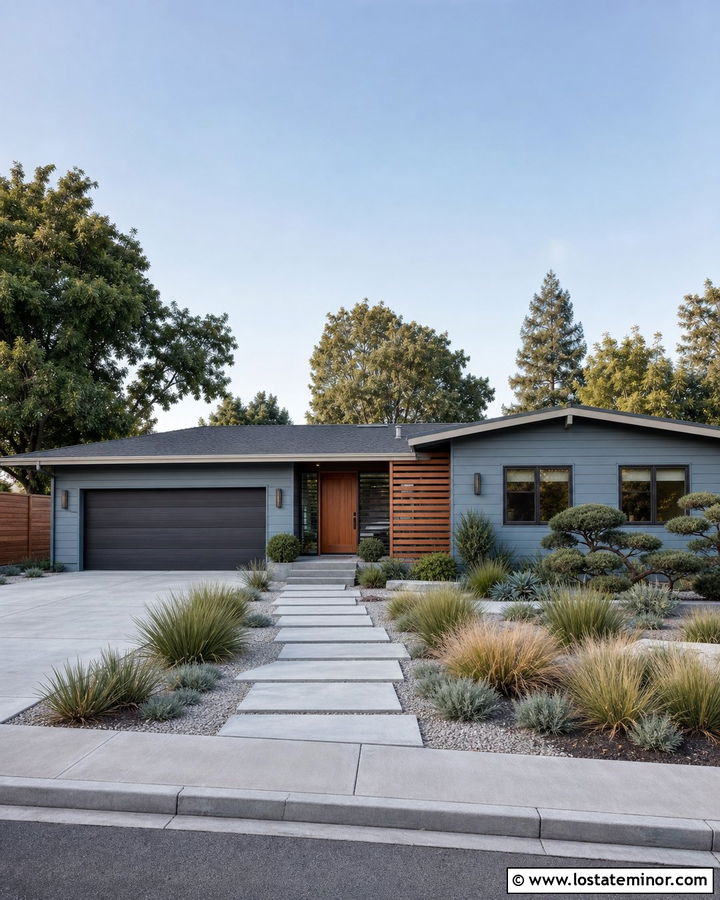
A natural wood front door adds warmth without changing the quiet personality of a dusty blue exterior. On a midcentury ranch, pair horizontal blue-gray siding with walnut or teak-toned doors, warm white trim, and dark bronze window frames. Repeat the wood tone in a slatted porch screen or modern address panel. Build the landscape with airy grasses, sculptural evergreens, pale gravel, and broad-leaf perennials. A horizontal concrete walkway mirrors the long lines of the architecture. Keep flowers limited to white or muted purple so the planting does not compete with the wood. The contrast between cool siding and warm grain gives the entry depth, while restrained landscaping preserves the home’s clean profile. Seal exterior wood appropriately so its rich color remains a dependable part of the overall scheme.
19. Dusty Blue House With White Porch
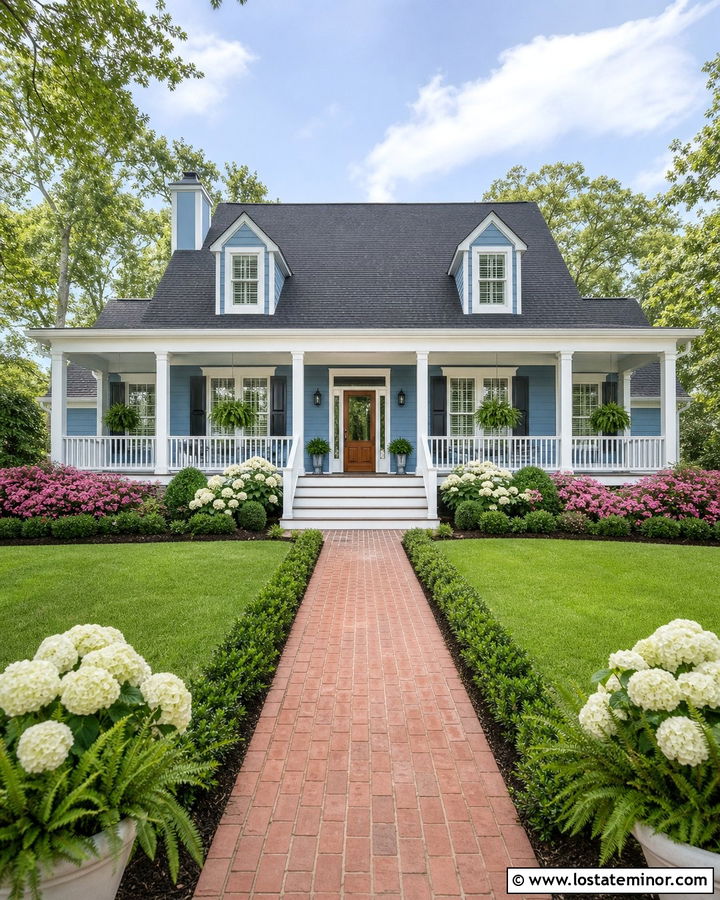
A bright white porch can make a dusty blue home feel open and welcoming from the street. Use the color combination on a Southern cottage or modest farmhouse with a full-width covered porch. Keep railings, columns, ceiling trim, and window casings white, then introduce a medium-stained front door and charcoal roof. Surround the porch with white hydrangeas, ferns, azaleas, and low evergreen borders. Place matching planters near the steps to connect the garden to the entrance. A red brick or warm flagstone walkway prevents the scheme from becoming too cool. Avoid tall shrubs directly in front of the railings, since they can hide an important architectural feature. The white porch provides structure and brightness, while layered greenery gives the long facade softness, depth, and seasonal curb appeal.


20. Dusty Blue House With Stone Porch
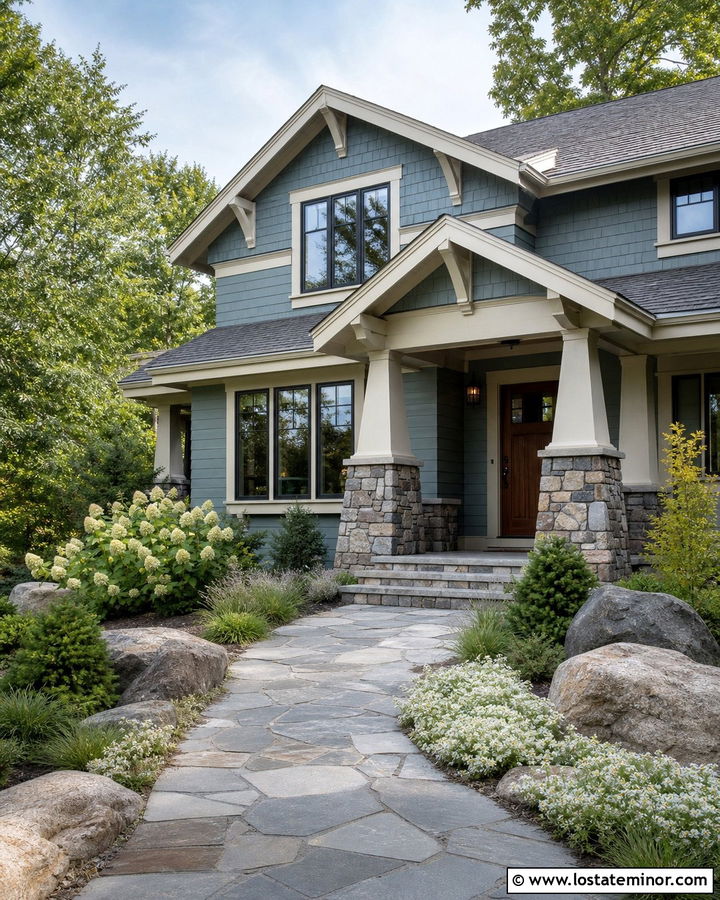
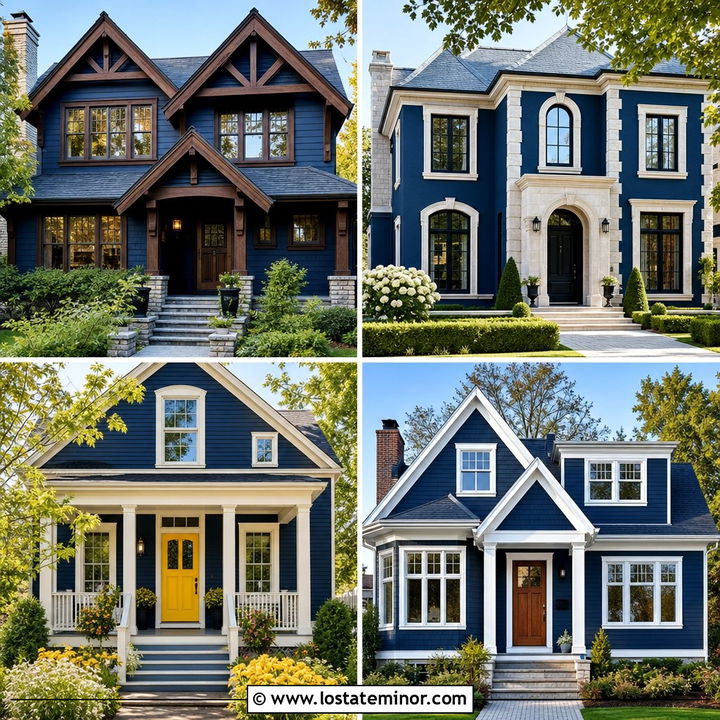
Stone porch columns create a substantial base for dusty blue siding. This look works beautifully on a Craftsman with broad eaves, tapered supports, and a deep covered entry. Select stone containing soft gray, taupe, and muted brown, then use those colors for the roof and stained wood door. Creamy white trim will brighten the facade without looking disconnected from the masonry. Around the porch, plant dwarf conifers, oakleaf hydrangeas, sedges, and white-flowering ground cover. Continue the stone into a wide walkway with generous steps. A few carefully placed boulders can merge the foundation with the surrounding beds. Keep the plant palette natural and textural rather than overly formal. The stone visually anchors the cool blue siding, while the landscaping prevents the heavy porch base from feeling abrupt or oversized.
21. Dusty Blue House With Native Plants
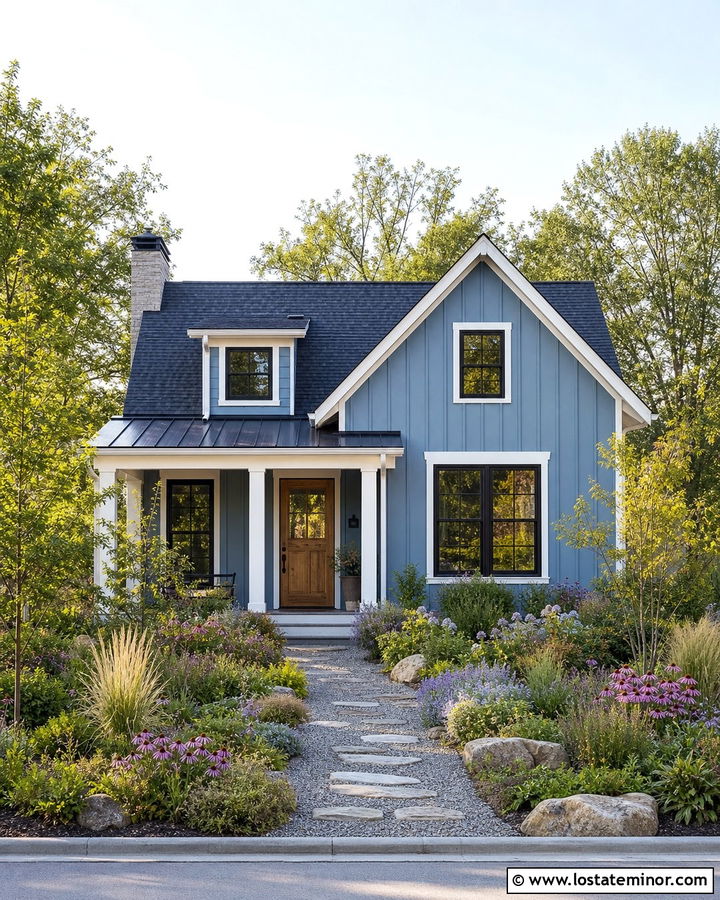
Native planting can make a dusty blue house feel naturally connected to its region. Start with muted blue-gray siding, warm white trim, and a simple cedar door on a modern farmhouse or casual suburban home. Select regionally appropriate grasses, flowering perennials, shrubs, and small trees rather than relying on a universal plant list. Arrange them in repeated drifts for an organized appearance. Seed heads, varied foliage, and staggered bloom times can add texture beyond one short flowering season. Use a stone or permeable gravel path to support the relaxed landscape character. Keep taller species away from windows and sightlines. Deep greens, golden grasses, and white or purple flowers are especially flattering beside dusty blue. The resulting yard can look abundant and intentional without requiring rigid hedges or elaborate decorative features.
22. Dusty Blue House With Drought-Tolerant Landscaping
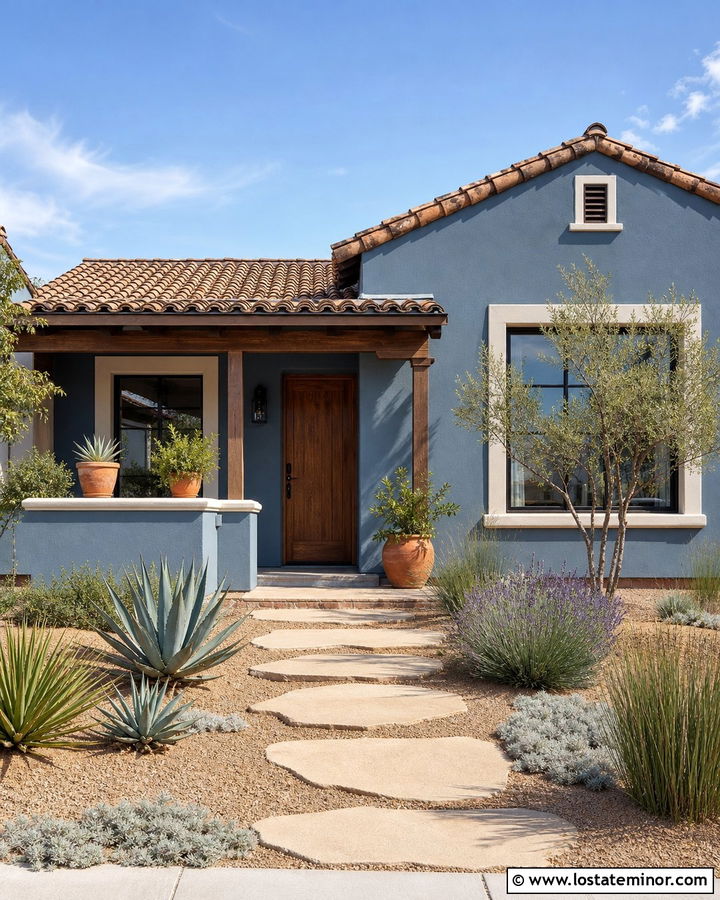
In a dry climate, dusty blue stucco can create a refreshing contrast with warm gravel and sculptural plants. Pair the body color with cream trim, a medium-brown wood door, and a weathered clay or charcoal roof. Build broad beds using decomposed granite, ornamental grasses, agave, yucca, lavender, and low flowering ground covers appropriate for local conditions. Place plants in spaced clusters so each form remains visible at maturity. Large flat stones can form a practical walkway through the gravel. Add one desert-adapted ornamental tree near the driveway for scale and filtered shade. Avoid covering the yard with too many different rock colors. Warm sand-colored hardscape, silver foliage, and rusty terracotta planters balance the cool facade and create a complete landscape that feels intentional rather than sparse.
23. Dusty Blue House With Shade Garden
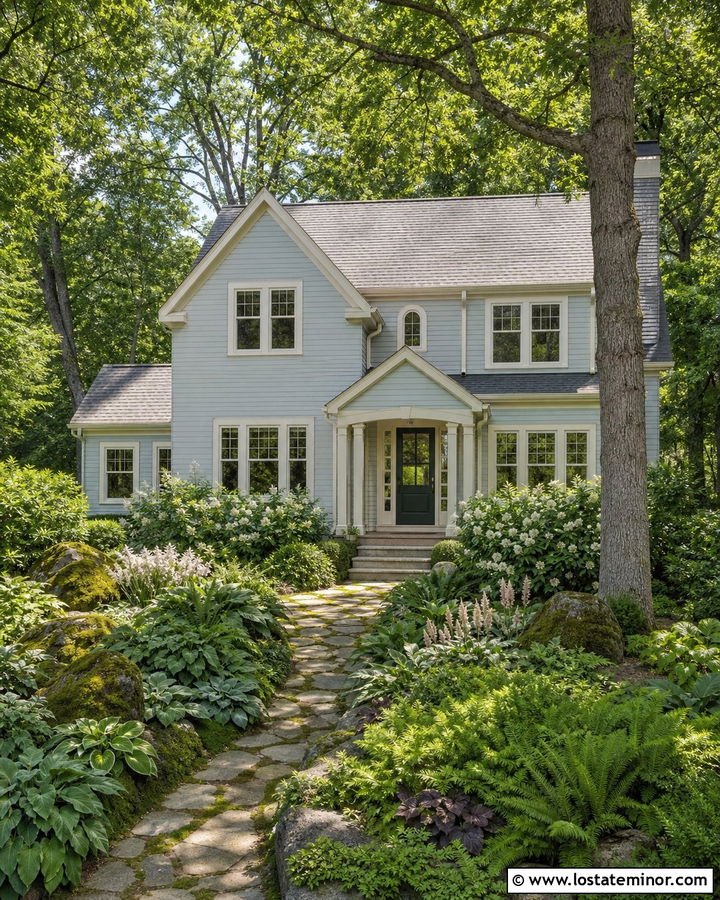
Filtered sunlight can deepen dusty blue siding, making a shade garden an excellent companion. Use the color on a woodland cottage with ivory trim, a dark green door, and a gray shingle roof. Layer hostas, ferns, heuchera, hellebores, astilbe, and shade-tolerant ground cover beneath existing trees. Arrange lighter foliage near the foundation so the house does not disappear into deep green surroundings. A winding flagstone path can pass through the beds and lead naturally to the porch. Add white-flowering shrubs near the entrance where they can brighten the darkest area. Keep tree branches maintained so the roof and facade receive healthy airflow and remain visible. The combination of blue-gray siding, cream details, mossy stone, and varied green foliage produces a calm exterior with rich texture and woodland character.
24. Dusty Blue House With Pollinator Garden
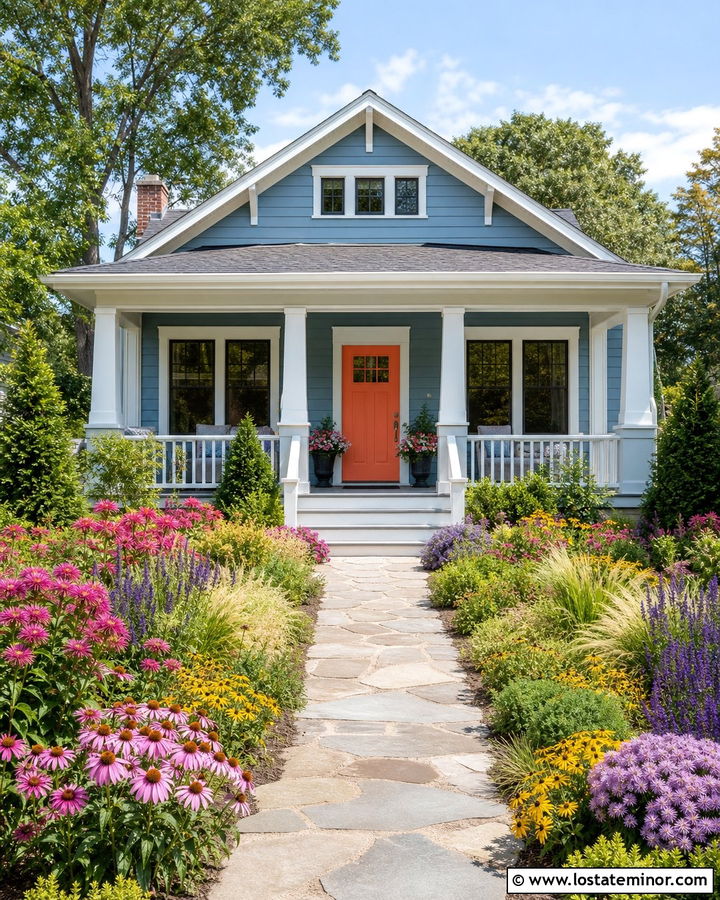
A pollinator-focused garden can bring color and movement to a quiet dusty blue exterior. On a cheerful bungalow, combine blue-gray siding with white trim, a coral front door, and a medium-gray roof. Fill sunny beds with regionally suitable coneflowers, bee balm, salvia, asters, coreopsis, and milkweed varieties. Repeat plants in groups instead of scattering individual specimens throughout the yard. This gives the garden a clearer structure when viewed from the street. Add a narrow mown or stone edge to separate abundant planting from the lawn and walkway. Compact evergreens near the foundation provide a stable background when flowers are not in bloom. Coral, purple, white, and golden flowers complement the muted siding while making the entrance feel lively. The complete scheme remains colorful without turning the house itself into the loudest element.
25. Dusty Blue House With Formal Landscaping
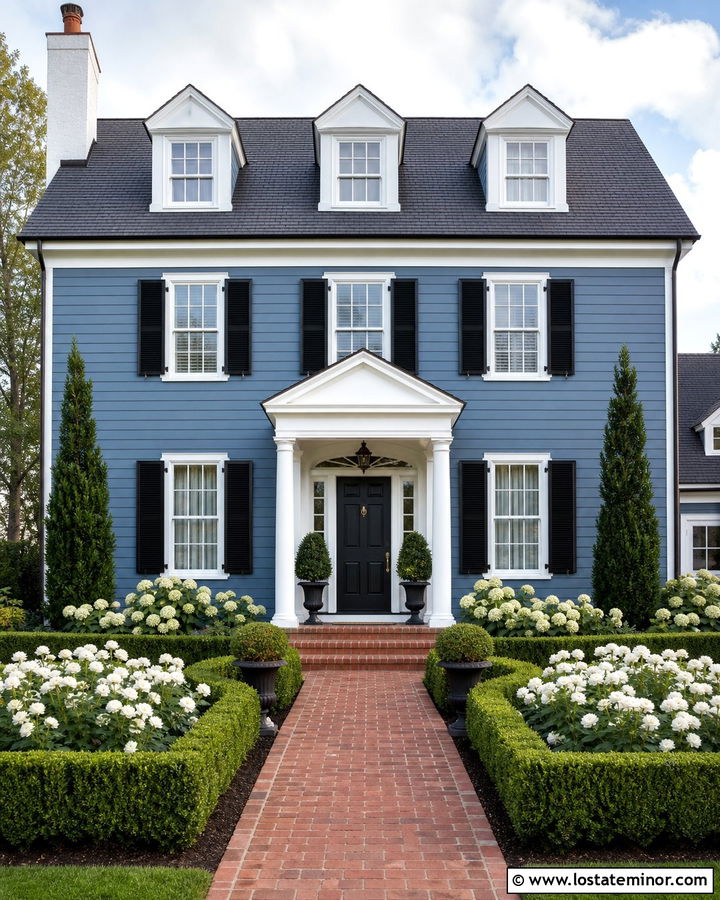
Formal planting gives dusty blue siding a polished, traditional presence. Apply the color to a stately two-story home with white trim, black shutters, a black door, and a centered portico. Establish symmetry with matching boxwood hedges, upright evergreens, and identical flowering shrubs on both sides of the entrance. A straight brick walkway should align with the front door, while low borders reinforce its edges. Use white roses or hydrangeas for seasonal interest without disrupting the restrained palette. Matching urn planters on the porch can hold clipped topiary forms. Maintain enough space between shrubs and the facade to keep windows and architectural details visible. The softness of dusty blue prevents the formal arrangement from appearing severe, while dark accents and carefully repeated plants supply order, contrast, and year-round curb appeal.
26. Dusty Blue House With Minimal Landscaping
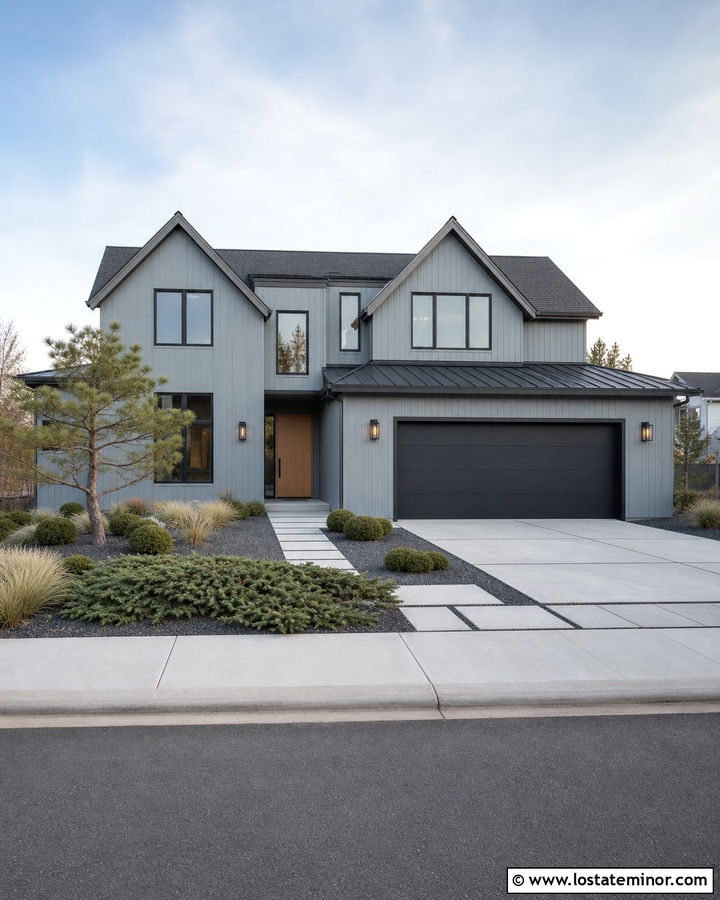
Minimal landscaping does not have to look unfinished when every element has a clear purpose. Choose dusty blue vertical siding for a contemporary home, then add black window frames, a flat-panel wood door, and charcoal roofing. Create two or three broad planting zones using low ornamental grasses, spreading juniper, compact evergreen spheres, and one sculptural tree. Surround the plants with dark mulch or uniform gravel, avoiding a mixture of decorative materials. Large concrete pavers can form a direct walkway that reflects the home’s simple geometry. Leave intentional open space between plant groups so their shapes remain distinct. Exterior lighting should be subtle and architectural. The restrained landscape allows the blue-gray facade to remain prominent, while wood, black metal, and carefully selected greenery prevent the property from feeling cold or bare.
27. Dusty Blue House With Sloped Front Yard
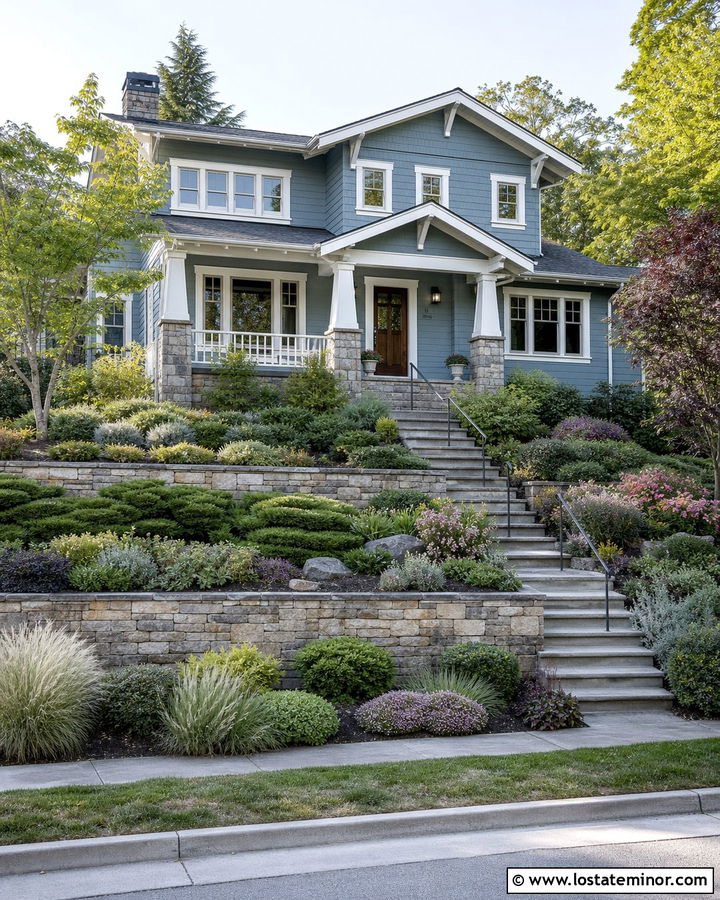
A sloped yard needs strong horizontal features that make the dusty blue house feel securely connected to the site. Use blue-gray siding with white trim, a dark wood door, and a charcoal roof on a raised ranch or hillside Craftsman. Divide the incline into low terraced beds using natural stone retaining walls. Plant spreading junipers, ornamental grasses, flowering shrubs, and erosion-conscious ground covers in repeating groups. Wide steps with a handrail should create a clear, comfortable route to the entrance. Avoid one steep strip of lawn, which can appear disconnected from the facade. Repeat porch stone in the retaining walls for visual continuity. The layered landscape reduces the apparent height difference between the street and house, while dusty blue siding blends gracefully with stone, greenery, and the changing shadows of the hillside.
28. Dusty Blue House With Small Front Yard
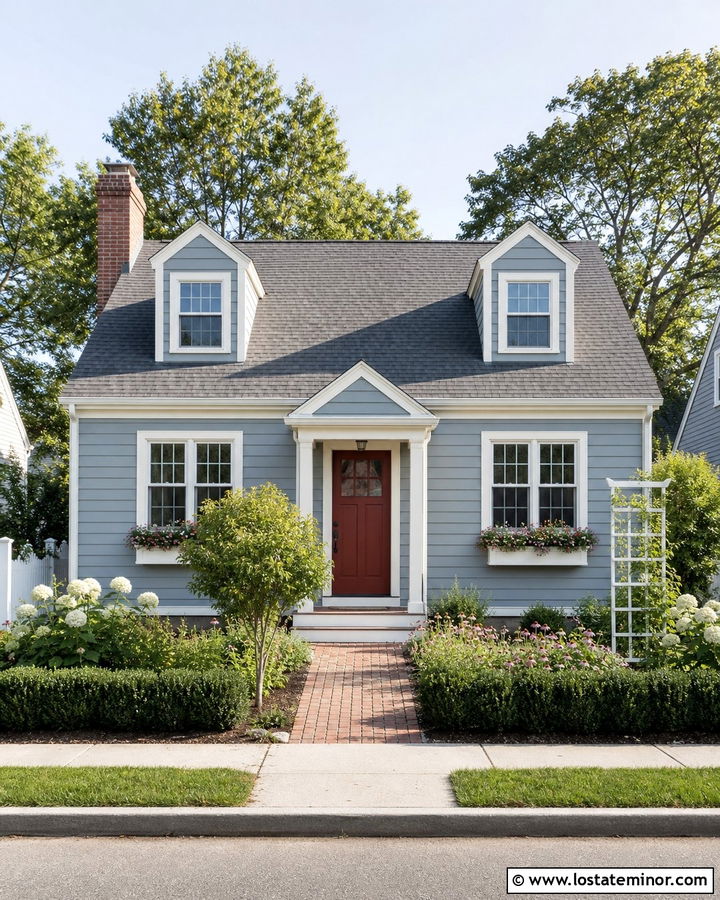
A small front yard looks more generous when the color palette and planting plan remain simple. Cover a narrow urban cottage or compact Cape Cod in dusty blue siding, then add creamy white trim and a warm red front door. Use a straight brick path to provide structure and lead attention through the limited space. Plant one compact ornamental tree, a low evergreen border, and layered perennials that stay proportionate to the house. Vertical elements, such as a slender trellis or upright flowering shrub, can add height without consuming much ground. Keep foundation plants below the windows and avoid oversized hedges. Window boxes can extend the landscape onto the facade. Repeating just a few flower colors creates unity, helping the small yard feel thoughtfully composed rather than crowded with unrelated features.
29. Dusty Blue House With Corner Lot Landscaping
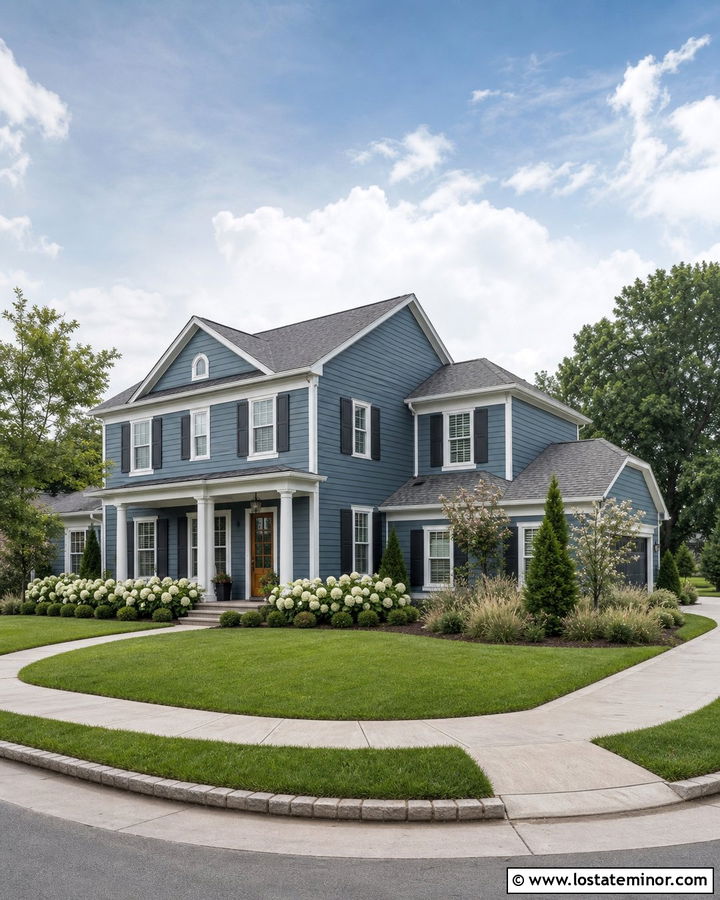
Corner lots expose more of the house, so the landscape should look finished from two street-facing directions. Paint a broad suburban home dusty blue with white trim, charcoal shutters, and a stained wood door. Wrap foundation beds around the visible side instead of stopping them abruptly at the front corner. Use repeated hydrangeas, evergreen shrubs, ornamental grasses, and one or two small trees to connect both elevations. A curved walkway from the primary sidewalk can emphasize the main entrance. Keep taller plants away from traffic sightlines and preserve open lawn or low ground cover near the corner. Repeat exterior materials, such as brick edging or stone mulch borders, throughout the property. This approach keeps the blue facade visually grounded and gives every public-facing side the same level of care.
30. Dusty Blue House With Four-Season Landscaping
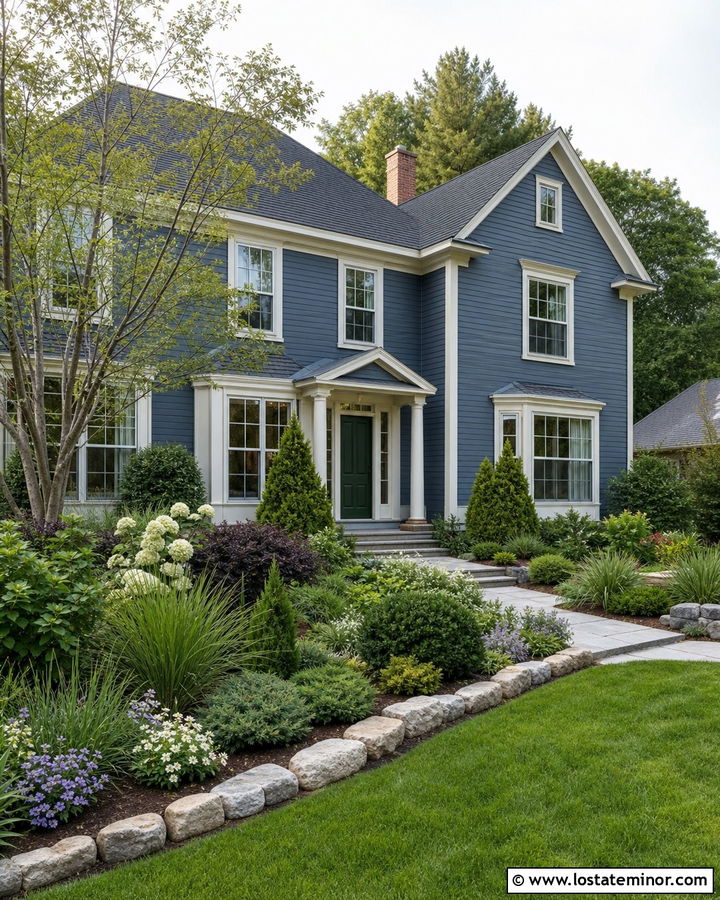
The strongest curb appeal does not disappear when summer flowers fade. Pair a classic dusty blue exterior with ivory trim, a deep green door, and a dark gray roof. Build the landscape around structural plants such as dwarf conifers, inkberry, holly, ornamental grasses, and a small tree with attractive bark or branching. Add spring bulbs, summer hydrangeas, fall-blooming asters, and perennials that hold decorative seed heads. White flowers brighten the blue-gray siding, while burgundy foliage introduces controlled warmth. Use stone edging and a clear walkway so the garden remains orderly in every season. Position evergreens near key corners rather than forming one continuous hedge. Layering permanent structure with rotating color gives the house a consistently finished backdrop and makes seasonal maintenance easier to plan.
Conclusion:
Dusty blue is flexible enough to support coastal grasses, formal boxwoods, cottage flowers, native plants, or clean modern greenery. The most successful exterior begins with the entire property rather than treating paint, trim, hardscape, and planting as separate decisions. Match warm materials with cool siding, repeat accent colors in small amounts, and keep mature plant sizes in mind. Before painting, test large samples on multiple sides of the house because daylight and nearby landscaping can shift the color’s appearance. Then choose a landscape structure that fits the architecture and local growing conditions. These 30 Dusty Blue House Design With Landscaping Ideas offer practical starting points for creating balanced, welcoming, and lasting curb appeal.

Related posts: