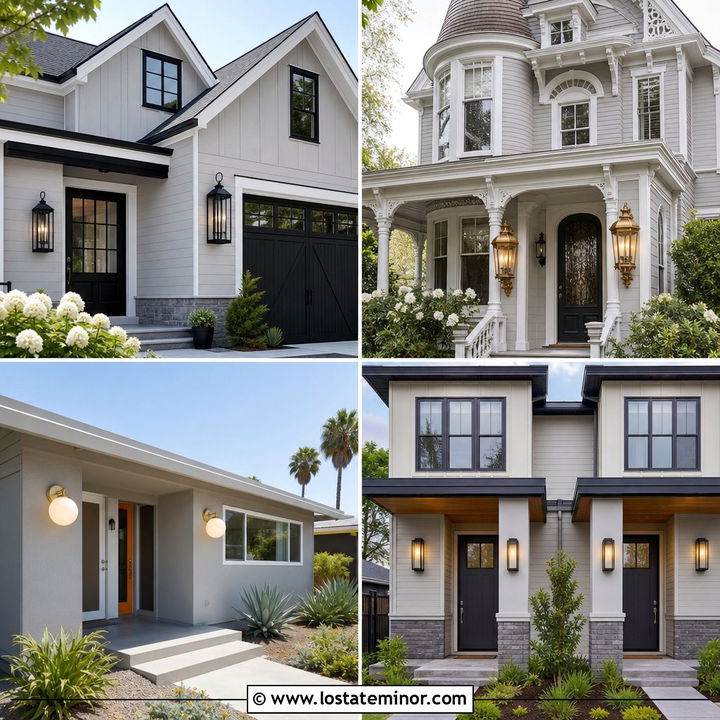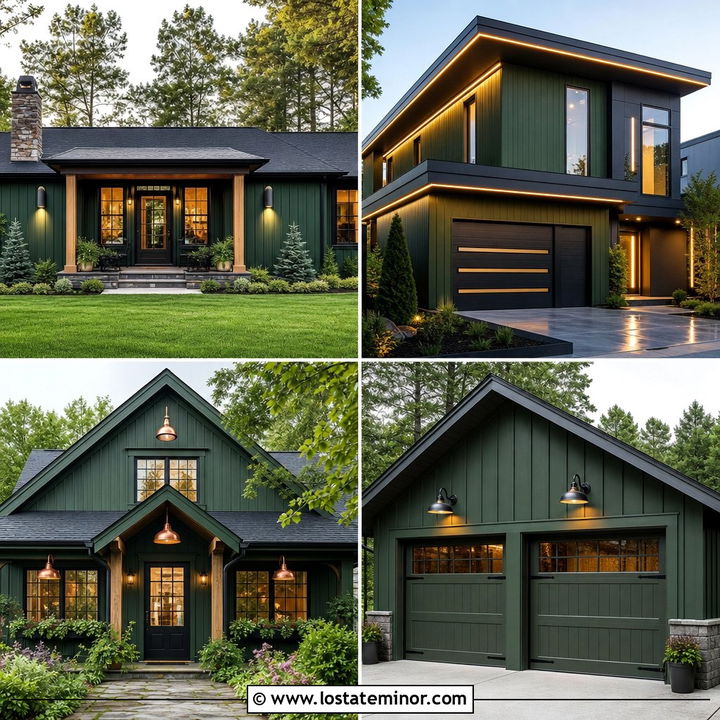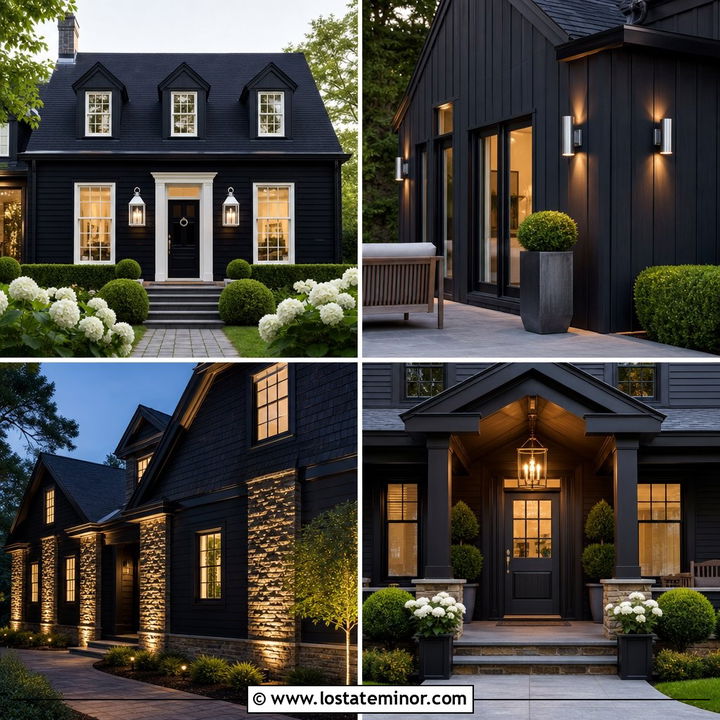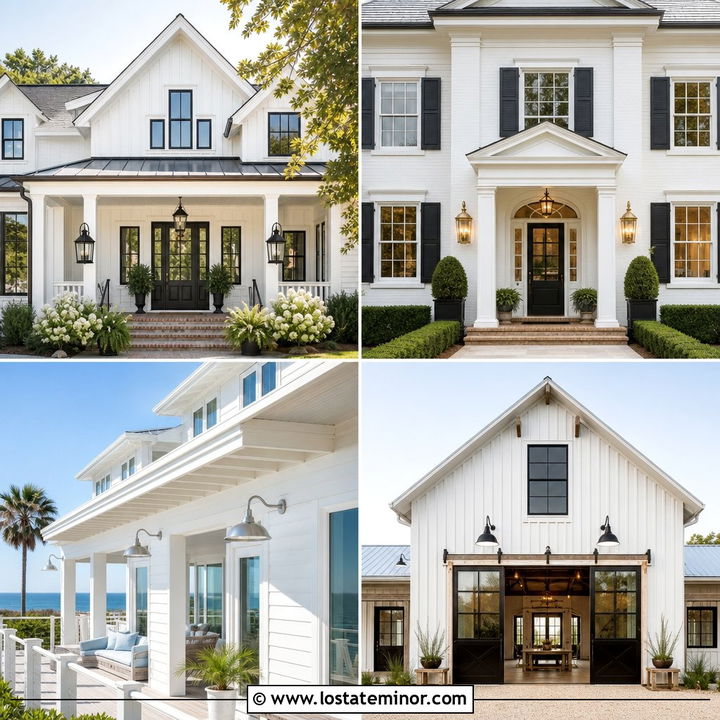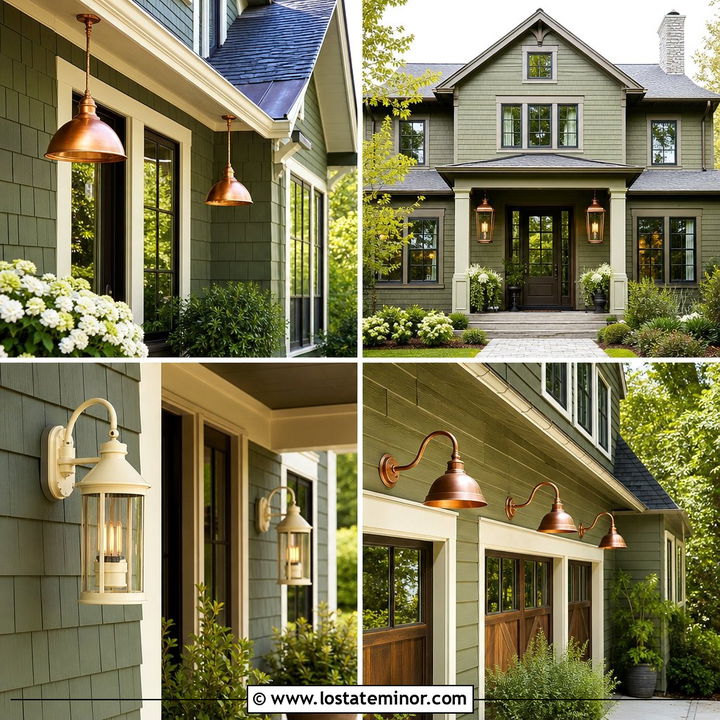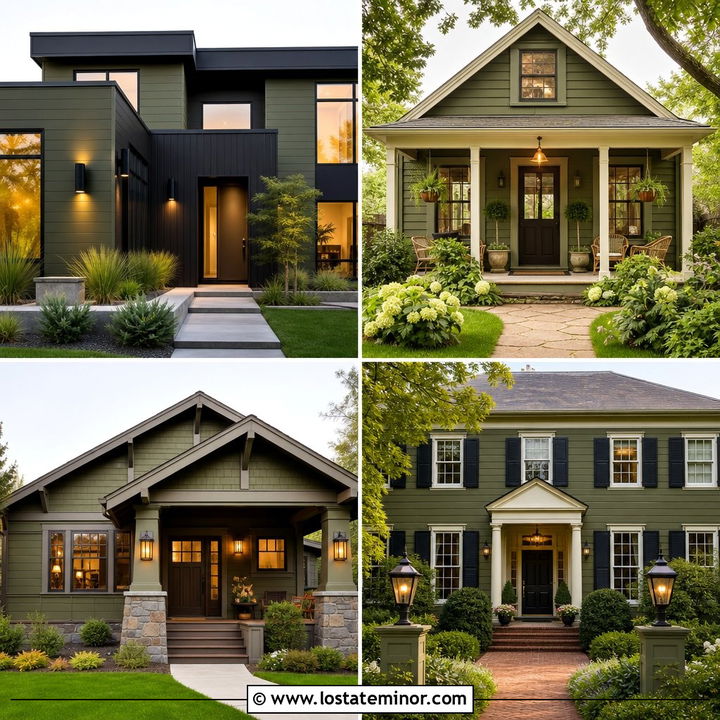
A warm neutral exterior becomes far more distinctive when lighting is treated as part of the complete design. These **30 Beige House Design With Light Fixtures Ideas** pair beige siding or stucco with coordinated trim, doors, roofing, masonry, and outdoor fixtures. Current exterior guidance emphasizes choosing wall sconces, ceiling mounts, or pendants that fit the architecture, while finishes such as black, bronze, brass, and copper provide different levels of contrast against beige walls. () You will find polished schemes for farmhouses, ranch homes, colonials, cottages, and contemporary facades. Each look also considers fixture shape, placement, and surrounding materials, helping the lighting feel intentional rather than added later. Explore these 30 Beige House Design With Light Fixtures Ideas to create a brighter, more coordinated exterior.

1. Beige Modern Farmhouse With Black Barn Lights
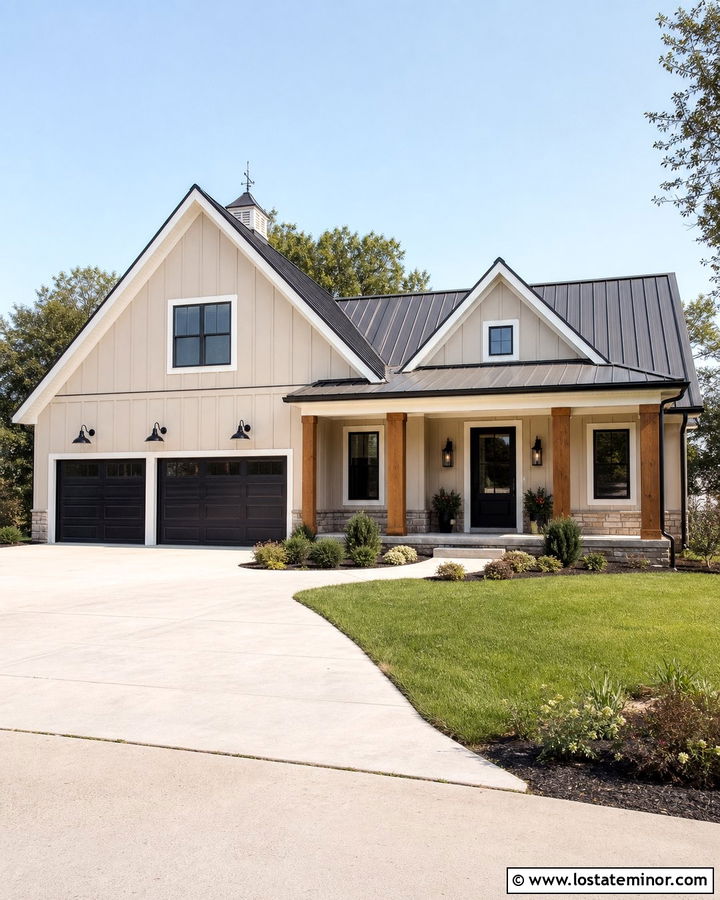
Warm beige board-and-batten siding gives a modern farmhouse a softer appearance than bright white paint. Add crisp white trim around the windows, then use matte black on the roof, gutters, and front door for definition. Large black barn lights above the garage reinforce the farmhouse architecture without looking overly rustic. Matching black lantern sconces can frame the entry, while a simple pendant illuminates the covered porch. Natural cedar columns and a stone foundation keep the neutral palette from feeling flat. Select fixtures with broad shades that direct light toward doors and walkways. Repeating the black finish on house numbers and door hardware ties everything together. This complete exterior feels modern, welcoming, and easy to see from the street.
2. Beige Colonial House With Brass Lanterns
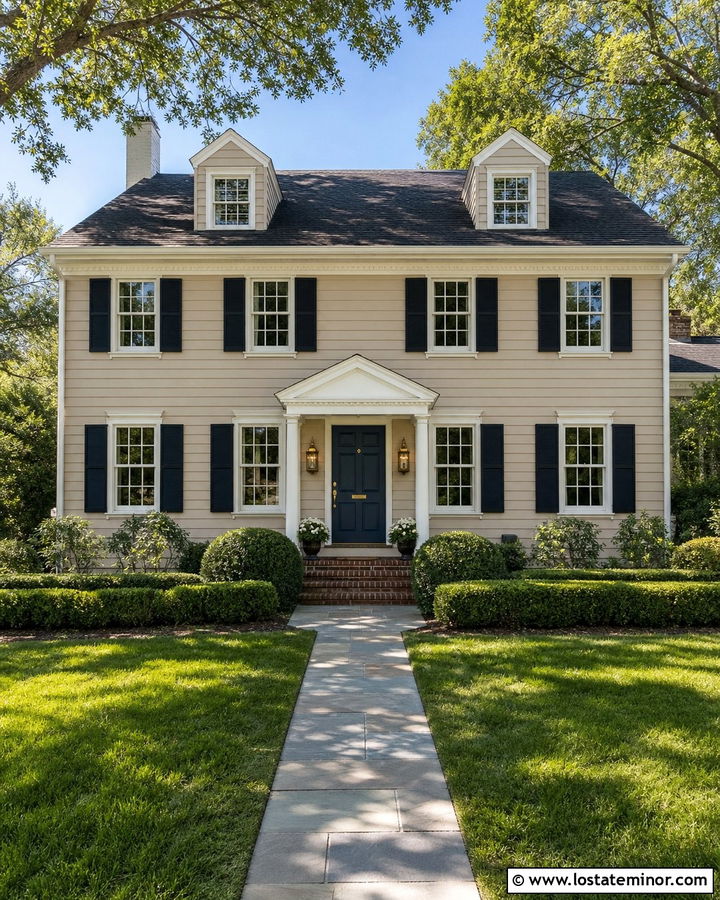
Picture a symmetrical colonial house finished in classic beige clapboard siding with clean white corner boards and window trim. Traditional aged brass lanterns on both sides of a navy front door create an elegant focal point. Choose substantial fixtures that relate to the height of the entry instead of small lights that disappear against the facade. Black shutters can outline the windows, while a dark charcoal roof grounds the lighter colors. Brick steps add another warm material that works naturally with beige and brass. Complete the look with brass door hardware and understated house numbers. Formal boxwood plantings and a straight stone walkway strengthen the balanced architecture. The combination feels established and refined, but the contrasting blue door keeps the scheme from appearing too predictable.
3. Beige Ranch House With Bronze Cylinder Sconces
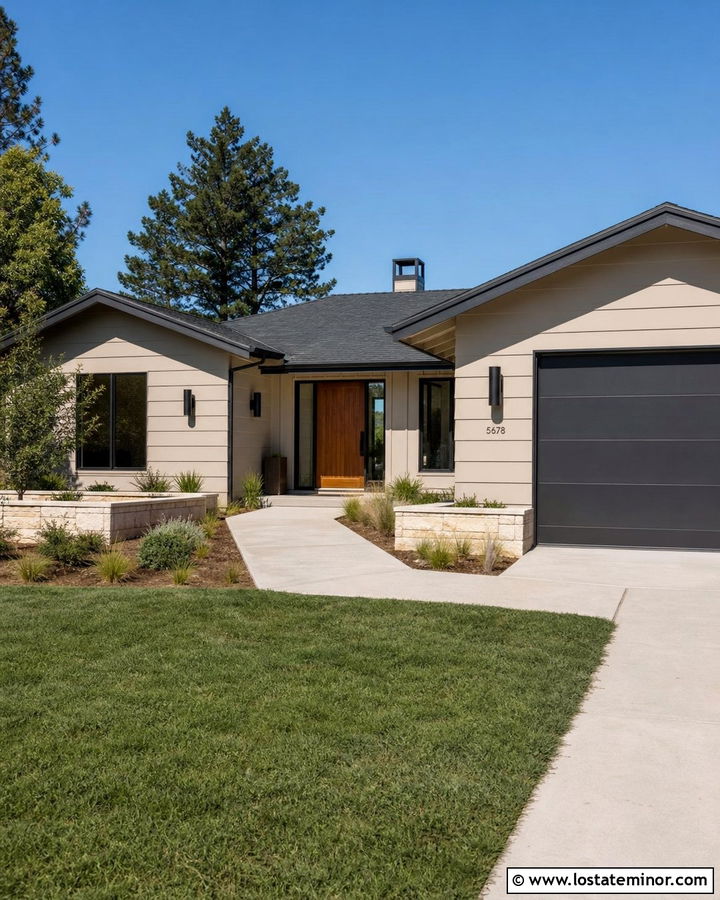
A one-story ranch can look fresh and streamlined with sandy beige horizontal siding and dark bronze cylinder sconces. Install the fixtures beside the front door and between wide garage bays to emphasize the home’s long shape. Bronze window frames, gutters, and fascia create a gentle contrast that feels softer than solid black. A medium walnut front door brings warmth to the center of the facade, while limestone planters repeat the natural tones of the siding. Keep the roof charcoal gray to prevent the entire exterior from becoming too brown. Low ornamental grasses and a broad concrete walkway suit the simple ranch architecture. Up-and-down cylinder lights add attractive vertical beams after sunset, yet their slim forms remain discreet and architectural during the day.
4. Beige Craftsman House With Copper Lanterns
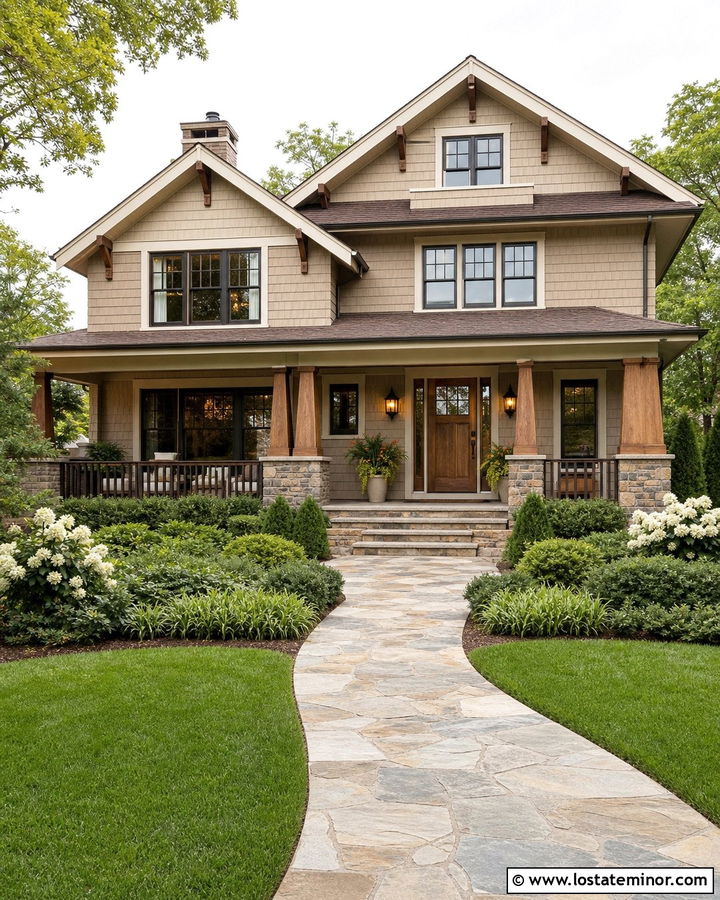
Copper lanterns bring character to a beige Craftsman exterior filled with handcrafted details. Use warm tan shingles on the upper level and slightly lighter beige lap siding below to create subtle depth. Cream trim can highlight tapered porch columns, exposed rafters, and divided-light windows without producing harsh contrast. Place generous copper lanterns beside a stained oak front door, then repeat smaller versions near the garage. The metal’s warm color connects beautifully with cedar brackets and a fieldstone porch base. A deep brown roof completes the earthy palette. Over time, natural copper may change in appearance, so decide whether you prefer a developing patina or a protected finish. Layered shrubs, porch planters, and a curved paver walk make this Craftsman scheme feel especially inviting.
5. Beige Mediterranean House With Iron Lanterns
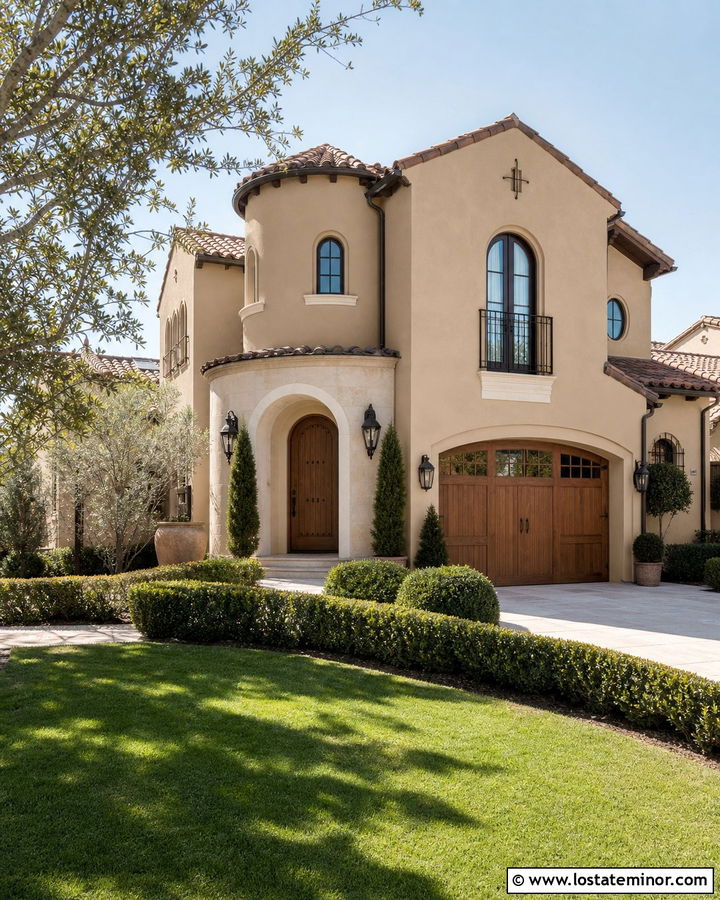
Sun-washed beige stucco provides a natural foundation for a Mediterranean exterior with black iron lanterns. Arched windows, a recessed entry, and a terracotta tile roof already create strong architectural interest, so the fixtures should support those elements rather than compete with them. Choose elongated wall lanterns with clear or lightly textured glass and place them beside the wooden front door. Smaller coordinating fixtures can mark the garage and side gate. Dark iron window grilles, balcony rails, and door hardware connect the lighting to the complete facade. Add warm limestone around the entry for another layer of texture. Olive trees, clipped hedges, and a pale stone walkway finish the setting. The result feels warm and established while remaining bright enough for a modern suburban property.
6. Beige Contemporary House With Up And Down Lights
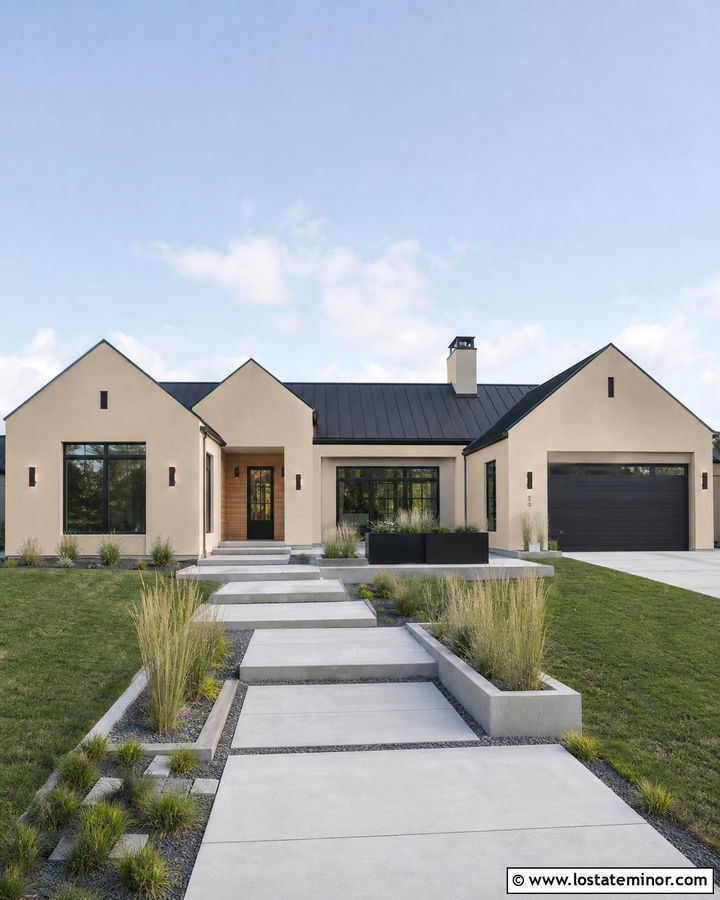
Clean beige stucco looks more architectural when paired with slim black up-and-down lights. On a contemporary house, position these fixtures along projecting walls, beside the entry, and near the garage to emphasize the facade’s geometric forms. A charcoal standing-seam roof and narrow black window frames add crisp contrast. Warm wood cladding around the front door prevents the black accents from feeling severe. Use a slightly darker beige on one recessed section to give the elevation more depth without introducing another strong color. Large concrete pavers, rectangular planters, and structured grasses continue the modern look into the landscape. The vertical beams created by the sconces can highlight wall texture after dark. During daylight, the simple black cylinders read as purposeful architectural details against the warm neutral surface.
7. Beige Cape Cod House With Nautical Wall Lights
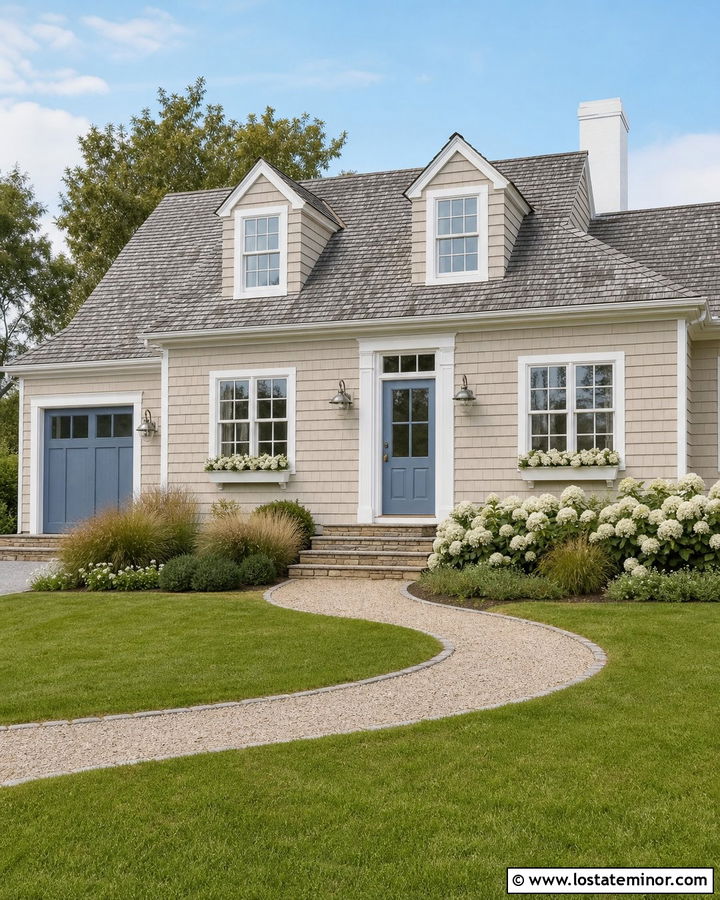
A beige Cape Cod exterior can feel coastal without depending on obvious beach-themed decorations. Start with light beige shingles, bright white trim, and a soft blue front door. Add weather-resistant nautical wall lights in a brushed nickel or pewter finish beside the entrance and garage. Fixtures with clear glass and simple protective cages reference maritime design in a restrained way. White window boxes and compact shutters preserve the home’s traditional charm, while a weathered gray roof complements the cooler metal finish. Use natural stone on the front steps and line the walkway with low hydrangeas or ornamental grasses. The pale siding keeps the facade airy, and the silvery fixtures reflect daylight instead of creating heavy contrast. This complete look works well for both coastal neighborhoods and inland suburban homes.
8. Beige Tudor House With Bronze Leaded Glass Lights
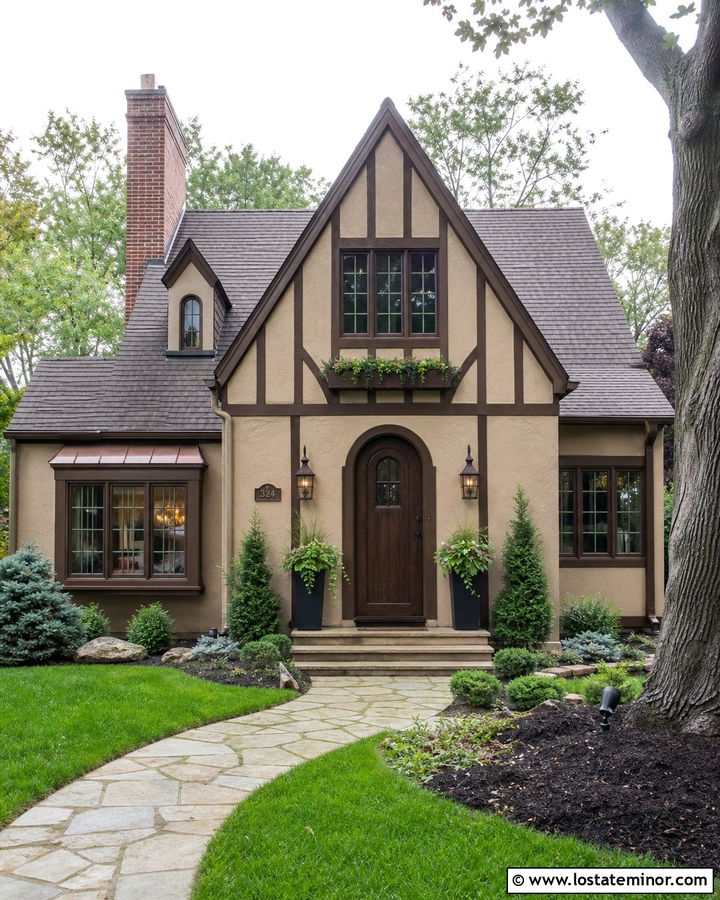
A Tudor exterior gains warmth from medium beige stucco placed between dark brown timber details. Bronze lanterns with leaded or seeded glass fit the historic character while giving the entry a polished update. Mount a pair beside an arched walnut door and repeat the bronze finish on the house numbers, handle set, and mailbox. Deep brown trim should frame the windows and roofline, while reddish-brown brick around the chimney adds another period-appropriate material. Choose a roof with blended charcoal and brown tones so it connects with every part of the palette. The fixtures can include modest decorative lines, but avoid excessively ornate shapes that make the facade look busy. A curved flagstone path and layered evergreen landscaping complete this welcoming beige Tudor house without hiding its distinctive architecture.
9. Beige Bungalow With A Schoolhouse Porch Pendant
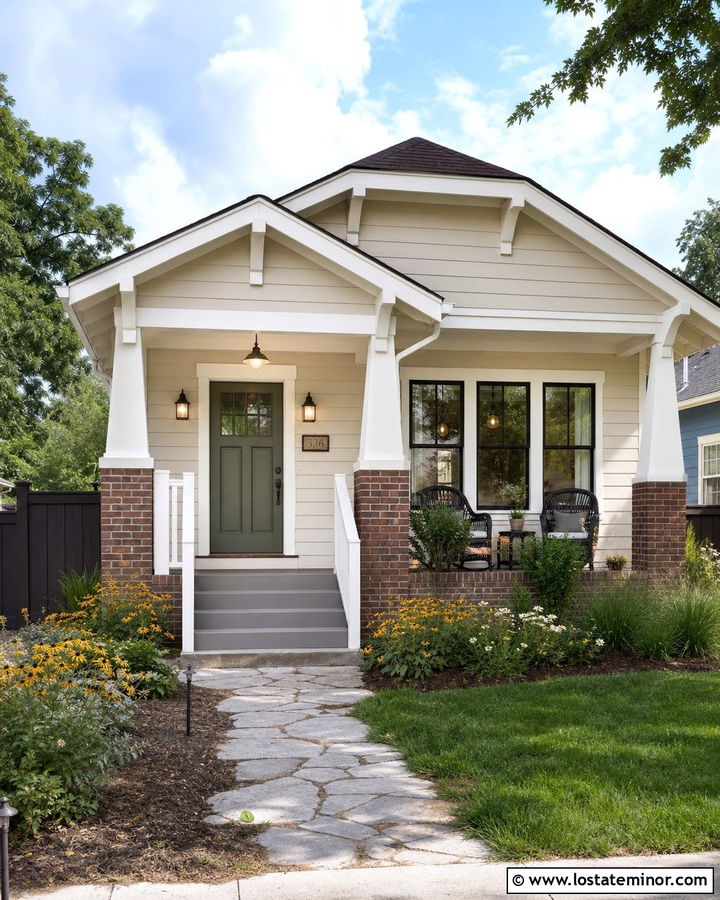
What could make a small beige bungalow feel more welcoming than a well-lit front porch? Paint the horizontal siding a creamy beige and highlight the wide eaves, columns, and window casings with warm white trim. A schoolhouse-style pendant centered above the porch creates a charming focal point and spreads light across the seating area. Use a dark bronze fixture with softly frosted glass, then add coordinating wall lights beside the front door. A muted green door and natural brick porch foundation introduce gentle color without overwhelming the compact facade. Dark brown roof shingles connect with the fixture finish. Complete the curb appeal with tapered columns, simple wood railings, native flowers, and a short stone walkway. Every element feels practical, comfortable, and correctly scaled to the bungalow.
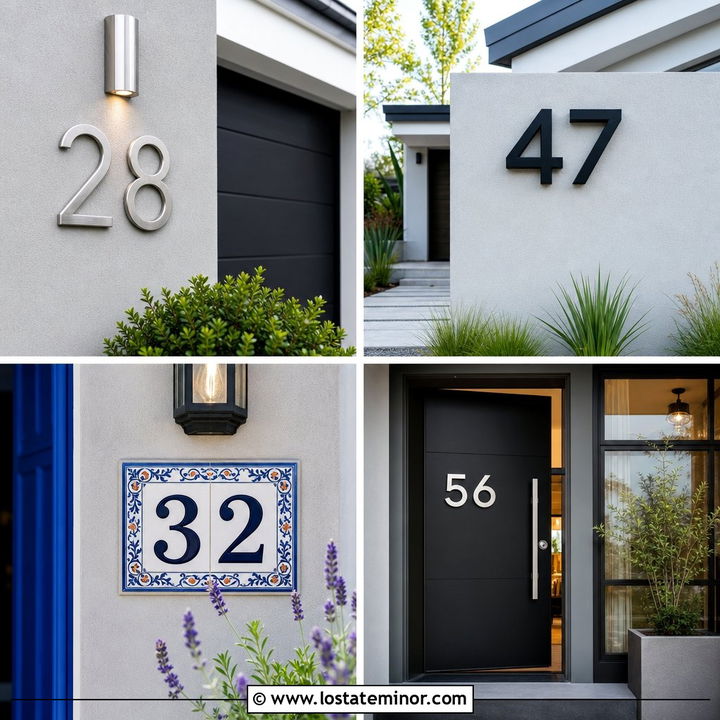
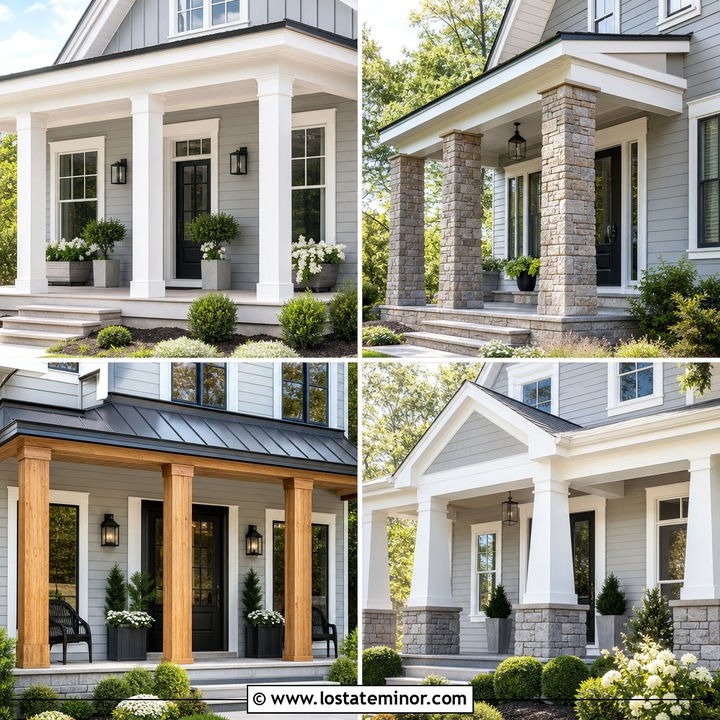
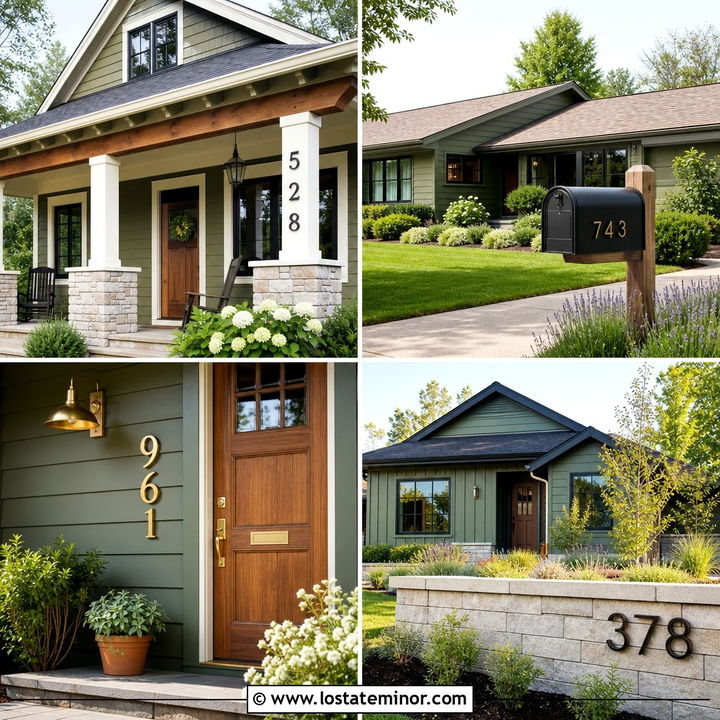
10. Beige Split Level House With Geometric Sconces
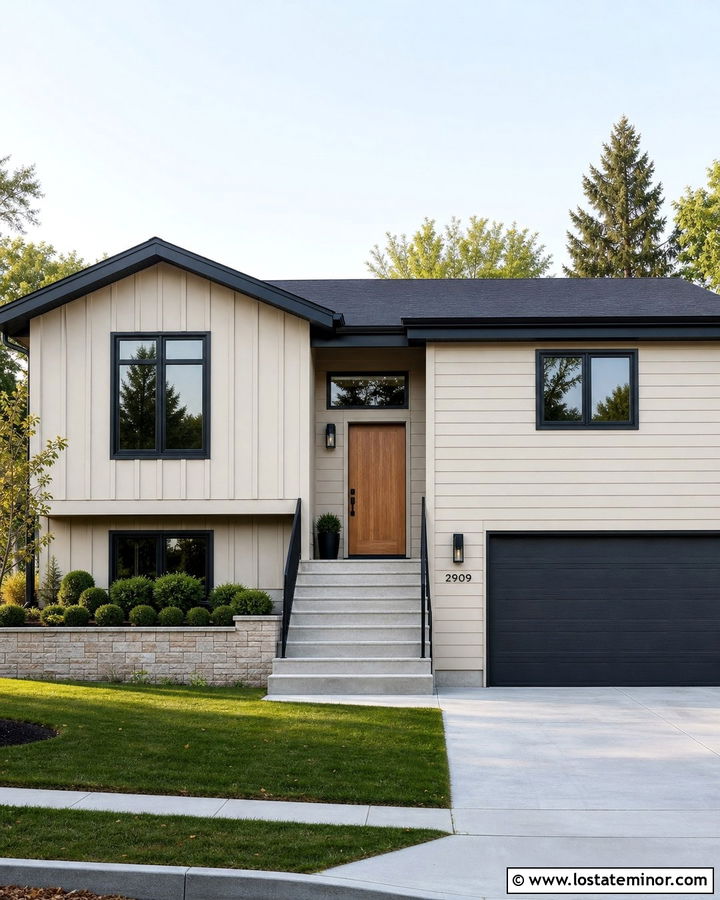
A dated split-level can become noticeably sharper with pale beige siding and geometric black sconces. Use vertical siding around the raised entry and horizontal siding across the lower level to create intentional variation. Black-framed windows, a charcoal garage door, and a dark roof give the unusual elevation a clearer structure. Rectangular sconces beside the front door and garage should repeat the straight lines of the updated architecture. Add a natural wood door to warm the center of the facade and prevent the darker accents from dominating. A low stone retaining wall can connect the upper walkway with the driveway. Structured shrubs and broad concrete steps further simplify the view. This balanced combination makes the beige exterior feel modern while respecting the practical proportions of a classic split-level home.
11. Beige French Country House With Antique Brass Lights
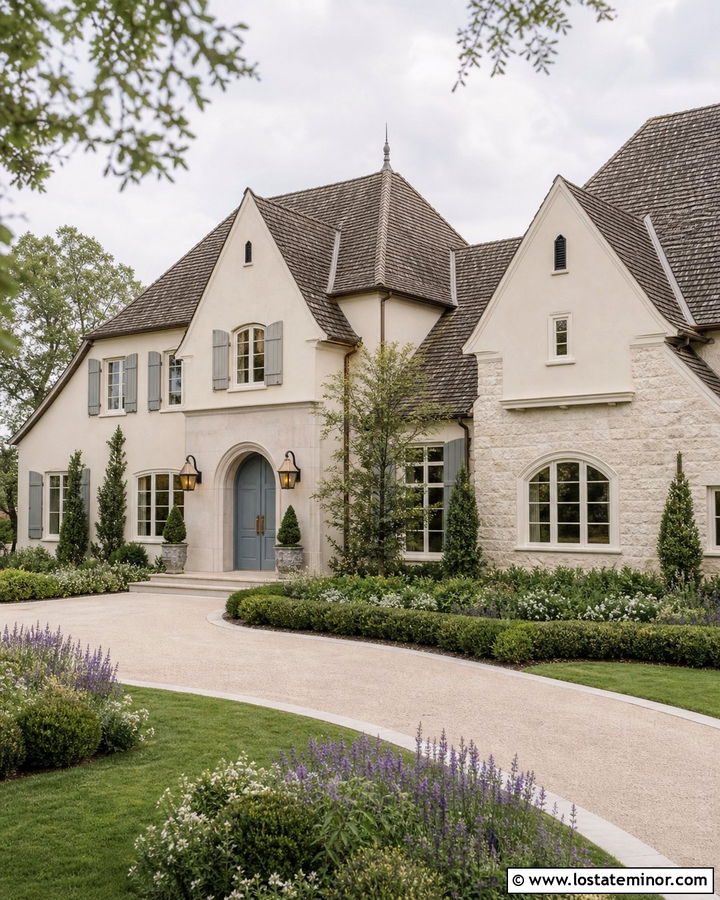
Soft beige stucco, antique brass lanterns, and weathered stone create an inviting French country exterior. Frame the arched front door with substantial wall lanterns that feature gently curved tops and clear glass. Their warm metallic finish should relate to the door hardware without looking overly shiny. Use creamy trim around the windows and a muted gray-brown roof above the steep rooflines. Pale limestone can cover the lower facade or surround the entry, adding texture while staying within the neutral palette. A faded blue door supplies a restrained accent that suits the relaxed architecture. Curving garden beds, lavender-colored flowers, and a gravel-edged walkway soften the formal house shape. The overall design feels collected and graceful because every finish shares a warm, slightly aged undertone.
12. Beige Coastal House With White Outdoor Lights
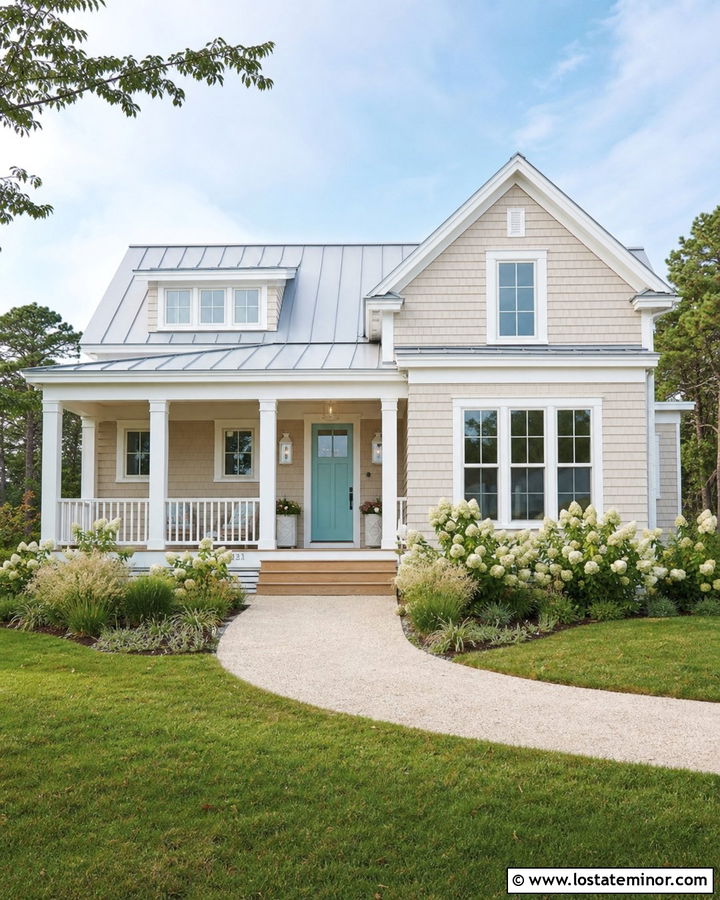
White fixtures can almost disappear against light trim, making them a useful choice for a relaxed beige coastal house. Cover the facade in sandy beige shingles and use clean white on the porch columns, railings, fascia, and window frames. Place white lantern sconces beside an aqua front door, then install a matching ceiling light under the porch roof. The fixtures should have uncomplicated shapes and corrosion-resistant finishes suited to the home’s environment. A light gray metal roof maintains the bright palette, while natural wood decking introduces enough warmth. Avoid adding too many dark accents, which can interrupt the breezy effect. Billowy grasses, hydrangeas, crushed-shell-colored paths, and an open lawn complete the curb view. The result is light, casual, and coordinated without feeling overly themed.
13. Beige Mid Century House With Globe Sconces
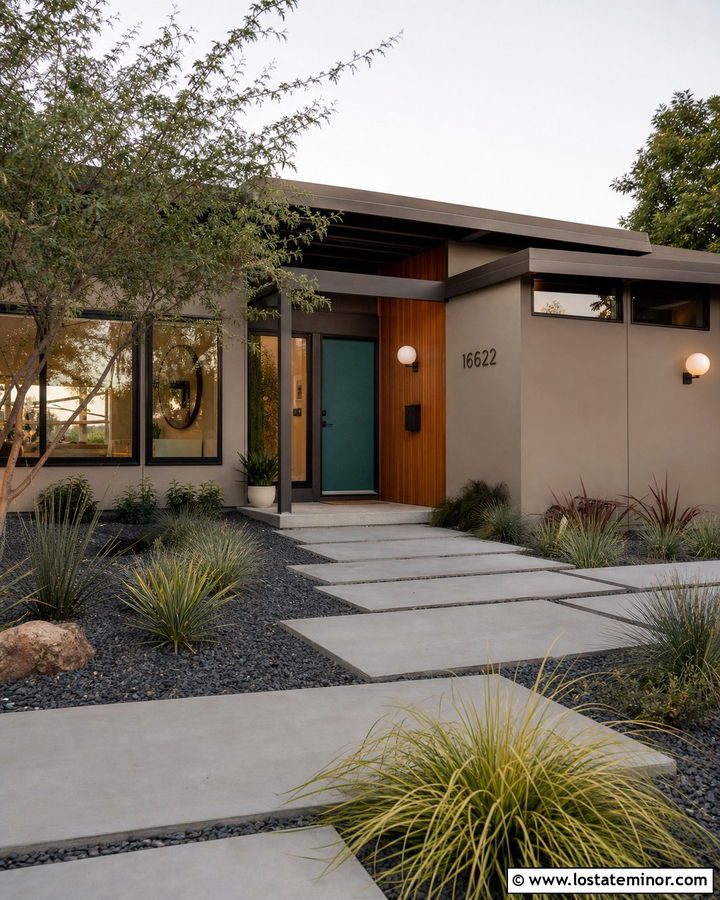
Globe sconces add the right amount of playful geometry to a beige mid-century house. Use warm mushroom beige on the low horizontal facade and charcoal brown on the fascia, beams, and flat or low-pitched roofline. Frosted white globe lights mounted on dark bronze bases can flank the front door and illuminate a covered walkway. A mustard, teal, or burnt orange door adds period-inspired color, but keep the remaining materials quiet. Vertical cedar panels around the entry provide natural texture and help distinguish it from the garage. Large windows with narrow dark frames strengthen the horizontal architecture. Finish the yard with concrete stepping pads, gravel beds, sculptural grasses, and one ornamental tree. This combination updates the property while maintaining the simplicity that makes mid-century design recognizable.
14. Beige Prairie House With Horizontal Bronze Lights
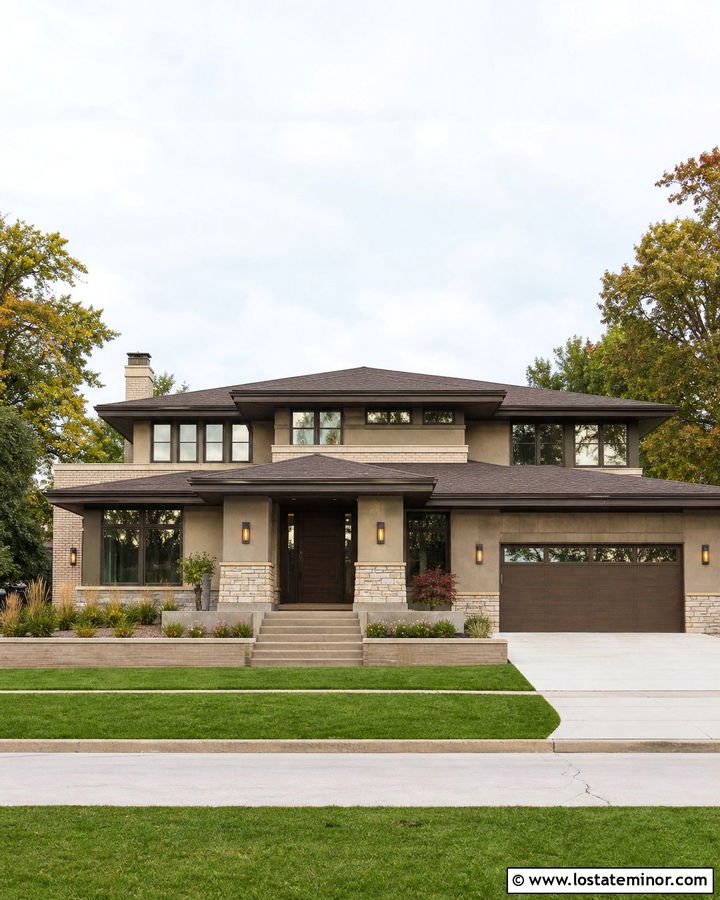
Long horizontal bronze lights complement the low rooflines and broad overhangs of a Prairie-style home. Choose a grounded beige for the stucco or brick exterior, then use deep bronze on the window frames, gutters, and fascia. Rectangular wall lights can sit beside the entry and garage, echoing the strong horizontal bands across the facade. A dark-stained wood front door and stone base add warmth without disrupting the subdued palette. Keep the roof a mixed brown-charcoal color that visually settles into the landscape. Wide steps, low retaining walls, and linear garden beds should extend the architecture into the yard. Because the facade already contains many lines, select fixtures with flat profiles and minimal decoration. The resulting beige house looks cohesive, sturdy, and connected to its natural surroundings.
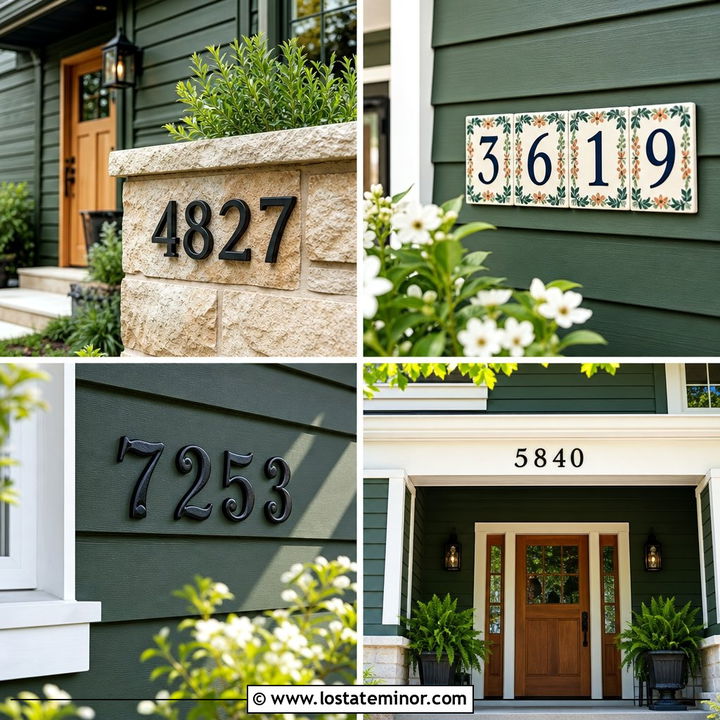
15. Beige Cottage With Brass Lights And Sage Door
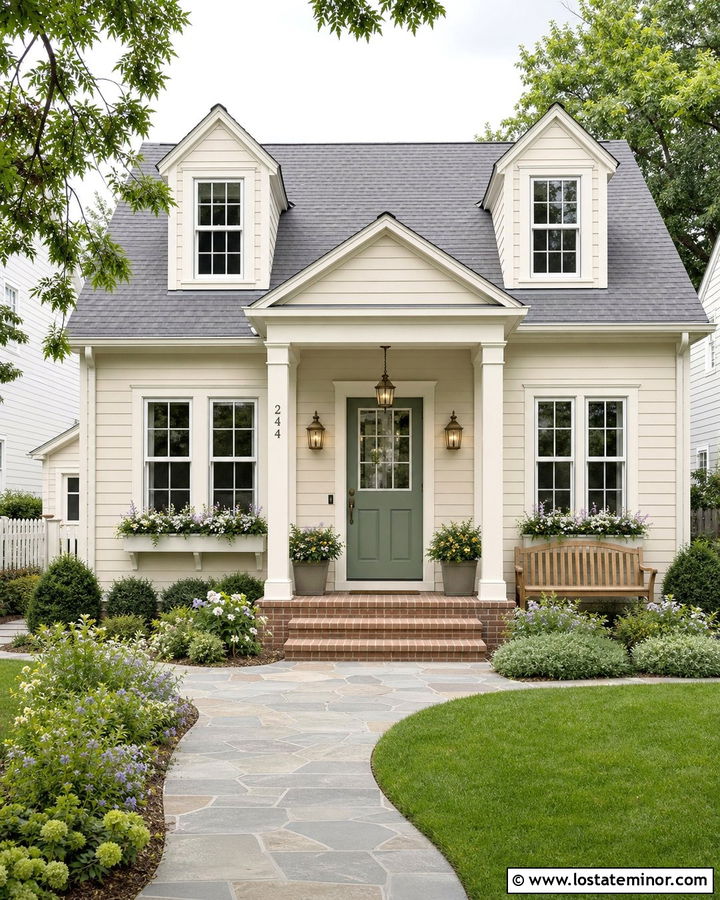
A sage green door gives a beige cottage a gentle touch of color, while aged brass lights make the entry feel warm and finished. Paint the siding a soft oatmeal beige and use creamy white on the trim, porch posts, and window boxes. Small but substantial brass lanterns can flank the door, with a matching pendant beneath the porch ceiling if space allows. Add a medium gray roof so the palette does not become overly warm. Natural brick steps and a simple wood bench contribute casual texture. Cottage landscaping should frame the house instead of covering it, so combine low flowering plants with neatly clipped shrubs. Repeating brass on the door handle and house numbers creates continuity. This exterior feels cheerful and welcoming without relying on bright or difficult-to-coordinate colors.
16. Beige House With Brick Accents And Black Lanterns
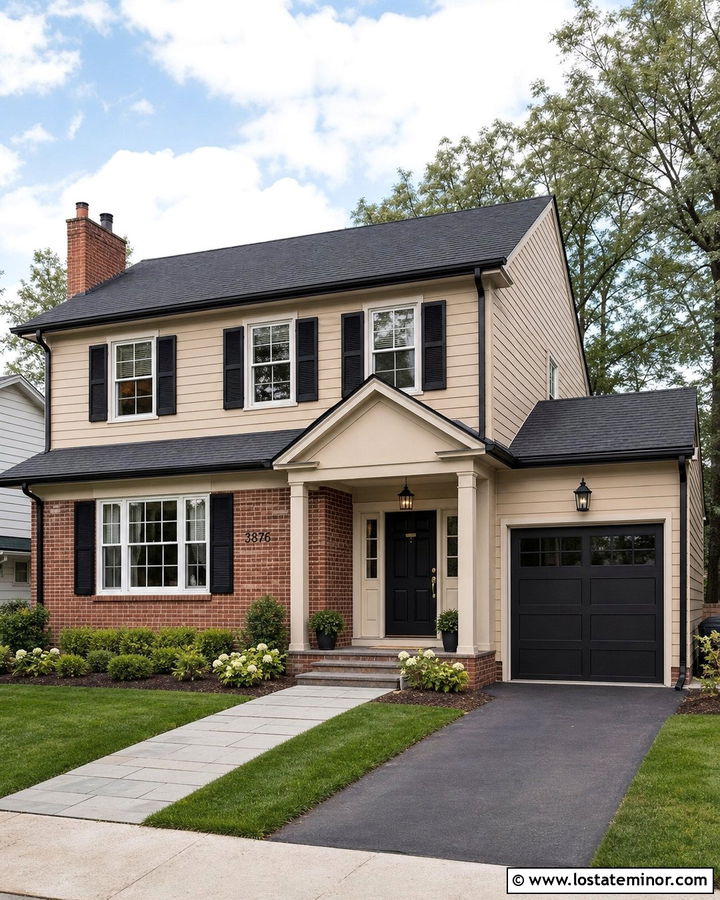
Red brick accents become easier to coordinate when the main exterior is a warm, balanced beige. Use beige siding across the upper walls and retain brick around the porch, chimney, or lower foundation. Black lanterns beside the door and garage create a clean bridge between the traditional masonry and contemporary updates. Repeat black on the shutters, gutters, and front door, but keep the window trim a soft white to brighten the facade. A charcoal roof can pull the dark details together without competing with the brick’s natural variation. Select lanterns with simple rectangular frames and clear glass rather than heavily decorative scrollwork. Foundation shrubs and a straight paver path maintain a tidy appearance. The contrast makes every material readable while allowing the original brick to remain an important feature.
17. Beige House With Stone Accents And Bronze Sconces
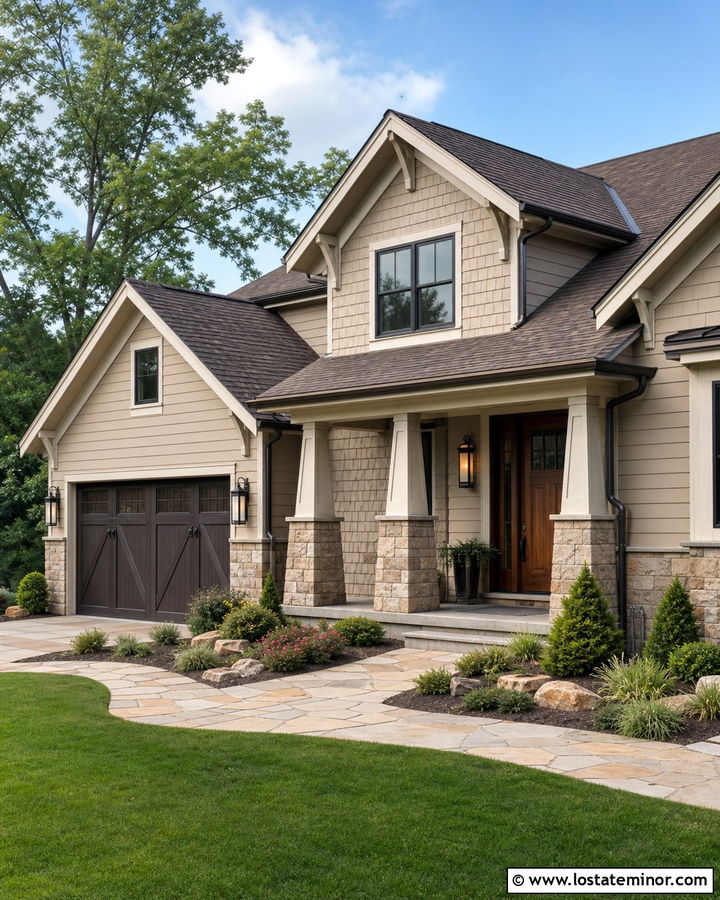
Beige siding and natural stone can blend too closely unless the design includes a defined contrast. Dark bronze sconces solve this problem while preserving the exterior’s earthy character. Use light tan siding above a mixed limestone or fieldstone base, then apply creamy trim around the windows. Place tall bronze lanterns beside a stained wood front door and medium fixtures along the garage. Bronze gutters or window frames can repeat the finish in small amounts. Choose roof shingles that combine brown and charcoal rather than one flat color. Since the stone already supplies plenty of pattern, keep the door and fixtures simple. A flagstone walkway, layered evergreens, and warm wood porch details complete the design. The house feels substantial and textured, but the coordinated lighting keeps it visually organized.
18. Beige Board And Batten House With Gooseneck Lights
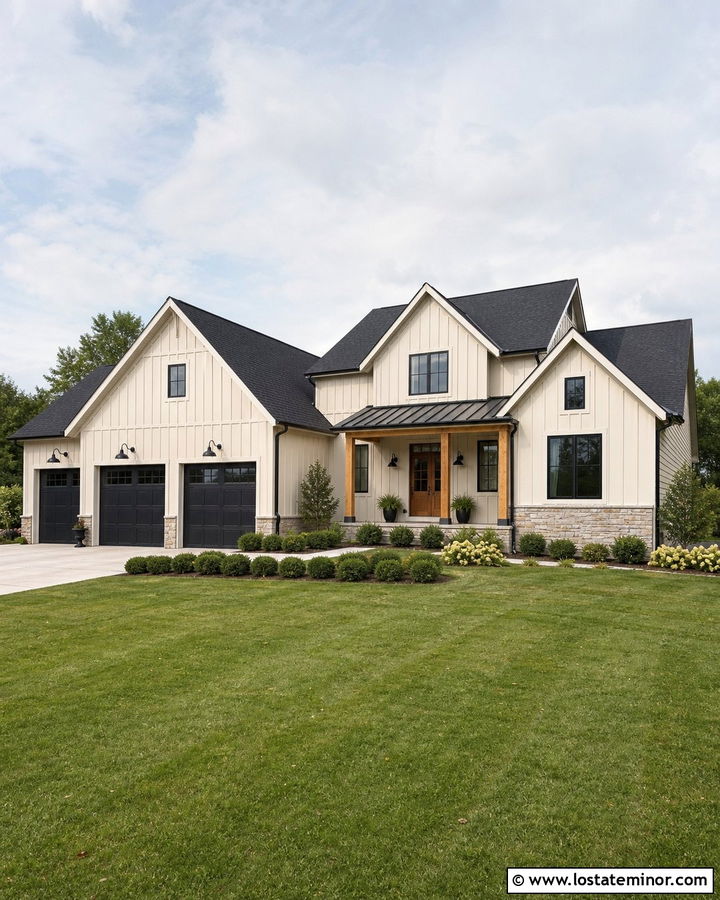
Vertical beige board-and-batten siding creates a clean backdrop for black gooseneck lights. This pairing works especially well on farmhouse-inspired homes with wide garage doors, covered porches, and simple gables. Position the lights above each garage bay so their shades direct illumination downward. Matching wall sconces can frame a medium-stained wood front door. Use warm white trim to separate the beige panels, then add black gutters, windows, and a metal porch roof for consistent contrast. A pale stone skirt softens the transition between the house and landscape. Keep fixture sizes generous enough to suit the tall gables and broad garage elevation. Straight concrete paths, clipped shrubs, and cedar porch posts finish the exterior. The lighting feels integrated because its shape supports both the architecture and daily function.
19. Beige Stucco House With Brass Cylinder Lights
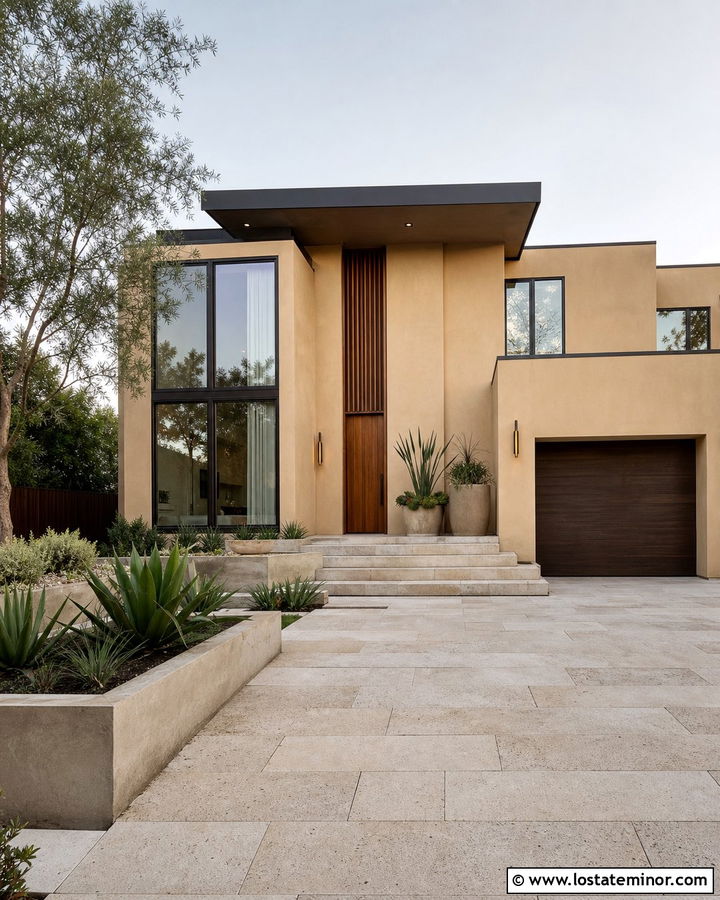
A smooth beige stucco exterior can support polished contemporary details without feeling cold. Slim brass cylinder lights bring warmth to the flat wall surfaces and stand out more gently than black fixtures. Install matching sconces beside an oversized wood front door and along a recessed garage wall. Dark bronze window frames and a charcoal roof provide structure, while limestone pavers connect the neutral facade to the yard. Choose a restrained satin or aged brass finish rather than a highly reflective gold tone. Vertical wood slats around the entry can repeat the warmth of the metal and establish a clear focal area. Add sculptural plants, broad steps, and low concrete planters. This complete scheme balances smooth materials with natural texture, creating a beige exterior that feels current, bright, and carefully detailed.
20. Beige House With Cedar Accents And Black Sconces
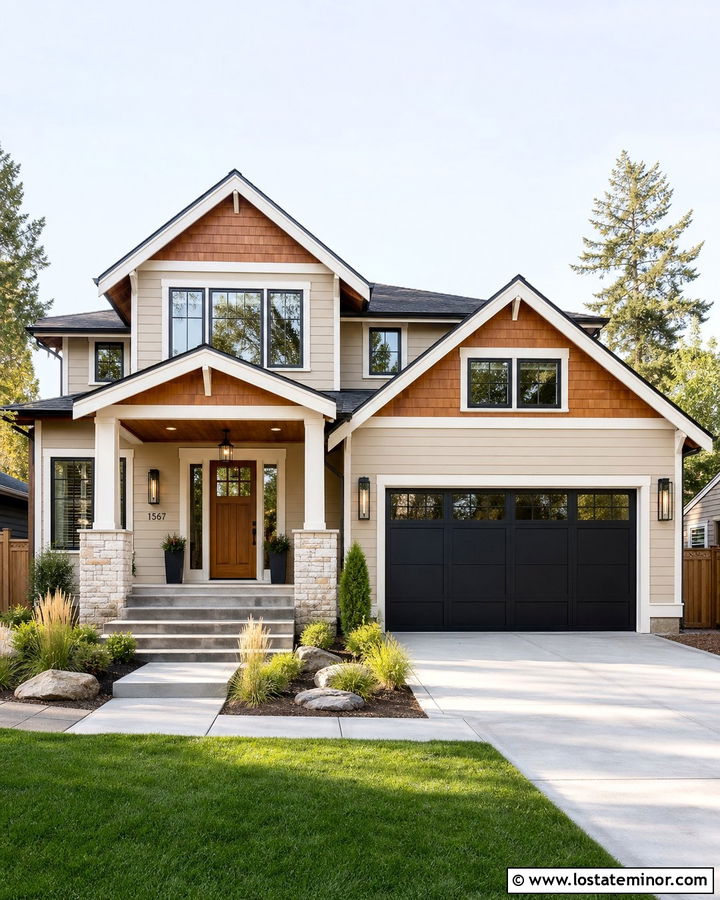
Natural cedar makes a beige exterior feel layered, but black lighting is what gives the combination definition. Use pale beige lap siding across the main facade and place cedar on porch ceilings, gable peaks, or the wall surrounding the front door. Matte black rectangular sconces can flank the entry and garage, matching black windows and gutters. Keep the trim warm white so the home remains bright from the street. A dark gray roof balances the strong window frames and prevents the cedar from making the palette too orange. Choose a wood door with a stain close to the cedar for an organized appearance. Stone steps, simple grasses, and evergreen shrubs add texture at ground level. The finished exterior feels natural and contemporary, with enough contrast to emphasize every architectural feature.
21. Beige House With Navy Door And Aged Brass Lanterns
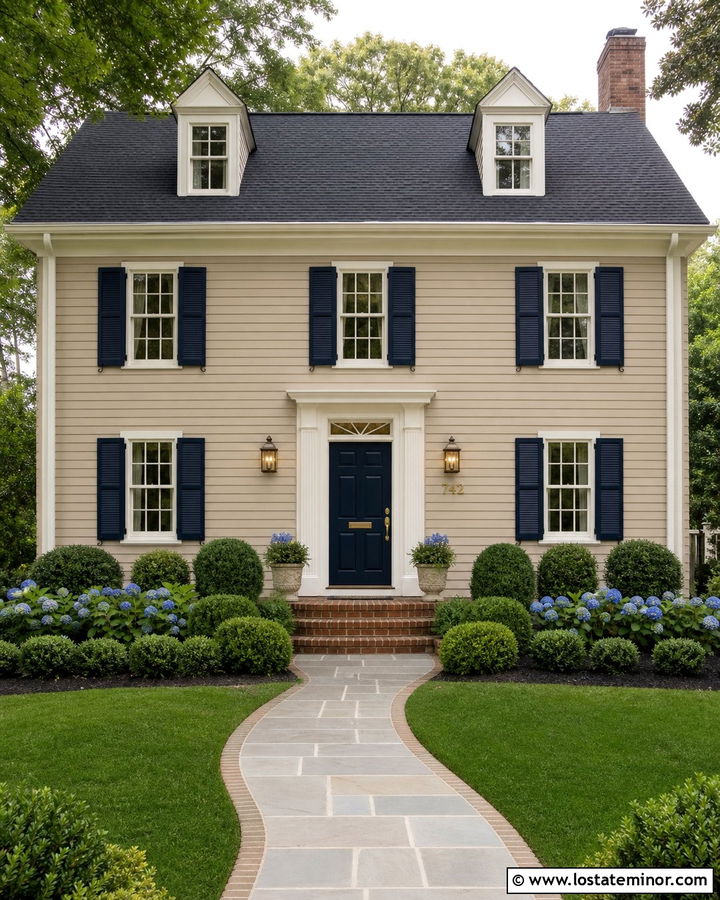
A navy front door creates a confident focal point on a beige house without overpowering the warm neutral siding. Aged brass lanterns soften the transition between the dark door and light walls. Use medium beige clapboard siding with creamy white trim and navy shutters for a traditional, connected palette. Place tall brass fixtures on both sides of the entry and use simpler coordinating lights near the garage. Brass house numbers and door hardware should repeat the finish in small, visible details. A charcoal roof keeps the blue accents looking grounded, while brick steps add warmth near the entrance. Neatly shaped hedges, blue-green plants, and a curved stone walkway support the classic architecture. This complete look offers noticeable contrast while remaining approachable enough for many suburban house styles.
22. Beige House With Black Trim And Oversized Lanterns
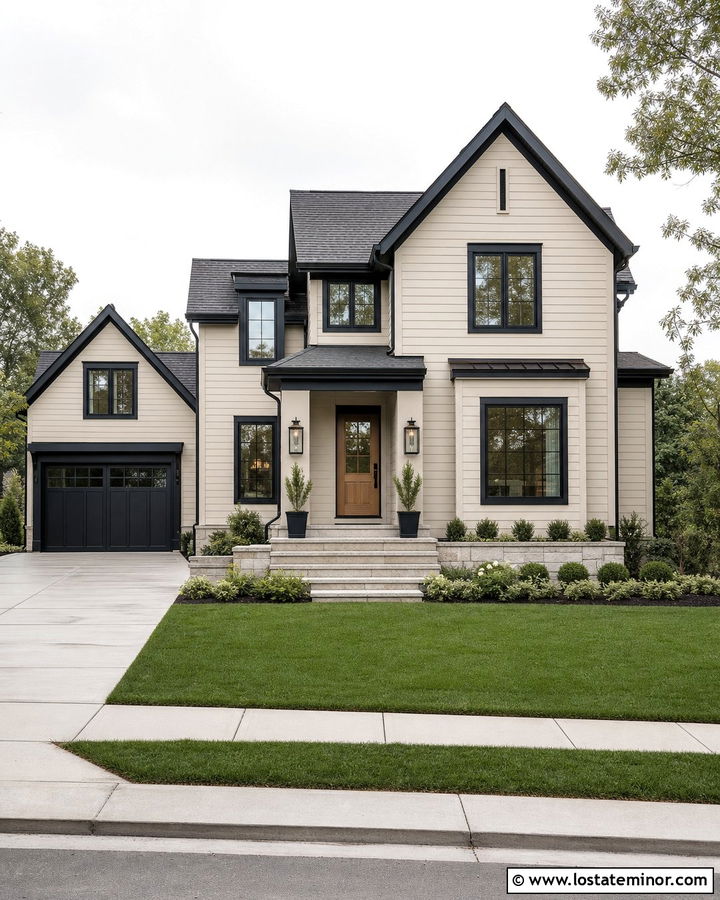
Bold black trim can transform a simple beige facade when it is distributed thoughtfully. Outline the windows, fascia, and garage doors in black, then install oversized black lanterns beside the main entrance. Warm beige siding prevents the dark elements from making the house feel severe. A natural oak front door and pale stone porch add softer materials near eye level. If the home has multiple gables, use beige consistently across them so the black rooflines remain the strongest architectural feature. Choose lanterns with open rectangular frames and clear glass for a clean transitional look. Avoid adding unrelated metals that would weaken the graphic palette. Broad porch steps, black planters, and simple evergreen landscaping complete the facade. The result is dramatic from the curb while still feeling balanced and welcoming.
23. Beige House With White Trim And Bronze Lanterns
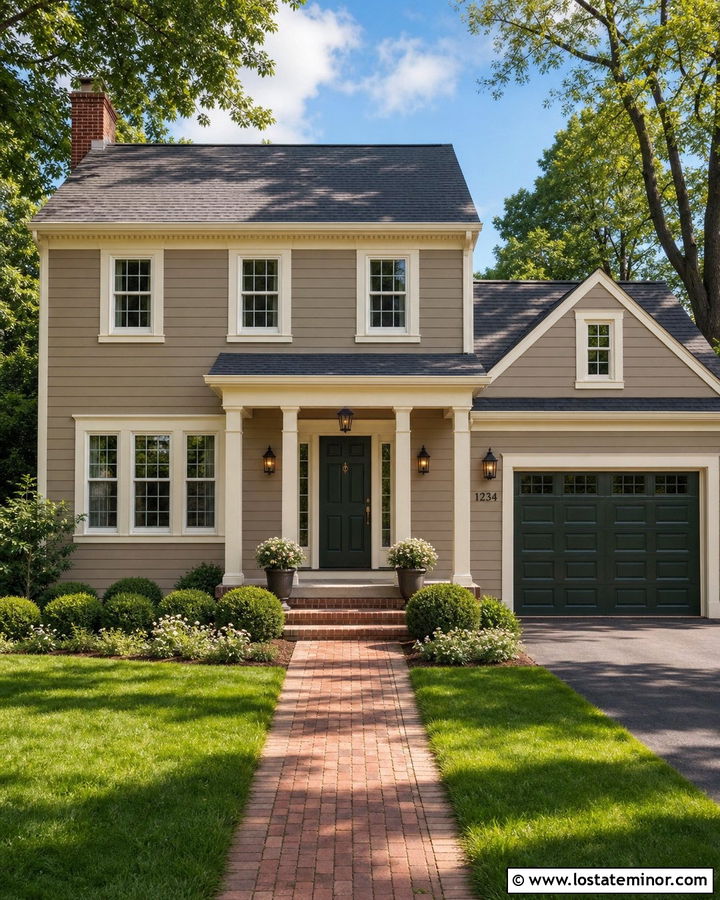
Creamy white trim gives a beige house a soft, traditional outline, while bronze lanterns add just enough depth around the entry. Choose a midtone beige for the siding so the white window casings and porch columns remain visible in bright sunlight. Use oil-rubbed bronze lights on both sides of a deep green or brown front door. Repeat the bronze finish on the hardware, mailbox, and house numbers, but leave the roof a neutral charcoal gray. A brick or stone walkway can introduce natural variation without changing the calm color story. Traditional fixtures with simple peaked tops work well on colonials, cottages, and two-story suburban homes. Balanced foundation shrubs and matching porch planters reinforce the symmetry. This scheme feels familiar, polished, and easy to adapt to existing exterior materials.
24. Beige House With Taupe Trim And Copper Lights
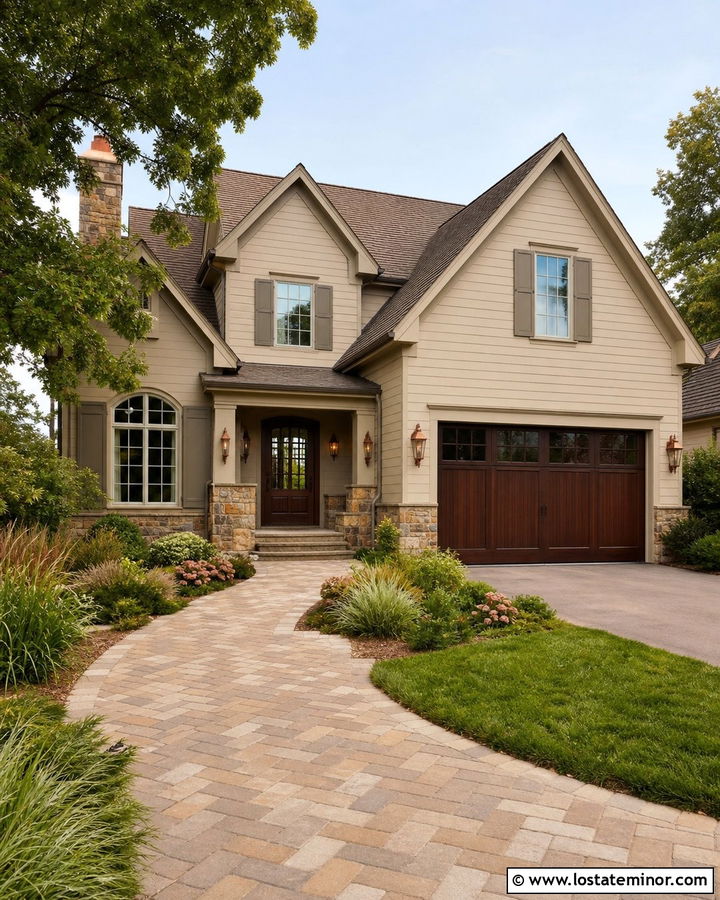
Layering beige siding with taupe trim creates a low-contrast exterior that feels sophisticated rather than plain. Copper lights provide a warm highlight that remains connected to the neutral palette. Use pale beige across the main walls and medium taupe on window trim, fascia, shutters, and the garage door. Place copper lanterns beside a dark walnut front door, then repeat smaller copper fixtures along the garage. A weathered brown roof supports the muted colors without introducing stark black. Stone containing beige, gray, and rust tones can wrap the porch base and visually connect every finish. Choose simple fixture shapes because the copper surface already supplies character. Curved planting beds, natural grasses, and warm pavers complete this understated house. The finished facade relies on tonal depth instead of dramatic contrast.
25. Beige House With Charcoal Roof And Black Lights
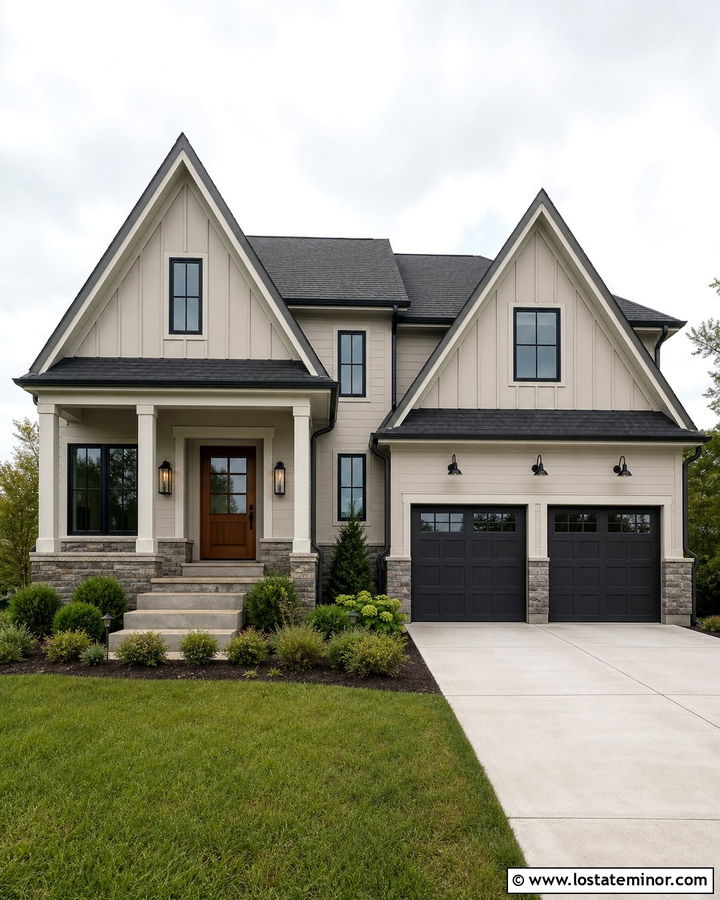
A charcoal roof gives a beige exterior the visual weight it needs, particularly on a large one- or two-story house. Carry that dark color down to the window frames, gutters, and black wall lights for a unified appearance. Use a warm light beige on the siding and crisp white sparingly around the porch columns or entry trim. Black rectangular lanterns can flank a stained wood front door, with matching downlights above the garage. A stone foundation containing both warm beige and charcoal pieces helps connect the upper and lower colors. Keep the garage door beige if the facade is wide, preventing one dark feature from dominating the street view. Layered shrubs, broad steps, and a clean concrete drive complete this dependable palette. The house appears grounded, bright, and neatly structured.
26. Beige House With Brown Roof And Bronze Lanterns
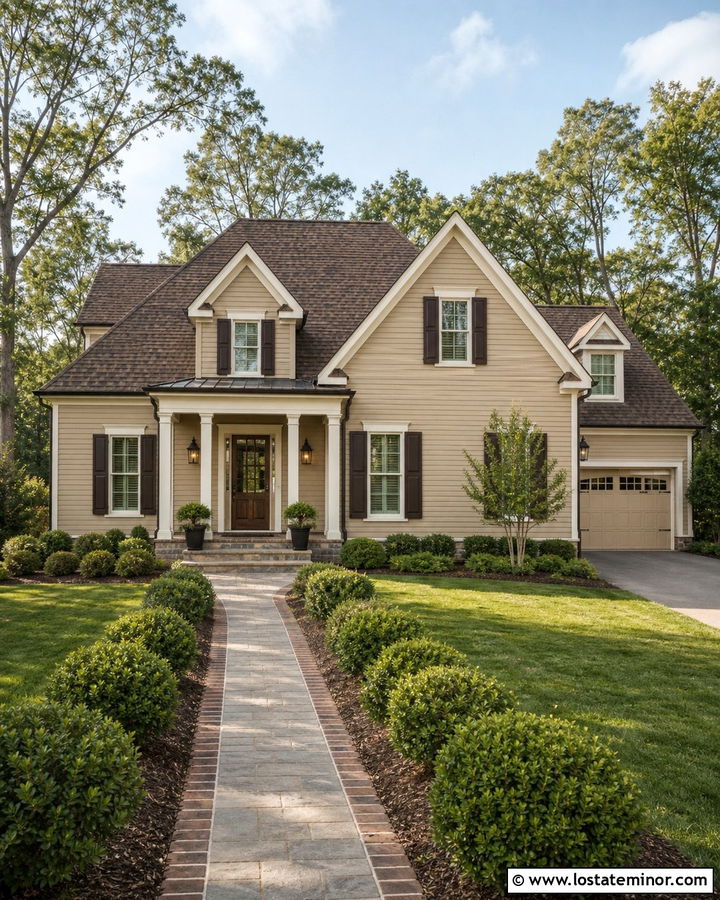
Brown roofing looks intentional on a beige house when the fixture finish and wood details repeat its warmth. Choose golden beige siding, cream trim, and deep bronze lanterns with clear or seeded glass. A walnut front door can anchor the center, while bronze gutters and dark brown shutters connect the walls to the roof. Use stone with sandy and gray undertones around the porch to prevent the palette from becoming one-dimensional. The lanterns should be darker than the siding but slightly softer than pure black. This keeps the exterior traditional and relaxed. Place coordinating lights beside the garage and at secondary doors for consistency. A brick-edged path, green lawn, and rounded shrubs bring refreshing color to the warm scheme. The complete exterior feels cohesive without appearing overly matched or monochromatic.
27. Beige House With Matching Garage Lights
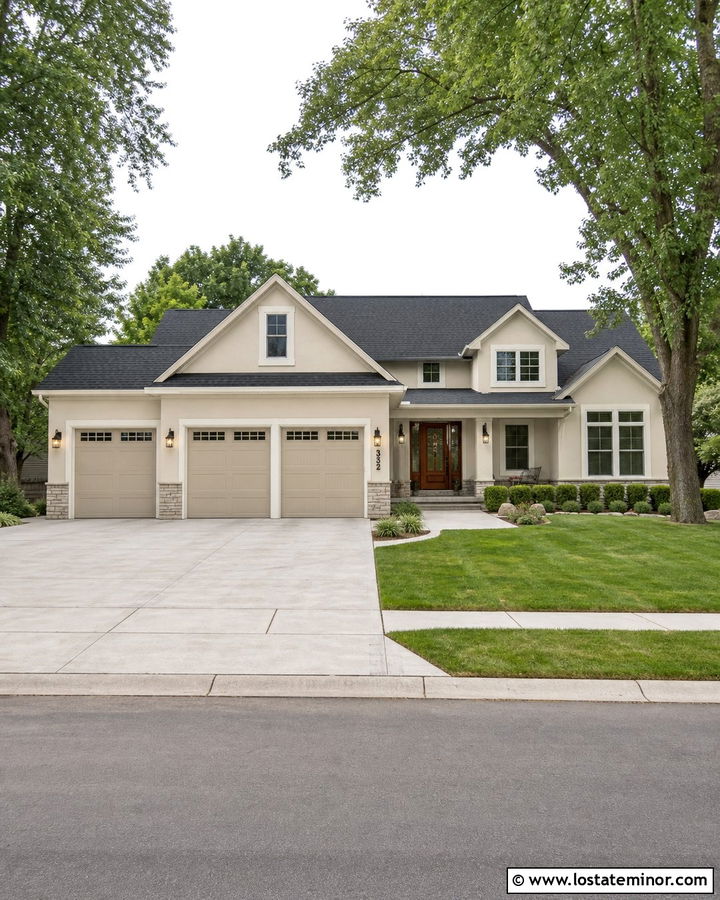
Garage lighting should belong to the full exterior instead of looking like a separate practical addition. On a beige transitional house, use black or dark bronze lanterns between the garage doors and repeat the same fixture family beside the front entry. Paint the garage doors a slightly deeper beige than the siding so they blend into the facade while retaining subtle dimension. White trim can define the door panels, windows, and porch columns. Add a charcoal roof and medium-stained wood front door to balance the neutral walls. If the garage faces the street, choose fixtures that are large enough to remain visible across the driveway. Low hedges, wall-mounted house numbers, and clean concrete borders keep the view orderly. This coordinated treatment turns a prominent garage into part of the curb appeal.
28. Beige House With A Large Porch Pendant
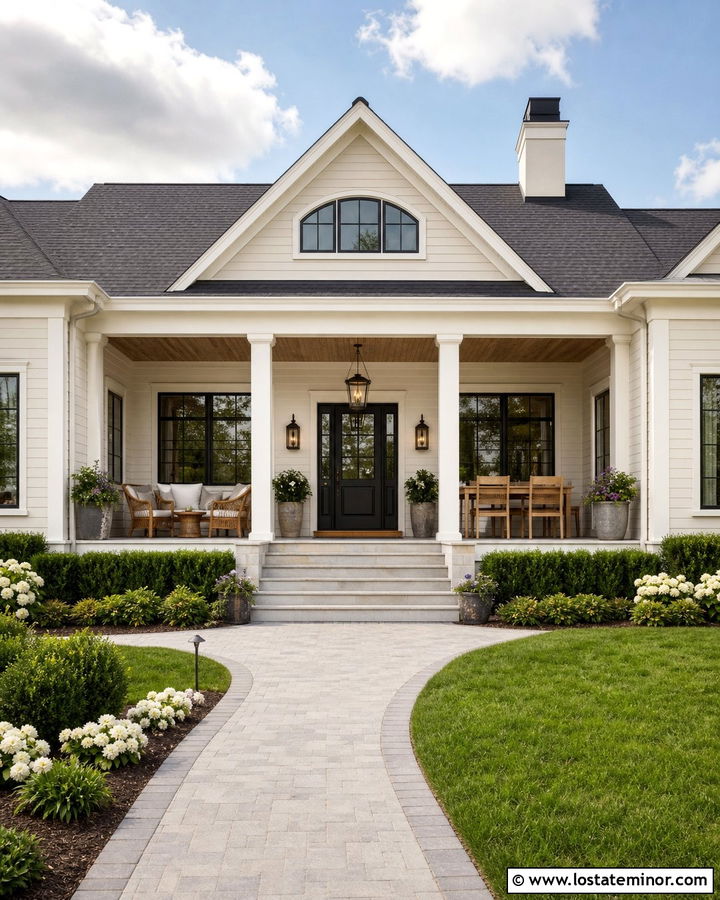
A generous covered porch offers the perfect setting for a statement pendant on a beige exterior. Use soft beige siding with warm white columns and a stained beadboard ceiling. Center a large black-and-brass pendant above the entry or main seating area, then add matching wall sconces beside the front door. The pendant should leave comfortable clearance while still feeling substantial beneath the porch roof. A deep charcoal door can connect the black frame to the facade, and brass hardware can repeat the fixture’s warm interior finish. Pale stone steps and natural wood furniture enhance the welcoming palette. Extend the design with porch planters, a broad walkway, and layered landscaping. The complete house feels thoughtfully illuminated because the overhead light relates to both the architecture and surrounding exterior details.
29. Beige House With Coordinated Post Lights
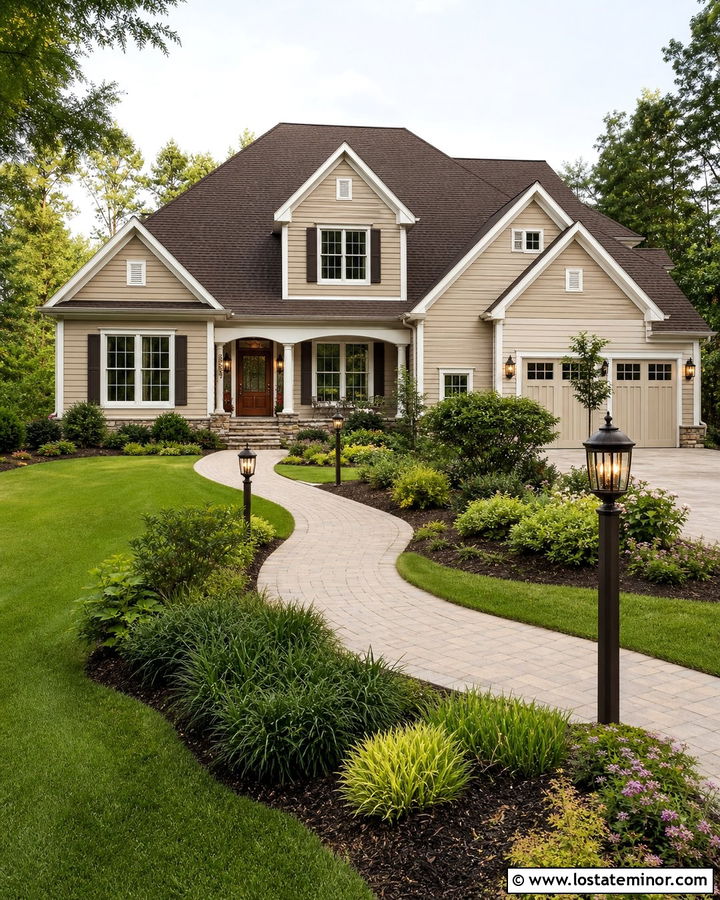
Post lights can expand a beige house’s design beyond the facade and into the front yard. Start with warm beige siding, cream trim, a dark brown roof, and bronze lanterns beside the entry. Install matching post lights near the driveway entrance or along a wide front walk, using the same metal finish and glass type. Keep the posts simple so they support the house rather than drawing attention away from it. A medium-stained wood door and natural stone porch reinforce the warm palette. Space the fixtures evenly and avoid overcrowding a small yard. Low path lights may be added discreetly between the posts for a layered effect. Curved planting beds and mature trees frame the view. The coordinated lighting creates a polished transition from the street to the front door.
30. Beige House With Layered Exterior Lighting
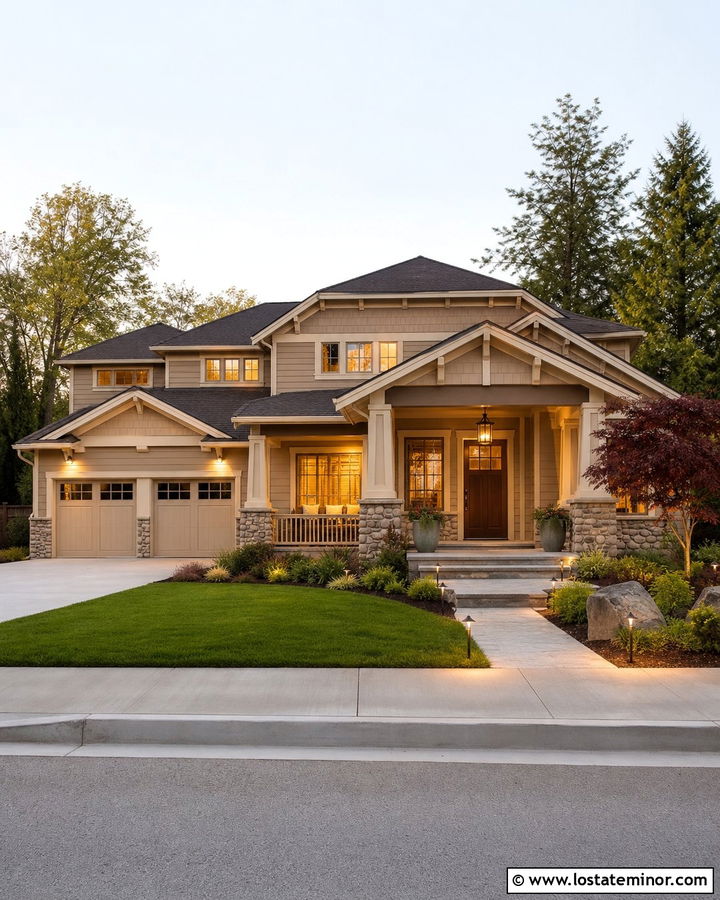
The most complete beige exterior uses several fixture types without making the facade feel crowded. Pair warm beige siding with dark bronze wall lanterns at the entry, shielded downlights above the garage, a simple porch pendant, and discreet path lights along the walkway. Keep every fixture within the same finish family, even when the shapes differ slightly. Cream trim, a walnut door, a charcoal-brown roof, and mixed natural stone create a balanced foundation for the lighting. Highlight only important areas such as doors, steps, columns, and textured masonry. Avoid placing bright fixtures on every available wall. Layered landscaping with low shrubs and ornamental trees gives the ground-level lights useful surfaces to illuminate. This whole-house approach produces organized curb appeal during the day and a welcoming path after sunset.
Conclusion:
The strongest **30 Beige House Design With Light Fixtures Ideas** treat outdoor lighting, exterior color, and architecture as one connected plan. Black fixtures provide crisp contrast, while bronze, brass, and copper bring warmth to beige siding, stucco, stone, and brick. Fixture shape matters too. Traditional lanterns suit colonials and cottages, whereas cylinders and geometric sconces complement contemporary homes. Before making a final decision, compare the fixture’s scale with the door, porch, garage, and overall facade. Repeat its finish through hardware or house numbers for continuity. Most importantly, test beige paint outdoors, where natural light can reveal unexpected undertones. A coordinated exterior will look polished in daylight and remain comfortable, functional, and welcoming after dark.

Related posts: