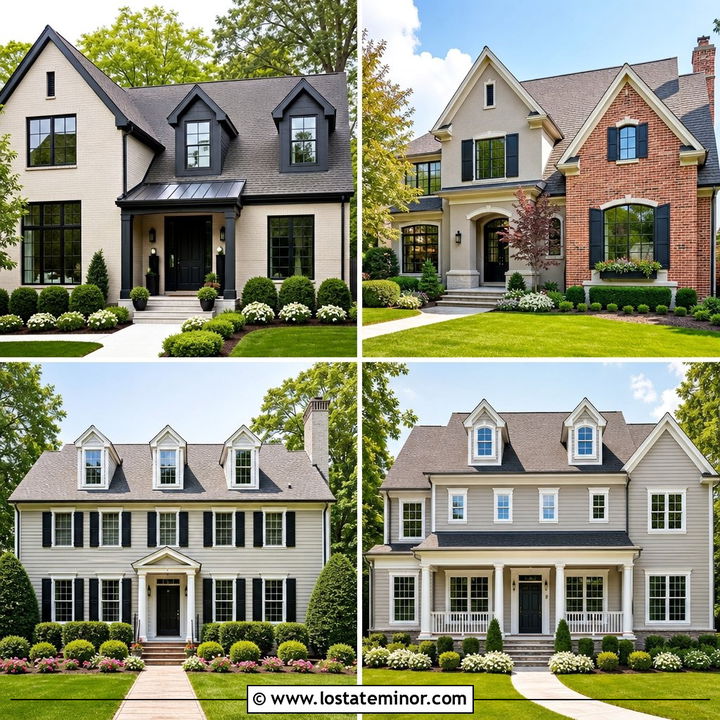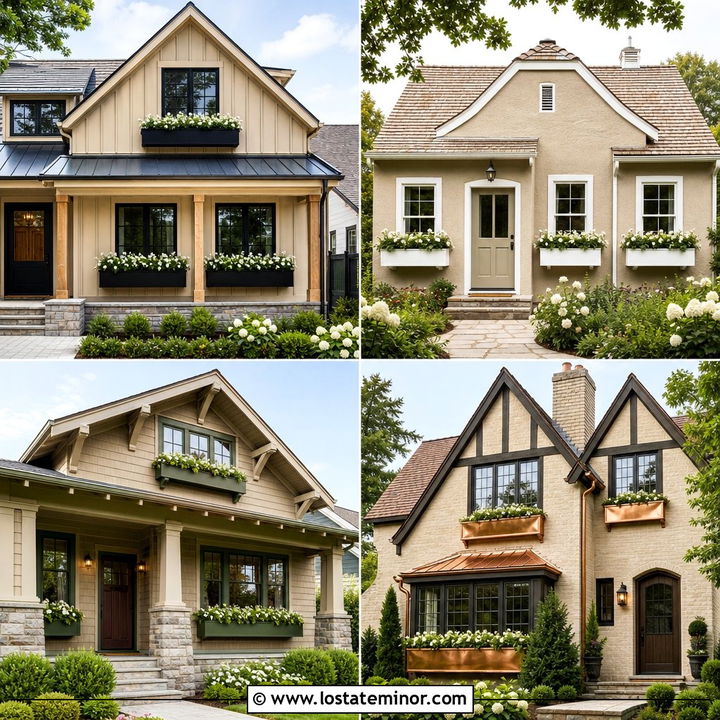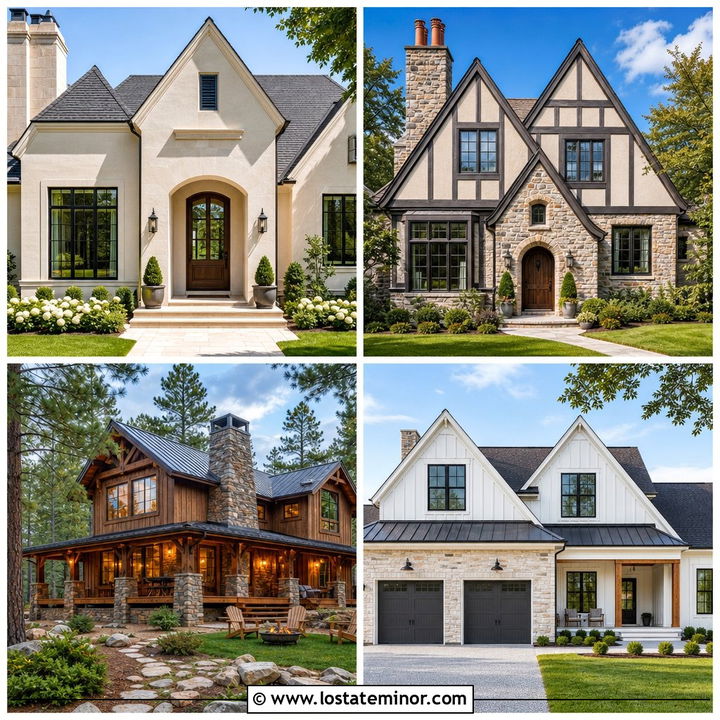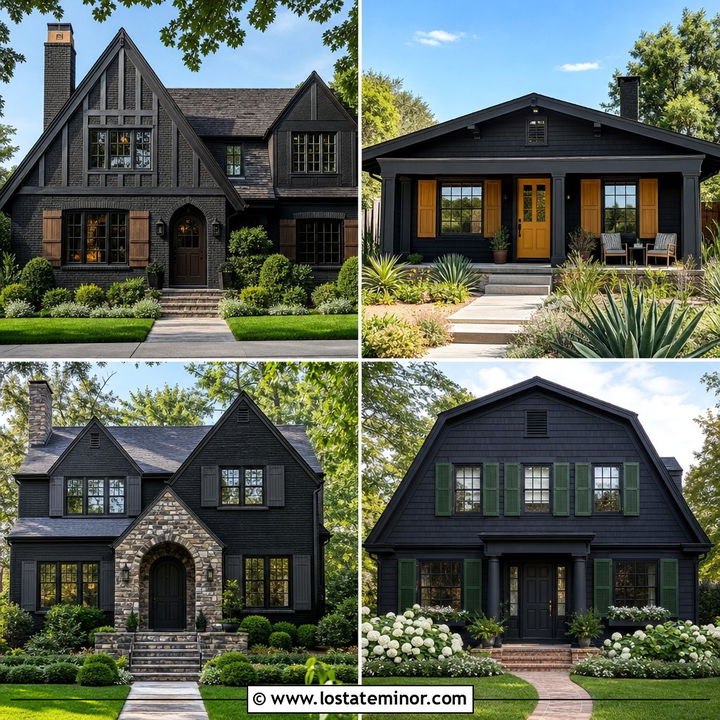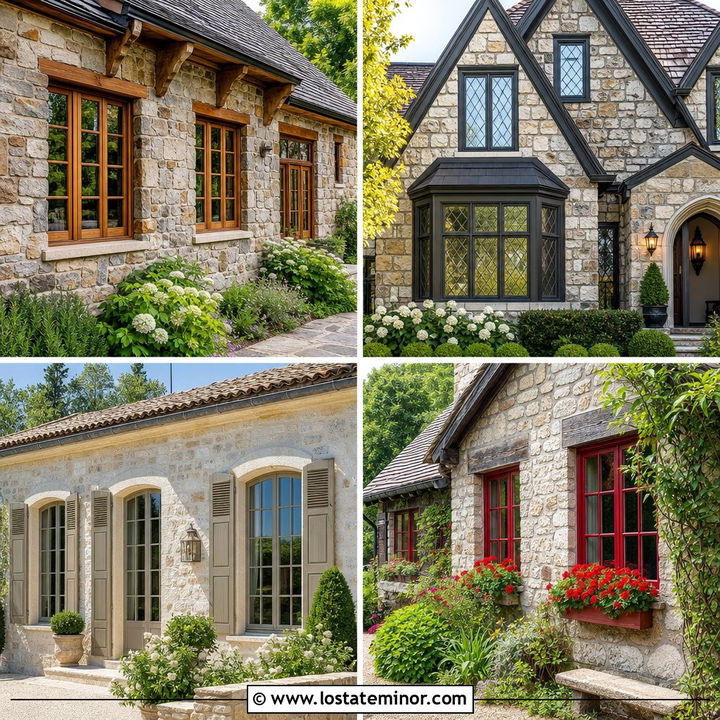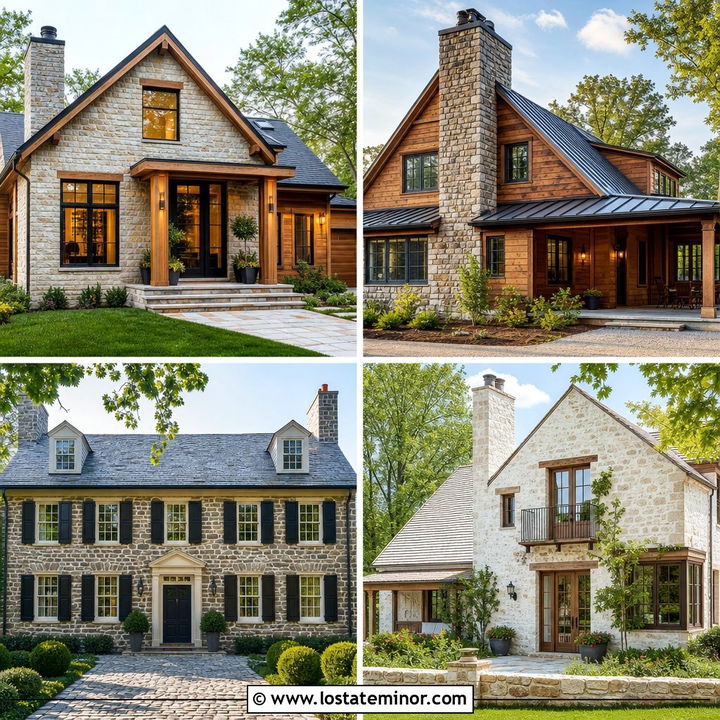
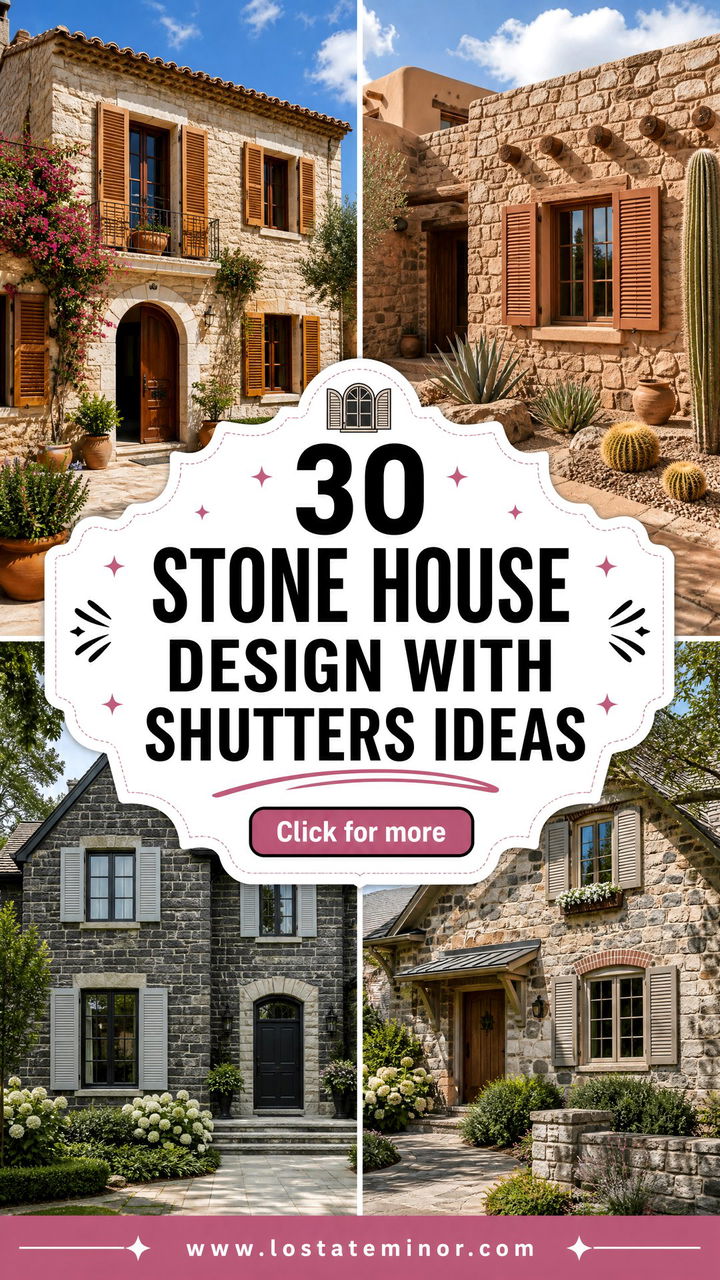
Stone brings natural texture, depth, and lasting character to a home, while shutters add color, balance, and architectural definition. The most successful combinations treat the facade as one complete scheme. Stone undertones should connect with the shutters, trim, front door, roof, and any siding or stucco. Black and dark green create classic contrast, while muted blue, sage, taupe, and natural wood offer a softer look. Paneled, louvered, and board-and-batten shutters can also reinforce the home’s architecture instead of feeling like added decoration. () Whether you are updating an older facade or planning a new build, the following complete exterior schemes provide practical inspiration for **30 Stone House Design With Shutters Ideas**.
1. Limestone House With Black Shutters
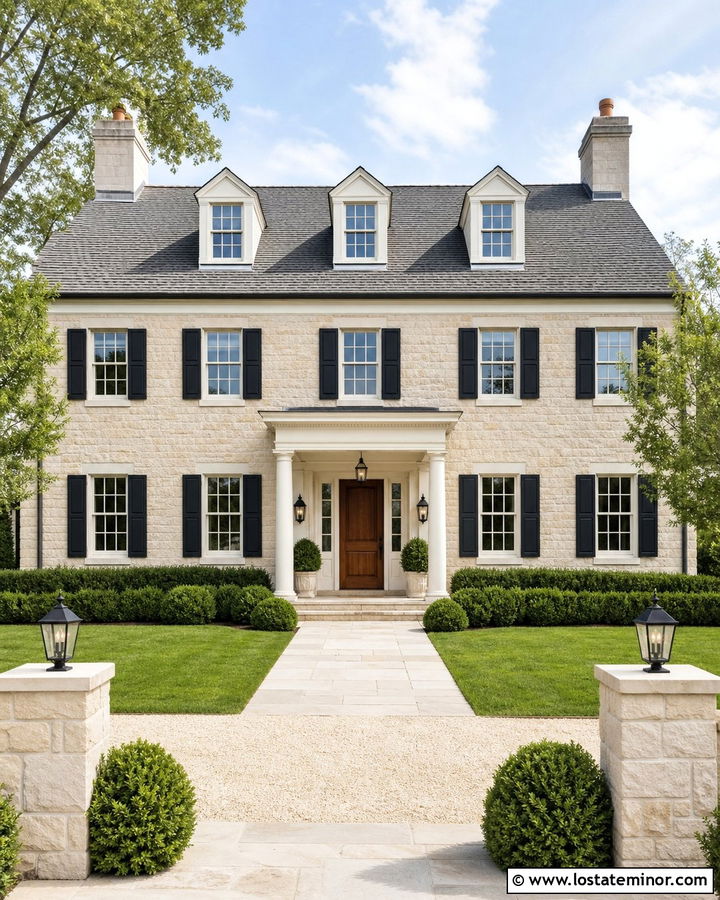
Warm limestone and black shutters create a clean contrast that works especially well on traditional homes. Choose shutters in a softened black rather than an extremely glossy finish. The dark color outlines each window without competing with the natural variation in the stone. Add creamy white trim to connect the windows, soffits, and porch columns. A medium walnut front door introduces warmth, while a charcoal architectural-shingle roof keeps the upper portion grounded. Black metal lanterns and simple iron railings can repeat the shutter color in smaller doses. Finish the scheme with a pale stone walkway, clipped boxwoods, and low white flowers. The complete exterior feels formal and polished, but the wood door and textured limestone prevent it from appearing cold.
2. Fieldstone House With Sage Green Shutters
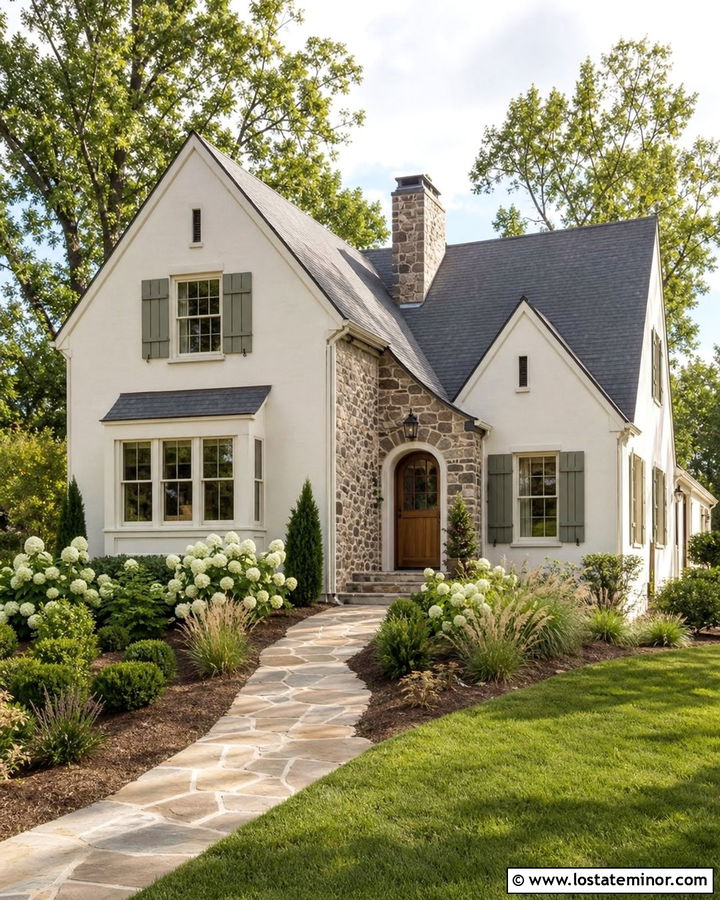
A weathered fieldstone exterior looks inviting with sage green shutters because both materials reflect colors found outdoors. Select a muted sage with gray undertones instead of a bright botanical green. This helps the shutters blend with brown, cream, and charcoal stones while remaining visible around the windows. Warm white trim provides gentle separation, and an oak front door echoes the earthy tones within the masonry. A dark gray roof offers enough contrast without overpowering the softer palette. Board-and-batten shutters are particularly fitting for a cottage or casual farmhouse. Add a flagstone path, native grasses, hydrangeas, and loose foundation plantings. The layered landscaping supports the relaxed character of the stone and creates a house that feels naturally settled into its surroundings.
3. Gray Stone House With Navy Shutters
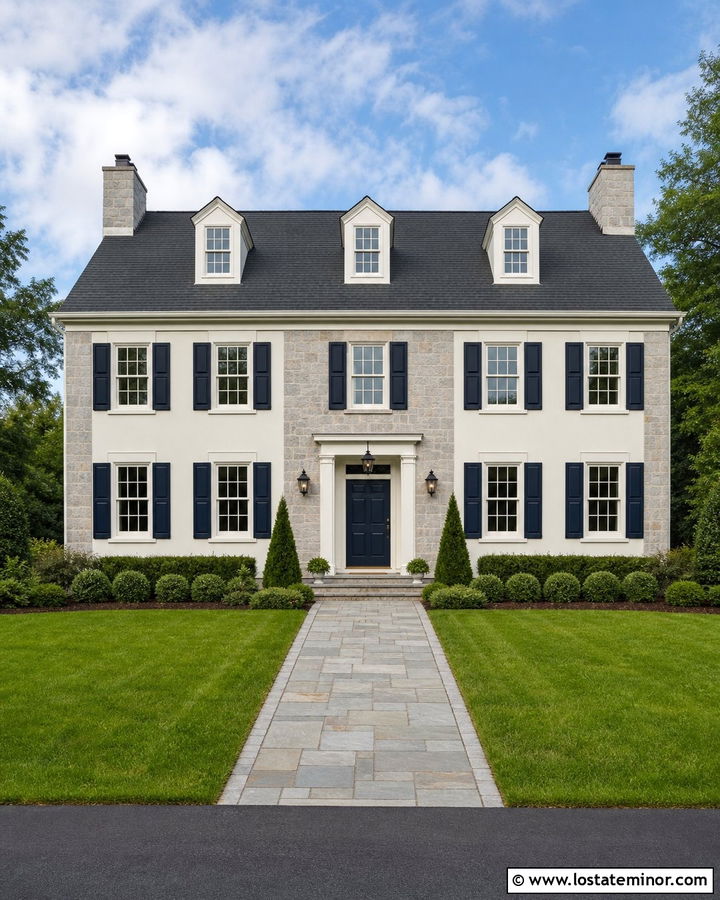
Cool gray stone gains richer definition when paired with deep navy shutters. Navy feels less severe than black but still gives pale masonry a strong visual frame. Carry the blue onto the front door for a coordinated appearance, or choose a stained mahogany door when more warmth is needed. Crisp white trim can brighten the windows, cornice, and porch columns. A charcoal roof connects naturally with the darker pieces in the stone. This scheme works on Colonial, Georgian, and transitional houses with symmetrical window placement. Use properly scaled paneled shutters to reinforce the formal lines of the architecture. A straight walkway, balanced evergreen shrubs, and matching porch lanterns complete the orderly facade. The result is classic from the curb without relying on an entirely neutral exterior palette.
4. Cream Stone House With French Blue Shutters
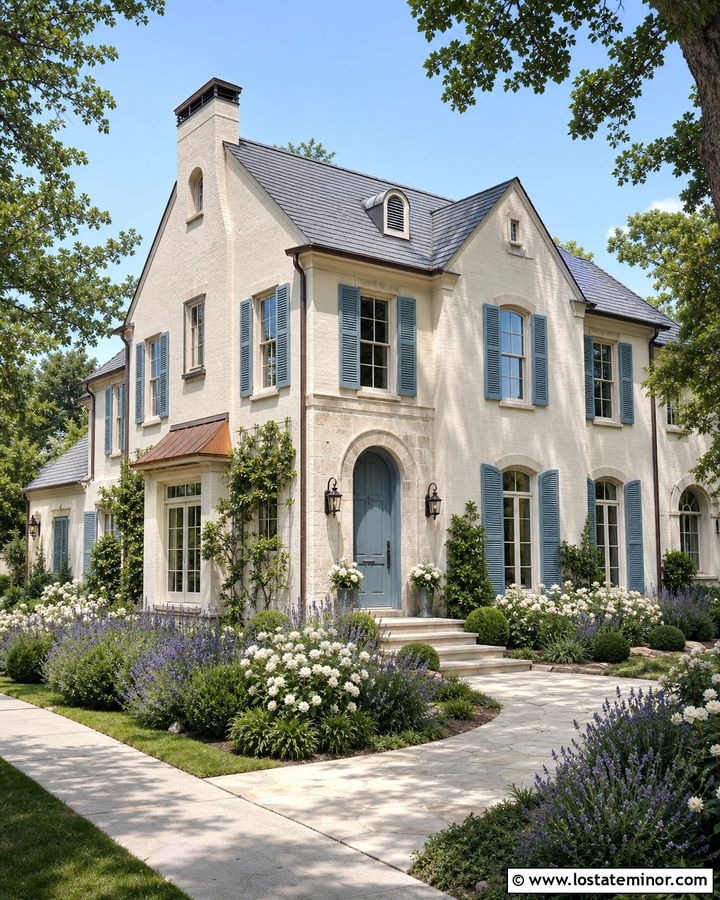
French blue shutters give a cream stone house a soft European character without making the facade overly colorful. Look for a dusty blue containing subtle gray undertones. It should stand apart from the limestone while remaining calm beside warm mortar and ivory trim. Repeat the shutter color on a rounded or divided-light front door to create a clear focal point. A weathered gray roof, copper awning, and dark bronze lighting add depth around the lighter materials. Louvered shutters suit a French country home, especially when they are sized to match tall windows. Curved planting beds, lavender, white roses, and small ornamental trees reinforce the graceful exterior. This combination feels refined and welcoming, with enough contrast to reveal every architectural detail in bright natural light.
5. Brownstone House With Cedar Shutters
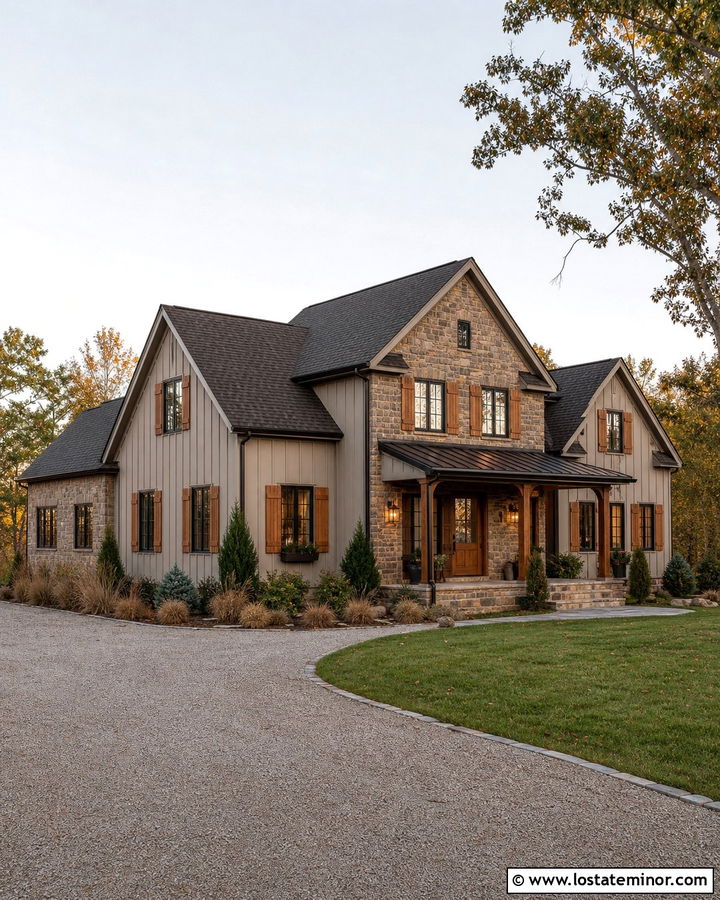
Natural cedar shutters can soften a brownstone exterior while highlighting its red, gold, and chocolate undertones. Choose medium-toned cedar rather than very orange wood, and protect it with a matte exterior stain. Board-and-batten construction gives the shutters a substantial appearance that holds its own against rugged masonry. Use deep bronze for the window frames, gutters, porch lights, and metal roof accents. A stained wood front door can match the shutters, creating a consistent line of warmth across the facade. Keep the roof dark brown or charcoal so it does not introduce another competing color. Broad porch steps, natural flagstone, ornamental grasses, and evergreen shrubs complete this rustic scheme. The finished house feels warm, grounded, and carefully coordinated instead of excessively dark or heavy.
6. White Stone House With Charcoal Shutters
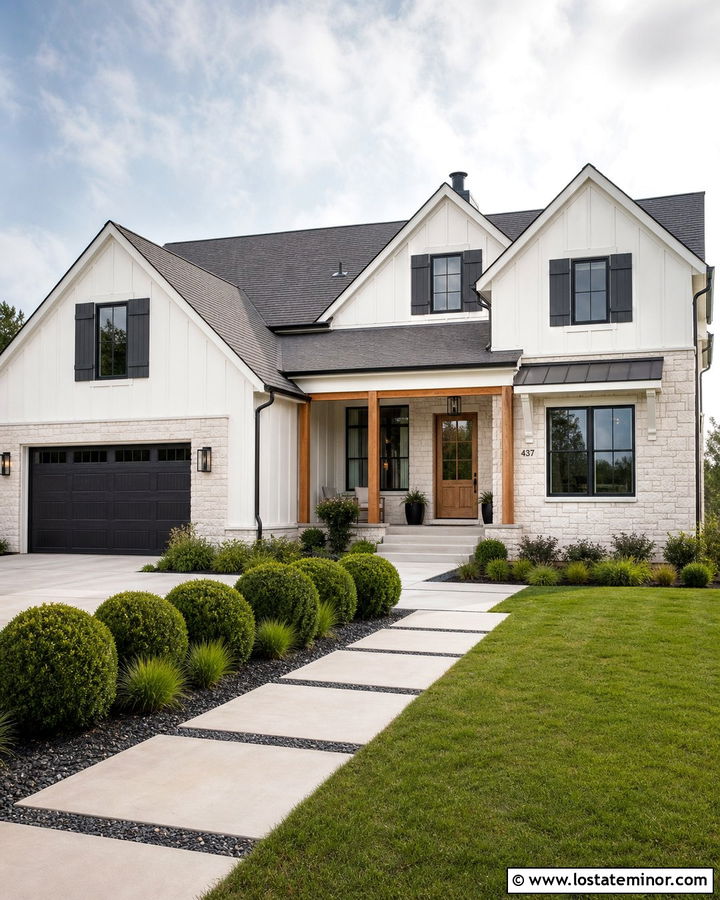
A white stone exterior can look crisp and contemporary when framed by charcoal shutters. The softer gray-black tone creates visible contrast but avoids the sharpness of pure black. Use simple board-and-batten shutters on a modern farmhouse or streamlined paneled shutters on a transitional home. Match the window frames and gutters to the charcoal accents for a unified outline. A medium oak front door breaks up the monochromatic palette and adds a welcoming natural element. Consider a medium gray roof rather than another black surface, especially on a large house. White mortar helps the stone facade appear clean and consistent. Complete the curb appeal with straight concrete pavers, rounded evergreens, and airy grasses. The combination feels modern, yet the textured stone and warm wood keep it approachable.
7. River Rock House With Forest Green Shutters
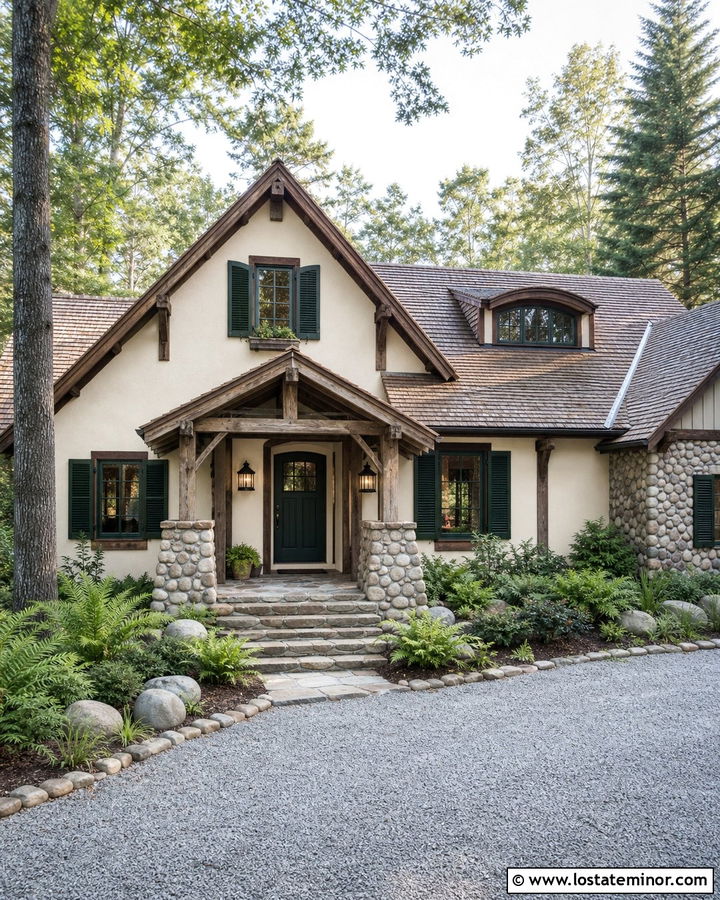
Rounded river rock contains many earthy shades, making forest green shutters a natural companion. The deep color works especially well when the masonry includes brown, mossy gray, and muted rust tones. Use dark green on louvered shutters and repeat it on the front door or detached garage doors. Cream trim will separate the dark accents from the irregular stone and brighten shaded areas beneath the eaves. A weathered brown roof and exposed timber porch posts can reinforce the lodge-inspired palette. Keep other finishes quiet so the rock remains the main texture. A curved gravel drive, stone steps, ferns, and layered native plants help the home connect with a wooded setting. This complete scheme feels established and organic, making it suitable for cabins, cottages, and mountain houses.
8. Tan Ledge Stone House With Dark Brown Shutters
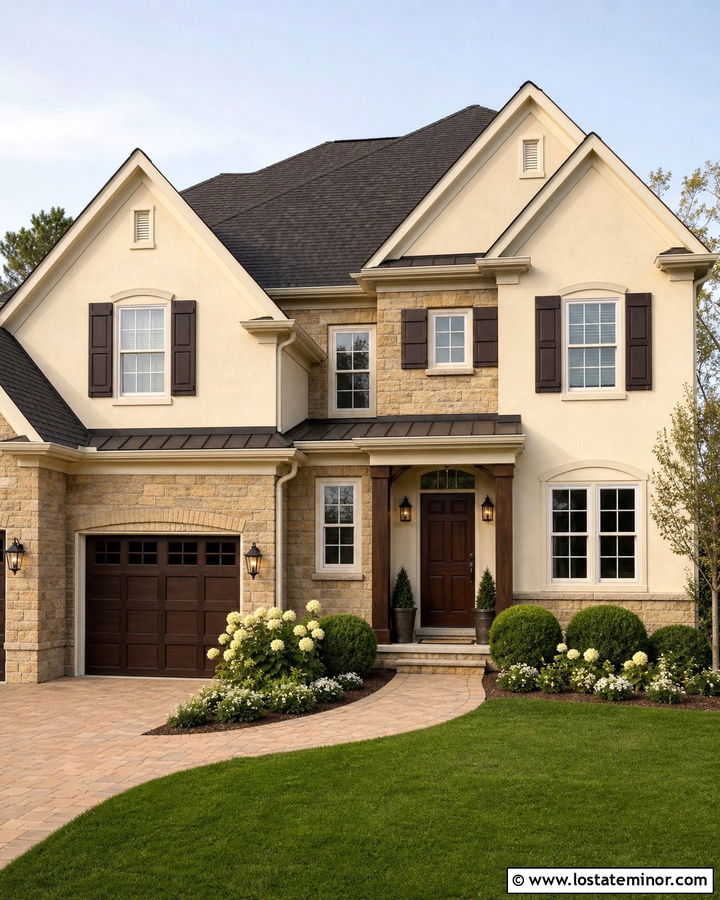
Tan ledge stone pairs easily with dark brown shutters because the combination builds on the masonry’s natural range of beige and coffee-colored tones. Select an espresso brown that is deep enough to define the windows but slightly softer than black. Add warm cream trim around the windows, fascia, and porch ceiling. A walnut front door can introduce visible wood grain while staying within the same tonal family. Use a charcoal-brown roof to anchor the facade and bronze lighting to repeat the shutters in a subtle way. Raised-panel shutters bring a tailored finish to traditional and suburban homes. Complete the exterior with buff-colored pavers, compact evergreen shrubs, and flowering plants in white or pale yellow. The connected palette creates contrast while preserving a warm, comfortable curb appeal.
9. Whitewashed Stone House With Black Shutters
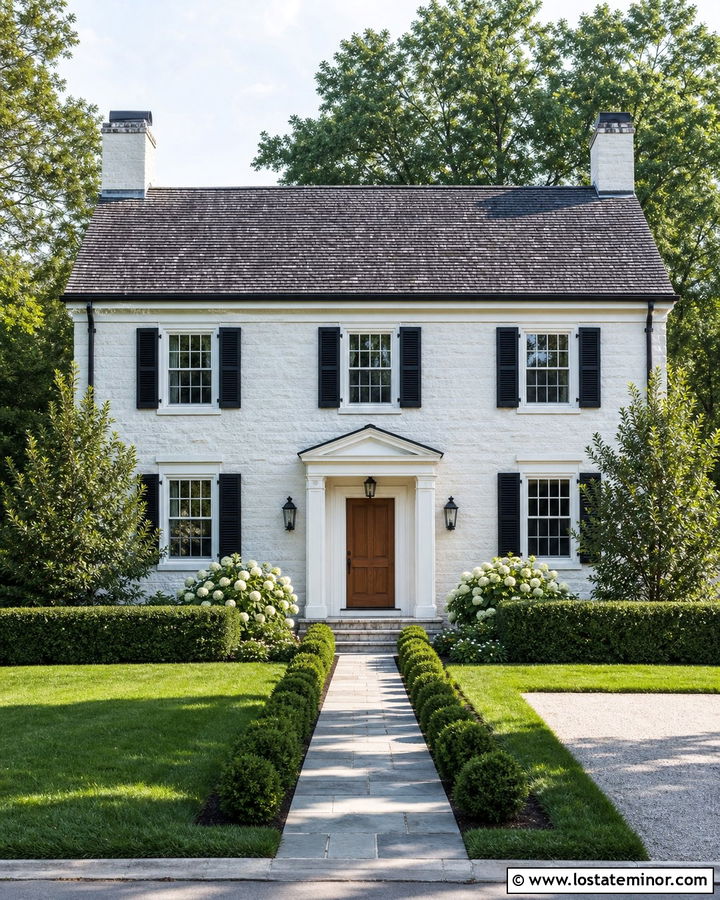
Whitewashing old stone can unify a busy facade while allowing enough original texture to remain visible. Pair the softened masonry with matte black shutters for a clear, graphic outline. Traditional louvered shutters look appropriate on Colonial and cottage architecture, while streamlined paneled versions support a transitional renovation. Use warm white on the trim rather than a blue-toned white that could make the stone appear chalky. A stained oak door provides a natural focal point between the black accents. Match the gutters, lanterns, and simple metal railing to the shutters. A charcoal roof finishes the restrained palette. Add brick or bluestone paving, clipped hedges, and white flowering shrubs. This scheme refreshes an older house without removing the depth, irregularity, and historical character of its masonry.
10. Stacked Stone House With Blue Gray Shutters
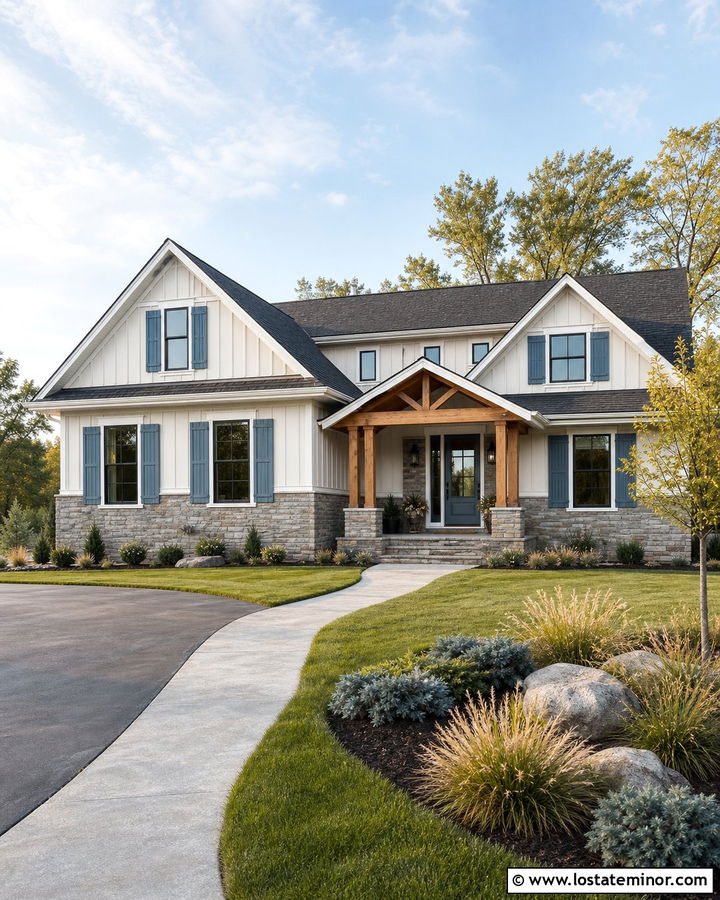
Blue-gray shutters bring a calm, balanced appearance to stacked stone containing cool gray, beige, and smoky blue pieces. Choose a medium shade that remains visible against the masonry but does not become the dominant color. Use it on wide board-and-batten shutters and repeat it on the front door for consistency. Soft white trim will brighten the windows and connect with lighter stones. A charcoal metal or architectural-shingle roof supports the cool palette, while cedar porch beams provide necessary warmth. This combination is particularly effective on craftsman and mountain-inspired homes with mixed siding and stone. Finish the complete exterior with large stone steps, native grasses, evergreen ground cover, and a gently curved walkway. Each material remains distinct, yet the coordinated undertones make the facade feel intentionally layered.
11. Rubble Stone Cottage With Burgundy Shutters
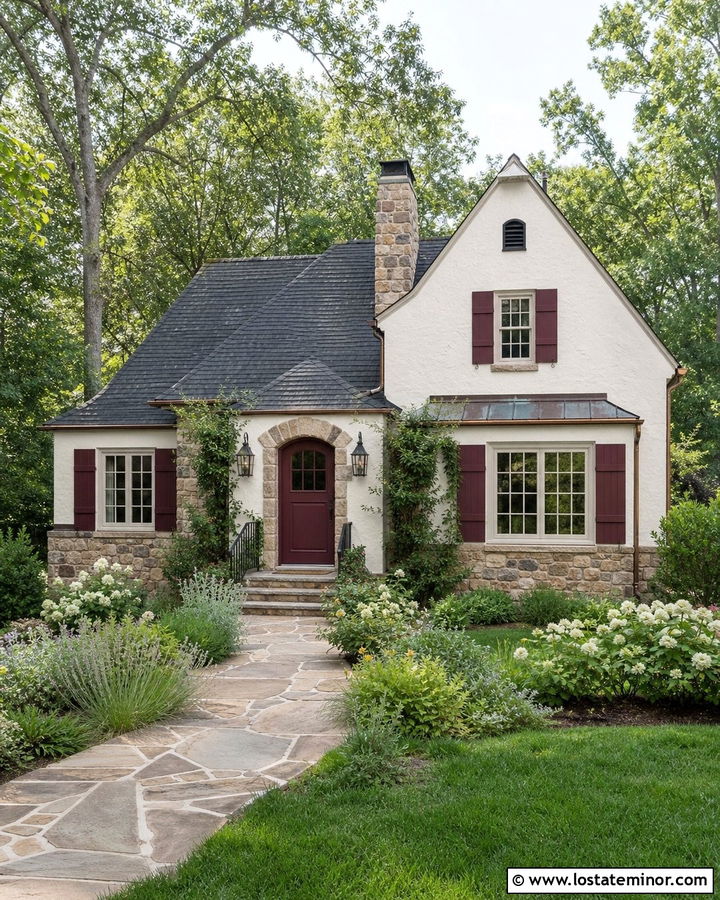
Burgundy shutters can give a rubble stone cottage a rich, traditional focal color. The best shade is a muted wine red with brown undertones, which relates naturally to rust, tan, and charcoal stones. Apply it to simple board-and-batten shutters and a solid or divided-light front door. Cream window trim provides separation and prevents the darker accents from disappearing into the textured facade. A weathered charcoal roof and aged copper gutters strengthen the old-world character. Keep porch railings and lighting dark bronze rather than adding more red. An irregular flagstone path, climbing greenery, white roses, and loose cottage plantings complete the setting. The result is colorful but not loud, since the burgundy is repeated selectively and supported by warm, naturally varied masonry.
12. Sandstone House With Olive Green Shutters
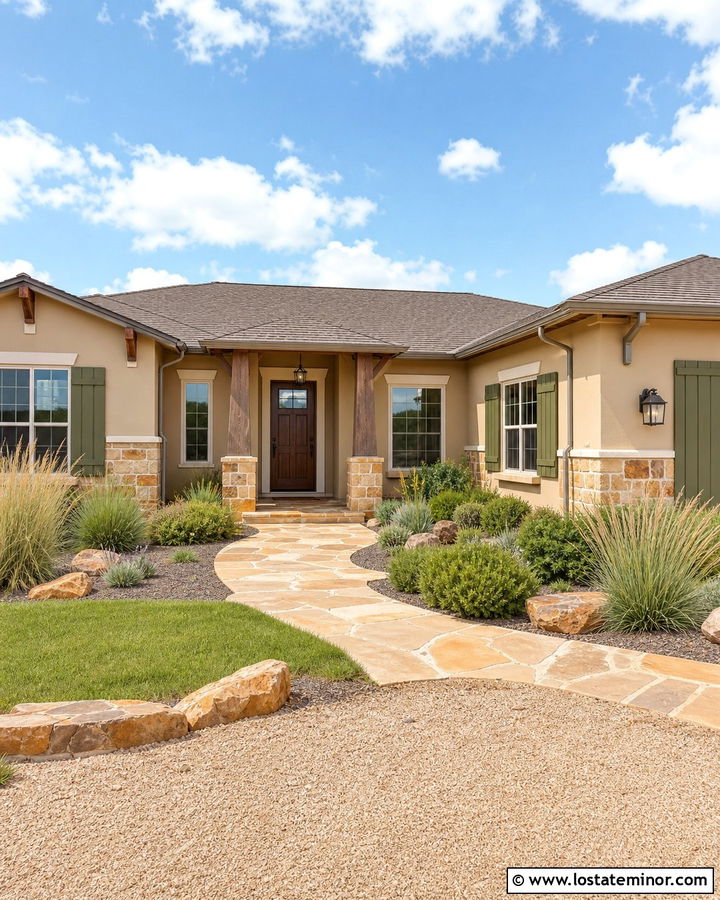
Golden sandstone becomes more sophisticated beside olive green shutters. Olive carries enough brown and gray to coordinate with honey, beige, and muted orange stone without creating harsh contrast. Use paneled shutters on a formal house or Z-brace board-and-batten shutters on a rustic ranch. Warm ivory trim can highlight the window frames and roofline. A dark walnut door adds depth and connects with bronze hardware, lanterns, and gutters. Choose a brown-gray roof that supports the warm palette without matching the stone too closely. Drought-tolerant grasses, rounded shrubs, and a sandstone walkway can extend the exterior colors into the yard. This full-house combination feels earthy and composed, making it useful for traditional, Southwestern, and country architecture in sunny or dry landscapes.
13. Granite House With White Shutters
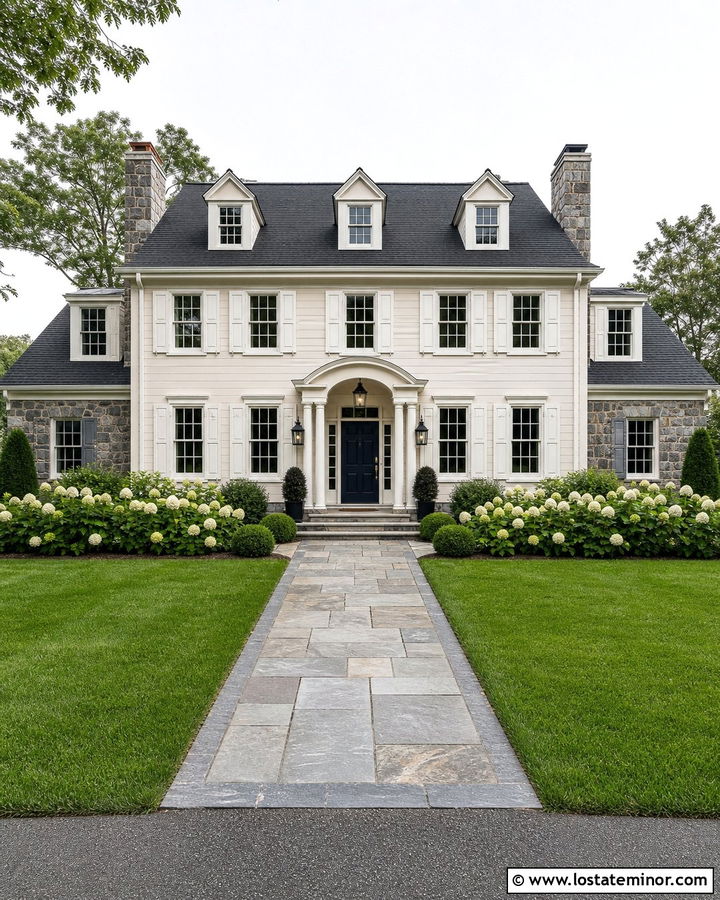
White shutters can lighten a granite house that might otherwise appear visually heavy. Choose a warm, slightly creamy white to complement the mixed mineral tones instead of a stark white with blue undertones. Paneled shutters give a Colonial facade a clean, substantial finish, especially when the window trim is painted in the same shade. Add a navy or deep green front door to introduce one controlled accent color. A medium charcoal roof relates to the darkest pieces of granite, while polished nickel or black lanterns keep the entrance clearly defined. Symmetrical foundation shrubs, hydrangeas, and a straight stone walkway support the home’s traditional structure. This exterior scheme preserves the strength of the granite while using bright shutters and trim to create a more open, welcoming curb presence.
14. Stone And Stucco House With Blue Shutters
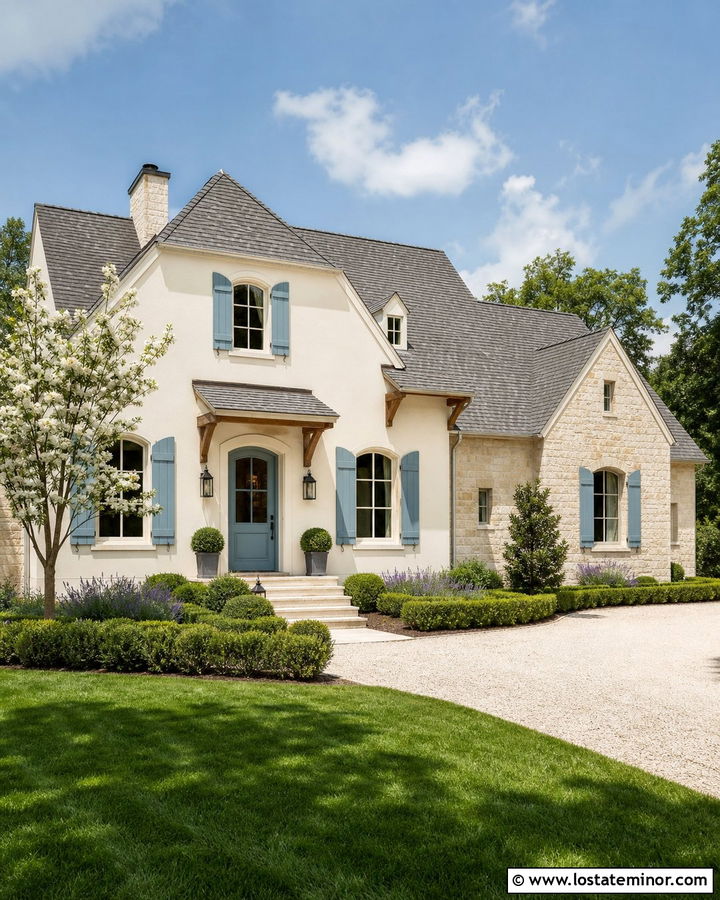
A stone-and-stucco exterior needs colors that connect its two primary materials. Warm cream stucco can bridge beige limestone with muted blue shutters, creating a relaxed French country palette. Choose a dusty medium blue instead of a bright coastal shade. Carry the same color onto the front door or use a slightly deeper blue for subtle variation. Cream trim keeps the window surrounds integrated with the stucco. Cedar brackets, a medium gray roof, and dark bronze lights add texture without introducing unrelated colors. Louvered shutters are a natural fit for arched windows and steep rooflines. Use gravel paths, clipped boxwoods, lavender, and small flowering trees around the facade. Every component feels distinct, yet the limited palette creates a calm and thoughtfully connected stone house design.
15. Stone And Brick House With Black Shutters
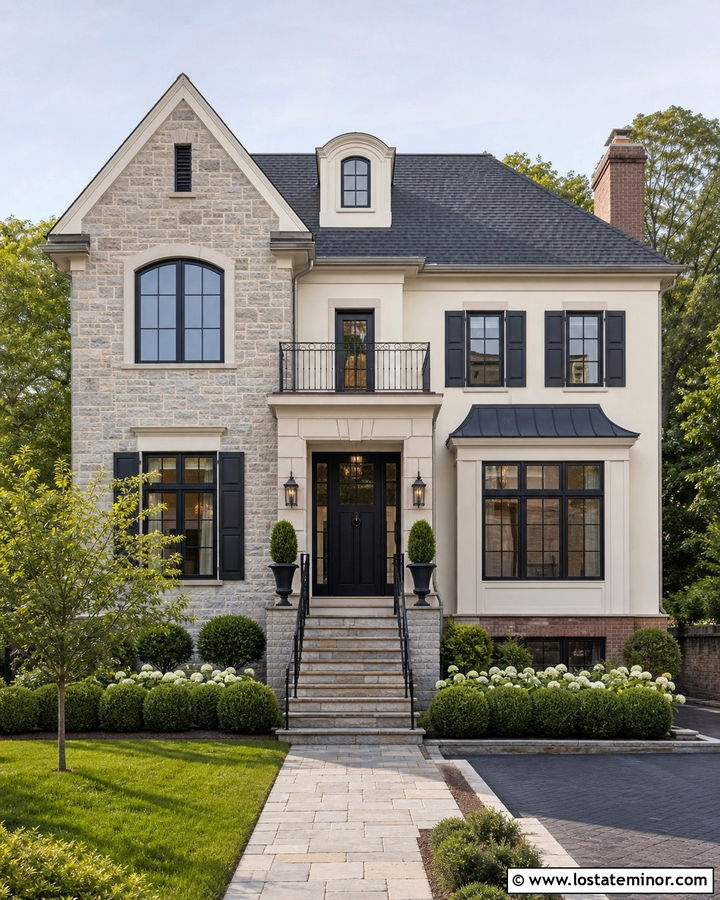
When stone and brick share one facade, black shutters can provide the visual connection needed to keep the exterior from feeling fragmented. Matte black works with both warm red brick and mixed gray-beige stone because it acts as a neutral outline. Repeat black on the front door, window frames, porch lights, and railings, but keep the trim a soft cream to prevent the house from becoming too dark. A charcoal roof can unify the upper elevation. Choose straightforward paneled shutters that do not add another busy pattern beside the masonry. Landscaping should also remain structured, using evergreen shrubs, ornamental trees, and a simple stone walkway. The finished exterior feels coordinated because one dark accent color ties the brick, stone, roof, and windows together across the entire facade.
16. Mountain Stone House With Wood Shutters
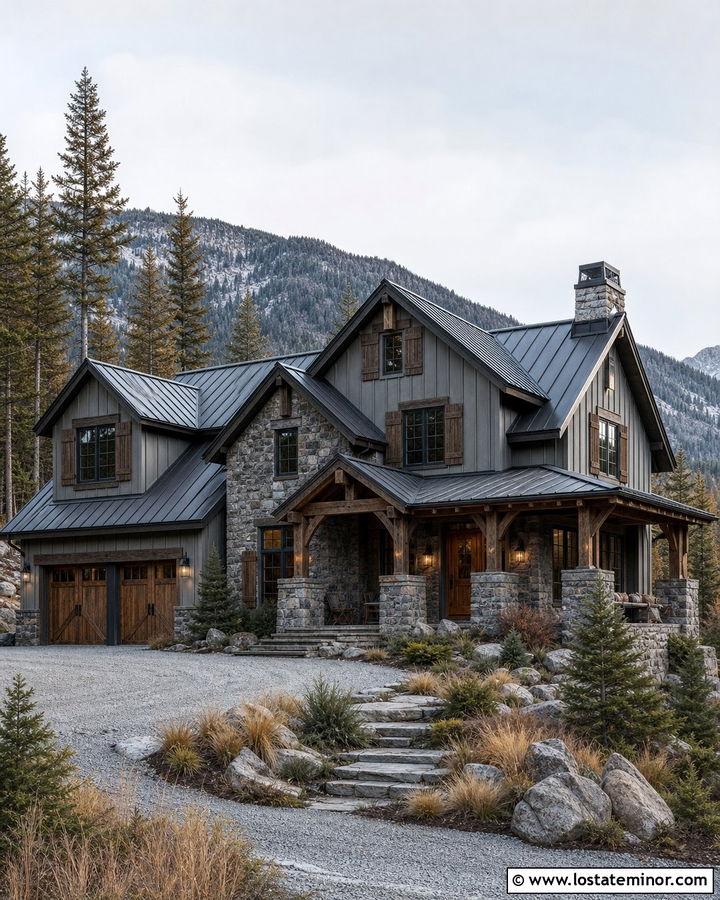
A mountain stone house benefits from shutters that appear sturdy enough for its rugged architecture. Thick wood board-and-batten shutters stained in a weathered walnut tone complement gray fieldstone, heavy timber beams, and a dark roof. Match the front door and garage doors to the shutter stain for a cohesive exterior. Use charcoal window frames and trim to outline each opening without introducing bright contrast. A standing-seam metal roof can reinforce the practical lodge character, while stone porch columns make the lower facade feel grounded. Surround the house with native evergreens, boulders, grasses, and a broad gravel or paver driveway. The resulting scheme feels connected to the landscape. Natural wood brings warmth to the cool stone, while the darker metal details provide structure and definition.
17. Stone Ranch House With Taupe Shutters
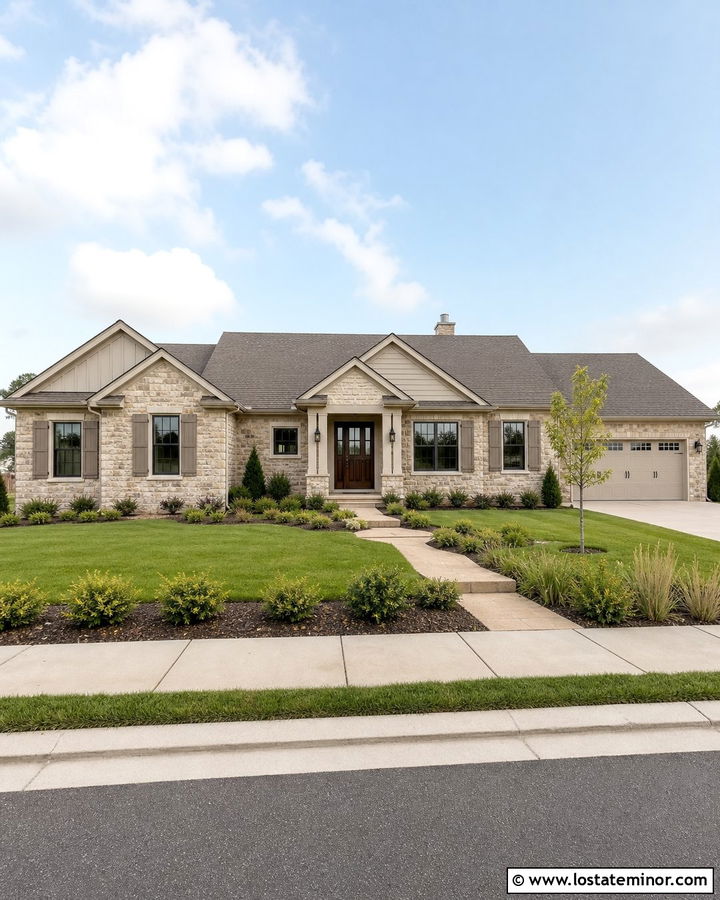
Taupe shutters offer subtle definition on a low, wide stone ranch house. Select a medium mushroom taupe that is darker than the mortar but lighter than the roof. This creates contrast without placing heavy blocks of color across the long facade. Paint the trim a warm off-white and use a deep brown front door to establish a clear entrance. A brown-gray roof will connect the stone, shutters, and door. Simple paneled shutters suit the horizontal architecture better than highly decorative designs. Update the setting with a wider walkway, low evergreen shrubs, ornamental grasses, and one small tree near the corner. The quiet palette lets the shape and texture of the house remain prominent. It also provides a practical refresh for an older ranch without requiring dramatic structural changes.
18. Stone Cape Cod House With Blue Shutters
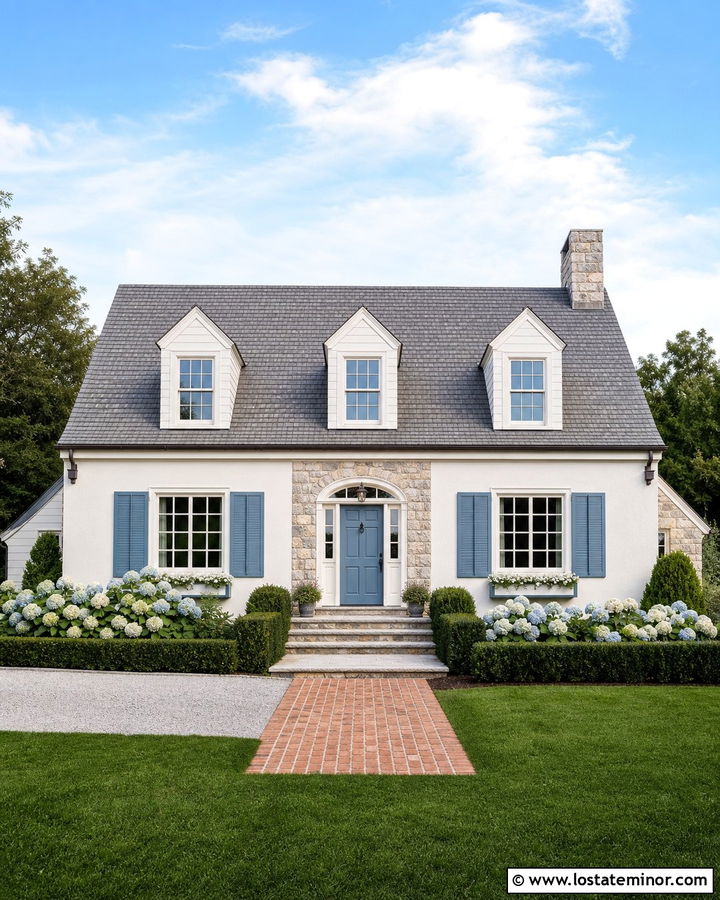
Muted coastal blue shutters give a stone Cape Cod house a fresh personality while respecting its compact, symmetrical form. Use a medium blue with gray undertones so it looks settled against pale stone and weathered roofing. Paint the window trim, dormers, and fascia in a warm white. The front door can match the shutters or feature a natural teak finish for added warmth. A gray cedar-look roof supports the coastal palette without appearing overly themed. Louvered shutters should be properly proportioned to the windows, particularly on the main level. Complete the home with a brick walkway, white hydrangeas, clipped hedges, and simple window boxes. This combination feels bright and welcoming, while the stone facade gives the familiar blue-and-white Cape Cod palette more texture and lasting visual depth.
19. Stone Tudor House With Green Shutters
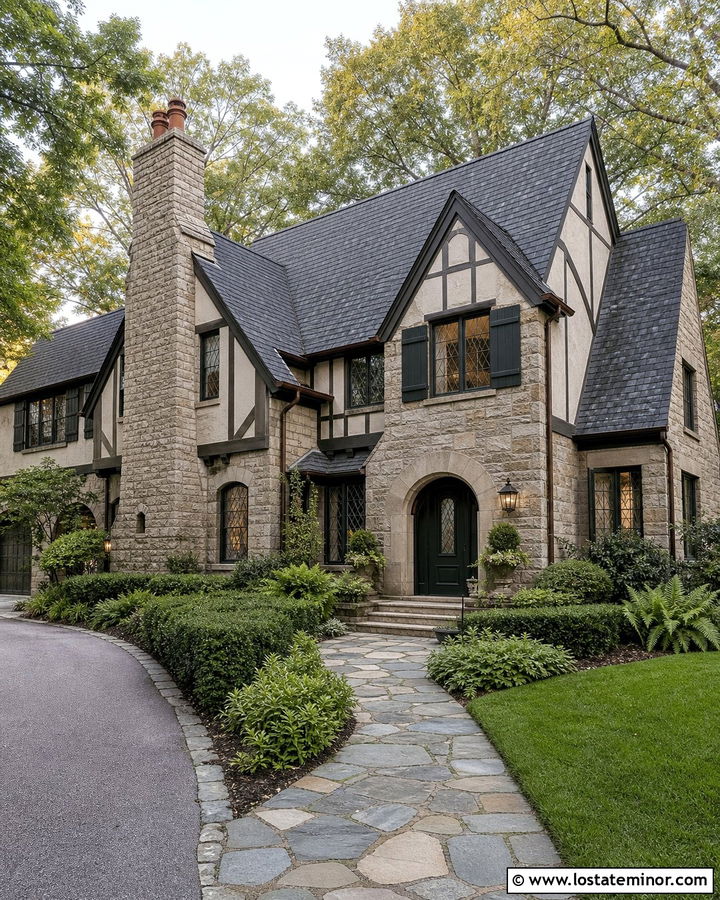
Deep green shutters complement a stone Tudor house by adding color without weakening its dramatic rooflines and dark timber details. Choose a blackened green that relates to the charcoal roof, leaded windows, and shaded landscaping. Use the same shade on the front door, or select a medium oak door to soften the entrance. Cream stucco panels can brighten the upper elevation, while the stone should remain natural and unpainted. Paneled shutters are more suitable than delicate louvers for the substantial architecture. Dark bronze gutters and lanterns will blend into the scheme. Frame the house with curved stone paths, yew hedges, ferns, and mature trees. The resulting exterior feels historic and established, with green providing a restrained connection between the masonry, wood framing, and surrounding garden.
20. Stone Craftsman House With Bronze Shutters
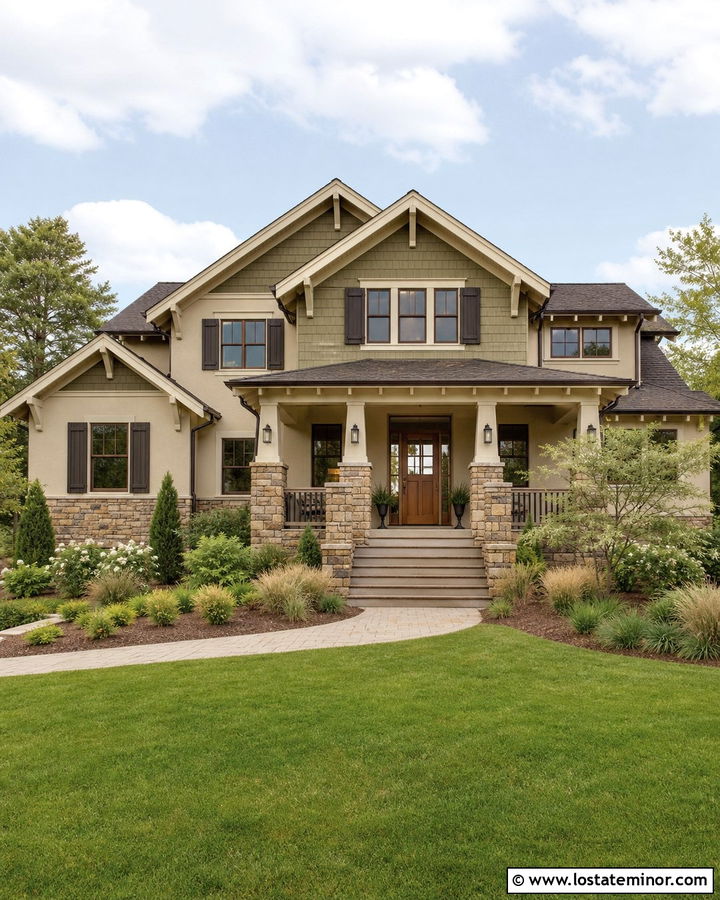
Bronze-brown shutters can highlight the handcrafted details of a stone Craftsman home. Pick a deep shade with warm undertones that coordinates with natural stone, stained rafters, and exposed porch beams. Wide paneled shutters or simple board-and-batten shutters feel appropriately substantial beside tapered stone columns. Use warm cream for the trim and muted olive or taupe on any upper siding. A stained fir front door should remain the main focal point, supported by bronze lanterns and house numbers. Finish the roof in charcoal brown to ground the layered materials. Low stone walls, broad porch steps, native grasses, and compact shrubs can extend the architecture into the yard. The full scheme feels rich and textural, but its repeated earthy colors keep the many exterior details from looking crowded.
21. Stone Farmhouse With Board And Batten Shutters
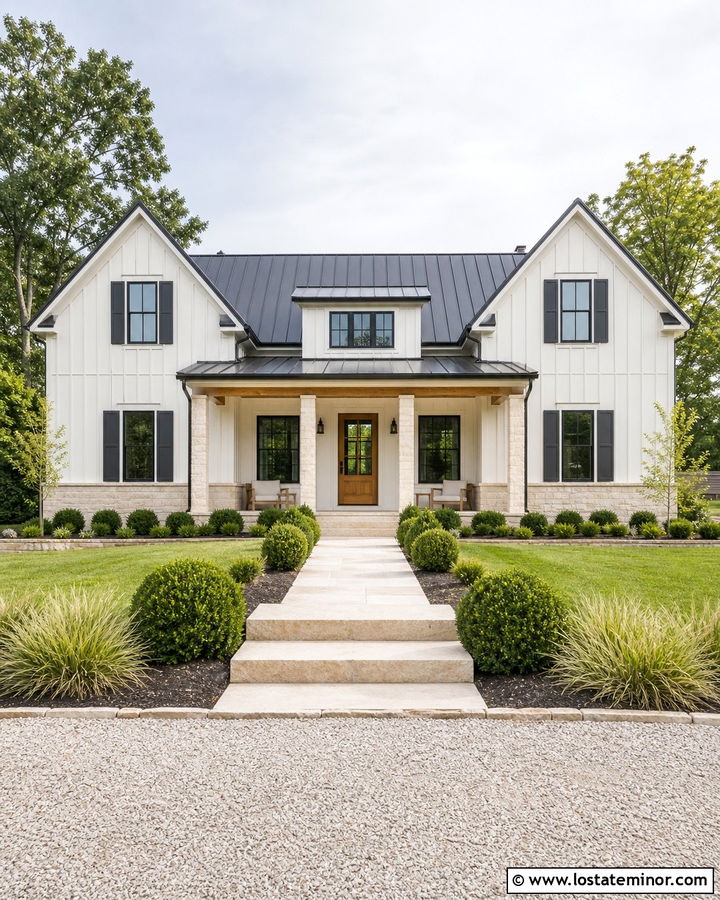
Board-and-batten shutters add practical farmhouse character to a house with pale limestone or fieldstone accents. Paint them charcoal black for definition against warm white vertical siding. Repeat the charcoal color on the window frames, metal roof, and simple porch lights. A natural oak front door and matching porch ceiling keep the high-contrast palette from feeling too stark. Use stone across the foundation, chimney, and porch columns rather than placing small, disconnected patches around the facade. The repeated masonry creates a stronger visual base. Add a wide gravel drive, concrete or stone walkway, clipped shrubs, and airy ornamental grasses. This complete exterior combines familiar farmhouse materials in a restrained way. Strong shutter shapes, clean siding lines, and warm stone texture give the house depth without unnecessary decorative details.
22. Stone Colonial House With Paneled Shutters
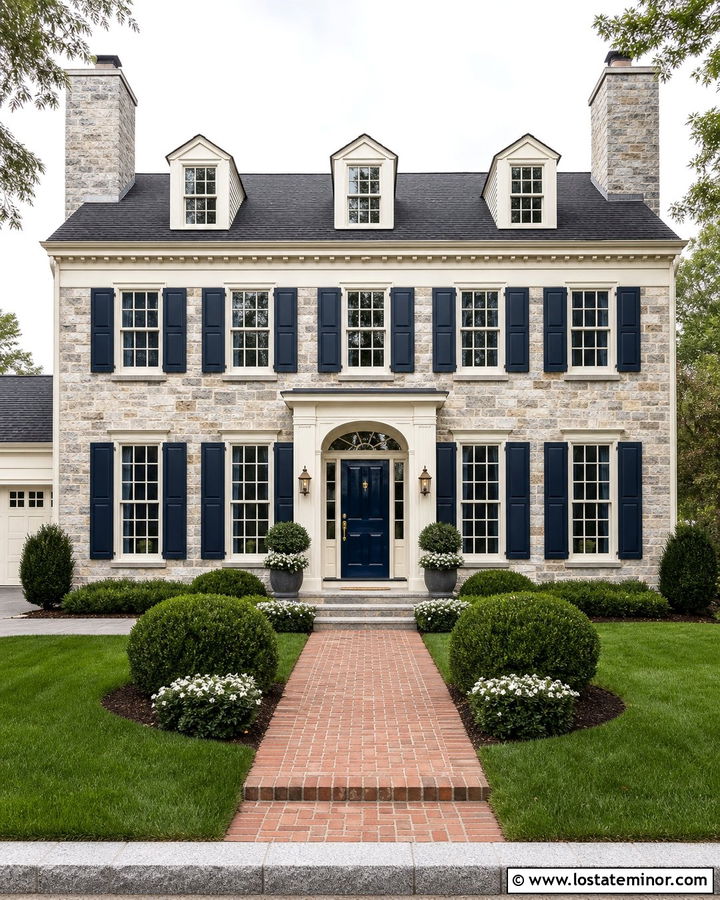
A symmetrical stone Colonial looks polished with raised-panel shutters in a dark historic blue. The shutters should be tall and wide enough to visually cover each window if closed, which makes them feel connected to the architecture. Use warm white on the window frames, cornice, and entry surround. A glossy dark blue front door can repeat the shutter color and create a formal central focal point. Choose a charcoal shingle roof and black or aged brass lanterns for a classic finish. Balanced evergreen shrubs, a straight brick walkway, and matching planters support the orderly facade. Because natural stone already supplies plenty of movement, keep the shutter design and landscaping simple. The complete scheme feels traditional and distinguished, with controlled color helping the stonework remain the dominant exterior feature.
23. Mediterranean Stone House With Wood Shutters
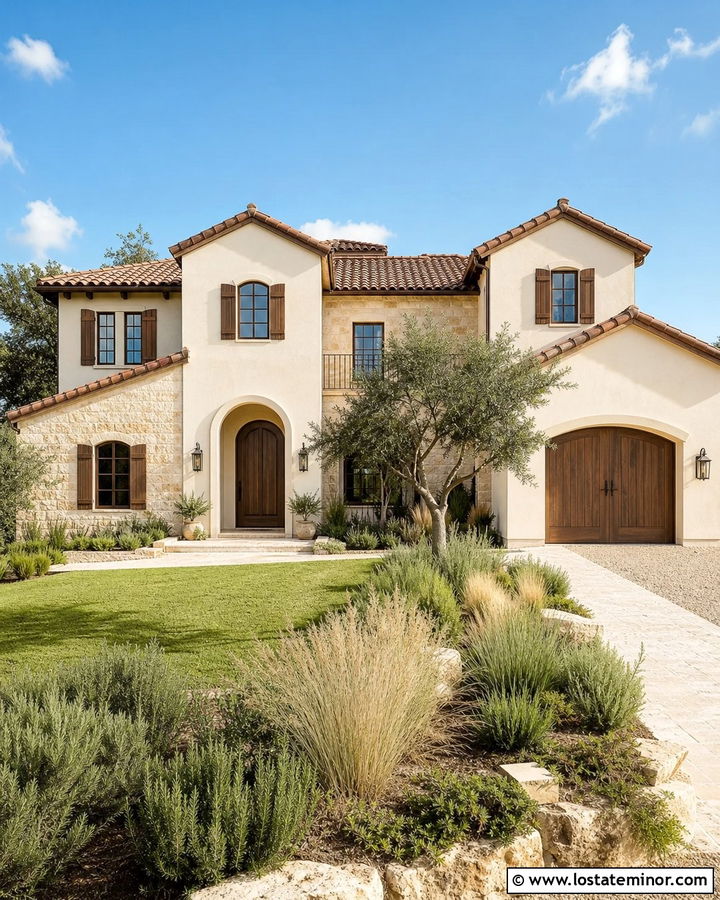
Wood shutters bring warmth and authenticity to a Mediterranean stone house, especially when the facade combines cream stucco with golden limestone. Choose wide plank shutters in a medium walnut stain and add subtle black iron hardware. Repeat the wood tone on an arched front door and garage doors. Warm ivory trim can blend into the stucco, allowing the stone and wood to receive the most attention. A muted terracotta tile roof introduces an earthy red note that works with the golden masonry. Keep exterior lighting and railings dark bronze or black. Complete the property with gravel paths, olive trees, rosemary, ornamental grasses, and pale stone paving. The full design feels sunny and relaxed because every material shares warm, natural undertones rather than creating sharp or artificial contrast.
24. Stone Cottage With Arched Shutters
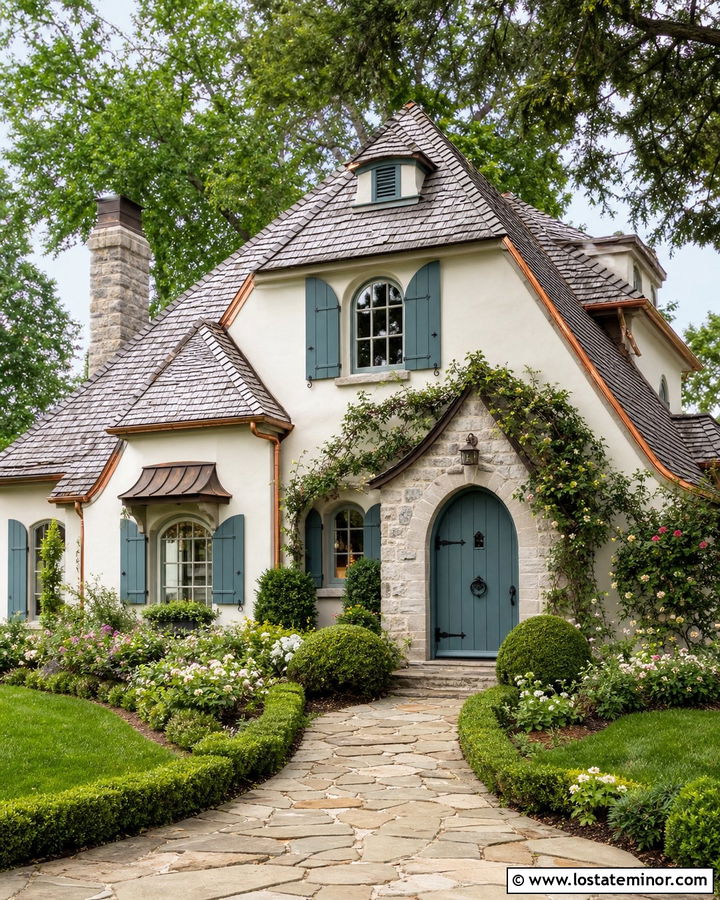
Arched shutters can emphasize the storybook character of a small stone cottage when their shape follows the windows precisely. Paint them a muted blue-green that stands out gently against cream and gray rubble stone. Use the same color on the rounded front door for a coordinated focal point. Warm cream trim, copper gutters, and a weathered gray roof complete the old-world palette. Board-and-batten construction keeps the shutters rustic, while simple iron hinges add visual weight. Avoid excessive ornament because the curved windows and irregular masonry already provide plenty of detail. A winding flagstone path, climbing vines, cottage flowers, and low hedges can frame the entire facade. This complete look feels whimsical without becoming theatrical, thanks to the restrained colors and naturally aged exterior materials.
25. Stone Split Level House With Charcoal Shutters
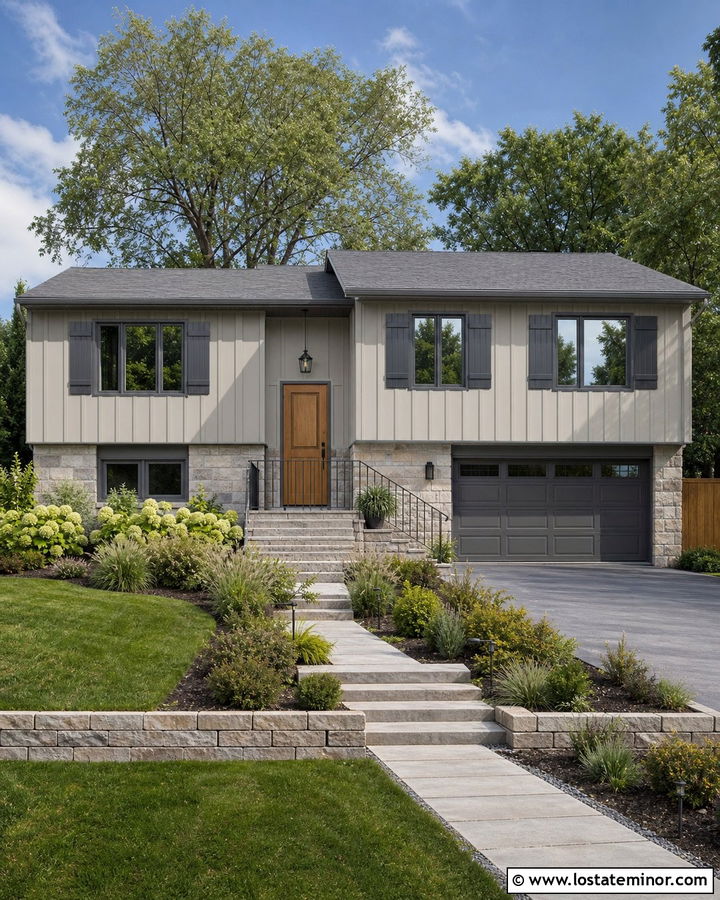
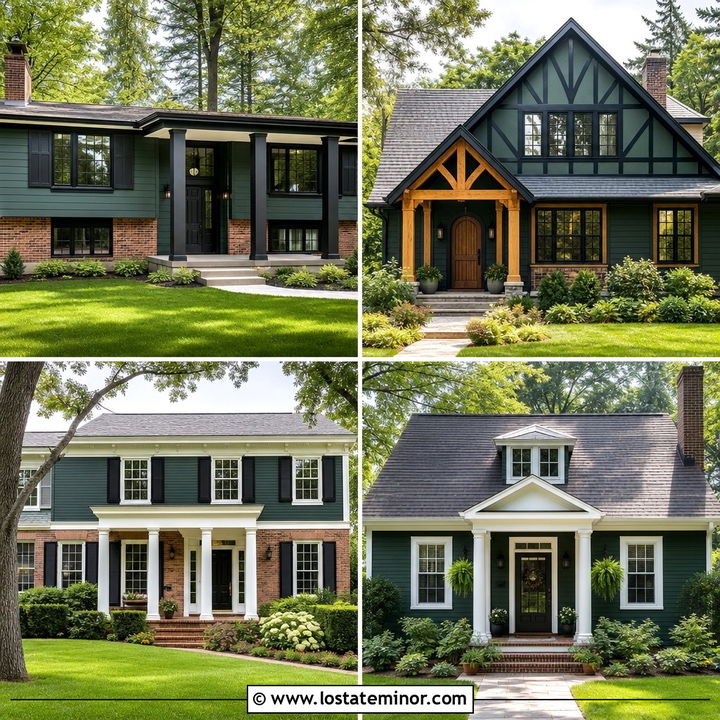
Charcoal shutters can modernize a stone split-level by connecting its separate upper and lower sections. Use warm greige siding above the stone base, then repeat charcoal on the shutters, window frames, garage door, and porch railing. This consistent dark outline makes the different levels appear more unified. A medium wood front door adds warmth and helps visitors identify the entrance, which can sometimes be visually unclear on split-level homes. Choose a simple gray roof and avoid adding another strong accent color. Straight pavers, low retaining walls, ornamental grasses, and layered shrubs can update the surrounding yard. The complete exterior feels cleaner and more intentional because the stone, siding, windows, and garage share one coordinated palette. Simple paneled shutters work best with the home’s practical midcentury shape.
26. Contemporary Stone House With Slim Shutters
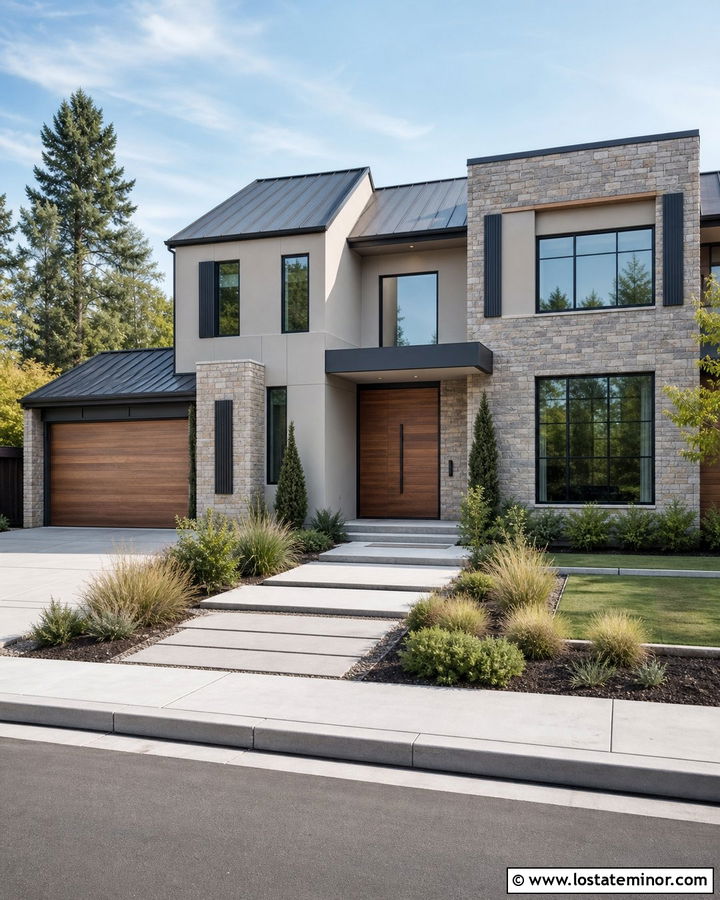
Slim shutters can work on a contemporary stone house when they are treated as architectural panels rather than traditional decoration. Choose charcoal vertical shutters beside large windows set into warm gray stone and light greige stucco. Match the shutters with black window frames and a dark standing-seam roof. A broad walnut pivot door introduces warmth and becomes the main entrance feature. Keep the trim minimal so the stone edges and clean rooflines remain visible. Horizontal wood garage doors can echo the front door without creating a perfect match. Use large concrete pavers, sculptural grasses, compact evergreens, and a simple lawn to frame the facade. The full scheme feels modern and balanced, combining strong dark lines with natural masonry and carefully placed wood accents.
27. Stone Lake House With Blue Green Shutters
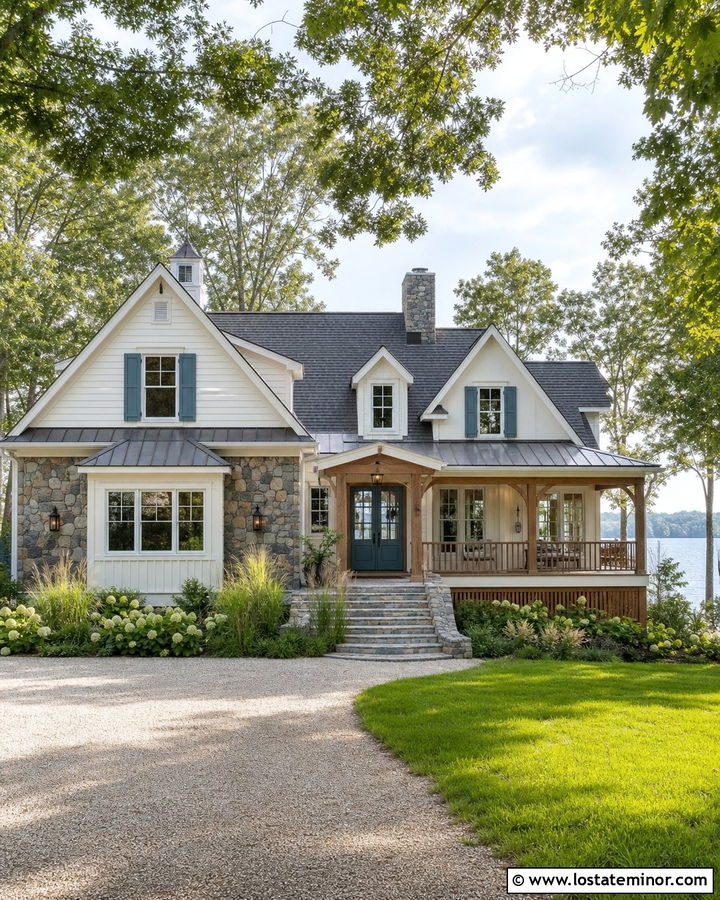
Blue-green shutters bring a relaxed waterside character to a stone lake house. Select a muted shade that sits between slate blue and eucalyptus green, allowing it to coordinate with gray fieldstone, water views, and surrounding trees. Use the shutter color again on the front door and porch ceiling for a subtle sense of continuity. Warm white siding and trim brighten the facade, while a charcoal roof anchors the lighter materials. Natural cedar beams and deck railings add warmth without making the palette overly rustic. Louvered shutters reinforce the breezy appearance of the house. Complete the curb view with a gravel drive, stone steps, native grasses, hydrangeas, and mature shade trees. The exterior feels casual and fresh, yet the stone foundation gives the lighter color scheme a solid visual base.
28. Desert Stone House With Clay Shutters
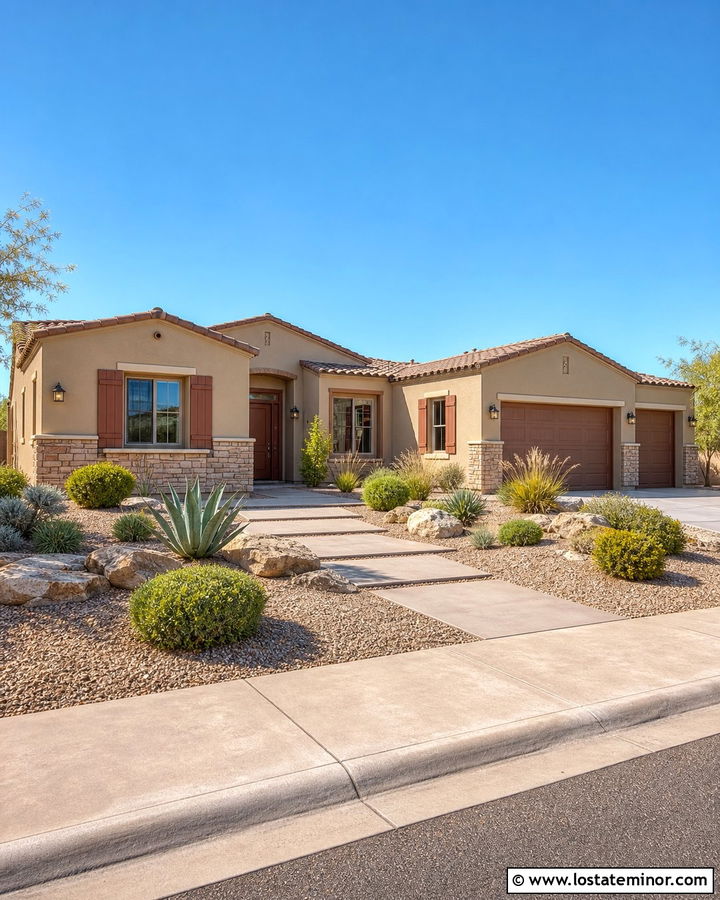
Muted clay shutters complement a desert stone exterior by drawing out rust and terracotta notes hidden within sandy masonry. Choose a subdued reddish brown rather than a bright orange. Apply it to simple plank shutters and a recessed front door. Warm beige stucco can fill the larger wall areas, while cream trim keeps the windows clear against the earthy palette. Use a medium brown tile roof and dark bronze lighting for additional depth. Natural stone should cover substantial architectural areas, such as entry walls, columns, and the foundation, so it feels integrated. Drought-tolerant grasses, agave, rounded shrubs, gravel beds, and broad concrete pavers complete the landscape. The overall house looks connected to its setting because the stone, shutters, stucco, roof, and plants share sun-warmed desert colors.
29. Dark Stone House With Light Gray Shutters
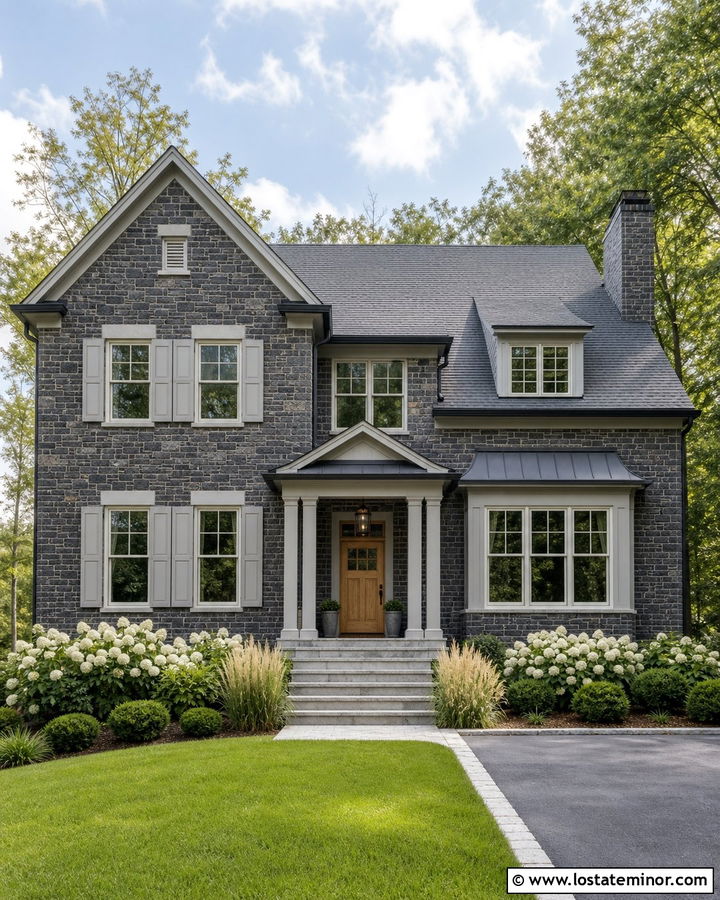
Light gray shutters can brighten a dark stone house without introducing a high-maintenance white accent. Choose a soft silver-gray that is clearly lighter than the charcoal masonry but still grounded enough for outdoor use. Match the window trim and porch columns to the shutters for consistent framing. A natural maple or light oak front door provides warmth and prevents the facade from becoming entirely cool. Use a medium gray roof rather than black, which could make the upper elevation appear too heavy. Paneled shutters give traditional houses a tailored finish, while simple plank versions suit rustic designs. Pale concrete steps, white flowering shrubs, ornamental grasses, and fresh green lawn can further lift the curb appeal. The completed scheme feels balanced, clear, and welcoming despite the depth of the stone.
30. Mixed Stone House With Greige Shutters
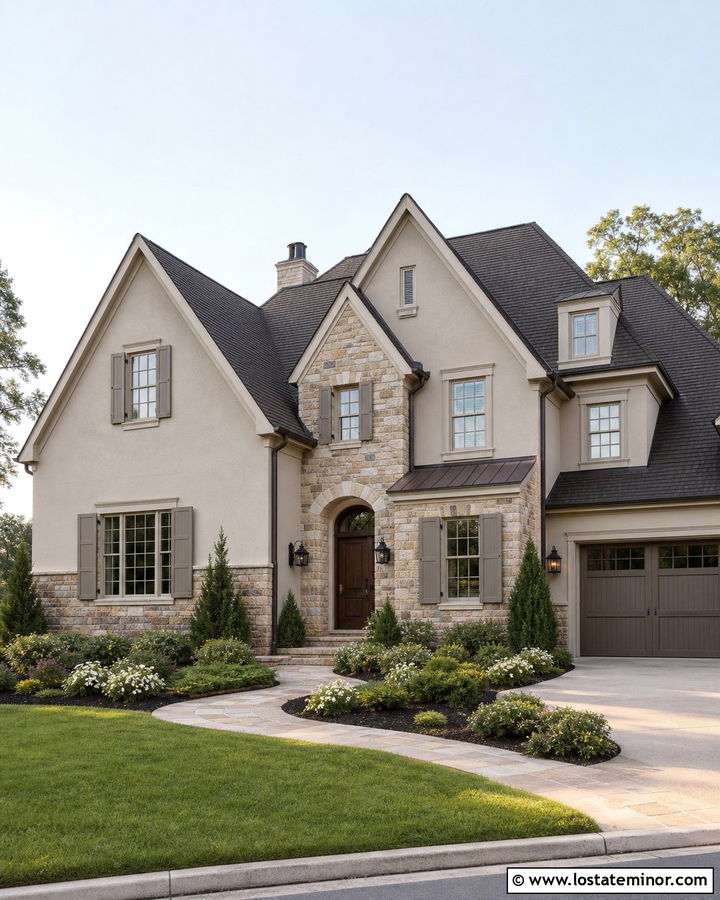
Greige shutters provide a flexible solution for mixed stone containing warm beige, cool gray, cream, and brown. Select a medium greige that relates to the mortar while remaining dark enough to define the windows. Paint the trim a lighter warm greige and choose a dark walnut front door for a stronger entrance. A charcoal-brown roof can connect the warm and cool portions of the masonry. Use simple paneled shutters so their shape does not compete with the varied stone pattern. Bronze lights, gutters, and door hardware add a quiet metallic accent. Finish the yard with natural stone edging, a gently curved walkway, evergreen shrubs, and white flowering perennials. This restrained exterior palette organizes a visually active facade and makes every material appear chosen as part of one complete design.
Conclusion:
The best stone house design begins with the colors already present in the masonry. Look closely at the stone’s warm, cool, dark, and light undertones before selecting shutters, trim, roofing, or a front door. Black, navy, green, taupe, muted blue, and natural wood can all work beautifully when they connect with the full facade. Shutter shape and scale are just as important as color, so choose a design that suits the windows and architecture. Carry the shutter finish into one or two smaller details for a balanced result. These **30 Stone House Design With Shutters Ideas** show how coordinated materials, thoughtful contrast, and simple landscaping can transform the complete curb appeal.

Related posts: