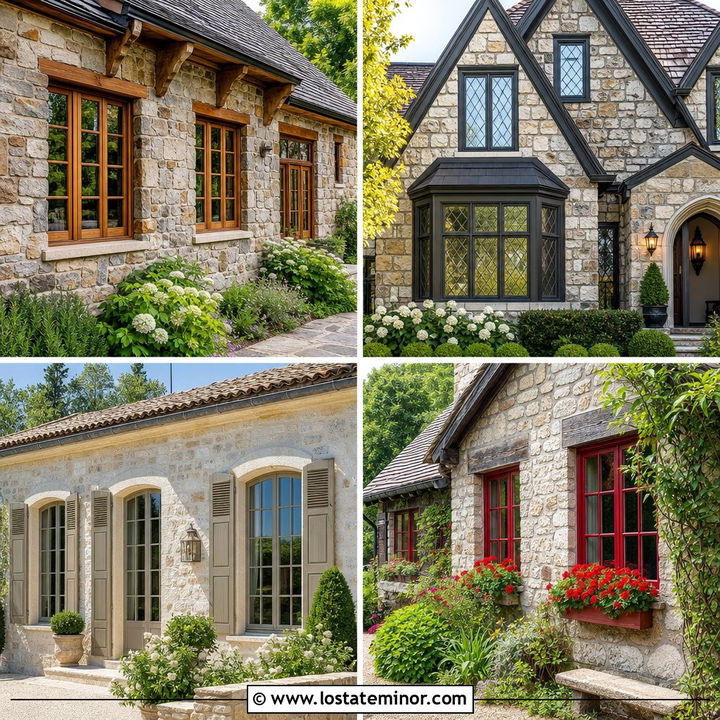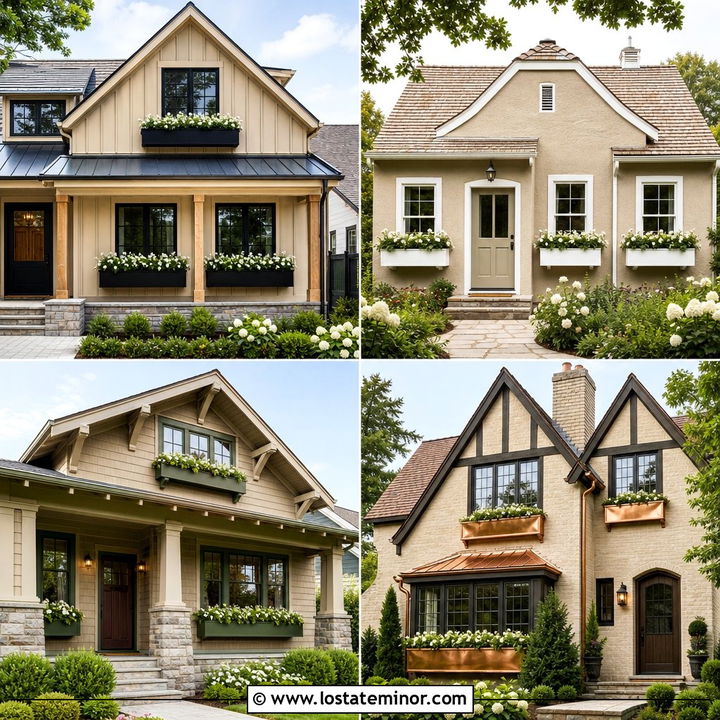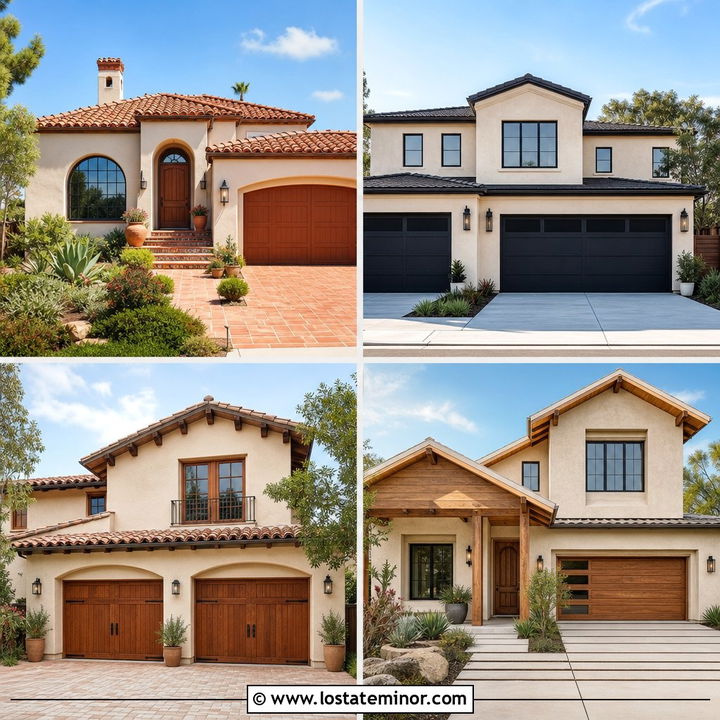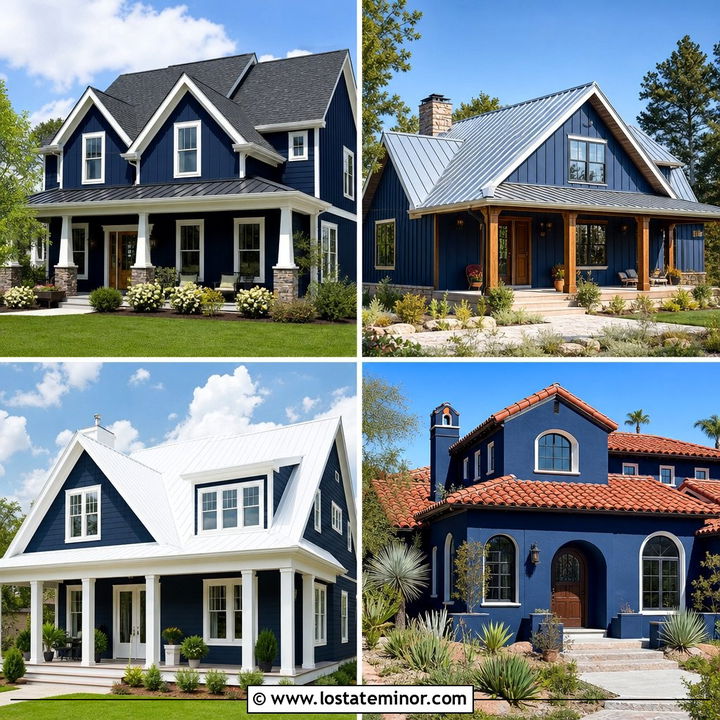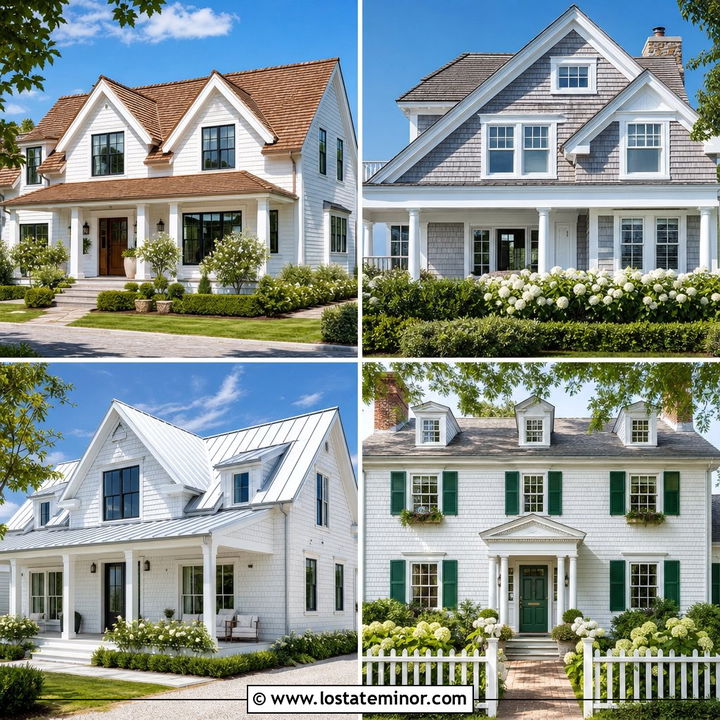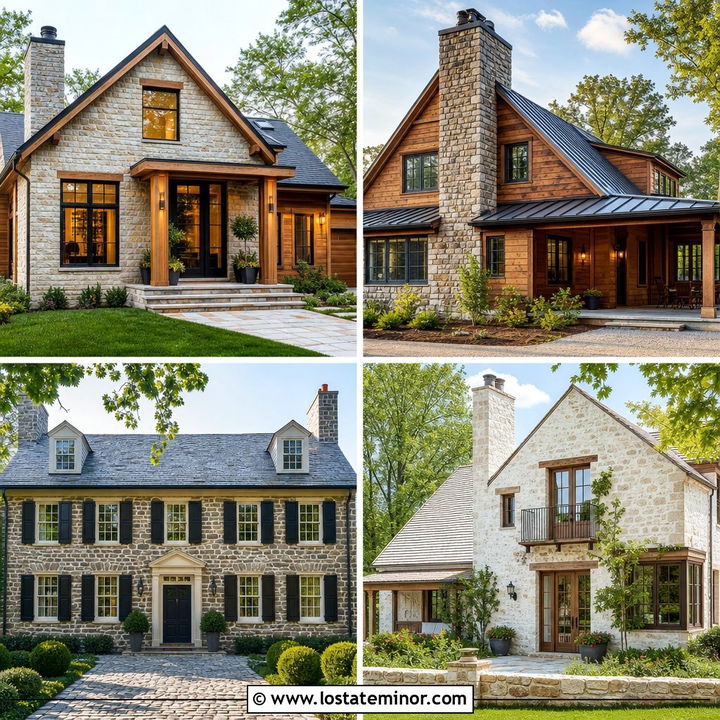
A sand-colored exterior creates a warm, grounded backdrop that can suit everything from a compact bungalow to a large modern farmhouse. The key is choosing window frames, trim, roofing, masonry, and entry details that give the neutral facade enough definition. Black and bronze frames offer strong contrast, while white, taupe, almond, and natural wood produce a softer appearance. Window material also affects available finishes, with vinyl commonly offered in classic neutrals and aluminum or wood providing broader color flexibility. () The complete exterior should also coordinate with fixed features such as the roof, stonework, driveway, and surrounding landscape. The following **30 Sand House Design With Window Frames Ideas** explore complete, practical combinations for creating balanced curb appeal.
1. Sand House With Black Window Frames
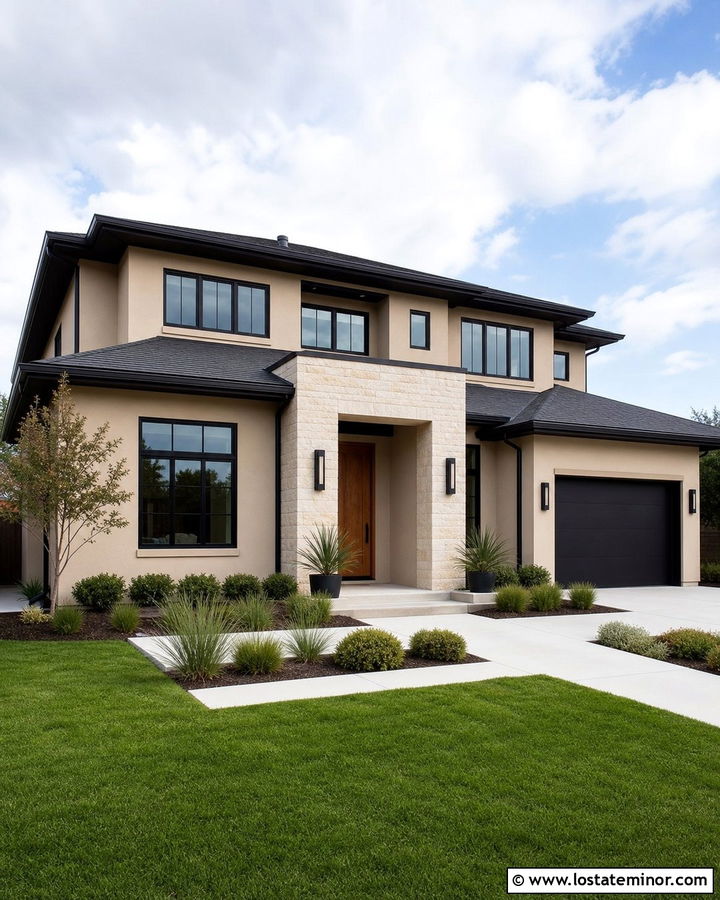
Black window frames give a sand house crisp architectural definition without overpowering its warm color. This pairing works especially well on a modern two-story home with smooth stucco, simple rooflines, and large rectangular windows. Carry matte black onto the gutters, porch railing, exterior lights, and front door hardware so the windows feel connected to the overall scheme. A natural oak front door softens the contrast, while limestone around the entry introduces another warm neutral. Choose a charcoal roof rather than true black to keep the upper portion from appearing too heavy. Low ornamental grasses, clipped shrubs, and a pale concrete walkway complete the clean design. The result feels contemporary, but the sand-colored body keeps it approachable and suitable for a suburban neighborhood.
2. Sand House With White Window Frames
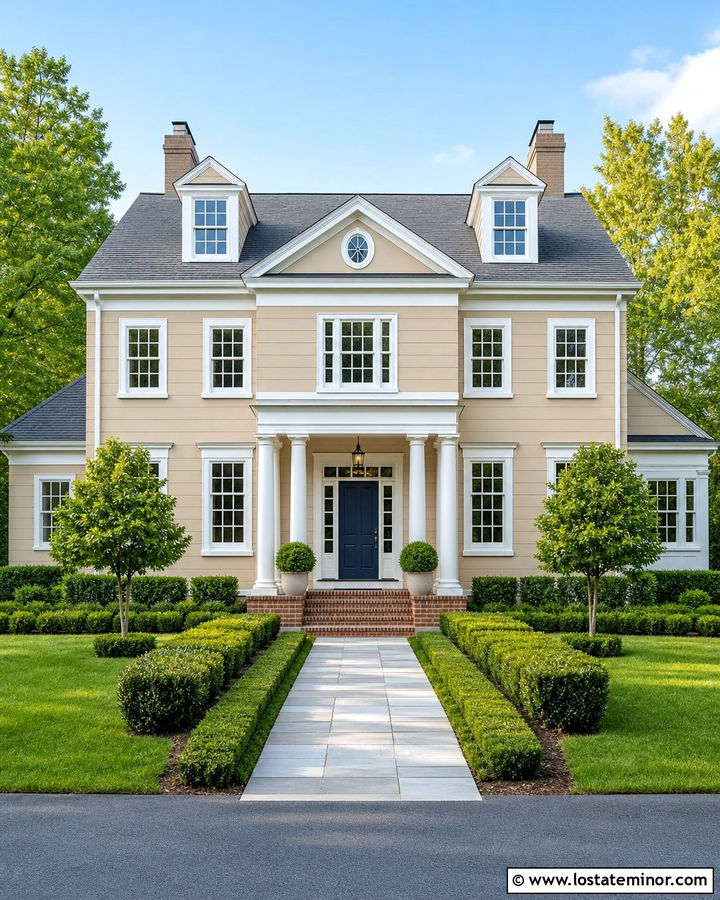
Imagine a welcoming sand-colored colonial with bright white windows, balanced shutters, and a deep front porch. White frames create a fresh outline against the warm siding, making individual windows appear larger and more noticeable. Repeat that white on the corner boards, fascia, columns, and garage trim for a coordinated finish. A muted navy front door provides one controlled area of color, while a medium gray shingle roof adds a cooler neutral overhead. Traditional divided-light windows are especially effective because their white grids reinforce the home’s symmetrical architecture. Avoid using several competing cream shades around the facade. A clear white with a slightly warm undertone will look more natural beside sand siding. Boxwood hedges, brick steps, and a straight walkway enhance the classic, orderly curb appeal.
3. Sand House With Bronze Window Frames
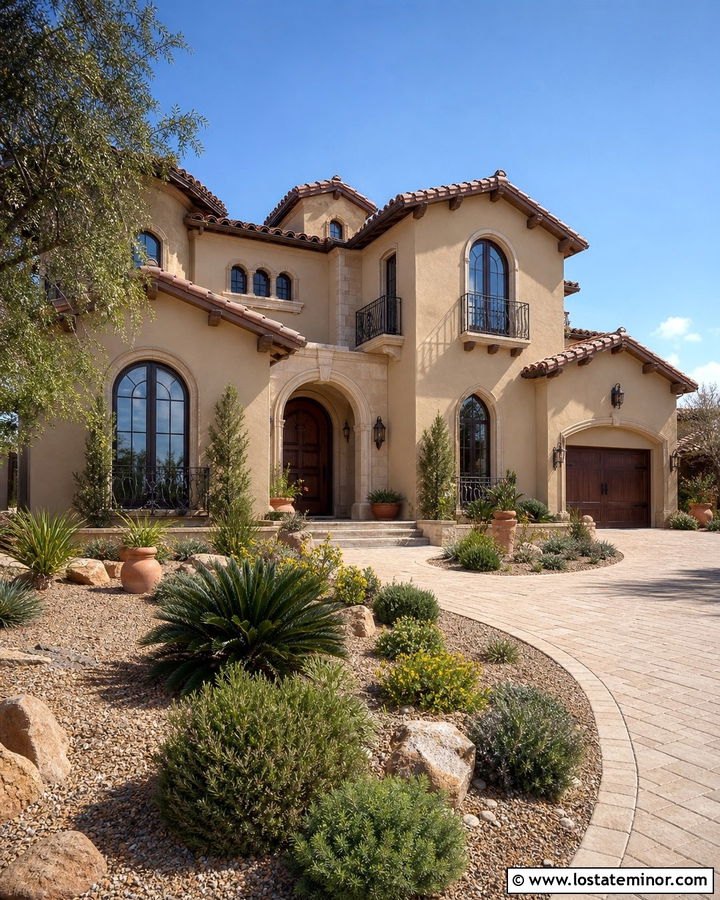
Dark bronze window frames bring warmth and depth to a sand house while creating less contrast than pure black. They are a natural choice for a Mediterranean exterior featuring stucco walls, broad roof overhangs, and a clay tile roof. Continue bronze across the gutters, lanterns, balcony railing, and door hardware to create a consistent metal finish. A stained walnut front door and warm limestone entry surround strengthen the earthy palette. Keep the fascia and soffits close to the sand body color so the bronze windows remain the primary outline. Arched upper windows can make the combination feel especially established and refined. Finish the property with terracotta planters, drought-tolerant shrubs, gravel beds, and a gently curved walkway. Every element should support the warm, sun-washed character of the exterior.
4. Sand House With Dark Brown Window Frames
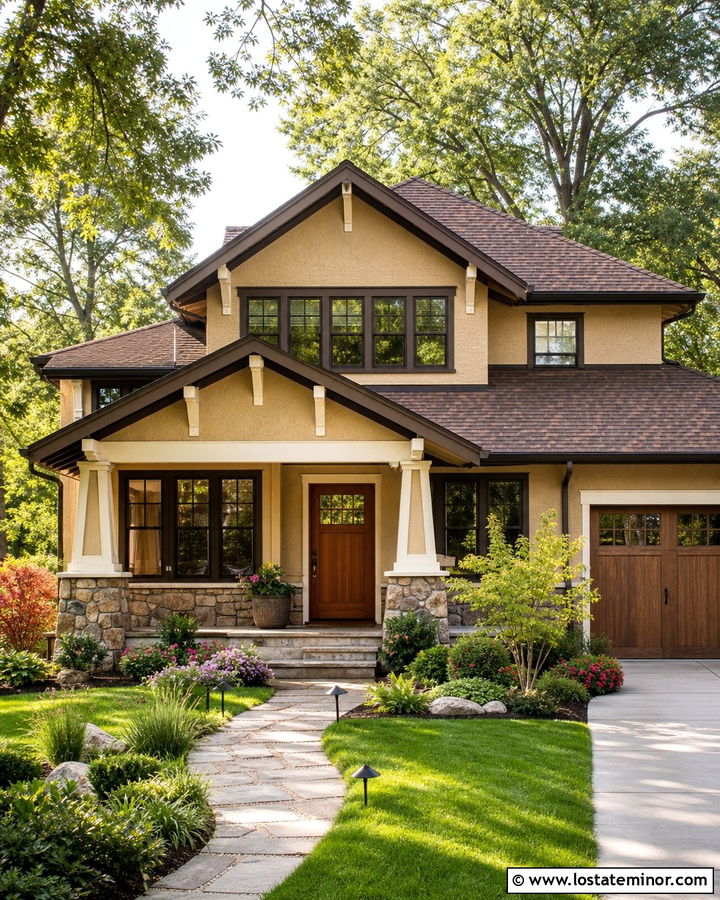
For a softer alternative to black, pair a sand house with dark espresso-brown window frames. The combination is particularly attractive on a Craftsman home with tapered porch columns, wide eaves, and visible wood details. Use chocolate-brown fascia, gutters, and garage doors to connect the frames to the roofline. Cream trim around the porch can add brightness without introducing a stark white border around every window. Natural fieldstone at the foundation grounds the sandy siding and repeats the brown undertones. A medium cedar front door provides a warmer focal point between the deeper accents. Select an architectural shingle roof with brown, charcoal, and muted tan variation. Layered shrubs, flowering perennials, and a flagstone path will make the finished exterior feel relaxed, substantial, and naturally suited to its setting.
5. Sand House With Taupe Window Frames
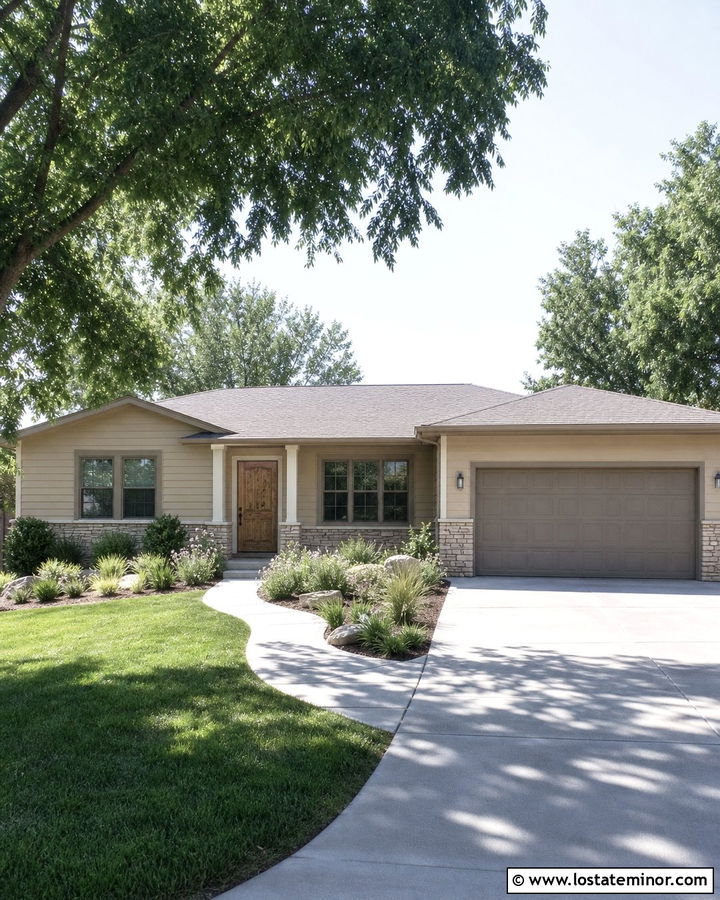
A low-contrast palette can make a sand-colored ranch feel wider, calmer, and more cohesive. Taupe window frames sit only a few shades deeper than the exterior, outlining the glass without breaking up the long facade. Use matching taupe on the garage door and fascia, then introduce soft ivory around the entry and porch posts. A weathered wood front door adds natural variation while maintaining the understated mood. Choose a medium greige roof that bridges the warm sand walls and cooler taupe accents. Light stacked stone across the lower third of the house can add dimension where the colors remain intentionally quiet. To prevent the scheme from looking flat, vary surface textures through horizontal siding, stone, wood, and metal. Broad planting beds and a curved walkway complete the comfortable ranch exterior.
6. Sand House With Charcoal Window Frames
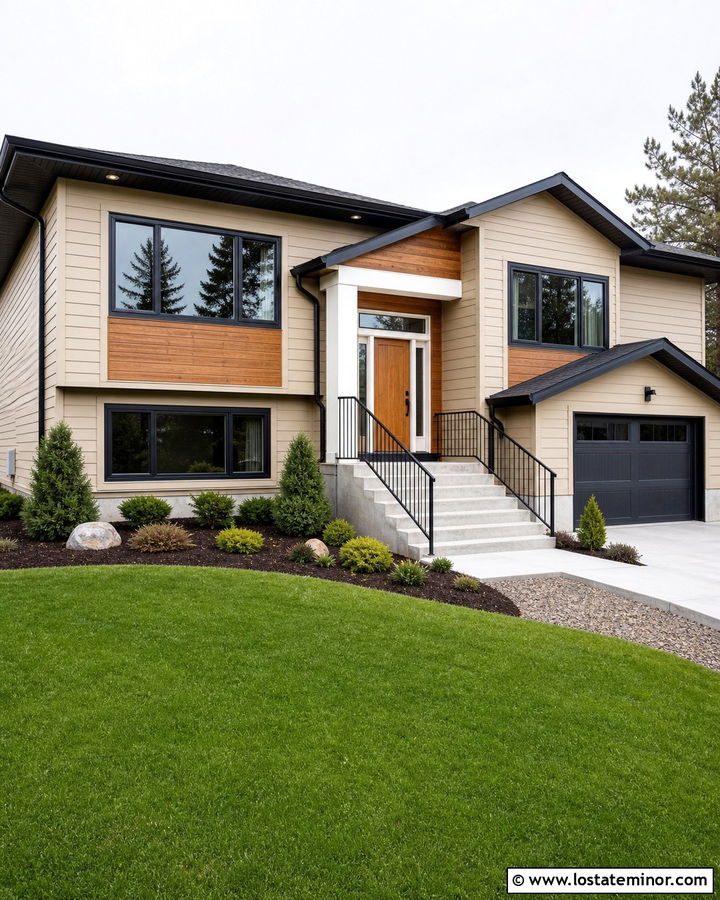
Would you like a bold window outline without the severity of jet black? Charcoal gray frames provide modern contrast while retaining a slightly softer, more versatile appearance. Use them on a split-level sand house with horizontal lap siding, an offset garage, and a strong rectangular window arrangement. Match the frames with charcoal gutters, garage doors, and a medium-dark roof. Warm white trim around the main entry will brighten the recessed portion of the facade. Add a honey-toned wood door and narrow cedar siding panel to keep the gray elements from making the house feel cold. Concrete steps and simple metal railings reinforce the updated architecture. Evergreen shrubs and pale gravel beds introduce texture without clutter, creating a balanced renovation that respects the original split-level shape.
7. Sand House With Almond Window Frames
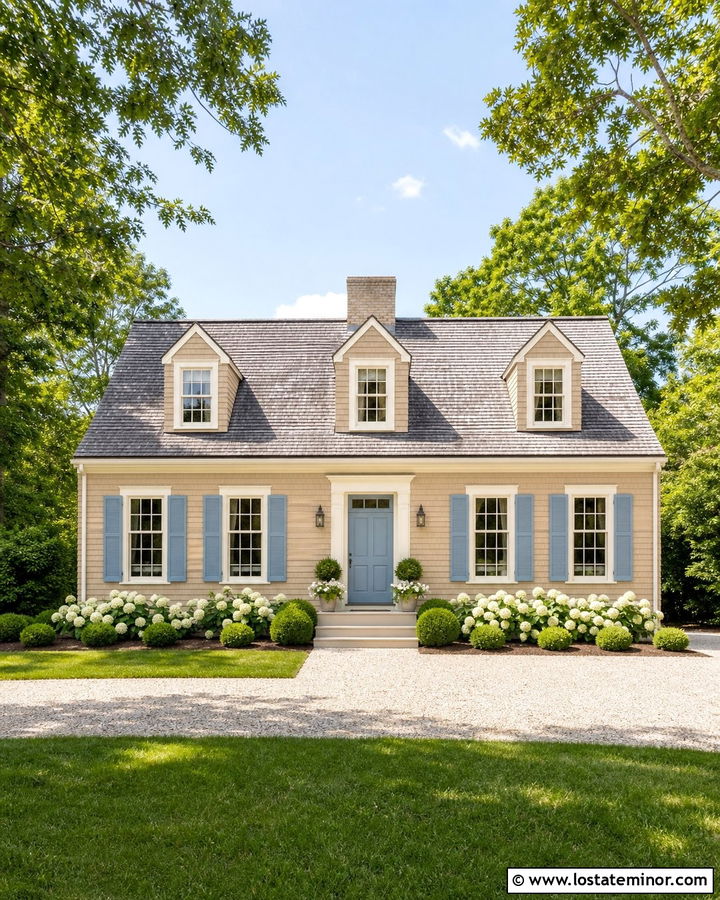
Almond window frames blend gently into sand-colored siding, making them helpful when you want a quiet and traditional exterior. This combination suits a Cape Cod home with symmetrical dormers, cedar-look shingles, and a compact central entry. Paint the trim a creamy off-white that sits between the sand body and almond frames, reducing obvious color changes. Add soft blue shutters and a matching front door for a light coastal accent. A weathered gray roof will keep the scheme relaxed rather than overly yellow. Choose divided-light windows to preserve the home’s traditional character, but keep the grids the same almond color as the frames. White hydrangeas, low hedges, and a shell-toned gravel walkway can complete the setting. The final look feels layered, bright, and comfortable without relying on dramatic contrast.
8. Sand House With Natural Wood Window Frames
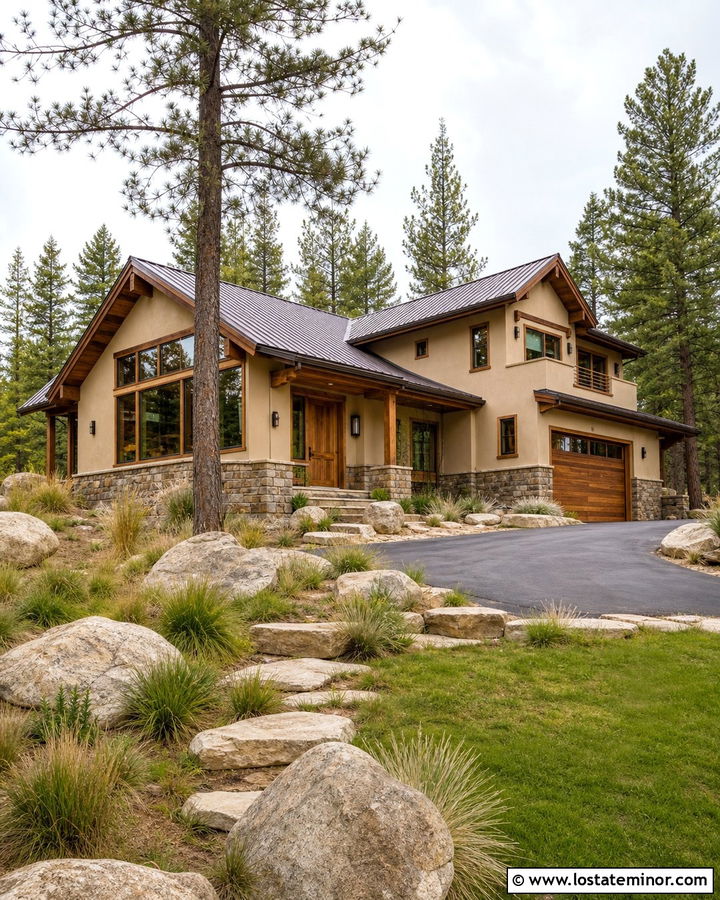
Natural wood window frames make a sand house feel organic, custom, and connected to the landscape. On a contemporary mountain home, select medium-toned cedar or oak frames that remain visible against smooth sand-colored stucco. Repeat the same wood on the front door, soffits, garage door, and a limited section of vertical siding. Dark bronze metal roofing and gutters will ground the warm materials while offering practical visual contrast. A rugged stone foundation can connect the facade to wooded surroundings and prevent the sand color from appearing too polished. Use broad picture windows to showcase the beauty of the frames and open the house toward the view. Native grasses, large boulders, and an informal stone walkway will strengthen the natural character without distracting from the coordinated exterior materials.
9. Sand House With Sage Green Window Frames
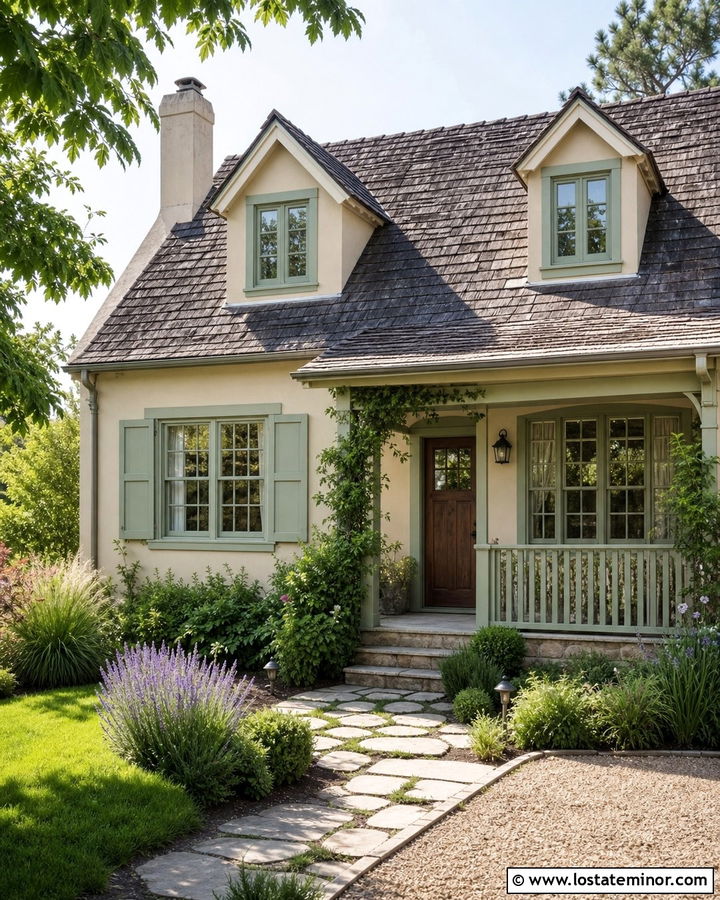
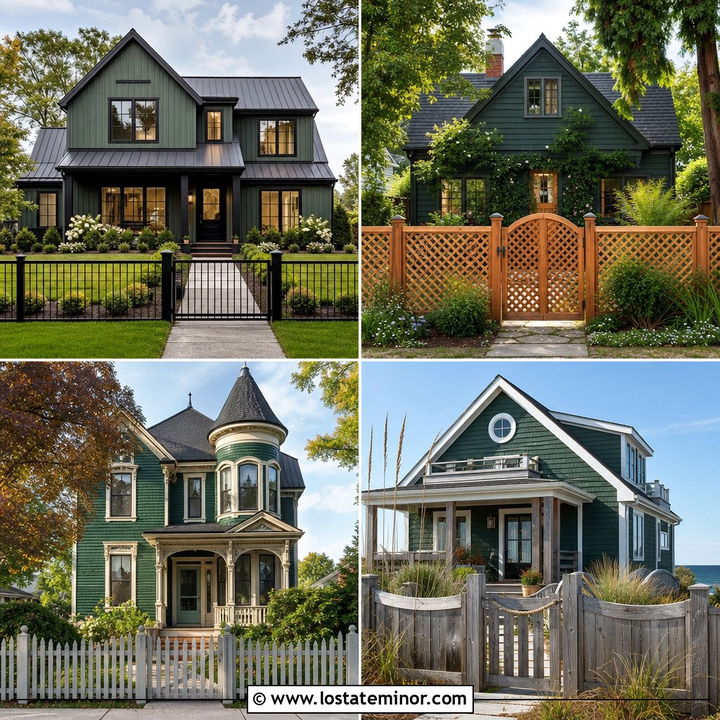
Sage green window frames can give a sand-colored cottage a subtle connection to its garden. Keep the green dusty and muted so it behaves like an earthy neutral rather than a bright decorative color. Repeat it on the shutters, front gate, and porch railing, while using warm cream for the fascia and corner trim. A stained oak door and a small stone stoop will reinforce the natural palette. Choose a roof with soft brown and weathered gray tones instead of a strongly colored shingle. Multi-pane windows look particularly charming in sage because the frames become a gentle architectural detail across the facade. Surround the house with lavender, ornamental grasses, climbing greenery, and informal pathways. The completed exterior should feel established and garden-friendly, with every color drawn from the surrounding landscape.
10. Sand House With Navy Window Frames
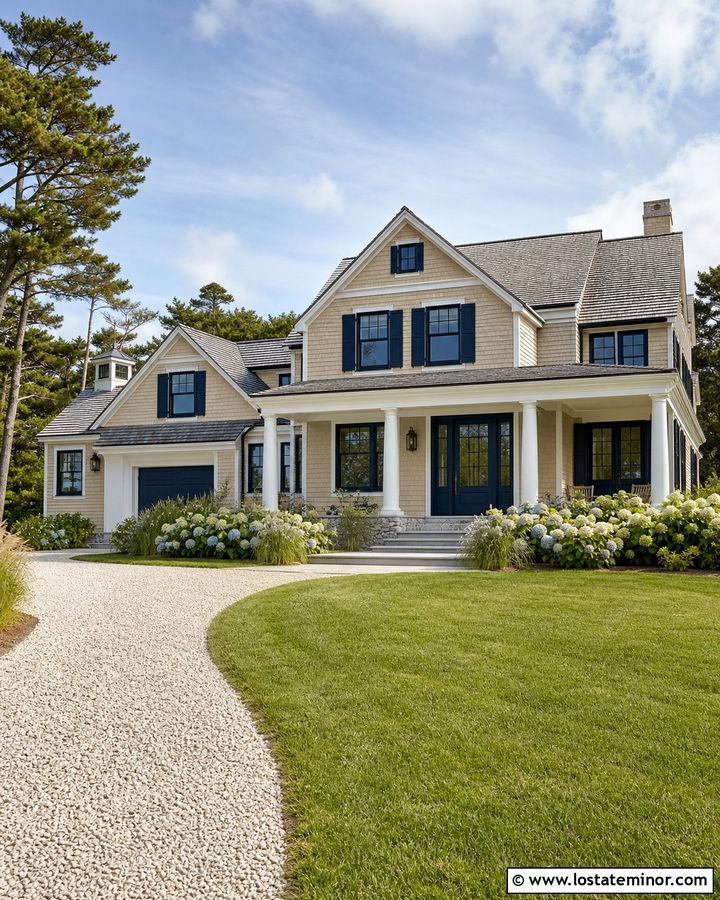
Navy window frames offer a distinctive alternative to black while giving a sand exterior clear definition. This combination works beautifully on a coastal house with shingle siding, multiple gables, and a broad porch. Carry navy onto the front door, shutters, and selected railing details, but use warm white for columns, fascia, and porch trim. A weathered cedar roof or soft gray architectural shingles will keep the palette casual. Add a light stone foundation to visually anchor the home without competing with the blue accents. The navy should be deep and slightly muted, allowing it to coordinate with the sandy body rather than reading as a bright nautical theme. Beach grasses, hydrangeas, and a pale gravel drive complete the relaxed scheme. The overall effect is colorful, polished, and still appropriately neutral.
11. Sand House With Black Windows And White Trim
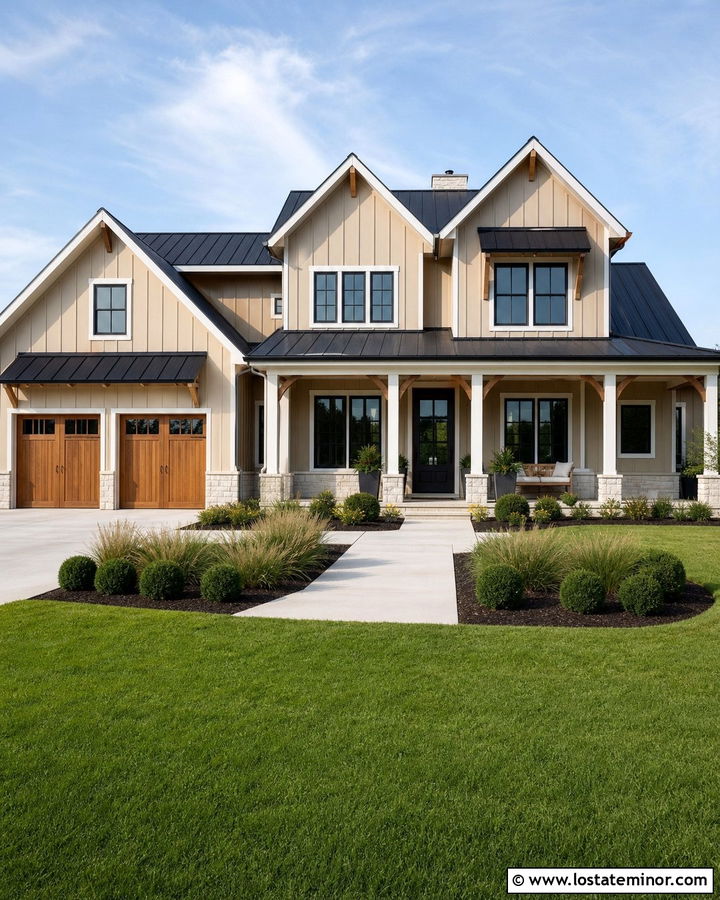
Black windows surrounded by white trim create a layered frame that makes each opening stand out on a sand-colored house. Use this treatment on a modern farmhouse with vertical board-and-batten siding, steep gables, and a long covered porch. The black frames provide a sharp inner line, while white outer trim connects them to the columns, fascia, and porch ceiling. A black metal roof reinforces the window color across the upper facade. Warm the scheme with cedar porch posts, a natural wood front door, and matching garage doors. A pale limestone foundation can bridge the sand siding and white trim. Keep the landscaping simple with clipped shrubs, ornamental grasses, and a broad concrete walkway. This complete exterior feels clean and current without depending on a stark white farmhouse body.
12. Sand House With Bronze Windows And Stone
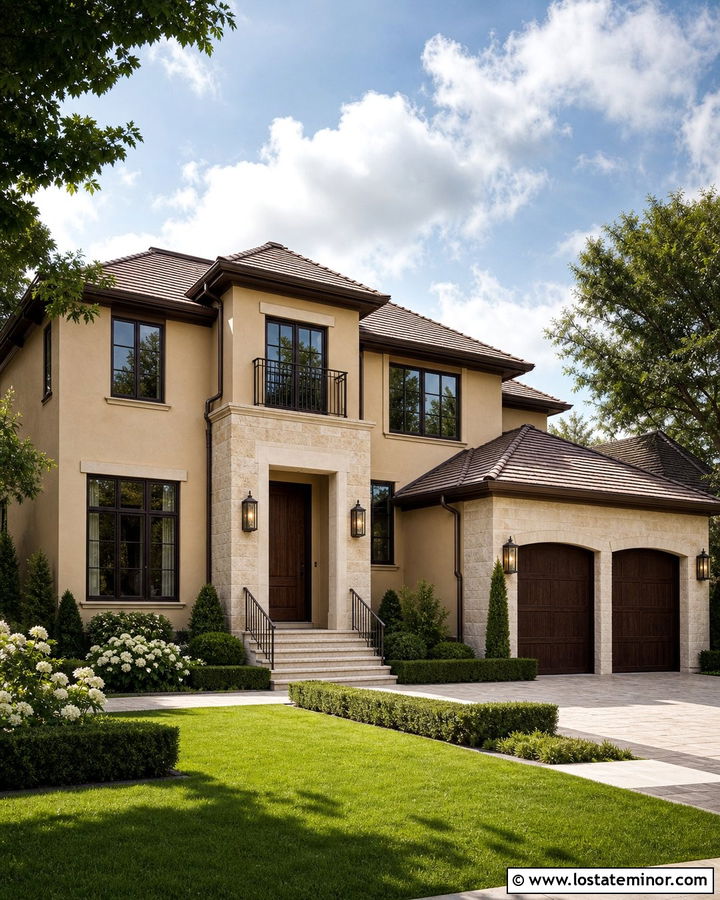
A sand house gains depth when bronze windows are paired with substantial natural stone. For a transitional two-story design, use smooth sand stucco across the main walls and warm limestone around the entry, chimney, and lower garage. Dark bronze frames will connect naturally with the deeper markings in the masonry. Repeat the finish on gutters, exterior lights, and a slim metal porch railing. A medium walnut door adds richness without introducing another unrelated color. Select a weathered brown roof that complements both the stone and bronze metalwork. Keep window trim minimal so the bronze edges remain clean and visible. Structured hedges and a wide paver driveway will suit the refined architecture. The finished palette feels warm, upscale, and carefully integrated rather than heavily decorated.
13. Sand House With White Windows And Cedar Accents
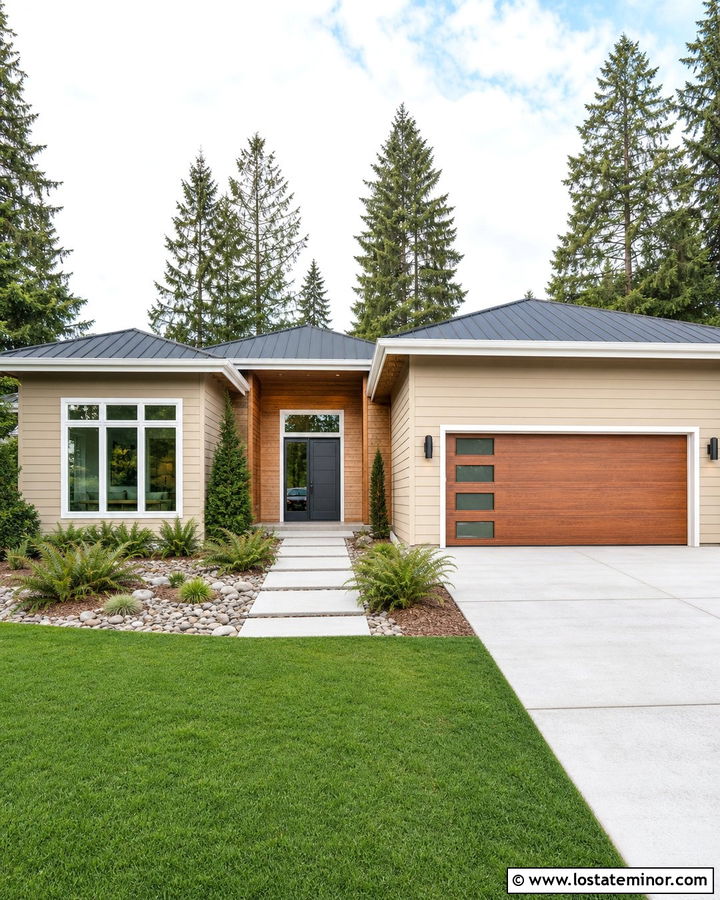
Bright white windows can appear more relaxed when a sand exterior includes generous cedar accents. On a Northwest-inspired contemporary home, combine horizontal sand siding with white window frames, white fascia, and simple white garage trim. Add cedar around the recessed entry, beneath the gables, and across the garage doors. The wood prevents the white details from looking disconnected from the warm house color. A charcoal standing-seam roof introduces contrast and highlights the clean roofline. Use large windows with minimal grids to suit the updated architecture. A dark charcoal front door can provide a strong focal point inside the cedar entry surround. Complete the property with ferns, evergreen shrubs, river rocks, and a straight concrete path. The result feels bright and modern, yet softened by natural material and color.
14. Sand Board And Batten House With Black Windows
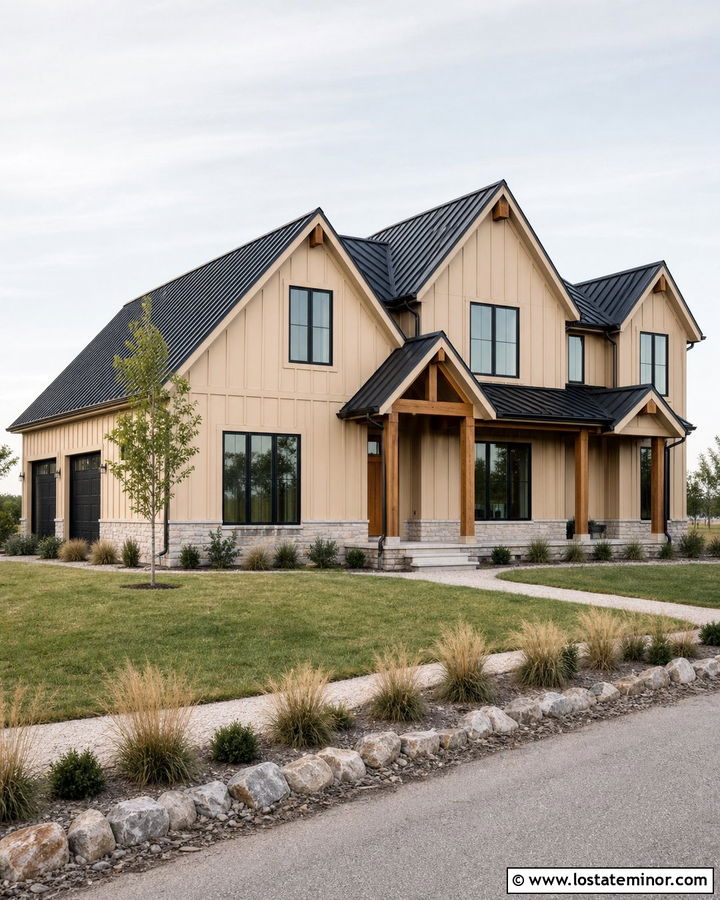
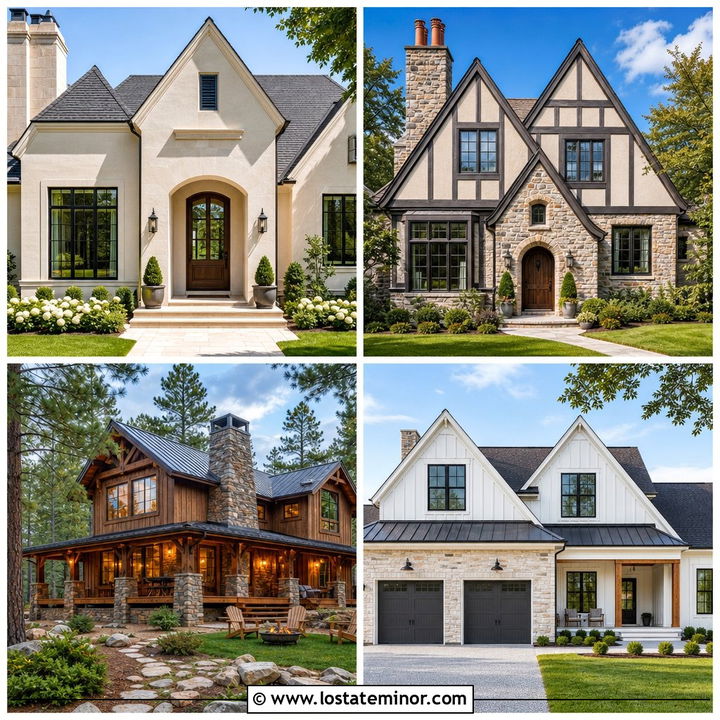
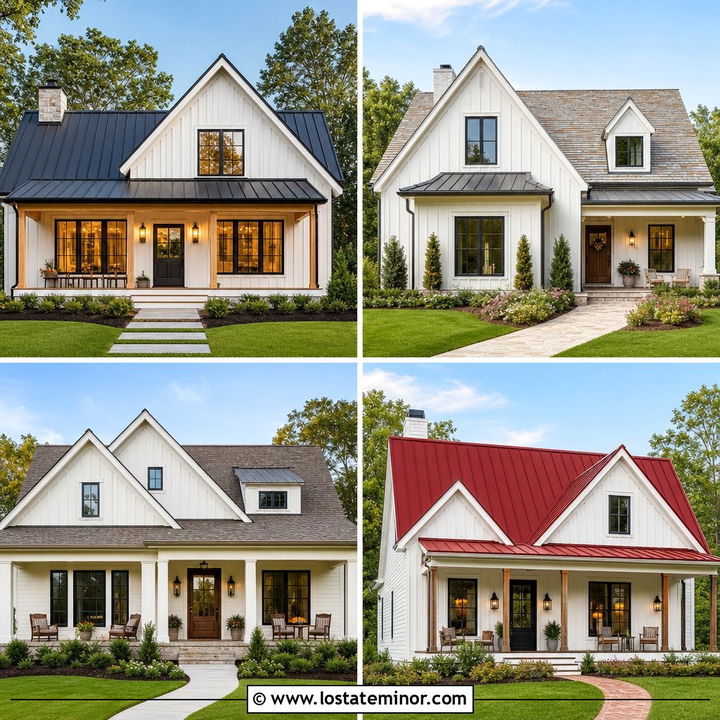
Vertical board-and-batten siding gives a sand house strong shadow lines that look especially sharp beside black window frames. Choose this combination for a one-and-a-half-story farmhouse with cross gables, a covered entry, and oversized windows. Use matte black on the roof, gutters, lights, and garage hardware to repeat the frame color at several heights. Instead of outlining every window with black trim, keep the surrounding trim sand-colored for a cleaner, integrated appearance. Cedar posts, porch beams, and a medium wood front door will warm the high-contrast details. Add pale gray stone along the foundation to create texture without shifting the palette too cool. A gravel-edged walkway, young trees, and loose ornamental grasses complete the approachable rural-suburban setting while leaving the architecture visually uncluttered.
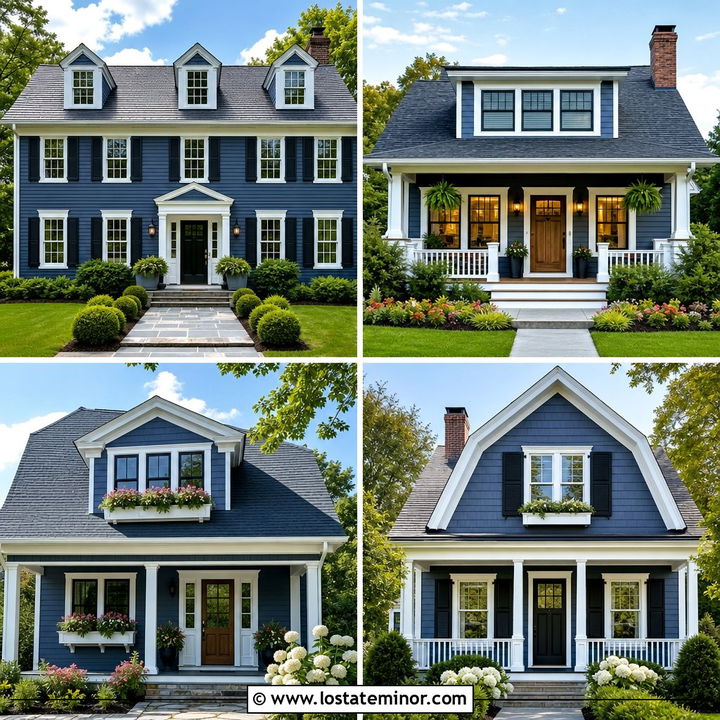
15. Sand Stucco House With Bronze Windows
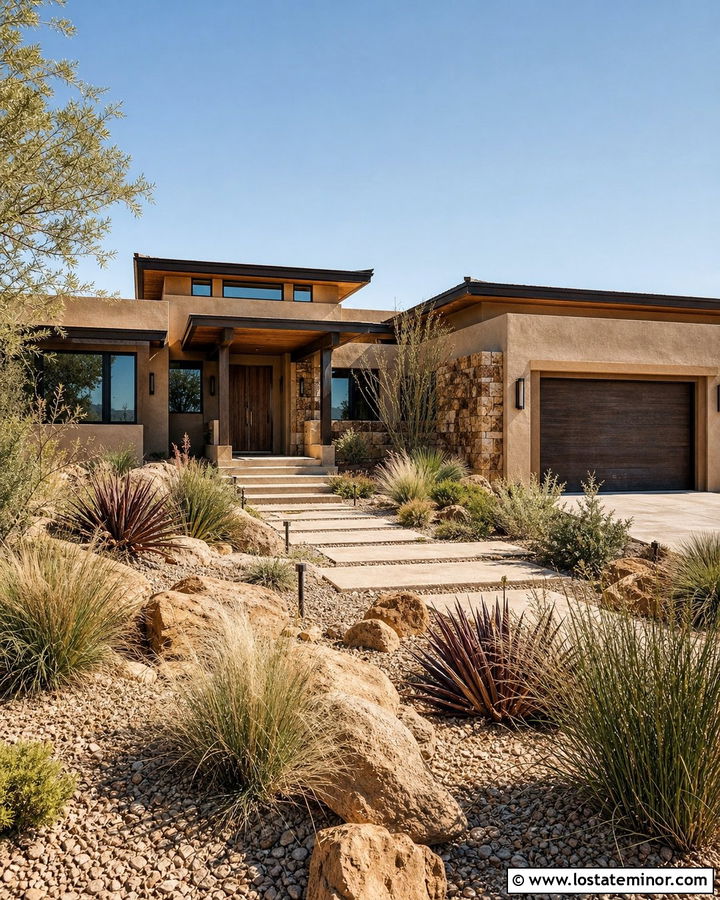
Sunlight brings out the warm undertones of sand stucco, while bronze windows provide a rich outline that never feels too harsh. Use the pairing on a Southwestern home with low rooflines, deep window recesses, and simple geometric walls. Keep the main trim close to the stucco color, allowing shadows and bronze frames to define the architecture naturally. A weathered wood door, exposed ceiling beams, and rust-toned stone near the entry add authentic material variation. Choose a flat or low-slope roof with dark bronze coping and matching drainage details. Large rectangular windows can modernize the structure without erasing its regional character. Surround the house with pale gravel, sculptural desert plants, native grasses, and broad concrete stepping pads. The coordinated exterior will look warm, durable, and connected to its dry landscape.
16. Sand House With Brown Windows And Brick
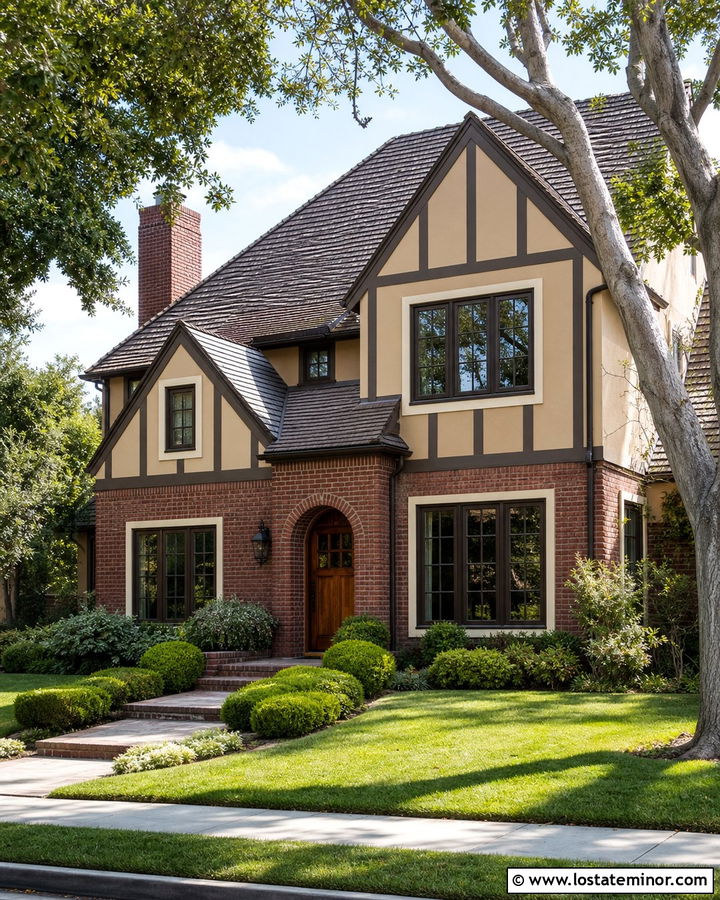
Sand siding can bridge the color gap between traditional red brick and deep brown window frames. On a two-story Tudor-influenced home, use brick across the lower facade and sand-colored stucco or lap siding above it. Espresso-brown frames, fascia, and gutters will draw out the darkest tones in the masonry. Keep the window trim narrow and cream-colored so the facade retains some brightness. A stained wood door with simple glass panels provides a natural centerpiece beneath a small covered entry. Select a roof containing charcoal, brown, and muted red variation to unite the complete palette. Avoid adding brightly colored shutters, since the brick already provides visual movement. Mature trees, tidy foundation shrubs, and a brick-edged walkway will complement the established architecture and create a cohesive, neighborhood-friendly exterior.
17. Sand Coastal House With Gray Window Frames
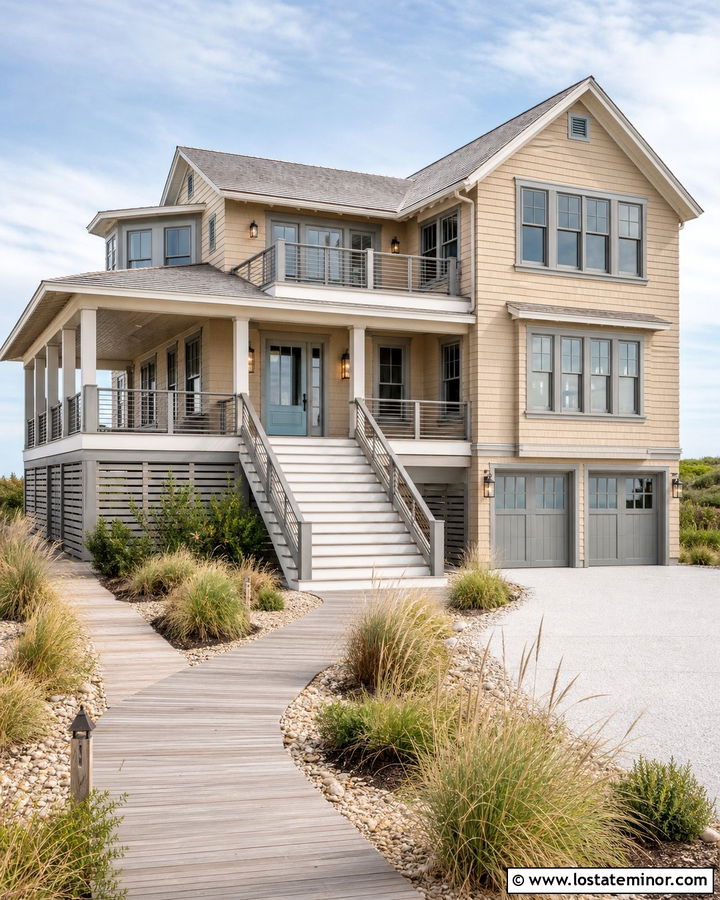
Soft gray window frames can cool a sand-colored coastal house without removing its warmth. Choose a misty medium gray for a raised beach home with cedar-look siding, broad decks, and large ocean-facing windows. Repeat the gray on the railings, garage doors, and stair supports, then use warm white for the fascia and porch ceiling. A pale blue front door adds a controlled coastal accent that remains secondary to the sand body. The roof should be weathered gray or muted charcoal to connect with the frames. Use corrosion-resistant metal finishes that maintain a clean appearance in exposed locations. Dune grasses, gravel beds, and a simple boardwalk-style path will suit the setting. Together, the restrained colors create a breezy exterior that looks coastal without relying on obvious blue-and-white decoration.
18. Sand House With Black Grid Windows
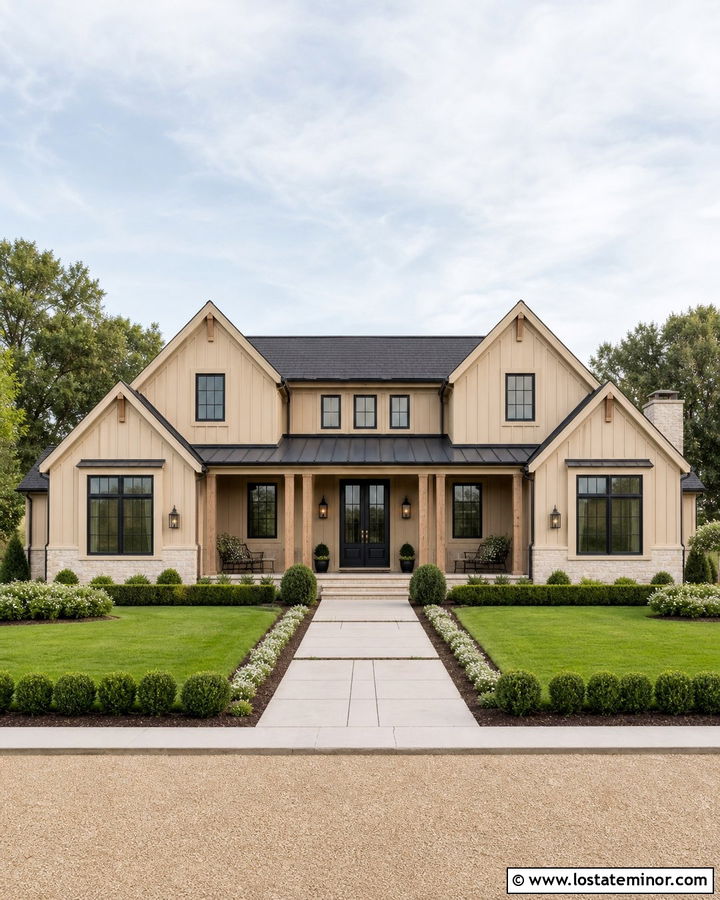
Black grid windows introduce detail and rhythm across a simple sand exterior. They are particularly effective on a traditional farmhouse where multiple rectangular panes can echo porch railings, door glass, and symmetrical rooflines. Keep the exterior window trim sand-colored or soft cream so the black grids remain precise without creating thick, heavy borders. Repeat matte black on the roof, lanterns, gutters, and front door. Natural oak porch columns will provide warmth at eye level and keep the scheme from feeling overly graphic. Use light limestone or painted brick around the foundation for subtle texture. Carefully align window sizes and grid patterns across the facade whenever possible. A straight walkway, clipped hedges, and balanced planting beds will reinforce the orderly architecture and produce polished curb appeal from every viewing angle.
19. Sand House With White Grid Windows
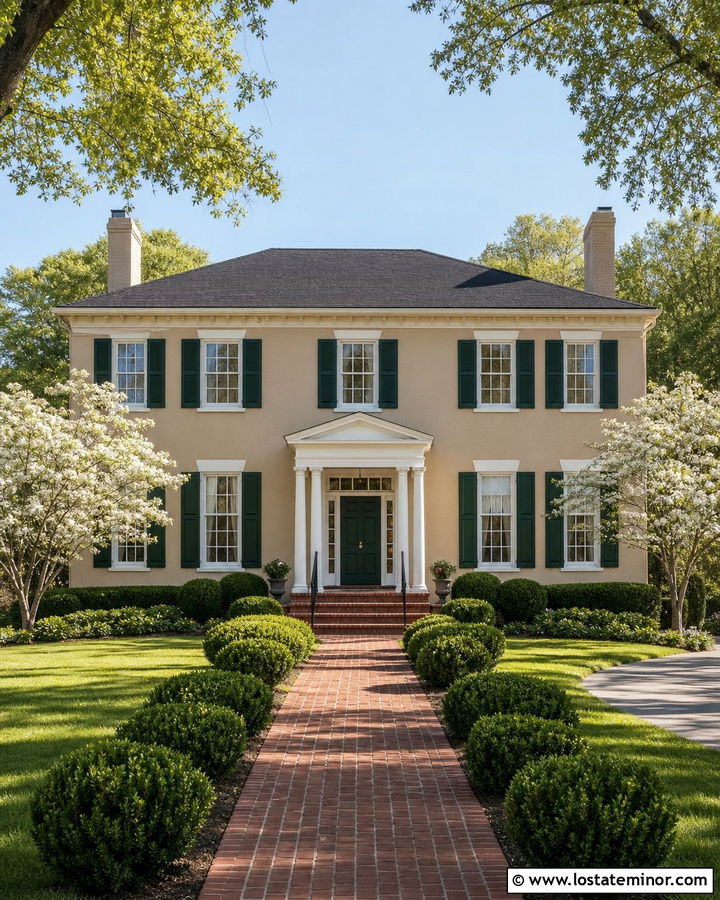
White grid windows bring traditional charm and brightness to a sand-colored home. Consider this combination for a Georgian-inspired facade with balanced window placement, a centered front door, and restrained decorative trim. Match the grids, frames, cornice, columns, and corner boards in one warm white so the architectural details read as a unified system. Deep green shutters and a matching front door can add classic color without interrupting the sand-and-white foundation. Select a medium charcoal roof to give the light facade a strong upper boundary. Red brick steps introduce another warm material and prevent the entry from appearing washed out. Symmetrical boxwoods, small flowering trees, and a straight brick walkway will support the formal design. The overall exterior feels familiar, elegant, and visually organized rather than plain.
20. Sand House With Bronze Casement Windows
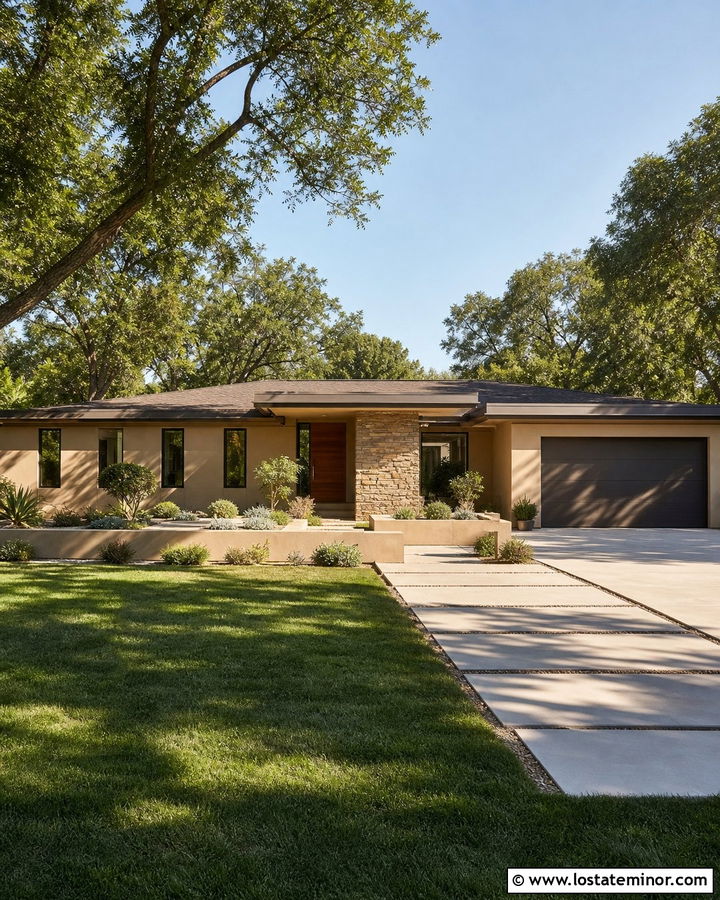
Bronze casement windows look sleek on a sand exterior because their narrow frames emphasize glass rather than decorative trim. Use them on a midcentury modern ranch featuring a low roof, broad eaves, and an asymmetrical front elevation. Continue dark bronze onto the fascia, gutters, lights, and flat-panel garage door. A natural mahogany entry door adds warmth beside the sand-colored masonry or smooth siding. Incorporate a section of stacked stone near the entrance to create a stronger visual anchor. Keep the roof a subdued charcoal-brown that complements the bronze finish without becoming overly dark. Wide windows should follow the horizontal lines of the house, making the facade appear longer and more open. Minimal planting beds, sculptural shrubs, and large concrete pavers will complete the period-aware but updated curb appeal.
21. Sand House With Black Picture Windows
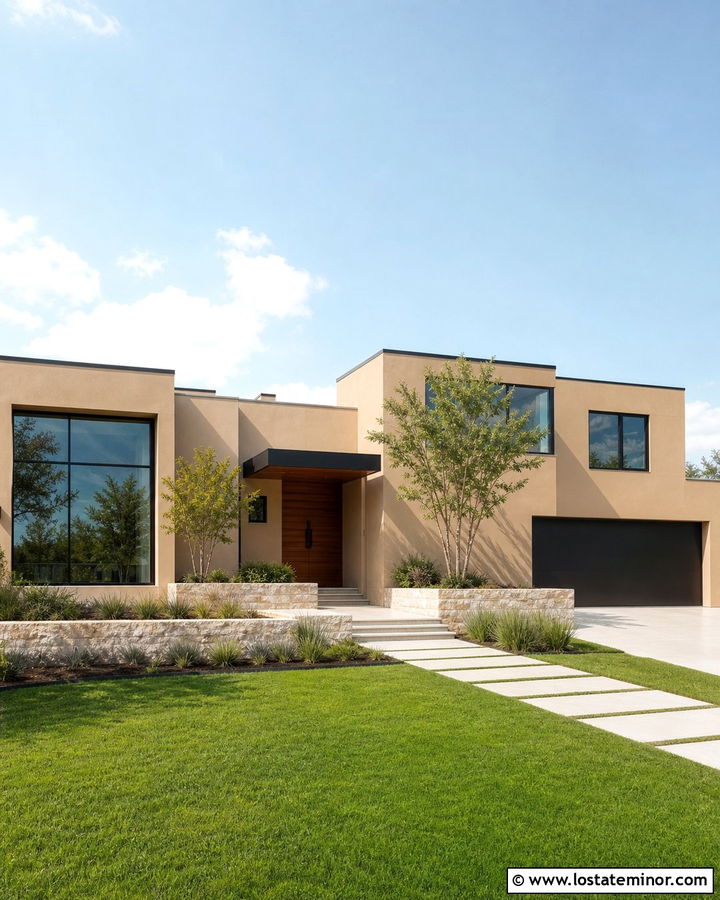
Floor-wide picture windows can transform a sand house when their black frames are treated as part of the complete architecture. On a contemporary suburban home, use smooth sand stucco, flat or low-pitched roofs, and a mix of large fixed windows with smaller operating panels. Carry black onto the front door, roof edging, garage door, and simple metal canopy. Add warm wood siding inside the recessed entry to balance the bold outlines. Light limestone walls or planter boxes can introduce texture while remaining close to the main body color. Avoid excessive window grids because clean, uninterrupted glass better suits the modern composition. A linear walkway, rectangular planting beds, and carefully placed ornamental trees will reinforce the geometry. The sand exterior keeps the expansive black-framed glazing warm enough for a residential setting.
22. Sand House With Arched Bronze Windows
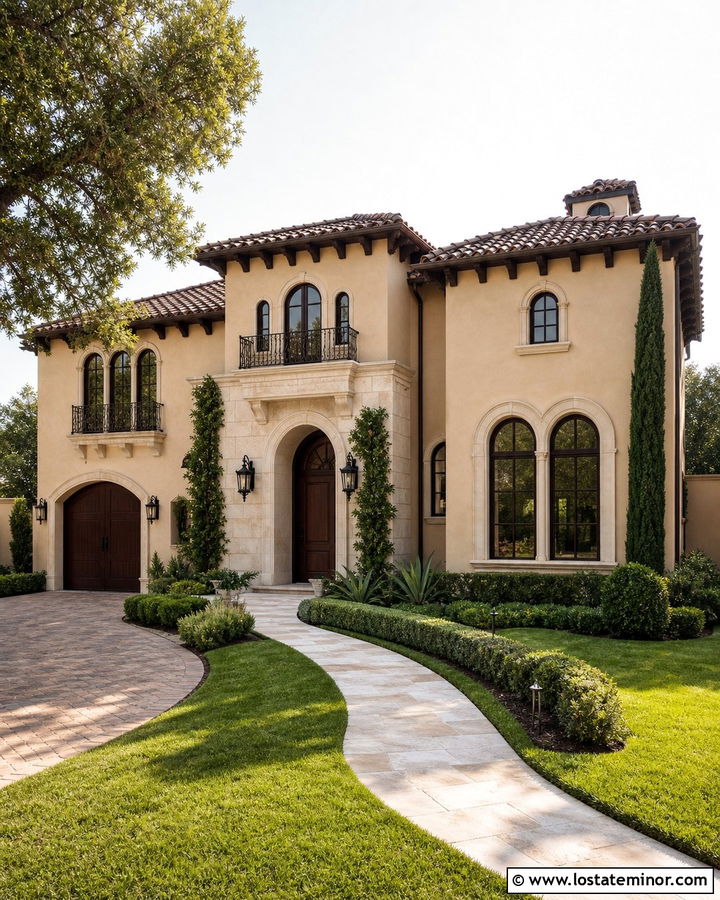
Arched bronze windows can create an elegant focal point on a sand-colored European-inspired house. Use one large arched window above the entry and smaller coordinated arches across the main floor. The bronze frames should relate to matching lanterns, gutters, balcony rails, and door hardware. Warm cream trim can lightly outline the openings without hiding their graceful shape. A clay-brown tile roof, limestone accents, and a dark walnut front door will support the old-world palette. Keep the sand stucco smooth and relatively simple so the windows remain the dominant decorative feature. Instead of using heavy shutters, rely on window proportions and masonry surrounds for depth. Formal shrubs, climbing greenery, and a curved stone walkway complete the exterior, giving the home a refined appearance without making it feel theatrical or overdesigned.
23. Sand House With White Bay Windows
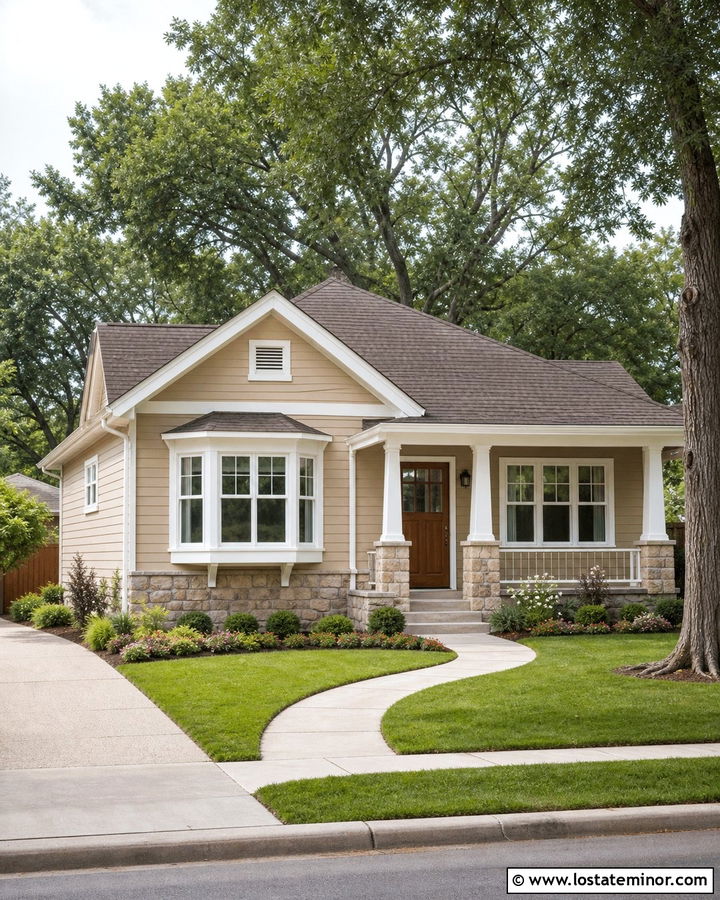
A white bay window adds depth and brightness to the front of a sand-colored bungalow. Use it beside a covered porch where the projecting structure can balance the entry and create a stronger street-facing composition. Paint the bay window frames, exterior casing, porch columns, and fascia the same warm white. Continue sand lap siding across the main walls, then add a medium-stained wood door and muted brown roof. A skirt of light fieldstone below the bay window visually supports its projection and connects it to the foundation. Traditional divided panes will reinforce the bungalow character without appearing overly formal. Layer low shrubs beneath the windows while leaving enough space for the architecture to remain visible. A curved walkway and compact lawn complete this comfortable, practical, and inviting exterior design.
24. Sand House With Black Clerestory Windows
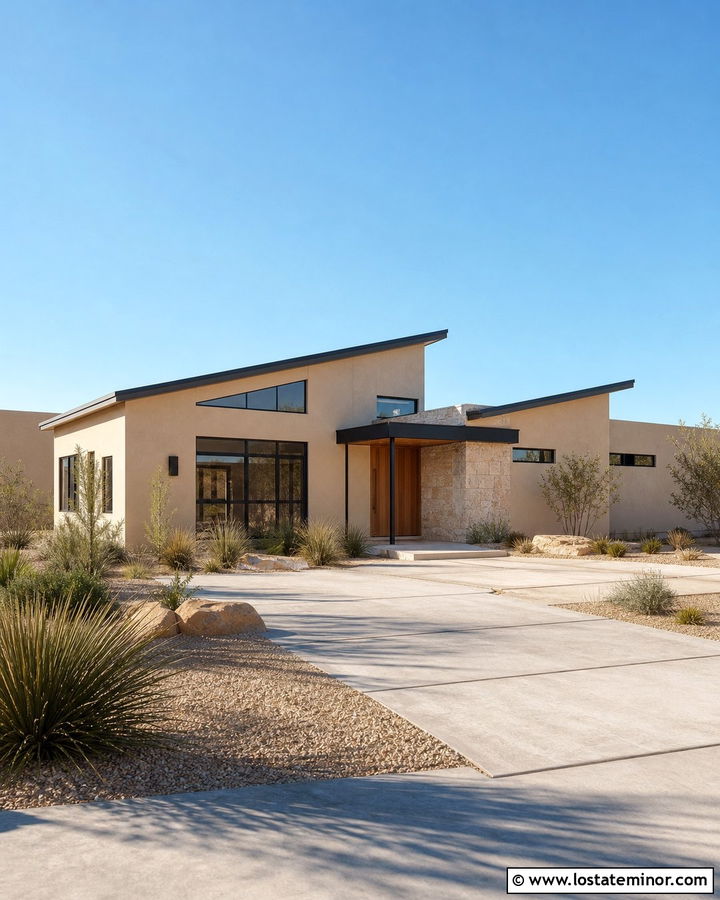
High clerestory windows outlined in black can bring a striking modern identity to a sand-colored home. Use them beneath an angled roofline on a desert contemporary house, paired with larger black-framed windows at ground level. The repeated frame color will visually connect the upper and lower openings. Continue black across the roof edge, slim entry canopy, and garage door, but introduce natural wood around the front entrance. Smooth sand stucco should cover most of the walls to maintain a calm background. Add rough limestone or locally inspired stone along one vertical feature wall for contrast in texture. Gravel landscaping, native grasses, and wide concrete pads will complement the geometric architecture. The final exterior feels open and distinctive while the warm sand color prevents the black-framed glazing from looking overly commercial.
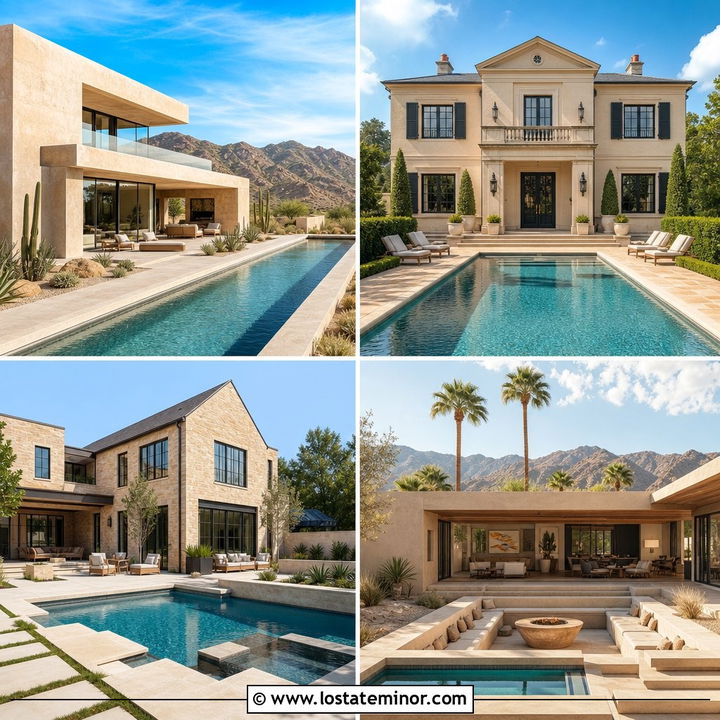
25. Sand House With Floor-To-Ceiling Black Windows
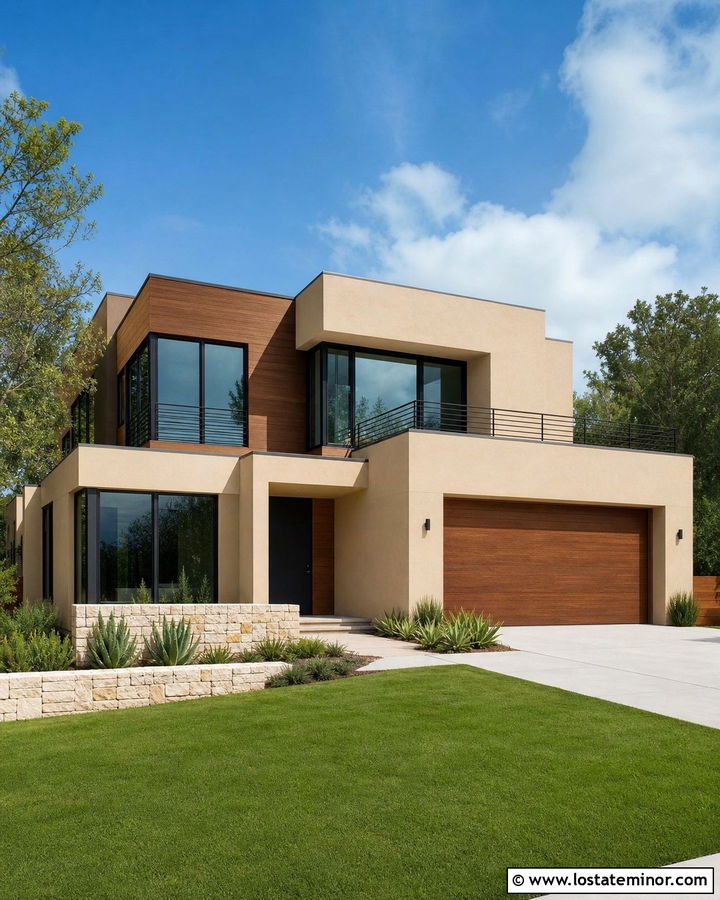
A modern sand house can support dramatic floor-to-ceiling windows when the remaining materials stay warm and restrained. Choose black aluminum frames for a two-story contemporary facade with stacked glazing and clean rectangular volumes. Use matching black on the flat roof trim, entry door, and narrow balcony railing. Introduce cedar siding on one section of the upper floor and around the garage to soften the glass and metal. Pale sand stucco should remain the dominant finish, creating a bright counterbalance to the large dark openings. A low limestone wall can define the entry path and repeat the exterior’s natural tones. Keep window coverings consistent inside so the street view remains orderly. Linear landscaping, a broad driveway, and minimal foundation planting complete the sophisticated full-house composition.
26. Sand House With Brown Divided-Light Windows
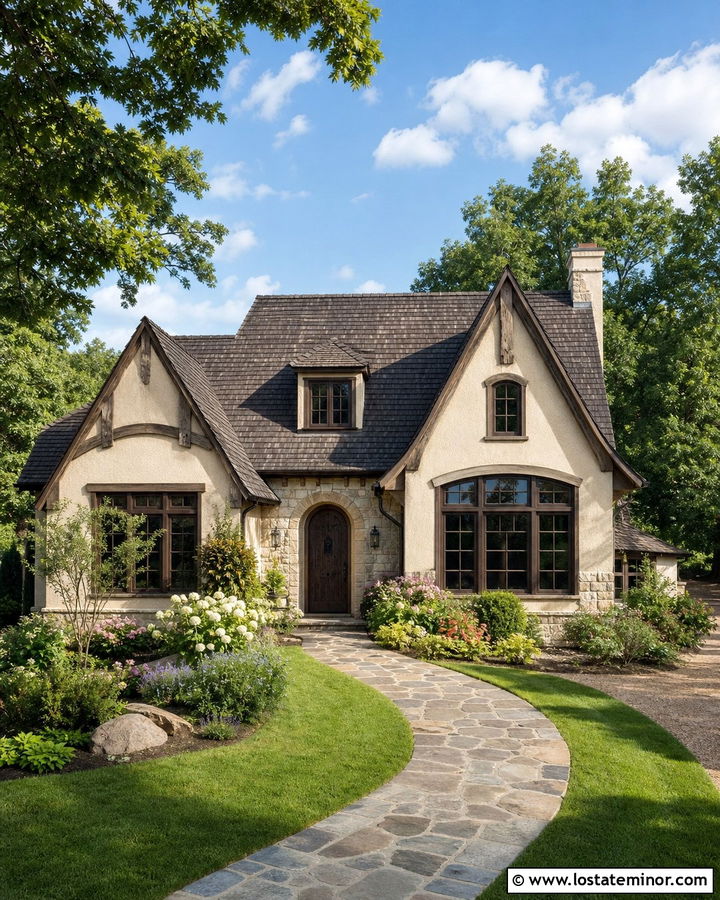
Brown divided-light windows can make a sand exterior feel warm, traditional, and highly detailed. Use this pairing on an English cottage with steep gables, mixed stone, and a small covered entrance. Deep brown wood or clad frames will coordinate with a stained arched door, brown gutters, and weathered timber accents beneath the roof. Keep the exterior trim a muted cream so it gently separates the windows from the sand stucco. Irregular limestone around the foundation and chimney will give the facade natural texture. A roof of charcoal-brown shingles will ground the lighter walls without looking black. Choose consistent grid patterns across windows of different sizes to keep the exterior organized. Informal hedges, flowering borders, and a winding stone path complete the cozy cottage character while maintaining polished curb appeal.
27. Sand House With Charcoal Corner Windows
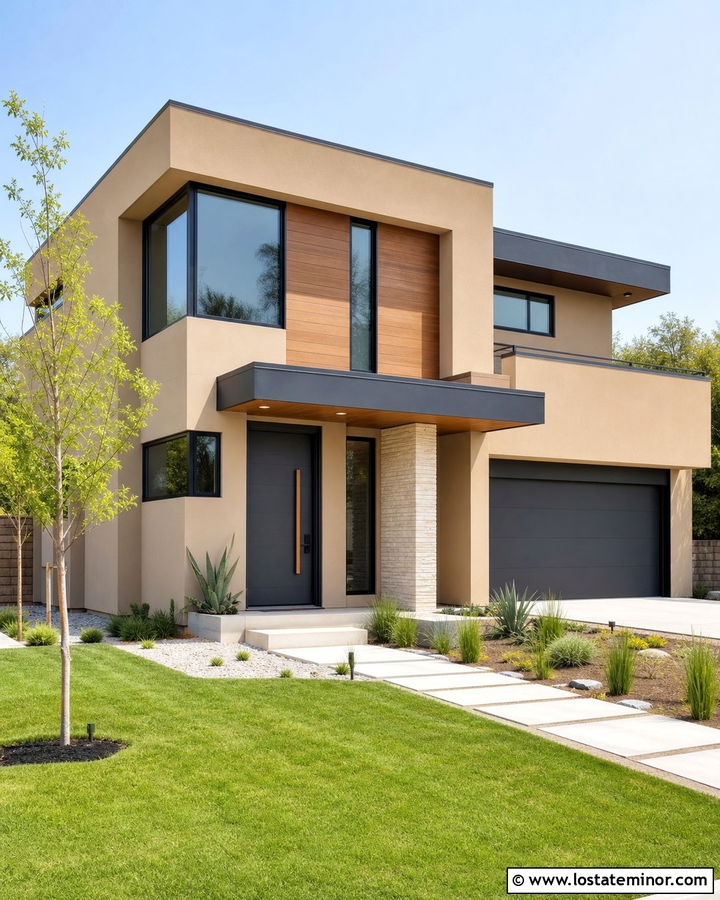
Corner windows give a sand-colored house an open, architectural look, especially when their charcoal frames wrap cleanly around the building. Use them on an angular modern home with flat roof sections, horizontal siding, and projecting upper volumes. Repeat charcoal on the fascia, garage door, and metal entry canopy to establish a clear accent system. Warm wood siding placed beside the corner glazing can soften the transition between dark frames and sandy walls. Keep the front door charcoal for continuity, but add a long wood handle for warmth. Pale concrete and light stone will support the neutral palette around the foundation. Structured grasses, small trees, and a geometric walkway should echo the building’s strong lines. This scheme feels contemporary and distinctive while remaining appropriate for a bright suburban setting.
28. Sand Cottage With Green Window Frames
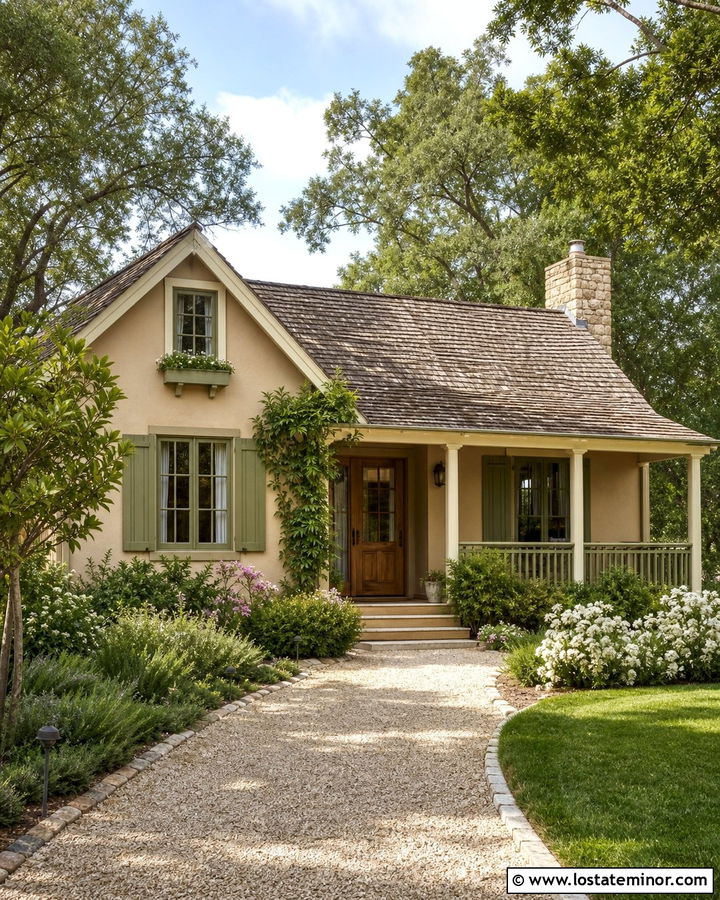
Muted olive-green window frames give a sand-colored cottage an earthy personality that works beautifully with established landscaping. Repeat the green on simple shutters, porch railings, and the front gate, while using cream on fascia, columns, and decorative trim. A medium oak door will bridge the warm sand walls and botanical accents. Choose a weathered brown-gray roof that looks natural beside both colors. Stone around the chimney and foundation can introduce irregular texture without making the facade too busy. Traditional casement windows with modest grids will suit the cottage architecture and make the green frames more noticeable. Finish the property with flowering shrubs, herbs, climbing vines, and an informal gravel path. The complete design feels garden-centered, personal, and colorful without losing the versatility of a neutral exterior.
29. Sand House With Matching Sand Window Frames
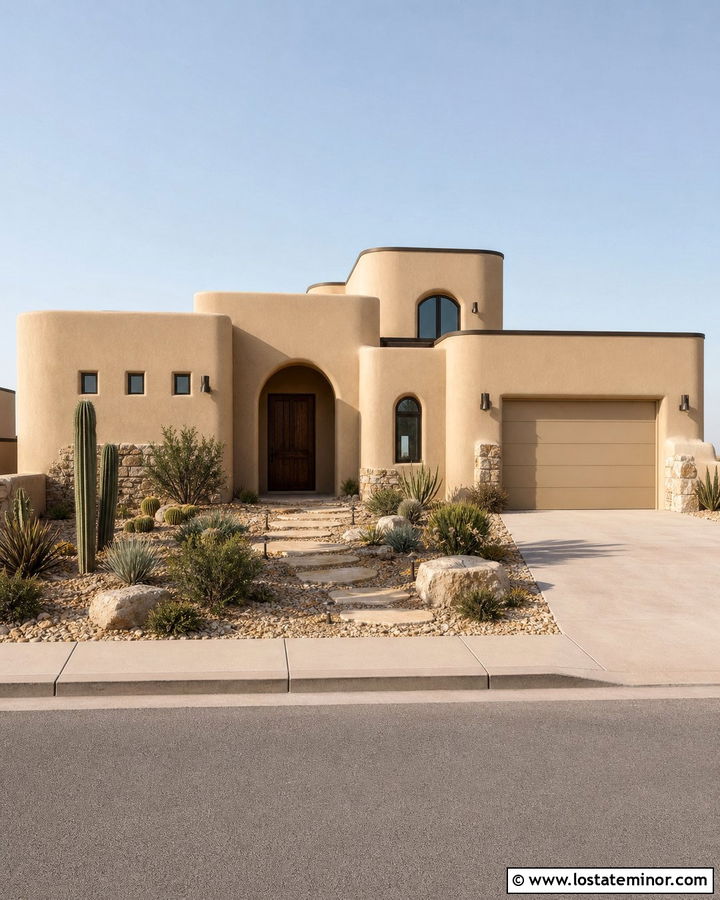
Matching sand window frames create a seamless exterior that emphasizes form, texture, and landscaping instead of strong color contrast. This monochromatic approach works well on a minimalist adobe-inspired house with deep window openings and softly rounded stucco edges. Keep the frames, walls, fascia, and garage door within the same sandy beige family. Introduce variation through a dark wood front door, bronze lighting, and a limited amount of natural stone. A flat roof with bronze coping will provide a thin, controlled outline. Because the colors are closely matched, window placement and shadow depth become especially important. Use a mixture of narrow vertical windows and larger square openings for visual rhythm. Pale gravel, sculptural plants, and broad stepping stones complete the understated design while reinforcing its warm, landscape-focused character.
30. Sand House With Black And Wood Window Frames
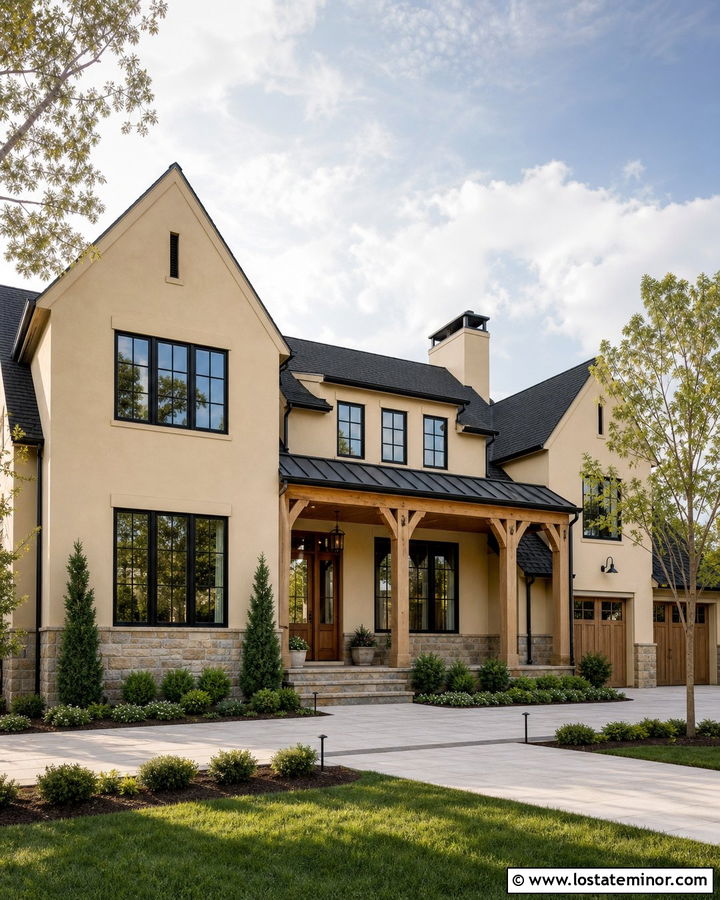
Combining black and wood window frames can make a large sand house feel layered rather than repetitive. Use black frames on the main two-story windows and natural wood frames around the porch, entry, or sheltered courtyard. The two finishes should have clearly defined locations instead of changing randomly across the facade. Repeat black on the roof, gutters, garage hardware, and exterior lights. Carry the wood tone onto the front door, porch ceiling, and selected siding panels. Smooth sand stucco or fiber-cement siding will give both window finishes a calm background. Add warm gray stone across the foundation to connect the neutral materials. Balanced trees, low shrubs, a broad walkway, and an open lawn will frame the house while allowing its carefully organized window design to remain the main attraction.
Conclusion:
The best sand exterior is more than one neutral paint color. Its window frames, roof, trim, entry, masonry, and landscaping should work together as a complete curb-appeal scheme. Black and charcoal create crisp definition, while bronze, brown, taupe, and natural wood emphasize warmth. White and almond offer a lighter traditional finish, and muted green or navy frames introduce controlled personality. Before committing, compare samples beside existing roofing, stone, brick, and hardscaping throughout the day. Also confirm which colors are available for your preferred window material. These **30 Sand House Design With Window Frames Ideas** offer a practical starting point for creating an exterior that feels cohesive, distinctive, and naturally welcoming.

Related posts: