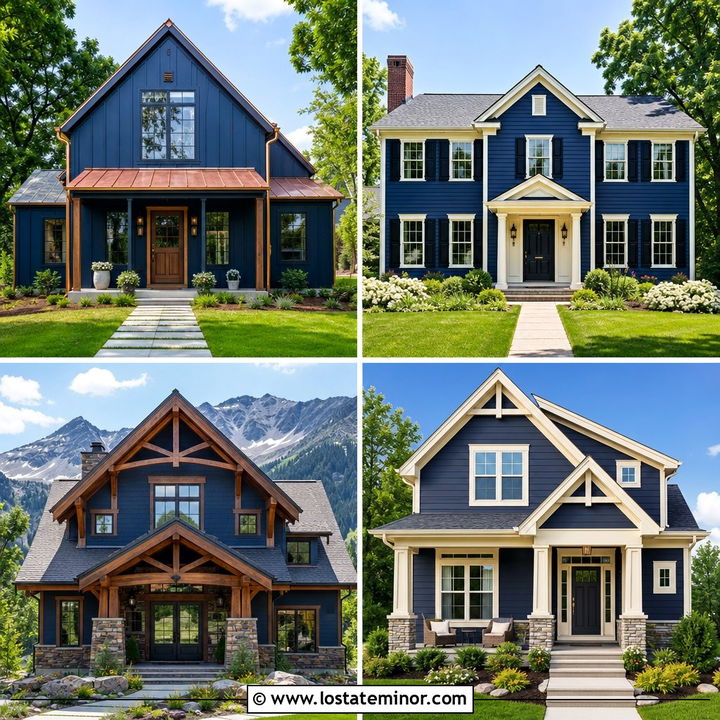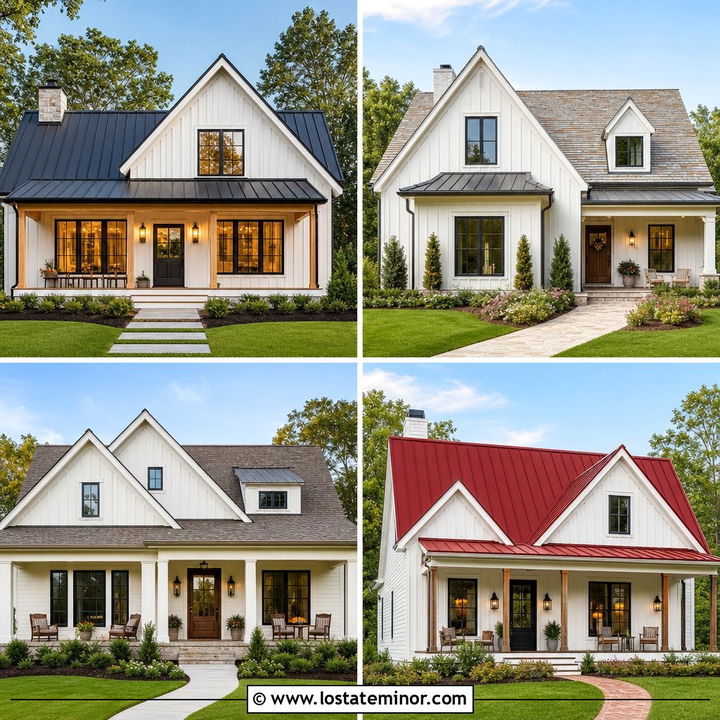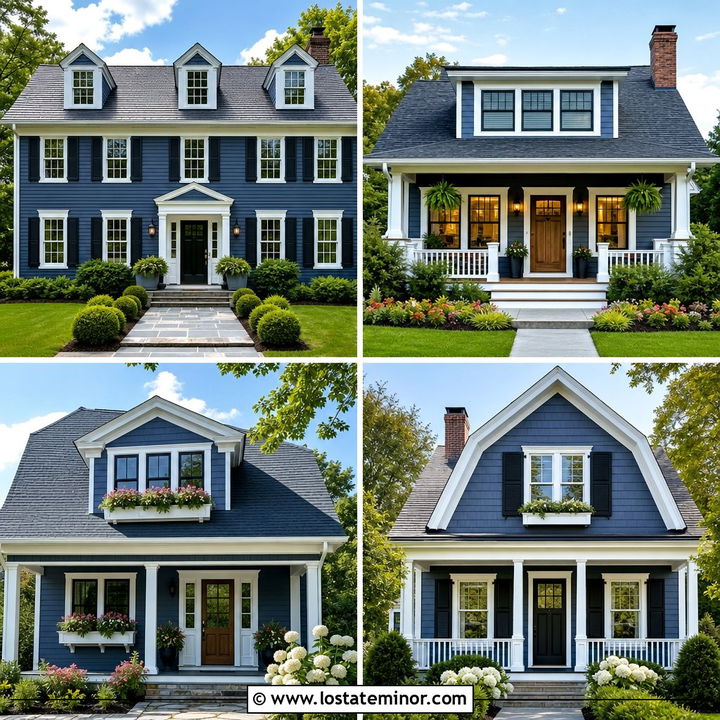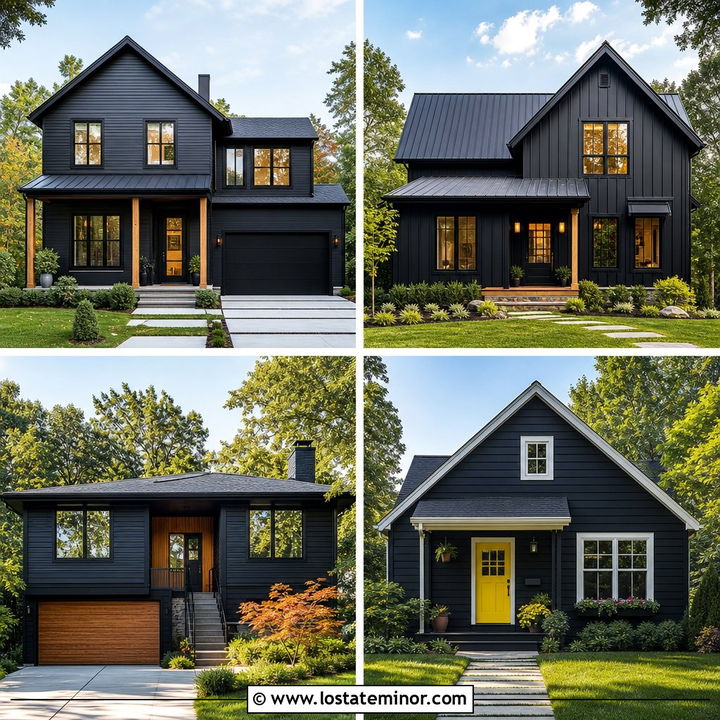
A deep blue facade can make almost any home feel more polished, grounded, and memorable. The best 30 Navy Blue House Design With Roof Ideas look beyond siding alone. They coordinate the navy body color with roofing, trim, masonry, doors, gutters, and natural wood details. Dark shingles create a dramatic silhouette, while pale gray roofing adds contrast and keeps the exterior lighter. Metal, slate, cedar, and clay roofs introduce even more character. Popular navy exterior colors also range from clear, saturated blues to softened shades with gray undertones, allowing the palette to suit traditional and modern architecture. () Whether you are renovating or planning new construction, the complete schemes below offer practical inspiration through 30 Navy Blue House Design With Roof Ideas.
1. Navy Blue House With Light Gray Shingle Roof
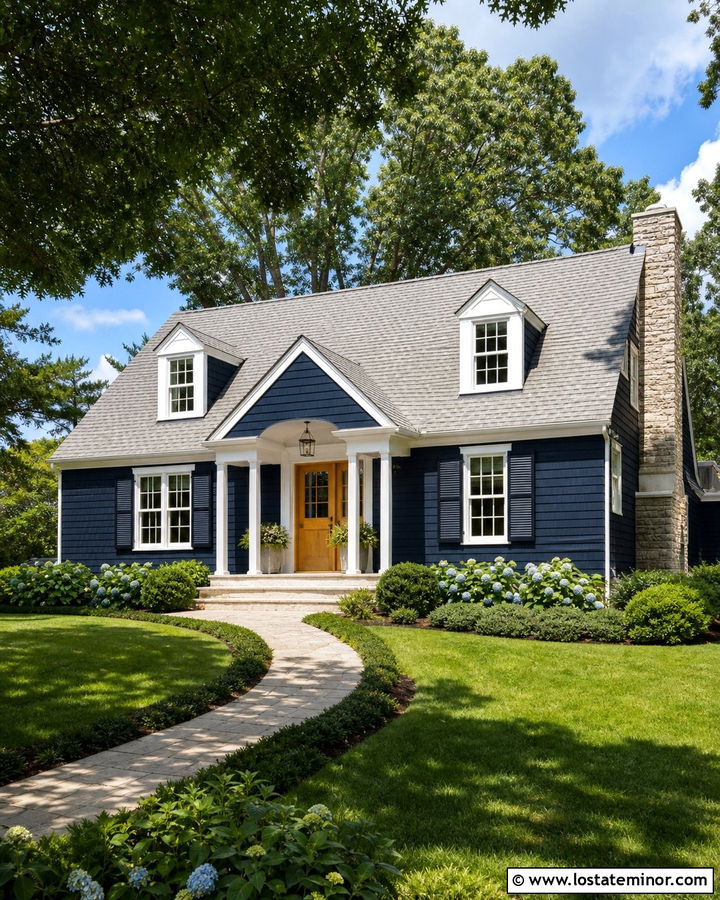
A light gray shingle roof provides clean contrast against dark navy siding without looking as sharp as solid black. Try a rich navy body color with bright white window trim, white fascia, and matching garage doors. The pale roof visually lifts the upper portion of the facade, making this combination especially helpful for a compact ranch or Cape Cod. Add a natural oak front door and light limestone around the porch to introduce warmth. Silver downspouts can blend quietly with the roof, while black lanterns create small points of definition. Because light gray shingles may carry blue, green, or brown flecks, compare samples beside the navy paint outdoors before finalizing the complete palette.
2. Navy Blue House With Charcoal Shingle Roof
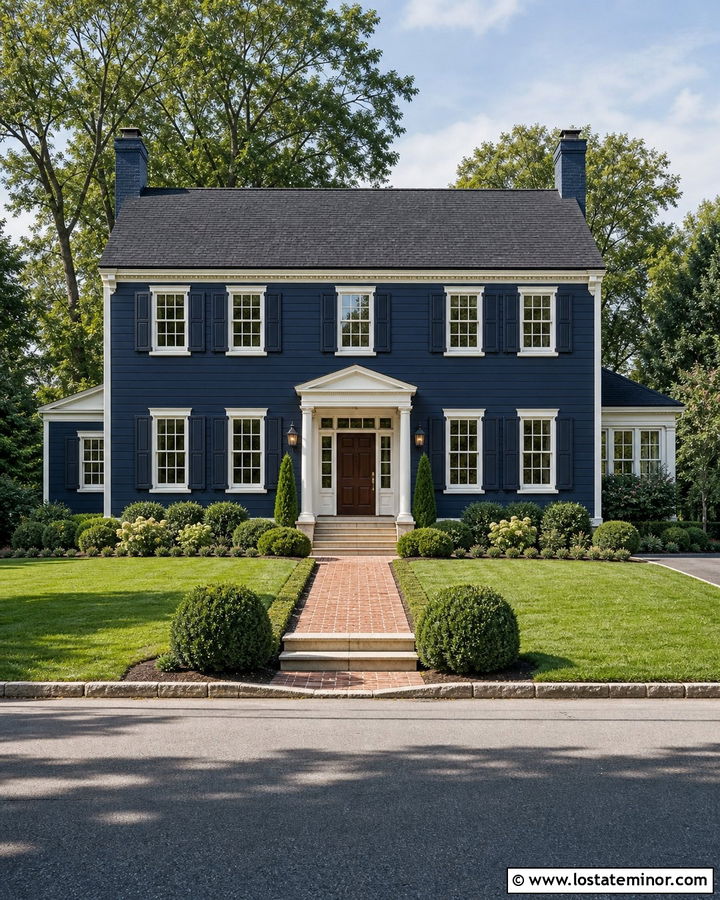
Charcoal shingles give a navy blue house a strong, tailored appearance while preserving enough tonal difference to reveal the roofline. This pairing works beautifully on a two-story colonial with symmetrical windows and a centered entrance. Use warm white rather than brilliant white on the trim to soften the transition between the dark surfaces. A walnut-colored door, aged brass hardware, and creamy stone steps bring warmth near eye level. Keep shutters navy or charcoal so the facade does not become overly busy. For a polished result, repeat the charcoal roof color on the gutters, porch floor, and metal railings. The finished exterior feels substantial, traditional, and balanced instead of dark and flat.
3. Navy Blue House With Black Shingle Roof
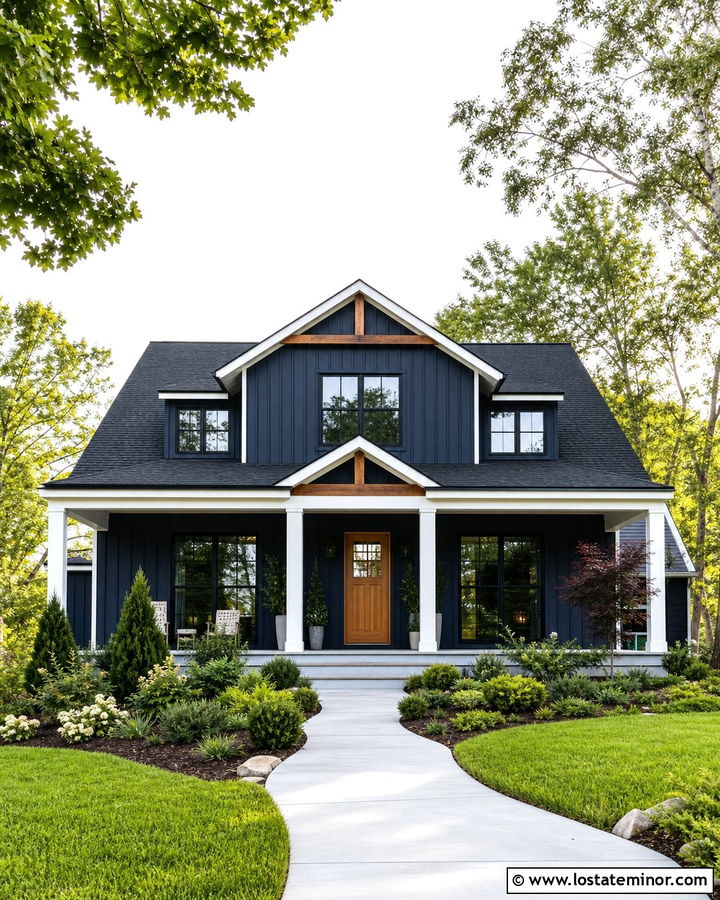
Can a black roof work with an already dark navy facade? Yes, when lighter materials clearly outline the architecture. On a modern farmhouse, combine deep navy board-and-batten siding with a matte black architectural shingle roof. Use crisp white on the fascia, window casings, porch columns, and garage doors to separate the two dark colors. A medium cedar front door and matching porch beams keep the palette welcoming. Black window frames, sconces, and gutters connect naturally to the roof. This bold scheme works best when the home receives generous daylight and has simple rooflines. Pale concrete, white hydrangeas, and layered green landscaping can also brighten the lower facade and keep the entire property from appearing too heavy.
4. Navy Blue House With Weathered Wood Roof
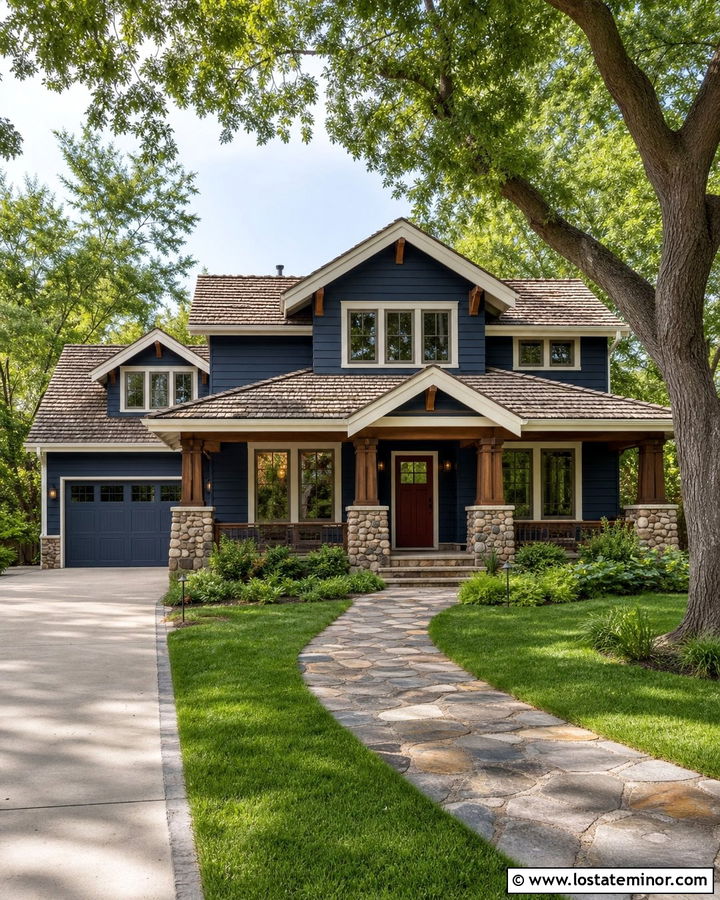
Weathered wood shingles contain a blend of muted brown, taupe, and gray that can make navy siding feel softer and more natural. Use this roof on a Craftsman home with tapered porch columns, wide eaves, and horizontal lap siding. Creamy trim will relate better to the roof’s warm flecks than a stark blue-white. Continue the earthy direction with river-rock porch piers, stained wood brackets, and a medium brown garage door. A deep burgundy or muted red front door can add character without competing with the navy. When choosing shingles, avoid mixes with strong orange patches. A restrained weathered blend creates a smoother bridge between the cool body color and warm architectural accents.
5. Navy Blue House With Brown Shingle Roof
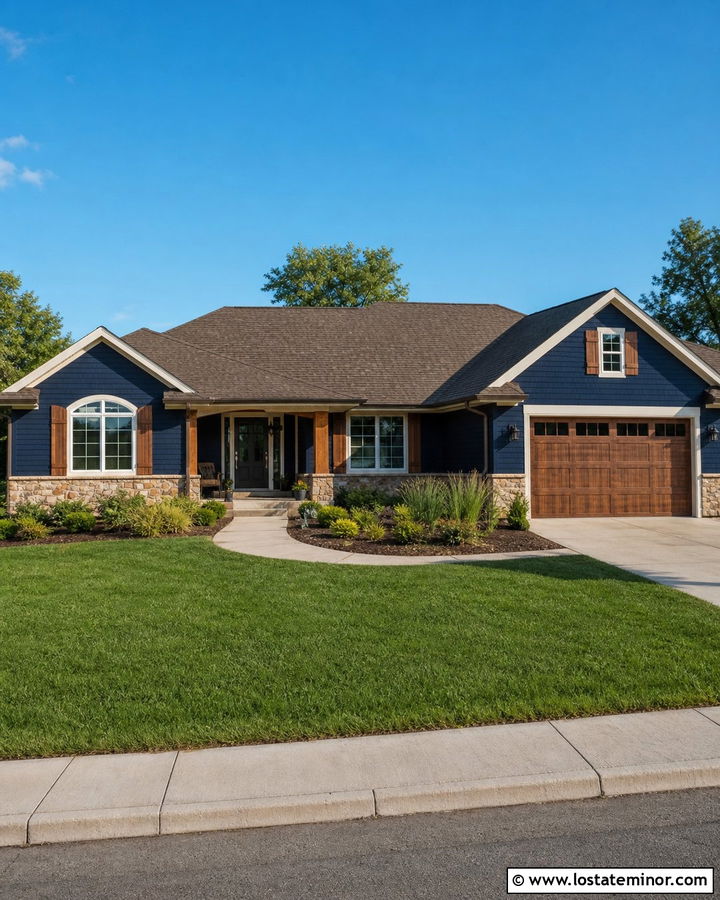
Brown roofing creates a relaxed and welcoming partner for navy blue, particularly when the house includes brick, wood, or warm stone. Picture a wide suburban ranch with navy lap siding, a dimensional espresso-brown roof, and soft ivory trim. Choose stained cedar for the front door, porch posts, and shutters so the warmer roof color appears intentional throughout the facade. Tan fieldstone along the foundation can further connect the brown and blue. Bronze gutters and exterior lights are less severe than black and suit this earthy palette. Maintain contrast by selecting a navy with a clear blue character instead of a nearly black shade. The result feels comfortable, established, and easy to integrate into a leafy landscape.
6. Navy Blue House With Black Metal Roof
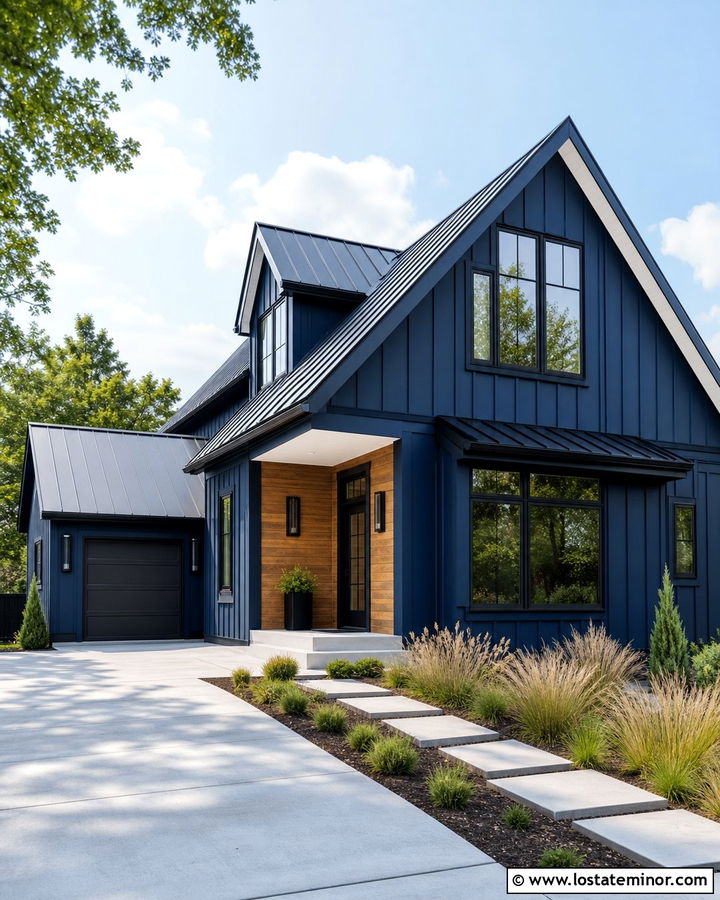
The crisp lines of a black standing-seam metal roof make navy blue siding look especially modern. Apply the combination to a simple gabled home with vertical board-and-batten siding and a covered entry. Keep window frames, gutters, and exterior lighting black so the roof becomes part of a consistent architectural framework. White trim can be limited to the soffits and narrow window surrounds, allowing the house to retain its contemporary mood. Warm cedar cladding around the entrance prevents the dark palette from feeling cold. Large concrete pavers, ornamental grasses, and understated foundation planting complete the streamlined look. Since metal reflects more light than shingles, view a full roofing sample in sun before choosing the final black finish.
7. Navy Blue House With Charcoal Metal Roof
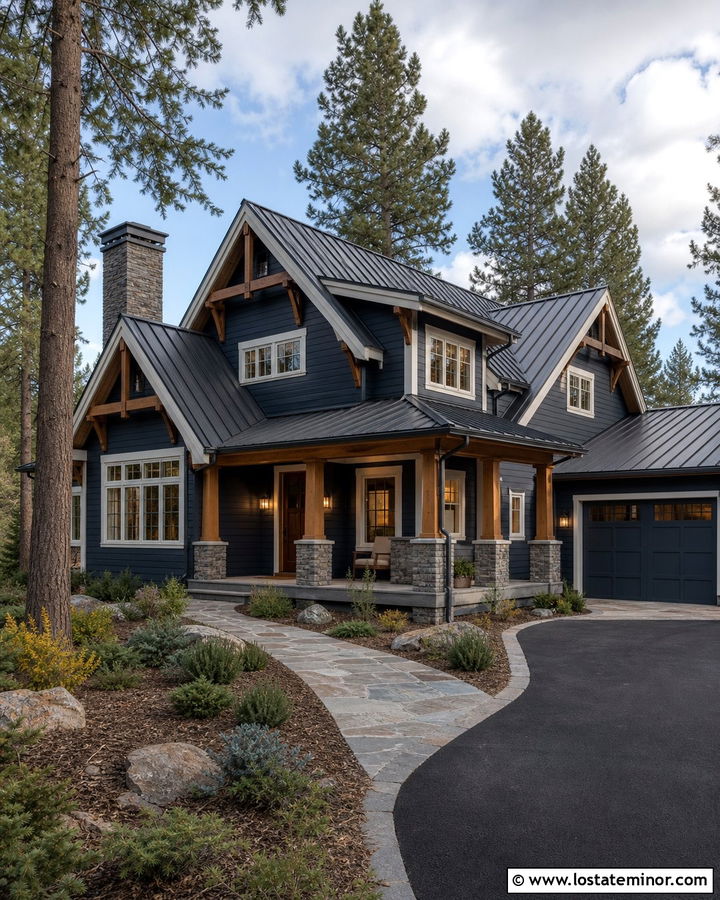
For a softer alternative to black metal, choose a charcoal standing-seam roof over a rich navy facade. The slight separation between the blue siding and smoky gray roof allows both finishes to remain visible. This combination suits a mountain cottage or modern Craftsman with multiple gables, stone chimneys, and exposed wood brackets. Use medium gray stone across the foundation and warm white around the windows. Natural cedar soffits and a stained timber door add warmth beneath the cool roof. Dark bronze or charcoal gutters will disappear into the roof edge. Repeating the navy color on siding across every elevation creates unity, while the stone and wood accents prevent the complete exterior from becoming a two-color composition.
8. Navy Blue House With Silver Metal Roof
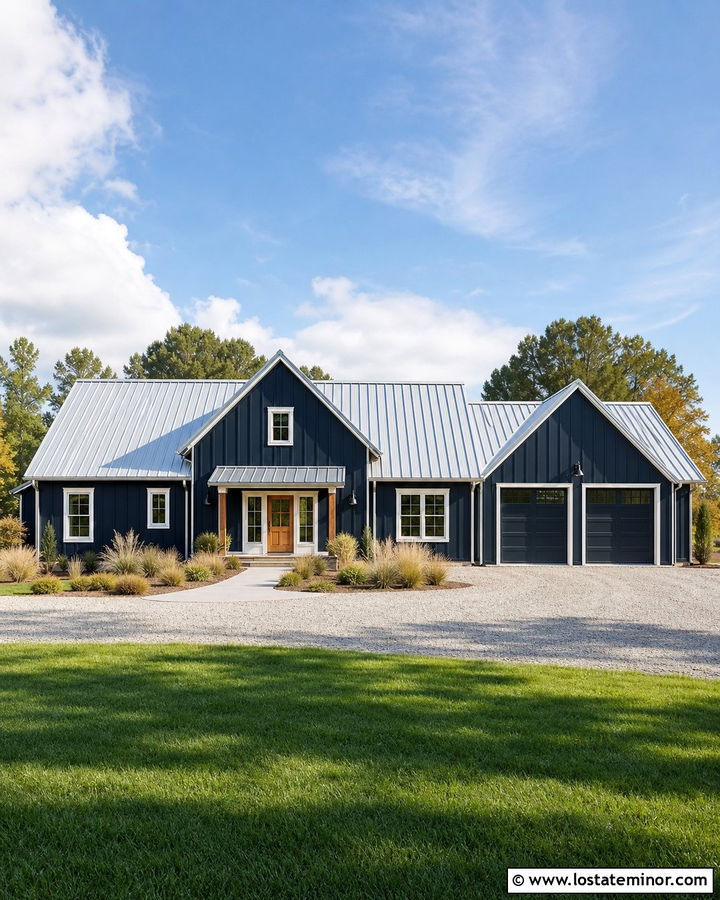
A silver metal roof reflects daylight and brings an airy, practical character to a navy blue house. It is a fitting choice for a modern barn home, rural farmhouse, or coastal cottage with a straightforward gabled roof. Pair the navy siding with white trim and galvanized metal gutters for a connected finish. A honey-toned wood front door introduces warmth, while pale gray concrete and light gravel reinforce the roof’s cool color. Avoid adding too many black accents because they may interrupt the clean relationship between silver, navy, and white. Instead, select brushed nickel hardware and dark blue garage doors. The completed house feels bright and distinctive, with enough contrast to showcase both the roof and facade.
9. Navy Blue House With White Metal Roof
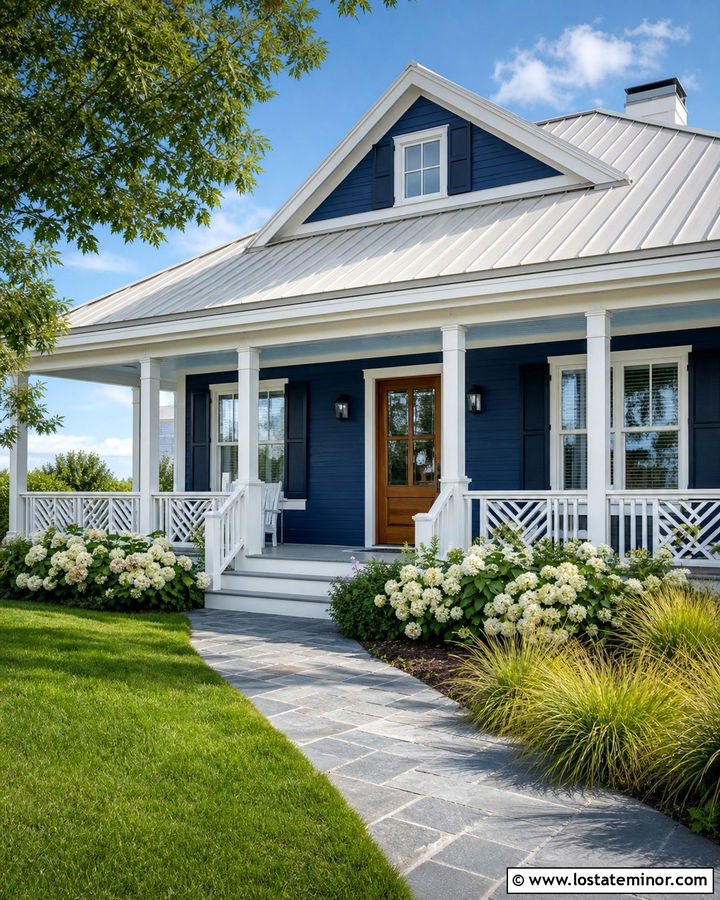
A white metal roof creates one of the brightest contrasts available for a navy blue exterior. This bold pairing is particularly effective on a coastal bungalow or Southern cottage with a deep porch and simple roof shape. Carry white onto the columns, railings, fascia, and window trim to make the roof feel connected rather than isolated. A pale blue porch ceiling provides a gentle transition overhead. Use natural teak or cedar for the door and porch furniture, then ground the property with a gray stone walkway. Navy shutters can keep the windows from looking overly outlined. In intense daylight, an off-white roofing finish may appear less glaring than pure white while still delivering the fresh, high-contrast effect.
10. Navy Blue House With Blue Metal Roof
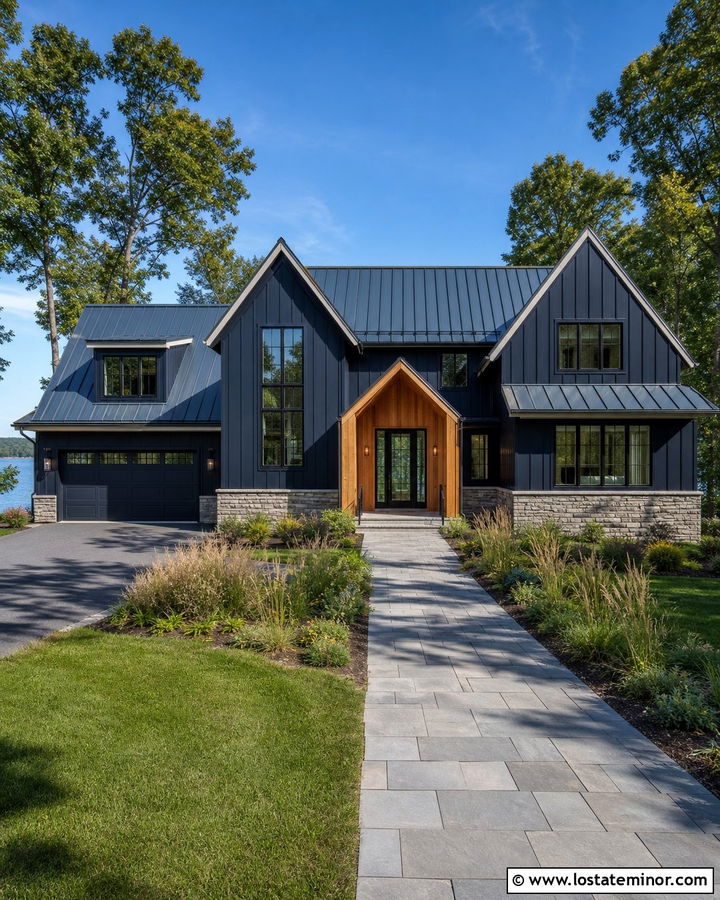
A tonal blue roof can produce a distinctive monochromatic exterior when the roof and siding remain visibly different. Select a blue-gray standing-seam metal roof that is lighter and more muted than the navy facade. On a contemporary lake house, combine it with narrow white trim, black-framed windows, and a warm cedar entry wall. The roof’s cool finish echoes the siding without making the building appear like one solid block of color. Gray ledgestone around the foundation can help separate the blue surfaces. Keep the garage doors navy to simplify the lower level. This restrained palette works especially well when the home is surrounded by trees, water, or open sky, where layered blues feel natural.
11. Navy Blue House With Bronze Metal Roof
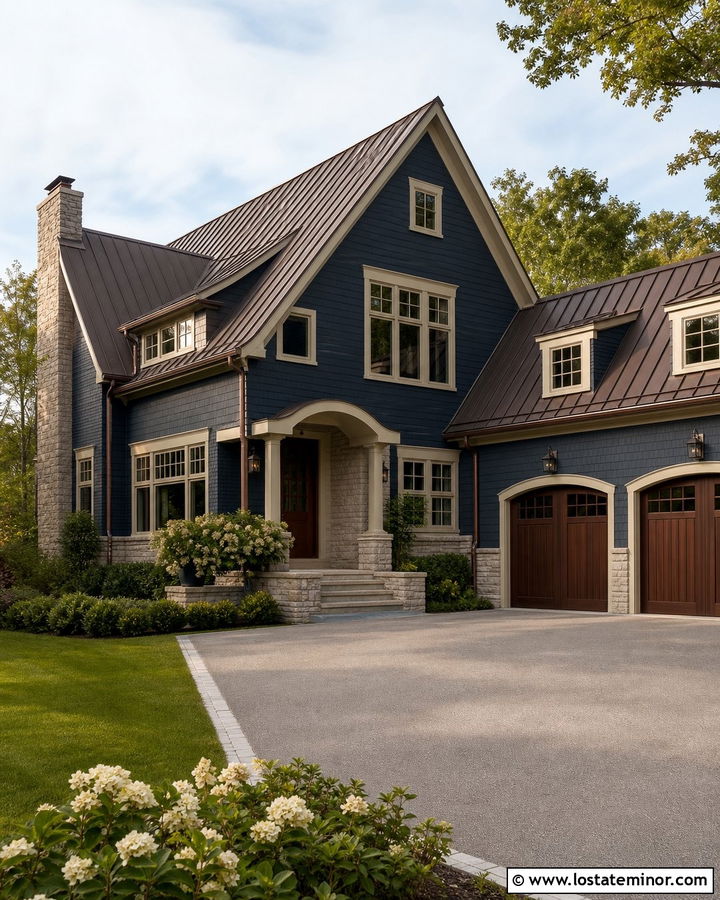
Bronze metal roofing brings subtle warmth to navy siding and can change character as sunlight moves across the surface. Use it on a transitional home with navy shake siding, creamy trim, and several steep gables. Dark bronze gutters, lanterns, and window frames should repeat the roof color at lower levels. Introduce natural stone containing beige, gray, and rust tones around the porch and chimney. A medium walnut front door will strengthen the warm connection without looking orange. Because bronze roofing varies from brown to nearly black, choose a finish that remains noticeably warmer than the navy. The complete scheme feels refined and dimensional, combining a cool wall color with metal and masonry accents that have an understated earthy quality.
12. Navy Blue House With Copper Roof Accents
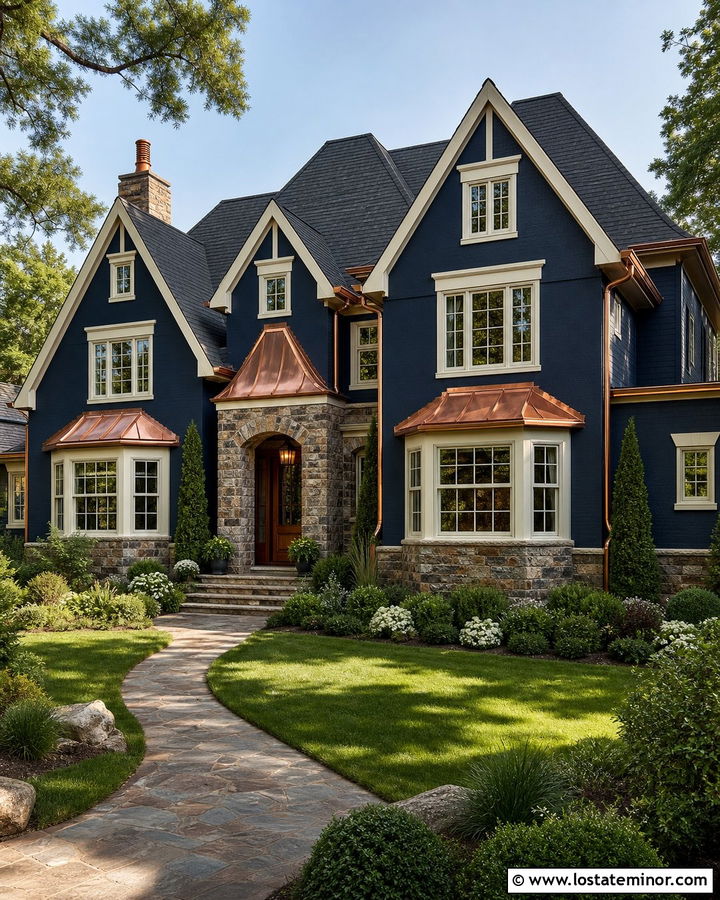
Copper does not need to cover the entire roof to transform a navy exterior. Small copper roofs over a bay window, porch, or dormer can become elegant focal points against navy siding and a charcoal main roof. Apply this combination to a traditional Tudor-inspired or shingle-style home with warm white trim. Repeat copper through gutters, downspouts, and modest entry details, but avoid using it on every decorative feature. Natural ledgestone with touches of tan and blue-gray supports both the cool siding and warm metal. A stained mahogany door completes the palette. Fresh copper begins bright and gradually develops patina, so consider how both the original and aged finishes will coordinate with the house.
13. Navy Blue House With Natural Slate Roof
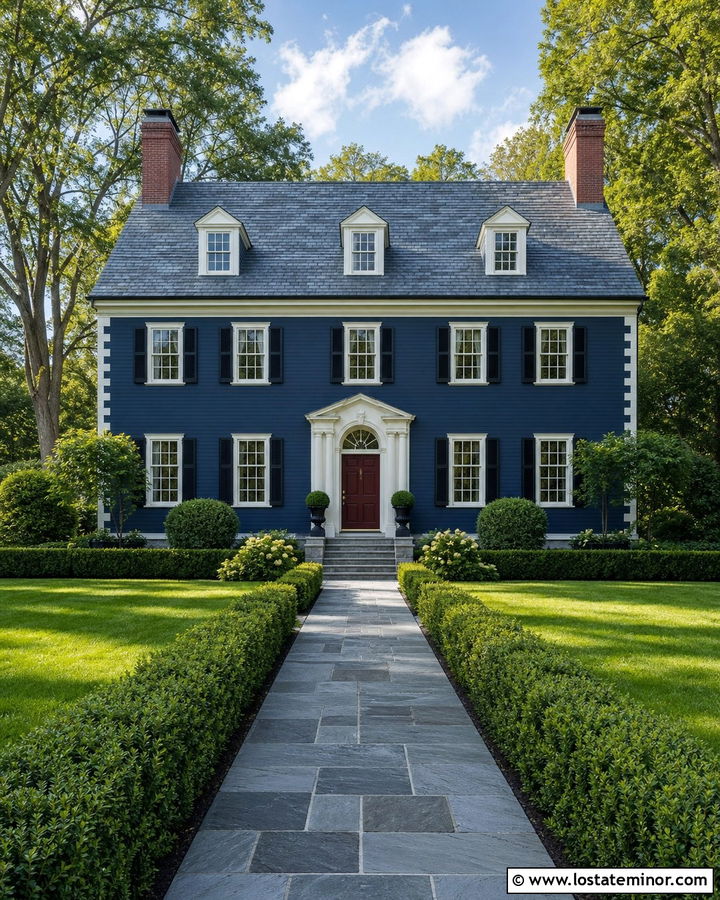
A slate roof gives navy blue siding a layered, enduring appearance because the individual tiles often display subtle blue, gray, and green variation. This pairing suits a stately Georgian or Colonial Revival home with dormers, brick chimneys, and formal symmetry. Choose a slightly softened navy rather than the darkest possible blue. Warm white trim will define cornices and windows without creating excessive glare. Paint the shutters nearly black and use a deep oxblood front door for a restrained traditional accent. Gray limestone steps can connect the facade to the slate overhead. Since natural slate already has strong texture, keep siding patterns and decorative details simple. The roof should remain the primary material feature of the full exterior.
14. Navy Blue House With Synthetic Slate Roof
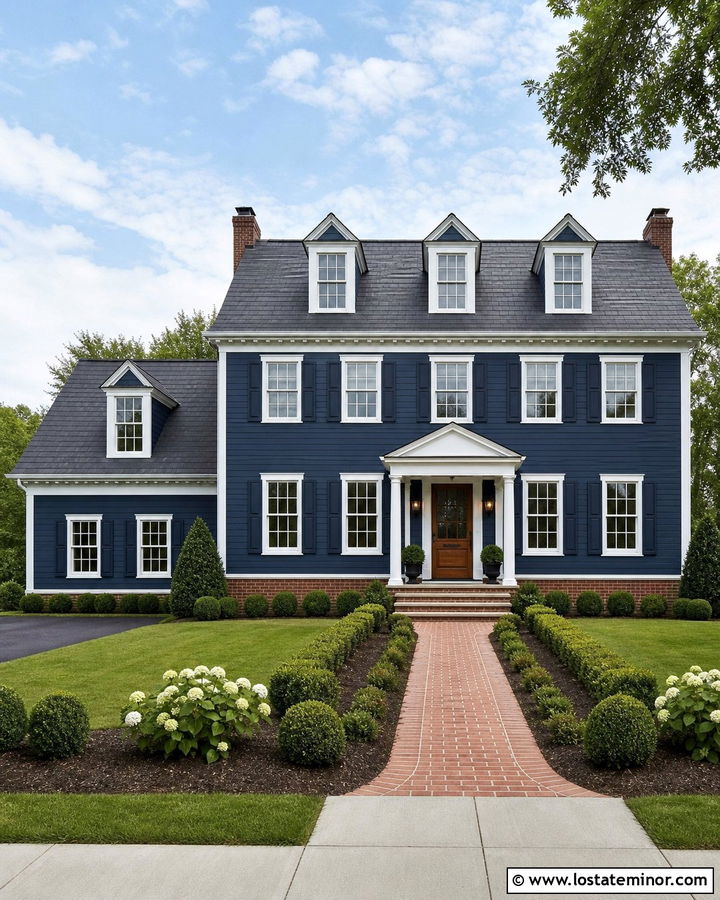
Synthetic slate can provide the tailored appearance of slate in a more uniform color range. Pair a dark gray synthetic slate roof with navy clapboard siding on a large suburban colonial. Use clean white trim, navy shutters, and a medium brown entry door to keep the scheme classic. A brick walkway and modest brick foundation introduce warmth below the cool facade. For better visual balance, select roofing tiles with a few complementary gray tones rather than an overly varied blend. Black lanterns and gutters can relate to the darkest roof pieces. This complete exterior is especially effective when the house has a prominent roof, because the structured tile pattern adds depth without competing with the navy body color or symmetrical architecture.
15. Navy Blue House With Red Clay Tile Roof
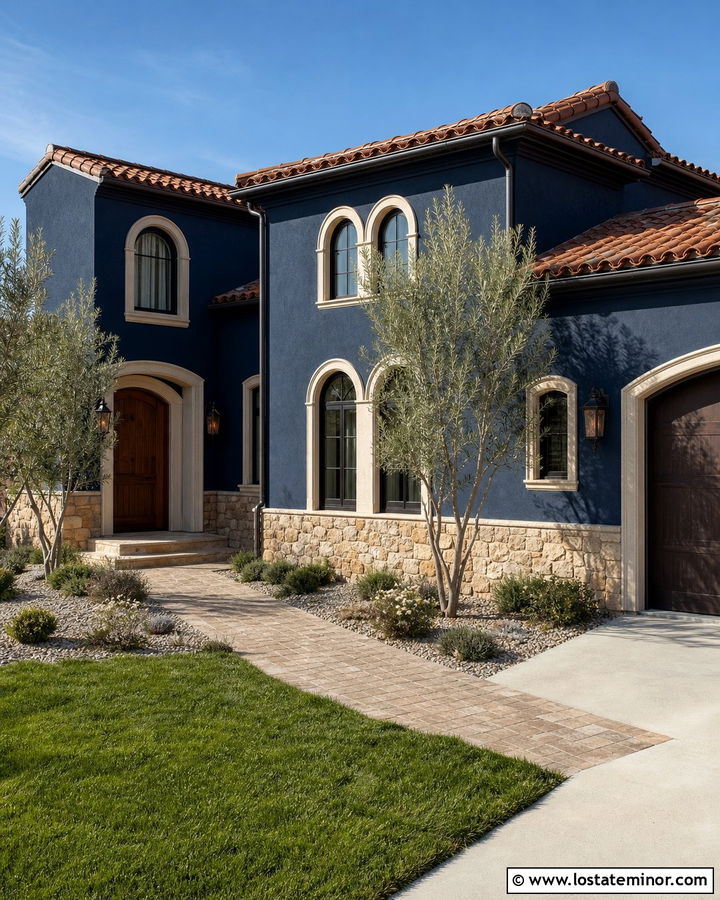
A red clay tile roof creates energetic contrast with navy blue walls and works best when the architecture supports the combination. On a Mediterranean-inspired house, use navy-painted stucco beneath curved terracotta tiles, then add creamy trim around arched windows and doors. Warm beige stone at the base helps connect the cool blue walls to the orange-red roof. Choose a solid wood door in a medium walnut stain and dark bronze lighting instead of stark black. Keep landscaping structured but lush, using olive trees, low shrubs, and gravel beds. Because both navy and terracotta are visually strong, limit extra accent colors. The finished exterior should feel intentional, regionally inspired, and balanced by generous areas of warm neutral material.
16. Navy Blue House With Terracotta Barrel Roof
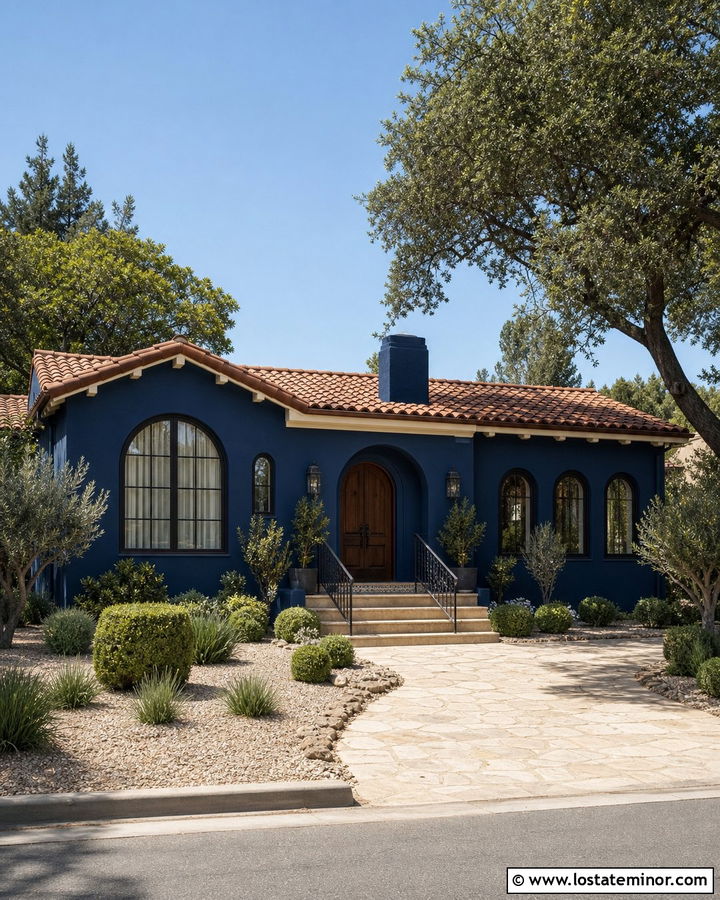
Terracotta barrel tiles bring depth and shadow to a navy blue exterior, especially on a Spanish Revival home with low stucco walls and an asymmetrical roofline. Choose a slightly dusty navy that holds its color in strong sunlight. Cream trim around the windows, eaves, and garage doors will bridge the cool facade and warm roof. Add a dark wood arched front door, wrought-iron railings, and sandy limestone paving. To avoid an overly themed result, use simple exterior lights and restrained planting. Repeating terracotta in a few walkway pots can connect the roof to ground level. The combination feels bold, but the aged texture of the tile and softened wall color keep it approachable rather than overly saturated.
17. Navy Blue House With Red Metal Roof
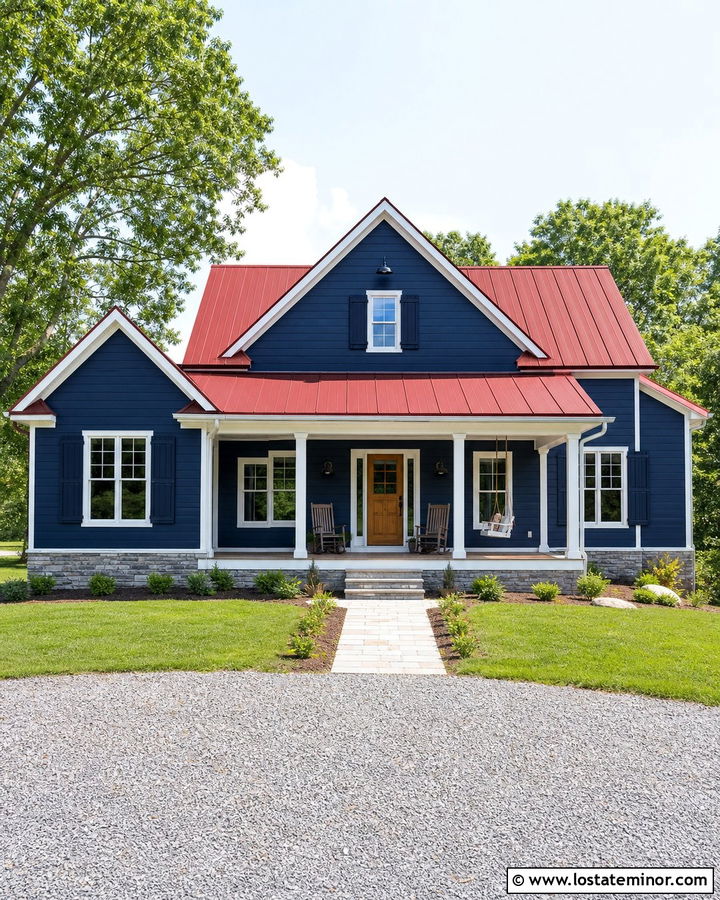
A red metal roof turns a navy blue house into a memorable statement, so the remaining palette should stay controlled. This pairing works on a rural farmhouse, lake cabin, or simple cottage with a clean rectangular footprint. Select a muted barn-red roof instead of a bright primary red. Use warm white trim to outline the eaves, windows, and porch columns. A natural wood front door and gray stone foundation can settle the stronger colors. Keep shutters navy so another large red surface does not compete with the roof. Black barn lights add definition without introducing a new hue. Surrounded by green lawn and mature trees, the red, navy, and white scheme feels cheerful, traditional, and clearly organized.
18. Navy Blue House With Green Metal Roof
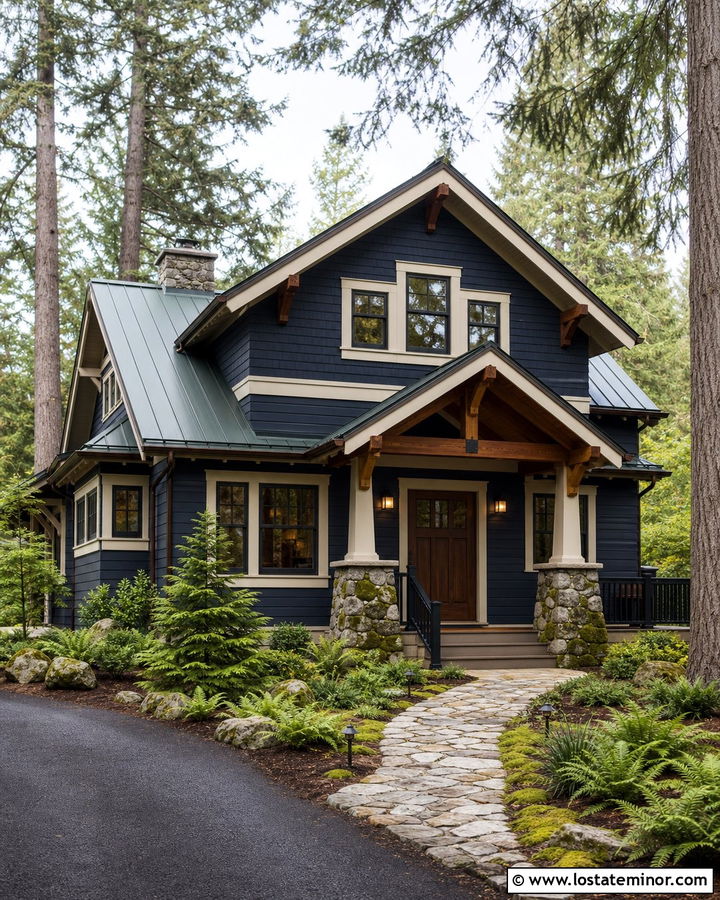
Green roofing requires careful color selection, but it can complement navy siding when both shades are muted and grounded. Choose a dark forest or patinated green metal roof instead of a vivid green. On a woodland Craftsman, combine it with gray-toned navy siding, mossy stone piers, and warm cream trim. Stained oak brackets, porch columns, and a matching front door provide an essential natural transition. Bronze gutters and lighting will relate more smoothly to green than sharp black fixtures. Repeat the roof color only in small details, such as planters or porch furniture. With layered evergreen landscaping, the finished exterior feels connected to its surroundings while the navy walls retain enough contrast to remain visually distinct.
19. Navy Blue House With Cedar Shake Roof
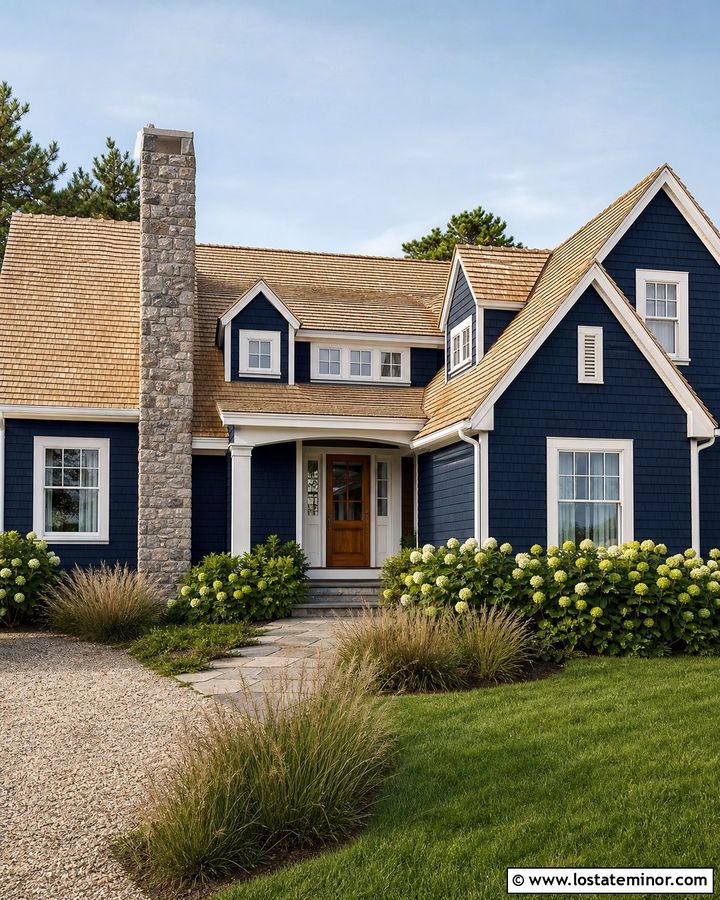
Nothing softens a dark navy facade quite like the natural variation of cedar roofing. On a coastal shingle home or classic Cape Cod, pair weathering cedar shakes with navy siding and creamy white trim. New cedar appears golden, while aged cedar turns silver-gray, so the exterior palette should work with both stages. A natural cedar door may blend into the roof at first and then develop its own patina. Use gray fieldstone around the chimney and foundation to support the future weathered color. White gutters keep the roof edge light and coordinate with the windows. This material-rich scheme feels relaxed and authentic, allowing wood grain, shingle texture, and deep blue siding to share attention.
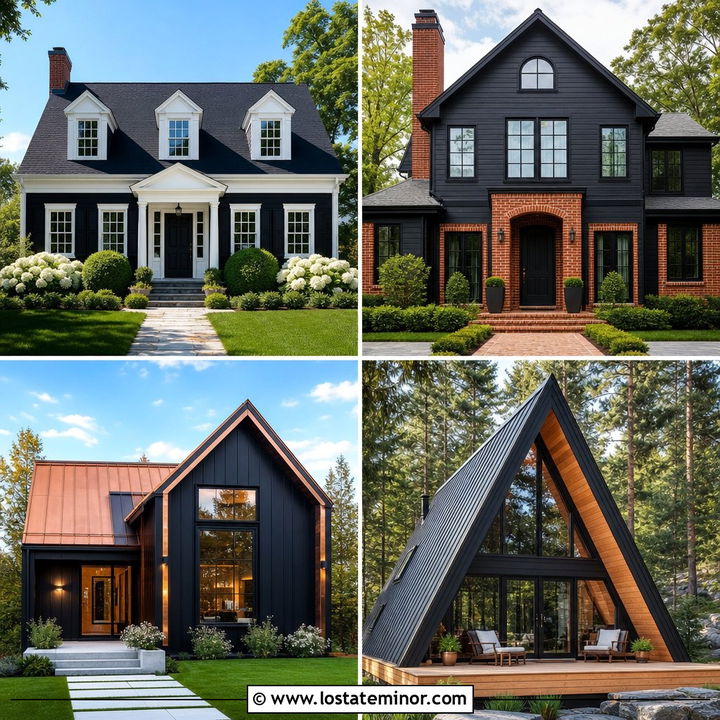
20. Navy Blue House With Gray Cedar Roof
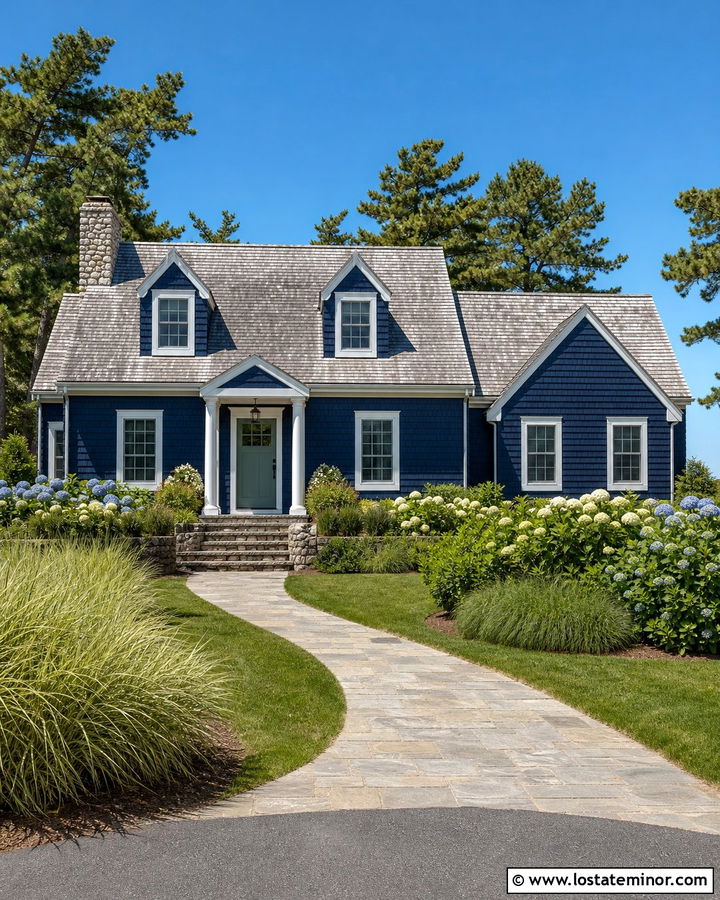
Already-weathered gray cedar creates a quiet, coastal companion for navy blue siding. This combination is ideal for a New England cottage with shake siding, white-framed windows, and small gabled dormers. Use a slightly warm white on the trim so the home feels comfortable rather than overly crisp. A muted sea-glass green front door can add a subtle coastal accent, while natural stone steps reinforce the weathered materials. Keep gutters and downspouts light gray to blend with the roof. Simple foundation planting, hydrangeas, and beach grasses suit the relaxed palette. The roof’s silvery texture prevents the dark navy from feeling formal, resulting in a complete exterior that appears established and naturally shaped by its environment.
21. Navy Blue House With Mixed Gray Roof
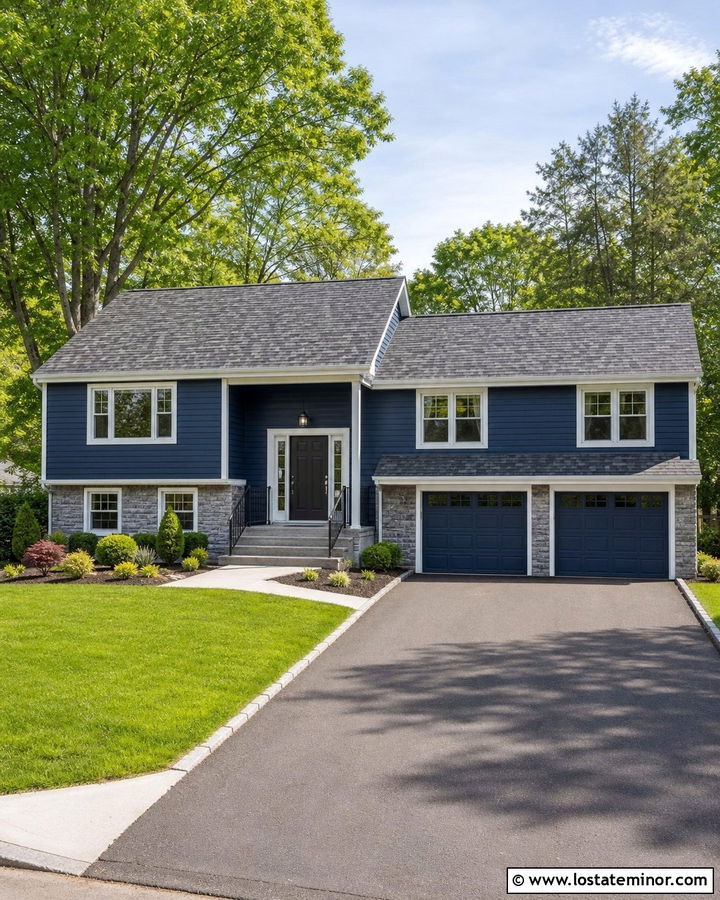
Dimensional shingles containing charcoal, medium gray, and pale gray can add movement to a simple navy exterior. Use this roof on a split-level home that needs stronger architectural definition. Paint the siding a clear navy, then select soft white for the fascia, window trim, and garage door. Introduce charcoal on the front door and porch railings to repeat the darkest roof granules. Light gray stone across the lower level can visually connect the roof to the foundation. Avoid shingles with strong brown streaks unless warm masonry is also present. By carrying several roof tones down through the facade, the exterior gains depth and unity. This approach can make a basic roofline and straightforward architecture feel more carefully designed.
22. Navy Blue House With Black And Gray Roof
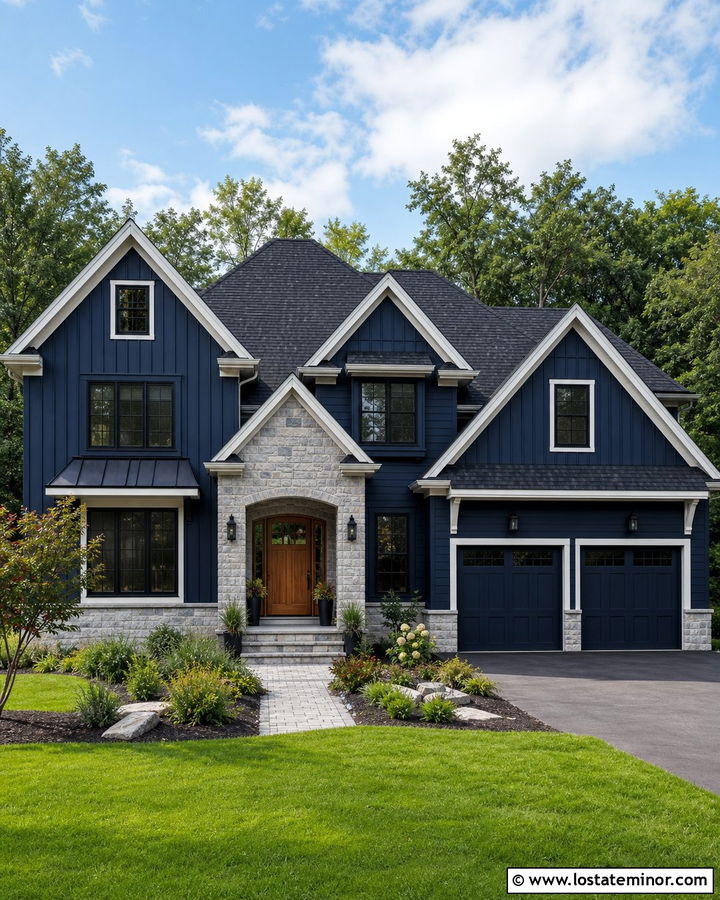
A black-and-gray shingle blend gives a navy house dramatic definition without the flatness of a single solid roof color. It is an effective choice for a large transitional home with multiple peaks, dormers, and mixed siding. Use navy horizontal lap siding on the main walls and navy board-and-batten in the gables. Bright white trim will outline the complicated roofline, while black windows and gutters connect to the darkest shingles. Add light gray stone around the entrance and a warm wood door to soften the facade. Keep the garage doors navy rather than white if they occupy a large area. The result feels cohesive because every repeated color has a clear architectural purpose.
23. Navy Blue House With Gray Roof And White Trim
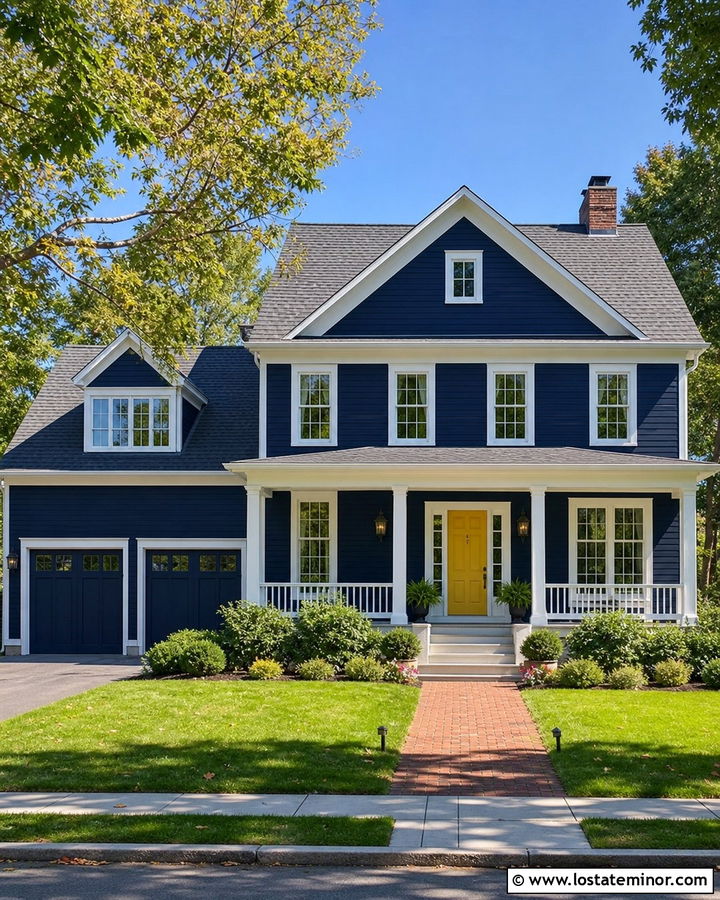
Gray roofing, white trim, and navy siding form a straightforward three-color palette that works across many American house types. On a traditional two-story home, let the navy cover the siding and garage doors while white highlights the windows, porch columns, and fascia. Select a medium gray roof that is clearly lighter than the walls but dark enough to hide everyday weathering. A yellow front door can add a cheerful focal point without changing the larger palette. Use black hardware sparingly on the door and lighting. Pale concrete steps and a brick walkway provide grounded neutrals. This combination is easy to read from the street, with each color clearly defining a different part of the architecture.
24. Navy Blue House With Black Roof And Wood Trim
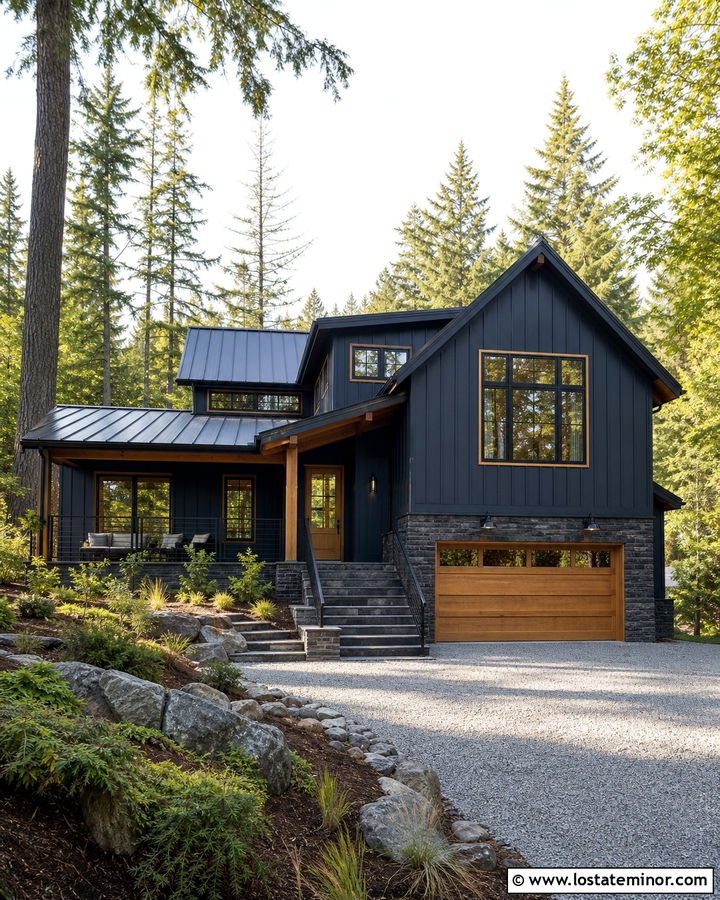
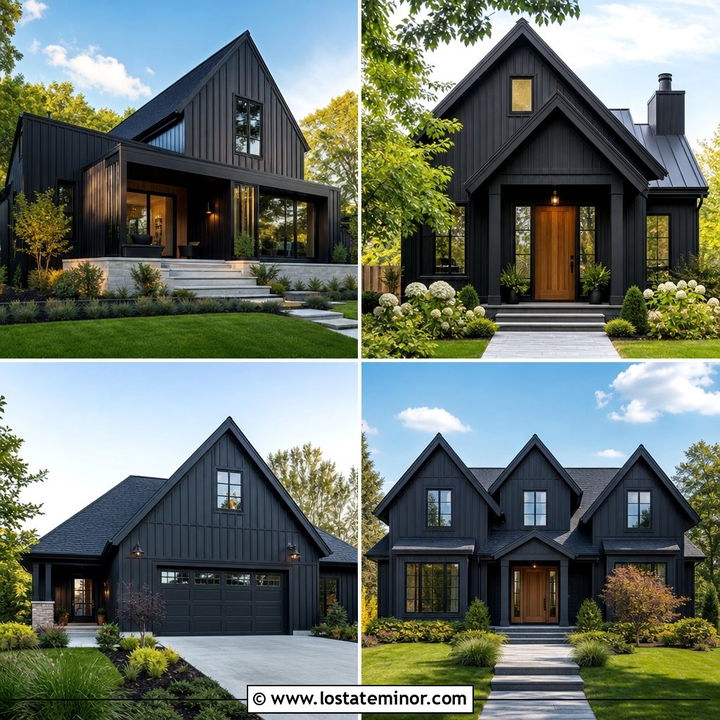
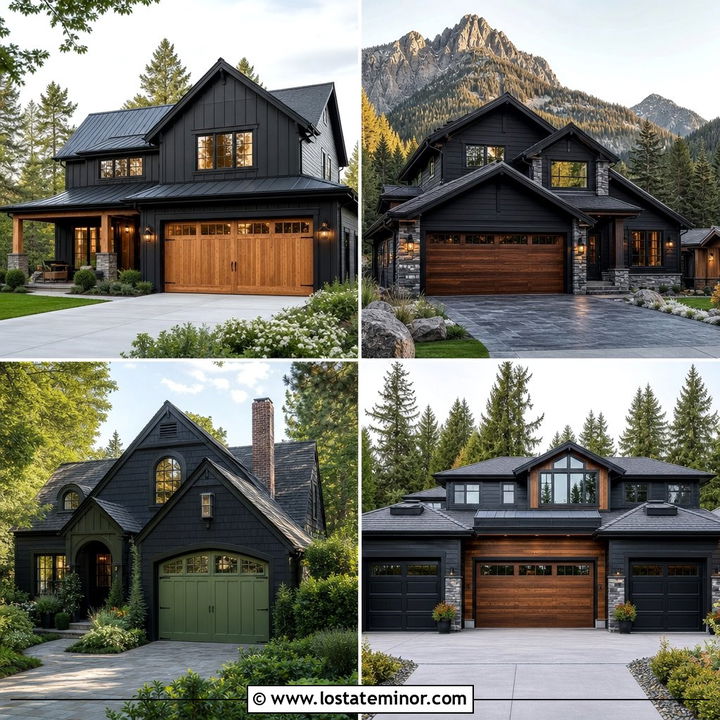
Dark roofing can feel warmer when natural wood replaces conventional white trim. On a modern cabin, pair a black metal or shingle roof with deep navy vertical siding and cedar window surrounds. Continue the cedar across the soffits, front door, porch ceiling, and garage door. Black gutters and window frames should merge visually with the roof, leaving the wood to create contrast against the blue. A low foundation of charcoal stone grounds the house without adding another light color. This exterior works especially well on a wooded or sloped property where the dark palette blends into the setting. Use simple native landscaping and a gravel drive to preserve the home’s modern, nature-focused character.
25. Navy Blue House With Gray Roof And Stone Porch
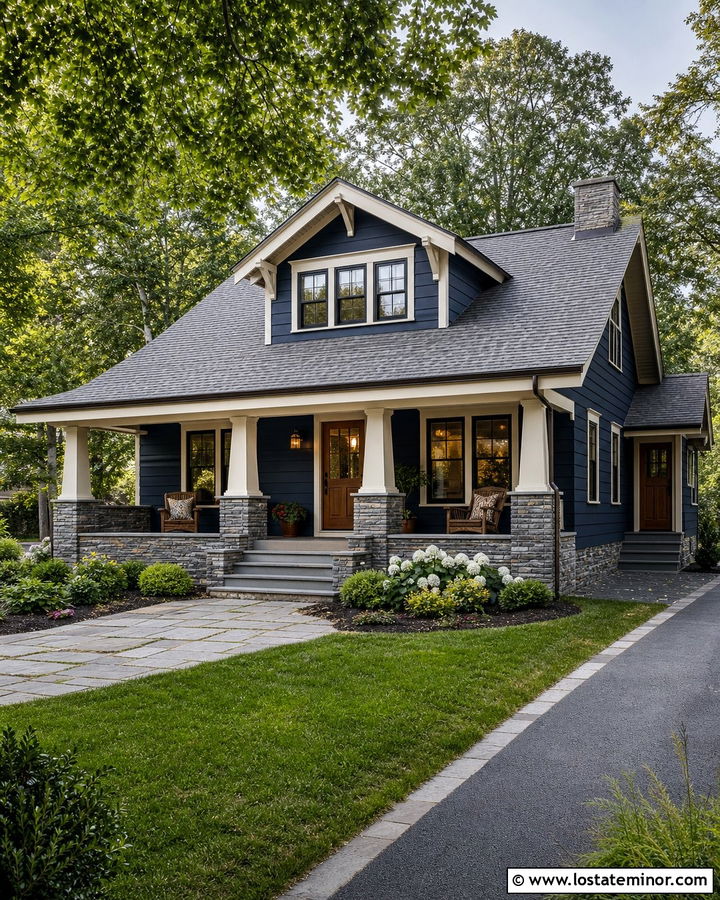
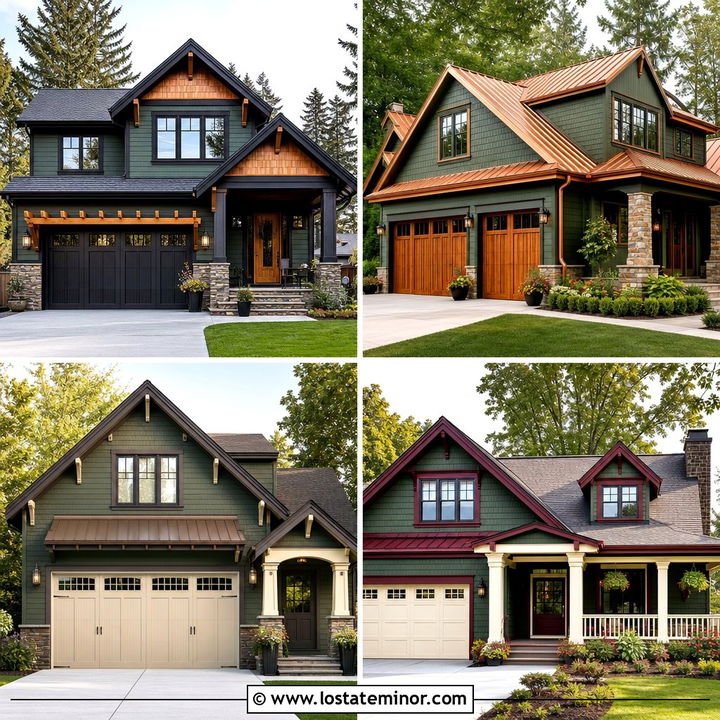
Stone can serve as the bridge between navy siding and a gray roof. For a Craftsman bungalow, choose a medium-gray architectural roof and a rich navy body color. Wrap porch piers and the lower foundation in ledgestone containing blue-gray, beige, and charcoal pieces. Cream trim and tapered columns will brighten the covered porch, while a stained fir door adds warmth. Match the gutters to the roof rather than the trim so the eaves remain visually quiet. Bronze lights work naturally beside both the stone and wood. The complete combination highlights the home’s horizontal proportions and handcrafted details. It also distributes color and texture evenly from the roof down to the walkway.
26. Navy Blue House With Brown Roof And Brick Accents
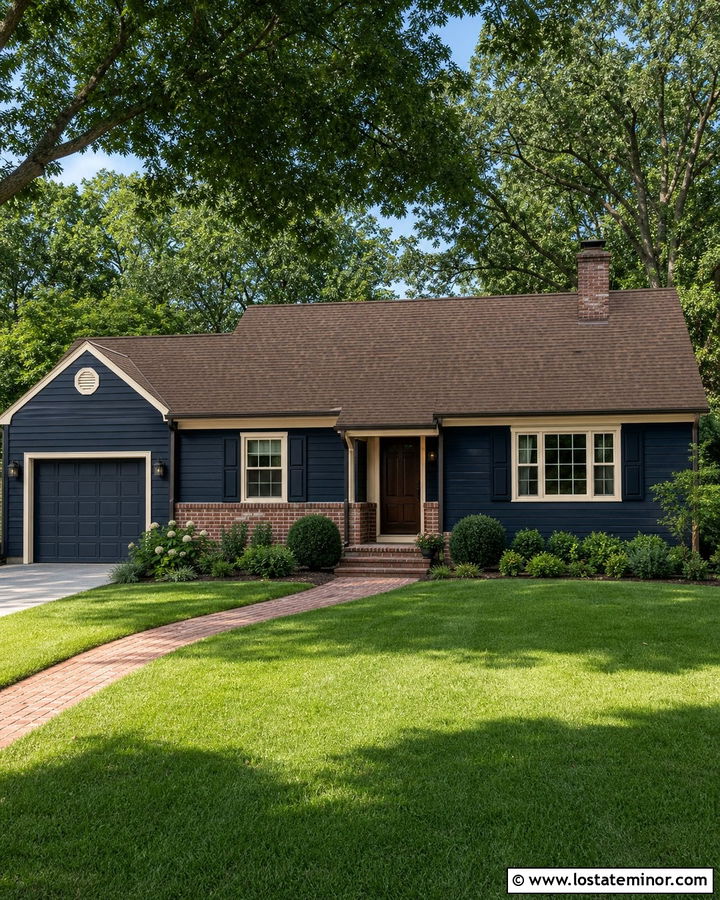
Existing red or brown brick can make a warm shingle roof the most logical choice for a navy repaint. On a traditional ranch, use deep navy siding above a red-brown brick base and select a roof with espresso, taupe, and muted rust variation. Creamy trim will connect more smoothly to the masonry than brilliant white. Paint the shutters navy and stain the front door dark walnut. Bronze gutters and porch lights repeat the brown roofing without drawing attention away from the entrance. If the brick contains strong orange tones, choose a navy with a slight gray cast to reduce the contrast. The finished home feels coordinated because the roof acknowledges the original masonry while navy provides a fresh central color.
27. Navy Blue House With Charcoal Roof And Red Door
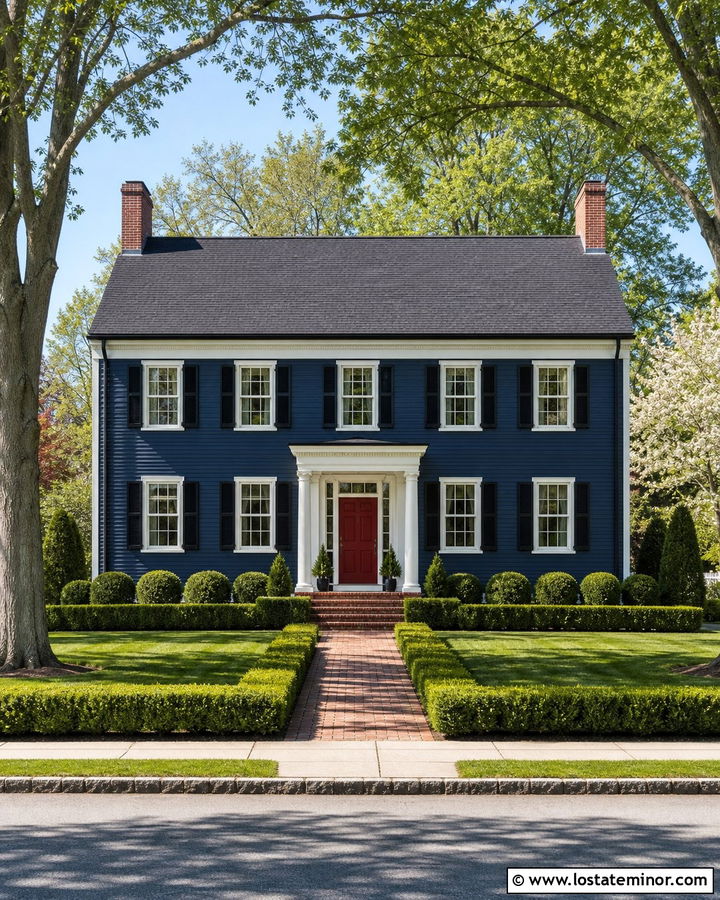
A red front door can energize the classic combination of navy walls and charcoal roofing. Apply this scheme to a symmetrical colonial with navy clapboard siding, white trim, black shutters, and a dark charcoal shingle roof. Choose a deep heritage red rather than a bright cherry shade so the entrance feels established and refined. Repeat red only in restrained landscaping or small porch planters. White columns and window casings provide the contrast needed to separate the facade from the dark roof. Black lanterns, railings, and gutters connect to the shutters and shingles. From the street, the eye moves naturally from the broad navy walls to the centered red door, creating a clear and welcoming focal point.
28. Navy Blue House With Gray Roof And Yellow Door
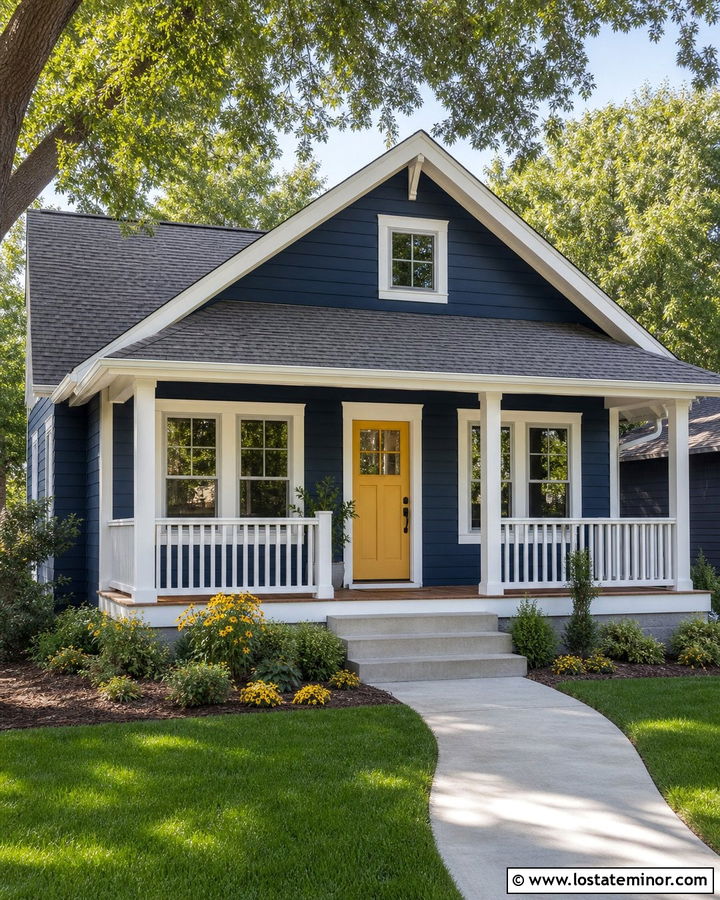
A yellow door offers a sunny counterpoint to navy siding while a medium-gray roof keeps the overall scheme grounded. This palette suits a cheerful bungalow with a broad front porch and simple gabled roof. Use white on the windows, columns, and railings to create a clean boundary between the body and roof. Select a mustard or golden yellow door rather than a neon shade. Natural wood porch flooring and pale gray steps can soften the stronger colors. Keep the shutters navy or omit them to prevent the compact facade from becoming crowded. Repeating yellow in small flowers near the walkway supports the entrance while allowing navy to remain the dominant exterior color.
29. Navy Blue House With Black Roof And Cedar Porch
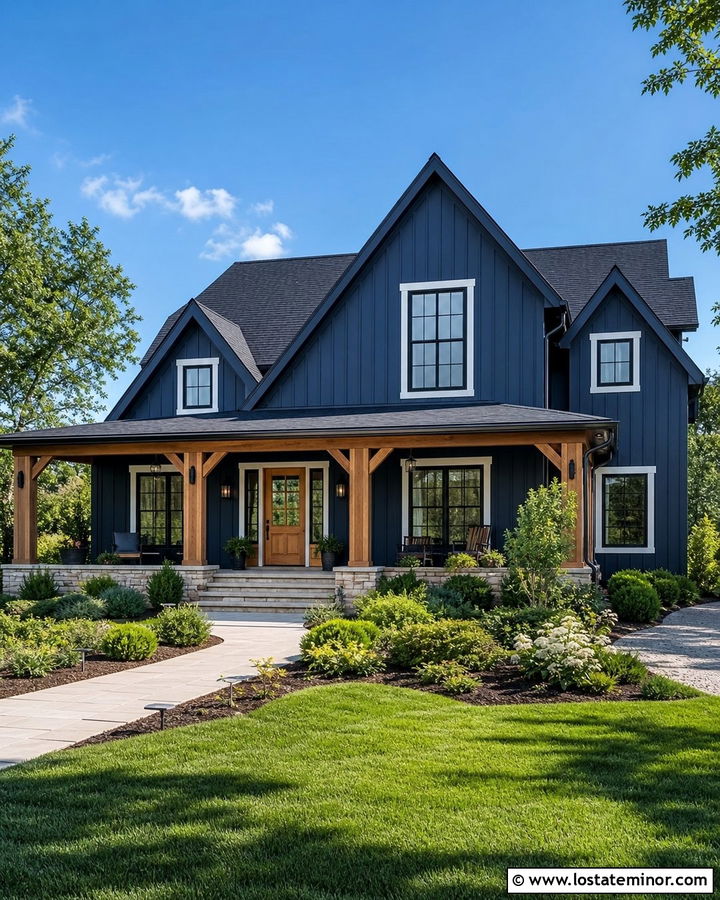
Imagine a deep navy farmhouse framed by a broad cedar porch and a clean black roof. The dark roof anchors the steep gables, while white window trim prevents the navy facade from disappearing beneath it. Use cedar on the porch posts, beams, ceiling, front door, and selected gable brackets. These warm surfaces add texture and make the entrance feel inviting. Black-framed windows, gutters, and lights connect the upper and lower portions of the house. A light stone porch foundation can provide another layer of contrast without weakening the bold palette. Keep the landscaping simple and green. The resulting design balances dark modern colors with enough natural wood to feel comfortable and approachable.
30. Navy Blue House With Solar Panel Roof
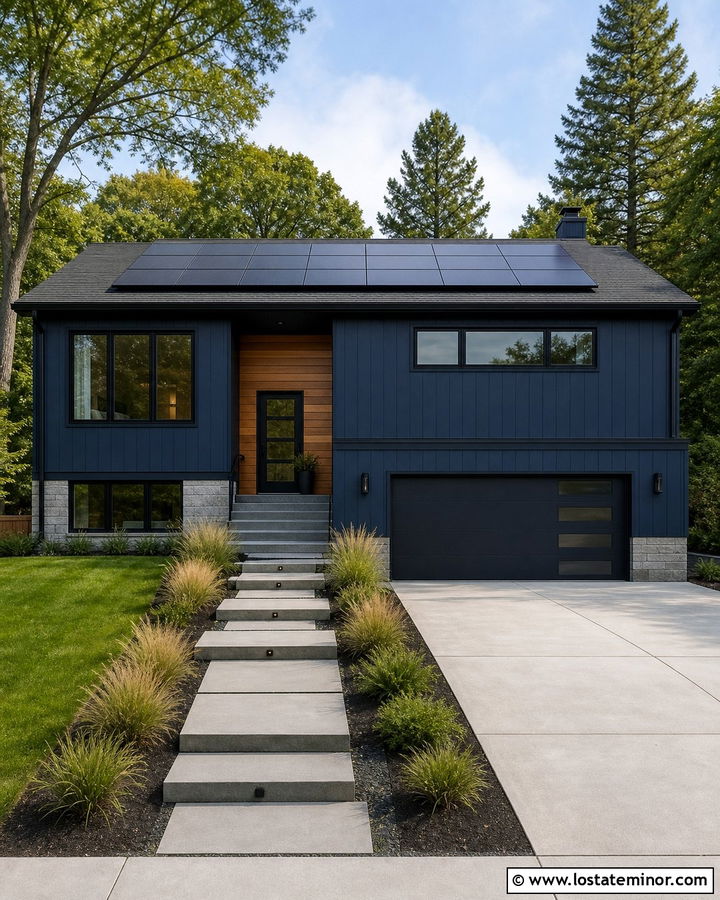
Solar panels can become part of a deliberate navy exterior rather than appearing like an unrelated addition. On a contemporary split-level or low-slope modern home, pair deep navy siding with a charcoal roof and an orderly black solar array. Black fascia, window frames, and gutters help the panels blend into the architecture. Use warm cedar around the entrance and garage to break up the cool, dark surfaces. Light concrete walls or gray stone at the foundation can brighten the lower facade. Keep roof vents and flashing close to the roof color whenever appropriate. A simple landscape with ornamental grasses and broad pavers complements the streamlined composition, creating a practical exterior that still looks polished from the curb.
Conclusion:
The strongest 30 Navy Blue House Design With Roof Ideas coordinate every visible surface instead of treating the roof as an afterthought. Light gray, silver, and white roofs create fresh contrast, while charcoal and black roofing deliver a dramatic, tailored profile. Brown shingles, cedar shakes, bronze metal, copper, and terracotta introduce welcome warmth. Stone, brick, trim, doors, and gutters should repeat or bridge the main colors so the facade feels connected from top to bottom. Before committing, view large paint, roof, and masonry samples together in direct sun, shade, and cloudy light. A thoughtful full-house palette will make navy siding look intentional while supporting your home’s architecture, surroundings, and long-term curb appeal.

Related posts: