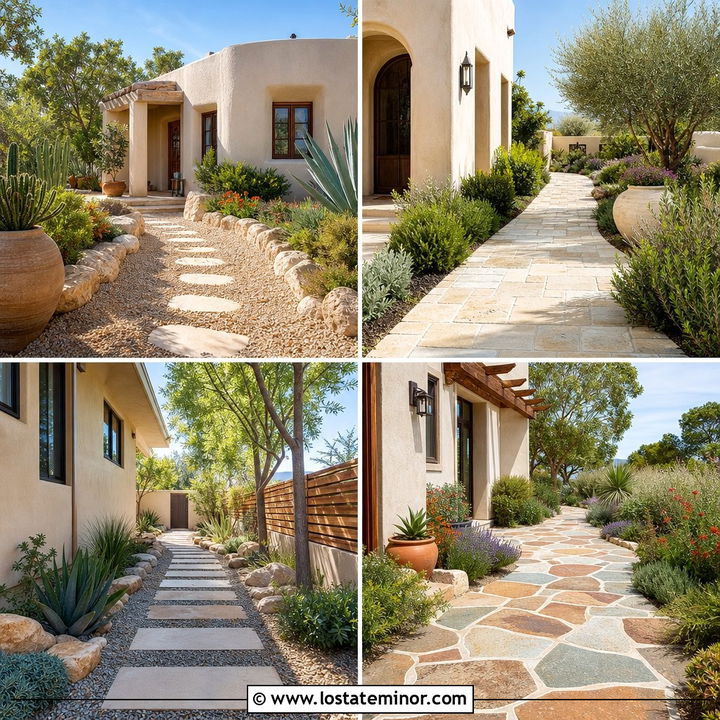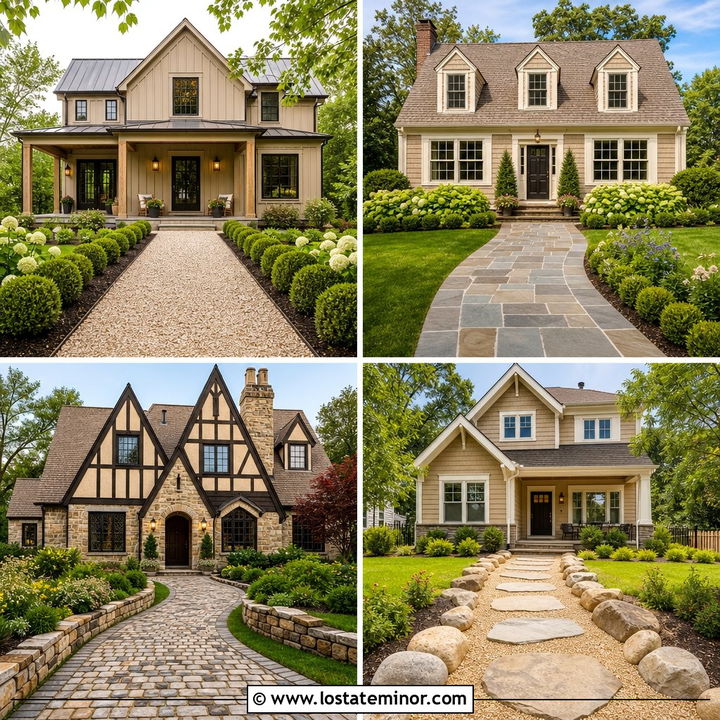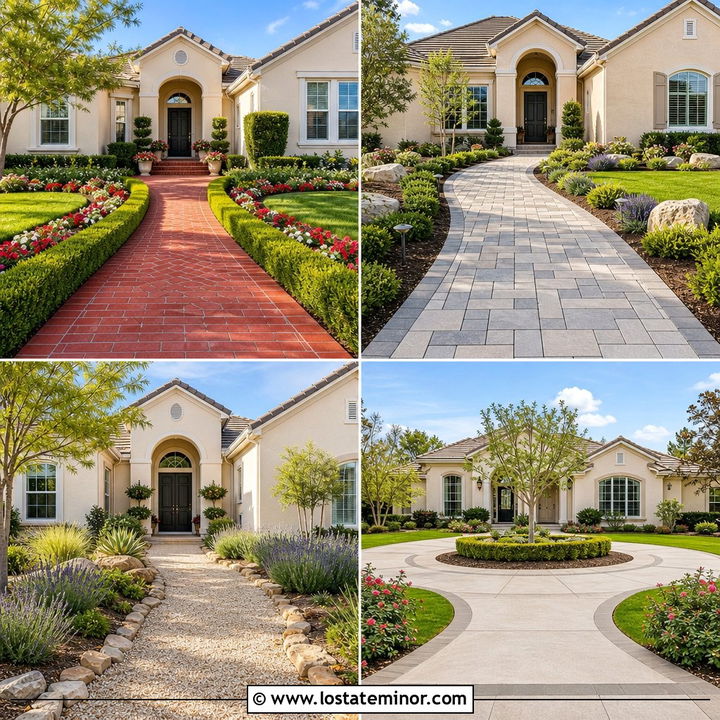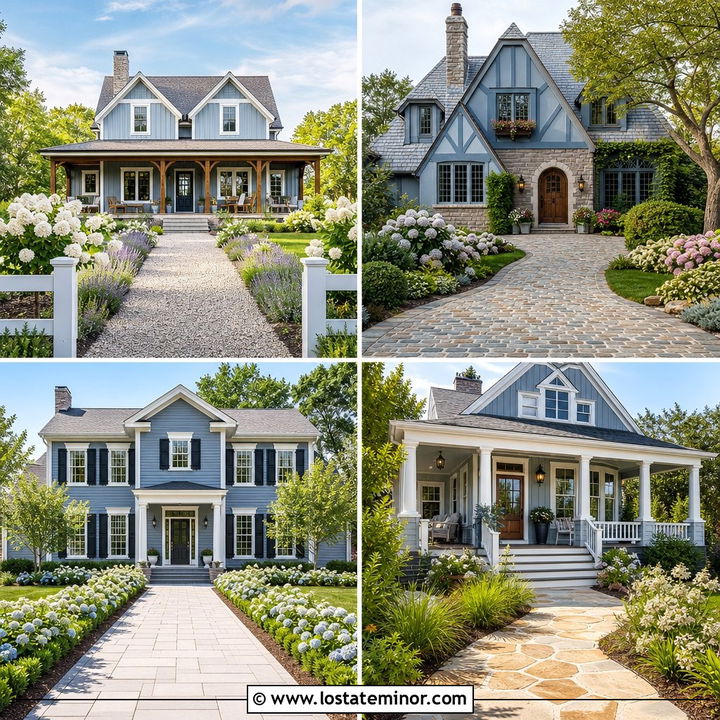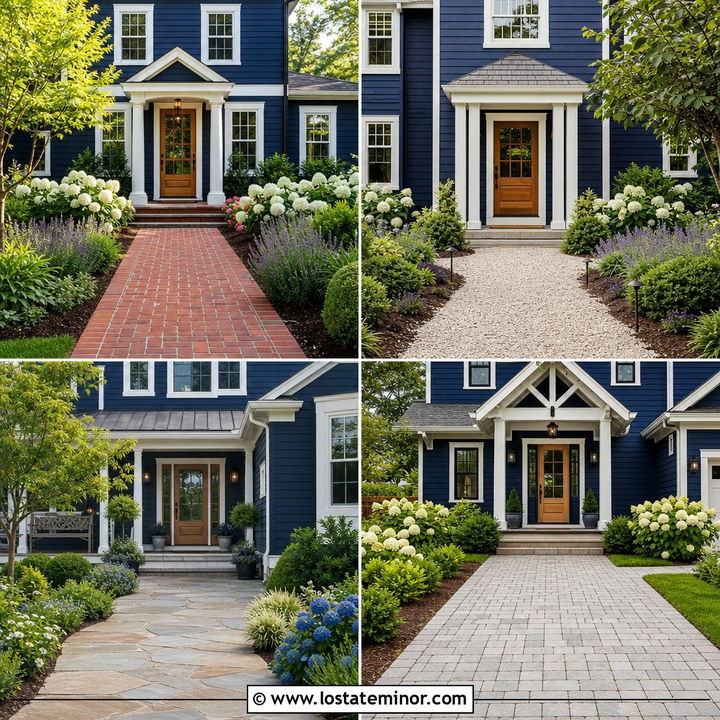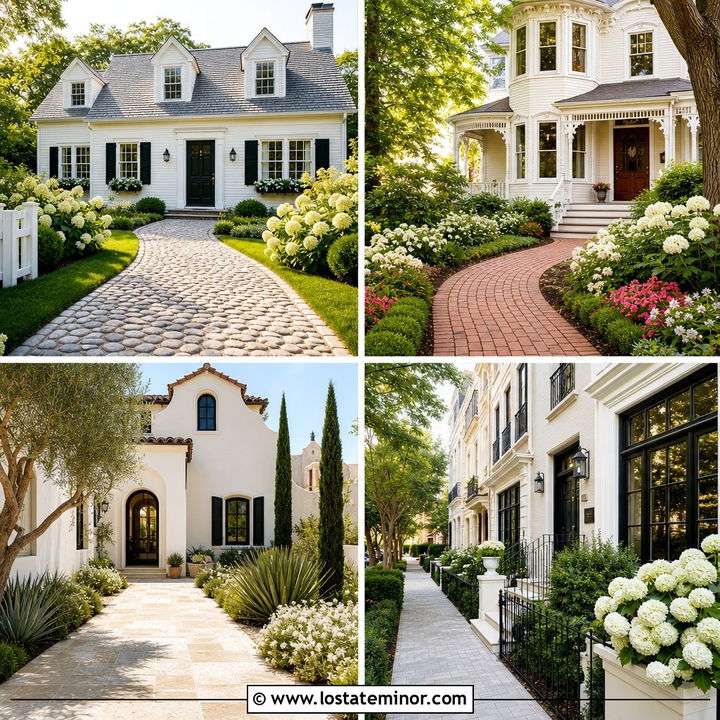
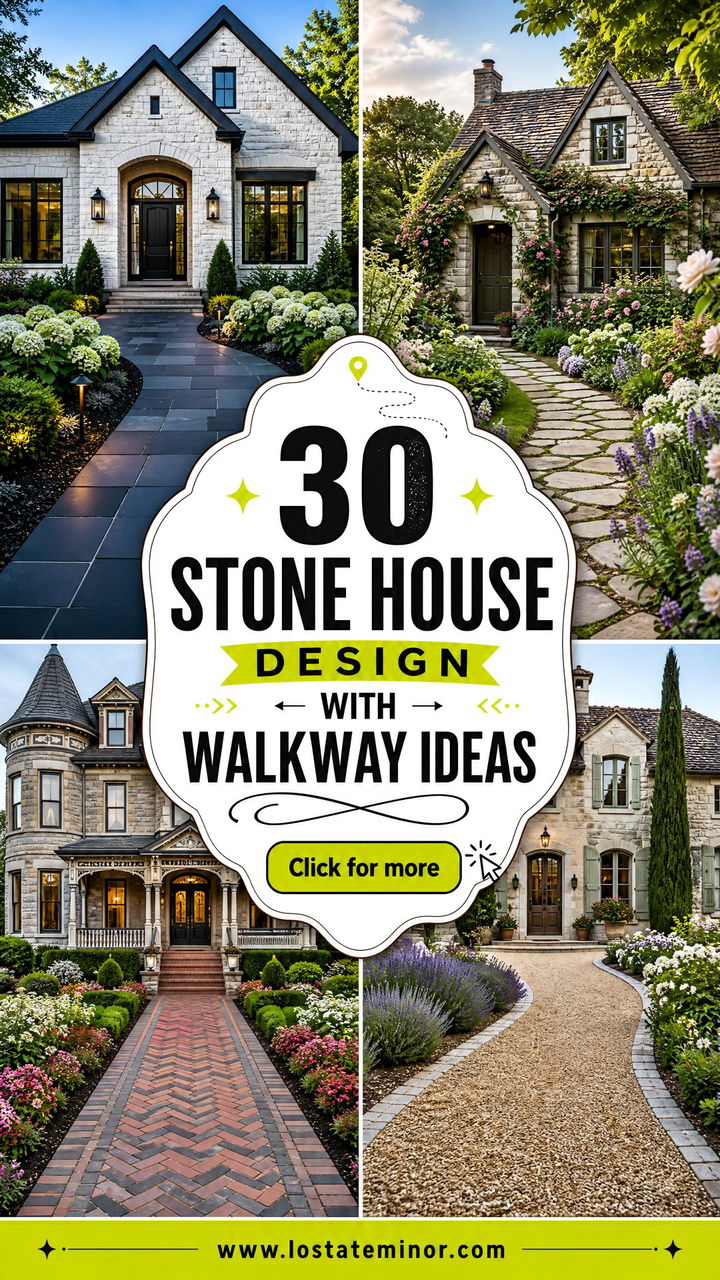
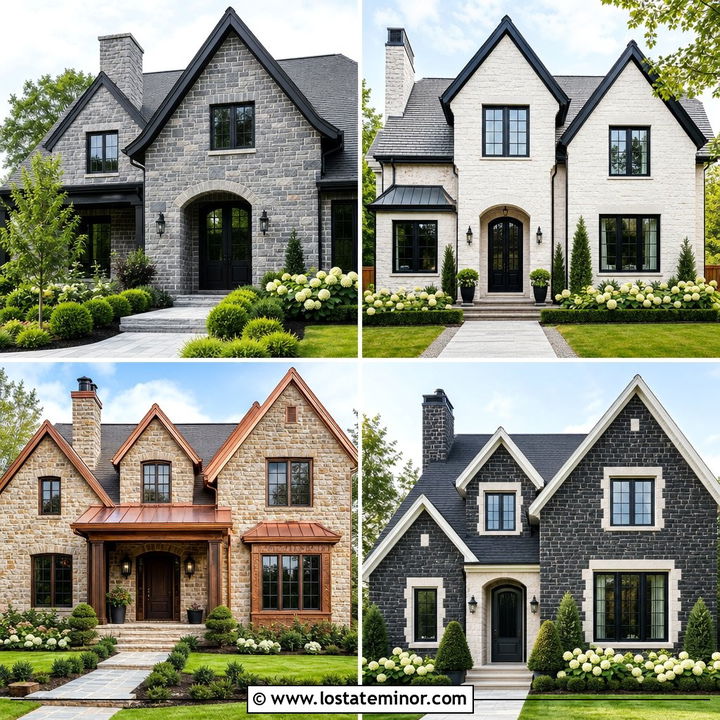
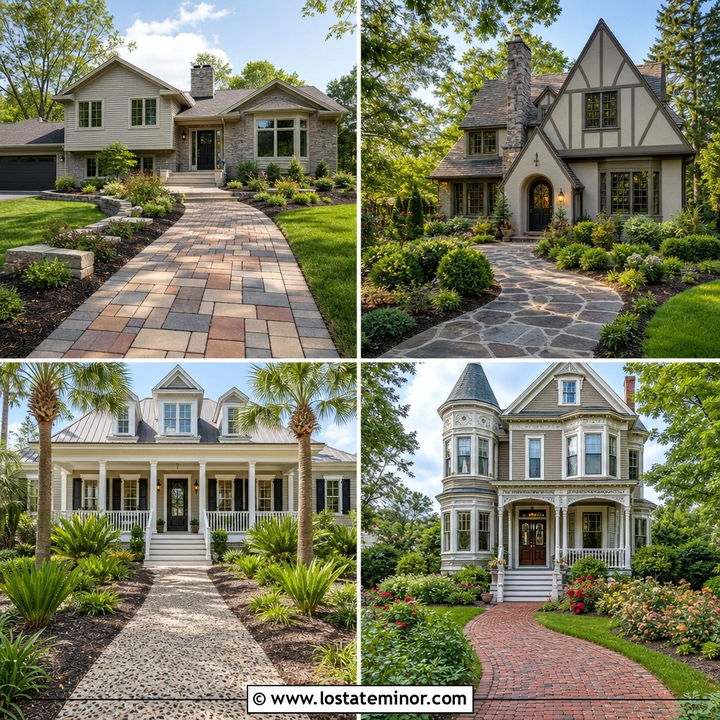
Stone exteriors already bring texture, character, and lasting curb appeal, but the right walkway makes the entire property feel complete. These 30 Stone House Design With Walkway Ideas explore full exterior combinations rather than treating the path as an afterthought. You will find traditional limestone homes, rustic mountain retreats, modern stone facades, and welcoming cottage designs. Each look connects the house, entry, landscaping, and walkway through coordinated colors and materials. Natural flagstone, bluestone, brick, gravel, and concrete pavers can all work beautifully when their undertones complement the exterior masonry. The path should also follow the architecture, yard shape, and natural route to the entrance. () Use these 30 Stone House Design With Walkway Ideas to plan a polished, practical approach to your front door.
1. Limestone House With Bluestone Walkway
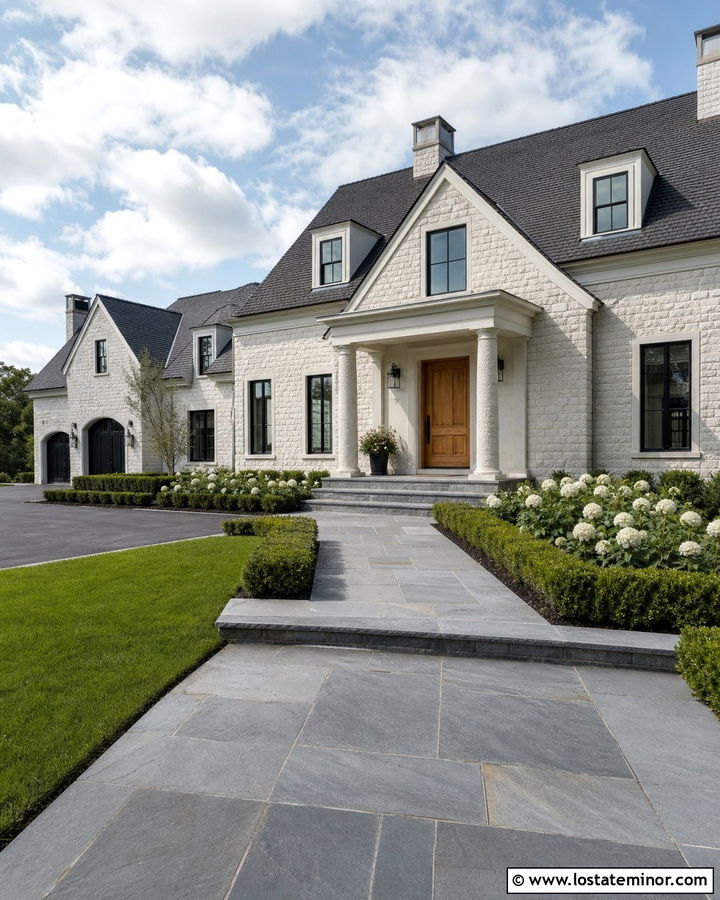
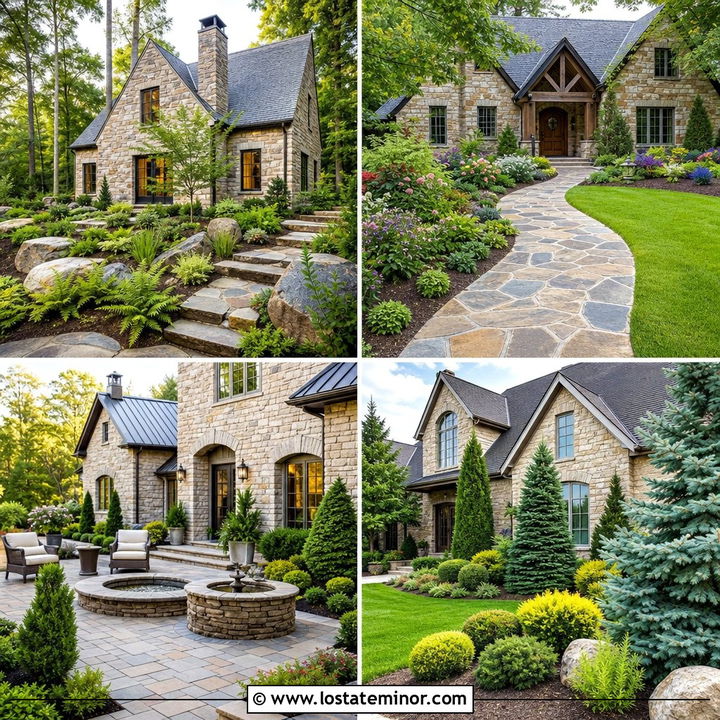
A pale limestone house looks especially refined when paired with a wide bluestone walkway. The cool blue-gray paving creates gentle contrast without competing with the natural variation in the masonry. Use rectangular stones in a running pattern for a clean, traditional appearance. Cream trim, black-framed windows, and a stained oak front door complete the warm-neutral palette. A dark charcoal roof anchors the light facade and connects visually with the walkway. Along the path, plant clipped boxwoods, white hydrangeas, and low ornamental grasses to soften the straight edges. Matching limestone porch columns can make the entrance feel substantial. Choose bluestone with a lightly textured surface so the walkway remains attractive, comfortable, and practical through changing weather.
2. Fieldstone Cottage With Curved Flagstone Walkway
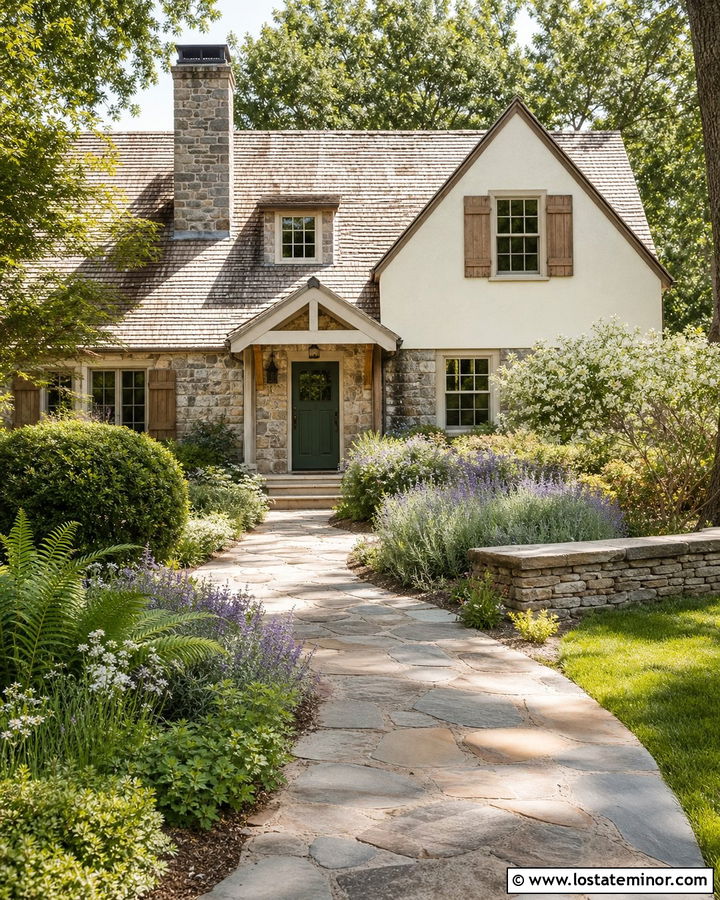
Picture a cozy fieldstone cottage at the end of a gently curving flagstone path. The irregular route suits the relaxed exterior and makes a small front yard feel more layered. Select flagstones containing brown, gray, and muted tan tones that repeat colors found in the house stone. Warm white trim, a forest green front door, and weathered cedar shutters reinforce the natural cottage character. Leave narrow planting joints or soft ground cover around selected stones for a settled-in appearance. Lavender, catmint, ferns, and compact flowering shrubs can frame the path without hiding it. A simple cedar porch roof adds another organic texture. Keep the curves gradual and purposeful so visitors immediately understand how to reach the entrance.
3. Modern Stone House With Concrete Paver Walkway
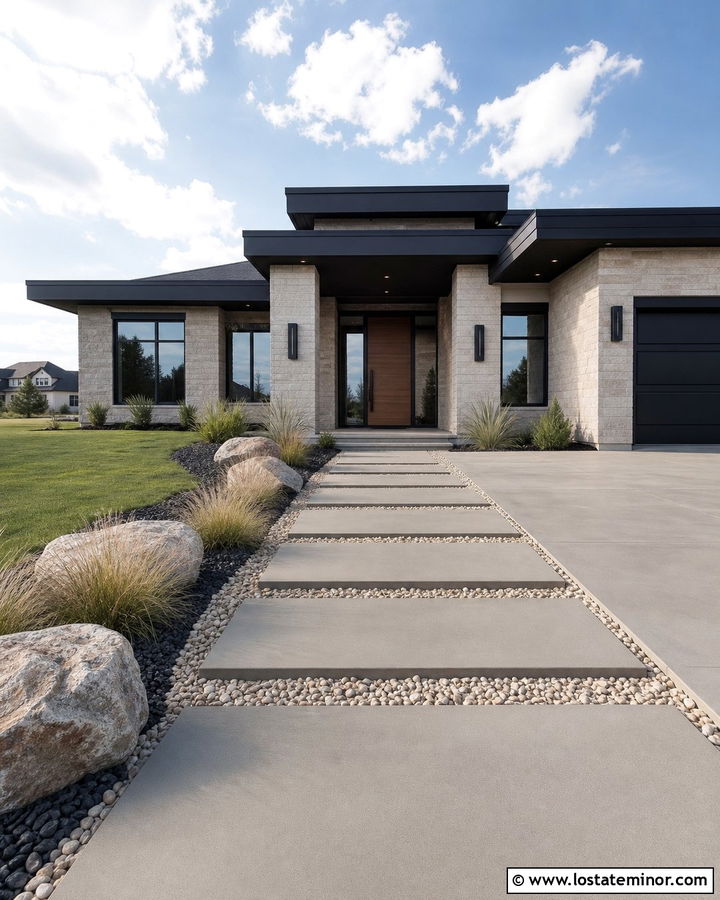
Clean lines make a modern stone house feel bold, especially when the walkway follows the same geometry. Large rectangular concrete pavers create a streamlined route toward the entrance while allowing the stone facade to remain the main feature. Choose warm gray pavers that coordinate with charcoal ledgestone and soft greige stucco. Black window frames, a flat black roof, and a natural walnut front door add crisp contrast. Narrow gravel joints between the slabs improve the contemporary appearance and visually separate each shape. Use low ornamental grasses, compact evergreens, and sculptural boulders rather than crowded flower beds. The walkway can begin at the driveway and widen near the porch, creating a clear arrival zone that feels intentional, spacious, and connected to the architecture.
4. Stone Farmhouse With Gravel And Paver Walkway
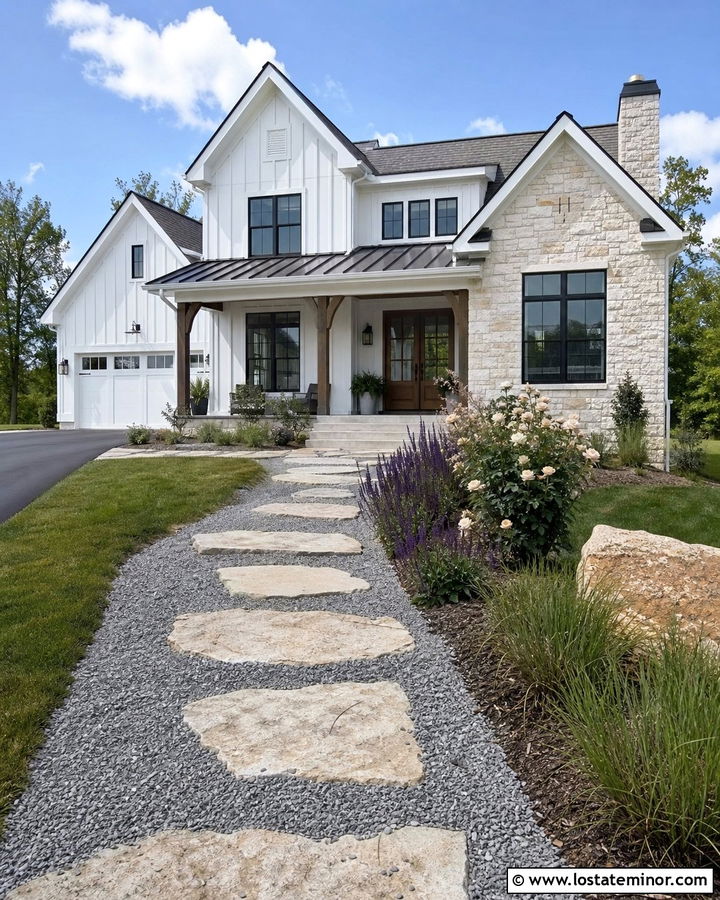
A stone farmhouse can feel welcoming rather than formal with a gravel walkway topped by oversized stepping pavers. Soft gray gravel creates a practical base, while warm limestone slabs provide a comfortable route to the porch. Pair the stone facade with white board-and-batten siding, black windows, and a medium-stained wood front door. A standing-seam metal porch roof gives the exterior a familiar farmhouse finish. Define the path with steel edging so loose gravel stays away from the lawn and planting beds. White roses, salvia, boxwoods, and feathery grasses add movement around the hard materials. Repeating the home’s limestone in the stepping stones creates continuity, while the gravel keeps the overall design relaxed and suitable for a rural or suburban setting.
5. Gray Stone House With Brick Walkway
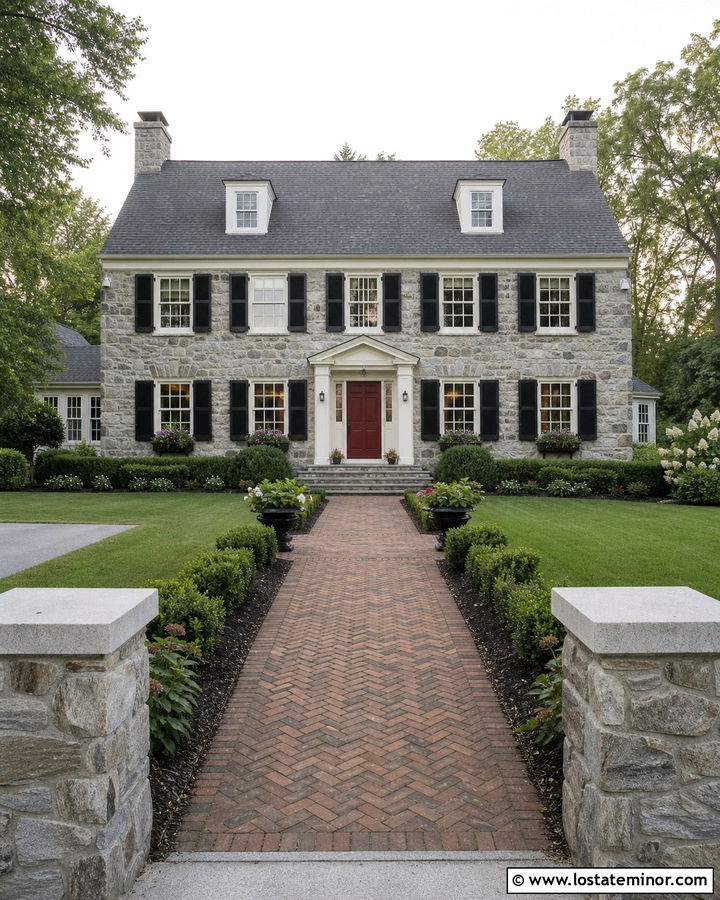
Red brick can bring warmth to a cool gray stone house without making the exterior feel overly busy. Choose weathered brick with muted red, brown, and charcoal variation instead of a bright uniform finish. A simple herringbone pattern gives the walkway traditional detail and creates a strong visual line toward the front door. Paint the trim a soft warm white and select a deep burgundy door to connect with the brick. Black shutters and a charcoal architectural-shingle roof provide definition around the lighter masonry. Border the path with clipped hedges, seasonal flowers, and dark mulch for a neat suburban look. Brick porch steps can continue the walkway material, helping the front approach appear unified rather than divided into unrelated surfaces.
6. Rustic Stone House With Irregular Stone Walkway
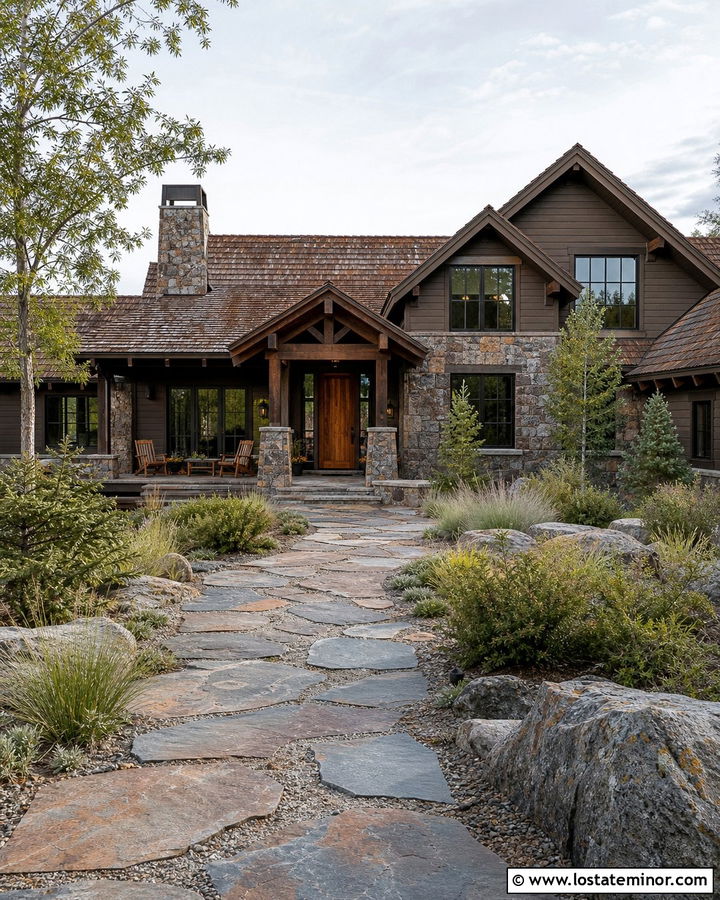
Rugged materials feel right at home around a rustic stone exterior. Build the walkway from large, irregular stones with naturally varied edges and earthy gray-brown coloring. The path can widen and narrow slightly as it crosses the yard, creating a casual approach that complements thick masonry walls and heavy timber details. Add dark bronze windows, a cedar front door, and exposed wood porch beams for extra warmth. A weathered brown roof will blend with the stone rather than creating harsh contrast. Fill generous joints with compact gravel or low-growing thyme, depending on the amount of foot traffic. Native grasses, evergreen shrubs, and natural boulders help the house settle into its surroundings. Avoid overly formal borders, which can work against the relaxed architecture.
7. Stone Colonial House With Straight Paver Walkway
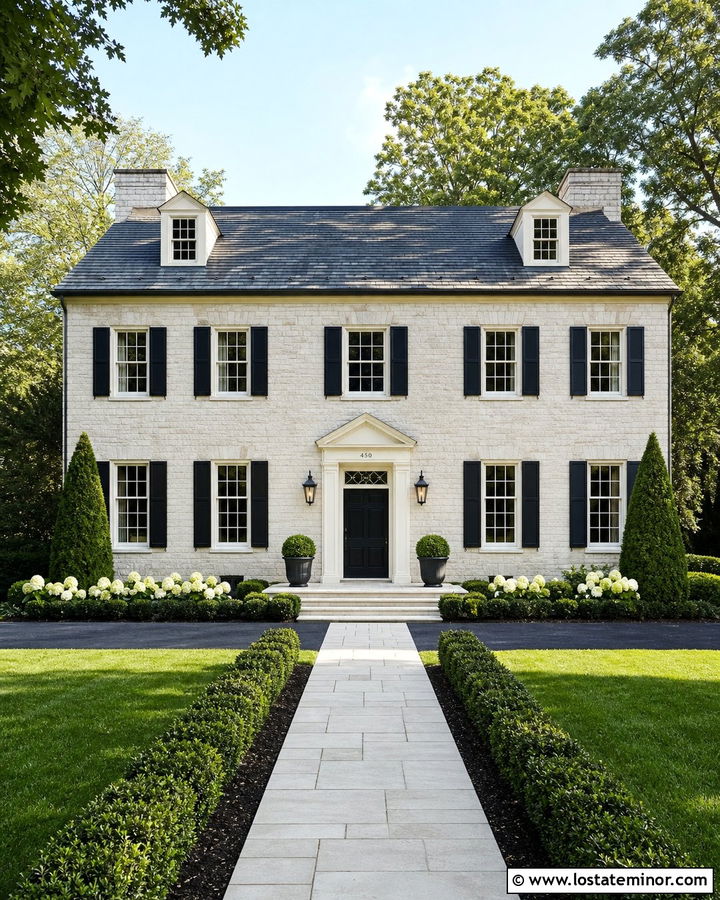
Symmetry is the key to making a stone Colonial exterior look complete. A straight walkway centered on the front door reinforces the balanced window placement and formal architecture. Use evenly cut rectangular limestone or concrete pavers in a soft gray-beige tone. Cream trim, black shutters, and a glossy black door create a classic palette that complements light gray stone. The path should be comfortably wide and can end in a small landing at the porch steps. Matching lanterns, paired planters, and low boxwood hedges strengthen the symmetrical arrangement. Add flowering shrubs farther from the walkway to bring softness without disturbing its crisp outline. A dark slate-colored roof finishes the scheme and connects with subtle charcoal markings in both the facade and paving.
8. Stone Craftsman House With Slate Walkway
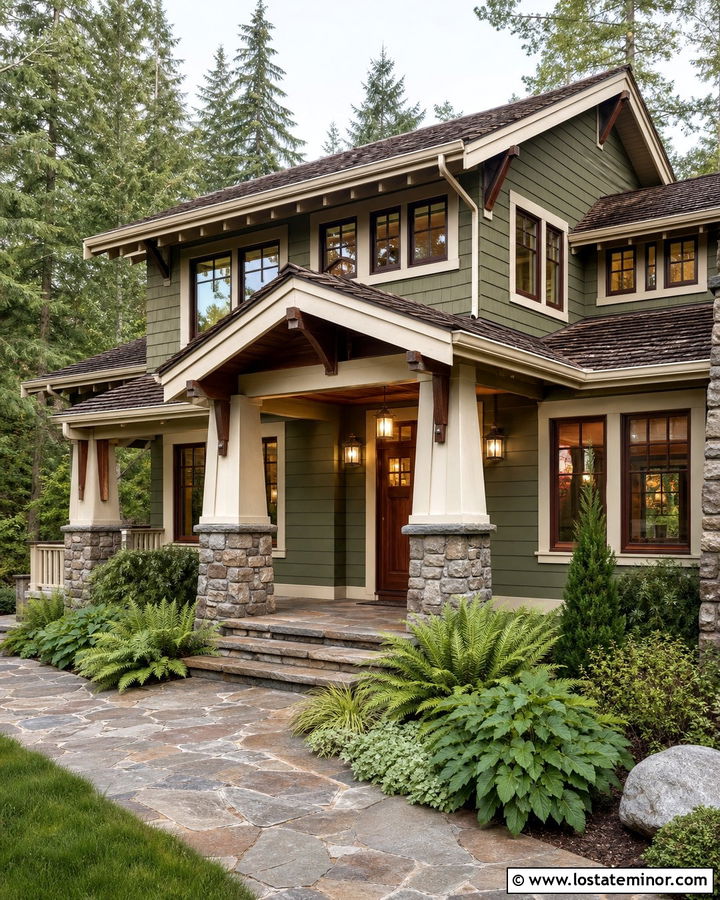
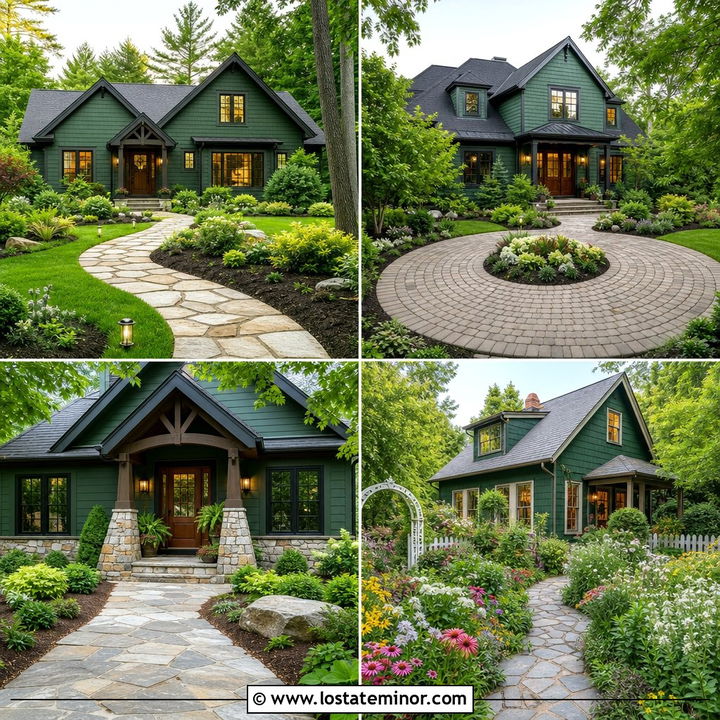
Slate brings rich color and handcrafted character to a stone Craftsman house. Look for paving with gray, green, rust, and blue undertones that echo the varied masonry on the columns and foundation. A gently tapered path can lead toward a deep front porch framed by substantial stone piers. Pair the exterior with olive green lap siding, creamy trim, and a stained mahogany door. Exposed rafters, tapered columns, and a medium-brown shingle roof reinforce the Craftsman architecture. Keep the walkway pattern informal but maintain consistent joints for a finished look. Ferns, hostas, dwarf conifers, and spreading ground covers work well around the shaded entry. The layered colors allow the slate, siding, wood, and stone to feel connected without becoming too perfectly matched.
9. White Stone House With Dark Paver Walkway
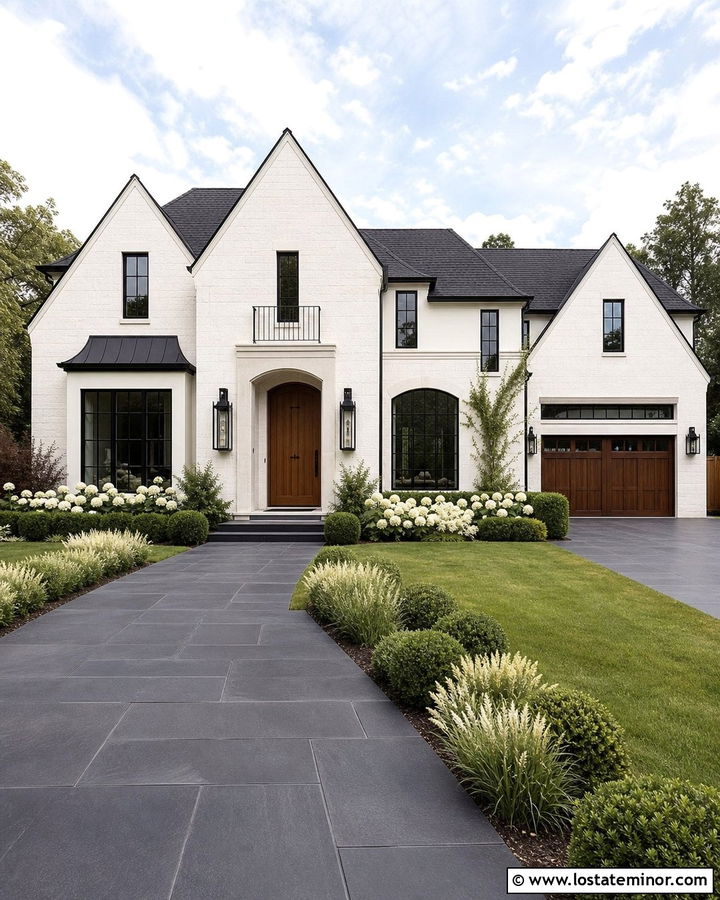
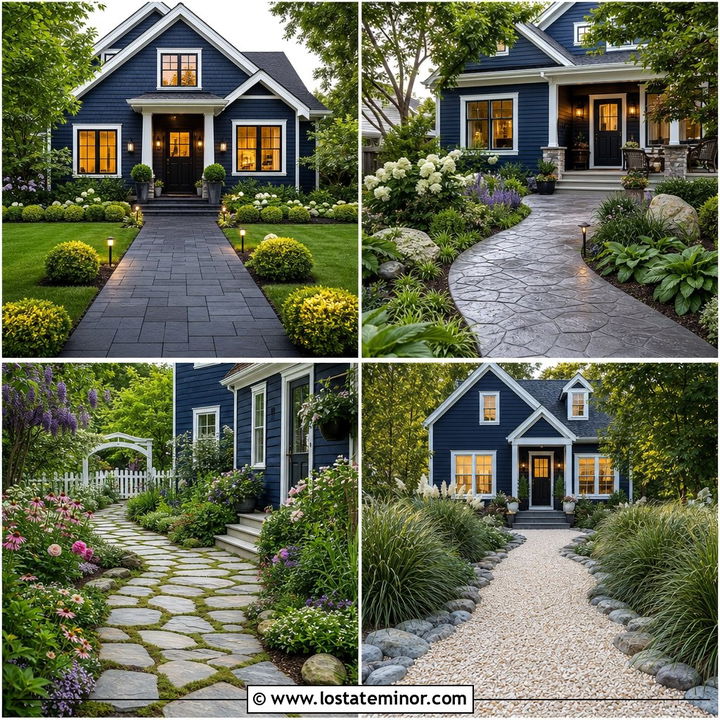
A white stone house gains definition from a dark charcoal paver walkway. The contrast immediately directs attention toward the entrance and prevents the pale exterior from blending into the surrounding yard. Choose large-format pavers with clean edges for a transitional or modern appearance. Continue the charcoal tone through the roof, window frames, and slim metal porch railing. A medium-toned oak door introduces warmth and keeps the black-and-white palette from feeling severe. Use pale gravel between selected pavers or around the planting beds to create a subtle transition back to the white masonry. Rounded boxwoods, white flowering shrubs, and upright grasses provide structure. Keep the front lawn open so the dark walkway remains a clear, attractive line across the property.
10. Brown Stone House With Sandstone Walkway
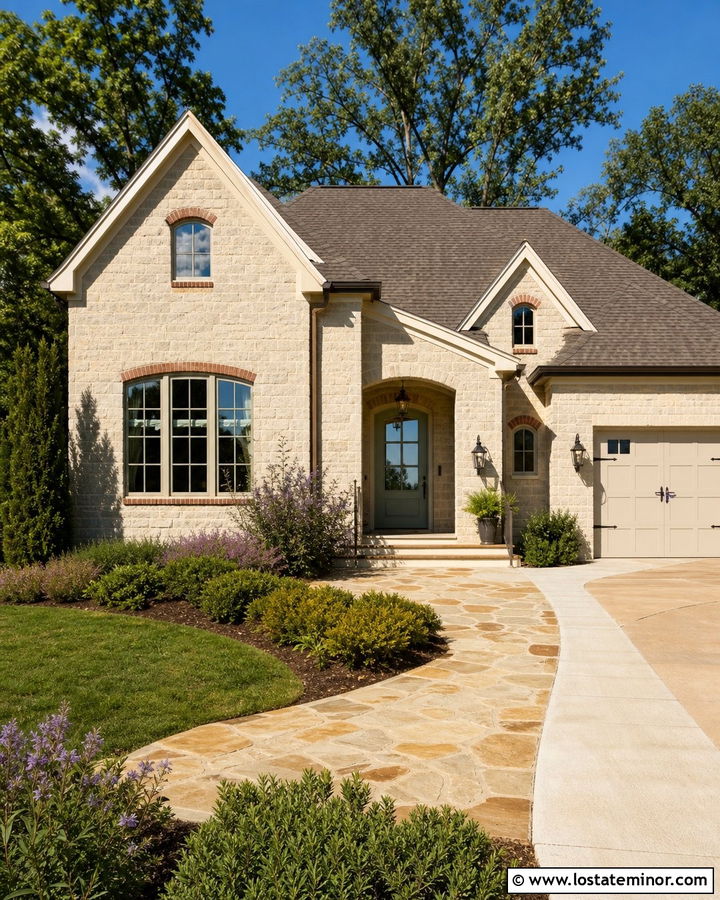
Golden sandstone can brighten a brown stone house and bring out its warmest undertones. Choose walkway slabs in honey, tan, and muted rust colors, arranging them in an irregular but tightly fitted pattern. The result feels natural while still appearing carefully planned. Cream window trim, a muted sage green front door, and dark bronze fixtures balance the earthy facade. A deep brown roof blends smoothly with the masonry and lets the lighter path stand out. Add sandstone porch steps or a matching landing to continue the material all the way to the entrance. Plant dusty green shrubs, ornamental grasses, and soft purple flowers beside the walkway. Their cooler colors provide gentle contrast while maintaining the relaxed, landscape-inspired character of the complete exterior.
11. Stone Ranch House With Wide Flagstone Walkway
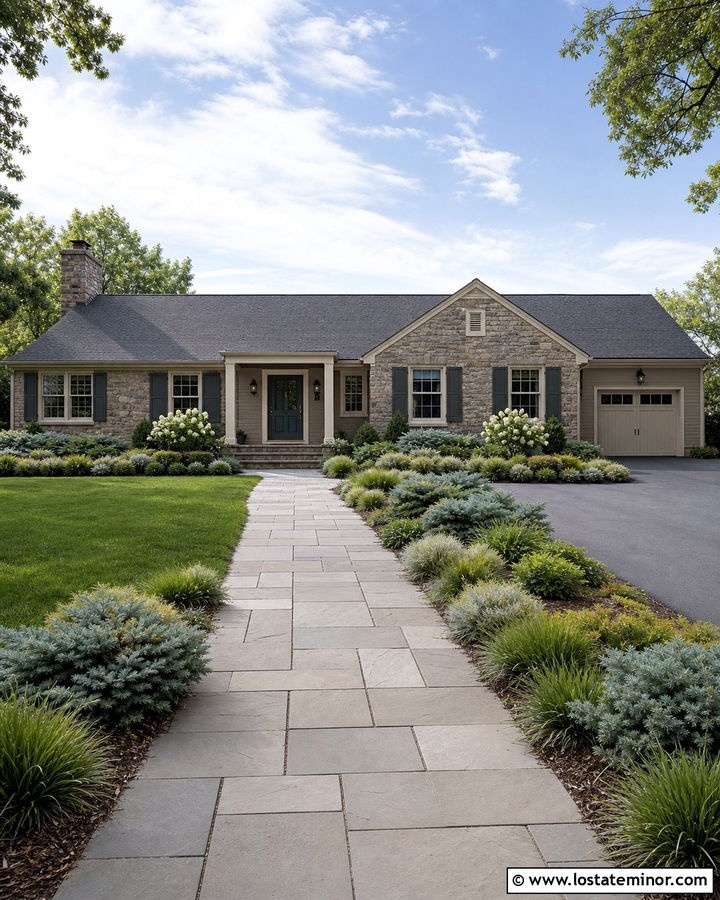
A one-story stone ranch benefits from a broad walkway that matches its long horizontal profile. Large rectangular flagstones can run from the driveway to the porch, giving the low exterior a stronger sense of scale. Select warm gray stones that complement the facade without disappearing into it. Pair the masonry with taupe lap siding, ivory trim, and a dark teal front door. A charcoal roof and black lighting fixtures add a simple modern update. Widen the walkway near the entry so guests have room to gather before reaching the door. Low grasses, spreading junipers, and rounded flowering shrubs preserve views of the house. Avoid tall foundation plantings, which can make a ranch facade appear even lower and hide its appealing stone texture.
12. Stone Tudor House With Cobblestone Walkway
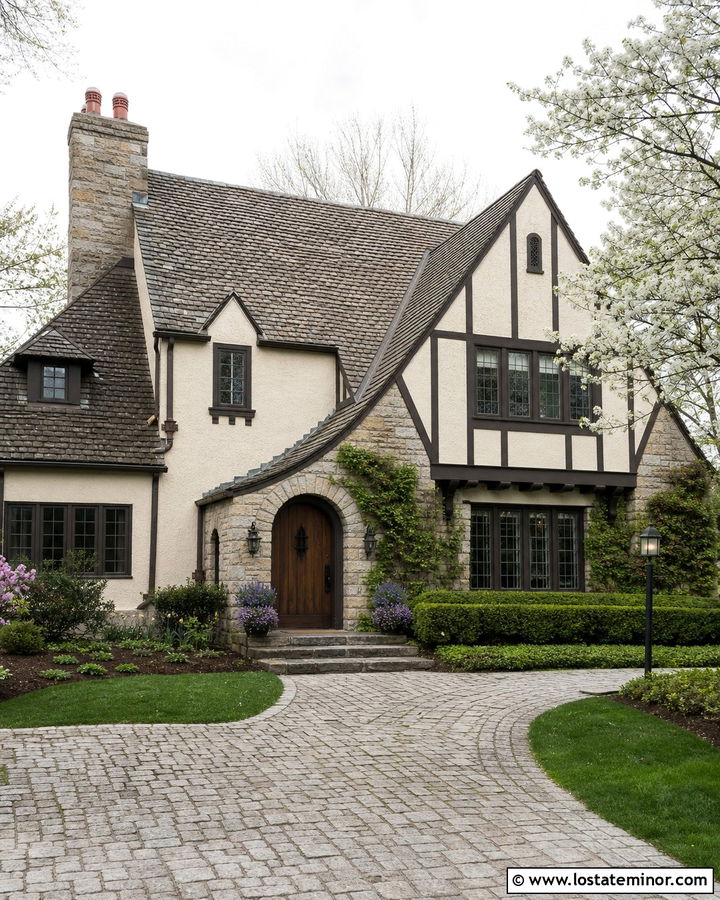
Old-world materials suit the steep rooflines and decorative timbering of a stone Tudor house. A gently curved cobblestone walkway creates a substantial approach while complementing the home’s textured masonry. Use weathered gray and brown cobbles rather than highly polished stones. Cream stucco, dark brown timber accents, and an arched walnut door complete the traditional palette. Repeat the cobblestone around the porch landing or along the driveway edge to make the landscape feel cohesive. Dense green hedges, climbing vines, and small flowering trees can frame the path while preserving the storybook character. Because cobbles create many joints, select a reasonably flat surface for comfortable walking. The finished scheme should feel established and detailed, not overly rustic or difficult to navigate.
13. Stone Bungalow With Stepping-Stone Walkway
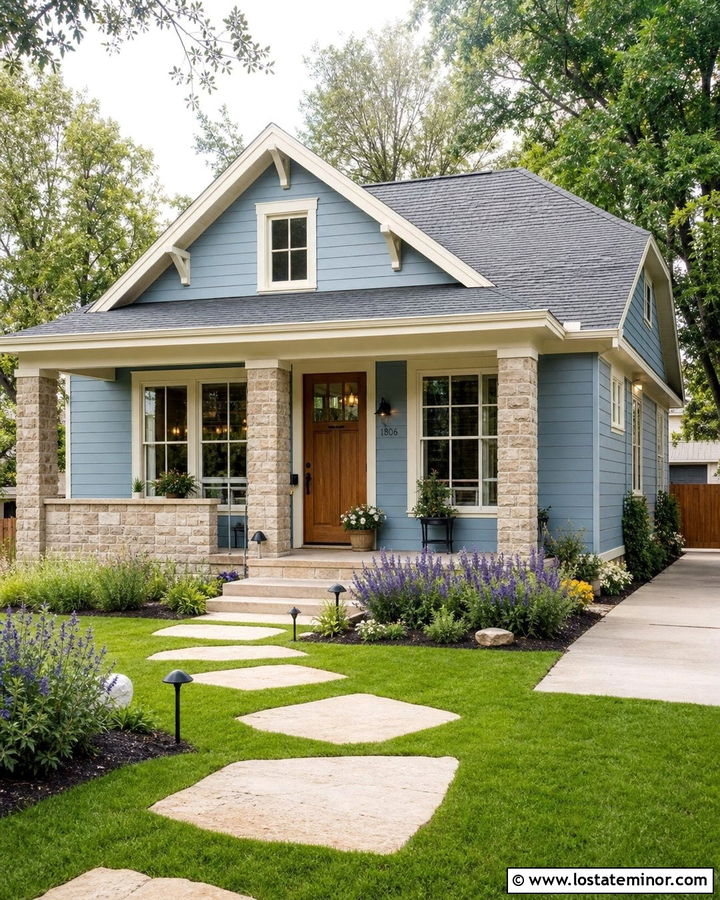
A compact bungalow looks charming with broad stepping stones placed through a green lawn or low ground cover. The informal path suits a small front porch and keeps the yard from feeling dominated by hardscaping. Choose flat sandstone or limestone slabs that repeat the beige and gray colors of the stone foundation and porch columns. Soft blue siding, creamy white trim, and a natural wood door create a cheerful, balanced exterior. Keep the spacing consistent and comfortable so the path remains easy to follow. Add low flower beds near the porch, using lavender, white, and pale yellow blooms. A dark gray roof adds contrast without overwhelming the facade. The complete look feels approachable, colorful, and appropriate for a modest suburban property.
14. Mountain Stone House With Granite Walkway
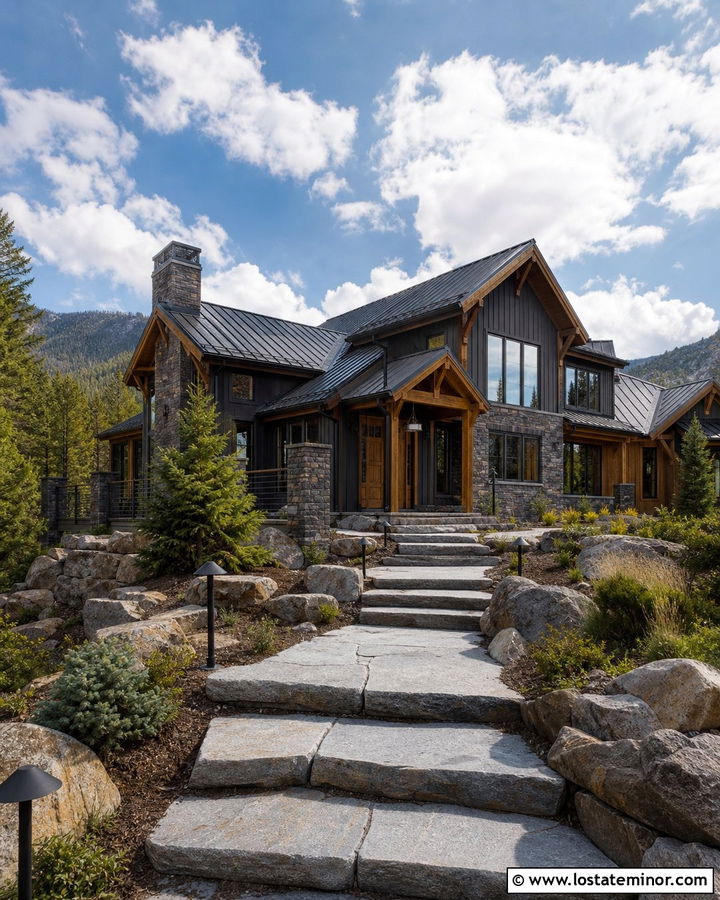
Granite paving provides the strength and visual weight needed beside a mountain stone house. Use large, roughly rectangular slabs in medium gray with flecks of black, silver, and warm brown. The walkway can climb gradually toward a covered entrance, with wide granite steps where the slope changes. Pair dark fieldstone with cedar siding, black window frames, and a heavy timber front door. A deep charcoal metal roof creates a durable-looking cap and echoes the darkest tones in the stone. Surround the path with native grasses, evergreen shrubs, and scattered boulders instead of formal garden borders. Low pathway lighting can be integrated along the edges without dominating the daytime view. This combination makes the architecture feel firmly connected to its rugged natural setting.
15. Stone Cape Cod House With Brick And Stone Walkway
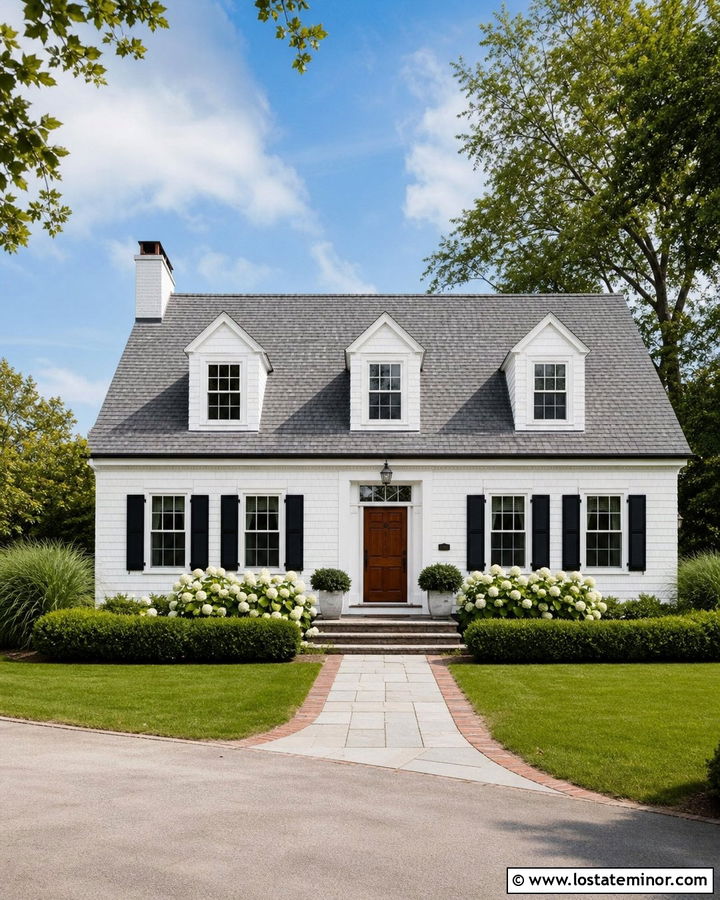
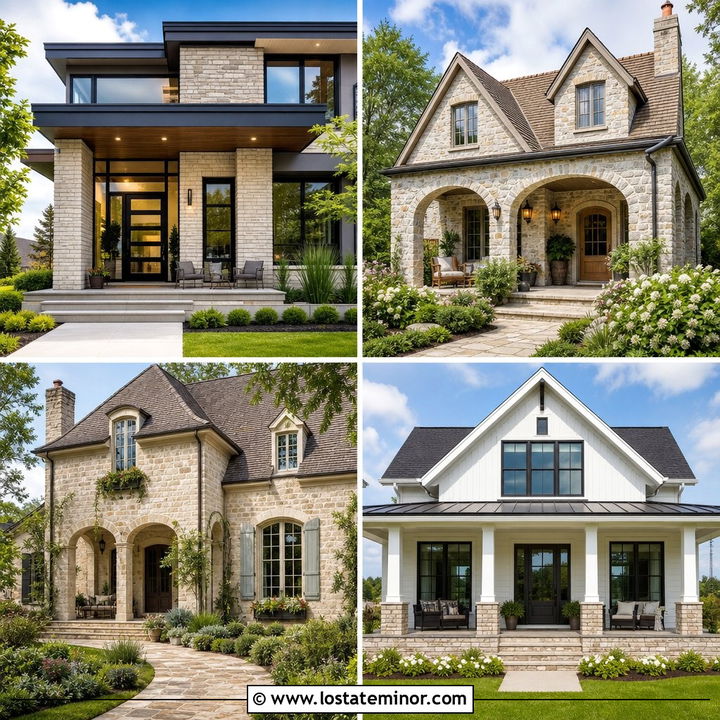
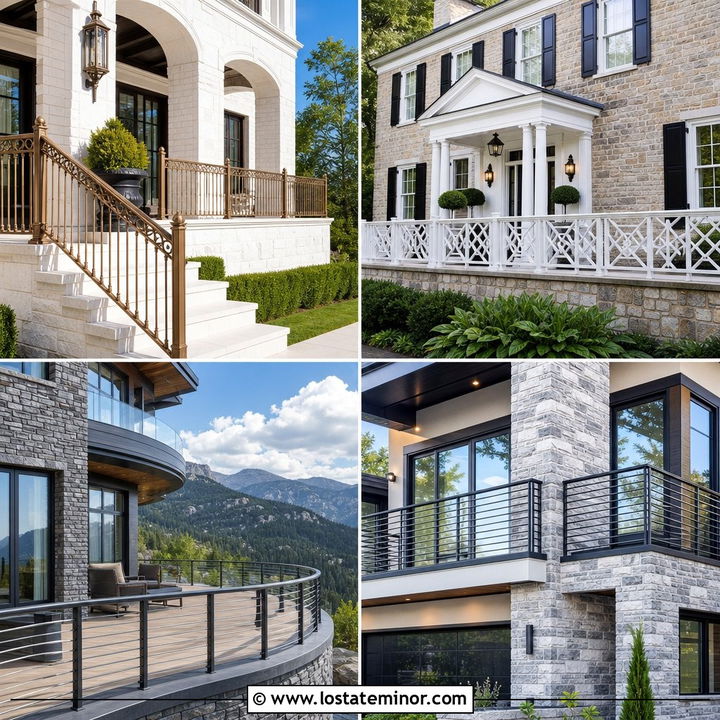
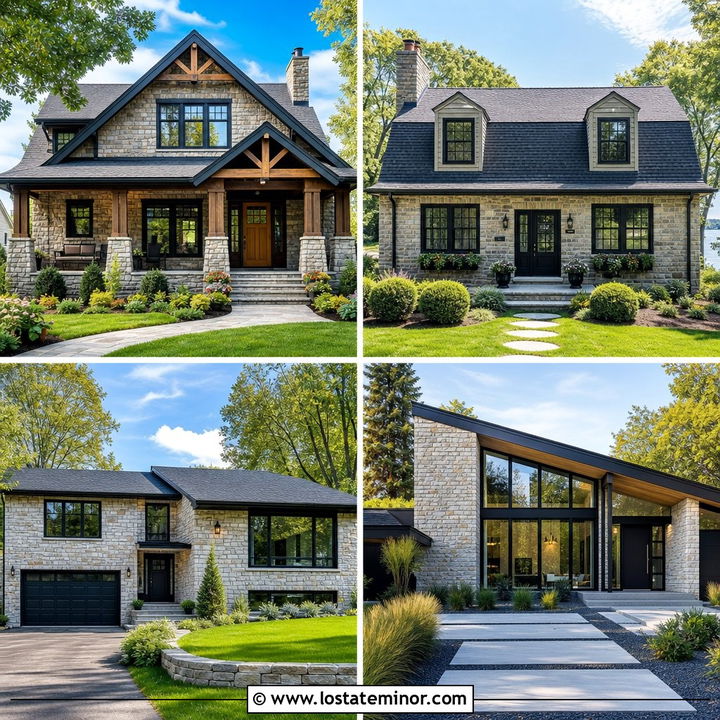
A mixed brick-and-stone walkway adds subtle pattern to a stone Cape Cod exterior. Use a central field of pale rectangular stone bordered with weathered red brick. The brick edging provides definition and connects beautifully with a red or mahogany front door. Pair the facade with soft white shingle siding, black shutters, and a medium-gray roof. Keep the walkway straight or only slightly curved to suit the home’s simple, balanced architecture. White hydrangeas, trimmed hedges, and coastal grasses can line the path without making it feel narrow. Matching brick risers on the porch steps help carry the border detail to the entrance. This combination feels traditional and polished while still allowing the home’s light stonework and classic roofline to remain prominent.
16. Stone Cottage With Garden Walkway
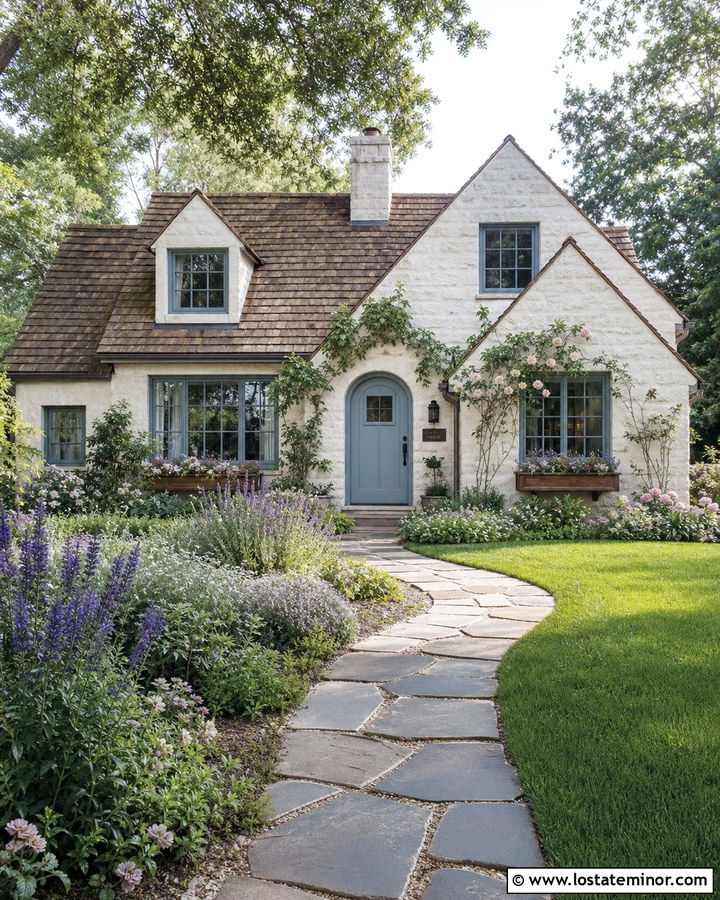
A flower-lined garden walkway can turn a stone cottage into a warm focal point. Begin with irregular gray-beige flagstones and allow the route to curve gently through layered planting beds. Cream-painted trim and a dusty blue front door work beautifully with weathered stone walls. Add dark bronze hardware, wood window boxes, and a cedar-shingle roof for a soft, collected exterior. Plant low varieties near the walkway so flowers do not spill across the walking surface. Lavender, salvia, catmint, dwarf roses, and creeping thyme provide color while maintaining a natural look. The flagstone should remain visible enough to guide visitors clearly. By repeating muted blues, greens, and warm wood tones, the house, garden, and path become one connected cottage composition rather than separate features.
17. Contemporary Stone House With Floating Paver Walkway
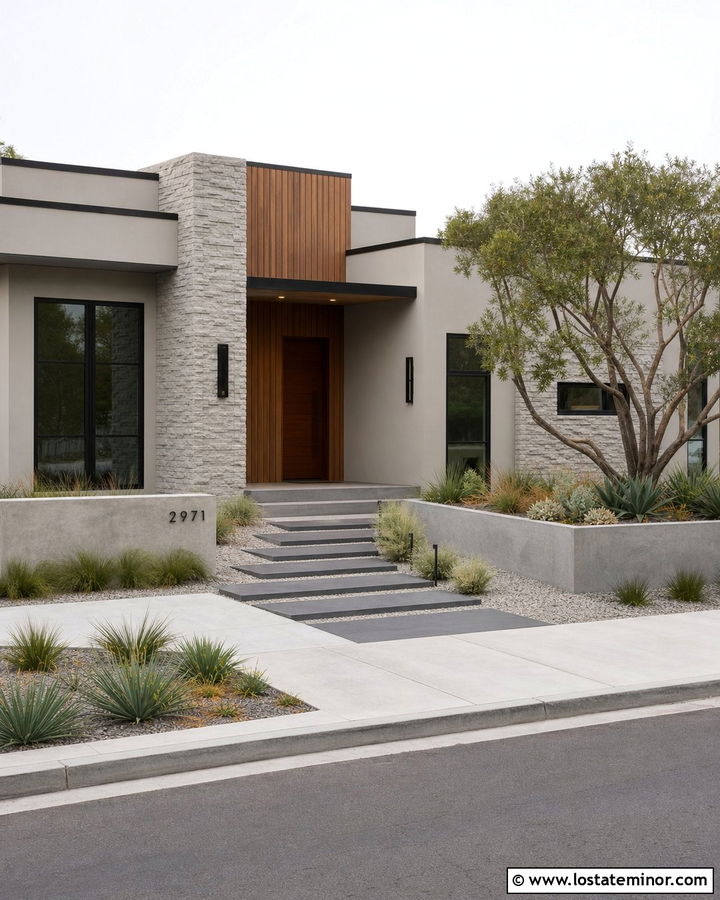
Widely spaced rectangular pavers can create a floating effect in front of a contemporary stone house. Set smooth charcoal slabs over pale gravel or dark river rock to emphasize their sharp outlines. The linear walkway should align with major architectural features, such as the front door, window wall, or roof overhang. Combine cool gray ledgestone with Benjamin Moore Revere Pewter, a light warm greige, plus black-framed windows and a vertical cedar entry panel. Minimal landscaping keeps the geometry visible. Use clumps of ornamental grass, low succulents, and one sculptural tree rather than traditional foundation shrubs. The cedar introduces warmth, while the dark paving anchors the facade. This full exterior approach feels sophisticated without relying on excessive decoration or complicated planting.
18. Stone Split-Level House With Tiered Walkway
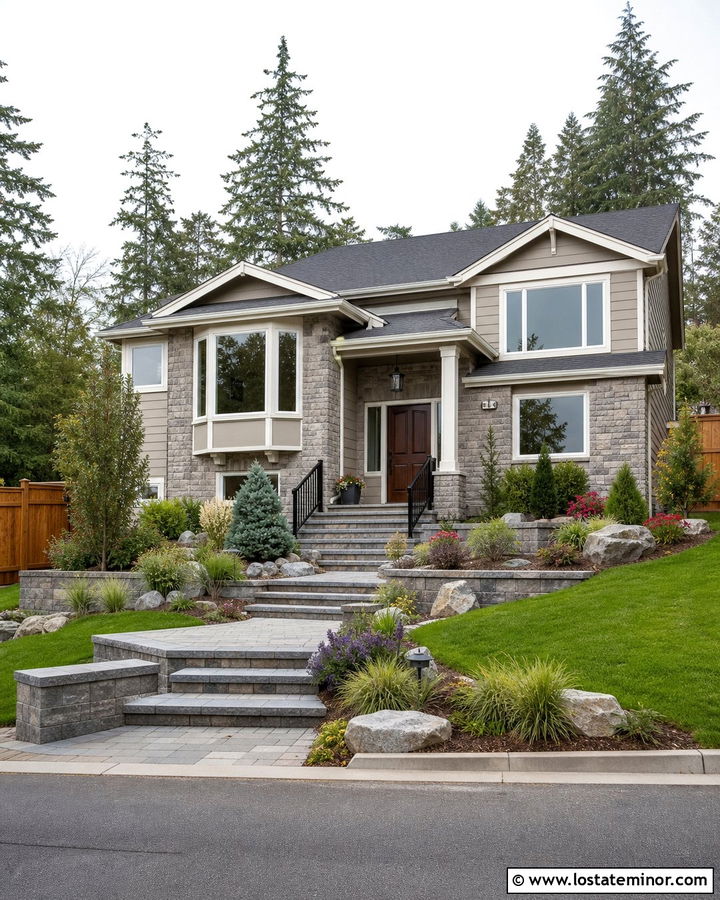
A tiered walkway can make the raised entrance of a stone split-level feel easier to approach. Use wide landings and shallow steps instead of one long, steep staircase. Medium-gray concrete pavers pair well with a mixed gray stone facade and painted taupe siding. Black railings, off-white trim, and a rich walnut front door bring the older architecture up to date. Continue the walkway from the driveway so the route feels natural and direct. Low retaining walls faced with matching house stone can support planting beds at each level. Fill those beds with compact evergreens, spreading grasses, and seasonal flowers. The repeated masonry ties the grade changes to the home, helping the new walkway appear original to the property rather than added as a separate project.
19. Stone Victorian House With Patterned Brick Walkway
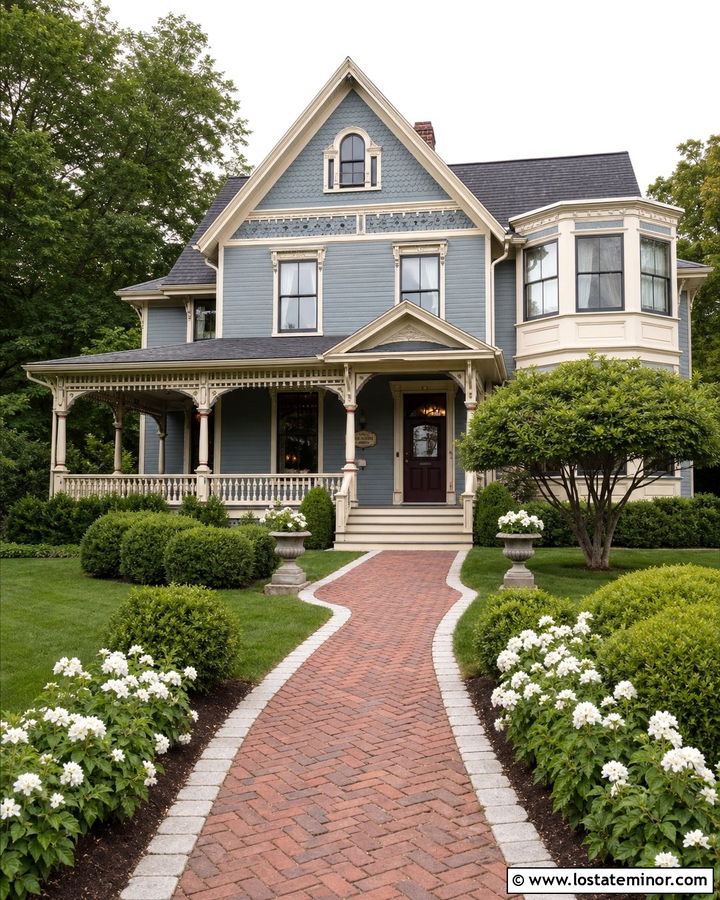
A patterned brick walkway complements the decorative personality of a stone Victorian house. Choose muted burgundy and brown brick laid in a herringbone or basketweave pattern, then add a simple soldier-course border. The detailed paving feels appropriate beside ornate trim without competing with it. Pair pale gray stone with Benjamin Moore Boothbay Gray, a muted blue-gray, on the upper siding. Cream trim, a dark plum front door, and charcoal roof shingles create a rich but controlled palette. Curved planting beds can soften the walkway and echo the home’s bay windows or rounded porch. Add clipped shrubs, white flowers, and one small ornamental tree. Consistent colors keep the masonry, patterned path, and decorative architecture visually organized.

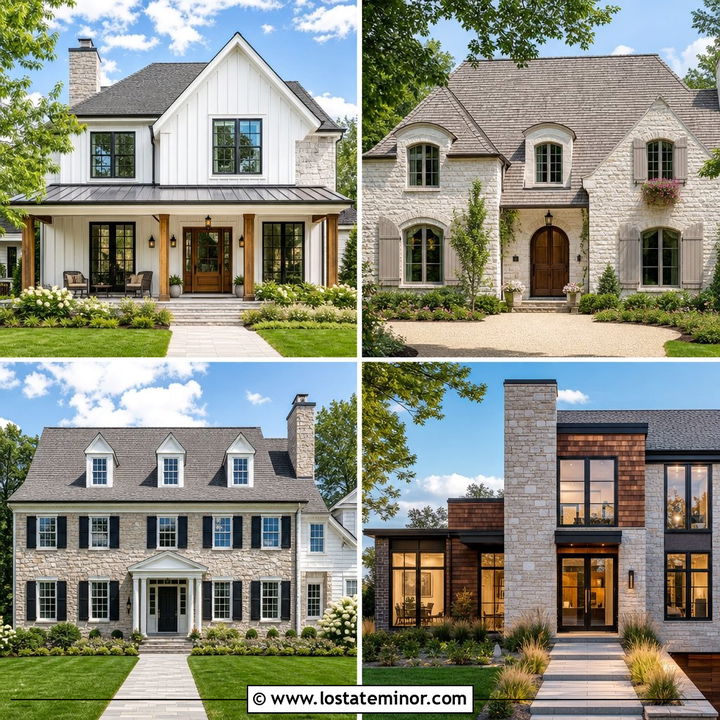
20. Stone Mediterranean House With Travertine Walkway
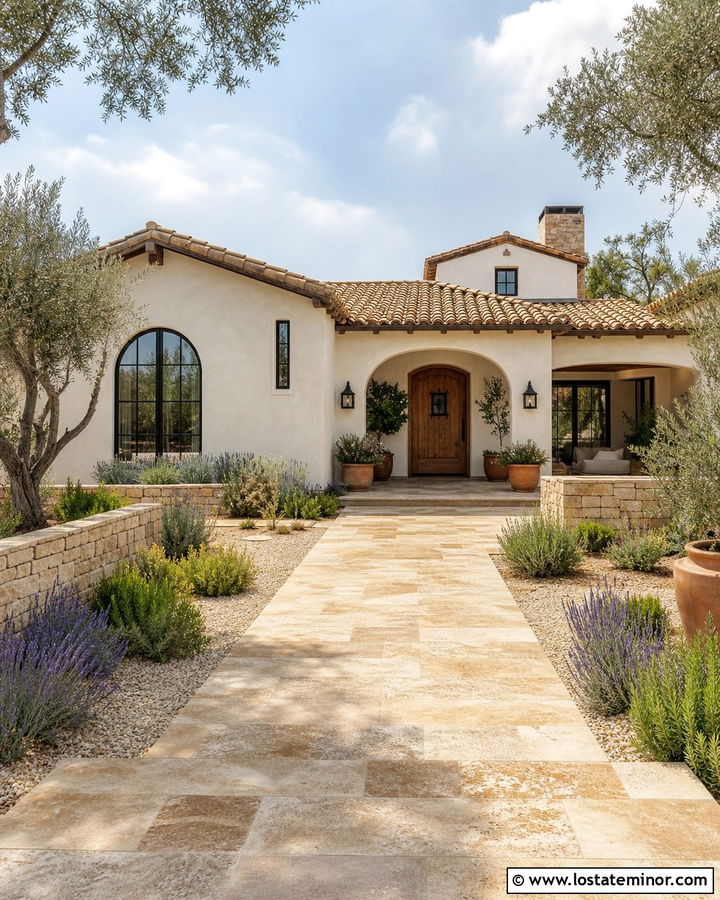
Warm travertine is a natural companion for a Mediterranean stone house. Select tumbled pavers in cream, beige, and light gold to coordinate with the facade and clay roof. A broad walkway with a gentle curve can lead toward an arched porch and heavy wood front door. Use Benjamin Moore Swiss Coffee, a warm creamy white, on the stucco sections and trim. Dark bronze windows, iron railings, and lantern-style fixtures add definition. Drought-tolerant landscaping keeps the full exterior regionally appropriate and easy to read. Consider olive trees, lavender, rosemary, and low ornamental grasses set in gravel beds. Continue the travertine across the entry landing for a seamless finish. The warm materials create an inviting exterior without requiring strong or trendy accent colors.
21. Stone French Country House With Gravel Walkway
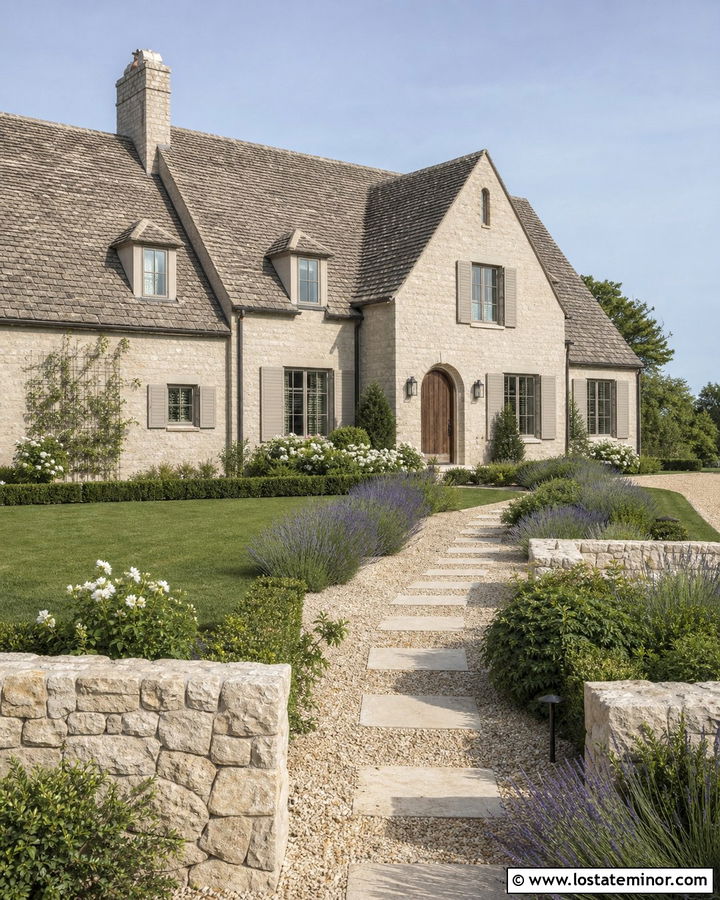
Fine gravel brings relaxed elegance to a French country stone house. Use warm gray or buff-colored gravel contained by understated metal edging, then place large limestone stepping slabs along the main walking line. The layered materials feel informal yet refined. Pair creamy rubble stone with pale taupe shutters, warm white trim, and an arched natural oak door. A weathered gray roof enhances the softly aged palette. Border the walkway with lavender, low hedges, white roses, and loosely shaped shrubs rather than rigid rows. At the porch, widen the path into a small gravel court with matching limestone edging. This design works best when every color appears slightly muted. Nothing should feel too bright, polished, or new compared with the texture of the stone facade.
22. Stone Prairie House With Linear Walkway
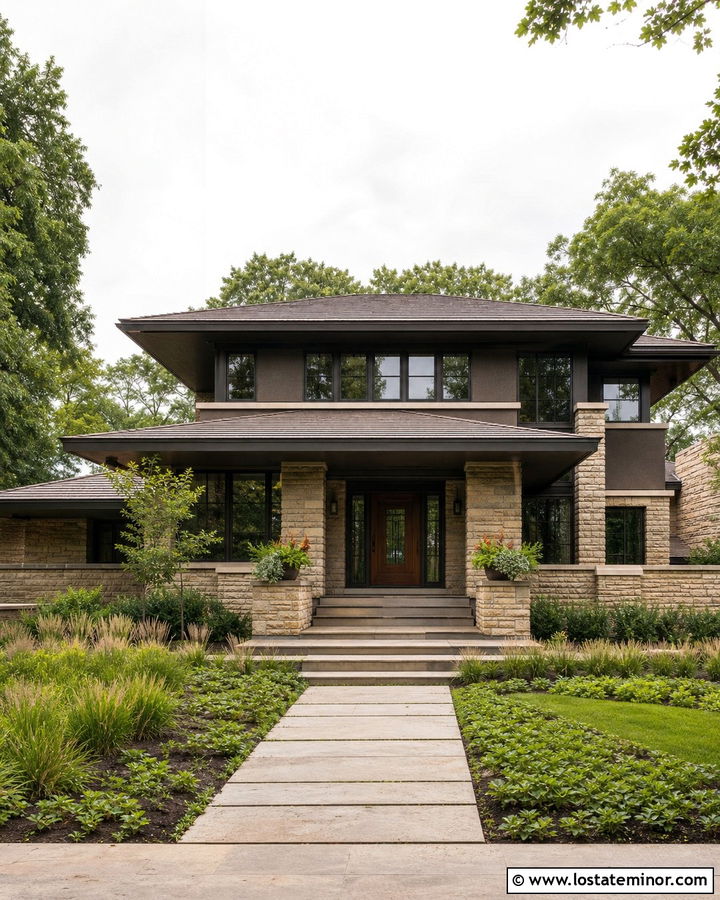
Long horizontal lines define a Prairie-style stone house, so the walkway should reinforce that geometry. Use wide rectangular concrete or limestone slabs laid in an offset linear pattern. Warm gray paving complements low stone walls, broad roof overhangs, and bands of windows. Paint the siding Sherwin-Williams Urbane Bronze, a deep earthy brown-gray, and use dark bronze window frames for a grounded palette. A medium-stained wood door can provide the main warm accent. Keep planting low and architectural with spreading grasses, compact shrubs, and broad ground-cover masses. The walkway may run parallel to the facade briefly before turning toward the entry, emphasizing the home’s width. This arrangement creates a more deliberate experience than a narrow path cutting directly across the lawn.
23. Stone Mid-Century House With Geometric Walkway
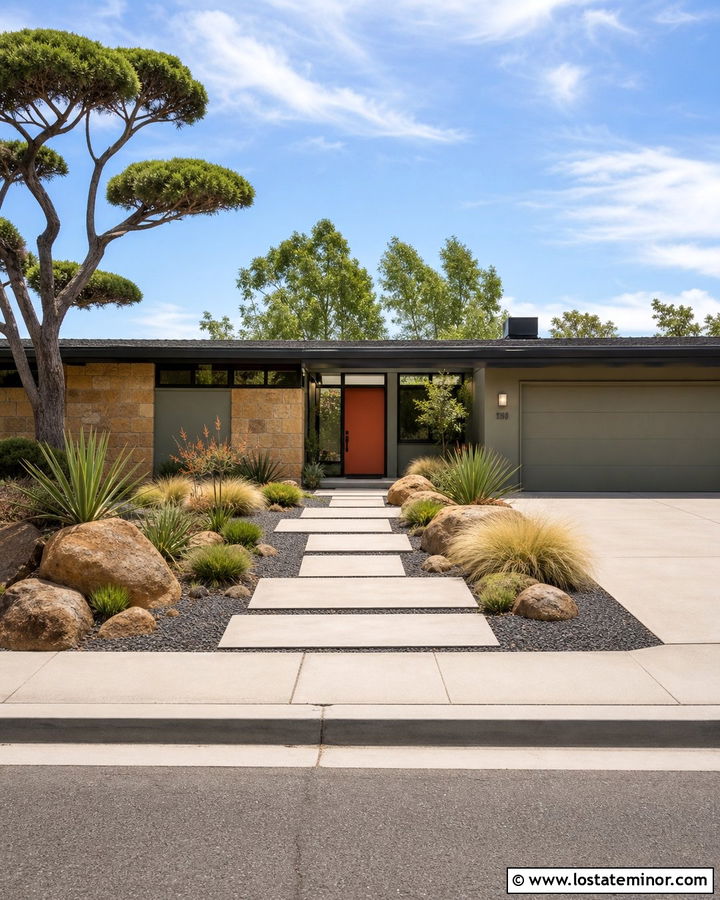
A geometric walkway can refresh a stone mid-century house while respecting its original character. Arrange large square concrete pavers in a staggered grid with gravel, grass, or low ground cover between them. Pair golden-brown stone with Sherwin-Williams Anonymous, a muted olive-gray, on the siding. Black trim and a burnt orange front door introduce crisp period-inspired contrast. A low-sloped charcoal roof completes the horizontal silhouette. Keep the landscape simple with ornamental grasses, yucca, rounded boulders, and one sculptural tree. Avoid winding cottage pathways that conflict with the architecture. Instead, let the paver grid line up with windows, roof supports, or the carport. The finished exterior feels clean and modern while preserving the home’s warm stone texture and recognizable mid-century proportions.
24. Stone Lake House With Natural Slate Walkway
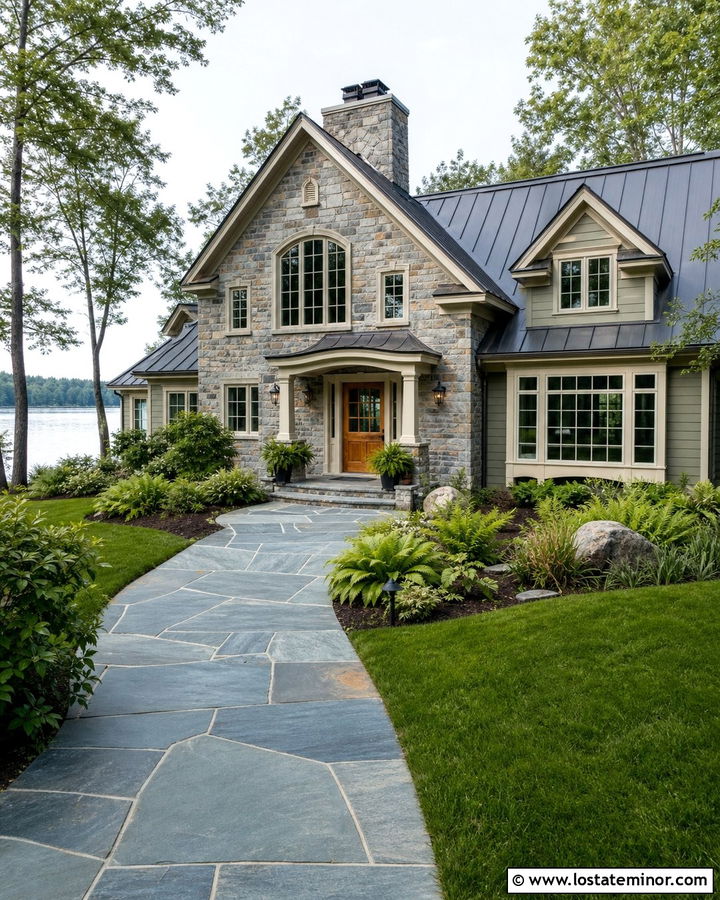
Natural slate works beautifully around a stone lake house because its shifting blue, green, and gray tones mirror water and wooded surroundings. Create a relaxed walkway using broad slate slabs with lightly irregular edges. Pair the stone facade with Sherwin-Williams Evergreen Fog, a soft gray-green, on horizontal siding. Cream trim, a cedar door, and a charcoal metal roof complete the quiet outdoor palette. Allow the walkway to curve gently from the driveway or parking area toward a covered porch. Ferns, hostas, grasses, and native shrubs can soften the edges. Use gravel-filled joints where dense planting would become difficult to maintain. Repeating slate on the porch steps or lower terrace connects the entire approach and gives the exterior a thoughtful, established appearance.
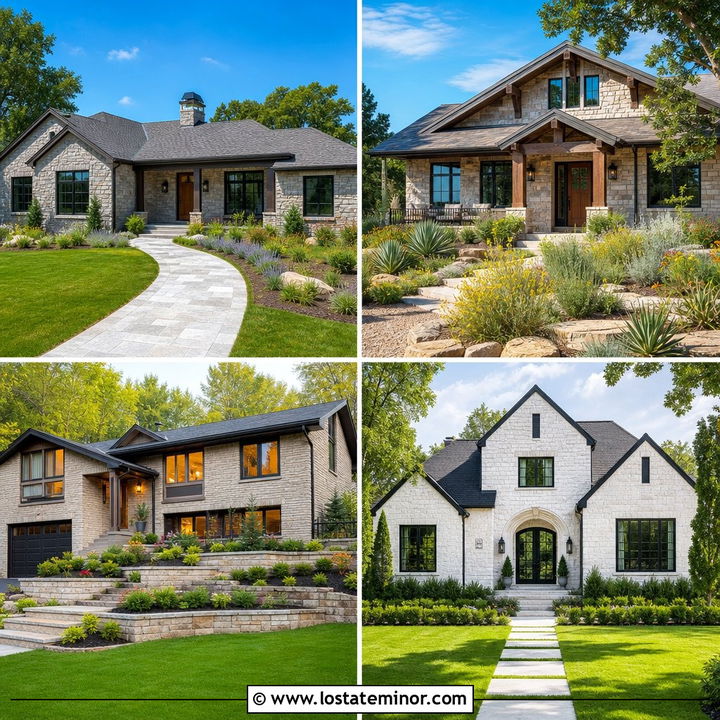
25. Stone Desert House With Decomposed Granite Walkway
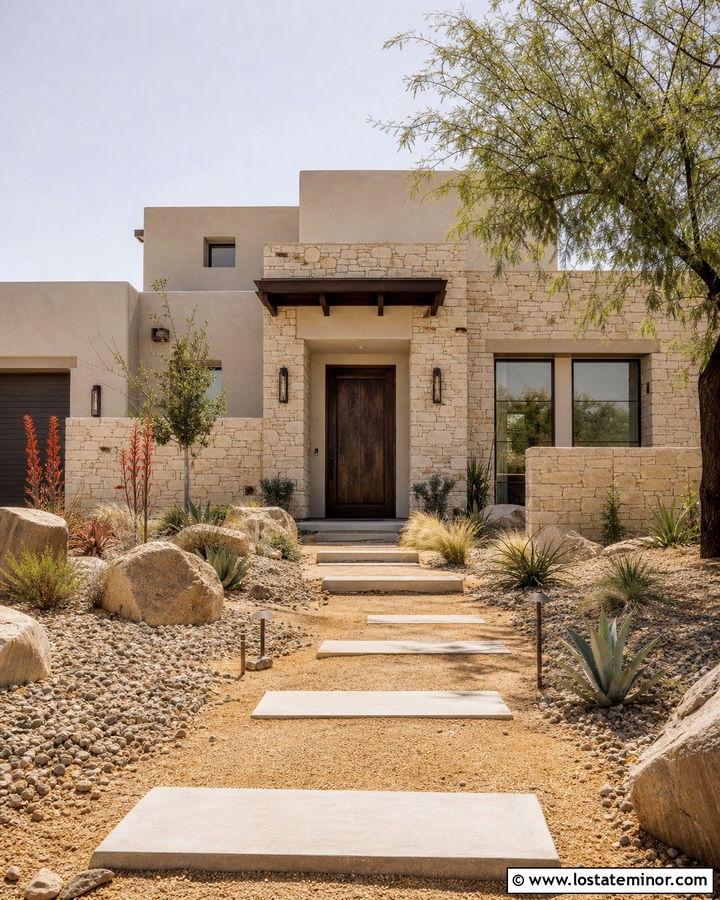
A decomposed granite walkway complements a desert stone house without introducing a surface that feels too formal. Choose compacted material in warm tan, muted gold, or soft rust to echo the surrounding landscape. Add large rectangular concrete stepping pads where firmer footing is needed. Pair sandy ledgestone with Sherwin-Williams Accessible Beige, a light warm beige, and use dark bronze windows for contrast. A stained mesquite-colored front door adds depth beneath a simple porch canopy. Frame the path with agave, red yucca, ornamental grasses, and sculptural boulders set in gravel beds. Curves should remain broad and easy to follow. The coordinated earth tones allow the home to blend with the site, while the darker windows and door keep the facade visually defined.
26. Stone Coastal House With Shell Stone Walkway
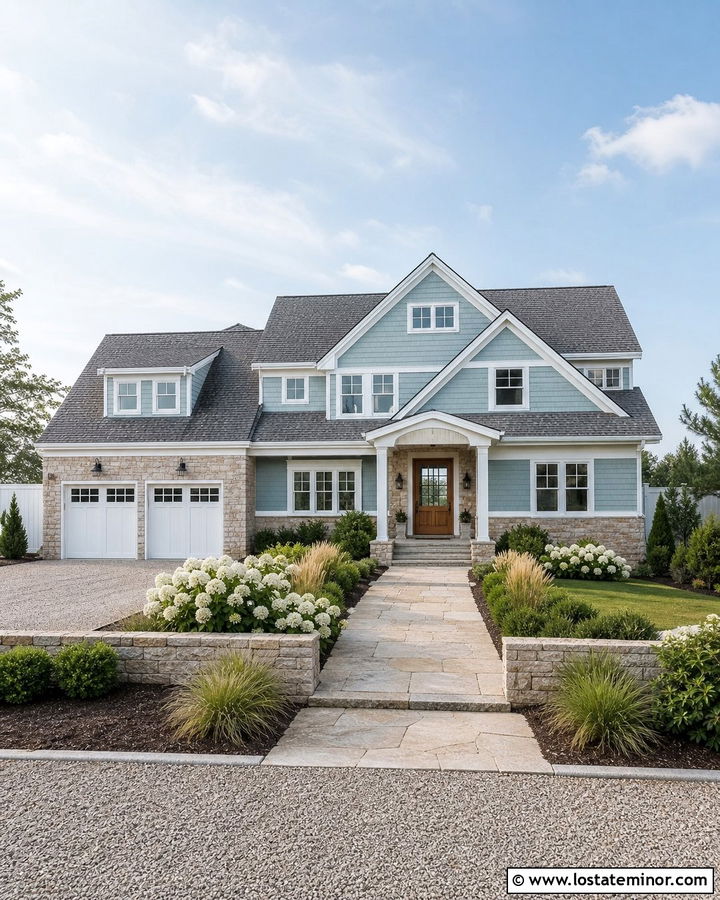
A light shell stone walkway creates a bright, breezy approach to a coastal stone house. Its creamy surface coordinates with pale limestone or washed gray stone without turning the entire exterior into one flat color. Pair the masonry with Benjamin Moore Palladian Blue, a soft blue-green, on shingle siding. Use crisp white trim, a natural teak door, and a weathered gray roof. Lay the shell stone in generous rectangular slabs for a smooth, uncluttered route to the porch. Coastal grasses, white hydrangeas, and low evergreen shrubs can frame the path while tolerating an open, sunny setting. Add pale gravel between planting areas to continue the light palette. The wood door supplies enough warmth to balance the cool siding and airy paving.
27. Stone Log House With Woodland Walkway
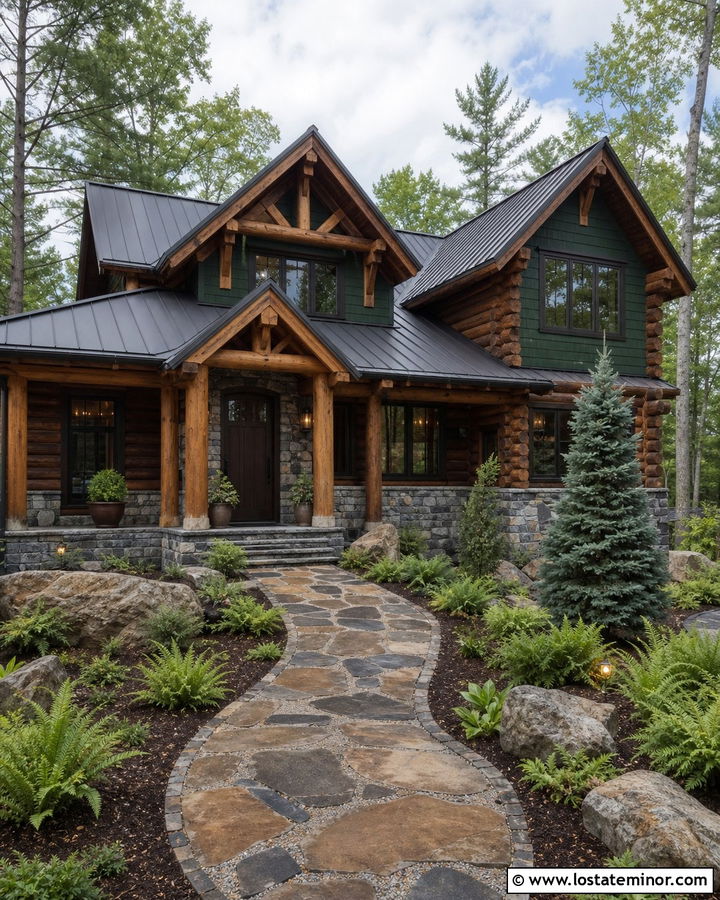
A woodland walkway should feel natural beside a log house with a substantial stone foundation. Use broad, irregular flagstones in brown, charcoal, and mossy gray, placing them in a gently winding path. Pair the stone base with rich cedar logs, deep green trim, and a dark brown front door. A charcoal metal roof adds a clean outline above the warm exterior materials. Fill the walkway joints with fine gravel rather than delicate plants in heavily shaded or high-traffic areas. Ferns, native ground covers, small evergreens, and natural boulders help blend the path into the wooded yard. Keep the route wide enough to feel safe and obvious. Low, simple pathway fixtures can provide guidance while preserving the rustic character during the day.
28. Stone Estate House With Formal Limestone Walkway
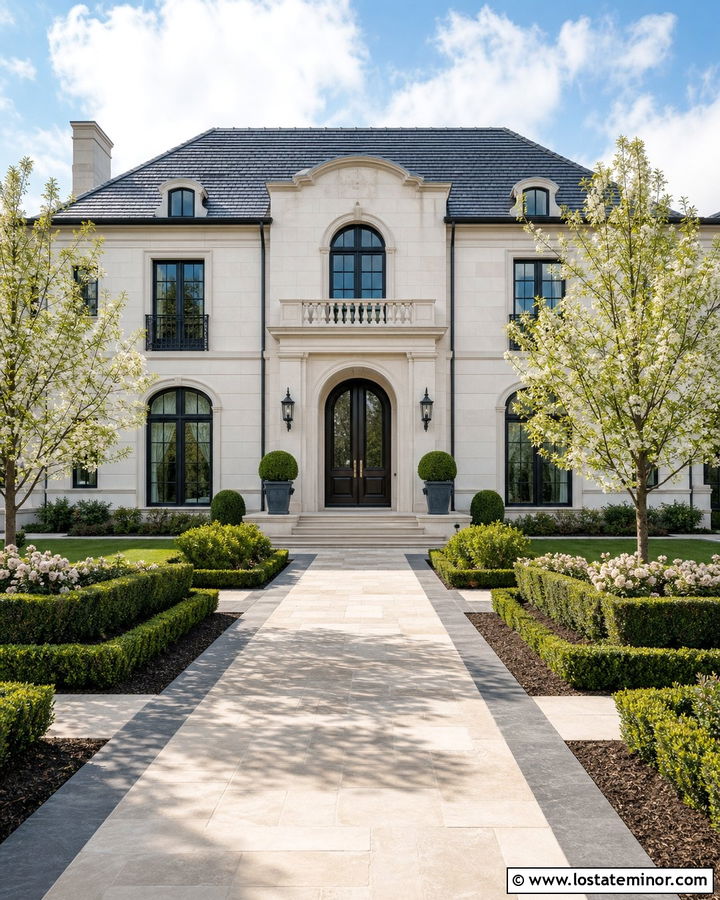
A large stone estate house needs a walkway with enough width and structure to match its scale. Use precisely cut limestone pavers arranged in a running bond, with a slightly darker stone border for definition. The straight path can lead to a broad porch landing or divide around a central planting feature before reaching the entrance. Pair buff limestone walls with Benjamin Moore Ballet White, a soft creamy off-white, on the trim. Black windows, a dark stained double door, and a slate-gray roof give the pale facade depth. Symmetrical hedges, flowering trees, and matching planters support the formal arrangement. Keep planting beds generous but controlled. The finished walkway should look substantial from the street while providing a clear and gracious arrival experience.
29. Mixed Stone House With Two-Tone Paver Walkway
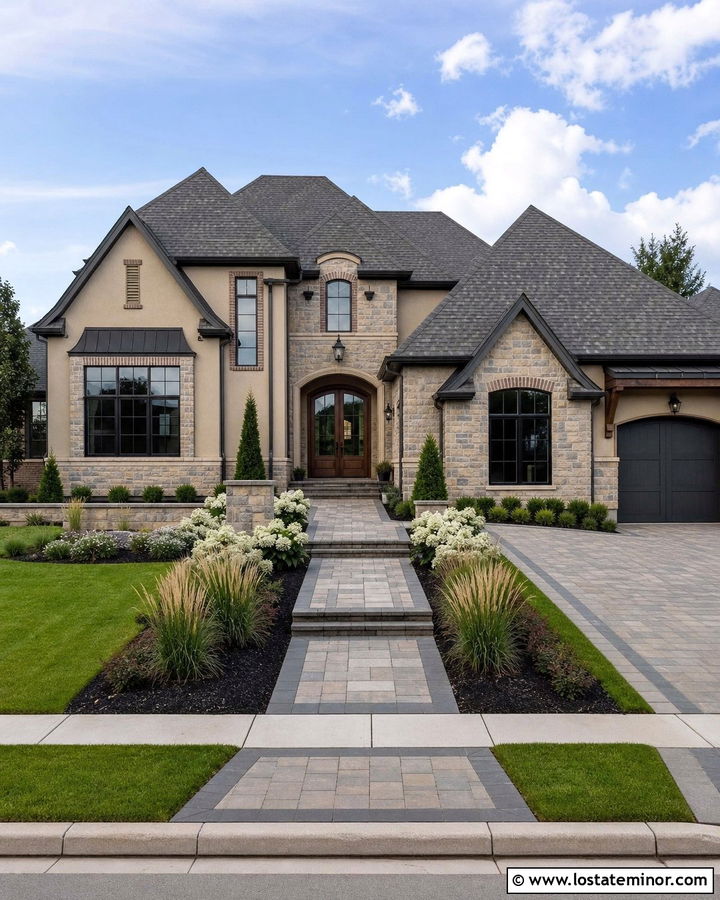
A two-tone walkway can organize the many colors found in a mixed stone exterior. Select a warm gray paver for the main field and a charcoal version for the border. The darker outline creates definition while connecting to black windows, exterior lighting, and roof shingles. Use Sherwin-Williams Natural Tan, a warm sandy beige, on any siding sections and add a medium walnut front door. Keep the paver pattern simple so it does not compete with the varied masonry. A straight route with one subtle bend usually provides enough visual interest. Plant evergreen shrubs, ornamental grasses, and white flowers along the edges. Repeating both paver tones in the porch steps or retaining wall caps makes the full front exterior feel coordinated from the curb.
30. Stone House With Walkway And Retaining Walls
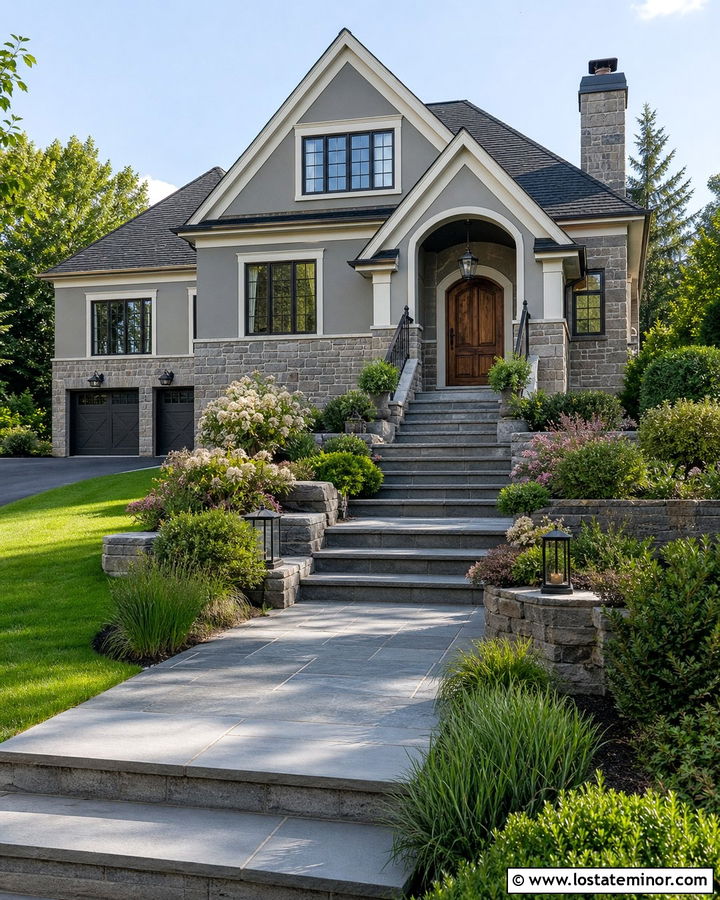
On a sloped property, the walkway and retaining walls should function as one connected design. Build broad stone steps with generous landings, then use low retaining walls to shape planting beds on both sides. Face the walls with the same stone family used on the house, but vary the size or pattern slightly for depth. Pair gray-brown masonry with Sherwin-Williams Dovetail, a medium warm gray, plus creamy trim and a stained oak door. Use charcoal bluestone for the stair treads and landings so every level has a stable visual anchor. Plant cascading ground covers, compact grasses, and low flowering shrubs above the walls. Integrated step lighting can be discreetly placed beneath caps, keeping the stonework visually clean during daylight.
Conclusion:
The best 30 Stone House Design With Walkway Ideas treat the path, facade, porch, roof, and landscape as parts of one curb-appeal plan. Start by identifying the dominant undertones in your house stone. Then choose walkway materials that repeat, soften, or intentionally contrast with those colors. Straight paths usually support symmetrical architecture, while broad curves feel natural around cottages and rustic homes. Scale matters too. Large houses need wider paths and substantial pavers, while compact homes often look better with simpler stepping stones. Consider drainage, slope, walking comfort, local weather, and maintenance before selecting a surface. Most importantly, connect the walkway to the front door through repeated colors, compatible materials, and landscaping that clearly frames the route.

Related posts: