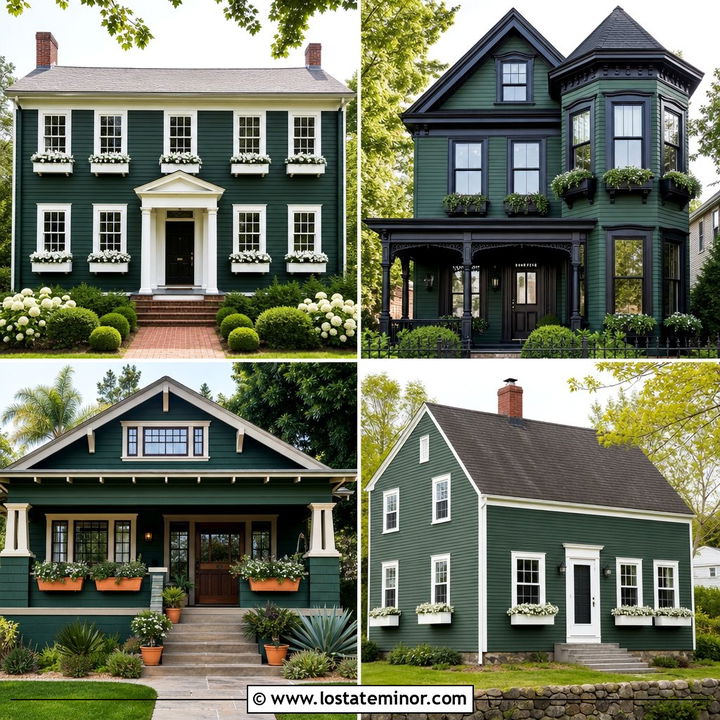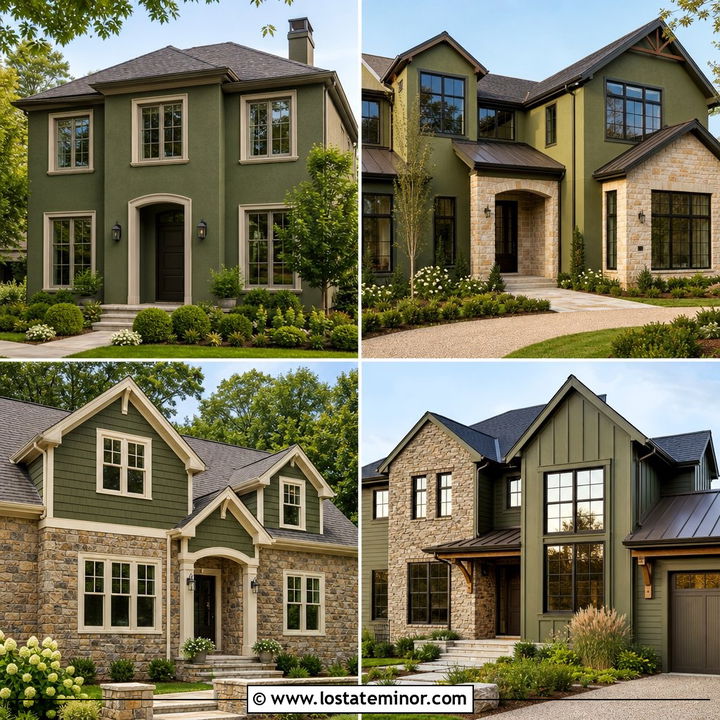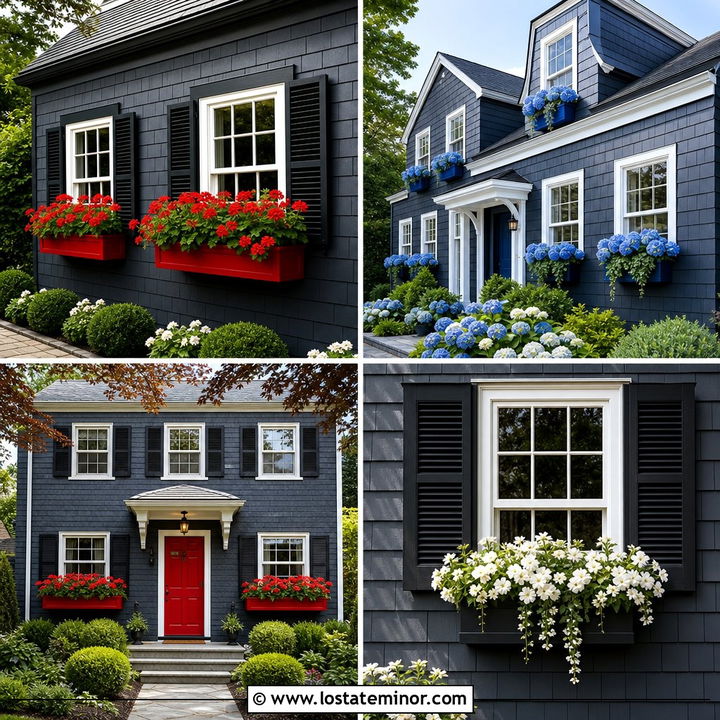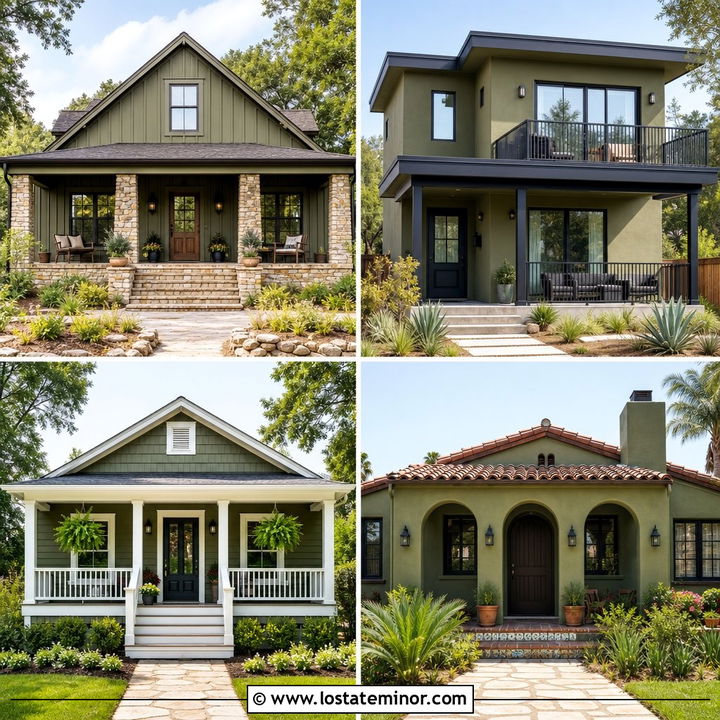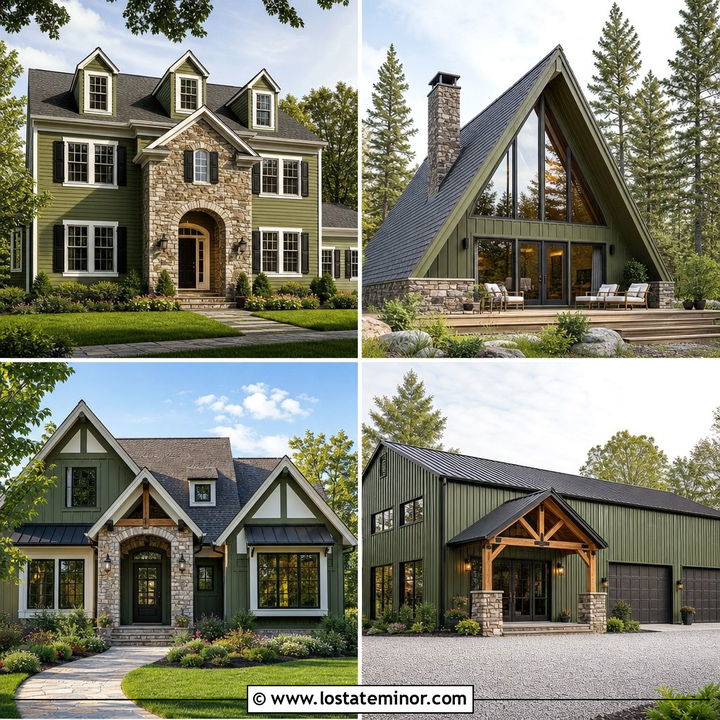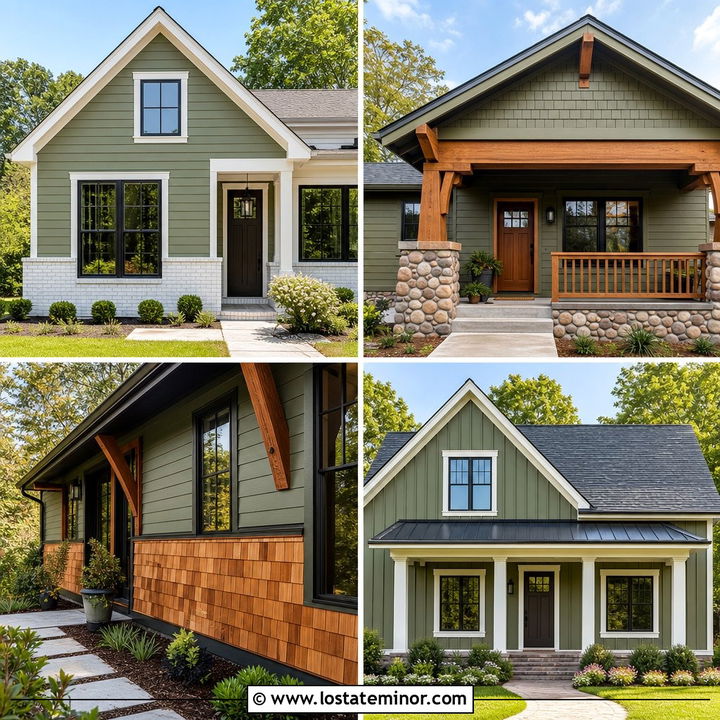
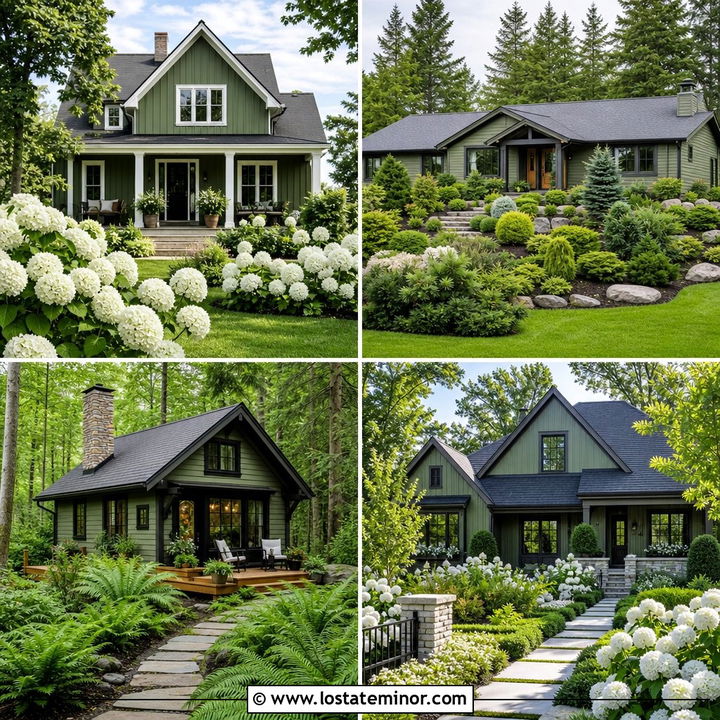
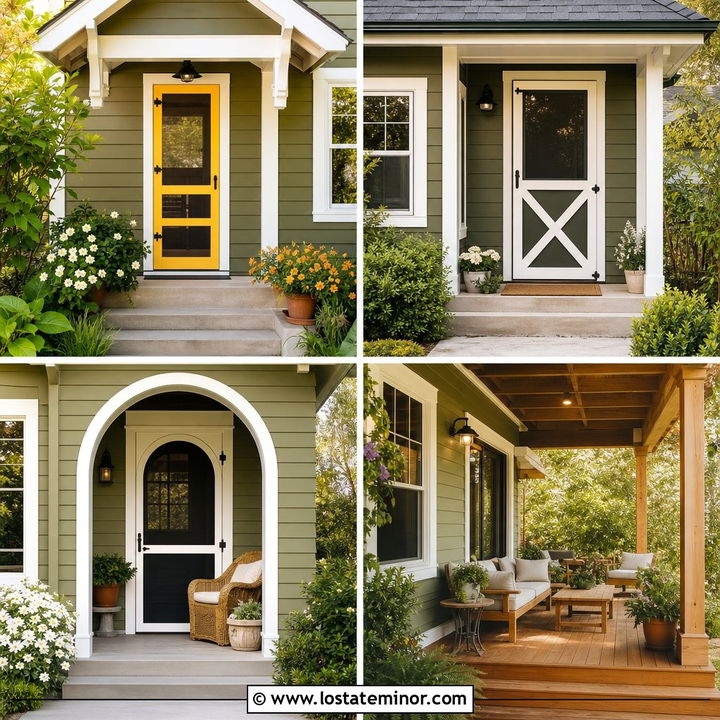
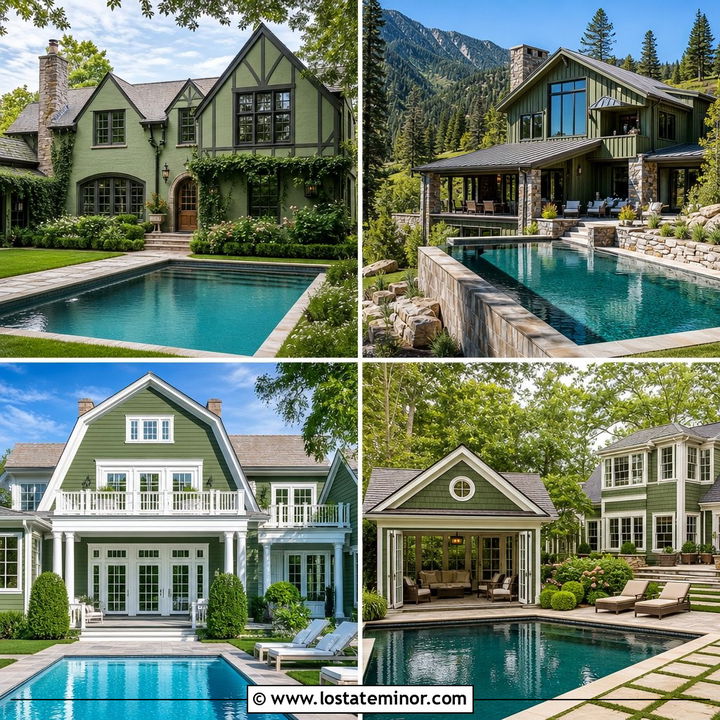
Olive green brings a grounded, welcoming character to a home, while window boxes add color, texture, and architectural detail. Together, they can make almost any facade feel more established and connected to its landscaping. These 30 Olive Green House Design With Window Boxes Ideas explore complete exterior schemes rather than isolated planter details. You will find olive siding paired with white trim, wood doors, stone foundations, brick accents, and several window box materials. The collection also covers farmhouses, ranch homes, cottages, Craftsman houses, colonials, and modern designs. Each look includes practical ways to coordinate flowers, roofing, walkways, and exterior finishes. Use these 30 Olive Green House Design With Window Boxes Ideas to find a balanced combination for your home.
1. Olive Green Farmhouse With White Window Boxes
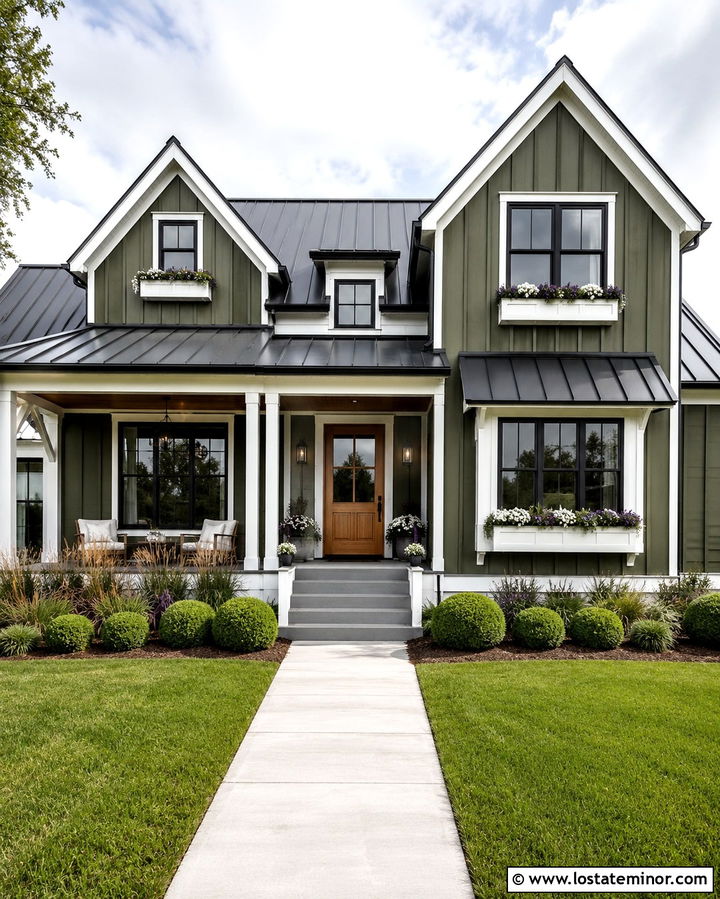
An olive green modern farmhouse feels fresh when its earthy siding is outlined with clean white trim. Choose vertical board-and-batten siding to emphasize the height of the facade. Add simple white window boxes beneath the main front windows so they connect visually with the fascia, corner boards, and porch columns. Cascading white flowers mixed with soft purple blooms create color without competing with the siding. A natural oak front door warms the scheme, while a charcoal metal roof adds a crisp finishing layer. Keep the porch floor and front steps in a medium gray to bridge the green and black details. Rounded shrubs, ornamental grasses, and a straight concrete walkway give this complete olive green exterior a neat, approachable appearance.
2. Dark Olive Green Cottage With Cedar Window Boxes
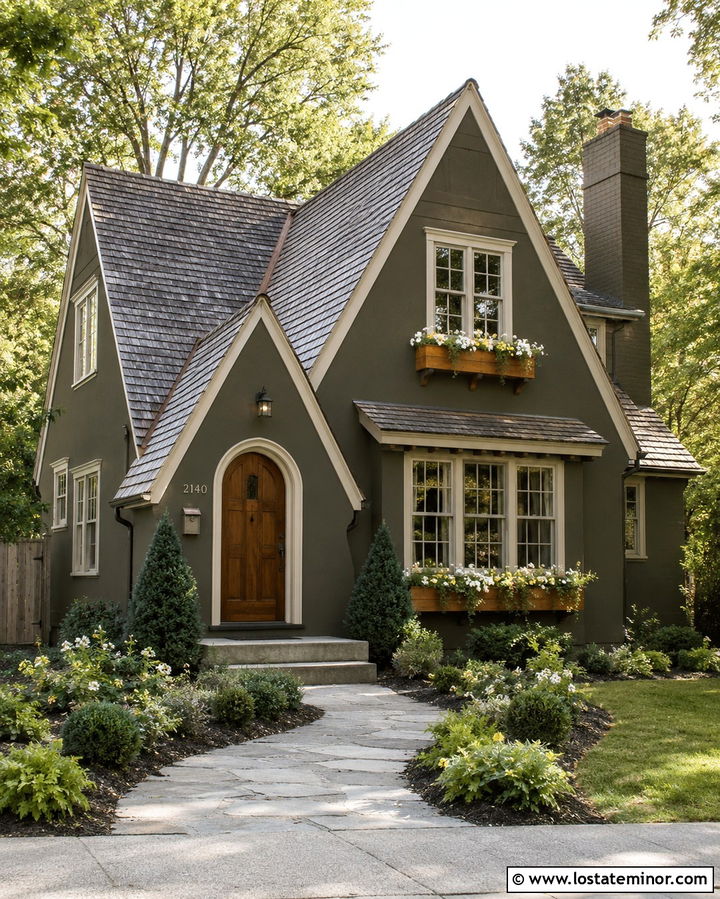
Dark olive green siding creates a cozy backdrop for natural cedar window boxes. This pairing looks especially fitting on a small cottage with a steep roof, divided-light windows, and a welcoming front porch. Repeat the cedar on the front door, porch posts, and a simple gable vent to make the boxes feel intentional. Cream trim offers a softer contrast than bright white and complements the warm undertones in both the green paint and wood. Fill the boxes with white blooms, trailing greenery, and touches of pale yellow. A weathered gray roof keeps the cottage grounded without making it look too dark. Finish the yard with a curved stone path, low flowering borders, and compact evergreen shrubs that leave the windows visible.
3. Olive Green Ranch House With Black Window Boxes
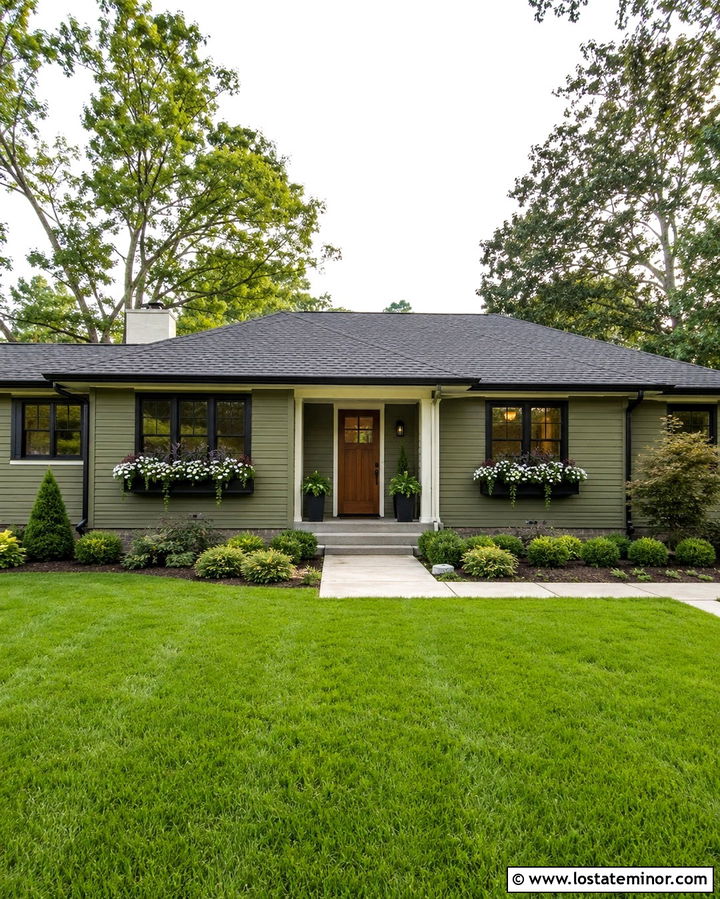
Could a simple ranch home carry a darker, more modern exterior? Olive green horizontal siding paired with matte black window boxes creates a clean answer. Use black for the window frames, gutters, garage door hardware, and front porch light so the planters belong to a coordinated accent palette. Warm white soffits keep the long roofline from feeling heavy. A stained wood front door adds needed warmth between the green siding and dark details. Choose low-profile window boxes that fit the ranch home’s horizontal proportions, then plant them with white petunias, burgundy foliage, and trailing vines. A charcoal roof, broad concrete walkway, and structured foundation planting complete the scheme. The finished exterior feels updated while preserving the house’s straightforward midcentury shape.
4. Olive Green Craftsman With Stone Window Boxes
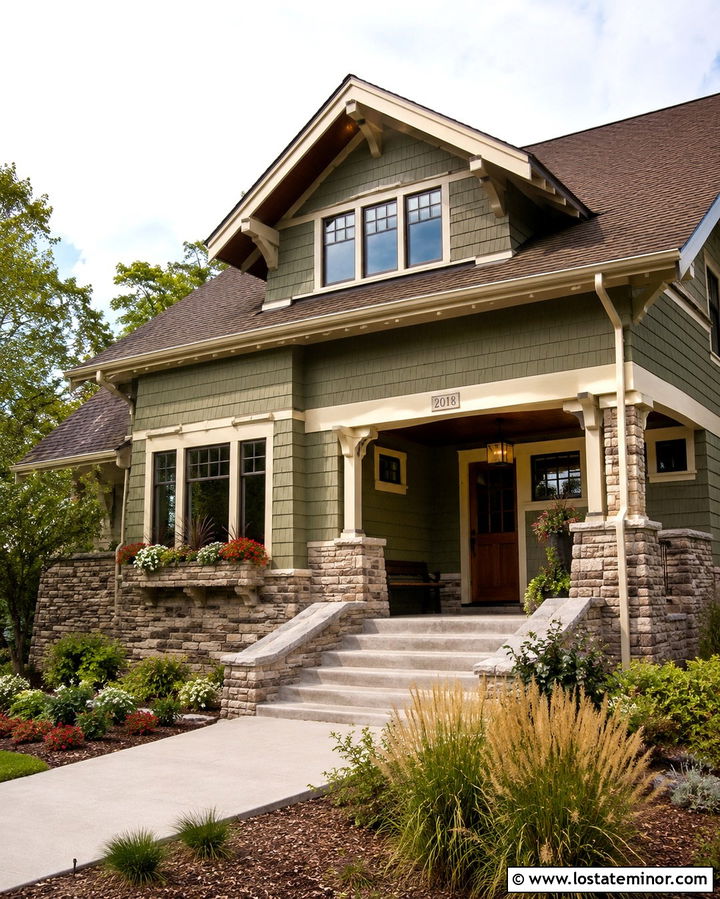
A Craftsman exterior benefits from materials that look substantial and handcrafted. Cover the main facade in muted olive green lap siding, then place stone-faced window boxes beneath wide front windows. Using the same stone around the foundation and porch columns makes the planters look built into the architecture. Select warm cream trim for the tapered columns, window casings, and exposed rafter tails. A medium-stained wood door and matching porch ceiling deepen the natural palette. Plants with copper, white, and deep red tones will complement the green without appearing overly bright. Add a dark brown architectural roof and broad stone steps leading to the porch. Layered native grasses and rounded shrubs can soften the masonry while keeping the beautiful window boxes easy to see.
5. Olive Green Colonial With White Window Boxes
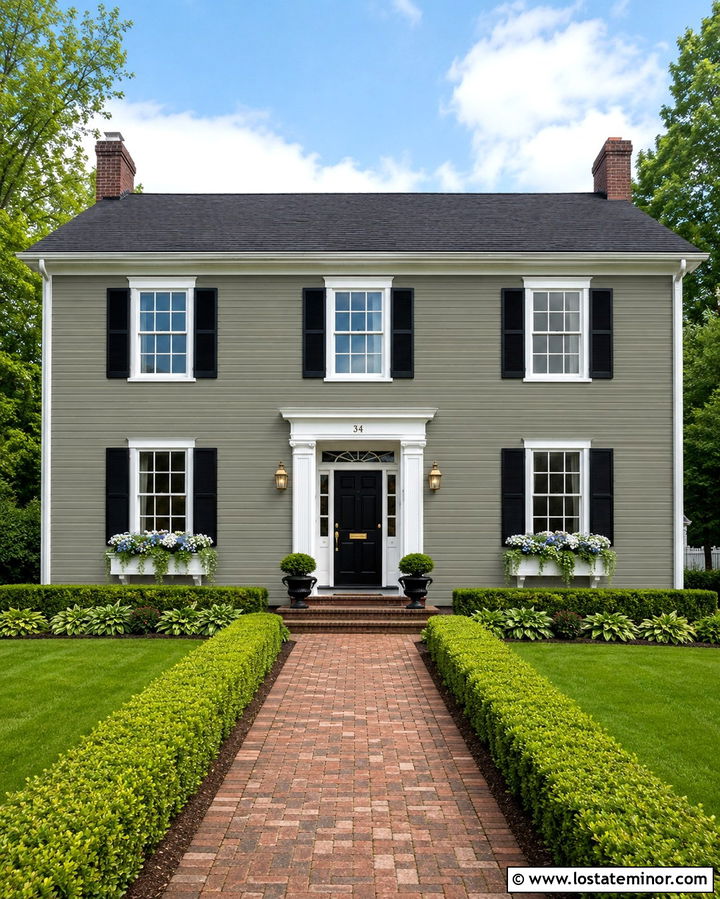
Symmetry makes an olive green colonial with window boxes especially satisfying. Paint the clapboard siding a classic medium olive and outline each evenly spaced window with crisp white trim. Matching white window boxes beneath the first-floor windows reinforce the balanced facade. Fill every box with the same simple plant combination, such as white geraniums, green trailing vines, and small blue flowers. Black shutters and a black front door create traditional contrast, while polished brass hardware introduces a warmer note. A dark charcoal roof supports the formal color scheme without distracting from the olive siding. Finish the front yard with a centered brick walkway, clipped hedges, and two matching planters near the entry. Consistent spacing and restrained colors are what make this complete exterior work.
6. Olive Green Bungalow With Terracotta Window Boxes
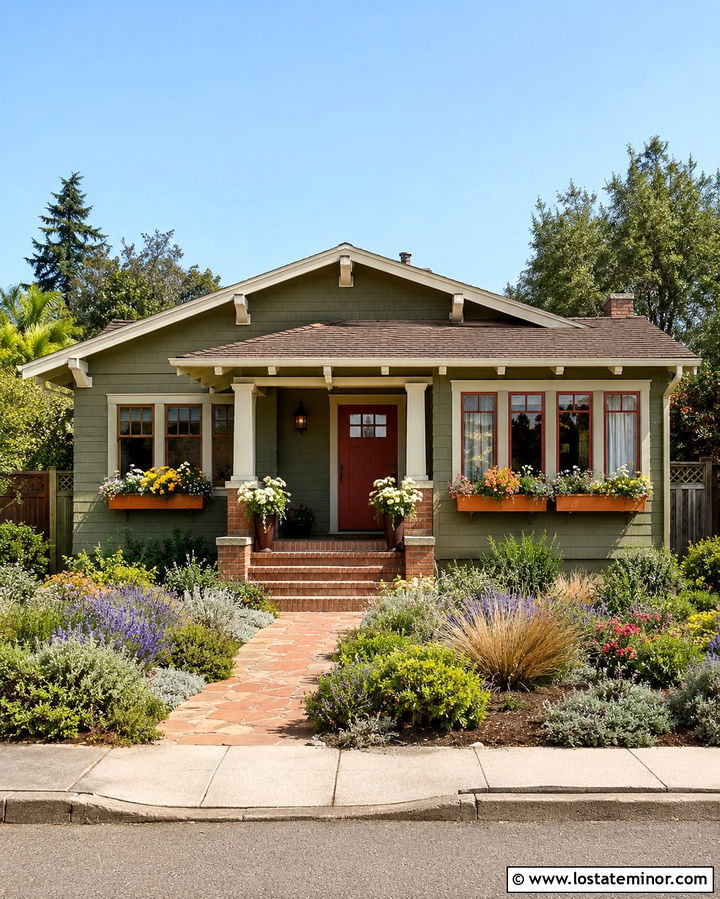
Terracotta window boxes bring sun-warmed color to an olive green bungalow. The red-orange clay naturally stands out against earthy green siding without creating a harsh contrast. Use muted cream trim around the windows, porch columns, and wide eaves to preserve the bungalow’s relaxed character. A rusty red front door can repeat the warmth of the planters, while a dark brown shingle roof anchors the lower profile. Fill the boxes with yellow, ivory, and coral flowers supported by silvery foliage. Natural brick porch steps and a clay-toned walkway continue the palette through the landscape. Instead of formal hedges, use loose ornamental grasses, lavender, and spreading ground cover. This combination feels casual, colorful, and well suited to a bungalow with broad windows and a deep porch.
7. Olive Green Cape Cod With Blue Window Boxes
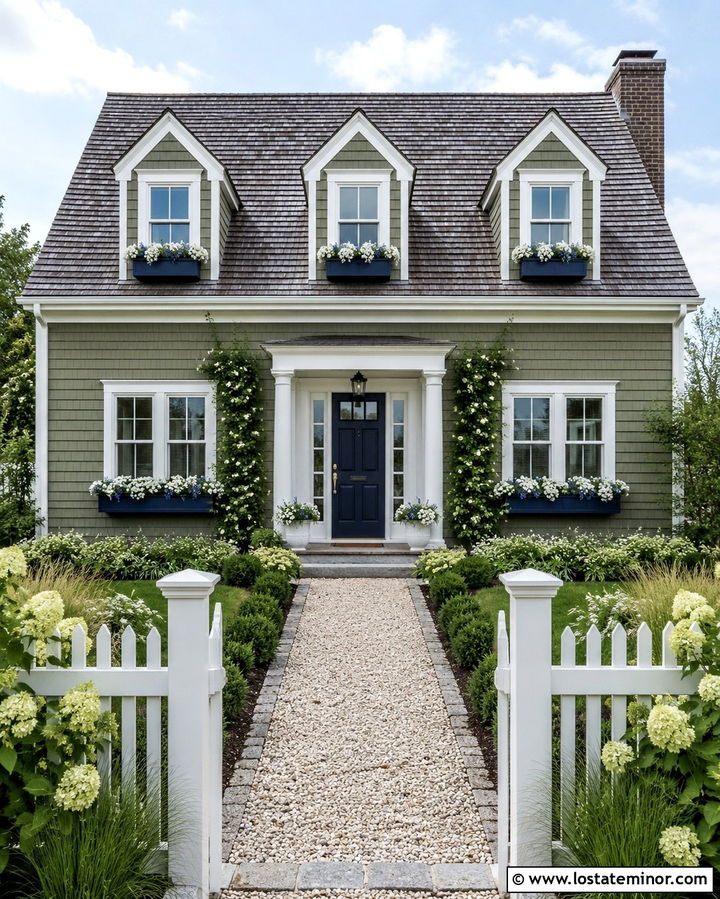
A Cape Cod exterior can handle a subtle coastal accent without relying on the usual blue siding. Start with olive green shingles, white trim, and a weathered gray roof. Add muted navy blue window boxes beneath symmetrical multi-pane windows. The blue planters introduce contrast while remaining deep enough to sit comfortably beside the olive facade. Repeat navy on the front door, then keep the shutters white or remove them for a simpler look. Plant the boxes with white flowers, blue lobelia, and trailing green vines to connect the two main exterior colors. A white picket fence and crushed-stone walkway support the cottage character. Keep the landscaping low and windswept, using hydrangeas, beach grasses, and compact evergreens around the full facade.
8. Olive Green House With Copper Window Boxes
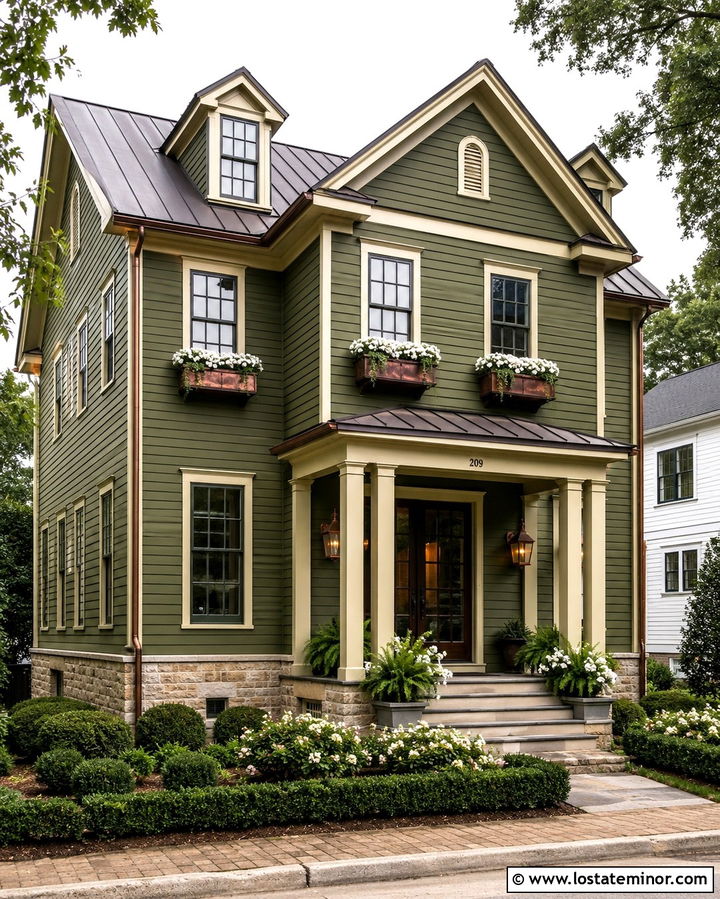
Copper window boxes can give an olive green home a refined, custom appearance. New copper introduces a warm metallic glow, while naturally aged copper develops tones that blend beautifully with green siding. Use the boxes on a traditional two-story home with olive clapboards, cream window trim, and a deep brown front door. Copper porch lights, gutters, or a small entry roof can repeat the metal in measured amounts. Fill the planters with white flowers and rich green foliage so the containers remain the primary decorative feature. A dark bronze roof and tan stone foundation will support the warmer accents. Keep the walkway simple and frame it with boxwood, ferns, and flowering shrubs. The result is polished but still grounded in natural colors and materials.
9. Olive Green House With Black Trim And Wood Window Boxes
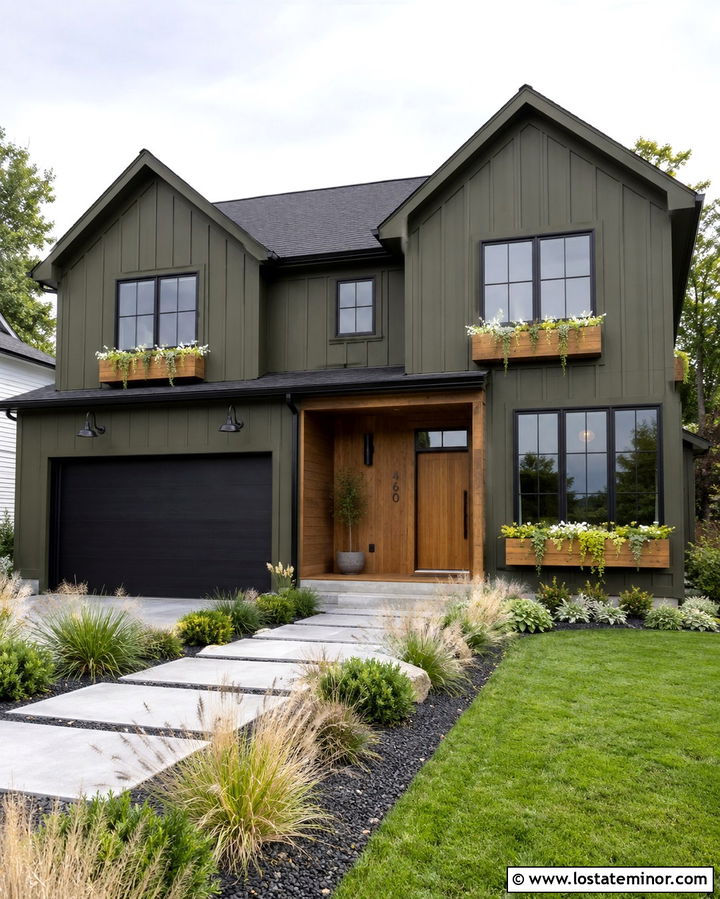
Black trim gives olive green siding stronger definition, especially on a home with clean rooflines and large windows. Natural wood window boxes prevent the scheme from becoming too severe. Choose medium-toned cedar or teak and repeat it on the front door, porch ceiling, and selected horizontal slats near the entry. Fill the boxes with soft white flowers and trailing chartreuse foliage, allowing the plants to brighten the dark window frames. A black garage door and charcoal roof can complete the modern palette, provided the wood details remain visible across the facade. Use rectangular concrete pavers, dark gravel, and simple grasses in the front yard. This full exterior combination balances sharp architectural lines with warmth, greenery, and a welcoming connection to the surrounding landscape.
10. Olive Green Tudor House With Iron Window Boxes
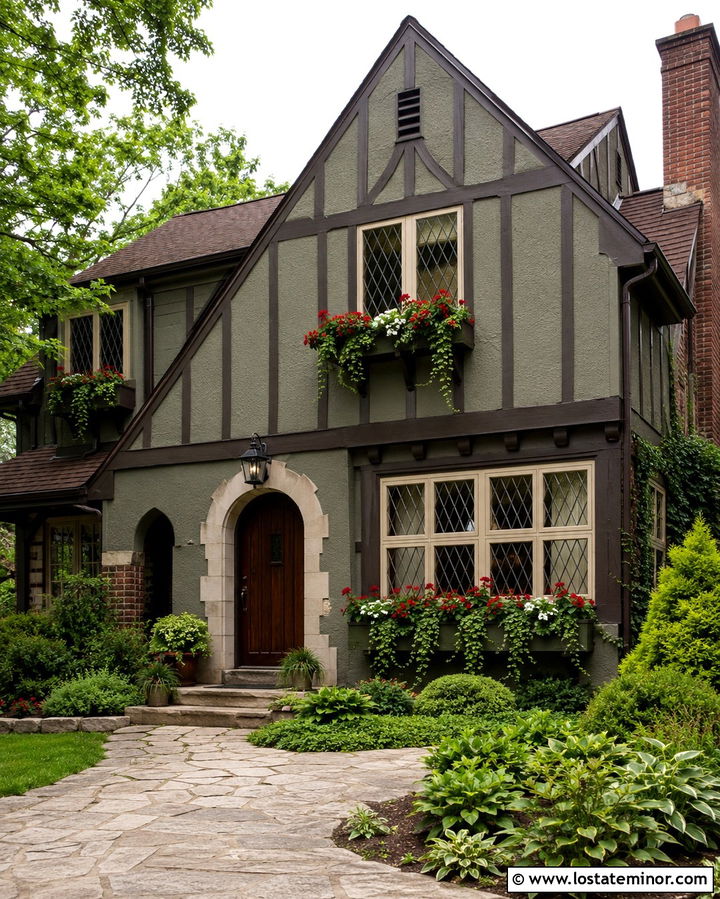
An olive green Tudor exterior feels rich when paired with black wrought-iron window boxes. Apply deep olive paint to the stucco or siding sections while preserving dark brown half-timber details. Cream trim around the leaded windows introduces enough brightness to highlight the architecture. Select iron window boxes with restrained scrollwork rather than overly elaborate patterns. Insert dark liners so the flowers and foliage remain the focus. Deep red geraniums, white blooms, and trailing ivy suit the old-world palette. A heavy stained-wood front door and brick chimney add more traditional texture. Complete the look with a brown roof, irregular stone walkway, and layered shrubs around the foundation. The window boxes should align carefully with the Tudor windows to maintain a balanced, authentic-looking facade.
11. Olive Green Split-Level With Modern Window Boxes
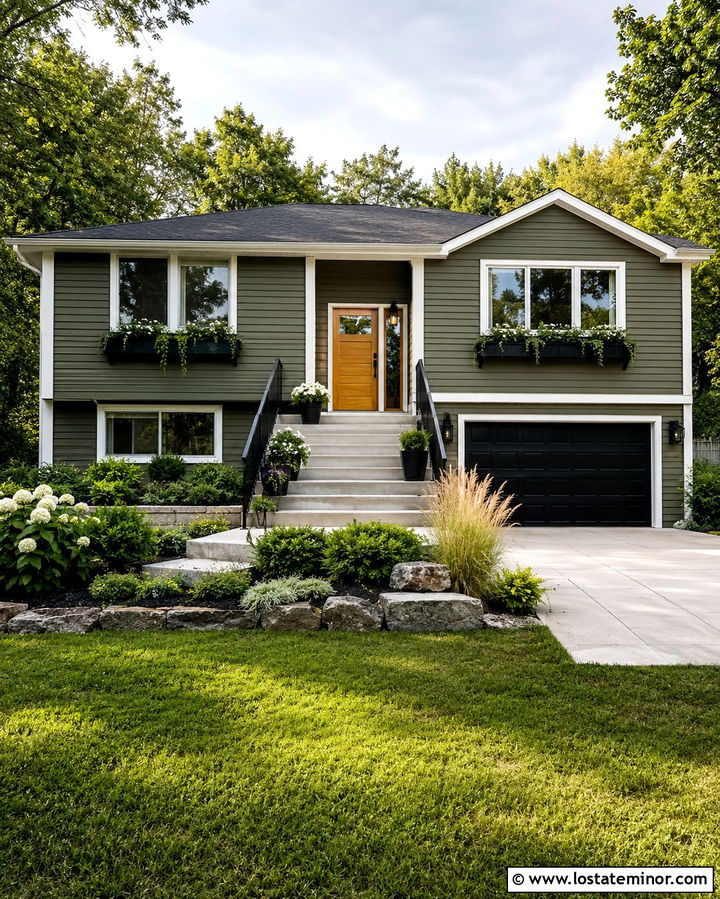
A split-level house often needs exterior details that unite its staggered sections. Olive green siding can create that connection, while streamlined black window boxes add a modern rhythm beneath the front windows. Use warm white trim to outline each level, then repeat black on the entry railing, lighting, gutters, and garage door. A golden oak front door brings warmth to the center of the facade. Choose long rectangular boxes rather than ornate planters, filling them with compact grasses, white flowers, and trailing vines. A charcoal roof visually ties the different rooflines together. Update the yard with wide concrete steps, a straight walkway, and layered plant beds that follow the house’s levels. The result feels coordinated rather than divided, giving the split-level stronger curb appeal.
12. Olive Green Brick House With Cream Window Boxes
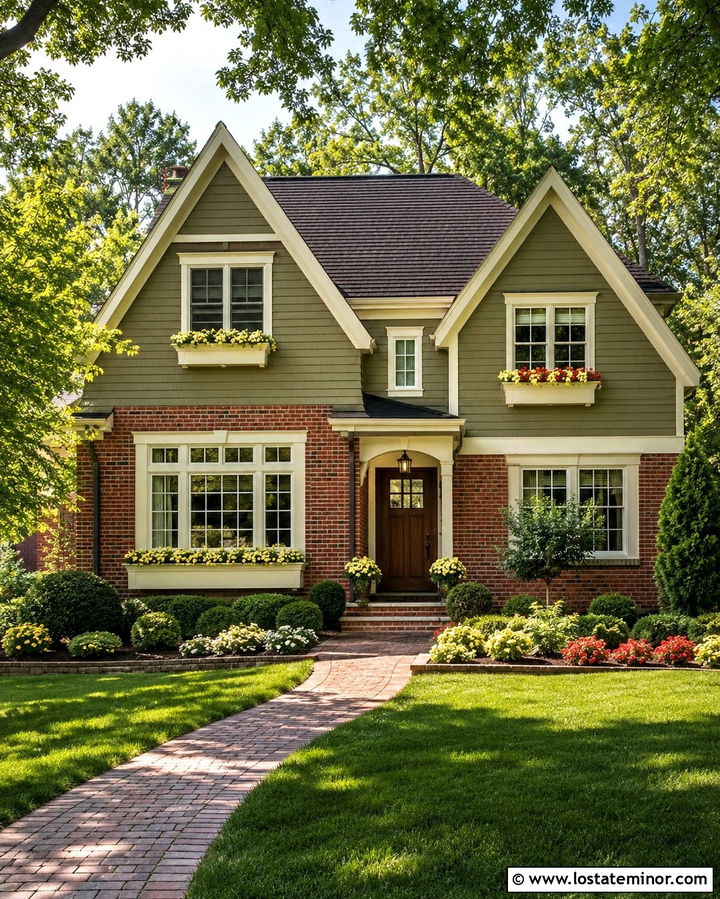
Painting or siding selected areas olive green can soften a red brick house while preserving its original masonry. Use olive green on upper siding, gables, or an enclosed porch, then add cream window boxes beneath both the brick and siding sections. Cream window trim and fascia create a consistent border across the mixed-material facade. Choose a warm brown front door that connects visually with the brick and green. Fill the boxes with pale yellow, ivory, and soft red flowers to echo the exterior palette. A brown-black roof works better than a blue-toned gray for this warm combination. Keep the walkway in brick or clay-toned pavers, and use neatly clipped shrubs around the foundation. The repeated cream planters help the brick and olive surfaces read as one complete design.
13. Olive Green House With Matching Window Boxes
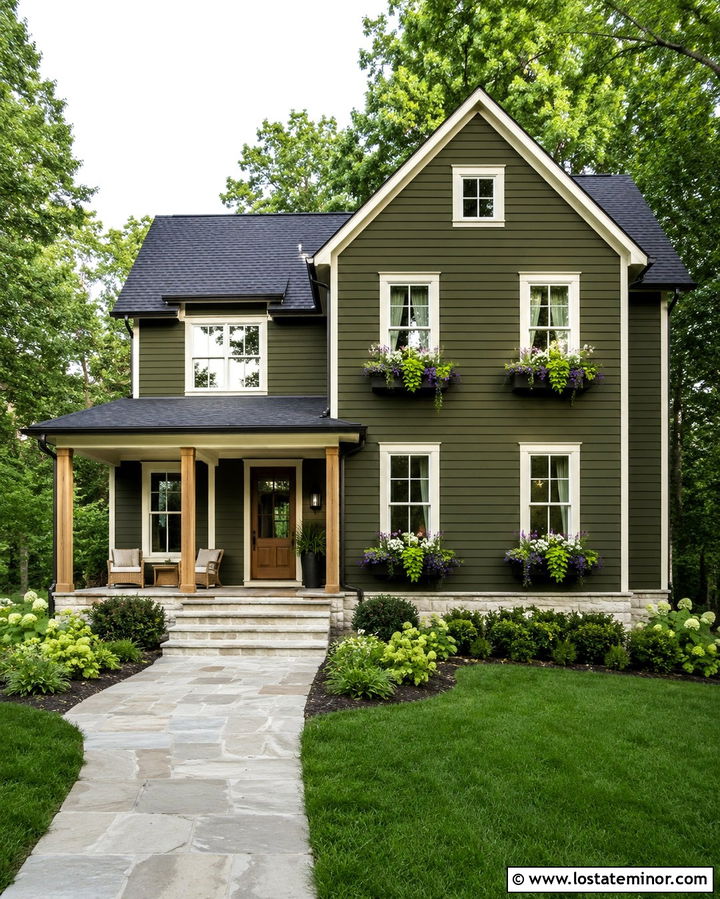
Matching window boxes to the siding creates a quiet, built-in appearance. Paint both the horizontal clapboards and simple rectangular planters the same medium olive green. This works best when the window trim provides a clear contrast, such as warm white or pale cream. Add a natural wood front door and matching porch posts to keep the exterior from looking flat. White flowers, lime foliage, and trailing purple blooms will remain visible against the green boxes. A charcoal gray roof and dark bronze lighting add definition without pulling attention away from the color-matched planters. Use light stone around the foundation and along the walkway to brighten the lower facade. This coordinated approach is useful for homeowners who want window boxes that enhance the architecture rather than dominate it.
14. Light Olive Green Cottage With Gray Window Boxes
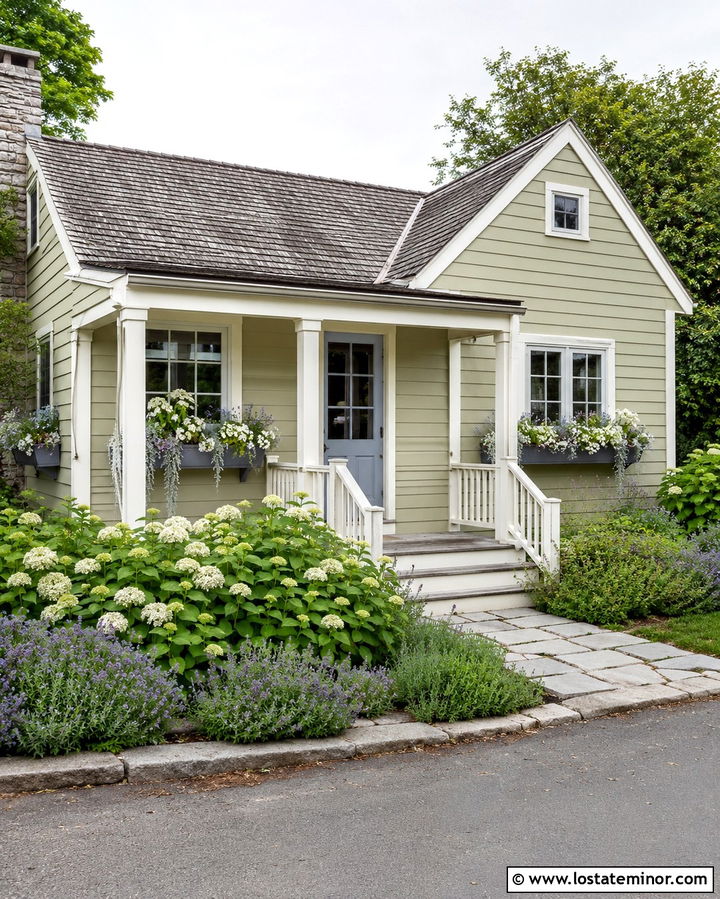
Soft olive green siding gives a cottage a light, garden-friendly appearance. Pair it with medium gray window boxes that connect to a weathered gray roof and stone walkway. White trim around the windows, eaves, and porch keeps the exterior crisp. A dusty blue front door can introduce a gentle third color without overpowering the muted green. Fill the gray boxes with white blossoms, lavender, and silvery trailing plants for a cool, coordinated display. Keep the porch railing simple and paint it white to preserve visual openness. A mix of hydrangeas, catmint, and low evergreen shrubs can frame the house while leaving the siding visible. This complete scheme feels relaxed and balanced, making it a strong choice for a compact cottage surrounded by informal perennial landscaping.
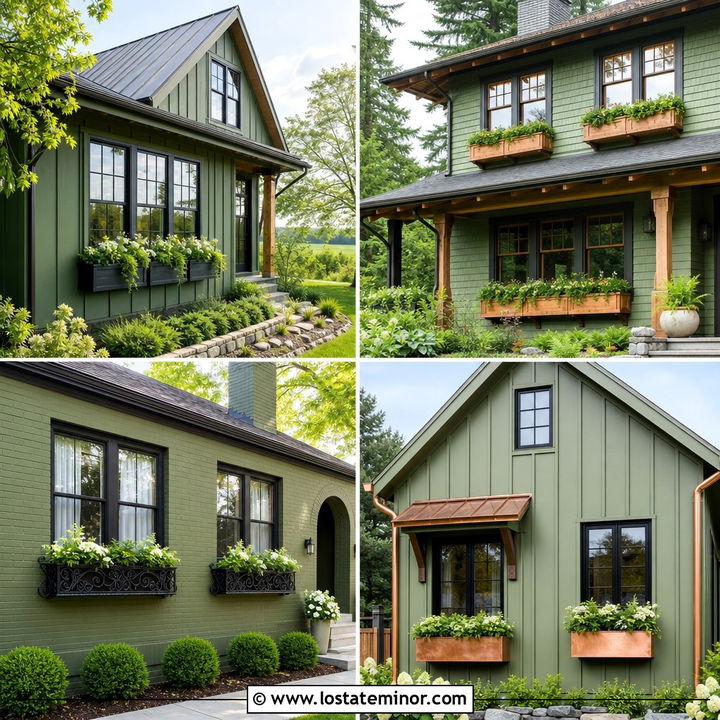
15. Olive Green Victorian House With Decorative Window Boxes
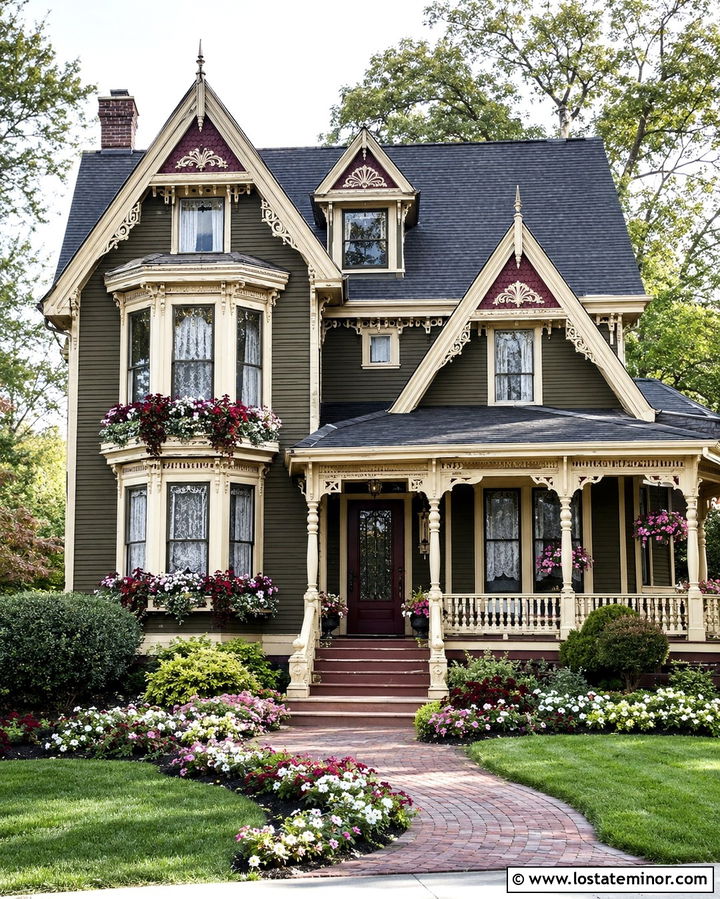
Victorian architecture offers enough detail to support decorative window boxes, but the color scheme should remain controlled. Use deep olive green for the main siding, creamy white for the trim, and muted burgundy on selected brackets or gable accents. Paint carved wood window boxes cream so they connect with the elaborate window casings. Burgundy, white, and blush flowers can repeat the exterior accents in a lively but coordinated way. A burgundy front door adds a clear focal point beneath the porch. Choose a dark gray roof to ground the multiple colors and rooflines. Keep railings and columns mostly cream to prevent the facade from becoming too busy. Curved garden beds, a brick walkway, and layered flowering shrubs complete the romantic, full-house presentation.
16. Olive Green Modern House With Concrete Window Boxes
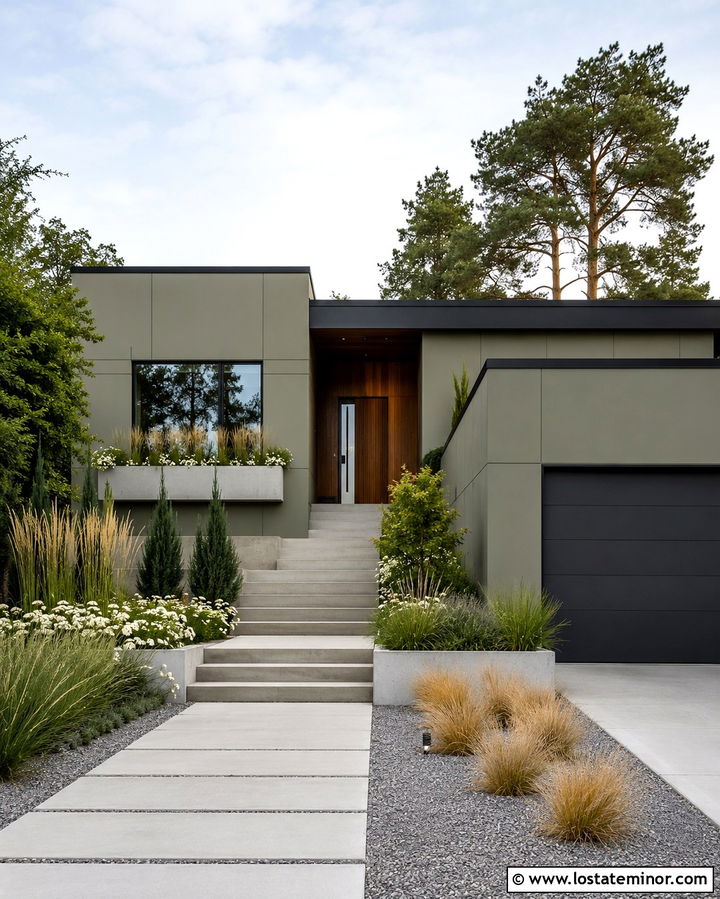
Smooth concrete window boxes offer a strong contrast to olive green panels on a modern home. Use a muted, gray-leaning olive for the main exterior and charcoal for the window frames, garage door, and flat roof edging. Long rectangular concrete boxes should follow the width of the windows to reinforce the architecture’s horizontal lines. Plant them with structured grasses, white flowers, and compact evergreen forms rather than an overly full cottage display. Warm cedar near the recessed entrance keeps the gray and green materials from feeling cold. Continue the concrete finish in the front steps, low retaining walls, and large walkway slabs. Minimal landscaping with ornamental grasses and neatly spaced shrubs preserves open views of the facade. The overall scheme feels modern, earthy, and intentionally restrained.
17. Olive Green House With Red Window Boxes
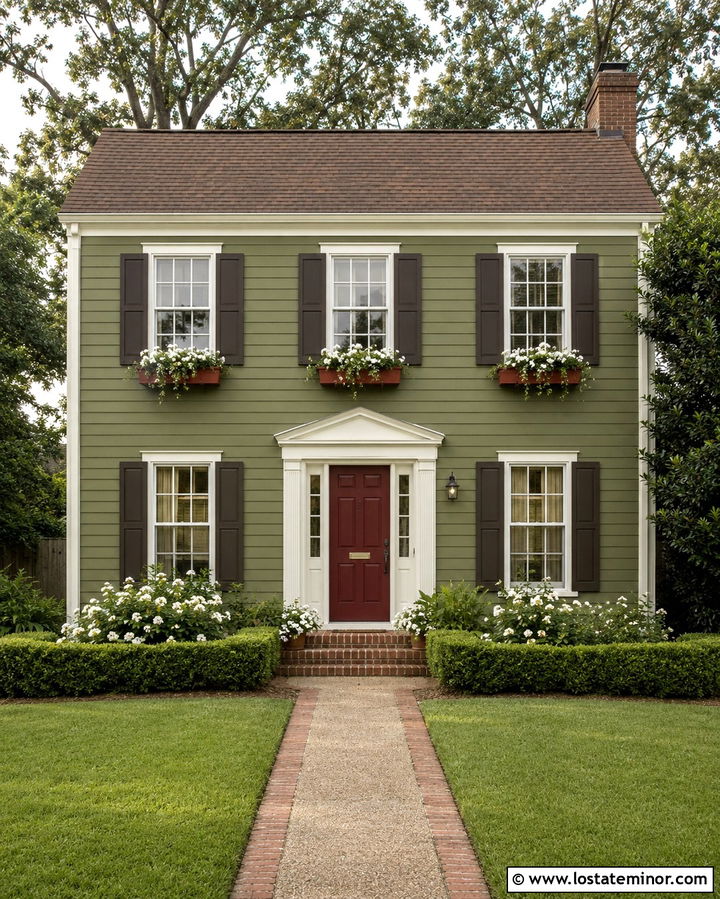
Red window boxes can work with olive green siding when the red is deep and slightly muted. Choose a brick red or oxblood finish instead of a bright primary shade. Repeat that color on the front door, but keep the shutters and window trim warm white to give the palette breathing room. This combination suits a traditional cottage or small colonial with symmetrical windows. Fill the planters with white flowers and mostly green foliage so the containers remain the strongest red feature. A medium brown roof supports both colors and avoids introducing another cool tone. Use brick steps or a brick-edged walkway to repeat the window box color at ground level. Simple hedges and white flowering shrubs will help the complete exterior feel charming rather than overly colorful.
18. Olive Green House With Yellow Window Boxes
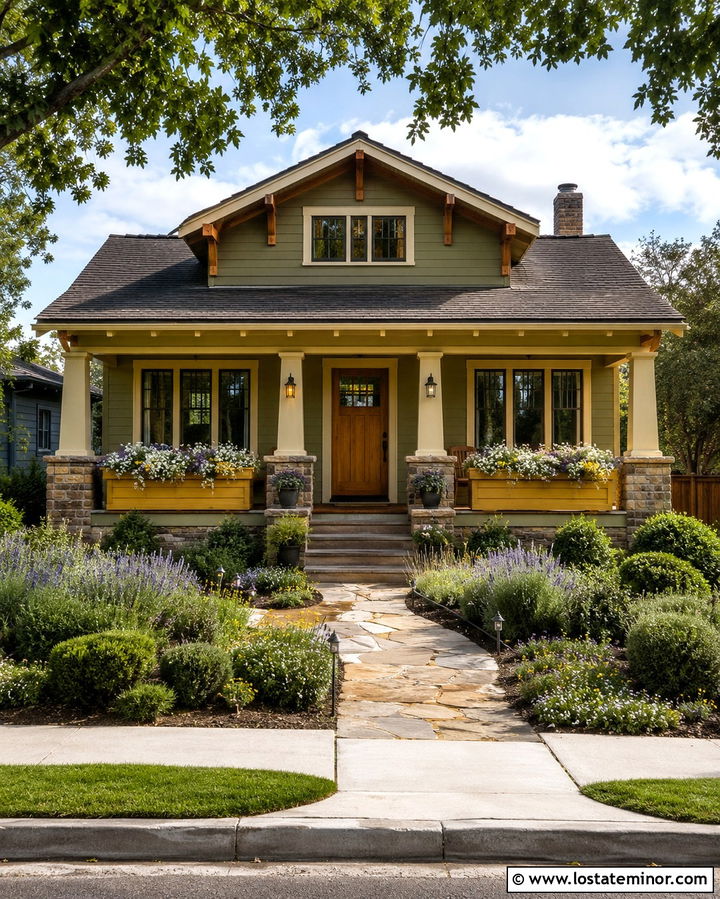
For a cheerful exterior, pair olive green siding with muted mustard yellow window boxes. The yellow should carry earthy undertones so it feels connected to the green instead of looking overly bright. Use the combination on a bungalow or cottage with cream trim, a deep porch, and exposed wood details. Paint the front door the same mustard shade or choose natural oak for a quieter entry. Fill the boxes with white, purple, and soft yellow flowers, balancing the planter color with cooler blooms. A dark brown roof and bronze light fixtures ground the scheme. Add a curved flagstone walkway and informal garden beds filled with lavender, grasses, and rounded shrubs. The finished facade feels warm, individual, and playful while maintaining a natural overall color story.
19. Olive Green Craftsman With Cedar Window Boxes
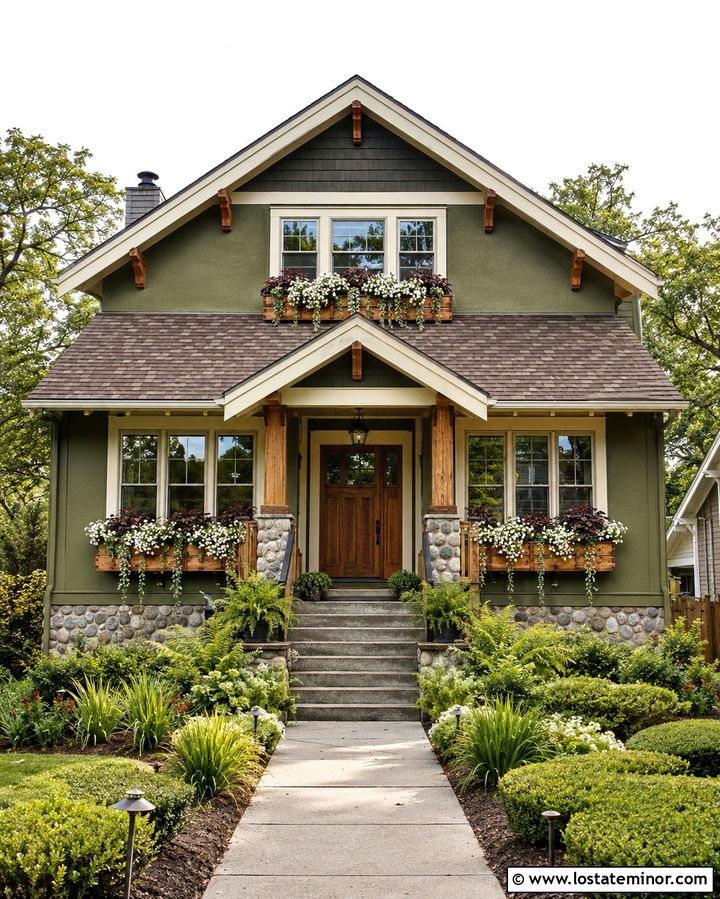
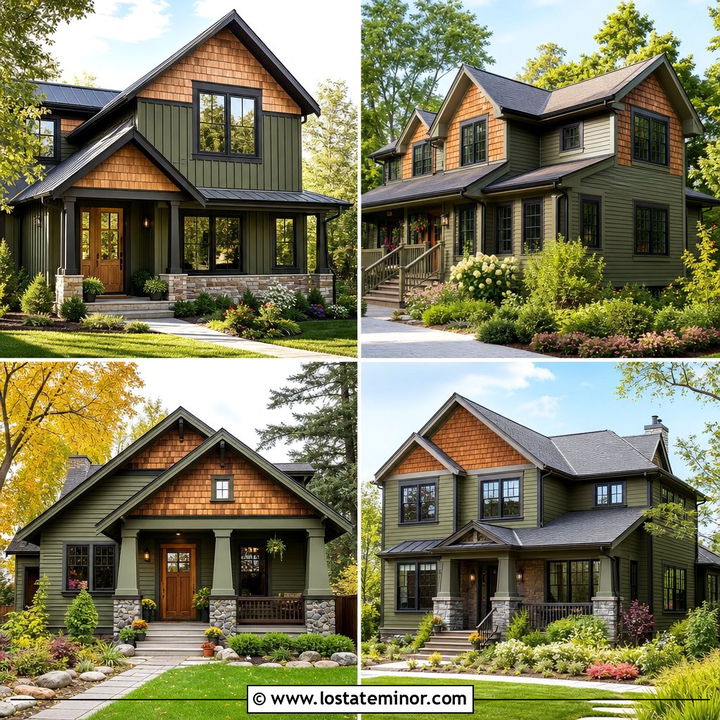
The scent and texture of cedar suit the handcrafted character of a Craftsman house. Use medium olive lap siding with darker olive shingles in the front gable. Cream trim can highlight the broad windows, tapered columns, and exposed roof details. Mount thick cedar window boxes beneath the porch-facing windows and repeat the same wood on the front door, porch rail cap, and gable brackets. Fill the planters with white flowers, burgundy foliage, and trailing green vines. A brown architectural roof and river-rock foundation will strengthen the nature-inspired palette. Broad stone steps and a straight walkway should lead clearly to the porch. Keep landscaping layered but orderly, using ferns, grasses, and compact shrubs that enhance the wood and green materials without hiding the architecture.
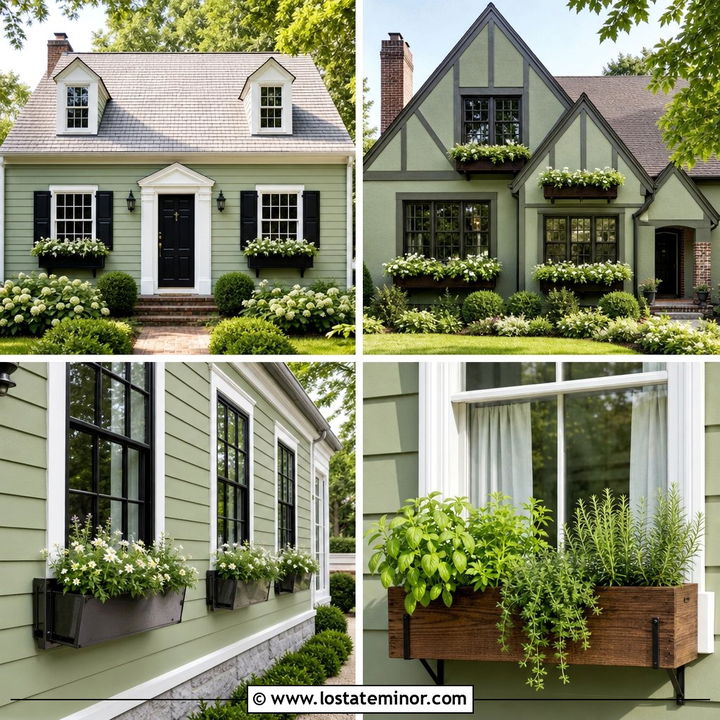
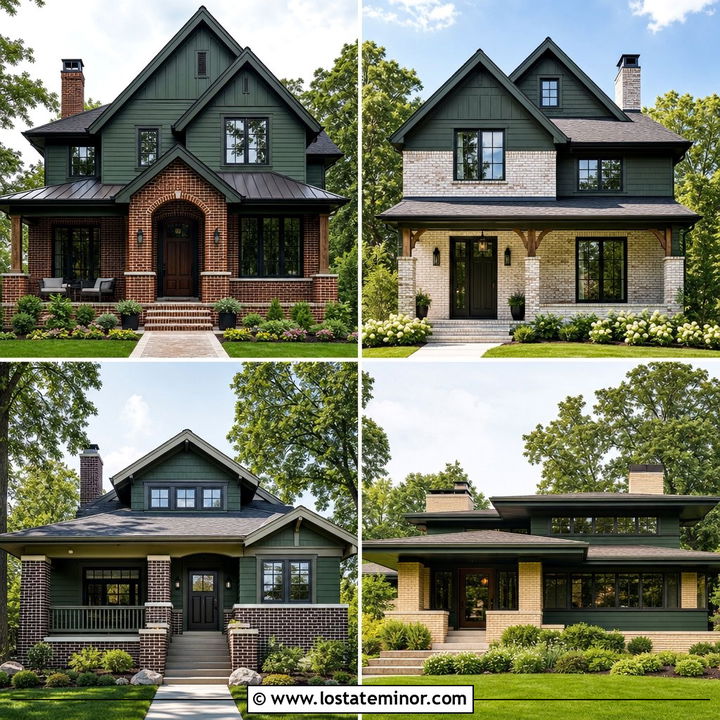
20. Olive Green Mediterranean House With Terracotta Window Boxes
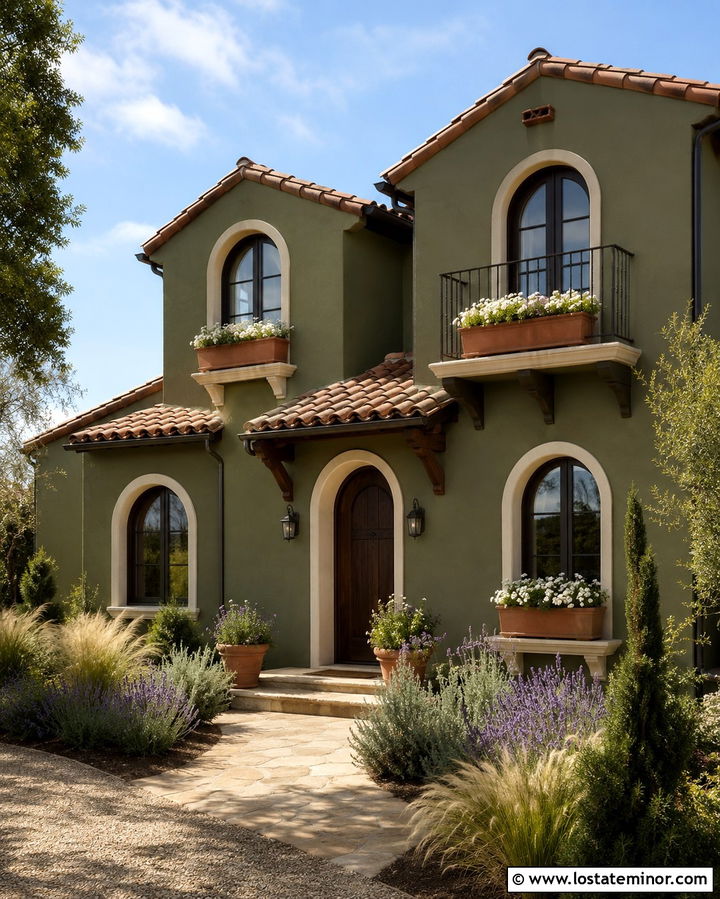
Olive green stucco provides a distinctive alternative to beige on a Mediterranean house. Pair the green walls with terracotta roof tiles and matching clay window boxes beneath arched windows. Cream trim around the openings keeps the deep colors from feeling heavy. Choose a dark stained-wood entry door with black iron hardware, then repeat black on balcony rails and exterior lighting. Plant the boxes with white blossoms, trailing rosemary, and small touches of purple for a garden-like display suited to the warm palette. A light gravel driveway and warm stone walkway will reflect sunlight onto the facade. Use drought-conscious landscaping, including lavender, ornamental grasses, and sculptural evergreen shrubs. Together, the stucco, clay, wood, and iron create a layered exterior with strong architectural character.
21. Olive Green Two-Story House With Long Window Boxes
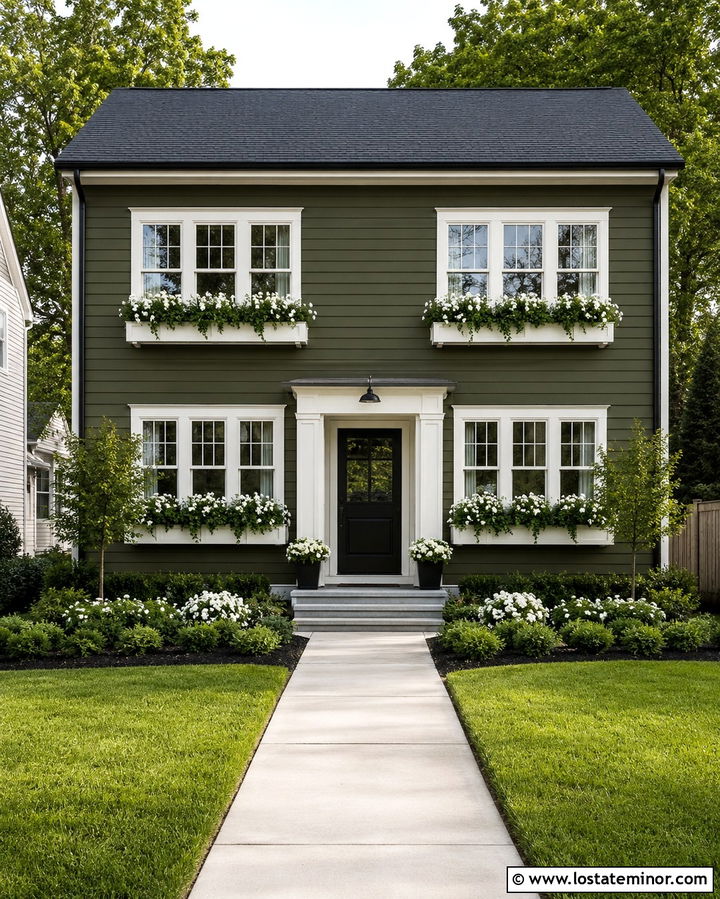
Long window boxes can visually widen a narrow two-story facade. Paint the main siding a rich olive green and use warm white trim around grouped windows. Place extended white or natural wood planters beneath pairs of second-story windows, making sure every box has strong structural support. Repeat shorter versions under the first-floor windows for a consistent rhythm. A black front door, black gutters, and a charcoal roof will frame the taller exterior. Keep the planting design simple, using white blooms and trailing greenery that can be seen from the street without overwhelming the upper level. A centered walkway, balanced foundation shrubs, and two small entry trees reinforce the home’s vertical symmetry. The completed look feels taller, broader, and more carefully connected from top to bottom.
22. Olive Green Cabin With Rustic Wood Window Boxes
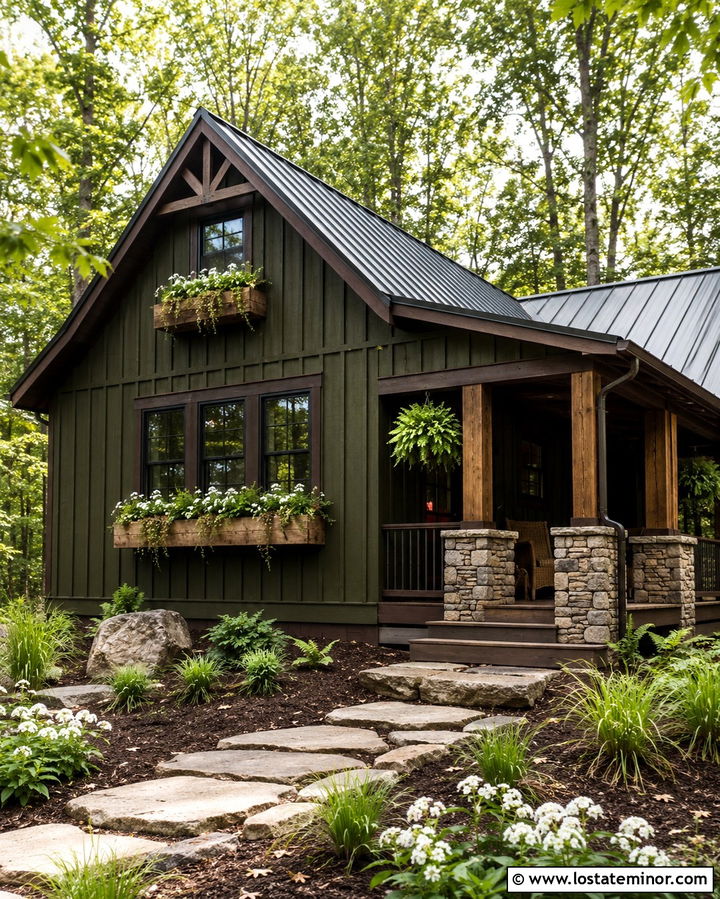
In a wooded setting, an olive green cabin can blend naturally with the surrounding landscape. Use rough-textured siding or board-and-batten painted a deep forest olive. Build rustic window boxes from thick weathered wood and repeat the material on porch posts, railings, and the front door. Dark brown trim offers gentle definition while maintaining the cabin’s subdued palette. Fill the boxes with ferns, white flowers, and trailing greenery that suit the informal setting. A dark metal roof adds durability and a clean outline above the textured walls. Stone porch piers and irregular flagstone steps bring another natural material into the design. Keep landscaping relaxed with native grasses, woodland shrubs, and mulch beds. The finished exterior should look thoughtfully maintained without feeling overly polished or suburban.
23. Olive Green House With White Trim And Black Window Boxes
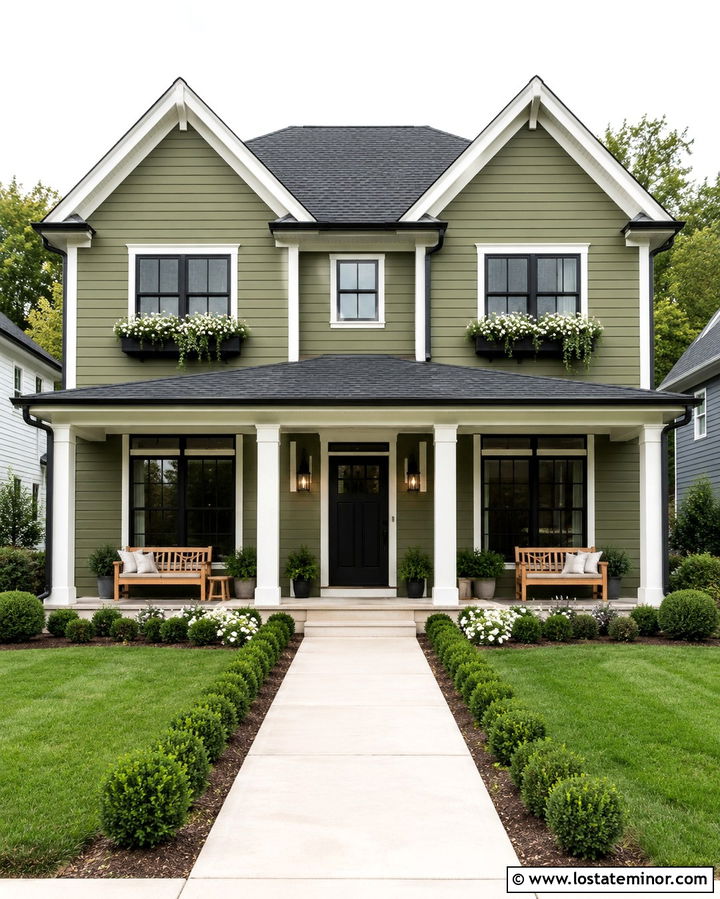
Olive green, white, and black form a clear three-color exterior palette. Apply medium olive green to the siding and crisp white to the window casings, fascia, porch columns, and corner boards. Black window boxes create a sharp line beneath each white-framed window. Repeat black on the front door, roof, gutters, and porch lights so the planters feel integrated. White flowers and light green trailing plants will stand out strongly against the boxes. This scheme works on many home types, including colonials, farmhouses, and simple two-story suburban houses. Add a pale concrete walkway and low boxwood borders to keep the front yard structured. Natural wood seating or a wood porch ceiling can soften the contrast. The result is bold, balanced, and easy to understand from the curb.
24. Olive Green House With Stone Siding And Window Boxes
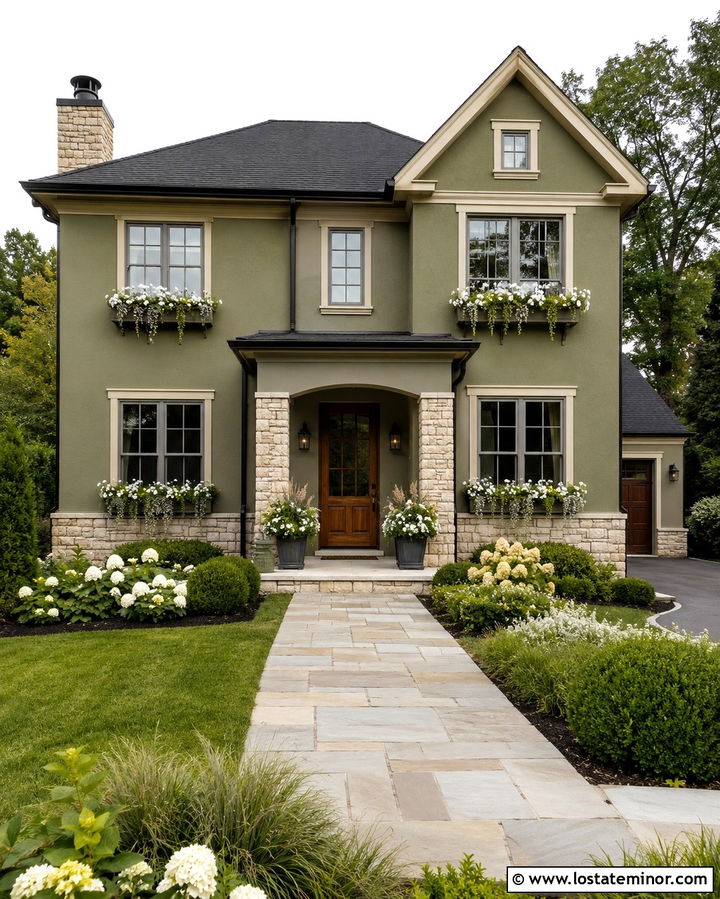
Natural stone can give an olive green exterior more texture and visual weight. Use olive lap siding on the upper walls and light gray-tan stone across the foundation, garage, or porch columns. Choose window boxes in a warm stone-gray finish so they connect with the masonry without disappearing completely. Cream window trim provides a light border between the green siding and planters. A walnut-colored front door and bronze lights add warmth, while a charcoal roof keeps the overall look grounded. Fill the boxes with white flowers, soft yellow accents, and trailing greenery. Continue the stone into a broad front walkway or porch steps. Finish the yard with ornamental grasses, rounded evergreens, and a few flowering shrubs that repeat the soft colors planted beneath the windows.
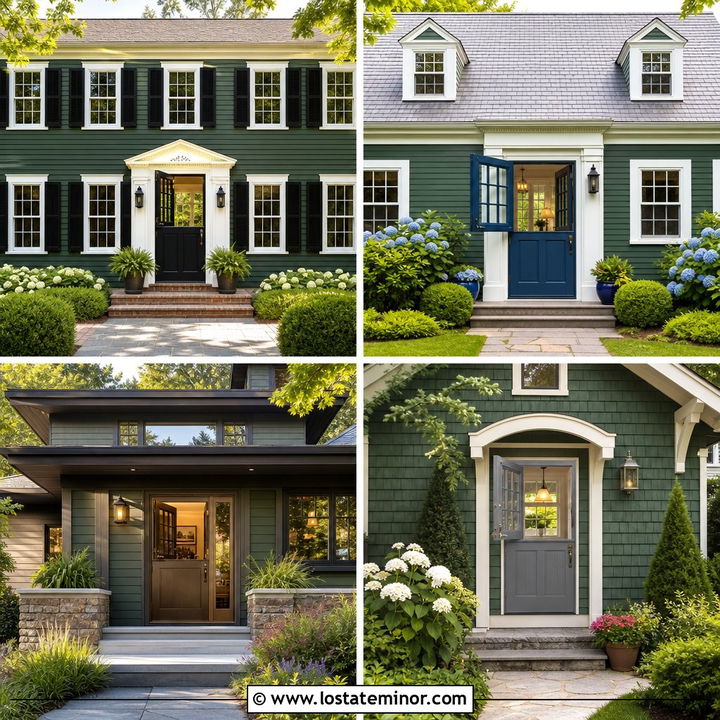
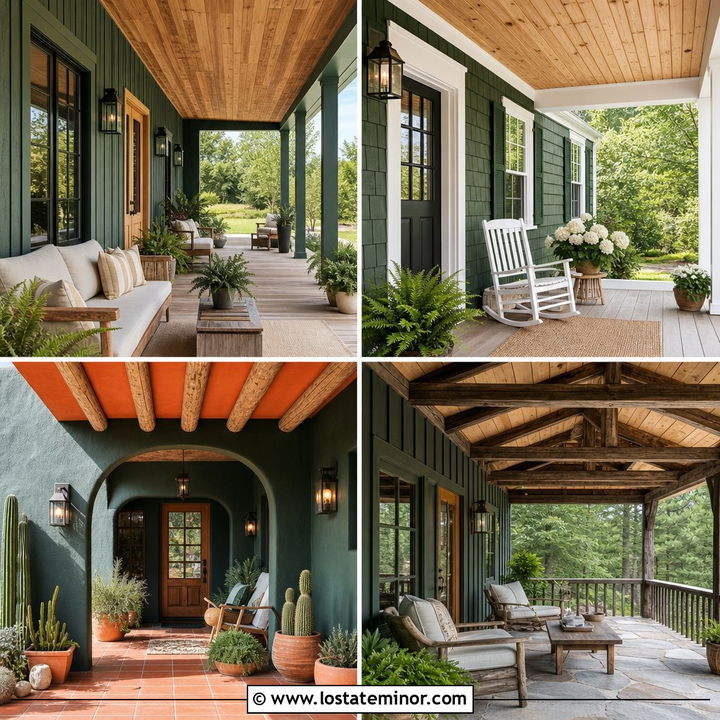
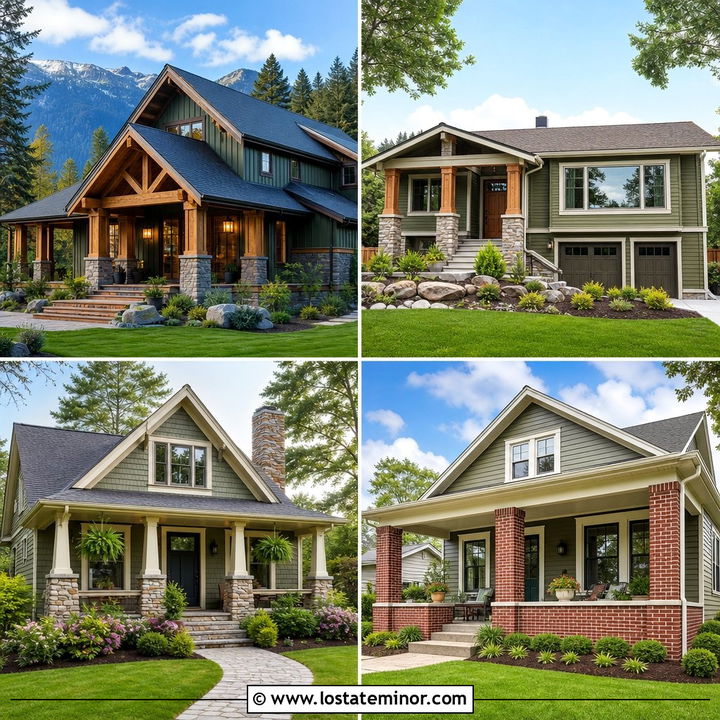
25. Olive Green Farmhouse With Galvanized Window Boxes
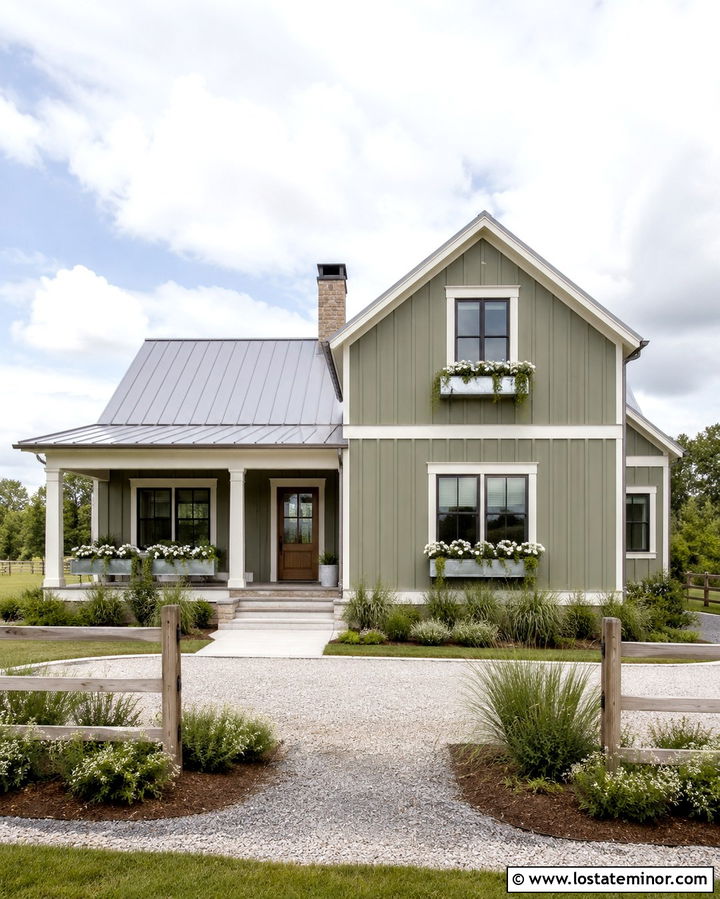
Galvanized metal window boxes add a practical farmhouse detail to olive green board-and-batten siding. The cool gray metal connects naturally with a silver-gray standing-seam roof. Use warm white trim around the windows and porch, then add a medium-stained wood door for balance. Choose simple rectangular galvanized planters without ornate brackets, keeping the exterior relaxed and functional. White flowers, herbs, and trailing foliage suit the understated containers. Repeat the metal finish on porch lights, downspouts, or small roof accents, but avoid using it on every feature. A gravel driveway, concrete walkway, and split-rail fence can support the rural farmhouse setting. Neatly arranged grasses and flowering shrubs will soften the facade while allowing the olive siding and silvery window boxes to remain the main curb-appeal combination.
26. Olive Green Cottage With Scalloped Window Boxes
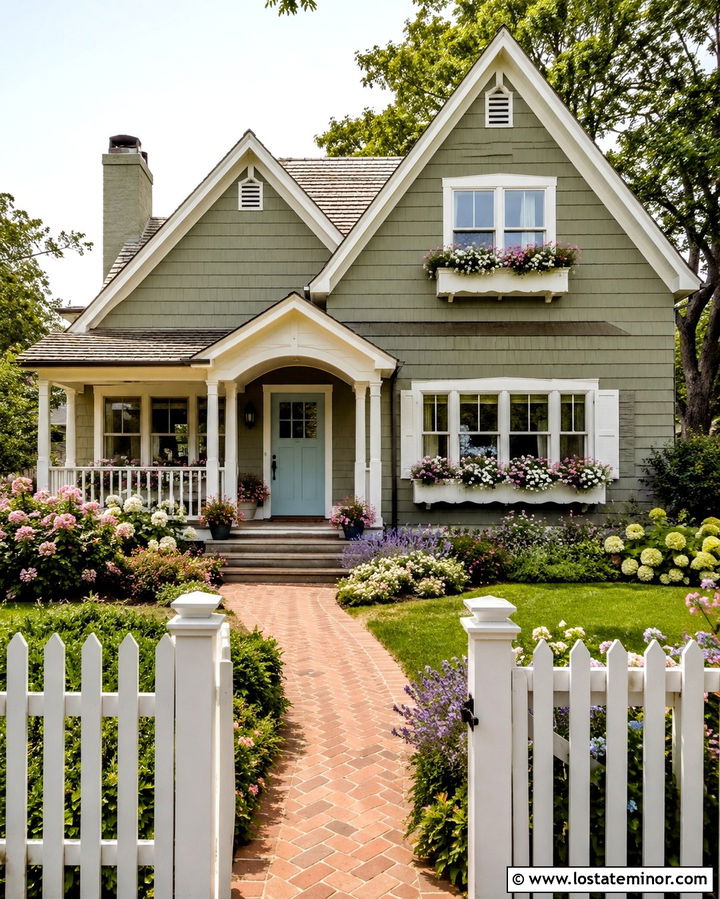
Scalloped window boxes can add storybook character to a small olive green cottage. Keep the decorative shape simple and paint the boxes warm white to match the window trim, porch railing, and fascia. Use medium olive shingles or lap siding as the main exterior finish. A pale blue front door provides a gentle focal point, while a weathered gray roof keeps the scheme soft. Plant the boxes generously with white, pink, and lavender flowers, allowing vines to trail over the scalloped edges. A curved brick walkway and low picket gate can reinforce the cottage shape without looking overly themed. Surround the facade with loose flowering borders and compact shrubs. The complete design feels charming because the planter detail is repeated carefully rather than added to every possible surface.
27. Olive Green House With Bronze Window Boxes
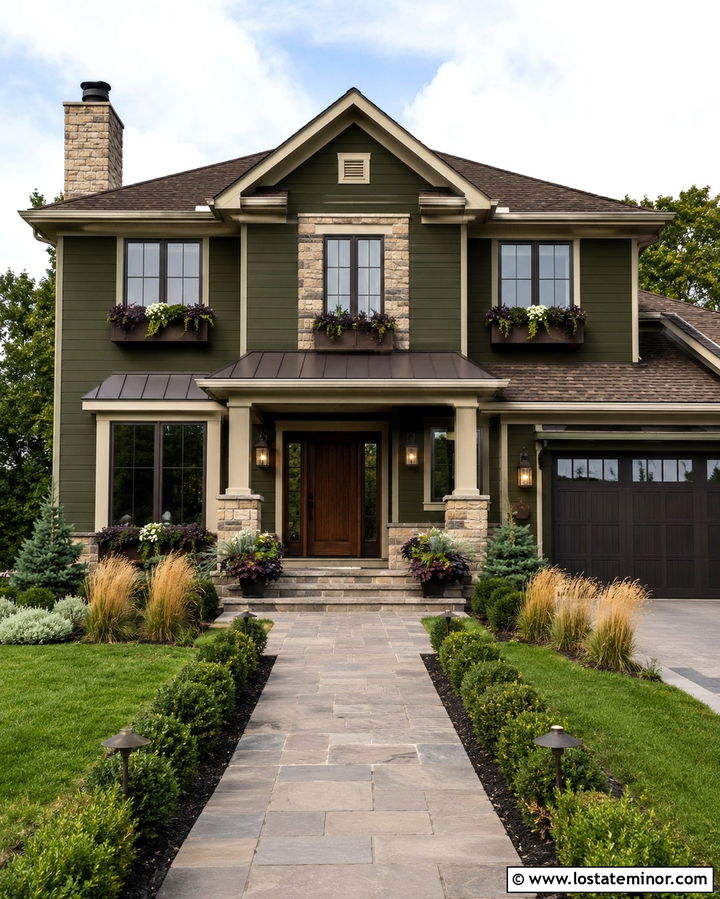
Bronze window boxes provide a quieter alternative to black on a dark olive green house. Their warm brown undertones complement the siding and work well with cream trim, walnut wood, and tan stone. Choose a transitional home with balanced windows and a covered entry. Repeat dark bronze on the window frames, gutters, porch lights, and garage hardware. Use a natural walnut front door to brighten the center of the facade. Fill the planters with ivory flowers, deep purple foliage, and trailing greenery for subtle contrast. A brown-charcoal roof will complete the layered neutral palette. Add a wide stone walkway and symmetrical foundation beds with ornamental grasses and evergreen shrubs. This scheme feels sophisticated without relying on a stark black-and-white contrast around the earthy olive walls.
28. Olive Green Coastal House With White Window Boxes
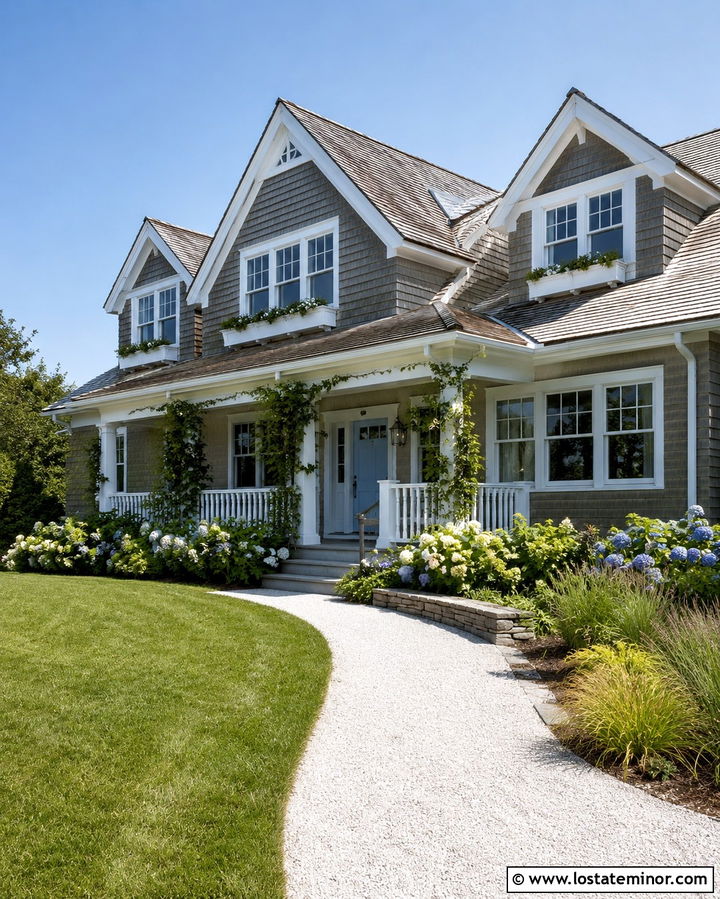
An olive green coastal exterior feels natural when the shade is muted and slightly gray. Use olive-painted cedar shingles, bright white trim, and simple white window boxes beneath wide multi-pane windows. A soft blue front door introduces a coastal note without changing the home’s earthy foundation. Fill the boxes with white flowers, blue blooms, and wind-tolerant trailing greenery. A weathered gray roof, white porch railings, and pale stone steps keep the facade light. Avoid heavy dark shutters, which could make the color scheme look more traditional than coastal. Instead, let the windows and planters provide the main decorative rhythm. Beach grasses, hydrangeas, and a crushed-shell walkway will frame the house naturally. The completed exterior looks bright, relaxed, and connected to its breezy surroundings.
29. Olive Green House With Self-Watering Window Boxes
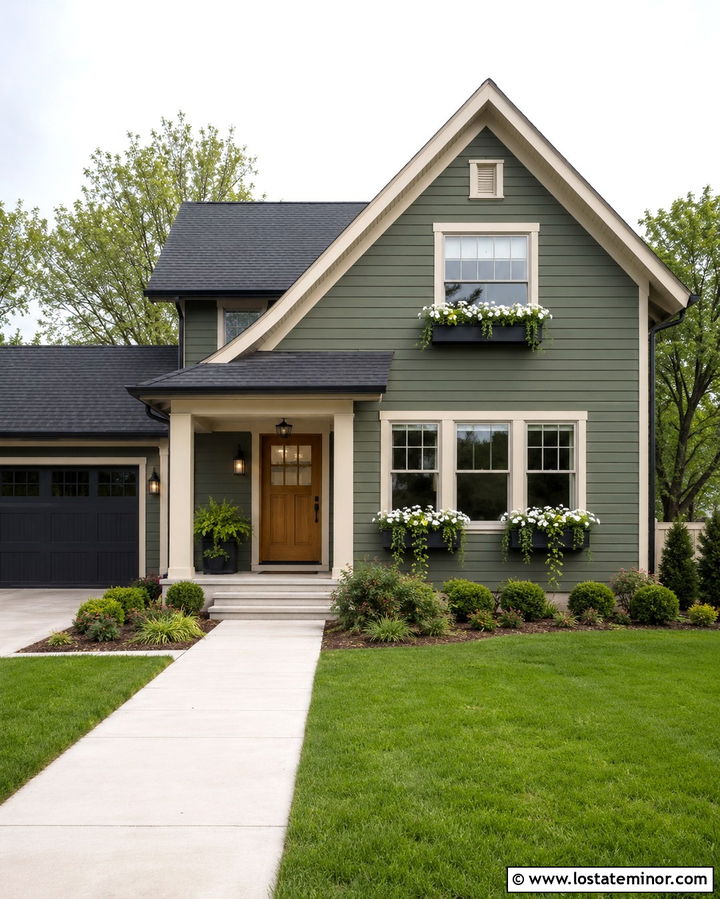
Self-watering window boxes can look attractive when their practical features are integrated into the facade. Choose clean rectangular planters in matte black or warm white and mount them beneath the main windows of an olive green suburban house. Match their color to the trim, gutters, or front door to create a planned exterior scheme. Use a balanced plant combination with upright foliage, clustered flowers, and trailing vines. Olive lap siding, cream trim, a charcoal roof, and a medium wood door will give the house a versatile foundation. Conceal reservoirs and irrigation lines behind the boxes whenever possible. Complete the curb view with a broad walkway, low-maintenance shrubs, and tidy mulch beds. The overall exterior remains polished while making regular planter care more manageable.
30. Olive Green Porch House With Window Boxes
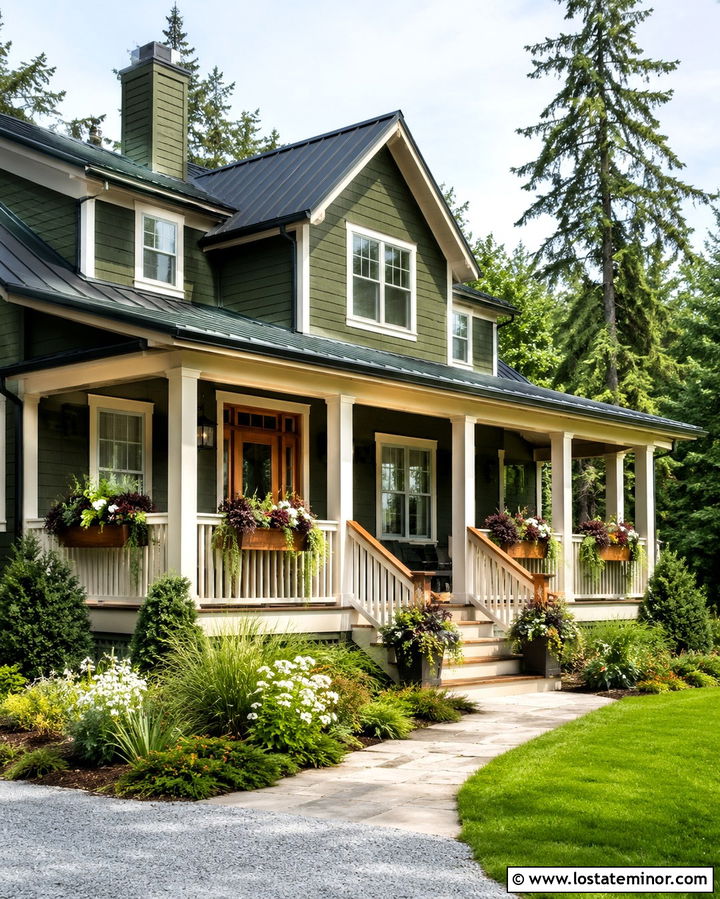
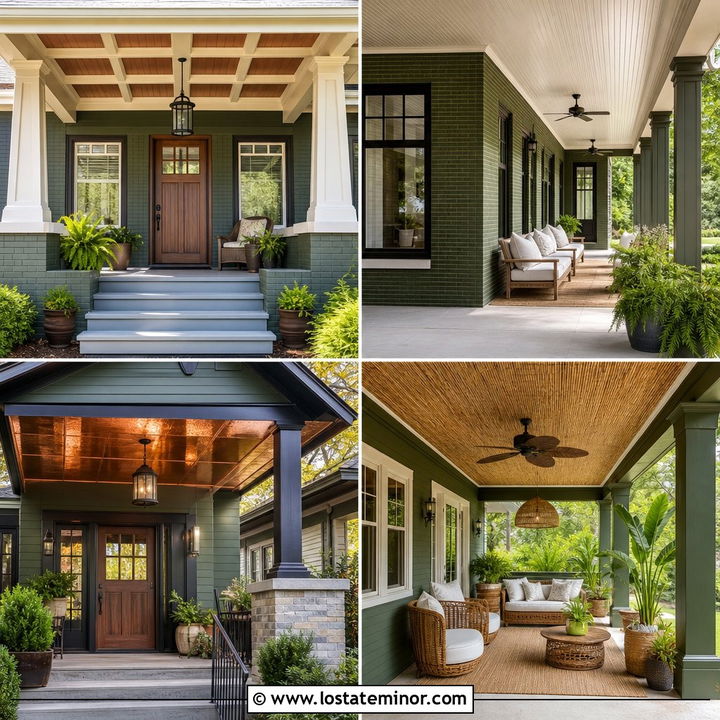
A wide front porch gives window boxes room to become part of a larger garden display. Paint the house deep olive green and use cream on the porch columns, railing, window trim, and ceiling edges. Install natural cedar boxes beneath the porch windows, then repeat cedar on the front door and stair handrails. Fill the boxes with white blooms, trailing greenery, and a small amount of burgundy foliage. A charcoal metal roof can sharpen the porch roofline while complementing dark bronze lights. Add matching planters near the steps, but keep them simpler than the window boxes. A stone walkway, layered shrubs, and ornamental grasses should frame the entire porch. This full exterior feels welcoming because the materials, colors, and plants continue naturally from the windows to the entrance.
Conclusion:
The best 30 Olive Green House Design With Window Boxes Ideas coordinate every part of the exterior, from the siding and trim to the roofing, entry, planters, and landscaping. White boxes create crisp contrast, while cedar, copper, iron, terracotta, and bronze add warmth or texture. Before choosing a scheme, compare samples beside your roof, masonry, and existing windows in different daylight conditions. Window boxes should also fit the width and visual weight of each window. Select flowers and foliage that suit the available sunlight and your maintenance routine. With thoughtful proportions and a controlled color palette, olive green siding and window boxes can create a complete facade that feels distinctive, balanced, and welcoming.

Related posts: