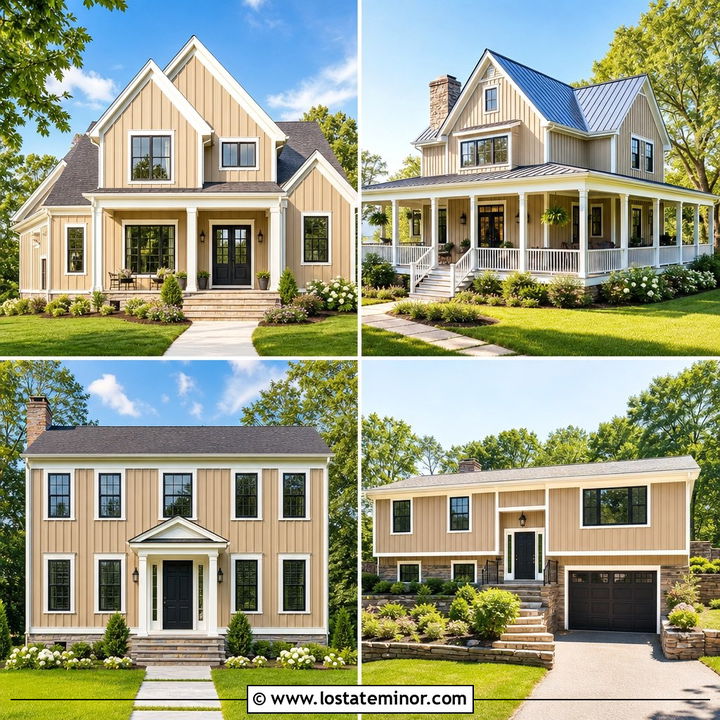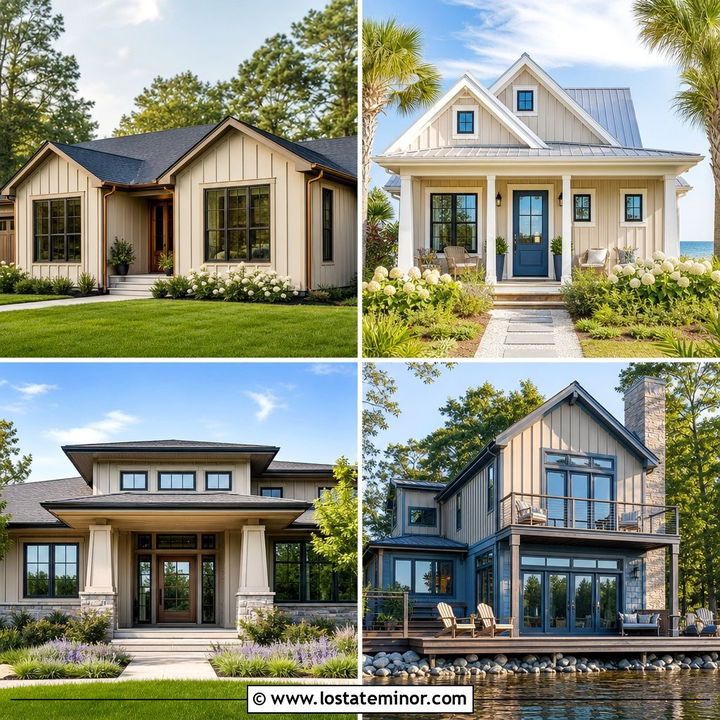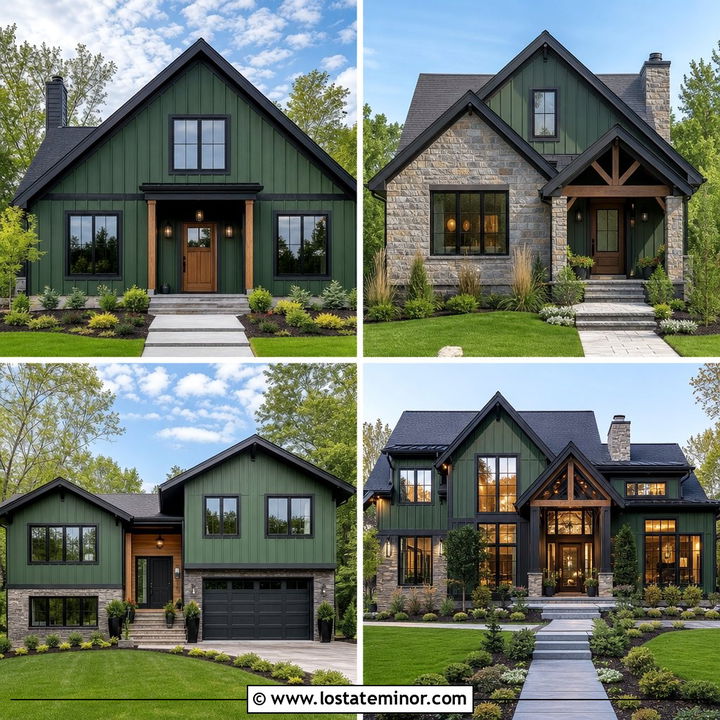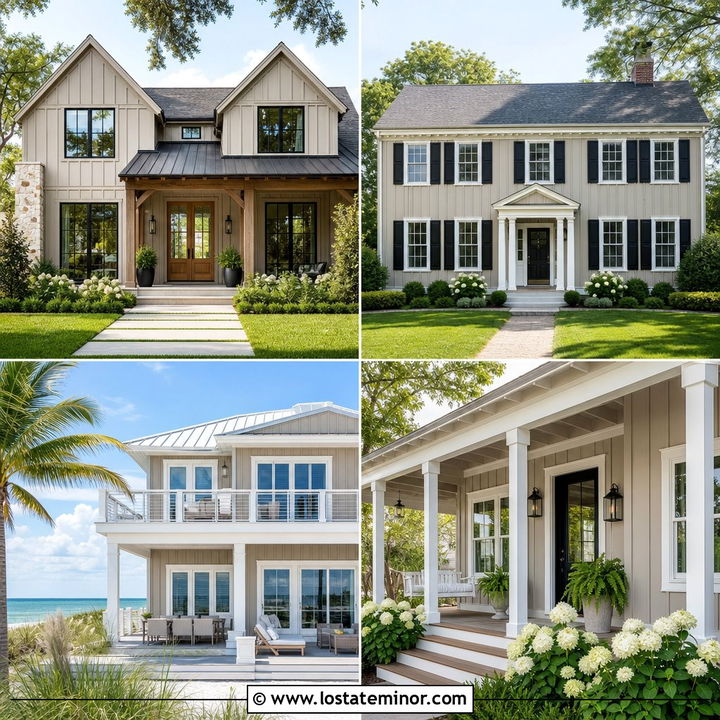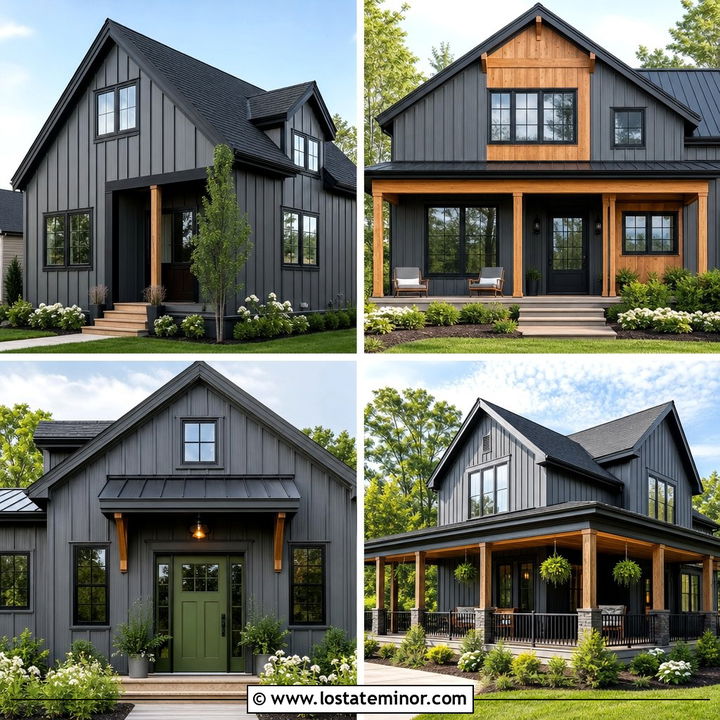
A sand-colored exterior brings warmth, softness, and natural curb appeal to almost any home. Add vertical board and batten siding, and that quiet neutral gains depth, rhythm, and architectural character. The combination can feel modern, rustic, coastal, or traditional depending on the trim, roof, masonry, and wood accents around it. Sand also works well with bright whites, earthy browns, charcoal grays, muted greens, and understated black details. The key is creating enough contrast to define the facade without losing the calm quality of the main color. From compact cottages to spacious modern farmhouses, the complete schemes below show how to coordinate every visible feature. Explore these 30 Sand House Design With Board and Batten Ideas for practical ways to create a balanced exterior.
1. Sand Board and Batten House With White Trim
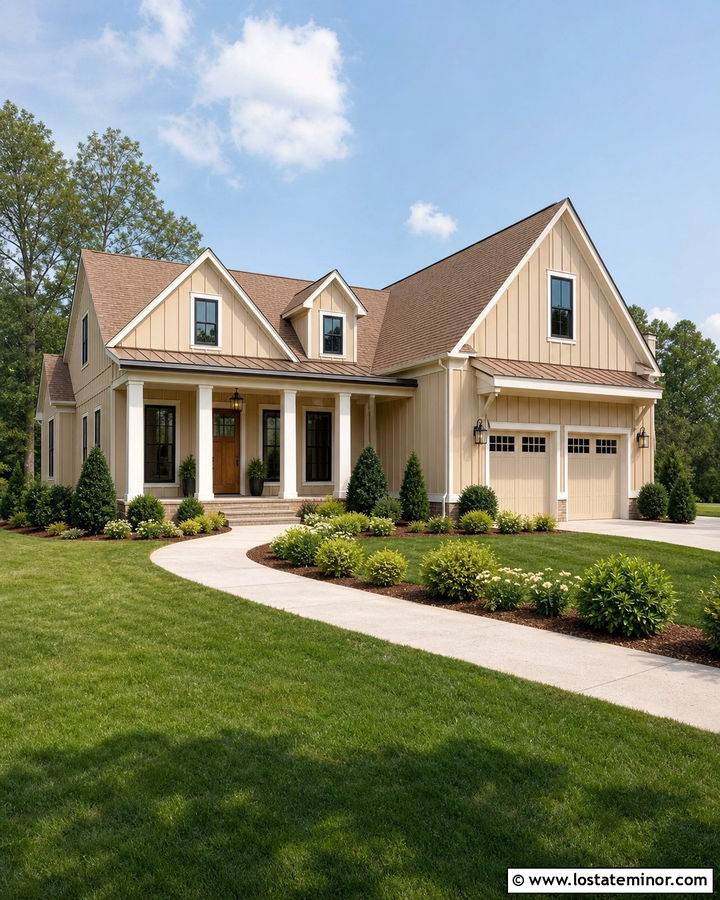
Crisp white trim gives a sand board and batten exterior a clean, clearly defined appearance. Use sand-colored vertical siding across the main facade, then outline the windows, roof edges, columns, and garage with a warm white rather than a sharp blue-white. This slight warmth keeps the contrast comfortable and connected. A medium-brown architectural shingle roof can ground the pale palette, while a natural oak front door introduces organic texture. Add simple black lanterns for definition without making the house feel overly graphic. This complete scheme works especially well on modern farmhouses and suburban two-story homes. Finish the curb appeal with pale stone steps, evergreen foundation shrubs, and a curved concrete walkway that softens the strong vertical siding lines.
2. Sand Board and Batten House With Black Windows
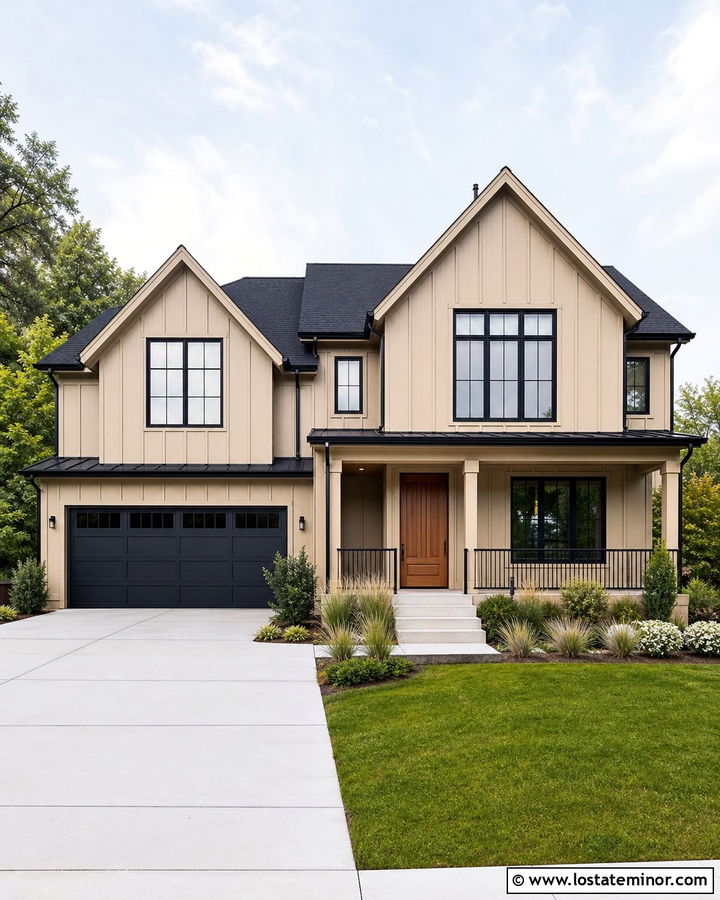
Black windows create a bold framework against warm sand board and batten siding. The combination feels contemporary, but the neutral body color prevents it from becoming cold or severe. Carry black onto the gutters, porch lights, and slim metal railings for a deliberate, consistent look. Keep the fascia and corner boards sand-colored to avoid breaking the facade into too many contrasting sections. A charcoal roof will connect naturally with the dark windows, while a medium cedar front door adds warmth at the entry. This scheme is particularly effective on homes with large windows and simple rooflines. Use pale concrete, ornamental grasses, and neatly clipped shrubs around the house so the landscaping complements the streamlined architecture without competing with the high-contrast window pattern.
3. Sand Board and Batten House With Cedar Accents
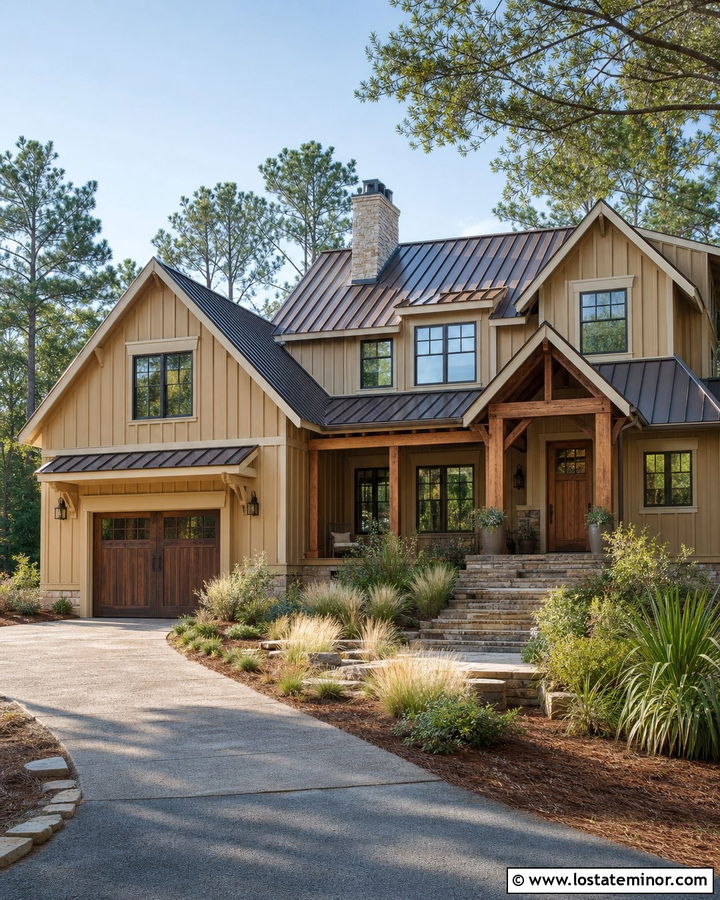
Warm cedar accents bring out the golden undertones in a sand-colored exterior. Cover the primary walls and front gables with sand board and batten siding, then introduce cedar on the front door, porch ceiling, brackets, and garage door. Keep these wood features limited to several meaningful areas so they look connected rather than scattered. Cream trim can provide a gentle transition between the siding and wood, while a dark bronze roof adds grounding contrast. This complete exterior looks welcoming on Craftsman, ranch, and mountain-inspired homes. Clear or lightly tinted wood finishes work best because they preserve the visible grain. Surround the facade with layered native grasses, broad stone steps, and warm landscape gravel to extend the earthy color story into the yard.
4. Sand Board and Batten House With Stone Skirting
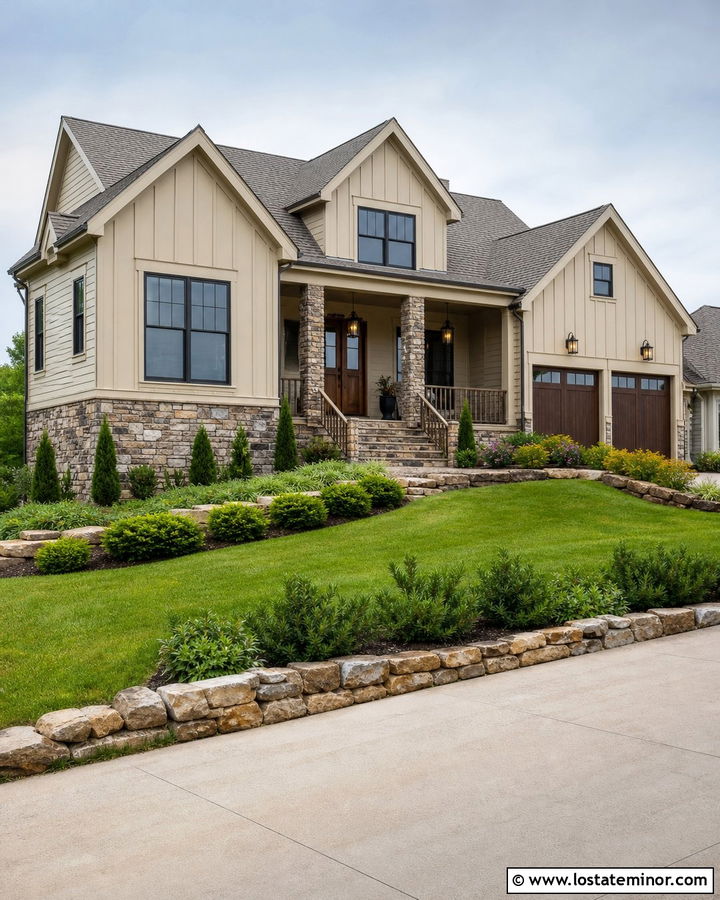
Stone skirting gives a light sand house more visual weight at ground level. Choose a mixed stone veneer containing cream, taupe, soft gray, and muted brown tones that repeat the colors used elsewhere. Run it along the foundation and wrap it around porch columns for a cohesive effect. Above the stone, use sand board and batten siding to emphasize height and create a lighter upper facade. Off-white trim, a walnut front door, and bronze exterior lights will reinforce the warm character. A weathered gray roof can balance the beige tones without introducing another strong color. This combination suits Craftsman homes, sloped-lot houses, and one-story designs that need greater dimension. Low evergreens and natural stone edging will make the transition from house to landscape feel seamless.
5. Sand Board and Batten Farmhouse With Black Roof
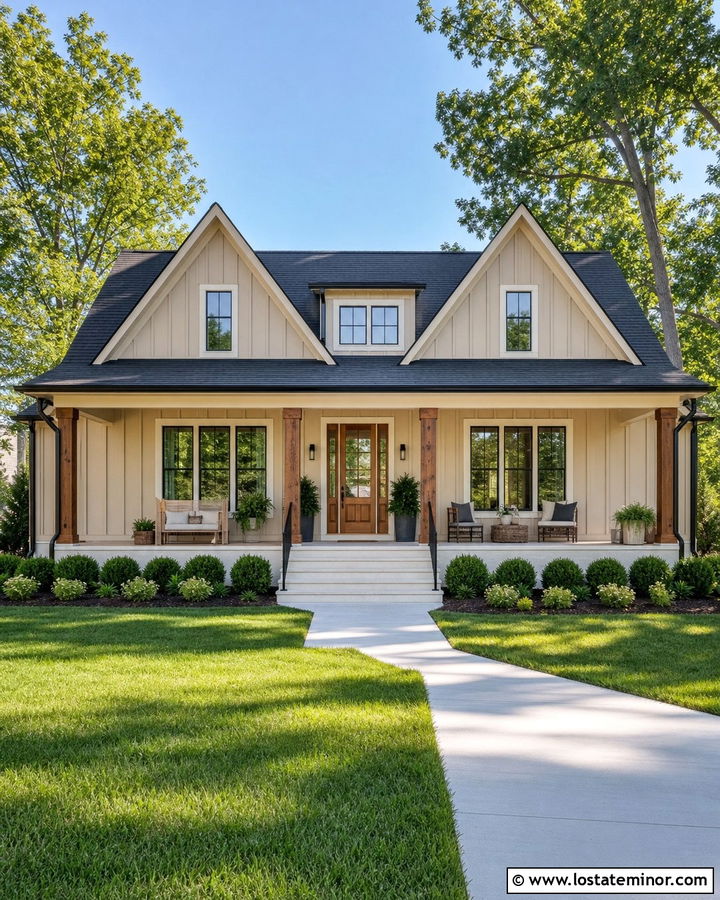
A black roof brings sharp structure to a sand board and batten farmhouse. Rather than adding black to every detail, use it selectively on the roof, gutters, exterior lights, and front-door hardware. Warm white window trim keeps the facade open and welcoming, while the sand siding softens the bold roofline. A stained wood front door and matching porch beams prevent the black accents from dominating the exterior. For a balanced farmhouse appearance, carry board and batten siding across the gables and main walls, using horizontal lap siding only on a smaller rear-facing section if needed. Wide porch steps, simple square columns, and tidy boxwood plantings complete the look. The resulting palette feels fresh and modern without relying on a stark black-and-white farmhouse formula.
6. Sand Board and Batten Cottage With Green Door
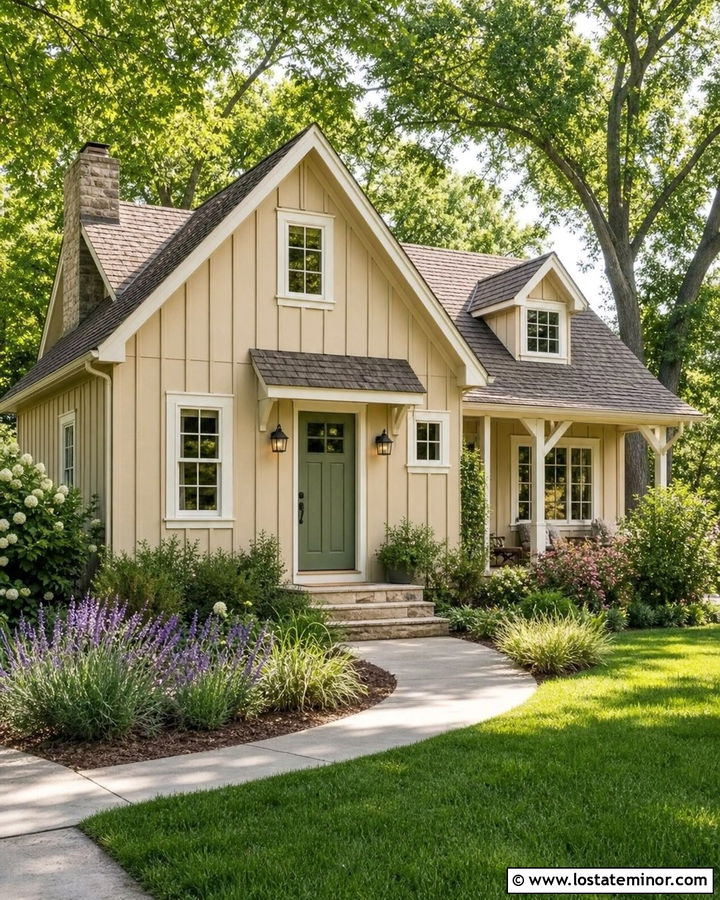
Imagine a welcoming cottage framed by flowers and a muted green front door. Sand board and batten siding creates a soft natural backdrop, while an olive or moss-green door introduces color without overwhelming the small facade. Use creamy white trim around the windows and roof edges to preserve a light, cheerful appearance. A brown-gray shingle roof and antique bronze lights will support the garden-inspired palette. Small stone porch steps can add texture and make the cottage feel established. This combination works best when the green is dusty and earthy rather than bright. Complete the setting with lavender, ornamental grasses, low hedges, and a gently curved walkway. Together, the sand siding and green entry create a relaxed exterior that fits comfortably into a leafy suburban neighborhood.
7. Sand Board and Batten Ranch With Brick Accents
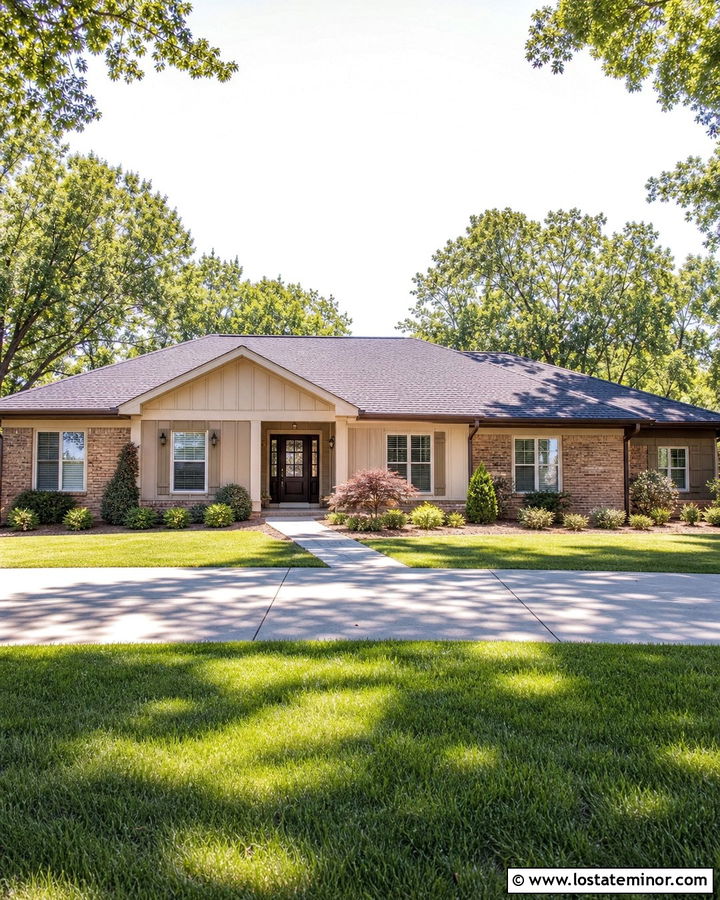
A ranch house can gain welcome height and texture from vertical sand board and batten siding. Use the siding across the central entry and prominent front-facing sections, then retain warm red or tan brick along the lower walls. The sand color should share an undertone with the brick mortar so the materials feel intentional. Cream trim will gently outline the low roofline, while a deep brown front door adds a strong focal point. Consider bronze gutters and dark brown window frames instead of black, which may look too sharp against weathered masonry. A medium charcoal roof can update the exterior without fighting the brick. Wide foundation beds, compact shrubs, and a straight walkway help organize the long facade and reinforce the ranch home’s horizontal proportions.
8. Sand Board and Batten House With Brown Roof
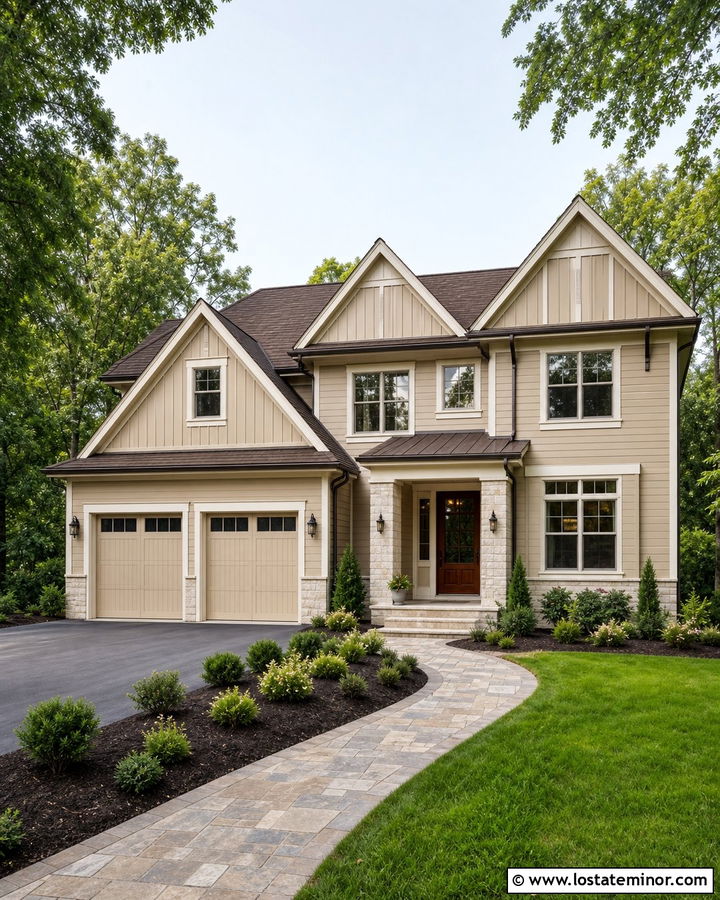
Could a brown roof make a sand exterior feel richer? The answer lies in choosing a dimensional roof containing chocolate, taupe, and weathered gray rather than one flat brown shade. Sand board and batten siding naturally connects with those earthy tones, creating a unified appearance. Add soft cream trim, dark bronze gutters, and a walnut-stained front door to continue the warm palette. On a traditional two-story home, use board and batten across the gables and upper level while adding matching horizontal siding below. This variation provides texture without making the elevation overly busy. Light limestone around the entry can add brightness and refinement. Finish with dark mulch, evergreen shrubs, and a paved walkway in mixed tan and gray tones to connect the facade with its surroundings.
9. Sand Board and Batten House With Charcoal Trim
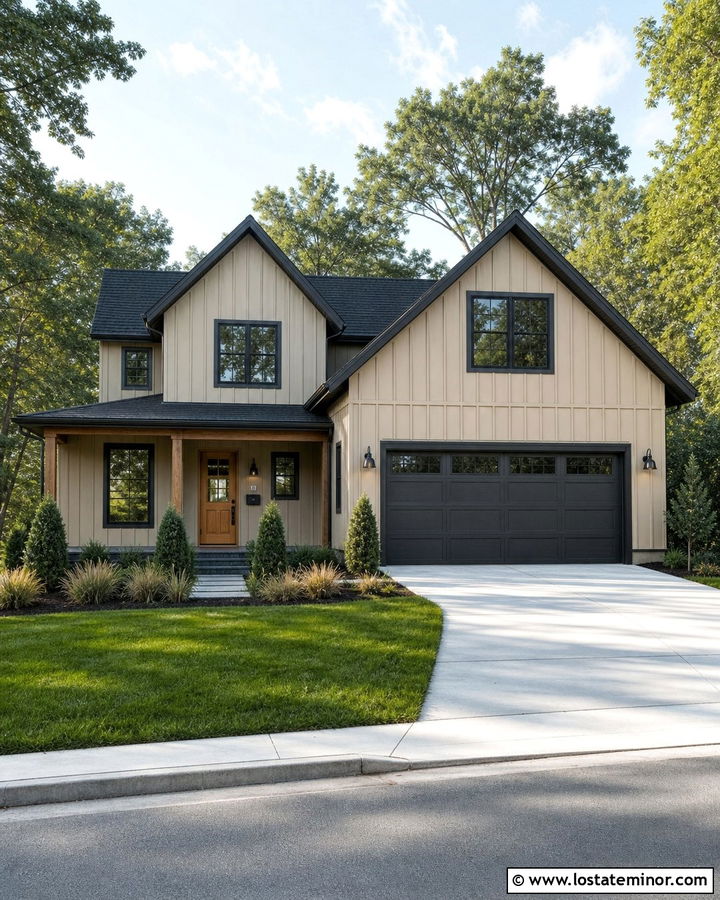
Charcoal trim gives sand siding a sophisticated edge while remaining softer than solid black. Use it around windows, along the fascia, and on the garage door to define the home’s shape. The deep gray should have a slightly warm undertone so it coordinates with the sandy beige board and batten exterior. A matching charcoal roof will create a strong upper frame, while a natural teak front door keeps the entry inviting. Consider sand-colored corner boards to preserve continuity across wide wall areas. This palette works beautifully on contemporary Craftsman homes and modern suburban builds with asymmetrical gables. Pale concrete pavers and structured evergreen landscaping can support the polished appearance. A few bronze lights will bridge the warm siding, dark trim, and wood entry without introducing unnecessary contrast.
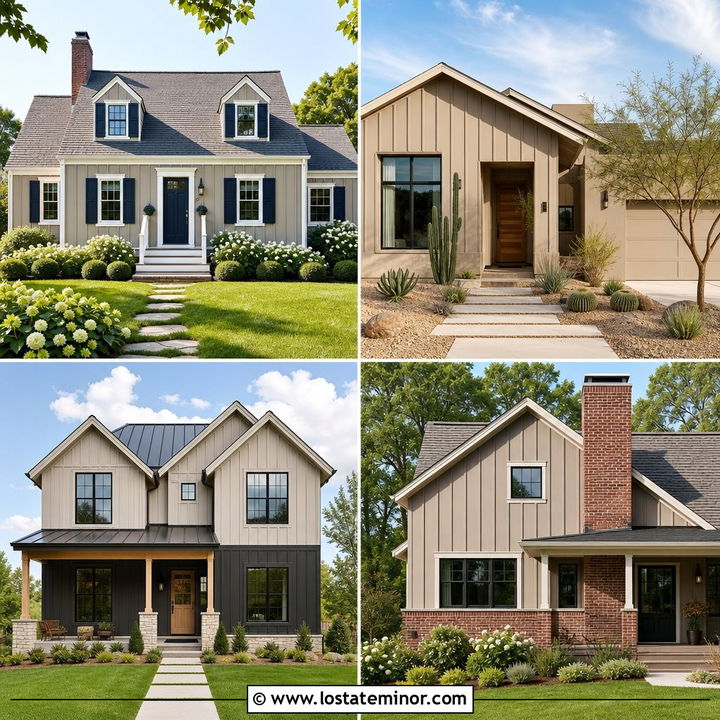
10. Sand Board and Batten House With Bronze Details
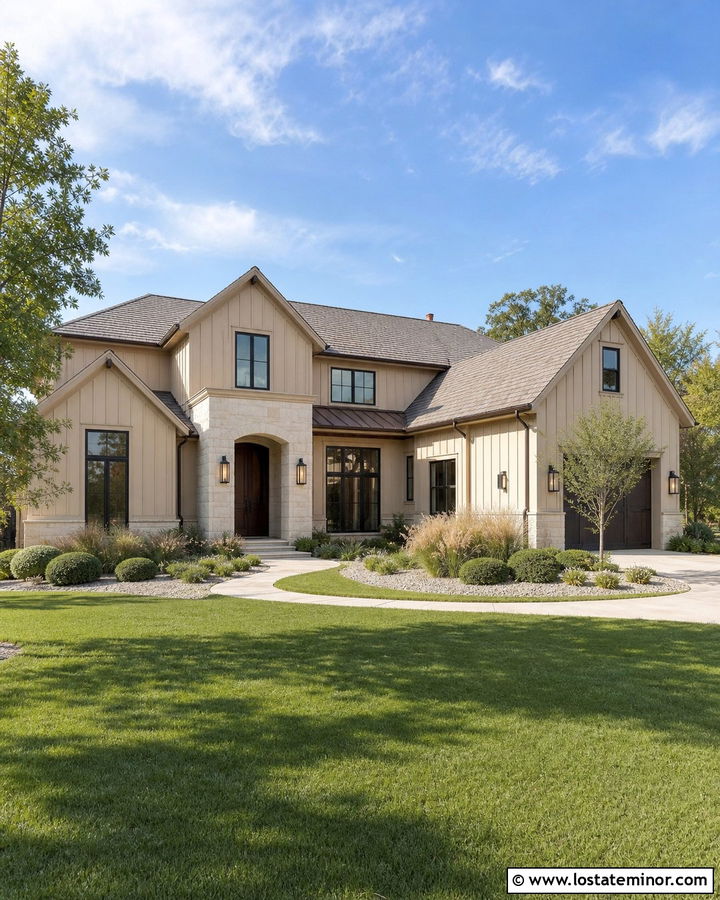
Bronze details quietly enhance a sand board and batten house without creating harsh outlines. Select dark bronze window frames, gutters, lanterns, door hardware, and porch railings. These accents appear nearly black from a distance but reveal warmer brown tones in direct sunlight. Pair them with creamy trim and a medium walnut front door to create a layered neutral palette. A weathered brown roof will tie the entire exterior together. This approach is particularly flattering on Mediterranean-influenced homes, transitional builds, and houses surrounded by dry or sun-filled landscapes. Use limestone or light travertine around the entrance to add subtle texture. Drought-tolerant grasses, rounded shrubs, and pale gravel beds can complete the curb appeal while keeping the sand color visually connected to the yard.
11. Sand Board and Batten House With Navy Door
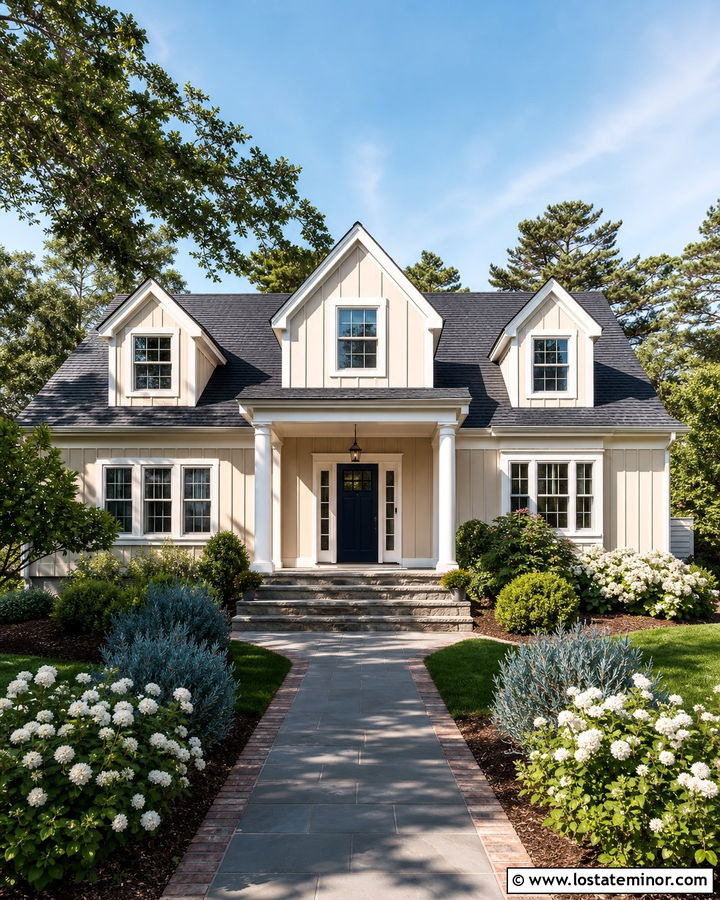
A navy front door gives a sand-colored home a polished focal point. Choose a deep, slightly muted navy that feels grounded rather than vivid. Cover the main facade with sand board and batten siding, then use warm white on the trim, porch columns, and garage surrounds. A charcoal roof will echo the depth of the navy door while maintaining a neutral overall scheme. Brushed nickel or aged brass hardware can add a small reflective detail at the entrance. This combination looks especially attractive on Cape Cod and coastal transitional homes. Add gray stone steps, blue-green shrubs, and white flowering plants around the porch. The navy entry provides enough contrast to attract attention, while the sandy beige body keeps the complete exterior warm, relaxed, and appropriate for everyday suburban settings.
12. Sand Board and Batten Coastal House
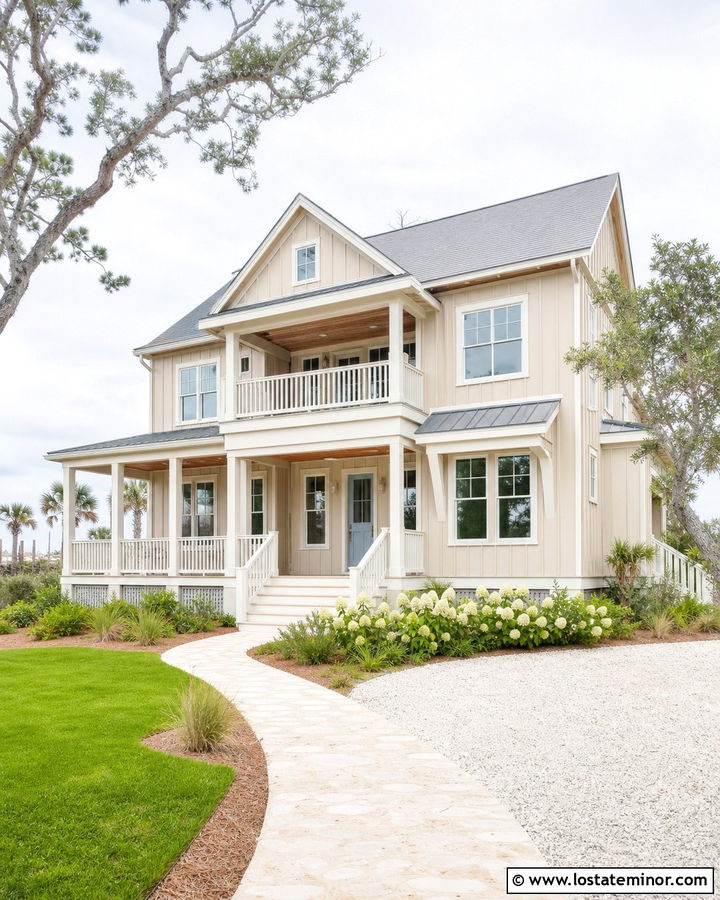
Soft colors and weather-friendly materials can turn sand board and batten siding into a convincing coastal exterior. Pair the warm sandy beige walls with clean ivory trim and a pale blue-gray front door. A medium-gray roof will provide definition while recalling the subdued tones of driftwood and weathered shingles. Use natural cedar on the porch ceiling or small roof brackets to keep the scheme from feeling too polished. White porch railings, simple columns, and broad windows will reinforce the airy character. This palette works well beyond waterfront locations because it remains understated. Frame the house with sea oats, hydrangeas, light gravel, and a shell-toned walkway. The complete facade should feel bright and relaxed, with gentle contrast that allows the board and batten texture to remain visible.
13. Sand Board and Batten Craftsman House
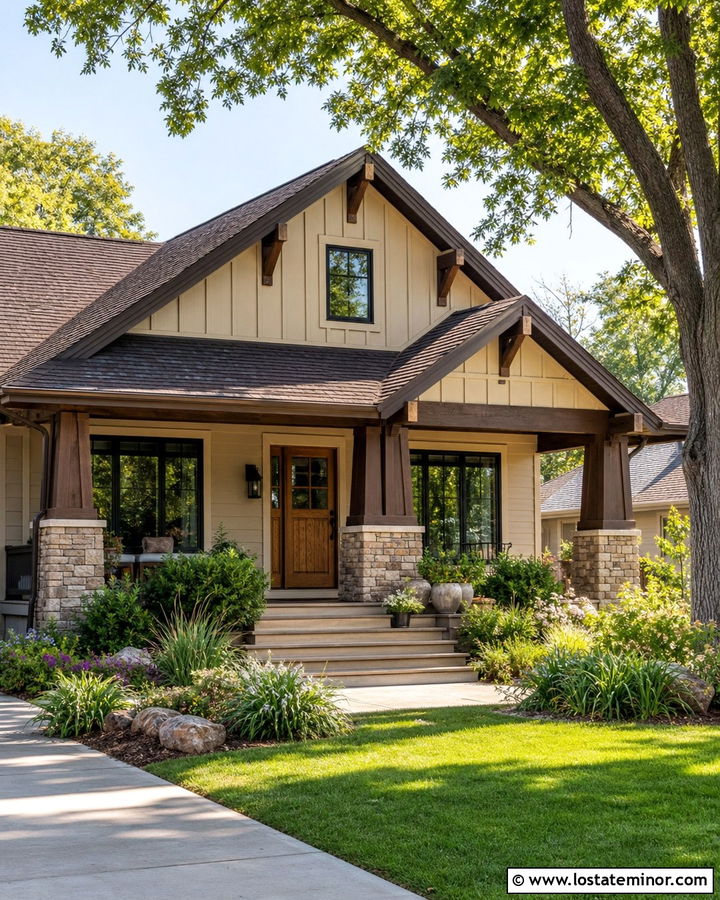
Craftsman architecture benefits from a sand exterior because the neutral color lets its detailed woodwork and masonry stand out. Use sand board and batten siding on upper gables, then continue the same color in horizontal siding across the lower walls. Wrap tapered porch columns in warm gray and tan stone. Dark brown beams, window frames, and brackets will provide definition, while a rich oak door becomes the natural centerpiece. Select a dimensional roof blending charcoal and brown to unite the cool and warm accents. Wide porch steps and substantial planters can support the home’s sturdy proportions. Keep the landscaping informal with layered shrubs, ornamental grasses, and a mature shade tree. This balanced scheme respects traditional Craftsman character while giving the exterior a cleaner, more updated presentation.
14. Sand Board and Batten Modern Farmhouse
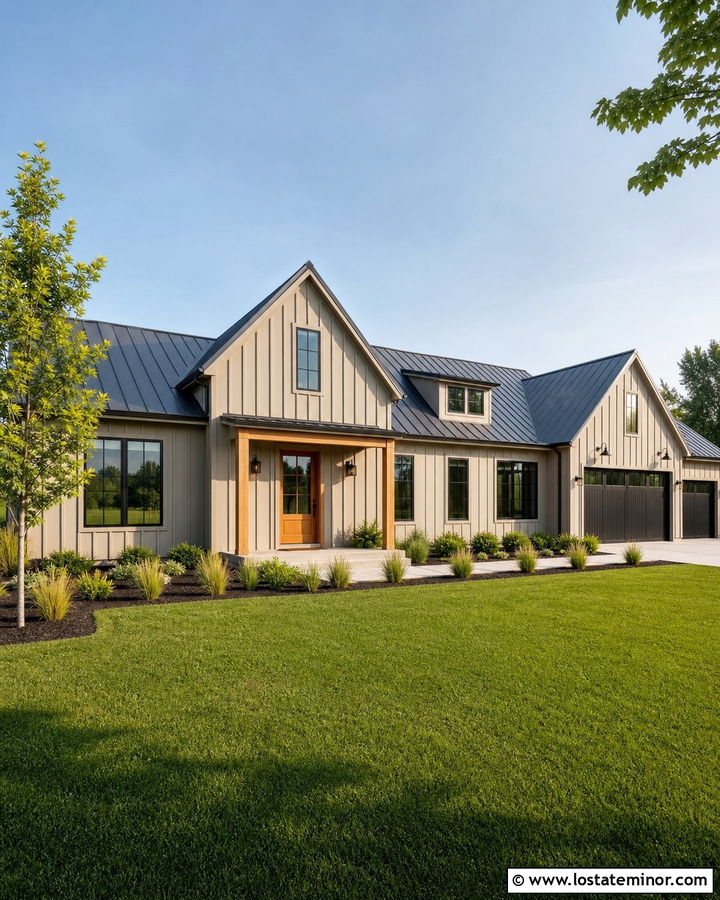
For a softer take on the modern farmhouse, replace bright white siding with warm sand board and batten. The color reduces glare and gives the vertical texture a more natural appearance. Use black-framed windows, a charcoal standing-seam roof, and simple black lights to create crisp architectural lines. A medium cedar front door and matching porch columns will warm the high-contrast details. Keep the trim sand-colored or choose a slightly lighter beige so the exterior remains calm and unified. Large windows and uncluttered gables are important to this streamlined look. A pale concrete walkway, rectangular planting beds, and evenly spaced ornamental grasses can continue the clean geometry into the yard. The finished home feels current and distinctive without losing the welcoming quality associated with farmhouse architecture.
15. Sand Board and Batten Colonial House
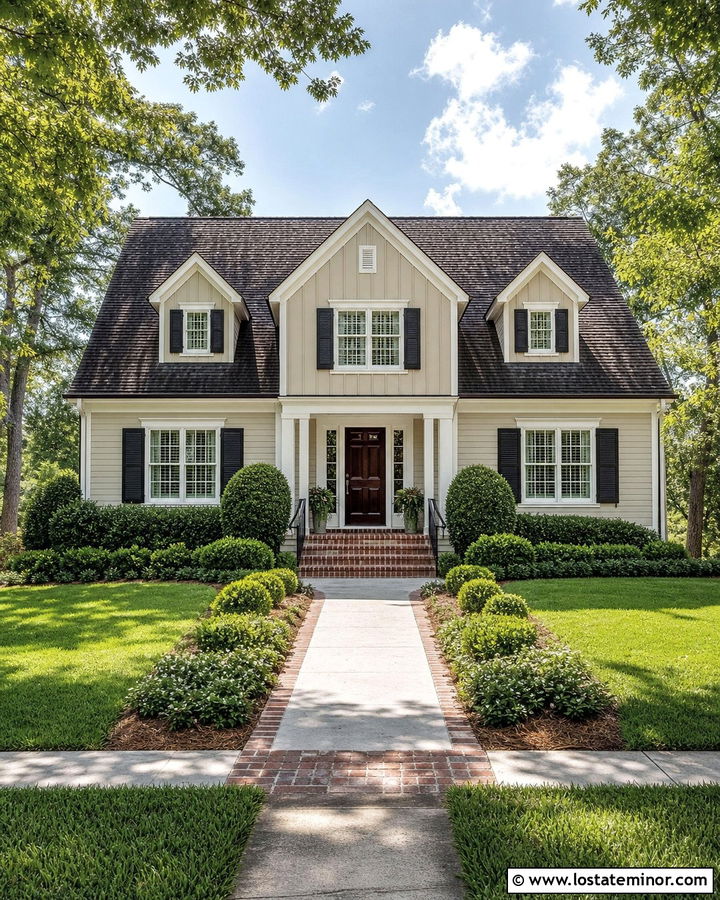
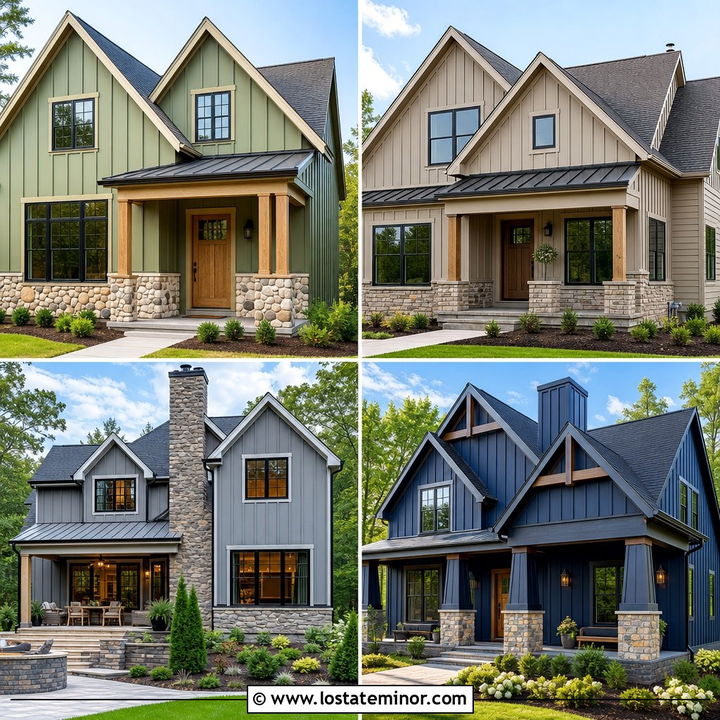
Board and batten can update a Colonial exterior when it is applied with restraint. Use sand vertical siding on a centered front projection or upper gables, then cover the remaining walls in matching horizontal lap siding. Preserve the home’s symmetry with evenly spaced windows, warm white trim, and traditional shutters in deep charcoal or muted black. A glossy dark brown front door can anchor the central entrance beneath a small columned portico. Choose a weathered charcoal roof that complements the shutters without looking overly modern. Brick steps or a brick-edged walkway will add traditional texture and subtle color. Formal shrubs placed in balanced groups can frame the facade. This complete scheme maintains the recognizable Colonial structure while adding vertical detail and a more relaxed neutral color palette.
16. Sand Board and Batten Bungalow With Front Porch
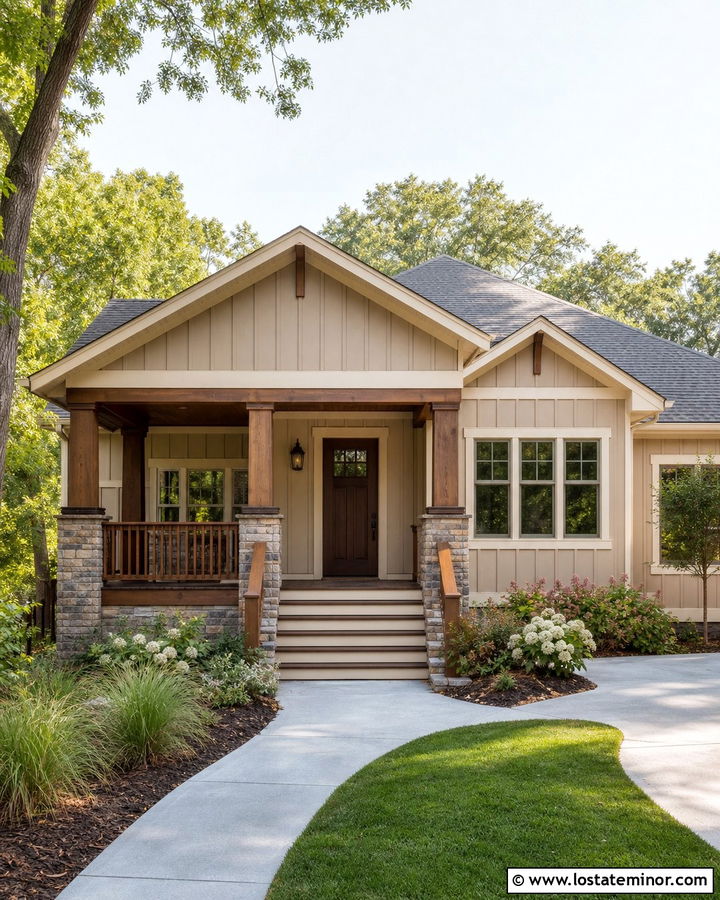
A deep front porch makes sand board and batten siding feel especially warm and inviting. Use the sandy beige color on every wall, then introduce cream trim around the windows, eaves, and porch opening. Stained cedar posts and railings can add natural contrast without making a compact bungalow look smaller. A dark brown front door and bronze lantern will strengthen the entry, while a medium-gray shingle roof keeps the palette balanced. Consider a stone porch base containing both gray and tan tones to connect all the materials. Wide steps and a visible seating area can make the facade feel useful as well as attractive. Surround the bungalow with flowering shrubs, soft grasses, and a short curved walkway to emphasize its comfortable, neighborhood-friendly character.
17. Sand Board and Batten Split-Level House
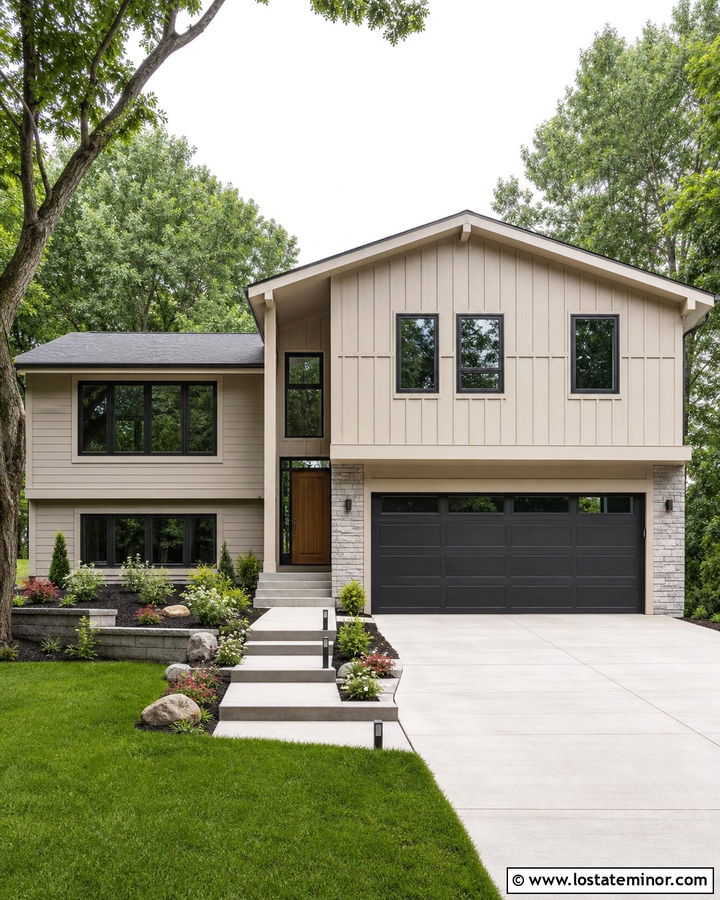
Refreshing a split-level exterior starts with visually connecting its staggered sections. Apply sand board and batten siding to the taller entry volume and upper story, then use matching horizontal siding on the lower wing. This material shift highlights the architecture while the single sand color keeps everything unified. Choose charcoal window frames and a matching garage door for grounded contrast. Warm white fascia can brighten the roof edges, and a natural wood front door can clearly mark the entrance. Add light gray stone around the foundation to give the lower level a finished appearance. A broad walkway and tiered planting beds will help manage changes in elevation. The completed scheme makes an older split-level feel more intentional, balanced, and current without hiding its distinctive structure.
18. Sand Board and Batten House With Gray Stone
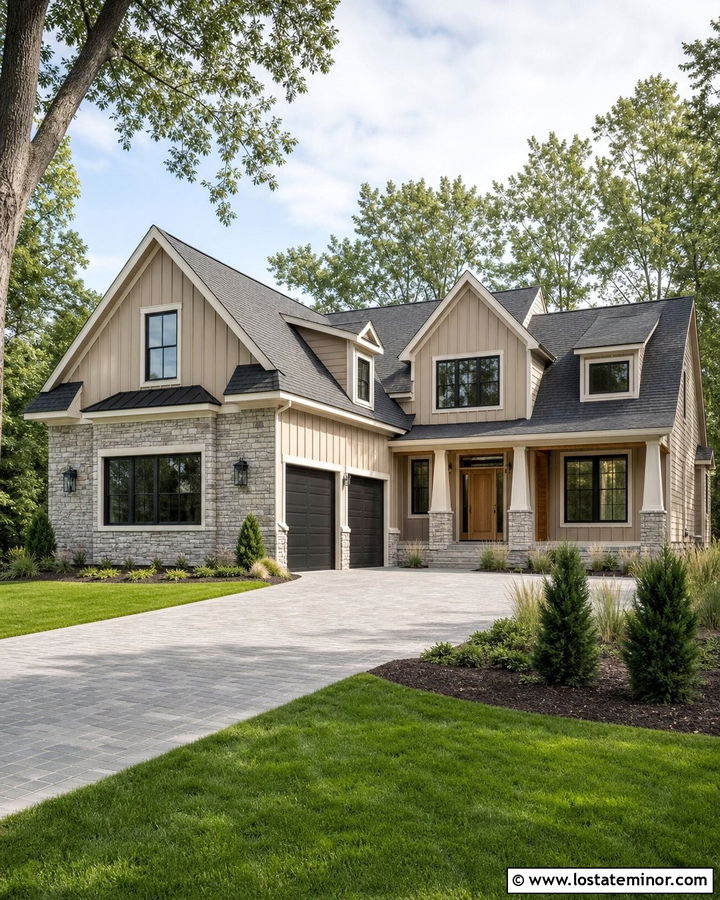
Cool gray stone can balance the warmth of sand board and batten siding. Choose stone containing small traces of beige or taupe so the two materials share a visual connection. Use the masonry around the garage, foundation, and porch columns rather than covering too much of the facade. Warm white trim will brighten the transition, while charcoal windows and a charcoal roof repeat the darker notes in the stone. Add a natural oak door to restore warmth around the entry. This scheme works well on transitional homes with multiple gables and mixed siding materials. Keep the remaining details simple so the texture does not become overwhelming. Gray pavers, tidy evergreen beds, and several wispy grasses can frame the full exterior and reinforce the blend of warm and cool neutrals.
19. Sand Board and Batten House With Limestone
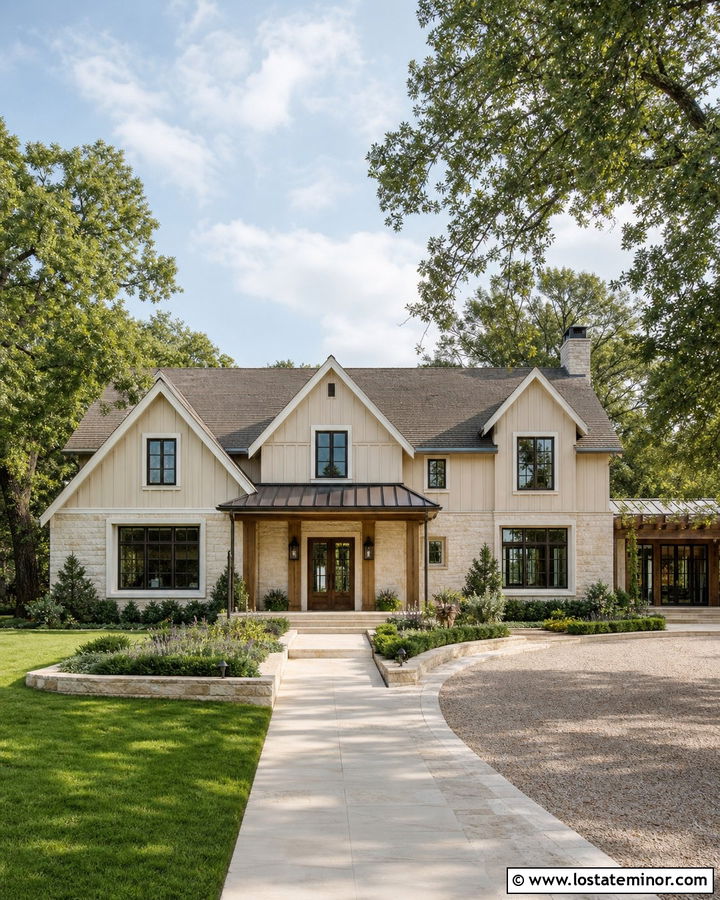
Limestone gives a sand-colored board and batten home a light, refined foundation. Select a creamy limestone with soft gold and gray markings rather than strongly yellow stone. Use it across the lower facade, entry arch, or porch columns. Above it, vertical sand siding will create height while maintaining the gentle tonal effect. Ivory trim can define the windows, and a bronze metal roof accent over the porch will add a quiet touch of depth. Finish the entrance with a medium walnut door and aged brass hardware. This palette suits French country, Texas transitional, and upscale suburban homes. Manicured shrubs, limestone-edged planting beds, and a broad pale walkway can complete the setting. The close color relationship between siding and masonry creates an elegant, seamless exterior.
20. Sand Board and Batten House With Metal Roof
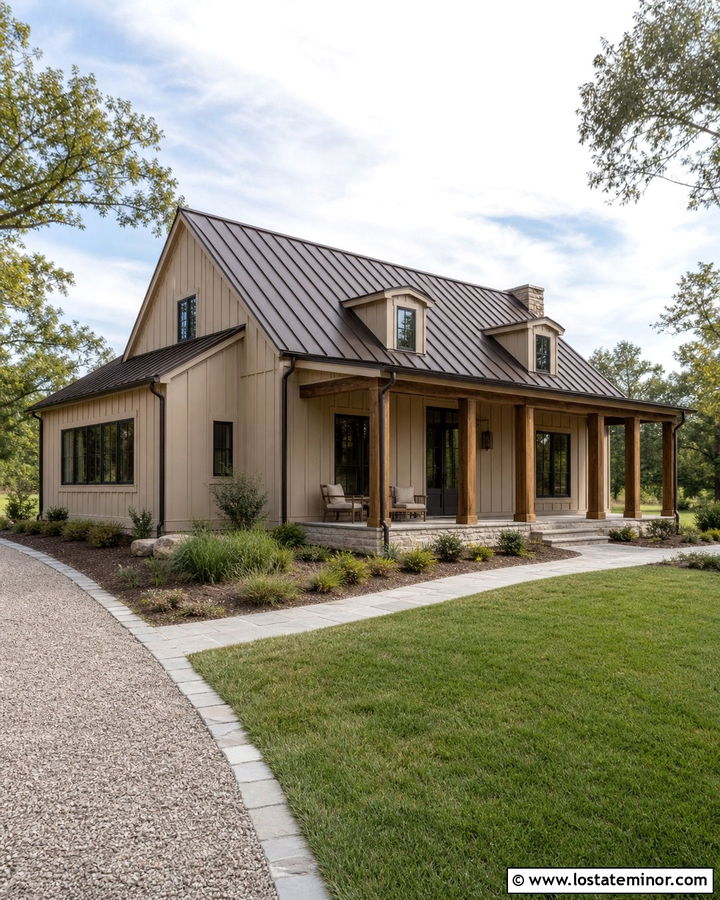
A standing-seam metal roof introduces crisp lines above the softer texture of sand board and batten siding. Choose charcoal, dark bronze, or weathered gray metal depending on the home’s other accents. Dark bronze works particularly well with warm sand because it adds contrast without feeling stark. Repeat the roof color on the gutters, window frames, and porch lights. Cream trim and natural timber columns can brighten and soften the darker details. On a country house or barn-inspired home, use the metal roof across both the main structure and porch for continuity. Stone porch flooring will add another durable-looking texture. Open lawn, low native grasses, and a simple gravel-edged driveway can support the rural influence while keeping the complete exterior polished and residential.
21. Sand Board and Batten House With Arched Entry
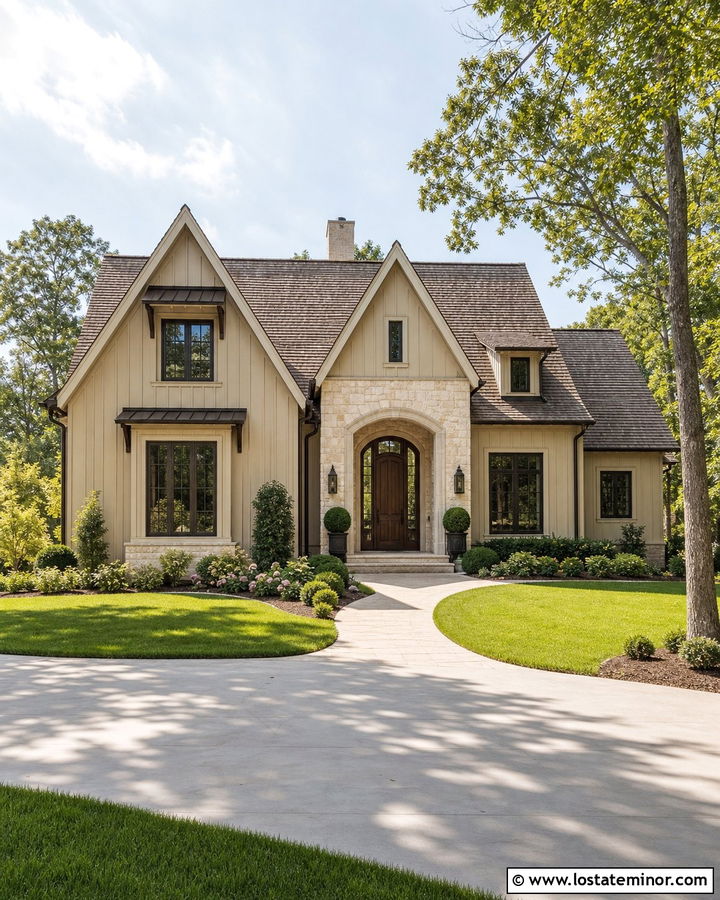
An arched entry adds graceful contrast to the straight vertical lines of board and batten siding. Cover the facade in a warm sand color, then frame the entrance with creamy limestone or smooth off-white stucco. The curved opening should remain broad enough to reveal a substantial walnut door. Use bronze window frames, dark brown gutters, and a dimensional brown-gray roof to maintain a warm, cohesive palette. On a transitional or French country house, repeat shallow arches over one or two front windows for balance. Avoid adding curves everywhere, since the entrance should remain the main feature. Rounded shrubs, soft planting borders, and a gently curving walkway can echo the architecture. The resulting exterior feels polished and approachable, with an entry that clearly stands out.
22. Sand Board and Batten House With Garage Doors
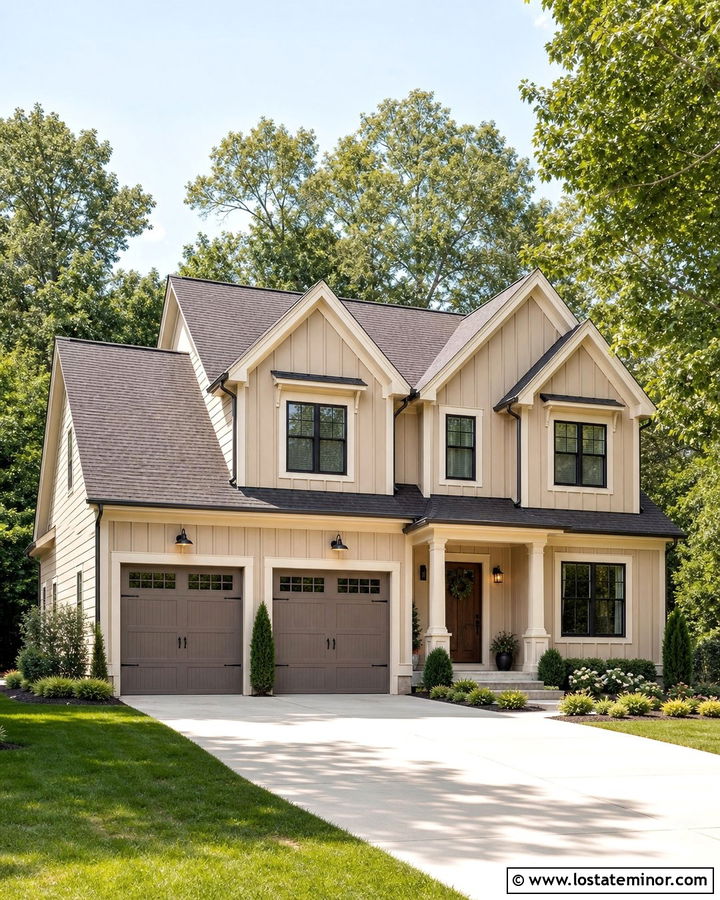
Garage doors occupy a large part of many suburban facades, so their color deserves careful consideration. Against sand board and batten siding, warm taupe garage doors create subtle separation without dominating the house. Choose a paneled design with small upper windows and dark bronze hardware. Repeat the taupe on secondary trim or porch flooring to make the choice feel intentional. Use creamy white around the main windows and a walnut stain on the front door. A charcoal-brown roof will provide enough upper contrast to keep the pale facade grounded. This combination works well on two-story homes with front-facing garages. Add narrow shrubs between garage bays, broad driveway borders, and a visible walkway leading toward the front door so the entrance remains easy to identify.
23. Sand Board and Batten House With Wood Garage
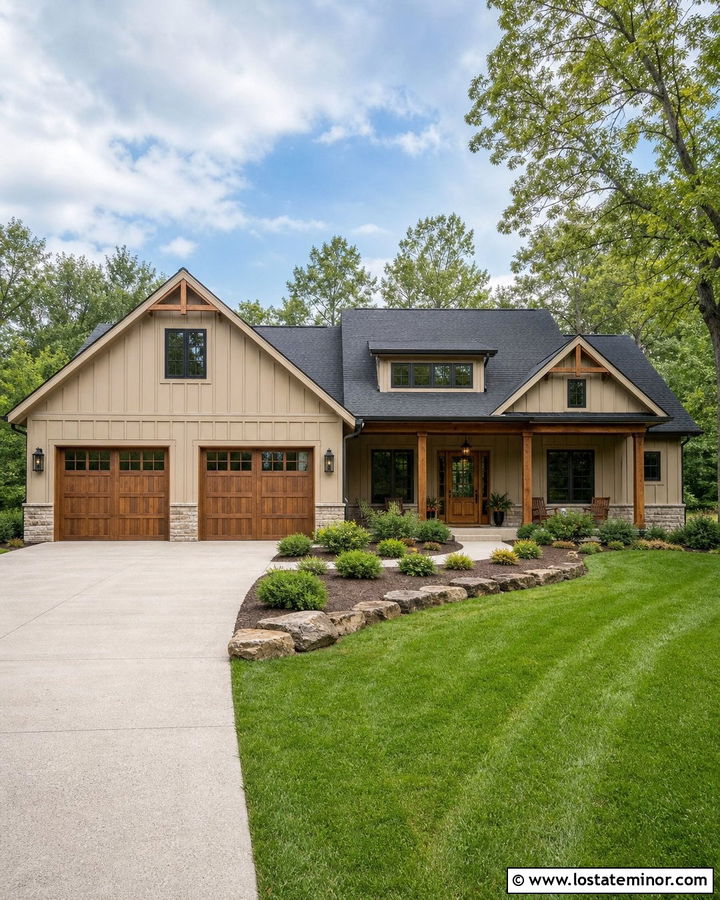
Wood garage doors can become a strong architectural feature on a sand board and batten exterior. Select a medium cedar or oak stain with visible grain and a finish that complements the front door. Keep the surrounding trim cream or sand so the wood remains clearly defined. Dark bronze window frames, gutters, and door hardware will connect the warm materials, while a charcoal-gray roof provides a neutral cap. This scheme is especially effective on modern Craftsman houses and wide ranch homes where the garage is highly visible from the street. Repeat the wood in small porch beams or entry brackets, but avoid covering every accent in timber. Structured shrubs, warm stone borders, and a clean concrete driveway will create a complete exterior that feels coordinated rather than garage-dominated.
24. Sand Board and Batten House With Wraparound Porch
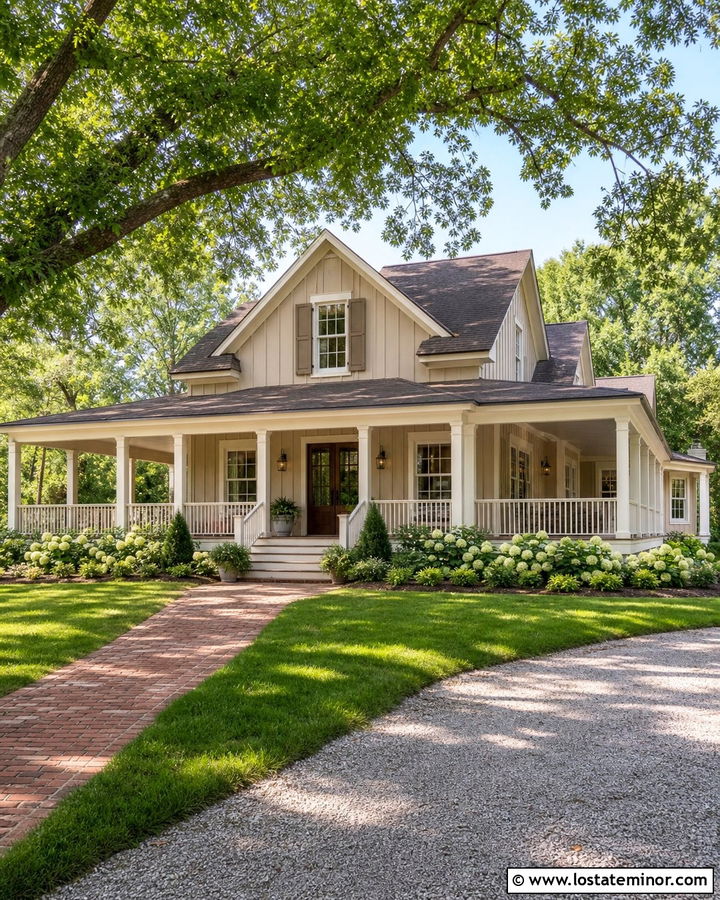
A wraparound porch gives a sand board and batten house an easy country character. Paint the siding a warm sandy beige and use creamy white on the columns, railings, window trim, and porch fascia. Natural wood porch flooring can keep the pale scheme grounded, while a dark brown front door provides a clear destination. Choose a brown-gray roof with enough depth to outline the long porch roofline. Black or bronze rocking chairs and lanterns can add small points of contrast without making the house feel busy. This arrangement suits farmhouse, Southern cottage, and country Victorian architecture. Frame the porch with hydrangeas, evergreen shrubs, and a wide path made from warm concrete or brick. The final facade should look bright, comfortable, and visually connected from end to end.
25. Sand Board and Batten House With Dark Shutters
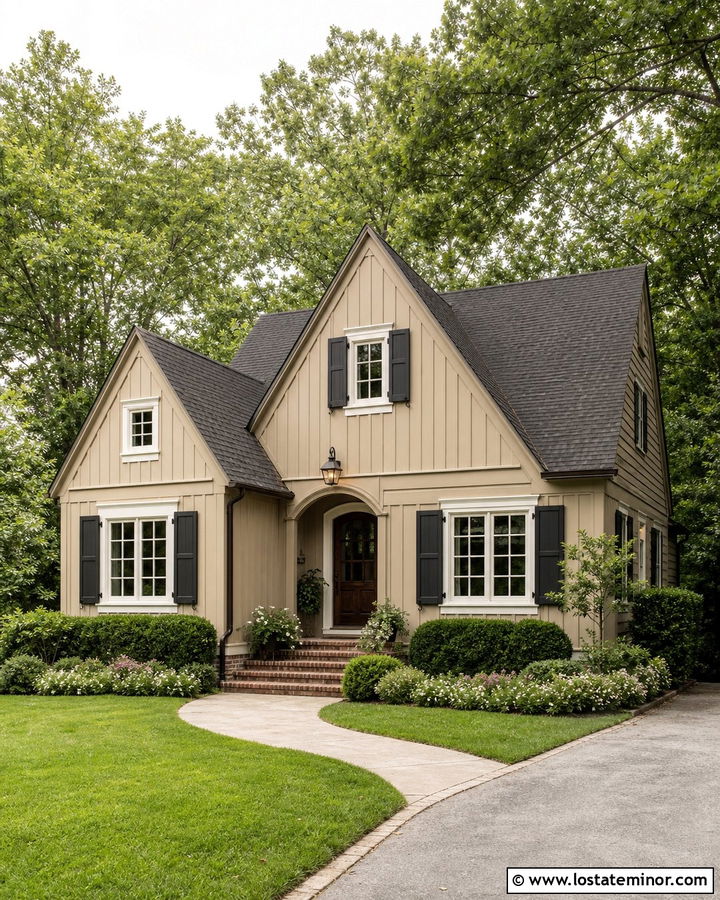
Dark shutters can bring traditional structure to a sand board and batten facade. Choose deep brown, charcoal, or softened black shutters sized to match the windows properly. Their simple board-and-batten construction will echo the vertical house siding without looking overly decorative. Use warm white window trim beneath the shutters to create separation from the sand walls. A dark walnut front door and charcoal-brown roof will distribute the deeper color across the exterior. This treatment works particularly well on cottages, Colonials, and farmhouse-inspired homes with evenly arranged windows. Keep other accents restrained so the shutters remain meaningful. Brick porch steps, clipped hedges, and flowering foundation plants can reinforce the classic presentation. The complete look feels established, welcoming, and more dimensional than a plain neutral facade.
26. Sand Board and Batten House With White Brick
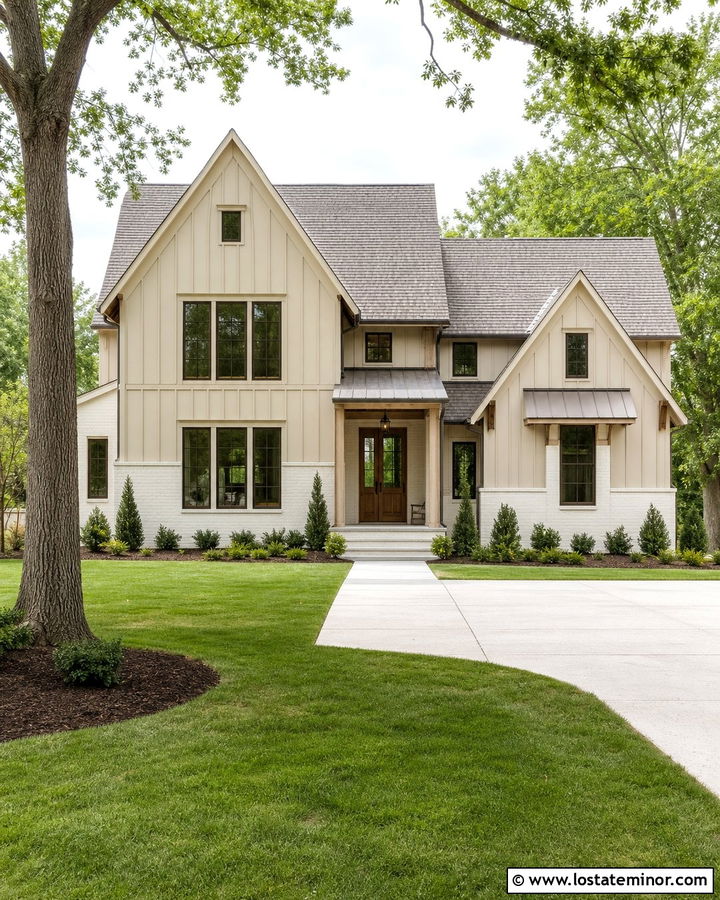
White brick and sand board and batten siding create a subtle two-tone facade that depends on texture rather than dramatic color contrast. Use warm white brick across the lower story, garage wing, or central chimney. Apply sandy beige vertical siding to the gables and upper walls. The white should have a creamy undertone so it does not appear too cool next to the sand. Add bronze windows, a weathered gray roof, and a natural oak front door for balanced definition. This palette works on modern farmhouse, transitional, and renovated ranch exteriors. Simple concrete steps and dark green landscaping will keep the pale house from blending into its surroundings. The brick’s irregular surface and the siding’s vertical pattern make the restrained color scheme visually interesting.
27. Sand Board and Batten House With Natural Wood Porch
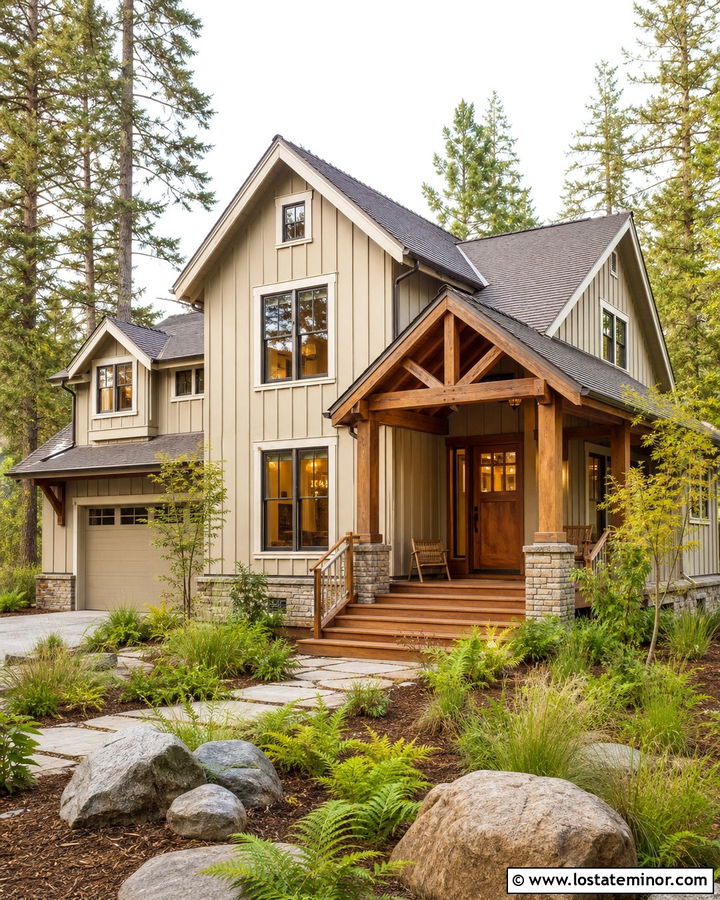
Natural wood creates a comfortable transition between sand siding and the surrounding landscape. Use full-height sand board and batten across the facade, then build the porch with stained cedar posts, beams, decking, and a matching front door. Cream window trim will brighten the walls, while dark bronze gutters and a brown-gray roof provide quiet contrast. Keep the wood stain medium in tone so it remains visible without appearing orange. This complete scheme is ideal for cabins, lake houses, Craftsman homes, and wooded suburban properties. A stone porch foundation can strengthen the connection with the site. Add ferns, native grasses, broad steppingstones, and warm mulch around the entrance. The finished exterior should feel natural and relaxed while still showing a thoughtful, coordinated color plan.
28. Sand Board and Batten House With Mixed Siding
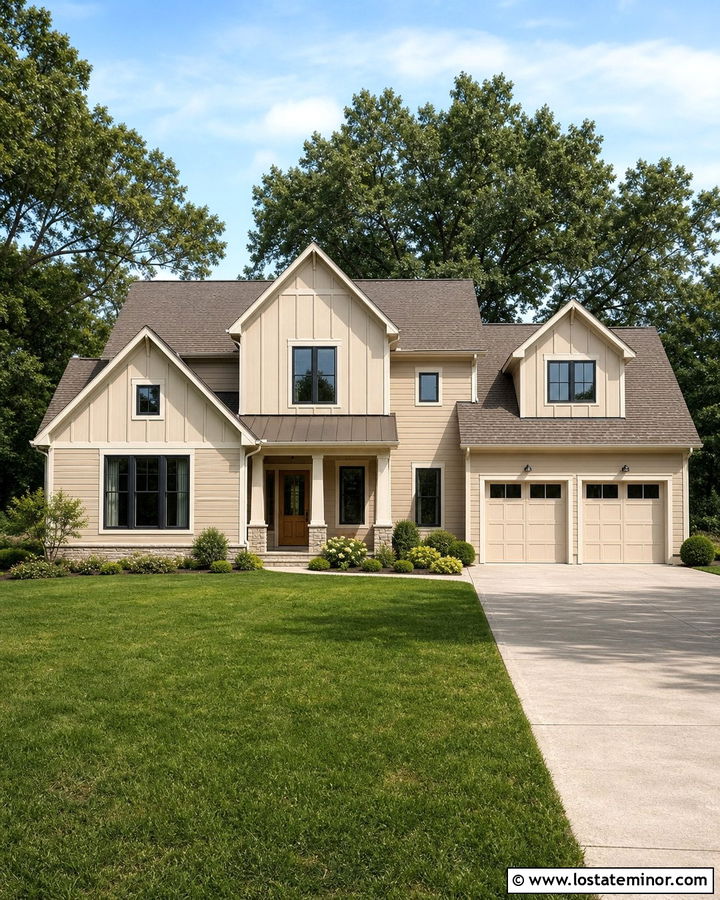
Mixing vertical and horizontal siding can highlight a home’s architecture without requiring additional exterior colors. Place sand board and batten siding on front-facing gables, the entry tower, or the upper level. Use horizontal lap siding in the same sand color across wider lower walls. The shared finish keeps the facade unified while changes in direction create shadow and texture. Outline the windows with ivory trim, then add charcoal frames and a medium oak door for definition. A gray-brown roof will connect the warm and cool elements. This approach works especially well on large suburban homes where one siding pattern might feel repetitive. Restrained stone at the foundation, layered shrubs, and a clearly marked walkway will complete the exterior without competing with the mixed siding arrangement.
29. Sand Board and Batten House With Terracotta Door
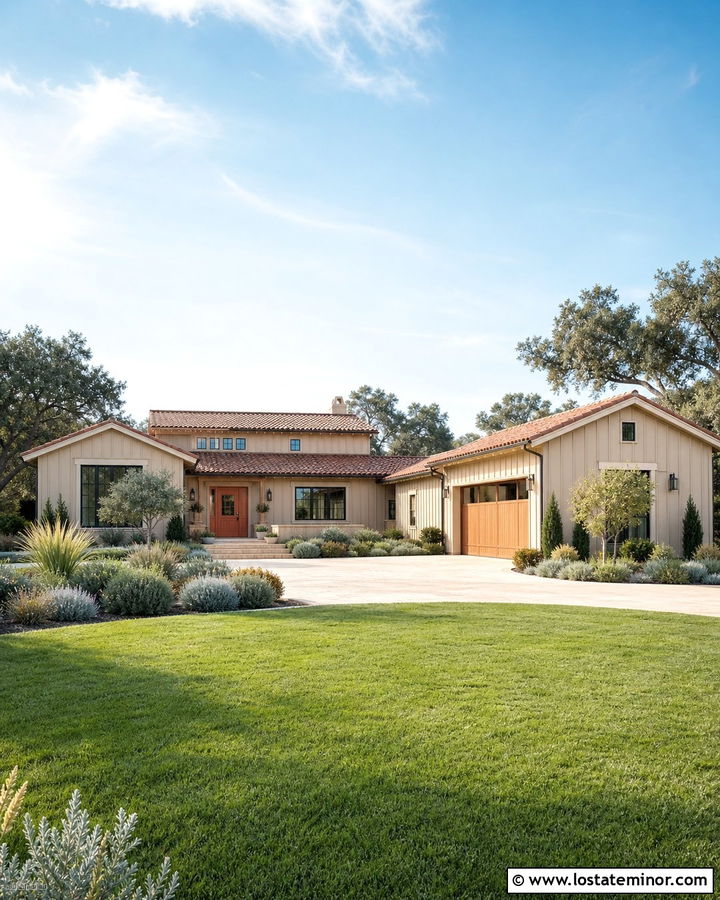
A muted terracotta front door gives a sand exterior a warm, earthy focal point. Look for a clay-inspired color with brown undertones instead of a bright orange-red. Sand board and batten siding will provide a quiet background, while creamy trim keeps the surrounding windows and porch details light. Use a bronze roof accent, dark brown gutters, and aged brass door hardware to reinforce the sun-warmed palette. Light limestone around the porch can add texture without introducing a competing color. This scheme works especially well on Southwestern transitional homes, California ranch houses, and compact bungalows. Plant silvery grasses, rosemary, low flowering shrubs, and drought-tolerant greenery near the entry. The complete look feels cheerful and distinctive while staying connected to the natural warmth of the main siding.
30. Sand Board and Batten House With Sage Accents
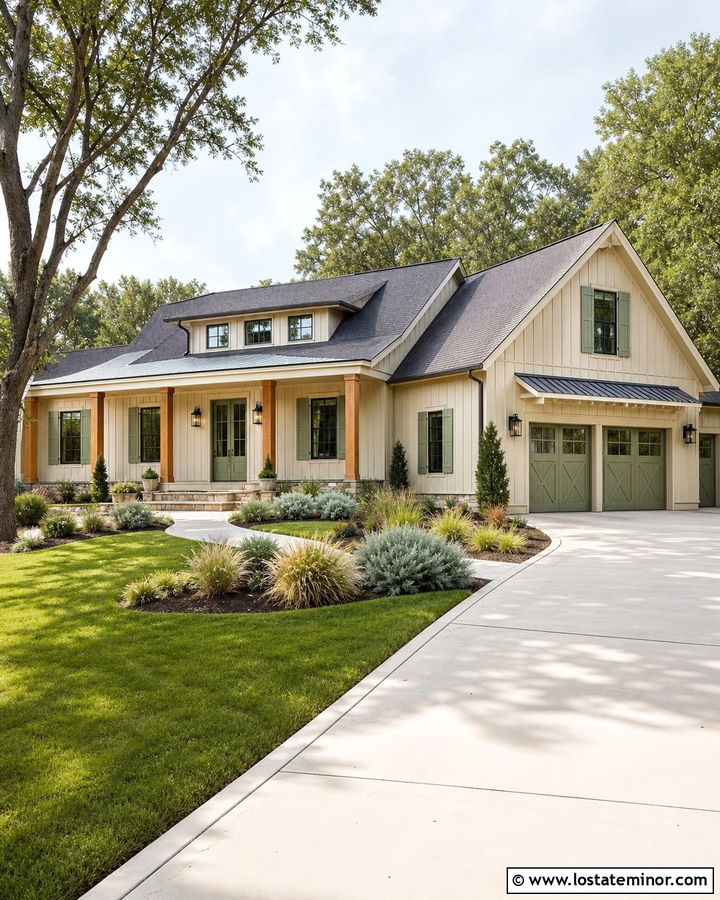
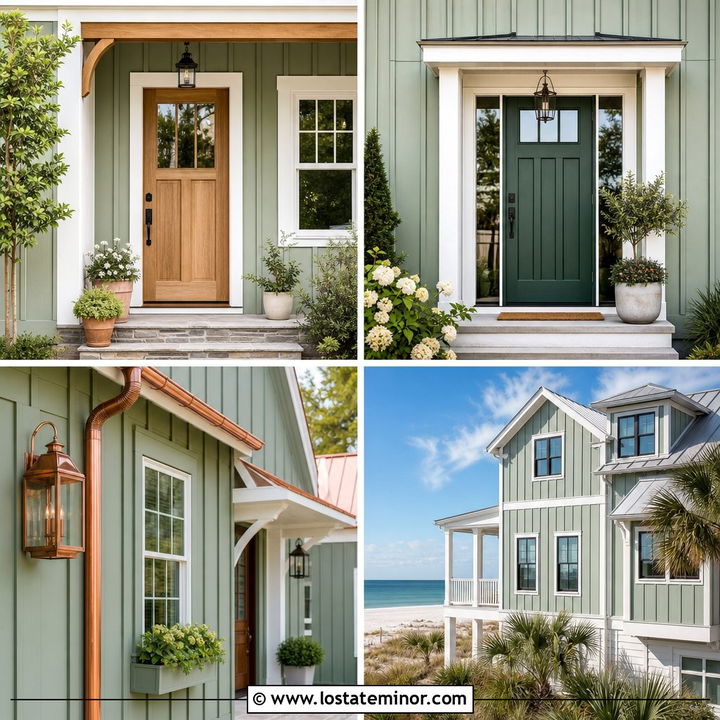
Sage accents bring a soft garden influence to warm sand board and batten siding. Use the green on shutters, the front door, or a detached garage, but keep the main house consistently sand-colored. Select a muted gray-green that feels calm beside creamy window trim and a weathered charcoal roof. Natural wood porch columns can bridge the sand and sage tones, while dark bronze lights provide definition. This combination suits cottages, ranch homes, and relaxed modern farmhouses surrounded by mature landscaping. Repeat the sage color subtly through ornamental grasses and silvery-green shrubs rather than matching every plant exactly. Warm stone steps and a curved walkway will strengthen the natural palette. The finished exterior feels layered, approachable, and colorful without moving too far from a neutral foundation.
Conclusion:
The strongest sand exteriors combine color, texture, and architectural details as one complete composition. Board and batten siding gives the warm neutral body color dimension, while thoughtful trim, roofing, masonry, doors, and wood features establish the home’s personality. White can make sand feel brighter, charcoal creates definition, and natural materials strengthen its earthy character. Before committing, compare samples outdoors beside the permanent roof, brick, and stone at several times of day. This step helps reveal undertones and prevents unexpected clashes. Whether your home is a ranch, cottage, Craftsman, or modern farmhouse, these 30 Sand House Design With Board and Batten Ideas offer practical inspiration for building warm, balanced, and lasting curb appeal.

Related posts: