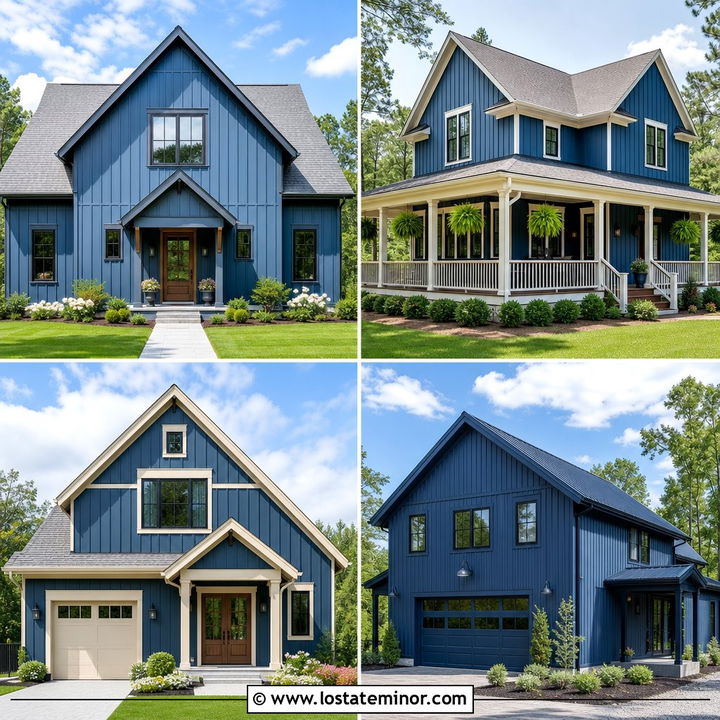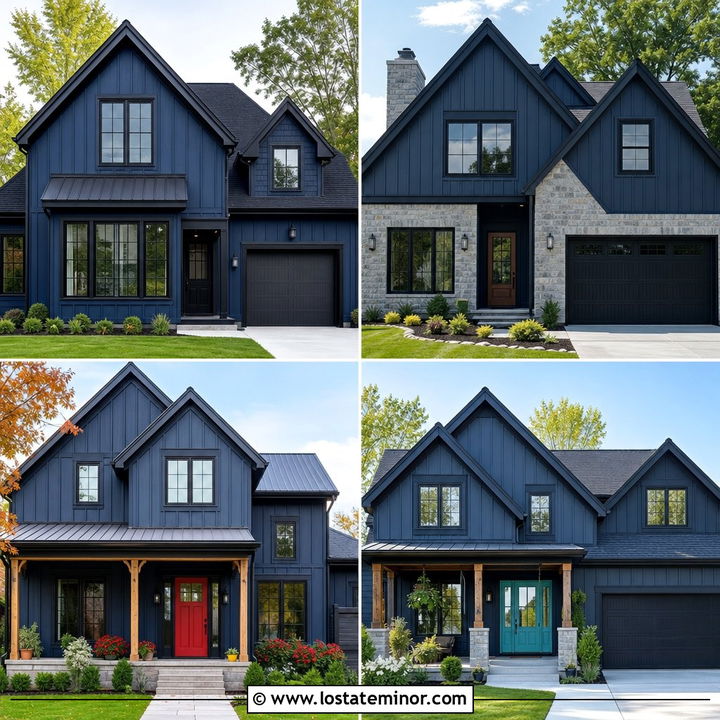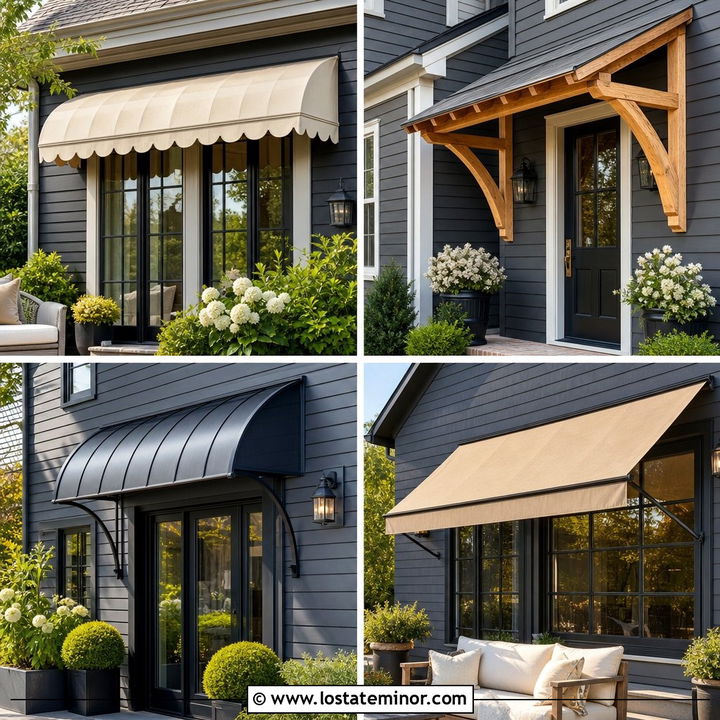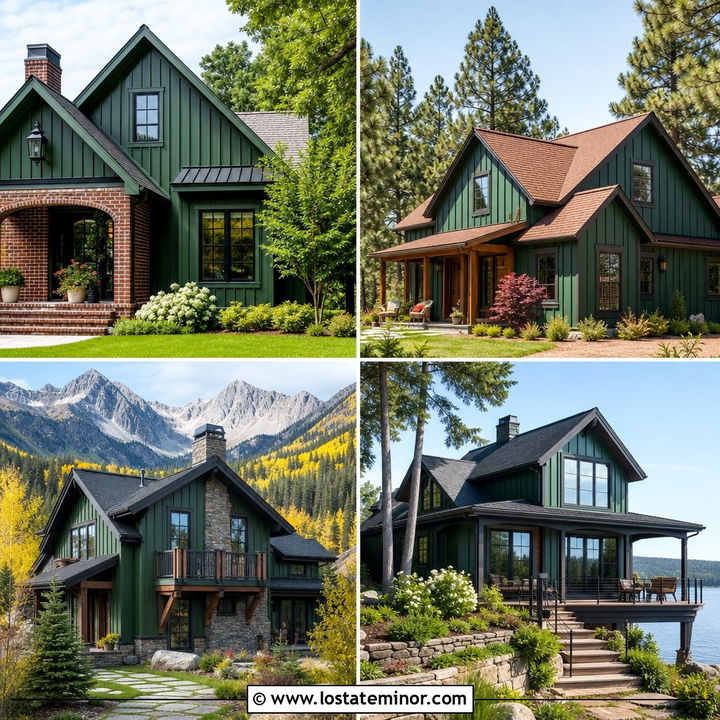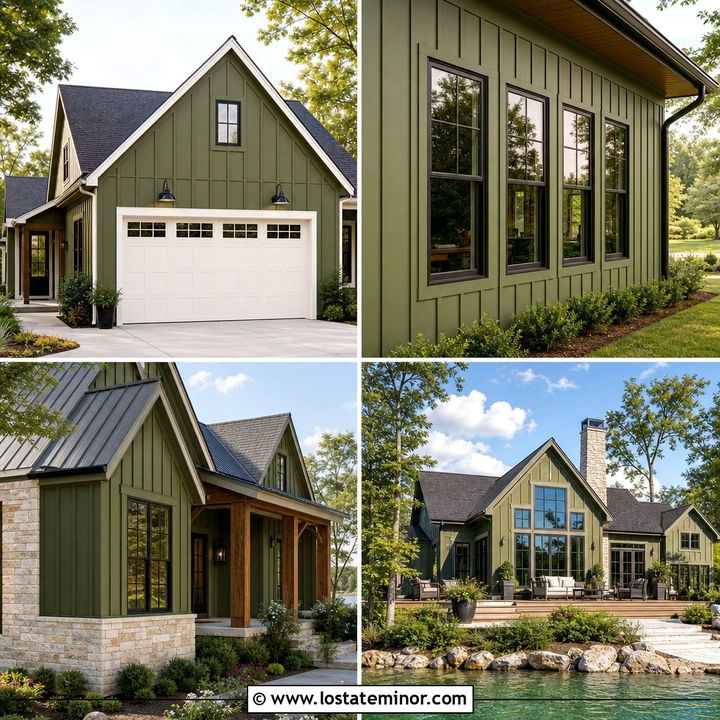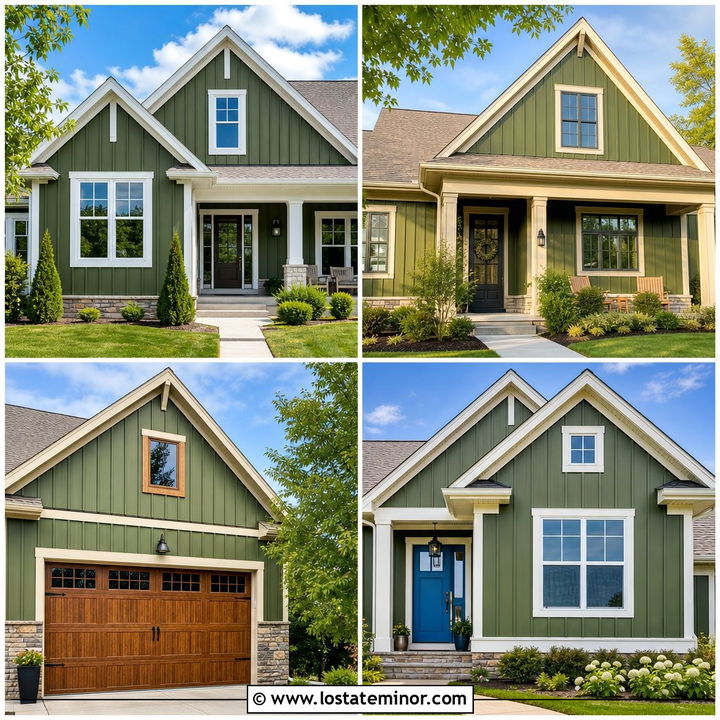
Forest green board and batten siding gives a home rich color, strong architectural definition, and a natural connection to its surroundings. The vertical battens create height, while the deep green body color provides an attractive backdrop for wood, stone, brick, metal, and contrasting trim. This pairing works across many American house types, including modern farmhouses, ranch homes, Craftsman houses, cottages, cabins, and Colonials. Current exterior galleries show green board and batten used successfully with mixed siding, shingle roofs, metal roofing, and rustic architectural details. () The right complete scheme depends on the home’s roof color, fixed masonry, setting, and amount of sunlight. Explore these 30 Forest Green House Design With Board and Batten Ideas for balanced, practical, and distinctive curb appeal.
1. Forest Green Board and Batten With White Trim
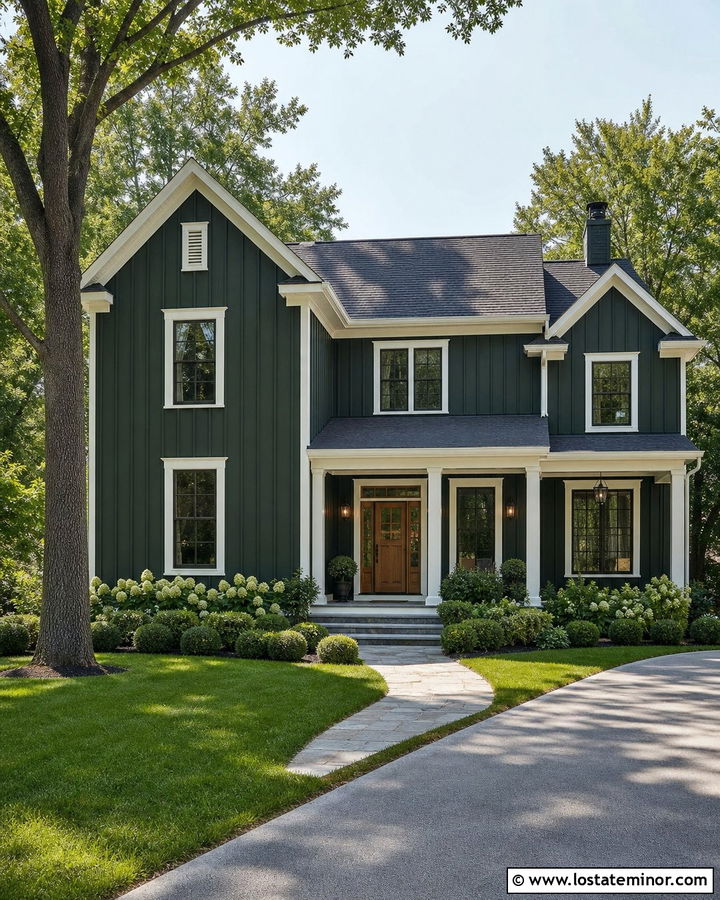
Crisp white trim gives forest green board and batten siding a clean, familiar appearance. Use the green across the main body, then outline windows, fascia, corner boards, and porch columns in a soft white. A medium-brown wood front door adds warmth without introducing another strong color. For the roof, choose charcoal architectural shingles that ground the high-contrast palette. This combination works especially well on a two-story farmhouse with symmetrical windows and a simple covered porch. Keep the garage doors forest green so they blend into the facade instead of becoming the focal point. Black lanterns and dark gutters can provide definition, while layered boxwoods, hydrangeas, and ornamental grasses soften the vertical siding lines.
2. Forest Green Board and Batten With Black Trim
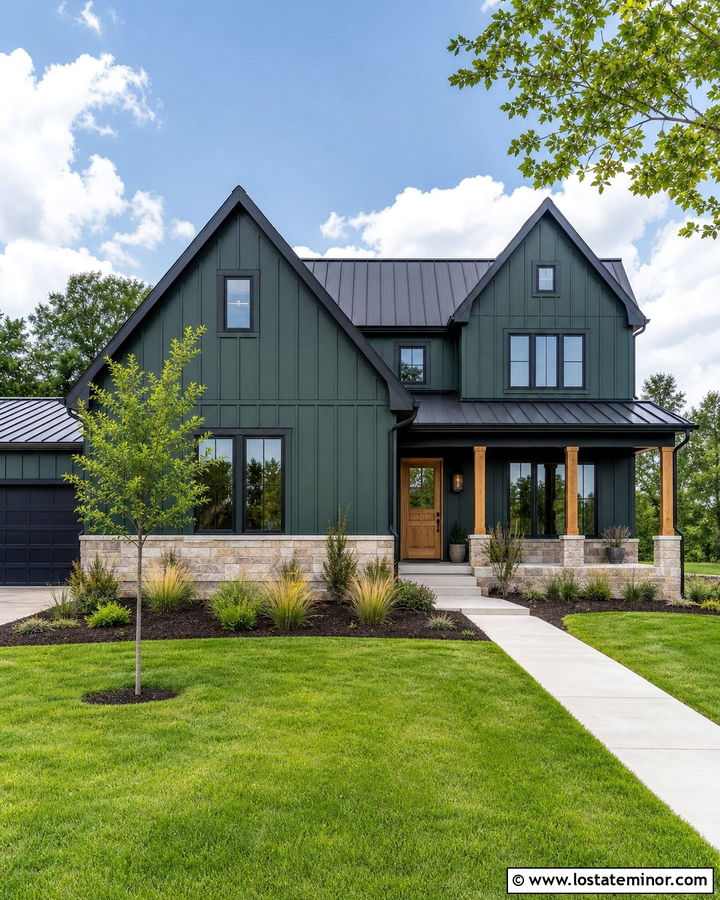
Black trim turns a forest green exterior into a darker, more contemporary composition. The difference between the two colors is subtle, so the architecture feels cohesive rather than sharply outlined. Apply black to the window frames, fascia, gutters, porch lights, and metal railing. A natural cedar front door prevents the scheme from becoming too cool or heavy. This palette suits a modern farmhouse with steep gables, a standing-seam roof, and wide board and batten panels. Include pale limestone around the foundation or entry to create a lighter visual break. In shaded or wooded settings, sample the green carefully because both colors may appear nearly black. A light concrete walkway and open lawn can help the finished facade remain welcoming.
3. Forest Green Board and Batten With Natural Wood
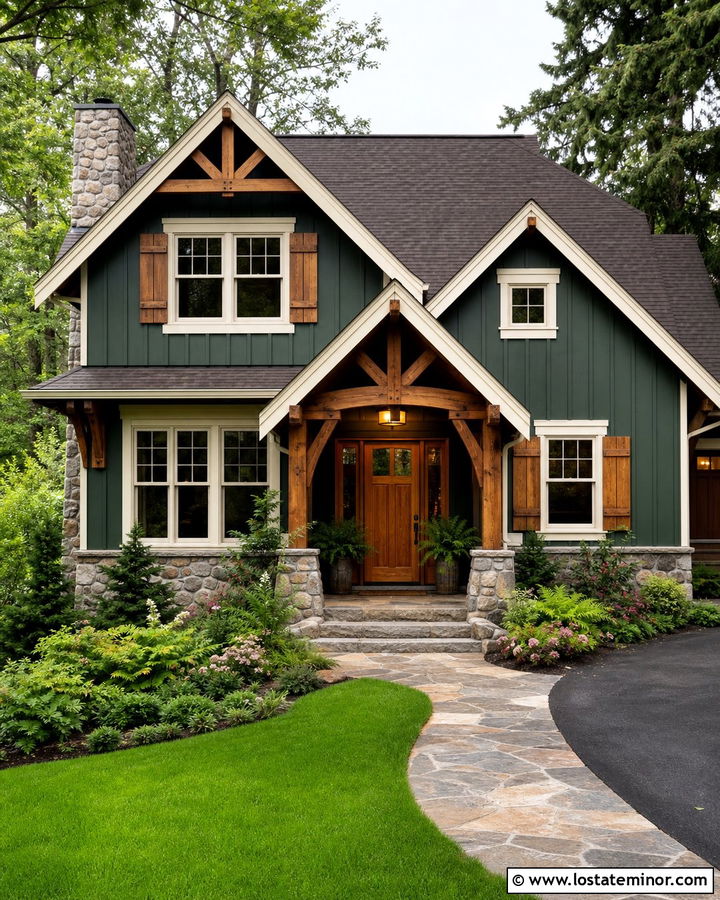
Warm wood brings out the earthy character of forest green board and batten siding. Cedar porch posts, exposed beams, shutters, and a plank front door create contrast while keeping the palette connected to nature. This look is particularly effective on a Craftsman home with wide roof overhangs and a deep front porch. Choose a medium natural stain rather than a very orange finish, which can compete with the green. Cream window trim provides a soft transition between the siding and timber details. Complete the exterior with a brown or charcoal shingle roof and a low stone foundation. Ferns, evergreen shrubs, and a gently curved walkway reinforce the relaxed setting. Repeat the same wood stain in only a few places for visual consistency.
4. Forest Green Board and Batten With Stone
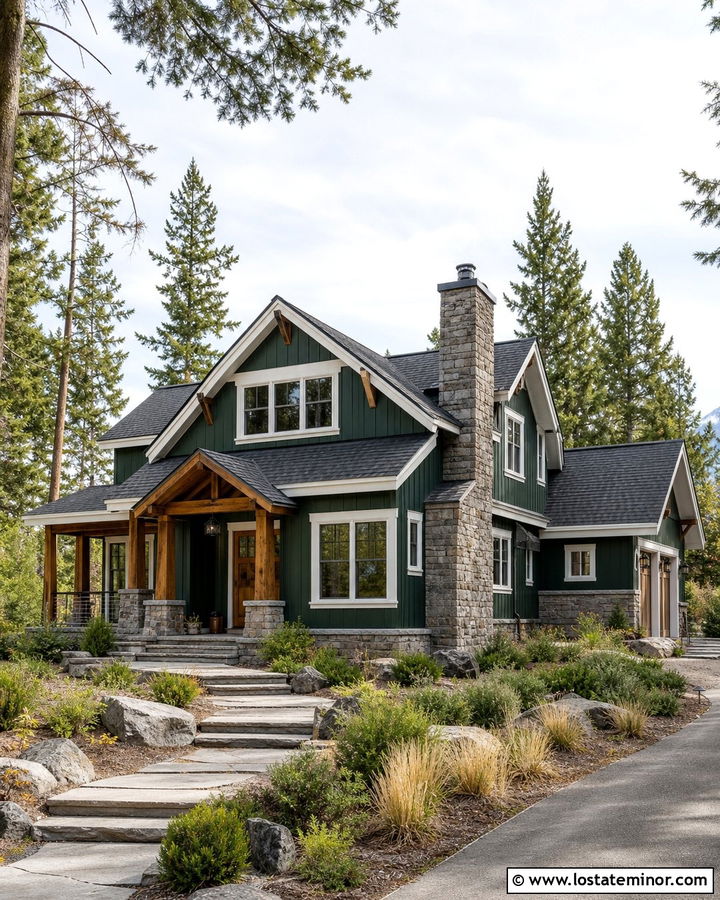
Stone can make forest green board and batten feel established and substantial. Use irregular gray and brown fieldstone along the foundation, porch base, chimney, or lower third of the facade. The varied masonry tones bridge the gap between dark green siding and a charcoal roof. Warm white trim keeps windows visible, while a stained oak door adds another natural texture. This complete scheme works beautifully on a mountain Craftsman or a large suburban home with multiple gables. Avoid covering every wall with stone. A limited amount allows the board and batten pattern to remain the main feature. Choose mortar that relates to the trim instead of creating a harsh line. Native grasses and layered evergreens can make the materials feel naturally connected to the site.
5. Forest Green Board and Batten With Red Brick
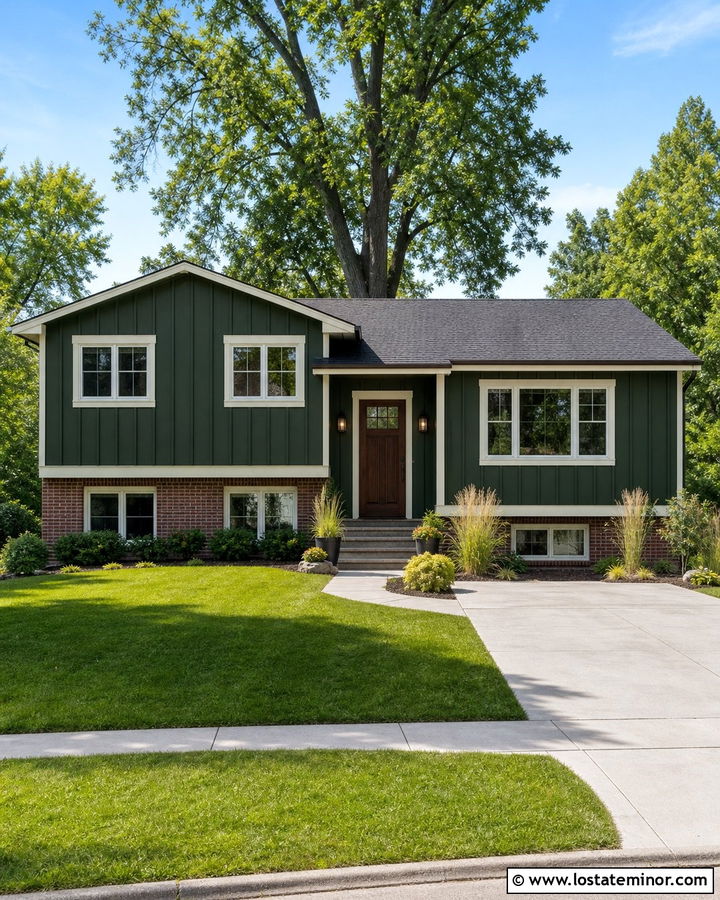
Existing red brick does not have to prevent you from choosing forest green siding. In fact, muted brick and deep green can create a handsome traditional palette when their undertones are balanced. Use forest green board and batten on upper gables, additions, or the main body above a brick foundation. Select creamy off-white trim rather than brilliant white, which may exaggerate orange tones in the masonry. A dark walnut front door and bronze exterior lights complete the warm scheme. This treatment fits a renovated ranch, split-level, or traditional two-story house. Keep shutters simple or remove them if the windows already have strong brick surrounds. Charcoal roofing helps unify both materials, while restrained landscaping prevents the textured facade from feeling overly busy.
6. Forest Green Board and Batten Modern Farmhouse
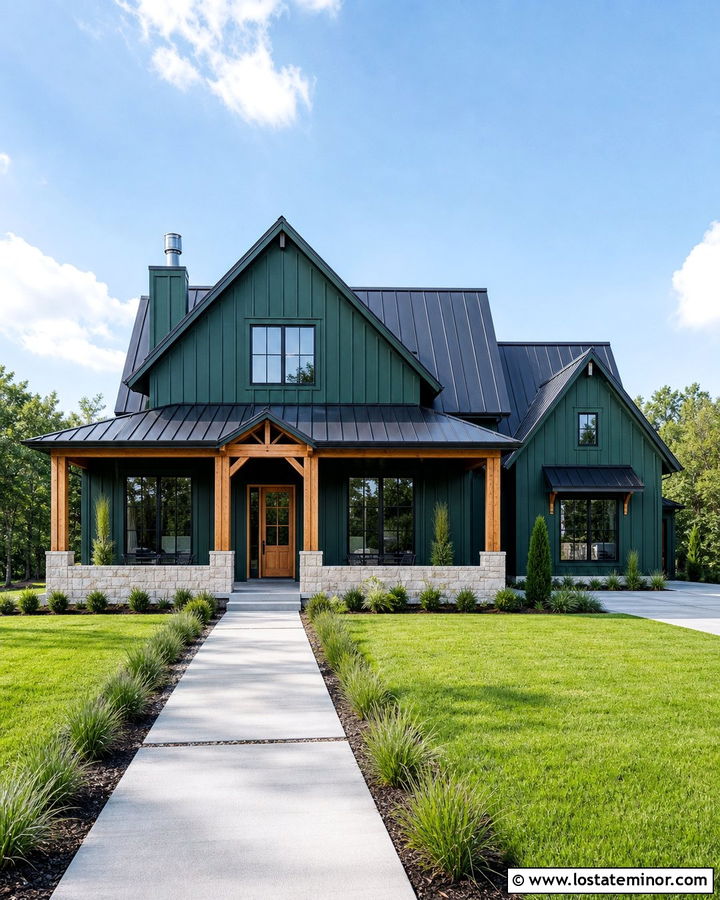
A forest green modern farmhouse offers a colorful alternative to an all-white exterior. Cover the tall gables and main walls in vertical board and batten, then add black-framed windows for streamlined contrast. Natural timber porch columns and a matching front door warm the dark body color. A black standing-seam metal roof strengthens the long vertical lines and gives the farmhouse a tailored profile. Use pale limestone at the porch base to keep the lower facade from looking too heavy. Rather than adding decorative shutters, let the siding pattern and window placement carry the design. Oversized black barn lights can reinforce the architecture without appearing themed. A straight concrete walkway, simple foundation plantings, and an uncluttered lawn complete this confident rural-suburban look.
7. Forest Green Board and Batten Ranch House
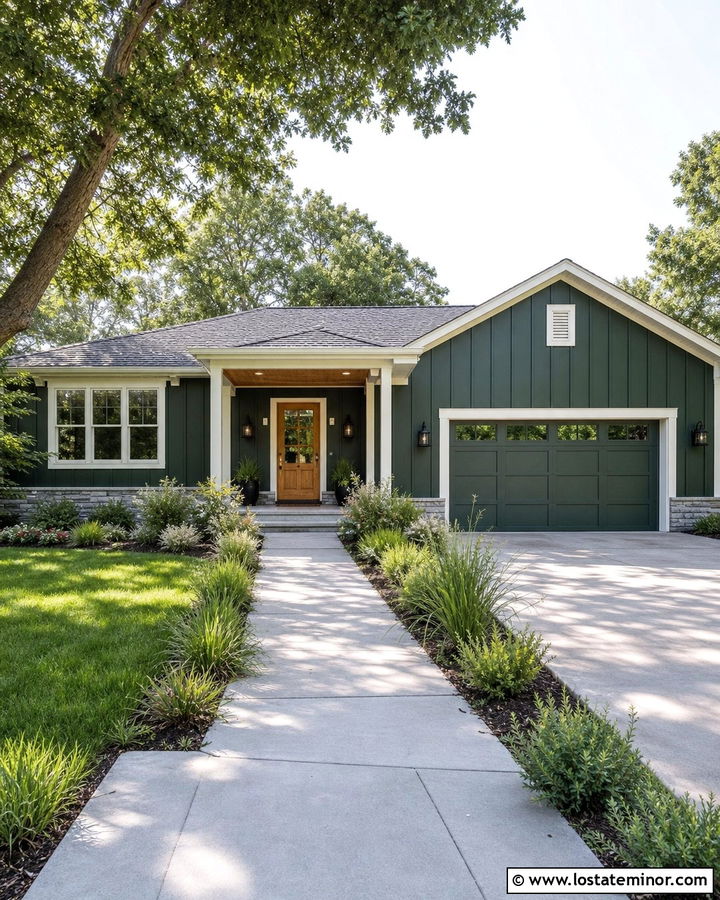
Vertical siding can make a low ranch house appear taller and more architectural. Paint the full facade forest green, including the attached garage, to create one continuous background. Add warm white trim around the windows and roofline, then introduce cedar at the front door and porch ceiling. A medium-gray shingle roof balances the dark siding without creating excessive contrast. If the house has a broad blank wall, use a stone wainscot or a group of correctly scaled windows to break up the surface. Black house numbers and simple sconces provide a modern finishing touch. Low grasses, spreading shrubs, and a wide walkway suit the horizontal proportions of the home. This scheme updates a basic ranch while respecting its practical, single-story shape.
8. Forest Green Board and Batten Craftsman House
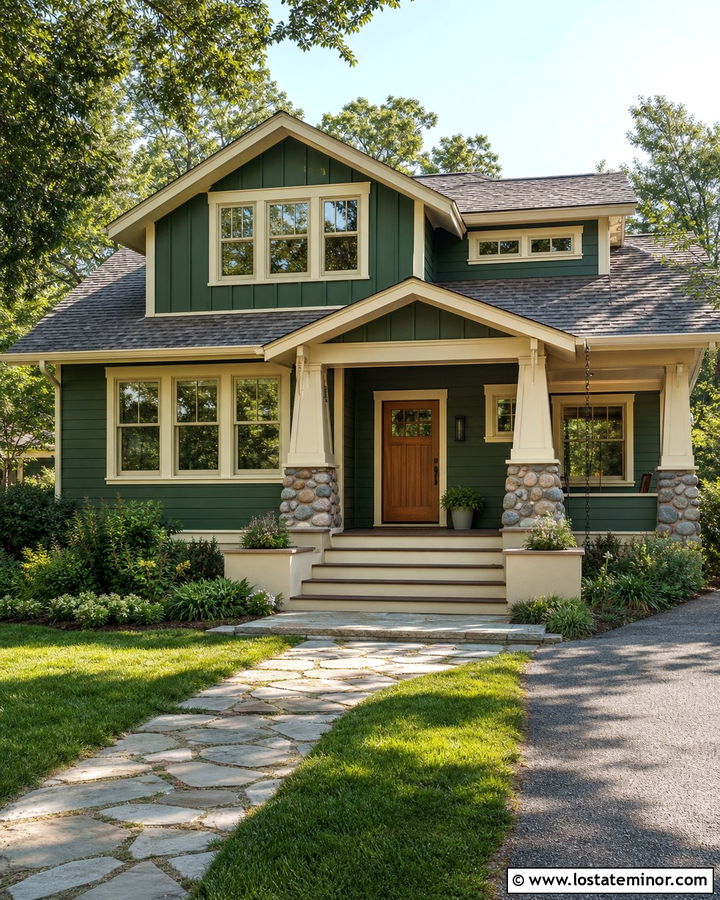
Craftsman architecture naturally supports layered colors and materials. Forest green board and batten can cover upper gables, while coordinating green lap siding wraps the main level. Cream trim highlights tapered columns, deep eaves, and grouped windows without appearing stark. Use river rock or gray-brown fieldstone on the porch piers, foundation, and chimney. A quarter-sawn oak door gives the entry the visual warmth expected from a Craftsman facade. Dark bronze gutters, lighting, and hardware are softer than pure black and complement the earthy palette. Finish the roof with dimensional brown-gray shingles that pick up tones from the stone. Broad porch steps, built-in planters, and informal landscaping make the entrance inviting. The completed exterior feels detailed, grounded, and appropriate to the home’s character.
9. Forest Green Board and Batten Cottage
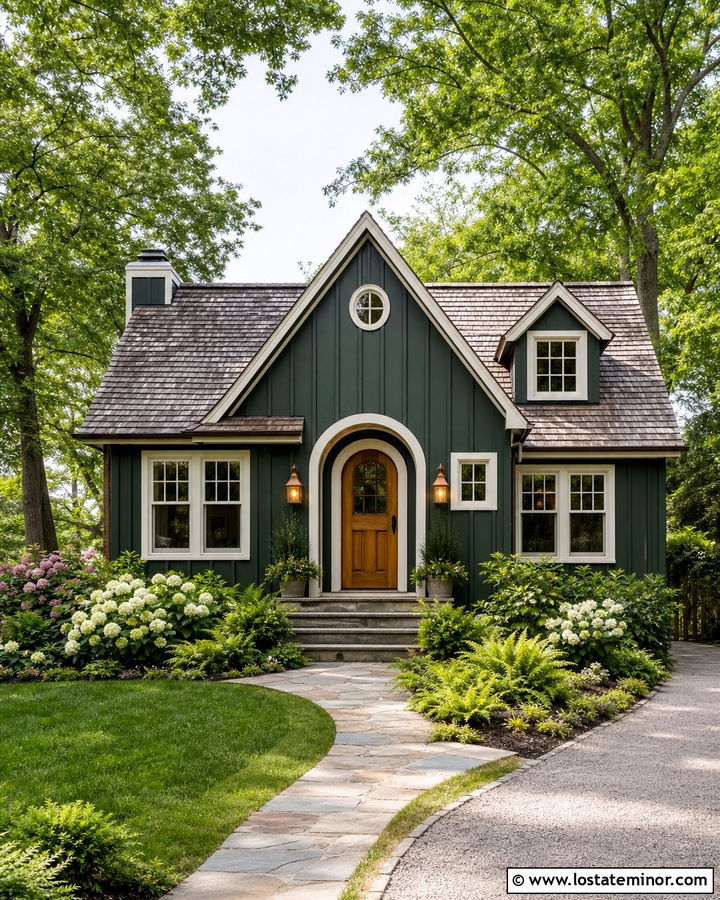
Forest green gives a small cottage a memorable presence without requiring complicated ornament. Use narrow board and batten siding across the facade to emphasize its vertical proportions. Soft ivory trim around casement windows, eaves, and the front porch keeps the dark body color friendly. A rounded or divided-light wood door adds warmth and cottage character. Choose weathered gray shingles or a simple dark metal roof, depending on the home’s age and location. Small copper details, such as a porch light or rain chain, can introduce a restrained accent. Surround the house with flowering shrubs, ferns, and an informal stone path rather than rigid foundation beds. The combination feels especially comfortable when the landscaping overlaps the building edges and helps the cottage settle into the yard.
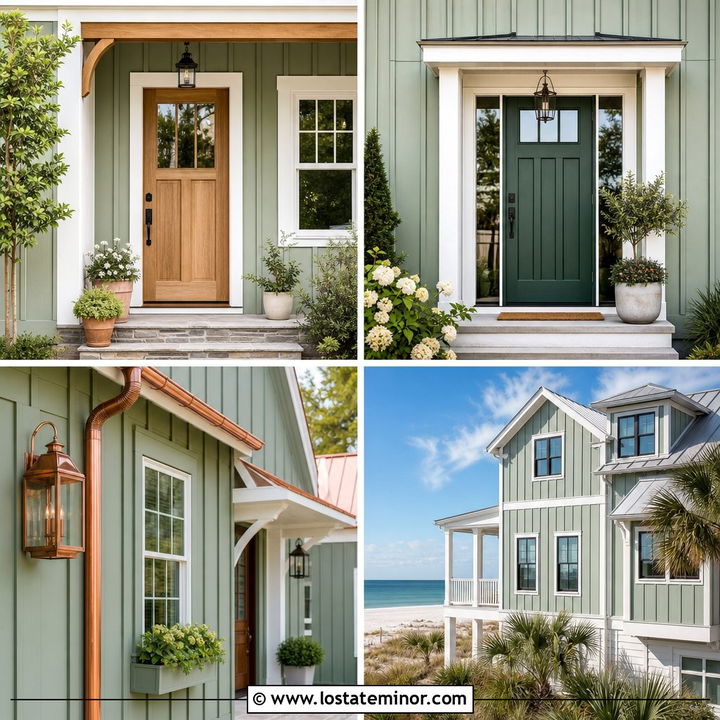
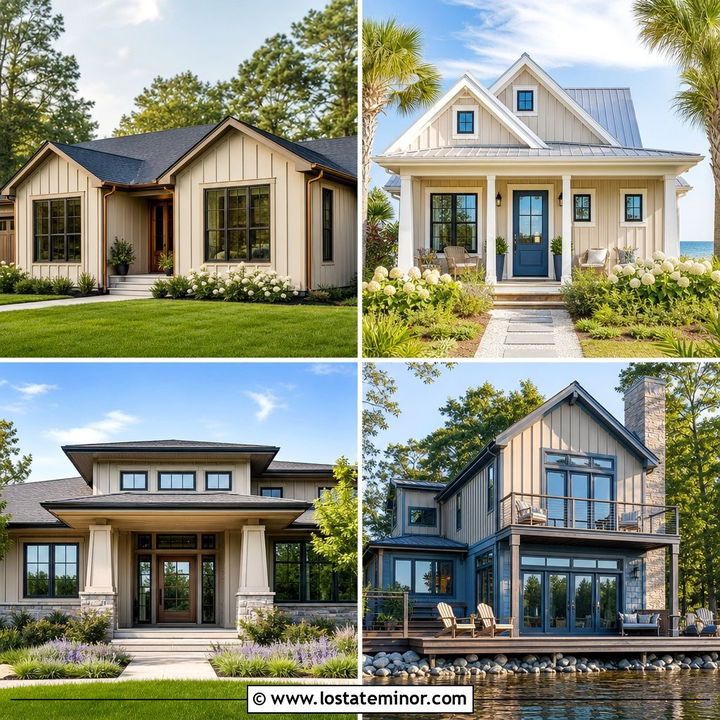
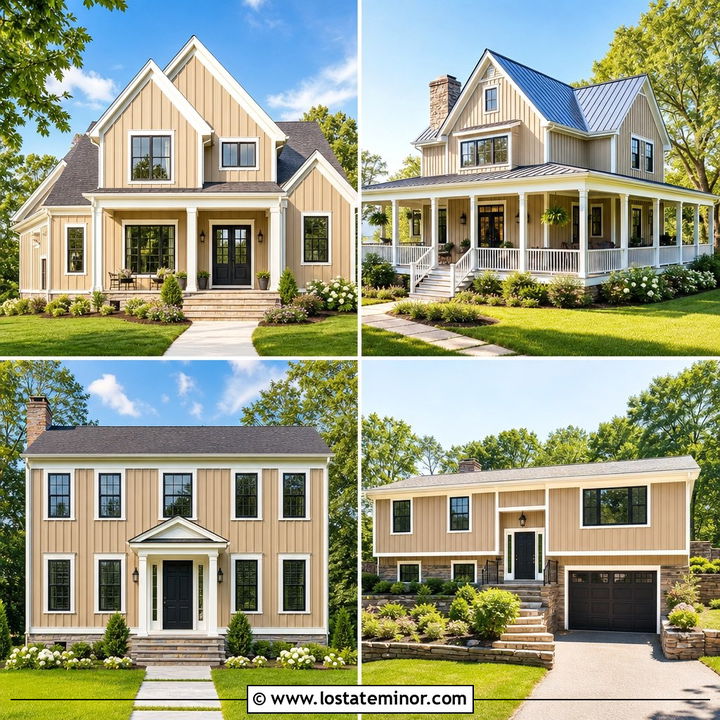
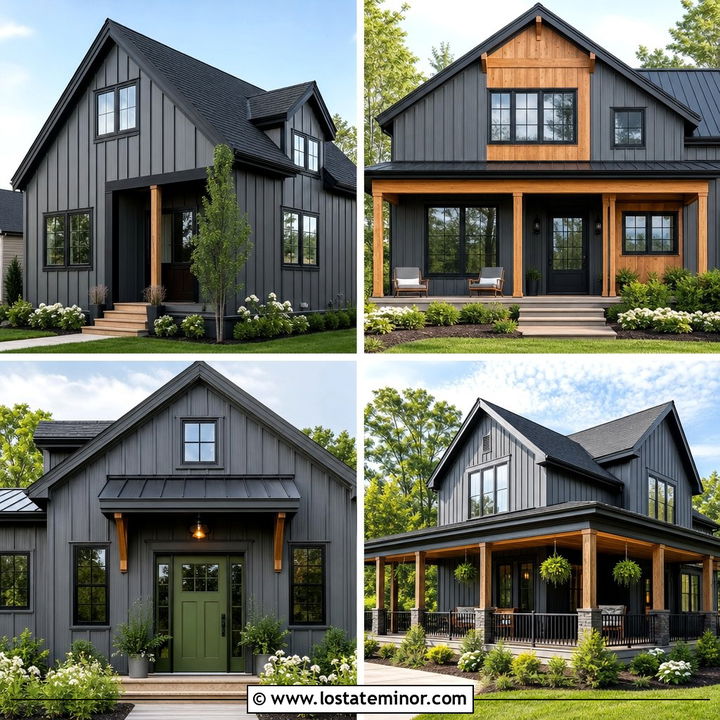
10. Forest Green Board and Batten Cabin
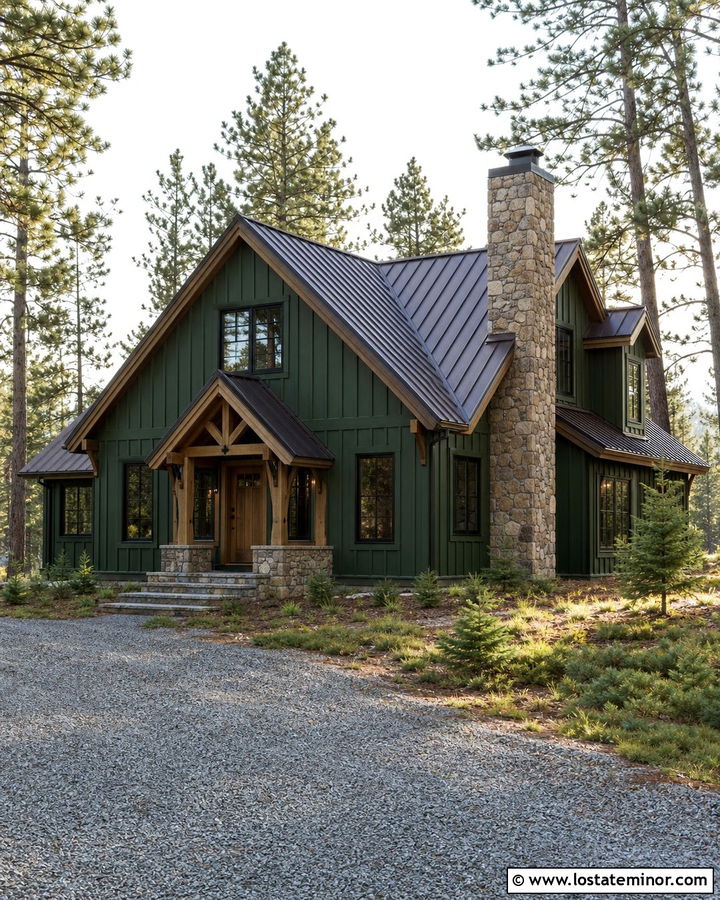
A cabin wrapped in forest green board and batten blends comfortably into wooded surroundings while maintaining a strong architectural identity. Pair the siding with rough-sawn cedar beams, a timber entry canopy, and a substantial wood front door. Dark brown or matte-black roofing keeps the upper portion visually quiet. Use local stone around the chimney and foundation to connect the structure with the terrain. Window trim can be black for a modern cabin or warm tan for a more rustic result. Keep decorative details minimal because the vertical siding, wood grain, and masonry already supply plenty of texture. A gravel driveway, stone steps, native ground cover, and tall evergreens complete the setting. Warm exterior fixtures make the entrance visible without changing the restrained natural palette.
11. Forest Green Board and Batten Bungalow
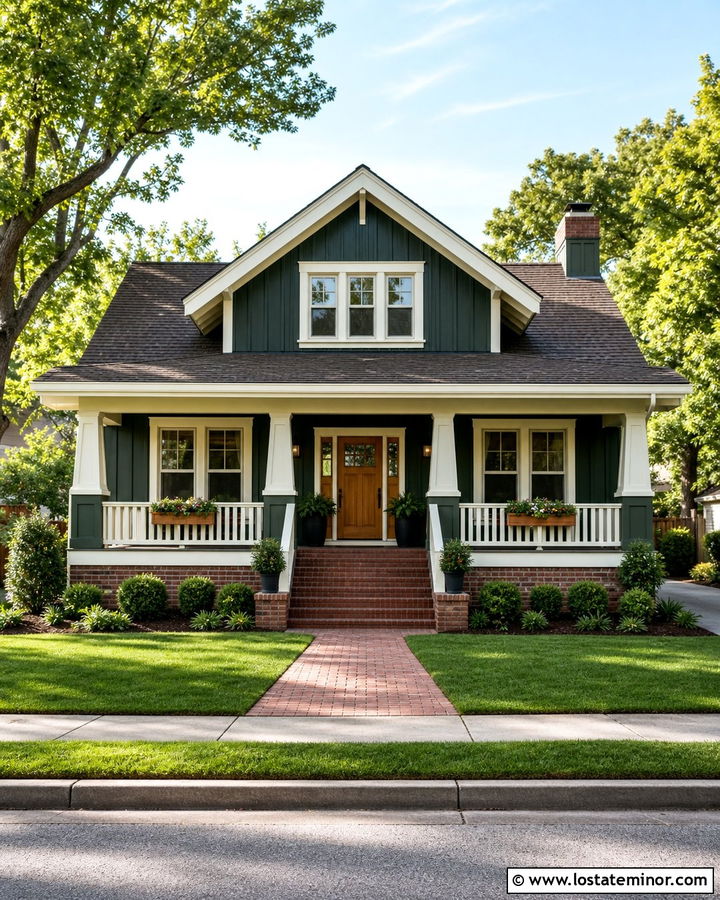
Would a forest green exterior overwhelm a compact bungalow? Not when lighter trim and an open porch balance the dark siding. Apply board and batten to the main body and front-facing gable, then use creamy white on the window casings, fascia, railings, and tapered columns. A honey-toned wood door creates a welcoming focal point beneath the porch roof. Gray-brown shingles relate to both the green siding and the wood details. If the bungalow has a masonry foundation, retain warm brick or stone rather than painting every surface. Window boxes, porch planters, and a short brick walkway add charm without hiding the architecture. Keep the garage or side addition in the same forest green so the modest home reads as one complete, thoughtfully coordinated exterior.
12. Forest Green Board and Batten Colonial
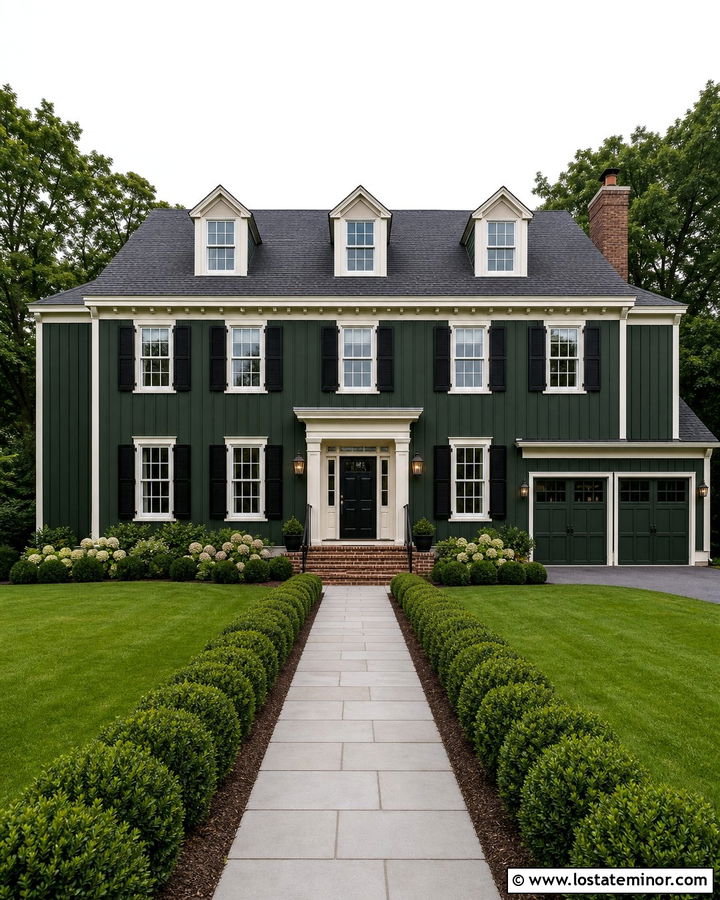
Forest green can give a Colonial house depth while preserving its orderly character. Use evenly spaced board and batten siding across the symmetrical facade, then define the windows, cornice, and entry surround with warm white. Black shutters reinforce the traditional arrangement, but they should be sized to look capable of covering the windows. A glossy black or deep oxblood front door creates a formal center point. Choose charcoal shingles and simple copper or black lanterns to complete the restrained palette. Because Colonial facades rely on balance, repeat plantings on both sides of the entrance and keep foundation beds controlled. White garage doors may draw too much attention, so consider forest green doors with white perimeter trim. The final look feels historic, polished, and quietly colorful.
13. Forest Green Board and Batten Cape Cod
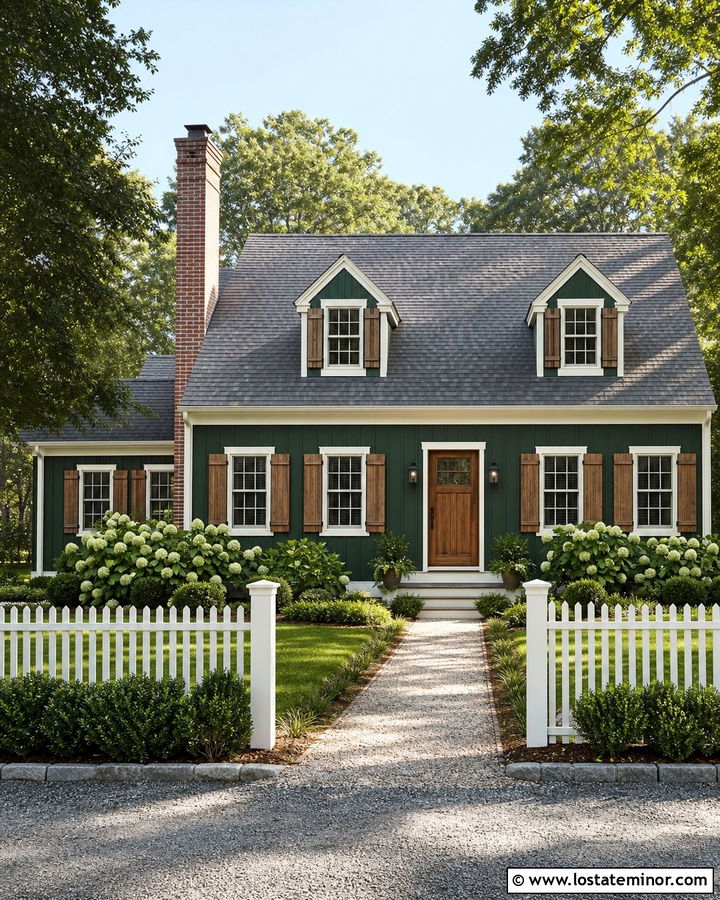
A Cape Cod home gains cozy definition from forest green board and batten siding. Cover the low main facade and dormers in the same deep green to unify the roof-heavy architecture. Use creamy white trim on corner boards, window casings, fascia, and the simple entry surround. Cedar shutters and a matching wood front door introduce a coastal, weathered warmth that feels less formal than black accents. Gray shingles work naturally with the compact roofline and prevent the house from becoming overly dark. A brick chimney can remain exposed as a traditional counterpoint to the green. Keep the landscaping low enough to reveal the windows and siding. Hydrangeas, clipped shrubs, crushed-stone paths, and a white picket fence can complete the approachable New England-inspired exterior.
14. Forest Green Board and Batten Split-Level
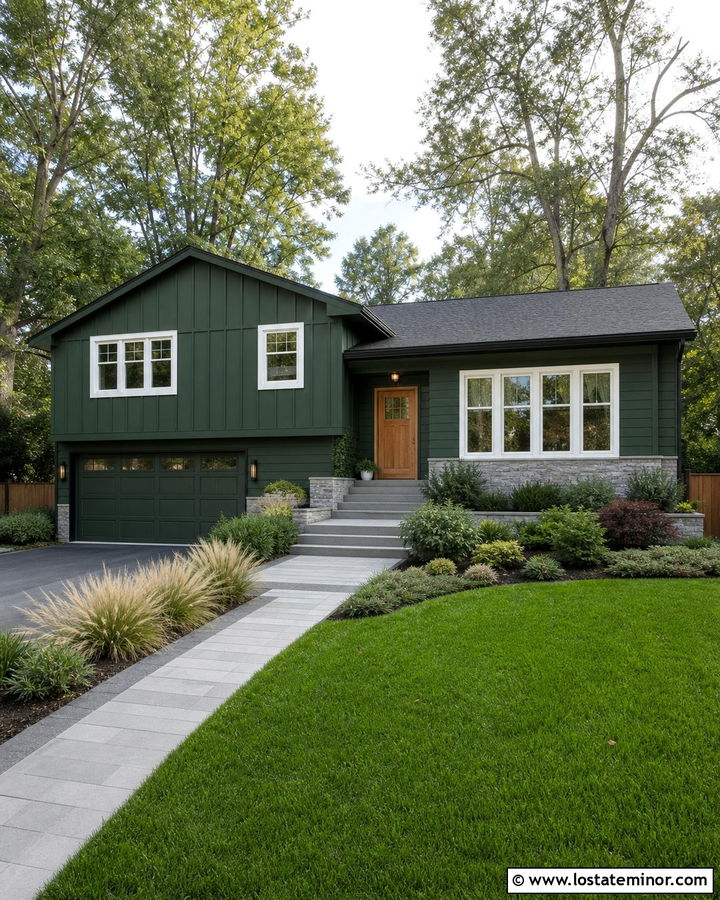
A split-level facade often needs visual organization more than decorative detail. Forest green board and batten can unify mismatched additions, different floor heights, and a prominent garage. Apply the vertical siding to the upper volume and around the entry, then use matching forest green lap siding on the lower section. Paint the garage door the body color so it recedes. Warm white trim brightens windows, while a cedar door identifies the entrance from the street. Add a horizontal band of gray stone along the lower level to visually anchor the house. Charcoal roofing and black lighting provide clean finishing details. A wider walkway, updated steps, and layered shrubs can further clarify the approach, creating a balanced exterior from an awkward or dated starting point.
15. Forest Green Board and Batten With Cedar Shutters
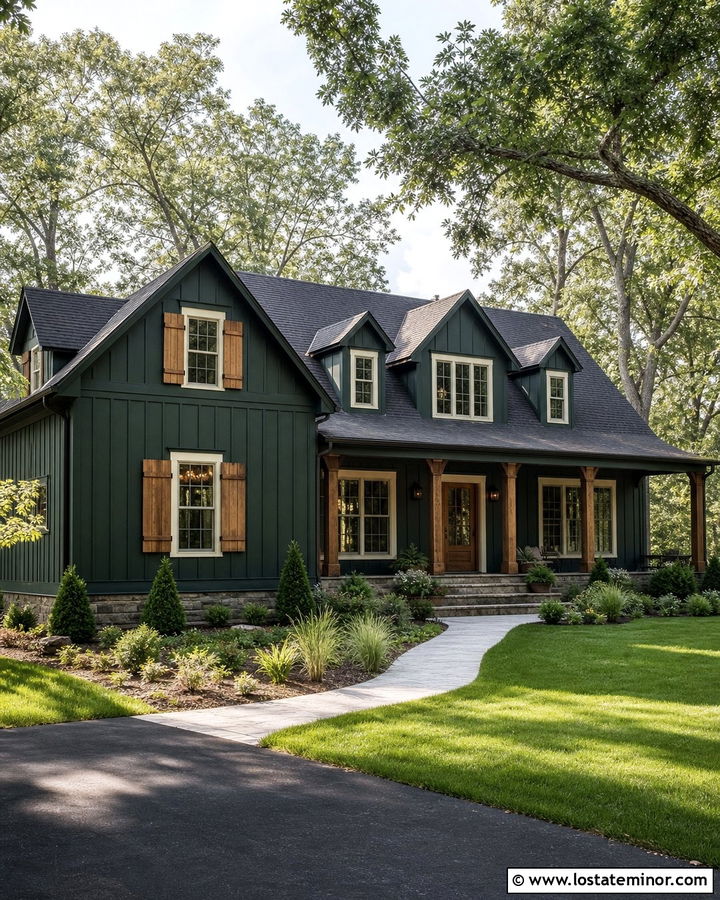
Cedar shutters create a clear, warm accent against deep forest green siding. Use them on a traditional farmhouse, cottage, or rustic ranch with appropriately sized windows and simple exterior lines. Match the shutters to a cedar front door or porch columns so the wood looks intentional rather than randomly added. Cream trim around each window provides separation between the green boards and the warm wood. A charcoal roof keeps the overall palette grounded, while black hinges and lanterns add small points of contrast. Choose a medium-brown stain that reveals the wood grain and avoid glossy orange finishes. Stone porch steps and informal evergreen plantings reinforce the natural color story. The complete facade feels inviting because every material repeats a tone already found elsewhere in the design.
16. Forest Green Board and Batten With Black Shutters
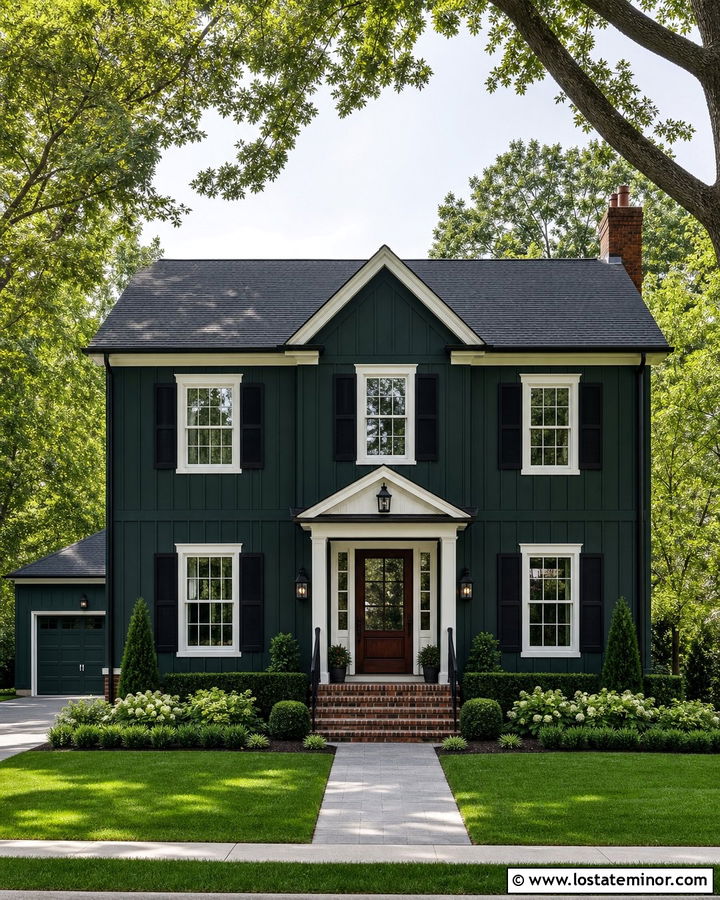
Black shutters create a more formal forest green exterior, especially on homes with symmetrical windows. The contrast is restrained but visible, giving the facade depth without introducing a competing color. Use warm white trim around the windows so the black shutters do not disappear into the green siding. A stained mahogany door adds richness at the center of the composition. This palette fits Colonial, Georgian-inspired, and traditional farmhouse architecture with simple rooflines. Carry black onto the gutters, porch lights, and metal handrails for consistency. Choose a charcoal roof that is slightly lighter than the shutters, allowing each layer to remain distinct. Neatly clipped hedges, brick steps, and a straight walkway reinforce the structured appearance while keeping the dark exterior welcoming and easy to read.
17. Forest Green Board and Batten With Cream Trim
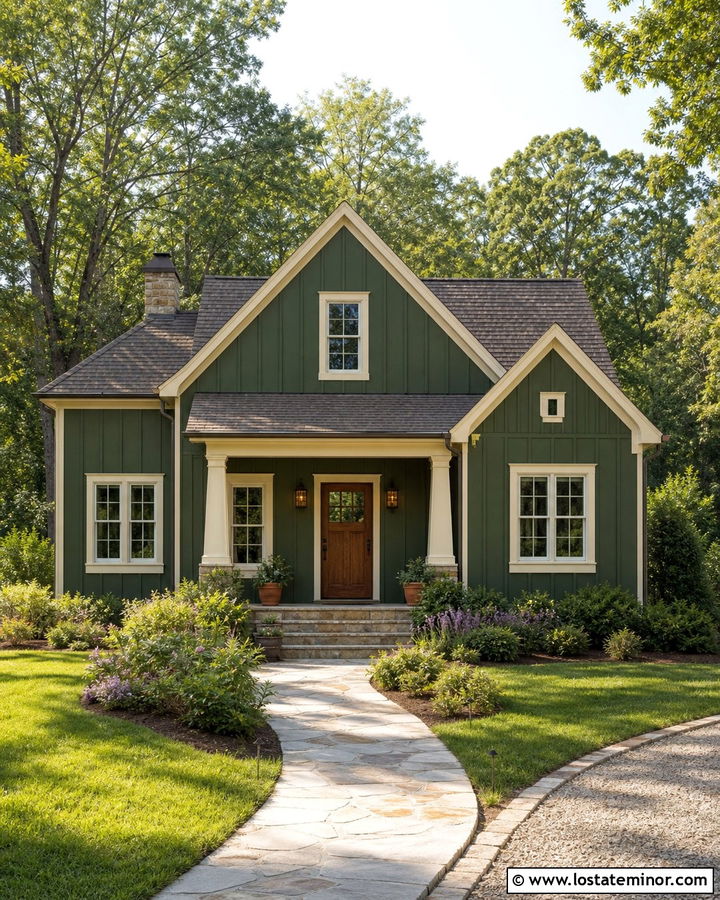
Cream trim creates softer contrast than bright white and works especially well with warm stone, brick, and wood. Apply forest green board and batten to the full exterior, then use a buttery off-white on fascia, windows, porch columns, and corner boards. Add a medium walnut door and bronze lighting to continue the warm undertone. Brown-gray shingles or weathered wood roofing complete the palette without making the facade appear too cool. This approach suits a traditional cottage, country farmhouse, or Craftsman home surrounded by mature landscaping. Keep the cream consistent throughout the exterior rather than mixing several pale neutrals. Terracotta planters, natural stone steps, and soft green shrubs can support the scheme. The result feels comfortable and established rather than sharply modern or overly high contrast.
18. Forest Green Board and Batten With Charcoal Roof
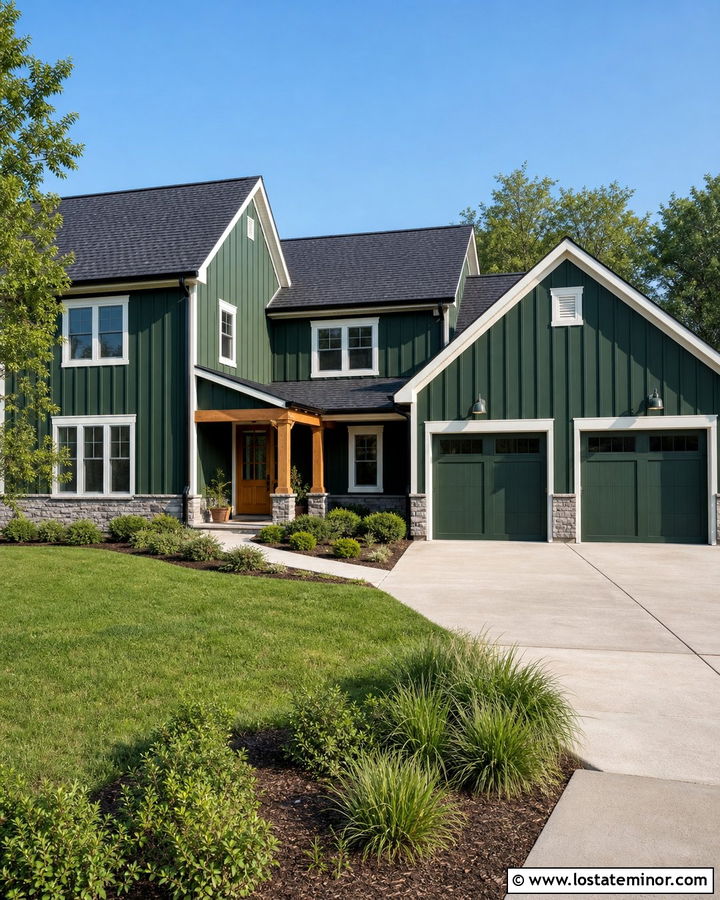
A charcoal roof is one of the easiest partners for forest green board and batten because it provides definition without overpowering the body color. Choose dimensional shingles with restrained gray variation rather than strong blue or purple undertones. Use warm white window trim and fascia to separate the dark roof from the deep green walls. A natural oak door and matching porch posts add essential warmth. This balanced palette works across farmhouse, ranch, Craftsman, and cottage architecture. If the house includes a garage, paint its door forest green and outline it with the trim color. Black gutters can visually merge with the roofline, creating a cleaner edge. Gray stone at the foundation and a pale concrete walkway repeat the roofing color lower on the facade for a unified finish.
19. Forest Green Board and Batten With Metal Roof
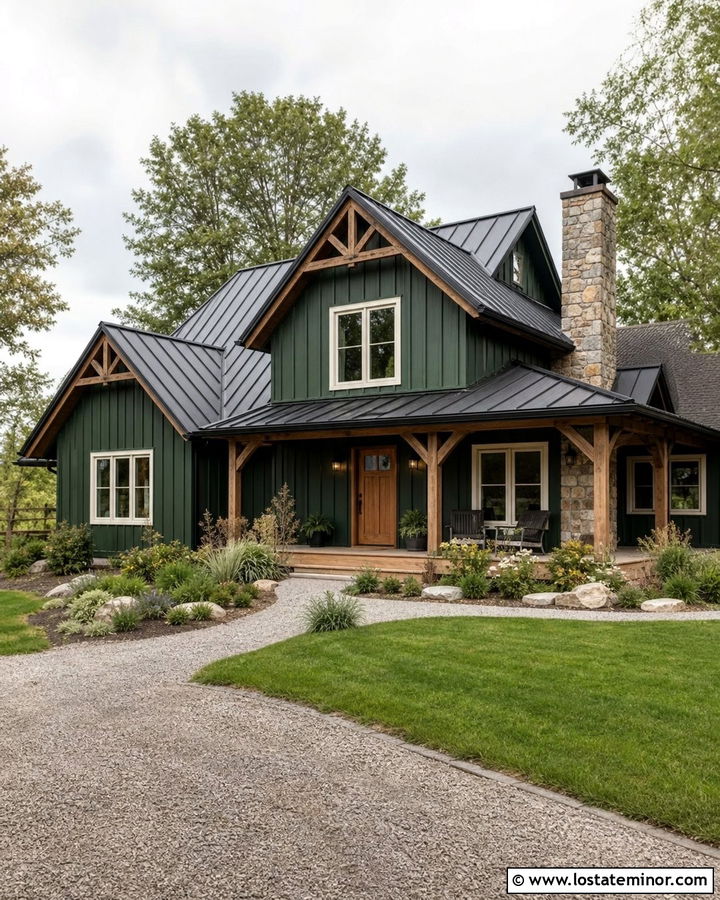
The crisp seams of a metal roof echo the vertical rhythm of forest green board and batten siding. A matte-black roof creates a bold modern farmhouse or cabin look, while weathered galvanized metal feels more relaxed and rural. Use cedar beams and a wood front door to soften the hard lines of the metal and siding. Window trim may be black for a contemporary scheme or cream for a more traditional result. Include stone only where it has an architectural purpose, such as the chimney, porch base, or foundation. Wide roof overhangs can protect the dark facade while creating deeper shadow lines. Finish the design with simple gutters, understated lighting, and native landscaping. The house will feel cohesive when the roof, battens, and porch posts share clear vertical alignment.
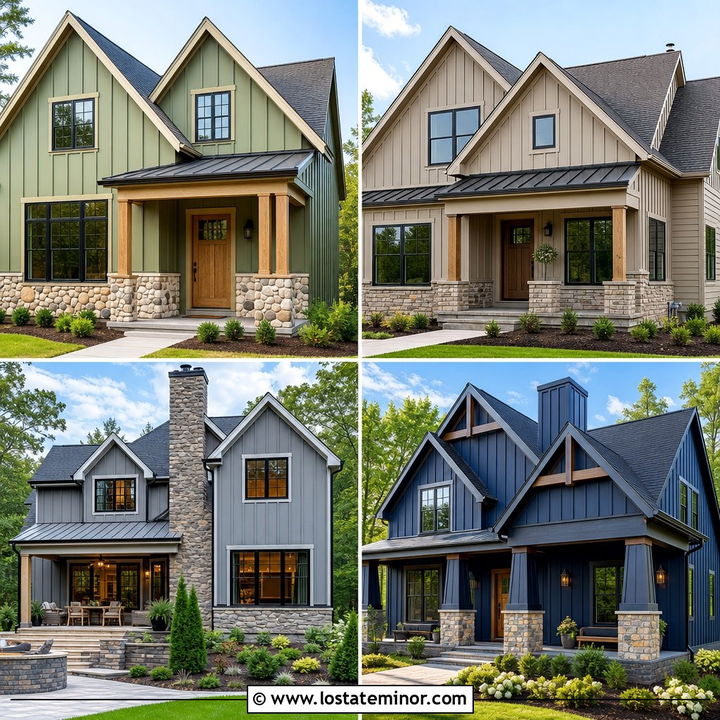
20. Forest Green Board and Batten With Copper Accents
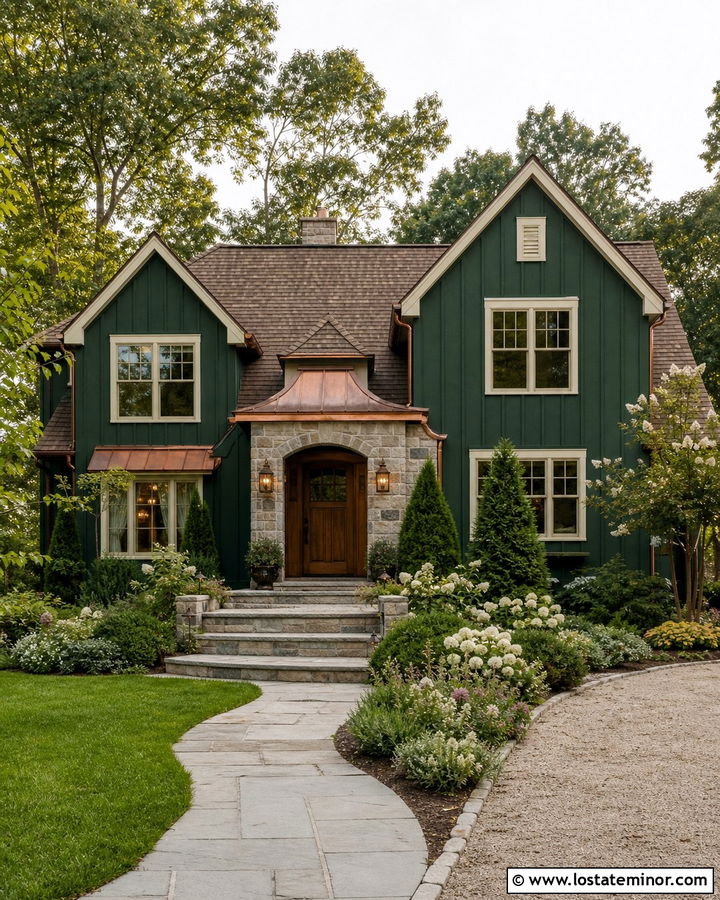
Copper brings a refined, evolving accent to a forest green exterior. Use it selectively on porch roofs, gutters, downspouts, lanterns, or a small bay-window canopy. Too much copper can distract from the siding, so reserve it for architectural areas that deserve attention. Cream trim helps connect the warm metal to the deep green board and batten. A walnut front door and brown-gray roof complete the rich palette. This look is well suited to an English cottage, traditional Craftsman, or upscale Colonial with detailed masonry. Gray limestone around the entry provides a calm neutral base for the stronger colors. Repeat copper in only two or three visible locations. As a complete scheme, the green, wood, stone, and metal create depth without relying on bright or trendy accent colors.
21. Forest Green Board and Batten With Wood Garage Doors
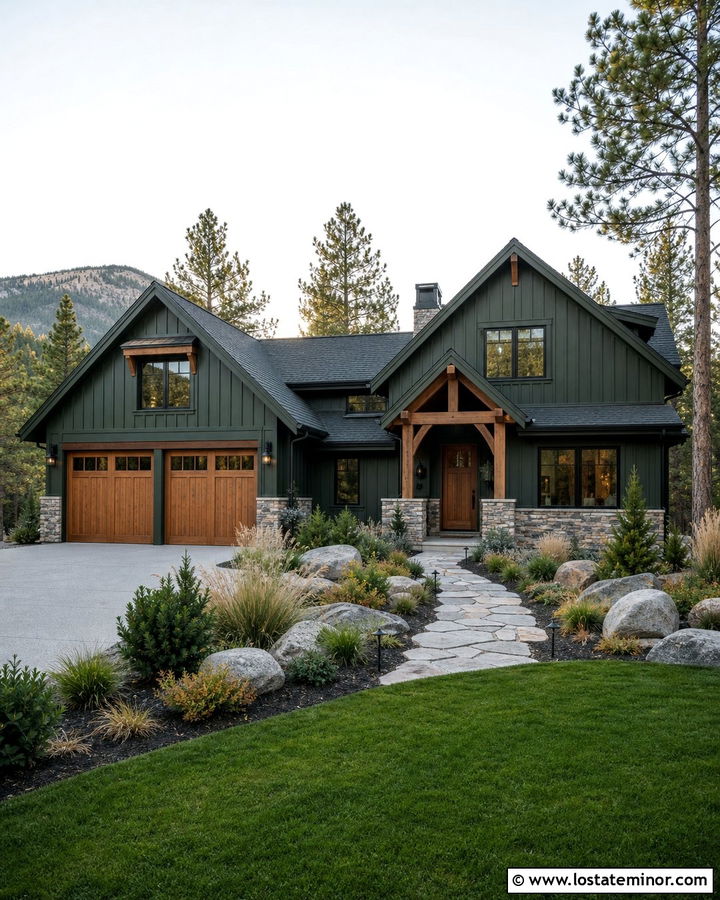
Wood garage doors can warm a large forest green facade, but they should coordinate closely with the entrance. Choose cedar or walnut-toned doors with simple vertical panels, then repeat the same finish on the front door, porch ceiling, or structural beams. Cover the surrounding walls in forest green board and batten so the garage feels integrated into the architecture. Black window frames and a charcoal roof give the scheme a contemporary edge. Light gray stone around the lower walls prevents the dark materials from looking visually heavy. This treatment works best on a modern Craftsman, mountain home, or large ranch with an attached garage. Keep decorative hardware minimal. The wood should act as a controlled focal material rather than turning every door and accent into a competing feature.
22. Forest Green Board and Batten With Matching Garage
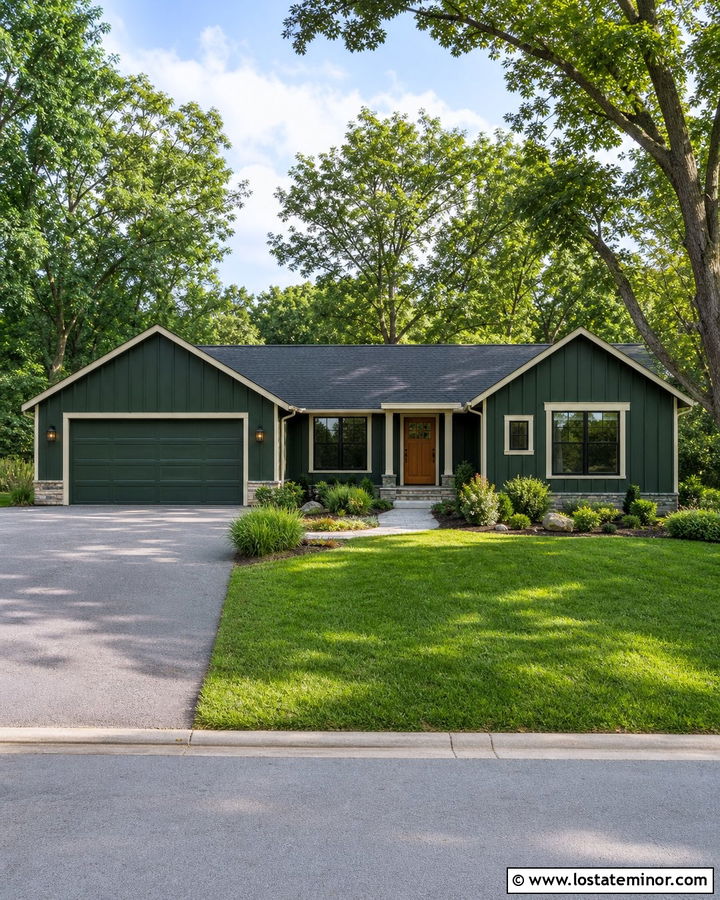
Painting the garage door forest green is a smart way to reduce its visual dominance. Continue the board and batten color across the garage panels, surrounding walls, and side elevations for a seamless appearance. Use cream trim along the door frame and roofline, then draw attention toward a contrasting cedar front door. Black sconces and simple house numbers keep the details crisp. This scheme is useful for ranch homes, split-levels, and suburban two-story houses where the garage occupies much of the street-facing facade. Add a narrow stone base to connect the garage with the porch or entry. A charcoal roof and medium-gray driveway create a neutral frame. With the largest surfaces coordinated, the house appears wider, calmer, and more intentionally designed from the curb.
23. Forest Green Board and Batten With Wraparound Porch
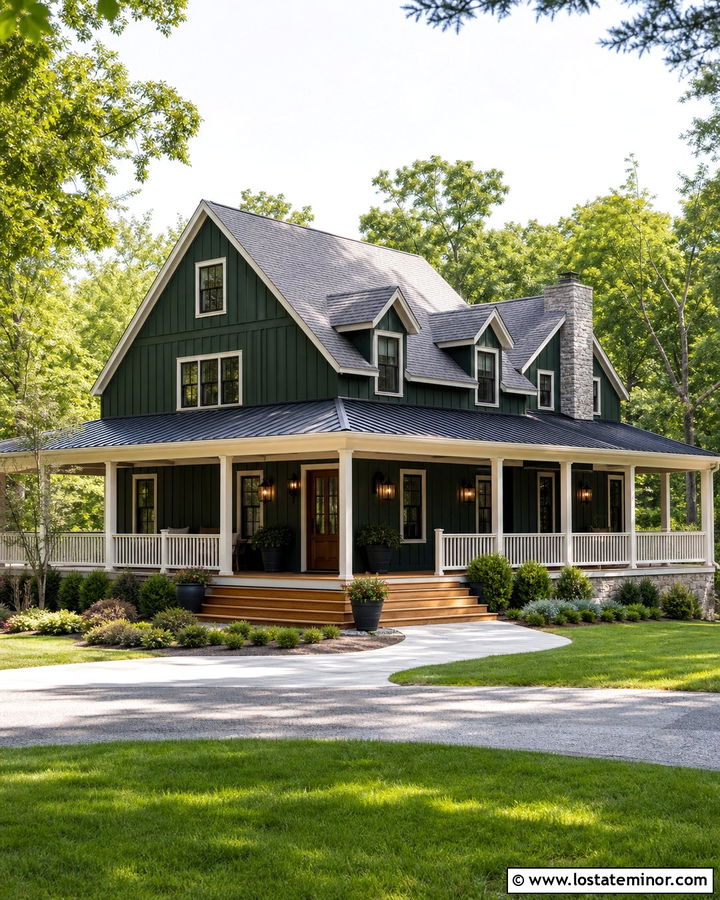
A wraparound porch adds a broad horizontal line that balances the height of vertical board and batten siding. Paint the main house forest green, then use warm white on the porch columns, fascia, railing, and ceiling trim. Natural cedar decking and a stained wood door bring warmth to the lower half of the facade. A charcoal metal roof over the porch can contrast with a matching shingle roof above. This complete scheme works beautifully on a farmhouse, Southern cottage, or country home with generous frontage. Keep the railing design simple so it does not compete with the battens. Wide steps, large planters, and foundation shrubs can make the long porch feel inviting. Repeating black lanterns at regular intervals creates rhythm across the extended elevation.
24. Forest Green Board and Batten With Stone Porch
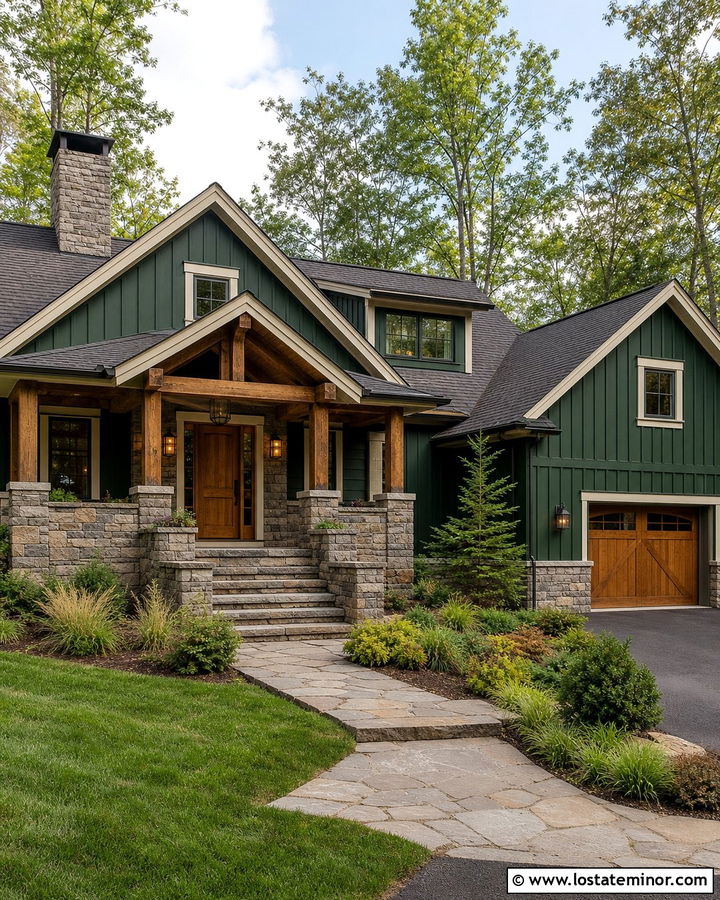
A stone porch gives dark green siding a strong base and creates a substantial entrance. Use forest green board and batten above gray-brown stone piers, cheek walls, and stair risers. Cream trim around the windows and porch roof keeps the entry visible, while timber columns connect the masonry with a natural wood front door. Choose a charcoal shingle roof and dark bronze fixtures for a warm, understated finish. This combination works particularly well on Craftsman, mountain, and rustic suburban homes. Select stone with a limited color range so it does not compete with the siding texture. Carry one stone tone into the walkway or landscape edging for continuity. The entrance becomes the focal point because the materials transition naturally from stone at ground level to wood and green siding above.
25. Forest Green Board and Batten With Horizontal Siding
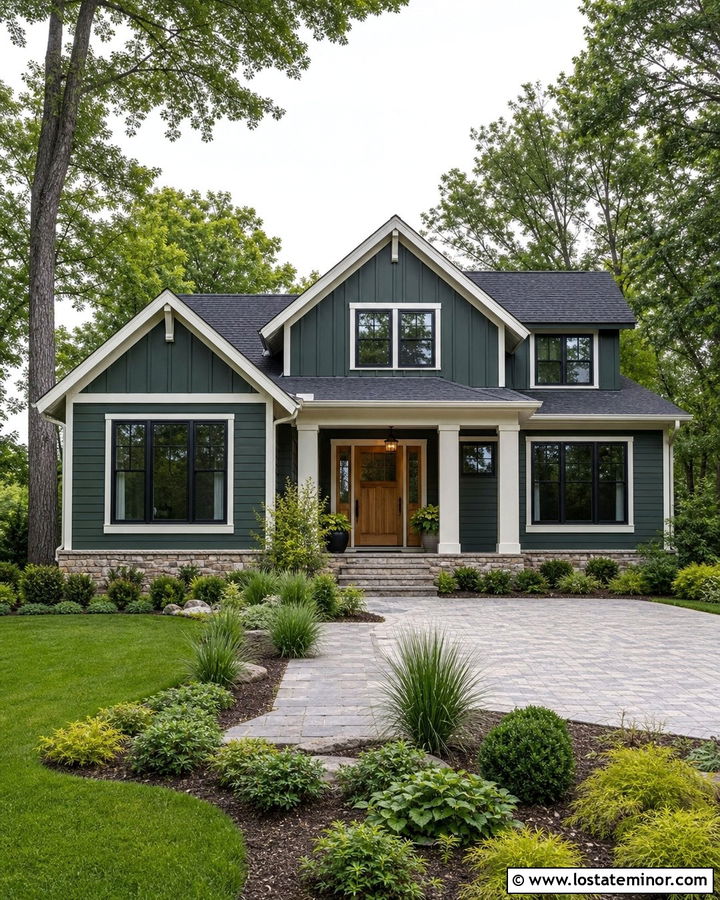
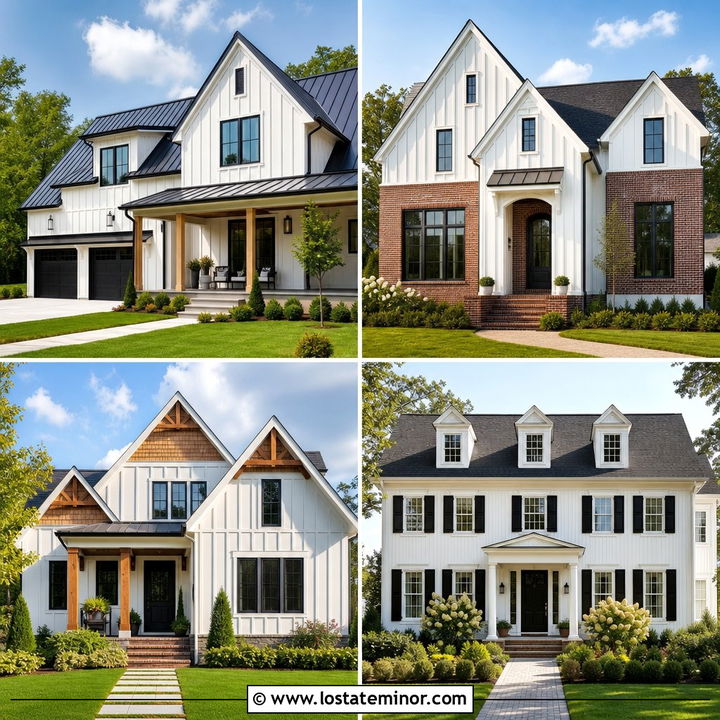
Combining vertical and horizontal siding can clarify a house’s different architectural volumes. Use forest green board and batten on front-facing gables, dormers, or the entry projection. Cover the main level with forest green lap siding in the same finish for subtle textural contrast. Warm white trim can define the change in siding direction without dividing the house into disconnected blocks. Add a cedar front door, black-framed windows, and a charcoal roof for a balanced modern farmhouse or Craftsman palette. Keep the color consistent across both siding types unless the architecture has a clear reason for a second body color. A low stone foundation provides another material without overwhelming the facade. Thoughtful siding placement makes even a large exterior appear organized, layered, and visually proportional.
26. Forest Green Board and Batten With Shake Siding
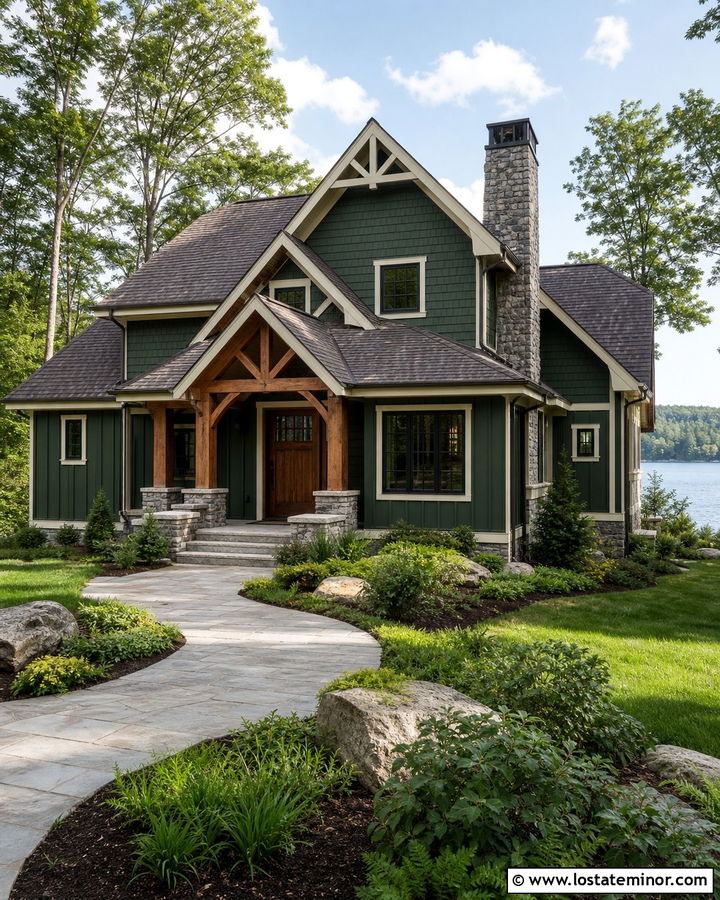
Shake siding adds texture to forest green board and batten without changing the overall color story. Use forest green shakes inside upper gables and vertical siding across the lower walls. Cream trim around the gable edges makes the material transition easy to see. A stained fir door, matching porch beams, and brown-gray roofing support the earthy palette. This combination is ideal for Craftsman homes, lake cottages, and rustic suburban houses with steep or intersecting rooflines. Limit shakes to selected areas so the exterior does not become overly detailed. Gray fieldstone on the chimney or porch base can provide a grounded final layer. Black or dark bronze fixtures keep attention on the siding textures. The coordinated green finish allows each material to contribute depth while the entire facade remains visually unified.
27. Forest Green Board and Batten Midcentury House
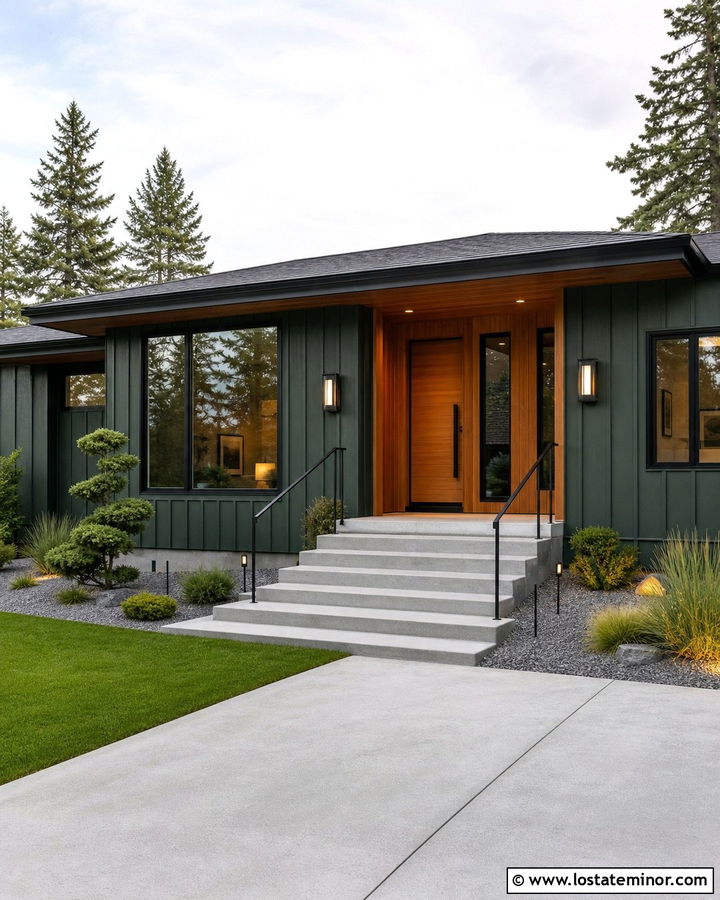
Forest green board and batten can refresh a midcentury home when the detailing stays simple. Use wide vertical panels across the main facade, then combine them with warm cedar around the recessed entrance or beneath deep roof overhangs. Black-framed picture windows create clean contrast and emphasize the home’s horizontal glazing. Select a low-profile charcoal roof that does not compete with the siding. Avoid farmhouse trim, decorative shutters, and ornate columns, which can conflict with the architecture. Instead, use broad concrete steps, slim metal railings, and geometric exterior lighting. A gravel bed, ornamental grasses, and sculptural shrubs suit the uncluttered facade. The deep forest green adds character while allowing the home’s low roofline, asymmetrical windows, and natural wood details to remain clearly visible.
28. Forest Green Board and Batten Lake House
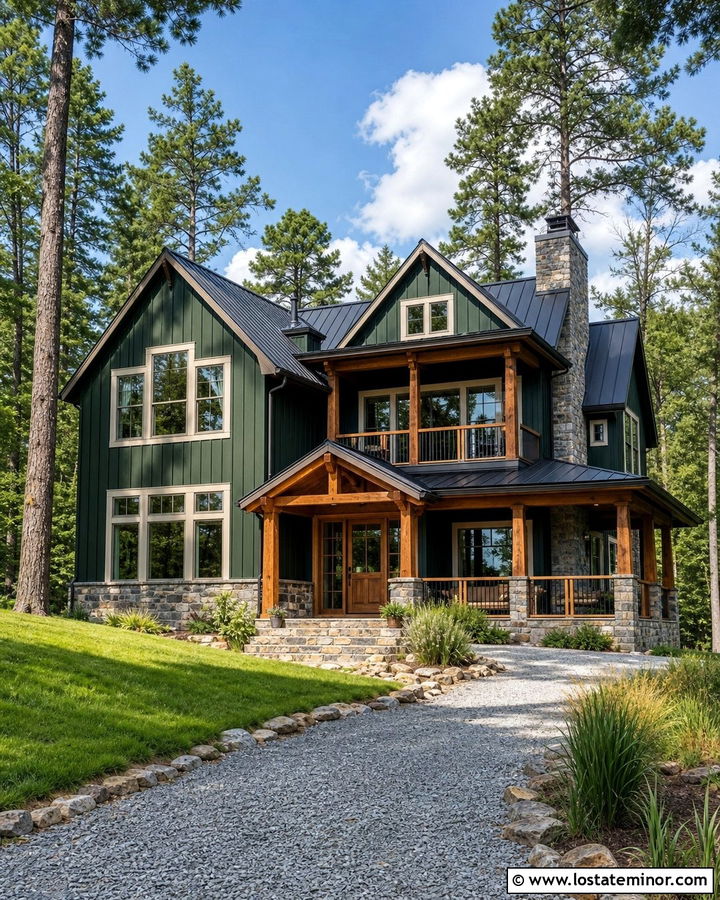
A forest green lake house can feel connected to the landscape while remaining distinct from the water and trees. Cover the tall gables in board and batten, then add cedar balconies, porch posts, and a wide wood front door. Cream trim brightens the windows and keeps the facade readable from a distance. Choose a dark brown or charcoal metal roof that can support the rustic-modern composition. Local stone along the foundation and chimney gives the house a durable visual base. Large windows should remain the primary feature, so skip unnecessary shutters. A gently sloping lawn, native grasses, stone paths, and an open porch complete the relaxed setting. This combination gives a large vacation home warmth and texture without turning the exterior into an exaggerated lodge theme.
29. Forest Green Board and Batten Narrow House
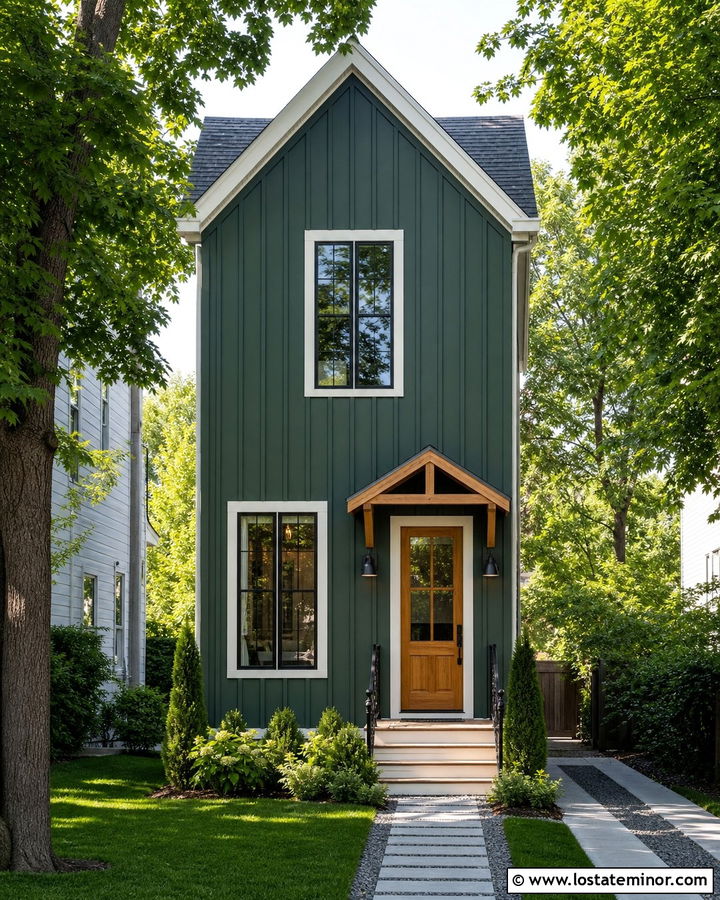
A narrow home benefits from the height-enhancing effect of forest green board and batten. Use the vertical siding across the entire front elevation to create one uninterrupted visual field. Warm white trim around tall windows and the roofline keeps the slim facade from feeling enclosed. A golden oak door forms a welcoming focal point at ground level, while black railings and fixtures add clean definition. Choose a simple charcoal roof and avoid too many contrasting siding materials. If space allows, add a small covered entry with timber brackets rather than an oversized porch. Upright shrubs, a narrow paver walkway, and compact planting beds complement the proportions. This focused palette gives a townhouse-inspired detached home or small urban cottage a taller, more polished street presence.
30. Forest Green Board and Batten Luxury House
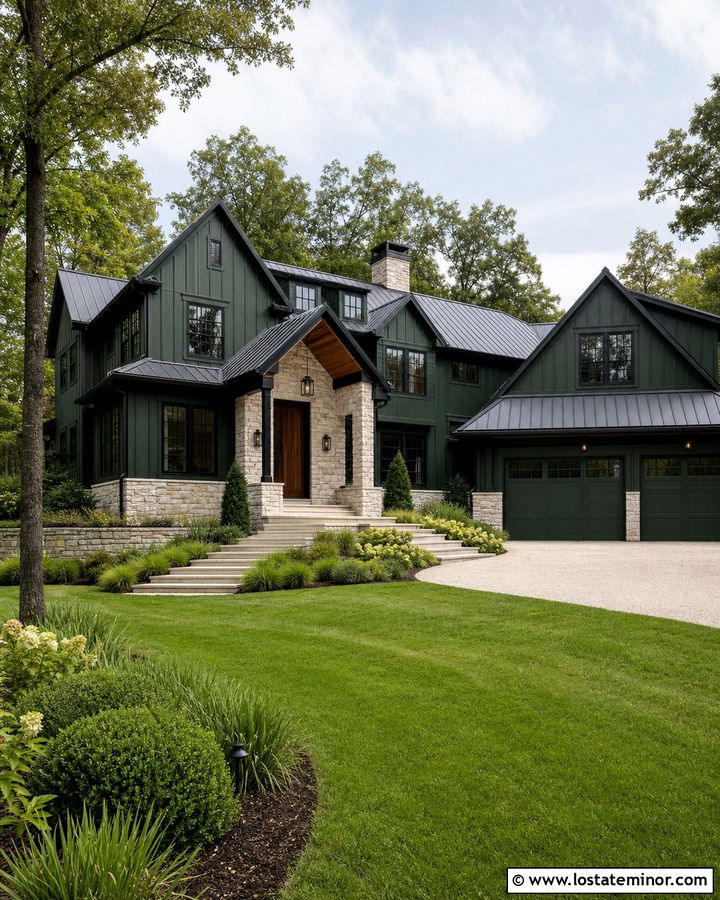
On a large luxury home, forest green needs a disciplined material plan to avoid an overly complicated facade. Use board and batten across the primary gables and main wall surfaces, then introduce pale limestone at the entry, foundation, and selected wings. Black-framed windows and a charcoal standing-seam roof establish a strong architectural outline. Natural walnut doors and restrained timber ceilings add warmth beneath covered areas. Keep garage doors forest green or choose wood only when the same finish appears prominently at the entrance. Wide battens are generally more proportional to a large elevation than narrow, busy spacing. Formal evergreens, layered grasses, broad stone steps, and a curved driveway complete the presentation. The result feels substantial and refined while retaining the approachable, nature-inspired character of deep green.
Conclusion:
Forest green board and batten can work on nearly any home when the entire exterior is planned as one coordinated composition. White or cream trim creates definition, while black accents produce a more modern effect. Cedar, walnut, stone, brick, and copper introduce warmth and texture. Roof color also matters, with charcoal shingles and dark metal offering especially flexible foundations. Before committing, test the green beside permanent materials under morning, midday, and afternoon light. Then repeat key colors across doors, trim, roofing, and architectural accents to create consistency. These 30 Forest Green House Design With Board and Batten Ideas show how thoughtful combinations can turn a deep exterior color into inviting, balanced curb appeal.

Related posts: