Navy siding can make almost any home feel more polished, but the trim color determines whether the finished exterior looks crisp, warm, traditional, or modern. These 30 Navy Blue House Design With Trim Ideas explore complete palettes for Colonials, ranch homes, cottages, Craftsman houses, farmhouses, and contemporary builds. You will find classic white trim, softer cream and greige combinations, dark monochromatic treatments, natural wood details, masonry accents, and colorful front doors. Navy also spans a broad range, from clear maritime blues to smoky shades that appear nearly black, so reviewing the whole exterior palette is essential. () Consider your roof, stone, brick, sunlight, and landscaping as you browse these 30 Navy Blue House Design With Trim Ideas.

1. Navy Blue House With White Trim
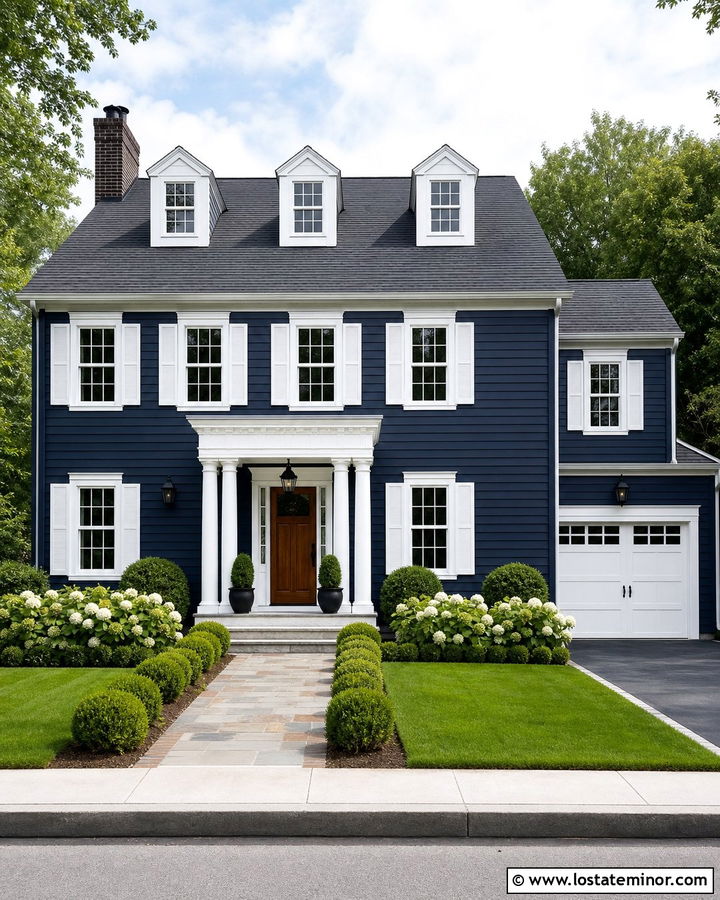
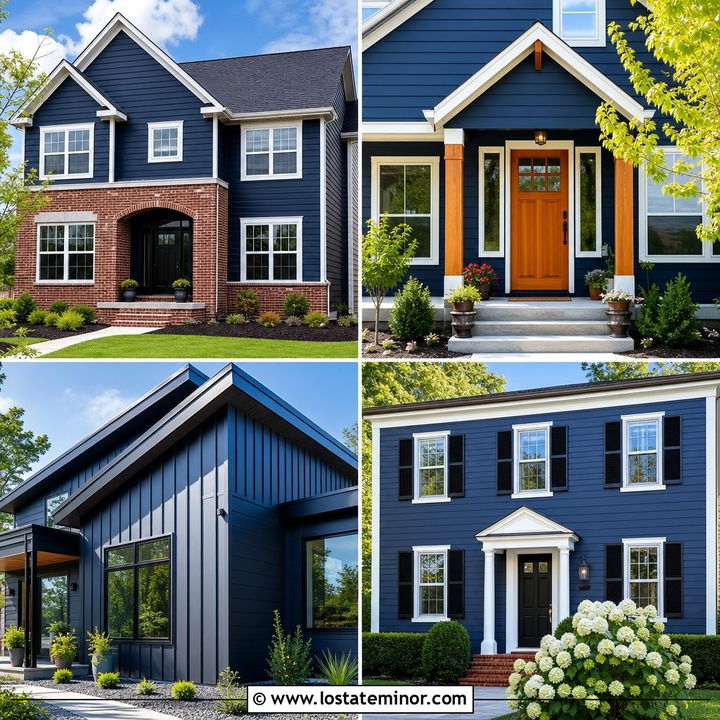
Few exterior combinations look as clean as deep navy blue siding framed by crisp white trim. Use Benjamin Moore Hale Navy on horizontal lap siding, then outline the windows, roofline, porch columns, and corner boards in a bright white. A white garage door can reinforce the contrast without introducing another competing color. Complete the scheme with a medium-brown wood door, black lanterns, and a charcoal shingle roof. This palette works especially well on Colonial and traditional two-story homes because white trim emphasizes their balanced window placement. Keep foundation plantings simple and structured. Boxwoods, hydrangeas, and a straight stone walkway support the tailored appearance while softening the strong contrast between the navy body and white architectural details.
2. Navy Blue House With Warm White Trim
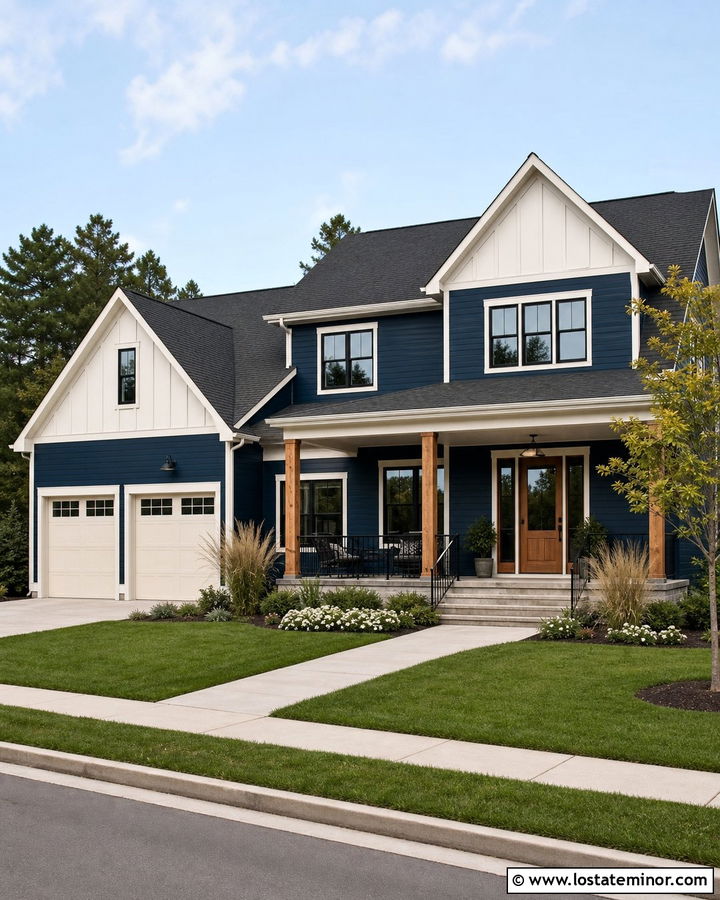
Pure white can sometimes feel too sharp beside a very dark blue, especially in strong afternoon sunlight. Warm white trim creates a gentler transition. Pair Sherwin-Williams Naval siding with creamy white fascia, window casings, porch columns, and garage doors. The slight warmth in the trim looks particularly attractive with cedar porch posts, natural wood furniture, and weathered brick steps. Choose a dark gray roof rather than a blue-black roof so each exterior surface remains visible. This complete scheme is a natural fit for a modern farmhouse with board-and-batten siding on the gables and lap siding below. Black windows add definition, while pale ornamental grasses and white flowers keep the curb appeal relaxed instead of overly formal.
3. Navy Blue House With Cream Trim
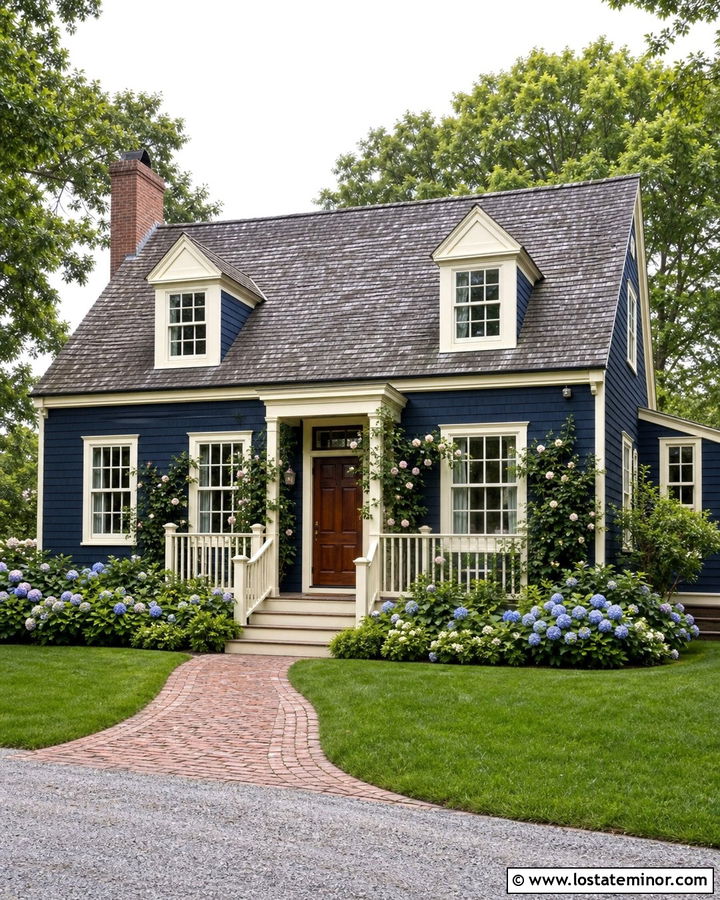
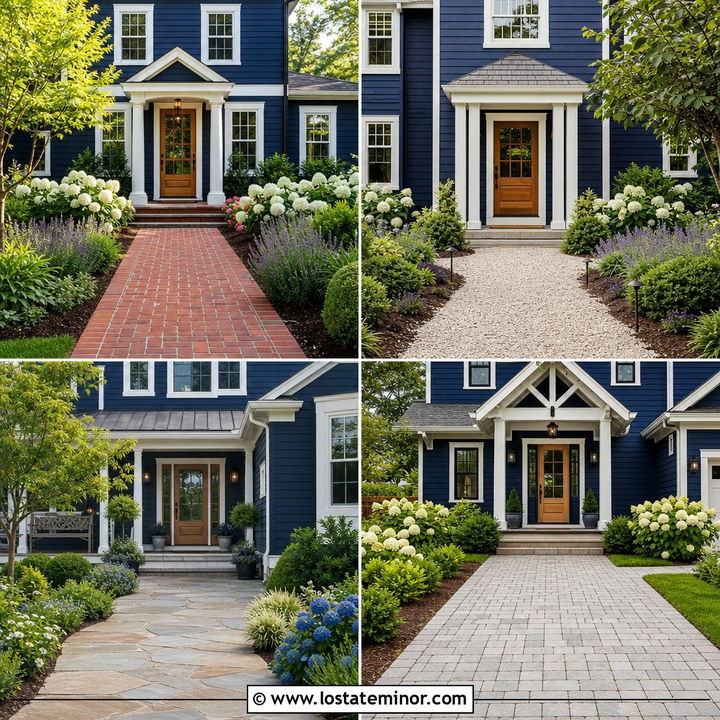
Imagine a Cape Cod home wrapped in rich navy shingles and softly outlined in cream. Benjamin Moore Newburyport Blue gives the siding a traditional maritime character, while creamy trim warms the windows, dormers, eaves, and porch railings. Add a stained mahogany front door and aged brass hardware to strengthen the classic look. A weathered gray roof keeps the palette quiet and coastal without making it feel themed. Cream is also helpful when the house includes warm stone, tan brick, or beige paving that would clash with brilliant white. Repeat the trim color on the garage door and garden gate. Layered shrubs, climbing roses, and a curved brick walkway can complete this welcoming navy and cream exterior.
4. Navy Blue House With Black Trim
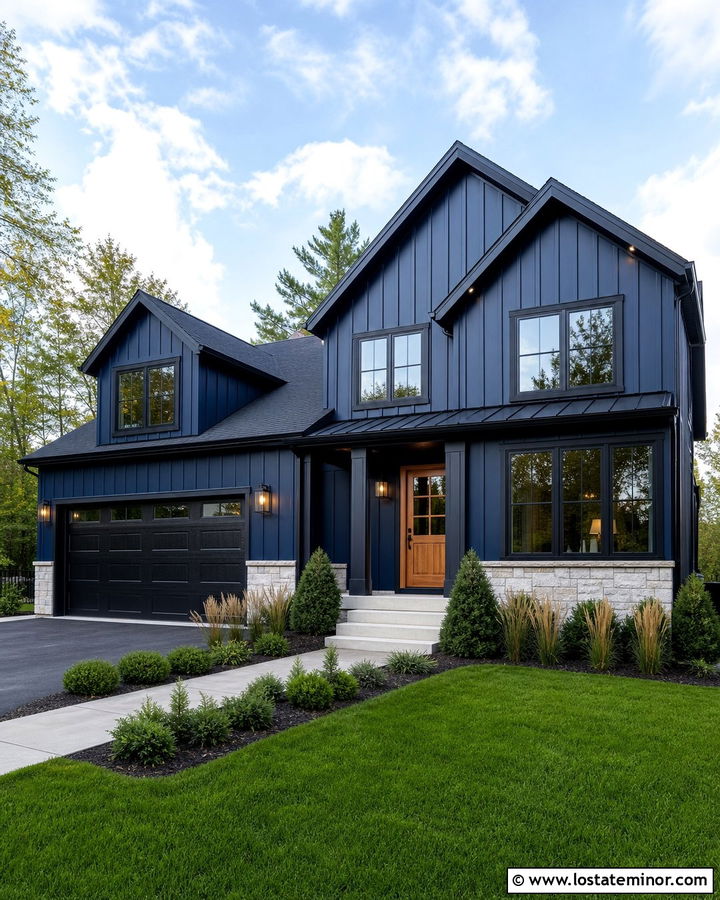
For a sharper, more contemporary exterior, surround navy siding with matte black trim. Sherwin-Williams In the Navy has enough blue character to remain distinct beside black window frames, fascia, gutters, and garage doors. Use vertical board-and-batten siding to enhance the clean lines, then introduce pale concrete steps and a warm cedar front door for balance. This palette suits a modern two-story home with simple rooflines and large windows. Avoid covering every small detail in black, since too many dark surfaces can flatten the facade. A light stone foundation or narrow white soffit can create separation. Low ornamental grasses and structured evergreen beds help the finished house feel modern, grounded, and intentionally coordinated.
5. Navy Blue House With Charcoal Gray Trim
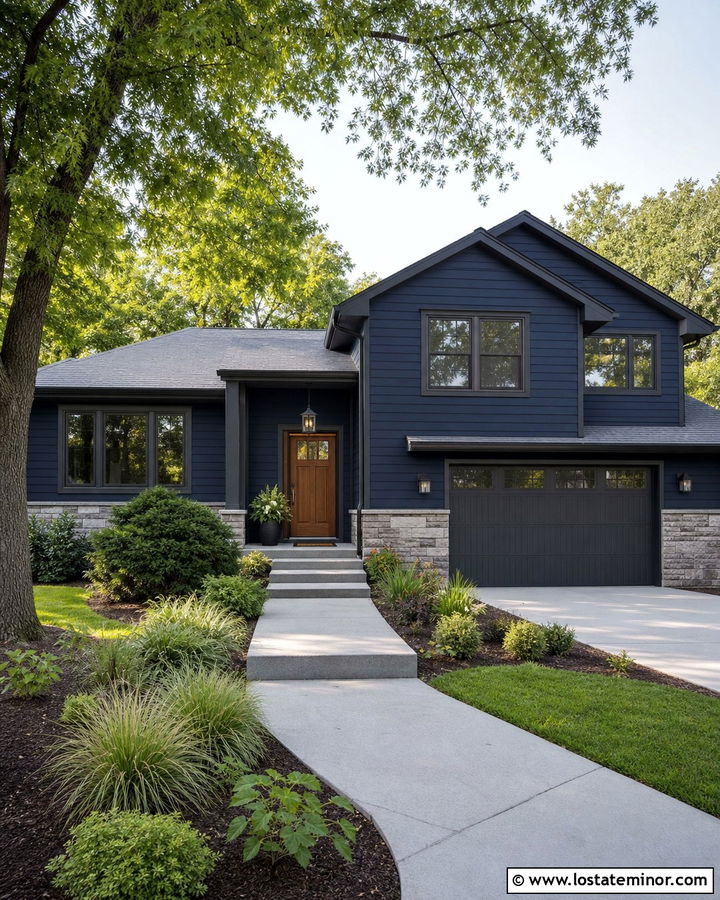
Charcoal gray trim gives navy siding subtle definition without the high contrast of white or the severity of black. Try Benjamin Moore Old Navy on the main body with deep charcoal around the windows, roof edges, garage door, and entry surround. A lighter gray stone veneer along the foundation can connect the two colors while adding texture. This treatment works beautifully on a split-level house because the restrained palette visually unifies different elevations and additions. Select a medium-gray roof that is slightly lighter than the trim. Then bring in warmth through a walnut-colored front door and bronze lighting. Broad garden beds and a clean concrete walkway will complement the strong horizontal lines commonly found on split-level exteriors.
6. Navy Blue House With Light Gray Trim
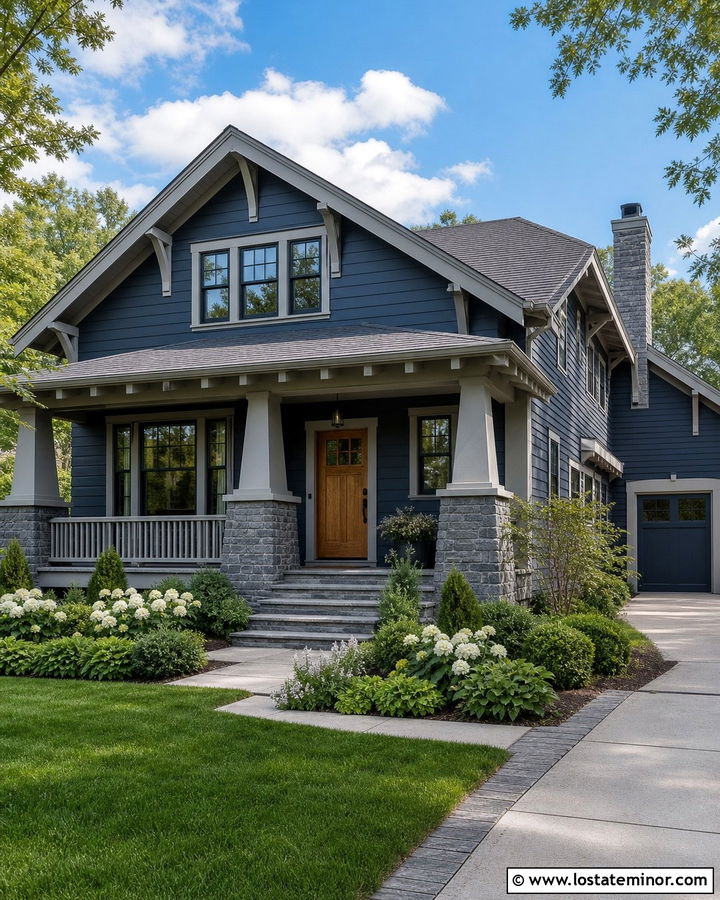
Light gray trim softens a navy house while preserving a clear outline around its architectural details. Coat Craftsman siding in Sherwin-Williams Sea Serpent, then use a pale neutral gray on tapered columns, window frames, exposed rafter tails, and porch railings. Gray-blue stone porch piers can reinforce the cool palette without looking overly matched. Finish the exterior with a medium oak door and dark bronze hardware. This scheme is especially useful when the roof already contains mixed gray granules, since the trim helps connect the roof to the siding. Choose warm porch lighting and layered green landscaping to keep the overall look inviting. White flowers will also brighten the facade without adding another permanent exterior color.
7. Navy Blue House With Greige Trim
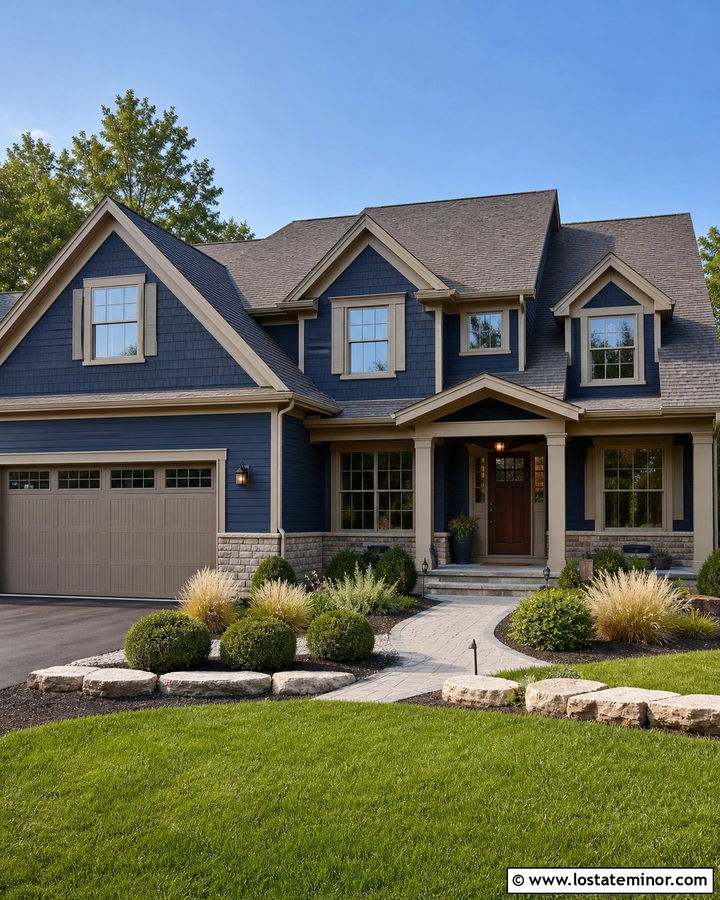
Greige trim offers an easy bridge between cool navy siding and warm exterior materials. Benjamin Moore Hale Navy can anchor a transitional home, while a balanced gray-beige highlights the windows, cornices, garage doors, and covered entry. Add buff limestone around the foundation and use a medium-brown stained door to continue the warmer undertones. This palette feels softer than navy and white but more current than navy and tan. It also works well when the driveway, roof, or neighboring masonry has both gray and beige notes. Keep metal finishes consistent, preferably dark bronze or understated black. Rounded shrubs, pale grasses, and natural stone edging provide a comfortable finishing layer that supports the house without competing with its refined color scheme.
8. Navy Blue House With Taupe Trim
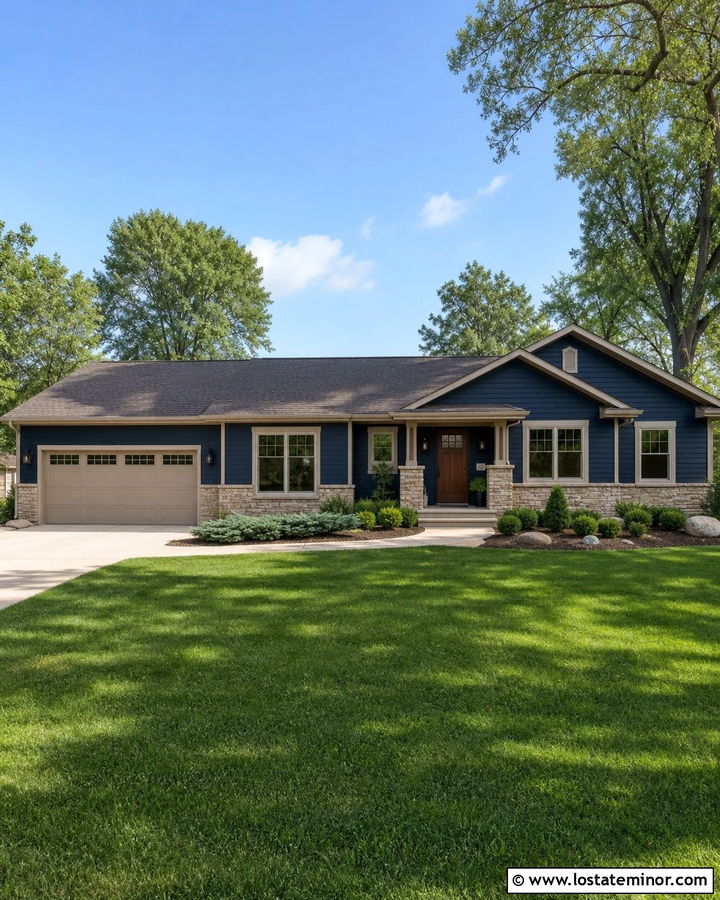
A navy and taupe exterior can give a simple ranch home greater depth and warmth. Use Sherwin-Williams Naval for the horizontal siding, then apply a medium taupe to the window trim, fascia, garage door, and broad front porch beam. The earthy trim will connect naturally with a brown-gray roof, tan stone planters, and a stained wood entry door. Because many ranch homes have long, uninterrupted elevations, vary the materials rather than introducing several paint colors. A stone wainscot or cedar panel near the entrance can create a useful focal point. Wide foundation beds, low junipers, and a generous path will visually balance the house. The result feels established and comfortable instead of dark or overly formal.
9. Navy Blue House With Cedar Trim
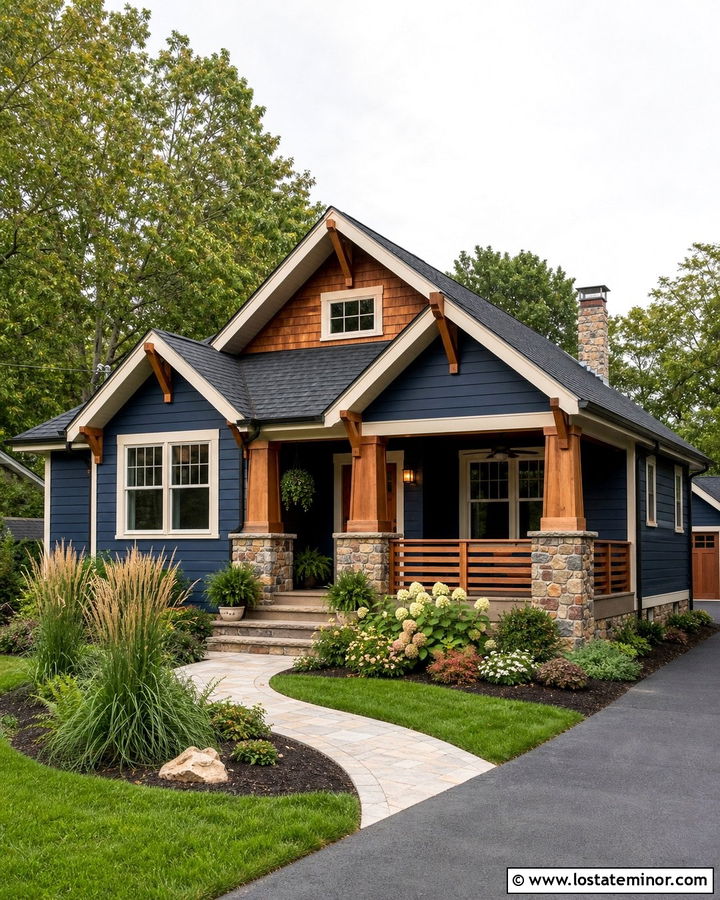
Natural cedar can prevent a dark navy exterior from feeling cold. Cover a Craftsman bungalow in Benjamin Moore Newburyport Blue, then use clear-sealed cedar for the porch posts, brackets, front door, gable accents, and horizontal railing. Cream window trim can provide a narrow line of contrast without taking attention away from the wood. A charcoal roof and dark bronze gutters will quietly frame the top of the home. Choose stone porch piers containing warm brown and gray variations to link the cedar with the navy siding. This scheme benefits from generous landscaping, including ferns, ornamental grasses, and flowering shrubs. As the cedar weathers, regular sealing or a planned natural patina will keep the complete exterior looking deliberate.

10. Navy Blue House With Natural Oak Trim
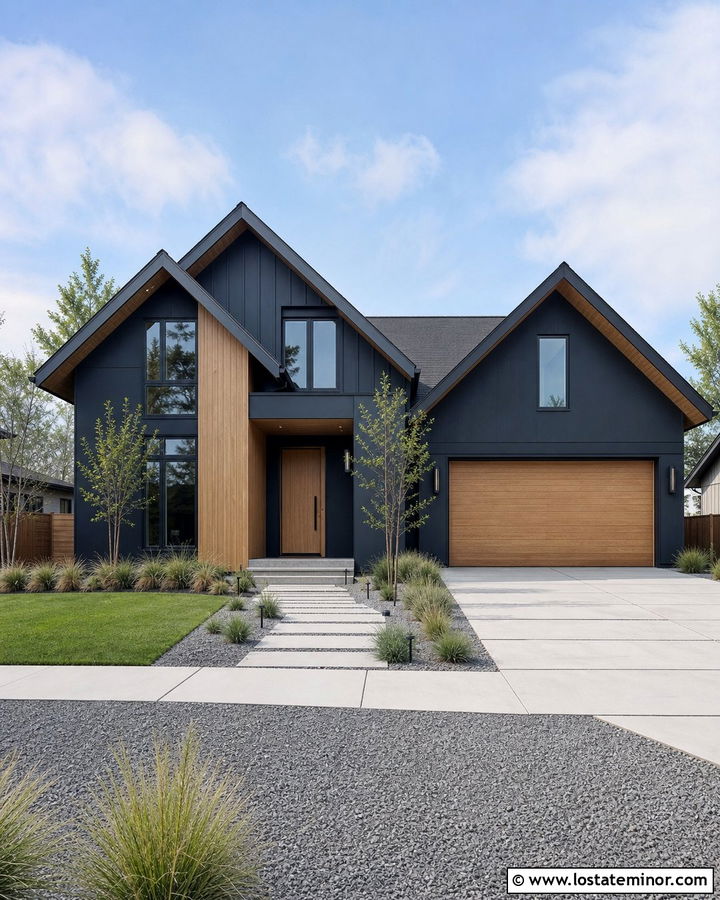
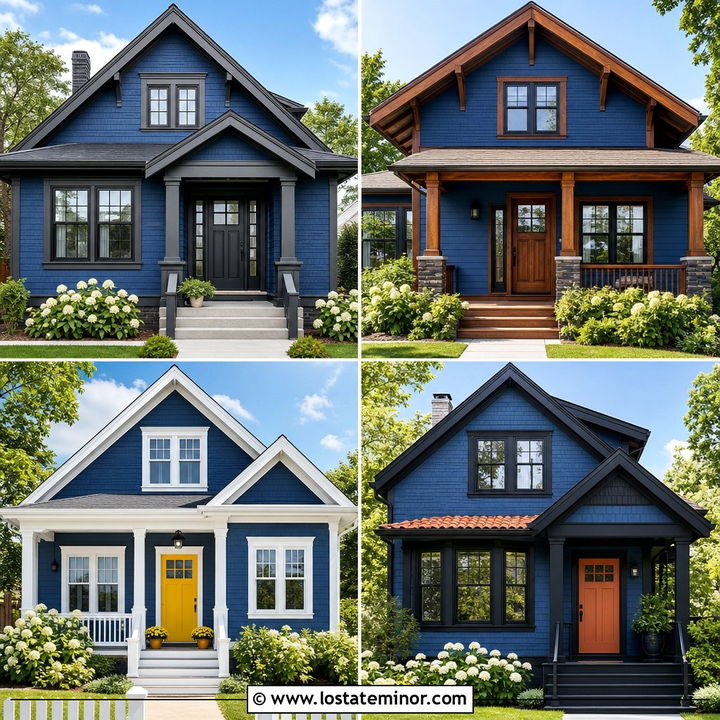
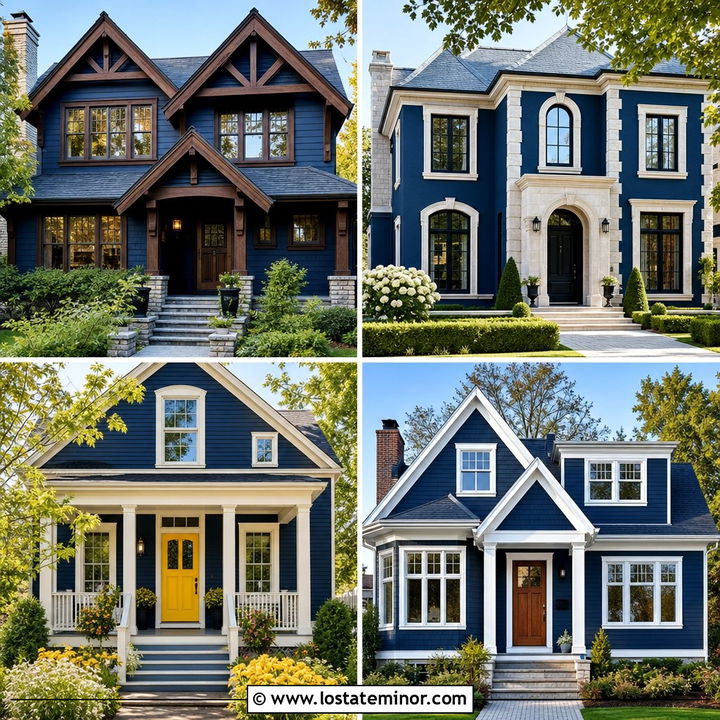
Natural oak trim brings a lighter, cleaner warmth to navy than red-toned cedar or mahogany. Apply Benjamin Moore Polo Blue to a modern gabled home, then use pale oak around the recessed entry, soffits, garage door, and selected vertical screens. Keep the window frames black and the roof charcoal for crisp definition. Light concrete pavers and gray gravel will support the restrained material palette. Because natural oak can change color outdoors, choose an exterior-rated finish that preserves its soft golden appearance. This complete scheme suits Scandinavian-inspired and modern suburban architecture with large windows and uncluttered rooflines. Sparse grasses, young trees, and simple rectangular planting beds reinforce the calm balance between rich navy paint and organic wood texture.
11. Navy Blue House With Red Brick And White Trim
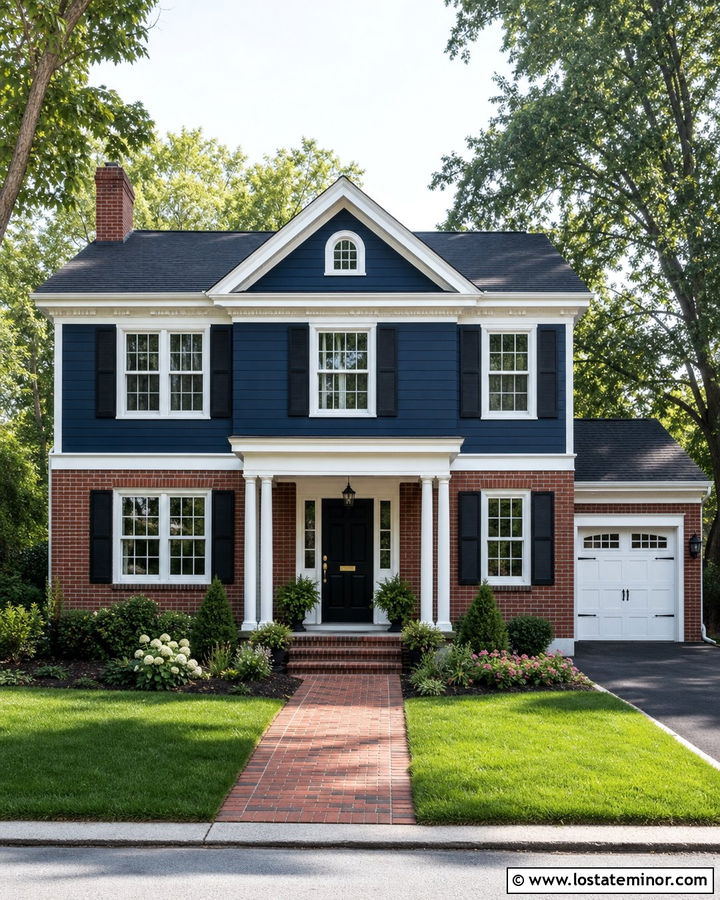
Existing red brick can look striking beside navy siding when white trim separates the two strong colors. Use Sherwin-Williams Naval on upper-story siding or gables while leaving the lower brick unpainted. Crisp white window casings, cornices, columns, and garage trim prevent the brick and blue from visually blending together. A black or dark navy front door will keep the entry sophisticated, while a charcoal roof relates to both materials. This approach works well for traditional homes undergoing a partial exterior update because it respects the original masonry. Pull one muted red-brown tone from the brick into the walkway or planters. Simple evergreen landscaping will calm the palette and allow the brick, navy, and architectural trim to share attention.
12. Navy Blue House With Light Stone And White Trim
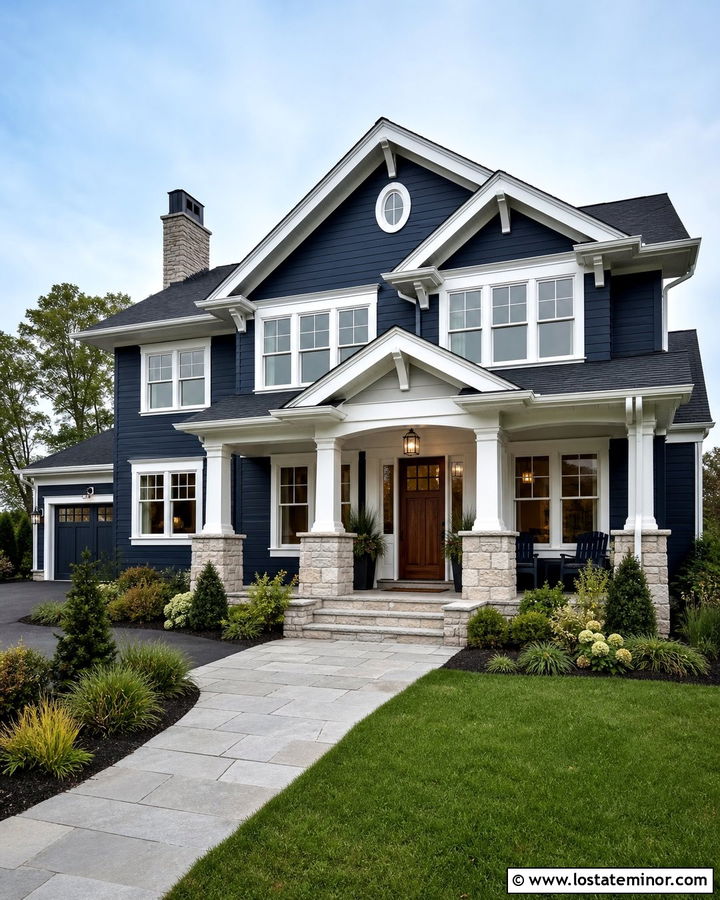
Light stone can brighten a large navy facade without requiring oversized areas of white paint. Cover the primary siding in Benjamin Moore Hale Navy, use crisp white on the trim and columns, and apply pale limestone or cultured stone to the foundation and porch piers. A natural walnut door adds a concentrated note of warmth. This full-house scheme works especially well on a large Craftsman or mountain suburban home with multiple gables. Keep the roof charcoal rather than brown so the cool stone and navy remain visually connected. Use the stone on carefully selected areas instead of covering every elevation. A broad flagstone walkway, evergreen shrubs, and layered grasses can repeat the masonry tones while maintaining an open, balanced curb-appeal view.
13. Navy Blue House With Dark Stone And Cream Trim
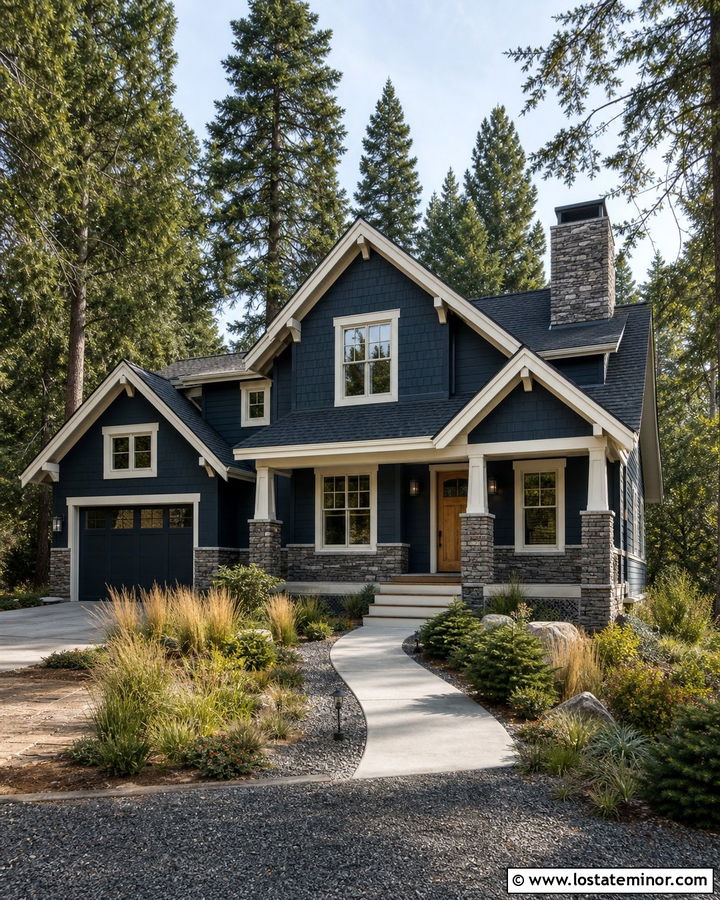
Dark stone creates a grounded, substantial base beneath navy siding. Choose Sherwin-Williams Sea Serpent for the house body and warm cream for the window trim, fascia, porch ceiling, and garage surround. Charcoal ledgestone can cover the lower foundation, chimney, and front porch columns. Since both the siding and masonry are dark, include a light natural wood door or pale concrete steps to prevent the entrance from disappearing. This combination suits a rustic contemporary home with steep gables and broad roof overhangs. Select stone containing a few warm beige pieces that relate to the cream trim. Native grasses, low evergreen mounds, and a wide gravel-edged path will make the house feel connected to its setting rather than visually heavy.
14. Navy Blue House With Bronze Trim
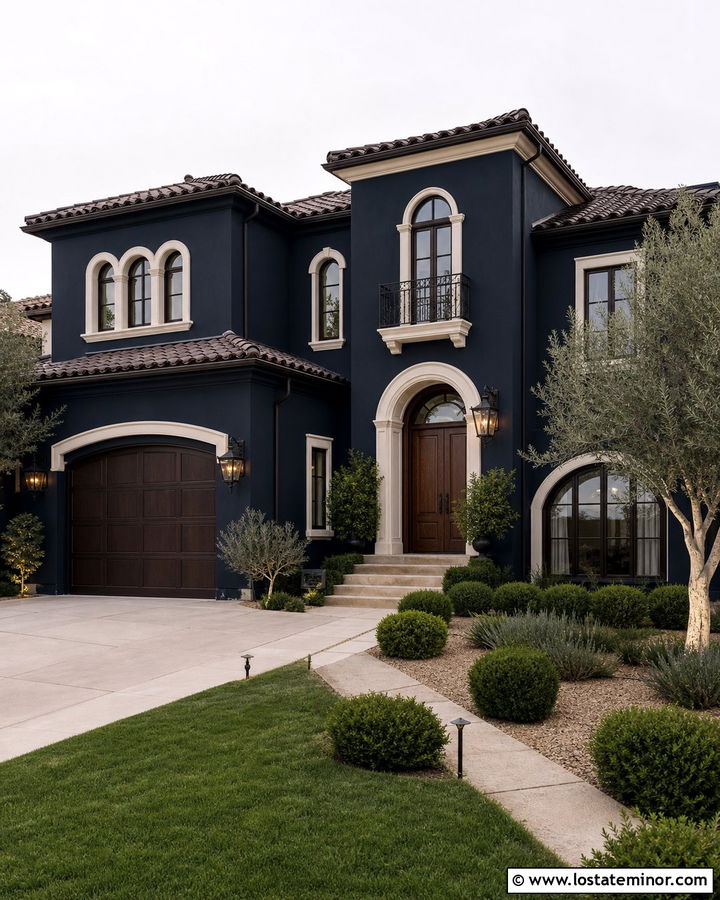
Dark bronze trim offers a softer alternative to pure black and pairs naturally with wood, brown roofing, and warm masonry. Coat a Mediterranean-influenced suburban home in Benjamin Moore Mysterious, a smoky deep navy blue, then install bronze window frames, gutters, downspouts, and exterior lights. Use warm off-white around stucco arches and entry details so the dark metal remains visible. A stained walnut door and muted tan stone steps can complete the palette. Bronze works best when repeated consistently rather than mixed with shiny silver hardware. Choose a dimensional roof containing brown, charcoal, and muted blue-gray tones. Olive trees, clipped shrubs, and warm gravel beds will support the rich exterior without making the design feel too colorful or ornate.
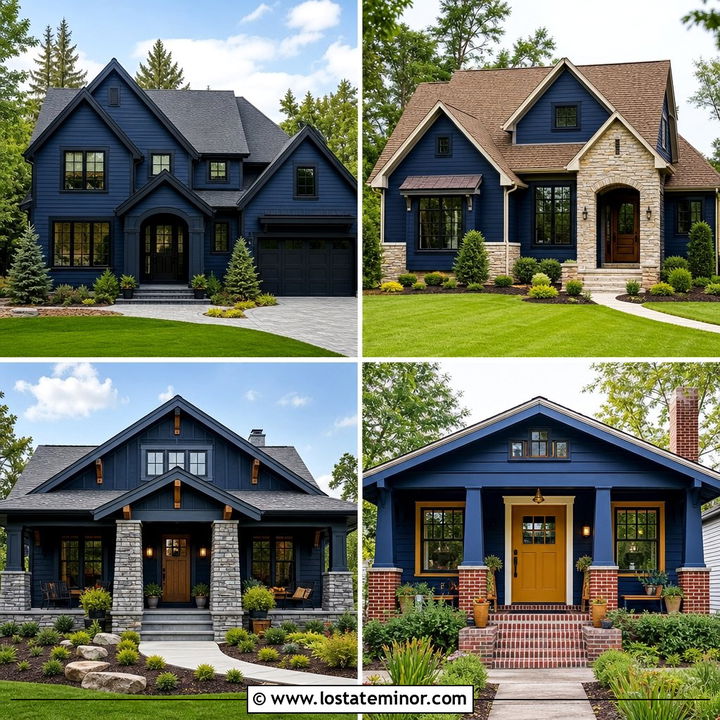
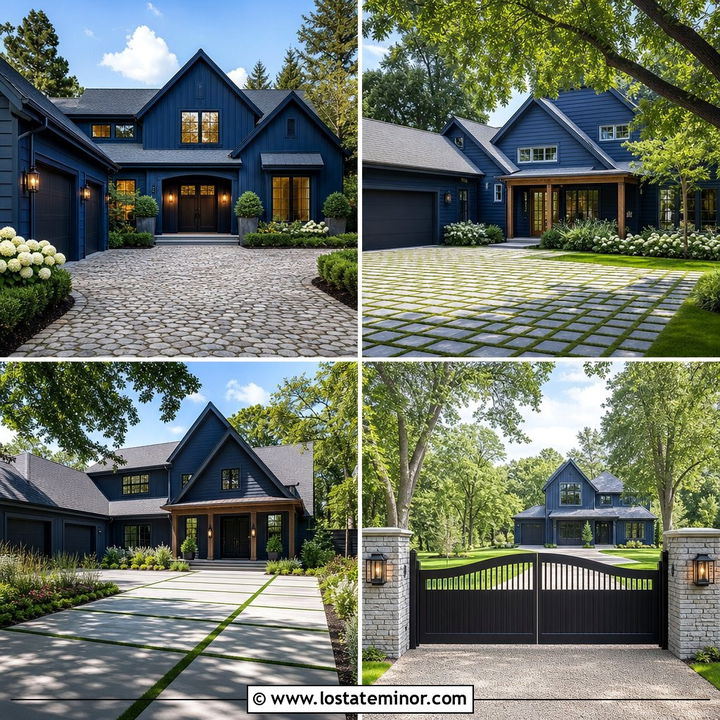
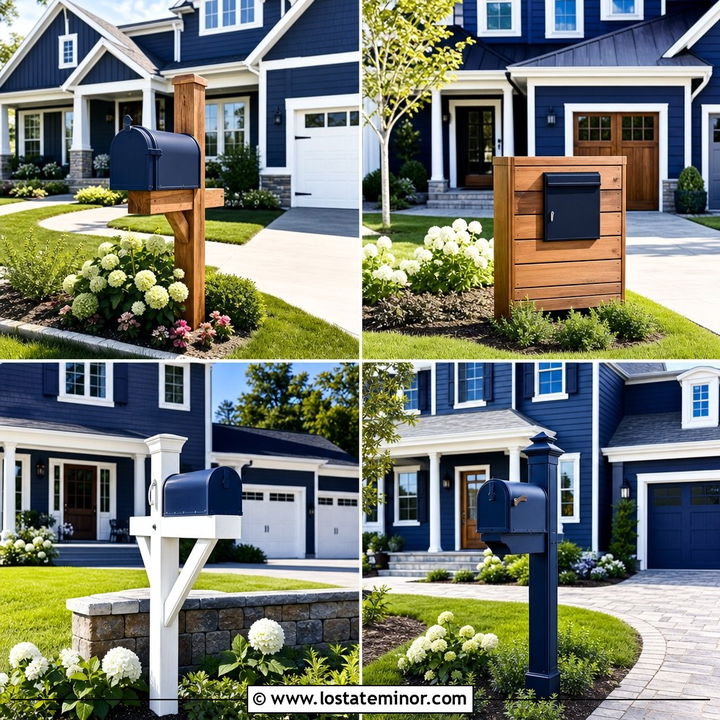
15. Monochromatic Navy Blue House And Trim
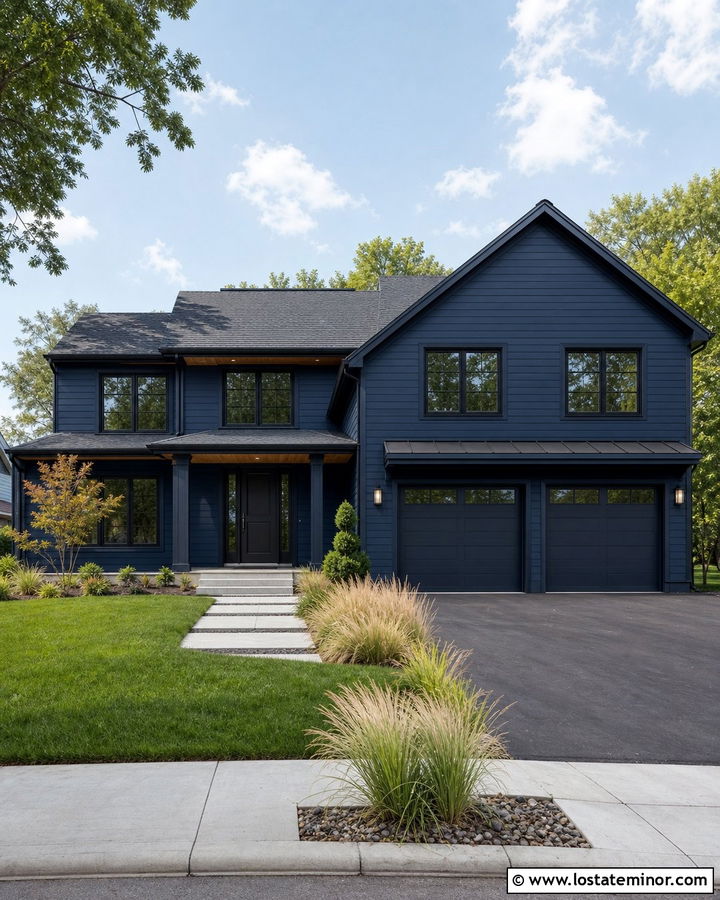
Painting the siding and trim in one navy color creates a streamlined facade with subtle architectural shadows. Use Sherwin-Williams Anchors Aweigh on lap siding, corner boards, window surrounds, fascia, and garage doors. Keep the windows and front door black, then introduce warmth through cedar soffits and a pale stone walkway. This color-drenched approach is especially effective on a contemporary home with simple forms and clean detailing. Different finishes can preserve visual depth: use a low-sheen coating on the siding and a slightly glossier finish on doors and trim. A medium-gray roof prevents the exterior from becoming one dark block. Minimal landscaping with sculptural grasses and small ornamental trees will reinforce the modern character while keeping the navy facade clearly visible.
16. Navy Blue House With Pale Blue Trim
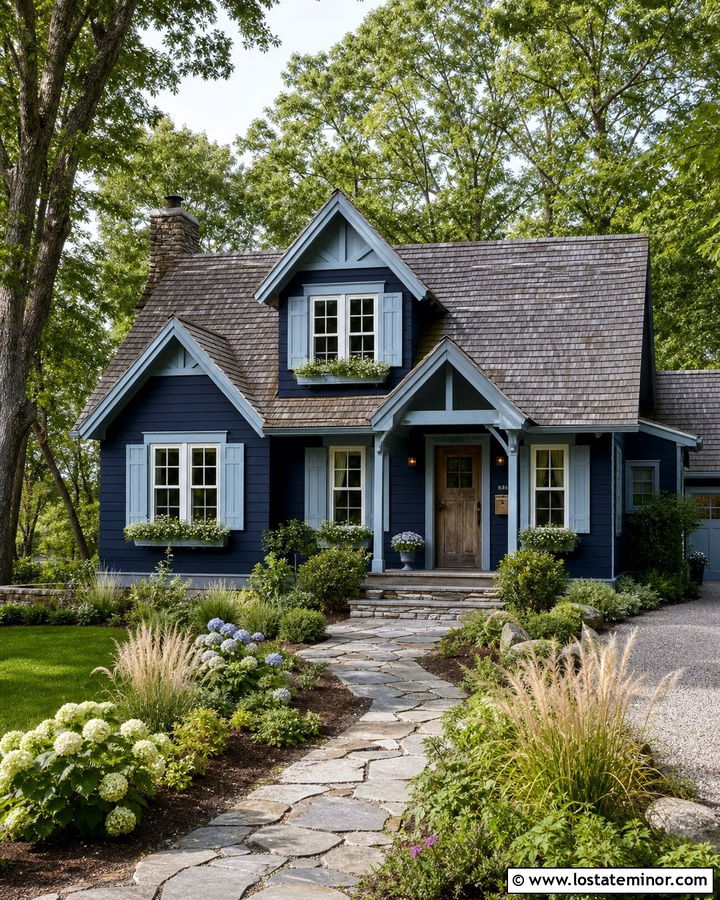
Pale blue trim produces a layered tonal palette that feels softer than navy paired with white. Paint a cottage exterior in Benjamin Moore Old Navy and frame its windows, porch posts, eaves, and shutters in a misty blue-gray. Use a soft white only on narrow details, such as the porch ceiling or window sashes. A weathered wood door and gray shingle roof will support the relaxed color progression. This scheme works best when the pale blue has a muted gray undertone rather than a bright, icy cast. Add a fieldstone path, informal hydrangeas, and airy ornamental grasses for a welcoming garden setting. The finished cottage will feel colorful and distinctive while maintaining enough contrast to show its trim and architectural craftsmanship.
17. Navy Blue House With Olive Green Accents
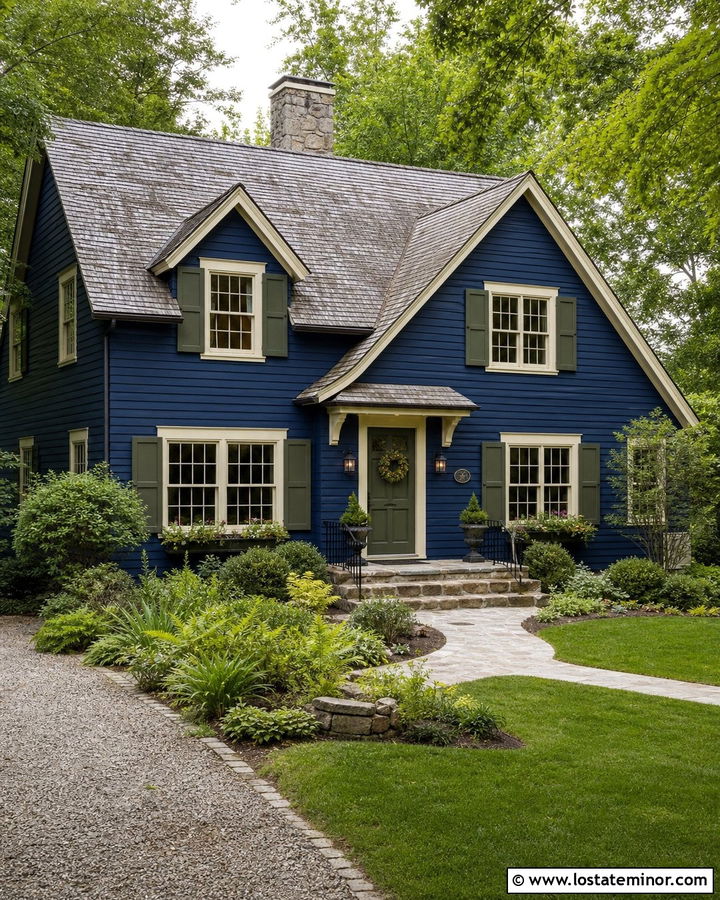
Would olive green work beside navy siding? It can, provided one color remains dominant and a neutral trim separates them. Use Sherwin-Williams Naval across a traditional cottage, warm cream on windows and eaves, and muted olive green on shutters and the front door. Natural stone steps containing gray, mossy green, and tan variations will tie the palette together. Select a weathered gray roof so it does not compete with the siding or shutters. This earthy combination looks best in a leafy setting where the green details connect to mature trees and garden beds. Avoid bright emerald or yellow-green accents. Dustier olive tones make the navy feel grounded, while cream trim ensures the full facade remains clear and welcoming.
18. Navy Blue House With Burgundy Door And Cream Trim
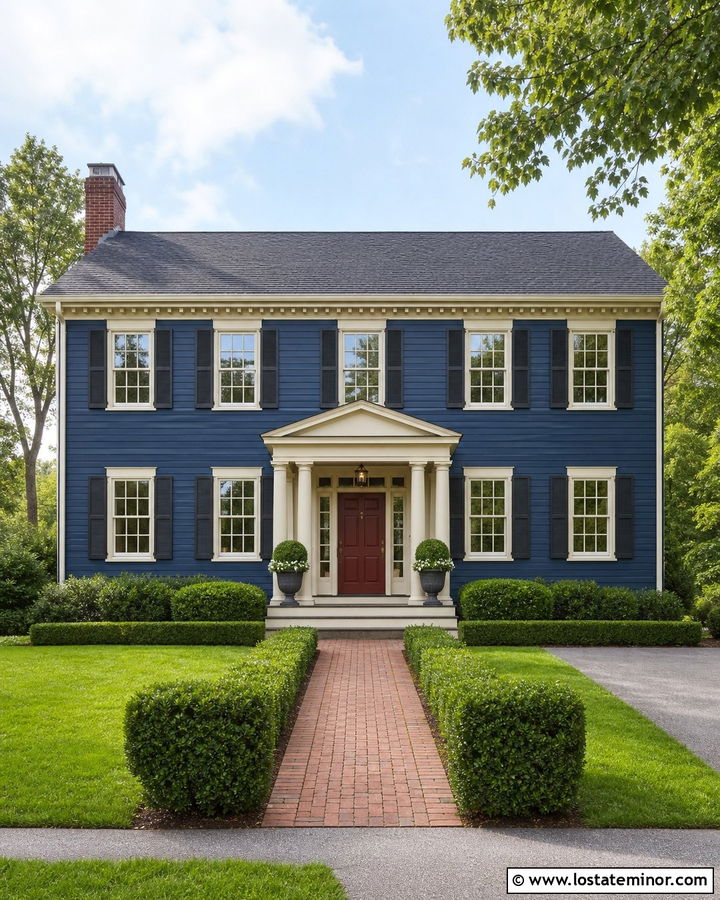
A burgundy front door gives navy siding a traditional accent without creating a bright primary-color effect. Paint a Georgian or Federal-style home in Benjamin Moore Newburyport Blue, then outline its symmetrical windows, cornice, and portico in soft cream. Use a deep wine-red burgundy on the paneled front door and repeat it sparingly on small planters or a garden gate. A dark charcoal roof and aged brass door hardware will reinforce the historic character. Keep shutters navy or deep charcoal so the entrance remains the main accent. Formal hedges, paired urns, and a straight brick walkway suit the balanced architecture. The complete palette feels rich and classic, yet softer than a navy exterior with brilliant white trim and a vivid red door.
19. Navy Blue House With Red Door And White Trim
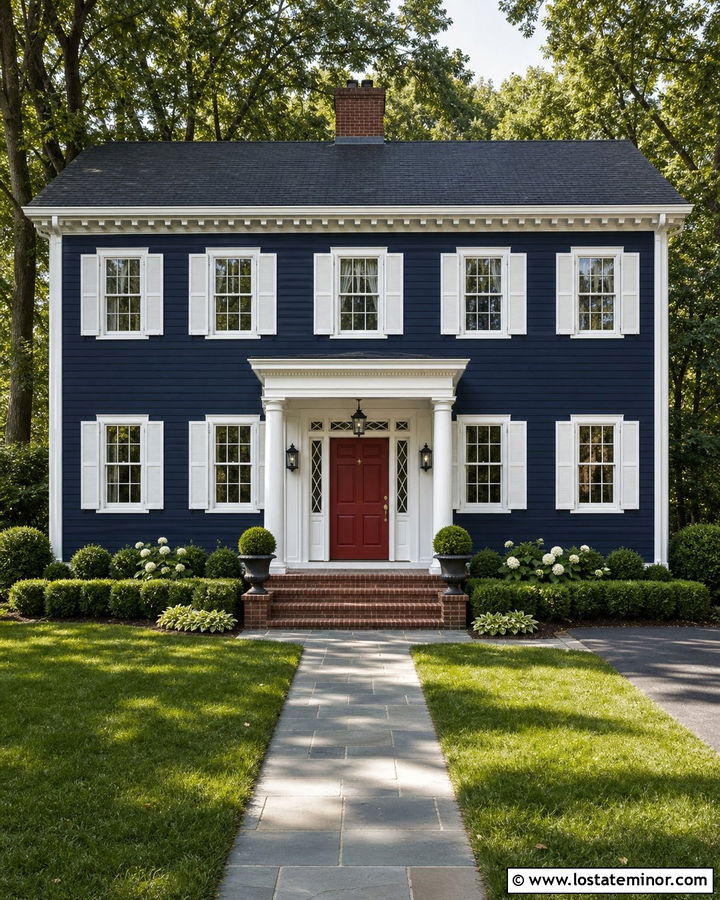
A clear red door makes a confident focal point against navy siding and bright white trim. Use Benjamin Moore Hale Navy on a classic Colonial, then apply crisp white to the window frames, shutters, corner boards, cornice, and entry columns. Choose a slightly muted heritage red for the front door rather than a highly saturated cherry tone. Black lanterns and a charcoal roof can stabilize the three-color scheme. Repeat the red only once, perhaps in a small bench or seasonal planter, to avoid making the facade feel busy. Neatly clipped foundation plants and a straight stone walkway support the home’s symmetry. This exterior works best when every painted surface has a clear role: navy body, white structure, and red entrance.

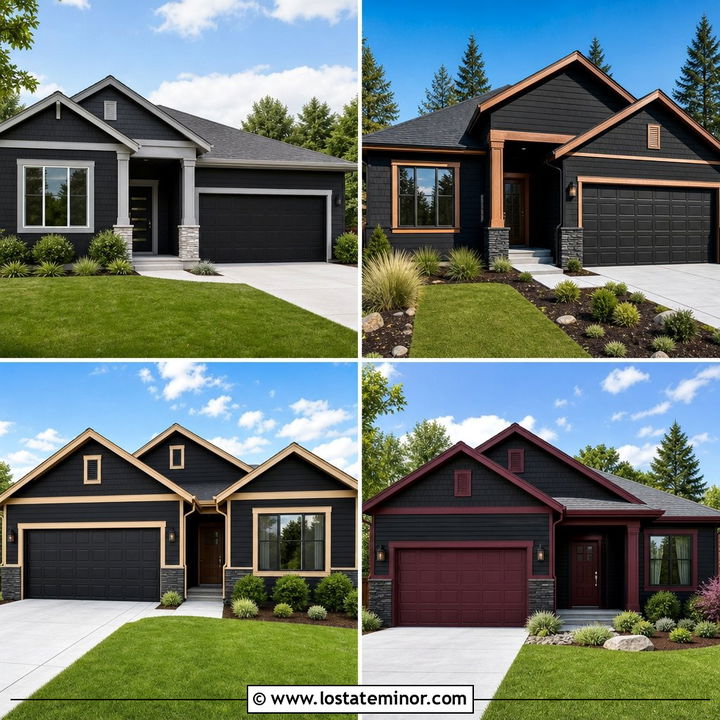
20. Navy Blue House With Yellow Door And White Trim
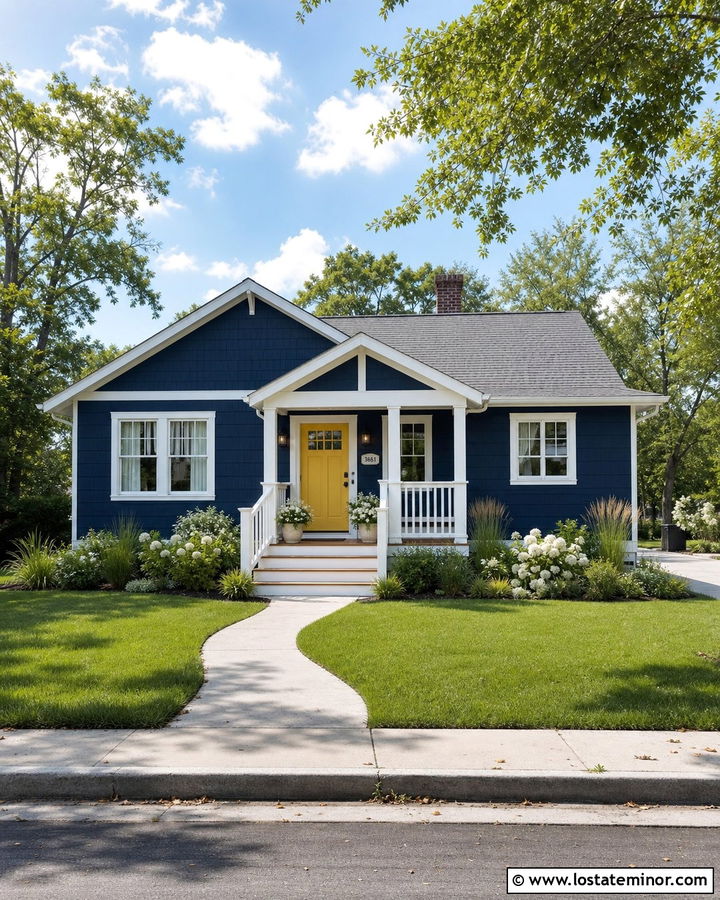
Sunshine yellow can energize a navy exterior, particularly on a small bungalow or cottage. Cover the siding in Sherwin-Williams In the Navy, use clean white on the windows, porch posts, fascia, and railing, and reserve a warm golden yellow for the front door. A natural wood porch floor will soften the contrast, while a medium-gray roof keeps the main colors balanced. Choose black or dark bronze lights instead of adding another decorative finish. The yellow should be rich enough to hold its own beside deep blue but slightly muted for a residential setting. White daisies, ornamental grasses, and a curved concrete path can extend the cheerful mood into the yard without distracting from the complete navy, white, and yellow facade.
21. Navy Blue House With Coral Door And Soft White Trim
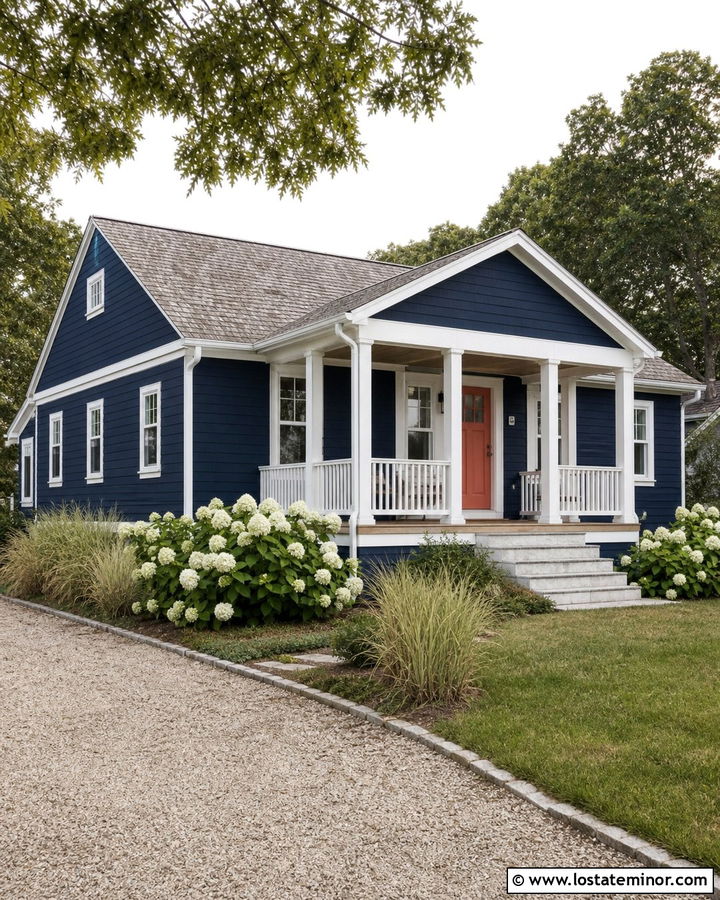
Coral offers a warm, playful counterpoint to navy without looking as expected as red. Paint a coastal bungalow in Benjamin Moore Old Navy and use soft white for the broad porch columns, window trim, railings, and roofline. A muted coral front door can become the single colorful accent. Add natural rattan-toned porch furniture, pale stone steps, and a weathered gray roof to maintain a relaxed appearance. Avoid repeating coral across shutters, garage doors, and decorative objects; one focused application will look more intentional. Sea grasses, white hydrangeas, and a sandy gravel path can complete the landscape. The resulting exterior feels fresh and welcoming, while the warm white trim prevents the navy and coral combination from appearing overly sharp or graphic.
22. Navy Blue House With Turquoise Door And White Trim
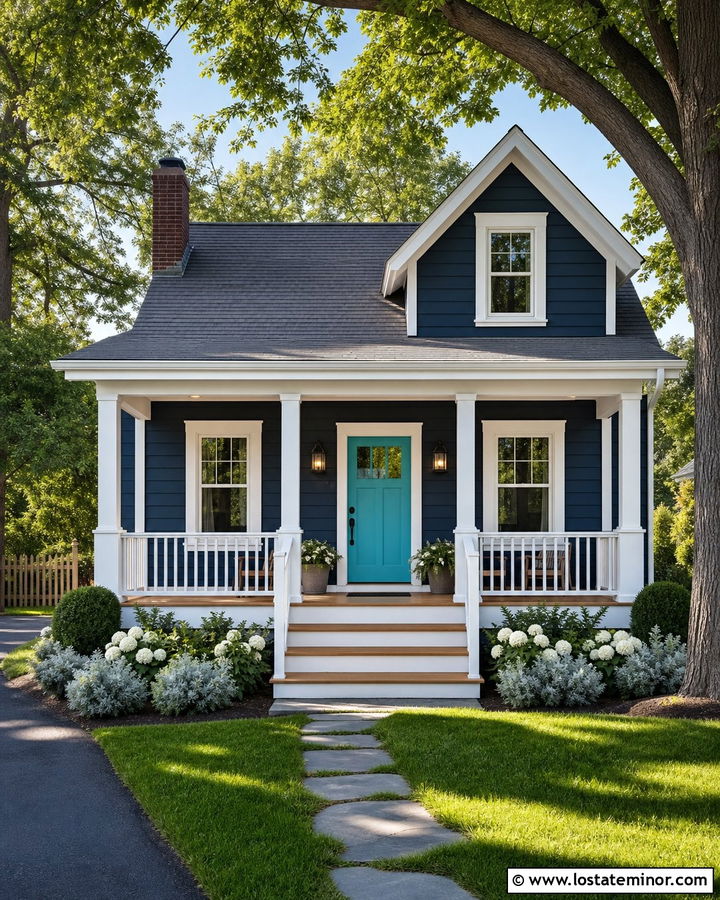
Turquoise brings a cool, lively accent to a navy exterior while staying within the blue-green color family. Use Sherwin-Williams Sea Serpent on a compact cottage and bright white on the porch railing, columns, window frames, and eaves. Paint the front door a medium turquoise with enough green to remain visible against the darker siding. A gray roof and light natural wood porch floor will keep the design grounded. Limit turquoise to the entrance so the house retains a polished rather than themed appearance. Silver-green shrubs, white flowers, and a stone walkway can echo the cool palette. This combination is particularly effective in sunny locations, where strong natural light reveals the difference between smoky navy siding and the more vibrant blue-green door.
23. Navy Blue House With Black Door And White Trim
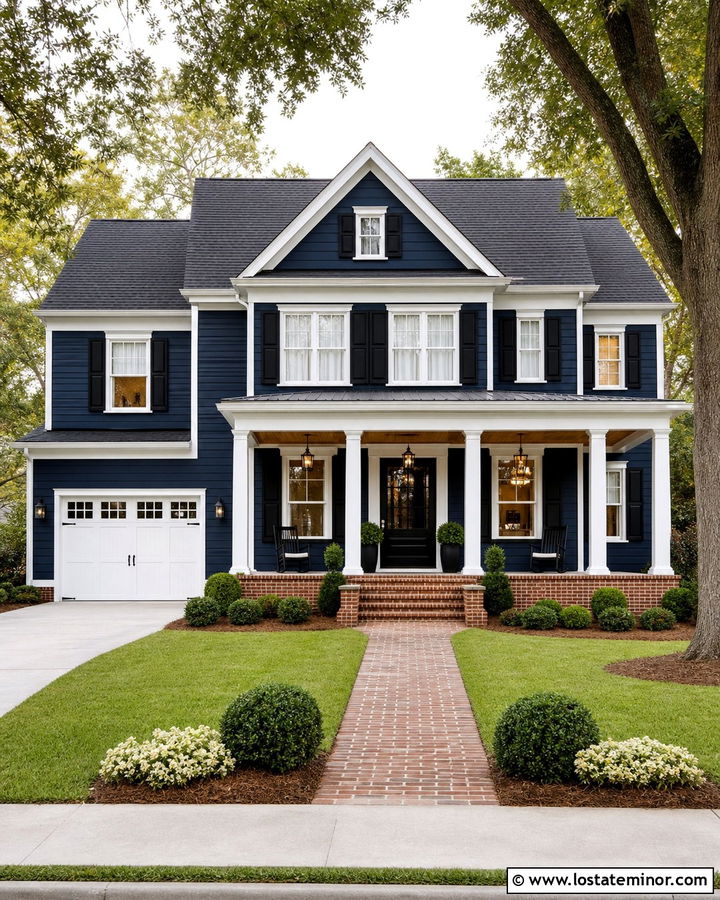
A black front door gives the classic navy and white palette extra structure. Apply Benjamin Moore Hale Navy to the siding of a traditional two-story home, then use crisp white around the windows, porch columns, gables, and garage door. A glossy black entry door, black shutters, and simple black lanterns add repeated points of contrast. Keep the roof charcoal rather than true black so the upper portion of the facade does not become too heavy. Warm brick steps or a wood porch ceiling can supply the needed natural color. Balanced foundation plantings and a central walkway will complement the home’s symmetry. The completed exterior feels formal and tailored, with each dark and light surface clearly separated from the next.
24. Navy Blue House With Wood Door And White Trim
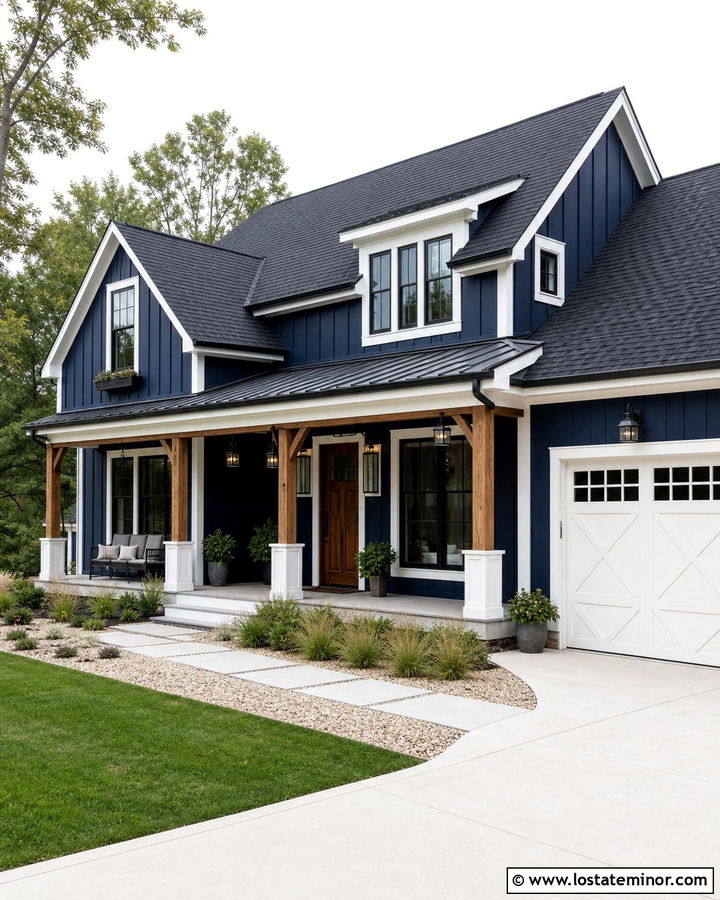
A natural wood door is one of the easiest ways to warm navy siding and white trim. Cover a modern farmhouse in Sherwin-Williams Naval, then use soft white on the board-and-batten details, window casings, porch columns, and garage door. Install a medium-toned oak or walnut entry door with simple black hardware. Cedar porch beams can repeat the wood color higher on the facade, creating better visual balance. Finish the house with a charcoal standing-seam porch roof and dark gray shingles on the main roof. Use pale gravel, concrete pavers, and loose ornamental grasses around the walkway. This scheme combines familiar farmhouse contrast with enough natural texture to keep the house from looking stark, flat, or overly black and white.


25. Navy Blue House With White Garage And Dark Trim
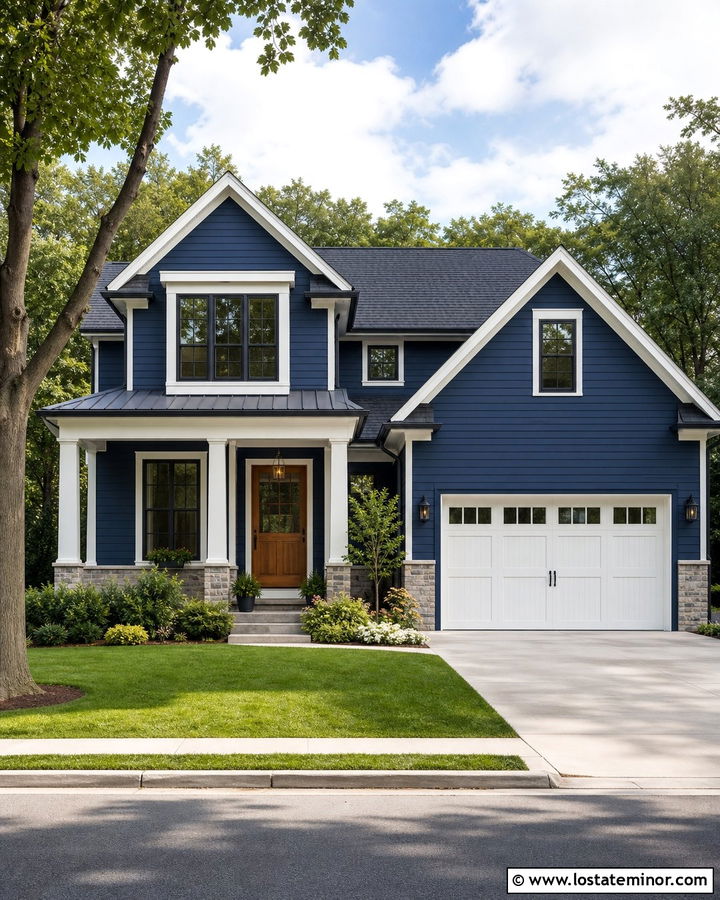
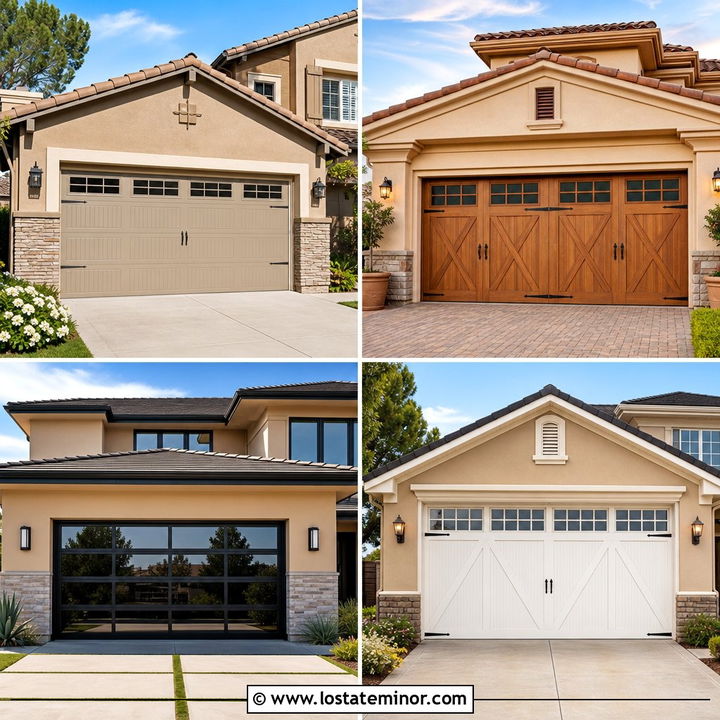
On a home with a street-facing garage, a white garage door can become visually dominant. Make it feel integrated by painting the main siding Benjamin Moore Newburyport Blue, using soft white on the garage door and wider trim, and adding charcoal window frames, gutters, and lights. Repeat navy on a narrow frame around the garage opening so the white door appears connected to the house. A wood front door and light stone foundation can draw attention back toward the entrance. This treatment works especially well on suburban homes with attached two-car garages. Layered shrubs between the driveway and walkway will further guide the eye. The complete palette keeps the garage bright while allowing navy siding to remain the primary exterior feature.
26. Navy Blue House With Matching Garage Door
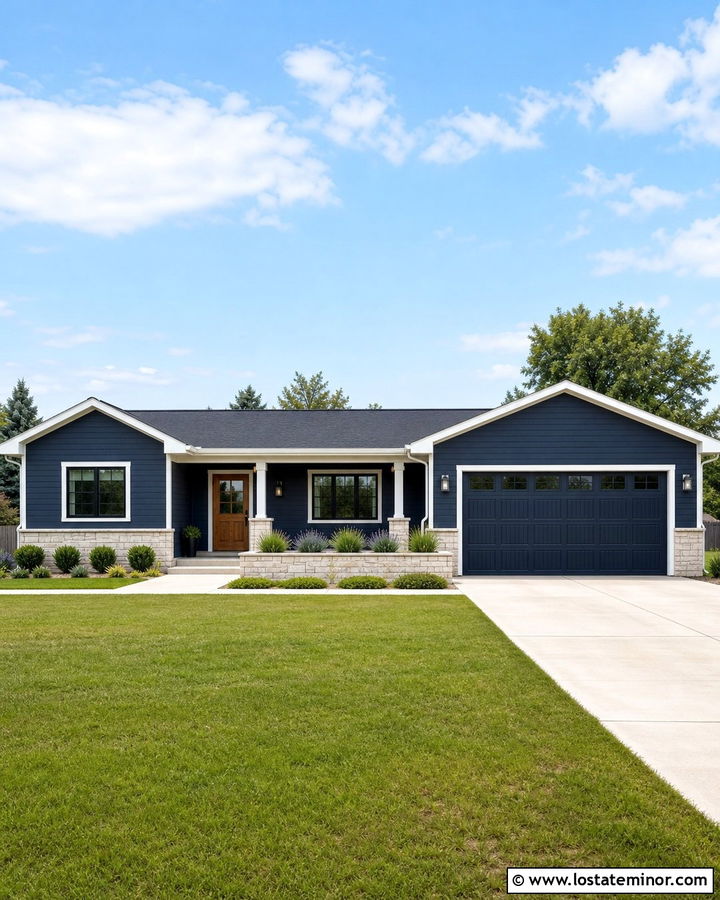
Painting the garage door navy can help it recede into the facade instead of becoming the largest contrasting feature. Use Sherwin-Williams Naval on both the horizontal siding and paneled garage door, then frame the house with warm white window trim, fascia, and porch columns. Add a medium wood front door to create a separate entry focal point. Black windows, lanterns, and gutters will sharpen the edges without drawing attention to the garage. This cohesive approach suits a wide ranch or contemporary suburban home where the garage occupies much of the front elevation. Light concrete, pale stone planters, and low green shrubs will prevent the overall composition from feeling too dark. The finished exterior appears wider, calmer, and more intentionally organized.
27. Navy Blue House With Copper Gutters And Cream Trim
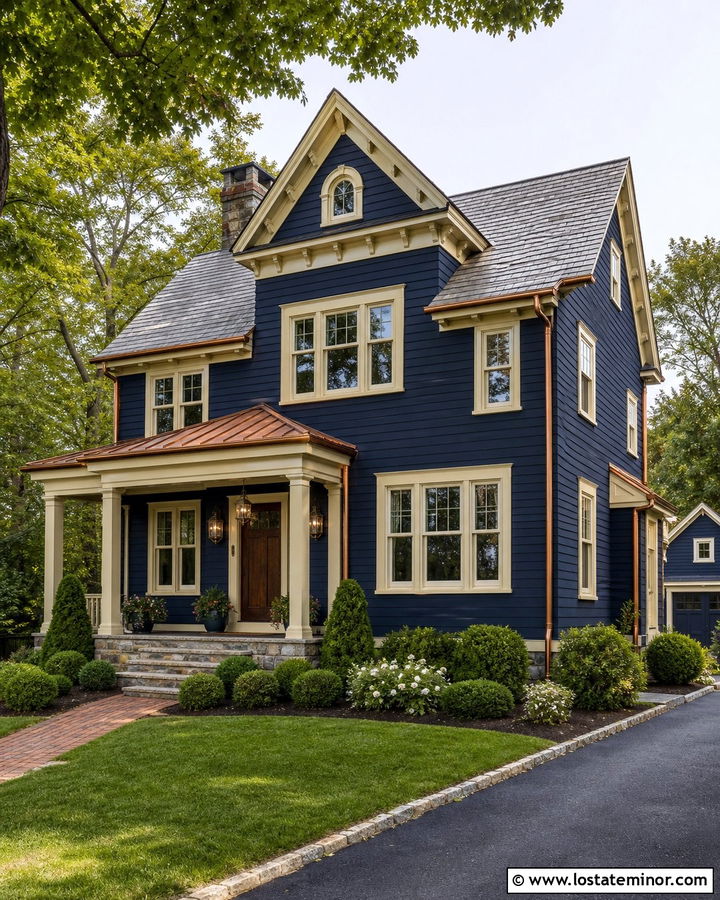
Copper details develop rich character against deep navy siding. Paint a historic-inspired home in Benjamin Moore Hale Navy and use cream on the windows, cornice, porch posts, and decorative gable trim. Install copper gutters, downspouts, porch roofing, and understated entry lights. A walnut front door will connect the metal’s warm color to the lower facade. New copper appears bright, while aged copper develops a softer brown or green patina, so plan the palette with that transition in mind. Gray slate-look roofing and natural fieldstone steps will support both stages. Keep other metal finishes dark bronze to avoid unnecessary mixing. Formal shrubs and a brick walkway complete this detailed exterior without competing with the navy, cream, copper, and wood combination.
28. Navy Blue House With Black Roof And White Trim
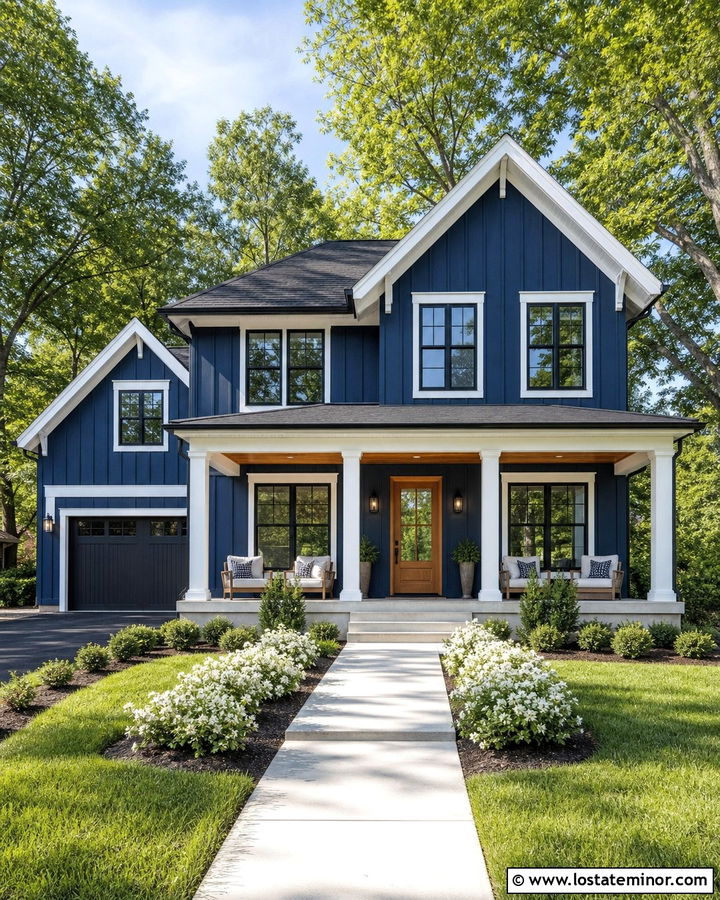
A black roof can give a navy house a strong, clean cap, but the facade needs enough light contrast below it. Use Sherwin-Williams In the Navy on a tall modern farmhouse and bright white on the windows, porch columns, fascia, and selected gable details. Black shingles, window frames, gutters, and lanterns can repeat the roof color in smaller areas. Introduce cedar at the front door and porch ceiling to break up the cool palette. White trim should remain substantial around the upper windows so they do not disappear beneath the dark roof. Pale concrete paths, white flowering shrubs, and fresh green lawn will brighten the foreground. This coordinated exterior looks graphic and modern while still retaining the welcoming warmth expected from a family home.
29. Navy Blue House With Gray Roof And Cream Trim
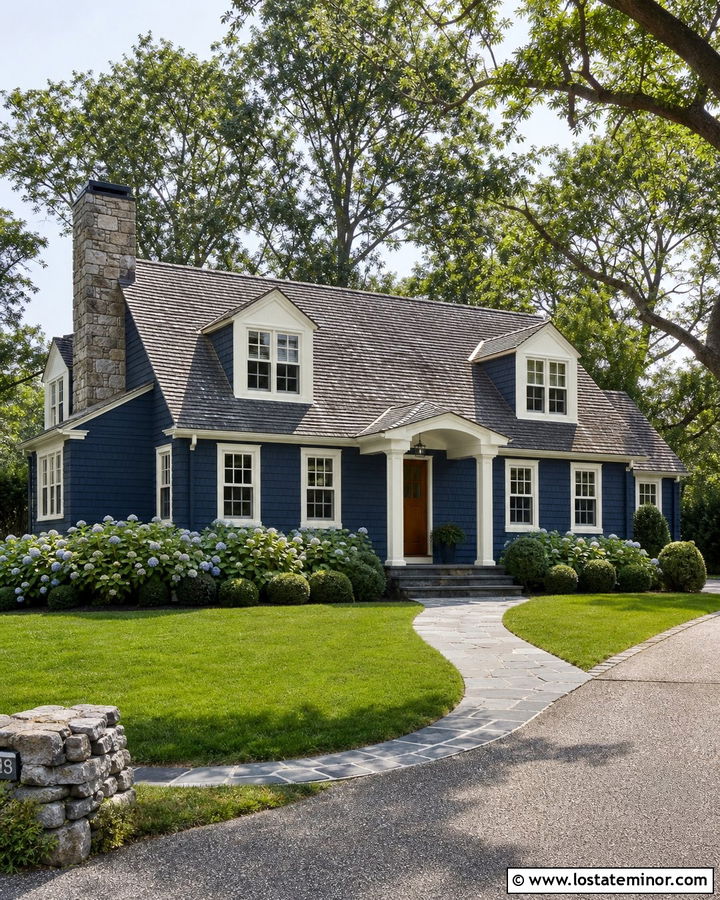
A weathered gray roof makes an adaptable partner for navy siding because it offers contrast without introducing strong warmth. Coat a Cape Cod or shingle-style house in Benjamin Moore Old Navy, then use creamy white on the dormers, windows, eaves, and covered entry. A medium-gray architectural shingle roof will soften the transition from the dark walls to the sky. Add gray fieldstone around the chimney and porch base, plus a stained teak door for warmth. The trim should be light enough to define the dormers but not so brilliant that it clashes with the weathered roof. Informal hydrangeas, boxwoods, and a curved flagstone path will complete the layered, established appearance of this navy, cream, gray, stone, and wood exterior.
30. Navy Blue House With Brown Roof And Beige Trim
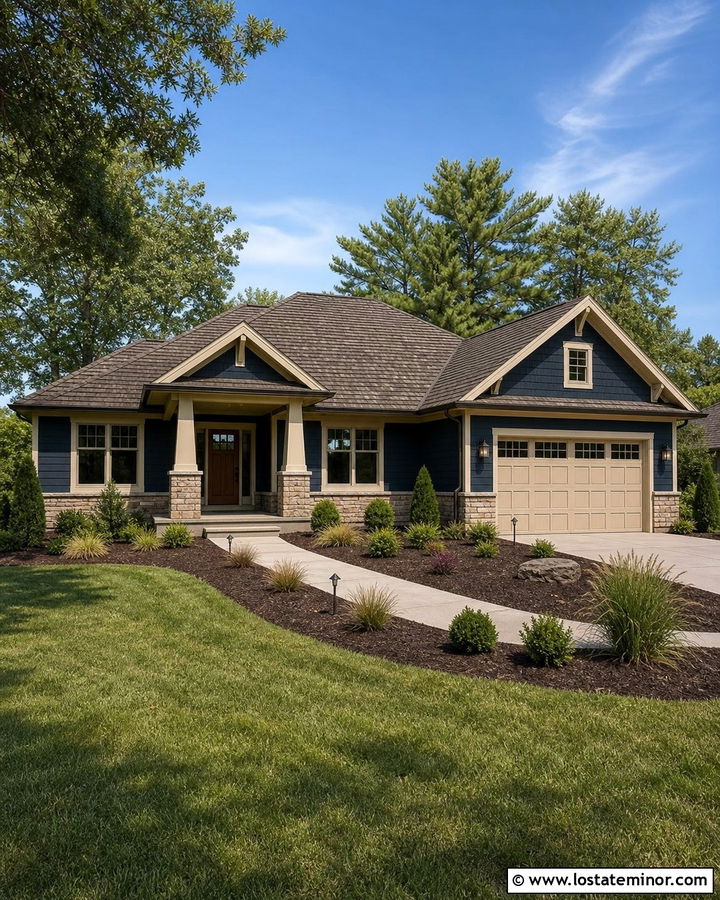
Navy can work with a brown roof when warm neutrals are deliberately repeated throughout the facade. Paint a traditional ranch or Craftsman home in Sherwin-Williams Sea Serpent, then use light beige on the window trim, fascia, garage door, and porch columns. A dimensional brown roof with charcoal flecks will connect more naturally to the blue than a strongly red-brown shingle. Add tan stone along the foundation and a medium walnut front door. Dark bronze gutters and lights can bridge the brown and navy surfaces. Avoid introducing bright white, which may make the beige look dull. Warm concrete, natural mulch, ornamental grasses, and evergreen shrubs will complete a balanced exterior that respects an existing brown roof while giving the house a substantial color update.
Conclusion:
The most successful navy exterior is designed as one connected palette rather than a collection of separate paint choices. White creates sharp definition, while cream, greige, taupe, and natural wood bring warmth. Black and charcoal trim produce a stronger modern look. Stone, brick, roofing, doors, and metal finishes should also support the siding instead of competing with it. Before committing, test large samples on several sides of the house and examine them in morning, midday, and afternoon light. Dark blues can shift considerably depending on exposure and nearby materials. Use these 30 Navy Blue House Design With Trim Ideas to build a complete scheme that suits your architecture, setting, and existing exterior finishes.

Related posts: