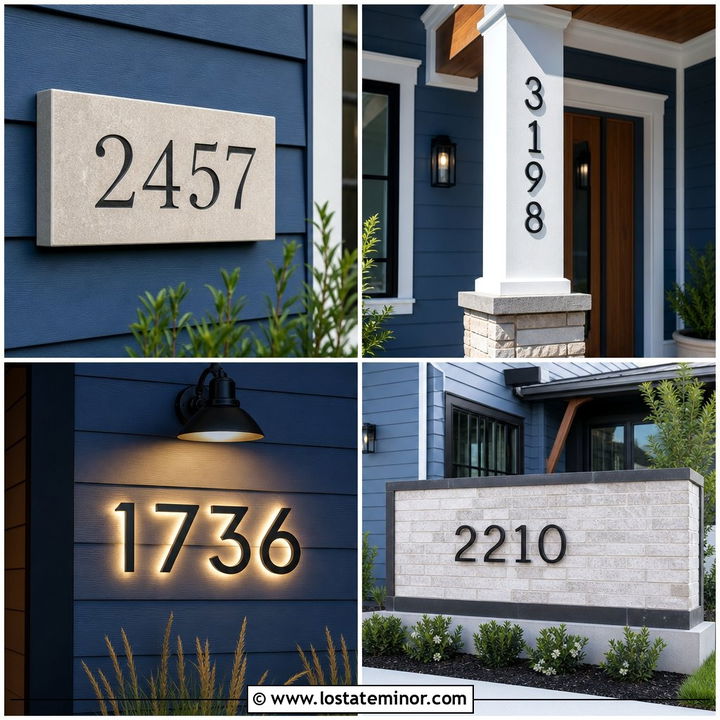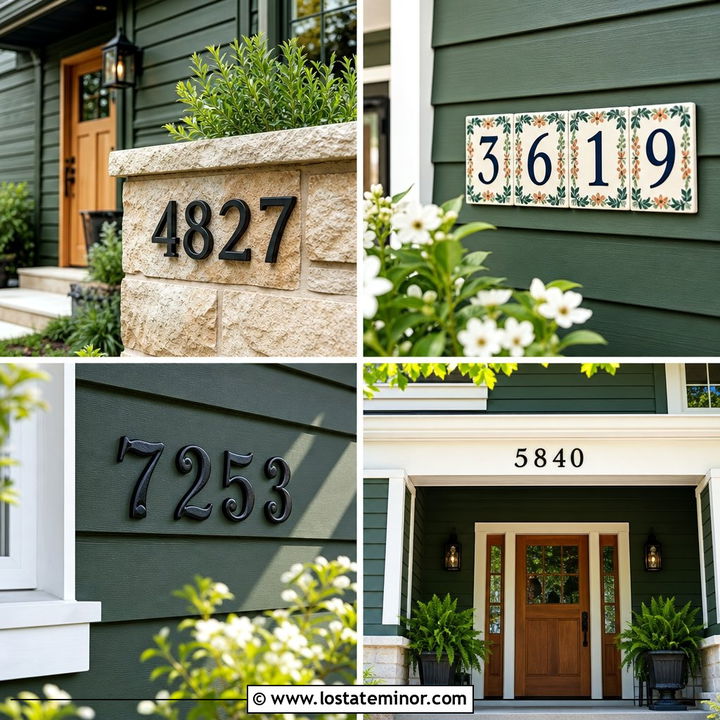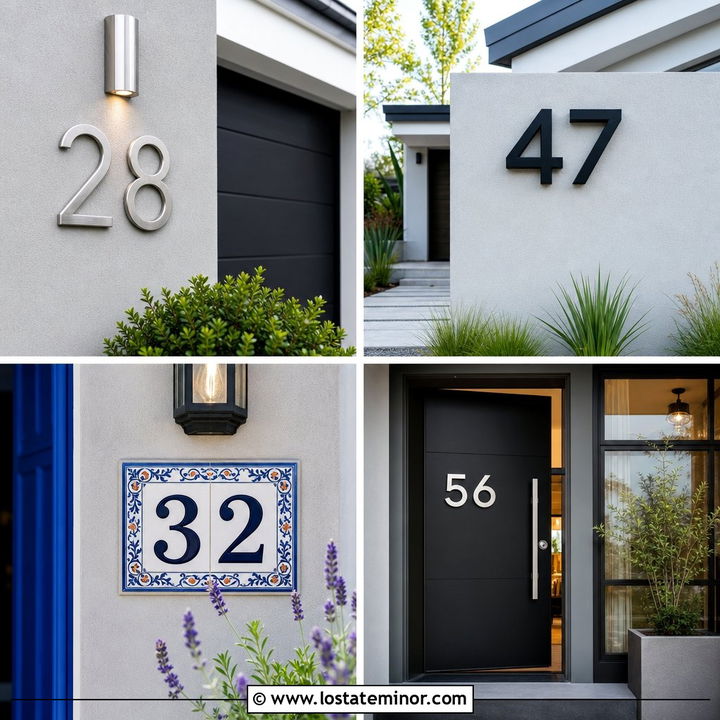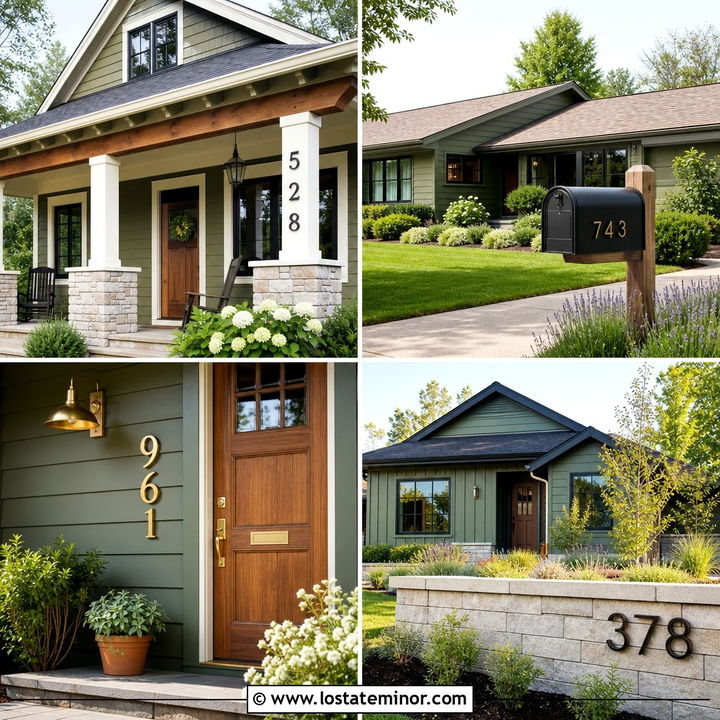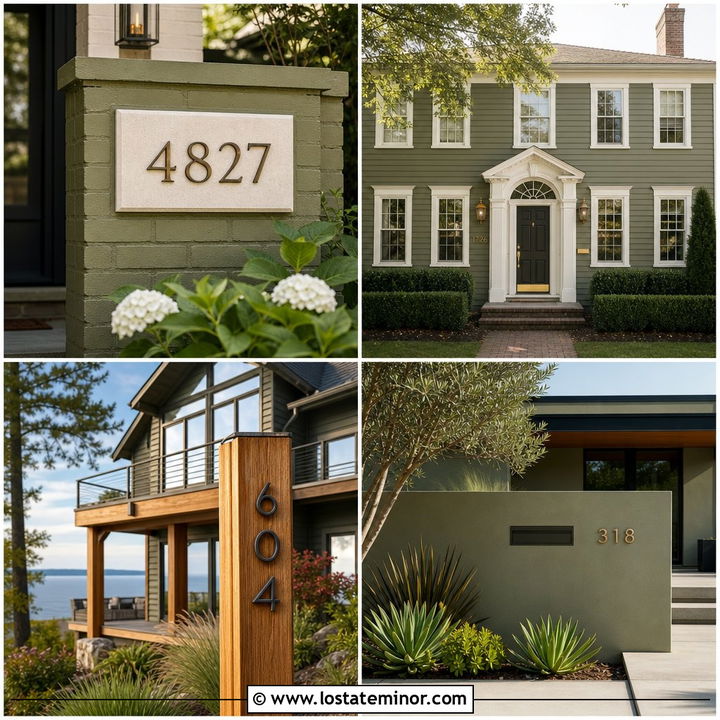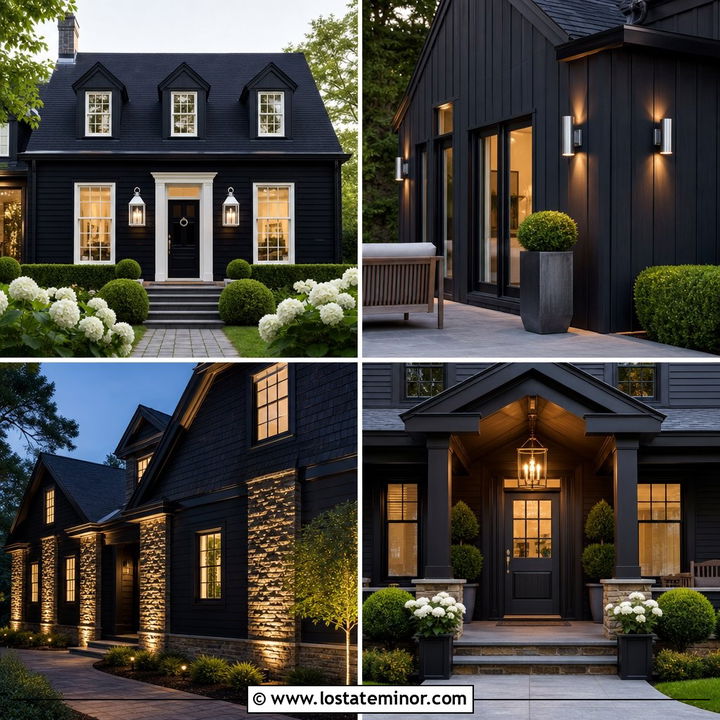
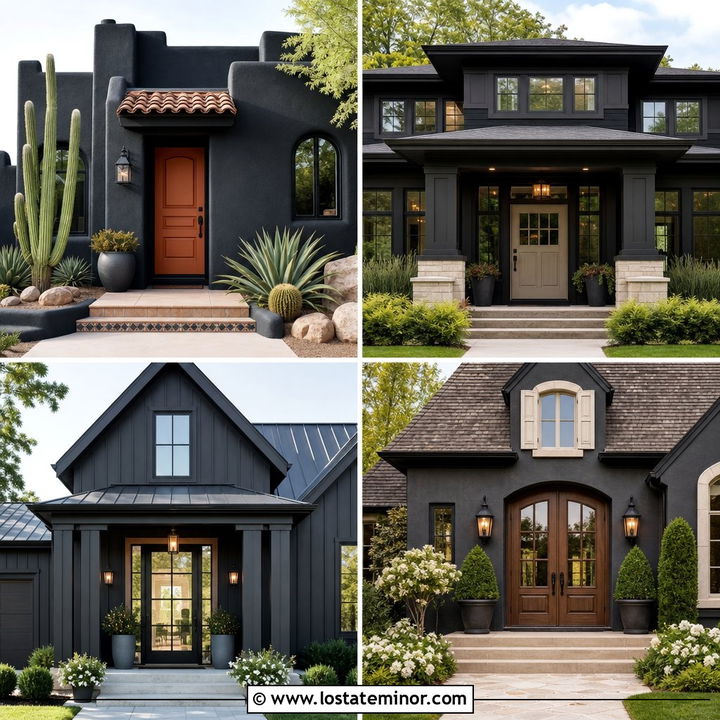
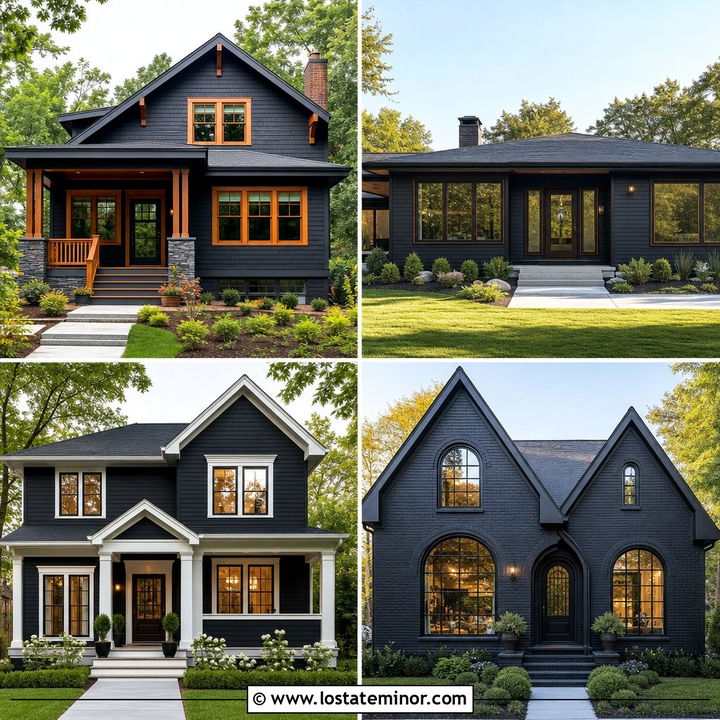
A jet black exterior can make almost any home look sharper, more modern, and more connected to its surroundings. House numbers become especially important within this dark color scheme because they must provide clear contrast while supporting the architecture. Warm brass can add elegance, cedar can soften the black paint, and bright white numbers can create crisp visibility from the street. Placement matters just as much as finish. Numbers may sit beside the front door, above the garage, on a porch column, or within a freestanding landscape sign. The best option feels proportional to the facade and remains easy to read. These 30 Jet Black House Design With House Numbers Ideas explore complete exterior combinations for many home styles, materials, and budgets.
1. Jet Black Modern House With Brass Numbers
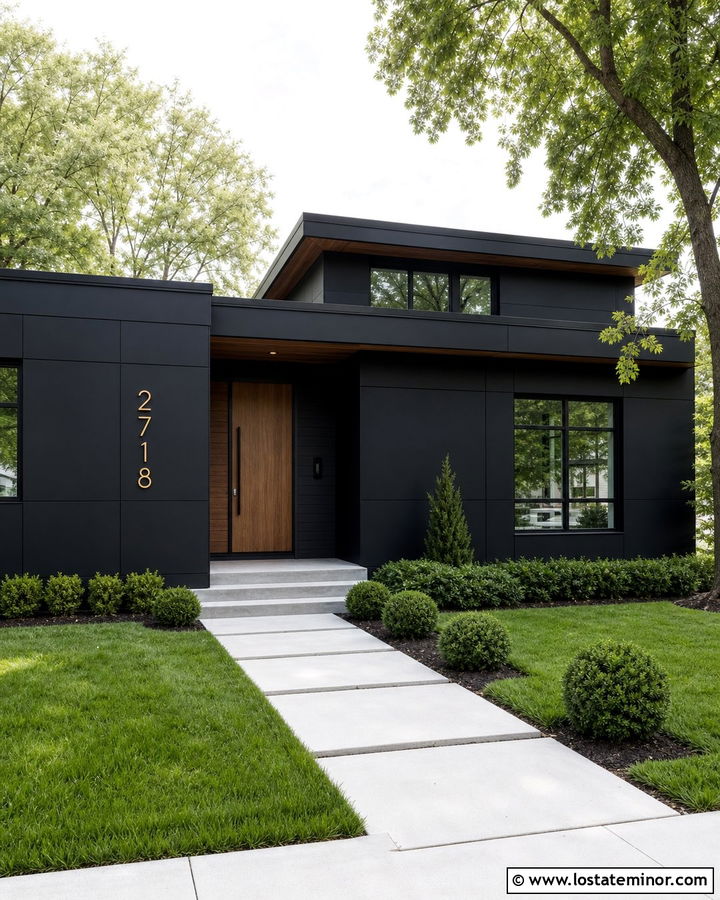
Brushed brass house numbers bring warmth to a jet black modern exterior without weakening its dramatic appearance. Choose large, simple numerals and mount them vertically beside a natural walnut front door. The warm wood and muted brass prevent the black facade from feeling flat or overly stark. Black-framed windows, smooth fiber cement panels, and a low charcoal roof keep the architecture clean. A pale concrete walkway adds another layer of contrast while directing attention toward the entry. Use a slim black wall light above the numbers so they remain visible after sunset. This scheme works especially well when the brass finish coordinates with the door handle, mailbox, and entry hardware. Repeating the metal sparingly creates a polished, intentional result.
2. Jet Black Farmhouse With White Numbers
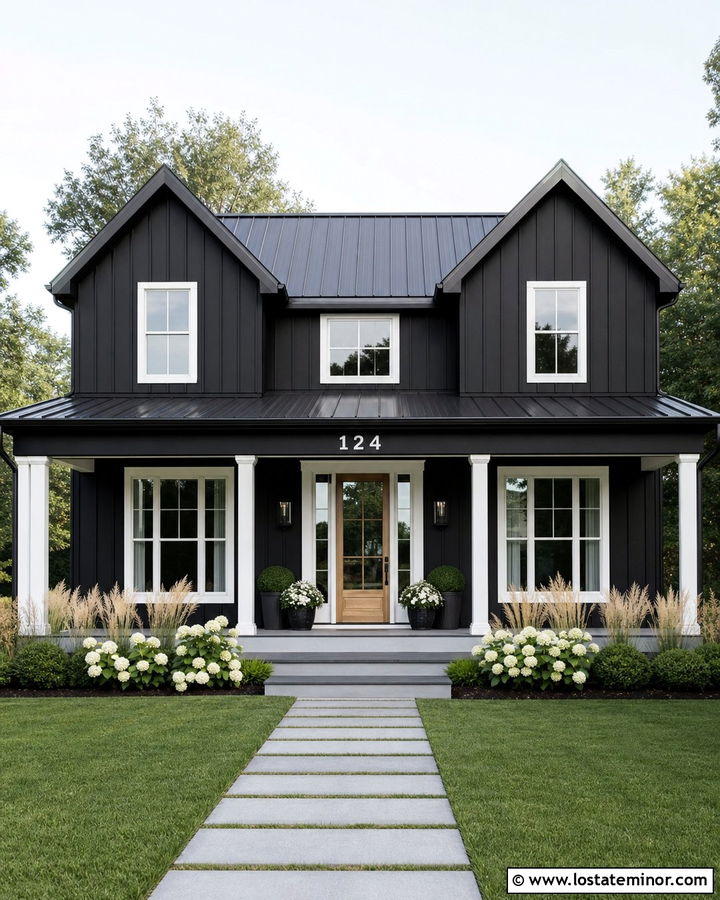
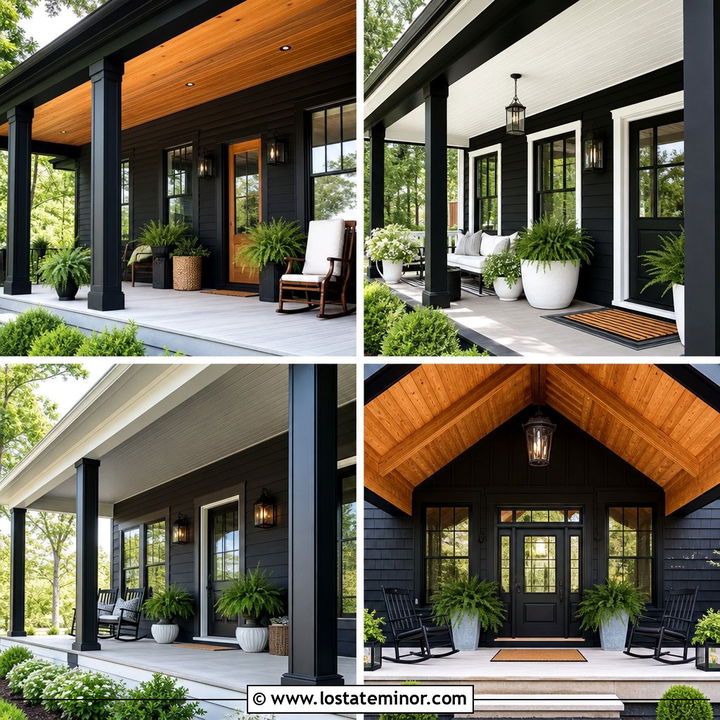
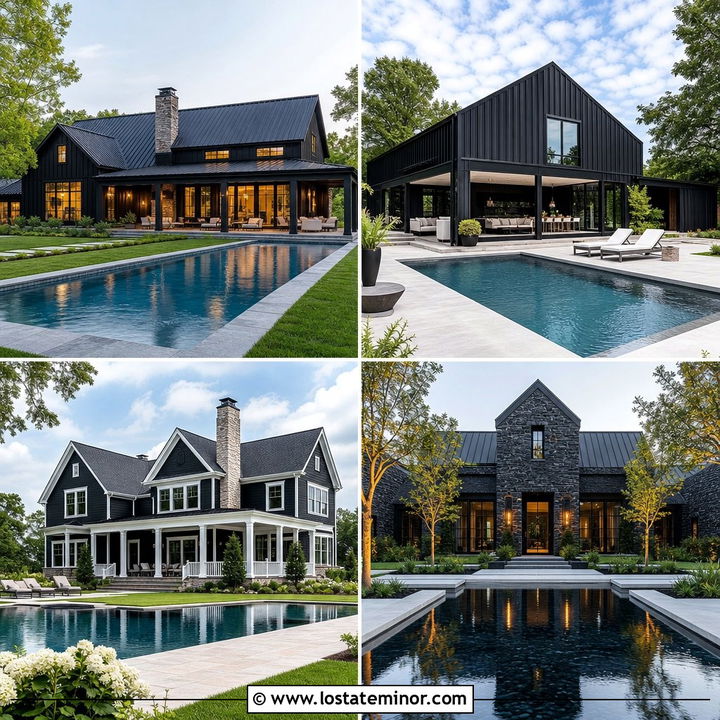
Crisp white house numbers look clean and highly visible against jet black board-and-batten siding. On a modern farmhouse, place oversized numbers beside the front door or horizontally across a wide porch beam. White window trim and porch columns can repeat the number color, creating a balanced black-and-white scheme. A medium-toned cedar front door introduces natural warmth, while a charcoal metal roof supports the dark exterior. Keep the porch floor light gray so the entrance does not disappear into the facade. Simple black sconces preserve the streamlined farmhouse character without adding unnecessary visual clutter. Finish the landscaping with soft ornamental grasses, hydrangeas, and a straight concrete walkway. The complete exterior feels bold but welcoming because every white detail has a clear architectural purpose.
3. Jet Black Craftsman House With Cedar Number Plaque
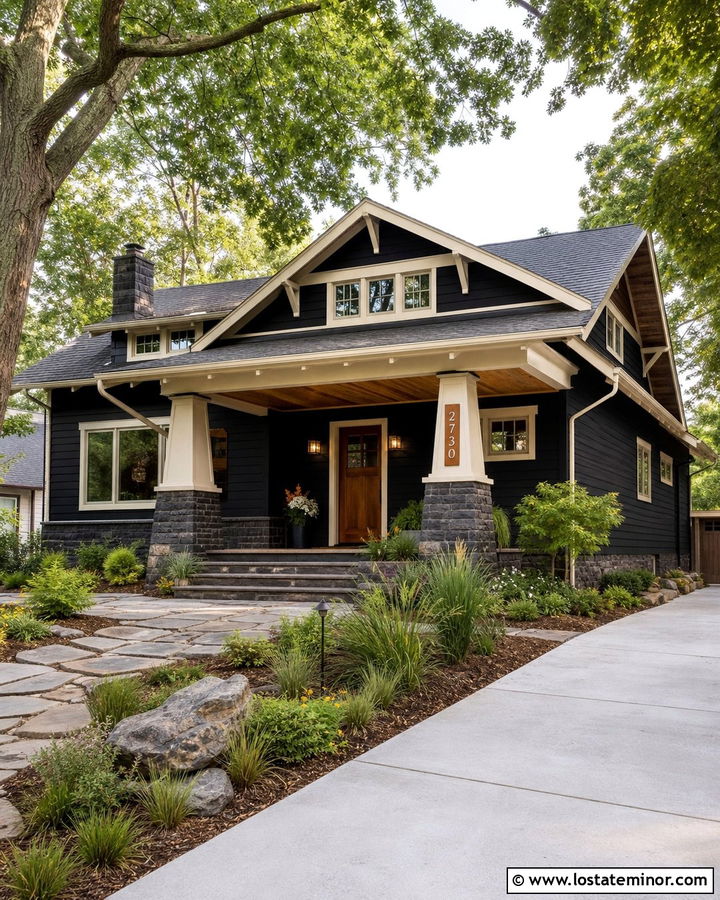
A vertical cedar plaque gives a jet black Craftsman home the warmth and handcrafted detail this architectural style needs. Mount bright white or satin aluminum numbers on the wood so the address remains readable from the street. Repeat the cedar on the front door, porch ceiling, and tapered column details to connect the plaque with the whole facade. Black lap siding can cover the main body, while dark stone around the foundation adds rugged texture. Creamy off-white window trim provides controlled contrast without making the exterior look too busy. A deep porch, exposed rafter tails, and low landscaping preserve the welcoming Craftsman shape. Choose a clear exterior sealant for the cedar to maintain its natural color and protect the number display from moisture.
4. Jet Black Ranch House With Backlit Numbers
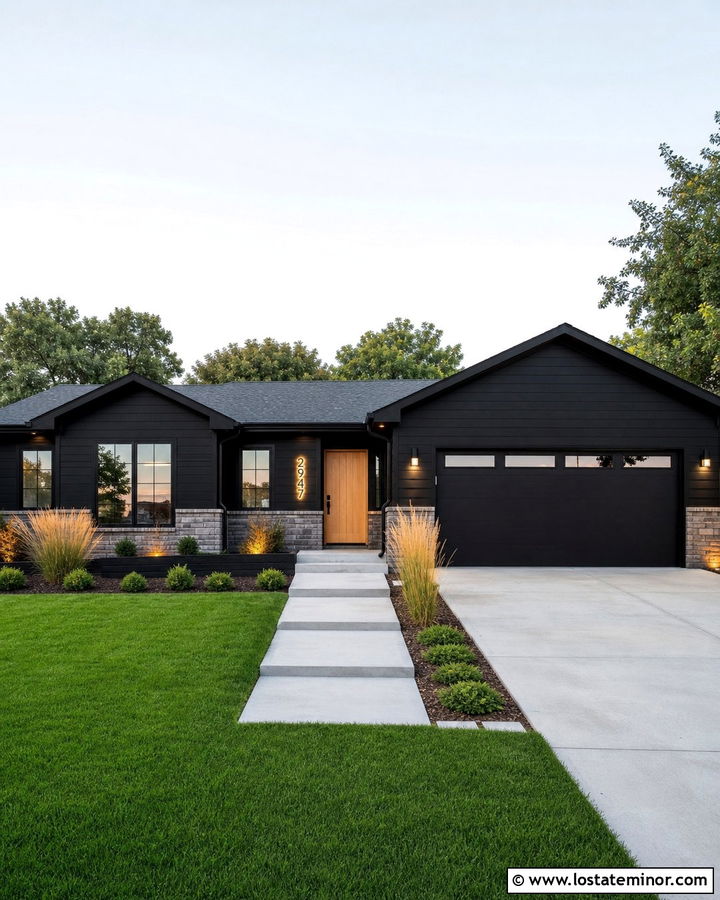
Backlit house numbers can turn a simple jet black ranch into a polished contemporary home. Install large floating numerals on a smooth panel near the front door, allowing soft white light to form a clear outline behind each digit. The illumination improves nighttime visibility while emphasizing the home’s long horizontal facade. Pair the black siding with a light oak door, charcoal roof, and warm gray stone along the lower walls. Wide black-framed windows and a matching garage door preserve the low, streamlined appearance. A broad concrete path can lead through drought-tolerant grasses and compact shrubs toward the illuminated entry. Keep other decorative details minimal. The glowing numbers should serve as a practical focal point rather than competing with multiple lights, plaques, or contrasting materials.
5. Jet Black Colonial House With Gold Numbers
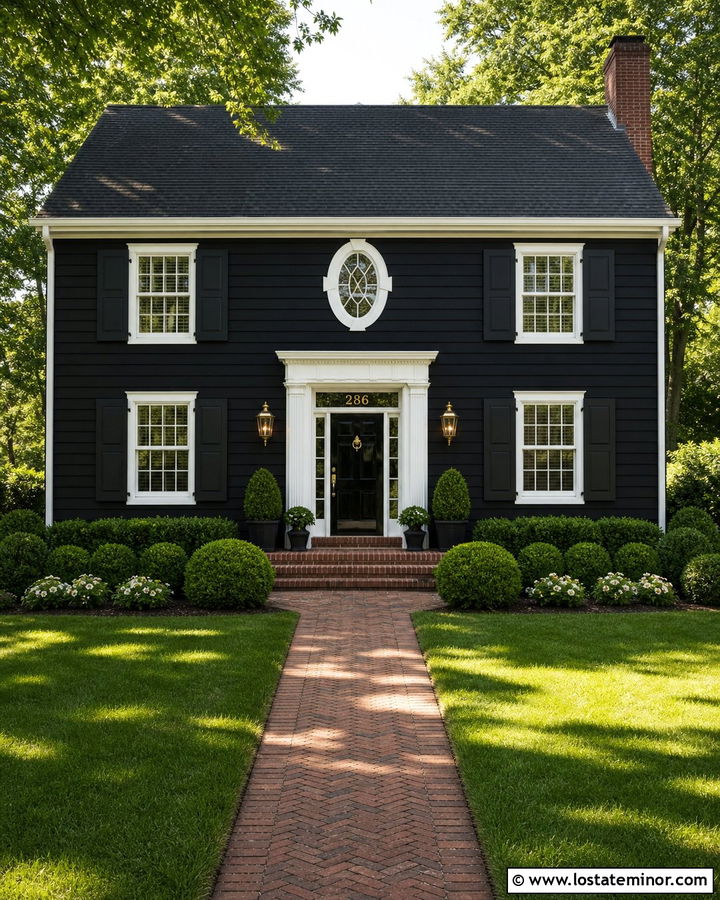
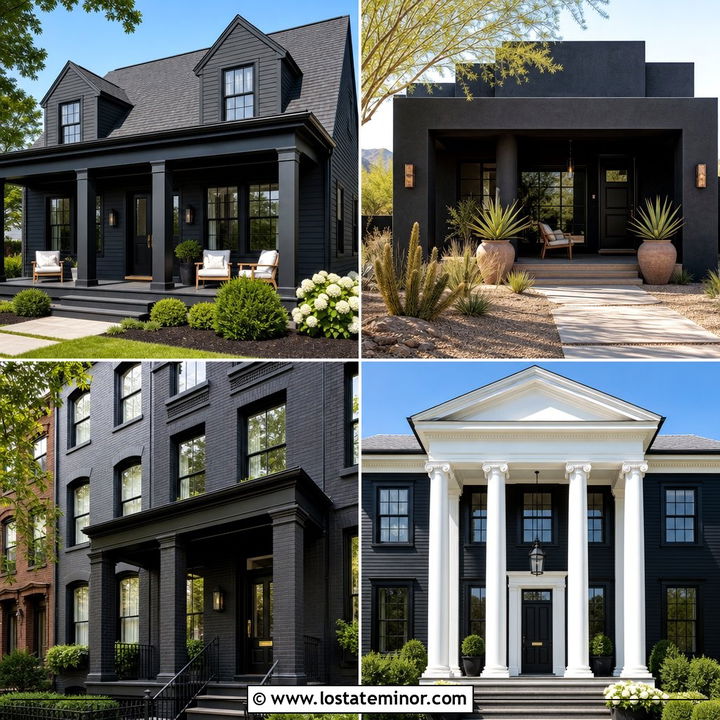
Could a traditional Colonial handle a jet black exterior? Yes, especially when symmetrical architecture and warm gold house numbers keep the facade refined. Paint the clapboard siding deep black while using soft white around the windows, cornice, and classical entry surround. Place traditional serif numbers above a glossy black front door or across the white transom panel. A restrained antique gold finish connects beautifully with brass door hardware and lantern-style lights. Dark shutters can blend into the siding, allowing the bright trim and centered entrance to define the house. Red brick steps add historical warmth at ground level. Rounded shrubs, a straight walkway, and balanced foundation plantings reinforce the Colonial symmetry. The final scheme feels formal and updated rather than trendy or overly modern.
6. Jet Black Bungalow With Copper Numbers
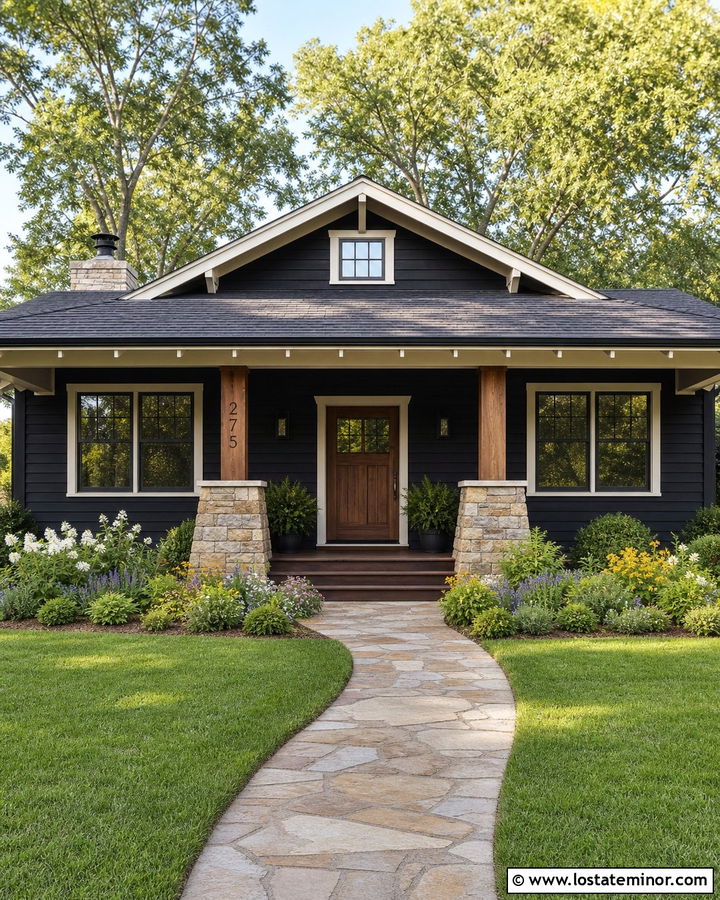
Copper house numbers add a rich, changing finish to the deep facade of a jet black bungalow. New copper provides a bright reddish glow, while naturally weathered copper develops a softer, aged character. Mount the numbers on a porch column where they can be viewed clearly from the sidewalk. Repeat the metal on the mailbox, rain chain, or porch light for a connected look. Black horizontal siding, a cedar front door, and warm stone porch piers give the compact home plenty of texture. Cream window trim can highlight the bungalow’s low roofline and divided-light windows. Surround the porch with layered native plants and a curved stone path. The copper becomes a small but memorable accent that complements both the black paint and the home’s relaxed architecture.
7. Jet Black Split-Level House With Vertical Numbers
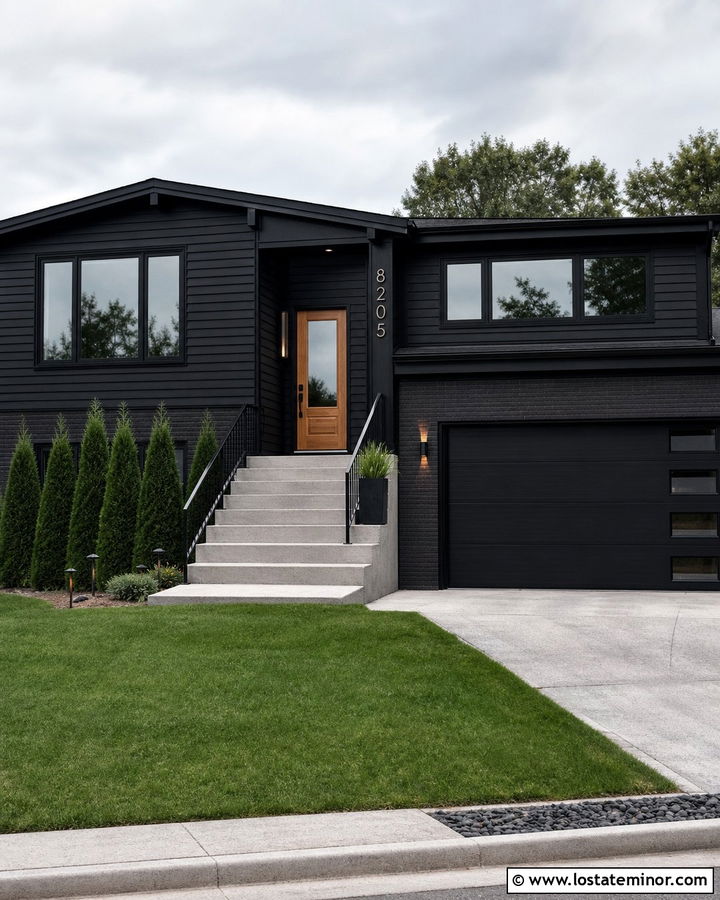
Vertical house numbers help emphasize height on a jet black split-level home, particularly when the entrance sits between two visual levels. Install tall white or stainless steel numbers along a narrow panel beside the front door. This creates an obvious destination within an otherwise offset facade. Use black lap siding across the upper story and dark charcoal brick below for subtle material variation. A warm oak door and matching garage accents can soften the black exterior. Replace small traditional lights with a long vertical sconce that follows the direction of the numbers. Broad concrete steps, simple metal railings, and structured evergreen beds complete the update. The result preserves the split-level structure while giving it a cleaner, more intentional curb presence from the street.
8. Jet Black Cape Cod House With Silver Numbers
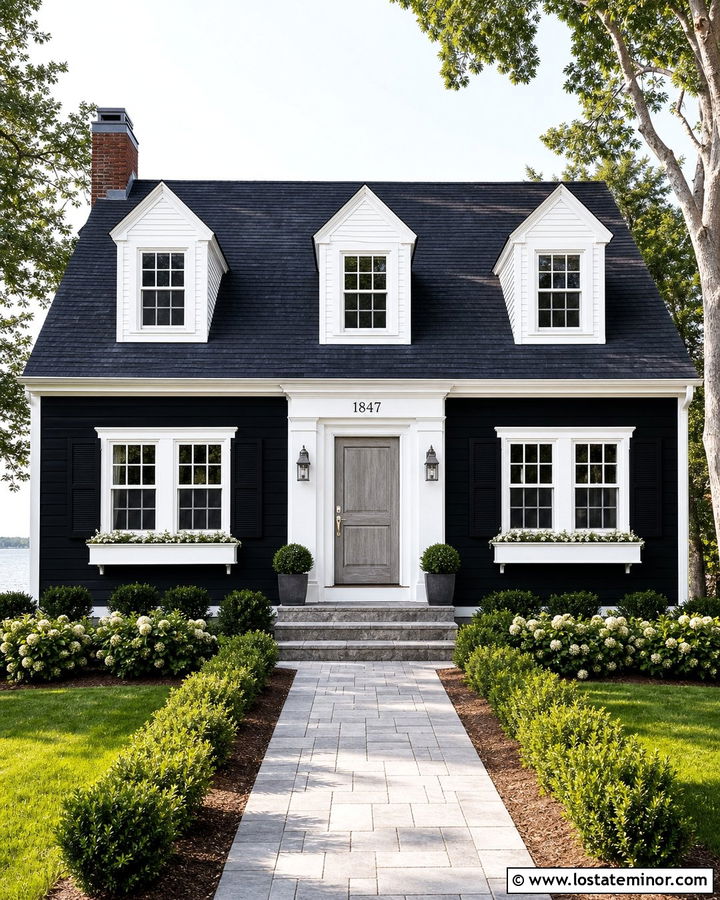
Satin silver house numbers add a crisp coastal note to a jet black Cape Cod without relying on a predictable blue-and-white palette. Position the numbers on the white door surround, where their cooler finish can remain visible against the light background. Jet black shingles or clapboard siding give the compact facade depth, while white window trim, dormers, and fascia preserve familiar Cape Cod character. A weathered gray front door can bridge the dark body and silver accents. Use matching nickel hardware and simple lanterns rather than mixing several metal finishes. Gray stone steps and low boxwood borders keep the entrance neat. The contrast between black siding and white architectural details makes the small home appear defined, while silver numbers provide a polished finishing touch.
9. Jet Black Cottage With Ceramic Number Tile
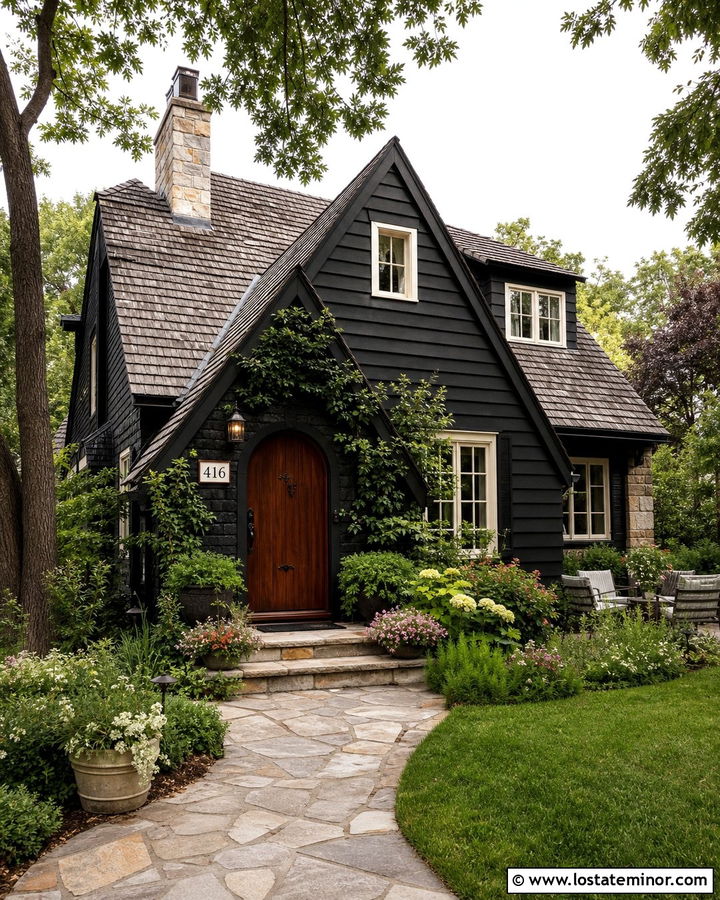
A handcrafted ceramic number tile can give a jet black cottage a charming focal point without making the exterior feel overly decorative. Select a tile with a warm white background and black, blue, or terracotta numerals. Place it beside an arched wood door where its shape can complement the cottage architecture. Black-painted stucco or narrow lap siding forms a dramatic base for creamy window trim and natural stone accents. Add a cedar shingle roof or weathered gray roofing to soften the dark walls. Climbing greenery, flowering borders, and an irregular flagstone path create a relaxed garden setting. Keep exterior lighting simple so the colorful tile remains noticeable. This combination brings personality to the facade while maintaining the address visibility every well-planned entrance needs.
10. Jet Black Mid-Century House With Floating Numbers
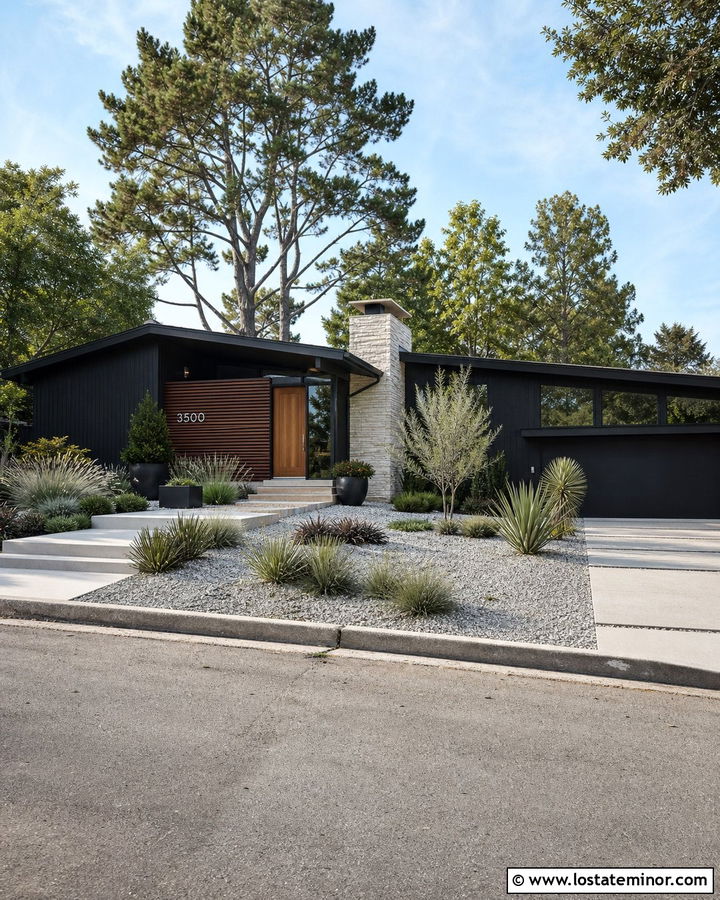
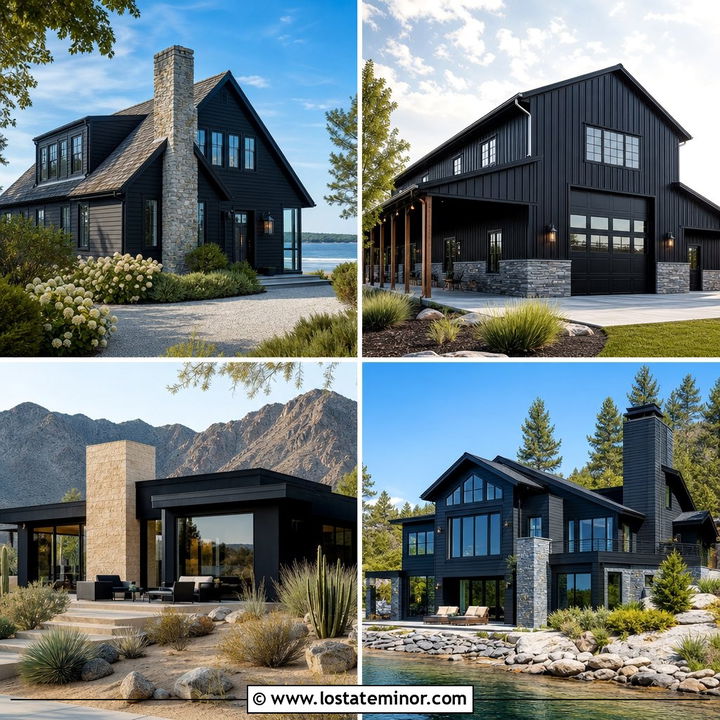
Clean floating numbers are a natural match for a jet black mid-century modern exterior. Choose wide sans-serif numerals in brushed aluminum and mount them horizontally on a cedar slat wall near the entry. The gap behind each number creates a subtle shadow that adds depth without excessive ornament. Use jet black vertical siding on the main house, warm cedar beneath the roof overhang, and pale stone around the chimney or planter walls. An orange, mustard, or walnut front door can introduce period-appropriate warmth. Large windows and a low roofline should remain the main architectural features. Finish the yard with gravel, sculptural plants, and broad concrete pavers. The address display then feels like part of the original composition rather than an accessory added later.
11. Jet Black Tudor House With Bronze Numbers
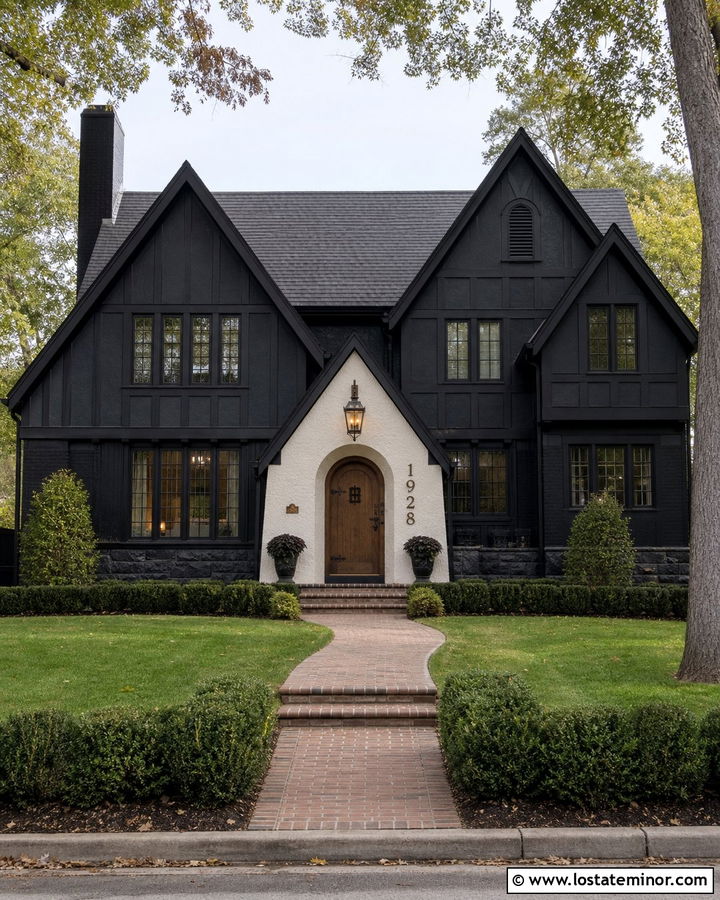
Dark bronze house numbers support the historic character of a jet black Tudor while still providing enough warmth to stand apart from the siding. Mount classic numerals on a cream stucco panel beside the arched front door. Black-painted timber details can divide the lighter entry area from the jet black upper siding and dark masonry below. A stained oak door, copper lantern, and bronze hardware create a layered old-world palette. Avoid numerals that are too ornate, since complicated shapes can be difficult to read from the road. Steep rooflines, leaded windows, and a curved brick walkway reinforce the Tudor architecture. With thoughtful contrast, the numbers remain functional while the surrounding wood, metal, stucco, and black paint create a cohesive traditional exterior.
12. Jet Black Brick House With White Numbers
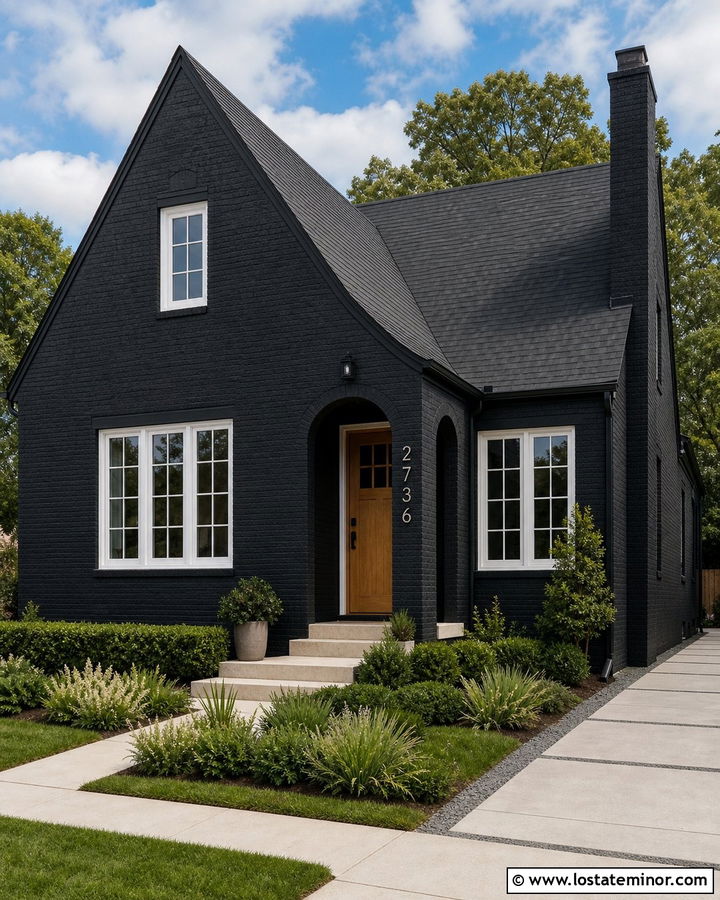
Painting brick jet black produces a strong, textured exterior that benefits from simple white house numbers. Choose tall numerals with clean lines and mount them beside the front door, where the bright finish will stand out against the uneven masonry. A natural oak or medium cedar door prevents the black brick from feeling too cold. White window trim can repeat the number color, while black gutters and fascia allow the roofline to recede. Consider a pale limestone stoop and matching path to introduce a durable light surface near the entrance. Structured hedges and soft grasses keep the landscaping from competing with the brick texture. The contrast is straightforward, but it makes the address easy to locate and gives an older brick home a confident, updated appearance.
13. Jet Black Stucco House With Limestone Number Panel
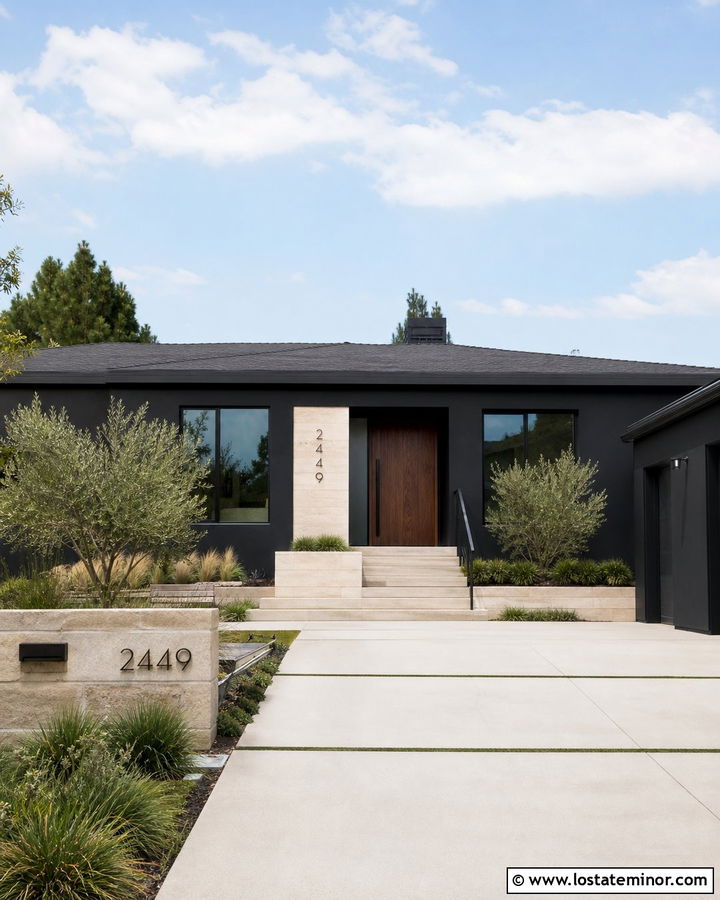
A pale limestone number panel creates striking contrast on a jet black stucco exterior. Recess the rectangular panel beside the front door and attach slim black or bronze numbers to its smooth face. This approach makes the address visible while connecting it to other masonry details around the house. Use limestone at the entry steps, low garden walls, or chimney to repeat the material naturally. A dark wood pivot door and black-framed windows can support a warm contemporary palette. Flat or low-pitched rooflines keep the architecture clean, while olive trees and ornamental grasses soften the strong geometry. The limestone should be large enough to look integrated with the facade rather than attached like a small plaque. Its light color also helps define the entrance from a distance.
14. Jet Black House With Numbers Above Garage
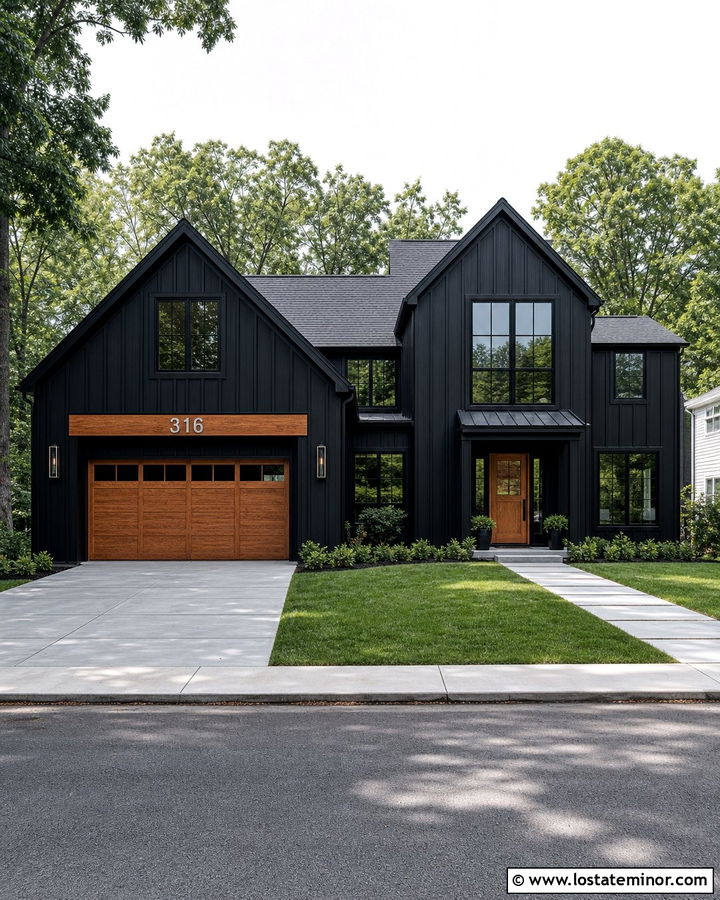
House numbers above the garage can be highly effective when the garage faces the street more directly than the front door. On a jet black exterior, mount large white or brushed steel numerals across a light wood header above the garage opening. The warm header should coordinate with a cedar garage door and matching front entry. Black board-and-batten siding, charcoal shingles, and dark window frames create a continuous backdrop. Add one focused light above the numbers to improve nighttime readability without washing out the entire facade. A clean driveway, low foundation plants, and a separate walkway toward the porch establish an organized curb view. Keep the number spacing generous and level. This placement turns a wide garage elevation into a useful part of the exterior design.
15. Jet Black House With Numbers On Porch Column
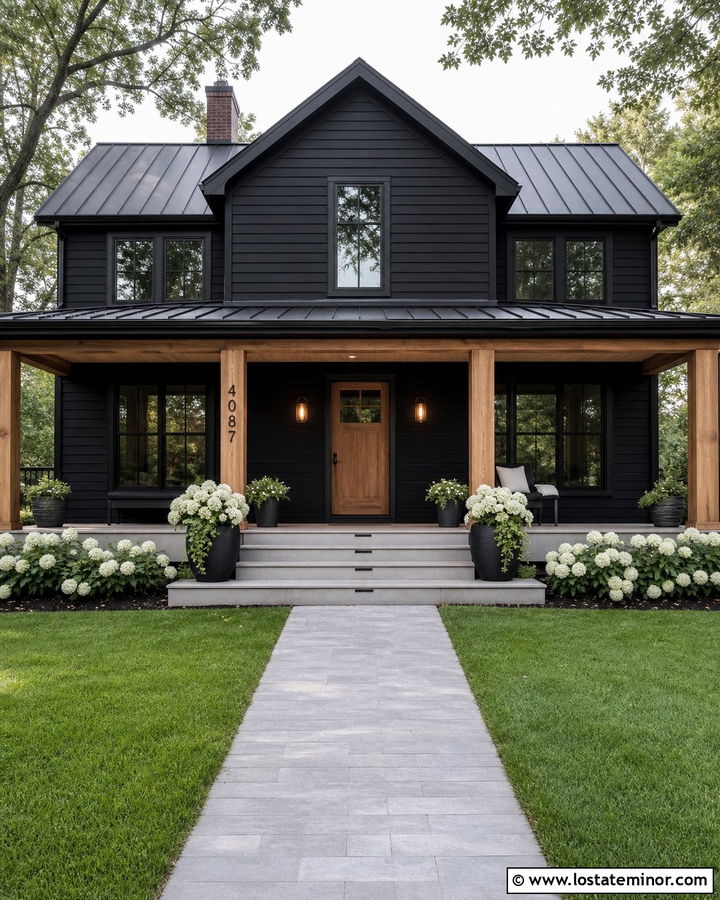
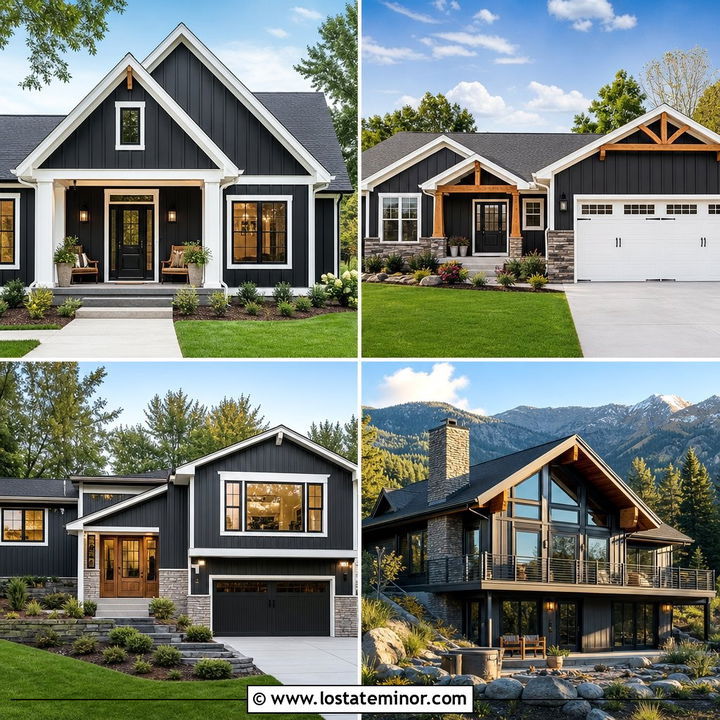
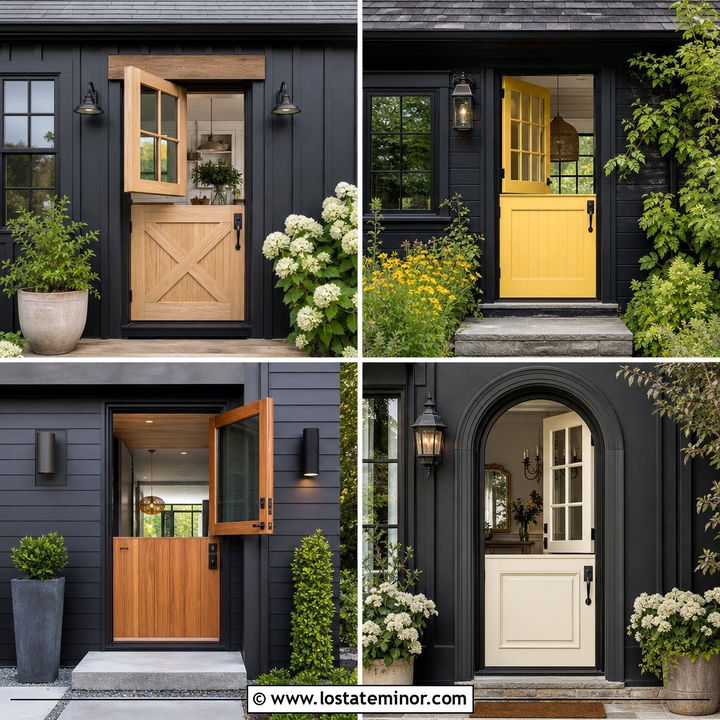
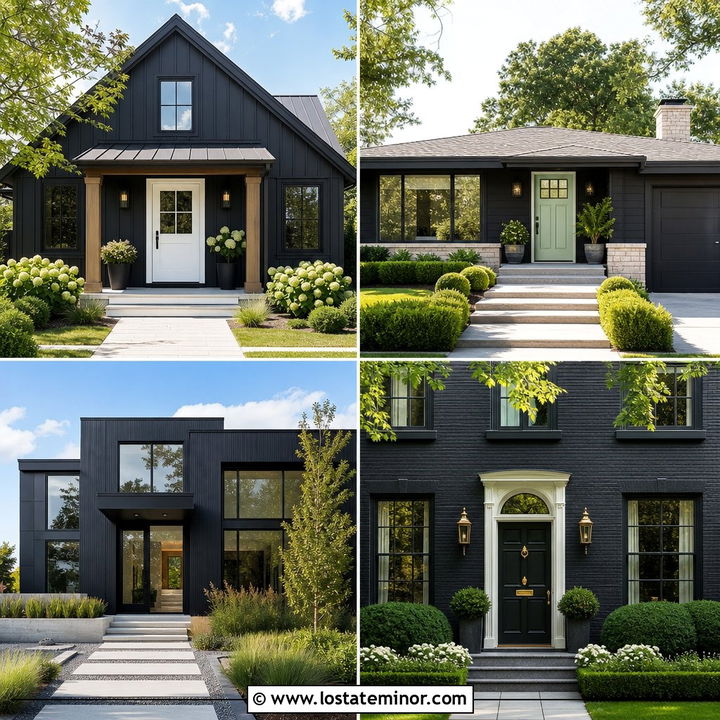
A porch column offers a visible and architecturally grounded location for house numbers. Paint the home’s siding jet black, but finish the selected column in warm cedar or bright white to create contrast. Arrange large numbers vertically down the upper portion of the column, keeping them above railings and nearby plants. A black metal roof, matching gutters, and simple window trim can maintain the dark exterior theme. Repeat the column material on the front door, porch ceiling, or stair treads so the number display feels connected to the full house. Wide steps and symmetrical planters help direct attention toward the entry. This solution works particularly well on farmhouses, Craftsman homes, and deep-front-porch designs where wall space beside the door may be limited.
16. Jet Black House With Numbers On Stone Pillar
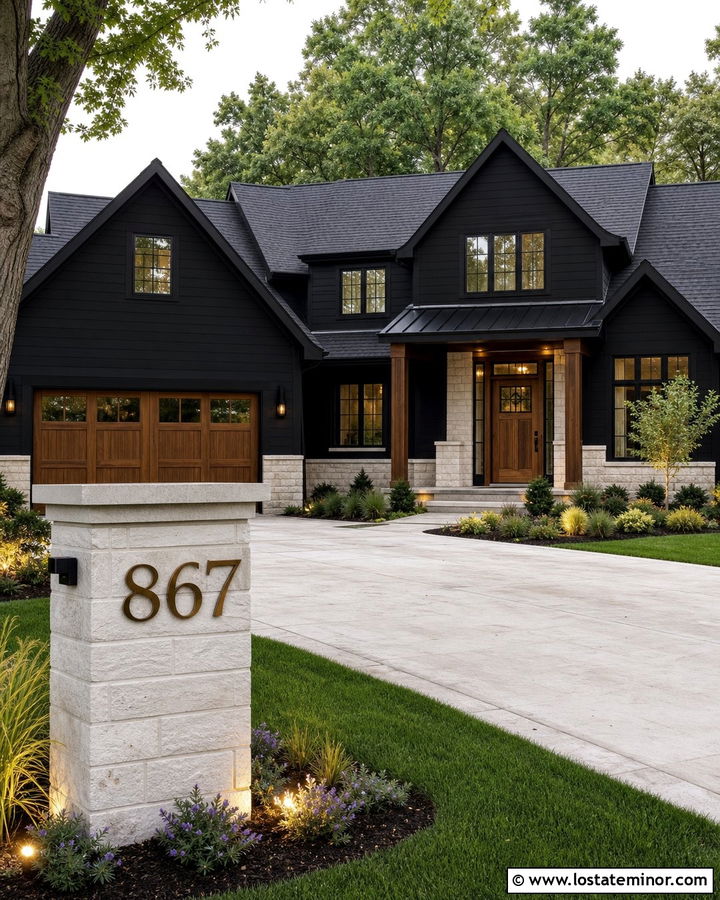
Stone pillars can carry house numbers closer to the street when a jet black home sits far back from the road. Build a low monument from pale limestone or warm ledgestone and mount oversized black, bronze, or stainless numerals on the front. Position it near the driveway entrance without hiding the house behind a large structure. On the home itself, combine jet black siding with matching dark windows, a cedar garage door, and stone accents that repeat the pillar material. Soft landscape lighting can illuminate the sign and surrounding plants after dark. Use low shrubs around its base so the address remains unobstructed. Repeating the same stone at the porch or foundation makes the freestanding number pillar feel like an intentional extension of the home’s architecture.
17. Jet Black House With Numbers On Wood Slats
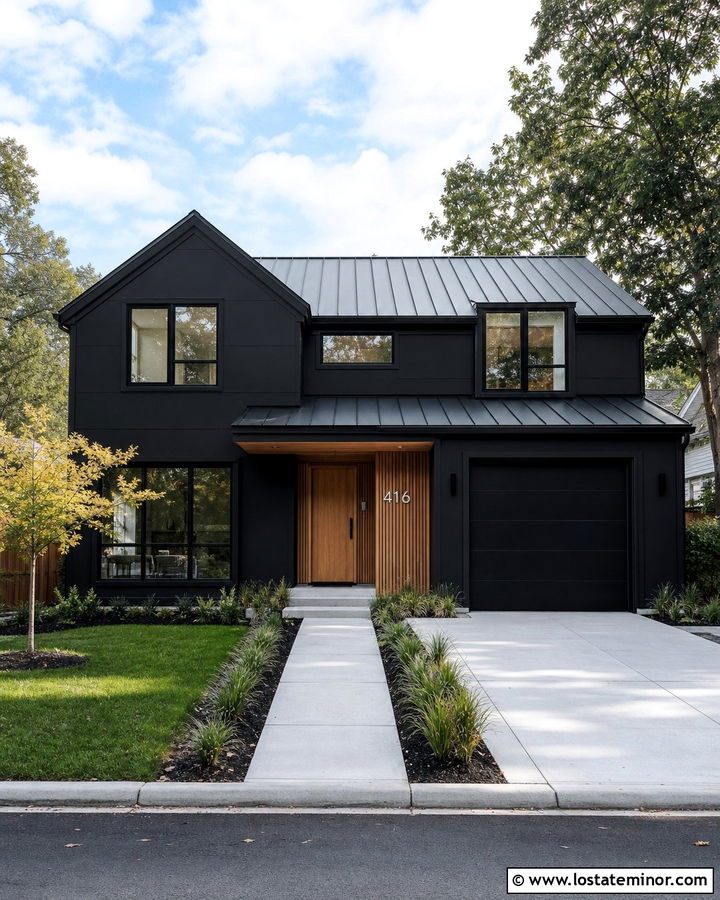
A vertical wood-slat panel introduces rhythm and warmth beside the entrance of a jet black contemporary house. Use cedar, thermally treated ash, or another exterior-grade wood, then mount matte white or brushed aluminum numbers across the slats. The numerals need enough depth and spacing to remain legible against the repeating lines. Continue the wood onto the front door or soffit to create a complete material story. Smooth jet black panels, black window frames, and a charcoal standing-seam roof can form the main exterior envelope. A pale concrete path and minimalist planting beds provide needed brightness at ground level. The combination works best when the slatted panel is proportionate to the entry, making the house numbers appear integrated rather than squeezed into an available space.
18. Jet Black House With Illuminated Number Plaque
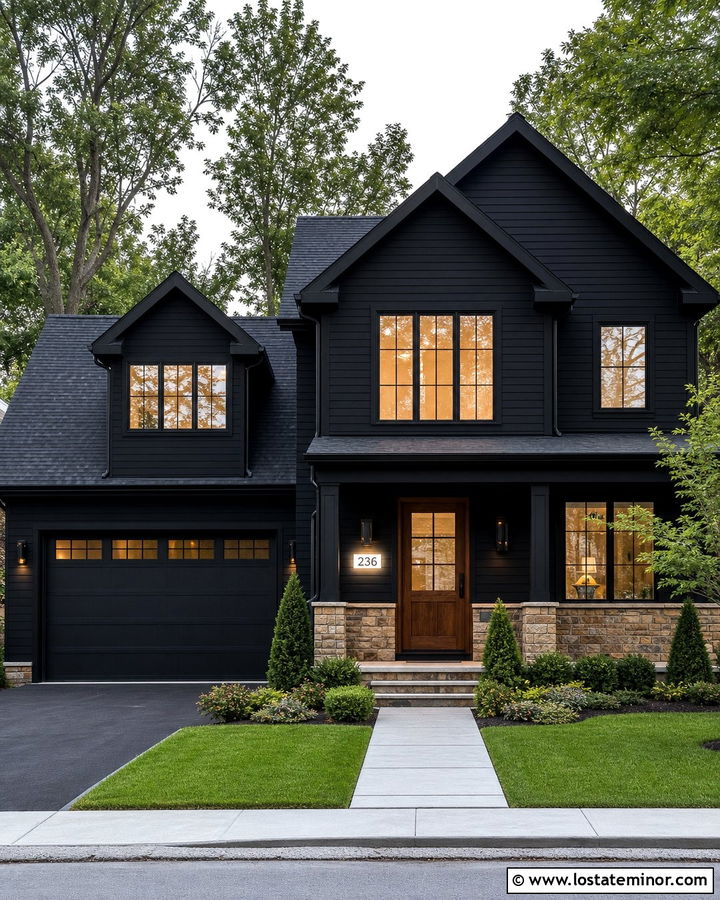
An illuminated plaque provides reliable address visibility while adding a refined focal point to a jet black home. Select a long frosted panel with dark numerals or a black plaque with internally lit white numbers. Mount it beside the garage or front door where it can be seen without landscaping or columns blocking the view. Pair black horizontal siding with a walnut entry door, dark gray roofing, and warm stone foundation accents. Keep nearby wall lights understated so the number plaque does not compete with several bright fixtures. A simple concrete walkway and low evergreen beds can frame the entrance. During the day, the plaque should look like a clean architectural element. At night, its even illumination makes the home easier for visitors and delivery drivers to identify.
19. Jet Black House With Concrete Address Sign
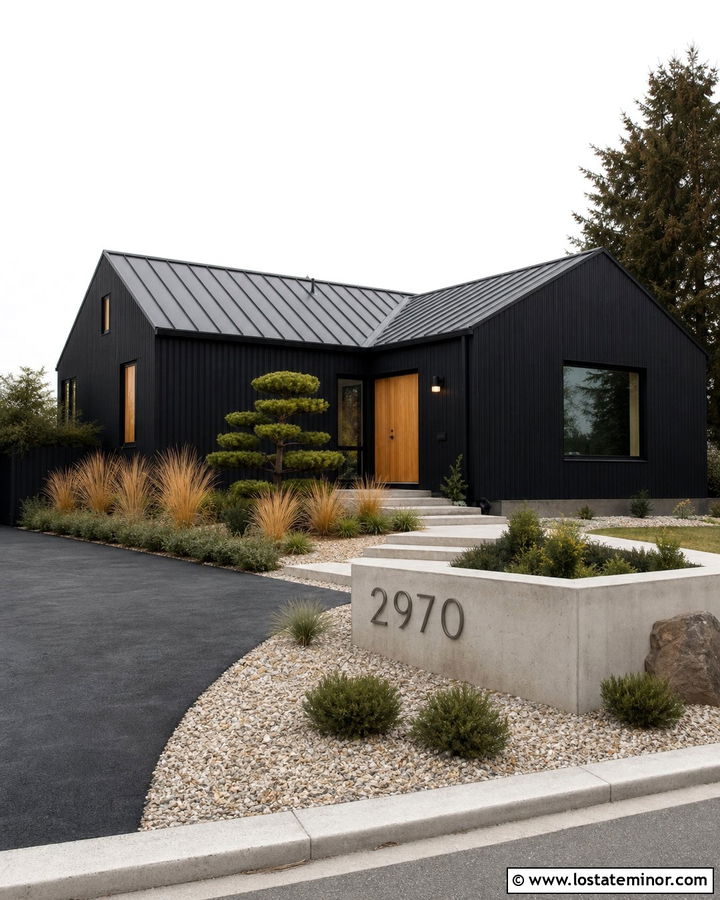
Raw concrete creates a sturdy, modern contrast against a jet black house exterior. Use a rectangular concrete address monument near the front path and inset large black metal or stainless steel numbers into its face. The sign can also hold a narrow planter, provided greenery never covers the address. Repeat concrete on the entry steps, walkway, and low retaining walls to make the monument part of the overall landscape design. Jet black vertical siding, a warm wood door, and charcoal metal roofing produce a restrained contemporary palette. Add a few pale grasses and sculptural evergreens to soften the hard surfaces. This complete scheme suits urban homes, desert houses, and minimalist builds where every exterior detail needs to combine practical function with clean architectural form.
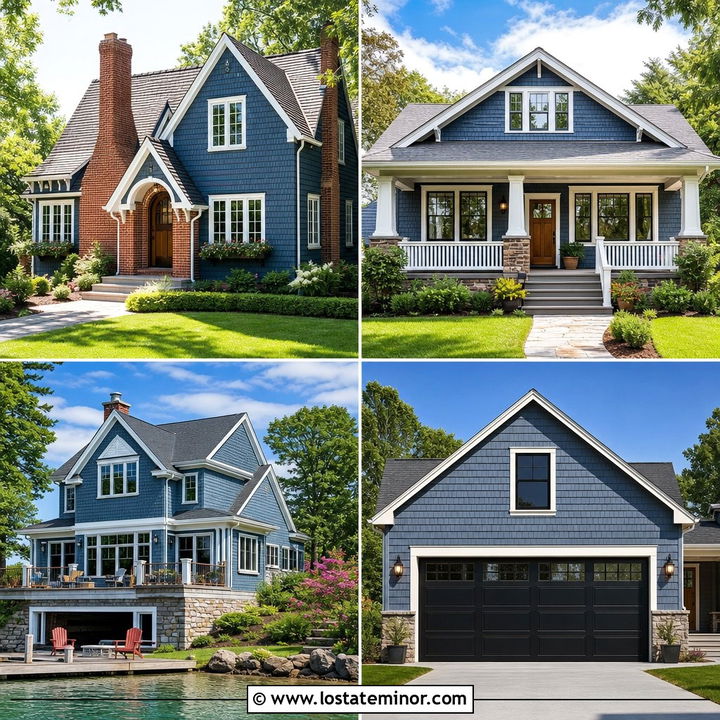
20. Jet Black House With Address Planter
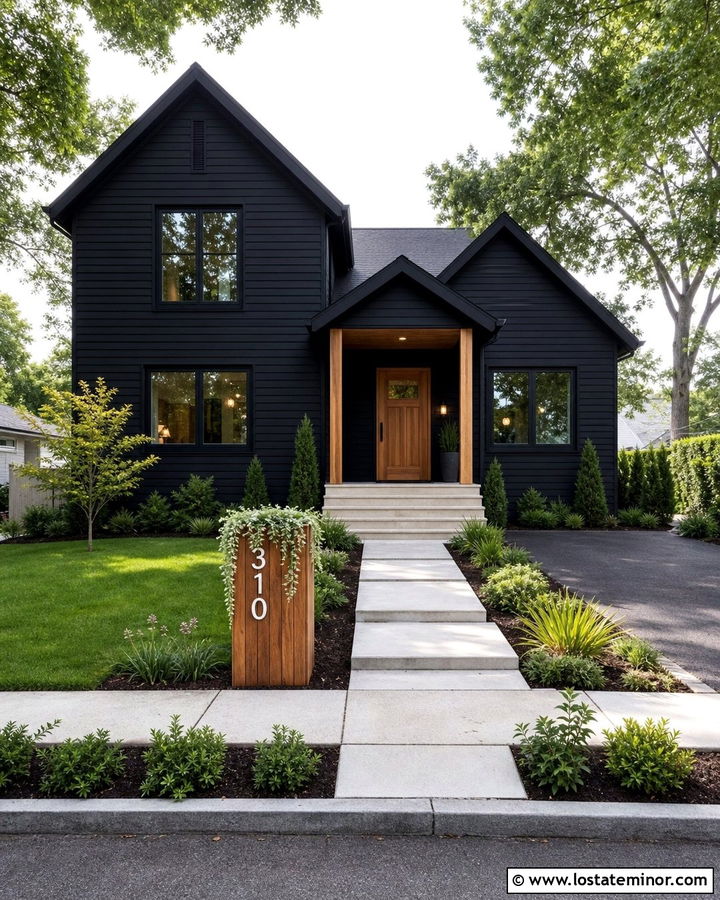
An address planter gives a jet black exterior a softer and more approachable entrance. Choose a tall cedar or light concrete planter with a broad front surface for large, contrasting numbers. Place it near the walkway where it remains visible from the street, but avoid positioning it behind seasonal flowers or tall ornamental grasses. Repeat the planter material on the front door, porch posts, or garage accents. Black lap siding and dark window frames create the dramatic base, while creamy stone steps introduce brightness. Fill the planter with compact evergreens, trailing foliage, or simple seasonal greenery that will not overwhelm the display. The combination works especially well on small homes with limited wall space around the door. It adds function, texture, and landscaping in one coordinated feature.
21. Jet Black House With Numbers On Front Door
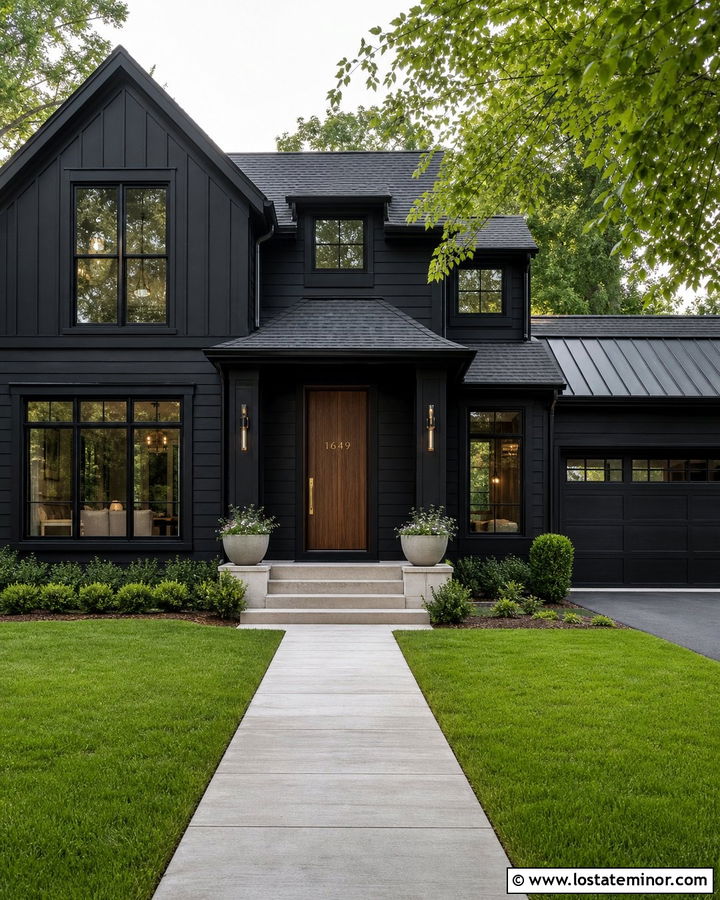
Placing house numbers directly on the front door can make a compact jet black facade feel organized and distinctive. Select an oak, walnut, or warm red cedar door that contrasts with the dark siding. Mount medium-sized black, brass, or stainless numbers near eye level, keeping them away from decorative glass and hardware. A simple sans-serif font suits modern homes, while a restrained serif can complement traditional architecture. Repeat the number finish on the door handle and porch light for visual consistency. Black siding, black-framed windows, and dark roofing create a seamless envelope around the warm entrance. Add pale stone steps, low planters, and a direct walkway to support visibility. This placement is best when the door remains clearly visible from the street or main approach.
22. Jet Black House With Numbers Beside Sidelight
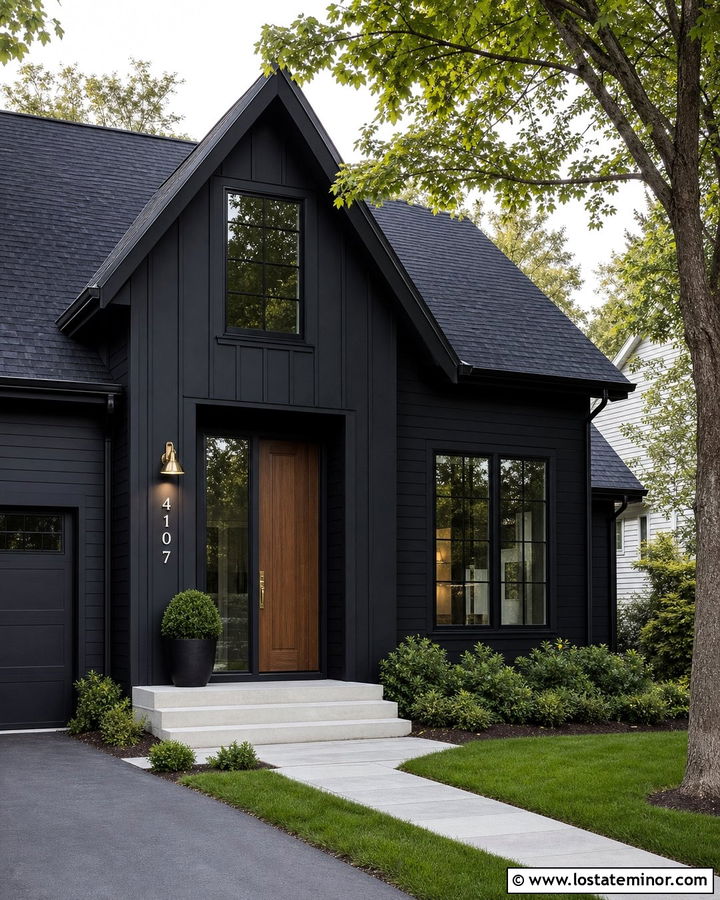
A sidelight creates a bright vertical area where house numbers can become part of the entrance composition. On a jet black house, apply dark metal numbers to a wide white trim board beside the glass, or mount white numbers on the black wall next to it. Keep the arrangement vertical to follow the sidelight’s proportions. A walnut front door and brass hardware can add warmth between the glass and dark siding. Continue black across the window frames, gutters, and roof for a unified exterior. Use a long downward-facing sconce to illuminate the address without producing glare on the glass. Light concrete steps and tidy foundation plants complete the entry. The result feels balanced because the numbers, sidelight, door, and lighting share one clear architectural zone.
23. Jet Black House With Numbers On Porch Beam
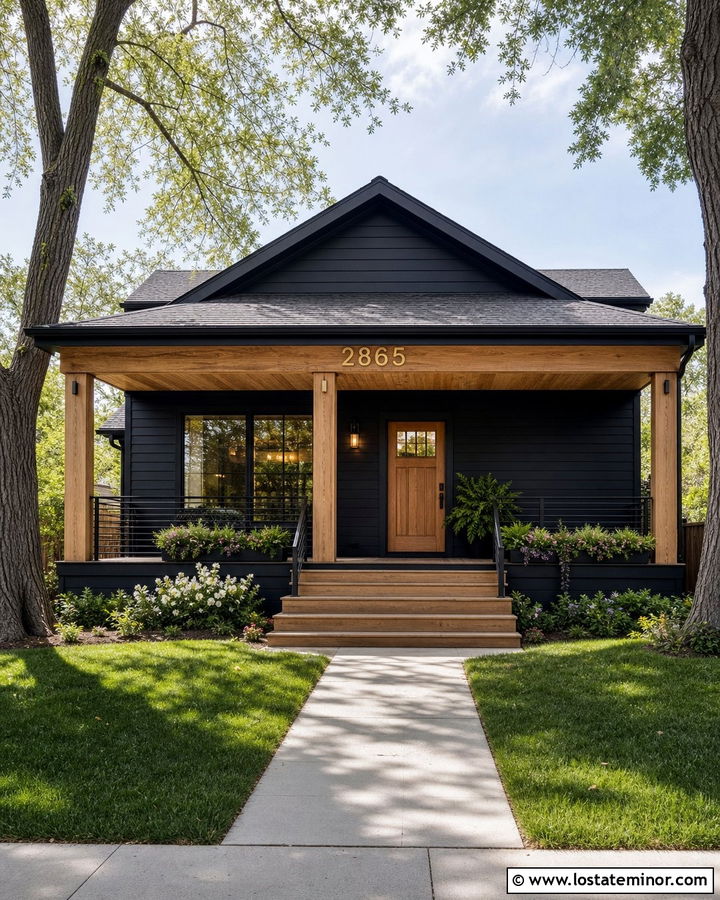
House numbers mounted on a porch beam can be seen over railings, furniture, and foundation landscaping. Select large white or brass numerals and center them above the main entry rather than across the entire porch. On a jet black farmhouse or bungalow, the beam may be natural cedar, soft white, or black with strongly contrasting numbers. Coordinate the beam with porch posts, the ceiling, and the front door to avoid an isolated strip of color. Black siding, dark windows, and a charcoal roof provide a dramatic foundation for the lighter entrance materials. Broad steps and a straight walkway strengthen the centered composition. Add discreet lighting beneath the beam so the numbers remain useful after dark. Proper spacing will keep the elevated address clear and easy to scan.
24. Jet Black House With Numbers On Entry Canopy
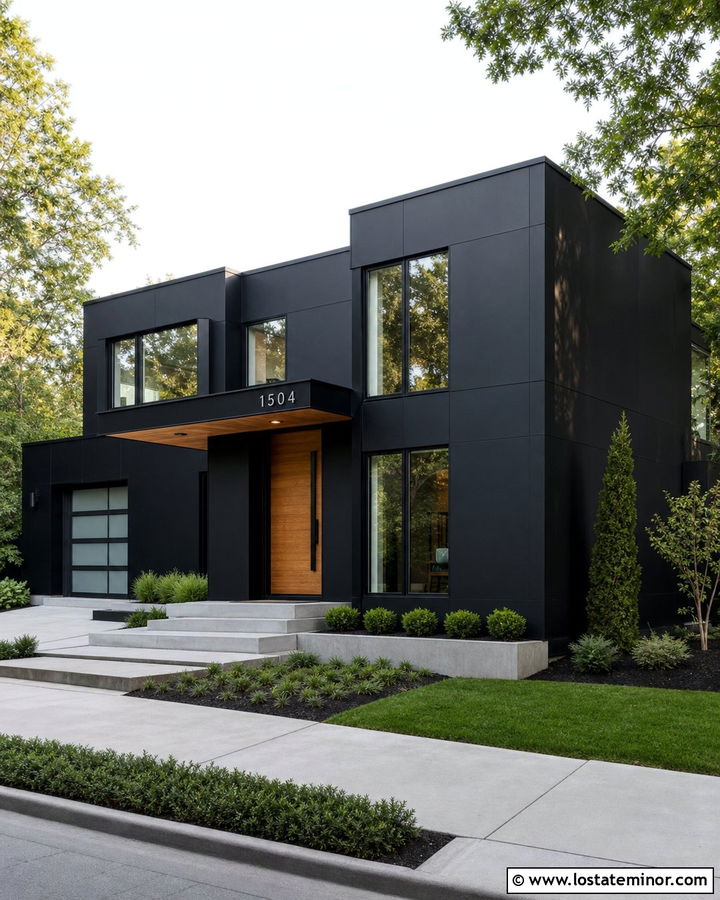
A slim entry canopy offers a clean location for house numbers on a contemporary jet black home. Place bright white or satin aluminum numerals along the canopy’s front edge, where they can be read from the sidewalk. The canopy may be black steel with a cedar underside, connecting the dark facade to a warm wood door. Use smooth black panels, tall windows, and simple concrete steps to reinforce the home’s strong geometry. A narrow vertical light beside the door can illuminate the landing, while concealed lighting under the canopy highlights the address. Keep the landscape low and structured near the entrance. The canopy, numbers, door, and path should form one clear focal point, helping visitors understand the route into an otherwise dark and visually seamless exterior.
25. Jet Black House With Numbers On Mailbox Post
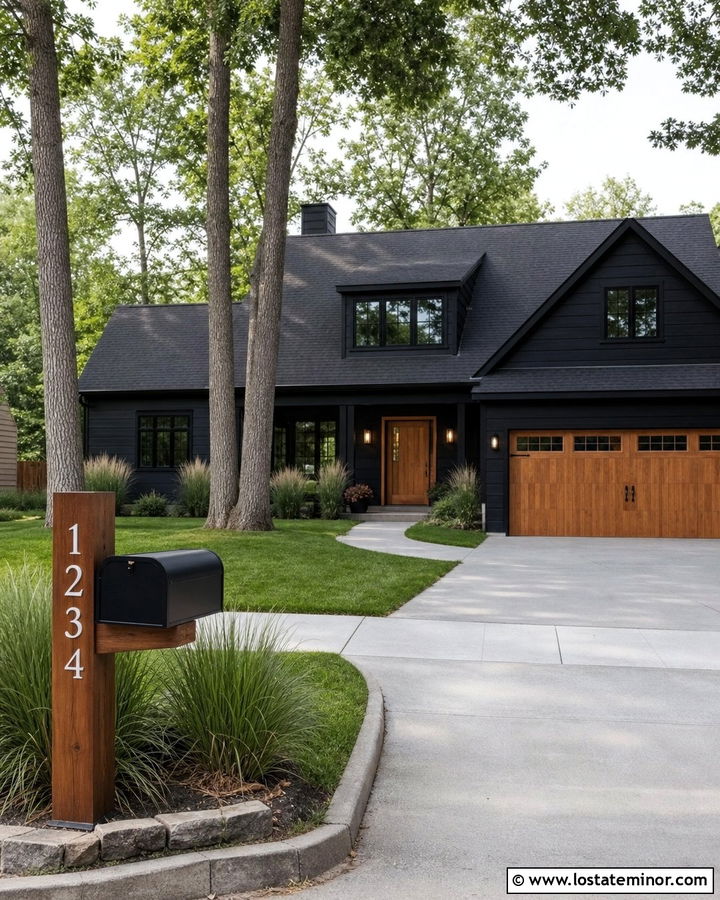
A coordinated mailbox post can display the address clearly when the home is distant from the curb. Use a cedar post with large white or matte black numbers, depending on which finish provides the strongest contrast. The mailbox itself can be jet black to connect with the house body. Repeat the cedar on the garage door, front door, and porch soffit so the roadside feature relates to the complete facade. Jet black siding, charcoal roofing, and dark window frames create a consistent background. Surround the post with low grasses or stone edging, but leave the numbers fully exposed. A simple path or driveway view should visually lead from the mailbox toward the entrance. This combination makes a practical roadside element feel like a deliberate part of the property.
26. Jet Black House With Numbers On Front Gate
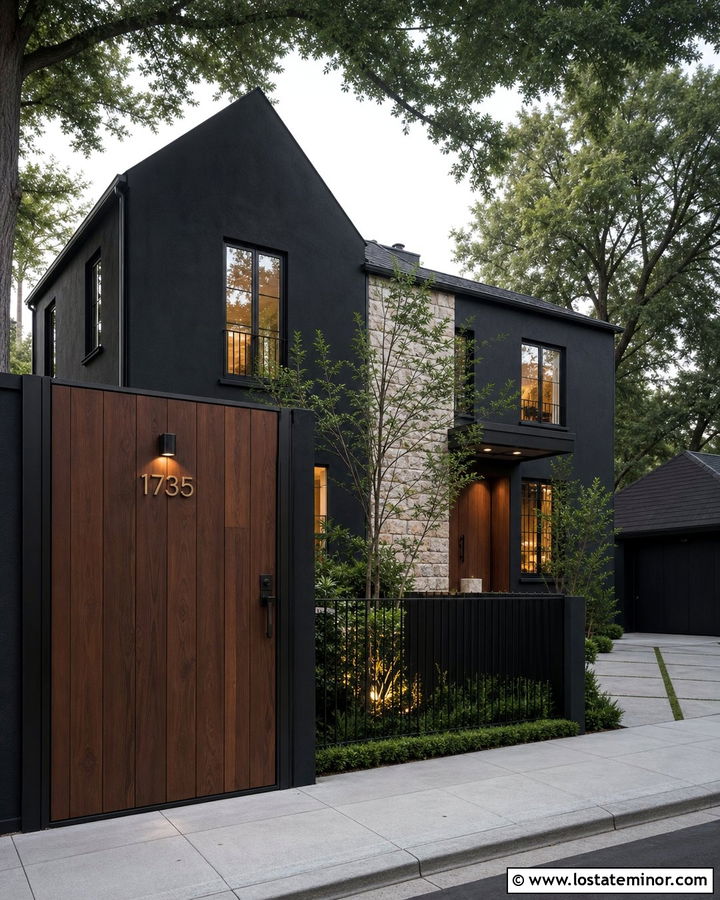
A front gate creates an excellent address location for a jet black urban or courtyard home. Mount contrasting brass, white, or stainless numbers on a solid cedar gate or pale masonry gatepost. Ensure the address faces the normal direction of approach and is not hidden when the gate swings open. Continue jet black stucco or siding across the house, using wood screens and warm stone to soften the strong color. A matching pedestrian gate, black metal fencing, and simple landscape beds can define the property without making it feel closed off. Add a focused light above or beside the numbers for nighttime visibility. Repeating the gate material at the front door or garage keeps the address display connected to the home rather than looking like a separate street fixture.
27. Jet Black House With Oversized White Numbers
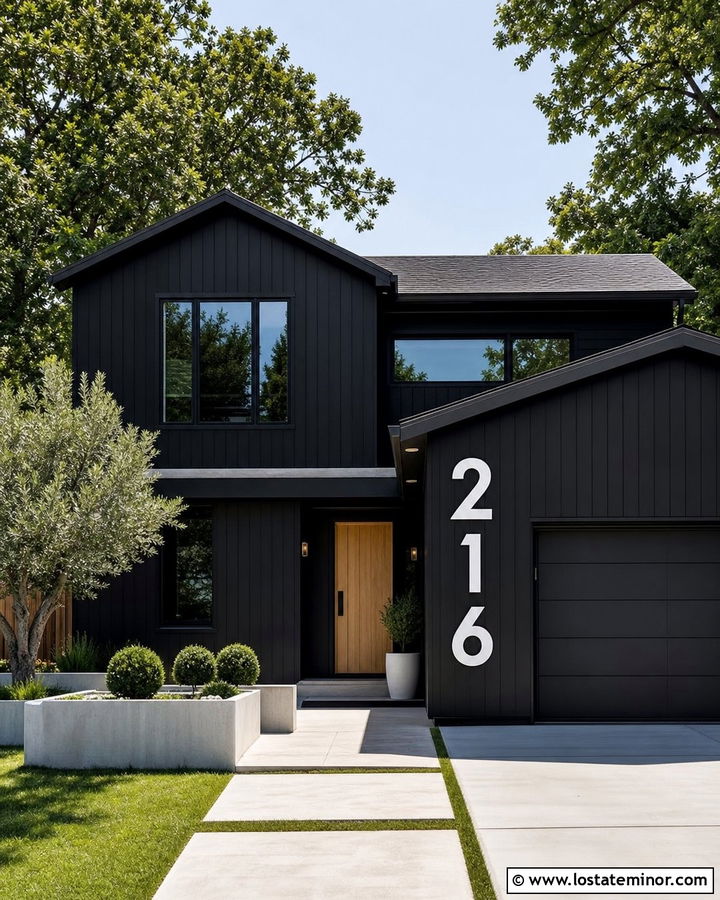
Oversized white numbers can become a bold graphic feature on a large jet black facade. Position them on a blank wall near the garage or front entrance, choosing a scale that suits the home without overpowering windows and doors. A modern sans-serif typeface usually delivers the clearest result. Repeat white on a few purposeful details, such as the soffit, entry trim, or concrete planters. The remaining exterior can stay deeply monochromatic with jet black siding, black windows, and a charcoal roof. Introduce a natural oak door to keep the scheme from appearing severe. Wide concrete pavers and clipped greenery support the strong visual lines. This approach turns a necessary address marker into an architectural feature while preserving excellent street visibility.
28. Jet Black House With Stainless Steel Numbers
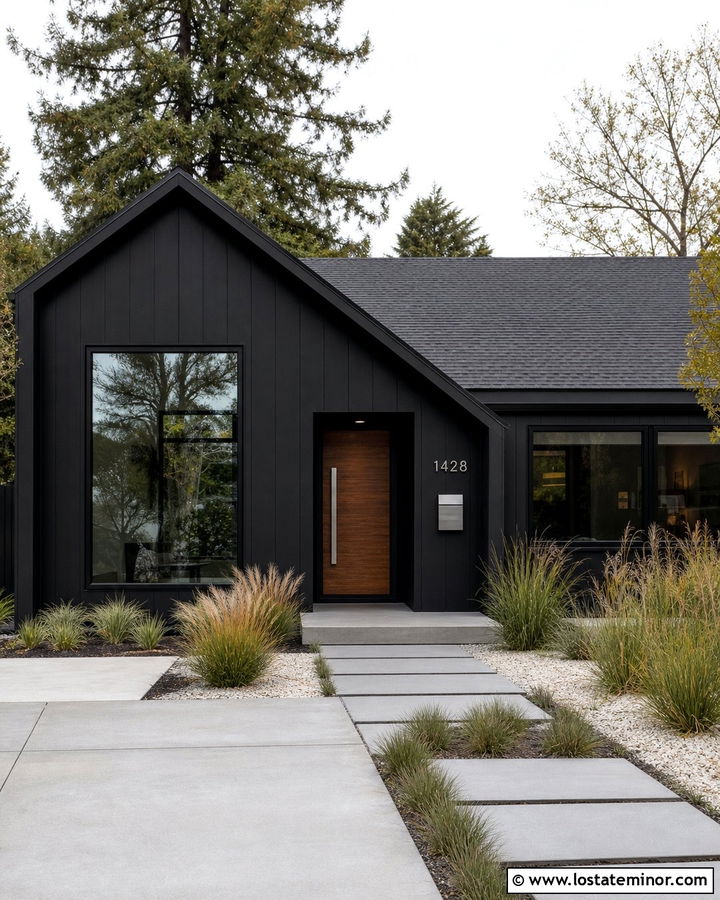
Stainless steel numbers bring a cool, polished contrast to jet black siding and work particularly well with glass, concrete, and metal architecture. Choose a brushed finish rather than highly reflective chrome, which can produce glare in direct sun. Mount the numbers on a smooth black panel beside the entry, using spacers to create subtle shadows. Repeat stainless steel on the door pull, mailbox, and exterior lighting. A warm gray concrete porch and walnut door can balance the cooler metal tones. Keep the roof, window frames, and garage door dark for a streamlined appearance. Structured grasses and pale gravel add softness around the walkway. With restrained material repetition, the stainless numbers feel connected to the complete modern exterior instead of appearing like generic hardware.
29. Jet Black House With Rustic Wood Number Sign
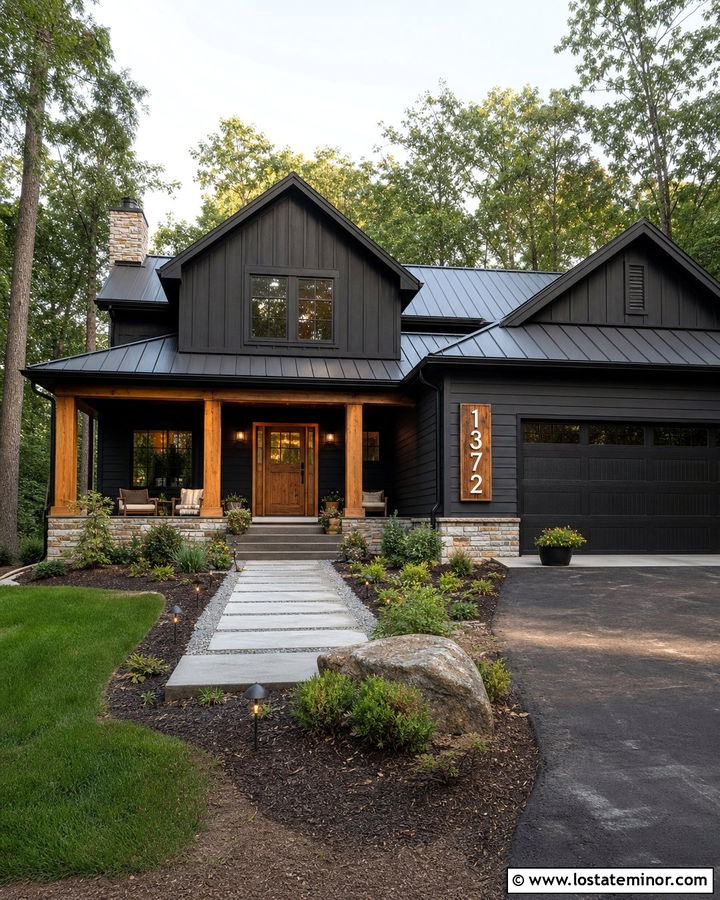
A rustic wood number sign can make a jet black exterior feel relaxed and welcoming. Choose a thick cedar or reclaimed-look board with a clean sealed finish, then attach large cream or white numbers for strong contrast. Mount the sign beside the porch steps or on the wall near a simple wood front door. Repeat similar timber tones on porch columns, shutters, or garage details. Jet black lap siding and a dark metal roof provide a modern background, preventing the rustic materials from looking dated. Stone foundation accents and a gravel-edged path can reinforce the natural palette. Keep the lettering simple and avoid distressed fonts that are hard to read. The sign should add texture while still functioning as a clear, practical address marker.
30. Jet Black House With Minimalist Number Bar
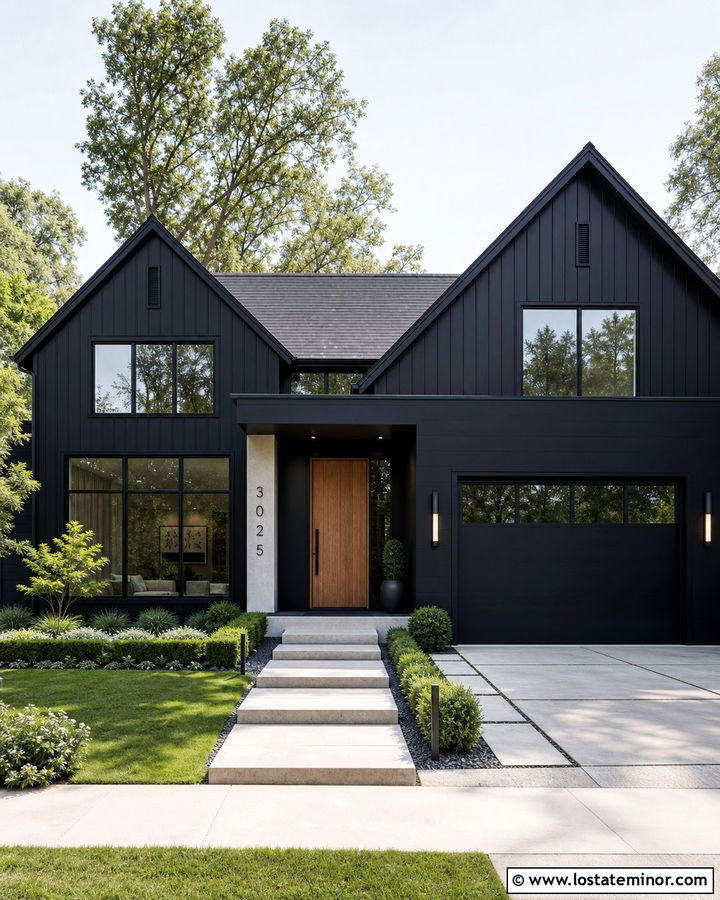
A minimalist number bar creates a finished look without adding another large decorative feature to a jet black house. Use a slim horizontal strip of cedar, white metal, or pale concrete with evenly spaced contrasting numerals. Install it beside the front door, above a garage, or along a low entry wall. The bar’s proportions should align with nearby windows, siding joints, or canopy edges. Pair the jet black facade with a warm wood door, black-framed glass, and light concrete paving. One linear wall light can repeat the shape of the number bar and improve visibility. Keep plantings low around the display. This streamlined solution is especially effective on modern homes where strong horizontal lines and limited materials create the overall curb-appeal character.
Conclusion:
The strongest jet black exterior combines dramatic color with an address display that is clear, proportional, and connected to the architecture. Brass, copper, white, stainless steel, stone, cedar, and illuminated numbers all provide different ways to create useful contrast. Placement should follow the home’s natural lines, whether that means mounting numbers beside the door, above the garage, on a porch column, or closer to the street. Lighting and landscape visibility also deserve careful consideration. Ultimately, 30 Jet Black House Design With House Numbers Ideas show that even a practical detail can influence the entire curb-appeal scheme. Choose durable materials, repeat key finishes, and prioritize readability to give the facade a polished final layer.

Related posts: